EP2466848A1 - Pairing of angle sensor and electronic control unit - Google Patents
Pairing of angle sensor and electronic control unit Download PDFInfo
- Publication number
- EP2466848A1 EP2466848A1 EP11193599A EP11193599A EP2466848A1 EP 2466848 A1 EP2466848 A1 EP 2466848A1 EP 11193599 A EP11193599 A EP 11193599A EP 11193599 A EP11193599 A EP 11193599A EP 2466848 A1 EP2466848 A1 EP 2466848A1
- Authority
- EP
- European Patent Office
- Prior art keywords
- key
- encryption key
- secure
- sensor
- ecu
- Prior art date
- Legal status (The legal status is an assumption and is not a legal conclusion. Google has not performed a legal analysis and makes no representation as to the accuracy of the status listed.)
- Withdrawn
Links
Images


Classifications
-
- H—ELECTRICITY
- H04—ELECTRIC COMMUNICATION TECHNIQUE
- H04L—TRANSMISSION OF DIGITAL INFORMATION, e.g. TELEGRAPHIC COMMUNICATION
- H04L63/00—Network architectures or network communication protocols for network security
- H04L63/04—Network architectures or network communication protocols for network security for providing a confidential data exchange among entities communicating through data packet networks
- H04L63/0428—Network architectures or network communication protocols for network security for providing a confidential data exchange among entities communicating through data packet networks wherein the data content is protected, e.g. by encrypting or encapsulating the payload
- H04L63/0435—Network architectures or network communication protocols for network security for providing a confidential data exchange among entities communicating through data packet networks wherein the data content is protected, e.g. by encrypting or encapsulating the payload wherein the sending and receiving network entities apply symmetric encryption, i.e. same key used for encryption and decryption
-
- G—PHYSICS
- G06—COMPUTING OR CALCULATING; COUNTING
- G06F—ELECTRIC DIGITAL DATA PROCESSING
- G06F12/00—Accessing, addressing or allocating within memory systems or architectures
- G06F12/14—Protection against unauthorised use of memory or access to memory
- G06F12/1408—Protection against unauthorised use of memory or access to memory by using cryptography
-
- H—ELECTRICITY
- H04—ELECTRIC COMMUNICATION TECHNIQUE
- H04L—TRANSMISSION OF DIGITAL INFORMATION, e.g. TELEGRAPHIC COMMUNICATION
- H04L9/00—Cryptographic mechanisms or cryptographic arrangements for secret or secure communications; Network security protocols
- H04L9/12—Transmitting and receiving encryption devices synchronised or initially set up in a particular manner
-
- G—PHYSICS
- G06—COMPUTING OR CALCULATING; COUNTING
- G06F—ELECTRIC DIGITAL DATA PROCESSING
- G06F2212/00—Indexing scheme relating to accessing, addressing or allocation within memory systems or architectures
- G06F2212/10—Providing a specific technical effect
- G06F2212/1052—Security improvement
-
- Y—GENERAL TAGGING OF NEW TECHNOLOGICAL DEVELOPMENTS; GENERAL TAGGING OF CROSS-SECTIONAL TECHNOLOGIES SPANNING OVER SEVERAL SECTIONS OF THE IPC; TECHNICAL SUBJECTS COVERED BY FORMER USPC CROSS-REFERENCE ART COLLECTIONS [XRACs] AND DIGESTS
- Y02—TECHNOLOGIES OR APPLICATIONS FOR MITIGATION OR ADAPTATION AGAINST CLIMATE CHANGE
- Y02D—CLIMATE CHANGE MITIGATION TECHNOLOGIES IN INFORMATION AND COMMUNICATION TECHNOLOGIES [ICT], I.E. INFORMATION AND COMMUNICATION TECHNOLOGIES AIMING AT THE REDUCTION OF THEIR OWN ENERGY USE
- Y02D10/00—Energy efficient computing, e.g. low power processors, power management or thermal management
Definitions
- Various exemplary embodiments disclosed herein relate generally to electronic vehicle controls.
- Magnetic sensors such as Anisotropic Magnetoresistance (AMR) sensors, Giant Magnetoresistance (GMR) sensors, and Hall-Effect sensors play an important role for contactless sensing in various vehicles, such as measurements in subsystems of motor vehicles.
- AMR sensors may be regularly used for various applications in the vehicle's power-train by, for example, measuring the magnetic fields of various components and making determinations such as the throttle position, based on such measurements.
- the AMR sensor may compile data based on its measurements of a magnetic field and may send such data to an electrical control unit (ECU) within the vehicle.
- ECU electrical control unit
- the ECU may then respond to the received data from the sensor by modifying one or more components within the vehicle, such as when an engine control module (ECM) changes the configuration of a device in the power-train.
- ECM engine control module
- Such modifications by the ECU may be used by the vehicle to, for example, increase the vehicle's fuel efficiency, acceleration, or power output.
- an electrical control unit ECU
- various embodiments enable secure transmission of sensor data in a secure, unidirectional packet sent from a tamper-proof sensor to an ECU.
- ECU electrical control unit
- a brief summary of various exemplary embodiments is presented. Some simplifications and omissions may be made in the following summary, which is intended to highlight and introduce some aspects of the various exemplary embodiments, but not to limit the scope of the invention. Detailed descriptions of a preferred exemplary embodiment adequate to allow those of ordinary skill in the art to make and use the inventive concepts will follow in the later sections.
- a sensing unit may comprise an angular position sensor that determines an angular position of a magnetic field and produces angle sensor data based on the determined angular position.
- the sensing unit may also comprise an encryption processor.
- the encryption processor may receive the angle sensor data from the angle position sensor, produce a secure unidirectional packet using a selected encryption key, and send the secure unidirectional packet to an electronic control unit (ECU) that decrypts that secure packet using the selected encryption key and responds to the angle sensor data.
- ECU electronice control unit
- Various embodiments may also relate to an electronic control unit (ECU) that may comprise a receiving interface that receives a secure unidirectional packet from a sensing unit, the secure unidirectional packet including angle sensor data encoded by the sensing unit using a selected encryption key.
- the angle sensor data may be produced by the angular position sensor when determining an angular position of the magnetic field.
- the ECU may also comprise a decryption processor that decrypts the secure unidirectional packet using the set encryption key, wherein the ECU responds to angle sensor data included in the decrypted unidirectional packet.
- Various embodiments may also relate to a method that may comprise an angular position sensor in a sensing unit determining an angular position of a magnetic field.
- the method may also comprise the angular position sensor producing angle sensor data based on the determined angular position and an encryption processor in the sensing unit connected to the angular position sensor producing a secure unidirectional packet using a selected encryption key.
- the method may also comprise sending the secure unidirectional packet to an electrical control unit (ECU).
- ECU electrical control unit
- an electronic control unit comprising a receiving interface that receives a secure unidirectional packet from a sensing unit, the secure unidirectional packet including angle sensor data encoded by the sensing unit using a selected encryption key, wherein the angle sensor data is produced by the angular position sensor when determining an angular position of a magnetic field; and a decryption module that decryptes the secure unidirectional packet using the set encryption key, wherein the ECU responds to angle sensor data.
- the secure unidirectional packet may further comprise a selected encryption key identifier (ID) associated with the selected encryption key.
- ID selected encryption key identifier
- the ECU may further comprise a memory device including a Key Index Table, the Key Index Table comprising a plurality of key entries associating an encryption key ID with at least one encryption key, wherein the decryption processor looks up a first key entry in the key index table that includes the selected encryption key and the selected encryption key ID before decrypting the secure unidirectional packet with the selected encryption key.
- a memory device including a Key Index Table, the Key Index Table comprising a plurality of key entries associating an encryption key ID with at least one encryption key, wherein the decryption processor looks up a first key entry in the key index table that includes the selected encryption key and the selected encryption key ID before decrypting the secure unidirectional packet with the selected encryption key.
- the selected encryption key used by the sensor may be initially set during manufacture of the sensor and is non-modifiable after the initial setting.
- the secure, unidirectional packet may comprise a single-edge nibble transmission (SENT) frame.
- SENT single-edge nibble transmission
- various exemplary embodiments enable manipulation protection through sensor pairing. Particularly, by using a secure, unidirectional packet to send sensor data from a tamper-proof sensor and an ECU, manipulation of the vehicle may be avoided even when the ECU is compromised through tampering.
- FIG. 1 illustrates an exemplary tamper-proof vehicle sensor system.
- Tamper-proof vehicle sensor system 100 includes a sensor 101, a SENT frame 110 and an electronic control unit (ECU) 120.
- Sensor 101 may include angle sensor data 102, a key index table 104 comprising encryption key identifiers (IDs) 103 and encryption keys 105, and an encryption processor 108.
- Single edge nibble transmission (SENT) frame 110 may include an encrypted angle value 112 and a selected encryption key ID 113.
- ECU 120 may include an encrypted angle value 122, a decryption processor 128, a key index table 124 comprising encryption key IDs 123, and encryption keys 125, and angle sensor data 129.
- Tamper-proof vehicle sensor system 100 may use encryption keys common in both of the key index tables 104, 124 to transfer secure, unidirectional packets from the sensor 101 to the ECU 120.
- Sensor 101 may be hardware, or firmware, or similar, that may compile data based on measurements made within the vehicle.
- the sensor 101 may comprise an angular sensor that measures the relative angular position of a component.
- the sensor 101 may be, for example, a magnetic sensor such as an anisotropic magnetoresistive (AMR) sensor that measures the angular position of a magnetic field associated with a component, such as the magnetic field of a throttle in the engine of the vehicle.
- AMR anisotropic magnetoresistive
- the sensor 101 may comprise, for example, a giant magnetoresistive (GMR) sensor or a Hall-effect sensor that may measure a vehicle component through similar means.
- GMR giant magnetoresistive
- the senor 101 may be located in other areas of the vehicle and may therefore send other information to the ECU 120.
- the sensor 101 may be a wheel sensor that sends wheel data to the ECU 120.
- the sensor 101 may comprise a different type of sensor that may compile data based on different measured values; for example, the sensor 101 may a temperature sensor that may send temperature information to the ECU 120.
- the sensor 101 may, upon measurement of the angular position of the magnetic field of a component, generate angle sensor data 102.
- Angle sensor data 102 may comprise one or more quantitative values based on the measurements made by the sensor 101.
- the angle sensor data 102 may include both measured values and calculated values associated with such measurements.
- the sensor 101 may include a processor or a reduced instruction set computing (RISC) processor that may determine one or more of the calculated values based on the measurements of the sensor 101.
- RISC reduced instruction set computing
- a processor in the sensor 101 may determine the fluid flow rate of the engine based on the determined throttle position.
- the angle sensor data 102 may comprise data applicable to the measurement made by the sensor.
- the data compiled by the sensor 101 comprising a temperature sensor may include at least temperature data.
- Key Index Table 104 may comprise a series of key entries, with the Key Index Table 104 being stored in the sensor 101.
- the Key Index Table 104 may be stored in a memory device, which may comprise, for example, a tangible machine-readable storage medium in the sensor.
- the tangible machine-readable storage medium may be, for example, read-only memory (ROM) or another storage medium that may be tamper-proof after an initial writing.
- Key Index Table 104 may include a series of key entries that pair encryption key identifiers 103 with corresponding sets of encryption keys 105.
- the sensor 101 may use the same selected encryption key 105 when encrypting the angle sensor data 102.
- the selected encryption key 105 may be set during the manufacture of the sensor 101 and may be non-modifiable after the initial setting. This may make the sensor 101 tamper-proof, as the access to the encryption keys 105 may be limited and subsequent modifications would not be altered the selected encryption keys 105 used by the encryption processor 108.
- the Key Index Table 104 may wholly comprise of a single key entry of the selected encryption key ID 103 and the selected encryption key 105.
- the encryption processor 108 may use any of the encryption keys 105 included in the Key Index Table 104 when encrypting the angle sensor data 102.
- Encryption key identifier (ID) 103 may be a value associated with one or more encryption keys 105 that the sensor 101 may use when encrypting the angle sensor data 102.
- Encryption processor 108 may retrieve a selected key entry from the Key Index Table 104 and may encrypt the angle sensor data 102 with a selected encryption key 105, while appending the corresponding selected encryption key ID 103 to the resultant encrypted angle sensor data.
- the secure packet produced by the encryption processor 108 may therefore include an encrypted angle value 112 and the selected encryption key ID 113 that corresponds with the selected key ID 103.
- Encryption key 105 may be one or more encryption keys in a key entry that the encryption processor 108 may retrieve from the Key Index Table 104.
- the encryption key ID 103 for a key entry may be associated with multiple encryption keys 105. In such instances, the encryption processor 108 may then use one of the encryption keys 105 from the selected key entry when encrypting the angle sensor data 102.
- the encryption processor 108 may select any of the encryption keys 105 of the selected key entry for a defined number or uses or for a defined period of time.
- the encryption key 105 may be a secret key used only by the sensor 101 and the ECU 120 in the encryption and decryption of secure data packets.
- Access to the secret key may be limited to only authorized manufacturers of the sensor 101 and the ECU 120.
- a person of skill in the art would be aware of applicable keys that may be used by the encryption processor 108 when producing secure packets.
- encryption key 105 may comprise any encryption key that is regularly used by encryption processors in that implement symmetric-key encryption algorithms, such as, for example, Advanced Encryption Standard (AES) (i.e., Rijndael), Blowfish, Twofish, Serpent, and CAST5 algorithms.
- AES Advanced Encryption Standard
- Rijndael Rijndael
- Blowfish Twofish
- Serpent Serpent
- CAST5 CAST5
- Encryption processor 108 may be a processor, RISC processor, or microprocessor that receives the angle sensor data 102 and produces an encrypted angle value 112. In some embodiments, the encryption processor 108 may also produce the secure packet to be sent to the ECU 120, where the packet includes the encrypted angle value 112. Encryption processor 108 may retrieve a selected encryption key 105 from a key entry in the Key Index Table 104. In some embodiments, the selected encryption key 105 may be initially set during manufacture of the sensor 101 and may be non-modifiable afterwards. In such instances, the encryption processor 108 will always attempt to retrieve the same key entry. When retrieving the encryption key 105 from the Key Index Table 104, the encryption processor 108 may also retrieve the corresponding encryption key ID 103 from the same key entry.
- the encryption processor 108 may use an encryption algorithm that is compatible with the selected encryption key 105 to produce the secure angle value 112. For example, when the selected encryption key 105 is an AES-128 cipher, the encryption processor 108 may use a Rijndael implementation to encrypt the angle sensor data 102 and produce the encrypted angle value 112. In some embodiments, the encryption processor 108 may not include all of the information included in the angle sensor data 102 when it produces the encrypted angle value 112. For example, the angle sensor data may include the measured angle value and the calculated throttle position. In such instances, the encryption processor 108 may only encrypt the measured angle value. In similar embodiments, the encryption processor 108 may encrypt similar data included in the angle sensor data 102. For example, when the sensor 101 is a temperature sensor, the encryption processor 108 may encrypt the measured temperature when the producing the encrypted data. In some embodiments, the ECU 120 may reconstruct other information that is from the subset of information included in the encrypted angle value 112.
- Single-edge nibble transmission (SENT) frame 110 may be a packet produced by the sensor 101.
- the SENT frame 110 may be a secure, unidirectional packet that compiles with the SAE J2716 protocol.
- the SENT frame 110 may only be sent from the sensor 101 to the ECU 120.
- the secure, unidirectional packet may help to hamper manipulation, as SENT frame 110 may only be sent by the sensor 101.
- the SENT frame 110 may not require a coordination signal from the ECU 120 to establish communication.
- the SENT frame 110 may be transmitted as a series of pulses with data measured from falling edge to falling edge times of each pulse. While the illustrative embodiment employs the SENT frame 110 for secure transmission of sensor data to the ECU 120, a person of ordinary skill would be aware of other communications protocols and applicable packets that the sensor 101 may employ to send secure packets to the ECU 120.
- the SENT frame 110 includes both the encrypted angle value 112 and the selected encryption key ID 113.
- Encryption key ID 113 may correspond to the selected encryption key ID 103, which is associated by key entry in the Key Index Table 104 with the selected encryption key 105 chosen by the encryption processor 108.
- Encrypted angle value 112 may be produced by the encryption processor 108 using the selected encryption key 105 and may comprise a subset or all of the information included in the angle sensor data 102.
- both the encrypted angle value 112 and the selected encrypted key ID 113 may be included in the payload of the SENT frame 110.
- Electrical control unit (ECU) 120 may be an embedded system within a vehicle that controls an electrical subsystem of the vehicle.
- the ECU 120 may be an engine control module (ECM) (i.e., a power-train control module [PCM]) that may, for example, determine fuel levels and may control ignition timing to keep the vehicle's engine running.
- ECM engine control module
- PCM power-train control module
- the ECU 120 may comprise a processor or plurality of processors that receives data and measurements from a plurality of sensors 101 and may modify various vehicle parameters in response to the received data and measurements. For example, the ECU 120 may change the timing of the ignition in response to the measured angle value included in the encrypted angle value 122.
- Key Index Table 124 in the ECU 120 may be a table similar to the Key Index Table 104 included in the sensor 101.
- the Key Index Tables 104, 124 may be identical; in other embodiments, the Key Index Table 124 may be of a different size, containing a different number of key entries than that of the Key Index Table 104.
- the Key Index Table 124 may contain substantially larger quantity of key entries than the Key Index Table 104 of any one of the sensors 101.
- the Key Index Table 124 may also include a larger quantity of key entries in order to enable interoperability with a wider range of sensors 101, as each manufacturer of the sensor 101 may only have access to a limited number of different secret encryption keys 105.
- Key Index Table 124 may contain a plurality of key entries matching each of the key entries included in the Key Index Table 104 of the sensor 101. Each of the matching key entries comprises the same encryption keys 125 corresponding to the same encryption key identifiers 123.
- the Key Index Table 124 may contain a key entry including an encryption key 125 and an encryption key ID 123 that matches the key entry including the selected encryption key 105 and the corresponding encryption key ID 103.
- the decryption processor 128 in the ECU 120 may use the encryption key ID 113 included in the SENT frame 110 to identify and retrieve its corresponding encryption key 125 in the Key Index Table 124, which the decryption processor 128 may then use to decrypt the encrypted angle value 122 included in the SENT frame 110.
- Decryption processor 128 may be a processor, RISC processor, or microprocessor similar to the encryption processor 108 of the sensor 101 that uses various decryption algorithms on the encrypted angle value 122 to retrieve the information encrypted by the encryption processor 108.
- the decryption processor 128 may use the same symmetric-key algorithm employed by the encryption processor 108 when producing the encrypted angle value 112.
- Decryption processor 128 may receive the encrypted angle value 122 through the receiving interface (not shown), which may correspond to the encrypted angle value 112 included in the SENT frame 110.
- the decryption processor 128 or other module within the ECU 120 may extract the encrypted angle value 122 and the selected encrypted key ID 113 from the payload of the SENT frame 110.
- Decryption processor 128 may use the retrieved selected encryption key ID 113 to retrieve the corresponding key entry from the Key Index Table 124. Upon finding a matching key entry in the Key Index Table 124, the decryption processor 128 may use the retrieved encryption key 125, which in the illustrative embodiment is identical to the selected encryption key 105, to decrypt the encrypted angle value 122. Decryption processor 128 may then produce the angle sensor data 129 as a result of the decryption algorithm. In the illustrative embodiment, the angle sensor data 129 may be equivalent to the angle sensor data 102 produced by the sensor 101. In such instances, the encryption processor 108 produced the encrypted angle value 112 that included all the information comprising the angle sensor data 102.
- the angle sensor data 129 may be a subset of information included in the angle sensor data 102 that the encryption processor 108 included in the encrypted angle value 112.
- the ECU 120 may then respond to the angle sensor data 129 by adjusting various parameters it controls, such as the throttle position or the ignition timing. Tampering of the ECU 120 may be avoided due to the limited access to the key entries of the Key Index Table 124. As, in some embodiments, manipulation of the ECU 120 may prevent retrieval of the encryption key 125, a tampered ECU 120 may not be able to successfully decrypt the encrypted angle value 122.
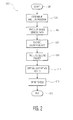
- FIG. 2 illustrates an exemplary flowchart of a sensor sending a secure, unidirectional packet to an electrical control unit (ECU).
- Method 200 may be deployed by, for example, the sensor 101 when preparing the SENT frame 110 to transmission to the ECU 120.
- Method 200 may begin at step 201 and proceed to step 203, where the angular position is determined.
- the sensor 101 may determine the angular position of the magnetic field, which may have a specific relationship with other devices, such as the throttle position.
- Method 200 may then proceed to step 205, where angle sensor data is produced.
- the angle sensor data 102 produced may include information such as the measured angular position.
- the information included in the angle sensor data may also include other associated values, such as the throttle position that was calculated based on the measured angle value.
- the encryption processor 108 of the sensor 101 may choose a selected encryption key 105.
- this step may comprise retrieving an encryption key 105 and its corresponding encryption key ID 103 from a key entry in the Key Index Table 104 included in the sensor 101.
- the selected encryption key 105 may be initially set during manufacture of the sensor 101 and may be non-modifiable after the initial setting. In such instances, the encryption processor 108 may in step 207 always retrieve the same selected encryption key 105.
- Encryption processor 108 may then proceed to step 209 and produce a secure packet.
- the encryption processor 108 may use the selected encryption key 105 retrieved in step 207 to encrypt the angle sensor data 102 produced in step 205.
- the encryption processor 108 may only encrypt a subset of information included in the angle sensor data 102.
- Encryption processor 108 may include the resultant encrypted angle value 112 in a secure packet.
- the secure packet may be a secure, unidirectional packet, such as a secure SENT frame 110 that includes the encrypted angle value 112.
- the encryption processor 108 may append the selected encryption key ID 113 to the secure packet.
- the selected encryption key ID 113 may correspond to the selected encryption key ID 103 and may be appended to the encrypted angle value 112 within the payload of the secure packet.
- Sensor 101 may then proceed to step 213 and send the secure packet to the ECU 120; method 200 may then end at step 215.
- FIG. 3 illustrates an exemplary flowchart for an electrical control unit (ECU) receiving a secure, unidirectional packet to retrieve information.
- Method 300 may be employed by, for example, the ECU 120 upon receipt of a secure, unidirectional packet from a sensor 101. In alternative embodiments, the ECU 120 may employ method 300 on any received secure packet that includes an encryption key identifier 113. Method 300 may begin at step 301 and proceed to step 303, where the ECU 120 may receive the secure packet. For example, a receiving interface in the ECU 120 may receive a secure, unidirectional packet in the form of the SENT frame 110 from the sensor 101. ECU 120 may then proceed to step 305, where the ECU 120 separates the encryption key ID 113 from the encrypted angle value 112.
- the decryption processor 128 of the ECU 120 may retrieve the selected encryption key 125.
- the decryption processor 128 may use the encryption key ID 113 extracted in step 305 to find a corresponding key entry in the Key Index Table 124 that contains an equivalent encryption key ID 123. Upon finding a matching key entry, the decryption processor 128 may then retrieve the corresponding encryption key 125 included in the matching key entry.
- the corresponding encryption key 125 may be equivalent to the selected encryption key 105 used by the encryption processor 108 of the sensor 101 to produce the encrypted angle value 112.
- Decryption processor 128 may then proceed to step 309 by decrypting the secure packet.
- the decryption processor 128 may receive the encrypted angle value 122 that is equivalent to the encrypted angle value 112 included in the SENT frame 110.
- Decryption processor may use the encryption key 125 retrieved in step 307 to decrypt the encrypted angle sensor value 122.
- the ECU 120 may then proceed to step 311, where the angle sensor data 129 is retrieved as a result of the decryption in step 309.
- the angle sensor data 129 retrieved may be a subset of information included in the angle sensor data 102 produced by the sensor 101.
- the ECU 120 may produce information that was not included in the encrypted angle value 122.
- the encryption processor 108 may only send the measured angle position in the encrypted angle value 112.
- ECU 120 may then calculate the throttle position using the same measured angle value; method 300 may then end at step 313.
- various exemplary embodiments of the invention may be implemented in hardware and/or firmware. Furthermore, various exemplary embodiments may be implemented as instructions stored on a tangible machine-readable storage medium, which may be read and executed by at least one processor to perform the operations described in detail herein.
- a tangible machine-readable storage medium may include any mechanism for storing information in a form readable by a machine, such as a personal or laptop computer, a server, or other computing device.
- a tangible machine-readable storage medium may include read-only memory (ROM), random-access memory (RAM), magnetic disk storage media, optical storage media, flash-memory devices, and similar storage media.
- any block diagrams herein represent conceptual views of illustrative circuitry embodying the principals of the invention.
- any flow charts, flow diagrams, state transition diagrams, pseudo code, and the like represent various processes which may be substantially represented in machine readable media and so executed by a computer or processor, whether or not such computer or processor is explicitly shown.
Landscapes
- Engineering & Computer Science (AREA)
- Computer Security & Cryptography (AREA)
- Computer Networks & Wireless Communication (AREA)
- Signal Processing (AREA)
- General Engineering & Computer Science (AREA)
- Computer Hardware Design (AREA)
- Computing Systems (AREA)
- Theoretical Computer Science (AREA)
- Physics & Mathematics (AREA)
- General Physics & Mathematics (AREA)
- Measurement Of Length, Angles, Or The Like Using Electric Or Magnetic Means (AREA)
Abstract
Various embodiments relate to a tamper-proof vehicle sensor system and a related method for sending secure packets between components. A sensing unit may include an angular sensor, such as an anisotropic magnetoresistive (AMR) sensor, which determines the angular position of a magnetic field and produces related angle sensor data. The sensing unit may place the angle sensor data in a packet and may encrypt the packet using a selected encryption key. The sensor may append an encryption key identifier (ID) associated with the selected encryption key onto the packet and send the secure, unidirectional packet to an electrical control unit (ECU). The ECU may then use the appended encryption key ID to retrieve the selected encryption key to decrypt the packet. The ECU may then extract the angle sensor data from the packet to modify the configuration of the vehicle.
Description
- Various exemplary embodiments disclosed herein relate generally to electronic vehicle controls.
- Magnetic sensors, such as Anisotropic Magnetoresistance (AMR) sensors, Giant Magnetoresistance (GMR) sensors, and Hall-Effect sensors play an important role for contactless sensing in various vehicles, such as measurements in subsystems of motor vehicles. For example, AMR sensors may be regularly used for various applications in the vehicle's power-train by, for example, measuring the magnetic fields of various components and making determinations such as the throttle position, based on such measurements. During regular operation, the AMR sensor may compile data based on its measurements of a magnetic field and may send such data to an electrical control unit (ECU) within the vehicle. The ECU may then respond to the received data from the sensor by modifying one or more components within the vehicle, such as when an engine control module (ECM) changes the configuration of a device in the power-train. Such modifications by the ECU may be used by the vehicle to, for example, increase the vehicle's fuel efficiency, acceleration, or power output.
- In modern vehicles, however, it is possible for users to tamper with and manipulate vehicle ECUs, such as the ECM. For example, the common practice of "chip tuning" involves the manipulation of the ECM or its related motor management software to increase the power output of the vehicle's engine. However, such unauthorized manipulation of ECUs may, for example, result in higher abrasion of engine components (which are not covered by the warranty) and may also make the vehicle more dangerous, as the vehicle may not have been designed to operated under the manipulated configuration. Manipulation of the ECU may therefore pose problems related to the vehicle's performance and safety, which may therefore decrease the value of the vehicle and cause problems for other drivers.
- Provided are embodiments that enable transmission of sensor information to an electrical control unit (ECU). In particular, various embodiments enable secure transmission of sensor data in a secure, unidirectional packet sent from a tamper-proof sensor to an ECU. A brief summary of various exemplary embodiments is presented. Some simplifications and omissions may be made in the following summary, which is intended to highlight and introduce some aspects of the various exemplary embodiments, but not to limit the scope of the invention. Detailed descriptions of a preferred exemplary embodiment adequate to allow those of ordinary skill in the art to make and use the inventive concepts will follow in the later sections.
- Various embodiments may relate to a sensing unit that may comprise an angular position sensor that determines an angular position of a magnetic field and produces angle sensor data based on the determined angular position. The sensing unit may also comprise an encryption processor. The encryption processor may receive the angle sensor data from the angle position sensor, produce a secure unidirectional packet using a selected encryption key, and send the secure unidirectional packet to an electronic control unit (ECU) that decrypts that secure packet using the selected encryption key and responds to the angle sensor data.
- Various embodiments may also relate to an electronic control unit (ECU) that may comprise a receiving interface that receives a secure unidirectional packet from a sensing unit, the secure unidirectional packet including angle sensor data encoded by the sensing unit using a selected encryption key. The angle sensor data may be produced by the angular position sensor when determining an angular position of the magnetic field. The ECU may also comprise a decryption processor that decrypts the secure unidirectional packet using the set encryption key, wherein the ECU responds to angle sensor data included in the decrypted unidirectional packet.
- Various embodiments may also relate to a method that may comprise an angular position sensor in a sensing unit determining an angular position of a magnetic field. The method may also comprise the angular position sensor producing angle sensor data based on the determined angular position and an encryption processor in the sensing unit connected to the angular position sensor producing a secure unidirectional packet using a selected encryption key. The method may also comprise sending the secure unidirectional packet to an electrical control unit (ECU).
- Herein is further disclosed an electronic control unit (ECU) comprising a receiving interface that receives a secure unidirectional packet from a sensing unit, the secure unidirectional packet including angle sensor data encoded by the sensing unit using a selected encryption key, wherein the angle sensor data is produced by the angular position sensor when determining an angular position of a magnetic field; and a decryption module that decryptes the secure unidirectional packet using the set encryption key, wherein the ECU responds to angle sensor data.
- The secure unidirectional packet may further comprise a selected encryption key identifier (ID) associated with the selected encryption key.
- The ECU may further comprise a memory device including a Key Index Table, the Key Index Table comprising a plurality of key entries associating an encryption key ID with at least one encryption key, wherein the decryption processor looks up a first key entry in the key index table that includes the selected encryption key and the selected encryption key ID before decrypting the secure unidirectional packet with the selected encryption key.
- The selected encryption key used by the sensor may be initially set during manufacture of the sensor and is non-modifiable after the initial setting.
- The secure, unidirectional packet may comprise a single-edge nibble transmission (SENT) frame.
- It should be apparent that, in this manner, various exemplary embodiments enable manipulation protection through sensor pairing. Particularly, by using a secure, unidirectional packet to send sensor data from a tamper-proof sensor and an ECU, manipulation of the vehicle may be avoided even when the ECU is compromised through tampering.
- In order to better understand various exemplary embodiments, reference is made to the accompanying drawings wherein:
-
FIG. 1 illustrates an exemplary tamper-proof vehicle sensor system; -
FIG. 2 illustrates an exemplary flowchart of a sensor sending a secure, unidirectional packet to an electronic control unit (ECU); and -
FIG. 3 illustrates an exemplary flowchart for an ECU receiving a secure, unidirectional packet to retrieve information. - Referring now to the drawings, in which like numerals refer to like components or steps, there are disclosed broad aspects of various exemplary embodiments.
-
FIG. 1 illustrates an exemplary tamper-proof vehicle sensor system. Tamper-proofvehicle sensor system 100 includes asensor 101, aSENT frame 110 and an electronic control unit (ECU) 120.Sensor 101 may includeangle sensor data 102, a key index table 104 comprising encryption key identifiers (IDs) 103 andencryption keys 105, and anencryption processor 108. Single edge nibble transmission (SENT)frame 110 may include anencrypted angle value 112 and a selectedencryption key ID 113. ECU 120 may include anencrypted angle value 122, adecryption processor 128, a key index table 124 comprisingencryption key IDs 123, andencryption keys 125, andangle sensor data 129. Tamper-proofvehicle sensor system 100 may use encryption keys common in both of the key index tables 104, 124 to transfer secure, unidirectional packets from thesensor 101 to theECU 120. -
Sensor 101 may be hardware, or firmware, or similar, that may compile data based on measurements made within the vehicle. In some embodiments, thesensor 101 may comprise an angular sensor that measures the relative angular position of a component. In such instances, thesensor 101 may be, for example, a magnetic sensor such as an anisotropic magnetoresistive (AMR) sensor that measures the angular position of a magnetic field associated with a component, such as the magnetic field of a throttle in the engine of the vehicle. In alternative embodiments, thesensor 101 may comprise, for example, a giant magnetoresistive (GMR) sensor or a Hall-effect sensor that may measure a vehicle component through similar means. A person of ordinary skill in the art would be aware of like sensors for vehicle components. In some embodiments, thesensor 101 may be located in other areas of the vehicle and may therefore send other information to theECU 120. For example, in some embodiments, thesensor 101 may be a wheel sensor that sends wheel data to the ECU 120. In alternative embodiments, thesensor 101 may comprise a different type of sensor that may compile data based on different measured values; for example, thesensor 101 may a temperature sensor that may send temperature information to theECU 120. - In some embodiments the
sensor 101 may, upon measurement of the angular position of the magnetic field of a component, generateangle sensor data 102.Angle sensor data 102 may comprise one or more quantitative values based on the measurements made by thesensor 101. In some embodiments, theangle sensor data 102 may include both measured values and calculated values associated with such measurements. For example, when thesensor 101 is measuring the angular position of the magnetic field of a throttle, theangle sensor data 102 may include the angle of the magnetic field and the angle of the throttle. In some embodiments, thesensor 101 may include a processor or a reduced instruction set computing (RISC) processor that may determine one or more of the calculated values based on the measurements of thesensor 101. For example, a processor in thesensor 101 may determine the fluid flow rate of the engine based on the determined throttle position. In alternate embodiments, theangle sensor data 102 may comprise data applicable to the measurement made by the sensor. For example, the data compiled by thesensor 101 comprising a temperature sensor may include at least temperature data. - Key Index Table 104 may comprise a series of key entries, with the Key Index Table 104 being stored in the
sensor 101. In some embodiments, the Key Index Table 104 may be stored in a memory device, which may comprise, for example, a tangible machine-readable storage medium in the sensor. In some embodiments, the tangible machine-readable storage medium may be, for example, read-only memory (ROM) or another storage medium that may be tamper-proof after an initial writing. Key Index Table 104 may include a series of key entries that pair encryptionkey identifiers 103 with corresponding sets ofencryption keys 105. In some embodiments, thesensor 101 may use the same selectedencryption key 105 when encrypting theangle sensor data 102. In some of these instances, the selectedencryption key 105 may be set during the manufacture of thesensor 101 and may be non-modifiable after the initial setting. This may make thesensor 101 tamper-proof, as the access to theencryption keys 105 may be limited and subsequent modifications would not be altered the selectedencryption keys 105 used by theencryption processor 108. In some embodiments, the Key Index Table 104 may wholly comprise of a single key entry of the selectedencryption key ID 103 and the selectedencryption key 105. In alternate embodiments, theencryption processor 108 may use any of theencryption keys 105 included in the Key Index Table 104 when encrypting theangle sensor data 102. - Encryption key identifier (ID) 103 may be a value associated with one or
more encryption keys 105 that thesensor 101 may use when encrypting theangle sensor data 102.Encryption processor 108 may retrieve a selected key entry from the Key Index Table 104 and may encrypt theangle sensor data 102 with a selectedencryption key 105, while appending the corresponding selectedencryption key ID 103 to the resultant encrypted angle sensor data. The secure packet produced by theencryption processor 108 may therefore include anencrypted angle value 112 and the selectedencryption key ID 113 that corresponds with the selectedkey ID 103. -
Encryption key 105 may be one or more encryption keys in a key entry that theencryption processor 108 may retrieve from the Key Index Table 104. In some embodiments, theencryption key ID 103 for a key entry may be associated withmultiple encryption keys 105. In such instances, theencryption processor 108 may then use one of theencryption keys 105 from the selected key entry when encrypting theangle sensor data 102. In some embodiments, theencryption processor 108 may select any of theencryption keys 105 of the selected key entry for a defined number or uses or for a defined period of time. In some embodiments, theencryption key 105 may be a secret key used only by thesensor 101 and theECU 120 in the encryption and decryption of secure data packets. Access to the secret key may be limited to only authorized manufacturers of thesensor 101 and theECU 120. A person of skill in the art would be aware of applicable keys that may be used by theencryption processor 108 when producing secure packets. For example, in the illustrative embodiment,encryption key 105 may comprise any encryption key that is regularly used by encryption processors in that implement symmetric-key encryption algorithms, such as, for example, Advanced Encryption Standard (AES) (i.e., Rijndael), Blowfish, Twofish, Serpent, and CAST5 algorithms. -
Encryption processor 108 may be a processor, RISC processor, or microprocessor that receives theangle sensor data 102 and produces anencrypted angle value 112. In some embodiments, theencryption processor 108 may also produce the secure packet to be sent to theECU 120, where the packet includes theencrypted angle value 112.Encryption processor 108 may retrieve a selected encryption key 105 from a key entry in the Key Index Table 104. In some embodiments, the selectedencryption key 105 may be initially set during manufacture of thesensor 101 and may be non-modifiable afterwards. In such instances, theencryption processor 108 will always attempt to retrieve the same key entry. When retrieving theencryption key 105 from the Key Index Table 104, theencryption processor 108 may also retrieve the correspondingencryption key ID 103 from the same key entry. Upon retrieving the selectedencryption key 105, theencryption processor 108 may use an encryption algorithm that is compatible with the selectedencryption key 105 to produce thesecure angle value 112. For example, when the selectedencryption key 105 is an AES-128 cipher, theencryption processor 108 may use a Rijndael implementation to encrypt theangle sensor data 102 and produce theencrypted angle value 112. In some embodiments, theencryption processor 108 may not include all of the information included in theangle sensor data 102 when it produces theencrypted angle value 112. For example, the angle sensor data may include the measured angle value and the calculated throttle position. In such instances, theencryption processor 108 may only encrypt the measured angle value. In similar embodiments, theencryption processor 108 may encrypt similar data included in theangle sensor data 102. For example, when thesensor 101 is a temperature sensor, theencryption processor 108 may encrypt the measured temperature when the producing the encrypted data. In some embodiments, theECU 120 may reconstruct other information that is from the subset of information included in theencrypted angle value 112. - Single-edge nibble transmission (SENT)
frame 110 may be a packet produced by thesensor 101. In some embodiments, theSENT frame 110 may be a secure, unidirectional packet that compiles with the SAE J2716 protocol. In the illustrative embodiment, for example, theSENT frame 110 may only be sent from thesensor 101 to theECU 120. In such instances, the secure, unidirectional packet may help to hamper manipulation, asSENT frame 110 may only be sent by thesensor 101. In some embodiments, theSENT frame 110 may not require a coordination signal from theECU 120 to establish communication. When thesensor 101 sends theSENT frame 110, theSENT frame 110 may be transmitted as a series of pulses with data measured from falling edge to falling edge times of each pulse. While the illustrative embodiment employs theSENT frame 110 for secure transmission of sensor data to theECU 120, a person of ordinary skill would be aware of other communications protocols and applicable packets that thesensor 101 may employ to send secure packets to theECU 120. - In the illustrative embodiment, the
SENT frame 110 includes both theencrypted angle value 112 and the selectedencryption key ID 113.Encryption key ID 113 may correspond to the selectedencryption key ID 103, which is associated by key entry in the Key Index Table 104 with the selectedencryption key 105 chosen by theencryption processor 108.Encrypted angle value 112 may be produced by theencryption processor 108 using the selectedencryption key 105 and may comprise a subset or all of the information included in theangle sensor data 102. In some embodiments, both theencrypted angle value 112 and the selected encryptedkey ID 113 may be included in the payload of theSENT frame 110. - Electrical control unit (ECU) 120 may be an embedded system within a vehicle that controls an electrical subsystem of the vehicle. In the illustrative embodiment, for example, the
ECU 120 may be an engine control module (ECM) (i.e., a power-train control module [PCM]) that may, for example, determine fuel levels and may control ignition timing to keep the vehicle's engine running. In the illustrative embodiment, theECU 120 may comprise a processor or plurality of processors that receives data and measurements from a plurality ofsensors 101 and may modify various vehicle parameters in response to the received data and measurements. For example, theECU 120 may change the timing of the ignition in response to the measured angle value included in theencrypted angle value 122. - Key Index Table 124 in the
ECU 120 may be a table similar to the Key Index Table 104 included in thesensor 101. In some embodiments, the Key Index Tables 104, 124 may be identical; in other embodiments, the Key Index Table 124 may be of a different size, containing a different number of key entries than that of the Key Index Table 104. For example, because theECU 120 may receive packets from a plurality ofsensors 101 that may use different encryption techniques and/ordifferent encryption keys 105, the Key Index Table 124 may contain substantially larger quantity of key entries than the Key Index Table 104 of any one of thesensors 101. Similarly, the Key Index Table 124 may also include a larger quantity of key entries in order to enable interoperability with a wider range ofsensors 101, as each manufacturer of thesensor 101 may only have access to a limited number of differentsecret encryption keys 105. - Key Index Table 124 may contain a plurality of key entries matching each of the key entries included in the Key Index Table 104 of the
sensor 101. Each of the matching key entries comprises thesame encryption keys 125 corresponding to the same encryptionkey identifiers 123. For example, the Key Index Table 124 may contain a key entry including anencryption key 125 and anencryption key ID 123 that matches the key entry including the selectedencryption key 105 and the correspondingencryption key ID 103. Upon receipt of theSENT frame 110 through a receiving interface (not shown), thedecryption processor 128 in theECU 120 may use theencryption key ID 113 included in theSENT frame 110 to identify and retrieve itscorresponding encryption key 125 in the Key Index Table 124, which thedecryption processor 128 may then use to decrypt theencrypted angle value 122 included in theSENT frame 110. -
Decryption processor 128 may be a processor, RISC processor, or microprocessor similar to theencryption processor 108 of thesensor 101 that uses various decryption algorithms on theencrypted angle value 122 to retrieve the information encrypted by theencryption processor 108. In the illustrative embodiment, for example, thedecryption processor 128 may use the same symmetric-key algorithm employed by theencryption processor 108 when producing theencrypted angle value 112.Decryption processor 128 may receive theencrypted angle value 122 through the receiving interface (not shown), which may correspond to theencrypted angle value 112 included in theSENT frame 110. In some embodiments, thedecryption processor 128 or other module within theECU 120 may extract theencrypted angle value 122 and the selected encryptedkey ID 113 from the payload of theSENT frame 110. -
Decryption processor 128 may use the retrieved selectedencryption key ID 113 to retrieve the corresponding key entry from the Key Index Table 124. Upon finding a matching key entry in the Key Index Table 124, thedecryption processor 128 may use the retrievedencryption key 125, which in the illustrative embodiment is identical to the selectedencryption key 105, to decrypt theencrypted angle value 122.Decryption processor 128 may then produce theangle sensor data 129 as a result of the decryption algorithm. In the illustrative embodiment, theangle sensor data 129 may be equivalent to theangle sensor data 102 produced by thesensor 101. In such instances, theencryption processor 108 produced theencrypted angle value 112 that included all the information comprising theangle sensor data 102. As a result, all the information was sent in theSENT frame 110 to theECU 120, which extracted the information using the correspondingencryption key 125. In alternative embodiments, theangle sensor data 129 may be a subset of information included in theangle sensor data 102 that theencryption processor 108 included in theencrypted angle value 112. - In some embodiments, the
ECU 120 may then respond to theangle sensor data 129 by adjusting various parameters it controls, such as the throttle position or the ignition timing. Tampering of theECU 120 may be avoided due to the limited access to the key entries of the Key Index Table 124. As, in some embodiments, manipulation of theECU 120 may prevent retrieval of theencryption key 125, a tamperedECU 120 may not be able to successfully decrypt theencrypted angle value 122. -
FIG. 2 illustrates an exemplary flowchart of a sensor sending a secure, unidirectional packet to an electrical control unit (ECU).Method 200 may be deployed by, for example, thesensor 101 when preparing theSENT frame 110 to transmission to theECU 120.Method 200 may begin atstep 201 and proceed to step 203, where the angular position is determined. In some embodiments, thesensor 101 may determine the angular position of the magnetic field, which may have a specific relationship with other devices, such as the throttle position.Method 200 may then proceed to step 205, where angle sensor data is produced. In some embodiments, theangle sensor data 102 produced may include information such as the measured angular position. In some embodiments, the information included in the angle sensor data may also include other associated values, such as the throttle position that was calculated based on the measured angle value. - In
step 207, theencryption processor 108 of thesensor 101 may choose a selectedencryption key 105. In some embodiments, this step may comprise retrieving anencryption key 105 and its correspondingencryption key ID 103 from a key entry in the Key Index Table 104 included in thesensor 101. In some embodiments, the selectedencryption key 105 may be initially set during manufacture of thesensor 101 and may be non-modifiable after the initial setting. In such instances, theencryption processor 108 may instep 207 always retrieve the same selectedencryption key 105. -
Encryption processor 108 may then proceed to step 209 and produce a secure packet. In some embodiments, theencryption processor 108 may use the selectedencryption key 105 retrieved instep 207 to encrypt theangle sensor data 102 produced instep 205. In some embodiments, theencryption processor 108 may only encrypt a subset of information included in theangle sensor data 102.Encryption processor 108 may include the resultantencrypted angle value 112 in a secure packet. In some embodiments, the secure packet may be a secure, unidirectional packet, such as asecure SENT frame 110 that includes theencrypted angle value 112. - In
step 211, theencryption processor 108 may append the selectedencryption key ID 113 to the secure packet. In some embodiments, the selectedencryption key ID 113 may correspond to the selectedencryption key ID 103 and may be appended to theencrypted angle value 112 within the payload of the secure packet.Sensor 101 may then proceed to step 213 and send the secure packet to theECU 120;method 200 may then end atstep 215. -
FIG. 3 illustrates an exemplary flowchart for an electrical control unit (ECU) receiving a secure, unidirectional packet to retrieve information.Method 300 may be employed by, for example, theECU 120 upon receipt of a secure, unidirectional packet from asensor 101. In alternative embodiments, theECU 120 may employmethod 300 on any received secure packet that includes anencryption key identifier 113.Method 300 may begin atstep 301 and proceed to step 303, where theECU 120 may receive the secure packet. For example, a receiving interface in theECU 120 may receive a secure, unidirectional packet in the form of theSENT frame 110 from thesensor 101.ECU 120 may then proceed to step 305, where theECU 120 separates theencryption key ID 113 from theencrypted angle value 112. - In
step 307, thedecryption processor 128 of theECU 120 may retrieve the selectedencryption key 125. In some embodiments, thedecryption processor 128 may use theencryption key ID 113 extracted instep 305 to find a corresponding key entry in the Key Index Table 124 that contains an equivalentencryption key ID 123. Upon finding a matching key entry, thedecryption processor 128 may then retrieve the correspondingencryption key 125 included in the matching key entry. In some embodiments, the correspondingencryption key 125 may be equivalent to the selectedencryption key 105 used by theencryption processor 108 of thesensor 101 to produce theencrypted angle value 112. -
Decryption processor 128 may then proceed to step 309 by decrypting the secure packet. In some embodiments, thedecryption processor 128 may receive theencrypted angle value 122 that is equivalent to theencrypted angle value 112 included in theSENT frame 110. Decryption processor may use theencryption key 125 retrieved instep 307 to decrypt the encryptedangle sensor value 122. -
ECU 120 may then proceed to step 311, where theangle sensor data 129 is retrieved as a result of the decryption instep 309. In some embodiments, theangle sensor data 129 retrieved may be a subset of information included in theangle sensor data 102 produced by thesensor 101. In such instances, theECU 120 may produce information that was not included in theencrypted angle value 122. For example, if theangle sensor data 102 included the measured angle value of the magnetic field and the calculated throttle position, theencryption processor 108 may only send the measured angle position in theencrypted angle value 112.ECU 120 may then calculate the throttle position using the same measured angle value;method 300 may then end atstep 313. - It should be apparent from the foregoing description that various exemplary embodiments of the invention may be implemented in hardware and/or firmware. Furthermore, various exemplary embodiments may be implemented as instructions stored on a tangible machine-readable storage medium, which may be read and executed by at least one processor to perform the operations described in detail herein. A tangible machine-readable storage medium may include any mechanism for storing information in a form readable by a machine, such as a personal or laptop computer, a server, or other computing device. Thus, a tangible machine-readable storage medium may include read-only memory (ROM), random-access memory (RAM), magnetic disk storage media, optical storage media, flash-memory devices, and similar storage media.
- It should be appreciated by those skilled in the art that any block diagrams herein represent conceptual views of illustrative circuitry embodying the principals of the invention. Similarly, it will be appreciated that any flow charts, flow diagrams, state transition diagrams, pseudo code, and the like represent various processes which may be substantially represented in machine readable media and so executed by a computer or processor, whether or not such computer or processor is explicitly shown.
- Although the various exemplary embodiments have been described in detail with particular reference to certain exemplary aspects thereof, it should be understood that the invention is capable of other embodiments and its details are capable of modifications in various obvious respects. As is readily apparent to those skilled in the art, variations and modifications can be affected while remaining within the spirit and scope of the invention. Accordingly, the foregoing disclosure, description, and figures are for illustrative purposes only and do not in any way limit the invention, which is defined only by the claims.
Claims (15)
- A sensing unit comprising:an angular position sensor that determines an angular position of a magnetic field and produces angle sensor data based on the determined angular position; andan encryption processor that:receives the angle sensor data from the angular position sensor,produces a secure unidirectional packet using a selected encryption key, andsends the secure unidirectional packet to an electronic control unit (ECU) that decrypts the secure unidirectional packet using the selected encryption key and responds to the angle sensor data.
- The sensing unit of claim 1, wherein the encryption processor further appends a selected encryption key identifier (ID) associated with the selected encryption key to the secure unidirectional packet before sending.
- The sensing unit of claim 2, further comprising:a memory device including a Key Index Table, the Key Index Table comprising a plurality of key entries associating an encryption key ID with at least one encryption key,wherein the encryption processor looks up a first key entry in the key index table that includes the selected encryption key and the selected encryption key ID before appending the selected encryption key ID to the secure, unidirectional packet.
- The sensing unit of claim 3, wherein the ECU contains a second Key Index Table that includes the first key entry, and further wherein the ECU looks up the first key entry in the second Key Index Table before decrypting the secure, unidirectional packet using the selected encryption key.
- The sensing unit of claim 1, wherein the secure, unidirectional packet comprises a single-edge nibble transmission (SENT) frame.
- The sensing unit of claim 1, wherein the selected encryption key used by the encryption processor is set during manufacture of the sensor and is non-modifiable after the initial setting.
- The sensing unit of claim 1, wherein the angular position sensor comprises one of: an anisotropic magnetoresistive (AMR) sensor, a giant magnetoresistive (GMR) sensor, and a Hall-effect sensor.
- A method comprising:determining, by an angular position sensor in a sensing unit, an angular position of a magnetic field;producing, by the angular position sensor, angle sensor data based on the determined angular position;producing, by an encryption processor in the sensing unit connected to the angular position sensor, a secure, unidirectional packet using a selected encryption key; andsending the secure, unidirectional packet to an electrical control unit (ECU).
- The method of claim 8, further comprising:appending, by the encryption processor, a selected encryption key identifier(ID) associated with the selected encryption key to the secure, unidirectional packet before the sending step.
- The method of claim 9, further comprising:searching, by the encryption processor, a first key entry in a Key Index Table for a first key entry in the Key Index Table that includes the selected encryption key and the selected encryption key ID before appending the selected encryption ID to the secure, unidirectional packet, wherein the sensing unit further comprises a memory device including the Key Index Table comprising a plurality of key entries associating encryption key IDs with encryption keys.
- The method of claim10, further comprising:receiving, by the ECU, the secure, unidirectional packet from the sensing unit;decrypting, by the ECU, the secure, unidirectional packet using the selected encryption key; andresponding to the angle sensor data.
- The method of claim 11, further comprising:searching, by the ECU, the first key entry in a second Key Index Table that includes the selected encryption key and the selected encryption key ID before decrypting the secure, unidirectional packet with the selected encryption key.
- The method of claim 12, wherein the selected encryption key used by the sensing unit is set during manufacture of the sensor and is non-modifiable after the initial setting.
- The method of claim 12, wherein the secure, unidirectional packet comprises a single-edge nibble transmission (SENT) frame.
- The method of claim 12, wherein the angular position sensor comprises one of: an anisotropic magnetoresistive (AMR) sensor, a giant magnetoresistive (GMR) sensor, and a Hall-effect sensor.
Applications Claiming Priority (1)
| Application Number | Priority Date | Filing Date | Title |
|---|---|---|---|
| US12/972,000 US8966289B2 (en) | 2010-12-17 | 2010-12-17 | Pairing of angle sensor and electronic control unit |
Publications (1)
| Publication Number | Publication Date |
|---|---|
| EP2466848A1 true EP2466848A1 (en) | 2012-06-20 |
Family
ID=45442858
Family Applications (1)
| Application Number | Title | Priority Date | Filing Date |
|---|---|---|---|
| EP11193599A Withdrawn EP2466848A1 (en) | 2010-12-17 | 2011-12-14 | Pairing of angle sensor and electronic control unit |
Country Status (3)
| Country | Link |
|---|---|
| US (1) | US8966289B2 (en) |
| EP (1) | EP2466848A1 (en) |
| CN (1) | CN102582536A (en) |
Cited By (2)
| Publication number | Priority date | Publication date | Assignee | Title |
|---|---|---|---|---|
| WO2014023384A1 (en) * | 2012-08-10 | 2014-02-13 | Audi Ag | Motor vehicle with encrypted bus data |
| EP3809271A4 (en) * | 2018-08-15 | 2021-07-07 | Huawei Technologies Co., Ltd. | APPARATUS, SYSTEM AND METHOD FOR SECURE DATA TRANSFER |
Families Citing this family (24)
| Publication number | Priority date | Publication date | Assignee | Title |
|---|---|---|---|---|
| US8874915B1 (en) * | 2011-09-28 | 2014-10-28 | Amazon Technologies, Inc. | Optimized encryption key exchange |
| CN104247361B (en) * | 2011-12-01 | 2018-07-24 | 英特尔公司 | Method, device, and related vehicle control system for filtering safety messages, and computer-readable memory containing corresponding instructions |
| US9306743B2 (en) * | 2012-08-30 | 2016-04-05 | Texas Instruments Incorporated | One-way key fob and vehicle pairing verification, retention, and revocation |
| KR20140032307A (en) * | 2012-09-06 | 2014-03-14 | 삼성전자주식회사 | Methods and system for multilevel data security |
| US9355279B1 (en) * | 2013-03-29 | 2016-05-31 | Secturion Systems, Inc. | Multi-tenancy architecture |
| EP2981773B1 (en) | 2013-04-01 | 2019-06-05 | Thermo King Corporation | System and method for preventing unauthorized modification to engine control software or an engine control system |
| US20150270954A1 (en) * | 2014-03-24 | 2015-09-24 | Infineon Technologies Ag | Device for generating encrypted data segments |
| US9500739B2 (en) | 2014-03-28 | 2016-11-22 | Knowles Electronics, Llc | Estimating and tracking multiple attributes of multiple objects from multi-sensor data |
| DE102014116909B4 (en) * | 2014-11-19 | 2016-07-28 | Infineon Technologies Ag | A receiver, transmitter, method for retrieving an additional data value from a signal and method for transmitting a data value and an additional data value in a signal |
| US9780999B2 (en) * | 2015-07-31 | 2017-10-03 | GM Global Technology Operations LLC | Systems and methods for configuring devices in a network supporting VLANS |
| US10412088B2 (en) | 2015-11-09 | 2019-09-10 | Silvercar, Inc. | Vehicle access systems and methods |
| US20170144672A1 (en) * | 2015-11-25 | 2017-05-25 | Continental Automotive Systems, Inc. | Wheel speed sensor and wheel speed sensing system |
| US11146449B2 (en) | 2016-02-19 | 2021-10-12 | Intel Corporation | Network architecture for internet-of-things device |
| US10310832B2 (en) | 2016-02-19 | 2019-06-04 | Intel Corporation | Internet-of-things device blank |
| DE102016103498A1 (en) * | 2016-02-26 | 2017-08-31 | Infineon Technologies Ag | A method of communicating data from a sensor device to an electronic control unit, a sensor device, and an electronic control unit |
| WO2019010421A1 (en) * | 2017-07-07 | 2019-01-10 | Ligatti Jay | Systems and methods for generating symmetric cryptographic keys |
| DE102017213010A1 (en) | 2017-07-28 | 2019-01-31 | Audi Ag | Overall device with an authentication arrangement and method for authentication |
| DE102018212361A1 (en) * | 2018-07-25 | 2020-01-30 | Robert Bosch Gmbh | First vehicle-side terminal, method for operating the first terminal, second vehicle-side terminal and method for operating the second vehicle-side terminal |
| US11750399B2 (en) * | 2019-12-06 | 2023-09-05 | Motional Ad Llc | Cyber-security protocol |
| US11575657B2 (en) * | 2020-02-25 | 2023-02-07 | International Business Machines Corporation | Mitigating misinformation in encrypted messaging networks |
| US11503114B2 (en) | 2021-01-05 | 2022-11-15 | Toyota Motor North America, Inc. | Provisioning of event-based keys to transports |
| US11870557B2 (en) | 2021-01-05 | 2024-01-09 | Toyota Motor North America, Inc. | Process for generating transport keys for data communication based on actions performed by a transport |
| US11438158B2 (en) * | 2021-01-05 | 2022-09-06 | Toyota Motor North America, Inc. | Provisioning of external functionality to transports |
| US11671409B2 (en) * | 2021-02-17 | 2023-06-06 | Infineon Technologies Ag | Encrypted communication of a sensor data characteristic |
Citations (5)
| Publication number | Priority date | Publication date | Assignee | Title |
|---|---|---|---|---|
| US20030194088A1 (en) * | 2002-03-27 | 2003-10-16 | Werner Fischer | Method for transmitting data among components of the system electronics of mobile systems, and such components |
| WO2007053256A1 (en) * | 2005-11-04 | 2007-05-10 | Bose Corporation | Secure active suspension system |
| EP1841125A1 (en) * | 2006-03-31 | 2007-10-03 | Tzou, May | Communications system and method |
| EP2194257A1 (en) * | 2008-12-05 | 2010-06-09 | Delphi Technologies Holding S.à.r.l. | A method of controlling a vehicle engine system |
| US20100211787A1 (en) * | 2009-02-19 | 2010-08-19 | Leonid Bukshpun | Chaotic cipher system and method for secure communication |
Family Cites Families (9)
| Publication number | Priority date | Publication date | Assignee | Title |
|---|---|---|---|---|
| US6483296B1 (en) * | 1999-06-17 | 2002-11-19 | Denso Corporation | Angular position detection apparatus |
| US7307415B2 (en) * | 2002-02-14 | 2007-12-11 | Bvr Technologies Co. | Contactless angular position sensor and method for sensing angular position of a rotatable shaft |
| US20050175184A1 (en) * | 2004-02-11 | 2005-08-11 | Phonex Broadband Corporation | Method and apparatus for a per-packet encryption system |
| DE102005028501A1 (en) | 2005-06-17 | 2007-01-04 | Zf Friedrichshafen Ag | Suspension for a vehicle |
| CN101243686A (en) | 2005-08-08 | 2008-08-13 | 松下电器产业株式会社 | Encrypted content and systems that provide decryption keys |
| JP5042524B2 (en) | 2006-05-16 | 2012-10-03 | Kddi株式会社 | ENCRYPTION DEVICE, DECRYPTION DEVICE, CONTENT DATA GENERATION METHOD |
| DE102006061580A1 (en) * | 2006-12-27 | 2008-07-03 | Robert Bosch Gmbh | Rotating shaft speed determining method, involves transferring impulse to controller, and correcting numerical value with correction value that is determined from comparison of actual time period with reference-time period |
| US20110047630A1 (en) * | 2007-02-09 | 2011-02-24 | Agency For Science, Technology And Research | Method and system for tamper proofing a system of interconnected electronic devices |
| CN101345761A (en) | 2008-08-20 | 2009-01-14 | 深圳市同洲电子股份有限公司 | Private data transmission method and system |
-
2010
- 2010-12-17 US US12/972,000 patent/US8966289B2/en active Active
-
2011
- 2011-12-14 EP EP11193599A patent/EP2466848A1/en not_active Withdrawn
- 2011-12-16 CN CN2011104223433A patent/CN102582536A/en active Pending
Patent Citations (5)
| Publication number | Priority date | Publication date | Assignee | Title |
|---|---|---|---|---|
| US20030194088A1 (en) * | 2002-03-27 | 2003-10-16 | Werner Fischer | Method for transmitting data among components of the system electronics of mobile systems, and such components |
| WO2007053256A1 (en) * | 2005-11-04 | 2007-05-10 | Bose Corporation | Secure active suspension system |
| EP1841125A1 (en) * | 2006-03-31 | 2007-10-03 | Tzou, May | Communications system and method |
| EP2194257A1 (en) * | 2008-12-05 | 2010-06-09 | Delphi Technologies Holding S.à.r.l. | A method of controlling a vehicle engine system |
| US20100211787A1 (en) * | 2009-02-19 | 2010-08-19 | Leonid Bukshpun | Chaotic cipher system and method for secure communication |
Cited By (4)
| Publication number | Priority date | Publication date | Assignee | Title |
|---|---|---|---|---|
| WO2014023384A1 (en) * | 2012-08-10 | 2014-02-13 | Audi Ag | Motor vehicle with encrypted bus data |
| US9246671B2 (en) | 2012-08-10 | 2016-01-26 | Audi Ag | Motor vehicle with encrypted bus data |
| EP3809271A4 (en) * | 2018-08-15 | 2021-07-07 | Huawei Technologies Co., Ltd. | APPARATUS, SYSTEM AND METHOD FOR SECURE DATA TRANSFER |
| US11888827B2 (en) | 2018-08-15 | 2024-01-30 | Huawei Technologies Co., Ltd. | Secure data transfer apparatus, system, and method |
Also Published As
| Publication number | Publication date |
|---|---|
| CN102582536A (en) | 2012-07-18 |
| US20120155645A1 (en) | 2012-06-21 |
| US8966289B2 (en) | 2015-02-24 |
Similar Documents
| Publication | Publication Date | Title |
|---|---|---|
| US8966289B2 (en) | Pairing of angle sensor and electronic control unit | |
| Wolf et al. | State of the art: Embedding security in vehicles | |
| JP5643765B2 (en) | Control method of vehicle engine system | |
| US11245673B2 (en) | Method for communicating data from a sensor device to an electronic control unit, a sensor device and an electronic control unit | |
| JP5310761B2 (en) | Vehicle network system | |
| US9252945B2 (en) | Method for recognizing a manipulation of a sensor and/or sensor data of the sensor | |
| CN113114621B (en) | Communication method for bus dispatching system and bus dispatching system | |
| US11804951B2 (en) | Advanced sensor security protocol | |
| JP2010011400A (en) | Cipher communication system of common key system | |
| EP2538366B1 (en) | Generating secure device secret key | |
| CN111508110B (en) | Method and device for realizing remote locking of vehicle | |
| US20070192599A1 (en) | Authentication method and authentication system | |
| US20080278282A1 (en) | Motor Vehicle Control Device Data Transfer System And Process | |
| US8166303B2 (en) | Method for transmitting data among components of the system electronics of mobile systems, and such components | |
| KR101953908B1 (en) | Security System and Method of Embeded software in Vehicle electric device | |
| US11392690B2 (en) | Security monitoring apparatus and method for vehicle network | |
| CN114945168A (en) | Encrypted communication of sensor data characteristics | |
| JP2025523420A (en) | Aerosol generator with encrypted data management | |
| WO2021022802A1 (en) | Secure startup method, controller, and control system | |
| CN115174065A (en) | System for protecting safety of passenger car EPS calibration message information | |
| KR102236282B1 (en) | Method and system for authenticating communication data of vehicle | |
| EP4425824A1 (en) | Data storage system, mobile body, and data storage program | |
| WO2025026921A1 (en) | Transferring payload information comprising key information | |
| WO2023089882A1 (en) | Information processing device and key management device | |
| CN119211917A (en) | Distributed key management encryption method, device and vehicle based on blockchain |
Legal Events
| Date | Code | Title | Description |
|---|---|---|---|
| PUAI | Public reference made under article 153(3) epc to a published international application that has entered the european phase |
Free format text: ORIGINAL CODE: 0009012 |
|
| AK | Designated contracting states |
Kind code of ref document: A1 Designated state(s): AL AT BE BG CH CY CZ DE DK EE ES FI FR GB GR HR HU IE IS IT LI LT LU LV MC MK MT NL NO PL PT RO RS SE SI SK SM TR |
|
| AX | Request for extension of the european patent |
Extension state: BA ME |
|
| RAP1 | Party data changed (applicant data changed or rights of an application transferred) |
Owner name: NXP B.V. |
|
| 17P | Request for examination filed |
Effective date: 20121220 |
|
| STAA | Information on the status of an ep patent application or granted ep patent |
Free format text: STATUS: THE APPLICATION IS DEEMED TO BE WITHDRAWN |
|
| 18D | Application deemed to be withdrawn |
Effective date: 20121221 |