EP2466780A1 - Method and apparatus for generating and processing a MAC-EHS protocol data unit - Google Patents
Method and apparatus for generating and processing a MAC-EHS protocol data unit Download PDFInfo
- Publication number
- EP2466780A1 EP2466780A1 EP12153904A EP12153904A EP2466780A1 EP 2466780 A1 EP2466780 A1 EP 2466780A1 EP 12153904 A EP12153904 A EP 12153904A EP 12153904 A EP12153904 A EP 12153904A EP 2466780 A1 EP2466780 A1 EP 2466780A1
- Authority
- EP
- European Patent Office
- Prior art keywords
- mac
- ehs
- pdu
- entity
- reordering
- Prior art date
- Legal status (The legal status is an assumption and is not a legal conclusion. Google has not performed a legal analysis and makes no representation as to the accuracy of the status listed.)
- Granted
Links
Images




Classifications
-
- H—ELECTRICITY
- H04—ELECTRIC COMMUNICATION TECHNIQUE
- H04W—WIRELESS COMMUNICATION NETWORKS
- H04W28/00—Network traffic management; Network resource management
- H04W28/02—Traffic management, e.g. flow control or congestion control
- H04W28/06—Optimizing the usage of the radio link, e.g. header compression, information sizing, discarding information
- H04W28/065—Optimizing the usage of the radio link, e.g. header compression, information sizing, discarding information using assembly or disassembly of packets
-
- H—ELECTRICITY
- H04—ELECTRIC COMMUNICATION TECHNIQUE
- H04L—TRANSMISSION OF DIGITAL INFORMATION, e.g. TELEGRAPHIC COMMUNICATION
- H04L1/00—Arrangements for detecting or preventing errors in the information received
- H04L1/12—Arrangements for detecting or preventing errors in the information received by using return channel
- H04L1/16—Arrangements for detecting or preventing errors in the information received by using return channel in which the return channel carries supervisory signals, e.g. repetition request signals
- H04L1/18—Automatic repetition systems, e.g. Van Duuren systems
- H04L1/1867—Arrangements specially adapted for the transmitter end
- H04L1/1887—Scheduling and prioritising arrangements
-
- H—ELECTRICITY
- H04—ELECTRIC COMMUNICATION TECHNIQUE
- H04L—TRANSMISSION OF DIGITAL INFORMATION, e.g. TELEGRAPHIC COMMUNICATION
- H04L1/00—Arrangements for detecting or preventing errors in the information received
- H04L1/12—Arrangements for detecting or preventing errors in the information received by using return channel
- H04L1/16—Arrangements for detecting or preventing errors in the information received by using return channel in which the return channel carries supervisory signals, e.g. repetition request signals
- H04L1/18—Automatic repetition systems, e.g. Van Duuren systems
- H04L1/1812—Hybrid protocols; Hybrid automatic repeat request [HARQ]
-
- H—ELECTRICITY
- H04—ELECTRIC COMMUNICATION TECHNIQUE
- H04L—TRANSMISSION OF DIGITAL INFORMATION, e.g. TELEGRAPHIC COMMUNICATION
- H04L49/00—Packet switching elements
- H04L49/90—Buffering arrangements
-
- H—ELECTRICITY
- H04—ELECTRIC COMMUNICATION TECHNIQUE
- H04L—TRANSMISSION OF DIGITAL INFORMATION, e.g. TELEGRAPHIC COMMUNICATION
- H04L69/00—Network arrangements, protocols or services independent of the application payload and not provided for in the other groups of this subclass
- H04L69/30—Definitions, standards or architectural aspects of layered protocol stacks
- H04L69/32—Architecture of open systems interconnection [OSI] 7-layer type protocol stacks, e.g. the interfaces between the data link level and the physical level
- H04L69/322—Intralayer communication protocols among peer entities or protocol data unit [PDU] definitions
- H04L69/324—Intralayer communication protocols among peer entities or protocol data unit [PDU] definitions in the data link layer [OSI layer 2], e.g. HDLC
-
- H—ELECTRICITY
- H04—ELECTRIC COMMUNICATION TECHNIQUE
- H04W—WIRELESS COMMUNICATION NETWORKS
- H04W80/00—Wireless network protocols or protocol adaptations to wireless operation
- H04W80/02—Data link layer protocols
-
- H—ELECTRICITY
- H04—ELECTRIC COMMUNICATION TECHNIQUE
- H04L—TRANSMISSION OF DIGITAL INFORMATION, e.g. TELEGRAPHIC COMMUNICATION
- H04L2101/00—Indexing scheme associated with group H04L61/00
- H04L2101/60—Types of network addresses
- H04L2101/618—Details of network addresses
- H04L2101/622—Layer-2 addresses, e.g. medium access control [MAC] addresses
-
- H—ELECTRICITY
- H04—ELECTRIC COMMUNICATION TECHNIQUE
- H04W—WIRELESS COMMUNICATION NETWORKS
- H04W88/00—Devices specially adapted for wireless communication networks, e.g. terminals, base stations or access point devices
- H04W88/08—Access point devices
Definitions
- the present invention is related to wireless communications.
- High speed packet access (HSPA) evolution refers to the third generation partnership project (3GPP) radio access technology evolution of high speed downlink packet access (HSDPA) and high speed uplink packet access (HSUPA).
- 3GPP third generation partnership project
- HSDPA high speed downlink packet access
- HSUPA high speed uplink packet access
- Some of the major goals of HSPA evolution include higher data rates, higher system capacity and coverage, enhanced support for packet services, reduced latency, reduced operator costs and backward compatibility.
- MAC-ehs enhanced high speed medium access control
- RLC radio link control
- PDUs protocol data units
- Figure 1 shows a universal terrestrial radio access network (UTRAN) side MAC-ehs entity 100 proposed for HSPA evolution.
- segmentation is performed per logical channel by segmentation entities 112.
- the segmented MAC-ehs service data units (SDUs) are then multiplexed by the logical channel identity (LCH-ID) multiplexing entities 114 based on the logical channel identity, and buffered in the configured priority queue 116.
- a MAC-ehs protocol data unit (PDU) is then generated from the MAC-ehs SDUs stored in the priority queue 116 and transmitted via a hybrid automatic repeat request (HARQ) entity 120.
- HARQ hybrid automatic repeat request
- FIG. 2 shows a user equipment (UE) side MAC-ehs entity 200 proposed for HSPA evolution.
- the received MAC-ehs PDU via an HARQ entity 202 is disassembled into reordering PDUs by the disassembly entity 204.
- the reordering PDUs are distributed to a reordering queue 208 by the reordering queue distribution entity 206 based on the received logical channel identifier.
- the reordering PDUs are reorganized according to the transmission sequence number (TSN). Reordering PDUs with consecutive TSNs are delivered to a higher layer upon reception.
- TSN transmission sequence number
- a timer mechanism determines delivery of nonconsecutive data blocks to higher layers.
- An LCH-ID demultiplexing entity 210 routes the reordered reordering PDUs to a reassembly entity 212 based on the logical channel identifier.
- the reassembly entity 212 reassembles segmented MAC-ehs SDUs to original MAC-ehs SDUs and forwards the MAC-ehs SDUs to upper layers.
- the proposed MAC-ehs entity 100 for the UTRAN-side performs segmentation on a per logical channel basis. However, the segmentation of the MAC-d PDUs should not be performed at that level, since the packet will not be transmitted immediately.
- the multiplexed reordering PDUs are buffered in the priority queue 116 and sent at a later time. Segmentation of the MAC-ehs SDUs prior to knowing the exact channel conditions is inefficient.
- the segmentation should not be performed prior to the time interval in which the packets will be transmitted. It would be desirable that the segmentation be performed at the time when the MAC-ehs PDU is created and the size of the transport block (TB) for that transmission time interval (TTI) is known.
- TTI transmission time interval
- the WTRU must also be updated accordingly.
- the LCH-ID demultiplexing entity 210 routes the MAC-ehs segments to the reassembly entity 212 based on the logical channel identity. This requires reassembly entities for different logical channels within the same queue.
- SI system information
- a method and apparatus for generating and processing a MAC-ehs PDU are disclosed.
- MAC-ehs SDUs received from an upper layer are multiplexed based on a logical channel identity.
- Reordering PDUs are generated from the multiplexed MAC-ehs SDUs from different logical channels mapped to a priority queue.
- a reordering PDU includes at least one MAC-ehs SDU and/or at least one MAC-ehs SDU segment.
- a MAC-ehs SDU is segmented on a priority class basis if a MAC-ehs SDU does not fit into a reordering PDU.
- a MAC-ehs PDU is generated including at least one reordering PDU.
- the multiplexed MAC-ehs SDUs may be stored in a corresponding priority queue before generating the reordering PDUs.
- the reordering PDUs may be generated from the multiplexed MAC-ehs SDUs and the reordering PDUs may be stored in a corresponding priority queue.
- the received MAC-ehs SDUs may be buffered in a corresponding buffer for each logical channel before multiplexed based on a logical channel identity, or reordering PDUs are generated.
- Figure 1 shows a UTRAN-side MAC-ehs entity proposed for HSPA evolution
- Figure 2 shows a UE-side MAC-ehs entity proposed for HSPA evolution
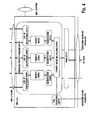
- Figures 3-4 show a UTRAN-side MAC-ehs entity in accordance with one embodiment
- Figure 5 shows a UTRAN-side MAC-ehs entity in accordance with another embodiment
- Figures 6-8 show a UTRAN-side MAC-ehs entity in accordance with another embodiment
- Figure 9 shows a UTRAN-side MAC-ehs entity in accordance with another embodiment.
- Figure 10 shows a WTRU-side MAC-ehs entity in accordance with one embodiment.
- wireless transmit/receive unit includes but is not limited to a UE, a mobile station, a fixed or mobile subscriber unit, a pager, a cellular telephone, a personal digital assistant (PDA), a computer, or any other type of user device capable of operating in a wireless environment.
- PDA personal digital assistant
- Node-B includes but is not limited to a base station, a site controller, an access point (AP), or any other type of interfacing device capable of operating in a wireless environment.
- the terminology “MAC-ehs payload unit” or “payload unit” will refer to a MAC-ehs SDU or a MAC-ehs SDU segment that is inserted as a payload of a MAC-ehs PDU.
- the terminology “MAC-d flow” and “logical channel” are used interchangeably, and use of one term does not exclude the other.
- the terminology “reordering PDU” refers to one unit of a MAC-ehs PDU.
- the MAC-ehs PDU may include one or more reordering PDUs.
- the reordering PDU may include one or more payload units.
- the MAC-ehs SDU may be a MAC-d PDU, MAC-c/sh/m PDU, or the like.
- FIG. 3 shows a UTRAN-side MAC-ehs entity 300 in accordance with one embodiment.
- the MAC-ehs entity 300 includes a scheduling and priority handling entity 310, an HARQ entity 320, and a transport format and resource combination (TFRC) selection entity 330.
- the scheduling and priority handling entity 310 includes LCH-ID multiplexing entities 312, priority queues 314, segmentation entities 316, and a priority queue multiplexing entity 318.
- the scheduling and priority handling entity 310 manages HS-DSCH resources for data flows according to their priority class.
- the HARQ entity 320 handles HARQ functionality for supporting multiple instances (HARQ process) of stop and wait HARQ protocols.
- the TFRC selection entity 330 selects a TFRC.
- the MAC-ehs entity 300 receives MAC-ehs SDUs from an upper layer, (e.g., MAC-d or MAC-c entity (not shown)).
- the LCH-ID multiplexing entity 312 may multiplex the MAC-ehs SDUs from multiple logical channels based on the scheduling decision and the TFRC selected by the TFRC selection entity 330
- the TFRC selection entity 330 indicates to the scheduling and priority handling entity 310 the size of the MAC-ehs PDU and thus the size of data to be transmitted from each queue into a reordering PDU to be transmitted on a TTI basis.
- the multiplexed MAC-ehs SDUs are stored in a priority queue 314.
- the segmentation entity 316 may segment the MAC-ehs SDUs per priority queue.
- the segmentation entity 316 segments a MAC-ehs SDU if the MAC-ehs SDU does not fit into a reordering PDU. For example, if the MAC-ehs SDU to be included in the reordering PDU is greater than the size of the reordering PDU or it causes the sum of payload units to exceed the size of the selected reordering PDU, the segmentation entity 316 segments the MAC-ehs SDU. In this case, the reordering PDU includes only one segment of the MAC-ehs SDU.
- the remaining segment of the MAC-ehs SDU after segmentation is stored in the segmentation entity and may be transmitted as the first payload unit in the next reordering PDU for the priority queue if the remaining segment fits into the next reordering PDU.
- the remaining segment of the MAC-ehs SDU is segmented again if the remaining segment still does not fit into the next reordering PDU. This may be repeated until all the parts of the MAC-ehs SDU have been transmitted.
- the reordering PDU will contain at most two segments, one at the beginning and one at the end, and may include zero, one, or more than one complete MAC-ehs SDUs.
- the segmentation entity 316 may base its segmentation decision on the current channel condition, the given transport format and resource combination (TFRC) selection, the reordering PDU size, and the like.
- the segmentation is performed on a priority queue basis instead of on a per logical channel basis.
- the priority queue multiplexing entity 318 may perform multiplexing of reordering PDUs in one MAC-ehs PDU.
- the priority queue multiplexing entity 318 selects one or more reordering PDUs from one or more priority queues 316 in order to create the MAC-ehs PDU based on the TFRC selection.
- the priority queue multiplexing entity 318 may be incorporated into the HARQ entity 320.
- the TFRC selection entity 330 may be attached to the scheduling and priority handling entity 310, as shown in Figure 4 .
- FIG. 5 shows a UTRAN-side MAC-ehs entity 500 in accordance with another embodiment.
- the segmentation is performed on a priority queue basis after logical channel multiplexing.
- the MAC-ehs entity 500 includes a scheduling and priority handling entity 510, an HARQ entity 520, and a TFRC selection entity 530.
- the scheduling and priority handling entity 510 includes LCH-ID multiplexing entities 512, segmentation entities 514, priority queues 516, and a priority queue multiplexing entity 518.
- the scheduling and priority handling entity 510 manages HS-DSCH resources for data flows according to their priority class.
- the HARQ entity 520 handles HARQ functionality for supporting multiple instances (HARQ process) of stop and wait HARQ protocols.
- the TFRC selection entity 530 selects a TFRC.
- the MAC-ehs entity 500 receives MAC-ehs SDUs from an upper layer.
- the LCH-ID multiplexing entity 512 may multiplex MAC-ehs SDUs from multiple logical channels based on the scheduling decision and optionally based on the TFRC selected by the TFRC selection entity 530.
- the TFRC selection entity 530 indicates to the scheduling and priority handling entity 510 the size of the MAC-ehs PDU to be transmitted on a TTI basis.
- the MAC-ehs SDUs after the logical channel multiplexing, may be segmented by the segmentation entity 514.
- the segmentation entity 514 segments a MAC-ehs SDU if the MAC-ehs SDU does not fit into a reordering PDU based on the TRFC selection.
- the reordering PDU contains at most two segments, one at the beginning and one at the end, and may include zero, one, or more than one MAC-ehs SDUs.
- Reordering PDUs are stored in a priority queue 516.
- the priority queue multiplexing entity 518 may perform multiplexing of reordering PDUs in one MAC-ehs PDU.
- the priority queue multiplexing entity 518 selects one or more reordering PDUs from the priority queues 516 in order to create the MAC-ehs PDU.
- the priority queue multiplexing entity 518 may be incorporated into the HARQ entity 520.
- the TFRC selection entity 530 may be attached to the scheduling and priority handling entity 510.
- FIG. 6 shows a UTRAN-side MAC-ehs entity 600 in accordance with another embodiment.
- the MAC-ehs SDUs are buffered per logical channel and segmentation is performed on a priority queue basis after logical channel multiplexing.
- the MAC-ehs entity 600 includes a scheduling and priority handling entity 610, an HARQ entity 620, and a TFRC selection entity 630.
- the scheduling and priority handling entity 610 includes queues 612, LCH-ID multiplexing entities 614, segmentation entities 616, priority handling entities 618, and a priority queue multiplexing entity 619.
- the scheduling and priority handling entity 610 manages HS-DSCH resources for data flows according to their priority class.
- the HARQ entity 620 handles HARQ functionality for supporting multiple instances (HARQ process) of stop and wait HARQ protocols.
- the TFRC selection entity 630 selects a TFRC.
- the MAC-ehs entity 600 receives MAC-ehs SDUs from upper layers.
- MAC-ehs SDUs are stored in queues 612 on a logical channel basis.
- the queues 612 may not be present and data from different logical channels may flow directly from upper layers to the corresponding LCH-ID multiplexing entities 614.
- the LCH-ID multiplexing entities 614 multiplexes MAC-ehs SDUs stored in the queues 612 or received from the corresponding logical channels based on scheduling decision, scheduling priority and the TFRC selected by the TFRC selection entity 630.
- the MAC-ehs SDUs may be segmented by the segmentation entity 616.
- the segmentation entity 616 segments a MAC-ehs SDU if the MAC-ehs SDU does not fit into a reordering PDU. For example, if the MAC-ehs SDU to be included in the reordering PDU is greater than the size of the reordering PDU or it causes the sum of payload units to exceed the size of the reordering PDU, the segmentation entity 316 segments the MAC-ehs SDU. In this case, the reordering PDU includes only one segment of the MAC-ehs SDU.
- the remaining segment of the MAC-ehs SDU after segmentation is stored in the segmentation entity 616 and may be transmitted as the first payload unit in the next reordering PDU for the priority queue if the remaining segment fits into the next reordering PDU.
- the remaining segment of the MAC-ehs SDU is segmented again if the remaining segment still does not fit into the next reordering PDU. This may be repeated until all the parts of the MAC-ehs SDU have been transmitted.
- the reordering PDU contains at most two segments, one at the beginning and one at the end, and may include zero, one, or more than one MAC-ehs SDUs.
- the priority handling entity 618 defines relative priorities between sets of logical channels (and/or MAC-d flows), and optionally assigns TSNs.
- the priority queue multiplexing entity 619 performs multiplexing of reordering PDUs in one MAC-ehs PDU.
- the priority handling entity 618 and its functionalities may be incorporated in the priority queue multiplexing entity 619, as shown in Figure 7 , (i.e., priority queue multiplexing and TSN setting entity 702).
- the segmentation entity 616 or the LCH-ID multiplexing entity 614 may be extended to buffer segments of the MAC-ehs SDUs.
- the TFRC selection entity 630 may be attached to the scheduling and priority handling entity 610, as shown Figure 8 .
- Figure 9 shows a UTRAN-side MAC-ehs entity 900 in accordance with another embodiment.
- the MAC-ehs SDUs are buffered per logical channel.
- the queues 912 may not be present and data from different logical channels may flow directly from upper layers to the corresponding segmentation entities 914. Segmentation is performed per logical channel on a TTI basis after the buffering.
- the MAC-ehs SDUs are buffered per logical channel rather than per priority queue.
- the MAC-ehs entity 900 includes a scheduling and priority handling entity 910, an HARQ entity 920, and a TFRC selection entity 930.
- the scheduling and priority handling entity 910 includes queues 912, segmentation entities 914, LCH-ID multiplexing entities 916, priority handling entities 918, and a priority queue multiplexing entity 919.
- the scheduling and priority handling entity 910 manages HS-DSCH resources for data flows according to their priority class.
- the HARQ entity 920 handles HARQ functionality for supporting multiple instances (HARQ process) of stop and wait HARQ protocols.
- the TFRC selection entity 930 selects a TFRC.
- the MAC-ehs entity 900 receives MAC-ehs SDUs from upper layers.
- MAC-ehs SDUs from logical channels, (or MAC-d flows), are stored in queues 912 for each logical channel or alternatively are directly delivered from upper layers without any buffering.
- the MAC-ehs SDUs may then be segmented by the segmentation entity 914.
- the segmentation entity 914 segments a MAC-ehs SDU if the MAC-ehs SDU does not fit into a reordering PDU as selected by the TFRC selection.
- the reordering PDU contains at most two segments, one at the beginning and one at the end, and may include zero, one, or more than one MAC-ehs SDUs.
- the LCH-ID multiplexing entity 916 then multiplexes reordering PDUs from multiple logical channels, (i.e., multiple MAC-d flows), based on the scheduling decision and the TFRC selected by the TFRC selection entity 930.
- the priority handling entity 918 defines relative priorities between sets of logical channels (and/or MAC-d flows), and optionally assigns TSNs. Alternatively, the TSNs setting may be performed per logical channel instead of per priority queue.
- the priority queue multiplexing entity 919 performs multiplexing of reordering PDUs in one MAC-ehs PDU.
- the priority handling entity and its functionality 918 may be incorporated in the priority queue multiplexing entity 919.
- the LCH-ID MUX and priority queue multiplexing may be combined in one entity and multiplexing may be performed only on one level, on a logical channel basis.
- the segmentation entity 914 or the LCH-ID multiplexing entity 916 may be extended to buffer outstanding segments of the MAC-ehs SDUs.
- the TFRC selection entity 930 may be attached to the scheduling and priority handling entity 910.
- Figure 10 shows a WTRU-side MAC-ehs entity 1000 in accordance with one embodiment. Since in the UTRAN may perform segmentation after multiplexing logical channels in the mapped priority queue, the conventional WTRU-side MAC-ehs entity is modified to reflect these changes and to perform the reassembly and de-multiplexing in the same order. If segmentation is performed on a per priority queue basis, reassembly should be based on the reordering queue segmentation information.
- the MAC-ehs entity 1000 includes an HARQ entity 1002, a disassembly entity 1004, a reordering queue distribution entity 1006, reordering queues 1008, SDU disassembly entities 1010, reassembly entities 1012, and LCH-ID demultiplexing entities 1014.
- the transmitted MAC-ehs PDUs are received via the HARQ entity 1002.
- the disassembly entity 1004 disassembles the MAC-ehs PDU to reordering PDUs.
- the reordering queue distribution entity 1006 distributes the reordering PDUs to an appropriate reordering queue 1008 based on the logical channel identity.
- the reordering PDUs are reordered at the reordering queue 1008 based on the TSN.
- the SDU disassembly entity 1010 disassembles MAC-ehs SDUs and segmented MAC-ehs SDUs from the reordered reordering PDUs, and delivers them to the reassembly entity 1012.
- the reassembly entity 1012 reassembles segmented MAC-ehs SDUs to original MAC-ehs SDUs for every reordering PDU and forwards the completed and reassembled MAC-ehs SDUs to the LCH-ID demultiplexing entity 1014.
- the LCH-ID demultiplexing entity 1014 routes the complete MAC-ehs SDUs to the correct logical channel, or MAC-d flow.
- the SDU disassembly entity 1010 and the reassembly entity 1012 may be combined to one entity.
- the method of embodiment 3 comprising generating reordering PDUs from the multiplexed MAC-ehs SDUs, a reordering PDU including at least one MAC-ehs SDU and/or at least one MAC-ehs SDU segment, a MAC-ehs SDU being segmented on a priority class basis if a MAC-ehs SDU does not fit into a reordering PDU.
- the method of embodiment 4 comprising generating a MAC-ehs PDU, the MAC-ehs PDU including at least one reordering PDU.
- the method of embodiment 14 comprising generating reordering PDUs from the multiplexed MAC-ehs SDUs, a reordering PDU including at least one MAC-ehs SDU and/or at least one MAC-ehs SDU segment, a MAC-ehs SDU being segmented if the MAC-ehs SDU does not fit into a reordering PDU.
- the method of embodiment 15 comprising generating a MAC-ehs PDU from the reordering PDUs based on priority associated with the reordering PDUs, the MAC-ehs PDU including at least one reordering PDU.
- the method of embodiment 22 comprising generating reordering PDUs from the MAC-ehs SDUs stored in the buffer, a MAC-ehs SDU being segmented if the size of the MAC-ehs SDU is greater than a remaining size of the reordering PDU.
- the method of embodiment 24 comprising generating a MAC-ehs PDU from the multiplexed reordering PDUs based on a priority associated with the reordering PDUs.
- a Node-B for generating MAC-ehs PDUs 37.
- the Node-B of embodiment 37 comprising LCH-ID multiplexing entities for multiplexing MAC-ehs SDUs based on a logical channel identity.
- the Node-B of embodiment 39 comprising segmentation entities for generating reordering PDUs from the multiplexed MAC-ehs SDUs, a reordering PDU including at least one MAC-ehs SDU and/or at least one MAC-ehs SDU segment, a MAC-ehs SDU being segmented on a priority class basis if a MAC-ehs SDU does not fit into a reordering PDU.
- the Node-B of embodiment 40 comprising a priority queue multiplexing entity for generating a MAC-ehs PDU, the MAC-ehs PDU including at least one reordering PDU.
- the Node-B as in any one of embodiments 38-43, wherein the MAC-ehs SDUs from multiple logical channels are multiplexed based on scheduling decision and a selected TFRC.
- the Node-B of embodiment 37 comprising queues for buffering MAC-ehs SDUs for each logical channel.
- the Node-B of embodiment 48 comprising LCH-ID multiplexing entities for multiplexing the MAC-ehs SDUs based on a logical channel identity.
- the Node-B of embodiment 49 comprising segmentation entities for generating reordering PDUs from the multiplexed MAC-ehs SDUs, a reordering PDU including at least one MAC-ehs SDU and/or at least one MAC-ehs SDU segment, a MAC-ehs SDU being segmented if the MAC-ehs SDU does not fit into a reordering PDU.
- the Node-B of embodiment 50 comprising a priority queue multiplexing entity for generating a MAC-ehs PDU from the reordering PDUs based on priority associated with the reordering PDUs, the MAC-ehs PDU including at least one reordering PDU.
- the Node-B as in any one of embodiments 49-51, wherein the MAC-ehs SDUs from multiple logical channels are multiplexed based on scheduling decision and a selected TFRC.
- the Node-B of embodiment 37 comprising queues for buffering MAC-ehs SDUs for each logical channel.
- the Node-B of embodiment 56 comprising segmentation entities for generating reordering PDUs from the MAC-ehs SDUs stored in the buffer, a MAC-ehs SDU being segmented if the size of the MAC-ehs SDU is greater than a remaining size of the reordering PDU.
- the Node-B of embodiment 57 comprising logical channel identity (LCH-IS) multiplexing entities for multiplexing the reordering PDUs based on a logical channel identity.
- LCH-IS logical channel identity
- the Node-B of embodiment 58 comprising a priority queue multiplexing entity for generating a MAC-ehs PDU from the multiplexed reordering PDUs based on a priority associated with the reordering PDUs.
- a WTRU for processing a MAC-ehs PDU for processing a MAC-ehs PDU.
- the WTRU of embodiment 63 comprising an HARQ entity for receiving a MAC-ehs PDU.
- the WTRU of embodiment 64 comprising a disassembly entity for disassembling the MAC-ehs PDU to reordering PDUs.
- the WTRU of embodiment 65 comprising a reordering queue distribution entity for distributing the reordering PDUs to an appropriate reordering queue based on a logical channel identity.
- the WTRU of embodiment 66 comprising reordering queues for reordering the reordering PDUs based on a TSN.
- the WTRU of embodiment 67 comprising disassembly entities for disassembling MAC-ehs SDUs and segmented MAC-ehs SDUs from the reordered reordering PDUs.
- the WTRU of embodiment 68 comprising reassembly entities for reassembling segmented MAC-ehs SDUs to an original MAC-ehs SDU.
- the WTRU of embodiment 69 comprising LCH-ID demultiplexing entities for routing complete MAC-ehs SDUs to an upper layer.
- MAC-ehs PDU is a high speed downlink shared channel (HS-DSCH) MAC-ehs PDU.
- HS-DSCH high speed downlink shared channel
- MAC-ehs PDU is a high speed downlink shared channel (HS-DSCH) MAC-ehs PDU.
- HS-DSCH high speed downlink shared channel
- ROM read only memory
- RAM random access memory
- register cache memory
- semiconductor memory devices magnetic media such as internal hard disks and removable disks, magnetooptical media, and optical media such as CD-ROM disks, and digital versatile disks (DVDs).
- Suitable processors include, by way of example, a general purpose processor, a special purpose processor, a conventional processor, a digital signal processor (DSP), a plurality of microprocessors, one or more microprocessors in association with a DSP core, a controller, a microcontroller, Application Specific Integrated Circuits (ASICs), Field Programmable Gate Arrays (FPGAs) circuits, any other type of integrated circuit (IC), and/or a state machine.
- DSP digital signal processor
- ASICs Application Specific Integrated Circuits
- FPGAs Field Programmable Gate Arrays
- a processor in association with software may be used to implement a radio frequency transceiver for use in a wireless transmit receive unit (WTRU), user equipment (UE), terminal, base station, radio network controller (RNC), or any host computer.
- the WTRU may be used in conjunction with modules, implemented in hardware and/or software, such as a camera, a video camera module, a videophone, a speakerphone, a vibration device, a speaker, a microphone, a television transceiver, a hands free headset, a keyboard, a Bluetooth® module, a frequency modulated (FM) radio unit, a liquid crystal display (LCD) display unit, an organic light-emitting diode (OLED) display unit, a digital music player, a media player, a video game player module, an Internet browser, and/or any wireless local area network (WLAN) module.
- modules implemented in hardware and/or software, such as a camera, a video camera module, a videophone, a speakerphone, a vibration device, a speaker,
Landscapes
- Engineering & Computer Science (AREA)
- Computer Networks & Wireless Communication (AREA)
- Signal Processing (AREA)
- Computer Security & Cryptography (AREA)
- Mobile Radio Communication Systems (AREA)
- Communication Control (AREA)
Abstract
Description
- FIELD OF INVENTION
- The present invention is related to wireless communications.
- BACKGROUND
- High speed packet access (HSPA) evolution refers to the third generation partnership project (3GPP) radio access technology evolution of high speed downlink packet access (HSDPA) and high speed uplink packet access (HSUPA). Some of the major goals of HSPA evolution include higher data rates, higher system capacity and coverage, enhanced support for packet services, reduced latency, reduced operator costs and backward compatibility.
- It has been agreed that an enhanced high speed medium access control (MAC-ehs) entity is extended to include a function for segmentation and multiplexing from different priority queues in addition to being able to receive radio link control (RLC) protocol data units (PDUs) of flexible size. The addition of new MAC-hs functionalities requires modification to the conventional MAC-hs architecture.
-
Figure 1 shows a universal terrestrial radio access network (UTRAN) side MAC-ehs entity 100 proposed for HSPA evolution. In the proposed MAC-ehs architecture, segmentation is performed per logical channel bysegmentation entities 112. The segmented MAC-ehs service data units (SDUs) are then multiplexed by the logical channel identity (LCH-ID)multiplexing entities 114 based on the logical channel identity, and buffered in the configuredpriority queue 116. A MAC-ehs protocol data unit (PDU) is then generated from the MAC-ehs SDUs stored in thepriority queue 116 and transmitted via a hybrid automatic repeat request (HARQ)entity 120. -
Figure 2 shows a user equipment (UE) side MAC-ehs entity 200 proposed for HSPA evolution. The received MAC-ehs PDU via anHARQ entity 202 is disassembled into reordering PDUs by thedisassembly entity 204. The reordering PDUs are distributed to areordering queue 208 by the reorderingqueue distribution entity 206 based on the received logical channel identifier. The reordering PDUs are reorganized according to the transmission sequence number (TSN). Reordering PDUs with consecutive TSNs are delivered to a higher layer upon reception. A timer mechanism determines delivery of nonconsecutive data blocks to higher layers. There is one reorderingentity 208 for each priority class. An LCH-ID demultiplexing entity 210 routes the reordered reordering PDUs to areassembly entity 212 based on the logical channel identifier. The reassemblyentity 212 reassembles segmented MAC-ehs SDUs to original MAC-ehs SDUs and forwards the MAC-ehs SDUs to upper layers. - The proposed MAC-
ehs entity 100 for the UTRAN-side performs segmentation on a per logical channel basis. However, the segmentation of the MAC-d PDUs should not be performed at that level, since the packet will not be transmitted immediately. The multiplexed reordering PDUs are buffered in thepriority queue 116 and sent at a later time. Segmentation of the MAC-ehs SDUs prior to knowing the exact channel conditions is inefficient. The segmentation should not be performed prior to the time interval in which the packets will be transmitted. It would be desirable that the segmentation be performed at the time when the MAC-ehs PDU is created and the size of the transport block (TB) for that transmission time interval (TTI) is known. In addition, if the UTRAN is updated to segment the MAC-ehs SDUs right before the MAC-ehs SDUs are sent, the WTRU must also be updated accordingly. - In the proposed MAC-
ehs entity 200 inFigure 2 , the LCH-ID demultiplexing entity 210 routes the MAC-ehs segments to the reassemblyentity 212 based on the logical channel identity. This requires reassembly entities for different logical channels within the same queue. In addition, if MAC-ehs headers are optimized, the system information (SI) field will not be present for every logical channel, but it will be present only for the priority queue. - SUMMARY
- A method and apparatus for generating and processing a MAC-ehs PDU are disclosed. In a Node-B, MAC-ehs SDUs received from an upper layer are multiplexed based on a logical channel identity. Reordering PDUs are generated from the multiplexed MAC-ehs SDUs from different logical channels mapped to a priority queue. A reordering PDU includes at least one MAC-ehs SDU and/or at least one MAC-ehs SDU segment. A MAC-ehs SDU is segmented on a priority class basis if a MAC-ehs SDU does not fit into a reordering PDU. A MAC-ehs PDU is generated including at least one reordering PDU. The multiplexed MAC-ehs SDUs may be stored in a corresponding priority queue before generating the reordering PDUs. Alternatively, the reordering PDUs may be generated from the multiplexed MAC-ehs SDUs and the reordering PDUs may be stored in a corresponding priority queue. Alternatively, the received MAC-ehs SDUs may be buffered in a corresponding buffer for each logical channel before multiplexed based on a logical channel identity, or reordering PDUs are generated.
- BRIEF DESCRIPTION OF THE DRAWINGS
- A more detailed understanding may be had from the following description, given by way of example and to be understood in conjunction with the accompanying drawings wherein:
-
Figure 1 shows a UTRAN-side MAC-ehs entity proposed for HSPA evolution; -
Figure 2 shows a UE-side MAC-ehs entity proposed for HSPA evolution; -
Figures 3-4 show a UTRAN-side MAC-ehs entity in accordance with one embodiment; -
Figure 5 shows a UTRAN-side MAC-ehs entity in accordance with another embodiment; -
Figures 6-8 show a UTRAN-side MAC-ehs entity in accordance with another embodiment; -
Figure 9 shows a UTRAN-side MAC-ehs entity in accordance with another embodiment; and -
Figure 10 shows a WTRU-side MAC-ehs entity in accordance with one embodiment. - DETAILED DESCRIPTION
- When referred to hereafter, the terminology "wireless transmit/receive unit (WTRU)" includes but is not limited to a UE, a mobile station, a fixed or mobile subscriber unit, a pager, a cellular telephone, a personal digital assistant (PDA), a computer, or any other type of user device capable of operating in a wireless environment. When referred to hereafter, the terminology "Node-B" includes but is not limited to a base station, a site controller, an access point (AP), or any other type of interfacing device capable of operating in a wireless environment.
- The terminology "MAC-ehs payload unit" or "payload unit" will refer to a MAC-ehs SDU or a MAC-ehs SDU segment that is inserted as a payload of a MAC-ehs PDU. The terminology "MAC-d flow" and "logical channel" are used interchangeably, and use of one term does not exclude the other. The terminology "reordering PDU" refers to one unit of a MAC-ehs PDU. The MAC-ehs PDU may include one or more reordering PDUs. The reordering PDU may include one or more payload units. The MAC-ehs SDU may be a MAC-d PDU, MAC-c/sh/m PDU, or the like.
-
Figure 3 shows a UTRAN-side MAC-ehs entity 300 in accordance with one embodiment. The MAC-ehs entity 300 includes a scheduling andpriority handling entity 310, anHARQ entity 320, and a transport format and resource combination (TFRC)selection entity 330. The scheduling andpriority handling entity 310 includes LCH-ID multiplexing entities 312,priority queues 314,segmentation entities 316, and a priorityqueue multiplexing entity 318. The scheduling andpriority handling entity 310 manages HS-DSCH resources for data flows according to their priority class. TheHARQ entity 320 handles HARQ functionality for supporting multiple instances (HARQ process) of stop and wait HARQ protocols. TheTFRC selection entity 330 selects a TFRC. - The MAC-
ehs entity 300 receives MAC-ehs SDUs from an upper layer, (e.g., MAC-d or MAC-c entity (not shown)). The LCH-ID multiplexing entity 312 may multiplex the MAC-ehs SDUs from multiple logical channels based on the scheduling decision and the TFRC selected by theTFRC selection entity 330 TheTFRC selection entity 330 indicates to the scheduling andpriority handling entity 310 the size of the MAC-ehs PDU and thus the size of data to be transmitted from each queue into a reordering PDU to be transmitted on a TTI basis. The multiplexed MAC-ehs SDUs are stored in apriority queue 314. - The
segmentation entity 316 may segment the MAC-ehs SDUs per priority queue. Thesegmentation entity 316 segments a MAC-ehs SDU if the MAC-ehs SDU does not fit into a reordering PDU. For example, if the MAC-ehs SDU to be included in the reordering PDU is greater than the size of the reordering PDU or it causes the sum of payload units to exceed the size of the selected reordering PDU, thesegmentation entity 316 segments the MAC-ehs SDU. In this case, the reordering PDU includes only one segment of the MAC-ehs SDU. The remaining segment of the MAC-ehs SDU after segmentation is stored in the segmentation entity and may be transmitted as the first payload unit in the next reordering PDU for the priority queue if the remaining segment fits into the next reordering PDU. The remaining segment of the MAC-ehs SDU is segmented again if the remaining segment still does not fit into the next reordering PDU. This may be repeated until all the parts of the MAC-ehs SDU have been transmitted. The reordering PDU will contain at most two segments, one at the beginning and one at the end, and may include zero, one, or more than one complete MAC-ehs SDUs. - The
segmentation entity 316 may base its segmentation decision on the current channel condition, the given transport format and resource combination (TFRC) selection, the reordering PDU size, and the like. The segmentation is performed on a priority queue basis instead of on a per logical channel basis. - The priority
queue multiplexing entity 318 may perform multiplexing of reordering PDUs in one MAC-ehs PDU. The priorityqueue multiplexing entity 318 selects one or more reordering PDUs from one ormore priority queues 316 in order to create the MAC-ehs PDU based on the TFRC selection. - The priority
queue multiplexing entity 318 may be incorporated into theHARQ entity 320. TheTFRC selection entity 330 may be attached to the scheduling andpriority handling entity 310, as shown inFigure 4 . -
Figure 5 shows a UTRAN-side MAC-ehs entity 500 in accordance with another embodiment. In this embodiment, the segmentation is performed on a priority queue basis after logical channel multiplexing. The MAC-ehs entity 500 includes a scheduling andpriority handling entity 510, anHARQ entity 520, and aTFRC selection entity 530. The scheduling andpriority handling entity 510 includes LCH-ID multiplexing entities 512,segmentation entities 514,priority queues 516, and a priorityqueue multiplexing entity 518. The scheduling andpriority handling entity 510 manages HS-DSCH resources for data flows according to their priority class. TheHARQ entity 520 handles HARQ functionality for supporting multiple instances (HARQ process) of stop and wait HARQ protocols. TheTFRC selection entity 530 selects a TFRC. - The MAC-
ehs entity 500 receives MAC-ehs SDUs from an upper layer. The LCH-ID multiplexing entity 512 may multiplex MAC-ehs SDUs from multiple logical channels based on the scheduling decision and optionally based on the TFRC selected by theTFRC selection entity 530. TheTFRC selection entity 530 indicates to the scheduling andpriority handling entity 510 the size of the MAC-ehs PDU to be transmitted on a TTI basis. - The MAC-ehs SDUs, after the logical channel multiplexing, may be segmented by the
segmentation entity 514. Thesegmentation entity 514 segments a MAC-ehs SDU if the MAC-ehs SDU does not fit into a reordering PDU based on the TRFC selection. The reordering PDU contains at most two segments, one at the beginning and one at the end, and may include zero, one, or more than one MAC-ehs SDUs. - Reordering PDUs are stored in a
priority queue 516. The priorityqueue multiplexing entity 518 may perform multiplexing of reordering PDUs in one MAC-ehs PDU. The priorityqueue multiplexing entity 518 selects one or more reordering PDUs from thepriority queues 516 in order to create the MAC-ehs PDU. - The priority
queue multiplexing entity 518 may be incorporated into theHARQ entity 520. TheTFRC selection entity 530 may be attached to the scheduling andpriority handling entity 510. -
Figure 6 shows a UTRAN-side MAC-ehs entity 600 in accordance with another embodiment. In this embodiment, the MAC-ehs SDUs are buffered per logical channel and segmentation is performed on a priority queue basis after logical channel multiplexing. The MAC-ehs entity 600 includes a scheduling andpriority handling entity 610, anHARQ entity 620, and aTFRC selection entity 630. The scheduling andpriority handling entity 610 includesqueues 612, LCH-ID multiplexing entities 614,segmentation entities 616,priority handling entities 618, and a priorityqueue multiplexing entity 619. The scheduling andpriority handling entity 610 manages HS-DSCH resources for data flows according to their priority class. TheHARQ entity 620 handles HARQ functionality for supporting multiple instances (HARQ process) of stop and wait HARQ protocols. TheTFRC selection entity 630 selects a TFRC. - The MAC-
ehs entity 600 receives MAC-ehs SDUs from upper layers. MAC-ehs SDUs are stored inqueues 612 on a logical channel basis. Alternatively, thequeues 612 may not be present and data from different logical channels may flow directly from upper layers to the corresponding LCH-ID multiplexing entities 614. The LCH-ID multiplexing entities 614 multiplexes MAC-ehs SDUs stored in thequeues 612 or received from the corresponding logical channels based on scheduling decision, scheduling priority and the TFRC selected by theTFRC selection entity 630. Based on the TFRC selection and the selected reordering PDU size, the MAC-ehs SDUs may be segmented by thesegmentation entity 616. Thesegmentation entity 616 segments a MAC-ehs SDU if the MAC-ehs SDU does not fit into a reordering PDU. For example, if the MAC-ehs SDU to be included in the reordering PDU is greater than the size of the reordering PDU or it causes the sum of payload units to exceed the size of the reordering PDU, thesegmentation entity 316 segments the MAC-ehs SDU. In this case, the reordering PDU includes only one segment of the MAC-ehs SDU. The remaining segment of the MAC-ehs SDU after segmentation is stored in thesegmentation entity 616 and may be transmitted as the first payload unit in the next reordering PDU for the priority queue if the remaining segment fits into the next reordering PDU. The remaining segment of the MAC-ehs SDU is segmented again if the remaining segment still does not fit into the next reordering PDU. This may be repeated until all the parts of the MAC-ehs SDU have been transmitted. The reordering PDU contains at most two segments, one at the beginning and one at the end, and may include zero, one, or more than one MAC-ehs SDUs. - The
priority handling entity 618 defines relative priorities between sets of logical channels (and/or MAC-d flows), and optionally assigns TSNs. The priorityqueue multiplexing entity 619 performs multiplexing of reordering PDUs in one MAC-ehs PDU. - The
priority handling entity 618 and its functionalities may be incorporated in the priorityqueue multiplexing entity 619, as shown inFigure 7 , (i.e., priority queue multiplexing and TSN setting entity 702). Thesegmentation entity 616 or the LCH-ID multiplexing entity 614 may be extended to buffer segments of the MAC-ehs SDUs. TheTFRC selection entity 630 may be attached to the scheduling andpriority handling entity 610, as shownFigure 8 . -
Figure 9 shows a UTRAN-side MAC-ehs entity 900 in accordance with another embodiment. In this embodiment, the MAC-ehs SDUs are buffered per logical channel. Alternatively, thequeues 912 may not be present and data from different logical channels may flow directly from upper layers to the correspondingsegmentation entities 914. Segmentation is performed per logical channel on a TTI basis after the buffering. The MAC-ehs SDUs are buffered per logical channel rather than per priority queue. The MAC-ehs entity 900 includes a scheduling andpriority handling entity 910, anHARQ entity 920, and aTFRC selection entity 930. The scheduling andpriority handling entity 910 includesqueues 912,segmentation entities 914, LCH-ID multiplexing entities 916,priority handling entities 918, and a priorityqueue multiplexing entity 919. The scheduling andpriority handling entity 910 manages HS-DSCH resources for data flows according to their priority class. TheHARQ entity 920 handles HARQ functionality for supporting multiple instances (HARQ process) of stop and wait HARQ protocols. TheTFRC selection entity 930 selects a TFRC. - The MAC-
ehs entity 900 receives MAC-ehs SDUs from upper layers. MAC-ehs SDUs from logical channels, (or MAC-d flows), are stored inqueues 912 for each logical channel or alternatively are directly delivered from upper layers without any buffering. The MAC-ehs SDUs may then be segmented by thesegmentation entity 914. Thesegmentation entity 914 segments a MAC-ehs SDU if the MAC-ehs SDU does not fit into a reordering PDU as selected by the TFRC selection. The reordering PDU contains at most two segments, one at the beginning and one at the end, and may include zero, one, or more than one MAC-ehs SDUs. The LCH-ID multiplexing entity 916 then multiplexes reordering PDUs from multiple logical channels, (i.e., multiple MAC-d flows), based on the scheduling decision and the TFRC selected by theTFRC selection entity 930. - The
priority handling entity 918 defines relative priorities between sets of logical channels (and/or MAC-d flows), and optionally assigns TSNs. Alternatively, the TSNs setting may be performed per logical channel instead of per priority queue. The priorityqueue multiplexing entity 919 performs multiplexing of reordering PDUs in one MAC-ehs PDU. The priority handling entity and itsfunctionality 918 may be incorporated in the priorityqueue multiplexing entity 919. Alternatively, the LCH-ID MUX and priority queue multiplexing may be combined in one entity and multiplexing may be performed only on one level, on a logical channel basis. - The
segmentation entity 914 or the LCH-ID multiplexing entity 916 may be extended to buffer outstanding segments of the MAC-ehs SDUs. TheTFRC selection entity 930 may be attached to the scheduling andpriority handling entity 910. -
Figure 10 shows a WTRU-side MAC-ehs entity 1000 in accordance with one embodiment. Since in the UTRAN may perform segmentation after multiplexing logical channels in the mapped priority queue, the conventional WTRU-side MAC-ehs entity is modified to reflect these changes and to perform the reassembly and de-multiplexing in the same order. If segmentation is performed on a per priority queue basis, reassembly should be based on the reordering queue segmentation information. - The MAC-
ehs entity 1000 includes anHARQ entity 1002, adisassembly entity 1004, a reorderingqueue distribution entity 1006,reordering queues 1008,SDU disassembly entities 1010,reassembly entities 1012, and LCH-ID demultiplexing entities 1014. The transmitted MAC-ehs PDUs are received via theHARQ entity 1002. Thedisassembly entity 1004 disassembles the MAC-ehs PDU to reordering PDUs. The reorderingqueue distribution entity 1006 distributes the reordering PDUs to anappropriate reordering queue 1008 based on the logical channel identity. The reordering PDUs are reordered at thereordering queue 1008 based on the TSN. TheSDU disassembly entity 1010 disassembles MAC-ehs SDUs and segmented MAC-ehs SDUs from the reordered reordering PDUs, and delivers them to thereassembly entity 1012. Thereassembly entity 1012 reassembles segmented MAC-ehs SDUs to original MAC-ehs SDUs for every reordering PDU and forwards the completed and reassembled MAC-ehs SDUs to the LCH-ID demultiplexing entity 1014. The LCH-ID demultiplexing entity 1014 routes the complete MAC-ehs SDUs to the correct logical channel, or MAC-d flow. Optionally, theSDU disassembly entity 1010 and thereassembly entity 1012 may be combined to one entity. - Embodiments.
- 1. A method of generating a MAC-ehs PDU.
- 2. The method of embodiment 1 comprising receiving MAC-ehs SDUs.
- 3. The method of embodiment 2 comprising multiplexing the MAC-ehs SDUs based on a logical channel identity.
- 4. The method of embodiment 3 comprising generating reordering PDUs from the multiplexed MAC-ehs SDUs, a reordering PDU including at least one MAC-ehs SDU and/or at least one MAC-ehs SDU segment, a MAC-ehs SDU being segmented on a priority class basis if a MAC-ehs SDU does not fit into a reordering PDU.
- 5. The method of embodiment 4 comprising generating a MAC-ehs PDU, the MAC-ehs PDU including at least one reordering PDU.
- 6. The method as in any one of embodiments 3-5, wherein the multiplexed MAC-ehs SDUs are stored in a corresponding priority queue before generating the reordering PDUs.
- 7. The method as in any one of embodiments 3-5, wherein the reordering PDUs are generated from the multiplexed MAC-ehs SDUs and the reordering PDUs are stored in a corresponding priority queue.
- 8. The method as in any one of embodiments 3-7, wherein the MAC-ehs SDUs from multiple logical channels are multiplexed based on scheduling decision and a selected TFRC.
- 9. The method as in any one of embodiments 3-8, wherein the MAC-ehs SDU is segmented based on a current channel condition, a selected TFRC, and a reordering PDU size.
- 10. The method as in any one of embodiments 3-9, wherein a remaining part of the MAC-ehs SDU after segmentation is stored in a segmentation entity.
- 11. The method as in any one of embodiments 4-10, wherein reordering PDUs from different priority queues are multiplexed in one MAC-ehs PDU.
- 12. The method of embodiment 1 comprising receiving MAC-ehs SDUs.
- 13. The method of embodiment 12 comprising buffering the MAC-ehs SDUs in a corresponding buffer for each logical channel.
- 14. The method of embodiment 13 comprising multiplexing the MAC-ehs SDUs based on a logical channel identity.
- 15. The method of embodiment 14 comprising generating reordering PDUs from the multiplexed MAC-ehs SDUs, a reordering PDU including at least one MAC-ehs SDU and/or at least one MAC-ehs SDU segment, a MAC-ehs SDU being segmented if the MAC-ehs SDU does not fit into a reordering PDU.
- 16. The method of embodiment 15 comprising generating a MAC-ehs PDU from the reordering PDUs based on priority associated with the reordering PDUs, the MAC-ehs PDU including at least one reordering PDU.
- 17. The method as in any one of embodiments 14-16, wherein the MAC-ehs SDUs from multiple logical channels are multiplexed based on scheduling decision and a selected TFRC.
- 18. The method as in any one of embodiments 14-17, wherein the MAC-ehs SDU is segmented based on a current channel condition, a selected TFRC, and a reordering PDU size.
- 19. The method as in any one of embodiments 14-18, wherein a remaining part of the MAC-ehs SDU after segmentation is stored in a segmentation entity.
- 20. The method as in any one of embodiments 15-19, wherein reordering PDUs from different priority queues are multiplexed in one MAC-ehs PDU.
- 21. The method of embodiment 1 comprising receiving MAC-ehs SDUs.
- 22. The method of embodiment 21 comprising buffering the MAC-ehs SDUs in a corresponding buffer for each logical channel.
- 23. The method of embodiment 22 comprising generating reordering PDUs from the MAC-ehs SDUs stored in the buffer, a MAC-ehs SDU being segmented if the size of the MAC-ehs SDU is greater than a remaining size of the reordering PDU.
- 24. The method of embodiment 23 comprising multiplexing the reordering PDUs based on a logical channel identity.
- 25. The method of embodiment 24 comprising generating a MAC-ehs PDU from the multiplexed reordering PDUs based on a priority associated with the reordering PDUs.
- 26. The method as in any one of embodiments 23-25, wherein the MAC-ehs SDU is segmented based on a current channel condition, a selected TFRC, and a reordering PDU size.
- 27. The method as in any one of embodiments 23-26, wherein a remaining part of the MAC-ehs SDU after segmentation is stored in a segmentation entity.
- 28. The method as in any one of embodiments 23-27, wherein reordering PDUs from different priority queues are multiplexed in one MAC-ehs PDU.
- 29. A method for processing a MAC-ehs PDU.
- 30. The method of embodiment 29 comprising receiving a MAC-ehs PDU.
- 31. The method of embodiment 30 comprising disassembling the MAC-ehs PDU to reordering PDUs.
- 32. The method of embodiment 31 comprising distributing the reordering PDUs to an appropriate reordering queue based on a logical channel identity.
- 33. The method of embodiment 32 comprising reordering the reordering PDUs based on a TSN.
- 34. The method of embodiment 33 comprising disassembling MAC-ehs SDUs and segmented MAC-ehs SDUs from the reordered reordering PDUs.
- 35. The method of embodiment 34 comprising reassembling segmented MAC-ehs SDUs to an original MAC-ehs SDU.
- 36. The method of embodiment 35 comprising forwarding complete MAC-ehs SDUs to an upper layer.
- 37. A Node-B for generating MAC-ehs PDUs.
- 38. The Node-B of embodiment 37 comprising LCH-ID multiplexing entities for multiplexing MAC-ehs SDUs based on a logical channel identity.
- 39. The Node-B of embodiment 38 comprising priority queues.
- 40. The Node-B of embodiment 39 comprising segmentation entities for generating reordering PDUs from the multiplexed MAC-ehs SDUs, a reordering PDU including at least one MAC-ehs SDU and/or at least one MAC-ehs SDU segment, a MAC-ehs SDU being segmented on a priority class basis if a MAC-ehs SDU does not fit into a reordering PDU.
- 41. The Node-B of embodiment 40 comprising a priority queue multiplexing entity for generating a MAC-ehs PDU, the MAC-ehs PDU including at least one reordering PDU.
- 42. The Node-B as in any one of embodiments 38-41, wherein the multiplexed MAC-ehs SDUs are stored in a corresponding priority queue before generating the reordering PDUs.
- 43. The Node-B as in any one of embodiments 38-41, wherein the reordering PDUs are generated from the multiplexed MAC-ehs SDUs and the reordering PDUs are stored in a corresponding priority queue.
- 44. The Node-B as in any one of embodiments 38-43, wherein the MAC-ehs SDUs from multiple logical channels are multiplexed based on scheduling decision and a selected TFRC.
- 45. The Node-B as in any one of embodiments 38-44, wherein the MAC-ehs SDU is segmented based on a current channel condition, a selected TFRC, and a reordering PDU size.
- 46. The Node-B as in any one of embodiments 38-45, wherein a remaining part of the MAC-ehs SDU after segmentation is stored in a segmentation entity.
- 47. The Node-B as in any one of embodiments 41-46, wherein the priority queue multiplexing entity multiplexes reordering PDUs from different priority queues in one MAC-ehs PDU.
- 48. The Node-B of embodiment 37 comprising queues for buffering MAC-ehs SDUs for each logical channel.
- 49. The Node-B of embodiment 48 comprising LCH-ID multiplexing entities for multiplexing the MAC-ehs SDUs based on a logical channel identity.
- 50. The Node-B of embodiment 49 comprising segmentation entities for generating reordering PDUs from the multiplexed MAC-ehs SDUs, a reordering PDU including at least one MAC-ehs SDU and/or at least one MAC-ehs SDU segment, a MAC-ehs SDU being segmented if the MAC-ehs SDU does not fit into a reordering PDU.
- 51. The Node-B of embodiment 50 comprising a priority queue multiplexing entity for generating a MAC-ehs PDU from the reordering PDUs based on priority associated with the reordering PDUs, the MAC-ehs PDU including at least one reordering PDU.
- 52. The Node-B as in any one of embodiments 49-51, wherein the MAC-ehs SDUs from multiple logical channels are multiplexed based on scheduling decision and a selected TFRC.
- 53. The Node-B as in any one of embodiments 49-52, wherein the MAC-ehs SDU is segmented based on a current channel condition, a selected TFRC, and a reordering PDU size.
- 54. The Node-B as in any one of embodiments 49-53, wherein a remaining part of the MAC-ehs SDU after segmentation is stored in a segmentation entity.
- 55. The Node-B as in any one of embodiments 51-54, wherein the priority queue multiplexing entity multiplexes reordering PDUs from different priority queues in one MAC-ehs PDU.
- 56. The Node-B of embodiment 37 comprising queues for buffering MAC-ehs SDUs for each logical channel.
- 57. The Node-B of embodiment 56 comprising segmentation entities for generating reordering PDUs from the MAC-ehs SDUs stored in the buffer, a MAC-ehs SDU being segmented if the size of the MAC-ehs SDU is greater than a remaining size of the reordering PDU.
- 58. The Node-B of embodiment 57 comprising logical channel identity (LCH-IS) multiplexing entities for multiplexing the reordering PDUs based on a logical channel identity.
- 59. The Node-B of embodiment 58 comprising a priority queue multiplexing entity for generating a MAC-ehs PDU from the multiplexed reordering PDUs based on a priority associated with the reordering PDUs.
- 60. The Node-B as in any one of embodiments 57-59, wherein the MAC-ehs SDU is segmented based on a current channel condition, a selected TFRC, and a reordering PDU size.
- 61. The Node-B as in any one of embodiments 57-60, wherein a remaining part of the MAC-ehs SDU after segmentation is stored in a segmentation entity.
- 62. The Node-B as in any one of embodiments 59-61, wherein the priority queue multiplexing entity multiplexes reordering PDUs from different priority queues in one MAC-ehs PDU.
- 63. A WTRU for processing a MAC-ehs PDU.
- 64. The WTRU of embodiment 63 comprising an HARQ entity for receiving a MAC-ehs PDU.
- 65. The WTRU of embodiment 64 comprising a disassembly entity for disassembling the MAC-ehs PDU to reordering PDUs.
- 66. The WTRU of embodiment 65 comprising a reordering queue distribution entity for distributing the reordering PDUs to an appropriate reordering queue based on a logical channel identity.
- 67. The WTRU of embodiment 66 comprising reordering queues for reordering the reordering PDUs based on a TSN.
- 68. The WTRU of embodiment 67 comprising disassembly entities for disassembling MAC-ehs SDUs and segmented MAC-ehs SDUs from the reordered reordering PDUs.
- 69. The WTRU of embodiment 68 comprising reassembly entities for reassembling segmented MAC-ehs SDUs to an original MAC-ehs SDU.
- 70. The WTRU of embodiment 69 comprising LCH-ID demultiplexing entities for routing complete MAC-ehs SDUs to an upper layer.
- 71. The method of embodiment 1, wherein the MAC-ehs PDU is a high speed downlink shared channel (HS-DSCH) MAC-ehs PDU.
- 72. The method of embodiment 29, wherein the MAC-ehs PDU is a high speed downlink shared channel (HS-DSCH) MAC-ehs PDU.
- 73. The method of embodiment 37, wherein the MAC-ehs PDU is a high speed downlink shared channel (HS-DSCH) MAC-ehs PDU.
- 74. The method of embodiment 63, wherein the MAC-ehs PDU is a high speed downlink shared channel (HS-DSCH) MAC-ehs PDU.
- though the features and elements of the present invention are described in the preferred embodiments in particular combinations, each feature or element can be used alone without the other features and elements of the preferred embodiments or in various combinations with or without other features and elements of the present invention. The methods or flow charts provided in the present invention may be implemented in a computer program, software, or firmware tangibly embodied in a computer-readable storage medium for execution by a general purpose computer or a processor. Examples of computer-readable storage mediums include a read only memory (ROM), a random access memory (RAM), a register, cache memory, semiconductor memory devices, magnetic media such as internal hard disks and removable disks, magnetooptical media, and optical media such as CD-ROM disks, and digital versatile disks (DVDs).
- Suitable processors include, by way of example, a general purpose processor, a special purpose processor, a conventional processor, a digital signal processor (DSP), a plurality of microprocessors, one or more microprocessors in association with a DSP core, a controller, a microcontroller, Application Specific Integrated Circuits (ASICs), Field Programmable Gate Arrays (FPGAs) circuits, any other type of integrated circuit (IC), and/or a state machine.
- A processor in association with software may be used to implement a radio frequency transceiver for use in a wireless transmit receive unit (WTRU), user equipment (UE), terminal, base station, radio network controller (RNC), or any host computer. The WTRU may be used in conjunction with modules, implemented in hardware and/or software, such as a camera, a video camera module, a videophone, a speakerphone, a vibration device, a speaker, a microphone, a television transceiver, a hands free headset, a keyboard, a Bluetooth® module, a frequency modulated (FM) radio unit, a liquid crystal display (LCD) display unit, an organic light-emitting diode (OLED) display unit, a digital music player, a media player, a video game player module, an Internet browser, and/or any wireless local area network (WLAN) module.
Claims (12)
- A method for use by a wireless network, the method comprising:generating, by the wireless network at an enhanced high speed medium access control, MAC-ehs, entity, a reordering protocol data unit, PDU, the reordering PDU including a segment from at least one service data unit, SDU, and wherein the at least one SDU is segmented at the MAC-ehs entity;generating by the wireless network a MAC-ehs PDU, the MAC-ehs PDU including the reordering PDU; andtransmitting, by the wireless network, the MAC-ehs PDU.
- The method of claim 1 wherein the generating of the reordering PDU is performed by a segmentation entity.
- The method of claim 1 wherein the generating of the MAC-ehs PDU is performed by a priority queue multiplexing entity.
- The method of claim 1 wherein the MAC-ehs PDU comprises a plurality of reordering PDUs and each reordering PDU is associated with a priority queue.
- The method of claim 1 wherein the at least one SDU is one of a plurality of SDUs provided via a plurality of logical channels.
- The method of claim 1 wherein the reordering PDU comprises a complete SDU and the segment from the at least one SDU.
- A wireless network, the wireless network comprising:circuitry configured to generate a reordering protocol data unit, PDU, at an enhanced high speed medium access control, MAC-ehs, wherein the reordering PDU includes a segment from at least one service data unit, SDU;circuitry configured to generate a MAC-ehs PDU at the MAC-ehs entity, the MAC-ehs PDU including the reordering PDU; anda transmitter configured to transmit the MAC-ehs PDU.
- The wireless network of claim 7 wherein the generation of the reordering PDU is performed by a segmentation entity.
- The wireless network of claim 7 wherein the generation of the MAC-ehs PDU is performed by a priority queue multiplexing entity.
- The wireless network of claim 7 wherein the MAC-ehs PDU comprises a plurality of reordering PDUs and each reordering PDU is associated with a priority queue.
- The wireless network of claim 7 wherein the at least one SDU is one of a plurality of SDUs provided via a plurality of logical channels.
- The wireless network of claim 7 wherein the reordering PDU comprises a complete SDU and the segment from the at least one SDU.
Priority Applications (2)
| Application Number | Priority Date | Filing Date | Title |
|---|---|---|---|
| EP20140190332 EP2860901A1 (en) | 2007-03-07 | 2008-03-07 | Method and apparatus for generating and processing mac-ehs protocol data units |
| PL12153904T PL2466780T3 (en) | 2007-03-07 | 2008-03-07 | A method and apparatus for generating and processing a MAC-EHS protocol data unit |
Applications Claiming Priority (2)
| Application Number | Priority Date | Filing Date | Title |
|---|---|---|---|
| US89357707P | 2007-03-07 | 2007-03-07 | |
| EP08726533.6A EP2137866B1 (en) | 2007-03-07 | 2008-03-07 | Method and apparatus for generating and processing a mac-ehs protocol data unit |
Related Parent Applications (3)
| Application Number | Title | Priority Date | Filing Date |
|---|---|---|---|
| EP08726533.6A Division-Into EP2137866B1 (en) | 2007-03-07 | 2008-03-07 | Method and apparatus for generating and processing a mac-ehs protocol data unit |
| EP08726533.6A Division EP2137866B1 (en) | 2007-03-07 | 2008-03-07 | Method and apparatus for generating and processing a mac-ehs protocol data unit |
| EP08726533.6 Division | 2008-03-07 |
Related Child Applications (1)
| Application Number | Title | Priority Date | Filing Date |
|---|---|---|---|
| EP20140190332 Division EP2860901A1 (en) | 2007-03-07 | 2008-03-07 | Method and apparatus for generating and processing mac-ehs protocol data units |
Publications (2)
| Publication Number | Publication Date |
|---|---|
| EP2466780A1 true EP2466780A1 (en) | 2012-06-20 |
| EP2466780B1 EP2466780B1 (en) | 2014-11-19 |
Family
ID=39665856
Family Applications (4)
| Application Number | Title | Priority Date | Filing Date |
|---|---|---|---|
| EP12153904.3A Active EP2466780B1 (en) | 2007-03-07 | 2008-03-07 | Method and apparatus for generating and processing a MAC-EHS protocol data unit |
| EP08726533.6A Not-in-force EP2137866B1 (en) | 2007-03-07 | 2008-03-07 | Method and apparatus for generating and processing a mac-ehs protocol data unit |
| EP12153885.4A Active EP2501073B1 (en) | 2007-03-07 | 2008-03-07 | Method and apparatus for generating and processing a MAC-EHS protocol data unit |
| EP20140190332 Withdrawn EP2860901A1 (en) | 2007-03-07 | 2008-03-07 | Method and apparatus for generating and processing mac-ehs protocol data units |
Family Applications After (3)
| Application Number | Title | Priority Date | Filing Date |
|---|---|---|---|
| EP08726533.6A Not-in-force EP2137866B1 (en) | 2007-03-07 | 2008-03-07 | Method and apparatus for generating and processing a mac-ehs protocol data unit |
| EP12153885.4A Active EP2501073B1 (en) | 2007-03-07 | 2008-03-07 | Method and apparatus for generating and processing a MAC-EHS protocol data unit |
| EP20140190332 Withdrawn EP2860901A1 (en) | 2007-03-07 | 2008-03-07 | Method and apparatus for generating and processing mac-ehs protocol data units |
Country Status (19)
| Country | Link |
|---|---|
| US (4) | US8675527B2 (en) |
| EP (4) | EP2466780B1 (en) |
| JP (5) | JP4910052B2 (en) |
| KR (6) | KR101573991B1 (en) |
| CN (4) | CN201230323Y (en) |
| AR (1) | AR065638A1 (en) |
| AU (1) | AU2008226986B2 (en) |
| BR (1) | BRPI0808252A2 (en) |
| CA (1) | CA2679978C (en) |
| DK (2) | DK2137866T3 (en) |
| ES (2) | ES2530021T3 (en) |
| HK (1) | HK1208574A1 (en) |
| IL (1) | IL200723A (en) |
| MX (1) | MX2009009505A (en) |
| MY (1) | MY153742A (en) |
| PL (2) | PL2137866T3 (en) |
| RU (1) | RU2424622C2 (en) |
| TW (3) | TWI465086B (en) |
| WO (1) | WO2008112137A1 (en) |
Cited By (1)
| Publication number | Priority date | Publication date | Assignee | Title |
|---|---|---|---|---|
| US9338263B2 (en) | 2007-04-27 | 2016-05-10 | Cisco Technology, Inc. | Multiplexing packets in high speed downlink packet access communications |
Families Citing this family (32)
| Publication number | Priority date | Publication date | Assignee | Title |
|---|---|---|---|---|
| ES2597813T3 (en) * | 2006-12-15 | 2017-01-23 | Telefonaktiebolaget Lm Ericsson (Publ) | Enhanced MAC-d multiplexing in HSDPA UTRAN wireless networks |
| CN201230323Y (en) * | 2007-03-07 | 2009-04-29 | 美商内数位科技公司 | Node B for generating and processing medium access control protocol data units |
| JP2008278496A (en) * | 2007-05-07 | 2008-11-13 | Asustek Computer Inc | Method and apparatus of improving reset of mac-ehs protocol entity in wireless communication system |
| US7949012B2 (en) * | 2007-08-01 | 2011-05-24 | Broadcom Corporation | High-speed uplink packet access (HSUPA) cipher multiplexing engine |
| KR100972166B1 (en) * | 2008-10-13 | 2010-07-26 | 한국전자통신연구원 | Protocol data unit ordering method in wireless communication system and terminal performing same |
| JP5677438B2 (en) * | 2009-09-01 | 2015-02-25 | インターデイジタル パテント ホールディングス インコーポレイテッド | Method and apparatus for media access control sequence delivery |
| US8379619B2 (en) * | 2009-11-06 | 2013-02-19 | Intel Corporation | Subcarrier permutation to achieve high frequency diversity of OFDMA systems |
| CN101815366B (en) * | 2010-04-01 | 2012-12-19 | 华为终端有限公司 | Device, receiving terminal and method for analyzing MAC-ehs PDU |
| EP2654229A1 (en) * | 2010-12-16 | 2013-10-23 | Fujitsu Limited | Wireless communication device and wireless communication device control method |
| CN103404179B (en) * | 2011-07-26 | 2016-08-10 | 华为技术有限公司 | The data transmission method of a kind of WLAN cooperation and equipment, system |
| EP2807755A1 (en) * | 2012-01-26 | 2014-12-03 | Telefonaktiebolaget LM Ericsson (Publ) | Improved mimo system |
| AU2013232807A1 (en) * | 2012-03-16 | 2014-09-04 | Telefonaktiebolaget L M Ericsson (Publ) | Method and base station for controlling transmission of data streams to user equipments in a wireless communication system |
| GB2514081A (en) * | 2013-01-25 | 2014-11-19 | Broadcom Corp | Apparatuses and methods for a communication system |
| CN104424114B (en) * | 2013-08-26 | 2018-03-30 | 展讯通信(上海)有限公司 | A kind of multiplexer and its method of work with priority |
| WO2016003975A1 (en) | 2014-06-30 | 2016-01-07 | President And Fellows Of Harvard College | Synthesis of halichondrin analogs and uses thereof |
| WO2016176560A1 (en) | 2015-04-30 | 2016-11-03 | President And Fellows Of Harvard College | Chromium-mediated coupling and application to the synthesis of halichondrins |
| EP3343860A4 (en) * | 2015-09-25 | 2018-09-12 | Huawei Technologies Co., Ltd. | Data sending method, data receiving method and relevant device |
| WO2017197264A1 (en) | 2016-05-12 | 2017-11-16 | Idac Holdings, Inc. | Flow-based processing in wireless systems |
| JP6978758B2 (en) | 2016-11-11 | 2021-12-08 | プレジデント アンド フェローズ オブ ハーバード カレッジ | Palladium-mediated ketolization |
| SI3606928T1 (en) | 2017-04-05 | 2023-02-28 | President And Fellows Of Harvard College | Macrocyclic compound and uses thereof |
| US9938288B1 (en) | 2017-04-05 | 2018-04-10 | President And Fellows Of Harvard College | Macrocyclic compound and uses thereof |
| US11498892B2 (en) | 2017-07-06 | 2022-11-15 | President And Fellows Of Harvard College | Fe/Cu-mediated ketone synthesis |
| HUE061306T2 (en) | 2017-07-06 | 2023-06-28 | Harvard College | Synthesis of halichondrins |
| CN110892092A (en) | 2017-07-19 | 2020-03-17 | 昭和电工株式会社 | Surface treatment of aluminum products |
| CN111566113B (en) | 2017-11-15 | 2024-01-09 | 哈佛大学的校长及成员们 | Macrocyclic compounds and their uses |
| CN112469134B (en) * | 2017-12-20 | 2022-05-03 | 安科讯(福建)科技有限公司 | Method and terminal for scheduling MAC layer data reasonably |
| CN109362102B (en) * | 2018-11-01 | 2022-05-06 | 京信网络系统股份有限公司 | Data processing method and device of MAC layer |
| CN109450943B (en) * | 2018-12-25 | 2021-06-08 | 重庆邮电大学 | A multi-level secure data scheduling method for industrial time-sensitive networks |
| CN111757513B (en) | 2019-03-28 | 2022-03-29 | 华为技术有限公司 | Communication method and device |
| CN116506068B (en) | 2019-03-28 | 2025-10-31 | 中兴通讯股份有限公司 | Information determining method and computer readable storage medium |
| WO2022235665A1 (en) * | 2021-05-07 | 2022-11-10 | Ofinno, Llc | Radio resource allocation |
| CN113992764B (en) * | 2021-10-29 | 2023-04-11 | 上海航天计算机技术研究所 | High-reliability measurement and control data transmission channel multiplexing method and system for deep space probe |
Citations (2)
| Publication number | Priority date | Publication date | Assignee | Title |
|---|---|---|---|---|
| WO2006113829A2 (en) * | 2005-04-20 | 2006-10-26 | Interdigital Technology Corporation | Method and apparatus for controlling transmissions via an enhanced dedicated channel |
| EP1748593A1 (en) * | 2005-07-25 | 2007-01-31 | Matsushita Electric Industrial Co., Ltd. | HARQ process restriction and transmission of non-scheduled control data via uplink channels |
Family Cites Families (26)
| Publication number | Priority date | Publication date | Assignee | Title |
|---|---|---|---|---|
| JP2001320417A (en) * | 2000-05-11 | 2001-11-16 | Nec Corp | Transmission control method and method |
| EP1317110B1 (en) | 2001-11-30 | 2003-07-16 | Alcatel | IP platform for advanced multipoint access systems |
| KR100547845B1 (en) * | 2002-02-07 | 2006-01-31 | 삼성전자주식회사 | Apparatus and method for transmitting and receiving serving high speed common control channel set information in communication system using high speed forward packet access method |
| US7298730B2 (en) | 2002-03-28 | 2007-11-20 | Asustek Computer, Inc. | Scheme to prevent HFN un-synchronization for UM RLC in a high speed wireless communication system |
| DE10252536A1 (en) * | 2002-11-08 | 2004-05-27 | Philips Intellectual Property & Standards Gmbh | Data transmission method for universal mobile telecommunication system telephone, involves retransmitting second data packet, when the packet is not successfully decoded at receiver |
| US6882857B2 (en) * | 2002-11-26 | 2005-04-19 | Qualcomm, Incorporated | Method and apparatus for efficient processing of data for transmission in a communication system |
| CN1523797B (en) * | 2003-02-17 | 2012-07-04 | 北京三星通信技术研究有限公司 | Reordering method for enhancement uplink dedicated channel HARQ in WCDMA system |
| US7318187B2 (en) | 2003-08-21 | 2008-01-08 | Qualcomm Incorporated | Outer coding methods for broadcast/multicast content and related apparatus |
| CN1612617A (en) | 2003-10-30 | 2005-05-04 | 北京三星通信技术研究有限公司 | Hybrid automatic repeat request method using soft-free combination of EDCH |
| AU2004307900B2 (en) * | 2003-11-10 | 2007-08-09 | 3G Licensing S.A. | Updating next-expected TSN and receiver window to avoid stall conditions |
| KR100520146B1 (en) | 2003-12-22 | 2005-10-10 | 삼성전자주식회사 | Method for processing data in high speed downlink packet access communication system |
| KR100651344B1 (en) | 2004-02-19 | 2006-11-29 | 삼성전자주식회사 | Method for improving data processing speed in mobile communication system using high speed forward packet access method and mobile communication system |
| KR101000699B1 (en) * | 2004-04-19 | 2010-12-10 | 엘지전자 주식회사 | Data processing method in radio link control layer |
| KR100889866B1 (en) * | 2004-06-14 | 2009-03-24 | 엘지전자 주식회사 | Method of processing transmission data unit in data transmission / reception system of radio protocol layer |
| KR101059876B1 (en) | 2004-06-16 | 2011-08-29 | 엘지전자 주식회사 | Data Transmission Volume Selection Method for Guaranteeing Service Quality of Mobile Communication System |
| KR100921241B1 (en) * | 2004-06-16 | 2009-10-12 | 엘지전자 주식회사 | Data unit processing system of communication system |
| CN101151872B (en) * | 2005-03-29 | 2013-12-25 | 皇家飞利浦电子股份有限公司 | Receiver apparatus and method for receiving data units over channel |
| WO2007032649A1 (en) * | 2005-09-15 | 2007-03-22 | Samsung Electronics Co., Ltd. | Method and apparatus for transmitting and receiving status report comprising received status of packet data in a mobile communication system |
| ATE492100T1 (en) * | 2006-03-03 | 2011-01-15 | Huawei Tech Co Ltd | METHOD FOR REASSUMING DATA IN A WIRELESS COMMUNICATIONS SYSTEM AND DEVICE THEREFOR |
| EP2039047A4 (en) * | 2006-07-07 | 2012-05-02 | Ericsson Telefon Ab L M | Medium access control discard notification |
| ES2597813T3 (en) | 2006-12-15 | 2017-01-23 | Telefonaktiebolaget Lm Ericsson (Publ) | Enhanced MAC-d multiplexing in HSDPA UTRAN wireless networks |
| KR101420895B1 (en) * | 2007-02-02 | 2014-07-28 | 인터디지탈 테크날러지 코포레이션 | Method and apparatus for controlling handover between UTRA R6 cell and R7 cell |
| CN105072654B (en) * | 2007-02-02 | 2018-08-28 | 交互数字技术公司 | Method for executing cell update and cell reselection and WTRU |
| US8503423B2 (en) | 2007-02-02 | 2013-08-06 | Interdigital Technology Corporation | Method and apparatus for versatile MAC multiplexing in evolved HSPA |
| CN201230323Y (en) * | 2007-03-07 | 2009-04-29 | 美商内数位科技公司 | Node B for generating and processing medium access control protocol data units |
| TW200950749A (en) * | 2008-06-12 | 2009-12-16 | Univ Ishou | Interactive medical imaging alignment system applied to radiotherapy program |
-
2008
- 2008-03-07 CN CNU2008200089496U patent/CN201230323Y/en not_active Expired - Fee Related
- 2008-03-07 EP EP12153904.3A patent/EP2466780B1/en active Active
- 2008-03-07 WO PCT/US2008/003016 patent/WO2008112137A1/en not_active Ceased
- 2008-03-07 TW TW097108201A patent/TWI465086B/en active
- 2008-03-07 EP EP08726533.6A patent/EP2137866B1/en not_active Not-in-force
- 2008-03-07 TW TW100110664A patent/TWI551098B/en active
- 2008-03-07 PL PL08726533T patent/PL2137866T3/en unknown
- 2008-03-07 MX MX2009009505A patent/MX2009009505A/en active IP Right Grant
- 2008-03-07 AR ARP080100946A patent/AR065638A1/en active IP Right Grant
- 2008-03-07 EP EP12153885.4A patent/EP2501073B1/en active Active
- 2008-03-07 RU RU2009136986/09A patent/RU2424622C2/en active
- 2008-03-07 TW TW097203953U patent/TWM356321U/en not_active IP Right Cessation
- 2008-03-07 AU AU2008226986A patent/AU2008226986B2/en active Active
- 2008-03-07 DK DK08726533.6T patent/DK2137866T3/en active
- 2008-03-07 ES ES12153904.3T patent/ES2530021T3/en active Active
- 2008-03-07 MY MYPI20093654A patent/MY153742A/en unknown
- 2008-03-07 PL PL12153904T patent/PL2466780T3/en unknown
- 2008-03-07 CN CN200880007422.4A patent/CN101657990B/en active Active
- 2008-03-07 ES ES08726533.6T patent/ES2503395T3/en active Active
- 2008-03-07 BR BRPI0808252-9A patent/BRPI0808252A2/en not_active Application Discontinuation
- 2008-03-07 EP EP20140190332 patent/EP2860901A1/en not_active Withdrawn
- 2008-03-07 KR KR1020137005881A patent/KR101573991B1/en not_active Expired - Fee Related
- 2008-03-07 KR KR1020147029757A patent/KR101559267B1/en not_active Expired - Fee Related
- 2008-03-07 KR KR1020097021539A patent/KR101251715B1/en not_active Expired - Fee Related
- 2008-03-07 CA CA2679978A patent/CA2679978C/en active Active
- 2008-03-07 US US12/044,285 patent/US8675527B2/en active Active
- 2008-03-07 KR KR1020147002832A patent/KR101568622B1/en active Active
- 2008-03-07 KR KR1020097020703A patent/KR101107912B1/en active Active
- 2008-03-07 KR KR1020127015147A patent/KR101440201B1/en active Active
- 2008-03-07 DK DK12153904.3T patent/DK2466780T3/en active
- 2008-03-07 CN CN201410053160.2A patent/CN103856986A/en active Pending
- 2008-03-07 JP JP2009552739A patent/JP4910052B2/en active Active
- 2008-03-07 CN CN201410053607.6A patent/CN103856987B/en active Active
-
2009
- 2009-09-03 IL IL200723A patent/IL200723A/en active IP Right Grant
-
2012
- 2012-01-16 JP JP2012006443A patent/JP5395198B2/en not_active Expired - Fee Related
- 2012-12-12 HK HK15109259.0A patent/HK1208574A1/en unknown
-
2013
- 2013-10-17 JP JP2013215993A patent/JP5856122B2/en active Active
-
2014
- 2014-03-14 US US14/213,078 patent/US9392083B2/en active Active
-
2015
- 2015-09-14 JP JP2015181023A patent/JP6139621B2/en active Active
-
2016
- 2016-07-08 US US15/205,810 patent/US9843421B2/en active Active
-
2017
- 2017-04-27 JP JP2017088502A patent/JP2017139808A/en not_active Withdrawn
- 2017-11-30 US US15/827,344 patent/US10608792B2/en active Active
Patent Citations (2)
| Publication number | Priority date | Publication date | Assignee | Title |
|---|---|---|---|---|
| WO2006113829A2 (en) * | 2005-04-20 | 2006-10-26 | Interdigital Technology Corporation | Method and apparatus for controlling transmissions via an enhanced dedicated channel |
| EP1748593A1 (en) * | 2005-07-25 | 2007-01-31 | Matsushita Electric Industrial Co., Ltd. | HARQ process restriction and transmission of non-scheduled control data via uplink channels |
Non-Patent Citations (3)
| Title |
|---|
| ERICSSON, NOKIA, NSN: "CR 0318 - Introduction of Improved L2 support for high data rates and Enhanced CELL_FACH state", 3GPP TSG-RAN WG2#58, 7 May 2007 (2007-05-07), pages 1 - 38, XP002491385 * |
| ERICSSON: "L2 enhancements CR to MAC", 3GPP DRAFT; R2-070810 (CR 25321), 3RD GENERATION PARTNERSHIP PROJECT (3GPP), MOBILE COMPETENCE CENTRE ; 650, ROUTE DES LUCIOLES ; F-06921 SOPHIA-ANTIPOLIS CEDEX ; FRANCE, vol. RAN WG2, no. St. Louis, USA; 20070209, 9 February 2007 (2007-02-09), XP050133835 * |
| ERICSSON: "L2 enhancements: Stage 2", 3GPP DRAFT; R2-071077, 3RD GENERATION PARTNERSHIP PROJECT (3GPP), MOBILE COMPETENCE CENTRE ; 650, ROUTE DES LUCIOLES ; F-06921 SOPHIA-ANTIPOLIS CEDEX ; FRANCE, vol. RAN WG2, no. St. Louis, USA; 20070220, 20 February 2007 (2007-02-20), XP050134056 * |
Cited By (2)
| Publication number | Priority date | Publication date | Assignee | Title |
|---|---|---|---|---|
| US9338263B2 (en) | 2007-04-27 | 2016-05-10 | Cisco Technology, Inc. | Multiplexing packets in high speed downlink packet access communications |
| US9491267B2 (en) | 2007-04-27 | 2016-11-08 | Cisco Technology, Inc. | Multiplexing packets in packet communications |
Also Published As
Similar Documents
| Publication | Publication Date | Title |
|---|---|---|
| US10608792B2 (en) | Generating and processing MAC-ehs protocol data units | |
| US20200162965A1 (en) | Method and apparatus for generating a protocol data unit | |
| AU2011203345B2 (en) | Method and apparatus for generating and processing a MAC-ehs protocol data unit | |
| HK1172170A (en) | Method and apparatus for generating and processing a mac-ehs protocol data unit | |
| HK1140331B (en) | Method and apparatus for generating and processing a mac-ehs protocol data unit |
Legal Events
| Date | Code | Title | Description |
|---|---|---|---|
| PUAI | Public reference made under article 153(3) epc to a published international application that has entered the european phase |
Free format text: ORIGINAL CODE: 0009012 |
|
| 17P | Request for examination filed |
Effective date: 20120203 |
|
| AC | Divisional application: reference to earlier application |
Ref document number: 2137866 Country of ref document: EP Kind code of ref document: P |
|
| AK | Designated contracting states |
Kind code of ref document: A1 Designated state(s): AT BE BG CH CY CZ DE DK EE ES FI FR GB GR HR HU IE IS IT LI LT LU LV MC MT NL NO PL PT RO SE SI SK TR |
|
| RAP1 | Party data changed (applicant data changed or rights of an application transferred) |
Owner name: INTERDIGITAL TECHNOLOGY CORPORATION |
|
| REG | Reference to a national code |
Ref country code: HK Ref legal event code: DE Ref document number: 1172170 Country of ref document: HK |
|
| 17Q | First examination report despatched |
Effective date: 20130829 |
|
| GRAP | Despatch of communication of intention to grant a patent |
Free format text: ORIGINAL CODE: EPIDOSNIGR1 |
|
| INTG | Intention to grant announced |
Effective date: 20140602 |
|
| RIC1 | Information provided on ipc code assigned before grant |
Ipc: H04L 1/18 20060101AFI20140516BHEP Ipc: H04L 12/861 20130101ALI20140516BHEP |
|
| GRAS | Grant fee paid |
Free format text: ORIGINAL CODE: EPIDOSNIGR3 |
|
| GRAA | (expected) grant |
Free format text: ORIGINAL CODE: 0009210 |
|
| AC | Divisional application: reference to earlier application |
Ref document number: 2137866 Country of ref document: EP Kind code of ref document: P |
|
| AK | Designated contracting states |
Kind code of ref document: B1 Designated state(s): AT BE BG CH CY CZ DE DK EE ES FI FR GB GR HR HU IE IS IT LI LT LU LV MC MT NL NO PL PT RO SE SI SK TR |
|
| REG | Reference to a national code |
Ref country code: GB Ref legal event code: FG4D |
|
| REG | Reference to a national code |
Ref country code: CH Ref legal event code: EP |
|
| REG | Reference to a national code |
Ref country code: AT Ref legal event code: REF Ref document number: 697554 Country of ref document: AT Kind code of ref document: T Effective date: 20141215 |
|
| REG | Reference to a national code |
Ref country code: IE Ref legal event code: FG4D |
|
| REG | Reference to a national code |
Ref country code: DE Ref legal event code: R096 Ref document number: 602008035530 Country of ref document: DE Effective date: 20141231 |
|
| REG | Reference to a national code |
Ref country code: SE Ref legal event code: TRGR |
|
| REG | Reference to a national code |
Ref country code: DK Ref legal event code: T3 Effective date: 20150209 |
|
| REG | Reference to a national code |
Ref country code: NL Ref legal event code: T3 |
|
| REG | Reference to a national code |
Ref country code: ES Ref legal event code: FG2A Ref document number: 2530021 Country of ref document: ES Kind code of ref document: T3 Effective date: 20150225 |
|
| REG | Reference to a national code |
Ref country code: AT Ref legal event code: MK05 Ref document number: 697554 Country of ref document: AT Kind code of ref document: T Effective date: 20141119 |
|
| REG | Reference to a national code |
Ref country code: LT Ref legal event code: MG4D |
|
| PG25 | Lapsed in a contracting state [announced via postgrant information from national office to epo] |
Ref country code: PT Free format text: LAPSE BECAUSE OF FAILURE TO SUBMIT A TRANSLATION OF THE DESCRIPTION OR TO PAY THE FEE WITHIN THE PRESCRIBED TIME-LIMIT Effective date: 20150319 Ref country code: IS Free format text: LAPSE BECAUSE OF FAILURE TO SUBMIT A TRANSLATION OF THE DESCRIPTION OR TO PAY THE FEE WITHIN THE PRESCRIBED TIME-LIMIT Effective date: 20150319 Ref country code: LT Free format text: LAPSE BECAUSE OF FAILURE TO SUBMIT A TRANSLATION OF THE DESCRIPTION OR TO PAY THE FEE WITHIN THE PRESCRIBED TIME-LIMIT Effective date: 20141119 Ref country code: NO Free format text: LAPSE BECAUSE OF FAILURE TO SUBMIT A TRANSLATION OF THE DESCRIPTION OR TO PAY THE FEE WITHIN THE PRESCRIBED TIME-LIMIT Effective date: 20150219 |
|
| REG | Reference to a national code |
Ref country code: PL Ref legal event code: T3 |
|
| PG25 | Lapsed in a contracting state [announced via postgrant information from national office to epo] |
Ref country code: GR Free format text: LAPSE BECAUSE OF FAILURE TO SUBMIT A TRANSLATION OF THE DESCRIPTION OR TO PAY THE FEE WITHIN THE PRESCRIBED TIME-LIMIT Effective date: 20150220 Ref country code: CY Free format text: LAPSE BECAUSE OF FAILURE TO SUBMIT A TRANSLATION OF THE DESCRIPTION OR TO PAY THE FEE WITHIN THE PRESCRIBED TIME-LIMIT Effective date: 20141119 Ref country code: AT Free format text: LAPSE BECAUSE OF FAILURE TO SUBMIT A TRANSLATION OF THE DESCRIPTION OR TO PAY THE FEE WITHIN THE PRESCRIBED TIME-LIMIT Effective date: 20141119 Ref country code: HR Free format text: LAPSE BECAUSE OF FAILURE TO SUBMIT A TRANSLATION OF THE DESCRIPTION OR TO PAY THE FEE WITHIN THE PRESCRIBED TIME-LIMIT Effective date: 20141119 Ref country code: LV Free format text: LAPSE BECAUSE OF FAILURE TO SUBMIT A TRANSLATION OF THE DESCRIPTION OR TO PAY THE FEE WITHIN THE PRESCRIBED TIME-LIMIT Effective date: 20141119 |
|
| PG25 | Lapsed in a contracting state [announced via postgrant information from national office to epo] |
Ref country code: RO Free format text: LAPSE BECAUSE OF FAILURE TO SUBMIT A TRANSLATION OF THE DESCRIPTION OR TO PAY THE FEE WITHIN THE PRESCRIBED TIME-LIMIT Effective date: 20141119 Ref country code: CZ Free format text: LAPSE BECAUSE OF FAILURE TO SUBMIT A TRANSLATION OF THE DESCRIPTION OR TO PAY THE FEE WITHIN THE PRESCRIBED TIME-LIMIT Effective date: 20141119 Ref country code: EE Free format text: LAPSE BECAUSE OF FAILURE TO SUBMIT A TRANSLATION OF THE DESCRIPTION OR TO PAY THE FEE WITHIN THE PRESCRIBED TIME-LIMIT Effective date: 20141119 Ref country code: SK Free format text: LAPSE BECAUSE OF FAILURE TO SUBMIT A TRANSLATION OF THE DESCRIPTION OR TO PAY THE FEE WITHIN THE PRESCRIBED TIME-LIMIT Effective date: 20141119 |
|
| REG | Reference to a national code |
Ref country code: DE Ref legal event code: R097 Ref document number: 602008035530 Country of ref document: DE |
|
| PLBE | No opposition filed within time limit |
Free format text: ORIGINAL CODE: 0009261 |
|
| STAA | Information on the status of an ep patent application or granted ep patent |
Free format text: STATUS: NO OPPOSITION FILED WITHIN TIME LIMIT |
|
| 26N | No opposition filed |
Effective date: 20150820 |
|
| PG25 | Lapsed in a contracting state [announced via postgrant information from national office to epo] |
Ref country code: LU Free format text: LAPSE BECAUSE OF FAILURE TO SUBMIT A TRANSLATION OF THE DESCRIPTION OR TO PAY THE FEE WITHIN THE PRESCRIBED TIME-LIMIT Effective date: 20150307 Ref country code: MC Free format text: LAPSE BECAUSE OF FAILURE TO SUBMIT A TRANSLATION OF THE DESCRIPTION OR TO PAY THE FEE WITHIN THE PRESCRIBED TIME-LIMIT Effective date: 20141119 |
|
| REG | Reference to a national code |
Ref country code: CH Ref legal event code: PL |
|
| PG25 | Lapsed in a contracting state [announced via postgrant information from national office to epo] |
Ref country code: LI Free format text: LAPSE BECAUSE OF NON-PAYMENT OF DUE FEES Effective date: 20150331 Ref country code: CH Free format text: LAPSE BECAUSE OF NON-PAYMENT OF DUE FEES Effective date: 20150331 |
|
| REG | Reference to a national code |
Ref country code: FR Ref legal event code: PLFP Year of fee payment: 9 |
|
| PG25 | Lapsed in a contracting state [announced via postgrant information from national office to epo] |
Ref country code: SI Free format text: LAPSE BECAUSE OF FAILURE TO SUBMIT A TRANSLATION OF THE DESCRIPTION OR TO PAY THE FEE WITHIN THE PRESCRIBED TIME-LIMIT Effective date: 20141119 |
|
| PG25 | Lapsed in a contracting state [announced via postgrant information from national office to epo] |
Ref country code: MT Free format text: LAPSE BECAUSE OF FAILURE TO SUBMIT A TRANSLATION OF THE DESCRIPTION OR TO PAY THE FEE WITHIN THE PRESCRIBED TIME-LIMIT Effective date: 20141119 |
|
| REG | Reference to a national code |
Ref country code: FR Ref legal event code: PLFP Year of fee payment: 10 |
|
| PG25 | Lapsed in a contracting state [announced via postgrant information from national office to epo] |
Ref country code: BG Free format text: LAPSE BECAUSE OF FAILURE TO SUBMIT A TRANSLATION OF THE DESCRIPTION OR TO PAY THE FEE WITHIN THE PRESCRIBED TIME-LIMIT Effective date: 20141119 Ref country code: HU Free format text: LAPSE BECAUSE OF FAILURE TO SUBMIT A TRANSLATION OF THE DESCRIPTION OR TO PAY THE FEE WITHIN THE PRESCRIBED TIME-LIMIT; INVALID AB INITIO Effective date: 20080307 |
|
| PG25 | Lapsed in a contracting state [announced via postgrant information from national office to epo] |
Ref country code: TR Free format text: LAPSE BECAUSE OF FAILURE TO SUBMIT A TRANSLATION OF THE DESCRIPTION OR TO PAY THE FEE WITHIN THE PRESCRIBED TIME-LIMIT Effective date: 20141119 |
|
| PG25 | Lapsed in a contracting state [announced via postgrant information from national office to epo] |
Ref country code: BE Free format text: LAPSE BECAUSE OF FAILURE TO SUBMIT A TRANSLATION OF THE DESCRIPTION OR TO PAY THE FEE WITHIN THE PRESCRIBED TIME-LIMIT Effective date: 20141119 |
|
| REG | Reference to a national code |
Ref country code: FR Ref legal event code: PLFP Year of fee payment: 11 |
|
| REG | Reference to a national code |
Ref country code: HK Ref legal event code: WD Ref document number: 1172170 Country of ref document: HK |
|
| P01 | Opt-out of the competence of the unified patent court (upc) registered |
Effective date: 20230514 |
|
| REG | Reference to a national code |
Ref country code: DE Ref legal event code: R081 Ref document number: 602008035530 Country of ref document: DE Owner name: INTERDIGITAL PATENT HOLDINGS, INC., WILMINGTON, US Free format text: FORMER OWNER: INTERDIGITAL TECHNOLOGY CORP., WILMINGTON, DEL., US |
|
| REG | Reference to a national code |
Ref country code: FI Ref legal event code: PCE Owner name: INTERDIGITAL PATENT HOLDINGS, INC. |
|
| REG | Reference to a national code |
Ref country code: GB Ref legal event code: 732E Free format text: REGISTERED BETWEEN 20260115 AND 20260121 |
|
| PGFP | Annual fee paid to national office [announced via postgrant information from national office to epo] |
Ref country code: SE Payment date: 20260323 Year of fee payment: 19 |
|
| PGFP | Annual fee paid to national office [announced via postgrant information from national office to epo] |
Ref country code: GB Payment date: 20260319 Year of fee payment: 19 |
|
| PGFP | Annual fee paid to national office [announced via postgrant information from national office to epo] |
Ref country code: DK Payment date: 20260323 Year of fee payment: 19 Ref country code: DE Payment date: 20260320 Year of fee payment: 19 Ref country code: IE Payment date: 20260318 Year of fee payment: 19 |
|
| PGFP | Annual fee paid to national office [announced via postgrant information from national office to epo] |
Ref country code: FI Payment date: 20260323 Year of fee payment: 19 Ref country code: IT Payment date: 20260320 Year of fee payment: 19 |
|
| REG | Reference to a national code |
Ref country code: NL Ref legal event code: PD Owner name: INTERDIGITAL PATENT HOLDINGS, INC.; US Free format text: DETAILS ASSIGNMENT: CHANGE OF OWNER(S), ASSIGNMENT; FORMER OWNER NAME: INTERDIGITAL TECHNOLOGY CORPORATION Effective date: 20260330 |
|
| PGFP | Annual fee paid to national office [announced via postgrant information from national office to epo] |
Ref country code: NL Payment date: 20260323 Year of fee payment: 19 |
|
| PGFP | Annual fee paid to national office [announced via postgrant information from national office to epo] |
Ref country code: FR Payment date: 20260323 Year of fee payment: 19 |
|
| PGFP | Annual fee paid to national office [announced via postgrant information from national office to epo] |
Ref country code: PL Payment date: 20260224 Year of fee payment: 19 |
|
| PGFP | Annual fee paid to national office [announced via postgrant information from national office to epo] |
Ref country code: ES Payment date: 20260414 Year of fee payment: 19 |