EP2464376B1 - Method for repairing neurodegeneration - Google Patents
Method for repairing neurodegeneration Download PDFInfo
- Publication number
- EP2464376B1 EP2464376B1 EP10807860.1A EP10807860A EP2464376B1 EP 2464376 B1 EP2464376 B1 EP 2464376B1 EP 10807860 A EP10807860 A EP 10807860A EP 2464376 B1 EP2464376 B1 EP 2464376B1
- Authority
- EP
- European Patent Office
- Prior art keywords
- afgf
- human
- use according
- fibrin glue
- syndrome
- Prior art date
- Legal status (The legal status is an assumption and is not a legal conclusion. Google has not performed a legal analysis and makes no representation as to the accuracy of the status listed.)
- Active
Links
Images

Classifications
-
- A—HUMAN NECESSITIES
- A61—MEDICAL OR VETERINARY SCIENCE; HYGIENE
- A61K—PREPARATIONS FOR MEDICAL, DENTAL OR TOILETRY PURPOSES
- A61K38/00—Medicinal preparations containing peptides
- A61K38/16—Peptides having more than 20 amino acids; Gastrins; Somatostatins; Melanotropins; Derivatives thereof
- A61K38/17—Peptides having more than 20 amino acids; Gastrins; Somatostatins; Melanotropins; Derivatives thereof from animals; from humans
- A61K38/18—Growth factors; Growth regulators
- A61K38/1825—Fibroblast growth factor [FGF]
-
- A—HUMAN NECESSITIES
- A61—MEDICAL OR VETERINARY SCIENCE; HYGIENE
- A61K—PREPARATIONS FOR MEDICAL, DENTAL OR TOILETRY PURPOSES
- A61K47/00—Medicinal preparations characterised by the non-active ingredients used, e.g. carriers or inert additives; Targeting or modifying agents chemically bound to the active ingredient
- A61K47/30—Macromolecular organic or inorganic compounds, e.g. inorganic polyphosphates
- A61K47/42—Proteins; Polypeptides; Degradation products thereof; Derivatives thereof, e.g. albumin, gelatin or zein
-
- A—HUMAN NECESSITIES
- A61—MEDICAL OR VETERINARY SCIENCE; HYGIENE
- A61K—PREPARATIONS FOR MEDICAL, DENTAL OR TOILETRY PURPOSES
- A61K9/00—Medicinal preparations characterised by special physical form
- A61K9/0012—Galenical forms characterised by the site of application
- A61K9/0019—Injectable compositions; Intramuscular, intravenous, arterial, subcutaneous administration; Compositions to be administered through the skin in an invasive manner
- A61K9/0024—Solid, semi-solid or solidifying implants, which are implanted or injected in body tissue
-
- A—HUMAN NECESSITIES
- A61—MEDICAL OR VETERINARY SCIENCE; HYGIENE
- A61P—SPECIFIC THERAPEUTIC ACTIVITY OF CHEMICAL COMPOUNDS OR MEDICINAL PREPARATIONS
- A61P19/00—Drugs for skeletal disorders
- A61P19/02—Drugs for skeletal disorders for joint disorders, e.g. arthritis, arthrosis
-
- A—HUMAN NECESSITIES
- A61—MEDICAL OR VETERINARY SCIENCE; HYGIENE
- A61P—SPECIFIC THERAPEUTIC ACTIVITY OF CHEMICAL COMPOUNDS OR MEDICINAL PREPARATIONS
- A61P25/00—Drugs for disorders of the nervous system
-
- A—HUMAN NECESSITIES
- A61—MEDICAL OR VETERINARY SCIENCE; HYGIENE
- A61P—SPECIFIC THERAPEUTIC ACTIVITY OF CHEMICAL COMPOUNDS OR MEDICINAL PREPARATIONS
- A61P25/00—Drugs for disorders of the nervous system
- A61P25/28—Drugs for disorders of the nervous system for treating neurodegenerative disorders of the central nervous system, e.g. nootropic agents, cognition enhancers, drugs for treating Alzheimer's disease or other forms of dementia
Definitions
- Nerve compressive syndrome also known as entrapment neuropathy
- entrapment neuropathy is a medical condition caused by direct pressure, structural changes in the nerve or adjacent tissues or mechanically injury on a single nerve. Its symptoms include pain, tingling, numbness, and muscle weakness. The symptoms affect just one particular part of the body, depending on which nerve is affected.
- a well known example is compression of the median nerve at the wrist (carpal tunnel syndrome)
- other nerves such as the ulnar nerve at the wrist or the elbow and the spinal nerve roots at the vertebral foramen, are vulnerable. Long term effect of nerve compression may lead to neuron degeneration and the loss of neural function.
- Decompression surgery is a regular therapeutic method to remove the compressive source, such as bone or cartilage, to release a pressure and mitigate the neuropathic pain. After surgery, the symptoms may resolve completely, but if the compression was sufficiently severe or prolonged, the nerve may not recover fully and some symptoms may persist. Moreover, the functional recovery of the patients after the surgery will need longer time to be achieved. In most cases, the degeneration of nerve fiber cannot be repaired with the decompression surgery.
- the invention unexpectedly discovers that acid fibroblast growth factor (aFGF) plays a critical role in neural regeneration.
- aFGF acid fibroblast growth factor
- the invention is to provide a human acidic fibroblast growth factor (aFGF) for use as a pharmaceutical drug for treating neurodegeneration caused by nerve compression syndrome or entrapment neuropathy in a subject in need thereof.
- aFGF human acidic fibroblast growth factor
- the article “a” or “an” means one or more than one (that is, at least one) of the grammatical object of the article, unless otherwise made clear in the specific use of the article in only a singular sense.
- the invention is to provide a human acidic fibroblast growth factor (aFGF) for use as a pharmaceutical drug in a method for treating neurodegeneration caused by nerve compression syndrome or entrapment neuropathy in a subject in need thereof, wherein in said method the pharmaceutical drug is administered to the subject intraneurally, intramuscularly, or through the foramen magnum, and wherein the nerve compression or entrapment neuropathy is selected from the group consisting of herniated intervertebral disc, cervical nerve compression syndrome, thoracic outlet syndrome, and carpal tunnel syndrome.
- aFGF human acidic fibroblast growth factor
- Nerve compression syndrome or "entrapment neuropathy” as used herein refers to peripheral-nerve dysfunction that is due to localized interference of microvascular function and structural changes in the nerve or adjacent tissues.
- Nerve compression syndrome may be compressed by prolonged or repeated external force, such as sitting with one's arm over the back of a chair (radial nerve), frequently resting one's elbows on a table (ulnar nerve), or an ill-fitting cast or brace on the leg (peroneal nerve).
- radial nerve radial nerve
- ulnar nerve ill-fitting cast or brace on the leg
- focal demyelination occurs, followed by axonal damage, and finally scarring.
- some conditions cause nerves to be particularly susceptible to compression. These include diabetes, in which the blood supply to the nerves is already compromised, rendering the nerve more sensitive to minor degrees of compression.
- Common nerve compression syndromes include herniated intervertebral disc, cervical nerve compression syndrome, thoracic outlet syndrome, and carpal tunnel syndrome.
- Other nerve compression syndromes include anterior interosseous syndrome, pronator teres syndrome, ligament of Struthers syndrome, cubital tunnel syndrome, Guyon's canal syndrome, radial nerve compression, posterior interosseous nerve entrapment, Wartenberg's syndrome, suprascapular nerve entrapment, peroneal nerve compression, tarsal tunnel syndrome, meralgia paraesthetica, iliohypogastric nerve entrapment, obturator nerve entrapment, pudendal nerve entrapment, and abdominal cutaneous nerve entrapment syndrome.
- human aFGF refers to a native human aFGF or any modified peptide from the native human aFGF.
- the modified peptide may be obtained such as by one or more deletions, insertions or substitutions or combination thereof in the native human aFGF.
- the modified human aFGF is a peptide comprising a native human aFGF shortened by a deletion of 20 amino acids from N-terminal of the native human aFGF, and an addition of Alanine before the shortened native aFGF.
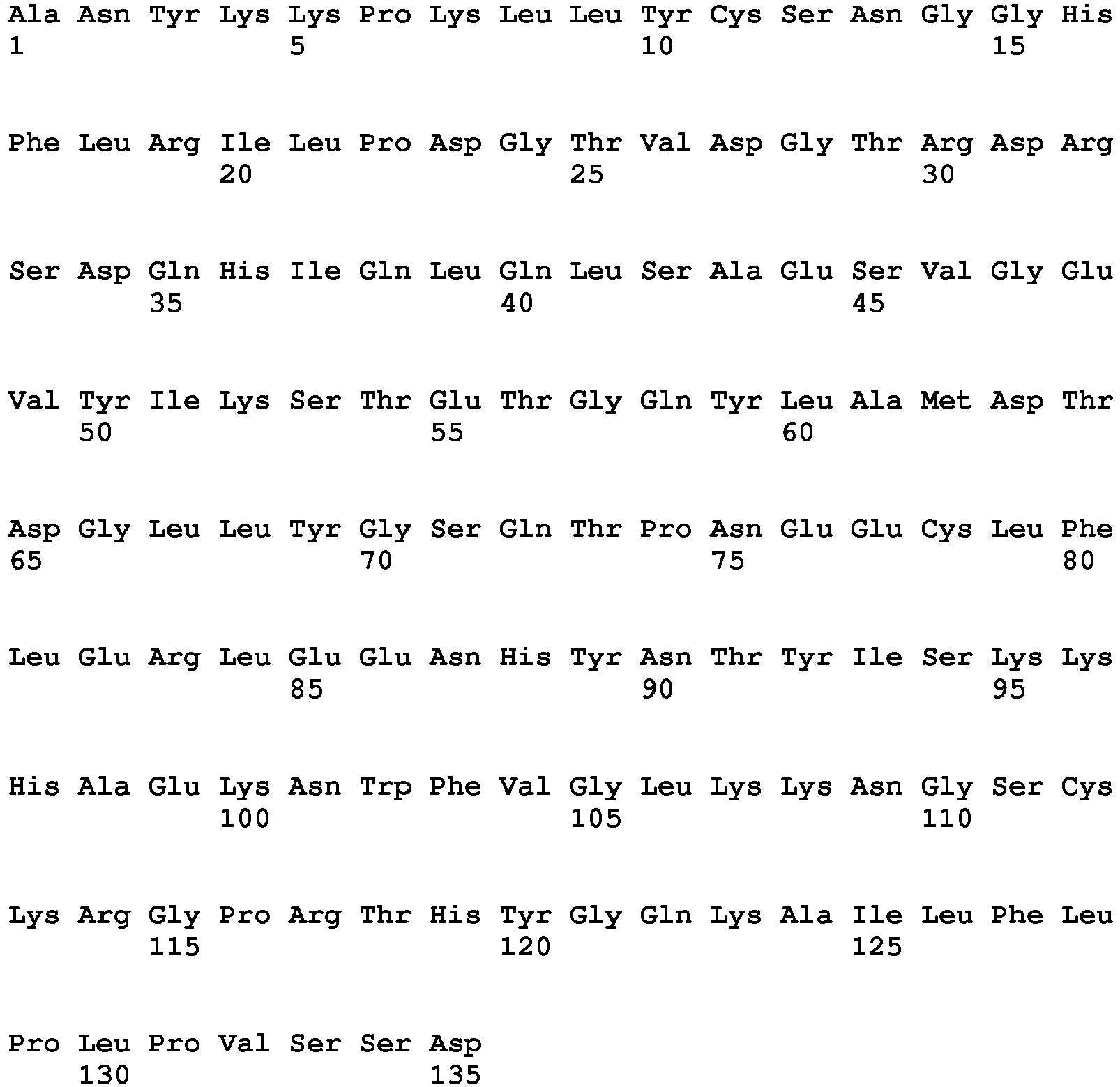
- the human aFGF may be a peptide having the amino acid sequence of SEQ ID NO:1, which is described in US Application No. 12/482,041 .
- the human aFGF may be constituted into any form suitable for the mode of administration selected.
- the human aFGF is administered topically, intraneurally, or intramuscularly.
- the skilled person in the art may easily determine the administrative pathway and the dosage dependent on his experiments or the physiological status of the patents suffering nerve compression syndromes, i.e. aging, body weight, severity, or dosage.
- 0.1 mg/ml human aFGF were injected into the left adductor hallucis muscles.
- human aFGF may be included in any carriers or compositions for sustained release.
- fibrin glue has been successfully used in a wide range of surgical fields such as skin graft fixation, nerve repair, cartilage reattachment and microvascular anastomoses. Researches also demonstrated sustained release of an active agent from fibrin glue for a longer period.
- human aFGF is contained in a fibrin glue mixture and administered to the subject suffering nerve compression syndrome or entrapment neuropathy.
- concentration of the aFGF in the fibrin glue mixture is preferably about 0.01 mg/ml to 100 mg/ml.
- the fibrin glue mixture contained 0.1 mg/ml aFGF when administered by adductor hallucis muscle injection.
- the fibrin glue mixture contained 0.04 mg/ml aFGF when administered by foramen magnum injection.
- the therapeutically effective amount, as well as dosage and frequency of administration may easily be determined according to their knowledge and standard methodology of merely routine experimentation based on the present disclosure.
- the fibrin glue mixture of the present invention referred to a pharmaceutical composition contains human aFGF, fibrinogen, aprotinin and divalent calcium ions, which may provide the effect of biocompatibility and sustained release.
- the divalent calcium ions can be any calcium ion sources, such as those provided by addition of calcium chloride or calcium carbonate.
- the fibrin glue mixture comprises 0.01- 100 mg/ml of human aFGF, and a fibrin glue containing 10-1000 mg/ml of fibrinogen, 10-500 KIU/ml of aprotinin and 0.1-10 mM of calcium chloride.
- the fibrin glue mixture may further comprise 10-100 IU/ml thrombin.
- the fibrin glue mixture of the present invention may be constituted into any form suitable for the mode of administration selected.
- the fibrin glue mixture is administered topically, intraneurally, or intramuscularly.
- the skilled person in the art may easily determine the administrative pathway dependent on his experiments or the physiological status of the patents suffering nerve compression syndromes, i.e. aging, body weight, severity, or dosage.
- a neurodegenerative animal model was designed to demonstrate the effect in promoting nerve fiber outgrowth and functional recovery.
- the left cervical dorsal root ganglion (DRG) was ligated with nylon suture 8-0.
- DRG left cervical dorsal root ganglion
- one week after ligation injury 5 ⁇ l of fibrin glue mixture comprising 0.04 mg/ml (0.2 ⁇ g aFGF in 5 ⁇ l saline), 10 mg/ml of fibrinogen, and 200 KIU/ml of aprotinin was injected directly into foramen magnum of the rats conducted the surgery.
- 10 ⁇ l of supplemental composition comprising 0.45 mM of calcium chloride and 10 IU/ml thrombin was injected into foramen magnum by the same injector.
- the functional improvement was determined by a grasping power test.
- the group administered with aFGF had a better effects on recovering neural function in terms of a significantly high grasping power ratio (injury side-L/ normal side- R) than the sham control group (administered with saline only).
- the present invention provides an unexpected treatment for recovery of neural function.
- a total of twenty adult female Sprague-Dawley rats, aged between 8 and 10 weeks, body weight 250-300 g were used.
- the animals were operated on a heating pad under general halothane anesthesia (1.0 liter/min to keep the breathing rate at approximately 60/min). Rectal temperatures were monitored and maintained during surgery. Bipolar electrocauterization was used to minimize bleeding.
- Antibiotics were injected subcutaneously before the operation and one daily for 1 week afterward. After the operation, animals were kept in ventilated, humidity- and temperature-controlled rooms with a 12/12-h light/ dark cycle.
- the rats were placed in a prone position and their C4-C8 vertebrae were exposed. Left C4 to C7 hemilaminectomies were carried out. While under the microscope, the left C5 to C7 cervical roots were identified and followed after the overlying facets had been removed by drilling slightly more laterally in these segments. The dura was then carefully opened and the C5 to C7 nerve roots were pulled tight and the C5, C6 and C7 section of left cervical dorsal root ganglion (DRG) were exposed and ligated with the distal segment by nylon suture 8-0. After the surgery, these rats were divided into two experimental groups.
- DRG left cervical dorsal root ganglion
- the rats were anesthetized with isoflurane and kept on the warm pad to maintain their body temperature, total 0.6 ⁇ g aFGF in 6 ⁇ l normal saline were slowly injected intramuscularly into adductor hallucis muscles (from 1 st to 4 th pads, 1.5 ⁇ l/pad) in aFGF treatment group, while control group was injected with normal saline.
- the neural function recovery was estimated by grasping power test (Table 1).
- aFGF mixed with 5 ⁇ l of cocktail solution containing 1.5 mg fibrinogen (Beriplast P, Germany), apotinin solution (200 KIU/ml, 20 ⁇ l) and HBSS (Hank's balanced solution, 80 ⁇ l) was slowly injected into the foramen magnum in aFGF treatment group, while control group was injected with normal saline mixed with 5 ⁇ l of cocktail solution.
- the grasping power test was a modification of the method of Bertelli and Mira ( J.A. Bertelli et al., and J.C. Mira, Neurosci Methods 58:151-5, 1995 ).
- a bar of wires was connected to an ordinary electronic balance. Both forepaws were tested, testing one forepaw at a time. The untested forepaw was temporarily prevented from grasping by wrapping it with adhesive tape, and the tested forepaw was kept free. The rats were allowed to grasp the bar while being lifted by the tail with increasing firmness until they loosened their grip, and the grasping power was scored.
- the grasping power index is the ratio of injured side/normal side (injury side-L/ normal side- R). Higher the score, better the functional recovery.
- Table 1 demonstrated grasping result of Group A injected intramuscularly into adductor hallucis muscle. It was observed that the rats of aFGF treatment group performed better grasping power than those in the control group. Table 1 Grasping Power Test Result of Group A (Intramuscularly Injection) Group Rat No.
Landscapes
- Health & Medical Sciences (AREA)
- Life Sciences & Earth Sciences (AREA)
- Chemical & Material Sciences (AREA)
- Animal Behavior & Ethology (AREA)
- Veterinary Medicine (AREA)
- General Health & Medical Sciences (AREA)
- Public Health (AREA)
- Pharmacology & Pharmacy (AREA)
- Medicinal Chemistry (AREA)
- Engineering & Computer Science (AREA)
- Epidemiology (AREA)
- Bioinformatics & Cheminformatics (AREA)
- Biomedical Technology (AREA)
- Neurosurgery (AREA)
- Proteomics, Peptides & Aminoacids (AREA)
- Immunology (AREA)
- General Chemical & Material Sciences (AREA)
- Neurology (AREA)
- Organic Chemistry (AREA)
- Chemical Kinetics & Catalysis (AREA)
- Nuclear Medicine, Radiotherapy & Molecular Imaging (AREA)
- Gastroenterology & Hepatology (AREA)
- Zoology (AREA)
- Dermatology (AREA)
- Inorganic Chemistry (AREA)
- Rheumatology (AREA)
- Psychiatry (AREA)
- Hospice & Palliative Care (AREA)
- Physical Education & Sports Medicine (AREA)
- Orthopedic Medicine & Surgery (AREA)
- Medicines That Contain Protein Lipid Enzymes And Other Medicines (AREA)
- Peptides Or Proteins (AREA)
- Medicinal Preparation (AREA)
Description
- Nerve compressive syndrome, also known as entrapment neuropathy, is a medical condition caused by direct pressure, structural changes in the nerve or adjacent tissues or mechanically injury on a single nerve. Its symptoms include pain, tingling, numbness, and muscle weakness. The symptoms affect just one particular part of the body, depending on which nerve is affected. Although a well known example is compression of the median nerve at the wrist (carpal tunnel syndrome), other nerves, such as the ulnar nerve at the wrist or the elbow and the spinal nerve roots at the vertebral foramen, are vulnerable. Long term effect of nerve compression may lead to neuron degeneration and the loss of neural function.
- Decompression surgery is a regular therapeutic method to remove the compressive source, such as bone or cartilage, to release a pressure and mitigate the neuropathic pain. After surgery, the symptoms may resolve completely, but if the compression was sufficiently severe or prolonged, the nerve may not recover fully and some symptoms may persist. Moreover, the functional recovery of the patients after the surgery will need longer time to be achieved. In most cases, the degeneration of nerve fiber cannot be repaired with the decompression surgery.
- Therefore, there is still a need on discovering a method for functional improvement or recovery of degenerated nerves in the early stage of entrapment neuropathy or after the decompression surgery.
- The invention unexpectedly discovers that acid fibroblast growth factor (aFGF) plays a critical role in neural regeneration. When administering aFGF to a subject suffering nerve compressive syndrome, it was observed functional recovery of the degenerative or injured nerve. In comparison with the traditional decompression surgery, injection aFGF is more effective and safer treatment.
- Accordingly, the invention is to provide a human acidic fibroblast growth factor (aFGF) for use as a pharmaceutical drug for treating neurodegeneration caused by nerve compression syndrome or entrapment neuropathy in a subject in need thereof.
- It is to be understood that both the foregoing general description and the following detailed description are exemplary and explanatory only and are not restrictive of the invention.
- The foregoing summary, as well as the following detailed description of the invention, will be better understood when read in conjunction with the appended drawings.
- In the drawings:
-
Fig.1 is a diagram showing the grasping power test performed by the rats having compression surgery administered saline or human aFGF by foramen magnum injection. * indicates the significant different between aFGF treatment group and control group (p <0.05). # indicates the significant different between pre-treatment and post-treatment of aFGF (p <0.05). - As used herein, the article "a" or "an" means one or more than one (that is, at least one) of the grammatical object of the article, unless otherwise made clear in the specific use of the article in only a singular sense.
- The invention is to provide a human acidic fibroblast growth factor (aFGF) for use as a pharmaceutical drug in a method for treating neurodegeneration caused by nerve compression syndrome or entrapment neuropathy in a subject in need thereof, wherein in said method the pharmaceutical drug is administered to the subject intraneurally, intramuscularly, or through the foramen magnum, and wherein the nerve compression or entrapment neuropathy is selected from the group consisting of herniated intervertebral disc, cervical nerve compression syndrome, thoracic outlet syndrome, and carpal tunnel syndrome.
- The term "nerve compression syndrome" or "entrapment neuropathy" as used herein refers to peripheral-nerve dysfunction that is due to localized interference of microvascular function and structural changes in the nerve or adjacent tissues. Nerve compression syndrome may be compressed by prolonged or repeated external force, such as sitting with one's arm over the back of a chair (radial nerve), frequently resting one's elbows on a table (ulnar nerve), or an ill-fitting cast or brace on the leg (peroneal nerve). As the compression becomes more severe over time, focal demyelination occurs, followed by axonal damage, and finally scarring. Moreover, some conditions cause nerves to be particularly susceptible to compression. These include diabetes, in which the blood supply to the nerves is already compromised, rendering the nerve more sensitive to minor degrees of compression.
- Common nerve compression syndromes include herniated intervertebral disc, cervical nerve compression syndrome, thoracic outlet syndrome, and carpal tunnel syndrome. Other nerve compression syndromes include anterior interosseous syndrome, pronator teres syndrome, ligament of Struthers syndrome, cubital tunnel syndrome, Guyon's canal syndrome, radial nerve compression, posterior interosseous nerve entrapment, Wartenberg's syndrome, suprascapular nerve entrapment, peroneal nerve compression, tarsal tunnel syndrome, meralgia paraesthetica, iliohypogastric nerve entrapment, obturator nerve entrapment, pudendal nerve entrapment, and abdominal cutaneous nerve entrapment syndrome.
- The term "human aFGF" as used herein refers to a native human aFGF or any modified peptide from the native human aFGF. The modified peptide may be obtained such as by one or more deletions, insertions or substitutions or combination thereof in the native human aFGF. In one embodiment of the invention, the modified human aFGF is a peptide comprising a native human aFGF shortened by a deletion of 20 amino acids from N-terminal of the native human aFGF, and an addition of Alanine before the shortened native aFGF. For example, the human aFGF may be a peptide having the amino acid sequence of SEQ ID NO:1, which is described in
US Application No. 12/482,041 - According to the invention, the human aFGF may be constituted into any form suitable for the mode of administration selected. Preferably, the human aFGF is administered topically, intraneurally, or intramuscularly. According to the invention, the skilled person in the art may easily determine the administrative pathway and the dosage dependent on his experiments or the physiological status of the patents suffering nerve compression syndromes, i.e. aging, body weight, severity, or dosage. In an embodiment of the invention, 0.1 mg/ml human aFGF were injected into the left adductor hallucis muscles.
- It is known that polypeptide or protein may easily degrade in vivo. In order to prolong the effect of human aFGF in a subject, human aFGF may be included in any carriers or compositions for sustained release. For example, fibrin glue has been successfully used in a wide range of surgical fields such as skin graft fixation, nerve repair, cartilage reattachment and microvascular anastomoses. Researches also demonstrated sustained release of an active agent from fibrin glue for a longer period.
- Thus, in one example of the present invention, human aFGF is contained in a fibrin glue mixture and administered to the subject suffering nerve compression syndrome or entrapment neuropathy. The concentration of the aFGF in the fibrin glue mixture is preferably about 0.01 mg/ml to 100 mg/ml. In one embodiment of the invention, the fibrin glue mixture contained 0.1 mg/ml aFGF when administered by adductor hallucis muscle injection. In another embodiment of the invention, the fibrin glue mixture contained 0.04 mg/ml aFGF when administered by foramen magnum injection. For those skilled in the art, the therapeutically effective amount, as well as dosage and frequency of administration, may easily be determined according to their knowledge and standard methodology of merely routine experimentation based on the present disclosure.
- The fibrin glue mixture of the present invention referred to a pharmaceutical composition contains human aFGF, fibrinogen, aprotinin and divalent calcium ions, which may provide the effect of biocompatibility and sustained release. In one example of the invention, the divalent calcium ions can be any calcium ion sources, such as those provided by addition of calcium chloride or calcium carbonate.
- According to the invention, the fibrin glue mixture comprises 0.01- 100 mg/ml of human aFGF, and a fibrin glue containing 10-1000 mg/ml of fibrinogen, 10-500 KIU/ml of aprotinin and 0.1-10 mM of calcium chloride. In one example of the present invention, in order to provide better coagulation effect, the fibrin glue mixture may further comprise 10-100 IU/ml thrombin.
- The fibrin glue mixture of the present invention may be constituted into any form suitable for the mode of administration selected. Preferably, the fibrin glue mixture is administered topically, intraneurally, or intramuscularly. According to the invention, the skilled person in the art may easily determine the administrative pathway dependent on his experiments or the physiological status of the patents suffering nerve compression syndromes, i.e. aging, body weight, severity, or dosage.
- According to the invention, a neurodegenerative animal model was designed to demonstrate the effect in promoting nerve fiber outgrowth and functional recovery. In one embodiment of the invention, the left cervical dorsal root ganglion (DRG) was ligated with nylon suture 8-0. One week after ligation injury, total 0.6 µg aFGF in 6 µl normal saline were injected into the left adductor hallucis muscles.
- In another embodiment of the invention, one week after ligation injury, 5 µl of fibrin glue mixture comprising 0.04 mg/ml (0.2 µg aFGF in 5 µl saline), 10 mg/ml of fibrinogen, and 200 KIU/ml of aprotinin was injected directly into foramen magnum of the rats conducted the surgery. Five minutes after the first injection, 10 µl of supplemental composition comprising 0.45 mM of calcium chloride and 10 IU/ml thrombin was injected into foramen magnum by the same injector.
- The functional improvement was determined by a grasping power test. As the result thus obtained from the test on 2 and 3 weeks after the treatment, the group administered with aFGF had a better effects on recovering neural function in terms of a significantly high grasping power ratio (injury side-L/ normal side- R) than the sham control group (administered with saline only). Given the results, the present invention provides an unexpected treatment for recovery of neural function.
- As neural regeneration is time-consuming, continuous administration is required for repairing neural degeneration. In one example of the invention, it was suggested to administer the subject the fibrin glue mixture comprising human aFGF once a month. Anyone skilled in the art can determine the dose regiment according to the standard methods and common knowledge and the performance of the subject to be administered.
- The present invention is more specifically explained by the following example.
- A total of twenty adult female Sprague-Dawley rats, aged between 8 and 10 weeks, body weight 250-300 g were used. The animals were operated on a heating pad under general halothane anesthesia (1.0 liter/min to keep the breathing rate at approximately 60/min). Rectal temperatures were monitored and maintained during surgery. Bipolar electrocauterization was used to minimize bleeding. Antibiotics were injected subcutaneously before the operation and one daily for 1 week afterward. After the operation, animals were kept in ventilated, humidity- and temperature-controlled rooms with a 12/12-h light/ dark cycle.
- The rats were placed in a prone position and their C4-C8 vertebrae were exposed. Left C4 to C7 hemilaminectomies were carried out. While under the microscope, the left C5 to C7 cervical roots were identified and followed after the overlying facets had been removed by drilling slightly more laterally in these segments. The dura was then carefully opened and the C5 to C7 nerve roots were pulled tight and the C5, C6 and C7 section of left cervical dorsal root ganglion (DRG) were exposed and ligated with the distal segment by nylon suture 8-0. After the surgery, these rats were divided into two experimental groups.
- In Group A, the rats were divided into a sham control group (treated with saline, n = 6), and aFGF group (treated with 0.6 µg aFGF in 6 µl, n = 5). One week after the compression surgery, the rats were anesthetized with isoflurane and kept on the warm pad to maintain their body temperature, total 0.6 µg aFGF in 6 µl normal saline were slowly injected intramuscularly into adductor hallucis muscles (from 1st to 4th pads, 1.5 µl/pad) in aFGF treatment group, while control group was injected with normal saline. The neural function recovery was estimated by grasping power test (Table 1).
- Alternatively in Group B, the rats were also divided into two groups: a sham control group treated with saline (n = 4), and aFGF treatment group (0.2 µg aFGF/ in 5 µl saline, n = 4). One week after the compression surgery, aFGF mixed with 5 µl of cocktail solution containing 1.5 mg fibrinogen (Beriplast P, Germany), apotinin solution (200 KIU/ml, 20 µl) and HBSS (Hank's balanced solution, 80 µl) was slowly injected into the foramen magnum in aFGF treatment group, while control group was injected with normal saline mixed with 5 µl of cocktail solution. Five minutes after the injection of cocktail solution with aFGF or saline, 10 µl of second solution containing 0.45 mM of calcium chloride and and 10 IU/ml thrombin was injected into the foramen magnum, and removed the injectors a few seconds later. The neural function recovery was also estimated by grasping power test (
Figure 1 ). - The grasping power test was a modification of the method of Bertelli and Mira (J.A. Bertelli et al., and J.C. Mira, Neurosci Methods 58:151-5, 1995). For the assessment of grasping strength, a bar of wires was connected to an ordinary electronic balance. Both forepaws were tested, testing one forepaw at a time. The untested forepaw was temporarily prevented from grasping by wrapping it with adhesive tape, and the tested forepaw was kept free. The rats were allowed to grasp the bar while being lifted by the tail with increasing firmness until they loosened their grip, and the grasping power was scored. The grasping power index is the ratio of injured side/normal side (injury side-L/ normal side- R). Higher the score, better the functional recovery.
- Table 1 demonstrated grasping result of Group A injected intramuscularly into adductor hallucis muscle. It was observed that the rats of aFGF treatment group performed better grasping power than those in the control group.
Table 1 Grasping Power Test Result of Group A (Intramuscularly Injection) Group Rat No. pre-treat-1d post-treat-6d post-treat-15d post-treat-40d aFGF A0055 0.647 0.743 - 0.830 A0056 0.714 0.366 0.950 0.874 A0061 0.620 - 0.604 1.060 A0062 0.606 - 0.815 0.750 A0065 0.296 - - 0.945 AVERAGE 0.576 0.554 0.790 0.874 Saline pre-treat-2d post-treat-5d post-treat-14d post-treat-44d A0057 0.433 0.409 0.721 0.382 A0058 0.686 0.540 0.433 0.895 A0059 0.353 0.448 - 0.579 A0060 0.479 1.078 0.715 1.077 A0063 0.581 - - 0.767 A0064 0.565 - - 1.234 AVERAGE 0.516 0.619 0.623 0.733 - The results of grasping power test for Group B was shown in
Figure 1 . Two tailed Student's test was performed to examine statistic significance with respect to the difference in grasping power between aFGF treatment group and control group, or between pre-treatment and post-treatment of aFGF. In theFigure. 1 , the score of the rats administered aFGF was significantly higher than those administered saline on the 2 week and 3 week after the treatment (*, p<0.05). On the other hand, the score of the rats administered aFGF after 2 week and 3 week were both significantly higher than those before the treatment of aFGF (#, p<0.05). These studies indicated that administering a subject having chronically/acutely compressed or mechanically injured nerves aFGF by the foramen magnum, could rescue neural function. It is a breakthrough in the current filed of treating neural degeneration caused by nerve compression syndrome. -
- <110> EU SOL BIOTECH CO., LTD.
- <120> METHOD FOR REPAIRING NEURODEGENERATION
- <130> 10P05020-PCT
- <150>
US 61/233,987
<151> 2009-08-14 - <160> 1
- <170> PatentIn version 3.5
- <210> 1
<211> 135
<212> PRT
<213> Homo sapiens - <400> 1
Claims (8)
- A human acidic fibroblast growth factor (aFGF) for use as a pharmaceutical drug in the treatment of neurodegeneration caused by nerve compression syndrome or entrapment neuropathy in a subject in need thereof, wherein the pharmaceutical drug is administered to the subject intraneurally, intramuscularly, or through the foramen magnum, and wherein the nerve compression or entrapment neuropathy is selected from the group consisting of herniated intervertebral disc, cervical nerve compression syndrome, thoracic outlet syndrome, and carpal tunnel syndrome.
- The aFGF for use according to claim 1, wherein the human aFGF comprises a deletion of 20 amino acids from N-terminal of the native human aFGF followed by an addition of Alanine at the N-terminal of the shortened native aFGF.
- The aFGF for use according to claim 1, wherein the human aFGF having the amino acid sequence of SEQ ID NO:1.
- The aFGF for use according to claim 1, wherein the human aFGF is further mixed with fibrinogen, aprotinin and divalent calcium ions to form a fibrin glue mixture.
- The aFGF for use according to claim 4, wherein the divalent calcium ions are provided by the addition of calcium chloride or calcium carbonate.
- The aFGF for use according to claim 4, wherein the fibrin glue mixture comprises 0.01- 100 mg/ml of human aFGF, and a fibrin glue containing 10-1000 mg/ml of fibrinogen, 10-500 KIU/ml of aprotinin and 0.1-10 mM of calcium chloride.
- The aFGF for use according to claim 4, wherein the fibrin glue mixture comprises 0.04 mg/ml human aFGF, 10 mg/ml of fibrinogen, 200 KIU/ml of aprotinin and 0.45 mM of calcium chloride.
- The aFGF for use according to claim 4, wherein the fibrin glue mixture further comprises 10-100 IU/ml thrombin.
Applications Claiming Priority (2)
| Application Number | Priority Date | Filing Date | Title |
|---|---|---|---|
| US23398709P | 2009-08-14 | 2009-08-14 | |
| PCT/CN2010/001240 WO2011017915A1 (en) | 2009-08-14 | 2010-08-16 | Method for repairing neurodegeneration |
Publications (3)
| Publication Number | Publication Date |
|---|---|
| EP2464376A1 EP2464376A1 (en) | 2012-06-20 |
| EP2464376A4 EP2464376A4 (en) | 2013-02-27 |
| EP2464376B1 true EP2464376B1 (en) | 2016-10-05 |
Family
ID=43585895
Family Applications (1)
| Application Number | Title | Priority Date | Filing Date |
|---|---|---|---|
| EP10807860.1A Active EP2464376B1 (en) | 2009-08-14 | 2010-08-16 | Method for repairing neurodegeneration |
Country Status (13)
| Country | Link |
|---|---|
| US (2) | US9198953B2 (en) |
| EP (1) | EP2464376B1 (en) |
| JP (1) | JP2013501736A (en) |
| KR (1) | KR20120051605A (en) |
| CN (1) | CN102497876A (en) |
| AU (1) | AU2010282105B9 (en) |
| BR (1) | BRPI1016038A2 (en) |
| CA (1) | CA2765265A1 (en) |
| IL (1) | IL215986A0 (en) |
| MX (1) | MX2012001908A (en) |
| NZ (1) | NZ596075A (en) |
| TW (1) | TWI434698B (en) |
| WO (1) | WO2011017915A1 (en) |
Families Citing this family (7)
| Publication number | Priority date | Publication date | Assignee | Title |
|---|---|---|---|---|
| US20110280838A1 (en) * | 2007-12-27 | 2011-11-17 | Advanced Technologies And Regenerative Medicine, Llc | Treatment of intervertebral disc degeneration using human umbilical cord tissue-derived cells |
| US9592258B2 (en) | 2003-06-27 | 2017-03-14 | DePuy Synthes Products, Inc. | Treatment of neurological injury by administration of human umbilical cord tissue-derived cells |
| TWI634898B (en) * | 2013-10-07 | 2018-09-11 | 雅祥生技醫藥股份有限公司 | Modified acidic fibroblast growth factors and composition thereof |
| US20170224726A1 (en) * | 2014-02-18 | 2017-08-10 | Glenn Abrahmsohn | Compositions and methods for pain relief without numbness |
| US20190125836A1 (en) * | 2017-10-31 | 2019-05-02 | Eusol Biotech Co., Ltd. | USE OF aFGF FOR PREVENTING OR TREATING DISEASES RELATED TO MUSCLE WASTING |
| TWI848060B (en) * | 2019-02-28 | 2024-07-11 | 雅祥生技醫藥股份有限公司 | Use of recombinant protein for treating metabolic disorders |
| MX2022003768A (en) * | 2019-10-03 | 2022-08-19 | Vitruvia Holdings Inc | Method of connective tissue restoration. |
Family Cites Families (10)
| Publication number | Priority date | Publication date | Assignee | Title |
|---|---|---|---|---|
| US5733871A (en) | 1991-11-08 | 1998-03-31 | The General Hospital Corporation | Methods for the treatment of neuronal damage associated with ischemia, hypoxia or neurodegeneration |
| EP0804257B1 (en) * | 1995-01-16 | 2003-07-09 | Baxter International Inc. | Self-supporting sheet-like material of cross-linked fibrin for preventing post operative adhesions |
| JP2004528005A (en) | 2000-08-15 | 2004-09-16 | ファージ バイオテクノロジー コーポレイション | Phage-dependent hyperproduction of biologically active proteins and peptides |
| AU8825601A (en) | 2000-08-15 | 2002-02-25 | Phage Biotechnology Corp | A method of producing biologically active human acidic fibroblast growth factor and its use in promoting angiogenesis |
| US8146602B2 (en) * | 2003-01-29 | 2012-04-03 | Taipei Veterans General Hospital | Method and mixture for nerve root repair |
| JP4505631B2 (en) * | 2004-03-31 | 2010-07-21 | 独立行政法人産業技術総合研究所 | Heparin-binding protein with heparan sulfate sugar chain added, method for producing the same, and pharmaceutical composition containing the same |
| US20070134204A1 (en) | 2005-12-09 | 2007-06-14 | Henrich Cheng | Method for treating nerve injury and vector construct for the same |
| WO2007138236A1 (en) * | 2006-05-24 | 2007-12-06 | The University Of Birmingham | Sheddase enzymes for neuron growth |
| US20080109035A1 (en) * | 2006-10-31 | 2008-05-08 | Henrich Cheng | Methods and Compositions for Repairing Common Peroneal Nerve Lesions |
| US7956033B2 (en) * | 2008-06-10 | 2011-06-07 | Eu Sol Biotech Co., Ltd. | Modified peptide of human acidic fibroblast growth factor |
-
2010
- 2010-08-13 TW TW099127105A patent/TWI434698B/en active
- 2010-08-13 US US12/856,086 patent/US9198953B2/en active Active
- 2010-08-16 BR BRPI1016038A patent/BRPI1016038A2/en not_active IP Right Cessation
- 2010-08-16 KR KR1020117029693A patent/KR20120051605A/en not_active Ceased
- 2010-08-16 CN CN2010800283941A patent/CN102497876A/en active Pending
- 2010-08-16 MX MX2012001908A patent/MX2012001908A/en not_active Application Discontinuation
- 2010-08-16 WO PCT/CN2010/001240 patent/WO2011017915A1/en not_active Ceased
- 2010-08-16 JP JP2012524084A patent/JP2013501736A/en active Pending
- 2010-08-16 AU AU2010282105A patent/AU2010282105B9/en active Active
- 2010-08-16 CA CA2765265A patent/CA2765265A1/en not_active Abandoned
- 2010-08-16 EP EP10807860.1A patent/EP2464376B1/en active Active
- 2010-08-16 NZ NZ596075A patent/NZ596075A/en not_active IP Right Cessation
-
2011
- 2011-10-27 IL IL215986A patent/IL215986A0/en unknown
-
2015
- 2015-11-30 US US14/954,469 patent/US20160106811A1/en not_active Abandoned
Also Published As
| Publication number | Publication date |
|---|---|
| AU2010282105B2 (en) | 2015-07-23 |
| EP2464376A1 (en) | 2012-06-20 |
| KR20120051605A (en) | 2012-05-22 |
| WO2011017915A1 (en) | 2011-02-17 |
| IL215986A0 (en) | 2012-01-31 |
| AU2010282105A1 (en) | 2011-11-10 |
| US20110039774A1 (en) | 2011-02-17 |
| TWI434698B (en) | 2014-04-21 |
| EP2464376A4 (en) | 2013-02-27 |
| NZ596075A (en) | 2013-06-28 |
| TW201124154A (en) | 2011-07-16 |
| BRPI1016038A2 (en) | 2016-07-05 |
| AU2010282105B9 (en) | 2015-07-30 |
| US20160106811A1 (en) | 2016-04-21 |
| CN102497876A (en) | 2012-06-13 |
| JP2013501736A (en) | 2013-01-17 |
| MX2012001908A (en) | 2012-03-16 |
| US9198953B2 (en) | 2015-12-01 |
| CA2765265A1 (en) | 2011-02-17 |
Similar Documents
| Publication | Publication Date | Title |
|---|---|---|
| US20160106811A1 (en) | Method for repairing neurodegeneration | |
| JP7108724B2 (en) | Use of Neuregulin to Treat Peripheral Nerve Injury | |
| JP2016516722A5 (en) | ||
| RU2715908C2 (en) | Using neuregulin for treating peripheral nerves injury | |
| Lyras et al. | Effect of combined administration of transforming growth factor-b1 and insulin-like growth factor I on the mechanical properties of a patellar tendon defect model in rabbits. | |
| Hato et al. | Clinical study of treatment methods and associated factors in mandibular osteoradionecrosis | |
| US10729741B2 (en) | Methods of treating burns with i.v. cP12 in a window from 2 to 6 hours after injury | |
| US20240238372A1 (en) | Hip/pap protein or a derivative thereof for treating peripheral neuropathy | |
| Yousefimanesh et al. | A comparative study of the results of conventional surgery and diode laser in maxillary labial frenectomy: a randomized clinical trial | |
| TW201927332A (en) | Use of aFGF for preventing or treating diseases related to muscle wasting | |
| El-Said | Intensive care unit-acquired weakness. | |
| WO2024102741A2 (en) | Compositions for use in treating headache disorders | |
| JALAEIAN et al. | Combination of propofol and tranexamic acid as a protocol of providing optimal surgical condition in comparison with halothane during tympanoplasty |
Legal Events
| Date | Code | Title | Description |
|---|---|---|---|
| PUAI | Public reference made under article 153(3) epc to a published international application that has entered the european phase |
Free format text: ORIGINAL CODE: 0009012 |
|
| 17P | Request for examination filed |
Effective date: 20111018 |
|
| AK | Designated contracting states |
Kind code of ref document: A1 Designated state(s): AL AT BE BG CH CY CZ DE DK EE ES FI FR GB GR HR HU IE IS IT LI LT LU LV MC MK MT NL NO PL PT RO SE SI SK SM TR |
|
| DAX | Request for extension of the european patent (deleted) | ||
| A4 | Supplementary search report drawn up and despatched |
Effective date: 20130125 |
|
| RIC1 | Information provided on ipc code assigned before grant |
Ipc: A61K 38/18 20060101AFI20130121BHEP Ipc: A61P 25/00 20060101ALI20130121BHEP |
|
| 17Q | First examination report despatched |
Effective date: 20141023 |
|
| GRAP | Despatch of communication of intention to grant a patent |
Free format text: ORIGINAL CODE: EPIDOSNIGR1 |
|
| INTG | Intention to grant announced |
Effective date: 20160318 |
|
| GRAS | Grant fee paid |
Free format text: ORIGINAL CODE: EPIDOSNIGR3 |
|
| GRAA | (expected) grant |
Free format text: ORIGINAL CODE: 0009210 |
|
| AK | Designated contracting states |
Kind code of ref document: B1 Designated state(s): AL AT BE BG CH CY CZ DE DK EE ES FI FR GB GR HR HU IE IS IT LI LT LU LV MC MK MT NL NO PL PT RO SE SI SK SM TR |
|
| REG | Reference to a national code |
Ref country code: GB Ref legal event code: FG4D |
|
| REG | Reference to a national code |
Ref country code: CH Ref legal event code: EP |
|
| REG | Reference to a national code |
Ref country code: AT Ref legal event code: REF Ref document number: 834024 Country of ref document: AT Kind code of ref document: T Effective date: 20161015 |
|
| REG | Reference to a national code |
Ref country code: IE Ref legal event code: FG4D |
|
| REG | Reference to a national code |
Ref country code: DE Ref legal event code: R096 Ref document number: 602010037009 Country of ref document: DE |
|
| REG | Reference to a national code |
Ref country code: NL Ref legal event code: MP Effective date: 20161005 |
|
| REG | Reference to a national code |
Ref country code: LT Ref legal event code: MG4D |
|
| PG25 | Lapsed in a contracting state [announced via postgrant information from national office to epo] |
Ref country code: LV Free format text: LAPSE BECAUSE OF FAILURE TO SUBMIT A TRANSLATION OF THE DESCRIPTION OR TO PAY THE FEE WITHIN THE PRESCRIBED TIME-LIMIT Effective date: 20161005 |
|
| REG | Reference to a national code |
Ref country code: AT Ref legal event code: MK05 Ref document number: 834024 Country of ref document: AT Kind code of ref document: T Effective date: 20161005 |
|
| PG25 | Lapsed in a contracting state [announced via postgrant information from national office to epo] |
Ref country code: GR Free format text: LAPSE BECAUSE OF FAILURE TO SUBMIT A TRANSLATION OF THE DESCRIPTION OR TO PAY THE FEE WITHIN THE PRESCRIBED TIME-LIMIT Effective date: 20170106 Ref country code: LT Free format text: LAPSE BECAUSE OF FAILURE TO SUBMIT A TRANSLATION OF THE DESCRIPTION OR TO PAY THE FEE WITHIN THE PRESCRIBED TIME-LIMIT Effective date: 20161005 Ref country code: NO Free format text: LAPSE BECAUSE OF FAILURE TO SUBMIT A TRANSLATION OF THE DESCRIPTION OR TO PAY THE FEE WITHIN THE PRESCRIBED TIME-LIMIT Effective date: 20170105 Ref country code: SE Free format text: LAPSE BECAUSE OF FAILURE TO SUBMIT A TRANSLATION OF THE DESCRIPTION OR TO PAY THE FEE WITHIN THE PRESCRIBED TIME-LIMIT Effective date: 20161005 |
|
| PG25 | Lapsed in a contracting state [announced via postgrant information from national office to epo] |
Ref country code: ES Free format text: LAPSE BECAUSE OF FAILURE TO SUBMIT A TRANSLATION OF THE DESCRIPTION OR TO PAY THE FEE WITHIN THE PRESCRIBED TIME-LIMIT Effective date: 20161005 Ref country code: HR Free format text: LAPSE BECAUSE OF FAILURE TO SUBMIT A TRANSLATION OF THE DESCRIPTION OR TO PAY THE FEE WITHIN THE PRESCRIBED TIME-LIMIT Effective date: 20161005 Ref country code: IS Free format text: LAPSE BECAUSE OF FAILURE TO SUBMIT A TRANSLATION OF THE DESCRIPTION OR TO PAY THE FEE WITHIN THE PRESCRIBED TIME-LIMIT Effective date: 20170205 Ref country code: BE Free format text: LAPSE BECAUSE OF FAILURE TO SUBMIT A TRANSLATION OF THE DESCRIPTION OR TO PAY THE FEE WITHIN THE PRESCRIBED TIME-LIMIT Effective date: 20161005 Ref country code: NL Free format text: LAPSE BECAUSE OF FAILURE TO SUBMIT A TRANSLATION OF THE DESCRIPTION OR TO PAY THE FEE WITHIN THE PRESCRIBED TIME-LIMIT Effective date: 20161005 Ref country code: AT Free format text: LAPSE BECAUSE OF FAILURE TO SUBMIT A TRANSLATION OF THE DESCRIPTION OR TO PAY THE FEE WITHIN THE PRESCRIBED TIME-LIMIT Effective date: 20161005 Ref country code: FI Free format text: LAPSE BECAUSE OF FAILURE TO SUBMIT A TRANSLATION OF THE DESCRIPTION OR TO PAY THE FEE WITHIN THE PRESCRIBED TIME-LIMIT Effective date: 20161005 Ref country code: PL Free format text: LAPSE BECAUSE OF FAILURE TO SUBMIT A TRANSLATION OF THE DESCRIPTION OR TO PAY THE FEE WITHIN THE PRESCRIBED TIME-LIMIT Effective date: 20161005 Ref country code: PT Free format text: LAPSE BECAUSE OF FAILURE TO SUBMIT A TRANSLATION OF THE DESCRIPTION OR TO PAY THE FEE WITHIN THE PRESCRIBED TIME-LIMIT Effective date: 20170206 |
|
| REG | Reference to a national code |
Ref country code: DE Ref legal event code: R097 Ref document number: 602010037009 Country of ref document: DE |
|
| REG | Reference to a national code |
Ref country code: FR Ref legal event code: PLFP Year of fee payment: 8 |
|
| PG25 | Lapsed in a contracting state [announced via postgrant information from national office to epo] |
Ref country code: CZ Free format text: LAPSE BECAUSE OF FAILURE TO SUBMIT A TRANSLATION OF THE DESCRIPTION OR TO PAY THE FEE WITHIN THE PRESCRIBED TIME-LIMIT Effective date: 20161005 Ref country code: DK Free format text: LAPSE BECAUSE OF FAILURE TO SUBMIT A TRANSLATION OF THE DESCRIPTION OR TO PAY THE FEE WITHIN THE PRESCRIBED TIME-LIMIT Effective date: 20161005 Ref country code: SK Free format text: LAPSE BECAUSE OF FAILURE TO SUBMIT A TRANSLATION OF THE DESCRIPTION OR TO PAY THE FEE WITHIN THE PRESCRIBED TIME-LIMIT Effective date: 20161005 Ref country code: RO Free format text: LAPSE BECAUSE OF FAILURE TO SUBMIT A TRANSLATION OF THE DESCRIPTION OR TO PAY THE FEE WITHIN THE PRESCRIBED TIME-LIMIT Effective date: 20161005 Ref country code: EE Free format text: LAPSE BECAUSE OF FAILURE TO SUBMIT A TRANSLATION OF THE DESCRIPTION OR TO PAY THE FEE WITHIN THE PRESCRIBED TIME-LIMIT Effective date: 20161005 |
|
| PLBE | No opposition filed within time limit |
Free format text: ORIGINAL CODE: 0009261 |
|
| STAA | Information on the status of an ep patent application or granted ep patent |
Free format text: STATUS: NO OPPOSITION FILED WITHIN TIME LIMIT |
|
| PG25 | Lapsed in a contracting state [announced via postgrant information from national office to epo] |
Ref country code: IT Free format text: LAPSE BECAUSE OF FAILURE TO SUBMIT A TRANSLATION OF THE DESCRIPTION OR TO PAY THE FEE WITHIN THE PRESCRIBED TIME-LIMIT Effective date: 20161005 Ref country code: SM Free format text: LAPSE BECAUSE OF FAILURE TO SUBMIT A TRANSLATION OF THE DESCRIPTION OR TO PAY THE FEE WITHIN THE PRESCRIBED TIME-LIMIT Effective date: 20161005 Ref country code: BG Free format text: LAPSE BECAUSE OF FAILURE TO SUBMIT A TRANSLATION OF THE DESCRIPTION OR TO PAY THE FEE WITHIN THE PRESCRIBED TIME-LIMIT Effective date: 20170105 |
|
| 26N | No opposition filed |
Effective date: 20170706 |
|
| PG25 | Lapsed in a contracting state [announced via postgrant information from national office to epo] |
Ref country code: SI Free format text: LAPSE BECAUSE OF FAILURE TO SUBMIT A TRANSLATION OF THE DESCRIPTION OR TO PAY THE FEE WITHIN THE PRESCRIBED TIME-LIMIT Effective date: 20161005 |
|
| REG | Reference to a national code |
Ref country code: CH Ref legal event code: PL |
|
| PG25 | Lapsed in a contracting state [announced via postgrant information from national office to epo] |
Ref country code: MC Free format text: LAPSE BECAUSE OF FAILURE TO SUBMIT A TRANSLATION OF THE DESCRIPTION OR TO PAY THE FEE WITHIN THE PRESCRIBED TIME-LIMIT Effective date: 20161005 |
|
| PG25 | Lapsed in a contracting state [announced via postgrant information from national office to epo] |
Ref country code: LI Free format text: LAPSE BECAUSE OF NON-PAYMENT OF DUE FEES Effective date: 20170831 Ref country code: CH Free format text: LAPSE BECAUSE OF NON-PAYMENT OF DUE FEES Effective date: 20170831 |
|
| REG | Reference to a national code |
Ref country code: IE Ref legal event code: MM4A |
|
| PG25 | Lapsed in a contracting state [announced via postgrant information from national office to epo] |
Ref country code: LU Free format text: LAPSE BECAUSE OF NON-PAYMENT OF DUE FEES Effective date: 20170816 |
|
| REG | Reference to a national code |
Ref country code: FR Ref legal event code: PLFP Year of fee payment: 9 |
|
| PG25 | Lapsed in a contracting state [announced via postgrant information from national office to epo] |
Ref country code: IE Free format text: LAPSE BECAUSE OF NON-PAYMENT OF DUE FEES Effective date: 20170816 |
|
| PG25 | Lapsed in a contracting state [announced via postgrant information from national office to epo] |
Ref country code: MT Free format text: LAPSE BECAUSE OF NON-PAYMENT OF DUE FEES Effective date: 20170816 |
|
| PG25 | Lapsed in a contracting state [announced via postgrant information from national office to epo] |
Ref country code: HU Free format text: LAPSE BECAUSE OF FAILURE TO SUBMIT A TRANSLATION OF THE DESCRIPTION OR TO PAY THE FEE WITHIN THE PRESCRIBED TIME-LIMIT; INVALID AB INITIO Effective date: 20100816 |
|
| PG25 | Lapsed in a contracting state [announced via postgrant information from national office to epo] |
Ref country code: CY Free format text: LAPSE BECAUSE OF NON-PAYMENT OF DUE FEES Effective date: 20161005 |
|
| PG25 | Lapsed in a contracting state [announced via postgrant information from national office to epo] |
Ref country code: MK Free format text: LAPSE BECAUSE OF FAILURE TO SUBMIT A TRANSLATION OF THE DESCRIPTION OR TO PAY THE FEE WITHIN THE PRESCRIBED TIME-LIMIT Effective date: 20161005 |
|
| PG25 | Lapsed in a contracting state [announced via postgrant information from national office to epo] |
Ref country code: TR Free format text: LAPSE BECAUSE OF FAILURE TO SUBMIT A TRANSLATION OF THE DESCRIPTION OR TO PAY THE FEE WITHIN THE PRESCRIBED TIME-LIMIT Effective date: 20161005 |
|
| PG25 | Lapsed in a contracting state [announced via postgrant information from national office to epo] |
Ref country code: AL Free format text: LAPSE BECAUSE OF FAILURE TO SUBMIT A TRANSLATION OF THE DESCRIPTION OR TO PAY THE FEE WITHIN THE PRESCRIBED TIME-LIMIT Effective date: 20161005 |
|
| PGFP | Annual fee paid to national office [announced via postgrant information from national office to epo] |
Ref country code: DE Payment date: 20250827 Year of fee payment: 16 |
|
| PGFP | Annual fee paid to national office [announced via postgrant information from national office to epo] |
Ref country code: GB Payment date: 20250827 Year of fee payment: 16 |
|
| PGFP | Annual fee paid to national office [announced via postgrant information from national office to epo] |
Ref country code: FR Payment date: 20250825 Year of fee payment: 16 |