EP2464224B1 - Methods for drug delivery comprising unfolding and folding proteins and peptide nanoparticles - Google Patents
Methods for drug delivery comprising unfolding and folding proteins and peptide nanoparticles Download PDFInfo
- Publication number
- EP2464224B1 EP2464224B1 EP10808554.9A EP10808554A EP2464224B1 EP 2464224 B1 EP2464224 B1 EP 2464224B1 EP 10808554 A EP10808554 A EP 10808554A EP 2464224 B1 EP2464224 B1 EP 2464224B1
- Authority
- EP
- European Patent Office
- Prior art keywords
- albumin
- solution
- nanoparticles
- paclitaxel
- unfolding
- Prior art date
- Legal status (The legal status is an assumption and is not a legal conclusion. Google has not performed a legal analysis and makes no representation as to the accuracy of the status listed.)
- Active
Links
Images



Classifications
-
- A—HUMAN NECESSITIES
- A61—MEDICAL OR VETERINARY SCIENCE; HYGIENE
- A61K—PREPARATIONS FOR MEDICAL, DENTAL OR TOILETRY PURPOSES
- A61K9/00—Medicinal preparations characterised by special physical form
- A61K9/14—Particulate form, e.g. powders, Processes for size reducing of pure drugs or the resulting products, Pure drug nanoparticles
- A61K9/19—Particulate form, e.g. powders, Processes for size reducing of pure drugs or the resulting products, Pure drug nanoparticles lyophilised, i.e. freeze-dried, solutions or dispersions
-
- A—HUMAN NECESSITIES
- A61—MEDICAL OR VETERINARY SCIENCE; HYGIENE
- A61K—PREPARATIONS FOR MEDICAL, DENTAL OR TOILETRY PURPOSES
- A61K31/00—Medicinal preparations containing organic active ingredients
- A61K31/33—Heterocyclic compounds
- A61K31/335—Heterocyclic compounds having oxygen as the only ring hetero atom, e.g. fungichromin
- A61K31/337—Heterocyclic compounds having oxygen as the only ring hetero atom, e.g. fungichromin having four-membered rings, e.g. taxol
-
- A—HUMAN NECESSITIES
- A61—MEDICAL OR VETERINARY SCIENCE; HYGIENE
- A61K—PREPARATIONS FOR MEDICAL, DENTAL OR TOILETRY PURPOSES
- A61K9/00—Medicinal preparations characterised by special physical form
- A61K9/48—Preparations in capsules, e.g. of gelatin, of chocolate
- A61K9/50—Microcapsules having a gas, liquid or semi-solid filling; Solid microparticles or pellets surrounded by a distinct coating layer, e.g. coated microspheres, coated drug crystals
- A61K9/51—Nanocapsules; Nanoparticles
- A61K9/5107—Excipients; Inactive ingredients
- A61K9/513—Organic macromolecular compounds; Dendrimers
- A61K9/5138—Organic macromolecular compounds; Dendrimers obtained by reactions only involving carbon-to-carbon unsaturated bonds, e.g. polyvinyl pyrrolidone, poly(meth)acrylates
-
- A—HUMAN NECESSITIES
- A61—MEDICAL OR VETERINARY SCIENCE; HYGIENE
- A61K—PREPARATIONS FOR MEDICAL, DENTAL OR TOILETRY PURPOSES
- A61K9/00—Medicinal preparations characterised by special physical form
- A61K9/48—Preparations in capsules, e.g. of gelatin, of chocolate
- A61K9/50—Microcapsules having a gas, liquid or semi-solid filling; Solid microparticles or pellets surrounded by a distinct coating layer, e.g. coated microspheres, coated drug crystals
- A61K9/51—Nanocapsules; Nanoparticles
- A61K9/5192—Processes
-
- A—HUMAN NECESSITIES
- A61—MEDICAL OR VETERINARY SCIENCE; HYGIENE
- A61P—SPECIFIC THERAPEUTIC ACTIVITY OF CHEMICAL COMPOUNDS OR MEDICINAL PREPARATIONS
- A61P35/00—Antineoplastic agents
Definitions
- the present invention relates to a method for the preparation of nanoparticles encasing docetaxel within albumin for in vivo delivery.
- Intravenous administration of pharmacologically active agents offers rapid and direct equilibration with the blood stream which carries the medication to the rest of the body.
- encapsulation of agents to micro- or nano-particles is a useful method.
- intravenous injection of the therapeutic particles would allow gradual release of the drugs inside the intravascular compartment.
- drugs in the therapeutic particles would be target delivered when the therapeutic particles are made from target materials.
- Protein particles have been reported in the literatures as carriers of pharmacologically or diagnostic agents. Microspheres of albumin have been prepared by either heat crosslinking or chemical crosslinking. For instance, the literature has disclosed the use of albumin as a drug carrier for taxanes, including paclitaxel and doxorubicin derivatives. [See Journal of Controlled Release 132 (2008) 171-183 ; Advanced Drug Delivery Reviews 60 (2008) 876-885 ]. Further, additional references have disclosed the use of protein cages for drug delivery [ Small 5 (2009) 1706-1721 ]. However, the drug delivery systems cited in the literature are limited by their drug loading capacity as well as limitations as to the therapeutic agents that may be incorporated into the drug delivery systems.
- Heat crosslinked microspheres are produced from an emulsified mixture (e.g., albumin, the agent to be incorporated, and suitable oil) at temperatures between 100 °C and 150 °C. The microspheres are then washed with a suitable solvent and stored. Leucuta et al. [International Journal of Pharmaceutics Vol. 41:213-217(1988 )] describe the method of preparation of heat crosslinked microspheres.
- the reported methods for preparation of protein nanoparticles provide difficulty in encapsulating water-insoluble agents. This limitation is caused by the method itself that relies on crosslinking of proteins in the aqueous phase of an emulsion. Any aqueous-soluble agent dissolved in the protein-containing aqueous phase may be entrapped within crosslinked protein matrix, but a poorly water-soluble or oil-soluble agent cannot be incorporated into a protein matrix formed by these techniques. Furthermore, the protein used for encapsulation is often already denatured and their bioactivity is easily lost during the preparation.
- WO 2008/124165 A2 discloses a method for forming a self-assembling nanoparticle drug delivery system comprising (a) mixing a bioactive agent with an HBV core protein modified to have a C-terminal tail with binding affinity of about 10 nM and about 500 nM for the bioactive agent in the presence of a denaturing agent at a concentration of about 1 M to about 6 M to form a cage solution, (b) encapsulating said bioactive agent in the core protein cage by raising the ionic strength of said cage solution to obtain a final salt concentration of about 50 mM to about 600 mM and decreasing the denaturing agent concentration to permit assembly of the core protein cage, (c) adding a lipid linker molecule to facilitate lipid coating of the core protein to said cage solution, (d) adding a complex lipid coating material comprised of POPG, cholesterol, and HSPC at a mass value of about 10 % to about 40 % of total protein to said cage solution to form a nanoparticle, and (e) purifying said nanop
- WO 2007/069272 A2 discloses a method of making a novel and improved composition for cancer therapy, comprising the steps of (i) mixing at least one anticancer drug with at least one polymer in a solvent, (ii) optionally carrying out step (i) in the presence of one or more pharmaceutically acceptable carriers, (iii) obtaining nanoparticles by removing the solvent and (iv) subjecting the nanoparticles to particle sizing such that the obtained particles have D10 ⁇ 80 nm, D50 of about 200 nm and D90 ⁇ 450 nm and have substantially no free drug, the composition being such that it provides substantially reduced chemotherapy-induced side-effects like alopecia.
- CN 101 385 857 A relates to a nanometer protein preparation and a method for its manufacturing.
- DE 10 2005 062 440 A1 relates to a method for the preparation of nanoparticles for the treatment of resistant tumor cells, comprising the steps of dissolving of at least one protein and at least one active agent in an aqueous medium, precipitating the protein in the form of nanoparticles by the controlled addition of a non-solvent for the protein, preferably of an organic solvent, in particular of ethanol, stabilizing the precipitated nanoparticles by adding a crosslinking agent or by a heat treatment, and purifying the nanoparticles by washing/centrifugation.
- a non-solvent for the protein preferably of an organic solvent, in particular of ethanol
- stabilizing the precipitated nanoparticles by adding a crosslinking agent or by a heat treatment
- purifying the nanoparticles by washing/centrifugation.
- WO 2008/106503 A2 discloses a method of forming a plurality of monodisperse pharmaceutical composition particles comprising introducing a solution having at least 20 weight % protein into a plurality of cavities of a polymer mold, wherein the cavities have predetermined geometric shapes and a broadest dimension less than about 10 micrometers, and lyophilizing the aqueous solution within the cavities of the mold.
- the present invention provides a method for the preparation of nanoparticles encasing docetaxel within albumin for in vivo delivery as claimed in claim 1.
- nanoparticles formed by the method of the current invention may be able to bind up to 90% of the added pharmacologically active agent, an amount that exceeds prior art methods and creates a more efficient process and cost-effective method.
- the current invention allows for a drug loading capacity of up to about 40%, such that about 40% of the weight of the nanoparticle may comprise the pharmacologically active agent. Due to the higher drug loading capacity, the skilled artisan will be able to achieve smaller drug volumes for administration to the patient, shorter administration times, and thus better patient compliance. The higher drug loading capacity decreases the amount of protein used to deliver the pharmacologically active agent, which also improves the cost-efficiency of the product.
- Another benefit of the current invention is that it can selectively deliver pharmacologically active agents for clinical use.
- Particles prepared from the method described herein allow some targeting to certain organs and body systems. Since the protein carrier is albumin, targeting to the liver, lungs, spleen or lymphatic circulation is feasible by varying the size of particles. Accordingly, the current invention provides a more efficient, cost effective method for delivering docetaxel to targeted areas of the body.
- in vivo delivery refers to delivery of a pharmacologically active agent by such routes of administration as oral, intravenous, subcutaneous, intraperitoneal, intrathecal, intranasal, intramuscular, inhalational, topical, transdermal, rectal (suppositories), vaginal, and the like.
- nanoparticle refers to a small unit that behaves as a whole unit in terms of its transport and properties.
- the nanoparticles of the current invention have an average particle diameter ranging from 50 nm to 300 nm. Further, the nanoparticles of the current invention are capable of binding a pharmacologically active agent (active agent), such that 1 % to 40 % of the weight of the nanoparticle may comprise the active agent.
- active agent pharmacologically active agent
- the method as described herein incorporate a hydrophobic pharmacologically active agent, such that the active agent may be delivered by the nanoparticle to targeted areas of the human body, wherein said active agent is docetaxel.
- the docetaxel may include crystalline or amorphous forms of the compounds listed herein, including the solvate and non-solvate forms.
- docetaxel incorporated into the method of the current invention will vary depending upon the amount of albumin incorporated and will also vary depending upon the amount of nanoparticles desired to be produced.
- the docetaxel may be incorporated as a pure substance with 100% active agent or as a compound with less than 100% purity, without departing from the scope of the invention.
- the method of the current invention also incorporates albumin that is used to encase the active agent, subsequently producing the nanoparticle of interest.
- albumin that is used to encase the active agent, subsequently producing the nanoparticle of interest.
- the amount of albumin incorporated into the method of the current invention may vary depending on the desired amount of nanoparticles. See Analytical Biochemistry Vol. 72:248-254(1976 ), for general guidance on protein selection.
- step (a) of the method of the current invention comprises preparing or obtaining the albumin solution as previously described.
- the term "albumin solution” as described in step (a) is generally defined as a solution comprising the combination of albumin and a first solvent capable of dissolving the albumin, and in which the albumin has unfolded, and in which the subsequent refolding or assembling of the albumin take place.
- refolding refers to a process in which unfolded or denatured albumin refolds into its suitable 3-dimensional structure.
- assembling refers to a process in which refolded albumin is assembled to form nanoparticles.
- the first solvent used in the albumin solution is selected from the group consisting of water, saline, phosphate buffer, tris(hydroxymethyl)aminomethane buffer, sodium chloride solutions, glucose solutions, and combinations thereof.
- the solvent used in the albumin solution may be incorporated into the current method in any amount that is suitable for dissolving the albumin and refolding or assembling the albumin after unfolding.
- the concentration of the albumin solution ranges from 0.01 M to 1.6 M. In a preferred embodiment, the concentration ranges from 0.03 M to 1.5 M. In a more preferred embodiment, the concentration of the albumin solution ranges from 0.05 M to 0.8 M. In a most preferred embodiment, the concentration ranges from 0.1 M to 0.3 M.
- the amount of first solvent required to dissolve the albumin will vary depending on a variety of factors including the amount of albumin incorporated and the concentration of the first solvent.
- step (a) of the current invention is reacted at a temperature ranging from 55 °C to 75 °C. It has also been determined that the reaction of step (a) achieves optimal results when reacted at a pH from 6 to 8.
- the reaction of step (a) should proceed for a period of time to allow for adequate dissolution of the albumin product. Generally the period of time will vary depending on the amount of protein used, the type of first solvent incorporated, the amount of first solvent, the concentration of first solvent, as well as other factors known to one of skill in the art. Generally, the skilled artisan will appreciate that the reaction as a whole, as well as the individual steps of the reaction maybe performed for a time sufficient to allow the reaction to proceed. In one embodiment, the reaction is allowed to proceed for about thirty minutes to about eight hours.
- the second step of the method of the current invention comprises contacting the docetaxel with the albumin solution of step (a). Additionally, step (b) is carried out in the presence of an unfolding solution.
- an unfolding solution refers to a solution capable of inducing a process in which albumin loses its tertiary and secondary structure.
- the unfolding solution should induce mild denaturation of the albumin.
- mild denaturation refers to the situation where after unfolding/denaturation, the albumin could be refolded and its suitable conformation can be restored or rearranged under certain conditions (e.g. using the refolding or assembling solution/condition).
- the unfolding solution may provide a reducing environment that breaks disulfide bridges, and forms hydrogen bonding bridges that allow water to disrupt the hydrophobic interactions in the interior of the albumin.
- the unfolding solution is selected from the group consisting of water, saline, phosphate buffer, tris(hydroxymethyl)aminomethane buffer, sodium chloride solutions, ethanol, acetone, 2-mercaptoethanol solution, urea solution, and combinations thereof.
- the unfolding solution comprises ethanol, acetone, 2-mercaptoethanol solution and urea solution. It has also been determined that the methods of the current invention are optimal when the unfolding solution comprises a pH ranging from 3 to 9. In a preferred embodiment, the unfolding solution comprises a pH ranging from 5.5 to 8.5.
- the method of the current invention may also incorporate additional external stress to aid in the process of albumin unfolding.
- the external stress may include any forces capable of inducing albumin unfolding.
- Non-limiting examples of external stress that may be incorporated to aid in albumin unfolding include changes in temperature, changes in pressure, mechanical stress applied to the solution, and radiation.
- the external stress comprises applying pressure to the reaction in the range of 100 to 100,000 pounds per square inch (psi) to aid in the unfolding of the albumin. In another embodiment applying pressure to the reaction in the range of 2000 to 60,000 pounds per square inch (psi) may be used.
- the method of the current invention further includes an additional step (c) to remove impurities or salts from the nanoparticle solution formed by steps (a) and (b).
- This step includes dialysis or filtration.
- the method of the current invention incorporates a further step (d) whereby the nanoparticle is subjected to dehydration to preserve the viability of the nanoparticle as a drug delivery device, in particular to facilitate storage and transport of the nanoparticle, such that the nanoparticle may be incorporated into pharmaceutical dosage forms.
- Suitable examples of preservation processes that may be incorporated into the methods of the current invention include concentration, decompression drying, lyophilization, and spray drying.
- albumin 100 mg was dissolved in 10 ml 0.1M phosphate buffer pH 6.0 containing 0.5mg/mL ethylenediaminetetraacetate and 0.05M mercaptoethanol. The reaction was carried out for two hours. At the end of reaction, the protein was precipitated and washed with 5% trichloroacetic acid. Next, 16 mg paclitaxel was dissolved in 1.6mL ethanol and mixed with the precipitated protein. After 10 minutes mixing, 50mL 0.1M phosphate buffer pH 8.0 was added to dissolve the mixture. The resulting dispersion is translucent, and the typical diameter of the resulting paclitaxel particles was 80nm-200nm (BIC 90plus particle size analyzer). HPLC analysis of the paclitaxel content revealed that more than 90% of the paclitaxel was encapsulated into the albumin.
- transferrin 100 mg was dissolved in 50 mL tris-buffer (pH 7.4) with stirring at 25°C and 350 uL mercaptoethanol was added. The unfolding reaction was carried out for 10 minutes. 5ml of ethanol solution containing 50mg docetaxel was added. The solution turned to light blue without any precipitation. The mean particle size after reconstitution was 177.lnm (BIC 90plus particle size analyzer). The theoretical docetaxel loading of the nanoparticles was 33.3%.
- albumin was dissolved in the 50 mL solution containing 0.16 mM acetyltryptophan and 0.16mM sodium caprylate. The solution was stirred at 37°C and 350 mL mercaptoethanol was added. The unfolding reaction was carried out for 10 minutes. Next, 1.5 mL of ethanol solution containing 15 mg paclitaxel was added and stirred until the light blue solution was obtained. The typical diameter of the resulting paclitaxel-albumin particles is 130 nm determined by BIC 90plus particle size analyzer.
- albumin was dissolved in the 50 mL of 5% w/v glucose solution with stirring at 37°C and 350 mL mercaptoethanol was added. The unfolding reaction was carried out for 10 minutes. Additionally, 1.5 mL of ethanol solution containing 15 mg paclitaxel was added and stirred until a light blue solution was obtained. The typical diameter of the resulting paclitaxel-albumin particles was 130 nm determined by BIC 90plus particle size analyzer.
- Phosphate buffer with various pH levels was utilized to prepare nanoparticles and evaluated for its effect on the sizes of different nanoparticles. All of the protein solutions were fed with 15% paclitaxel (10mg/mL). Diameters of the nanoparticles were analyzed in isothermal conditions. The results are shown in Figure 1 .
- the particle size distribution of paclitaxel-albumin nanoparticles was examined using the BIC 90plus Particle Size Analyzer. It is shown in Figure 2 that the average particle size is 121 nm with a narrow size distribution.
- Nanoparticles loaded with 10.59% paclitaxel were prepared.
- the TEM images were examined using the EM-2100 200 kV high resolution transmission electron microscope (Japan).
- Figure 3 shows the results and the nanoparticles were revealed to be spherical in shape.
- Example 13 Stability study of the reconstituted paclitaxel-albumin nanoparticles
- the lyophilized paclitaxel-albumin cake was reconstituted in normal saline (NS) at 5mg/ml, in 5% glucose solution (GS) at 5mg/ml, and in calf serum (CS) at 2mg/ml respectively.
- NS normal saline
- GS glucose solution
- CS calf serum
- paclitaxel-transferrin nanoparticles were carried out. It was found that (1) in addition to tris-buffer, saline solution can also be used to dissolve transferrin; (2) paclitaxel-transferrin nanoparticles can be obtained at pH 3-8.5 with an optimal range of pH 6-7.5 for obtaining nanoparticles of higher drug loading and more desirable stability; and (3) cane sugar, glucose, glycine, and mycose can be used as an effective bulking agent for lyophillization or decompression drying.
- Example 15 Stability study of the reconstituted paclitaxel-transferrin nanoparticles
- the lyophilized paclitaxel-transferrin cake was reconstituted in normal saline (NS) at 5mg/ml, in 5% glucose solution (GS) at 5mg/ml, and in calf serum (CS) at 2mg/ml respectively.
- NS normal saline
- GS glucose solution
- CS calf serum
- Paclitaxel is crystalline with extremely low aqueous solubility (1 ⁇ g/ml for the dehydrate form). Thus, amorphous paclitaxel is highly beneficial for injection due to its higher apparent solubility.
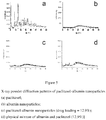
- Results provided in Figure 5 show that (a) XRD pattern of paclitaxel exhibits peaks characteristic of crystalline drug; (b) XRD pattern of albumin nanoparticles exhibits a broad halo peak in the 28 range of 1545°, which is characteristic of an amorphous phase of albumin (c) XRD pattern of paclitaxel-albumin nanoparticles also exhibits a broad halo peak in the 28 range of 1545°, which indicates the presence of amorphous paclitaxel in nanoparticles.
- Example 18 Dispersion study of paclitaxel-albumin nanoparticles
- the lyophilized paclitaxel-albumin cake and the listed drug Abraxane® was reconstituted in water at following protein concentration: (a, b) 2mg/mL; (c,d) 20mg/mL; (e,f) 50mg/mL, respectively.
- the images of these samples are illustrated in Figure 6 .
- stable translucent colloidal dispersions of paclitaxel-albumin nanoparticles were obtained with all three samples.
Landscapes
- Health & Medical Sciences (AREA)
- Chemical & Material Sciences (AREA)
- Bioinformatics & Cheminformatics (AREA)
- Engineering & Computer Science (AREA)
- Life Sciences & Earth Sciences (AREA)
- Animal Behavior & Ethology (AREA)
- General Health & Medical Sciences (AREA)
- Public Health (AREA)
- Veterinary Medicine (AREA)
- Pharmacology & Pharmacy (AREA)
- Medicinal Chemistry (AREA)
- Epidemiology (AREA)
- Biomedical Technology (AREA)
- Physics & Mathematics (AREA)
- Nanotechnology (AREA)
- Optics & Photonics (AREA)
- General Chemical & Material Sciences (AREA)
- Nuclear Medicine, Radiotherapy & Molecular Imaging (AREA)
- Organic Chemistry (AREA)
- Chemical Kinetics & Catalysis (AREA)
- Pharmaceuticals Containing Other Organic And Inorganic Compounds (AREA)
- Medicinal Preparation (AREA)
- Medicines That Contain Protein Lipid Enzymes And Other Medicines (AREA)
Description
- The present invention relates to a method for the preparation of nanoparticles encasing docetaxel within albumin for in vivo delivery.
- Intravenous administration of pharmacologically active agents offers rapid and direct equilibration with the blood stream which carries the medication to the rest of the body. To decrease the side effects of the intravenous administrated agents, encapsulation of agents to micro- or nano-particles is a useful method. In one aspect, intravenous injection of the therapeutic particles would allow gradual release of the drugs inside the intravascular compartment. In another aspect, drugs in the therapeutic particles would be target delivered when the therapeutic particles are made from target materials.
Some methods of preparing protein particles, such as those used by Abraxane® (U.S. Pat. No. 6,749,868 ,U.S. Pat. No. 5,560,933 ), homogenized a mixture of protein solution and organic solvent to form an emulsion, and then subjected the emulsion to a high pressure homogenizer. Under the high pressure, albumin will forma shell around the paclitaxel particle center. Besides the complexity of these methods, high pressure and relatively high temperature are required for obtaining nanoparticles and removing organic solvent. U se of organic solvents is undesirable due to its toxicity and the need to control residual. In addition, drug loading capabilities are limited likely due to the limitation of relying on physical forces to open disulfide bridges. Meanwhile, due to the high pressure and shearing force during the preparation, proteins or peptides may denature permanently, and therefore may lose their bioactivity. - Protein particles have been reported in the literatures as carriers of pharmacologically or diagnostic agents. Microspheres of albumin have been prepared by either heat crosslinking or chemical crosslinking. For instance, the literature has disclosed the use of albumin as a drug carrier for taxanes, including paclitaxel and doxorubicin derivatives. [See Journal of Controlled Release 132 (2008) 171-183; Advanced Drug Delivery Reviews 60 (2008) 876-885]. Further, additional references have disclosed the use of protein cages for drug delivery [Small 5 (2009) 1706-1721]. However, the drug delivery systems cited in the literature are limited by their drug loading capacity as well as limitations as to the therapeutic agents that may be incorporated into the drug delivery systems.
- Heat crosslinked microspheres are produced from an emulsified mixture (e.g., albumin, the agent to be incorporated, and suitable oil) at temperatures between 100 °C and 150 °C. The microspheres are then washed with a suitable solvent and stored. Leucuta et al. [International Journal of Pharmaceutics Vol. 41:213-217(1988)] describe the method of preparation of heat crosslinked microspheres.
- The procedure for preparing crosslinked microspheres, as described in the literature [Science Vol. 213:233-235(1981)] and
U.S. Pat. No. 4,671,954 , uses glutaraldehyde to crosslink the protein chemically, followed by washing and storage. - The reported methods for preparation of protein nanoparticles provide difficulty in encapsulating water-insoluble agents. This limitation is caused by the method itself that relies on crosslinking of proteins in the aqueous phase of an emulsion. Any aqueous-soluble agent dissolved in the protein-containing aqueous phase may be entrapped within crosslinked protein matrix, but a poorly water-soluble or oil-soluble agent cannot be incorporated into a protein matrix formed by these techniques. Furthermore, the protein used for encapsulation is often already denatured and their bioactivity is easily lost during the preparation.
-
WO 2008/124165 A2 discloses a method for forming a self-assembling nanoparticle drug delivery system comprising (a) mixing a bioactive agent with an HBV core protein modified to have a C-terminal tail with binding affinity of about 10 nM and about 500 nM for the bioactive agent in the presence of a denaturing agent at a concentration of about 1 M to about 6 M to form a cage solution, (b) encapsulating said bioactive agent in the core protein cage by raising the ionic strength of said cage solution to obtain a final salt concentration of about 50 mM to about 600 mM and decreasing the denaturing agent concentration to permit assembly of the core protein cage, (c) adding a lipid linker molecule to facilitate lipid coating of the core protein to said cage solution, (d) adding a complex lipid coating material comprised of POPG, cholesterol, and HSPC at a mass value of about 10 % to about 40 % of total protein to said cage solution to form a nanoparticle, and (e) purifying said nanoparticles. -
WO 2007/069272 A2 discloses a method of making a novel and improved composition for cancer therapy, comprising the steps of (i) mixing at least one anticancer drug with at least one polymer in a solvent, (ii) optionally carrying out step (i) in the presence of one or more pharmaceutically acceptable carriers, (iii) obtaining nanoparticles by removing the solvent and (iv) subjecting the nanoparticles to particle sizing such that the obtained particles have D10 ≥ 80 nm, D50 of about 200 nm and D90 ≤ 450 nm and have substantially no free drug, the composition being such that it provides substantially reduced chemotherapy-induced side-effects like alopecia. -
CN 101 385 857 A relates to a nanometer protein preparation and a method for its manufacturing. -
DE 10 2005 062 440 A1 - H. Tajmir-Riahi, SCIENTIA IRANICA, vol. 14, no. 2, 2007, pp. 87-95, relates to an overview on drug binding to human serum albumin by protein folding and unfolding.
-
WO 2008/106503 A2 discloses a method of forming a plurality of monodisperse pharmaceutical composition particles comprising introducing a solution having at least 20 weight % protein into a plurality of cavities of a polymer mold, wherein the cavities have predetermined geometric shapes and a broadest dimension less than about 10 micrometers, and lyophilizing the aqueous solution within the cavities of the mold. - The present invention provides a method for the preparation of nanoparticles encasing docetaxel within albumin for in vivo delivery as claimed in claim 1.
-
-
Figure 1 shows the effects of various pH values on the particle size of the paclitaxel-albumin nanoparticles. -
Figure 2 shows a graph with the particle size distribution of paclitaxel-albumin nanoparticles. -
Figure 3 shows a TEM picture of paclitaxel-albumin nanoparticles (drug loading: 10.59%). -
Figure 4 shows the transmission electron microscopy picture of an albumin nanoparticle loaded with 10-20% paclitaxel by weight of the nanoparticle. -
Figure 5 shows the X-ray powder diffraction patterns of paclitaxel drug substance, albumin, physical mixture of albumin and paclitaxel and paclitaxel-albumin nanoparticles. -
Figure 6 shows the redispersion of paclitaxel-albumin nanoparticles and the control reference, Abraxane® in various solutions. - The current invention represents an improvement over the prior art in several aspects. First, nanoparticles formed by the method of the current invention may be able to bind up to 90% of the added pharmacologically active agent, an amount that exceeds prior art methods and creates a more efficient process and cost-effective method. Additionally, the current invention allows for a drug loading capacity of up to about 40%, such that about 40% of the weight of the nanoparticle may comprise the pharmacologically active agent. Due to the higher drug loading capacity, the skilled artisan will be able to achieve smaller drug volumes for administration to the patient, shorter administration times, and thus better patient compliance. The higher drug loading capacity decreases the amount of protein used to deliver the pharmacologically active agent, which also improves the cost-efficiency of the product. Further, prior art drug delivery systems with smaller drug loading capacities were not capable of adequately delivering pharmacologically active agents requiring high doses, due to the large volume of delivery particles that would be required to deliver an effective dose. However, with the high drug loading capacity of the nanoparticles created by the process of the current invention, this limitation is decreased significantly.
- Another benefit of the current invention is that it can selectively deliver pharmacologically active agents for clinical use. Particles prepared from the method described herein allow some targeting to certain organs and body systems. Since the protein carrier is albumin, targeting to the liver, lungs, spleen or lymphatic circulation is feasible by varying the size of particles. Accordingly, the current invention provides a more efficient, cost effective method for delivering docetaxel to targeted areas of the body.
- As used herein, the term "in vivo delivery" refers to delivery of a pharmacologically active agent by such routes of administration as oral, intravenous, subcutaneous, intraperitoneal, intrathecal, intranasal, intramuscular, inhalational, topical, transdermal, rectal (suppositories), vaginal, and the like.
- As used herein, the term "nanoparticle" refers to a small unit that behaves as a whole unit in terms of its transport and properties. The nanoparticles of the current invention have an average particle diameter ranging from 50 nm to 300 nm. Further, the nanoparticles of the current invention are capable of binding a pharmacologically active agent (active agent), such that 1 % to 40 % of the weight of the nanoparticle may comprise the active agent.
- The method as described herein incorporate a hydrophobic pharmacologically active agent, such that the active agent may be delivered by the nanoparticle to targeted areas of the human body, wherein said active agent is docetaxel. It is also recognized that the docetaxel may include crystalline or amorphous forms of the compounds listed herein, including the solvate and non-solvate forms.
- One skilled in the art will understand that the amount of docetaxel incorporated into the method of the current invention will vary depending upon the amount of albumin incorporated and will also vary depending upon the amount of nanoparticles desired to be produced. The skilled artisan will also appreciate that the docetaxel may be incorporated as a pure substance with 100% active agent or as a compound with less than 100% purity, without departing from the scope of the invention.
- The method of the current invention also incorporates albumin that is used to encase the active agent, subsequently producing the nanoparticle of interest. One skilled in the art will appreciate that the amount of albumin incorporated into the method of the current invention may vary depending on the desired amount of nanoparticles. See Analytical Biochemistry Vol. 72:248-254(1976), for general guidance on protein selection.
- As stated previously, step (a) of the method of the current invention comprises preparing or obtaining the albumin solution as previously described. The term "albumin solution" as described in step (a) is generally defined as a solution comprising the combination of albumin and a first solvent capable of dissolving the albumin, and in which the albumin has unfolded, and in which the subsequent refolding or assembling of the albumin take place. As used herein, the term "refolding" refers to a process in which unfolded or denatured albumin refolds into its suitable 3-dimensional structure. The term "assembling" refers to a process in which refolded albumin is assembled to form nanoparticles. One skilled in the art will appreciate that the refolding process for albumin can be performed under a multitude of conditions. The first solvent used in the albumin solution is selected from the group consisting of water, saline, phosphate buffer, tris(hydroxymethyl)aminomethane buffer, sodium chloride solutions, glucose solutions, and combinations thereof. Furthermore, the solvent used in the albumin solution may be incorporated into the current method in any amount that is suitable for dissolving the albumin and refolding or assembling the albumin after unfolding. In general, the concentration of the albumin solution ranges from 0.01 M to 1.6 M. In a preferred embodiment, the concentration ranges from 0.03 M to 1.5 M. In a more preferred embodiment, the concentration of the albumin solution ranges from 0.05 M to 0.8 M. In a most preferred embodiment, the concentration ranges from 0.1 M to 0.3 M. The skilled artisan will understand that the amount of first solvent required to dissolve the albumin will vary depending on a variety of factors including the amount of albumin incorporated and the concentration of the first solvent.
- It has been discovered that the reaction parameters of step (a) are important in producing the nanoparticles of the current invention, having the beneficial characteristics previously described. To achieve optimal results, step (a) of the current invention is reacted at a temperature ranging from 55 °C to 75 °C. It has also been determined that the reaction of step (a) achieves optimal results when reacted at a pH from 6 to 8. In addition, the skilled artisan will understand that the reaction of step (a) should proceed for a period of time to allow for adequate dissolution of the albumin product. Generally the period of time will vary depending on the amount of protein used, the type of first solvent incorporated, the amount of first solvent, the concentration of first solvent, as well as other factors known to one of skill in the art. Generally, the skilled artisan will appreciate that the reaction as a whole, as well as the individual steps of the reaction maybe performed for a time sufficient to allow the reaction to proceed. In one embodiment, the reaction is allowed to proceed for about thirty minutes to about eight hours.
- The second step of the method of the current invention comprises contacting the docetaxel with the albumin solution of step (a). Additionally, step (b) is carried out in the presence of an unfolding solution. As used herein, the term "unfolding solution" refers to a solution capable of inducing a process in which albumin loses its tertiary and secondary structure. Generally, the unfolding solution should induce mild denaturation of the albumin. Generally, one skilled in the art will recognize that mild denaturation refers to the situation where after unfolding/denaturation, the albumin could be refolded and its suitable conformation can be restored or rearranged under certain conditions (e.g. using the refolding or assembling solution/condition). The unfolding solution may provide a reducing environment that breaks disulfide bridges, and forms hydrogen bonding bridges that allow water to disrupt the hydrophobic interactions in the interior of the albumin. The unfolding solution is selected from the group consisting of water, saline, phosphate buffer, tris(hydroxymethyl)aminomethane buffer, sodium chloride solutions, ethanol, acetone, 2-mercaptoethanol solution, urea solution, and combinations thereof. In a preferred embodiment, the unfolding solution comprises ethanol, acetone, 2-mercaptoethanol solution and urea solution. It has also been determined that the methods of the current invention are optimal when the unfolding solution comprises a pH ranging from 3 to 9. In a preferred embodiment, the unfolding solution comprises a pH ranging from 5.5 to 8.5.
- Further, in addition to the unfolding solution, the method of the current invention may also incorporate additional external stress to aid in the process of albumin unfolding. One skilled in the art will appreciate that the external stress may include any forces capable of inducing albumin unfolding. Non-limiting examples of external stress that may be incorporated to aid in albumin unfolding include changes in temperature, changes in pressure, mechanical stress applied to the solution, and radiation. In one embodiment, the external stress comprises applying pressure to the reaction in the range of 100 to 100,000 pounds per square inch (psi) to aid in the unfolding of the albumin. In another embodiment applying pressure to the reaction in the range of 2000 to 60,000 pounds per square inch (psi) may be used.
- The method of the current invention further includes an additional step (c) to remove impurities or salts from the nanoparticle solution formed by steps (a) and (b). This step includes dialysis or filtration.
- The method of the current invention incorporates a further step (d) whereby the nanoparticle is subjected to dehydration to preserve the viability of the nanoparticle as a drug delivery device, in particular to facilitate storage and transport of the nanoparticle, such that the nanoparticle may be incorporated into pharmaceutical dosage forms. Suitable examples of preservation processes that may be incorporated into the methods of the current invention include concentration, decompression drying, lyophilization, and spray drying.
- The following examples are provided for comparative purposes only. Efforts have been make to ensure accuracy with respect to numbers used, but some experimental errors and deviations should be accounted for.
- 100 mg of albumin was dissolved in 10 ml 0.1M phosphate buffer pH 6.0 containing 0.5mg/mL ethylenediaminetetraacetate and 0.05M mercaptoethanol. The reaction was carried out for two hours. At the end of reaction, the protein was precipitated and washed with 5% trichloroacetic acid. Next, 16 mg paclitaxel was dissolved in 1.6mL ethanol and mixed with the precipitated protein. After 10 minutes mixing, 50mL 0.1M phosphate buffer pH 8.0 was added to dissolve the mixture. The resulting dispersion is translucent, and the typical diameter of the resulting paclitaxel particles was 80nm-200nm (BIC 90plus particle size analyzer). HPLC analysis of the paclitaxel content revealed that more than 90% of the paclitaxel was encapsulated into the albumin.
- 100 mg of albumin was dissolved in 50mL tris-buffer (pH 7.4) with stirring at 37°C and 350 µL mercaptoethanol was added. The unfolding reaction was carried out for 10 minutes. Two mL of ethanol solution containing 20 mg paclitaxel was added. After 30 minutes, the sample was dialyzed in tris-buffer (pH 7.4) for 24 h. The dispersion was further lyophilized for 48 hours. The resulting cake could be easily reconstituted to the original dispersion by addition of sterile water or saline. The particle size after reconstitution was the same as before lyophillization. The typical diameter of the resulting paclitaxel particles was 80nm-200nm (BIC90plus particle size analyzer). HPLC analysis of the paclitaxel content revealed that more than 90% of the paclitaxel was encapsulated into the nanoparticles.
- 100 mg human albumin was dissolved in 10 ml buffer, pH 4.8, and kept in an ice bath for 30 minutes. 7.5 mL cold acetone (0°C) was added (to induce precipitation) and kept in the ice bath for an additional 60 minutes. The solution was then centrifuged and precipitates were collected. A 10mg/ml acetone solution of paclitaxel was added and mixed with the precipitates by applying sonication. A physiological buffer was added and mixed using a magnetic stirrer to form a solution. The mean particle size of the paclitaxel-albumin nanoparticles thus obtained was analyzed using BIC 90plus particle size analyzer, and found to be 150-220 nm. The nanoparticle solution was then dried by lyophillization. The freeze-dried cake was reconstituted. The paclitaxel loading of the nanoparticles was 8.3% using a HPLC assay.
- Additional experiments showed that glycine, mannitol, trehalose or lactose can be used as a bulking agent for lyophillization while use of lactose resulted in smaller nanoparticles. Further, additional experiments showed that the precipitation or unfolding process above could also be conducted by salt solution at a temperature ranging from about 55° C to about 75° C.
- 100 mg of transferrin dissolved in 50ml tris-buffer (pH 7.4) with stirring at 25°C and 350 uL mercaptoethanol was added. The unfolding reaction was carried out for 10 minutes. 1 mL of ethanol solution containing 10mg paclitaxel was then added. The mean particle size was 154.4 nm (BIC 90plus particle size analyzer). The theoretical paclitaxel loading of the nanoparticles was 9.0%.
- 100 mg of transferrin was dissolved in 50 mL tris-buffer (pH 7.4) with stirring at 25°C and 350 uL mercaptoethanol was added. The unfolding reaction was carried out for 10 minutes. 5ml of ethanol solution containing 50mg docetaxel was added. The solution turned to light blue without any precipitation. The mean particle size after reconstitution was 177.lnm (BIC 90plus particle size analyzer). The theoretical docetaxel loading of the nanoparticles was 33.3%.
- 100 mg albumin was first dissolved in 10 ml water. The resulting solution was mixed with an equal volume of trichloroacetic acid and centrifuged to remove the supernatant. An ethanol solution of gambogic acid was then added to the obtained protein precipitate followed by addition of 50ml TRIS buffer (pH 8.0), stirred until complete dissolution of the protein precipitate. The mean particle size of the gambogic acid-albumin nanoparticles thus obtained was analyzed using BIC 90plus particle size analyzer, and found to be 110 nm. The theoretical gambogic acid loading of the nanoparticles was 9.0%.
- 10 mL of 3% hemoglobin aqueous solution was slowly added to 300 mL acetone solution containing 3 mL 2N HCl at -20°C. The solution was then agitated vigorously for 15 minutes followed by centrifugation for 15 minutes. After the residual acetone evaporated, the precipitate collected was dissolved in cold deionized water. The solution underwent dialysis first in deionized water for 5 hours at 2°C, then in 0.0016M NaHCO3 solution for 30 hours. Globin solution was obtained by filtration.
- To 7 mL of the above globin solution, 28 ml of deionized water was added to obtain a solution of about 1 mg/mL. Next, 0.7 mL of paclitaxel solution in ethanol (10mg/mL) was then added at low temperature (2-8°C) and stirred until a light blue solution is obtained. There was no precipitation in the solution. The mean particle size of the paclitaxel-globin nanoparticles thus obtained was analyzed using BIC 90plus particle size analyzer, and found to be 301.8 nm. The theoretical paclitaxel loading of the nanoparticles was 9.0%
- One hundred milligrams of albumin was dissolved in the 50 mL solution containing 0.16 mM acetyltryptophan and 0.16mM sodium caprylate. The solution was stirred at 37°C and 350 mL mercaptoethanol was added. The unfolding reaction was carried out for 10 minutes. Next,
1.5 mL of ethanol solution containing 15 mg paclitaxel was added and stirred until the light blue solution was obtained. The typical diameter of the resulting paclitaxel-albumin particles is 130 nm determined by BIC 90plus particle size analyzer. - One hundred milligrams of albumin was dissolved in the 50 mL of 5% w/v glucose solution with stirring at 37°C and 350 mL mercaptoethanol was added. The unfolding reaction was carried out for 10 minutes. Additionally, 1.5 mL of ethanol solution containing 15 mg paclitaxel was added and stirred until a light blue solution was obtained. The typical diameter of the resulting paclitaxel-albumin particles was 130 nm determined by BIC 90plus particle size analyzer.
- Phosphate buffer with various pH levels was utilized to prepare nanoparticles and evaluated for its effect on the sizes of different nanoparticles. All of the protein solutions were fed with 15% paclitaxel (10mg/mL). Diameters of the nanoparticles were analyzed in isothermal conditions. The results are shown in
Figure 1 . - The particle size distribution of paclitaxel-albumin nanoparticles was examined using the BIC 90plus Particle Size Analyzer. It is shown in
Figure 2 that the average particle size is 121 nm with a narrow size distribution. - Nanoparticles loaded with 10.59% paclitaxel were prepared. The TEM images were examined using the EM-2100 200 kV high resolution transmission electron microscope (Japan).
Figure 3 shows the results and the nanoparticles were revealed to be spherical in shape. - The lyophilized paclitaxel-albumin cake was reconstituted in normal saline (NS) at 5mg/ml, in 5% glucose solution (GS) at 5mg/ml, and in calf serum (CS) at 2mg/ml respectively. After storing at different temperatures (25°C and 37°C) for 36 hours, the mean particle size of the paclitaxel- albumin nanoparticles (DLS, BIC 90plus Particle Size Analyzer) remained unchanged. No precipitate was observed. Results are summarized in Table 1.
Table 1 Diameter(nm) 0h 3h 6h 12h 18h 24h 36h NS, 25°C 113.8 111.5 108.1 108.0 108.9 106.2 108.8 GS, 25 °C 113.7 123.3 122.1 121.1 123.1 116.5 125.3 CS, 37 °C 119.7 151.8 144.6 147.1 160.4 156.8 184.9 - Additional experiments preparing paclitaxel-transferrin nanoparticles were carried out. It was found that (1) in addition to tris-buffer, saline solution can also be used to dissolve transferrin; (2) paclitaxel-transferrin nanoparticles can be obtained at pH 3-8.5 with an optimal range of pH 6-7.5 for obtaining nanoparticles of higher drug loading and more desirable stability; and (3) cane sugar, glucose, glycine, and mycose can be used as an effective bulking agent for lyophillization or decompression drying.
- The lyophilized paclitaxel-transferrin cake was reconstituted in normal saline (NS) at 5mg/ml, in 5% glucose solution (GS) at 5mg/ml, and in calf serum (CS) at 2mg/ml respectively. After storing at different temperatures (25°C and 37°C) for 36 hours, the mean particle size of the paclitaxel- transferrin nanoparticles (DLS, BIC 90plus Particle Size Analyzer) remained unchanged. No precipitate was observed. Results are summarized in Table 2.
Table 2 Diameter(nm) 0h 3h 6h 12h 18h 24h 36h NS, 25 °C 143.2 132.7 132.9 133.4 134.0 127.3 139.6 GS, 25 °C 168.4 152.3 146.5 144.0 147.5 144.7 145.6 CS, 37 °C 118.8 139.3 152.7 165.6 171.5 177.6 228.8 - Two or three drops of each paclitaxel-albumin nanoparticles solution were deposited on a carbon-coated copper grids (200 mesh) respectively. After 2 minutes, the grid was lifted off, excess solution was removed by filter paper and then air dried. The nanoparticle images were examined using the EM-2100 200 kV high resolution transmission electron microscope (Japan). Results of TEM: The TEM images of the samples are shown in
Figure 4 . It was found that paclitaxel-albumin nanoparticles are spherical in shape (b) blank albumin nanoparticles are of irregular shape with an average primary particle size of about 100 nm; (c) free paclitaxel shows a high electron-dense image at the center surrounded by stick-shaped structure. (d) paclitaxel-albumin nanoparticles show a core/shell structure. - Paclitaxel is crystalline with extremely low aqueous solubility (1 µg/ml for the dehydrate form). Thus, amorphous paclitaxel is highly beneficial for injection due to its higher apparent solubility. To evaluate the solid state characteristics of paclitaxel in the paclitaxel nanoparticles of the present invention, x-ray powder diffraction technique was used. Four samples were prepared for x-ray powder diffraction analysis: (a) paclitaxel; (b) albumin nanoparticles; (c) paclitaxel-albumin nanoparticles (drug loading = 12.9%); (d) physical mixture of albumin and paclitaxel (12.9%). Data of each sample was collected over two-theta (CuKa) angle range from 5 to 50 degrees using a powder diffractometer (ARL, X'TRA, Applied Research Laboratories, Switzerland).
- Results provided in
Figure 5 show that (a) XRD pattern of paclitaxel exhibits peaks characteristic of crystalline drug; (b) XRD pattern of albumin nanoparticles exhibits a broad halo peak in the 28 range of 1545°, which is characteristic of an amorphous phase of albumin (c) XRD pattern of paclitaxel-albumin nanoparticles also exhibits a broad halo peak in the 28 range of 1545°, which indicates the presence of amorphous paclitaxel in nanoparticles. (d) XRD pattern of the physical mixture of paclitaxel-albumin containing the same level of paclitaxel as that of the paclitaxel-albumin nanoparticles (12.9%) indicates the presence of crystalline paclitaxel and amorphous albumin in the sample. Therefore, it is concluded that the paclitaxel-albumin nanoparticles are amorphous in nature. - The lyophilized paclitaxel-albumin cake and the listed drug Abraxane® was reconstituted in water at following protein concentration: (a, b) 2mg/mL; (c,d) 20mg/mL; (e,f) 50mg/mL, respectively. The images of these samples are illustrated in
Figure 6 . As shown inFigure 6 , stable translucent colloidal dispersions of paclitaxel-albumin nanoparticles were obtained with all three samples.
Claims (1)
- A method for the preparation of nanoparticles encasing docetaxel within albumin for in vivo delivery, wherein said method comprises the following steps:(a) preparing or obtaining an albumin solution comprising said albumin in a first solvent at a temperature ranging from 55 °C to 75 °C, and a pH ranging from 6 to 8;(b) contacting said docetaxel with said albumin solution of step (a) in the presence of an unfolding solution, thereby causing unfolding of said albumin, and subsequent refolding or assembling of said albumin to encase said docetaxel within said albumin;(c) performing dialysis or filtration to remove excess chemicals or to obtain a more concentrated solution; and(d) subjecting said concentrated solution of nanoparticles of step (c) to a dehydration process to produce preserved nanoparticles capable of incorporation into a pharmaceutical dosage form;wherein said nanoparticles have an average diameter ranging from 50 nm to 300 nm and said nanoparticles comprise 1 % to 40 % of docetaxel by total weight of the nanoparticle;
wherein said first solvent is selected from the group consisting of water, saline, phosphate buffer, tris(hydroxymethyl)aminomethane buffer, sodium chloride solution, glucose solution, and combinations thereof; and
wherein said unfolding solution is selected from the group consisting of water, saline, phosphate buffer, tris(hydroxymethyl)aminomethane buffer, sodium chloride solutions, ethanol, acetone, 2-mercaptoethanol solution, urea solution, and combinations thereof.
Priority Applications (1)
| Application Number | Priority Date | Filing Date | Title |
|---|---|---|---|
| EP18207221.5A EP3466264B1 (en) | 2009-08-11 | 2010-08-06 | Methods for drug delivery comprising unfolding and folding proteins and peptide nanoparticles |
Applications Claiming Priority (2)
| Application Number | Priority Date | Filing Date | Title |
|---|---|---|---|
| PCT/CN2009/073180 WO2011017835A1 (en) | 2009-08-11 | 2009-08-11 | Preparation method of protein or peptide nanoparticles for in vivo drug delivery by unfolding and refolding |
| PCT/US2010/044642 WO2011019585A1 (en) | 2009-08-10 | 2010-08-06 | Methods for drug delivery comprising unfolding and folding proteins and peptide nanoparticles |
Related Child Applications (1)
| Application Number | Title | Priority Date | Filing Date |
|---|---|---|---|
| EP18207221.5A Division EP3466264B1 (en) | 2009-08-11 | 2010-08-06 | Methods for drug delivery comprising unfolding and folding proteins and peptide nanoparticles |
Publications (3)
| Publication Number | Publication Date |
|---|---|
| EP2464224A1 EP2464224A1 (en) | 2012-06-20 |
| EP2464224A4 EP2464224A4 (en) | 2014-03-05 |
| EP2464224B1 true EP2464224B1 (en) | 2018-11-21 |
Family
ID=43585842
Family Applications (2)
| Application Number | Title | Priority Date | Filing Date |
|---|---|---|---|
| EP10808554.9A Active EP2464224B1 (en) | 2009-08-11 | 2010-08-06 | Methods for drug delivery comprising unfolding and folding proteins and peptide nanoparticles |
| EP18207221.5A Active EP3466264B1 (en) | 2009-08-11 | 2010-08-06 | Methods for drug delivery comprising unfolding and folding proteins and peptide nanoparticles |
Family Applications After (1)
| Application Number | Title | Priority Date | Filing Date |
|---|---|---|---|
| EP18207221.5A Active EP3466264B1 (en) | 2009-08-11 | 2010-08-06 | Methods for drug delivery comprising unfolding and folding proteins and peptide nanoparticles |
Country Status (5)
| Country | Link |
|---|---|
| US (1) | US9066870B2 (en) |
| EP (2) | EP2464224B1 (en) |
| JP (1) | JP5570599B2 (en) |
| CN (1) | CN102048695B (en) |
| WO (2) | WO2011017835A1 (en) |
Families Citing this family (63)
| Publication number | Priority date | Publication date | Assignee | Title |
|---|---|---|---|---|
| CN102133190A (en) * | 2011-03-16 | 2011-07-27 | 中国药科大学 | Transferrin nanoparticles and preparation method and application thereof |
| CN102133191A (en) * | 2011-03-16 | 2011-07-27 | 中国药科大学 | Transferrin and albumin composite nano particle and preparation method and application thereof |
| CN102293747A (en) * | 2011-07-13 | 2011-12-28 | 南京从一医药咨询有限公司 | Method for preparing transferrin nanoparticles used for in vivo delivering pharmacological active substance |
| US20130323314A1 (en) * | 2011-12-30 | 2013-12-05 | University Of Hyderabad | Novel Nanoparticles of Lactoferrin Useful for Preparing a Pharmaceutical Composition Facilitating Easy Delivery of the Drug and a Process for Preparing the Same |
| CN103357021A (en) * | 2012-04-09 | 2013-10-23 | 山东靶点药物研究有限公司 | Pharmaceutical composition using albumin as pharmaceutical carrier |
| UA116217C2 (en) | 2012-10-09 | 2018-02-26 | Санофі | Exendin-4 derivatives as dual glp1/glucagon agonists |
| CN102988996A (en) * | 2012-12-19 | 2013-03-27 | 清华大学 | Method for preparing stable albumin nanoparticle |
| JP2016506401A (en) | 2012-12-21 | 2016-03-03 | サノフイ | Exendin-4 derivatives as dual GLP1 / GIP or three-way GLP1 / GIP / glucagon agonists |
| WO2014124301A1 (en) | 2013-02-07 | 2014-08-14 | University Of Washington Through Its Center For Commercialization | Self-assembling protein nanostructures |
| CN103393632B (en) * | 2013-07-26 | 2015-05-13 | 齐鲁制药(海南)有限公司 | Cabazitaxel drug composition and preparation method thereof |
| WO2015031059A1 (en) * | 2013-08-26 | 2015-03-05 | The Trustees Of The University Of Pennsylvania | Ph-sensitive peptides and their nanoparticles for drug delivery |
| CN104447949B (en) * | 2013-09-25 | 2017-11-14 | 国家纳米科学中心 | Polypeptide and pharmaceutical composition and preparation method thereof |
| CN103468572B (en) * | 2013-09-25 | 2016-07-06 | 北京尚洋东方环境科技有限公司 | A kind of freeze drying protectant of luminescent bacteria |
| CN103495179A (en) * | 2013-09-27 | 2014-01-08 | 深圳先进技术研究院 | Polymer albumin nanosphere as well as preparation method and applications of nanosphere |
| CN104548116A (en) * | 2013-10-11 | 2015-04-29 | 程树海 | Preparation method of stable protein drug-loaded microparticle system |
| TW201609796A (en) | 2013-12-13 | 2016-03-16 | 賽諾菲公司 | Non-acylated EXENDIN-4 peptide analogues |
| TW201609799A (en) | 2013-12-13 | 2016-03-16 | 賽諾菲公司 | Dual GLP-1/GIP receptor agonists |
| WO2015086733A1 (en) | 2013-12-13 | 2015-06-18 | Sanofi | Dual glp-1/glucagon receptor agonists |
| EP3080150B1 (en) | 2013-12-13 | 2018-08-01 | Sanofi | Exendin-4 peptide analogues as dual glp-1/gip receptor agonists |
| CN103861115B (en) * | 2014-03-18 | 2017-04-19 | 常州市第一人民医院 | Hemoglobin nano-particle and preparation method thereof |
| TW201625668A (en) | 2014-04-07 | 2016-07-16 | 賽諾菲公司 | Exendin-4 derivatives as peptidic dual GLP-1/glucagon receptor agonists |
| TW201625670A (en) | 2014-04-07 | 2016-07-16 | 賽諾菲公司 | Dual GLP-1/glucagon receptor agonists derived from EXENDIN-4 |
| TW201625669A (en) | 2014-04-07 | 2016-07-16 | 賽諾菲公司 | Peptidic dual GLP-1/glucagon receptor agonists derived from Exendin-4 |
| CN104043135B (en) * | 2014-06-13 | 2017-05-24 | 苏州大学 | Albumin indocyanine green paclitaxel compound as well as preparation method and application thereof |
| US9932381B2 (en) | 2014-06-18 | 2018-04-03 | Sanofi | Exendin-4 derivatives as selective glucagon receptor agonists |
| CN104306339A (en) * | 2014-10-22 | 2015-01-28 | 南京大学 | Thymidylate synthase preparation loaded albumin nano-microsphere and preparation method thereof |
| US9630994B2 (en) | 2014-11-03 | 2017-04-25 | University Of Washington | Polypeptides for use in self-assembling protein nanostructures |
| CN105727303B (en) * | 2014-12-12 | 2019-06-28 | 四川科伦药物研究院有限公司 | A kind of high albumin composition for carrying Cabazitaxel drug and its preparation and preparation method |
| CN106137969B (en) | 2015-04-03 | 2020-05-15 | 四川科伦药物研究院有限公司 | Docetaxel albumin nanoparticle pharmaceutical composition, preparation method and application thereof |
| AR105319A1 (en) | 2015-06-05 | 2017-09-27 | Sanofi Sa | PROPHARMS THAT INCLUDE A DUAL AGONIST GLU-1 / GLUCAGON CONJUGATE HIALURONIC ACID CONNECTOR |
| TW201706291A (en) | 2015-07-10 | 2017-02-16 | 賽諾菲公司 | New EXENDIN-4 derivatives as selective peptidic dual GLP-1/glucagon receptor agonists |
| WO2017019214A1 (en) | 2015-07-29 | 2017-02-02 | Musc Foundation For Research Development | Donor organ pre-treatment formulation |
| WO2017116358A1 (en) | 2015-12-28 | 2017-07-06 | Oran Ismail | Method and apparatus for determination of fatty acid markers using electrical impedance measurement |
| CN107157950B (en) * | 2016-03-07 | 2021-05-25 | 中国科学院上海药物研究所 | A kind of albumin nanoparticle and its preparation method and use |
| CN105919984A (en) * | 2016-04-15 | 2016-09-07 | 中国人民解放军军事医学科学院放射与辐射医学研究所 | Oridonin porous particle inhalant and application thereof on treating primary lung cancer |
| ES2925656T3 (en) * | 2016-04-29 | 2022-10-19 | Rousselot B V | Protein-based excipient for active pharmaceutical ingredients |
| CN105878194A (en) * | 2016-06-07 | 2016-08-24 | 沈阳药科大学 | Glibenclamide nanocrystal preparation and preparation method thereof |
| CN106074367A (en) * | 2016-07-20 | 2016-11-09 | 中山大学中山眼科中心 | Containing FK506 compounds/dimeric pharmaceutical composition of FKBP albumen and preparation method thereof |
| CN106310221B (en) * | 2016-08-25 | 2019-11-22 | 齐鲁制药有限公司 | A kind of pharmaceutical composition and preparation method thereof containing Carfilzomib |
| CN106310291A (en) * | 2016-09-14 | 2017-01-11 | 东南大学 | Actively targeted antitumor nano-medicine, method for preparing same and application of actively targeted antitumor nano-medicine |
| JP7511222B2 (en) * | 2016-12-23 | 2024-07-05 | ユニバーシティ オブ コペンハーゲン | Co-amorphous forms of substances and proteins |
| CN106620663B (en) * | 2017-02-05 | 2020-05-19 | 中国医学科学院生物医学工程研究所 | Preparation method and application of sugar-hemoglobin nanoparticles |
| SG11201908999QA (en) | 2017-04-04 | 2019-10-30 | Univ Washington | Self-assembling protein nanostructures displaying paramyxovirus and/or pneumovirus f proteins and their use |
| CN107157933B (en) * | 2017-05-04 | 2021-05-11 | 同济大学 | A novel protein self-assembled nano-vaccine and its preparation method |
| CN108114273B (en) * | 2018-02-02 | 2020-12-22 | 南京大学 | A kind of perfluorocarbon albumin nanoparticles and preparation method and application thereof |
| CA3095216A1 (en) | 2018-02-28 | 2019-09-06 | University Of Washington | Self-asssembling nanostructure vaccines |
| CN108741097A (en) * | 2018-05-17 | 2018-11-06 | 华南理工大学 | A kind of albumen self assembly embedding difficult resolving active material nanometer products and preparation method thereof |
| CN109730976B (en) | 2018-12-24 | 2020-06-09 | 华中科技大学 | Method for preparing albumin nanoparticles based on free radical oxidation |
| CN109620817A (en) * | 2019-02-25 | 2019-04-16 | 苏州大学 | Clusterin drug-loading nanoparticles and preparation method thereof |
| CN109771656A (en) * | 2019-03-12 | 2019-05-21 | 四川载荧生物科技有限公司 | The preparation method of Novel albumin Nano medication under a kind of 37 DEG C of temperate conditions |
| EP4243796A4 (en) | 2020-11-16 | 2025-01-22 | Orcosa Inc. | ENHANCED USE OF CANNABINOIDS IN THE TREATMENT OF EPILEPSY |
| US11672761B2 (en) | 2020-11-16 | 2023-06-13 | Orcosa Inc. | Rapidly infusing platform and compositions for therapeutic treatment in humans |
| EP4302754A4 (en) * | 2021-03-05 | 2024-12-18 | CSPC Zhongqi Pharmaceutical Technology (Shijiazhuang) Co., Ltd. | Stable docetaxel albumin nanoparticle composition |
| CN113244193A (en) * | 2021-04-26 | 2021-08-13 | 南京大学 | Preparation method and application of protein nanoparticles for delivering sterol and derivatives thereof |
| CN113413470B (en) * | 2021-05-31 | 2024-01-16 | 深圳先进技术研究院 | Tumor diagnostic and therapeutic agents and preparation methods and applications thereof |
| KR102526793B1 (en) * | 2021-11-03 | 2023-04-28 | 주식회사 에스엔바이오사이언스 | Method for preparing albumin bound taxane nanoparticles with improved particle size distribution maintenance stability |
| CN114376067A (en) * | 2022-01-18 | 2022-04-22 | 大连工业大学 | A modified protein nanoparticle, its preparation method and application |
| CN114948784A (en) * | 2022-04-20 | 2022-08-30 | 重庆医科大学 | Bionic nano-particles and preparation method and application thereof |
| CN115634211B (en) * | 2022-09-02 | 2024-04-26 | 南京中医药大学 | Nanoparticle for delivering lotus plumule alkaloid by taking human serum albumin as carrier and preparation method and application thereof |
| CN115487288B (en) * | 2022-09-28 | 2024-03-01 | 重庆三峡学院 | Almond peptide oral liquid and preparation method thereof |
| CN116762850A (en) * | 2023-07-03 | 2023-09-19 | 扬州大学 | Antibacterial nano-particles with carvacrol embedded by ovalbumin, and preparation method and application thereof |
| CN118141097A (en) * | 2024-03-08 | 2024-06-07 | 江西省科学院生物资源研究所 | A kind of policosanol nano preparation and preparation method thereof |
| CN118948806B (en) * | 2024-07-30 | 2026-05-01 | 中国医科大学 | Atorvastatin calcium albumin nanoparticle and preparation and application thereof |
Family Cites Families (32)
| Publication number | Priority date | Publication date | Assignee | Title |
|---|---|---|---|---|
| DE3104815C2 (en) * | 1980-02-13 | 1983-07-07 | Japan Atomic Energy Research Institute, Tokyo | Method of making a composite with long-term release |
| JPS56115713A (en) | 1980-02-19 | 1981-09-11 | Japan Atom Energy Res Inst | Preparation of slow-releasing complex |
| US4671954A (en) | 1983-12-13 | 1987-06-09 | University Of Florida | Microspheres for incorporation of therapeutic substances and methods of preparation thereof |
| JPS6479657A (en) * | 1987-09-22 | 1989-03-24 | Nippon Zoki Pharmaceutical Co | Vital decision of medicine |
| US6749868B1 (en) * | 1993-02-22 | 2004-06-15 | American Bioscience, Inc. | Protein stabilized pharmacologically active agents, methods for the preparation thereof and methods for the use thereof |
| US5916596A (en) * | 1993-02-22 | 1999-06-29 | Vivorx Pharmaceuticals, Inc. | Protein stabilized pharmacologically active agents, methods for the preparation thereof and methods for the use thereof |
| US5439686A (en) | 1993-02-22 | 1995-08-08 | Vivorx Pharmaceuticals, Inc. | Methods for in vivo delivery of substantially water insoluble pharmacologically active agents and compositions useful therefor |
| EP1683517A1 (en) | 1996-08-19 | 2006-07-26 | American Bioscience, Inc. | Methods for the production of protein particles useful for delivery of pharmacological agents |
| US8137684B2 (en) | 1996-10-01 | 2012-03-20 | Abraxis Bioscience, Llc | Formulations of pharmacological agents, methods for the preparation thereof and methods for the use thereof |
| US6530944B2 (en) * | 2000-02-08 | 2003-03-11 | Rice University | Optically-active nanoparticles for use in therapeutic and diagnostic methods |
| CA2445763A1 (en) * | 2001-05-01 | 2002-11-07 | Angiotech Pharmaceuticals Inc. | Compositions comprising an anti-microtubule agent and a polypeptide or a polysaccharide and the use thereof for the preparation of a medicament for the treatment of inflammatory conditions |
| ITMI20020681A1 (en) * | 2002-03-29 | 2003-09-29 | Acs Dobfar Spa | PROCEDURE FOR THE PRODUCTION OF PACLITAXEL AND ALBUMINA NANOPARTICLES |
| ITMI20020680A1 (en) * | 2002-03-29 | 2003-09-29 | Acs Dobfar Spa | IMPROVED ANTI-TUMOR COMPOSITION BASED ON PACLITAXEL AND METHOD FOR ITS OBTAINING |
| US8298793B2 (en) | 2002-09-30 | 2012-10-30 | Auburn University | Methods for isolating proteons from plasma samples |
| US20090005257A1 (en) * | 2003-05-14 | 2009-01-01 | Jespers Laurent S | Process for Recovering Polypeptides that Unfold Reversibly from a Polypeptide Repertoire |
| CN100575489C (en) * | 2003-05-14 | 2009-12-30 | 多曼蒂斯有限公司 | Method for recovering reversibly unfolded polypeptides from polypeptide totipotent library |
| US7217784B2 (en) * | 2003-05-29 | 2007-05-15 | Academia Sinica | VP1 of foot-and-mouth disease virus |
| EP1773303A2 (en) * | 2004-05-25 | 2007-04-18 | Chimeracore, Inc. | Self-assembling nanoparticle drug delivery system |
| US8034765B2 (en) * | 2005-08-31 | 2011-10-11 | Abraxis Bioscience, Llc | Compositions and methods for preparation of poorly water soluble drugs with increased stability |
| CA2626016A1 (en) * | 2005-10-21 | 2007-06-21 | Panacea Biotec Limited | Pharmaceutical composition comprising at least one anticancer drug and at least one polymer |
| DE102005054290A1 (en) * | 2005-11-11 | 2007-05-16 | Bosch Rexroth Mechatronics | Fast moving screw drive |
| WO2008048298A2 (en) | 2005-11-21 | 2008-04-24 | Medivas, Llc | Polymer particles for delivery of macromolecules and methods of use |
| KR101423898B1 (en) * | 2005-12-14 | 2014-07-28 | 암브룩스, 인코포레이티드 | Compositions containing, methods involving, and uses of non-natural amino acids and polypeptides |
| DE102005062440B4 (en) * | 2005-12-27 | 2011-02-24 | Lts Lohmann Therapie-Systeme Ag | Protein-based carrier system for the resistance of tumor cells |
| WO2008013785A2 (en) * | 2006-07-24 | 2008-01-31 | Singh-Broemer And Company, Inc. | Solid nanoparticle formulation of water insoluble pharmaceutical substances with reduced ostwald ripening |
| US20130177598A1 (en) * | 2007-02-27 | 2013-07-11 | The University Of North Carolina At Chapel Hill | Discrete size and shape specific pharmaceutical organic nanoparticles |
| WO2008124465A1 (en) | 2007-04-04 | 2008-10-16 | Educational Testing Service | Method and system for facilitating vocabulary development |
| CA2683063A1 (en) * | 2007-04-09 | 2008-10-16 | Chimeros, Inc. | Self-assembling nanoparticle drug delivery system |
| CN101298610A (en) * | 2008-06-06 | 2008-11-05 | 浙江大学 | Method of Linear Poly(N-isopropylacrylamide) Assisting Lysozyme Refolding in Vitro |
| US8765162B2 (en) | 2008-06-30 | 2014-07-01 | Abbott Cardiovascular Systems Inc. | Poly(amide) and poly(ester-amide) polymers and drug delivery particles and coatings containing same |
| US20100112072A1 (en) | 2008-08-11 | 2010-05-06 | University Of South Carolina | Controllable Virus/Protein Assemblies and Methods of Making the Same |
| CN101385857A (en) | 2008-10-21 | 2009-03-18 | 中国药科大学 | A novel protein-stabilized nano-preparation and its preparation method and use |
-
2009
- 2009-08-11 WO PCT/CN2009/073180 patent/WO2011017835A1/en not_active Ceased
-
2010
- 2010-08-06 WO PCT/US2010/044642 patent/WO2011019585A1/en not_active Ceased
- 2010-08-06 US US12/851,600 patent/US9066870B2/en not_active Expired - Fee Related
- 2010-08-06 EP EP10808554.9A patent/EP2464224B1/en active Active
- 2010-08-06 EP EP18207221.5A patent/EP3466264B1/en active Active
- 2010-08-06 JP JP2012524754A patent/JP5570599B2/en active Active
- 2010-08-09 CN CN201010247885.7A patent/CN102048695B/en active Active
Non-Patent Citations (1)
| Title |
|---|
| None * |
Also Published As
| Publication number | Publication date |
|---|---|
| US20110059181A1 (en) | 2011-03-10 |
| EP2464224A1 (en) | 2012-06-20 |
| CN102048695A (en) | 2011-05-11 |
| WO2011017835A1 (en) | 2011-02-17 |
| CN102048695B (en) | 2014-07-02 |
| JP5570599B2 (en) | 2014-08-13 |
| EP2464224A4 (en) | 2014-03-05 |
| EP3466264B1 (en) | 2021-01-27 |
| JP2013501789A (en) | 2013-01-17 |
| WO2011019585A1 (en) | 2011-02-17 |
| EP3466264A1 (en) | 2019-04-10 |
| US9066870B2 (en) | 2015-06-30 |
Similar Documents
| Publication | Publication Date | Title |
|---|---|---|
| EP3466264B1 (en) | Methods for drug delivery comprising unfolding and folding proteins and peptide nanoparticles | |
| CN101721709B (en) | Calcium phosphate and amphiphilic polymer composite medicament-carrying nano-microsphere, preparation method and application | |
| KR100923172B1 (en) | Novel Formulations of Pharmacological Agents | |
| AU2009244742B2 (en) | Method of forming non-immunogenic hydrophobic protein nanoparticles and uses therefor | |
| CN103202813B (en) | A kind of method of protein nano grain for the preparation of sending pharmacological active substance in body | |
| CN102327230B (en) | Protein nanometer granules wrapped with taxane medicaments and preparation method for nanometer granules | |
| EP1551371A2 (en) | Stabilized nanoparticle formulations of camptotheca derivatives | |
| CN102370622A (en) | Medicament carrying nano particles and preparation method and application thereof | |
| KR100792557B1 (en) | Nanoparticles for Protein Drug Delivery with Lipid Nucleus and Polymer Shell Structure Prepared Using Nanoencapsulation | |
| CN103169662A (en) | Paclitaxel polymer nanoparticle and preparation method | |
| KR101787822B1 (en) | Drug delivery system comprising gelatine nano-particles slowly releasing hardly-water soluble substances and its preparation method | |
| CN102579337A (en) | Long circulation lipid nano-suspension containing docetaxel and preparation method thereof | |
| Makavana et al. | Aquasomes: novel crystalline nanocarriers ensuring conformational integrity and high surface exposure for enhanced drug encapsulation and delivery | |
| JP2008088158A (en) | Method for producing fine particles containing hydrophilic active substance | |
| CN101495148B (en) | Pharmaceutical composition comprising at least one anticancer drug and at least one polymer | |
| Wang et al. | Surfactant-free formulation of poly (lactic/glycolic) acid nanoparticles encapsulating functional polypeptide: a technical note | |
| WO2015100843A1 (en) | Protein-based pharmaceutical active substance composition, preparation method therefor, and use thereof | |
| KR101180181B1 (en) | Nanoparticles and Method for the Preparation Thereof | |
| US20160089443A1 (en) | Protein-graphene nanocomposite drug carrier | |
| CN102895191A (en) | Method for preparing microspheres in oil-in-nanosuspension and solid-in-oil mode | |
| HUE030248T2 (en) | Controlled-release formulation comprising hcg | |
| CN1306955C (en) | Sodium ferulate albumin nanoparticle preparation and preparation method thereof | |
| CN109718373B (en) | Nanometer preparation capable of being depolymerized under near infrared light, and preparation method and application thereof | |
| CN118717706A (en) | A kind of dihydromyricetin hybrid nanoparticles and preparation method thereof | |
| CN118717665A (en) | A high-load dihydromyricetin nanoemulsion and preparation method thereof |
Legal Events
| Date | Code | Title | Description |
|---|---|---|---|
| PUAI | Public reference made under article 153(3) epc to a published international application that has entered the european phase |
Free format text: ORIGINAL CODE: 0009012 |
|
| 17P | Request for examination filed |
Effective date: 20120309 |
|
| AK | Designated contracting states |
Kind code of ref document: A1 Designated state(s): AL AT BE BG CH CY CZ DE DK EE ES FI FR GB GR HR HU IE IS IT LI LT LU LV MC MK MT NL NO PL PT RO SE SI SK SM TR |
|
| AX | Request for extension of the european patent |
Extension state: BA ME RS |
|
| RAP1 | Party data changed (applicant data changed or rights of an application transferred) |
Owner name: NANJING EFFECT PHARM DRUG DEVELOPMENT CORPORATION Owner name: NANJING UNIVERSITY |
|
| A4 | Supplementary search report drawn up and despatched |
Effective date: 20140205 |
|
| RIC1 | Information provided on ipc code assigned before grant |
Ipc: A61K 9/19 20060101ALI20140129BHEP Ipc: A01N 37/18 20060101AFI20140129BHEP Ipc: A61K 9/51 20060101ALI20140129BHEP |
|
| 17Q | First examination report despatched |
Effective date: 20141203 |
|
| STAA | Information on the status of an ep patent application or granted ep patent |
Free format text: STATUS: EXAMINATION IS IN PROGRESS |
|
| REG | Reference to a national code |
Ref country code: DE Ref legal event code: R079 Ref document number: 602010055336 Country of ref document: DE Free format text: PREVIOUS MAIN CLASS: A01N0037180000 Ipc: A61K0031337000 |
|
| GRAP | Despatch of communication of intention to grant a patent |
Free format text: ORIGINAL CODE: EPIDOSNIGR1 |
|
| STAA | Information on the status of an ep patent application or granted ep patent |
Free format text: STATUS: GRANT OF PATENT IS INTENDED |
|
| RIC1 | Information provided on ipc code assigned before grant |
Ipc: A61K 31/337 20060101AFI20180625BHEP Ipc: A61K 9/51 20060101ALI20180625BHEP Ipc: A61K 9/19 20060101ALI20180625BHEP |
|
| INTG | Intention to grant announced |
Effective date: 20180713 |
|
| GRAS | Grant fee paid |
Free format text: ORIGINAL CODE: EPIDOSNIGR3 |
|
| GRAA | (expected) grant |
Free format text: ORIGINAL CODE: 0009210 |
|
| STAA | Information on the status of an ep patent application or granted ep patent |
Free format text: STATUS: THE PATENT HAS BEEN GRANTED |
|
| AK | Designated contracting states |
Kind code of ref document: B1 Designated state(s): AL AT BE BG CH CY CZ DE DK EE ES FI FR GB GR HR HU IE IS IT LI LT LU LV MC MK MT NL NO PL PT RO SE SI SK SM TR |
|
| AX | Request for extension of the european patent |
Extension state: BA ME RS |
|
| REG | Reference to a national code |
Ref country code: CH Ref legal event code: EP |
|
| REG | Reference to a national code |
Ref country code: IE Ref legal event code: FG4D |
|
| REG | Reference to a national code |
Ref country code: DE Ref legal event code: R096 Ref document number: 602010055336 Country of ref document: DE |
|
| REG | Reference to a national code |
Ref country code: AT Ref legal event code: REF Ref document number: 1066736 Country of ref document: AT Kind code of ref document: T Effective date: 20181215 |
|
| REG | Reference to a national code |
Ref country code: NL Ref legal event code: MP Effective date: 20181121 |
|
| REG | Reference to a national code |
Ref country code: AT Ref legal event code: MK05 Ref document number: 1066736 Country of ref document: AT Kind code of ref document: T Effective date: 20181121 |
|
| PG25 | Lapsed in a contracting state [announced via postgrant information from national office to epo] |
Ref country code: LV Free format text: LAPSE BECAUSE OF FAILURE TO SUBMIT A TRANSLATION OF THE DESCRIPTION OR TO PAY THE FEE WITHIN THE PRESCRIBED TIME-LIMIT Effective date: 20181121 Ref country code: AT Free format text: LAPSE BECAUSE OF FAILURE TO SUBMIT A TRANSLATION OF THE DESCRIPTION OR TO PAY THE FEE WITHIN THE PRESCRIBED TIME-LIMIT Effective date: 20181121 Ref country code: FI Free format text: LAPSE BECAUSE OF FAILURE TO SUBMIT A TRANSLATION OF THE DESCRIPTION OR TO PAY THE FEE WITHIN THE PRESCRIBED TIME-LIMIT Effective date: 20181121 Ref country code: IS Free format text: LAPSE BECAUSE OF FAILURE TO SUBMIT A TRANSLATION OF THE DESCRIPTION OR TO PAY THE FEE WITHIN THE PRESCRIBED TIME-LIMIT Effective date: 20190321 Ref country code: LT Free format text: LAPSE BECAUSE OF FAILURE TO SUBMIT A TRANSLATION OF THE DESCRIPTION OR TO PAY THE FEE WITHIN THE PRESCRIBED TIME-LIMIT Effective date: 20181121 Ref country code: NO Free format text: LAPSE BECAUSE OF FAILURE TO SUBMIT A TRANSLATION OF THE DESCRIPTION OR TO PAY THE FEE WITHIN THE PRESCRIBED TIME-LIMIT Effective date: 20190221 Ref country code: HR Free format text: LAPSE BECAUSE OF FAILURE TO SUBMIT A TRANSLATION OF THE DESCRIPTION OR TO PAY THE FEE WITHIN THE PRESCRIBED TIME-LIMIT Effective date: 20181121 Ref country code: BG Free format text: LAPSE BECAUSE OF FAILURE TO SUBMIT A TRANSLATION OF THE DESCRIPTION OR TO PAY THE FEE WITHIN THE PRESCRIBED TIME-LIMIT Effective date: 20190221 Ref country code: ES Free format text: LAPSE BECAUSE OF FAILURE TO SUBMIT A TRANSLATION OF THE DESCRIPTION OR TO PAY THE FEE WITHIN THE PRESCRIBED TIME-LIMIT Effective date: 20181121 |
|
| PG25 | Lapsed in a contracting state [announced via postgrant information from national office to epo] |
Ref country code: GR Free format text: LAPSE BECAUSE OF FAILURE TO SUBMIT A TRANSLATION OF THE DESCRIPTION OR TO PAY THE FEE WITHIN THE PRESCRIBED TIME-LIMIT Effective date: 20190222 Ref country code: NL Free format text: LAPSE BECAUSE OF FAILURE TO SUBMIT A TRANSLATION OF THE DESCRIPTION OR TO PAY THE FEE WITHIN THE PRESCRIBED TIME-LIMIT Effective date: 20181121 Ref country code: PT Free format text: LAPSE BECAUSE OF FAILURE TO SUBMIT A TRANSLATION OF THE DESCRIPTION OR TO PAY THE FEE WITHIN THE PRESCRIBED TIME-LIMIT Effective date: 20190321 Ref country code: AL Free format text: LAPSE BECAUSE OF FAILURE TO SUBMIT A TRANSLATION OF THE DESCRIPTION OR TO PAY THE FEE WITHIN THE PRESCRIBED TIME-LIMIT Effective date: 20181121 Ref country code: SE Free format text: LAPSE BECAUSE OF FAILURE TO SUBMIT A TRANSLATION OF THE DESCRIPTION OR TO PAY THE FEE WITHIN THE PRESCRIBED TIME-LIMIT Effective date: 20181121 |
|
| PG25 | Lapsed in a contracting state [announced via postgrant information from national office to epo] |
Ref country code: PL Free format text: LAPSE BECAUSE OF FAILURE TO SUBMIT A TRANSLATION OF THE DESCRIPTION OR TO PAY THE FEE WITHIN THE PRESCRIBED TIME-LIMIT Effective date: 20181121 Ref country code: CZ Free format text: LAPSE BECAUSE OF FAILURE TO SUBMIT A TRANSLATION OF THE DESCRIPTION OR TO PAY THE FEE WITHIN THE PRESCRIBED TIME-LIMIT Effective date: 20181121 Ref country code: IT Free format text: LAPSE BECAUSE OF FAILURE TO SUBMIT A TRANSLATION OF THE DESCRIPTION OR TO PAY THE FEE WITHIN THE PRESCRIBED TIME-LIMIT Effective date: 20181121 Ref country code: DK Free format text: LAPSE BECAUSE OF FAILURE TO SUBMIT A TRANSLATION OF THE DESCRIPTION OR TO PAY THE FEE WITHIN THE PRESCRIBED TIME-LIMIT Effective date: 20181121 |
|
| REG | Reference to a national code |
Ref country code: DE Ref legal event code: R097 Ref document number: 602010055336 Country of ref document: DE |
|
| PG25 | Lapsed in a contracting state [announced via postgrant information from national office to epo] |
Ref country code: SK Free format text: LAPSE BECAUSE OF FAILURE TO SUBMIT A TRANSLATION OF THE DESCRIPTION OR TO PAY THE FEE WITHIN THE PRESCRIBED TIME-LIMIT Effective date: 20181121 Ref country code: RO Free format text: LAPSE BECAUSE OF FAILURE TO SUBMIT A TRANSLATION OF THE DESCRIPTION OR TO PAY THE FEE WITHIN THE PRESCRIBED TIME-LIMIT Effective date: 20181121 Ref country code: SM Free format text: LAPSE BECAUSE OF FAILURE TO SUBMIT A TRANSLATION OF THE DESCRIPTION OR TO PAY THE FEE WITHIN THE PRESCRIBED TIME-LIMIT Effective date: 20181121 Ref country code: EE Free format text: LAPSE BECAUSE OF FAILURE TO SUBMIT A TRANSLATION OF THE DESCRIPTION OR TO PAY THE FEE WITHIN THE PRESCRIBED TIME-LIMIT Effective date: 20181121 |
|
| PLBE | No opposition filed within time limit |
Free format text: ORIGINAL CODE: 0009261 |
|
| STAA | Information on the status of an ep patent application or granted ep patent |
Free format text: STATUS: NO OPPOSITION FILED WITHIN TIME LIMIT |
|
| 26N | No opposition filed |
Effective date: 20190822 |
|
| PG25 | Lapsed in a contracting state [announced via postgrant information from national office to epo] |
Ref country code: SI Free format text: LAPSE BECAUSE OF FAILURE TO SUBMIT A TRANSLATION OF THE DESCRIPTION OR TO PAY THE FEE WITHIN THE PRESCRIBED TIME-LIMIT Effective date: 20181121 |
|
| PG25 | Lapsed in a contracting state [announced via postgrant information from national office to epo] |
Ref country code: TR Free format text: LAPSE BECAUSE OF FAILURE TO SUBMIT A TRANSLATION OF THE DESCRIPTION OR TO PAY THE FEE WITHIN THE PRESCRIBED TIME-LIMIT Effective date: 20181121 |
|
| PG25 | Lapsed in a contracting state [announced via postgrant information from national office to epo] |
Ref country code: CH Free format text: LAPSE BECAUSE OF NON-PAYMENT OF DUE FEES Effective date: 20190831 Ref country code: LI Free format text: LAPSE BECAUSE OF NON-PAYMENT OF DUE FEES Effective date: 20190831 Ref country code: LU Free format text: LAPSE BECAUSE OF NON-PAYMENT OF DUE FEES Effective date: 20190806 Ref country code: MC Free format text: LAPSE BECAUSE OF FAILURE TO SUBMIT A TRANSLATION OF THE DESCRIPTION OR TO PAY THE FEE WITHIN THE PRESCRIBED TIME-LIMIT Effective date: 20181121 |
|
| REG | Reference to a national code |
Ref country code: BE Ref legal event code: MM Effective date: 20190831 |
|
| PG25 | Lapsed in a contracting state [announced via postgrant information from national office to epo] |
Ref country code: IE Free format text: LAPSE BECAUSE OF NON-PAYMENT OF DUE FEES Effective date: 20190806 |
|
| PG25 | Lapsed in a contracting state [announced via postgrant information from national office to epo] |
Ref country code: BE Free format text: LAPSE BECAUSE OF NON-PAYMENT OF DUE FEES Effective date: 20190831 |
|
| PG25 | Lapsed in a contracting state [announced via postgrant information from national office to epo] |
Ref country code: CY Free format text: LAPSE BECAUSE OF FAILURE TO SUBMIT A TRANSLATION OF THE DESCRIPTION OR TO PAY THE FEE WITHIN THE PRESCRIBED TIME-LIMIT Effective date: 20181121 |
|
| PG25 | Lapsed in a contracting state [announced via postgrant information from national office to epo] |
Ref country code: HU Free format text: LAPSE BECAUSE OF FAILURE TO SUBMIT A TRANSLATION OF THE DESCRIPTION OR TO PAY THE FEE WITHIN THE PRESCRIBED TIME-LIMIT; INVALID AB INITIO Effective date: 20100806 Ref country code: MT Free format text: LAPSE BECAUSE OF FAILURE TO SUBMIT A TRANSLATION OF THE DESCRIPTION OR TO PAY THE FEE WITHIN THE PRESCRIBED TIME-LIMIT Effective date: 20181121 |
|
| PG25 | Lapsed in a contracting state [announced via postgrant information from national office to epo] |
Ref country code: MK Free format text: LAPSE BECAUSE OF FAILURE TO SUBMIT A TRANSLATION OF THE DESCRIPTION OR TO PAY THE FEE WITHIN THE PRESCRIBED TIME-LIMIT Effective date: 20181121 |
|
| REG | Reference to a national code |
Ref country code: DE Ref legal event code: R082 Ref document number: 602010055336 Country of ref document: DE Representative=s name: ALPSPITZ IP ALLGAYER UND PARTNER PATENTANWAELT, DE |
|
| PGFP | Annual fee paid to national office [announced via postgrant information from national office to epo] |
Ref country code: DE Payment date: 20250812 Year of fee payment: 16 |
|
| PGFP | Annual fee paid to national office [announced via postgrant information from national office to epo] |
Ref country code: GB Payment date: 20250826 Year of fee payment: 16 |
|
| PGFP | Annual fee paid to national office [announced via postgrant information from national office to epo] |
Ref country code: FR Payment date: 20250828 Year of fee payment: 16 |