EP2464133A1 - Targeted advertisement distribution in an SDV environment - Google Patents
Targeted advertisement distribution in an SDV environment Download PDFInfo
- Publication number
- EP2464133A1 EP2464133A1 EP11009421A EP11009421A EP2464133A1 EP 2464133 A1 EP2464133 A1 EP 2464133A1 EP 11009421 A EP11009421 A EP 11009421A EP 11009421 A EP11009421 A EP 11009421A EP 2464133 A1 EP2464133 A1 EP 2464133A1
- Authority
- EP
- European Patent Office
- Prior art keywords
- advertisement
- replacement
- segment
- time
- content stream
- Prior art date
- Legal status (The legal status is an assumption and is not a legal conclusion. Google has not performed a legal analysis and makes no representation as to the accuracy of the status listed.)
- Ceased
Links
- 238000001514 detection method Methods 0.000 claims abstract description 11
- 230000007704 transition Effects 0.000 claims description 17
- 238000004891 communication Methods 0.000 claims description 14
- 238000012544 monitoring process Methods 0.000 claims description 4
- 238000000034 method Methods 0.000 abstract description 41
- 238000013500 data storage Methods 0.000 description 6
- 238000010586 diagram Methods 0.000 description 6
- 230000008569 process Effects 0.000 description 5
- 238000004590 computer program Methods 0.000 description 3
- 230000003287 optical effect Effects 0.000 description 3
- 230000004044 response Effects 0.000 description 3
- 238000005516 engineering process Methods 0.000 description 2
- 238000003780 insertion Methods 0.000 description 2
- 230000037431 insertion Effects 0.000 description 2
- 238000012986 modification Methods 0.000 description 2
- 230000004048 modification Effects 0.000 description 2
- 230000003466 anti-cipated effect Effects 0.000 description 1
- 230000006399 behavior Effects 0.000 description 1
- 230000008901 benefit Effects 0.000 description 1
- 230000005540 biological transmission Effects 0.000 description 1
- 238000012508 change request Methods 0.000 description 1
- 238000010276 construction Methods 0.000 description 1
- 238000011161 development Methods 0.000 description 1
- 239000000835 fiber Substances 0.000 description 1
- 230000006872 improvement Effects 0.000 description 1
- 239000000463 material Substances 0.000 description 1
Images

Classifications
-
- H—ELECTRICITY
- H04—ELECTRIC COMMUNICATION TECHNIQUE
- H04N—PICTORIAL COMMUNICATION, e.g. TELEVISION
- H04N21/00—Selective content distribution, e.g. interactive television or video on demand [VOD]
- H04N21/80—Generation or processing of content or additional data by content creator independently of the distribution process; Content per se
- H04N21/81—Monomedia components thereof
- H04N21/812—Monomedia components thereof involving advertisement data
-
- H—ELECTRICITY
- H04—ELECTRIC COMMUNICATION TECHNIQUE
- H04L—TRANSMISSION OF DIGITAL INFORMATION, e.g. TELEGRAPHIC COMMUNICATION
- H04L65/00—Network arrangements, protocols or services for supporting real-time applications in data packet communication
- H04L65/60—Network streaming of media packets
- H04L65/61—Network streaming of media packets for supporting one-way streaming services, e.g. Internet radio
- H04L65/611—Network streaming of media packets for supporting one-way streaming services, e.g. Internet radio for multicast or broadcast
-
- H—ELECTRICITY
- H04—ELECTRIC COMMUNICATION TECHNIQUE
- H04L—TRANSMISSION OF DIGITAL INFORMATION, e.g. TELEGRAPHIC COMMUNICATION
- H04L65/00—Network arrangements, protocols or services for supporting real-time applications in data packet communication
- H04L65/60—Network streaming of media packets
- H04L65/75—Media network packet handling
- H04L65/765—Media network packet handling intermediate
-
- H—ELECTRICITY
- H04—ELECTRIC COMMUNICATION TECHNIQUE
- H04N—PICTORIAL COMMUNICATION, e.g. TELEVISION
- H04N21/00—Selective content distribution, e.g. interactive television or video on demand [VOD]
- H04N21/20—Servers specifically adapted for the distribution of content, e.g. VOD servers; Operations thereof
- H04N21/25—Management operations performed by the server for facilitating the content distribution or administrating data related to end-users or client devices, e.g. end-user or client device authentication, learning user preferences for recommending movies
- H04N21/266—Channel or content management, e.g. generation and management of keys and entitlement messages in a conditional access system, merging a VOD unicast channel into a multicast channel
- H04N21/2668—Creating a channel for a dedicated end-user group, e.g. insertion of targeted commercials based on end-user profiles
-
- H—ELECTRICITY
- H04—ELECTRIC COMMUNICATION TECHNIQUE
- H04N—PICTORIAL COMMUNICATION, e.g. TELEVISION
- H04N21/00—Selective content distribution, e.g. interactive television or video on demand [VOD]
- H04N21/40—Client devices specifically adapted for the reception of or interaction with content, e.g. set-top-box [STB]; Operations thereof
- H04N21/43—Processing of content or additional data, e.g. demultiplexing additional data from a digital video stream; Elementary client operations, e.g. monitoring of home network or synchronising decoder's clock; Client middleware
- H04N21/438—Interfacing the downstream path of the transmission network originating from a server, e.g. retrieving encoded video stream packets from an IP network
- H04N21/4383—Accessing a communication channel
-
- H—ELECTRICITY
- H04—ELECTRIC COMMUNICATION TECHNIQUE
- H04N—PICTORIAL COMMUNICATION, e.g. TELEVISION
- H04N21/00—Selective content distribution, e.g. interactive television or video on demand [VOD]
- H04N21/40—Client devices specifically adapted for the reception of or interaction with content, e.g. set-top-box [STB]; Operations thereof
- H04N21/43—Processing of content or additional data, e.g. demultiplexing additional data from a digital video stream; Elementary client operations, e.g. monitoring of home network or synchronising decoder's clock; Client middleware
- H04N21/44—Processing of video elementary streams, e.g. splicing a video clip retrieved from local storage with an incoming video stream or rendering scenes according to encoded video stream scene graphs
- H04N21/44008—Processing of video elementary streams, e.g. splicing a video clip retrieved from local storage with an incoming video stream or rendering scenes according to encoded video stream scene graphs involving operations for analysing video streams, e.g. detecting features or characteristics in the video stream
-
- H—ELECTRICITY
- H04—ELECTRIC COMMUNICATION TECHNIQUE
- H04N—PICTORIAL COMMUNICATION, e.g. TELEVISION
- H04N21/00—Selective content distribution, e.g. interactive television or video on demand [VOD]
- H04N21/40—Client devices specifically adapted for the reception of or interaction with content, e.g. set-top-box [STB]; Operations thereof
- H04N21/43—Processing of content or additional data, e.g. demultiplexing additional data from a digital video stream; Elementary client operations, e.g. monitoring of home network or synchronising decoder's clock; Client middleware
- H04N21/44—Processing of video elementary streams, e.g. splicing a video clip retrieved from local storage with an incoming video stream or rendering scenes according to encoded video stream scene graphs
- H04N21/44016—Processing of video elementary streams, e.g. splicing a video clip retrieved from local storage with an incoming video stream or rendering scenes according to encoded video stream scene graphs involving splicing one content stream with another content stream, e.g. for substituting a video clip
-
- H—ELECTRICITY
- H04—ELECTRIC COMMUNICATION TECHNIQUE
- H04N—PICTORIAL COMMUNICATION, e.g. TELEVISION
- H04N21/00—Selective content distribution, e.g. interactive television or video on demand [VOD]
- H04N21/40—Client devices specifically adapted for the reception of or interaction with content, e.g. set-top-box [STB]; Operations thereof
- H04N21/45—Management operations performed by the client for facilitating the reception of or the interaction with the content or administrating data related to the end-user or to the client device itself, e.g. learning user preferences for recommending movies, resolving scheduling conflicts
- H04N21/4508—Management of client data or end-user data
- H04N21/4532—Management of client data or end-user data involving end-user characteristics, e.g. viewer profile, preferences
-
- H—ELECTRICITY
- H04—ELECTRIC COMMUNICATION TECHNIQUE
- H04N—PICTORIAL COMMUNICATION, e.g. TELEVISION
- H04N21/00—Selective content distribution, e.g. interactive television or video on demand [VOD]
- H04N21/60—Network structure or processes for video distribution between server and client or between remote clients; Control signalling between clients, server and network components; Transmission of management data between server and client, e.g. sending from server to client commands for recording incoming content stream; Communication details between server and client
- H04N21/65—Transmission of management data between client and server
- H04N21/658—Transmission by the client directed to the server
- H04N21/6582—Data stored in the client, e.g. viewing habits, hardware capabilities, credit card number
-
- H—ELECTRICITY
- H04—ELECTRIC COMMUNICATION TECHNIQUE
- H04N—PICTORIAL COMMUNICATION, e.g. TELEVISION
- H04N21/00—Selective content distribution, e.g. interactive television or video on demand [VOD]
- H04N21/60—Network structure or processes for video distribution between server and client or between remote clients; Control signalling between clients, server and network components; Transmission of management data between server and client, e.g. sending from server to client commands for recording incoming content stream; Communication details between server and client
- H04N21/65—Transmission of management data between client and server
- H04N21/658—Transmission by the client directed to the server
- H04N21/6587—Control parameters, e.g. trick play commands, viewpoint selection
Definitions
- a digital video broadcast system allows a multiple system operator (MSO) to deliver television programs and multimedia services to subscribers.
- MSO system operator
- the capacity, or bandwidth, of the system determines the programs and services that the MSO delivers.
- legacy broadcast systems the MSO sends all of the available programs and services to the subscriber's set-top box on a single cable.
- the only way to increase the programs and services available to subscribers in legacy broadcast systems is to increase the bandwidth.
- a switched digital video (SDV) system is an improvement to the legacy broadcast systems.
- the SDV system requires less bandwidth to deliver high-bandwidth digital services by allowing the MSO to send only the content requested by a service group, where each service group includes a set of set-top boxes with visibility to a common set of switched edge quadrature amplitude modulator (QAM) devices.
- QAM switched edge quadrature amplitude modulator
- the subscriber's set-top box communicates with a network side video server to request the program that the subscriber wants to watch in real time.
- the SDV system responds by delivering the requested program to the subscriber's service group.
- the service group only receives the programs that subscribers in the service group are watching.
- a current focus for the MSO is the development of targeted advertisement technology (i.e. , advertisements that are placed so as to reach consumers based on various traits, such as demographics, purchase history, observed behavior, or the like).
- targeted advertisement technology i.e. , advertisements that are placed so as to reach consumers based on various traits, such as demographics, purchase history, observed behavior, or the like.
- One of the issues for the MSO is the need for network bandwidth to distribute the targeted advertisements. Even though the targeted advertisements are short in length, there is a need to have many different targeted advertisements to satisfy the various targeted population groups they need to serve. It is anticipated that as targeted advertisement technology grows, there will be an increase in the targeted advertisements distributed over the network. Furthermore, the need for bandwidth will increase because subscribers want the targeted advertisements to be in high-definition (HD) format (i.e ., The Moving Picture Experts Group (MPEG) MPEG-4 or MPEG-2 high profile format). In addition, since these targeted advertisements generate a significant revenue stream for the MSO, the time delay to transition from a primary television
- aspects of the present invention provide a system and method for distributing targeted advertisements in a switched digital video system.
- the method monitors a content stream associated with a channel selected by a subscriber, where the content stream includes an advertisement segment having a start time and an end time, and an advertisement replacement opportunity inserted in the content stream.
- the method detects the advertisement replacement opportunity at a detection time prior to the start time of the advertisement segment, and sends a request to select an advertisement replacement for the advertisement segment, thereby broadcasting a service associated with the advertisement replacement prior to the start time for the advertisement segment.
- the method receives tune data to identify an advertisement replacement stream associated with the advertisement replacement, and tunes to the advertisement replacement at the start time for the advertisement segment.
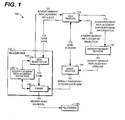
- FIG. 1 is a message flow diagram that illustrates one embodiment of the hardware components of a system that performs the present invention.
- FIG. 2 is a block diagram that illustrates, in detail, one embodiment of the hardware components shown in FIG. 1 .
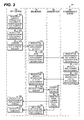
- FIG. 3 is a message flow diagram that illustrates methods according to various embodiments of the present invention.
- FIG. 1 is a message flow diagram that illustrates one embodiment of the hardware components of a system that performs the present invention.
- a switched digital video (SDV) system 100 includes a set-top box 110, television 150, edge router 160, SDV server 170, and advertisement server 180.
- a network such as a hybrid-fiber coaxial (HFC) network, connects the set-top box 110 and the television 150 to the edge router 160, SDV server 170, and the advertisement server 180.
- a network (not shown) connects the advertisement server 180 to the edge router 160 and SDV server 170.
- HFC hybrid-fiber coaxial
- the set-top box 110 is a computing device that connects the television 150 and an external signal source, turning the signal into a content stream that the television 150 displays.
- the set-top box 110 shown in FIG. 1 includes an SDV subsystem 120, advertisement replacement detector 130, and tuner 140.
- the edge router 160 is a computing device that transfers data between a local area network and a wide area network, choosing the most effective paths to use when sending or receiving data.
- the edge router 160 shown in FIG. 1 includes quadrature amplitude modulators (QAMs) that enable the transmission of a multiplex of digital streams via a radio-frequency (RF) carrier.
- QAMs quadrature amplitude modulators
- the SDV server 170 is a computing device that receives channel change requests for switched content from the set-top box 110, binds that content to a session on the edge router 160 that is associated with a QAM feeding the service group for the set-top box 110, and responds to the set-top box 110 with the frequency and program number where the content may be found.
- the system shown in FIG. 1 utilizes an SDV environment to send a targeted advertisement.
- the targeted advertisement is a replacement for the primary network advertisement that is typically shown during a television program or between two television programs.
- One benefit of using the SDV environment to send targeted advertisements is that targeted advertisements are not required to be transmitted on the network in a continuous manner, and can be switched in based on an insertion decision made by the targeted advertisement decision engine. The decision of which targeted advertisement to select and insert is made prior to the insertion of the targeted advertisement.
- the transition from a television program to a targeted advertisement is actually a service acquisition. Since the time needed to insert the targeted advertisement in the SDV system can be greater than the service acquisition time, it is possible that the consumer may miss part of the advertisement when the advertisement starts. Therefore, it is important to first make sure the advertisement is being broadcast prior to acquiring the targeted advertisement service.
- the present invention minimizes the time delay to transition from a primary television program, to a targeted advertisement, and back to the primary television program, thereby avoiding the loss of advertisement time (i.e. , lost revenue for the MSO).
- the SDV system shown in FIG. 1 saves network bandwidth because it only streams the replacement targeted advertisement to those set-top boxes 110 that indicate an advertisement replacement opportunity. Furthermore, it only consumes bandwidth if the end user actually plays the replacement targeted advertisement.
- the present invention removes the need in the prior art to pre-position replacement targeted advertisements (e.g ., on a disk associated with the set-top box 110).
- a subscriber uses the set-top box 110 to request a content stream to view on the television 150.
- the SDV server 170 receives the request for the content stream from the SDV subsystem 120 of the set-top box 110.
- the SDV server 170 will bind a session to the edge router 160 for delivery of the content stream.
- the edge router 160 then delivers the content stream, as MPEG-2 transport stream over QAM 161, to the tuner 140 which will display the content stream on the television 150.
- the advertisement replacement detector 130 shown in FIG. 1 monitors the content streams that the tuner 140 receives to detect an opportunity for advertisement replacement.
- the advertisement replacement detector 130 detects a trigger in the content stream that indicates that an advertisement transition will occur, where the advertisement server 180 inserted the trigger into the content stream, and the SDV server 170 forwarded the content stream with the trigger to the set-top box 110 via the edge router 160.
- the advertisement replacement detector 130 detects a splice point in the content stream that indicates that an advertisement transition will occur. When such an advertisement replacement opportunity occurs, the advertisement replacement detector 130 sends a notification to the SDV subsystem 120. The notification instructs the SDV subsystem 120 to send an advertisement replacement request 121 message to the SDV server 170.
- the SDV server 170 sends advertisement replacement service/timing information 171 to the advertisement server 180.
- the advertisement replacement service/timing information 171 provides advertisement replacement information that indicates when to start playing the advertisement.
- the advertisement replacement service/timing information 171 provides advertisement replacement information that indicates how to acquire the service.
- the advertisement replacement message and the advertisement replacement service/timing information 171 include demographic information for the subscriber, time duration for the advertisement segment, identification information for the subscriber, purchasing preferences, and the like that help the advertisement server 180 to select an advertisement that will target the subscriber or an event or occasion.
- the advertisement server 180 In response to the receipt of the advertisement replacement service/timing information 171, the advertisement server 180 prepares an advertisement replacement to present to the subscriber.
- the advertisement replacement service/timing information 171 which includes the subscriber's characteristics and preferences (i.e. , demographic information, timing information, identification information, purchasing preferences, and the like), is input to a decision engine that the advertisement server 180 uses to select an appropriate advertisement replacement.
- the advertisement server 180 sends an advertisement replacement selection 181 message to the SDV server 170.
- the advertisement replacement selection 181 message informs the SDV server 170 of the service information of the advertisement replacement.
- the SDV server 170 establishes a bind session 172 with the edge router 160, proceeds to broadcast the advertisement replacement, and learns the tuning information needed for the set-top box 110 tune to be successful.
- the SDV server 170 sends a tune data 173 message to the SDV subsystem 120 to provide the tuning information to the set-top box 110.
- the tune data 173 message includes timing information to synchronize the set-top box 110 tune with the playing of the replacement target advertisement that the advertisement server 180 provides as an advertisement replacement stream 182 to the edge router 160.
- the tune data 173 is a message that can contain timing information which the set-top box 110 evaluates to decide when to tune, or the SDV server 170 can transmit the message with precise timing where the set-top box 110 reacts immediately on the receipt of the message.
- the SDV subsystem 120 in the set-top box 110 receives the tune data 173 message, it sends a tune 122 message to the tuner 140 to tune to the replacement target advertisement so that advertising material 141 is displayed on the television 150.
- FIG. 2 is a block diagram that illustrates, in detail, one embodiment of the hardware components shown in FIG. 1 .
- FIG. 2 illustrates the hardware components and software comprising the advertisement server 180, SDV server 170, and set-top box 110 shown in FIG. 1 .
- the advertisement server 180 in one embodiment, is a general-purpose computing device that performs the present invention.
- a bus 205 is a communication medium that connects a processor 210, data storage device 215 (such as a Serial ATA (SATA) hard disk drive, optical drive, Small Computer System Interface (SCSI) disk, flash memory, or the like), communication interface 220, and memory 225 (such as Random Access Memory (RAM), Dynamic RAM (DRAM), non-volatile computer memory, flash memory, or the like).
- the communication interface 220 connects the advertisement server 180 to the edge router 160 and the SDV server 170.
- the implementation of the present invention on the advertisement server 180 is an application-specific integrated circuit (ASIC).
- ASIC application-specific integrated circuit
- the processor 210 performs the disclosed methods by executing the sequences of operational instructions that comprise each computer program resident in, or operative on, the memory 225.
- the memory 225 may include operating system, administrative, and database programs that support the programs disclosed in this application.
- the configuration of the memory 225 of the advertisement server 180 includes an advertisement replacement program 226 that performs the methods of the present invention disclosed in detail in FIG. 1 and FIG. 3 .
- the processor 210 When the processor 210 performs the disclosed methods, it stores intermediate results in the memory 225 or data storage device 215.
- the memory 225 may swap these programs, or portions thereof, in and out of the memory 225 as needed, and thus may include fewer than all of these programs at any one time.
- the SDV server 170 in one embodiment, is a general-purpose computing device that performs the present invention.
- a bus 230 is a communication medium that connects a processor 235, data storage device 240 (such as a Serial ATA (SATA) hard disk drive, optical drive, Small Computer System Interface (SCSI) disk, flash memory, or the like), communication interface 245, and memory 250 (such as Random Access Memory (RAM), Dynamic RAM (DRAM), non-volatile computer memory, flash memory, or the like).
- the communication interface 245 connects the SDV server 170 to the advertisement server 180, edge router 160, and set-top box 110.
- the implementation of the present invention on the SDV server 170 is an application-specific integrated circuit (ASIC).
- ASIC application-specific integrated circuit
- the processor 235 performs the disclosed methods by executing the sequences of operational instructions that comprise each computer program resident in, or operative on, the memory 250.
- the memory 250 may include operating system, administrative, and database programs that support the programs disclosed in this application.
- the configuration of the memory 250 of the SDV server 170 includes an advertisement replacement program 251 that performs the methods of the present invention disclosed in detail in FIG. 1 and FIG. 3 .
- the processor 235 When the processor 235 performs the disclosed methods, it stores intermediate results in the memory 250 or data storage device 240.
- the memory 250 may swap these programs, or portions thereof, in and out of the memory 250 as needed, and thus may include fewer than all of these programs at any one time.
- the set-top box 110 in one embodiment, is a general-purpose computing device that performs the present invention.
- a bus 255 is a communication medium that connects a processor 260, data storage device 265 (such as a Serial ATA (SATA) hard disk drive, optical drive, Small Computer System Interface (SCSI) disk, flash memory, or the like), communication interface 270, infrared (IR) interface 275, tuner 140, and memory 280 (such as Random Access Memory (RAM), Dynamic RAM (DRAM), non-volatile computer memory, flash memory, or the like).
- the communication interface 270 connects the set-top box 110 to the SDV server 170.
- the IR interface 275 connects the set-top box 110 to a remote controller 285.
- the tuner 140 connects the set-top box 110 to a display device such as a television 150, and sends the video content that the television 150 screen displays.
- a display device such as a television 150
- the implementation of the present invention on the set-top box 110 is an application-specific integrated circuit (ASIC).
- ASIC application-specific integrated circuit
- the processor 260 performs the disclosed methods by executing the sequences of operational instructions that comprise each computer program resident in, or operative on, the memory 280.
- the memory 280 may include operating system, administrative, and database programs that support the programs disclosed in this application.
- the configuration of the memory 280 of the set-top box 110 includes an SDV subsystem 120, and advertisement replacement detector 130 that perform the methods of the present invention disclosed in detail in FIG. 1 and FIG. 3 .
- the processor 260 When the processor 260 performs the disclosed methods, it stores intermediate results in the memory 280 or data storage device 265.
- the memory 280 may swap these programs, or portions thereof, in and out of the memory 280 as needed, and thus may include fewer than all of these programs at any one time.
- FIG. 3 is a flow diagram that illustrates a method according to one embodiment of the present invention.
- FIG. 3 illustrates the communication between the set-top box 110, SDV server 170, edge router 160, and advertisement server 180.
- the process 300 shown in FIG. 3 begins when the set-top box 110 monitors a content stream that includes an advertisement replacement opportunity (step 305) inserted in the content stream.
- the tuner 140 for the set-top box 110 is receiving the content stream in response to a request from a subscriber to tune the set-top box 110 to a channel in an SDV system.
- the process 300 monitors the content stream by examining each transport stream packet that makes up the content stream to detect an advertisement replacement opportunity (i.e ., an indication that an upcoming advertisement segment in the content stream provides an opportunity to substitute a replacement advertisement for the primary advertisement).
- the advertisement replacement opportunity is a trigger that the advertisement server 180 inserts into the content stream.
- the process 300 When the process 300 encounters a trigger in the content stream, it examines the trigger to identify a start time for the advertisement segment, end time for the advertisement segment, and service information for the advertisement segment.
- the trigger is an indicator of a transition of the content stream to a service for the advertisement segment, and provides a seamless transition when tuning to the advertisement segment.
- the advertisement replacement opportunity is a splice point in the content stream.
- the process 300 When the process 300 encounters the splice point in the content stream, it examines the splice point to identify a start time for the advertisement segment, end time for the advertisement segment, and advertisement replacement splice service information.
- the splice point is an indicator of a transition of the content stream to a service for the advertisement segment, and provides a seamless transition when tuning to the advertisement segment.
- the SDV subsystem 120 of the set-top box 110 sends an advertisement replacement request 121 message to the SDV server 170 (step 315).
- the advertisement replacement request 121 message includes advertisement replacement service information, demographic information for the subscriber, time duration for the advertisement replacement segment, identification information for the subscriber, purchasing preferences, and the like.
- the SDV server 170 receives the advertisement replacement request 121 message (step 320) and sends advertisement replacement service/timing information 171 to the advertisement server 180 (step 325).
- the advertisement replacement service/timing information 171 includes advertisement replacement information that indicates when to start playing the advertisement.
- the advertisement replacement service/timing information 171 provides advertisement replacement information that indicates how to acquire the service.
- the advertisement replacement service/timing information 171 includes, demographic information for the subscriber, time duration for the advertisement segment, identification information for the subscriber, purchasing preferences, and the like.
- the advertisement server 180 receives the advertisement replacement service/timing information 171 (step 330) and selects a replacement message (step 335 ).
- the advertisement server 180 includes a decision engine to select a targeted advertisement as the replacement advertisement based on consideration of the subscriber's characteristics and preferences obtained from demographic information for the subscriber, time duration for the advertisement segment, identification information for the subscriber, purchasing preferences, and the like.
- the advertisement server 180 sends an advertisement replacement selection 181 message to the SDV server 170 to provide service information for the replacement advertisement to the SDV server 170 (step 340).
- the service information identifies the service and associated advertisement tuning information necessary for the SDV server 170 to set up the service and then indicates to the edge router 160 to begin broadcasting the replacement advertisement.
- the advertisement server 180 also sends timing information for the replacement advertisement to instruct the SDV server 170 when to start playing the replacement advertisement, and the time duration for the replacement advertisement. This also results in the edge router 160 broadcasting the replacement advertisement.
- the SDV server 170 receives the service information for the replacement advertisement in the advertisement replacement selection 181 message (step 345) and sends a request to the edge router 160 for a bind session 172 (step 350).
- the edge router 160 accepts the request for the bind session 172 (step 355) and prepares to route the replacement advertisement.
- the edge router 160 sends an advertisement replacement stream 182 that includes the advertisement replacement (step 360) so that the tuner 140 on the set-top box 110 receives the advertisement replacement stream 182 (step 365) prior to the start time for the advertisement replacement segment in the content stream.
- the edge router 160 signals the SDV server 170 that the session is bound.
- the SDV server 170 then sends tune data 173 for the advertisement replacement to the SDV subsystem 120 of the set-top box 110 (step 370).
- the tune data 173 includes a Moving Picture Experts Group service number, Internet Protocol multicast, a frequency, a service identifier, and the like.
- the set-top box 110 receives the tune data 173 (step 375) and prepares the tuner 140 to synchronize the set-top box 110 with the playing of the advertisement replacement.
- the tune data 173 includes timing information that the set-top box 110 evaluates and uses to determine when to tune to the advertisement replacement.
- the tune data 173 includes precise timing and the set-top box 110 reacts immediately upon receipt of the tune data 173.
Landscapes
- Engineering & Computer Science (AREA)
- Multimedia (AREA)
- Signal Processing (AREA)
- Databases & Information Systems (AREA)
- Computer Networks & Wireless Communication (AREA)
- Business, Economics & Management (AREA)
- Marketing (AREA)
- Two-Way Televisions, Distribution Of Moving Picture Or The Like (AREA)
Abstract
Description
- A digital video broadcast system allows a multiple system operator (MSO) to deliver television programs and multimedia services to subscribers. The capacity, or bandwidth, of the system determines the programs and services that the MSO delivers. In legacy broadcast systems, the MSO sends all of the available programs and services to the subscriber's set-top box on a single cable. Thus, the only way to increase the programs and services available to subscribers in legacy broadcast systems is to increase the bandwidth.
- A switched digital video (SDV) system is an improvement to the legacy broadcast systems. The SDV system requires less bandwidth to deliver high-bandwidth digital services by allowing the MSO to send only the content requested by a service group, where each service group includes a set of set-top boxes with visibility to a common set of switched edge quadrature amplitude modulator (QAM) devices. To make this possible, the subscriber's set-top box communicates with a network side video server to request the program that the subscriber wants to watch in real time. The SDV system responds by delivering the requested program to the subscriber's service group. Thus, the service group only receives the programs that subscribers in the service group are watching.
- A current focus for the MSO is the development of targeted advertisement technology (i.e., advertisements that are placed so as to reach consumers based on various traits, such as demographics, purchase history, observed behavior, or the like). One of the issues for the MSO is the need for network bandwidth to distribute the targeted advertisements. Even though the targeted advertisements are short in length, there is a need to have many different targeted advertisements to satisfy the various targeted population groups they need to serve. It is anticipated that as targeted advertisement technology grows, there will be an increase in the targeted advertisements distributed over the network. Furthermore, the need for bandwidth will increase because subscribers want the targeted advertisements to be in high-definition (HD) format (i.e., The Moving Picture Experts Group (MPEG) MPEG-4 or MPEG-2 high profile format). In addition, since these targeted advertisements generate a significant revenue stream for the MSO, the time delay to transition from a primary television program, to a targeted advertisement, and back to the primary television program is lost advertisement time that negatively impacts the revenue stream.
- There is a demand for a method and system for distributing targeted advertisements in an SDV system that reduces the network bandwidth necessary for the distribution of HD and standard-definition (SD) targeted advertisements. The presently disclosed invention satisfies this demand.
- Aspects of the present invention provide a system and method for distributing targeted advertisements in a switched digital video system. The method monitors a content stream associated with a channel selected by a subscriber, where the content stream includes an advertisement segment having a start time and an end time, and an advertisement replacement opportunity inserted in the content stream. The method detects the advertisement replacement opportunity at a detection time prior to the start time of the advertisement segment, and sends a request to select an advertisement replacement for the advertisement segment, thereby broadcasting a service associated with the advertisement replacement prior to the start time for the advertisement segment. The method receives tune data to identify an advertisement replacement stream associated with the advertisement replacement, and tunes to the advertisement replacement at the start time for the advertisement segment.
-
FIG. 1 is a message flow diagram that illustrates one embodiment of the hardware components of a system that performs the present invention. -
FIG. 2 is a block diagram that illustrates, in detail, one embodiment of the hardware components shown inFIG. 1 . -
FIG. 3 is a message flow diagram that illustrates methods according to various embodiments of the present invention. -
FIG. 1 is a message flow diagram that illustrates one embodiment of the hardware components of a system that performs the present invention. A switched digital video (SDV)system 100 includes a set-top box 110,television 150,edge router 160,SDV server 170, andadvertisement server 180. In one embodiment, a network (not shown), such as a hybrid-fiber coaxial (HFC) network, connects the set-top box 110 and thetelevision 150 to theedge router 160,SDV server 170, and theadvertisement server 180. In another embodiment, a network (not shown) connects theadvertisement server 180 to theedge router 160 andSDV server 170. - The set-
top box 110 is a computing device that connects thetelevision 150 and an external signal source, turning the signal into a content stream that thetelevision 150 displays. The set-top box 110 shown inFIG. 1 includes anSDV subsystem 120,advertisement replacement detector 130, andtuner 140. - The
edge router 160 is a computing device that transfers data between a local area network and a wide area network, choosing the most effective paths to use when sending or receiving data. Theedge router 160 shown inFIG. 1 includes quadrature amplitude modulators (QAMs) that enable the transmission of a multiplex of digital streams via a radio-frequency (RF) carrier. - The
SDV server 170 is a computing device that receives channel change requests for switched content from the set-top box 110, binds that content to a session on theedge router 160 that is associated with a QAM feeding the service group for the set-top box 110, and responds to the set-top box 110 with the frequency and program number where the content may be found. - The system shown in
FIG. 1 utilizes an SDV environment to send a targeted advertisement. In one embodiment, the targeted advertisement is a replacement for the primary network advertisement that is typically shown during a television program or between two television programs. One benefit of using the SDV environment to send targeted advertisements is that targeted advertisements are not required to be transmitted on the network in a continuous manner, and can be switched in based on an insertion decision made by the targeted advertisement decision engine. The decision of which targeted advertisement to select and insert is made prior to the insertion of the targeted advertisement. - The transition from a television program to a targeted advertisement is actually a service acquisition. Since the time needed to insert the targeted advertisement in the SDV system can be greater than the service acquisition time, it is possible that the consumer may miss part of the advertisement when the advertisement starts. Therefore, it is important to first make sure the advertisement is being broadcast prior to acquiring the targeted advertisement service. The present invention minimizes the time delay to transition from a primary television program, to a targeted advertisement, and back to the primary television program, thereby avoiding the loss of advertisement time (i.e., lost revenue for the MSO).
- The SDV system shown in
FIG. 1 saves network bandwidth because it only streams the replacement targeted advertisement to those set-top boxes 110 that indicate an advertisement replacement opportunity. Furthermore, it only consumes bandwidth if the end user actually plays the replacement targeted advertisement. The present invention removes the need in the prior art to pre-position replacement targeted advertisements (e.g., on a disk associated with the set-top box 110). - In one embodiment of the SDV system shown in
FIG. 1 , a subscriber uses the set-top box 110 to request a content stream to view on thetelevision 150. TheSDV server 170 receives the request for the content stream from theSDV subsystem 120 of the set-top box 110. When the content stream is available, theSDV server 170 will bind a session to theedge router 160 for delivery of the content stream. Theedge router 160 then delivers the content stream, as MPEG-2 transport stream overQAM 161, to thetuner 140 which will display the content stream on thetelevision 150. - The
advertisement replacement detector 130 shown inFIG. 1 monitors the content streams that thetuner 140 receives to detect an opportunity for advertisement replacement. In one embodiment, theadvertisement replacement detector 130 detects a trigger in the content stream that indicates that an advertisement transition will occur, where theadvertisement server 180 inserted the trigger into the content stream, and theSDV server 170 forwarded the content stream with the trigger to the set-top box 110 via theedge router 160. In another embodiment, theadvertisement replacement detector 130 detects a splice point in the content stream that indicates that an advertisement transition will occur. When such an advertisement replacement opportunity occurs, theadvertisement replacement detector 130 sends a notification to theSDV subsystem 120. The notification instructs theSDV subsystem 120 to send anadvertisement replacement request 121 message to theSDV server 170. In response, theSDV server 170 sends advertisement replacement service/timing information 171 to theadvertisement server 180. In one embodiment, the advertisement replacement service/timing information 171 provides advertisement replacement information that indicates when to start playing the advertisement. In another embodiment, the advertisement replacement service/timing information 171 provides advertisement replacement information that indicates how to acquire the service. In another embodiment, the advertisement replacement message and the advertisement replacement service/timing information 171 include demographic information for the subscriber, time duration for the advertisement segment, identification information for the subscriber, purchasing preferences, and the like that help theadvertisement server 180 to select an advertisement that will target the subscriber or an event or occasion. - In response to the receipt of the advertisement replacement service/
timing information 171, theadvertisement server 180 prepares an advertisement replacement to present to the subscriber. In one embodiment, the advertisement replacement service/timing information 171, which includes the subscriber's characteristics and preferences (i.e., demographic information, timing information, identification information, purchasing preferences, and the like), is input to a decision engine that theadvertisement server 180 uses to select an appropriate advertisement replacement. Theadvertisement server 180 sends anadvertisement replacement selection 181 message to theSDV server 170. In one embodiment, theadvertisement replacement selection 181 message informs theSDV server 170 of the service information of the advertisement replacement. TheSDV server 170 establishes abind session 172 with theedge router 160, proceeds to broadcast the advertisement replacement, and learns the tuning information needed for the set-top box 110 tune to be successful. TheSDV server 170 sends atune data 173 message to theSDV subsystem 120 to provide the tuning information to the set-top box 110. In one embodiment, thetune data 173 message includes timing information to synchronize the set-top box 110 tune with the playing of the replacement target advertisement that theadvertisement server 180 provides as anadvertisement replacement stream 182 to theedge router 160. In another embodiment, thetune data 173 is a message that can contain timing information which the set-top box 110 evaluates to decide when to tune, or theSDV server 170 can transmit the message with precise timing where the set-top box 110 reacts immediately on the receipt of the message. When theSDV subsystem 120 in the set-top box 110 receives thetune data 173 message, it sends atune 122 message to thetuner 140 to tune to the replacement target advertisement so thatadvertising material 141 is displayed on thetelevision 150. -
FIG. 2 is a block diagram that illustrates, in detail, one embodiment of the hardware components shown inFIG. 1 . In particular,FIG. 2 illustrates the hardware components and software comprising theadvertisement server 180,SDV server 170, and set-top box 110 shown inFIG. 1 . - The
advertisement server 180, in one embodiment, is a general-purpose computing device that performs the present invention. Abus 205 is a communication medium that connects aprocessor 210, data storage device 215 (such as a Serial ATA (SATA) hard disk drive, optical drive, Small Computer System Interface (SCSI) disk, flash memory, or the like),communication interface 220, and memory 225 (such as Random Access Memory (RAM), Dynamic RAM (DRAM), non-volatile computer memory, flash memory, or the like). Thecommunication interface 220 connects theadvertisement server 180 to theedge router 160 and theSDV server 170. In one embodiment, the implementation of the present invention on theadvertisement server 180 is an application-specific integrated circuit (ASIC). - The
processor 210 performs the disclosed methods by executing the sequences of operational instructions that comprise each computer program resident in, or operative on, thememory 225. The reader should understand that thememory 225 may include operating system, administrative, and database programs that support the programs disclosed in this application. In one embodiment, the configuration of thememory 225 of theadvertisement server 180 includes anadvertisement replacement program 226 that performs the methods of the present invention disclosed in detail inFIG. 1 andFIG. 3 . When theprocessor 210 performs the disclosed methods, it stores intermediate results in thememory 225 ordata storage device 215. In another embodiment, thememory 225 may swap these programs, or portions thereof, in and out of thememory 225 as needed, and thus may include fewer than all of these programs at any one time. - The
SDV server 170, in one embodiment, is a general-purpose computing device that performs the present invention. Abus 230 is a communication medium that connects aprocessor 235, data storage device 240 (such as a Serial ATA (SATA) hard disk drive, optical drive, Small Computer System Interface (SCSI) disk, flash memory, or the like),communication interface 245, and memory 250 (such as Random Access Memory (RAM), Dynamic RAM (DRAM), non-volatile computer memory, flash memory, or the like). Thecommunication interface 245 connects theSDV server 170 to theadvertisement server 180,edge router 160, and set-top box 110. In one embodiment, the implementation of the present invention on theSDV server 170 is an application-specific integrated circuit (ASIC). - The
processor 235 performs the disclosed methods by executing the sequences of operational instructions that comprise each computer program resident in, or operative on, thememory 250. The reader should understand that thememory 250 may include operating system, administrative, and database programs that support the programs disclosed in this application. In one embodiment, the configuration of thememory 250 of theSDV server 170 includes anadvertisement replacement program 251 that performs the methods of the present invention disclosed in detail inFIG. 1 andFIG. 3 . When theprocessor 235 performs the disclosed methods, it stores intermediate results in thememory 250 ordata storage device 240. In another embodiment, thememory 250 may swap these programs, or portions thereof, in and out of thememory 250 as needed, and thus may include fewer than all of these programs at any one time. - The set-
top box 110, in one embodiment, is a general-purpose computing device that performs the present invention. Abus 255 is a communication medium that connects aprocessor 260, data storage device 265 (such as a Serial ATA (SATA) hard disk drive, optical drive, Small Computer System Interface (SCSI) disk, flash memory, or the like),communication interface 270, infrared (IR)interface 275,tuner 140, and memory 280 (such as Random Access Memory (RAM), Dynamic RAM (DRAM), non-volatile computer memory, flash memory, or the like). Thecommunication interface 270 connects the set-top box 110 to theSDV server 170. TheIR interface 275 connects the set-top box 110 to aremote controller 285. Thetuner 140 connects the set-top box 110 to a display device such as atelevision 150, and sends the video content that thetelevision 150 screen displays. In one embodiment, the implementation of the present invention on the set-top box 110 is an application-specific integrated circuit (ASIC). - The
processor 260 performs the disclosed methods by executing the sequences of operational instructions that comprise each computer program resident in, or operative on, thememory 280. The reader should understand that thememory 280 may include operating system, administrative, and database programs that support the programs disclosed in this application. In one embodiment, the configuration of thememory 280 of the set-top box 110 includes anSDV subsystem 120, andadvertisement replacement detector 130 that perform the methods of the present invention disclosed in detail inFIG. 1 andFIG. 3 . When theprocessor 260 performs the disclosed methods, it stores intermediate results in thememory 280 ordata storage device 265. In another embodiment, thememory 280 may swap these programs, or portions thereof, in and out of thememory 280 as needed, and thus may include fewer than all of these programs at any one time. -
FIG. 3 is a flow diagram that illustrates a method according to one embodiment of the present invention. In particular,FIG. 3 illustrates the communication between the set-top box 110,SDV server 170,edge router 160, andadvertisement server 180. - The
process 300 shown inFIG. 3 , with reference toFIG. 1 andFIG. 2 , begins when the set-top box 110 monitors a content stream that includes an advertisement replacement opportunity (step 305) inserted in the content stream. Thetuner 140 for the set-top box 110 is receiving the content stream in response to a request from a subscriber to tune the set-top box 110 to a channel in an SDV system. Theprocess 300 monitors the content stream by examining each transport stream packet that makes up the content stream to detect an advertisement replacement opportunity (i.e., an indication that an upcoming advertisement segment in the content stream provides an opportunity to substitute a replacement advertisement for the primary advertisement). In one embodiment, the advertisement replacement opportunity is a trigger that theadvertisement server 180 inserts into the content stream. When theprocess 300 encounters a trigger in the content stream, it examines the trigger to identify a start time for the advertisement segment, end time for the advertisement segment, and service information for the advertisement segment. The trigger is an indicator of a transition of the content stream to a service for the advertisement segment, and provides a seamless transition when tuning to the advertisement segment. In another embodiment, the advertisement replacement opportunity is a splice point in the content stream. When theprocess 300 encounters the splice point in the content stream, it examines the splice point to identify a start time for the advertisement segment, end time for the advertisement segment, and advertisement replacement splice service information. The splice point is an indicator of a transition of the content stream to a service for the advertisement segment, and provides a seamless transition when tuning to the advertisement segment. When theprocess 300 detects an advertisement replacement opportunity in the content stream (step 310), theSDV subsystem 120 of the set-top box 110 sends anadvertisement replacement request 121 message to the SDV server 170 (step 315). In one embodiment, theadvertisement replacement request 121 message includes advertisement replacement service information, demographic information for the subscriber, time duration for the advertisement replacement segment, identification information for the subscriber, purchasing preferences, and the like. - The
SDV server 170 receives theadvertisement replacement request 121 message (step 320) and sends advertisement replacement service/timing information 171 to the advertisement server 180 (step 325). In one embodiment, the advertisement replacement service/timing information 171 includes advertisement replacement information that indicates when to start playing the advertisement. In another embodiment, the advertisement replacement service/timing information 171 provides advertisement replacement information that indicates how to acquire the service. In another embodiment, the advertisement replacement service/timing information 171 includes, demographic information for the subscriber, time duration for the advertisement segment, identification information for the subscriber, purchasing preferences, and the like. - The
advertisement server 180 receives the advertisement replacement service/timing information 171 (step 330) and selects a replacement message (step 335). In one embodiment, theadvertisement server 180 includes a decision engine to select a targeted advertisement as the replacement advertisement based on consideration of the subscriber's characteristics and preferences obtained from demographic information for the subscriber, time duration for the advertisement segment, identification information for the subscriber, purchasing preferences, and the like. Once theadvertisement server 180 selects the replacement advertisement, theadvertisement server 180 sends anadvertisement replacement selection 181 message to theSDV server 170 to provide service information for the replacement advertisement to the SDV server 170 (step 340). In one embodiment, the service information identifies the service and associated advertisement tuning information necessary for theSDV server 170 to set up the service and then indicates to theedge router 160 to begin broadcasting the replacement advertisement. In another embodiment, theadvertisement server 180 also sends timing information for the replacement advertisement to instruct theSDV server 170 when to start playing the replacement advertisement, and the time duration for the replacement advertisement. This also results in theedge router 160 broadcasting the replacement advertisement. - The
SDV server 170 receives the service information for the replacement advertisement in theadvertisement replacement selection 181 message (step 345) and sends a request to theedge router 160 for a bind session 172 (step 350). Theedge router 160 accepts the request for the bind session 172 (step 355) and prepares to route the replacement advertisement. Theedge router 160 sends anadvertisement replacement stream 182 that includes the advertisement replacement (step 360) so that thetuner 140 on the set-top box 110 receives the advertisement replacement stream 182 (step 365) prior to the start time for the advertisement replacement segment in the content stream. Theedge router 160 signals theSDV server 170 that the session is bound. TheSDV server 170 then sendstune data 173 for the advertisement replacement to theSDV subsystem 120 of the set-top box 110 (step 370). In various embodiments, thetune data 173 includes a Moving Picture Experts Group service number, Internet Protocol multicast, a frequency, a service identifier, and the like. The set-top box 110 receives the tune data 173 (step 375) and prepares thetuner 140 to synchronize the set-top box 110 with the playing of the advertisement replacement. In one embodiment, thetune data 173 includes timing information that the set-top box 110 evaluates and uses to determine when to tune to the advertisement replacement. In another embodiment, thetune data 173 includes precise timing and the set-top box 110 reacts immediately upon receipt of thetune data 173. - Although the disclosed embodiments describe a fully functioning method and system for distributing targeted advertisements in an SDV system, the reader should understand that other equivalent embodiments exist. Since numerous modifications and variations will occur to those reviewing this disclosure, the method and system for distributing targeted advertisements in an SDV system is not limited to the exact construction and operation illustrated and disclosed. Accordingly, this disclosure intends all suitable modifications and equivalents to fall within the scope of the claims.
Further aspects of the invention are provided by the subject matter of the following clauses: - 1. A method, comprising:
- monitoring a content stream associated with a channel in a switched digital video system, the content stream including an advertisement segment having a start time and an end time, and an advertisement replacement opportunity inserted in the content stream;
- detecting the advertisement replacement opportunity in the content stream at a detection time that is prior to the start time of the advertisement segment;
- sending a request to select an advertisement replacement for the advertisement segment, thereby causing a broadcast of a service associated with the advertisement replacement prior to the start time of the advertisement segment;
- receiving tune data to identify an advertisement replacement stream associated with the advertisement replacement; and
- tuning to the advertisement replacement stream at the start time for the advertisement segment.
- 2. The method of clause 1, wherein the content stream is a sequential content stream.
- 3. The method of clause 1, wherein the monitoring of the content stream further comprises:
- receiving the content stream as a time sequence of packets; and
- examining each packet.
- 4. The method of clause 1, wherein the detecting of the advertisement replacement opportunity further comprises:
- detecting at least one trigger in the content stream, said at least one trigger identifying the start time for the advertisement segment, the end time for the advertisement segment, and service information for the advertisement segment,
- wherein said at least one trigger is an indicator of a transition of the content stream to a service for the advertisement segment, and an opportunity to replace the advertisement segment with the advertisement replacement, and
- wherein said at least one trigger provides a seamless transition when tuning to the advertisement segment, or the advertisement replacement.
- 5. The method of clause 1, wherein the detecting of the advertisement replacement opportunity further comprises:
- detecting at least one splice point in the content stream, said at least one splice point identifying the start time for the advertisement segment, the end time for the advertisement segment, and advertisement replacement splice service information,
- wherein said at least one splice point is an indicator of a transition of the content stream to a service for the advertisement segment, and an opportunity to replace the advertisement segment with the advertisement replacement, and
- wherein said at least one splice point provides a seamless transition when tuning to the advertisement segment, or the advertisement replacement.
- 6. The method of clause 1, wherein the request to select the advertisement replacement for the advertisement segment includes at least one of demographic information for a subscriber to the content stream, a time duration for the advertisement segment, identification information for the subscriber, and purchasing preferences for the subscriber.
- 7. The method of clause 1, wherein the advertisement replacement is targeted to address a characteristic or a preference associated with a subscriber to the content stream.
- 8. The method of clause 1, wherein the tune data includes at least one of a Moving Picture Experts Group service number, Internet Protocol multicast, a frequency, and a service identifier.
- 9. The method of clause 1, wherein a time difference between the detection time and the start time of the advertisement segment is greater than a service set up time for the advertisement replacement stream.
- 10. A system, comprising:
- a memory device resident in a computing device; and
- a processor disposed in communication with the memory device, the processor configured to:
- monitor a content stream associated with a channel in a switched digital video system, the content stream including an advertisement segment having a start time and an end time, and an advertisement replacement opportunity inserted in the content stream;
- detect the advertisement replacement opportunity in the content stream at a detection time that is prior to the start time of the advertisement segment;
- send a request to select an advertisement replacement for the advertisement segment, thereby causing a broadcast of a service associated with the advertisement replacement prior to the start time of the advertisement segment;
- receive tune data to identify an advertisement replacement stream associated with the advertisement replacement; and
- tuning to the advertisement replacement stream at the start time for the advertisement segment.
- 11. The system of clause 10, wherein a time difference between the detection time and the start time of the advertisement segment is greater than a service set up time for the advertisement replacement stream.
- 12. A non-transitory computer-readable medium, comprising computer-executable instructions that, when executed on a computing device, perform steps of:
- monitoring a content stream associated with a channel in a switched digital video system, the content stream including an advertisement segment having a start time and an end time, and an advertisement replacement opportunity inserted in the content stream;
- detecting the advertisement replacement opportunity in the content stream at a detection time that is prior to the start time of the advertisement segment;
- sending a request to select an advertisement replacement for the advertisement segment, thereby causing a broadcast of a service associated with the advertisement replacement prior to the start time of the advertisement segment;
- receiving tune data to identify an advertisement replacement stream associated with the advertisement replacement; and
- tuning to the advertisement replacement stream at the start time for the advertisement segment.
- 13. A method, comprising:
- receiving a request to select an advertisement replacement for an advertisement segment of a content stream associated with a channel in a switched digital video system, the advertisement segment having a start time and an end time, wherein a receipt time of the request is prior to the start time for the advertisement segment;
- selecting the advertisement replacement for the advertisement segment;
- broadcasting a service associated with the advertisement replacement prior to the start time of the advertisement segment;
- sending tune data to identify an advertisement replacement stream associated with the advertisement replacement; and
- sending the advertisement replacement stream at the start time for the advertisement segment.
- 14. The method of clause 13, wherein the content stream is a sequential content stream.
- 15. The method of clause 13, wherein the request to select the advertisement replacement for the advertisement segment includes at least one of demographic information for a subscriber to the content stream, a time duration for the advertisement segment, identification information for the subscriber, and purchasing preferences for the subscriber.
- 16. The method of clause 13, wherein the advertisement replacement is targeted to address a characteristic or a preference associated with a subscriber to the content stream.
- 17. The method of clause 13, wherein a time difference between the receipt time of the request and the start time of the advertisement segment is greater than a service set up time for the advertisement replacement stream.
- 18. A system, comprising:
- a memory device resident in a computing device; and
- a processor disposed in communication with the memory device, the processor configured to:
- receive a request to select an advertisement replacement for an advertisement segment of a content stream associated with a channel in a switched digital video system, the advertisement segment having a start time and an end time, wherein a receipt time of the request is prior to the start time for the advertisement segment;
- select the advertisement replacement for the advertisement segment;
- broadcast a service associated with the advertisement replacement prior to the start time of the advertisement segment;
- send tune data to identify an advertisement replacement stream associated with the advertisement replacement; and
- send the advertisement replacement stream at the start time for the advertisement segment.
- 19. The system of clause 18, wherein a time difference between the receipt time of the request and the start time of the advertisement segment is greater than a service set up time for the advertisement replacement stream.
- 20. A non-transitory computer-readable medium, comprising computer-executable instructions that, when executed on a computing device, perform steps of:
- receiving a request to select an advertisement replacement for an advertisement segment of a content stream associated with a channel in a switched digital video system, the advertisement segment having a start time and an end time, wherein a receipt time of the request is prior to the start time for the advertisement segment;
- selecting the advertisement replacement for the advertisement segment;
- broadcasting a service associated with the advertisement replacement prior to the start time of the advertisement segment;
- sending tune data to identify an advertisement replacement stream associated with the advertisement replacement; and
- sending the advertisement replacement stream at the start time for the advertisement segment.
Claims (18)
- A system, comprising:a memory device resident in a computing device; anda processor disposed in communication with the memory device, the processor configured to:monitor a content stream associated with a channel in a switched digital video system, the content stream including an advertisement segment having a start time and an end time, and an advertisement replacement opportunity inserted in the content stream;detect the advertisement replacement opportunity in the content stream at a detection time that is prior to the start time of the advertisement segment;send a request to select an advertisement replacement for the advertisement segment, thereby causing a broadcast of a service associated with the advertisement replacement prior to the start time of the advertisement segment;receive tune data to identify an advertisement replacement stream associated with the advertisement replacement; andtuning to the advertisement replacement stream at the start time for the advertisement segment.
- The system of claim 1, wherein the content stream is a sequential content stream.
- The system of claim 1, wherein to monitor the content stream, the processor is further configured to:receive the content stream as a time sequence of packets; andexamine each packet.
- The system of claim 1, wherein to detect the advertisement replacement opportunity, the processor is further configured to:detect at least one trigger in the content stream, said at least one trigger identifying the start time for the advertisement segment, the end time for the advertisement segment, and service information for the advertisement segment,wherein said at least one trigger is an indicator of a transition of the content stream to a service for the advertisement segment, and an opportunity to replace the advertisement segment with the advertisement replacement, andwherein said at least one trigger provides a seamless transition when tuning to the advertisement segment, or the advertisement replacement.
- The system of claim 1, wherein to detect the advertisement replacement opportunity, the processor is further configured to:detect at least one splice point in the content stream, said at least one splice point identifying the start time for the advertisement segment, the end time for the advertisement segment, and advertisement replacement splice service information,wherein said at least one splice point is an indicator of a transition of the content stream to a service for the advertisement segment, and an opportunity to replace the advertisement segment with the advertisement replacement, andwherein said at least one splice point provides a seamless transition when tuning to the advertisement segment, or the advertisement replacement.
- The system of claim 1, wherein the request to select the advertisement replacement for the advertisement segment includes at least one of demographic information for a subscriber to the content stream, a time duration for the advertisement segment, identification information for the subscriber, and purchasing preferences for the subscriber.
- The system of claim 1, wherein the advertisement replacement is targeted to address a characteristic or a preference associated with a subscriber to the content stream.
- The system of claim 1, wherein the tune data includes at least one of a Moving Picture Experts Group service number, Internet Protocol multicast, a frequency, and a service identifier.
- The system of claim 1, wherein a time difference between the detection time and the start time of the advertisement segment is greater than a service set up time for the advertisement replacement stream.
- A non-transitory computer-readable medium, comprising computer-executable instructions that, when executed on a computing device, perform steps of:monitoring a content stream associated with a channel in a switched digital video system, the content stream including an advertisement segment having a start time and an end time, and an advertisement replacement opportunity inserted in the content stream;detecting the advertisement replacement opportunity in the content stream at a detection time that is prior to the start time of the advertisement segment;sending a request to select an advertisement replacement for the advertisement segment, thereby causing a broadcast of a service associated with the advertisement replacement prior to the start time of the advertisement segment;receiving tune data to identify an advertisement replacement stream associated with the advertisement replacement; andtuning to the advertisement replacement stream at the start time for the advertisement segment.
- The non-transitory computer-readable medium of claim 10, wherein a time difference between the detection time and the start time of the advertisement segment is greater than a service set up time for the advertisement replacement stream.
- A system, comprising:a memory device resident in a computing device; anda processor disposed in communication with the memory device, the processor configured to:receive a request to select an advertisement replacement for an advertisement segment of a content stream associated with a channel in a switched digital video system, the advertisement segment having a start time and an end time, wherein a receipt time of the request is prior to the start time for the advertisement segment;select the advertisement replacement for the advertisement segment;broadcast a service associated with the advertisement replacement prior to the start time of the advertisement segment;send tune data to identify an advertisement replacement stream associated with the advertisement replacement; andsend the advertisement replacement stream at the start time for the advertisement segment.
- The system of claim 12, wherein the content stream is a sequential content stream.
- The system of claim 12, wherein the request to select the advertisement replacement for the advertisement segment includes at least one of demographic information for a subscriber to the content stream, a time duration for the advertisement segment, identification information for the subscriber, and purchasing preferences for the subscriber.
- The system of claim 12, wherein the advertisement replacement is targeted to address a characteristic or a preference associated with a subscriber to the content stream.
- The system of claim 12, wherein a time difference between the receipt time of the request and the start time of the advertisement segment is greater than a service set up time for the advertisement replacement stream.
- A non-transitory computer-readable medium, comprising computer-executable instructions that, when executed on a computing device, perform steps of:receiving a request to select an advertisement replacement for an advertisement segment of a content stream associated with a channel in a switched digital video system, the advertisement segment having a start time and an end time, wherein a receipt time of the request is prior to the start time for the advertisement segment;selecting the advertisement replacement for the advertisement segment;broadcasting a service associated with the advertisement replacement prior to the start time of the advertisement segment;sending tune data to identify an advertisement replacement stream associated with the advertisement replacement; andsending the advertisement replacement stream at the start time for the advertisement segment.
- The non-transitory computer-readable medium of claim 17, wherein a time difference between the receipt time of the request and the start time of the advertisement segment is greater than a service set up time for the advertisement replacement stream.
Applications Claiming Priority (1)
| Application Number | Priority Date | Filing Date | Title |
|---|---|---|---|
| US12/962,306 US20120144420A1 (en) | 2010-12-07 | 2010-12-07 | Targeted advertisement distribution in an sdv environment |
Publications (1)
| Publication Number | Publication Date |
|---|---|
| EP2464133A1 true EP2464133A1 (en) | 2012-06-13 |
Family
ID=45092106
Family Applications (1)
| Application Number | Title | Priority Date | Filing Date |
|---|---|---|---|
| EP11009421A Ceased EP2464133A1 (en) | 2010-12-07 | 2011-11-29 | Targeted advertisement distribution in an SDV environment |
Country Status (4)
| Country | Link |
|---|---|
| US (1) | US20120144420A1 (en) |
| EP (1) | EP2464133A1 (en) |
| CN (1) | CN102572556B (en) |
| CA (1) | CA2759521A1 (en) |
Cited By (6)
| Publication number | Priority date | Publication date | Assignee | Title |
|---|---|---|---|---|
| WO2014035800A1 (en) * | 2012-08-29 | 2014-03-06 | The Directv Group, Inc. | Method and apparatus for inserting advertising into a video signal at a receiving device not having a digital video recorder ( non-dvr) receiver |
| EP2819425A1 (en) * | 2013-06-26 | 2014-12-31 | Comcast Cable Communications, LLC | Content segment detection and replacement |
| EP2868097A4 (en) * | 2012-06-28 | 2016-03-23 | Ericsson Ab | Method and system for ad insertion in over-the-top live media delivery |
| EP3398341A4 (en) * | 2015-12-29 | 2019-05-22 | Gold Line Telemanagement Inc. | REPLACING ADVERTISEMENT OF VIDEO STREAMS |
| WO2019152631A1 (en) * | 2018-01-31 | 2019-08-08 | Qualcomm Incorporated | Dynamic conditional advertisement insertion |
| EP4052477A4 (en) * | 2019-10-31 | 2023-11-08 | Roku, Inc. | Content-modification system with delay buffer feature |
Families Citing this family (176)
| Publication number | Priority date | Publication date | Assignee | Title |
|---|---|---|---|---|
| US9319815B2 (en) * | 2011-07-14 | 2016-04-19 | Vivint, Inc. | Managing audio output through an intermediary |
| CN103026681B (en) * | 2011-08-01 | 2015-06-17 | 华为技术有限公司 | Video-based method, server and system for realizing value-added service |
| CN103096138B (en) * | 2011-11-08 | 2016-03-09 | 财团法人资讯工业策进会 | TV advertising product information display system and method |
| US20130275210A1 (en) * | 2012-02-21 | 2013-10-17 | Kyle Johnson | Apparatus and method for on-line advertisement and a central subscription management service |
| US9113347B2 (en) | 2012-12-05 | 2015-08-18 | At&T Intellectual Property I, Lp | Backhaul link for distributed antenna system |
| US10009065B2 (en) | 2012-12-05 | 2018-06-26 | At&T Intellectual Property I, L.P. | Backhaul link for distributed antenna system |
| US8713600B2 (en) * | 2013-01-30 | 2014-04-29 | Almondnet, Inc. | User control of replacement television advertisements inserted by a smart television |
| US9246963B2 (en) | 2013-02-12 | 2016-01-26 | Comcast Cable Communications, Llc | Custom content insertion |
| US9999038B2 (en) | 2013-05-31 | 2018-06-12 | At&T Intellectual Property I, L.P. | Remote distributed antenna system |
| US9525524B2 (en) | 2013-05-31 | 2016-12-20 | At&T Intellectual Property I, L.P. | Remote distributed antenna system |
| US8897697B1 (en) | 2013-11-06 | 2014-11-25 | At&T Intellectual Property I, Lp | Millimeter-wave surface-wave communications |
| US9209902B2 (en) | 2013-12-10 | 2015-12-08 | At&T Intellectual Property I, L.P. | Quasi-optical coupler |
| US9692101B2 (en) | 2014-08-26 | 2017-06-27 | At&T Intellectual Property I, L.P. | Guided wave couplers for coupling electromagnetic waves between a waveguide surface and a surface of a wire |
| US9768833B2 (en) | 2014-09-15 | 2017-09-19 | At&T Intellectual Property I, L.P. | Method and apparatus for sensing a condition in a transmission medium of electromagnetic waves |
| US10063280B2 (en) | 2014-09-17 | 2018-08-28 | At&T Intellectual Property I, L.P. | Monitoring and mitigating conditions in a communication network |
| US9628854B2 (en) | 2014-09-29 | 2017-04-18 | At&T Intellectual Property I, L.P. | Method and apparatus for distributing content in a communication network |
| US9615269B2 (en) | 2014-10-02 | 2017-04-04 | At&T Intellectual Property I, L.P. | Method and apparatus that provides fault tolerance in a communication network |
| US9685992B2 (en) | 2014-10-03 | 2017-06-20 | At&T Intellectual Property I, L.P. | Circuit panel network and methods thereof |
| US9503189B2 (en) | 2014-10-10 | 2016-11-22 | At&T Intellectual Property I, L.P. | Method and apparatus for arranging communication sessions in a communication system |
| US9762289B2 (en) | 2014-10-14 | 2017-09-12 | At&T Intellectual Property I, L.P. | Method and apparatus for transmitting or receiving signals in a transportation system |
| US9973299B2 (en) | 2014-10-14 | 2018-05-15 | At&T Intellectual Property I, L.P. | Method and apparatus for adjusting a mode of communication in a communication network |
| US9769020B2 (en) | 2014-10-21 | 2017-09-19 | At&T Intellectual Property I, L.P. | Method and apparatus for responding to events affecting communications in a communication network |
| US9577306B2 (en) | 2014-10-21 | 2017-02-21 | At&T Intellectual Property I, L.P. | Guided-wave transmission device and methods for use therewith |
| US9312919B1 (en) | 2014-10-21 | 2016-04-12 | At&T Intellectual Property I, Lp | Transmission device with impairment compensation and methods for use therewith |
| US9780834B2 (en) | 2014-10-21 | 2017-10-03 | At&T Intellectual Property I, L.P. | Method and apparatus for transmitting electromagnetic waves |
| US9520945B2 (en) | 2014-10-21 | 2016-12-13 | At&T Intellectual Property I, L.P. | Apparatus for providing communication services and methods thereof |
| US9564947B2 (en) | 2014-10-21 | 2017-02-07 | At&T Intellectual Property I, L.P. | Guided-wave transmission device with diversity and methods for use therewith |
| US9653770B2 (en) | 2014-10-21 | 2017-05-16 | At&T Intellectual Property I, L.P. | Guided wave coupler, coupling module and methods for use therewith |
| US9627768B2 (en) | 2014-10-21 | 2017-04-18 | At&T Intellectual Property I, L.P. | Guided-wave transmission device with non-fundamental mode propagation and methods for use therewith |
| US9554195B2 (en) * | 2014-10-31 | 2017-01-24 | At&T Intellectual Property I, L.P. | Method and apparatus for targeted advertising with delivery of content |
| US9544006B2 (en) | 2014-11-20 | 2017-01-10 | At&T Intellectual Property I, L.P. | Transmission device with mode division multiplexing and methods for use therewith |
| US9461706B1 (en) | 2015-07-31 | 2016-10-04 | At&T Intellectual Property I, Lp | Method and apparatus for exchanging communication signals |
| US10009067B2 (en) | 2014-12-04 | 2018-06-26 | At&T Intellectual Property I, L.P. | Method and apparatus for configuring a communication interface |
| US10340573B2 (en) | 2016-10-26 | 2019-07-02 | At&T Intellectual Property I, L.P. | Launcher with cylindrical coupling device and methods for use therewith |
| US9742462B2 (en) | 2014-12-04 | 2017-08-22 | At&T Intellectual Property I, L.P. | Transmission medium and communication interfaces and methods for use therewith |
| US9997819B2 (en) | 2015-06-09 | 2018-06-12 | At&T Intellectual Property I, L.P. | Transmission medium and method for facilitating propagation of electromagnetic waves via a core |
| US9954287B2 (en) | 2014-11-20 | 2018-04-24 | At&T Intellectual Property I, L.P. | Apparatus for converting wireless signals and electromagnetic waves and methods thereof |
| US10243784B2 (en) | 2014-11-20 | 2019-03-26 | At&T Intellectual Property I, L.P. | System for generating topology information and methods thereof |
| US9800327B2 (en) | 2014-11-20 | 2017-10-24 | At&T Intellectual Property I, L.P. | Apparatus for controlling operations of a communication device and methods thereof |
| US9680670B2 (en) | 2014-11-20 | 2017-06-13 | At&T Intellectual Property I, L.P. | Transmission device with channel equalization and control and methods for use therewith |
| US9654173B2 (en) | 2014-11-20 | 2017-05-16 | At&T Intellectual Property I, L.P. | Apparatus for powering a communication device and methods thereof |
| US10144036B2 (en) | 2015-01-30 | 2018-12-04 | At&T Intellectual Property I, L.P. | Method and apparatus for mitigating interference affecting a propagation of electromagnetic waves guided by a transmission medium |
| US9876570B2 (en) | 2015-02-20 | 2018-01-23 | At&T Intellectual Property I, Lp | Guided-wave transmission device with non-fundamental mode propagation and methods for use therewith |
| CN105992031A (en) * | 2015-03-16 | 2016-10-05 | 美商艾尔康太平洋股份有限公司 | Audio and video time acquisition system and video time acquisition method |
| US9749013B2 (en) | 2015-03-17 | 2017-08-29 | At&T Intellectual Property I, L.P. | Method and apparatus for reducing attenuation of electromagnetic waves guided by a transmission medium |
| US9705561B2 (en) | 2015-04-24 | 2017-07-11 | At&T Intellectual Property I, L.P. | Directional coupling device and methods for use therewith |
| US10224981B2 (en) | 2015-04-24 | 2019-03-05 | At&T Intellectual Property I, Lp | Passive electrical coupling device and methods for use therewith |
| US9793954B2 (en) | 2015-04-28 | 2017-10-17 | At&T Intellectual Property I, L.P. | Magnetic coupling device and methods for use therewith |
| US9948354B2 (en) | 2015-04-28 | 2018-04-17 | At&T Intellectual Property I, L.P. | Magnetic coupling device with reflective plate and methods for use therewith |
| US9748626B2 (en) | 2015-05-14 | 2017-08-29 | At&T Intellectual Property I, L.P. | Plurality of cables having different cross-sectional shapes which are bundled together to form a transmission medium |
| US9490869B1 (en) | 2015-05-14 | 2016-11-08 | At&T Intellectual Property I, L.P. | Transmission medium having multiple cores and methods for use therewith |
| US9871282B2 (en) | 2015-05-14 | 2018-01-16 | At&T Intellectual Property I, L.P. | At least one transmission medium having a dielectric surface that is covered at least in part by a second dielectric |
| US10679767B2 (en) | 2015-05-15 | 2020-06-09 | At&T Intellectual Property I, L.P. | Transmission medium having a conductive material and methods for use therewith |
| US10650940B2 (en) | 2015-05-15 | 2020-05-12 | At&T Intellectual Property I, L.P. | Transmission medium having a conductive material and methods for use therewith |
| US9917341B2 (en) | 2015-05-27 | 2018-03-13 | At&T Intellectual Property I, L.P. | Apparatus and method for launching electromagnetic waves and for modifying radial dimensions of the propagating electromagnetic waves |
| US9866309B2 (en) | 2015-06-03 | 2018-01-09 | At&T Intellectual Property I, Lp | Host node device and methods for use therewith |
| US10103801B2 (en) | 2015-06-03 | 2018-10-16 | At&T Intellectual Property I, L.P. | Host node device and methods for use therewith |
| US10348391B2 (en) | 2015-06-03 | 2019-07-09 | At&T Intellectual Property I, L.P. | Client node device with frequency conversion and methods for use therewith |
| US10812174B2 (en) | 2015-06-03 | 2020-10-20 | At&T Intellectual Property I, L.P. | Client node device and methods for use therewith |
| US10154493B2 (en) | 2015-06-03 | 2018-12-11 | At&T Intellectual Property I, L.P. | Network termination and methods for use therewith |
| US9912381B2 (en) | 2015-06-03 | 2018-03-06 | At&T Intellectual Property I, Lp | Network termination and methods for use therewith |
| US9913139B2 (en) | 2015-06-09 | 2018-03-06 | At&T Intellectual Property I, L.P. | Signal fingerprinting for authentication of communicating devices |
| US10142086B2 (en) | 2015-06-11 | 2018-11-27 | At&T Intellectual Property I, L.P. | Repeater and methods for use therewith |
| US9608692B2 (en) | 2015-06-11 | 2017-03-28 | At&T Intellectual Property I, L.P. | Repeater and methods for use therewith |
| US9820146B2 (en) | 2015-06-12 | 2017-11-14 | At&T Intellectual Property I, L.P. | Method and apparatus for authentication and identity management of communicating devices |
| US9667317B2 (en) | 2015-06-15 | 2017-05-30 | At&T Intellectual Property I, L.P. | Method and apparatus for providing security using network traffic adjustments |
| US9865911B2 (en) | 2015-06-25 | 2018-01-09 | At&T Intellectual Property I, L.P. | Waveguide system for slot radiating first electromagnetic waves that are combined into a non-fundamental wave mode second electromagnetic wave on a transmission medium |
| US9640850B2 (en) | 2015-06-25 | 2017-05-02 | At&T Intellectual Property I, L.P. | Methods and apparatus for inducing a non-fundamental wave mode on a transmission medium |
| US9509415B1 (en) | 2015-06-25 | 2016-11-29 | At&T Intellectual Property I, L.P. | Methods and apparatus for inducing a fundamental wave mode on a transmission medium |
| US10033108B2 (en) | 2015-07-14 | 2018-07-24 | At&T Intellectual Property I, L.P. | Apparatus and methods for generating an electromagnetic wave having a wave mode that mitigates interference |
| US10320586B2 (en) | 2015-07-14 | 2019-06-11 | At&T Intellectual Property I, L.P. | Apparatus and methods for generating non-interfering electromagnetic waves on an insulated transmission medium |
| US9882257B2 (en) | 2015-07-14 | 2018-01-30 | At&T Intellectual Property I, L.P. | Method and apparatus for launching a wave mode that mitigates interference |
| US10033107B2 (en) | 2015-07-14 | 2018-07-24 | At&T Intellectual Property I, L.P. | Method and apparatus for coupling an antenna to a device |
| US10205655B2 (en) | 2015-07-14 | 2019-02-12 | At&T Intellectual Property I, L.P. | Apparatus and methods for communicating utilizing an antenna array and multiple communication paths |
| US10044409B2 (en) | 2015-07-14 | 2018-08-07 | At&T Intellectual Property I, L.P. | Transmission medium and methods for use therewith |
| US9847566B2 (en) | 2015-07-14 | 2017-12-19 | At&T Intellectual Property I, L.P. | Method and apparatus for adjusting a field of a signal to mitigate interference |
| US9836957B2 (en) | 2015-07-14 | 2017-12-05 | At&T Intellectual Property I, L.P. | Method and apparatus for communicating with premises equipment |
| US10170840B2 (en) | 2015-07-14 | 2019-01-01 | At&T Intellectual Property I, L.P. | Apparatus and methods for sending or receiving electromagnetic signals |
| US9628116B2 (en) | 2015-07-14 | 2017-04-18 | At&T Intellectual Property I, L.P. | Apparatus and methods for transmitting wireless signals |
| US10148016B2 (en) | 2015-07-14 | 2018-12-04 | At&T Intellectual Property I, L.P. | Apparatus and methods for communicating utilizing an antenna array |
| US9853342B2 (en) | 2015-07-14 | 2017-12-26 | At&T Intellectual Property I, L.P. | Dielectric transmission medium connector and methods for use therewith |
| US9722318B2 (en) | 2015-07-14 | 2017-08-01 | At&T Intellectual Property I, L.P. | Method and apparatus for coupling an antenna to a device |
| US10341142B2 (en) | 2015-07-14 | 2019-07-02 | At&T Intellectual Property I, L.P. | Apparatus and methods for generating non-interfering electromagnetic waves on an uninsulated conductor |
| US10090606B2 (en) | 2015-07-15 | 2018-10-02 | At&T Intellectual Property I, L.P. | Antenna system with dielectric array and methods for use therewith |
| US9793951B2 (en) | 2015-07-15 | 2017-10-17 | At&T Intellectual Property I, L.P. | Method and apparatus for launching a wave mode that mitigates interference |
| US9608740B2 (en) | 2015-07-15 | 2017-03-28 | At&T Intellectual Property I, L.P. | Method and apparatus for launching a wave mode that mitigates interference |
| US9912027B2 (en) | 2015-07-23 | 2018-03-06 | At&T Intellectual Property I, L.P. | Method and apparatus for exchanging communication signals |
| US9871283B2 (en) | 2015-07-23 | 2018-01-16 | At&T Intellectual Property I, Lp | Transmission medium having a dielectric core comprised of plural members connected by a ball and socket configuration |
| US9948333B2 (en) | 2015-07-23 | 2018-04-17 | At&T Intellectual Property I, L.P. | Method and apparatus for wireless communications to mitigate interference |
| US9749053B2 (en) | 2015-07-23 | 2017-08-29 | At&T Intellectual Property I, L.P. | Node device, repeater and methods for use therewith |
| US10784670B2 (en) | 2015-07-23 | 2020-09-22 | At&T Intellectual Property I, L.P. | Antenna support for aligning an antenna |
| US9735833B2 (en) | 2015-07-31 | 2017-08-15 | At&T Intellectual Property I, L.P. | Method and apparatus for communications management in a neighborhood network |
| US10020587B2 (en) | 2015-07-31 | 2018-07-10 | At&T Intellectual Property I, L.P. | Radial antenna and methods for use therewith |
| US9967173B2 (en) | 2015-07-31 | 2018-05-08 | At&T Intellectual Property I, L.P. | Method and apparatus for authentication and identity management of communicating devices |
| US9904535B2 (en) | 2015-09-14 | 2018-02-27 | At&T Intellectual Property I, L.P. | Method and apparatus for distributing software |
| US10079661B2 (en) | 2015-09-16 | 2018-09-18 | At&T Intellectual Property I, L.P. | Method and apparatus for use with a radio distributed antenna system having a clock reference |
| US10009901B2 (en) | 2015-09-16 | 2018-06-26 | At&T Intellectual Property I, L.P. | Method, apparatus, and computer-readable storage medium for managing utilization of wireless resources between base stations |
| US10051629B2 (en) | 2015-09-16 | 2018-08-14 | At&T Intellectual Property I, L.P. | Method and apparatus for use with a radio distributed antenna system having an in-band reference signal |
| US10009063B2 (en) | 2015-09-16 | 2018-06-26 | At&T Intellectual Property I, L.P. | Method and apparatus for use with a radio distributed antenna system having an out-of-band reference signal |
| US10136434B2 (en) | 2015-09-16 | 2018-11-20 | At&T Intellectual Property I, L.P. | Method and apparatus for use with a radio distributed antenna system having an ultra-wideband control channel |
| US9705571B2 (en) | 2015-09-16 | 2017-07-11 | At&T Intellectual Property I, L.P. | Method and apparatus for use with a radio distributed antenna system |
| US9769128B2 (en) | 2015-09-28 | 2017-09-19 | At&T Intellectual Property I, L.P. | Method and apparatus for encryption of communications over a network |
| US9729197B2 (en) | 2015-10-01 | 2017-08-08 | At&T Intellectual Property I, L.P. | Method and apparatus for communicating network management traffic over a network |
| US9882277B2 (en) | 2015-10-02 | 2018-01-30 | At&T Intellectual Property I, Lp | Communication device and antenna assembly with actuated gimbal mount |
| US10074890B2 (en) | 2015-10-02 | 2018-09-11 | At&T Intellectual Property I, L.P. | Communication device and antenna with integrated light assembly |
| US9876264B2 (en) | 2015-10-02 | 2018-01-23 | At&T Intellectual Property I, Lp | Communication system, guided wave switch and methods for use therewith |
| US10355367B2 (en) | 2015-10-16 | 2019-07-16 | At&T Intellectual Property I, L.P. | Antenna structure for exchanging wireless signals |
| US10051483B2 (en) | 2015-10-16 | 2018-08-14 | At&T Intellectual Property I, L.P. | Method and apparatus for directing wireless signals |
| US10665942B2 (en) | 2015-10-16 | 2020-05-26 | At&T Intellectual Property I, L.P. | Method and apparatus for adjusting wireless communications |
| US9912419B1 (en) | 2016-08-24 | 2018-03-06 | At&T Intellectual Property I, L.P. | Method and apparatus for managing a fault in a distributed antenna system |
| US9860075B1 (en) | 2016-08-26 | 2018-01-02 | At&T Intellectual Property I, L.P. | Method and communication node for broadband distribution |
| US10291311B2 (en) | 2016-09-09 | 2019-05-14 | At&T Intellectual Property I, L.P. | Method and apparatus for mitigating a fault in a distributed antenna system |
| US11032819B2 (en) | 2016-09-15 | 2021-06-08 | At&T Intellectual Property I, L.P. | Method and apparatus for use with a radio distributed antenna system having a control channel reference signal |
| US10135147B2 (en) | 2016-10-18 | 2018-11-20 | At&T Intellectual Property I, L.P. | Apparatus and methods for launching guided waves via an antenna |
| US10340600B2 (en) | 2016-10-18 | 2019-07-02 | At&T Intellectual Property I, L.P. | Apparatus and methods for launching guided waves via plural waveguide systems |
| US10135146B2 (en) | 2016-10-18 | 2018-11-20 | At&T Intellectual Property I, L.P. | Apparatus and methods for launching guided waves via circuits |
| US9876605B1 (en) | 2016-10-21 | 2018-01-23 | At&T Intellectual Property I, L.P. | Launcher and coupling system to support desired guided wave mode |
| US10374316B2 (en) | 2016-10-21 | 2019-08-06 | At&T Intellectual Property I, L.P. | System and dielectric antenna with non-uniform dielectric |
| US10811767B2 (en) | 2016-10-21 | 2020-10-20 | At&T Intellectual Property I, L.P. | System and dielectric antenna with convex dielectric radome |
| US9991580B2 (en) | 2016-10-21 | 2018-06-05 | At&T Intellectual Property I, L.P. | Launcher and coupling system for guided wave mode cancellation |
| US10312567B2 (en) | 2016-10-26 | 2019-06-04 | At&T Intellectual Property I, L.P. | Launcher with planar strip antenna and methods for use therewith |
| US10224634B2 (en) | 2016-11-03 | 2019-03-05 | At&T Intellectual Property I, L.P. | Methods and apparatus for adjusting an operational characteristic of an antenna |
| US10225025B2 (en) | 2016-11-03 | 2019-03-05 | At&T Intellectual Property I, L.P. | Method and apparatus for detecting a fault in a communication system |
| US10291334B2 (en) | 2016-11-03 | 2019-05-14 | At&T Intellectual Property I, L.P. | System for detecting a fault in a communication system |
| US10498044B2 (en) | 2016-11-03 | 2019-12-03 | At&T Intellectual Property I, L.P. | Apparatus for configuring a surface of an antenna |
| US10178445B2 (en) | 2016-11-23 | 2019-01-08 | At&T Intellectual Property I, L.P. | Methods, devices, and systems for load balancing between a plurality of waveguides |
| US10535928B2 (en) | 2016-11-23 | 2020-01-14 | At&T Intellectual Property I, L.P. | Antenna system and methods for use therewith |
| US10340601B2 (en) | 2016-11-23 | 2019-07-02 | At&T Intellectual Property I, L.P. | Multi-antenna system and methods for use therewith |
| US10340603B2 (en) | 2016-11-23 | 2019-07-02 | At&T Intellectual Property I, L.P. | Antenna system having shielded structural configurations for assembly |
| US10090594B2 (en) | 2016-11-23 | 2018-10-02 | At&T Intellectual Property I, L.P. | Antenna system having structural configurations for assembly |
| US10361489B2 (en) | 2016-12-01 | 2019-07-23 | At&T Intellectual Property I, L.P. | Dielectric dish antenna system and methods for use therewith |
| US10305190B2 (en) | 2016-12-01 | 2019-05-28 | At&T Intellectual Property I, L.P. | Reflecting dielectric antenna system and methods for use therewith |
| US10637149B2 (en) | 2016-12-06 | 2020-04-28 | At&T Intellectual Property I, L.P. | Injection molded dielectric antenna and methods for use therewith |
| US10694379B2 (en) | 2016-12-06 | 2020-06-23 | At&T Intellectual Property I, L.P. | Waveguide system with device-based authentication and methods for use therewith |
| US10439675B2 (en) | 2016-12-06 | 2019-10-08 | At&T Intellectual Property I, L.P. | Method and apparatus for repeating guided wave communication signals |
| US10020844B2 (en) | 2016-12-06 | 2018-07-10 | T&T Intellectual Property I, L.P. | Method and apparatus for broadcast communication via guided waves |
| US10819035B2 (en) | 2016-12-06 | 2020-10-27 | At&T Intellectual Property I, L.P. | Launcher with helical antenna and methods for use therewith |
| US10727599B2 (en) | 2016-12-06 | 2020-07-28 | At&T Intellectual Property I, L.P. | Launcher with slot antenna and methods for use therewith |
| US9927517B1 (en) | 2016-12-06 | 2018-03-27 | At&T Intellectual Property I, L.P. | Apparatus and methods for sensing rainfall |
| US10135145B2 (en) | 2016-12-06 | 2018-11-20 | At&T Intellectual Property I, L.P. | Apparatus and methods for generating an electromagnetic wave along a transmission medium |
| US10382976B2 (en) | 2016-12-06 | 2019-08-13 | At&T Intellectual Property I, L.P. | Method and apparatus for managing wireless communications based on communication paths and network device positions |
| US10326494B2 (en) | 2016-12-06 | 2019-06-18 | At&T Intellectual Property I, L.P. | Apparatus for measurement de-embedding and methods for use therewith |
| US10755542B2 (en) | 2016-12-06 | 2020-08-25 | At&T Intellectual Property I, L.P. | Method and apparatus for surveillance via guided wave communication |
| US10243270B2 (en) | 2016-12-07 | 2019-03-26 | At&T Intellectual Property I, L.P. | Beam adaptive multi-feed dielectric antenna system and methods for use therewith |
| US10139820B2 (en) | 2016-12-07 | 2018-11-27 | At&T Intellectual Property I, L.P. | Method and apparatus for deploying equipment of a communication system |
| US10446936B2 (en) | 2016-12-07 | 2019-10-15 | At&T Intellectual Property I, L.P. | Multi-feed dielectric antenna system and methods for use therewith |
| US10547348B2 (en) | 2016-12-07 | 2020-01-28 | At&T Intellectual Property I, L.P. | Method and apparatus for switching transmission mediums in a communication system |
| US10389029B2 (en) | 2016-12-07 | 2019-08-20 | At&T Intellectual Property I, L.P. | Multi-feed dielectric antenna system with core selection and methods for use therewith |
| US9893795B1 (en) | 2016-12-07 | 2018-02-13 | At&T Intellectual Property I, Lp | Method and repeater for broadband distribution |
| US10359749B2 (en) | 2016-12-07 | 2019-07-23 | At&T Intellectual Property I, L.P. | Method and apparatus for utilities management via guided wave communication |
| US10168695B2 (en) | 2016-12-07 | 2019-01-01 | At&T Intellectual Property I, L.P. | Method and apparatus for controlling an unmanned aircraft |
| US10027397B2 (en) | 2016-12-07 | 2018-07-17 | At&T Intellectual Property I, L.P. | Distributed antenna system and methods for use therewith |
| US10916969B2 (en) | 2016-12-08 | 2021-02-09 | At&T Intellectual Property I, L.P. | Method and apparatus for providing power using an inductive coupling |
| US10530505B2 (en) | 2016-12-08 | 2020-01-07 | At&T Intellectual Property I, L.P. | Apparatus and methods for launching electromagnetic waves along a transmission medium |
| US10069535B2 (en) | 2016-12-08 | 2018-09-04 | At&T Intellectual Property I, L.P. | Apparatus and methods for launching electromagnetic waves having a certain electric field structure |
| US10389037B2 (en) | 2016-12-08 | 2019-08-20 | At&T Intellectual Property I, L.P. | Apparatus and methods for selecting sections of an antenna array and use therewith |
| US10601494B2 (en) | 2016-12-08 | 2020-03-24 | At&T Intellectual Property I, L.P. | Dual-band communication device and method for use therewith |
| US9911020B1 (en) | 2016-12-08 | 2018-03-06 | At&T Intellectual Property I, L.P. | Method and apparatus for tracking via a radio frequency identification device |
| US10938108B2 (en) | 2016-12-08 | 2021-03-02 | At&T Intellectual Property I, L.P. | Frequency selective multi-feed dielectric antenna system and methods for use therewith |
| US10326689B2 (en) | 2016-12-08 | 2019-06-18 | At&T Intellectual Property I, L.P. | Method and system for providing alternative communication paths |
| US10411356B2 (en) | 2016-12-08 | 2019-09-10 | At&T Intellectual Property I, L.P. | Apparatus and methods for selectively targeting communication devices with an antenna array |
| US10103422B2 (en) | 2016-12-08 | 2018-10-16 | At&T Intellectual Property I, L.P. | Method and apparatus for mounting network devices |
| US10777873B2 (en) | 2016-12-08 | 2020-09-15 | At&T Intellectual Property I, L.P. | Method and apparatus for mounting network devices |
| US9998870B1 (en) | 2016-12-08 | 2018-06-12 | At&T Intellectual Property I, L.P. | Method and apparatus for proximity sensing |
| US10264586B2 (en) | 2016-12-09 | 2019-04-16 | At&T Mobility Ii Llc | Cloud-based packet controller and methods for use therewith |
| US9838896B1 (en) | 2016-12-09 | 2017-12-05 | At&T Intellectual Property I, L.P. | Method and apparatus for assessing network coverage |
| US10340983B2 (en) | 2016-12-09 | 2019-07-02 | At&T Intellectual Property I, L.P. | Method and apparatus for surveying remote sites via guided wave communications |
| KR102303753B1 (en) | 2017-02-15 | 2021-09-17 | 삼성전자주식회사 | Method and apparatus for providing a content |
| US9973940B1 (en) | 2017-02-27 | 2018-05-15 | At&T Intellectual Property I, L.P. | Apparatus and methods for dynamic impedance matching of a guided wave launcher |
| US10298293B2 (en) | 2017-03-13 | 2019-05-21 | At&T Intellectual Property I, L.P. | Apparatus of communication utilizing wireless network devices |
| US10506287B2 (en) * | 2018-01-04 | 2019-12-10 | Facebook, Inc. | Integration of live streaming content with television programming |
| DE102018129809A1 (en) * | 2018-11-26 | 2020-05-28 | Beckhoff Automation Gmbh | Distribution node, automation network and method for transmitting telegrams |
| WO2020125702A1 (en) * | 2018-12-20 | 2020-06-25 | 海信视像科技股份有限公司 | Receiving device and receiving method, transmitting device and transmitting device, and transceiver system |
| US11144956B1 (en) * | 2019-02-14 | 2021-10-12 | Amazon Technologies, Inc. | Targeted media delivery based on previous consumer interactions |
| US11418826B2 (en) * | 2019-06-07 | 2022-08-16 | Roku, Inc. | Content-modification system with supplemental content stitching feature |
| US11109088B2 (en) | 2019-06-07 | 2021-08-31 | Roku, Inc. | Content-modification system with unscheduling feature |
Citations (7)
| Publication number | Priority date | Publication date | Assignee | Title |
|---|---|---|---|---|
| US20050039205A1 (en) * | 2003-08-12 | 2005-02-17 | Riedl Steven E. | Technique for effectively delivering targeted advertisements through a communications network having limited bandwidth |
| WO2006097825A2 (en) * | 2005-03-15 | 2006-09-21 | Optical Entertainment Network, Inc. | System and method for household-targeted advertising |
| US20080313669A1 (en) * | 2007-06-18 | 2008-12-18 | Swarup Acharya | Targeted Advertisement Insertion with Interface Device Assisted Switching |
| US20090094634A1 (en) * | 2007-10-05 | 2009-04-09 | Ron Haberman | Targeted/addressable advertisement insertion using a vlan |
| US20090144797A1 (en) * | 2007-11-30 | 2009-06-04 | General Instrument Corporation | Method and Apparatus for Delivering SDV Programming With Multiple Advertisements |
| US20090265733A1 (en) * | 2008-04-18 | 2009-10-22 | General Instrument Corporation | Method and apparatus for providing targeted advertising during the presentation of sdv programming |
| US20100269128A1 (en) * | 2009-04-17 | 2010-10-21 | Gordon Donald F | Method and System for Remotely Controlling Consumer Electronic Devices |
Family Cites Families (2)
| Publication number | Priority date | Publication date | Assignee | Title |
|---|---|---|---|---|
| US20040261100A1 (en) * | 2002-10-18 | 2004-12-23 | Thomas Huber | iChoose video advertising |
| GB0303176D0 (en) * | 2003-02-12 | 2003-03-19 | Video Networks Ltd | A system for capture and selective playback of broadcast programmes |
-
2010
- 2010-12-07 US US12/962,306 patent/US20120144420A1/en not_active Abandoned
-
2011
- 2011-11-29 EP EP11009421A patent/EP2464133A1/en not_active Ceased
- 2011-11-29 CA CA2759521A patent/CA2759521A1/en not_active Abandoned
- 2011-12-07 CN CN201110403064.2A patent/CN102572556B/en not_active Expired - Fee Related
Patent Citations (7)
| Publication number | Priority date | Publication date | Assignee | Title |
|---|---|---|---|---|
| US20050039205A1 (en) * | 2003-08-12 | 2005-02-17 | Riedl Steven E. | Technique for effectively delivering targeted advertisements through a communications network having limited bandwidth |
| WO2006097825A2 (en) * | 2005-03-15 | 2006-09-21 | Optical Entertainment Network, Inc. | System and method for household-targeted advertising |
| US20080313669A1 (en) * | 2007-06-18 | 2008-12-18 | Swarup Acharya | Targeted Advertisement Insertion with Interface Device Assisted Switching |
| US20090094634A1 (en) * | 2007-10-05 | 2009-04-09 | Ron Haberman | Targeted/addressable advertisement insertion using a vlan |
| US20090144797A1 (en) * | 2007-11-30 | 2009-06-04 | General Instrument Corporation | Method and Apparatus for Delivering SDV Programming With Multiple Advertisements |
| US20090265733A1 (en) * | 2008-04-18 | 2009-10-22 | General Instrument Corporation | Method and apparatus for providing targeted advertising during the presentation of sdv programming |
| US20100269128A1 (en) * | 2009-04-17 | 2010-10-21 | Gordon Donald F | Method and System for Remotely Controlling Consumer Electronic Devices |
Cited By (15)
| Publication number | Priority date | Publication date | Assignee | Title |
|---|---|---|---|---|
| US10373196B2 (en) | 2012-06-28 | 2019-08-06 | Ericsson Ab | Method and system for ad insertion in over-the-top live media delivery |
| EP2868097A4 (en) * | 2012-06-28 | 2016-03-23 | Ericsson Ab | Method and system for ad insertion in over-the-top live media delivery |
| WO2014035800A1 (en) * | 2012-08-29 | 2014-03-06 | The Directv Group, Inc. | Method and apparatus for inserting advertising into a video signal at a receiving device not having a digital video recorder ( non-dvr) receiver |
| US11595454B2 (en) | 2013-06-26 | 2023-02-28 | Comcast Cable Communications, Llc | Content segment detection and replacement |
| US9319443B2 (en) | 2013-06-26 | 2016-04-19 | Comcast Cable Communications, Llc | Content segment detection and replacement |
| US10623457B2 (en) | 2013-06-26 | 2020-04-14 | Comcast Cable Communications, Llc | Content segment detection and replacement |
| EP2819425A1 (en) * | 2013-06-26 | 2014-12-31 | Comcast Cable Communications, LLC | Content segment detection and replacement |
| US11652861B2 (en) | 2013-06-26 | 2023-05-16 | Comcast Cable Communications, Llc | Content segment detection and replacement |
| EP3398341A4 (en) * | 2015-12-29 | 2019-05-22 | Gold Line Telemanagement Inc. | REPLACING ADVERTISEMENT OF VIDEO STREAMS |
| US10771857B2 (en) | 2015-12-29 | 2020-09-08 | Gold Line Telemanagement Inc. | Video stream ad replacement |
| WO2019152631A1 (en) * | 2018-01-31 | 2019-08-08 | Qualcomm Incorporated | Dynamic conditional advertisement insertion |
| EP4329323A3 (en) * | 2018-01-31 | 2024-05-22 | QUALCOMM Incorporated | Dynamic conditionaladvertisement insertion |
| US12075133B2 (en) | 2018-01-31 | 2024-08-27 | Qualcomm Incorporated | Dynamic conditional advertisement insertion |
| US12666115B2 (en) | 2018-01-31 | 2026-06-23 | Qualcomm Incorporated | Dynamic conditional advertisement insertion |
| EP4052477A4 (en) * | 2019-10-31 | 2023-11-08 | Roku, Inc. | Content-modification system with delay buffer feature |
Also Published As
| Publication number | Publication date |
|---|---|
| CA2759521A1 (en) | 2012-06-07 |
| CN102572556B (en) | 2016-11-23 |
| US20120144420A1 (en) | 2012-06-07 |
| CN102572556A (en) | 2012-07-11 |
Similar Documents
| Publication | Publication Date | Title |
|---|---|---|
| US20120144420A1 (en) | Targeted advertisement distribution in an sdv environment | |
| US8656422B2 (en) | Method and apparatus for managing targeted advertisements for a linear television service | |
| US10939181B2 (en) | Systems and methods for in-home and on-the-go targeted content delivery | |
| US11038938B2 (en) | Methods and apparatus for providing alternative content | |
| US20230315818A1 (en) | Methods and apparatus for secondary content management and fraud prevention | |
| US9167278B2 (en) | Method and system for automatic content recognition (ACR) based broadcast synchronization | |
| US8959539B2 (en) | Message delivery mechanism | |
| US10015223B2 (en) | Generation of dynamic content interfaces | |
| US20150113571A1 (en) | Methods and apparatus for content switching | |
| US9066121B2 (en) | Addressable advertising switch by decoupling decoding from service acquisitions | |
| US20100325658A1 (en) | Targeted advertisements using an edge qam | |
| US20110078002A1 (en) | Alternative advertisement placement in recorded content streams | |
| US10893338B1 (en) | Method for unified ad delivery to consumer devices within service provider networks | |
| US20090133053A1 (en) | Method and apparatus to perform television program insertion during commercial time slot interval | |
| EP2352292A1 (en) | System for managing television channels | |
| US20120151532A1 (en) | Sdv quick tune algorithm | |
| US20140259049A1 (en) | Viewer-Initiated Delivery of Supplemental Advertising Content | |
| CA2875845C (en) | Method and system for efficient manifest manipulation | |
| CN101924901B (en) | Method and system to influence a viewer to select a feed | |
| EP3301942A1 (en) | A method and a system for delivering an ott advertisement content for television content delivered using a constant bit rate network | |
| NL2035970B1 (en) | Load balancing content delivery over linear ip | |
| JP7768885B2 (en) | System and method for ingesting and displaying alternative video and/or audio media synchronized with the display of linear video and audio content based on periodic evaluation of relevant environmental parameters, and maintaining the quality and integrity of the ingested content | |
| JP2010226187A (en) | Video distribution control server, reception terminal, video storage device, video distribution system, video distribution method, and program |
Legal Events
| Date | Code | Title | Description |
|---|---|---|---|
| PUAI | Public reference made under article 153(3) epc to a published international application that has entered the european phase |
Free format text: ORIGINAL CODE: 0009012 |
|
| AK | Designated contracting states |
Kind code of ref document: A1 Designated state(s): AL AT BE BG CH CY CZ DE DK EE ES FI FR GB GR HR HU IE IS IT LI LT LU LV MC MK MT NL NO PL PT RO RS SE SI SK SM TR |
|
| AX | Request for extension of the european patent |
Extension state: BA ME |
|
| 17P | Request for examination filed |
Effective date: 20121213 |
|
| RAP1 | Party data changed (applicant data changed or rights of an application transferred) |
Owner name: MOTOROLA MOBILITY LLC |
|
| 17Q | First examination report despatched |
Effective date: 20140117 |
|
| RAP1 | Party data changed (applicant data changed or rights of an application transferred) |
Owner name: GOOGLE TECHNOLOGY HOLDINGS LLC |
|
| STAA | Information on the status of an ep patent application or granted ep patent |
Free format text: STATUS: THE APPLICATION HAS BEEN REFUSED |
|
| 18R | Application refused |
Effective date: 20160721 |
|
| P01 | Opt-out of the competence of the unified patent court (upc) registered |
Effective date: 20230524 |