EP2464080A2 - Method of handling access control for software and application control management object client - Google Patents
Method of handling access control for software and application control management object client Download PDFInfo
- Publication number
- EP2464080A2 EP2464080A2 EP11009731A EP11009731A EP2464080A2 EP 2464080 A2 EP2464080 A2 EP 2464080A2 EP 11009731 A EP11009731 A EP 11009731A EP 11009731 A EP11009731 A EP 11009731A EP 2464080 A2 EP2464080 A2 EP 2464080A2
- Authority
- EP
- European Patent Office
- Prior art keywords
- sacmo
- server
- access control
- client
- identity
- Prior art date
- Legal status (The legal status is an assumption and is not a legal conclusion. Google has not performed a legal analysis and makes no representation as to the accuracy of the status listed.)
- Withdrawn
Links
- 238000000034 method Methods 0.000 title claims abstract description 43
- 238000007726 management method Methods 0.000 description 33
- 230000008569 process Effects 0.000 description 23
- 238000004891 communication Methods 0.000 description 7
- 238000010586 diagram Methods 0.000 description 6
- 238000012545 processing Methods 0.000 description 3
- 230000008901 benefit Effects 0.000 description 2
- 238000013500 data storage Methods 0.000 description 2
- 238000013515 script Methods 0.000 description 2
- XUIMIQQOPSSXEZ-UHFFFAOYSA-N Silicon Chemical compound [Si] XUIMIQQOPSSXEZ-UHFFFAOYSA-N 0.000 description 1
- 230000003213 activating effect Effects 0.000 description 1
- 230000004075 alteration Effects 0.000 description 1
- 238000013461 design Methods 0.000 description 1
- 230000003993 interaction Effects 0.000 description 1
- 238000012986 modification Methods 0.000 description 1
- 230000004048 modification Effects 0.000 description 1
- 230000003287 optical effect Effects 0.000 description 1
- 229920001690 polydopamine Polymers 0.000 description 1
- 229910052710 silicon Inorganic materials 0.000 description 1
- 239000010703 silicon Substances 0.000 description 1
- 230000008685 targeting Effects 0.000 description 1
Images


Classifications
-
- H—ELECTRICITY
- H04—ELECTRIC COMMUNICATION TECHNIQUE
- H04L—TRANSMISSION OF DIGITAL INFORMATION, e.g. TELEGRAPHIC COMMUNICATION
- H04L63/00—Network architectures or network communication protocols for network security
- H04L63/10—Network architectures or network communication protocols for network security for controlling access to devices or network resources
- H04L63/101—Access control lists [ACL]
-
- H—ELECTRICITY
- H04—ELECTRIC COMMUNICATION TECHNIQUE
- H04L—TRANSMISSION OF DIGITAL INFORMATION, e.g. TELEGRAPHIC COMMUNICATION
- H04L41/00—Arrangements for maintenance, administration or management of data switching networks, e.g. of packet switching networks
- H04L41/28—Restricting access to network management systems or functions, e.g. using authorisation function to access network configuration
-
- H—ELECTRICITY
- H04—ELECTRIC COMMUNICATION TECHNIQUE
- H04W—WIRELESS COMMUNICATION NETWORKS
- H04W4/00—Services specially adapted for wireless communication networks; Facilities therefor
- H04W4/50—Service provisioning or reconfiguring
Definitions
- the present invention relates to a method used in a service system, and more particularly, to a method of handling access control for a software and application control management object (SACMO) client.
- SACMO software and application control management object
- Open Mobile Alliance is founded to develop OMA specifications for mobile services to meet users' needs. Furthermore, the OMA specifications aim to provide the mobile services which are interoperable across geographic areas (e.g. countries), operators, service providers, networks, operation systems and mobile devices.
- the mobile services conforming to the OMA specifications can be used by the users without restriction to particular operators and service providers.
- the mobile services conforming to the OMA specifications are also bearer agnostic, i.e., the bearer that carries the mobile services can be a second generation (2G) mobile system such as GSM, EDGE or GPRS, or a third generation (3G) and beyond mobile system such as UMTS, LTE or LTE-Advanced.
- 2G second generation
- 3G third generation
- the mobile services can be executed on an operation system such as Windows, Android or Linux operated on various mobile devices. Therefore, industries providing devices or the mobile services supporting the OMA specifications can benefit from a largely growing market enabled by interoperability of the mobile services. Besides, the users use the devices or the mobile services supporting the OMA specifications can also have a better experience due to the interoperability of the mobile services.
- a device management (DM) protocol conforming to the OMA specifications is designed for management of mobile devices such as mobile phones, PDAs and palm top computers.
- the device management is intended to support the following typical uses: configuration of device for allowing changes to settings and parameters of the device, software upgrades for providing new software (e.g. applications and system software) and/or bug fixes to be loaded on the device, and fault management for reporting errors from the device, and/or querying about status of the device.
- the DM protocol defines a way according to which a DM client (e.g. mobile device) communicates with a DM server (e.g. network), and thereby the DM client can feedback a command, a status or a report to the DM server.
- the DM server manages the DM client through a set of management objects in the DM client.
- the management object is conformed to a Software and Application Control Management Object (SACMO) specification, which aims to enable remote operations for software and application control in the device.
- SACMO specifications will provide capabilities of processing management actions such as workflow, processing or on device management of software and applications utilizing existing management objects.
- the SACMO architecture has to support DM operations to be applied according to workflow scripts in the device, whereby any combination of operations on existing Management Objects can be applied and conditionally executed, with just the combined result being reported back to the DM server.
- SACMO The goal of SACMO is to enable DM operations to be applied according to workflow scripts in the device, whereby any combination of operations on existing Management Objects can be applied and conditionally executed, with just the combined result being reported back to the DM server. This avoids a series of individual client-server interactions, thereby optimizing the network traffic and reducing the workflow execution time.
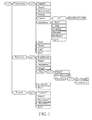
- FIG.1 is a schematic diagram of a SACMO management object tree in the prior art.
- the state node in management object tree of SACMO is a leaf node to specify the state of a transaction.
- the SACMO management object tree is used for setting up parameters and operational functionality necessary for managing a workflow object.
- a workflow is a sequence of steps which is conditionally executed. Each step can be an operation, process, command or other type of resource. Between steps, a condition is used to determinate the next step.
- a Process is a basic unit for a specific operation execution.
- a Process consists of an URI path which indicates the node of target MO to execute. The Process is indicated by a unique Process ID and it can be reused in Workflows.
- a Step is a basic unit of a Workflow which consists of a Process and information for the next Step(s).
- a Step MUST have a Process ID to indicate the Process to execute. If a Step is followed by another step, a next step subtree is created. The next step subtree may contain multiple next Steps. Each next Step has a NextStepID to indicate the following Step and optionally a condition.
- the SACMO Client checks the condition, if the condition is passed, and then the next step will be executed.
- a transaction is an instance of a Workflow execution.
- a SACMO Server may retrieve result of the Transaction execution from status node under the Transaction tree.
- An access control list (ACL) property has some unique characteristics when compared to the other properties.
- the access rights granted by an ACL are granted to server identifiers and not to the URI, IP address or certificate of a DM Server.
- the server identifier is an OMA DM specific name for a server.
- a management session is associated with a DM Server Identifier through OMA DM authentication. All management commands received in one session are assumed to originate from the same DM Server.
- Server A created a MO in a client and set its identity of the Server (ServerID) in the ACL list. This means that only Server A can perform a management operation on this MO.
- Server B can perform a management operation on this MO by creating a SACMO MO on the same client and setting a path which points to that MO in the ExecURI node. This is a serious security problem.
- the disclosure therefore provides a method of handling access control for a software and application control management object (SACMO) client.
- SACMO software and application control management object
- a method of handling access control for a software and application control management object (SACMO) client comprises executing a transaction activated by a SACMO server; checking an access control list of a target node of a management object before executing the MO; and determining whether to execute the MO according to a checking result.
- SACMO software and application control management object
- a method of handling access control in a SACMO client comprises receive a work flow from a SACMO server; and checking whether an identity of the SACMO server is in an access control list of a target node of each of the plurality of management objects.
- FIG. 1 is a schematic diagram of a SACMO management object tree in the prior art.
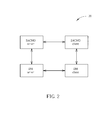
- FIG.2 is a schematic diagram of an exemplary service system.
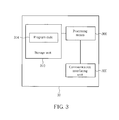
- FIG.3 is a schematic diagram of an exemplary communication device.
- FIG.4 is a flowchart of an exemplary process.
- FIG.5 is a flowchart of an exemplary process. Detailed Description
- FIG.2 is a schematic diagram of a service system 20 according to an example of the present disclosure.
- the service system 20 complies with an Open Mobile Alliance (OMA) Device Management (DM) protocol and is briefly composed of a Software and Application Control Management Obj ect (SACMO) server, a DM server, a DM client and a SACMO client.
- OMA Open Mobile Alliance
- DM Device Management
- the SACMO server is a logical entity which is dedicated to issue SACMO operations to the device or consumes the SACMO alerts from the device.
- the SACMO client is responsible for executing SACMO operations.
- the SACMO client manages the SACMO delivered to the device and is expected to relay SACMO Alerts conveying a success or failure result back to the SACMO Server.
- the SACMO architecture requires the DM server component to support device discovery, determination of an appropriate software and application control management obj ect and delivery of a software and application control management object to the device.
- the DM client provides an interface to the SACMO client to exchange SACMO data with the DM server by DM protocol.
- the SACMO server delivers a workflow with a unique WorkflowID to the SACMO client.
- the SACMO Server executes the workflow by activating a transaction in the SACMO Client.
- the SACMO server activates the transaction by sending an Exec command to the Start node of the transaction sub-tree in the SACMO client.
- the DM server can create a management object (MO) in the DM client and sets its ServerID in an access control list (ACL) of the MO.
- the MO is a logical collection of related nodes that enables the targeting of management operations, using OMA DM protocol commands. Each node in the MO can be as small as an integer or large and complex like a background picture or screen saver.
- FIG.3 is a schematic diagram of a communication device 30 according to an example of the present disclosure.
- the communication device 30 can be the SACMO server or the SACMO client shown in FIG.2 , but is not limited herein.
- the communication device 30 may include a processor 300 such as a microprocessor or Application Specific Integrated Circuit (ASIC), a storage unit 310 and a communication interfacing unit 320.
- the storage unit 310 may be any data storage device that can store a program code 314, accessed by the processor 300. Examples of the storage unit 310 include but are not limited to a subscriber identity module (SIM), read-only memory (ROM), flash memory, random-access memory (RAM), CD-ROM/DVD-ROM, magnetic tape, hard disk, and optical data storage device.
- SIM subscriber identity module
- ROM read-only memory
- flash memory random-access memory
- CD-ROM/DVD-ROM magnetic tape
- hard disk hard disk
- optical data storage device optical data storage device.
- the communication interfacing unit 320 is
- FIG.4 is a flowchart of an exemplary process 40.
- the process 40 is used for handling access control for the SACMO client shown in FIG.2 .
- the process 40 may be compiled into the program code 314 and includes the following steps:
- Step 400 Start.
- Step 402 Execute a transaction activated by a SACMO server.
- Step 404 Check an access control list (ACL) of a target node in each management object (MO) before executing one or more target MOs.
- ACL access control list
- Step 406 Determine whether to execute one or more target MOs according to a checking result.
- Step 408 End.
- the SACMO server activates the transaction for the SACMO client.
- a path which points to the target node for execution is stored in a ExecURI node under a SACMO process sub-tree.
- the target node is referred from the ExecURI node under the Process sub-tree which is invoked in a workflow.
- the SACMO client checks the ACL of a target node in each MOs before executing one or more target MOs when executing the transaction. Then, the SACMO client determines whether to execute one or more target MO accoridng to the checking result. If the checking result indicates a identity of the SACMO server is not in the ACL of the target node of the MO, the SACMO client does not execute that target MO.
- the SACMO client executes the target MO only when the identity of the SACMO server is in the ACL of the target node of the MO.
- the SACMO client can prevent another SACMO server whose identity is not in the ACL of the target node of each MO from executing the target MO.
- the SACMO client skips executing the target MO when the checking result indicates the identity of the SACMO server is not in the ACL of the target node of the MO and continues the workflow of the transaction. In some examples, the SACMO does not execute the target MO when the checking result indicates the identity of the SACMO server is not in the ACL of the target node of the MO and then SACMO stops executing the workflow of the transaction.
- FIG.5 is a flowchart of an exemplary process 50.
- the process 50 is used for handling access control for the SACMO client shown in FIG. 2 .
- the process 50 may be compiled into the program code 314 and includes the following steps:
- Step 500 Start.
- Step 502 Receive a workflow from a SACMO Server.
- Step 504 Check whether a identity of the SACMO server is in an ACL of the target node of each MO.
- Step 506 End.
- the SACMO client receives the work flow from the SACMO server.
- the SACMO client checks whether the identity of the SACMO server is in an ACL of the target node of each MO.
- the SACMO client does not create the workflow when the identity of the SACMO server is not in the ACL of the target node of any target MO.
- the SACMO client checks whether the identity of the SACMO server exists in any of ACLs of target nodes of target MOs before creating the workflow. If the SACMO client can not find the identity in any ACL of target nodes of the target MOs, the SACMO client does not create the workflow. As a result, a security problem can be avoided.
- the abovementioned steps of the processes including suggested steps can be realized by means that could be a hardware, a firmware known as a combination of a hardware device and computer instructions and data that reside as read-only software on the hardware device, or an electronic system.
- hardware can include analog, digital and mixed circuits known as microcircuit, microchip, or silicon chip.
- the electronic system can include a system on chip (SOC), system in package (SiP), a computer on module (COM), and the communication device 30.
- SOC system on chip
- SiP system in package
- COM computer on module
- the SACMO client checks an ACL of the target node of each MO before executing one or more target MO. If the identity of the SACMO server is not in the ACL of the target node of the MO, the SACMO client does not execute the target MO. In another example, the SACMO client checks whether an identity of the SACMO server is in an ACL of the target node of each MO before creating the workflow. If the identity of the SACMO server is not in any ACL of target nodes, the SACMO client does not create the workflow.
Landscapes
- Engineering & Computer Science (AREA)
- Computer Security & Cryptography (AREA)
- Computer Networks & Wireless Communication (AREA)
- Signal Processing (AREA)
- Computer Hardware Design (AREA)
- Computing Systems (AREA)
- General Engineering & Computer Science (AREA)
- Computer And Data Communications (AREA)
- Stored Programmes (AREA)
- Management, Administration, Business Operations System, And Electronic Commerce (AREA)
Abstract
Description
- This application claims the benefit of
U.S. Provisional Application No. 61/421,214, filed on Dec. 09, 2010 - The present invention relates to a method used in a service system, and more particularly, to a method of handling access control for a software and application control management object (SACMO) client.
- Open Mobile Alliance (OMA) is founded to develop OMA specifications for mobile services to meet users' needs. Furthermore, the OMA specifications aim to provide the mobile services which are interoperable across geographic areas (e.g. countries), operators, service providers, networks, operation systems and mobile devices. In detail, the mobile services conforming to the OMA specifications can be used by the users without restriction to particular operators and service providers. The mobile services conforming to the OMA specifications are also bearer agnostic, i.e., the bearer that carries the mobile services can be a second generation (2G) mobile system such as GSM, EDGE or GPRS, or a third generation (3G) and beyond mobile system such as UMTS, LTE or LTE-Advanced. Further, the mobile services can be executed on an operation system such as Windows, Android or Linux operated on various mobile devices. Therefore, industries providing devices or the mobile services supporting the OMA specifications can benefit from a largely growing market enabled by interoperability of the mobile services. Besides, the users use the devices or the mobile services supporting the OMA specifications can also have a better experience due to the interoperability of the mobile services.
- A device management (DM) protocol conforming to the OMA specifications is designed for management of mobile devices such as mobile phones, PDAs and palm top computers. The device management is intended to support the following typical uses: configuration of device for allowing changes to settings and parameters of the device, software upgrades for providing new software (e.g. applications and system software) and/or bug fixes to be loaded on the device, and fault management for reporting errors from the device, and/or querying about status of the device. In addition, the DM protocol defines a way according to which a DM client (e.g. mobile device) communicates with a DM server (e.g. network), and thereby the DM client can feedback a command, a status or a report to the DM server. Further, the DM server manages the DM client through a set of management objects in the DM client. The management object is conformed to a Software and Application Control Management Object (SACMO) specification, which aims to enable remote operations for software and application control in the device. SACMO specifications will provide capabilities of processing management actions such as workflow, processing or on device management of software and applications utilizing existing management objects. The SACMO architecture has to support DM operations to be applied according to workflow scripts in the device, whereby any combination of operations on existing Management Objects can be applied and conditionally executed, with just the combined result being reported back to the DM server.
- The goal of SACMO is to enable DM operations to be applied according to workflow scripts in the device, whereby any combination of operations on existing Management Objects can be applied and conditionally executed, with just the combined result being reported back to the DM server. This avoids a series of individual client-server interactions, thereby optimizing the network traffic and reducing the workflow execution time.
- Please refer to
FIG.1 , which is a schematic diagram of a SACMO management object tree in the prior art. The state node in management object tree of SACMO is a leaf node to specify the state of a transaction. The SACMO management object tree is used for setting up parameters and operational functionality necessary for managing a workflow object. A workflow is a sequence of steps which is conditionally executed. Each step can be an operation, process, command or other type of resource. Between steps, a condition is used to determinate the next step. A Process is a basic unit for a specific operation execution. A Process consists of an URI path which indicates the node of target MO to execute. The Process is indicated by a unique Process ID and it can be reused in Workflows. A Step is a basic unit of a Workflow which consists of a Process and information for the next Step(s). A Step MUST have a Process ID to indicate the Process to execute. If a Step is followed by another step, a next step subtree is created. The next step subtree may contain multiple next Steps. Each next Step has a NextStepID to indicate the following Step and optionally a condition. The SACMO Client checks the condition, if the condition is passed, and then the next step will be executed. A transaction is an instance of a Workflow execution. A SACMO Server may retrieve result of the Transaction execution from status node under the Transaction tree. - An access control list (ACL) property has some unique characteristics when compared to the other properties. The access rights granted by an ACL are granted to server identifiers and not to the URI, IP address or certificate of a DM Server. The server identifier is an OMA DM specific name for a server. A management session is associated with a DM Server Identifier through OMA DM authentication. All management commands received in one session are assumed to originate from the same DM Server.
- In current design in SACMO, a path which points to a target management object (MO) node for execution is stored in an ExecURI node under a SACMO sub-tree. When a Process under SACMO sub-tree is executed, the corresponding MO operation stored under this Process sub-tree will be executed without checking the Access Control List (ACL). With this drawback, a Server can control a MO even if it is not in the MO's ACL.
- For example, Server A created a MO in a client and set its identity of the Server (ServerID) in the ACL list. This means that only Server A can perform a management operation on this MO. However, Server B can perform a management operation on this MO by creating a SACMO MO on the same client and setting a path which points to that MO in the ExecURI node. This is a serious security problem.
- The disclosure therefore provides a method of handling access control for a software and application control management object (SACMO) client.
- A method of handling access control for a software and application control management object (SACMO) client is disclosed. The method comprises executing a transaction activated by a SACMO server; checking an access control list of a target node of a management object before executing the MO; and determining whether to execute the MO according to a checking result.
- A method of handling access control in a SACMO client is disclosed. The method comprises receive a work flow from a SACMO server; and checking whether an identity of the SACMO server is in an access control list of a target node of each of the plurality of management objects.
- These and other objectives of the present invention will no doubt become obvious to those of ordinary skill in the art after reading the following detailed description of the preferred embodiment that is illustrated in the various figures and drawings.
-
FIG. 1 is a schematic diagram of a SACMO management object tree in the prior art. -
FIG.2 is a schematic diagram of an exemplary service system. -
FIG.3 is a schematic diagram of an exemplary communication device. -
FIG.4 is a flowchart of an exemplary process. -
FIG.5 is a flowchart of an exemplary process. Detailed Description - Please refer to
FIG.2 , which is a schematic diagram of aservice system 20 according to an example of the present disclosure. Theservice system 20 complies with an Open Mobile Alliance (OMA) Device Management (DM) protocol and is briefly composed of a Software and Application Control Management Obj ect (SACMO) server, a DM server, a DM client and a SACMO client. The SACMO server is a logical entity which is dedicated to issue SACMO operations to the device or consumes the SACMO alerts from the device. The SACMO client is responsible for executing SACMO operations. The SACMO client manages the SACMO delivered to the device and is expected to relay SACMO Alerts conveying a success or failure result back to the SACMO Server. The SACMO architecture requires the DM server component to support device discovery, determination of an appropriate software and application control management obj ect and delivery of a software and application control management object to the device. The DM client provides an interface to the SACMO client to exchange SACMO data with the DM server by DM protocol. - The SACMO server delivers a workflow with a unique WorkflowID to the SACMO client. The SACMO Server executes the workflow by activating a transaction in the SACMO Client. The SACMO server activates the transaction by sending an Exec command to the Start node of the transaction sub-tree in the SACMO client. The DM server can create a management object (MO) in the DM client and sets its ServerID in an access control list (ACL) of the MO. The MO is a logical collection of related nodes that enables the targeting of management operations, using OMA DM protocol commands. Each node in the MO can be as small as an integer or large and complex like a background picture or screen saver.
- Please refer to
FIG.3 , which is a schematic diagram of acommunication device 30 according to an example of the present disclosure. Thecommunication device 30 can be the SACMO server or the SACMO client shown inFIG.2 , but is not limited herein. Thecommunication device 30 may include aprocessor 300 such as a microprocessor or Application Specific Integrated Circuit (ASIC), astorage unit 310 and acommunication interfacing unit 320. Thestorage unit 310 may be any data storage device that can store aprogram code 314, accessed by theprocessor 300. Examples of thestorage unit 310 include but are not limited to a subscriber identity module (SIM), read-only memory (ROM), flash memory, random-access memory (RAM), CD-ROM/DVD-ROM, magnetic tape, hard disk, and optical data storage device. Thecommunication interfacing unit 320 is preferably a transceiver and can exchange signals with the server according to processing results of theprocessor 300. - Please refer to
FIG.4 , which is a flowchart of anexemplary process 40. Theprocess 40 is used for handling access control for the SACMO client shown inFIG.2 . Theprocess 40 may be compiled into theprogram code 314 and includes the following steps: - Step 400: Start.
- Step 402: Execute a transaction activated by a SACMO server.
- Step 404: Check an access control list (ACL) of a target node in each management object (MO) before executing one or more target MOs.
- Step 406: Determine whether to execute one or more target MOs according to a checking result.
- Step 408: End.
- According to the
process 40, the SACMO server activates the transaction for the SACMO client. A path which points to the target node for execution is stored in a ExecURI node under a SACMO process sub-tree. The target node is referred from the ExecURI node under the Process sub-tree which is invoked in a workflow. The SACMO client checks the ACL of a target node in each MOs before executing one or more target MOs when executing the transaction. Then, the SACMO client determines whether to execute one or more target MO accoridng to the checking result. If the checking result indicates a identity of the SACMO server is not in the ACL of the target node of the MO, the SACMO client does not execute that target MO. In other words, the SACMO client executes the target MO only when the identity of the SACMO server is in the ACL of the target node of the MO. As a result, the SACMO client can prevent another SACMO server whose identity is not in the ACL of the target node of each MO from executing the target MO. - In some examples, the SACMO client skips executing the target MO when the checking result indicates the identity of the SACMO server is not in the ACL of the target node of the MO and continues the workflow of the transaction. In some examples, the SACMO does not execute the target MO when the checking result indicates the identity of the SACMO server is not in the ACL of the target node of the MO and then SACMO stops executing the workflow of the transaction.
- Please refer to
FIG.5 , which is a flowchart of anexemplary process 50. Theprocess 50 is used for handling access control for the SACMO client shown inFIG. 2 . Theprocess 50 may be compiled into theprogram code 314 and includes the following steps: - Step 500: Start.
- Step 502: Receive a workflow from a SACMO Server.
- Step 504: Check whether a identity of the SACMO server is in an ACL of the target node of each MO.
- Step 506: End.
- According to the
process 50, the SACMO client receives the work flow from the SACMO server. The SACMO client checks whether the identity of the SACMO server is in an ACL of the target node of each MO. The SACMO client does not create the workflow when the identity of the SACMO server is not in the ACL of the target node of any target MO. In other words, the SACMO client checks whether the identity of the SACMO server exists in any of ACLs of target nodes of target MOs before creating the workflow. If the SACMO client can not find the identity in any ACL of target nodes of the target MOs, the SACMO client does not create the workflow. As a result, a security problem can be avoided. - Please note that, the abovementioned steps of the processes including suggested steps can be realized by means that could be a hardware, a firmware known as a combination of a hardware device and computer instructions and data that reside as read-only software on the hardware device, or an electronic system. Examples of hardware can include analog, digital and mixed circuits known as microcircuit, microchip, or silicon chip. Examples of the electronic system can include a system on chip (SOC), system in package (SiP), a computer on module (COM), and the
communication device 30. - To sum up, the SACMO client checks an ACL of the target node of each MO before executing one or more target MO. If the identity of the SACMO server is not in the ACL of the target node of the MO, the SACMO client does not execute the target MO. In another example, the SACMO client checks whether an identity of the SACMO server is in an ACL of the target node of each MO before creating the workflow. If the identity of the SACMO server is not in any ACL of target nodes, the SACMO client does not create the workflow.
- Those skilled in the art will readily observe that numerous modifications and alterations of the device and method may be made while retaining the teachings of the invention. Accordingly, the above disclosure should be construed as limited only by the metes and bounds of the appended claims.
Claims (7)
- A method of handling access control for a software and application control management object (SACMO) client, the method comprising:executing a transaction activated by a SACMO server; checking an access control list of a target node of amanagement object before executing the MO; and determining whether to execute the MO according to a checking result.
- The method of claim 1, wherein determining whether to execute the MO according to the checking result comprise executing the MO only when the checking result indicates an identity of a SACMO server is in the access control list.
- The method of claim 1, wherein determining whether to execute the MO according to the checking result comprises:skipping executing the MO when the checking result indicates
an identity of the SACMO server is not in the access control list; andcontinuing a workflow of the transaction. - The method of claim 1, wherein determining whether to execute the MO according to the checking result comprises:not executing the MO when the checking result indicates an
identity of the SACMO server is not in the access control list; andstopping executing a workflow of the transaction. - The method of claim 1, wherein determining whether to execute the MO according to the checking result comprises:not executing the MO when the checking result indicates an
identity of the SACMO server is not in the access control list; andstopping executing the transaction. - A method of handling access control in a software and application control management object (SACMO) client, the method comprising:receive a workflow from a SACMO server; andchecking whether an identity of the SACMO server is in an
access control list of a target node of each of the plurality of management objects. - The method of claim 6 further comprising not creating a workflow when the identity of the SACMO server is not in the access control list of the target node of any of the plurality of management objects.
Applications Claiming Priority (1)
| Application Number | Priority Date | Filing Date | Title |
|---|---|---|---|
| US42121410P | 2010-12-09 | 2010-12-09 |
Publications (2)
| Publication Number | Publication Date |
|---|---|
| EP2464080A2 true EP2464080A2 (en) | 2012-06-13 |
| EP2464080A3 EP2464080A3 (en) | 2012-08-08 |
Family
ID=45509188
Family Applications (1)
| Application Number | Title | Priority Date | Filing Date |
|---|---|---|---|
| EP11009731A Withdrawn EP2464080A3 (en) | 2010-12-09 | 2011-12-09 | Method of handling access control for software and application control management object client |
Country Status (4)
| Country | Link |
|---|---|
| US (1) | US20120150947A1 (en) |
| EP (1) | EP2464080A3 (en) |
| CN (1) | CN102571415A (en) |
| TW (1) | TW201229906A (en) |
Families Citing this family (1)
| Publication number | Priority date | Publication date | Assignee | Title |
|---|---|---|---|---|
| JP5961196B2 (en) * | 2014-01-29 | 2016-08-02 | 京セラドキュメントソリューションズ株式会社 | Electronic device and workflow generation program |
Family Cites Families (4)
| Publication number | Priority date | Publication date | Assignee | Title |
|---|---|---|---|---|
| US6801940B1 (en) * | 2002-01-10 | 2004-10-05 | Networks Associates Technology, Inc. | Application performance monitoring expert |
| US8117293B1 (en) * | 2005-01-05 | 2012-02-14 | Smith Micro Software, Inc. | Method of receiving, storing, and providing device management parameters and firmware updates to application programs within a mobile device |
| KR101281931B1 (en) * | 2007-04-06 | 2013-08-26 | 삼성전자주식회사 | System and method for device management security of trap management object |
| US20110314293A1 (en) * | 2010-06-17 | 2011-12-22 | Yu Chun-Ta | Method of Handling a Server Delegation and Related Communication Device |
-
2011
- 2011-12-09 TW TW100145529A patent/TW201229906A/en unknown
- 2011-12-09 CN CN2011104100058A patent/CN102571415A/en active Pending
- 2011-12-09 EP EP11009731A patent/EP2464080A3/en not_active Withdrawn
- 2011-12-09 US US13/315,293 patent/US20120150947A1/en not_active Abandoned
Non-Patent Citations (1)
| Title |
|---|
| None |
Also Published As
| Publication number | Publication date |
|---|---|
| EP2464080A3 (en) | 2012-08-08 |
| US20120150947A1 (en) | 2012-06-14 |
| TW201229906A (en) | 2012-07-16 |
| CN102571415A (en) | 2012-07-11 |
Similar Documents
| Publication | Publication Date | Title |
|---|---|---|
| KR102718167B1 (en) | Implementing compliance settings by mobile devices for configuration scenario compliance | |
| US9973999B2 (en) | Method and apparatus for Self Organizing Networks | |
| US11146948B1 (en) | Electronic subscriber identity module (eSIM) transfer via activation code | |
| US9189753B2 (en) | Multiplatform management system and method for mobile devices | |
| US20110246978A1 (en) | Application portability and transfer of device management for mobile devices | |
| US9165207B2 (en) | Screenshot orientation detection | |
| EP2450793A1 (en) | Method of defining state transitions in a software and application control management object | |
| US10581917B2 (en) | Systems and methods for enforcing device policies | |
| US20130159526A1 (en) | Method of handling access control information and related communication device | |
| US20120150947A1 (en) | Method of Handling Access Control for Software and Application Control Management Object Client | |
| US9577967B2 (en) | Method and system for managing an informational site using a social networking application | |
| US8943125B2 (en) | Method of handling step execution result in software and application control management object | |
| US9917841B1 (en) | Branding and improper operation detection on a user equipment | |
| EP2508989A2 (en) | Software component information retrieving method for SCOMO and related service system | |
| US20120271932A1 (en) | Method of Providing Process Operation in Software and Application Control Management Object | |
| CN106022171A (en) | External storage device access control method and device for Android terminal | |
| US20120271931A1 (en) | Method of Defining Condition Scenario In Management Object | |
| EP2992701B1 (en) | Time-based configuration policy toggling | |
| EP2704359A1 (en) | Method of handling web interaction sessions in OMA DM systems | |
| EP2421199A1 (en) | Method for transforming a workflow into a management object tree | |
| WO2011114308A1 (en) | Method of and system for installing client protection software on a mobile device | |
| KR20120115171A (en) | Software component information retrieving method for scomo and related service system | |
| US20120323996A1 (en) | Method of Reporting Execution Result for SACMO and Related Communication Device | |
| EP2942985A1 (en) | Method of managing subscription in a secure token |
Legal Events
| Date | Code | Title | Description |
|---|---|---|---|
| PUAI | Public reference made under article 153(3) epc to a published international application that has entered the european phase |
Free format text: ORIGINAL CODE: 0009012 |
|
| 17P | Request for examination filed |
Effective date: 20111209 |
|
| AK | Designated contracting states |
Kind code of ref document: A2 Designated state(s): AL AT BE BG CH CY CZ DE DK EE ES FI FR GB GR HR HU IE IS IT LI LT LU LV MC MK MT NL NO PL PT RO RS SE SI SK SM TR |
|
| AX | Request for extension of the european patent |
Extension state: BA ME |
|
| PUAL | Search report despatched |
Free format text: ORIGINAL CODE: 0009013 |
|
| AK | Designated contracting states |
Kind code of ref document: A3 Designated state(s): AL AT BE BG CH CY CZ DE DK EE ES FI FR GB GR HR HU IE IS IT LI LT LU LV MC MK MT NL NO PL PT RO RS SE SI SK SM TR |
|
| AX | Request for extension of the european patent |
Extension state: BA ME |
|
| RIC1 | Information provided on ipc code assigned before grant |
Ipc: H04L 29/06 20060101AFI20120703BHEP |
|
| 17Q | First examination report despatched |
Effective date: 20120723 |
|
| STAA | Information on the status of an ep patent application or granted ep patent |
Free format text: STATUS: THE APPLICATION IS DEEMED TO BE WITHDRAWN |
|
| 18D | Application deemed to be withdrawn |
Effective date: 20140607 |