EP2463242A2 - Capacitive electrode for deionization, and electrolytic cell using same - Google Patents
Capacitive electrode for deionization, and electrolytic cell using same Download PDFInfo
- Publication number
- EP2463242A2 EP2463242A2 EP10806636A EP10806636A EP2463242A2 EP 2463242 A2 EP2463242 A2 EP 2463242A2 EP 10806636 A EP10806636 A EP 10806636A EP 10806636 A EP10806636 A EP 10806636A EP 2463242 A2 EP2463242 A2 EP 2463242A2
- Authority
- EP
- European Patent Office
- Prior art keywords
- electrode
- group
- electrochemical cell
- capacitive deionization
- polymer resin
- Prior art date
- Legal status (The legal status is an assumption and is not a legal conclusion. Google has not performed a legal analysis and makes no representation as to the accuracy of the status listed.)
- Withdrawn
Links
- 238000002242 deionisation method Methods 0.000 title claims abstract description 32
- 150000001768 cations Chemical class 0.000 claims abstract description 12
- 150000001450 anions Chemical class 0.000 claims abstract description 11
- 239000002952 polymeric resin Substances 0.000 claims description 24
- 239000002002 slurry Substances 0.000 claims description 22
- 229920003002 synthetic resin Polymers 0.000 claims description 22
- OKTJSMMVPCPJKN-UHFFFAOYSA-N Carbon Chemical compound [C] OKTJSMMVPCPJKN-UHFFFAOYSA-N 0.000 claims description 19
- 239000004020 conductor Substances 0.000 claims description 17
- 239000007772 electrode material Substances 0.000 claims description 17
- XLYOFNOQVPJJNP-UHFFFAOYSA-N water Substances O XLYOFNOQVPJJNP-UHFFFAOYSA-N 0.000 claims description 10
- 239000000463 material Substances 0.000 claims description 9
- 238000000576 coating method Methods 0.000 claims description 8
- 239000000203 mixture Substances 0.000 claims description 8
- 239000011248 coating agent Substances 0.000 claims description 7
- 229910002804 graphite Inorganic materials 0.000 claims description 6
- 239000010439 graphite Substances 0.000 claims description 6
- 229920002981 polyvinylidene fluoride Polymers 0.000 claims description 6
- 125000006850 spacer group Chemical group 0.000 claims description 6
- 239000004793 Polystyrene Substances 0.000 claims description 5
- 229920002223 polystyrene Polymers 0.000 claims description 5
- XEEYBQQBJWHFJM-UHFFFAOYSA-N Iron Chemical compound [Fe] XEEYBQQBJWHFJM-UHFFFAOYSA-N 0.000 claims description 4
- PXHVJJICTQNCMI-UHFFFAOYSA-N Nickel Chemical compound [Ni] PXHVJJICTQNCMI-UHFFFAOYSA-N 0.000 claims description 4
- 239000002033 PVDF binder Substances 0.000 claims description 4
- GWEVSGVZZGPLCZ-UHFFFAOYSA-N Titan oxide Chemical compound O=[Ti]=O GWEVSGVZZGPLCZ-UHFFFAOYSA-N 0.000 claims description 4
- 125000003178 carboxy group Chemical group [H]OC(*)=O 0.000 claims description 4
- NUJOXMJBOLGQSY-UHFFFAOYSA-N manganese dioxide Chemical compound O=[Mn]=O NUJOXMJBOLGQSY-UHFFFAOYSA-N 0.000 claims description 4
- VNWKTOKETHGBQD-UHFFFAOYSA-N methane Chemical compound C VNWKTOKETHGBQD-UHFFFAOYSA-N 0.000 claims description 4
- 229920005989 resin Polymers 0.000 claims description 4
- 239000011347 resin Substances 0.000 claims description 4
- WOCIAKWEIIZHES-UHFFFAOYSA-N ruthenium(iv) oxide Chemical compound O=[Ru]=O WOCIAKWEIIZHES-UHFFFAOYSA-N 0.000 claims description 4
- RWSOTUBLDIXVET-UHFFFAOYSA-O sulfonium group Chemical group [SH3+] RWSOTUBLDIXVET-UHFFFAOYSA-O 0.000 claims description 4
- 239000010409 thin film Substances 0.000 claims description 4
- NWUYHJFMYQTDRP-UHFFFAOYSA-N 1,2-bis(ethenyl)benzene;1-ethenyl-2-ethylbenzene;styrene Chemical compound C=CC1=CC=CC=C1.CCC1=CC=CC=C1C=C.C=CC1=CC=CC=C1C=C NWUYHJFMYQTDRP-UHFFFAOYSA-N 0.000 claims description 3
- PCHJSUWPFVWCPO-UHFFFAOYSA-N gold Chemical compound [Au] PCHJSUWPFVWCPO-UHFFFAOYSA-N 0.000 claims description 3
- 229910052737 gold Inorganic materials 0.000 claims description 3
- 239000010931 gold Substances 0.000 claims description 3
- 229920000728 polyester Polymers 0.000 claims description 3
- 229920000049 Carbon (fiber) Polymers 0.000 claims description 2
- 239000004966 Carbon aerogel Substances 0.000 claims description 2
- RYGMFSIKBFXOCR-UHFFFAOYSA-N Copper Chemical compound [Cu] RYGMFSIKBFXOCR-UHFFFAOYSA-N 0.000 claims description 2
- 229910018143 SeO3 Inorganic materials 0.000 claims description 2
- RTAQQCXQSZGOHL-UHFFFAOYSA-N Titanium Chemical compound [Ti] RTAQQCXQSZGOHL-UHFFFAOYSA-N 0.000 claims description 2
- 229910052782 aluminium Inorganic materials 0.000 claims description 2
- XAGFODPZIPBFFR-UHFFFAOYSA-N aluminium Chemical compound [Al] XAGFODPZIPBFFR-UHFFFAOYSA-N 0.000 claims description 2
- RQNWIZPPADIBDY-UHFFFAOYSA-N arsenic atom Chemical group [As] RQNWIZPPADIBDY-UHFFFAOYSA-N 0.000 claims description 2
- 239000004917 carbon fiber Substances 0.000 claims description 2
- 239000002041 carbon nanotube Substances 0.000 claims description 2
- 229910021393 carbon nanotube Inorganic materials 0.000 claims description 2
- 239000003575 carbonaceous material Substances 0.000 claims description 2
- 229910052802 copper Inorganic materials 0.000 claims description 2
- 239000010949 copper Substances 0.000 claims description 2
- 229910001385 heavy metal Inorganic materials 0.000 claims description 2
- 229910052742 iron Inorganic materials 0.000 claims description 2
- YADSGOSSYOOKMP-UHFFFAOYSA-N lead dioxide Inorganic materials O=[Pb]=O YADSGOSSYOOKMP-UHFFFAOYSA-N 0.000 claims description 2
- 229910044991 metal oxide Inorganic materials 0.000 claims description 2
- 150000004706 metal oxides Chemical class 0.000 claims description 2
- 229910052759 nickel Inorganic materials 0.000 claims description 2
- 229910021508 nickel(II) hydroxide Inorganic materials 0.000 claims description 2
- 229910000510 noble metal Inorganic materials 0.000 claims description 2
- 125000005496 phosphonium group Chemical group 0.000 claims description 2
- 229920000098 polyolefin Polymers 0.000 claims description 2
- 150000003141 primary amines Chemical class 0.000 claims description 2
- 150000003242 quaternary ammonium salts Chemical class 0.000 claims description 2
- 150000003335 secondary amines Chemical class 0.000 claims description 2
- 229910001220 stainless steel Inorganic materials 0.000 claims description 2
- 239000010935 stainless steel Substances 0.000 claims description 2
- 125000000542 sulfonic acid group Chemical group 0.000 claims description 2
- 150000003512 tertiary amines Chemical class 0.000 claims description 2
- 239000010936 titanium Substances 0.000 claims description 2
- 229910052719 titanium Inorganic materials 0.000 claims description 2
- 239000003957 anion exchange resin Substances 0.000 claims 1
- 239000003729 cation exchange resin Substances 0.000 claims 1
- 229910052751 metal Inorganic materials 0.000 claims 1
- 239000002184 metal Substances 0.000 claims 1
- 229920000620 organic polymer Polymers 0.000 claims 1
- 239000002351 wastewater Substances 0.000 claims 1
- 150000002500 ions Chemical class 0.000 description 54
- 238000001179 sorption measurement Methods 0.000 description 25
- 239000000243 solution Substances 0.000 description 21
- 238000000034 method Methods 0.000 description 20
- 229920000642 polymer Polymers 0.000 description 19
- 238000004519 manufacturing process Methods 0.000 description 16
- 238000005341 cation exchange Methods 0.000 description 12
- 238000005342 ion exchange Methods 0.000 description 11
- 239000003960 organic solvent Substances 0.000 description 11
- 238000002360 preparation method Methods 0.000 description 10
- 238000005349 anion exchange Methods 0.000 description 9
- 238000005516 engineering process Methods 0.000 description 9
- 239000011267 electrode slurry Substances 0.000 description 7
- FXHOOIRPVKKKFG-UHFFFAOYSA-N N,N-Dimethylacetamide Chemical compound CN(C)C(C)=O FXHOOIRPVKKKFG-UHFFFAOYSA-N 0.000 description 6
- ZMXDDKWLCZADIW-UHFFFAOYSA-N N,N-Dimethylformamide Chemical compound CN(C)C=O ZMXDDKWLCZADIW-UHFFFAOYSA-N 0.000 description 6
- 239000011230 binding agent Substances 0.000 description 6
- 238000003795 desorption Methods 0.000 description 6
- 238000001035 drying Methods 0.000 description 6
- CSCPPACGZOOCGX-UHFFFAOYSA-N Acetone Chemical compound CC(C)=O CSCPPACGZOOCGX-UHFFFAOYSA-N 0.000 description 4
- LFQSCWFLJHTTHZ-UHFFFAOYSA-N Ethanol Chemical compound CCO LFQSCWFLJHTTHZ-UHFFFAOYSA-N 0.000 description 4
- SECXISVLQFMRJM-UHFFFAOYSA-N N-Methylpyrrolidone Chemical compound CN1CCCC1=O SECXISVLQFMRJM-UHFFFAOYSA-N 0.000 description 4
- 230000000052 comparative effect Effects 0.000 description 4
- 230000003247 decreasing effect Effects 0.000 description 4
- 239000010408 film Substances 0.000 description 4
- 229920003303 ion-exchange polymer Polymers 0.000 description 4
- -1 polyethylene Polymers 0.000 description 4
- YMWUJEATGCHHMB-UHFFFAOYSA-N Dichloromethane Chemical compound ClCCl YMWUJEATGCHHMB-UHFFFAOYSA-N 0.000 description 3
- AMIMRNSIRUDHCM-UHFFFAOYSA-N Isopropylaldehyde Chemical compound CC(C)C=O AMIMRNSIRUDHCM-UHFFFAOYSA-N 0.000 description 3
- OKKJLVBELUTLKV-UHFFFAOYSA-N Methanol Chemical compound OC OKKJLVBELUTLKV-UHFFFAOYSA-N 0.000 description 3
- 239000004642 Polyimide Substances 0.000 description 3
- 229910052799 carbon Inorganic materials 0.000 description 3
- 125000000524 functional group Chemical group 0.000 description 3
- 229920001721 polyimide Polymers 0.000 description 3
- 238000004064 recycling Methods 0.000 description 3
- NLXLAEXVIDQMFP-UHFFFAOYSA-N Ammonia chloride Chemical compound [NH4+].[Cl-] NLXLAEXVIDQMFP-UHFFFAOYSA-N 0.000 description 2
- HEDRZPFGACZZDS-UHFFFAOYSA-N Chloroform Chemical compound ClC(Cl)Cl HEDRZPFGACZZDS-UHFFFAOYSA-N 0.000 description 2
- DGAQECJNVWCQMB-PUAWFVPOSA-M Ilexoside XXIX Chemical compound C[C@@H]1CC[C@@]2(CC[C@@]3(C(=CC[C@H]4[C@]3(CC[C@@H]5[C@@]4(CC[C@@H](C5(C)C)OS(=O)(=O)[O-])C)C)[C@@H]2[C@]1(C)O)C)C(=O)O[C@H]6[C@@H]([C@H]([C@@H]([C@H](O6)CO)O)O)O.[Na+] DGAQECJNVWCQMB-PUAWFVPOSA-M 0.000 description 2
- FAPWRFPIFSIZLT-UHFFFAOYSA-M Sodium chloride Chemical compound [Na+].[Cl-] FAPWRFPIFSIZLT-UHFFFAOYSA-M 0.000 description 2
- 238000005576 amination reaction Methods 0.000 description 2
- 239000006229 carbon black Substances 0.000 description 2
- 238000006243 chemical reaction Methods 0.000 description 2
- 238000005265 energy consumption Methods 0.000 description 2
- 230000001747 exhibiting effect Effects 0.000 description 2
- 238000002474 experimental method Methods 0.000 description 2
- 239000003456 ion exchange resin Substances 0.000 description 2
- 239000002245 particle Substances 0.000 description 2
- 230000000704 physical effect Effects 0.000 description 2
- 229920001467 poly(styrenesulfonates) Polymers 0.000 description 2
- 229920002492 poly(sulfone) Polymers 0.000 description 2
- 229920005596 polymer binder Polymers 0.000 description 2
- 239000002491 polymer binding agent Substances 0.000 description 2
- 238000000926 separation method Methods 0.000 description 2
- 229910052708 sodium Inorganic materials 0.000 description 2
- 239000011734 sodium Substances 0.000 description 2
- 239000007787 solid Substances 0.000 description 2
- 238000006277 sulfonation reaction Methods 0.000 description 2
- 239000002699 waste material Substances 0.000 description 2
- 102100030099 Chloride anion exchanger Human genes 0.000 description 1
- 101710133455 Chloride anion exchanger Proteins 0.000 description 1
- 239000004952 Polyamide Substances 0.000 description 1
- 239000004695 Polyether sulfone Substances 0.000 description 1
- 239000004698 Polyethylene Substances 0.000 description 1
- 239000004721 Polyphenylene oxide Substances 0.000 description 1
- 229910006069 SO3H Inorganic materials 0.000 description 1
- XSTXAVWGXDQKEL-UHFFFAOYSA-N Trichloroethylene Chemical group ClC=C(Cl)Cl XSTXAVWGXDQKEL-UHFFFAOYSA-N 0.000 description 1
- 239000006230 acetylene black Substances 0.000 description 1
- 230000002378 acidificating effect Effects 0.000 description 1
- 235000019270 ammonium chloride Nutrition 0.000 description 1
- 239000007864 aqueous solution Substances 0.000 description 1
- 239000003990 capacitor Substances 0.000 description 1
- 238000005266 casting Methods 0.000 description 1
- 239000000470 constituent Substances 0.000 description 1
- 238000003618 dip coating Methods 0.000 description 1
- 239000012153 distilled water Substances 0.000 description 1
- 230000000694 effects Effects 0.000 description 1
- 230000005684 electric field Effects 0.000 description 1
- 230000005611 electricity Effects 0.000 description 1
- 238000000909 electrodialysis Methods 0.000 description 1
- 239000012530 fluid Substances 0.000 description 1
- 239000008235 industrial water Substances 0.000 description 1
- 239000007788 liquid Substances 0.000 description 1
- 239000012528 membrane Substances 0.000 description 1
- VLKZOEOYAKHREP-UHFFFAOYSA-N n-Hexane Chemical compound CCCCCC VLKZOEOYAKHREP-UHFFFAOYSA-N 0.000 description 1
- 230000000737 periodic effect Effects 0.000 description 1
- 229920002454 poly(glycidyl methacrylate) polymer Polymers 0.000 description 1
- 229920002647 polyamide Polymers 0.000 description 1
- 229920000570 polyether Polymers 0.000 description 1
- 229920006393 polyether sulfone Polymers 0.000 description 1
- 229920000573 polyethylene Polymers 0.000 description 1
- 239000002861 polymer material Substances 0.000 description 1
- 229920001343 polytetrafluoroethylene Polymers 0.000 description 1
- 239000004810 polytetrafluoroethylene Substances 0.000 description 1
- 239000000843 powder Substances 0.000 description 1
- 238000000746 purification Methods 0.000 description 1
- 238000001223 reverse osmosis Methods 0.000 description 1
- 239000011780 sodium chloride Substances 0.000 description 1
- 238000007711 solidification Methods 0.000 description 1
- 230000008023 solidification Effects 0.000 description 1
- 238000004528 spin coating Methods 0.000 description 1
- 239000007921 spray Substances 0.000 description 1
- UBOXGVDOUJQMTN-UHFFFAOYSA-N trichloroethylene Natural products ClCC(Cl)Cl UBOXGVDOUJQMTN-UHFFFAOYSA-N 0.000 description 1
Images
Classifications
-
- C—CHEMISTRY; METALLURGY
- C02—TREATMENT OF WATER, WASTE WATER, SEWAGE, OR SLUDGE
- C02F—TREATMENT OF WATER, WASTE WATER, SEWAGE, OR SLUDGE
- C02F1/00—Treatment of water, waste water, or sewage
- C02F1/46—Treatment of water, waste water, or sewage by electrochemical methods
- C02F1/469—Treatment of water, waste water, or sewage by electrochemical methods by electrochemical separation, e.g. by electro-osmosis, electrodialysis, electrophoresis
-
- H—ELECTRICITY
- H01—ELECTRIC ELEMENTS
- H01M—PROCESSES OR MEANS, e.g. BATTERIES, FOR THE DIRECT CONVERSION OF CHEMICAL ENERGY INTO ELECTRICAL ENERGY
- H01M4/00—Electrodes
- H01M4/02—Electrodes composed of, or comprising, active material
- H01M4/62—Selection of inactive substances as ingredients for active masses, e.g. binders, fillers
- H01M4/621—Binders
-
- C—CHEMISTRY; METALLURGY
- C02—TREATMENT OF WATER, WASTE WATER, SEWAGE, OR SLUDGE
- C02F—TREATMENT OF WATER, WASTE WATER, SEWAGE, OR SLUDGE
- C02F1/00—Treatment of water, waste water, or sewage
- C02F1/46—Treatment of water, waste water, or sewage by electrochemical methods
- C02F1/469—Treatment of water, waste water, or sewage by electrochemical methods by electrochemical separation, e.g. by electro-osmosis, electrodialysis, electrophoresis
- C02F1/4691—Capacitive deionisation
-
- H—ELECTRICITY
- H01—ELECTRIC ELEMENTS
- H01M—PROCESSES OR MEANS, e.g. BATTERIES, FOR THE DIRECT CONVERSION OF CHEMICAL ENERGY INTO ELECTRICAL ENERGY
- H01M4/00—Electrodes
- H01M4/02—Electrodes composed of, or comprising, active material
-
- H—ELECTRICITY
- H01—ELECTRIC ELEMENTS
- H01M—PROCESSES OR MEANS, e.g. BATTERIES, FOR THE DIRECT CONVERSION OF CHEMICAL ENERGY INTO ELECTRICAL ENERGY
- H01M4/00—Electrodes
- H01M4/02—Electrodes composed of, or comprising, active material
- H01M4/36—Selection of substances as active materials, active masses, active liquids
- H01M4/48—Selection of substances as active materials, active masses, active liquids of inorganic oxides or hydroxides
-
- H—ELECTRICITY
- H01—ELECTRIC ELEMENTS
- H01M—PROCESSES OR MEANS, e.g. BATTERIES, FOR THE DIRECT CONVERSION OF CHEMICAL ENERGY INTO ELECTRICAL ENERGY
- H01M4/00—Electrodes
- H01M4/02—Electrodes composed of, or comprising, active material
- H01M4/36—Selection of substances as active materials, active masses, active liquids
- H01M4/48—Selection of substances as active materials, active masses, active liquids of inorganic oxides or hydroxides
- H01M4/50—Selection of substances as active materials, active masses, active liquids of inorganic oxides or hydroxides of manganese
-
- H—ELECTRICITY
- H01—ELECTRIC ELEMENTS
- H01M—PROCESSES OR MEANS, e.g. BATTERIES, FOR THE DIRECT CONVERSION OF CHEMICAL ENERGY INTO ELECTRICAL ENERGY
- H01M4/00—Electrodes
- H01M4/02—Electrodes composed of, or comprising, active material
- H01M4/36—Selection of substances as active materials, active masses, active liquids
- H01M4/48—Selection of substances as active materials, active masses, active liquids of inorganic oxides or hydroxides
- H01M4/56—Selection of substances as active materials, active masses, active liquids of inorganic oxides or hydroxides of lead
-
- H—ELECTRICITY
- H01—ELECTRIC ELEMENTS
- H01M—PROCESSES OR MEANS, e.g. BATTERIES, FOR THE DIRECT CONVERSION OF CHEMICAL ENERGY INTO ELECTRICAL ENERGY
- H01M4/00—Electrodes
- H01M4/02—Electrodes composed of, or comprising, active material
- H01M4/36—Selection of substances as active materials, active masses, active liquids
- H01M4/58—Selection of substances as active materials, active masses, active liquids of inorganic compounds other than oxides or hydroxides, e.g. sulfides, selenides, tellurides, halogenides or LiCoFy; of polyanionic structures, e.g. phosphates, silicates or borates
-
- H—ELECTRICITY
- H01—ELECTRIC ELEMENTS
- H01M—PROCESSES OR MEANS, e.g. BATTERIES, FOR THE DIRECT CONVERSION OF CHEMICAL ENERGY INTO ELECTRICAL ENERGY
- H01M4/00—Electrodes
- H01M4/02—Electrodes composed of, or comprising, active material
- H01M4/36—Selection of substances as active materials, active masses, active liquids
- H01M4/58—Selection of substances as active materials, active masses, active liquids of inorganic compounds other than oxides or hydroxides, e.g. sulfides, selenides, tellurides, halogenides or LiCoFy; of polyanionic structures, e.g. phosphates, silicates or borates
- H01M4/583—Carbonaceous material, e.g. graphite-intercalation compounds or CFx
-
- H—ELECTRICITY
- H01—ELECTRIC ELEMENTS
- H01M—PROCESSES OR MEANS, e.g. BATTERIES, FOR THE DIRECT CONVERSION OF CHEMICAL ENERGY INTO ELECTRICAL ENERGY
- H01M4/00—Electrodes
- H01M4/02—Electrodes composed of, or comprising, active material
- H01M4/64—Carriers or collectors
- H01M4/66—Selection of materials
-
- H—ELECTRICITY
- H01—ELECTRIC ELEMENTS
- H01M—PROCESSES OR MEANS, e.g. BATTERIES, FOR THE DIRECT CONVERSION OF CHEMICAL ENERGY INTO ELECTRICAL ENERGY
- H01M4/00—Electrodes
- H01M4/02—Electrodes composed of, or comprising, active material
- H01M4/64—Carriers or collectors
- H01M4/66—Selection of materials
- H01M4/661—Metal or alloys, e.g. alloy coatings
-
- H—ELECTRICITY
- H01—ELECTRIC ELEMENTS
- H01M—PROCESSES OR MEANS, e.g. BATTERIES, FOR THE DIRECT CONVERSION OF CHEMICAL ENERGY INTO ELECTRICAL ENERGY
- H01M4/00—Electrodes
- H01M4/02—Electrodes composed of, or comprising, active material
- H01M4/64—Carriers or collectors
- H01M4/66—Selection of materials
- H01M4/663—Selection of materials containing carbon or carbonaceous materials as conductive part, e.g. graphite, carbon fibres
-
- H—ELECTRICITY
- H01—ELECTRIC ELEMENTS
- H01M—PROCESSES OR MEANS, e.g. BATTERIES, FOR THE DIRECT CONVERSION OF CHEMICAL ENERGY INTO ELECTRICAL ENERGY
- H01M2300/00—Electrolytes
- H01M2300/0017—Non-aqueous electrolytes
- H01M2300/0065—Solid electrolytes
- H01M2300/0082—Organic polymers
-
- Y—GENERAL TAGGING OF NEW TECHNOLOGICAL DEVELOPMENTS; GENERAL TAGGING OF CROSS-SECTIONAL TECHNOLOGIES SPANNING OVER SEVERAL SECTIONS OF THE IPC; TECHNICAL SUBJECTS COVERED BY FORMER USPC CROSS-REFERENCE ART COLLECTIONS [XRACs] AND DIGESTS
- Y02—TECHNOLOGIES OR APPLICATIONS FOR MITIGATION OR ADAPTATION AGAINST CLIMATE CHANGE
- Y02E—REDUCTION OF GREENHOUSE GAS [GHG] EMISSIONS, RELATED TO ENERGY GENERATION, TRANSMISSION OR DISTRIBUTION
- Y02E60/00—Enabling technologies; Technologies with a potential or indirect contribution to GHG emissions mitigation
- Y02E60/10—Energy storage using batteries
Definitions
- the present invention relates to a capacitive electrode for deionization, an electrolytic cell using the same, and a deionizing apparatus using the same. More particularly, the present invention relates to an electrode having ion selectivity and enabling efficient separation and removal of cation and anion.
- an ionic material removal method using ion exchange resin is mainly used as a method for removing an ionic material in an aqueous solution.
- This method effectively separate most ionic materials, but causes a large amount of acidic, basic, or salty waste liquid to be generated during a procedure of recycling a resin after completion of ion exchange.
- separation techniques such as a reverse osmosis membrane method, an electrodialysis method, and the like are employed, but these methods have problems such as a decrease in treatment efficiency due to film fouling, cleansing of the polluted film, periodic exchange of films, and the like.
- a capacitive deionization technique using an electric double layer principle has been studied in order to solve the problems of the existing deionization techniques.
- the capacitive deionization technology uses an adsorption reaction of ions by electric attraction in the electric double layer formed on a surface of an electrode when electric potential is applied to the electrode, and thus, the operation occurs at a low electrode potential (about 1 to 2V), and as a result, energy consumption is lower as compared with other deionization technologies. Therefore, the capacitive deionization technology is valued as a low-energy consumption type next generation deionization technology.
- ions adsorbed on the electric double layer are not completely desorbed therefrom, and thus, adsorption efficiency of the ions is rapidly decreased.
- ion materials are removed from inflow water by an ion adsorption reaction of electric double layers formed on a surface of an electrode when 1 to 2 volts (V) of electrode potential is applied.
- V volts
- the adsorbed ions reach a capacitive capacitance of the electrode, the adsorbed ions are desorbed by making the electrode potential to O volt (V) or converting to the contrary potential, thereby recycling the electrode.
- the ions having a contrary charge to the ions adsorbed on the electrode move to the electric double layers due to a rapid change in electrode potential, and thus, all the adsorbed ions are not desorbed and remain on the surface of the electrode, which causes ion adsorption efficiency of the electrode to be decreased.
- An object of the present invention is to provide an electrode having high adsorption efficiency of ions during the driving procedure of process while increasing a capacitive capacitance, an electrolytic cell using the same, and a water treatment deionizing apparatus using the same.
- an object of the present invention is to solve problems of decreased ion adsorption efficiency in the desorbing procedure of the adsorbed ions due to movement of ions having a contrary polarity to the adsorbed ions to the electrode.
- the object of the present invention is to develop the techniques for improving ion adsorption efficiency according to the continuous using or recycling.
- an object of the present invention is to provide a new electrode capable of exhibiting ion selectivity by using a polymer having a functional group having ion exchange capacity as a binder material, an electrolytic cell using the same, and a water treatment deionizing apparatus manufactured by using the same.
- the present invention is characterized in that an ion exchangeable polymer resin, that is, a polymer resin containing a functional group having ion exchange capacity is added as one constituent component at the time of manufacturing an electrode, to produce an ion selective electrode capable of removing or collecting various ions present in water at the time of water treatment or heavy metals or noble metals at the time of waste treatment, thereby improving ion adsorption and desorption efficiency.
- an ion exchangeable polymer resin that is, a polymer resin containing a functional group having ion exchange capacity is added as one constituent component at the time of manufacturing an electrode, to produce an ion selective electrode capable of removing or collecting various ions present in water at the time of water treatment or heavy metals or noble metals at the time of waste treatment, thereby improving ion adsorption and desorption efficiency.
- the present invention can improve ion adsorption efficiency and increase an ion adsorption rate.
- an electrode using a polymer resin having a cation exchange group may be used as an anode and an electrode using a polymer resin having an anion exchange group may be used as a cathode.
- an ion exchange resin may be added to only one electrode or may be added to both the cathode and the anode.
- the present invention is characterized in that an electrode using a cation exchange polymer passes only cations therethrough and an electrode using an anion exchange polymer solution passes only anions therethrough can be simply and economically manufactured.
- the present invention is characterized by providing an electrode having very superior deionization efficiency, an electrolytic cell using the same, and a deionizing apparatus using the same.
- a method of the present invention includes:
- the method may further include (d) removing the organic solvent from the slurry coated on the current collector to thereby manufacture a sheet type electrode, after step (c).
- step (d) when a conductive material is further added in step (d), electric conductivity of the electrode can be further improved.
- the present invention may further include: after manufacturing the electrode, stacking one electrode and the other electrode and stacking a spacer layer such as a mesh type polyimide layer or the like, preventing contact between the electrodes and differentiating the electrodes as a cathode and an anode.
- a polymer resin having a cation exchange group such as a sulfonic acid group (-SO 3 H), a carboxyl group (-COOH), a phosphonic group (-PO 3 H 2 ), a phosphinic group (-HPO 2 H), an arsenic group (-AsO 3 H 2 ), a selenonic group (-SeO 3 H) may be used, and a polymer resin having an anion exchanger such as a quaternary ammonium salt (-NH 3 ), primary, secondary, or tertiary amine (-NH 2 , - NHR, -NR 2 ), a quaternary phosphonium group (-PR 4 ), a tertiary sulfonium group (-SR 3 ), or the like, may be used.
- a quaternary ammonium salt -NH 3
- primary, secondary, or tertiary amine -NH 2 , - NHR, -NR 2
- This ion exchange polymer resin may be dissolved in the organic solvent and thereby may be present as a solution type.
- any one or a mixture of two or more selected from polystyrene, polysulfone, polyethersulfone, polyamide, polyester, polyimide, polyether, polyethylene, polytetrafluoroethylene, or polyglycidylmethacrylate, which have any one of the above ion exchangers, may be used as the ion exchange polymer resin, but are not limited thereto. Any resin that can have a cation exchange group or an anion exchange group may be used without limitation.
- the polymer resin may preferably have a weight average molecular weight of 200,000 to 10,000,000, but is not limited thereto.
- the polymer resin having a weight average molecular weight of the above range is excellent in view of viscosity of an electrode slurry and property of binding electrode active materials.
- the organic solvent may be selected according to the kind of polymer resin. Any one or a mixture of two or more selected from dimethylformamide, dimethylacetamide, N-methyl-2-pyrrolidone, acetone, chloroform, dichloromethane, trichloroethylene, ethanol, methanol, normal hexane, may be used as the organic solvent dissolving the above-described polymer resin.
- examples of the organic solvent are not limited thereto.
- the solid content is preferably 10 to 50 wt% at the time of preparing the polymer solution. If the solid content is below 10wt% or above 50wt%, the polymer solution has either too high or too low viscosity, and thus, the electrode slurry is not easily prepared in step (b).
- step (b) in which the slurry is prepared by adding an electrode active material, a conductive material, or a mixture thereof to the polymer solution, addition of the electrode active material can improve the specific surface area of the electrode and the capacitive capacitance. Also, addition of the conductive material can improve electric conductivity of the electrode.
- the electrode active material may be an active carbon based material having a high specific surface area, and for example, an active carbon powder, an active carbon fiber, a carbon nanotube, a carbon aerogel, or a mixture thereof may be used as the electrode active material.
- the electrode active material is preferably prepared and used in a powder type.
- the electrode active material may be a metal oxide based material, and for example, RuO 2 , Ni(OH) 2 , MnO 2 , PbO 2 , TiO 2 , or a mixture thereof may be used as the electrode active material or may be added to the electrode active material.
- the content range of this electrode active material may be controlled depending on necessary physical properties thereof.
- an electrode active material having an average particle size of 10 ⁇ m or less, or specifically 10nm to 10 ⁇ m is preferably used so as to increase the specific surface area of the electrode and the capacitive capacitance.
- the electrode active material is preferably used in a range of 600 to 900 parts by weight based on 100 parts by weight of the polymer material having an ion exchange functional group, so as to manufacture an electrode exhibiting ion selectivity and having high capacitive capacitance.
- the conductive material may be additively used together with the electrode active material, and any conductive material that can have a low electric resistance may be used without limitation.
- conductive carbon black such as acetylene black, ketchen black, XCF carbon, SRF carbon, or the like may be used.
- this conductive material may be controlled depending on necessary physical properties thereof. More specifically, without being limited to, a conductive material having an average particle size of 2 ⁇ m or less, preferably 1 ⁇ m or less, or more preferably 10nm to 1 ⁇ m is used so as to increase electric conductivity of the electrode.
- the conductive material is not significantly limited in the use amount thereof, but the conductive material is preferably used in a range of 1 to 20 parts by weight based on 100 parts by weight of the electrode active material so as to increase electric conductivity of the electrode and the capacitive capacitance.
- a material having excellent conductivity so that an electric field can be uniformly distributed on a surface of the manufactured electrode when current is supplied to the electrode through a power supply device can be preferably used as the current collector.
- the current collector may be used in a sheet, thin film, or plain weave gold net form, which includes, for example, aluminum, nickel, copper, titanium, iron, stainless steel, graphite, or a mixture thereof.
- an organic resin sheet, thin film, or film, which includes polyvinylidenefluoride, polystyrene, polyester, polysulfone, polyolefine, or the like, may be used.
- the coating method may be performed by spray, dip coating, knife casting, doctor blade, spin coating, or the like, without limitation thereto.
- the coating thickness is preferably in a range of 50 to 300 ⁇ m so as to decrease electric resistance of the electrode and improve deionization efficiency.
- step (c) is repeatedly performed as necessary, and thus an electrode having a particular thickness can be manufactured.
- step (d) the organic solvent in the slurry coated on the current collector is removed, and thereby a sheet type porous carbon electrode can be manufactured.
- the method for removing the organic solvent may include a method of separating the organic solvent by performing drying under normal pressure or vacuum at a temperature atmosphere of several tens or several hundreds of degrees centigrade, or using a nonsolvent. Specifically, the organic solvent may be removed by performing drying under normal pressure or vacuum at a temperature atmosphere of room temperature to 200°C.
- the current collector coated with the slurry is dipped in a nonsolvent of any one or more selected from distilled water, alcohol, dimethylformamide, dimethylacetamide, N-methyl-2-pyrrolidone, and acetone for 1 to 24 hours, thereby eluting and removing the organic solvent while occurring phase-change (solidification) of the polymer resin.
- An electrochemical cell using the ion selective electrode manufactured by the manufacturing method of the present invention as only one electrode selected from a cathode and an anode or both the cathode and the anode is also included in the scope of the present invention.
- the electrochemical cell forms electrodes by application of electricity, and this means a form consisting of a cathode, an anode, and a spacer.
- This electrochemical cell includes capacitive type deionization cell, capacitor, and the like.
- the electrochemical cell includes also those in which cathodes and anodes are alternately stacked in two or more layers. Since the number of stacked cathodes and anodes has a relation with the capacitance, the cathodes and the anodes are properly stacked as necessary.
- the ion selective electrode is used as only one electrode selected from a cathode and an anode and an electrode manufactured by using a polymer binder not having an ion exchange group is used as the other electrode. Even in this case, excellent adsorption and desorption of ions can be achieved.
- the ion selective electrode is employed as both the anode and the cathode, thereby increasing the capacitive capacitance and facilitating adsorption and desorption of ions during a driving procedure of the process.
- the electrode using a polymer resin having a cation exchanger may be used as an anode and the electrode using a polymer resin having an anion exchanger may be used as a cathode.
- the polymer solution having an ion exchange group is used as a binder, thereby facilitating adsorption and desorption of ions, increasing the ion adsorption and desorption rate, and improving ion adsorption efficiency. Further, the distance between electrodes can be minimized, and thus, ionic materials can be effectively and quickly adsorbed.
- the electrode is manufactured by using polymer binder having an ion exchange group, a separate binder does not need to be used and the manufacturing costs are decreased, and thus, the electrode of the present invention can be easily used as a capacitive type deionization electrode, and the application range of this technology can be extended from a large-scale treatment of industrial water to a small-scale treatment of home purification water.
- PVdF polyvinylidenefluoride
- DMAc dimethyl acetaldehyde
- the electrodes were manufactured such that the anode and the cathode each have an ion exchanger.
- the slurry prepared from Preparative Example 1 and the slurry prepared from Preparation Example 2 were respectively coated on conductive graphite sheets (thickness: 250 ⁇ m) by a doctor blade such that one surface thereof had a coating thickness of 150 ⁇ m, followed by drying at room temperature, thereby manufacturing an anode having a cation exchanger and a cathode having an anion exchanger, respectively.
- the electrodes were manufactured such that only an anode has an ion-exchange group.
- the slurry prepared from Preparative Example 1 and the slurry prepared from Preparation Example 3 were respectively coated on conductive graphite sheets (thickness: 250 ⁇ m) by a doctor blade such that one surface thereof had a coating thickness of 150 ⁇ m, followed by drying at room temperature, thereby manufacturing an anode having a cation exchanger and a cathode made of PVdF but not having an ion-exchange group.
- the electrodes having the conductive material added thereto were manufactured.
- the slurry prepared from Preparation Example 4 and the slurry prepared from Preparation Example 5 were respectively coated on conductive graphite sheets (thickness: 250 ⁇ m) by a doctor blade such that one surface thereof had a coating thickness of 150 ⁇ m, followed by drying at room temperature, thereby manufacturing an anode having a cation exchanger and a cathode having an anion exchanger, respectively.
- the slurry prepared from Preparation Example 3 was respectively coated on conductive graphite sheets (thickness: 250 ⁇ m) by a doctor blade such that one surface thereof had a coating thickness of 150 ⁇ m, followed by drying at room temperature, thereby manufacturing a cathode and an anode, respectively.
- Each deionization cell was manufactured by using each of the electrodes manufactured from examples 1, 2, and 3 and the comparative example 1.
- a 100 ⁇ m thickness spacer 200 mesh, polyimide
- Each of the electrodes was pierced to form a hole of 1cm at the center thereof so that a solution flowed out from four surfaces to the center of the electrode via the spacer.
- An acryl plate of 15 x 15 cm 2 size was fixed to the outsides of the cathode and the anode by using bolts, thereby manufacturing a capacitive deionization single cell.
- a NaCl solution of 250 mg/L was supplied at a rate of 20 mL/min while an electrode potential of 1.4V was uniformly applied.
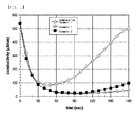
- Deionization efficiency was analyzed by measuring electric conductivity of outflow water. Cell driving was carried out in a manner that the electrode potential was changed to 0.0V to perform ion desorption for 2 minutes after ion adsorption for 3 minutes was performed. Deionization experiment results for three kinds of cells were shown in FIG. 1 .
- Example 1 in which both the cathode and the anode both were manufactured by using a polymer resin having an ion exchanger, exhibited the most excellent ion adsorption performance. Also, Example 2, in which only the anode was manufactured by using a polymer resin having an ion exchanger, exhibited a high ion adsorption performance as compared with the comparative example. Therefore, it can be seen that the present invention can be selectively employed in the cathode or the anode, and preferably employed in both the cathode and the anode.
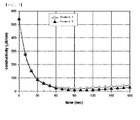
- ion adsorption performance can be further improved when the conductive material is added.
Landscapes
- Chemical & Material Sciences (AREA)
- Chemical Kinetics & Catalysis (AREA)
- Electrochemistry (AREA)
- General Chemical & Material Sciences (AREA)
- Inorganic Chemistry (AREA)
- Engineering & Computer Science (AREA)
- Life Sciences & Earth Sciences (AREA)
- Materials Engineering (AREA)
- Health & Medical Sciences (AREA)
- Analytical Chemistry (AREA)
- Molecular Biology (AREA)
- Hydrology & Water Resources (AREA)
- Environmental & Geological Engineering (AREA)
- Water Supply & Treatment (AREA)
- Organic Chemistry (AREA)
- Water Treatment By Electricity Or Magnetism (AREA)
- Separation Using Semi-Permeable Membranes (AREA)
Abstract
Provided is an electrode using a polymeric solution containing a cation exchanger or an anion exchanger, and a capacitive electrolytic cell for deionization using the same.
Description
- The present invention relates to a capacitive electrode for deionization, an electrolytic cell using the same, and a deionizing apparatus using the same. More particularly, the present invention relates to an electrode having ion selectivity and enabling efficient separation and removal of cation and anion.
- Currently, an ionic material removal method using ion exchange resin is mainly used as a method for removing an ionic material in an aqueous solution. This method effectively separate most ionic materials, but causes a large amount of acidic, basic, or salty waste liquid to be generated during a procedure of recycling a resin after completion of ion exchange. Besides, separation techniques such as a reverse osmosis membrane method, an electrodialysis method, and the like are employed, but these methods have problems such as a decrease in treatment efficiency due to film fouling, cleansing of the polluted film, periodic exchange of films, and the like. A capacitive deionization technique using an electric double layer principle has been studied in order to solve the problems of the existing deionization techniques.
- The capacitive deionization technology uses an adsorption reaction of ions by electric attraction in the electric double layer formed on a surface of an electrode when electric potential is applied to the electrode, and thus, the operation occurs at a low electrode potential (about 1 to 2V), and as a result, energy consumption is lower as compared with other deionization technologies. Therefore, the capacitive deionization technology is valued as a low-energy consumption type next generation deionization technology.
- However, since deionization capability of the capacitive deionization technology is still not sufficient, the need to improve the deionizing capability has emerged. In a case where a large amount of water is treated and applied to home or industrial places, the treatment capability by the capacitive deionization technology never reaches to a necessary level and thus the use of the capacitive deionization technology is limited.
- Another problem of the capacitive deionization technology is that ions adsorbed on the electric double layer are not completely desorbed therefrom, and thus, adsorption efficiency of the ions is rapidly decreased. According to a CDI process, ion materials are removed from inflow water by an ion adsorption reaction of electric double layers formed on a surface of an electrode when 1 to 2 volts (V) of electrode potential is applied. When the adsorbed ions reach a capacitive capacitance of the electrode, the adsorbed ions are desorbed by making the electrode potential to O volt (V) or converting to the contrary potential, thereby recycling the electrode. Here, the ions having a contrary charge to the ions adsorbed on the electrode move to the electric double layers due to a rapid change in electrode potential, and thus, all the adsorbed ions are not desorbed and remain on the surface of the electrode, which causes ion adsorption efficiency of the electrode to be decreased.
- An object of the present invention is to provide an electrode having high adsorption efficiency of ions during the driving procedure of process while increasing a capacitive capacitance, an electrolytic cell using the same, and a water treatment deionizing apparatus using the same.
- Also, an object of the present invention is to solve problems of decreased ion adsorption efficiency in the desorbing procedure of the adsorbed ions due to movement of ions having a contrary polarity to the adsorbed ions to the electrode. In other words, the object of the present invention is to develop the techniques for improving ion adsorption efficiency according to the continuous using or recycling.
- Also, an object of the present invention is to provide a new electrode capable of exhibiting ion selectivity by using a polymer having a functional group having ion exchange capacity as a binder material, an electrolytic cell using the same, and a water treatment deionizing apparatus manufactured by using the same.
- In one general, the present invention is characterized in that an ion exchangeable polymer resin, that is, a polymer resin containing a functional group having ion exchange capacity is added as one constituent component at the time of manufacturing an electrode, to produce an ion selective electrode capable of removing or collecting various ions present in water at the time of water treatment or heavy metals or noble metals at the time of waste treatment, thereby improving ion adsorption and desorption efficiency.
- Specifically, the present invention can improve ion adsorption efficiency and increase an ion adsorption rate. In addition, according to the present invention, in an electrochemical cell using the ion selective electrode, an electrode using a polymer resin having a cation exchange group may be used as an anode and an electrode using a polymer resin having an anion exchange group may be used as a cathode. Here, an ion exchange resin may be added to only one electrode or may be added to both the cathode and the anode.
- Further, the present invention is characterized in that an electrode using a cation exchange polymer passes only cations therethrough and an electrode using an anion exchange polymer solution passes only anions therethrough can be simply and economically manufactured. In addition, the present invention is characterized by providing an electrode having very superior deionization efficiency, an electrolytic cell using the same, and a deionizing apparatus using the same.
- More specifically, a method of the present invention includes:
- (a) dissolving a polymer resin having a cation exchange group or an anion exchange group in an organic solvent to prepare an ion selective polymer solution;
- (b) adding an electrode active material to the polymer solution to prepare a slurry; and
- (c) coating the slurry on a current collector.
- The method may further include (d) removing the organic solvent from the slurry coated on the current collector to thereby manufacture a sheet type electrode, after step (c).
- In addition, when a conductive material is further added in step (d), electric conductivity of the electrode can be further improved.
- Further, in order to manufacture the electrolytic cell, the present invention may further include: after manufacturing the electrode, stacking one electrode and the other electrode and stacking a spacer layer such as a mesh type polyimide layer or the like, preventing contact between the electrodes and differentiating the electrodes as a cathode and an anode.
- Hereinafter, the present invention will be described in more detail.
- First, in step (a), a polymer resin having a cation exchange group such as a sulfonic acid group (-SO3H), a carboxyl group (-COOH), a phosphonic group (-PO3H2), a phosphinic group (-HPO2H), an arsenic group (-AsO3H2), a selenonic group (-SeO3H) may be used, and a polymer resin having an anion exchanger such as a quaternary ammonium salt (-NH3), primary, secondary, or tertiary amine (-NH2, - NHR, -NR2), a quaternary phosphonium group (-PR4), a tertiary sulfonium group (-SR3), or the like, may be used. This ion exchange polymer resin may be dissolved in the organic solvent and thereby may be present as a solution type. Specifically, for example, any one or a mixture of two or more selected from polystyrene, polysulfone, polyethersulfone, polyamide, polyester, polyimide, polyether, polyethylene, polytetrafluoroethylene, or polyglycidylmethacrylate, which have any one of the above ion exchangers, may be used as the ion exchange polymer resin, but are not limited thereto. Any resin that can have a cation exchange group or an anion exchange group may be used without limitation.
- In addition, the polymer resin may preferably have a weight average molecular weight of 200,000 to 10,000,000, but is not limited thereto. The polymer resin having a weight average molecular weight of the above range is excellent in view of viscosity of an electrode slurry and property of binding electrode active materials.
- The organic solvent may be selected according to the kind of polymer resin. Any one or a mixture of two or more selected from dimethylformamide, dimethylacetamide, N-methyl-2-pyrrolidone, acetone, chloroform, dichloromethane, trichloroethylene, ethanol, methanol, normal hexane, may be used as the organic solvent dissolving the above-described polymer resin. However, examples of the organic solvent are not limited thereto.
- In step (a), the solid content is preferably 10 to 50 wt% at the time of preparing the polymer solution. If the solid content is below 10wt% or above 50wt%, the polymer solution has either too high or too low viscosity, and thus, the electrode slurry is not easily prepared in step (b).
- Next, with reference to step (b), in which the slurry is prepared by adding an electrode active material, a conductive material, or a mixture thereof to the polymer solution, addition of the electrode active material can improve the specific surface area of the electrode and the capacitive capacitance. Also, addition of the conductive material can improve electric conductivity of the electrode.
- The electrode active material may be an active carbon based material having a high specific surface area, and for example, an active carbon powder, an active carbon fiber, a carbon nanotube, a carbon aerogel, or a mixture thereof may be used as the electrode active material. The electrode active material is preferably prepared and used in a powder type. Alternatively, the electrode active material may be a metal oxide based material, and for example, RuO2, Ni(OH)2, MnO2, PbO2, TiO2, or a mixture thereof may be used as the electrode active material or may be added to the electrode active material. The content range of this electrode active material may be controlled depending on necessary physical properties thereof. More specifically, without being limited to, an electrode active material having an average particle size of 10µm or less, or specifically 10nm to 10µm is preferably used so as to increase the specific surface area of the electrode and the capacitive capacitance. In addition, the electrode active material is preferably used in a range of 600 to 900 parts by weight based on 100 parts by weight of the polymer material having an ion exchange functional group, so as to manufacture an electrode exhibiting ion selectivity and having high capacitive capacitance.
- In addition, according to the present invention, as necessary, the conductive material may be additively used together with the electrode active material, and any conductive material that can have a low electric resistance may be used without limitation. Specifically, for example, conductive carbon black, such as acetylene black, ketchen black, XCF carbon, SRF carbon, or the like may be used.
- The content range of this conductive material may be controlled depending on necessary physical properties thereof. More specifically, without being limited to, a conductive material having an average particle size of 2µm or less, preferably 1µm or less, or more preferably 10nm to 1µm is used so as to increase electric conductivity of the electrode. In addition, the conductive material is not significantly limited in the use amount thereof, but the conductive material is preferably used in a range of 1 to 20 parts by weight based on 100 parts by weight of the electrode active material so as to increase electric conductivity of the electrode and the capacitive capacitance.
- Next, with reference to step (c) in which the slurry is coated on the current collector, a material having excellent conductivity so that an electric field can be uniformly distributed on a surface of the manufactured electrode when current is supplied to the electrode through a power supply device can be preferably used as the current collector. The current collector may be used in a sheet, thin film, or plain weave gold net form, which includes, for example, aluminum, nickel, copper, titanium, iron, stainless steel, graphite, or a mixture thereof. In addition, an organic resin sheet, thin film, or film, which includes polyvinylidenefluoride, polystyrene, polyester, polysulfone, polyolefine, or the like, may be used.
- In addition, the coating method may be performed by spray, dip coating, knife casting, doctor blade, spin coating, or the like, without limitation thereto. The coating thickness is preferably in a range of 50 to 300µm so as to decrease electric resistance of the electrode and improve deionization efficiency.
- In addition, step (c) is repeatedly performed as necessary, and thus an electrode having a particular thickness can be manufactured.
- Next, in step (d), the organic solvent in the slurry coated on the current collector is removed, and thereby a sheet type porous carbon electrode can be manufactured. The method for removing the organic solvent may include a method of separating the organic solvent by performing drying under normal pressure or vacuum at a temperature atmosphere of several tens or several hundreds of degrees centigrade, or using a nonsolvent. Specifically, the organic solvent may be removed by performing drying under normal pressure or vacuum at a temperature atmosphere of room temperature to 200°C. Alternatively, the current collector coated with the slurry is dipped in a nonsolvent of any one or more selected from distilled water, alcohol, dimethylformamide, dimethylacetamide, N-methyl-2-pyrrolidone, and acetone for 1 to 24 hours, thereby eluting and removing the organic solvent while occurring phase-change (solidification) of the polymer resin.
- An electrochemical cell using the ion selective electrode manufactured by the manufacturing method of the present invention as only one electrode selected from a cathode and an anode or both the cathode and the anode is also included in the scope of the present invention. The electrochemical cell forms electrodes by application of electricity, and this means a form consisting of a cathode, an anode, and a spacer. This electrochemical cell includes capacitive type deionization cell, capacitor, and the like. The electrochemical cell includes also those in which cathodes and anodes are alternately stacked in two or more layers. Since the number of stacked cathodes and anodes has a relation with the capacitance, the cathodes and the anodes are properly stacked as necessary.
- In other words, in cases where an electrochemical cell is manufactured by employing the electrode according to the present invention, the ion selective electrode is used as only one electrode selected from a cathode and an anode and an electrode manufactured by using a polymer binder not having an ion exchange group is used as the other electrode. Even in this case, excellent adsorption and desorption of ions can be achieved.
- More preferably, the ion selective electrode is employed as both the anode and the cathode, thereby increasing the capacitive capacitance and facilitating adsorption and desorption of ions during a driving procedure of the process.
- According to the present invention, in the electrochemical cell using the ion selective electrode, the electrode using a polymer resin having a cation exchanger may be used as an anode and the electrode using a polymer resin having an anion exchanger may be used as a cathode.
- According to the ion exchangeable electrode of the present invention, the polymer solution having an ion exchange group is used as a binder, thereby facilitating adsorption and desorption of ions, increasing the ion adsorption and desorption rate, and improving ion adsorption efficiency. Further, the distance between electrodes can be minimized, and thus, ionic materials can be effectively and quickly adsorbed.
- Further, according to the present invention, since the electrode is manufactured by using polymer binder having an ion exchange group, a separate binder does not need to be used and the manufacturing costs are decreased, and thus, the electrode of the present invention can be easily used as a capacitive type deionization electrode, and the application range of this technology can be extended from a large-scale treatment of industrial water to a small-scale treatment of home purification water.
- The above and other objects, features and advantages of the present invention will become apparent from the following description of preferred embodiments given in conjunction with the accompanying drawings, in which:
-
FIG. 1 is a graph showing deionization efficiency according to Examples 1 and 2 of the present invention and Comparative Example 1; and -
FIG. 2 is a graph showing deionization efficiency of Examples 1 and 3 of the present invention. - Hereinafter, the present invention will be described by the examples in detail, but the present invention is not limited to the following examples.
- 1.0g of sodium sulfonated polystyrene (cation exchange capacity = 3 meq/g) having a cation exchanger, which was produced through a sulfonation reaction, was mixed with 20g of dimethylacetamide (DMAc), to prepare a polymer solution, and then 6.0g of an activated carbon powder (specific surface area = 1600m2/g) was mixed into the polymer solution, thereby preparing a cation exchange electrode slurry.
- 1.0g of polystyrene (anion exchange capacity = 3 meq/g) having an ammonium chloride anion exchanger, which was produced through an amination reaction, was mixed with 20g of dimethylacetamide, to prepare a polymer solution, and then 6.0g of an activated carbon powder (specific surface area = 1600m2/g) was mixed into the polymer solution, thereby preparing an anion exchange electrode slurry.
- 1.0g of polyvinylidenefluoride (PVdF, Mw = 275,000) was mixed with 20g of dimethyl acetaldehyde, to prepare a polymer solution, and then 8.0g of an activated carbon powder (specific surface area = 1600m2/g) was mixed into the polymer solution, thereby preparing an electrode slurry
- 1.0g of sodium sulfonated polystyrene (cation exchange capacity = 3 meq/g) having a cation exchanger, which was produced through a sulfonation reaction, was mixed with 20g of dimethyl acetaldehyde (DMAc), to prepare a polymer solution, and then 6.0g of an activated carbon powder (specific surface area = 1600m2/g) and 0.5g of carbon black (average diameter = 19nm) were mixed to the polymer solution, thereby preparing a cation exchange electrode slurry.
- 1.0g of chloro-ammoniated polystyrene (anion exchange capacity = 3 meq/g) having an anion exchanger, which was produced through an amination reaction, was mixed with 20g of dimethyl acetaldehyde, to prepare a polymer solution, and then 6.0g of an activated carbon powder (specific surface area = 1600m2/g) and 0.5g of carbon black (average diameter = 19nm) were mixed to the polymer solution, thereby preparing a cation exchange electrode slurry.
- In order to find ion adsorption performance of electrodes when both a cathode and an anode are manufactured by a binder having an ion exchanger, the electrodes were manufactured such that the anode and the cathode each have an ion exchanger.
- The slurry prepared from Preparative Example 1 and the slurry prepared from Preparation Example 2 were respectively coated on conductive graphite sheets (thickness: 250µm) by a doctor blade such that one surface thereof had a coating thickness of 150µm, followed by drying at room temperature, thereby manufacturing an anode having a cation exchanger and a cathode having an anion exchanger, respectively.
- In order to check ion adsorption performance of electrodes when only one electrode is manufactured by a binder having an ion-exchange group, the electrodes were manufactured such that only an anode has an ion-exchange group.
- The slurry prepared from Preparative Example 1 and the slurry prepared from Preparation Example 3 were respectively coated on conductive graphite sheets (thickness: 250µm) by a doctor blade such that one surface thereof had a coating thickness of 150µm, followed by drying at room temperature, thereby manufacturing an anode having a cation exchanger and a cathode made of PVdF but not having an ion-exchange group.
- In order to check ion adsorption performance of electrodes when the electrodes are manufactured by adding a conductive material thereto, the electrodes having the conductive material added thereto were manufactured.
- The slurry prepared from Preparation Example 4 and the slurry prepared from Preparation Example 5 were respectively coated on conductive graphite sheets (thickness: 250µm) by a doctor blade such that one surface thereof had a coating thickness of 150µm, followed by drying at room temperature, thereby manufacturing an anode having a cation exchanger and a cathode having an anion exchanger, respectively.
- It was tried to check ion adsorption performance of electrodes manufactured by a binder not having an ion-exchange group.
- The slurry prepared from Preparation Example 3 was respectively coated on conductive graphite sheets (thickness: 250µm) by a doctor blade such that one surface thereof had a coating thickness of 150µm, followed by drying at room temperature, thereby manufacturing a cathode and an anode, respectively.
- Each deionization cell was manufactured by using each of the electrodes manufactured from examples 1, 2, and 3 and the comparative example 1.
- After the manufactured electrodes were cut into 10 x 10 cm2, a 100µm thickness spacer (200 mesh, polyimide) was installed between the cathode and the anode such that contact between the two electrodes was prevented and fluid passed through the spacer. Each of the electrodes was pierced to form a hole of 1cm at the center thereof so that a solution flowed out from four surfaces to the center of the electrode via the spacer. An acryl plate of 15 x 15 cm2 size was fixed to the outsides of the cathode and the anode by using bolts, thereby manufacturing a capacitive deionization single cell.
- A NaCl solution of 250 mg/L was supplied at a rate of 20 mL/min while an electrode potential of 1.4V was uniformly applied. Deionization efficiency was analyzed by measuring electric conductivity of outflow water. Cell driving was carried out in a manner that the electrode potential was changed to 0.0V to perform ion desorption for 2 minutes after ion adsorption for 3 minutes was performed. Deionization experiment results for three kinds of cells were shown in
FIG. 1 . - As shown in
FIG. 1 , Example 1, in which both the cathode and the anode both were manufactured by using a polymer resin having an ion exchanger, exhibited the most excellent ion adsorption performance. Also, Example 2, in which only the anode was manufactured by using a polymer resin having an ion exchanger, exhibited a high ion adsorption performance as compared with the comparative example. Therefore, it can be seen that the present invention can be selectively employed in the cathode or the anode, and preferably employed in both the cathode and the anode. - It was tried to check a difference in ion adsorption performance according to the presence or absence of a conductive material. An ion adsorption experiment was performed on the electrodes manufactured from Examples 1 and 3 in the same manner and under the same conditions as Experimental Example 1.
- As shown in
FIG. 2 , it can be seen that ion adsorption performance can be further improved when the conductive material is added.
Claims (10)
- A capacitive deionization electrochemical cell, comprising:any one electrode selected from an anode manufactured by containing a cation exchange resin therein and a cathode manufactured by containing an anion exchange resin therein; anda spacer layer separating the anode from the cathode.
- The capacitive deionization electrochemical cell of claim 1, wherein the electrode is manufactured by preparing a slurry containing a polymer resin having the cation exchanger or a polymer resin having an anion exchanger and an electrode active material, and then coating the slurry on a current collector.
- The capacitive deionization electrochemical cell of claim 2, wherein the polymer resin having a cation exchanger is a polymer resin having at least one cation exchanger selected from the group consisting of a sulfonic acid group (-SO3H), a carboxyl group (-COOH), a phosphonic group (-PO3H2), a phosphinic group (-HPO2H), an arsenic group (-AsO3H2), and a selenonic group (-SeO3H), and the polymer resin having an anion exchanger is a polymer resin having at least one anion exchanger selected from the group consisting of a quaternary ammonium salt (-NH3), primary, secondary, or tertiary amine (-NH2, -NHR, -NR2), a quaternary phosphonium group (-PR4), and a tertiary sulfonium group (-SR3).
- The capacitive deionization electrochemical cell of claim 1, wherein the electrode active material is at least one active carbon based material selected from an active carbon powder, an active carbon fiber, a carbon nanotube, and a carbon aerogel; one or two or more metal oxide based materials selected from RuO2, Ni(OH)2, MnO2, PbO2, and TiO2; and a mixture thereof.
- The capacitive deionization electrochemical cell of claim 1, wherein the current collector is in a sheet, thin film, or plain weave gold net form, including aluminum, nickel, copper, titanium, iron, stainless steel, graphite, or a mixture thereof.
- The capacitive deionization electrochemical cell of claim 1, wherein the current collector is in an organic resin sheet, thin film, or plain weave gold net form, selected from an organic polymer including polyvinylidenefluoride, polystyrene, polyester, and polyolefine.
- The capacitive deionization electrochemical cell of claim 1, wherein the slurry further contains a conductive material.
- The capacitive deionization electrochemical cell of claim 7, wherein the conductive material is conductive carbon black.
- A deionizing apparatus for water treatment, using the electrochemical cell of any one of claims 1 to 8.
- A metal collecting apparatus for collecting heavy metals or noble metals in waste water, using the electrochemical cell of any one of claims 1 to 8.
Applications Claiming Priority (2)
| Application Number | Priority Date | Filing Date | Title |
|---|---|---|---|
| KR1020090072683A KR101004707B1 (en) | 2009-08-07 | 2009-08-07 | Capacitive electrode for ion removal and electrolytic cell using the same |
| PCT/KR2010/005091 WO2011016662A2 (en) | 2009-08-07 | 2010-08-03 | Capacitive electrode for deionization, and electrolytic cell using same |
Publications (1)
| Publication Number | Publication Date |
|---|---|
| EP2463242A2 true EP2463242A2 (en) | 2012-06-13 |
Family
ID=43544777
Family Applications (1)
| Application Number | Title | Priority Date | Filing Date |
|---|---|---|---|
| EP10806636A Withdrawn EP2463242A2 (en) | 2009-08-07 | 2010-08-03 | Capacitive electrode for deionization, and electrolytic cell using same |
Country Status (4)
| Country | Link |
|---|---|
| US (1) | US20120132519A1 (en) |
| EP (1) | EP2463242A2 (en) |
| KR (1) | KR101004707B1 (en) |
| WO (1) | WO2011016662A2 (en) |
Cited By (4)
| Publication number | Priority date | Publication date | Assignee | Title |
|---|---|---|---|---|
| EP2778140A1 (en) | 2013-03-15 | 2014-09-17 | Idropan Dell'orto Depuratori S.r.l. | Apparatus for purifying a fluid and method for purifying a fluid, in particular by means of the aforesaid apparatus |
| WO2015052574A1 (en) | 2013-10-09 | 2015-04-16 | Idropan Dell'orto Depuratori S.R.L. | Apparatus for treating a fluid |
| CN107819122A (en) * | 2017-10-30 | 2018-03-20 | 天津晨祥丰凯新材料科技有限公司 | The preparation method of carbon aerogel composite material |
| CN105540764B (en) * | 2015-12-12 | 2018-08-14 | 大连理工大学 | Electrode preparation and application of an asymmetric capacitive deionization module |
Families Citing this family (10)
| Publication number | Priority date | Publication date | Assignee | Title |
|---|---|---|---|---|
| US20120186980A1 (en) * | 2011-01-26 | 2012-07-26 | Sundara Ramaprabhu | Methods and systems for separating ions from fluids |
| WO2012129532A1 (en) | 2011-03-23 | 2012-09-27 | Andelman Marc D | Polarized electrode for flow-through capacitive deionization |
| US9224537B2 (en) | 2011-05-31 | 2015-12-29 | Indian Institute Of Technology Madras | Electrode and/or capacitor formation |
| WO2014042077A1 (en) * | 2012-09-13 | 2014-03-20 | 株式会社クラレ | Electrode, method for producing same, and flow-through capacitor including same |
| KR102212322B1 (en) * | 2013-12-24 | 2021-02-03 | 삼성전자주식회사 | Electrode material for capacitive deionization, methods of producing the same and capacitive deionization apparatus including the same |
| EP3272714B8 (en) | 2015-05-04 | 2019-07-10 | Doosan Heavy Industries & Construction Co., Ltd. | Capacitive deionization apparatus |
| KR101830078B1 (en) * | 2016-07-22 | 2018-02-20 | 충남대학교산학협력단 | Composite electrode for recovering copper ion and composite electrode module, composite electrode module system and method for thereof, copper ion recovering method using the same |
| KR101841941B1 (en) | 2017-01-04 | 2018-05-14 | 공주대학교 산학협력단 | Method of manufacturing of ion selective composite electrode for desalinization and composite electrode therefrom |
| US12454473B2 (en) | 2017-12-30 | 2025-10-28 | Indian Institute Of Technologymadras (Iit Madras) | Integrated CDI electrode |
| US12448306B2 (en) * | 2020-03-27 | 2025-10-21 | Battelle Memorial Institute | Electrocatalytic bio-oil and wastewater treatment |
Family Cites Families (11)
| Publication number | Priority date | Publication date | Assignee | Title |
|---|---|---|---|---|
| JPH0582396A (en) * | 1991-09-24 | 1993-04-02 | Isuzu Motors Ltd | Manufacture of electric double layer capacitor |
| WO2003009920A1 (en) * | 2001-07-25 | 2003-02-06 | Biosource, Inc. | Electrode array for use in electrochemical cells |
| US7070632B1 (en) * | 2001-07-25 | 2006-07-04 | Polyplus Battery Company | Electrochemical device separator structures with barrier layer on non-swelling membrane |
| JP2004342595A (en) * | 2003-04-25 | 2004-12-02 | Nec Tokin Corp | Electrode for electrochemical cell, and electrochemical cell using it |
| WO2005035247A2 (en) * | 2003-08-29 | 2005-04-21 | E.I. Dupont De Nemours And Company | Unitized membrane electrode assembly and process for its preparation |
| CN100553025C (en) * | 2005-01-26 | 2009-10-21 | 松下电器产业株式会社 | Negative electrode for lithium secondary battery, lithium secondary battery using the same, and their manufacturing method |
| KR100761524B1 (en) * | 2006-02-02 | 2007-10-04 | 주식회사 협진아이엔씨 | Manufacturing method of gas diffusion layer for fuel cell |
| KR100698580B1 (en) * | 2006-04-12 | 2007-03-21 | 한국정수공업 주식회사 | Electrode water circulation device of electric ion removal device |
| US20080057398A1 (en) | 2006-09-06 | 2008-03-06 | General Electric Company | Non-faraday based systems, devices and methods for removing ionic species from liquid |
| KR101008400B1 (en) * | 2007-09-27 | 2011-01-14 | 한국전력공사 | Ion adsorption electrode, electrosorption purification apparatus having the same and method for manufacturing electrode for ion adsorption |
| KR101514393B1 (en) * | 2009-01-06 | 2015-04-23 | 삼성전자주식회사 | - Integrated electrode-current collector sheet for capacitive deionization and capacitive deionization device and electric double layer capacitor having same |
-
2009
- 2009-08-07 KR KR1020090072683A patent/KR101004707B1/en active Active
-
2010
- 2010-08-03 EP EP10806636A patent/EP2463242A2/en not_active Withdrawn
- 2010-08-03 US US13/389,343 patent/US20120132519A1/en not_active Abandoned
- 2010-08-03 WO PCT/KR2010/005091 patent/WO2011016662A2/en not_active Ceased
Non-Patent Citations (1)
| Title |
|---|
| See references of WO2011016662A2 * |
Cited By (4)
| Publication number | Priority date | Publication date | Assignee | Title |
|---|---|---|---|---|
| EP2778140A1 (en) | 2013-03-15 | 2014-09-17 | Idropan Dell'orto Depuratori S.r.l. | Apparatus for purifying a fluid and method for purifying a fluid, in particular by means of the aforesaid apparatus |
| WO2015052574A1 (en) | 2013-10-09 | 2015-04-16 | Idropan Dell'orto Depuratori S.R.L. | Apparatus for treating a fluid |
| CN105540764B (en) * | 2015-12-12 | 2018-08-14 | 大连理工大学 | Electrode preparation and application of an asymmetric capacitive deionization module |
| CN107819122A (en) * | 2017-10-30 | 2018-03-20 | 天津晨祥丰凯新材料科技有限公司 | The preparation method of carbon aerogel composite material |
Also Published As
| Publication number | Publication date |
|---|---|
| KR101004707B1 (en) | 2011-01-04 |
| WO2011016662A3 (en) | 2011-06-30 |
| US20120132519A1 (en) | 2012-05-31 |
| WO2011016662A2 (en) | 2011-02-10 |
Similar Documents
| Publication | Publication Date | Title |
|---|---|---|
| EP2463242A2 (en) | Capacitive electrode for deionization, and electrolytic cell using same | |
| McNair et al. | Ion-exchange materials for membrane capacitive deionization | |
| KR101047335B1 (en) | Manufacturing Method of Electrode | |
| KR101022257B1 (en) | Method for manufacturing ion selective capacitive desalination composite electrode and module | |
| KR101029090B1 (en) | Capacitive desalination electrode using engineering plastics with ion-exchange functional group and manufacturing method thereof | |
| Zhang et al. | Improving ion rejection of conductive nanofiltration membrane through electrically enhanced surface charge density | |
| Palakkal et al. | Low-resistant ion-exchange membranes for energy efficient membrane capacitive deionization | |
| Lee et al. | Rocking chair desalination battery based on prussian blue electrodes | |
| EP2857442B1 (en) | Ion exchange membrane for flow-electrode capacitive deionization device and flow-electrode capacitive deionization device including the same | |
| KR101621270B1 (en) | Method for manufacturing of specific ion selective composite carbon electrode for capacitive deionization | |
| KR101063913B1 (en) | Capacitive desalination electrode and its manufacturing method | |
| KR102093443B1 (en) | Capacitive deionization apparatus and methods of treating fluid using the same | |
| KR102878124B1 (en) | Electrochemical module comprising a flexible membrane-electrode device | |
| KR101528777B1 (en) | Bipolar ion exchange sheet for recovering valuables, method of manufacturing the same and apparatus for recovering valuables | |
| KR101207463B1 (en) | Manufacturing method of capacitive deionization electrode having ion selectivity | |
| US20110042205A1 (en) | Capacitive deionization device | |
| Gao et al. | Electrical double layer ion transport with cell voltage-pulse potential coupling circuit for separating dilute lead ions from wastewater | |
| KR101866890B1 (en) | Ion exchange membrane having flow channel laminated bipolar electrodes and method thereof | |
| KR20150008348A (en) | Hybrid seawater desalination systems | |
| KR101526246B1 (en) | Composite Electrode For Water Treatment And Method For Manufacturing The Same And Water Treatment System | |
| KR20180109586A (en) | Bipoolar ion-exchange membrane and method for preparing the same | |
| CN102718291B (en) | Ion exchange resin modified polyvinylidene fluoride (PVDF) charcoal electrode and preparation method thereof | |
| Wang et al. | Enhancing the total salt adsorption capacity and monovalent ion selectivity in capacitive deionization using a dual-layer membrane coating electrode | |
| KR20160120132A (en) | Flow capacitive deionization electrode and manufacturing method of module | |
| KR102004687B1 (en) | A module for lithium ion recycling of seawater and method for recycling lithium ion thereof |
Legal Events
| Date | Code | Title | Description |
|---|---|---|---|
| PUAI | Public reference made under article 153(3) epc to a published international application that has entered the european phase |
Free format text: ORIGINAL CODE: 0009012 |
|
| 17P | Request for examination filed |
Effective date: 20120207 |
|
| AK | Designated contracting states |
Kind code of ref document: A2 Designated state(s): AL AT BE BG CH CY CZ DE DK EE ES FI FR GB GR HR HU IE IS IT LI LT LU LV MC MK MT NL NO PL PT RO SE SI SK SM TR |
|
| DAX | Request for extension of the european patent (deleted) | ||
| STAA | Information on the status of an ep patent application or granted ep patent |
Free format text: STATUS: THE APPLICATION IS DEEMED TO BE WITHDRAWN |
|
| 18D | Application deemed to be withdrawn |
Effective date: 20150303 |