EP2463089B1 - Article including a pad and process to manufacture such article - Google Patents
Article including a pad and process to manufacture such article Download PDFInfo
- Publication number
- EP2463089B1 EP2463089B1 EP11191515.3A EP11191515A EP2463089B1 EP 2463089 B1 EP2463089 B1 EP 2463089B1 EP 11191515 A EP11191515 A EP 11191515A EP 2463089 B1 EP2463089 B1 EP 2463089B1
- Authority
- EP
- European Patent Office
- Prior art keywords
- layer
- pad
- article
- anyone
- glue
- Prior art date
- Legal status (The legal status is an assumption and is not a legal conclusion. Google has not performed a legal analysis and makes no representation as to the accuracy of the status listed.)
- Active
Links
Images



Classifications
-
- A—HUMAN NECESSITIES
- A42—HEADWEAR
- A42B—HATS; HEAD COVERINGS
- A42B3/00—Helmets; Helmet covers ; Other protective head coverings
- A42B3/04—Parts, details or accessories of helmets
- A42B3/10—Linings
- A42B3/12—Cushioning devices
- A42B3/125—Cushioning devices with a padded structure, e.g. foam
- A42B3/127—Cushioning devices with a padded structure, e.g. foam with removable or adjustable pads
-
- A—HUMAN NECESSITIES
- A41—WEARING APPAREL
- A41D—OUTERWEAR; PROTECTIVE GARMENTS; ACCESSORIES
- A41D13/00—Professional, industrial or sporting protective garments, e.g. surgeons' gowns or garments protecting against blows or punches
- A41D13/05—Professional, industrial or sporting protective garments, e.g. surgeons' gowns or garments protecting against blows or punches protecting only a particular body part
-
- B—PERFORMING OPERATIONS; TRANSPORTING
- B32—LAYERED PRODUCTS
- B32B—LAYERED PRODUCTS, i.e. PRODUCTS BUILT-UP OF STRATA OF FLAT OR NON-FLAT, e.g. CELLULAR OR HONEYCOMB, FORM
- B32B37/00—Methods or apparatus for laminating, e.g. by curing or by ultrasonic bonding
- B32B37/14—Methods or apparatus for laminating, e.g. by curing or by ultrasonic bonding characterised by the properties of the layers
- B32B37/144—Methods or apparatus for laminating, e.g. by curing or by ultrasonic bonding characterised by the properties of the layers using layers with different mechanical or chemical conditions or properties, e.g. layers with different thermal shrinkage, layers under tension during bonding
-
- B—PERFORMING OPERATIONS; TRANSPORTING
- B32—LAYERED PRODUCTS
- B32B—LAYERED PRODUCTS, i.e. PRODUCTS BUILT-UP OF STRATA OF FLAT OR NON-FLAT, e.g. CELLULAR OR HONEYCOMB, FORM
- B32B5/00—Layered products characterised by the non- homogeneity or physical structure, i.e. comprising a fibrous, filamentary, particulate or foam layer; Layered products characterised by having a layer differing constitutionally or physically in different parts
- B32B5/18—Layered products characterised by the non- homogeneity or physical structure, i.e. comprising a fibrous, filamentary, particulate or foam layer; Layered products characterised by having a layer differing constitutionally or physically in different parts characterised by features of a layer of foamed material
-
- B—PERFORMING OPERATIONS; TRANSPORTING
- B32—LAYERED PRODUCTS
- B32B—LAYERED PRODUCTS, i.e. PRODUCTS BUILT-UP OF STRATA OF FLAT OR NON-FLAT, e.g. CELLULAR OR HONEYCOMB, FORM
- B32B5/00—Layered products characterised by the non- homogeneity or physical structure, i.e. comprising a fibrous, filamentary, particulate or foam layer; Layered products characterised by having a layer differing constitutionally or physically in different parts
- B32B5/22—Layered products characterised by the non- homogeneity or physical structure, i.e. comprising a fibrous, filamentary, particulate or foam layer; Layered products characterised by having a layer differing constitutionally or physically in different parts characterised by the presence of two or more layers which are next to each other and are fibrous, filamentary, formed of particles or foamed
- B32B5/24—Layered products characterised by the non- homogeneity or physical structure, i.e. comprising a fibrous, filamentary, particulate or foam layer; Layered products characterised by having a layer differing constitutionally or physically in different parts characterised by the presence of two or more layers which are next to each other and are fibrous, filamentary, formed of particles or foamed one layer being a fibrous or filamentary layer
- B32B5/245—Layered products characterised by the non- homogeneity or physical structure, i.e. comprising a fibrous, filamentary, particulate or foam layer; Layered products characterised by having a layer differing constitutionally or physically in different parts characterised by the presence of two or more layers which are next to each other and are fibrous, filamentary, formed of particles or foamed one layer being a fibrous or filamentary layer another layer next to it being a foam layer
-
- A—HUMAN NECESSITIES
- A41—WEARING APPAREL
- A41D—OUTERWEAR; PROTECTIVE GARMENTS; ACCESSORIES
- A41D13/00—Professional, industrial or sporting protective garments, e.g. surgeons' gowns or garments protecting against blows or punches
- A41D13/05—Professional, industrial or sporting protective garments, e.g. surgeons' gowns or garments protecting against blows or punches protecting only a particular body part
- A41D13/0512—Neck or shoulders area
-
- A—HUMAN NECESSITIES
- A41—WEARING APPAREL
- A41D—OUTERWEAR; PROTECTIVE GARMENTS; ACCESSORIES
- A41D13/00—Professional, industrial or sporting protective garments, e.g. surgeons' gowns or garments protecting against blows or punches
- A41D13/05—Professional, industrial or sporting protective garments, e.g. surgeons' gowns or garments protecting against blows or punches protecting only a particular body part
- A41D13/06—Knee or foot
- A41D13/065—Knee protectors
-
- B—PERFORMING OPERATIONS; TRANSPORTING
- B32—LAYERED PRODUCTS
- B32B—LAYERED PRODUCTS, i.e. PRODUCTS BUILT-UP OF STRATA OF FLAT OR NON-FLAT, e.g. CELLULAR OR HONEYCOMB, FORM
- B32B2250/00—Layers arrangement
- B32B2250/40—Symmetrical or sandwich layers, e.g. ABA, ABCBA, ABCCBA
-
- B—PERFORMING OPERATIONS; TRANSPORTING
- B32—LAYERED PRODUCTS
- B32B—LAYERED PRODUCTS, i.e. PRODUCTS BUILT-UP OF STRATA OF FLAT OR NON-FLAT, e.g. CELLULAR OR HONEYCOMB, FORM
- B32B2266/00—Composition of foam
- B32B2266/06—Open cell foam
-
- B—PERFORMING OPERATIONS; TRANSPORTING
- B32—LAYERED PRODUCTS
- B32B—LAYERED PRODUCTS, i.e. PRODUCTS BUILT-UP OF STRATA OF FLAT OR NON-FLAT, e.g. CELLULAR OR HONEYCOMB, FORM
- B32B2307/00—Properties of the layers or laminate
- B32B2307/50—Properties of the layers or laminate having particular mechanical properties
- B32B2307/51—Elastic
-
- B—PERFORMING OPERATIONS; TRANSPORTING
- B32—LAYERED PRODUCTS
- B32B—LAYERED PRODUCTS, i.e. PRODUCTS BUILT-UP OF STRATA OF FLAT OR NON-FLAT, e.g. CELLULAR OR HONEYCOMB, FORM
- B32B2437/00—Clothing
-
- B—PERFORMING OPERATIONS; TRANSPORTING
- B32—LAYERED PRODUCTS
- B32B—LAYERED PRODUCTS, i.e. PRODUCTS BUILT-UP OF STRATA OF FLAT OR NON-FLAT, e.g. CELLULAR OR HONEYCOMB, FORM
- B32B2437/00—Clothing
- B32B2437/04—Caps, helmets
-
- B—PERFORMING OPERATIONS; TRANSPORTING
- B32—LAYERED PRODUCTS
- B32B—LAYERED PRODUCTS, i.e. PRODUCTS BUILT-UP OF STRATA OF FLAT OR NON-FLAT, e.g. CELLULAR OR HONEYCOMB, FORM
- B32B37/00—Methods or apparatus for laminating, e.g. by curing or by ultrasonic bonding
- B32B37/12—Methods or apparatus for laminating, e.g. by curing or by ultrasonic bonding characterised by using adhesives
Definitions
- the term "pad” signifies a monolayer or multilayer padding or mat, needwise of soft material, and therefore exhibiting a relatively low compressive strength.
- the first layer 20 and the second layer 22 are peripherally connected at respective peripheral edges 28, 29 projecting with respect to the pad 24, optionally by an edge strip, by an adhesive or by a seam, to hold the pad 24 stationary.
- the pad 24 is fixed to the first layer 20 and to the second layer 22, e.g. by glue/adhesive, not depicted in Figures 2A-2C , spread over all the surface on the faces 20a, 22a of contact between the pad 24 and the first layer 20 and the second layer 22.
- the first layer 20 is such as to induce a curving of the pad 24.
Landscapes
- Engineering & Computer Science (AREA)
- Mechanical Engineering (AREA)
- Health & Medical Sciences (AREA)
- General Health & Medical Sciences (AREA)
- Physical Education & Sports Medicine (AREA)
- Textile Engineering (AREA)
- Professional, Industrial, Or Sporting Protective Garments (AREA)
- Lining Or Joining Of Plastics Or The Like (AREA)
Description
- The present disclosure generally refers to an article including a pad, or padding. Such an article is, e.g., a lining for a protection helmet, conventionally also called "interior" for helmet, which is intended to be interposed between a rigid outer cap of the helmet and a user's head.
- More specifically, in the field of protection helmets, it is known that the lining has a bonnet-like curved shape and acts as a comfort element. In particular, a known lining comprises a pad or padding and at least one layer, or cover, generally made of fabric. The cover overlaps the pad, on the side of the latter facing a user's head.
- Such an article, though advantageous under many standpoints, entails some drawbacks.
- A drawback is, e.g., that it is not always possible to provide optimum comfort to a user, since, on the side facing the head, the cover tends to form small folds caused by the curving of the padding. To a user such folds are often irritating, and made worse by the presence of any seam. Discomfort is at times relevant, considering that the helmet has to be tight-fitting on the user's head for safety reasons.
- Moreover, the presence of folds and/or seams interferes also with helmet stability, as a perfect and continuous tight-fitting on the head cannot be attained.
- A technical problem underlying the present disclosure is to provide an article including a pad, or padding, allowing to overcome at least one of the drawbacks described above, and/or achieving further advantages.
- Such a technical problem is solved by an article as defined in independent claim 1 and a process according to
claim 14. - In the present description and in the following claims, the expression "article including a pad, or padding," signifies anyone article suitable for an application requiring the presence of a pad, or padding, made of a soft or yielding material, or of adequate flexibility or compressibility, like, e.g.: a protection article in which the pad, or padding, is suitable to protect from impacts or knocks; a comfort article in which the pad, or padding, gives softness or comfort to a product to which the article is associated; an insert, i.e. is an article intended to fill or fill up a cavity of a product to which it is associated.
- A product including such article is, e.g.: a protection helmet, in which such article constitutes a lining of the protection helmet; a clothing item or garment in which the article is a protection insert, positioned, for instance, in the region of articulation zones like shoulders, elbows or knees, for protecting such zones; a footwear in which such article is arranged in the region of suitable zones of the footwear for comfort purposes, or in free spaces of the footwear for adapting the footwear size to a user's foot; a furniture object or component such as a couch or an armchair, in which such article is, e.g., a cover, or an insert, of the couch or of the armchair.
- In the present description and in the following claims, the term "pad" signifies a monolayer or multilayer padding or mat, needwise of soft material, and therefore exhibiting a relatively low compressive strength.
- In the present description and in the following claims, the expression "first layer" signifies a piece made of an at least partially elastic material, such as a fabric, a cloth, a mesh, or other material, for instance of lycra, preferably suitable for contacting the human body, in case of clothing, protection helmets or footwear, and which may be fixed adhering to the pad during a step wherein such first layer is elastically deformed, and may return into an undeformed, totally undeformed or partially undeformed condition once the deforming action (i.e., the action causing elastic deformation) has ended, so that the pad may be curved.
- Secondary characteristics of the subject of the present disclosure are defined in the corresponding dependent claims.
- The subject of the present disclosure provides some relevant advantages.
- A first advantage of the article according to the present disclosure is that, thanks to the use of a first layer or first piece, made of an at least partially elastic material, and to an elastic return of said first layer, it is possible to obtain an article in which the first layer, in a curved condition, makes substantially no folds, or makes folds in a reduced number, or just very slight ones. Such a first layer is, in some cases, intended to be arranged on a side of the pad intended to be facing the user, like e.g. in the case of a helmet or a clothing item or footwear, to anatomically conform to a corresponding curved region of a user's body, like the head or an articulation zone.
- An advantage of the process is that the pad assumes a curved arrangement or configuration, substantially automatically, thanks to the fact that the fixing of the pad to the first layer occurs preliminarily, when the first layer is in an elastically deformed condition. Thus, by exploiting, as mentioned, the elastic return of the first layer, it is possible to obtain in a very simple and quick way the curved configuration of the entire article.
- Obviously, the degree of curving depends on the dimensions of the first layer and of the pad, on the material of the first layer and the material of the pad, as well as on the elastic force which induces the curving of the pad.
- In some embodiments, the first layer exhibits biaxial elasticity, so that the elastic return occurs at least along two directions, and a bonnet-like or cap-like curving of the pad be obtained. This bonnet-like or cap-like shape is suitable, e.g., in case of application to a protection helmet, or in a clothing item for articulation protection, so that the article may follow the curving of the outer rigid shell of the helmet, or respectively the anatomical curving of an articulation.
- Through openings may be provided in the article, e.g. with a weight-lightening purpose, or to improve adaptability to an item to which the article is associated.
- In an embodiment, the article is a sandwich structure including, besides the first layer, a second layer, wherein the pad is included between the first layer and the second layer. This embodiment entails the advantage that it is possible, in a simple way, to entrap and hold the pad stationary between the two layers.
- Such second layer can be joined beforehand to the pad and then dragged in a curved position by the first layer together with the pad, or it can be joined to the pad concomitantly to the first layer.
- In an embodiment, also the second layer is made of an elastically deformable material. Such second layer deforms elastically when the pad is induced in curved configuration by the first layer.
- In an embodiment, the first layer and/or the second layer are glued to the pad; this embodiment entails the advantages of facilitating the operations of fixing the pad to the first layer and/or to the second layer. In case the second layer is present as well, the first layer and the second layer have a surface extension greater than the pad. I n particular, peripheral edges of the first layer and of the second layer projecting with respect to the pad are directly joined to each other.
- In an embodiment, gluing occurs by a pressure coupling with preliminary interposition of glue, or adhesive, between the first layer and the pad.
- In particular, a layer of glue is interposed between the face of the first layer facing a corresponding face of the pad; and the group including the first layer, the layer of glue and the pad is pressed.
- This way to proceed allows to join, in a single operating step, the pad to the first layer.
- In case also the second layer is present, a layer of glue and/or of adhesive is interposed also between the face of the second layer facing a corresponding face of the pad; and the group including the first layer, the second layer, the two layers of glue interposed between the first layer and the pad and between the second layer and the pad, are pressed together. This way to proceed allows to join, in a single operating step, the pad to the first layer and to the second layer, and the first layer and the second layer to each other along the above-mentioned peripheral edges, so as to obtain a sandwich structure ready for anyone use, e.g. as inside for helmet.
- Other advantages, features and operation steps of the subject of the present disclosure will be made evident in the following detailed description of some preferred embodiments thereof, given by way of example and not for limitative purposes. However, it is evident how each embodiment may entail one or more of the advantages listed above; in any case, it is not required that each embodiment concomitantly entail all of the advantages listed.
- It is also to be understood that all possible combinations of the aforeindicated embodiments, and of those described with reference to the following detailed description, fall within the scope of the present disclosure.
- Reference will be made to the figures of the annexed drawings, wherein:
-
Figure 1 shows a partially sectional side view of a helmet including an article according to the present disclosure; -
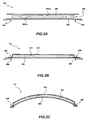
Figures 2A-2C show respective sectional side views of an article according to the present disclosure during successive steps of a manufacturing process thereof; -
Figures 3A-3C show respective sectional side views of a further article according to the present disclosure during successive steps of a manufacturing process thereof; -
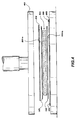
Figure 4 shows a sectional side view of an article according to the present disclosure in an exploded condition during a machining step thereof; -
Figure 5 shows a rear view of a clothing item including one or more articles according to the present disclosure; -
Figure 6 shows a sectional view along line VI-VI ofFigure 5 ; -
Figure 7 shows a sectional side view of a footwear provided with an article according to the present disclosure. - Referring to the annexed figures, by
reference number 10 an article according to the present disclosure is indicated, which in the example ofFigure 1 is a lining, also called "inside", forhelmet 12. Thehelmet 12 includes an externalrigid cap 14. - In particular, in the present description and in the following claims, the term "lining" signifies an assembly which serves to cover an internal or concave side of the
cap 14, and to act as soft layer between the head and therigid cap 14. - The
article 10 is intended to be curved bonnet-like to adhere to the shape of a user's head. More specifically, thearticle 10 is structurally independent from thecap 14 and is fixed to thecap 14, e.g., by Velcro®, snap fasteners or alike fixing systems. - More specifically, in the example of
Figures 1 and2A-2C , thearticle 10 is a multilayer structure, sandwich-shaped and including afirst layer 20, or first piece, or internal leather, asecond layer 22, or second piece, or external leather, and apad 24 of soft material, included between thefirst layer 20 and thesecond layer 22. - The
first layer 20 and thesecond layer 22 are made of an elastic or elasticized fabric, like, e.g., lycra, and are able to assume a condition of elastic deformation and an undeformed condition, or of lesser elastic deformation. - The
pad 24 is made of a foam, e.g. a conventional sponge. - The
pad 24 forms inner core or kernel for the sandwich structure. Thepad 24 is depicted in the drawings by a mat or monolayer padding, but it is understood that it may be formed of plural paddings or mats overlapped, depending on the degree of compressive strength to be achieved. - The
first layer 20 and thesecond layer 22 are peripherally connected at respectiveperipheral edges pad 24, optionally by an edge strip, by an adhesive or by a seam, to hold thepad 24 stationary. Thepad 24 is fixed to thefirst layer 20 and to thesecond layer 22, e.g. by glue/adhesive, not depicted inFigures 2A-2C , spread over all the surface on thefaces pad 24 and thefirst layer 20 and thesecond layer 22. - According to an aspect of the present disclosure, the
first piece 20, when lying in the original or elastically undeformed condition, exerts a pulling or tensile action on thepad 24 and holds thepad 24 in a curved condition. - In other words, the
first layer 20 is such as to induce a curving of thepad 24. - This effect is obtained thanks to the fact that the
first layer 20, when lying in an elastically deformed condition, is joined to thepad 24 and, in passing from a condition of elastic deformation to an original undeformed condition, or also of lesser elastic deformation, drags therewith thepad 24, and causes a curving thereof. In practice, by exploiting the elastic return of thefirst layer 20, anarticle 10 is obtained in which thefirst layer 20 is substantially without folds and seams. - In practice, in the
article 10 according to the present disclosure, an elastically deformed condition of thefirst layer 20 corresponds to an undeformed state of thepad 24, whereas an elastically undeformed condition of thefirst layer 20 corresponds to a curved deformed state of thepad 24. - Referring to
Figures 2A-2B , such a result is obtained by the following process. Thefirst layer 20, thepad 24 and thesecond layer 22 are overlapped. - On the
face 20a of thefirst layer 20 and on theface 22a of thesecond layer 22 facing thepad 24, glue/adhesive (not depicted) is located, which is spread or arranged in points. Alternatively, glue/adhesive films may be provided. - The glue may be preliminarily spread on the
faces faces face 20a, in case thesecond layer 22 orsecond piece 22 is absent. Thefirst layer 20 is deformed elastically, by drawing respective ends on a frame represented byelements first layer 20 during gluing of thefirst layer 20 and thesecond layer 22. - Moreover, as can be seen from
Figure 2B , during gluing, by keeping thefirst layer 20 elastically deformed, the peripheral edges of thefirst layer 20 and of thesecond layer 22 are glued directly to each other, to form the sandwich structure. - Subsequently, the sandwich structure is detached from the
elements first layer 20 elastically returns into an undeformed or original condition. - The elastic return of the
first layer 20 causes a curving of the entire sandwich structure, as themat 24 and thesecond layer 22 are glued to thefirst layer 20. Pulling of thesecond layer 22 is facilitated by direct connection at theperipheral edges - As to the
second layer 22, it is further observed that it, being of elastic material, is slightly deformed elastically, fostering the curving. - This process entails a significant advantage in that the
pad 24 is curved homogeneously (thanks to the elasticity of the first layer 20) without evident folds and wrinkling on the surface of thefirst layer 20. Preferably, it is a biaxial elasticity, allowing to obtain a curving in two directions (referring to a user's head, it is a direction parallel to a sagittal plane and a latero-lateral direction). - Moreover, the process described is very rapid and avoids any lengthy and toilsome seaming phases.
- Referring to
Figure 4 , it is illustrated a variant of the above-described process allowing a further shortening of the operation times. In said variant embodiment, elements which have the same structure and function in the embodiment previously described retain the same reference number, and are not detailed again. - In particular, in this embodiment the joining or gluing of the
first layer 20 and of thesecond layer 22 and thepad 24 comprised between them, is carried out with a gluing by pressure coupling. - Alternatively, in an embodiment not illustrated, a hot-melt gluing may be carried out.
- In particular, the
first layer 20 and thesecond layer 22 are provided on thefaces 20a, 22b with a respectivefirst glue layer 32 and asecond glue layer 33. - The group formed by the
first layer 20, thesecond layer 22, themat 24 and the respective first glue/adhesive layer 32 andsecond glue layer 33 comprised between them, is placed in apress 40 to foster adhesion and mutual gluing. - During gluing in the
press 40, thefirst layer 20 is drawn on a frame provided withelements - Upon passing in the
press 40, thefirst layer 20 is left free, returning into an undeformed condition, and causing a curving of thepad 24 and of thesecond layer 22. - In an embodiment alternative to the methods described above, the
second layer 22 is coupled or glued beforehand to thepad 24, to form a single body; therefore, in this alternative embodiment, the coupling, e.g. under a press, occurs between said single body and thefirst layer 20. - Referring to
Figures 3A-3B , it is illustrated a process simplified with respect to those described above. I n said variant embodiment, elements which have the same structure and function in the embodiment previously described retain the same reference number, and are not detailed again. - In particular, in this process, unlike in the preceding ones, the
article 110 includes only thefirst layer 20 and themat 24. - In this embodiment as well, the fixing by glue is carried out by maintaining in an elastically deformed condition the
first layer 20. When the latter is freed from the deformation, it elastically returns into an original condition. - Referring to
Figures 5 and 6 ,articles clothing item 30. Forsuch articles clothing item 30 is, e.g., a jacket. Eacharticle external layer 35 of the clothing item, and arranged, e.g. in a pocket formed by twoopposed walls external layer 35. - In practice, the padding of each article is placed so as to match a corresponding curving or curved profile of the clothing item.
- Each
article - In
Figure 7 , a further variant of anarticle 410, applied to afootwear 40, is illustrated. Also in this variant embodiment, thearticle 410 comprises elements which have the same structure and function in the embodiments previously described, and is manufactured according to the modes previously described. - The subject of the present disclosure has been hereto described with reference to preferred embodiments thereof. It is understood that other embodiments might exist, all falling within the concept of the same invention, and all comprised within the protective scope of the claims hereinafter.
Claims (19)
- An article (10, 110, 210, 310, 410) including a pad (24) and at least a first layer (20) having a face (20a) fixed adhering to said pad (24), said at least a first layer (20) being made of an at least partially elastic material and being adapted to assume an elastically undeformed condition, wherein in said elastically undeformed condition said first layer (10) exerts a tensile action on the pad (24) and holds said pad (24) in an at least partially curved state and wherein said curved shape of the first layer and of the pad corresponds to a curving of an anatomical part of the human body.
- The article (10, 110, 210, 310, 410) according to claim 1, wherein said first layer (20) is glued to said pad (24).
- The article (10, 110, 210, 310, 410) according to claim 1 or 2, having sandwich structure and including a second layer (22), wherein said pad (24) is included between the first layer (20) and the second layer (22).
- The article (10, 110, 210, 310, 410) according to claim 3, wherein the second layer (22) is glued to the pad (24).
- The article (10, 110, 210, 310, 410) according to anyone of the preceding claims, wherein said first layer (20) exhibits an elasticity correlated to the curving of an anatomical part of the human body.
- The article (10, 110, 210, 310, 410) according to claim 3, 4 or 5, wherein the first layer (20) is peripherally fixed into direct contact with the second layer (22) at respective peripheral edges (28, 29).
- The article (10, 110, 210, 310, 410) according to anyone of the preceding claims, wherein the first layer (20) is fixed to said pad (24) by pressing of a layer (32) of glue or adhesive interposed between the first layer (20) and the pad (24).
- The article (10, 110, 210, 310, 410) according to anyone of the preceding claims 3 to 6, wherein the first layer (20) is fixed to said pad (24) by pressing of a first glue or adhesive layer (32) interposed between the first layer (20) and the pad (24), and the second layer (22) is fixed to said pad (24) by pressing of a second glue or adhesive layer (33) interposed between the second layer (22) and the pad (24).
- The article (10, 110, 210, 310, 410) according to anyone of the preceding claims, wherein said pad (24) is a monolayer or multilayer padding.
- The article (10, 110, 210, 310, 410) according to anyone of the preceding claims, wherein the first layer (20) exhibits biaxial elasticity.
- The article (10, 110, 210, 310, 410) according to anyone of the preceding claims in conjunction with a clothing item, wherein said article lines said clothing item and said first layer (20) exhibits an elasticity correlated to a corresponding curved contour of the clothing item.
- A helmet (12) including an article (10, 110, 210, 310, 410) according to anyone of the claims 1 to 11, said article being adapted to line a cap (14) of the helmet (12).
- A clothing item, such as a garment (30) or a footwear (40), including an article (10, 110, 210, 310, 410) according to anyone of the claims 1 to 11.
- A process for manufacturing an article (10, 110, 210, 310, 410), said process comprising the steps of- preparing a first layer (20) made of an at least partially elastic material;- elastically deforming said first layer (20);- while keeping said first layer (20) in an elastically deformed condition, fixing a face (20a) of the first layer (20) adhering to a corresponding face of a pad (24); and- upon fixing the first layer (20) to the pad (24), letting said first layer (20) elastically return into an elastically undeformed condition;- wherein, during an elastic return, said first layer (20) induces a curving of said pad (24) to obtain a curved state of the first layer and of the pad,and wherein said curved shape corresponds to a curving of an anatomical part of the human body.
- The process according to claim 14, wherein the first layer (20) is fixed to the pad (24) by glue (32), or adhesive.
- The process according to claim 14 or 15, wherein a second layer (22) is fixed adhering to the pad (24) at the side opposite to the first layer (20), and the pad (24) is interposed between the first layer (20) and the second layer (22).
- The process according to claim 16, wherein the first layer (20) and the second layer (22) are glued into direct contact at respective edges projecting with respect to the pad (24).
- The process according to anyone of the claims 14 to 17, wherein the first layer (20) is glued to the pad (24) by pressing, wherein a glue or adhesive layer (32) is interposed between the face (20a) of the first layer (20) and the corresponding face of the pad (24), wherein the group including the first layer (20), the glue layer (32) and the pad (24) is pressed.
- The process according to anyone of the claims 14 to 18, wherein, after the step of elastic return, said article (10, 110, 210, 310, 410) is used to line a clothing item, and wherein said first layer (20) has an elasticity correlated to a corresponding curved contour of the clothing item and/or of a curving of an anatomical part of the human body.
Applications Claiming Priority (1)
| Application Number | Priority Date | Filing Date | Title |
|---|---|---|---|
| ITVR2010A000231A IT1403057B1 (en) | 2010-12-07 | 2010-12-07 | ITEM INCLUDING A BEARING AND PROCEDURE TO REALIZE THIS ITEM |
Publications (2)
| Publication Number | Publication Date |
|---|---|
| EP2463089A1 EP2463089A1 (en) | 2012-06-13 |
| EP2463089B1 true EP2463089B1 (en) | 2016-11-09 |
Family
ID=43737566
Family Applications (1)
| Application Number | Title | Priority Date | Filing Date |
|---|---|---|---|
| EP11191515.3A Active EP2463089B1 (en) | 2010-12-07 | 2011-12-01 | Article including a pad and process to manufacture such article |
Country Status (2)
| Country | Link |
|---|---|
| EP (1) | EP2463089B1 (en) |
| IT (1) | IT1403057B1 (en) |
Family Cites Families (4)
| Publication number | Priority date | Publication date | Assignee | Title |
|---|---|---|---|---|
| JPH0359315U (en) * | 1989-10-16 | 1991-06-11 | ||
| US6401258B1 (en) * | 1999-11-04 | 2002-06-11 | Corey Wilson | Headgear for sports fans |
| AT411039B (en) * | 2002-07-30 | 2003-09-25 | Ke Kelit Kunststoffwerk Gmbh | Tubular heat insulation jacket manufacture involves reduction of coating length on one side of a flat foam strip which subsequently forms an inner side of the jacket |
| US20080166508A1 (en) * | 2007-01-03 | 2008-07-10 | Edwards Christopher M | Structure made of foamed material |
-
2010
- 2010-12-07 IT ITVR2010A000231A patent/IT1403057B1/en active
-
2011
- 2011-12-01 EP EP11191515.3A patent/EP2463089B1/en active Active
Also Published As
| Publication number | Publication date |
|---|---|
| IT1403057B1 (en) | 2013-09-27 |
| ITVR20100231A1 (en) | 2012-06-08 |
| EP2463089A1 (en) | 2012-06-13 |
Similar Documents
| Publication | Publication Date | Title |
|---|---|---|
| CN102215707B (en) | Sport bra | |
| AU2009256467B2 (en) | Medical headgear | |
| US6824444B2 (en) | Brassieres | |
| JP2006200084A (en) | Clothing with a back such as a brassiere | |
| AU2016200934A1 (en) | Flexible anatomical support | |
| US20170340470A1 (en) | Flexible anatomical support | |
| US20080051005A1 (en) | Seamless brassiere | |
| JP7313526B1 (en) | nipple cover pads | |
| US20150082835A1 (en) | Composite waterproof breathable elastic hats and methodology and dies used to manufacture such hats | |
| KR200446876Y1 (en) | Adhesive bra | |
| EP2463089A1 (en) | Article including a pad and process to manufacture such article | |
| CN201263407Y (en) | High elasticity wearing article protection pad structure | |
| EP3081103B1 (en) | Chamois pad for cycling shorts | |
| CN209679466U (en) | Protective clothing | |
| JP3868532B2 (en) | Hip pat | |
| JP3111754U (en) | bra | |
| JP4000800B2 (en) | Socks for preventing hallux valgus | |
| CN220068931U (en) | Integrated into one piece protective equipment | |
| CN217567384U (en) | Protective tool capable of being stuck on surface of skin | |
| CN219835219U (en) | Wrist protector | |
| KR20080004339U (en) | Unbanded bra strap | |
| WO2016092876A1 (en) | Disposable bathing pants | |
| CN224219543U (en) | Man's suit sheep leg sleeve three-dimensional structure | |
| CN216961598U (en) | Leg and waist protection integrated protector for sports | |
| CN214340242U (en) | Double-support coated type compression knee sheath |
Legal Events
| Date | Code | Title | Description |
|---|---|---|---|
| PUAI | Public reference made under article 153(3) epc to a published international application that has entered the european phase |
Free format text: ORIGINAL CODE: 0009012 |
|
| AK | Designated contracting states |
Kind code of ref document: A1 Designated state(s): AL AT BE BG CH CY CZ DE DK EE ES FI FR GB GR HR HU IE IS IT LI LT LU LV MC MK MT NL NO PL PT RO RS SE SI SK SM TR |
|
| AX | Request for extension of the european patent |
Extension state: BA ME |
|
| 17P | Request for examination filed |
Effective date: 20121207 |
|
| RIN1 | Information on inventor provided before grant (corrected) |
Inventor name: ZANOTTO, STEFANO |
|
| RAP1 | Party data changed (applicant data changed or rights of an application transferred) |
Owner name: NEW D S.P.A. |
|
| RAP1 | Party data changed (applicant data changed or rights of an application transferred) |
Owner name: DAINESE S.P.A. |
|
| 17Q | First examination report despatched |
Effective date: 20150715 |
|
| GRAP | Despatch of communication of intention to grant a patent |
Free format text: ORIGINAL CODE: EPIDOSNIGR1 |
|
| INTG | Intention to grant announced |
Effective date: 20160525 |
|
| GRAS | Grant fee paid |
Free format text: ORIGINAL CODE: EPIDOSNIGR3 |
|
| GRAA | (expected) grant |
Free format text: ORIGINAL CODE: 0009210 |
|
| AK | Designated contracting states |
Kind code of ref document: B1 Designated state(s): AL AT BE BG CH CY CZ DE DK EE ES FI FR GB GR HR HU IE IS IT LI LT LU LV MC MK MT NL NO PL PT RO RS SE SI SK SM TR |
|
| REG | Reference to a national code |
Ref country code: GB Ref legal event code: FG4D |
|
| REG | Reference to a national code |
Ref country code: AT Ref legal event code: REF Ref document number: 843513 Country of ref document: AT Kind code of ref document: T Effective date: 20161115 Ref country code: CH Ref legal event code: EP |
|
| REG | Reference to a national code |
Ref country code: IE Ref legal event code: FG4D |
|
| REG | Reference to a national code |
Ref country code: DE Ref legal event code: R096 Ref document number: 602011032137 Country of ref document: DE |
|
| REG | Reference to a national code |
Ref country code: FR Ref legal event code: PLFP Year of fee payment: 6 |
|
| PG25 | Lapsed in a contracting state [announced via postgrant information from national office to epo] |
Ref country code: LV Free format text: LAPSE BECAUSE OF FAILURE TO SUBMIT A TRANSLATION OF THE DESCRIPTION OR TO PAY THE FEE WITHIN THE PRESCRIBED TIME-LIMIT Effective date: 20161109 |
|
| REG | Reference to a national code |
Ref country code: LT Ref legal event code: MG4D |
|
| REG | Reference to a national code |
Ref country code: NL Ref legal event code: MP Effective date: 20161109 |
|
| REG | Reference to a national code |
Ref country code: AT Ref legal event code: MK05 Ref document number: 843513 Country of ref document: AT Kind code of ref document: T Effective date: 20161109 |
|
| PG25 | Lapsed in a contracting state [announced via postgrant information from national office to epo] |
Ref country code: NO Free format text: LAPSE BECAUSE OF FAILURE TO SUBMIT A TRANSLATION OF THE DESCRIPTION OR TO PAY THE FEE WITHIN THE PRESCRIBED TIME-LIMIT Effective date: 20170209 Ref country code: LT Free format text: LAPSE BECAUSE OF FAILURE TO SUBMIT A TRANSLATION OF THE DESCRIPTION OR TO PAY THE FEE WITHIN THE PRESCRIBED TIME-LIMIT Effective date: 20161109 Ref country code: SE Free format text: LAPSE BECAUSE OF FAILURE TO SUBMIT A TRANSLATION OF THE DESCRIPTION OR TO PAY THE FEE WITHIN THE PRESCRIBED TIME-LIMIT Effective date: 20161109 Ref country code: NL Free format text: LAPSE BECAUSE OF FAILURE TO SUBMIT A TRANSLATION OF THE DESCRIPTION OR TO PAY THE FEE WITHIN THE PRESCRIBED TIME-LIMIT Effective date: 20161109 Ref country code: GR Free format text: LAPSE BECAUSE OF FAILURE TO SUBMIT A TRANSLATION OF THE DESCRIPTION OR TO PAY THE FEE WITHIN THE PRESCRIBED TIME-LIMIT Effective date: 20170210 |
|
| PG25 | Lapsed in a contracting state [announced via postgrant information from national office to epo] |
Ref country code: PT Free format text: LAPSE BECAUSE OF FAILURE TO SUBMIT A TRANSLATION OF THE DESCRIPTION OR TO PAY THE FEE WITHIN THE PRESCRIBED TIME-LIMIT Effective date: 20170309 Ref country code: HR Free format text: LAPSE BECAUSE OF FAILURE TO SUBMIT A TRANSLATION OF THE DESCRIPTION OR TO PAY THE FEE WITHIN THE PRESCRIBED TIME-LIMIT Effective date: 20161109 Ref country code: IS Free format text: LAPSE BECAUSE OF FAILURE TO SUBMIT A TRANSLATION OF THE DESCRIPTION OR TO PAY THE FEE WITHIN THE PRESCRIBED TIME-LIMIT Effective date: 20170309 Ref country code: ES Free format text: LAPSE BECAUSE OF FAILURE TO SUBMIT A TRANSLATION OF THE DESCRIPTION OR TO PAY THE FEE WITHIN THE PRESCRIBED TIME-LIMIT Effective date: 20161109 Ref country code: PL Free format text: LAPSE BECAUSE OF FAILURE TO SUBMIT A TRANSLATION OF THE DESCRIPTION OR TO PAY THE FEE WITHIN THE PRESCRIBED TIME-LIMIT Effective date: 20161109 Ref country code: FI Free format text: LAPSE BECAUSE OF FAILURE TO SUBMIT A TRANSLATION OF THE DESCRIPTION OR TO PAY THE FEE WITHIN THE PRESCRIBED TIME-LIMIT Effective date: 20161109 Ref country code: RS Free format text: LAPSE BECAUSE OF FAILURE TO SUBMIT A TRANSLATION OF THE DESCRIPTION OR TO PAY THE FEE WITHIN THE PRESCRIBED TIME-LIMIT Effective date: 20161109 Ref country code: BE Free format text: LAPSE BECAUSE OF NON-PAYMENT OF DUE FEES Effective date: 20161231 Ref country code: AT Free format text: LAPSE BECAUSE OF FAILURE TO SUBMIT A TRANSLATION OF THE DESCRIPTION OR TO PAY THE FEE WITHIN THE PRESCRIBED TIME-LIMIT Effective date: 20161109 |
|
| PG25 | Lapsed in a contracting state [announced via postgrant information from national office to epo] |
Ref country code: DK Free format text: LAPSE BECAUSE OF FAILURE TO SUBMIT A TRANSLATION OF THE DESCRIPTION OR TO PAY THE FEE WITHIN THE PRESCRIBED TIME-LIMIT Effective date: 20161109 Ref country code: RO Free format text: LAPSE BECAUSE OF FAILURE TO SUBMIT A TRANSLATION OF THE DESCRIPTION OR TO PAY THE FEE WITHIN THE PRESCRIBED TIME-LIMIT Effective date: 20161109 Ref country code: SK Free format text: LAPSE BECAUSE OF FAILURE TO SUBMIT A TRANSLATION OF THE DESCRIPTION OR TO PAY THE FEE WITHIN THE PRESCRIBED TIME-LIMIT Effective date: 20161109 Ref country code: EE Free format text: LAPSE BECAUSE OF FAILURE TO SUBMIT A TRANSLATION OF THE DESCRIPTION OR TO PAY THE FEE WITHIN THE PRESCRIBED TIME-LIMIT Effective date: 20161109 Ref country code: CZ Free format text: LAPSE BECAUSE OF FAILURE TO SUBMIT A TRANSLATION OF THE DESCRIPTION OR TO PAY THE FEE WITHIN THE PRESCRIBED TIME-LIMIT Effective date: 20161109 |
|
| REG | Reference to a national code |
Ref country code: CH Ref legal event code: PL |
|
| REG | Reference to a national code |
Ref country code: DE Ref legal event code: R097 Ref document number: 602011032137 Country of ref document: DE |
|
| PG25 | Lapsed in a contracting state [announced via postgrant information from national office to epo] |
Ref country code: BG Free format text: LAPSE BECAUSE OF FAILURE TO SUBMIT A TRANSLATION OF THE DESCRIPTION OR TO PAY THE FEE WITHIN THE PRESCRIBED TIME-LIMIT Effective date: 20170209 Ref country code: SM Free format text: LAPSE BECAUSE OF FAILURE TO SUBMIT A TRANSLATION OF THE DESCRIPTION OR TO PAY THE FEE WITHIN THE PRESCRIBED TIME-LIMIT Effective date: 20161109 Ref country code: BE Free format text: LAPSE BECAUSE OF FAILURE TO SUBMIT A TRANSLATION OF THE DESCRIPTION OR TO PAY THE FEE WITHIN THE PRESCRIBED TIME-LIMIT Effective date: 20161109 |
|
| PLBE | No opposition filed within time limit |
Free format text: ORIGINAL CODE: 0009261 |
|
| STAA | Information on the status of an ep patent application or granted ep patent |
Free format text: STATUS: NO OPPOSITION FILED WITHIN TIME LIMIT |
|
| PG25 | Lapsed in a contracting state [announced via postgrant information from national office to epo] |
Ref country code: MC Free format text: LAPSE BECAUSE OF FAILURE TO SUBMIT A TRANSLATION OF THE DESCRIPTION OR TO PAY THE FEE WITHIN THE PRESCRIBED TIME-LIMIT Effective date: 20161109 |
|
| REG | Reference to a national code |
Ref country code: IE Ref legal event code: MM4A |
|
| 26N | No opposition filed |
Effective date: 20170810 |
|
| PG25 | Lapsed in a contracting state [announced via postgrant information from national office to epo] |
Ref country code: CH Free format text: LAPSE BECAUSE OF NON-PAYMENT OF DUE FEES Effective date: 20161231 Ref country code: LI Free format text: LAPSE BECAUSE OF NON-PAYMENT OF DUE FEES Effective date: 20161231 Ref country code: LU Free format text: LAPSE BECAUSE OF NON-PAYMENT OF DUE FEES Effective date: 20161201 |
|
| PG25 | Lapsed in a contracting state [announced via postgrant information from national office to epo] |
Ref country code: SI Free format text: LAPSE BECAUSE OF FAILURE TO SUBMIT A TRANSLATION OF THE DESCRIPTION OR TO PAY THE FEE WITHIN THE PRESCRIBED TIME-LIMIT Effective date: 20161109 Ref country code: IE Free format text: LAPSE BECAUSE OF NON-PAYMENT OF DUE FEES Effective date: 20161201 |
|
| REG | Reference to a national code |
Ref country code: FR Ref legal event code: PLFP Year of fee payment: 7 |
|
| PG25 | Lapsed in a contracting state [announced via postgrant information from national office to epo] |
Ref country code: HU Free format text: LAPSE BECAUSE OF FAILURE TO SUBMIT A TRANSLATION OF THE DESCRIPTION OR TO PAY THE FEE WITHIN THE PRESCRIBED TIME-LIMIT; INVALID AB INITIO Effective date: 20111201 Ref country code: CY Free format text: LAPSE BECAUSE OF FAILURE TO SUBMIT A TRANSLATION OF THE DESCRIPTION OR TO PAY THE FEE WITHIN THE PRESCRIBED TIME-LIMIT Effective date: 20161109 |
|
| PG25 | Lapsed in a contracting state [announced via postgrant information from national office to epo] |
Ref country code: TR Free format text: LAPSE BECAUSE OF FAILURE TO SUBMIT A TRANSLATION OF THE DESCRIPTION OR TO PAY THE FEE WITHIN THE PRESCRIBED TIME-LIMIT Effective date: 20161109 Ref country code: MK Free format text: LAPSE BECAUSE OF FAILURE TO SUBMIT A TRANSLATION OF THE DESCRIPTION OR TO PAY THE FEE WITHIN THE PRESCRIBED TIME-LIMIT Effective date: 20161109 |
|
| PG25 | Lapsed in a contracting state [announced via postgrant information from national office to epo] |
Ref country code: MT Free format text: LAPSE BECAUSE OF NON-PAYMENT OF DUE FEES Effective date: 20161201 |
|
| PG25 | Lapsed in a contracting state [announced via postgrant information from national office to epo] |
Ref country code: AL Free format text: LAPSE BECAUSE OF FAILURE TO SUBMIT A TRANSLATION OF THE DESCRIPTION OR TO PAY THE FEE WITHIN THE PRESCRIBED TIME-LIMIT Effective date: 20161109 |
|
| REG | Reference to a national code |
Ref country code: DE Ref legal event code: R081 Ref document number: 602011032137 Country of ref document: DE Owner name: DAINESE S.P.A., COLCERESA, IT Free format text: FORMER OWNER: DAINESE S.P.A., MOLVENA, VICENZA, IT Ref country code: DE Ref legal event code: R082 Ref document number: 602011032137 Country of ref document: DE Representative=s name: SIB SOCIETA ITALIANA BREVETTI S.P.A., IT |
|
| REG | Reference to a national code |
Ref country code: DE Ref legal event code: R082 Ref document number: 602011032137 Country of ref document: DE |
|
| PGFP | Annual fee paid to national office [announced via postgrant information from national office to epo] |
Ref country code: GB Payment date: 20221223 Year of fee payment: 12 |
|
| PGFP | Annual fee paid to national office [announced via postgrant information from national office to epo] |
Ref country code: DE Payment date: 20231214 Year of fee payment: 13 |
|
| GBPC | Gb: european patent ceased through non-payment of renewal fee |
Effective date: 20231201 |
|
| PG25 | Lapsed in a contracting state [announced via postgrant information from national office to epo] |
Ref country code: GB Free format text: LAPSE BECAUSE OF NON-PAYMENT OF DUE FEES Effective date: 20231201 |
|
| PG25 | Lapsed in a contracting state [announced via postgrant information from national office to epo] |
Ref country code: GB Free format text: LAPSE BECAUSE OF NON-PAYMENT OF DUE FEES Effective date: 20231201 |
|
| REG | Reference to a national code |
Ref country code: DE Ref legal event code: R119 Ref document number: 602011032137 Country of ref document: DE |
|
| PG25 | Lapsed in a contracting state [announced via postgrant information from national office to epo] |
Ref country code: DE Free format text: LAPSE BECAUSE OF NON-PAYMENT OF DUE FEES Effective date: 20250701 |
|
| PGFP | Annual fee paid to national office [announced via postgrant information from national office to epo] |
Ref country code: IT Payment date: 20251205 Year of fee payment: 15 |
|
| PGFP | Annual fee paid to national office [announced via postgrant information from national office to epo] |
Ref country code: FR Payment date: 20251222 Year of fee payment: 15 |