EP2462234B1 - Process for the production of ultrapure galacto-oligosaccharides - Google Patents
Process for the production of ultrapure galacto-oligosaccharides Download PDFInfo
- Publication number
- EP2462234B1 EP2462234B1 EP10754567.5A EP10754567A EP2462234B1 EP 2462234 B1 EP2462234 B1 EP 2462234B1 EP 10754567 A EP10754567 A EP 10754567A EP 2462234 B1 EP2462234 B1 EP 2462234B1
- Authority
- EP
- European Patent Office
- Prior art keywords
- gos
- lactose
- fermentation
- thermophilus
- cerevisiae
- Prior art date
- Legal status (The legal status is an assumption and is not a legal conclusion. Google has not performed a legal analysis and makes no representation as to the accuracy of the status listed.)
- Ceased
Links
Images





Classifications
-
- C—CHEMISTRY; METALLURGY
- C12—BIOCHEMISTRY; BEER; SPIRITS; WINE; VINEGAR; MICROBIOLOGY; ENZYMOLOGY; MUTATION OR GENETIC ENGINEERING
- C12P—FERMENTATION OR ENZYME-USING PROCESSES TO SYNTHESISE A DESIRED CHEMICAL COMPOUND OR COMPOSITION OR TO SEPARATE OPTICAL ISOMERS FROM A RACEMIC MIXTURE
- C12P19/00—Preparation of compounds containing saccharide radicals
- C12P19/04—Polysaccharides, i.e. compounds containing more than five saccharide radicals attached to each other by glycosidic bonds
-
- A—HUMAN NECESSITIES
- A23—FOODS OR FOODSTUFFS; TREATMENT THEREOF, NOT COVERED BY OTHER CLASSES
- A23L—FOODS, FOODSTUFFS OR NON-ALCOHOLIC BEVERAGES, NOT OTHERWISE PROVIDED FOR; PREPARATION OR TREATMENT THEREOF
- A23L33/00—Modifying nutritive qualities of foods; Dietetic products; Preparation or treatment thereof
- A23L33/20—Reducing nutritive value; Dietetic products with reduced nutritive value
- A23L33/21—Addition of substantially indigestible substances, e.g. dietary fibres
-
- A—HUMAN NECESSITIES
- A61—MEDICAL OR VETERINARY SCIENCE; HYGIENE
- A61K—PREPARATIONS FOR MEDICAL, DENTAL OR TOILETRY PURPOSES
- A61K31/00—Medicinal preparations containing organic active ingredients
- A61K31/70—Carbohydrates; Sugars; Derivatives thereof
- A61K31/7016—Disaccharides, e.g. lactose, lactulose
-
- A—HUMAN NECESSITIES
- A61—MEDICAL OR VETERINARY SCIENCE; HYGIENE
- A61K—PREPARATIONS FOR MEDICAL, DENTAL OR TOILETRY PURPOSES
- A61K31/00—Medicinal preparations containing organic active ingredients
- A61K31/70—Carbohydrates; Sugars; Derivatives thereof
- A61K31/702—Oligosaccharides, i.e. having three to five saccharide radicals attached to each other by glycosidic linkages
-
- A—HUMAN NECESSITIES
- A61—MEDICAL OR VETERINARY SCIENCE; HYGIENE
- A61K—PREPARATIONS FOR MEDICAL, DENTAL OR TOILETRY PURPOSES
- A61K31/00—Medicinal preparations containing organic active ingredients
- A61K31/70—Carbohydrates; Sugars; Derivatives thereof
- A61K31/715—Polysaccharides, i.e. having more than five saccharide radicals attached to each other by glycosidic linkages; Derivatives thereof, e.g. ethers, esters
-
- A—HUMAN NECESSITIES
- A61—MEDICAL OR VETERINARY SCIENCE; HYGIENE
- A61P—SPECIFIC THERAPEUTIC ACTIVITY OF CHEMICAL COMPOUNDS OR MEDICINAL PREPARATIONS
- A61P1/00—Drugs for disorders of the alimentary tract or the digestive system
- A61P1/04—Drugs for disorders of the alimentary tract or the digestive system for ulcers, gastritis or reflux esophagitis, e.g. antacids, inhibitors of acid secretion, mucosal protectants
-
- A—HUMAN NECESSITIES
- A61—MEDICAL OR VETERINARY SCIENCE; HYGIENE
- A61P—SPECIFIC THERAPEUTIC ACTIVITY OF CHEMICAL COMPOUNDS OR MEDICINAL PREPARATIONS
- A61P31/00—Antiinfectives, i.e. antibiotics, antiseptics, chemotherapeutics
-
- A—HUMAN NECESSITIES
- A61—MEDICAL OR VETERINARY SCIENCE; HYGIENE
- A61P—SPECIFIC THERAPEUTIC ACTIVITY OF CHEMICAL COMPOUNDS OR MEDICINAL PREPARATIONS
- A61P31/00—Antiinfectives, i.e. antibiotics, antiseptics, chemotherapeutics
- A61P31/04—Antibacterial agents
-
- C—CHEMISTRY; METALLURGY
- C12—BIOCHEMISTRY; BEER; SPIRITS; WINE; VINEGAR; MICROBIOLOGY; ENZYMOLOGY; MUTATION OR GENETIC ENGINEERING
- C12N—MICROORGANISMS OR ENZYMES; COMPOSITIONS THEREOF; PROPAGATING, PRESERVING, OR MAINTAINING MICROORGANISMS; MUTATION OR GENETIC ENGINEERING; CULTURE MEDIA
- C12N1/00—Microorganisms; Compositions thereof; Processes of propagating, maintaining or preserving microorganisms or compositions thereof; Processes of preparing or isolating a composition containing a microorganism; Culture media therefor
- C12N1/20—Bacteria; Culture media therefor
-
- A—HUMAN NECESSITIES
- A23—FOODS OR FOODSTUFFS; TREATMENT THEREOF, NOT COVERED BY OTHER CLASSES
- A23V—INDEXING SCHEME RELATING TO FOODS, FOODSTUFFS OR NON-ALCOHOLIC BEVERAGES AND LACTIC OR PROPIONIC ACID BACTERIA USED IN FOODSTUFFS OR FOOD PREPARATION
- A23V2002/00—Food compositions, function of food ingredients or processes for food or foodstuffs
-
- C—CHEMISTRY; METALLURGY
- C12—BIOCHEMISTRY; BEER; SPIRITS; WINE; VINEGAR; MICROBIOLOGY; ENZYMOLOGY; MUTATION OR GENETIC ENGINEERING
- C12R—INDEXING SCHEME ASSOCIATED WITH SUBCLASSES C12C - C12Q, RELATING TO MICROORGANISMS
- C12R2001/00—Microorganisms ; Processes using microorganisms
- C12R2001/01—Bacteria or Actinomycetales ; using bacteria or Actinomycetales
- C12R2001/46—Streptococcus ; Enterococcus; Lactococcus
-
- C—CHEMISTRY; METALLURGY
- C12—BIOCHEMISTRY; BEER; SPIRITS; WINE; VINEGAR; MICROBIOLOGY; ENZYMOLOGY; MUTATION OR GENETIC ENGINEERING
- C12R—INDEXING SCHEME ASSOCIATED WITH SUBCLASSES C12C - C12Q, RELATING TO MICROORGANISMS
- C12R2001/00—Microorganisms ; Processes using microorganisms
- C12R2001/645—Fungi ; Processes using fungi
- C12R2001/85—Saccharomyces
- C12R2001/865—Saccharomyces cerevisiae
-
- Y—GENERAL TAGGING OF NEW TECHNOLOGICAL DEVELOPMENTS; GENERAL TAGGING OF CROSS-SECTIONAL TECHNOLOGIES SPANNING OVER SEVERAL SECTIONS OF THE IPC; TECHNICAL SUBJECTS COVERED BY FORMER USPC CROSS-REFERENCE ART COLLECTIONS [XRACs] AND DIGESTS
- Y02—TECHNOLOGIES OR APPLICATIONS FOR MITIGATION OR ADAPTATION AGAINST CLIMATE CHANGE
- Y02A—TECHNOLOGIES FOR ADAPTATION TO CLIMATE CHANGE
- Y02A50/00—TECHNOLOGIES FOR ADAPTATION TO CLIMATE CHANGE in human health protection, e.g. against extreme weather
- Y02A50/30—Against vector-borne diseases, e.g. mosquito-borne, fly-borne, tick-borne or waterborne diseases whose impact is exacerbated by climate change
-
- Y—GENERAL TAGGING OF NEW TECHNOLOGICAL DEVELOPMENTS; GENERAL TAGGING OF CROSS-SECTIONAL TECHNOLOGIES SPANNING OVER SEVERAL SECTIONS OF THE IPC; TECHNICAL SUBJECTS COVERED BY FORMER USPC CROSS-REFERENCE ART COLLECTIONS [XRACs] AND DIGESTS
- Y10—TECHNICAL SUBJECTS COVERED BY FORMER USPC
- Y10S—TECHNICAL SUBJECTS COVERED BY FORMER USPC CROSS-REFERENCE ART COLLECTIONS [XRACs] AND DIGESTS
- Y10S435/00—Chemistry: molecular biology and microbiology
- Y10S435/8215—Microorganisms
- Y10S435/911—Microorganisms using fungi
- Y10S435/94—Saccharomyces
- Y10S435/942—Saccharomyces cerevisiae
Definitions
- the present invention relates to the field of preparing high purity ( ⁇ 95%) galacto-oligosaccharides (GOS), starting from lactose-derived syrups with low GOS content.
- GOS galacto-oligosaccharides
- GOS Galacto-oligosaccharides
- GOS consist of a mixture of at least di-, tri-, tetra-, penta- and hexa- saccharides, in which glucose is the free reducing-end sugar and the other sugars in the chain are galactoses linked to each other and to glucose in varying ways depending on the enzyme used in the transglycosylation reaction starting from lactose.
- GOS anti-adhesive activity: these oligosaccharides can directly inhibit infections caused by enteric pathogens such as E. coli, acting as mimics of the binding sites of pathogens which generally attack gastrointestinal epithelial cells.
- GOS are synthesized from lactose by using the transglycosylic activity of beta-galactosidases (lactases) isolated from various natural microorganisms (e.g. Aspergillus oryzae, Penicillium expansum and Bacillus circulans ) or modified microorganisms.
- lactosidases beta-galactosidases isolated from various natural microorganisms (e.g. Aspergillus oryzae, Penicillium expansum and Bacillus circulans ) or modified microorganisms.
- the GOS structure varies according to the enzyme source.
- the yield of GOS produced from natural enzymes is generally 20-45% and can be increased by employing recombinant or modified enzymes.
- the most widely commercially available GOS form contains the GOS at a concentration of about 50-60% by weight and also contains considerable amounts of glucose (by-product of the GOS formation reaction) and non-reacted lactose (starting material).
- Kluyveromyces marxianus or lactis are publicly available to the public, they are not commonly employed in the food industry and are therefore not commercially available at low cost in ready-to-use form.
- GOS Galacto-oligosaccharides
- the present invention overcomes the aforesaid problem by means of a process for preparing GOS of purity ⁇ 95% in which the overall percentage of the digestible sugars lactose, glucose and galactose is ⁇ 5%, starting from GOS mixtures of a lower purity, said process comprising a fermentation step with Streptococcus thermophilus and at least one fermentation step with Saccharomyces cerevisiae, where said purity is calculated by any analytical method able to distinguish and quantify GOS and said digestible sugars.
- the process enables said digestible sugars to be selectively removed by microbiological purification.
- the fermentation step with S. thermophilus is found to enable lactose to be selectively removed while preserving other disaccharides which have HPLC retention times very close to that of lactose.
- the aforesaid process uses low cost commercially available microorganisms widely employed in the food industry; they can be used directly in lyophilized form (the form in which they are purchased) without having to activate them by preparing a pre-fermentation mixture.
- the afaoresaid process can be easily applied on an industrial scale, i.e. on a multi-kg scale.
- any GOS mixture with a purity of ⁇ 95% can be used as the starting material, most conveniently GOS mixtures with a purity ⁇ 40% being used in which the impurities consist essentially of the digestible sugars lactose, glucose and galactose.
- any HPLC method capable of distinguishing and quantifying GOS, lactose, galactose and glucose is preferably used.
- purity means the area percent by HPLC corresponding to the peaks of said GOS and digestible sugars.
- GOS mixtures at 40-60% purity (or higher) are available commercially (e.g. Oligomate 55, Vivinal GOS, Purimune, Cup oligo P) or can be prepared from lactose by transglycosylation catalyzed by a suitable lactase known for the purpose, such as that isolated from Bacillus circulans.
- the process of the invention is convenient when starting from 40-60% GOS mixtures.
- the process of the invention is such that said fermentation step with S. thermophilus is followed by a fermentation step with S. cerevisiae.
- S. thermophilus hydrolyses lactose then consumes the glucose produced and accumulates galactose which is then eliminated by S. cerevisiae.
- the lactose content can be reduced to the desired levels, preferably ⁇ 5% by HPLC area percent, and more preferably ⁇ 3%.
- said process comprises a fermentation step with S. thermophilus followed by a fermentation step with S . cerevisiae.
- S. thermophilus hydrolyses the lactose then consumes the small amount of glucose initially present and that which it produces during accumulation of galactose, which is then later eliminated by S . cerevisiae.
- the lactose content can be reduced by direct fermentation with S. thermophilus to the desired levels i.e. ⁇ 5% by area percent relative to the sum of the area percents of the GOS.
- the fermentation step with S. thermophilus is preceded by a fermentation step with S . cerevisiae ; in this case the process therefore comprises the following 3 steps:
- Fermentation (c) with S. cerevisiae allows residual galactose which formed after fermentation with S. thermophilus to be almost completely removed (see Figure 4 ).
- the GOS mixture obtained has a purity of ⁇ 95% in which glucose and galactose if not absent are present in negligible quantities which, together with lactose, nevertheless amount to ⁇ 5% (see figure 5 ).
- Fermentations with S. cerevisiae are preferably conducted at pH 6.5 ⁇ 0.5 at a temperature of 35 ⁇ 5°C for at least 12 hours, using 40-15 g of dehydrated S. cerevisiae per kg of dry weight of starting GOS.
- the step (c) can even be conducted for time periods exceeding 40 hours and in such case, a substantial removal of the lactic acid, formed after fermentation (b) with S. thermophilus, is actually achieved (see Figure 4B ).
- Fermentation with S. thermophilus is preferably undertaken at a temperature of 40 ⁇ 5°C, maintaining the pH at 6.0 - 6.5 by addition of a base, for at least 15 hours and using 1 - 0.4 g of dehydrated S . thermophilus per kg of dry weight of starting GOS.
- the mixture is preferably subjected to further processing by means of ceramic ultrafiltration, nanofiltration, decolorization with carbon and ion-exchange resin deionization.
- the fermentation steps (b) and (c) are preceded by pasteurization, preferably undertaken at 75 ⁇ 5°C for at least 5 minutes.
- the product obtained at the end of the aforesaid process presents a distinctive GOS profile; during the fermentation step with S . thermophilus , lactose is mainly removed, this being evident from the HPLC traces (compare Fig 2 . with Fig. 3 , and Fig. 6 with Fig. 7 ) and it can also be noted that in the disaccharide region there remains a component with a retention time of about 13.6 minutes (indicated as GOS6 in the examples) immediately after the lactose retention time (about 12.9 minutes).
- the disappearance of the component with a retention time of about 12.4 minutes can be noted immediately preceding the lactose retention time.
- This preservation of the GOS profile is distinctive and is distinguishable from other GOS mixtures known in the state of the art such as those obtained by chromatographic separation or after purification with Kluyveromyces genus microorganisms (see example 4 and compare Fig. 1 with Fig. 8 ), these methods removing indiscriminately all disaccharides present in the GOS mixture. Therefore the present invention also relates to GOS mixtures obtained from the process i.e.
- GOS mixtures with a purity ⁇ 95% in which galacto-disaccharides other than lactose are present in quantities ⁇ 1 % and the overall percentage of digestible sugars lactose, glucose and galactose is ⁇ 5%.
- the aforesaid product, obtained by the process, can be employed for the known purposes including preparation of pharmaceutical compositions, baby formulas and food compositions, these being further aspects of the present invention.
- HPLC instrument is used with an isocratic pump, an autosampler, a Peltier oven for column temperature control, a refraction index detector and a Transgenomic column ICE-SEP ICE-ION 300, product code ICE-99-9850 equipped with an analogous precolumn.
- the analyses were carried out under the following working conditions: Column temperature: 40°C Injections: 20 ⁇ l Mobile phase: H 2 SO 4 0.015N Flow rate: 0.4 ml/minute Analysis time 36 minutes Integrator: Perkin Elmer Totalchrom Workstation
- GOS1-6 simply mean the peaks attributed to GOS, irrespective of the number of saccharide units present therein.
- the contents of the GOS peaks were not calculated against their own standards but by using the response factor of lactose or by evaluating its purity expressed as area/total area.
- Friesland Foods Domo had a certificated lactose content on a dry matter basis of 17.5%, while by HPLC performed in our analytical laboratory the lactose content was 33.2%.
- lactose was therefore overestimated by our analytical method, resulting in an exceeding assessment of the lactose concentration present in the final product.
- lactose monohydrate (0.22 kmols) were suspended in 120 I of water and heated to 70°C under mild agitation until the lactose was completely dissolved.
- the solution was temperature controlled at 50°C and the pH adjusted from 5.5 to 5.0 with 27 ml of 75% phosphoric acid.
- the reaction was monitored by HPLC and after 22 hours the formation of GOS and the appearance of glucose and galactose were detected with a consequent lowering of the lactose area percent purity to less than 40%.
- the aforestated starting mixture was acidified to pH 3.0 with 250 ml of 75% phosphoric acid: under these pH conditions preservation at ambient temperature was possible.
- 46 kg of 40% crude GOS solution (Batch no. 01449IN9) were diluted with 140 I of water and temperature controlled at 37°C. After adjusting the solution pH from pH 2.8 to pH 7.0 with 600 ml of 24% ammonia, 200 g of lyophilized brewer's yeast were added.
- the mixture was pasteurized at 70°C for about 5 minutes then temperature controlled at 40°C.
- Figure 2 shows the HPLC trace of the mixture after pasteurization, presented below in tabular form.
- step 2 2.5 g/l of yeast extract were added to the above mixture (resulting from step 1) and the pH was adjusted from pH 5.2 to pH 6.6 with 400 ml of 15% sodium hydroxide.
- the mixture was inoculated with 5 g of Streptococcus thermophilus: fermentation proceeded at pH 6.4 - 6.5 by adding 15% sodium hydroxide by means of a pH-stat. The end of the reaction, monitored by HPLC, was reached after 26 hours when the lactose content in the mixture was less than 3 area %.
- the mixture was pasteurized at 70°C for about 5 minutes then temperature controlled at 37°C.
- Figure 3 shows the HPLC trace of the mixture after pasteurization, presented below in tabular form.
- step 2 200 g of lyophilized brewer's yeast were added to the mixture resulting from step 2: after 20 hours of vigorous agitation the degalactosation step, monitored by HPLC, was complete.
- the reaction was stopped by adding 5 I of 50% sulphuric acid until pH 3.0 was reached.
- Figure 4 shows the HPLC trace of the mixture after degalactosation, presented below in tabular form.
- the mixture was clarified by removing the cells by ultrafiltration.
- the low molecular weight fermentation by-products (lactic acid, glycerin etc.) were then removed by nanofiltration.
- the solution was then decolorized over carbon, desalinated with a pair of ion-exchange resins, namely a strong cationic (Amberlite C-200 H + form, 3 I) and a weak anionic (IRA-96 free base form, 3 I), arranged in series.
- a strong cationic Amberlite C-200 H + form, 3 I
- a weak anionic IRA-96 free base form, 3 I
- the demineralised solution was then microfiltered and concentrated under vacuum until a saccharometric concentration of 75° Brix was attained.
- step 2 from the tabulated data and the attached chromatograms of the various steps, it can be seen that during step 2 (fermentation with S . thermophilus) the GOS5 peak disappears, while the GOS6 peak remains more or less unaltered.
- Table 1 presents a summary of the results of the various steps in example 1:
- the glucose present has an area percent of ⁇ 5% hence the procedure continued directly with fermentation by lactic acid bacteria culture.
- the GOS5 peak disappears during fermentation with S . thermophilus, while the GOS6 peak remains more or less unaltered.
- EXAMPLE 4 Example of preparation starting from GOS at 40% with K . marxianus (Cheng, C .- C .; et al. Biotechnol. Lett. 28 793 - 797, 2006 )
- the strain K . marxianus ATCC 56497 was cultured on a plate containing autoclave-sterilized YPD medium with agar for yeasts, and placed in an incubator at 30°C for 48 hours.
- Example 1 100 ml of liquid YPD medium were prepared, autoclave-sterilized then inoculated with the colonies picked up from the previously prepared plate. The microorganisms were grown in a shaker at a temperature of 30°C and shaken at 200 rpm for 24 hours. The test was carried out on the same starting solution as Example 1: 460 g of a 40% crude GOS solution (Batch no. 01449IN9) diluted with 1.4 I of water.
Landscapes
- Health & Medical Sciences (AREA)
- Life Sciences & Earth Sciences (AREA)
- Chemical & Material Sciences (AREA)
- Organic Chemistry (AREA)
- General Health & Medical Sciences (AREA)
- Engineering & Computer Science (AREA)
- Medicinal Chemistry (AREA)
- Animal Behavior & Ethology (AREA)
- Veterinary Medicine (AREA)
- Public Health (AREA)
- Pharmacology & Pharmacy (AREA)
- Wood Science & Technology (AREA)
- Zoology (AREA)
- Bioinformatics & Cheminformatics (AREA)
- Epidemiology (AREA)
- Molecular Biology (AREA)
- General Chemical & Material Sciences (AREA)
- Chemical Kinetics & Catalysis (AREA)
- Biotechnology (AREA)
- Genetics & Genomics (AREA)
- Biochemistry (AREA)
- Microbiology (AREA)
- General Engineering & Computer Science (AREA)
- Nuclear Medicine, Radiotherapy & Molecular Imaging (AREA)
- Food Science & Technology (AREA)
- Polymers & Plastics (AREA)
- Mycology (AREA)
- Nutrition Science (AREA)
- Communicable Diseases (AREA)
- Oncology (AREA)
- Tropical Medicine & Parasitology (AREA)
- Virology (AREA)
- Biomedical Technology (AREA)
- Preparation Of Compounds By Using Micro-Organisms (AREA)
- Coloring Foods And Improving Nutritive Qualities (AREA)
- Saccharide Compounds (AREA)
- Pharmaceuticals Containing Other Organic And Inorganic Compounds (AREA)
Description
- The present invention relates to the field of preparing high purity (≥ 95%) galacto-oligosaccharides (GOS), starting from lactose-derived syrups with low GOS content.
- Galacto-oligosaccharides (GOS) consist of a mixture of at least di-, tri-, tetra-, penta- and hexa- saccharides, in which glucose is the free reducing-end sugar and the other sugars in the chain are galactoses linked to each other and to glucose in varying ways depending on the enzyme used in the transglycosylation reaction starting from lactose.
- Currently, interest in GOS is steadily growing because recent research has demonstrated the efficiency of these oligosaccharides as prebiotics: in this sense they are a mixture of non-cariogenic non-digestible low-calorie oligosaccharides which stimulate the development of gastrointestinal microflora.
- A further benefit of GOS is their anti-adhesive activity: these oligosaccharides can directly inhibit infections caused by enteric pathogens such as E. coli, acting as mimics of the binding sites of pathogens which generally attack gastrointestinal epithelial cells.
- Commercially available GOS are synthesized from lactose by using the transglycosylic activity of beta-galactosidases (lactases) isolated from various natural microorganisms (e.g. Aspergillus oryzae, Penicillium expansum and Bacillus circulans) or modified microorganisms. The GOS structure varies according to the enzyme source. The yield of GOS produced from natural enzymes is generally 20-45% and can be increased by employing recombinant or modified enzymes. The most widely commercially available GOS form contains the GOS at a concentration of about 50-60% by weight and also contains considerable amounts of glucose (by-product of the GOS formation reaction) and non-reacted lactose (starting material). This renders them unusable by people affected by diabetes mellitus or lactose intolerance.
- Methods are known in the literature for obtaining high purity GOS, namely those in which all the digestible sugars (lactose, glucose, galactose) are absent. Such methods involve the removal of glucose and lactose in GOS by chromatography, enzymatic oxidation or microbial fermentation. The aforesaid methods however lack large-scale applicability (in the case of chromatography) or present drawbacks.
- In Shoaf, K. et al. Infect. Immun. 74 (12) 6920-6928, 2006, a mixture containing mono- and disaccharide-free GOS was made in the laboratory by preparative TLC (hence in quantities of a few milligrams).
- Splechtna, B. et al. Enzyme and Microbial Technology 29 (6) 434-440, 2001 describes the removal of residual lactose by its selective oxidation with fungal cellobiose dehydrogenase into lactobionic acid. This enzyme is not easily available and works by coupling the lactose oxidation with reduction of 2,6-dichloro-indophenol, being present in catalytic concentrations. The oxidized redox mediator is continuously regenerated by the fungal laccase-catalyzed reduction of molecular oxygen into water. Ion exchange chromatographies were used to remove the lactobionic acid.
- Maischberger et al. Carbohydrate Research 2008, 343(12), 2140-2147, recites the production of lactose-free galacto-oligosaccharide mixtures: comparison of two cellobiose dehydrogenases for the selective oxidation of lactose to lactobionic acid.
- Cheng, C.-C. et al. Biotechnol. Lett. 28 793-797, 2006 describes the removal of residual lactose by fermentation with Kluyveromyces marxianus: the process has good yields and leads to a high purity product devoid of glucose, galactose, lactose, but as well as lactose, all other disaccharides present in the GOS mixture prior to treatment with K. marxianus are also consumed by the microorganism.
- Li, Z. et al. Process Biochemistry 2008, 43(8), 896-899 describes the removal of digestible sugars by fermentation with Saccharomyces cerevisiae or Kluyveromyces lactis immobilized on calcium alginate. The results are good when using K. lactis, but unsatisfactory when using S. cerevisiae.
- The drawback of using Kluyveromyces marxianus or lactis is that although both are publicly available to the public, they are not commonly employed in the food industry and are therefore not commercially available at low cost in ready-to-use form.
- There is an evident need for an alternative method for producing high purity GOS, which is also applicable on an industrial scale and in which all the digestible sugars (lactose, glucose, galactose) are either absent or present in small amounts, and which utilizes easily and widely available microorganisms
- GOS = Galacto-oligosaccharides
- The present invention overcomes the aforesaid problem by means of a process for preparing GOS of purity ≥ 95% in which the overall percentage of the digestible sugars lactose, glucose and galactose is ≤ 5%, starting from GOS mixtures of a lower purity, said process comprising a fermentation step with Streptococcus thermophilus and at least one fermentation step with Saccharomyces cerevisiae, where said purity is calculated by any analytical method able to distinguish and quantify GOS and said digestible sugars.
- The process enables said digestible sugars to be selectively removed by microbiological purification.
- Advantageously said process enables a GOS mixture to be obtained with low contents of the digestible sugars lactose, glucose and galactose, in which not all the disaccharides formed in the transglycosylation are removed by microorganisms.
- Advantageously the fermentation step with S. thermophilus is found to enable lactose to be selectively removed while preserving other disaccharides which have HPLC retention times very close to that of lactose. This distinctive preservation of the oligosaccharide, identifiable by HPLC with a peak immediately following that of lactose, makes the product obtained by the process different from others known in the art.
- The aforesaid process uses low cost commercially available microorganisms widely employed in the food industry; they can be used directly in lyophilized form (the form in which they are purchased) without having to activate them by preparing a pre-fermentation mixture.
- The afaoresaid process can be easily applied on an industrial scale, i.e. on a multi-kg scale.
-
-
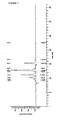
FIGURE 1 - shows the HPLC trace of a starting GOS sample at 40% purity, of example 1, obtained from lactose by transglycosylation catalyzed by B. circulans lactase; -
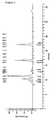
FIGURE 2 - shows the HPLC trace of a GOS sample, of example 1, after deglucosation with Saccharomyces cerevisiae according to the present invention; -
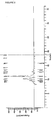
FIGURE 3 - shows the HPLC trace of a GOS sample, of example 1, after delactosation with Streptococcus thermophilus according to the present invention; -
FIGURE 4 - shows the HPLC trace of a GOS sample, of example 1, after degalactosation of the sample corresponding tofigure 3 with Saccharomyces cerevisiae according to the present invention; A: after at least 20 hours of fermentation; B: after at least 40 hours of fermentation; -
FIGURE 5 - shows the HPLC trace of a GOS sample with a purity ≥ 95% obtained at completion, of example 1, according to the process of the present invention; -
FIGURE 6 - shows the HPLC trace of a starting GOS sample, of example 2, namely Purimune™ (GO-P90) purchased from GTC Nutrition, Golden, Colorado, USA; -
FIGURE 7 - shows the HPLC trace of a GOS sample with a purity ≥ 95%, obtained at completion, of example 2, according to the process of the present invention; -
FIGURE 8 - shows the HPLC trace of a GOS sample of example 4, obtained after fermentation with Kluveromyces marxianus. - In the process of the present invention, any GOS mixture with a purity of < 95% can be used as the starting material, most conveniently GOS mixtures with a purity ≥ 40% being used in which the impurities consist essentially of the digestible sugars lactose, glucose and galactose.
- For the purposes of the present invention, to evaluate the purity of the GOS mixtures any HPLC method capable of distinguishing and quantifying GOS, lactose, galactose and glucose is preferably used.
- The term "purity" means the area percent by HPLC corresponding to the peaks of said GOS and digestible sugars.
- GOS mixtures at 40-60% purity (or higher) are available commercially (e.g. Oligomate 55, Vivinal GOS, Purimune, Cup oligo P) or can be prepared from lactose by transglycosylation catalyzed by a suitable lactase known for the purpose, such as that isolated from Bacillus circulans. In particular, the process of the invention is convenient when starting from 40-60% GOS mixtures.
- Preferably the process of the invention is such that said fermentation step with S. thermophilus is followed by a fermentation step with S. cerevisiae. S. thermophilus hydrolyses lactose then consumes the glucose produced and accumulates galactose which is then eliminated by S. cerevisiae. By means of the fermentation step with S. thermophilus the lactose content can be reduced to the desired levels, preferably < 5% by HPLC area percent, and more preferably < 3%. In case the starting GOS mixture has a glucose content < 5% by HPLC area percent, then said process comprises a fermentation step with S. thermophilus followed by a fermentation step with S. cerevisiae. S. thermophilus hydrolyses the lactose then consumes the small amount of glucose initially present and that which it produces during accumulation of galactose, which is then later eliminated by S. cerevisiae.
- Thus, for example (see example 2), by starting from a commercially available GOS mixture at a purity of about approximately 80% in which glucose is present in a quantity of 2% by HPLC area percent, the lactose content can be reduced by direct fermentation with S. thermophilus to the desired levels i.e. <5% by area percent relative to the sum of the area percents of the GOS.
- In case the GOS starting mixture has a glucose content ≥5% by HPLC area percent, the fermentation step with S. thermophilus is preceded by a fermentation step with S. cerevisiae; in this case the process therefore comprises the following 3 steps:
- (a) fermentation with Saccharomyces cerevisiae;
- (b) fermentation with Streptococcus thermophilus;
- (c) fermentation with Saccaromyces cerevisiae.
- Thus, for example (see example 1), when starting from a GOS mixture with a purity of about 40% (see
Figure 1 ) obtained by transglycosylation with B. circulans, fermentation (a) with S. cerevisiae enables the glucose present in the starting GOS mixture to be almost completely removed (seeFigure 2 .) Fermentation (b) allows lactose to be lowered to HPLC area percents of less than 3% (seeFigure 3 ). - It could be seen that when starting with GOS mixtures at 40-60% purity in which glucose is present at a purity of about 20%, if fermentation (b) with S. thermophilus is preceded by a deglucosation step such as fermentation (a) then the lactose can be lowered to below 3 area %, whereas direct fermentation with S. thermophilus even if prolonged for more than 40 hours, does not enable lactose to be lowered to the desired levels if undertaken without first effecting a deglucosation step (a) with S. cerevisiae.
- Fermentation (c) with S. cerevisiae allows residual galactose which formed after fermentation with S. thermophilus to be almost completely removed (see
Figure 4 ). - At the end of the process, the GOS mixture obtained has a purity of ≥ 95% in which glucose and galactose if not absent are present in negligible quantities which, together with lactose, nevertheless amount to ≤ 5% (see
figure 5 ). Fermentations with S. cerevisiae are preferably conducted at pH 6.5 ± 0.5 at a temperature of 35 ± 5°C for at least 12 hours, using 40-15 g of dehydrated S. cerevisiae per kg of dry weight of starting GOS. The step (c) can even be conducted for time periods exceeding 40 hours and in such case, a substantial removal of the lactic acid, formed after fermentation (b) with S. thermophilus, is actually achieved (seeFigure 4B ). - Fermentation with S. thermophilus is preferably undertaken at a temperature of 40 ± 5°C, maintaining the pH at 6.0 - 6.5 by addition of a base, for at least 15 hours and using 1 - 0.4 g of dehydrated S. thermophilus per kg of dry weight of starting GOS.
- According to the process of the invention, after the fermentation steps the mixture is preferably subjected to further processing by means of ceramic ultrafiltration, nanofiltration, decolorization with carbon and ion-exchange resin deionization. According to the process of the invention, the fermentation steps (b) and (c) are preceded by pasteurization, preferably undertaken at 75 ± 5°C for at least 5 minutes.
- In effect, the product obtained at the end of the aforesaid process presents a distinctive GOS profile; during the fermentation step with S. thermophilus, lactose is mainly removed, this being evident from the HPLC traces (compare
Fig 2 . withFig. 3 , andFig. 6 withFig. 7 ) and it can also be noted that in the disaccharide region there remains a component with a retention time of about 13.6 minutes (indicated as GOS6 in the examples) immediately after the lactose retention time (about 12.9 minutes). Concomitant to the lactose removal, the disappearance of the component with a retention time of about 12.4 minutes (indicated as GOS5 in the examples) can be noted immediately preceding the lactose retention time. This preservation of the GOS profile is distinctive and is distinguishable from other GOS mixtures known in the state of the art such as those obtained by chromatographic separation or after purification with Kluyveromyces genus microorganisms (see example 4 and compareFig. 1 withFig. 8 ), these methods removing indiscriminately all disaccharides present in the GOS mixture. Therefore the present invention also relates to GOS mixtures obtained from the process i.e. GOS mixtures with a purity ≥ 95% in which galacto-disaccharides other than lactose are present in quantities ≥ 1 % and the overall percentage of digestible sugars lactose, glucose and galactose is ≤ 5%. - The aforesaid product, obtained by the process, can be employed for the known purposes including preparation of pharmaceutical compositions, baby formulas and food compositions, these being further aspects of the present invention.
- The present invention may be better understood in the light of the following working examples.
- This is a HPLC method using comparison with an external standard. A HPLC instrument is used with an isocratic pump, an autosampler, a Peltier oven for column temperature control, a refraction index detector and a Transgenomic column ICE-SEP ICE-
ION 300, product code ICE-99-9850 equipped with an analogous precolumn. The analyses were carried out under the following working conditions:Column temperature: 40°C Injections: 20 µl Mobile phase: H2SO4 0.015N Flow rate: 0.4 ml/minute Analysis time 36 minutes Integrator: Perkin Elmer Totalchrom Workstation - Under the conditions indicated above the retention time of each product was about 12.5 minutes for lactose, 15.0 minutes for glucose, 16.2 minutes for galactose, 21.3 minutes for lactic acid and 22.2 minutes for glycerin (against the external standard).
- In the sample solutions, 6 peaks of GOS product were distinguished and identified as:
- GOS 1: peak at about 9.3 minutes
- GOS 2: peak at about 9.7 minutes
- GOS 3: peak at about 10.3 minutes
- GOS 4: peak at about 11.3 minutes
- GOS 5: peak at about 12.4 minutes
- GOS 6: peak at about 13.6 minutes.
- In the HPLC tabulation, the terms GOS1-6 simply mean the peaks attributed to GOS, irrespective of the number of saccharide units present therein.
- The integration system automatically calculated the contents by the formula:

- In which:
- AC = Area of the peak in the sample solution
- CSTD = Percentage sugar concentration in the standard solution
- WS= Sample weight in grams
- ASTD= Area of the sugar peak in the standard solution
- During process monitoring, the contents of the GOS peaks were not calculated against their own standards but by using the response factor of lactose or by evaluating its purity expressed as area/total area.
- Using the analytical method just described, the determination of lactose was invalidated by the possible overlap with other galacto-oligosaccharides.
- It is important to note the strong discrepancy found between the determination of lactose In commercial samples using the aforedescribed analytical method and the values provided on the certificates.
- For instance, the sample VIVINAL® GOS60 Batch no. 6297770 supplied by
- Friesland Foods Domo had a certificated lactose content on a dry matter basis of 17.5%, while by HPLC performed in our analytical laboratory the lactose content was 33.2%.
- A similar assessment in estimating lactose was found in the Purimune™ sample, Batch no. 20081217 in which the certificated overall purity of the GOS was 90.4%, whereas by HPLC performed in our analytical laboratory (attached) said purity was 83.0% with the purity of lactose being 13.6% by area percent.
- The determination of lactose was therefore overestimated by our analytical method, resulting in an exceeding assessment of the lactose concentration present in the final product.
- So as not to create ambiguities in the description, in the examples presented hereinafter and in the figures section, only the purity values obtained with the aforedescribed HPLC method are given, as are the values for the commercial products.
- 80 kg of lactose monohydrate (0.22 kmols) were suspended in 120 I of water and heated to 70°C under mild agitation until the lactose was completely dissolved. The solution was temperature controlled at 50°C and the pH adjusted from 5.5 to 5.0 with 27 ml of 75% phosphoric acid.
- 266 g of lactase from Bacillus circulans were added (1500 U/g).
- The reaction was monitored by HPLC and after 22 hours the formation of GOS and the appearance of glucose and galactose were detected with a consequent lowering of the lactose area percent purity to less than 40%.
- 200 kg of a 40% crude GOS solution were obtained, the HPLC trace of which is shown in
figure 1 and presented in tabular form below:
- The aforestated starting mixture was acidified to pH 3.0 with 250 ml of 75% phosphoric acid: under these pH conditions preservation at ambient temperature was possible. 46 kg of 40% crude GOS solution (Batch no. 01449IN9) were diluted with 140 I of water and temperature controlled at 37°C. After adjusting the solution pH from pH 2.8 to pH 7.0 with 600 ml of 24% ammonia, 200 g of lyophilized brewer's yeast were added. The deglucosation step, monitored by HPLC, was complete after 24 hours of vigorous agitation.
- The mixture was pasteurized at 70°C for about 5 minutes then temperature controlled at 40°C.
-
Figure 2 shows the HPLC trace of the mixture after pasteurization, presented below in tabular form.
- 2.5 g/l of yeast extract were added to the above mixture (resulting from step 1) and the pH was adjusted from pH 5.2 to pH 6.6 with 400 ml of 15% sodium hydroxide. The mixture was inoculated with 5 g of Streptococcus thermophilus: fermentation proceeded at pH 6.4 - 6.5 by adding 15% sodium hydroxide by means of a pH-stat. The end of the reaction, monitored by HPLC, was reached after 26 hours when the lactose content in the mixture was less than 3 area %.
- The mixture was pasteurized at 70°C for about 5 minutes then temperature controlled at 37°C.
-
Figure 3 shows the HPLC trace of the mixture after pasteurization, presented below in tabular form.
- 200 g of lyophilized brewer's yeast were added to the mixture resulting from step 2: after 20 hours of vigorous agitation the degalactosation step, monitored by HPLC, was complete.
- The reaction was stopped by adding 5 I of 50% sulphuric acid until pH 3.0 was reached.
-
Figure 4 shows the HPLC trace of the mixture after degalactosation, presented below in tabular form.
- The mixture was clarified by removing the cells by ultrafiltration.
- The low molecular weight fermentation by-products (lactic acid, glycerin etc.) were then removed by nanofiltration.
- The solution was then decolorized over carbon, desalinated with a pair of ion-exchange resins, namely a strong cationic (Amberlite C-200 H+ form, 3 I) and a weak anionic (IRA-96 free base form, 3 I), arranged in series.
- The demineralised solution was then microfiltered and concentrated under vacuum until a saccharometric concentration of 75° Brix was attained.
- 9 kg of a GOS mixture were obtained with a purity ≥ 95%; the HPLC trace of the GOS mixture obtained at the end of the process is shown in
figure 5 , presented below in tabular form.
- From the tabulated data and the attached chromatograms of the various steps, it can be seen that during step 2 (fermentation with S. thermophilus) the GOS5 peak disappears, while the GOS6 peak remains more or less unaltered.
- Table 1 presents a summary of the results of the various steps in example 1:

- 200g of Purimune GOS (GO - P90) Batch no. 20081217 were solubilized in 1800 ml of water.
Figure 6 shows the chromatogram and the solution HPLC is presented below in tabular form.
- The glucose present has an area percent of <5% hence the procedure continued directly with fermentation by lactic acid bacteria culture.
- 5 g/l of yeast extract were added and the pH adjusted from pH 4.9 to pH 6.4 with 0.3 ml of 15% sodium hydroxide. Following inoculation with 75 mg of Streptococcus thermophilus, the fermentation proceeded at pH 6.3 - 6.5 by adding 15% sodium hydroxide by means of a pH-stat. The end of the reaction, monitored by HPLC, was reached after 15 hours when the lactose content of the mixture was less than 5% by area percent relative to the sum of the area percents of GOS.

- A summary of the results obtained are presented in table 2.
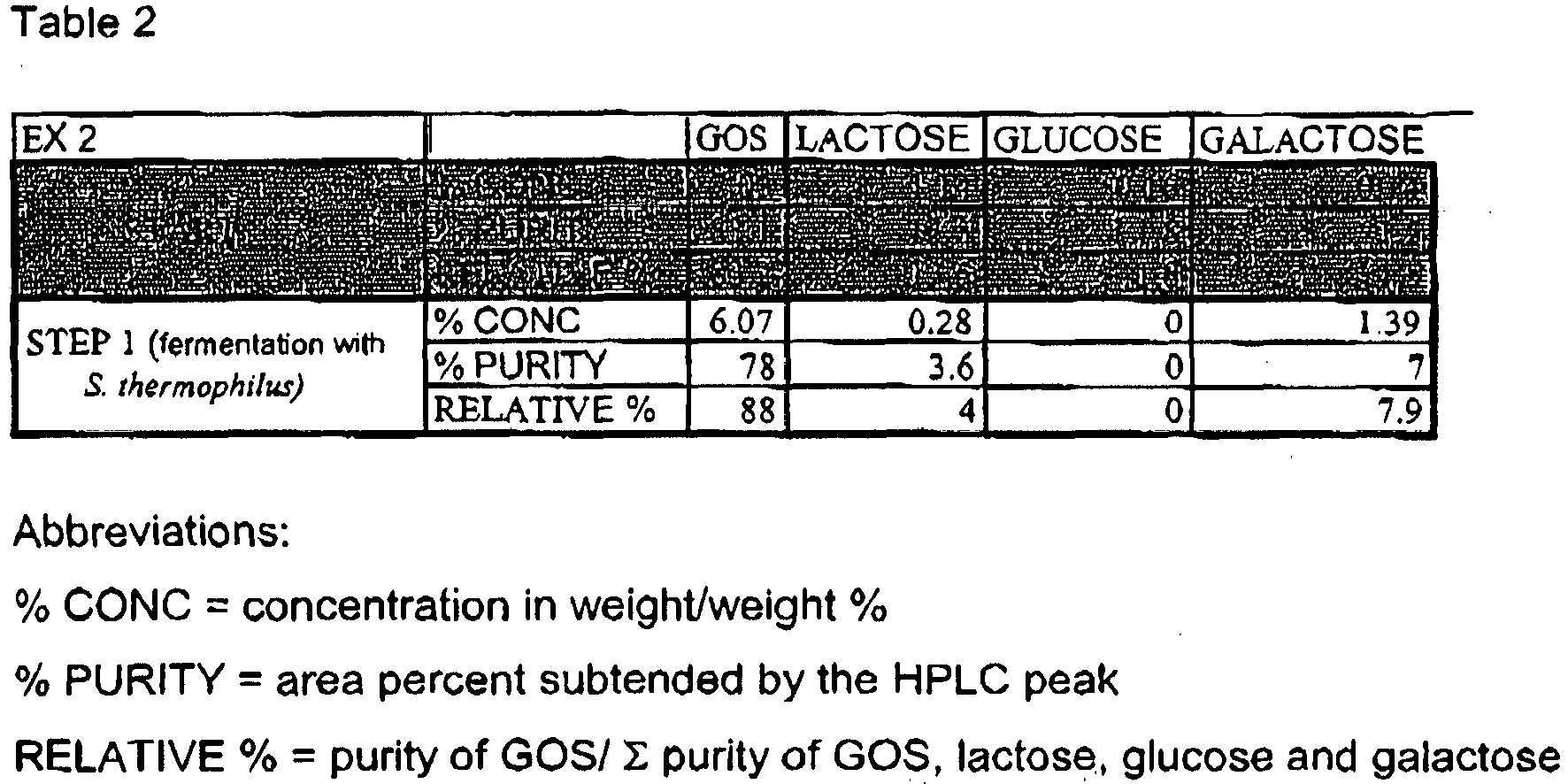
- The experiment was stopped at this stage, but it was clear that the mixture could be subsequently degalactosated and purified in the manner already described in example 1.
- Direct fermentation with Streptococcus thermophilus, thus avoiding deglucosation with S. cerevisiae which in this case was superfluous, resulted in the desired area ratio of GOS to lactose. Moreover, considering that the subsequent fermentation with S. cerevisiae was able to remove galactose, a GOS purity of 95.6% relative to the lactose alone can theoretically be calculated based on the area percent values reported in table 2.
- 427 g of Vivinal Gos60 Batch no. 6297770 were solubilized in 1600 ml of water: the HPLC data of the solution is presented below in tabular form:
Peak # Time [min] Component Name Conc. % Area [µV·s] Response factor Amount norm. % Area Norm. [%] 1 9.365 GOS1 0.132997 117776 8.48630e+06 1.4 1.4 2 9.710 GOS2 0.386673 342420 8.4830e+06 4.0 4.1 3 10.230 GOS3 0.978558 866565 8.4830e+06 10.2 10.3 4 11.086 GOS4 2.153239 1906809 8.4830e+06 22.3 22.7 5 12.198 GOS5 0.283797 261318 8.4830e+06 2.9 3.0 6 12.556 Lottosio 3.315665 2936200 8.4830e+06 34.4 34.9 7 13.186 GOS6 0.153348 135798 8.4830e+06 1.6 1.6 8 14.855 Glucosio 2.070889 1719196 7.9525e+06 21.5 20.4 9 16.122 Galattosio 0.160862 137854 8.2093e+06 1.7 1.6 9.636028 8413937 100.0 100.0 - The procedure was carried out exactly as in example 1, with the first deglucosation step with S. cerevisiae followed by fermentation with S. thermophilus; at the end of this step (
step 2 in Ex. 1) an HPLC was obtained and the result, being absolutely comparable to that of Example 1, is tabulated below:Peak # Time [min] Component Name Conc. % Area [µV·s] Response factor Amount norm. % Area Norm. [%] 1 9.265 GOS1 0.103310 93473 8.4830e+06 1.4 1.6 2 9.641 GOS2 0.382881 346426 8.4830e+06 5.3 6.1 3 10.163 GOS3 0.908611 822101 8.4830e+06 12.6 14.5 4 11.025 GOS4 1.991562 1801941 8.4830e+06 27.6 31.7 5 12.104 4.315e-96 12100 1.000e+100 7e-95 0.2 6 12.498 Lattosio 0.167432 151490 8.4830e+06 2.3 2.7 7 13.124 GOS6 0.145504 144421 8.4830e+06 2.0 2.5 8 14.766 Glucosio 0.005412 4590 7.9525e+06 0.1 0.1 9 16.046 Galattosio 1.003410 878581 8.2093e+06 13.9 15.4 10 21.841 LCTH 2.387452 1342275 5.2712e+06 33.1 23.6 11 21841 GIOH 0.125566 89471 6.6806e+06 1.7 1.6 7.221140 5686869 100.0 100.0 - It can also be seen in this example that the GOS5 peak disappears during fermentation with S. thermophilus, while the GOS6 peak remains more or less unaltered.
- As in example 2, this experiment was stopped at this stage and the mixture was degalactosated and purified in the manner already described in example 1. Moreover, considering that the second fermentation with S. cerevisiae was able to remove galactose, a GOS purity of 95.2% relative to the lactose alone can theoretically be calculated based on the area percent values reported in the table for the second HPLC of this example.
- The strain K. marxianus ATCC 56497 was cultured on a plate containing autoclave-sterilized YPD medium with agar for yeasts, and placed in an incubator at 30°C for 48 hours.
- To prepare the pre-fermentation mixture, 100 ml of liquid YPD medium were prepared, autoclave-sterilized then inoculated with the colonies picked up from the previously prepared plate. The microorganisms were grown in a shaker at a temperature of 30°C and shaken at 200 rpm for 24 hours. The test was carried out on the same starting solution as Example 1: 460 g of a 40% crude GOS solution (Batch no. 01449IN9) diluted with 1.4 I of water.
- After adjusting the solution pH from pH 2.8 to pH 5.4 with 15% sodium hydroxide, it was temperature controlled at 30°C.
- The entire pre-fermentation mixture was used for the inoculation. The fermentation proceeded at pH 5.2 - 5.4 by adding 15% sodium hydroxide by means of a pH-stat. Sampling of the mixture was carried out after 48 hours and shows the reaction to have reached completion, as can be seen from the tabulated HPLC data (see also
Fig. 8 ) presented below:Peak # Time [min] Component Name Conc. % Area [µV·s] Response factor Amount Area norm. % 1 9.382 GOS1 0.070000 29745 8.5106e+06 1.9 1.5 2 9.700 GOS2 0.355858 151213 8.5106e+06 9.7 7.6 3 10.232 GOS3 0.944881 401505 8.5106e+06 26.9 20.0 4 11.065 GOS4 1.989309 845311 8.5106e+06 54.5 42.2 5 21.900 GIOH 0.289913 96941 6.6971e+06 7.9 4.8 6 33.135 9.570e-94 477834 1.000e+100 3o-92 23.9 3.649961 2002549 100.0 100.0 - The reaction effectively resulted in the almost complete disappearance of lactose, but it should be noted from the attached chromatogram (
Fig. 8 ) that peaks attributable to the galacto-oligosaccharides are absent from the entire disaccharide region (between 12.2 min and 13.2 min).
Claims (9)
- A process for preparing GOS (galacto-oligosaccharides) mixtures with a purity ≥ 95% in which the overall percentage of the digestible sugars lactose, glucose and galactose is ≤ 5%, starting from GOS mixtures of a lower purity, said process comprising one fermentation step with Streptococcus thermophilus and at least one fermentation step with Saccharomyces cerevisiae, where said purity is calculated by any analytical method able to distinguish and quantify GOS and said digestible sugars.
- A process according to claim 1 wherein said fermentation step with S. thermophilus is followed by a fermentation step with S. cerevisiae.
- A process according to claim 2 comprising, when a starting GOS mixture has a glucose content the HPLC area percent of which is ≤ 5%, a fermentation step with S. thermophilus followed by a fermentation step with S. cerevisiae.
- A process according to claim 2 wherein, when the starting GOS mixture has a glucose content the HPLC area percent of which is > 5%, the fermentation step with S. thermophilus is preceded by a fermentation step with S. cerevisiae.
- A process according to any one of claims 1-4 wherein the fermentations with S. cerevisiae are conducted at pH 6.5 ± 0.5 at a temperature of 35 ± 5 °C for at least 12 hours using 40-15 g of dehydrated S. cerevisiae per kg of dry weight of starting GOS.
- A process according to any one of claims 1-5 wherein the fermentation with S. thermophilus is conducted at a temperature of 40 ± 5 °C maintaining the pH at 6.0 - 6.5 by adding a base, for at least 15 hours and using 1 - 0.4 g of dehydrated S. thermophilus per kg of dry weight of starting GOS.
- A process according to any one of claims 1-6 wherein after the fermentation steps the mixture is subjected to further processing by means of ceramic ultrafiltration, nanofiltration, decolorization with carbon and ion-exchange resin deionization.
- GOS mixtures with a purity ≥ 95% wherein galacto-disaccharides other than lactose are present in quantities ≥ 1% and the overall percentage of the digestible sugars lactose, glucose and galactose is ≤ 5%.
- Pharmaceutical or food compositions comprising the GOS mixtures according to claim 8.
Applications Claiming Priority (2)
| Application Number | Priority Date | Filing Date | Title |
|---|---|---|---|
| ITFI2009A000182A IT1395068B1 (en) | 2009-08-07 | 2009-08-07 | PROCESS FOR THE PRODUCTION OF ULTRAPURI GALATTO-OLIGOSACCARIDES |
| PCT/IB2010/053567 WO2011016008A1 (en) | 2009-08-07 | 2010-08-06 | Process for the production of ultrapure galacto-oligosaccharides |
Publications (2)
| Publication Number | Publication Date |
|---|---|
| EP2462234A1 EP2462234A1 (en) | 2012-06-13 |
| EP2462234B1 true EP2462234B1 (en) | 2014-02-12 |
Family
ID=41851293
Family Applications (1)
| Application Number | Title | Priority Date | Filing Date |
|---|---|---|---|
| EP10754567.5A Ceased EP2462234B1 (en) | 2009-08-07 | 2010-08-06 | Process for the production of ultrapure galacto-oligosaccharides |
Country Status (8)
| Country | Link |
|---|---|
| US (3) | US9200303B2 (en) |
| EP (1) | EP2462234B1 (en) |
| JP (2) | JP2013501504A (en) |
| KR (2) | KR101977940B1 (en) |
| CN (1) | CN102471792B (en) |
| CA (1) | CA2770274C (en) |
| IT (1) | IT1395068B1 (en) |
| WO (1) | WO2011016008A1 (en) |
Families Citing this family (19)
| Publication number | Priority date | Publication date | Assignee | Title |
|---|---|---|---|---|
| US20080126195A1 (en) | 2004-07-22 | 2008-05-29 | Ritter Andrew J | Methods and Compositions for Treating Lactose Intolerance |
| US8785160B2 (en) | 2009-02-24 | 2014-07-22 | Ritter Pharmaceuticals, Inc. | Prebiotic formulations and methods of use |
| SG10201901259RA (en) | 2009-02-24 | 2019-03-28 | Ritter Pharmaceuticals Inc | Prebiotic formulations and methods of use |
| IT1395068B1 (en) | 2009-08-07 | 2012-09-05 | Inalco Spa | PROCESS FOR THE PRODUCTION OF ULTRAPURI GALATTO-OLIGOSACCARIDES |
| US10681914B2 (en) | 2012-05-29 | 2020-06-16 | Neozyme International, Inc. | Non-toxic plant agent compositions and methods and uses thereof |
| US10334856B2 (en) | 2012-05-29 | 2019-07-02 | Neozyme International, Inc. | Non-toxic pest control compositions and methods and uses thereof |
| US10557234B2 (en) | 2012-05-29 | 2020-02-11 | Neozyme International, Inc. | Papermaking additive compositions and methods and uses thereof |
| CA2874807C (en) * | 2012-05-29 | 2022-06-07 | Neozyme International, Inc. | Process for treating organic material |
| CA2913393A1 (en) | 2013-05-24 | 2014-11-27 | General Mills, Inc. | Food products with yogurt whey |
| ES2875327T3 (en) * | 2013-09-10 | 2021-11-10 | Chr Hansen Hmo Gmbh | Production of oligosaccharides |
| ES2701163T3 (en) | 2014-01-20 | 2019-02-21 | Jennewein Biotechnologie Gmbh | Procedure for the efficient purification of neutral human milk oligosaccharides (HMOs) from microbial fermentation |
| WO2015175412A1 (en) * | 2014-05-12 | 2015-11-19 | Ritter Pharmaceuticals, Inc. | Methods and systems for galactooligosac-charides manufacture |
| US10190142B2 (en) | 2016-01-25 | 2019-01-29 | King-Prebiotics Biotechnology (Tw) Co., Ltd. | High-purity galactooligosaccharide compositions, preparations, and applications thereof |
| JP2018140968A (en) * | 2017-02-28 | 2018-09-13 | 日本食品化工株式会社 | Method for producing 1,6-anhydro-β-D-glucofuranose-containing carbohydrate |
| EP3778625A4 (en) | 2018-04-05 | 2022-02-09 | Godo Shusei Co., Ltd. | ENZYME DERIVED FROM P AENIBACILLUS PABULI AND CAPABLE OF PRODUCING A GALACTO-OLIGOSACCHARIDE, AND METHOD FOR PRODUCING A GALACTO-OLIGOSACCHARIDE |
| JP6661121B1 (en) | 2019-07-26 | 2020-03-11 | ハイアマウント株式会社 | Method for producing fermentation liquor containing short-chain fatty acids |
| CA3181385A1 (en) | 2020-04-26 | 2021-11-04 | Neozyme International, Inc. | Non-toxic fire extinguishing compositions, devices and methods of using same |
| CA3177023A1 (en) | 2020-04-26 | 2021-11-04 | Neozyme International, Inc. | Dry powdered compositions and methods and uses thereof |
| CN118742651A (en) | 2022-02-25 | 2024-10-01 | 菲仕兰坎皮纳荷兰公司 | Method for preparing high-purity galacto-oligosaccharide |
Family Cites Families (19)
| Publication number | Priority date | Publication date | Assignee | Title |
|---|---|---|---|---|
| NZ222902A (en) | 1986-12-15 | 1990-08-28 | Yakult Honsha Kk | Method for producing galactooligosaccharide |
| JP2518663B2 (en) * | 1987-12-24 | 1996-07-24 | 株式会社ヤクルト本社 | Method for producing processed milk containing galactooligosaccharide |
| JP2529588B2 (en) * | 1988-05-30 | 1996-08-28 | 株式会社ヤクルト本社 | Complex sweetener |
| FR2640997A1 (en) * | 1988-12-22 | 1990-06-29 | Ajinomoto Kk | Process for the manufacture of a galactose transfer product. |
| JPH02207796A (en) | 1989-02-07 | 1990-08-17 | Ajinomoto Co Inc | Production of galactooligosaccharide using enzyme |
| JP2724380B2 (en) * | 1989-12-26 | 1998-03-09 | 松谷化学工業株式会社 | Method for producing galactooligosaccharide |
| JP2952439B2 (en) * | 1991-11-26 | 1999-09-27 | 株式会社ホーネンコーポレーション | New food and drink ingredients |
| FR2723960B1 (en) * | 1994-08-31 | 1996-10-11 | Gervais Danone Co | STREPTOCOCCUS THERMOPHILUS CULTURES WITH HIGH BETA-GALACTOSIDASE ACTIVITY, PROCESS FOR OBTAINING SAME, AND USES THEREOF |
| MXPA05010349A (en) * | 2003-06-30 | 2006-03-08 | Clasado Inc | Novel galactooligosaccharide composition and the preparation thereof. |
| GB0321996D0 (en) * | 2003-09-19 | 2003-10-22 | Novartis Nutrition Ag | Organic compounds |
| CN101123888B (en) | 2005-02-21 | 2016-03-23 | 雀巢技术公司 | Oligosaccharide Mixture |
| EP1728852A1 (en) | 2005-05-30 | 2006-12-06 | Chiron Behring GmbH & Co. KG | Fermenter system for biotechnical processes |
| US7572474B2 (en) * | 2005-06-01 | 2009-08-11 | Mead Johnson Nutrition Company | Method for simulating the functional attributes of human milk oligosaccharides in formula-fed infants |
| DE602007006635D1 (en) * | 2006-02-10 | 2010-07-01 | Nestec Sa | Oligosaccharidmischung |
| WO2007114683A1 (en) * | 2006-03-30 | 2007-10-11 | N.V. Nutricia | Milk oligosaccharides for stimulating the immune system |
| CN101215590B (en) * | 2007-12-27 | 2010-12-22 | 山东大学 | Method for removing monosaccharide component from oligomerization galactose by utilizing immobilized yeast |
| US9139856B2 (en) * | 2008-03-12 | 2015-09-22 | Tata Chemicals Ltd. | Process for production of galactooligosaccharides (GOS) |
| IT1395068B1 (en) | 2009-08-07 | 2012-09-05 | Inalco Spa | PROCESS FOR THE PRODUCTION OF ULTRAPURI GALATTO-OLIGOSACCARIDES |
| US20110189342A1 (en) | 2010-02-01 | 2011-08-04 | Jeong Hea-Seok | High-purity galactooligosaccharides and uses thereof |
-
2009
- 2009-08-07 IT ITFI2009A000182A patent/IT1395068B1/en active
-
2010
- 2010-08-06 KR KR1020177024646A patent/KR101977940B1/en not_active Expired - Fee Related
- 2010-08-06 KR KR1020127006008A patent/KR101776164B1/en not_active Expired - Fee Related
- 2010-08-06 EP EP10754567.5A patent/EP2462234B1/en not_active Ceased
- 2010-08-06 CN CN201080035013.2A patent/CN102471792B/en not_active Expired - Fee Related
- 2010-08-06 WO PCT/IB2010/053567 patent/WO2011016008A1/en not_active Ceased
- 2010-08-06 JP JP2012523425A patent/JP2013501504A/en active Pending
- 2010-08-06 US US13/388,721 patent/US9200303B2/en not_active Expired - Fee Related
- 2010-08-06 CA CA2770274A patent/CA2770274C/en not_active Expired - Fee Related
-
2015
- 2015-07-10 JP JP2015138290A patent/JP6105680B2/en not_active Expired - Fee Related
- 2015-10-28 US US14/925,881 patent/US20160108447A1/en not_active Abandoned
-
2018
- 2018-10-05 US US16/153,544 patent/US11028422B2/en not_active Expired - Fee Related
Also Published As
| Publication number | Publication date |
|---|---|
| KR20120062749A (en) | 2012-06-14 |
| CN102471792B (en) | 2014-12-10 |
| IT1395068B1 (en) | 2012-09-05 |
| JP2013501504A (en) | 2013-01-17 |
| ITFI20090182A1 (en) | 2011-02-08 |
| KR20170104636A (en) | 2017-09-15 |
| US20120129802A1 (en) | 2012-05-24 |
| JP2016000039A (en) | 2016-01-07 |
| KR101776164B1 (en) | 2017-09-07 |
| CN102471792A (en) | 2012-05-23 |
| KR101977940B1 (en) | 2019-05-13 |
| US20190136280A1 (en) | 2019-05-09 |
| CA2770274C (en) | 2019-03-26 |
| CA2770274A1 (en) | 2011-02-10 |
| WO2011016008A1 (en) | 2011-02-10 |
| US11028422B2 (en) | 2021-06-08 |
| EP2462234A1 (en) | 2012-06-13 |
| US9200303B2 (en) | 2015-12-01 |
| JP6105680B2 (en) | 2017-03-29 |
| US20160108447A1 (en) | 2016-04-21 |
Similar Documents
| Publication | Publication Date | Title |
|---|---|---|
| US11028422B2 (en) | Process for the production of ultrapure galacto-oligosaccharides | |
| TWI710321B (en) | Method for producing low-sugar vegetable and fruit enzyme product | |
| KR20140126336A (en) | Method of producing a composition containing galacto-oligosaccharides | |
| KR101350788B1 (en) | The method of high acidity vinegar and vinegar using this | |
| JP2012016309A (en) | Maltotriose-forming amylase, production method and use thereof | |
| WO2010061383A1 (en) | A method of in-situ enrichment of foods with fructan | |
| CN108949713B (en) | Preparation method of aspergillus oryzae fermentation broth and application of aspergillus oryzae fermentation broth in production of fructo-oligosaccharide | |
| AU709427B2 (en) | Beta-glucosidase from filamentous fungi, and uses thereof | |
| EP0307158A2 (en) | Process for the preparation of branched fructooligosaccharides | |
| US7906314B2 (en) | Method for the removal of monosaccharide in oligosaccharides production | |
| JPH0236230B2 (en) | ||
| Soria et al. | Fractionation of the naringinase complex from Aspergillus terreus by dye affinity chromatography | |
| JP3973108B2 (en) | Method for producing low-calorie lactic acid bacteria beverage containing anthocyanin | |
| KR101138289B1 (en) | Microorganism having glutamic acid-producing activity and process for producing glutamic acid using the same | |
| EP3650550A1 (en) | Method for producing galactooligosaccharide | |
| CA2752403A1 (en) | Syrup and sugar prepared from maple sap or maple syrup and process for preparation thereof | |
| CN103509733B (en) | The Caulis Sacchari sinensis klebsiella that one strain produces for isomaltulose | |
| JP3556704B2 (en) | β-galactosidase | |
| KR100475230B1 (en) | Healthy drink containing lactic acid bacteria growth factor | |
| KUMAR | STUDY ON OLIGOSACCHARIDE FORMATION BY β-GALACTOSIDASE OF LACTIC ACID BACTERIA | |
| WO2007003027A1 (en) | A method of the removal of monosaccharide in oligosaccharides production | |
| JPH07143892A (en) | Production of isomaltosyl fructoside | |
| JP2010159225A (en) | Syrup containing theanderose | |
| JPH08283284A (en) | Method for producing oligosaccharides |
Legal Events
| Date | Code | Title | Description |
|---|---|---|---|
| PUAI | Public reference made under article 153(3) epc to a published international application that has entered the european phase |
Free format text: ORIGINAL CODE: 0009012 |
|
| 17P | Request for examination filed |
Effective date: 20120306 |
|
| AK | Designated contracting states |
Kind code of ref document: A1 Designated state(s): AL AT BE BG CH CY CZ DE DK EE ES FI FR GB GR HR HU IE IS IT LI LT LU LV MC MK MT NL NO PL PT RO SE SI SK SM TR |
|
| DAX | Request for extension of the european patent (deleted) | ||
| 17Q | First examination report despatched |
Effective date: 20121207 |
|
| GRAP | Despatch of communication of intention to grant a patent |
Free format text: ORIGINAL CODE: EPIDOSNIGR1 |
|
| RIC1 | Information provided on ipc code assigned before grant |
Ipc: C07H 3/06 20060101ALI20130731BHEP Ipc: C12P 19/04 20060101AFI20130731BHEP |
|
| INTG | Intention to grant announced |
Effective date: 20130812 |
|
| GRAS | Grant fee paid |
Free format text: ORIGINAL CODE: EPIDOSNIGR3 |
|
| GRAA | (expected) grant |
Free format text: ORIGINAL CODE: 0009210 |
|
| AK | Designated contracting states |
Kind code of ref document: B1 Designated state(s): AL AT BE BG CH CY CZ DE DK EE ES FI FR GB GR HR HU IE IS IT LI LT LU LV MC MK MT NL NO PL PT RO SE SI SK SM TR |
|
| REG | Reference to a national code |
Ref country code: GB Ref legal event code: FG4D |
|
| REG | Reference to a national code |
Ref country code: CH Ref legal event code: EP |
|
| REG | Reference to a national code |
Ref country code: AT Ref legal event code: REF Ref document number: 652187 Country of ref document: AT Kind code of ref document: T Effective date: 20140215 |
|
| REG | Reference to a national code |
Ref country code: IE Ref legal event code: FG4D |
|
| REG | Reference to a national code |
Ref country code: DE Ref legal event code: R096 Ref document number: 602010013526 Country of ref document: DE Effective date: 20140327 |
|
| REG | Reference to a national code |
Ref country code: DE Ref legal event code: R081 Ref document number: 602010013526 Country of ref document: DE Owner name: RITTER PHARMACEUTICALS, INC. ( N.D.GES.D.STAAT, US Free format text: FORMER OWNER: INALCO SPA, MILANO, IT |
|
| REG | Reference to a national code |
Ref country code: NL Ref legal event code: T3 |
|
| REG | Reference to a national code |
Ref country code: AT Ref legal event code: MK05 Ref document number: 652187 Country of ref document: AT Kind code of ref document: T Effective date: 20140212 |
|
| REG | Reference to a national code |
Ref country code: LT Ref legal event code: MG4D |
|
| PG25 | Lapsed in a contracting state [announced via postgrant information from national office to epo] |
Ref country code: IS Free format text: LAPSE BECAUSE OF FAILURE TO SUBMIT A TRANSLATION OF THE DESCRIPTION OR TO PAY THE FEE WITHIN THE PRESCRIBED TIME-LIMIT Effective date: 20140612 Ref country code: NO Free format text: LAPSE BECAUSE OF FAILURE TO SUBMIT A TRANSLATION OF THE DESCRIPTION OR TO PAY THE FEE WITHIN THE PRESCRIBED TIME-LIMIT Effective date: 20140512 Ref country code: LT Free format text: LAPSE BECAUSE OF FAILURE TO SUBMIT A TRANSLATION OF THE DESCRIPTION OR TO PAY THE FEE WITHIN THE PRESCRIBED TIME-LIMIT Effective date: 20140212 |
|
| PG25 | Lapsed in a contracting state [announced via postgrant information from national office to epo] |
Ref country code: FI Free format text: LAPSE BECAUSE OF FAILURE TO SUBMIT A TRANSLATION OF THE DESCRIPTION OR TO PAY THE FEE WITHIN THE PRESCRIBED TIME-LIMIT Effective date: 20140212 Ref country code: PT Free format text: LAPSE BECAUSE OF FAILURE TO SUBMIT A TRANSLATION OF THE DESCRIPTION OR TO PAY THE FEE WITHIN THE PRESCRIBED TIME-LIMIT Effective date: 20140612 Ref country code: ES Free format text: LAPSE BECAUSE OF FAILURE TO SUBMIT A TRANSLATION OF THE DESCRIPTION OR TO PAY THE FEE WITHIN THE PRESCRIBED TIME-LIMIT Effective date: 20140212 Ref country code: SE Free format text: LAPSE BECAUSE OF FAILURE TO SUBMIT A TRANSLATION OF THE DESCRIPTION OR TO PAY THE FEE WITHIN THE PRESCRIBED TIME-LIMIT Effective date: 20140212 Ref country code: CY Free format text: LAPSE BECAUSE OF FAILURE TO SUBMIT A TRANSLATION OF THE DESCRIPTION OR TO PAY THE FEE WITHIN THE PRESCRIBED TIME-LIMIT Effective date: 20140212 Ref country code: AT Free format text: LAPSE BECAUSE OF FAILURE TO SUBMIT A TRANSLATION OF THE DESCRIPTION OR TO PAY THE FEE WITHIN THE PRESCRIBED TIME-LIMIT Effective date: 20140212 |
|
| PG25 | Lapsed in a contracting state [announced via postgrant information from national office to epo] |
Ref country code: BE Free format text: LAPSE BECAUSE OF FAILURE TO SUBMIT A TRANSLATION OF THE DESCRIPTION OR TO PAY THE FEE WITHIN THE PRESCRIBED TIME-LIMIT Effective date: 20140212 Ref country code: LV Free format text: LAPSE BECAUSE OF FAILURE TO SUBMIT A TRANSLATION OF THE DESCRIPTION OR TO PAY THE FEE WITHIN THE PRESCRIBED TIME-LIMIT Effective date: 20140212 Ref country code: HR Free format text: LAPSE BECAUSE OF FAILURE TO SUBMIT A TRANSLATION OF THE DESCRIPTION OR TO PAY THE FEE WITHIN THE PRESCRIBED TIME-LIMIT Effective date: 20140212 |
|
| PG25 | Lapsed in a contracting state [announced via postgrant information from national office to epo] |
Ref country code: DK Free format text: LAPSE BECAUSE OF FAILURE TO SUBMIT A TRANSLATION OF THE DESCRIPTION OR TO PAY THE FEE WITHIN THE PRESCRIBED TIME-LIMIT Effective date: 20140212 Ref country code: EE Free format text: LAPSE BECAUSE OF FAILURE TO SUBMIT A TRANSLATION OF THE DESCRIPTION OR TO PAY THE FEE WITHIN THE PRESCRIBED TIME-LIMIT Effective date: 20140212 Ref country code: RO Free format text: LAPSE BECAUSE OF FAILURE TO SUBMIT A TRANSLATION OF THE DESCRIPTION OR TO PAY THE FEE WITHIN THE PRESCRIBED TIME-LIMIT Effective date: 20140212 Ref country code: CZ Free format text: LAPSE BECAUSE OF FAILURE TO SUBMIT A TRANSLATION OF THE DESCRIPTION OR TO PAY THE FEE WITHIN THE PRESCRIBED TIME-LIMIT Effective date: 20140212 |
|
| REG | Reference to a national code |
Ref country code: DE Ref legal event code: R097 Ref document number: 602010013526 Country of ref document: DE |
|
| PG25 | Lapsed in a contracting state [announced via postgrant information from national office to epo] |
Ref country code: PL Free format text: LAPSE BECAUSE OF FAILURE TO SUBMIT A TRANSLATION OF THE DESCRIPTION OR TO PAY THE FEE WITHIN THE PRESCRIBED TIME-LIMIT Effective date: 20140212 Ref country code: SK Free format text: LAPSE BECAUSE OF FAILURE TO SUBMIT A TRANSLATION OF THE DESCRIPTION OR TO PAY THE FEE WITHIN THE PRESCRIBED TIME-LIMIT Effective date: 20140212 |
|
| PLBE | No opposition filed within time limit |
Free format text: ORIGINAL CODE: 0009261 |
|
| STAA | Information on the status of an ep patent application or granted ep patent |
Free format text: STATUS: NO OPPOSITION FILED WITHIN TIME LIMIT |
|
| 26N | No opposition filed |
Effective date: 20141113 |
|
| REG | Reference to a national code |
Ref country code: DE Ref legal event code: R097 Ref document number: 602010013526 Country of ref document: DE Effective date: 20141113 |
|
| PG25 | Lapsed in a contracting state [announced via postgrant information from national office to epo] |
Ref country code: MC Free format text: LAPSE BECAUSE OF FAILURE TO SUBMIT A TRANSLATION OF THE DESCRIPTION OR TO PAY THE FEE WITHIN THE PRESCRIBED TIME-LIMIT Effective date: 20140212 Ref country code: IT Free format text: LAPSE BECAUSE OF FAILURE TO SUBMIT A TRANSLATION OF THE DESCRIPTION OR TO PAY THE FEE WITHIN THE PRESCRIBED TIME-LIMIT Effective date: 20140212 Ref country code: LU Free format text: LAPSE BECAUSE OF FAILURE TO SUBMIT A TRANSLATION OF THE DESCRIPTION OR TO PAY THE FEE WITHIN THE PRESCRIBED TIME-LIMIT Effective date: 20140806 |
|
| PG25 | Lapsed in a contracting state [announced via postgrant information from national office to epo] |
Ref country code: SI Free format text: LAPSE BECAUSE OF FAILURE TO SUBMIT A TRANSLATION OF THE DESCRIPTION OR TO PAY THE FEE WITHIN THE PRESCRIBED TIME-LIMIT Effective date: 20140212 |
|
| REG | Reference to a national code |
Ref country code: DE Ref legal event code: R082 Ref document number: 602010013526 Country of ref document: DE Representative=s name: MANITZ FINSTERWALD PATENT- UND RECHTSANWALTSPA, DE Ref country code: DE Ref legal event code: R082 Ref document number: 602010013526 Country of ref document: DE Representative=s name: MANITZ FINSTERWALD PATENTANWAELTE PARTMBB, DE Ref country code: DE Ref legal event code: R082 Ref document number: 602010013526 Country of ref document: DE Representative=s name: MANITZ, FINSTERWALD & PARTNER GBR, DE Ref country code: DE Ref legal event code: R081 Ref document number: 602010013526 Country of ref document: DE Owner name: RITTER PHARMACEUTICALS, INC. ( N.D.GES.D.STAAT, US Free format text: FORMER OWNER: INALCO SPA, MILANO, IT |
|
| PG25 | Lapsed in a contracting state [announced via postgrant information from national office to epo] |
Ref country code: SM Free format text: LAPSE BECAUSE OF FAILURE TO SUBMIT A TRANSLATION OF THE DESCRIPTION OR TO PAY THE FEE WITHIN THE PRESCRIBED TIME-LIMIT Effective date: 20140212 |
|
| PG25 | Lapsed in a contracting state [announced via postgrant information from national office to epo] |
Ref country code: BG Free format text: LAPSE BECAUSE OF FAILURE TO SUBMIT A TRANSLATION OF THE DESCRIPTION OR TO PAY THE FEE WITHIN THE PRESCRIBED TIME-LIMIT Effective date: 20140212 Ref country code: GR Free format text: LAPSE BECAUSE OF FAILURE TO SUBMIT A TRANSLATION OF THE DESCRIPTION OR TO PAY THE FEE WITHIN THE PRESCRIBED TIME-LIMIT Effective date: 20140513 Ref country code: MT Free format text: LAPSE BECAUSE OF FAILURE TO SUBMIT A TRANSLATION OF THE DESCRIPTION OR TO PAY THE FEE WITHIN THE PRESCRIBED TIME-LIMIT Effective date: 20140212 |
|
| REG | Reference to a national code |
Ref country code: FR Ref legal event code: PLFP Year of fee payment: 7 |
|
| PG25 | Lapsed in a contracting state [announced via postgrant information from national office to epo] |
Ref country code: TR Free format text: LAPSE BECAUSE OF FAILURE TO SUBMIT A TRANSLATION OF THE DESCRIPTION OR TO PAY THE FEE WITHIN THE PRESCRIBED TIME-LIMIT Effective date: 20140212 Ref country code: HU Free format text: LAPSE BECAUSE OF FAILURE TO SUBMIT A TRANSLATION OF THE DESCRIPTION OR TO PAY THE FEE WITHIN THE PRESCRIBED TIME-LIMIT; INVALID AB INITIO Effective date: 20100806 |
|
| REG | Reference to a national code |
Ref country code: FR Ref legal event code: PLFP Year of fee payment: 8 |
|
| PG25 | Lapsed in a contracting state [announced via postgrant information from national office to epo] |
Ref country code: MK Free format text: LAPSE BECAUSE OF FAILURE TO SUBMIT A TRANSLATION OF THE DESCRIPTION OR TO PAY THE FEE WITHIN THE PRESCRIBED TIME-LIMIT Effective date: 20140212 |
|
| REG | Reference to a national code |
Ref country code: FR Ref legal event code: PLFP Year of fee payment: 9 |
|
| PG25 | Lapsed in a contracting state [announced via postgrant information from national office to epo] |
Ref country code: AL Free format text: LAPSE BECAUSE OF FAILURE TO SUBMIT A TRANSLATION OF THE DESCRIPTION OR TO PAY THE FEE WITHIN THE PRESCRIBED TIME-LIMIT Effective date: 20140212 |
|
| PGFP | Annual fee paid to national office [announced via postgrant information from national office to epo] |
Ref country code: NL Payment date: 20210813 Year of fee payment: 12 |
|
| PGFP | Annual fee paid to national office [announced via postgrant information from national office to epo] |
Ref country code: IE Payment date: 20210810 Year of fee payment: 12 Ref country code: FR Payment date: 20210715 Year of fee payment: 12 |
|
| PGFP | Annual fee paid to national office [announced via postgrant information from national office to epo] |
Ref country code: CH Payment date: 20210816 Year of fee payment: 12 Ref country code: DE Payment date: 20210630 Year of fee payment: 12 Ref country code: GB Payment date: 20210701 Year of fee payment: 12 |
|
| REG | Reference to a national code |
Ref country code: DE Ref legal event code: R119 Ref document number: 602010013526 Country of ref document: DE |
|
| REG | Reference to a national code |
Ref country code: CH Ref legal event code: PL |
|
| REG | Reference to a national code |
Ref country code: NL Ref legal event code: MM Effective date: 20220901 |
|
| GBPC | Gb: european patent ceased through non-payment of renewal fee |
Effective date: 20220806 |
|
| PG25 | Lapsed in a contracting state [announced via postgrant information from national office to epo] |
Ref country code: LI Free format text: LAPSE BECAUSE OF NON-PAYMENT OF DUE FEES Effective date: 20220831 Ref country code: CH Free format text: LAPSE BECAUSE OF NON-PAYMENT OF DUE FEES Effective date: 20220831 |
|
| PG25 | Lapsed in a contracting state [announced via postgrant information from national office to epo] |
Ref country code: NL Free format text: LAPSE BECAUSE OF NON-PAYMENT OF DUE FEES Effective date: 20220901 |
|
| PG25 | Lapsed in a contracting state [announced via postgrant information from national office to epo] |
Ref country code: IE Free format text: LAPSE BECAUSE OF NON-PAYMENT OF DUE FEES Effective date: 20220806 Ref country code: FR Free format text: LAPSE BECAUSE OF NON-PAYMENT OF DUE FEES Effective date: 20220831 Ref country code: DE Free format text: LAPSE BECAUSE OF NON-PAYMENT OF DUE FEES Effective date: 20230301 |
|
| PG25 | Lapsed in a contracting state [announced via postgrant information from national office to epo] |
Ref country code: GB Free format text: LAPSE BECAUSE OF NON-PAYMENT OF DUE FEES Effective date: 20220806 |