EP2461642A1 - Method, device and system for transmitting sounding reference signals - Google Patents
Method, device and system for transmitting sounding reference signals Download PDFInfo
- Publication number
- EP2461642A1 EP2461642A1 EP10803920A EP10803920A EP2461642A1 EP 2461642 A1 EP2461642 A1 EP 2461642A1 EP 10803920 A EP10803920 A EP 10803920A EP 10803920 A EP10803920 A EP 10803920A EP 2461642 A1 EP2461642 A1 EP 2461642A1
- Authority
- EP
- European Patent Office
- Prior art keywords
- srs
- comp
- sequence
- cluster
- special
- Prior art date
- Legal status (The legal status is an assumption and is not a legal conclusion. Google has not performed a legal analysis and makes no representation as to the accuracy of the status listed.)
- Granted
Links
Images




Classifications
-
- H—ELECTRICITY
- H04—ELECTRIC COMMUNICATION TECHNIQUE
- H04L—TRANSMISSION OF DIGITAL INFORMATION, e.g. TELEGRAPHIC COMMUNICATION
- H04L27/00—Modulated-carrier systems
- H04L27/26—Systems using multi-frequency codes
- H04L27/2601—Multicarrier modulation systems
- H04L27/2602—Signal structure
- H04L27/261—Details of reference signals
- H04L27/2613—Structure of the reference signals
-
- H—ELECTRICITY
- H04—ELECTRIC COMMUNICATION TECHNIQUE
- H04L—TRANSMISSION OF DIGITAL INFORMATION, e.g. TELEGRAPHIC COMMUNICATION
- H04L5/00—Arrangements affording multiple use of the transmission path
- H04L5/003—Arrangements for allocating sub-channels of the transmission path
- H04L5/0048—Allocation of pilot signals, i.e. of signals known to the receiver
-
- H—ELECTRICITY
- H04—ELECTRIC COMMUNICATION TECHNIQUE
- H04B—TRANSMISSION
- H04B7/00—Radio transmission systems, i.e. using radiation field
- H04B7/02—Diversity systems; Multi-antenna system, i.e. transmission or reception using multiple antennas
- H04B7/022—Site diversity; Macro-diversity
- H04B7/024—Co-operative use of antennas of several sites, e.g. in co-ordinated multipoint or co-operative multiple-input multiple-output [MIMO] systems
-
- H—ELECTRICITY
- H04—ELECTRIC COMMUNICATION TECHNIQUE
- H04L—TRANSMISSION OF DIGITAL INFORMATION, e.g. TELEGRAPHIC COMMUNICATION
- H04L27/00—Modulated-carrier systems
- H04L27/26—Systems using multi-frequency codes
- H04L27/2601—Multicarrier modulation systems
- H04L27/2602—Signal structure
- H04L27/261—Details of reference signals
-
- H—ELECTRICITY
- H04—ELECTRIC COMMUNICATION TECHNIQUE
- H04L—TRANSMISSION OF DIGITAL INFORMATION, e.g. TELEGRAPHIC COMMUNICATION
- H04L5/00—Arrangements affording multiple use of the transmission path
- H04L5/0001—Arrangements for dividing the transmission path
- H04L5/0003—Two-dimensional division
- H04L5/0005—Time-frequency
- H04L5/0007—Time-frequency the frequencies being orthogonal, e.g. OFDM(A) or DMT
-
- H—ELECTRICITY
- H04—ELECTRIC COMMUNICATION TECHNIQUE
- H04L—TRANSMISSION OF DIGITAL INFORMATION, e.g. TELEGRAPHIC COMMUNICATION
- H04L5/00—Arrangements affording multiple use of the transmission path
- H04L5/003—Arrangements for allocating sub-channels of the transmission path
- H04L5/0032—Distributed allocation, i.e. involving a plurality of allocating devices, each making partial allocation
- H04L5/0035—Resource allocation in a cooperative multipoint environment
-
- H—ELECTRICITY
- H04—ELECTRIC COMMUNICATION TECHNIQUE
- H04L—TRANSMISSION OF DIGITAL INFORMATION, e.g. TELEGRAPHIC COMMUNICATION
- H04L5/00—Arrangements affording multiple use of the transmission path
- H04L5/003—Arrangements for allocating sub-channels of the transmission path
- H04L5/0048—Allocation of pilot signals, i.e. of signals known to the receiver
- H04L5/0051—Allocation of pilot signals, i.e. of signals known to the receiver of dedicated pilots, i.e. pilots destined for a single user or terminal
-
- H—ELECTRICITY
- H04—ELECTRIC COMMUNICATION TECHNIQUE
- H04L—TRANSMISSION OF DIGITAL INFORMATION, e.g. TELEGRAPHIC COMMUNICATION
- H04L5/00—Arrangements affording multiple use of the transmission path
- H04L5/003—Arrangements for allocating sub-channels of the transmission path
- H04L5/0053—Allocation of signalling, i.e. of overhead other than pilot signals
-
- H—ELECTRICITY
- H04—ELECTRIC COMMUNICATION TECHNIQUE
- H04W—WIRELESS COMMUNICATION NETWORKS
- H04W72/00—Local resource management
- H04W72/20—Control channels or signalling for resource management
- H04W72/21—Control channels or signalling for resource management in the uplink direction of a wireless link, i.e. towards the network
Definitions
- the present invention relates generally to the field of mobile communication technology, and more particularly to method, device and system for transmitting sounding reference signals.
- ITU International Telecommunication Union
- IMT-Advanced International Mobile Telecommunications-Advanced
- the maximum system bandwidth needs to reach 100MHz and peak rate of uplink and downlink data transmission respectively need to reach 1Gbps and 500Mbps.
- 3rd Generation Partnership Project proposes Coordinated Multi-Point Operation (CoMP) technology to improve system performance in its next generation mobile cellular communication system, i.e. Long Term Evolution Advanced (LTE-Advanced).
- CoMP Coordinated Multi-Point Operation
- CoMP technology is the cooperation among multiple transmission points which are geographically separated from each other.
- CoMP technology includes downlink coordinated transmission and uplink joint reception, while downlink coordinated transmission includes coordinated scheduling solution and coordinated transmission solution.
- base station allocates mutually orthogonal resources to different user equipments (UE), to avoid the interference between them, reduce the interference between cells, and thereby improve edge performance;
- UE user equipments
- the coordination transmission solution multiple cells transmit data to one UE on the same time/frequency resources, to strengthen the signal received by UE, that could improve the quality of the signal received by UE according to the superposition of useful signals from the multiple cells, also reduce interference suffered by UE, and thereby improve system performance;
- uplink joint reception means that multiple cells receive data from one UE so that joint reception can be done at the base station to improve demodulation quality of data.
- UE sends uplink Sounding Reference Signals (SRS) to evolved Node-B (eNodeB) on time/frequency resources assigned by its serving cell, the eNodeB estimates the channel state information (CSI) between the UE and the eNodeB according to received SRS, and applies the estimated CSI for uplink frequency scheduling, Modulation and Coding Scheme (MCS) choosing and resources allocation.
- SRS Sounding Reference Signals
- eNodeB evolved Node-B
- MCS Modulation and Coding Scheme
- TDD Time Division Duplex
- eNodeB also could calculate weighted vector of downlink beamforming according to the achieved uplink channel state information.
- the unit of SRS resource allocation is assigned by its serving cell, eNodeB allocates mutually orthogonal resources to different UEs intra-cell, while SRS of neighboring cells could be allocated in different sub-frames for transmission.
- SRS base sequence is bound to the cell ID of the serving cell, that is to say, the eNodeB and the UE could get the base sequence in case that the eNodeB and the UE all get the serving cell ID.
- CoMP SRS base sequence used in CoMP SRS cluster is not bound to the serving cell ID, the UE could not get the SRS sequence information.
- the embodiment of the present invention provides a method, device and system for transmitting sounding reference signals, to ensure the accuracy of channel estimation.
- the embodiment of the present invention provides a method for transmitting SRS, comprising:
- the embodiment of the present invention also provides a user equipment, comprising:
- the embodiment of the present invention also provides a base station equipment, comprising:
- the embodiment of the present invention also provides a system for transmitting SRS, comprising user equipment and base station equipment, said user equipment, is used for receiving the special SRS sequence information for CoMP from said base station equipment, transmitting an SRS to the cells in the CoMP SRS cluster according to said special SRS sequence information, said base station equipment corresponding to cells in a CoMP SRS cluster; said base station equipment, is used for obtaining the special SRS sequence information for CoMP corresponding to cells in a CoMP SRS cluster, transmitting the special SRS sequence information for CoMP to said user equipment, to let said user equipment transmit SRS according to said special SRS sequence information for CoMP.
- the solution provides SRS base sequence notification manner and sequence notification form based on CoMP technique.
- sequence information is notified to UEs, particularly in case that the CoMP SRS base sequences used in cells in CoMP SRS cluster are not bound to cell IDs, that reduces interference among CoMP SRS resources of cells, and SRS interference between CoMP and non-CoMP SRS resources, and ensures the accuracy of channel estimation.
- CoMP SRS base sequence when CoMP SRS base sequence is bound to ID of a serving cell in CoMP SRS cluster, UEs in that serving cell use the same SRS base sequence notification manner and notification form as that used in the existing LTE system, and other serving cells use difference SRS base sequence notification manner and notification form from that used in the existing LTE system; when CoMP SRS base sequence is individually selected, that is not bound to any serving cell in CoMP SRS cluster, any cell in CoMP SRS cluster needs to use difference SRS base sequence notification manner and notification form from that in the existing LTE system.
- individually selected CoMP SRS base sequence is different from sequence group used in any cell included in CoMP SRS cluster, it could be arbitrarily chosen, and should generate less interference to sequences used in cells in CoMP SRS cluster.
- the SRS base sequence notification manner could be RRC signaling notification, downlink control signaling notification or broadcast notification, the SRS base sequence notification form could comprising noticing group ID of special SRS sequence for CoMP or the base sequence, or setting cluster of special SRS sequences for CoMP and noticing number of SRS sequence in the set cluster.
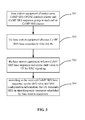
- FIG 1 is a flow diagram of a method for transmitting SRS in embodiment 1 of the present invention, comprising the following steps:
- CoMP SRS cluster is a cell-cluster for implementing CoMP
- special SRS sequence information for CoMP is used to indicate the CoMP SRS base sequence which the base station equipment corresponding to cells in CoMP SRS cluster chooses for the CoMP SRS cluster.
- Special SRS sequence information for CoMP could be sequence group number and base sequence number corresponding to CoMP SRS base sequence, could be CoMP SRS base sequence, could be number of CoMP SRS base sequence in CoMP SRS cluster, could be group ID of CoMP SRS cluster, could be number of group ID of CoMP SRS cluster, also could be group ID and sequence ID, still could be number of group ID and sequence ID.
- the above-mentioned special SRS sequence information for CoMP could be bound to SRS sequence of one cell in the CoMP SRS cluster, or not bound to any SRS sequence of any cell in the CoMP SRS cluster, so as to maintain less interference to sequence group used in cells in CoMP SRS cluster.
- special SRS sequence information for CoMP could also comprise cyclic shift value, which could be from cluster same as or different from that used in the existing LTE system. Different cyclic shift value clusters should be configured for different CoMP SRS clusters according to the requirement.
- cells in CoMP SRS cluster could transmit special SRS sequence information for CoMP to UE by RRC signaling, downlink control signaling or broadcast notification.
- the cell which transmits special SRS sequence information for CoMP to UE could be the serving cell of the UE, or other cells of the UE.
- Step 102 the user equipment transmits an SRS to the cells in the CoMP SRS cluster according to the special SRS sequence information for CoMP.
- the user equipment could obtain corresponding CoMP SRS base sequence according to the received special SRS sequence information for CoMP, and use the base sequence, the cyclic shift value and SRS configuration information to transmit SRS on the time/frequency resources scheduled by base station equipment.
- the said SRS configuration information comprises bandwidth, periodicity and other information.
- the user equipment could use the special SRS sequence information for CoMP to transmit SRS, or reconfigure special SRS sequence information for CoMP, or implement sequence hopping according to specific predefined hopping manner of SRS.
- the embodiment of the present invention only takes the SRS transmission manner based on Code Division Multiplexing (CDM) as an example to describe SRS transmission method.
- CDM Code Division Multiplexing
- the technology solution provided in the embodiment of the present invention is also applicable in other SRS transmission manners, comprising but not limited to the SRS transmission manner based on Frequency Division Multiplexing (FDM), FDM/CDM and etc.
- the solution provides SRS base sequence notification manner and sequence notification form based on CoMP technique.
- sequence information is notified to UEs, particularly in case that the CoMP SRS base sequences used in cells in CoMP SRS cluster are not bound to cell IDs, that reduces interference among CoMP SRS resources of cells, and SRS interference between CoMP and non-CoMP SRS resources, and ensures the accuracy of channel estimation.
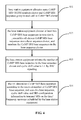
- FIG 2 is a flow diagram of a method for transmitting SRS in embodiment 2 of the present invention, comprising the following steps:
- Step 202 the base station equipment chooses CoMP SRS base sequence in time slot n s , and activates Group-hopping-enabled signaling, chooses sequence-shift pattern, by high-layer signaling.
- f ss CoMP is special sequence-shift pattern for CoMP
- N ID CoMP is identification of CoMP SRS cluster, that is group ID of CoMP SRS cluster.
- PUSCH Physical Uplink Shared Channel
- f ss PUSCH f ss PUSCH + ⁇ ss ⁇ mod ⁇ 30 , ⁇ ss ⁇ 0 1 ... 29
- sequence-shift pattern of PUSCH could be obtained by high-layer configuration or predetermined calculation manner.
- Step 203 the base station equipment informs sequence group number, base sequence number and cyclic shift value corresponding to the CoMP SRS base sequence to UE by RRC signaling.
- u is the sequence group number
- f gh ( n s ) is the group hopping pattern
- f ss CoMP is the sequence-shift pattern for CoMP
- v is the base sequence number
- c ( i ) is pseudo-random sequence
- c init is initial value
- f ss PUSCH is the sequence-shift pattern
- N ID CoMP is identification of the CoMP SRS cluster, that is the group ID of the CoMP SRS cluster.
- Cyclic shift value could be configured by high-layer to each user, and cyclic shift value cluster could be same as that used in the existing LTE system, that is ⁇ 0, 1, 2, 3, 4, 5, 6, 7 ⁇ . Considering the interference problem, the amount of cyclic shift values could be reduced in the case that the resources quantity is sufficient, such as ⁇ 0, 2, 4, 6 ⁇ , ⁇ 1, 3, 5, 7 ⁇ , etc.. Different cyclic shift value cluster could be configured in different CoMP SRS cluster according to the requirement.
- the base station equipment also could transmit the above-mentioned information to UE by downlink control signaling notification or broadcast notification.
- Step 204 the UE determines CoMP SRS base sequence according to said sequence group number and base sequence number, and uses that base sequence, cyclic shift value and SRS configuration information to transmit SRS on the time/frequency resources scheduled by the base station equipment.
- the solution provides SRS base sequence notification manner and sequence notification form based on CoMP technique.
- sequence information is notified to UEs, particularly in case that the CoMP SRS base sequences used in cells in CoMP SRS cluster are not bound to cell IDs, that reduces interference among CoMP SRS resources of cells, and SRS interference between CoMP and non-CoMP SRS resources, and ensures the accuracy of channel estimation.
- FIG 3 is a flow diagram of a method for transmitting SRS in embodiment 3 of the present invention, comprising the following steps:
- CoMP SRS sequence group is different from the base sequence of any cell in the CoMP SRS cluster, or is the same as base sequence of one cell in the CoMP SRS cluster.
- Step 302 the base station equipment chooses CoMP SRS base sequence in time slot n s .
- Step 303 the base station equipment informs CoMP SRS base sequence and cyclic shift value to UE by RRC signaling.
- cyclic shift value could be configured by high-layer to each user, and cyclic shift value cluster could be same as that used in the existing LTE system, that is ⁇ 0, 1, 2, 3, 4, 5, 6, 7 ⁇ . Considering the interference problem, the amount of cyclic shift values could be reduced in the case that the resources quantity is sufficient, such as ⁇ 0, 2, 4, 6 ⁇ , ⁇ 1, 3, 5, 7 ⁇ , etc.. Different cyclic shift value cluster could be configured in different CoMP SRS cluster according to the requirement.
- the base station equipment also could transmit the above-mentioned information to UE by downlink control signaling notification or broadcast notification.
- Step 304 according to the received CoMP SRS base sequence, cyclic shift value and SRS configuration information, the UE transmits SRS on time/frequency resources scheduled by base station equipment.
- the UE could use the SRS base sequence same as that used in the last SRS transmission, or could reconfigure SRS base sequence, or could implement sequence frequency hopping according to predefined frequency hopping manner of SRS.
- the solution provides SRS base sequence notification manner and sequence notification form based on CoMP technique.
- sequence information is notified to UEs, particularly in case that the CoMP SRS base sequences used in cells in CoMP SRS cluster are not bound to cell IDs, that reduces interference among CoMP SRS resources of cells, and SRS interference between CoMP and non-CoMP SRS resources, and ensures the accuracy of channel estimation.
- FIG 4 is a flow diagram of a method for transmitting SRS in embodiment 4 of the present invention, comprising the following steps:
- CoMP SRS sequence group is different from the base sequence of any cell in the CoMP SRS cluster, or is the same as base sequence of one cell in the CoMP SRS cluster.
- Step 402 the base station equipment chooses at least two CoMP SRS base sequences in time slot n s , assembles all chosen CoMP SRS base sequences into a base sequence cluster, and numbers the CoMP SRS base sequences in the base sequence cluster.
- Step 403 the base station equipment informs the number of CoMP SRS base sequence in the base sequence cluster and cyclic shift value to UE by RRC signaling.
- cyclic shift value could be configured by high-layer to each user, and cyclic shift value cluster could be same as that used in the existing LTE system, that is ⁇ 0, 1, 2, 3, 4, 5, 6, 7 ⁇ . Considering the interference problem, the amount of cyclic shift values could be reduced in the case that the resources quantity is sufficient, such as ⁇ 0, 2, 4, 6 ⁇ , ⁇ 1, 3, 5, 7 ⁇ , etc.. Different cyclic shift value cluster could be configured in different CoMP SRS cluster according to the requirement.
- the base station equipment also could transmit the above-mentioned information to UE by downlink control signaling notification or broadcast notification.
- Step 404 the UE determines CoMP SRS base sequence according to the received number of CoMP SRS base sequence, and uses this base sequence, cyclic shift value and SRS configuration information to transmit SRS on the time/frequency resources scheduled by the base station equipment.
- the UE could use the SRS base sequence same as that used in the last SRS transmission, or could reconfigure SRS base sequence, or could implement sequence frequency hopping according to predefined frequency hopping manner of SRS.
- the solution provides SRS base sequence notification manner and sequence notification form based on CoMP technique.
- sequence information is notified to UEs, particularly in case that the CoMP SRS base sequences used in cells in CoMP SRS cluster are not bound to cell IDs, that reduces interference among CoMP SRS resources of cells, and SRS interference between CoMP and non-CoMP SRS resources, and ensures the accuracy of channel estimation.
- FIG 5 is a flow diagram of a method for transmitting SRS in embodiment 5 of the present invention, comprising the following steps:
- CoMP SRS sequence group is different from the base sequence of any cell in the CoMP SRS cluster, or is the same as base sequence of one cell in the CoMP SRS cluster.
- Step 502 the base station equipment chooses CoMP SRS base sequence in time slot n s , assembles the available f ID CoMP (group ID) which can resolve base sequence into a cluster, and numbers each group ID in the cluster.
- Step 503 the base station equipment informs the number of the group ID and cyclic shift value to UE by RRC signaling.
- the base station equipment could also inform the available N ID CoMP cluster or cluster number in time slot n s to the UE.
- cyclic shift value could be configured by high-layer to each user, and cyclic shift value cluster could be same as that used in the existing LTE system, that is ⁇ 0, 1, 2, 3, 4, 5, 6, 7 ⁇ . Considering the interference problem, the amount of cyclic shift values could be reduced in the case that the resources quantity is sufficient, such as ⁇ 0, 2, 4, 6 ⁇ , ⁇ 1, 3, 5, 7 ⁇ , etc.. Different cyclic shift value cluster could be configured in different CoMP SRS cluster according to the requirement.
- the base station equipment also could transmit the above-mentioned information to UE by downlink control signaling notification or broadcast notification.
- Step 504 the UE obtains CoMP SRS base sequence according to the received number of group ID, and combines the CoMP SRS base sequence with cyclic shift value and SRS configuration information to transmit SRS on the time/frequency resources scheduled by the base station equipment.
- the UE could use the SRS base sequence same as that used in the last SRS transmission, or could reconfigure SRS base sequence, or could implement sequence frequency hopping according to predefined frequency hopping manner of SRS.
- the base station equipment also could choose CoMP SRS base sequence, determine the group ID which can resolve this base sequence, and transmit the group ID to the UE, while the UE determines corresponding CoMP SRS base sequence according to this group ID, and uses this base sequence, cyclic shift value and SRS configuration information to transmit SRS.
- the solution provides SRS base sequence notification manner and sequence notification form based on CoMP technique.
- sequence information is notified to UEs, particularly in case that the CoMP SRS base sequences used in cells in CoMP SRS cluster are not bound to cell IDs, that reduces interference among CoMP SRS resources of cells, and SRS interference between CoMP and non-CoMP SRS resources, and ensures the accuracy of channel estimation.
- FIG 6 is a flow diagram of a method for transmitting SRS in embodiment 6 of the present invention, comprising the following steps:
- CoMP SRS sequence group is different from the base sequence of any cell in the CoMP SRS cluster, or is the same as base sequence of one cell in the CoMP SRS cluster.
- Step 602 the base station equipment chooses CoMP SRS base sequence in time slot n s , determines N ID CoMP and identifications of multiple base sequences in the N ID CoMP , that is sequence ID.
- Step 603 the base station equipment informs the group ID, the sequence ID and cyclic shift value to UE by RRC signaling.
- cyclic shift value could be configured by high-layer to each user, and cyclic shift value cluster could be same as that used in the existing LTE system, that is ⁇ 0, 1, 2, 3, 4, 5, 6, 7 ⁇ . Considering the interference problem, the amount of cyclic shift values could be reduced in the case that the resources quantity is sufficient, such as ⁇ 0, 2, 4, 6 ⁇ , ⁇ 1, 3, 5, 7 ⁇ , etc.. Different cyclic shift value cluster could be configured in different CoMP SRS cluster according to the requirement.
- the base station equipment also could transmit the above-mentioned information to UE by downlink control signaling notification or broadcast notification.
- Step 604 the UE determines CoMP SRS base sequence according to the received group ID and sequence ID, and uses the base sequence, cyclic shift value and SRS configuration information to transmit SRS on the time/frequency resources scheduled by the base station equipment.
- the UE could use the SRS base sequence same as that used in the last SRS transmission, or could reconfigure SRS base sequence, or could implement sequence frequency hopping according to predefined frequency hopping manner of SRS.
- the base station equipment also could choose CoMP SRS base sequence, determine group ID and the number of sequence ID which can resolve this base sequence, and transmit the group ID and the number of sequence ID to the UE, while, the UE determines corresponding CoMP SRS base sequence according to this group ID and number of sequence ID, and uses this base sequence, cyclic shift value and SRS configuration information to transmit SRS.
- the solution provides SRS base sequence notification manner and sequence notification form based on CoMP technique.
- sequence information is notified to UEs, particularly in case that the CoMP SRS base sequences used in cells in CoMP SRS cluster are not bound to cell IDs, that reduces interference among CoMP SRS resources of cells, and SRS interference between CoMP and non-CoMP SRS resources, and ensures the accuracy of channel estimation.
- FIG 7 is a structure diagram of a user equipment in embodiment 7 of the present invention, comprising:
- Transmitting module 720 is used for transmitting an SRS to the cells in the CoMP SRS cluster according to the special SRS sequence information received by the receiving module 710.
- the above-mentioned receiving module 710 is specifically used for receiving said special SRS sequence information for CoMP according to any one of the following manners:
- the above-mentioned special SRS sequence information for CoMP comprising cyclic shift value, and sequence group number and base sequence number corresponding to CoMP SRS base sequence.
- the above-mentioned transmitting module 720 is specifically used for determining corresponding CoMP SRS base sequence according to said sequence group number and base sequence number, and using said base sequence, said cyclic shift value and SRS configuration information to transmit SRS.
- the above-mentioned special SRS sequence information for CoMP comprising cyclic shift value and CoMP SRS base sequence.
- the above-mentioned transmitting module 720 is specifically used for using said base sequence, said cyclic shift value and SRS configuration information to transmit SRS.
- the above-mentioned special SRS sequence information for CoMP comprising cyclic shift value and the number of CoMP SRS base sequence in base sequence cluster.
- the above-mentioned transmitting module 720 is specifically used for determining corresponding CoMP SRS base sequence according to the number of CoMP SRS base sequence in the base sequence cluster, and using said base sequence, said cyclic shift value and SRS configuration information to transmit SRS.
- the above-mentioned special SRS sequence information for CoMP comprising cyclic shift value and group ID of CoMP SRS cluster.
- the above-mentioned transmitting module 720 is specifically used for determining corresponding CoMP SRS base sequence according to said group ID, and using said base sequence, said cyclic shift value and SRS configuration information to transmit SRS.
- the above-mentioned special SRS sequence information for CoMP comprising cyclic shift value and the number of group ID of CoMP SRS cluster.
- the above-mentioned transmitting module 720 is specifically used for obtaining corresponding CoMP SRS base sequence according to the number of group ID, and using said base sequence, said cyclic shift value and SRS configuration information to transmit SRS.
- the above-mentioned special SRS sequence information for CoMP comprising cyclic shift value, group ID and sequence ID of CoMP SRS cluster.
- the above-mentioned transmitting module 720 is specifically used for determining corresponding CoMP SRS base sequence according to said group ID and sequence ID, and using said base sequence, said cyclic shift value and SRS configuration information to transmit SRS.
- the above-mentioned special SRS sequence information for CoMP comprising cyclic shift value, group ID and sequence ID number of CoMP SRS cluster.
- the above-mentioned transmitting module 720 is specifically used for determining corresponding CoMP SRS base sequence according to said group ID and sequence ID number, and using said base sequence, said cyclic shift value and SRS configuration information to transmit SRS.
- the above-mentioned transmitting module 720 is further used for using said special SRS sequence information for CoMP to transmit SRS, or reconfiguring special SRS sequence information for CoMP, or implementing sequence hopping according to specific predefined hopping manner of SRS.
- the solution provides SRS base sequence notification manner and sequence notification form based on CoMP technique.
- sequence information is notified to UEs, particularly in case that the CoMP SRS base sequences used in cells in CoMP SRS cluster are not bound to cell IDs, that reduces interference among CoMP SRS resources of cells, and SRS interference between CoMP and non-CoMP SRS resources, and ensures the accuracy of channel estimation.
- FIG 8 is a structure diagram of a base station equipment in embodiment 8 of the present invention, comprising:
- Transmitting module 820 is used for transmitting the special SRS sequence information for CoMP obtained by said obtaining module to user equipment, to let said user equipment transmit SRS according to said special SRS sequence information for CoMP.
- the above-mentioned transmitting module 820 is specifically used for transmitting said special SRS sequence information for CoMP to said user equipment according to any one of the following manners:
- the above-mentioned special SRS sequence information for CoMP comprising cyclic shift value, and sequence group number and base sequence number corresponding to CoMP SRS base sequence.
- the above-mentioned obtaining module 810 is specifically used for choosing CoMP SRS base sequence, and determining sequence group number and base sequence number which can resolve said base sequence.
- the above-mentioned special SRS sequence information for CoMP comprising cyclic shift value and CoMP SRS base sequence.
- the above-mentioned obtaining module 810 is specifically used for choosing CoMP SRS base sequence.
- the above-mentioned special SRS sequence information for CoMP comprising cyclic shift value and the number of CoMP SRS base sequence in base sequence cluster.
- the above-mentioned obtaining module 810 is specifically used for choosing CoMP SRS base sequence, assembling said chosen CoMP SRS base sequence into a base sequence cluster, and numbering the CoMP SRS base sequence in said base sequence cluster.
- the above-mentioned special SRS sequence information for CoMP comprising cyclic shift value and group ID of CoMP SRS cluster.
- the above-mentioned obtaining module 810 is specifically used for choosing CoMP SRS base sequence, determining group ID which can resolve said base sequence.
- the above-mentioned special SRS sequence information for CoMP comprising cyclic shift value and the number of group ID of CoMP SRS cluster.
- the above-mentioned obtaining module 810 is specifically used for choosing CoMP SRS base sequence, assembling the available group IDs which can resolve base sequences into a cluster, and numbering each group ID in said cluster.
- the above-mentioned special SRS sequence information for CoMP comprising cyclic shift value, group ID and sequence ID of CoMP SRS cluster.
- the above-mentioned obtaining module 810 is specifically used for choosing CoMP SRS base sequence, and determining said group ID and the sequence ID.
- the above-mentioned special SRS sequence information for CoMP comprising cyclic shift value, group ID and sequence ID number of CoMP SRS cluster.
- the above-mentioned obtaining module 810 is specifically used for choosing CoMP SRS base sequence, and determining said group ID and the sequence ID number.
- the solution provides SRS base sequence notification manner and sequence notification form based on CoMP technique.
- sequence information is notified to UEs, particularly in case that the CoMP SRS base sequences used in cells in CoMP SRS cluster are not bound to cell IDs, that reduces interference among CoMP SRS resources of cells, and SRS interference between CoMP and non-CoMP SRS resources, and ensures the accuracy of channel estimation.
- FIG 9 is a structure diagram of a system for transmitting SRS in embodiment 9 of the present invention, comprising user equipment 910 and base station equipment 920, wherein:
- the user equipment 910 is used for receiving the special SRS sequence information for CoMP from said base station equipment 920, transmitting an SRS to the cells in the CoMP SRS cluster according to said special SRS sequence information, said base station equipment 920 corresponds to cells in a CoMP SRS cluster.
- the base station equipment 920 is used for obtaining the special SRS sequence information for CoMP corresponding to cells in a CoMP SRS cluster, transmitting the special SRS sequence information for CoMP to said user equipment 910, to let said user equipment 910 transmit SRS according to said special SRS sequence information for CoMP.
- the solution provides SRS base sequence notification manner and sequence notification form based on CoMP technique.
- sequence information is notified to UEs, particularly in case that the CoMP SRS base sequences used in cells in CoMP SRS cluster are not bound to cell IDs, that reduces interference among CoMP SRS resources of cells, and SRS interference between CoMP and non-CoMP SRS resources, and ensures the accuracy of channel estimation.
- modules of the devices in the embodiments can be set in the devices according to the description of the embodiments, also can be set in one or more devices different from the embodiments.
- Modules in the above-mentioned embodiments can be integrated into one entirety, and also can be deployed separately, can be combined into one module, and also can be further split into multiple sub-modules.
Landscapes
- Engineering & Computer Science (AREA)
- Signal Processing (AREA)
- Computer Networks & Wireless Communication (AREA)
- Mobile Radio Communication Systems (AREA)
Abstract
Description
- The present application claims the priority of the Chinese patent application with the application date of July 30, 2009, the application number of
200910090014.6 - The present invention relates generally to the field of mobile communication technology, and more particularly to method, device and system for transmitting sounding reference signals.
- At present, International Telecommunication Union (ITU) proposes very stringent requirements to the next generation mobile communication system - International Mobile Telecommunications-Advanced (IMT-Advanced), for example, the maximum system bandwidth needs to reach 100MHz and peak rate of uplink and downlink data transmission respectively need to reach 1Gbps and 500Mbps. Also, it proposes very high requirements to cell spectral efficiency of system, especially to edge spectral efficiency.
- In order to meet the requirements of IMT-Advanced system, 3rd Generation Partnership Project (3GPP) proposes Coordinated Multi-Point Operation (CoMP) technology to improve system performance in its next generation mobile cellular communication system, i.e. Long Term Evolution Advanced (LTE-Advanced).
- Coordinated Multi-Point Operation (CoMP) technology is the cooperation among multiple transmission points which are geographically separated from each other. CoMP technology includes downlink coordinated transmission and uplink joint reception, while downlink coordinated transmission includes coordinated scheduling solution and coordinated transmission solution. Therein, in the coordinated scheduling solution, with coordination of time, frequency and space resources between cells, base station allocates mutually orthogonal resources to different user equipments (UE), to avoid the interference between them, reduce the interference between cells, and thereby improve edge performance; in the coordination transmission solution, multiple cells transmit data to one UE on the same time/frequency resources, to strengthen the signal received by UE, that could improve the quality of the signal received by UE according to the superposition of useful signals from the multiple cells, also reduce interference suffered by UE, and thereby improve system performance; uplink joint reception means that multiple cells receive data from one UE so that joint reception can be done at the base station to improve demodulation quality of data.
- In the existing LTE system, UE sends uplink Sounding Reference Signals (SRS) to evolved Node-B (eNodeB) on time/frequency resources assigned by its serving cell, the eNodeB estimates the channel state information (CSI) between the UE and the eNodeB according to received SRS, and applies the estimated CSI for uplink frequency scheduling, Modulation and Coding Scheme (MCS) choosing and resources allocation. To Time Division Duplex (TDD) system, eNodeB also could calculate weighted vector of downlink beamforming according to the achieved uplink channel state information.
- In the process of implementing the present invention, the inventor discovers that the existing technology has at least the following problems:
- In the existing LTE system, the unit of SRS resource allocation is assigned by its serving cell, eNodeB allocates mutually orthogonal resources to different UEs intra-cell, while SRS of neighboring cells could be allocated in different sub-frames for transmission. At the same time, SRS base sequence is bound to the cell ID of the serving cell, that is to say, the eNodeB and the UE could get the base sequence in case that the eNodeB and the UE all get the serving cell ID. But in LTE-Advanced system, when CoMP SRS base sequence used in CoMP SRS cluster is not bound to the serving cell ID, the UE could not get the SRS sequence information.
- The embodiment of the present invention provides a method, device and system for transmitting sounding reference signals, to ensure the accuracy of channel estimation.
- The embodiment of the present invention provides a method for transmitting SRS, comprising:
- a user equipment receiving the special SRS sequence information for Coordinated Multi-Point Operation (CoMP) from a base station equipment, said base station equipment corresponding to cells in a CoMP SRS cluster;
- said user equipment transmitting an SRS to the cells in the CoMP SRS cluster according to said special SRS sequence information.
- The embodiment of the present invention also provides a user equipment, comprising:
- receiving module, is used for receiving the special SRS sequence information for CoMP from a base station equipment, said base station equipment corresponding to cells in a CoMP SRS cluster;
- transmitting module, is used for transmitting an SRS to the cells in the CoMP SRS cluster according to the special SRS sequence information for CoMP received by the receiving module.
- The embodiment of the present invention also provides a base station equipment, comprising:
- obtaining module, is used for obtaining the special SRS sequence information for CoMP corresponding to cells in a CoMP SRS cluster;
- transmitting module, is used for transmitting the special SRS sequence information for CoMP obtained by said obtaining module to user equipment, to let said user equipment transmit SRS according to said special SRS sequence information for CoMP.
- The embodiment of the present invention also provides a system for transmitting SRS, comprising user equipment and base station equipment,
said user equipment, is used for receiving the special SRS sequence information for CoMP from said base station equipment, transmitting an SRS to the cells in the CoMP SRS cluster according to said special SRS sequence information, said base station equipment corresponding to cells in a CoMP SRS cluster;
said base station equipment, is used for obtaining the special SRS sequence information for CoMP corresponding to cells in a CoMP SRS cluster, transmitting the special SRS sequence information for CoMP to said user equipment, to let said user equipment transmit SRS according to said special SRS sequence information for CoMP. - Technical solution of the embodiment of the present invention has the following advantages: the solution provides SRS base sequence notification manner and sequence notification form based on CoMP technique. In the solution, sequence information is notified to UEs, particularly in case that the CoMP SRS base sequences used in cells in CoMP SRS cluster are not bound to cell IDs, that reduces interference among CoMP SRS resources of cells, and SRS interference between CoMP and non-CoMP SRS resources, and ensures the accuracy of channel estimation.
-
-
FIG 1 is a flow diagram of a method for transmitting SRS in embodiment 1 of the present invention; -
FIG 2 is a flow diagram of a method for transmitting SRS in embodiment 2 of the present invention; -
FIG 3 is a flow diagram of a method for transmitting SRS in embodiment 3 of the present invention; -
FIG 4 is a flow diagram of a method for transmitting SRS in embodiment 4 of the present invention; -
FIG 5 is a flow diagram of a method for transmitting SRS in embodiment 5 of the present invention; -
FIG 6 is a flow diagram of a method for transmitting SRS in embodiment 6 of the present invention; -
FIG 7 is a structure diagram of a user equipment in embodiment 7 of the present invention; -
FIG 8 is a structure diagram of a base station equipment in embodiment 8 of the present invention; -
FIG 9 is a structure diagram of a system for transmitting SRS in embodiment 9 of the present invention. - In the technology solution provided by the embodiment of the present invention, when CoMP SRS base sequence is bound to ID of a serving cell in CoMP SRS cluster, UEs in that serving cell use the same SRS base sequence notification manner and notification form as that used in the existing LTE system, and other serving cells use difference SRS base sequence notification manner and notification form from that used in the existing LTE system; when CoMP SRS base sequence is individually selected, that is not bound to any serving cell in CoMP SRS cluster, any cell in CoMP SRS cluster needs to use difference SRS base sequence notification manner and notification form from that in the existing LTE system. Therein, individually selected CoMP SRS base sequence is different from sequence group used in any cell included in CoMP SRS cluster, it could be arbitrarily chosen, and should generate less interference to sequences used in cells in CoMP SRS cluster. In the embodiment of the present invention, the SRS base sequence notification manner could be RRC signaling notification, downlink control signaling notification or broadcast notification, the SRS base sequence notification form could comprising noticing group ID of special SRS sequence for CoMP or the base sequence, or setting cluster of special SRS sequences for CoMP and noticing number of SRS sequence in the set cluster.
- Embodiment of this invention will be clearly and completely described with pictures in the following. Apparently, the following embodiment is only a part of this invention, but not the whole invention. All the embodiments achieved by general technical personnel in this field based on this application without creative work belong to the protection scope of the present application.
-
FIG 1 is a flow diagram of a method for transmitting SRS in embodiment 1 of the present invention, comprising the following steps: -
Step 101, a user equipment receives the special SRS sequence information for CoMP from a base station equipment, the base station equipment corresponds to cells in a CoMP SRS cluster. - Therein, CoMP SRS cluster is a cell-cluster for implementing CoMP, and special SRS sequence information for CoMP is used to indicate the CoMP SRS base sequence which the base station equipment corresponding to cells in CoMP SRS cluster chooses for the CoMP SRS cluster. Special SRS sequence information for CoMP could be sequence group number and base sequence number corresponding to CoMP SRS base sequence, could be CoMP SRS base sequence, could be number of CoMP SRS base sequence in CoMP SRS cluster, could be group ID of CoMP SRS cluster, could be number of group ID of CoMP SRS cluster, also could be group ID and sequence ID, still could be number of group ID and sequence ID. The above-mentioned special SRS sequence information for CoMP could be bound to SRS sequence of one cell in the CoMP SRS cluster, or not bound to any SRS sequence of any cell in the CoMP SRS cluster, so as to maintain less interference to sequence group used in cells in CoMP SRS cluster.
- Moreover, special SRS sequence information for CoMP could also comprise cyclic shift value, which could be from cluster same as or different from that used in the existing LTE system. Different cyclic shift value clusters should be configured for different CoMP SRS clusters according to the requirement.
- Specifically, cells in CoMP SRS cluster could transmit special SRS sequence information for CoMP to UE by RRC signaling, downlink control signaling or broadcast notification. The cell which transmits special SRS sequence information for CoMP to UE could be the serving cell of the UE, or other cells of the UE.
-
Step 102, the user equipment transmits an SRS to the cells in the CoMP SRS cluster according to the special SRS sequence information for CoMP. - Specifically, the user equipment could obtain corresponding CoMP SRS base sequence according to the received special SRS sequence information for CoMP, and use the base sequence, the cyclic shift value and SRS configuration information to transmit SRS on the time/frequency resources scheduled by base station equipment.The said SRS configuration information comprises bandwidth, periodicity and other information.
- For the following SRS transmission, the user equipment could use the special SRS sequence information for CoMP to transmit SRS, or reconfigure special SRS sequence information for CoMP, or implement sequence hopping according to specific predefined hopping manner of SRS.
- It should be explained that, the embodiment of the present invention only takes the SRS transmission manner based on Code Division Multiplexing (CDM) as an example to describe SRS transmission method. The technology solution provided in the embodiment of the present invention is also applicable in other SRS transmission manners, comprising but not limited to the SRS transmission manner based on Frequency Division Multiplexing (FDM), FDM/CDM and etc.
- Technical solution of the embodiment of the present invention has the following advantages: the solution provides SRS base sequence notification manner and sequence notification form based on CoMP technique. In the solution, sequence information is notified to UEs, particularly in case that the CoMP SRS base sequences used in cells in CoMP SRS cluster are not bound to cell IDs, that reduces interference among CoMP SRS resources of cells, and SRS interference between CoMP and non-CoMP SRS resources, and ensures the accuracy of channel estimation.
-
FIG 2 is a flow diagram of a method for transmitting SRS in embodiment 2 of the present invention, comprising the following steps: - Therein, CoMP SRS sequence group is different from the base sequence of any cell in the CoMP SRS cluster, or is the same as base sequence of one cell in the CoMP SRS cluster.
-
Step 202, the base station equipment chooses CoMP SRS base sequence in time slot ns , and activates Group-hopping-enabled signaling, chooses sequence-shift pattern, by high-layer signaling. - Specifically, the base station equipment could use the following formula to choose sequence-shift pattern:

- Therein,


- Moreover, the sequence-shift pattern chosen in this step is different from the sequence-shift pattern of PUSCH (Physical Uplink Shared Channel),

-
Step 203, the base station equipment informs sequence group number, base sequence number and cyclic shift value corresponding to the CoMP SRS base sequence to UE by RRC signaling. - Specifically, sequence group number and base sequence number could be respectively calculated by the following formula:


- Therein, u is the sequence group number; fgh (ns ) is the group hopping pattern;

v is the base sequence number; c(i) is pseudo-random sequence; cinit is initial value;

- Cyclic shift value could be configured by high-layer to each user, and cyclic shift value cluster could be same as that used in the existing LTE system, that is {0, 1, 2, 3, 4, 5, 6, 7}. Considering the interference problem, the amount of cyclic shift values could be reduced in the case that the resources quantity is sufficient, such as {0, 2, 4, 6}, {1, 3, 5, 7}, etc.. Different cyclic shift value cluster could be configured in different CoMP SRS cluster according to the requirement.
- The base station equipment also could transmit the above-mentioned information to UE by downlink control signaling notification or broadcast notification.
-
Step 204, the UE determines CoMP SRS base sequence according to said sequence group number and base sequence number, and uses that base sequence, cyclic shift value and SRS configuration information to transmit SRS on the time/frequency resources scheduled by the base station equipment. - Technical solution of the embodiment of the present invention has the following advantages: the solution provides SRS base sequence notification manner and sequence notification form based on CoMP technique. In the solution, sequence information is notified to UEs, particularly in case that the CoMP SRS base sequences used in cells in CoMP SRS cluster are not bound to cell IDs, that reduces interference among CoMP SRS resources of cells, and SRS interference between CoMP and non-CoMP SRS resources, and ensures the accuracy of channel estimation.
-
FIG 3 is a flow diagram of a method for transmitting SRS in embodiment 3 of the present invention, comprising the following steps: -
Step 301, base station equipment allocates same CoMP SRS OFDM symbols cluster and CoMP SRS sequence group to each cell in CoMP SRS cluster. - Therein, CoMP SRS sequence group is different from the base sequence of any cell in the CoMP SRS cluster, or is the same as base sequence of one cell in the CoMP SRS cluster.
-
Step 302, the base station equipment chooses CoMP SRS base sequence in time slot ns . -
Step 303, the base station equipment informs CoMP SRS base sequence and cyclic shift value to UE by RRC signaling. - Therein, cyclic shift value could be configured by high-layer to each user, and cyclic shift value cluster could be same as that used in the existing LTE system, that is {0, 1, 2, 3, 4, 5, 6, 7}. Considering the interference problem, the amount of cyclic shift values could be reduced in the case that the resources quantity is sufficient, such as {0, 2, 4, 6}, {1, 3, 5, 7}, etc.. Different cyclic shift value cluster could be configured in different CoMP SRS cluster according to the requirement.
- The base station equipment also could transmit the above-mentioned information to UE by downlink control signaling notification or broadcast notification.
-
Step 304, according to the received CoMP SRS base sequence, cyclic shift value and SRS configuration information, the UE transmits SRS on time/frequency resources scheduled by base station equipment. - In addition, for the following SRS transmission, the UE could use the SRS base sequence same as that used in the last SRS transmission, or could reconfigure SRS base sequence, or could implement sequence frequency hopping according to predefined frequency hopping manner of SRS.
- Technical solution of the embodiment of the present invention has the following advantages: the solution provides SRS base sequence notification manner and sequence notification form based on CoMP technique. In the solution, sequence information is notified to UEs, particularly in case that the CoMP SRS base sequences used in cells in CoMP SRS cluster are not bound to cell IDs, that reduces interference among CoMP SRS resources of cells, and SRS interference between CoMP and non-CoMP SRS resources, and ensures the accuracy of channel estimation.
-
FIG 4 is a flow diagram of a method for transmitting SRS in embodiment 4 of the present invention, comprising the following steps: -
Step 401, base station equipment allocates same CoMP SRS OFDM symbols cluster and CoMP SRS sequence group to each cell in CoMP SRS cluster. - Therein, CoMP SRS sequence group is different from the base sequence of any cell in the CoMP SRS cluster, or is the same as base sequence of one cell in the CoMP SRS cluster.
-
Step 402, the base station equipment chooses at least two CoMP SRS base sequences in time slot ns , assembles all chosen CoMP SRS base sequences into a base sequence cluster, and numbers the CoMP SRS base sequences in the base sequence cluster. -
Step 403, the base station equipment informs the number of CoMP SRS base sequence in the base sequence cluster and cyclic shift value to UE by RRC signaling. - Therein, cyclic shift value could be configured by high-layer to each user, and cyclic shift value cluster could be same as that used in the existing LTE system, that is {0, 1, 2, 3, 4, 5, 6, 7}. Considering the interference problem, the amount of cyclic shift values could be reduced in the case that the resources quantity is sufficient, such as {0, 2, 4, 6}, {1, 3, 5, 7}, etc.. Different cyclic shift value cluster could be configured in different CoMP SRS cluster according to the requirement.
- The base station equipment also could transmit the above-mentioned information to UE by downlink control signaling notification or broadcast notification.
-
Step 404, the UE determines CoMP SRS base sequence according to the received number of CoMP SRS base sequence, and uses this base sequence, cyclic shift value and SRS configuration information to transmit SRS on the time/frequency resources scheduled by the base station equipment. - In addition, for the following SRS transmission, the UE could use the SRS base sequence same as that used in the last SRS transmission, or could reconfigure SRS base sequence, or could implement sequence frequency hopping according to predefined frequency hopping manner of SRS.
- Technical solution of the embodiment of the present invention has the following advantages: the solution provides SRS base sequence notification manner and sequence notification form based on CoMP technique. In the solution, sequence information is notified to UEs, particularly in case that the CoMP SRS base sequences used in cells in CoMP SRS cluster are not bound to cell IDs, that reduces interference among CoMP SRS resources of cells, and SRS interference between CoMP and non-CoMP SRS resources, and ensures the accuracy of channel estimation.
-
FIG 5 is a flow diagram of a method for transmitting SRS in embodiment 5 of the present invention, comprising the following steps: -
Step 501, base station equipment allocates same CoMP SRS OFDM symbols cluster and CoMP SRS sequence group to each cell in CoMP SRS cluster. - Therein, CoMP SRS sequence group is different from the base sequence of any cell in the CoMP SRS cluster, or is the same as base sequence of one cell in the CoMP SRS cluster.
-
Step 502, the base station equipment chooses CoMP SRS base sequence in time slot ns , assembles the available
-
Step 503, the base station equipment informs the number of the group ID and cyclic shift value to UE by RRC signaling. - At the same time, the base station equipment could also inform the available

- Therein, cyclic shift value could be configured by high-layer to each user, and cyclic shift value cluster could be same as that used in the existing LTE system, that is {0, 1, 2, 3, 4, 5, 6, 7}. Considering the interference problem, the amount of cyclic shift values could be reduced in the case that the resources quantity is sufficient, such as {0, 2, 4, 6}, {1, 3, 5, 7}, etc.. Different cyclic shift value cluster could be configured in different CoMP SRS cluster according to the requirement.
- The base station equipment also could transmit the above-mentioned information to UE by downlink control signaling notification or broadcast notification.
-
Step 504, the UE obtains CoMP SRS base sequence according to the received number of group ID, and combines the CoMP SRS base sequence with cyclic shift value and SRS configuration information to transmit SRS on the time/frequency resources scheduled by the base station equipment. - In addition, for the following SRS transmission, the UE could use the SRS base sequence same as that used in the last SRS transmission, or could reconfigure SRS base sequence, or could implement sequence frequency hopping according to predefined frequency hopping manner of SRS.
- Moreover, the base station equipment also could choose CoMP SRS base sequence, determine the group ID which can resolve this base sequence, and transmit the group ID to the UE, while the UE determines corresponding CoMP SRS base sequence according to this group ID, and uses this base sequence, cyclic shift value and SRS configuration information to transmit SRS.
- Technical solution of the embodiment of the present invention has the following advantages: the solution provides SRS base sequence notification manner and sequence notification form based on CoMP technique. In the solution, sequence information is notified to UEs, particularly in case that the CoMP SRS base sequences used in cells in CoMP SRS cluster are not bound to cell IDs, that reduces interference among CoMP SRS resources of cells, and SRS interference between CoMP and non-CoMP SRS resources, and ensures the accuracy of channel estimation.
-
FIG 6 is a flow diagram of a method for transmitting SRS in embodiment 6 of the present invention, comprising the following steps: -
Step 601, base station equipment allocates same CoMP SRS OFDM symbols cluster and CoMP SRS sequence group to each cell in CoMP SRS cluster. - Therein, CoMP SRS sequence group is different from the base sequence of any cell in the CoMP SRS cluster, or is the same as base sequence of one cell in the CoMP SRS cluster.
-
Step 602, the base station equipment chooses CoMP SRS base sequence in time slot ns , determines

-
Step 603, the base station equipment informs the group ID, the sequence ID and cyclic shift value to UE by RRC signaling. - Therein, cyclic shift value could be configured by high-layer to each user, and cyclic shift value cluster could be same as that used in the existing LTE system, that is {0, 1, 2, 3, 4, 5, 6, 7}. Considering the interference problem, the amount of cyclic shift values could be reduced in the case that the resources quantity is sufficient, such as {0, 2, 4, 6}, {1, 3, 5, 7}, etc.. Different cyclic shift value cluster could be configured in different CoMP SRS cluster according to the requirement.
- The base station equipment also could transmit the above-mentioned information to UE by downlink control signaling notification or broadcast notification.
-
Step 604, the UE determines CoMP SRS base sequence according to the received group ID and sequence ID, and uses the base sequence, cyclic shift value and SRS configuration information to transmit SRS on the time/frequency resources scheduled by the base station equipment. - In addition, for the following SRS transmission, the UE could use the SRS base sequence same as that used in the last SRS transmission, or could reconfigure SRS base sequence, or could implement sequence frequency hopping according to predefined frequency hopping manner of SRS.
- Moreover, the base station equipment also could choose CoMP SRS base sequence, determine group ID and the number of sequence ID which can resolve this base sequence, and transmit the group ID and the number of sequence ID to the UE, while, the UE determines corresponding CoMP SRS base sequence according to this group ID and number of sequence ID, and uses this base sequence, cyclic shift value and SRS configuration information to transmit SRS.
- It should be explained that, in the method of the present invention, the order of the steps could be adjusted according to actual requirement.
- Technical solution of the embodiment of the present invention has the following advantages: the solution provides SRS base sequence notification manner and sequence notification form based on CoMP technique. In the solution, sequence information is notified to UEs, particularly in case that the CoMP SRS base sequences used in cells in CoMP SRS cluster are not bound to cell IDs, that reduces interference among CoMP SRS resources of cells, and SRS interference between CoMP and non-CoMP SRS resources, and ensures the accuracy of channel estimation.
-
FIG 7 is a structure diagram of a user equipment in embodiment 7 of the present invention, comprising: - Receiving
module 710, is used for receiving the special SRS sequence information for CoMP from a base station equipment, said base station equipment corresponding to cells in a CoMP SRS cluster. - Transmitting
module 720, is used for transmitting an SRS to the cells in the CoMP SRS cluster according to the special SRS sequence information received by the receivingmodule 710. - The above-mentioned
receiving module 710, is specifically used for receiving said special SRS sequence information for CoMP according to any one of the following manners: - RRC signaling, downlink control signaling and broadcast notification.
- The above-mentioned special SRS sequence information for CoMP comprising cyclic shift value, and sequence group number and base sequence number corresponding to CoMP SRS base sequence. The above-mentioned
transmitting module 720, is specifically used for determining corresponding CoMP SRS base sequence according to said sequence group number and base sequence number, and using said base sequence, said cyclic shift value and SRS configuration information to transmit SRS. - The above-mentioned special SRS sequence information for CoMP comprising cyclic shift value and CoMP SRS base sequence. The above-mentioned
transmitting module 720, is specifically used for using said base sequence, said cyclic shift value and SRS configuration information to transmit SRS. - The above-mentioned special SRS sequence information for CoMP comprising cyclic shift value and the number of CoMP SRS base sequence in base sequence cluster. The above-mentioned
transmitting module 720, is specifically used for determining corresponding CoMP SRS base sequence according to the number of CoMP SRS base sequence in the base sequence cluster, and using said base sequence, said cyclic shift value and SRS configuration information to transmit SRS. - The above-mentioned special SRS sequence information for CoMP comprising cyclic shift value and group ID of CoMP SRS cluster. The above-mentioned
transmitting module 720, is specifically used for determining corresponding CoMP SRS base sequence according to said group ID, and using said base sequence, said cyclic shift value and SRS configuration information to transmit SRS. - The above-mentioned special SRS sequence information for CoMP comprising cyclic shift value and the number of group ID of CoMP SRS cluster. The above-mentioned
transmitting module 720, is specifically used for obtaining corresponding CoMP SRS base sequence according to the number of group ID, and using said base sequence, said cyclic shift value and SRS configuration information to transmit SRS. - The above-mentioned special SRS sequence information for CoMP comprising cyclic shift value, group ID and sequence ID of CoMP SRS cluster. The above-mentioned
transmitting module 720, is specifically used for determining corresponding CoMP SRS base sequence according to said group ID and sequence ID, and using said base sequence, said cyclic shift value and SRS configuration information to transmit SRS. - The above-mentioned special SRS sequence information for CoMP comprising cyclic shift value, group ID and sequence ID number of CoMP SRS cluster. The above-mentioned
transmitting module 720, is specifically used for determining corresponding CoMP SRS base sequence according to said group ID and sequence ID number, and using said base sequence, said cyclic shift value and SRS configuration information to transmit SRS. - For the following SRS transmission, the above-mentioned
transmitting module 720, is further used for using said special SRS sequence information for CoMP to transmit SRS, or reconfiguring special SRS sequence information for CoMP, or implementing sequence hopping according to specific predefined hopping manner of SRS. - Technical solution of the embodiment of the present invention has the following advantages: the solution provides SRS base sequence notification manner and sequence notification form based on CoMP technique. In the solution, sequence information is notified to UEs, particularly in case that the CoMP SRS base sequences used in cells in CoMP SRS cluster are not bound to cell IDs, that reduces interference among CoMP SRS resources of cells, and SRS interference between CoMP and non-CoMP SRS resources, and ensures the accuracy of channel estimation.
-
FIG 8 is a structure diagram of a base station equipment in embodiment 8 of the present invention, comprising: - Obtaining
module 810, is used for obtaining the special SRS sequence information for CoMP corresponding to cells in a CoMP SRS cluster. - Transmitting
module 820, is used for transmitting the special SRS sequence information for CoMP obtained by said obtaining module to user equipment, to let said user equipment transmit SRS according to said special SRS sequence information for CoMP. - The above-mentioned
transmitting module 820, is specifically used for transmitting said special SRS sequence information for CoMP to said user equipment according to any one of the following manners: - RRC signaling, downlink control signaling and broadcast notification.
- The above-mentioned special SRS sequence information for CoMP comprising cyclic shift value, and sequence group number and base sequence number corresponding to CoMP SRS base sequence. The above-mentioned obtaining
module 810, is specifically used for choosing CoMP SRS base sequence, and determining sequence group number and base sequence number which can resolve said base sequence. - The above-mentioned special SRS sequence information for CoMP comprising cyclic shift value and CoMP SRS base sequence. The above-mentioned obtaining
module 810, is specifically used for choosing CoMP SRS base sequence. - The above-mentioned special SRS sequence information for CoMP comprising cyclic shift value and the number of CoMP SRS base sequence in base sequence cluster. The above-mentioned obtaining
module 810, is specifically used for choosing CoMP SRS base sequence, assembling said chosen CoMP SRS base sequence into a base sequence cluster, and numbering the CoMP SRS base sequence in said base sequence cluster. - The above-mentioned special SRS sequence information for CoMP comprising cyclic shift value and group ID of CoMP SRS cluster. The above-mentioned obtaining
module 810, is specifically used for choosing CoMP SRS base sequence, determining group ID which can resolve said base sequence. - The above-mentioned special SRS sequence information for CoMP comprising cyclic shift value and the number of group ID of CoMP SRS cluster. The above-mentioned obtaining
module 810, is specifically used for choosing CoMP SRS base sequence, assembling the available group IDs which can resolve base sequences into a cluster, and numbering each group ID in said cluster. - The above-mentioned special SRS sequence information for CoMP comprising cyclic shift value, group ID and sequence ID of CoMP SRS cluster. The above-mentioned obtaining
module 810, is specifically used for choosing CoMP SRS base sequence, and determining said group ID and the sequence ID. - The above-mentioned special SRS sequence information for CoMP comprising cyclic shift value, group ID and sequence ID number of CoMP SRS cluster. The above-mentioned obtaining
module 810, is specifically used for choosing CoMP SRS base sequence, and determining said group ID and the sequence ID number. - Technical solution of the embodiment of the present invention has the following advantages: the solution provides SRS base sequence notification manner and sequence notification form based on CoMP technique. In the solution, sequence information is notified to UEs, particularly in case that the CoMP SRS base sequences used in cells in CoMP SRS cluster are not bound to cell IDs, that reduces interference among CoMP SRS resources of cells, and SRS interference between CoMP and non-CoMP SRS resources, and ensures the accuracy of channel estimation.
-
FIG 9 is a structure diagram of a system for transmitting SRS in embodiment 9 of the present invention, comprisinguser equipment 910 andbase station equipment 920, wherein: - The
user equipment 910, is used for receiving the special SRS sequence information for CoMP from saidbase station equipment 920, transmitting an SRS to the cells in the CoMP SRS cluster according to said special SRS sequence information, saidbase station equipment 920 corresponds to cells in a CoMP SRS cluster. - The
base station equipment 920, is used for obtaining the special SRS sequence information for CoMP corresponding to cells in a CoMP SRS cluster, transmitting the special SRS sequence information for CoMP to saiduser equipment 910, to let saiduser equipment 910 transmit SRS according to said special SRS sequence information for CoMP. - Technical solution of the embodiment of the present invention has the following advantages: the solution provides SRS base sequence notification manner and sequence notification form based on CoMP technique. In the solution, sequence information is notified to UEs, particularly in case that the CoMP SRS base sequences used in cells in CoMP SRS cluster are not bound to cell IDs, that reduces interference among CoMP SRS resources of cells, and SRS interference between CoMP and non-CoMP SRS resources, and ensures the accuracy of channel estimation.
- Through the description of the embodiments above, the technical personnel in this field can understand clearly that the present invention can be implemented by software and necessary current hardware platform. Of course, it also can be implemented by hardware, but in many situations the former is the better. Based on this understanding, essence or section with contribution to existing technology of the technical program of the present invention can be embodied by a form of software product which can be stored in a storage medium, including a number of instructions for making a computer device (such as mobile phone, personal computers, servers, or network equipments, etc.) to implement the methods described in the embodiments of the present invention.
- The descriptions above are just preferred implement ways of the present invention. It should be pointed out that, for general technical personnel in this field, some improvement and refinement can be done, which should be as the protection scope of the present invention. Serial numbers of the above-mentioned embodiments of the present invention are only used for description, which does not imply whether the embodiment is excellent or poor.
- The technical personnel in this field can understand that the modules of the devices in the embodiments can be set in the devices according to the description of the embodiments, also can be set in one or more devices different from the embodiments. Modules in the above-mentioned embodiments can be integrated into one entirety, and also can be deployed separately, can be combined into one module, and also can be further split into multiple sub-modules.
Claims (29)
- A method for transmitting sounding reference signals (SRS), wherein, comprising:a user equipment receiving the special SRS sequence information for Coordinated Multi-Point Operation (CoMP) from a base station equipment, said base station equipment corresponding to cells in a CoMP SRS cluster;said user equipment transmitting an SRS to the cells in the CoMP SRS cluster according to said special SRS sequence information.
- The method according to claim 1, wherein, said special SRS sequence information for CoMP is bound to SRS sequence of one cell in said CoMP SRS cluster, or bound to none of SRS sequences of any cell in said CoMP SRS cluster.
- The method according to claim 1, wherein, said special SRS sequence information for CoMP comprising cyclic shift value, and sequence group number and base sequence number corresponding to CoMP SRS base sequence;
said user equipment transmitting an SRS to the cells in the CoMP SRS cluster according to said special SRS sequence information, specifically is:said user equipment determining corresponding CoMP SRS base sequence according to said sequence group number and base sequence number, and using said base sequence, said cyclic shift value and SRS configuration information to transmit SRS. - The method according to claim 1, wherein, said special SRS sequence information for CoMP comprising cyclic shift value and CoMP SRS base sequence, and said user equipment using said base sequence, said cyclic shift value and SRS configuration information to transmit SRS.
- The method according to claim 1, wherein, said special SRS sequence information for CoMP comprising cyclic shift value and the number of CoMP SRS base sequence in base sequence cluster;
before said user equipment receiving the special SRS sequence information for CoMP from the base station equipment, further comprising:said base station equipment choosing CoMP SRS base sequences, assembling said chosen CoMP SRS base sequences into a base sequence cluster, and numbering CoMP SRS base sequences in said base sequence cluster;said user equipment transmitting an SRS to the cells in the CoMP SRS cluster according to said special SRS sequence information, specifically is:said user equipment determining corresponding CoMP SRS base sequence according to the number of CoMP SRS base sequence in the base sequence cluster, and using said base sequence, said cyclic shift value and SRS configuration information to transmit SRS. - The method according to claim 1, wherein, said special SRS sequence information for CoMP comprising cyclic shift value and group ID of CoMP SRS cluster;
before said user equipment receiving the special SRS sequence information for CoMP from the base station equipment, further comprising:said base station equipment choosing CoMP SRS base sequence, and determining the group ID which can resolve said base sequence;said user equipment transmitting an SRS to the cells in the CoMP SRS cluster according to said special SRS sequence information, specifically is:said user equipment determining corresponding CoMP SRS base sequence according to said group ID, and using said base sequence, said cyclic shift value and SRS configuration information to transmit SRS. - The method according to claim 1, wherein, said special SRS sequence information for CoMP comprising cyclic shift value and the number of group ID of CoMP SRS cluster;
before said user equipment receiving the special SRS sequence information for CoMP from the base station equipment, further comprising:said base station equipment choosing CoMP SRS base sequence, assembling the available group IDs which can resolve base sequences into a cluster, and numbering each group ID in said cluster;said user equipment transmitting an SRS to the cells in the CoMP SRS cluster according to said special SRS sequence information, specifically is:said user equipment obtaining corresponding CoMP SRS base sequence according to the number of group ID, and using said base sequence, said cyclic shift value and SRS configuration information to transmit SRS. - The method according to claim 1, wherein, said special SRS sequence information for CoMP comprising cyclic shift value, group ID and sequence ID of CoMP SRS cluster;
before said user equipment receiving the special SRS sequence information for CoMP from the base station equipment, further comprising:said base station equipment choosing CoMP SRS base sequence, and determining said group ID and said sequence ID;said user equipment transmitting an SRS to the cells in the CoMP SRS cluster according to said special SRS sequence information for CoMP, specifically is:said user equipment determining corresponding CoMP SRS base sequence according to said group ID and sequence ID, and using said base sequence, said cyclic shift value and SRS configuration information to transmit SRS. - The method according to claim 4 or 5, wherein, after said user equipment transmitting an SRS to the cells in the CoMP SRS cluster according to said special SRS sequence information, further comprising:for the following SRS transmission, said user equipment using said special SRS sequence information for CoMP to transmit SRS, or reconfiguring special SRS sequence information for CoMP, or implementing sequence hopping according to specific predefined hopping manner of SRS.
- The method according to any one of claim 1 to 8, wherein, said user equipment receiving special SRS sequence information for CoMP from the base station equipment, specifically comprising:said user equipment receiving said special SRS sequence information for CoMP according to any one of the following manners:radio resource control (RRC) signaling, downlink control signaling and broadcast notification.
- The method according to any one of claim 2 to 8, wherein, said cyclic shift value is from cluster same as or different from that used in the existing LTE system, setting different cyclic shift value clusters in different CoMP SRS clusters according to the requirement.
- A user equipment, wherein, comprising:receiving module, is used for receiving the special SRS sequence information for Coordinated Multi-Point Operation (CoMP) from a base station equipment, said base station equipment corresponding to cells in a CoMP SRS cluster;transmitting module, is used for transmitting an SRS to the cells in the CoMP SRS cluster according to the special SRS sequence information received by the receiving module.
- The user equipment according to claim 12, wherein,
said receiving module, is specifically used for receiving said special SRS sequence information for CoMP according to any one of the following manners:radio resource control (RRC) signaling, downlink control signaling and broadcast notification. - The user equipment according to claim 12, wherein, said special SRS sequence information for CoMP comprising cyclic shift value, and sequence group number and base sequence number corresponding to CoMP SRS base sequence;
said transmitting module, is specifically used for determining corresponding CoMP SRS base sequence according to said sequence group number and base sequence number, and using said base sequence, said cyclic shift value and SRS configuration information to transmit SRS. - The user equipment according to claim 12, wherein, said special SRS sequence information for CoMP comprising cyclic shift value and CoMP SRS base sequence;
said transmitting module, is specifically used for using said base sequence, said cyclic shift value and SRS configuration information to transmit SRS. - The user equipment according to claim 12, wherein, said special SRS sequence information for CoMP comprising cyclic shift value and the number of CoMP SRS base sequence in base sequence cluster;
said transmitting module, is specifically used for determining corresponding CoMP SRS base sequence according to the number of CoMP SRS base sequence in the base sequence cluster, and using said base sequence, said cyclic shift value and SRS configuration information to transmit SRS. - The user equipment according to claim 12, wherein, said special SRS sequence information for CoMP comprising cyclic shift value and group ID of CoMP SRS cluster;
said transmitting module, is specifically used for determining corresponding CoMP SRS base sequence according to said group ID, and using said base sequence, said cyclic shift value and SRS configuration information to transmit SRS. - The user equipment according to claim 12, wherein, said special SRS sequence information for CoMP comprising cyclic shift value and the number of group ID of CoMP SRS cluster;
said transmitting module, is specifically used for obtaining corresponding CoMP SRS base sequence according to the number of group ID, and using said base sequence, said cyclic shift value and SRS configuration information to transmit SRS. - The user equipment according to claim 12, wherein, said special SRS sequence information for CoMP comprising cyclic shift value, group ID and sequence ID of CoMP SRS cluster;
said transmitting module, is specifically used for determining corresponding CoMP SRS base sequence according to said group ID and sequence ID, and using said base sequence, said cyclic shift value and SRS configuration information to transmit SRS. - The user equipment according to claim 15 or 16, wherein,
for the following SRS transmission, said transmitting module, is further used for using said special SRS sequence information for CoMP to transmit SRS, or reconfiguring special SRS sequence information for CoMP, or implementing sequence hopping according to specific predefined hopping manner of SRS. - A base station equipment, wherein, comprising:obtaining module, is used for obtaining the special SRS sequence information for CoMP corresponding to cells in a CoMP SRS cluster;transmitting module, is used for transmitting the special SRS sequence information for CoMP obtained by said obtaining module to user equipment, to let said user equipment transmit SRS according to said special SRS sequence information for CoMP.
- The base station equipment according to claim 21, wherein,
said transmitting module, is specifically used for transmitting said special SRS sequence information for CoMP to said user equipment according to any one of the following manners:RRC signaling, downlink control signaling and broadcast notification. - The base station equipment according to claim 21, wherein, said special SRS sequence information for CoMP comprising cyclic shift value, and sequence group number and base sequence number corresponding to CoMP SRS base sequence;
said obtaining module, is specifically used for choosing CoMP SRS base sequence, and determining sequence group number and base sequence number which can resolve said base sequence. - The base station equipment according to claim 21, wherein, said special SRS sequence information for CoMP comprising cyclic shift value and CoMP SRS base sequence;
said obtaining module, is specifically used for choosing CoMP SRS base sequence. - The base station equipment according to claim 21, wherein, said special SRS sequence information for CoMP comprising cyclic shift value and the number of CoMP SRS base sequence in base sequence cluster;
said obtaining module, is specifically used for choosing CoMP SRS base sequence, assembling said chosen CoMP SRS base sequence into a base sequence cluster, and numbering the CoMP SRS base sequence in said base sequence cluster. - The base station equipment according to claim 21, wherein, said special SRS sequence information for CoMP comprising cyclic shift value and group ID of CoMP SRS cluster;
said obtaining module, is specifically used for choosing CoMP SRS base sequence, determining group ID which can resolve said base sequence. - The base station equipment according to claim 21, wherein, said special SRS sequence information for CoMP comprising cyclic shift value and the number of group ID of CoMP SRS cluster;
said obtaining module, is specifically used for choosing CoMP SRS base sequence, assembling the available group IDs which can resolve base sequences into a cluster, and numbering each group ID in said cluster. - The base station equipment according to claim 21, wherein, said special SRS sequence information for CoMP comprising cyclic shift value, group ID and sequence ID of CoMP SRS cluster;
said obtaining module, is specifically used for choosing CoMP SRS base sequence, and determining said group ID and the sequence ID. - A system for transmitting SRS, comprising user equipment and base station equipment, wherein,
said user equipment, is used for receiving the special SRS sequence information for CoMP from said base station equipment, transmitting an SRS to the cells in the CoMP SRS cluster according to said special SRS sequence information, said base station equipment corresponding to cells in a CoMP SRS cluster;
said base station equipment, is used for obtaining the special SRS sequence information for CoMP corresponding to cells in a CoMP SRS cluster, transmitting the special SRS sequence information for CoMP to said user equipment, to let said user equipment transmit SRS according to said special SRS sequence information for CoMP.
Applications Claiming Priority (2)
| Application Number | Priority Date | Filing Date | Title |
|---|---|---|---|
| CN200910090014.6A CN101989871B (en) | 2009-07-30 | 2009-07-30 | Sending method, device and system of detection reference signal |
| PCT/CN2010/075592 WO2011012087A1 (en) | 2009-07-30 | 2010-07-30 | Method, device and system for transmitting sounding reference signals |
Publications (3)
| Publication Number | Publication Date |
|---|---|
| EP2461642A1 true EP2461642A1 (en) | 2012-06-06 |
| EP2461642A4 EP2461642A4 (en) | 2016-06-15 |
| EP2461642B1 EP2461642B1 (en) | 2017-03-01 |
Family
ID=43528787
Family Applications (1)
| Application Number | Title | Priority Date | Filing Date |
|---|---|---|---|
| EP10803920.7A Active EP2461642B1 (en) | 2009-07-30 | 2010-07-30 | Method, device and system for transmitting sounding reference signals |
Country Status (6)
| Country | Link |
|---|---|
| US (1) | US9794101B2 (en) |
| EP (1) | EP2461642B1 (en) |
| JP (1) | JP5531100B2 (en) |
| KR (1) | KR101366729B1 (en) |
| CN (1) | CN101989871B (en) |
| WO (1) | WO2011012087A1 (en) |
Cited By (1)
| Publication number | Priority date | Publication date | Assignee | Title |
|---|---|---|---|---|
| EP2774438A4 (en) * | 2011-11-04 | 2015-07-22 | Nokia Corp | DMRS CONFIGURATIONS FOR COORDINATED MULTIPOINT COMMUNICATION |
Families Citing this family (19)
| Publication number | Priority date | Publication date | Assignee | Title |
|---|---|---|---|---|
| US10651962B2 (en) * | 2009-11-02 | 2020-05-12 | Hmd Global Oy | Scheme for multi-cell UL sounding transmission |
| CN102142918B (en) * | 2011-03-29 | 2015-04-08 | 电信科学技术研究院 | Method and equipment for processing pilot sequence |
| KR20130011441A (en) * | 2011-07-21 | 2013-01-30 | 주식회사 팬택 | Method and apparatus for transmitting control information |
| CN102333356B (en) * | 2011-08-03 | 2014-06-25 | 中国联合网络通信集团有限公司 | Service cell selection method, wireless network controller and access network system |
| CN103139916B (en) * | 2011-11-29 | 2016-03-02 | 华为技术有限公司 | The method and apparatus of row control channel transmitting data physically |
| CN103139913B (en) * | 2011-11-30 | 2015-09-30 | 中国电信股份有限公司 | A kind of method of collocating uplink sounding reference signal and LTE heterogeneous network |
| CN103220791A (en) * | 2012-01-20 | 2013-07-24 | 中兴通讯股份有限公司 | Signaling resource allocation method for uplink demodulation reference signals and base station |
| KR101784123B1 (en) * | 2012-03-27 | 2017-10-10 | 후지쯔 가부시끼가이샤 | Presence indication in a wireless communication system |
| KR101525048B1 (en) | 2012-06-11 | 2015-06-08 | 주식회사 케이티 | Method and terminal for transmitting sounding reference signal in uplink |
| KR101647868B1 (en) | 2012-06-11 | 2016-08-11 | 주식회사 케이티 | Method for transmitting uplink physical channel and sounding reference signal in uplink related uplink physical channel and terminal thereof |
| WO2013187603A1 (en) * | 2012-06-11 | 2013-12-19 | 주식회사 케이티 | Method for transmitting and receiving uplink sounding reference signal, and terminal for same |
| CN103974418B (en) * | 2013-01-24 | 2019-04-05 | 中兴通讯股份有限公司 | DMRS processing method and device |
| CN105122679B (en) * | 2013-04-15 | 2018-09-25 | Lg电子株式会社 | The method and apparatus that detection reference signal is sent in wireless access system |
| KR102178315B1 (en) | 2013-06-12 | 2020-11-13 | 삼성전자주식회사 | Method and its apparatus for transmitting consecutive signals |
| US10531512B2 (en) * | 2015-04-01 | 2020-01-07 | Huawei Technologies Co., Ltd. | System and method for a tracking channel |
| WO2017179859A1 (en) * | 2016-04-10 | 2017-10-19 | 엘지전자 주식회사 | Method and device for transmitting uplink reference signal in wireless communication system |
| US20170331606A1 (en) * | 2016-05-13 | 2017-11-16 | Mediatek Inc. | Sounding Reference Signal Design for LAA |
| US10873869B2 (en) * | 2017-06-16 | 2020-12-22 | Qualcomm Incorporated | Cell-specific sounding and measurement configuration |
| US11277248B2 (en) * | 2017-11-16 | 2022-03-15 | Lg Electronics Inc. | Method for transmitting and receiving SRS resource and communication device therefor |
Family Cites Families (13)
| Publication number | Priority date | Publication date | Assignee | Title |
|---|---|---|---|---|
| KR20080085653A (en) * | 2007-03-19 | 2008-09-24 | 엘지전자 주식회사 | Uplink Reference Signal Transmission Method |
| JP5042320B2 (en) * | 2007-03-29 | 2012-10-03 | エルジー エレクトロニクス インコーポレイティド | Sounding reference signal transmission method in wireless communication system |
| US7924782B2 (en) * | 2007-04-27 | 2011-04-12 | Sharp Laboratories Of America, Inc. | Systems and methods for assigning reference signals using a genetic algorithm |
| US8599819B2 (en) * | 2007-06-19 | 2013-12-03 | Lg Electronics Inc. | Method of transmitting sounding reference signal |
| JP5024533B2 (en) * | 2007-06-19 | 2012-09-12 | 日本電気株式会社 | Method and apparatus for assigning reference signal sequence in mobile communication system |
| US8086272B2 (en) * | 2007-08-06 | 2011-12-27 | Mitsubishi Electric Research Laboratories, Inc. | Wireless networks incorporating antenna selection based on received sounding reference signals |
| US20090046645A1 (en) * | 2007-08-13 | 2009-02-19 | Pierre Bertrand | Uplink Reference Signal Sequence Assignments in Wireless Networks |
| CN101384055A (en) * | 2007-09-05 | 2009-03-11 | 北京三星通信技术研究有限公司 | Device and method for configuring uplink reference signal for channel measurement |
| CN101442808B (en) * | 2008-12-26 | 2011-10-26 | 西安电子科技大学 | United scheduling method for ascending multi-point collaboration in LTE-A |
| US9100834B2 (en) * | 2009-01-23 | 2015-08-04 | Telefonaktiebolaget L M Ericsson (Publ) | Uplink reference signal allocation and assignment for cell clusters |
| US11729770B2 (en) * | 2009-03-17 | 2023-08-15 | Nokia Solutions And Networks Oy | Configuring the transmission of periodic feedback information on a physical uplink shared channel (PUSCH) |
| CN101867938B (en) | 2009-04-20 | 2013-01-02 | 电信科学技术研究院 | Method and device for configuring uplink reference signal of multipoint cooperative transmission |
| US11304782B2 (en) | 2014-12-24 | 2022-04-19 | Todd E. Shatkin | Dental restoration system for installing bridge prostheses on mini dental implants |
-
2009
- 2009-07-30 CN CN200910090014.6A patent/CN101989871B/en active Active
-
2010
- 2010-07-30 US US13/382,929 patent/US9794101B2/en active Active
- 2010-07-30 EP EP10803920.7A patent/EP2461642B1/en active Active
- 2010-07-30 JP JP2012521951A patent/JP5531100B2/en active Active
- 2010-07-30 WO PCT/CN2010/075592 patent/WO2011012087A1/en not_active Ceased
- 2010-07-30 KR KR1020117030047A patent/KR101366729B1/en active Active
Cited By (1)
| Publication number | Priority date | Publication date | Assignee | Title |
|---|---|---|---|---|
| EP2774438A4 (en) * | 2011-11-04 | 2015-07-22 | Nokia Corp | DMRS CONFIGURATIONS FOR COORDINATED MULTIPOINT COMMUNICATION |
Also Published As
| Publication number | Publication date |
|---|---|
| EP2461642B1 (en) | 2017-03-01 |
| KR101366729B1 (en) | 2014-02-24 |
| EP2461642A4 (en) | 2016-06-15 |
| JP5531100B2 (en) | 2014-06-25 |
| CN101989871B (en) | 2014-06-04 |
| US20120129561A1 (en) | 2012-05-24 |
| JP2013500650A (en) | 2013-01-07 |
| CN101989871A (en) | 2011-03-23 |
| US9794101B2 (en) | 2017-10-17 |
| WO2011012087A1 (en) | 2011-02-03 |
| KR20120023794A (en) | 2012-03-13 |
Similar Documents
| Publication | Publication Date | Title |
|---|---|---|
| EP2461642B1 (en) | Method, device and system for transmitting sounding reference signals | |
| EP3499781B1 (en) | Method and apparatus for a terminal to transmit d2d data in wireless communication system | |
| US9485760B2 (en) | Aperiodic transmission method and apparatus for sounding reference signal in wireless communication system | |
| EP3236610B1 (en) | Method for transmitting uplink channel and wireless device requiring coverage enhancement | |
| US10455565B2 (en) | Method and MTC device for receiving downlink control channel | |
| EP2717506B1 (en) | Method and user equipment for determining control channel resource | |
| EP2688226B1 (en) | Method and device for communicating device-to-device | |
| US8923250B2 (en) | Method and apparatus for mapping a plurality of layers to a plurality of antenna ports in a wireless communication system | |
| US9974067B2 (en) | Aperiodic transmission method and apparatus for sounding reference signal in wireless communication system | |
| US10469222B2 (en) | Method and MTC device for transmitting DMRS for uplink data demodulation | |
| EP2385651A2 (en) | Method of handling an uplink control channel and related communication device | |
| EP3525384A1 (en) | Pucch transmission method by wireless device | |
| EP2424285A1 (en) | Sounding reference signal configuration method and device used in coordinated multi-point transmission | |
| US9258832B2 (en) | Method and device for transmitting data in wireless communication system | |
| CN102412880A (en) | Resource acquisition method, configuration method and equipment in multi-antenna port scene | |
| US20120140698A1 (en) | Method and apparatus for transmitting control signal of relay station in wireless communication system | |
| US9264262B2 (en) | Method and apparatus for transmitting aperiodic sounding reference signal in wireless communication system | |
| US8879510B2 (en) | Method and device for transmitting midamble signals in wireless communication system |
Legal Events
| Date | Code | Title | Description |
|---|---|---|---|
| PUAI | Public reference made under article 153(3) epc to a published international application that has entered the european phase |
Free format text: ORIGINAL CODE: 0009012 |
|
| 17P | Request for examination filed |
Effective date: 20120229 |
|
| AK | Designated contracting states |
Kind code of ref document: A1 Designated state(s): AL AT BE BG CH CY CZ DE DK EE ES FI FR GB GR HR HU IE IS IT LI LT LU LV MC MK MT NL NO PL PT RO SE SI SK SM TR |
|
| AX | Request for extension of the european patent |
Extension state: BA ME RS |
|
| RA4 | Supplementary search report drawn up and despatched (corrected) |
Effective date: 20160517 |
|
| RIC1 | Information provided on ipc code assigned before grant |
Ipc: H04W 24/00 20090101ALI20160510BHEP Ipc: H04L 27/26 20060101ALI20160510BHEP Ipc: H04W 88/08 20090101AFI20160510BHEP Ipc: H04W 72/04 20090101ALI20160510BHEP Ipc: H04L 5/00 20060101ALI20160510BHEP |
|
| GRAP | Despatch of communication of intention to grant a patent |
Free format text: ORIGINAL CODE: EPIDOSNIGR1 |
|
| INTG | Intention to grant announced |
Effective date: 20160914 |
|
| GRAS | Grant fee paid |
Free format text: ORIGINAL CODE: EPIDOSNIGR3 |
|
| GRAA | (expected) grant |
Free format text: ORIGINAL CODE: 0009210 |
|
| AK | Designated contracting states |
Kind code of ref document: B1 Designated state(s): AL AT BE BG CH CY CZ DE DK EE ES FI FR GB GR HR HU IE IS IT LI LT LU LV MC MK MT NL NO PL PT RO SE SI SK SM TR |
|
| AX | Request for extension of the european patent |
Extension state: BA ME RS |
|
| REG | Reference to a national code |
Ref country code: GB Ref legal event code: FG4D |
|
| REG | Reference to a national code |
Ref country code: CH Ref legal event code: EP Ref country code: AT Ref legal event code: REF Ref document number: 872648 Country of ref document: AT Kind code of ref document: T Effective date: 20170315 |
|
| REG | Reference to a national code |
Ref country code: IE Ref legal event code: FG4D |
|
| REG | Reference to a national code |
Ref country code: DE Ref legal event code: R096 Ref document number: 602010040453 Country of ref document: DE |
|
| REG | Reference to a national code |
Ref country code: NL Ref legal event code: MP Effective date: 20170301 |
|
| REG | Reference to a national code |
Ref country code: LT Ref legal event code: MG4D |
|
| REG | Reference to a national code |
Ref country code: AT Ref legal event code: MK05 Ref document number: 872648 Country of ref document: AT Kind code of ref document: T Effective date: 20170301 |
|
| PG25 | Lapsed in a contracting state [announced via postgrant information from national office to epo] |
Ref country code: GR Free format text: LAPSE BECAUSE OF FAILURE TO SUBMIT A TRANSLATION OF THE DESCRIPTION OR TO PAY THE FEE WITHIN THE PRESCRIBED TIME-LIMIT Effective date: 20170602 Ref country code: LT Free format text: LAPSE BECAUSE OF FAILURE TO SUBMIT A TRANSLATION OF THE DESCRIPTION OR TO PAY THE FEE WITHIN THE PRESCRIBED TIME-LIMIT Effective date: 20170301 Ref country code: NO Free format text: LAPSE BECAUSE OF FAILURE TO SUBMIT A TRANSLATION OF THE DESCRIPTION OR TO PAY THE FEE WITHIN THE PRESCRIBED TIME-LIMIT Effective date: 20170601 Ref country code: HR Free format text: LAPSE BECAUSE OF FAILURE TO SUBMIT A TRANSLATION OF THE DESCRIPTION OR TO PAY THE FEE WITHIN THE PRESCRIBED TIME-LIMIT Effective date: 20170301 Ref country code: FI Free format text: LAPSE BECAUSE OF FAILURE TO SUBMIT A TRANSLATION OF THE DESCRIPTION OR TO PAY THE FEE WITHIN THE PRESCRIBED TIME-LIMIT Effective date: 20170301 |
|
| REG | Reference to a national code |
Ref country code: FR Ref legal event code: PLFP Year of fee payment: 8 |
|
| PG25 | Lapsed in a contracting state [announced via postgrant information from national office to epo] |
Ref country code: BG Free format text: LAPSE BECAUSE OF FAILURE TO SUBMIT A TRANSLATION OF THE DESCRIPTION OR TO PAY THE FEE WITHIN THE PRESCRIBED TIME-LIMIT Effective date: 20170601 Ref country code: LV Free format text: LAPSE BECAUSE OF FAILURE TO SUBMIT A TRANSLATION OF THE DESCRIPTION OR TO PAY THE FEE WITHIN THE PRESCRIBED TIME-LIMIT Effective date: 20170301 Ref country code: SE Free format text: LAPSE BECAUSE OF FAILURE TO SUBMIT A TRANSLATION OF THE DESCRIPTION OR TO PAY THE FEE WITHIN THE PRESCRIBED TIME-LIMIT Effective date: 20170301 Ref country code: AT Free format text: LAPSE BECAUSE OF FAILURE TO SUBMIT A TRANSLATION OF THE DESCRIPTION OR TO PAY THE FEE WITHIN THE PRESCRIBED TIME-LIMIT Effective date: 20170301 Ref country code: ES Free format text: LAPSE BECAUSE OF FAILURE TO SUBMIT A TRANSLATION OF THE DESCRIPTION OR TO PAY THE FEE WITHIN THE PRESCRIBED TIME-LIMIT Effective date: 20170301 |
|
| PG25 | Lapsed in a contracting state [announced via postgrant information from national office to epo] |
Ref country code: NL Free format text: LAPSE BECAUSE OF FAILURE TO SUBMIT A TRANSLATION OF THE DESCRIPTION OR TO PAY THE FEE WITHIN THE PRESCRIBED TIME-LIMIT Effective date: 20170301 |
|
| PG25 | Lapsed in a contracting state [announced via postgrant information from national office to epo] |
Ref country code: CZ Free format text: LAPSE BECAUSE OF FAILURE TO SUBMIT A TRANSLATION OF THE DESCRIPTION OR TO PAY THE FEE WITHIN THE PRESCRIBED TIME-LIMIT Effective date: 20170301 Ref country code: RO Free format text: LAPSE BECAUSE OF FAILURE TO SUBMIT A TRANSLATION OF THE DESCRIPTION OR TO PAY THE FEE WITHIN THE PRESCRIBED TIME-LIMIT Effective date: 20170301 Ref country code: IT Free format text: LAPSE BECAUSE OF FAILURE TO SUBMIT A TRANSLATION OF THE DESCRIPTION OR TO PAY THE FEE WITHIN THE PRESCRIBED TIME-LIMIT Effective date: 20170301 Ref country code: SK Free format text: LAPSE BECAUSE OF FAILURE TO SUBMIT A TRANSLATION OF THE DESCRIPTION OR TO PAY THE FEE WITHIN THE PRESCRIBED TIME-LIMIT Effective date: 20170301 Ref country code: EE Free format text: LAPSE BECAUSE OF FAILURE TO SUBMIT A TRANSLATION OF THE DESCRIPTION OR TO PAY THE FEE WITHIN THE PRESCRIBED TIME-LIMIT Effective date: 20170301 |
|
| PG25 | Lapsed in a contracting state [announced via postgrant information from national office to epo] |
Ref country code: PL Free format text: LAPSE BECAUSE OF FAILURE TO SUBMIT A TRANSLATION OF THE DESCRIPTION OR TO PAY THE FEE WITHIN THE PRESCRIBED TIME-LIMIT Effective date: 20170301 Ref country code: SM Free format text: LAPSE BECAUSE OF FAILURE TO SUBMIT A TRANSLATION OF THE DESCRIPTION OR TO PAY THE FEE WITHIN THE PRESCRIBED TIME-LIMIT Effective date: 20170301 Ref country code: IS Free format text: LAPSE BECAUSE OF FAILURE TO SUBMIT A TRANSLATION OF THE DESCRIPTION OR TO PAY THE FEE WITHIN THE PRESCRIBED TIME-LIMIT Effective date: 20170701 Ref country code: PT Free format text: LAPSE BECAUSE OF FAILURE TO SUBMIT A TRANSLATION OF THE DESCRIPTION OR TO PAY THE FEE WITHIN THE PRESCRIBED TIME-LIMIT Effective date: 20170703 |
|
| REG | Reference to a national code |
Ref country code: DE Ref legal event code: R097 Ref document number: 602010040453 Country of ref document: DE |
|
| PLBE | No opposition filed within time limit |
Free format text: ORIGINAL CODE: 0009261 |
|
| STAA | Information on the status of an ep patent application or granted ep patent |
Free format text: STATUS: NO OPPOSITION FILED WITHIN TIME LIMIT |
|
| PG25 | Lapsed in a contracting state [announced via postgrant information from national office to epo] |
Ref country code: DK Free format text: LAPSE BECAUSE OF FAILURE TO SUBMIT A TRANSLATION OF THE DESCRIPTION OR TO PAY THE FEE WITHIN THE PRESCRIBED TIME-LIMIT Effective date: 20170301 |
|
| 26N | No opposition filed |
Effective date: 20171204 |
|
| PG25 | Lapsed in a contracting state [announced via postgrant information from national office to epo] |
Ref country code: SI Free format text: LAPSE BECAUSE OF FAILURE TO SUBMIT A TRANSLATION OF THE DESCRIPTION OR TO PAY THE FEE WITHIN THE PRESCRIBED TIME-LIMIT Effective date: 20170301 |
|
| REG | Reference to a national code |
Ref country code: CH Ref legal event code: PL |
|
| PG25 | Lapsed in a contracting state [announced via postgrant information from national office to epo] |
Ref country code: CH Free format text: LAPSE BECAUSE OF NON-PAYMENT OF DUE FEES Effective date: 20170731 Ref country code: LI Free format text: LAPSE BECAUSE OF NON-PAYMENT OF DUE FEES Effective date: 20170731 |
|
| REG | Reference to a national code |
Ref country code: IE Ref legal event code: MM4A |
|
| REG | Reference to a national code |
Ref country code: BE Ref legal event code: MM Effective date: 20170731 |
|
| PG25 | Lapsed in a contracting state [announced via postgrant information from national office to epo] |
Ref country code: LU Free format text: LAPSE BECAUSE OF NON-PAYMENT OF DUE FEES Effective date: 20170730 |
|
| REG | Reference to a national code |
Ref country code: FR Ref legal event code: PLFP Year of fee payment: 9 |
|
| PG25 | Lapsed in a contracting state [announced via postgrant information from national office to epo] |
Ref country code: IE Free format text: LAPSE BECAUSE OF NON-PAYMENT OF DUE FEES Effective date: 20170730 |
|
| PG25 | Lapsed in a contracting state [announced via postgrant information from national office to epo] |
Ref country code: BE Free format text: LAPSE BECAUSE OF NON-PAYMENT OF DUE FEES Effective date: 20170731 |
|
| PG25 | Lapsed in a contracting state [announced via postgrant information from national office to epo] |
Ref country code: MT Free format text: LAPSE BECAUSE OF NON-PAYMENT OF DUE FEES Effective date: 20170730 |
|
| PG25 | Lapsed in a contracting state [announced via postgrant information from national office to epo] |
Ref country code: MC Free format text: LAPSE BECAUSE OF FAILURE TO SUBMIT A TRANSLATION OF THE DESCRIPTION OR TO PAY THE FEE WITHIN THE PRESCRIBED TIME-LIMIT Effective date: 20170301 Ref country code: HU Free format text: LAPSE BECAUSE OF FAILURE TO SUBMIT A TRANSLATION OF THE DESCRIPTION OR TO PAY THE FEE WITHIN THE PRESCRIBED TIME-LIMIT; INVALID AB INITIO Effective date: 20100730 |
|
| PG25 | Lapsed in a contracting state [announced via postgrant information from national office to epo] |
Ref country code: CY Free format text: LAPSE BECAUSE OF NON-PAYMENT OF DUE FEES Effective date: 20170301 |
|
| PG25 | Lapsed in a contracting state [announced via postgrant information from national office to epo] |
Ref country code: MK Free format text: LAPSE BECAUSE OF FAILURE TO SUBMIT A TRANSLATION OF THE DESCRIPTION OR TO PAY THE FEE WITHIN THE PRESCRIBED TIME-LIMIT Effective date: 20170301 |
|
| PG25 | Lapsed in a contracting state [announced via postgrant information from national office to epo] |
Ref country code: TR Free format text: LAPSE BECAUSE OF FAILURE TO SUBMIT A TRANSLATION OF THE DESCRIPTION OR TO PAY THE FEE WITHIN THE PRESCRIBED TIME-LIMIT Effective date: 20170301 |
|
| PG25 | Lapsed in a contracting state [announced via postgrant information from national office to epo] |
Ref country code: AL Free format text: LAPSE BECAUSE OF FAILURE TO SUBMIT A TRANSLATION OF THE DESCRIPTION OR TO PAY THE FEE WITHIN THE PRESCRIBED TIME-LIMIT Effective date: 20170301 |
|
| REG | Reference to a national code |
Ref country code: DE Ref legal event code: R081 Ref document number: 602010040453 Country of ref document: DE Owner name: DATANG MOBILE COMMUNICATIONS EQUIPMENT CO., LT, CN Free format text: FORMER OWNER: CHINA ACADEMY OF TELECOMMUNICATIONS TECHNOLOGY, BEIJING, CN |
|
| REG | Reference to a national code |
Ref country code: GB Ref legal event code: 732E Free format text: REGISTERED BETWEEN 20210729 AND 20210804 |
|
| P01 | Opt-out of the competence of the unified patent court (upc) registered |
Effective date: 20230512 |
|
| PGFP | Annual fee paid to national office [announced via postgrant information from national office to epo] |
Ref country code: DE Payment date: 20250722 Year of fee payment: 16 |
|
| PGFP | Annual fee paid to national office [announced via postgrant information from national office to epo] |
Ref country code: GB Payment date: 20250722 Year of fee payment: 16 |
|
| PGFP | Annual fee paid to national office [announced via postgrant information from national office to epo] |
Ref country code: FR Payment date: 20250725 Year of fee payment: 16 |