EP2460842A2 - Novel energetic polyphosphazenes - Google Patents
Novel energetic polyphosphazenes Download PDFInfo
- Publication number
- EP2460842A2 EP2460842A2 EP12001143A EP12001143A EP2460842A2 EP 2460842 A2 EP2460842 A2 EP 2460842A2 EP 12001143 A EP12001143 A EP 12001143A EP 12001143 A EP12001143 A EP 12001143A EP 2460842 A2 EP2460842 A2 EP 2460842A2
- Authority
- EP
- European Patent Office
- Prior art keywords
- poly
- phosphazene
- energetic
- alkyl
- precursor
- Prior art date
- Legal status (The legal status is an assumption and is not a legal conclusion. Google has not performed a legal analysis and makes no representation as to the accuracy of the status listed.)
- Withdrawn
Links
- 229920002627 poly(phosphazenes) Polymers 0.000 title claims abstract description 302
- -1 poly(phosphazene) Polymers 0.000 claims abstract description 55
- 238000003786 synthesis reaction Methods 0.000 claims abstract description 55
- 230000015572 biosynthetic process Effects 0.000 claims abstract description 53
- 239000011230 binding agent Substances 0.000 claims abstract description 47
- 239000002360 explosive Substances 0.000 claims abstract description 30
- 229910002651 NO3 Inorganic materials 0.000 claims abstract description 16
- 150000001540 azides Chemical class 0.000 claims abstract description 11
- 229920001519 homopolymer Polymers 0.000 claims abstract description 9
- 125000000217 alkyl group Chemical group 0.000 claims abstract description 5
- 150000001875 compounds Chemical class 0.000 claims abstract description 5
- POCJOGNVFHPZNS-ZJUUUORDSA-N (6S,7R)-2-azaspiro[5.5]undecan-7-ol Chemical compound O[C@@H]1CCCC[C@]11CNCCC1 POCJOGNVFHPZNS-ZJUUUORDSA-N 0.000 claims abstract description 3
- BSPUVYFGURDFHE-UHFFFAOYSA-N Nitramine Natural products CC1C(O)CCC2CCCNC12 BSPUVYFGURDFHE-UHFFFAOYSA-N 0.000 claims abstract description 3
- 150000005215 alkyl ethers Chemical class 0.000 claims abstract description 3
- 150000001720 carbohydrates Chemical class 0.000 claims abstract description 3
- POCJOGNVFHPZNS-UHFFFAOYSA-N isonitramine Natural products OC1CCCCC11CNCCC1 POCJOGNVFHPZNS-UHFFFAOYSA-N 0.000 claims abstract description 3
- 125000000449 nitro group Chemical group [O-][N+](*)=O 0.000 claims abstract description 3
- 239000002243 precursor Substances 0.000 claims description 51
- 238000000034 method Methods 0.000 claims description 44
- 239000000203 mixture Substances 0.000 claims description 43
- GKTNLYAAZKKMTQ-UHFFFAOYSA-N n-[bis(dimethylamino)phosphinimyl]-n-methylmethanamine Chemical compound CN(C)P(=N)(N(C)C)N(C)C GKTNLYAAZKKMTQ-UHFFFAOYSA-N 0.000 claims description 27
- 229910004679 ONO2 Inorganic materials 0.000 claims description 22
- 150000004703 alkoxides Chemical class 0.000 claims description 18
- GRYLNZFGIOXLOG-UHFFFAOYSA-N Nitric acid Chemical compound O[N+]([O-])=O GRYLNZFGIOXLOG-UHFFFAOYSA-N 0.000 claims description 12
- 229910017604 nitric acid Inorganic materials 0.000 claims description 12
- 238000006396 nitration reaction Methods 0.000 claims description 10
- 125000001893 nitrooxy group Chemical group [O-][N+](=O)O* 0.000 claims description 10
- YJZDTHNWQIMGBF-UHFFFAOYSA-N 1-(2,2-dimethyl-1,3-dioxolan-4-yl)ethanol Chemical compound CC(O)C1COC(C)(C)O1 YJZDTHNWQIMGBF-UHFFFAOYSA-N 0.000 claims description 8
- 239000004615 ingredient Substances 0.000 claims description 8
- DVPXWBSJPHWCOL-UHFFFAOYSA-N 2-(2h-pyran-2-yloxy)ethanol Chemical compound OCCOC1OC=CC=C1 DVPXWBSJPHWCOL-UHFFFAOYSA-N 0.000 claims description 7
- WFDIJRYMOXRFFG-UHFFFAOYSA-N Acetic anhydride Chemical compound CC(=O)OC(C)=O WFDIJRYMOXRFFG-UHFFFAOYSA-N 0.000 claims description 6
- 125000002887 hydroxy group Chemical group [H]O* 0.000 claims description 6
- 239000003380 propellant Substances 0.000 claims description 6
- RNVYQYLELCKWAN-UHFFFAOYSA-N solketal Chemical compound CC1(C)OCC(CO)O1 RNVYQYLELCKWAN-UHFFFAOYSA-N 0.000 claims description 6
- LFQSCWFLJHTTHZ-UHFFFAOYSA-N Ethanol Chemical compound CCO LFQSCWFLJHTTHZ-UHFFFAOYSA-N 0.000 claims description 5
- WHYHCPIPOSTZRU-UHFFFAOYSA-N 6-azidohexan-1-ol Chemical compound OCCCCCCN=[N+]=[N-] WHYHCPIPOSTZRU-UHFFFAOYSA-N 0.000 claims description 4
- 150000000180 1,2-diols Chemical class 0.000 claims description 3
- 230000000802 nitrating effect Effects 0.000 claims description 3
- 229920002632 poly(dichlorophosphazene) polymer Polymers 0.000 claims description 3
- QAOWNCQODCNURD-UHFFFAOYSA-N Sulfuric acid Chemical compound OS(O)(=O)=O QAOWNCQODCNURD-UHFFFAOYSA-N 0.000 claims description 2
- 125000001309 chloro group Chemical group Cl* 0.000 claims 3
- WHVSIWLMCCGHFW-UHFFFAOYSA-N 3-azidopropan-1-ol Chemical compound OCCCN=[N+]=[N-] WHVSIWLMCCGHFW-UHFFFAOYSA-N 0.000 claims 1
- 239000003795 chemical substances by application Substances 0.000 claims 1
- 239000000463 material Substances 0.000 abstract description 32
- 230000000704 physical effect Effects 0.000 abstract description 10
- 230000004048 modification Effects 0.000 abstract description 6
- 238000012986 modification Methods 0.000 abstract description 6
- 238000007385 chemical modification Methods 0.000 abstract 1
- 238000007493 shaping process Methods 0.000 abstract 1
- 125000003652 trifluoroethoxy group Chemical group FC(CO*)(F)F 0.000 description 54
- CSCPPACGZOOCGX-WFGJKAKNSA-N acetone d6 Chemical compound [2H]C([2H])([2H])C(=O)C([2H])([2H])[2H] CSCPPACGZOOCGX-WFGJKAKNSA-N 0.000 description 50
- 229920000642 polymer Polymers 0.000 description 46
- 239000000243 solution Substances 0.000 description 46
- YMWUJEATGCHHMB-UHFFFAOYSA-N Dichloromethane Chemical compound ClCCl YMWUJEATGCHHMB-UHFFFAOYSA-N 0.000 description 44
- 239000000047 product Substances 0.000 description 38
- 125000004206 2,2,2-trifluoroethyl group Chemical group [H]C([H])(*)C(F)(F)F 0.000 description 37
- 238000010992 reflux Methods 0.000 description 34
- 239000011734 sodium Substances 0.000 description 30
- VLKZOEOYAKHREP-UHFFFAOYSA-N n-Hexane Chemical compound CCCCCC VLKZOEOYAKHREP-UHFFFAOYSA-N 0.000 description 29
- HEDRZPFGACZZDS-MICDWDOJSA-N Trichloro(2H)methane Chemical compound [2H]C(Cl)(Cl)Cl HEDRZPFGACZZDS-MICDWDOJSA-N 0.000 description 28
- XLYOFNOQVPJJNP-UHFFFAOYSA-N water Substances O XLYOFNOQVPJJNP-UHFFFAOYSA-N 0.000 description 27
- 238000006467 substitution reaction Methods 0.000 description 24
- CSNNHWWHGAXBCP-UHFFFAOYSA-L Magnesium sulfate Chemical compound [Mg+2].[O-][S+2]([O-])([O-])[O-] CSNNHWWHGAXBCP-UHFFFAOYSA-L 0.000 description 23
- CSCPPACGZOOCGX-UHFFFAOYSA-N Acetone Chemical compound CC(C)=O CSCPPACGZOOCGX-UHFFFAOYSA-N 0.000 description 21
- 238000006243 chemical reaction Methods 0.000 description 19
- 239000002904 solvent Substances 0.000 description 19
- 230000000694 effects Effects 0.000 description 18
- 239000007788 liquid Substances 0.000 description 17
- XEKOWRVHYACXOJ-UHFFFAOYSA-N Ethyl acetate Chemical compound CCOC(C)=O XEKOWRVHYACXOJ-UHFFFAOYSA-N 0.000 description 15
- 230000009477 glass transition Effects 0.000 description 15
- 230000001965 increasing effect Effects 0.000 description 15
- 238000009472 formulation Methods 0.000 description 14
- 238000000354 decomposition reaction Methods 0.000 description 12
- 238000007429 general method Methods 0.000 description 12
- 239000011541 reaction mixture Substances 0.000 description 12
- 229910052708 sodium Inorganic materials 0.000 description 12
- 238000000113 differential scanning calorimetry Methods 0.000 description 11
- 125000001424 substituent group Chemical group 0.000 description 11
- YXFVVABEGXRONW-UHFFFAOYSA-N Toluene Chemical compound CC1=CC=CC=C1 YXFVVABEGXRONW-UHFFFAOYSA-N 0.000 description 9
- 229910052943 magnesium sulfate Inorganic materials 0.000 description 9
- 239000012044 organic layer Substances 0.000 description 9
- 238000001556 precipitation Methods 0.000 description 9
- 238000003756 stirring Methods 0.000 description 9
- 239000000945 filler Substances 0.000 description 8
- 239000011261 inert gas Substances 0.000 description 8
- UZGLIIJVICEWHF-UHFFFAOYSA-N octogen Chemical compound [O-][N+](=O)N1CN([N+]([O-])=O)CN([N+]([O-])=O)CN([N+]([O-])=O)C1 UZGLIIJVICEWHF-UHFFFAOYSA-N 0.000 description 8
- 239000000725 suspension Substances 0.000 description 8
- 239000007787 solid Substances 0.000 description 7
- JDFUJAMTCCQARF-UHFFFAOYSA-N tatb Chemical compound NC1=C([N+]([O-])=O)C(N)=C([N+]([O-])=O)C(N)=C1[N+]([O-])=O JDFUJAMTCCQARF-UHFFFAOYSA-N 0.000 description 7
- YSIBQULRFXITSW-OWOJBTEDSA-N 1,3,5-trinitro-2-[(e)-2-(2,4,6-trinitrophenyl)ethenyl]benzene Chemical compound [O-][N+](=O)C1=CC([N+](=O)[O-])=CC([N+]([O-])=O)=C1\C=C\C1=C([N+]([O-])=O)C=C([N+]([O-])=O)C=C1[N+]([O-])=O YSIBQULRFXITSW-OWOJBTEDSA-N 0.000 description 6
- MWVMMIHDRKFKQM-UHFFFAOYSA-N 1-(2,2-dimethyl-1,3-dioxolan-4-yl)butan-1-ol Chemical compound CCCC(O)C1COC(C)(C)O1 MWVMMIHDRKFKQM-UHFFFAOYSA-N 0.000 description 6
- GDDNTTHUKVNJRA-UHFFFAOYSA-N 3-bromo-3,3-difluoroprop-1-ene Chemical compound FC(F)(Br)C=C GDDNTTHUKVNJRA-UHFFFAOYSA-N 0.000 description 6
- BCXMPCCZBGJCEC-UHFFFAOYSA-N 5,6-diazidohexan-1-ol Chemical compound OCCCCC(N=[N+]=[N-])CN=[N+]=[N-] BCXMPCCZBGJCEC-UHFFFAOYSA-N 0.000 description 6
- LYCAIKOWRPUZTN-UHFFFAOYSA-N Ethylene glycol Chemical compound OCCO LYCAIKOWRPUZTN-UHFFFAOYSA-N 0.000 description 6
- PXIPVTKHYLBLMZ-UHFFFAOYSA-N Sodium azide Chemical compound [Na+].[N-]=[N+]=[N-] PXIPVTKHYLBLMZ-UHFFFAOYSA-N 0.000 description 6
- ZMANZCXQSJIPKH-UHFFFAOYSA-N Triethylamine Chemical compound CCN(CC)CC ZMANZCXQSJIPKH-UHFFFAOYSA-N 0.000 description 6
- 239000002274 desiccant Substances 0.000 description 6
- 239000000284 extract Substances 0.000 description 6
- 239000008188 pellet Substances 0.000 description 6
- 239000000843 powder Substances 0.000 description 6
- 230000008569 process Effects 0.000 description 6
- 230000035484 reaction time Effects 0.000 description 6
- HPALAKNZSZLMCH-UHFFFAOYSA-M sodium;chloride;hydrate Chemical class O.[Na+].[Cl-] HPALAKNZSZLMCH-UHFFFAOYSA-M 0.000 description 6
- PAWQVTBBRAZDMG-UHFFFAOYSA-N 2-(3-bromo-2-fluorophenyl)acetic acid Chemical compound OC(=O)CC1=CC=CC(Br)=C1F PAWQVTBBRAZDMG-UHFFFAOYSA-N 0.000 description 5
- ZMXDDKWLCZADIW-UHFFFAOYSA-N N,N-Dimethylformamide Chemical compound CN(C)C=O ZMXDDKWLCZADIW-UHFFFAOYSA-N 0.000 description 5
- 229910000831 Steel Inorganic materials 0.000 description 5
- 239000012043 crude product Substances 0.000 description 5
- 238000001914 filtration Methods 0.000 description 5
- 238000000465 moulding Methods 0.000 description 5
- 150000003839 salts Chemical class 0.000 description 5
- 239000010959 steel Substances 0.000 description 5
- NLQMSBJFLQPLIJ-UHFFFAOYSA-N (3-methyloxetan-3-yl)methanol Chemical compound OCC1(C)COC1 NLQMSBJFLQPLIJ-UHFFFAOYSA-N 0.000 description 4
- 238000005160 1H NMR spectroscopy Methods 0.000 description 4
- HEDRZPFGACZZDS-UHFFFAOYSA-N Chloroform Chemical compound ClC(Cl)Cl HEDRZPFGACZZDS-UHFFFAOYSA-N 0.000 description 4
- UIIMBOGNXHQVGW-UHFFFAOYSA-M Sodium bicarbonate Chemical class [Na+].OC([O-])=O UIIMBOGNXHQVGW-UHFFFAOYSA-M 0.000 description 4
- 238000001816 cooling Methods 0.000 description 4
- 238000009826 distribution Methods 0.000 description 4
- 238000005516 engineering process Methods 0.000 description 4
- FUHQFAMVYDIUKL-UHFFFAOYSA-N fox-7 Chemical compound NC(N)=C([N+]([O-])=O)[N+]([O-])=O FUHQFAMVYDIUKL-UHFFFAOYSA-N 0.000 description 4
- 239000010410 layer Substances 0.000 description 4
- OKKJLVBELUTLKV-UHFFFAOYSA-N methanol Substances OC OKKJLVBELUTLKV-UHFFFAOYSA-N 0.000 description 4
- 125000001160 methoxycarbonyl group Chemical group [H]C([H])([H])OC(*)=O 0.000 description 4
- 239000003921 oil Substances 0.000 description 4
- 235000019198 oils Nutrition 0.000 description 4
- 239000012766 organic filler Substances 0.000 description 4
- 239000002244 precipitate Substances 0.000 description 4
- 239000000126 substance Substances 0.000 description 4
- 125000004793 2,2,2-trifluoroethoxy group Chemical group FC(CO*)(F)F 0.000 description 3
- OKTJSMMVPCPJKN-UHFFFAOYSA-N Carbon Chemical group [C] OKTJSMMVPCPJKN-UHFFFAOYSA-N 0.000 description 3
- IAZDPXIOMUYVGZ-UHFFFAOYSA-N Dimethylsulphoxide Chemical compound CS(C)=O IAZDPXIOMUYVGZ-UHFFFAOYSA-N 0.000 description 3
- VEXZGXHMUGYJMC-UHFFFAOYSA-N Hydrochloric acid Chemical compound Cl VEXZGXHMUGYJMC-UHFFFAOYSA-N 0.000 description 3
- DGAQECJNVWCQMB-PUAWFVPOSA-M Ilexoside XXIX Chemical compound C[C@@H]1CC[C@@]2(CC[C@@]3(C(=CC[C@H]4[C@]3(CC[C@@H]5[C@@]4(CC[C@@H](C5(C)C)OS(=O)(=O)[O-])C)C)[C@@H]2[C@]1(C)O)C)C(=O)O[C@H]6[C@@H]([C@H]([C@@H]([C@H](O6)CO)O)O)O.[Na+] DGAQECJNVWCQMB-PUAWFVPOSA-M 0.000 description 3
- 241001085205 Prenanthella exigua Species 0.000 description 3
- FAPWRFPIFSIZLT-UHFFFAOYSA-M Sodium chloride Chemical class [Na+].[Cl-] FAPWRFPIFSIZLT-UHFFFAOYSA-M 0.000 description 3
- 230000008901 benefit Effects 0.000 description 3
- 239000003054 catalyst Substances 0.000 description 3
- 150000001768 cations Chemical class 0.000 description 3
- 230000008859 change Effects 0.000 description 3
- 238000012512 characterization method Methods 0.000 description 3
- 125000004122 cyclic group Chemical group 0.000 description 3
- 238000001035 drying Methods 0.000 description 3
- RTZKZFJDLAIYFH-UHFFFAOYSA-N ether Substances CCOCC RTZKZFJDLAIYFH-UHFFFAOYSA-N 0.000 description 3
- 125000001301 ethoxy group Chemical group [H]C([H])([H])C([H])([H])O* 0.000 description 3
- 238000002474 experimental method Methods 0.000 description 3
- 239000011256 inorganic filler Substances 0.000 description 3
- 229910003475 inorganic filler Inorganic materials 0.000 description 3
- 230000010354 integration Effects 0.000 description 3
- 239000012948 isocyanate Substances 0.000 description 3
- 150000002513 isocyanates Chemical class 0.000 description 3
- 229910052744 lithium Inorganic materials 0.000 description 3
- 238000011068 loading method Methods 0.000 description 3
- 229920002521 macromolecule Polymers 0.000 description 3
- 239000011777 magnesium Substances 0.000 description 3
- 235000019341 magnesium sulphate Nutrition 0.000 description 3
- 238000002156 mixing Methods 0.000 description 3
- 229960005235 piperonyl butoxide Drugs 0.000 description 3
- 239000004014 plasticizer Substances 0.000 description 3
- 125000006239 protecting group Chemical group 0.000 description 3
- 229910000104 sodium hydride Inorganic materials 0.000 description 3
- FVAUCKIRQBBSSJ-UHFFFAOYSA-M sodium iodide Chemical compound [Na+].[I-] FVAUCKIRQBBSSJ-UHFFFAOYSA-M 0.000 description 3
- 238000012360 testing method Methods 0.000 description 3
- ARXKVVRQIIOZGF-UHFFFAOYSA-N 1,2,4-butanetriol Chemical compound OCCC(O)CO ARXKVVRQIIOZGF-UHFFFAOYSA-N 0.000 description 2
- XTFIVUDBNACUBN-UHFFFAOYSA-N 1,3,5-trinitro-1,3,5-triazinane Chemical compound [O-][N+](=O)N1CN([N+]([O-])=O)CN([N+]([O-])=O)C1 XTFIVUDBNACUBN-UHFFFAOYSA-N 0.000 description 2
- JNTPTNNCGDAGEJ-UHFFFAOYSA-N 6-chlorohexan-1-ol Chemical compound OCCCCCCCl JNTPTNNCGDAGEJ-UHFFFAOYSA-N 0.000 description 2
- PXHVJJICTQNCMI-UHFFFAOYSA-N Nickel Chemical compound [Ni] PXHVJJICTQNCMI-UHFFFAOYSA-N 0.000 description 2
- 235000019502 Orange oil Nutrition 0.000 description 2
- 229910007161 Si(CH3)3 Inorganic materials 0.000 description 2
- KEAYESYHFKHZAL-UHFFFAOYSA-N Sodium Chemical compound [Na] KEAYESYHFKHZAL-UHFFFAOYSA-N 0.000 description 2
- 239000004411 aluminium Substances 0.000 description 2
- 229910052782 aluminium Inorganic materials 0.000 description 2
- XAGFODPZIPBFFR-UHFFFAOYSA-N aluminium Chemical compound [Al] XAGFODPZIPBFFR-UHFFFAOYSA-N 0.000 description 2
- 239000007864 aqueous solution Substances 0.000 description 2
- 239000006227 byproduct Substances 0.000 description 2
- BVKZGUZCCUSVTD-UHFFFAOYSA-N carbonic acid Chemical class OC(O)=O BVKZGUZCCUSVTD-UHFFFAOYSA-N 0.000 description 2
- 230000015556 catabolic process Effects 0.000 description 2
- 238000002485 combustion reaction Methods 0.000 description 2
- 238000006731 degradation reaction Methods 0.000 description 2
- 239000012153 distilled water Substances 0.000 description 2
- 229920001971 elastomer Polymers 0.000 description 2
- 125000006005 fluoroethoxy group Chemical group 0.000 description 2
- 230000005484 gravity Effects 0.000 description 2
- 238000004519 manufacturing process Methods 0.000 description 2
- 125000004170 methylsulfonyl group Chemical group [H]C([H])([H])S(*)(=O)=O 0.000 description 2
- 239000010502 orange oil Substances 0.000 description 2
- 239000012074 organic phase Substances 0.000 description 2
- 239000007800 oxidant agent Substances 0.000 description 2
- 230000037361 pathway Effects 0.000 description 2
- BWHMMNNQKKPAPP-UHFFFAOYSA-L potassium carbonate Chemical compound [K+].[K+].[O-]C([O-])=O BWHMMNNQKKPAPP-UHFFFAOYSA-L 0.000 description 2
- 238000002360 preparation method Methods 0.000 description 2
- 239000005060 rubber Substances 0.000 description 2
- 230000035939 shock Effects 0.000 description 2
- 150000003384 small molecules Chemical class 0.000 description 2
- 239000012312 sodium hydride Substances 0.000 description 2
- RPACBEVZENYWOL-XFULWGLBSA-M sodium;(2r)-2-[6-(4-chlorophenoxy)hexyl]oxirane-2-carboxylate Chemical compound [Na+].C=1C=C(Cl)C=CC=1OCCCCCC[C@]1(C(=O)[O-])CO1 RPACBEVZENYWOL-XFULWGLBSA-M 0.000 description 2
- JRMUNVKIHCOMHV-UHFFFAOYSA-M tetrabutylammonium bromide Chemical compound [Br-].CCCC[N+](CCCC)(CCCC)CCCC JRMUNVKIHCOMHV-UHFFFAOYSA-M 0.000 description 2
- JOXIMZWYDAKGHI-UHFFFAOYSA-N toluene-4-sulfonic acid Chemical compound CC1=CC=C(S(O)(=O)=O)C=C1 JOXIMZWYDAKGHI-UHFFFAOYSA-N 0.000 description 2
- LLJSXFLSZUKAQL-UHFFFAOYSA-N tris(2,2,2-trifluoroethoxy)-trimethylsilylimino-$l^{5}-phosphane Chemical compound FC(F)(F)COP(=N[Si](C)(C)C)(OCC(F)(F)F)OCC(F)(F)F LLJSXFLSZUKAQL-UHFFFAOYSA-N 0.000 description 2
- 238000005406 washing Methods 0.000 description 2
- YSPCCRZVLOZDMV-UHFFFAOYSA-N (4,4-dimethyl-1,3-dioxolan-2-yl)methanol Chemical compound CC1(C)COC(CO)O1 YSPCCRZVLOZDMV-UHFFFAOYSA-N 0.000 description 1
- ZWVMLYRJXORSEP-UHFFFAOYSA-N 1,2,6-Hexanetriol Chemical compound OCCCCC(O)CO ZWVMLYRJXORSEP-UHFFFAOYSA-N 0.000 description 1
- MCTWTZJPVLRJOU-UHFFFAOYSA-N 1-methyl-1H-imidazole Chemical compound CN1C=CN=C1 MCTWTZJPVLRJOU-UHFFFAOYSA-N 0.000 description 1
- VFTFKUDGYRBSAL-UHFFFAOYSA-N 15-crown-5 Chemical compound C1COCCOCCOCCOCCO1 VFTFKUDGYRBSAL-UHFFFAOYSA-N 0.000 description 1
- NHQDETIJWKXCTC-UHFFFAOYSA-N 3-chloroperbenzoic acid Chemical compound OOC(=O)C1=CC=CC(Cl)=C1 NHQDETIJWKXCTC-UHFFFAOYSA-N 0.000 description 1
- RZVAJINKPMORJF-UHFFFAOYSA-N Acetaminophen Chemical compound CC(=O)NC1=CC=C(O)C=C1 RZVAJINKPMORJF-UHFFFAOYSA-N 0.000 description 1
- BUDQDWGNQVEFAC-UHFFFAOYSA-N Dihydropyran Chemical compound C1COC=CC1 BUDQDWGNQVEFAC-UHFFFAOYSA-N 0.000 description 1
- 239000005058 Isophorone diisocyanate Substances 0.000 description 1
- HBBGRARXTFLTSG-UHFFFAOYSA-N Lithium ion Chemical compound [Li+] HBBGRARXTFLTSG-UHFFFAOYSA-N 0.000 description 1
- FYYHWMGAXLPEAU-UHFFFAOYSA-N Magnesium Chemical compound [Mg] FYYHWMGAXLPEAU-UHFFFAOYSA-N 0.000 description 1
- 239000012359 Methanesulfonyl chloride Substances 0.000 description 1
- VVBXKASDRZXWON-UHFFFAOYSA-N N=[PH3] Chemical compound N=[PH3] VVBXKASDRZXWON-UHFFFAOYSA-N 0.000 description 1
- 238000005481 NMR spectroscopy Methods 0.000 description 1
- NHNBFGGVMKEFGY-UHFFFAOYSA-N Nitrate Chemical compound [O-][N+]([O-])=O NHNBFGGVMKEFGY-UHFFFAOYSA-N 0.000 description 1
- XOJVVFBFDXDTEG-UHFFFAOYSA-N Norphytane Natural products CC(C)CCCC(C)CCCC(C)CCCC(C)C XOJVVFBFDXDTEG-UHFFFAOYSA-N 0.000 description 1
- 244000171022 Peltophorum pterocarpum Species 0.000 description 1
- 229920001774 Perfluoroether Chemical group 0.000 description 1
- 241000233805 Phoenix Species 0.000 description 1
- 239000005062 Polybutadiene Substances 0.000 description 1
- 239000004793 Polystyrene Substances 0.000 description 1
- FKNQFGJONOIPTF-UHFFFAOYSA-N Sodium cation Chemical compound [Na+] FKNQFGJONOIPTF-UHFFFAOYSA-N 0.000 description 1
- RHQDFWAXVIIEBN-UHFFFAOYSA-N Trifluoroethanol Chemical compound OCC(F)(F)F RHQDFWAXVIIEBN-UHFFFAOYSA-N 0.000 description 1
- YUWBVKYVJWNVLE-UHFFFAOYSA-N [N].[P] Chemical group [N].[P] YUWBVKYVJWNVLE-UHFFFAOYSA-N 0.000 description 1
- UKLDJPRMSDWDSL-UHFFFAOYSA-L [dibutyl(dodecanoyloxy)stannyl] dodecanoate Chemical compound CCCCCCCCCCCC(=O)O[Sn](CCCC)(CCCC)OC(=O)CCCCCCCCCCC UKLDJPRMSDWDSL-UHFFFAOYSA-L 0.000 description 1
- WETWJCDKMRHUPV-UHFFFAOYSA-N acetyl chloride Chemical compound CC(Cl)=O WETWJCDKMRHUPV-UHFFFAOYSA-N 0.000 description 1
- 239000012346 acetyl chloride Substances 0.000 description 1
- 239000002253 acid Substances 0.000 description 1
- 230000002411 adverse Effects 0.000 description 1
- 230000032683 aging Effects 0.000 description 1
- PNEYBMLMFCGWSK-UHFFFAOYSA-N aluminium oxide Inorganic materials [O-2].[O-2].[O-2].[Al+3].[Al+3] PNEYBMLMFCGWSK-UHFFFAOYSA-N 0.000 description 1
- 125000000129 anionic group Chemical group 0.000 description 1
- 238000013459 approach Methods 0.000 description 1
- 239000008346 aqueous phase Substances 0.000 description 1
- 125000000852 azido group Chemical group *N=[N+]=[N-] 0.000 description 1
- 230000004888 barrier function Effects 0.000 description 1
- 239000012455 biphasic mixture Substances 0.000 description 1
- 210000000988 bone and bone Anatomy 0.000 description 1
- 229910052799 carbon Inorganic materials 0.000 description 1
- 238000012668 chain scission Methods 0.000 description 1
- 238000010382 chemical cross-linking Methods 0.000 description 1
- 230000001427 coherent effect Effects 0.000 description 1
- 230000000295 complement effect Effects 0.000 description 1
- 239000002131 composite material Substances 0.000 description 1
- 229920001795 coordination polymer Polymers 0.000 description 1
- 239000013078 crystal Substances 0.000 description 1
- 230000001419 dependent effect Effects 0.000 description 1
- 230000000881 depressing effect Effects 0.000 description 1
- 238000005474 detonation Methods 0.000 description 1
- 239000012975 dibutyltin dilaurate Substances 0.000 description 1
- SBZXBUIDTXKZTM-UHFFFAOYSA-N diglyme Chemical compound COCCOCCOC SBZXBUIDTXKZTM-UHFFFAOYSA-N 0.000 description 1
- IJKVHSBPTUYDLN-UHFFFAOYSA-N dihydroxy(oxo)silane Chemical compound O[Si](O)=O IJKVHSBPTUYDLN-UHFFFAOYSA-N 0.000 description 1
- 125000005442 diisocyanate group Chemical group 0.000 description 1
- 230000003292 diminished effect Effects 0.000 description 1
- 230000003467 diminishing effect Effects 0.000 description 1
- 239000003480 eluent Substances 0.000 description 1
- 230000002708 enhancing effect Effects 0.000 description 1
- 150000002148 esters Chemical class 0.000 description 1
- 238000000605 extraction Methods 0.000 description 1
- 238000007706 flame test Methods 0.000 description 1
- 238000003818 flash chromatography Methods 0.000 description 1
- 125000004428 fluoroalkoxy group Chemical group 0.000 description 1
- 125000000524 functional group Chemical group 0.000 description 1
- 239000008187 granular material Substances 0.000 description 1
- UIZVMOZAXAMASY-UHFFFAOYSA-N hex-5-en-1-ol Chemical compound OCCCCC=C UIZVMOZAXAMASY-UHFFFAOYSA-N 0.000 description 1
- UBIJTWDKTYCPMQ-UHFFFAOYSA-N hexachlorophosphazene Chemical compound ClP1(Cl)=NP(Cl)(Cl)=NP(Cl)(Cl)=N1 UBIJTWDKTYCPMQ-UHFFFAOYSA-N 0.000 description 1
- 229910052739 hydrogen Inorganic materials 0.000 description 1
- 239000001257 hydrogen Substances 0.000 description 1
- 230000003993 interaction Effects 0.000 description 1
- 238000002955 isolation Methods 0.000 description 1
- NIMLQBUJDJZYEJ-UHFFFAOYSA-N isophorone diisocyanate Chemical compound CC1(C)CC(N=C=O)CC(C)(CN=C=O)C1 NIMLQBUJDJZYEJ-UHFFFAOYSA-N 0.000 description 1
- 150000002605 large molecules Chemical class 0.000 description 1
- DLEDOFVPSDKWEF-UHFFFAOYSA-N lithium butane Chemical compound [Li+].CCC[CH2-] DLEDOFVPSDKWEF-UHFFFAOYSA-N 0.000 description 1
- 229940006487 lithium cation Drugs 0.000 description 1
- 229910003002 lithium salt Inorganic materials 0.000 description 1
- 159000000002 lithium salts Chemical class 0.000 description 1
- 238000000816 matrix-assisted laser desorption--ionisation Methods 0.000 description 1
- 238000001906 matrix-assisted laser desorption--ionisation mass spectrometry Methods 0.000 description 1
- 238000002844 melting Methods 0.000 description 1
- 230000008018 melting Effects 0.000 description 1
- 229910052751 metal Inorganic materials 0.000 description 1
- 239000002184 metal Substances 0.000 description 1
- 150000002739 metals Chemical class 0.000 description 1
- QARBMVPHQWIHKH-UHFFFAOYSA-N methanesulfonyl chloride Chemical compound CS(Cl)(=O)=O QARBMVPHQWIHKH-UHFFFAOYSA-N 0.000 description 1
- 239000012768 molten material Substances 0.000 description 1
- MZRVEZGGRBJDDB-UHFFFAOYSA-N n-Butyllithium Substances [Li]CCCC MZRVEZGGRBJDDB-UHFFFAOYSA-N 0.000 description 1
- 229910052759 nickel Inorganic materials 0.000 description 1
- 229910052757 nitrogen Inorganic materials 0.000 description 1
- 238000010534 nucleophilic substitution reaction Methods 0.000 description 1
- 230000001590 oxidative effect Effects 0.000 description 1
- OJMIONKXNSYLSR-UHFFFAOYSA-N phosphorous acid Chemical compound OP(O)O OJMIONKXNSYLSR-UHFFFAOYSA-N 0.000 description 1
- 125000004437 phosphorous atom Chemical group 0.000 description 1
- 229910052698 phosphorus Inorganic materials 0.000 description 1
- 229920002857 polybutadiene Polymers 0.000 description 1
- 229920002959 polymer blend Polymers 0.000 description 1
- 229920002223 polystyrene Polymers 0.000 description 1
- 229910000027 potassium carbonate Inorganic materials 0.000 description 1
- 238000003825 pressing Methods 0.000 description 1
- 238000000425 proton nuclear magnetic resonance spectrum Methods 0.000 description 1
- 238000000607 proton-decoupled 31P nuclear magnetic resonance spectroscopy Methods 0.000 description 1
- 239000005297 pyrex Substances 0.000 description 1
- 239000000376 reactant Substances 0.000 description 1
- 230000009467 reduction Effects 0.000 description 1
- 229920006395 saturated elastomer Polymers 0.000 description 1
- 238000001878 scanning electron micrograph Methods 0.000 description 1
- 239000002002 slurry Substances 0.000 description 1
- 239000011780 sodium chloride Substances 0.000 description 1
- 235000009518 sodium iodide Nutrition 0.000 description 1
- 159000000000 sodium salts Chemical class 0.000 description 1
- 238000004611 spectroscopical analysis Methods 0.000 description 1
- 238000010189 synthetic method Methods 0.000 description 1
- 230000007704 transition Effects 0.000 description 1
- SEDZOYHHAIAQIW-UHFFFAOYSA-N trimethylsilyl azide Chemical compound C[Si](C)(C)N=[N+]=[N-] SEDZOYHHAIAQIW-UHFFFAOYSA-N 0.000 description 1
- 238000005292 vacuum distillation Methods 0.000 description 1
- 238000010792 warming Methods 0.000 description 1
- 238000010626 work up procedure Methods 0.000 description 1
Images






Classifications
-
- C—CHEMISTRY; METALLURGY
- C08—ORGANIC MACROMOLECULAR COMPOUNDS; THEIR PREPARATION OR CHEMICAL WORKING-UP; COMPOSITIONS BASED THEREON
- C08G—MACROMOLECULAR COMPOUNDS OBTAINED OTHERWISE THAN BY REACTIONS ONLY INVOLVING UNSATURATED CARBON-TO-CARBON BONDS
- C08G79/00—Macromolecular compounds obtained by reactions forming a linkage containing atoms other than silicon, sulfur, nitrogen, oxygen, and carbon with or without the latter elements in the main chain of the macromolecule
- C08G79/02—Macromolecular compounds obtained by reactions forming a linkage containing atoms other than silicon, sulfur, nitrogen, oxygen, and carbon with or without the latter elements in the main chain of the macromolecule a linkage containing phosphorus
- C08G79/025—Polyphosphazenes
-
- C—CHEMISTRY; METALLURGY
- C06—EXPLOSIVES; MATCHES
- C06B—EXPLOSIVES OR THERMIC COMPOSITIONS; MANUFACTURE THEREOF; USE OF SINGLE SUBSTANCES AS EXPLOSIVES
- C06B43/00—Compositions characterised by explosive or thermic constituents not provided for in groups C06B25/00 - C06B41/00
-
- C—CHEMISTRY; METALLURGY
- C06—EXPLOSIVES; MATCHES
- C06B—EXPLOSIVES OR THERMIC COMPOSITIONS; MANUFACTURE THEREOF; USE OF SINGLE SUBSTANCES AS EXPLOSIVES
- C06B45/00—Compositions or products which are defined by structure or arrangement of component of product
- C06B45/04—Compositions or products which are defined by structure or arrangement of component of product comprising solid particles dispersed in solid solution or matrix not used for explosives where the matrix consists essentially of nitrated carbohydrates or a low molecular organic explosive
- C06B45/06—Compositions or products which are defined by structure or arrangement of component of product comprising solid particles dispersed in solid solution or matrix not used for explosives where the matrix consists essentially of nitrated carbohydrates or a low molecular organic explosive the solid solution or matrix containing an organic component
- C06B45/10—Compositions or products which are defined by structure or arrangement of component of product comprising solid particles dispersed in solid solution or matrix not used for explosives where the matrix consists essentially of nitrated carbohydrates or a low molecular organic explosive the solid solution or matrix containing an organic component the organic component containing a resin
- C06B45/105—The resin being a polymer bearing energetic groups or containing a soluble organic explosive
-
- C—CHEMISTRY; METALLURGY
- C08—ORGANIC MACROMOLECULAR COMPOUNDS; THEIR PREPARATION OR CHEMICAL WORKING-UP; COMPOSITIONS BASED THEREON
- C08L—COMPOSITIONS OF MACROMOLECULAR COMPOUNDS
- C08L85/00—Compositions of macromolecular compounds obtained by reactions forming a linkage in the main chain of the macromolecule containing atoms other than silicon, sulfur, nitrogen, oxygen and carbon; Compositions of derivatives of such polymers
- C08L85/02—Compositions of macromolecular compounds obtained by reactions forming a linkage in the main chain of the macromolecule containing atoms other than silicon, sulfur, nitrogen, oxygen and carbon; Compositions of derivatives of such polymers containing phosphorus
Definitions
- the present invention relates to the synthesis of novel energetic poly(phosphazene)s.
- High energy density explosives such as RDX (1,3,5-trinitro-1,3,5-triazacyclohexane) and HMX (1,3,5,7-tetranitro-1,3,5,7-tetraazacyclooctane) are crystalline in morphology and possess a high melting, which renders them difficult to shape for use in explosive charges.
- RDX 1,3,5-trinitro-1,3,5-triazacyclohexane
- HMX 1,3,5,7-tetranitro-1,3,5,7-tetraazacyclooctane
- Polymeric binders may be energetically inert such as estane or polybutadiene or energy rich.
- energetic polymeric binders such as polyNIMMO (poly-3-methyl-3-nitratomethyloxetane) and polyGLYN (polyglycidyl nitrate) may be used in conjunction with a high explosive, such that the energy of the explosive itself is not overly diminished by the presence of the binder in the combined material.
- the difficulty with this approach is in obtaining energetic polymers that when used as binders have an adequate combination of both desirable Physical properties such as malleability and shock insensitivity, in addition to high energy density.
- desirable Physical properties such as malleability and shock insensitivity
- even the best energetic binders have energy densities that are significantly lower than that of the crystalline explosive material for which they are required to bind. This has the effect of reducing the energetic performance of the explosive.
- current practice is to use a high loading of explosive relative to binder, but this in turn diminishes the desirable physical properties of the binder/explosive mixture.
- Poly(phosphazene)s are a known class of macromolecules comprising an inorganic phosphorus nitrogen backbone with each phosphorus atom bearing two pendant side groups (see Allcock H.R. et al. Inorg. Chem. 1966, 5, 1709-1715 ). It is known that poly(organophosphazenes) may be synthesised by side group exchange with fluoroalkoxy substituents (see Macromolecules 2003, 36, 5566-5572 ). Energetic poly(organophosphazenes) have hitherto not been produced using this method.
- the polyphosphazene system is synthetically flexible and polyphosphazenes possessing a wide range of structures and physical properties are known (see R. Allcock, Chemistry and Applications of Polyphosphazenes, Wiley-Interscience, 2003 ). There are some examples in the literature of the synthesis of energetic small molecule (trimeric) cyclic phosphazenes (see R. Allcock et al. Inorganic Chemistry, 5535-5544, Vol. 38, No. 24, 1999 , and see Forohar et al. US 6,218,554 B1 ). However, even the preparation of small molecule phosphazenes can be problematical (see M. Eamon Colclough et al.
- random mixed substituent poly(phosphazene) compounds of Formula A comprising of a combination of n units having one or more of the structures (i) to (iii) but not exclusively (i): and wherein:
- random mixed substitutent polyphosphazenes of the preferred embodiment could equally be represented by the following chemical formula: wherein x, y and z refer to stoichiometric values and may be 0.0 to 1.0 and all other notation and values equate to those referred to in the preferred embodiment and should be construed accordingly.
- random mixed substituent poly(phosphazene) compounds of Formula A have been prepared, consisting of:
- This synthetic pathway comprises the use of novel alkoxide precursors that enables energetic linear polyphosphazenes to be synthesised rather than through the use of direct attachment of energetically substituted pendant side groups.
- the pendant fluoroethoxy group referred to at step I comprises a trifluoroethoxy group.
- the substitutable poly(phosphazene) precursor used in Step (1) comprises poly[bis(trifluoroethoxy)phosphazene].
- the substitutable pendant group precursor used in Step (2) comprises (2,2-dimethyl-[1,3]-dioxolan-4-yl)-methanol.
- the substitutable pendant group precursor used in Step (2) comprises (2,2-dimethyl-[1,3]-dioxolan-4-yl)-ethanol.
- the substitutable pendant group precursor used in Step (2) comprises (2.2-dimethyl-[1,3]-dioxolan-4-yl)-butanol.
- the substitutable pendant group precursor used in Step (2) comprises 2-pyranyloxy ethanol.
- the substitutable pendant group precursor used in Step (2) comprises (3-methyl-oxetan-3-yl)-methanol.
- the substitutable pendant group precursor used in Step (2) comprises 6-azidohexan-1-ol.
- the substitutable pendant group precursor used in Step (2) comprises 5,6-diazidohexan-1-ol.
- the nitrating medium used in Step (4) is 95% nitric acid, which has been found to give a particularly clean product.
- concentrations of nitric acid and other nitrating media can be used, including N 2 O 5 , mixed sulphuric/nitric acid and nitric acid/acetic anhydride.
- the degree of substitution of energetic side groups can be modified by increasing the degree of subsitution (a) of the alkoxide precursor prior to nitration or (b) of the azidated side chains.
- Step (3) a method for varying the degree of substitution (i.e the proportion of substitutable pendant side-groups relative to trifluoroethoxy) of the random mixed substituent poly(phosphazene)s (Step (3) above). Variation can be effected by one or more of the following:
- the degree of substitution of the polymer and the nature of the substituting pendant side groups themselves modifies the physical properties of the polymer.
- Variation of the physical properties of the polymer can be effected by variation of one or more of the following:
- the energy and energy density can be increased by increasing the degree of substitution as can the glass transition temperature and density.
- the energy, density, energy density and glass transition temperature can be varied by varying the length of the carbon chain of the substitutable pendant side-groups.
- the energy and energy density can be increased by increasing the number of energetic functionalities attached to the substituted pendant side-groups as can the glass transition temperature and density.
- the energy, density, energy density, glass transition temperature and thermal stability can be varied by attaching more than one type of substituted pendant side-group to the polymer backbone.
- the energy, density, energy density, glass transition temperature and thermal stability can be varied by varying the type of energetic functionality attached to the substituted pendant side-group.
- Table 1 Variation of physical properties with percentage energetic side groups for PZ6 to PZ12 and comparison of these properties with those of polyGLYN and polyNIMMO.
- the poly(phosphazene) compounds of Formula A offer a range of glass transition temperatures including desirable low glass transition temperatures, whilst at the same time retaining high relative energy-density.
- the energetic polyphosphazenes of the present invention unexpectedly act as very effective binders for energetic materials using a solvent paste process; however, they are not chemically curable. Nevertheless, we have established that some of the polyphosphazenes described herein are miscible with certain commercial energetic polymers such as polyGLYN and polyNIMMO. which are curable in their own right (using standard isocyanate technology) and that the mixed binder may itself be isocyanate cured.
- polyphosphazenes of the present invention when employed as co-binders, can be valuable not only for enhancing the energy-density of the complementary binder, but also for depressing its glass transition temperature.
- the rubber produced for example by polyGLYN/polyphosphazene co-binders is soft, extensible and possesses very 'high tack' making it adhere effectively to many crystalline energetic fillers.
- co-binder refers to use of these polyphosphazenes as binders in conjunction with other binder materials.
- poly(phosphazene) compounds of Formula A may be used as binders and/or co-binders and/or ingredients in explosive compositions as well as in pyrotechnic compositions.
- poly(phosphazene) compounds of Formula A could also equally be used as binders and/or co-binder ingredients for propellant compositions without further experiment to determine this embodiment. This is evident from the observed hissing and effervescent nature of the combustion of these compounds.
- Azidotrimethylsilane (10.54g, 91.4 mmol) was added, with stirring, to 2,2,2-tris-trifluoroethylphosphite (10.0g, 30.5 mmol) under an inert gas atmosphere.
- the mixture was heated to reflux (ca. 110°C) and the reaction monitored by 31 P ⁇ 1 H ⁇ NMR spectroscopy. After all phosphite had been consumed (after approx. 72 hours), the reaction was allowed to cool to room temperature, yielding a pale yellow liquid.
- Step I Freshly sublimed hexachlorocyclotriphosphazene (17g) was placed in a dry pyrex tube and sealed under vacuum. The tube was placed in an oven and heated to 255 °C for I hour and then at 250 °C for 16 hours (with rotation of the tube) after which time, the molten material inside the tube almost ceased to flow. The tube was allowed to cool to room temperature, broken open inside an inert atmosphere glovebox and the contents dissolved in a minimum amount of anhydrous toluene. The product, consisting of poly(dichlorophosphazene), was isolated as a colourless rubbery material upon precipitation into an excess of anhydrous hexane.
- Step 2 Sodium trifluoroethoxide was prepared by adding a solution of trifluoroethanol (5.0g, 0.05mol) in THF (32 ml) to a stirred suspension of sodium hydride (1.20g, 0.05mol) in THF (20 ml) under an inert atmosphere. To the resultant solution was added TBAB (tetra-n-butylammonium bromide, 0.1g) and an anhydrous toluene solution of poly(dichlorophosphazene) (16 ml, 0.021 mol) via syringe.
- THF trifluoroethanol
- TBAB tetra-n-butylammonium bromide
- reaction mixture was heated to reflux for 6 hours before adding to water, resulting in precipitation of a white solid consisting of poly[(bis-trifluoroethoxy)phosphazene].
- product was purified by precipitation as an acetone solution into toluene.
- a suspension of sodium hydride in THF (under an inert gas atmosphere) was prepared.
- An equimolar amount of the appropriate alcohol, as a solution in THF. was added dropwise at ambient temperature. The mixture was allowed to stir for several hours at ambient, yielding the Na-salt as a suspension in THF (quantitative conversion).
- the aqueous mixture was then acidified (to ca. pH 5-6), resulting in precipitation of the polymeric product.
- the aqueous solution was decanted and the polymer redissolved in dichloromethane (ca 50ml).
- the organic solution was then extracted with saturated sodium chloride solution (2 x 30ml) and finally with water 1 x 30ml) before drying over anhydrous MgSO 4 (alternatively multiple precipitations into water can be used followed by disolution in dichloromethane and drying over MgSO 4 .
- the product was dissolved in a minimum quantity of acetone and precipitated into hexane (ca 100ml).
- nitric acid 95% was cooled, with stirring, to between 0-5°C in an ice/water bath.
- Trifluoroethoxy/(2,2-di methyl-[1,3]-dioxolan-4-yl)-methoxy polyphosphazene 200 mg was added (neat or dropwise as a solution in DCM) and the reaction mixture stirred for 15 minutes, maintaining the temperature below 5°C. The solution was then added dropwise, with stirring, to cooled, distilled water ( ⁇ 60 ml), yielding the nitrated product as a white, oily solid precipitate. Excess water (i.e.
- the aqueous solution was decanted and the polymer washed with water, before redissolving in THF (or acetone) and repeating the precipitation process.
- the polymer was then dissolved in dichloromethane and dried over anhydrous MgSO 4 . After filtration and removal of solvent in vacuo, the product was dissolved in a minimum quantity of acetone and precipitated into hexane. The hexane was decanted and the product dried in vacuo (precipitation into hexane was repeated until the product was pure, via 1 H NMR).
- the polymeric product was isolated as a pale yellow viscous liquid.
- Nitrate ester polymer precursors (PZ1-PZ5)
- the extent of substitution of the alkoxide was varied by modification of the reaction conditions.
- the extent of nitrate ester substitution may be increased by either of the following:
- Table 2 below indicates the effect of these variables on energetic side group precursor substitution.
- the extent of energetic side group precursor substitution was determined by integration of 1 H NMR signals. The degree of substitution is believed not to change during nitration, thus, the values quoted will apply also to their nitrated derivatives.
- Table 2 Effect of alkoxide to polymer ratio, alkoxide cation and reaction time on percentage energetic precursor side groups for nitrato-ester polymers.
- the extent of substitution of azide functionalised side groups onto the polymer backbone can be increased by increasing the ratio of substitutable alkoxide to polymer (this is indicated in Table 3).
- the skilled man will appreciate that the degree of substitution can also be modified according to the reaction time, temperature and nature of cation.
- the extent of energetic side group substitution was determined by integration of 1 H NMR signals.
- Table 3 Effect of alkoxide ratio to polymer on percentage energetic precursor side groups for the azide substituted polymers.
- Physical properties associated with poly(phosphazene)s of Formula A can he modified by varying one or more of the following: (a) the degree of substitution of energetic side-groups (b) the length of the carbon chain of the energetic side-group. (c) the type of energetic functionality incorporated into the energetic side-group and (d) the number of energetic functional groups attached to the energetic side-group.
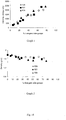
- Graph 1 illustrates the effect of percentage energetic side groups on decomposition energy for PZ6, PZ7 and PZ8.
- Graph 2 illustrates the effect of percentage energetic side groups on density for PZ6, PZ7 and PZ8.
- Graph 3 illustrates the effect of percentage energetic side groups on energy density for PZ6, PZ7 and PZ8.
- Graph 4 illustrates the effect of percentage energetic side groups on glass transition temperature for PZ6, PZ7 and PZ8.
- Graph 5 illustrates the effect of percentage energetic sode groups on decompostion energy for PZ11 and PZ12
- Graph 7 illustrates the effect of percentage energetic side groups on energy density for PZ11 and PZ12.
- Table 4 summarises the T g data obtained for three mixed substitutent polyphosphazenes of Formula A (1-3) containing both 2,3-Dinitratopropan-1-oxy (C 3 -ONO 2 in Table 4) and 5,6-Dinitratohexan-1-oxy (C 6 -ONO 2 ) side-groups (as well as trifluoroethoxy (TFE)). These data demonstrate that by comparison with graph 4 T g can be modified by incorporating more than one non-trifluoroethoxy substituent.
- Synthesis of 2 (1) Reaction of a 1:1 ratio of sodium 2,2-dimethyl-[1,3]-dioxolan-4-yl)-methoxide: poly[(bis-trifluoroethoxy)phosphazene] in refluxing THF for 18 hours, according to method D1, followed by (2) reaction of this product with a 4:1 excess of of sodium 2,2-dimethyl-[1,3]-dioxolan-4-yl)-butoxide in refluxing THF for 18 hours according to D1, followed by (3) nitration using 95% nitric acid according to method E1.
- the binder properties of the polyphosphazenes revealed in the present invention have been demonstrated in relation to organic fillers by using the following crystalline energetic materials: HNS (2,2',4,4',6,6'-hexanitrostilbene, HMX (1,3,5.7-tetranitro-1,3,5,7-tetraazacyclooctane), TATB (1,3,5-triamino-2,4,6-trinitrobenzene) and FOX-7 (1,1-diamino-2,2-dinitroethylene).
- HNS 2,2',4,4',6,6'-hexanitrostilbene
- HMX 1,3,5.7-tetranitro-1,3,5,7-tetraazacyclooctane
- TATB 1,3,5-triamino-2,4,6-trinitrobenzene
- FOX-7 1,1-diamino-2,2-dinitroethylene
- a solution of the polyphosphazene binder material ( ca . 6-10% w/v in THF) was added to the powdered crystalline energetic ingredient (ca. 3-5g) in a nickel crucible according to the required composition.
- the resulting slurry was stirred (using a bone spatula) at ambient temperature whilst the majority of solvent evaporated, generating a thick paste.
- the crucible was then placed in an oven at 40°C for up to 30 minutes to remove the final traces of solvent.
- the resulting moulding powder was a hard, granular, free-flowing solid.
- Pellets were prepared in a 10.6mm diameter steel die using 0.6-0.8g of moulding powder per pellet. Pressing was performed for 5 minutes per sample, using a pressure of 2 tons.
- the binder properties of the polyphosphazenes revealed in the present invention have been further established in relation to a number of typical inorganic fillers used in enhanced blast explosive, pyrotechnic and propellant formulations.
- ammonium perchlorate (AP), ammonium nitrate (AN), magnesium powder and aluminium powder have each been formulated with PZ8 (70% nitrato substitution) and PZ11 (60% azido substitution).
- PZ8 ammonium nitrate
- PZ11 50% azido substitution
- acetone was employed as the process solvent instead of THF. Details of the formulations and their hazard/ignition characteristics are given in Table 6.
- the prime objective of these experiments was to demonstrate chemical compatibility with the solids and the ability of polyphosphazenes to effectively coat and adhere to the solids, thereby making them suitable for use as binders. Once coated the moulding powder was a cohesive granular material which could be readily compacted into a coherent solid.
- the pure energetic polyphosphazenes generated herein cannot be directly cured via a chemical crosslinking process, although as demonstrated above, they can be used as effective formulation binders, using a solvent paste process.
- some of these polyphosphazenes are miscible with other energetic polymers (e.g. polyNIMMO, polyGLYN) which .can themselves be crosslinked using standard isocyanate technology. It is thus possible to generate a chemically cured system comprising a mixture of polyphosphazene with these binders (ie by using the polyphosphazenes as co-binders).
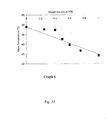
- T g data for the mixtures as well as the individual components are supplied in the Table. These data reveal only one T g for each mixture, which in general falls between the values of the individual components. This is illustrated graphically in Graph 8 and demonstrates that the two materials are, in fact, miscible. The transitions observed for the mixtures deviate somewhat from the 'ideal' based on a weight average value of the composition's pure components (i.e. the line in Graph 8). Such deviations, in general, are caused by interactions between the two polymers (such as hydrogen bonding) and are commonly observed for polymer blends.
- Nitrate ester functionalised poly(phosphazene)s of Formula A and their precursors Nitrate ester functionalised poly(phosphazene)s of Formula A and their precursors
- M p The peak molecular weight (M p ) data for PZ3, measured using GPC, correspond to ca. 20-50 repeat units, although the overall distribution is much wider. These figures apply generally to PZ1-PZ5. However, it should be noted that these GPC determined molecular weights are not absolute values, but polystyrene equivalent masses. Thus, whilst the quoted GPC figures characterise the products, they should not be taken as an accurate indication of the absolute polymer chain lengths.
- MALDI MS Mass Assisted Laser Desorption Ionisation Mass Spectrometry
- data recorded for the trifluoroethoxy substituted homopolymer precursor indicates a peak molecular weight of ca. 4000 Da, corresponding to approximately 16 repeat units and a distribution ranging from around 7-50 units.
- These data are absolute molecular weights and are thought to give a more accurate determination of the chain lengths at the lower mass end. Assuming chain degradation does not occur during the alkoxide substitution step these values can be applied to PZ1-5.
- MALDI is unlikely to adequately detect higher molecular weight fractions due to problems with the volatilisation of large molecules.
- Peak molecular weight data indicate polymer chain lengths of ca. 10-20 repeat units, therefore the distribution is likely to range from ca. 5 repeat units to 50 based on the available polydispersity data.
- the same limitations in the GPC data discussed for PZ1-5 above apply to PZ11-12.
Landscapes
- Chemical & Material Sciences (AREA)
- Organic Chemistry (AREA)
- Health & Medical Sciences (AREA)
- Chemical Kinetics & Catalysis (AREA)
- Medicinal Chemistry (AREA)
- Polymers & Plastics (AREA)
- Life Sciences & Earth Sciences (AREA)
- Dispersion Chemistry (AREA)
- Molecular Biology (AREA)
- Crystallography & Structural Chemistry (AREA)
- Polymers With Sulfur, Phosphorus Or Metals In The Main Chain (AREA)
Abstract
Description
- The present invention relates to the synthesis of novel energetic poly(phosphazene)s.
- High energy density explosives such as RDX (1,3,5-trinitro-1,3,5-triazacyclohexane) and HMX (1,3,5,7-tetranitro-1,3,5,7-tetraazacyclooctane) are crystalline in morphology and possess a high melting, which renders them difficult to shape for use in explosive charges. The crystallinity of these materials coupled with their high energy density makes then sensitive to shock and other mechanical stimuli, thus diminishing their handling utility and general safety in manufacturing and service environments.
- In the art attempts have been made to retain the high explosive nature of these materials. whilst countering the above adverse effects through the use of polymeric binders (see Energetic Polymers as Binders in Composite Propellants and Explosives, M. Eamon Colclough et al., Polymers for Advanced Technologies, ). Polymeric binders may be energetically inert such as estane or polybutadiene or energy rich. In the latter instance it is known that energetic polymeric binders such as polyNIMMO (poly-3-methyl-3-nitratomethyloxetane) and polyGLYN (polyglycidyl nitrate) may be used in conjunction with a high explosive, such that the energy of the explosive itself is not overly diminished by the presence of the binder in the combined material.
- The difficulty with this approach is in obtaining energetic polymers that when used as binders have an adequate combination of both desirable Physical properties such as malleability and shock insensitivity, in addition to high energy density. For example, even the best energetic binders have energy densities that are significantly lower than that of the crystalline explosive material for which they are required to bind. This has the effect of reducing the energetic performance of the explosive. In an attempt to solve this problem current practice is to use a high loading of explosive relative to binder, but this in turn diminishes the desirable physical properties of the binder/explosive mixture.
- Poly(phosphazene)s are a known class of macromolecules comprising an inorganic phosphorus nitrogen backbone with each phosphorus atom bearing two pendant side groups (see Allcock H.R. et al. Inorg. Chem. 1966, 5, 1709-1715). It is known that poly(organophosphazenes) may be synthesised by side group exchange with fluoroalkoxy substituents (see Macromolecules 2003, 36, 5566-5572). Energetic poly(organophosphazenes) have hitherto not been produced using this method.
- The polyphosphazene system is synthetically flexible and polyphosphazenes possessing a wide range of structures and physical properties are known (see R. Allcock, Chemistry and Applications of Polyphosphazenes, Wiley-Interscience, 2003). There are some examples in the literature of the synthesis of energetic small molecule (trimeric) cyclic phosphazenes (see R. Allcock et al. Inorganic Chemistry, 5535-5544, Vol. 38, No. 24, 1999, and see
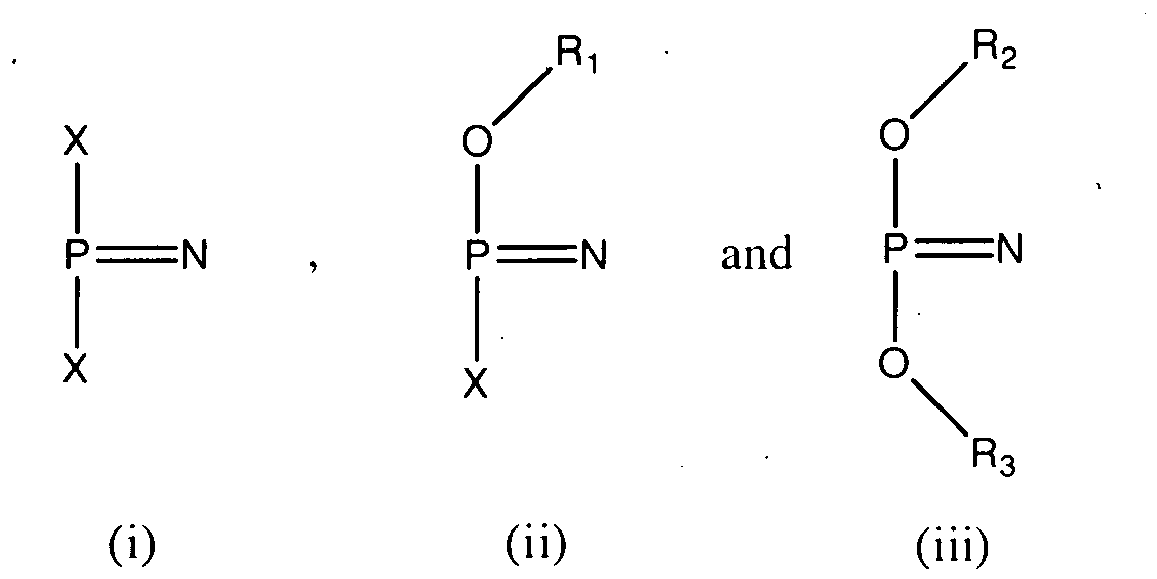
Forohar et al. US 6,218,554 B1 ). However, even the preparation of small molecule phosphazenes can be problematical (see M. Eamon Colclough et al. Studies on the Synthesis of Energetic Phophazenes. International Symposium on Energetic Materials Technology, 1995, Phoenix) and hitherto in the art there has been a significant barrier to the production of energetic polyphosphazenes. Only one literature reference describes the synthesis of a material in this category using anionic polymerisation (see Robert D. Chapman et al. Journal of Inroganic and Organometallic Polymers, 267-275, Vol. 6, No.3, 1996). Chapman et al. descibe the synthesis of energetic linear oligomeric phosphazenes of n=3 and state the purported isolation of higher chain polyphosphazenes (n=22) from the mix based on nmr alone and as a minor side product although no yield is provided nor any further confirmatory information as to structure, molecular weight or purity. There is no suggestion in their publication that these materials could be used as binders. - In the published literature polyphosphazenes have not found application as binders for energetic systems. Nor have suitable energised polyphosphazenes been synthesised for such application. This reflects not only a difficulty in synthesising such polyphosphazene systems but also a fundamental absence of products offering suitable physical characteristics for such energetic systems. Thus, hitherto no polyphosphazene binders possessing high energy densities have been known and furthermore some 'inert' polyphosphazenes, which may have Superficially attractive properties, cannot be used to effectively formulate explosives ingredients because they do not bind adequately to the surface of the energetic crystalline ingredients. There is therefore a need to develop binder materials which confer desirable handling characteristics to high explosive materials, but which at the same time do not excessively diminish the explosive performance of the explosive material itself. Accordingly there is provided random mixed substituent poly(phosphazene) compounds of Formula A comprising of a combination of n units having one or more of the structures (i) to (iii) but not exclusively (i):

- R1, R2 and R3 are alkyl, alkyl ether or carbohydrate based side chains which contain energetic functionalities including nitro, nitramine, nitrate ester, or azide.
- X =
C 1 to C7 fluoroalkoxy or fluoroalkoxy ether. - 3 ≤ n ≤ 10000
- In a preferred embodiment:
- R1 is C1-18(alkyl)CH(ONO2)CH2(ONO2); C1-18(alkyl)CH(N3)CH2(N3):
- C1-19(alkyl)CH2(ONO2); C1-19(alkyl)CH2(N3); CH2C(CH3)(CH2ONO2)2. R2 is C1-18(alkyl)CH(ONO2)CH2(ONO2); C1-18(alkyl)CH(N3)CH2(N3);
- C1-19(alkyl)CH2(ONO2); C1-19(alkyl)CH2(N3); CH2C(CH3)(CH2ONO2)2. R3 is C1-18(alkyl)CH(ONO2)CH2(ONO2); C1-18(alkyl)CH(N3)CH2(N3);
- C1-19(alkyl)CH2(ONO2); C1-19(alkyl)CH2(N3); CH2C(CH3)(CH2ONO2)2. X is OCH2CF3
- 5 ≤ n ≤ 300
- As a matter of chemical notation only and for clarity purposes. The random mixed substitutent polyphosphazenes of the preferred embodiment could equally be represented by the following chemical formula:

- Specific embodiments synthesised by the applicants have given rise to values of x from 0.0 to 0.95, values of y from 0 to 1.0 and z from 0.0 to 0.8 wherein in each instance x + y + z = 1.0. The skilled man will appreciate that values of x, y and z varying independently from 0.0 to 1.0 (wherein x + y + z = 1.0) would be expected by experiment through variation of the reaction conditions.
- In specific embodiments, random mixed substituent poly(phosphazene) compounds of Formula A have been prepared, consisting of:
- (a) a random mixed substituent polymer of trifluoroethoxy/2,3-dinitratopropan-1-oxy polyphosphazene (PZ6); (b) a. random mixed substituent polymer of trifluoroethoxy/3,4-dinitratobutan-1-oxy polyphosphazene (PZ7); (c) a random mixed substituent polymer of trifluoroethoxy/5,6-dinitratohexan-1-oxy polyphosphazene (PZ8); (d) a random mixed substituent polymer of trifluoroethoxy/2-nitratoethan-1-oxy polyphosphazene (PZ9); (e) random mixed substituent polymer of trifluoroethoxy/2-methyl-3-nitrooxy-2-nitrooxymethyl-propan-1-oxy polyphosphazene (PZ10); (f) a random mixed substituent polymer of trifluoroethoxy/6-azidohexan-1-oxy polyphosphazene (PZ11); (g) a random mixed substituent polymer of trifluoroethoxy/5,6-diazidohexan-1-oxy polyphosphazene (PZ12)
- The applicants have developed a novel synthetic pathway to these new energetic materials. This synthetic pathway comprises the use of novel alkoxide precursors that enables energetic linear polyphosphazenes to be synthesised rather than through the use of direct attachment of energetically substituted pendant side groups.
- Accordingly there is provided a method for the synthesis of random mixed substituent energetic polyphosphazenes of Formula A comprising the steps of:-
- Step (1) Generating a substitutable poly(phosphazene) precursor with pendant fluoroethoxy or fluoroether groups,
- Step (2) Generating a C2-C20 pendant group precursor possessing either an energetic functionality (e.g. azide, as for PZ11 and PZ12), a precursor to an energetic functonality (e.g. 3-methyl-oxetan-3-yl)-methanol, as for PZ10) or a protected energetic precursor (e.g. cyclic ketal, pyranyloxy, as for PZ6-9),
- Step (3) Chemically attaching the C2-C20 pendant group of the precursor described in Step (2), by means of its alkoxide derivative, to the poly(phosphazene) backbone via random nucleophilic substitution of the trifluoroethoxy groups,
- wherein Steps (1) and (2) are not sequence specific but Step (3) follows either Step (1) or Step (2), and
- Step (4) Generating a nitrate ester derivative by nitration, where the alkoxide precursor described at Step (2) above possesses a protected hydroxyl group (e.g. pyranyloxy, as for PZ9), a protected 1,2-diol (e.g. cyclic ketal, as for PZ6-8) or a nitratable energetic precursor (e.g. (3-methyl-oxetan-3-yl)-methoxy functionality, as for PZ10)
- In a preferred embodiment the pendant fluoroethoxy group referred to at step I comprises a trifluoroethoxy group.
- The skilled man will appreciate that other base resistant protecting groups for hydroxy and 1,2-diol functionalities would be equally effective as desirable protecting groups prior to nitration where the nitrate ester derivative is desired. (see
Chapter 2 in 'Protective Groups in Organic Synthesis' 3rd Edition,1999, T. W. Greene and P. G. M. Wuts, Wiley Interscience - Accordingly there is provided random mixed substitutent energetic poly(phosphazenes) obtainable by the above method.
- Preferably the substitutable poly(phosphazene) precursor used in Step (1) comprises poly[bis(trifluoroethoxy)phosphazene].
- Preferably the substitutable pendant group precursor used in Step (2) comprises (2,2-dimethyl-[1,3]-dioxolan-4-yl)-methanol.
- Preferably the substitutable pendant group precursor used in Step (2) comprises (2,2-dimethyl-[1,3]-dioxolan-4-yl)-ethanol.
- Preferably the substitutable pendant group precursor used in Step (2) comprises (2.2-dimethyl-[1,3]-dioxolan-4-yl)-butanol.
- Preferably the substitutable pendant group precursor used in Step (2) comprises 2-pyranyloxy ethanol.
- Preferably the substitutable pendant group precursor used in Step (2) comprises (3-methyl-oxetan-3-yl)-methanol.
- Preferably the substitutable pendant group precursor used in Step (2) comprises 6-azidohexan-1-ol.
- Preferably the substitutable pendant group precursor used in Step (2) comprises 5,6-diazidohexan-1-ol.
- Preferably the nitrating medium used in Step (4) is 95% nitric acid, which has been found to give a particularly clean product. The skilled man will appreciate that other concentrations of nitric acid and other nitrating media can be used, including N2O5, mixed sulphuric/nitric acid and nitric acid/acetic anhydride.
- By varying the degree of substitution of the polymer chain by energetic side groups it is possible to modify the energy content of the polyphosphazene and through the judicious selection of different chain lengths and substitution patterns, other parameters such as density and glass transition temperature can be manipulated. The disclosed synthetic method therefore makes it possible to optimise the desired characteristics of a particular polyphosphazene for a given application.
- The degree of substitution of energetic side groups can be modified by increasing the degree of subsitution (a) of the alkoxide precursor prior to nitration or (b) of the azidated side chains.
- Accordingly there is provided a method for varying the degree of substitution (i.e the proportion of substitutable pendant side-groups relative to trifluoroethoxy) of the random mixed substituent poly(phosphazene)s (Step (3) above). Variation can be effected by one or more of the following:
- (a) the relative proportion of alkoxide [of the substitutable pendant group precursor described in Step (2) above] to poly[bis(trifluoroethoxy)phosphazene]. It is found that by increasing the relative proportion of alkoxide to trifluoroethoxy precursor increases the relative degree of substitution.
- (b) the length of reaction time. It is found that by increasing the reaction time increases the relative degree of substitution of the tri-fluoroethoxy groups in the precursor.
- (c) the cation of the alkoxide salt. It is found that by increasing the radius of the cation of the alkoxide salt increases the relative degree of substitution into the trifluoroethoxy precursor. That is the sodium cation is more effective than the lithium cation.
- (d) the temperature of the reaction. It is found that by increasing the reaction temperature this also has the effect of increasing the relative degree of substitution.
- (e) modification of the fluoroalkoxide side groups of the fluoroalkoxide precursor.
- The degree of substitution of the polymer and the nature of the substituting pendant side groups themselves modifies the physical properties of the polymer.
- Accordingly there is provided a method for varying the physical properties of the poly(phosphazene) products of Formula A. Variation of the physical properties of the polymer can be effected by variation of one or more of the following:
- (i) the degree of substitution according to (a)-(d) above (i.e. through the modification of the relative proportion of energetic side-groups to trifluoroethoxy side groups): (ii) the carbon chain length of the substitutable pendant side-groups containing the energetic functionalities; (iii) the number of energetic functionalities attached to the substituted pendant side-groups; (iv) attaching more than one type of substituted pendant side-group to the polymer backbone and (v) the type of energetic functionality attached to the substituted pendant side-group.
- As to (i) the energy and energy density can be increased by increasing the degree of substitution as can the glass transition temperature and density.
- As to (ii) the energy, density, energy density and glass transition temperature can be varied by varying the length of the carbon chain of the substitutable pendant side-groups.
- As to (iii) the energy and energy density can be increased by increasing the number of energetic functionalities attached to the substituted pendant side-groups as can the glass transition temperature and density.
- As to (iv) the energy, density, energy density, glass transition temperature and thermal stability can be varied by attaching more than one type of substituted pendant side-group to the polymer backbone.
- As to (v) the energy, density, energy density, glass transition temperature and thermal stability can be varied by varying the type of energetic functionality attached to the substituted pendant side-group.
- Physical data of selected poly(phosphazene) products of Formula A are summarised in Table I, along with data for commercially available energetic polymers for comparison.
Material % Energetic side-groups Density (g/cm3) Tg (°C) Decompositi on Energy* (J/g) Energy Density (J/cm3) PZ6 72 1.65 -25.0 2020 3333 PZ7 68 1.60 -13.0 2370 3792 PZ8 77 1.52 -55.0 2430 3694 PZ9 74 1.61 -35.0 1936 3117 PZ10 59 1.55 -6.5 2037 3157 PZ11 65 1.23 - 1185 1458 PZ12 44 1.43 - 1500 2145 PolyGLYN - 1.46 -30.0 2000 2920 PolyNIMMO - 1.26 -33.0 1300 1638 * decomposition energy data recorded using Differential Scanning Calorimetry (DSC) - Table 1: Variation of physical properties with percentage energetic side groups for PZ6 to PZ12 and comparison of these properties with those of polyGLYN and polyNIMMO.
- The data of Table 1 demonstrate that high energy densities are achievable for the energetic poly(phosphazene)s of Formula A and in some cases these exceed those of commercially available energetic polymers. In addition, the listed values approximate to those of some current explosives. This promotes improved detonation performance over other known polymeric binders.
- The poly(phosphazene) compounds of Formula A offer a range of glass transition temperatures including desirable low glass transition temperatures, whilst at the same time retaining high relative energy-density.
- The possession of low glass transition temperatures minimises or negates the need to add either plasticisers or energetic plasticisers to a formulation for low temperature use. This is an advantage because, over time plasticisers can migrate out of formulations, potentially compromising the mechanical properties of a formulation particularly at low temperature. Thus, the use of unplasticised or marginally plasticised polyphosphazene binders will lead to enhanced ageing performance of the bound explosive. The possession of a low glass transition temperature (Tg) coupled with high energy density confers the significant advantage that when these compounds are used as binders, the bound explosive may be shaped and used over a wide temperature range, whilst the whole material retains its high explosive power.
- As described in the examples, the energetic polyphosphazenes of the present invention unexpectedly act as very effective binders for energetic materials using a solvent paste process; however, they are not chemically curable. Nevertheless, we have established that some of the polyphosphazenes described herein are miscible with certain commercial energetic polymers such as polyGLYN and polyNIMMO. which are curable in their own right (using standard isocyanate technology) and that the mixed binder may itself be isocyanate cured.
- In the case of polyGLYN the mixed binder has a glass transition temperature intermediate between that of the two individual binders, dependent upon the proportions. Thus, polyphosphazenes of the present invention, when employed as co-binders, can be valuable not only for enhancing the energy-density of the complementary binder, but also for depressing its glass transition temperature. The rubber produced for example by polyGLYN/polyphosphazene co-binders is soft, extensible and possesses very 'high tack' making it adhere effectively to many crystalline energetic fillers. The term co-binder refers to use of these polyphosphazenes as binders in conjunction with other binder materials.
- Accordingly the poly(phosphazene) compounds of Formula A may be used as binders and/or co-binders and/or ingredients in explosive compositions as well as in pyrotechnic compositions.
- The skilled man will appreciate that the poly(phosphazene) compounds of Formula A could also equally be used as binders and/or co-binder ingredients for propellant compositions without further experiment to determine this embodiment. This is evident from the observed hissing and effervescent nature of the combustion of these compounds.
- Embodiments of the invention will now be described with reference to the figures and examples below and wherein:
-
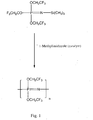
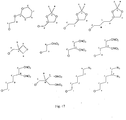
Fig. 1 : is a schematic for the synthesis of the precursor polymer poly[bis-(trifluoroethoxy)phosphazene] -
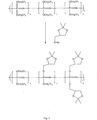
Fig. 2 : is a schematic for the synthesis of the alkoxide precursors (1) (2,2-dimethyl-[1,3]-dioxolan-4-yl)-ethanol, (2) (2,2-dimethyl-[1,3]-dioxolan-4-yl)-butanol, and (3) 2-pyranyloxy ethanol. -
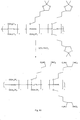
Fig. 3 : is a schematic for the synthesis of trifluoroethoxy/(2,2-diniethyl-[1,3]-dioxolan-4-yl)-methoxy polyphosphazene (PZ1). -
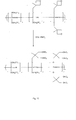
Fig 4 : is a schematic for the synthesis of trifluoroethoxy/(2,2-dimethy)-[1,3]-dioxolan-4-yl)-ethoxy polyphosphazene (PZ2). -
Fig 5 : is a schematic for the synthesis of trifluoroethoxy/(2,2-dimethyl-[1,3]-dioxolan-4-yl)-butoxy polyphosphazene (PZ3). -
Fig 6 : is a schematic for the synthesis of trifluoroethoxy/2-pyranyloxy-ethoxy polyphosphazene (PZ4). -
Fig 7 : is a schematic for the synthesis of trifluoroethoxy/(3-methyl-oxetan-3-yl)-methoxy polyphosphazene (PZ5). -
Fig 8 : is a schematic for the synthesis of trifluoroethoxy/2,3-Dinitratopropan-1-oxy polyphosphazene (PZ6). -
Fig 9 : is a schematic for the synthesis of trifluoroethoxy/3.4-Dinitratobutan-1-oxy polyphosphazene (PZ7). -
Fig 10 : is a schematic for the synthesis of trifluoroethoxy/5,6-Dinitratohexan-1-oxy polyphosphazene (PZ8). -
Fig 11 : is a schematic for the synthesis of trifluoroethoxy/2-nitrato-ethoxy polyphosphazene (PZ9). -
Fig 12 : is a schematic for the synthesis of trifluoroethoxy/2-methyl-3-nitrooxy-2-nitrooxymethyl-propan-1-oxy polyphosphazene (PZ10). -
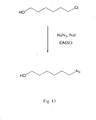
Fig 13 : is a schematic for the synthesis of the precursor 6-azidohexan-1-ol. -
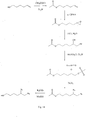
Fig 14 : is a schematic for the synthesis of theprecursor 5,6-diazidohexan-1-ol. -
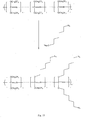
Fig 15 : is a schematic for the synthesis of trifluoroethoxy/6-azidohex-1-oxy polyphosphazene (PZ11). -
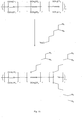
Fig 16 : is a schematic for the synthesis of trifluoroethoxy/5,6-diazidohex-1-oxy polyphosphazene (PZ12). -
Fig. 17 : is a schematic describing the nomenclature of pendant side-groups for NMR spectroscopic characterisation. -
Fig. 18 : shows two graphs demonstrating the effect of percentage energetic side groups on decomposition energy and density for PZ6, PZ7 and PZ8 -
Fig. 19 : shows two graphs demonstrating the effect of percentage energetic side groups on glass transition temperature and decomposition energy for PZ6, PZ7 and PZ8. -
Fig. 20 shows two graphs demonstrating the effect of percentage side groups on density and energy density for PZ11 and PZ12. -
Fig. 21 shows two graphs demonstrating the effect of percentage side groups on energy density for PZ11 and PZ12. - Azidotrimethylsilane (10.54g, 91.4 mmol) was added, with stirring, to 2,2,2-tris-trifluoroethylphosphite (10.0g, 30.5 mmol) under an inert gas atmosphere. The mixture was heated to reflux (ca. 110°C) and the reaction monitored by 31P{1H} NMR spectroscopy. After all phosphite had been consumed (after approx. 72 hours), the reaction was allowed to cool to room temperature, yielding a pale yellow liquid. The pure phosphoranimine product was isolated from the crude mixture via vacuum distillation, to yield a colourless liquid. Yield = 12.7g (55%).
δ H (d6-acetone): 0.09 ppm (s) [Si(CH3)3]; 4.59 ('q') [CH2CF3]
δ C (d6-acetone): 2.67 ppm (s) [Si(CH3)3]; 63.21 (dq, 2JC-F = 37 Hz, 2JC-P = 5 Hz)
[CH2CF3]; 123.94 (dq, 1JC-F 276 Hz, 3JC-P = 11 Hz) [CH2CF3]
δ P (d6-acetone): -10.48 ppm (bs) - To a stirred solution of tris(trifluoroethoxy)-N-(trimethylsilyl)phosphoranimine (38.7g, 93.0 mmol) in diglyme (45 ml), under an inert gas atmosphere, was added 1-methylimidazole (∼2 mol%) and water (ca. 0.5ml). The mixture was heated to 125°C for 8 hours, yielding a pale yellow liquid. The crude mixture was decanted into a flask containing chloroform (150 ml), cooled to ca. -10°C. The polyphosphazene product appeared immediately as a white solid precipitate. This was filtered and washed thoroughly with portions of chloroform and hexane, before drying in vacuo for several hours. Yield = 18.5g (82%).
- Step I - Freshly sublimed hexachlorocyclotriphosphazene (17g) was placed in a dry pyrex tube and sealed under vacuum. The tube was placed in an oven and heated to 255 °C for I hour and then at 250 °C for 16 hours (with rotation of the tube) after which time, the molten material inside the tube almost ceased to flow. The tube was allowed to cool to room temperature, broken open inside an inert atmosphere glovebox and the contents dissolved in a minimum amount of anhydrous toluene. The product, consisting of poly(dichlorophosphazene), was isolated as a colourless rubbery material upon precipitation into an excess of anhydrous hexane.
- Step 2 - Sodium trifluoroethoxide was prepared by adding a solution of trifluoroethanol (5.0g, 0.05mol) in THF (32 ml) to a stirred suspension of sodium hydride (1.20g, 0.05mol) in THF (20 ml) under an inert atmosphere. To the resultant solution was added TBAB (tetra-n-butylammonium bromide, 0.1g) and an anhydrous toluene solution of poly(dichlorophosphazene) (16 ml, 0.021 mol) via syringe. The reaction mixture was heated to reflux for 6 hours before adding to water, resulting in precipitation of a white solid consisting of poly[(bis-trifluoroethoxy)phosphazene]. The product was purified by precipitation as an acetone solution into toluene.
Vmax(neat)/cm-1: 1292, 1168, 1080, 962, 897, 845, 662
δ H (d6-acetone): 4.55 ppm (m) [CH2CF3]
δ C (d6-acetone): 64.12 ppm (q, 2JC-F = 37 Hz) [CH2CF3]; 123.92 (q, 1JC-F = 278 Hz)
[CH2CF3]
δ P (d6-acetone): -6.28 ppm (bs) - To a stirred solution of 1,2,6-hexanetriol (10.0g, 74.6 mmol) in acetone (50 ml) was added dichloromethane (50 ml), p-toluene sulphonic acid (1 mol%, catalyst) and anhydrous magnesium sulphate (50 g). The mixture was allowed to stir at ambient temperature for 24 hours. The MgSO4 was then removed via filtration and the acetone/dichloromethane solution washed with saturated sodium bicarbonate solution (1 x 30 ml) and water (2 x 30 ml). The organic solution was then dried over anhydrous MgSO4, filtered and solvent removed in vacuo, to yield the product as a colourless liquid. Yield = 13.0g (79%).
Vmax (neat)/cm-1: 3419 (O-H stretch), 2985, 2937, 2866, 1379, 1370, 1247, 1215, 1156, 1057, 853
δ H (d6-acetone): 1.26 ppm (s), 1.30 (s) [HA, HB]; 1.30-1.70 (m) HF, HG, HH]; 3.43 (m), 3.99 (m) [HD, HD']; 3.52 (m) [HJ]; 4.01 (m) [HE].
δ C (d6-acetone): 22.76 ppm (s) [CG]; 25.90 (s), 27.18 (s) [CA, CB]; 33.35 (s), 34.02 (s)
[CF, CH]; 62.08 (s) [CJ]; 69.79 (s) [CD]; 76.54 (s) [CE]; 108.73 (s) [CC]. - A similar procedure as described in (A3) was followed, using 1,2,4-butanetriol (10.0g, 94.3 mmol). The product was isolated as a colourless liquid. Yield = 7.6g (55%) (yield is low due to formation of some 2,2-dimethyl-5-hydroxymethyl-1.4-dioxolan as a by product).
ν max (neat)/cm-1: 3426 (O-H stretch), 2987, 2938, 2878, 1472, 1456, 1379. 1370. 1244, 1216, 1159, 1059, 856
δ H (d6-acetone): 1.25 ppm (s), 1.30 (s) [HA, HB]; 1.72 (m) [HF]; 3.49 (m), 4.01 (m)
[HD, HD']; 3.61 (m) [HG]; 4.15 (m) [HE].
δ C (d6-acetone): 25.34 ppm (s), 26.56 (s) [CA, CB]; 36.58 (s) [CF]; 58.74 (s) [CG]: 69.35 (s) [CD]; 73.77 (s) [CE]; 108.13 (s) [CC].
[(2,2-dimethyl-[1,3]-dioxolan-4-yl)-methanol is a commercially available material and was purchased from Aldrich]. - 3,4-Dihydro-2H-pyran (30.0g, 0.36 mol), ethylene glycol (310.0 cm3, 5.36 mol) and p-toluene sulphonic acid (ca. 1 mol%, catalyst) were added to dichloromethane (100 cm3) and the mixture stirred at ambient temperature for 18 hours under an inert gas atmosphere. Water (ca. 150 cm3) was then added, resulting in a biphasic mixture. The organic phase (containing the desired product) was collected and the aqueous phase (containing excess ethylene glycol) extracted with further portions of dichloromethane (3 x 50 cm3). The combined organic phase and washings were dried over anhydrous magnesium sulphate, filtered and solvent removed in vacuo to yield the crude product containing, almost exclusively, the mono-protected alcohol. The desired product was isolated via flash column chromatography (using
silica gel 60 and a 3:1 ratio of hexane:ethyl acetate as eluant). Yield = 9.10g (17.3%).
ν max (neat)/cm-1: 3425 (broad, O-H stretch), 2943, 2872, 1455, 1443, 1385. 1351. 1202, 1138, 1124, 1072, 1033, 986, 926, 905, 871, 812.
δ H (d6-acetone): 1.31 ppm (m) [HE, HF]; 1.40-1.70 (m) [HD]; 3.20-3.70 (m) [HA, HB, HG]; 4.36 (m) [HC].
δ C (d6-acetone): 19.81 ppm [CE]; 25.22 [CF]; 30.65 [CD]; 61.88 [CG]; 62.95 [CA]; 70.18 [CB]; 99.81 [CC]. - To a stirred solution of the appropriate alcohol in THF (under an inert gas atmosphere) was added, dropwise, an equimolar amount of n-BuLi (as a 1.8M solution in hexanes), at ambient temperature. During addition, warming of the reaction flask was noticeable. The solution was left to stir at ambient temperature for 1-2 hours, yielding a pale yellow solution of the Li salt in THF (quantitative conversion).
- A suspension of sodium hydride in THF (under an inert gas atmosphere) was prepared. An equimolar amount of the appropriate alcohol, as a solution in THF. was added dropwise at ambient temperature. The mixture was allowed to stir for several hours at ambient, yielding the Na-salt as a suspension in THF (quantitative conversion).
- To a stirred solution of poly[(bis-trifluoroethoxy)phosphazene] (1.0g, 4.12mmol) in THF (20 ml), under an inert gas atmosphere, was added a solution of the Li salt of (2,2-dimethyl-[1,3]-dioxolan-4-yl)-methanol in THF (10 ml) [Alternatively, a solution poly[(bis-trifluoroethoxy)phosphazene] can be added to a stirred suspension of the sodium salt in THF]. The mixture was heated to reflux and stirred for 18 hours. Upon cooling to ambient temperature, the THF was reduced and a concentrated solution/suspension of the crude product was added to water dropwise with stirring. The aqueous mixture was then acidified (to ca. pH 5-6), resulting in precipitation of the polymeric product. The aqueous solution was decanted and the polymer redissolved in dichloromethane (ca 50ml). The organic solution was then extracted with saturated sodium chloride solution (2 x 30ml) and finally with water 1 x 30ml) before drying over anhydrous MgSO4 (alternatively multiple precipitations into water can be used followed by disolution in dichloromethane and drying over MgSO4. After filtration and removal of solvent in vacuo, the product was dissolved in a minimum quantity of acetone and precipitated into hexane (ca 100ml). The hexane was decanted and the product dried in vacuo (precipitation into hexane was repeated until the product was pure, via 1H NMR). The polymeric product was isolated as a pale yellow viscous liquid. Yield = ca. 60-90%.
ν max (neat)/cm-1: 2990, 2969, 1281, 1255, 1171, 1084, 964, 879, 843, 660, 562
δ H (d6-acetone): 1.29 (s), 1.36 (s) ppm [HA, HB]; 3.81 (b), 4.09 (b), 4.36 (b) [HD, HE, HF]; 4.55 (b) [CH2CF3].
δ C (d6-acetone): 24.59 ppm (s), 26.19 (s) [CA, CB]; 62.77 (q, 2JC-F = 37 Hz)
[CH2CF3]; 65.69 (b) [CD]; 67.92 [CF]; 74.11 (s) [CE]; 109.54 (s) [CC]: 123.17 (q, 1JC-F = 276 Hz) [CH2CF3].
δ P (d6-acetone): ∼ -7.0 ppm (b) - A similar procedure as described in (D1) was followed, using the Na or Li alkoxide salt of (2,2-dimethyl-[1,3]-dioxolan-4-yl)-ethanol. The product was isolated as a pale yellow viscous liquid. Yield = ca. 60-90%.
ν max (neat)/cm-1: 2990, 2967, 1419, 1373, 1282, 1170, 1089, 964, 862
δ H (d6-acetone): 1.28 ppm (s), 1.33 (s) ppm [HA, HB]; 1.92 (b,m) [HF]; 3.57 (b.m)
[HD]; 4.00-4.30 (b,m) [HD, HE, HG]; 4.55 (m) [CH2CF3].
δ C (d6-acetone): 25.09 (s), 26.41 (s) [CA, CB]; 34.27 (b) [CF]; 63.28 (q, 2JC-F = 38 Hz)
[CH2CF3]; 69.03 (s) [CD]; 72.94 (s) [CE]; 108.49 (s) [CC]; 123.12 (q, 1JC-F = 277 Hz)
[CH2CF3].
δ P (d6-acetone): -7.23 ppm (b) - A similar procedure as described in (D1) was followed, using the Na or Li alkoxide salt of (2,2-dimethyl-[1,3]-dioxolan-4-yl)-butanol. The product was isolated as a pale yellow viscous liquid. Yield = ca. 60-90%.
ν max (neat)/cm-1: 2986, 2939, 2868, 1379, 1370, 1283, 1245, 1164, 1087, 1063, 964, 852
δ H (d6-acetone): 1.26 ppm (s), 1.31 (s) ppm [HA, HB]; 1.35-1.80 (b,m) [HF, HG, HH]; 3.45 (b,m) [HD']; 3.95-4.20 (b,m) [HD, HE, HJ]; 4.55 (m) [CH2CF3].
δ C (d6-acetone):: 21.90 ppm (b) [CG]; 25.14 (s), 26.46 (s) [CA, CB]; 30.10 (b) [CH]: 33.24 (b) [CF]; 63.30 (q, 2JC-F = 37 Hz) [CH2CF3]; ∼67.0 [CJ]; 69.15 (s) [CD]; 75.75 (s) [CE]; 108.24 (s) [CC]; 123.12 (q, 1JC-F= 277 Hz) [CH2CF3].
δ P (d6-acetone):: -7.20 ppm (b) - A similar procedure as described in (D1) was followed, using the Na or Li alkoxide salt of 2-pyranyloxy ethanol. The product was isolated as a pale yellow viscous liquid. Yield = ca. 60-90%.
ν max (neat)/cm-1: 2944, 2873, 1283, 1245, 1204, 1165, 1126, 1071, 1035, 988, 965. 872
δ H (d6-acetone): 1.50-1.80 ppm (bm) [HD, HE, HF]; 3.46 (b), 3.66 (b), 3.87 (b), 4.21 (b) [HA, HB, HG]; 4.51 (b) [CH2CF3]; 4.66 (b) [HC].
δ C'(d6-acetone): 19.42 ppm [CE]; 25.46 [CF]; 30.35 [CD]; 61.50-67.00 [CA, CB, CG];
63.17 (q, 2JC-F = 36 Hz) [CH2CF3]; 98.55 [CC]; 123.29 (q, 1JC-F = 275 Hz) [CH2CF3].
δ P (d6-acetone): -7.57 ppm, -6.59, -3.07 (vb), -1.03 (vb) - A similar procedure as described in (D1) was followed, using the Na alkoxide salt of (3-methyl-oxetan-3-yl)-methanol. The product was isolated as a pale yellow viscous liquid. Yield = ca. 60-90%.
δ H (d6-acetone): 1.31 ppm. (s) [HD]; 4.16 (s) [HE]; 4.49 (m) [CH2CF3]; 4.29 & 4.51 (dd) [HA, HB].
δ C (d6-acetone): 20.9 ppm [CD]; 40.5 [CC]; 30.35 [CD]; 63.7 [CH2CF3]: 72.3 [CE]; 124.3 [CH2CF3]. δP (d6-acetone): -6.30 & -7.40 ppm - 95% nitric acid (5 ml) was cooled, with stirring, to between 0-5°C in an ice/water bath. Trifluoroethoxy/(2,2-di methyl-[1,3]-dioxolan-4-yl)-methoxy polyphosphazene (200 mg) was added (neat or dropwise as a solution in DCM) and the reaction mixture stirred for 15 minutes, maintaining the temperature below 5°C. The solution was then added dropwise, with stirring, to cooled, distilled water (∼60 ml), yielding the nitrated product as a white, oily solid precipitate. Excess water (i.e. dilute acid) was decanted, the precipitate washed with several aliquots of distilled water and dried in vacuo at 50°C for 2-3 hours. The pure product was isolated as a pale yellow viscous liquid. Yield = ca. 80-90%.
ν max (neat)/cm-1: 2966, 2910, 1647 (NO2 asym. stretch), 1273, 1174, 1086, 1005, 964. 843 (O-N stretch), 752, 703, 561
δ H (d6-acetone): 4.55 ppm (b,m) [CH2CF3]; 4.91 (b), 5.10 (b) [HA, HC]; 5.77 (b) [HB].
δ C (d6-acetone): 63.29 ppm (q, 2JC-F = 37 Hz) [CH2CF3]; 69.20 (b) [CC]; 71.28 (b)
[CA]; 77.72 (b) [CB]; 123.11 (q, 1JC-F = 277 Hz) [CH2CF3].
δ P (d6-acetone): -6.35 ppm (b) - A similar procedure as described for (E1) was followed, using Trifluoroethoxy/(2,2-dimethyl-[1,3]-dioxolan-4-yl)-ethoxy polyphosphazene. The pure product was isolated as a pale yellow viscous liquid. Yield = ca. 80-90%.
ν max (neat)/cm-1: 2968, 2916, 1652 (NO2 asym. stretch), 1420, 1275, 1171, 1083, 963, 845 (O-N stretch)
δ H (d6-acetone): 2.26 ppm (b) [HC]; 4.30 (b,m) [HD]; 4.55 (m) [CH2CF3]; 4.76 (b.m). 5.04 (b,m) [HA, HA']; 5.64 (b,m) [HB].
δ C (d6-acetone): 63.29 ppm (q, 2JC-F = 37 Hz) [CH2CF3]; 71.68 (b) [CA]; 76.93 (b) [CB]; 123.25 (q, 1JC-F = 277 Hz) [CH2CF3]; [CC and CD resonances thought to be obscured by d-acetone and CH2CF3 respectively] δP (d6-acetone): -7.10 ppm (b) - A similar procedure as described for (E1) was followed, using Trifluoroethoxy/(2.2-dimethyl-[1,3]-dioxolan-4-yl)-butoxy polyphosphazene. The pure product was isolated as a pale yellow viscous liquid. Yield = ca. 80-90%.
ν max (neat)/cm-1: 2960, 2901, 2876, 1638 (NO2 asym. stretch), 1286, 1272, 1169. 1082, 1061, 1036, 1006, 965, 853, 754, 696
δ H (d6-acetone): 1.50-1.95 ppm (b,m) [HC, HD, HE]; 4.13 (b.m) [HF]; 4.55 (m) [CH2CF3]; 4.70 (b,m), 4.98 (b,m) [HA, HA']; 5.48 (b,m) [HB].
δ C (d6-acetone): 21.16 ppm (s) [CD]; 28.52 (obscured by d-acetone) [CE]; ∼29.7 (obscured by d-acetone) [CC]; 63.25 (q, 2JC-F = 33 Hz) [CH2CF3]; 66.78 (b) [CF]; 71.86 (s) [CA]; 80.05 (s) [CB]; 123.17 (q, 1JC-F = 273 Hz) [CH2CF3].
δ P (d6-acetone): -7.23 ppm (b) - A similar procedure as described for (E1) was followed, using trifluoroethoxy/2-pyranyloxy ethoxy polyphosphazene. The pure product was isolated as a pale yellow viscous liquid. Yield = ca. 80-90%.
ν max (neat)/cm-1: 2965, 2904, 1638, 1423, 1373, 1282, 1172, 1073, 965, 904. 853. 758,705,654
δ H (d6-acetone): 4.46 ppm (b), 4.84 (b) (HA, HB]; 4.50 (b) [CH2CF3]
δ C (d6-acetone): ∼63.2 ppm (b, obscured) [CA]; 63.24 (q, 2JC-F = 36 Hz) [CH2CF3]; 71.89 [CB]; 123.23 (q, 1JC-F = 278 Hz) [CH2CF3].
δ P (d6-acetone): -7.25 ppm, -6.70, -3.07 (vb), ca. -2.0 (vb) - A similar procedure as described for (E1) was followed, using Trifluoroethoxy/(3-methyl-oxetan-3-yl)-methoxy polyphosphazene. The pure product was isolated as a pale yellow viscous liquid. Yield = ca. 80-90%.
ν max (neat)/cm-1: 1644; 1280, 1251; 1173, 1084, 965, 863
δ H (d6-acetone): 1.06 ppm (s) [HD]; 4.17 (s) [HC]; 4.53 (m) [CH2CF3]: 4.61 (dd) [HA]. δC (d6-acetone): 16.9 ppm [CD]; 40.0 [CB]; 63.7 [CH2CF3]; 69.3 [CC]; 74.4 [CA]; 124.3 [CH2CF3].
δ P (d6-acetone): -6.50 & -6.90 ppm - To a stirred solution of 1-chloro-6-hydroxyhexane (0.20g, 1.47 mmol) in anhydrous DMF (5 ml), was added sodium azide (0.14g, 2.15 mmol) as a suspension and 15-crown-5 (2 drops via pippette), under an inert gas atmosphere. The reaction mixture was heated to 110°C for 2 hours. After cooling to ambient temperature, water (10 ml) was added, resulting in a pale yellow solution. This was extracted with ethyl acetate (2 x 25ml), followed by extraction of the combined ethyl acetate washings with saturated, aqueous sodium chloride solution (2 x 25ml) and water (2 x 25ml). The organic layer was then dried over anhydrous MgSO4, filtered and solvent removed in vacuo, yielding the product as a colourless liquid. Yield = 0.16g, 76%.
- Sodium azide and sodium iodide were added to a stirred solution of 1-chloro-6-hydroxyhexane in DMSO. A similar procedure to Method I was then followed. Yield = 0.18g, 86%.
ν max (neat)/cm-1: 3337, 2936, 2862, 2097, 1459, 1350, 1285, 1261, 1056
δ H (CDCl3): 1.20-1.40 ppm (2H, m) & 1.40-1.60 (4H, m) [H2, H3, H4, H5]; 2.39 (1H, bs) [OH]; 3.21 (2H, m) [H6]; 3.55 (2H, m) [H1].
δ C (CDCl3): 25.37 ppm & 26.56 [C3, C4]; 28.83 [C2]; 32.53 [C5]; 51.41 [C1]; 62.56 [C6]. - To an anhydrous solution of hex-5-en-1-ol (15.0 g, 0.15 mol) in dichloromethane (250 ml) was added acetyl chloride (11.3 ml, 0.20 mol). Triethylamine (20.8 ml, 0.15 ml) was then added and the reaction mixture was stirred at room temperature (18 h) followed by the addition of water (50 ml). The organic layer was separated, the aqueous layer extracted with dichloromethane (2 x 50 ml) and the combined organic extracts were washed with saturated brine solution (3 x 100 ml). The organic layer was finally washed with water (3 x 100 ml) and dried over anhydrous magnesium sulphate. On removal of the drying agent by filtration under gravity, the solvent was removed in vacuo to afford hex-5-enyl-1-acetate as a colourless oil, in near quantitative yield (21.0 g, 99%).
δ H (CDCl3): 1.32 (2H, m) [H3]; 1.53 (2H, m) [H4]; 1.94 - 1.97 (5H, m) [CH 3C=O, H2], 3.94 (2H, t, J 6.4 Hz) [H1]; 4.88 (2H, m) [H6]; 5.68 (1H, m) [H5].
δ C (CDCl3): 20.89 [CH3C=O]; 25.17 [C3]; 28.02 [C4]; 33.28 [C2]; 64.31 [C1]; 1 14.78 [C6]; 138.25 [C5]; 171.01 [C=O]. - To an anhydrous solution of hex-5-enyl-1-acetate (8.00 g, 56.3 mmol) in dichloromethane (250 ml) was added m-chloroperoxybenzoic acid (14.9 g, 56.3 mmol, 75 wt. % in water) at 0 °C. The reaction mixture was then stirred at room temperature, in air (18 h), followed by the cautious addition of saturated sodium hydrogen carbonate solution (100 ml). Once the insoluble precipitate had dissolved the organic layer was separated. The aqueous layer was then extracted with dichloromethane (2 x 50 ml) and the combined organic extracts were washed with saturated sodium hydrogen carbonate solution (3 x 100 ml). The organic layer was then washed with saturated brine solution (3 x 100 ml), water (3 x 100 ml) and finally dried over anhydrous magnesium sulfate. On removal of the drying agent by filtration under gravity, the solvent was removed in vacuo to afford 5-oxiranyl-hexyl-1-acetate as a colourless oil in near quantitative yield (8.60 g, 97%).
δ H (CDCl3): 1.46-1.60 (6H, m) [H4, H3, H2]; 2.01 (3H) [CO2Me]; 2.40 (1H, m) [HH6]; 2.73 (1H, m) [HH6]; 2.87 (1H, m) [H5]; 4.03 (2H, t, J 6.4 Hz) [H1].
δ C (CDCl3): 21.04 CH3C=O]; 22.55 [C3]; 28.42 [C4]; 32.10 [C2]; 47.13 [C6]; 52.27 [C5]; 64.34 [C1]; 171.43 [C=O]. - To a solution of 5-oxiranyl-hexyl-1-acetate (8.00 g, 50.6 mmol), in aqueous ether (100 ml, 1:1 v/v), was added concentrated hydrochloric acid (5.00 ml). The reaction mixture was stirred at room temperature, in air (3 h), followed by the cautious addition of saturated sodium hydrogen carbonate solution (100 ml) and the organic layer separated. The aqueous layer was then extracted with dichloromethane (2 x 50 ml) and the combined organic extracts were washed with saturated hydrogen carbonate solution (3 x 50 ml). The organic layer was then washed with saturated brine solution (3 x 100 ml), water (3 x 50 ml) and finally dried over anhydrous magnesium sulfate. On removal of the drying agent, the solvent was removed in vacuo to afford the 5,6-dihydroxy-hexyl-1-acetate as a pale yellow oil in near quantitative yield (8.90 g, 99+%).
δ H (CDCl3): 1.50-1.54 (6H, m) [H2, H3, H4]; 2.02 (3H, s) [CO2Me]; 3.45 (1H, m) [HH6]; 3.58 (1H, m) [HH 6]; 3.78 (1H, m) [H5]; 4.06 (2H, J 6.4 Hz) [H1]; 5.71 (2H. bs) [OH].
δ C (CDCl3): 21.08 [CH3C=O]; 22.10 [C3]; 28.51 [C4]; 33.78 [C2]; 50.36 [C6]; 64.39 [C1]; 71.36 [C5]; 171.20 [C=O]. - To a solution of 5,6-dihydroxy-hexyl-1-acetate (1.00 g, 5.68 mmol) in anhydrous dichloromethane (10 ml) was added methanesulfonyl chloride (1.94 ml, 25.0 mmol,). The reaction mixture was cooled to 0 °C, triethylamine (2.77 ml, 20.0 mmol) was then cautiously added dropwise and the reaction mixture was allowed to warm to room temperature with stirring (18 h). Upon the addition of water (10 ml), the organic layer was separated and the aqueous layer was extracted with dichloromethane (2 x 10 ml). The combined organic extracts were washed with saturated hydrogen carbonate solution (3 x 10 ml). The organic layer was then washed with saturated brine solution (3 x 10 ml) and water (3 x 10 ml) and finally dried over anhydrous magnesium sulfate. On removal of the drying agent, the solvent was removed in vacuo to afford 5,6-dimethanesulfonyloxy-hexyl-1-acetate as a yellow oil (1.79 g, 95%).
δ H (CDCl3): 1.61 (6H, m) [H2, H3, H4]; 1.97, (3H, s) [CO2Me]; 3.64 - 3.67 (6H, 2 x s) [SO2Me]; 3.99 - 4.01 (3H, m) [H1, HH 6]; 4.05 (1H, m) [HH6]; 4.78 (1 H, m) [H5].
δ C (CDCl3): 21.07 CH3C=O]; 21.39 [C3]; 28.04 [C4]; 32.23 [C2]; 45.60 [2 x SO2Me]; 52.69 [C6]; 63.95 [C1]; 81.04 [C5]; 171.24 [C=O]. - To a solution of 5,6-dimethanesulfonyloxy-hexyl-1-acetate (0.25 g, 0.75 mmol) in anhydrous dimethylformamide (10ml) was added sodium azide (0.17 g, 2.5 mmol). The reaction mixture was then stirred and heated to 90 °C (18 h). On cooling, water was added to the reaction mixture and the crude product extracted into ethyl acetate (3 x 10 ml). The combined organic extracts were washed with saturated brine solution (4 x 50 ml), water (3 x 25 ml) and finally dried over anhydrous magnesium sulfate. On removal of the drying agent, the solvent was removed in vacuo to afford 5,6-diazido-hexyl-1-acetate as an orange oil, in near quantitative yield (0.16 g, 94%).
ν max (neat)/cm-1: 1245(w), 1736(m, C=O), 2102 (s, N 3).
δ H (CDCl3): 1.51-1.53 (H, m) [H2, H3, H4]; 1.99 (3H, s) [CO2Me]; 3.31 (2H, m) [H6]; 3.40 (1H, m) [H5]; 4.02 (2H, t, J 6.4 Hz) [H1].
δ C (CDCl3): 21.04 [CH3C=O]; 22.53 [C3]; 28.36 [C4]; 31.47 [C2]; 54.86 [C6]; 61.93 [C5]; 64.02 [C1]; 171.17 [C=O]. - To a solution of 5,6-diazido-hexyl-1-acetate (0.16 g, 0.70 mmol) in methanol (10 ml) was added potassium carbonate (0.83 g, 6.00 mmol). The reaction mixture was stirred at room temperature, in air (18 h), followed by the addition of water (20 ml). The crude product was then extracted into ethyl acetate (3 x 10 ml). The combined organic extracts were washed with saturated brine solution (3 x 10 ml) and water (3 x 10 ml) and finally dried over anhydrous magnesium sulfate. On removal of the drying agent, the solvent was removed in vacuo to afford 5,6-diazido-hexan-1-ol as a orange oil, in near quantitative yield (0.12 g, 99%).
ν max (neat)/cm-1:
δ H (CDCl3): 1.44 (6H, m) [H2, H3, H4]; 2.40 (1H, bs) [OH]: 3.27 (2H, m) [H6]; 3.34 (1H, m) [H5]; 3.58 (2H, t, J 5.9 Hz) [H1].
δ C (CDCl3): 20.35 [C3]; 31.63 and 32.29 [C4, C2]; 54.87 [C6]; 62.09 [C5]; 62.47 [C1]. - Poly[(bis-trifluoroethoxy)phosphazene] (1g, 4.12 mmol as a solution in THF, ca. 10 ml) was added to a stirred suspension of sodium 6-azidohex-1-oxide in anhydrous THF [prepared via reaction of alcohol with equimolar amount of NaH in a similar fashion as described in Method C; quantitative conversion] and the reaction mixture heated to reflux for 18 hours, under an inert gas atmosphere. Upon cooling to ambient temperature, the THF was reduced and a concentrated solution/suspension of the crude product was added to water dropwise, with stirring. The aqueous mixture was then acidified using HCl (to pH 5-6), resulting in precipitation of all the polymeric product. The aqueous solution was decanted and the polymer washed with water, before redissolving in THF (or acetone) and repeating the precipitation process. The polymer was then dissolved in dichloromethane and dried over anhydrous MgSO4. After filtration and removal of solvent in vacuo, the product was dissolved in a minimum quantity of acetone and precipitated into hexane. The hexane was decanted and the product dried in vacuo (precipitation into hexane was repeated until the product was pure, via 1H NMR). The polymeric product was isolated as a pale yellow viscous liquid.
- (Alternately one may follow the work up procedure as detailed in method D1).
ν max (neat)/cm-1: 2941, 2865, 2099 (N3 stretch), 1457, 1419, 1284, 1169, 1092, 1057, 964,870,557
δ H (d6-acetone): 1.46 (b), 1.64 (b) [H2, H3, H4, H5]; 3.35 (b) [H6]; 4.04 (b) [H1]; 4.46 (b) [OCH 2CF3].
δ C (d6-acetone): 25.21 (b) & 26.37 (b) [C3, C4]; 30.01 (b) [C2]; 51.16 (s) [C6]; 62.90 (b) [OCH2CF3]; 67.11 (b) [C1]; 123.66 (bq, 1JC-F = 278 Hz) [OCH2 CF3].
[C5 resonance obscured by d6-acetone signal]
δ P (d6-acetone): ca. -7.0 (very broad) - A similar procedure as described for (G1) was followed, using poly[(bis-trifluoroethoxy)phosphazene] and
sodium 5,6-diazidohex-1-oxide.
ν max (neat)/cm-1: 2950, 2095 (N3 stretch), 1418, 1241, 1160, 1078, 961, 866, 655, 623 δH (d6-acetone): 1.58 (b), 1.72 (b) [H2, H3, H4]; 3.43-3.61 (bm) [H5, H6]; 4.09 (b)
[H1]; 4.49 (b) [OCH 2CF3].
δ C (d6-acetone): 22.13 (b) [C3]; 30.01 (b) [C2 or C4]; 54.66 (s) [C6]; 62.05 (s) [C5]; 62.82 (bm) [OCH2CF3]; ca. 66.50 (b) [C1]; 123.47 (bq, 1JC-F = 278 Hz) [OCH2 CF3] [remaining resonance (CB.or CD) obscured by d6-acetone signal]
δ P (d6-acetone): ca. -7.0 (very broad) - The extent of substitution of the alkoxide (and hence the final loading of nitrate ester groups along the backbone) was varied by modification of the reaction conditions. The extent of nitrate ester substitution may be increased by either of the following:
- (1) increasing the ratio of substitutable alkoxide to poly[(bis-trifluoroethoxy)phosphazene], or (2) increasing the length of the reaction time and (3) using a sodium aloxide salt as opposed to a lithium salt.
- Table 2 below indicates the effect of these variables on energetic side group precursor substitution. The extent of energetic side group precursor substitution was determined by integration of 1H NMR signals. The degree of substitution is believed not to change during nitration, thus, the values quoted will apply also to their nitrated derivatives.
Table 2: Effect of alkoxide to polymer ratio, alkoxide cation and reaction time on percentage energetic precursor side groups for nitrato-ester polymers. Sample % Energetic precursor side-groups Synthetic conditions Alkoxide: Polymer ratio Li/Na salt Reaction time PZ1 16 2:1 Li 18 hr reflux PZ1 36 1:1 Na 1 hr 15 min reflux PZ1 46 1:1 Na 3 hr 45 min refluxPZ1 62 2.2:1 Na 18 hr reflux PZ1 72 2.2:1 Na 23 hr reflux PZ2 6 0.5:1 Li 18 hr reflux PZ2 17 1:1 Li 18 hr reflux PZ2 22 3:1 Li 18 hr reflux PZ2 28 5:1 Li 18 hr reflux PZ2 52 2.2:1 Na 18 hr reflux PZ2 68 5:1 Na 18 hr reflux PZ3 9 0.5:1 Li 18 hr reflux PZ3 24 1:1 Li 18 hr reflux PZ3 41 5:1 Li 18 hr reflux PZ3 51 3:1 Na 6 hr reflux PZ3 77 5:1 Na 18 hr reflux PZ4 11 3:1 Na 4 hr reflux PZ4 26 3.3:1 Li 18 hr reflux PZ4 72 5.5:1 Na 18 hr reflux PZ5 16 0.4:1 Na 18 hr reflux. PZ5 22 0.5:1 Na 18 hr reflux PZ5 48 0.8:1 Na 18 hr reflux PZ5 52 1.2:1 Na 18 hr reflux PZ5 72 2:1 Na 18 hr reflux - The extent of substitution of azide functionalised side groups onto the polymer backbone can be increased by increasing the ratio of substitutable alkoxide to polymer (this is indicated in Table 3). The skilled man will appreciate that the degree of substitution can also be modified according to the reaction time, temperature and nature of cation. The extent of energetic side group substitution was determined by integration of 1H NMR signals.
Sample polymer Reactant ratio* (Na alkoxide:polymer) % Trifluoroethoxy side-groups % Energetic side groups PZ11 (1a) 1:1 71 29 PZ11 (1b) 2:1 54 46 PZ11 (1c) 5:1 45 55 PZ11 (1d) 1c + 2:1 35 65 PZ12 (2a) 1:1 80 20 PZ12 (2b) 2a + 1:1 74 26 PZ12 (2c) 2a + 2:1 71 29 PZ12 (2d) 4.5:1 56 44 * All reactions stirred under reflux for 18 hrs. + indicates the use of two stage reaction to ensure the reaction goes to completion. - Table 3: Effect of alkoxide ratio to polymer on percentage energetic precursor side groups for the azide substituted polymers.
- Physical properties associated with poly(phosphazene)s of Formula A can he modified by varying one or more of the following: (a) the degree of substitution of energetic side-groups (b) the length of the carbon chain of the energetic side-group. (c) the type of energetic functionality incorporated into the energetic side-group and (d) the number of energetic functional groups attached to the energetic side-group.
- This is illustrated for some nitrate ester (Graphs 1-4) and azide (Graphs 5-7) functionalised poly(phosphazene)s of Formula A below. Graphs 1-4 are shown in
Fig. 18 andgraphs 5 to 7 are shown inFig. 19 . All available physical characterisation data for PZ1-12 can be found in tabulated form in Appendix A. -
Graph 1 illustrates the effect of percentage energetic side groups on decomposition energy for PZ6, PZ7 and PZ8. -
Graph 2 illustrates the effect of percentage energetic side groups on density for PZ6, PZ7 and PZ8. -
Graph 3 illustrates the effect of percentage energetic side groups on energy density for PZ6, PZ7 and PZ8. -
Graph 4 illustrates the effect of percentage energetic side groups on glass transition temperature for PZ6, PZ7 and PZ8. -
Graph 5 illustrates the effect of percentage energetic sode groups on decompostion energy for PZ11 and PZ12 -
Graph 6 illustrates the effect of percentage energetic side groups on density for PZ11 and PZ12 - Graph 7: illustrates the effect of percentage energetic side groups on energy density for PZ11 and PZ12.
- Table 4 summarises the Tg data obtained for three mixed substitutent polyphosphazenes of Formula A (1-3) containing both 2,3-Dinitratopropan-1-oxy (C3-ONO2 in Table 4) and 5,6-Dinitratohexan-1-oxy (C6-ONO2) side-groups (as well as trifluoroethoxy (TFE)). These data demonstrate that by comparison with graph 4 Tg can be modified by incorporating more than one non-trifluoroethoxy substituent.
Sample Side-Group Stoichiometry1 Tg of product Tg of (a + b)% PZ6 (Tg1 - Tg 2) C3-ONO2 (a/ %) C6-ONO2 (b/%) TFE (%) (Tg 1/°C) (Tg 2/°C)2 (°C) 1 14 37 49 -42 -32 -10 2 27 42 31 -30 -24 -6 3 49 24 27 -32 -23 -9 1 Calculated via integration of 1H NMR spectrum of inert precursor.
2 Determined from trendline using data inGraph 4 for PZ6. - Table 4: Variation of Tg with multiple substitution of nitrato ester side groups.
- Synthesis of 1: (1) Reaction of 3:1:1 ratio of
sodium 2,2-dimethyl-[1,3]-dioxolan-4-yl)-butoxide:sodium 2,2-dimethyl-[1,3]-dioxolan-4-yl)-methoxide: poly[(bis-trifluoroethoxy)phosphazene] in refluxing THF for 18 hours, according to method D1, followed by (2) nitration using 95% nitric acid according to method E1. - Synthesis of 2: (1) Reaction of a 1:1 ratio of
sodium 2,2-dimethyl-[1,3]-dioxolan-4-yl)-methoxide: poly[(bis-trifluoroethoxy)phosphazene] in refluxing THF for 18 hours, according to method D1, followed by (2) reaction of this product with a 4:1 excess of ofsodium 2,2-dimethyl-[1,3]-dioxolan-4-yl)-butoxide in refluxing THF for 18 hours according to D1, followed by (3) nitration using 95% nitric acid according to method E1. - Synthesis of 3: (1) Reaction of a 2:1 ratio of
sodium 2,2-dimethyl-[1,3]-dioxolan-4-yl)-methoxide: poly[(bis-trifluoroethoxy)phosphazene] in refluxing THF for 4 hours, according to method D1, followed by (2) reaction of this product with a 4:1 excess of ofsodium 2,2-dimethyl-[1,3]-dioxolan-4-yl)-butoxide in refluxing THF for 18 hours according to D I, followed by (3) nitration using 95% nitric acid according to method E1. - The binder properties of the polyphosphazenes revealed in the present invention have been demonstrated in relation to organic fillers by using the following crystalline energetic materials: HNS (2,2',4,4',6,6'-hexanitrostilbene, HMX (1,3,5.7-tetranitro-1,3,5,7-tetraazacyclooctane), TATB (1,3,5-triamino-2,4,6-trinitrobenzene) and FOX-7 (1,1-diamino-2,2-dinitroethylene). Such energetic materials may be employed both as high explosives and (particularly HMX) as propellant ingredients. To date, various combinations of PZ6 (18/68% nitrate ester side-groups), PZ8 (17/70% nitrate ester) and PZ11 (60% azide) have been examined. Compositions containing 1, 5 and 10% binder loading have been prepared, using a solvent paste mixing process. These polymers generated free flowing but cohesive moulding powders, which pressed to form robust pellets.
- Physical and explosive hazard data for a number of these formulations are presented in Table 5. These data demonstrate good compatibility between the polyphosphazenes and the various crystalline energetic materials, as indicated by no colour changes (up to 100°C), no significant reduction in the decomposition onset temperatures of the energetic fillers and acceptable small-scale hazard data. F of I data for the samples similarly demonstrated satisfactory hazard characteristics. Scanning electron micrographs suggest that good crystal coverage is being achieved by the polyphosphazene binders and densities up to 98% TMD have been measured for the product pellets, which were prepared using a basic die press without vacuum. General method for preparation of moulding powders/pressed pellets
- A solution of the polyphosphazene binder material (ca. 6-10% w/v in THF) was added to the powdered crystalline energetic ingredient (ca. 3-5g) in a nickel crucible according to the required composition. The resulting slurry was stirred (using a bone spatula) at ambient temperature whilst the majority of solvent evaporated, generating a thick paste. The crucible was then placed in an oven at 40°C for up to 30 minutes to remove the final traces of solvent. The resulting moulding powder was a hard, granular, free-flowing solid. Pellets were prepared in a 10.6mm diameter steel die using 0.6-0.8g of moulding powder per pellet. Pressing was performed for 5 minutes per sample, using a pressure of 2 tons.
- The binder properties of the polyphosphazenes revealed in the present invention have been further established in relation to a number of typical inorganic fillers used in enhanced blast explosive, pyrotechnic and propellant formulations. Thus, ammonium perchlorate (AP), ammonium nitrate (AN), magnesium powder and aluminium powder have each been formulated with PZ8 (70% nitrato substitution) and PZ11 (60% azido substitution). A similar mixing procedure was adopted to that used for the organic fillers (above). Optionally acetone was employed as the process solvent instead of THF. Details of the formulations and their hazard/ignition characteristics are given in Table 6. The prime objective of these experiments was to demonstrate chemical compatibility with the solids and the ability of polyphosphazenes to effectively coat and adhere to the solids, thereby making them suitable for use as binders. Once coated the moulding powder was a cohesive granular material which could be readily compacted into a coherent solid.
- Whilst results of ignition tests are also shown, there has been no attempt to optimise the formulations for combustion. Thus, in absence of an oxidant such as ammonium perchlorate, it is not surprising that aluminium/polyphosphazene mixtures do not readily combust and similarly, the ammonium nitrate systems will require significant modification before they become readily combustible. However, having demonstrated the chemical compatibility of these individual filler materials with polyphosphazenes and the ability of these polymers to coherently bind the individual fillers (high explosives, oxidants and metals) it is reasonable to assume that multiple selections of these materials may be used together with polyphosphazenes (and possibly other materials) in order to optimise the desired properties of a given formulation as an explosive, propellant or pyrotechnic.
Table 5: Physical and explosive hazard data for various polyphosphazene formulations using organic fillers. Crystalline Energetic Ingredient (Filler) Binder (% energetic side-groups) Filler:Bind er ratio Mallet1 impact (no. of fires) Mallet1 friction (no. of fires) Colour Change (@ 100°C) DSC (onset of Filler decomp./°C) Density of pressed pellet (g/cc) Langlie Figure of Insensitivenesss (F of I) Fox-7 PZ8 (70) 90:10 0/10 0/10 None 269 1.7013 73.9 Fox-7 PZ11 (60) 90:10 0/10 0/10 None 263 1.6477 80.0 HMX PZ6 (18) 90:10 0/10 0/10 0 None - 1.8166 64.0 HMX PZ8 (17) 90:10 1/10 0/10 None 278 1.8055 72.1 HMX PZ6 (68) 90:10 1/10 1/10 None 277 - 61.3 HNS PZ8 (17) 99:1 0/10 0/10 None 319 1.6889 106.0 HNS PZ8 (17) 95:5 0/10 0/10 None 318 1.6329 73.9 HNS PZ6 (68) 99:1 0/10 0/10 None - - 67.1 HNS PZ8(70) 99:1 0/10 0/10 None - - 77.6 TATB PZ8 (70) 95:5 0/10 0/10 None 370 1.8436 88.1 TATB PZ8(70) 90:10 0/10 0/10 None 370 1.7925 72.6 TATB PZ8 (17) 95.5 0/10 0/10 None 373 1.8809 139 TATB PZ11 (60) 95:5 0/10 0/10 None - 1.7151 83.9 TATB PZ6 (18) 90:10 0/10 0/10 None 371 - - 1 Small scale mallet tests refer to steel on steel Table 6: Physical and explosive hazard data for various polyphosphazene formulations using inorganic fillers. Filler Binder (% energetic side-groups) Filler:Bind er ratio Mallet1 impact (no. of fires) Mallet1 friction (no. of fires) Colour Change (30min @100°C) DSC (onset of decomp./°C) Flame Test AP PZ8 (70) 75:25 2/10 0/10 None 192 Burns smoothly but fiercely, with hissing sound AN PZ8 (70) 75:25 0/10 0/10 None 168 Liquified, blackened to char, no ignition Mg PZ8 (70) 75:25 0/10 0/10 None 189 Bright white flash, rapid burn Al PZ8 (70) 75:25 0/10 0/10 None 188 Charred, did not ignite AP PZ11 (60) 75:25 1/10 1/10 None 240 Smooth burn, white flame AN PZ11 (60) 75:25 0/10 0/10 None - Liquified, blacked, no ignition Mg PZ11 (60) 75:25 0/10 0/10 None - Bright white flash, rapid burn Al PZ11 (60) 75:25 0/10 0/10 None 219 Charred, did not ignite AP polyGLYN 75:25 1/10 3/10 None 196 Yellow flame, bright sparks ejected Mg polyGLYN 75:25 0/10 0/10 None 189 Bright white flash, rapid burn 1 Small scale mallet tests refer to steel on steel - At present, the pure energetic polyphosphazenes generated herein cannot be directly cured via a chemical crosslinking process, although as demonstrated above, they can be used as effective formulation binders, using a solvent paste process. However, it has been demonstrated that some of these polyphosphazenes are miscible with other energetic polymers (e.g. polyNIMMO, polyGLYN) which .can themselves be crosslinked using standard isocyanate technology. It is thus possible to generate a chemically cured system comprising a mixture of polyphosphazene with these binders (ie by using the polyphosphazenes as co-binders). The miscibility of polyGLYN and polyphosphazenes has been demonstrated by the observation of a single Tg for the blended mixture. Thus, several mixtures of a nitrate ester functionalised polyphosphazene (70% C6-nitrato, PZ8) with polyGLYN were prepared in varying ratios, as summarised in Table 7. and glass transition temperatures measured using DSC. The Table demonstrates that use of a polyphosphazene as a co-binder with polyGLYN has the benefit of producing a mixed binder possessing a lower Tg than that of polyGLYN alone.
Table 7: Varation of Tg with weight fraction og PolyGLYN and PZ8. Sample No. Weight fraction of PolyGlYN Weight fraction of PZ8 Tg (°C) 1 100 0 -31.1 2 75 25 -32.4 3 60 40 -32.7 4 50 50 -37.3 5 40 60 -40.3 6 25 75 -43.3 7 0 100 -45.8 - Tg data for the mixtures as well as the individual components are supplied in the Table. These data reveal only one Tg for each mixture, which in general falls between the values of the individual components. This is illustrated graphically in
Graph 8 and demonstrates that the two materials are, in fact, miscible. The transitions observed for the mixtures deviate somewhat from the 'ideal' based on a weight average value of the composition's pure components (i.e. the line in Graph 8). Such deviations, in general, are caused by interactions between the two polymers (such as hydrogen bonding) and are commonly observed for polymer blends. - Several mixtures of PZ8 (70% energetic side-groups) with both polyGLYN and polyNIMMO have been prepared and cured. These include 50:50 and 40:60 mixtures of PZ8:polyGLYN and PZ8:polyNIMMO. The polymers were dissolved in a minimal quantity of THF, as an aid to achieving homogeneous mixing: the solvent was then evaporated under atmospheric pressure. The mixed binder was redissolved in acetone and isopherone diisocyanate (IPDI, 1.1 molar equivalent with respect to the specified hydroxyl functionality of the hydroxyl terminated polymer) and dibutyltindilaurate catalyst (1000 ppm with respect to hydroxyl functionalised polymer) were added. The blended polymers were then cured for 2-6 days at 60 °C to form soft, high tack, extensible rubbers.
-
Inert polyphosphazene precursors PZ1-5 Sample % Energetic precursors ide-groups Physical Characteristics GPC data [No. of repeat units] (Mp/Da) Density (g/cc) Tg(°C) PZ1 16 - - -41.3 PZ1 36 - - -32.1 PZ1 46 - - -22.4 PZ1 62 - - -23.3 PZ1 72 - - -20.8 PZ2 6 - 1.69 -44.3 PZ2 17 - 1.62 -41.5 PZ2 22 - 1.59 -41.9 PZ2 28 - 1.51 -41.5 PZ2 52 - 1.62 - PZ2 68 - 1.33 - PZ3 9 12080 [46] 1.67 -44.5 PZ3 24 6610 [22] 1.63 -50.8 PZ3 41 7950 [23] 1.36 -51.0 PZ3 51 13500 [37] 1.31 -51.5 PZ3 77 8270 [19] 1.47 -54.9 PZ4 11 - - -26.2 PZ4 26 - - -33.5 PZ4 72 - - - PZ5 16 - - -21.5 PZ5 22 - - - PZ5 48 - - -12.2 PZ5 52 - - +0.7 PZ5 72 - - +0.5 Trifluoroethoxy/2,3-Dinitratopropan-1-oxy Polyphosphazene (PZ6) % Energetic side-groups Decompositon energy (J/g) (DSC) Onset of Decomposit ion (°C) Density (g/cm3) Tg (°C) GPC Peak molecular weight (Da) 16 667 163.1 1.74 -46.8 6660. 2850 36 1367 165.5 1.69 -37.5 7420. 1130 46 1429 163.4 1.69 -33.5 7660. 1650 62 1954 167.9 1.70 -25.7 4960. 1260 72 2020 166.3 1.64 -24.3 4790. 1400 Trifluoroethoxy/3,4-Dinitratobutan-1-oxy Polyphosphazene (PZ7) % Energetic side-groups Decompositon energy (J/g) (DSC) Onset of Decomposition (°C) Density (g/cm3) Tg (°C) GPC Peak molecular weight (Da)* 6 301 171.6 1.75 -43.0 8020, 2170 17 488 180.6 1.70 -40.7 7000. 1230 22 758 178.9 1.68 -39.9 2420 28 877 180.3 1.65 -41.3 6250, 1190 52 1500 164.1 1.66 -20.8 1120 68 2366 172.6 1.60 -13.0 1680 * Major GPC peaks in bold Trifluoroethoxy/5,6-Dinitratohexan-1-oxy Polyphosphazene (PZ8) % Energetic side-groups Decompositon energy (J/g) (DSC) Onset of Decomposition (°C) Density (g/cm3) Tg(°C) GPC Peak molecular weight (Da)* 9 423 181.8 1.79 -50.2 12820, 2430 24 1123 184.9 1.61 -52.9 2710, 1720 41 1506 184.1 1.57 -50.2 8150, 2140 51 1927 186.8 1.53 -43.8 12773, 5012, 3080 77 2425 185.9 1.52 -54.6 9000, 3625 * Major GPC peaks in bold Trifluoroethoxy/2-Nitratoethan-1-oxy Polyphosphazene (PZ9) % Energetic side-groups Decompositon energy (J/g) (DSC) Onset of Decomposit ion (°C) Density (g/cm3) Tg (°C) GPC Peak molecular weight (Da) 11 337 174.2 1.73 -47.9 3050 26.5 912 184.8 1.71 -60.9 3560, 1950 74 1936 177.1 1.61 -35.6 Trifluoroethoxy//2-Methyl-3-nitrooxy-2-nitrooxymethyl-propan-1-oxy Polyphosphazene (PZ10) % Energetic side-groups Decompositon energy (J/g) (DSC) Onset of Decomposit ion (°C) Density (g/cm3) Tg(°C) GPC Peak molecular weight (Da) 11 - >130 - -43.7 - 47 1760 - - -25.5 - 51 - >130 - -10.8 - 59 2037 - 1.55 -6.5 - Trifluoroethoxy/6-Azidohexan-1-oxy Polyphosphazene (PZ11) % Energetic side-groups Decomposit on energy (J/g) (DSC) Onset of Decomposition (°C) Density (g/cm3) G PC Peak molecular weight (Da) [No. of repeat units] Poly-dispersity 29 810 212 1.48 3460 [13] - 46 910 212 1.46 - - 55 1205 218 1.32 6570 [23] 1.31 65 1185 211 1.23 11600 [39] 1.53 Trifluoroethoxy/5,6-Diazidohexan-1-oxy Polyphosphazene (PZ12) % Energetic side-groups Decomposit on energy (J/g) (DSC) Onset of Decomposition (°C) Density (g/cm3) GPC Peak molecular weight (Da) [No. of repeat units | Poly-dispersity 20 1060 200 1.52 3090 [11] - 26 1230 194 1.59 2820 [10] - 29 1190 193 1.59 3000 [10] - 44 1500 189 1.43 6320 [20] 1.53 - The peak molecular weight (Mp) data for PZ3, measured using GPC, correspond to ca. 20-50 repeat units, although the overall distribution is much wider. These figures apply generally to PZ1-PZ5. However, it should be noted that these GPC determined molecular weights are not absolute values, but polystyrene equivalent masses. Thus, whilst the quoted GPC figures characterise the products, they should not be taken as an accurate indication of the absolute polymer chain lengths.
- MALDI MS (Matrix Assisted Laser Desorption Ionisation Mass Spectrometry) data recorded for the trifluoroethoxy substituted homopolymer precursor (data not available for the substituted polyphosphazenes) indicates a peak molecular weight of ca. 4000 Da, corresponding to approximately 16 repeat units and a distribution ranging from around 7-50 units. These data are absolute molecular weights and are thought to give a more accurate determination of the chain lengths at the lower mass end. Assuming chain degradation does not occur during the alkoxide substitution step these values can be applied to PZ1-5. However, MALDI is unlikely to adequately detect higher molecular weight fractions due to problems with the volatilisation of large molecules.
- In some cases the available GPC data for energetic polyphosphazenes PZ6-9 indicate what are believed to be unrealistically low molecular weights (ie significantly lower than PZ1-4 precursor polymers - implying chain degradation during nitration). This effect is thought to be an analytical anomaly due to limitations of the GPC method and the choice of eluant solvent. The following evidence supports this assertion:-
- (1) MALDI MS data recorded for pristine poly(bis-trifluoroethoxy)phosphazene and the same material after exposure to 95% nitric acid (nitration medium used for syntheses of PZ6-PZ10) show no significant differences in molecular weight distribution (hence indicating that chain scission is not occurring).
- (2) In contrast with the results obtained when using THF as eluent, GPC data obtained for PZ8 showed no shift to lower molecular weight, as compared with its precursor PZ3, if acetone was used as eluant.
- Peak molecular weight data indicate polymer chain lengths of ca. 10-20 repeat units, therefore the distribution is likely to range from ca. 5 repeat units to 50 based on the available polydispersity data. However, the same limitations in the GPC data discussed for PZ1-5 above apply to PZ11-12.
Claims (11)
- Poly(phosphazene) homopolymer compounds of the Formula B comprising n units of structure (iii):

- Poly(phosphazene) homopolymer compounds according to claim 1 wherein:R2 is C1-18(alkyl)CH(ONO2)CH2(ONO2); C1-18(alkyl)CH(N3)CH2(N3);C1-19(alkyl)CH2(ONO2); C1-19 (alkyl)CH2(N3); CH2C(CH3)(CH2ONO2)2,R3 Is C1-18(alkyl)CH(ONO2)CH2(ONO2); C1-18(alkyl)CH(N3)CH2(N3);C1-19(alkyl)CH2(ONO2); C1-19 (alkyl)CH2(N3); CH2C(CH3)(CH2ONO2)2,
5≤n≤300. - Poly(phosphazene) homopolymer according to claim 1 or 2 selected from the group consisting of: poly[bis-(2-nitratoethoxy)phosphazene] (PZ20), poly(bis-(2,3-dinitratopropan-1-oxy)phosphazene] (PZ21), poly [bis-(3,4-dinitratobutan-1-oxy)phosphazene] (PZ22), poly[bis-(3-azidopropan-1-oxy)phosphazene] (PZ23); and poly[bis-(6-azidohexan-1-oxy)phosphazene] (PZ24).
- Use of poly(phosphazenes) homopolymers of Formula B according to claim 1 or claim 2 as energetic binders/co-binders/ingredients for explosives, pyrotechnic compositions or propellant compositions.
- Use of poly(phosphazene) homopolymers of Formula B according to claim 1 or claim 2 as explosives.
- A method for the synthesis of poly(phosphazene) homopolymers of Formula B comprising the steps of:(a) Generating a substitutable poly(phosphazene) precursor with pendant chloro groups(b) Generating a C2-C20 pendant group precursor possessing either an energetic functionality or a precursor to an energetic functionality or a protected energetic precursor(c) Chemically attaching the C2-C20 pendant group of the precursor described in (b), by means of its alkoxide derivative or free alcohol, to the poly(phosphazene) backbone via replacement of the chloro groups(d) optionally generating a nitrate ester derivative by nitration, where the alkoxide precursor described at (b) possesses a protected hydroxyl group or a protected 1,2-diol or a nitratable energetic precursor.
- A method according to claim 6 wherein the polyphosphazene precursor [at 55(a)] consists of poly(dichlorophosphazene).
- A method according to claim 6 or 7 wherein the attachment of step (c) is undertaken via replacement of chloro groups
- A method according to claim 6 to 8 wherein the nitrating agent of step (d) is selected from the groups consisting of nitric acid, N2O5, mixed sulphuric/nitric acid and nitric acid/acetic anhydride.
- A method according to claims 6 to 9 wherein the substitutable pendant group precursor [at 55(b)] is selected from the group consisting of (2,2-dimethyl-[1,3]-dioxolan-4-yl)-methanol, (2,2-dimethyl-[1,3]-dioxolan-4-yl)-ethanol, 2-pyranyloxy ethanol, 6-azidohexan-1-ol and 3-azidopropan-1-ol.
- Poly(phosphazene) homopolymer selected from the group consisting of poly[bis-(2-pyranyloxy ethoxy) polyphosphazene] (PZ17), poly[bis-(2,2-dimethyl-[1,3]-dioxolan-4-yl)-methoxy)polyphosphazene] (PZ18) and poly[bis-(2,2-dimethyl-[1,3]-dioxolan-4-yl)-ethoxy)polyphosphazene] (PZ19).
Applications Claiming Priority (2)
| Application Number | Priority Date | Filing Date | Title |
|---|---|---|---|
| GBGB0421167.8A GB0421167D0 (en) | 2004-09-23 | 2004-09-23 | Novel energetic polyphosphazenes |
| EP05790861A EP1960456A1 (en) | 2004-09-23 | 2005-09-21 | Novel energetic polyphosphazenes |
Related Parent Applications (2)
| Application Number | Title | Priority Date | Filing Date |
|---|---|---|---|
| EP05790861.8 Division | 2005-09-21 | ||
| EP05790861A Division EP1960456A1 (en) | 2004-09-23 | 2005-09-21 | Novel energetic polyphosphazenes |
Publications (2)
| Publication Number | Publication Date |
|---|---|
| EP2460842A2 true EP2460842A2 (en) | 2012-06-06 |
| EP2460842A3 EP2460842A3 (en) | 2014-04-30 |
Family
ID=33397134
Family Applications (2)
| Application Number | Title | Priority Date | Filing Date |
|---|---|---|---|
| EP12001143.2A Withdrawn EP2460842A3 (en) | 2004-09-23 | 2005-09-21 | Novel energetic polyphosphazenes |
| EP05790861A Withdrawn EP1960456A1 (en) | 2004-09-23 | 2005-09-21 | Novel energetic polyphosphazenes |
Family Applications After (1)
| Application Number | Title | Priority Date | Filing Date |
|---|---|---|---|
| EP05790861A Withdrawn EP1960456A1 (en) | 2004-09-23 | 2005-09-21 | Novel energetic polyphosphazenes |
Country Status (5)
| Country | Link |
|---|---|
| US (2) | US8268959B2 (en) |
| EP (2) | EP2460842A3 (en) |
| JP (2) | JP2008513593A (en) |
| GB (1) | GB0421167D0 (en) |
| WO (1) | WO2006032882A1 (en) |
Families Citing this family (7)
| Publication number | Priority date | Publication date | Assignee | Title |
|---|---|---|---|---|
| JP2008536978A (en) * | 2005-04-15 | 2008-09-11 | パラレル ソリューションズ,インク. | Biodegradable polyphosphazenes containing pyrrolidone side groups |
| US8008409B1 (en) | 2008-10-15 | 2011-08-30 | Cornerstone Research Group, Inc. | Energetic poly (azidoaminoethers) |
| SG172856A1 (en) | 2009-01-16 | 2011-08-29 | Sanaria Inc | Purified plasmodium and vaccine compositions |
| GB201210980D0 (en) | 2012-06-21 | 2012-08-01 | Secr Defence | Polyphosphazenes |
| EP2956166B1 (en) | 2013-01-25 | 2019-01-16 | Sanaria Inc. | Genetic attenuation of plasmodium by b9 gene disruption |
| EP2816071A1 (en) | 2013-06-20 | 2014-12-24 | The Secretary Of State For Defence | Polyphosphazenes |
| US20230183283A1 (en) * | 2016-10-14 | 2023-06-15 | Bonac Corporation | Novel glycoside compound and production method therefor |
Citations (1)
| Publication number | Priority date | Publication date | Assignee | Title |
|---|---|---|---|---|
| US6218554B1 (en) | 2000-08-15 | 2001-04-17 | The United States Of America As Represented By The Secretary Of The Army | Substituted cyclotetraphosphazene compound and method of producing the same |
Family Cites Families (22)
| Publication number | Priority date | Publication date | Assignee | Title |
|---|---|---|---|---|
| BE790016A (en) | 1971-10-13 | 1973-04-12 | Horizons Research Inc | PREPARATION OF POLYPHOSPHAZENES |
| US4053456A (en) * | 1976-02-27 | 1977-10-11 | Armstrong Cork Company | Poly(aryloxyphosphazene) copolymers |
| US4182835A (en) * | 1978-09-08 | 1980-01-08 | The Firestone Tire & Rubber Company | Polyphosphazene copolymers containing nitroalkyl substituents |
| US4221900A (en) | 1979-02-16 | 1980-09-09 | The Firestone Tire & Rubber Company | Polyphosphazene copolymers containing substituents derived from substituted 2-nitroethanols |
| JPS6241791A (en) * | 1985-08-12 | 1987-02-23 | 防衛庁技術研究本部長 | Nitramine base composition for gunpowder and propellant |
| US4806322A (en) * | 1987-11-16 | 1989-02-21 | The Firestone Tire & Rubber Company | Process for the production of linear polyphosphazenes |
| US4898929A (en) * | 1988-11-02 | 1990-02-06 | Ethyl Corporation | Alkenyl phenoxy polyfluoroalkoxyphosphazene |
| IT1230648B (en) * | 1988-11-16 | 1991-10-28 | Consilgio Nazionale Delle Rice | POLYPHOSPHAZENIC DERIVATIVES CONTAINING CARBONYL GROUPS SUITABLE FOR PHOTORETICULATION PROCESSES |
| US5762746A (en) * | 1989-08-16 | 1998-06-09 | Thiokol Corporation | Method of internally insulating a propellant combustion chamber |
| JPH075425B2 (en) * | 1989-10-06 | 1995-01-25 | 防衛庁技術研究本部長 | Gas generating composition |
| JPH04134089A (en) * | 1990-09-26 | 1992-05-07 | Shin Etsu Chem Co Ltd | Production of phosphazene compound |
| JPH04314738A (en) * | 1991-04-11 | 1992-11-05 | Shin Etsu Chem Co Ltd | Production of phosphazene polymer |
| JPH07106957B2 (en) * | 1992-04-28 | 1995-11-15 | 防衛庁技術研究本部長 | Composite propellant |
| JP3357408B2 (en) * | 1993-01-05 | 2002-12-16 | ダイセル化学工業株式会社 | Azide polyether |
| JP2981592B2 (en) * | 1995-03-16 | 1999-11-22 | 防衛庁技術研究本部長 | Azide and nitrato group-containing solid propellants |
| US5572746A (en) * | 1995-05-26 | 1996-11-12 | Linico; Lorraine | Combined hairdo spacer and protective device |
| JP3781821B2 (en) * | 1996-05-14 | 2006-05-31 | 旭化成ケミカルズ株式会社 | Gas generant fuel |
| JPH11167178A (en) * | 1997-12-03 | 1999-06-22 | Konica Corp | Silver halide photographic sensitive material and its image forming method |
| US6232479B1 (en) | 2000-08-15 | 2001-05-15 | The United States Of America As Represented By The Secretary Of The Navy | Substituted cyclotetraphophazene compound and method of producing the same |
| JP2002062614A (en) * | 2000-08-21 | 2002-02-28 | Konica Corp | Heat developable material |
| JP4013540B2 (en) * | 2000-12-27 | 2007-11-28 | 日本油脂株式会社 | Gas generant composition |
| GB0312433D0 (en) * | 2003-05-30 | 2003-07-09 | Qinetiq Nanomaterials Ltd | Devices |
-
2004
- 2004-09-23 GB GBGB0421167.8A patent/GB0421167D0/en not_active Ceased
-
2005
- 2005-09-21 EP EP12001143.2A patent/EP2460842A3/en not_active Withdrawn
- 2005-09-21 EP EP05790861A patent/EP1960456A1/en not_active Withdrawn
- 2005-09-21 US US11/663,656 patent/US8268959B2/en active Active
- 2005-09-21 JP JP2007532952A patent/JP2008513593A/en active Pending
- 2005-09-21 WO PCT/GB2005/003638 patent/WO2006032882A1/en not_active Ceased
-
2011
- 2011-11-09 US US13/292,122 patent/US20120053356A1/en not_active Abandoned
-
2012
- 2012-09-21 JP JP2012208801A patent/JP5546601B2/en not_active Expired - Fee Related
Patent Citations (1)
| Publication number | Priority date | Publication date | Assignee | Title |
|---|---|---|---|---|
| US6218554B1 (en) | 2000-08-15 | 2001-04-17 | The United States Of America As Represented By The Secretary Of The Army | Substituted cyclotetraphosphazene compound and method of producing the same |
Non-Patent Citations (8)
| Title |
|---|
| ALLCOCK H.R. ET AL., INORG: CHEM., vol. 5, 1966, pages 1709 - 1715 |
| CHAPMAN ET AL., JOURNAL OF INROGANIC AND ORGANOMETALLIC POLYMERS, vol. 6, no. 3, 1996, pages 267 - 275 |
| M. EAMON COLCLOUGH ET AL.: "Energetic Polymers as Binders in Composite Propellants and Explosives", POLYMERS FOR ADVANCED TECHNOLOGIES, vol. 5, pages 544 - 560 |
| M. EAMON COLCLOUGH ET AL.: "Studies on the Synthesis of Energetic Phophazenes", INTERNATIONAL SYMPOSIUM ON ENERGETIC MATERIALS TECHNOLOGY, 1995 |
| MACROMOLECULES, vol. 36, 2003, pages 5566 - 5572 |
| R. ALLCOCK ET AL., INORGANIC CHEMISTRY, vol. 38, no. 24, 1999, pages 5535 - 5544 |
| R. ALLCOCK: "Chemistry and Applications of Polyphosphazcncs", 2003, WILEY-INTERSCIENCE |
| T. W. GREENE; P. G. M. WUTS: "Protective Groups in Organic Synthesis", 1999, WILEY IRTTERSCIENCE |
Also Published As
| Publication number | Publication date |
|---|---|
| EP2460842A3 (en) | 2014-04-30 |
| JP2008513593A (en) | 2008-05-01 |
| WO2006032882A1 (en) | 2006-03-30 |
| EP1960456A1 (en) | 2008-08-27 |
| US20120053356A1 (en) | 2012-03-01 |
| GB0421167D0 (en) | 2004-10-27 |
| US8268959B2 (en) | 2012-09-18 |
| JP2013049619A (en) | 2013-03-14 |
| US20080108784A1 (en) | 2008-05-08 |
| JP5546601B2 (en) | 2014-07-09 |
Similar Documents
| Publication | Publication Date | Title |
|---|---|---|
| US20120053356A1 (en) | Novel energetic polyphosphazenes | |
| Badgujar et al. | New directions in the area of modern energetic polymers: An overview | |
| Kumari et al. | Energetic plasticizers for gun & rocket propellants | |
| WO2009035881A2 (en) | Phosphorus-sulfur fr additives and polymer systems containing same | |
| JPH09501388A (en) | Propellant formulations based on dinitroamide salts and high energy binders | |
| US5053086A (en) | Gas generant compositions containing energetic high nitrogen binders | |
| US3362859A (en) | Gas-generating compositions and their preparation | |
| Eymann et al. | Energetic Nitrogen‐Rich Polymers with a Tetrazene‐Based Backbone | |
| EP0324609B1 (en) | Oxidizing salts of cubyl amines | |
| JP4105241B2 (en) | Novel chemical compounds, explosives containing such compounds, and use of such compounds in gas generators | |
| CA2877071A1 (en) | Polyphosphazenes | |
| US6458227B1 (en) | Propellant containing 3;6-BIS(1H-1,2,3,4-Tetrazol-5-ylamino)-1,2,4,5-tetrazine or salts thereof | |
| US5565650A (en) | Non-detonable poly(glycidyl azide) product | |
| US6730181B1 (en) | Process for making stable cured poly(glycidyl nitrate) | |
| KR101444658B1 (en) | Nitrogen-rich 4,4'-(ethane-1,2-yl)bis(5-nitroiminotetrazol-1-ate) organic salts based plastic bonded explosive formulations | |
| JP2008513593A5 (en) | ||
| CA1137505A (en) | Polyphosphazene polymers containing alkoxy substituents containing a fully substituted carbon in the beta position | |
| WO2009072955A1 (en) | New chemical compound suitable for use as a plasticiser in explosive and propellant compositions | |
| US6232479B1 (en) | Substituted cyclotetraphophazene compound and method of producing the same | |
| US3914139A (en) | Propellant with very high burning rate acrylate polymer binder and NF plasticizer | |
| KR102832161B1 (en) | Solid propellant binder composition for three-dimensional network | |
| US3270047A (en) | Organoboron urethanes | |
| WO2000063139A2 (en) | Family of propellant compositions and method | |
| Eisele et al. | Gas generator materials consisting of TAGN and polymeric binders | |
| USH351H (en) | 4,4,10,10-tetranitro-6,8-dioxatridecane-1,13-diol polyformal and method of preparation |
Legal Events
| Date | Code | Title | Description |
|---|---|---|---|
| PUAI | Public reference made under article 153(3) epc to a published international application that has entered the european phase |
Free format text: ORIGINAL CODE: 0009012 |
|
| AC | Divisional application: reference to earlier application |
Ref document number: 1960456 Country of ref document: EP Kind code of ref document: P |
|
| AK | Designated contracting states |
Kind code of ref document: A2 Designated state(s): AT BE BG CH CY CZ DE DK EE ES FI FR GB GR HU IE IS IT LI LT LU LV MC NL PL PT RO SE SI SK TR |
|
| PUAL | Search report despatched |
Free format text: ORIGINAL CODE: 0009013 |
|
| AK | Designated contracting states |
Kind code of ref document: A3 Designated state(s): AT BE BG CH CY CZ DE DK EE ES FI FR GB GR HU IE IS IT LI LT LU LV MC NL PL PT RO SE SI SK TR |
|
| RIC1 | Information provided on ipc code assigned before grant |
Ipc: C06B 49/00 20060101ALI20140325BHEP Ipc: C06B 43/00 20060101ALI20140325BHEP Ipc: C08G 79/02 20060101AFI20140325BHEP Ipc: C06B 25/00 20060101ALI20140325BHEP Ipc: C06B 45/10 20060101ALI20140325BHEP Ipc: C08L 85/02 20060101ALI20140325BHEP |
|
| 17P | Request for examination filed |
Effective date: 20141030 |
|
| RBV | Designated contracting states (corrected) |
Designated state(s): AT BE BG CH CY CZ DE DK EE ES FI FR GB GR HU IE IS IT LI LT LU LV MC NL PL PT RO SE SI SK TR |
|
| 17Q | First examination report despatched |
Effective date: 20160706 |
|
| STAA | Information on the status of an ep patent application or granted ep patent |
Free format text: STATUS: EXAMINATION IS IN PROGRESS |
|
| STAA | Information on the status of an ep patent application or granted ep patent |
Free format text: STATUS: THE APPLICATION IS DEEMED TO BE WITHDRAWN |
|
| 18D | Application deemed to be withdrawn |
Effective date: 20161117 |