EP2459675B1 - Leuchtstoffzusammensetzung für niederdruckentladungslampen - Google Patents
Leuchtstoffzusammensetzung für niederdruckentladungslampen Download PDFInfo
- Publication number
- EP2459675B1 EP2459675B1 EP10776621.4A EP10776621A EP2459675B1 EP 2459675 B1 EP2459675 B1 EP 2459675B1 EP 10776621 A EP10776621 A EP 10776621A EP 2459675 B1 EP2459675 B1 EP 2459675B1
- Authority
- EP
- European Patent Office
- Prior art keywords
- luminophore
- composition
- doped
- emitting
- wavelength region
- Prior art date
- Legal status (The legal status is an assumption and is not a legal conclusion. Google has not performed a legal analysis and makes no representation as to the accuracy of the status listed.)
- Active
Links
Images
Classifications
-
- C—CHEMISTRY; METALLURGY
- C09—DYES; PAINTS; POLISHES; NATURAL RESINS; ADHESIVES; COMPOSITIONS NOT OTHERWISE PROVIDED FOR; APPLICATIONS OF MATERIALS NOT OTHERWISE PROVIDED FOR
- C09K—MATERIALS FOR MISCELLANEOUS APPLICATIONS, NOT PROVIDED FOR ELSEWHERE
- C09K11/00—Luminescent materials, e.g. electroluminescent or chemiluminescent
- C09K11/08—Luminescent materials, e.g. electroluminescent or chemiluminescent containing inorganic luminescent materials
- C09K11/66—Luminescent materials, e.g. electroluminescent or chemiluminescent containing inorganic luminescent materials containing germanium, tin or lead
- C09K11/664—Halogenides
- C09K11/665—Halogenides with alkali or alkaline earth metals
-
- C—CHEMISTRY; METALLURGY
- C09—DYES; PAINTS; POLISHES; NATURAL RESINS; ADHESIVES; COMPOSITIONS NOT OTHERWISE PROVIDED FOR; APPLICATIONS OF MATERIALS NOT OTHERWISE PROVIDED FOR
- C09K—MATERIALS FOR MISCELLANEOUS APPLICATIONS, NOT PROVIDED FOR ELSEWHERE
- C09K11/00—Luminescent materials, e.g. electroluminescent or chemiluminescent
- C09K11/08—Luminescent materials, e.g. electroluminescent or chemiluminescent containing inorganic luminescent materials
- C09K11/74—Luminescent materials, e.g. electroluminescent or chemiluminescent containing inorganic luminescent materials containing arsenic, antimony or bismuth
- C09K11/75—Luminescent materials, e.g. electroluminescent or chemiluminescent containing inorganic luminescent materials containing arsenic, antimony or bismuth containing antimony
- C09K11/76—Luminescent materials, e.g. electroluminescent or chemiluminescent containing inorganic luminescent materials containing arsenic, antimony or bismuth containing antimony also containing phosphorus and halogen, e.g. halophosphates
-
- C—CHEMISTRY; METALLURGY
- C09—DYES; PAINTS; POLISHES; NATURAL RESINS; ADHESIVES; COMPOSITIONS NOT OTHERWISE PROVIDED FOR; APPLICATIONS OF MATERIALS NOT OTHERWISE PROVIDED FOR
- C09K—MATERIALS FOR MISCELLANEOUS APPLICATIONS, NOT PROVIDED FOR ELSEWHERE
- C09K11/00—Luminescent materials, e.g. electroluminescent or chemiluminescent
- C09K11/08—Luminescent materials, e.g. electroluminescent or chemiluminescent containing inorganic luminescent materials
- C09K11/77—Luminescent materials, e.g. electroluminescent or chemiluminescent containing inorganic luminescent materials containing rare earth metals
- C09K11/7728—Luminescent materials, e.g. electroluminescent or chemiluminescent containing inorganic luminescent materials containing rare earth metals containing europium
- C09K11/7734—Aluminates
-
- C—CHEMISTRY; METALLURGY
- C09—DYES; PAINTS; POLISHES; NATURAL RESINS; ADHESIVES; COMPOSITIONS NOT OTHERWISE PROVIDED FOR; APPLICATIONS OF MATERIALS NOT OTHERWISE PROVIDED FOR
- C09K—MATERIALS FOR MISCELLANEOUS APPLICATIONS, NOT PROVIDED FOR ELSEWHERE
- C09K11/00—Luminescent materials, e.g. electroluminescent or chemiluminescent
- C09K11/08—Luminescent materials, e.g. electroluminescent or chemiluminescent containing inorganic luminescent materials
- C09K11/77—Luminescent materials, e.g. electroluminescent or chemiluminescent containing inorganic luminescent materials containing rare earth metals
- C09K11/7728—Luminescent materials, e.g. electroluminescent or chemiluminescent containing inorganic luminescent materials containing rare earth metals containing europium
- C09K11/774—Borates
-
- C—CHEMISTRY; METALLURGY
- C09—DYES; PAINTS; POLISHES; NATURAL RESINS; ADHESIVES; COMPOSITIONS NOT OTHERWISE PROVIDED FOR; APPLICATIONS OF MATERIALS NOT OTHERWISE PROVIDED FOR
- C09K—MATERIALS FOR MISCELLANEOUS APPLICATIONS, NOT PROVIDED FOR ELSEWHERE
- C09K11/00—Luminescent materials, e.g. electroluminescent or chemiluminescent
- C09K11/08—Luminescent materials, e.g. electroluminescent or chemiluminescent containing inorganic luminescent materials
- C09K11/77—Luminescent materials, e.g. electroluminescent or chemiluminescent containing inorganic luminescent materials containing rare earth metals
- C09K11/7766—Luminescent materials, e.g. electroluminescent or chemiluminescent containing inorganic luminescent materials containing rare earth metals containing two or more rare earth metals
- C09K11/7774—Aluminates
-
- C—CHEMISTRY; METALLURGY
- C09—DYES; PAINTS; POLISHES; NATURAL RESINS; ADHESIVES; COMPOSITIONS NOT OTHERWISE PROVIDED FOR; APPLICATIONS OF MATERIALS NOT OTHERWISE PROVIDED FOR
- C09K—MATERIALS FOR MISCELLANEOUS APPLICATIONS, NOT PROVIDED FOR ELSEWHERE
- C09K11/00—Luminescent materials, e.g. electroluminescent or chemiluminescent
- C09K11/08—Luminescent materials, e.g. electroluminescent or chemiluminescent containing inorganic luminescent materials
- C09K11/77—Luminescent materials, e.g. electroluminescent or chemiluminescent containing inorganic luminescent materials containing rare earth metals
- C09K11/7766—Luminescent materials, e.g. electroluminescent or chemiluminescent containing inorganic luminescent materials containing rare earth metals containing two or more rare earth metals
- C09K11/778—Borates
-
- H—ELECTRICITY
- H01—ELECTRIC ELEMENTS
- H01J—ELECTRIC DISCHARGE TUBES OR DISCHARGE LAMPS
- H01J61/00—Gas-discharge or vapour-discharge lamps
- H01J61/02—Details
- H01J61/38—Devices for influencing the colour or wavelength of the light
- H01J61/42—Devices for influencing the colour or wavelength of the light by transforming the wavelength of the light by luminescence
- H01J61/44—Devices characterised by the luminescent material
Definitions
- the present invention relates to a phosphor composition for low-pressure discharge lamps according to the preamble of claim 1 and to a low-pressure discharge lamp according to the preamble of claim 15.
- the object of the present invention is to provide a phosphor composition for low-pressure discharge lamps and a low-pressure discharge lamp with such a phosphor composition, which is particularly well suited for color matching, in particular according to ISO 3664: 2009 (E).
- the suitability of the light color and the color quality are determined and quantified by various standardized methods. At the same time, a high luminous flux should be achievable.
- Such a phosphor composition for low-pressure discharge lamps and a low-pressure discharge lamp equipped with such a lamp are used, for example, in the color matching and can be used in graphics and printing companies, the paint and paint industry and in museums.
- a phosphor composition for low-pressure discharge lamps according to the invention comprises at least one halophosphate phosphor, a phosphor emitting in the red-wavelength range, a phosphor emitting in the blue wavelength range doped with europium and a phosphor doped with Tb emitting in the green wavelength range and a phosphor having one Emission range in the visible range with wavelengths greater than 380nm and emission bands in the near ultraviolet (UV-A).
- near ultraviolet (UV-A) is meant the range having wavelengths between 315 nm and 380 nm.
- a phosphor having an emission range in the visible spectral range, ie radiation of a wavelength between 380 nm and 780 nm, which also has at least one emission band in the adjacent near ultraviolet range (UV-A range) comprising radiation with wavelengths between 380 nm and 315 nm, and in which the emitted intensity of the phosphor in the visible range is smaller than that in the UV-A range, can in low-pressure discharge lamps with the phosphor composition a particularly good suitability of the radiation to be generated for Farbabmusterung be guaranteed.
- emitted intensity is here meant the integrated over the wavelengths radiance distribution, the emitted intensity corresponds to the emitted radiation power and is measured in watts.
- the radiance distribution can be determined with a fluorescence spectrometer, for example with FluoroMax-2 from ISA-Spex Instruments (Edison, USA).
- the emitted radiance distribution is determined in 45/90 degrees geometry, wherein a tablet-pressed powder sample, typically about 2-5mm thick, is brought into the beam path of the spectrometer.
- the sample is irradiated with UV-C radiation of wavelength 254nm.
- the angle between incident radiation and the sample surface of the tablet is 45 degrees.
- an integrated emission monochromator for example a grating monochromator
- the beam density distribution emitted perpendicular to the surface of the tablet is determined by means of a photomultiplier.
- the radiance distribution can be measured with a diode array spectrometer.
- the phosphor composition is excited by a mercury plasma, the emitted radiation is split into wavelengths, and the emitted radiation power (W) is measured as a function of the wavelength (nm).
- the radiation which can be generated has a color temperature in the range from 4800 K to 5700 K and in particular from approximately 5300 K.
- the emission in the UV-A spectral range can also be an improved assessment of fluorescence effects, such as those generated by sunlight.
- the ISO standard 3664 is an application standard, which determines the properties of a lamp in a luminaire, in particular the properties of an irradiated surface are determined and evaluated.
- the color quality and the suitability of the light color is determined here among other things by comparison of the color rendering of metameric pairs and indicated by the so-called metamerism index.
- a metamerism index of 0 means that the metameric pairs, when illuminated with the light source being tested, have the same color, ie the same color location x, y, as when illuminated with a reference light source.
- the metamerism index M_uv is a measure of the possibility of evaluating fluorescent effects, such as those generated by sunlight in the spectral range of 300nm - 400nm. In previously known phosphor mixtures, however, only a metamerism index M_uv in the order of 4 could be achieved when used in low-pressure discharge lamps.
- the intensity emitted in the visible range by the phosphor having an emission region in the visible spectral range which also has at least one emission band in the adjacent near ultraviolet region (UV-A region) is between 2% and 20% intensity emitted by the near ultraviolet (UV-A) phosphor.
- a particularly preferred embodiment of the invention can as a phosphor having an emission range in the visible range with wavelengths greater than 380nm and emission bands in the near ultraviolet (UV-A), short in the UV-emitting phosphor, europium doped strontium tetraborate, SrB 4 O 7 : Eu , be provided.
- UV-A near ultraviolet
- SrB 4 O 7 europium doped strontium tetraborate
- this phosphor has an emission range in the visible range with wavelengths greater than 380 nm and at least one emission band in the near ultraviolet (UV-A) and the emitted intensity of the phosphor in the visible range is smaller than in the UV-A range and in particular in the Visible range emitted intensity of the phosphor is between 2% and 20% of the intensity emitted by the near ultraviolet (UV-A) fluorescent substance, namely 15.4%.
- UV-A near ultraviolet
- europium-doped strontium magnesium phosphate SrMgP 2 O 7 Eu and / or europium doped strontium barium aluminum silicate (Sr, Ba) Al 2 Si 2 O 8 : Eu and / or europium doped strontium phosphate Sr 3 (PO 4 ): Eu and / or calcium tungstate CaWO 4
- the abovementioned phosphors emitting in the UV-A can therefore be included individually or in combination in the phosphor composition.
- the use of Eu doped, emitting in the UV-A phosphors has been found to be advantageous.
- the weight ratio of the phosphor emitting in the UV-A to the phosphor composition may be between 5% and 30%. It has proven to be particularly advantageous to have a weight fraction of between 10% and 15% of the total phosphor composition, since the desired requirements can be fulfilled particularly well here.
- the phosphor composition may comprise, as halophosphate phosphor, Sb and Mn-doped Ca 10 (PO 4 ) 6 (F, Cl) 2 : Sb, Mn.
- the weight ratio of the halophosphate phosphor, and especially the calcium halophosphate, in the phosphor composition may be between 20% and 26%.
- a phosphor composition according to the invention may contain Ce and Mn-doped gadolinium zinc magnesium pentaborate Gd (Zn, Mg) B 5 O 10 : Ce, Mn as a luminescent substance emitting in the red wavelength range.
- the proportion by weight of the phosphor emitting in the red wavelength range to the phosphor composition may advantageously be between 30% and 36%.
- the stratium aluminate Sr 4 Al 14 O 25 : Eu doped with Eu may be provided in the phosphor composition as luminescent substance emitting in the cyan wavelength range.
- the weight fraction of the luminescent substance emitting in the cyan wavelength range can be between 20% and 26% of the phosphor composition.
- the phosphor composition may contain, as a Tb-doped green-emitting phosphor, Tb-doped cerium magnesium aluminate CeMgAl 11 O 19 : Tb.
- Tb Tb-doped cerium magnesium aluminate
- other Tb-doped rare earth aluminates may also be used.
- the weight fraction of the Tb-doped green emitting phosphor on the phosphor composition may preferably be between 2% and 8%.
- the proportion by weight of the Eu-doped blue-emitting phosphor on the phosphor composition is between 0% and 6%.
- a phosphor emitting in the dark red wavelength range in particular Mn-doped magnesium fluorogermanate Mg 4 FGeO 5.5 : Mn, may be provided in the phosphor composition.
- the proportion by weight of the luminescent substance emitting in the dark red wavelength range to the phosphor composition can be between 0% and 5%.
- the present invention also relates to a low-pressure discharge lamp with a discharge vessel and a phosphor coating applied to the inside thereof, in which the phosphor coating comprises a phosphor composition according to the invention.
- the phosphor coating may consist only of the phosphor composition according to the invention.
- the phosphor composition according to the invention can be applied in the form of a single phosphor mixture, in particular also in the form of a single layer, or in the form of several layers.
- individual layers may contain different constituents of the phosphor composition according to the invention.
- Particularly preferred may be a discharge space of the low-pressure discharge lamp facing layer containing all components of the phosphor composition according to the invention.
- Such a low-pressure discharge lamp can advantageously be used in color matching.
- the already mentioned requirements according to the ISO standard 3664 for the matching in the reprography can be fulfilled.
- the daylight spectrum which contains a UV component
- the daylight spectrum can be simulated particularly well with the low-pressure discharge lamp according to the invention, the discharge vessel of which is permeable to radiation in the UV-A spectral range.
- the phosphor composition is preferably applied in the form of a single phosphor mixture on the inside of the discharge vessel and consists of a single layer.
- the phosphor composition in the form of two or more layers.
- the lower layer facing the inside of the discharge vessel may consist only of the halophosphate phosphor, while a covering layer facing the discharge should then likewise contain the halophosphate phosphor and the other phosphors of the phosphor mixture.
- a protective layer of Al 2 O 3 , Y 2 O 3 or a rare earth oxide can be applied between the inside of the discharge vessel and the phosphor layer.
- a protective layer of Al 2 O 3 , Y 2 O 3 or a rare earth oxide can be applied between the inside of the discharge vessel and the phosphor layer.
- the phosphor composition according to the invention can be advantageously adapted to the transmission and reflection properties of the luminaire in which it is to be used. Of importance here, for example, if and what kind of plastic or glass is used as a cover, the material and the design of the reflector and other features.
- the phosphor composition according to the invention can be used in particular in rod-shaped low-pressure discharge lamps, for example of the T8 L36W type.
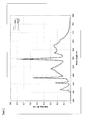
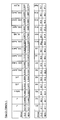
- FIG. 1 is the radiance distribution, in the as FIG. 2 attached Table 1, measured values of this embodiment are shown in comparison with a known low-pressure discharge lamp.
- the known low-pressure discharge lamp was an OSRAM LUMILUX COLOR proof T8, L36W / 950, model year 2008.
- the phosphor composition was composed as follows: CeMgAl 11 O 19 : Tb 5.15% BaMgAl 10 O 17 : Eu 2.54% Ca 10 (PO 4 ) 6 (F, Cl) 2 : Sb, Mn, Cl 22.95% SrB 4 O 7 : Eu 11.91% Sr 4 Al 14 O 25 : Eu 23.48% Gd (Zn, Mg) B 5 O 10 : Ce, Mn 32.58% Mg 4 FGeO 5.5 : Mn 1.39%
- the luminous flux was measured in the Ulbricht sphere according to standard IEC 60081 2300 Lm, this value corresponds substantially to that of the known low-pressure discharge lamp.
- the achieved radiance distribution for the inventive embodiment is in FIG. 1 compared with that of the known low-pressure discharge lamp (OLD), in this case the emitted radiation power (W) measured with a diode array spectrometer is shown as a function of the wavelength (nm). It is clear that the radiance distribution of the embodiment according to the invention has considerable proportions in the UV-A. By contrast, the small peak detectable in the UV-A for the known low-pressure discharge lamp does not come from the emission of a phosphor, but rather is unconverted mercury radiation transitions.
- M_vis and M_uv denote the averaged metamerism indices for the comparative pairs for the D50 standard illumination type according to CIE 51.2-1999.
- Ra8 denotes the general color rendering index CRI according to CIE 13-3-1995. Based on this standard, the specific indices R1, R2, ..., R14 are determined.
- the general color rendering index CRI for the embodiment according to the invention is 97.1 closer to the ideal value 100.
Landscapes
- Chemical & Material Sciences (AREA)
- Inorganic Chemistry (AREA)
- Engineering & Computer Science (AREA)
- Materials Engineering (AREA)
- Organic Chemistry (AREA)
- Luminescent Compositions (AREA)
- Vessels And Coating Films For Discharge Lamps (AREA)
Description
- Die vorliegende Erfindung betrifft eine Leuchtstoffzusammensetzung für Niederdruckentladungslampen gemäß dem Oberbegriff des Anspruchs 1 sowie eine Niederdruckentladungslampe gemäß dem Oberbegriff des Anspruchs 15.
- Aus der
EP 1 306 885 B1 ist eine Leuchtstoffzusammensetzung für eine Niederdruckentladungslampe sowie eine Niederdruckentladungslampe bekannt, die eine hohe Lichtausbeute bei einer Farbtemperatur größer 5000 K und einer guten Farbwiedergabe aufweist. Durch das Ansteigen der Anforderungen in der Farbabmusterung bei der Reprografie, kann mit dieser Leuchtstoffzusammensetzung kein optimales Ergebnis im nahen ultravioletten Spektralbereich erzielt werden. - Die Aufgabe der vorliegenden Erfindung ist es, eine Leuchtstoffzusammensetzung für Niederdruckentladungslampen sowie eine Niederdruckentladungslampe mit einer solchen Leuchtstoffzusammensetzung bereitzustellen, die besonders gut für die Farbabmusterung, insbesondere gemäß ISO 3664:2009(E), geeignet ist. Die Eignung der Lichtfarbe und die Farbqualität werden hierbei durch verschiedene genormte Verfahren bestimmt und quantifiziert. Gleichzeitig soll ein hoher Lichtstrom erzielbar sein.
- Diese Aufgabe wird gelöst durch eine Leuchtstoffzusammensetzung für Niederdruckentladungslampen mit den Merkmalen des Anspruchs 1 sowie durch eine Niederdruckentladungslampe mit den Merkmalen des Anspruchs 17.
- Eine solche Leuchtstoffzusammensetzung für Niederdruckentladungslampen sowie eine mit einer solchen ausgestattete Niederdruckentladungslampe werden beispielsweise bei der Farbabmusterung verwendet und können in Grafik- und Druckereibetrieben, der Lack- und Farbenindustrie sowie in Museen zum Einsatz kommen.
- Besonders vorteilhafte Ausgestaltungen finden sich in den abhängigen Ansprüchen.
- Eine erfindungsgemäße Leuchtstoffzusammensetzung für Niederdruckentladungslampen beinhaltet zumindest einen Halophosphat-Leuchtstoff, einen im roten Wellenlängenbereich emittierenden Leuchtstoff, einen im blaugrünen Wellenlängenbereich emittierenden Leuchtstoff, einen mit Europium dotierten im blauen Wellenlängenbereich emittierenden Leuchtstoff sowie einen mit Tb dotierten im grünen Wellenlängenbereich emittierenden Leuchtstoff und einen Leuchtstoff mit einem Emissionsbereich im sichtbaren Bereich mit Wellenlängen größer 380nm und Emissionsbanden im nahen Ultraviolett (UV-A). Unter nahem Ultraviolett (UV-A) wird der Bereich mit Wellenlängen zwischen 315 nm und 380 nm verstanden. Durch das erfindungsgemäße Vorsehen eines Leuchtstoffs mit einem Emissionsbereich im sichtbaren Spektralbereich, also Strahlung einer Wellenlänge zwischen 380nm und 780nm, der auch mindestens eine Emissionsbande im angrenzenden nahen Ultraviolettbereich (UV-A-Bereich) aufweist, der Strahlung mit Wellenlängen zwischen 380nm und 315nm umfasst, und bei dem die emittierte Intensität des Leuchtstoffs im sichtbaren Bereich kleiner als diejenige im UV-A-Bereich ist, kann bei Niederdruckentladungslampen mit der Leuchtstoffzusammensetzung eine besonders gute Eignung der erzeugbaren Strahlung zur Farbabmusterung gewährleistet werden. Unter emittierter Intensität wird hierbei die über die Wellenlängen aufintegrierte Strahldichteverteilung gemeint, die emittierte Intensität entspricht der emittierten Strahlungsleistung und wird in Watt gemessen. Die Strahldichteverteilung kann mit einem Fluoreszenzspektrometer bestimmt werden, beispielsweise mit FluoroMax-2 von ISA-Spex Instruments (Edison, USA). Bei der Messung wird die emittierte Strahldichteverteilung in 45 / 90 Grad Geometrie bestimmt, wobei eine in Tablettenform gepresste Pulverprobe, typischerweise ca. 2 - 5mm dick, in den Strahlengang des Spektrometers gebracht wird. Die Probe wird mit UV-C Strahlung der Wellenlänge 254nm bestrahlt. Der Winkel zwischen einfallender Strahlung und der Probenoberfläche der Tablette beträgt dabei 45 Grad. Mittels eines im Gerät integrierten Emissionsmonochromators, beispielsweise einem Gittermonochromator, wird die senkrecht zur Oberfläche der Tablette emittierte Strahldichteverteilung mithilfe eines Photomultiplers bestimmt. Zur Bestimmung der emittierten Intensität wird diese über den entsprechenden Wellenlängenbereich aufintegriert. Bei Messung der Strahldichteverteilung einer Niederdruckentladungslampe bzw. einer in eine Leuchte eingesetzten Niederdruckentladungslampe kann die Strahldichteverteilung mit einem Diodenarrayspektometer gemessen werden. Hierbei wird die Leuchtstoffzusammensetzung von einem Quecksilberplasma angeregt, die emittierte Strahlung wird nach Wellenlängen aufgespalten, und die emittierte Strahlungsleistung (W) in Abhängigkeit von der Wellenlänge (nm) gemessen.
- Mit der erfindungsgemäßen Leuchtstoffzusammensetzung kann Strahlung mit einer Farbtemperatur größer 4800 K erzeugt werden, die einen sehr guten allgemeinen Farbwiedergabeindex (Color Rendering Index) CRI größer 90 und insbesondere größer 95 hat, der gemäß Normfarbsystem CIE 13-3-1995 bestimmbar ist. Bei einem Wert von CRI=100 scheinen alle Farbmuster, die von der getesteten Lichtquelle beleuchtet werden, dieselbe Farbe zu haben, wie bei Beleuchtung mit einer Referenzlichtquelle.
- Besonders bevorzugt hat die erzeugbare Strahlung eine Farbtemperatur im Bereich von 4800 K bis 5700 K und insbesondere von in etwa 5300 K.
- Durch die Emission im UV-A-Spektralbereich kann zudem eine verbesserte Bewertung von Fluoreszenz-Effekten erfolgen, wie sie beispielsweise durch Sonnenlicht erzeugt werden. Somit können die Anforderungen gemäß dem ISO-Standard 3664 für die Abmusterung in der Reprografie in der Fassung vom 15.04.2009 erfüllt werden. Bei dem ISO-Standard 3664 handelt es sich um eine Applikationsnorm, hierbei werden die Eigenschaften einer Lampe in einer Leuchte bestimmt, insbesondere werden die Eigenschaften einer bestrahlten Fläche bestimmt und bewertet. Die Farbqualität und die Eignung der Lichtfarbe wird hier unter anderem durch Vergleich der Farbwiedergabe metamerer Paare ermittelt und durch den sogenannten Metamerie-Index angegeben. Ein Metamerie-Index von 0 bedeutet, dass die metameren Paare bei Beleuchtung mit der getesteten Lichtquelle dieselbe Farbe, d.h. den selben Farbort x,y, haben, wie bei Beleuchtung mit einer Referenzlichtquelle.
- Der ISO-Standard 3664 fordert im Sichtbaren einen Metamerie-Index M_vis <= 1.0 sowie im Ultravioletten einen Metamerie-Index von M_uv <= 1,5. Je kleiner der Wert der Metamerie-Indizes, desto besser werden die natürlichen Eigenschaften reproduziert. Der Metamerie-Index M_uv ist hierbei ein Maß für die Bewertungsmöglichkeit von fluoreszierenden Effekten, wie sie beispielsweise durch Sonnenlicht im Spektralbereich von 300nm - 400nm erzeugt werden. Bei bisher bekannten Leuchtstoffmischungen konnte hingegen bei Einsatz in Niederdruckentladungslampen nur ein Metamerie-Index M_uv in der Größenordnung von 4 erreicht werden.
- Gemäß einer bevorzugten Ausgestaltung der erfindungsgemäßen Leuchtstoffzusammensetzung beträgt die von dem Leuchtstoff mit einem Emissionsbereich im sichtbaren Spektralbereich, der auch mindestens eine Emissionsbande im angrenzenden nahen Ultraviolettbereich (UV-A-Bereich) aufweist, im sichtbaren Bereich emittierte Intensität dabei zwischen 2% und 20% der durch den Leuchtstoff im nahen Ultraviolett (UV-A) emittierten Intensität. Durch diese Verteilung kann eine besonders gute Eignung der Leuchtstoffzusammensetzung für die Farbabmusterung mit ausreichend guter Farbwiedergabe im nahen Ultraviolettbereich sichergestellt werden.
- Gemäß einer besonders bevorzugten Ausgestaltung der Erfindung kann als Leuchtstoff mit einem Emissionsbereich im sichtbaren Bereich mit Wellenlängen größer 380nm und Emissionsbanden im nahen Ultraviolett (UV-A), kurz im UV-A emittierender Leuchtstoff, mit Europium dotiertes Strontiumtetraborat, SrB4O7:Eu, vorgesehen sein. Dieses hat ein Emissionsmaximum bei 368nm mit einer Halbwertsbreite FWHM von 40 - 50 nm, so dass die Emission sowohl im sichtbaren als auch im UV-A Spektralbereich erfolgt.
- Bei einer Messung von mit Europium dotiertem Strontiumtetraborat, SrB4O7:Eu mit einem Fluoreszenzspektrometer, nämlich mit FluoroMax-2 von ISA-Spex Instruments (Edison, USA), ergeben sich bei einer Messgenauigkeit von +/- 2% folgende Werte für die emittierte Intensität in Watt.
Wellenlängenbereich [nm] emittierte Intensität [Watt] prozentualer Anteil an Gesamt-Intensität [%] 315 - 780 1989,3 100,0 315 - 380 1724,4 86,7 380 - 780 264,9 13,3 - Hieraus ist ersichtlich, dass dieser Leuchtstoff einen Emissionsbereich im sichtbaren Bereich mit Wellenlängen größer 380nm und mindestens eine Emissionsbande im nahen Ultraviolett (UV-A) beinhaltet und die emittierte Intensität des Leuchtstoffs im sichtbaren Bereich kleiner als im UV-A Bereich ist und insbesondere die im sichtbaren Bereich emittierte Intensität des Leuchtstoffs zwischen 2% und 20% der durch den Leuchtstoff im nahen Ultraviolett (UV-A) emittierten Intensität beträgt, nämlich 15,4%.
- Alternativ oder zusätzlich können auch mit Europium dotiertes StrontiumMagnesiumphosphat SrMgP2O7:Eu und/oder mit Europium dotiertes StrontiumBarium-AluminiumSilikat (Sr,Ba)Al2Si2O8:Eu und/oder mit Europium dotiertes Strontiumphospat Sr3(PO4):Eu und/oder CalciumWolframat CaWO4 als im UV-A emittierender Leuchtstoff vorgesehen sein. Die genannten, im UV-A emittierenden Leuchtstoffe können also einzeln oder in Kombination in der Leuchtstoffzusammensetzung beinhaltet sein. Insbesondere die Verwendung von Eu dotierten, im UV-A emittierenden Leuchtstoffen hat sich als vorteilhaft herausgestellt.
- Bei der erfindungsgemäßen Leuchtstoffzusammensetzung kann der Gewichtsanteil des im UV-A emittierenden Leuchtstoffs an der Leuchtstoffzusammensetzung zwischen 5% und 30% betragen. Als besonders vorteilhaft hat sich ein Gewichtsanteil zwischen 10% und 15% an der gesamten Leuchtstoffzusammensetzung erwiesen, da sich hier die gewünschten Anforderungen besonders gut erfüllen lassen.
- Gemäß einer weiteren bevorzugten Ausbildung der Erfindung kann die Leuchtstoffzusammensetzung als Halophosphat-Leuchtstoff mit Sb und Mn dotiertes Ca10(PO4)6(F, Cl)2:Sb,Mn beinhalten. Besonders vorteilhafterweise kann der Gewichtsanteil des Halophosphat-Leuchtstoffs, und insbesondere des Calciumhalophosphats an der Leuchtstoffzusammensetzung zwischen 20% und 26% betragen.
- Eine erfindungsgemäße Leuchtstoffzusammensetzung kann gemäß einer weiteren bevorzugten Ausgestaltung mit Ce und Mn dotiertes Gadoliniumzinkmagnesiumpentaborat Gd(Zn,Mg)B5O10:Ce, Mn als im roten Wellenlängenbereich emittierenden Leuchtstoff beinhalten. Hierdurch kann die Farbwiedergabe der erfindungsgemäßen Leuchtstoffzusammensetzung weiter verbessert werden.
- Der Gewichtsanteil des im roten Wellenlängenbereich emittierenden Leuchtstoffs an der Leuchtstoffzusammensetzung kann vorteilhafterweise zwischen 30% und 36% betragen.
- Erfindungsgemäß kann bei der Leuchtstoffzusammensetzung als im blaugrünen Wellenlängenbereich emittierender Leuchtstoff mit Eu dotiertes Strontiumaluminat Sr4Al14O25:Eu vorgesehen sein.
- Vorteilhafterweise kann der Gewichtsanteil des im blaugrünen Wellenlängenbereich emittierenden Leuchtstoffs an der Leuchtstoffzusammensetzung zwischen 20% und 26% liegen.
- Gemäß einer weiteren vorteilhaften Ausgestaltung der Erfindung kann die Leuchtstoffzusammensetzung als mit Tb dotierten grün emittierenden Leuchtstoff mit Tb dotiertes Cermagnesiumaluminat CeMgAl11O19:Tb beinhalten. Es können jedoch auch andere mit Tb dotierte Seltenerdaluminate zum Einsatz kommen.
- Der Gewichtsanteil des mit Tb dotierten grün emittierenden Leuchtstoffs an der Leuchtstoffzusammensetzung kann bevorzugt zwischen 2% und 8% betragen.
- Weiter vorteilhaft kann in der erfindungsgemäßen Leuchtstoffzusammensetzung als mit Europium dotierter blau emittierender Leuchtstoff mit Eu dotiertes Bariummagnesiumaluminat BaMgAl10O17:Eu und/oder mit Eu und Mn dotiertes Bariummagnesiumaluminat BaMg2Al16O27:Eu,Mn und/oder mit Eu dotiertes Strontium-Chlörophosphat Sr10(PO4)Cl2:EU und/oder mit Eu dotiertes StrontiumCalcium-Clorophosphat (Sr,Ca)10(PO9)Cl2:Eu vorgesehen sein. Diese können einzeln oder in beliebiger Mischung in der Leuchtstoffzusammensetzung beinhaltet sein.
- Als besonders vorteilhaft hat es sich erwiesen, wenn der Gewichtsanteil des mit Eu dotierten blau emittierenden Leuchtstoffs an der Leuchtstoffzusammensetzung zwischen 0% und 6% beträgt.
- Erfindungsgemäß kann bei der Leuchtstoffzusammensetzung ein im dunkelroten Wellenlängenbereich emittierender Leuchtstoff, insbesondere mit Mn dotiertes Magnesiumfluorogermanat Mg4FGeO5,5:Mn vorgesehen sein.
- Vorteilhafterweise kann der Gewichtsanteil des im dunkelroten Wellenlängenbereich emittierenden Leuchtstoffs an der Leuchtstoffzusammensetzung zwischen 0% und 5% liegen.
- Die vorliegende Erfindung betrifft auch eine Niederdruckentladungslampe mit einem Entladungsgefäß und einer auf der Innenseite desselben aufgebrachten Leuchtstoffbeschichtung, bei der die Leuchtstoffbeschichtung eine erfindungsgemäße Leuchtstoffzusammensetzung umfasst.
- Insbesondere kann die Leuchtstoffbeschichtung nur aus der erfindungsgemäßen Leuchtstoffzusammensetzung bestehen. Die erfindungsgemäße Leuchtstoffzusammensetzung kann in Form einer einzigen Leuchtstoffmischung, insbesondere auch in Form einer einzigen Schicht, oder in Form mehrerer Schichten aufgebracht sein. Hierbei können einzelne Schichten verschiedene Bestandteile der erfindungsgemäßen Leuchtstoffzusammensetzung enthalten. Besonders bevorzugt kann eine einem Entladungsraum der Niederdruckentladungslampe zugewandte Schicht alle Bestandteile der erfindungsgemäßen Leuchtstoffzusammensetzung enthalten.
- Eine solche Niederdruckentladungslampe kann vorteilhaft bei der Farbabmusterung zum Einsatz kommen. Insbesondere lassen sich mit einer solchen Niederdruckentladungslampe die bereits erwähnten Anforderungen gemäß dem ISO-Standard 3664 für die Abmusterung in der Reprografie erfüllen.
- Das Tageslichtspektrum, das einen UV-Anteil enthält, kann mit der erfindungsgemäßen Niederdruckentladungslampe, deren Entladungsgefäß für Strahlung im UV-A-Spektralbereich durchlässig ist, besonders gut nachgebildet werden.
- Die Leuchtstoffzusammensetzung ist bevorzugt in Form einer einzigen Leuchtstoffmischung auf der Innenseite des Entladungsgefäßes aufgebracht und besteht dabei aus einer einzigen Schicht.
- Es kann aber auch von Vorteil sein, die Leuchtstoffzusammensetzung in Form von zwei oder mehr Schichten aufzubringen. Hier kann beispielsweise die der Innenseite des Entladungsgefäßes zugewandte Unterschicht nur aus dem Halophosphatleuchtstoff bestehen, während eine der Entladung zugewandte Deckschicht dann ebenfalls den Halophosphatleuchtstoff und die anderen Leuchtstoffe der Leuchtstoffmischung enthalten sollte.
- Zusätzlich kann zwischen der Innenseite des Entladungsgefäßes und der Leuchtstoffschicht eine Schutzschicht aus Al2O3, Y2O3 oder einem Seltenerdoxid aufgebracht sein. Hierdurch kann eine Diffusion des im Entladungsgefäß vorhandenen Quecksilbers in das Entladungsgefäß und eine damit einhergehende Schwärzung desselben effektiv verhindert werden.
- Die erfindungsgemäße Leuchtstoffzusammensetzung kann vorteilhaft an die Transmissions- und Reflexionseigenschaften der Leuchte angepasst werden, in der sie zum Einsatz kommen soll. Von Bedeutung ist hier beispielsweise, ob und welche Art von Kunststoff oder Glas als Abdeckung verwendet wird, das Material und die Ausgestaltung des Reflektors sowie weitere Merkmale.
- Die erfindungsgemäße Leuchtstoffzusammensetzung kann insbesondere bei stabförmigen Niederdruckentladungslampen, beispielsweise der Bauform T8 L36W, zum Einsatz kommen.
- Im Folgenden soll die Erfindung anhand eines Ausführungsbeispiels näher erläutert werden. In der
Figur 1 ist die Strahldichteverteilung, in der alsFigur 2 beiliegenden Tabelle 1 sind Messwerte dieses Ausführungsbeispiels im Vergleich zu einer bekannten Niederdruckentladungslampe dargestellt. Bei der bekannten Niederdruckentladungslampe handelte es sich um eine OSRAM LUMILUX COLOR proof T8, L36W/950, Modelljahr 2008. - Die Innenseite von Entladungsgefäßen stabförmiger Quecksilber-T8-Niederdruckentladungslampen einer Länge von ca. 120 cm mit einer Krypton-Argon-Gasfüllung und einer Nenn-Leistung von 36 W wurde mit einer erfindungsgemäßen Leuchtstoffzusammensetzung beschichtet. Diese wurde in Form einer einzigen Schicht aufgebracht.
- Die Leuchtstoffzusammensetzung war wie folgt zusammengesetzt:
CeMgAl11O19:Tb 5,15% BaMgAl10O17:Eu 2,54% Ca10(PO4)6(F, Cl)2:Sb,Mn,Cl 22,95% SrB4O7:Eu 11,91% Sr4Al14O25:Eu 23,48% Gd(Zn,Mg)B5O10:Ce,Mn 32,58% Mg4FGeO5,5:Mn 1,39% - Mit solchermaßen beschichteten Niederdruckentladungslampen wurden folgende Testergebnisse erzielt. Bei Messungen, die eine Leuchte erfordern, kam eine Leuchte der Firma Waldmann für die Farbabmusterung zum Einsatz. Hierbei handelte es sich um die Auflichtleuchte LE - ALEA 436 für vier 36W T8 L36W Lampen mit der Artikelnummer 682742000. Die Testergebnisse für die bekannte Niederdruckentladungslampe wurden unter Verwendung derselben Leuchte gewonnen.
- Der Lichtstrom betrug bei Messung in der Ulbricht-Kugel gemäß Norm IEC 60081 2300 Lm, dieser Wert entspricht im wesentlichen dem der bekannten Niederdruckentladungslampe.
- Bei Messung in der Ulbricht-Kugel unter Standard IEC-Bedingungen wurde eine Chromatizität gemäß der Zielchromatizität für einen CIE 1931 Farbraumbetrachter von x/y = 0.337/0.348 erzielt, der Farbwiedergabeindex CRI gemäß CIE 13-3-1995 betrug mindestens 95. Der Metamerie-Index im Sichtbaren gemäß CIE 51.2-1999 betrug M_vis <= 1.1, derjenige im Ultravioletten M_uv <= 1,5.
- Die Messungen in der Ulbricht-Kugel erfolgen an den Lampen, nicht mit der Leuchte.
- Bei einer Charakterisierung gemäß ISO-Standard 3664:2009 ergeben sich folgende Werte. Die entsprechenden Messungen erfolgen mit in der Leuchte eingesetzter Lampe.
- Die erzielte Strahldichteverteilung für die erfindungsgemäße Ausführungsform (NEW) ist in
Figur 1 derjenigen der bekannten Niederdruckentladungslampe (OLD) gegenübergestellt, hierbei wird die mit einem Diodenarrayspektometer gemessene emittierte Strahlungsleistung (W) in Abhängigkeit von der Wellenlänge (nm) dargestellt. Es ist klar ersichtlich, dass die Strahldichteverteilung der erfindungsgemäßen Ausführungsform erhebliche Anteile im UV-A aufweist. Der für die bekannte Niederdruckentladungslampe im UV-A erkennbare kleine Peak kommt hingegen nicht von der Emission eines Leuchtstoffs, vielmehr handelt es sich hierbei um nicht umgewandelte Quecksilber-Strahlungsübergänge. - Die mit der erfindungsgemäßen Ausführungsform (NEW) erzielten Messergebnisse stellt Tabelle 1 im Vergleich zu den mit der bekannten Niederdruckentladungslampe (OLD) erhaltenen dar.
- Die Angaben sind gemäß der Vorgaben aus ISO 3664:2009 in der genannten Leuchte mit einem Diodenarrayspektrometer bestimmt worden. u', v' bezeichnen die Farborte im CIE 1976 Uniform Chromaticity Scale Diagram (UCS) Farbraum, delta u bezeichnet den Abstand zum Zielfarbort u' = 0,2102 und v' = 0,4889, x10 und y10 sind die Farborte im CIE 1964 Farbraum für den 10° - Standardbetrachter. M_vis und M_uv bezeichnen die gemittelten Metamerieindizes für die Vergleichspaare für die D50 Normbeleuchtungsart gemäß CIE 51.2-1999. Ra8 bezeichnet den allgemeinen Farbwiedergabeindex CRI nach CIE 13-3-1995. Anhand dieser Norm sind die speziellen Indizes R1, R2, ..., R14 bestimmt.
- Anhand dieser Werte ist ersichtlich, dass die erfindungsgemäße Ausführungsform näher am Zielfarbort im CIE 1976 UCS Farbraum liegt, delta u = 0,0030 im Vergleich zu delta u = 0,0068 für die bekannte Niederdruckentladungslampe. Auch der allgemeine Farbwiedergabeindex CRI liegt für die erfindungsgemäße Ausführungsform mit 97,1 näher an dem Idealwert 100. Auch die Forderung des ISO-Standards 3664, dass der Metamerie-Index im Sichtbaren M_vis <= 1.0 sowie im Ultravioletten M_uv <= 1,5 wird durch die erfindungsgemäße Ausführungsform mit M_vis = 0,7163 und M_uv = 0,9778 erfüllt. Die bekannte Niederdruckentladungslampe hingegen kann die Anforderungen mit M_uv = 3,3448 deutlich nicht erfüllen.
- Mit einer erfindungsgemäßen Leuchtstoffzusammensetzung lassen sich somit vorteilhaft Niederdruckentladungslampen bereitstellen, die hervorragende Farbwiedergabeeigenschaften haben, wobei auch die Spektralanteile im nahen Ultraviolett gut wiedergegeben werden. Dies ist daran ersichtlich, dass ein Metamerie-Index im Ultravioletten M_uv <= 1.5 erzielbar ist. Insbesondere sind mit solchen erfindungsgemäßen Niederdruckentladungslampen die Anforderungen gemäß ISO-Standard 3664:2009 erfüllbar.
Claims (17)
- Leuchtstoffzusammensetzung für Niederdruckentladungslampen zur Erzeugung von Strahlung mit einer Farbtemperatur größer 4800 K und einem sehr guten allgemeinen Farbwiedergabeindex CRI größer 90, wobei die Leuchtstoffzusammensetzung zumindest einen Halophosphat-Leuchtstoff, einen im roten Wellenlängenbereich emittierenden Leuchtstoff, einen im blaugrünen Wellenlängenbereich emittierenden Leuchtstoff, einen mit Europium dotierten im blauen Wellenlängenbereich emittierenden Leuchtstoff sowie einen mit Tb dotierten im grünen Wellenlängenbereich emittierenden Leuchtstoff beinhaltet,
dadurch gekennzeichnet, dass
die Leuchtstoffzusammensetzung einen Leuchtstoff mit einem Emissionsbereich im sichtbaren Bereich mit Wellenlängen größer 380nm und mindestens einer Emissionsbande im nahen Ultraviolett (UV-A) beinhaltet und die emittierte Intensität des Leuchtstoffs im sichtbaren Bereich kleiner als im UV-A Bereich ist. - Leuchtstoffzusammensetzung nach Anspruch 1,
dadurch gekennzeichnet, dass
die im sichtbaren Bereich emittierte Intensität des Leuchtstoffs mit einem Emissionsbereich im sichtbaren Bereich und mindestens einer Emissionsbande im nahen Ultraviolett (UV-A) zwischen 2% und 20% der durch den Leuchtstoff im nahen Ultraviolett (UV-A) emittierten Intensität beträgt. - Leuchtstoffzusammensetzung nach Anspruch 1 oder 2,
dadurch gekennzeichnet, dass
als im UV-A emittierender Leuchtstoff mit Europium dotiertes Strontiumtetraborat, SrB4O7:Eu, und/oder mit Europium dotiertes StrontiumMagnesiumphosphat SrMgP2O7:Eu und/oder mit Europium dotiertes StrontiumBarium-AluminiumSilikat(Sr,Ba)Al2Si2O8:Eu und/oder mit Europium dotiertes Strontiumphospat Sr3(PO4):Eu und/oder CalciumWolframat CaWO4 vorgesehen ist. - Leuchtstoffzusammensetzung nach einem der Ansprüche 1 - 3,
dadurch gekennzeichnet, dass
der Gewichtsanteil des im UV-A emittierenden Leuchtstoffs an der Leuchtstoffzusammensetzung zwischen 5% und 30% und insbesondere zwischen 10% und 15% beträgt. - Leuchtstoffzusammensetzung nach einem der Ansprüche 1 - 4,
dadurch gekennzeichnet, dass
als Halophosphat-Leuchtstoff mit Sb und Mn dotiertes Calciumhalophosphat Ca10(PO4)6(F, Cl)2:Sb,Mn,Cl vorgesehen ist. - Leuchtstoffzusammensetzung nach einem der Ansprüche 1 - 5,
dadurch gekennzeichnet, dass
der Gewichtsanteil des Halophosphat-Leuchtstoffs an der Leuchtstoffzusammensetzung zwischen 20% und 26% beträgt. - Leuchtstoffzusammensetzung nach einem der Ansprüche 1 - 6,
dadurch gekennzeichnet, dass
als im roten Wellenlängenbereich emittierender Leuchtstoff mit Ce und Mn dotiertes Gadoliniumzinkmagnesiumpentaborat Gd(Zn,Mg)B5O10:Ce,Mn vorgesehen ist. - Leuchtstoffzusammensetzung nach einem der Ansprüche 1 - 7,
dadurch gekennzeichnet, dass
der Gewichtsanteil des im roten Wellenlängenbereich emittierenden Leuchtstoffs an der Leuchtstoffzusammensetzung zwischen 30% und 36% beträgt. - Leuchtstoffzusammensetzung nach einem der Ansprüche 1 - 8,
dadurch gekennzeichnet, dass
als im blaugrünen Wellenlängenbereich emittierender Leuchtstoff mit Eu dotiertes Strontiumaluminat Sr4Al14O25:Eu vorgesehen ist. - Leuchtstoffzusammensetzung nach einem der Ansprüche 1 - 9,
dadurch gekennzeichnet, dass
der Gewichtsanteil des im blaugrünen Wellenlängenbereich emittierenden Leuchtstoffs an der Leuchtstoffzusammensetzung zwischen 20% und 26% beträgt. - Leuchtstoffzusammensetzung nach einem der Ansprüche 1 - 10,
dadurch gekennzeichnet, dass
als mit Tb dotierter grün emittierender Leuchtstoff mit Tb dotiertes Cermagnesiumaluminat CeMgAl11O19:Tb vorgesehen ist. - Leuchtstoffzusammensetzung nach einem der Ansprüche 1 - 11,
dadurch gekennzeichnet, dass
der Gewichtsanteil des mit Tb dotierten grün emittierenden Leuchtstoffs an der Leuchtstoffzusammensetzung zwischen 2% und 8% beträgt. - Leuchtstoffzusammensetzung nach einem der Ansprüche 1 - 12,
dadurch gekennzeichnet, dass
als mit Europium dotierter blau emittierender Leuchtstoff mit Eu dotiertes Bariummagnesiumaluminat BaMgAl10O17:Eu und/oder mit Eu und Mn dotiertes Bariummagnesiumaluminat BaMg2Al16O27:Eu,Mn und/oder mit Eu dotiertes Strontium-Clorophosphat Sr10(PO4)Cl2:EU und/oder mit Eu dotiertes StrontiumCalcium-Clorophosphat (Sr,Ca)10(PO4)Cl2:Eu vorgesehen ist. - Leuchtstoffzusammensetzung nach einem der Ansprüche 1 - 13,
dadurch gekennzeichnet, dass
der Gewichtsanteil des mit Eu dotierten blau emittierenden Leuchtstoffs an der Leuchtstoffzusammensetzung zwischen 0% und 6% beträgt. - Leuchtstoffzusammensetzung nach einem der Ansprüche 1 - 14,
dadurch gekennzeichnet, dass
ein im dunkelroten Wellenlängenbereich emittierender Leuchtstoff, insbesondere mit Mn dotiertes Magnesiumfluorogermanat Mg4FGeO5,5:Mn, vorgesehen ist. - Leuchtstoffzusammensetzung nach Anspruch 15,
dadurch gekennzeichnet, dass
der Gewichtsanteil des dunkelrot emittierenden Leuchtstoffs an der Leuchtstoffzusammensetzung zwischen 0% und 5% beträgt - Niederdruckentladungslampe mit einem Entladungsgefäß und einer auf der Innenseite desselben aufgebrachten Leuchtstoffbeschichtung,
dadurch gekennzeichnet, dass
die Leuchtstoffbeschichtung eine Leuchtstoffzusammensetzung gemäß einem oder mehreren der Ansprüche 1 bis 16 umfasst.
Priority Applications (1)
| Application Number | Priority Date | Filing Date | Title |
|---|---|---|---|
| PL10776621T PL2459675T3 (pl) | 2009-11-09 | 2010-10-25 | Kompozycja luminoforowa do niskociśnieniowych lamp wyładowczych |
Applications Claiming Priority (2)
| Application Number | Priority Date | Filing Date | Title |
|---|---|---|---|
| DE102009052468A DE102009052468A1 (de) | 2009-11-09 | 2009-11-09 | Leuchtstoffzusammensetzung für Niederdruckentladungslampen |
| PCT/EP2010/066040 WO2011054691A1 (de) | 2009-11-09 | 2010-10-25 | Leuchtstoffzusammensetzung für niederdruckentladungslampen |
Publications (2)
| Publication Number | Publication Date |
|---|---|
| EP2459675A1 EP2459675A1 (de) | 2012-06-06 |
| EP2459675B1 true EP2459675B1 (de) | 2015-02-25 |
Family
ID=43558090
Family Applications (1)
| Application Number | Title | Priority Date | Filing Date |
|---|---|---|---|
| EP10776621.4A Active EP2459675B1 (de) | 2009-11-09 | 2010-10-25 | Leuchtstoffzusammensetzung für niederdruckentladungslampen |
Country Status (6)
| Country | Link |
|---|---|
| US (1) | US8941294B2 (de) |
| EP (1) | EP2459675B1 (de) |
| CN (1) | CN102597159B (de) |
| DE (1) | DE102009052468A1 (de) |
| PL (1) | PL2459675T3 (de) |
| WO (1) | WO2011054691A1 (de) |
Families Citing this family (3)
| Publication number | Priority date | Publication date | Assignee | Title |
|---|---|---|---|---|
| DE102011080144A1 (de) * | 2011-07-29 | 2013-01-31 | Osram Ag | Leuchtstoffzusammensetzung für eine Niederdruckentladungslampe und Niederdruckentladungslampe |
| US8866372B2 (en) | 2011-12-05 | 2014-10-21 | General Electric Company | Phosphor system for improved efficacy lighting sources |
| US11255797B2 (en) | 2019-07-09 | 2022-02-22 | Kla Corporation | Strontium tetraborate as optical glass material |
Family Cites Families (15)
| Publication number | Priority date | Publication date | Assignee | Title |
|---|---|---|---|---|
| NL160869C (nl) * | 1972-11-03 | Philips Nv | Luminescerend scherm, alsmede ontladingslamp en katho- de straalbuis, voorzien van een dergelijk scherm. | |
| US4406971A (en) | 1976-04-20 | 1983-09-27 | Mitsubishi Denki Kabushiki Kaisha | Color cathode ray tube having a reference white fluorescent screen |
| KR19980046311A (ko) * | 1996-12-12 | 1998-09-15 | 손욱 | 형광막 프로젝터 |
| DE19806213B4 (de) * | 1998-02-16 | 2005-12-01 | Tews, Walter, Dipl.-Chem. Dr.rer.nat.habil. | Kompakte Energiesparlampe |
| JP2003123699A (ja) | 2001-10-19 | 2003-04-25 | Manabu Nitoda | 光触媒作用を活性化する方法及び光触媒放電管、並びにこの原理を用いた製品 |
| DE10152217A1 (de) * | 2001-10-23 | 2003-04-30 | Patent Treuhand Ges Fuer Elektrische Gluehlampen Mbh | Leuchtstoffzusammensetzung für Niederdruckentladungslampen |
| DE10307067B8 (de) | 2003-02-19 | 2005-01-13 | Sli Lichtsysteme Gmbh | Metallhalogendampflampe |
| US20080238290A1 (en) * | 2004-01-30 | 2008-10-02 | Koninklijke Philips Electronics, N.V. | Low Pressure Mercury Vapor Fluorescent Lamps |
| JP4663247B2 (ja) * | 2004-02-18 | 2011-04-06 | パナソニック電工株式会社 | 屋内用照明装置およびそれに用いる光源 |
| US7238302B2 (en) * | 2004-12-28 | 2007-07-03 | Osram Sylvania Inc. | Single-component, UV-emitting phosphor |
| US7378784B1 (en) | 2005-05-13 | 2008-05-27 | Yan Liu | Optical filter for CIE daylight simulator |
| US20080211378A1 (en) * | 2005-09-29 | 2008-09-04 | Arunava Dutta | Enhanced UV-Emitting Fluorescent Lamp |
| CN201004450Y (zh) | 2007-02-15 | 2008-01-09 | 赵国松 | 一种能激发光触媒作用的照明放电灯 |
| US7759854B2 (en) * | 2007-05-30 | 2010-07-20 | Global Oled Technology Llc | Lamp with adjustable color |
| CN101074376B (zh) | 2007-06-22 | 2010-12-22 | 浙江晨辉光宝科技有限公司 | 一种能激发光触媒作用的荧光粉组合物及其应用 |
-
2009
- 2009-11-09 DE DE102009052468A patent/DE102009052468A1/de not_active Withdrawn
-
2010
- 2010-10-25 PL PL10776621T patent/PL2459675T3/pl unknown
- 2010-10-25 US US13/504,973 patent/US8941294B2/en active Active
- 2010-10-25 EP EP10776621.4A patent/EP2459675B1/de active Active
- 2010-10-25 WO PCT/EP2010/066040 patent/WO2011054691A1/de not_active Ceased
- 2010-10-25 CN CN201080050740.6A patent/CN102597159B/zh active Active
Also Published As
| Publication number | Publication date |
|---|---|
| US8941294B2 (en) | 2015-01-27 |
| WO2011054691A1 (de) | 2011-05-12 |
| CN102597159B (zh) | 2015-09-16 |
| EP2459675A1 (de) | 2012-06-06 |
| PL2459675T3 (pl) | 2015-07-31 |
| CN102597159A (zh) | 2012-07-18 |
| DE102009052468A1 (de) | 2011-05-12 |
| US20120217866A1 (en) | 2012-08-30 |
Similar Documents
| Publication | Publication Date | Title |
|---|---|---|
| DE69900259T3 (de) | Fluoreszenzlampe und Leuchter mit verbesserter Beleuchtung in wenig gefärbtem Temperaturgebiet | |
| EP1078972B1 (de) | Leuchtstofflampe für Beleuchtungszwecke | |
| DE2812120A1 (de) | Hochdruck-quecksilberdampf-entladungslampe | |
| DE112015005560T5 (de) | Licht-emittierende Vorrichtung | |
| DE69218387T2 (de) | Niederdruckquecksilberentladungslampe | |
| EP2165351B1 (de) | Leuchtstoffmischung für eine entladungslampe und entladungslampe, insbesondere hg-niederdruckentladungslampe | |
| DE2712973A1 (de) | Metall-halid-entladungslampe mit gluehlampenfarbton | |
| EP1306885B1 (de) | Leuchtstoffzusammensetzung für Niederdruckenladungslampen | |
| EP2245654A2 (de) | Verbesserte uv-emittierende fluoreszenzlampe | |
| DE69322834T2 (de) | Fluoreszenzlampe mit verbesserter Phosphormischung | |
| DE10114212A1 (de) | Durch einen Vakuumultraviolettstrahl angeregter Leuchtstoff und Licht emittierende Vorrichtung unter dessen Verwendung | |
| DE19806213B4 (de) | Kompakte Energiesparlampe | |
| DE102009052468A1 (de) | Leuchtstoffzusammensetzung für Niederdruckentladungslampen | |
| DE1905181B2 (de) | Leuchtstofflampe mit verbesserter farbwiedergabe | |
| DE2029302A1 (de) | ||
| DE102012203419A1 (de) | Leuchtstoff und Leuchtstofflampe denselben enthaltend | |
| EP2165350B1 (de) | Leuchtstoffmischung für eine entladungslampe und entladungslampe, insbesondere hg-niederdruckentladungslampe | |
| DE3855685T2 (de) | Grünlichtausstrahlende entladungsbirne mit seltenem gas | |
| EP1449236A1 (de) | Dielektrische barriere-entladungslampe mit verbesserter farbwiedergabe | |
| DE3025789A1 (de) | Hochintensive metallhalid-entladungslampe | |
| EP2351065B1 (de) | Niederdruckentladungslampe | |
| DE10122850A1 (de) | Leuchtstoffzusammensetzung mit sehr guter Farbwiedergabe sowie damit beschichtete Lampe | |
| Loan | Effect from Fluorization Upon Formation as Well as Luminescence for ZrO₂: Eu Nanogranules | |
| EP2087065B1 (de) | Leuchtstoffbeschichtung für hoch belastete lampen mit farbtemperaturen kleiner als 2700 kelvin | |
| US20040036406A1 (en) | UV fluorescent tube for tanning the skin by means of UV radiation |
Legal Events
| Date | Code | Title | Description |
|---|---|---|---|
| PUAI | Public reference made under article 153(3) epc to a published international application that has entered the european phase |
Free format text: ORIGINAL CODE: 0009012 |
|
| 17P | Request for examination filed |
Effective date: 20120302 |
|
| AK | Designated contracting states |
Kind code of ref document: A1 Designated state(s): AL AT BE BG CH CY CZ DE DK EE ES FI FR GB GR HR HU IE IS IT LI LT LU LV MC MK MT NL NO PL PT RO RS SE SI SK SM TR |
|
| DAX | Request for extension of the european patent (deleted) | ||
| RAP1 | Party data changed (applicant data changed or rights of an application transferred) |
Owner name: OSRAM GMBH |
|
| RAP1 | Party data changed (applicant data changed or rights of an application transferred) |
Owner name: OSRAM GMBH |
|
| GRAP | Despatch of communication of intention to grant a patent |
Free format text: ORIGINAL CODE: EPIDOSNIGR1 |
|
| INTG | Intention to grant announced |
Effective date: 20140915 |
|
| GRAS | Grant fee paid |
Free format text: ORIGINAL CODE: EPIDOSNIGR3 |
|
| GRAA | (expected) grant |
Free format text: ORIGINAL CODE: 0009210 |
|
| AK | Designated contracting states |
Kind code of ref document: B1 Designated state(s): AL AT BE BG CH CY CZ DE DK EE ES FI FR GB GR HR HU IE IS IT LI LT LU LV MC MK MT NL NO PL PT RO RS SE SI SK SM TR |
|
| REG | Reference to a national code |
Ref country code: GB Ref legal event code: FG4D Free format text: NOT ENGLISH |
|
| REG | Reference to a national code |
Ref country code: CH Ref legal event code: EP |
|
| REG | Reference to a national code |
Ref country code: IE Ref legal event code: FG4D Free format text: LANGUAGE OF EP DOCUMENT: GERMAN |
|
| REG | Reference to a national code |
Ref country code: DE Ref legal event code: R096 Ref document number: 502010008992 Country of ref document: DE Effective date: 20150409 |
|
| REG | Reference to a national code |
Ref country code: AT Ref legal event code: REF Ref document number: 712011 Country of ref document: AT Kind code of ref document: T Effective date: 20150415 |
|
| REG | Reference to a national code |
Ref country code: NL Ref legal event code: T3 |
|
| REG | Reference to a national code |
Ref country code: LT Ref legal event code: MG4D |
|
| PG25 | Lapsed in a contracting state [announced via postgrant information from national office to epo] |
Ref country code: SE Free format text: LAPSE BECAUSE OF FAILURE TO SUBMIT A TRANSLATION OF THE DESCRIPTION OR TO PAY THE FEE WITHIN THE PRESCRIBED TIME-LIMIT Effective date: 20150225 Ref country code: NO Free format text: LAPSE BECAUSE OF FAILURE TO SUBMIT A TRANSLATION OF THE DESCRIPTION OR TO PAY THE FEE WITHIN THE PRESCRIBED TIME-LIMIT Effective date: 20150525 Ref country code: HR Free format text: LAPSE BECAUSE OF FAILURE TO SUBMIT A TRANSLATION OF THE DESCRIPTION OR TO PAY THE FEE WITHIN THE PRESCRIBED TIME-LIMIT Effective date: 20150225 Ref country code: ES Free format text: LAPSE BECAUSE OF FAILURE TO SUBMIT A TRANSLATION OF THE DESCRIPTION OR TO PAY THE FEE WITHIN THE PRESCRIBED TIME-LIMIT Effective date: 20150225 Ref country code: LT Free format text: LAPSE BECAUSE OF FAILURE TO SUBMIT A TRANSLATION OF THE DESCRIPTION OR TO PAY THE FEE WITHIN THE PRESCRIBED TIME-LIMIT Effective date: 20150225 Ref country code: FI Free format text: LAPSE BECAUSE OF FAILURE TO SUBMIT A TRANSLATION OF THE DESCRIPTION OR TO PAY THE FEE WITHIN THE PRESCRIBED TIME-LIMIT Effective date: 20150225 |
|
| REG | Reference to a national code |
Ref country code: PL Ref legal event code: T3 |
|
| PG25 | Lapsed in a contracting state [announced via postgrant information from national office to epo] |
Ref country code: RS Free format text: LAPSE BECAUSE OF FAILURE TO SUBMIT A TRANSLATION OF THE DESCRIPTION OR TO PAY THE FEE WITHIN THE PRESCRIBED TIME-LIMIT Effective date: 20150225 Ref country code: LV Free format text: LAPSE BECAUSE OF FAILURE TO SUBMIT A TRANSLATION OF THE DESCRIPTION OR TO PAY THE FEE WITHIN THE PRESCRIBED TIME-LIMIT Effective date: 20150225 Ref country code: IS Free format text: LAPSE BECAUSE OF FAILURE TO SUBMIT A TRANSLATION OF THE DESCRIPTION OR TO PAY THE FEE WITHIN THE PRESCRIBED TIME-LIMIT Effective date: 20150625 Ref country code: GR Free format text: LAPSE BECAUSE OF FAILURE TO SUBMIT A TRANSLATION OF THE DESCRIPTION OR TO PAY THE FEE WITHIN THE PRESCRIBED TIME-LIMIT Effective date: 20150526 |
|
| PG25 | Lapsed in a contracting state [announced via postgrant information from national office to epo] |
Ref country code: CZ Free format text: LAPSE BECAUSE OF FAILURE TO SUBMIT A TRANSLATION OF THE DESCRIPTION OR TO PAY THE FEE WITHIN THE PRESCRIBED TIME-LIMIT Effective date: 20150225 Ref country code: RO Free format text: LAPSE BECAUSE OF FAILURE TO SUBMIT A TRANSLATION OF THE DESCRIPTION OR TO PAY THE FEE WITHIN THE PRESCRIBED TIME-LIMIT Effective date: 20150225 Ref country code: SK Free format text: LAPSE BECAUSE OF FAILURE TO SUBMIT A TRANSLATION OF THE DESCRIPTION OR TO PAY THE FEE WITHIN THE PRESCRIBED TIME-LIMIT Effective date: 20150225 Ref country code: DK Free format text: LAPSE BECAUSE OF FAILURE TO SUBMIT A TRANSLATION OF THE DESCRIPTION OR TO PAY THE FEE WITHIN THE PRESCRIBED TIME-LIMIT Effective date: 20150225 Ref country code: EE Free format text: LAPSE BECAUSE OF FAILURE TO SUBMIT A TRANSLATION OF THE DESCRIPTION OR TO PAY THE FEE WITHIN THE PRESCRIBED TIME-LIMIT Effective date: 20150225 |
|
| REG | Reference to a national code |
Ref country code: DE Ref legal event code: R097 Ref document number: 502010008992 Country of ref document: DE |
|
| PG25 | Lapsed in a contracting state [announced via postgrant information from national office to epo] |
Ref country code: IT Free format text: LAPSE BECAUSE OF FAILURE TO SUBMIT A TRANSLATION OF THE DESCRIPTION OR TO PAY THE FEE WITHIN THE PRESCRIBED TIME-LIMIT Effective date: 20150225 |
|
| PLBE | No opposition filed within time limit |
Free format text: ORIGINAL CODE: 0009261 |
|
| STAA | Information on the status of an ep patent application or granted ep patent |
Free format text: STATUS: NO OPPOSITION FILED WITHIN TIME LIMIT |
|
| 26N | No opposition filed |
Effective date: 20151126 |
|
| PG25 | Lapsed in a contracting state [announced via postgrant information from national office to epo] |
Ref country code: SI Free format text: LAPSE BECAUSE OF FAILURE TO SUBMIT A TRANSLATION OF THE DESCRIPTION OR TO PAY THE FEE WITHIN THE PRESCRIBED TIME-LIMIT Effective date: 20150225 |
|
| PG25 | Lapsed in a contracting state [announced via postgrant information from national office to epo] |
Ref country code: LU Free format text: LAPSE BECAUSE OF FAILURE TO SUBMIT A TRANSLATION OF THE DESCRIPTION OR TO PAY THE FEE WITHIN THE PRESCRIBED TIME-LIMIT Effective date: 20151025 |
|
| REG | Reference to a national code |
Ref country code: CH Ref legal event code: PL |
|
| GBPC | Gb: european patent ceased through non-payment of renewal fee |
Effective date: 20151025 |
|
| PG25 | Lapsed in a contracting state [announced via postgrant information from national office to epo] |
Ref country code: MC Free format text: LAPSE BECAUSE OF FAILURE TO SUBMIT A TRANSLATION OF THE DESCRIPTION OR TO PAY THE FEE WITHIN THE PRESCRIBED TIME-LIMIT Effective date: 20150225 |
|
| REG | Reference to a national code |
Ref country code: IE Ref legal event code: MM4A |
|
| PG25 | Lapsed in a contracting state [announced via postgrant information from national office to epo] |
Ref country code: LI Free format text: LAPSE BECAUSE OF NON-PAYMENT OF DUE FEES Effective date: 20151031 Ref country code: CH Free format text: LAPSE BECAUSE OF NON-PAYMENT OF DUE FEES Effective date: 20151031 Ref country code: GB Free format text: LAPSE BECAUSE OF NON-PAYMENT OF DUE FEES Effective date: 20151025 |
|
| REG | Reference to a national code |
Ref country code: FR Ref legal event code: ST Effective date: 20160630 |
|
| PG25 | Lapsed in a contracting state [announced via postgrant information from national office to epo] |
Ref country code: FR Free format text: LAPSE BECAUSE OF NON-PAYMENT OF DUE FEES Effective date: 20151102 |
|
| PG25 | Lapsed in a contracting state [announced via postgrant information from national office to epo] |
Ref country code: IE Free format text: LAPSE BECAUSE OF NON-PAYMENT OF DUE FEES Effective date: 20151025 |
|
| REG | Reference to a national code |
Ref country code: AT Ref legal event code: MM01 Ref document number: 712011 Country of ref document: AT Kind code of ref document: T Effective date: 20151025 |
|
| PG25 | Lapsed in a contracting state [announced via postgrant information from national office to epo] |
Ref country code: AT Free format text: LAPSE BECAUSE OF NON-PAYMENT OF DUE FEES Effective date: 20151025 |
|
| REG | Reference to a national code |
Ref country code: DE Ref legal event code: R081 Ref document number: 502010008992 Country of ref document: DE Owner name: LEDVANCE GMBH, DE Free format text: FORMER OWNER: OSRAM GMBH, 80807 MUENCHEN, DE |
|
| PG25 | Lapsed in a contracting state [announced via postgrant information from national office to epo] |
Ref country code: HU Free format text: LAPSE BECAUSE OF FAILURE TO SUBMIT A TRANSLATION OF THE DESCRIPTION OR TO PAY THE FEE WITHIN THE PRESCRIBED TIME-LIMIT; INVALID AB INITIO Effective date: 20101025 Ref country code: BG Free format text: LAPSE BECAUSE OF FAILURE TO SUBMIT A TRANSLATION OF THE DESCRIPTION OR TO PAY THE FEE WITHIN THE PRESCRIBED TIME-LIMIT Effective date: 20150225 Ref country code: SM Free format text: LAPSE BECAUSE OF FAILURE TO SUBMIT A TRANSLATION OF THE DESCRIPTION OR TO PAY THE FEE WITHIN THE PRESCRIBED TIME-LIMIT Effective date: 20150225 |
|
| PG25 | Lapsed in a contracting state [announced via postgrant information from national office to epo] |
Ref country code: CY Free format text: LAPSE BECAUSE OF FAILURE TO SUBMIT A TRANSLATION OF THE DESCRIPTION OR TO PAY THE FEE WITHIN THE PRESCRIBED TIME-LIMIT Effective date: 20150225 |
|
| PG25 | Lapsed in a contracting state [announced via postgrant information from national office to epo] |
Ref country code: BE Free format text: LAPSE BECAUSE OF NON-PAYMENT OF DUE FEES Effective date: 20151031 |
|
| PG25 | Lapsed in a contracting state [announced via postgrant information from national office to epo] |
Ref country code: TR Free format text: LAPSE BECAUSE OF FAILURE TO SUBMIT A TRANSLATION OF THE DESCRIPTION OR TO PAY THE FEE WITHIN THE PRESCRIBED TIME-LIMIT Effective date: 20150225 Ref country code: MT Free format text: LAPSE BECAUSE OF FAILURE TO SUBMIT A TRANSLATION OF THE DESCRIPTION OR TO PAY THE FEE WITHIN THE PRESCRIBED TIME-LIMIT Effective date: 20150225 |
|
| REG | Reference to a national code |
Ref country code: NL Ref legal event code: PD Owner name: LEDVANCE GMBH; DE Free format text: DETAILS ASSIGNMENT: CHANGE OF OWNER(S), ASSIGNMENT; FORMER OWNER NAME: OSRAM GMBH Effective date: 20170615 |
|
| PG25 | Lapsed in a contracting state [announced via postgrant information from national office to epo] |
Ref country code: PT Free format text: LAPSE BECAUSE OF FAILURE TO SUBMIT A TRANSLATION OF THE DESCRIPTION OR TO PAY THE FEE WITHIN THE PRESCRIBED TIME-LIMIT Effective date: 20150225 Ref country code: MK Free format text: LAPSE BECAUSE OF FAILURE TO SUBMIT A TRANSLATION OF THE DESCRIPTION OR TO PAY THE FEE WITHIN THE PRESCRIBED TIME-LIMIT Effective date: 20150225 |
|
| PG25 | Lapsed in a contracting state [announced via postgrant information from national office to epo] |
Ref country code: AL Free format text: LAPSE BECAUSE OF FAILURE TO SUBMIT A TRANSLATION OF THE DESCRIPTION OR TO PAY THE FEE WITHIN THE PRESCRIBED TIME-LIMIT Effective date: 20150225 |
|
| REG | Reference to a national code |
Ref country code: DE Ref legal event code: R082 Ref document number: 502010008992 Country of ref document: DE Representative=s name: LANCHAVA, BAKURI, DR. RER. NAT., DE |
|
| PGFP | Annual fee paid to national office [announced via postgrant information from national office to epo] |
Ref country code: NL Payment date: 20251024 Year of fee payment: 16 |
|
| PGFP | Annual fee paid to national office [announced via postgrant information from national office to epo] |
Ref country code: DE Payment date: 20251028 Year of fee payment: 16 |
|
| PGFP | Annual fee paid to national office [announced via postgrant information from national office to epo] |
Ref country code: PL Payment date: 20251013 Year of fee payment: 16 |