EP2459514B1 - Cycloaliphatic diamines and method of making the same - Google Patents
Cycloaliphatic diamines and method of making the same Download PDFInfo
- Publication number
- EP2459514B1 EP2459514B1 EP10739807.5A EP10739807A EP2459514B1 EP 2459514 B1 EP2459514 B1 EP 2459514B1 EP 10739807 A EP10739807 A EP 10739807A EP 2459514 B1 EP2459514 B1 EP 2459514B1
- Authority
- EP
- European Patent Office
- Prior art keywords
- cycloaliphatic
- process according
- combinations
- diamines
- mixtures
- Prior art date
- Legal status (The legal status is an assumption and is not a legal conclusion. Google has not performed a legal analysis and makes no representation as to the accuracy of the status listed.)
- Active
Links
Images




Classifications
-
- C—CHEMISTRY; METALLURGY
- C07—ORGANIC CHEMISTRY
- C07C—ACYCLIC OR CARBOCYCLIC COMPOUNDS
- C07C209/00—Preparation of compounds containing amino groups bound to a carbon skeleton
- C07C209/44—Preparation of compounds containing amino groups bound to a carbon skeleton by reduction of carboxylic acids or esters thereof in presence of ammonia or amines, or by reduction of nitriles, carboxylic acid amides, imines or imino-ethers
- C07C209/48—Preparation of compounds containing amino groups bound to a carbon skeleton by reduction of carboxylic acids or esters thereof in presence of ammonia or amines, or by reduction of nitriles, carboxylic acid amides, imines or imino-ethers by reduction of nitriles
-
- C—CHEMISTRY; METALLURGY
- C07—ORGANIC CHEMISTRY
- C07C—ACYCLIC OR CARBOCYCLIC COMPOUNDS
- C07C209/00—Preparation of compounds containing amino groups bound to a carbon skeleton
- C07C209/24—Preparation of compounds containing amino groups bound to a carbon skeleton by reductive alkylation of ammonia, amines or compounds having groups reducible to amino groups, with carbonyl compounds
- C07C209/26—Preparation of compounds containing amino groups bound to a carbon skeleton by reductive alkylation of ammonia, amines or compounds having groups reducible to amino groups, with carbonyl compounds by reduction with hydrogen
-
- C—CHEMISTRY; METALLURGY
- C07—ORGANIC CHEMISTRY
- C07C—ACYCLIC OR CARBOCYCLIC COMPOUNDS
- C07C2601/00—Systems containing only non-condensed rings
- C07C2601/12—Systems containing only non-condensed rings with a six-membered ring
- C07C2601/14—The ring being saturated
Definitions
- the instant invention relates to a method of making cycloaliphatic diamines.
- Bis(aminomethyl)cyclohexane is a diamine that has applications as a precursor to an aliphatic diisocyanate (bis(isocyanatomethyl)cyclohexane). It is useful as a chain extender in certain polyurethanes systems and can be used as an epoxy curing agent.
- Bis(aminomethyl)cyclohexane exists as a number of isomers, of which the 1,3- and 1,4-isomers are of primary interest.
- the 1,3-and 1,4-isomers can also exist in a number of diastereomeric forms, as the aminomethyl groups can each reside above or below the plane of the cyclohexane ring.
- 1,3- and 1,4-bis(aminomethyl)cyclohexane mixtures can be prepared via a number of synthetic routes.
- U. S. Patent No. 3,143,570 describes a two-step process that requires preparation and isolation of the intermediate solid iminomethylcyclohexanecarbonitriles in water.
- a route may start with butadiene and acrolein, forming 1, 2,3,6-tetrahydrobenzaldehyde in a Diels-Alder reaction. This intermediate is then hydroformylated to add a second aldehyde group and reductively aminated to form the desired diamine.
- a mixture of isomeric forms of the diamine is obtained, as for example, described in the U. S. Patent No. 6,252,121 .
- dialdehyde intermediate route requires a reliable and sufficient supply of acrolein.
- the instant invention provides reductive amination of 1,3- and 1,4-cyanocyclohexane carboxaldehyde (CCA).
- CCA 1,3- and 1,4-cyanocyclohexane carboxaldehyde
- This intermediate is based on an acrylonitrile feedstock, which is more accessible than acrolein.
- Simultaneous reduction of the nitrile group and reductive amination of the aldehyde functionality requires a specialized catalyst.
- Traditional nitrile reduction conditions and catalysts are more aggressive than aldehyde reductive amination conditions and catalysts.
- catalysts and conditions that are effective for complete reduction of the nitrile group may also have a tendency to reduce the aldehyde to the corresponding alcohol, resulting in a yield loss.
- catalysts and conditions that are typically chosen for reductive amination of an aldehyde are typically ineffective in providing complete reduction of the nitrile group, resulting in yield losses to the intermediate aminonitriles.
- the relatively short lifetime of current catalysts introduces other challenges. Catalysts providing good yields to the diamine product (1,3- and 1,4-bis(aminomethyl)cyclohexanes) consistently lose their activity for the nitrile hydrogenation step within less than 250 hours of time on stream. Economically viable catalysts for this process require a much higher number of hours of lifetime, or, equivalently, pounds of 1,3- and 1,4-bis(aminomethyl)cyclohexanes produced per pound of catalyst.
- the instant invention provides a method of making cycloaliphatic diamines.
- cycloaliphatic diamines comprising the reaction product of one or more cycloaliphatic cyanoaldehydes selected from the group consisting of 1,3-cyanocyclohexane carboxaldehyde, 1,4-cyanocyclohexane carboxaldehyde, mixtures thereof, and combinations thereof, hydrogen, and ammonia fed into a reductive amination reactor system; wherein the one or more cycloaliphatic cyanoaldehydes, hydrogen, and ammonia are contacted with each other in the presence of one or more heterogeneous metal based catalyst systems at a temperature in the range of from 80° C to 160° C and a pressure in the range of from 700 to 3500 psig; and wherein one or more cycloaliphatic diamines are formed; and wherein said one or more cycloaliphatic diamines are selected from the group consisting of 1,3-bis(aminomethyl)cyclohexane
- the instant invention provides a process for producing cycloaliphatic diamines comprising the steps of (1) feeding one or more cycloaliphatic cyanoaldehydes selected from the group consisting of 1,3-cyanocyclohexane carboxaldehyde, 1,4-cyanocyclohexane carboxaldehyde, mixtures thereof, and combinations thereof, hydrogen, and ammonia into a reductive amination reactor system; (2) contacting the one or more cycloaliphatic cyanoaldehydes, hydrogen, and ammonia with each other in the presence of one or more heterogeneous metal based catalyst systems at a temperature in the range of from 80° C to 160° C and a pressure in the range of from 4.9 to 24.5 MPa gauge (700 to 3500 psig); and (3) thereby forming one or more cycloaliphatic diamines, wherein said one or more cycloaliphatic diamines are diamines selected from the group consisting of 1,3-bis(amin
- a method of improving the production yield of cycloaliphatic diamines comprising the steps of (1) contacting one or more cycloaliphatic cyanoaldehydes selected from the group consisting of 1,3-cyanocyclohexane carboxaldehyde, 1,4-cyanocyclohexane carboxaldehyde, mixtures thereof, and combinations thereof, hydrogen, and ammonia with each other in the presence of one or more heterogeneous metal based catalyst systems at a temperature in the range of from 80° C to 160° C and a pressure in the range of from 9.8 to 17.5 MPa gauge (1400 to 2500 psig); (2) thereby improving the product yield of one or more cycloaliphatic diamines, wherein said one or more cycloaliphatic diamines are diamines selected from the group consisting of 1,3- bis(aminomethyl)cyclohexane, 1,4-bis(aminomethyl)cyclohexane
- the instant invention provides a method of making cycloaliphatic diamines, in accordance with any of the preceding embodiments, except that one or more cycloaliphatic cyanoaldehydes are contacted with ammonia first and then the mixture is contacted with hydrogen in the presence of one or more heterogeneous metal based catalyst systems.
- the instant invention provides a method of making cycloaliphatic diamines, in accordance with any of the preceding embodiments, except that the reactor system comprises one or more continuous reactors comprising fixed bed reactors, slurry reactors, or combinations thereof.
- the instant invention provides a method of making cycloaliphatic diamines, in accordance with any of the preceding embodiments, except that fixed bed reactors comprise trickle bed reactors, packed bubble column reactors, or countercurrent flow reactors.
- the instant invention provides a method of making cycloaliphatic diamines, in accordance with any of the preceding embodiments, except that slurry reactors comprise stirred tank slurry reactors, slurry bubble column reactors, circulating fluidized bed reactors, or ejector nozzle loop reactors.
- the instant invention provides a method of making cycloaliphatic diamines, in accordance with any of the preceding embodiments, except that the semi-batch or batch reactors comprise fixed bed reactors or slurry reactors, or combinations thereof.
- the instant invention provides a method of making cycloaliphatic diamines, in accordance with any of the preceding embodiments, except that the fixed bed reactors comprise trickle bed reactors, packed bubble column reactors, or countercurrent flow reactors.
- the instant invention provides a method of making cycloaliphatic diamines, in accordance with any of the preceding embodiments, except that the slurry reactors comprise stirred tank slurry reactors, slurry bubble column reactors, circulating fluidized bed reactors, or ejector nozzle loop reactors.
- the slurry reactors comprise stirred tank slurry reactors, slurry bubble column reactors, circulating fluidized bed reactors, or ejector nozzle loop reactors.
- the instant invention provides a method of making cycloaliphatic diamines, in accordance with any of the preceding embodiments, except that the one or more heterogeneous metal based catalyst systems are contacted with hydrogen at a temperature in the range of from 200°C to 500°C prior to contacting with the complete reaction mixture.
- the instant invention provides a method of making cycloaliphatic diamines, in accordance with any of the preceding embodiments, except that one or more heterogeneous metal based catalyst systems are contacted with a mixture that comprises ammonia, solvents, hydrogen, mixtures thereof, and combinations thereof, at a temperature in the range of from 0°C to 80°C prior to contacting with the complete reaction mixture.
- the instant invention provides a method of making cycloaliphatic diamines.
- the cycloaliphatic diamines according to the instant invention comprise the reaction product of one or more cycloaliphatic cyanoaldehydes selected from the group consisting of 3-cyanocyclohexane-1-carboxaldehyde, 4-cyanocyclohexane-1-carboxaldehyde, mixtures thereof, and combinations thereof, hydrogen, and ammonia fed into a reductive amination reactor system, e.g.
- the one or more cycloaliphatic cyanoaldehydes may be selected from the group consisting of 3-cyanocyclohexane carboxaldehyde, 4-cyanocyclohexane carboxaldehyde, mixtures thereof, and combinations thereof.
- 3-cyanocyclohexane carboxaldehyde may have the following structure and formula:
- 4-cyanocyclohexane carboxaldehyde may have the following structure and formula:
- the reaction between one or more cycloaliphatic cyanoaldehydes, hydrogen, and ammonia takes place in the presence of one or more heterogeneous metal based catalyst systems at a temperature in the range of from 80° C to 160° C or from 90° C to 130° C, and a pressure in the range of from 4.9 to 24.5 MPa gauge (700 to 3500 psig) or from 9.8 to 17.5 MPa gauge (1400 to 2500 psig).
- Such one or more heterogeneous metal based catalyst systems may comprise a metal selected from the group consisting of Co, Ni, oxides thereof, mixtures thereof, and combinations thereof.
- Such one or more heterogeneous metal based catalyst systems may comprise a bulk metal catalyst system, sponge-metal catalyst system, supported metal catalyst system, mixtures thereof, or combinations thereof.
- Such one or more heterogeneous metal based catalyst systems may comprise a bulk Co based catalyst system.
- the catalyst lifetime facilitates a weight ratio of the one or more cycloaliphatic diamines to one or more heterogeneous metal based catalyst systems that is greater than 300; for example, greater than 500; or in the alternative greater than 900; or in the alternative greater than 1000.
- the one or more heterogeneous metal based catalyst systems may further comprise a sponge-metal catalyst.
- the one or more heterogeneous metal based catalyst systems may further comprise one or more promoters or one or more binding agents or one or more catalyst supports.
- Such one or more promoters may be selected from the group consisting of alkali metals, and alkaline earth metals.
- Such one or more binding agents may comprise silicon oxide, aluminum oxide, titanium oxide, zirconium oxide, mixtures thereof, or combinations thereof.
- Such one or more catalyst supports may comprise silicon oxide, aluminum oxide, titanium oxide, zirconium oxide, mixtures thereof, or combinations thereof.
- Such one or more heterogeneous metal based catalyst systems are commercially available as Raney Cobalt Catalyst from Grace Davison Catalyst Company, Co-0179T cobalt catalyst from BASF, Co-138E cobalt catalyst from BASF, and G-103 cobalt catalyst from Sud-Chemie.
- the one or more heterogeneous metal based catalyst systems may be present in an amount necessary to catalyze the reaction between the one or more cycloaliphatic cyanoaldehydes, hydrogen, and ammonia.
- the catalyst lifetime facilitates a weight ratio of the cycloaliphatic diamines to the one or more heterogeneous metal based catalyst systems to be greater than 300, for example, greater than 500; or in the alternative, greater than 900; or in the alternative, greater than 1000.
- the one or more heterogeneous metal based catalyst systems may, for example, comprise a continuous fixed bed catalyst system.
- the one or more heterogeneous metal based catalyst systems is present in an amount necessary to catalyze the reaction between the one or more cycloaliphatic cyanoaldehydes, hydrogen, and ammonia.
- the space velocity which is defined as mass of one or more cycloaliphatic cyanoaldehydes mixture per mass of catalyst per hour, is in the range of from 0.1 to 10.0 per hour; for example, from 0.1 to 5.0 per hour; or in the alternative, from 0.1 to 3.0 per hour; or in the alternative, from 0.1 to 2.0 per hour; or in the alternative, from 0.1 to 1.0 per hour; or in the alternative, from 0.3 to 0.8 per hour.
- Ammonia is present in excess amount relative to the one or more cycloaliphatic cyanoaldehydes.
- Ammonia may, for example, be present in a range of 2 to 50 moles per mole of one or more cycloaliphatic cyanoaldehydes; or in the alternative, in a range of 5 to 40 moles per mole of one or more cycloaliphatic cyanoaldehydes; or in the alternative, in a range of 8 to 30 moles per mole of one or more cycloaliphatic cyanoaldehydes.
- Hydrogen may, for example, be present in a range of 3 to 30 moles per mole of one or more cycloaliphatic cyanoaldehydes; or in the alternative, in a range of 3 to 10 moles per mole of one or more cycloaliphatic cyanoaldehydes; or in the alternative, in a range of 3 to 6 moles per mole of one or more cycloaliphatic cyanoaldehydes.
- the reaction between one or more cycloaliphatic cyanoaldehydes, hydrogen, and ammonia may optionally take place in the presence of one or more solvents.
- solvents include, but are not limited to, water; 2-propanol (isopropylalcohol), CAS No. 67-63-0; methanol, CAS No. 67-56-1; t-butanol, CAS No. 75-65-0; and tetrahydrofuran (THF), CAS No. 109-99-9.
- the feed into the reactor may comprise 0 to 90 percent by weight of one or more solvents, based on the combined weight of one or more cycloaliphatic cyanoaldehydes and the one or more solvents; or in the alternative, 0 to 30 percent by weight of one or more solvents, based on the combined weight of one or more cycloaliphatic cyanoaldehydes and the one or more solvents; or in the alternative, 0 to 10 percent by weight of one or more solvents, based on the combined weight of one or more cycloaliphatic cyanoaldehydes and the one or more solvents.
- the reaction between one or more cycloaliphatic cyanoaldehydes, hydrogen, and ammonia may take place in a continuous reductive amination reactor system; or in the alternative, it may take place in a batch reactor system; or in the alternative, it may take place in a semi-batch reactor system.
- Such reactor systems are generally known to a person of ordinary skill in the art.
- the continuous reductive amination reactor system, the semi-batch reductive amination reactor system, or the batch reductive amination system may comprise one or more reactors in series, in parallel, or combinations thereof.
- the one or more cycloaliphatic diamines produced according to the instant invention may be selected from the group consisting of 1,3-bis(aminomethyl)cyclohexane, 1,4-bis(aminomethyl)cyclohexane, combinations thereof, and mixtures thereof.
- 1,3-bis(aminomethyl)cyclohexane may have the following structure or formula:
- 1,4-bis(aminomethyl)cyclohexane may have the following structure or formula:
- Additional byproducts may include 3-(aminomethyl)-cyclohexanecarbonitrile, CAS No. 23083-50-3; 4-(aminomethyl)-cyclohexanecarbonitrile, CAS No. 54898-73-6; 3-azabicyclo[3.3.1]nonane, CAS No. 280-70-6; 3-azabicyclo[3.3.1]non-2-ene, CAS No. 7129-32-0; 7-amino-bicyclo[2.2.1]heptane-1-methanamine; 3-(aminomethyl)-cyclohexanemethanol, CAS No. 925921-54-6; 4-(aminomethyl)-cyclohexanemethanol, CAS No. 1074-62-0.
- the process for producing cycloaliphatic diamines comprises the steps of (1) feeding one or more cycloaliphatic cyanoaldehydes selected from the group consisting of 1,3-cyanocyclohexane carboxaldehyde, 1,4-cyanocyclohexane carboxaldehyde, mixtures thereof, and combinations thereof, hydrogen, and ammonia into a reductive amination reactor system; (2) contacting the one or more cycloaliphatic cyanoaldehydes, hydrogen, and ammonia with each other in the presence of one or more heterogeneous metal based catalyst systems at a temperature in the range of from 80° C to 160° C and a pressure in the range of from 4.9 to 24.5 MPa gauge (700 to 3500 psig); and (3) thereby forming one or more cycloaliphatic diamines, wherein said one or more cycloaliphatic diamines are diamines selected from the group consisting of 1,3-bis(aminomethyl)
- one or more cycloaliphatic cyanoaldehydes, hydrogen, ammonia, and optionally one or more solvents are introduced into a reductive amination reactor system and reacted with each other in the presence of one or more heterogeneous metal based catalyst systems at a temperature in the range of from 80° C to 160° C and a pressure in the range of from 4.9 to 24.5 MPa gauge (700 to 3500 psig) to yield one or more cycloaliphatic diamines.
- one or more cycloaliphatic cyanoaldehydes are contacted with ammonia first and then the product mixture including the product of the reaction of one or more cycloaliphatic cyanoaldehydes with ammonia is contacted with hydrogen in the presence of one or more heterogeneous metal based catalyst systems.
- a product mixture including one or more aliphatic diamines, optionally a portion of the product of the reaction of one or more cycloaliphatic cyanoaldehydes with ammonia, optionally a portion of the ammonia, optionally a portion of the hydrogen, optionally a portion of one or more by-products, optionally a portion of the water, and optionally a portion of the one or more solvents is formed in the one or more reactor systems, as described hereinabove.
- the product mixture is then removed from the one or more reactor systems and transferred to one or more distillation columns arranged in sequential order.
- the product mixture is transferred to one or more distillation columns arranged in sequential order, at least a portion of the ammonia, a portion of the hydrogen, or a mixture thereof is removed from the product mixture via one or more distillation steps. Subsequently, at least a portion of the one or more solvents, if optionally present, and/or water is removed via one or more distillation steps.
- a method of improving the production yield of cycloaliphatic diamines comprises the steps of (1) contacting one or more cycloaliphatic cyanoaldehydes selected from the group consisting of 1,3-cyanocyclohexane carboxaldehyde, 1,4-cyanocyclohexane carboxaldehyde, mixtures thereof, and combinations thereof, hydrogen, and ammonia with each other in the presence of one or more heterogeneous metal based catalyst systems at a temperature in the range of from 80° C to 160° C and a pressure in the range of from 9.8 to 17.5 MPa gauge (1400 to 2500 psig); (2) thereby improving the product yield of one or more cycloaliphatic diamines, wherein said one or more cycloaliphatic diamines are diamines selected from the group consisting of 1,3-bis(aminomethyl)cyclohexane, 1,4-bis(aminomethyl)cyclohexane, combinations thereof, and mixtures thereof.
- the one or more cycloaliphatic diamines produced according to the instant invention may be used as a precursor to an aliphatic diisocyanate (bis(isocyanatomethyl)cyclohexane), as a chain extender in certain polyurethanes systems, or as an epoxy curing agent.
- an aliphatic diisocyanate bis(isocyanatomethyl)cyclohexane
- Inventive Examples A-G were prepared in a batch reactor according to following procedures.
- the reactor was then cooled and sampled.
- the Grace Davison Raney Co 2786 gave 10.7 g product (1,3- and 1,4-bis(aminomethyl)cyclohexanes)/g bicyclic byproduct (3-azabicyclo[3.3.1]nonane), with an integrated (time-averaged) rate of 6.19 g product/g catalyst-hr.
- Inventive Examples 1-5 were prepared in a continuous fixed bed reactor according to the following procedures.
- a reactor feed mixture was prepared by distilling crude cyanoaldehyde comprising approximately 85 to 90 percent by weight of cyanoaldehyde, combining the overheads with a small amount (few hundred ppm) of Isonox 132, an antioxidant.
- the distilled cyanoaldehyde was diluted to 25 weight percent in tetrahydrofuran (THF).
- THF tetrahydrofuran
- the mixture was passed through a bed of sodium carbonate (pretreatment of feed) and sparged with nitrogen.
- a reactor tube was loaded with 5.5 g Co-0179T catalyst provided by BASF, diluted with 100 grit (150 ⁇ m) SiC (silicon carbide) fines.
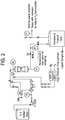
- Figure 1 Figure 2 illustrates the flow diagram for the reactor system.
- the catalyst was treated with flowing hydrogen at 200° C overnight prior to startup. After reducing the reactor temperature to ⁇ 80° C under continued hydrogen flow, an excess flow of ammonia (at least 3-5 times desired set point, as described hereinbelow) was initiated, followed by the same proportional excess flow of the organic mixture, i.e. cyanoaldehydes and THF. The temperature and pressure were then set to the desired set points of 100° C and 7 MPa gauge (1000 psig).
- the ammonia and organic feed rates were decreased to the desired set points of 0.22 mL/min each, a weight hourly space velocity (based on combined organic and ammonia mass feed rates) of 5 hr -1 with a hydrogen to cyanoaldehyde molar ratio of 10. Samples were periodically collected from the reactor and analyzed by gas chromatography.
- the pressure was increased from 7 MPa gauge (1000 psig) to 8.75 MPa gauge (1250 psig) at 1075 hours time on stream.
- a significant gain in selectivity was realized from the increase in pressure as the bicyclic amine was reduced from 15% to 9%, and the product diamine yield was increased from 79% to 84% (seen in Figure 3 ).
- a similar gain was also realized as the pressure was further increased from 8.75 MPa gauge (1250 psig) to 9.8 MPa gauge (1400 psig) (bicyclic amine yield fell from 9% to 7% with a jump in diamine yield from 82% to 85%).
- Productivity for this run remained consistently around 5.0x10 -7 moles diamine/g-catalyst/s.
- Table 1 displays the cobalt leaching numbers in ppm. Higher pressures yielded lower cobalt in the diamine product. These metal concentration numbers were generated by inductively coupled plasma mass spectroscopy (ICP-MS).
- a reactor tube was loaded with 20.0 g (water wet) Grace Davison Raney Co 2786, 8x12 mesh, diluted with 100 grit (150 ⁇ m) SiC fines.
- the organic feed was the same as the feed description in Inventive Example 1.
- the temperature and pressure were then set to the desired set points of 107° C and 7.7 MPa gauge (1100 psig).
- the ammonia and organic feed rates were initially set to 0.11 and 0.22 mL/min; then the organic was halved to 0.11 mL/min at 25 hours, respectively. Samples were periodically collected from the reactor and analyzed by gas chromatography.
- Samples collected between 50 and 150 hours on stream showed 87-91 percent molar yield of diamines (1,3- and 1,4-bis(aminomethyl)cyclohexanes), with 0-4 percent molar yield of aminonitrile and 4-6 percent molar yield of bicyclic amine (3-azabicyclo[3.3.1]nonane).
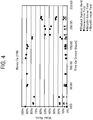
- Samples collected after 150 hours on stream with the same feed and reactor conditions showed a continuing decline in diamine yield, with an increase in the aminonitrile and bicyclic amine (3-azabicycio[3.3.1]nonane) yields, and with the diamine yield falling to 50 percent by 175 hours on stream, as shown in Figure 4 .
- a reactor tube was loaded with 6.27 g Co-0179T catalyst provided by BASF, diluted with 100 grit (150 ⁇ m) SiC fines.
- the organic feed for this reactor was crude cycloaliphatic cyanoaldehydes (CCA) comprising approximately 85 to 90 percent by weight of cyanoaldehyde fed neat to the reactor.
- CCA cycloaliphatic cyanoaldehydes
- the catalyst was treated with flowing hydrogen at 200° C overnight prior to startup. After reducing the reactor temperature to ⁇ 80° C under continued hydrogen flow, an excess flow of ammonia (at least 3-5 times desired set point) was initiated. The temperature and pressure were then set to the desired set points of 100° C and 7 MPa gauge (1000 psig).
- the ammonia was decreased to the desired set point of 0.44 mL/min, and the organic was started at 0.11 mL/min.
- the ammonia and organic feed rates were reduced to 0.13 and 0.03 mL/min, respectively, after 30 hours with a hydrogen to CCA molar ratio of 7.
- Samples were periodically collected from the reactor and analyzed by gas chromatography. Samples collected between 90 and 185 hours on stream showed 80-85 percent molar yield of diamines (1,3- and 1,4-bis(aminomethyl)cyclohexanes), with 0-1 percent molar yield of aminonitrile and 10-12 percent molar yield of bicyclic amine (3-azabicyclo[3.3.1]nonane). Catalyst performance is shown in Figure 5 .
- a reactor tube was loaded with 4.28 g Co-0138E catalyst provided by BASF, diluted with 100 grit (150 ⁇ m) SiC fines.
- the organic feed for this reactor was crude cycloaliphatic cyanoaldehydes (CCA) comprising approximately 85 to 90 percent by weight of cyanoaldehyde diluted to 25 weight percent with tetrahydrofuran (THF).
- CCA cycloaliphatic cyanoaldehydes
- THF tetrahydrofuran
- the catalyst was treated with flowing hydrogen at 200° C overnight prior to startup. After reducing the reactor temperature to ⁇ 80° C under continued hydrogen flow, an excess flow of ammonia (at least 3-5 times desired set point) was initiated. The temperature and pressure were then set to the desired set points of 100° C and 7 MPa gauge (1000 psig).
- a reactor feed mixture was prepared by combining crude comprising approximately 85 to 90 percent by weight of cyanoaldehyde cyanoaldehyde with 20 wt% tert-butanol (t-butanol). The mixture was passed through a bed of sodium carbonate. A reactor tube was loaded with 6.5 g BASF catalyst Co-0179T, lot DM00042, diluted with 100 grit SiC fines. The catalyst was treated with flowing hydrogen at 233° C overnight prior to startup. After reducing the reactor temperature to ⁇ 80° C under continued hydrogen flow, an excess flow of ammonia (at least 3-5 times desired set point) was initiated. The temperature and pressure were then set to the desired set points of 100° C and 14 MPa gauge (2000 psig).
- the ammonia rate was decreased to the desired set point of 0.22 mL/min with an organic feed rate of 0.07 mL/min, a weight hourly space velocity (WHSV, based on combined organic and ammonia mass feed rates) of 2.8 hr -1 with a hydrogen to CCA molar ratio of 5.
- WHSV weight hourly space velocity
- Samples collected between 0 and 30 hours time on stream showed 91-92% molar yield of diamine (1,3- and 1,4-bis(aminomethyl)cyclohexanes), with 0-0.25% molar yield of aminonitrile and 2.3-3.6% molar yield of bicyclic amine (3-azabicyclo[3.3.1]nonane) ( Figure 7 ).
Landscapes
- Chemical & Material Sciences (AREA)
- Organic Chemistry (AREA)
- Organic Low-Molecular-Weight Compounds And Preparation Thereof (AREA)
- Low-Molecular Organic Synthesis Reactions Using Catalysts (AREA)
Description
- The instant invention relates to a method of making cycloaliphatic diamines.
- Bis(aminomethyl)cyclohexane is a diamine that has applications as a precursor to an aliphatic diisocyanate (bis(isocyanatomethyl)cyclohexane). It is useful as a chain extender in certain polyurethanes systems and can be used as an epoxy curing agent. Bis(aminomethyl)cyclohexane exists as a number of isomers, of which the 1,3- and 1,4-isomers are of primary interest. The 1,3-and 1,4-isomers can also exist in a number of diastereomeric forms, as the aminomethyl groups can each reside above or below the plane of the cyclohexane ring.
- 1,3- and 1,4-bis(aminomethyl)cyclohexane mixtures can be prepared via a number of synthetic routes.
U. S. Patent No. 3,143,570 describes a two-step process that requires preparation and isolation of the intermediate solid iminomethylcyclohexanecarbonitriles in water. - As another example, a route may start with butadiene and acrolein, forming 1, 2,3,6-tetrahydrobenzaldehyde in a Diels-Alder reaction. This intermediate is then hydroformylated to add a second aldehyde group and reductively aminated to form the desired diamine. A mixture of isomeric forms of the diamine is obtained, as for example, described in the
U. S. Patent No. 6,252,121 . - The reductive amination of hydroformylated 1,2,3,6-tetrahydrobenzaldehyde using a sponge-metal catalyst or nickel on silica gel/alumina as in
U. S. Patent No. 6,252,121 , however, tends to produce diamine products in low yields. A significant portion of the starting material forms unwanted by-products and polymeric species. As a result, raw material costs may be high and purification of the crude product can be difficult and expensive. Polymeric by-products often foul the reactor and downstream purification unit operations. - It is sometimes possible to suppress by-product formation in reductive amination reactions by "protecting" (or "blocking") the aldehyde groups with an alkyl amine as, for example, described in the
U. S. Patent Nos. 5,041,675 and5,055,618 . The blocked groups are more resistant to polymerization and other unwanted side reactions. However, this approach requires the use of additional raw materials and introduces additional chemical species into the reaction, which must later be removed from the crude product and recycled. Process yields are still far short of those that are needed to have a highly economical process. - Additionally, the production of 1,3- and 1,4-bis(aminomethyl)cyclohexane via a dialdehyde intermediate may be difficult due to catalyst deactivation that leads to rapidly declining yields. Although more stable catalysts have been identified, these catalysts provide lower yields from the very beginning of operation. In addition, the dialdehyde intermediate route requires a reliable and sufficient supply of acrolein.
- In order to overcome these catalyst performance issues and avoid potential future acrolein supply issues, the instant invention provides reductive amination of 1,3- and 1,4-cyanocyclohexane carboxaldehyde (CCA). This intermediate is based on an acrylonitrile feedstock, which is more accessible than acrolein. Simultaneous reduction of the nitrile group and reductive amination of the aldehyde functionality requires a specialized catalyst. Traditional nitrile reduction conditions and catalysts are more aggressive than aldehyde reductive amination conditions and catalysts. Thus, catalysts and conditions that are effective for complete reduction of the nitrile group may also have a tendency to reduce the aldehyde to the corresponding alcohol, resulting in a yield loss. On the other hand, catalysts and conditions that are typically chosen for reductive amination of an aldehyde are typically ineffective in providing complete reduction of the nitrile group, resulting in yield losses to the intermediate aminonitriles. Additionally, the relatively short lifetime of current catalysts introduces other challenges. Catalysts providing good yields to the diamine product (1,3- and 1,4-bis(aminomethyl)cyclohexanes) consistently lose their activity for the nitrile hydrogenation step within less than 250 hours of time on stream. Economically viable catalysts for this process require a much higher number of hours of lifetime, or, equivalently, pounds of 1,3- and 1,4-bis(aminomethyl)cyclohexanes produced per pound of catalyst.
- Accordingly, it would be desirable to provide a method by which cycloaliphatic bis(aminomethyl) compounds can be prepared economically and in high yield.
- The instant invention provides a method of making cycloaliphatic diamines.
- In the first aspect there is provided a process as defined in
claim 1. - Not within the scope of the invention is an embodiment providing cycloaliphatic diamines comprising the reaction product of one or more cycloaliphatic cyanoaldehydes selected from the group consisting of 1,3-cyanocyclohexane carboxaldehyde, 1,4-cyanocyclohexane carboxaldehyde, mixtures thereof, and combinations thereof, hydrogen, and ammonia fed into a reductive amination reactor system; wherein the one or more cycloaliphatic cyanoaldehydes, hydrogen, and ammonia are contacted with each other in the presence of one or more heterogeneous metal based catalyst systems at a temperature in the range of from 80° C to 160° C and a pressure in the range of from 700 to 3500 psig; and wherein one or more cycloaliphatic diamines are formed; and wherein said one or more cycloaliphatic diamines are selected from the group consisting of 1,3-bis(aminomethyl)cyclohexane, 1,4-bis(aminomethyl)cyclohexane, combinations thereof, and mixtures thereof.
- The instant invention provides a process for producing cycloaliphatic diamines comprising the steps of (1) feeding one or more cycloaliphatic cyanoaldehydes selected from the group consisting of 1,3-cyanocyclohexane carboxaldehyde, 1,4-cyanocyclohexane carboxaldehyde, mixtures thereof, and combinations thereof, hydrogen, and ammonia into a reductive amination reactor system; (2) contacting the one or more cycloaliphatic cyanoaldehydes, hydrogen, and ammonia with each other in the presence of one or more heterogeneous metal based catalyst systems at a temperature in the range of from 80° C to 160° C and a pressure in the range of from 4.9 to 24.5 MPa gauge (700 to 3500 psig); and (3) thereby forming one or more cycloaliphatic diamines, wherein said one or more cycloaliphatic diamines are diamines selected from the group consisting of 1,3-bis(aminomethyl)cyclohexane, 1,4-bis(aminomethyl)cyclohexane, combinations thereof, and mixtures thereof.
- Not within the scope of the invention is an embodiment, providing a method of improving the production yield of cycloaliphatic diamines comprising the steps of (1) contacting one or more cycloaliphatic cyanoaldehydes selected from the group consisting of 1,3-cyanocyclohexane carboxaldehyde, 1,4-cyanocyclohexane carboxaldehyde, mixtures thereof, and combinations thereof, hydrogen, and ammonia with each other in the presence of one or more heterogeneous metal based catalyst systems at a temperature in the range of from 80° C to 160° C and a pressure in the range of from 9.8 to 17.5 MPa gauge (1400 to 2500 psig); (2) thereby improving the product yield of one or more cycloaliphatic diamines, wherein said one or more cycloaliphatic diamines are diamines selected from the group consisting of 1,3- bis(aminomethyl)cyclohexane, 1,4-bis(aminomethyl)cyclohexane, combinations thereof, and mixtures thereof.
- In an alternative embodiment, the instant invention provides a method of making cycloaliphatic diamines, in accordance with any of the preceding embodiments, except that one or more cycloaliphatic cyanoaldehydes are contacted with ammonia first and then the mixture is contacted with hydrogen in the presence of one or more heterogeneous metal based catalyst systems.
- In an alternative embodiment, the instant invention provides a method of making cycloaliphatic diamines, in accordance with any of the preceding embodiments, except that the reactor system comprises one or more continuous reactors comprising fixed bed reactors, slurry reactors, or combinations thereof.
- In an alternative embodiment, the instant invention provides a method of making cycloaliphatic diamines, in accordance with any of the preceding embodiments, except that fixed bed reactors comprise trickle bed reactors, packed bubble column reactors, or countercurrent flow reactors.
- In an alternative embodiment, the instant invention provides a method of making cycloaliphatic diamines, in accordance with any of the preceding embodiments, except that slurry reactors comprise stirred tank slurry reactors, slurry bubble column reactors, circulating fluidized bed reactors, or ejector nozzle loop reactors.
- In an alternative embodiment, the instant invention provides a method of making cycloaliphatic diamines, in accordance with any of the preceding embodiments, except that the semi-batch or batch reactors comprise fixed bed reactors or slurry reactors, or combinations thereof.
- In an alternative embodiment, the instant invention provides a method of making cycloaliphatic diamines, in accordance with any of the preceding embodiments, except that the fixed bed reactors comprise trickle bed reactors, packed bubble column reactors, or countercurrent flow reactors.
- In an alternative embodiment, the instant invention provides a method of making cycloaliphatic diamines, in accordance with any of the preceding embodiments, except that the slurry reactors comprise stirred tank slurry reactors, slurry bubble column reactors, circulating fluidized bed reactors, or ejector nozzle loop reactors.
- In an alternative embodiment, the instant invention provides a method of making cycloaliphatic diamines, in accordance with any of the preceding embodiments, except that the one or more heterogeneous metal based catalyst systems are contacted with hydrogen at a temperature in the range of from 200°C to 500°C prior to contacting with the complete reaction mixture.
- In an alternative embodiment, the instant invention provides a method of making cycloaliphatic diamines, in accordance with any of the preceding embodiments, except that one or more heterogeneous metal based catalyst systems are contacted with a mixture that comprises ammonia, solvents, hydrogen, mixtures thereof, and combinations thereof, at a temperature in the range of from 0°C to 80°C prior to contacting with the complete reaction mixture.
- For the purpose of illustrating the invention, there is shown in the drawings a form that is exemplary; it being understood, however, that this invention is not limited to the precise arrangements and instrumentalities shown.
-
Fig. 1 illustrates an exemplary tube reactor; -
Fig. 2 is a schematic illustrating an exemplary process flow diagram for a laboratory system for testing catalyst systems; -
Fig. 3 is a graph illustrating the relationship between time on stream and molar yields of Inventive Example 1; -
Fig. 4 is a graph illustrating the relationship between time on stream and molar yields of Inventive Example 2; -
Fig. 5 is a graph illustrating the relationship between time on stream and molar yields of Inventive Example 3; and -
Fig. 6 is a graph illustrating the relationship between time on stream and molar yields of Inventive Example 4. -
Fig. 7 is a graph illustrating the relationship between time on stream and molar yields of Inventive Example 5. - The instant invention provides a method of making cycloaliphatic diamines. The cycloaliphatic diamines according to the instant invention comprise the reaction product of one or more cycloaliphatic cyanoaldehydes selected from the group consisting of 3-cyanocyclohexane-1-carboxaldehyde, 4-cyanocyclohexane-1-carboxaldehyde, mixtures thereof, and combinations thereof, hydrogen, and ammonia fed into a reductive amination reactor system, e.g. one or more continuous reactors, one or more batch reactors, one or more semi-batch reactors, or combinations thereof; wherein the one or more cycloaliphatic cyanoaldehydes, hydrogen, and ammonia are contacted with each other in the presence of one or more heterogeneous metal based catalyst systems at a temperature in the range of from 80° C to 160° C and a pressure in the range of from 4.9 to 24.5 MPa gauge (700 to 3500 psig); and wherein one or more cycloaliphatic diamines are formed; and wherein said one or more cycloaliphatic diamines are selected from the group consisting of 1,3-bis(aminomethyl)cyclohexane, 1,4-bis(aminomethyl)cyclohexane, combinations thereof, and mixtures thereof.
- The one or more cycloaliphatic cyanoaldehydes may be selected from the group consisting of 3-cyanocyclohexane carboxaldehyde, 4-cyanocyclohexane carboxaldehyde, mixtures thereof, and combinations thereof.
- 3-cyanocyclohexane carboxaldehyde, CAS No. 50738-61-9, may have the following structure and formula:

- 4-cyanocyclohexane carboxaldehyde, CAS No. 18214-33-0, may have the following structure and formula:

- The reaction between one or more cycloaliphatic cyanoaldehydes, hydrogen, and ammonia takes place in the presence of one or more heterogeneous metal based catalyst systems at a temperature in the range of from 80° C to 160° C or from 90° C to 130° C, and a pressure in the range of from 4.9 to 24.5 MPa gauge (700 to 3500 psig) or from 9.8 to 17.5 MPa gauge (1400 to 2500 psig). Such one or more heterogeneous metal based catalyst systems may comprise a metal selected from the group consisting of Co, Ni, oxides thereof, mixtures thereof, and combinations thereof. Such one or more heterogeneous metal based catalyst systems may comprise a bulk metal catalyst system, sponge-metal catalyst system, supported metal catalyst system, mixtures thereof, or combinations thereof. Such one or more heterogeneous metal based catalyst systems may comprise a bulk Co based catalyst system. In a continuous process, the catalyst lifetime facilitates a weight ratio of the one or more cycloaliphatic diamines to one or more heterogeneous metal based catalyst systems that is greater than 300; for example, greater than 500; or in the alternative greater than 900; or in the alternative greater than 1000. The one or more heterogeneous metal based catalyst systems may further comprise a sponge-metal catalyst. The one or more heterogeneous metal based catalyst systems may further comprise one or more promoters or one or more binding agents or one or more catalyst supports. Such one or more promoters may be selected from the group consisting of alkali metals, and alkaline earth metals. Such one or more binding agents may comprise silicon oxide, aluminum oxide, titanium oxide, zirconium oxide, mixtures thereof, or combinations thereof. Such one or more catalyst supports may comprise silicon oxide, aluminum oxide, titanium oxide, zirconium oxide, mixtures thereof, or combinations thereof. Such one or more heterogeneous metal based catalyst systems are commercially available as Raney Cobalt Catalyst from Grace Davison Catalyst Company, Co-0179T cobalt catalyst from BASF, Co-138E cobalt catalyst from BASF, and G-103 cobalt catalyst from Sud-Chemie.
- In a continuous process, the cost of the catalyst depends on its lifetime, which is equivalent to the weight of product produced per kg (pound) of catalyst required. An adequately long lifetime is required for an economically viable continuous process. The one or more heterogeneous metal based catalyst systems may be present in an amount necessary to catalyze the reaction between the one or more cycloaliphatic cyanoaldehydes, hydrogen, and ammonia. For example, the catalyst lifetime facilitates a weight ratio of the cycloaliphatic diamines to the one or more heterogeneous metal based catalyst systems to be greater than 300, for example, greater than 500; or in the alternative, greater than 900; or in the alternative, greater than 1000. In one embodiment, the one or more heterogeneous metal based catalyst systems may, for example, comprise a continuous fixed bed catalyst system.
- The one or more heterogeneous metal based catalyst systems is present in an amount necessary to catalyze the reaction between the one or more cycloaliphatic cyanoaldehydes, hydrogen, and ammonia. The space velocity, which is defined as mass of one or more cycloaliphatic cyanoaldehydes mixture per mass of catalyst per hour, is in the range of from 0.1 to 10.0 per hour; for example, from 0.1 to 5.0 per hour; or in the alternative, from 0.1 to 3.0 per hour; or in the alternative, from 0.1 to 2.0 per hour; or in the alternative, from 0.1 to 1.0 per hour; or in the alternative, from 0.3 to 0.8 per hour.
- Ammonia is present in excess amount relative to the one or more cycloaliphatic cyanoaldehydes. Ammonia may, for example, be present in a range of 2 to 50 moles per mole of one or more cycloaliphatic cyanoaldehydes; or in the alternative, in a range of 5 to 40 moles per mole of one or more cycloaliphatic cyanoaldehydes; or in the alternative, in a range of 8 to 30 moles per mole of one or more cycloaliphatic cyanoaldehydes. Hydrogen may, for example, be present in a range of 3 to 30 moles per mole of one or more cycloaliphatic cyanoaldehydes; or in the alternative, in a range of 3 to 10 moles per mole of one or more cycloaliphatic cyanoaldehydes; or in the alternative, in a range of 3 to 6 moles per mole of one or more cycloaliphatic cyanoaldehydes.
- The reaction between one or more cycloaliphatic cyanoaldehydes, hydrogen, and ammonia may optionally take place in the presence of one or more solvents. Such solvents include, but are not limited to, water; 2-propanol (isopropylalcohol), CAS No. 67-63-0; methanol, CAS No. 67-56-1; t-butanol, CAS No. 75-65-0; and tetrahydrofuran (THF), CAS No. 109-99-9. The feed into the reactor may comprise 0 to 90 percent by weight of one or more solvents, based on the combined weight of one or more cycloaliphatic cyanoaldehydes and the one or more solvents; or in the alternative, 0 to 30 percent by weight of one or more solvents, based on the combined weight of one or more cycloaliphatic cyanoaldehydes and the one or more solvents; or in the alternative, 0 to 10 percent by weight of one or more solvents, based on the combined weight of one or more cycloaliphatic cyanoaldehydes and the one or more solvents.
- The reaction between one or more cycloaliphatic cyanoaldehydes, hydrogen, and ammonia may take place in a continuous reductive amination reactor system; or in the alternative, it may take place in a batch reactor system; or in the alternative, it may take place in a semi-batch reactor system. Such reactor systems are generally known to a person of ordinary skill in the art. The continuous reductive amination reactor system, the semi-batch reductive amination reactor system, or the batch reductive amination system may comprise one or more reactors in series, in parallel, or combinations thereof.
- The one or more cycloaliphatic diamines produced according to the instant invention may be selected from the group consisting of 1,3-bis(aminomethyl)cyclohexane, 1,4-bis(aminomethyl)cyclohexane, combinations thereof, and mixtures thereof.
- 1,3-bis(aminomethyl)cyclohexane, CAS No. 2579-20-6, may have the following structure or formula:

- 1,4-bis(aminomethyl)cyclohexane, CAS No. 2549-93-1, may have the following structure or formula:

- Additional byproducts may include 3-(aminomethyl)-cyclohexanecarbonitrile, CAS No. 23083-50-3; 4-(aminomethyl)-cyclohexanecarbonitrile, CAS No. 54898-73-6; 3-azabicyclo[3.3.1]nonane, CAS No. 280-70-6; 3-azabicyclo[3.3.1]non-2-ene, CAS No. 7129-32-0; 7-amino-bicyclo[2.2.1]heptane-1-methanamine; 3-(aminomethyl)-cyclohexanemethanol, CAS No. 925921-54-6; 4-(aminomethyl)-cyclohexanemethanol, CAS No. 1074-62-0.
- The process for producing cycloaliphatic diamines according to the instant invention comprises the steps of (1) feeding one or more cycloaliphatic cyanoaldehydes selected from the group consisting of 1,3-cyanocyclohexane carboxaldehyde, 1,4-cyanocyclohexane carboxaldehyde, mixtures thereof, and combinations thereof, hydrogen, and ammonia into a reductive amination reactor system; (2) contacting the one or more cycloaliphatic cyanoaldehydes, hydrogen, and ammonia with each other in the presence of one or more heterogeneous metal based catalyst systems at a temperature in the range of from 80° C to 160° C and a pressure in the range of from 4.9 to 24.5 MPa gauge (700 to 3500 psig); and (3) thereby forming one or more cycloaliphatic diamines, wherein said one or more cycloaliphatic diamines are diamines selected from the group consisting of 1,3-bis(aminomethyl)cyclohexane, 1,4-bis(aminomethyl)cyclohexane, combinations thereof, and mixtures thereof.
- In a process for producing cycloaliphatic diamines according to the instant invention, one or more cycloaliphatic cyanoaldehydes, hydrogen, ammonia, and optionally one or more solvents are introduced into a reductive amination reactor system and reacted with each other in the presence of one or more heterogeneous metal based catalyst systems at a temperature in the range of from 80° C to 160° C and a pressure in the range of from 4.9 to 24.5 MPa gauge (700 to 3500 psig) to yield one or more cycloaliphatic diamines.
- In one embodiment, one or more cycloaliphatic cyanoaldehydes are contacted with ammonia first and then the product mixture including the product of the reaction of one or more cycloaliphatic cyanoaldehydes with ammonia is contacted with hydrogen in the presence of one or more heterogeneous metal based catalyst systems.
- A product mixture including one or more aliphatic diamines, optionally a portion of the product of the reaction of one or more cycloaliphatic cyanoaldehydes with ammonia, optionally a portion of the ammonia, optionally a portion of the hydrogen, optionally a portion of one or more by-products, optionally a portion of the water, and optionally a portion of the one or more solvents is formed in the one or more reactor systems, as described hereinabove. The product mixture is then removed from the one or more reactor systems and transferred to one or more distillation columns arranged in sequential order. After the product mixture is transferred to one or more distillation columns arranged in sequential order, at least a portion of the ammonia, a portion of the hydrogen, or a mixture thereof is removed from the product mixture via one or more distillation steps. Subsequently, at least a portion of the one or more solvents, if optionally present, and/or water is removed via one or more distillation steps. Subsequently, at least a portion of the product of the reaction of one or more cycloaliphatic cyanoaldehydes with ammonia or one or more by-products is removed via one or more distillation steps, thus separating the one or more aliphatic diamines from the product mixture and converting the one or more cyanoaldehydes to one or more aliphatic diamines. The distillation process is further described in the
U.S. provisional patent application with serial No. 61/230,300 - A method of improving the production yield of cycloaliphatic diamines comprises the steps of (1) contacting one or more cycloaliphatic cyanoaldehydes selected from the group consisting of 1,3-cyanocyclohexane carboxaldehyde, 1,4-cyanocyclohexane carboxaldehyde, mixtures thereof, and combinations thereof, hydrogen, and ammonia with each other in the presence of one or more heterogeneous metal based catalyst systems at a temperature in the range of from 80° C to 160° C and a pressure in the range of from 9.8 to 17.5 MPa gauge (1400 to 2500 psig); (2) thereby improving the product yield of one or more cycloaliphatic diamines, wherein said one or more cycloaliphatic diamines are diamines selected from the group consisting of 1,3-bis(aminomethyl)cyclohexane, 1,4-bis(aminomethyl)cyclohexane, combinations thereof, and mixtures thereof.
- The one or more cycloaliphatic diamines produced according to the instant invention may be used as a precursor to an aliphatic diisocyanate (bis(isocyanatomethyl)cyclohexane), as a chain extender in certain polyurethanes systems, or as an epoxy curing agent.
- The following examples illustrate the present invention but are not intended to limit the scope of the invention.
- Inventive Examples A-G were prepared in a batch reactor according to following procedures.
- A mixture of 3- and 4-cyanocyclohexane-1-carboxaldehydes (1.001 g; 7.30 millimoles) and diglyme (0.4004 g, internal standard) was charged to an 80 ml Parr reactor, a high pressure reactor, containing Raney Co 2724 catalyst modified with Ni-Cr (0.2 g) provided by Grace Davison, ammonia (in liquid form) (6.82 g; 401 mmol), and methanol (as a solvent) (25 ml). The reactor was heated to 120° C within 10-15 minutes. Then hydrogen was charged to approximately 7 MPa (1,000 psi) and the reaction mixture was stirred at 120° C for 3 hrs. According to gas chromatography analysis of the reactor contents, 1,3-and 1,4-bis(aminomethyl)cyclohexanes were obtained in 96 percent yield, and only about 2 percent of 3-azabicyclo[3.3.1 ]-nonane (bicyclic byproduct) was detected in the reaction mixture.
- The procedure described in Inventive Example A was repeated except that 1.68 g (99 mmol) of ammonia was used in place of 6.82 g (401 mmol) of ammonia. The yields of 1,3- and 1,4-bis(aminomethyl)cyclohexanes and 3-azab!cyc!o[3.3.1]nonane were 91 percent and 6 percent, respectively.
- The procedure described in Inventive Example A was repeated except that n-butanol was used as the solvent instead of methanol. The yields of 1,3- and 1,4-bis(aminomethyl)cyclohexanes and 3-azabicyclo[3.3.1]nonane were 92 percent and 4 percent, respectively.
- The procedure described in Inventive Example A was repeated except that Grace Davison Raney Ni 2400 catalyst modified with Cr was used instead of the Raney Co 2724 catalyst. The yields of 1,3- and 1,4-bis(aminomethyl)cyclohexanes and 3-azabicyclo[3.3.1]nonane were 96 percent and 4 percent, respectively.
- The procedure described in Inventive Example A was repeated except that Grace Davison Raney Ni 3110 catalyst modified with Mo (molybdenum) was used instead of Raney Co 2724 catalyst. The yields of 1,3- and 1,4-bis(aminomethyl)cyclohexanes and 3-azabicycio[3.3.1]nonane were 92 percent and 8 percent, respectively.
- The procedure described in Inventive Example A was repeated except that Aldrich 208779 nickel on silica/alumina catalyst was used instead of Raney cobalt catalyst. The yields of 1,3- and 1,4-bis(aminomethyl)cyclohexanes and 3-azabicyclo[3.3.1]nonane were 90 percent and 10 percent, respectively.
- Twenty-eight catalysts were screened in a 450 mL Parr reactor. Granular and formed catalysts were first ground to provide for a direct comparison with other powdered materials. All catalysts were first treated with hydrogen at 0.21 MPa gauge (30 psig) and 180°C for one hour. Then, the reactor was evacuated and a methanol/ammonia mixture was charged to the reactor at room temperature. The reactor was then heated to the reaction temperature, approximately 130°C, with agitation, and the reactant cyanoaldehyde was injected into the reactor. The reactor was then pressurized to 7 MPa gauge (1000 psig) with hydrogen. Hydrogen was supplied as needed to maintain 7 MPa gauge (1000 psig) until the hydrogen uptake ceased. The reactor was then cooled and sampled. The Grace
Davison Raney Co 2786 gave 10.7 g product (1,3- and 1,4-bis(aminomethyl)cyclohexanes)/g bicyclic byproduct (3-azabicyclo[3.3.1]nonane), with an integrated (time-averaged) rate of 6.19 g product/g catalyst-hr. - Inventive Examples 1-5 were prepared in a continuous fixed bed reactor according to the following procedures.
- A reactor feed mixture was prepared by distilling crude cyanoaldehyde comprising approximately 85 to 90 percent by weight of cyanoaldehyde, combining the overheads with a small amount (few hundred ppm) of Isonox 132, an antioxidant. The distilled cyanoaldehyde was diluted to 25 weight percent in tetrahydrofuran (THF). The mixture was passed through a bed of sodium carbonate (pretreatment of feed) and sparged with nitrogen. A reactor tube was loaded with 5.5 g Co-0179T catalyst provided by BASF, diluted with 100 grit (150 µm) SiC (silicon carbide) fines. A schematic of the designed reactor can be seen in
Figure 1 ;Figure 2 illustrates the flow diagram for the reactor system. The catalyst was treated with flowing hydrogen at 200° C overnight prior to startup. After reducing the reactor temperature to <80° C under continued hydrogen flow, an excess flow of ammonia (at least 3-5 times desired set point, as described hereinbelow) was initiated, followed by the same proportional excess flow of the organic mixture, i.e. cyanoaldehydes and THF. The temperature and pressure were then set to the desired set points of 100° C and 7 MPa gauge (1000 psig). After at least one hour, the ammonia and organic feed rates were decreased to the desired set points of 0.22 mL/min each, a weight hourly space velocity (based on combined organic and ammonia mass feed rates) of 5 hr-1 with a hydrogen to cyanoaldehyde molar ratio of 10. Samples were periodically collected from the reactor and analyzed by gas chromatography. Samples collected between 0 and 64 hours on stream showed 77-80 percent molar yield of diamines (1,3- and 1,4-bis(aminomethyl)cyclohexanes), with 11-14 percent molar yield of aminonitrile and 6-7 percent molar yield of bicyclic amine (3-azabicyclo[3.3.1]nonane), with no significant change in the product distribution over this period, indicating stable catalyst performance. Then, the feed rates were halved, decreasing the WHSV (weight hourly space velocity) to 2.5 hr-1. Samples collected between 95 and 232 hours on stream showed 88-90 percent molar yield of diamines (1,3- and 1,4-bis(aminomethyl)cyclohexanes), with 1.4-2.1 percent molar yield of aminonitrile and 6-8 percent molar yield of bicyclic amine (3-azabicyclo[3.3.1]nonane), with no significant change in the product distribution over this period, indicating stable catalyst performance. A small degradation in catalyst performance can be seen inFigure 3 through 950 hours of run time (aminonitrile yield, bicyclic amine yield, and bicyclic imine all on the secondary axis), but this decline is relatively quite small. Temperature was increased to 110°C at 950 hours. The pressure was increased from 7 MPa gauge (1000 psig) to 8.75 MPa gauge (1250 psig) at 1075 hours time on stream. A significant gain in selectivity was realized from the increase in pressure as the bicyclic amine was reduced from 15% to 9%, and the product diamine yield was increased from 79% to 84% (seen inFigure 3 ). A similar gain was also realized as the pressure was further increased from 8.75 MPa gauge (1250 psig) to 9.8 MPa gauge (1400 psig) (bicyclic amine yield fell from 9% to 7% with a jump in diamine yield from 82% to 85%). Productivity for this run remained consistently around 5.0x10⁻⁷ moles diamine/g-catalyst/s. Table 1 displays the cobalt leaching numbers in ppm. Higher pressures yielded lower cobalt in the diamine product. These metal concentration numbers were generated by inductively coupled plasma mass spectroscopy (ICP-MS). - A reactor tube was loaded with 20.0 g (water wet) Grace
Davison Raney Co 2786, 8x12 mesh, diluted with 100 grit (150 µm) SiC fines. The organic feed was the same as the feed description in Inventive Example 1. The temperature and pressure were then set to the desired set points of 107° C and 7.7 MPa gauge (1100 psig). The ammonia and organic feed rates were initially set to 0.11 and 0.22 mL/min; then the organic was halved to 0.11 mL/min at 25 hours, respectively. Samples were periodically collected from the reactor and analyzed by gas chromatography. Samples collected between 50 and 150 hours on stream showed 87-91 percent molar yield of diamines (1,3- and 1,4-bis(aminomethyl)cyclohexanes), with 0-4 percent molar yield of aminonitrile and 4-6 percent molar yield of bicyclic amine (3-azabicyclo[3.3.1]nonane). Samples collected after 150 hours on stream with the same feed and reactor conditions showed a continuing decline in diamine yield, with an increase in the aminonitrile and bicyclic amine (3-azabicycio[3.3.1]nonane) yields, and with the diamine yield falling to 50 percent by 175 hours on stream, as shown inFigure 4 . - A reactor tube was loaded with 6.27 g Co-0179T catalyst provided by BASF, diluted with 100 grit (150 µm) SiC fines. The organic feed for this reactor was crude cycloaliphatic cyanoaldehydes (CCA) comprising approximately 85 to 90 percent by weight of cyanoaldehyde fed neat to the reactor. The catalyst was treated with flowing hydrogen at 200° C overnight prior to startup. After reducing the reactor temperature to <80° C under continued hydrogen flow, an excess flow of ammonia (at least 3-5 times desired set point) was initiated. The temperature and pressure were then set to the desired set points of 100° C and 7 MPa gauge (1000 psig). After at least one hour, the ammonia was decreased to the desired set point of 0.44 mL/min, and the organic was started at 0.11 mL/min. The ammonia and organic feed rates were reduced to 0.13 and 0.03 mL/min, respectively, after 30 hours with a hydrogen to CCA molar ratio of 7. Samples were periodically collected from the reactor and analyzed by gas chromatography. Samples collected between 90 and 185 hours on stream showed 80-85 percent molar yield of diamines (1,3- and 1,4-bis(aminomethyl)cyclohexanes), with 0-1 percent molar yield of aminonitrile and 10-12 percent molar yield of bicyclic amine (3-azabicyclo[3.3.1]nonane). Catalyst performance is shown in
Figure 5 . - A reactor tube was loaded with 4.28 g Co-0138E catalyst provided by BASF, diluted with 100 grit (150 µm) SiC fines. The organic feed for this reactor was crude cycloaliphatic cyanoaldehydes (CCA) comprising approximately 85 to 90 percent by weight of cyanoaldehyde diluted to 25 weight percent with tetrahydrofuran (THF). The catalyst was treated with flowing hydrogen at 200° C overnight prior to startup. After reducing the reactor temperature to <80° C under continued hydrogen flow, an excess flow of ammonia (at least 3-5 times desired set point) was initiated. The temperature and pressure were then set to the desired set points of 100° C and 7 MPa gauge (1000 psig). After at least one hour, the ammonia was decreased to the desired set point of 0.11 mL/min, and the organic was started at 0.11 mL/min with a hydrogen to CCA molar ratio of 7. Samples were periodically collected from the reactor and analyzed by gas chromatography. Samples collected between 0 and 190 hours on stream showed 80-87 percent molar yield of diamines (1,3-and 1,4-bis(aminomethyl)cyclohexanes), with 0-7 percent molar yield of aminonitrile and 6-13 percent molar yield of bicyclic amine (3-azabicyclo[3.3.1]nonane). Catalyst performance is shown in
Figure 6 . - A reactor feed mixture was prepared by combining crude comprising approximately 85 to 90 percent by weight of cyanoaldehyde cyanoaldehyde with 20 wt% tert-butanol (t-butanol). The mixture was passed through a bed of sodium carbonate. A reactor tube was loaded with 6.5 g BASF catalyst Co-0179T, lot DM00042, diluted with 100 grit SiC fines. The catalyst was treated with flowing hydrogen at 233° C overnight prior to startup. After reducing the reactor temperature to <80° C under continued hydrogen flow, an excess flow of ammonia (at least 3-5 times desired set point) was initiated. The temperature and pressure were then set to the desired set points of 100° C and 14 MPa gauge (2000 psig). After at least one hour, the ammonia rate was decreased to the desired set point of 0.22 mL/min with an organic feed rate of 0.07 mL/min, a weight hourly space velocity (WHSV, based on combined organic and ammonia mass feed rates) of 2.8 hr-1 with a hydrogen to CCA molar ratio of 5. Samples collected between 0 and 30 hours time on stream showed 91-92% molar yield of diamine (1,3- and 1,4-bis(aminomethyl)cyclohexanes), with 0-0.25% molar yield of aminonitrile and 2.3-3.6% molar yield of bicyclic amine (3-azabicyclo[3.3.1]nonane) (
Figure 7 ). After 50 hours of time on stream, the flow rates were increased for a combined WHSV of 4 hr-1. Productivity at the higher rate was 1.23x10⁻⁶ moles diamine/g-catalyst/s. Table 1 displays the cobalt leaching numbers in ppm (via ICP-MS). Again, higher pressures (14 MPa gauge (2000 psig) in this case) yielded lower cobalt in the diamine product.Table 1 Pressure (MPa gauge) ((psig)) TOS (hours) Cobalt (ppm) Inventive Example 1 7.5 (1070) 810 25 Inventive Example 1 9.8 (1400) 1244 6 Inventive Example 1 99 (1415) 1350 5.1 Inventive Example 5 14 (2000) 70-190 (composite) 0.44
Claims (10)
- A process for producing cycloaliphatic diamines comprising the steps of:feeding one or more cycloaliphatic cyanoaldehydes selected from the group consisting of 3-cyanocyclohexane-1-carboxaldehyde, 4-cyanocyclohexane-1-carboxaldehyde, mixtures thereof, and combinations thereof, hydrogen, and ammonia into a reductive amination reactor system;contacting said one or more cycloaliphatic cyanoaldehydes, hydrogen, and ammonia with each other in the presence of one or more heterogeneous metal based catalyst systems at a temperature in the range of from 80° C to 160° C and a pressure in the range of from 4.9 to 24.5 MPa gauge (700 to 3500 psig);wherein said one or more heterogeneous metal based catalyst systems comprises a metal selected from the group consisting of Co, Ni, oxides thereof, mixtures thereof, and combinations thereof;thereby forming one or more cycloaliphatic diamines, wherein said one or more cycloaliphatic diamines are diamines selected from the group consisting of 1,3-bis(aminomethyl)cyclohexane, 1,4-bis(aminomethyl)cyclohexane, combinations thereof, and mixtures thereof.
- The process according to Claim 1, wherein said catalyst system has a space velocity in the range of from 0.1 to 10.0 per hour, wherein space velocity is defined as the ratio of the mass of the mixture of one or more cycloaliphatic cyanoaldehydes to the mass of catalyst per hour.
- The process according to Claim 1, wherein said reductive amination reactor system comprises one or more continuous reactors in series, in parallel, or combinations thereof.
- The process according to Claim 1, wherein said reductive amination reactor system comprises one or more batch or semi-batch reactors.
- The process according to Claim 1, wherein said one or more heterogeneous metal based catalyst systems is a bulk metal catalyst system, sponge-metal catalyst system, supported metal catalyst system, mixtures thereof, or combinations thereof.
- The process according to Claim 1, wherein said one or more heterogeneous metal based catalyst systems comprises a bulk Co based catalyst system.
- The process according to Claim 1, wherein said one or more heterogeneous metal based catalyst systems further comprises one or more promoters or one or more binding agents.
- The process according to Claim 7, wherein said one or more promoters are selected from the group consisting of alkali metals and alkaline earth metals.
- The process according to Claim 7, wherein said one or more binding agents comprise silicon oxide, aluminum oxide, titanium oxide, zirconium oxide, mixtures thereof, or combinations thereof.
- The process according to Claim 1, wherein the catalyst lifetime facilitates a weight ratio of said one or more cycloaliphatic diamines to said one or more heterogeneous metal based catalyst systems that is greater than 300.
Applications Claiming Priority (2)
| Application Number | Priority Date | Filing Date | Title |
|---|---|---|---|
| US23031909P | 2009-07-31 | 2009-07-31 | |
| PCT/US2010/043869 WO2011014747A2 (en) | 2009-07-31 | 2010-07-30 | Cycloaliphatic diamines and method of making the same |
Publications (2)
| Publication Number | Publication Date |
|---|---|
| EP2459514A2 EP2459514A2 (en) | 2012-06-06 |
| EP2459514B1 true EP2459514B1 (en) | 2017-07-19 |
Family
ID=43259709
Family Applications (1)
| Application Number | Title | Priority Date | Filing Date |
|---|---|---|---|
| EP10739807.5A Active EP2459514B1 (en) | 2009-07-31 | 2010-07-30 | Cycloaliphatic diamines and method of making the same |
Country Status (5)
| Country | Link |
|---|---|
| US (1) | US9233908B2 (en) |
| EP (1) | EP2459514B1 (en) |
| JP (1) | JP5841533B2 (en) |
| CN (1) | CN102471231B (en) |
| WO (1) | WO2011014747A2 (en) |
Families Citing this family (3)
| Publication number | Priority date | Publication date | Assignee | Title |
|---|---|---|---|---|
| EP2488482B1 (en) * | 2009-07-31 | 2015-08-19 | Dow Global Technologies LLC | Process for improving the catalytic activity of catalyst systems for reductive amination of aliphatic cyanoaldehydes to aliphatic diamines |
| EP2459513B1 (en) | 2009-07-31 | 2015-08-26 | Dow Global Technologies LLC | A process for the conversion of aliphatic cyclic amines to aliphatic diamines |
| CN102574772B (en) * | 2009-07-31 | 2015-06-24 | 陶氏环球技术有限责任公司 | Process for reductive amination of aliphatic cyanoaldehydes to aliphatic diamines |
Family Cites Families (22)
| Publication number | Priority date | Publication date | Assignee | Title |
|---|---|---|---|---|
| US3012994A (en) | 1956-10-24 | 1961-12-12 | Eastman Kodak Co | Polyamides derived from cyclohexanebis |
| US3143570A (en) | 1960-07-01 | 1964-08-04 | Eastman Kodak Co | Method for preparing alicyclic diamines |
| DE2614244A1 (en) * | 1976-04-02 | 1977-10-20 | Bayer Ag | CYCLOALIPHATIC TRIAMINES |
| DE2965583D1 (en) | 1978-11-08 | 1983-07-07 | Ici Plc | Process for the production of hexamethylenediamine |
| DE3021955A1 (en) * | 1980-06-12 | 1981-12-24 | Chemische Werke Hüls AG, 4370 Marl | METHOD FOR PRODUCING PRIMARY MONO- AND DIAMINES FROM OXO COMPOUNDS |
| DE3822038A1 (en) | 1988-06-30 | 1990-03-01 | Hoechst Ag | METHOD FOR PRODUCING 3 (4), 8 (9) -BIS- (AMINOMETHYL) TRICYCLO (5.2.1.0 (UP ARROW) 2 (UP ARROW) (UP ARROW)), (UP ARROW) (UP ARROW) 6 (ARROW HIGH)) - DECAN |
| CN1047856A (en) | 1989-04-25 | 1990-12-19 | 联合碳化化学品及塑料有限公司 | The reduction amination of carbonyl nitrile and similar compound |
| DE3917444A1 (en) | 1989-05-30 | 1991-02-21 | Hoechst Ag | PROCESS FOR PREPARING (ALPHA), (OMEGA) DIAMINES |
| EP0452693B1 (en) | 1990-03-30 | 1995-10-04 | BASF Aktiengesellschaft | Method of preparing 2,2-disubstituted pentane 1,5-diamines |
| JPH06279368A (en) * | 1991-10-23 | 1994-10-04 | Mitsubishi Gas Chem Co Inc | Process for producing bisaminomethylcyclohexane |
| DE4407325B4 (en) | 1994-03-04 | 2006-06-29 | Basf Ag | Process for the preparation of 3-aminomethyl-3,5,5-trimethylcyclohexylamine |
| DE19507398C1 (en) | 1995-03-03 | 1996-09-12 | Basf Ag | Process for the preparation of 3-aminomethyl-3,5,5-trimethylcyclohexylamine |
| ES2177877T3 (en) | 1996-11-04 | 2002-12-16 | Bayer Ag | PROCEDURE FOR THE MANUFACTURE OF 1,4-BIS (AMINOMETIL) CYCLHEXAN. |
| US5986126A (en) | 1999-01-25 | 1999-11-16 | E. I. Du Pont De Nemours And Company | Process for the production of 6-aminocapronitrile and/or hexamethylenediamine |
| US6252121B1 (en) * | 1999-07-27 | 2001-06-26 | Union Carbide Chemicals & Plastics Technology Corporation | Metal-ligand complex catalyzed processes |
| DE10142635A1 (en) | 2001-08-31 | 2003-03-20 | Basf Ag | Process for the preparation of isophoronediamine (IPDA, 3-aminomethyl-3,5,5, -trimethylcyclohexylamine) |
| JP4556466B2 (en) | 2004-03-29 | 2010-10-06 | 三菱瓦斯化学株式会社 | Method for distillation of 1,3-bis (aminomethyl) cyclohexane |
| US20070005594A1 (en) | 2005-06-30 | 2007-01-04 | Binyamin Pinkas | Secure keyword search system and method |
| DE102006006625A1 (en) * | 2006-02-14 | 2007-08-16 | Degussa Gmbh | Process for the preparation of amines by conditioning the catalyst with ammonia |
| CA2672677C (en) * | 2006-12-15 | 2012-07-10 | Dow Global Technologies Inc. | Process for the reductive amination of aldehydes and ketones |
| CN102482198B (en) | 2009-07-31 | 2016-06-15 | 陶氏环球技术有限责任公司 | The method that reproducibility aminating reaction solvent is separated with one or more aliphatic diamines with impurity |
| CN102574772B (en) * | 2009-07-31 | 2015-06-24 | 陶氏环球技术有限责任公司 | Process for reductive amination of aliphatic cyanoaldehydes to aliphatic diamines |
-
2010
- 2010-07-30 EP EP10739807.5A patent/EP2459514B1/en active Active
- 2010-07-30 US US13/383,361 patent/US9233908B2/en active Active
- 2010-07-30 JP JP2012523074A patent/JP5841533B2/en active Active
- 2010-07-30 CN CN201080035249.6A patent/CN102471231B/en active Active
- 2010-07-30 WO PCT/US2010/043869 patent/WO2011014747A2/en not_active Ceased
Non-Patent Citations (1)
| Title |
|---|
| None * |
Also Published As
| Publication number | Publication date |
|---|---|
| WO2011014747A3 (en) | 2011-03-24 |
| JP2013500992A (en) | 2013-01-10 |
| CN102471231A (en) | 2012-05-23 |
| WO2011014747A4 (en) | 2011-06-03 |
| US20120123165A1 (en) | 2012-05-17 |
| CN102471231B (en) | 2015-01-07 |
| WO2011014747A2 (en) | 2011-02-03 |
| JP5841533B2 (en) | 2016-01-13 |
| EP2459514A2 (en) | 2012-06-06 |
| US9233908B2 (en) | 2016-01-12 |
Similar Documents
| Publication | Publication Date | Title |
|---|---|---|
| US8884063B2 (en) | Continuous process for the hydrogenation of 3-cyano-3,5,5-trimethyl-cyclohexylimine | |
| EP2459513B1 (en) | A process for the conversion of aliphatic cyclic amines to aliphatic diamines | |
| EP2121570B1 (en) | Process for the reductive amination of aldehydes and ketones | |
| US5504254A (en) | Process for the preparation of isophoronediamine | |
| CN111804324B (en) | Modified metal supported catalyst, diaminodicyclohexylmethane product, and preparation method and application thereof | |
| EP2459515B1 (en) | Process for reductive amination of aliphatic cyanoaldehydes to aliphatic diamines | |
| US9233908B2 (en) | Cycloaliphatic diamines and method of making the same | |
| EP1902011B1 (en) | Process for the reductive amination of aldehydes and ketones via the formation of macrocyclic polyimine intermediates | |
| JP4372874B2 (en) | Process for producing 3-aminomethyl-3,5,5-trimethylcyclohexylamine having a cis / trans isomer ratio of at least 70/30 | |
| EP2488482B1 (en) | Process for improving the catalytic activity of catalyst systems for reductive amination of aliphatic cyanoaldehydes to aliphatic diamines | |
| JP2015524829A (en) | Continuous process for the production of primary aliphatic amines from aldehydes | |
| WO2024245807A1 (en) | Manufacture of pentamethyl diethylenetriamine | |
| JPH0532592A (en) | Amine production method | |
| HK1215018B (en) | Process for preparing 3-aminomethyl-3,5,5-trimethylcyclohexylamine | |
| HK1215018A1 (en) | Process for preparing 3-aminomethyl-3,5,5-trimethylcyclohexylamine |
Legal Events
| Date | Code | Title | Description |
|---|---|---|---|
| PUAI | Public reference made under article 153(3) epc to a published international application that has entered the european phase |
Free format text: ORIGINAL CODE: 0009012 |
|
| 17P | Request for examination filed |
Effective date: 20120131 |
|
| AK | Designated contracting states |
Kind code of ref document: A2 Designated state(s): AL AT BE BG CH CY CZ DE DK EE ES FI FR GB GR HR HU IE IS IT LI LT LU LV MC MK MT NL NO PL PT RO SE SI SK SM TR |
|
| RIN1 | Information on inventor provided before grant (corrected) |
Inventor name: SCHUITMAN, ABRAHAM Inventor name: FEIST, SHAWN Inventor name: HICKMAN, DANIEL Inventor name: TULCHINSKY, MICHAEL Inventor name: MOLITOR, ERICH Inventor name: FISH, BARRY |
|
| DAX | Request for extension of the european patent (deleted) | ||
| 17Q | First examination report despatched |
Effective date: 20131018 |
|
| GRAP | Despatch of communication of intention to grant a patent |
Free format text: ORIGINAL CODE: EPIDOSNIGR1 |
|
| INTG | Intention to grant announced |
Effective date: 20170217 |
|
| GRAS | Grant fee paid |
Free format text: ORIGINAL CODE: EPIDOSNIGR3 |
|
| GRAA | (expected) grant |
Free format text: ORIGINAL CODE: 0009210 |
|
| REG | Reference to a national code |
Ref country code: FR Ref legal event code: PLFP Year of fee payment: 8 |
|
| AK | Designated contracting states |
Kind code of ref document: B1 Designated state(s): AL AT BE BG CH CY CZ DE DK EE ES FI FR GB GR HR HU IE IS IT LI LT LU LV MC MK MT NL NO PL PT RO SE SI SK SM TR |
|
| REG | Reference to a national code |
Ref country code: GB Ref legal event code: FG4D |
|
| REG | Reference to a national code |
Ref country code: CH Ref legal event code: EP |
|
| REG | Reference to a national code |
Ref country code: IE Ref legal event code: FG4D |
|
| REG | Reference to a national code |
Ref country code: AT Ref legal event code: REF Ref document number: 910237 Country of ref document: AT Kind code of ref document: T Effective date: 20170815 |
|
| REG | Reference to a national code |
Ref country code: DE Ref legal event code: R096 Ref document number: 602010043727 Country of ref document: DE |
|
| REG | Reference to a national code |
Ref country code: NL Ref legal event code: MP Effective date: 20170719 |
|
| REG | Reference to a national code |
Ref country code: LT Ref legal event code: MG4D |
|
| REG | Reference to a national code |
Ref country code: AT Ref legal event code: MK05 Ref document number: 910237 Country of ref document: AT Kind code of ref document: T Effective date: 20170719 |
|
| PG25 | Lapsed in a contracting state [announced via postgrant information from national office to epo] |
Ref country code: AT Free format text: LAPSE BECAUSE OF FAILURE TO SUBMIT A TRANSLATION OF THE DESCRIPTION OR TO PAY THE FEE WITHIN THE PRESCRIBED TIME-LIMIT Effective date: 20170719 Ref country code: NL Free format text: LAPSE BECAUSE OF FAILURE TO SUBMIT A TRANSLATION OF THE DESCRIPTION OR TO PAY THE FEE WITHIN THE PRESCRIBED TIME-LIMIT Effective date: 20170719 Ref country code: FI Free format text: LAPSE BECAUSE OF FAILURE TO SUBMIT A TRANSLATION OF THE DESCRIPTION OR TO PAY THE FEE WITHIN THE PRESCRIBED TIME-LIMIT Effective date: 20170719 Ref country code: SE Free format text: LAPSE BECAUSE OF FAILURE TO SUBMIT A TRANSLATION OF THE DESCRIPTION OR TO PAY THE FEE WITHIN THE PRESCRIBED TIME-LIMIT Effective date: 20170719 Ref country code: NO Free format text: LAPSE BECAUSE OF FAILURE TO SUBMIT A TRANSLATION OF THE DESCRIPTION OR TO PAY THE FEE WITHIN THE PRESCRIBED TIME-LIMIT Effective date: 20171019 Ref country code: LT Free format text: LAPSE BECAUSE OF FAILURE TO SUBMIT A TRANSLATION OF THE DESCRIPTION OR TO PAY THE FEE WITHIN THE PRESCRIBED TIME-LIMIT Effective date: 20170719 Ref country code: HR Free format text: LAPSE BECAUSE OF FAILURE TO SUBMIT A TRANSLATION OF THE DESCRIPTION OR TO PAY THE FEE WITHIN THE PRESCRIBED TIME-LIMIT Effective date: 20170719 |
|
| PG25 | Lapsed in a contracting state [announced via postgrant information from national office to epo] |
Ref country code: BG Free format text: LAPSE BECAUSE OF FAILURE TO SUBMIT A TRANSLATION OF THE DESCRIPTION OR TO PAY THE FEE WITHIN THE PRESCRIBED TIME-LIMIT Effective date: 20171019 Ref country code: GR Free format text: LAPSE BECAUSE OF FAILURE TO SUBMIT A TRANSLATION OF THE DESCRIPTION OR TO PAY THE FEE WITHIN THE PRESCRIBED TIME-LIMIT Effective date: 20171020 Ref country code: LV Free format text: LAPSE BECAUSE OF FAILURE TO SUBMIT A TRANSLATION OF THE DESCRIPTION OR TO PAY THE FEE WITHIN THE PRESCRIBED TIME-LIMIT Effective date: 20170719 Ref country code: IS Free format text: LAPSE BECAUSE OF FAILURE TO SUBMIT A TRANSLATION OF THE DESCRIPTION OR TO PAY THE FEE WITHIN THE PRESCRIBED TIME-LIMIT Effective date: 20171119 Ref country code: ES Free format text: LAPSE BECAUSE OF FAILURE TO SUBMIT A TRANSLATION OF THE DESCRIPTION OR TO PAY THE FEE WITHIN THE PRESCRIBED TIME-LIMIT Effective date: 20170719 Ref country code: PL Free format text: LAPSE BECAUSE OF FAILURE TO SUBMIT A TRANSLATION OF THE DESCRIPTION OR TO PAY THE FEE WITHIN THE PRESCRIBED TIME-LIMIT Effective date: 20170719 |
|
| REG | Reference to a national code |
Ref country code: CH Ref legal event code: PL |
|
| REG | Reference to a national code |
Ref country code: DE Ref legal event code: R097 Ref document number: 602010043727 Country of ref document: DE |
|
| PG25 | Lapsed in a contracting state [announced via postgrant information from national office to epo] |
Ref country code: CH Free format text: LAPSE BECAUSE OF NON-PAYMENT OF DUE FEES Effective date: 20170731 Ref country code: LI Free format text: LAPSE BECAUSE OF NON-PAYMENT OF DUE FEES Effective date: 20170731 Ref country code: CZ Free format text: LAPSE BECAUSE OF FAILURE TO SUBMIT A TRANSLATION OF THE DESCRIPTION OR TO PAY THE FEE WITHIN THE PRESCRIBED TIME-LIMIT Effective date: 20170719 Ref country code: MC Free format text: LAPSE BECAUSE OF FAILURE TO SUBMIT A TRANSLATION OF THE DESCRIPTION OR TO PAY THE FEE WITHIN THE PRESCRIBED TIME-LIMIT Effective date: 20170719 Ref country code: RO Free format text: LAPSE BECAUSE OF FAILURE TO SUBMIT A TRANSLATION OF THE DESCRIPTION OR TO PAY THE FEE WITHIN THE PRESCRIBED TIME-LIMIT Effective date: 20170719 Ref country code: DK Free format text: LAPSE BECAUSE OF FAILURE TO SUBMIT A TRANSLATION OF THE DESCRIPTION OR TO PAY THE FEE WITHIN THE PRESCRIBED TIME-LIMIT Effective date: 20170719 |
|
| REG | Reference to a national code |
Ref country code: IE Ref legal event code: MM4A |
|
| REG | Reference to a national code |
Ref country code: BE Ref legal event code: MM Effective date: 20170731 |
|
| PLBE | No opposition filed within time limit |
Free format text: ORIGINAL CODE: 0009261 |
|
| STAA | Information on the status of an ep patent application or granted ep patent |
Free format text: STATUS: NO OPPOSITION FILED WITHIN TIME LIMIT |
|
| PG25 | Lapsed in a contracting state [announced via postgrant information from national office to epo] |
Ref country code: SM Free format text: LAPSE BECAUSE OF FAILURE TO SUBMIT A TRANSLATION OF THE DESCRIPTION OR TO PAY THE FEE WITHIN THE PRESCRIBED TIME-LIMIT Effective date: 20170719 Ref country code: SK Free format text: LAPSE BECAUSE OF FAILURE TO SUBMIT A TRANSLATION OF THE DESCRIPTION OR TO PAY THE FEE WITHIN THE PRESCRIBED TIME-LIMIT Effective date: 20170719 Ref country code: EE Free format text: LAPSE BECAUSE OF FAILURE TO SUBMIT A TRANSLATION OF THE DESCRIPTION OR TO PAY THE FEE WITHIN THE PRESCRIBED TIME-LIMIT Effective date: 20170719 Ref country code: IT Free format text: LAPSE BECAUSE OF FAILURE TO SUBMIT A TRANSLATION OF THE DESCRIPTION OR TO PAY THE FEE WITHIN THE PRESCRIBED TIME-LIMIT Effective date: 20170719 |
|
| REG | Reference to a national code |
Ref country code: FR Ref legal event code: PLFP Year of fee payment: 9 |
|
| 26N | No opposition filed |
Effective date: 20180420 |
|
| PG25 | Lapsed in a contracting state [announced via postgrant information from national office to epo] |
Ref country code: LU Free format text: LAPSE BECAUSE OF NON-PAYMENT OF DUE FEES Effective date: 20170730 |
|
| PG25 | Lapsed in a contracting state [announced via postgrant information from national office to epo] |
Ref country code: IE Free format text: LAPSE BECAUSE OF NON-PAYMENT OF DUE FEES Effective date: 20170730 |
|
| PG25 | Lapsed in a contracting state [announced via postgrant information from national office to epo] |
Ref country code: SI Free format text: LAPSE BECAUSE OF FAILURE TO SUBMIT A TRANSLATION OF THE DESCRIPTION OR TO PAY THE FEE WITHIN THE PRESCRIBED TIME-LIMIT Effective date: 20170719 Ref country code: BE Free format text: LAPSE BECAUSE OF NON-PAYMENT OF DUE FEES Effective date: 20170731 |
|
| PG25 | Lapsed in a contracting state [announced via postgrant information from national office to epo] |
Ref country code: MT Free format text: LAPSE BECAUSE OF NON-PAYMENT OF DUE FEES Effective date: 20170730 |
|
| PG25 | Lapsed in a contracting state [announced via postgrant information from national office to epo] |
Ref country code: HU Free format text: LAPSE BECAUSE OF FAILURE TO SUBMIT A TRANSLATION OF THE DESCRIPTION OR TO PAY THE FEE WITHIN THE PRESCRIBED TIME-LIMIT; INVALID AB INITIO Effective date: 20100730 |
|
| PG25 | Lapsed in a contracting state [announced via postgrant information from national office to epo] |
Ref country code: CY Free format text: LAPSE BECAUSE OF NON-PAYMENT OF DUE FEES Effective date: 20170719 |
|
| PG25 | Lapsed in a contracting state [announced via postgrant information from national office to epo] |
Ref country code: MK Free format text: LAPSE BECAUSE OF FAILURE TO SUBMIT A TRANSLATION OF THE DESCRIPTION OR TO PAY THE FEE WITHIN THE PRESCRIBED TIME-LIMIT Effective date: 20170719 |
|
| PG25 | Lapsed in a contracting state [announced via postgrant information from national office to epo] |
Ref country code: TR Free format text: LAPSE BECAUSE OF FAILURE TO SUBMIT A TRANSLATION OF THE DESCRIPTION OR TO PAY THE FEE WITHIN THE PRESCRIBED TIME-LIMIT Effective date: 20170719 |
|
| PG25 | Lapsed in a contracting state [announced via postgrant information from national office to epo] |
Ref country code: PT Free format text: LAPSE BECAUSE OF FAILURE TO SUBMIT A TRANSLATION OF THE DESCRIPTION OR TO PAY THE FEE WITHIN THE PRESCRIBED TIME-LIMIT Effective date: 20170719 |
|
| PG25 | Lapsed in a contracting state [announced via postgrant information from national office to epo] |
Ref country code: AL Free format text: LAPSE BECAUSE OF FAILURE TO SUBMIT A TRANSLATION OF THE DESCRIPTION OR TO PAY THE FEE WITHIN THE PRESCRIBED TIME-LIMIT Effective date: 20170719 |
|
| P01 | Opt-out of the competence of the unified patent court (upc) registered |
Effective date: 20230525 |
|
| PGFP | Annual fee paid to national office [announced via postgrant information from national office to epo] |
Ref country code: GB Payment date: 20250605 Year of fee payment: 16 |
|
| PGFP | Annual fee paid to national office [announced via postgrant information from national office to epo] |
Ref country code: FR Payment date: 20250610 Year of fee payment: 16 |
|
| PGFP | Annual fee paid to national office [announced via postgrant information from national office to epo] |
Ref country code: DE Payment date: 20250604 Year of fee payment: 16 |