EP2458883A1 - Rights metadata catching by switched digital video multiplexers - Google Patents
Rights metadata catching by switched digital video multiplexers Download PDFInfo
- Publication number
- EP2458883A1 EP2458883A1 EP20110009144 EP11009144A EP2458883A1 EP 2458883 A1 EP2458883 A1 EP 2458883A1 EP 20110009144 EP20110009144 EP 20110009144 EP 11009144 A EP11009144 A EP 11009144A EP 2458883 A1 EP2458883 A1 EP 2458883A1
- Authority
- EP
- European Patent Office
- Prior art keywords
- information
- content stream
- sdv
- local cache
- available
- Prior art date
- Legal status (The legal status is an assumption and is not a legal conclusion. Google has not performed a legal analysis and makes no representation as to the accuracy of the status listed.)
- Granted
Links
Images



Classifications
-
- H—ELECTRICITY
- H04—ELECTRIC COMMUNICATION TECHNIQUE
- H04N—PICTORIAL COMMUNICATION, e.g. TELEVISION
- H04N21/00—Selective content distribution, e.g. interactive television or video on demand [VOD]
- H04N21/20—Servers specifically adapted for the distribution of content, e.g. VOD servers; Operations thereof
- H04N21/25—Management operations performed by the server for facilitating the content distribution or administrating data related to end-users or client devices, e.g. end-user or client device authentication, learning user preferences for recommending movies
- H04N21/266—Channel or content management, e.g. generation and management of keys and entitlement messages in a conditional access system, merging a VOD unicast channel into a multicast channel
-
- H—ELECTRICITY
- H04—ELECTRIC COMMUNICATION TECHNIQUE
- H04N—PICTORIAL COMMUNICATION, e.g. TELEVISION
- H04N21/00—Selective content distribution, e.g. interactive television or video on demand [VOD]
- H04N21/20—Servers specifically adapted for the distribution of content, e.g. VOD servers; Operations thereof
- H04N21/25—Management operations performed by the server for facilitating the content distribution or administrating data related to end-users or client devices, e.g. end-user or client device authentication, learning user preferences for recommending movies
- H04N21/254—Management at additional data server, e.g. shopping server, rights management server
- H04N21/2541—Rights Management
-
- H—ELECTRICITY
- H04—ELECTRIC COMMUNICATION TECHNIQUE
- H04N—PICTORIAL COMMUNICATION, e.g. TELEVISION
- H04N21/00—Selective content distribution, e.g. interactive television or video on demand [VOD]
- H04N21/20—Servers specifically adapted for the distribution of content, e.g. VOD servers; Operations thereof
- H04N21/21—Server components or server architectures
- H04N21/222—Secondary servers, e.g. proxy server, cable television Head-end
- H04N21/2225—Local VOD servers
-
- H—ELECTRICITY
- H04—ELECTRIC COMMUNICATION TECHNIQUE
- H04N—PICTORIAL COMMUNICATION, e.g. TELEVISION
- H04N21/00—Selective content distribution, e.g. interactive television or video on demand [VOD]
- H04N21/20—Servers specifically adapted for the distribution of content, e.g. VOD servers; Operations thereof
- H04N21/23—Processing of content or additional data; Elementary server operations; Server middleware
- H04N21/234—Processing of video elementary streams, e.g. splicing of video streams or manipulating encoded video stream scene graphs
- H04N21/2347—Processing of video elementary streams, e.g. splicing of video streams or manipulating encoded video stream scene graphs involving video stream encryption
-
- H—ELECTRICITY
- H04—ELECTRIC COMMUNICATION TECHNIQUE
- H04N—PICTORIAL COMMUNICATION, e.g. TELEVISION
- H04N21/00—Selective content distribution, e.g. interactive television or video on demand [VOD]
- H04N21/60—Network structure or processes for video distribution between server and client or between remote clients; Control signalling between clients, server and network components; Transmission of management data between server and client, e.g. sending from server to client commands for recording incoming content stream; Communication details between server and client
- H04N21/63—Control signaling related to video distribution between client, server and network components; Network processes for video distribution between server and clients or between remote clients, e.g. transmitting basic layer and enhancement layers over different transmission paths, setting up a peer-to-peer communication via Internet between remote STB's; Communication protocols; Addressing
- H04N21/647—Control signaling between network components and server or clients; Network processes for video distribution between server and clients, e.g. controlling the quality of the video stream, by dropping packets, protecting content from unauthorised alteration within the network, monitoring of network load, bridging between two different networks, e.g. between IP and wireless
- H04N21/64784—Data processing by the network
Definitions
- a digital video system allows a multiple system operator (MSO) to deliver television programs and multimedia services to subscribers.
- MSO system operator
- the capacity, or bandwidth, of the system determines the programs and services that the MSO delivers.
- legacy digital video systems the MSO sends all of the available programs and services to the subscriber's set-top box on a single cable.
- the only way to increase the programs and services available to subscribers in legacy digital video systems is to increase the bandwidth of the cable.
- Switched digital video (SDV) systems are an improvement to legacy digital video systems that require less bandwidth to deliver high-bandwidth digital services.
- SDV systems allow the MSO to send only the content requested by a service group, where each service group includes a set of set-top boxes with visibility to a common set of switched edge devices.
- the subscriber's set-top box communicates with a network side video server to request the program that the subscriber wants to watch in real-time.
- the SDV system responds by commanding the edge devices associated with the subscriber's service group to deliver the requested program to the subscriber's service group.
- the service group only receives the programs that subscribers in the service group are watching.
- Prior art SDV systems encrypt a content stream before it reaches an edge device, typically using a bulk encryption approach.
- These prior art SDV systems rely on a resource/session manager (e.g. , an SDV manager) to command the edge device to receive the encrypted content stream and route it to the appropriate set-top box.
- a resource/session manager e.g. , an SDV manager
- CA conditional access
- EIS event information scheduler
- aspects of the present invention provide a system and method that receives a tune request in a switched digital video (SDV) system, where the tune request includes an identifier of a set-top box, and an SDV channel.
- the method receives a content stream associated with the SDV channel.
- the method retrieves conditional access (CA) information from a local cache, where the CA information includes encryption information for the content stream.
- CA information includes encryption information for the content stream.
- the method converts the content stream to an encrypted content stream using the encryption information, and sends the encrypted content stream to the set-top box.
- CA conditional access
- FIG. 1 is a network diagram that illustrates one embodiment of the hardware components of a prior art system.
- FIG. 2 is a network diagram that illustrates one embodiment of the hardware components of a system that performs the present invention.
- FIG. 3 is a block diagram that illustrates, in detail, one embodiment of the hardware components shown in FIG. 2 .
- FIG. 4 is a network diagram that illustrates another embodiment of the hardware components of a system that performs the present invention.
- FIG. 5 is a block diagram that illustrates, in detail, one embodiment of the hardware components shown in FIG. 4 .
- FIG. 6 is a message flow diagram that illustrates a method according to one embodiment of the present invention.
- FIG. 7 is a message flow diagram that illustrates a method according to one embodiment of the present invention.
- FIG. 1 is a network diagram that illustrates one embodiment of the hardware components of a prior art system.
- the switched digital video (SDV) system 100 shown in FIG. 1 includes a network 110, network encryptor 120, edge device 160, and set-top box 180.
- the network encryptor 120 communicates with a conditional access (CA) system that includes an access criteria generator (ACG) 140, event information scheduler (EIS) 130, and entitlement control message generator (ECMG) 150.
- the edge device 160 receives commands from a resource/session manager 170 to display a content stream on the set-top box 180.
- the SDV system 100 shown in FIG. 1 may include any number of interconnected networks 110, network encryptors 120, edge devices 160, set-top boxes 180, ACGs 140, EISs 130, ECMGs 150, and resource/session managers 170.
- the network 110 in one embodiment, is a public communication network or wide area network (WAN).
- the present invention also contemplates the use of comparable network architectures.
- Comparable network architectures include the Public Switched Telephone Network (PSTN), a public packet-switched network carrying data and voice packets, a wireless network, and a private network.
- PSTN Public Switched Telephone Network
- a wireless network includes a cellular network (e.g., a Time Division Multiple Access (TDMA), Code Division Multiple Access (CDMA), or Orthogonal Frequency Division Multiplexing (OFDM) network), a satellite network, and a wireless Local Area Network (LAN) (e.g. , a wireless fidelity (Wi-Fi) network).
- TDMA Time Division Multiple Access
- CDMA Code Division Multiple Access
- OFDM Orthogonal Frequency Division Multiplexing
- LAN wireless Local Area Network
- Wi-Fi wireless fidelity
- a private network includes a LAN, a Personal Area Network (PAN) such as a Bluetooth network, a wireless LAN, a Virtual Private Network (VPN), an intranet, or an extranet.
- An intranet is a private communication network that provides an organization such as a corporation, with a secure means for trusted members of the organization to access the resources on the organization's network.
- an extranet is a private communication network that provides an organization, such as a corporation, with a secure means for the organization to authorize non-members of the organization to access certain resources on the organization's network.
- the system also contemplates network architectures and protocols such as Ethernet, Gigabit Ethernet, Internet Protocol, and Transmission Control Protocol.
- the network 110 will support a variety of network interfaces, including 802.3ab/u/etc., Multimedia over Coax Alliance (MoCA), and 801.11.
- the network encryptor 120 receives clear content streams from the network 110 and uses a bulk encryption approach to produce encrypted content streams that it outputs to the edge device 160.
- the edge device 160 is an integrated access device that multiplexes and routes the encrypted content to the appropriate set-top box 180 based on commands received from the resource/session manager 170.
- the SDV system 100 shown in FIG. 1 allow for "generic" third-party edge devices that do not require special access control hardware or functions.
- the number of edge devices 160 in the SDV system 100 shown in FIG. 1 will typically outnumber the number of network encryptors 120, it is a less expensive alternative to separate the encryption function from the edge device 160.
- the ACG 140 In the SDV system 100 shown in FIG. 1 , the ACG 140 generates CA information (e.g. , rights metadata (RMD), and access criteria) associated with each scrambled event and passes the CA information to the EIS 130.
- the network encryptor 120 identifies the encrypted content streams to the EIS 130 and is responsible storing all content stream identification information, schedule information, and configuration information for the SDV system 100 shown in FIG. 1 .
- the EIS 130 provides the CA information associated with each content stream to the network encryptor 120.
- the network encryptor 120 provides the CA information to the ECMG 150, and receives entitlement control messages (ECMs) (i.e. , a control word and access criteria for each scrambled program stream) in response.
- ECMs entitlement control messages
- the resource/session manager 170 sends a command to the edge device 160 to instruct the edge device 160 to route a specific encrypted content stream from the network encryptor 120 to the set-top box 180.
- the set-top box 180 is a computing device that receives, decodes, and displays data and video content, and allows a subscriber to access the services that the SDV system 100 shown in FIG. 1 provides.
- FIG. 2 is a network diagram that illustrates one embodiment of the hardware components of a system that performs the present invention.
- the SDV system 200 shown in FIG. 2 includes a network 110, edge device 210, and set-top box 180.
- the edge device 210 communicates with a conditional access (CA) system that includes an access criteria generator (ACG) 140, and event information scheduler (EIS) 130.
- CA conditional access
- ACG access criteria generator
- EIS event information scheduler
- the edge device 210 receives commands from a resource/session manager 170 to display a content stream on the set-top box 180.
- the SDV system 200 shown in FIG. 2 may include any number of interconnected networks 110, edge devices 210, set-top boxes 180, ACGs 140, EISs 130, and resource/session managers 170.
- the edge device 210 shown in FIG. 2 receives clear content streams from the network 110.
- the edge device 210 is an integrated access device that multiplexes and routes the encrypted content to the appropriate set-top box 180 based on commands received from the resource/session manager 170.
- the edge device 210 also includes an encryption module to produce encrypted content streams from the clear content streams.
- the ACG 140 generates CA information (e.g., rights metadata (RMD), and access criteria) associated with each content stream and passes the CA information to the EIS 130.
- the edge device 210 communicates with the EIS 130 to identify content streams to the EIS 130 and receive CA information in response.
- CA information e.g., rights metadata (RMD), and access criteria
- the edge device 210 needs to encrypt the content stream and retrieve the encryption information, this creates a possible performance problem because the latency (i.e. , time delay) between the channel tune request and the display of the video stream may not meet the subscriber's expectation.
- the core of the possible performance problem is that the command to route a service to the edge device 210 comes from the resource/session manager 170, but this communication interface does not carry the CA information that the edge device 210 needs to encrypt content stream.
- the EIS 130 provides the CA information.
- the possible performance problem occurs because if many edge devices 210 are pulling CA information in real-time from the EIS 130, then those edge devices 210 will excessively burden the EIS 130 and result in undesirable tuning latencies.
- the present invention addresses this possible performance problem by having the edge device 210 proactively fetch the CA information from the EIS 130 for all possible SDV services, and storing the fetched CA information in a local cache.
- the edge device 210 Since the CA information is fairly static, once the edge device 210 has locally cached all of the CA information, the edge device 210 only has to check periodically (e.g. , every 15 minutes) for updates to the CA information. When the resource/session manager 170 sends a command to the edge device 210, the edge device 210 will have the CA information that it needs in the local cache and will not have to communicate with the EIS 130 to retrieve the CA information. The edge device 210 can therefore quickly receive, encrypt, and route the desired service without negatively impacting the latency of providing the desired service to the subscriber.
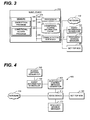
- FIG. 3 is a block diagram that illustrates, in detail, one embodiment of the hardware components shown in FIG. 2 .
- FIG. 3 illustrates the hardware components and software comprising the edge device 210 shown in FIG. 2 .
- the edge device 210 in one embodiment, is a general-purpose computing device that performs the present invention.
- a bus 305 is a communication medium that connects a processor 310, conditional access information cache 215 (such as rights metadata (RMD), access criteria, or the like), communication interface 320, and memory 330 (such as Random Access Memory (RAM), Dynamic RAM (DRAM), non-volatile computer memory, flash memory, or the like).
- the communication interface 320 connects the edge device 210 to the network 110, event information scheduler (EIS) 130, resource/session manager 170, and set-top box 180.
- EIS event information scheduler
- resource/session manager 170 resource/session manager 170
- set-top box 180 In one embodiment, the implementation of the edge device 210 is an application-specific integrated circuit (ASIC).
- ASIC application-specific integrated circuit
- the processor 310 performs the disclosed methods by executing the sequences of operational instructions that comprise each computer program resident in, or operative on, the memory 330.
- the memory 330 may include operating system, administrative, and database programs that support the programs disclosed in this application.
- the configuration of the memory 330 of the edge device 210 includes an encryption program 331, and conditional access program 332.
- the encryption program 331 converts a content stream from the network 110 into an encrypted content stream.
- the conditional access program 332 populates the data stored in the conditional access information cache 315, updates the data, and uses the data to create the encrypted content stream.
- the encryption program 331 and conditional access program 332 perform the methods of the present invention disclosed in detail in FIG. 6 and FIG. 7 .
- the processor 310 When the processor 310 performs the disclosed methods, it stores intermediate results in the memory 330 or conditional access information cache 315.
- the memory 330 may swap these programs, or portions thereof, in and out of the memory 330 as needed, and thus may include fewer than all of these programs at any one time.
- FIG. 4 is a network diagram that illustrates one embodiment of the hardware components of a system that performs the present invention.
- the SDV system 400 shown in FIG. 4 is a variation on the SDV system 200 shown in FIG. 2 .
- the SDV system 400 shown in FIG. 4 includes a network 110, edge device 410, and set-top box 180.
- the edge device 410 communicates with a conditional access (CA) system that includes an access criteria generator (ACG) 140, event information scheduler (EIS) 130, and entitlement control message generator (ECMG) 420.
- the edge device 410 receives commands from a resource/session manager 170 to display a content stream on the set-top box 180.
- the SDV system 400 shown in FIG. 4 may include any number of interconnected networks 110, edge devices 210, set-top boxes 180, ACGs 140, EISs 130, ECMGs 420, and resource/session managers 170.
- the edge device 410 shown in FIG. 4 receives clear content streams from the network 110.
- the edge device 410 is an integrated access device that multiplexes and routes the encrypted content to the appropriate set-top box 180 based on commands received from the resource/session manager 170.
- the edge device 410 also includes an encryption module to produce encrypted content streams from the clear content streams.
- the ACG 140 generates CA information (e.g. , rights metadata (RMD), and access criteria) associated with each content stream and passes the CA information to the EIS 130.
- the ECMG 420 communicates with the EIS 130 to identify content streams to the EIS 130 that it receives from the edge device 410, and receive CA information in response which it passes back to the edge device 410.
- the ECMG 420 shown in FIG. 4 is responsible for creating and managing the CA information in a local cache.
- An operator may chose to deploy the SDV system 400 shown in FIG. 4 as opposed to the SDV system 200 shown in FIG. 2 because it allows the deployment of a more generic edge device 410, one that does not include embedded and proprietary conditional access hardware.
- the edge device 410 still encrypts the individual content streams, but it obtains the specific entitlement control messages (ECMs) from the ECMG 420, possibly including the control words.
- ECMs entitlement control messages
- FIG. 5 is a block diagram that illustrates, in detail, one embodiment of the hardware components shown in FIG. 4 .
- FIG. 5 illustrates the hardware components and software comprising the edge device 410 and the entitlement control message generator 420 shown in FIG. 4 .
- the edge device 410 in one embodiment, is a general-purpose computing device that performs the present invention.
- a bus 505 is a communication medium that connects a processor 510, communication interface 515, and memory 520 (such as Random Access Memory (RAM), Dynamic RAM (DRAM), non-volatile computer memory, flash memory, or the like).
- the communication interface 515 connects the edge device 410 to the network 110, resource/session manager 170, set-top box 180, and entitlement control message generator 420.
- the implementation of the edge device 410 is an application-specific integrated circuit (ASIC).
- ASIC application-specific integrated circuit
- the entitlement control message generator 420 in one embodiment, is a general-purpose computing device that performs the present invention.
- a bus 555 is a communication medium that connects a processor 560, conditional access information cache 565 (such as rights metadata (RMD), access criteria, or the like), communication interface 570, and memory 580 (such as Random Access Memory (RAM), Dynamic RAM (DRAM), non-volatile computer memory, flash memory, or the like).
- the communication interface 570 connects the entitlement control message generator 420 to the edge device 410, and the event information scheduler (EIS) 130.
- the implementation of the entitlement control message generator 420 is an application-specific integrated circuit (ASIC).
- the processor 510 in the edge device 410 perform the disclosed methods by executing the sequences of operational instructions that comprise each computer program resident in, or operative on, the memory 520.
- the processor 560 in the entitlement control message generator 420 perform the disclosed methods by executing the sequences of operational instructions that comprise each computer program resident in, or operative on, the memory 580.
- the memory 520 in the edge device 410 and the memory 580 in the entitlement control message generator 420 may include operating system, administrative, and database programs that support the programs disclosed in this application.
- the configuration of the memory 520 in the edge device 410 includes an encryption program 521
- the configuration of the memory 580 in the entitlement control message generator 420 includes a conditional access program 581.
- the encryption program 521 converts a content stream from the network 110 into an encrypted content stream.
- the conditional access program 581 populates the data stored in the conditional access information cache 565, updates the data, and uses the data to create the encrypted content stream.
- the encryption program 521 and conditional access program 581 perform the methods of the present invention disclosed in detail in FIG. 6 .
- the processor 510 in the edge device 410 performs the disclosed methods, it stores intermediate results in the memory 520 in the edge device 410.
- the processor 560 in the entitlement control message generator 420 performs the disclosed methods, it stores intermediate results in the memory 580 in the entitlement control message generator, or conditional access information cache 565.
- the memory 520 in the edge device 410 may swap these programs, or portions thereof, in and out of the memory 520 as needed, and thus may include fewer than all of these programs at any one time.
- the memory 580 in the entitlement control message generator may swap these programs, or portions thereof, in and out of the memory 580 as needed, and thus may include fewer than all of these programs at any one time.
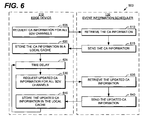
- FIG. 6 is a flow diagram that illustrates a method according to one embodiment of the present invention.
- FIG. 6 illustrates populating and updating the data stored in the conditional access information cache 315.
- the process 600 shown in FIG. 6 begins by populating the conditional access information cache 315.
- the edge device 210 sends a request for CA information for all of the SDV channels to the EIS 130 (step 605).
- the EIS 130 receives the request, retrieves the requested CA information (step 610), and sends the CA information to the edge device 210 (step 615).
- the edge device 210 receives the CA information from the EIS 130 and stores the CA information in the conditional access information cache 315 (step 620).
- the process 600 delays for a period of time (step 625) before beginning the updating of the conditional access information cache 315.
- the duration of the time delay is a configuration parameter for the edge device 210.
- the edge device 210 sends a request for updated CA information for all of the SDV channels to the EIS 130 (step 630).
- the EIS 130 receives the request, retrieves the updated CA information (step 635), and sends the updated CA information to the edge device 210 (step 640).
- the edge device 210 receives the updated CA information from the EIS 130 and stores the updated CA information in the conditional access information cache 315 (step 645).
- the process 600 then delays for a period of time (step 625) before the next iteration of updating the conditional access information cache 315.
- FIG. 7 is a flow diagram that illustrates a method according to one embodiment of the present invention.
- FIG. 7 illustrates using the data in the conditional access information cache 315 to create the encrypted content stream.
- the process 700 shown in FIG. 7 begins when the resource/session manager 170 receives an SDV channel request from the set-top box 180 (step 705), and sends a tune request to the edge device 210 (step 710).
- the edge device 210 receives the tune request (step 715), and retrieves the CA information for the tune request from the conditional access information cache 315 (step 720).
- the edge device 210 uses the retrieved CA information to encrypt the content stream associated with the tune request (step 725), and routes the encrypted content stream to the set-top box 180 (step 730).
Landscapes
- Engineering & Computer Science (AREA)
- Multimedia (AREA)
- Signal Processing (AREA)
- Computer Security & Cryptography (AREA)
- Databases & Information Systems (AREA)
- Computer Networks & Wireless Communication (AREA)
- Two-Way Televisions, Distribution Of Moving Picture Or The Like (AREA)
- Storage Device Security (AREA)
Abstract
Description
- A digital video system allows a multiple system operator (MSO) to deliver television programs and multimedia services to subscribers. The capacity, or bandwidth, of the system determines the programs and services that the MSO delivers. In legacy digital video systems, the MSO sends all of the available programs and services to the subscriber's set-top box on a single cable. Thus, the only way to increase the programs and services available to subscribers in legacy digital video systems is to increase the bandwidth of the cable.
- Switched digital video (SDV) systems are an improvement to legacy digital video systems that require less bandwidth to deliver high-bandwidth digital services. SDV systems allow the MSO to send only the content requested by a service group, where each service group includes a set of set-top boxes with visibility to a common set of switched edge devices. To make this possible, the subscriber's set-top box communicates with a network side video server to request the program that the subscriber wants to watch in real-time. The SDV system responds by commanding the edge devices associated with the subscriber's service group to deliver the requested program to the subscriber's service group. Thus, the service group only receives the programs that subscribers in the service group are watching.
- Prior art SDV systems encrypt a content stream before it reaches an edge device, typically using a bulk encryption approach. These prior art SDV systems rely on a resource/session manager (e.g., an SDV manager) to command the edge device to receive the encrypted content stream and route it to the appropriate set-top box. Recently, it has become cheaper and more efficient to integrate the encryption function into the edge devices. Since the command from the resource/session manager to the edge device to route a service does not carry the encryption information that the edge device needs, the edge device retrieves the encryption information from a conditional access (CA) system (e.g., an event information scheduler (EIS)). Since every edge device in the SDV system will need to retrieve the encryption information, this creates a possible performance problem at the edge devices because the latency (i.e., time delay) between the channel tune request and the display of the video stream may not meet the subscriber's expectation.
- There is a demand for a method and system improving the processing performance at the edge device to avoid an undesirable tuning latency when tuning to a channel in an SDV system. The presently disclosed invention satisfies this demand.
- Aspects of the present invention provide a system and method that receives a tune request in a switched digital video (SDV) system, where the tune request includes an identifier of a set-top box, and an SDV channel. The method receives a content stream associated with the SDV channel. The method retrieves conditional access (CA) information from a local cache, where the CA information includes encryption information for the content stream. The method converts the content stream to an encrypted content stream using the encryption information, and sends the encrypted content stream to the set-top box.
-
FIG. 1 is a network diagram that illustrates one embodiment of the hardware components of a prior art system. -
FIG. 2 is a network diagram that illustrates one embodiment of the hardware components of a system that performs the present invention. -
FIG. 3 is a block diagram that illustrates, in detail, one embodiment of the hardware components shown inFIG. 2 . -
FIG. 4 is a network diagram that illustrates another embodiment of the hardware components of a system that performs the present invention. -
FIG. 5 is a block diagram that illustrates, in detail, one embodiment of the hardware components shown inFIG. 4 . -
FIG. 6 is a message flow diagram that illustrates a method according to one embodiment of the present invention. -
FIG. 7 is a message flow diagram that illustrates a method according to one embodiment of the present invention. -
FIG. 1 is a network diagram that illustrates one embodiment of the hardware components of a prior art system. The switched digital video (SDV)system 100 shown inFIG. 1 includes anetwork 110,network encryptor 120,edge device 160, and set-top box 180. Thenetwork encryptor 120 communicates with a conditional access (CA) system that includes an access criteria generator (ACG) 140, event information scheduler (EIS) 130, and entitlement control message generator (ECMG) 150. Theedge device 160 receives commands from a resource/session manager 170 to display a content stream on the set-top box 180. TheSDV system 100 shown inFIG. 1 may include any number ofinterconnected networks 110,network encryptors 120,edge devices 160, set-top boxes 180, ACGs 140, EISs 130,ECMGs 150, and resource/session managers 170. - The
network 110, in one embodiment, is a public communication network or wide area network (WAN). The present invention also contemplates the use of comparable network architectures. Comparable network architectures include the Public Switched Telephone Network (PSTN), a public packet-switched network carrying data and voice packets, a wireless network, and a private network. A wireless network includes a cellular network (e.g., a Time Division Multiple Access (TDMA), Code Division Multiple Access (CDMA), or Orthogonal Frequency Division Multiplexing (OFDM) network), a satellite network, and a wireless Local Area Network (LAN) (e.g., a wireless fidelity (Wi-Fi) network). A private network includes a LAN, a Personal Area Network (PAN) such as a Bluetooth network, a wireless LAN, a Virtual Private Network (VPN), an intranet, or an extranet. An intranet is a private communication network that provides an organization such as a corporation, with a secure means for trusted members of the organization to access the resources on the organization's network. In contrast, an extranet is a private communication network that provides an organization, such as a corporation, with a secure means for the organization to authorize non-members of the organization to access certain resources on the organization's network. The system also contemplates network architectures and protocols such as Ethernet, Gigabit Ethernet, Internet Protocol, and Transmission Control Protocol. In various embodiments, thenetwork 110 will support a variety of network interfaces, including 802.3ab/u/etc., Multimedia over Coax Alliance (MoCA), and 801.11. - The
network encryptor 120 receives clear content streams from thenetwork 110 and uses a bulk encryption approach to produce encrypted content streams that it outputs to theedge device 160. Theedge device 160 is an integrated access device that multiplexes and routes the encrypted content to the appropriate set-top box 180 based on commands received from the resource/session manager 170. By separating the encryption function from theedge device 160, theSDV system 100 shown inFIG. 1 allow for "generic" third-party edge devices that do not require special access control hardware or functions. In addition, since the number ofedge devices 160 in theSDV system 100 shown inFIG. 1 will typically outnumber the number ofnetwork encryptors 120, it is a less expensive alternative to separate the encryption function from theedge device 160. - In the
SDV system 100 shown inFIG. 1 , the ACG 140 generates CA information (e.g., rights metadata (RMD), and access criteria) associated with each scrambled event and passes the CA information to theEIS 130. Thenetwork encryptor 120 identifies the encrypted content streams to theEIS 130 and is responsible storing all content stream identification information, schedule information, and configuration information for theSDV system 100 shown inFIG. 1 . The EIS 130 provides the CA information associated with each content stream to thenetwork encryptor 120. Thenetwork encryptor 120 provides the CA information to theECMG 150, and receives entitlement control messages (ECMs) (i.e., a control word and access criteria for each scrambled program stream) in response. Finally, when a subscriber operating the set-top box 180 requests to tune to a new SDV channel, the resource/session manager 170 sends a command to theedge device 160 to instruct theedge device 160 to route a specific encrypted content stream from thenetwork encryptor 120 to the set-top box 180. The set-top box 180 is a computing device that receives, decodes, and displays data and video content, and allows a subscriber to access the services that theSDV system 100 shown inFIG. 1 provides. - There have been some changes to the assumptions that drove the prior
art SDV system 100 shown inFIG. 1 . In some cases it is now cheaper and more efficient to integrate the encryption function into the edge devices. One driver for this change is the proliferation of many content streams due to support for many advertising zones. In today's highly regionalized systems (i.e., having many advertising zones), there is less opportunity to share bulk encrypted streams across multiple edge devices. Supporting hundreds of different content streams (multiple copies of each channel, one for each ad zone) not only requires the deployment of many bulk encryption resources, but also increases the load on the Internet Protocol (IP) backbone because it requires the network to carry both the clear and encrypted version of every content stream. -
FIG. 2 is a network diagram that illustrates one embodiment of the hardware components of a system that performs the present invention. TheSDV system 200 shown inFIG. 2 includes anetwork 110,edge device 210, and set-top box 180. Theedge device 210 communicates with a conditional access (CA) system that includes an access criteria generator (ACG) 140, and event information scheduler (EIS) 130. Theedge device 210 receives commands from a resource/session manager 170 to display a content stream on the set-top box 180. TheSDV system 200 shown inFIG. 2 may include any number ofinterconnected networks 110,edge devices 210, set-top boxes 180, ACGs 140,EISs 130, and resource/session managers 170. - The
edge device 210 shown inFIG. 2 receives clear content streams from thenetwork 110. Theedge device 210 is an integrated access device that multiplexes and routes the encrypted content to the appropriate set-top box 180 based on commands received from the resource/session manager 170. Theedge device 210 also includes an encryption module to produce encrypted content streams from the clear content streams. In theSDV system 200 shown inFIG. 2 , theACG 140 generates CA information (e.g., rights metadata (RMD), and access criteria) associated with each content stream and passes the CA information to theEIS 130. Theedge device 210 communicates with theEIS 130 to identify content streams to theEIS 130 and receive CA information in response. Since theedge device 210 needs to encrypt the content stream and retrieve the encryption information, this creates a possible performance problem because the latency (i.e., time delay) between the channel tune request and the display of the video stream may not meet the subscriber's expectation. - The core of the possible performance problem is that the command to route a service to the
edge device 210 comes from the resource/session manager 170, but this communication interface does not carry the CA information that theedge device 210 needs to encrypt content stream. In one embodiment, theEIS 130 provides the CA information. The possible performance problem occurs because ifmany edge devices 210 are pulling CA information in real-time from theEIS 130, then thoseedge devices 210 will excessively burden theEIS 130 and result in undesirable tuning latencies. The present invention addresses this possible performance problem by having theedge device 210 proactively fetch the CA information from theEIS 130 for all possible SDV services, and storing the fetched CA information in a local cache. Since the CA information is fairly static, once theedge device 210 has locally cached all of the CA information, theedge device 210 only has to check periodically (e.g., every 15 minutes) for updates to the CA information. When the resource/session manager 170 sends a command to theedge device 210, theedge device 210 will have the CA information that it needs in the local cache and will not have to communicate with theEIS 130 to retrieve the CA information. Theedge device 210 can therefore quickly receive, encrypt, and route the desired service without negatively impacting the latency of providing the desired service to the subscriber. -
FIG. 3 is a block diagram that illustrates, in detail, one embodiment of the hardware components shown inFIG. 2 . In particular,FIG. 3 illustrates the hardware components and software comprising theedge device 210 shown inFIG. 2 . - The
edge device 210, in one embodiment, is a general-purpose computing device that performs the present invention. Abus 305 is a communication medium that connects a processor 310, conditional access information cache 215 (such as rights metadata (RMD), access criteria, or the like),communication interface 320, and memory 330 (such as Random Access Memory (RAM), Dynamic RAM (DRAM), non-volatile computer memory, flash memory, or the like). Thecommunication interface 320 connects theedge device 210 to thenetwork 110, event information scheduler (EIS) 130, resource/session manager 170, and set-top box 180. In one embodiment, the implementation of theedge device 210 is an application-specific integrated circuit (ASIC). - The processor 310 performs the disclosed methods by executing the sequences of operational instructions that comprise each computer program resident in, or operative on, the memory 330. The reader should understand that the memory 330 may include operating system, administrative, and database programs that support the programs disclosed in this application. In one embodiment, the configuration of the memory 330 of the
edge device 210 includes anencryption program 331, andconditional access program 332. Theencryption program 331 converts a content stream from thenetwork 110 into an encrypted content stream. Theconditional access program 332 populates the data stored in the conditionalaccess information cache 315, updates the data, and uses the data to create the encrypted content stream. Theencryption program 331 andconditional access program 332 perform the methods of the present invention disclosed in detail inFIG. 6 andFIG. 7 . When the processor 310 performs the disclosed methods, it stores intermediate results in the memory 330 or conditionalaccess information cache 315. In another embodiment, the memory 330 may swap these programs, or portions thereof, in and out of the memory 330 as needed, and thus may include fewer than all of these programs at any one time. -
FIG. 4 is a network diagram that illustrates one embodiment of the hardware components of a system that performs the present invention. TheSDV system 400 shown inFIG. 4 is a variation on theSDV system 200 shown inFIG. 2 . TheSDV system 400 shown inFIG. 4 includes anetwork 110,edge device 410, and set-top box 180. Theedge device 410 communicates with a conditional access (CA) system that includes an access criteria generator (ACG) 140, event information scheduler (EIS) 130, and entitlement control message generator (ECMG) 420. Theedge device 410 receives commands from a resource/session manager 170 to display a content stream on the set-top box 180. TheSDV system 400 shown inFIG. 4 may include any number ofinterconnected networks 110,edge devices 210, set-top boxes 180,ACGs 140,EISs 130,ECMGs 420, and resource/session managers 170. - The
edge device 410 shown inFIG. 4 receives clear content streams from thenetwork 110. Theedge device 410 is an integrated access device that multiplexes and routes the encrypted content to the appropriate set-top box 180 based on commands received from the resource/session manager 170. Theedge device 410 also includes an encryption module to produce encrypted content streams from the clear content streams. In theSDV system 400 shown inFIG. 4 , theACG 140 generates CA information (e.g., rights metadata (RMD), and access criteria) associated with each content stream and passes the CA information to theEIS 130. TheECMG 420 communicates with theEIS 130 to identify content streams to theEIS 130 that it receives from theedge device 410, and receive CA information in response which it passes back to theedge device 410. To avoid the possible performance problem described above in the description ofFIG. 2 , theECMG 420 shown inFIG. 4 is responsible for creating and managing the CA information in a local cache. - An operator may chose to deploy the
SDV system 400 shown inFIG. 4 as opposed to theSDV system 200 shown inFIG. 2 because it allows the deployment of a moregeneric edge device 410, one that does not include embedded and proprietary conditional access hardware. Theedge device 410 still encrypts the individual content streams, but it obtains the specific entitlement control messages (ECMs) from theECMG 420, possibly including the control words. -
FIG. 5 is a block diagram that illustrates, in detail, one embodiment of the hardware components shown inFIG. 4 . In particular,FIG. 5 illustrates the hardware components and software comprising theedge device 410 and the entitlementcontrol message generator 420 shown inFIG. 4 . - The
edge device 410, in one embodiment, is a general-purpose computing device that performs the present invention. Abus 505 is a communication medium that connects aprocessor 510,communication interface 515, and memory 520 (such as Random Access Memory (RAM), Dynamic RAM (DRAM), non-volatile computer memory, flash memory, or the like). Thecommunication interface 515 connects theedge device 410 to thenetwork 110, resource/session manager 170, set-top box 180, and entitlementcontrol message generator 420. In one embodiment, the implementation of theedge device 410 is an application-specific integrated circuit (ASIC). - The entitlement
control message generator 420, in one embodiment, is a general-purpose computing device that performs the present invention. Abus 555 is a communication medium that connects aprocessor 560, conditional access information cache 565 (such as rights metadata (RMD), access criteria, or the like),communication interface 570, and memory 580 (such as Random Access Memory (RAM), Dynamic RAM (DRAM), non-volatile computer memory, flash memory, or the like). Thecommunication interface 570 connects the entitlementcontrol message generator 420 to theedge device 410, and the event information scheduler (EIS) 130. In one embodiment, the implementation of the entitlementcontrol message generator 420 is an application-specific integrated circuit (ASIC). - The
processor 510 in theedge device 410 perform the disclosed methods by executing the sequences of operational instructions that comprise each computer program resident in, or operative on, thememory 520. Theprocessor 560 in the entitlementcontrol message generator 420 perform the disclosed methods by executing the sequences of operational instructions that comprise each computer program resident in, or operative on, thememory 580. The reader should understand that thememory 520 in theedge device 410 and thememory 580 in the entitlementcontrol message generator 420 may include operating system, administrative, and database programs that support the programs disclosed in this application. In one embodiment, the configuration of thememory 520 in theedge device 410 includes anencryption program 521, and the configuration of thememory 580 in the entitlementcontrol message generator 420 includes aconditional access program 581. Theencryption program 521 converts a content stream from thenetwork 110 into an encrypted content stream. Theconditional access program 581 populates the data stored in the conditionalaccess information cache 565, updates the data, and uses the data to create the encrypted content stream. Theencryption program 521 andconditional access program 581 perform the methods of the present invention disclosed in detail inFIG. 6 . When theprocessor 510 in theedge device 410 performs the disclosed methods, it stores intermediate results in thememory 520 in theedge device 410. When theprocessor 560 in the entitlementcontrol message generator 420 performs the disclosed methods, it stores intermediate results in thememory 580 in the entitlement control message generator, or conditionalaccess information cache 565. In another embodiment, thememory 520 in theedge device 410 may swap these programs, or portions thereof, in and out of thememory 520 as needed, and thus may include fewer than all of these programs at any one time. In another embodiment, thememory 580 in the entitlement control message generator may swap these programs, or portions thereof, in and out of thememory 580 as needed, and thus may include fewer than all of these programs at any one time. -
FIG. 6 is a flow diagram that illustrates a method according to one embodiment of the present invention. In particular,FIG. 6 illustrates populating and updating the data stored in the conditionalaccess information cache 315. - The
process 600 shown inFIG. 6 , with reference toFIG. 2 andFIG. 3 , begins by populating the conditionalaccess information cache 315. Theedge device 210 sends a request for CA information for all of the SDV channels to the EIS 130 (step 605). TheEIS 130 receives the request, retrieves the requested CA information (step 610), and sends the CA information to the edge device 210 (step 615). Theedge device 210 receives the CA information from theEIS 130 and stores the CA information in the conditional access information cache 315 (step 620). Theprocess 600 delays for a period of time (step 625) before beginning the updating of the conditionalaccess information cache 315. The duration of the time delay is a configuration parameter for theedge device 210. Theedge device 210 sends a request for updated CA information for all of the SDV channels to the EIS 130 (step 630). TheEIS 130 receives the request, retrieves the updated CA information (step 635), and sends the updated CA information to the edge device 210 (step 640). Theedge device 210 receives the updated CA information from theEIS 130 and stores the updated CA information in the conditional access information cache 315 (step 645). Theprocess 600 then delays for a period of time (step 625) before the next iteration of updating the conditionalaccess information cache 315. -
FIG. 7 is a flow diagram that illustrates a method according to one embodiment of the present invention. In particular,FIG. 7 illustrates using the data in the conditionalaccess information cache 315 to create the encrypted content stream. - The
process 700 shown inFIG. 7 , with reference toFIG. 2 andFIG. 3 , begins when the resource/session manager 170 receives an SDV channel request from the set-top box 180 (step 705), and sends a tune request to the edge device 210 (step 710). Theedge device 210 receives the tune request (step 715), and retrieves the CA information for the tune request from the conditional access information cache 315 (step 720). Theedge device 210 uses the retrieved CA information to encrypt the content stream associated with the tune request (step 725), and routes the encrypted content stream to the set-top box 180 (step 730). - Although the disclosed embodiments describe a fully functioning method and system for improving the processing performance at the edge device to avoid an undesirable tuning latency when tuning to a channel in an SDV system, the reader should understand that other equivalent embodiments exist. Since numerous modifications and variations will occur to those reviewing this disclosure, the method and system for improving the processing performance at the edge device to avoid an undesirable tuning latency when tuning to a channel in an SDV system is not limited to the exact construction and operation illustrated and disclosed. Accordingly, this disclosure intends all suitable modifications and equivalents to fall within the scope of the claims.
Claims (15)
- A method, comprising:receiving a tune request in a switched digital video (SDV) system, the tune request including an identifier of a set-top box, and an SDV channel;receiving a content stream associated with the SDV channel;retrieving conditional access (CA) information from a local cache, the CA information including encryption information for the content stream;converting the content stream to an encrypted content stream using the encryption information; andsending the encrypted content stream to the set-top box.
- The method of claim 1, wherein the receiving of the tune request is from a resource manager in the SDV system.
- The method of claim 1, wherein the receiving of the content stream is from a network, and the content stream is an unencrypted content stream.
- The method of claim 1, wherein the CA information is at least one of rights metadata, and access criteria.
- The method of claim 1, further comprising:populating the local cache; andperiodically updating the local cache.
- The method of claim 5, wherein the populating of the local cache further comprises:sending a request for the CA information for available SDV channels;receiving the CA information for the available SDV channels; andstoring the CA information for the available SDV channels.
- The method of claim 5, wherein the updating of the local cache further comprises:sending a request for updated CA information for available SDV channels;receiving the updated CA information for the available SDV channels; andstoring the updated CA information for the available SDV channels.
- A system, comprising:a memory device resident in a computing device; anda processor disposed in communication with the memory device, the processor configured to:receive a tune request in a switched digital video (SDV) system, the tune request including an identifier of a set-top box, and an SDV channel;receive a content stream associated with the SDV channel;retrieve conditional access (CA) information from a local cache, the CA information including encryption information for the content stream;convert the content stream to an encrypted content stream using the encryption information; andsend the encrypted content stream to the set-top box.
- The system of claim 8, wherein the receiving of the tune request is from a resource manager in the SDV system.
- The system of claim 8, wherein the receiving of the content stream is from a network, and the content stream is an unencrypted content stream.
- The system of claim 8, wherein the CA information is at least one of rights metadata, and access criteria.
- The system of claim 8, wherein the processor is further configured to:populate the local cache; andperiodically update the local cache.
- The system of claim 12, wherein to populate the local cache, the processor is further configured to:send a request for the CA information for available SDV channels;receive the CA information for the available SDV channels; andstore the CA information for the available SDV channels.
- The system of claim 12, wherein to update the local cache, the processor is further configured to:send a request for updated CA information for available SDV channels;receive the updated CA information for the available SDV channels; andstore the updated CA information for the available SDV channels.
- A non-transitory computer-readable medium, comprising computer-executable instructions that, when executed on a computing device, perform the method of any of claims 1 to 7.
Applications Claiming Priority (1)
| Application Number | Priority Date | Filing Date | Title |
|---|---|---|---|
| US12/956,556 US9083998B2 (en) | 2010-11-30 | 2010-11-30 | Rights metadata caching by switched digital video multiplexers |
Publications (2)
| Publication Number | Publication Date |
|---|---|
| EP2458883A1 true EP2458883A1 (en) | 2012-05-30 |
| EP2458883B1 EP2458883B1 (en) | 2018-05-16 |
Family
ID=45348976
Family Applications (1)
| Application Number | Title | Priority Date | Filing Date |
|---|---|---|---|
| EP11009144.4A Not-in-force EP2458883B1 (en) | 2010-11-30 | 2011-11-17 | Rights metadata catching by switched digital video multiplexers |
Country Status (5)
| Country | Link |
|---|---|
| US (1) | US9083998B2 (en) |
| EP (1) | EP2458883B1 (en) |
| KR (1) | KR101356221B1 (en) |
| CN (1) | CN102547378B (en) |
| CA (1) | CA2758564C (en) |
Families Citing this family (2)
| Publication number | Priority date | Publication date | Assignee | Title |
|---|---|---|---|---|
| US9888270B2 (en) * | 2013-03-15 | 2018-02-06 | Time Warner Cable Enterprises Llc | High throughput network encryptionusing CCAP |
| US10375030B2 (en) | 2016-06-24 | 2019-08-06 | Combined Conditional Access Development & Support | Initialization encryption for streaming content |
Citations (3)
| Publication number | Priority date | Publication date | Assignee | Title |
|---|---|---|---|---|
| US20070033282A1 (en) * | 2005-08-08 | 2007-02-08 | Weidong Mao | Signaling redirection for distributed session and resource management |
| WO2007132165A1 (en) * | 2006-05-04 | 2007-11-22 | Nds Limited | Scrambled digital data item |
| WO2008112443A1 (en) * | 2007-03-12 | 2008-09-18 | Cisco Technology, Inc. | Method and apparatus providing scalability for channel change requests in a switched digital video system |
Family Cites Families (8)
| Publication number | Priority date | Publication date | Assignee | Title |
|---|---|---|---|---|
| KR100456162B1 (en) * | 2002-12-14 | 2004-11-09 | 한국전자통신연구원 | Method of Key update in DCATV Conditional Access System |
| KR100734033B1 (en) * | 2005-04-15 | 2007-07-02 | 한국전자통신연구원 | Broadcasting content protection/management system |
| KR100716900B1 (en) * | 2005-05-12 | 2007-05-10 | 에스케이 텔레콤주식회사 | Broadcast content protection system and method |
| US8165302B2 (en) * | 2005-06-07 | 2012-04-24 | Sony Corporation | Key table and authorization table management |
| US20080219436A1 (en) * | 2007-03-05 | 2008-09-11 | General Instrument Corporation | Method and apparatus for providing a digital rights management engine |
| CN100493181C (en) * | 2007-04-17 | 2009-05-27 | 华为技术有限公司 | System, protection method and server for realizing the virtual channel service |
| KR100881724B1 (en) | 2007-10-01 | 2009-02-06 | 한국전자통신연구원 | Key Conversion System and Method for Redistributing Broadcast Content |
| KR101000787B1 (en) * | 2007-12-13 | 2010-12-14 | 한국전자통신연구원 | Restriction Software Management System and Management Method |
-
2010
- 2010-11-30 US US12/956,556 patent/US9083998B2/en active Active
-
2011
- 2011-11-16 CA CA2758564A patent/CA2758564C/en not_active Expired - Fee Related
- 2011-11-17 EP EP11009144.4A patent/EP2458883B1/en not_active Not-in-force
- 2011-11-29 KR KR1020110126052A patent/KR101356221B1/en not_active Expired - Fee Related
- 2011-11-29 CN CN201110457041.XA patent/CN102547378B/en not_active Expired - Fee Related
Patent Citations (3)
| Publication number | Priority date | Publication date | Assignee | Title |
|---|---|---|---|---|
| US20070033282A1 (en) * | 2005-08-08 | 2007-02-08 | Weidong Mao | Signaling redirection for distributed session and resource management |
| WO2007132165A1 (en) * | 2006-05-04 | 2007-11-22 | Nds Limited | Scrambled digital data item |
| WO2008112443A1 (en) * | 2007-03-12 | 2008-09-18 | Cisco Technology, Inc. | Method and apparatus providing scalability for channel change requests in a switched digital video system |
Also Published As
| Publication number | Publication date |
|---|---|
| US20120137321A1 (en) | 2012-05-31 |
| CN102547378A (en) | 2012-07-04 |
| KR101356221B1 (en) | 2014-01-28 |
| KR20120059421A (en) | 2012-06-08 |
| CN102547378B (en) | 2016-05-25 |
| CA2758564C (en) | 2015-06-16 |
| CA2758564A1 (en) | 2012-05-30 |
| US9083998B2 (en) | 2015-07-14 |
| EP2458883B1 (en) | 2018-05-16 |
Similar Documents
| Publication | Publication Date | Title |
|---|---|---|
| US11909649B2 (en) | Efficiently managing network traffic | |
| US9781482B2 (en) | Techniques for upgrading software in a video content network | |
| US8739204B1 (en) | Dynamic load based ad insertion | |
| US9019830B2 (en) | Content-based routing of information content | |
| US20140280764A1 (en) | Bandwidth management for over-the-top adaptive streaming | |
| US20200296435A1 (en) | Method and apparatus for segmenting data | |
| US8898717B1 (en) | System and method for obfuscating start-up delay in a linear media service environment | |
| US20240048783A1 (en) | Automated video content processing | |
| CN101953160B (en) | Controlled cryptoperiod timing to reduce decoder processing load | |
| EP3391652B1 (en) | Controlling retrieval in adaptive streaming | |
| CN103370933B (en) | Be used for the method for the reception of the entitlement management messages of optimizing pay television system | |
| CA2758564C (en) | Rights metadata caching by switched digital video multiplexers | |
| US20220417569A1 (en) | System for queuing flows to channels | |
| US10965607B2 (en) | Arbitration of competing flows | |
| US8611532B2 (en) | Managing media content decryption keys in encrypted media content distribution systems and methods | |
| WO2014196393A1 (en) | Content supply device, content supply method, program, terminal device, and content supply system | |
| EP3089460A1 (en) | A system and a method for distributing content via static channel assignment in a mobile content gateway | |
| EP3089461A1 (en) | A system and a method for distributing content via dynamic channel assignment in a mobile content gateway | |
| US20160323622A1 (en) | System and a method for distributed processing of video content in a mobile content gateway | |
| EP3337178A1 (en) | Method for distributing metadata to devices in a network and corresponding metadata distribution device, corresponding method for receiving metadata from devices in a network and corresponding device | |
| KR20080036313A (en) | Pseudo Custom Video Transmission Using Partial Patching |
Legal Events
| Date | Code | Title | Description |
|---|---|---|---|
| PUAI | Public reference made under article 153(3) epc to a published international application that has entered the european phase |
Free format text: ORIGINAL CODE: 0009012 |
|
| AK | Designated contracting states |
Kind code of ref document: A1 Designated state(s): AL AT BE BG CH CY CZ DE DK EE ES FI FR GB GR HR HU IE IS IT LI LT LU LV MC MK MT NL NO PL PT RO RS SE SI SK SM TR |
|
| AX | Request for extension of the european patent |
Extension state: BA ME |
|
| 17P | Request for examination filed |
Effective date: 20121130 |
|
| 17Q | First examination report despatched |
Effective date: 20150312 |
|
| RAP1 | Party data changed (applicant data changed or rights of an application transferred) |
Owner name: ARRIS TECHNOLOGY, INC. |
|
| RAP1 | Party data changed (applicant data changed or rights of an application transferred) |
Owner name: ARRIS ENTERPRISES, INC. |
|
| RAP1 | Party data changed (applicant data changed or rights of an application transferred) |
Owner name: ARRIS ENTERPRISES LLC |
|
| GRAP | Despatch of communication of intention to grant a patent |
Free format text: ORIGINAL CODE: EPIDOSNIGR1 |
|
| INTG | Intention to grant announced |
Effective date: 20171213 |
|
| GRAS | Grant fee paid |
Free format text: ORIGINAL CODE: EPIDOSNIGR3 |
|
| GRAA | (expected) grant |
Free format text: ORIGINAL CODE: 0009210 |
|
| AK | Designated contracting states |
Kind code of ref document: B1 Designated state(s): AL AT BE BG CH CY CZ DE DK EE ES FI FR GB GR HR HU IE IS IT LI LT LU LV MC MK MT NL NO PL PT RO RS SE SI SK SM TR |
|
| REG | Reference to a national code |
Ref country code: GB Ref legal event code: FG4D |
|
| REG | Reference to a national code |
Ref country code: CH Ref legal event code: EP |
|
| REG | Reference to a national code |
Ref country code: IE Ref legal event code: FG4D |
|
| REG | Reference to a national code |
Ref country code: DE Ref legal event code: R096 Ref document number: 602011048333 Country of ref document: DE |
|
| REG | Reference to a national code |
Ref country code: AT Ref legal event code: REF Ref document number: 1000618 Country of ref document: AT Kind code of ref document: T Effective date: 20180615 |
|
| REG | Reference to a national code |
Ref country code: NL Ref legal event code: MP Effective date: 20180516 |
|
| REG | Reference to a national code |
Ref country code: LT Ref legal event code: MG4D |
|
| PG25 | Lapsed in a contracting state [announced via postgrant information from national office to epo] |
Ref country code: ES Free format text: LAPSE BECAUSE OF FAILURE TO SUBMIT A TRANSLATION OF THE DESCRIPTION OR TO PAY THE FEE WITHIN THE PRESCRIBED TIME-LIMIT Effective date: 20180516 Ref country code: SE Free format text: LAPSE BECAUSE OF FAILURE TO SUBMIT A TRANSLATION OF THE DESCRIPTION OR TO PAY THE FEE WITHIN THE PRESCRIBED TIME-LIMIT Effective date: 20180516 Ref country code: LT Free format text: LAPSE BECAUSE OF FAILURE TO SUBMIT A TRANSLATION OF THE DESCRIPTION OR TO PAY THE FEE WITHIN THE PRESCRIBED TIME-LIMIT Effective date: 20180516 Ref country code: BG Free format text: LAPSE BECAUSE OF FAILURE TO SUBMIT A TRANSLATION OF THE DESCRIPTION OR TO PAY THE FEE WITHIN THE PRESCRIBED TIME-LIMIT Effective date: 20180816 Ref country code: FI Free format text: LAPSE BECAUSE OF FAILURE TO SUBMIT A TRANSLATION OF THE DESCRIPTION OR TO PAY THE FEE WITHIN THE PRESCRIBED TIME-LIMIT Effective date: 20180516 Ref country code: NO Free format text: LAPSE BECAUSE OF FAILURE TO SUBMIT A TRANSLATION OF THE DESCRIPTION OR TO PAY THE FEE WITHIN THE PRESCRIBED TIME-LIMIT Effective date: 20180816 |
|
| PG25 | Lapsed in a contracting state [announced via postgrant information from national office to epo] |
Ref country code: LV Free format text: LAPSE BECAUSE OF FAILURE TO SUBMIT A TRANSLATION OF THE DESCRIPTION OR TO PAY THE FEE WITHIN THE PRESCRIBED TIME-LIMIT Effective date: 20180516 Ref country code: RS Free format text: LAPSE BECAUSE OF FAILURE TO SUBMIT A TRANSLATION OF THE DESCRIPTION OR TO PAY THE FEE WITHIN THE PRESCRIBED TIME-LIMIT Effective date: 20180516 Ref country code: NL Free format text: LAPSE BECAUSE OF FAILURE TO SUBMIT A TRANSLATION OF THE DESCRIPTION OR TO PAY THE FEE WITHIN THE PRESCRIBED TIME-LIMIT Effective date: 20180516 Ref country code: HR Free format text: LAPSE BECAUSE OF FAILURE TO SUBMIT A TRANSLATION OF THE DESCRIPTION OR TO PAY THE FEE WITHIN THE PRESCRIBED TIME-LIMIT Effective date: 20180516 Ref country code: GR Free format text: LAPSE BECAUSE OF FAILURE TO SUBMIT A TRANSLATION OF THE DESCRIPTION OR TO PAY THE FEE WITHIN THE PRESCRIBED TIME-LIMIT Effective date: 20180817 |
|
| REG | Reference to a national code |
Ref country code: AT Ref legal event code: MK05 Ref document number: 1000618 Country of ref document: AT Kind code of ref document: T Effective date: 20180516 |
|
| PG25 | Lapsed in a contracting state [announced via postgrant information from national office to epo] |
Ref country code: SK Free format text: LAPSE BECAUSE OF FAILURE TO SUBMIT A TRANSLATION OF THE DESCRIPTION OR TO PAY THE FEE WITHIN THE PRESCRIBED TIME-LIMIT Effective date: 20180516 Ref country code: DK Free format text: LAPSE BECAUSE OF FAILURE TO SUBMIT A TRANSLATION OF THE DESCRIPTION OR TO PAY THE FEE WITHIN THE PRESCRIBED TIME-LIMIT Effective date: 20180516 Ref country code: EE Free format text: LAPSE BECAUSE OF FAILURE TO SUBMIT A TRANSLATION OF THE DESCRIPTION OR TO PAY THE FEE WITHIN THE PRESCRIBED TIME-LIMIT Effective date: 20180516 Ref country code: PL Free format text: LAPSE BECAUSE OF FAILURE TO SUBMIT A TRANSLATION OF THE DESCRIPTION OR TO PAY THE FEE WITHIN THE PRESCRIBED TIME-LIMIT Effective date: 20180516 Ref country code: AT Free format text: LAPSE BECAUSE OF FAILURE TO SUBMIT A TRANSLATION OF THE DESCRIPTION OR TO PAY THE FEE WITHIN THE PRESCRIBED TIME-LIMIT Effective date: 20180516 Ref country code: RO Free format text: LAPSE BECAUSE OF FAILURE TO SUBMIT A TRANSLATION OF THE DESCRIPTION OR TO PAY THE FEE WITHIN THE PRESCRIBED TIME-LIMIT Effective date: 20180516 Ref country code: CZ Free format text: LAPSE BECAUSE OF FAILURE TO SUBMIT A TRANSLATION OF THE DESCRIPTION OR TO PAY THE FEE WITHIN THE PRESCRIBED TIME-LIMIT Effective date: 20180516 |
|
| REG | Reference to a national code |
Ref country code: DE Ref legal event code: R097 Ref document number: 602011048333 Country of ref document: DE |
|
| PG25 | Lapsed in a contracting state [announced via postgrant information from national office to epo] |
Ref country code: IT Free format text: LAPSE BECAUSE OF FAILURE TO SUBMIT A TRANSLATION OF THE DESCRIPTION OR TO PAY THE FEE WITHIN THE PRESCRIBED TIME-LIMIT Effective date: 20180516 Ref country code: SM Free format text: LAPSE BECAUSE OF FAILURE TO SUBMIT A TRANSLATION OF THE DESCRIPTION OR TO PAY THE FEE WITHIN THE PRESCRIBED TIME-LIMIT Effective date: 20180516 |
|
| PLBE | No opposition filed within time limit |
Free format text: ORIGINAL CODE: 0009261 |
|
| STAA | Information on the status of an ep patent application or granted ep patent |
Free format text: STATUS: NO OPPOSITION FILED WITHIN TIME LIMIT |
|
| 26N | No opposition filed |
Effective date: 20190219 |
|
| PG25 | Lapsed in a contracting state [announced via postgrant information from national office to epo] |
Ref country code: SI Free format text: LAPSE BECAUSE OF FAILURE TO SUBMIT A TRANSLATION OF THE DESCRIPTION OR TO PAY THE FEE WITHIN THE PRESCRIBED TIME-LIMIT Effective date: 20180516 |
|
| REG | Reference to a national code |
Ref country code: CH Ref legal event code: PL |
|
| PG25 | Lapsed in a contracting state [announced via postgrant information from national office to epo] |
Ref country code: LU Free format text: LAPSE BECAUSE OF NON-PAYMENT OF DUE FEES Effective date: 20181117 Ref country code: MC Free format text: LAPSE BECAUSE OF FAILURE TO SUBMIT A TRANSLATION OF THE DESCRIPTION OR TO PAY THE FEE WITHIN THE PRESCRIBED TIME-LIMIT Effective date: 20180516 |
|
| REG | Reference to a national code |
Ref country code: BE Ref legal event code: MM Effective date: 20181130 |
|
| REG | Reference to a national code |
Ref country code: IE Ref legal event code: MM4A |
|
| PG25 | Lapsed in a contracting state [announced via postgrant information from national office to epo] |
Ref country code: CH Free format text: LAPSE BECAUSE OF NON-PAYMENT OF DUE FEES Effective date: 20181130 Ref country code: LI Free format text: LAPSE BECAUSE OF NON-PAYMENT OF DUE FEES Effective date: 20181130 |
|
| PG25 | Lapsed in a contracting state [announced via postgrant information from national office to epo] |
Ref country code: FR Free format text: LAPSE BECAUSE OF NON-PAYMENT OF DUE FEES Effective date: 20181130 Ref country code: IE Free format text: LAPSE BECAUSE OF NON-PAYMENT OF DUE FEES Effective date: 20181117 |
|
| PG25 | Lapsed in a contracting state [announced via postgrant information from national office to epo] |
Ref country code: BE Free format text: LAPSE BECAUSE OF NON-PAYMENT OF DUE FEES Effective date: 20181130 Ref country code: AL Free format text: LAPSE BECAUSE OF FAILURE TO SUBMIT A TRANSLATION OF THE DESCRIPTION OR TO PAY THE FEE WITHIN THE PRESCRIBED TIME-LIMIT Effective date: 20180516 |
|
| PG25 | Lapsed in a contracting state [announced via postgrant information from national office to epo] |
Ref country code: MT Free format text: LAPSE BECAUSE OF NON-PAYMENT OF DUE FEES Effective date: 20181117 |
|
| PGFP | Annual fee paid to national office [announced via postgrant information from national office to epo] |
Ref country code: DE Payment date: 20191127 Year of fee payment: 9 |
|
| PG25 | Lapsed in a contracting state [announced via postgrant information from national office to epo] |
Ref country code: TR Free format text: LAPSE BECAUSE OF FAILURE TO SUBMIT A TRANSLATION OF THE DESCRIPTION OR TO PAY THE FEE WITHIN THE PRESCRIBED TIME-LIMIT Effective date: 20180516 |
|
| PGFP | Annual fee paid to national office [announced via postgrant information from national office to epo] |
Ref country code: GB Payment date: 20191127 Year of fee payment: 9 |
|
| PG25 | Lapsed in a contracting state [announced via postgrant information from national office to epo] |
Ref country code: PT Free format text: LAPSE BECAUSE OF FAILURE TO SUBMIT A TRANSLATION OF THE DESCRIPTION OR TO PAY THE FEE WITHIN THE PRESCRIBED TIME-LIMIT Effective date: 20180516 |
|
| PG25 | Lapsed in a contracting state [announced via postgrant information from national office to epo] |
Ref country code: MK Free format text: LAPSE BECAUSE OF NON-PAYMENT OF DUE FEES Effective date: 20180516 Ref country code: CY Free format text: LAPSE BECAUSE OF FAILURE TO SUBMIT A TRANSLATION OF THE DESCRIPTION OR TO PAY THE FEE WITHIN THE PRESCRIBED TIME-LIMIT Effective date: 20180516 Ref country code: HU Free format text: LAPSE BECAUSE OF FAILURE TO SUBMIT A TRANSLATION OF THE DESCRIPTION OR TO PAY THE FEE WITHIN THE PRESCRIBED TIME-LIMIT; INVALID AB INITIO Effective date: 20111117 |
|
| PG25 | Lapsed in a contracting state [announced via postgrant information from national office to epo] |
Ref country code: IS Free format text: LAPSE BECAUSE OF FAILURE TO SUBMIT A TRANSLATION OF THE DESCRIPTION OR TO PAY THE FEE WITHIN THE PRESCRIBED TIME-LIMIT Effective date: 20180916 |
|
| REG | Reference to a national code |
Ref country code: DE Ref legal event code: R119 Ref document number: 602011048333 Country of ref document: DE |
|
| GBPC | Gb: european patent ceased through non-payment of renewal fee |
Effective date: 20201117 |
|
| PG25 | Lapsed in a contracting state [announced via postgrant information from national office to epo] |
Ref country code: DE Free format text: LAPSE BECAUSE OF NON-PAYMENT OF DUE FEES Effective date: 20210601 Ref country code: GB Free format text: LAPSE BECAUSE OF NON-PAYMENT OF DUE FEES Effective date: 20201117 |