EP2457720A1 - Method for making pneumatic tire with foam noise damper - Google Patents
Method for making pneumatic tire with foam noise damper Download PDFInfo
- Publication number
- EP2457720A1 EP2457720A1 EP11190215A EP11190215A EP2457720A1 EP 2457720 A1 EP2457720 A1 EP 2457720A1 EP 11190215 A EP11190215 A EP 11190215A EP 11190215 A EP11190215 A EP 11190215A EP 2457720 A1 EP2457720 A1 EP 2457720A1
- Authority
- EP
- European Patent Office
- Prior art keywords
- barrier layer
- foam
- tire
- innerliner
- rubber
- Prior art date
- Legal status (The legal status is an assumption and is not a legal conclusion. Google has not performed a legal analysis and makes no representation as to the accuracy of the status listed.)
- Granted
Links
- 239000006260 foam Substances 0.000 title claims abstract description 68
- 238000000034 method Methods 0.000 title claims abstract description 44
- 230000004888 barrier function Effects 0.000 claims abstract description 85
- 239000007788 liquid Substances 0.000 claims abstract description 20
- 238000005187 foaming Methods 0.000 claims abstract description 6
- 238000003825 pressing Methods 0.000 claims abstract description 4
- 229920001971 elastomer Polymers 0.000 claims description 82
- 239000005060 rubber Substances 0.000 claims description 65
- 239000004820 Pressure-sensitive adhesive Substances 0.000 claims description 43
- -1 polybutylene terephthalate Polymers 0.000 claims description 25
- 239000003795 chemical substances by application Substances 0.000 claims description 21
- 229920005549 butyl rubber Polymers 0.000 claims description 18
- 239000000806 elastomer Substances 0.000 claims description 17
- 239000000203 mixture Substances 0.000 claims description 16
- 229920005830 Polyurethane Foam Polymers 0.000 claims description 11
- 239000011496 polyurethane foam Substances 0.000 claims description 11
- 230000008569 process Effects 0.000 claims description 11
- 229920002379 silicone rubber Polymers 0.000 claims description 9
- 239000004945 silicone rubber Substances 0.000 claims description 8
- XLYOFNOQVPJJNP-UHFFFAOYSA-N water Substances O XLYOFNOQVPJJNP-UHFFFAOYSA-N 0.000 claims description 8
- 229920000181 Ethylene propylene rubber Polymers 0.000 claims description 7
- 229920005992 thermoplastic resin Polymers 0.000 claims description 7
- 229920001707 polybutylene terephthalate Polymers 0.000 claims description 6
- 229920000459 Nitrile rubber Polymers 0.000 claims description 5
- 238000005507 spraying Methods 0.000 claims description 5
- 239000004698 Polyethylene Substances 0.000 claims description 4
- 150000002148 esters Chemical class 0.000 claims description 4
- 229920001821 foam rubber Polymers 0.000 claims description 4
- 229920000573 polyethylene Polymers 0.000 claims description 4
- 229920002943 EPDM rubber Polymers 0.000 claims description 3
- 239000000956 alloy Substances 0.000 claims description 3
- 229910045601 alloy Inorganic materials 0.000 claims description 3
- 239000012948 isocyanate Substances 0.000 claims description 3
- 150000002513 isocyanates Chemical class 0.000 claims description 3
- 229920001084 poly(chloroprene) Polymers 0.000 claims description 3
- 229920005862 polyol Polymers 0.000 claims description 3
- 229920006284 nylon film Polymers 0.000 claims description 2
- 150000003077 polyols Chemical class 0.000 claims description 2
- 229920006267 polyester film Polymers 0.000 claims 2
- 239000006082 mold release agent Substances 0.000 claims 1
- 238000001723 curing Methods 0.000 description 28
- 229920001577 copolymer Polymers 0.000 description 17
- 239000004568 cement Substances 0.000 description 15
- 239000000463 material Substances 0.000 description 15
- 229920005989 resin Polymers 0.000 description 11
- 239000011347 resin Substances 0.000 description 11
- KAKZBPTYRLMSJV-UHFFFAOYSA-N Butadiene Chemical compound C=CC=C KAKZBPTYRLMSJV-UHFFFAOYSA-N 0.000 description 10
- 229920001778 nylon Polymers 0.000 description 9
- RTZKZFJDLAIYFH-UHFFFAOYSA-N Diethyl ether Chemical compound CCOCC RTZKZFJDLAIYFH-UHFFFAOYSA-N 0.000 description 8
- 239000004677 Nylon Substances 0.000 description 8
- 239000002904 solvent Substances 0.000 description 8
- NINIDFKCEFEMDL-UHFFFAOYSA-N Sulfur Chemical compound [S] NINIDFKCEFEMDL-UHFFFAOYSA-N 0.000 description 7
- 229920005555 halobutyl Polymers 0.000 description 7
- 229910052717 sulfur Inorganic materials 0.000 description 7
- 239000011593 sulfur Substances 0.000 description 7
- 244000043261 Hevea brasiliensis Species 0.000 description 6
- RRHGJUQNOFWUDK-UHFFFAOYSA-N Isoprene Chemical compound CC(=C)C=C RRHGJUQNOFWUDK-UHFFFAOYSA-N 0.000 description 6
- 229920002302 Nylon 6,6 Polymers 0.000 description 6
- PPBRXRYQALVLMV-UHFFFAOYSA-N Styrene Natural products C=CC1=CC=CC=C1 PPBRXRYQALVLMV-UHFFFAOYSA-N 0.000 description 6
- 238000004140 cleaning Methods 0.000 description 6
- 239000006261 foam material Substances 0.000 description 6
- 229920003052 natural elastomer Polymers 0.000 description 6
- 229920001194 natural rubber Polymers 0.000 description 6
- 239000007921 spray Substances 0.000 description 6
- 239000004812 Fluorinated ethylene propylene Substances 0.000 description 5
- 229920002292 Nylon 6 Polymers 0.000 description 5
- 239000005062 Polybutadiene Substances 0.000 description 5
- 239000000853 adhesive Substances 0.000 description 5
- 230000001070 adhesive effect Effects 0.000 description 5
- 150000001993 dienes Chemical class 0.000 description 5
- HQQADJVZYDDRJT-UHFFFAOYSA-N ethene;prop-1-ene Chemical group C=C.CC=C HQQADJVZYDDRJT-UHFFFAOYSA-N 0.000 description 5
- 125000004968 halobutyl group Chemical group 0.000 description 5
- 229920009441 perflouroethylene propylene Polymers 0.000 description 5
- 229920000642 polymer Polymers 0.000 description 5
- XLOMVQKBTHCTTD-UHFFFAOYSA-N Zinc monoxide Chemical compound [Zn]=O XLOMVQKBTHCTTD-UHFFFAOYSA-N 0.000 description 4
- 229920005557 bromobutyl Polymers 0.000 description 4
- 229920005556 chlorobutyl Polymers 0.000 description 4
- 239000011248 coating agent Substances 0.000 description 4
- 238000000576 coating method Methods 0.000 description 4
- 150000001875 compounds Chemical class 0.000 description 4
- 229930195733 hydrocarbon Natural products 0.000 description 4
- 230000033001 locomotion Effects 0.000 description 4
- 238000004519 manufacturing process Methods 0.000 description 4
- 239000000178 monomer Substances 0.000 description 4
- 229920000728 polyester Polymers 0.000 description 4
- 230000001681 protective effect Effects 0.000 description 4
- BFKJFAAPBSQJPD-UHFFFAOYSA-N tetrafluoroethene Chemical compound FC(F)=C(F)F BFKJFAAPBSQJPD-UHFFFAOYSA-N 0.000 description 4
- 239000004215 Carbon black (E152) Substances 0.000 description 3
- YCKRFDGAMUMZLT-UHFFFAOYSA-N Fluorine atom Chemical compound [F] YCKRFDGAMUMZLT-UHFFFAOYSA-N 0.000 description 3
- VQTUBCCKSQIDNK-UHFFFAOYSA-N Isobutene Chemical group CC(C)=C VQTUBCCKSQIDNK-UHFFFAOYSA-N 0.000 description 3
- 229920001328 Polyvinylidene chloride Polymers 0.000 description 3
- 239000004809 Teflon Substances 0.000 description 3
- 229920006362 Teflon® Polymers 0.000 description 3
- 239000011324 bead Substances 0.000 description 3
- 230000015572 biosynthetic process Effects 0.000 description 3
- 125000004432 carbon atom Chemical group C* 0.000 description 3
- 238000011109 contamination Methods 0.000 description 3
- 239000011737 fluorine Substances 0.000 description 3
- 229910052731 fluorine Inorganic materials 0.000 description 3
- 150000002430 hydrocarbons Chemical class 0.000 description 3
- 239000004615 ingredient Substances 0.000 description 3
- 229920002857 polybutadiene Polymers 0.000 description 3
- 229920000139 polyethylene terephthalate Polymers 0.000 description 3
- 239000005020 polyethylene terephthalate Substances 0.000 description 3
- 229920002635 polyurethane Polymers 0.000 description 3
- 239000004814 polyurethane Substances 0.000 description 3
- 229920002451 polyvinyl alcohol Polymers 0.000 description 3
- 239000005033 polyvinylidene chloride Substances 0.000 description 3
- 229920003048 styrene butadiene rubber Polymers 0.000 description 3
- 229920003002 synthetic resin Polymers 0.000 description 3
- 239000000057 synthetic resin Substances 0.000 description 3
- 229920001897 terpolymer Polymers 0.000 description 3
- 229920001169 thermoplastic Polymers 0.000 description 3
- 239000004416 thermosoftening plastic Substances 0.000 description 3
- 238000004073 vulcanization Methods 0.000 description 3
- YXIWHUQXZSMYRE-UHFFFAOYSA-N 1,3-benzothiazole-2-thiol Chemical compound C1=CC=C2SC(S)=NC2=C1 YXIWHUQXZSMYRE-UHFFFAOYSA-N 0.000 description 2
- KZMGYPLQYOPHEL-UHFFFAOYSA-N Boron trifluoride etherate Chemical compound FB(F)F.CCOCC KZMGYPLQYOPHEL-UHFFFAOYSA-N 0.000 description 2
- CURLTUGMZLYLDI-UHFFFAOYSA-N Carbon dioxide Chemical compound O=C=O CURLTUGMZLYLDI-UHFFFAOYSA-N 0.000 description 2
- 239000004709 Chlorinated polyethylene Substances 0.000 description 2
- GYCMBHHDWRMZGG-UHFFFAOYSA-N Methylacrylonitrile Chemical compound CC(=C)C#N GYCMBHHDWRMZGG-UHFFFAOYSA-N 0.000 description 2
- 229920000305 Nylon 6,10 Polymers 0.000 description 2
- 229920000577 Nylon 6/66 Polymers 0.000 description 2
- 239000002033 PVDF binder Substances 0.000 description 2
- 239000004642 Polyimide Substances 0.000 description 2
- 239000004372 Polyvinyl alcohol Substances 0.000 description 2
- VYPSYNLAJGMNEJ-UHFFFAOYSA-N Silicium dioxide Chemical compound O=[Si]=O VYPSYNLAJGMNEJ-UHFFFAOYSA-N 0.000 description 2
- 235000021355 Stearic acid Nutrition 0.000 description 2
- 239000002174 Styrene-butadiene Substances 0.000 description 2
- KKEYFWRCBNTPAC-UHFFFAOYSA-N Terephthalic acid Chemical compound OC(=O)C1=CC=C(C(O)=O)C=C1 KKEYFWRCBNTPAC-UHFFFAOYSA-N 0.000 description 2
- 230000001464 adherent effect Effects 0.000 description 2
- WNLRTRBMVRJNCN-UHFFFAOYSA-N adipic acid Chemical compound OC(=O)CCCCC(O)=O WNLRTRBMVRJNCN-UHFFFAOYSA-N 0.000 description 2
- 150000001336 alkenes Chemical class 0.000 description 2
- VSCWAEJMTAWNJL-UHFFFAOYSA-K aluminium trichloride Chemical compound Cl[Al](Cl)Cl VSCWAEJMTAWNJL-UHFFFAOYSA-K 0.000 description 2
- 125000003118 aryl group Chemical group 0.000 description 2
- TZYHIGCKINZLPD-UHFFFAOYSA-N azepan-2-one;hexane-1,6-diamine;hexanedioic acid Chemical compound NCCCCCCN.O=C1CCCCCN1.OC(=O)CCCCC(O)=O TZYHIGCKINZLPD-UHFFFAOYSA-N 0.000 description 2
- WTEOIRVLGSZEPR-UHFFFAOYSA-N boron trifluoride Chemical compound FB(F)F WTEOIRVLGSZEPR-UHFFFAOYSA-N 0.000 description 2
- 239000006229 carbon black Substances 0.000 description 2
- 230000001413 cellular effect Effects 0.000 description 2
- 238000006243 chemical reaction Methods 0.000 description 2
- 125000001309 chloro group Chemical group Cl* 0.000 description 2
- 229920003211 cis-1,4-polyisoprene Polymers 0.000 description 2
- 238000010276 construction Methods 0.000 description 2
- 229910002026 crystalline silica Inorganic materials 0.000 description 2
- 238000013016 damping Methods 0.000 description 2
- 150000004985 diamines Chemical class 0.000 description 2
- 229920003244 diene elastomer Polymers 0.000 description 2
- 230000007613 environmental effect Effects 0.000 description 2
- 229920001038 ethylene copolymer Polymers 0.000 description 2
- 239000012530 fluid Substances 0.000 description 2
- 230000005484 gravity Effects 0.000 description 2
- NAQMVNRVTILPCV-UHFFFAOYSA-N hexane-1,6-diamine Chemical compound NCCCCCCN NAQMVNRVTILPCV-UHFFFAOYSA-N 0.000 description 2
- 239000012943 hotmelt Substances 0.000 description 2
- QQVIHTHCMHWDBS-UHFFFAOYSA-N isophthalic acid Chemical compound OC(=O)C1=CC=CC(C(O)=O)=C1 QQVIHTHCMHWDBS-UHFFFAOYSA-N 0.000 description 2
- 238000004898 kneading Methods 0.000 description 2
- 239000012705 liquid precursor Substances 0.000 description 2
- 238000002844 melting Methods 0.000 description 2
- 230000008018 melting Effects 0.000 description 2
- 238000000465 moulding Methods 0.000 description 2
- QIQXTHQIDYTFRH-UHFFFAOYSA-N octadecanoic acid Chemical compound CCCCCCCCCCCCCCCCCC(O)=O QIQXTHQIDYTFRH-UHFFFAOYSA-N 0.000 description 2
- OQCDKBAXFALNLD-UHFFFAOYSA-N octadecanoic acid Natural products CCCCCCCC(C)CCCCCCCCC(O)=O OQCDKBAXFALNLD-UHFFFAOYSA-N 0.000 description 2
- JRZJOMJEPLMPRA-UHFFFAOYSA-N olefin Natural products CCCCCCCC=C JRZJOMJEPLMPRA-UHFFFAOYSA-N 0.000 description 2
- 239000000049 pigment Substances 0.000 description 2
- 239000004014 plasticizer Substances 0.000 description 2
- 229920003229 poly(methyl methacrylate) Polymers 0.000 description 2
- 229920000058 polyacrylate Polymers 0.000 description 2
- 229920002239 polyacrylonitrile Polymers 0.000 description 2
- 229920001721 polyimide Polymers 0.000 description 2
- 229920001228 polyisocyanate Polymers 0.000 description 2
- 239000005056 polyisocyanate Substances 0.000 description 2
- 230000000379 polymerizing effect Effects 0.000 description 2
- 239000004926 polymethyl methacrylate Substances 0.000 description 2
- 229920001296 polysiloxane Polymers 0.000 description 2
- 239000004800 polyvinyl chloride Substances 0.000 description 2
- 229920000915 polyvinyl chloride Polymers 0.000 description 2
- 229920002620 polyvinyl fluoride Polymers 0.000 description 2
- 229920002981 polyvinylidene fluoride Polymers 0.000 description 2
- 239000002243 precursor Substances 0.000 description 2
- 238000012545 processing Methods 0.000 description 2
- 239000000376 reactant Substances 0.000 description 2
- 230000009467 reduction Effects 0.000 description 2
- CXMXRPHRNRROMY-UHFFFAOYSA-N sebacic acid Chemical compound OC(=O)CCCCCCCCC(O)=O CXMXRPHRNRROMY-UHFFFAOYSA-N 0.000 description 2
- 238000007493 shaping process Methods 0.000 description 2
- 235000012239 silicon dioxide Nutrition 0.000 description 2
- 239000008259 solid foam Substances 0.000 description 2
- 239000007858 starting material Substances 0.000 description 2
- 239000008117 stearic acid Substances 0.000 description 2
- TYFQFVWCELRYAO-UHFFFAOYSA-N suberic acid Chemical compound OC(=O)CCCCCCC(O)=O TYFQFVWCELRYAO-UHFFFAOYSA-N 0.000 description 2
- 229920003051 synthetic elastomer Polymers 0.000 description 2
- 239000005061 synthetic rubber Substances 0.000 description 2
- 239000004636 vulcanized rubber Substances 0.000 description 2
- 239000011787 zinc oxide Substances 0.000 description 2
- PMJHHCWVYXUKFD-SNAWJCMRSA-N (E)-1,3-pentadiene Chemical group C\C=C\C=C PMJHHCWVYXUKFD-SNAWJCMRSA-N 0.000 description 1
- BQCIDUSAKPWEOX-UHFFFAOYSA-N 1,1-Difluoroethene Chemical compound FC(F)=C BQCIDUSAKPWEOX-UHFFFAOYSA-N 0.000 description 1
- PWGJDPKCLMLPJW-UHFFFAOYSA-N 1,8-diaminooctane Chemical compound NCCCCCCCCN PWGJDPKCLMLPJW-UHFFFAOYSA-N 0.000 description 1
- OVSKIKFHRZPJSS-UHFFFAOYSA-N 2,4-D Chemical compound OC(=O)COC1=CC=C(Cl)C=C1Cl OVSKIKFHRZPJSS-UHFFFAOYSA-N 0.000 description 1
- OEPOKWHJYJXUGD-UHFFFAOYSA-N 2-(3-phenylmethoxyphenyl)-1,3-thiazole-4-carbaldehyde Chemical compound O=CC1=CSC(C=2C=C(OCC=3C=CC=CC=3)C=CC=2)=N1 OEPOKWHJYJXUGD-UHFFFAOYSA-N 0.000 description 1
- YQPCHPBGAALCRT-UHFFFAOYSA-N 2-[1-(carboxymethyl)cyclohexyl]acetic acid Chemical compound OC(=O)CC1(CC(O)=O)CCCCC1 YQPCHPBGAALCRT-UHFFFAOYSA-N 0.000 description 1
- DZIHTWJGPDVSGE-UHFFFAOYSA-N 4-[(4-aminocyclohexyl)methyl]cyclohexan-1-amine Chemical compound C1CC(N)CCC1CC1CCC(N)CC1 DZIHTWJGPDVSGE-UHFFFAOYSA-N 0.000 description 1
- NLHHRLWOUZZQLW-UHFFFAOYSA-N Acrylonitrile Chemical compound C=CC#N NLHHRLWOUZZQLW-UHFFFAOYSA-N 0.000 description 1
- 229910015900 BF3 Inorganic materials 0.000 description 1
- 239000004604 Blowing Agent Substances 0.000 description 1
- CPELXLSAUQHCOX-UHFFFAOYSA-M Bromide Chemical compound [Br-] CPELXLSAUQHCOX-UHFFFAOYSA-M 0.000 description 1
- 229920000089 Cyclic olefin copolymer Polymers 0.000 description 1
- IMROMDMJAWUWLK-UHFFFAOYSA-N Ethenol Chemical compound OC=C IMROMDMJAWUWLK-UHFFFAOYSA-N 0.000 description 1
- 229920000219 Ethylene vinyl alcohol Polymers 0.000 description 1
- JHWNWJKBPDFINM-UHFFFAOYSA-N Laurolactam Chemical compound O=C1CCCCCCCCCCCN1 JHWNWJKBPDFINM-UHFFFAOYSA-N 0.000 description 1
- 229920000571 Nylon 11 Polymers 0.000 description 1
- 229920000299 Nylon 12 Polymers 0.000 description 1
- 229920003189 Nylon 4,6 Polymers 0.000 description 1
- 229920000572 Nylon 6/12 Polymers 0.000 description 1
- 229920000393 Nylon 6/6T Polymers 0.000 description 1
- 239000004952 Polyamide Substances 0.000 description 1
- 229910000831 Steel Inorganic materials 0.000 description 1
- 229920006172 Tetrafluoroethylene propylene Polymers 0.000 description 1
- 229920006311 Urethane elastomer Polymers 0.000 description 1
- XTXRWKRVRITETP-UHFFFAOYSA-N Vinyl acetate Chemical compound CC(=O)OC=C XTXRWKRVRITETP-UHFFFAOYSA-N 0.000 description 1
- QYKIQEUNHZKYBP-UHFFFAOYSA-N Vinyl ether Chemical compound C=COC=C QYKIQEUNHZKYBP-UHFFFAOYSA-N 0.000 description 1
- ISKQADXMHQSTHK-UHFFFAOYSA-N [4-(aminomethyl)phenyl]methanamine Chemical class NCC1=CC=C(CN)C=C1 ISKQADXMHQSTHK-UHFFFAOYSA-N 0.000 description 1
- BAPJBEWLBFYGME-UHFFFAOYSA-N acrylic acid methyl ester Natural products COC(=O)C=C BAPJBEWLBFYGME-UHFFFAOYSA-N 0.000 description 1
- 239000001361 adipic acid Substances 0.000 description 1
- 235000011037 adipic acid Nutrition 0.000 description 1
- 125000002723 alicyclic group Chemical group 0.000 description 1
- 125000001931 aliphatic group Chemical group 0.000 description 1
- 238000013459 approach Methods 0.000 description 1
- 230000008901 benefit Effects 0.000 description 1
- 230000001680 brushing effect Effects 0.000 description 1
- 239000001569 carbon dioxide Substances 0.000 description 1
- 229910002092 carbon dioxide Inorganic materials 0.000 description 1
- 230000015556 catabolic process Effects 0.000 description 1
- 239000003054 catalyst Substances 0.000 description 1
- 239000001913 cellulose Substances 0.000 description 1
- 229920002678 cellulose Polymers 0.000 description 1
- 229920002301 cellulose acetate Polymers 0.000 description 1
- 239000012461 cellulose resin Substances 0.000 description 1
- XENVCRGQTABGKY-ZHACJKMWSA-N chlorohydrin Chemical compound CC#CC#CC#CC#C\C=C\C(Cl)CO XENVCRGQTABGKY-ZHACJKMWSA-N 0.000 description 1
- 239000002131 composite material Substances 0.000 description 1
- 238000009833 condensation Methods 0.000 description 1
- 230000005494 condensation Effects 0.000 description 1
- 239000000356 contaminant Substances 0.000 description 1
- 238000001816 cooling Methods 0.000 description 1
- QYQADNCHXSEGJT-UHFFFAOYSA-N cyclohexane-1,1-dicarboxylate;hydron Chemical compound OC(=O)C1(C(O)=O)CCCCC1 QYQADNCHXSEGJT-UHFFFAOYSA-N 0.000 description 1
- 238000006731 degradation reaction Methods 0.000 description 1
- 230000000593 degrading effect Effects 0.000 description 1
- 230000001419 dependent effect Effects 0.000 description 1
- 238000001514 detection method Methods 0.000 description 1
- 150000001991 dicarboxylic acids Chemical class 0.000 description 1
- 125000000118 dimethyl group Chemical group [H]C([H])([H])* 0.000 description 1
- 239000004205 dimethyl polysiloxane Substances 0.000 description 1
- 239000000428 dust Substances 0.000 description 1
- 230000000694 effects Effects 0.000 description 1
- 230000008030 elimination Effects 0.000 description 1
- 238000003379 elimination reaction Methods 0.000 description 1
- UFRKOOWSQGXVKV-UHFFFAOYSA-N ethene;ethenol Chemical compound C=C.OC=C UFRKOOWSQGXVKV-UHFFFAOYSA-N 0.000 description 1
- HIHIPCDUFKZOSL-UHFFFAOYSA-N ethenyl(methyl)silicon Chemical compound C[Si]C=C HIHIPCDUFKZOSL-UHFFFAOYSA-N 0.000 description 1
- 239000004715 ethylene vinyl alcohol Substances 0.000 description 1
- 239000004744 fabric Substances 0.000 description 1
- 229920001973 fluoroelastomer Polymers 0.000 description 1
- NBVXSUQYWXRMNV-UHFFFAOYSA-N fluoromethane Chemical compound FC NBVXSUQYWXRMNV-UHFFFAOYSA-N 0.000 description 1
- 229910052736 halogen Inorganic materials 0.000 description 1
- 150000002367 halogens Chemical class 0.000 description 1
- 231100001261 hazardous Toxicity 0.000 description 1
- 231100001244 hazardous air pollutant Toxicity 0.000 description 1
- 238000010438 heat treatment Methods 0.000 description 1
- 229920006158 high molecular weight polymer Polymers 0.000 description 1
- 238000009474 hot melt extrusion Methods 0.000 description 1
- 229920002681 hypalon Polymers 0.000 description 1
- 150000003949 imides Chemical class 0.000 description 1
- 238000007373 indentation Methods 0.000 description 1
- 229920000554 ionomer Polymers 0.000 description 1
- 150000003951 lactams Chemical class 0.000 description 1
- 239000004973 liquid crystal related substance Substances 0.000 description 1
- 125000002496 methyl group Chemical group [H]C([H])([H])* 0.000 description 1
- 239000010445 mica Substances 0.000 description 1
- 229910052618 mica group Inorganic materials 0.000 description 1
- 230000005012 migration Effects 0.000 description 1
- 238000013508 migration Methods 0.000 description 1
- 230000000149 penetrating effect Effects 0.000 description 1
- PMJHHCWVYXUKFD-UHFFFAOYSA-N piperylene Natural products CC=CC=C PMJHHCWVYXUKFD-UHFFFAOYSA-N 0.000 description 1
- 229920003023 plastic Polymers 0.000 description 1
- 239000004033 plastic Substances 0.000 description 1
- 239000002574 poison Substances 0.000 description 1
- 231100000614 poison Toxicity 0.000 description 1
- 229920002493 poly(chlorotrifluoroethylene) Polymers 0.000 description 1
- 229920000435 poly(dimethylsiloxane) Polymers 0.000 description 1
- 229920001483 poly(ethyl methacrylate) polymer Polymers 0.000 description 1
- 229920006111 poly(hexamethylene terephthalamide) Polymers 0.000 description 1
- 229920003214 poly(methacrylonitrile) Polymers 0.000 description 1
- 229920002647 polyamide Polymers 0.000 description 1
- 229920006122 polyamide resin Polymers 0.000 description 1
- 229920001896 polybutyrate Polymers 0.000 description 1
- 229920000515 polycarbonate Polymers 0.000 description 1
- 239000004417 polycarbonate Substances 0.000 description 1
- 239000005023 polychlorotrifluoroethylene (PCTFE) polymer Substances 0.000 description 1
- 229920001225 polyester resin Polymers 0.000 description 1
- 239000004645 polyester resin Substances 0.000 description 1
- 229920000570 polyether Polymers 0.000 description 1
- 229920000193 polymethacrylate Polymers 0.000 description 1
- 229920005554 polynitrile Polymers 0.000 description 1
- 229920001021 polysulfide Polymers 0.000 description 1
- 239000005077 polysulfide Substances 0.000 description 1
- 150000008117 polysulfides Polymers 0.000 description 1
- 239000011148 porous material Substances 0.000 description 1
- 238000002360 preparation method Methods 0.000 description 1
- 239000002994 raw material Substances 0.000 description 1
- 230000002940 repellent Effects 0.000 description 1
- 239000005871 repellent Substances 0.000 description 1
- 239000011369 resultant mixture Substances 0.000 description 1
- 238000005096 rolling process Methods 0.000 description 1
- 238000010058 rubber compounding Methods 0.000 description 1
- 238000000926 separation method Methods 0.000 description 1
- 239000002210 silicon-based material Substances 0.000 description 1
- 239000010959 steel Substances 0.000 description 1
- 239000000126 substance Substances 0.000 description 1
- 239000000758 substrate Substances 0.000 description 1
- 150000003505 terpenes Chemical class 0.000 description 1
- 235000007586 terpenes Nutrition 0.000 description 1
- 238000012360 testing method Methods 0.000 description 1
- 229920002725 thermoplastic elastomer Polymers 0.000 description 1
- KUAZQDVKQLNFPE-UHFFFAOYSA-N thiram Chemical compound CN(C)C(=S)SSC(=S)N(C)C KUAZQDVKQLNFPE-UHFFFAOYSA-N 0.000 description 1
- 229960002447 thiram Drugs 0.000 description 1
- 229960000834 vinyl ether Drugs 0.000 description 1
- 229920002554 vinyl polymer Polymers 0.000 description 1
- 230000000007 visual effect Effects 0.000 description 1
- 239000010920 waste tyre Substances 0.000 description 1
- 239000004711 α-olefin Substances 0.000 description 1
Images
Classifications
-
- B—PERFORMING OPERATIONS; TRANSPORTING
- B29—WORKING OF PLASTICS; WORKING OF SUBSTANCES IN A PLASTIC STATE IN GENERAL
- B29D—PRODUCING PARTICULAR ARTICLES FROM PLASTICS OR FROM SUBSTANCES IN A PLASTIC STATE
- B29D30/00—Producing pneumatic or solid tyres or parts thereof
- B29D30/06—Pneumatic tyres or parts thereof (e.g. produced by casting, moulding, compression moulding, injection moulding, centrifugal casting)
- B29D30/0601—Vulcanising tyres; Vulcanising presses for tyres
- B29D30/0662—Accessories, details or auxiliary operations
-
- B—PERFORMING OPERATIONS; TRANSPORTING
- B29—WORKING OF PLASTICS; WORKING OF SUBSTANCES IN A PLASTIC STATE IN GENERAL
- B29D—PRODUCING PARTICULAR ARTICLES FROM PLASTICS OR FROM SUBSTANCES IN A PLASTIC STATE
- B29D30/00—Producing pneumatic or solid tyres or parts thereof
- B29D30/0061—Accessories, details or auxiliary operations not otherwise provided for
-
- B—PERFORMING OPERATIONS; TRANSPORTING
- B60—VEHICLES IN GENERAL
- B60C—VEHICLE TYRES; TYRE INFLATION; TYRE CHANGING; CONNECTING VALVES TO INFLATABLE ELASTIC BODIES IN GENERAL; DEVICES OR ARRANGEMENTS RELATED TO TYRES
- B60C1/00—Tyres characterised by the chemical composition or the physical arrangement or mixture of the composition
-
- B—PERFORMING OPERATIONS; TRANSPORTING
- B60—VEHICLES IN GENERAL
- B60C—VEHICLE TYRES; TYRE INFLATION; TYRE CHANGING; CONNECTING VALVES TO INFLATABLE ELASTIC BODIES IN GENERAL; DEVICES OR ARRANGEMENTS RELATED TO TYRES
- B60C19/00—Tyre parts or constructions not otherwise provided for
- B60C19/002—Noise damping elements provided in the tyre structure or attached thereto, e.g. in the tyre interior
Definitions
- This invention relates to a method of protecting the innerliner of a tire from contamination during manufacture with subsequent application of a foam noise damper to the innerliner surface.
- Carcasses of pneumatic green tires are built as a series of layers of flexible high modulus cords encased in a low modulus rubber.
- An innerliner is positioned to form the innermost surface of the tire.
- the green tire is cured in a curing press using a curing bladder, which forces expansion of the tire.
- the innerliner expands with the carcass, which is forced against the indentations in the curing mold to form the tread of the tire, and all components are co-cured so as to provide a substantially cohesive bond between one and another.
- the innerliner for a pneumatic tubeless tire is typically formed from a compound containing a high proportion by weight of a halobutyl rubber due to its good barrier properties.
- a release agent is commonly referred to as a "lining cement” when used on the surface of the innerliner, and as a "bladder lube” or “bladder spray” when used on the curing bladder.
- the release agent facilitates removal of the curing bladder from the innerliner after curing so that the innerliner is not damaged.
- the innerliner (or squeegee) for a pneumatic tube-type tire is typically a thin layer of ply coat stock to protect the tube from direct contact with nylon.
- These innerliners normally do not contain halobutyl rubber since barrier properties are not required.
- preparation of the innerliner for application of a foam noise damper may involve buffing the innerliner to provide a surface suitable for adhesion, see for example US-B- 7,669,628 .
- buffing may produce dust which is undesirable due to safety considerations.
- Carcass means the tire structure apart from the belt structure, tread, undertread, and sidewall rubber over the plies, but including the beads.
- Innerliner means the layer or layers of elastomer or other material that form the inside surface of a tire and that contain the inflating fluid within the tire.
- the “innerliner” of a tube-type tire is often called a “squeegee” to distinguish it from the innerliner of a tubeless tire.
- Pneumatic tire means a laminated mechanical device of generally toroidal shape (usually an open torus) having beads and a tread and made of rubber, chemicals, fabric and steel or other materials. When mounted on the wheel of a motor vehicle, the tire through its tread provides traction and contains the fluid that sustains the vehicle load.
- Thread means a molded rubber component which, when bonded to a tire casing, includes that portion of the tire that comes into contact with the road when the tire is normally inflated and under normal load, i.e., the footprint.
- cure and vulcanize are intended to be interchangeable terms unless otherwise noted.
- Virtual surface means a surface, whether cured or not, that has not been subjected to a cleaning process and that has not come in contact with a release agent.
- the invention relates to a method in accordance with claim 1.
- the method for making a tire having a foam noise damper comprises the steps of: pressing a barrier layer onto an exposed virgin surface of a green tire innerliner to adhere the barrier layer to the virgin surface and thereby form a protected green innerliner; exposing the protected green innerliner to the release agent; curing the protected green innerliner; removing the barrier layer to reveal the virgin surface substantially free of the release agent; applying a foamable liquid to the virgin surface; and foaming the foamable liquid to form a foam noise damper secured to the virgin surface.
- the innerliner of a tire is protected from contamination, primarily that occurring from release agents used during the curing process, by adhering a protective barrier layer to the green virgin innerliner surface.
- the protective barrier layer is a thermoformable film adapted to stretch with the tire materials during the shaping and curing process.
- the protective barrier layer is a thin rubber sheet.
- the barrier layer is coated with a pressure-sensitive adhesive (PSA) that is pressed to the green virgin innerliner surface to reliably and releasably adhere the thermoformable film.
- PSA pressure-sensitive adhesive
- the optional PSA is particularly effective in preventing movement of the barrier layer during high-pressure spraying of lining cement to the innerliner.
- the barrier layer is exclusive of a pressure sensitive adhesive.
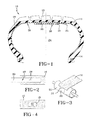
- FIG. 1 depicts in cross-section a tire assembly 10 in accordance with the present invention.
- Tire assembly 10 includes a carcass 12 having a tread 13 disposed on the outermost surface, where tread 13 is the portion of the tire assembly 10 that contacts the ground during operation of the tire.
- the carcass 12 may include one or more plies of cords and the carcass wraps the bead portions 14 of the tire 10.
- An innerliner 16 is disposed inside the carcass 12 so as to face the air chamber 24.
- the innerliner 16 is protected with barrier layer 20 adhered with optional pressure sensitive adhesive (PSA) 22 to the virgin surface 28 of innerliner 16 at the innermost surface 26 facing the air chamber 24.
- PSA pressure sensitive adhesive
- no pressure sensitive adhesive is used and the barrier layer is exclusive of a pressure sensitive adhesive.
- Formation of the tire assembly 10 includes assembling the innerliner 16 in a green state, i.e., an uncured state, adjacent the green tire carcass 12, and adhering the barrier layer 20 to the green virgin surface 28 of green innerliner 16, with optional PSA 22.
- a green tread strip 13 is assembled adjacent the outermost surface of the tire carcass 12. These layers may be assembled in any desired order.
- This green tire assembly 10 is then placed into a curing mold (not shown) such that the green tread strip 13 is positioned against the mold surface (not shown), and the barrier layer 20 is furthest from the mold surface so as to form the innermost layer.
- a release agent (not shown) is applied to the green innerliner 16 over the barrier layer such that the barrier layer 20 acts as a protective barrier to prevent contact by the release agent to the virgin surface 28.
- the release agent which is also referred to as lining cement, is generally applied by a high-pressure spray.
- lining cement-type release agent include organopolysiloxane- or silicone-based materials, such as polydimethylsiloxane with powdered mica or crystalline silica.
- Examples of commercially available lining cements are crystalline silica inside tire lube sold by Kalcor Coating Co.
- a pressure sensitive adhesive (not shown) is applied between barrier layer 20 and innerliner 16 such that the high-pressure lining cement spray does not displace the barrier layer 20.
- no release agent is used.
- a non-stick type of tire cure bladder may be used, for example made from silicone rubber.
- an expandable curing bladder (not shown) is then expanded against the protected innerliner 16 to press the green tire assembly 10 into the mold surface to press the green tread strip 13 into a tread pattern formed in the mold surface.
- a vulcanization temperature is applied in the mold while the tire assembly 10 is subjected to the pressure from the expanded curing bladder for a time sufficient to cure the tire assembly 10.
- the curing bladder is deflated and stripped from the innerliner 16 protected by the barrier layer 20. Any loose lining cement may then be vacuumed from the inside of the tire assembly 10, and the barrier layer 20 is removed to reveal a cured virgin surface 28 free of release agent.
- a barrier layer 20 for example having a width less than the width of the innerliner, is positioned symmetrically about the longitudinal central axis of the green innerliner 16 and pressed to the green virgin surface 28 of the green innerliner 16 causing the barrier layer 20 to be reliably and removably adhered to the green innerliner 16.
- Optional PSA 22 may be included, if desired.
- the overlap 30 may be colored so as to contrast with the black of the innerliner 16 or white lining cement.
- the green tire assembly 10 is removed from the drum 32 and can be stored with the barrier layer 20 protecting the green virgin surface 28 of the green innerliner 16.
- the innermost surface 26 is then sprayed with lining cement, which completely or partially covers the barrier layer 20, and the green assembly 10 is placed in a curing press to be conventionally cured.
- the cured tire assembly 10 is removed from the press, and the inside of the tire is vacuumed (if needed) to remove lining cement, which is sometimes loosely attached to the barrier layer 20, depending on the type of lining cement used.
- the barrier layer 20 is then manually removed in one piece by pulling on the protruding end 30 of barrier layer 20.
- the cured virgin surface 28 beneath the barrier layer 20 is exposed, and is free of lining cement.
- a strip of barrier layer 20, for example, having a width substantially corresponding to the width of the tread 13 is inserted into the green assembly 10 after the assembly 10 is removed from the drum 32, and is positioned symmetrically about the circumferential center line of the green innerliner 16, pressing the barrier layer 20 against the green innerliner 16, so that it is adherently secured to the green innerliner 16, preferably leaving an overhang 30, as before.
- the innermost surface 26 of the green assembly 10 with the barrier layer 20 in position is then spray-coated with lining cement and the tire assembly 10 cured as before.
- a cured virgin surface 28 is exposed that is substantially indistinguishable from the cured virgin surface 28 produced by the prior method of building the tire 10 with the barrier layer 20 pre-positioned on the innerliner 16, but the prior method may be less cumbersome and less time-consuming.
- FIG. 4 Another embodiment of the present invention is illustrated in FIG. 4 .
- a sheet of barrier layer 20 is superimposed on the chosen patch 37 and pressed onto the green innerliner 16.
- the green innerliner 16 is then positioned on the building drum (not shown) and construction of the tire assembly 10 is completed in the usual manner.
- the green tire assembly 10 is then removed from the building drum, sprayed with lining cement and cured. Upon cooling, and after removing loose lining cement, the thermoformable film 20 is readily removed.
- the barrier layer 20 may be post-positioned, that is, pressed onto the chosen patch 37 of green innerliner 16 after the green tire 10 is constructed in a conventional manner.
- barrier layer 20 as illustrated in FIGS. 2, 3 and 4 is usable in the case of a barrier layer made of a material that will stretch and survive the stress applied during the tire building process.
- the barrier layer 20 may instead be applied directly to the virgin green surface of the innerliner of a completed but uncured green tire after the tire building process. Such a green tire having the barrier layer applied after the tire building process would then be cured in a tire mold, with the inner liner surface protected as described previously herein.
- the barrier layer may be applied to the innerliner of an already-constructed green tire.
- the barrier layer may be manually or automatically placed onto the innerliner of the green tire, after building of the green tire and removal of the green tire from a tire building drum. In this case, the film does not have sufficient stretch or stretch easily with less force.
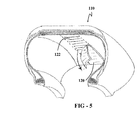
- FIG. 5 illustrates a green tire 110 having a barrier layer 120 in place.
- the barrier layer 120 is peeled back to expose the green innerliner surface region 122 (defined by dashed lines) that will become the virgin innerliner surface after cure of the tire.
- the virgin innerliner surface will serve as the mounting surface for a foam noise damper.
- the green tire 110 may be fabricated with the barrier layer 120 applied during tire building as shown in FIGS. 2, 3 and 4 , or the barrier layer 120 may be applied to the green tire subsequent to tire building and removal from the tire drum.
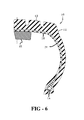
- a foam noise damper 45 may be applied to the cured virgin surface 28 of innerliner 16, as depicted in FIG. 6 , without the need for a solvent cleaning process.
- a pressure sensitive adhesive 22 may be present on the virgin surface 28 promote adhesion.
- no pressure sensitive adhesive is used and the foam noise damper is exclusive of a pressure sensitive adhesive.
- the barrier layer is a thermoformable film that separates all or a part of the innerliner surface from the curing bladder surface during the shaping and curing steps to prevent contamination of the virgin surface of the innerliner in the mold.
- the thermoformable film In order to expand with the innerliner during green tire building and curing, the thermoformable film should exhibit the property of necking, which refers to the ability of a material to stretch without returning back to its original shape.
- the film for application before cure should advantageously exhibit necking in at least one direction, and preferably in both directions, usually referred to as the machine direction (MD) and cross direction (CD).
- the necking force in accordance with room temperature testing at a cross-head speed of 20 in./min, is advantageously below 25 Ibf, and more advantageously below 20 Ibf, in at least one direction, and preferably in both directions, for a 1 inch wide strip.
- Non-oriented films are desirable, though partially oriented films may also be used.
- Non-oriented films may be characterized by essentially equal necking forces in both the machine and cross directions.
- thermoformable film should exhibit a melting point greater than the curing temperature of the tire assembly, which is generally in the range of 121 °C (250°F) to 200°C (392°F).
- the thermoformable film should further have sufficient strength to be removed from the innerliner in a single piece for ease of manufacture.
- the thermoformable film may be overlapped to form a pull-tab to facilitate easy removal of the film, and the overlapped portion of the film must not fuse together.
- the thermoformable film has a thickness less than 5 mils (127 ⁇ m), for example less than 3 mils (76.2 ⁇ m).
- thermoformable film has a thickness greater than 0.6 mil (15 ⁇ m), for example, greater than 0.75 mil (19 ⁇ m).
- Nylon 6 and nylon 6,6 films on the order of 0.75 mil to 2 mils thick may serve as exemplary thermoformable films in the present invention.
- Exemplary films include: CAPRAN ® Nylon, which is a multipurpose nylon 6 film commercially available from Honeywell International; fluorinated ethylenepropylene (FEP) films, such as TEFLON ® FEP fluorocarbon film from DuPont Films or A4000 from Airtech International, Inc.; 1-phenyl-3-methyl-5-pryrazolone (PMP) films, such as PMP Release Film from Honeywell; and C917 DARTEK ® , which is a nylon 6,6 film available from Exopack Performance Film. Necking force, maximum tensile strength, % elongation and thickness for these exemplary films (1 inch wide) are provided below in Table 1.
- thermoformable films are those that are non-oriented or only partially oriented and exhibit a necking force in both the machine direction and cross direction of less than 20 Ibf.
- Table 1 Sample Mil ⁇ m Max Tensile Necking Elongation (MPa) (lbf) (%) TEFLON ® FEP (MD) 1 25.4 22 2.25 393 TEFLON ® FEP (CD) 1 25.4 23.5 2.6 272 PMP (MD) 1 25.4 28 3.5 107 PMP (CD) 1 25.4 28 2.5 90 C917 DARTEK ® , (MD) 2.0 50.8 173 11.5 202 C917 DARTEK ® , (CD) 2.0 50.8 118 11.25 128 C917 DARTEK ® , (MD) 0.75 19 48.9 4.5 90 C917 DARTEK ® , (CD) 0.75 19 47.7 4.25 59 CAPRAN ® Nylon (MD) 1 25.4 61 7 118 CAPRAN ® Nylon (CD) 1 2
- nylon films are particularly useful in the method of the present invention.
- nylons which may be formed into film are linear polycondensates of lactams of 6 to 12 carbon atoms and conventional polycondensates of diamines and dicarboxylic acids, e.g. nylon 6; nylon 6,6; nylon 6, 66.
- polycondensates of aromatic dicarboxylic acids e.g., isophthalic acid or terephthalic acid
- diamines e.g., hexamethylenediamine, or octamethylenediamine
- polycarbonates of aliphatic starting materials e.g., m- and p-xylylenediamines, with adipic acid, suberic acid and sebacic acid
- polycondensates based on alicyclic starting materials e.g., cyclohexanedicarboxylic acid, cyclohexanediacetic acid, 4,4'-diaminodicyclohexylmethane and 4,4'-diaminodicyclohexylpropane.
- the barrier layer is a easily moldable polyester, such as polybutylene terephthalate (PBT), for example Arnitel® from DSM.
- PBT polybutylene terephthalate
- Arnitel® Arnitel® from DSM.
- the barrier layer is a thermoformable film comprising a blend of thermoplastic resin and an elastomer.
- polyamide resins for example, nylon 6 (N6), nylon 66 (N66), nylon 46 (N46), nylon 11 (N11), nylon 12 (N12), nylon 610 (N61 0), nylon 612 (N612), nylon 6/66 copolymer (N6/N66), nylon 6/66/610 copolymer (N6/66/61 0), nylon MXD (MXD6), nylon 6T, nylon 6/6T copolymer, nylon 66/PP copolymer, and nylon 66/PPS copolymer) and N-alkoxyalkylates of these, for example, methoxymethylates of 6-nylon, methoxymethylates of 6-610-nylon, and methoxymethylates of 612-nylon, polyester resins (for example, polybutylene terephthalate (PBT), polyethylene terephthalate (PET), polyethylene isophthalate (PEI), PET/PEI copolymers, polyacrylate (PAR), polybutylene terephthalate (P
- the elastomer component which may be blended with the above thermoplastic resin is not particularly limited.
- examples of such an elastomer are as follows: diene rubbers and the hydrogenated products thereof (for example, NR, IR, epoxylated natural rubber, SBR, BR (high cis-BR and low-cis BR), NBR, hydrogenated NBR, hydrogenated SBR), olefin rubbers (for example, ethylene propylene rubber (EPDM, EPM), maleic acid-modified ethylene propylene rubber (M-EPM), IIR, isobutylene and aromatic vinyl or diene monomer copolymers, acryl rubbers (ACM), ionomers), halogenated rubbers (for example, Br-IIR, Cl-IIR, bromide of isobutylene paramethylstyrene copolymer (Br-IPMS), CR, chlorohydrin rubber (CHR), chlorosulfonated polyethylene (CSM), chlorinated polyethylene (CM
- One method for producing the barrier layer comprising a blend of a thermoplastic and elastomer consists of melting and kneading the thermoplastic resin component and elastomer component (in the case of rubber, the unvulcanized rubber) in advance by a biaxial kneader/extruder etc. to disperse the elastomer component in the thermoplastic resin forming the continuous phase.
- a dynamically vulcanized alloy (DVA) composition when vulcanizing the elastomer component, a vulcanization agent is added, while kneading, and the elastomer component is dynamically vulcanized.
- DVA dynamically vulcanized alloy
- thermoformable film comprising a thermoplastic and an elastomer
- DVA dynamically vulcanized alloys
- non-vulcanized blends of thermoplastic and elastomer such as described in US-A- 2008/0047646 .
- the barrier layer is an adherent, removable, inner rubber strip adhered to the innerliner of the tire.
- the barrier layer as a removable, rubber strip is comprised of a rubber admixture of (A) 50 to 100, preferably 60 to 90, parts by weight butyl rubber and, correspondingly, (B) 50 to 0, preferably 40 to 10, parts by weight of an ethylene/propylene/nonconjugated diene terpolymer rubber.
- the rubber strip can also contain conventional rubber compounding ingredients including processing oil, accelerators, conventional sulfur curing agents, pigments, carbon black, zinc oxide, stearic acid, tackifying resin, and plasticizer.
- the said rubber strip is covulcanized with the tire in the sense that the uncured rubber strip is built onto the innerliner as a part of the green, or uncured, tire construction.
- the strip and green tire cure substantially simultaneously.
- the cocured rubber strip barrier layer has a relatively low adhesion to the inside surface of the tire of less than 10 lbs. per linear inch (1.8 Kg/linear cm), so that it can conveniently be pulled out by hand or by machine, and a tack value in the range of 10 to 30 Newtons/inch so that it will adequately adhere, or stick, to the inside surface of the green tire.
- the adherent, removable, rubber strip typically has a thickness in the range of 0.01 to 0.1 (0.025-0.25), preferably 0.02 to 0.08 (0.05-0.2) inches (cm).
- the co-cured rubber strip as the barrier layer can simply be removed by hand or by manual or automatic device.
- the rubber sheet can be color-coded with a pigment to contrast with the color of the tire itself so that it can be readily apparent whether it has actually been removed prior to further processing of the tire.
- the butyl rubber for the rubber strip utilized in this invention is generally of the type prepared by polymerizing a mixture of isobutylene and isoprene, with the major portion being isobutylene.
- the butyl rubber typically has an average molecular weight in excess of 200,000, preferably in the range of 200,000 to 600,000 and even more preferably in the range of 200,000 to 400,000.
- the vulcanized rubber tire itself can be of various sulfur curable rubbers such as natural rubber and synthetic rubber and their mixtures or blends.
- it can be at least one of rubbery butadiene/styrene copolymer, butadiene/acrylonitrile copolymer, cis-1,4 polyisoprene (natural or synthetic), polybutadiene, isoprene/butadiene copolymer, butyl rubber, halogenated butyl rubber, such as chloro or bromobutyl rubber, ethylene/propylene copolymer or ethylene/propylene/diene terpolymer (EPDM).
- the various polymers are cured or vulcanized by normal sulfur curing methods and recipes.
- the inside surface of the tire, to which the rubber strip is covulcanized typically and preferably comprises a butyl-type rubber, natural rubber, or mixture thereof.
- a butyl-type rubber can conveniently be selected from at least one of butyl rubber or a halobutyl rubber such as chlorobutyl or bromobutyl rubber.
- the vulcanized rubber tire itself can be of various sulfur curable rubbers such as natural rubber and synthetic rubber and their mixtures or blends.
- it can be at least one of rubbery butadiene/styrene copolymer, butadiene/acrylonitrile copolymer, cis-1,4 polyisoprene (natural or synthetic), polybutadiene, isoprene/butadiene copolymer, butyl rubber, halogenated butyl rubber, such as chloro or bromobutyl rubber, ethylene/propylene copolymer or ethylene/propylene terpolymer (EPDM).
- the various polymers are cured or vulcanized by normal sulfur curing methods and recipes.
- the inside surface of the tire, to which the rubber strip is covulcanized is typically and preferably comprised of a butyl-type rubber, natural rubber, or mixture thereof.
- a butyl-type rubber can conveniently be selected from at least one of butyl rubber or a halobutyl rubber such as chlorobutyl or bromobutyl rubber.
- the rubber strip for this example, may be prepared according to the following recipe in which the ingredients of Table 2a are mixed in a Banbury mixer and the resultant mixture mixed on a mill with the ingredients of Table 2b.
- Table 2a Compound Parts Butyl rubber 70.0 EPDM 1 30 Carbon Black (FEF) 50 Stearic Acid 1.5 Zinc Oxide 2.0 Tackifying Resin 2 8.0 1 Ethylene/propylene/diene rubber obtained as Nordel 1320, Nordel being a trademark of the DuPont de Nemours, E.I. Co.
- a tackifier in the recipe for the rubber composite strip as a building aid during the building of the green tire itself.
- resin tackifier for said EPDM and butyl rubbers is used.
- Suitable tackifiers include terpene resins and synthetic hydrocarbon-derived resins having a softening point in the range from 50° to 110°C.
- such resins can be prepared by polymerizing hydrocarbon monomers in the presence of the catalyst such as aluminum chloride or boron trifluoride or boron trifluoride etherate.
- the catalyst such as aluminum chloride or boron trifluoride or boron trifluoride etherate.
- Such monomers can be a mixture of diolefin and monoolefin hydrocarbons containing from 4-6 carbon atoms.
- piperylene can be copolymerized with methyl branched ⁇ -olefin containing 5-6 carbon atoms.
- the optional PSA is a rubber-based adhesive that is compatible with the rubber of the innerliner.
- PSA's typically comprise a polymer system, one or more tackifiers, and one or more plasticizers.
- the polymer system for the PSA is rubber-based so as to be compatible with the rubber of the innerliner.
- the PSA is believed to lose its status as a PSA, due to migration of the tackifier and/or other materials and/or degradation of the PSA at high temperature.
- the PSA When the thermoformable film is removed, all or some of the PSA, or former PSA, may be removed with the film and/or some or all may remain on or as part of the innerliner.
- the PSA composition is based on a rubber that is compatible with the rubber of the innerliner, then during curing, the degrading PSA may, in whole or part, migrate into the innerliner surface, thereby becoming part of the cured virgin innerliner surface. Alternatively, it may leave a cohesively-bonded surface coating, but that coating is itself an innerliner-type rubber and is free of release agent, thus being essentially the same as the cured virgin innerliner surface.
- the PSA is curable during tire vulcanization to cohesively bond with or become a part of the tire innerliner.
- one side of the barrier layer is coated with a PSA that is pressed to the green virgin innerliner surface to reliably and releasably adhere the barrier layer.
- the PSA is applied to the two edges on one side of the barrier layer.
- the PSA may be a natural rubber-based, butyl rubber-based, halobutyl rubber-based or polybutadiene rubber-based adhesive, or combination thereof, since these rubbers are commonly used tire materials.
- rubber-based is meant that the rubber is the principle component of the PSA, i.e., the component present in the greatest quantity.
- the PSA is a permanent grade hot-melt PSA.
- An exemplary PSA is commercially available from H.B. Fuller Company, Vadnais Heights, MN, as a permanent grade, hot-melt PSA under Product Number HL2201 X.
- Another PSA is Product Number G1110 from 3M (formerly Emtech). The PSA adheres the thermoformable film reliably to the innerliner surface, and yet allows the thermoformable film to be removed therefrom after curing the tire assembly.
- the PSA may be coated onto the thermoformable film by any desirable method, such as solvent coating or hot melt extrusion coating.
- a film could also be purchased pre-coated.
- the PSA-coated film may be adhered by any pressure suitable for the particular type of adhesive. For example, hand pressure may be used to adhere to the PSA to the innerliner, or a roller, such as a 1 inch roller, may be rolled along the surface of the PSA-coated film to adhere the PSA.
- the foam noise damper 45 is fixed to the inside of the innerliner radially inward of the tread, as shown in FIG. 6 .
- the material of the damper is preferably a light-weight low-density flexible material, e.g., foamed rubber, foamed synthetic resins, cellular plastics and the like.
- foamed materials or sponge materials
- an open-cell type and a closed-cell type can be used, but an open-cell type is preferred.
- synthetic resin foams such as ether based polyurethane foam, ester based polyurethane foam, polyethylene foam and the like; rubber foams such as chloroprene rubber foam, ethylene-propylene rubber foam, nitrile rubber foam, silicone rubber foam and the like can be used.
- polyethylene foam, polyurethane foams including ether based polyurethane foam and the like are preferably used in view of noise damping effect, lightness in weight, easy control of expansion rate and durability.
- an open-cell type foam material more specifically, polyurethane foam is used.
- foam materials which are hard to be hydrolyzed such as ether based polyurethane are suitably used.
- a water repellent treatment can be preferably made on the foam material.
- a mildewproof treatment can be preferably made.
- raw materials not including halogen are used to make the foam material.
- the foam noise damper has a specific gravity and dimensions suitable to reduce noise level due to tire cavity resonance at 200 to 300 Hz.
- the foam has a specific gravity greater in a range of 0.005 to 0.06 (i.e. density of 0.005 to 0.06 gm/cm 3 or 5 to 60 kg/m 3 ).
- the foam noise damper has a thickness in the tire radial direction ranging from 10 to 50 mm.
- the foam noise damper has a width in the axial tire direction ranging from 30 to 150 mm.
- the foam noise damper is disposed circumferentially about the tire.
- the foam noise damper 45 is formed and secured to the virgin surface of the tire innerliner by foaming in place a foamable liquid precursor material.
- foaming in place it is meant that the foamable liquid precursor is applied to the virgin surface of the tire innerliner as a liquid, and allowed to foam and cure while in contact with the virgin surface of the tire innerliner.
- the method avoids prior art methods of applying a pre-made foam to the innerliner with an adhesive or other attachment method.
- Precursor foamable liquids capable of forming foams including synthetic resin foams such as ether based polyurethane foam, ester based polyurethane foam, polyethylene foam and the like; rubber foams such as chloroprene rubber foam, ethylene-propylene rubber foam, nitrile rubber foam, silicone rubber foam and the like are suitable.
- foamable liquids as known in the art, including various reactive monomers, blowing agents, and curatives, are suitable.
- the foamable liquid is a two-part polyurethane precursor including a polyol/water and an isocyanate.
- the polyurethane foam of the foam noise damper is produced by the reaction of a long chain polyol compound containing water and an organic polyisocyanate.
- the final properties of the polyurethane foam will depend principally on the choice of polyethers, polyesters or other long chain polyhydroxyl compounds which are converted by the polyisocyanate into a high molecular weight polymer which is then foamed by a suitable foaming system, usually a reaction of water with the free isocyanate content of the polymer, resulting in the formation of carbon dioxide which expands the resin into the desired cellular foam.
- the control of branching in the reactants permits an extremely wide range of properties in the final foam.
- the density of the foam is controlled to a great extent by the amount of water employed.
- the configuration of the cell depends principally on the equivalent weight of the long chain polyhydroxyl materials favoring the production of a closed cell structure and the higher equivalent weight polyhydroxyl materials leading to the open-cell structure.
- the degree of branching of the polyhydroxyl reactant also influences the cell character.
- the foamable liquid may be applied to the virgin surface of the tire innerliner various methods as are known in the art, including spraying, brushing, rolling, wiping, and the like. In one embodiment, the foamable liquid is applied to the virgin surface of the tire innerliner by spraying.
- the foamable liquid may be applied to the virgin surface of the tire innerliner as a freely formed body, i.e., without constraint of a mold, or the foamable liquid may be applied with the use of a removable mold to impart a desired cross-sectional area to the resulting foam noise damper.
- a mold in utilized to impart a rectangular cross sectional area to the foam noise damper.
- the foamable liquid may be applied in one continuous circumferential motion, to avoid breaks in the foam noise damper.
- the continuous motion may be achieved for example during spraying by movement of a movable spray head, or by rotation of the tire on a rotating support such as a rotating table or the like.
- An advantage to application of the foam noise damper from a foamable liquid is the resulting absence of a splice in the foam noise damper.
- a splice or overlap, is typically observed in foam noise dampers applied to a tire as prefoamed solid foam.
- the splice may undesirably provide a source of a separation of the foam from the innerliner during use.
- the solid foam noise damper is exclusive of a splice.
- the surface exposed to the air cavity may include a skin that may need to be removed to expose the pores of the foam.
- the foam may be formed without skin by heating the top surface during foam formation.
- the invention is further illustrated by the following example.
- a foamable liquid to a rubber substrate is illustrated.
- a polyurethane-type foam forming spray was used (VFI 7130 from Volatile Free Inc., Brookfield, WI). Two components for polyurethane were mix sprayed using compressed air to form open cell foam approximate thickness 5/8 inch to the virgin surface of a sheet of cured rubber. After the application, 1" diameter cylinder was cut out and the foam was pulled from the rubber. The foam was not separated from rubber (foam broke) thus indicating that adhesion is very good without the need of a PSA layer.
Landscapes
- Engineering & Computer Science (AREA)
- Mechanical Engineering (AREA)
- Tyre Moulding (AREA)
- Tires In General (AREA)
Abstract
Description
- This invention relates to a method of protecting the innerliner of a tire from contamination during manufacture with subsequent application of a foam noise damper to the innerliner surface.
- Government regulations and consumer preferences continue to compel a reduction in the acceptable noise levels produced from the tires of passenger vehicles. One source of road noise is resonance within the air chamber enclosed by the innermost surface of the tire and the rim. One type of effort to reduce tire noise is damping the sound from the air vibration in the air chamber, which efforts have focused mainly on altering the innermost surface of the tire adjacent the tire carcass. In one approach, foam material is disposed as a noise damper in the inner cavity by attaching the foam to the innerliner of the tire, which is effective in reducing noise due to tire cavity resonance at 200 to 300 Hz. However, the attachment of such a foam noise damper to a tire innerliner is problematic.
- Carcasses of pneumatic green tires are built as a series of layers of flexible high modulus cords encased in a low modulus rubber. An innerliner is positioned to form the innermost surface of the tire. The green tire is cured in a curing press using a curing bladder, which forces expansion of the tire. During curing, the innerliner expands with the carcass, which is forced against the indentations in the curing mold to form the tread of the tire, and all components are co-cured so as to provide a substantially cohesive bond between one and another.
- The innerliner for a pneumatic tubeless tire is typically formed from a compound containing a high proportion by weight of a halobutyl rubber due to its good barrier properties. Before the tire is cured, the entire inner surface of the innerliner and/or the outer surface of the curing bladder are coated with a release agent. The release agent is commonly referred to as a "lining cement" when used on the surface of the innerliner, and as a "bladder lube" or "bladder spray" when used on the curing bladder. The release agent facilitates removal of the curing bladder from the innerliner after curing so that the innerliner is not damaged. The innerliner (or squeegee) for a pneumatic tube-type tire is typically a thin layer of ply coat stock to protect the tube from direct contact with nylon. These innerliners normally do not contain halobutyl rubber since barrier properties are not required.
- Thus, prior to bonding a foam noise damper to the cured innerliner, in prior art methods the innerliner must be cleaned to remove contaminants present on the innerliner surface from the molding operation. In particular, the release agent must be removed from the innerliner surface. Solvents have typically been used for this cleaning operation. Solvents effective for removing the release agents contain hazardous air pollutants. These solvents are thus subject to environmental regulations, which have become more stringent in the recent past. It would thus be desirable to eliminate the need for solvent cleaning of the innerliner surface in order to comply with strict environmental regulations. In addition, solvent cleaning is labor intensive and costly due to its hazardous nature, such that significant cost savings may be realized by elimination of the solvent cleaning process. Alternatively, preparation of the innerliner for application of a foam noise damper may involve buffing the innerliner to provide a surface suitable for adhesion, see for example
US-B- 7,669,628 . However, such buffing may produce dust which is undesirable due to safety considerations. - "Carcass" means the tire structure apart from the belt structure, tread, undertread, and sidewall rubber over the plies, but including the beads.
- "Innerliner" means the layer or layers of elastomer or other material that form the inside surface of a tire and that contain the inflating fluid within the tire. The "innerliner" of a tube-type tire is often called a "squeegee" to distinguish it from the innerliner of a tubeless tire.
- "Pneumatic tire" means a laminated mechanical device of generally toroidal shape (usually an open torus) having beads and a tread and made of rubber, chemicals, fabric and steel or other materials. When mounted on the wheel of a motor vehicle, the tire through its tread provides traction and contains the fluid that sustains the vehicle load.
- "Tread" means a molded rubber component which, when bonded to a tire casing, includes that portion of the tire that comes into contact with the road when the tire is normally inflated and under normal load, i.e., the footprint.
- The terms "cure" and "vulcanize" are intended to be interchangeable terms unless otherwise noted.
- The terms "green" and "uncured" are intended to be interchangeable unless otherwise noted.
- "Virgin surface" means a surface, whether cured or not, that has not been subjected to a cleaning process and that has not come in contact with a release agent.
- The invention relates to a method in accordance with claim 1.
- Dependent claims refer to preferred embodiments of the invention.
- In a preferred aspect of the invention, the method for making a tire having a foam noise damper, comprises the steps of: pressing a barrier layer onto an exposed virgin surface of a green tire innerliner to adhere the barrier layer to the virgin surface and thereby form a protected green innerliner; exposing the protected green innerliner to the release agent; curing the protected green innerliner; removing the barrier layer to reveal the virgin surface substantially free of the release agent; applying a foamable liquid to the virgin surface; and foaming the foamable liquid to form a foam noise damper secured to the virgin surface.
- The accompanying drawings, which are incorporated in and constitute a part of this specification, illustrate embodiments of the invention and, together with a general description of the invention given above, and the detailed description given below, serve to explain the invention.
-
FIG. 1 is a sectional view showing an embodiment of the present invention; -
FIG. 2 is a plan view, not to scale, of an assembly of a strip of a barrier layer long enough to overlie the entire circumferential surface of a rolled sheet of innerliner and to provide a pull-tab; -
FIG. 3 is a perspective view schematically illustrating positioning of a prepared innerliner (as shown inFIG. 2 ) on a tire building drum; -
FIG. 4 is a plan view, not to scale, of an assembly of a strip of a barrier layer covering only a portion of a sheet of innerliner; -
FIG. 5 is a perspective view of a green tire having a strip of a barrier layer covering a portion of the tire innerliner; and -
FIG. 6 is a partial cross-section of a tire having a sheet of barrier layer in phantom view to show its removal after cure, and a foam noise damper disposed on the virgin innerliner surface. - In accordance with the present invention, the innerliner of a tire is protected from contamination, primarily that occurring from release agents used during the curing process, by adhering a protective barrier layer to the green virgin innerliner surface. In one embodiment, the protective barrier layer is a thermoformable film adapted to stretch with the tire materials during the shaping and curing process. In one embodiment, the protective barrier layer is a thin rubber sheet. In one embodiment, the barrier layer is coated with a pressure-sensitive adhesive (PSA) that is pressed to the green virgin innerliner surface to reliably and releasably adhere the thermoformable film. The optional PSA is particularly effective in preventing movement of the barrier layer during high-pressure spraying of lining cement to the innerliner. In one embodiment, the barrier layer is exclusive of a pressure sensitive adhesive. The invention may be further understood by reference to the Figures.
- Like reference numerals are used throughout the several Figures to refer to like components, and like reference numerals are used to refer to components in both the cured and uncured (green) states.
-
FIG. 1 depicts in cross-section atire assembly 10 in accordance with the present invention.Tire assembly 10 includes acarcass 12 having atread 13 disposed on the outermost surface, wheretread 13 is the portion of thetire assembly 10 that contacts the ground during operation of the tire. As is known in the art, thecarcass 12 may include one or more plies of cords and the carcass wraps thebead portions 14 of thetire 10. Aninnerliner 16 is disposed inside thecarcass 12 so as to face theair chamber 24. In accordance with the present invention, theinnerliner 16 is protected withbarrier layer 20 adhered with optional pressure sensitive adhesive (PSA) 22 to thevirgin surface 28 ofinnerliner 16 at theinnermost surface 26 facing theair chamber 24. In another embodiment, no pressure sensitive adhesive is used and the barrier layer is exclusive of a pressure sensitive adhesive. - Formation of the
tire assembly 10 includes assembling theinnerliner 16 in a green state, i.e., an uncured state, adjacent thegreen tire carcass 12, and adhering thebarrier layer 20 to thegreen virgin surface 28 ofgreen innerliner 16, withoptional PSA 22. Agreen tread strip 13 is assembled adjacent the outermost surface of thetire carcass 12. These layers may be assembled in any desired order. Thisgreen tire assembly 10 is then placed into a curing mold (not shown) such that thegreen tread strip 13 is positioned against the mold surface (not shown), and thebarrier layer 20 is furthest from the mold surface so as to form the innermost layer. - In one embodiment, before all components are in place within the mold, a release agent (not shown) is applied to the
green innerliner 16 over the barrier layer such that thebarrier layer 20 acts as a protective barrier to prevent contact by the release agent to thevirgin surface 28. The release agent, which is also referred to as lining cement, is generally applied by a high-pressure spray. Examples of lining cement-type release agent include organopolysiloxane- or silicone-based materials, such as polydimethylsiloxane with powdered mica or crystalline silica. Examples of commercially available lining cements are crystalline silica inside tire lube sold by Kalcor Coating Co. under Product Number 284-TCW, and LYNDCOAT® DV silicone-containing release agent from Rhodia Silicones. In one embodiment, a pressure sensitive adhesive (not shown) is applied betweenbarrier layer 20 andinnerliner 16 such that the high-pressure lining cement spray does not displace thebarrier layer 20. - In one embodiment, no release agent is used. In this embodiment, a non-stick type of tire cure bladder may be used, for example made from silicone rubber.
- After the
green assembly 10 with protectedinnerliner 16 is placed in the mold, an expandable curing bladder (not shown) is then expanded against the protectedinnerliner 16 to press thegreen tire assembly 10 into the mold surface to press thegreen tread strip 13 into a tread pattern formed in the mold surface. A vulcanization temperature is applied in the mold while thetire assembly 10 is subjected to the pressure from the expanded curing bladder for a time sufficient to cure thetire assembly 10. After curing is completed, the curing bladder is deflated and stripped from theinnerliner 16 protected by thebarrier layer 20. Any loose lining cement may then be vacuumed from the inside of thetire assembly 10, and thebarrier layer 20 is removed to reveal a curedvirgin surface 28 free of release agent. - One embodiment of a method of the present invention may be described with further reference to
FIGS. 2-3 . As illustrated inFIG. 2 , prior to theinnerliner 16 being positioned on abuilding drum 32, abarrier layer 20, for example having a width less than the width of the innerliner, is positioned symmetrically about the longitudinal central axis of thegreen innerliner 16 and pressed to the greenvirgin surface 28 of thegreen innerliner 16 causing thebarrier layer 20 to be reliably and removably adhered to thegreen innerliner 16. Preferably there is an overhang or "overlap" 30, sufficient to afford a pull-tab, to facilitate easy removal of thebarrier layer 20 after cure.Optional PSA 22 may be included, if desired. - As shown in
FIG. 3 , from 2 cm to 20 cm of one end of thebarrier layer 20 extends beyond one end of thegreen innerliner 16 as it is positioned on thedrum 32, to form theoverlap 30. To facilitate visual detection through the lining cement, theoverlap 30 may be colored so as to contrast with the black of theinnerliner 16 or white lining cement. - The
green tire assembly 10 is removed from thedrum 32 and can be stored with thebarrier layer 20 protecting the greenvirgin surface 28 of thegreen innerliner 16. Theinnermost surface 26 is then sprayed with lining cement, which completely or partially covers thebarrier layer 20, and thegreen assembly 10 is placed in a curing press to be conventionally cured. The curedtire assembly 10 is removed from the press, and the inside of the tire is vacuumed (if needed) to remove lining cement, which is sometimes loosely attached to thebarrier layer 20, depending on the type of lining cement used. Thebarrier layer 20 is then manually removed in one piece by pulling on the protrudingend 30 ofbarrier layer 20. The curedvirgin surface 28 beneath thebarrier layer 20 is exposed, and is free of lining cement. - In another embodiment of the method of the present invention as seen in
FIG. 5 , a strip ofbarrier layer 20, for example, having a width substantially corresponding to the width of thetread 13, is inserted into thegreen assembly 10 after theassembly 10 is removed from thedrum 32, and is positioned symmetrically about the circumferential center line of thegreen innerliner 16, pressing thebarrier layer 20 against thegreen innerliner 16, so that it is adherently secured to thegreen innerliner 16, preferably leaving anoverhang 30, as before. Theinnermost surface 26 of thegreen assembly 10 with thebarrier layer 20 in position is then spray-coated with lining cement and thetire assembly 10 cured as before. When thebarrier layer 20 is removed, a curedvirgin surface 28 is exposed that is substantially indistinguishable from the curedvirgin surface 28 produced by the prior method of building thetire 10 with thebarrier layer 20 pre-positioned on theinnerliner 16, but the prior method may be less cumbersome and less time-consuming. - Another embodiment of the present invention is illustrated in
FIG. 4 . In the event that only a portion of theinnerliner 16 is to be protected, as for example, when apatch 37 of virgin surface is sufficient for the purpose of attaching a foam noise damper, a sheet ofbarrier layer 20 is superimposed on the chosenpatch 37 and pressed onto thegreen innerliner 16. Thegreen innerliner 16 is then positioned on the building drum (not shown) and construction of thetire assembly 10 is completed in the usual manner. Thegreen tire assembly 10 is then removed from the building drum, sprayed with lining cement and cured. Upon cooling, and after removing loose lining cement, thethermoformable film 20 is readily removed. To facilitate easy removal, it is advisable to keep a small crease on thebarrier layer 20, which forms a pull-tab after cure (not shown inFIG. 4 ). It will be evident that, where only a patch of virgin surface is required, thebarrier layer 20 may be post-positioned, that is, pressed onto the chosenpatch 37 ofgreen innerliner 16 after thegreen tire 10 is constructed in a conventional manner. - Application of the
barrier layer 20 as illustrated inFIGS. 2, 3 and 4 is usable in the case of a barrier layer made of a material that will stretch and survive the stress applied during the tire building process. In the case of a barrier layer made of a material that does not have sufficient stretch to survive the tire building process or requires a high force to stretch, rather than application of the barrier layer during the tire building process, thebarrier layer 20 may instead be applied directly to the virgin green surface of the innerliner of a completed but uncured green tire after the tire building process. Such a green tire having the barrier layer applied after the tire building process would then be cured in a tire mold, with the inner liner surface protected as described previously herein. - In another embodiment, the barrier layer may be applied to the innerliner of an already-constructed green tire. In this embodiment, the barrier layer may be manually or automatically placed onto the innerliner of the green tire, after building of the green tire and removal of the green tire from a tire building drum. In this case, the film does not have sufficient stretch or stretch easily with less force.
-
FIG. 5 illustrates agreen tire 110 having abarrier layer 120 in place. In the view shown inFIG. 5 , thebarrier layer 120 is peeled back to expose the green innerliner surface region 122 (defined by dashed lines) that will become the virgin innerliner surface after cure of the tire. The virgin innerliner surface will serve as the mounting surface for a foam noise damper. As described earlier, thegreen tire 110 may be fabricated with thebarrier layer 120 applied during tire building as shown inFIGS. 2, 3 and 4 , or thebarrier layer 120 may be applied to the green tire subsequent to tire building and removal from the tire drum. - Following cure of the tire and removal of the
barrier layer 20, afoam noise damper 45 may be applied to the curedvirgin surface 28 ofinnerliner 16, as depicted inFIG. 6 , without the need for a solvent cleaning process. In one embodiment, a pressuresensitive adhesive 22 may be present on thevirgin surface 28 promote adhesion. In one embodiment, no pressure sensitive adhesive is used and the foam noise damper is exclusive of a pressure sensitive adhesive. - In one embodiment, the barrier layer is a thermoformable film that separates all or a part of the innerliner surface from the curing bladder surface during the shaping and curing steps to prevent contamination of the virgin surface of the innerliner in the mold. In order to expand with the innerliner during green tire building and curing, the thermoformable film should exhibit the property of necking, which refers to the ability of a material to stretch without returning back to its original shape. The film for application before cure should advantageously exhibit necking in at least one direction, and preferably in both directions, usually referred to as the machine direction (MD) and cross direction (CD). The necking force, in accordance with room temperature testing at a cross-head speed of 20 in./min, is advantageously below 25 Ibf, and more advantageously below 20 Ibf, in at least one direction, and preferably in both directions, for a 1 inch wide strip. Non-oriented films are desirable, though partially oriented films may also be used. Non-oriented films may be characterized by essentially equal necking forces in both the machine and cross directions.
- Further, the thermoformable film should exhibit a melting point greater than the curing temperature of the tire assembly, which is generally in the range of 121 °C (250°F) to 200°C (392°F). The thermoformable film should further have sufficient strength to be removed from the innerliner in a single piece for ease of manufacture. In an exemplary embodiment, the thermoformable film may be overlapped to form a pull-tab to facilitate easy removal of the film, and the overlapped portion of the film must not fuse together. In one embodiment, the thermoformable film has a thickness less than 5 mils (127 µm), for example less than 3 mils (76.2 µm). In another embodiment, the thermoformable film has a thickness greater than 0.6 mil (15 µm), for example, greater than 0.75 mil (19 µm). Nylon 6 and nylon 6,6 films on the order of 0.75 mil to 2 mils thick may serve as exemplary thermoformable films in the present invention. Exemplary films include: CAPRAN® Nylon, which is a multipurpose nylon 6 film commercially available from Honeywell International; fluorinated ethylenepropylene (FEP) films, such as TEFLON® FEP fluorocarbon film from DuPont Films or A4000 from Airtech International, Inc.; 1-phenyl-3-methyl-5-pryrazolone (PMP) films, such as PMP Release Film from Honeywell; and C917 DARTEK®, which is a nylon 6,6 film available from Exopack Performance Film. Necking force, maximum tensile strength, % elongation and thickness for these exemplary films (1 inch wide) are provided below in Table 1. Exemplary thermoformable films are those that are non-oriented or only partially oriented and exhibit a necking force in both the machine direction and cross direction of less than 20 Ibf.
Table 1 Sample Mil µm Max Tensile Necking Elongation (MPa) (lbf) (%) TEFLON® FEP (MD) 1 25.4 22 2.25 393 TEFLON® FEP (CD) 1 25.4 23.5 2.6 272 PMP (MD) 1 25.4 28 3.5 107 PMP (CD) 1 25.4 28 2.5 90 C917 DARTEK®, (MD) 2.0 50.8 173 11.5 202 C917 DARTEK®, (CD) 2.0 50.8 118 11.25 128 C917 DARTEK®, (MD) 0.75 19 48.9 4.5 90 C917 DARTEK®, (CD) 0.75 19 47.7 4.25 59 CAPRAN® Nylon (MD) 1 25.4 61 7 118 CAPRAN® Nylon (CD) 1 25.4 63 6 60 - By way of further example, nylon films are particularly useful in the method of the present invention. Examples of nylons which may be formed into film are linear polycondensates of lactams of 6 to 12 carbon atoms and conventional polycondensates of diamines and dicarboxylic acids, e.g. nylon 6; nylon 6,6; nylon 6, 66. In addition, it is possible to use polycondensates of aromatic dicarboxylic acids, e.g., isophthalic acid or terephthalic acid, with diamines, e.g., hexamethylenediamine, or octamethylenediamine, polycarbonates of aliphatic starting materials, e.g., m- and p-xylylenediamines, with adipic acid, suberic acid and sebacic acid, and polycondensates based on alicyclic starting materials, e.g., cyclohexanedicarboxylic acid, cyclohexanediacetic acid, 4,4'-diaminodicyclohexylmethane and 4,4'-diaminodicyclohexylpropane.
- In one embodiment, the barrier layer is a easily moldable polyester, such as polybutylene terephthalate (PBT), for example Arnitel® from DSM.
- In one embodiment, the barrier layer is a thermoformable film comprising a blend of thermoplastic resin and an elastomer.
- As the thermoplastic resin, polyamide resins (for example, nylon 6 (N6), nylon 66 (N66), nylon 46 (N46), nylon 11 (N11), nylon 12 (N12), nylon 610 (N61 0), nylon 612 (N612), nylon 6/66 copolymer (N6/N66), nylon 6/66/610 copolymer (N6/66/61 0), nylon MXD (MXD6), nylon 6T, nylon 6/6T copolymer, nylon 66/PP copolymer, and nylon 66/PPS copolymer) and N-alkoxyalkylates of these, for example, methoxymethylates of 6-nylon, methoxymethylates of 6-610-nylon, and methoxymethylates of 612-nylon, polyester resins (for example, polybutylene terephthalate (PBT), polyethylene terephthalate (PET), polyethylene isophthalate (PEI), PET/PEI copolymers, polyacrylate (PAR), polybutylene naphthalate (PBN), liquid crystal polyester, polyoxyalkylene diimid diacid/polybutyrate terephthalate copolymer, and other aromatic polyesters), polynitrile resins (for example, polyacrylonitrile (PAN), polymethacrylonitrile, acrylonitrile/styrene copolymer (AS), methacrylonitrile/styrene copolymers, methacrylonitrile/styrene/butadiene copolymers, polymethacrylate resins (for example, polymethyl methacrylate (PMMA), polyethyl methacrylate), polyvinyl resins (for example, vinyl acetate, polyvinyl alcohol (PVA), vinyl alcohol/ethylene copolymer (EVOH), polyvinylidene chloride (PDVC), polyvinyl chloride (PVC), polyvinyl/polyvinylidene chloride copolymer, polyvinylidene chloride/methyl acrylate copolymer, vinylidene chloride/acrylonitrile copolymer), cellulose resins (for example, cellulose acetate, cellulose acetobutyrate), fluororesins (for example, polyvinylidene fluoride (PVDF), polyvinyl fluoride (PVF), polychlorofluoroethylene (PCTFE), tetrafluoroethylene/ethylene copolymer), imide resins (for example, aromatic polyimides (PI)), etc. may be exemplified.
- The elastomer component which may be blended with the above thermoplastic resin is not particularly limited. Examples of such an elastomer are as follows: diene rubbers and the hydrogenated products thereof (for example, NR, IR, epoxylated natural rubber, SBR, BR (high cis-BR and low-cis BR), NBR, hydrogenated NBR, hydrogenated SBR), olefin rubbers (for example, ethylene propylene rubber (EPDM, EPM), maleic acid-modified ethylene propylene rubber (M-EPM), IIR, isobutylene and aromatic vinyl or diene monomer copolymers, acryl rubbers (ACM), ionomers), halogenated rubbers (for example, Br-IIR, Cl-IIR, bromide of isobutylene paramethylstyrene copolymer (Br-IPMS), CR, chlorohydrin rubber (CHR), chlorosulfonated polyethylene (CSM), chlorinated polyethylene (CM), maleic acid-modified chlorinated polyethylene (M-CM), silicone rubbers (for example, methylvinyl silicone rubber, dimethyl silicone rubber, methylphenylvinyl silicone rubber), sulfur-containing rubber (for example, polysulfide rubber), fluororubber (for example, vinylidene fluoride rubber, fluorine-containing vinylether rubber, tetrafluoroethylene propylene rubber, fluorine-containing silicone rubber, fluorine-containing phosphazen rubber), thermoplastic elastomers (for example, styrene elastomers, olefin elastomers, ester elastomers, urethane elastomers, polyamide elastomers), etc. may be exemplified.
- One method for producing the barrier layer comprising a blend of a thermoplastic and elastomer consists of melting and kneading the thermoplastic resin component and elastomer component (in the case of rubber, the unvulcanized rubber) in advance by a biaxial kneader/extruder etc. to disperse the elastomer component in the thermoplastic resin forming the continuous phase. In the case of a dynamically vulcanized alloy (DVA) composition, when vulcanizing the elastomer component, a vulcanization agent is added, while kneading, and the elastomer component is dynamically vulcanized.
- Included in the category of a thermoformable film comprising a thermoplastic and an elastomer are dynamically vulcanized alloys (DVA) such as described in
US-A-5,938,869 , and non-vulcanized blends of thermoplastic and elastomer such as described inUS-A- 2008/0047646 . - In one embodiment, the barrier layer is an adherent, removable, inner rubber strip adhered to the innerliner of the tire.
- In this embodiment, the barrier layer as a removable, rubber strip is comprised of a rubber admixture of (A) 50 to 100, preferably 60 to 90, parts by weight butyl rubber and, correspondingly, (B) 50 to 0, preferably 40 to 10, parts by weight of an ethylene/propylene/nonconjugated diene terpolymer rubber.
- It is understood that the rubber strip can also contain conventional rubber compounding ingredients including processing oil, accelerators, conventional sulfur curing agents, pigments, carbon black, zinc oxide, stearic acid, tackifying resin, and plasticizer.
- In the practice of this invention, it is required that the said rubber strip is covulcanized with the tire in the sense that the uncured rubber strip is built onto the innerliner as a part of the green, or uncured, tire construction. Thus, in the molding and curing operation for producing the tire, the strip and green tire cure substantially simultaneously.
- In one embodiment, the cocured rubber strip barrier layer has a relatively low adhesion to the inside surface of the tire of less than 10 lbs. per linear inch (1.8 Kg/linear cm), so that it can conveniently be pulled out by hand or by machine, and a tack value in the range of 10 to 30 Newtons/inch so that it will adequately adhere, or stick, to the inside surface of the green tire.
- The adherent, removable, rubber strip typically has a thickness in the range of 0.01 to 0.1 (0.025-0.25), preferably 0.02 to 0.08 (0.05-0.2) inches (cm). After the tire containing the rubber strip on its innerliner has been shaped and cured, the co-cured rubber strip as the barrier layer can simply be removed by hand or by manual or automatic device. The rubber sheet can be color-coded with a pigment to contrast with the color of the tire itself so that it can be readily apparent whether it has actually been removed prior to further processing of the tire.
- The butyl rubber for the rubber strip utilized in this invention is generally of the type prepared by polymerizing a mixture of isobutylene and isoprene, with the major portion being isobutylene. The butyl rubber typically has an average molecular weight in excess of 200,000, preferably in the range of 200,000 to 600,000 and even more preferably in the range of 200,000 to 400,000.
- The vulcanized rubber tire itself can be of various sulfur curable rubbers such as natural rubber and synthetic rubber and their mixtures or blends. For example, it can be at least one of rubbery butadiene/styrene copolymer, butadiene/acrylonitrile copolymer, cis-1,4 polyisoprene (natural or synthetic), polybutadiene, isoprene/butadiene copolymer, butyl rubber, halogenated butyl rubber, such as chloro or bromobutyl rubber, ethylene/propylene copolymer or ethylene/propylene/diene terpolymer (EPDM). Typically the various polymers are cured or vulcanized by normal sulfur curing methods and recipes.
- In particular, although other portions of the tire can be of such rubbers, the inside surface of the tire, to which the rubber strip is covulcanized, typically and preferably comprises a butyl-type rubber, natural rubber, or mixture thereof. Such butyl-type rubber can conveniently be selected from at least one of butyl rubber or a halobutyl rubber such as chlorobutyl or bromobutyl rubber.
- The vulcanized rubber tire itself can be of various sulfur curable rubbers such as natural rubber and synthetic rubber and their mixtures or blends. For example, it can be at least one of rubbery butadiene/styrene copolymer, butadiene/acrylonitrile copolymer, cis-1,4 polyisoprene (natural or synthetic), polybutadiene, isoprene/butadiene copolymer, butyl rubber, halogenated butyl rubber, such as chloro or bromobutyl rubber, ethylene/propylene copolymer or ethylene/propylene terpolymer (EPDM). Typically the various polymers are cured or vulcanized by normal sulfur curing methods and recipes.
- In particular, although other portions of the tire can be of such rubbers, the inside surface of the tire, to which the rubber strip is covulcanized, is typically and preferably comprised of a butyl-type rubber, natural rubber, or mixture thereof. Such butyl-type rubber can conveniently be selected from at least one of butyl rubber or a halobutyl rubber such as chlorobutyl or bromobutyl rubber.
- An exemplary recipe for the rubber strip used as a barrier layer is shown in Table 2. The rubber strip, for this example, may be prepared according to the following recipe in which the ingredients of Table 2a are mixed in a Banbury mixer and the resultant mixture mixed on a mill with the ingredients of Table 2b.
Table 2a Compound Parts Butyl rubber 70.0 EPDM 130 Carbon Black (FEF) 50 Stearic Acid 1.5 Zinc Oxide 2.0 Tackifying Resin2 8.0 1 Ethylene/propylene/diene rubber obtained as Nordel 1320, Nordel being a trademark of the DuPont de Nemours, E.I. Co.
2 Hydrocarbon derived tackifying resin of the diolefin/olefin copolymer type having a softening point in the range of 94°C to 98°C.Table 2b Compound Parts Mercaptobenzothiazole 1.0 Tetramethylthiuram disulfide 1.25 Sulfur 2.0 - In one embodiment, it may be desirable to include a tackifier in the recipe for the rubber composite strip as a building aid during the building of the green tire itself. In this regard, generally 2 to 10 parts by weight of resin tackifier for said EPDM and butyl rubbers is used. Suitable tackifiers include terpene resins and synthetic hydrocarbon-derived resins having a softening point in the range from 50° to 110°C.
- For example, such resins can be prepared by polymerizing hydrocarbon monomers in the presence of the catalyst such as aluminum chloride or boron trifluoride or boron trifluoride etherate. Such monomers, for example, can be a mixture of diolefin and monoolefin hydrocarbons containing from 4-6 carbon atoms. For example, piperylene can be copolymerized with methyl branched α-olefin containing 5-6 carbon atoms.
- The optional PSA (pressure sensitive adhesive) is a rubber-based adhesive that is compatible with the rubber of the innerliner. As is known in the adhesive art, PSA's typically comprise a polymer system, one or more tackifiers, and one or more plasticizers. In the present invention, the polymer system for the PSA is rubber-based so as to be compatible with the rubber of the innerliner. Without being bound by theory, during curing of the tire assembly, the PSA is believed to lose its status as a PSA, due to migration of the tackifier and/or other materials and/or degradation of the PSA at high temperature. When the thermoformable film is removed, all or some of the PSA, or former PSA, may be removed with the film and/or some or all may remain on or as part of the innerliner. Again, without being bound by theory, if the PSA composition is based on a rubber that is compatible with the rubber of the innerliner, then during curing, the degrading PSA may, in whole or part, migrate into the innerliner surface, thereby becoming part of the cured virgin innerliner surface. Alternatively, it may leave a cohesively-bonded surface coating, but that coating is itself an innerliner-type rubber and is free of release agent, thus being essentially the same as the cured virgin innerliner surface. Thus, in one embodiment, the PSA is curable during tire vulcanization to cohesively bond with or become a part of the tire innerliner.
- In one embodiment, one side of the barrier layer is coated with a PSA that is pressed to the green virgin innerliner surface to reliably and releasably adhere the barrier layer. In another embodiment, the PSA is applied to the two edges on one side of the barrier layer.
- In one embodiment of the present invention, the PSA may be a natural rubber-based, butyl rubber-based, halobutyl rubber-based or polybutadiene rubber-based adhesive, or combination thereof, since these rubbers are commonly used tire materials. By "rubber-based" is meant that the rubber is the principle component of the PSA, i.e., the component present in the greatest quantity. In a further exemplary embodiment, the PSA is a permanent grade hot-melt PSA. An exemplary PSA is commercially available from H.B. Fuller Company, Vadnais Heights, MN, as a permanent grade, hot-melt PSA under Product Number HL2201 X. Another PSA is Product Number G1110 from 3M (formerly Emtech). The PSA adheres the thermoformable film reliably to the innerliner surface, and yet allows the thermoformable film to be removed therefrom after curing the tire assembly.
- The PSA may be coated onto the thermoformable film by any desirable method, such as solvent coating or hot melt extrusion coating. A film could also be purchased pre-coated. The PSA-coated film may be adhered by any pressure suitable for the particular type of adhesive. For example, hand pressure may be used to adhere to the PSA to the innerliner, or a roller, such as a 1 inch roller, may be rolled along the surface of the PSA-coated film to adhere the PSA.
- The
foam noise damper 45 is fixed to the inside of the innerliner radially inward of the tread, as shown inFIG. 6 . Accordingly, to deform easily during running and not to affect the running performance such as steering stability, the material of the damper is preferably a light-weight low-density flexible material, e.g., foamed rubber, foamed synthetic resins, cellular plastics and the like. In the case of foamed materials (or sponge materials), an open-cell type and a closed-cell type can be used, but an open-cell type is preferred. For example, synthetic resin foams such as ether based polyurethane foam, ester based polyurethane foam, polyethylene foam and the like; rubber foams such as chloroprene rubber foam, ethylene-propylene rubber foam, nitrile rubber foam, silicone rubber foam and the like can be used. Especially, polyethylene foam, polyurethane foams including ether based polyurethane foam and the like are preferably used in view of noise damping effect, lightness in weight, easy control of expansion rate and durability. - In one embodiment, an open-cell type foam material, more specifically, polyurethane foam is used.
- Depending on the environment where the tire is used, there is a possibility that the air which fills the tire cavity to inflate the tire is humid and the water makes condensation in the closed cavity. Accordingly, foam materials which are hard to be hydrolyzed such as ether based polyurethane are suitably used.
- Further, in order to prevent water from penetrating into the noise damper, a water repellent treatment can be preferably made on the foam material. Also, a mildewproof treatment can be preferably made.
- Furthermore, in order to avoid poison in the emission gas generated when incinerating scrap tires, it is preferred that raw materials not including halogen are used to make the foam material.
- By disposing a certain volume of the foam material in the tire cavity, resonances of the air in the cavity can be controlled and vibrations of the tread portion are reduced. Therefore, noise generated from the tire during running can be reduced. In particular, reduction of noise due to tire cavity resonance measured at a frequency of 200 to 300 Hz is desirable.
- The foam noise damper has a specific gravity and dimensions suitable to reduce noise level due to tire cavity resonance at 200 to 300 Hz. In one embodiment, the foam has a specific gravity greater in a range of 0.005 to 0.06 (i.e. density of 0.005 to 0.06 gm/cm3 or 5 to 60 kg/m3). In one embodiment, the foam noise damper has a thickness in the tire radial direction ranging from 10 to 50 mm. In one embodiment, the foam noise damper has a width in the axial tire direction ranging from 30 to 150 mm. In one embodiment, the foam noise damper is disposed circumferentially about the tire.
- The
foam noise damper 45 is formed and secured to the virgin surface of the tire innerliner by foaming in place a foamable liquid precursor material. By foaming in place, it is meant that the foamable liquid precursor is applied to the virgin surface of the tire innerliner as a liquid, and allowed to foam and cure while in contact with the virgin surface of the tire innerliner. - In so doing, the method avoids prior art methods of applying a pre-made foam to the innerliner with an adhesive or other attachment method.
- Precursor foamable liquids capable of forming foams including synthetic resin foams such as ether based polyurethane foam, ester based polyurethane foam, polyethylene foam and the like; rubber foams such as chloroprene rubber foam, ethylene-propylene rubber foam, nitrile rubber foam, silicone rubber foam and the like are suitable. Foamable liquids as known in the art, including various reactive monomers, blowing agents, and curatives, are suitable.
- In one embodiment, the foamable liquid is a two-part polyurethane precursor including a polyol/water and an isocyanate. So produced from the foamable liquid, in one embodiment the polyurethane foam of the foam noise damper is produced by the reaction of a long chain polyol compound containing water and an organic polyisocyanate. The final properties of the polyurethane foam will depend principally on the choice of polyethers, polyesters or other long chain polyhydroxyl compounds which are converted by the polyisocyanate into a high molecular weight polymer which is then foamed by a suitable foaming system, usually a reaction of water with the free isocyanate content of the polymer, resulting in the formation of carbon dioxide which expands the resin into the desired cellular foam.
- The control of branching in the reactants permits an extremely wide range of properties in the final foam. The density of the foam is controlled to a great extent by the amount of water employed. The configuration of the cell depends principally on the equivalent weight of the long chain polyhydroxyl materials favoring the production of a closed cell structure and the higher equivalent weight polyhydroxyl materials leading to the open-cell structure. The degree of branching of the polyhydroxyl reactant also influences the cell character.
- The foamable liquid may be applied to the virgin surface of the tire innerliner various methods as are known in the art, including spraying, brushing, rolling, wiping, and the like. In one embodiment, the foamable liquid is applied to the virgin surface of the tire innerliner by spraying.
- The foamable liquid may be applied to the virgin surface of the tire innerliner as a freely formed body, i.e., without constraint of a mold, or the foamable liquid may be applied with the use of a removable mold to impart a desired cross-sectional area to the resulting foam noise damper. In one embodiment, a mold in utilized to impart a rectangular cross sectional area to the foam noise damper.
- The foamable liquid may be applied in one continuous circumferential motion, to avoid breaks in the foam noise damper. The continuous motion may be achieved for example during spraying by movement of a movable spray head, or by rotation of the tire on a rotating support such as a rotating table or the like.
- An advantage to application of the foam noise damper from a foamable liquid is the resulting absence of a splice in the foam noise damper. Such a splice, or overlap, is typically observed in foam noise dampers applied to a tire as prefoamed solid foam. The splice may undesirably provide a source of a separation of the foam from the innerliner during use. In one embodiment, then, the solid foam noise damper is exclusive of a splice.
- After the foam is applied, the surface exposed to the air cavity may include a skin that may need to be removed to expose the pores of the foam. Alternatively, the foam may be formed without skin by heating the top surface during foam formation.
- The invention is further illustrated by the following example.
- In this example, the application of a foamable liquid to a rubber substrate is illustrated. A polyurethane-type foam forming spray was used (VFI 7130 from Volatile Free Inc., Brookfield, WI). Two components for polyurethane were mix sprayed using compressed air to form open cell foam approximate thickness 5/8 inch to the virgin surface of a sheet of cured rubber. After the application, 1" diameter cylinder was cut out and the foam was pulled from the rubber. The foam was not separated from rubber (foam broke) thus indicating that adhesion is very good without the need of a PSA layer.
Claims (15)
- A method for making a tire having a foam noise damper, the method comprising the steps of:pressing a barrier layer (20) onto an exposed virgin surface (28) of a green tire innerliner (16) to adhere the barrier layer (20) to the virgin surface (28) and thereby form a protected green innerliner;curing the protected green innerliner;removing the barrier layer (20) to reveal the virgin surface (28);applying a foamable liquid to the virgin surface (28);foaming the foamable liquid to form a foam noise damper (45) secured to the virgin surface (28).
- The method of claim 1 further comprising the step of exposing the protected green innerliner to a release agent such as a mold release agent; and wherein after removing the barrier layer (20) to reveal the virgin surface (28), the virgin surface (28) is substantially free of the release agent;
- The method of claim 1 or 2 wherein the barrier layer (20) is a thermoformable film.
- The method of claim 1, 2 or 3 wherein the barrier layer (20) is a thermoformable film comprising:(i) a blend of a thermoplastic resin and an elastomer; or(ii) a dynamically vulcanized alloy (DVA) comprising a blend of a thermoplastic resin and a dynamically vulcanized elastomer.
- The method of claim 1, 2 or 3 wherein the barrier layer (20) is a nylon film or a polyester film.
- The method of claim 5 wherein the barrier layer (20) is a polyester film comprising polybutylene terephthalate (PBT).
- The method of claim 1, 2 or 3 wherein the barrier layer (20) is a rubber strip
- The method of claim 7 wherein the barrier layer (20) is a rubber strip comprising butyl rubber and ethylene-propylene-diene (EPDM) rubber.
- The method of claim 1 or 7 wherein the barrier layer (20) is a rubber strip and the rubber strip is co-vulcanized with the green tire innerliner (16).
- The method of at least one of the previous claims wherein the foam noise damper (45) is made of a foam selected from the group consisting of polyurethane foam, ester based polyurethane foam, polyethylene foam, chloroprene rubber foam, ethylene-propylene rubber foam, nitrile rubber foam, and silicone rubber foam.
- The method of at least one of the previous claims wherein the foamable liquid comprises a polyol, water and an isocyanate.
- The method of at least one of the previous claims wherein the barrier layer (20) is applied during a tire building process on a tire building drum.
- The method of at least one of the previous claims wherein the foamable liquid is applied by spraying.
- The method of at least one of the previous claims wherein the foam noise damper (45) is exclusive of a splice.
- The method of at least one of the previous claims wherein barrier layer (20) and/or the foam noise damper 945) is exclusive of a pressure sensitive adhesive.
Applications Claiming Priority (1)
| Application Number | Priority Date | Filing Date | Title |
|---|---|---|---|
| US12/953,614 US20120125525A1 (en) | 2010-11-24 | 2010-11-24 | Method for making pneumatic tire with foam noise damper |
Publications (2)
| Publication Number | Publication Date |
|---|---|
| EP2457720A1 true EP2457720A1 (en) | 2012-05-30 |
| EP2457720B1 EP2457720B1 (en) | 2013-12-25 |
Family
ID=45558458
Family Applications (1)
| Application Number | Title | Priority Date | Filing Date |
|---|---|---|---|
| EP11190215.1A Not-in-force EP2457720B1 (en) | 2010-11-24 | 2011-11-23 | Method for making pneumatic tire with foam noise damper |
Country Status (4)
| Country | Link |
|---|---|
| US (1) | US20120125525A1 (en) |
| EP (1) | EP2457720B1 (en) |
| JP (1) | JP2012116189A (en) |
| CN (1) | CN102555247A (en) |
Cited By (4)
| Publication number | Priority date | Publication date | Assignee | Title |
|---|---|---|---|---|
| WO2016012946A1 (en) * | 2014-07-21 | 2016-01-28 | Bridgestone Corporation | Tyre comprising a foam material for sound absorption |
| WO2016012256A1 (en) * | 2014-07-24 | 2016-01-28 | Compagnie Generale Des Etablissements Michelin | Tyre provided with a tread comprising a rubber composition including a thermoplastic resin of poly(methyl methacrylate) |
| WO2016051371A1 (en) | 2014-10-03 | 2016-04-07 | Pirelli Tyre S.P.A. | Soundproof tyre for vehicle wheels |
| IT202300024942A1 (en) | 2023-11-23 | 2025-05-23 | Pirelli | SELF-SEALING TYRE FOR VEHICLE WHEELS |
Families Citing this family (18)
| Publication number | Priority date | Publication date | Assignee | Title |
|---|---|---|---|---|
| US20160303923A1 (en) * | 2013-12-03 | 2016-10-20 | The Yokohama Rubber Co., Ltd. | Method for Manufacturing Pneumatic Tire |
| JP6444670B2 (en) * | 2014-09-12 | 2018-12-26 | 株式会社ブリヂストン | Pneumatic tire and assembly thereof |
| EP3224064B1 (en) * | 2014-11-13 | 2019-09-04 | Bridgestone Corporation | Tyre comprising a foam material for acoustic absorption |
| DE102015224294A1 (en) * | 2015-12-04 | 2017-06-08 | Continental Reifen Deutschland Gmbh | Vehicle tires |
| JP6233453B1 (en) * | 2016-06-06 | 2017-11-22 | 横浜ゴム株式会社 | Method and apparatus for attaching sound absorbing material to inner surface of tire |
| US10857700B2 (en) | 2016-11-17 | 2020-12-08 | Bridgestone Americas Tire Operations, Llc | Tire having component with release coated surface and related processes |
| CN110139745A (en) | 2016-11-17 | 2019-08-16 | 普利司通美国轮胎运营有限责任公司 | Pneumatic tire with applied air barrier layer |
| US12168374B2 (en) | 2016-11-17 | 2024-12-17 | Bridgestone Americas Tire Operations, Llc | Pneumatic tire having dampening element adhered to air barrier layer |
| WO2019221874A1 (en) | 2018-05-15 | 2019-11-21 | Bridgestone Americas Tire Operations, Llc | Tire with multi-layer insert |
| CN109551973A (en) * | 2018-12-21 | 2019-04-02 | 常州富勒声学科技有限公司 | A kind of all-purpose tire silene system |
| EP3831621B1 (en) | 2019-12-04 | 2023-03-01 | The Goodyear Tire & Rubber Company | A pneumatic tire |
| EP3831622B1 (en) | 2019-12-04 | 2023-04-19 | The Goodyear Tire & Rubber Company | A pneumatic tire |
| EP3831620B1 (en) | 2019-12-04 | 2023-04-19 | The Goodyear Tire & Rubber Company | A pneumatic tire |
| US20220258546A1 (en) * | 2021-02-15 | 2022-08-18 | Triangle Tyre Co. Ltd. | Tires with Intrinsic Cellular Noise Damper |
| CN113771557B (en) * | 2021-09-07 | 2023-06-30 | 安徽佳通乘用子午线轮胎有限公司 | Tire capable of reducing cavity resonance sound and production method thereof |
| CN115257246A (en) * | 2022-06-20 | 2022-11-01 | 山东玲珑轮胎股份有限公司 | Vehicle tire with low noise and high safety characteristics and manufacturing method thereof |
| DE202023107514U1 (en) * | 2023-12-19 | 2024-01-24 | 4Jet Technologies Gmbh | Assembly and device for creating an assembly |
| DE102025101501A1 (en) * | 2025-01-16 | 2026-07-16 | Continental Reifen Deutschland Gmbh | Method for manufacturing a vehicle tire |
Citations (12)
| Publication number | Priority date | Publication date | Assignee | Title |
|---|---|---|---|---|
| JPH01254411A (en) * | 1988-04-01 | 1989-10-11 | Bridgestone Corp | Manufacture of pneumatic tire having sound absorbing layer |
| US5938869A (en) | 1995-03-24 | 1999-08-17 | The Yokohama Rubber Co., Ltd. | Pneumatic tire with air permeation preventive layer |
| US20010004924A1 (en) * | 1999-12-22 | 2001-06-28 | Chieko Aoki | Tire noise reducing system |
| EP1762373A2 (en) * | 2005-09-08 | 2007-03-14 | The Goodyear Tire & Rubber Company | Method for protecting tire innerliner using thermoformable film coated with pressure-sensitive adhesive |
| US20080047646A1 (en) | 2004-06-24 | 2008-02-28 | Gi-Il Hong | Inner Liner of Pneumatic Tire |
| US20080264538A1 (en) * | 2007-04-26 | 2008-10-30 | Michelin Recherche Et Technique S.A. | Tire with a cellular layer |
| EP2020312A2 (en) * | 2007-07-25 | 2009-02-04 | The Goodyear Tire & Rubber Company | Method of reducing noise of a tire |
| EP2042296A1 (en) * | 2007-09-28 | 2009-04-01 | The Goodyear Tire & Rubber Company | Pneumatic tire having built-in sealant layer and preparation thereof |
| US20090199942A1 (en) * | 2005-04-28 | 2009-08-13 | The Yokohama Rubber Co., Ltd. | Pneumatic tire and method of manufacturing the same |
| EP2130668A1 (en) * | 2008-06-03 | 2009-12-09 | Carnehammar, Lars Bertil | Method, apparatus and system for processing of vehicle tyres, and vehicle tyre |
| US7669628B2 (en) | 2005-10-24 | 2010-03-02 | Sumitomo Rubber Industries, Ltd. | Method for manufacturing low noise pneumatic tire |
| EP2165824A1 (en) * | 2008-08-29 | 2010-03-24 | The Goodyear Tire & Rubber Company | Film to keep tire surface clean and simultaneously prime for better adheson of balance pad |
Family Cites Families (7)
| Publication number | Priority date | Publication date | Assignee | Title |
|---|---|---|---|---|
| US4722946A (en) * | 1986-07-03 | 1988-02-02 | Polymer Dynamics (Delaware), Ltd. | Energy-attenuating polyurethanes |
| DE19750229B4 (en) * | 1997-11-13 | 2004-01-29 | Continental Aktiengesellschaft | Tubeless pneumatic vehicle tire and method for producing a tubeless pneumatic vehicle tire |
| US7332047B2 (en) * | 2002-12-03 | 2008-02-19 | The Goodyear Tire & Rubber Company | Adherent, removable barrier film for tire carcass |
| JP4044526B2 (en) * | 2004-01-27 | 2008-02-06 | 住友ゴム工業株式会社 | Pneumatic tire and rim assembly |
| EP1659004B1 (en) * | 2004-11-19 | 2012-02-01 | Sumitomo Rubber Industries, Ltd. | Assembly of pneumatic tire and rim and a noise damper used therein |
| JP2008213414A (en) * | 2007-03-07 | 2008-09-18 | Bridgestone Corp | Pneumatic tire, rim, and method for producing them |
| JP2010111089A (en) * | 2008-11-10 | 2010-05-20 | Bridgestone Corp | Method for manufacturing pneumatic tire, and pneumatic tire |
-
2010
- 2010-11-24 US US12/953,614 patent/US20120125525A1/en not_active Abandoned
-
2011
- 2011-11-23 EP EP11190215.1A patent/EP2457720B1/en not_active Not-in-force
- 2011-11-24 CN CN201110378004XA patent/CN102555247A/en active Pending
- 2011-11-24 JP JP2011256549A patent/JP2012116189A/en active Pending
Patent Citations (12)
| Publication number | Priority date | Publication date | Assignee | Title |
|---|---|---|---|---|
| JPH01254411A (en) * | 1988-04-01 | 1989-10-11 | Bridgestone Corp | Manufacture of pneumatic tire having sound absorbing layer |
| US5938869A (en) | 1995-03-24 | 1999-08-17 | The Yokohama Rubber Co., Ltd. | Pneumatic tire with air permeation preventive layer |
| US20010004924A1 (en) * | 1999-12-22 | 2001-06-28 | Chieko Aoki | Tire noise reducing system |
| US20080047646A1 (en) | 2004-06-24 | 2008-02-28 | Gi-Il Hong | Inner Liner of Pneumatic Tire |
| US20090199942A1 (en) * | 2005-04-28 | 2009-08-13 | The Yokohama Rubber Co., Ltd. | Pneumatic tire and method of manufacturing the same |
| EP1762373A2 (en) * | 2005-09-08 | 2007-03-14 | The Goodyear Tire & Rubber Company | Method for protecting tire innerliner using thermoformable film coated with pressure-sensitive adhesive |
| US7669628B2 (en) | 2005-10-24 | 2010-03-02 | Sumitomo Rubber Industries, Ltd. | Method for manufacturing low noise pneumatic tire |
| US20080264538A1 (en) * | 2007-04-26 | 2008-10-30 | Michelin Recherche Et Technique S.A. | Tire with a cellular layer |
| EP2020312A2 (en) * | 2007-07-25 | 2009-02-04 | The Goodyear Tire & Rubber Company | Method of reducing noise of a tire |
| EP2042296A1 (en) * | 2007-09-28 | 2009-04-01 | The Goodyear Tire & Rubber Company | Pneumatic tire having built-in sealant layer and preparation thereof |
| EP2130668A1 (en) * | 2008-06-03 | 2009-12-09 | Carnehammar, Lars Bertil | Method, apparatus and system for processing of vehicle tyres, and vehicle tyre |
| EP2165824A1 (en) * | 2008-08-29 | 2010-03-24 | The Goodyear Tire & Rubber Company | Film to keep tire surface clean and simultaneously prime for better adheson of balance pad |
Cited By (7)
| Publication number | Priority date | Publication date | Assignee | Title |
|---|---|---|---|---|
| WO2016012946A1 (en) * | 2014-07-21 | 2016-01-28 | Bridgestone Corporation | Tyre comprising a foam material for sound absorption |
| CN106536219A (en) * | 2014-07-21 | 2017-03-22 | 株式会社普利司通 | Tyre comprising a foam material for sound absorption |
| WO2016012256A1 (en) * | 2014-07-24 | 2016-01-28 | Compagnie Generale Des Etablissements Michelin | Tyre provided with a tread comprising a rubber composition including a thermoplastic resin of poly(methyl methacrylate) |
| FR3024152A1 (en) * | 2014-07-24 | 2016-01-29 | Michelin & Cie | TIRE WITH A TREAD COMPRISING A RUBBER COMPOSITION COMPRISING A THERMOPLASTIC RESIN FROM METHYL POLYMETHACRYLATE |
| US10246577B2 (en) | 2014-07-24 | 2019-04-02 | Compagnie Generale Des Etablissements Michelin | Tire provided with a tread comprising a rubber composition including a thermoplastic resin of poly(methyl methacrylate) |
| WO2016051371A1 (en) | 2014-10-03 | 2016-04-07 | Pirelli Tyre S.P.A. | Soundproof tyre for vehicle wheels |
| IT202300024942A1 (en) | 2023-11-23 | 2025-05-23 | Pirelli | SELF-SEALING TYRE FOR VEHICLE WHEELS |
Also Published As
| Publication number | Publication date |
|---|---|
| US20120125525A1 (en) | 2012-05-24 |
| JP2012116189A (en) | 2012-06-21 |
| CN102555247A (en) | 2012-07-11 |
| EP2457720B1 (en) | 2013-12-25 |
Similar Documents
| Publication | Publication Date | Title |
|---|---|---|
| EP2457720B1 (en) | Method for making pneumatic tire with foam noise damper | |
| EP2397347B1 (en) | Method for making pneumatic tire with foam noise damper and tire with foam noise damper | |
| EP2397314B1 (en) | Method for making pneumatic tire with foam noise damper | |
| JP4636126B2 (en) | Pneumatic tire manufacturing method | |
| US20110308704A1 (en) | Method for making pneumatic tire with foam noise damper | |
| JP6298228B2 (en) | Pneumatic tire having a barrier layer and manufacturing method thereof | |
| JP5071204B2 (en) | Pneumatic tire | |
| JP5287281B2 (en) | Pneumatic tire manufacturing method and pneumatic tire | |
| CN101890879B (en) | Air-inflation tyre and manufacture method thereof | |
| EP2095972B1 (en) | Pneumatic tire | |
| US8439097B2 (en) | Pneumatic tire and manufacturing method therefor | |
| EP2433786A2 (en) | Method for making pneumatic and tire with foam noise damper or an electronic device | |
| CN101585295A (en) | Pneumatic tire and method of manufacturing the same | |
| JP4305604B2 (en) | Pneumatic tire manufacturing method | |
| US8726955B2 (en) | Self-balancing pneumatic tire and method of making the same | |
| JP5167945B2 (en) | Pneumatic tire manufacturing method | |
| JP4661280B2 (en) | Pneumatic tire and manufacturing method thereof | |
| JP2007297036A (en) | Pneumatic tire |
Legal Events
| Date | Code | Title | Description |
|---|---|---|---|
| PUAI | Public reference made under article 153(3) epc to a published international application that has entered the european phase |
Free format text: ORIGINAL CODE: 0009012 |
|
| AK | Designated contracting states |
Kind code of ref document: A1 Designated state(s): AL AT BE BG CH CY CZ DE DK EE ES FI FR GB GR HR HU IE IS IT LI LT LU LV MC MK MT NL NO PL PT RO RS SE SI SK SM TR |
|
| AX | Request for extension of the european patent |
Extension state: BA ME |
|
| 17P | Request for examination filed |
Effective date: 20121130 |
|
| GRAP | Despatch of communication of intention to grant a patent |
Free format text: ORIGINAL CODE: EPIDOSNIGR1 |
|
| INTG | Intention to grant announced |
Effective date: 20130709 |
|
| GRAS | Grant fee paid |
Free format text: ORIGINAL CODE: EPIDOSNIGR3 |
|
| GRAA | (expected) grant |
Free format text: ORIGINAL CODE: 0009210 |
|
| AK | Designated contracting states |
Kind code of ref document: B1 Designated state(s): AL AT BE BG CH CY CZ DE DK EE ES FI FR GB GR HR HU IE IS IT LI LT LU LV MC MK MT NL NO PL PT RO RS SE SI SK SM TR |
|
| REG | Reference to a national code |
Ref country code: GB Ref legal event code: FG4D |
|
| REG | Reference to a national code |
Ref country code: CH Ref legal event code: EP |
|
| REG | Reference to a national code |
Ref country code: AT Ref legal event code: REF Ref document number: 646375 Country of ref document: AT Kind code of ref document: T Effective date: 20140115 |
|
| REG | Reference to a national code |
Ref country code: IE Ref legal event code: FG4D |
|
| REG | Reference to a national code |
Ref country code: DE Ref legal event code: R096 Ref document number: 602011004343 Country of ref document: DE Effective date: 20140213 |
|
| PG25 | Lapsed in a contracting state [announced via postgrant information from national office to epo] |
Ref country code: NO Free format text: LAPSE BECAUSE OF FAILURE TO SUBMIT A TRANSLATION OF THE DESCRIPTION OR TO PAY THE FEE WITHIN THE PRESCRIBED TIME-LIMIT Effective date: 20140325 Ref country code: HR Free format text: LAPSE BECAUSE OF FAILURE TO SUBMIT A TRANSLATION OF THE DESCRIPTION OR TO PAY THE FEE WITHIN THE PRESCRIBED TIME-LIMIT Effective date: 20131225 Ref country code: SE Free format text: LAPSE BECAUSE OF FAILURE TO SUBMIT A TRANSLATION OF THE DESCRIPTION OR TO PAY THE FEE WITHIN THE PRESCRIBED TIME-LIMIT Effective date: 20131225 Ref country code: FI Free format text: LAPSE BECAUSE OF FAILURE TO SUBMIT A TRANSLATION OF THE DESCRIPTION OR TO PAY THE FEE WITHIN THE PRESCRIBED TIME-LIMIT Effective date: 20131225 Ref country code: LT Free format text: LAPSE BECAUSE OF FAILURE TO SUBMIT A TRANSLATION OF THE DESCRIPTION OR TO PAY THE FEE WITHIN THE PRESCRIBED TIME-LIMIT Effective date: 20131225 |
|
| REG | Reference to a national code |
Ref country code: NL Ref legal event code: VDEP Effective date: 20131225 |
|
| REG | Reference to a national code |
Ref country code: AT Ref legal event code: MK05 Ref document number: 646375 Country of ref document: AT Kind code of ref document: T Effective date: 20131225 |
|
| REG | Reference to a national code |
Ref country code: LT Ref legal event code: MG4D |
|
| PG25 | Lapsed in a contracting state [announced via postgrant information from national office to epo] |
Ref country code: LV Free format text: LAPSE BECAUSE OF FAILURE TO SUBMIT A TRANSLATION OF THE DESCRIPTION OR TO PAY THE FEE WITHIN THE PRESCRIBED TIME-LIMIT Effective date: 20131225 Ref country code: RS Free format text: LAPSE BECAUSE OF FAILURE TO SUBMIT A TRANSLATION OF THE DESCRIPTION OR TO PAY THE FEE WITHIN THE PRESCRIBED TIME-LIMIT Effective date: 20131225 |
|
| PG25 | Lapsed in a contracting state [announced via postgrant information from national office to epo] |
Ref country code: BE Free format text: LAPSE BECAUSE OF FAILURE TO SUBMIT A TRANSLATION OF THE DESCRIPTION OR TO PAY THE FEE WITHIN THE PRESCRIBED TIME-LIMIT Effective date: 20131225 Ref country code: EE Free format text: LAPSE BECAUSE OF FAILURE TO SUBMIT A TRANSLATION OF THE DESCRIPTION OR TO PAY THE FEE WITHIN THE PRESCRIBED TIME-LIMIT Effective date: 20131225 Ref country code: IS Free format text: LAPSE BECAUSE OF FAILURE TO SUBMIT A TRANSLATION OF THE DESCRIPTION OR TO PAY THE FEE WITHIN THE PRESCRIBED TIME-LIMIT Effective date: 20140425 |
|
| PG25 | Lapsed in a contracting state [announced via postgrant information from national office to epo] |
Ref country code: ES Free format text: LAPSE BECAUSE OF FAILURE TO SUBMIT A TRANSLATION OF THE DESCRIPTION OR TO PAY THE FEE WITHIN THE PRESCRIBED TIME-LIMIT Effective date: 20131225 Ref country code: RO Free format text: LAPSE BECAUSE OF FAILURE TO SUBMIT A TRANSLATION OF THE DESCRIPTION OR TO PAY THE FEE WITHIN THE PRESCRIBED TIME-LIMIT Effective date: 20131225 Ref country code: NL Free format text: LAPSE BECAUSE OF FAILURE TO SUBMIT A TRANSLATION OF THE DESCRIPTION OR TO PAY THE FEE WITHIN THE PRESCRIBED TIME-LIMIT Effective date: 20131225 Ref country code: SK Free format text: LAPSE BECAUSE OF FAILURE TO SUBMIT A TRANSLATION OF THE DESCRIPTION OR TO PAY THE FEE WITHIN THE PRESCRIBED TIME-LIMIT Effective date: 20131225 Ref country code: AT Free format text: LAPSE BECAUSE OF FAILURE TO SUBMIT A TRANSLATION OF THE DESCRIPTION OR TO PAY THE FEE WITHIN THE PRESCRIBED TIME-LIMIT Effective date: 20131225 Ref country code: PT Free format text: LAPSE BECAUSE OF FAILURE TO SUBMIT A TRANSLATION OF THE DESCRIPTION OR TO PAY THE FEE WITHIN THE PRESCRIBED TIME-LIMIT Effective date: 20140428 Ref country code: CZ Free format text: LAPSE BECAUSE OF FAILURE TO SUBMIT A TRANSLATION OF THE DESCRIPTION OR TO PAY THE FEE WITHIN THE PRESCRIBED TIME-LIMIT Effective date: 20131225 Ref country code: CY Free format text: LAPSE BECAUSE OF FAILURE TO SUBMIT A TRANSLATION OF THE DESCRIPTION OR TO PAY THE FEE WITHIN THE PRESCRIBED TIME-LIMIT Effective date: 20131225 |
|
| REG | Reference to a national code |
Ref country code: DE Ref legal event code: R097 Ref document number: 602011004343 Country of ref document: DE |
|
| PG25 | Lapsed in a contracting state [announced via postgrant information from national office to epo] |
Ref country code: DK Free format text: LAPSE BECAUSE OF FAILURE TO SUBMIT A TRANSLATION OF THE DESCRIPTION OR TO PAY THE FEE WITHIN THE PRESCRIBED TIME-LIMIT Effective date: 20131225 |
|
| PLBE | No opposition filed within time limit |
Free format text: ORIGINAL CODE: 0009261 |
|
| STAA | Information on the status of an ep patent application or granted ep patent |
Free format text: STATUS: NO OPPOSITION FILED WITHIN TIME LIMIT |
|
| PG25 | Lapsed in a contracting state [announced via postgrant information from national office to epo] |
Ref country code: PL Free format text: LAPSE BECAUSE OF FAILURE TO SUBMIT A TRANSLATION OF THE DESCRIPTION OR TO PAY THE FEE WITHIN THE PRESCRIBED TIME-LIMIT Effective date: 20131225 |
|
| 26N | No opposition filed |
Effective date: 20140926 |
|
| REG | Reference to a national code |
Ref country code: DE Ref legal event code: R097 Ref document number: 602011004343 Country of ref document: DE Effective date: 20140926 |
|
| PG25 | Lapsed in a contracting state [announced via postgrant information from national office to epo] |
Ref country code: SI Free format text: LAPSE BECAUSE OF FAILURE TO SUBMIT A TRANSLATION OF THE DESCRIPTION OR TO PAY THE FEE WITHIN THE PRESCRIBED TIME-LIMIT Effective date: 20131225 |
|
| PG25 | Lapsed in a contracting state [announced via postgrant information from national office to epo] |
Ref country code: MC Free format text: LAPSE BECAUSE OF FAILURE TO SUBMIT A TRANSLATION OF THE DESCRIPTION OR TO PAY THE FEE WITHIN THE PRESCRIBED TIME-LIMIT Effective date: 20131225 Ref country code: LU Free format text: LAPSE BECAUSE OF FAILURE TO SUBMIT A TRANSLATION OF THE DESCRIPTION OR TO PAY THE FEE WITHIN THE PRESCRIBED TIME-LIMIT Effective date: 20141123 |
|
| REG | Reference to a national code |
Ref country code: CH Ref legal event code: PL |
|
| PG25 | Lapsed in a contracting state [announced via postgrant information from national office to epo] |
Ref country code: CH Free format text: LAPSE BECAUSE OF NON-PAYMENT OF DUE FEES Effective date: 20141130 Ref country code: LI Free format text: LAPSE BECAUSE OF NON-PAYMENT OF DUE FEES Effective date: 20141130 |
|
| REG | Reference to a national code |
Ref country code: IE Ref legal event code: MM4A |
|
| REG | Reference to a national code |
Ref country code: FR Ref legal event code: PLFP Year of fee payment: 5 |
|
| PG25 | Lapsed in a contracting state [announced via postgrant information from national office to epo] |
Ref country code: IE Free format text: LAPSE BECAUSE OF NON-PAYMENT OF DUE FEES Effective date: 20141123 |
|
| PG25 | Lapsed in a contracting state [announced via postgrant information from national office to epo] |
Ref country code: SM Free format text: LAPSE BECAUSE OF FAILURE TO SUBMIT A TRANSLATION OF THE DESCRIPTION OR TO PAY THE FEE WITHIN THE PRESCRIBED TIME-LIMIT Effective date: 20131225 |
|
| PG25 | Lapsed in a contracting state [announced via postgrant information from national office to epo] |
Ref country code: GR Free format text: LAPSE BECAUSE OF FAILURE TO SUBMIT A TRANSLATION OF THE DESCRIPTION OR TO PAY THE FEE WITHIN THE PRESCRIBED TIME-LIMIT Effective date: 20140326 Ref country code: BG Free format text: LAPSE BECAUSE OF FAILURE TO SUBMIT A TRANSLATION OF THE DESCRIPTION OR TO PAY THE FEE WITHIN THE PRESCRIBED TIME-LIMIT Effective date: 20131225 |
|
| GBPC | Gb: european patent ceased through non-payment of renewal fee |
Effective date: 20151123 |
|
| PG25 | Lapsed in a contracting state [announced via postgrant information from national office to epo] |
Ref country code: MT Free format text: LAPSE BECAUSE OF FAILURE TO SUBMIT A TRANSLATION OF THE DESCRIPTION OR TO PAY THE FEE WITHIN THE PRESCRIBED TIME-LIMIT Effective date: 20131225 Ref country code: HU Free format text: LAPSE BECAUSE OF FAILURE TO SUBMIT A TRANSLATION OF THE DESCRIPTION OR TO PAY THE FEE WITHIN THE PRESCRIBED TIME-LIMIT; INVALID AB INITIO Effective date: 20111123 Ref country code: TR Free format text: LAPSE BECAUSE OF FAILURE TO SUBMIT A TRANSLATION OF THE DESCRIPTION OR TO PAY THE FEE WITHIN THE PRESCRIBED TIME-LIMIT Effective date: 20131225 |
|
| REG | Reference to a national code |
Ref country code: FR Ref legal event code: PLFP Year of fee payment: 6 |
|
| PG25 | Lapsed in a contracting state [announced via postgrant information from national office to epo] |
Ref country code: GB Free format text: LAPSE BECAUSE OF NON-PAYMENT OF DUE FEES Effective date: 20151123 |
|
| REG | Reference to a national code |
Ref country code: FR Ref legal event code: PLFP Year of fee payment: 7 |
|
| PG25 | Lapsed in a contracting state [announced via postgrant information from national office to epo] |
Ref country code: MK Free format text: LAPSE BECAUSE OF FAILURE TO SUBMIT A TRANSLATION OF THE DESCRIPTION OR TO PAY THE FEE WITHIN THE PRESCRIBED TIME-LIMIT Effective date: 20131225 |
|
| REG | Reference to a national code |
Ref country code: FR Ref legal event code: PLFP Year of fee payment: 8 |
|
| PG25 | Lapsed in a contracting state [announced via postgrant information from national office to epo] |
Ref country code: AL Free format text: LAPSE BECAUSE OF FAILURE TO SUBMIT A TRANSLATION OF THE DESCRIPTION OR TO PAY THE FEE WITHIN THE PRESCRIBED TIME-LIMIT Effective date: 20131225 |
|
| PGFP | Annual fee paid to national office [announced via postgrant information from national office to epo] |
Ref country code: DE Payment date: 20181113 Year of fee payment: 8 |
|
| PGFP | Annual fee paid to national office [announced via postgrant information from national office to epo] |
Ref country code: IT Payment date: 20181122 Year of fee payment: 8 Ref country code: FR Payment date: 20181011 Year of fee payment: 8 |
|
| REG | Reference to a national code |
Ref country code: DE Ref legal event code: R119 Ref document number: 602011004343 Country of ref document: DE |
|
| PG25 | Lapsed in a contracting state [announced via postgrant information from national office to epo] |
Ref country code: IT Free format text: LAPSE BECAUSE OF NON-PAYMENT OF DUE FEES Effective date: 20191123 Ref country code: FR Free format text: LAPSE BECAUSE OF NON-PAYMENT OF DUE FEES Effective date: 20191130 Ref country code: DE Free format text: LAPSE BECAUSE OF NON-PAYMENT OF DUE FEES Effective date: 20200603 |