EP2456160A1 - Method and device for synchronizing time of network games - Google Patents
Method and device for synchronizing time of network games Download PDFInfo
- Publication number
- EP2456160A1 EP2456160A1 EP10788806A EP10788806A EP2456160A1 EP 2456160 A1 EP2456160 A1 EP 2456160A1 EP 10788806 A EP10788806 A EP 10788806A EP 10788806 A EP10788806 A EP 10788806A EP 2456160 A1 EP2456160 A1 EP 2456160A1
- Authority
- EP
- European Patent Office
- Prior art keywords
- network game
- time
- data packet
- game client
- client
- Prior art date
- Legal status (The legal status is an assumption and is not a legal conclusion. Google has not performed a legal analysis and makes no representation as to the accuracy of the status listed.)
- Withdrawn
Links
Images

Classifications
-
- A—HUMAN NECESSITIES
- A63—SPORTS; GAMES; AMUSEMENTS
- A63F—CARD, BOARD, OR ROULETTE GAMES; INDOOR GAMES USING SMALL MOVING PLAYING BODIES; VIDEO GAMES; GAMES NOT OTHERWISE PROVIDED FOR
- A63F13/00—Video games, i.e. games using an electronically generated display having two or more dimensions
- A63F13/30—Interconnection arrangements between game servers and game devices; Interconnection arrangements between game devices; Interconnection arrangements between game servers
- A63F13/35—Details of game servers
- A63F13/358—Adapting the game course according to the network or server load, e.g. for reducing latency due to different connection speeds between clients
-
- A63F13/12—
-
- A—HUMAN NECESSITIES
- A63—SPORTS; GAMES; AMUSEMENTS
- A63F—CARD, BOARD, OR ROULETTE GAMES; INDOOR GAMES USING SMALL MOVING PLAYING BODIES; VIDEO GAMES; GAMES NOT OTHERWISE PROVIDED FOR
- A63F13/00—Video games, i.e. games using an electronically generated display having two or more dimensions
- A63F13/30—Interconnection arrangements between game servers and game devices; Interconnection arrangements between game devices; Interconnection arrangements between game servers
-
- H—ELECTRICITY
- H04—ELECTRIC COMMUNICATION TECHNIQUE
- H04L—TRANSMISSION OF DIGITAL INFORMATION, e.g. TELEGRAPHIC COMMUNICATION
- H04L67/00—Network arrangements or protocols for supporting network services or applications
- H04L67/01—Protocols
- H04L67/131—Protocols for games, networked simulations or virtual reality
-
- H—ELECTRICITY
- H04—ELECTRIC COMMUNICATION TECHNIQUE
- H04L—TRANSMISSION OF DIGITAL INFORMATION, e.g. TELEGRAPHIC COMMUNICATION
- H04L67/00—Network arrangements or protocols for supporting network services or applications
- H04L67/50—Network services
- H04L67/60—Scheduling or organising the servicing of application requests, e.g. requests for application data transmissions using the analysis and optimisation of the required network resources
- H04L67/62—Establishing a time schedule for servicing the requests
-
- A—HUMAN NECESSITIES
- A63—SPORTS; GAMES; AMUSEMENTS
- A63F—CARD, BOARD, OR ROULETTE GAMES; INDOOR GAMES USING SMALL MOVING PLAYING BODIES; VIDEO GAMES; GAMES NOT OTHERWISE PROVIDED FOR
- A63F2300/00—Features of games using an electronically generated display having two or more dimensions, e.g. on a television screen, showing representations related to the game
- A63F2300/40—Features of games using an electronically generated display having two or more dimensions, e.g. on a television screen, showing representations related to the game characterised by details of platform network
- A63F2300/402—Communication between platforms, i.e. physical link to protocol
-
- A—HUMAN NECESSITIES
- A63—SPORTS; GAMES; AMUSEMENTS
- A63F—CARD, BOARD, OR ROULETTE GAMES; INDOOR GAMES USING SMALL MOVING PLAYING BODIES; VIDEO GAMES; GAMES NOT OTHERWISE PROVIDED FOR
- A63F2300/00—Features of games using an electronically generated display having two or more dimensions, e.g. on a television screen, showing representations related to the game
- A63F2300/50—Features of games using an electronically generated display having two or more dimensions, e.g. on a television screen, showing representations related to the game characterized by details of game servers
- A63F2300/53—Features of games using an electronically generated display having two or more dimensions, e.g. on a television screen, showing representations related to the game characterized by details of game servers details of basic data processing
- A63F2300/534—Features of games using an electronically generated display having two or more dimensions, e.g. on a television screen, showing representations related to the game characterized by details of game servers details of basic data processing for network load management, e.g. bandwidth optimization, latency reduction
-
- A—HUMAN NECESSITIES
- A63—SPORTS; GAMES; AMUSEMENTS
- A63F—CARD, BOARD, OR ROULETTE GAMES; INDOOR GAMES USING SMALL MOVING PLAYING BODIES; VIDEO GAMES; GAMES NOT OTHERWISE PROVIDED FOR
- A63F2300/00—Features of games using an electronically generated display having two or more dimensions, e.g. on a television screen, showing representations related to the game
- A63F2300/50—Features of games using an electronically generated display having two or more dimensions, e.g. on a television screen, showing representations related to the game characterized by details of game servers
- A63F2300/55—Details of game data or player data management
- A63F2300/5593—Details of game data or player data management involving scheduling aspects
Definitions
- the present invention relates to network game application techniques, and more particularly, to a method and apparatus for synchronizing network game time.
- Network game is one of Virtual Reality (VR) application techniques which attract much attention and have developed rapidly recently.
- VR Virtual Reality
- MMOG Massively Multi-player Online Game
- network game engines must have dramatic network processing capabilities and be able to synchronize status of the whole game world between server and client and implement security data transmission between players even when there is network delay, unavoidable packet loss and limited bandwidth. Since the current network games are based on the Internet techniques, and most MMOGs adopt a client/server model, problems such as network data synchronization delay and network data synchronization error have become a bottle of the whole game.
- Time Warp is a most important synchronization protocol in distributed systems.
- the processing nodes simulate a local clock in different rates.
- a processing node takes a snapshot of a current game state. If a delayed event is received and other events prior to the delayed event have been processed, i.e. the events being received are disordered; a rollback event will be issued according to the snapshot of a corresponding position of the delayed event. All events between the snapshot and the last executed event will be cancelled, and the state will roll back to an event earlier than the last executed event and re-execute.
- Embodiments of the present invention provide a multi-channel video communication system applicable for various kinds of network conditions and terminal devices.
- Embodiments of the present invention also provide a multi-channel video communication method applicable for various kinds of network conditions and terminal devices.
- a method for synchronizing network game time includes:
- an apparatus for synchronizing network game time includes:
- the network game server adjusts time initiatively.
- the time that the network game client transmits data packet to the network game server can be determined accurately.
- there is no need to roll back frequently to adjust the time state of the network game client which saves CPU and memory resources and can ensure network time synchronization without affecting the calculation speeds of the network game server and the network game client.
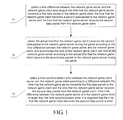
- FIG. 1 is a flowchart illustrating a method for synchronizing network game time according to an embodiment of the present invention.
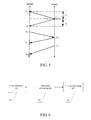
- FIG. 2 is a schematic diagram illustrating a time synchronizing procedure between the network game server and the network game client according to an embodiment of the present invention.
- FIG. 3 is a schematic diagram illustrating a simplified time synchronizing procedure between the network game server and the network game client according to an embodiment of the present invention.
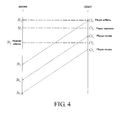
- FIG. 4 is a schematic diagram illustrating a key event processing procedure when NPC attacks a role controlled by a game player according to an embodiment of the present invention.
- FIG. 5 is a schematic diagram illustrating a procedure that the network game server checks the time that the network game client transmits the second data packet to the network game server according to an embodiment of the present invention.
- FIG. 6 is a schematic diagram illustrating an apparatus for synchronizing network game time according to an embodiment of the present invention.
- a time difference between the network game server and the network game client is firstly obtained according to the time that the network game server transmits a first data packet to the network game client, the time that the network game client transmits a second data packet to the network game server and the time that the network game server receives the second data packet from the network game client. Then, the actual time that the network game client transmits the second data packet to the network game server during game is obtained according to the time difference between the network game server and the network game client. And the time of the network game client and that of the network game client are synchronized according to the actual time that the network game client transmits the second data packet to the network game server during the game.
- the time synchronization between the network game server and the network game client it is possible to obtain an error value of the time synchronization between the network game client and the network game client according to the time that the network game server transmits the first data packet to the network game client and the time that the network game server receives the second data packet from the network game client. If the time difference between the network game server and the network game client is larger than the error value, it is regarded that the time the network game client transmits the second data packet is error.
- the method includes the following steps.
- Step 11 obtain a time difference between the network game server and the network game client according to the time that the network game server transmits a first data packet to the network game client, the time that the network game client transmits a second data packet to the network game server and the time that the network game server receives the second data packet from the network game client.
- the network game server transmits a first data packet to the network game client at time St 0 .
- network delay is ⁇ d .
- the network game client receives the first data packet transmitted by the network game server.
- the network game client processes the first data packet immediately after receiving the first data packet.
- the processing time is T p .
- the network game client transmits a second data packet. After network delay time ⁇ u , the second data packet arrives at the network game server.
- the network game server time is St 1 .
- the network game server may calculate the time difference ⁇ between the network game server and the network game client.
- the time that the network game client processes the first data packet received from the network game server is rather short, usually shorter than 1ms. Therefore, the processing time T p is almost zero.
- the first data packet transmitted by the network game server to the network game client is a simultaneous data packet, i.e. the network game server transmits the first data packet to the network game client and the network game client returns the second data packet immediately after receiving the simultaneous data packet.
- the time that the network game client transmits the second data packet to the network game server may also be regarded as the time that the network game client receives the first data packet from the network game server or may be regarded as the time that the network game client transmits the second data packet to the network game server.
- FIG. 3 may be obtained by simplifying FIG.
- ⁇ S ⁇ t 1 + S ⁇ t 0 - 2 ⁇ C ⁇ t 0 2
- Ct 0 denotes the time that the network game client receives the first data packet from the network game server or the time that the network game client transmits the second data packet to the network game server.
- Step 12 obtain the actual time that the network game client transmits the second data packet to the network game server during the game according to the time difference between the network game server and the network game client, and synchronize the time of the network game client with that of the network game client according to the actual time that the network game client transmits the second data packet to the network game server during the game.
- the network game server After obtaining the time difference between the network game server and the network game client, calculates a difference between the time that the network game server receives the second data packet from the network game client and the time difference to obtain the actual time that the network game client transmits the second data packet to the network game server during the game, and determines a real order that events happen in game time according to the actual time that the network game client transmits the second data packet to the network game server during the game, so as to ensure a relatively good game equality, improve game experience of game players, and ensure network game synchronization without affecting the calculating speeds of the network game server and the network game client.
- the synchronization of the time of the network game client and that of the network game client may be applied to the MMOG, in which the network game server generally needs to maintain actions, such as attack, finding path, walk and patrol of a series of Non Player Characters (NPCs).
- NPCs Non Player Characters
- the determination of the order that the NPC event and network game client event happen by the network game server become a key factor for synchronizing the time of the network game client and that of the network game client.
- the network game server determines the role controlled by a game player attacked by the NPC in a time-window manner.
- the role controlled by the game player takes a potion and stiffens at time Ct 0 , and recovers at time Ct 1 .
- the role moves out of an attacking place of the NPC.
- the NPC attacks the position where the role controlled by the game player is located at time Ct 1 . If the player does not move, the role will be hit. The details are as shown in FIG 4 .
- each network game server has an event queue for each player and there is a NPC for attacking at the network game server.
- the event will be described in detail hereinafter:
- the network game server pushes an attack event packet to the queue, and labels the attack event packet as a key event packet.
- the network game server receives a data packet returned by the network game client, puts the event packet into the queue, and changes the Ct 0 filled in the data packet to St 0. Then, the network game server sorts all the data packets in the queue according to time. Finally, determine whether there is a data packet transmitted by the network game client after the key event labeled at step 1). If there is, it indicates that the network game server has received all the data packets transmitted by the network game client before time St 3 and it is ready to check the events. Since Ct 0 is before St 3 , no processing is performed and keep on waiting for event packets of the network game client.
- the network game server finds after sorting that the data packet of the network game client transmitted after time St 3 has been received. Since TCP ensures time sequence of the data packets, it may be regarded that all the data packets transmitted by the network game client before time St 3 have been received. At this time, it is ready to determine the attack event and determines whether the role controlled by the player is hit.
- the network game server As to the determination of the key event at time St 2 by the network game server, there is a time limit, referred to as a time window. After waiting for a time window, the network game server checks the key event according to situation of the network game client currently acknowledged.
- the time window may save events happen within 2 seconds.
- the packet transmission frequency of the NPC is 1/s, and the packet transmission frequency of the player is 5/s.
- the queue requires a space for storing 12 data packets. If the threshold is exceeded, it indicates that the delay of the network game client is larger than 2 seconds.
- the network game server checks the key event according to the situation it currently acknowledges. Suppose that a war server can bear 2000 players and 15 data packets for each player, each data packet is 100 byte, thus the network game server needs to reserve a memory of 2000*15*100/(1024*1024) ⁇ 3M. It is acceptable for the network game server to occupy such amount of memory.
- the above after-check manner using the time window may achieve the following effect: if the delay of the player is not longer than the time window (the threshold is 2 second which may be adjusted), the NPC attacks the role of the player, and the network game client presents the attack of the NPC normally.
- the action of the role controlled by the player may have some time delay (it may be explained as follows: if being hit, the role should fly, if the network game client transmits an attack packet to the network game server and the network game server notifies that the role is hit, there may be a 400ms time delay, i.e., the role of the network game client will not fly before the 400ms time delay. At this time, the time delay arises).
- the network game server calculates the server time corresponding to the client time according to the time included in the packet of the network game client.
- the server time minus a maximum error leaves a result. If the result is after the time that the NPC of the network game server attacks, the network game server performs the after-check to the attack (hit or not). If the network game server does not receive data packet from the network game client after the time threshold (2s), the network game server forecasts the position of the role when the NPC attacks according to path information included in prior data packet of the network game client. If the role is within the range of being attacked, it is regarded that the role is hit; otherwise, it is regarded that the role is not hit. Based on the above procedure, it is not necessary for the network game client to wait for the response of the network game server for each event. Thus, the time delay of the player is reduced and the game experience is improved.
- the network game server corrects the time of the network game client. At this time, there may time delay to some extent. But the time delay emerges only between players with large time delay and those with little time delay. There will be no time delay between players with little time delay. Thus, it is ensured that the players with time delay not exceeding the time window have better game experience. And the situation that the delay of one player results in delay of al the players will not happen.
- Step 13 obtain a time synchronization error between the network game client and the network game client according to a difference between the time that the network game server transmits the first data packet to the network game client and the time that the network game server receives the second data packet from the network game client. If the time difference between the network game server and the network game client is larger than the time synchronization error, it is regarded that the time that the network game client transmits the second data packet is error.
- the network game server can not only realize the function of accurately deduce the time of the network game client, but also perform a range check to the time responded by the network game client according to the time synchronization error between the network game client and the network game client. If the time exceeds the range, the network game server may determine that the player cheated.
- the range check to the time responded by the network game client will be described with reference to FIG 5 .
- the network game server transmits a third data packet to the network game client at time St 2 .
- the network game client responds a fourth data packet to the network game server at time Ct 1 .
- the network game server receives the fourth data packet at time St 3 , retrieves the client time Ct 1 , obtains an adjusted server time S ⁇ t 1 ⁇ according to the calculation formula of the time difference between the network game server and the network game client, if S ⁇ t 1 ⁇ is smaller than St 2 - ⁇ , it indicates that the network game client has obtained the third data packet transmitted by the network game server at time St 2 before server time St 2 , this is not reasonable.
- the network game client has modified time, i.e. the network game client may have used a cheating tool such as a decelerating plug-in.
- the network game client transmits a fifth data packet filled with the client time Ct 2 .
- the network game server receives the fifth data packet at time St 4 and performs a check. Firstly, retrieves client time Ct 2 and obtain an adjusted server time S ⁇ t 2 ⁇ according to the calculating formula of the time difference between the network game server and the network game client. According to the above discussion, it should be smaller than St 2 + ⁇ .
- Embodiments of the present invention also provide an apparatus for synchronizing network game time. As shown in FIG. 6 , the apparatus includes the following units.
- a difference calculating unit 61 adapted to calculate a time difference between the network game server and the network game client according to the time that the network game server transmits a first data packet to the network game client, the time that the network client transmits a second data packet to the network game server and the time that the network game server receives the second data packet from the network game client.
- a time synchronizing unit 62 adapted to obtain the actual time that the network game client transmits the second data packet to the network game server during game according to the time difference between the network game sever and the network game client obtained by the difference calculating unit, and synchronize the time of the network game client and the network game client according to the actual time that the network game client transmits the second data packet to the network game server during game.
- Error calculating unit 63 adapted to obtain a time synchronization error between the network game client and the network game client according to the time difference between the time that the network game server transmits the first data packet to the network game client and the time that the network game server receives the second data packet from the network game client, and determine that the time that the network game client transmits the second data packet is error if the time difference between the network game server and the network game client obtained by the difference calculating unit is larger than the time synchronization error.
- the time that the network game client transmits the second data packet to the network game server is the tune that the network game client receives the first data packet from the network game server or the time that the network game client transmits the second data packet to the network game server.
- the difference calculating unit 61 obtains the time difference between the network game server and the network game client according to the time that the network game server transmits the first data packet to the network game client, the time that the network game client transmits the second data packet to the network game server and the time that the network game server receives the second data packet from the network game client; then the time synchronizing unit 62 obtains the actual time that the network game client transmits the second data packet to the network game server during the game according to the time difference between the network game server and the network game client obtained by the difference calculating unit 61 and synchronizes the time of the network game client and the network game client according to the actual time that the network game client transmits the second data packet to the network game server during the game.
- the error calculating unit 63 may obtain the time synchronization error between the network game client and the network game client according to a time difference between the time that the network game server transmits the first data packet to the network game client and the time that the network game server receives the second data packet from the network game client. If the time difference between the network game server and the network game client obtained by the difference calculating unit 61 is larger than the time synchronization error, it is regarded that the time that the network game client transmits the second data packet is error.
Landscapes
- Engineering & Computer Science (AREA)
- Multimedia (AREA)
- Computer Networks & Wireless Communication (AREA)
- Signal Processing (AREA)
- Computer And Data Communications (AREA)
- Synchronisation In Digital Transmission Systems (AREA)
- Data Exchanges In Wide-Area Networks (AREA)
- Management, Administration, Business Operations System, And Electronic Commerce (AREA)
Abstract
Description
- The present invention relates to network game application techniques, and more particularly, to a method and apparatus for synchronizing network game time.
- Network game is one of Virtual Reality (VR) application techniques which attract much attention and have developed rapidly recently. With the development of the VR application techniques, network game has come into a Massively Multi-player Online Game (MMOG) era and game scale becomes larger and larger. Therefore, network game engines must have dramatic network processing capabilities and be able to synchronize status of the whole game world between server and client and implement security data transmission between players even when there is network delay, unavoidable packet loss and limited bandwidth. Since the current network games are based on the Internet techniques, and most MMOGs adopt a client/server model, problems such as network data synchronization delay and network data synchronization error have become a bottle of the whole game.
- In the prior art, methods for solving the network game time synchronization problem mainly includes:
- 1. Time Warp synchronization scheme
- It is commonly regarded that the Time Warp is a most important synchronization protocol in distributed systems. In the Time Warp scheme, there is no external synchronization among the processing nodes. The processing nodes simulate a local clock in different rates. Before executing an event, a processing node takes a snapshot of a current game state. If a delayed event is received and other events prior to the delayed event have been processed, i.e. the events being received are disordered; a rollback event will be issued according to the snapshot of a corresponding position of the delayed event. All events between the snapshot and the last executed event will be cancelled, and the state will roll back to an event earlier than the last executed event and re-execute.
- 2. Game time scheme
- Most network games adopt the client/server model. As to network games have high real-time requirement, if the client transmits a time packet to the server and the server issues, after checking, a packet to the client for presenting, network delay and jitter will both deteriorate the game experience.
- In the existing methods for solving the network time synchronization problem, when the Time Warp scheme is adopted, it is required to save a large number of snapshots and much memory and CPU resources will be occupied by frequent rollback operations, which affect calculating speeds of the server and the client. As to the network games adopting the network time synchronization scheme, whether the server sorts according to the time that the packets of clients arrives or the client forecasts the time that the server receives the data packet of the client and writes the time into the data packet and sends the data packet to the server, synchronization of network time cannot be ensured for players with large network delays.
- Embodiments of the present invention provide a multi-channel video communication system applicable for various kinds of network conditions and terminal devices.
- Embodiments of the present invention also provide a multi-channel video communication method applicable for various kinds of network conditions and terminal devices.
- According to one embodiment of the present invention, a method for synchronizing network game time is provided. The method includes:
- obtaining a time difference between a network game server and a network game client according to a time that the network game server transmits a first data packet to the network game client, a time that the network game client transmits a second data packet to the network game server and a time that the network game server receives the second data packet from the network game client; and
obtaining an actual time that the network game client transmits the second data packet to the network game server during the game according to the time difference between the network game server and the network game client, and synchronizing the time of the network game client with that of the network game server according to the actual time that the network game client transmits the second data packet to the network game server during the game. - According to another embodiment of the present invention, an apparatus for synchronizing network game time is provided. The apparatus includes:
- a difference calculating unit, adapted to calculate a time difference between a network game server and a network game client according to a time that the network game server transmits a first data packet to the network game client, a time that the network client transmits a second data packet to the network game server and a time that the network game server receives the second data packet from the network game client; and
- a time synchronizing unit, adapted to obtain an actual time that the network game client transmits the second data packet to the network game server during game according to the time difference between the network game sever and the network game client obtained by the difference calculating unit, and synchronize the time of the network game client and the network game client according to the actual time that the network game client transmits the second data packet to the network game server during game.
- In the embodiments of the present invention, the network game server adjusts time initiatively. Thus, the time that the network game client transmits data packet to the network game server can be determined accurately. And there is no need to roll back frequently to adjust the time state of the network game client, which saves CPU and memory resources and can ensure network time synchronization without affecting the calculation speeds of the network game server and the network game client.
-
FIG. 1 is a flowchart illustrating a method for synchronizing network game time according to an embodiment of the present invention. -
FIG. 2 is a schematic diagram illustrating a time synchronizing procedure between the network game server and the network game client according to an embodiment of the present invention. -
FIG. 3 is a schematic diagram illustrating a simplified time synchronizing procedure between the network game server and the network game client according to an embodiment of the present invention. -
FIG. 4 is a schematic diagram illustrating a key event processing procedure when NPC attacks a role controlled by a game player according to an embodiment of the present invention. -
FIG. 5 is a schematic diagram illustrating a procedure that the network game server checks the time that the network game client transmits the second data packet to the network game server according to an embodiment of the present invention. -
FIG. 6 is a schematic diagram illustrating an apparatus for synchronizing network game time according to an embodiment of the present invention. - In the technical solution for synchronizing network game time provided by the embodiments of the present invention, a time difference between the network game server and the network game client is firstly obtained according to the time that the network game server transmits a first data packet to the network game client, the time that the network game client transmits a second data packet to the network game server and the time that the network game server receives the second data packet from the network game client. Then, the actual time that the network game client transmits the second data packet to the network game server during game is obtained according to the time difference between the network game server and the network game client. And the time of the network game client and that of the network game client are synchronized according to the actual time that the network game client transmits the second data packet to the network game server during the game. On the one hand, affections to the calculation speeds of the network game server and the network game client brought out by a large amount of snapshots in the prior art can be avoided. On the other hand, network time synchronization can be ensured by the time difference between the network game server and the network game client.
- The time difference between the network game server and the network game client may be calculated according to a following formula:

wherein θ denotes the time difference between the network game server and the network game client, St 0 denotes the time that the network game server receives the first data packet from the network game client, St 1 denotes the time that the network game server transmits the second data packet to the network game client, and Ct 0 denotes the time that the network client transmits the second data packet to the network game server. - As to the time synchronization between the network game server and the network game client, it is possible to obtain an error value of the time synchronization between the network game client and the network game client according to the time that the network game server transmits the first data packet to the network game client and the time that the network game server receives the second data packet from the network game client. If the time difference between the network game server and the network game client is larger than the error value, it is regarded that the time the network game client transmits the second data packet is error.
- The present invention will be described in further detail with reference to accompanying drawings and embodiments to make the technical solution of the method for synchronizing network time provided by the present invention clearer. As shown in
FIG. 1 , the method includes the following steps. -
Step 11, obtain a time difference between the network game server and the network game client according to the time that the network game server transmits a first data packet to the network game client, the time that the network game client transmits a second data packet to the network game server and the time that the network game server receives the second data packet from the network game client. - Firstly, the time difference between the network game server and the network game client is shown in
FIG.2 . The network game server transmits a first data packet to the network game client at time St 0. Suppose network delay is δ d. At network game server time St 0 + δ d, i.e. Ct 2, the network game client receives the first data packet transmitted by the network game server. The network game client processes the first data packet immediately after receiving the first data packet. Suppose the processing time is Tp . At network game server time St 0 + δ d + Tp , i.e. Ct 1, the network game client transmits a second data packet. After network delay time δ u , the second data packet arrives at the network game server. At this time, the network game server time is St 1. This is a complete network game server time synchronizing procedure. After receiving the second data packet from the network game client at time St 1, the network game server may calculate the time difference θ between the network game server and the network game client. The formula may be as follows:
- In practical applications, the time that the network game client processes the first data packet received from the network game server is rather short, usually shorter than 1ms. Therefore, the processing time Tp is almost zero. Then the first data packet transmitted by the network game server to the network game client is a simultaneous data packet, i.e. the network game server transmits the first data packet to the network game client and the network game client returns the second data packet immediately after receiving the simultaneous data packet. Accordingly, the time that the network game client transmits the second data packet to the network game server may also be regarded as the time that the network game client receives the first data packet from the network game server or may be regarded as the time that the network game client transmits the second data packet to the network game server. As such,
FIG. 3 may be obtained by simplifyingFIG. 2 and a following formula may be obtained based on the formula for calculating the time difference between the network game server and the network game client.
wherein Ct 0 denotes the time that the network game client receives the first data packet from the network game server or the time that the network game client transmits the second data packet to the network game server. -
Step 12, obtain the actual time that the network game client transmits the second data packet to the network game server during the game according to the time difference between the network game server and the network game client, and synchronize the time of the network game client with that of the network game client according to the actual time that the network game client transmits the second data packet to the network game server during the game. - After obtaining the time difference between the network game server and the network game client, the network game server calculates a difference between the time that the network game server receives the second data packet from the network game client and the time difference to obtain the actual time that the network game client transmits the second data packet to the network game server during the game, and determines a real order that events happen in game time according to the actual time that the network game client transmits the second data packet to the network game server during the game, so as to ensure a relatively good game equality, improve game experience of game players, and ensure network game synchronization without affecting the calculating speeds of the network game server and the network game client.
- The synchronization of the time of the network game client and that of the network game client may be applied to the MMOG, in which the network game server generally needs to maintain actions, such as attack, finding path, walk and patrol of a series of Non Player Characters (NPCs). The determination of the order that the NPC event and network game client event happen by the network game server become a key factor for synchronizing the time of the network game client and that of the network game client. Hereinafter, an embodiment will be given where the network game server determines the role controlled by a game player attacked by the NPC in a time-window manner.
- The role controlled by the game player takes a potion and stiffens at time Ct 0 , and recovers at time Ct 1 . At time Ct 2, the role moves out of an attacking place of the NPC. At time Ct 3, the NPC attacks the position where the role controlled by the game player is located at time Ct 1. If the player does not move, the role will be hit. The details are as shown in
FIG 4 . - Firstly, each network game server has an event queue for each player and there is a NPC for attacking at the network game server. The event will be described in detail hereinafter:
- 1) At server time St 2, the NPC attacks, the network game server pushes an attack event packet to the queue, and labels the attack event packet as a key event packet.
- 2) At time St 3, the network game server receives a data packet returned by the network game client, puts the event packet into the queue, and changes the Ct 0 filled in the data packet to St 0. Then, the network game server sorts all the data packets in the queue according to time. Finally, determine whether there is a data packet transmitted by the network game client after the key event labeled at step 1). If there is, it indicates that the network game server has received all the data packets transmitted by the network game client before time St 3 and it is ready to check the events. Since Ct 0 is before St 3, no processing is performed and keep on waiting for event packets of the network game client.
- 3) As to the data packet transmitted at time Ct 2 and received at time St 4, the processing is the same as that described above.
- 4) At time St 5 , after receiving the data packet transmitted at time Ct 4, the network game server finds after sorting that the data packet of the network game client transmitted after time St 3 has been received. Since TCP ensures time sequence of the data packets, it may be regarded that all the data packets transmitted by the network game client before time St 3 have been received. At this time, it is ready to determine the attack event and determines whether the role controlled by the player is hit.
- 5) After the determination, unnecessary events in the queue may be deleted.
- 6) As to the determination of the key event at time St 2 by the network game server, there is a time limit, referred to as a time window. After waiting for a time window, the network game server checks the key event according to situation of the network game client currently acknowledged.
- There may be a threshold for the time window described in step 6). For example, the time window may save events happen within 2 seconds. Suppose the packet transmission frequency of the NPC is 1/s, and the packet transmission frequency of the player is 5/s. Thus, the queue requires a space for storing 12 data packets. If the threshold is exceeded, it indicates that the delay of the network game client is larger than 2 seconds. The network game server checks the key event according to the situation it currently acknowledges. Suppose that a war server can bear 2000 players and 15 data packets for each player, each data packet is 100 byte, thus the network game server needs to reserve a memory of 2000*15*100/(1024*1024) ≈3M. It is acceptable for the network game server to occupy such amount of memory.
- The above after-check manner using the time window may achieve the following effect: if the delay of the player is not longer than the time window (the threshold is 2 second which may be adjusted), the NPC attacks the role of the player, and the network game client presents the attack of the NPC normally. Since the effect of the attack needs to be determined by the network game server but the network game client cannot present the state of being hit or not being hit after the determination of the network game server, thus the action of the role controlled by the player may have some time delay (it may be explained as follows: if being hit, the role should fly, if the network game client transmits an attack packet to the network game server and the network game server notifies that the role is hit, there may be a 400ms time delay, i.e., the role of the network game client will not fly before the 400ms time delay. At this time, the time delay arises). After the network game client presents the attack of the NPC, the network game server calculates the server time corresponding to the client time according to the time included in the packet of the network game client. The server time minus a maximum error leaves a result. If the result is after the time that the NPC of the network game server attacks, the network game server performs the after-check to the attack (hit or not). If the network game server does not receive data packet from the network game client after the time threshold (2s), the network game server forecasts the position of the role when the NPC attacks according to path information included in prior data packet of the network game client. If the role is within the range of being attacked, it is regarded that the role is hit; otherwise, it is regarded that the role is not hit. Based on the above procedure, it is not necessary for the network game client to wait for the response of the network game server for each event. Thus, the time delay of the player is reduced and the game experience is improved. If the delay is larger than 2s, the network game server corrects the time of the network game client. At this time, there may time delay to some extent. But the time delay emerges only between players with large time delay and those with little time delay. There will be no time delay between players with little time delay. Thus, it is ensured that the players with time delay not exceeding the time window have better game experience. And the situation that the delay of one player results in delay of al the players will not happen.
-
Step 13, obtain a time synchronization error between the network game client and the network game client according to a difference between the time that the network game server transmits the first data packet to the network game client and the time that the network game server receives the second data packet from the network game client. If the time difference between the network game server and the network game client is larger than the time synchronization error, it is regarded that the time that the network game client transmits the second data packet is error. - As shown in
FIG. 3 , Ct 0 is between St 1, and St 0, the time synchronization error σ between the network game client and the network game client may be calculated according to a following formula:
- Through the initiative time adjusting by the network game server to the network game client, the network game server can not only realize the function of accurately deduce the time of the network game client, but also perform a range check to the time responded by the network game client according to the time synchronization error between the network game client and the network game client. If the time exceeds the range, the network game server may determine that the player cheated. Hereinafter, the range check to the time responded by the network game client will be described with reference to
FIG 5 . - After the above time synchronization procedure between the network game server and the network game client, the network game server transmits a third data packet to the network game client at time St 2. After receiving the third data packet, the network game client responds a fourth data packet to the network game server at time Ct 1. The network game server receives the fourth data packet at time St 3, retrieves the client time Ct 1, obtains an adjusted server time


- Embodiments of the present invention also provide an apparatus for synchronizing network game time. As shown in
FIG. 6 , the apparatus includes the following units. - A
difference calculating unit 61, adapted to calculate a time difference between the network game server and the network game client according to the time that the network game server transmits a first data packet to the network game client, the time that the network client transmits a second data packet to the network game server and the time that the network game server receives the second data packet from the network game client. - A
time synchronizing unit 62, adapted to obtain the actual time that the network game client transmits the second data packet to the network game server during game according to the time difference between the network game sever and the network game client obtained by the difference calculating unit, and synchronize the time of the network game client and the network game client according to the actual time that the network game client transmits the second data packet to the network game server during game. -
Error calculating unit 63, adapted to obtain a time synchronization error between the network game client and the network game client according to the time difference between the time that the network game server transmits the first data packet to the network game client and the time that the network game server receives the second data packet from the network game client, and determine that the time that the network game client transmits the second data packet is error if the time difference between the network game server and the network game client obtained by the difference calculating unit is larger than the time synchronization error. - Further, the time that the network game client transmits the second data packet to the network game server is the tune that the network game client receives the first data packet from the network game server or the time that the network game client transmits the second data packet to the network game server. The time difference between the network game server and the network game client is calculated according to a following formula:

wherein θ denotes the time difference between the network game server and the network game client, St 0 denotes the time that the network game server receives the first data packet from the network game client, St 1 denotes the time that the network game server transmits the second data packet to the network game client, and Ct 0 denotes the time that the network game client transmits the second data packet to the network game server. - Firstly, the
difference calculating unit 61 obtains the time difference between the network game server and the network game client according to the time that the network game server transmits the first data packet to the network game client, the time that the network game client transmits the second data packet to the network game server and the time that the network game server receives the second data packet from the network game client; then thetime synchronizing unit 62 obtains the actual time that the network game client transmits the second data packet to the network game server during the game according to the time difference between the network game server and the network game client obtained by thedifference calculating unit 61 and synchronizes the time of the network game client and the network game client according to the actual time that the network game client transmits the second data packet to the network game server during the game. Optionally, theerror calculating unit 63 may obtain the time synchronization error between the network game client and the network game client according to a time difference between the time that the network game server transmits the first data packet to the network game client and the time that the network game server receives the second data packet from the network game client. If the time difference between the network game server and the network game client obtained by thedifference calculating unit 61 is larger than the time synchronization error, it is regarded that the time that the network game client transmits the second data packet is error. - Implementations of detailed processing functions of above units in the system have been described above with respect to the method and will not be repeated herein.
- What has been described and illustrated herein is a preferred example of the disclosure along with some of its variations. The terms, descriptions and figures used herein are set forth by way of illustration only and are not meant as limitations. Many variations are possible within the spirit and scope of the disclosure, which is intended to be defined by the following claims -- and their equivalents -- in which all terms are meant in their broadest reasonable sense unless otherwise indicated.
Claims (12)
- A method for synchronizing network game time, comprising:obtaining a time difference between a network game server and a network game client according to a time that the network game server transmits a first data packet to the network game client, a time that the network game client transmits a second data packet to the network game server and a time that the network game server receives the second data packet from the network game client; andobtaining an actual time that the network game client transmits the second data packet to the network game server during the game according to the time difference between the network game server and the network game client, and synchronizing the time of the network game client with that of the network game server according to the actual time that the network game client transmits the second data packet to the network game server during the game.
- The method of claim 1, wherein the time that the network game client transmits the second data packet to the network game server is the time that the network game client receives the first data packet from the network game server or the time that the network game client transmits the second data packet to the network game server.
- The method of claim 2, wherein when the time that the network game client receives the first data packet from the network game server is not the same as the time that the network game client transmits the second data packet to the network game server, the time difference is calculated according to:
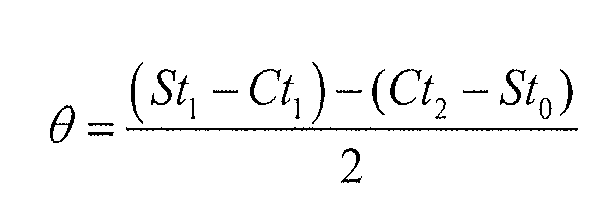
wherein θ denotes that time difference between the network game server and the network game client, St 0 denotes the time that the network game server receives the first data packet from the network game client, St 1 denotes the time that the network server transmits the second data packet to the network game client, Ct 2 denotes the time that the network game client receives the first data packet from the network game server, and Ct 1 denotes the time that the network game client transmits the second data packet to the network game server. - The method of claim 1, wherein the time difference is calculated according to:

wherein θ denotes that time difference between the network game server and the network game client, St 0 denotes the time that the network game server receives the first data packet from the network game client, St 1 denotes the time that the network server transmits the second data packet to the network game client, and Ct 0 denotes the time that the network game client transmits the second data packet to the network game server. - The method of any one of claims 1 to 4, further comprising:obtaining a time synchronization error between the network game client and the network game client according to a difference between the time that the network game server transmits first data packet to the network game client and the time that the network game server receives the second data packet from the network game client, if the time difference is larger than the time synchronization error, determining that the time that the network game client transmits the second data packet is error
- The method of claim 5, wherein the time synchronization error is calculated according to

wherein St 0 denotes that the time that the network game server receives the first data packet from the network game client, and St 1 denotes the time that the network game server transmits the second data packet to the network game client. - An apparatus for synchronizing network game time, comprising:a difference calculating unit, adapted to calculate a time difference between a network game server and a network game client according to a time that the network game server transmits a first data packet to the network game client, a time that the network client transmits a second data packet to the network game server and a time that the network game server receives the second data packet from the network game client; anda time synchronizing unit, adapted to obtain an actual time that the network game client transmits the second data packet to the network game server during game according to the time difference between the network game sever and the network game client obtained by the difference calculating unit, and synchronize the time of the network game client and the network game client according to the actual time that the network game client transmits the second data packet to the network game server during game.
- The apparatus of claim 7, wherein in the difference calculating unit, the time that the network game client transmits the second data packet to the network game server is the time that the network game client receives the first data packet from the network game server or the time that the network game client transmits the second data packet to the network game server.
- The apparatus of claim 8, wherein in the difference calculating unit, the time that the network game client receives the first data packet from the network game server is not the same as the time that the network game client transmits the second data packet to the network game server, the time difference is calculated according to:

wherein θ denotes that time difference between the network game server and the network game client, St 0 denotes the time that the network game server receives the first data packet from the network game client, St 1 denotes the time that the network server transmits the second data packet to the network game client, Ct 2 denotes the time that the network game client receives the first data packet from the network game server, and Ct 1 denotes the time that the network game client transmits the second data packet to the network game server. - The apparatus of claim 7, wherein in the difference calculating unit, the time difference is calculated according to:

wherein θ denotes that time difference between the network game server and the network game client, St 0 denotes the time that the network game server receives the first data packet from the network game client, St 1 denotes the time that the network server transmits the second data packet to the network game client, and Ct0 denotes the time that the network game client transmits the second data packet to the network game server. - The apparatus of any one of claim 7 to 10, further comprising:an error calculating unit, adapted to obtain a time synchronization error between the network game client and the network game client according to the time difference between the time that the network game server transmits the first data packet to the network game client and the time that the network game server receives the second data packet from the network game client, and determine that the time that the network game client transmits the second data packet is error if the time difference between the network game server and the network game client obtained by the difference calculating unit is larger than the time synchronization error.
- The apparatus of claim 11, wherein in the difference calculating unit, the time synchronization error is calculated according to

wherein St 0 denotes that the time that the network game server receives the first data packet from the network game client, and St 1 denotes the time that the network game server transmits the second data packet to the network game client.
Applications Claiming Priority (2)
| Application Number | Priority Date | Filing Date | Title |
|---|---|---|---|
| CNA2009100867078A CN101577715A (en) | 2009-06-19 | 2009-06-19 | Method and device for synchronizing online game time |
| PCT/CN2010/073125 WO2010145410A1 (en) | 2009-06-19 | 2010-05-24 | Method and device for synchronizing time of network games |
Publications (2)
| Publication Number | Publication Date |
|---|---|
| EP2456160A1 true EP2456160A1 (en) | 2012-05-23 |
| EP2456160A4 EP2456160A4 (en) | 2016-03-16 |
Family
ID=41272502
Family Applications (1)
| Application Number | Title | Priority Date | Filing Date |
|---|---|---|---|
| EP10788806.7A Withdrawn EP2456160A4 (en) | 2009-06-19 | 2010-05-24 | METHOD AND DEVICE FOR SYNCHRONIZING GAMING TIME IN NETWORK |
Country Status (5)
| Country | Link |
|---|---|
| EP (1) | EP2456160A4 (en) |
| CN (1) | CN101577715A (en) |
| BR (1) | BRPI1016001A2 (en) |
| RU (1) | RU2498519C2 (en) |
| WO (1) | WO2010145410A1 (en) |
Cited By (1)
| Publication number | Priority date | Publication date | Assignee | Title |
|---|---|---|---|---|
| US20250312693A1 (en) * | 2024-04-05 | 2025-10-09 | Rockwell Collins, Inc. | Methods and computational pipeline for flight simulator host signal calibration |
Families Citing this family (23)
| Publication number | Priority date | Publication date | Assignee | Title |
|---|---|---|---|---|
| CN101577715A (en) * | 2009-06-19 | 2009-11-11 | 腾讯科技(深圳)有限公司 | Method and device for synchronizing online game time |
| CN102404279B (en) * | 2010-09-07 | 2015-07-15 | 腾讯科技(深圳)有限公司 | Accurate judging method and system of moving distance in network |
| CN102468906B (en) * | 2010-11-04 | 2016-03-02 | 腾讯科技(深圳)有限公司 | A kind of method that in internet game, interaction logic is fault-tolerant and internet game tolerant system |
| CN102739608B (en) * | 2011-04-07 | 2014-08-06 | 腾讯科技(深圳)有限公司 | Method for realizing game special effects, and game client |
| CN105100171B (en) | 2014-05-22 | 2019-02-12 | 腾讯科技(深圳)有限公司 | The method and device of synchronization time |
| CN104052636A (en) * | 2014-06-23 | 2014-09-17 | 福建天晴数码有限公司 | Clock device, method and system for monitoring plug-in of online game |
| CN105141458B (en) * | 2015-08-25 | 2018-09-11 | 广州酷狗计算机科技有限公司 | Residual time length methods of exhibiting and device |
| CN105913371A (en) * | 2015-11-16 | 2016-08-31 | 乐视致新电子科技(天津)有限公司 | System optimization method for virtual reality application delay and system optimization device thereof |
| CN106790729B (en) * | 2017-03-30 | 2021-04-09 | 努比亚技术有限公司 | Device and method for communicating with client |
| CN106959604B (en) * | 2017-04-01 | 2019-06-25 | 江西美晨通讯有限公司 | The control method and device of terminal |
| CN107426156B (en) * | 2017-04-18 | 2020-09-22 | 腾讯科技(深圳)有限公司 | A method of data verification and related equipment |
| CN107302707A (en) * | 2017-05-18 | 2017-10-27 | 腾讯科技(深圳)有限公司 | Player method, the apparatus and system of scene animation |
| CN107341377A (en) * | 2017-06-16 | 2017-11-10 | 武汉斗鱼网络科技有限公司 | Time synchronization control method in one kind authentication |
| CN109672918B (en) * | 2017-10-17 | 2020-11-03 | 腾讯科技(深圳)有限公司 | Animation synchronous playing method and device |
| CN108079578B (en) * | 2017-10-26 | 2020-12-01 | 咪咕互动娱乐有限公司 | A cloud game-based code rate adjustment method, device and storage medium |
| CN108176053A (en) * | 2018-01-04 | 2018-06-19 | 网易(杭州)网络有限公司 | It plays plug-in detection method, device, server, client and storage medium |
| CN108310766B (en) * | 2018-02-06 | 2021-12-21 | 网易(杭州)网络有限公司 | Data processing method and device, storage medium, processor and terminal |
| CN109040208B (en) * | 2018-07-18 | 2021-06-01 | 广州多益网络股份有限公司 | Data synchronization method, server, system and medium based on multi-client interaction |
| CN109529355A (en) * | 2018-12-24 | 2019-03-29 | 网易(杭州)网络有限公司 | Information synchronization method, device, processor and the server of virtual reality scenario |
| CN109857567B (en) * | 2019-01-30 | 2021-02-09 | 网易(杭州)网络有限公司 | AI state information synchronization method and device |
| CN112532606A (en) * | 2020-11-24 | 2021-03-19 | 扆亮海 | Time Warp online game synchronization method based on message type improvement |
| CN112511256A (en) * | 2020-11-24 | 2021-03-16 | 高小翎 | Robust synchronization method for dynamic delay optimization in online game |
| CN114272613B (en) * | 2021-12-27 | 2025-08-08 | 完美世界(重庆)互动科技有限公司 | Game acceleration plug-in detection method and device, storage medium, and computer equipment |
Family Cites Families (10)
| Publication number | Priority date | Publication date | Assignee | Title |
|---|---|---|---|---|
| US6813259B1 (en) * | 1997-07-15 | 2004-11-02 | Viasat, Inc. | Method and apparatus for minimizing delay variance via time divided transmissions |
| CA2313979C (en) * | 1999-07-21 | 2012-06-12 | Thomson Licensing Sa | Synchronizing apparatus for a compressed audio/video signal receiver |
| US7023816B2 (en) * | 2000-12-13 | 2006-04-04 | Safenet, Inc. | Method and system for time synchronization |
| CA2363396A1 (en) * | 2001-11-21 | 2003-05-21 | Handshake Interactive Technologies Inc | Hard real time control center |
| CN100421495C (en) * | 2005-06-27 | 2008-09-24 | 华为技术有限公司 | Method and terminal equipment for synchronizing operation time in equipment management |
| US20080175275A1 (en) * | 2007-01-22 | 2008-07-24 | Samsung Electronics Co., Ltd. | Time synchronization method between nodes in network and apparatus for implementing the same |
| WO2008093600A1 (en) * | 2007-01-29 | 2008-08-07 | Nec Corporation | Time synchronization system, time synchronization method, and program |
| CN101459502A (en) * | 2007-12-13 | 2009-06-17 | 华为技术有限公司 | Method and apparatus for network clock synchronization |
| CN101425891B (en) * | 2008-12-09 | 2012-09-12 | 中兴通讯股份有限公司 | Time synchronization method, system and customer terminal |
| CN101577715A (en) * | 2009-06-19 | 2009-11-11 | 腾讯科技(深圳)有限公司 | Method and device for synchronizing online game time |
-
2009
- 2009-06-19 CN CNA2009100867078A patent/CN101577715A/en active Pending
-
2010
- 2010-05-24 EP EP10788806.7A patent/EP2456160A4/en not_active Withdrawn
- 2010-05-24 RU RU2012100315/08A patent/RU2498519C2/en active
- 2010-05-24 WO PCT/CN2010/073125 patent/WO2010145410A1/en not_active Ceased
- 2010-05-24 BR BRPI1016001-9A patent/BRPI1016001A2/en not_active Application Discontinuation
Non-Patent Citations (1)
| Title |
|---|
| See references of WO2010145410A1 * |
Cited By (1)
| Publication number | Priority date | Publication date | Assignee | Title |
|---|---|---|---|---|
| US20250312693A1 (en) * | 2024-04-05 | 2025-10-09 | Rockwell Collins, Inc. | Methods and computational pipeline for flight simulator host signal calibration |
Also Published As
| Publication number | Publication date |
|---|---|
| BRPI1016001A2 (en) | 2021-09-08 |
| EP2456160A4 (en) | 2016-03-16 |
| CN101577715A (en) | 2009-11-11 |
| WO2010145410A1 (en) | 2010-12-23 |
| RU2498519C2 (en) | 2013-11-10 |
| RU2012100315A (en) | 2013-07-27 |
Similar Documents
| Publication | Publication Date | Title |
|---|---|---|
| RU2498519C2 (en) | Network game time synchronisation apparatus and corresponding method | |
| EP1158741B1 (en) | Method and apparatus for distributed simulation | |
| US8597124B2 (en) | Apparatus and method for fair message exchanges in distributed multi-player games | |
| US7527558B2 (en) | Coherent data sharing | |
| US11752426B2 (en) | Peer-to-peer multiplayer cloud gaming architecture | |
| CN111265863B (en) | Target object position correction method, device, equipment and medium | |
| JP2003006127A (en) | Distributed processing system, distributed processing method, and client terminal capable of using the method | |
| Palazzi et al. | On maintaining interactivity in event delivery synchronization for mirrored game architectures | |
| CN109276883A (en) | Synchronous method, server-side, client, medium and the electronic equipment of game information | |
| US8868862B2 (en) | Method and apparatus for synchronization in primary-backup replication schemes | |
| CN118540015A (en) | Redundant data transmission method and device, storage medium and electronic device | |
| CN111818632A (en) | A device synchronization method, device, device and storage medium | |
| CN117122913B (en) | Frame-following acceleration method, device, equipment and medium based on frame synchronization | |
| CN112511256A (en) | Robust synchronization method for dynamic delay optimization in online game | |
| CN113746931A (en) | Data synchronization method and device | |
| CN109873876B (en) | Method for interaction and calculation load balanced distribution of distributed virtual environment | |
| CN109660559A (en) | A kind of client and server scene synchronous method based on timestamp | |
| Bergstrom et al. | The distributed open network emulator: Using relativistic time for distributed scalable simulation | |
| CN116617659B (en) | Game picture rendering method and device based on data synchronization period | |
| Ferretti et al. | An optimistic obsolescence-based approach to event synchronization for massively multiplayer online games | |
| CN114124754B (en) | Method for processing media data packets in a multimedia network and related products | |
| Martino et al. | TCP CUBIC with HyStart: Congestion Control for Satellite Communication in OMNeT++ INET | |
| CN116546072B (en) | A method and apparatus for synchronizing virtual reality scene positions | |
| CN117046103B (en) | Game fight processing method, device, equipment and storage medium | |
| CN111078798A (en) | Distributed data processing system, method, server, and computer-readable storage medium |
Legal Events
| Date | Code | Title | Description |
|---|---|---|---|
| PUAI | Public reference made under article 153(3) epc to a published international application that has entered the european phase |
Free format text: ORIGINAL CODE: 0009012 |
|
| 17P | Request for examination filed |
Effective date: 20111220 |
|
| AK | Designated contracting states |
Kind code of ref document: A1 Designated state(s): AL AT BE BG CH CY CZ DE DK EE ES FI FR GB GR HR HU IE IS IT LI LT LU LV MC MK MT NL NO PL PT RO SE SI SK SM TR |
|
| DAX | Request for extension of the european patent (deleted) | ||
| RA4 | Supplementary search report drawn up and despatched (corrected) |
Effective date: 20160215 |
|
| RIC1 | Information provided on ipc code assigned before grant |
Ipc: H04L 29/06 20060101AFI20160209BHEP |
|
| 17Q | First examination report despatched |
Effective date: 20160930 |
|
| STAA | Information on the status of an ep patent application or granted ep patent |
Free format text: STATUS: EXAMINATION IS IN PROGRESS |
|
| STAA | Information on the status of an ep patent application or granted ep patent |
Free format text: STATUS: THE APPLICATION IS DEEMED TO BE WITHDRAWN |
|
| 18D | Application deemed to be withdrawn |
Effective date: 20170211 |