EP2455444B1 - Electrorheological fluid having properties of a newtonian fluid - Google Patents
Electrorheological fluid having properties of a newtonian fluid Download PDFInfo
- Publication number
- EP2455444B1 EP2455444B1 EP11176345.4A EP11176345A EP2455444B1 EP 2455444 B1 EP2455444 B1 EP 2455444B1 EP 11176345 A EP11176345 A EP 11176345A EP 2455444 B1 EP2455444 B1 EP 2455444B1
- Authority
- EP
- European Patent Office
- Prior art keywords
- group
- electrorheological fluid
- particles
- dispersion medium
- polarizable particles
- Prior art date
- Legal status (The legal status is an assumption and is not a legal conclusion. Google has not performed a legal analysis and makes no representation as to the accuracy of the status listed.)
- Not-in-force
Links
Images




Classifications
-
- C—CHEMISTRY; METALLURGY
- C10—PETROLEUM, GAS OR COKE INDUSTRIES; TECHNICAL GASES CONTAINING CARBON MONOXIDE; FUELS; LUBRICANTS; PEAT
- C10M—LUBRICATING COMPOSITIONS; USE OF CHEMICAL SUBSTANCES EITHER ALONE OR AS LUBRICATING INGREDIENTS IN A LUBRICATING COMPOSITION
- C10M171/00—Lubricating compositions characterised by purely physical criteria, e.g. containing as base-material, thickener or additive, ingredients which are characterised exclusively by their numerically specified physical properties, i.e. containing ingredients which are physically well-defined but for which the chemical nature is either unspecified or only very vaguely indicated
- C10M171/001—Electrorheological fluids; smart fluids
-
- G—PHYSICS
- G02—OPTICS
- G02B—OPTICAL ELEMENTS, SYSTEMS OR APPARATUS
- G02B26/00—Optical devices or arrangements for the control of light using movable or deformable optical elements
- G02B26/004—Optical devices or arrangements for the control of light using movable or deformable optical elements based on a displacement or a deformation of a fluid
-
- G—PHYSICS
- G06—COMPUTING OR CALCULATING; COUNTING
- G06F—ELECTRIC DIGITAL DATA PROCESSING
- G06F3/00—Input arrangements for transferring data to be processed into a form capable of being handled by the computer; Output arrangements for transferring data from processing unit to output unit, e.g. interface arrangements
- G06F3/01—Input arrangements or combined input and output arrangements for interaction between user and computer
- G06F3/016—Input arrangements with force or tactile feedback as computer generated output to the user
-
- C—CHEMISTRY; METALLURGY
- C10—PETROLEUM, GAS OR COKE INDUSTRIES; TECHNICAL GASES CONTAINING CARBON MONOXIDE; FUELS; LUBRICANTS; PEAT
- C10M—LUBRICATING COMPOSITIONS; USE OF CHEMICAL SUBSTANCES EITHER ALONE OR AS LUBRICATING INGREDIENTS IN A LUBRICATING COMPOSITION
- C10M2201/00—Inorganic compounds or elements as ingredients in lubricant compositions
- C10M2201/10—Compounds containing silicon
- C10M2201/105—Silica
-
- C—CHEMISTRY; METALLURGY
- C10—PETROLEUM, GAS OR COKE INDUSTRIES; TECHNICAL GASES CONTAINING CARBON MONOXIDE; FUELS; LUBRICANTS; PEAT
- C10M—LUBRICATING COMPOSITIONS; USE OF CHEMICAL SUBSTANCES EITHER ALONE OR AS LUBRICATING INGREDIENTS IN A LUBRICATING COMPOSITION
- C10M2215/00—Organic non-macromolecular compounds containing nitrogen as ingredients in lubricant Compositions
- C10M2215/10—Amides of carbonic or haloformic acids
- C10M2215/102—Ureas; Semicarbazides; Allophanates
-
- C—CHEMISTRY; METALLURGY
- C10—PETROLEUM, GAS OR COKE INDUSTRIES; TECHNICAL GASES CONTAINING CARBON MONOXIDE; FUELS; LUBRICANTS; PEAT
- C10M—LUBRICATING COMPOSITIONS; USE OF CHEMICAL SUBSTANCES EITHER ALONE OR AS LUBRICATING INGREDIENTS IN A LUBRICATING COMPOSITION
- C10M2215/00—Organic non-macromolecular compounds containing nitrogen as ingredients in lubricant Compositions
- C10M2215/22—Heterocyclic nitrogen compounds
- C10M2215/221—Six-membered rings containing nitrogen and carbon only
- C10M2215/222—Triazines
-
- C—CHEMISTRY; METALLURGY
- C10—PETROLEUM, GAS OR COKE INDUSTRIES; TECHNICAL GASES CONTAINING CARBON MONOXIDE; FUELS; LUBRICANTS; PEAT
- C10M—LUBRICATING COMPOSITIONS; USE OF CHEMICAL SUBSTANCES EITHER ALONE OR AS LUBRICATING INGREDIENTS IN A LUBRICATING COMPOSITION
- C10M2217/00—Organic macromolecular compounds containing nitrogen as ingredients in lubricant compositions
- C10M2217/02—Macromolecular compounds obtained from nitrogen containing monomers by reactions only involving carbon-to-carbon unsaturated bonds
- C10M2217/024—Macromolecular compounds obtained from nitrogen containing monomers by reactions only involving carbon-to-carbon unsaturated bonds containing monomers having an unsaturated radical bound to an amido or imido group
-
- C—CHEMISTRY; METALLURGY
- C10—PETROLEUM, GAS OR COKE INDUSTRIES; TECHNICAL GASES CONTAINING CARBON MONOXIDE; FUELS; LUBRICANTS; PEAT
- C10M—LUBRICATING COMPOSITIONS; USE OF CHEMICAL SUBSTANCES EITHER ALONE OR AS LUBRICATING INGREDIENTS IN A LUBRICATING COMPOSITION
- C10M2217/00—Organic macromolecular compounds containing nitrogen as ingredients in lubricant compositions
- C10M2217/04—Macromolecular compounds from nitrogen-containing monomers obtained otherwise than by reactions only involving carbon-to-carbon unsaturated bonds
-
- C—CHEMISTRY; METALLURGY
- C10—PETROLEUM, GAS OR COKE INDUSTRIES; TECHNICAL GASES CONTAINING CARBON MONOXIDE; FUELS; LUBRICANTS; PEAT
- C10M—LUBRICATING COMPOSITIONS; USE OF CHEMICAL SUBSTANCES EITHER ALONE OR AS LUBRICATING INGREDIENTS IN A LUBRICATING COMPOSITION
- C10M2219/00—Organic non-macromolecular compounds containing sulfur, selenium or tellurium as ingredients in lubricant compositions
- C10M2219/06—Thio-acids; Thiocyanates; Derivatives thereof
- C10M2219/062—Thio-acids; Thiocyanates; Derivatives thereof having carbon-to-sulfur double bonds
- C10M2219/064—Thiourea type compounds
-
- C—CHEMISTRY; METALLURGY
- C10—PETROLEUM, GAS OR COKE INDUSTRIES; TECHNICAL GASES CONTAINING CARBON MONOXIDE; FUELS; LUBRICANTS; PEAT
- C10M—LUBRICATING COMPOSITIONS; USE OF CHEMICAL SUBSTANCES EITHER ALONE OR AS LUBRICATING INGREDIENTS IN A LUBRICATING COMPOSITION
- C10M2229/00—Organic macromolecular compounds containing atoms of elements not provided for in groups C10M2205/00, C10M2209/00, C10M2213/00, C10M2217/00, C10M2221/00 or C10M2225/00 as ingredients in lubricant compositions
- C10M2229/04—Siloxanes with specific structure
- C10M2229/041—Siloxanes with specific structure containing aliphatic substituents
- C10M2229/0415—Siloxanes with specific structure containing aliphatic substituents used as base material
-
- C—CHEMISTRY; METALLURGY
- C10—PETROLEUM, GAS OR COKE INDUSTRIES; TECHNICAL GASES CONTAINING CARBON MONOXIDE; FUELS; LUBRICANTS; PEAT
- C10M—LUBRICATING COMPOSITIONS; USE OF CHEMICAL SUBSTANCES EITHER ALONE OR AS LUBRICATING INGREDIENTS IN A LUBRICATING COMPOSITION
- C10M2229/00—Organic macromolecular compounds containing atoms of elements not provided for in groups C10M2205/00, C10M2209/00, C10M2213/00, C10M2217/00, C10M2221/00 or C10M2225/00 as ingredients in lubricant compositions
- C10M2229/04—Siloxanes with specific structure
- C10M2229/045—Siloxanes with specific structure containing silicon-to-hydroxyl bonds
- C10M2229/0455—Siloxanes with specific structure containing silicon-to-hydroxyl bonds used as base material
-
- C—CHEMISTRY; METALLURGY
- C10—PETROLEUM, GAS OR COKE INDUSTRIES; TECHNICAL GASES CONTAINING CARBON MONOXIDE; FUELS; LUBRICANTS; PEAT
- C10M—LUBRICATING COMPOSITIONS; USE OF CHEMICAL SUBSTANCES EITHER ALONE OR AS LUBRICATING INGREDIENTS IN A LUBRICATING COMPOSITION
- C10M2229/00—Organic macromolecular compounds containing atoms of elements not provided for in groups C10M2205/00, C10M2209/00, C10M2213/00, C10M2217/00, C10M2221/00 or C10M2225/00 as ingredients in lubricant compositions
- C10M2229/04—Siloxanes with specific structure
- C10M2229/048—Siloxanes with specific structure containing carboxyl groups
- C10M2229/0485—Siloxanes with specific structure containing carboxyl groups used as base material
-
- C—CHEMISTRY; METALLURGY
- C10—PETROLEUM, GAS OR COKE INDUSTRIES; TECHNICAL GASES CONTAINING CARBON MONOXIDE; FUELS; LUBRICANTS; PEAT
- C10M—LUBRICATING COMPOSITIONS; USE OF CHEMICAL SUBSTANCES EITHER ALONE OR AS LUBRICATING INGREDIENTS IN A LUBRICATING COMPOSITION
- C10M2229/00—Organic macromolecular compounds containing atoms of elements not provided for in groups C10M2205/00, C10M2209/00, C10M2213/00, C10M2217/00, C10M2221/00 or C10M2225/00 as ingredients in lubricant compositions
- C10M2229/04—Siloxanes with specific structure
- C10M2229/05—Siloxanes with specific structure containing atoms other than silicon, hydrogen, oxygen or carbon
- C10M2229/052—Siloxanes with specific structure containing atoms other than silicon, hydrogen, oxygen or carbon containing nitrogen
- C10M2229/0525—Siloxanes with specific structure containing atoms other than silicon, hydrogen, oxygen or carbon containing nitrogen used as base material
-
- C—CHEMISTRY; METALLURGY
- C10—PETROLEUM, GAS OR COKE INDUSTRIES; TECHNICAL GASES CONTAINING CARBON MONOXIDE; FUELS; LUBRICANTS; PEAT
- C10M—LUBRICATING COMPOSITIONS; USE OF CHEMICAL SUBSTANCES EITHER ALONE OR AS LUBRICATING INGREDIENTS IN A LUBRICATING COMPOSITION
- C10M2229/00—Organic macromolecular compounds containing atoms of elements not provided for in groups C10M2205/00, C10M2209/00, C10M2213/00, C10M2217/00, C10M2221/00 or C10M2225/00 as ingredients in lubricant compositions
- C10M2229/04—Siloxanes with specific structure
- C10M2229/05—Siloxanes with specific structure containing atoms other than silicon, hydrogen, oxygen or carbon
- C10M2229/053—Siloxanes with specific structure containing atoms other than silicon, hydrogen, oxygen or carbon containing sulfur
- C10M2229/0535—Siloxanes with specific structure containing atoms other than silicon, hydrogen, oxygen or carbon containing sulfur used as base material
-
- C—CHEMISTRY; METALLURGY
- C10—PETROLEUM, GAS OR COKE INDUSTRIES; TECHNICAL GASES CONTAINING CARBON MONOXIDE; FUELS; LUBRICANTS; PEAT
- C10N—INDEXING SCHEME ASSOCIATED WITH SUBCLASS C10M RELATING TO LUBRICATING COMPOSITIONS
- C10N2020/00—Specified physical or chemical properties or characteristics, i.e. function, of component of lubricating compositions
- C10N2020/01—Physico-chemical properties
- C10N2020/055—Particles related characteristics
- C10N2020/06—Particles of special shape or size
-
- C—CHEMISTRY; METALLURGY
- C10—PETROLEUM, GAS OR COKE INDUSTRIES; TECHNICAL GASES CONTAINING CARBON MONOXIDE; FUELS; LUBRICANTS; PEAT
- C10N—INDEXING SCHEME ASSOCIATED WITH SUBCLASS C10M RELATING TO LUBRICATING COMPOSITIONS
- C10N2020/00—Specified physical or chemical properties or characteristics, i.e. function, of component of lubricating compositions
- C10N2020/01—Physico-chemical properties
- C10N2020/055—Particles related characteristics
- C10N2020/061—Coated particles
-
- C—CHEMISTRY; METALLURGY
- C10—PETROLEUM, GAS OR COKE INDUSTRIES; TECHNICAL GASES CONTAINING CARBON MONOXIDE; FUELS; LUBRICANTS; PEAT
- C10N—INDEXING SCHEME ASSOCIATED WITH SUBCLASS C10M RELATING TO LUBRICATING COMPOSITIONS
- C10N2030/00—Specified physical or chemical properties which is improved by the additive characterising the lubricating composition, e.g. multifunctional additives
- C10N2030/02—Pour-point; Viscosity index
-
- C—CHEMISTRY; METALLURGY
- C10—PETROLEUM, GAS OR COKE INDUSTRIES; TECHNICAL GASES CONTAINING CARBON MONOXIDE; FUELS; LUBRICANTS; PEAT
- C10N—INDEXING SCHEME ASSOCIATED WITH SUBCLASS C10M RELATING TO LUBRICATING COMPOSITIONS
- C10N2030/00—Specified physical or chemical properties which is improved by the additive characterising the lubricating composition, e.g. multifunctional additives
- C10N2030/60—Electro rheological properties
-
- C—CHEMISTRY; METALLURGY
- C10—PETROLEUM, GAS OR COKE INDUSTRIES; TECHNICAL GASES CONTAINING CARBON MONOXIDE; FUELS; LUBRICANTS; PEAT
- C10N—INDEXING SCHEME ASSOCIATED WITH SUBCLASS C10M RELATING TO LUBRICATING COMPOSITIONS
- C10N2040/00—Specified use or application for which the lubricating composition is intended
- C10N2040/14—Electric or magnetic purposes
Definitions
- the following description relates to electrorheological fluid, a method of producing the same, and electrorheological fluid applications.
- an electrorheological fluid is defined as a suspension or fluid composed of electrically polarizable particles dispersed in a dielectric fluid.
- the rheological properties of an electrorheological fluid depend on an electric field applied to the electrorheological fluid.
- the electrorheological fluid since the electrorheological fluid has an advantage of being capable of controlling its mechanical power simply by application of an electric field without having to use an additional device, the electrorheological fluid can be applied to various technical fields, such as a vehicle damper system, a shock absorber, an engine mount, a valve system for controlling a rate of flow, a positioning system, robots, actuators, etc.
- the electrorheological fluid since the dispersed particles in the electrorheological fluid are aligned in the direction of an applied electric field under the influence of the electric field, the electrorheological fluid exhibits the properties of a Bingham fluid whose viscosity sharply increases. However, since the properties of a Bingham fluid exhibit a very complicated mechanism, its correct arithmetic model has not yet been established.
- FR 2,712,600 A1 discloses an anhydrous electro-rheological fluid comprising a dispersion of mixed anhydrous mineral oxides.
- the oxide particle content is at least 20% of the volume of the electro-rheological fluid.
- an electrorheological fluid including: particles and a dispersion medium in which the polarizable particles are dispersed, the dispersion medium being silicone oil having at least one functional group selected from the group consisting of a hydroxyl group (-OH group), an amino group (-NH2 group), a mercapto group (-SH group), and a carboxy group (-COOH group), characterized in that the particles are polarizable particles comprising silica particles and a polarizing organic material physically or chemically coupled to the silica particles.
- a method of producing electrorheological fluid including: producing polarizable particles; producing a dispersion medium being silicone oil having at least one functional group selected from the group consisting of a hydroxyl group (-OH group), an amino group (-NH 2 group), a mercapto group (-SH group), and a carboxy group (-COOH group); and dispersing the polarizable particles in the dispersion medium, characterized in that the polarizable particles comprise silica particles, and wherein the producing the polarizable particles comprises placing silica particles in distilled water and stirring the distilled water with the silica particles to produce a first suspension; placing a polarizing organic material in the first suspension to produce a second suspension; separating the distilled water from the second suspension; and drying the second suspension separated from the distilled water to obtain the polarizable particles.
- a display including: a first electrode and a second electrode facing the first electrode; wherein a gap between the first electrode and the second electrode is filled with an electrorheological fluid according to any of claims 1-8.
- FIG. 1 illustrates an example of electrorheological fluid 100.
- the electrorheological fluid 100 includes polarizable particles 101 and a dispersion medium 102 in which the polarizable particles 101 are dispersed.
- the polarizable particles 101 may be electrically polarizable particles, which may be of minute size.
- the polarizable particles 101 may be silica particles 103 or silica particles 103 coated with a polarizing organic material 104.
- the silica particles 103 each may have the size of about 5 nm to about 20 ⁇ m, and be made with amorphous silica without pores.
- the polarizing organic material 104 that can be coated on the silica particles 103 is physically/chemically coupled with the silica particles 103 so as to enhance the polarizability of the silica particles 103.
- the polarizing organic material 104 may be a material with high molecular polarization. Examples of materials with high molecular polarization include urea, thiourea, melamine, acrylamide, and molecules containing urea, thiourea, melamine, or acrylamide.
- the polarizable particles 101 are dispersed in the dispersion medium 102.
- the dispersion medium 102 may include silicone oil belonging to at least one group among a hydroxyl group (-OH group), an amino group (-NH 2 group), a mercapto group (-SH group), and a carboxy group (-COOH group).
- the functional group such as the hydroxyl group, the amino group, the mercapto group, and the carboxy group, may be coupled to the ends or sides of silicone oil molecules with or without any other organic group.
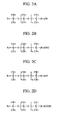
- FIGS. 2A through 2D show exemplary molecular structures of the silicone oil included in the dispersion medium 102 of FIG. 1 .
- the dispersion medium 102 may be silicone oil obtained by coupling pure silicone oil (for example, dimethyl silicon oil) with at least one among the hydroxyl group, the amino group, the mercapto group, and the carboxy group.
- pure silicone oil for example, dimethyl silicon oil
- FIG. 2A shows a molecular structure of silicone oil having the hydroxyl group (-OH group)
- FIG. 2B shows a molecular structure of silicone oil having the amino group (-NH 2 group)
- FIG. 2C shows a molecular structure of silicone oil having the mercapto group (-SH group)
- FIG. 2D shows a molecular structure of silicone oil having the carboxy group (-COOH group).
- R 1 and R 2 represent organic groups.
- the hydroxyl, amine, mercapto, and carboxy groups are coupled with the organic groups and then coupled with the corresponding molecular structures, or directly coupled with the molecular structures without being coupled with any organic group.
- the hydroxyl group may be coupled with the organic group R 1 to form a carbinol functional group, or may form a silanol function group without being coupled with the organic group R 1 .
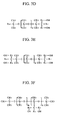
- FIGS. 3A through 3F show additional exemplary molecular structures of the silicone oil included in the dispersion medium 102.
- FIGS. 3A through 3F show examples of coupling positions at which the hydroxyl group is coupled with the silicone oil.
- the hydroxyl group may be coupled with the end or side of the molecular structure of pure silicone oil.
- the side of the molecular structure is intended to mean an intermediate silicon atom in the silicone oil, i.e. a silicon atom other than a terminal silicon atom, whereas the end of the molecular structure is intended to mean the terminal silicon atoms.
- the hydroxyl group may be coupled with a predetermined organic group and then coupled with the molecular structure, or directly coupled with the molecular structure without being coupled with any organic group.
- R 1 through R 6 represent the same or different organic groups.
- the polarizable particles 101 included in the electrorheological fluid 100 may have a volume fraction reaching about 5% through about 70% of the electrorheological fluid 100.
- the volume fraction of the polarizable particles 101 with respect to the total volume of the electrorheological fluid 100 has been decided to appropriately maintain yield stress against initial viscosity and the electric field.
- the refractive index of the polarizable particles 101 may be similar to that of the dispersion medium 102.
- the difference in refractive index between the polarizable particles 101 and dispersion medium 102 may be from about 0 to about 0.06. If the polarizable particles 101 are white particles and the refractive indexes of the polarizable particles 101 and dispersion medium 102 are substantially the same or similar to each other, the electrorheological fluid 100 may have transparency. Such electrorheological fluid 100 having transparency is applicable to a predetermined display device.
- the dispersion medium 102 having a refractive index similar to that of the polarizable particles 101 may be produced by mixing various kinds of silicone oil and/or dielectric fluid other than silicone oil.
- the dispersion medium 102 (for example, dispersion medium having a refractive index difference of 0.06 between the dispersion medium and polarizable particles) having a refractive index similar to that of the polarizable particles 101 may be produced by mixing silicone oil having a hydroxyl group with insulating oil.
- FIG. 4 is a view for explaining an example of a method of selecting a dispersion medium having a refractive index similar to that of polarizable particles.
- a double sided tape 302 having the thickness of about 300 ⁇ m is used to form a space between two transparent glass plates 301 each having a thickness of about 0.7 mm. Then, the space is filled with a suspension (for example, an electrorheological fluid) for measuring transparency, which is produced by dispersing an appropriate amount of polarizable particles in a dispersion medium having a predetermined refractive index, so that transparency is visible to the naked eye or measured through a predetermined device.
- a suspension for example, an electrorheological fluid
- suspensions are prepared by preparing dispersion media having various refractive indexes and then dispersing an appropriate amount of polarizable particles in each dispersion medium. Then, each suspension is filled in the space illustrated in FIG. 4 , and then transparency with respect to light having the wavelength of about 550 nm is measured using Lambda-900 UV/Vis/NIR Spectrometer manufactured by Perkin Elmer Corporation.
- a dispersion medium included in the suspension having transparency of about 90% may be determined to have a refractive index similar to that of polarizable particles, and the dispersion medium may be selected.
- FIG. 5 illustrates a display 400 including an example of electrorheological fluid.
- the display 400 includes a upper electrode 401, a lower electrode 402, and electrorheological fluid 403.
- the upper and lower electrodes 401 and 402 face each other, and the electrorheological fluid 403 is filled and sealed in a gap between the upper and lower electrodes 401 and 402.
- the electrorheological fluid 403 includes polarizable particles 404 dispersed in a dispersion medium 405, wherein the refractive indexes of the polarizable particles 404 and dispersion medium 405 may be substantially the same. Accordingly, when an electric field is formed by the upper and lower electrodes 401 and 402, the polarizable particles 404 are aligned in the direction of the electric field in the dispersion medium 405, thereby sharply increasing the viscosity of the electrorheological fluid 403. Also, since the refractive indexes of the polarizable particles 404 and dispersion medium 405 are substantially the same, transparency of the electrorheological fluid 403 may be ensured.
- the dispersion medium 405 contains silicon oil having at least one functional group selected from the group consisting of a hydroxyl group, a amino group, a mercapto group, and a carboxy group
- the viscosity of the electrorheological fluid 403 may greatly depend on the existence or non-existence of an electric field. Accordingly, a user who manipulates the display 400 can get an excellent touch sensation depending on changes in viscosity of the electrorheological fluid 403.
- the display 400 may further include an input/output device (for example, a touch panel) for sensing a contact or pressure.
- an input/output device for example, a touch panel
- FIGS. 6A and 6B are views for explaining an operating principle of the display 400 illustrated in FIG. 5 .
- FIG. 6A shows a state where the polarizable particles 404 of the electrorheological fluid 403 are disorderly dispersed in the dispersion medium 405 without directivity when no electric field is applied to the electrorheological fluid 403.
- FIG. 6B shows a state where when an electric field is applied to the electrorheological fluid 403, the individual polarizable particles 404 in the electrorheological fluid 403 are dielectrically polarized, and the neighboring polarizable particles 404 are aligned to a chain or column structure in the direction of the electric field between the upper and lower electrodes 401 and 402 due to attractive forces.
- the polarizable particles 404 aligned to the chain or column structure increases the viscosity of the electrorheological fluid 403 since the dielectrically polarized particles 404 have a restoring force by which they are again aligned to the chain or column structure just after the chain or column structure is destroyed by a certain force applied from the outside.
- FIGS. 7A and 7B illustrate a touch panel 600 including another example of electrorheological fluid, and an example where the touch panel 600 operates.
- the touch panel 600 may include a lower electrode 601, a upper electrode 602, electrorheological fluid 603, a lower substrate 607, and a upper substrate 608, wherein the electrorheological fluid 603 may have transparency.
- the electrorheological fluid 603 may contain polarizable particles 604 and a dispersion medium 605 having a refractive index similar to that of the polarizable particles 604.
- the lower electrode 601 and the upper electrode 602 are disposed on the lower substrate 607 and the upper substrate 608, respectively, and the electrorheological fluid 603 is filled and sealed in a gap between the lower substrate 607 and the upper substrate 608.
- FIGS. 7A and 7B it will be appreciated that a plurality of opposing electrode pairs may be arranged on the lower substrate 607 and the upper substrate 608.
- a suspension is produced by placing silica particles (for example, Sunsil-20 produced by SUNJIN CHEMICAL Co., Ltd.) in distilled water and mechanically stirring the solution for about 1 hour.
- Urea (Aldrich) of 4g is added to the suspension and then the mixture is mechanically stirred for about 16 hours at room temperature.
- the stirred solution is then placed into a centrifugal machine to separate distilled water from the solution, and then the resultant solution is dried for 24 hours in a vacuum oven heated to 80°C, so that white polarizable particles (for example, 101 of FIG. 1 ) are obtained.
- the polarizable particles are dispersed with a volume fraction of 13% in silicone oil (X-22-170DX produced by Shinetsu Chemical Co., Ltd.), so that an electrorheological fluid is produced.
- silicone oil X-22-170DX produced by Shinetsu Chemical Co., Ltd.
- the X-22-170DX silicone oil which is silicone oil having the molecular structure illustrated in FIG. 2A , includes the hydroxyl group.
- the polarizable particles are dispersed with a volume fraction of 13% in silicon oil (KF-96 produced by Shinetsu Chemical Co., Ltd.), so that an electrorheological fluid is produced.
- the KF-96 silicoen oil is pure silicone oil having no hydroxyl group.
- FIG. 8 is a graph illustrating the comparison results of rheological properties between the first and second electrorheological fluid.
- the first electrorheological fluid based on silicone oil having the hydroxyl group exhibits the properties of a Newtonian fluid whose viscosity is the substantially same at a shear rate of 1 or more
- the second electrorheological fluid based on pure silicone oil exhibits the properties of a Non-Newtonian fluid whose viscosity changes depending on a shear rate.
- An electrorheological fluid whose viscosity change is large between when an electronic field is applied and when no electronic field is applied is preferable.
- the viscosity change ratio of the first electrorheological fluid is larger than that of the second electrorheological fluid.
- a dispersion medium is produced by mixing two or more kinds of silicone oil having one or more hydroxyl groups or by mixing silicone oil including a hydroxyl group with two or more kinds of insulative fluid or oil.
- a dispersion medium having a refractive index similar to that of polarizable particles is selected.
- the refractive index of the dispersion medium can be measured.
- a suspension obtained by dispersing an appropriate amount of polarizable particles in a plurality of dispersion media having predetermined refractive indexes is referred to as a suspension for measuring transparency or as candidate electrorheological fluid.
- a suitable dispersion medium may be selected.
- polarizable particles may be dispersed in the selected dispersion medium by placing, them with a volume fraction of about 13%, into the dispersion medium, stirring the mixture, and then performing sonication on the stirred mixture.
- a hydroxyl group is used as an example, however, it is also apparent that an amino group, a mercapto group, or a carboxy group can be used.
- a dispersion medium forming an electrorheological fluid includes silicone oil having one of a hydroxyl group (-OH group), an amino group (-NH 2 group), and a carboxy group (-COOH group), electrorheological fluid exhibit the properties of a Newtonian fluid can be provided. Also, since the refractive index of the dispersion medium is the substantially same as that of polarizable particles, an electrorheological fluid suitable to be applied to a display can be provided.
Landscapes
- Engineering & Computer Science (AREA)
- Physics & Mathematics (AREA)
- General Engineering & Computer Science (AREA)
- Chemical & Material Sciences (AREA)
- General Physics & Mathematics (AREA)
- Theoretical Computer Science (AREA)
- Organic Chemistry (AREA)
- Oil, Petroleum & Natural Gas (AREA)
- Optics & Photonics (AREA)
- General Chemical & Material Sciences (AREA)
- Chemical Kinetics & Catalysis (AREA)
- Human Computer Interaction (AREA)
- Lubricants (AREA)
- Electrochromic Elements, Electrophoresis, Or Variable Reflection Or Absorption Elements (AREA)
Description
- The following description relates to electrorheological fluid, a method of producing the same, and electrorheological fluid applications.
- In general, an electrorheological fluid (ERF) is defined as a suspension or fluid composed of electrically polarizable particles dispersed in a dielectric fluid. The rheological properties of an electrorheological fluid depend on an electric field applied to the electrorheological fluid.
- When an electric field is applied to an electrorheological fluid, particles dispersed in the electrorheological fluid are dielectrically polarized due to their attractive forces and aligned in a chain structure in the direction of the applied electric field. The chain structure provides resistance to fluid flow and external forces, and increases the viscosity of the electrorheological fluid.
- As such, since the electrorheological fluid has an advantage of being capable of controlling its mechanical power simply by application of an electric field without having to use an additional device, the electrorheological fluid can be applied to various technical fields, such as a vehicle damper system, a shock absorber, an engine mount, a valve system for controlling a rate of flow, a positioning system, robots, actuators, etc.
- Moreover, since the dispersed particles in the electrorheological fluid are aligned in the direction of an applied electric field under the influence of the electric field, the electrorheological fluid exhibits the properties of a Bingham fluid whose viscosity sharply increases. However, since the properties of a Bingham fluid exhibit a very complicated mechanism, its correct arithmetic model has not yet been established.
- Belza et al. in Colloids and Surfaces A, Physicachemical and Engineering Aspects, Vol. 316, No. 1-3, 2008, pages 89-94 disclose a study on the temperature dependence of dynamic properties of suspensions of silica nanoparticles modified with urea during transition from liquid to quasi-solid state in the absence or presence of an electric field.
-
FR 2,712,600 A1 - According to an aspect of an embodiment, there is provided an electrorheological fluid including: particles and a dispersion medium in which the polarizable particles are dispersed, the dispersion medium being silicone oil having at least one functional group selected from the group consisting of a hydroxyl group (-OH group), an amino group (-NH2 group), a mercapto group (-SH group), and a carboxy group (-COOH group), characterized in that the particles are polarizable particles comprising silica particles and a polarizing organic material physically or chemically coupled to the silica particles.
- According to an aspect of another embodiment, there is provided a method of producing electrorheological fluid, including: producing polarizable particles; producing a dispersion medium being silicone oil having at least one functional group selected from the group consisting of a hydroxyl group (-OH group), an amino group (-NH2 group), a mercapto group (-SH group), and a carboxy group (-COOH group); and dispersing the polarizable particles in the dispersion medium, characterized in that the polarizable particles comprise silica particles, and wherein the producing the polarizable particles comprises placing silica particles in distilled water and stirring the distilled water with the silica particles to produce a first suspension; placing a polarizing organic material in the first suspension to produce a second suspension; separating the distilled water from the second suspension; and drying the second suspension separated from the distilled water to obtain the polarizable particles.
- According to an aspect of another embodiment, there is provided a display including: a first electrode and a second electrode facing the first electrode; wherein a gap between the first electrode and the second electrode is filled with an electrorheological fluid according to any of claims 1-8.
- The above and/or other aspects of the present invention will be more apparent by describing certain embodiments with reference to the accompanying drawings, in which:
-
FIG. 1 illustrates an example of electrorheological fluid. -
FIGS. 2A through 2D show exemplary molecular structures of silicon oil included in a dispersion medium. -
FIGS. 3A through 3F show another exemplary molecular structures of silicon oil included in a dispersion medium. -
FIG. 4 is a view for explaining an example of a method of selecting a dispersion medium having a refractive index similar to that of polarizable particles. -
FIG. 5 illustrates a display including an example of electrorheological fluid. -
FIGS. 6A and 6B are views for explaining an operating principle of the display illustrated inFIG. 5 . -
FIGS. 7A and 7B illustrate a touch panel including another example of electrorheological fluid, and an example where the touch panel operates. -
FIG. 8 is a graph illustrating comparison results of rheological properties between first and second electrorheological fluid. - Certain embodiments will now be described in greater detail with reference to the accompanying drawings. The following description provides a comprehensive understanding of the embodiments described herein. Accordingly, various changes, modifications, and equivalents of the embodiments described herein will be suggested to those of ordinary skill in the art. Also, descriptions of well-known functions and constructions may be omitted for increased clarity and conciseness. Throughout the drawings and the detailed description, unless otherwise described, the same drawing reference numerals will be understood to refer to the same elements, features, and structures. The relative size and depiction of these elements may be exaggerated for clarity, illustration, and convenience.
-
FIG. 1 illustrates an example ofelectrorheological fluid 100. - Referring to
FIG. 1 , theelectrorheological fluid 100 includespolarizable particles 101 and adispersion medium 102 in which thepolarizable particles 101 are dispersed. - The
polarizable particles 101 may be electrically polarizable particles, which may be of minute size. Thepolarizable particles 101 may besilica particles 103 orsilica particles 103 coated with a polarizingorganic material 104. - The
silica particles 103 each may have the size of about 5 nm to about 20µm, and be made with amorphous silica without pores. - The polarizing
organic material 104 that can be coated on thesilica particles 103 is physically/chemically coupled with thesilica particles 103 so as to enhance the polarizability of thesilica particles 103. According to the current example, the polarizingorganic material 104 may be a material with high molecular polarization. Examples of materials with high molecular polarization include urea, thiourea, melamine, acrylamide, and molecules containing urea, thiourea, melamine, or acrylamide. - The
polarizable particles 101 are dispersed in thedispersion medium 102. According to the current example, thedispersion medium 102 may include silicone oil belonging to at least one group among a hydroxyl group (-OH group), an amino group (-NH2 group), a mercapto group (-SH group), and a carboxy group (-COOH group). - Here, the functional group, such as the hydroxyl group, the amino group, the mercapto group, and the carboxy group, may be coupled to the ends or sides of silicone oil molecules with or without any other organic group.
-
FIGS. 2A through 2D show exemplary molecular structures of the silicone oil included in thedispersion medium 102 ofFIG. 1 . - Referring to
FIGS. 2A through 2D , thedispersion medium 102 may be silicone oil obtained by coupling pure silicone oil (for example, dimethyl silicon oil) with at least one among the hydroxyl group, the amino group, the mercapto group, and the carboxy group. - For example,
FIG. 2A shows a molecular structure of silicone oil having the hydroxyl group (-OH group),FIG. 2B shows a molecular structure of silicone oil having the amino group (-NH2 group),FIG. 2C shows a molecular structure of silicone oil having the mercapto group (-SH group), andFIG. 2D shows a molecular structure of silicone oil having the carboxy group (-COOH group). - In
FIGS. 2A through 2D , R1 and R2 represent organic groups. The hydroxyl, amine, mercapto, and carboxy groups are coupled with the organic groups and then coupled with the corresponding molecular structures, or directly coupled with the molecular structures without being coupled with any organic group. - For example, the hydroxyl group may be coupled with the organic group R1 to form a carbinol functional group, or may form a silanol function group without being coupled with the organic group R1.
-
FIGS. 3A through 3F show additional exemplary molecular structures of the silicone oil included in thedispersion medium 102.FIGS. 3A through 3F show examples of coupling positions at which the hydroxyl group is coupled with the silicone oil. - Referring to
FIGS. 3A through 3F , the hydroxyl group may be coupled with the end or side of the molecular structure of pure silicone oil. In the context of the present invention, the side of the molecular structure is intended to mean an intermediate silicon atom in the silicone oil, i.e. a silicon atom other than a terminal silicon atom, whereas the end of the molecular structure is intended to mean the terminal silicon atoms. Also, the hydroxyl group may be coupled with a predetermined organic group and then coupled with the molecular structure, or directly coupled with the molecular structure without being coupled with any organic group. InFIGS. 3A through 3F , R1 through R6 represent the same or different organic groups. - Referring again to
FIG. 1 , according to an example, thepolarizable particles 101 included in theelectrorheological fluid 100 may have a volume fraction reaching about 5% through about 70% of theelectrorheological fluid 100. The volume fraction of thepolarizable particles 101 with respect to the total volume of theelectrorheological fluid 100 has been decided to appropriately maintain yield stress against initial viscosity and the electric field. - Also, according to another example, the refractive index of the
polarizable particles 101 may be similar to that of thedispersion medium 102. For example, the difference in refractive index between thepolarizable particles 101 anddispersion medium 102 may be from about 0 to about 0.06. If thepolarizable particles 101 are white particles and the refractive indexes of thepolarizable particles 101 anddispersion medium 102 are substantially the same or similar to each other, theelectrorheological fluid 100 may have transparency. Suchelectrorheological fluid 100 having transparency is applicable to a predetermined display device. - The
dispersion medium 102 having a refractive index similar to that of thepolarizable particles 101 may be produced by mixing various kinds of silicone oil and/or dielectric fluid other than silicone oil. For example, the dispersion medium 102 (for example, dispersion medium having a refractive index difference of 0.06 between the dispersion medium and polarizable particles) having a refractive index similar to that of thepolarizable particles 101 may be produced by mixing silicone oil having a hydroxyl group with insulating oil. - The refractive index of the
dispersion medium 102 which is produced by mixing several fluids may be calculated by the following Lorentz-Lorentz Equation:
pure oil 1, n2 is a refractive index of pure oil 2, Ø1 is a volume fraction ofpure oil 1 with respect to oil mixture, and Ø2 is a volume fraction of pure oil 2 with respect to oil mixture. -
FIG. 4 is a view for explaining an example of a method of selecting a dispersion medium having a refractive index similar to that of polarizable particles. - Referring to
FIG. 4 , a doublesided tape 302 having the thickness of about 300 µm is used to form a space between twotransparent glass plates 301 each having a thickness of about 0.7 mm. Then, the space is filled with a suspension (for example, an electrorheological fluid) for measuring transparency, which is produced by dispersing an appropriate amount of polarizable particles in a dispersion medium having a predetermined refractive index, so that transparency is visible to the naked eye or measured through a predetermined device. - For example, several suspensions are prepared by preparing dispersion media having various refractive indexes and then dispersing an appropriate amount of polarizable particles in each dispersion medium. Then, each suspension is filled in the space illustrated in
FIG. 4 , and then transparency with respect to light having the wavelength of about 550 nm is measured using Lambda-900 UV/Vis/NIR Spectrometer manufactured by Perkin Elmer Corporation. In this case, a dispersion medium included in the suspension having transparency of about 90% may be determined to have a refractive index similar to that of polarizable particles, and the dispersion medium may be selected. -
FIG. 5 illustrates adisplay 400 including an example of electrorheological fluid. - Referring to
FIG. 5 , thedisplay 400 includes aupper electrode 401, alower electrode 402, andelectrorheological fluid 403. The upper andlower electrodes electrorheological fluid 403 is filled and sealed in a gap between the upper andlower electrodes - As illustrated in
FIG. 5 , theelectrorheological fluid 403 includespolarizable particles 404 dispersed in adispersion medium 405, wherein the refractive indexes of thepolarizable particles 404 anddispersion medium 405 may be substantially the same. Accordingly, when an electric field is formed by the upper andlower electrodes polarizable particles 404 are aligned in the direction of the electric field in thedispersion medium 405, thereby sharply increasing the viscosity of theelectrorheological fluid 403. Also, since the refractive indexes of thepolarizable particles 404 anddispersion medium 405 are substantially the same, transparency of theelectrorheological fluid 403 may be ensured. Also, since thedispersion medium 405 contains silicon oil having at least one functional group selected from the group consisting of a hydroxyl group, a amino group, a mercapto group, and a carboxy group, the viscosity of theelectrorheological fluid 403 may greatly depend on the existence or non-existence of an electric field. Accordingly, a user who manipulates thedisplay 400 can get an excellent touch sensation depending on changes in viscosity of theelectrorheological fluid 403. - In addition, according to an example, the
display 400 may further include an input/output device (for example, a touch panel) for sensing a contact or pressure. -
FIGS. 6A and 6B are views for explaining an operating principle of thedisplay 400 illustrated inFIG. 5 . -
FIG. 6A shows a state where thepolarizable particles 404 of theelectrorheological fluid 403 are disorderly dispersed in thedispersion medium 405 without directivity when no electric field is applied to theelectrorheological fluid 403. -
FIG. 6B shows a state where when an electric field is applied to theelectrorheological fluid 403, the individualpolarizable particles 404 in theelectrorheological fluid 403 are dielectrically polarized, and the neighboringpolarizable particles 404 are aligned to a chain or column structure in the direction of the electric field between the upper andlower electrodes polarizable particles 404 aligned to the chain or column structure increases the viscosity of theelectrorheological fluid 403 since the dielectricallypolarized particles 404 have a restoring force by which they are again aligned to the chain or column structure just after the chain or column structure is destroyed by a certain force applied from the outside. -
FIGS. 7A and 7B illustrate atouch panel 600 including another example of electrorheological fluid, and an example where thetouch panel 600 operates. - Referring to
FIGS. 7A and 7B , thetouch panel 600 may include alower electrode 601, aupper electrode 602,electrorheological fluid 603, alower substrate 607, and aupper substrate 608, wherein theelectrorheological fluid 603 may have transparency. For example, theelectrorheological fluid 603 may contain polarizable particles 604 and adispersion medium 605 having a refractive index similar to that of the polarizable particles 604. Thelower electrode 601 and theupper electrode 602 are disposed on thelower substrate 607 and theupper substrate 608, respectively, and theelectrorheological fluid 603 is filled and sealed in a gap between thelower substrate 607 and theupper substrate 608. Although onelower substrate 607 and theupper substrate 608 are illustrated inFIGS. 7A and 7B it will be appreciated that a plurality of opposing electrode pairs may be arranged on thelower substrate 607 and theupper substrate 608. - Referring to
FIG. 7A , when voltages are applied to the upper andlower electrodes electrorheological fluid 603 are aligned to a chain or column structure, thereby increasing the viscosity of theelectrorheological fluid 603. - In this state, when a user presses the
touch panel 600 using his or her finger, a stylus pen, etc., a repulsive force caused by the high viscosity of theelectrorheological fluid 603 is transferred to the user. When displacement of theupper substrate 608 reaches a predetermined thickness, information about a location at which the user's pressing occurs is transferred to a controller (not shown), and the controller releases the applied voltages. - Referring to
FIG. 7B , when the applied voltages are released, the alignment of the polarizable particles 604 is broken, so that the viscosity of theelectrorheological fluid 603 decreases and thus the repulsive force felt by the user decreases, thereby providing the user a with clicking sensation or a touch sensation. - Hereinafter, rheological properties between electrorheological fluid based on a dispersion medium including silicone oil having a hydroxyl group and elecrorheological fluid based on a dispersion medium including silicone oil having no hydroxyl group are compared.
- A suspension is produced by placing silica particles (for example, Sunsil-20 produced by SUNJIN CHEMICAL Co., Ltd.) in distilled water and mechanically stirring the solution for about 1 hour. Urea (Aldrich) of 4g is added to the suspension and then the mixture is mechanically stirred for about 16 hours at room temperature. The stirred solution is then placed into a centrifugal machine to separate distilled water from the solution, and then the resultant solution is dried for 24 hours in a vacuum oven heated to 80°C, so that white polarizable particles (for example, 101 of
FIG. 1 ) are obtained. - The polarizable particles are dispersed with a volume fraction of 13% in silicone oil (X-22-170DX produced by Shinetsu Chemical Co., Ltd.), so that an electrorheological fluid is produced. The X-22-170DX silicone oil, which is silicone oil having the molecular structure illustrated in
FIG. 2A , includes the hydroxyl group. - The polarizable particles are dispersed with a volume fraction of 13% in silicon oil (KF-96 produced by Shinetsu Chemical Co., Ltd.), so that an electrorheological fluid is produced. The KF-96 silicoen oil is pure silicone oil having no hydroxyl group.
-
FIG. 8 is a graph illustrating the comparison results of rheological properties between the first and second electrorheological fluid. - Referring to
FIG. 8 , when no electric field is applied, the first electrorheological fluid based on silicone oil having the hydroxyl group exhibits the properties of a Newtonian fluid whose viscosity is the substantially same at a shear rate of 1 or more, whereas the second electrorheological fluid based on pure silicone oil exhibits the properties of a Non-Newtonian fluid whose viscosity changes depending on a shear rate. - An electrorheological fluid whose viscosity change is large between when an electronic field is applied and when no electronic field is applied is preferable. In the current example, the viscosity change ratio of the first electrorheological fluid is larger than that of the second electrorheological fluid.
- Hereinafter, a method of producing a transparent electrorheological fluid using the first electrorheological fluid will be described.
- A dispersion medium is produced by mixing two or more kinds of silicone oil having one or more hydroxyl groups or by mixing silicone oil including a hydroxyl group with two or more kinds of insulative fluid or oil. For example, dispersion media having various refractive indexes may be produced by mixing an appropriate amount of silicone oil (X-22-170DX, nD=1.406, Shinetsu) having a relatively low refractive index and including a hydroxyl group with an appropriate amount of silicone oil (PDS-1615, nD=1.473, Gelest) having a relatively high refractive index.
- Then, a dispersion medium having a refractive index similar to that of polarizable particles is selected. For example, by dispersing an appropriate amount of polarizable particles in each dispersion medium to produce a suspension, and measuring transparency of the suspension, the refractive index of the dispersion medium can be measured. In the current example, a suspension obtained by dispersing an appropriate amount of polarizable particles in a plurality of dispersion media having predetermined refractive indexes is referred to as a suspension for measuring transparency or as candidate electrorheological fluid. In other words, by producing a suspension for measuring transparency based on a plurality of dispersion media having different refractive indexes, and measuring the transparency of the suspension, a suitable dispersion medium may be selected.
- Then, by dispersing polarizable particles in the selected dispersion medium, that is, in the dispersion medium having a refractive index similar to that of polarizable particles, an electrorheological fluid having transparency is produced. For example, polarizable particles may be dispersed in the selected dispersion medium by placing, them with a volume fraction of about 13%, into the dispersion medium, stirring the mixture, and then performing sonication on the stirred mixture.
- For convenience of description, in the current example, a hydroxyl group is used as an example, however, it is also apparent that an amino group, a mercapto group, or a carboxy group can be used.
- As described above, according to the above-described examples, since a dispersion medium forming an electrorheological fluid includes silicone oil having one of a hydroxyl group (-OH group), an amino group (-NH2 group), and a carboxy group (-COOH group), electrorheological fluid exhibit the properties of a Newtonian fluid can be provided. Also, since the refractive index of the dispersion medium is the substantially same as that of polarizable particles, an electrorheological fluid suitable to be applied to a display can be provided.
Claims (12)
- An electrorheological fluid comprising:polarizable particles; anda dispersion medium in which the polarizable particles are dispersed, the dispersion medium being silicone oil having at least one functional group selected from the group consisting of a hydroxyl group (-OH group), an amino group (-NH2 group), a mercapto group (-SH group), and a carboxy group (-COOH group);characterized in that the particles are polarizable particles comprising silica particles and a polarizing organic material physically or chemically coupled to the silica particles.
- The electrorheological fluid of claim 1, wherein the at least one functional group is coupled to an end or side of a pure silicone oil molecule.
- The electrorheological fluid of claim 2, wherein the at least one functional group is coupled to the end or side of the pure silicone oil molecule without an organic group.
- The electrorheological fluid of claim 2, wherein the at least one functional group is coupled to the end or side of the pure silicone oil molecule with an organic group.
- The electrorheological fluid of claim 4, wherein the at least one functional group is a hydroxyl group (-OH group) which forms a carbinol functional group with the organic group.
- The electrorheological fluid of claim 3, wherein the at least one functional group is a hydroxyl group (-OH group) which forms a silanol functional group without the organic group.
- The electrorheological fluid of claim 1, wherein the polarizing organic material comprises at least one selected from the group consisting of urea, thiourea, melamine, acrylamide, and a combination thereof.
- The electrorheological fluid of claim 1, wherein a difference between a refractive index of the polarizable particles and a refractive index of the dispersion medium is less than 0.06.
- A method of producing electrorheological fluid, the method comprising:producing polarizable particles;producing a dispersion medium being silicone oil having at least one functional group selected from a group consisting of a hydroxyl group (-OH group), an amino group (-NH2 group), a mercapto group (-SH group), and a carboxy group (-COOH group); anddispersing the polarizable particles in the dispersion medium,characterized in that the polarizable particles comprise silica particles, andwherein the producing the polarizable particles comprises:placing silica particles in distilled water and stirring the distilled water with the silica particles to produce a first suspension;placing a polarizing organic material in the first suspension to produce a second suspension;separating the distilled water from the second suspension; anddrying the second suspension separated from the distilled water to obtain the polarizable particles.
- The method of claim 9, wherein the polarizing organic material comprises at least one selected from the group consisting of urea, thiourea, melamine, acrylamide, and a combination thereof.
- The method of claim 9, wherein the dispersing the polarizable particles in the dispersion medium comprises:producing a plurality of dispersion media having different refractive indexes; andselecting from the plurality of dispersion media, a dispersion medium whose refractive index is different by 0.06 from a refractive index of the polarizable particles.
- A display comprising:a first electrode; anda second electrode facing the first electrode; wherein a gap between the first electrode and the second electrode is filled with an electrorheological fluid according to any of claims 1-8.
Applications Claiming Priority (1)
| Application Number | Priority Date | Filing Date | Title |
|---|---|---|---|
| KR1020100117047A KR20120055351A (en) | 2010-11-23 | 2010-11-23 | Eletrorheological fluid having characteristic of newtonian fluid |
Publications (2)
| Publication Number | Publication Date |
|---|---|
| EP2455444A1 EP2455444A1 (en) | 2012-05-23 |
| EP2455444B1 true EP2455444B1 (en) | 2014-10-22 |
Family
ID=44674187
Family Applications (1)
| Application Number | Title | Priority Date | Filing Date |
|---|---|---|---|
| EP11176345.4A Not-in-force EP2455444B1 (en) | 2010-11-23 | 2011-08-02 | Electrorheological fluid having properties of a newtonian fluid |
Country Status (5)
| Country | Link |
|---|---|
| US (1) | US8120840B1 (en) |
| EP (1) | EP2455444B1 (en) |
| JP (1) | JP2012111932A (en) |
| KR (1) | KR20120055351A (en) |
| CN (1) | CN102559345A (en) |
Families Citing this family (5)
| Publication number | Priority date | Publication date | Assignee | Title |
|---|---|---|---|---|
| KR102265083B1 (en) | 2013-08-22 | 2021-06-15 | 삼성전자주식회사 | Variable stiffness film, variable stiffness flexible display and method of fabricating the same |
| CN104099163B (en) * | 2014-06-20 | 2016-04-06 | 中国兵器科学研究院宁波分院 | A kind of preparation method of giant electro-rheological liquid |
| WO2016204979A1 (en) * | 2015-06-18 | 2016-12-22 | Dow Global Technologies Llc | Method for making electrorheological fluids |
| CN108587724A (en) * | 2018-06-08 | 2018-09-28 | 南方电网科学研究院有限责任公司 | A kind of preparation method of vegetable insulating oil |
| JP7158360B2 (en) * | 2019-10-11 | 2022-10-21 | 本田技研工業株式会社 | Vehicle anti-vibration device |
Family Cites Families (15)
| Publication number | Priority date | Publication date | Assignee | Title |
|---|---|---|---|---|
| DE3427499A1 (en) * | 1984-07-26 | 1986-02-13 | Bayer Ag, 5090 Leverkusen | ELECTROVISCOSE LIQUIDS |
| DE3536934A1 (en) | 1985-10-17 | 1987-04-23 | Bayer Ag | ELECTROVISCOSE LIQUIDS |
| JPH01197595A (en) | 1988-02-02 | 1989-08-09 | Tokai Rubber Ind Ltd | Electroviscous liquid |
| JPH01304189A (en) * | 1988-06-01 | 1989-12-07 | Bridgestone Corp | Electroviscous liquid |
| JPH01304144A (en) * | 1988-06-01 | 1989-12-07 | Bridgestone Corp | Electroviscous liquid |
| JP2789503B2 (en) * | 1990-07-17 | 1998-08-20 | 信越化学工業株式会社 | Electrorheological fluid composition |
| JPH05140581A (en) | 1991-11-18 | 1993-06-08 | Matsushita Electric Ind Co Ltd | Electrorheological fluid and manufacturing method thereof |
| FR2712600B1 (en) * | 1993-11-18 | 1996-01-12 | Rhone Poulenc Chimie | Anhydrous electrorheological fluid. |
| JPH07226316A (en) * | 1994-02-14 | 1995-08-22 | Toyohisa Fujita | Magnetic electrorheological fluid and method of manufacturing the same |
| JPH09176676A (en) | 1995-12-26 | 1997-07-08 | Tonen Corp | Electrorheological fluid |
| KR20010019614A (en) * | 1999-08-28 | 2001-03-15 | 윤덕용 | Electrorheological Fluids Dispersed Multi-Phase |
| US6852251B2 (en) | 2002-09-16 | 2005-02-08 | The Hong Kong University Of Science And Technology | Electrorheological fluids |
| US6984343B1 (en) | 2004-06-28 | 2006-01-10 | China Patent Investment Limited | Fluid suspensions with electrorheological effect |
| JP2006065248A (en) * | 2004-08-30 | 2006-03-09 | Tokai Univ | Display device using ER fluid |
| CN100564497C (en) * | 2007-01-18 | 2009-12-02 | 武汉理工大学 | Preparation method of electrorheological fluid of silicon dioxide-waterborne polyurethane nanocomposite |
-
2010
- 2010-11-23 KR KR1020100117047A patent/KR20120055351A/en not_active Withdrawn
-
2011
- 2011-05-27 US US13/117,519 patent/US8120840B1/en not_active Expired - Fee Related
- 2011-08-02 EP EP11176345.4A patent/EP2455444B1/en not_active Not-in-force
- 2011-09-01 JP JP2011190440A patent/JP2012111932A/en active Pending
- 2011-11-14 CN CN2011103593984A patent/CN102559345A/en active Pending
Also Published As
| Publication number | Publication date |
|---|---|
| US8120840B1 (en) | 2012-02-21 |
| CN102559345A (en) | 2012-07-11 |
| KR20120055351A (en) | 2012-05-31 |
| EP2455444A1 (en) | 2012-05-23 |
| JP2012111932A (en) | 2012-06-14 |
Similar Documents
| Publication | Publication Date | Title |
|---|---|---|
| Hao et al. | Mechanism of the electrorheological effect: evidence from the conductive, dielectric, and surface characteristics of water-free electrorheological fluids | |
| Kim et al. | Electric actuation of nanostructured thermoplastic elastomer gels with ultralarge electrostriction coefficients | |
| EP2455444A1 (en) | Electrorheological fluid having properties of newtonian fluid | |
| Chen et al. | Highly stretchable photonic crystal hydrogels for a sensitive mechanochromic sensor and direct ink writing | |
| Lu et al. | Smart and functional conducting polymers: application to electrorheological fluids | |
| Asaka et al. | Ionic electroactive polymer actuators based on nano‐carbon electrodes | |
| Seo et al. | Twistable and bendable actuator: a CNT/polymer sandwich structure driven by thermal gradient | |
| Jiang et al. | Structure parameter of electrorheological fluids in shear flow | |
| Brunel et al. | Structure and yielding of colloidal silica gels varying the range of interparticle interactions | |
| Gerratt et al. | Dielectric elastomer actuators fabricated using a micro-molding process | |
| Kim et al. | High‐Output Force Electrohydraulic Actuator Powered by Induced Interfacial Charges | |
| Jiang et al. | Microcrack‐structured visualizable hydrogel sensor for machine learning‐assisted handwriting recognition | |
| EP1761821A1 (en) | Surface force driven suspended particle devices | |
| Cabuk et al. | Colloidal and viscoelastic properties of expanded perlite dispersions | |
| JP2015028589A (en) | Electrophoretic particles, electrophoretic dispersion, display sheet, display device, and electronic device | |
| Fan et al. | Capacitive pressure-sensitive composites using nickel–silicone rubber: Experiments and modeling | |
| JP2007065215A (en) | Display material and display device | |
| CN103429723A (en) | Friction-variable molded body and friction-variable structure | |
| Sun et al. | Parameter characterization of variable bending stiffness module with electrostatic layer jamming based on giant electrorheological fluid | |
| Kuznetsov et al. | Recent Advances in Electrorheological Fluids | |
| Jun et al. | Bidisperse electrorheological fluids using hydrolyzed styrene-acrylonitrile copolymer particles: synergistic effect of mixed particle size | |
| KR20110080057A (en) | Electro-fluidic fluid, a method of manufacturing the same, and a display device including the electro-fluidic fluid | |
| Gumus et al. | Polythiophene/borax conducting composite II: Electrorheology and industrial applications | |
| JP5158349B2 (en) | ER fluid control method | |
| Ihrens et al. | Structuring of electrorheological fluids in polymer matrices for miniature actuators |
Legal Events
| Date | Code | Title | Description |
|---|---|---|---|
| PUAI | Public reference made under article 153(3) epc to a published international application that has entered the european phase |
Free format text: ORIGINAL CODE: 0009012 |
|
| AK | Designated contracting states |
Kind code of ref document: A1 Designated state(s): AL AT BE BG CH CY CZ DE DK EE ES FI FR GB GR HR HU IE IS IT LI LT LU LV MC MK MT NL NO PL PT RO RS SE SI SK SM TR |
|
| AX | Request for extension of the european patent |
Extension state: BA ME |
|
| RAP1 | Party data changed (applicant data changed or rights of an application transferred) |
Owner name: SAMSUNG ELECTRONICS CO., LTD. Owner name: INHA-INDUSTRY PARTNERSHIP INSTITUTE |
|
| 17P | Request for examination filed |
Effective date: 20121123 |
|
| 17Q | First examination report despatched |
Effective date: 20130207 |
|
| GRAP | Despatch of communication of intention to grant a patent |
Free format text: ORIGINAL CODE: EPIDOSNIGR1 |
|
| INTG | Intention to grant announced |
Effective date: 20140502 |
|
| GRAS | Grant fee paid |
Free format text: ORIGINAL CODE: EPIDOSNIGR3 |
|
| GRAA | (expected) grant |
Free format text: ORIGINAL CODE: 0009210 |
|
| AK | Designated contracting states |
Kind code of ref document: B1 Designated state(s): AL AT BE BG CH CY CZ DE DK EE ES FI FR GB GR HR HU IE IS IT LI LT LU LV MC MK MT NL NO PL PT RO RS SE SI SK SM TR |
|
| REG | Reference to a national code |
Ref country code: GB Ref legal event code: FG4D |
|
| REG | Reference to a national code |
Ref country code: CH Ref legal event code: EP |
|
| REG | Reference to a national code |
Ref country code: AT Ref legal event code: REF Ref document number: 692668 Country of ref document: AT Kind code of ref document: T Effective date: 20141115 |
|
| REG | Reference to a national code |
Ref country code: IE Ref legal event code: FG4D |
|
| REG | Reference to a national code |
Ref country code: DE Ref legal event code: R096 Ref document number: 602011010715 Country of ref document: DE Effective date: 20141204 |
|
| REG | Reference to a national code |
Ref country code: NL Ref legal event code: VDEP Effective date: 20141022 |
|
| REG | Reference to a national code |
Ref country code: AT Ref legal event code: MK05 Ref document number: 692668 Country of ref document: AT Kind code of ref document: T Effective date: 20141022 |
|
| REG | Reference to a national code |
Ref country code: LT Ref legal event code: MG4D |
|
| PG25 | Lapsed in a contracting state [announced via postgrant information from national office to epo] |
Ref country code: ES Free format text: LAPSE BECAUSE OF FAILURE TO SUBMIT A TRANSLATION OF THE DESCRIPTION OR TO PAY THE FEE WITHIN THE PRESCRIBED TIME-LIMIT Effective date: 20141022 Ref country code: IS Free format text: LAPSE BECAUSE OF FAILURE TO SUBMIT A TRANSLATION OF THE DESCRIPTION OR TO PAY THE FEE WITHIN THE PRESCRIBED TIME-LIMIT Effective date: 20150222 Ref country code: NL Free format text: LAPSE BECAUSE OF FAILURE TO SUBMIT A TRANSLATION OF THE DESCRIPTION OR TO PAY THE FEE WITHIN THE PRESCRIBED TIME-LIMIT Effective date: 20141022 Ref country code: LT Free format text: LAPSE BECAUSE OF FAILURE TO SUBMIT A TRANSLATION OF THE DESCRIPTION OR TO PAY THE FEE WITHIN THE PRESCRIBED TIME-LIMIT Effective date: 20141022 Ref country code: FI Free format text: LAPSE BECAUSE OF FAILURE TO SUBMIT A TRANSLATION OF THE DESCRIPTION OR TO PAY THE FEE WITHIN THE PRESCRIBED TIME-LIMIT Effective date: 20141022 Ref country code: NO Free format text: LAPSE BECAUSE OF FAILURE TO SUBMIT A TRANSLATION OF THE DESCRIPTION OR TO PAY THE FEE WITHIN THE PRESCRIBED TIME-LIMIT Effective date: 20150122 Ref country code: PT Free format text: LAPSE BECAUSE OF FAILURE TO SUBMIT A TRANSLATION OF THE DESCRIPTION OR TO PAY THE FEE WITHIN THE PRESCRIBED TIME-LIMIT Effective date: 20150223 |
|
| PG25 | Lapsed in a contracting state [announced via postgrant information from national office to epo] |
Ref country code: HR Free format text: LAPSE BECAUSE OF FAILURE TO SUBMIT A TRANSLATION OF THE DESCRIPTION OR TO PAY THE FEE WITHIN THE PRESCRIBED TIME-LIMIT Effective date: 20141022 Ref country code: GR Free format text: LAPSE BECAUSE OF FAILURE TO SUBMIT A TRANSLATION OF THE DESCRIPTION OR TO PAY THE FEE WITHIN THE PRESCRIBED TIME-LIMIT Effective date: 20150123 Ref country code: LV Free format text: LAPSE BECAUSE OF FAILURE TO SUBMIT A TRANSLATION OF THE DESCRIPTION OR TO PAY THE FEE WITHIN THE PRESCRIBED TIME-LIMIT Effective date: 20141022 Ref country code: CY Free format text: LAPSE BECAUSE OF FAILURE TO SUBMIT A TRANSLATION OF THE DESCRIPTION OR TO PAY THE FEE WITHIN THE PRESCRIBED TIME-LIMIT Effective date: 20141022 Ref country code: SE Free format text: LAPSE BECAUSE OF FAILURE TO SUBMIT A TRANSLATION OF THE DESCRIPTION OR TO PAY THE FEE WITHIN THE PRESCRIBED TIME-LIMIT Effective date: 20141022 Ref country code: AT Free format text: LAPSE BECAUSE OF FAILURE TO SUBMIT A TRANSLATION OF THE DESCRIPTION OR TO PAY THE FEE WITHIN THE PRESCRIBED TIME-LIMIT Effective date: 20141022 Ref country code: PL Free format text: LAPSE BECAUSE OF FAILURE TO SUBMIT A TRANSLATION OF THE DESCRIPTION OR TO PAY THE FEE WITHIN THE PRESCRIBED TIME-LIMIT Effective date: 20141022 Ref country code: RS Free format text: LAPSE BECAUSE OF FAILURE TO SUBMIT A TRANSLATION OF THE DESCRIPTION OR TO PAY THE FEE WITHIN THE PRESCRIBED TIME-LIMIT Effective date: 20141022 |
|
| REG | Reference to a national code |
Ref country code: DE Ref legal event code: R097 Ref document number: 602011010715 Country of ref document: DE |
|
| PG25 | Lapsed in a contracting state [announced via postgrant information from national office to epo] |
Ref country code: EE Free format text: LAPSE BECAUSE OF FAILURE TO SUBMIT A TRANSLATION OF THE DESCRIPTION OR TO PAY THE FEE WITHIN THE PRESCRIBED TIME-LIMIT Effective date: 20141022 Ref country code: SK Free format text: LAPSE BECAUSE OF FAILURE TO SUBMIT A TRANSLATION OF THE DESCRIPTION OR TO PAY THE FEE WITHIN THE PRESCRIBED TIME-LIMIT Effective date: 20141022 Ref country code: RO Free format text: LAPSE BECAUSE OF FAILURE TO SUBMIT A TRANSLATION OF THE DESCRIPTION OR TO PAY THE FEE WITHIN THE PRESCRIBED TIME-LIMIT Effective date: 20141022 Ref country code: DK Free format text: LAPSE BECAUSE OF FAILURE TO SUBMIT A TRANSLATION OF THE DESCRIPTION OR TO PAY THE FEE WITHIN THE PRESCRIBED TIME-LIMIT Effective date: 20141022 Ref country code: CZ Free format text: LAPSE BECAUSE OF FAILURE TO SUBMIT A TRANSLATION OF THE DESCRIPTION OR TO PAY THE FEE WITHIN THE PRESCRIBED TIME-LIMIT Effective date: 20141022 |
|
| PLBE | No opposition filed within time limit |
Free format text: ORIGINAL CODE: 0009261 |
|
| STAA | Information on the status of an ep patent application or granted ep patent |
Free format text: STATUS: NO OPPOSITION FILED WITHIN TIME LIMIT |
|
| PG25 | Lapsed in a contracting state [announced via postgrant information from national office to epo] |
Ref country code: IT Free format text: LAPSE BECAUSE OF FAILURE TO SUBMIT A TRANSLATION OF THE DESCRIPTION OR TO PAY THE FEE WITHIN THE PRESCRIBED TIME-LIMIT Effective date: 20141022 |
|
| 26N | No opposition filed |
Effective date: 20150723 |
|
| PG25 | Lapsed in a contracting state [announced via postgrant information from national office to epo] |
Ref country code: SI Free format text: LAPSE BECAUSE OF FAILURE TO SUBMIT A TRANSLATION OF THE DESCRIPTION OR TO PAY THE FEE WITHIN THE PRESCRIBED TIME-LIMIT Effective date: 20141022 |
|
| REG | Reference to a national code |
Ref country code: DE Ref legal event code: R119 Ref document number: 602011010715 Country of ref document: DE |
|
| PG25 | Lapsed in a contracting state [announced via postgrant information from national office to epo] |
Ref country code: LU Free format text: LAPSE BECAUSE OF FAILURE TO SUBMIT A TRANSLATION OF THE DESCRIPTION OR TO PAY THE FEE WITHIN THE PRESCRIBED TIME-LIMIT Effective date: 20150802 Ref country code: MC Free format text: LAPSE BECAUSE OF FAILURE TO SUBMIT A TRANSLATION OF THE DESCRIPTION OR TO PAY THE FEE WITHIN THE PRESCRIBED TIME-LIMIT Effective date: 20141022 |
|
| REG | Reference to a national code |
Ref country code: CH Ref legal event code: PL |
|
| GBPC | Gb: european patent ceased through non-payment of renewal fee |
Effective date: 20150802 |
|
| PG25 | Lapsed in a contracting state [announced via postgrant information from national office to epo] |
Ref country code: LI Free format text: LAPSE BECAUSE OF NON-PAYMENT OF DUE FEES Effective date: 20150831 Ref country code: CH Free format text: LAPSE BECAUSE OF NON-PAYMENT OF DUE FEES Effective date: 20150831 |
|
| REG | Reference to a national code |
Ref country code: IE Ref legal event code: MM4A |
|
| REG | Reference to a national code |
Ref country code: FR Ref legal event code: ST Effective date: 20160429 |
|
| PG25 | Lapsed in a contracting state [announced via postgrant information from national office to epo] |
Ref country code: DE Free format text: LAPSE BECAUSE OF NON-PAYMENT OF DUE FEES Effective date: 20160301 Ref country code: GB Free format text: LAPSE BECAUSE OF NON-PAYMENT OF DUE FEES Effective date: 20150802 Ref country code: IE Free format text: LAPSE BECAUSE OF NON-PAYMENT OF DUE FEES Effective date: 20150802 |
|
| PG25 | Lapsed in a contracting state [announced via postgrant information from national office to epo] |
Ref country code: FR Free format text: LAPSE BECAUSE OF NON-PAYMENT OF DUE FEES Effective date: 20150831 |
|
| PG25 | Lapsed in a contracting state [announced via postgrant information from national office to epo] |
Ref country code: MT Free format text: LAPSE BECAUSE OF FAILURE TO SUBMIT A TRANSLATION OF THE DESCRIPTION OR TO PAY THE FEE WITHIN THE PRESCRIBED TIME-LIMIT Effective date: 20141022 |
|
| PG25 | Lapsed in a contracting state [announced via postgrant information from national office to epo] |
Ref country code: SM Free format text: LAPSE BECAUSE OF FAILURE TO SUBMIT A TRANSLATION OF THE DESCRIPTION OR TO PAY THE FEE WITHIN THE PRESCRIBED TIME-LIMIT Effective date: 20141022 Ref country code: HU Free format text: LAPSE BECAUSE OF FAILURE TO SUBMIT A TRANSLATION OF THE DESCRIPTION OR TO PAY THE FEE WITHIN THE PRESCRIBED TIME-LIMIT; INVALID AB INITIO Effective date: 20110802 Ref country code: BG Free format text: LAPSE BECAUSE OF FAILURE TO SUBMIT A TRANSLATION OF THE DESCRIPTION OR TO PAY THE FEE WITHIN THE PRESCRIBED TIME-LIMIT Effective date: 20141022 |
|
| PG25 | Lapsed in a contracting state [announced via postgrant information from national office to epo] |
Ref country code: TR Free format text: LAPSE BECAUSE OF FAILURE TO SUBMIT A TRANSLATION OF THE DESCRIPTION OR TO PAY THE FEE WITHIN THE PRESCRIBED TIME-LIMIT Effective date: 20141022 |
|
| PG25 | Lapsed in a contracting state [announced via postgrant information from national office to epo] |
Ref country code: BE Free format text: LAPSE BECAUSE OF FAILURE TO SUBMIT A TRANSLATION OF THE DESCRIPTION OR TO PAY THE FEE WITHIN THE PRESCRIBED TIME-LIMIT Effective date: 20141022 |
|
| PG25 | Lapsed in a contracting state [announced via postgrant information from national office to epo] |
Ref country code: MK Free format text: LAPSE BECAUSE OF FAILURE TO SUBMIT A TRANSLATION OF THE DESCRIPTION OR TO PAY THE FEE WITHIN THE PRESCRIBED TIME-LIMIT Effective date: 20141022 |
|
| PG25 | Lapsed in a contracting state [announced via postgrant information from national office to epo] |
Ref country code: AL Free format text: LAPSE BECAUSE OF FAILURE TO SUBMIT A TRANSLATION OF THE DESCRIPTION OR TO PAY THE FEE WITHIN THE PRESCRIBED TIME-LIMIT Effective date: 20141022 |
|
| P01 | Opt-out of the competence of the unified patent court (upc) registered |
Effective date: 20230530 |