EP2455379A1 - Crystals of pyrroloquinolinequinone sodium salts - Google Patents
Crystals of pyrroloquinolinequinone sodium salts Download PDFInfo
- Publication number
- EP2455379A1 EP2455379A1 EP10799695A EP10799695A EP2455379A1 EP 2455379 A1 EP2455379 A1 EP 2455379A1 EP 10799695 A EP10799695 A EP 10799695A EP 10799695 A EP10799695 A EP 10799695A EP 2455379 A1 EP2455379 A1 EP 2455379A1
- Authority
- EP
- European Patent Office
- Prior art keywords
- pqq
- crystal
- salt
- pyrroloquinoline quinone
- crystals
- Prior art date
- Legal status (The legal status is an assumption and is not a legal conclusion. Google has not performed a legal analysis and makes no representation as to the accuracy of the status listed.)
- Granted
Links
Images



Classifications
-
- C—CHEMISTRY; METALLURGY
- C07—ORGANIC CHEMISTRY
- C07D—HETEROCYCLIC COMPOUNDS
- C07D471/00—Heterocyclic compounds containing nitrogen atoms as the only ring hetero atoms in the condensed system, at least one ring being a six-membered ring with one nitrogen atom, not provided for by groups C07D451/00 - C07D463/00
- C07D471/02—Heterocyclic compounds containing nitrogen atoms as the only ring hetero atoms in the condensed system, at least one ring being a six-membered ring with one nitrogen atom, not provided for by groups C07D451/00 - C07D463/00 in which the condensed system contains two hetero rings
- C07D471/04—Ortho-condensed systems
-
- A—HUMAN NECESSITIES
- A23—FOODS OR FOODSTUFFS; TREATMENT THEREOF, NOT COVERED BY OTHER CLASSES
- A23L—FOODS, FOODSTUFFS OR NON-ALCOHOLIC BEVERAGES, NOT OTHERWISE PROVIDED FOR; PREPARATION OR TREATMENT THEREOF
- A23L33/00—Modifying nutritive qualities of foods; Dietetic products; Preparation or treatment thereof
- A23L33/10—Modifying nutritive qualities of foods; Dietetic products; Preparation or treatment thereof using additives
-
- A—HUMAN NECESSITIES
- A23—FOODS OR FOODSTUFFS; TREATMENT THEREOF, NOT COVERED BY OTHER CLASSES
- A23L—FOODS, FOODSTUFFS OR NON-ALCOHOLIC BEVERAGES, NOT OTHERWISE PROVIDED FOR; PREPARATION OR TREATMENT THEREOF
- A23L33/00—Modifying nutritive qualities of foods; Dietetic products; Preparation or treatment thereof
- A23L33/10—Modifying nutritive qualities of foods; Dietetic products; Preparation or treatment thereof using additives
- A23L33/15—Vitamins
-
- A—HUMAN NECESSITIES
- A61—MEDICAL OR VETERINARY SCIENCE; HYGIENE
- A61P—SPECIFIC THERAPEUTIC ACTIVITY OF CHEMICAL COMPOUNDS OR MEDICINAL PREPARATIONS
- A61P1/00—Drugs for disorders of the alimentary tract or the digestive system
- A61P1/16—Drugs for disorders of the alimentary tract or the digestive system for liver or gallbladder disorders, e.g. hepatoprotective agents, cholagogues, litholytics
-
- A—HUMAN NECESSITIES
- A61—MEDICAL OR VETERINARY SCIENCE; HYGIENE
- A61P—SPECIFIC THERAPEUTIC ACTIVITY OF CHEMICAL COMPOUNDS OR MEDICINAL PREPARATIONS
- A61P17/00—Drugs for dermatological disorders
- A61P17/02—Drugs for dermatological disorders for treating wounds, ulcers, burns, scars, keloids, or the like
-
- A—HUMAN NECESSITIES
- A61—MEDICAL OR VETERINARY SCIENCE; HYGIENE
- A61P—SPECIFIC THERAPEUTIC ACTIVITY OF CHEMICAL COMPOUNDS OR MEDICINAL PREPARATIONS
- A61P27/00—Drugs for disorders of the senses
- A61P27/02—Ophthalmic agents
- A61P27/12—Ophthalmic agents for cataracts
-
- A—HUMAN NECESSITIES
- A61—MEDICAL OR VETERINARY SCIENCE; HYGIENE
- A61P—SPECIFIC THERAPEUTIC ACTIVITY OF CHEMICAL COMPOUNDS OR MEDICINAL PREPARATIONS
- A61P35/00—Antineoplastic agents
-
- A—HUMAN NECESSITIES
- A61—MEDICAL OR VETERINARY SCIENCE; HYGIENE
- A61P—SPECIFIC THERAPEUTIC ACTIVITY OF CHEMICAL COMPOUNDS OR MEDICINAL PREPARATIONS
- A61P37/00—Drugs for immunological or allergic disorders
- A61P37/08—Antiallergic agents
-
- A—HUMAN NECESSITIES
- A61—MEDICAL OR VETERINARY SCIENCE; HYGIENE
- A61P—SPECIFIC THERAPEUTIC ACTIVITY OF CHEMICAL COMPOUNDS OR MEDICINAL PREPARATIONS
- A61P43/00—Drugs for specific purposes, not provided for in groups A61P1/00-A61P41/00
-
- A—HUMAN NECESSITIES
- A23—FOODS OR FOODSTUFFS; TREATMENT THEREOF, NOT COVERED BY OTHER CLASSES
- A23V—INDEXING SCHEME RELATING TO FOODS, FOODSTUFFS OR NON-ALCOHOLIC BEVERAGES AND LACTIC OR PROPIONIC ACID BACTERIA USED IN FOODSTUFFS OR FOOD PREPARATION
- A23V2002/00—Food compositions, function of food ingredients or processes for food or foodstuffs
-
- C—CHEMISTRY; METALLURGY
- C07—ORGANIC CHEMISTRY
- C07B—GENERAL METHODS OF ORGANIC CHEMISTRY; APPARATUS THEREFOR
- C07B2200/00—Indexing scheme relating to specific properties of organic compounds
- C07B2200/13—Crystalline forms, e.g. polymorphs
Definitions
- the present invention relates to a novel crystal of a sodium salt of pyrroloquinoline quinone and a method for producing it.
- PQQ pyrroloquinoline quinone
- Non-patent Document 1 pyrroloquinoline quinone
- PQQ exists in not only bacteria but also in molds and yeasts, which are eukaryotes, and plays important roles as a coenzyme. Further, PQQ has so far been known to have a number of bioactivities such as the cell growth-promoting action, anti-cataract action, liver disease-preventing/curing action, wound-healing action, anti-allergic action, reverse transcriptase-inhibiting action, glyoxalase I-inhibiting action, carcinostatic action and nerve fiber-regenerating action.
- PQQ can be produced by an organic chemical synthetic method (Non-patent Document 2), fermentation method (Patent Document 1) or the like.
- Non-patent Document 2 organic chemical synthetic method
- Patent Document 1 fermentation method
- PQQ obtained by these methods contains large amounts of water and impurities, a technology to obtain crystals of PQQ which are stable and highly pure has been demanded.
- Non-patent Document 3 Crystals of a sodium salt of PQQ which were shown to be single crystal by X-ray crystallography have been obtained by evaporative concentration of the disodium salt of PQQ in phosphate buffer (Non-patent Document 3).
- this method is not suitable for mass production.
- a salt used in a large amount, such as NaCl is contaminated in the precipitated solids, there are drawbacks in that an operation of removal of the existing salt is required and that analysis for securing stable quality is difficult because of the salt.
- Patent Document 2 As a method for obtaining crystals of PQQ having no such drawbacks, a method wherein a water-soluble organic solvent is added to cause recrystallization has been reported (Patent Document 2).
- Patent Document 2 a method wherein a water-soluble organic solvent is added to cause recrystallization.
- the present inventors carried out a confirmatory experiment for recrystallization using ethanol, it was confirmed that the crystallinity of the disodium salt of PQQ was low and ethanol used as a solvent was likely to remain even after drying, so that it was difficult to provide crystals having stable quality.
- the ethanol recrystallization method has a drawback in that the method requires a cooling apparatus for precipitating solids, which increases the cost of the process.
- the present invention aims to provide stable crystals of a sodium salt of PQQ and to provide a method for producing them.
- the present inventors intensively studied to solve the above problems. As a result, the present inventors succeeded in obtaining novel high-purity crystals of sodium salts of PQQ, with which the above problems can be solved, by studying the conditions of crystallization of the sodium salts of PQQ, thereby completing the present invention.
- the present invention is as follows.
- pyrroloquinoline quinone means the substance having the structure represented by Formula 1:
- Crystal 1 The crystal of the first invention of the present application (hereinafter referred to as Crystal 1) is a crystal of PQQ disodium salt having peaks at the angle of reflection 2 ⁇ of 9.1 °, 10.3°, 13.8°, 17.7°, 18.3°, 24.0°, 27.4°, 31.2° and 39.5° ( ⁇ 0.2° for each) in powder X-ray diffractometry using Cu K ⁇ radiation.
- Measurement of the angle of diffraction 2 ⁇ by powder X-ray diffractometry can be carried out under, for example, the following measurement conditions.
- Apparatus M18XCE, manufactured by MAC Science, Co. Ltd.
- X-ray Cu/40 kV tube voltage/100 mA tube current
- Divergence slit 1° Scattering slit: 1°
- Receiving slit 0.3 mm
- Scan speed 4.000°/min.
- Sampling width 0.020°
- the peaks can be monitored also with a common powder X-ray diffractometer equipped with a monochromator. Since the crystal form defined in the present invention contains measurement errors, the determination can be carried out as long as rational identities for the angles of the peaks are observed.
- Examples of the method for producing Crystal 1 include a method wherein PQQ trisodium salt is dissolved/suspended in water and a water-soluble organic solvent is added to the resulting solution and/or suspension such that a concentration of 10 to 90 (v/v)%, preferably 20 to 80 (v/v)% is attained, followed by adjusting pH to within the range of 2 to 5 to cause crystallization.
- the crystallization may be carried out by dissolving and/or suspending PQQ trisodium salt in a water-soluble organic solvent and adding water to the resulting solution and/or suspension such that the concentration of the water-soluble organic solvent becomes 10 to 90 (v/v)%, preferably 20 to 80 (v/v)%, followed by adjusting pH to within the range of 2 to 5.
- the crystallization may be carried out by dissolving and/or suspending PQQ trisodium salt in an aqueous medium containing a 10 to 90 (v/v)%, preferably 20 to 80 (v/v)% water-soluble organic solvent and adjusting pH to within the range of 2 to 5.
- the PQQ trisodium salt to be used as a raw material can be produced by an organic chemical synthetic method (e.g., JACS, vol. 103, pp. 5599-5600 (1981 )), fermentation method (e.g., JP 1-218597 A and JP 2692167 B ) or the like.
- the PQQ trisodium salt to be used as a raw material may be either crystalline or amorphous.
- the PQQ trisodium salt may also contain impurities.
- water-soluble organic solvent which may be used include methanol, ethanol, n-propanol, isopropanol, ethylene glycol, propylene glycol, methoxyethanol, diethylene glycol, methoxydiethylene glycol, glycerin, methoxypropanol, acetone, methyl ethyl ketone, acetonitrile, ethyl lactate and methyl hydroxyisobutyrate.
- alcohols are more preferred, ethanol is especially preferred.
- the organic solvent is used as a poor solvent for decreasing the solubility of PQQ, and the concentration of the organic solvent may be set appropriately within the above-described range depending on the initial amount of PQQ trisodium salt.
- the crystallization can be carried out even in a suspended state in which solids exist. Being able to carry out the operation even in a suspended state is preferred since the volume of the apparatus can be reduced and the amount of the waste liquid to be discharged can be reduced.
- an aqueous solution and/or suspension containing a raw material PQQ trisodium salt is first prepared.
- 0.5 to 80 g of PQQ trisodium salt per 1L of water is preferably added.
- a water-soluble organic solvent is added to the aqueous solution and/or suspension to decrease the solubility of PQQ trisodium salt. Precipitation of solids in this step is not problematic.
- an acid may be added to the resulting solution/suspension while measuring pH, thereby adjusting the pH to within the range of 2 to 5.
- PQQ trisodium salt may be added to, and dissolved and/or suspended in, a water-soluble organic solvent, followed by adding water to the resulting solution and/or suspension and then adjusting pH to within the range of 2 to 5, to cause crystallization.
- 0.5 to 800 g of PQQ trisodium salt is preferably added per 1 L of the total of the water-soluble organic solvent and the water added.
- PQQ trisodium salt may be added to, and dissolved and/or suspended in, an aqueous medium containing a water-soluble organic solvent, followed by adjusting pH to within the range of 2 to 5, to cause crystallization.
- 0.5 to 800 g of PQQ trisodium salt is preferably added per 1L of the aqueous medium.
- the type of the acid to be added for the pH adjustment is not restricted, and examples thereof include inorganic acids such as hydrochloric acid, hydrobromic acid, hydroiodic acid, perchloric acid, nitric acid and sulfuric acid; and organic acids such as formic acid, acetic acid, propionic acid, butyric acid, trichloroacetic acid, methanesulfonic acid and benzenesulfonic acid; among which hydrochloric acid is preferred.
- the temperatures of the both liquids are not restricted as long as the liquids are not frozen, and the temperatures are preferably -30°C to 80°C since a high temperature decreases the energy efficiency.
- the temperature of the solution or suspension is not restricted as long as the liquid is not frozen, and the temperature is preferably 5°C to 80°C since a high temperature decreases the energy efficiency and a low temperature decreases the crystallization rate (speed).
- the liquid is preferably stirred as required and then left to stand.
- the stirring time may be, for example, 5 minutes to 7 days.
- the standing time may be, for example, 5 minutes to 15 days.
- Crystal 1 In the obtained solution, crystals of PQQ disodium salt (Crystal 1) are produced. In the later-mentioned Example 2, the purity calculated by high performance liquid chromatography was 99.5%, so that extremely highly pure PQQ crystals can be obtained by this crystallization method. Crystal 1 may be a hydrated material, and whether or not Crystal 1 is hydrated is not restricted as long as it has the above-described peaks.
- the crystal of the second invention of the present application is a crystal of PQQ trisodium salt having peaks at 2 ⁇ of 6.6°, 11.4°, 13.0°, 22.6°, 26.9°, 27.9°, 37.0°, 38.9° and 43.4° ( ⁇ 0.2° for each) in powder X-ray diffractometry using Cu K ⁇ radiation. These peaks are defined by powder X-ray diffractometry using the same measurement method as in the case of the above Crystal 1.
- Crystal 2 can be obtained by carrying out crystallization using an aqueous solution and/or suspension containing raw material PQQ trisodium salt as mentioned above at a pH within the range of 6 to 10.
- the crystallization can be carried out by salting-out in the presence of sodium ions or precipitation by addition of a water-soluble organic solvent. Since, in the case of crystals of the trisodium salt, unlike the case of crystals of the disodium salt, existence of a large excess of sodium ions is unlikely to make the analysis difficult, salting-out can be employed without any problem.
- the crystals can be obtained by adjusting pH to within the range of 6 to 10 and performing salting-out by adding dietary salt, sodium sulfate, sodium nitrate, sodium phosphate or the like.
- the concentration of the salt is not restricted as long as the added salt can be dissolved, and the concentration is preferably not less than 0.2 wt% and not more than 30 wt%. In cases where pH of the aqueous solution and/or suspension is within the range of 6 to 10, the pH adjustment is not necessary.
- a water-soluble organic solvent examples thereof include methanol, ethanol, n-propanol, isopropanol, ethylene glycol, propylene glycol, methoxyethanol, diethylene glycol, methoxydiethylene glycol, glycerin, methoxypropanol, acetone, methyl ethyl ketone, acetonitrile, ethyl lactate and methyl hydroxyisobutyrate.
- alcohols are more preferred, ethanol is especially preferred.
- the water-soluble organic solvent is preferably added such that a concentration of 10 to 90 (v/v)%, more preferably 20 to 80 (v/v)% is attained.
- Crystal 2 may also be a hydrated material, and whether or not Crystal 2 is hydrated is not restricted as long as it has the above-described peaks.
- Crystal 1 and Crystal 2 of PQQ of the present invention can be used as effective ingredients of pharmaceuticals and functional foods. That is, the crystals can be provided in the forms of external preparations for the skin, injection solutions, oral preparations and suppositories; and in the forms of foods and beverages taken regularly, dietary supplements, various hospital diets and the like.
- additives used for their preparation include liquids such as water; sugars such as fructose and glucose; oils such as peanut oil, soybean oil and olive oil; and glycols such as polyethylene glycol and polypropylene glycol.
- examples of vehicles include, but are not limited to, sugars such as lactose, sucrose and mannitol;
- examples of lubricants include, but are not limited to, kaolin, talc and magnesium stearate;
- examples of disintegrators include, but are not limited to, starch and sodium alginate;
- examples of binders include, but are not limited to, polyvinyl alcohol, cellulose and gelatin;
- surfactants include, but are not limited to, fatty acid esters; and plasticizers include, but are not limited to, glycerin.
- Solubilizers, fillers and the like may also be added as required.
- PQQ may be used either alone or in combination with other materials.
- materials which may be used in combination include, but are not limited to, vitamins such as vitamin B complex, vitamin C and vitamin E; amino acids; astaxanthin; carotenoids such as ⁇ -carotene and ⁇ -carotene; ⁇ 3 fatty acids such as docosahexaenoic acid and eicosapentaenoic acid; and ⁇ 6 fatty acids such as arachidonic acid.
- the PQQ crystals of the present invention are highly pure and excellent in stability under preservation, these can be stored for a long time and preferably used as effective ingredients of pharmaceuticals and functional foods.
- Raw material PQQ trisodium salt was obtained as follows.
- Hyphomicrobium methylovorum DSM 1869 was cultured, and the obtained culture was centrifuged to remove bacterial cells, to obtain the culture supernatant containing PQQ.
- This strain can be obtained from DSM (Deutsche Sammlung von Mikroorganismen (German Collection of Microorganisms and Cell Cultures).
- the culture supernatant was passed through a Sephadex G-10 column (manufactured by Pharmacia) to allow adsorption of PQQ, and elution was performed with an aqueous NaCl solution to obtain an aqueous PQQ solution at pH 7.5, followed by further adding NaCl to the solution to a concentration of 60 g/L and cooling the resulting solution, thereby obtaining PQQ trisodium salt.
- the PQQ purity of the obtained PQQ trisodium salt was 99.0% as determined by UV absorption measured using high performance liquid chromatography.
- the sodium salt of PQQ was analyzed under the following conditions.
- the PQQ concentration and purity were measured by high performance liquid chromatography under the conditions described below. Thereafter, the concentration of Na contained in the same solution was measured by cation chromatography under the conditions described below. Further, based on the concentrations of PQQ and Na contained in the above solution, the ratio of the amounts of the substances PQQ and Na contained in the sodium salt of PQQ was determined. In cases where this ratio of the amounts of the substances is 2.0 ⁇ 0.2, the salt is PQQ disodium salt, while in cases where the ratio is 3.0 ⁇ 0.2, the salt is PQQ trisodium salt.
- Apparatus high performance liquid chromatography LC-20A, manufactured by Shimadzu Corporation) Column: YMC-Pack ODS-TMS (5 ⁇ m), 150 ⁇ 4.6 mm I.D. Measuring temperature: 40°C Detection: Absorbance at 260 nm Eluent: 100 mM CH 3 COOH/100 mM CH 3 COONH 4 (30/70, pH 5.1) Elution rate: 1.5 mL/min.
- LC-6A manufactured by Shimadzu Corporation
- HIC-6A manufactured by Shimadzu Corporation Measuring temperature: 40°C
- Detector Conductivity meter CM-8000, manufactured by Tosoh Corporation
- Eluent 4 mM HNO 3
- Elution rate 1.0 mL/min.
- the PQQ trisodium salt prepared in Reference Example 1 was completely dissolved in ion-exchanged water, to prepare 500 g of a solution containing 12 g/L PQQ. To this solution, 500 mL of ethanol was added. At this time, red solids were precipitated. While measuring pH using a pH meter, hydrochloric acid was added dropwise to the resulting mixture to adjust pH to 3.6, followed by stirring the mixture at room temperature for 1 hour. Crystals were recovered by suction filtration and dried under reduced pressure at room temperature for 16 hours. As a result, crystals of PQQ disodium salt were obtained in a yield of 95 mol%. The powder X-ray diffraction spectrum of the obtained crystals was measured under the conditions described below.
- Example 1 After drying the thus obtained crystals under reduced pressure, powder X-ray diffractometry was carried out in the same manner as in Example 1, and, as a result, the same results as in Example 1 were obtained
- the obtained solids were subjected to thermogravimetry (TG) and differential thermal analysis (DSC) using Thermo plus EVO TG8120 manufactured by Rigaku Corporation.
- TG thermogravimetry
- DSC differential thermal analysis
- Thermo plus EVO TG8120 manufactured by Rigaku Corporation Thermo plus EVO TG8120 manufactured by Rigaku Corporation.
- the temperature was increased under air flow at a rate of 10°C/minute.
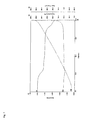
- the results are shown in Fig. 2 . Except for occurrence of evaporation of water at about 100°C, there was no change until the temperature increased to 270°C, so that the substance was confirmed to be very stable.
- the PQQ trisodium salt prepared in Reference Example 1 was completely dissolved in ion-exchanged water, to prepare 500 g of a solution containing 12 g/L PQQ. Based on measurement with a pH meter, pH of the liquid was 7.0. To this liquid, 25 g of dietary salt was added. At this time, red solids were precipitated. After stirring the resulting mixture at room temperature for 1 hour, crystals were recovered by suction filtration and dried under reduced pressure at room temperature for 16 hours. As a result, crystals of PQQ trisodium salt were obtained in a yield of 98 mol%. The powder X-ray diffraction spectrum of the obtained crystals was measured under the conditions described below. The results are shown in Fig. 3 .
- the PQQ trisodium salt prepared in Reference Example 1 was completely dissolved in ion-exchanged water, to prepare 500 g of a solution containing 12 g/L PQQ. Based on measurement with a pH meter, pH of the liquid was 7.0. To this liquid, 500 mL of ethanol was added. At this time, red solids were precipitated. After stirring the resulting mixture at room temperature for 1 hour, crystals were recovered by suction filtration and dried under reduced pressure at room temperature for 16 hours. As a result, crystals of PQQ trisodium salt were obtained in a yield of 89 mol%. The X-ray diffraction spectrum of the obtained powder of crystals was measured under the same conditions as in Example 3.
- Example 3 peaks at the same positions as in Example 3 were observed.
- thermal analysis and analysis of the residual ethanol in the solids were carried out, and, as a result, the solids were confirmed to have very high thermal stability, and no residual ethanol was observed.
- the PQQ trisodium salt prepared in Reference Example 1 was completely dissolved in ion-exchanged water, to prepare 800 g of a solution containing 10 g/L PQQ. Hydrochloric acid was added to the solution to adjust the pH to 3.5, and 200 mL of ethanol was then added to the solution. At this time, red solids were precipitated. After stirring the resulting mixture at room temperature for 5 hours, the mixture was left to stand at 5°C for 24 hours, to precipitate solids. The solids were recovered by continuous centrifugation, and dried at 50°C under reduced pressure. The powder X-ray diffraction spectrum of the obtained solids was measured under the same conditions as in Example 1. The results are shown in Fig. 4 . Since the obtained solids hardly showed peaks except for those in the low-angle side, these were confirmed to have low crystallinity.
- Example 2 The solids were analyzed by gas chromatography under the same conditions as in Example 2, and, as a result, 0.02% residual ethanol was observed in the solids. Further, in the same manner as in Example 2, thermal analysis was carried out, and, as a result, reduction in the weight was observed from about 30°C, so that the solids were confirmed to be unstable.
- Example 1 and 3 and Comparative Examples 1, 2 and 3 are summarized below in Table 1.
- Example 1 Comparative Example 1 Example 3 Comparative Example 2 Comparative Example 3 PQQ salt composition Disodium salt Disodium salt Trisodium salt Disodium salt Disodium salt Crystallization method
- Example 1 Comparative Example 1 Example 3 Comparative Example 2 Comparative Example 3 2 ⁇ 9.1 9.7 6.6 7.5 5.1 10.3 21.1 11.4 8.6 7.9 13.8 27.5 13.0 10.2 10.1 17.7 22.6 13.8 15.8 18.3 26.9 18.3 16.2 24.0 27.9 22.6 23.3 27.4 37.0 23.9 27.8 31.2 38.9 27.5 29.2 39.5 43.4
- the PQQ crystals of the present invention are useful in the fields of pharmaceuticals, functional foods and the like.
Landscapes
- Health & Medical Sciences (AREA)
- Chemical & Material Sciences (AREA)
- Life Sciences & Earth Sciences (AREA)
- Organic Chemistry (AREA)
- Engineering & Computer Science (AREA)
- General Health & Medical Sciences (AREA)
- Veterinary Medicine (AREA)
- General Chemical & Material Sciences (AREA)
- Medicinal Chemistry (AREA)
- Nuclear Medicine, Radiotherapy & Molecular Imaging (AREA)
- Chemical Kinetics & Catalysis (AREA)
- Pharmacology & Pharmacy (AREA)
- Public Health (AREA)
- Animal Behavior & Ethology (AREA)
- Bioinformatics & Cheminformatics (AREA)
- Polymers & Plastics (AREA)
- Mycology (AREA)
- Nutrition Science (AREA)
- Food Science & Technology (AREA)
- Ophthalmology & Optometry (AREA)
- Immunology (AREA)
- Dermatology (AREA)
- Gastroenterology & Hepatology (AREA)
- Pulmonology (AREA)
- Pharmaceuticals Containing Other Organic And Inorganic Compounds (AREA)
- Nitrogen Condensed Heterocyclic Rings (AREA)
- Organic Low-Molecular-Weight Compounds And Preparation Thereof (AREA)
- Coloring Foods And Improving Nutritive Qualities (AREA)
Abstract
Description
- The present invention relates to a novel crystal of a sodium salt of pyrroloquinoline quinone and a method for producing it.
- Since it has been proposed that pyrroloquinoline quinone (PQQ) may be a novel vitamin, it has drawn attention (see, for example, Non-patent Document 1). PQQ exists in not only bacteria but also in molds and yeasts, which are eukaryotes, and plays important roles as a coenzyme. Further, PQQ has so far been known to have a number of bioactivities such as the cell growth-promoting action, anti-cataract action, liver disease-preventing/curing action, wound-healing action, anti-allergic action, reverse transcriptase-inhibiting action, glyoxalase I-inhibiting action, carcinostatic action and nerve fiber-regenerating action.
- PQQ can be produced by an organic chemical synthetic method (Non-patent Document 2), fermentation method (Patent Document 1) or the like. However, since PQQ obtained by these methods contains large amounts of water and impurities, a technology to obtain crystals of PQQ which are stable and highly pure has been demanded.
- Crystals of a sodium salt of PQQ which were shown to be single crystal by X-ray crystallography have been obtained by evaporative concentration of the disodium salt of PQQ in phosphate buffer (Non-patent Document 3). However, this method is not suitable for mass production. Further, in a method by salting-out, since a salt used in a large amount, such as NaCl, is contaminated in the precipitated solids, there are drawbacks in that an operation of removal of the existing salt is required and that analysis for securing stable quality is difficult because of the salt.
- As a method for obtaining crystals of PQQ having no such drawbacks, a method wherein a water-soluble organic solvent is added to cause recrystallization has been reported (Patent Document 2). However, there is no information on the crystal form in this literature, and, when the present inventors carried out a confirmatory experiment for recrystallization using ethanol, it was confirmed that the crystallinity of the disodium salt of PQQ was low and ethanol used as a solvent was likely to remain even after drying, so that it was difficult to provide crystals having stable quality. Further, the ethanol recrystallization method has a drawback in that the method requires a cooling apparatus for precipitating solids, which increases the cost of the process.
- Further, in terms of the trisodium salt of PQQ, there has been no report on its crystal so far, unlike the disodium salt.
-
- Patent Document 1:
JP 2751183 B - Patent Document 2:
JP 7-113024 A -
- Non-patent Document 1: Nature, vol. 422, 24 April, 3003, p. 832
- Non-patent Document 2: JACS, vol. 103, pp. 5599-5600 (1981)
- Non-patent Document 3: JACS, vol. 111, pp. 6822-6828 (1989)
- In consideration of the pharmaceutical value of PQQ, it is important to reproducibly obtain stable high-purity crystals having a definite crystal form, which crystals can be stored for a long time without strictly controlling storage conditions such as the temperature, light, humidity and oxygen level. Therefore, the present invention aims to provide stable crystals of a sodium salt of PQQ and to provide a method for producing them.
- The present inventors intensively studied to solve the above problems. As a result, the present inventors succeeded in obtaining novel high-purity crystals of sodium salts of PQQ, with which the above problems can be solved, by studying the conditions of crystallization of the sodium salts of PQQ, thereby completing the present invention.
- The present invention is as follows.
- (1) A crystal of pyrroloquinoline quinone disodium salt having peaks at 2θ of 9.1°, 10.3°, 13.8°, 17.7°, 18.3°, 24.0°, 27.4°, 31.2° and 39.5° (±0.2° for each) in powder X-ray diffractometry using Cu Kα radiation.
- (2) A crystal of pyrroloquinoline quinone trisodium salt having peaks at 2θ of 6.6°, 11.4°, 13.0°, 22.6°, 26.9°, 27.9°, 37.0°, 38.9° and 43.4° (±0.2° for each) in powder X-ray diffractometry using Cu Kα radiation.
- (3) A method for producing the crystal of pyrroloquinoline quinone disodium salt according to (1), said method comprising preparing an aqueous solution and/or suspension of pyrroloquinoline quinone trisodium salt comprising a 10 to 90 (v/v)% water-soluble organic solvent and adjusting pH of said aqueous solution and/or suspension to within the range of 2 to 5 to crystallize pyrroloquinoline quinone disodium salt.
- (4) The method according to (3), wherein said water-soluble organic solvent is an alcohol.
- (5) The method according to (4), wherein said alcohol is ethanol.
- (6) The method according to any one of (3) to (5), wherein said crystallization is carried out in a suspended state.
- (7) A method for producing the crystal of pyrroloquinoline quinone trisodium salt according to (2), said method comprising adding a water-soluble organic solvent to an aqueous solution and/or suspension of pyrroloquinoline quinone trisodium salt such that a concentration of 10 to 90 (v/v)% is attained while maintaining pH of the obtained aqueous solution and/or suspension within the range of 6 to 10, to crystallize pyrroloquinoline quinone trisodium salt.
- (8) The method according to (7), wherein said water-soluble organic solvent is an alcohol.
- (9) The method according to (8), wherein said alcohol is ethanol.
- (10) A method for producing the crystal of pyrroloquinoline quinone trisodium salt according to (2), said method comprising performing salting-out while maintaining pH of an aqueous solution and/or suspension of pyrroloquinoline quinone trisodium salt within the range of 6 to 10, to crystallize pyrroloquinoline quinone trisodium salt.
- (11) A functional food comprising the crystal of a sodium salt of pyrroloquinoline quinone according to (1) or (2).
- (12) A pharmaceutical comprising the crystal of a sodium salt of pyrroloquinoline quinone according to (1) or (2).
- By the present invention, highly pure and stable crystals of a sodium salt of PQQ can be provided, and a method of their stable production can be further provided.
-
-
Fig. 1 is a diagram showing a powder X-ray diffraction spectrum of the crystals obtained in Example 1. -
Fig. 2 is a diagram showing data from thermal analysis of the crystals obtained in Example 1. -
Fig. 3 is a diagram showing a powder X-ray diffraction spectrum of the crystals obtained in Example 3. -
Fig. 4 is a diagram showing a powder X-ray diffraction spectrum of the solids obtained in Comparative Example 1 by the recrystallization method. -
Fig. 5 is a diagram showing a powder X-ray diffraction spectrum of the solids obtained in Comparative Example 2 by crystallization in methanol. -
Fig. 6 is a diagram showing a powder X-ray diffraction spectrum obtained by the simulation in Comparative Example 3 using single-crystal data. - In the present invention, pyrroloquinoline quinone (PQQ) means the substance having the structure represented by Formula 1:

- The crystal of the first invention of the present application (hereinafter referred to as Crystal 1) is a crystal of PQQ disodium salt having peaks at the angle of reflection 2θ of 9.1 °, 10.3°, 13.8°, 17.7°, 18.3°, 24.0°, 27.4°, 31.2° and 39.5° (±0.2° for each) in powder X-ray diffractometry using Cu Kα radiation.
- Measurement of the angle of diffraction 2θ by powder X-ray diffractometry can be carried out under, for example, the following measurement conditions.
Apparatus: M18XCE, manufactured by MAC Science, Co. Ltd.
X-ray: Cu/40 kV tube voltage/100 mA tube current
Divergence slit: 1°
Scattering slit: 1°
Receiving slit: 0.3 mm
Scan speed: 4.000°/min.
Sampling width: 0.020° - The peaks can be monitored also with a common powder X-ray diffractometer equipped with a monochromator. Since the crystal form defined in the present invention contains measurement errors, the determination can be carried out as long as rational identities for the angles of the peaks are observed.
- In the cases of PQQ disodium salt obtained by the conventional ethanol recrystallization method, such a large number of diffraction peaks did not appear, so that the conventionally obtained solids are considered to have low crystallinities.
- Examples of the method for producing Crystal 1 include a method wherein PQQ trisodium salt is dissolved/suspended in water and a water-soluble organic solvent is added to the resulting solution and/or suspension such that a concentration of 10 to 90 (v/v)%, preferably 20 to 80 (v/v)% is attained, followed by adjusting pH to within the range of 2 to 5 to cause crystallization. Alternatively, the crystallization may be carried out by dissolving and/or suspending PQQ trisodium salt in a water-soluble organic solvent and adding water to the resulting solution and/or suspension such that the concentration of the water-soluble organic solvent becomes 10 to 90 (v/v)%, preferably 20 to 80 (v/v)%, followed by adjusting pH to within the range of 2 to 5. Alternatively, the crystallization may be carried out by dissolving and/or suspending PQQ trisodium salt in an aqueous medium containing a 10 to 90 (v/v)%, preferably 20 to 80 (v/v)% water-soluble organic solvent and adjusting pH to within the range of 2 to 5.
- The PQQ trisodium salt to be used as a raw material can be produced by an organic chemical synthetic method (e.g., JACS, vol. 103, pp. 5599-5600 (1981)), fermentation method (e.g.,
JP 1-218597 A JP 2692167 B - Particular examples of the water-soluble organic solvent which may be used include methanol, ethanol, n-propanol, isopropanol, ethylene glycol, propylene glycol, methoxyethanol, diethylene glycol, methoxydiethylene glycol, glycerin, methoxypropanol, acetone, methyl ethyl ketone, acetonitrile, ethyl lactate and methyl hydroxyisobutyrate. Among these, alcohols are more preferred, ethanol is especially preferred.
The organic solvent is used as a poor solvent for decreasing the solubility of PQQ, and the concentration of the organic solvent may be set appropriately within the above-described range depending on the initial amount of PQQ trisodium salt. - In a common method for producing crystals, solids are dissolved in a solvent and crystals are then precipitated by adding a poor solvent to the resulting solution.
However, in the present invention, the crystallization can be carried out even in a suspended state in which solids exist. Being able to carry out the operation even in a suspended state is preferred since the volume of the apparatus can be reduced and the amount of the waste liquid to be discharged can be reduced. - In a particular method of operation to obtain
Crystal 1, an aqueous solution and/or suspension containing a raw material PQQ trisodium salt is first prepared. In this step, 0.5 to 80 g of PQQ trisodium salt per 1L of water is preferably added. Subsequently, a water-soluble organic solvent is added to the aqueous solution and/or suspension to decrease the solubility of PQQ trisodium salt. Precipitation of solids in this step is not problematic. Thereafter, an acid may be added to the resulting solution/suspension while measuring pH, thereby adjusting the pH to within the range of 2 to 5.
Alternatively, PQQ trisodium salt may be added to, and dissolved and/or suspended in, a water-soluble organic solvent, followed by adding water to the resulting solution and/or suspension and then adjusting pH to within the range of 2 to 5, to cause crystallization. In this step, 0.5 to 800 g of PQQ trisodium salt is preferably added per 1 L of the total of the water-soluble organic solvent and the water added.
Alternatively, PQQ trisodium salt may be added to, and dissolved and/or suspended in, an aqueous medium containing a water-soluble organic solvent, followed by adjusting pH to within the range of 2 to 5, to cause crystallization. In this step, 0.5 to 800 g of PQQ trisodium salt is preferably added per 1L of the aqueous medium.
The type of the acid to be added for the pH adjustment is not restricted, and examples thereof include inorganic acids such as hydrochloric acid, hydrobromic acid, hydroiodic acid, perchloric acid, nitric acid and sulfuric acid; and organic acids such as formic acid, acetic acid, propionic acid, butyric acid, trichloroacetic acid, methanesulfonic acid and benzenesulfonic acid; among which hydrochloric acid is preferred.
When the pH became stable at a prescribed value within the range ofpH 2 to 5, precipitated crystals are separated by filtration, centrifugation or the like, and therebyCrystal 1 can be obtained. - When the water-soluble organic solvent is added to the aqueous solution and/or suspension containing PQQ trisodium salt, the temperatures of the both liquids are not restricted as long as the liquids are not frozen, and the temperatures are preferably -30°C to 80°C since a high temperature decreases the energy efficiency. When the water-soluble organic solvent is added and the acid is then added to adjust pH to within the range of 2 to 5, the temperature of the solution or suspension is not restricted as long as the liquid is not frozen, and the temperature is preferably 5°C to 80°C since a high temperature decreases the energy efficiency and a low temperature decreases the crystallization rate (speed). The liquid is preferably stirred as required and then left to stand. The stirring time may be, for example, 5 minutes to 7 days. The standing time may be, for example, 5 minutes to 15 days.
- In the obtained solution, crystals of PQQ disodium salt (Crystal 1) are produced. In the later-mentioned Example 2, the purity calculated by high performance liquid chromatography was 99.5%, so that extremely highly pure PQQ crystals can be obtained by this crystallization method.
Crystal 1 may be a hydrated material, and whether or notCrystal 1 is hydrated is not restricted as long as it has the above-described peaks. - The crystal of the second invention of the present application (Crystal 2) is a crystal of PQQ trisodium salt having peaks at 2θ of 6.6°, 11.4°, 13.0°, 22.6°, 26.9°, 27.9°, 37.0°, 38.9° and 43.4° (±0.2° for each) in powder X-ray diffractometry using Cu Kα radiation. These peaks are defined by powder X-ray diffractometry using the same measurement method as in the case of the
above Crystal 1. -
Crystal 2 can be obtained by carrying out crystallization using an aqueous solution and/or suspension containing raw material PQQ trisodium salt as mentioned above at a pH within the range of 6 to 10. - The crystallization can be carried out by salting-out in the presence of sodium ions or precipitation by addition of a water-soluble organic solvent. Since, in the case of crystals of the trisodium salt, unlike the case of crystals of the disodium salt, existence of a large excess of sodium ions is unlikely to make the analysis difficult, salting-out can be employed without any problem. The crystals can be obtained by adjusting pH to within the range of 6 to 10 and performing salting-out by adding dietary salt, sodium sulfate, sodium nitrate, sodium phosphate or the like. The concentration of the salt is not restricted as long as the added salt can be dissolved, and the concentration is preferably not less than 0.2 wt% and not more than 30 wt%. In cases where pH of the aqueous solution and/or suspension is within the range of 6 to 10, the pH adjustment is not necessary.
- In cases where a water-soluble organic solvent is added, examples thereof include methanol, ethanol, n-propanol, isopropanol, ethylene glycol, propylene glycol, methoxyethanol, diethylene glycol, methoxydiethylene glycol, glycerin, methoxypropanol, acetone, methyl ethyl ketone, acetonitrile, ethyl lactate and methyl hydroxyisobutyrate. Among these, alcohols are more preferred, ethanol is especially preferred. The water-soluble organic solvent is preferably added such that a concentration of 10 to 90 (v/v)%, more preferably 20 to 80 (v/v)% is attained.
Crystal 2 may also be a hydrated material, and whether or notCrystal 2 is hydrated is not restricted as long as it has the above-described peaks. - PQQ has many pharmacological effects such as the cell growth-promoting action, anti-cataract action, liver disease-preventing/curing action, wound-healing action, anti-allergic action, reverse transcriptase-inhibiting action, glyoxalase I-inhibiting action, carcinostatic action and nerve fiber-regenerating action.
Therefore,Crystal 1 andCrystal 2 of PQQ of the present invention can be used as effective ingredients of pharmaceuticals and functional foods. That is, the crystals can be provided in the forms of external preparations for the skin, injection solutions, oral preparations and suppositories; and in the forms of foods and beverages taken regularly, dietary supplements, various hospital diets and the like. Examples of additives used for their preparation include liquids such as water; sugars such as fructose and glucose; oils such as peanut oil, soybean oil and olive oil; and glycols such as polyethylene glycol and polypropylene glycol. For solid preparations such as tablets, capsules and granules, examples of vehicles include, but are not limited to, sugars such as lactose, sucrose and mannitol; examples of lubricants include, but are not limited to, kaolin, talc and magnesium stearate; examples of disintegrators include, but are not limited to, starch and sodium alginate; examples of binders include, but are not limited to, polyvinyl alcohol, cellulose and gelatin; examples of surfactants include, but are not limited to, fatty acid esters; and plasticizers include, but are not limited to, glycerin. Solubilizers, fillers and the like may also be added as required. - Further, PQQ may be used either alone or in combination with other materials. Examples of materials which may be used in combination include, but are not limited to, vitamins such as vitamin B complex, vitamin C and vitamin E; amino acids; astaxanthin; carotenoids such as α-carotene and β-carotene; ω3 fatty acids such as docosahexaenoic acid and eicosapentaenoic acid; and ω6 fatty acids such as arachidonic acid.
- Since the PQQ crystals of the present invention (
Crystal 1 and Crystal 2) are highly pure and excellent in stability under preservation, these can be stored for a long time and preferably used as effective ingredients of pharmaceuticals and functional foods. - The present invention will now be described in more detail by way of Examples below, but the present invention is not restricted thereto.
- According to Example 1 of
JP 2692167 B
The culture supernatant was passed through a Sephadex G-10 column (manufactured by Pharmacia) to allow adsorption of PQQ, and elution was performed with an aqueous NaCl solution to obtain an aqueous PQQ solution at pH 7.5, followed by further adding NaCl to the solution to a concentration of 60 g/L and cooling the resulting solution, thereby obtaining PQQ trisodium salt. The PQQ purity of the obtained PQQ trisodium salt was 99.0% as determined by UV absorption measured using high performance liquid chromatography. - The sodium salt of PQQ was analyzed under the following conditions. The PQQ concentration and purity were measured by high performance liquid chromatography under the conditions described below. Thereafter, the concentration of Na contained in the same solution was measured by cation chromatography under the conditions described below. Further, based on the concentrations of PQQ and Na contained in the above solution, the ratio of the amounts of the substances PQQ and Na contained in the sodium salt of PQQ was determined. In cases where this ratio of the amounts of the substances is 2.0±0.2, the salt is PQQ disodium salt, while in cases where the ratio is 3.0±0.2, the salt is PQQ trisodium salt.
- Apparatus: high performance liquid chromatography LC-20A, manufactured by Shimadzu Corporation)
Column: YMC-Pack ODS-TMS (5 µm), 150×4.6 mm I.D.
Measuring temperature: 40°C
Detection: Absorbance at 260 nm
Eluent: 100 mM CH3COOH/100 mM CH3COONH4 (30/70, pH 5.1)
Elution rate: 1.5 mL/min. - Pump: LC-6A, manufactured by Shimadzu Corporation
Column oven: HIC-6A, manufactured by Shimadzu Corporation
Measuring temperature: 40°C
Detector: Conductivity meter CM-8000, manufactured by Tosoh Corporation
Column: Shodex, IC Y-521, manufactured by Showa Denko K. K.
Eluent: 4 mM HNO3
Elution rate: 1.0 mL/min. - The PQQ trisodium salt prepared in Reference Example 1 was completely dissolved in ion-exchanged water, to prepare 500 g of a solution containing 12 g/L PQQ. To this solution, 500 mL of ethanol was added. At this time, red solids were precipitated. While measuring pH using a pH meter, hydrochloric acid was added dropwise to the resulting mixture to adjust pH to 3.6, followed by stirring the mixture at room temperature for 1 hour. Crystals were recovered by suction filtration and dried under reduced pressure at room temperature for 16 hours. As a result, crystals of PQQ disodium salt were obtained in a yield of 95 mol%. The powder X-ray diffraction spectrum of the obtained crystals was measured under the conditions described below. The results are shown in
Fig. 1 . Peaks at 2θ of 9.1°, 10.3°, 13.8°, 17.7°, 18.3°, 24.0°, 27.4°, 31.2° and 39.5°, ±0.2° for each, appeared in powder X-ray diffractometry using Cu Kα radiation. - Apparatus: M18XCE, manufactured by MAC Science, Co. Ltd.
X-ray: Cu/40 kV tube voltage/100 mA tube current
Divergence slit: 1°
Scattering slit: 1°
Receiving slit: 0.3 mm
Scan speed: 4.000°/min.
Sampling width: 0.02°
The obtained solids were crystalline. - To the mixture of 500 mL of ion-exchanged water and 500 mL of ethanol, 60 g of the solids of PQQ trisodium salt prepared in Reference Example 1, which contain 20 g of PQQ, was added. At this time, the solids were not completely dissolved. To the resulting mixture, hydrochloric acid was added to adjust pH to 3.5. The addition of hydrochloric acid was carried out by slowly adding hydrochloric acid dropwise to the mixture for about 2 hours. After the pH became stable, the mixture was filtered, and crystals of PQQ disodium salt were thereby obtained in a yield of 99 mol%. Although the purity of PQQ contained in the raw material PQQ trisodium salt was 99.0% as measured by liquid chromatography, the purity of PQQ in the obtained PQQ disodium salt was 99.5%, which corresponded to 0.5% increase.
- After drying the thus obtained crystals under reduced pressure, powder X-ray diffractometry was carried out in the same manner as in Example 1, and, as a result, the same results as in Example 1 were obtained
- The obtained solids were subjected to thermogravimetry (TG) and differential thermal analysis (DSC) using Thermo plus EVO TG8120 manufactured by Rigaku Corporation. The temperature was increased under air flow at a rate of 10°C/minute.
The results are shown inFig. 2 . Except for occurrence of evaporation of water at about 100°C, there was no change until the temperature increased to 270°C, so that the substance was confirmed to be very stable. - The solids were analyzed by gas chromatography under the conditions described below, and, as a result, no residual ethanol was observed.
- In 0.5 mL of distilled water, 50 mg of the obtained solids were suspended, and ethanol contained in the supernatant obtained by centrifugation was analyzed under the following conditions to determine the ethanol content in the solids.
Apparatus: Gas chromatography GC-2014, manufactured by Shimadzu Corporation
Detection: FID, 210°C
Carrier: High-purity nitrogen, 40 mL/min. - The PQQ trisodium salt prepared in Reference Example 1 was completely dissolved in ion-exchanged water, to prepare 500 g of a solution containing 12 g/L PQQ. Based on measurement with a pH meter, pH of the liquid was 7.0. To this liquid, 25 g of dietary salt was added. At this time, red solids were precipitated. After stirring the resulting mixture at room temperature for 1 hour, crystals were recovered by suction filtration and dried under reduced pressure at room temperature for 16 hours. As a result, crystals of PQQ trisodium salt were obtained in a yield of 98 mol%. The powder X-ray diffraction spectrum of the obtained crystals was measured under the conditions described below. The results are shown in
Fig. 3 . Peaks at 2θ of 6.6°, 11.4°, 13.0°, 22.6°, 26.9°, 27.9°, 37.0°, 38.9° and 43.4°, ±0.2° for each, appeared in powder X-ray diffractometry using Cu Kα radiation. - Apparatus: M18XCE, manufactured by MAC Science, Co. Ltd.
X-ray: Cu/40 kV tube voltage/100 mA tube current
Divergence slit: 1°
Scattering slit: 1°
Receiving slit: 0.3 mm
Scan speed: 4.000°/min.
Sampling width: 0.02°
The obtained solids were crystalline. - The PQQ trisodium salt prepared in Reference Example 1 was completely dissolved in ion-exchanged water, to prepare 500 g of a solution containing 12 g/L PQQ. Based on measurement with a pH meter, pH of the liquid was 7.0. To this liquid, 500 mL of ethanol was added. At this time, red solids were precipitated. After stirring the resulting mixture at room temperature for 1 hour, crystals were recovered by suction filtration and dried under reduced pressure at room temperature for 16 hours. As a result, crystals of PQQ trisodium salt were obtained in a yield of 89 mol%. The X-ray diffraction spectrum of the obtained powder of crystals was measured under the same conditions as in Example 3.
As a result, peaks at the same positions as in Example 3 were observed.
In the same manner as in Example 2, thermal analysis and analysis of the residual ethanol in the solids were carried out, and, as a result, the solids were confirmed to have very high thermal stability, and no residual ethanol was observed. - The PQQ trisodium salt prepared in Reference Example 1 was completely dissolved in ion-exchanged water, to prepare 800 g of a solution containing 10 g/L PQQ. Hydrochloric acid was added to the solution to adjust the pH to 3.5, and 200 mL of ethanol was then added to the solution. At this time, red solids were precipitated. After stirring the resulting mixture at room temperature for 5 hours, the mixture was left to stand at 5°C for 24 hours, to precipitate solids. The solids were recovered by continuous centrifugation, and dried at 50°C under reduced pressure.
The powder X-ray diffraction spectrum of the obtained solids was measured under the same conditions as in Example 1. The results are shown inFig. 4 . Since the obtained solids hardly showed peaks except for those in the low-angle side, these were confirmed to have low crystallinity. - The solids were analyzed by gas chromatography under the same conditions as in Example 2, and, as a result, 0.02% residual ethanol was observed in the solids.
Further, in the same manner as in Example 2, thermal analysis was carried out, and, as a result, reduction in the weight was observed from about 30°C, so that the solids were confirmed to be unstable. - The experiment of crystallization of solids of PQQ disodium salt described in
Patent Document 2 was reproduced and the obtained crystals were compared with those of the present invention.
In 30 mL of water at about 60°C, 0.21 g of the crystals of PQQ disodium salt obtained in Example 1 were dissolved. To this solution, 50 g of methanol was added. At the time of the mixture, the solution was uniform. By leaving the solution to stand at 4°C overnight, solids were precipitated. The mixture was centrifuged and dried under reduced pressure, and the powder X-ray diffraction spectrum of the obtained solids was then measured under the same conditions as in Example 1. The results are shown inFig. 5 . Peaks at positions different from those observed in Examples 1 and 2 in the present application were observed.
Further, in the same manner as in Example 2, thermal analysis and analysis of the residual ethanol in the solids were carried out, and, as a result, the solids were confirmed to have low thermal stability, and residual ethanol was observed. - For the PQQ disodium salt reported in JACS, vol. 111, pp. 6822-6828 (1989), the data of X-ray crystallography of single crystals described in this literature were used to simulate how peaks appear in powder X-ray diffractometry of these crystals.
Results of calculation using analysis software RIETAN2000 with WINDOWS (registered trademark) XP and a personal computer having a CPU of not less than 1 GHz are shown inFig. 6 .
As shown therein, there are peaks at positions different from those in the cases of the crystals of the present invention. - The results from Examples 1 and 3 and Comparative Examples 1, 2 and 3 are summarized below in Table 1.
[Table 1] Example 1 Comparative Example 1 Example 3 Comparative Example 2 Comparative Example 3 PQQ salt composition Disodium salt Disodium salt Trisodium salt Disodium salt Disodium salt Crystallization method Example 1 Comparative Example 1 Example 3 Comparative Example 2 Comparative Example 3 2θ 9.1 9.7 6.6 7.5 5.1 10.3 21.1 11.4 8.6 7.9 13.8 27.5 13.0 10.2 10.1 17.7 22.6 13.8 15.8 18.3 26.9 18.3 16.2 24.0 27.9 22.6 23.3 27.4 37.0 23.9 27.8 31.2 38.9 27.5 29.2 39.5 43.4 - The values at 2θ were clearly different from each other, suggesting that the crystals have different crystal forms. It was shown that the crystal forms of the present invention are novel.
- The PQQ crystals of the present invention are useful in the fields of pharmaceuticals, functional foods and the like.
Claims (12)
- A crystal of pyrroloquinoline quinone disodium salt having peaks at 2θ of 9.1°, 10.3°, 13.8°, 17.7°, 18.3°, 24.0°, 27.4°, 31.2° and 39.5° (±0.2° for each) in powder X-ray diffractometry using Cu Kα radiation.
- A crystal of pyrroloquinoline quinone trisodium salt having peaks at 2θ of 6.6°, 11.4°, 13.0°, 22.6°, 26.9°, 27.9°, 37.0°, 38.9° and 43.4° (±0.2° for each) in powder X-ray diffractometry using Cu Kα radiation.
- A method for producing the crystal of pyrroloquinoline quinone disodium salt according to claim 1, said method comprising preparing an aqueous solution and/or suspension of pyrroloquinoline quinone trisodium salt comprising a 10 to 90 (v/v)% water-soluble organic solvent and adjusting pH of said aqueous solution and/or suspension to within the range of 2 to 5 to crystallize pyrroloquinoline quinone disodium salt.
- The method according to claim 3, wherein said water-soluble organic solvent is an alcohol.
- The method according to claim 4, wherein said alcohol is ethanol.
- The method according to any one of claims 3 to 5, wherein said crystallization is carried out in a suspended state.
- A method for producing the crystal of pyrroloquinoline quinone trisodium salt according to claim 2, said method comprising adding a water-soluble organic solvent to an aqueous solution and/or suspension of pyrroloquinoline quinone trisodium salt such that a concentration of 10 to 90 (v/v)% is attained while maintaining pH of the obtained aqueous solution and/or suspension within the range of 6 to 10, to crystallize pyrroloquinoline quinone trisodium salt.
- The method according to claim 7, wherein said water-soluble organic solvent is an alcohol.
- The method according to claim 8, wherein said alcohol is ethanol.
- A method for producing the crystal of pyrroloquinoline quinone trisodium salt according to claim 2, said method comprising performing salting-out while maintaining pH of an aqueous solution and/or suspension of pyrroloquinoline quinone trisodium salt within the range of 6 to 10, to crystallize pyrroloquinoline quinone trisodium salt.
- A functional food comprising the crystal of a sodium salt of pyrroloquinoline quinone according to claim 1 or 2.
- A pharmaceutical comprising the crystal of a sodium salt of pyrroloquinoline quinone according to claim 1 or 2.
Priority Applications (1)
| Application Number | Priority Date | Filing Date | Title |
|---|---|---|---|
| PL10799695T PL2455379T3 (en) | 2009-07-16 | 2010-06-09 | Crystals of pyrroloquinolinequinone sodium salts |
Applications Claiming Priority (2)
| Application Number | Priority Date | Filing Date | Title |
|---|---|---|---|
| JP2009168087 | 2009-07-16 | ||
| PCT/JP2010/059761 WO2011007633A1 (en) | 2009-07-16 | 2010-06-09 | Crystals of pyrroloquinolinequinone sodium salts |
Publications (3)
| Publication Number | Publication Date |
|---|---|
| EP2455379A1 true EP2455379A1 (en) | 2012-05-23 |
| EP2455379A4 EP2455379A4 (en) | 2012-10-24 |
| EP2455379B1 EP2455379B1 (en) | 2013-12-11 |
Family
ID=43449243
Family Applications (1)
| Application Number | Title | Priority Date | Filing Date |
|---|---|---|---|
| EP10799695.1A Active EP2455379B1 (en) | 2009-07-16 | 2010-06-09 | Crystals of pyrroloquinolinequinone sodium salts |
Country Status (6)
| Country | Link |
|---|---|
| US (2) | US9163014B2 (en) |
| EP (1) | EP2455379B1 (en) |
| JP (1) | JP5240362B2 (en) |
| CN (2) | CN104744462B (en) |
| PL (1) | PL2455379T3 (en) |
| WO (1) | WO2011007633A1 (en) |
Cited By (4)
| Publication number | Priority date | Publication date | Assignee | Title |
|---|---|---|---|---|
| EP2722331A4 (en) * | 2011-06-16 | 2014-11-05 | Mitsubishi Gas Chemical Co | DISODIUM SALT CRYSTAL OF PYRROLOQUINOLEININONE AND PROCESS FOR PRODUCING THE SAME |
| WO2015159236A1 (en) * | 2014-04-16 | 2015-10-22 | Anthem Biosciences Private Limited | Polymorphic forms of 4,5-dihydro-1h-pyrrolo[2,3-f]quinoline-2,7,9-tricarboxylic acid and its disodium salt, process for their preparation and their use |
| EP2918585A4 (en) * | 2012-11-09 | 2016-05-25 | Zhucheng Haotian Pharm Co Ltd | QUINONE PYRROLOQUINOLINE DISODIUM SALT CRYSTAL |
| EP3480197A4 (en) * | 2016-06-29 | 2019-06-19 | Mitsubishi Gas Chemical Company, Inc. | MANUFACTURING METHOD AND COMPOSITION CONTAINING QUINONE MONOSODIUM PYRROLOQUINONE. |
Families Citing this family (22)
| Publication number | Priority date | Publication date | Assignee | Title |
|---|---|---|---|---|
| JP6160621B2 (en) * | 2012-08-17 | 2017-07-12 | 三菱瓦斯化学株式会社 | Pyrroloquinoline quinone tetraalkali salt and crystal thereof, production method thereof, and composition |
| JP6395101B2 (en) * | 2014-03-28 | 2018-09-26 | 三菱瓦斯化学株式会社 | Imidazopyrroloquinoline salt |
| WO2016047637A1 (en) * | 2014-09-22 | 2016-03-31 | 国立大学法人名古屋大学 | Novel life-prolonging agent, life-prolonging method making use of same, novel dual oxidase activator, method for activating dual oxidase, manufacture of life-prolonging agent, and manufacture of dual oxidase activator |
| WO2016117242A1 (en) * | 2015-01-19 | 2016-07-28 | 三菱瓦斯化学株式会社 | High-solubility acetone adduct of pyrroloquinolinequinone salt |
| JP6697861B2 (en) * | 2015-09-18 | 2020-05-27 | 国立大学法人東海国立大学機構 | Novel NADPH oxidase activator, production method thereof, and NADPH oxidase activation method |
| WO2017050171A1 (en) * | 2015-09-25 | 2017-03-30 | 浙江海正药业股份有限公司 | Crystal form of pyrroloquinoline quinone sodium salt and preparation method and use thereof |
| CN105218543B (en) | 2015-11-02 | 2017-05-10 | 诸城市浩天药业有限公司 | Pyrroloquinoline quinone B crystal form and preparation method thereof |
| JP6825330B2 (en) | 2016-11-25 | 2021-02-03 | 三菱瓦斯化学株式会社 | Autophagy inducer |
| JP6974788B2 (en) * | 2016-12-26 | 2021-12-01 | 三菱瓦斯化学株式会社 | Imidazopyrroloquinoline salt and its manufacturing method, as well as pharmaceuticals, cosmetics and foods |
| CN108069962A (en) * | 2017-06-27 | 2018-05-25 | 山东金城生物药业有限公司 | pyrroloquinoline quinone disodium salt crystal and preparation method thereof |
| CN109180674B (en) * | 2018-11-13 | 2019-06-28 | 福建康鸿生物科技有限公司 | Separation and purification method of pyrroloquinoline quinone disodium salt based on compound salting out of fermentation broth |
| EP4012403B1 (en) | 2019-03-20 | 2024-12-18 | Mitsubishi Gas Chemical Company, Inc. | Method for analyzing pyrroloquinoline quinone |
| CN112125899B (en) * | 2019-06-24 | 2023-01-03 | 浙江可明生物医药有限公司 | Pyrroloquinoline quinone disodium salt crystal, preparation method thereof and composition containing pyrroloquinoline quinone disodium salt crystal |
| JP2021050199A (en) * | 2019-09-20 | 2021-04-01 | 三井化学アグロ株式会社 | Novel crystal form of 3-(4,4-difluoro-3,4-dihydro-3,3-dimethylisoquinoline-1-yl)quinoline |
| JP7449469B2 (en) * | 2020-04-01 | 2024-03-14 | 三菱瓦斯化学株式会社 | Crystals and their manufacturing methods, compositions, soft capsules |
| CN112500407B (en) * | 2020-12-25 | 2022-03-11 | 西安蓝晓科技新材料股份有限公司 | Purification method of pyrroloquinoline quinone disodium salt |
| CN115716825A (en) * | 2021-08-24 | 2023-02-28 | 浙江医药股份有限公司新昌制药厂 | Pyrroloquinoline quinone disodium salt crystal, its preparation method and composition containing it |
| CN115724840A (en) * | 2021-08-26 | 2023-03-03 | 浙江医药股份有限公司新昌制药厂 | Relates to a pyrroloquinoline quinone trisodium salt crystal, a preparation method thereof and a composition containing the same |
| CN117327069B (en) * | 2023-09-27 | 2024-04-30 | 山东原力泰医药科技有限公司 | Crystal form of pyrroloquinoline quinone disodium salt, and preparation method and application thereof |
| CN117426507B (en) * | 2023-11-22 | 2024-05-03 | 广州能量生物科技有限公司 | Health food for protecting mitochondria and thrombolysis and preparation method thereof |
| CN117777147A (en) * | 2024-02-23 | 2024-03-29 | 内蒙古金达威药业有限公司 | Crystal form of pyrroloquinoline quinone disodium salt and preparation method thereof |
| CN119285634A (en) * | 2024-12-10 | 2025-01-10 | 诸城市浩天药业有限公司 | Pyrroloquinoline quinone disodium salt crystal form and preparation method |
Family Cites Families (11)
| Publication number | Priority date | Publication date | Assignee | Title |
|---|---|---|---|---|
| JPH07113024B2 (en) * | 1986-04-17 | 1995-12-06 | 三菱瓦斯化学株式会社 | Method for purifying pyrroloquinoline quinone |
| JPS6475487A (en) * | 1987-09-18 | 1989-03-22 | Mitsubishi Gas Chemical Co | Purification of pyrroloquinolinequinonoes |
| JP2751183B2 (en) | 1988-02-26 | 1998-05-18 | 三菱瓦斯化学株式会社 | Method for producing pyrroloquinoline quinone |
| JP2692167B2 (en) * | 1988-09-01 | 1997-12-17 | 三菱瓦斯化学株式会社 | Method for recovering and purifying pyrroloquinoline quinones |
| JPH02267284A (en) * | 1989-04-05 | 1990-11-01 | Noritake Co Ltd | Polycrystalline diamond object and production thereof by vapor synthesis method |
| US5061711A (en) * | 1989-10-09 | 1991-10-29 | Mitsubishi Gas Chemical Company, Inc. | Method of curing liver diseases by using pyrrolo quinoline quinone triesters and novel pyrrolo quinoline quinone triesters |
| JP3475969B2 (en) | 1993-08-27 | 2003-12-10 | 大日本インキ化学工業株式会社 | Copolymer resin emulsion, method for producing the same, and composition for moisture-proof processing |
| WO2008029907A1 (en) * | 2006-09-08 | 2008-03-13 | Kyowa Hakko Bio Co., Ltd. | Hypertension-ameliorating agent |
| CN101851234A (en) * | 2009-04-03 | 2010-10-06 | 上海日馨生物科技有限公司 | Pyrrolequinoline quinone lithium salt derivative and preparation method thereof |
| CN101885725A (en) * | 2009-05-12 | 2010-11-17 | 江苏道琪生物科技有限公司 | Pyrro-quinoline quinine sodium salt derivative and preparation method thereof |
| DK2722331T3 (en) | 2011-06-16 | 2017-11-20 | Mitsubishi Gas Chemical Co | Pyrroloquinoline quinone disodium salt crystal and process for making the same |
-
2010
- 2010-06-09 CN CN201510103290.7A patent/CN104744462B/en active Active
- 2010-06-09 CN CN201080031945.XA patent/CN102471336B/en active Active
- 2010-06-09 JP JP2011522764A patent/JP5240362B2/en active Active
- 2010-06-09 WO PCT/JP2010/059761 patent/WO2011007633A1/en not_active Ceased
- 2010-06-09 EP EP10799695.1A patent/EP2455379B1/en active Active
- 2010-06-09 US US13/383,472 patent/US9163014B2/en active Active
- 2010-06-09 PL PL10799695T patent/PL2455379T3/en unknown
-
2015
- 2015-08-17 US US14/827,767 patent/US9321770B2/en active Active
Cited By (6)
| Publication number | Priority date | Publication date | Assignee | Title |
|---|---|---|---|---|
| EP2722331A4 (en) * | 2011-06-16 | 2014-11-05 | Mitsubishi Gas Chemical Co | DISODIUM SALT CRYSTAL OF PYRROLOQUINOLEININONE AND PROCESS FOR PRODUCING THE SAME |
| US9174983B2 (en) | 2011-06-16 | 2015-11-03 | Mitsubishi Gas Chemical Company, Inc. | Pyrroloquinoline quinone disodium salt crystal and method for producing the same |
| EP2918585A4 (en) * | 2012-11-09 | 2016-05-25 | Zhucheng Haotian Pharm Co Ltd | QUINONE PYRROLOQUINOLINE DISODIUM SALT CRYSTAL |
| WO2015159236A1 (en) * | 2014-04-16 | 2015-10-22 | Anthem Biosciences Private Limited | Polymorphic forms of 4,5-dihydro-1h-pyrrolo[2,3-f]quinoline-2,7,9-tricarboxylic acid and its disodium salt, process for their preparation and their use |
| EP3480197A4 (en) * | 2016-06-29 | 2019-06-19 | Mitsubishi Gas Chemical Company, Inc. | MANUFACTURING METHOD AND COMPOSITION CONTAINING QUINONE MONOSODIUM PYRROLOQUINONE. |
| US11021476B2 (en) | 2016-06-29 | 2021-06-01 | Mitsubishi Gas Chemical Company, Inc. | Pyrroloquinoline quinone monosodium and method for producing the same, and composition comprising the same |
Also Published As
| Publication number | Publication date |
|---|---|
| PL2455379T3 (en) | 2014-04-30 |
| CN104744462B (en) | 2016-09-21 |
| JPWO2011007633A1 (en) | 2012-12-27 |
| US9321770B2 (en) | 2016-04-26 |
| CN102471336A (en) | 2012-05-23 |
| US9163014B2 (en) | 2015-10-20 |
| WO2011007633A1 (en) | 2011-01-20 |
| EP2455379B1 (en) | 2013-12-11 |
| JP5240362B2 (en) | 2013-07-17 |
| US20160039816A1 (en) | 2016-02-11 |
| EP2455379A4 (en) | 2012-10-24 |
| CN104744462A (en) | 2015-07-01 |
| US20120116087A1 (en) | 2012-05-10 |
| CN102471336B (en) | 2015-04-15 |
Similar Documents
| Publication | Publication Date | Title |
|---|---|---|
| EP2455379B1 (en) | Crystals of pyrroloquinolinequinone sodium salts | |
| CN103119044B (en) | Calcium salt of pyrroloquinoline quinone | |
| US8946423B2 (en) | Highly soluble salt of pyrroloquinoline quinone and method for producing the same | |
| EP2497769A1 (en) | Pyrroloquinoline quinone in free form | |
| CN109134459B (en) | Pyrroloquinoline quinone disodium salt crystal and preparation method thereof | |
| US10745432B2 (en) | Crystal of 6′-sialyllactose sodium salt, and process for producing same | |
| EP3279208B1 (en) | Crystal of reduced glutathione | |
| JP2013112677A (en) | Pyrroloquinoline quinone disodium crystal | |
| CN112125899A (en) | Pyrroloquinoline quinone disodium salt crystal, preparation method thereof and composition containing pyrroloquinoline quinone disodium salt crystal | |
| CA2861891C (en) | Crystal form of (6s)-5-methyltetrahydrofolate salt and method for preparing same | |
| JP5636671B2 (en) | Method for producing pyrroloquinoline quinone Li salt | |
| JP6217323B2 (en) | Method for producing pyrroloquinoline quinone | |
| CN115716825A (en) | Pyrroloquinoline quinone disodium salt crystal, its preparation method and composition containing it | |
| JP2012136465A (en) | Pyrroloquinoline quinone potassium salt | |
| JP2009215231A (en) | Method of preparing crystalline 1,5-d-anhydroglucitol | |
| EP3456727A1 (en) | Crystal of 3'-sialyllactose sodium salt n-hydrate, and method for producing same |
Legal Events
| Date | Code | Title | Description |
|---|---|---|---|
| PUAI | Public reference made under article 153(3) epc to a published international application that has entered the european phase |
Free format text: ORIGINAL CODE: 0009012 |
|
| 17P | Request for examination filed |
Effective date: 20120112 |
|
| AK | Designated contracting states |
Kind code of ref document: A1 Designated state(s): AL AT BE BG CH CY CZ DE DK EE ES FI FR GB GR HR HU IE IS IT LI LT LU LV MC MK MT NL NO PL PT RO SE SI SK SM TR |
|
| A4 | Supplementary search report drawn up and despatched |
Effective date: 20120926 |
|
| DAX | Request for extension of the european patent (deleted) | ||
| RIC1 | Information provided on ipc code assigned before grant |
Ipc: A61P 37/08 20060101ALI20120920BHEP Ipc: A61P 1/16 20060101ALI20120920BHEP Ipc: C07D 471/04 20060101AFI20120920BHEP Ipc: A61P 43/00 20060101ALI20120920BHEP Ipc: A61P 17/02 20060101ALI20120920BHEP Ipc: A61K 31/4745 20060101ALI20120920BHEP Ipc: A23L 1/30 20060101ALI20120920BHEP Ipc: A61P 35/00 20060101ALI20120920BHEP Ipc: A61P 27/12 20060101ALI20120920BHEP |
|
| GRAP | Despatch of communication of intention to grant a patent |
Free format text: ORIGINAL CODE: EPIDOSNIGR1 |
|
| INTG | Intention to grant announced |
Effective date: 20130808 |
|
| GRAS | Grant fee paid |
Free format text: ORIGINAL CODE: EPIDOSNIGR3 |
|
| GRAA | (expected) grant |
Free format text: ORIGINAL CODE: 0009210 |
|
| AK | Designated contracting states |
Kind code of ref document: B1 Designated state(s): AL AT BE BG CH CY CZ DE DK EE ES FI FR GB GR HR HU IE IS IT LI LT LU LV MC MK MT NL NO PL PT RO SE SI SK SM TR |
|
| REG | Reference to a national code |
Ref country code: GB Ref legal event code: FG4D |
|
| REG | Reference to a national code |
Ref country code: CH Ref legal event code: EP |
|
| REG | Reference to a national code |
Ref country code: AT Ref legal event code: REF Ref document number: 644530 Country of ref document: AT Kind code of ref document: T Effective date: 20140115 |
|
| REG | Reference to a national code |
Ref country code: IE Ref legal event code: FG4D |
|
| REG | Reference to a national code |
Ref country code: DE Ref legal event code: R096 Ref document number: 602010012444 Country of ref document: DE Effective date: 20140206 |
|
| REG | Reference to a national code |
Ref country code: NL Ref legal event code: T3 |
|
| REG | Reference to a national code |
Ref country code: AT Ref legal event code: MK05 Ref document number: 644530 Country of ref document: AT Kind code of ref document: T Effective date: 20131211 |
|
| PG25 | Lapsed in a contracting state [announced via postgrant information from national office to epo] |
Ref country code: HR Free format text: LAPSE BECAUSE OF FAILURE TO SUBMIT A TRANSLATION OF THE DESCRIPTION OR TO PAY THE FEE WITHIN THE PRESCRIBED TIME-LIMIT Effective date: 20131211 Ref country code: NO Free format text: LAPSE BECAUSE OF FAILURE TO SUBMIT A TRANSLATION OF THE DESCRIPTION OR TO PAY THE FEE WITHIN THE PRESCRIBED TIME-LIMIT Effective date: 20140311 Ref country code: FI Free format text: LAPSE BECAUSE OF FAILURE TO SUBMIT A TRANSLATION OF THE DESCRIPTION OR TO PAY THE FEE WITHIN THE PRESCRIBED TIME-LIMIT Effective date: 20131211 Ref country code: LT Free format text: LAPSE BECAUSE OF FAILURE TO SUBMIT A TRANSLATION OF THE DESCRIPTION OR TO PAY THE FEE WITHIN THE PRESCRIBED TIME-LIMIT Effective date: 20131211 Ref country code: SE Free format text: LAPSE BECAUSE OF FAILURE TO SUBMIT A TRANSLATION OF THE DESCRIPTION OR TO PAY THE FEE WITHIN THE PRESCRIBED TIME-LIMIT Effective date: 20131211 |
|
| REG | Reference to a national code |
Ref country code: PL Ref legal event code: T3 |
|
| REG | Reference to a national code |
Ref country code: LT Ref legal event code: MG4D |
|
| PG25 | Lapsed in a contracting state [announced via postgrant information from national office to epo] |
Ref country code: AT Free format text: LAPSE BECAUSE OF FAILURE TO SUBMIT A TRANSLATION OF THE DESCRIPTION OR TO PAY THE FEE WITHIN THE PRESCRIBED TIME-LIMIT Effective date: 20131211 Ref country code: LV Free format text: LAPSE BECAUSE OF FAILURE TO SUBMIT A TRANSLATION OF THE DESCRIPTION OR TO PAY THE FEE WITHIN THE PRESCRIBED TIME-LIMIT Effective date: 20131211 Ref country code: CY Free format text: LAPSE BECAUSE OF FAILURE TO SUBMIT A TRANSLATION OF THE DESCRIPTION OR TO PAY THE FEE WITHIN THE PRESCRIBED TIME-LIMIT Effective date: 20131211 |
|
| PG25 | Lapsed in a contracting state [announced via postgrant information from national office to epo] |
Ref country code: IS Free format text: LAPSE BECAUSE OF FAILURE TO SUBMIT A TRANSLATION OF THE DESCRIPTION OR TO PAY THE FEE WITHIN THE PRESCRIBED TIME-LIMIT Effective date: 20140411 Ref country code: BE Free format text: LAPSE BECAUSE OF FAILURE TO SUBMIT A TRANSLATION OF THE DESCRIPTION OR TO PAY THE FEE WITHIN THE PRESCRIBED TIME-LIMIT Effective date: 20131211 Ref country code: EE Free format text: LAPSE BECAUSE OF FAILURE TO SUBMIT A TRANSLATION OF THE DESCRIPTION OR TO PAY THE FEE WITHIN THE PRESCRIBED TIME-LIMIT Effective date: 20131211 |
|
| PG25 | Lapsed in a contracting state [announced via postgrant information from national office to epo] |
Ref country code: SK Free format text: LAPSE BECAUSE OF FAILURE TO SUBMIT A TRANSLATION OF THE DESCRIPTION OR TO PAY THE FEE WITHIN THE PRESCRIBED TIME-LIMIT Effective date: 20131211 Ref country code: CZ Free format text: LAPSE BECAUSE OF FAILURE TO SUBMIT A TRANSLATION OF THE DESCRIPTION OR TO PAY THE FEE WITHIN THE PRESCRIBED TIME-LIMIT Effective date: 20131211 Ref country code: PT Free format text: LAPSE BECAUSE OF FAILURE TO SUBMIT A TRANSLATION OF THE DESCRIPTION OR TO PAY THE FEE WITHIN THE PRESCRIBED TIME-LIMIT Effective date: 20140411 Ref country code: ES Free format text: LAPSE BECAUSE OF FAILURE TO SUBMIT A TRANSLATION OF THE DESCRIPTION OR TO PAY THE FEE WITHIN THE PRESCRIBED TIME-LIMIT Effective date: 20131211 Ref country code: RO Free format text: LAPSE BECAUSE OF FAILURE TO SUBMIT A TRANSLATION OF THE DESCRIPTION OR TO PAY THE FEE WITHIN THE PRESCRIBED TIME-LIMIT Effective date: 20131211 |
|
| REG | Reference to a national code |
Ref country code: DE Ref legal event code: R097 Ref document number: 602010012444 Country of ref document: DE |
|
| PLBE | No opposition filed within time limit |
Free format text: ORIGINAL CODE: 0009261 |
|
| STAA | Information on the status of an ep patent application or granted ep patent |
Free format text: STATUS: NO OPPOSITION FILED WITHIN TIME LIMIT |
|
| PG25 | Lapsed in a contracting state [announced via postgrant information from national office to epo] |
Ref country code: DK Free format text: LAPSE BECAUSE OF FAILURE TO SUBMIT A TRANSLATION OF THE DESCRIPTION OR TO PAY THE FEE WITHIN THE PRESCRIBED TIME-LIMIT Effective date: 20131211 |
|
| 26N | No opposition filed |
Effective date: 20140912 |
|
| REG | Reference to a national code |
Ref country code: DE Ref legal event code: R097 Ref document number: 602010012444 Country of ref document: DE Effective date: 20140912 |
|
| PG25 | Lapsed in a contracting state [announced via postgrant information from national office to epo] |
Ref country code: LU Free format text: LAPSE BECAUSE OF FAILURE TO SUBMIT A TRANSLATION OF THE DESCRIPTION OR TO PAY THE FEE WITHIN THE PRESCRIBED TIME-LIMIT Effective date: 20140609 Ref country code: MC Free format text: LAPSE BECAUSE OF FAILURE TO SUBMIT A TRANSLATION OF THE DESCRIPTION OR TO PAY THE FEE WITHIN THE PRESCRIBED TIME-LIMIT Effective date: 20131211 |
|
| REG | Reference to a national code |
Ref country code: CH Ref legal event code: PL |
|
| PG25 | Lapsed in a contracting state [announced via postgrant information from national office to epo] |
Ref country code: SI Free format text: LAPSE BECAUSE OF FAILURE TO SUBMIT A TRANSLATION OF THE DESCRIPTION OR TO PAY THE FEE WITHIN THE PRESCRIBED TIME-LIMIT Effective date: 20131211 |
|
| REG | Reference to a national code |
Ref country code: IE Ref legal event code: MM4A |
|
| PG25 | Lapsed in a contracting state [announced via postgrant information from national office to epo] |
Ref country code: CH Free format text: LAPSE BECAUSE OF NON-PAYMENT OF DUE FEES Effective date: 20140630 Ref country code: LI Free format text: LAPSE BECAUSE OF NON-PAYMENT OF DUE FEES Effective date: 20140630 Ref country code: IE Free format text: LAPSE BECAUSE OF NON-PAYMENT OF DUE FEES Effective date: 20140609 |
|
| PG25 | Lapsed in a contracting state [announced via postgrant information from national office to epo] |
Ref country code: MT Free format text: LAPSE BECAUSE OF FAILURE TO SUBMIT A TRANSLATION OF THE DESCRIPTION OR TO PAY THE FEE WITHIN THE PRESCRIBED TIME-LIMIT Effective date: 20131211 |
|
| PG25 | Lapsed in a contracting state [announced via postgrant information from national office to epo] |
Ref country code: SM Free format text: LAPSE BECAUSE OF FAILURE TO SUBMIT A TRANSLATION OF THE DESCRIPTION OR TO PAY THE FEE WITHIN THE PRESCRIBED TIME-LIMIT Effective date: 20131211 |
|
| REG | Reference to a national code |
Ref country code: FR Ref legal event code: PLFP Year of fee payment: 7 |
|
| PG25 | Lapsed in a contracting state [announced via postgrant information from national office to epo] |
Ref country code: BG Free format text: LAPSE BECAUSE OF FAILURE TO SUBMIT A TRANSLATION OF THE DESCRIPTION OR TO PAY THE FEE WITHIN THE PRESCRIBED TIME-LIMIT Effective date: 20131211 Ref country code: IT Free format text: LAPSE BECAUSE OF FAILURE TO SUBMIT A TRANSLATION OF THE DESCRIPTION OR TO PAY THE FEE WITHIN THE PRESCRIBED TIME-LIMIT Effective date: 20131211 Ref country code: GR Free format text: LAPSE BECAUSE OF FAILURE TO SUBMIT A TRANSLATION OF THE DESCRIPTION OR TO PAY THE FEE WITHIN THE PRESCRIBED TIME-LIMIT Effective date: 20140312 |
|
| PG25 | Lapsed in a contracting state [announced via postgrant information from national office to epo] |
Ref country code: HU Free format text: LAPSE BECAUSE OF FAILURE TO SUBMIT A TRANSLATION OF THE DESCRIPTION OR TO PAY THE FEE WITHIN THE PRESCRIBED TIME-LIMIT; INVALID AB INITIO Effective date: 20100609 Ref country code: TR Free format text: LAPSE BECAUSE OF FAILURE TO SUBMIT A TRANSLATION OF THE DESCRIPTION OR TO PAY THE FEE WITHIN THE PRESCRIBED TIME-LIMIT Effective date: 20131211 |
|
| REG | Reference to a national code |
Ref country code: FR Ref legal event code: PLFP Year of fee payment: 8 |
|
| REG | Reference to a national code |
Ref country code: FR Ref legal event code: PLFP Year of fee payment: 9 |
|
| PG25 | Lapsed in a contracting state [announced via postgrant information from national office to epo] |
Ref country code: MK Free format text: LAPSE BECAUSE OF FAILURE TO SUBMIT A TRANSLATION OF THE DESCRIPTION OR TO PAY THE FEE WITHIN THE PRESCRIBED TIME-LIMIT Effective date: 20131211 |
|
| PG25 | Lapsed in a contracting state [announced via postgrant information from national office to epo] |
Ref country code: AL Free format text: LAPSE BECAUSE OF FAILURE TO SUBMIT A TRANSLATION OF THE DESCRIPTION OR TO PAY THE FEE WITHIN THE PRESCRIBED TIME-LIMIT Effective date: 20131211 |
|
| P01 | Opt-out of the competence of the unified patent court (upc) registered |
Effective date: 20230515 |
|
| PGFP | Annual fee paid to national office [announced via postgrant information from national office to epo] |
Ref country code: NL Payment date: 20250516 Year of fee payment: 16 |
|
| PGFP | Annual fee paid to national office [announced via postgrant information from national office to epo] |
Ref country code: PL Payment date: 20250429 Year of fee payment: 16 Ref country code: DE Payment date: 20250429 Year of fee payment: 16 |
|
| PGFP | Annual fee paid to national office [announced via postgrant information from national office to epo] |
Ref country code: GB Payment date: 20250501 Year of fee payment: 16 |
|
| PGFP | Annual fee paid to national office [announced via postgrant information from national office to epo] |
Ref country code: FR Payment date: 20250508 Year of fee payment: 16 |