EP2454292B1 - Polypropylene composition for buried structures - Google Patents
Polypropylene composition for buried structures Download PDFInfo
- Publication number
- EP2454292B1 EP2454292B1 EP10800486.2A EP10800486A EP2454292B1 EP 2454292 B1 EP2454292 B1 EP 2454292B1 EP 10800486 A EP10800486 A EP 10800486A EP 2454292 B1 EP2454292 B1 EP 2454292B1
- Authority
- EP
- European Patent Office
- Prior art keywords
- composition
- weight percent
- ethylene
- xylene
- polydispersity index
- Prior art date
- Legal status (The legal status is an assumption and is not a legal conclusion. Google has not performed a legal analysis and makes no representation as to the accuracy of the status listed.)
- Revoked
Links
Images




Classifications
-
- C—CHEMISTRY; METALLURGY
- C08—ORGANIC MACROMOLECULAR COMPOUNDS; THEIR PREPARATION OR CHEMICAL WORKING-UP; COMPOSITIONS BASED THEREON
- C08F—MACROMOLECULAR COMPOUNDS OBTAINED BY REACTIONS ONLY INVOLVING CARBON-TO-CARBON UNSATURATED BONDS
- C08F10/00—Homopolymers and copolymers of unsaturated aliphatic hydrocarbons having only one carbon-to-carbon double bond
- C08F10/04—Monomers containing three or four carbon atoms
- C08F10/06—Propene
-
- C—CHEMISTRY; METALLURGY
- C08—ORGANIC MACROMOLECULAR COMPOUNDS; THEIR PREPARATION OR CHEMICAL WORKING-UP; COMPOSITIONS BASED THEREON
- C08L—COMPOSITIONS OF MACROMOLECULAR COMPOUNDS
- C08L23/00—Compositions of homopolymers or copolymers of unsaturated aliphatic hydrocarbons having only one carbon-to-carbon double bond; Compositions of derivatives of such polymers
- C08L23/02—Compositions of homopolymers or copolymers of unsaturated aliphatic hydrocarbons having only one carbon-to-carbon double bond; Compositions of derivatives of such polymers not modified by chemical after-treatment
- C08L23/10—Homopolymers or copolymers of propene
- C08L23/12—Polypropene
-
- F—MECHANICAL ENGINEERING; LIGHTING; HEATING; WEAPONS; BLASTING
- F16—ENGINEERING ELEMENTS AND UNITS; GENERAL MEASURES FOR PRODUCING AND MAINTAINING EFFECTIVE FUNCTIONING OF MACHINES OR INSTALLATIONS; THERMAL INSULATION IN GENERAL
- F16L—PIPES; JOINTS OR FITTINGS FOR PIPES; SUPPORTS FOR PIPES, CABLES OR PROTECTIVE TUBING; MEANS FOR THERMAL INSULATION IN GENERAL
- F16L11/00—Hoses, i.e. flexible pipes
- F16L11/04—Hoses, i.e. flexible pipes made of rubber or flexible plastics
-
- F—MECHANICAL ENGINEERING; LIGHTING; HEATING; WEAPONS; BLASTING
- F16—ENGINEERING ELEMENTS AND UNITS; GENERAL MEASURES FOR PRODUCING AND MAINTAINING EFFECTIVE FUNCTIONING OF MACHINES OR INSTALLATIONS; THERMAL INSULATION IN GENERAL
- F16L—PIPES; JOINTS OR FITTINGS FOR PIPES; SUPPORTS FOR PIPES, CABLES OR PROTECTIVE TUBING; MEANS FOR THERMAL INSULATION IN GENERAL
- F16L9/00—Rigid pipes
- F16L9/12—Rigid pipes of plastics with or without reinforcement
-
- C—CHEMISTRY; METALLURGY
- C08—ORGANIC MACROMOLECULAR COMPOUNDS; THEIR PREPARATION OR CHEMICAL WORKING-UP; COMPOSITIONS BASED THEREON
- C08F—MACROMOLECULAR COMPOUNDS OBTAINED BY REACTIONS ONLY INVOLVING CARBON-TO-CARBON UNSATURATED BONDS
- C08F110/00—Homopolymers of unsaturated aliphatic hydrocarbons having only one carbon-to-carbon double bond
- C08F110/04—Monomers containing three or four carbon atoms
- C08F110/06—Propene
-
- C—CHEMISTRY; METALLURGY
- C08—ORGANIC MACROMOLECULAR COMPOUNDS; THEIR PREPARATION OR CHEMICAL WORKING-UP; COMPOSITIONS BASED THEREON
- C08L—COMPOSITIONS OF MACROMOLECULAR COMPOUNDS
- C08L2203/00—Applications
- C08L2203/18—Applications used for pipes
-
- C—CHEMISTRY; METALLURGY
- C08—ORGANIC MACROMOLECULAR COMPOUNDS; THEIR PREPARATION OR CHEMICAL WORKING-UP; COMPOSITIONS BASED THEREON
- C08L—COMPOSITIONS OF MACROMOLECULAR COMPOUNDS
- C08L23/00—Compositions of homopolymers or copolymers of unsaturated aliphatic hydrocarbons having only one carbon-to-carbon double bond; Compositions of derivatives of such polymers
- C08L23/02—Compositions of homopolymers or copolymers of unsaturated aliphatic hydrocarbons having only one carbon-to-carbon double bond; Compositions of derivatives of such polymers not modified by chemical after-treatment
- C08L23/16—Ethylene-propylene or ethylene-propylene-diene copolymers
-
- Y—GENERAL TAGGING OF NEW TECHNOLOGICAL DEVELOPMENTS; GENERAL TAGGING OF CROSS-SECTIONAL TECHNOLOGIES SPANNING OVER SEVERAL SECTIONS OF THE IPC; TECHNICAL SUBJECTS COVERED BY FORMER USPC CROSS-REFERENCE ART COLLECTIONS [XRACs] AND DIGESTS
- Y10—TECHNICAL SUBJECTS COVERED BY FORMER USPC
- Y10T—TECHNICAL SUBJECTS COVERED BY FORMER US CLASSIFICATION
- Y10T428/00—Stock material or miscellaneous articles
- Y10T428/13—Hollow or container type article [e.g., tube, vase, etc.]
- Y10T428/1352—Polymer or resin containing [i.e., natural or synthetic]
- Y10T428/139—Open-ended, self-supporting conduit, cylinder, or tube-type article
- Y10T428/1393—Multilayer [continuous layer]
Definitions
- polypropylene pipes made from resins that are currently available may deform if buried too deeply, impeding the flow of the rain water or sewage being transported. These failures are believed to be due, in part, to an industry wide focus on developing resins having specific flexural moduli and notch impact strengths. These properties, though, do not accurately predict long term performance of buried polypropylene structures as both flexural moduli and notch impact strength relate only to short term performance.
- the present disclosure is directed to a polypropylene impact copolymer having superior processability, stiffness-impact balance, and superior long-term creep properties for the solid polymer.
- the polypropylene composition comprises about 83 to about 95 weight percent of a xylene insoluble fraction comprising a xylene insoluble portion of a propylene polymer.
- the propylene polymer can have an mmmm of from about 88 to about 95 percent; an Nm of from about 55 to about 102; a xylene solubles content of from about I to about 5 %; and a polydispersity index of 2.5 to 6.
- the polypropylene composition further includes about 5 to about 17 weight percent of a xylene soluble fraction comprising a xylene soluble portion of a copolymer of propylene and ethylene.
- the xylene soluble fraction can have about 20 to about 55 weight percent ethylene.
- the composition can have about 1.3 to about 19 weight percent total ethylene, a polydispersity index of from about 2.5 to about 4.5, and a 50-year creep strain of less than about 8% at 6,89 MPa (1000 psi) at 23 °C without creep rupture.
- the propylene polymer can have an mmmm of about 93, an Nm of about 72, and a polydispersity index of about 3.5.
- the xylene soluble fraction can have about 36 to about 37 weight percent ethylene.
- the composition can have about 6 to about 7 weight percent total ethylene, and a polydispersity index of about 3.3.
- the composition can include a nucleator.
- the composition can have a melt flow rate of less than about 20 g/10 min. In certain sub-embodiments, the melt flow can be less than about 1 g/10 mm.
- the composition can have a 1 % secant flexular modulus of about 1172,1 (170,000) to about 1585,8 MPa (230,000 psi).
- the composition can have a 50-year creep modulus of at least about 165,5 MPa (24,000 psi) at 23 °C and 3,45 MPa (500 psi).
- the composition can include at least one additive selected from the group consisting of a nucleator, an acid scavenger, an antioxidant, a clarifier, a long term heat agent, a processing aid, a pigment, a filler, polyethylene, an impact modifier, a compatabilizer, and a slip agent.
- a nucleator an acid scavenger, an antioxidant, a clarifier, a long term heat agent, a processing aid, a pigment, a filler, polyethylene, an impact modifier, a compatabilizer, and a slip agent.
- the composition can have a total energy during instrumented impact at -20 °C of at least about 27,12 Nm (20 foot pounds).
- the present disclosure also provides mono- or multi-layer pipes, pipe fittings, pipe junctions, tubes, or hoses comprising a polypropylene composition.
- the mono- or multi-layer pipes, pipe fittings, pipe junctions, tubes, or hoses, the polypropylene composition can comprise about 83 to about 95 weight percent of a xylene insoluble fraction comprising a xylene insoluble portion of a propylene polymer.
- the propylene polymer can have an mmmm of from about 88 to about 95 percent; an Nm of from about 55 to about 102; a xylene solubles content of from about 1 to about 5 %; and a polydispersity index of 2.5 to 6.
- the polypropylene composition further includes about 5 to about 17 weight percent of a xylene soluble fraction comprising a xylene soluble portion of a copolymer of propylene and ethylene.
- the xylene soluble fraction can have about 20 to about 55 weight percent ethylene.
- the composition can have about 1.3 to about 19 weight percent total ethylene, a polydispersity index of from about 2.5 to about 4.5, and a 50-year creep strain of less than about 8% at 6,89 MPa (1000 psi) at 23 °C without creep rupture.
- the propylene polymer can have an mmmm of about 93, an Nm of about 72, and a polydispersity index of about 3.5.
- the xylene soluble fraction can have about 36 to about 37 weight percent ethylene.
- the composition can have about 6 to about 7 weight percent total ethylene, and a polydispersity index of about 3.3.
- the composition can include a nucleator.
- the composition can have a 1 % secant flexular modulus of about 1172,1 (170,000) to about 1585,5 MPa (230,000 psi).
- the composition can have a 50-year creep modulus of at least about 165,5 MPa (24,000 psi) at 23 °C and 3,45 MPa (500 psi).
- the composition can include at least one additive selected from the group consisting of a nucleator, an acid scavenger, an antioxidant, a clarifier, a long term heat agent, a processing aid, a pigment, a filler, polyethylene, an impact modifier, a compatabilizer, and a slip agent.
- a nucleator an acid scavenger, an antioxidant, a clarifier, a long term heat agent, a processing aid, a pigment, a filler, polyethylene, an impact modifier, a compatabilizer, and a slip agent.
- the composition can have a total energy during instrumented impact at -20 °C of at least about 27,12 Nm (20 foot pounds).
- the present disclosure further provides a method for preparing a composition.
- the composition can comprise about 83 to about 95 weight percent of a xylene insoluble fraction comprising a xylene insoluble portion of a propylene polymer.
- the propylene polymer can have an mmmm of from about 88 to about 95 percent; an Nm of from about 55 to about 102; a xylene solubles content of from about 1 to about 5 %; and a polydispersity index of 2.5 to 6.
- the composition further includes about 5 to about 17 weight percent of a xylene soluble fraction comprising a xylene soluble portion of a copolymer of propylene and ethylene.
- the xylene soluble fraction can have about 20 to about 55 weight percent ethylene.
- the composition can have about 1.3 to about 19 weight percent total ethylene, a polydispersity index of from about 2.5 to about 4.5, and a 50-year creep strain of less than about 8% at 1000 6,89 MPa (100 psi) at 23 °C without creep rupture.
- the method for preparing this polypropylene composition can comprise feeding propylene and hydrogen into a first stage including at least one homopolymerization reactor.
- the method further includes polymerizing propylene in said first stage at a first temperature and pressure in the presence of a catalyst, cocatalyst, and an electron donor to produce a first product.
- the method of preparation further includes transferring said first product, catalyst, cocatalyst, and electron donor to a second stage including at least one copolymerization reactor.
- the polymerization process further includes copolymerizing propylene and ethylene at a second temperature and pressure in the presence of the first product to form said composition.
- the propylene polymer can halve an mmmm of about 93, an Nm of about 72, and a polydispersity index of about 3.5.
- the xylene soluble fraction can have about 36 to about 37 weight percent ethylene, and the composition can have about 6 to about 7 weight percent total ethylene and a polydispersity index of about 3.3.
- the method includes adding a nucleator.
- the first temperature can be about 75 °C
- the first pressure can be about 42 kg/cm 2
- the second temperature can be at least about 70 °C
- the second pressure can be at least about 9 kg/cm 2 .
- the method can include transferring the composition to an extruder; optionally adding an additive to the composition in the extruder; and extruding and pelletizing the compound and optional additive.
- the present disclosure further provides a polypropylene composition, comprising about 83 to about 95 weight percent of a xylene insoluble fraction comprising a xylene insoluble portion of a propylene polymer.
- the propylene polymer can have an mmmm of from about 88 to less than about 96 percent; an Nm of from about 103 to about 120; a xylene solubles content of from about 1 to about 5 %; and a polydispersity index of 2.5 to 6.
- the polypropylene composition further includes about 5 to about 17 weight percent of a xylene soluble fraction comprising a xylene soluble portion of a copolymer of propylene and ethylene.
- the xylene soluble fraction can have about 20 to about 55 weight percent ethylene.
- the composition can further have about 1.3 to about 19 weight percent total ethylene; a polydispersity index of from about 2.5 to about 4.5; and a 50-year creep strain of less than about 8% at 6,89 MPa (1000 psi) at 23 °C without creep rupture.
- the xylene insoluble fraction can have an mmmm of about 95, an Nm of about 112, and a polydispersity index of about 3.9.
- the xylene soluble fraction can have about 38 to about 39 weight percent ethylene.
- the composition can have about 7 to about 8 weight percent total ethylene and a polydispersity index of about 3.8 to about 3.9.
- the composition can have a melt flow rate of less than about 20 g/10min.
- the composition can have a melt flow of less than about 1 g/10 min.
- the composition can have a 1 % secant flexular modulus of about 1172,1 (170,000) to about 1585,5 MPa (230,000 psi).
- the composition can have a 50-year creep modulus of at least about 165,5 MPa (24,000 psi) at 33 °C, and 3,45 MPa (500 psi).
- the composition can include at least one additive selected from the group consisting of a nucleator, an acid scavenger, an antioxidant, a clarifier, a long term heat agent, a processing aid, a pigment, a filler, polyethylene, an impact modifier, a compatabilizer, and a slip agent.
- a nucleator an acid scavenger, an antioxidant, a clarifier, a long term heat agent, a processing aid, a pigment, a filler, polyethylene, an impact modifier, a compatabilizer, and a slip agent.
- the composition can have a total energy during instrumented impact at -20 °C of at least about 27,12 Nm (20 foot pounds).
- the composition can have an intrinsic viscosity ratio of copolymer to propylene polymer of about 1 to about 1.8.
- the present disclosure also provides mono- or multi-layer pipes, pipe fittings, pipe junctions, tubes, or hoses comprising a polypropylene composition.
- the composition can comprise about 83 to about 95 weight percent of a xylene insoluble fraction comprising a xylene insoluble portion of a propylene polymer, said propylene polymer having an mmmm of from about 88 to less than about 96 percent; an Nm of from about 103 to about 120; a xylene solubles content of from about 1 to about 5 %; and a polydispersity index of 2.5 to 6.
- the composition can further comprise about 5 to about 17 weight percent of a xylene soluble fraction comprising a xylene soluble portion of a copolymer of propylene and ethylene, said xylene soluble fraction having about 20 to about 55 weight percent ethylene.
- The can have about 1.3 to about 19 weight percent total ethylene, a polydispersity index of from about 2.5 to about 4.5, and a 50-year creep strain of less than about 8% at 6,89 MPa (1000 psi) at 23 °C without creep rupture.
- the propylene polymer can have an mmmm of about 95, an Nm of about 112, and a polydispersity index of about 3.9.
- the xylene soluble fraction can have about 38 to about 39 weight percent ethylene.
- the composition can have about 7 to about 8 weight percent total ethylene and a polydispersity index of about 3.8 to about 3.9.
- the composition can have a 50-year creep modulus of at least about 165,5 MPa (24,000 psi) at 23 °C and 3,45 MPa (500 psi).
- the composition can have a 1 % secant flexular modulus of about 1172,1 (170,000) to about 1585,5 MPa (230,000 psi).
- the polypropylene composition can further comprise at least one additive selected from the group consisting of a nucleator, an acid scavenger, an antioxidant, a clarifier, a long term heat agent, a processing aid, a pigment, a filler, polyethylene, an impact modifier, a compatabilizer, and a slip agent.
- a nucleator an acid scavenger, an antioxidant, a clarifier, a long term heat agent, a processing aid, a pigment, a filler, polyethylene, an impact modifier, a compatabilizer, and a slip agent.
- the composition can have an intrinsic viscosity ratio of copolymer to homopolymer of about I to about 1.8
- the present disclosure further includes a method for preparing a composition that can comprise about 83 to about 95 weight percent of a xylene insoluble fraction comprising a xylene insoluble portion of a propylene polymer, said propylene polymer having an mmmm of from about 88 to less than about 96 percent; an Nm of from about 103 to about 120; a xylene solubles content of from about 1 to about 5 %; and a polydispersity index of 2.5 to 6.
- the composition can further comprise about 5 to about 17 weight percent of a xylene soluble fraction comprising a xylene soluble portion of a copolymer of propylene and ethylene, said xylene soluble fraction having about 20 to about 55 weight percent ethylene.
- the method includes feeding propylene and hydrogen into a first stage including at least one homopolymerization reactor; polymerizing the propylene in the first stage at a first temperature and pressure in the presence of a catalyst, cocatalyst, and an electron donor to produce a first product; transferring the first product, catalyst, cocatalyst, and electron donor to a second stage including at least one copolymerization reactor; and copolymerizing, propylene and ethylene at a second temperature and pressure in the presence of the first product.
- the propylene polymer can have an mmmm of about 95, an Nm of about 112, and a polydispersity index of about 3.9.
- the xylene soluble fraction can have about 38 to about 39 weight percent ethylene.
- the composition can have about 7 to about 8 weight percent total ethylene and a polydispersity index of about 3.8 to about 3.9.
- the composition can have an intrinsic viscosity ratio of copolymer to homopolymer of about 1 to about 1.8
- the first temperature can be about 75 °C
- the first pressure can be about 42 kg/cm 2
- the second temperature can be at least about 70 °C
- the second pressure can be at least about 9 kg/cm 2 .
- Another method for making the composition described herein is also provided.
- This method may include mixing a propylene polymer having an mmmm of from about 88 to about 95 percent; an Nm of from about 55 to about 102; a xylene solubles content of from about 1 to about 5 %; and a polydispersity index of 2.5 to 6, with an ethylene propylene copolymer.
- the method may further include optionally adding an additive to the extruder.
- the method also includes extruding and pelletizing the composition.
- the present disclosure further recites an article comprising any one of the composition as described herein wherein the article is prepared via extrusion, injection molding, compression molding, blow molding, or thermoforming.
- the present disclosure further includes another method of preparing a composition disclosed herein.
- This can include mixing a propylene polymer having an mmmm of from about 88 to about 96 percent; an Nm of from about 103 to about 120; a xylene solubles content of from about 1 to about 5 %; and a polydispersity index of 2.5 to 6, with an ethylene propylene copolymer, in an extruder to form said composition; optionally adding an additive to the extruder; and extruding and pelletizing the composition.
- propylene polymer refers to a propylene homopolymer or to an ethylene propylene random copolymer having, in certain embodiments, less than 1.5 weight percent ethylene, and in other embodiments, less than 1 weight percent ethylene.
- the propylene polymer may be referred to as the "matrix.”
- Ranges are provided in various locations throughout this specification. For any given range in the present specification, every whole integer therein is deemed to be part of that range, as is every hundredth and thousandth of an integer, such that a range of from, for example, 1 to 2 includes at least 1.000, 1.001, 1.002, 1.003, 1.004, 1.005, 1.006, 1.007, 1.008, 1.009, 1.010, 1.011, etc. through to 2, unless otherwise provided.
- the matrix of a heterophasic impact copolymer used for non-pressure pipes does not need to be highly isotactic to achieve excellent long-term (50-100 year) creep resistance.
- the data provided herein demonstrates that an impact copolymer comprising a matrix having an "mmmm" of less than about 96 percent, and in certain embodiments, less than about 95 percent, can have outstanding long term creep resistance.
- the impact copolymer described herein has superior ductility at temperatures at least as low as -29 °C.
- the combination of excellent long term creep resistance and outstanding cold temperature impact strength for the composition described herein is highly advantageous and desirable for use in buried structures, such as non-pressure pipe.
- the composition of the present invention is an impact copolymer.
- An impact copolymer includes both a matrix and an ethylene propylene copolymer. Particularly for in-reactor produced materials, the percent content of the matrix and ethylene propylene copolymer arc difficult to ascertain directly. As a result of the difficulties associated with direct measurement, polymer chemists of ordinary skill in the art frequently report the weight percentages of the xylene insolubles and solubles content of an impact copolymer. These valucs are casily measured and provide a rough approximation of the weight percent content of the matrix and ethylene propylene copolymer, respectively.
- the xylene insoluble fraction comprises, amongst other components, the xylene insoluble portion of the propylene polymer.
- the xylene insoluble fraction makes up anywhere from about 83 to about 95 weight percent of the composition. In certain embodiments, the xylene insoluble fraction makes up from about 84 to about 89 weight percent of the composition.
- the weight percent of the xylene insoluble fraction in the composition can be determined by measuring the weight percent of the xylene solubles fraction of the composition, and subtracting the resulting value from 100.
- the weight percent of the xylene soluble fraction in the composition is measured by adding 2 g of the composition to 200 ml of o-xylene (stabilized with AO-1010) in a flask equipped with a water cooled condenser. The mixture is then heated to reflux (about 140 °C) under a nitrogen purge and allowed to stir for about 30 minutes. Subsequently, the temperature is lowered to about 100 °C for about 30 minutes at which point the polymer is thomughly dissolved in o-xylene.
- the heat source is then removed and any condensate remaining in the condenser is allowed to drain into the flask (approximately 5 minutes).
- the condenser is removed and the flask is placed into a thermostatically controlled water bath maintained at 25 °C ⁇ 0.5 °C for I hour During this time, a precipitate forms.
- the flask is then removed from water bath and the flask's contents are filtered through a Whatman 114 V (Qualitative Wet-Strengthened) filter paper.
- the filtrate is collected and adjusted to the original starting volume of 200 ml.
- a 50 ml aliquot of the diluted filtrate is collected with a volumetric pipette. The aliquot is subsequently transferred to a tared stainless steel beaker.
- the beaker is placed into a steam bath and the solvent contained in the aliquot is evaporated.
- the beaker is then placed in a vacuum oven for 1 hr at 80 °C to ensure that any remaining solvent is fully evaporated.
- the beaker is removed from the vacuum oven, allowed to cool to room temperature under ambient conditions for 1 hour, and then weighed. The weight of the contents of the flask are determined by subtracting the weight of the tared beaker from the measured weight of beaker with the dried soluble fraction.
- the xylene insoluble fraction of the composition described herein comprises, amongst other components, the xylene insoluble portion of the propylene polymer. Regardless of the method used to prepare the composition described herein, the properties of the propylene polymer may be measured directly by sampling propylene polymer from a given reactor prior to blending the propylene polymer with an ethylene propylene copolymer.
- the propylene polymer can exhibit an mmmm (meso pentad) content of from about 88 to less than about 96 percent. In certain embodiments, the mmmm can be from about 89 to less than about 95 percent. Percent meso pentad content is measured by 13 C NMR according to Macromolecules, volume 6, no. 6, 1973, p. 925-926 . Without wishing to be bound to any particular theory, it is believed that this relatively low isotacticity, in combination with the various other properties described herein, results in a polymer having desirable long tenn creep properties.
- the mmmm can be about 92 to less than about 96 percent. In one embodiment, mmmm content can be about 92 percent. In another embodiment, mmmm content can be about 92.8 percent. In another embodiment, mmmm content can be about 92.86 percent. In yet another embodiment, mmmm can be about 95 percent. In another embodiment, mmmm content can be about 95.3 percent. In still another embodiment, mmmm content can be 95.33 percent.
- the propylene polymer can have an average Nm [meso sequence (run) length] of about 55 to about 120.
- Nm may be about 55 to about 102. In another embodiment, Nm may be about 103 to about 120. In one embodiment, Nm can be about 72. In another embodiment, Nm can be about 72.1. In another embodiment, Nm can be about 112. In another embodiment, Nm can be about 112.2.
- the propylene polymer can be further characterized by a xylene soluble and a xylene insoluble fraction.
- the weight percent of the xylene soluble fraction of the propylene polymer can be measured according to methodology described above for measurement of the weight percent of the xylene soluble fraction of the composition.
- the xylene soluble fraction of the propylene polymer can be from about 1% to about 5%. Accordingly, the xylene insoluble fraction of the propylene polymer of the composition can be from about 95% to about 99%.
- the propylene polymer can be further characterized by an intrinsic viscosity of from about 2.5 to about 6 dl/g.
- the intrinsic viscosity of the propylene polymer can be measured in tetralin at 135 °C using a Desreux-Bischoff dilution viscometer (Ubbelohde-type) on a I g/L solution of the propylene polymer.
- the intrinsic viscosity of the propylene polymer can be about 3 dl/g.
- the intrinsic viscosity of the propylene polymer can be about 3.4 dl/g.
- the intrinsic viscosity of the propylene polymer can be about 3.44 dl/g.
- the intrinsic viscosity of the propylene polymer can be about 3.5 to about 4 dl/g.
- the propylene polymer can be further characterized by a polydispersity index of from about 2.5 to about 6.
- Polydispersity can be measured according to the crossover modulus method. THe crossover modulus method is described in Zeichner. G. R., et al, Proc. Of the 2nd World Congress of Chemical Engineering. Montreal, Canada, 1981 . as well as in equation 6 as presented in Shroff, R., et al., Applied Polymer Sciences, Vol. 57, 1605-1626, 1995 .
- the polydispersity index is measured via frequency sweep oscillatory shear data at 200 °C. This data is generated using an ARES (TA Instruments) controlled strain rheometer using 25 nun parallel plates with a frequency range from 0.1 to 500 rad/s.
- melt flow rate of the propylene polymer is greater than about 40 g/10 min.
- polydispersity index cannot be determined by the crossover modulus method due to instrument limitations.
- the modulus separation technique described by H.J. Yoo in “MWD Determination of Ultra High MFR Polypropylene by Melt Rheology", Advances in Polymer Technology, Vol. 13, 201-205. 1994 should be used instead.
- the polydispersity index of the propylene polymer is from about 3 to about 4. In one embodiment, the polydispersity index can be about 3.5. In another embodiment, the polydispersity index can be about 3.9.
- Table 1 Composition % mm % mmmm Nm Polydispersity Index %XS II 94.94 92.86 72.1 3.50 2.55 III 95.07 92.76 68.9 3.50 2.53 IV 94.94 91.88 58.6 3.50 2.16 V 95.39 93.65 79.3 3.70 1.91 VI 96.11 94.42 90.2 3.50 1.50 VII 96.68 95.33 112.2 3.90 1.61
- the above described propylene polymer is blended with an ethylene-propylene copolymer.
- the blending may take place via melt-blending in an extruder, however, more preferably, the propylene polymer and ethylene-propylene copolymer are blended via an in- reactor process.
- the properties of the xylene solubles fraction of the composition which comprises, amongst other components, the xylene soluble portion of the ethylene propylene copolymer, are reported herein.
- the xylene soluble fraction of the composition can comprise anywhere from about 5 to about 17 weight percent of the composition. In certain embodiments, however, the xylene soluble fraction can comprise from 8 to 13 weight percent of the composition.
- the weight percentage of the xylene solubles fraction in the composition may be measured according to the method described previously.
- the xylene solubles fraction of the composition can contain about 20 to about 55 weight percent ethylene as measured by 13 C NMR. In certain embodiments, however, the xylene solubles fraction of the composition may only contain about 32 to about 39 weight percent ethylene. In one embodiment, the ethylene content of the xylene solubles fraction of the composition can be about 36 weight percent. In another embodiment, the ethylene content can be about 36.7 weight percent. In another embodiment, the ethylene content in the xylene solubles fraction of the composition can be about 38 weight percent. In still another embodiment, the ethylene content can be about 38.7 weight percent.
- the intrinsic viscosity of the xylene soluble fraction of the composition ( ⁇ ) can be from about 2 to about 7. In certain embodiments, ⁇ is from about 3 to about 5.
- the composition can have about 1.3 to about 19 weight percent total ethylene. In another embodiment, the composition can have about 3 to about 10 weight percent total ethylene. In an alternative embodiment, the total ethylene may be about 6 to about 8 weight percent total ethylene. In one embodiment, the composition can have about 6.5 weight percent total ethylene. In another embodiment, the composition can have about 7.4 weight percent total ethylene. Total ethylene content may be measured by FTIR according to ASTM D5576.
- the composition of the invention can be further characterized by an intrinsic viscosity ratio of the xylene soluble fraction of the composition to the xylene insoluble fraction of the composition of about 1 to about 1.8. In other embodiments, the ratio may be about 1 to about 1.5. In a further embodiment, the ratio may be about 1.15 to 1.25. In certain embodiments, the intrinsic viscosity ratio of the xylene soluble fraction to the xylene insoluble fraction can be about 1.2. In another embodiment, the intrinsic viscosity ratio of the xylene soluble fraction to the xylene insoluble fraction may be about 1.5.
- the intrinsic viscosity of the composition ( ⁇ ) and the xylene soluble fraction of the composition ( ⁇ ) are measured in tetralin at 140 °C using a Desreux-Bischoff dilution viscometer (Ubbelohde-type) viscometer on solutions with 1.5 g/l of polymer as described in US Patent 6,933,347 .
- the composition can be further characterized by a polydispersity index of from about 2.5 to about 4.5.
- the polydispersity index can be about 3.3.
- the polydispersity index can be about 3.8.
- the polydispersity index can be about 3.9. Polydispersity may be measured according to the crossover modulus method described elsewhere herein.
- the composition of the invention can have a percent crystallinity of at least 50 as measured by annealed differential scanning calorimetry (DSC) according to ASTM D3414. Following the general ASTM specification, films were pressed from pellets or powder at 200 °C for 3 min. These films were subsequently run in TA Q200 Robotics DSC with a refrigerated cooling system. In the DSC, polymer is melted at 200°C and equilibrated for 5 minutes. The sample is then cooled to 0°C at a rate of 10°C/min while recording the recrystallization exotherm (cooling curve). Once cool, the sample is then heated to 200 °C at a rate of 15°C/min to record the melting endotherms. The percent crystallinity is determined by integrating the area under the re-crystallization peak on the cooling curve and dividing by 165 J/g.
- DSC differential scanning calorimetry
- the percent crystallinity of the total polymer can be about 51. In another embodiment, the percent crystallinity of the total polymer can be about 51.5. In still another embodiment, the percent crystallinity of the total polymer can be about 51.6. In another embodiment, the percent crystallinity of the total polymer is about 54. In another embodiment, the percent crystallinity of the total polymer can be about 54.5. In yet another embodiment, the percent crystallinity of the total polymer can be about 54.8.
- composition of the invention can be further characterized by a melting temperature ("T melt ”) of at least about 163 °C (DSC).
- T melt a melting temperature of at least about 163 °C (DSC).
- the T melt is about 163.9 °C.
- the T melt is about 164.5 °C.
- the composition of the invention can be further characterized by its melt flow.
- the melt flow of the composition of the invention should be less than about 2, more preferably less than 1 g/10 minutes, but greater than about 0.1 g/10 minutes.
- the melt flow of the composition is between about 0.25 and 0.45 g/10 minutes.
- the melt flow of the composition may be about 0.3 g/10 min or about 0.4 g/10 minutes.
- the melt flow of the composition of the invention may, however, exceed 2 but be less than about 20 g/10 min. At these higher melt flows, the composition can be useful for injection molding, thermoforming, or blow molding.
- the melt flow of the composition can be measured per ASTM 1238 using a load of 2.16 kg at 230 °C.
- the composition is nucleated with a nucleating agent such as Sodium 2,2'-methylene bis-(4,6-di-tert-butyl phenyl)phosphate.
- a nucleating agent such as Sodium 2,2'-methylene bis-(4,6-di-tert-butyl phenyl)phosphate.
- Other nucleating agents that can be used in a composition of the invention include, but are not limited to, talc, sodium benzoate, 2,2'-Methylenebis-(2,6-ditert-butylphenyl)phosphate (lithium salt), Aluminum hydroxybis[2,4,8,10-tetrakis(1,1-dimethylethyl)-6-hydroxy-12-H-dibenzo[d,g][1,3,2]dioxaphosphocin 6-oxidato], dibenzilidene sorbitol, nonitol 1,2,3-trideoxy-4,6:5,7-bis-0-[(4-propylphen
- fillers may be used in combination with, or instead of, nucleating agents.
- examples of fillers include, but are not limited to, talc, micro-talc, glass, and nano-composites. In certain instances, fillers may act as nucleators.
- T he composition can have a 1% secant flexural modulus of at least about 1103,2 MPa (160) to about 1723,7 MPa (250 kpsi).
- the flexural modulus can be about 1172,1 MPa (170) to about 1585,8 MPa (230 kpsi).
- Secant flexural modulus is measured according to ASTM D790.
- the Izod impact strength of the composition of the invention (according to ASTM D256) at room temperature can be 100% non-break.
- the Izod impact strength can be about 1,1 J/cm to about 3,2 J/cm (about 2 to about 6 ft-lb/in) (with partial breakage observed.
- the Izod impact strength can be about 0,534 J/cm to about 0,91 J/cm (about 1 to about 1.7 ft-lbtin, with complete breakage observed.
- the yield stress of the composition can be about 27,6 MPa (4000) to about 31,0 MPa (4500 psi). In certain embodiments, the yield stress of the composition can be about 29 MPa to about 29,4 MPa (about 4200 to about 42270 psi).
- the percent strain at the yield point can be from about 11 to about 13 percent. In certain embodiments, the percent strain at the yield point can be from about 11.5 to about 12.5 percent. In still other embodiments, the percent strain at the yield point can be from about 11.7 to about 12.1 percent.
- the tangent tensile modulus of the composition can be about 1172,1 MPa (170 kpsi) to about 1517,0 MPa (220) kpsi. In certain embodiments, the tangent tensile modulus of the composition can be about 1241,1 MPa (180 kpsi)to about 1585,8 MPa (230 kpsi).
- the 50 year creep modulus according to the SIM method at 3,45 MPa (500 psi) can be at least about 165,5 MPa (24 kpsi). In certain embodiments, the 50 year creep modulus at 3,45MPa (500 psi) can be at least about 200 MPa (29 kpsi). In still other embodiments, the 50 year creep modulus at 3,45 MPa (500 psi) can be at least about 234,4 MPa (34 kpsi).
- the 50 year creep strain at 3,45 MPa (500 psi) according to ASTM D6992 can be from about 1 to about 2.1 %. In certain embodiments, the 50 year creep strain can be about 1.5 to about 1.7 %. In yet other embodiments, the 50 year creep strain can be about 1.52 to about 1.72 %.
- the 50 year creep strain at 6,89 MPa (1000 psi), also according to D6992, can be less than about 8 %. In another embodiment, the 50 year creep strain at 6,89 MPa (1000 psi) can be less than about 7 %. In another embodiment, the 50 year creep strain at 6,89 MPa (1000 psi) can be less than about 5 %.
- the 50 year creep rupture strength can be at least about 6,89 MPa (1000 psi).
- Instrumented impact properties were measured according to ASTM D3763, using circular impact disks with a diameter of 4" and a thickness of 0.125".
- the disks were produced via injection molding according to ASTM D4001. A striker mass of 22.49 kg was used. Impact height was 0.3888 m and the impact velocity was 2.76 m/s.
- the total energy of the instrumented impact at -20 °C can be at least about 27,12 Nm (20 foot pounds). In other embodiments, the instrumented impact at -20 °C can be at least about 27.12 to about 61,0 Nm (about 20 to about 45 foot-pounds). In other embodiments, the total energy at -20 °C can be at least about 32,54 Nm to about 54,23 Nm (about 24 to about 40 foot pounds). In still other embodiments, the total energy at -20 °C can be at least about 40,67 Nm to about 54,23 Nm (about 30 to about 40 foot-pounds). The instrumented impact energy at maximum load at -20 °C can be at least about 27,12 Nm (20 foot-pounds).
- the instrumented impact energy at maximum load at -20 °C can be at least about 28,47 Nm (21 foot-pounds). In still other embodiments, the instrumented impact energy at maximum load at -20 °C can be at least about 29,83 Nm (22 foot-pounds).
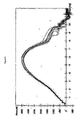
- Representative profiles of instrumented impact energy at maximum load at -20 °C for samples XIII, IX, and VIII are shown in figures 6 , 7 , and 8 respectively. These figures show that the compounds of the invention retain their ductility, even at low temperature.
- the composition described herein can have a total energy of at least about 37,96 Nm (28 foot-pounds).
- the maximum load at room temperature can be at least about 745,7 Nm (550 foot-pounds). In other embodiments, the maximum load at room temperature can be at least about 759,3 Nm (560 foot-pounds). In other embodiments, the maximum load at room temperature may be at least about 779,6 Nm (575 foot-pounds).
- the energy at maximum load at room temperature may be at least about 20,45 Nm (15 foot-pounds). In other embodiments, the energy at maximum load at room temperature may be at least about 21,02 Nm (15.5 foot-pounds). In yet another embodiment, the energy at maximum load at room temperature may be at least about 21,56 Nm (15.9 foot-pounds).
- the composition of the invention may be prepared according to procedures known in the art. More specifically, the composition of the invention may be prepared in a sequential polymerization process wherein a propylene polymer is prepared first, followed by the preparation of copolymer.
- the composition described herein can be prepared using a Ziegler-Natta catalyst, a co-catalyst such as triethylaluminum (“TEA”), and an electron donor such as dicyclopentyldimethoxysilane (“DPCMS”), cyclohexylmethyldimethoxysilane (“CMDMS”), diisopropyldimethoxysilane (“DIPDMS”), or other electron donor known in the art.
- the catalyst system is introduced at the beginning of the polymerization of the propylene polymer and is transferred with the product propylene polymer to the copolymerization reactor where it serves to catalyze the gas phase copolymerization of propylene and ethylene.
- the propylene polymer may be prepared using at least one reactor or may be prepared using a plurality of parallel reactors or reactors in series.
- the homopolymerization process utilizes one or two liquid filled loop reactors in series.
- the propylene polymer may also be prepared in a gas-phase reactor.
- the resultant powder is passed through a degassing vessel so that excess propylene and other gasses may be removed from the fresh resin.
- the propylene polymer is passed to one or more gas phase reactors wherein propylene is copolymerized with ethylene in the presence of the propylene polymer previously produced and the catalyst transferred therewith.
- Propylene polymer crystallinity and isotacticity can be controlled by the ratio of co-catalyst to electron donor.
- the appropriate ratio of co-catalyst to electron donor is dependent upon the catalyst and donor selected. It is within the skill of the ordinarily skilled artisan to determine the appropriate ratio to arrive at a product having the presently described properties.
- the amount of hydrogen necessary to prepare the homopolymer component of the invention is dependent in large measure on the donor and catalyst system used. It is within the skill of the ordinary skilled artisan to select the appropriate quantity of hydrogen for a given catalyst/donor system to prepare a propylene polymer having the combination of properties disclosed herein without undue experimentation.
- the gas phase composition of the reactor(s) are maintained such that the ratio of the mols of ethylene in the gas phase to the total mols of ethylene and propylene is held constant. In certain embodiments, this ratio can be maintained at from about 0.3 to about 0.55. In other embodiments, this ratio can be maintained at about 0.45. In still other embodiments, the ratio of the mols of ethylene in the gas phase to the total mols of ethylene and propylene can be maintained at 0.43. In order to maintain the desired molar ratio, monomer feeds of propylene and ethylene are adjusted as appropriate.
- Hydrogen can be added in the gas phase reactor(s) to control the molecular weight of the copolymer.
- the atmospheric composition of the gas phase is maintained such that the ratio of hydrogen to ethylene (mol/mol) is held constant.
- the ratio of hydrogen to ethylene is maintained at about 0.001 to about 0.03.
- the ration of hydrogen to ethylene is maintained at 0.01 to about 0.03.
- the ratio is about 0.01.
- the ratio is about 0.025.
- the ratio is about 0.0015.
- Exemplary reactor conditions are described in Table 2.
- Example 1 Homopolymcrization Reactor Temperature (°C) 75 75 Pressure (kg/cm 2 ) 42 42 TEA/Donor (wt/wt) 6.5 6.3 Hydrogen (ppm) 210 400 Copolymerization Reactor Temperature (°C) 75 70 Pressure (kg/cm 2 ) 9.8 11.1 C 2 /C 2 +C 3 (mol/mol) 0.43 0.43 J-h/C 2 (mol/mol) 0.01 0.025 Product MFR* (dg/min) 0.35 0.34 C 2 content (wt %) 6.5 7.5 *ASTM DI238
- the polymer powder produced according to the above described procedure can be fed into an extruder.
- an extruder typically, a twin screw extruder is preferred in order to obtain the best melt mixing and dispersion.
- other extruders known in the art such as a single screw extruder, may be used to achieve the desired melt mixing.
- Additives including, but not limited to, antioxidants, acid scavengers, nucleators, antistatics, long term heat agents, slip agents, pigments, processing aids, fillers, polyethylene, impact modifiers, compatabilizers, as well as combinations of any of the aforementioned additives, may be added to the extruder to prepare compositions having specific properties. The extruded polymer strands are subsequently pelletized.
Landscapes
- Engineering & Computer Science (AREA)
- General Engineering & Computer Science (AREA)
- Chemical & Material Sciences (AREA)
- Mechanical Engineering (AREA)
- Health & Medical Sciences (AREA)
- Chemical Kinetics & Catalysis (AREA)
- Medicinal Chemistry (AREA)
- Polymers & Plastics (AREA)
- Organic Chemistry (AREA)
- Addition Polymer Or Copolymer, Post-Treatments, Or Chemical Modifications (AREA)
- Compositions Of Macromolecular Compounds (AREA)
- Transition And Organic Metals Composition Catalysts For Addition Polymerization (AREA)
Description
- There is a substantial need for non-pressure pipe useful for the transport of rainwater and sewage away from residential and commercial properties. Typically, pipes of this nature are buried underground and are made of clay or metal. Each of these materials, though, is susceptible to the environment in which it resides. Clay pipes, for example, often contain junctions that allow the infiltration of roots or other materials that may clog the pipe or otherwise damage the piping system over time. Similarly, metal pipes are susceptible to corrosion.
- In recent years, these issues have been addressed to some extent via the adoption of pipes made of materials such as polyvinyl chloride and polyethylene (HDPE). Even more recently, non-pressure pipe manufacturers have been employing polypropylene as a substitute material. See, e.g.,
U.S. 6,933,347 which discloses a polypropylene pipe comprising an impact copolymer;U.S. 6,433,087 which also discloses a pipe comprising an impact copolymer, andUnited States Patent Publication 2007/0117932 which teaches a heterophasic polyolefin composition comprising an elastomeric polymer in combination with a crystalline polymer having a broad molecular weight distribution. - The widespread adoption of polypropylene non-pressure pipes in the United States has, however, been slow. Specifically, although polypropylene provides an affordable alternative to polyethylene, and is easily fused to provide essentially seamless pipes of variable length, the performance characteristics of the pipes produced from presently available resins have not been ideal. Moreover, presently available polypropylene resins suitable for manufacturing pipe are difficult to process.
- For example, polypropylene pipes made from resins that are currently available may deform if buried too deeply, impeding the flow of the rain water or sewage being transported. These failures are believed to be due, in part, to an industry wide focus on developing resins having specific flexural moduli and notch impact strengths. These properties, though, do not accurately predict long term performance of buried polypropylene structures as both flexural moduli and notch impact strength relate only to short term performance.
- Thus, what is needed is a resin exhibiting good long term performance for use in buried structures, particularly corrugated non-pressure pipe. In particular, it has been found that what is needed is a resin exhibiting good long term creep performance, good creep rupture strength, and a good balance of stiffness and impact resistance. The present disclosure provides such a resin.
- The present disclosure is directed to a polypropylene impact copolymer having superior processability, stiffness-impact balance, and superior long-term creep properties for the solid polymer.
- In one embodiment the polypropylene composition comprises about 83 to about 95 weight percent of a xylene insoluble fraction comprising a xylene insoluble portion of a propylene polymer. The propylene polymer can have an mmmm of from about 88 to about 95 percent; an Nm of from about 55 to about 102; a xylene solubles content of from about I to about 5 %; and a polydispersity index of 2.5 to 6. The polypropylene composition further includes about 5 to about 17 weight percent of a xylene soluble fraction comprising a xylene soluble portion of a copolymer of propylene and ethylene. The xylene soluble fraction can have about 20 to about 55 weight percent ethylene. The composition can have about 1.3 to about 19 weight percent total ethylene, a polydispersity index of from about 2.5 to about 4.5, and a 50-year creep strain of less than about 8% at 6,89 MPa (1000 psi) at 23 °C without creep rupture.
- In a sub-embodiment, the propylene polymer can have an mmmm of about 93, an Nm of about 72, and a polydispersity index of about 3.5. The xylene soluble fraction can have about 36 to about 37 weight percent ethylene. The composition can have about 6 to about 7 weight percent total ethylene, and a polydispersity index of about 3.3.
- In one sub-embodiment, the composition can include a nucleator.
- In another sub-embodiment, the composition can have a melt flow rate of less than about 20 g/10 min. In certain sub-embodiments, the melt flow can be less than about 1 g/10 mm.
- In certain sub-embodiments, the composition can have a 1 % secant flexular modulus of about 1172,1 (170,000) to about 1585,8 MPa (230,000 psi).
- In certain sub-embodiments, the composition can have a 50-year creep modulus of at least about 165,5 MPa (24,000 psi) at 23 °C and 3,45 MPa (500 psi).
- In another sub-embodiment, the composition can include at least one additive selected from the group consisting of a nucleator, an acid scavenger, an antioxidant, a clarifier, a long term heat agent, a processing aid, a pigment, a filler, polyethylene, an impact modifier, a compatabilizer, and a slip agent.
- In another sub-embodiment, the composition can have a total energy during instrumented impact at -20 °C of at least about 27,12 Nm (20 foot pounds).
- The present disclosure also provides mono- or multi-layer pipes, pipe fittings, pipe junctions, tubes, or hoses comprising a polypropylene composition. In one embodiment, the mono- or multi-layer pipes, pipe fittings, pipe junctions, tubes, or hoses, the polypropylene composition can comprise about 83 to about 95 weight percent of a xylene insoluble fraction comprising a xylene insoluble portion of a propylene polymer. The propylene polymer can have an mmmm of from about 88 to about 95 percent; an Nm of from about 55 to about 102; a xylene solubles content of from about 1 to about 5 %; and a polydispersity index of 2.5 to 6. The polypropylene composition further includes about 5 to about 17 weight percent of a xylene soluble fraction comprising a xylene soluble portion of a copolymer of propylene and ethylene. The xylene soluble fraction can have about 20 to about 55 weight percent ethylene. The composition can have about 1.3 to about 19 weight percent total ethylene, a polydispersity index of from about 2.5 to about 4.5, and a 50-year creep strain of less than about 8% at 6,89 MPa (1000 psi) at 23 °C without creep rupture.
- In a sub-embodiment, the propylene polymer can have an mmmm of about 93, an Nm of about 72, and a polydispersity index of about 3.5. The xylene soluble fraction can have about 36 to about 37 weight percent ethylene. The composition can have about 6 to about 7 weight percent total ethylene, and a polydispersity index of about 3.3.
- In one sub-embodiment, the composition can include a nucleator.
- In certain sub-embodiments, the composition can have a 1 % secant flexular modulus of about 1172,1 (170,000) to about 1585,5 MPa (230,000 psi).
- In certain sub-embodiments, the composition can have a 50-year creep modulus of at least about 165,5 MPa (24,000 psi) at 23 °C and 3,45 MPa (500 psi).
- In another sub-embodiment, the composition can include at least one additive selected from the group consisting of a nucleator, an acid scavenger, an antioxidant, a clarifier, a long term heat agent, a processing aid, a pigment, a filler, polyethylene, an impact modifier, a compatabilizer, and a slip agent.
- In another sub-embodiment, the composition can have a total energy during instrumented impact at -20 °C of at least about 27,12 Nm (20 foot pounds).
- The present disclosure further provides a method for preparing a composition. The composition can comprise about 83 to about 95 weight percent of a xylene insoluble fraction comprising a xylene insoluble portion of a propylene polymer. The propylene polymer can have an mmmm of from about 88 to about 95 percent; an Nm of from about 55 to about 102; a xylene solubles content of from about 1 to about 5 %; and a polydispersity index of 2.5 to 6. The composition further includes about 5 to about 17 weight percent of a xylene soluble fraction comprising a xylene soluble portion of a copolymer of propylene and ethylene. The xylene soluble fraction can have about 20 to about 55 weight percent ethylene. The composition can have about 1.3 to about 19 weight percent total ethylene, a polydispersity index of from about 2.5 to about 4.5, and a 50-year creep strain of less than about 8% at 1000 6,89 MPa (100 psi) at 23 °C without creep rupture.
- The method for preparing this polypropylene composition can comprise feeding propylene and hydrogen into a first stage including at least one homopolymerization reactor. The method further includes polymerizing propylene in said first stage at a first temperature and pressure in the presence of a catalyst, cocatalyst, and an electron donor to produce a first product. The method of preparation further includes transferring said first product, catalyst, cocatalyst, and electron donor to a second stage including at least one copolymerization reactor. The polymerization process further includes copolymerizing propylene and ethylene at a second temperature and pressure in the presence of the first product to form said composition.
- In a sub-embodiment of the above described method, the propylene polymer can halve an mmmm of about 93, an Nm of about 72, and a polydispersity index of about 3.5. The xylene soluble fraction can have about 36 to about 37 weight percent ethylene, and the composition can have about 6 to about 7 weight percent total ethylene and a polydispersity index of about 3.3.
- In a further sub-embodiment of the above described method, the method includes adding a nucleator.
- In another sub-embodiment of the method, the first temperature can be about 75 °C, the first pressure can be about 42 kg/cm2. the second temperature can be at least about 70 °C, and the second pressure can be at least about 9 kg/cm2.
- In still another sub-embodiment, the method can include transferring the composition to an extruder; optionally adding an additive to the composition in the extruder; and extruding and pelletizing the compound and optional additive.
- The present disclosure further provides a polypropylene composition, comprising about 83 to about 95 weight percent of a xylene insoluble fraction comprising a xylene insoluble portion of a propylene polymer. The propylene polymer can have an mmmm of from about 88 to less than about 96 percent; an Nm of from about 103 to about 120; a xylene solubles content of from about 1 to about 5 %; and a polydispersity index of 2.5 to 6. The polypropylene composition further includes about 5 to about 17 weight percent of a xylene soluble fraction comprising a xylene soluble portion of a copolymer of propylene and ethylene. The xylene soluble fraction can have about 20 to about 55 weight percent ethylene. The composition can further have about 1.3 to about 19 weight percent total ethylene; a polydispersity index of from about 2.5 to about 4.5; and a 50-year creep strain of less than about 8% at 6,89 MPa (1000 psi) at 23 °C without creep rupture.
- In one sub-embodiment, the xylene insoluble fraction can have an mmmm of about 95, an Nm of about 112, and a polydispersity index of about 3.9. The xylene soluble fraction can have about 38 to about 39 weight percent ethylene. The composition can have about 7 to about 8 weight percent total ethylene and a polydispersity index of about 3.8 to about 3.9.
- In another sub-embodiment, the composition can have a melt flow rate of less than about 20 g/10min.
- In still another sub-embodiment, the composition can have a melt flow of less than about 1 g/10 min.
- In certain sub-embodiments, the composition can have a 1 % secant flexular modulus of about 1172,1 (170,000) to about 1585,5 MPa (230,000 psi).
- In certain sub-embodiments, the composition can have a 50-year creep modulus of at least about 165,5 MPa (24,000 psi) at 33 °C, and 3,45 MPa (500 psi).
- In another sub-embodiment, the composition can include at least one additive selected from the group consisting of a nucleator, an acid scavenger, an antioxidant, a clarifier, a long term heat agent, a processing aid, a pigment, a filler, polyethylene, an impact modifier, a compatabilizer, and a slip agent.
- In another sub-embodiment, the composition can have a total energy during instrumented impact at -20 °C of at least about 27,12 Nm (20 foot pounds).
- In another sub-embodiment, the composition can have an intrinsic viscosity ratio of copolymer to propylene polymer of about 1 to about 1.8.
- As noted elsewhere herein, the present disclosure also provides mono- or multi-layer pipes, pipe fittings, pipe junctions, tubes, or hoses comprising a polypropylene composition. In one embodiment, the composition can comprise about 83 to about 95 weight percent of a xylene insoluble fraction comprising a xylene insoluble portion of a propylene polymer, said propylene polymer having an mmmm of from about 88 to less than about 96 percent; an Nm of from about 103 to about 120; a xylene solubles content of from about 1 to about 5 %; and a polydispersity index of 2.5 to 6. The composition can further comprise about 5 to about 17 weight percent of a xylene soluble fraction comprising a xylene soluble portion of a copolymer of propylene and ethylene, said xylene soluble fraction having about 20 to about 55 weight percent ethylene. The can have about 1.3 to about 19 weight percent total ethylene, a polydispersity index of from about 2.5 to about 4.5, and a 50-year creep strain of less than about 8% at 6,89 MPa (1000 psi) at 23 °C without creep rupture.
- In one sub-embodiment, the propylene polymer can have an mmmm of about 95, an Nm of about 112, and a polydispersity index of about 3.9. The xylene soluble fraction can have about 38 to about 39 weight percent ethylene. The composition can have about 7 to about 8 weight percent total ethylene and a polydispersity index of about 3.8 to about 3.9.
- In a further sub-embodiment, the composition can have a 50-year creep modulus of at least about 165,5 MPa (24,000 psi) at 23 °C and 3,45 MPa (500 psi).
- In another sub-embodiment, the composition can have a 1 % secant flexular modulus of about 1172,1 (170,000) to about 1585,5 MPa (230,000 psi).
- In still another sub-embodiment, the polypropylene composition can further comprise at least one additive selected from the group consisting of a nucleator, an acid scavenger, an antioxidant, a clarifier, a long term heat agent, a processing aid, a pigment, a filler, polyethylene, an impact modifier, a compatabilizer, and a slip agent.
- In another sub-embodiment, the composition can have an intrinsic viscosity ratio of copolymer to homopolymer of about I to about 1.8
- The present disclosure further includes a method for preparing a composition that can comprise about 83 to about 95 weight percent of a xylene insoluble fraction comprising a xylene insoluble portion of a propylene polymer, said propylene polymer having an mmmm of from about 88 to less than about 96 percent; an Nm of from about 103 to about 120; a xylene solubles content of from about 1 to about 5 %; and a polydispersity index of 2.5 to 6. The composition can further comprise about 5 to about 17 weight percent of a xylene soluble fraction comprising a xylene soluble portion of a copolymer of propylene and ethylene, said xylene soluble fraction having about 20 to about 55 weight percent ethylene. The can have about 1.3 to about 19 weight percent total ethylene, a polydispersity index of from about 2.5 to about 4.5, and a 50-year creep strain of less than about 8% at 6,89 MPa (1000 psi) at 23 °C, without creep rupture. The method includes feeding propylene and hydrogen into a first stage
including at least one homopolymerization reactor; polymerizing the propylene in the first stage at a first temperature and pressure in the presence of a catalyst, cocatalyst, and an electron donor to produce a first product; transferring the first product, catalyst, cocatalyst, and electron donor to a second stage including at least one copolymerization reactor; and copolymerizing, propylene and ethylene at a second temperature and pressure in the presence of the first product. - In one sub-embodiment, the propylene polymer can have an mmmm of about 95, an Nm of about 112, and a polydispersity index of about 3.9. The xylene soluble fraction can have about 38 to about 39 weight percent ethylene. The composition can have about 7 to about 8 weight percent total ethylene and a polydispersity index of about 3.8 to about 3.9.
- In another sub-embodiment, the composition can have an intrinsic viscosity ratio of copolymer to homopolymer of about 1 to about 1.8
- In a further sub-embodiment, the first temperature can be about 75 °C, the first pressure can be about 42 kg/cm2. the second temperature can be at least about 70 °C, and the second pressure can be at least about 9 kg/cm2.
- Another method for making the composition described herein is also provided. This method may include mixing a propylene polymer having an mmmm of from about 88 to about 95 percent; an Nm of from about 55 to about 102; a xylene solubles content of from about 1 to about 5 %; and a polydispersity index of 2.5 to 6, with an ethylene propylene copolymer. The method may further include optionally adding an additive to the extruder. The method also includes extruding and pelletizing the composition.
- The present disclosure further recites an article comprising any one of the composition as described herein wherein the article is prepared via extrusion, injection molding, compression molding, blow molding, or thermoforming.
- The present disclosure further includes another method of preparing a composition disclosed herein. This can include mixing a propylene polymer having an mmmm of from about 88 to about 96 percent; an Nm of from about 103 to about 120; a xylene solubles content of from about 1 to about 5 %; and a polydispersity index of 2.5 to 6, with an ethylene propylene copolymer, in an extruder to form said composition; optionally adding an additive to the extruder; and extruding and pelletizing the composition.
- For the purpose of illustrating the resin described herein, there are depicted in the drawings certain embodiments of the resin in various tables and graphs. However, the resin described herein is not limited to the precise arrangements and instrumentalities of the embodiments depicted in the drawings.
-
Figure 1 is a graph depicting the Creep Modulus of various compositions of the invention and several comparative examples at 3,45 MPa (500 PSI). -
Figure 2 is a graph depicting the Creep Strain (%) of various compositions of the invention and several comparative examples at 3,45 MPa (500 PSI). -
Figure 3 is a graph depicting the Creep Modulus of various compositions of the invention and several comparative examples at 3,45 MPa (500 PSI). -
Figure 4 is a graph depicting the Creep Strain (%) of various compositions of the invention and several comparative examples at 3,45 MPa (500 PSI). -
Figure 5 is a graph showing the correlation between ASTM D6992 (SIM Creep Rupture) and ASTM 2990 (Conventional Creep Rupture) using composition XIII. -
Figure 6 is a graph showing representative profiles of instrumented impact energy at -20 °C for composition XIII. -
Figure 7 is a graph showing representative profiles of instrumented impact energy at -20 °C for composition IX. - Figure 82 is a graph showing representative profiles of instrumented impact energy at -29 °C for composition VIII.
- In accordance with this detailed description, the following abbreviations and definitions apply. It must be noted that as used herein, the singular forms "a", "an", and "the" include plural referents unless the context clearly dictates otherwise. Thus, for example, reference to "a resin" includes a plurality of such resins and reference to "the resin" includes reference to one or more resins and equivalents thereof known to those skilled in the art, and so forth.
- As used herein the phrase "propylene polymer" refers to a propylene homopolymer or to an ethylene propylene random copolymer having, in certain embodiments, less than 1.5 weight percent ethylene, and in other embodiments, less than 1 weight percent ethylene. In the context of an impact copolymer, the propylene polymer may be referred to as the "matrix."
- Unless defined otherwise, all technical and scientific terms used herein have the same meaning as commonly understood by one of ordinary skill in the art.
- Ranges are provided in various locations throughout this specification. For any given range in the present specification, every whole integer therein is deemed to be part of that range, as is every hundredth and thousandth of an integer, such that a range of from, for example, 1 to 2 includes at least 1.000, 1.001, 1.002, 1.003, 1.004, 1.005, 1.006, 1.007, 1.008, 1.009, 1.010, 1.011, etc. through to 2, unless otherwise provided.
- It is generally accepted in the art that there is a direct correlation between the isotacticity of the matrix of an impact copolymer and the stiffness of the total impact copolymer. As a result, it is generally accepted that the higher the isotacticity of the matrix, the higher the stiffness in the total polymer. It is also generally appreciated that a broad molecular weight distribution in the matrix portion of an impact copolymer, such as the propylene polymer portion of the impact copolymer, correlates to a polymer having enhanced stiffness. Good long term creep resistance as measured by creep modulus, % creep strain, and creep rupture strength, are likewise generally believed to be associated with high stiffness. Thus, a person of ordinary skill in the art attempting to design an impact copolymer with outstanding long term creep properties, would likely prepare an impact copolymer wherein the matrix of the impact copolymer has a high isotacticity and a broad molecular weight distribution.
- It has now been surprisingly discovered, though, that the matrix of a heterophasic impact copolymer used for non-pressure pipes does not need to be highly isotactic to achieve excellent long-term (50-100 year) creep resistance. In particular, the data provided herein demonstrates that an impact copolymer comprising a matrix having an "mmmm" of less than about 96 percent, and in certain embodiments, less than about 95 percent, can have outstanding long term creep resistance.
- The fact that an impact copolymer having a low or medium isotacticity matrix provides a resin having excellent long-term creep performance is both counterintuitive and unexpected. The unexpected nature of these results is made even more surprising by the fact that experimentation has shown that a matrix having a relatively narrow molecular weight distribution, which results in a less stiff resin, results in a product with excellent long term creep resistance, too.
- In addition to the above, the impact copolymer described herein has superior ductility at temperatures at least as low as -29 °C. The combination of excellent long term creep resistance and outstanding cold temperature impact strength for the composition described herein is highly advantageous and desirable for use in buried structures, such as non-pressure pipe.
- The composition of the present invention is an impact copolymer. An impact copolymer includes both a matrix and an ethylene propylene copolymer. Particularly for in-reactor produced materials, the percent content of the matrix and ethylene propylene copolymer arc difficult to ascertain directly. As a result of the difficulties associated with direct measurement, polymer chemists of ordinary skill in the art frequently report the weight percentages of the xylene insolubles and solubles content of an impact copolymer. These valucs are casily measured and provide a rough approximation of the weight percent content of the matrix and ethylene propylene copolymer, respectively.
- For the composition described herein, the xylene insoluble fraction comprises, amongst other components, the xylene insoluble portion of the propylene polymer. The xylene insoluble fraction makes up anywhere from about 83 to about 95 weight percent of the composition. In certain embodiments, the xylene insoluble fraction makes up from about 84 to about 89 weight percent of the composition. The weight percent of the xylene insoluble fraction in the composition can be determined by measuring the weight percent of the xylene solubles fraction of the composition, and subtracting the resulting value from 100.
- The weight percent of the xylene soluble fraction in the composition is measured by adding 2 g of the composition to 200 ml of o-xylene (stabilized with AO-1010) in a flask equipped with a water cooled condenser. The mixture is then heated to reflux (about 140 °C) under a nitrogen purge and allowed to stir for about 30 minutes. Subsequently, the temperature is lowered to about 100 °C for about 30 minutes at which point the polymer is thomughly dissolved in o-xylene.
- The heat source is then removed and any condensate remaining in the condenser is allowed to drain into the flask (approximately 5 minutes). The condenser is removed and the flask is placed into a thermostatically controlled water bath maintained at 25 °C ± 0.5 °C for I hour During this time, a precipitate forms.
- The flask is then removed from water bath and the flask's contents are filtered through a Whatman 114 V (Qualitative Wet-Strengthened) filter paper. The filtrate is collected and adjusted to the original starting volume of 200 ml. After stirring, a 50 ml aliquot of the diluted filtrate is collected with a volumetric pipette. The aliquot is subsequently transferred to a tared stainless steel beaker.
- The beaker is placed into a steam bath and the solvent contained in the aliquot is evaporated. The beaker is then placed in a vacuum oven for 1 hr at 80 °C to ensure that any remaining solvent is fully evaporated. Finally, the beaker is removed from the vacuum oven, allowed to cool to room temperature under ambient conditions for 1 hour, and then weighed. The weight of the contents of the flask are determined by subtracting the weight of the tared beaker from the measured weight of beaker with the dried soluble fraction. The weight percent xylene soluble fraction (%XS) of the composition can thus be calculated as follows:

Thus, using a 2g sample of composition, 200ml of solvent for the initial dissolution, and a 50ml aliquot, as in the above described example, the % XS = 100*( Weight of Solid Sample Contained in Aliquol/2g)*(200ml/50ml) or 200*Weight of Solid Sample Contained in Aliquot. - The xylene insoluble fraction of the composition described herein comprises, amongst other components, the xylene insoluble portion of the propylene polymer. Regardless of the method used to prepare the composition described herein, the properties of the propylene polymer may be measured directly by sampling propylene polymer from a given reactor prior to blending the propylene polymer with an ethylene propylene copolymer.
- The propylene polymer can exhibit an mmmm (meso pentad) content of from about 88 to less than about 96 percent. In certain embodiments, the mmmm can be from about 89 to less than about 95 percent. Percent meso pentad content is measured by 13C NMR according to Macromolecules, . Without wishing to be bound to any particular theory, it is believed that this relatively low isotacticity, in combination with the various other properties described herein, results in a polymer having desirable long tenn creep properties.
- In certain embodiments, the mmmm can be about 92 to less than about 96 percent. In one embodiment, mmmm content can be about 92 percent. In another embodiment, mmmm content can be about 92.8 percent. In another embodiment, mmmm content can be about 92.86 percent. In yet another embodiment, mmmm can be about 95 percent. In another embodiment, mmmm content can be about 95.3 percent. In still another embodiment, mmmm content can be 95.33 percent.
- The propylene polymer can have an average Nm [meso sequence (run) length] of about 55 to about 120. Nm can be measured using 13C NMR according to the following equation:

- In one embodiment, Nm may be about 55 to about 102. In another embodiment, Nm may be about 103 to about 120. In one embodiment, Nm can be about 72. In another embodiment, Nm can be about 72.1. In another embodiment, Nm can be about 112. In another embodiment, Nm can be about 112.2.
- The propylene polymer can be further characterized by a xylene soluble and a xylene insoluble fraction. The weight percent of the xylene soluble fraction of the propylene polymer can be measured according to methodology described above for measurement of the weight percent of the xylene soluble fraction of the composition. The xylene soluble fraction of the propylene polymer can be from about 1% to about 5%. Accordingly, the xylene insoluble fraction of the propylene polymer of the composition can be from about 95% to about 99%.
- The propylene polymer can be further characterized by an intrinsic viscosity of from about 2.5 to about 6 dl/g. The intrinsic viscosity of the propylene polymer can be measured in tetralin at 135 °C using a Desreux-Bischoff dilution viscometer (Ubbelohde-type) on a I g/L solution of the propylene polymer. In one embodiment, the intrinsic viscosity of the propylene polymer can be about 3 dl/g. In another embodiment, the intrinsic viscosity of the propylene polymer can be about 3.4 dl/g. In another embodiment, the intrinsic viscosity of the propylene polymer can be about 3.44 dl/g. In another embodiment the intrinsic viscosity of the propylene polymer can be about 3.5 to about 4 dl/g.
- The propylene polymer can be further characterized by a polydispersity index of from about 2.5 to about 6. Polydispersity can be measured according to the crossover modulus method. THe crossover modulus method is described in Zeichner. G. R., et al, Proc. Of the 2nd World Congress of Chemical Engineering. Montreal, Canada, 1981. as well as in
equation 6 as presented in Shroff, R., et al., Applied Polymer Sciences, Vol. 57, 1605-1626, 1995. For the propylene polymer, the polydispersity index is measured via frequency sweep oscillatory shear data at 200 °C. This data is generated using an ARES (TA Instruments) controlled strain rheometer using 25 nun parallel plates with a frequency range from 0.1 to 500 rad/s. - In instances where the melt flow rate of the propylene polymer is greater than about 40 g/10 min. polydispersity index cannot be determined by the crossover modulus method due to instrument limitations. Thus, for propylene polymers with melt flows greater than about 40 g/10 min, the modulus separation technique described by H.J. Yoo in "MWD Determination of Ultra High MFR Polypropylene by Melt Rheology", Advances in Polymer Technology, Vol. 13, 201-205. 1994 should be used instead.
- Without wishing to be bound to any particular theory, it is believed that this range of narrow molecular weight distributions, in combination with the other properties described herein, surprisingly results in a composition having enhanced creep properties. In certain embodiments, the polydispersity index of the propylene polymer is from about 3 to about 4. In one embodiment, the polydispersity index can be about 3.5. In another embodiment, the polydispersity index can be about 3.9.
- A table detailing the properties of exemplary propylene polymers useful for the preparation of the impact copolymer described herein can be found in Table I. Each of samples II-VII is a propylene homopolymer.
Table 1 Composition % mm % mmmm Nm Polydispersity Index %XS II 94.94 92.86 72.1 3.50 2.55 III 95.07 92.76 68.9 3.50 2.53 IV 94.94 91.88 58.6 3.50 2.16 V 95.39 93.65 79.3 3.70 1.91 VI 96.11 94.42 90.2 3.50 1.50 VII 96.68 95.33 112.2 3.90 1.61 - In order to form an impact copolymer having the advantageous properties described herein, the above described propylene polymer is blended with an ethylene-propylene copolymer. The blending may take place via melt-blending in an extruder, however, more preferably, the propylene polymer and ethylene-propylene copolymer are blended via an in- reactor process.
- The properties of the ethylene propylene copolymer, patticularly for reactor blends, cannot be measured directly. As a result, the properties of the xylene solubles fraction of the composition, which comprises, amongst other components, the xylene soluble portion of the ethylene propylene copolymer, are reported herein. The xylene soluble fraction of the composition can comprise anywhere from about 5 to about 17 weight percent of the composition. In certain embodiments, however, the xylene soluble fraction can comprise from 8 to 13 weight percent of the composition. The weight percentage of the xylene solubles fraction in the composition may be measured according to the method described previously.
- The xylene solubles fraction of the composition can contain about 20 to about 55 weight percent ethylene as measured by 13C NMR. In certain embodiments, however, the xylene solubles fraction of the composition may only contain about 32 to about 39 weight percent ethylene. In one embodiment, the ethylene content of the xylene solubles fraction of the composition can be about 36 weight percent. In another embodiment, the ethylene content can be about 36.7 weight percent. In another embodiment, the ethylene content in the xylene solubles fraction of the composition can be about 38 weight percent. In still another embodiment, the ethylene content can be about 38.7 weight percent.
- The intrinsic viscosity of the xylene soluble fraction of the composition (β) can be from about 2 to about 7. In certain embodiments, β is from about 3 to about 5.
- In one embodiment, the composition can have about 1.3 to about 19 weight percent total ethylene. In another embodiment, the composition can have about 3 to about 10 weight percent total ethylene. In an alternative embodiment, the total ethylene may be about 6 to about 8 weight percent total ethylene. In one embodiment, the composition can have about 6.5 weight percent total ethylene. In another embodiment, the composition can have about 7.4 weight percent total ethylene. Total ethylene content may be measured by FTIR according to ASTM D5576.
- The composition of the invention can be further characterized by an intrinsic viscosity ratio of the xylene soluble fraction of the composition to the xylene insoluble fraction of the composition of about 1 to about 1.8. In other embodiments, the ratio may be about 1 to about 1.5. In a further embodiment, the ratio may be about 1.15 to 1.25. In certain embodiments, the intrinsic viscosity ratio of the xylene soluble fraction to the xylene insoluble fraction can be about 1.2. In another embodiment, the intrinsic viscosity ratio of the xylene soluble fraction to the xylene insoluble fraction may be about 1.5.
- The intrinsic viscosity ratio of the xylene soluble fraction of the composition ("β") to the xylene insoluble fraction of the composition ("α") may be calculated according to the following formula:

US Patent 6,933,347 . - The composition can be further characterized by a polydispersity index of from about 2.5 to about 4.5. In one embodiment, the polydispersity index can be about 3.3. In another embodiment, the polydispersity index can be about 3.8. In yet another embodiment, the polydispersity index can be about 3.9. Polydispersity may be measured according to the crossover modulus method described elsewhere herein.
- The composition of the invention can have a percent crystallinity of at least 50 as measured by annealed differential scanning calorimetry (DSC) according to ASTM D3414. Following the general ASTM specification, films were pressed from pellets or powder at 200 °C for 3 min. These films were subsequently run in TA Q200 Robotics DSC with a refrigerated cooling system. In the DSC, polymer is melted at 200°C and equilibrated for 5 minutes. The sample is then cooled to 0°C at a rate of 10°C/min while recording the recrystallization exotherm (cooling curve). Once cool, the sample is then heated to 200 °C at a rate of 15°C/min to record the melting endotherms. The percent crystallinity is determined by integrating the area under the re-crystallization peak on the cooling curve and dividing by 165 J/g.
- In one embodiment, the percent crystallinity of the total polymer can be about 51. In another embodiment, the percent crystallinity of the total polymer can be about 51.5. In still another embodiment, the percent crystallinity of the total polymer can be about 51.6. In another embodiment, the percent crystallinity of the total polymer is about 54. In another embodiment, the percent crystallinity of the total polymer can be about 54.5. In yet another embodiment, the percent crystallinity of the total polymer can be about 54.8.
- The composition of the invention can be further characterized by a melting temperature ("Tmelt") of at least about 163 °C (DSC). In one embodiment, the Tmelt is about 163.9 °C. In another embodiment, the Tmelt is about 164.5 °C.
- The composition of the invention can be further characterized by its melt flow. For example, for the preparation of non-pressure pipes, which are typically prepared via extrusion, the melt flow of the composition of the invention should be less than about 2, more preferably less than 1 g/10 minutes, but greater than about 0.1 g/10 minutes. In certain embodiments, the melt flow of the composition is between about 0.25 and 0.45 g/10 minutes. In other embodiments, the melt flow of the composition may be about 0.3 g/10 min or about 0.4 g/10 minutes. The melt flow of the composition of the invention may, however, exceed 2 but be less than about 20 g/10 min. At these higher melt flows, the composition can be useful for injection molding, thermoforming, or blow molding. The melt flow of the composition can be measured per ASTM 1238 using a load of 2.16 kg at 230 °C.
- In certain embodiments of the invention, the composition is nucleated with a nucleating agent such as
Sodium 2,2'-methylene bis-(4,6-di-tert-butyl phenyl)phosphate. Other nucleating agents that can be used in a composition of the invention include, but are not limited to, talc, sodium benzoate, 2,2'-Methylenebis-(2,6-ditert-butylphenyl)phosphate (lithium salt), Aluminum hydroxybis[2,4,8,10-tetrakis(1,1-dimethylethyl)-6-hydroxy-12-H-dibenzo[d,g][1,3,2]dioxaphosphocin 6-oxidato], dibenzilidene sorbitol,nonitol - In certain embodiments, fillers may be used in combination with, or instead of, nucleating agents. Examples of fillers include, but are not limited to, talc, micro-talc, glass, and nano-composites. In certain instances, fillers may act as nucleators.
- The resin described herein can have a number of the performance characteristics as follows: T he composition can have a 1% secant flexural modulus of at least about 1103,2 MPa (160) to about 1723,7 MPa (250 kpsi). In another embodiment, the flexural modulus can be about 1172,1 MPa (170) to about 1585,8 MPa (230 kpsi). Secant flexural modulus is measured according to ASTM D790. The Izod impact strength of the composition of the invention (according to ASTM D256) at room temperature can be 100% non-break. At -4 °C, the Izod impact strength can be about 1,1 J/cm to about 3,2 J/cm (about 2 to about 6 ft-lb/in) (with partial breakage observed. At -20 °C, the Izod impact strength can be about 0,534 J/cm to about 0,91 J/cm (about 1 to about 1.7 ft-lbtin, with complete breakage observed.
- The yield stress of the composition, as measured according to ASTM D638, can be about 27,6 MPa (4000) to about 31,0 MPa (4500 psi). In certain embodiments, the yield stress of the composition can be about 29 MPa to about 29,4 MPa (about 4200 to about 42270 psi). The percent strain at the yield point can be from about 11 to about 13 percent. In certain embodiments, the percent strain at the yield point can be from about 11.5 to about 12.5 percent. In still other embodiments, the percent strain at the yield point can be from about 11.7 to about 12.1 percent.
- The tangent tensile modulus of the composition can be about 1172,1 MPa (170 kpsi) to about 1517,0 MPa (220) kpsi. In certain embodiments, the tangent tensile modulus of the composition can be about 1241,1 MPa (180 kpsi)to about 1585,8 MPa (230 kpsi).
- Long term creep properties can be measured using the Step Isothermal Method ("SIM") according to ASTM D6992 in the tensile mode of deformation using injection molded "
Type 1" specimens.Type 1 specimens used for all SIM data measurements were prepared according to ASTM D4001 procedures. All data resulting from the various SIM creep studies was normalized to a reference temperature of 23 °C using the time-temperature superposition principle as described in ASTM D6992. Using these protocols, the creep-resistance of the composition can be evaluated at 50 and 100 years. All SIM data was validated with ASTM D2990, a conventional tensile creep-rupture measurement technique.Figure 5 shows the correlation between SIM (ASTM 6992) and conventional creep rupture method (ASTM D2990) for composition XIII as described herein. - The 50 year creep modulus according to the SIM method at 3,45 MPa (500 psi) can be at least about 165,5 MPa (24 kpsi). In certain embodiments, the 50 year creep modulus at 3,45MPa (500 psi) can be at least about 200 MPa (29 kpsi). In still other embodiments, the 50 year creep modulus at 3,45 MPa (500 psi) can be at least about 234,4 MPa (34 kpsi).
- The 50 year creep strain at 3,45 MPa (500 psi) according to ASTM D6992 can be from about 1 to about 2.1 %. In certain embodiments, the 50 year creep strain can be about 1.5 to about 1.7 %. In yet other embodiments, the 50 year creep strain can be about 1.52 to about 1.72 %. The 50 year creep strain at 6,89 MPa (1000 psi), also according to D6992, can be less than about 8 %. In another embodiment, the 50 year creep strain at 6,89 MPa (1000 psi) can be less than about 7 %. In another embodiment, the 50 year creep strain at 6,89 MPa (1000 psi) can be less than about 5 %.
- The 50 year creep rupture strength can be at least about 6,89 MPa (1000 psi).
- Instrumented impact properties were measured according to ASTM D3763, using circular impact disks with a diameter of 4" and a thickness of 0.125". The disks were produced via injection molding according to ASTM D4001. A striker mass of 22.49 kg was used. Impact height was 0.3888 m and the impact velocity was 2.76 m/s.
- Using the above described parameters, the total energy of the instrumented impact at -20 °C can be at least about 27,12 Nm (20 foot pounds). In other embodiments, the instrumented impact at -20 °C can be at least about 27.12 to about 61,0 Nm (about 20 to about 45 foot-pounds). In other embodiments, the total energy at -20 °C can be at least about 32,54 Nm to about 54,23 Nm (about 24 to about 40 foot pounds). In still other embodiments, the total energy at -20 °C can be at least about 40,67 Nm to about 54,23 Nm (about 30 to about 40 foot-pounds).
The instrumented impact energy at maximum load at -20 °C can be at least about 27,12 Nm (20 foot-pounds). In other embodiments, the instrumented impact energy at maximum load at -20 °C can be at least about 28,47 Nm (21 foot-pounds). In still other embodiments, the instrumented impact energy at maximum load at -20 °C can be at least about 29,83 Nm (22 foot-pounds). Representative profiles of instrumented impact energy at maximum load at -20 °C for samples XIII, IX, and VIII are shown infigures 6 ,7 , and8 respectively. These figures show that the compounds of the invention retain their ductility, even at low temperature. - For instrumented impact at room temperature, the composition described herein can have a total energy of at least about 37,96 Nm (28 foot-pounds). The maximum load at room temperature can be at least about 745,7 Nm (550 foot-pounds). In other embodiments, the maximum load at room temperature can be at least about 759,3 Nm (560 foot-pounds). In other embodiments, the maximum load at room temperature may be at least about 779,6 Nm (575 foot-pounds).
- The energy at maximum load at room temperature may be at least about 20,45 Nm (15 foot-pounds). In other embodiments, the energy at maximum load at room temperature may be at least about 21,02 Nm (15.5 foot-pounds). In yet another embodiment, the energy at maximum load at room temperature may be at least about 21,56 Nm (15.9 foot-pounds).
- The composition of the invention may be prepared according to procedures known in the art. More specifically, the composition of the invention may be prepared in a sequential polymerization process wherein a propylene polymer is prepared first, followed by the preparation of copolymer. The composition described herein can be prepared using a Ziegler-Natta catalyst, a co-catalyst such as triethylaluminum ("TEA"), and an electron donor such as dicyclopentyldimethoxysilane ("DPCMS"), cyclohexylmethyldimethoxysilane ("CMDMS"), diisopropyldimethoxysilane ("DIPDMS"), or other electron donor known in the art. The catalyst system is introduced at the beginning of the polymerization of the propylene polymer and is transferred with the product propylene polymer to the copolymerization reactor where it serves to catalyze the gas phase copolymerization of propylene and ethylene.
- The propylene polymer may be prepared using at least one reactor or may be prepared using a plurality of parallel reactors or reactors in series. Preferably, the homopolymerization process utilizes one or two liquid filled loop reactors in series. Despite a preference for liquid filled loop reactors, the propylene polymer may also be prepared in a gas-phase reactor.
- Once formation of the propylene polymer is complete, resulting in either a homopolymer or ethylene propylene random copolymer having less than 1.5 weight percent ethylene, the resultant powder is passed through a degassing vessel so that excess propylene and other gasses may be removed from the fresh resin. After degassing, the propylene polymer is passed to one or more gas phase reactors wherein propylene is copolymerized with ethylene in the presence of the propylene polymer previously produced and the catalyst transferred therewith.
- Propylene polymer crystallinity and isotacticity can be controlled by the ratio of co-catalyst to electron donor. The appropriate ratio of co-catalyst to electron donor is dependent upon the catalyst and donor selected. It is within the skill of the ordinarily skilled artisan to determine the appropriate ratio to arrive at a product having the presently described properties.
- The amount of hydrogen necessary to prepare the homopolymer component of the invention is dependent in large measure on the donor and catalyst system used. It is within the skill of the ordinary skilled artisan to select the appropriate quantity of hydrogen for a given catalyst/donor system to prepare a propylene polymer having the combination of properties disclosed herein without undue experimentation.
- For copolymerization, the gas phase composition of the reactor(s) are maintained such that the ratio of the mols of ethylene in the gas phase to the total mols of ethylene and propylene is held constant. In certain embodiments, this ratio can be maintained at from about 0.3 to about 0.55. In other embodiments, this ratio can be maintained at about 0.45. In still other embodiments, the ratio of the mols of ethylene in the gas phase to the total mols of ethylene and propylene can be maintained at 0.43. In order to maintain the desired molar ratio, monomer feeds of propylene and ethylene are adjusted as appropriate.
- Hydrogen can be added in the gas phase reactor(s) to control the molecular weight of the copolymer. The atmospheric composition of the gas phase is maintained such that the ratio of hydrogen to ethylene (mol/mol) is held constant. In certain embodiments, the ratio of hydrogen to ethylene is maintained at about 0.001 to about 0.03. In other embodiments, the ration of hydrogen to ethylene is maintained at 0.01 to about 0.03. In one embodiment, the ratio is about 0.01. In another embodiment, the ratio is about 0.025. In a further embodiment, the ratio is about 0.0015. Exemplary reactor conditions are described in Table 2.
Table 2 Example 1 Example 2 Homopolymcrization Reactor Temperature (°C) 75 75 Pressure (kg/cm2) 42 42 TEA/Donor (wt/wt) 6.5 6.3 Hydrogen (ppm) 210 400 Copolymerization Reactor Temperature (°C) 75 70 Pressure (kg/cm2) 9.8 11.1 C2/C2+C3 (mol/mol) 0.43 0.43 J-h/C2 (mol/mol) 0.01 0.025 Product MFR* (dg/min) 0.35 0.34 C2 content (wt %) 6.5 7.5 *ASTM DI238 - Upon completion of the polymerization process, the polymer powder produced according to the above described procedure can be fed into an extruder. When an extruder is employed, typically, a twin screw extruder is preferred in order to obtain the best melt mixing and dispersion. Despite the preference for a twin-screw extruder, other extruders known in the art, such as a single screw extruder, may be used to achieve the desired melt mixing.
- Additives including, but not limited to, antioxidants, acid scavengers, nucleators, antistatics, long term heat agents, slip agents, pigments, processing aids, fillers, polyethylene, impact modifiers, compatabilizers, as well as combinations of any of the aforementioned additives, may be added to the extruder to prepare compositions having specific properties. The extruded polymer strands are subsequently pelletized.
- The disclosures of each and every patent, patent application, and publication cited herein arc hereby incorporated herein by reference in their entirety.
- While this invention has been disclosed with reference to specific embodiments, it is apparent that other embodiments and variations of this invention may be devised by others skilled in the art without departing from the true spirit and scope of the invention. The appended claims are intended to be construed to include all such embodiments and equivalent variations.
Claims (15)
- A polypropylene composition, said composition comprising about 83 to about 95 weight percent of a xylene insoluble fraction comprising a xylene insoluble portion of a propylene polymer, said propylene polymer having a xylene solubles content of from about 1 to about 5%; a polydispersity index of 2.5 to 6; and
either an mmmm of from about 88 to about 95 percent and an Nm of from about 55 to about 102; or an mmmm of from about 88 to less than about 96 percent; and an Nm of from about 103 to about 120;
about 5 to about 17 weight percent of a xylene soluble fraction comprising a xylene soluble portion of a copolymer of propylene and ethylene, said xylene soluble fraction having about 20 to about 55 weight percent ethylene;
said composition having about 1.3 to about 19 weight percent total ethylene; a polydispersity index of from about 2.5 to about 4.5;
and a 50-year creep strain of less than about 8% at 6,89 MPa (1000 psi) at 23 °C without creep rupture. - The composition according to claim 1, wherein said propylene polymer has an mmmm of about 93, an Nm of about 72, and a polydispersity index of about 3.5; said xylene soluble fraction has about 36 to about 37 weight percent ethylene; and said composition has about 6 to about 7 weight percent total ethylene; and a polydispersity index of about 3.3.
- The composition according to claim 1, wherein said xylene insoluble fraction has an mmmm of about 95, an Nm of about 112, and a polydispersity index of about 3.9;
said xylene soluble fraction has about 38 to about 39 weight percent ethylene; and said composition has about 7 to about 8 weight percent total ethylene; and a polydispersity index of about 3.8 to about 3.9. - The composition according to claim 2, further comprising a nucleator.
- The composition according to claim 1, wherein the composition has a meltflow rate of less than about 20 g/10 min, preferably of less than about 1 g/10 min.
- The composition according to claim 1, wherein said composition has a 1% secant flexular modulus of about 1172.1 (170,000) to about 1585.8 MPa (230,000 psi).
- The composition according to claim 1, wherein said composition has a 50-year creep modulus of at least about 165.5 MPa (24,000 psi) at 23 °C and 3.45 MPa (500 psi).
- The composition according to claim 1, further comprising at least one additive selected from the group consisting of a nucleator, an acid scavenger, an antioxidant, a clarifier, a long term heat agent, a processing aid, a pigment, a filler, polyethylene, an impact modifier, a compatabilizer, and a slip agent.
- The composition according to claim 1, wherein said composition has a total energy during instrumented impact at -20 °C of at least about 27.12 Nm (20 foot pounds).
- The composition according to claim 1, wherein the said propylene polymer has an mmmm of from about 88 to less than about 96 percent; an Nm of from about 103 to about 120; wherein said composition has an intrinsic viscosity ratio of copolymer to propylene polymer of about 1 to about 1.8.
- Mono- or multi-layer pipes, pipe fittings, pipe junctions, tubes, or hoses comprising a polypropylene composition, said polypropylene composition comprising about 83 to about 95 weight percent of a xylene insoluble fraction comprising a xylene insoluble portion of a propylene polymer, said propylene polymer having a xylene solubles content of from about 1 to about 5%; and a polydispersity index of 2.5 to 6;
and either an mmmm of from about 88 to about 95 percent and an Nm of from about 55 to about 102; or an mmmm of from about 88 to less than about 96 percent; and an Nm of from about 103 to about 120;
about 5 to about 17 weight percent of a xylene soluble fraction comprising a xylene soluble portion of a copolymer of propylene and ethylene, said xylene soluble fraction having about 20 to about 55 weight percent ethylene;
said composition having about 1.3 to about 19 weight percent total ethylene; a polydispersity index of from about 2.5 to about 4.5; and
a 50-year creep strain of less than about 8% at 6.89 MPa (1000 psi) at 23 °C without creep rupture. - The mono- or multi-layer pipes, pipe fittings, pipe junctions, tubes, or hoses according to claim 11, wherein said propylene polymer has an mmmm of about 93, an Nm of about 72, and a polydispersity index of about 3.5;
said xylene soluble fraction has about 36 to about 37 weight percent ethylene; and wherein said composition has about 6 to about 7 weight percent total ethylene; and a polydispersity index of about 3.3. - A method for preparing a composition comprising about 83 to about 95 weight percent of a xylene insoluble fraction comprising a xylene insoluble portion of a propylene polymer, said propylene polymer having a xylene solubles content of from about 1 to about 5%; a polydispersity index of 2.5 to 6;
and either an mmmm of from about 88 to about 95 percent and an Nm of from about 55 to about 102; or an mmmm of from about 88 to less than about 96 percent; and an Nm of from about 103 to about 120;
and about 5 to about 17 weight percent of a xylene soluble fraction comprising a xylene soluble portion of a copolymer of propylene and ethylene, said xylene soluble fraction having about 20 to about 55 weight percent ethylene;
said composition having about 1.3 to about 19 weight percent total ethylene; a polydispersity index of from about 2.5 to about 4.5;
and a 50-year creep strain of less than about 8% at 6.89 MPa (1000 psi) at 23 °C without creep rupture;
said method comprising feeding propylene and hydrogen into a first stage including at least one homopolymerization reactor; polymerizing said propylene in said first stage at a first temperature and pressure in the presence of a catalyst, co-catalyst, and an electron donor to produce a first product; transferring said first product, catalyst, co-catalyst, and electron donor to a second stage including at least one copolymerization reactor; and copolymerizing propylene and ethylene at a second temperature and pressure in the presence of the first product to form said composition. - The method according to claim 13, wherein said propylene polymer has an mmmm of about 93, an Nm of about 72, and a polydispersity index of about 3.5; said xylene soluble fraction has about 36 to about 37 weight percent ethylene; and wherein said composition has about 6 to about 7 weight percent total ethylene; and a polydispersity index of about 3.3.
- An article comprising a composition of claim 1, wherein the article is prepared via extrusion, injection molding, compression molding, blow molding, or thermoforming.
Applications Claiming Priority (2)
| Application Number | Priority Date | Filing Date | Title |
|---|---|---|---|
| US12/503,413 US8217116B2 (en) | 2009-07-15 | 2009-07-15 | Polypropylene composition for buried structures |
| PCT/US2010/041984 WO2011008865A1 (en) | 2009-07-15 | 2010-07-14 | Polypropylene composition for buried structures |
Publications (3)
| Publication Number | Publication Date |
|---|---|
| EP2454292A1 EP2454292A1 (en) | 2012-05-23 |
| EP2454292A4 EP2454292A4 (en) | 2012-12-26 |
| EP2454292B1 true EP2454292B1 (en) | 2016-01-06 |
Family
ID=43449761
Family Applications (1)
| Application Number | Title | Priority Date | Filing Date |
|---|---|---|---|
| EP10800486.2A Revoked EP2454292B1 (en) | 2009-07-15 | 2010-07-14 | Polypropylene composition for buried structures |
Country Status (5)
| Country | Link |
|---|---|
| US (2) | US8217116B2 (en) |
| EP (1) | EP2454292B1 (en) |
| CA (1) | CA2767388C (en) |
| MX (1) | MX2012000694A (en) |
| WO (1) | WO2011008865A1 (en) |
Families Citing this family (8)
| Publication number | Priority date | Publication date | Assignee | Title |
|---|---|---|---|---|
| CN102300922B (en) * | 2009-01-30 | 2013-07-31 | 陶氏环球技术有限责任公司 | Polymeric compositions and filled tpo articles having improved aesthetics |
| UA100825C2 (en) * | 2009-06-08 | 2013-01-25 | Арселормиттал Инвестигасйон И Десарролло | Composite metal-polymer part, method of its manufacture and use |
| US8431634B2 (en) * | 2009-09-07 | 2013-04-30 | Sumitomo Chemical Company, Limited | Polypropylene resin composition and process for producing the same |
| PL3517541T3 (en) | 2012-05-08 | 2020-12-28 | Nicox Ophthalmics, Inc. | Polymorphic form of fluticasone propionate |
| EP2970516B1 (en) | 2013-03-15 | 2018-07-18 | Braskem America, Inc. | Propylene polymer resins |
| WO2015193291A1 (en) * | 2014-06-20 | 2015-12-23 | Sabic Global Technologies B.V. | Process for the polymerization of propylene |
| WO2016025326A1 (en) * | 2014-08-14 | 2016-02-18 | Equistar Chemicals, Lp | Terpolymer compositions with improved clarity and gloss |
| WO2020206225A1 (en) * | 2019-04-05 | 2020-10-08 | W.R. Grace & Co.-Conn. | Polypropylene copolymer composition having subzero impact resistance |
Citations (5)
| Publication number | Priority date | Publication date | Assignee | Title |
|---|---|---|---|---|
| WO1997019135A1 (en) | 1995-11-24 | 1997-05-29 | Chisso Corporation | Propylene composition, process for preparing the same, polypropylene composition, and molded articles |
| EP1108733A1 (en) | 1999-12-17 | 2001-06-20 | Idemitsu Petrochemical Co., Ltd. | Propylene-ethylene block copolymer, resin composition, and blow-molded article |
| WO2003037981A1 (en) | 2001-10-30 | 2003-05-08 | Basell Poliolefine Italia S.P.A. | Pipe systems of polypropylene compositions |
| WO2005014713A1 (en) | 2003-08-05 | 2005-02-17 | Basell Poliolefine Italia S.R.L. | Polyolefin articles |
| WO2006122702A1 (en) | 2005-05-20 | 2006-11-23 | Borealis Technology Oy | Polypropylene of improved processability for production of pipes |
Family Cites Families (40)
| Publication number | Priority date | Publication date | Assignee | Title |
|---|---|---|---|---|
| US5362782A (en) | 1990-05-14 | 1994-11-08 | Shell Oil Company | Polymer compositions |
| WO1994016009A1 (en) | 1993-01-11 | 1994-07-21 | Mitsui Petrochemical Industries, Ltd. | Propylene polymer composition |
| DE4317655A1 (en) | 1993-05-27 | 1994-12-01 | Basf Ag | Multi-phase block copolymers of propylene |
| IT1274503B (en) | 1995-05-15 | 1997-07-17 | Montell North America Inc | HIGH TENACITY POLYOLEFINIC FIBERS |
| DE69721504T2 (en) | 1996-03-04 | 2003-11-27 | Borealis A/S, Lyngby | METHOD FOR PRODUCING A MULTI-LAYER PIPELINE |
| FI104828B (en) | 1996-04-19 | 2000-04-14 | Borealis As | New tubular polypropylene composition |
| US5929147A (en) | 1996-06-18 | 1999-07-27 | Montell North America Inc. | Embrittlement-resistant polyolefin composition and flexible articles therefrom |
| FI980342A0 (en) | 1997-11-07 | 1998-02-13 | Borealis As | Polymerroer och -roerkopplingar |
| DE19758124C1 (en) | 1997-12-30 | 1999-11-18 | Borealis Ag | Polypropylene tube with high strength |
| DE69940653D1 (en) | 1998-06-25 | 2009-05-07 | Idemitsu Kosan Co | Propylene polymer and composition therewith, molded object and laminate therewith, and methods of making propylene polymer and a composition therewith |
| EP1174261A1 (en) | 2000-07-20 | 2002-01-23 | Borcalis GmbH | Single and multilayer polyolefin foam pipes |
| JP4025811B2 (en) | 2000-11-10 | 2007-12-26 | イネオス・マニュファクチャリング・ベルジウム・ナムローゼ・フェンノートシャップ | Tubes obtained from propylene polymer compositions |
| US6852424B2 (en) | 2000-12-22 | 2005-02-08 | Exxonmobil Chemical Patents Inc. | Polymer composite structure |
| CN1276020C (en) | 2001-10-12 | 2006-09-20 | 胡茨曼聚合物公司 | High modulus, high ductility polyolefins |
| US6943215B2 (en) | 2001-11-06 | 2005-09-13 | Dow Global Technologies Inc. | Impact resistant polymer blends of crystalline polypropylene and partially crystalline, low molecular weight impact modifiers |
| US6881793B2 (en) | 2002-07-16 | 2005-04-19 | Fina Technology, Inc. | Polyproplylene materials and method of preparing polypropylene materials |
| US7629416B2 (en) | 2002-08-12 | 2009-12-08 | Exxonmobil Chemical Patents Inc. | Plasticized polyolefin compositions |
| EP1530611B1 (en) | 2002-08-12 | 2013-12-04 | ExxonMobil Chemical Patents Inc. | Plasticized polyolefin compositions |
| US7652092B2 (en) | 2002-08-12 | 2010-01-26 | Exxonmobil Chemical Patents Inc. | Articles from plasticized thermoplastic polyolefin compositions |
| US7459500B2 (en) | 2002-11-05 | 2008-12-02 | Dow Global Technologies Inc. | Thermoplastic elastomer compositions |
| US7579407B2 (en) | 2002-11-05 | 2009-08-25 | Dow Global Technologies Inc. | Thermoplastic elastomer compositions |
| DE10261107A1 (en) | 2002-12-20 | 2004-07-01 | Basell Polyolefine Gmbh | Propylene (co)polymer molding composition, used for film, fiber or molding, especially pipe, has melt index in specified range and contains beta-crystallite fraction |
| TW200427763A (en) * | 2003-04-03 | 2004-12-16 | Basell Poliolefine Spa | Impact resistant polyolefin compositions |
| US7368498B2 (en) | 2003-10-01 | 2008-05-06 | Sumitomo Chemical Company Limited | Polypropylene resin composition and injection-molded article made of the same |
| JP4775257B2 (en) | 2004-03-15 | 2011-09-21 | 三菱化学株式会社 | Propylene-based resin composition and molded body thereof |
| US7589145B2 (en) | 2004-04-15 | 2009-09-15 | Exxonmobil Chemical Patents Inc. | Syndiotactic rich polyolefins |
| US20080265464A1 (en) | 2004-10-22 | 2008-10-30 | D Hooghe Edward L | Apparatus and Process for Manufacturing Shaped Plastic Reinforced Composite Articles |
| DE102005049571A1 (en) | 2004-10-26 | 2006-05-04 | Sumitomo Chemical Co., Ltd. | Process for the preparation of a thermoplastic elastomer composition |
| US9187610B2 (en) | 2004-10-27 | 2015-11-17 | Sumitomo Chemical Company, Limited | Polypropylene resin composition and foamed article produced therefrom |
| JP4782800B2 (en) | 2004-12-17 | 2011-09-28 | エクソンモービル・ケミカル・パテンツ・インク | Homogeneous polymer blends and products from the blends |
| ATE440908T1 (en) | 2004-12-17 | 2009-09-15 | Exxonmobil Chem Patents Inc | HETEROGENEOUS POLYMER BLENDS AND MOLDED BODIES THEREOF |
| WO2006067023A1 (en) * | 2004-12-23 | 2006-06-29 | Basell Poliolefine Italia S.R.L. | Polyolefinic compositions having good whitening resistance |
| US7989542B2 (en) | 2005-03-16 | 2011-08-02 | Sumitomo Chemical Company, Limited | Process for producing thermoplastic elastomer composition, and process for producing foamed thermoplastic elastomer composition |
| US20060293462A1 (en) | 2005-06-22 | 2006-12-28 | Sunny Jacob | Heterogeneous polymer blend and process of making the same |
| US7928164B2 (en) | 2005-06-22 | 2011-04-19 | Exxonmobil Chemical Patents Inc. | Homogeneous polymer blend and process of making the same |
| US7445827B2 (en) | 2005-12-02 | 2008-11-04 | Fina Technology, Inc. | Polymer compositions for reduced shrinkage |
| ES2317381T3 (en) | 2006-08-01 | 2009-04-16 | Borealis Technology Oy | PROCEDURE FOR THE PREPARATION OF IMPACT RESISTANT DRIVING. |
| WO2008074715A1 (en) * | 2006-12-20 | 2008-06-26 | Basell Poliolefine Italia S.R.L. | Filled polyolefin compositions |
| US7656493B2 (en) * | 2007-07-31 | 2010-02-02 | Arthur Alan R | Pixel well electrodes |
| US8044135B2 (en) * | 2010-02-24 | 2011-10-25 | Braskem America, Inc. | Polypropylene impact copolymer compositions |
-
2009
- 2009-07-15 US US12/503,413 patent/US8217116B2/en active Active
-
2010
- 2010-07-14 EP EP10800486.2A patent/EP2454292B1/en not_active Revoked
- 2010-07-14 WO PCT/US2010/041984 patent/WO2011008865A1/en not_active Ceased
- 2010-07-14 CA CA2767388A patent/CA2767388C/en active Active
- 2010-07-14 MX MX2012000694A patent/MX2012000694A/en active IP Right Grant
-
2012
- 2012-06-29 US US13/538,190 patent/US8389635B2/en active Active
Patent Citations (6)
| Publication number | Priority date | Publication date | Assignee | Title |
|---|---|---|---|---|
| WO1997019135A1 (en) | 1995-11-24 | 1997-05-29 | Chisso Corporation | Propylene composition, process for preparing the same, polypropylene composition, and molded articles |
| EP0863183A1 (en) | 1995-11-24 | 1998-09-09 | Chisso Corporation | Propylene composition, process for preparing the same, polypropylene composition, and molded articles |
| EP1108733A1 (en) | 1999-12-17 | 2001-06-20 | Idemitsu Petrochemical Co., Ltd. | Propylene-ethylene block copolymer, resin composition, and blow-molded article |
| WO2003037981A1 (en) | 2001-10-30 | 2003-05-08 | Basell Poliolefine Italia S.P.A. | Pipe systems of polypropylene compositions |
| WO2005014713A1 (en) | 2003-08-05 | 2005-02-17 | Basell Poliolefine Italia S.R.L. | Polyolefin articles |
| WO2006122702A1 (en) | 2005-05-20 | 2006-11-23 | Borealis Technology Oy | Polypropylene of improved processability for production of pipes |
Also Published As
| Publication number | Publication date |
|---|---|
| US20110014407A1 (en) | 2011-01-20 |
| CA2767388C (en) | 2018-02-27 |
| US20120288656A1 (en) | 2012-11-15 |
| CA2767388A1 (en) | 2011-01-20 |
| MX2012000694A (en) | 2012-03-16 |
| US8389635B2 (en) | 2013-03-05 |
| EP2454292A4 (en) | 2012-12-26 |
| EP2454292A1 (en) | 2012-05-23 |
| US8217116B2 (en) | 2012-07-10 |
| WO2011008865A1 (en) | 2011-01-20 |
Similar Documents
| Publication | Publication Date | Title |
|---|---|---|
| US8389635B2 (en) | Polypropylene composition for buried structures | |
| EP1801155B1 (en) | Polypropylene composition comprising a propylene homopolymer component | |
| CN102203178B (en) | Tough compositions for food applications | |
| CN100363417C (en) | Propylene polymer composition and biaxially oriented film prepared therefrom | |
| CN100432114C (en) | Highly crystalline polypropylene with low xylene solubles | |
| EP2902438B1 (en) | High flow polyolefin composition with high stiffness and puncture resistance | |
| US8557920B2 (en) | High melt flow polymer of improved durability for pipe applications | |
| US20160200839A1 (en) | Polypropylene composition comprising a propylene copolymer component | |
| EP2989160B1 (en) | Propylene random copolymer composition for pipe applications | |
| CN100491458C (en) | Method of preparing high-performance polypropylene composition | |
| JP2020521865A (en) | Polypropylene composition with excellent appearance | |
| CN117467053A (en) | Process for preparing polypropylene compositions | |
| EA022216B1 (en) | Heterophasic propylene with excellent creep performance | |
| WO2013174733A1 (en) | High flow polypropylene with excellent mechanical properties | |
| EP2915846A1 (en) | High flow polyolefin composition with low shrinkage and CLTE | |
| CN102105499A (en) | Propylene-hexene random copolymers produced in the presence of Ziegler-Natta catalysts | |
| EP1215239B1 (en) | Poly-1-butene resin composition and uses thereof | |
| CN117417470A (en) | Methods of preparing polypropylene compositions | |
| US12486389B2 (en) | Heterophasic propylene copolymer composition | |
| CN102120846A (en) | Ethylene-propylene block copolymer-based polypropylene resin composition having high impact strength, surface properties and flowability | |
| CN101959665B (en) | Polyolefin compositions | |
| US20250066594A1 (en) | High impact polypropylene composition | |
| CN111372989A (en) | Process for preparing polypropylene composition | |
| EP4600276A1 (en) | Single site catalyzed polypropylene homopolymer with high gamma-phase content |
Legal Events
| Date | Code | Title | Description |
|---|---|---|---|
| PUAI | Public reference made under article 153(3) epc to a published international application that has entered the european phase |
Free format text: ORIGINAL CODE: 0009012 |
|
| 17P | Request for examination filed |
Effective date: 20120202 |
|
| AK | Designated contracting states |
Kind code of ref document: A1 Designated state(s): AL AT BE BG CH CY CZ DE DK EE ES FI FR GB GR HR HU IE IS IT LI LT LU LV MC MK MT NL NO PL PT RO SE SI SK SM TR |
|
| DAX | Request for extension of the european patent (deleted) | ||
| A4 | Supplementary search report drawn up and despatched |
Effective date: 20121123 |
|
| RIC1 | Information provided on ipc code assigned before grant |
Ipc: C08F 210/06 20060101AFI20121119BHEP |
|
| 17Q | First examination report despatched |
Effective date: 20130813 |
|
| RIC1 | Information provided on ipc code assigned before grant |
Ipc: F16L 11/04 20060101ALI20140929BHEP Ipc: C08L 23/16 20060101ALI20140929BHEP Ipc: C08F 210/06 20060101AFI20140929BHEP Ipc: C08F 10/06 20060101ALI20140929BHEP Ipc: C08L 23/12 20060101ALI20140929BHEP Ipc: C08F 110/06 20060101ALI20140929BHEP Ipc: F16L 9/12 20060101ALI20140929BHEP |
|
| GRAP | Despatch of communication of intention to grant a patent |
Free format text: ORIGINAL CODE: EPIDOSNIGR1 |
|
| INTG | Intention to grant announced |
Effective date: 20150122 |
|
| GRAP | Despatch of communication of intention to grant a patent |
Free format text: ORIGINAL CODE: EPIDOSNIGR1 |
|
| INTG | Intention to grant announced |
Effective date: 20150625 |
|
| GRAS | Grant fee paid |
Free format text: ORIGINAL CODE: EPIDOSNIGR3 |
|
| GRAA | (expected) grant |
Free format text: ORIGINAL CODE: 0009210 |
|
| AK | Designated contracting states |
Kind code of ref document: B1 Designated state(s): AL AT BE BG CH CY CZ DE DK EE ES FI FR GB GR HR HU IE IS IT LI LT LU LV MC MK MT NL NO PL PT RO SE SI SK SM TR |
|
| REG | Reference to a national code |
Ref country code: GB Ref legal event code: FG4D |
|
| REG | Reference to a national code |
Ref country code: CH Ref legal event code: EP |
|
| REG | Reference to a national code |
Ref country code: IE Ref legal event code: FG4D |
|
| REG | Reference to a national code |
Ref country code: AT Ref legal event code: REF Ref document number: 768815 Country of ref document: AT Kind code of ref document: T Effective date: 20160215 |
|
| REG | Reference to a national code |
Ref country code: DE Ref legal event code: R096 Ref document number: 602010030026 Country of ref document: DE |
|
| REG | Reference to a national code |
Ref country code: LT Ref legal event code: MG4D |
|
| REG | Reference to a national code |
Ref country code: NL Ref legal event code: MP Effective date: 20160106 |
|
| REG | Reference to a national code |
Ref country code: AT Ref legal event code: MK05 Ref document number: 768815 Country of ref document: AT Kind code of ref document: T Effective date: 20160106 |
|
| REG | Reference to a national code |
Ref country code: FR Ref legal event code: PLFP Year of fee payment: 7 |
|
| PG25 | Lapsed in a contracting state [announced via postgrant information from national office to epo] |
Ref country code: NL Free format text: LAPSE BECAUSE OF FAILURE TO SUBMIT A TRANSLATION OF THE DESCRIPTION OR TO PAY THE FEE WITHIN THE PRESCRIBED TIME-LIMIT Effective date: 20160106 |
|
| PG25 | Lapsed in a contracting state [announced via postgrant information from national office to epo] |
Ref country code: NO Free format text: LAPSE BECAUSE OF FAILURE TO SUBMIT A TRANSLATION OF THE DESCRIPTION OR TO PAY THE FEE WITHIN THE PRESCRIBED TIME-LIMIT Effective date: 20160406 Ref country code: ES Free format text: LAPSE BECAUSE OF FAILURE TO SUBMIT A TRANSLATION OF THE DESCRIPTION OR TO PAY THE FEE WITHIN THE PRESCRIBED TIME-LIMIT Effective date: 20160106 Ref country code: GR Free format text: LAPSE BECAUSE OF FAILURE TO SUBMIT A TRANSLATION OF THE DESCRIPTION OR TO PAY THE FEE WITHIN THE PRESCRIBED TIME-LIMIT Effective date: 20160407 Ref country code: HR Free format text: LAPSE BECAUSE OF FAILURE TO SUBMIT A TRANSLATION OF THE DESCRIPTION OR TO PAY THE FEE WITHIN THE PRESCRIBED TIME-LIMIT Effective date: 20160106 Ref country code: IT Free format text: LAPSE BECAUSE OF FAILURE TO SUBMIT A TRANSLATION OF THE DESCRIPTION OR TO PAY THE FEE WITHIN THE PRESCRIBED TIME-LIMIT Effective date: 20160106 Ref country code: FI Free format text: LAPSE BECAUSE OF FAILURE TO SUBMIT A TRANSLATION OF THE DESCRIPTION OR TO PAY THE FEE WITHIN THE PRESCRIBED TIME-LIMIT Effective date: 20160106 |
|
| PG25 | Lapsed in a contracting state [announced via postgrant information from national office to epo] |
Ref country code: SE Free format text: LAPSE BECAUSE OF FAILURE TO SUBMIT A TRANSLATION OF THE DESCRIPTION OR TO PAY THE FEE WITHIN THE PRESCRIBED TIME-LIMIT Effective date: 20160106 Ref country code: PL Free format text: LAPSE BECAUSE OF FAILURE TO SUBMIT A TRANSLATION OF THE DESCRIPTION OR TO PAY THE FEE WITHIN THE PRESCRIBED TIME-LIMIT Effective date: 20160106 Ref country code: IS Free format text: LAPSE BECAUSE OF FAILURE TO SUBMIT A TRANSLATION OF THE DESCRIPTION OR TO PAY THE FEE WITHIN THE PRESCRIBED TIME-LIMIT Effective date: 20160506 Ref country code: LV Free format text: LAPSE BECAUSE OF FAILURE TO SUBMIT A TRANSLATION OF THE DESCRIPTION OR TO PAY THE FEE WITHIN THE PRESCRIBED TIME-LIMIT Effective date: 20160106 Ref country code: PT Free format text: LAPSE BECAUSE OF FAILURE TO SUBMIT A TRANSLATION OF THE DESCRIPTION OR TO PAY THE FEE WITHIN THE PRESCRIBED TIME-LIMIT Effective date: 20160506 Ref country code: LT Free format text: LAPSE BECAUSE OF FAILURE TO SUBMIT A TRANSLATION OF THE DESCRIPTION OR TO PAY THE FEE WITHIN THE PRESCRIBED TIME-LIMIT Effective date: 20160106 Ref country code: AT Free format text: LAPSE BECAUSE OF FAILURE TO SUBMIT A TRANSLATION OF THE DESCRIPTION OR TO PAY THE FEE WITHIN THE PRESCRIBED TIME-LIMIT Effective date: 20160106 |
|
| REG | Reference to a national code |
Ref country code: DE Ref legal event code: R026 Ref document number: 602010030026 Country of ref document: DE |
|
| PLBI | Opposition filed |
Free format text: ORIGINAL CODE: 0009260 |
|
| PG25 | Lapsed in a contracting state [announced via postgrant information from national office to epo] |
Ref country code: DK Free format text: LAPSE BECAUSE OF FAILURE TO SUBMIT A TRANSLATION OF THE DESCRIPTION OR TO PAY THE FEE WITHIN THE PRESCRIBED TIME-LIMIT Effective date: 20160106 Ref country code: EE Free format text: LAPSE BECAUSE OF FAILURE TO SUBMIT A TRANSLATION OF THE DESCRIPTION OR TO PAY THE FEE WITHIN THE PRESCRIBED TIME-LIMIT Effective date: 20160106 |
|
| PLAX | Notice of opposition and request to file observation + time limit sent |
Free format text: ORIGINAL CODE: EPIDOSNOBS2 |
|
| 26 | Opposition filed |
Opponent name: TOTAL RESEARCH & TECHNOLOGY FELUY Effective date: 20161006 |
|
| PG25 | Lapsed in a contracting state [announced via postgrant information from national office to epo] |
Ref country code: SM Free format text: LAPSE BECAUSE OF FAILURE TO SUBMIT A TRANSLATION OF THE DESCRIPTION OR TO PAY THE FEE WITHIN THE PRESCRIBED TIME-LIMIT Effective date: 20160106 Ref country code: SK Free format text: LAPSE BECAUSE OF FAILURE TO SUBMIT A TRANSLATION OF THE DESCRIPTION OR TO PAY THE FEE WITHIN THE PRESCRIBED TIME-LIMIT Effective date: 20160106 Ref country code: RO Free format text: LAPSE BECAUSE OF FAILURE TO SUBMIT A TRANSLATION OF THE DESCRIPTION OR TO PAY THE FEE WITHIN THE PRESCRIBED TIME-LIMIT Effective date: 20160106 Ref country code: CZ Free format text: LAPSE BECAUSE OF FAILURE TO SUBMIT A TRANSLATION OF THE DESCRIPTION OR TO PAY THE FEE WITHIN THE PRESCRIBED TIME-LIMIT Effective date: 20160106 |
|
| PG25 | Lapsed in a contracting state [announced via postgrant information from national office to epo] |
Ref country code: BE Free format text: LAPSE BECAUSE OF FAILURE TO SUBMIT A TRANSLATION OF THE DESCRIPTION OR TO PAY THE FEE WITHIN THE PRESCRIBED TIME-LIMIT Effective date: 20160106 |
|
| PG25 | Lapsed in a contracting state [announced via postgrant information from national office to epo] |
Ref country code: SI Free format text: LAPSE BECAUSE OF FAILURE TO SUBMIT A TRANSLATION OF THE DESCRIPTION OR TO PAY THE FEE WITHIN THE PRESCRIBED TIME-LIMIT Effective date: 20160106 Ref country code: BG Free format text: LAPSE BECAUSE OF FAILURE TO SUBMIT A TRANSLATION OF THE DESCRIPTION OR TO PAY THE FEE WITHIN THE PRESCRIBED TIME-LIMIT Effective date: 20160406 |
|
| REG | Reference to a national code |
Ref country code: CH Ref legal event code: PL |
|
| PLBB | Reply of patent proprietor to notice(s) of opposition received |
Free format text: ORIGINAL CODE: EPIDOSNOBS3 |
|
| PG25 | Lapsed in a contracting state [announced via postgrant information from national office to epo] |
Ref country code: MC Free format text: LAPSE BECAUSE OF FAILURE TO SUBMIT A TRANSLATION OF THE DESCRIPTION OR TO PAY THE FEE WITHIN THE PRESCRIBED TIME-LIMIT Effective date: 20160106 |
|
| PG25 | Lapsed in a contracting state [announced via postgrant information from national office to epo] |
Ref country code: CH Free format text: LAPSE BECAUSE OF NON-PAYMENT OF DUE FEES Effective date: 20160731 Ref country code: LI Free format text: LAPSE BECAUSE OF NON-PAYMENT OF DUE FEES Effective date: 20160731 |
|
| REG | Reference to a national code |
Ref country code: IE Ref legal event code: MM4A |
|
| REG | Reference to a national code |
Ref country code: FR Ref legal event code: PLFP Year of fee payment: 8 |
|
| PG25 | Lapsed in a contracting state [announced via postgrant information from national office to epo] |
Ref country code: IE Free format text: LAPSE BECAUSE OF NON-PAYMENT OF DUE FEES Effective date: 20160714 |
|
| PGFP | Annual fee paid to national office [announced via postgrant information from national office to epo] |
Ref country code: FR Payment date: 20170613 Year of fee payment: 8 |
|
| PG25 | Lapsed in a contracting state [announced via postgrant information from national office to epo] |
Ref country code: LU Free format text: LAPSE BECAUSE OF NON-PAYMENT OF DUE FEES Effective date: 20160714 |
|
| PGFP | Annual fee paid to national office [announced via postgrant information from national office to epo] |
Ref country code: DE Payment date: 20170711 Year of fee payment: 8 Ref country code: GB Payment date: 20170712 Year of fee payment: 8 |
|
| REG | Reference to a national code |
Ref country code: DE Ref legal event code: R064 Ref document number: 602010030026 Country of ref document: DE Ref country code: DE Ref legal event code: R103 Ref document number: 602010030026 Country of ref document: DE |
|
| RDAF | Communication despatched that patent is revoked |
Free format text: ORIGINAL CODE: EPIDOSNREV1 |
|
| STAA | Information on the status of an ep patent application or granted ep patent |
Free format text: STATUS: THE PATENT HAS BEEN GRANTED |
|
| PG25 | Lapsed in a contracting state [announced via postgrant information from national office to epo] |
Ref country code: CY Free format text: LAPSE BECAUSE OF FAILURE TO SUBMIT A TRANSLATION OF THE DESCRIPTION OR TO PAY THE FEE WITHIN THE PRESCRIBED TIME-LIMIT Effective date: 20160106 Ref country code: HU Free format text: LAPSE BECAUSE OF FAILURE TO SUBMIT A TRANSLATION OF THE DESCRIPTION OR TO PAY THE FEE WITHIN THE PRESCRIBED TIME-LIMIT; INVALID AB INITIO Effective date: 20100714 |
|
| RDAG | Patent revoked |
Free format text: ORIGINAL CODE: 0009271 |
|
| STAA | Information on the status of an ep patent application or granted ep patent |
Free format text: STATUS: PATENT REVOKED |
|
| PG25 | Lapsed in a contracting state [announced via postgrant information from national office to epo] |
Ref country code: MK Free format text: LAPSE BECAUSE OF FAILURE TO SUBMIT A TRANSLATION OF THE DESCRIPTION OR TO PAY THE FEE WITHIN THE PRESCRIBED TIME-LIMIT Effective date: 20160106 Ref country code: TR Free format text: LAPSE BECAUSE OF FAILURE TO SUBMIT A TRANSLATION OF THE DESCRIPTION OR TO PAY THE FEE WITHIN THE PRESCRIBED TIME-LIMIT Effective date: 20160106 Ref country code: MT Free format text: LAPSE BECAUSE OF NON-PAYMENT OF DUE FEES Effective date: 20160731 |
|
| 27W | Patent revoked |
Effective date: 20180129 |
|
| GBPR | Gb: patent revoked under art. 102 of the ep convention designating the uk as contracting state |
Effective date: 20180129 |
|
| PG25 | Lapsed in a contracting state [announced via postgrant information from national office to epo] |
Ref country code: AL Free format text: LAPSE BECAUSE OF FAILURE TO SUBMIT A TRANSLATION OF THE DESCRIPTION OR TO PAY THE FEE WITHIN THE PRESCRIBED TIME-LIMIT Effective date: 20160106 |
|
| REG | Reference to a national code |
Ref country code: DE Ref legal event code: R082 Ref document number: 602010030026 Country of ref document: DE Representative=s name: STREHL SCHUEBEL-HOPF & PARTNER MBB PATENTANWAE, DE |