EP2453035A1 - Article having good wear resistance - Google Patents
Article having good wear resistance Download PDFInfo
- Publication number
- EP2453035A1 EP2453035A1 EP20110188713 EP11188713A EP2453035A1 EP 2453035 A1 EP2453035 A1 EP 2453035A1 EP 20110188713 EP20110188713 EP 20110188713 EP 11188713 A EP11188713 A EP 11188713A EP 2453035 A1 EP2453035 A1 EP 2453035A1
- Authority
- EP
- European Patent Office
- Prior art keywords
- component
- article
- recited
- coating
- chromium
- Prior art date
- Legal status (The legal status is an assumption and is not a legal conclusion. Google has not performed a legal analysis and makes no representation as to the accuracy of the status listed.)
- Granted
Links
Images


Classifications
-
- C—CHEMISTRY; METALLURGY
- C23—COATING METALLIC MATERIAL; COATING MATERIAL WITH METALLIC MATERIAL; CHEMICAL SURFACE TREATMENT; DIFFUSION TREATMENT OF METALLIC MATERIAL; COATING BY VACUUM EVAPORATION, BY SPUTTERING, BY ION IMPLANTATION OR BY CHEMICAL VAPOUR DEPOSITION, IN GENERAL; INHIBITING CORROSION OF METALLIC MATERIAL OR INCRUSTATION IN GENERAL
- C23C—COATING METALLIC MATERIAL; COATING MATERIAL WITH METALLIC MATERIAL; SURFACE TREATMENT OF METALLIC MATERIAL BY DIFFUSION INTO THE SURFACE, BY CHEMICAL CONVERSION OR SUBSTITUTION; COATING BY VACUUM EVAPORATION, BY SPUTTERING, BY ION IMPLANTATION OR BY CHEMICAL VAPOUR DEPOSITION, IN GENERAL
- C23C30/00—Coating with metallic material characterised only by the composition of the metallic material, i.e. not characterised by the coating process
-
- C—CHEMISTRY; METALLURGY
- C23—COATING METALLIC MATERIAL; COATING MATERIAL WITH METALLIC MATERIAL; CHEMICAL SURFACE TREATMENT; DIFFUSION TREATMENT OF METALLIC MATERIAL; COATING BY VACUUM EVAPORATION, BY SPUTTERING, BY ION IMPLANTATION OR BY CHEMICAL VAPOUR DEPOSITION, IN GENERAL; INHIBITING CORROSION OF METALLIC MATERIAL OR INCRUSTATION IN GENERAL
- C23C—COATING METALLIC MATERIAL; COATING MATERIAL WITH METALLIC MATERIAL; SURFACE TREATMENT OF METALLIC MATERIAL BY DIFFUSION INTO THE SURFACE, BY CHEMICAL CONVERSION OR SUBSTITUTION; COATING BY VACUUM EVAPORATION, BY SPUTTERING, BY ION IMPLANTATION OR BY CHEMICAL VAPOUR DEPOSITION, IN GENERAL
- C23C4/00—Coating by spraying the coating material in the molten state, e.g. by flame, plasma or electric discharge
- C23C4/04—Coating by spraying the coating material in the molten state, e.g. by flame, plasma or electric discharge characterised by the coating material
- C23C4/06—Metallic material
- C23C4/08—Metallic material containing only metal elements
-
- C—CHEMISTRY; METALLURGY
- C23—COATING METALLIC MATERIAL; COATING MATERIAL WITH METALLIC MATERIAL; CHEMICAL SURFACE TREATMENT; DIFFUSION TREATMENT OF METALLIC MATERIAL; COATING BY VACUUM EVAPORATION, BY SPUTTERING, BY ION IMPLANTATION OR BY CHEMICAL VAPOUR DEPOSITION, IN GENERAL; INHIBITING CORROSION OF METALLIC MATERIAL OR INCRUSTATION IN GENERAL
- C23C—COATING METALLIC MATERIAL; COATING MATERIAL WITH METALLIC MATERIAL; SURFACE TREATMENT OF METALLIC MATERIAL BY DIFFUSION INTO THE SURFACE, BY CHEMICAL CONVERSION OR SUBSTITUTION; COATING BY VACUUM EVAPORATION, BY SPUTTERING, BY ION IMPLANTATION OR BY CHEMICAL VAPOUR DEPOSITION, IN GENERAL
- C23C8/00—Solid state diffusion of only non-metal elements into metallic material surfaces; Chemical surface treatment of metallic material by reaction of the surface with a reactive gas, leaving reaction products of surface material in the coating, e.g. conversion coatings, passivation of metals
- C23C8/60—Solid state diffusion of only non-metal elements into metallic material surfaces; Chemical surface treatment of metallic material by reaction of the surface with a reactive gas, leaving reaction products of surface material in the coating, e.g. conversion coatings, passivation of metals using solids, e.g. powders, pastes
- C23C8/62—Solid state diffusion of only non-metal elements into metallic material surfaces; Chemical surface treatment of metallic material by reaction of the surface with a reactive gas, leaving reaction products of surface material in the coating, e.g. conversion coatings, passivation of metals using solids, e.g. powders, pastes only one element being applied
- C23C8/68—Boronising
-
- C—CHEMISTRY; METALLURGY
- C23—COATING METALLIC MATERIAL; COATING MATERIAL WITH METALLIC MATERIAL; CHEMICAL SURFACE TREATMENT; DIFFUSION TREATMENT OF METALLIC MATERIAL; COATING BY VACUUM EVAPORATION, BY SPUTTERING, BY ION IMPLANTATION OR BY CHEMICAL VAPOUR DEPOSITION, IN GENERAL; INHIBITING CORROSION OF METALLIC MATERIAL OR INCRUSTATION IN GENERAL
- C23C—COATING METALLIC MATERIAL; COATING MATERIAL WITH METALLIC MATERIAL; SURFACE TREATMENT OF METALLIC MATERIAL BY DIFFUSION INTO THE SURFACE, BY CHEMICAL CONVERSION OR SUBSTITUTION; COATING BY VACUUM EVAPORATION, BY SPUTTERING, BY ION IMPLANTATION OR BY CHEMICAL VAPOUR DEPOSITION, IN GENERAL
- C23C8/00—Solid state diffusion of only non-metal elements into metallic material surfaces; Chemical surface treatment of metallic material by reaction of the surface with a reactive gas, leaving reaction products of surface material in the coating, e.g. conversion coatings, passivation of metals
- C23C8/60—Solid state diffusion of only non-metal elements into metallic material surfaces; Chemical surface treatment of metallic material by reaction of the surface with a reactive gas, leaving reaction products of surface material in the coating, e.g. conversion coatings, passivation of metals using solids, e.g. powders, pastes
- C23C8/62—Solid state diffusion of only non-metal elements into metallic material surfaces; Chemical surface treatment of metallic material by reaction of the surface with a reactive gas, leaving reaction products of surface material in the coating, e.g. conversion coatings, passivation of metals using solids, e.g. powders, pastes only one element being applied
- C23C8/68—Boronising
- C23C8/70—Boronising of ferrous surfaces
-
- Y—GENERAL TAGGING OF NEW TECHNOLOGICAL DEVELOPMENTS; GENERAL TAGGING OF CROSS-SECTIONAL TECHNOLOGIES SPANNING OVER SEVERAL SECTIONS OF THE IPC; TECHNICAL SUBJECTS COVERED BY FORMER USPC CROSS-REFERENCE ART COLLECTIONS [XRACs] AND DIGESTS
- Y10—TECHNICAL SUBJECTS COVERED BY FORMER USPC
- Y10T—TECHNICAL SUBJECTS COVERED BY FORMER US CLASSIFICATION
- Y10T137/00—Fluid handling
- Y10T137/0318—Processes
-
- Y—GENERAL TAGGING OF NEW TECHNOLOGICAL DEVELOPMENTS; GENERAL TAGGING OF CROSS-SECTIONAL TECHNOLOGIES SPANNING OVER SEVERAL SECTIONS OF THE IPC; TECHNICAL SUBJECTS COVERED BY FORMER USPC CROSS-REFERENCE ART COLLECTIONS [XRACs] AND DIGESTS
- Y10—TECHNICAL SUBJECTS COVERED BY FORMER USPC
- Y10T—TECHNICAL SUBJECTS COVERED BY FORMER US CLASSIFICATION
- Y10T137/00—Fluid handling
- Y10T137/6851—With casing, support, protector or static constructional installations
- Y10T137/7036—Jacketed
Definitions
- This disclosure relates to wear resistant coatings for articles used in high temperature conditions.
- Components that are subject to wear during the operation may include a wear resistant coating that extends the life of the component.
- Conventional coatings that may be used at high temperatures, such as chromium coatings, are undesirable for environmental reasons.
- the article has a first component including a boride coating and a second component including a cobalt-chromium-molybdenum coating that is in sliding contact with the boride coating of the first component.
- the article is a valve that includes a housing with a bore and a valve element with a shaft that is received for movement within the bore.
- One of the bore or the shaft includes a boride coating and the other of the bore or the shaft includes a cobalt-chromium-molybdenum coating such that the cobalt-chromium-molybdenum coating is in sliding contact with the boride coating
- the method includes applying a boride coating to a first component and applying a cobalt-chromium-molybdenum coating to a second component that is in sliding contact with the boride coating of the first component.
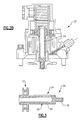
- Figure 1 illustrates an example article 20 that has good wear resistance between moving parts.
- the article 20 is a bleed valve for a high pressure compressor of an aircraft engine.
- the article 20 is not limited to the example bleed valve and that this disclosure may apply to many other types of articles.
- the bleed valve includes a housing 22 in which a piston 24 ( Figure 2A ) moves to control air flow from a high pressure compressor section of an aircraft engine to other portions of the engine or as a pressure release.
- the bleed valve may be attached to a compressor housing or other suitable structure by using bolts 26.
- Figure 2A shows a cross-sectional view of the bleed valve.
- Figure 2B shows the same cross-section view but with the piston 24 shaded.
- Figure 2C shows the same cross-section view, but with the housing 22 shaded.
- the housing defines a bore 28 in which the piston 24 moves during operation of the bleed valve.
- a spring 30 biases the piston 24 toward an open position.
- the piston 24 generally includes a first end 32 and a second end 34.
- the first end 32 engages the spring 30, and the second end 34 is adapted to engage a poppet 36 ( Figures 2A-2C ).
- the second end 34 of the piston 24 includes a portion 38 having threads for rigidly securing the piston 24 to the poppet 36.
- the poppet 36 is shown in an open position wherein air flow from the compressor travels around the poppet 36 and piston 24 into the housing 22. The air flow exits the housing through vertically oriented slots 37.
- the spring 30 normally biases the poppet 36 to the open position. However, when the air pressure exceeds the spring bias, the poppet 36 closes such that the piston 24 travels vertically upwards in the figures. In the closed position, the poppet 36 seals against seat 39 ( Figure 4B ) to reduce or stop the air flow through the bleed valve.
- a main shaft portion 40 of the piston 24 extends between the first and second ends 32 and 34.
- the main shaft portion 40 defines an outer peripheral surface having an outer diameter.
- the portion 38 also defines an outer diameter, which is less than the outer diameter of the main shaft portion 40.
- the main shaft portion 40 of the piston 24 includes a wear resistant coating 42 for resisting wear from sliding movement within the bore 28 of the housing 22.
- the wear resistant coating 42 is a cobalt-chromium-molybdenum coating.
- the cobalt-chromium-molybdenum coating may have a nominal composition of 60-64 wt.% cobalt, 26-30 wt.% molybdenum, 6-10 wt.% chromium, 1-3 wt.% silicon, a maximum of 0.25 wt.% iron, and incidental impurities.
- the wear resistant coating 42 may be applied onto the base alloy of the piston 24 using a thermal spray process, such as high velocity oxy fuel spraying. However, the deposition of the wear resistant coating 42 is not limited and may be applied in or using other known techniques.
- the piston 24 is formed from a base alloy, such as a superalloy material.
- the superalloy material may have a nominal composition of 50-55 wt.% nickel, 17-21 wt.% chromium, 2.8-3.3 wt.% molybdenum, 4.75-5.5 wt.% niobium, approximately 1 wt.% cobalt, 0.65-1.15 wt.% aluminum, and a balance of iron and trace amounts of other elements and incidental impurities.
- the base alloy of the piston 24 is Inconel 718.
- the bore 28 of the housing 22 also includes a wear resistant coating 44 that is in sliding contact with the wear resistant coating 42 of the piston 24.
- the wear resistant coating 44 of the bore 28 is a boride coating that is on the base alloy of the housing 22.
- the base alloy of the housing 22 may be a superalloy material, such as Inconel 718, that is capable of forming a compact and continuous boride layer in the surface.
- the boride coating can alternatively be on the piston 24 and the cobalt-chromium-molybdenum coating can alternatively be on the bore 28.
- the wear resistant coating 44 of the bore 28 is a boride coating.
- a user may form the boride coating in a boronizing process.
- the boronizing process involves infusing boron into the surface of the base alloy to thereby form the hard, wear resistant coating 44.
- the wear resistant coating 44 may thereby be comprised of boride compounds that are formed between the boron and the constituent elements of the base alloy.
- the boron may also or alternatively be in solution with the base alloy.
- the combination of the boride wear resistant coating 44 of the housing 22 and the cobalt-chromium-molybdenum wear resistant alloy 42 of the piston 24 provides good wear resistance in the article 20. That is, the combination of the superalloy material base alloys, the boride wear resistant coating 44 and the cobalt-chromium-molybdenum wear resistant coating 42 provide good wear resistance at a maximum operating temperature of up to 1300°F (704°C).
- each of the wear resistant coatings 42 and 44 may have a predetermined surface roughness that further facilitates wear resistance.
- the surface roughness of the wear resistant coating 42 and 44 may be approximately 8 microinches roughness (RA) or less.
- RA microinches roughness
- the piston 24 and the housing 22 may be machined after formation of the wear resistant coating 42 and 44 to provide the desired surface roughness.
- additional secondary machining operations may be desired to achieve the selected surface roughness.
- the surface of the bore 28 of the housing 22 may be prepared prior to formation of the boride coating to reduce or eliminate the need for post-coating machining operations.
- the surface roughness of the bore 28 may be 8 microinches (RA) prior to formation of the boride coating.
- RA microinches
- other characteristics of the surface of the bore 28 may be controlled to achieve the desired surface roughness of the boride coating.
Landscapes
- Chemical & Material Sciences (AREA)
- Engineering & Computer Science (AREA)
- Chemical Kinetics & Catalysis (AREA)
- Materials Engineering (AREA)
- Mechanical Engineering (AREA)
- Metallurgy (AREA)
- Organic Chemistry (AREA)
- Physics & Mathematics (AREA)
- Plasma & Fusion (AREA)
- Pistons, Piston Rings, And Cylinders (AREA)
- Coating By Spraying Or Casting (AREA)
Abstract
Description
- This disclosure relates to wear resistant coatings for articles used in high temperature conditions.
- Components that are subject to wear during the operation may include a wear resistant coating that extends the life of the component. Conventional coatings that may be used at high temperatures, such as chromium coatings, are undesirable for environmental reasons.
- Disclosed is an article having good wear resistance. The article has a first component including a boride coating and a second component including a cobalt-chromium-molybdenum coating that is in sliding contact with the boride coating of the first component.
- In one example, the article is a valve that includes a housing with a bore and a valve element with a shaft that is received for movement within the bore. One of the bore or the shaft includes a boride coating and the other of the bore or the shaft includes a cobalt-chromium-molybdenum coating such that the cobalt-chromium-molybdenum coating is in sliding contact with the boride coating
- Also disclosed is a method of resisting wear. The method includes applying a boride coating to a first component and applying a cobalt-chromium-molybdenum coating to a second component that is in sliding contact with the boride coating of the first component.
- The various features and advantages of the disclosed examples will become apparent to those skilled in the art from the following detailed description. The drawings that accompany the detailed description can be briefly described as follows.
-
Figure 1 illustrates a perspective view of an example article having good wear resistance. -
Figure 2A is a cross-section of the article ofFigure 1 . -
Figure 2B is also a cross-section of the article ofFigure 1 . -
Figure 2C is also a cross-section of the article ofFigure 1 . -
Figure 3 is an isolated view of an example piston of the article ofFigure 1 . -
Figure 4A is an isolated view of a housing of the article ofFigure 1 . -
Figure 4B is another view of the housing ofFigure 4A . -
Figure 1 illustrates anexample article 20 that has good wear resistance between moving parts. In the example, thearticle 20 is a bleed valve for a high pressure compressor of an aircraft engine. However, it is to be understood that thearticle 20 is not limited to the example bleed valve and that this disclosure may apply to many other types of articles. - In general, the bleed valve includes a
housing 22 in which a piston 24 (Figure 2A ) moves to control air flow from a high pressure compressor section of an aircraft engine to other portions of the engine or as a pressure release. As an example, the bleed valve may be attached to a compressor housing or other suitable structure by usingbolts 26. -
Figure 2A shows a cross-sectional view of the bleed valve.Figure 2B shows the same cross-section view but with thepiston 24 shaded.Figure 2C shows the same cross-section view, but with thehousing 22 shaded. The housing defines abore 28 in which thepiston 24 moves during operation of the bleed valve. Aspring 30 biases thepiston 24 toward an open position. - As illustrated in an isolated view of the piston in 24
Figure 3 , thepiston 24 generally includes afirst end 32 and asecond end 34. Thefirst end 32 engages thespring 30, and thesecond end 34 is adapted to engage a poppet 36 (Figures 2A-2C ). Thesecond end 34 of thepiston 24 includes aportion 38 having threads for rigidly securing thepiston 24 to thepoppet 36. Thepoppet 36 is shown in an open position wherein air flow from the compressor travels around thepoppet 36 andpiston 24 into thehousing 22. The air flow exits the housing through verticallyoriented slots 37. Thespring 30 normally biases thepoppet 36 to the open position. However, when the air pressure exceeds the spring bias, thepoppet 36 closes such that thepiston 24 travels vertically upwards in the figures. In the closed position, the poppet 36 seals against seat 39 (Figure 4B ) to reduce or stop the air flow through the bleed valve. - A
main shaft portion 40 of thepiston 24 extends between the first andsecond ends main shaft portion 40 defines an outer peripheral surface having an outer diameter. Theportion 38 also defines an outer diameter, which is less than the outer diameter of themain shaft portion 40. - The
main shaft portion 40 of thepiston 24 includes a wearresistant coating 42 for resisting wear from sliding movement within thebore 28 of thehousing 22. As an example, the wearresistant coating 42 is a cobalt-chromium-molybdenum coating. The cobalt-chromium-molybdenum coating may have a nominal composition of 60-64 wt.% cobalt, 26-30 wt.% molybdenum, 6-10 wt.% chromium, 1-3 wt.% silicon, a maximum of 0.25 wt.% iron, and incidental impurities. The wearresistant coating 42 may be applied onto the base alloy of thepiston 24 using a thermal spray process, such as high velocity oxy fuel spraying. However, the deposition of the wearresistant coating 42 is not limited and may be applied in or using other known techniques. - In embodiments, the
piston 24 is formed from a base alloy, such as a superalloy material. For instance, the superalloy material may have a nominal composition of 50-55 wt.% nickel, 17-21 wt.% chromium, 2.8-3.3 wt.% molybdenum, 4.75-5.5 wt.% niobium, approximately 1 wt.% cobalt, 0.65-1.15 wt.% aluminum, and a balance of iron and trace amounts of other elements and incidental impurities. In a further example, the base alloy of thepiston 24 is Inconel 718. - The
bore 28 of thehousing 22 also includes a wearresistant coating 44 that is in sliding contact with the wearresistant coating 42 of thepiston 24. For instance, the wearresistant coating 44 of thebore 28 is a boride coating that is on the base alloy of thehousing 22. Similar to thepiston 24, the base alloy of thehousing 22 may be a superalloy material, such as Inconel 718, that is capable of forming a compact and continuous boride layer in the surface. As can be appreciated, the boride coating can alternatively be on thepiston 24 and the cobalt-chromium-molybdenum coating can alternatively be on thebore 28. - In embodiments, the wear
resistant coating 44 of thebore 28 is a boride coating. A user may form the boride coating in a boronizing process. Generally, the boronizing process involves infusing boron into the surface of the base alloy to thereby form the hard, wearresistant coating 44. The wearresistant coating 44 may thereby be comprised of boride compounds that are formed between the boron and the constituent elements of the base alloy. The boron may also or alternatively be in solution with the base alloy. - The combination of the boride wear
resistant coating 44 of thehousing 22 and the cobalt-chromium-molybdenum wearresistant alloy 42 of thepiston 24 provides good wear resistance in thearticle 20. That is, the combination of the superalloy material base alloys, the boride wearresistant coating 44 and the cobalt-chromium-molybdenum wearresistant coating 42 provide good wear resistance at a maximum operating temperature of up to 1300°F (704°C). - Additionally, each of the wear
resistant coatings resistant coating resistant coating piston 24 and thehousing 22 may be machined after formation of the wearresistant coating resistant coating 42 of thepiston 24, additional secondary machining operations may be desired to achieve the selected surface roughness. Moreover, because of the relatively high hardness of the boride coating, the surface of thebore 28 of thehousing 22 may be prepared prior to formation of the boride coating to reduce or eliminate the need for post-coating machining operations. For instance, the surface roughness of thebore 28 may be 8 microinches (RA) prior to formation of the boride coating. Additionally, other characteristics of the surface of thebore 28 may be controlled to achieve the desired surface roughness of the boride coating. - Although a combination of features is shown in the illustrated examples, not all of them need to be combined to realize the benefits of various embodiments of this disclosure. In other words, a system designed according to an embodiment of this disclosure will not necessarily include all of the features shown in any one of the Figures or all of the portions schematically shown in the Figures. Moreover, selected features of one example embodiment may be combined with selected features of other example embodiments.
- The preceding description is exemplary rather than limiting in nature. Variations and modifications to the disclosed examples may become apparent to those skilled in the art that do not necessarily depart from the scope of the invention, which is defined by the claims. The scope of legal protection given to this invention can only be determined by studying the following claims.
Claims (15)
- An article having (20) good wear resistance, comprising:a first component (22) including a boride coating (42); anda second component (26) including a cobalt-chromium-molybdenum coating (44) that is in sliding contact with the boride coating of the first component.
- The article as recited in claim 1, wherein the cobalt-chromium-molybdenum coating comprises 60-64 wt.% cobalt, 26-30 wt.% molybdenum, 6-10 wt.% chromium, 1-3 wt.% silicon and a maximum of 0.25 wt.% iron.
- The article as recited in claim 1 or 2, wherein at least one of the first component or the second component comprises 50-55 wt.% nickel, 17-21 wt.% chromium, 2.8-3.3 wt.% molybdenum, 4.75-5.5 wt.% niobium, approximately 1 wt.% cobalt, 0.65-1.15 wt.% aluminum, and a balance of iron and trace impurities.
- The article as recited in claim 4, wherein the first component and the second component comprise 50-55 wt.% nickel, 17-21 wt.% chromium, 2.8-3.3 wt.% molybdenum, 4.75-5.5 wt.% niobium, approximately 1 wt.% cobalt, 0.65-1.15 wt.% aluminum, and a balance of iron and trace impurities.
- The article as recited in any preceding claim, wherein the first component and the second component comprise identical nickel-based superalloy compositions.
- The article as recited in any preceding claim, wherein the boride coating is a continuous boride layer.
- The article as recited in any preceding claim, wherein the boride coating includes compounds of boron and constituent elements of a base alloy of the first component.
- The article as recited in any preceding claim, wherein the first component and the second component are parts of a valve.
- The article as recited in any preceding claim, wherein the first component is one of a housing defining a bore (28) having an inner diameter and a piston received for movement within the bore and having an outer diameter, and the second component is the other of the housing and the piston.
- The article as recited in claim 9, wherein the piston includes a poppet (36) attached to a shaft (40).
- The article as recited in claim 9 or 10, wherein the piston includes a shaft including a first portion (32) with a first diameter and a second portion (38) with a second, smaller diameter relative to the first diameter; preferably wherein the second portion includes a threaded end.
- A method of resisting wear, the method comprising:applying a boride coating to a first component (22); andapplying a cobalt-chromium-molybdenum coating to a second component (26) that is in sliding contact with the boride coating of the first component.
- The method as recited in claim 12, including infusing boron into a base alloy of the first component.
- The method as recited in claim 12 or 13, including thermally spraying the cobalt-chromium-molybdenum coating onto the second component.
- The method as recited in claim 12, 13 or 14, wherein the cobalt-chromium-molybdenum coating comprises 60-64 wt.% cobalt, 26-30 wt.% molybdenum, 6-10 wt.% chromium, 1-3 wt.% silicon and a maximum of 0.25 wt.% iron.
Applications Claiming Priority (2)
| Application Number | Priority Date | Filing Date | Title |
|---|---|---|---|
| US41265910P | 2010-11-11 | 2010-11-11 | |
| US13/237,102 US8833382B2 (en) | 2010-11-11 | 2011-09-20 | Article having good wear resistance |
Publications (2)
| Publication Number | Publication Date |
|---|---|
| EP2453035A1 true EP2453035A1 (en) | 2012-05-16 |
| EP2453035B1 EP2453035B1 (en) | 2019-04-03 |
Family
ID=45002682
Family Applications (1)
| Application Number | Title | Priority Date | Filing Date |
|---|---|---|---|
| EP11188713.9A Active EP2453035B1 (en) | 2010-11-11 | 2011-11-10 | Article having good wear resistance |
Country Status (2)
| Country | Link |
|---|---|
| US (1) | US8833382B2 (en) |
| EP (1) | EP2453035B1 (en) |
Families Citing this family (1)
| Publication number | Priority date | Publication date | Assignee | Title |
|---|---|---|---|---|
| DE102016108408B4 (en) * | 2016-05-06 | 2023-10-26 | Danfoss Power Solutions Gmbh & Co. Ohg | Workpiece with improved coating and hydraulic device and/or fluid working machine with the workpiece |
Citations (4)
| Publication number | Priority date | Publication date | Assignee | Title |
|---|---|---|---|---|
| US3829260A (en) * | 1971-08-03 | 1974-08-13 | Nissan Motor | Wear-resistant metal object and a method for the manufacture thereof |
| US5981081A (en) * | 1984-09-18 | 1999-11-09 | Union Carbide Coatings Service Corporation | Transition metal boride coatings |
| US20070144839A1 (en) * | 2005-12-14 | 2007-06-28 | Seksaria Dinesh C | Integrated brake, suspension and wheel system |
| US20080145649A1 (en) * | 2006-12-14 | 2008-06-19 | General Electric | Protective coatings which provide wear resistance and low friction characteristics, and related articles and methods |
Family Cites Families (22)
| Publication number | Priority date | Publication date | Assignee | Title |
|---|---|---|---|---|
| US2525831A (en) * | 1944-12-01 | 1950-10-17 | Rockweil Mfg Company | Coated valve and parts thereof |
| US3241812A (en) * | 1960-08-29 | 1966-03-22 | Marotta Valve Corp | Valve assembly with covered valve head |
| US4188011A (en) * | 1977-10-13 | 1980-02-12 | Baker Cac, Inc. | Spool valve and pilot interface assembly |
| US4347865A (en) * | 1978-04-13 | 1982-09-07 | Exxon Research & Engineering Co. | Fabricated gate valves |
| US4565217A (en) * | 1983-06-30 | 1986-01-21 | Acumeter Laboratories, Inc. | Three-way poppet valve, method and apparatus |
| US5040501A (en) * | 1987-03-31 | 1991-08-20 | Lemelson Jerome H | Valves and valve components |
| US5017410A (en) | 1988-05-23 | 1991-05-21 | United Technologies Corporation | Wear resistant electroless nickel-boron coating compositions |
| US5222521A (en) * | 1992-05-08 | 1993-06-29 | Moog Controls, Inc. | Hydraulic valve |
| US5441235A (en) * | 1994-05-20 | 1995-08-15 | Eaton Corporation | Titanium nitride coated valve and method for making |
| US5540252A (en) | 1994-07-21 | 1996-07-30 | United Technologies Corporation | Pneumatically stabilized inline valve |
| US6186508B1 (en) | 1996-11-27 | 2001-02-13 | United Technologies Corporation | Wear resistant coating for brush seal applications |
| US6048171A (en) | 1997-09-09 | 2000-04-11 | United Technologies Corporation | Bleed valve system |
| US6815099B1 (en) | 1997-10-15 | 2004-11-09 | United Technologies Corporation | Wear resistant coating for brush seal applications |
| US6904935B2 (en) * | 2002-12-18 | 2005-06-14 | Masco Corporation Of Indiana | Valve component with multiple surface layers |
| US6718932B1 (en) * | 2003-01-24 | 2004-04-13 | Eaton Corporation | Lightweight engine poppet valve |
| US7767267B2 (en) | 2003-06-04 | 2010-08-03 | Wide Open Coatings, Inc. | Method of producing a coated valve retainer |
| US7137612B2 (en) * | 2003-09-04 | 2006-11-21 | Whittaker Corporation | High recovery metering valve |
| US8146889B2 (en) * | 2004-08-27 | 2012-04-03 | Vetco Gray Inc. | Low friction coatings for dynamically engaging load bearing surfaces |
| US7985703B2 (en) | 2006-03-15 | 2011-07-26 | United Technologies Corporation | Wear-resistant coating |
| US7555905B2 (en) | 2006-03-28 | 2009-07-07 | United Technologies Corporation | Self-actuating bleed valve for gas turbine engine |
| US7562647B2 (en) * | 2006-03-29 | 2009-07-21 | High Performance Coatings, Inc. | Inlet valve having high temperature coating and internal combustion engines incorporating same |
| US7951459B2 (en) | 2006-11-21 | 2011-05-31 | United Technologies Corporation | Oxidation resistant coatings, processes for coating articles, and their coated articles |
-
2011
- 2011-09-20 US US13/237,102 patent/US8833382B2/en active Active
- 2011-11-10 EP EP11188713.9A patent/EP2453035B1/en active Active
Patent Citations (4)
| Publication number | Priority date | Publication date | Assignee | Title |
|---|---|---|---|---|
| US3829260A (en) * | 1971-08-03 | 1974-08-13 | Nissan Motor | Wear-resistant metal object and a method for the manufacture thereof |
| US5981081A (en) * | 1984-09-18 | 1999-11-09 | Union Carbide Coatings Service Corporation | Transition metal boride coatings |
| US20070144839A1 (en) * | 2005-12-14 | 2007-06-28 | Seksaria Dinesh C | Integrated brake, suspension and wheel system |
| US20080145649A1 (en) * | 2006-12-14 | 2008-06-19 | General Electric | Protective coatings which provide wear resistance and low friction characteristics, and related articles and methods |
Also Published As
| Publication number | Publication date |
|---|---|
| US20120119132A1 (en) | 2012-05-17 |
| EP2453035B1 (en) | 2019-04-03 |
| US8833382B2 (en) | 2014-09-16 |
Similar Documents
| Publication | Publication Date | Title |
|---|---|---|
| US7510370B2 (en) | Turbine blade tip and shroud clearance control coating system | |
| US5955151A (en) | Low friction cobalt based coatings for titanium alloys | |
| US20070099027A1 (en) | Wear resistant coatings | |
| JP5576596B2 (en) | Article having protective film and method thereof | |
| CA2904185A1 (en) | Coatings for metallic substrates | |
| EP1835046A1 (en) | Wear-resistant coating | |
| SG176613A1 (en) | Coated tooling | |
| EP1927670A1 (en) | Wear resistant coatings | |
| SE526501C2 (en) | Method of surface modifying a precipitation-hardened stainless steel | |
| EP2339045A1 (en) | Wear resistant device and process therefor | |
| US8833382B2 (en) | Article having good wear resistance | |
| US8196600B1 (en) | High-temperature jointed assemblies and wear-resistant coating systems therefor | |
| US10526921B2 (en) | Anti-rotation shroud dampening pin and turbine shroud assembly | |
| US10711637B2 (en) | Turbine component assembly | |
| US20100087346A1 (en) | Solid film lubricated high oxidation temperature rhenium material | |
| EP3933174A1 (en) | Wear resistant, self-lubricating static seal | |
| US9222187B2 (en) | Article having cobalt-phosphorous coating and method for heat treating | |
| EP4474520A1 (en) | Co-cr alloy carbide composite coatings for high-temperature applications | |
| JP5981013B1 (en) | Piston ring for internal combustion engine | |
| Lee | Wear-resistant coatings | |
| JP2008275035A (en) | Steam valve for steam turbine | |
| EP2843083A2 (en) | Piston ring for internal combustion engine | |
| US10544701B2 (en) | Turbine shroud assembly | |
| JP2008138242A (en) | Abrasion resistant coating and article having the abrasion resistant coating | |
| Rulli | COBALT COATING IN HIGH TEMPERATURE AIRCRAFT ENGINE APPLICATIONS |
Legal Events
| Date | Code | Title | Description |
|---|---|---|---|
| PUAI | Public reference made under article 153(3) epc to a published international application that has entered the european phase |
Free format text: ORIGINAL CODE: 0009012 |
|
| AK | Designated contracting states |
Kind code of ref document: A1 Designated state(s): AL AT BE BG CH CY CZ DE DK EE ES FI FR GB GR HR HU IE IS IT LI LT LU LV MC MK MT NL NO PL PT RO RS SE SI SK SM TR |
|
| AX | Request for extension of the european patent |
Extension state: BA ME |
|
| 17P | Request for examination filed |
Effective date: 20121116 |
|
| RIN1 | Information on inventor provided before grant (corrected) |
Inventor name: SMITH, BLAIR A. Inventor name: RANKIN, KEVIN M. Inventor name: CHEUNG, ANGELINA Y. Inventor name: GRADISCHER, GLENN |
|
| STAA | Information on the status of an ep patent application or granted ep patent |
Free format text: STATUS: EXAMINATION IS IN PROGRESS |
|
| 17Q | First examination report despatched |
Effective date: 20170622 |
|
| GRAP | Despatch of communication of intention to grant a patent |
Free format text: ORIGINAL CODE: EPIDOSNIGR1 |
|
| STAA | Information on the status of an ep patent application or granted ep patent |
Free format text: STATUS: GRANT OF PATENT IS INTENDED |
|
| INTG | Intention to grant announced |
Effective date: 20181010 |
|
| GRAS | Grant fee paid |
Free format text: ORIGINAL CODE: EPIDOSNIGR3 |
|
| GRAA | (expected) grant |
Free format text: ORIGINAL CODE: 0009210 |
|
| STAA | Information on the status of an ep patent application or granted ep patent |
Free format text: STATUS: THE PATENT HAS BEEN GRANTED |
|
| AK | Designated contracting states |
Kind code of ref document: B1 Designated state(s): AL AT BE BG CH CY CZ DE DK EE ES FI FR GB GR HR HU IE IS IT LI LT LU LV MC MK MT NL NO PL PT RO RS SE SI SK SM TR |
|
| REG | Reference to a national code |
Ref country code: GB Ref legal event code: FG4D |
|
| REG | Reference to a national code |
Ref country code: CH Ref legal event code: EP Ref country code: AT Ref legal event code: REF Ref document number: 1115827 Country of ref document: AT Kind code of ref document: T Effective date: 20190415 |
|
| REG | Reference to a national code |
Ref country code: DE Ref legal event code: R096 Ref document number: 602011057708 Country of ref document: DE |
|
| REG | Reference to a national code |
Ref country code: IE Ref legal event code: FG4D |
|
| REG | Reference to a national code |
Ref country code: NL Ref legal event code: MP Effective date: 20190403 |
|
| REG | Reference to a national code |
Ref country code: LT Ref legal event code: MG4D |
|
| REG | Reference to a national code |
Ref country code: AT Ref legal event code: MK05 Ref document number: 1115827 Country of ref document: AT Kind code of ref document: T Effective date: 20190403 |
|
| PG25 | Lapsed in a contracting state [announced via postgrant information from national office to epo] |
Ref country code: NL Free format text: LAPSE BECAUSE OF FAILURE TO SUBMIT A TRANSLATION OF THE DESCRIPTION OR TO PAY THE FEE WITHIN THE PRESCRIBED TIME-LIMIT Effective date: 20190403 |
|
| PG25 | Lapsed in a contracting state [announced via postgrant information from national office to epo] |
Ref country code: LT Free format text: LAPSE BECAUSE OF FAILURE TO SUBMIT A TRANSLATION OF THE DESCRIPTION OR TO PAY THE FEE WITHIN THE PRESCRIBED TIME-LIMIT Effective date: 20190403 Ref country code: HR Free format text: LAPSE BECAUSE OF FAILURE TO SUBMIT A TRANSLATION OF THE DESCRIPTION OR TO PAY THE FEE WITHIN THE PRESCRIBED TIME-LIMIT Effective date: 20190403 Ref country code: FI Free format text: LAPSE BECAUSE OF FAILURE TO SUBMIT A TRANSLATION OF THE DESCRIPTION OR TO PAY THE FEE WITHIN THE PRESCRIBED TIME-LIMIT Effective date: 20190403 Ref country code: PT Free format text: LAPSE BECAUSE OF FAILURE TO SUBMIT A TRANSLATION OF THE DESCRIPTION OR TO PAY THE FEE WITHIN THE PRESCRIBED TIME-LIMIT Effective date: 20190803 Ref country code: NO Free format text: LAPSE BECAUSE OF FAILURE TO SUBMIT A TRANSLATION OF THE DESCRIPTION OR TO PAY THE FEE WITHIN THE PRESCRIBED TIME-LIMIT Effective date: 20190703 Ref country code: SE Free format text: LAPSE BECAUSE OF FAILURE TO SUBMIT A TRANSLATION OF THE DESCRIPTION OR TO PAY THE FEE WITHIN THE PRESCRIBED TIME-LIMIT Effective date: 20190403 Ref country code: AL Free format text: LAPSE BECAUSE OF FAILURE TO SUBMIT A TRANSLATION OF THE DESCRIPTION OR TO PAY THE FEE WITHIN THE PRESCRIBED TIME-LIMIT Effective date: 20190403 Ref country code: ES Free format text: LAPSE BECAUSE OF FAILURE TO SUBMIT A TRANSLATION OF THE DESCRIPTION OR TO PAY THE FEE WITHIN THE PRESCRIBED TIME-LIMIT Effective date: 20190403 Ref country code: CZ Free format text: LAPSE BECAUSE OF FAILURE TO SUBMIT A TRANSLATION OF THE DESCRIPTION OR TO PAY THE FEE WITHIN THE PRESCRIBED TIME-LIMIT Effective date: 20190403 |
|
| PG25 | Lapsed in a contracting state [announced via postgrant information from national office to epo] |
Ref country code: BG Free format text: LAPSE BECAUSE OF FAILURE TO SUBMIT A TRANSLATION OF THE DESCRIPTION OR TO PAY THE FEE WITHIN THE PRESCRIBED TIME-LIMIT Effective date: 20190703 Ref country code: LV Free format text: LAPSE BECAUSE OF FAILURE TO SUBMIT A TRANSLATION OF THE DESCRIPTION OR TO PAY THE FEE WITHIN THE PRESCRIBED TIME-LIMIT Effective date: 20190403 Ref country code: RS Free format text: LAPSE BECAUSE OF FAILURE TO SUBMIT A TRANSLATION OF THE DESCRIPTION OR TO PAY THE FEE WITHIN THE PRESCRIBED TIME-LIMIT Effective date: 20190403 Ref country code: PL Free format text: LAPSE BECAUSE OF FAILURE TO SUBMIT A TRANSLATION OF THE DESCRIPTION OR TO PAY THE FEE WITHIN THE PRESCRIBED TIME-LIMIT Effective date: 20190403 Ref country code: GR Free format text: LAPSE BECAUSE OF FAILURE TO SUBMIT A TRANSLATION OF THE DESCRIPTION OR TO PAY THE FEE WITHIN THE PRESCRIBED TIME-LIMIT Effective date: 20190704 |
|
| PG25 | Lapsed in a contracting state [announced via postgrant information from national office to epo] |
Ref country code: AT Free format text: LAPSE BECAUSE OF FAILURE TO SUBMIT A TRANSLATION OF THE DESCRIPTION OR TO PAY THE FEE WITHIN THE PRESCRIBED TIME-LIMIT Effective date: 20190403 Ref country code: IS Free format text: LAPSE BECAUSE OF FAILURE TO SUBMIT A TRANSLATION OF THE DESCRIPTION OR TO PAY THE FEE WITHIN THE PRESCRIBED TIME-LIMIT Effective date: 20190803 |
|
| REG | Reference to a national code |
Ref country code: DE Ref legal event code: R097 Ref document number: 602011057708 Country of ref document: DE |
|
| PG25 | Lapsed in a contracting state [announced via postgrant information from national office to epo] |
Ref country code: EE Free format text: LAPSE BECAUSE OF FAILURE TO SUBMIT A TRANSLATION OF THE DESCRIPTION OR TO PAY THE FEE WITHIN THE PRESCRIBED TIME-LIMIT Effective date: 20190403 Ref country code: SK Free format text: LAPSE BECAUSE OF FAILURE TO SUBMIT A TRANSLATION OF THE DESCRIPTION OR TO PAY THE FEE WITHIN THE PRESCRIBED TIME-LIMIT Effective date: 20190403 Ref country code: DK Free format text: LAPSE BECAUSE OF FAILURE TO SUBMIT A TRANSLATION OF THE DESCRIPTION OR TO PAY THE FEE WITHIN THE PRESCRIBED TIME-LIMIT Effective date: 20190403 Ref country code: RO Free format text: LAPSE BECAUSE OF FAILURE TO SUBMIT A TRANSLATION OF THE DESCRIPTION OR TO PAY THE FEE WITHIN THE PRESCRIBED TIME-LIMIT Effective date: 20190403 |
|
| PLBE | No opposition filed within time limit |
Free format text: ORIGINAL CODE: 0009261 |
|
| STAA | Information on the status of an ep patent application or granted ep patent |
Free format text: STATUS: NO OPPOSITION FILED WITHIN TIME LIMIT |
|
| PG25 | Lapsed in a contracting state [announced via postgrant information from national office to epo] |
Ref country code: SM Free format text: LAPSE BECAUSE OF FAILURE TO SUBMIT A TRANSLATION OF THE DESCRIPTION OR TO PAY THE FEE WITHIN THE PRESCRIBED TIME-LIMIT Effective date: 20190403 |
|
| 26N | No opposition filed |
Effective date: 20200106 |
|
| PG25 | Lapsed in a contracting state [announced via postgrant information from national office to epo] |
Ref country code: TR Free format text: LAPSE BECAUSE OF FAILURE TO SUBMIT A TRANSLATION OF THE DESCRIPTION OR TO PAY THE FEE WITHIN THE PRESCRIBED TIME-LIMIT Effective date: 20190403 |
|
| PG25 | Lapsed in a contracting state [announced via postgrant information from national office to epo] |
Ref country code: SI Free format text: LAPSE BECAUSE OF FAILURE TO SUBMIT A TRANSLATION OF THE DESCRIPTION OR TO PAY THE FEE WITHIN THE PRESCRIBED TIME-LIMIT Effective date: 20190403 |
|
| REG | Reference to a national code |
Ref country code: CH Ref legal event code: PL |
|
| PG25 | Lapsed in a contracting state [announced via postgrant information from national office to epo] |
Ref country code: LI Free format text: LAPSE BECAUSE OF NON-PAYMENT OF DUE FEES Effective date: 20191130 Ref country code: CH Free format text: LAPSE BECAUSE OF NON-PAYMENT OF DUE FEES Effective date: 20191130 Ref country code: LU Free format text: LAPSE BECAUSE OF NON-PAYMENT OF DUE FEES Effective date: 20191110 Ref country code: MC Free format text: LAPSE BECAUSE OF FAILURE TO SUBMIT A TRANSLATION OF THE DESCRIPTION OR TO PAY THE FEE WITHIN THE PRESCRIBED TIME-LIMIT Effective date: 20190403 |
|
| REG | Reference to a national code |
Ref country code: BE Ref legal event code: MM Effective date: 20191130 |
|
| PG25 | Lapsed in a contracting state [announced via postgrant information from national office to epo] |
Ref country code: IE Free format text: LAPSE BECAUSE OF NON-PAYMENT OF DUE FEES Effective date: 20191110 |
|
| PG25 | Lapsed in a contracting state [announced via postgrant information from national office to epo] |
Ref country code: BE Free format text: LAPSE BECAUSE OF NON-PAYMENT OF DUE FEES Effective date: 20191130 |
|
| PG25 | Lapsed in a contracting state [announced via postgrant information from national office to epo] |
Ref country code: CY Free format text: LAPSE BECAUSE OF FAILURE TO SUBMIT A TRANSLATION OF THE DESCRIPTION OR TO PAY THE FEE WITHIN THE PRESCRIBED TIME-LIMIT Effective date: 20190403 |
|
| PG25 | Lapsed in a contracting state [announced via postgrant information from national office to epo] |
Ref country code: HU Free format text: LAPSE BECAUSE OF FAILURE TO SUBMIT A TRANSLATION OF THE DESCRIPTION OR TO PAY THE FEE WITHIN THE PRESCRIBED TIME-LIMIT; INVALID AB INITIO Effective date: 20111110 Ref country code: MT Free format text: LAPSE BECAUSE OF FAILURE TO SUBMIT A TRANSLATION OF THE DESCRIPTION OR TO PAY THE FEE WITHIN THE PRESCRIBED TIME-LIMIT Effective date: 20190403 |
|
| PG25 | Lapsed in a contracting state [announced via postgrant information from national office to epo] |
Ref country code: MK Free format text: LAPSE BECAUSE OF FAILURE TO SUBMIT A TRANSLATION OF THE DESCRIPTION OR TO PAY THE FEE WITHIN THE PRESCRIBED TIME-LIMIT Effective date: 20190403 |
|
| P01 | Opt-out of the competence of the unified patent court (upc) registered |
Effective date: 20230522 |
|
| PGFP | Annual fee paid to national office [announced via postgrant information from national office to epo] |
Ref country code: DE Payment date: 20251022 Year of fee payment: 15 |
|
| PGFP | Annual fee paid to national office [announced via postgrant information from national office to epo] |
Ref country code: GB Payment date: 20251023 Year of fee payment: 15 |
|
| PGFP | Annual fee paid to national office [announced via postgrant information from national office to epo] |
Ref country code: IT Payment date: 20251022 Year of fee payment: 15 |
|
| PGFP | Annual fee paid to national office [announced via postgrant information from national office to epo] |
Ref country code: FR Payment date: 20251022 Year of fee payment: 15 |