EP2451462B1 - Inhibiting inflammation with milk oligosaccharides - Google Patents
Inhibiting inflammation with milk oligosaccharides Download PDFInfo
- Publication number
- EP2451462B1 EP2451462B1 EP10797669.8A EP10797669A EP2451462B1 EP 2451462 B1 EP2451462 B1 EP 2451462B1 EP 10797669 A EP10797669 A EP 10797669A EP 2451462 B1 EP2451462 B1 EP 2451462B1
- Authority
- EP
- European Patent Office
- Prior art keywords
- milk
- oligosaccharide
- oligosaccharides
- derived
- inflammatory bowel
- Prior art date
- Legal status (The legal status is an assumption and is not a legal conclusion. Google has not performed a legal analysis and makes no representation as to the accuracy of the status listed.)
- Revoked
Links
Images


Classifications
-
- A—HUMAN NECESSITIES
- A61—MEDICAL OR VETERINARY SCIENCE; HYGIENE
- A61K—PREPARATIONS FOR MEDICAL, DENTAL OR TOILETRY PURPOSES
- A61K31/00—Medicinal preparations containing organic active ingredients
- A61K31/70—Carbohydrates; Sugars; Derivatives thereof
- A61K31/7016—Disaccharides, e.g. lactose, lactulose
-
- A—HUMAN NECESSITIES
- A23—FOODS OR FOODSTUFFS; TREATMENT THEREOF, NOT COVERED BY OTHER CLASSES
- A23L—FOODS, FOODSTUFFS OR NON-ALCOHOLIC BEVERAGES, NOT OTHERWISE PROVIDED FOR; PREPARATION OR TREATMENT THEREOF
- A23L33/00—Modifying nutritive qualities of foods; Dietetic products; Preparation or treatment thereof
- A23L33/40—Complete food formulations for specific consumer groups or specific purposes, e.g. infant formula
-
- A—HUMAN NECESSITIES
- A61—MEDICAL OR VETERINARY SCIENCE; HYGIENE
- A61K—PREPARATIONS FOR MEDICAL, DENTAL OR TOILETRY PURPOSES
- A61K31/00—Medicinal preparations containing organic active ingredients
- A61K31/70—Carbohydrates; Sugars; Derivatives thereof
- A61K31/702—Oligosaccharides, i.e. having three to five saccharide radicals attached to each other by glycosidic linkages
-
- A—HUMAN NECESSITIES
- A61—MEDICAL OR VETERINARY SCIENCE; HYGIENE
- A61K—PREPARATIONS FOR MEDICAL, DENTAL OR TOILETRY PURPOSES
- A61K47/00—Medicinal preparations characterised by the non-active ingredients used, e.g. carriers or inert additives; Targeting or modifying agents chemically bound to the active ingredient
- A61K47/50—Medicinal preparations characterised by the non-active ingredients used, e.g. carriers or inert additives; Targeting or modifying agents chemically bound to the active ingredient the non-active ingredient being chemically bound to the active ingredient, e.g. polymer-drug conjugates
- A61K47/51—Medicinal preparations characterised by the non-active ingredients used, e.g. carriers or inert additives; Targeting or modifying agents chemically bound to the active ingredient the non-active ingredient being chemically bound to the active ingredient, e.g. polymer-drug conjugates the non-active ingredient being a modifying agent
- A61K47/62—Medicinal preparations characterised by the non-active ingredients used, e.g. carriers or inert additives; Targeting or modifying agents chemically bound to the active ingredient the non-active ingredient being chemically bound to the active ingredient, e.g. polymer-drug conjugates the non-active ingredient being a modifying agent the modifying agent being a protein, peptide or polyamino acid
-
- A—HUMAN NECESSITIES
- A61—MEDICAL OR VETERINARY SCIENCE; HYGIENE
- A61P—SPECIFIC THERAPEUTIC ACTIVITY OF CHEMICAL COMPOUNDS OR MEDICINAL PREPARATIONS
- A61P1/00—Drugs for disorders of the alimentary tract or the digestive system
-
- A—HUMAN NECESSITIES
- A61—MEDICAL OR VETERINARY SCIENCE; HYGIENE
- A61P—SPECIFIC THERAPEUTIC ACTIVITY OF CHEMICAL COMPOUNDS OR MEDICINAL PREPARATIONS
- A61P1/00—Drugs for disorders of the alimentary tract or the digestive system
- A61P1/04—Drugs for disorders of the alimentary tract or the digestive system for ulcers, gastritis or reflux esophagitis, e.g. antacids, inhibitors of acid secretion, mucosal protectants
-
- A—HUMAN NECESSITIES
- A61—MEDICAL OR VETERINARY SCIENCE; HYGIENE
- A61P—SPECIFIC THERAPEUTIC ACTIVITY OF CHEMICAL COMPOUNDS OR MEDICINAL PREPARATIONS
- A61P1/00—Drugs for disorders of the alimentary tract or the digestive system
- A61P1/12—Antidiarrhoeals
-
- A—HUMAN NECESSITIES
- A61—MEDICAL OR VETERINARY SCIENCE; HYGIENE
- A61P—SPECIFIC THERAPEUTIC ACTIVITY OF CHEMICAL COMPOUNDS OR MEDICINAL PREPARATIONS
- A61P1/00—Drugs for disorders of the alimentary tract or the digestive system
- A61P1/16—Drugs for disorders of the alimentary tract or the digestive system for liver or gallbladder disorders, e.g. hepatoprotective agents, cholagogues, litholytics
-
- A—HUMAN NECESSITIES
- A61—MEDICAL OR VETERINARY SCIENCE; HYGIENE
- A61P—SPECIFIC THERAPEUTIC ACTIVITY OF CHEMICAL COMPOUNDS OR MEDICINAL PREPARATIONS
- A61P29/00—Non-central analgesic, antipyretic or antiinflammatory agents, e.g. antirheumatic agents; Non-steroidal antiinflammatory drugs [NSAID]
-
- A—HUMAN NECESSITIES
- A61—MEDICAL OR VETERINARY SCIENCE; HYGIENE
- A61P—SPECIFIC THERAPEUTIC ACTIVITY OF CHEMICAL COMPOUNDS OR MEDICINAL PREPARATIONS
- A61P31/00—Antiinfectives, i.e. antibiotics, antiseptics, chemotherapeutics
-
- A—HUMAN NECESSITIES
- A61—MEDICAL OR VETERINARY SCIENCE; HYGIENE
- A61P—SPECIFIC THERAPEUTIC ACTIVITY OF CHEMICAL COMPOUNDS OR MEDICINAL PREPARATIONS
- A61P31/00—Antiinfectives, i.e. antibiotics, antiseptics, chemotherapeutics
- A61P31/04—Antibacterial agents
-
- A—HUMAN NECESSITIES
- A61—MEDICAL OR VETERINARY SCIENCE; HYGIENE
- A61K—PREPARATIONS FOR MEDICAL, DENTAL OR TOILETRY PURPOSES
- A61K35/00—Medicinal preparations containing materials or reaction products thereof with undetermined constitution
- A61K35/12—Materials from mammals; Compositions comprising non-specified tissues or cells; Compositions comprising non-embryonic stem cells; Genetically modified cells
- A61K35/20—Milk; Whey; Colostrum
-
- A—HUMAN NECESSITIES
- A61—MEDICAL OR VETERINARY SCIENCE; HYGIENE
- A61K—PREPARATIONS FOR MEDICAL, DENTAL OR TOILETRY PURPOSES
- A61K47/00—Medicinal preparations characterised by the non-active ingredients used, e.g. carriers or inert additives; Targeting or modifying agents chemically bound to the active ingredient
- A61K47/50—Medicinal preparations characterised by the non-active ingredients used, e.g. carriers or inert additives; Targeting or modifying agents chemically bound to the active ingredient the non-active ingredient being chemically bound to the active ingredient, e.g. polymer-drug conjugates
-
- A—HUMAN NECESSITIES
- A61—MEDICAL OR VETERINARY SCIENCE; HYGIENE
- A61K—PREPARATIONS FOR MEDICAL, DENTAL OR TOILETRY PURPOSES
- A61K47/00—Medicinal preparations characterised by the non-active ingredients used, e.g. carriers or inert additives; Targeting or modifying agents chemically bound to the active ingredient
- A61K47/50—Medicinal preparations characterised by the non-active ingredients used, e.g. carriers or inert additives; Targeting or modifying agents chemically bound to the active ingredient the non-active ingredient being chemically bound to the active ingredient, e.g. polymer-drug conjugates
- A61K47/51—Medicinal preparations characterised by the non-active ingredients used, e.g. carriers or inert additives; Targeting or modifying agents chemically bound to the active ingredient the non-active ingredient being chemically bound to the active ingredient, e.g. polymer-drug conjugates the non-active ingredient being a modifying agent
- A61K47/56—Medicinal preparations characterised by the non-active ingredients used, e.g. carriers or inert additives; Targeting or modifying agents chemically bound to the active ingredient the non-active ingredient being chemically bound to the active ingredient, e.g. polymer-drug conjugates the non-active ingredient being a modifying agent the modifying agent being an organic macromolecular compound, e.g. an oligomeric, polymeric or dendrimeric molecule
- A61K47/61—Medicinal preparations characterised by the non-active ingredients used, e.g. carriers or inert additives; Targeting or modifying agents chemically bound to the active ingredient the non-active ingredient being chemically bound to the active ingredient, e.g. polymer-drug conjugates the non-active ingredient being a modifying agent the modifying agent being an organic macromolecular compound, e.g. an oligomeric, polymeric or dendrimeric molecule the organic macromolecular compound being a polysaccharide or a derivative thereof
Definitions
- Human milk e.g., milk immunoglobulins, leukocytes, oligosaccharides, and glycoconjugates, protect infants against infectious diseases.
- Human milk is thus considered a natural efficacious "nutriceutical," i.e., a model food that conveys immunologic benefits.
- Human milk has also been found to reduce the risk of developing inflammatory enteric diseases in infants. This anti-inflammation activity has been attributed to the leukocytes, cytokines, and antioxidants in human milk. See Buescher, Adv Exp Med Biol. 501:207-22 (2001 ).
- the present invention is defined in the appended claims and limited thereto.
- the present invention is based on an unexpected discovery that oligosaccharides in human milk inhibit inflammation.
- one aspect of this disclosure features a method of inhibiting inflammation by administering to a subject in need thereof an effective amount of a composition containing one or more milk-derived oligosacchairdes or one or more glycoconjugates containing the oligosaccharide(s).
- a milk-derived oligosaccharide contains a first sugar unit (i.e., fucose, galactose, mannose, or sialic acid), which is located at a non-reducing end of the oligosaccharide, and a second sugar unit (i.e., galactose, glucose, mannose, or N-acetylglucosamine), which is directly linked to the first sugar unit.
- the oligosaccharide is a linear molecule having one non-reducing end and one reducing end. In another example, it is a branched molecule having multiple non-reducing ends and one reducing end.
- the sugar unit at one non-reducing end can be fucose and that at the other non-reducing end can be fucose, galactose, or sialic acid, or alternatively, the sugar unit at one non-reducing end is sialic acid and that at the other non-reducing end is galactose or sialic acid.
- the sugar unit at the reducing end can be a glucose or an N-acetylglucosamine.
- the glycoconjugate(s) used in the method described above can include one or more of the milk-derived oligosaccharide(s) also described above conjugated with a lipid, a peptide, a polypeptide, or a carbohydrate.
- Another aspect of this disclosure features a method of inhibiting inflammation with oligosaccharides isolated from milk, which can be derived from a human, a bovid (e.g., a cow, a goat, or a sheep), or another mammal (e.g. a horse or a camel).
- the oligosaccharides can be prepared by first removing fat and protein from the milk before its isolation via conventional methods. In one example, after removal of fat and protein, the milk is loaded onto a carbon column and the oligosaccharides adsorbed onto the column are eluted with an alcohol solution (e.g., a 50% aqueous ethanol solution).
- an alcohol solution e.g., a 50% aqueous ethanol solution
- the method of this disclosure can be applied to a subject, e.g., a human or a non-human mammal, who is suffering from or at risk for developing an inflammatory disease, such as a disease of the digestive tract.
- an inflammatory disease such as a disease of the digestive tract.
- examples include oesophagitis, gastroenteritis, colitis, cholangitis, appendicitis, inflammatory bowel diseases (i.e., ulcerative colitis, necrotizing enterocolitis, and Crohn's disease), or irritable bowel syndrome.
- this disclosure relates to the use of one or more milk-derived oligosaccharides or one or more glycoconjugates containing the oligosaccharide(s) for inhibiting inflammation and for the manufacture of a medicament for treating inflammatory diseases.
- Disclosed herein is a method of inhibiting inflammation with one or more milk-derived oligosaccharides or one or more glycoconjugates containing the oligosaccharides.
- a milk-derived oligosaccharide i.e., having at least three sugar units, is either a naturally-occurring oligosaccharide found in milk, a fragment of the naturally-occurring oligosaccharide, or a variant thereof that contains a modified (e.g., sulfated, acetylated, or phosphorylated) sugar unit as compared to its natural counterpart.
- a modified (e.g., sulfated, acetylated, or phosphorylated) sugar unit as compared to its natural counterpart.
- This oligosaccharide includes a non-reducing end motif S 1 S 2 , in which S 1 is fucose, galactose, mannose, or sialic acid (N-acetyl or N-glycolyl) and S 2 is galactose, glucose, mannose, or N-acetylglucosamine.
- S 1 is linked to S 2 via an ⁇ or ⁇ glycosidic bond.
- S 1 is fucose
- the glycosidic bond between S 1 and S 2 preferably is an ⁇ 1,2, an ⁇ 1,3, or an ⁇ 1,4 bond.
- the glycosidic bond preferably is an ⁇ 2,3 or an ⁇ 2,6 bond.
- Nonfucosylated, nonsialylated oligosaccharides LNT Lacto- N -tetraose Gal ⁇ 1,3GlcNAc ⁇ 1,3Gal ⁇ 1,4Glc LNneoT Lacto- N -neotetraose Gal ⁇ 1,4GlcNAc ⁇ 1,3Gal ⁇ 1,4Glc Table 3.
- the milk-derived oligosaccharides described herein can be prepared by conventional methods, e.g., synthesized chemically, purified from milk, or produced in a microorganism. See WO2005/055944 .
- milk is first defatted by centrifugation to produce skimmed milk.
- the skimmed milk is then mixed with an organic solvent, such as acetone (e.g., 50% aqueous acetone) and ethanol (e.g., 67% aqueous ethanol), to precipitate milk proteins.
- an organic solvent such as acetone (e.g., 50% aqueous acetone) and ethanol (e.g., 67% aqueous ethanol), to precipitate milk proteins.
- acetone e.g. 50% aqueous acetone
- ethanol e.g., 67% aqueous ethanol
- Milk oligosaccharides can also be isolated from skimmed milk by passing the skimmed milk through a 30,000 MWCO ultrafiltration membrane, collecting the diffusate, passing the diffusate through a 500 MWCO ultrafilter, and collecting the retentate, which contains milk oligosaccharides.
- glycoconjugates described herein containing one or more milk-derived oligosaccharides, can be chemically synthesized by conjugating the oligosaccharide(s) to a backbone molecule (e.g., a carbohydrate, a lipid, a nucleic acid, or a peptide) directly or via a linker.
- a backbone molecule e.g., a carbohydrate, a lipid, a nucleic acid, or a peptide
- linker e.g., a linker
- the sugar and the backbone moieties can be associated via a covalent or noncovalent bond, or via other forms of association, such as entrapment (e.g., of one moiety on or within the other, or of either or both entities on or within a third moiety).
- the glycoconjugate described herein can contain one type of milk-derived oligosaccharide (i.e., one or more copies of a milk-derived oligosaccharide attached to one backbone molecule). Alternatively, the glycoconjugate contains multiple types of milk-derived oligosaccharides.
- the milk-derived oligosaccharide e.g., lacto-N-fucopentaose I, 2-fucosyllactose, lacto-N-difucohexaose I, lactodifucotetraose, or an acetylated variant thereof
- the milk-derived oligosaccharide is covalently linked via its reducing end sugar unit to a lipid, a protein, a nucleic acid, or a polysaccharide.
- the reducing end sugar unit is N-acetylglucosamine.
- Peptide backbones suitable for making the glycoconjugate described above include those having multiple glycosylation sites (e.g., asparagine, lysine, serine, or threonine residue) and low allergenic potential. Examples include, but are not limited to, amylase, bile salt-stimulated lipase, casein, folate-binding protein, globulin, gluten, haptocorrin, lactalbumin, lactoferrin, lactoperoxidase, lipoprotein lipase, lysozyme, mucin, ovalbumin, and serum albumin.
- a milk-derived oligosaccharide can be covalently attached to a serine or threonine residue via an O-linkage or attached to an asparagine residue via an N-linkage.
- the sugar unit at the reducing end of the oligosaccharide is preferably an acetylated sugar unit, e.g., N-acetylgalactosamine, N-acetylglucosamine, and N-acetylmannosamine.
- An oligosaccharide can be attached to a peptide (e.g., a protein) using standard methods.
- a milk-derived oligosaccharide is linked to a backbone molecule via a linker.
- linkers are described in WO2005/055944 .
- the oligosaccharide can be bonded to a linker by an enzymatic reaction, e.g., a glycosyltransferase reaction.
- glycosyltransferases including fucosyltransferases, galactosyltransferases, glucosyltransferases, mannosyltransferases, galactosaminyltransferases, sialyltransferases and N-acetylglucosaminyltransferases, can be used to make the glycoconjugate described herein. More details about these glycosyltransferases can be found in U.S.
- glycoconjugates described herein can be purified from milk by conventional methods e.g., by passing through ultrafiltration membranes, by precipitation in non-polar solvents, or through partition between immiscible solvents.
- One or more of the above-described milk oligosaccharides or glycoconjugates can be mixed with a pharmaceutically acceptable carrier to form a pharmaceutical composition.
- the carrier in the pharmaceutical composition must be "acceptable” in the sense of being compatible with the active ingredient of the formulation (and preferably, capable of stabilizing it) and not deleterious to the subject to be treated.
- solubilizing agents such as cyclodextrins, which form more soluble complexes with the oligosaccharides/glycoconjugates, or more solubilizing agents, can be utilized as pharmaceutical carriers for delivery of the oligosccharides/glyconjugates.
- examples of other carriers include colloidal silicon dioxide, magnesium stearate, sodium lauryl sulfate, and D&C Yellow # 10.
- the oligoscchairdes/glycoconjugates can also be formulated as food produces or food supplements following methods well known in the food industry. In one example, they are components of infant formulas.
- the oligosaccharides and glycoconjugates are effective in inhibiting inflammation and treating inflammation-associated diseases (i.e., inflammatory diseases). Inflammation is reaction of living tissue (e.g., heat, redness, swelling, or pain) in response to injury or infection.
- inflammation-associated diseases i.e., inflammatory diseases.
- Inflammation is reaction of living tissue (e.g., heat, redness, swelling, or pain) in response to injury or infection.
- Exemplary inflammation-associated diseases characterized by a local or systemic, acute or chronic inflammation, include inflammatory retinopathy (e.g., diabetic retinopathy), dermatoses (e.g., dermatitis, eczema, atopic dermatitis, allergic contact dermatitis, urticaria, necrotizing vasculitis, cutaneous vasculitis, hypersensitivity vasculitis, eosinophilic myositis, polymyositis, dermatomyositis, and eosinophilic fasciitis), hypersensitivity lung diseases (e.g., hypersensitivity pneumonitis, eosinophilic pneumonia, delayed-type hypersensitivity, interstitial lung disease or ILD, idiopathic pulmonary fibrosis, and ILD associated with rheumatoid arthritis), asthma, and allergic rhinitis.
- inflammatory retinopathy e.g., diabetic retinopathy
- dermatoses e.g
- the method of this invention is particularly effective in treating inflammatory disease of the digestive tract, including oesophatigis (i.e., inflammation of the oesophagus, such as oesophageal ulcer), gastroenteritis (i.e., inflammation of the mucous membranes of the stomach and intestine, such as gastritis, duodenal ulcer, ileitis, or enterocolitis), colitis (i.e., inflammation of the colon, such as diverticulitis), cholangitis (i.e., inflammation of the bile duct), and appendicitis (i.e., inflammation of the appendix).
- Inflammatory disease of the digestive tract also includes inflammatory bowel diseases (e.g., Crohn's disease and ulcerative colitis) and irritable bowel syndrome.
- treating refers to the application or administration of a composition including one or more active agents to a subject, who has an inflammatory disease, a symptom of the inflammatory disease, or a predisposition toward the inflammatory disease, with the purpose to cure, heal, alleviate, relieve, alter, remedy, ameliorate, improve, or affect the disease, the symptoms of the disease, or the predisposition toward the disease.
- an effective amount of the above-described pharmaceutical composition can be administered to a subject (e.g., a human infant or elderly) orally, parenterally, by inhalation spray, topically, rectally, nasally, buccally, vaginally or via an implanted reservoir.
- a subject e.g., a human infant or elderly
- parenteral includes subcutaneous, intracutaneous, intravenous, intramuscular, intraarticular, intraarterial, intrasynovial, intrasternal, intrathecal, intralesional, and intracranial injection or infusion techniques.
- An effective amount refers to the amount of each active agent required to confer therapeutic effect on the subject, either alone or in combination with one or more other active agents. Effective amounts vary, as recognized by those skilled in the art, depending on route of administration, excipient usage, and co-usage with other active agents.
- a sterile injectable composition e.g., a sterile injectable aqueous or oleaginous suspension
- a sterile injectable preparation can be formulated according to techniques known in the art using suitable dispersing or wetting agents (such as Tween 80) and suspending agents.
- the sterile injectable preparation can also be a sterile injectable solution or suspension in a non-toxic parenterally acceptable diluent or solvent, for example, as a solution in 1,3-butanediol.
- suitable vehicles and solvents that can be employed are mannitol, water, Ringer's solution and isotonic sodium chloride solution.
- sterile, fixed oils are conventionally employed as a solvent or suspending medium (e.g., synthetic mono- or diglycerides).
- Fatty acids such as oleic acid and its glyceride derivatives are useful in the preparation of injectables, as are natural pharmaceutically-acceptable oils, such as olive oil or castor oil, especially in their polyoxyethylated versions.
- These oil solutions or suspensions can also contain a long-chain alcohol diluent or dispersant, or carboxymethyl cellulose or similar dispersing agents.
- Other commonly used surfactants such as Tweens or Spans or other similar emulsifying agents or bioavailability enhancers which are commonly used in the manufacture of pharmaceutically acceptable solid, liquid, or other dosage forms can also be used for the purposes of formulation.
- a composition for oral administration can be any orally acceptable dosage form including, but not limited to, capsules, tablets, emulsions and aqueous suspensions, dispersions and solutions.
- carriers which are commonly used include lactose and corn starch.
- Lubricating agents, such as magnesium stearate, are also typically added.
- useful diluents include lactose and dried corn starch.
- aqueous suspensions or emulsions are administered orally, the active ingredient can be suspended or dissolved in an oily phase combined with emulsifying or suspending agents. If desired, certain sweetening, flavoring, or coloring agents can be added.
- a nasal aerosol or inhalation composition can be prepared according to techniques well known in the art of pharmaceutical formulation.
- Suitable in vitro and in vivo assays can be used to preliminarily evaluate the anti-inflammation activity of a particular milk oligosaccharide or a combination of various milk oligosaccharides.
- the oligosaccharide(s) can be tested in vitro for its ability of inhibiting secretion of pro-inflammatory cytokines (e.g., IL-1, IL-6, TNF-alpha GM-CSF, IL-8, and IL-12).
- pro-inflammatory cytokines e.g., IL-1, IL-6, TNF-alpha GM-CSF, IL-8, and IL-12.
- the anti-inflammation activity can further be confirmed in an animal model (e.g., a mouse model). Based on the results, an appropriate dosage range and administration route can also be determined.
- oligosaccharide fraction was isolated from human milk following the method described in Chaturvedi et al., Anal. Biochem. 251(1):89-97, 1997 . Briefly, pooled human milk was first defatted and then ethanol was added to precipitate proteins. The resultant solution was loaded onto a carbon column, which adsorbs oligosaccharides. The column was washed with 5% ethanol and the adsorbed oligosaccharides were eluted with 60% ethanol to produce a fraction containing human milk oligosaccharides ("HMOS").
- HMOS human milk oligosaccharides
- T84 cells used routinely for studying neonatal epithelial inflammation, were cultured in 24-well Falcon organ culture dishes at 37°C with 95% O 2 and 5% CO 2 in DMEM/F12 medium supplemented with FBS (5%), Hepes buffer, NaOH, penicillin and streptomycin. These cells were treated with (i) saline as a negative control, (ii) TNF- ⁇ (10 ng/mL) as a positive control, (iii) HMOS (5 g/L), and (iv) TNF- ⁇ (10 ng/mL) and HMOS (5 g/L). After 16 hours, the concentration of IL-8 in each culture supernatant was measured by ELISA. The results thus obtained were standardized to the cell numbers (i.e., divided by the total cell protein contents of the corresponding cell cutures).
- HMOS-treated T84 cells As shown in Fig. 1 , the TNF-induced IL-8 production was significantly reduced in HMOS-treated T84 cells, indicating tht HMOS exhibited antiinflammatory activity.
- CMRL 1066 medium supplemented with FBS (5%), glucose (5 g/L), tricine buffer (20 mM, pH 7.4), hydrocortisone hemisuccinate (0.5 ⁇ g/L), ⁇ -retinyl acetate (1 mg/L), penicillin and streptomycin in 5% CO 2 at 37 °C.
- the mucosa samples were treated with (i) saline as a negative control, (ii) TNF- ⁇ (10 ng/mL) as a positive control, (iii) HMOS (5 g/L), and (iv) TNF- ⁇ (10 ng/mL) and HMOS (5 g/L). After 16 hours, the concentration of MCP-1, a pro-inflammatory chemokine, was measured in each culture supernatant by ELISA. The results thus obtained were standized to cell numbers as described above.
- Human small intestine samples from 22 wk abortuses were incubated in 24-well plates with the modified CMRL media described above in 5% CO 2 at 37 °C.
- the samples were treated with IL-1 ⁇ (10 ng/mL), flagellin (1 mg/mL), polyinosinic-polycytidilic double stranded RNA (PIC; 10 ng/mL), or PBS (as a netative control) in the absence or presence of 5 mg/mL HMOS for 18 h.
- IL-8 secretion in the culture supernatants were measured using a ELISA kit (R & D Systems) in duplicate, with detection at 450 nm on a versa max plate reader (Molecular Devices, CA, USA). Each OD 450 value was normalized to the total protein amount of the corresponding organ culture.
Landscapes
- Health & Medical Sciences (AREA)
- Life Sciences & Earth Sciences (AREA)
- Chemical & Material Sciences (AREA)
- Animal Behavior & Ethology (AREA)
- General Health & Medical Sciences (AREA)
- Medicinal Chemistry (AREA)
- Public Health (AREA)
- Veterinary Medicine (AREA)
- Pharmacology & Pharmacy (AREA)
- Engineering & Computer Science (AREA)
- Epidemiology (AREA)
- Organic Chemistry (AREA)
- Chemical Kinetics & Catalysis (AREA)
- Nuclear Medicine, Radiotherapy & Molecular Imaging (AREA)
- General Chemical & Material Sciences (AREA)
- Bioinformatics & Cheminformatics (AREA)
- Molecular Biology (AREA)
- Proteomics, Peptides & Aminoacids (AREA)
- Oncology (AREA)
- Communicable Diseases (AREA)
- Mycology (AREA)
- Pediatric Medicine (AREA)
- Nutrition Science (AREA)
- Food Science & Technology (AREA)
- Polymers & Plastics (AREA)
- Gastroenterology & Hepatology (AREA)
- Rheumatology (AREA)
- Pain & Pain Management (AREA)
- Pharmaceuticals Containing Other Organic And Inorganic Compounds (AREA)
- Saccharide Compounds (AREA)
- Medicines Containing Material From Animals Or Micro-Organisms (AREA)
- Acyclic And Carbocyclic Compounds In Medicinal Compositions (AREA)
Description
- This application claims the benefit of
U.S. Provisional Application No. 61/223,145 filed on July 6, 2009 - Various components in human milk, e.g., milk immunoglobulins, leukocytes, oligosaccharides, and glycoconjugates, protect infants against infectious diseases. Human milk is thus considered a natural efficacious "nutriceutical," i.e., a model food that conveys immunologic benefits.
- Human milk has also been found to reduce the risk of developing inflammatory enteric diseases in infants. This anti-inflammation activity has been attributed to the leukocytes, cytokines, and antioxidants in human milk. See Buescher, Adv Exp Med Biol. 501:207-22 (2001).
- The present invention is defined in the appended claims and limited thereto. The present invention is based on an unexpected discovery that oligosaccharides in human milk inhibit inflammation.
- Accordingly, one aspect of this disclosure features a method of inhibiting inflammation by administering to a subject in need thereof an effective amount of a composition containing one or more milk-derived oligosacchairdes or one or more glycoconjugates containing the oligosaccharide(s). A milk-derived oligosaccharide contains a first sugar unit (i.e., fucose, galactose, mannose, or sialic acid), which is located at a non-reducing end of the oligosaccharide, and a second sugar unit (i.e., galactose, glucose, mannose, or N-acetylglucosamine), which is directly linked to the first sugar unit. In one example, the oligosaccharide is a linear molecule having one non-reducing end and one reducing end. In another example, it is a branched molecule having multiple non-reducing ends and one reducing end. When the oligosaccharide has two non-reducing ends, the sugar unit at one non-reducing end can be fucose and that at the other non-reducing end can be fucose, galactose, or sialic acid, or alternatively, the sugar unit at one non-reducing end is sialic acid and that at the other non-reducing end is galactose or sialic acid. The sugar unit at the reducing end can be a glucose or an N-acetylglucosamine.
- The glycoconjugate(s) used in the method described above can include one or more of the milk-derived oligosaccharide(s) also described above conjugated with a lipid, a peptide, a polypeptide, or a carbohydrate.
- Another aspect of this disclosure features a method of inhibiting inflammation with oligosaccharides isolated from milk, which can be derived from a human, a bovid (e.g., a cow, a goat, or a sheep), or another mammal (e.g. a horse or a camel). The oligosaccharides can be prepared by first removing fat and protein from the milk before its isolation via conventional methods. In one example, after removal of fat and protein, the milk is loaded onto a carbon column and the oligosaccharides adsorbed onto the column are eluted with an alcohol solution (e.g., a 50% aqueous ethanol solution).
- The method of this disclosure can be applied to a subject, e.g., a human or a non-human mammal, who is suffering from or at risk for developing an inflammatory disease, such as a disease of the digestive tract. Examples include oesophagitis, gastroenteritis, colitis, cholangitis, appendicitis, inflammatory bowel diseases (i.e., ulcerative colitis, necrotizing enterocolitis, and Crohn's disease), or irritable bowel syndrome.
- Also this disclosure relates to the use of one or more milk-derived oligosaccharides or one or more glycoconjugates containing the oligosaccharide(s) for inhibiting inflammation and for the manufacture of a medicament for treating inflammatory diseases.
- The details of one or more embodiments of the invention are set forth in the appended claims. Other features or advantages of the present invention will be apparent from the following drawings and detailed description of an example.
- The drawings are first described.
-
Fig. 1 is a chart showing that human milk oligosaccharides inhibit TNF-α induced IL-8 production by T84 enterocytes. -
Fig. 2 is a chart showing that human milk oligosaccharides inhibit TNF-α induced monocyte chemoattractant protein-1 production by human intestinal mucosa. -
Fig. 3 is a chart showing that flagelin, polyinosinic-polycytidilic doublestranded RNA, or IL-1β induces IL-8 production in organ culture of immature human intestinal mucosa and human milk oligosaccharides inhibit this induced IL-8 production. - Disclosed herein is a method of inhibiting inflammation with one or more milk-derived oligosaccharides or one or more glycoconjugates containing the oligosaccharides.
- A milk-derived oligosaccharide, i.e., having at least three sugar units, is either a naturally-occurring oligosaccharide found in milk, a fragment of the naturally-occurring oligosaccharide, or a variant thereof that contains a modified (e.g., sulfated, acetylated, or phosphorylated) sugar unit as compared to its natural counterpart. This oligosaccharide includes a non-reducing end motif S1S2, in which S1 is fucose, galactose, mannose, or sialic acid (N-acetyl or N-glycolyl) and S2 is galactose, glucose, mannose, or N-acetylglucosamine. S1 is linked to S2 via an α or β glycosidic bond. When S1 is fucose, the glycosidic bond between S1 and S2 preferably is an α1,2, an α1,3, or an α1,4 bond. When it is sialic acid, the glycosidic bond preferably is an α2,3 or an α2,6 bond.
- Milk-derived oligosaccharides and glycolconjugates containing such oligosaccharides are well known in the art. See, e.g.,
US Patent Application 61/168,674 WO2005/055944 . The following tables list exemplary oligosaccharides that naturally occur in human milk:Table 1. Fucosyl oligosaccharides 2'FL 2-Fucosyllactose Fucα1,2Galβ1,4Glc LNF-I Lacto-N-fucopentaose I Fucα1,2Galβ1,3GlcNAcβ1,3Galβ1,4Glc LNF-II Lacto-N-fucopentaose II 
3'FL 3-Fucosyllactose 
LNF-III Lacto-N-fucopentaose III 
LDFH-I Lacto-N-difucohexaose I 
LDFT Lactodifucotetraose 
Table 2. Nonfucosylated, nonsialylated oligosaccharides LNT Lacto-N-tetraose Galβ1,3GlcNAcβ1,3Galβ1,4Glc LNneoT Lacto-N-neotetraose Galβ1,4GlcNAcβ1,3Galβ1,4Glc Table 3. Sialyl milk oligosaccharide structures 3'-SL 3'-Sialyllactose NANAα2,3Galβ1,4Glc 6'-SL 6'-Sialyllactose NANAα2,6Galβ1,4Glc SLNT-c Sialyllacto-N-neotetraose c NANAα2,6Galβ1,4GlcNAcβ1,3Galβ1,4Glc MSLNH Monosialyllacto-N-hexaose 
DSLNH-I Disialyllacto-N-hexaose I 
MSLNnH-1 Monosialyllacto-N-neohexaose I 
SLNnH-II Monosialyllacto-N-neohexaose II 
DSLNnH Disialyllacto-N-neohexaose 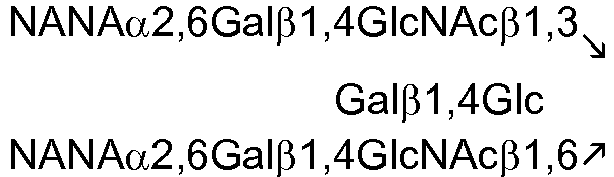
DSLNT Disialyllacto-N-tetraose 
DSLNH-II Disialyllacto-N-hexaose II 
SLNT-a Sialyllacto-N-tetraose a NANAα2,3Gαlβ12,3GlNAcβ1,3 Galβ1,4Glc DSLNH-I Disialyllacto-N-hexaose I 
SLNT-b Sialyllacto-N-tetraose b 
Table 4. Sialyl fucosyl oligosaccharides 3'-S-3FL 3'-Sialyl-3-fucosyllactose 
DSFLNH Disialomonofucosyllacto-N-neohexaose 
MFMSLNO Monofucosylmonosialyllacto-N-octaose (sialyl Lea) 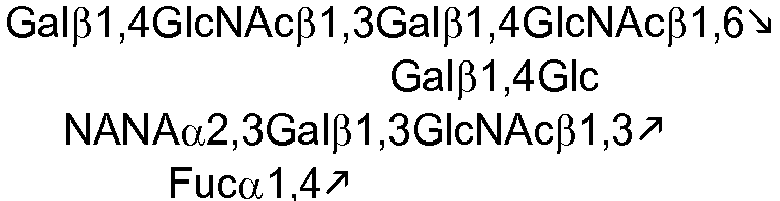
SLNFH-II Sialyllacto-N-fucohexaose II 
DSLNFP-II Disialyllacto-N-fucopentaose II 
MFDLNT Monofucosyldisialyllacto-N-tetraose 
- The milk-derived oligosaccharides described herein can be prepared by conventional methods, e.g., synthesized chemically, purified from milk, or produced in a microorganism. See
WO2005/055944 . Below is an example of isolating oligosaccharides from milk. Milk is first defatted by centrifugation to produce skimmed milk. The skimmed milk is then mixed with an organic solvent, such as acetone (e.g., 50% aqueous acetone) and ethanol (e.g., 67% aqueous ethanol), to precipitate milk proteins. Upon centrifugation, the supernatant is collected and subjected to chromatography. Oligosaccharide-containing fractions are collected and pooled. If necessary, the oligosaccharides thus prepared can be concentrated by conventional methods, e.g., dialysis or freeze-drying. - Milk oligosaccharides can also be isolated from skimmed milk by passing the skimmed milk through a 30,000 MWCO ultrafiltration membrane, collecting the diffusate, passing the diffusate through a 500 MWCO ultrafilter, and collecting the retentate, which contains milk oligosaccharides.
- The glycoconjugates described herein, containing one or more milk-derived oligosaccharides, can be chemically synthesized by conjugating the oligosaccharide(s) to a backbone molecule (e.g., a carbohydrate, a lipid, a nucleic acid, or a peptide) directly or via a linker. As used herein, "glycoconjugate" refers to a complex containing a sugar moiety associated with a backbone moiety. The sugar and the backbone moieties can be associated via a covalent or noncovalent bond, or via other forms of association, such as entrapment (e.g., of one moiety on or within the other, or of either or both entities on or within a third moiety). The glycoconjugate described herein can contain one type of milk-derived oligosaccharide (i.e., one or more copies of a milk-derived oligosaccharide attached to one backbone molecule). Alternatively, the glycoconjugate contains multiple types of milk-derived oligosaccharides. In one example, the milk-derived oligosaccharide (e.g., lacto-N-fucopentaose I, 2-fucosyllactose, lacto-N-difucohexaose I, lactodifucotetraose, or an acetylated variant thereof) is covalently linked via its reducing end sugar unit to a lipid, a protein, a nucleic acid, or a polysaccharide. Preferably, the reducing end sugar unit is N-acetylglucosamine.
- Peptide backbones suitable for making the glycoconjugate described above include those having multiple glycosylation sites (e.g., asparagine, lysine, serine, or threonine residue) and low allergenic potential. Examples include, but are not limited to, amylase, bile salt-stimulated lipase, casein, folate-binding protein, globulin, gluten, haptocorrin, lactalbumin, lactoferrin, lactoperoxidase, lipoprotein lipase, lysozyme, mucin, ovalbumin, and serum albumin.
- Typically, a milk-derived oligosaccharide can be covalently attached to a serine or threonine residue via an O-linkage or attached to an asparagine residue via an N-linkage. To form these linkages, the sugar unit at the reducing end of the oligosaccharide is preferably an acetylated sugar unit, e.g., N-acetylgalactosamine, N-acetylglucosamine, and N-acetylmannosamine. An oligosaccharide can be attached to a peptide (e.g., a protein) using standard methods. See, e.g., McBroom et al., Complex Carbohydrates, Part B, 28:212-219, 1972; Yariv et al., Biochem J., 85:383-388, 1962; Rosenfeld et al., Carbohydr. Res., 46:155-158, 1976; and Pazur, Adv. Carbohydr. Chem, Biochem., 39:405-447, 1981.
- In one example, a milk-derived oligosaccharide is linked to a backbone molecule via a linker. Exemplary linkers are described in
WO2005/055944 . The oligosaccharide can be bonded to a linker by an enzymatic reaction, e.g., a glycosyltransferase reaction. A number of glycosyltransferases, including fucosyltransferases, galactosyltransferases, glucosyltransferases, mannosyltransferases, galactosaminyltransferases, sialyltransferases and N-acetylglucosaminyltransferases, can be used to make the glycoconjugate described herein. More details about these glycosyltransferases can be found inU.S. Patent Nos: 6,291,219 ;6,270,987 ;6,238,894 ;6,204,431 ;6,143,868 ;6,087,143 ;6,054,309 ;6,027,928 ;6,025,174 ;6,025,173 ;5,955,282 ;5,945,322 ;5,922,540 ;5,892,070 ;5,876,714 ;5,874,261 ;5,871,983 ;5,861,293 ;5,859,334 ;5,858,752 ;5,856,159 ; and5,545,553 . - Alternatively, the glycoconjugates described herein can be purified from milk by conventional methods e.g., by passing through ultrafiltration membranes, by precipitation in non-polar solvents, or through partition between immiscible solvents.
- One or more of the above-described milk oligosaccharides or glycoconjugates can be mixed with a pharmaceutically acceptable carrier to form a pharmaceutical composition. The carrier in the pharmaceutical composition must be "acceptable" in the sense of being compatible with the active ingredient of the formulation (and preferably, capable of stabilizing it) and not deleterious to the subject to be treated. For example, solubilizing agents such as cyclodextrins, which form more soluble complexes with the oligosaccharides/glycoconjugates, or more solubilizing agents, can be utilized as pharmaceutical carriers for delivery of the oligosccharides/glyconjugates. Examples of other carriers include colloidal silicon dioxide, magnesium stearate, sodium lauryl sulfate, and D&C Yellow # 10.
- Alternatively, the oligoscchairdes/glycoconjugates can also be formulated as food produces or food supplements following methods well known in the food industry. In one example, they are components of infant formulas.
- The oligosaccharides and glycoconjugates are effective in inhibiting inflammation and treating inflammation-associated diseases (i.e., inflammatory diseases). Inflammation is reaction of living tissue (e.g., heat, redness, swelling, or pain) in response to injury or infection. Exemplary inflammation-associated diseases, characterized by a local or systemic, acute or chronic inflammation, include inflammatory retinopathy (e.g., diabetic retinopathy), dermatoses (e.g., dermatitis, eczema, atopic dermatitis, allergic contact dermatitis, urticaria, necrotizing vasculitis, cutaneous vasculitis, hypersensitivity vasculitis, eosinophilic myositis, polymyositis, dermatomyositis, and eosinophilic fasciitis), hypersensitivity lung diseases (e.g., hypersensitivity pneumonitis, eosinophilic pneumonia, delayed-type hypersensitivity, interstitial lung disease or ILD, idiopathic pulmonary fibrosis, and ILD associated with rheumatoid arthritis), asthma, and allergic rhinitis. In addition to treating the above-listed inflammatory diseases, the method of this invention is particularly effective in treating inflammatory disease of the digestive tract, including oesophatigis (i.e., inflammation of the oesophagus, such as oesophageal ulcer), gastroenteritis (i.e., inflammation of the mucous membranes of the stomach and intestine, such as gastritis, duodenal ulcer, ileitis, or enterocolitis), colitis (i.e., inflammation of the colon, such as diverticulitis), cholangitis (i.e., inflammation of the bile duct), and appendicitis (i.e., inflammation of the appendix). Inflammatory disease of the digestive tract also includes inflammatory bowel diseases (e.g., Crohn's disease and ulcerative colitis) and irritable bowel syndrome.
- The term "treating" as used herein refers to the application or administration of a composition including one or more active agents to a subject, who has an inflammatory disease, a symptom of the inflammatory disease, or a predisposition toward the inflammatory disease, with the purpose to cure, heal, alleviate, relieve, alter, remedy, ameliorate, improve, or affect the disease, the symptoms of the disease, or the predisposition toward the disease.
- To practice the method of this disclosure, an effective amount of the above-described pharmaceutical composition can be administered to a subject (e.g., a human infant or elderly) orally, parenterally, by inhalation spray, topically, rectally, nasally, buccally, vaginally or via an implanted reservoir. The term "parenteral" as used herein includes subcutaneous, intracutaneous, intravenous, intramuscular, intraarticular, intraarterial, intrasynovial, intrasternal, intrathecal, intralesional, and intracranial injection or infusion techniques. "An effective amount" as used herein refers to the amount of each active agent required to confer therapeutic effect on the subject, either alone or in combination with one or more other active agents. Effective amounts vary, as recognized by those skilled in the art, depending on route of administration, excipient usage, and co-usage with other active agents.
- A sterile injectable composition, e.g., a sterile injectable aqueous or oleaginous suspension, can be formulated according to techniques known in the art using suitable dispersing or wetting agents (such as Tween 80) and suspending agents. The sterile injectable preparation can also be a sterile injectable solution or suspension in a non-toxic parenterally acceptable diluent or solvent, for example, as a solution in 1,3-butanediol. Among the acceptable vehicles and solvents that can be employed are mannitol, water, Ringer's solution and isotonic sodium chloride solution. In addition, sterile, fixed oils are conventionally employed as a solvent or suspending medium (e.g., synthetic mono- or diglycerides). Fatty acids, such as oleic acid and its glyceride derivatives are useful in the preparation of injectables, as are natural pharmaceutically-acceptable oils, such as olive oil or castor oil, especially in their polyoxyethylated versions. These oil solutions or suspensions can also contain a long-chain alcohol diluent or dispersant, or carboxymethyl cellulose or similar dispersing agents. Other commonly used surfactants such as Tweens or Spans or other similar emulsifying agents or bioavailability enhancers which are commonly used in the manufacture of pharmaceutically acceptable solid, liquid, or other dosage forms can also be used for the purposes of formulation.
- A composition for oral administration can be any orally acceptable dosage form including, but not limited to, capsules, tablets, emulsions and aqueous suspensions, dispersions and solutions. In the case of tablets for oral use, carriers which are commonly used include lactose and corn starch. Lubricating agents, such as magnesium stearate, are also typically added. For oral administration in a capsule form, useful diluents include lactose and dried corn starch. When aqueous suspensions or emulsions are administered orally, the active ingredient can be suspended or dissolved in an oily phase combined with emulsifying or suspending agents. If desired, certain sweetening, flavoring, or coloring agents can be added. A nasal aerosol or inhalation composition can be prepared according to techniques well known in the art of pharmaceutical formulation.
- Suitable in vitro and in vivo assays can be used to preliminarily evaluate the anti-inflammation activity of a particular milk oligosaccharide or a combination of various milk oligosaccharides. For example, the oligosaccharide(s) can be tested in vitro for its ability of inhibiting secretion of pro-inflammatory cytokines (e.g., IL-1, IL-6, TNF-alpha GM-CSF, IL-8, and IL-12). The anti-inflammation activity can further be confirmed in an animal model (e.g., a mouse model). Based on the results, an appropriate dosage range and administration route can also be determined.
- Without further elaboration, it is believed that one skilled in the art can, based on the above description, utilize the present invention to its fullest extent. The following specific example is therefore to be construed as merely illustrative.
- An oligosaccharide fraction was isolated from human milk following the method described in Chaturvedi et al., Anal. Biochem. 251(1):89-97, 1997. Briefly, pooled human milk was first defatted and then ethanol was added to precipitate proteins. The resultant solution was loaded onto a carbon column, which adsorbs oligosaccharides. The column was washed with 5% ethanol and the adsorbed oligosaccharides were eluted with 60% ethanol to produce a fraction containing human milk oligosaccharides ("HMOS").
- T84 cells, used routinely for studying neonatal epithelial inflammation, were cultured in 24-well Falcon organ culture dishes at 37°C with 95% O2 and 5% CO2 in DMEM/F12 medium supplemented with FBS (5%), Hepes buffer, NaOH, penicillin and streptomycin. These cells were treated with (i) saline as a negative control, (ii) TNF-α (10 ng/mL) as a positive control, (iii) HMOS (5 g/L), and (iv) TNF-α (10 ng/mL) and HMOS (5 g/L). After 16 hours, the concentration of IL-8 in each culture supernatant was measured by ELISA. The results thus obtained were standardized to the cell numbers (i.e., divided by the total cell protein contents of the corresponding cell cutures).
- As shown in
Fig. 1 , the TNF-induced IL-8 production was significantly reduced in HMOS-treated T84 cells, indicating tht HMOS exhibited antiinflammatory activity. - Human small intestine mucosa samples from 14 wk abortuses were incubated in 24-well Falcon organ culture plates with CMRL 1066 medium supplemented with FBS (5%), glucose (5 g/L), tricine buffer (20 mM, pH 7.4), hydrocortisone hemisuccinate (0.5 µg/L), β-retinyl acetate (1 mg/L), penicillin and streptomycin in 5% CO2 at 37 °C. The mucosa samples were treated with (i) saline as a negative control, (ii) TNF-α (10 ng/mL) as a positive control, (iii) HMOS (5 g/L), and (iv) TNF-α (10 ng/mL) and HMOS (5 g/L). After 16 hours, the concentration of MCP-1, a pro-inflammatory chemokine, was measured in each culture supernatant by ELISA. The results thus obtained were standized to cell numbers as described above.
- The data obtained from this study, shown indicate that in the presence of TNF-α, human intestinal mucosa secreted a high level of MCP-1, a measure of inflammation and this TNF-α induced MCP-1 production was attenuated by HMOS. See
Fig. 2 . - Human small intestine samples from 22 wk abortuses were incubated in 24-well plates with the modified CMRL media described above in 5% CO2 at 37 °C. The samples were treated with IL-1β (10 ng/mL), flagellin (1 mg/mL), polyinosinic-polycytidilic double stranded RNA (PIC; 10 ng/mL), or PBS (as a netative control) in the absence or presence of 5 mg/mL HMOS for 18 h. Levels of IL-8 secretion in the culture supernatants were measured using a ELISA kit (R & D Systems) in duplicate, with detection at 450 nm on a versa max plate reader (Molecular Devices, CA, USA). Each OD450 value was normalized to the total protein amount of the corresponding organ culture.
- Flagelin, polyinosinic-polycytidilic double stranded RNA, and IL-1β all induced a pro-inflammatory response, as evidenced by secretion of IL-8. See
Fig. 3 . This pro-inflammatory response was significantly attenuated by HMOS. - Take together, the results shown above indicate that milk oligosaccharides are effective in inhibiting inflammation.
Claims (7)
- A milk-derived oligosaccharide for use in treating inflammatory bowel disease or irritable bowel syndrome, wherein the milk-derived oligosaccharide is 2'-fucosyllactose, or a variant thereof, the variant being identical to 2'-fucosyllactose except that the reducing end is N-acetylglucosamine instead of glucose.
- The milk-derived oligosaccharide for use in treating inflammatory bowel disease or irritable bowel syndrome according to claim 1, wherein the oligosaccharide is conjugated to a carbohydrate, a lipid, or a peptide.
- The milk-derived oligosaccharide for use in treating inflammatory bowel disease or irritable bowel syndrome according to claim 1 or 2, wherein the oligosaccharide is for use in a human infant.
- The milk-derived oligosaccharide for use in treating inflammatory bowel disease or irritable bowel syndrome according to claim 1, wherein the oligosaccharide has been isolated from human milk.
- The milk-derived oligosaccharide for use in treating inflammatory bowel disease or irritable bowel syndrome according to claim 1, wherein the oligosaccharide has been isolated from milk, after removal of fat and protein.
- The milk-derived oligosaccharide for use in treating inflammatory bowel disease or irritable bowel syndrome according to claim 1, wherein the oligosaccharide has been isolated from milk, by loading the milk onto a carbon column and eluting the oligosaccharide from the column with an alcohol solution.
- The milk-derived oligosaccharide for use in treating inflammatory bowel disease or irritable bowel syndrome according to any of claims 1 to 6, wherein the inflammatory bowel disease is ulcerative colitis or Crohn's disease.
Priority Applications (1)
| Application Number | Priority Date | Filing Date | Title |
|---|---|---|---|
| EP17181077.3A EP3248605A1 (en) | 2009-07-06 | 2010-07-02 | Inhibiting inflammation with milk oligosaccharides |
Applications Claiming Priority (2)
| Application Number | Priority Date | Filing Date | Title |
|---|---|---|---|
| US22314509P | 2009-07-06 | 2009-07-06 | |
| PCT/US2010/040895 WO2011005681A1 (en) | 2009-07-06 | 2010-07-02 | Inhibiting inflammation with milk oligosaccharides |
Related Child Applications (2)
| Application Number | Title | Priority Date | Filing Date |
|---|---|---|---|
| EP17181077.3A Division EP3248605A1 (en) | 2009-07-06 | 2010-07-02 | Inhibiting inflammation with milk oligosaccharides |
| EP17181077.3A Division-Into EP3248605A1 (en) | 2009-07-06 | 2010-07-02 | Inhibiting inflammation with milk oligosaccharides |
Publications (3)
| Publication Number | Publication Date |
|---|---|
| EP2451462A1 EP2451462A1 (en) | 2012-05-16 |
| EP2451462A4 EP2451462A4 (en) | 2012-12-12 |
| EP2451462B1 true EP2451462B1 (en) | 2017-09-06 |
Family
ID=43429494
Family Applications (2)
| Application Number | Title | Priority Date | Filing Date |
|---|---|---|---|
| EP17181077.3A Ceased EP3248605A1 (en) | 2009-07-06 | 2010-07-02 | Inhibiting inflammation with milk oligosaccharides |
| EP10797669.8A Revoked EP2451462B1 (en) | 2009-07-06 | 2010-07-02 | Inhibiting inflammation with milk oligosaccharides |
Family Applications Before (1)
| Application Number | Title | Priority Date | Filing Date |
|---|---|---|---|
| EP17181077.3A Ceased EP3248605A1 (en) | 2009-07-06 | 2010-07-02 | Inhibiting inflammation with milk oligosaccharides |
Country Status (7)
| Country | Link |
|---|---|
| US (5) | US9034847B2 (en) |
| EP (2) | EP3248605A1 (en) |
| JP (1) | JP2012532195A (en) |
| CA (1) | CA2767043C (en) |
| DK (1) | DK2451462T3 (en) |
| ES (1) | ES2651067T3 (en) |
| WO (1) | WO2011005681A1 (en) |
Families Citing this family (48)
| Publication number | Priority date | Publication date | Assignee | Title |
|---|---|---|---|---|
| CN101855554B (en) | 2007-09-07 | 2014-05-14 | 儿童医院医学中心 | Use of secretor, Lewis and sialyl antigen levels as predictors for disease |
| CA2767043C (en) | 2009-07-06 | 2020-07-14 | Children's Hospital Medical Center | Inhibiting inflammation with milk oligosaccharides |
| CA2798675A1 (en) | 2010-06-01 | 2011-12-08 | Glycom A/S | Polymorphs of 2'-o-fucosyllactose and producing thereof |
| DK2658549T3 (en) | 2010-12-31 | 2020-06-29 | Abbott Lab | METHODS OF REDUCING THE INCIDENCE OF OXIDATIVE STRESS USING HUMAN MILK OILOSACCHARIDES, VITAMIN C AND ANTI-INFLAMMATORY AGENTS |
| MY166946A (en) | 2010-12-31 | 2018-07-25 | Abbott Lab | Methods of using human milk oligosaccharides for improving airway respiratory health |
| SG10201707519PA (en) | 2010-12-31 | 2017-10-30 | Abbott Lab | Neutral human milk oligosaccharides to promote growth of beneficial bacteria |
| SG191395A1 (en) | 2010-12-31 | 2013-08-30 | Abbott Lab | Nutritional compositions comprising human milk oligosaccharides and nucleotides and uses thereof for treating and/or preventing enteric viral infection |
| WO2012092157A2 (en) | 2010-12-31 | 2012-07-05 | Abbott Laboratories | Nutritional formulations including human milk oligosaccharides and antioxidants and uses thereof |
| SG191792A1 (en) | 2010-12-31 | 2013-08-30 | Abbott Lab | Human milk oligosaccharides for modulating inflammation |
| MX376863B (en) | 2010-12-31 | 2025-03-07 | Abbott Lab | METHODS TO REDUCE THE INCIDENCE OF NECROTIZING ENTEROCOLITIS IN INFANTS, INFANTS, OR CHILDREN BY USING HUMAN MILK OLIGOSACCHARIDES. |
| SG192234A1 (en) | 2011-02-04 | 2013-09-30 | Univ California | Disialyllacto-n-tetraose (dslnt) or variants, isomers, analogs and derivatives thereof to prevent or inhibit bowel disease |
| PH12014500185A1 (en) | 2011-07-22 | 2019-10-11 | Abbott Lab | Galactooligosaccharides for preventing injury and/or promoting healing of the gastrointestinal tract |
| SG2014013478A (en) * | 2011-08-29 | 2014-05-29 | Abbott Lab | Human milk oligosaccharides for preventing injury and/or promoting healing of the gastrointestinal tract |
| JP2015512936A (en) * | 2012-04-13 | 2015-04-30 | トラスティーズ オブ ボストン カレッジ | Prebiotic composition and method of use thereof |
| DK2708147T3 (en) | 2012-09-14 | 2020-05-18 | Abbott Lab | PROCEDURES FOR INCREASING BRAIN FUNCTIONALITY USING 2-FUCOSYL-LACTOSE |
| ES2572831T3 (en) * | 2012-09-14 | 2016-06-02 | Abbott Laboratories | Nutritional compositions for use in methods to modulate corticosterone levels in individuals with psychological stress |
| CN110679948A (en) * | 2012-12-20 | 2020-01-14 | 雅培制药有限公司 | Nutritional formulations for modulating inflammation using human milk oligosaccharides |
| WO2014130789A1 (en) | 2013-02-21 | 2014-08-28 | Children's Hospital Medical Center | Use of glycans and glycosyltransferases for diagnosing/monitoring inflammatory bowel disease |
| WO2015077233A1 (en) | 2013-11-19 | 2015-05-28 | Abbott Laboratories | Methods for preventing or mitigating acute allergic responses using human milk oligosaccharides |
| EP2888950A1 (en) * | 2013-12-24 | 2015-07-01 | Abbott Laboratories | Methods for treating, preventing, or reducing neuroinflammation or cognitive impairment |
| EP2896628B1 (en) | 2014-01-20 | 2018-09-19 | Jennewein Biotechnologie GmbH | Process for efficient purification of neutral human milk oligosaccharides (HMOs) from microbial fermentation |
| SG11201608248YA (en) | 2014-04-08 | 2016-10-28 | Abbott Lab | Methods for enhancing mucosal innate immune responses to and/or detection of pathogens using human milk oligosaccharides |
| AU2015315110B2 (en) * | 2014-09-09 | 2021-04-08 | Glycosyn LLC | Alpha (1,3) fucosyltransferases for use in the production of fucosylated oligosaccharides |
| CN107073021A (en) | 2014-10-29 | 2017-08-18 | 格礼卡姆股份公司 | Synthetic compositions and methods for treating irritable bowel syndrome |
| EP3212198B1 (en) * | 2014-10-29 | 2020-12-23 | Glycom A/S | Synthetic composition and method for promoting mucosal healing |
| US11040049B2 (en) | 2014-10-29 | 2021-06-22 | Glycom A/S | Composition comprising HMSs/HMOs and use thereof |
| US11040050B2 (en) | 2014-10-29 | 2021-06-22 | Glycom A/S | Composition comprising HMSs/HMOs and use thereof |
| ES2947458T3 (en) * | 2015-03-05 | 2023-08-09 | Nestle Sa | Compositions for use in the prevention or treatment of gastrointestinal infections in infants or young children |
| EP3288389A4 (en) * | 2015-04-28 | 2018-10-10 | Children's Hospital Medical Center | Use of oligosaccharide compositions to enhance weight gain |
| WO2017035412A1 (en) * | 2015-08-25 | 2017-03-02 | Kaleido Biosciences, Inc. | Glycan compositions and uses thereof |
| WO2017071715A1 (en) | 2015-10-28 | 2017-05-04 | Glycom A/S | Synthetic composition and method for modulating brain function and behaviour |
| RU2019105567A (en) | 2016-07-28 | 2020-08-28 | Фонтерра Ко-Оперэйтив Груп Лимитед | DAIRY PRODUCT AND METHOD |
| AU2017394752B9 (en) * | 2017-01-23 | 2020-05-28 | Cupione Co., Ltd. | Composition for preventing or treating osteoarthritis containing sialyllactose or salt thereof as active ingredient |
| EP3606535A4 (en) * | 2017-04-07 | 2020-12-16 | Children's Hospital Medical Center | TREATMENT OF INFLAMMATORY INTESTINAL DISEASES WITH 2'-FUCOSYL LACTOSE COMPOUNDS |
| AU2018346500B2 (en) * | 2017-10-04 | 2024-10-24 | The Regents Of The University Of California | Immunomodulatory oligosaccharides |
| ES2987964T3 (en) * | 2017-11-30 | 2024-11-18 | Glycom As | HMO Blend for Treating Wheat Sensitivity |
| BR112020010843A2 (en) * | 2017-11-30 | 2020-11-10 | Glycom A/S | human milk oligosaccharides and synthetic compositions for modulation of the microbiota |
| EP3743078A4 (en) | 2017-12-22 | 2022-01-19 | Glycom A/S | COMPOSITION COMPRISING HMOs FOR PREVENTING OR REDUCING NOCICEPTION |
| US20210308196A1 (en) * | 2018-06-01 | 2021-10-07 | Evolve Biosystems, Inc. | Compositions and methods to promote host defense and stimulate, expand, and/or reset t cell repertoires |
| KR20210104773A (en) | 2018-12-19 | 2021-08-25 | 글리콤 에이/에스 | Compositions and methods for the treatment of humans using a low-FODMAP diet |
| CN113194961A (en) * | 2018-12-21 | 2021-07-30 | 格礼卡姆股份公司 | Compositions and methods for promoting intestinal barrier healing |
| EP3952882A4 (en) | 2019-04-09 | 2023-01-18 | Intrinsic Medicine, Inc. | Immunomodulatory oligosaccharides for the treatment of pain |
| CN110038020A (en) * | 2019-04-23 | 2019-07-23 | 河南省农业科学院 | Saliva acid mimic inhibits the application under infection of macrophages or state of activation in the drug of caused inflammation in preparation |
| US12364721B2 (en) | 2019-09-24 | 2025-07-22 | Prolacta Bioscience, Inc. | Compositions and methods for treatment of inflammatory and immune diseases |
| EP4281181A1 (en) * | 2021-01-22 | 2023-11-29 | Prolacta Bioscience, Inc. | Topical human milk formulations |
| US11712445B2 (en) * | 2021-04-30 | 2023-08-01 | Sourabh Kharait | Compositions and methods for improving gastrointestinal function in subjects with renal disease |
| US20250000884A1 (en) * | 2021-10-04 | 2025-01-02 | Dsm Nutritional Products, Llc | Oligosaccharide compositions and methods of use thereof for treating inflammatory lung diseases |
| WO2024218196A1 (en) * | 2023-04-19 | 2024-10-24 | Chr. Hansen A/S | 3-fucosyllactose |
Citations (4)
| Publication number | Priority date | Publication date | Assignee | Title |
|---|---|---|---|---|
| WO1999056754A1 (en) | 1998-04-30 | 1999-11-11 | Abbott Laboratories | COMPOSITIONS CONTAINING AN α1,2-FUCOSE LINKAGE AND USES THEREOF |
| WO2005055944A2 (en) | 2003-12-05 | 2005-06-23 | Cincinnati Children's Hospital Medical Center | Oligosaccharide compositions and use thereof in the treatment of infection |
| WO2009033011A1 (en) | 2007-09-07 | 2009-03-12 | Children's Hospital Medical Center | Use of secretor, lewis and sialyl antigen levels as predictors for disease |
| WO2010065652A1 (en) | 2008-12-02 | 2010-06-10 | Prolacta Bioscience, Inc. | Human milk permeate compositions and methods of making and using same |
Family Cites Families (63)
| Publication number | Priority date | Publication date | Assignee | Title |
|---|---|---|---|---|
| GB1246902A (en) | 1969-03-27 | 1971-09-22 | Boots Pure Drug Co Ltd | Improvements in therapeutic agents |
| DK455088D0 (en) | 1988-08-12 | 1988-08-12 | Symbicom Ab | SYNTHETIC RECEPTOR ANALOGS |
| US5874261A (en) | 1988-09-02 | 1999-02-23 | The Trustees Of The University Of Pennsylvania | Method for the purification of glycosyltransferases |
| AU1926692A (en) * | 1991-04-19 | 1992-11-17 | Board Of Trustees Of The Leland Stanford Junior University | Compositions and methods for endothelial binding |
| DK0656940T3 (en) | 1992-07-30 | 2004-02-09 | Int Flower Dev Pty Ltd | Gene sequences encoding glycosyltransferase enzymes and uses thereof |
| US5874271A (en) | 1992-08-21 | 1999-02-23 | Takara Shuzo Co., Ltd. | Human glycosyltransferase gene, compounds and method for inhibiting cancerous metastasis |
| EP0601417A3 (en) | 1992-12-11 | 1998-07-01 | Hoechst Aktiengesellschaft | Physiologically compatible and degradable polymer-based carbohydrate receptor blockers, a method for their preparation and their use |
| CN1121311A (en) | 1993-02-26 | 1996-04-24 | 扬·施塔芬·诺马克 | Application of oligoglycosides as inhibitors of bacterial adhesion |
| US5484773A (en) * | 1994-02-14 | 1996-01-16 | Alberta Research Council | Treatment of antibiotic associated diarrhea |
| DE69524386D1 (en) | 1994-02-16 | 2002-01-17 | Pharming Intellectual Pty Bv | ISOLATION OF LACTOFERRIN FROM MILK |
| NZ281041A (en) | 1994-03-09 | 1998-04-27 | Abbott Lab | Non-human mammals transformed with a catalytic entity of enzymes or antibodies to produce a heterologous product in the animals milk |
| US5750176A (en) | 1994-03-09 | 1998-05-12 | Abbott Laboratories | Transgenic non-human mammal milk comprising 2'-fucosyl-lactose |
| US6204431B1 (en) | 1994-03-09 | 2001-03-20 | Abbott Laboratories | Transgenic non-human mammals expressing heterologous glycosyltransferase DNA sequences produce oligosaccharides and glycoproteins in their milk |
| WO1995034663A1 (en) | 1994-06-13 | 1995-12-21 | Banyu Pharmaceutical Co., Ltd. | Gene coding for glycosyltransferase and use thereof |
| US5576300A (en) | 1994-09-16 | 1996-11-19 | Abbott Laboratories | Method for inhibition of human rotavirus infection |
| US5545553A (en) | 1994-09-26 | 1996-08-13 | The Rockefeller University | Glycosyltransferases for biosynthesis of oligosaccharides, and genes encoding them |
| US5858752A (en) | 1995-06-07 | 1999-01-12 | The General Hospital Corporation | Fucosyltransferase genes and uses thereof |
| JP2758856B2 (en) | 1995-06-15 | 1998-05-28 | 理化学研究所 | Ceramide glucosyltransferase |
| EP0816503B1 (en) | 1996-01-24 | 2006-07-05 | Toyo Boseki Kabushiki Kaisha | Alpha-1-6 fucosyltransferases |
| US6841543B1 (en) * | 1996-01-31 | 2005-01-11 | President And Fellows Of Harvard College | Methods of inhibiting production of T helper type 2 cytokines in human immune cells |
| US5856159A (en) | 1996-03-27 | 1999-01-05 | Cytel Corporation | Production of galactosyltransferase |
| US5871983A (en) | 1996-09-13 | 1999-02-16 | Eli Lilly And Company | Glucosyltransferase gene GTFE from amycolatopsis orientalis |
| US5821098A (en) | 1996-09-13 | 1998-10-13 | Eli Lilly And Company | Glycosyltransferase gene gtfD from amycolatopsis orientalis |
| US5821100A (en) | 1996-09-13 | 1998-10-13 | Eli Lilly And Company | Glycosyltransferase gene gtfb from Amycolatopsis orientalis |
| US5821097A (en) | 1996-09-13 | 1998-10-13 | Eli Lilly And Company | Glycosyltransferase gene GtfC from Amycolatopsis orientalis |
| CA2664150C (en) | 1996-09-17 | 2013-01-08 | Kyowa Hakko Bio Co., Ltd. | Processes for producing sugar nucleotides and complex carbohydrates |
| US5922540A (en) | 1996-12-20 | 1999-07-13 | Eli Lilly And Company | Monofunctional glycosyltransferase gene of Staphylococcus aureus |
| JP3394540B2 (en) | 1997-01-31 | 2003-04-07 | ジェネンテク・インコーポレイテッド | O-fucosyltransferase |
| US6132710A (en) | 1997-03-17 | 2000-10-17 | Probiotix, Inc. | Preventing/treating neonatal NEC by administering lactobacillus salivarius and lactobacillus plantarum or a combination thereof |
| US6045854A (en) | 1997-03-31 | 2000-04-04 | Abbott Laboraties | Nutritional formulations containing oligosaccharides |
| US6087143A (en) | 1997-09-05 | 2000-07-11 | Eli Lilly And Company | Glycosyltransferase gene gtfA from Amycolatopsis orientalis |
| US7244601B2 (en) | 1997-12-15 | 2007-07-17 | National Research Council Of Canada | Fusion proteins for use in enzymatic synthesis of oligosaccharides |
| US5955282A (en) | 1998-04-03 | 1999-09-21 | Incyte Pharmaceuticals, Inc. | Human galactosyltransferases |
| US6126961A (en) | 1998-04-13 | 2000-10-03 | Kross; Robert D. | Composition and method for reducing the colonization of animal intestines by salmonella and other bacterial pathogens |
| US20020115839A1 (en) | 2000-08-31 | 2002-08-22 | Millennium Pharmaceuticals, Inc. | 8797, a novel human galactosyltransferase and uses thereof |
| US6238894B1 (en) | 1998-11-04 | 2001-05-29 | Diane Taylor | α1,2 fucosyltransferase |
| US6291435B1 (en) | 1999-03-04 | 2001-09-18 | The Governs Of The University Of Alberta | Treatment of diarrhea caused by enteropathogenic Escherichia coli |
| US20030036070A1 (en) | 1999-10-21 | 2003-02-20 | Shukti Chakravarti | Gene expression profiling of inflammatory bowel disease |
| FI109811B (en) | 2000-09-26 | 2002-10-15 | Medicel Oy | A process for the preparation of GDP-L-fucose and the means used in the process |
| WO2002043578A2 (en) | 2000-11-28 | 2002-06-06 | Children's Medical Center Corporation | Determination of risk and treatment of complications of prematurity |
| FI20021989A0 (en) | 2002-11-06 | 2002-11-06 | Halina Miller-Podraza | High affinity Helicobacter pylori receptors and their use |
| GB0229015D0 (en) * | 2002-12-12 | 2003-01-15 | Novartis Nutrition Ag | New Compound |
| AU2004283626B2 (en) | 2003-10-24 | 2010-07-15 | N.V. Nutricia | Synbiotic composition for infants |
| EP1597978A1 (en) | 2004-05-17 | 2005-11-23 | Nutricia N.V. | Synergism of GOS and polyfructose |
| WO2006023229A2 (en) | 2004-07-27 | 2006-03-02 | The Regents Of The University Of California | Treatment of epilepsy by expressing st3gal-iii |
| DK1774037T3 (en) | 2004-08-06 | 2011-08-15 | Genentech Inc | Analyzes and approaches using biomarkers |
| CN104223094A (en) | 2005-02-28 | 2014-12-24 | 纽崔西亚公司 | Nutritional Composition With Probiotics |
| BRPI0611239A2 (en) | 2005-06-06 | 2016-11-16 | Wyeth Corp | methods of diagnosing a disease and distinguishing between a diagnosis of ulcerative colitis and a diagnosis of crohn's disease in a patient |
| CN101415461A (en) | 2006-01-09 | 2009-04-22 | 儿童医院医疗中心 | Adiponectin for treatment of various disorders |
| ES2342625T5 (en) | 2006-02-10 | 2020-05-07 | Nestle Sa | Oligosaccharide mixture |
| CA2647258A1 (en) | 2006-03-31 | 2007-10-18 | Wellstat Therapeutics Corporation | Combination treatment of metabolic disorders |
| US8197872B2 (en) * | 2007-05-17 | 2012-06-12 | The Regents Of The University Of California | Human milk oligosaccharides to promote growth of beneficial gut bacteria |
| EP2072052A1 (en) * | 2007-12-17 | 2009-06-24 | Nestec S.A. | Prevention of opportunistic infections in immune-compromised subjects |
| CA2767043C (en) | 2009-07-06 | 2020-07-14 | Children's Hospital Medical Center | Inhibiting inflammation with milk oligosaccharides |
| WO2012009315A2 (en) | 2010-07-12 | 2012-01-19 | The Regents Of The University Of California | Bovine milk oligosaccharides |
| JP6129821B2 (en) | 2011-05-13 | 2017-05-17 | グリコシン リミテッド ライアビリティー カンパニー | Use of purified 2'-fucosyl lactose, 3-fucosyl lactose, and lactodifucotetraose as prebiotics |
| PH12014500443A1 (en) | 2011-10-18 | 2014-04-14 | SociaTa Des Produits Nestla S A | Composition for use in brain growth and/or cognitive and/or psychomotor development |
| BR112014007829A2 (en) | 2011-10-18 | 2017-04-18 | Nestec Sa | composition for use in promoting magnesium absorption and / or magnesium retention |
| EP2768311B2 (en) | 2011-10-18 | 2025-05-28 | Société des Produits Nestlé S.A. | Composition for use in the prevention and/or treatment of intestinal inflammation and/or in the recovery after intestinal injury and surgery |
| JP2015512936A (en) | 2012-04-13 | 2015-04-30 | トラスティーズ オブ ボストン カレッジ | Prebiotic composition and method of use thereof |
| WO2014130789A1 (en) | 2013-02-21 | 2014-08-28 | Children's Hospital Medical Center | Use of glycans and glycosyltransferases for diagnosing/monitoring inflammatory bowel disease |
| EP3288389A4 (en) | 2015-04-28 | 2018-10-10 | Children's Hospital Medical Center | Use of oligosaccharide compositions to enhance weight gain |
| US10751354B2 (en) | 2015-09-14 | 2020-08-25 | Glycom A/S | Synthetic composition for microbiota modulation |
-
2010
- 2010-07-02 CA CA2767043A patent/CA2767043C/en active Active
- 2010-07-02 DK DK10797669.8T patent/DK2451462T3/en active
- 2010-07-02 US US13/382,323 patent/US9034847B2/en active Active
- 2010-07-02 EP EP17181077.3A patent/EP3248605A1/en not_active Ceased
- 2010-07-02 EP EP10797669.8A patent/EP2451462B1/en not_active Revoked
- 2010-07-02 WO PCT/US2010/040895 patent/WO2011005681A1/en not_active Ceased
- 2010-07-02 ES ES10797669.8T patent/ES2651067T3/en active Active
- 2010-07-02 JP JP2012519618A patent/JP2012532195A/en active Pending
-
2015
- 2015-04-30 US US14/700,232 patent/US10098903B2/en active Active
-
2018
- 2018-08-16 US US15/998,799 patent/US11058697B2/en active Active
-
2021
- 2021-05-28 US US17/333,614 patent/US11324765B2/en active Active
-
2022
- 2022-05-04 US US17/736,468 patent/US12171773B2/en active Active
Patent Citations (5)
| Publication number | Priority date | Publication date | Assignee | Title |
|---|---|---|---|---|
| WO1999056754A1 (en) | 1998-04-30 | 1999-11-11 | Abbott Laboratories | COMPOSITIONS CONTAINING AN α1,2-FUCOSE LINKAGE AND USES THEREOF |
| WO2005055944A2 (en) | 2003-12-05 | 2005-06-23 | Cincinnati Children's Hospital Medical Center | Oligosaccharide compositions and use thereof in the treatment of infection |
| WO2009033011A1 (en) | 2007-09-07 | 2009-03-12 | Children's Hospital Medical Center | Use of secretor, lewis and sialyl antigen levels as predictors for disease |
| EP2631650A1 (en) | 2007-09-07 | 2013-08-28 | Children's Hospital Medical Center | Composition comprising alpha-1,2 fucosyl glycans for treating gastrointestinal disorders |
| WO2010065652A1 (en) | 2008-12-02 | 2010-06-10 | Prolacta Bioscience, Inc. | Human milk permeate compositions and methods of making and using same |
Non-Patent Citations (31)
| Title |
|---|
| "Bioactive Components of Milk", article KUNZ ET AL.: "Potential Anti-Inflammatory and Anti-Infectious Effects of Human Milk Oligosaccharides", pages: 455 - 465, XP009136897 |
| ANDERSON ET AL.: "Improved method for the isolation of 2'- fucosyllactose from human milk", JOURNAL OF CHROMATOGRAPHY, vol. 211, 1981, pages 170 - 174, XP026509258 |
| BARCLAY AR ET AL.: "Systematic review: the role of breastfeeding in the development of pediatric inflammatory bowel disease", J PEDIATR., vol. 155, no. 3, September 2009 (2009-09-01), pages 421 - 426, XP026740236 |
| BODE L: "Recent Advances on Structure, Metabolism, and Function of Human Milk Oligosaccharides", THE JOURNAL OF NUTRITION, vol. 136, no. 8, 1 August 2006 (2006-08-01), pages 2127 - 2130, XP002573756 |
| BODE: "Recent Advances on Structure, Metabolism, and Function of Human Milk Oligosaccharides", JOURNAL OF NUTRITION, vol. 136, 2006, pages 2127 - 2130, XP002573756 |
| CHATURVEDI ET AL.: "Milk Oligosaccharide Profiles by Reversed-Phase HPLC of Their Perbenzoylated Derivatives", ANALYTICAL BIOCHEMISTRY, vol. 251, 1997, pages 89 - 97, XP000917925 |
| CHATURVEDI P ET AL.: "Fucosylated human milk oligosaccharides vary between individuals and over the course of lactation", GLYCOBIOLOGY, vol. 11, no. 5, May 2001 (2001-05-01), pages 365 - 372, XP055275366 |
| CHEROMCHA ET AL.: "Neonatal necrotizing enterocolitis. Inflammatory bowel Disease of the Newborn", DIGESTIVE DISEASES AND SCIENCES, vol. 33, no. 3, Suppl, 1 March 1988 (1988-03-01), pages 78S - 84S, XP055496574 |
| CHIRICO G ET AL.: "Antiinfective Properties of Human Milk", THE JOURNAL OF NUTRITION, vol. 138, no. 9, 1 September 2008 (2008-09-01), pages 1801S - 1806S, XP055496588 |
| DADDAOUA A ET AL.: "Goat milk oligosaccharides are anti-inflammatory in rats with hapten-induced colitis", THE JOURNAL OF NUTRITION, vol. 136, 1 March 2006 (2006-03-01), pages 672 - 676, XP008110892 |
| DADDAOUA ET AL.: "Goat Milk Oligosaccharides Are Anti-Inflammatory in Rats with Hapten- Induced Colitis", JOURNAL OF NUTRITION, vol. 136, 2006, pages 672 - 676, XP008110892 |
| GRAZIOSO ET AL.: "Anti-inflammatory effect of Human Milk Feeding on Chemically Induced Colitis in Rats", PEDIATRIC RESEARCH, vol. 39, 1996, XP055496590 |
| JONES MA ET AL.: "Induction of proinflammatory responses in the human monocytic cell line THP-1 by Campylobacter jejuni", INFECT IMMUN., vol. 71, no. 5, May 2003 (2003-05-01), pages 2626 - 2633, XP055496616 |
| KLEMENT ET AL.: "Breast-feeding and risk of inflammatory bowel disease: a systematic review with meta-analysis", AMERICAN JOURNAL^ OF CLINICAL NUTRITION, vol. 80, 2004, pages 1342 - 1352, XP055496628 |
| KUNZ ET AL.: "Oligosaccharides in Human Milk: Structural, Functional, and Metabolic Aspects", ANNUAL REVIEW OF NUTRITION, vol. 20, 2000, pages 699 - 722, XP009020860 |
| LARA-VILLOSLADA F ET AL.: "Oligosaccharides isolated from goat milk reduce intestinal inflammation in a rat model of dextran sodium sulfate induced colitis.", CLIN NUTR., vol. 25, no. 3, June 2006 (2006-06-01), pages 477 - 488, XP005492243 |
| LUCAS A ET AL.: "Breast milk and neonatal necrotising enterocolitis", LANCET, vol. 336, no. 8730, 22 December 1990 (1990-12-22), pages 1519 - 1523, XP055496593 |
| MEYRAND M ET AL.: "Comparison of milk oligosaccharides between goats with and without the genetic ability to synthesize as1-casein", SMALL RUMIN RES., vol. 113, no. 2-3, 1 July 2013 (2013-07-01), pages 411 - 420, XP028573167 |
| MIKHAILOV TA AND FURNER SE: "Breastfeeding and genetic factors in the etiology of inflammatory bowel disease in children", WORLD J GASTROENTEROL, vol. 15, no. 3, 21 January 2009 (2009-01-21), pages 270 - 279, XP055496585, [retrieved on 20090121] |
| MORROW AL ET AL.: "Human-milk glycans that inhibit pathogen binding protect breast-feeding infants against infectious diarrhea", J NUTR., vol. 135, no. 5, May 2005 (2005-05-01), pages 1304 - 1307, XP002471650 |
| NAKAMURA T ET AL.: "The milk oligosaccharides of domestic farm animals", TRENDS IN GLYCOSCIENCE AND GLYCOTECHNOLOGY, vol. 16, no. 88, pages 135 - 142, XP055496604 |
| NEWBURG ET AL.: "Innate protection conferred by fucosylated oligosaccharides of human milk against diarrhea in breastfed infants", GLYCOBIOLOGY, vol. 14, 2004, pages 253 - 263, XP002471649 |
| NEWBURG: "Neonatal protection by an innate immune system of human milk consisting of oligosaccharides and glycans", JOURNAL OF ANIMAL SCIENCE, vol. 87, pages 26 - 34, XP009156885 |
| ORLANDO S: "The Immunologic Significance of Breast Milk", JOURNAL OF OBSTETRIC GYNECOLOGIC & NEONATAL NURSING, vol. 24, no. 7, September 1995 (1995-09-01), pages 678 - 683, XP055496599 |
| RUBALTELLI FF ET AL.: "Feeding and Neonatal Necrotizing Enterocolitis", NUTRITION OF THE VERY LOW BIRTHWEIGHT INFANT, vol. 43, 1999, pages 199 - 210, XP055496597 |
| RUIZ-PALACIOS GM ET AL.: "Campylobacter jejuni binds intestinal H(O) antigen (Fuc alpha 1, 2Gal beta 1, 4GIcNAc), and fucosyloligosaccharides of human milk inhibit its binding and infection", J BIOL CHEM., vol. 278, no. 16, 18 April 2003 (2003-04-18), pages 14112 - 14120, XP055276546 |
| URASHIMA ET AL.: "Oligosaccharides of milk and colostrum in non-human mammals", GLYCOCONJUGATE JOURNAL, vol. 18, May 2001 (2001-05-01), pages 357 - 371, XP009020859 |
| URASHIMA ET AL.: "Studies of the neutral trisaccharides of goat (Capra hircus) colostrum and of the one-and two-dimensional IH and 13C NMR spectra of 6'-N- acetylglucosaminyllactose", CARBOHYDRATE RESEARCH, vol. 262, 1994, pages 173 - 184, XP055496608 |
| URASHIMA T ET AL.: "Recent advances in studies on milk oligosaccharides of cows and other domestic farm animals", BIOSCI BIOTECHNOL BIOCHEM., vol. 77, no. 3, 2013, pages 455 - 466, XP055496602 |
| URASHIMA T ET AL.: "Studies of the neutral trisaccharides of goat (Capra hircus) colostrum and of the one- and two-dimensional 1 H and 13C NMR spectra of 6'-N-acetylglucosaminyllactose", CARBOHYDR RES., vol. 262, no. 2, 15 September 1994 (1994-09-15), pages 173 - 184, XP055496608 |
| WARD, RE: "Isolation of Milk Oligosaccharides using Solid-Phase Extraction", OPEN GLYCOSCIENCE, vol. 2, 2009, pages 9 - 15, XP055496622 |
Also Published As
| Publication number | Publication date |
|---|---|
| CA2767043A1 (en) | 2011-01-13 |
| US20150306120A1 (en) | 2015-10-29 |
| US20210283155A1 (en) | 2021-09-16 |
| DK2451462T3 (en) | 2017-12-11 |
| ES2651067T3 (en) | 2018-01-24 |
| US10098903B2 (en) | 2018-10-16 |
| US11324765B2 (en) | 2022-05-10 |
| US9034847B2 (en) | 2015-05-19 |
| US20230101412A1 (en) | 2023-03-30 |
| WO2011005681A1 (en) | 2011-01-13 |
| WO2011005681A8 (en) | 2011-08-04 |
| EP2451462A4 (en) | 2012-12-12 |
| US20120202753A1 (en) | 2012-08-09 |
| CA2767043C (en) | 2020-07-14 |
| US12171773B2 (en) | 2024-12-24 |
| EP3248605A1 (en) | 2017-11-29 |
| JP2012532195A (en) | 2012-12-13 |
| EP2451462A1 (en) | 2012-05-16 |
| US11058697B2 (en) | 2021-07-13 |
| US20190099435A1 (en) | 2019-04-04 |
Similar Documents
| Publication | Publication Date | Title |
|---|---|---|
| US12171773B2 (en) | Inhibiting inflammation with milk oligosaccharides | |
| Bode | The functional biology of human milk oligosaccharides | |
| Nijman et al. | Characterization and quantification of oligosaccharides in human milk and infant formula | |
| KR101629525B1 (en) | Composition comprising extracellular vesicles derived from fermented food, and use thereof | |
| CN101479288B (en) | Improved treatment of cystic fibrosis | |
| US20110082102A1 (en) | Use of prebiotic galacto-oligosaccharides in the treatment of intestinal inflammation | |
| JP2012532195A5 (en) | ||
| JP2009019044A (en) | Keratan sulfate oligosaccharide fraction and pharmaceutical containing the same | |
| Kim et al. | Structure of glycoconjugates of intestinal mucosal membranes: role in bacterial adherence | |
| EP3917575A1 (en) | Phlip®-mediated carbohydrate tethering at cell surfaces to induce immune response | |
| EP3288389A1 (en) | Use of oligosaccharide compositions to enhance weight gain | |
| RU2283115C2 (en) | New substances binding to helicobacter pilori and uses thereof | |
| US20050220819A1 (en) | Novel binding epitopes for helicobacter pylori and use thereof | |
| EP3815707A1 (en) | Glycosaminoglycan inhibitor and promoter | |
| HOsPitsl | Morrow et al.(43) Pub. Date: Aug. 9, 2012 | |
| EP4245764A1 (en) | New carbohydrate derivatives as mimetics of blood group a and b antigens | |
| CN103930116A (en) | Lipid conjugates for the treatment of chronic rhinosinusitis | |
| US7015313B2 (en) | Lectin protein prepared from Korean marine crab Philyra pisum, process for preparing the same and the use thereof | |
| Capitán Cañadas | New insights into the mechanisms of prebiotics and microbiota on intestinal defense | |
| Schnabl | Intestinal Ganglioside Absorption and Bowel Protective Mechanisms in an Infant Model of Necrotizing Enterocolitis | |
| Schnabl | Intestinal ganglioside absorption and bowel protective mechanisms of gangliosides in an infant model of necrotizing enterocolitis | |
| Cope Thorum | Impact of early nutrition on the development of lung immunity in the piglet |
Legal Events
| Date | Code | Title | Description |
|---|---|---|---|
| PUAI | Public reference made under article 153(3) epc to a published international application that has entered the european phase |
Free format text: ORIGINAL CODE: 0009012 |
|
| 17P | Request for examination filed |
Effective date: 20120131 |
|
| AK | Designated contracting states |
Kind code of ref document: A1 Designated state(s): AL AT BE BG CH CY CZ DE DK EE ES FI FR GB GR HR HU IE IS IT LI LT LU LV MC MK MT NL NO PL PT RO SE SI SK SM TR |
|
| DAX | Request for extension of the european patent (deleted) | ||
| A4 | Supplementary search report drawn up and despatched |
Effective date: 20121114 |
|
| RIC1 | Information provided on ipc code assigned before grant |
Ipc: A61K 31/702 20060101AFI20121108BHEP Ipc: A61P 1/04 20060101ALI20121108BHEP Ipc: A61P 29/00 20060101ALI20121108BHEP |
|
| 17Q | First examination report despatched |
Effective date: 20131205 |
|
| GRAP | Despatch of communication of intention to grant a patent |
Free format text: ORIGINAL CODE: EPIDOSNIGR1 |
|
| STAA | Information on the status of an ep patent application or granted ep patent |
Free format text: STATUS: GRANT OF PATENT IS INTENDED |
|
| RIC1 | Information provided on ipc code assigned before grant |
Ipc: A61K 31/702 20060101AFI20170302BHEP Ipc: A61K 31/7016 20060101ALI20170302BHEP Ipc: A61P 1/04 20060101ALI20170302BHEP Ipc: A61P 29/00 20060101ALI20170302BHEP Ipc: A61K 35/20 20060101ALI20170302BHEP |
|
| INTG | Intention to grant announced |
Effective date: 20170403 |
|
| GRAS | Grant fee paid |
Free format text: ORIGINAL CODE: EPIDOSNIGR3 |
|
| GRAA | (expected) grant |
Free format text: ORIGINAL CODE: 0009210 |
|
| STAA | Information on the status of an ep patent application or granted ep patent |
Free format text: STATUS: THE PATENT HAS BEEN GRANTED |
|
| AK | Designated contracting states |
Kind code of ref document: B1 Designated state(s): AL AT BE BG CH CY CZ DE DK EE ES FI FR GB GR HR HU IE IS IT LI LT LU LV MC MK MT NL NO PL PT RO SE SI SK SM TR |
|
| REG | Reference to a national code |
Ref country code: GB Ref legal event code: FG4D |
|
| REG | Reference to a national code |
Ref country code: AT Ref legal event code: REF Ref document number: 925137 Country of ref document: AT Kind code of ref document: T Effective date: 20170915 Ref country code: CH Ref legal event code: EP |
|
| REG | Reference to a national code |
Ref country code: IE Ref legal event code: FG4D |
|
| REG | Reference to a national code |
Ref country code: DE Ref legal event code: R096 Ref document number: 602010045082 Country of ref document: DE |
|
| REG | Reference to a national code |
Ref country code: DK Ref legal event code: T3 Effective date: 20171206 |
|
| REG | Reference to a national code |
Ref country code: NL Ref legal event code: FP |
|
| REG | Reference to a national code |
Ref country code: ES Ref legal event code: FG2A Ref document number: 2651067 Country of ref document: ES Kind code of ref document: T3 Effective date: 20180124 |
|
| REG | Reference to a national code |
Ref country code: LT Ref legal event code: MG4D |
|
| PG25 | Lapsed in a contracting state [announced via postgrant information from national office to epo] |
Ref country code: FI Free format text: LAPSE BECAUSE OF FAILURE TO SUBMIT A TRANSLATION OF THE DESCRIPTION OR TO PAY THE FEE WITHIN THE PRESCRIBED TIME-LIMIT Effective date: 20170906 Ref country code: NO Free format text: LAPSE BECAUSE OF FAILURE TO SUBMIT A TRANSLATION OF THE DESCRIPTION OR TO PAY THE FEE WITHIN THE PRESCRIBED TIME-LIMIT Effective date: 20171206 Ref country code: SE Free format text: LAPSE BECAUSE OF FAILURE TO SUBMIT A TRANSLATION OF THE DESCRIPTION OR TO PAY THE FEE WITHIN THE PRESCRIBED TIME-LIMIT Effective date: 20170906 Ref country code: HR Free format text: LAPSE BECAUSE OF FAILURE TO SUBMIT A TRANSLATION OF THE DESCRIPTION OR TO PAY THE FEE WITHIN THE PRESCRIBED TIME-LIMIT Effective date: 20170906 Ref country code: LT Free format text: LAPSE BECAUSE OF FAILURE TO SUBMIT A TRANSLATION OF THE DESCRIPTION OR TO PAY THE FEE WITHIN THE PRESCRIBED TIME-LIMIT Effective date: 20170906 |
|
| REG | Reference to a national code |
Ref country code: AT Ref legal event code: MK05 Ref document number: 925137 Country of ref document: AT Kind code of ref document: T Effective date: 20170906 |
|
| PG25 | Lapsed in a contracting state [announced via postgrant information from national office to epo] |
Ref country code: LV Free format text: LAPSE BECAUSE OF FAILURE TO SUBMIT A TRANSLATION OF THE DESCRIPTION OR TO PAY THE FEE WITHIN THE PRESCRIBED TIME-LIMIT Effective date: 20170906 Ref country code: BG Free format text: LAPSE BECAUSE OF FAILURE TO SUBMIT A TRANSLATION OF THE DESCRIPTION OR TO PAY THE FEE WITHIN THE PRESCRIBED TIME-LIMIT Effective date: 20171206 Ref country code: GR Free format text: LAPSE BECAUSE OF FAILURE TO SUBMIT A TRANSLATION OF THE DESCRIPTION OR TO PAY THE FEE WITHIN THE PRESCRIBED TIME-LIMIT Effective date: 20171207 |
|
| PG25 | Lapsed in a contracting state [announced via postgrant information from national office to epo] |
Ref country code: PL Free format text: LAPSE BECAUSE OF FAILURE TO SUBMIT A TRANSLATION OF THE DESCRIPTION OR TO PAY THE FEE WITHIN THE PRESCRIBED TIME-LIMIT Effective date: 20170906 Ref country code: RO Free format text: LAPSE BECAUSE OF FAILURE TO SUBMIT A TRANSLATION OF THE DESCRIPTION OR TO PAY THE FEE WITHIN THE PRESCRIBED TIME-LIMIT Effective date: 20170906 Ref country code: CZ Free format text: LAPSE BECAUSE OF FAILURE TO SUBMIT A TRANSLATION OF THE DESCRIPTION OR TO PAY THE FEE WITHIN THE PRESCRIBED TIME-LIMIT Effective date: 20170906 |
|
| PG25 | Lapsed in a contracting state [announced via postgrant information from national office to epo] |
Ref country code: SK Free format text: LAPSE BECAUSE OF FAILURE TO SUBMIT A TRANSLATION OF THE DESCRIPTION OR TO PAY THE FEE WITHIN THE PRESCRIBED TIME-LIMIT Effective date: 20170906 Ref country code: EE Free format text: LAPSE BECAUSE OF FAILURE TO SUBMIT A TRANSLATION OF THE DESCRIPTION OR TO PAY THE FEE WITHIN THE PRESCRIBED TIME-LIMIT Effective date: 20170906 Ref country code: IS Free format text: LAPSE BECAUSE OF FAILURE TO SUBMIT A TRANSLATION OF THE DESCRIPTION OR TO PAY THE FEE WITHIN THE PRESCRIBED TIME-LIMIT Effective date: 20180106 Ref country code: AT Free format text: LAPSE BECAUSE OF FAILURE TO SUBMIT A TRANSLATION OF THE DESCRIPTION OR TO PAY THE FEE WITHIN THE PRESCRIBED TIME-LIMIT Effective date: 20170906 Ref country code: SM Free format text: LAPSE BECAUSE OF FAILURE TO SUBMIT A TRANSLATION OF THE DESCRIPTION OR TO PAY THE FEE WITHIN THE PRESCRIBED TIME-LIMIT Effective date: 20170906 |
|
| REG | Reference to a national code |
Ref country code: DE Ref legal event code: R026 Ref document number: 602010045082 Country of ref document: DE |
|
| PLBI | Opposition filed |
Free format text: ORIGINAL CODE: 0009260 |
|
| PLAX | Notice of opposition and request to file observation + time limit sent |
Free format text: ORIGINAL CODE: EPIDOSNOBS2 |
|
| 26 | Opposition filed |
Opponent name: GRUENECKER PATENT- UND RECHTSANWAELTE PARTG MBB Effective date: 20180606 Opponent name: N.V. NUTRICIA Effective date: 20180605 |
|
| REG | Reference to a national code |
Ref country code: FR Ref legal event code: PLFP Year of fee payment: 9 |
|
| PG25 | Lapsed in a contracting state [announced via postgrant information from national office to epo] |
Ref country code: SI Free format text: LAPSE BECAUSE OF FAILURE TO SUBMIT A TRANSLATION OF THE DESCRIPTION OR TO PAY THE FEE WITHIN THE PRESCRIBED TIME-LIMIT Effective date: 20170906 |
|
| PLBB | Reply of patent proprietor to notice(s) of opposition received |
Free format text: ORIGINAL CODE: EPIDOSNOBS3 |
|
| PG25 | Lapsed in a contracting state [announced via postgrant information from national office to epo] |
Ref country code: LU Free format text: LAPSE BECAUSE OF NON-PAYMENT OF DUE FEES Effective date: 20180702 Ref country code: MC Free format text: LAPSE BECAUSE OF FAILURE TO SUBMIT A TRANSLATION OF THE DESCRIPTION OR TO PAY THE FEE WITHIN THE PRESCRIBED TIME-LIMIT Effective date: 20170906 |
|
| REG | Reference to a national code |
Ref country code: BE Ref legal event code: MM Effective date: 20180731 |
|
| REG | Reference to a national code |
Ref country code: IE Ref legal event code: MM4A |
|
| PG25 | Lapsed in a contracting state [announced via postgrant information from national office to epo] |
Ref country code: IE Free format text: LAPSE BECAUSE OF NON-PAYMENT OF DUE FEES Effective date: 20180702 |
|
| PG25 | Lapsed in a contracting state [announced via postgrant information from national office to epo] |
Ref country code: BE Free format text: LAPSE BECAUSE OF NON-PAYMENT OF DUE FEES Effective date: 20180731 |
|
| RDAF | Communication despatched that patent is revoked |
Free format text: ORIGINAL CODE: EPIDOSNREV1 |
|
| APBM | Appeal reference recorded |
Free format text: ORIGINAL CODE: EPIDOSNREFNO |
|
| APBP | Date of receipt of notice of appeal recorded |
Free format text: ORIGINAL CODE: EPIDOSNNOA2O |
|
| APAH | Appeal reference modified |
Free format text: ORIGINAL CODE: EPIDOSCREFNO |
|
| APBQ | Date of receipt of statement of grounds of appeal recorded |
Free format text: ORIGINAL CODE: EPIDOSNNOA3O |
|
| PG25 | Lapsed in a contracting state [announced via postgrant information from national office to epo] |
Ref country code: MT Free format text: LAPSE BECAUSE OF NON-PAYMENT OF DUE FEES Effective date: 20180702 |
|
| PG25 | Lapsed in a contracting state [announced via postgrant information from national office to epo] |
Ref country code: TR Free format text: LAPSE BECAUSE OF FAILURE TO SUBMIT A TRANSLATION OF THE DESCRIPTION OR TO PAY THE FEE WITHIN THE PRESCRIBED TIME-LIMIT Effective date: 20170906 |
|
| PG25 | Lapsed in a contracting state [announced via postgrant information from national office to epo] |
Ref country code: HU Free format text: LAPSE BECAUSE OF FAILURE TO SUBMIT A TRANSLATION OF THE DESCRIPTION OR TO PAY THE FEE WITHIN THE PRESCRIBED TIME-LIMIT; INVALID AB INITIO Effective date: 20100702 Ref country code: PT Free format text: LAPSE BECAUSE OF FAILURE TO SUBMIT A TRANSLATION OF THE DESCRIPTION OR TO PAY THE FEE WITHIN THE PRESCRIBED TIME-LIMIT Effective date: 20170906 |
|
| PG25 | Lapsed in a contracting state [announced via postgrant information from national office to epo] |
Ref country code: CY Free format text: LAPSE BECAUSE OF FAILURE TO SUBMIT A TRANSLATION OF THE DESCRIPTION OR TO PAY THE FEE WITHIN THE PRESCRIBED TIME-LIMIT Effective date: 20170906 Ref country code: MK Free format text: LAPSE BECAUSE OF NON-PAYMENT OF DUE FEES Effective date: 20170906 |
|
| PG25 | Lapsed in a contracting state [announced via postgrant information from national office to epo] |
Ref country code: AL Free format text: LAPSE BECAUSE OF FAILURE TO SUBMIT A TRANSLATION OF THE DESCRIPTION OR TO PAY THE FEE WITHIN THE PRESCRIBED TIME-LIMIT Effective date: 20170906 |
|
| APAH | Appeal reference modified |
Free format text: ORIGINAL CODE: EPIDOSCREFNO |
|
| PGFP | Annual fee paid to national office [announced via postgrant information from national office to epo] |
Ref country code: NL Payment date: 20220926 Year of fee payment: 13 Ref country code: GB Payment date: 20220927 Year of fee payment: 13 Ref country code: DK Payment date: 20220928 Year of fee payment: 13 Ref country code: DE Payment date: 20220928 Year of fee payment: 13 |
|
| PGFP | Annual fee paid to national office [announced via postgrant information from national office to epo] |
Ref country code: FR Payment date: 20220926 Year of fee payment: 13 |
|
| PGFP | Annual fee paid to national office [announced via postgrant information from national office to epo] |
Ref country code: CH Payment date: 20220929 Year of fee payment: 13 |
|
| PGFP | Annual fee paid to national office [announced via postgrant information from national office to epo] |
Ref country code: IT Payment date: 20220926 Year of fee payment: 13 Ref country code: ES Payment date: 20221003 Year of fee payment: 13 |
|
| REG | Reference to a national code |
Ref country code: DE Ref legal event code: R103 Ref document number: 602010045082 Country of ref document: DE Ref country code: DE Ref legal event code: R064 Ref document number: 602010045082 Country of ref document: DE |
|
| APBU | Appeal procedure closed |
Free format text: ORIGINAL CODE: EPIDOSNNOA9O |
|
| RDAG | Patent revoked |
Free format text: ORIGINAL CODE: 0009271 |
|
| STAA | Information on the status of an ep patent application or granted ep patent |
Free format text: STATUS: PATENT REVOKED |
|
| REG | Reference to a national code |
Ref country code: CH Ref legal event code: PL |
|
| 27W | Patent revoked |
Effective date: 20230210 |
|
| GBPR | Gb: patent revoked under art. 102 of the ep convention designating the uk as contracting state |
Effective date: 20230210 |