EP2450451A1 - Method for racemizing optically active -amino acids - Google Patents
Method for racemizing optically active -amino acids Download PDFInfo
- Publication number
- EP2450451A1 EP2450451A1 EP10794058A EP10794058A EP2450451A1 EP 2450451 A1 EP2450451 A1 EP 2450451A1 EP 10794058 A EP10794058 A EP 10794058A EP 10794058 A EP10794058 A EP 10794058A EP 2450451 A1 EP2450451 A1 EP 2450451A1
- Authority
- EP
- European Patent Office
- Prior art keywords
- amino acid
- acid sequence
- polypeptide consisting
- polypeptide
- aminobutyric
- Prior art date
- Legal status (The legal status is an assumption and is not a legal conclusion. Google has not performed a legal analysis and makes no representation as to the accuracy of the status listed.)
- Withdrawn
Links
- 238000000034 method Methods 0.000 title claims abstract description 87
- BTCSSZJGUNDROE-UHFFFAOYSA-N gamma-aminobutyric acid Chemical compound NCCCC(O)=O BTCSSZJGUNDROE-UHFFFAOYSA-N 0.000 claims abstract description 120
- 235000008206 alpha-amino acids Nutrition 0.000 claims abstract description 87
- OGNSCSPNOLGXSM-UHFFFAOYSA-N (+/-)-DABA Natural products NCCC(N)C(O)=O OGNSCSPNOLGXSM-UHFFFAOYSA-N 0.000 claims abstract description 60
- 108090000340 Transaminases Proteins 0.000 claims abstract description 60
- 229960003692 gamma aminobutyric acid Drugs 0.000 claims abstract description 60
- 150000001370 alpha-amino acid derivatives Chemical class 0.000 claims abstract description 49
- 150000001371 alpha-amino acids Chemical class 0.000 claims abstract description 36
- 230000001580 bacterial effect Effects 0.000 claims abstract description 25
- 102000003929 Transaminases Human genes 0.000 claims abstract 13
- 150000001413 amino acids Chemical group 0.000 claims description 210
- 108090000765 processed proteins & peptides Proteins 0.000 claims description 120
- 229920001184 polypeptide Polymers 0.000 claims description 119
- 102000004196 processed proteins & peptides Human genes 0.000 claims description 119
- 230000006340 racemization Effects 0.000 claims description 54
- 125000000539 amino acid group Chemical group 0.000 claims description 43
- QWCKQJZIFLGMSD-UHFFFAOYSA-N alpha-aminobutyric acid Chemical compound CCC(N)C(O)=O QWCKQJZIFLGMSD-UHFFFAOYSA-N 0.000 claims description 30
- 241000894006 Bacteria Species 0.000 claims description 22
- 241001468192 Leuconostoc citreum Species 0.000 claims description 14
- ROHFNLRQFUQHCH-YFKPBYRVSA-N L-leucine Chemical compound CC(C)C[C@H](N)C(O)=O ROHFNLRQFUQHCH-YFKPBYRVSA-N 0.000 claims description 13
- 241001170691 Leuconostoc mesenteroides subsp. mesenteroides ATCC 8293 Species 0.000 claims description 13
- MTCFGRXMJLQNBG-REOHCLBHSA-N (2S)-2-Amino-3-hydroxypropansäure Chemical compound OC[C@H](N)C(O)=O MTCFGRXMJLQNBG-REOHCLBHSA-N 0.000 claims description 12
- COLNVLDHVKWLRT-QMMMGPOBSA-N L-phenylalanine Chemical compound OC(=O)[C@@H](N)CC1=CC=CC=C1 COLNVLDHVKWLRT-QMMMGPOBSA-N 0.000 claims description 12
- KZSNJWFQEVHDMF-BYPYZUCNSA-N L-valine Chemical compound CC(C)[C@H](N)C(O)=O KZSNJWFQEVHDMF-BYPYZUCNSA-N 0.000 claims description 12
- 241001222730 Pyrococcus horikoshii OT3 Species 0.000 claims description 12
- QNAYBMKLOCPYGJ-REOHCLBHSA-N L-alanine Chemical compound C[C@H](N)C(O)=O QNAYBMKLOCPYGJ-REOHCLBHSA-N 0.000 claims description 11
- DCXYFEDJOCDNAF-REOHCLBHSA-N L-asparagine Chemical compound OC(=O)[C@@H](N)CC(N)=O DCXYFEDJOCDNAF-REOHCLBHSA-N 0.000 claims description 11
- FFEARJCKVFRZRR-BYPYZUCNSA-N L-methionine Chemical compound CSCC[C@H](N)C(O)=O FFEARJCKVFRZRR-BYPYZUCNSA-N 0.000 claims description 11
- 241000358620 Lactobacillus fermentum IFO 3956 Species 0.000 claims description 11
- 241000535428 Lactobacillus reuteri DSM 20016 Species 0.000 claims description 11
- 241000751182 Staphylococcus epidermidis ATCC 12228 Species 0.000 claims description 11
- 241000696975 Staphylococcus saprophyticus subsp. saprophyticus ATCC 15305 Species 0.000 claims description 11
- 229960003767 alanine Drugs 0.000 claims description 11
- 229960003136 leucine Drugs 0.000 claims description 11
- 229960005190 phenylalanine Drugs 0.000 claims description 11
- 229960001153 serine Drugs 0.000 claims description 11
- 229960004295 valine Drugs 0.000 claims description 11
- HNDVDQJCIGZPNO-YFKPBYRVSA-N L-histidine Chemical compound OC(=O)[C@@H](N)CC1=CN=CN1 HNDVDQJCIGZPNO-YFKPBYRVSA-N 0.000 claims description 10
- OUYCCCASQSFEME-QMMMGPOBSA-N L-tyrosine Chemical compound OC(=O)[C@@H](N)CC1=CC=C(O)C=C1 OUYCCCASQSFEME-QMMMGPOBSA-N 0.000 claims description 10
- ROHFNLRQFUQHCH-UHFFFAOYSA-N Leucine Natural products CC(C)CC(N)C(O)=O ROHFNLRQFUQHCH-UHFFFAOYSA-N 0.000 claims description 10
- MTCFGRXMJLQNBG-UHFFFAOYSA-N Serine Natural products OCC(N)C(O)=O MTCFGRXMJLQNBG-UHFFFAOYSA-N 0.000 claims description 10
- KZSNJWFQEVHDMF-UHFFFAOYSA-N Valine Natural products CC(C)C(N)C(O)=O KZSNJWFQEVHDMF-UHFFFAOYSA-N 0.000 claims description 10
- 235000004279 alanine Nutrition 0.000 claims description 10
- 229960001230 asparagine Drugs 0.000 claims description 10
- 229930182817 methionine Natural products 0.000 claims description 10
- COLNVLDHVKWLRT-UHFFFAOYSA-N phenylalanine Natural products OC(=O)C(N)CC1=CC=CC=C1 COLNVLDHVKWLRT-UHFFFAOYSA-N 0.000 claims description 10
- 239000004474 valine Substances 0.000 claims description 10
- DCXYFEDJOCDNAF-UHFFFAOYSA-N Asparagine Natural products OC(=O)C(N)CC(N)=O DCXYFEDJOCDNAF-UHFFFAOYSA-N 0.000 claims description 9
- AGPKZVBTJJNPAG-WHFBIAKZSA-N L-isoleucine Chemical compound CC[C@H](C)[C@H](N)C(O)=O AGPKZVBTJJNPAG-WHFBIAKZSA-N 0.000 claims description 9
- 125000000217 alkyl group Chemical group 0.000 claims description 9
- 235000009582 asparagine Nutrition 0.000 claims description 9
- 229960002885 histidine Drugs 0.000 claims description 9
- 229960000310 isoleucine Drugs 0.000 claims description 9
- 229960004441 tyrosine Drugs 0.000 claims description 9
- 241000193403 Clostridium Species 0.000 claims description 8
- HNDVDQJCIGZPNO-UHFFFAOYSA-N histidine Natural products OC(=O)C(N)CC1=CN=CN1 HNDVDQJCIGZPNO-UHFFFAOYSA-N 0.000 claims description 8
- AGPKZVBTJJNPAG-UHFFFAOYSA-N isoleucine Natural products CCC(C)C(N)C(O)=O AGPKZVBTJJNPAG-UHFFFAOYSA-N 0.000 claims description 8
- OUYCCCASQSFEME-UHFFFAOYSA-N tyrosine Natural products OC(=O)C(N)CC1=CC=C(O)C=C1 OUYCCCASQSFEME-UHFFFAOYSA-N 0.000 claims description 8
- NPDBDJFLKKQMCM-UHFFFAOYSA-N tert-butylglycine Chemical compound CC(C)(C)C(N)C(O)=O NPDBDJFLKKQMCM-UHFFFAOYSA-N 0.000 claims description 7
- 125000002496 methyl group Chemical group [H]C([H])([H])* 0.000 claims description 6
- 241000197729 Alkaliphilus Species 0.000 claims description 5
- 241001621848 Aminobacterium Species 0.000 claims description 5
- 241000193830 Bacillus <bacterium> Species 0.000 claims description 5
- 241000186660 Lactobacillus Species 0.000 claims description 5
- 241000192132 Leuconostoc Species 0.000 claims description 5
- 241000202223 Oenococcus Species 0.000 claims description 5
- 241000205160 Pyrococcus Species 0.000 claims description 5
- 241000191940 Staphylococcus Species 0.000 claims description 5
- 125000002887 hydroxy group Chemical group [H]O* 0.000 claims description 5
- -1 hydroxy, methylthio Chemical group 0.000 claims description 5
- 229940039696 lactobacillus Drugs 0.000 claims description 5
- 241000205188 Thermococcus Species 0.000 claims description 4
- 241000205174 Thermofilum Species 0.000 claims description 4
- 241000202221 Weissella Species 0.000 claims description 4
- 150000001408 amides Chemical group 0.000 claims description 4
- 125000001797 benzyl group Chemical group [H]C1=C([H])C([H])=C(C([H])=C1[H])C([H])([H])* 0.000 claims description 4
- 125000004432 carbon atom Chemical group C* 0.000 claims description 4
- 150000001875 compounds Chemical class 0.000 claims description 4
- 125000002883 imidazolyl group Chemical group 0.000 claims description 4
- 150000003573 thiols Chemical group 0.000 claims description 4
- 241000580482 Acidobacteria Species 0.000 claims description 3
- 241000567147 Aeropyrum Species 0.000 claims description 3
- 241000192542 Anabaena Species 0.000 claims description 3
- 241001626813 Anoxybacillus Species 0.000 claims description 3
- 241001291866 Caldivirga Species 0.000 claims description 3
- 241000328900 Candidatus Solibacter Species 0.000 claims description 3
- 241000192733 Chloroflexus Species 0.000 claims description 3
- 241000971513 Coprothermobacter Species 0.000 claims description 3
- 241000159506 Cyanothece Species 0.000 claims description 3
- 241000192093 Deinococcus Species 0.000 claims description 3
- 241000205236 Desulfurococcus Species 0.000 claims description 3
- 241000589950 Gemmata Species 0.000 claims description 3
- 241000626621 Geobacillus Species 0.000 claims description 3
- 241001135750 Geobacter Species 0.000 claims description 3
- 241001464794 Gloeobacter Species 0.000 claims description 3
- 241000863029 Herpetosiphon Species 0.000 claims description 3
- 241000531259 Hyperthermus Species 0.000 claims description 3
- 241000186840 Lactobacillus fermentum Species 0.000 claims description 3
- 241000186604 Lactobacillus reuteri Species 0.000 claims description 3
- 241001468195 Leuconostoc mesenteroides subsp. mesenteroides Species 0.000 claims description 3
- 241000134732 Metallosphaera Species 0.000 claims description 3
- 241000192656 Nostoc Species 0.000 claims description 3
- 241000863392 Pelobacter Species 0.000 claims description 3
- 241001425545 Pelotomaculum Species 0.000 claims description 3
- 241001148062 Photorhabdus Species 0.000 claims description 3
- 241000204826 Picrophilus Species 0.000 claims description 3
- 241000205226 Pyrobaculum Species 0.000 claims description 3
- 241000522615 Pyrococcus horikoshii Species 0.000 claims description 3
- 241000191963 Staphylococcus epidermidis Species 0.000 claims description 3
- 241001327114 Staphylococcus saprophyticus subsp. saprophyticus Species 0.000 claims description 3
- 241000207198 Symbiobacterium Species 0.000 claims description 3
- 241001148531 Syntrophobacter Species 0.000 claims description 3
- 241000158541 Syntrophus <bacteria> Species 0.000 claims description 3
- 241000204667 Thermoplasma Species 0.000 claims description 3
- 241000205204 Thermoproteus Species 0.000 claims description 3
- 229940012969 lactobacillus fermentum Drugs 0.000 claims description 3
- 229940001882 lactobacillus reuteri Drugs 0.000 claims description 3
- 210000004027 cell Anatomy 0.000 description 49
- 102000014898 transaminase activity proteins Human genes 0.000 description 44
- 238000006243 chemical reaction Methods 0.000 description 33
- 239000000203 mixture Substances 0.000 description 29
- 230000003287 optical effect Effects 0.000 description 24
- QWCKQJZIFLGMSD-GSVOUGTGSA-N D-alpha-aminobutyric acid Chemical compound CC[C@@H](N)C(O)=O QWCKQJZIFLGMSD-GSVOUGTGSA-N 0.000 description 21
- QWCKQJZIFLGMSD-VKHMYHEASA-N L-alpha-aminobutyric acid Chemical compound CC[C@H](N)C(O)=O QWCKQJZIFLGMSD-VKHMYHEASA-N 0.000 description 21
- 229940024606 amino acid Drugs 0.000 description 20
- 238000004128 high performance liquid chromatography Methods 0.000 description 20
- 235000001014 amino acid Nutrition 0.000 description 19
- 102000004190 Enzymes Human genes 0.000 description 17
- 108090000790 Enzymes Proteins 0.000 description 17
- 239000003795 chemical substances by application Substances 0.000 description 17
- 238000002360 preparation method Methods 0.000 description 16
- 239000000047 product Substances 0.000 description 16
- 230000000694 effects Effects 0.000 description 15
- 239000002609 medium Substances 0.000 description 15
- 108090000623 proteins and genes Proteins 0.000 description 15
- 239000013078 crystal Substances 0.000 description 14
- 244000005700 microbiome Species 0.000 description 14
- CSCPPACGZOOCGX-UHFFFAOYSA-N Acetone Chemical compound CC(C)=O CSCPPACGZOOCGX-UHFFFAOYSA-N 0.000 description 12
- 239000000243 solution Substances 0.000 description 12
- 108020004414 DNA Proteins 0.000 description 11
- 150000003839 salts Chemical class 0.000 description 11
- XLYOFNOQVPJJNP-UHFFFAOYSA-N water Substances O XLYOFNOQVPJJNP-UHFFFAOYSA-N 0.000 description 11
- 229960004452 methionine Drugs 0.000 description 10
- XEKOWRVHYACXOJ-UHFFFAOYSA-N Ethyl acetate Chemical compound CCOC(C)=O XEKOWRVHYACXOJ-UHFFFAOYSA-N 0.000 description 9
- 238000004458 analytical method Methods 0.000 description 9
- 101100189379 Caenorhabditis elegans pat-9 gene Proteins 0.000 description 8
- 239000007864 aqueous solution Substances 0.000 description 8
- 238000005119 centrifugation Methods 0.000 description 8
- 239000012153 distilled water Substances 0.000 description 8
- 108091008146 restriction endonucleases Proteins 0.000 description 8
- 101100296426 Caenorhabditis elegans pat-12 gene Proteins 0.000 description 7
- 239000013611 chromosomal DNA Substances 0.000 description 7
- 238000004519 manufacturing process Methods 0.000 description 7
- 239000002994 raw material Substances 0.000 description 7
- 150000007649 L alpha amino acids Chemical class 0.000 description 6
- 108020004511 Recombinant DNA Proteins 0.000 description 6
- 239000007795 chemical reaction product Substances 0.000 description 6
- 239000000758 substrate Substances 0.000 description 6
- SXERGJJQSKIUIC-SSDOTTSWSA-N (2r)-2-phenoxypropanoic acid Chemical compound OC(=O)[C@@H](C)OC1=CC=CC=C1 SXERGJJQSKIUIC-SSDOTTSWSA-N 0.000 description 5
- 241000588724 Escherichia coli Species 0.000 description 5
- 238000002869 basic local alignment search tool Methods 0.000 description 5
- 238000001914 filtration Methods 0.000 description 5
- NGVDGCNFYWLIFO-UHFFFAOYSA-N pyridoxal 5'-phosphate Chemical compound CC1=NC=C(COP(O)(O)=O)C(C=O)=C1O NGVDGCNFYWLIFO-UHFFFAOYSA-N 0.000 description 5
- 235000007682 pyridoxal 5'-phosphate Nutrition 0.000 description 5
- 239000011589 pyridoxal 5'-phosphate Substances 0.000 description 5
- 238000006467 substitution reaction Methods 0.000 description 5
- FWMNVWWHGCHHJJ-SKKKGAJSSA-N 4-amino-1-[(2r)-6-amino-2-[[(2r)-2-[[(2r)-2-[[(2r)-2-amino-3-phenylpropanoyl]amino]-3-phenylpropanoyl]amino]-4-methylpentanoyl]amino]hexanoyl]piperidine-4-carboxylic acid Chemical compound C([C@H](C(=O)N[C@H](CC(C)C)C(=O)N[C@H](CCCCN)C(=O)N1CCC(N)(CC1)C(O)=O)NC(=O)[C@H](N)CC=1C=CC=CC=1)C1=CC=CC=C1 FWMNVWWHGCHHJJ-SKKKGAJSSA-N 0.000 description 4
- ZDXPYRJPNDTMRX-VKHMYHEASA-N L-glutamine Chemical compound OC(=O)[C@@H](N)CCC(N)=O ZDXPYRJPNDTMRX-VKHMYHEASA-N 0.000 description 4
- 239000003814 drug Substances 0.000 description 4
- 238000001035 drying Methods 0.000 description 4
- 239000000706 filtrate Substances 0.000 description 4
- ZDXPYRJPNDTMRX-UHFFFAOYSA-N glutamine Natural products OC(=O)C(N)CCC(N)=O ZDXPYRJPNDTMRX-UHFFFAOYSA-N 0.000 description 4
- 229960002743 glutamine Drugs 0.000 description 4
- 150000007650 D alpha amino acids Chemical class 0.000 description 3
- 241000620209 Escherichia coli DH5[alpha] Species 0.000 description 3
- SNDPXSYFESPGGJ-BYPYZUCNSA-N L-2-aminopentanoic acid Chemical compound CCC[C@H](N)C(O)=O SNDPXSYFESPGGJ-BYPYZUCNSA-N 0.000 description 3
- AHLPHDHHMVZTML-BYPYZUCNSA-N L-Ornithine Chemical compound NCCC[C@H](N)C(O)=O AHLPHDHHMVZTML-BYPYZUCNSA-N 0.000 description 3
- ONIBWKKTOPOVIA-BYPYZUCNSA-N L-Proline Chemical compound OC(=O)[C@@H]1CCCN1 ONIBWKKTOPOVIA-BYPYZUCNSA-N 0.000 description 3
- SNDPXSYFESPGGJ-UHFFFAOYSA-N L-norVal-OH Natural products CCCC(N)C(O)=O SNDPXSYFESPGGJ-UHFFFAOYSA-N 0.000 description 3
- LRQKBLKVPFOOQJ-YFKPBYRVSA-N L-norleucine Chemical compound CCCC[C@H]([NH3+])C([O-])=O LRQKBLKVPFOOQJ-YFKPBYRVSA-N 0.000 description 3
- AYFVYJQAPQTCCC-GBXIJSLDSA-N L-threonine Chemical compound C[C@@H](O)[C@H](N)C(O)=O AYFVYJQAPQTCCC-GBXIJSLDSA-N 0.000 description 3
- AHLPHDHHMVZTML-UHFFFAOYSA-N Orn-delta-NH2 Natural products NCCCC(N)C(O)=O AHLPHDHHMVZTML-UHFFFAOYSA-N 0.000 description 3
- UTJLXEIPEHZYQJ-UHFFFAOYSA-N Ornithine Natural products OC(=O)C(C)CCCN UTJLXEIPEHZYQJ-UHFFFAOYSA-N 0.000 description 3
- ONIBWKKTOPOVIA-UHFFFAOYSA-N Proline Natural products OC(=O)C1CCCN1 ONIBWKKTOPOVIA-UHFFFAOYSA-N 0.000 description 3
- HEMHJVSKTPXQMS-UHFFFAOYSA-M Sodium hydroxide Chemical compound [OH-].[Na+] HEMHJVSKTPXQMS-UHFFFAOYSA-M 0.000 description 3
- AYFVYJQAPQTCCC-UHFFFAOYSA-N Threonine Natural products CC(O)C(N)C(O)=O AYFVYJQAPQTCCC-UHFFFAOYSA-N 0.000 description 3
- 239000004473 Threonine Substances 0.000 description 3
- 230000002378 acidificating effect Effects 0.000 description 3
- 238000007796 conventional method Methods 0.000 description 3
- 238000012258 culturing Methods 0.000 description 3
- 229940079593 drug Drugs 0.000 description 3
- 230000004048 modification Effects 0.000 description 3
- 238000012986 modification Methods 0.000 description 3
- 229960003104 ornithine Drugs 0.000 description 3
- 229960002429 proline Drugs 0.000 description 3
- 235000018102 proteins Nutrition 0.000 description 3
- 102000004169 proteins and genes Human genes 0.000 description 3
- 239000000126 substance Substances 0.000 description 3
- 239000006228 supernatant Substances 0.000 description 3
- 229960002898 threonine Drugs 0.000 description 3
- SXERGJJQSKIUIC-UHFFFAOYSA-N 2-Phenoxypropionic acid Chemical compound OC(=O)C(C)OC1=CC=CC=C1 SXERGJJQSKIUIC-UHFFFAOYSA-N 0.000 description 2
- 241000186361 Actinobacteria <class> Species 0.000 description 2
- 239000004475 Arginine Substances 0.000 description 2
- IJGRMHOSHXDMSA-UHFFFAOYSA-N Atomic nitrogen Chemical compound N#N IJGRMHOSHXDMSA-UHFFFAOYSA-N 0.000 description 2
- UXVMQQNJUSDDNG-UHFFFAOYSA-L Calcium chloride Chemical compound [Cl-].[Cl-].[Ca+2] UXVMQQNJUSDDNG-UHFFFAOYSA-L 0.000 description 2
- WHUUTDBJXJRKMK-UHFFFAOYSA-N Glutamic acid Natural products OC(=O)C(N)CCC(O)=O WHUUTDBJXJRKMK-UHFFFAOYSA-N 0.000 description 2
- DHMQDGOQFOQNFH-UHFFFAOYSA-N Glycine Chemical compound NCC(O)=O DHMQDGOQFOQNFH-UHFFFAOYSA-N 0.000 description 2
- XUJNEKJLAYXESH-REOHCLBHSA-N L-Cysteine Chemical compound SC[C@H](N)C(O)=O XUJNEKJLAYXESH-REOHCLBHSA-N 0.000 description 2
- 150000008575 L-amino acids Chemical class 0.000 description 2
- ODKSFYDXXFIFQN-BYPYZUCNSA-P L-argininium(2+) Chemical compound NC(=[NH2+])NCCC[C@H]([NH3+])C(O)=O ODKSFYDXXFIFQN-BYPYZUCNSA-P 0.000 description 2
- CKLJMWTZIZZHCS-REOHCLBHSA-N L-aspartic acid Chemical compound OC(=O)[C@@H](N)CC(O)=O CKLJMWTZIZZHCS-REOHCLBHSA-N 0.000 description 2
- WHUUTDBJXJRKMK-VKHMYHEASA-N L-glutamic acid Chemical compound OC(=O)[C@@H](N)CCC(O)=O WHUUTDBJXJRKMK-VKHMYHEASA-N 0.000 description 2
- KDXKERNSBIXSRK-YFKPBYRVSA-N L-lysine Chemical compound NCCCC[C@H](N)C(O)=O KDXKERNSBIXSRK-YFKPBYRVSA-N 0.000 description 2
- QIVBCDIJIAJPQS-VIFPVBQESA-N L-tryptophane Chemical compound C1=CC=C2C(C[C@H](N)C(O)=O)=CNC2=C1 QIVBCDIJIAJPQS-VIFPVBQESA-N 0.000 description 2
- 239000006142 Luria-Bertani Agar Substances 0.000 description 2
- KDXKERNSBIXSRK-UHFFFAOYSA-N Lysine Natural products NCCCCC(N)C(O)=O KDXKERNSBIXSRK-UHFFFAOYSA-N 0.000 description 2
- 239000004472 Lysine Substances 0.000 description 2
- 241000187747 Streptomyces Species 0.000 description 2
- QIVBCDIJIAJPQS-UHFFFAOYSA-N Tryptophan Natural products C1=CC=C2C(CC(N)C(O)=O)=CNC2=C1 QIVBCDIJIAJPQS-UHFFFAOYSA-N 0.000 description 2
- AVKUERGKIZMTKX-NJBDSQKTSA-N ampicillin Chemical compound C1([C@@H](N)C(=O)N[C@H]2[C@H]3SC([C@@H](N3C2=O)C(O)=O)(C)C)=CC=CC=C1 AVKUERGKIZMTKX-NJBDSQKTSA-N 0.000 description 2
- 229960000723 ampicillin Drugs 0.000 description 2
- ODKSFYDXXFIFQN-UHFFFAOYSA-N arginine Natural products OC(=O)C(N)CCCNC(N)=N ODKSFYDXXFIFQN-UHFFFAOYSA-N 0.000 description 2
- 229960003121 arginine Drugs 0.000 description 2
- 235000003704 aspartic acid Nutrition 0.000 description 2
- 229960005261 aspartic acid Drugs 0.000 description 2
- 230000008901 benefit Effects 0.000 description 2
- OQFSQFPPLPISGP-UHFFFAOYSA-N beta-carboxyaspartic acid Natural products OC(=O)C(N)C(C(O)=O)C(O)=O OQFSQFPPLPISGP-UHFFFAOYSA-N 0.000 description 2
- 239000001110 calcium chloride Substances 0.000 description 2
- 229910001628 calcium chloride Inorganic materials 0.000 description 2
- 239000003054 catalyst Substances 0.000 description 2
- 238000004440 column chromatography Methods 0.000 description 2
- XUJNEKJLAYXESH-UHFFFAOYSA-N cysteine Natural products SCC(N)C(O)=O XUJNEKJLAYXESH-UHFFFAOYSA-N 0.000 description 2
- 235000018417 cysteine Nutrition 0.000 description 2
- 229960002433 cysteine Drugs 0.000 description 2
- 125000001495 ethyl group Chemical group [H]C([H])([H])C([H])([H])* 0.000 description 2
- 239000013604 expression vector Substances 0.000 description 2
- 230000002068 genetic effect Effects 0.000 description 2
- 235000013922 glutamic acid Nutrition 0.000 description 2
- 239000004220 glutamic acid Substances 0.000 description 2
- 125000001165 hydrophobic group Chemical group 0.000 description 2
- 238000011534 incubation Methods 0.000 description 2
- 238000005342 ion exchange Methods 0.000 description 2
- 238000010369 molecular cloning Methods 0.000 description 2
- 239000002808 molecular sieve Substances 0.000 description 2
- 230000006798 recombination Effects 0.000 description 2
- 238000005215 recombination Methods 0.000 description 2
- SMQUZDBALVYZAC-UHFFFAOYSA-N salicylaldehyde Chemical compound OC1=CC=CC=C1C=O SMQUZDBALVYZAC-UHFFFAOYSA-N 0.000 description 2
- 238000002741 site-directed mutagenesis Methods 0.000 description 2
- URGAHOPLAPQHLN-UHFFFAOYSA-N sodium aluminosilicate Chemical compound [Na+].[Al+3].[O-][Si]([O-])=O.[O-][Si]([O-])=O URGAHOPLAPQHLN-UHFFFAOYSA-N 0.000 description 2
- 239000007787 solid Substances 0.000 description 2
- 229960004799 tryptophan Drugs 0.000 description 2
- QBYIENPQHBMVBV-HFEGYEGKSA-N (2R)-2-hydroxy-2-phenylacetic acid Chemical compound O[C@@H](C(O)=O)c1ccccc1.O[C@@H](C(O)=O)c1ccccc1 QBYIENPQHBMVBV-HFEGYEGKSA-N 0.000 description 1
- SXGMVGOVILIERA-UHFFFAOYSA-N (2R,3S)-2,3-diaminobutanoic acid Natural products CC(N)C(N)C(O)=O SXGMVGOVILIERA-UHFFFAOYSA-N 0.000 description 1
- KPGXRSRHYNQIFN-UHFFFAOYSA-N 2-oxoglutaric acid Chemical compound OC(=O)CCC(=O)C(O)=O KPGXRSRHYNQIFN-UHFFFAOYSA-N 0.000 description 1
- 101710094518 4-aminobutyrate aminotransferase Proteins 0.000 description 1
- 102100035923 4-aminobutyrate aminotransferase, mitochondrial Human genes 0.000 description 1
- 108010041525 Alanine racemase Proteins 0.000 description 1
- 108010008830 Amino Acid Isomerases Proteins 0.000 description 1
- 102000006534 Amino Acid Isomerases Human genes 0.000 description 1
- 241000186146 Brevibacterium Species 0.000 description 1
- OKTJSMMVPCPJKN-UHFFFAOYSA-N Carbon Chemical compound [C] OKTJSMMVPCPJKN-UHFFFAOYSA-N 0.000 description 1
- 241000186216 Corynebacterium Species 0.000 description 1
- QNAYBMKLOCPYGJ-UHFFFAOYSA-N D-alpha-Ala Natural products CC([NH3+])C([O-])=O QNAYBMKLOCPYGJ-UHFFFAOYSA-N 0.000 description 1
- 150000008574 D-amino acids Chemical class 0.000 description 1
- FEWJPZIEWOKRBE-JCYAYHJZSA-N Dextrotartaric acid Chemical compound OC(=O)[C@H](O)[C@@H](O)C(O)=O FEWJPZIEWOKRBE-JCYAYHJZSA-N 0.000 description 1
- 241000588722 Escherichia Species 0.000 description 1
- 108700016167 Glutamate racemases Proteins 0.000 description 1
- 239000004471 Glycine Substances 0.000 description 1
- 241000238631 Hexapoda Species 0.000 description 1
- QNAYBMKLOCPYGJ-UWTATZPHSA-N L-Alanine Natural products C[C@@H](N)C(O)=O QNAYBMKLOCPYGJ-UWTATZPHSA-N 0.000 description 1
- FFEARJCKVFRZRR-UHFFFAOYSA-N L-Methionine Natural products CSCCC(N)C(O)=O FFEARJCKVFRZRR-UHFFFAOYSA-N 0.000 description 1
- 229930182844 L-isoleucine Natural products 0.000 description 1
- 239000004395 L-leucine Substances 0.000 description 1
- 235000019454 L-leucine Nutrition 0.000 description 1
- 229930195722 L-methionine Natural products 0.000 description 1
- 241001467578 Microbacterium Species 0.000 description 1
- 108010064465 Proline racemase Proteins 0.000 description 1
- 102000015220 Proline racemase Human genes 0.000 description 1
- IWYDHOAUDWTVEP-UHFFFAOYSA-N R-2-phenyl-2-hydroxyacetic acid Natural products OC(=O)C(O)C1=CC=CC=C1 IWYDHOAUDWTVEP-UHFFFAOYSA-N 0.000 description 1
- 240000004808 Saccharomyces cerevisiae Species 0.000 description 1
- 241000607720 Serratia Species 0.000 description 1
- 241001147691 Staphylococcus saprophyticus Species 0.000 description 1
- 108091081024 Start codon Proteins 0.000 description 1
- 238000007059 Strecker synthesis reaction Methods 0.000 description 1
- FEWJPZIEWOKRBE-UHFFFAOYSA-N Tartaric acid Natural products [H+].[H+].[O-]C(=O)C(O)C(O)C([O-])=O FEWJPZIEWOKRBE-UHFFFAOYSA-N 0.000 description 1
- 101100020289 Xenopus laevis koza gene Proteins 0.000 description 1
- 238000007792 addition Methods 0.000 description 1
- 238000001042 affinity chromatography Methods 0.000 description 1
- 150000001412 amines Chemical class 0.000 description 1
- 229940124277 aminobutyric acid Drugs 0.000 description 1
- BFNBIHQBYMNNAN-UHFFFAOYSA-N ammonium sulfate Chemical compound N.N.OS(O)(=O)=O BFNBIHQBYMNNAN-UHFFFAOYSA-N 0.000 description 1
- 229910052921 ammonium sulfate Inorganic materials 0.000 description 1
- 235000011130 ammonium sulphate Nutrition 0.000 description 1
- 210000004102 animal cell Anatomy 0.000 description 1
- 230000000035 biogenic effect Effects 0.000 description 1
- 239000006227 byproduct Substances 0.000 description 1
- 229910052799 carbon Inorganic materials 0.000 description 1
- 230000007910 cell fusion Effects 0.000 description 1
- 239000001913 cellulose Substances 0.000 description 1
- 229920002678 cellulose Polymers 0.000 description 1
- 239000003153 chemical reaction reagent Substances 0.000 description 1
- 210000000349 chromosome Anatomy 0.000 description 1
- 238000003776 cleavage reaction Methods 0.000 description 1
- 210000001072 colon Anatomy 0.000 description 1
- 239000012141 concentrate Substances 0.000 description 1
- 238000012790 confirmation Methods 0.000 description 1
- 238000001816 cooling Methods 0.000 description 1
- ARUVKPQLZAKDPS-UHFFFAOYSA-L copper(II) sulfate Chemical compound [Cu+2].[O-][S+2]([O-])([O-])[O-] ARUVKPQLZAKDPS-UHFFFAOYSA-L 0.000 description 1
- 229910000366 copper(II) sulfate Inorganic materials 0.000 description 1
- 238000002425 crystallisation Methods 0.000 description 1
- 230000008025 crystallization Effects 0.000 description 1
- 239000012531 culture fluid Substances 0.000 description 1
- 230000007423 decrease Effects 0.000 description 1
- 230000003247 decreasing effect Effects 0.000 description 1
- 238000012217 deletion Methods 0.000 description 1
- 230000037430 deletion Effects 0.000 description 1
- 238000001212 derivatisation Methods 0.000 description 1
- 238000000502 dialysis Methods 0.000 description 1
- 238000005516 engineering process Methods 0.000 description 1
- 238000000605 extraction Methods 0.000 description 1
- 238000004108 freeze drying Methods 0.000 description 1
- 239000000499 gel Substances 0.000 description 1
- 229960002989 glutamic acid Drugs 0.000 description 1
- 150000004676 glycans Chemical class 0.000 description 1
- 229960002449 glycine Drugs 0.000 description 1
- 238000010438 heat treatment Methods 0.000 description 1
- 230000003301 hydrolyzing effect Effects 0.000 description 1
- 230000002209 hydrophobic effect Effects 0.000 description 1
- 239000012535 impurity Substances 0.000 description 1
- 125000001449 isopropyl group Chemical group [H]C([H])([H])C([H])(*)C([H])([H])[H] 0.000 description 1
- 239000007791 liquid phase Substances 0.000 description 1
- 229960003646 lysine Drugs 0.000 description 1
- 229960002510 mandelic acid Drugs 0.000 description 1
- 239000013028 medium composition Substances 0.000 description 1
- 230000004060 metabolic process Effects 0.000 description 1
- 125000002816 methylsulfanyl group Chemical group [H]C([H])([H])S[*] 0.000 description 1
- 239000003471 mutagenic agent Substances 0.000 description 1
- 231100000707 mutagenic chemical Toxicity 0.000 description 1
- 230000035772 mutation Effects 0.000 description 1
- 125000004108 n-butyl group Chemical group [H]C([H])([H])C([H])([H])C([H])([H])C([H])([H])* 0.000 description 1
- 230000007935 neutral effect Effects 0.000 description 1
- 229910052757 nitrogen Inorganic materials 0.000 description 1
- 108020004707 nucleic acids Proteins 0.000 description 1
- 102000039446 nucleic acids Human genes 0.000 description 1
- 150000007523 nucleic acids Chemical class 0.000 description 1
- 239000002773 nucleotide Substances 0.000 description 1
- 125000003729 nucleotide group Chemical group 0.000 description 1
- 235000015097 nutrients Nutrition 0.000 description 1
- VLTRZXGMWDSKGL-UHFFFAOYSA-N perchloric acid Chemical compound OCl(=O)(=O)=O VLTRZXGMWDSKGL-UHFFFAOYSA-N 0.000 description 1
- 239000013600 plasmid vector Substances 0.000 description 1
- 229920001282 polysaccharide Polymers 0.000 description 1
- 239000005017 polysaccharide Substances 0.000 description 1
- 125000001436 propyl group Chemical group [H]C([*])([H])C([H])([H])C([H])([H])[H] 0.000 description 1
- 238000011160 research Methods 0.000 description 1
- 238000005185 salting out Methods 0.000 description 1
- 229920006395 saturated elastomer Polymers 0.000 description 1
- 230000007017 scission Effects 0.000 description 1
- 125000002914 sec-butyl group Chemical group [H]C([H])([H])C([H])([H])C([H])(*)C([H])([H])[H] 0.000 description 1
- 238000010532 solid phase synthesis reaction Methods 0.000 description 1
- 239000002904 solvent Substances 0.000 description 1
- 230000000707 stereoselective effect Effects 0.000 description 1
- 239000004094 surface-active agent Substances 0.000 description 1
- 238000010189 synthetic method Methods 0.000 description 1
- 235000002906 tartaric acid Nutrition 0.000 description 1
- 239000011975 tartaric acid Substances 0.000 description 1
- 238000013518 transcription Methods 0.000 description 1
- 230000035897 transcription Effects 0.000 description 1
- 230000009466 transformation Effects 0.000 description 1
- 239000013598 vector Substances 0.000 description 1
Classifications
-
- C—CHEMISTRY; METALLURGY
- C12—BIOCHEMISTRY; BEER; SPIRITS; WINE; VINEGAR; MICROBIOLOGY; ENZYMOLOGY; MUTATION OR GENETIC ENGINEERING
- C12N—MICROORGANISMS OR ENZYMES; COMPOSITIONS THEREOF; PROPAGATING, PRESERVING, OR MAINTAINING MICROORGANISMS; MUTATION OR GENETIC ENGINEERING; CULTURE MEDIA
- C12N9/00—Enzymes; Proenzymes; Compositions thereof; Processes for preparing, activating, inhibiting, separating or purifying enzymes
- C12N9/10—Transferases (2.)
- C12N9/1096—Transferases (2.) transferring nitrogenous groups (2.6)
-
- C—CHEMISTRY; METALLURGY
- C12—BIOCHEMISTRY; BEER; SPIRITS; WINE; VINEGAR; MICROBIOLOGY; ENZYMOLOGY; MUTATION OR GENETIC ENGINEERING
- C12P—FERMENTATION OR ENZYME-USING PROCESSES TO SYNTHESISE A DESIRED CHEMICAL COMPOUND OR COMPOSITION OR TO SEPARATE OPTICAL ISOMERS FROM A RACEMIC MIXTURE
- C12P13/00—Preparation of nitrogen-containing organic compounds
- C12P13/04—Alpha- or beta- amino acids
-
- C—CHEMISTRY; METALLURGY
- C12—BIOCHEMISTRY; BEER; SPIRITS; WINE; VINEGAR; MICROBIOLOGY; ENZYMOLOGY; MUTATION OR GENETIC ENGINEERING
- C12Y—ENZYMES
- C12Y206/00—Transferases transferring nitrogenous groups (2.6)
- C12Y206/01—Transaminases (2.6.1)
- C12Y206/01019—4-Aminobutyrate—2-oxoglutarate transaminase (2.6.1.19)
Definitions
- the present invention relates to the method for racemization of optically active a(alpha)-amino acids.
- racemization methods are known such as the methods for racemizing an ⁇ -amino acid at high temperature in an acidic or alkaline aqueous solution ( US Patent Nos. 2586154 and 4769486 ). However, these methods use severe reaction conditions resulting in many by-products. Racemization methods with catalysts are also known such as the methods for racemization with salicylaldehyde as an catalyst under the acidic conditions (Japanese Patent Laid-Open Publication H11-228512 and H11-322684 (European Patent corresponding to the previous two Japanese Patent Laid-Open Publications being EP 0937705A )). However, these methods also have severe reaction conditions thus giving the ⁇ -amino acid with decreased yields.
- the racemization methods with enzymes are also known as the method for racemizing an optically active ⁇ -amino acid.
- enzymes such as alanine racemase, glutamate racemase and proline racemase racemize amino acids.
- these enzymes generally have a high substrate specificity and are unsuited for manufacturing the racemic ⁇ -amino acid from a variety of optically active ⁇ -amino acids.
- amino acid racemases having low substrate specificity are also known (International Publication No. 2003/074690 , ( Kenji Soda, Sei-kagaku Jikken Koza 11: Metabolism of amino acids, and biogenic amines (I), Tokyo Kagaku Dojin, P. 275-296 (1976 )).
- said enzymes exhibits only the low activity to optically active aliphatic ⁇ -amino acids and are hardly applied to the racemization of a variety of optically active ⁇ -amino acid.
- the present inventors have now unexpectedly found that an enzyme classified to ⁇ (gamma)-aminobutyric acid aminotransferase which is originally involved in the reaction of ⁇ -aminobutyric acid and 2-oxoglutaric acid has an activity for racemizing a wide variety of optically active ⁇ -amino acids.
- the present invention is based on such findings.
- the object of the present invention is to provide a method for inexpensively manufacturing a racemic ⁇ -amino acid of high quality in the course of manufacturing an optically active D- or L- ⁇ -amino acid utilized as the intermediate for manufacturing a variety of industrial agents, agricultural agents and medicines by using an optical resolution agent which may be further used as a raw material from the other remaining optically active D- or L- ⁇ -amino acid. It will be possible to further obtain the desired optically active ⁇ -amino acid in a high yield from the racemic ⁇ -amino acid thus obtained as the raw material.
- ⁇ -aminobutyric acid aminotransferase is a polypeptide selected from:
- a method for racemization of optically active ⁇ -amino acids comprising racemizing optically active ⁇ -amino acids with ⁇ -aminobutyric acid aminotransferase selected from:
- ⁇ -aminobutyric acid aminotransferase is a polypeptide derived from Leuconostoc mesenteroides subsp. mesenteroides ATCC 8293 and selected from:
- ⁇ -aminobutyric acid aminotransferase is a polypeptide derived from Staphylococcus saprophyticus subsp. saprophyticus ATCC 15305 and selected from:
- ⁇ -aminobutyric acid aminotransferase is a polypeptide derived from Lactobacillus fermentum IFO 3956 and selected from:
- ⁇ -aminobutyric acid aminotransferase is a polypeptide derived from Lactobacillus reuteri DSM 20016 and selected from:
- ⁇ -aminobutyric acid aminotransferase is a polypeptide derived from Staphylococcus epidermidis ATCC 12228 and selected from:
- ⁇ -aminobutyric acid aminotransferase is a polypeptide derived from Leuconostoc citreum NBRC 102476 and selected from:
- ⁇ -aminobutyric acid aminotransferase is a polypeptide derived from Pyrococcus horikoshii OT-3 and selected from:
- optically active ⁇ -amino acid comprises one or more of the compounds represented by the following formula (I): wherein R represents a benzyl group which is optionally substituted by methyl or hydroxy groups, or a linear or branched alkyl group having 1 to 4 carbon atoms, wherein the alkyl group is optionally substituted by hydroxy, methylthio, thiol, amide, or imidazolyl groups.
- optically active ⁇ -amino acid comprises one or more of the compounds selected from the group consisting of alanine, valine, leucine, isoleucine, tert-leucine, histidine, phenylalanine, methionine, asparagine, tyrosine, serine and 2-aminobutyric acid.
- the racemization of an optically active ⁇ -amino acid can be performed without processes such as the derivatization of ⁇ -amino acids by using ⁇ -aminobutyric acid aminotransferase producing viable bacterial cells which have the racemization activity of ⁇ -amino acids, or a processed product thereof.
- a variety of optically active ⁇ -amino acids of high quality which are useful as the intermediate for manufacturing a variety of industrial agents, agricultural agents and medicines can be racemized efficiently and inexpensively.
- the other L- or D- ⁇ -amino acid hitherto remaining after the optical resolution of an racemic ⁇ -amino acid can be effectively used as the raw material to give the desired optically active amino acid and thus very useful in the fields of medicine, agricultural agents and the like.
- the ⁇ -aminobutyric acid aminotransferase used in the present invention has the racemization activity of optically active ⁇ -amino acids.
- the phraseology "has the racemization activity of optically active ⁇ -amino acids” means to racemize an optically active ⁇ -amino acid, that is, the ⁇ -amino acid consisting of only one of the L-or D-isomer or the mixture of the L- and D-isomers of which the abundance ratio is biased to any one of the forms, and whether the intended enzyme (or polypeptide) has such racemization activity or not may be measured according to the conventional methods including those described later in examples (Examples 1 to 5), by which the activity can be confirmed.
- the desired enzyme used according to the description of the examples can be judged active if the ratio of the L- and D-isomers is varied after the reaction with the L- or D-isomer of the ⁇ -amino acid as the substrate.
- the variation in this case is the one that the optical activity decreases. Even if the variation in the ratio of the L- and D-isomers is confirmed little, the variation range can be changed by changing the amounts of bacterial cells and enzyme.
- the ⁇ -aminobutyric acid aminotransferase is typically derived from genera Leuconostoc, Lactobacillus, Weissella, Oenococcus, Staphylococcus, Aminobacterium, Alkaliphilus, Clostridium, Pyrococcus, Thermococcus, Thermofilum, Pyrobaculum, Anoxybacillus, Syntrophus, Thermoproteus, Symbiobacterium, Desulfurococcus, Bacillus, Acidobacteria, Clostridium, Deinococcus, Pelobacter, Geobacillus, Geobacter, Pelotomaculum, Solibacter, Coprothermobacter, Aeropyrum, Gloeobacter, Nostoc, Herpetosiphon, Metallosphaera, Syntrophobacter, Photorhabdus, Caldivirga, Hyperthermus, Thermoplasma, Gemmata, Anabaena, Cyanothece, Picrophil
- said ⁇ -aminobutyric acid aminotransferase is derived from genera Leuconostoc, Lactobacillus, Weissella, Oenococcus, Staphylococcus, Aminobacterium, Alkaliphilus, Clostridium, Pyrococcus, Thermococcus or Thermofilum, and more preferably, from genera Leuconostoc, Lactobacillus, Oenococcus, Staphylococcus, Aminobacterium, Alkaliphilus, Clostridium or Pyrococcus.
- the ⁇ -aminobutyric acid aminotransferase is derived from:
- the ⁇ -aminobutyric acid aminotransferase in the present invention is a polypeptide selected from:
- modified polypeptide comprises any one of the amino acid sequences selected from the group consisting of the amino acid sequences of SEQ ID NOS: 1, 2, 3, 4, 5, 6, 7 and 8 in which one or more amino acid residues have been deleted, substituted or added.
- the number of the amino acids which may be deleted, substituted or added is, for example, in the range of 1 to 40, preferably 1 to 30, more preferably 1 to 20, further preferably 1 to 10, particularly preferably 1 to 8, most preferably 1 to 4.
- the term “deleted” (or lost) also includes polypeptides that amino acid residues have been lost from the terminal of an amino acid sequence and that amino acid residues have been deleted in the middle of an amino acid sequence.
- the term “added” also includes polypeptides that amino acid residues have been added to the terminal of an amino acid sequence and that amino acid residues have been added (inserted) to the middle of an amino acid sequence.
- the modified polypeptide described in (b) may be a polypeptide comprising any one of the amino acid sequences selected from the group consisting of the amino acid sequences of SEQ ID NOS: 1, 2, 3, 4, 5, 6, 7 and 8 in which one or more amino acid residues have been conservatively substituted and having the racemization activity of optically active ⁇ -amino acids.
- substitutions means the substitution of one or more (preferably several) amino acid residues by the other chemical analogous amino acid residues so that the activity of the peptide will not substantially be modified.
- substitutions include the substitutions of a hydrophobic residue by the other hydrophobic residue or of a polar residue by the other polar residue having the same charge.
- Functionally similar amino acids which can perform such substitutions are well known in the art with every amino acid.
- nonpolar (hydrophobic) amino acids include alanine, valine, isoleucine, leucine, proline, tryptophan, phenylalanine, methionine, and the like.
- Polar (neutral) amino acids include glycine, serine, threonine, tyrosine, glutamine, asparagine, cysteine, and the like.
- (Basic) amino acids having a positive charge include arginine, histidine, lysine, and the like.
- (acidic) amino acids having a negative charge include aspartic acid, glutamic acid, and the like.
- the modification of the amino acid by deletion, substitution or addition can be performed, for example, by subjecting DNA coding for the modification to site-specific mutagenesis as the well-known technique (see, for example, Nucleic Acid Research, Vol. 10, No. 20, p. 6487-6500, 1982 ).
- the other methods include a method for treating genes with mutagens, a method for selectively cleaving genes, followed by removing, adding and/or substituting the selected nucleotides, which are linked together, and the like.
- the polypeptide (c) described above (referred to hereinafter as homologous polypeptide) is not specifically restricted as far as it is composed of the amino acid sequence having 75% or higher identity to an amino acid sequence selected from the group consisting of the amino acid sequences of SEQ ID NOS: 1, 2, 3, 4, 5, 6, 7 and 8, that is, the amino acid sequence of ⁇ -aminobutyric acid aminotransferase.
- the "identity” is preferably in the range of 80% or more, more preferably 85% or more, further preferably 90% or more, further more preferably 95% or more, particularly preferably 98% or more, and most preferably 99% or more.
- the homologous polypeptide in (c) has the activity for racemizing the optically active ⁇ -amino acids as well as the polypeptide in (a).
- all of the values of the "identity” may only be values calculated with the homology retrieval program well known to persons in the art and may be calculated, for example, with a default parameter in the homology algorithm BLAST (Basic local alignment search tool)of the National Center for Biotechnology Information (NCBI)( http://www.ncbi.nlm.nih.gov/BLAST/).
- BLAST Basic local alignment search tool
- NCBI National Center for Biotechnology Information
- the ⁇ -aminobutyric acid aminotransferase in the present invention is preferably any one of the following (I) to (VII):
- V a polypeptide derived from Staphylococcus epidermidis ATCC 12228 and selected from:
- VI a polypeptide derived from Leuconostoc citreum NBRC 102476 and selected from:
- VII a polypeptide derived from Pyrococcus horikoshii OT-3 and selected from:
- the method for racemization of optically active ⁇ -amino acids of the present invention comprises the racemization of an optically active ⁇ -amino acid with a viable bacterial cell producing the ⁇ -aminobutyric acid aminotransferase described above or a processed product thereof.
- the microorganisms used for the biochemical racemization of the optically active ⁇ -amino acid of the present invention may only be the microorganisms which produce ⁇ -aminobutyric acid aminotransferase having the racemization activity of an ⁇ -amino acid.
- all of the strains including mutant strains derived from these microorganisms by an artificial mutation means or recombinant strains derived by the genetic technologies such as cell fusion or gene recombination may be used in the present invention provided that these strains have the ability described above.
- genetic recombinant bacteria which have been modified so that the ⁇ -aminobutyric acid aminotransferase described above is produced can be used suitably.
- the microorganisms producing the ⁇ -aminobutyric acid aminotransferase can be obtained by the gene recombination of DNA coding for the ⁇ -aminobutyric acid aminotransferase according to the method described in Molecular Cloning, 3rd Ed. (ed. Sambrook J. and Russell D.W.), Cold Spring Harbor, New York, 2001 ).
- the recombinant DNA is prepared by inserting the desired structural gene downstream the promoter of an appropriate vector.
- a transformant producing the ⁇ -aminobutyric acid aminotransferase in the present invention can be obtained by introducing the recombinant DNA into host cells adapted to the expression vector.
- any cell which can express the aimed gene including bacteria, actinomycetes, yeast, animal cells, insect cells, plant cells, and the like can be used.
- bacteria including colon bacillus such as Escherichia coli, actinomycetes such as Streptomyces, and the like.
- the recombinant DNA there is used the one which can self-replicate or can be integrated into chromosome in the host cells and has a promoter at the position in which the DNA of the present invention can be transcribed.
- the recombinant DNA comprising a DNA which codes for the protein of the present invention is preferably a recombinant DNA which can self-replicate in the prokaryote and is composed of a promoter, a ribosome binding sequence, the DNA of the present invention and a transcription terminating sequence. Furthermore, a gene controlling the promoter may be contained in the recombinant DNA.
- the expression vector which can be used includes, for example, pTA2 (Toyobo Co., Ltd.), Helix 1 (Roche Diagnostics), pKK233-2 (Amersham Pharmacia Biotech), pSE280 (Invitrogen), pGEMEX-1 (Promega), pQE-8 (Quiagen), pET24 (Novagen), pBluescript II SK(+), pBluescript II SK(-) (Stratagene), pUC19 [ Gene, 33, 103 (1985 )], pSTV28 (Takara Shuzo Co., Ltd.), pUC118 (Takara Shuzo Co., Ltd.), pIJ6902 [ Mol. Microbiol., 58, 1276 (2005 )], pSET152 [ J. Mol. Microbiol., 4, 417 (2002 )], and the like.
- any promoter which can work in the host cells can be used without particular limitation, and includes, for example, E. coli or phage derived promoters such as the trp promoter (Ptrp), the lac promoter (Plac), the T7 promoter, the PL promoter, the PR promoter, the PSE promoter, and the like.
- E. coli or phage derived promoters such as the trp promoter (Ptrp), the lac promoter (Plac), the T7 promoter, the PL promoter, the PR promoter, the PSE promoter, and the like.
- the prokaryote as the host cells includes microorganisms belonging to genera Escherichia, Serratia, Bacillus, Brevibacterium, Corynebacterium, Microbacterium, Streptomyces and the like.
- the method for preparing the E. coli DH5 ⁇ strain newly prepared by the present inventors and having the ability for expressing ⁇ -aminobutyric acid aminotransferase represented by SEQ ID NO: 1 or 2 is described below.
- Leuconostoc mesenteroides subsp. mesenteroides ATCC 8293 or Staphylococcus saprophyticus subsp. saprophyticus ATCC 15305 as the DNA donor microorganism is cultured with a medium which generally contains assimilable carbon sources, nitrogen sources, inorganic salts essential to each microorganism, nutrients, and the like.
- the microorganism was cultured preferably at pH in the range of 4 to 10 and at a temperature in the range of 20 to 50 °C. Culture is aerobically conducted for about 1 day to 1 week.
- the condition for culturing microorganism to be cultured (medium composition, pH of medium, culturing temperature, the amount of bacterial cells seeded on the medium, culturing period, and the like) can be appropriately determined on the basis of the literatures corresponding to microbial species and the information shown in the culture collections and depositories.
- a primer is designed on the basis of the genomic DNA base sequence information of Leuconostoc mesenteroides subsp. mesenteroides ATCC 8293 or Staphylococcus saprophyticus subsp. saprophyticus ATCC 15305.
- DNA coding for ⁇ -aminobutyric acid aminotransferase is amplified with the chromosomal DNA extracted from Leuconostoc mesenteroides subsp. mesenteroides ATCC 8293 or Staphylococcus saprophyticus subsp. saprophyticus ATCC 15305 as the template and bonded with the plasmid vector pUC19.
- pAT8 with respect to the former template and pAT15 with respect to the latter template.
- pAT8 or pAT15 was transformed into E. coli (DH5 ⁇ ), and the recombinant bacteria expressing ⁇ -aminobutyric acid aminotransferase are named DH5 ⁇ /pAT8 and DH5 ⁇ /pAT15.
- the microorganism producing the ⁇ -aminobutyric acid aminotransferase may be appropriately cultured under the culture condition corresponding to the bacteria used without particular limitations, since each bacterium has its own optimal growth condition.
- the recombinant bacteria, of which host is E. coli DH5 ⁇ generally have the appropriate culture condition of pH 7 and the temperature of 37 °C.
- the microorganism thus cultured is used for reactions as the viable bacterial cell or the processed product thereof or as the purified enzyme.
- the processed product includes, for example, a culture fluid (culture), a culture concentrate, a dry culture, bacterial cells obtained by centrifuging the culture (separated bacterial cells), dry bacterial cells, lyophilized bacterial cells, surfactant processed bacterial cells, bacterial cell debris such as ultrasonic wave processed bacterial cells and mechanically ground product of the bacterial cells), solvent processed bacterial cells, enzyme processed bacterial cells, a protein fractionated product of the bacterial cells, or an enzyme preparation obtained by extracting from the bacterial cells.
- the bacterial cells or the enzymes may be used by fixation.
- the method for purifying the desired polypeptide from the culture includes, for example, salting out with ammonium sulfate, ion exchange column chromatography with ion exchange cellulose, molecular sieve column chromatography with molecular sieve gel, affinity column chromatography with protein A linked polysaccharide, dialysis or lyophilization.
- the polypeptide can be synthesized according to the conventional methods such as liquid phase or solid phase method and an automatic synthesizer may generally be used. Chemically modified products can be synthesized by the conventional methods.
- the optically active ⁇ -amino acid subjected to the racemization reaction may be any one of the D- or L-isomer or the mixture of the Land D-isomers of which the abundance ratio is biased to any one of the forms and specifically includes alanine, glutamine, glutamic acid, valine, leucine, isoleucine, tert-leucine, norvaline, norleucine, proline, phenylalanine, tryptophan, methionine, serine, threonine, cysteine, asparagine, tyrosine, lysine, arginine, histidine, aspartic acid, 2-aminobutyric acid, ornithine, and the like.
- These amino acids may be a combination of the two or more.
- the optically active ⁇ -amino acid subjected to the racemization reaction as the raw material is preferably selected from the group consisting of alanine, valine, leucine, isoleucine, norvaline, norleucine, tert-leucine, phenylalanine, tyrosine, methionine, serine, threonine, asparagine, glutamine, histidine, proline, 2-aminobutyric acid and ornithine, more preferably from the group consisting of alanine, valine, leucine, isoleucine, norvaline, norleucine, tert-leucine, phenylalanine, tyrosine, methionine, serine, asparagine, glutamine, histidine, 2-aminobutyric acid and ornithine, further preferably from the group consisting of alanine, valine, leucine, isoleucine, tert-leucine, as
- a method for racemization of optically active ⁇ -amino acids comprising racemizing optically active ⁇ -amino acids with ⁇ -aminobutyric acid aminotransferase selected from:
- the racemization reaction is carried out in an aqueous solution with the concentration of the ⁇ -amino acid in the range of 0.1% by weight - saturated concentration and the amount of the enzyme preferably in the range of 0.00001 to 3 times to the weight of ⁇ -amino acid as the raw material, more preferably 0.002 to 0.5 times as the basis of dry bacterial cells containing the enzyme.
- the reaction temperature is preferably in the range of 10 to 70 °C, more preferably 30 to 60 °C with pH preferably in the range of 4 to 13, more preferably 5 to 10, further preferably 6 to 9.
- a method for racemization of optically active ⁇ -amino acids comprising applying the racemization method according to the present invention to an ⁇ -amino acid mixture enriched in either the D-or L-isomer due to optical resolution to give a racemized ⁇ -amino acid, from which the desired (aimed) D- or L-isomer is obtained by optical resolution.
- the method of optical resolution includes, for example, the optical resolution method with a resolving agent described later.
- a method for racemization of optically active ⁇ -amino acids comprising making a resolving agent which stereoselectively forms a low solubility salt with either one of the L- ⁇ -amino acid represented by the following formula (1) or the D- ⁇ -amino acid represented by the following formula (2) to act on the mixture of the D- and L-isomers and separating the either one of the D- or L-amino acid as the solid of a diastereomer salt (optical resolution step); making the ⁇ -aminobutyric acid aminotransferase according to the present invention, or a viable bacterial cell producing the ⁇ -aminobutyric acid aminotransferase or a processed product thereof to act on the remaining ⁇ -amino acid mixture enriched in either the D-or L-isomer to conduct recemization (racemization step); and subjecting the recemized mixture to the stereoselective resolution by forming a di
- a new L-isomer is obtained by making a resolving agent salt which stereoselectively forms a low solubility salt together with the L-isomer to act on the mixture of the D- and L-isomers, separating the L-isomer as the solid of a diastereomer salt, making a viable bacterial cell having the racemization activity of an amino acid or the like to act on the remaining D-isomer or mixture of the D- and L-isomers, and subjecting again the resulting mixture enriched in the L-isomer to optical resolution.
- the L-isomer of the ⁇ -amino acid can be obtained from the mixture of the D- and L-isomers by repeating these operations. (In the same manner, the D-isomer of the ⁇ -amino acid can be also obtained.)
- R in the formula (1) or (2) is a benzyl group which is optionally substituted by methyl or hydroxy groups, or a linear or branched alkyl group having 1 to 4 carbon atoms.
- the alkyl group includes, for example, methyl, ethyl, propyl, isopropyl, n-butyl, sec-butyl groups, and the like, among which the ethyl group is preferred.
- the alkyl groups may be substituted by hydroxy, methylthio, thiol, amide, or imidazolyl groups.
- optically active ⁇ -amino acids include alanine, valine, leucine, isoleucine, tert-leucine, histidine, phenylalanine, methionine, asparagine, tyrosine, serine, 2-aminobutyric acid, and the like.
- the racemic modification As the mixture of the L- ⁇ -amino acid represented by the formula (1) and the D- ⁇ -amino acid represented by the formula (2) is used suitably the racemic modification.
- the mixture may also be a mixture which is enriched in either one of the L- or D-isomer.
- the mixture may also be a mixture which is obtained by racemizing either one of the L- or D-isomer of the optically active ⁇ -amino acid.
- the racemic mixture of the ⁇ -amino acid represented by the formulae (1) and (2) can be obtained, for example, by hydrolyzing an ⁇ -aminonitrile which is easily prepared by the Strecker reaction.
- a variety of methods are known as the method for optically resolving the ⁇ -amino acid, and a method in which either one of the D- or L-isomers as the optical isomers and a resolving agent which can stereoselectively form a low solubility salt are used can be preferably employed in the present invention.
- optical resolution can be carried out by stereoselectively forming a diastereomer salt having a low solubility with a resolving agent, solidifying the salt by taking advantage of the difference of solubilities, and separating the salt by filtration or the like.
- racemic 2-aminobutyric acid and a half equivalent of (R)-2-phenoxypropionic acid are dissolved by heating into water, followed by cooling and crystallization, thus resulting in L-2-aminobutyric acid/(R)-2-phenoxypropionic acid.
- the resolving agent which can be used in the present invention may be appropriately selected depending on the states of the aimed amino acid or the optical isomer, and specifically includes tartaric acid, mandelic acid, 2-phenoxypropionic acid, and the like. 2-phenoxypropionic acids are particularly suitable for the present invention because of easiness in their aftertreatment.
- the resolving agent may be further used in the next optical resolution again by separating and collecting it after the desired ⁇ -amino acid has been obtained.
- HPLC analysis condition (1) Eluant 1 mM CuSO 4 aqueous solution Flow rate 1 ml/min
- Column SUMICHIRAL OA-5000 (Sumika Chemical Analysis Service, Ltd.)
- HPLC analysis condition (2) Eluant 50 mM HClO 4 aqueous solution Flow rate 0.2 ml/min
- a primer was designed on the basis of the base sequence regarded as the ⁇ -aminobutyric acid aminotransferase gene obtained from the genomic DNA information of Leuconostoc mesenteroides subsp. mesenteroides ATCC 8293 or Staphylococcus saprophyticus subsp. saprophyticus ATCC 15305 ( http://gib.genes.nig.ac.jp/).
- the base sequence regarded as the ⁇ -aminobutyric acid aminotransferase gene herein is the base sequence which is classified into 4-aminobutyrate aminotransferase as the result of the homology search with the algorithm BLAST [ Pro. Natl. Acad. Sci. USA, 90, 5873 (1993 )].
- the specific technique of BLAST is well known ( http://www.ncbi.nlm.nih.gov.).
- Leuconostoc mesenteroides subsp. mesenteroides ATCC 8293 and Staphylococcus saprophyticus subsp. saprophyticus ATCC 15305 were cultured in the medium and incubation temperature directed by ATCC, PCR was conducted with the chromosomal DNA extracted therefrom as the template and primers AT8-F and AT8-R (SEQ ID NOS: 9 and 10) or AT15-F and AT15-R (SEQ ID NOS: 11 and 12).
- the PCR reaction products obtained were purified, digested with the restriction enzymes Hind III and Xba I and ligated into pUC19 (Takara Shuzo Co., Ltd.) digested with the same enzymes to prepare pAT8 and pAT15, before transformation into E. coli DH5 ⁇ (obtained from TOYOBO CO., LTD.) by the calcium chloride method.
- the transformant strain was applied to the LB agar medium containing 50 ⁇ g/ml of ampicillin, and the grown up clones were collected to obtain the transformant strains DH5 ⁇ /pAT8 and DH5 ⁇ /pAT15.
- a primer was designed on the basis of the base sequence regarded as the ⁇ -aminobutyric acid aminotransferase gene obtained from the genomic DNA information of Lactobacillus fermentum IFO 3956, Lactobacillus reuteri DSM 20016, Staphylococcus epidermidis ATCC 12228, Leuconostoc citreum NBRC 102476, or Pyrococcus horikoshii OT-3 ( http://gib.genes.nig.ac.jpp://gib.genes.nig.ac.jp/) in the same manner as Preparation Example 1.
- Lactobacillus fermentum IFO 3956, Lactobacillus reuteri DSM 20016, Staphylococcus epidermidis ATCC 12228, Leuconostoc citreum NBRC 102476 or Pyrococcus horikoshii OT-3 were cultured in the medium at the incubation temperature directed, PCR was conducted with the chromosomal DNA extracted therefrom as the template and primers AT9-F and AT9-R (SEQ ID NOS: 13 and 14), AT10-F and AT10-R (SEQ ID NOS: 15 and 116), AT11-F and AT11-R (SEQ ID NOS: 17 and 18), AT12-F and AT12-R (SEQ ID NOS: 19 and 20), AT13-F and AT13-R (SEQ ID NOS: 21 and 22) or AT14-F and AT14-R (SEQ ID NOS: 23 and 24).
- AT9-F and AT9-R SEQ ID NOS: 13 and 14
- the one obtained with the chromosomal DNA of Lactobacillus fermentum IFO 3956, Staphylococcus epidermidis ATCC 12228 or Leuconostoc citreum NBRC 102476 as the template was digested with restriction enzymes NdeI and EcoRI, and the one obtained with the chromosomal DNA of Lactobacillus reuteri DSM 20016 as the template was digested with restriction enzymes NdeI and SalI.
- the PCR reaction product obtained with the primers AT13-F and AT13-R and the chromosomal DNA as the template was digested with restriction enzymes PstI and EcoRI
- the PCR reaction product obtained with the primers AT14-F and AT14-R and the chromosomal DNA as the template was digested with restriction enzymes NdeI and EcoRI.
- pTV118N-NdeI was prepared by introducing the restriction enzyme NdeI cleavage sequence (CATATG) into the position of initiation codon (ATG) of IaqZ ⁇ on pTV118N (Takara Shuzo Co., Ltd.) with primers NdeF and NdeR (SEQ ID NOS: 25 and 26) and QuikChange R Site-Directed Mutagenesis Kit (Stratagene).
- pAT9, pAT10, pAT11, pAT12 and pAT14 were prepared by linking each of the PCR reaction products with AT9-F and AT9-R, AT10-F and AT10-R, AT11-F and AT11-R, AT12-F and AT12-R, and AT14-F and AT14-R to pTV118N-NdeI digested with restriction enzymes NdeI and EcoRI which digested the PCR products.
- pAT13 was prepared by linking the PCR reaction product with AT13-F and AT13-R to pUC19 digested with restriction enzymes PstI and EcoRI which digested the PCR products.
- pAT9, pAT10, pAT11, pAT12, pAT13 and pAT14 were transformed into E. coli (DH5 ⁇ ) by the calcium chloride method.
- the transformant strain was applied to the LB agar medium containing 50 ⁇ g/ml of ampicillin, and the grown up clones were collected to obtain the transformant strains DH5 ⁇ /pAT9, DH5 ⁇ /pAT10, DH5 ⁇ /pAT11, DH5 ⁇ /pAT12, DH5 ⁇ /pAT13 and DH5 ⁇ /pAT14.
- DH5 ⁇ /pAT8 prepared in Preparation Example 1 was cultured in 500 ml of LB medium at 37°C for 17 hours. The cells were collected by centrifugation and subjected to the racemization reaction of D-2-aminobutyric acid. D-2-aminobutyric acid (50 g) was dissolved in distilled water (450 g), and DH5 ⁇ /pAT8 (0.75 g, corresponding to the dry weight) was added. The mixture was stirred at 50°C for 24 hours and centrifuged for removing bacteria. The reaction was analyzed by HPLC (analysis condition (1)) resulting in the ratio of L-2-aminobutyric acid to D-2-aminobutyric acid 0.99 : 1.
- DH5 ⁇ /pAT15 prepared in Preparation Example 1 was cultured in 500 ml of LB medium at 37°C for 17 hours. The cells were collected by centrifugation and subjected to the racemization reaction of D-2-aminobutyric acid. D-2-aminobutyric acid (50 g) was dissolved in distilled water (450 g) and DH5 ⁇ /pAT15 (0.75 g, corresponding to the dry weight) was added after adjusting pH to 8 with sodium hydroxide. The mixture was stirred at 50°C for 24 hours and centrifuged for removing bacteria. The reaction was analyzed by HPLC (analysis condition (1)) resulting in the ratio of L-2-aminobutyric acid to D-2-aminobutyric acid 0.096 : 1.
- DH5 ⁇ /pAT8 and DH5 ⁇ /pAT15 prepared in Preparation Example 1 were cultured in 200 ml of LB medium at 37°C for 17 hours.
- the cells were collected by centrifugation, suspended in pure water, fragmented by ultrasonic waves, centrifuged again for removing the residue, and the supernatant was subjected to the racemization reaction.
- the supernatant was added to the aqueous solution of 5% D-2-aminobutyric acid (200 ml) adjusted to pH 7.5, and the mixture was stirred at 37°C for 24 hours.
- reaction was analyzed by HPLC (analysis condition (1)) resulting in the ratio of L-2-aminobutyric acid to D-2-aminobutyric acid 0.75 : 1 and 0.08 : 1 when using DH5 ⁇ /pAT8 and DH5 ⁇ /pAT15, respectively.
- DH5 ⁇ /pAT8 and DH5 ⁇ /pAT15 prepared in Preparation Example 1 were cultured in 200 ml of LB medium at 37°C for 17 hours.
- the cells were collected by centrifugation and subjected to the racemization reaction of each amino acid described in Table 4.
- To 100 g of each aqueous amino acid solution adjusted to pH 7.5 were suspended 0.25 g, 0.1 g and 0.0015 g (each corresponding to dry weight) of the collected cells having a substrate concentration of 2.5%, 1% and 0.015%, respectively, and the mixtures were stirred at 37°C for 24 hours.
- the reactions were analyzed by HPLC (analysis condition (2)). The results are shown in Table 4.
- DH5 ⁇ /pAT9, DH5 ⁇ /pAT10 or DH5 ⁇ /pAT11 prepared in Preparation Example was cultured in 200 ml of LB medium at 37°C for 17 hours. After collecting the cells by centrifugation, the cells were subjected to the racemization reaction of D-2-aminobutyric acid. To 200 ml of 10% aqueous D-2-aminobutyric acid solution adjusted to pH 7 was suspended 0.2 g (corresponding to dry weight) of the collected cells, pyridoxal-5'-phosphate (PLP) in the final concentration of 40 ⁇ M was added, and the mixture was stirred at 40°C for 24 hours. HPLC analysis (analysis condition (1)) of the reaction resulted in the ratios of L-2-aminobutyric acid to D-2-aminobutyric acid described in the following:
- DH5 ⁇ /pAT12 prepared in Preparation Example was cultured in 200 ml of LB medium at 30°C for 17 hours. After collecting the cells by centrifugation, the cells were subjected to the racemization reaction of D-2-aminobutyric acid. To 200 ml of 10% aqueous D-2-aminobutyric acid solution adjusted to pH 7 was suspended 0.2 g (corresponding to dry weight) of the collected cells, PLP in the final concentration of 40 ⁇ M was added, and the mixture was stirred at 40°C for 24 hours. HPLC analysis (analysis condition (1)) of the reaction resulted in the ratio of L-2-aminobutyric acid to D-2-aminobutyric acid 1:1.
- DH5 ⁇ /pAT13 and DH5 ⁇ /pAT14 prepared in Preparation Example were cultured in 200 ml of LB medium at 37°C for 17 hours. After collecting the cells by centrifugation, the cells were subjected to the racemization reaction of D-2-aminobutyric acid. To 100 ml of 1 % aqueous D-2-aminobutyric acid solution adjusted to pH 7 was suspended 0.1 g (corresponding to dry weight) of the collected cells, and the mixture was stirred at 70°C for 24 hours. HPLC analysis (analysis condition (1)) of the reaction resulted in the ratios of L-2-aminobutyric acid to D-2-aminobutyric acid described in the following:
- Example 8 Method for preparing an ⁇ -amino acid
- DH5 ⁇ /pAT8 prepared in Preparation Example 1 was cultured in 500 ml of LB medium at 37°C for 17 hours. After collecting the cells by centrifugation, the cells were subjected to the racemization reaction described below. The filtrate obtained in the step 1 was concentrated, suspended in 50% aqueous acetone solution, and stirred at room temperature for 2 hours. After filtration and drying, the crystals (50 g) obtained was dissolved in distilled water (450 g), and the collected DH5 ⁇ /pAT8 was added. The mixture was stirred at 40°C for 24 hours, and centrifuged for removing bacteria. The reaction was analyzed by HPLC resulting in the ratio of L-2-aminobutyric acid to D-2-aminobutyric acid 0.99 : 1.
- DH5 ⁇ /pAT8 in the step 3 was replaced with DH5 ⁇ /pAT9, DH5 ⁇ /pAT10, DH5 ⁇ /pAT11 prepared in Preparation Example 2 or with DH5 ⁇ /pAT15 prepared in Preparation Example 1.
- the filtrate obtained in the step 1 was concentrated, suspended into 50% aqueous acetone solution, and stirred at room temperature for 2 hours. After filtration and drying, the crystals (50 g) obtained were dissolved in distilled water (450 g), and the collected DH5 ⁇ /pAT9, DH5 ⁇ /pAT10, DH5 ⁇ /pAT11 or DH5 ⁇ /pAT15 was added. The mixture was stirred at 40°C for 24 hours, and centrifuged for removing bacteria.
- DH5 ⁇ /pAT8 in the step 3 was replaced with DH5 ⁇ /pAT12 prepared in Preparation Example 2 and culture was carried out at a temperature of 30°C.
- the filtrate obtained in the step 1 was concentrated, suspended into 50% aqueous acetone solution and stirred at room temperature for 2 hours. After filtration and drying, the crystals (50 g) obtained were dissolved in distilled water (450 g), pyridoxal-5'-phosphate (PLP) in the final concentration of 100 ⁇ M was added, and the collected DH5 ⁇ /pAT12 was added. The mixture was stirred at 40°C for 24 hours, and centrifuged for removing bacteria.
- PRP pyridoxal-5'-phosphate
- DH5 ⁇ /pAT8 in the step 3 was replaced with DH5 ⁇ /pAT13 or DH5 ⁇ /pAT14 prepared in Preparation Example 2.
- the filtrate obtained in the step 1 was concentrated, suspended into 50% aqueous acetone solution, and stirred at room temperature for 2 hours. After filtration and drying, the crystals (50 g) obtained were dissolved in distilled water (450 g), and the collected DH5 ⁇ /pAT13 or DH5 ⁇ /pAT14 was added. The mixture was stirred at 40°C for 96 hours, and centrifuged for removing bacteria.
Landscapes
- Chemical & Material Sciences (AREA)
- Organic Chemistry (AREA)
- Life Sciences & Earth Sciences (AREA)
- Engineering & Computer Science (AREA)
- Health & Medical Sciences (AREA)
- Zoology (AREA)
- Wood Science & Technology (AREA)
- Genetics & Genomics (AREA)
- Bioinformatics & Cheminformatics (AREA)
- General Health & Medical Sciences (AREA)
- Biochemistry (AREA)
- General Engineering & Computer Science (AREA)
- Microbiology (AREA)
- Biotechnology (AREA)
- Chemical Kinetics & Catalysis (AREA)
- General Chemical & Material Sciences (AREA)
- Medicinal Chemistry (AREA)
- Molecular Biology (AREA)
- Biomedical Technology (AREA)
- Preparation Of Compounds By Using Micro-Organisms (AREA)
- Enzymes And Modification Thereof (AREA)
Abstract
The present invention relates to a method for racemizing an optically active α-amino acid with a viable bacterial cell producing γ-aminobutyric acid aminotransferase or a processed product thereof. According to the present invention, racemic α-amino acids of high quality can be manufactured inexpensively.
Description
- This application is based upon and claims the benefit of priority from the prior Japanese Patent Application No.
2009-154287, filed on June 29, 2009 - The present invention relates to the method for racemization of optically active a(alpha)-amino acids.
- In the course of manufacturing optically active D- or L-α-amino acids utilized as the intermediate for manufacturing a variety of industrial agents, agricultural agents and medicines by using an optical resolution agent, the racemization of the other remaining optically active D- or L-α-amino acid into a racemic α-amino acid as a raw material again is an important method.
- As a method for racemizing an optically active α-amino acid, chemical racemization methods are known such as the methods for racemizing an α-amino acid at high temperature in an acidic or alkaline aqueous solution (
US Patent Nos. 2586154 and4769486 ). However, these methods use severe reaction conditions resulting in many by-products. Racemization methods with catalysts are also known such as the methods for racemization with salicylaldehyde as an catalyst under the acidic conditions (Japanese Patent Laid-Open PublicationH11-228512 H11-322684 EP 0937705A )). However, these methods also have severe reaction conditions thus giving the α-amino acid with decreased yields. - The racemization methods with enzymes are also known as the method for racemizing an optically active α-amino acid. In general, enzymes such as alanine racemase, glutamate racemase and proline racemase racemize amino acids. However, these enzymes generally have a high substrate specificity and are unsuited for manufacturing the racemic α-amino acid from a variety of optically active α-amino acids.
- As the enzymes for racemizing optically active α-amino acids, amino acid racemases having low substrate specificity are also known (International Publication No.
2003/074690 - As the other methods, there is also known the method for racemization of α-amino acids with microorganisms (Japanese Patent Laid-Open Publication No.
2004-57014 - While several methods for racemizing the optically active α-amino acids are known as described above, all of these methods have some problems. Therefore, an efficient racemization method which can be applied to a variety of optically active α-amino acids has still been demanded.
- The present inventors have now unexpectedly found that an enzyme classified to γ(gamma)-aminobutyric acid aminotransferase which is originally involved in the reaction of γ-aminobutyric acid and 2-oxoglutaric acid has an activity for racemizing a wide variety of optically active α-amino acids. The present invention is based on such findings.
- The object of the present invention is to provide a method for inexpensively manufacturing a racemic α-amino acid of high quality in the course of manufacturing an optically active D- or L-α-amino acid utilized as the intermediate for manufacturing a variety of industrial agents, agricultural agents and medicines by using an optical resolution agent which may be further used as a raw material from the other remaining optically active D- or L-α-amino acid. It will be possible to further obtain the desired optically active α-amino acid in a high yield from the racemic α-amino acid thus obtained as the raw material.
- That is, the following inventions are provided according to the present invention:
- (1) A method for racemization of an optically active α-amino acid, comprising racemizing an optically active α-amino acid with γ-aminobutyric acid aminotransferase producing viable bacterial cells derived from genera Leuconostoc, Lactobacillus, Weissella, Oenococcus, Staphylococcus, Aminobacterium, Alkaliphilus, Clostridium, Pyrococcus, Thermococcus, Thermofilum, Pyrobaculum, Anoxybacillus, Syntrophus, Thermoproteus, Symbiobacterium, Desulfurococcus, Bacillus, Acidobacteria, Clostridium, Deinococcus, Pelobacter, Geobacillus, Geobacter, Pelotomaculum, Solibacter, Coprothermobacter, Aeropyrum, Gloeobacter, Nostoc, Herpetosiphon, Metallosphaera, Syntrophobacter, Photorhabdus, Caldivirga, Hyperthermus, Thermoplasma, Gemmata, Anabaena, Cyanothece, Picrophilus or Chloroflexus, or a processed product thereof.
- (2) A method according to (1), wherein γ-aminobutyric acid aminotransferase is derived from bacteria belonging to:
- Leuconostoc mesenteroides subsp. mesenteroides,
- Staphylococcus saprophyticus subsp. saprophyticus,
- Lactobacillus fermentum,
- Lactobacillus reuteri,
- Staphylococcus epidermidis,
- Leuconostoc citreum, or
- Pyrococcus horikoshii.
- (3) A method according to (1) or (2), wherein γ-aminobutyric acid aminotransferase is derived from:
- Leuconostoc mesenteroides subsp. mesenteroides ATCC 8293,
- Staphylococcus saprophyticus subsp, saprophyticus ATCC 15305,
- Lactobacillus fermentum IFO 3956,
- Lactobacillus reuteri DSM 20016,
- Staphylococcus epidermidis ATCC 12228,
- Leuconostoc citreum NBRC 102476, or
- Pyrococcus horikoshii OT-3.
- (4) A method according to any one of (1) to (3), wherein γ-aminobutyric acid aminotransferase is a polypeptide selected from:
- (a) a polypeptide consisting of an amino acid sequence selected from the group consisting of the amino acid sequences of SEQ ID NOS: 1, 2, 3, 4, 5, 6, 7 and 8,
- (b) a polypeptide consisting of the amino acid sequence in which one or more amino acid residues are deleted, substituted or added in said amino acid sequence of (a), or
- (c) a polypeptide consisting of the amino acid sequence having 75% or higher identity to said amino acid sequence of (a).
- (5) A method for racemization of optically active α-amino acids, comprising racemizing optically active α-amino acids with γ-aminobutyric acid aminotransferase selected from:
- (a) a polypeptide consisting of an amino acid sequence selected from the group consisting of the amino acid sequences of SEQ ID NOS: 1, 2, 3, 4, 5, 6, 7 and 8,
- (b) a polypeptide consisting of the amino acid sequence in which one or more amino acid residues are deleted, substituted or added in said amino acid sequence of (a), or
- (c) a polypeptide consisting of the amino acid sequence having 75% or higher identity to said amino acid sequence of (a).
- (6) A method according to any one of (1) to (5), wherein γ-aminobutyric acid aminotransferase is a polypeptide derived from Leuconostoc mesenteroides subsp. mesenteroides ATCC 8293 and selected from:
- (a1) a polypeptide consisting of an amino acid sequence selected from the group consisting of the amino acid sequence of SEQ ID NO: 1,
- (b1) a polypeptide consisting of the amino acid sequence in which one or more amino acid residues are deleted, substituted or added in said amino acid sequence of (a1), or
- (c1) a polypeptide consisting of the amino acid sequence having 75% or higher identity to said amino acid sequence of (a1).
- (7) A method according to any one of (1) to (5), wherein γ-aminobutyric acid aminotransferase is a polypeptide derived from Staphylococcus saprophyticus subsp. saprophyticus ATCC 15305 and selected from:
- (a2) a polypeptide consisting of an amino acid sequence selected from the group consisting of the amino acid sequence of SEQ ID NO: 2,
- (b2) a polypeptide consisting of the amino acid sequence in which one or more amino acid residues are deleted, substituted or added in said amino acid sequence of (a2), or
- (c2) a polypeptide consisting of the amino acid sequence having 75% or higher identity to said amino acid sequence of (a2).
- (8) A method according to any one of (1) to (5), wherein γ-aminobutyric acid aminotransferase is a polypeptide derived from Lactobacillus fermentum IFO 3956 and selected from:
- (a3) a polypeptide consisting of an amino acid sequence selected from the group consisting of the amino acid sequence of SEQ ID NO: 3,
- (b3) a polypeptide consisting of the amino acid sequence in which one or more amino acid residues are deleted, substituted or added in said amino acid sequence of (a3), or
- (c3) a polypeptide consisting of the amino acid sequence having 75% or higher identity to said amino acid sequence of (a3).
- (9) A method according to any one of (1) to (5), wherein γ-aminobutyric acid aminotransferase is a polypeptide derived from Lactobacillus reuteri DSM 20016 and selected from:
- (a4) a polypeptide consisting of an amino acid sequence selected from the group consisting of the amino acid sequence of SEQ ID NO: 4,
- (b4) a polypeptide consisting of the amino acid sequence in which one or more amino acid residues are deleted, substituted or added in said amino acid sequence of (a4), or
- (c4) a polypeptide consisting of the amino acid sequence having 75% or higher identity to said amino acid sequence of (a4).
- (10) A method according to any one of (1) to (5), wherein γ-aminobutyric acid aminotransferase is a polypeptide derived from Staphylococcus epidermidis ATCC 12228 and selected from:
- (a5) a polypeptide consisting of an amino acid sequence selected from the group consisting of the amino acid sequence of SEQ ID NO: 5,
- (b5) a polypeptide consisting of the amino acid sequence in which one or more amino acid residues are deleted, substituted or added in said amino acid sequence of (a5), or
- (c5) a polypeptide consisting of the amino acid sequence having 75% or higher identity to said amino acid sequence of (a5).
- (11) A method according to any one of (1) to (5), wherein γ-aminobutyric acid aminotransferase is a polypeptide derived from Leuconostoc citreum NBRC 102476 and selected from:
- (a6) a polypeptide consisting of an amino acid sequence selected from the group consisting of the amino acid sequence of SEQ ID NO: 6,
- (b6) a polypeptide consisting of the amino acid sequence in which one or more amino acid residues are deleted, substituted or added in said amino acid sequence of (a6), or
- (c6) a polypeptide consisting of the amino acid sequence having 75% or higher identity to said amino acid sequence of (a6).
- (12) A method according to any one of (1) to (5), wherein γ-aminobutyric acid aminotransferase is a polypeptide derived from Pyrococcus horikoshii OT-3 and selected from:
- (a7) a polypeptide consisting of an amino acid sequence selected from the group consisting of the amino acid sequences of SEQ ID NOS: 7 or 8,
- (b7) a polypeptide consisting of the amino acid sequence in which one or more amino acid residues are deleted, substituted or added in said amino acid sequence of (a7), or
- (c7) a polypeptide consisting of the amino acid sequence having 75% or higher identity to said amino acid sequence of (a7).
- (13) A method according to any one of (1) to (12), wherein the optically active α-amino acid comprises one or more of the compounds represented by the following formula (I):

R represents
a benzyl group which is optionally substituted by methyl or hydroxy groups, or
a linear or branched alkyl group having 1 to 4 carbon atoms, wherein the alkyl group is optionally substituted by hydroxy, methylthio, thiol, amide, or imidazolyl groups. - (14) A method according to (13), wherein optically active α-amino acid comprises one or more of the compounds selected from the group consisting of alanine, valine, leucine, isoleucine, tert-leucine, histidine, phenylalanine, methionine, asparagine, tyrosine, serine and 2-aminobutyric acid.
- (15) A method according to any one of (1) to (14), wherein the optically active α-amino acid is the L form.
- (16) A method according to any one of (1) to (14), wherein the optically active α-amino acid is the D form.
- Moreover, according to another embodiment of the present invention, the following inventions are provided:
- (2') A method for racemization of optically active α-amino acids according to (1), wherein the γ-aminobutyric acid aminotransferase is an amino acid sequence derived from Leuconostoc mesenteroides subsp. mesenteroides ATCC 8293, represented by SEQ ID NO: 1, or an amino acid sequence in which one or more amino acid residues have been deleted, substituted or added from the amino acid sequence of SEQ ID NO: 1.
- (3') A method for racemization of optically active α-amino acids according to (1), wherein the γ-aminobutyric acid aminotransferase is derived from Staphylococcus saprophyticus subsp. saprophyticus ATCC 15305, represented by SEQ ID NO: 2, or an amino acid sequence in which one or more amino acid residues have been deleted, substituted or added from the amino acid sequence of SEQ ID NO: 2.
-
- (4') A method for racemization of optically active α-amino acids according to (1), wherein the γ-aminobutyric acid aminotransferase is derived from Lactobacillus fermentum IFO 3956, represented by SEQ ID NO: 3, or an amino acid sequence in which one or more amino acid residues have been deleted, substituted or added from the amino acid sequence of SEQ ID NO: 3.
- (5') A method for racemization of optically active α-amino acids according to (1), wherein the γ-aminobutyric acid aminotransferase is derived from Lactobacillus reuteri DSM 20016, represented by SEQ ID NO: 4, or an amino acid sequence in which one or more amino acid residues have been deleted, substituted or added from the amino acid sequence of SEQ ID NO: 4.
-
- (6') A method for racemization of optically active α-amino acids according to (1), wherein the γ-aminobutyric acid aminotransferase is derived from Staphylococcus epidermidis ATCC 12228, represented by SEQ ID NO: 5, or an amino acid sequence in which one or more amino acid residues have been deleted, substituted or added from the amino acid sequence of SEQ ID NO: 5.
- (7') A method for racemization of optically active α-amino acids according to (1), wherein the γ-aminobutyric acid aminotransferase is derived from Leuconostoc citreum NBRC 102476, represented by SEQ ID NO: 6, or an amino acid sequence in which one or more amino acid residues have been deleted, substituted or added from the amino acid sequence of SEQ ID NO: 6.
-
- (8') A method for racemization of optically active α-amino acids according to (1), wherein the γ-aminobutyric acid aminotransferase is derived from Pyrococcus horikoshii OT-3, represented by SEQ ID NOS: 7 or 8, or an amino acid sequence in which one or more amino acid residues have been deleted, substituted or added from the amino acid sequence of SEQ ID NOS: 7 or 8.
- (9') A method for racemization of optically active α-amino acids according to (1), wherein the γ-aminobutyric acid aminotransferase producing bacterial cell or a processed product thereof is represented by SEQ ID NOS: 1, 2, 3, 4, 5, 6, 7 or 8, or a gene recombinant bacterium modified in such a manner that γ-aminobutyric acid aminotransferase which is an amino acid sequence in which one or more amino acid residues have been deleted, substituted or added from the amino acid sequence of SEQ ID NOS: 1, 2, 3, 4, 5, 6, 7 or 8 is produced, or a processed product thereof.
-
- (10') A method for racemization of optically active α-amino acids according to any one of (1) to (9'), wherein the optically active α-amino acid is at least one selected from alanine, valine, leucine, phenylalanine, methionine, serine and 2-aminobutyric acid.
- In the present invention, the racemization of an optically active α-amino acid can be performed without processes such as the derivatization of α-amino acids by using γ-aminobutyric acid aminotransferase producing viable bacterial cells which have the racemization activity of α-amino acids, or a processed product thereof. According to the present invention, a variety of optically active α-amino acids of high quality which are useful as the intermediate for manufacturing a variety of industrial agents, agricultural agents and medicines can be racemized efficiently and inexpensively. The other L- or D-α-amino acid hitherto remaining after the optical resolution of an racemic α-amino acid can be effectively used as the raw material to give the desired optically active amino acid and thus very useful in the fields of medicine, agricultural agents and the like.
- The γ-aminobutyric acid aminotransferase used in the present invention has the racemization activity of optically active α-amino acids.
- Herein, the phraseology "has the racemization activity of optically active α-amino acids" means to racemize an optically active α-amino acid, that is, the α-amino acid consisting of only one of the L-or D-isomer or the mixture of the L- and D-isomers of which the abundance ratio is biased to any one of the forms, and whether the intended enzyme (or polypeptide) has such racemization activity or not may be measured according to the conventional methods including those described later in examples (Examples 1 to 5), by which the activity can be confirmed. As regards the confirmation of having the racemization activity or not, further specifically the desired enzyme used according to the description of the examples can be judged active if the ratio of the L- and D-isomers is varied after the reaction with the L- or D-isomer of the α-amino acid as the substrate. The variation in this case is the one that the optical activity decreases. Even if the variation in the ratio of the L- and D-isomers is confirmed little, the variation range can be changed by changing the amounts of bacterial cells and enzyme.
- In the present invention, the γ-aminobutyric acid aminotransferase is typically derived from genera Leuconostoc, Lactobacillus, Weissella, Oenococcus, Staphylococcus, Aminobacterium, Alkaliphilus, Clostridium, Pyrococcus, Thermococcus, Thermofilum, Pyrobaculum, Anoxybacillus, Syntrophus, Thermoproteus, Symbiobacterium, Desulfurococcus, Bacillus, Acidobacteria, Clostridium, Deinococcus, Pelobacter, Geobacillus, Geobacter, Pelotomaculum, Solibacter, Coprothermobacter, Aeropyrum, Gloeobacter, Nostoc, Herpetosiphon, Metallosphaera, Syntrophobacter, Photorhabdus, Caldivirga, Hyperthermus, Thermoplasma, Gemmata, Anabaena, Cyanothece, Picrophilus or Chloroflexus.
- Preferably, said γ-aminobutyric acid aminotransferase is derived from genera Leuconostoc, Lactobacillus, Weissella, Oenococcus, Staphylococcus, Aminobacterium, Alkaliphilus, Clostridium, Pyrococcus, Thermococcus or Thermofilum, and more preferably, from genera Leuconostoc, Lactobacillus, Oenococcus, Staphylococcus, Aminobacterium, Alkaliphilus, Clostridium or Pyrococcus.
- According to the further preferred embodiment of the present invention, the γ-aminobutyric acid aminotransferase is derived from:
- Leuconostoc mesenteroides subsp. mesenteroides,
- Staphylococcus saprophyticus subsp. saprophyticus,
- Lactobacillus fermentum,
- Lactobacillus reuteri,
- Staphylococcus epidermidis,
- Leuconostoc citreum, or
- Pyrococcus horikoshii, and
- Leuconostoc mesenteroides subsp. mesenteroides ATCC 8293,
- Staphylococcus saprophyticus subsp. saprophyticus ATCC 15305,
- Lactobacillus fermentum IFO 3956,
- Lactobacillus reuteri DSM 20016,
- Staphylococcus epidermidis ATCC 12228,
- Leuconostoc citreum NBRC 102476, or
- Pyrococcus horikoshii OT-3.
- The γ-aminobutyric acid aminotransferase in the present invention is a polypeptide selected from:
- (a) a polypeptide composed of an amino acid sequence selected from the group consisting of the amino acid sequences of SEQ ID NOS: 1, 2, 3, 4, 5, 6, 7 and 8,
- (b) a polypeptide consisting of the amino acid sequence in which one or more amino acid residues are deleted, substituted or added in said amino acid sequence of (a), or
- (c) a polypeptide consisting of the amino acid sequence having 75% or higher identity to said amino acid sequence of (a).
- The polypeptide (b) described above (referred to hereinafter as "modified polypeptide") comprises any one of the amino acid sequences selected from the group consisting of the amino acid sequences of SEQ ID NOS: 1, 2, 3, 4, 5, 6, 7 and 8 in which one or more amino acid residues have been deleted, substituted or added. In this context, the number of the amino acids which may be deleted, substituted or added is, for example, in the range of 1 to 40, preferably 1 to 30, more preferably 1 to 20, further preferably 1 to 10, particularly preferably 1 to 8, most preferably 1 to 4.
- The term "deleted" (or lost) also includes polypeptides that amino acid residues have been lost from the terminal of an amino acid sequence and that amino acid residues have been deleted in the middle of an amino acid sequence.
Furthermore, the term "added" also includes polypeptides that amino acid residues have been added to the terminal of an amino acid sequence and that amino acid residues have been added (inserted) to the middle of an amino acid sequence. - The modified polypeptide described in (b) may be a polypeptide comprising any one of the amino acid sequences selected from the group consisting of the amino acid sequences of SEQ ID NOS: 1, 2, 3, 4, 5, 6, 7 and 8 in which one or more amino acid residues have been conservatively substituted and having the racemization activity of optically active α-amino acids.
- In this context, the term "conservatively substituted" means the substitution of one or more (preferably several) amino acid residues by the other chemical analogous amino acid residues so that the activity of the peptide will not substantially be modified. For instance, such substitutions include the substitutions of a hydrophobic residue by the other hydrophobic residue or of a polar residue by the other polar residue having the same charge. Functionally similar amino acids which can perform such substitutions are well known in the art with every amino acid. By way of specific examples, nonpolar (hydrophobic) amino acids include alanine, valine, isoleucine, leucine, proline, tryptophan, phenylalanine, methionine, and the like. Polar (neutral) amino acids include glycine, serine, threonine, tyrosine, glutamine, asparagine, cysteine, and the like. (Basic) amino acids having a positive charge include arginine, histidine, lysine, and the like. In addition, (acidic) amino acids having a negative charge include aspartic acid, glutamic acid, and the like.
- In this connection, the modification of the amino acid by deletion, substitution or addition can be performed, for example, by subjecting DNA coding for the modification to site-specific mutagenesis as the well-known technique (see, for example, Nucleic Acid Research, Vol. 10, No. 20, p. 6487-6500, 1982). The other methods include a method for treating genes with mutagens, a method for selectively cleaving genes, followed by removing, adding and/or substituting the selected nucleotides, which are linked together, and the like.
- The polypeptide (c) described above (referred to hereinafter as homologous polypeptide) is not specifically restricted as far as it is composed of the amino acid sequence having 75% or higher identity to an amino acid sequence selected from the group consisting of the amino acid sequences of SEQ ID NOS: 1, 2, 3, 4, 5, 6, 7 and 8, that is, the amino acid sequence of γ-aminobutyric acid aminotransferase. The "identity" is preferably in the range of 80% or more, more preferably 85% or more, further preferably 90% or more, further more preferably 95% or more, particularly preferably 98% or more, and most preferably 99% or more. The homologous polypeptide in (c) has the activity for racemizing the optically active α-amino acids as well as the polypeptide in (a).
- In this specification, all of the values of the "identity" may only be values calculated with the homology retrieval program well known to persons in the art and may be calculated, for example, with a default parameter in the homology algorithm BLAST (Basic local alignment search tool)of the National Center for Biotechnology Information (NCBI)(http://www.ncbi.nlm.nih.gov/BLAST/).
- The γ-aminobutyric acid aminotransferase in the present invention is preferably any one of the following (I) to (VII):
- (I) a polypeptide derived from Leuconostoc mesenteroides subsp. mesenteroides ATCC 8293 and selected from:
- (a1) a polypeptide consisting of an amino acid sequence selected from the group consisting of the amino acid sequence of SEQ ID NO: 1,
- (b1) a polypeptide consisting of the amino acid sequence in which one or more amino acid residues are deleted, substituted or added in said amino acid sequence of (a1), or
- (c1) a polypeptide consisting of the amino acid sequence having 75% or higher identity to said amino acid sequence of (a1);
- (II) a polypeptide derived from Staphylococcus saprophyticus subsp. saprophyticus ATCC 15305 and selected from:
- (a2) a polypeptide consisting of an amino acid sequence selected from the group consisting of the amino acid sequence of SEQ ID NO: 2,
- (b2) a polypeptide consisting of the amino acid sequence in which one or more amino acid residues are deleted, substituted or added in said amino acid sequence of (a2), or
- (c2) a polypeptide consisting of the amino acid sequence having 75% or higher identity to said amino acid sequence of (a2);
- (III) a polypeptide derived from Lactobacillus fermentum IFO 3956 and selected from:
- (a3) a polypeptide consisting of an amino acid sequence selected from the group consisting of the amino acid sequence of SEQ ID NO: 3,
- (b3) a polypeptide consisting of the amino acid sequence in which one or more amino acid residues are deleted, substituted or added in said amino acid sequence of (a3), or
- (c3) a polypeptide consisting of the amino acid sequence having 75% or higher identity to said amino acid sequence of (a3);
- (IV) a polypeptide derived from Lactobacillus reuteri DSM 20016 and selected from:
- (a4) a polypeptide consisting of an amino acid sequence selected from the group consisting of the amino acid sequence of SEQ ID NO: 4,
- (b4) a polypeptide consisting of the amino acid sequence in which one or more amino acid residues are deleted, substituted or added in said amino acid sequence of (a4), or
- (c4) a polypeptide consisting of the amino acid sequence having 75% or higher identity to said amino acid sequence of (a4); or
- (V) a polypeptide derived from Staphylococcus epidermidis ATCC 12228 and selected from:
- (a5) a polypeptide consisting of an amino acid sequence selected from the group consisting of the amino acid sequence of SEQ ID NO: 5,
- (b5) a polypeptide consisting of the amino acid sequence in which one or more amino acid residues are deleted, substituted or added in said amino acid sequence of (a5), or
- (c5) a polypeptide consisting of the amino acid sequence having 75% or higher identity to said amino acid sequence of (a5); or
- (VI) a polypeptide derived from Leuconostoc citreum NBRC 102476 and selected from:
- (a6) a polypeptide consisting of an amino acid sequence selected from the group consisting of the amino acid sequence of SEQ ID NO: 6,
- (b6) a polypeptide consisting of the amino acid sequence in which one or more amino acid residues are deleted, substituted or added in said amino acid sequence of (a6), or
- (c6) a polypeptide consisting of an amino acid sequence having 75% or higher identity to said amino acid sequence of (a6); or
- (VII) a polypeptide derived from Pyrococcus horikoshii OT-3 and selected from:
- (a7) a polypeptide consisting of an amino acid sequence selected from the group consisting of the amino acid sequence of SEQ ID NO: 7,
- (b7) a polypeptide consisting of the amino acid sequence in which one or more amino acid residues are deleted, substituted or added in said amino acid sequence of (a7), or
- (c7) a polypeptide consisting of the amino acid sequence having 75% or higher identity to said amino acid sequence of (a7).
- The method for racemization of optically active α-amino acids of the present invention comprises the racemization of an optically active α-amino acid with a viable bacterial cell producing the γ-aminobutyric acid aminotransferase described above or a processed product thereof.
- The microorganisms used for the biochemical racemization of the optically active α-amino acid of the present invention may only be the microorganisms which produce γ-aminobutyric acid aminotransferase having the racemization activity of an α-amino acid. In addition, all of the strains including mutant strains derived from these microorganisms by an artificial mutation means or recombinant strains derived by the genetic technologies such as cell fusion or gene recombination may be used in the present invention provided that these strains have the ability described above. In the present invention, genetic recombinant bacteria which have been modified so that the γ-aminobutyric acid aminotransferase described above is produced can be used suitably.
- More particularly, the microorganisms producing the γ-aminobutyric acid aminotransferase can be obtained by the gene recombination of DNA coding for the γ-aminobutyric acid aminotransferase according to the method described in Molecular Cloning, 3rd Ed. (ed. Sambrook J. and Russell D.W.), Cold Spring Harbor, New York, 2001).
- That is, the recombinant DNA is prepared by inserting the desired structural gene downstream the promoter of an appropriate vector. A transformant producing the γ-aminobutyric acid aminotransferase in the present invention can be obtained by introducing the recombinant DNA into host cells adapted to the expression vector.
- As the host cells, any cell which can express the aimed gene including bacteria, actinomycetes, yeast, animal cells, insect cells, plant cells, and the like can be used. Preferably, there are mentioned bacteria including colon bacillus such as Escherichia coli, actinomycetes such as Streptomyces, and the like.
- As the recombinant DNA, there is used the one which can self-replicate or can be integrated into chromosome in the host cells and has a promoter at the position in which the DNA of the present invention can be transcribed.
- When prokaryotes such as bacteria are used as the host cells, the recombinant DNA comprising a DNA which codes for the protein of the present invention is preferably a recombinant DNA which can self-replicate in the prokaryote and is composed of a promoter, a ribosome binding sequence, the DNA of the present invention and a transcription terminating sequence. Furthermore, a gene controlling the promoter may be contained in the recombinant DNA.
- The expression vector which can be used includes, for example, pTA2 (Toyobo Co., Ltd.), Helix 1 (Roche Diagnostics), pKK233-2 (Amersham Pharmacia Biotech), pSE280 (Invitrogen), pGEMEX-1 (Promega), pQE-8 (Quiagen), pET24 (Novagen), pBluescript II SK(+), pBluescript II SK(-) (Stratagene), pUC19 [Gene, 33, 103 (1985)], pSTV28 (Takara Shuzo Co., Ltd.), pUC118 (Takara Shuzo Co., Ltd.), pIJ6902 [Mol. Microbiol., 58, 1276 (2005)], pSET152 [J. Mol. Microbiol., 4, 417 (2002)], and the like.
- As the promoter, any promoter which can work in the host cells can be used without particular limitation, and includes, for example, E. coli or phage derived promoters such as the trp promoter (Ptrp), the lac promoter (Plac), the T7 promoter, the PL promoter, the PR promoter, the PSE promoter, and the like.
- The prokaryote as the host cells includes microorganisms belonging to genera Escherichia, Serratia, Bacillus, Brevibacterium, Corynebacterium, Microbacterium, Streptomyces and the like.
- As the specific example, the method for preparing the E. coli DH5α strain newly prepared by the present inventors and having the ability for expressing γ-aminobutyric acid aminotransferase represented by SEQ ID NO: 1 or 2 is described below.
Leuconostoc mesenteroides subsp. mesenteroides ATCC 8293 or Staphylococcus saprophyticus subsp. saprophyticus ATCC 15305 as the DNA donor microorganism is cultured with a medium which generally contains assimilable carbon sources, nitrogen sources, inorganic salts essential to each microorganism, nutrients, and the like. The microorganism was cultured preferably at pH in the range of 4 to 10 and at a temperature in the range of 20 to 50 °C. Culture is aerobically conducted for about 1 day to 1 week.
In this connection, the condition for culturing microorganism to be cultured (medium composition, pH of medium, culturing temperature, the amount of bacterial cells seeded on the medium, culturing period, and the like) can be appropriately determined on the basis of the literatures corresponding to microbial species and the information shown in the culture collections and depositories. - A primer is designed on the basis of the genomic DNA base sequence information of Leuconostoc mesenteroides subsp. mesenteroides ATCC 8293 or Staphylococcus saprophyticus subsp. saprophyticus ATCC 15305. DNA coding for γ-aminobutyric acid aminotransferase is amplified with the chromosomal DNA extracted from Leuconostoc mesenteroides subsp. mesenteroides ATCC 8293 or Staphylococcus saprophyticus subsp. saprophyticus ATCC 15305 as the template and bonded with the plasmid vector pUC19. The product is named pAT8 with respect to the former template and pAT15 with respect to the latter template. pAT8 or pAT15 was transformed into E. coli (DH5α), and the recombinant bacteria expressing γ-aminobutyric acid aminotransferase are named DH5α/pAT8 and DH5α/pAT15.
- General operations required for the handling of E. coli as the host of the recombinants are the ones usually practiced in the art and can be carried out, for example, according to Molecular Cloning, 3rd Ed.. Moreover, all of the enzymes and reagents to be used may be commercial products, and the object can be completely accomplished according to the working conditions of the products unless otherwise stated. The extraction of whole DNA from the bacteria can be performed, for example, according to the method of Saito et al. (Biochim. Biophys. Acta., 72, 619 - 629, 1963).
- The microorganism producing the γ-aminobutyric acid aminotransferase may be appropriately cultured under the culture condition corresponding to the bacteria used without particular limitations, since each bacterium has its own optimal growth condition. For instance, the recombinant bacteria, of which host is E. coli DH5α, generally have the appropriate culture condition of pH 7 and the temperature of 37 °C. The microorganism thus cultured is used for reactions as the viable bacterial cell or the processed product thereof or as the purified enzyme.
- In this connection, the processed product includes, for example, a culture fluid (culture), a culture concentrate, a dry culture, bacterial cells obtained by centrifuging the culture (separated bacterial cells), dry bacterial cells, lyophilized bacterial cells, surfactant processed bacterial cells, bacterial cell debris such as ultrasonic wave processed bacterial cells and mechanically ground product of the bacterial cells), solvent processed bacterial cells, enzyme processed bacterial cells, a protein fractionated product of the bacterial cells, or an enzyme preparation obtained by extracting from the bacterial cells. Moreover, the bacterial cells or the enzymes may be used by fixation.
- The method for purifying the desired polypeptide from the culture (expressed cells or supernatant of culture) includes, for example, salting out with ammonium sulfate, ion exchange column chromatography with ion exchange cellulose, molecular sieve column chromatography with molecular sieve gel, affinity column chromatography with protein A linked polysaccharide, dialysis or lyophilization. Furthermore, when a synthetic method is used, the polypeptide can be synthesized according to the conventional methods such as liquid phase or solid phase method and an automatic synthesizer may generally be used. Chemically modified products can be synthesized by the conventional methods.
- The optically active α-amino acid subjected to the racemization reaction may be any one of the D- or L-isomer or the mixture of the Land D-isomers of which the abundance ratio is biased to any one of the forms and specifically includes alanine, glutamine, glutamic acid, valine, leucine, isoleucine, tert-leucine, norvaline, norleucine, proline, phenylalanine, tryptophan, methionine, serine, threonine, cysteine, asparagine, tyrosine, lysine, arginine, histidine, aspartic acid, 2-aminobutyric acid, ornithine, and the like. These amino acids may be a combination of the two or more.
- The optically active α-amino acid subjected to the racemization reaction as the raw material can also be represented by the following formula (I):

R represents
a benzyl group which is optionally substituted by methyl or hydroxy groups, or
a linear or branched alkyl group having 1 to 4 carbon atoms, wherein the alkyl group is optionally substituted by hydroxy (-OH), methylthio (-S-CH3), thiol (-SH), amide (-C(=O)-NH2), or imidazolyl groups. - The optically active α-amino acid subjected to the racemization reaction as the raw material is preferably selected from the group consisting of alanine, valine, leucine, isoleucine, norvaline, norleucine, tert-leucine, phenylalanine, tyrosine, methionine, serine, threonine, asparagine, glutamine, histidine, proline, 2-aminobutyric acid and ornithine, more preferably from the group consisting of alanine, valine, leucine, isoleucine, norvaline, norleucine, tert-leucine, phenylalanine, tyrosine, methionine, serine, asparagine, glutamine, histidine, 2-aminobutyric acid and ornithine, further preferably from the group consisting of alanine, valine, leucine, isoleucine, tert-leucine, asparagine, histidine, phenylalanine, methionine, asparagine, tyrosine, serine and 2-aminobutyric acid, further more preferably from the group consisting of alanine, valine, leucine, phenylalanine, methionine, serine and 2-aminobutyric acid. These amino acids may be the ones obtained either chemically or biologically and may contain impurities, but it is preferred to use a purified one.
- Thus, according to another embodiment of the present invention, there is provided a method for racemization of optically active α-amino acids, comprising racemizing optically active α-amino acids with γ-aminobutyric acid aminotransferase selected from:
- (a) a polypeptide composed of an amino acid sequence selected from the group consisting of the amino acid sequences of SEQ ID NOS: 1, 2, 3, 4, 5, 6, 7 and 8,
- (b) a polypeptide consisting of the amino acid sequence in which one or more amino acid residues are deleted, substituted or added in said amino acid sequence of (a), or
- (c) a polypeptide consisting of the amino acid sequence having 75% or higher identity to said amino acid sequence of (a).
- In the present invention, the racemization reaction is carried out in an aqueous solution with the concentration of the α-amino acid in the range of 0.1% by weight - saturated concentration and the amount of the enzyme preferably in the range of 0.00001 to 3 times to the weight of α-amino acid as the raw material, more preferably 0.002 to 0.5 times as the basis of dry bacterial cells containing the enzyme. The reaction temperature is preferably in the range of 10 to 70 °C, more preferably 30 to 60 °C with pH preferably in the range of 4 to 13, more preferably 5 to 10, further preferably 6 to 9.
- According to another embodiment of the present invention, there is provided a method for racemization of optically active α-amino acids, comprising applying the racemization method according to the present invention to an α-amino acid mixture enriched in either the D-or L-isomer due to optical resolution to give a racemized α-amino acid, from which the desired (aimed) D- or L-isomer is obtained by optical resolution.
In this connection, the method of optical resolution includes, for example, the optical resolution method with a resolving agent described later. - According to another preferred embodiment of the present invention, there is provided a method for racemization of optically active α-amino acids, comprising
making a resolving agent which stereoselectively forms a low solubility salt with either one of the L-α-amino acid represented by the following formula (1) or the D-α-amino acid represented by the following formula (2) to act on the mixture of the D- and L-isomers and separating the either one of the D- or L-amino acid as the solid of a diastereomer salt (optical resolution step);
making the γ-aminobutyric acid aminotransferase according to the present invention, or a viable bacterial cell producing the γ-aminobutyric acid aminotransferase or a processed product thereof to act on the remaining α-amino acid mixture enriched in either the D-or L-isomer to conduct recemization (racemization step); and
subjecting the recemized mixture to the stereoselective resolution by forming a diastereomer salt with a resolving agent again (optical resolution step). Thus, it becomes possible to obtain the desired optically active α-amino acid in a good yield. -

-

- Thus, a new L-isomer is obtained by making a resolving agent salt which stereoselectively forms a low solubility salt together with the L-isomer to act on the mixture of the D- and L-isomers, separating the L-isomer as the solid of a diastereomer salt, making a viable bacterial cell having the racemization activity of an amino acid or the like to act on the remaining D-isomer or mixture of the D- and L-isomers, and subjecting again the resulting mixture enriched in the L-isomer to optical resolution. The L-isomer of the α-amino acid can be obtained from the mixture of the D- and L-isomers by repeating these operations. (In the same manner, the D-isomer of the α-amino acid can be also obtained.)
- In this connection, R in the formula (1) or (2) is a benzyl group which is optionally substituted by methyl or hydroxy groups, or a linear or branched alkyl group having 1 to 4 carbon atoms. The alkyl group includes, for example, methyl, ethyl, propyl, isopropyl, n-butyl, sec-butyl groups, and the like, among which the ethyl group is preferred. The alkyl groups may be substituted by hydroxy, methylthio, thiol, amide, or imidazolyl groups.
- Specific examples of the optically active α-amino acids include alanine, valine, leucine, isoleucine, tert-leucine, histidine, phenylalanine, methionine, asparagine, tyrosine, serine, 2-aminobutyric acid, and the like.
- Moreover, as the mixture of the L-α-amino acid represented by the formula (1) and the D-α-amino acid represented by the formula (2) is used suitably the racemic modification. The mixture may also be a mixture which is enriched in either one of the L- or D-isomer. The mixture may also be a mixture which is obtained by racemizing either one of the L- or D-isomer of the optically active α-amino acid. Furthermore, the racemic mixture of the α-amino acid represented by the formulae (1) and (2) can be obtained, for example, by hydrolyzing an α-aminonitrile which is easily prepared by the Strecker reaction.
- A variety of methods are known as the method for optically resolving the α-amino acid, and a method in which either one of the D- or L-isomers as the optical isomers and a resolving agent which can stereoselectively form a low solubility salt are used can be preferably employed in the present invention. According to this method, optical resolution can be carried out by stereoselectively forming a diastereomer salt having a low solubility with a resolving agent, solidifying the salt by taking advantage of the difference of solubilities, and separating the salt by filtration or the like. By way of example, the racemic 2-aminobutyric acid and a half equivalent of (R)-2-phenoxypropionic acid are dissolved by heating into water, followed by cooling and crystallization, thus resulting in L-2-aminobutyric acid/(R)-2-phenoxypropionic acid.
- The resolving agent which can be used in the present invention may be appropriately selected depending on the states of the aimed amino acid or the optical isomer, and specifically includes tartaric acid, mandelic acid, 2-phenoxypropionic acid, and the like. 2-phenoxypropionic acids are particularly suitable for the present invention because of easiness in their aftertreatment. The resolving agent may be further used in the next optical resolution again by separating and collecting it after the desired α-amino acid has been obtained.
- The present invention is specifically described by examples, but it is not restricted by these examples.
- The HPLC analysis condition in the analysis of the reaction solution was described in the following:
HPLC analysis condition (1) Eluant 1 mM CuSO4 aqueous solution Flow rate 1 ml/min Column SUMICHIRAL OA-5000 (Sumika Chemical Analysis Service, Ltd.) Column thermostatic chamber 30°C Detector UV 254 nm HPLC analysis condition (2) Eluant 50 mM HClO4 aqueous solution Flow rate 0.2 ml/min Column CROWNPAK CR(+) 5 µm 4.0 x 150 mm (Daicel Corporation) Column thermostatic chamber 30°C Detector UV 254 nm - A primer was designed on the basis of the base sequence regarded as the γ-aminobutyric acid aminotransferase gene obtained from the genomic DNA information of Leuconostoc mesenteroides subsp. mesenteroides ATCC 8293 or Staphylococcus saprophyticus subsp. saprophyticus ATCC 15305 (http://gib.genes.nig.ac.jp/).
"The base sequence regarded as the γ-aminobutyric acid aminotransferase gene" herein is the base sequence which is classified into 4-aminobutyrate aminotransferase as the result of the homology search with the algorithm BLAST [Pro. Natl. Acad. Sci. USA, 90, 5873 (1993)]. The specific technique of BLAST is well known (http://www.ncbi.nlm.nih.gov.). - Leuconostoc mesenteroides subsp. mesenteroides ATCC 8293 and Staphylococcus saprophyticus subsp. saprophyticus ATCC 15305 were cultured in the medium and incubation temperature directed by ATCC, PCR was conducted with the chromosomal DNA extracted therefrom as the template and primers AT8-F and AT8-R (SEQ ID NOS: 9 and 10) or AT15-F and AT15-R (SEQ ID NOS: 11 and 12).
-
Table 1 Leuconostoc mesenteroides subsp. mesenteroides ATCC 8293 AT8-F 
SEQ ID NO: 9 AT8-R 
SEQ ID NO: 10 Staphvlococcus saprophyticus subsp. saprophyticus ATCC 15305 AT15-F 
SEQ ID NO: 11 AT15-R 
SEQ ID NO: 12 - The PCR reaction products obtained were purified, digested with the restriction enzymes Hind III and Xba I and ligated into pUC19 (Takara Shuzo Co., Ltd.) digested with the same enzymes to prepare pAT8 and pAT15, before transformation into E. coli DH5α (obtained from TOYOBO CO., LTD.) by the calcium chloride method. The transformant strain was applied to the LB agar medium containing 50 µg/ml of ampicillin, and the grown up clones were collected to obtain the transformant strains DH5α/pAT8 and DH5α/pAT15.
- A primer was designed on the basis of the base sequence regarded as the γ-aminobutyric acid aminotransferase gene obtained from the genomic DNA information of Lactobacillus fermentum IFO 3956, Lactobacillus reuteri DSM 20016, Staphylococcus epidermidis ATCC 12228, Leuconostoc citreum NBRC 102476, or Pyrococcus horikoshii OT-3 (http://gib.genes.nig.ac.jpp://gib.genes.nig.ac.jp/) in the same manner as Preparation Example 1.
- Lactobacillus fermentum IFO 3956, Lactobacillus reuteri DSM 20016, Staphylococcus epidermidis ATCC 12228, Leuconostoc citreum NBRC 102476 or Pyrococcus horikoshii OT-3 were cultured in the medium at the incubation temperature directed, PCR was conducted with the chromosomal DNA extracted therefrom as the template and primers AT9-F and AT9-R (SEQ ID NOS: 13 and 14), AT10-F and AT10-R (SEQ ID NOS: 15 and 116), AT11-F and AT11-R (SEQ ID NOS: 17 and 18), AT12-F and AT12-R (SEQ ID NOS: 19 and 20), AT13-F and AT13-R (SEQ ID NOS: 21 and 22) or AT14-F and AT14-R (SEQ ID NOS: 23 and 24).
-
TABLE 2 Lactobacillus fermentum IFO 3956 AT9-F 
SEQ ID NO: 13 AT9-R 
SEQ ID NO: 14 Lactobacillus reuteri DSM 20016 AT10-F 
SEQ ID NO: 15 AT10-R 
SEQ ID NO: 16 Staphylococcus epidermidis ATCC 12228 AT11-F 
SEQ ID NO: 17 AT11-R 
SEQ ID NO: 18 Leuconostoc citreum NBRC 102476 AT12-F 
SEQ ID NO: 19 AT12-R 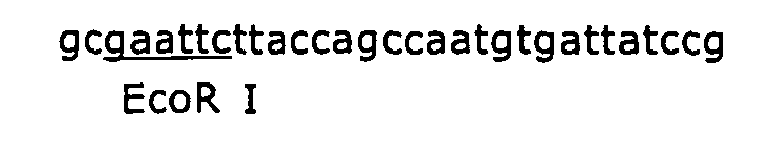
SEQ ID NO: 20 Pyrococcus horikoshii OT-3 AT13-F 
SEQ ID NO: 21 AT13-R 
SEQ ID NO: 22 Pyrococcus horikoshii OT-3 AT14-F 
SEQ ID NO: 23 AT14-R 
SEQ ID NO: 24 - After the PCR reaction products obtained were purified, the one obtained with the chromosomal DNA of Lactobacillus fermentum IFO 3956, Staphylococcus epidermidis ATCC 12228 or Leuconostoc citreum NBRC 102476 as the template was digested with restriction enzymes NdeI and EcoRI, and the one obtained with the chromosomal DNA of Lactobacillus reuteri DSM 20016 as the template was digested with restriction enzymes NdeI and SalI. As regards Pyrococcus horikoshii OT-3, the PCR reaction product obtained with the primers AT13-F and AT13-R and the chromosomal DNA as the template was digested with restriction enzymes PstI and EcoRI, and the PCR reaction product obtained with the primers AT14-F and AT14-R and the chromosomal DNA as the template was digested with restriction enzymes NdeI and EcoRI.
- pTV118N-NdeI was prepared by introducing the restriction enzyme NdeI cleavage sequence (CATATG) into the position of initiation codon (ATG) of IaqZα on pTV118N (Takara Shuzo Co., Ltd.) with primers NdeF and NdeR (SEQ ID NOS: 25 and 26) and QuikChangeR Site-Directed Mutagenesis Kit (Stratagene).
-
TABLE 3 NdeF 
SEQ ID NO: 25 NdeR 
SEQ ID NO: 26 - pAT9, pAT10, pAT11, pAT12 and pAT14 were prepared by linking each of the PCR reaction products with AT9-F and AT9-R, AT10-F and AT10-R, AT11-F and AT11-R, AT12-F and AT12-R, and AT14-F and AT14-R to pTV118N-NdeI digested with restriction enzymes NdeI and EcoRI which digested the PCR products. Furthermore, pAT13 was prepared by linking the PCR reaction product with AT13-F and AT13-R to pUC19 digested with restriction enzymes PstI and EcoRI which digested the PCR products. pAT9, pAT10, pAT11, pAT12, pAT13 and pAT14 were transformed into E. coli (DH5α) by the calcium chloride method. The transformant strain was applied to the LB agar medium containing 50 µg/ml of ampicillin, and the grown up clones were collected to obtain the transformant strains DH5α/pAT9, DH5α/pAT10, DH5α/pAT11, DH5α/pAT12, DH5α/pAT13 and DH5α/pAT14.
- DH5α/pAT8 prepared in Preparation Example 1 was cultured in 500 ml of LB medium at 37°C for 17 hours. The cells were collected by centrifugation and subjected to the racemization reaction of D-2-aminobutyric acid.
D-2-aminobutyric acid (50 g) was dissolved in distilled water (450 g), and DH5α/pAT8 (0.75 g, corresponding to the dry weight) was added. The mixture was stirred at 50°C for 24 hours and centrifuged for removing bacteria. The reaction was analyzed by HPLC (analysis condition (1)) resulting in the ratio of L-2-aminobutyric acid to D-2-aminobutyric acid 0.99 : 1. - DH5α/pAT15 prepared in Preparation Example 1 was cultured in 500 ml of LB medium at 37°C for 17 hours. The cells were collected by centrifugation and subjected to the racemization reaction of D-2-aminobutyric acid.
D-2-aminobutyric acid (50 g) was dissolved in distilled water (450 g) and DH5α/pAT15 (0.75 g, corresponding to the dry weight) was added after adjusting pH to 8 with sodium hydroxide. The mixture was stirred at 50°C for 24 hours and centrifuged for removing bacteria. The reaction was analyzed by HPLC (analysis condition (1)) resulting in the ratio of L-2-aminobutyric acid to D-2-aminobutyric acid 0.096 : 1. - DH5α/pAT8 and DH5α/pAT15 prepared in Preparation Example 1 were cultured in 200 ml of LB medium at 37°C for 17 hours. The cells were collected by centrifugation, suspended in pure water, fragmented by ultrasonic waves, centrifuged again for removing the residue, and the supernatant was subjected to the racemization reaction.
The supernatant was added to the aqueous solution of 5% D-2-aminobutyric acid (200 ml) adjusted to pH 7.5, and the mixture was stirred at 37°C for 24 hours. The reaction was analyzed by HPLC (analysis condition (1)) resulting in the ratio of L-2-aminobutyric acid to D-2-aminobutyric acid 0.75 : 1 and 0.08 : 1 when using DH5α/pAT8 and DH5α/pAT15, respectively. - DH5α/pAT8 and DH5α/pAT15 prepared in Preparation Example 1 were cultured in 200 ml of LB medium at 37°C for 17 hours. The cells were collected by centrifugation and subjected to the racemization reaction of each amino acid described in Table 4.
To 100 g of each aqueous amino acid solution adjusted to pH 7.5 were suspended 0.25 g, 0.1 g and 0.0015 g (each corresponding to dry weight) of the collected cells having a substrate concentration of 2.5%, 1% and 0.015%, respectively, and the mixtures were stirred at 37°C for 24 hours. The reactions were analyzed by HPLC (analysis condition (2)).
The results are shown in Table 4. -
TABLE 4 Substrate amino acid Substrate concentration pAT8 pAT15 L-Phenylalanine 2.5% 0.998 0.249 L-2-aminobutyric acid 2.5% 0.993 0.046 L-Valine 2.5% 1 0.225 L-Alanine 2.5% 1 0.073 L-Serine 2.5% 0.590 0 L-Isoleucine 2.5% 1 1 L-Histidine 2.5% 0.175 0 L-tert-Leucine 2.5% 0.023 0.009 L-Methionine 1.0% 1 0.022 L-Leucine 1.0% 0.979 0.319 L-Asparagine 1.0% 0.115 0.260 L-Tyrosine 0.015% 0.017 0.001 (Values: D-amino acid/L-amino acid) - DH5α/pAT9, DH5α/pAT10 or DH5α/pAT11 prepared in Preparation Example was cultured in 200 ml of LB medium at 37°C for 17 hours. After collecting the cells by centrifugation, the cells were subjected to the racemization reaction of D-2-aminobutyric acid.
To 200 ml of 10% aqueous D-2-aminobutyric acid solution adjusted to pH 7 was suspended 0.2 g (corresponding to dry weight) of the collected cells, pyridoxal-5'-phosphate (PLP) in the final concentration of 40 µM was added, and the mixture was stirred at 40°C for 24 hours. HPLC analysis (analysis condition (1)) of the reaction resulted in the ratios of L-2-aminobutyric acid to D-2-aminobutyric acid described in the following: - when DH5α/pAT9 was used, 0. 053 : 1;
- when DH5α/pAT10 was used, 0. 965 : 1; and
- when DH5α/pAT11 was used, 0.067 : 1.
- DH5α/pAT12 prepared in Preparation Example was cultured in 200 ml of LB medium at 30°C for 17 hours. After collecting the cells by centrifugation, the cells were subjected to the racemization reaction of D-2-aminobutyric acid.
To 200 ml of 10% aqueous D-2-aminobutyric acid solution adjusted to pH 7 was suspended 0.2 g (corresponding to dry weight) of the collected cells, PLP in the final concentration of 40 µM was added, and the mixture was stirred at 40°C for 24 hours. HPLC analysis (analysis condition (1)) of the reaction resulted in the ratio of L-2-aminobutyric acid to D-2-aminobutyric acid 1:1. - DH5α/pAT13 and DH5α/pAT14 prepared in Preparation Example were cultured in 200 ml of LB medium at 37°C for 17 hours. After collecting the cells by centrifugation, the cells were subjected to the racemization reaction of D-2-aminobutyric acid.
To 100 ml of 1 % aqueous D-2-aminobutyric acid solution adjusted to pH 7 was suspended 0.1 g (corresponding to dry weight) of the collected cells, and the mixture was stirred at 70°C for 24 hours. HPLC analysis (analysis condition (1)) of the reaction resulted in the ratios of L-2-aminobutyric acid to D-2-aminobutyric acid described in the following: - when DH5α/pAT13 was used, 0. 360 : 1; and
- when DH5α/pAT14 was used, 0.078 : 1.
- Operations were performed according to the method described in Japanese Patent Laid-Open Publication No.
2006-169158 - To the diastereomeric crystals (50 g) obtained in the step 1 were added ethyl acetate (200 ml) and water (200 ml), and the mixture was stirred at room temperature for 2 hours and then separated. To the aqueous layer was added ethyl acetate (200 ml), and the mixture was stirred at room temperature for 2 hours. The aqueous layer was concentrated to give L-2-aminobutyric acid in an amount of 17.2 g (yield, 95%). L-2-aminobutyric acid thus obtained had an optical purity of 99% ee or more on the basis of HPLC.
In this connection, the ethyl acetate layer was concentrated, and (R)-2-phenoxypropionic acid was collected quantitatively. - DH5α/pAT8 prepared in Preparation Example 1 was cultured in 500 ml of LB medium at 37°C for 17 hours. After collecting the cells by centrifugation, the cells were subjected to the racemization reaction described below.
The filtrate obtained in the step 1 was concentrated, suspended in 50% aqueous acetone solution, and stirred at room temperature for 2 hours. After filtration and drying, the crystals (50 g) obtained was dissolved in distilled water (450 g), and the collected DH5α/pAT8 was added. The mixture was stirred at 40°C for 24 hours, and centrifuged for removing bacteria. The reaction was analyzed by HPLC resulting in the ratio of L-2-aminobutyric acid to D-2-aminobutyric acid 0.99 : 1. - To an aqueous 2-aminobutyric acid solution obtained in the step 3, (R)-2-phenoxypropionic acid (40 g, equimolar amount to L-2-aminobutyric acid) was mixed and stirred overnight. The solution was cooled to a temperature of 20 to 30°C, and the resulting crystals were filtered, rinsed and dried to give the diastereomeric crystals (55.3 g). L-2-aminobutyric acid in the crystals had an optical purity of 99% ee or more on the basis of HPLC.
- Operations were practiced in the same manner as Example 8, except DH5α/pAT8 in the step 3 was replaced with DH5α/pAT9, DH5α/pAT10, DH5α/pAT11 prepared in Preparation Example 2 or with DH5α/pAT15 prepared in Preparation Example 1.
The filtrate obtained in the step 1 was concentrated, suspended into 50% aqueous acetone solution, and stirred at room temperature for 2 hours. After filtration and drying, the crystals (50 g) obtained were dissolved in distilled water (450 g), and the collected DH5α/pAT9, DH5α/pAT10, DH5α/pAT11 or DH5α/pAT15 was added. The mixture was stirred at 40°C for 24 hours, and centrifuged for removing bacteria. - The results of the HPLC analysis of the reactions are shown in Table 5.
The reactions (2-aminobutyric acid aqueous solutions) were subjected to optical resolution in the same manner as the step 4 in Example 8. All of the L-2-aminobutyric acids in the crystals obtained had an optical purity of 99% ee or more on the basis of HPLC. -
TABLE 5 Bacteria L-ABA/DABA Example 2 DH5α/pAT9 0.058 Example 3 DH5α/pAT10 0.964 Example 4 DH5a/pAT11 0.033 Example 5 DH5α/pAT12 0.108 L-ABA: L-2-aminobutyric acid; D-ABA: D-2-aminobutyric acid. - Operations were practiced in the same manner as Example 8, except DH5α/pAT8 in the step 3 was replaced with DH5α/pAT12 prepared in Preparation Example 2 and culture was carried out at a temperature of 30°C.
The filtrate obtained in the step 1 was concentrated, suspended into 50% aqueous acetone solution and stirred at room temperature for 2 hours. After filtration and drying, the crystals (50 g) obtained were dissolved in distilled water (450 g), pyridoxal-5'-phosphate (PLP) in the final concentration of 100 µM was added, and the collected DH5α/pAT12 was added. The mixture was stirred at 40°C for 24 hours, and centrifuged for removing bacteria. HPLC analysis of the reaction resulted in the ratio of L-2-aminobutyric acid to D-2-aminobutyric acid 1 : 1.
The reaction (2-aminobutyric acid aqueous solution) was subjected to optical resolution in the same manner as the step 4 in Example 1. L-2-aminobutyric acids in the crystals obtained had an optical purity of 99% ee or more on the basis of HPLC. - Operations were practiced in the same manner as Example 8, except DH5α/pAT8 in the step 3 was replaced with DH5α/pAT13 or DH5α/pAT14 prepared in Preparation Example 2.
The filtrate obtained in the step 1 was concentrated, suspended into 50% aqueous acetone solution, and stirred at room temperature for 2 hours. After filtration and drying, the crystals (50 g) obtained were dissolved in distilled water (450 g), and the collected DH5α/pAT13 or DH5α/pAT14 was added. The mixture was stirred at 40°C for 96 hours, and centrifuged for removing bacteria. HPLC analysis of the reaction resulted in the ratio of L-2-aminobutyric acid to D-2-aminobutyric acid 0.445 : 1 and 0.248 : 1 when using DH5α/pAT13 and DH5α/pAT14, respectively.
The reaction (2-aminobutyric acid aqueous solution) was subjected to optical resolution in the same manner as the step 4 in Example 1. L-2-aminobutyric acids in the diastereomeric crystals obtained had an optical purity of 99% ee or more on the basis of HPLC.


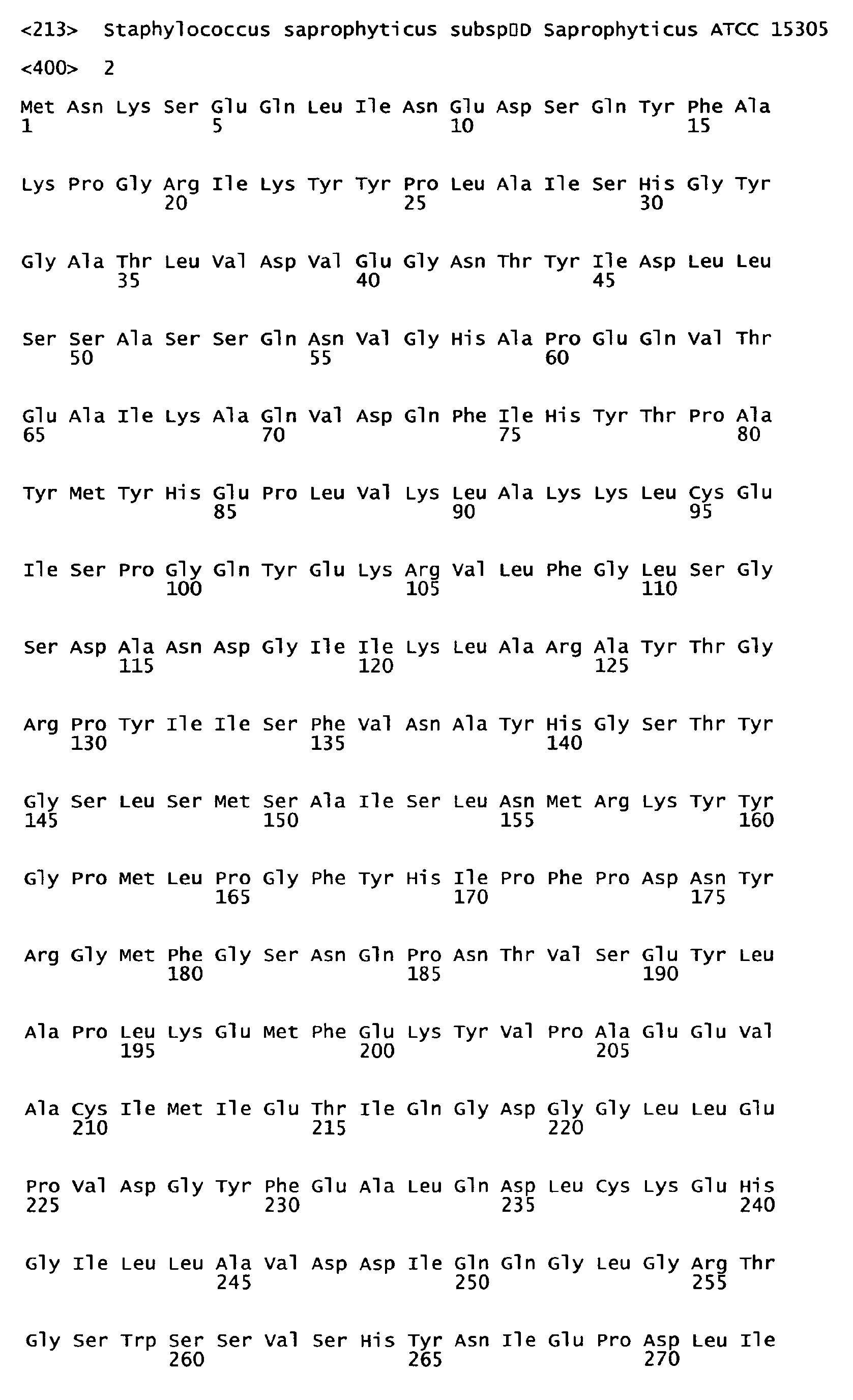


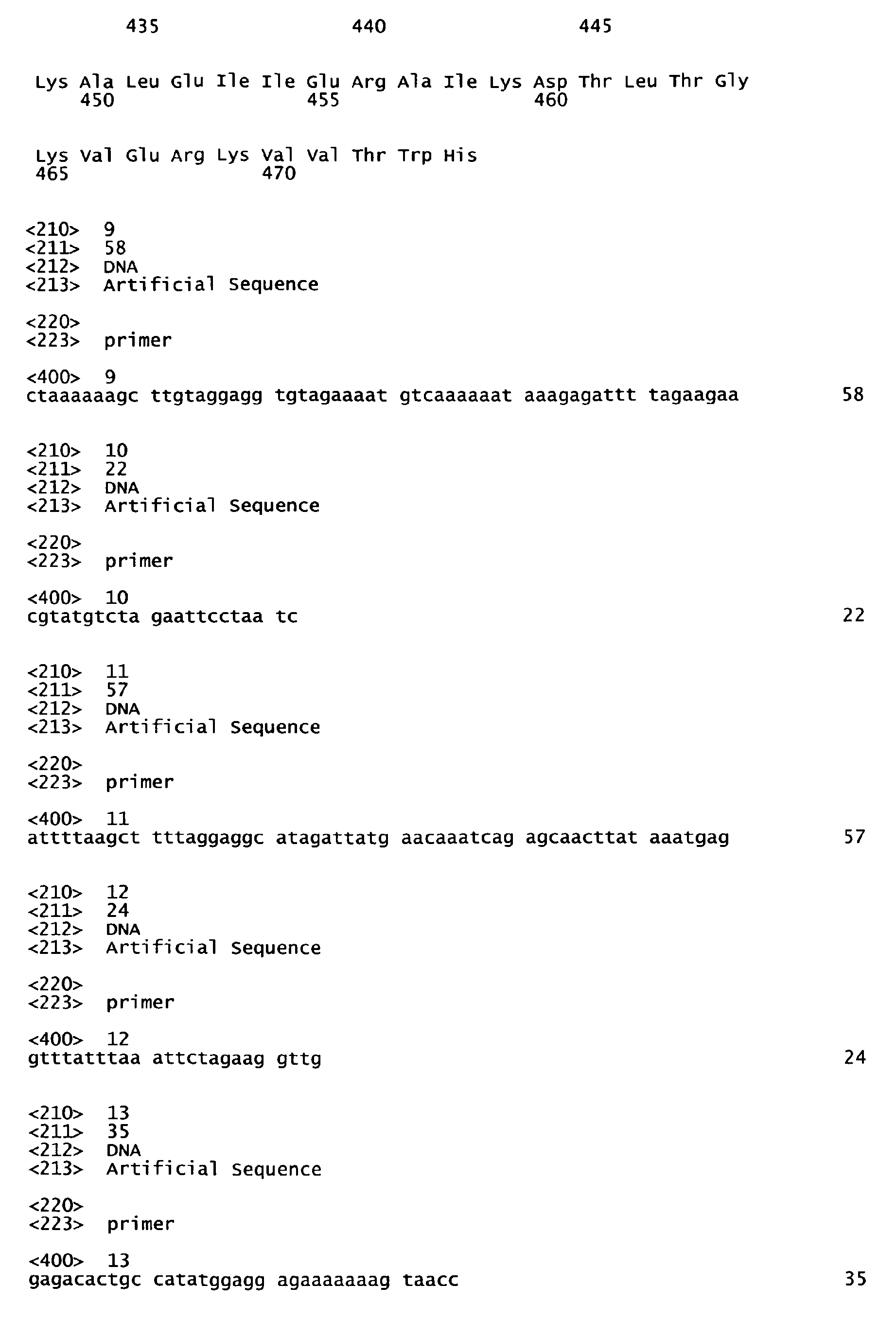


Claims (16)
- A method for racemization of an optically active α-amino acid, comprising racemizing an optically active α-amino acid with γ-aminobutyric acid aminotransferase producing viable bacterial cells derived from genera Leuconostoc, Lactobacillus, Weissella, Oenococcus, Staphylococcus, Aminobacterium, Alkaliphilus, Clostridium, Pyrococcus, Thermococcus, Thermofilum, Pyrobaculum, Anoxybacillus, Syntrophus, Thermoproteus, Symbiobacterium, Desulfurococcus, Bacillus, Acidobacteria, Clostridium, Deinococcus, Pelobacter, Geobacillus, Geobacter, Pelotomaculum, Solibacter, Coprothermobacter, Aeropyrum, Gloeobacter, Nostoc, Herpetosiphon, Metallosphaera, Syntrophobacter, Photorhabdus, Caldivirga, Hyperthermus, Thermoplasma, Gemmata, Anabaena, Cyanothece, Picrophilus or Chloroflexus, or a processed product thereof.
- A method according to claim 1, wherein γ-aminobutyric acid aminotransferase is derived from bacteria belonging to:Leuconostoc mesenteroides subsp. mesenteroides,Staphylococcus saprophyticus subsp. saprophyticus,Lactobacillus fermentum,Lactobacillus reuteri,Staphylococcus epidermidis,Leuconostoc citreum, orPyrococcus horikoshii.
- A method according to claims 1 or 2, wherein γ-aminobutyric acid aminotransferase is derived from:Leuconostoc mesenteroides subsp. mesenteroides ATCC 8293,Staphylococcus saprophyticus subsp. saprophyticus ATCC 15305,Lactobacillus fermentum IFO 3956,Lactobacillus reuteri DSM 20016,Staphylococcus epidermidis ATCC 12228,Leuconostoc citreum NBRC 102476, orPyrococcus horikoshii OT-3.
- A method according to any one of claims 1 to 3, wherein γ-aminobutyric acid aminotransferase is a polypeptide selected from:(a) a polypeptide consisting of an amino acid sequence selected from the group consisting of the amino acid sequences of SEQ ID NOS: 1, 2, 3, 4, 5, 6, 7 and 8,(b) a polypeptide consisting of the amino acid sequence in which one or more amino acid residues are deleted, substituted or added in said amino acid sequence of (a), or(c) a polypeptide comprising the amino acid sequence having 75% or higher identity to said amino acid sequence of (a).
- A method for racemization of optically active α-amino acids, comprising racemizing optically active α-amino acids with γ-aminobutyric acid aminotransferase selected from:(a) a polypeptide consisting of an amino acid sequence selected from the group consisting of the amino acid sequences of SEQ ID NOS: 1, 2, 3, 4, 5, 6, 7 and 8,(b) a polypeptide consisting of the amino acid sequence in which one or more amino acid residues are deleted, substituted or added in said amino acid sequence of (a), or(c) a polypeptide consisting of the amino acid sequence having 75% or higher identity to said amino acid sequence of (a).
- A method according to any one of claims 1 to 5, wherein γ-aminobutyric acid aminotransferase is a polypeptide derived from Leuconostoc mesenteroides subsp. mesenteroides ATCC 8293 and selected from:(a1) a polypeptide consisting of an amino acid sequence selected from the group consisting of the amino acid sequence of SEQ ID NO: 1,(b1) a polypeptide consisting of the amino acid sequence in which one or more amino acid residues are deleted, substituted or added in said amino acid sequence of (a1), or(c1) a polypeptide consisting of the amino acid sequence having 75% or higher identity to said amino acid sequence of (a1).
- A method according to any one of claims 1 to 5, wherein γ-aminobutyric acid aminotransferase is a polypeptide derived from Staphylococcus saprophyticus subsp. saprophyticus ATCC 15305 and selected from:(a2) a polypeptide consisting of the amino acid sequence selected from the group consisting of the amino acid sequence of SEQ ID NO:2,(b2) a polypeptide consisting of the amino acid sequence in which one or more amino acid residues are deleted, substituted or added in said amino acid sequence of (a2), or(c2) a polypeptide consisting of the amino acid sequence having 75% or higher identity to said amino acid sequence of (a2).
- A method according to any one of claims 1 to 5, wherein γ-aminobutyric acid aminotransferase is a polypeptide derived from Lactobacillus fermentum IFO 3956 and selected from:(a3) a polypeptide consisting of an amino acid sequence selected from the group consisting of the amino acid sequence of SEQ ID NO: 3,(b3) a polypeptide consisting of the amino acid sequence in which one or more amino acid residues are deleted, substituted or added in said amino acid sequence of (a3), or(c3) a polypeptide consisting of the amino acid sequence having 75% or higher identity to said amino acid sequence of (a3).
- A method according to any one of claims 1 to 5, wherein γ-aminobutyric acid aminotransferase is a polypeptide derived from Lactobacillus reuteri DSM 20016 and selected from:(a4) a polypeptide consisting of an amino acid sequence selected from the group consisting of the amino acid sequence of SEQ ID NO: 4,(b4) a polypeptide consisting of the amino acid sequence in which one or more amino acid residues are deleted, substituted or added in said amino acid sequence of (a4), or(c4) a polypeptide consisting of the amino acid sequence having 75% or higher identity to said amino acid sequence of (a4).
- A method according to any one of claims 1 to 5, wherein γ-aminobutyric acid aminotransferase is a polypeptide derived from Staphylococcus epidermidis ATCC 12228 and selected from:(a5) a polypeptide consisting of an amino acid sequence selected from the group consisting of the amino acid sequence ID NO: 5,(b5) a polypeptide consisting of the amino acid sequence in which one or more amino acid residues are deleted, substituted or added in said amino acid sequence of (a5), or(c5) a polypeptide consisting of the amino acid sequence having 75% or higher identity to said amino acid sequence of (a5).
- A method according to any one of claims 1 to 5, wherein γ-aminobutyric acid aminotransferase is a polypeptide derived from Leuconostoc citreum NBRC 102476 and selected from:(a6) a polypeptide consisting of an amino acid sequence selected from the group consisting of the amino acid sequence of SEQ ID NO: 6,(b6) a polypeptide consisting of the amino acid sequence in which one or more amino acid residues are deleted, substituted or added in said amino acid sequence of (a6), or(c6) a polypeptide consisting of the amino acid sequence having 75% or higher identity to said amino acid sequence of (a6).
- A method according to any one of claims 1 to 5, wherein γ-aminobutyric acid aminotransferase is a polypeptide derived from Pyrococcus horikoshii OT-3 and selected from:(a7) a polypeptide consisting of an amino acid sequence selected from the group consisting of the amino acid sequences of SEQ ID NOS: 7 or 8,(b7) a polypeptide consisting of the amino acid sequence in which one or more amino acid residues are deleted, substituted or added in said amino acid sequence of (a7), or(c7) a polypeptide consisting of the amino acid sequence having 75% or higher identity to said amino acid sequence of (a7).
- A method according to any one of claims 1 to 12, wherein the optically active α-amino acid comprises one or more of the compounds represented by the following formula (I):

R represents
a benzyl group which is optionally substituted by methyl or hydroxy groups, or
a linear or branched alkyl group having 1 to 4 carbon atoms, wherein the alkyl group is optionally substituted by hydroxy, methylthio, thiol, amide, or imidazolyl groups. - A method according to claim 13, wherein optically active α-amino acid comprises one or more of the compounds selected from the group consisting of alanine, valine, leucine, isoleucine, tert-leucine, histidine, phenylalanine, methionine, asparagine, tyrosine, serine and 2-aminobutyric acid.
- A method according to any one of claims 1 to 14, wherein the optically active α-amino acid is the L form.
- A method according to any one of claims 1 to 14, wherein the optically active α-amino acid is the D form.
Applications Claiming Priority (2)
| Application Number | Priority Date | Filing Date | Title |
|---|---|---|---|
| JP2009154287 | 2009-06-29 | ||
| PCT/JP2010/060744 WO2011001889A1 (en) | 2009-06-29 | 2010-06-24 | METHOD FOR RACEMIZING OPTICALLY ACTIVE α-AMINO ACIDS |
Publications (1)
| Publication Number | Publication Date |
|---|---|
| EP2450451A1 true EP2450451A1 (en) | 2012-05-09 |
Family
ID=43410964
Family Applications (1)
| Application Number | Title | Priority Date | Filing Date |
|---|---|---|---|
| EP10794058A Withdrawn EP2450451A1 (en) | 2009-06-29 | 2010-06-24 | Method for racemizing optically active -amino acids |
Country Status (4)
| Country | Link |
|---|---|
| US (1) | US20120190079A1 (en) |
| EP (1) | EP2450451A1 (en) |
| JP (1) | JPWO2011001889A1 (en) |
| WO (1) | WO2011001889A1 (en) |
Families Citing this family (1)
| Publication number | Priority date | Publication date | Assignee | Title |
|---|---|---|---|---|
| CN111154697B (en) * | 2020-02-12 | 2022-02-01 | 江南大学 | Leuconostoc mesenteroides intestinal membrane subspecies for producing galactosidase and application thereof |
Family Cites Families (10)
| Publication number | Priority date | Publication date | Assignee | Title |
|---|---|---|---|---|
| US2586154A (en) | 1950-06-29 | 1952-02-19 | Du Pont | Racemization of amino acid |
| JP2516625B2 (en) * | 1986-06-02 | 1996-07-24 | 三菱化学株式会社 | Method for producing L-threonine |
| JPS6342692A (en) * | 1986-08-07 | 1988-02-23 | Mitsubishi Petrochem Co Ltd | Production of l-isoleucine |
| JPH0780823B2 (en) | 1986-08-26 | 1995-08-30 | 東ソー株式会社 | Method for racemization of optically active phenylalanine |
| JPH11322684A (en) | 1998-05-12 | 1999-11-24 | Yamakawa Yakuhin Kogyo Kk | Amino acid isomerization method |
| US6310242B1 (en) | 1998-02-20 | 2001-10-30 | Yamakawa Chemical Industry Co., Ltd. | Process for preparing D-alloisoleucine and intermediates for preparation |
| JP4138928B2 (en) | 1998-02-20 | 2008-08-27 | 山川薬品工業株式会社 | Method for producing D-alloisoleucine and intermediate for production |
| JP3893920B2 (en) | 2001-08-30 | 2007-03-14 | 日産自動車株式会社 | Vehicle driving force control device |
| JP2004057014A (en) | 2002-07-24 | 2004-02-26 | Univ Waseda | Method for racemizing aromatic amino acids, method for producing optically active aromatic amino acids, and microorganisms and enzymes having racemizing activity for aromatic amino acids |
| JP4728636B2 (en) | 2004-12-15 | 2011-07-20 | 大東化学株式会社 | Process for producing optically active amino acids |
-
2010
- 2010-06-24 EP EP10794058A patent/EP2450451A1/en not_active Withdrawn
- 2010-06-24 WO PCT/JP2010/060744 patent/WO2011001889A1/en not_active Ceased
- 2010-06-24 JP JP2011520883A patent/JPWO2011001889A1/en not_active Withdrawn
- 2010-06-24 US US13/381,481 patent/US20120190079A1/en not_active Abandoned
Non-Patent Citations (1)
| Title |
|---|
| See references of WO2011001889A1 * |
Also Published As
| Publication number | Publication date |
|---|---|
| JPWO2011001889A1 (en) | 2012-12-13 |
| WO2011001889A1 (en) | 2011-01-06 |
| US20120190079A1 (en) | 2012-07-26 |
Similar Documents
| Publication | Publication Date | Title |
|---|---|---|
| US20170211117A1 (en) | Method for producing gamma-glutamylcysteine and glutathione | |
| EP1819825A2 (en) | Thermostable omega-transaminases | |
| JP5516664B2 (en) | N-acetyl- (R, S) -β-amino acid acylase gene | |
| EP4230723A1 (en) | Polypeptide with aspartate kinase activity and use thereof in production of amino acid | |
| JP6039710B2 (en) | Method for producing L-amino acid | |
| US9481871B2 (en) | Nucleic acid encoding a polpeptide having aminotransferase activity, vectors and host cells comprising the nucleic acid | |
| US9481870B2 (en) | Nucleic acid encoding a polypeptide having aminotransferase activity, vectors and host cells comprising the nucleic acid | |
| EP1479762A1 (en) | Novel dehydrogenase and gene encoding the same | |
| CN113396218B (en) | Engineered transaminase peptides | |
| US20120190079A1 (en) | Method for racemization of optically active alpha -amino acids | |
| EP1249494B1 (en) | Process for the biological production of l-pipecolic acid | |
| JP2004526445A (en) | D-carbamoylase from Arthrobacter crystallopoietes DSM20117 strain | |
| EP1506294B1 (en) | Hydantoin racemase | |
| JP2011024572A (en) | Method for producing optically active amino acid | |
| JP4650421B2 (en) | L-form amino acid amide asymmetric hydrolase and DNA encoding the same | |
| JP4231709B2 (en) | Novel dehydrogenase and gene encoding the same | |
| JP2010098998A (en) | Method for producing 1,5-pentane diamine | |
| JP2008048731A (en) | N-ACETYL-(R,S)-beta-AMINO ACID ACYLASE GENE | |
| US20200157586A1 (en) | Novel amino acids bearing a norbornene moiety | |
| CN119698468A (en) | Biocatalyst and method thereof | |
| CN116555213A (en) | Acetolactate synthase III regulatory subunit coding gene ilvH, mutant thereof and application thereof in production of L-amino acid | |
| KR20240138673A (en) | Microorganisms for producing l-alanine and process for producing l-alanine using the same |
Legal Events
| Date | Code | Title | Description |
|---|---|---|---|
| PUAI | Public reference made under article 153(3) epc to a published international application that has entered the european phase |
Free format text: ORIGINAL CODE: 0009012 |
|
| 17P | Request for examination filed |
Effective date: 20120102 |
|
| AK | Designated contracting states |
Kind code of ref document: A1 Designated state(s): AL AT BE BG CH CY CZ DE DK EE ES FI FR GB GR HR HU IE IS IT LI LT LU LV MC MK MT NL NO PL PT RO SE SI SK SM TR |
|
| STAA | Information on the status of an ep patent application or granted ep patent |
Free format text: STATUS: THE APPLICATION HAS BEEN WITHDRAWN |
|
| DAX | Request for extension of the european patent (deleted) | ||
| 18W | Application withdrawn |
Effective date: 20120914 |