EP2448228A2 - Handling feature requests - Google Patents
Handling feature requests Download PDFInfo
- Publication number
- EP2448228A2 EP2448228A2 EP11179275A EP11179275A EP2448228A2 EP 2448228 A2 EP2448228 A2 EP 2448228A2 EP 11179275 A EP11179275 A EP 11179275A EP 11179275 A EP11179275 A EP 11179275A EP 2448228 A2 EP2448228 A2 EP 2448228A2
- Authority
- EP
- European Patent Office
- Prior art keywords
- feature
- service provider
- features
- call
- communication device
- Prior art date
- Legal status (The legal status is an assumption and is not a legal conclusion. Google has not performed a legal analysis and makes no representation as to the accuracy of the status listed.)
- Granted
Links
- 238000004891 communication Methods 0.000 claims abstract description 97
- 230000001419 dependent effect Effects 0.000 claims abstract description 10
- 230000009471 action Effects 0.000 claims abstract description 9
- 238000000034 method Methods 0.000 claims description 29
- 238000012546 transfer Methods 0.000 claims description 6
- 238000012790 confirmation Methods 0.000 claims description 2
- 230000008569 process Effects 0.000 description 12
- 230000001413 cellular effect Effects 0.000 description 3
- 230000005540 biological transmission Effects 0.000 description 2
- 238000013479 data entry Methods 0.000 description 2
- 230000006870 function Effects 0.000 description 2
- 230000003993 interaction Effects 0.000 description 2
- 101001038335 Homo sapiens Serine/threonine-protein kinase LMTK2 Proteins 0.000 description 1
- 102100040292 Serine/threonine-protein kinase LMTK2 Human genes 0.000 description 1
- 238000007792 addition Methods 0.000 description 1
- 238000013459 approach Methods 0.000 description 1
- 230000003190 augmentative effect Effects 0.000 description 1
- 230000006399 behavior Effects 0.000 description 1
- 230000000903 blocking effect Effects 0.000 description 1
- 230000008859 change Effects 0.000 description 1
- 238000013144 data compression Methods 0.000 description 1
- 238000012217 deletion Methods 0.000 description 1
- 230000037430 deletion Effects 0.000 description 1
- 230000000977 initiatory effect Effects 0.000 description 1
- 230000002452 interceptive effect Effects 0.000 description 1
- 238000004519 manufacturing process Methods 0.000 description 1
- 238000012986 modification Methods 0.000 description 1
- 230000004048 modification Effects 0.000 description 1
- 230000006855 networking Effects 0.000 description 1
- 230000004044 response Effects 0.000 description 1
- 230000011664 signaling Effects 0.000 description 1
- 230000003068 static effect Effects 0.000 description 1
Images


Classifications
-
- H—ELECTRICITY
- H04—ELECTRIC COMMUNICATION TECHNIQUE
- H04W—WIRELESS COMMUNICATION NETWORKS
- H04W4/00—Services specially adapted for wireless communication networks; Facilities therefor
- H04W4/16—Communication-related supplementary services, e.g. call-transfer or call-hold
-
- H—ELECTRICITY
- H04—ELECTRIC COMMUNICATION TECHNIQUE
- H04L—TRANSMISSION OF DIGITAL INFORMATION, e.g. TELEGRAPHIC COMMUNICATION
- H04L65/00—Network arrangements, protocols or services for supporting real-time applications in data packet communication
- H04L65/1066—Session management
- H04L65/1101—Session protocols
- H04L65/1104—Session initiation protocol [SIP]
-
- H—ELECTRICITY
- H04—ELECTRIC COMMUNICATION TECHNIQUE
- H04M—TELEPHONIC COMMUNICATION
- H04M3/00—Automatic or semi-automatic exchanges
- H04M3/42—Systems providing special services or facilities to subscribers
- H04M3/42136—Administration or customisation of services
- H04M3/42178—Administration or customisation of services by downloading data to substation equipment
-
- H—ELECTRICITY
- H04—ELECTRIC COMMUNICATION TECHNIQUE
- H04M—TELEPHONIC COMMUNICATION
- H04M2201/00—Electronic components, circuits, software, systems or apparatus used in telephone systems
- H04M2201/38—Displays
-
- H—ELECTRICITY
- H04—ELECTRIC COMMUNICATION TECHNIQUE
- H04M—TELEPHONIC COMMUNICATION
- H04M2203/00—Aspects of automatic or semi-automatic exchanges
- H04M2203/05—Aspects of automatic or semi-automatic exchanges related to OAM&P
- H04M2203/053—Aspects of automatic or semi-automatic exchanges related to OAM&P remote terminal provisioning, e.g. of applets
-
- H—ELECTRICITY
- H04—ELECTRIC COMMUNICATION TECHNIQUE
- H04M—TELEPHONIC COMMUNICATION
- H04M3/00—Automatic or semi-automatic exchanges
- H04M3/42—Systems providing special services or facilities to subscribers
- H04M3/42314—Systems providing special services or facilities to subscribers in private branch exchanges
- H04M3/42323—PBX's with CTI arrangements
Definitions
- This application generally relates to communication devices, and more particularly, although not exclusively, to downloading available service provider features and content to a particular communication device.
- the communications market is moving en masse to open standards, be it communication protocols, application frameworks, or industry standard hardware platforms. This is designed to facilitate mass deployment and interoperability, essentially providing freedom to market and deployment of devices and/or software that will work with any service providers, any applications, and/or any hardware.
- open standards be it communication protocols, application frameworks, or industry standard hardware platforms. This is designed to facilitate mass deployment and interoperability, essentially providing freedom to market and deployment of devices and/or software that will work with any service providers, any applications, and/or any hardware.
- open standards the days of designing a proprietary product to work specifically with a single service provider, i.e. a device/service provider partnership, are dwindling.
- PSTN/mobile Internet/Intranet
- transmission mediums cellular, WiFi, Bluetooth
- the features available on these networks can vary, or be offered simultaneously, but the users' menus are static and designed specifically with a single provider in mind.
- the present application addresses the above-described concerns encountered in a device/server relationship and provides other, related advantages.
- the present application relates to communication devices, and more particularly, to automatically populating feature capabilities on those communication devices.
- the communication device can begin automatic download of service provider features and content by registering with a service provider.
- the service provider can determine a set of available features for the communication device.
- the available features can be dependent on a number of factors including licensing, location, or subscription of the communication device. Available features can also be dependent on whether the communication device is idle or active.
- the service provider can then provide the communication device with the set of available features.
- the features can be uniquely identified by a feature identification that represents the service provider and the feature. At any time, when the communication device reports that the user has selected a feature on the device, the service provider can take the appropriate actions.
- the combination can eliminate provisioning overhead as well as provide flexible changes for features and feature requirements, for example, input. It can be extended to offer features based on location, licensing, or other conditions as determined by the centralized service provider.
- the term "communication device" is referred to throughout the present application, the handset can take on other names known to those skilled in the relevant art.
- the communication device can also be referred to as a computing device or mobile device.
- the system 100 can include at least one service provider 102, network 104, router 106, local area network (LAN) 108, communication device 110, IP phone 112, and conference phone 114 configuration as shown.
- LAN local area network
- These components should not be construed as limiting the scope of the present application, but instead, the components and the system 100 should be viewed as only some embodiments that can be used.
- Components within the system 100 can communicate with each other using logical connections. These logical connections can be achieved by a communication portal coupled to or integral with each component of the system 100.
- the service provider 102 of the system 100 can be provided on a private branch exchange (PBX). PBXs 102 can be used for providing numerous features and capabilities to connected devices.
- PBXs 102 can provide features such as auto attendant, auto dialling, automatic call distributor, automated directory services, automatic ring back, call accounting, call blocking, call forwarding on busy or absence, call park, call pick-up, call transfer, call waiting, camp-on, conference call, custom greetings, customized abbreviated dialling, busy override, direct inward dialling, direct inward system access, do not disturb, follow-me/find-me, interactive voice response, music on hold, night service, public address voice paging, shared message boxes, voice mail, voice message broadcasting, and welcome message.
- These features can come in two categories common to most devices today. The vast majority of devices have an in-call menu and out-of-call menu.
- These menus can contain the features available during that particular call state.
- the out-of-call menu can contain Contacts, Speed Dial, Call Forward, Call Pickup, and Do Not Disturb.
- An example of in-call menu options would be Transfer, Swap, New Call, Hold, Call Park, and Record Call.
- a single service provider 102 within the system 100 can be used to distribute features and content to the communication device 110.
- the system 100 can incorporate two or more service providers 102.
- the service providers 102 can be logically connected to a network 104.
- the network 104 can include a local area network (LAN), wide area network (WAN), personal area network (PAN), campus area network (CAN), metropolitan area network (MAN), or global area network (GAN).
- LAN local area network
- WAN wide area network
- PAN personal area network
- CAN campus area network
- MAN metropolitan area network
- GAN global area network
- the network 104 can be a group of two or more computer systems linked together.
- the network 104 typically transfers data from one source to another.
- service provider 102 and communication devices 110 connected via the network 104 can use a common set of rules and signals, also known as a protocol.
- the protocol determines the type of error checking to be used; what data compression method, if any, will be used; how the sending device will indicate that it has finished sending a message; and how the receiving device will indicate that it has received a message.
- Programmers can choose from a variety of standard protocols.
- Existing electronic commerce systems typically use Internet Protocol (IP) usually combined with a higher-level protocol called Transmission Control Protocol (TCP), which establishes a virtual connection between a destination and a source.
- IP Internet Protocol
- TCP Transmission Control Protocol
- IP is analogous to a postal system in that it allows the addressing of a package and dropping it in the system without a direct link between the sender and the recipient.
- TCP/IP establishes a connection between two hosts so that they can send messages back and forth for a period of time.
- an open communication protocol can be used, such as a session initiation protocol (SIP).
- a router 106 can be coupled to the network 104.
- the router 106 can receive communications from both the service provider 102 and the communication device 110.
- the communications can be provided to a LAN 108.
- the LAN 108 can connect multiple devices to the service providers 102.
- LANs 108 can be made by a combination of computers and devices within a limited geographical area.
- the system 100 can also be used with other devices such as IP phones 112 and conference phones 114 that can be connected through a LAN 108 to the router 106 and to the network 104.
- IP phones 112 and conference phones 114 can use the same open communications protocol described above and be connected with the communication device 110 through the LAN 108.
- the embodiment provided above represents one configuration and is not intended to be limiting to the present application.
- a flow chart will now be provided showing operations for populating features and content on a communication device 110.
- This flow chart is given so that a general understanding of this application can be appreciated by those skilled in the relevant art. It should not be construed as limiting to the present application.
- the flow chart begins with retrieving and displaying available features followed by applying selections for a feature within the available features.
- Figures 2A-2B represent a flow chart providing illustrative processes for populating a communication device 110 with features in accordance with one aspect of the present application.
- the system 100 creates a framework that can be extensible and be offered by numerous service providers 102 to any device 110 supporting the protocol, allowing for pay per use services, incentives, and other means of revenue generation, without actually being the primary provider of the communication device 110. Because of the client/server relationship utilized by this system 100 it can be applied in traditional client/server protocols as well as peer-based protocols such as SIP.
- the processes can begin for automatically populating feature capabilities on a communication device 110.
- the description provided below will consider the SIP communication protocol in order to provide a minimal set of detailed interactions. Known to those skilled in the relevant art, however, numerous other types of protocols exist and can be used herein. The exchange method is of little consequence, except that SIP has been selected for purposes of providing a standard look and feel, and it uses open text for ease of readability.
- the communication device 110 can register with a service provider 102.
- the user of the communication device 110 can provide account information.
- block 202 can be skipped if the communication device 110 has already been registered.
- the service provider 102 can use a look-up service to determine whether the communication device 110 is capable of receiving the services provided by the service provider 102. If the registration was successful, the service provider 102 can send an indication to the communication device 110, otherwise an error can be sent to the communication device 110. At decision block 204, a determination on the communication device 110 can be made whether the registration of the communication device 110 was successful using the information provided by the service provider 102. When the registration was not successful, the processes can end at block 228 on Figure 2B .
- a subscribe message can be sent to the service provider 102 to subscribe for feature information services at block 206.
- the communication device 110 is not required to register with the service provider 102.
- the subscribe message 300 as depicted in Figure 3 , can be provided as a message pattern and characterized into classes. Generally, the subscribe message 300 can be recognized by the service provider 102 through the SUBSCRIBE label 302. In some embodiments, the subscribe message 300 can indicate that the user of the communication device 110 intends to receive information about the status of a service provider session. For example, in the subscribe message 300, the code includes an EVENT label 304 filled with feature_available;feature_active.
- the service provider 102 can determine a set of available features for the communication device 110.
- the available features can be dependent on a number of factors including licensing, location, or subscription of the communication device 110. Other factors can include whether the communication device 110 is idle or active. In one example, available features would differ dependent on whether the user is on a call or not on a call.
- the service provider 102 can also interact with devices 112 and 114 on the LAN 108.
- the communication device 110 can communicate with a number of service providers 102 as shown in Figure 1 . After determining the available features, the service provider 102 can send them to the communication device 110. At block 208, the communication device 110 can receive notification of the available features.
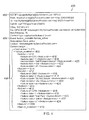
- Figure 4 is representative code depicting available features for the communication device 110 provided by the service provider 102 in the form of a notification message 400 in accordance with one aspect of the present application.
- the notification message 400 can provide the communication device 110 with available features, which were determined by the service provider 102 based on location, licensing, or other criteria.
- the message 400 provided by the service provider 102 can be indicated by the NOTIFY label 402.
- the notification message 400 can include an EVENT label 404 filled with feature_available;feature_active.
- the available features are between the ⁇ feature_available> label 408 and the ⁇ /feature_available> label 410, in the shown embodiment.
- the provided features therebetween represent a small set of features possible. Known to those skilled in the relevant art, numerous other features can be implemented.
- Each feature can be labelled with a ⁇ feature> label 412 and be closed with a ⁇ /feature> label 414 within the body 406 of the notification message 400.
- attributes that can include a ⁇ feature-id> ⁇ /feature-id> pair 416, ⁇ feature-data> ⁇ /feature-data> pair 418, ⁇ feature-label> ⁇ /feature-label> pair 420, ⁇ feature-menu> ⁇ /feature-menu> pair 422 and ⁇ feature-state> ⁇ /feature-state> pair 424.
- the ⁇ feature-id> ⁇ /feature-id> pair 416 is a unique identifier which represents the feature from the perspective of the service provider 102.
- the service provider 102 can interpret the intent of the communication device 110.
- the ⁇ feature-data> ⁇ /feature-data> pair 418 can indicate whether the device needs to prompt the user for additional input if the feature is selected on the phone.
- the values that can be provided between the ⁇ feature-data> ⁇ /feature-data> pair 418 are 0 for false and 1 for true.
- the ⁇ feature-label> ⁇ /feature-label> pair 420 can include a text string that is populated into the communication device 110 menus.
- a ⁇ feature-menu> ⁇ /feature-menu> pair 422 can indicate whether the feature can be used when the user is in a call or out of a call. When the pair 422 is set to idle, no call is required on the device to activate the feature. If the pair 422 is active, this implies that the device must be actively on a call for the feature to be activated.
- the ⁇ feature-state> ⁇ /feature-state> pair 424 can be used to identify the current states of the feature with respect to the communication device 110.
- the first ⁇ feature> ⁇ /feature> pair 412 provides a Call Forward Always option.
- the ⁇ feature-id> ⁇ /feature-id> pair 416 can have a CFA label indicating the Call Forward Always option.
- the ⁇ feature-data> ⁇ /feature-data> pair 418 indicates a 1 meaning that additional data is required from the user. The additional data can include a phone number for forwarding a call.
- the ⁇ feature-label> ⁇ /features-label> pair 420 can provide a text string to be placed within a menu on the communication device 110.
- the ⁇ feature-menu> ⁇ /feature-menu> pair 422 indicates idle such that no call is required on the communication device 110 to active the feature.
- the ⁇ feature-state> ⁇ /feature-state> pair 424 indicates that the Call Forward Always option is off.
- the second feature has a ⁇ feature-id> ⁇ /feature-id> pair 416 with a label DND therebetween indicating a Do Not Disturb Option.
- the ⁇ feature-data> ⁇ /features-data> pair 418 has a 0 indicating that no new additional data is required from the user.
- the ⁇ feature-label> ⁇ /feature-label> pair 420 provides the text string to be displayed on a menu of the communication device 110.
- the ⁇ feature-menu> ⁇ /feature-menu> pair 422 indicates idle such that no call is required on the communication device 110 to activate the feature.
- the ⁇ feature-state> ⁇ /feature-state> pair 424 indicates that the Do Not Disturb option is on.
- the third feature within the body 406 of the notification message 400 has a ⁇ feature-id> ⁇ /feature-id> pair 416 with a label CPrk therebetween indicating a Call Park option.
- the ⁇ feature-data> ⁇ /feature-data> pair 418 indicates a 1 showing that additional input is required from the user.
- the ⁇ feature-label> ⁇ /feature-label> pair 420 provides a text string to be shown within a menu on the communication device 110.
- the ⁇ feature-menu> ⁇ /feature-menu> pair 422 indicates active such that a call is required on the communication device 110 to activate the feature.
- the ⁇ feature-state> ⁇ /feature-state> pair 424 indicating that the Call Park option is off.
- the communication device 110 can populate its menus with the information provided in the ⁇ feature-label> ⁇ /feature-label> pair 420.
- the communication device 110 can provide some form of notification of the features that are already active against the device 110 to serve as a reminder to the user.
- active features can be displayed on the communication device 110.
- a determination can be made by the communication device 110 whether the user has selected a label to activate a feature. When no label selection occurs, the processes can end at block 228 of Figure 2B .
- the device 110 determines if additional user input is required at decision block 216 of Figure 2B . As shown above, this can be indicated by the ⁇ feature-data> ⁇ /feature-data> pair 418 being 1. When no additional information is required, the processes can continue at block 220 described below. Otherwise, the communication device 110 receives additional information from the user at block 218. Using a Forward Always option as an example, the user can enter a number to which all calls will be forwarded. When the user completes the data entry, or if no data entry is required, a message is sent to the service provider 102 containing the feature identifier and any additional data at block 220.
- the service provider 102 can then interpret the requested feature based on the feature identifier, and then user the additional data to apply the feature, if necessary. There is no need to standardize the feature identifiers, as they typically only have meaning between the device 110 and the service provider 102 that is providing the service. In some embodiments, some set or client vendors can provide some specialized handling of features, but this is not required and requires additional software to differentiate features. If the feature is successfully applied, a notification can be sent to the device 110 that the feature is now active, otherwise an error is returned. At decision block 222, a determination is made by the communication device 110 whether the feature was successfully implemented. When not, the communication device 110 displays an error at block 226 and proceeds to block 228. Otherwise, the communication device 110 displays that the feature was successfully applied at block 224. The processed can end at block 228.
- the system 100 can allow automatic population of feature capabilities available to the communication device 110 from the service provider 102 in any language with a name that reflects something meaningful to the user. For example, some users can prefer the term link or join instead of conference, depending on the geographical region.
- the system 100 can offer complete customization per user, region, and provider.
- the menus can be augmented on the fly with new capabilities which can be offered free of charge, pay per use, or subscriber based.
- the menus can be updated at any time from the service provider 102, which further allows for state sensitive options to be provided. For example, when two calls are present, the in-call menu can provide swap and conference options, which do not have to exist when a single call is active.
- the in-call menu can provide swap and conference options, which do not have to exist when a single call is active.
- an Android® TM application can be created which can talk to a service provider 102 using a proprietary protocol, obtain the list of services available, and then the Android® service app would update the call menus of the Android® phone app.
- the system 100 can be altered to deliver any dynamic content to a communications device 110 based on the service provider 102 it is obtaining service from.
- the content can be updated regularly based on subscription, licensing, geographic availability, or other reasons as decided upon by the service provider 102.
- the system 100 can also be used to report features that remain active on a device 110. For example, if Do Not Disturb or Call Forward Always is enabled at the service provider 102 and not the device 110 itself, the next time the communication device 110 registers for service from the provider 102, the device 110 can be notified of the features available and then further told which features are already active on the device 110. Consequently, this maps more directly to a PBX style environment, where features are executed on the PBX, not the device. It also allows for devices to be shared among users since the feature remains tied to the user account and not the device 110.
- the system 100 can also be useful to most client server models, wherein the client and server are independent.
- a voice mail system can be considered.
- the voicemail system can send the feature identifications required to play, delete, or skip a message.
- the communication device 110 can then present the in-call options of play, delete, and skip while connected to voicemail. From the user's perspective, they never have to remember the different keys to press for PBX voice mail, compared to their cellular voice mail, compared to their home voice mail. Because home, cellular, cable, and business voice mails can be provided by different service providers 102, the voice mail interfaces can differ, which causes end user confusion.
- the system 100 described herein can be adapted to voice mail, effectively abstracting the key press overhead and industry differences from the user, and presenting a consistent model.
- a method for populating feature capabilities on a communication device can include registering with a service provider, receiving notification of at least one available feature from the service provider and displaying the at least one available feature.
- the method can include receiving a selection for a feature from the at least one available feature.
- the method can also include providing the selection to the service provider to apply to the feature.
- the method can include receiving a notification from the service provider that the selection has been applied to the feature. In some embodiments, the method can include receiving a notification from the service provider that the selection has not been applied to the feature. In some embodiments, providing the selection to the service provider can include additional input for applying the feature. In some embodiments, the additional input can be a number for forwarding calls.
- the at least one available feature can be determined by the service provider based a location or license of the communication device. In some embodiments, the at least one available feature can be dependent on whether the communication device is in or out of a call. In some embodiments, the at least one available feature can include at least one of transfer, swap, new call, hold, call park and record call when the communication device is in the call. In some embodiments, the at least one available feature can include at least one of contacts, speed dial, call forward, call pickup, and do not disturb when the communication device is out of the call.
- a system can include a mobile device having features supported by at least one service provider.
- the mobile device can display a menu with the features.
- the mobile device can receive an action request for a feature within the displayed features and transmit the action request to the at least one service provider whereat the action request for the feature is applied.
- the features can be provided through an open standard protocol.
- the features can include at least one of call forwarding, do not disturb, and call park.
- the call forwarding can include at least one of always, never, or sometimes.
- the call forwarding can include receiving an additional number.
- the menu can include text strings that are provided by the at least one service provider.
- the features are dependent on whether the mobile phone is idle or active.
- a service provider can include at least one processor and a memory operatively coupled to the processor, the memory storing program instructions that when executed by the processor, causes the processor to perform processes.
- the process can include registering a computing device.
- the processes can include providing notification of available features to the computing device.
- the processes can also include receiving a feature request associated with the available features and applying the feature request.
- the memory storing program instructions, when executed by the processor, causes the processor to register the computing device using registration information received by the computing device and send confirmation to the computing device whether the computing device was successfully registered. In some embodiments, the memory storing program instructions, when executed by the processor, causes the processor to determine the available features based on location or licensing of the computing device. In some embodiments, the memory storing program instructions, when executed by the processor, causes the processor to apply the feature request with additional data received by the computing device.
Landscapes
- Engineering & Computer Science (AREA)
- Signal Processing (AREA)
- Computer Networks & Wireless Communication (AREA)
- Business, Economics & Management (AREA)
- General Business, Economics & Management (AREA)
- Multimedia (AREA)
- Telephonic Communication Services (AREA)
- Computer And Data Communications (AREA)
Abstract
Description
- This application generally relates to communication devices, and more particularly, although not exclusively, to downloading available service provider features and content to a particular communication device.
- The communications market is moving en masse to open standards, be it communication protocols, application frameworks, or industry standard hardware platforms. This is designed to facilitate mass deployment and interoperability, essentially providing freedom to market and deployment of devices and/or software that will work with any service providers, any applications, and/or any hardware. Through these open standards, the days of designing a proprietary product to work specifically with a single service provider, i.e. a device/service provider partnership, are dwindling.
- As an example of this, it has become common place to deploy third party devices as part of end-to-end communication solutions. These devices use open standard based protocols to communicate with a private branch exchange platform to obtain call services. Unfortunately, much of the service provider private branch exchange functionality is "lost", as the ability to control the device is limited, and therefore providing feature rich services, including basics such as transfer or conference, is difficult. Moreover, in an effort to attract more customers, service providers are offering more and more feature rich calling abilities, but these are not always known or accessible by the device, effectively limiting its usefulness.
- There are two solutions available today that would allow the device user to access the available features from the service provider. The first requires the use of a feature access code entered from the keypad. The use of DTMF codes to invoke features is rather old fashioned and places the burden on the user to remember these codes. Given that the codes can change from provider to provider, the user must also know which network they are on at any given time. They also need to know in what situation each code is valid. The second solution was created by device manufacturers to allow service providers to tailor the device to their network. This involves tools that can be used to modify device menus within the device software to match the features available in the service provider network. These menus can just encapsulate the DTMF feature access codes or communicate out-of-band to signal the feature to the service provider. While this does serve to abstract the user from having to remember code, changes to these access codes, including additions and deletions of features, requires rework to all devices on the network. This solution allows the device manufacture to more easily inter-operate with multiple service providers provided they support the same feature set. If there are differences the device manufacturer modifies the menus resulting in creating a look, feel, and behaviour specific to only one provider, and hence the phone becomes "locked" to that provider, and is not usable on other provider networks.
- Many of the solutions that offer such configuration tools to modify or create menu templates only provide for inserting the feature access codes as speed dials. This limits the ability to enter random information, for example, call forwarding, which requires a directory number afterwards that cannot be known at the time the menu template is created. Some interfaces have advanced over time to offer an input selection, but this is by no means standard.
- When a user of a mobile device is considered, they can access, or have the opportunity to access, several different networks each day (PSTN/mobile, Internet/Intranet), and using a variety of transmission mediums (cellular, WiFi, Bluetooth). The features available on these networks can vary, or be offered simultaneously, but the users' menus are static and designed specifically with a single provider in mind. A need therefore exists for a system and method that allows features and content to be dynamically downloaded to a device using open communication protocols. The present application addresses the above-described concerns encountered in a device/server relationship and provides other, related advantages.
- The novel features believed to be characteristic of the application are set forth in the appended claims. In the descriptions that follow, like parts are marked throughout the specification and drawings with the same numerals, respectively. The drawing figures are not necessarily drawn to scale and certain figures can be shown in exaggerated or generalized form in the interest of clarity and conciseness. The application itself, however, as well as a preferred mode of use, further objectives and advantages thereof, will be best understood by reference to the following detailed description of illustrative embodiments when read in conjunction with the accompanying drawings, wherein:
-
Figure 1 is a typical system for providing feature capabilities in accordance with one aspect of the present application; -
Figures 2A-2B are flow charts providing illustrative processes for populating a communication device with features in accordance with one aspect of the present application; -
Figure 3 is representative code depicting a subscribe message sent to a service provider in accordance with one aspect of the present application; and -
Figure 4 is representative code depicting available features for the communication device provided by the service provider in the form of a notification message in accordance with one aspect of the present application. - The description set forth below in connection with the appended drawings is intended as a description of presently preferred embodiments of the application and is not intended to represent the only forms in which the present application can be constructed and/or utilized. The description sets forth the functions and the sequence of steps for constructing and operating the application in connection with the illustrated embodiments. It is to be understood, however, that the same or equivalent functions and sequences can be accomplished by different embodiments that are also intended to be encompassed within the spirit and scope of this application.
- Generally described, the present application relates to communication devices, and more particularly, to automatically populating feature capabilities on those communication devices. In one illustrative embodiment, the communication device can begin automatic download of service provider features and content by registering with a service provider. When successfully registered, the service provider can determine a set of available features for the communication device. The available features can be dependent on a number of factors including licensing, location, or subscription of the communication device. Available features can also be dependent on whether the communication device is idle or active. The service provider can then provide the communication device with the set of available features. The features can be uniquely identified by a feature identification that represents the service provider and the feature. At any time, when the communication device reports that the user has selected a feature on the device, the service provider can take the appropriate actions.
- Numerous advantages can be provided through the communication device/service provider combination described above. The combination can eliminate provisioning overhead as well as provide flexible changes for features and feature requirements, for example, input. It can be extended to offer features based on location, licensing, or other conditions as determined by the centralized service provider. While the term "communication device" is referred to throughout the present application, the handset can take on other names known to those skilled in the relevant art. For example, the communication device can also be referred to as a computing device or mobile device.
- Variations to the provided illustrative embodiment are described herein and will become apparent to one skilled in the relevant art. Below, an exemplary operating environment for downloading features and content from a service provider to a communication provider will be described first. Thereafter, a flow chart showing illustrative processes for populating features within the communication device will be described along with bits of sample code.
- Turning to
Figure 1 , atypical system 100 for providing feature capabilities in accordance with one aspect of the present application is provided. Thesystem 100 can include at least oneservice provider 102,network 104,router 106, local area network (LAN) 108,communication device 110,IP phone 112, andconference phone 114 configuration as shown. These components should not be construed as limiting the scope of the present application, but instead, the components and thesystem 100 should be viewed as only some embodiments that can be used. - Components within the
system 100 can communicate with each other using logical connections. These logical connections can be achieved by a communication portal coupled to or integral with each component of thesystem 100. Theservice provider 102 of thesystem 100 can be provided on a private branch exchange (PBX). PBXs 102 can be used for providing numerous features and capabilities to connected devices. Known in the relevant art,PBXs 102 can provide features such as auto attendant, auto dialling, automatic call distributor, automated directory services, automatic ring back, call accounting, call blocking, call forwarding on busy or absence, call park, call pick-up, call transfer, call waiting, camp-on, conference call, custom greetings, customized abbreviated dialling, busy override, direct inward dialling, direct inward system access, do not disturb, follow-me/find-me, interactive voice response, music on hold, night service, public address voice paging, shared message boxes, voice mail, voice message broadcasting, and welcome message. These features can come in two categories common to most devices today. The vast majority of devices have an in-call menu and out-of-call menu. These menus can contain the features available during that particular call state. As an example, the out-of-call menu can contain Contacts, Speed Dial, Call Forward, Call Pickup, and Do Not Disturb. An example of in-call menu options would be Transfer, Swap, New Call, Hold, Call Park, and Record Call. - A
single service provider 102 within thesystem 100 can be used to distribute features and content to thecommunication device 110. In some embodiments, thesystem 100 can incorporate two ormore service providers 102. Theservice providers 102 can be logically connected to anetwork 104. Thenetwork 104 can include a local area network (LAN), wide area network (WAN), personal area network (PAN), campus area network (CAN), metropolitan area network (MAN), or global area network (GAN). Such networking environments are commonplace in office networks, enterprise-wide computer networks, intranets and the Internet, which are all types of networks. - The
network 104 can be a group of two or more computer systems linked together. Thenetwork 104 typically transfers data from one source to another. To communicate efficiently,service provider 102 andcommunication devices 110 connected via thenetwork 104 can use a common set of rules and signals, also known as a protocol. Generally, the protocol determines the type of error checking to be used; what data compression method, if any, will be used; how the sending device will indicate that it has finished sending a message; and how the receiving device will indicate that it has received a message. Programmers can choose from a variety of standard protocols. Existing electronic commerce systems typically use Internet Protocol (IP) usually combined with a higher-level protocol called Transmission Control Protocol (TCP), which establishes a virtual connection between a destination and a source. IP is analogous to a postal system in that it allows the addressing of a package and dropping it in the system without a direct link between the sender and the recipient. TCP/IP, on the other hand, establishes a connection between two hosts so that they can send messages back and forth for a period of time. In the present application, an open communication protocol can be used, such as a session initiation protocol (SIP). - Continuing with
Figure 1 and the components therein, arouter 106 can be coupled to thenetwork 104. Therouter 106 can receive communications from both theservice provider 102 and thecommunication device 110. In some embodiments, the communications can be provided to aLAN 108. TheLAN 108 can connect multiple devices to theservice providers 102. Typically,LANs 108 can be made by a combination of computers and devices within a limited geographical area. - While a
communication device 110 was described above, thesystem 100 can also be used with other devices such asIP phones 112 andconference phones 114 that can be connected through aLAN 108 to therouter 106 and to thenetwork 104. TheIP phones 112 andconference phones 114 can use the same open communications protocol described above and be connected with thecommunication device 110 through theLAN 108. Known to those skilled in the relevant art, the embodiment provided above represents one configuration and is not intended to be limiting to the present application. - For purposes of illustration, a flow chart will now be provided showing operations for populating features and content on a
communication device 110. This flow chart is given so that a general understanding of this application can be appreciated by those skilled in the relevant art. It should not be construed as limiting to the present application. The flow chart begins with retrieving and displaying available features followed by applying selections for a feature within the available features. -
Figures 2A-2B represent a flow chart providing illustrative processes for populating acommunication device 110 with features in accordance with one aspect of the present application. Thesystem 100 creates a framework that can be extensible and be offered bynumerous service providers 102 to anydevice 110 supporting the protocol, allowing for pay per use services, incentives, and other means of revenue generation, without actually being the primary provider of thecommunication device 110. Because of the client/server relationship utilized by thissystem 100 it can be applied in traditional client/server protocols as well as peer-based protocols such as SIP. - At
block 200 ofFigure 2A , the processes can begin for automatically populating feature capabilities on acommunication device 110. The description provided below will consider the SIP communication protocol in order to provide a minimal set of detailed interactions. Known to those skilled in the relevant art, however, numerous other types of protocols exist and can be used herein. The exchange method is of little consequence, except that SIP has been selected for purposes of providing a standard look and feel, and it uses open text for ease of readability. - An actual deployed solution can take a client/server application based approach, with the client and server software being offered as a combined solution. At
block 202, thecommunication device 110 can register with aservice provider 102. In some embodiments, the user of thecommunication device 110 can provide account information. Known to those skilled in the relevant art, there are numerous methods for registering acommunication device 110. Typically, block 202 can be skipped if thecommunication device 110 has already been registered. - The
service provider 102 can use a look-up service to determine whether thecommunication device 110 is capable of receiving the services provided by theservice provider 102. If the registration was successful, theservice provider 102 can send an indication to thecommunication device 110, otherwise an error can be sent to thecommunication device 110. Atdecision block 204, a determination on thecommunication device 110 can be made whether the registration of thecommunication device 110 was successful using the information provided by theservice provider 102. When the registration was not successful, the processes can end atblock 228 onFigure 2B . - Upon successful registration, a subscribe message can be sent to the
service provider 102 to subscribe for feature information services atblock 206. In some embodiments, thecommunication device 110 is not required to register with theservice provider 102. Thesubscribe message 300, as depicted inFigure 3 , can be provided as a message pattern and characterized into classes. Generally, thesubscribe message 300 can be recognized by theservice provider 102 through theSUBSCRIBE label 302. In some embodiments, thesubscribe message 300 can indicate that the user of thecommunication device 110 intends to receive information about the status of a service provider session. For example, in thesubscribe message 300, the code includes an EVENT label 304 filled with feature_available;feature_active. - After receiving the
subscribe message 300, theservice provider 102 can determine a set of available features for thecommunication device 110. The available features can be dependent on a number of factors including licensing, location, or subscription of thecommunication device 110. Other factors can include whether thecommunication device 110 is idle or active. In one example, available features would differ dependent on whether the user is on a call or not on a call. Theservice provider 102 can also interact withdevices LAN 108. - While represented as interacting with only one
service provider 102, thecommunication device 110 can communicate with a number ofservice providers 102 as shown inFigure 1 . After determining the available features, theservice provider 102 can send them to thecommunication device 110. Atblock 208, thecommunication device 110 can receive notification of the available features.Figure 4 is representative code depicting available features for thecommunication device 110 provided by theservice provider 102 in the form of anotification message 400 in accordance with one aspect of the present application. - The
notification message 400 can provide thecommunication device 110 with available features, which were determined by theservice provider 102 based on location, licensing, or other criteria. Themessage 400 provided by theservice provider 102 can be indicated by the NOTIFYlabel 402. Thenotification message 400 can include an EVENT label 404 filled with feature_available;feature_active. In thebody 406 of thenotification message 400, the available features are between the <feature_available> label 408 and the </feature_available> label 410, in the shown embodiment. The provided features therebetween represent a small set of features possible. Known to those skilled in the relevant art, numerous other features can be implemented. - Each feature can be labelled with a <feature>
label 412 and be closed with a </feature>label 414 within thebody 406 of thenotification message 400. Associated with the features are attributes that can include a <feature-id> </feature-id>pair 416, <feature-data> </feature-data> pair 418, <feature-label> </feature-label> pair 420, <feature-menu> </feature-menu> pair 422 and <feature-state> </feature-state> pair 424. The <feature-id> </feature-id>pair 416 is a unique identifier which represents the feature from the perspective of theservice provider 102. When this identifier is sent to theservice provider 102, theservice provider 102 can interpret the intent of thecommunication device 110. The <feature-data> </feature-data> pair 418 can indicate whether the device needs to prompt the user for additional input if the feature is selected on the phone. In some embodiments, the values that can be provided between the <feature-data> </feature-data> pair 418 are 0 for false and 1 for true. - The <feature-label> </feature-label> pair 420 can include a text string that is populated into the
communication device 110 menus. A <feature-menu> </feature-menu> pair 422 can indicate whether the feature can be used when the user is in a call or out of a call. When the pair 422 is set to idle, no call is required on the device to activate the feature. If the pair 422 is active, this implies that the device must be actively on a call for the feature to be activated. The <feature-state> </feature-state> pair 424 can be used to identify the current states of the feature with respect to thecommunication device 110. - While numerous attributes for each feature were shown, those skilled in the relevant art will appreciate that fewer or more attributes can be used. The language and identifiers within each of the
pairs 416, 418, 420, 422 and 424 can be changed to fit the user's individual needs. Furthermore, the represented code shows some embodiments. Numerous other implementations of code can be used. - For purposes of illustration, each of the features provided within the
body 406 of thenotification message 400 will now be described in more details. The first <feature> </feature>pair 412 provides a Call Forward Always option. The <feature-id> </feature-id>pair 416 can have a CFA label indicating the Call Forward Always option. The <feature-data> </feature-data> pair 418 indicates a 1 meaning that additional data is required from the user. The additional data can include a phone number for forwarding a call. The <feature-label> </features-label> pair 420 can provide a text string to be placed within a menu on thecommunication device 110. The <feature-menu> </feature-menu> pair 422 indicates idle such that no call is required on thecommunication device 110 to active the feature. The <feature-state> </feature-state> pair 424 indicates that the Call Forward Always option is off. - The second feature has a <feature-id> </feature-id>
pair 416 with a label DND therebetween indicating a Do Not Disturb Option. The <feature-data> </features-data> pair 418 has a 0 indicating that no new additional data is required from the user. The <feature-label> </feature-label> pair 420 provides the text string to be displayed on a menu of thecommunication device 110. The <feature-menu> </feature-menu> pair 422 indicates idle such that no call is required on thecommunication device 110 to activate the feature. The <feature-state> </feature-state> pair 424 indicates that the Do Not Disturb option is on. - The third feature within the
body 406 of thenotification message 400 has a <feature-id> </feature-id>pair 416 with a label CPrk therebetween indicating a Call Park option. The <feature-data> </feature-data> pair 418 indicates a 1 showing that additional input is required from the user. The <feature-label> </feature-label> pair 420 provides a text string to be shown within a menu on thecommunication device 110. The <feature-menu> </feature-menu> pair 422 indicates active such that a call is required on thecommunication device 110 to activate the feature. The <feature-state> </feature-state> pair 424 indicating that the Call Park option is off. - Continuing with the process of
Figure 2 , atblock 210, thecommunication device 110 can populate its menus with the information provided in the <feature-label> </feature-label> pair 420. Thecommunication device 110 can provide some form of notification of the features that are already active against thedevice 110 to serve as a reminder to the user. Atblock 212, active features can be displayed on thecommunication device 110. Atdecision block 214, a determination can be made by thecommunication device 110 whether the user has selected a label to activate a feature. When no label selection occurs, the processes can end atblock 228 ofFigure 2B . - If the user selects any label appearing in the list of actions that can be taken by the
communication device 110 while idle or active, thedevice 110 determines if additional user input is required atdecision block 216 ofFigure 2B . As shown above, this can be indicated by the <feature-data> </feature-data> pair 418 being 1. When no additional information is required, the processes can continue atblock 220 described below. Otherwise, thecommunication device 110 receives additional information from the user atblock 218. Using a Forward Always option as an example, the user can enter a number to which all calls will be forwarded. When the user completes the data entry, or if no data entry is required, a message is sent to theservice provider 102 containing the feature identifier and any additional data atblock 220. - The
service provider 102 can then interpret the requested feature based on the feature identifier, and then user the additional data to apply the feature, if necessary. There is no need to standardize the feature identifiers, as they typically only have meaning between thedevice 110 and theservice provider 102 that is providing the service. In some embodiments, some set or client vendors can provide some specialized handling of features, but this is not required and requires additional software to differentiate features. If the feature is successfully applied, a notification can be sent to thedevice 110 that the feature is now active, otherwise an error is returned. Atdecision block 222, a determination is made by thecommunication device 110 whether the feature was successfully implemented. When not, thecommunication device 110 displays an error atblock 226 and proceeds to block 228. Otherwise, thecommunication device 110 displays that the feature was successfully applied atblock 224. The processed can end atblock 228. - In some embodiments, the
system 100 can allow automatic population of feature capabilities available to thecommunication device 110 from theservice provider 102 in any language with a name that reflects something meaningful to the user. For example, some users can prefer the term link or join instead of conference, depending on the geographical region. Thesystem 100 can offer complete customization per user, region, and provider. - Depending on the
service provider 102 that the phone is connected to, the menus can be augmented on the fly with new capabilities which can be offered free of charge, pay per use, or subscriber based. The menus can be updated at any time from theservice provider 102, which further allows for state sensitive options to be provided. For example, when two calls are present, the in-call menu can provide swap and conference options, which do not have to exist when a single call is active. By offering the features from theservice provider 102, instead of thecommunication device 110 itself, more service aware interactions can occur. - While SIP has been used to illustrate the signalling exchange, an open standard protocol is not mandatory. As long as the
communication device 110 has a menu that can be populated with feature options, the ability to select the feature, and then report it to theservice provider 102, thesystem 100 described herein can be used. The primary intent is to allow asingle device 110 to support features frommany providers 102 dynamically. For example, an Android®TM application can be created which can talk to aservice provider 102 using a proprietary protocol, obtain the list of services available, and then the Android® service app would update the call menus of the Android® phone app. - In some embodiments, the
system 100 can be altered to deliver any dynamic content to acommunications device 110 based on theservice provider 102 it is obtaining service from. The content can be updated regularly based on subscription, licensing, geographic availability, or other reasons as decided upon by theservice provider 102. Thesystem 100 can also be used to report features that remain active on adevice 110. For example, if Do Not Disturb or Call Forward Always is enabled at theservice provider 102 and not thedevice 110 itself, the next time thecommunication device 110 registers for service from theprovider 102, thedevice 110 can be notified of the features available and then further told which features are already active on thedevice 110. Consequently, this maps more directly to a PBX style environment, where features are executed on the PBX, not the device. It also allows for devices to be shared among users since the feature remains tied to the user account and not thedevice 110. - The
system 100 can also be useful to most client server models, wherein the client and server are independent. As an example, a voice mail system can be considered. Upon connection, the voicemail system can send the feature identifications required to play, delete, or skip a message. Thecommunication device 110 can then present the in-call options of play, delete, and skip while connected to voicemail. From the user's perspective, they never have to remember the different keys to press for PBX voice mail, compared to their cellular voice mail, compared to their home voice mail. Because home, cellular, cable, and business voice mails can be provided bydifferent service providers 102, the voice mail interfaces can differ, which causes end user confusion. Thesystem 100 described herein can be adapted to voice mail, effectively abstracting the key press overhead and industry differences from the user, and presenting a consistent model. - In accordance with one aspect of the present application, a method for populating feature capabilities on a communication device is provided. The method can include registering with a service provider, receiving notification of at least one available feature from the service provider and displaying the at least one available feature. In addition, the method can include receiving a selection for a feature from the at least one available feature. The method can also include providing the selection to the service provider to apply to the feature.
- In some embodiments, the method can include receiving a notification from the service provider that the selection has been applied to the feature. In some embodiments, the method can include receiving a notification from the service provider that the selection has not been applied to the feature. In some embodiments, providing the selection to the service provider can include additional input for applying the feature. In some embodiments, the additional input can be a number for forwarding calls.
- In some embodiments, the at least one available feature can be determined by the service provider based a location or license of the communication device. In some embodiments, the at least one available feature can be dependent on whether the communication device is in or out of a call. In some embodiments, the at least one available feature can include at least one of transfer, swap, new call, hold, call park and record call when the communication device is in the call. In some embodiments, the at least one available feature can include at least one of contacts, speed dial, call forward, call pickup, and do not disturb when the communication device is out of the call.
- In accordance with another aspect of the present application, a system is provided. The system can include a mobile device having features supported by at least one service provider. The mobile device can display a menu with the features. The mobile device can receive an action request for a feature within the displayed features and transmit the action request to the at least one service provider whereat the action request for the feature is applied.
- In some embodiments, the features can be provided through an open standard protocol. In some embodiments, the features can include at least one of call forwarding, do not disturb, and call park. In some embodiments, the call forwarding can include at least one of always, never, or sometimes. In some embodiments, the call forwarding can include receiving an additional number.
- In some embodiments, the menu can include text strings that are provided by the at least one service provider. In some embodiments, the features are dependent on whether the mobile phone is idle or active.
- In accordance with yet another aspect of the present application, a service provider is provided. The service provider can include at least one processor and a memory operatively coupled to the processor, the memory storing program instructions that when executed by the processor, causes the processor to perform processes. The process can include registering a computing device. In addition, the processes can include providing notification of available features to the computing device. The processes can also include receiving a feature request associated with the available features and applying the feature request.
- In some embodiments, the memory storing program instructions, when executed by the processor, causes the processor to register the computing device using registration information received by the computing device and send confirmation to the computing device whether the computing device was successfully registered. In some embodiments, the memory storing program instructions, when executed by the processor, causes the processor to determine the available features based on location or licensing of the computing device. In some embodiments, the memory storing program instructions, when executed by the processor, causes the processor to apply the feature request with additional data received by the computing device.
- The foregoing description is provided to enable any person skilled in the relevant art to practice the various embodiments described herein. Various modifications to these embodiments will be readily apparent to those skilled in the relevant art, and generic principles defined herein can be applied to other embodiments. Thus, the claims are not intended to be limited to the embodiments shown and described herein, but are to be accorded the full scope consistent with the language of the claims, wherein reference to an element in the singular is not intended to mean "one and only one" unless specifically stated, but rather "one or more." All structural and functional equivalents to the elements of the various embodiments described throughout this disclosure that are known or later come to be known to those of ordinary skill in the relevant art are expressly incorporated herein by reference and intended to be encompassed by the claims. Moreover, nothing disclosed herein is intended to be dedicated to the public regardless of whether such disclosure is explicitly recited in the claims.
Claims (15)
- A method on a communication device for populating feature capabilities, the method comprising:registering with a service provider;receiving notification of at least one available feature from said service provider;displaying said at least one available feature;receiving a selection for a feature from said at least one available feature; andproviding said selection to said service provider to apply to said feature.
- The method of claim 1, further comprising receiving a notification from said service provider that said selection has been applied to said feature.
- The method of any preceding claim, further comprising receiving a notification from said service provider that said selection has not been applied to said feature.
- The method of any preceding claim, wherein providing said selection to said service provider comprises additional input for applying said feature, and optionally wherein said additional input is a number for forwarding calls.
- The method of any preceding claim, wherein said at least one available feature is determined by said service provider based a location or license of said communication device.
- The method of any preceding claim, wherein said at least one available feature is dependent on whether said communication device is in or out of a call, and optionally wherein said at least one available feature comprises at least one of transfer, swap, new call, hold, call park and record call when said communication device is in said call and/or wherein said at least one available feature comprises at least one of contacts, speed dial, call forward, call pickup, and do not disturb when said communication device is out of said call.
- A mobile device having features supported by at least one service provider, wherein said mobile device comprises:means for displaying a menu with said features,means for receiving an action request for a feature within said displayed features; andmeans for transmitting said action request to said at least one service provider whereat said action request for said feature is applied.
- The system of claim 7, wherein said features are provided through an open standard protocol.
- The system of claim 7 or claim 8, wherein said features comprise at least one of call forwarding, do not disturb, and call park, and optionally wherein said call forwarding comprises at least one of always, never, or sometimes and/or, wherein said call forwarding comprises receiving an additional number.
- The system of any of claims 7 to 9, wherein said menu comprises text strings that are provided by said at least one service provider.
- The system of any of claims 7 to 10, wherein said features are dependent on whether the mobile phone is idle or active.
- A service provider configured to:register a computing device;provide notification of available features to said computing device;receive a feature request associated with said available features; andapply said feature request.
- The service provider of claim 12, configured to register said computing device using registration information received by said computing device and send confirmation to said computing device whether said computing device was successfully registered.
- The service provider of claim 12 or claim 13, configured to determine said available features based on location or licensing of said computing device.
- The service provider of any of claims 12 to 14, configured to apply said feature request with additional data received by said computing device.
Applications Claiming Priority (1)
| Application Number | Priority Date | Filing Date | Title |
|---|---|---|---|
| US12/925,917 US8712388B2 (en) | 2010-11-01 | 2010-11-01 | Automatic population of feature capabilities on a communication device |
Publications (3)
| Publication Number | Publication Date |
|---|---|
| EP2448228A2 true EP2448228A2 (en) | 2012-05-02 |
| EP2448228A3 EP2448228A3 (en) | 2014-01-08 |
| EP2448228B1 EP2448228B1 (en) | 2016-11-23 |
Family
ID=44584070
Family Applications (1)
| Application Number | Title | Priority Date | Filing Date |
|---|---|---|---|
| EP11179275.0A Not-in-force EP2448228B1 (en) | 2010-11-01 | 2011-08-30 | Handling feature requests |
Country Status (4)
| Country | Link |
|---|---|
| US (1) | US8712388B2 (en) |
| EP (1) | EP2448228B1 (en) |
| CN (1) | CN102469444A (en) |
| CA (1) | CA2745837C (en) |
Families Citing this family (3)
| Publication number | Priority date | Publication date | Assignee | Title |
|---|---|---|---|---|
| US8634820B1 (en) * | 2012-07-08 | 2014-01-21 | Silicon Valley Technology Partners | System and methods for enabling WiFi hotspot |
| US12045797B2 (en) | 2015-01-09 | 2024-07-23 | PayJoy Inc. | Method and system for remote management of access to appliances with financing option |
| MX2020013932A (en) | 2020-12-17 | 2022-06-20 | Payjoy Inc | Method and system for remote control of access to appliances. |
Family Cites Families (5)
| Publication number | Priority date | Publication date | Assignee | Title |
|---|---|---|---|---|
| US6029065A (en) * | 1997-05-05 | 2000-02-22 | Nokia Mobile Phones, Ltd. | Remote feature code programming for mobile stations |
| US6489950B1 (en) * | 1998-06-26 | 2002-12-03 | Research In Motion Limited | Hand-held electronic device with auxiliary input device |
| KR100834629B1 (en) | 2005-11-14 | 2008-06-02 | 삼성전자주식회사 | System and method for providing services based on internet protocol in communication system |
| US8929360B2 (en) * | 2006-12-07 | 2015-01-06 | Cisco Technology, Inc. | Systems, methods, media, and means for hiding network topology |
| US8363664B2 (en) * | 2008-08-18 | 2013-01-29 | Cisco Technology, Inc. | Combined gateway for network communications |
-
2010
- 2010-11-01 US US12/925,917 patent/US8712388B2/en active Active
-
2011
- 2011-07-08 CA CA2745837A patent/CA2745837C/en active Active
- 2011-08-22 CN CN2011102445773A patent/CN102469444A/en active Pending
- 2011-08-30 EP EP11179275.0A patent/EP2448228B1/en not_active Not-in-force
Non-Patent Citations (1)
| Title |
|---|
| None |
Also Published As
| Publication number | Publication date |
|---|---|
| CA2745837C (en) | 2015-01-27 |
| CA2745837A1 (en) | 2012-05-01 |
| EP2448228B1 (en) | 2016-11-23 |
| CN102469444A (en) | 2012-05-23 |
| EP2448228A3 (en) | 2014-01-08 |
| US8712388B2 (en) | 2014-04-29 |
| US20120106726A1 (en) | 2012-05-03 |
Similar Documents
| Publication | Publication Date | Title |
|---|---|---|
| US6941148B2 (en) | Device registry for automatic connection and data exchange between pervasive devices and backend systems | |
| US8548129B2 (en) | System and method for enhanced message notification | |
| US7269162B1 (en) | Integration of presence services with a network enabled telephony device | |
| US6882838B1 (en) | System and method for providing dynamic call disposition service to wireless terminals | |
| US6144644A (en) | System and method for implementing call waiting functions over a network | |
| CN101366257B (en) | Service chaining | |
| EP2408164B1 (en) | Media resource rendering system | |
| US20040230965A1 (en) | Mobile handset network that facilitates interaction between a generic intelligent responsive agent and a service broker server | |
| JP4779450B2 (en) | Network system that performs application control according to context information | |
| JP2003521823A (en) | Communication network | |
| HUP0204155A2 (en) | Method and apparatus for exchange of information in a communication network | |
| WO2006066485A1 (en) | A method for displaying calling information on called user terminal | |
| JP2001217940A (en) | Method for obtaining information on caller identification at a terminal of a telephone communication network | |
| MX2010011887A (en) | Method and system for executing applications in wireless telecommunication networks. | |
| JP2009187560A (en) | Setting user preferences via mobile terminal | |
| JP2002524976A (en) | Embedded web phone module | |
| WO1998054871A1 (en) | System and method for implementing call waiting functions over a network | |
| CN101379836B (en) | Service control entity | |
| JP2003513530A (en) | Feature interaction | |
| EP2448228B1 (en) | Handling feature requests | |
| US7586898B1 (en) | Third party content for internet caller-ID messages | |
| EP1407623A1 (en) | Extended telecommunication system architecture for open service access | |
| CN1764217B (en) | System for distributing VXML capabilities for execution on client devices | |
| FI119169B (en) | Combined map and positioning service for a mobile terminal equipment and server to perform this | |
| KR100696101B1 (en) | Multimedia caller information display service system and method in communication network |
Legal Events
| Date | Code | Title | Description |
|---|---|---|---|
| PUAI | Public reference made under article 153(3) epc to a published international application that has entered the european phase |
Free format text: ORIGINAL CODE: 0009012 |
|
| AK | Designated contracting states |
Kind code of ref document: A2 Designated state(s): AL AT BE BG CH CY CZ DE DK EE ES FI FR GB GR HR HU IE IS IT LI LT LU LV MC MK MT NL NO PL PT RO RS SE SI SK SM TR |
|
| AX | Request for extension of the european patent |
Extension state: BA ME |
|
| PUAL | Search report despatched |
Free format text: ORIGINAL CODE: 0009013 |
|
| AK | Designated contracting states |
Kind code of ref document: A3 Designated state(s): AL AT BE BG CH CY CZ DE DK EE ES FI FR GB GR HR HU IE IS IT LI LT LU LV MC MK MT NL NO PL PT RO RS SE SI SK SM TR |
|
| AX | Request for extension of the european patent |
Extension state: BA ME |
|
| RIC1 | Information provided on ipc code assigned before grant |
Ipc: H04M 3/42 20060101AFI20131202BHEP |
|
| 17P | Request for examination filed |
Effective date: 20140708 |
|
| RBV | Designated contracting states (corrected) |
Designated state(s): AL AT BE BG CH CY CZ DE DK EE ES FI FR GB GR HR HU IE IS IT LI LT LU LV MC MK MT NL NO PL PT RO RS SE SI SK SM TR |
|
| 17Q | First examination report despatched |
Effective date: 20150522 |
|
| GRAP | Despatch of communication of intention to grant a patent |
Free format text: ORIGINAL CODE: EPIDOSNIGR1 |
|
| INTG | Intention to grant announced |
Effective date: 20160608 |
|
| GRAS | Grant fee paid |
Free format text: ORIGINAL CODE: EPIDOSNIGR3 |
|
| GRAA | (expected) grant |
Free format text: ORIGINAL CODE: 0009210 |
|
| AK | Designated contracting states |
Kind code of ref document: B1 Designated state(s): AL AT BE BG CH CY CZ DE DK EE ES FI FR GB GR HR HU IE IS IT LI LT LU LV MC MK MT NL NO PL PT RO RS SE SI SK SM TR |
|
| REG | Reference to a national code |
Ref country code: GB Ref legal event code: FG4D |
|
| REG | Reference to a national code |
Ref country code: CH Ref legal event code: EP |
|
| REG | Reference to a national code |
Ref country code: IE Ref legal event code: FG4D |
|
| REG | Reference to a national code |
Ref country code: AT Ref legal event code: REF Ref document number: 848801 Country of ref document: AT Kind code of ref document: T Effective date: 20161215 |
|
| REG | Reference to a national code |
Ref country code: DE Ref legal event code: R096 Ref document number: 602011032636 Country of ref document: DE |
|
| PG25 | Lapsed in a contracting state [announced via postgrant information from national office to epo] |
Ref country code: LV Free format text: LAPSE BECAUSE OF FAILURE TO SUBMIT A TRANSLATION OF THE DESCRIPTION OR TO PAY THE FEE WITHIN THE PRESCRIBED TIME-LIMIT Effective date: 20161123 |
|
| REG | Reference to a national code |
Ref country code: LT Ref legal event code: MG4D |
|
| REG | Reference to a national code |
Ref country code: NL Ref legal event code: MP Effective date: 20161123 |
|
| REG | Reference to a national code |
Ref country code: AT Ref legal event code: MK05 Ref document number: 848801 Country of ref document: AT Kind code of ref document: T Effective date: 20161123 |
|
| PG25 | Lapsed in a contracting state [announced via postgrant information from national office to epo] |
Ref country code: GR Free format text: LAPSE BECAUSE OF FAILURE TO SUBMIT A TRANSLATION OF THE DESCRIPTION OR TO PAY THE FEE WITHIN THE PRESCRIBED TIME-LIMIT Effective date: 20170224 Ref country code: NL Free format text: LAPSE BECAUSE OF FAILURE TO SUBMIT A TRANSLATION OF THE DESCRIPTION OR TO PAY THE FEE WITHIN THE PRESCRIBED TIME-LIMIT Effective date: 20161123 Ref country code: NO Free format text: LAPSE BECAUSE OF FAILURE TO SUBMIT A TRANSLATION OF THE DESCRIPTION OR TO PAY THE FEE WITHIN THE PRESCRIBED TIME-LIMIT Effective date: 20170223 Ref country code: SE Free format text: LAPSE BECAUSE OF FAILURE TO SUBMIT A TRANSLATION OF THE DESCRIPTION OR TO PAY THE FEE WITHIN THE PRESCRIBED TIME-LIMIT Effective date: 20161123 Ref country code: LT Free format text: LAPSE BECAUSE OF FAILURE TO SUBMIT A TRANSLATION OF THE DESCRIPTION OR TO PAY THE FEE WITHIN THE PRESCRIBED TIME-LIMIT Effective date: 20161123 |
|
| PG25 | Lapsed in a contracting state [announced via postgrant information from national office to epo] |
Ref country code: FI Free format text: LAPSE BECAUSE OF FAILURE TO SUBMIT A TRANSLATION OF THE DESCRIPTION OR TO PAY THE FEE WITHIN THE PRESCRIBED TIME-LIMIT Effective date: 20161123 Ref country code: HR Free format text: LAPSE BECAUSE OF FAILURE TO SUBMIT A TRANSLATION OF THE DESCRIPTION OR TO PAY THE FEE WITHIN THE PRESCRIBED TIME-LIMIT Effective date: 20161123 Ref country code: RS Free format text: LAPSE BECAUSE OF FAILURE TO SUBMIT A TRANSLATION OF THE DESCRIPTION OR TO PAY THE FEE WITHIN THE PRESCRIBED TIME-LIMIT Effective date: 20161123 Ref country code: PL Free format text: LAPSE BECAUSE OF FAILURE TO SUBMIT A TRANSLATION OF THE DESCRIPTION OR TO PAY THE FEE WITHIN THE PRESCRIBED TIME-LIMIT Effective date: 20161123 Ref country code: PT Free format text: LAPSE BECAUSE OF FAILURE TO SUBMIT A TRANSLATION OF THE DESCRIPTION OR TO PAY THE FEE WITHIN THE PRESCRIBED TIME-LIMIT Effective date: 20170323 Ref country code: AT Free format text: LAPSE BECAUSE OF FAILURE TO SUBMIT A TRANSLATION OF THE DESCRIPTION OR TO PAY THE FEE WITHIN THE PRESCRIBED TIME-LIMIT Effective date: 20161123 Ref country code: ES Free format text: LAPSE BECAUSE OF FAILURE TO SUBMIT A TRANSLATION OF THE DESCRIPTION OR TO PAY THE FEE WITHIN THE PRESCRIBED TIME-LIMIT Effective date: 20161123 |
|
| REG | Reference to a national code |
Ref country code: FR Ref legal event code: PLFP Year of fee payment: 7 |
|
| PG25 | Lapsed in a contracting state [announced via postgrant information from national office to epo] |
Ref country code: SK Free format text: LAPSE BECAUSE OF FAILURE TO SUBMIT A TRANSLATION OF THE DESCRIPTION OR TO PAY THE FEE WITHIN THE PRESCRIBED TIME-LIMIT Effective date: 20161123 Ref country code: EE Free format text: LAPSE BECAUSE OF FAILURE TO SUBMIT A TRANSLATION OF THE DESCRIPTION OR TO PAY THE FEE WITHIN THE PRESCRIBED TIME-LIMIT Effective date: 20161123 Ref country code: RO Free format text: LAPSE BECAUSE OF FAILURE TO SUBMIT A TRANSLATION OF THE DESCRIPTION OR TO PAY THE FEE WITHIN THE PRESCRIBED TIME-LIMIT Effective date: 20161123 Ref country code: DK Free format text: LAPSE BECAUSE OF FAILURE TO SUBMIT A TRANSLATION OF THE DESCRIPTION OR TO PAY THE FEE WITHIN THE PRESCRIBED TIME-LIMIT Effective date: 20161123 Ref country code: CZ Free format text: LAPSE BECAUSE OF FAILURE TO SUBMIT A TRANSLATION OF THE DESCRIPTION OR TO PAY THE FEE WITHIN THE PRESCRIBED TIME-LIMIT Effective date: 20161123 |
|
| REG | Reference to a national code |
Ref country code: DE Ref legal event code: R097 Ref document number: 602011032636 Country of ref document: DE |
|
| PG25 | Lapsed in a contracting state [announced via postgrant information from national office to epo] |
Ref country code: BE Free format text: LAPSE BECAUSE OF FAILURE TO SUBMIT A TRANSLATION OF THE DESCRIPTION OR TO PAY THE FEE WITHIN THE PRESCRIBED TIME-LIMIT Effective date: 20161123 Ref country code: BG Free format text: LAPSE BECAUSE OF FAILURE TO SUBMIT A TRANSLATION OF THE DESCRIPTION OR TO PAY THE FEE WITHIN THE PRESCRIBED TIME-LIMIT Effective date: 20170223 Ref country code: IT Free format text: LAPSE BECAUSE OF FAILURE TO SUBMIT A TRANSLATION OF THE DESCRIPTION OR TO PAY THE FEE WITHIN THE PRESCRIBED TIME-LIMIT Effective date: 20161123 Ref country code: SM Free format text: LAPSE BECAUSE OF FAILURE TO SUBMIT A TRANSLATION OF THE DESCRIPTION OR TO PAY THE FEE WITHIN THE PRESCRIBED TIME-LIMIT Effective date: 20161123 |
|
| PLBE | No opposition filed within time limit |
Free format text: ORIGINAL CODE: 0009261 |
|
| STAA | Information on the status of an ep patent application or granted ep patent |
Free format text: STATUS: NO OPPOSITION FILED WITHIN TIME LIMIT |
|
| 26N | No opposition filed |
Effective date: 20170824 |
|
| PG25 | Lapsed in a contracting state [announced via postgrant information from national office to epo] |
Ref country code: SI Free format text: LAPSE BECAUSE OF FAILURE TO SUBMIT A TRANSLATION OF THE DESCRIPTION OR TO PAY THE FEE WITHIN THE PRESCRIBED TIME-LIMIT Effective date: 20161123 |
|
| REG | Reference to a national code |
Ref country code: CH Ref legal event code: PL |
|
| PG25 | Lapsed in a contracting state [announced via postgrant information from national office to epo] |
Ref country code: MC Free format text: LAPSE BECAUSE OF FAILURE TO SUBMIT A TRANSLATION OF THE DESCRIPTION OR TO PAY THE FEE WITHIN THE PRESCRIBED TIME-LIMIT Effective date: 20161123 |
|
| PG25 | Lapsed in a contracting state [announced via postgrant information from national office to epo] |
Ref country code: CH Free format text: LAPSE BECAUSE OF NON-PAYMENT OF DUE FEES Effective date: 20170831 Ref country code: LI Free format text: LAPSE BECAUSE OF NON-PAYMENT OF DUE FEES Effective date: 20170831 |
|
| REG | Reference to a national code |
Ref country code: IE Ref legal event code: MM4A |
|
| PG25 | Lapsed in a contracting state [announced via postgrant information from national office to epo] |
Ref country code: LU Free format text: LAPSE BECAUSE OF NON-PAYMENT OF DUE FEES Effective date: 20170830 |
|
| REG | Reference to a national code |
Ref country code: FR Ref legal event code: PLFP Year of fee payment: 8 |
|
| PG25 | Lapsed in a contracting state [announced via postgrant information from national office to epo] |
Ref country code: IE Free format text: LAPSE BECAUSE OF NON-PAYMENT OF DUE FEES Effective date: 20170830 |
|
| PG25 | Lapsed in a contracting state [announced via postgrant information from national office to epo] |
Ref country code: MT Free format text: LAPSE BECAUSE OF NON-PAYMENT OF DUE FEES Effective date: 20170830 |
|
| REG | Reference to a national code |
Ref country code: GB Ref legal event code: 732E Free format text: REGISTERED BETWEEN 20190110 AND 20190116 |
|
| REG | Reference to a national code |
Ref country code: DE Ref legal event code: R081 Ref document number: 602011032636 Country of ref document: DE Owner name: RINGCENTRAL, INC., BELMONT, US Free format text: FORMER OWNER: MITEL NETWORKS CORPORATION, OTTAWA, ONTARIO, CA Ref country code: DE Ref legal event code: R082 Ref document number: 602011032636 Country of ref document: DE Representative=s name: VENNER SHIPLEY LLP, GB Ref country code: DE Ref legal event code: R081 Ref document number: 602011032636 Country of ref document: DE Owner name: MITEL CLOUD SERVICES INC. (N.D.G.D.STAATES DEL, US Free format text: FORMER OWNER: MITEL NETWORKS CORPORATION, OTTAWA, ONTARIO, CA |
|
| PG25 | Lapsed in a contracting state [announced via postgrant information from national office to epo] |
Ref country code: HU Free format text: LAPSE BECAUSE OF FAILURE TO SUBMIT A TRANSLATION OF THE DESCRIPTION OR TO PAY THE FEE WITHIN THE PRESCRIBED TIME-LIMIT; INVALID AB INITIO Effective date: 20110830 |
|
| PG25 | Lapsed in a contracting state [announced via postgrant information from national office to epo] |
Ref country code: CY Free format text: LAPSE BECAUSE OF NON-PAYMENT OF DUE FEES Effective date: 20161123 |
|
| PG25 | Lapsed in a contracting state [announced via postgrant information from national office to epo] |
Ref country code: MK Free format text: LAPSE BECAUSE OF FAILURE TO SUBMIT A TRANSLATION OF THE DESCRIPTION OR TO PAY THE FEE WITHIN THE PRESCRIBED TIME-LIMIT Effective date: 20161123 |
|
| PG25 | Lapsed in a contracting state [announced via postgrant information from national office to epo] |
Ref country code: TR Free format text: LAPSE BECAUSE OF FAILURE TO SUBMIT A TRANSLATION OF THE DESCRIPTION OR TO PAY THE FEE WITHIN THE PRESCRIBED TIME-LIMIT Effective date: 20161123 |
|
| PG25 | Lapsed in a contracting state [announced via postgrant information from national office to epo] |
Ref country code: AL Free format text: LAPSE BECAUSE OF FAILURE TO SUBMIT A TRANSLATION OF THE DESCRIPTION OR TO PAY THE FEE WITHIN THE PRESCRIBED TIME-LIMIT Effective date: 20161123 Ref country code: IS Free format text: LAPSE BECAUSE OF FAILURE TO SUBMIT A TRANSLATION OF THE DESCRIPTION OR TO PAY THE FEE WITHIN THE PRESCRIBED TIME-LIMIT Effective date: 20170323 |
|
| REG | Reference to a national code |
Ref country code: DE Ref legal event code: R082 Ref document number: 602011032636 Country of ref document: DE Representative=s name: MURGITROYD GERMANY PATENTANWALTSGESELLSCHAFT M, DE Ref country code: DE Ref legal event code: R082 Ref document number: 602011032636 Country of ref document: DE Representative=s name: VENNER SHIPLEY GERMANY LLP, DE Ref country code: DE Ref legal event code: R082 Ref document number: 602011032636 Country of ref document: DE Representative=s name: VENNER SHIPLEY LLP, DE |
|
| REG | Reference to a national code |
Ref country code: GB Ref legal event code: 732E Free format text: REGISTERED BETWEEN 20220519 AND 20220525 |
|
| PGFP | Annual fee paid to national office [announced via postgrant information from national office to epo] |
Ref country code: GB Payment date: 20220829 Year of fee payment: 12 Ref country code: DE Payment date: 20220829 Year of fee payment: 12 |
|
| PGFP | Annual fee paid to national office [announced via postgrant information from national office to epo] |
Ref country code: FR Payment date: 20220825 Year of fee payment: 12 |
|
| REG | Reference to a national code |
Ref country code: DE Ref legal event code: R081 Ref document number: 602011032636 Country of ref document: DE Owner name: RINGCENTRAL, INC., BELMONT, US Free format text: FORMER OWNER: MITEL CLOUD SERVICES INC. (N.D.G.D.STAATES DELAWARE), MESA, AZ, US Ref country code: DE Ref legal event code: R082 Ref document number: 602011032636 Country of ref document: DE Representative=s name: MURGITROYD GERMANY PATENTANWALTSGESELLSCHAFT M, DE |
|
| REG | Reference to a national code |
Ref country code: DE Ref legal event code: R119 Ref document number: 602011032636 Country of ref document: DE |
|
| GBPC | Gb: european patent ceased through non-payment of renewal fee |
Effective date: 20230830 |
|
| PG25 | Lapsed in a contracting state [announced via postgrant information from national office to epo] |
Ref country code: GB Free format text: LAPSE BECAUSE OF NON-PAYMENT OF DUE FEES Effective date: 20230830 |
|
| PG25 | Lapsed in a contracting state [announced via postgrant information from national office to epo] |
Ref country code: GB Free format text: LAPSE BECAUSE OF NON-PAYMENT OF DUE FEES Effective date: 20230830 Ref country code: FR Free format text: LAPSE BECAUSE OF NON-PAYMENT OF DUE FEES Effective date: 20230831 Ref country code: DE Free format text: LAPSE BECAUSE OF NON-PAYMENT OF DUE FEES Effective date: 20240301 |