EP2447258A1 - Dioxanes derived from regrouping carbohydrates and c-glycosides, method for obtaining same, and uses thereof - Google Patents
Dioxanes derived from regrouping carbohydrates and c-glycosides, method for obtaining same, and uses thereof Download PDFInfo
- Publication number
- EP2447258A1 EP2447258A1 EP10791649A EP10791649A EP2447258A1 EP 2447258 A1 EP2447258 A1 EP 2447258A1 EP 10791649 A EP10791649 A EP 10791649A EP 10791649 A EP10791649 A EP 10791649A EP 2447258 A1 EP2447258 A1 EP 2447258A1
- Authority
- EP
- European Patent Office
- Prior art keywords
- compound
- formula
- alkyl
- aryl
- hydrogen
- Prior art date
- Legal status (The legal status is an assumption and is not a legal conclusion. Google has not performed a legal analysis and makes no representation as to the accuracy of the status listed.)
- Withdrawn
Links
- 238000000034 method Methods 0.000 title claims abstract description 34
- 150000001720 carbohydrates Chemical class 0.000 title abstract description 10
- 235000014633 carbohydrates Nutrition 0.000 title abstract description 10
- 150000002012 dioxanes Chemical class 0.000 title abstract description 9
- 150000001875 compounds Chemical class 0.000 claims abstract description 66
- 229940079593 drug Drugs 0.000 claims abstract description 13
- 239000003814 drug Substances 0.000 claims abstract description 13
- 238000011282 treatment Methods 0.000 claims abstract description 8
- 239000003795 chemical substances by application Substances 0.000 claims abstract description 7
- 230000001028 anti-proliverative effect Effects 0.000 claims abstract description 6
- 206010028980 Neoplasm Diseases 0.000 claims abstract description 5
- 201000011510 cancer Diseases 0.000 claims abstract description 5
- 230000008569 process Effects 0.000 claims description 25
- 125000000217 alkyl group Chemical group 0.000 claims description 24
- 125000002496 methyl group Chemical group [H]C([H])([H])* 0.000 claims description 20
- 125000003118 aryl group Chemical group 0.000 claims description 19
- 229910052799 carbon Inorganic materials 0.000 claims description 13
- 238000006243 chemical reaction Methods 0.000 claims description 13
- 229910052739 hydrogen Inorganic materials 0.000 claims description 13
- 239000001257 hydrogen Substances 0.000 claims description 13
- 125000003545 alkoxy group Chemical group 0.000 claims description 11
- OKTJSMMVPCPJKN-UHFFFAOYSA-N Carbon Chemical group [C] OKTJSMMVPCPJKN-UHFFFAOYSA-N 0.000 claims description 8
- 125000002252 acyl group Chemical group 0.000 claims description 8
- QVGXLLKOCUKJST-UHFFFAOYSA-N atomic oxygen Chemical compound [O] QVGXLLKOCUKJST-UHFFFAOYSA-N 0.000 claims description 6
- 238000010504 bond cleavage reaction Methods 0.000 claims description 6
- 231100000433 cytotoxic Toxicity 0.000 claims description 6
- 230000001472 cytotoxic effect Effects 0.000 claims description 6
- 229910052760 oxygen Inorganic materials 0.000 claims description 6
- 239000001301 oxygen Substances 0.000 claims description 6
- 230000007017 scission Effects 0.000 claims description 6
- 150000001412 amines Chemical class 0.000 claims description 4
- 125000001033 ether group Chemical group 0.000 claims description 4
- 239000008194 pharmaceutical composition Substances 0.000 claims description 4
- 125000003668 acetyloxy group Chemical group [H]C([H])([H])C(=O)O[*] 0.000 claims description 3
- 239000004480 active ingredient Substances 0.000 claims description 3
- 125000004423 acyloxy group Chemical group 0.000 claims description 3
- 150000001408 amides Chemical class 0.000 claims description 3
- 125000000532 dioxanyl group Chemical group 0.000 claims description 3
- 125000001072 heteroaryl group Chemical group 0.000 claims description 3
- 238000007254 oxidation reaction Methods 0.000 claims description 3
- 125000001997 phenyl group Chemical group [H]C1=C([H])C([H])=C(*)C([H])=C1[H] 0.000 claims description 3
- 239000002904 solvent Substances 0.000 claims description 3
- 125000000623 heterocyclic group Chemical group 0.000 claims description 2
- 150000003839 salts Chemical class 0.000 claims description 2
- 150000002431 hydrogen Chemical class 0.000 claims 5
- UFHFLCQGNIYNRP-UHFFFAOYSA-N Hydrogen Chemical compound [H][H] UFHFLCQGNIYNRP-UHFFFAOYSA-N 0.000 claims 1
- 125000000218 acetic acid group Chemical group C(C)(=O)* 0.000 claims 1
- 229940127089 cytotoxic agent Drugs 0.000 abstract 1
- 239000002254 cytotoxic agent Substances 0.000 abstract 1
- 231100000599 cytotoxic agent Toxicity 0.000 abstract 1
- 239000000047 product Substances 0.000 description 28
- HEDRZPFGACZZDS-MICDWDOJSA-N Trichloro(2H)methane Chemical compound [2H]C(Cl)(Cl)Cl HEDRZPFGACZZDS-MICDWDOJSA-N 0.000 description 20
- 210000004027 cell Anatomy 0.000 description 19
- IAZDPXIOMUYVGZ-UHFFFAOYSA-N Dimethylsulphoxide Chemical compound CS(C)=O IAZDPXIOMUYVGZ-UHFFFAOYSA-N 0.000 description 18
- XLOMVQKBTHCTTD-UHFFFAOYSA-N Zinc monoxide Chemical compound [Zn]=O XLOMVQKBTHCTTD-UHFFFAOYSA-N 0.000 description 10
- 239000000758 substrate Substances 0.000 description 10
- YMWUJEATGCHHMB-UHFFFAOYSA-N Dichloromethane Chemical compound ClCCl YMWUJEATGCHHMB-UHFFFAOYSA-N 0.000 description 9
- 150000000700 C-glycosides Chemical class 0.000 description 8
- 238000010586 diagram Methods 0.000 description 8
- 230000015572 biosynthetic process Effects 0.000 description 7
- 125000004435 hydrogen atom Chemical class [H]* 0.000 description 7
- 150000003254 radicals Chemical class 0.000 description 7
- XEKOWRVHYACXOJ-UHFFFAOYSA-N Ethyl acetate Chemical compound CCOC(C)=O XEKOWRVHYACXOJ-UHFFFAOYSA-N 0.000 description 6
- 125000002887 hydroxy group Chemical group [H]O* 0.000 description 6
- 239000002609 medium Substances 0.000 description 6
- 230000035755 proliferation Effects 0.000 description 6
- 235000000346 sugar Nutrition 0.000 description 6
- ZOLACKDSSUBCNN-UHFFFAOYSA-N 5,6-dimethylcyclohexa-2,4-diene-1-carboxylic acid Chemical compound CC1C(C(O)=O)C=CC=C1C ZOLACKDSSUBCNN-UHFFFAOYSA-N 0.000 description 5
- 239000006227 byproduct Substances 0.000 description 5
- 239000000203 mixture Substances 0.000 description 5
- ZCYVEMRRCGMTRW-UHFFFAOYSA-N 7553-56-2 Chemical compound [I] ZCYVEMRRCGMTRW-UHFFFAOYSA-N 0.000 description 4
- 229930182476 C-glycoside Chemical class 0.000 description 4
- 150000001732 carboxylic acid derivatives Chemical class 0.000 description 4
- 230000030833 cell death Effects 0.000 description 4
- 239000013067 intermediate product Substances 0.000 description 4
- 229910052740 iodine Inorganic materials 0.000 description 4
- 239000011630 iodine Substances 0.000 description 4
- VLKZOEOYAKHREP-UHFFFAOYSA-N n-Hexane Chemical compound CCCCCC VLKZOEOYAKHREP-UHFFFAOYSA-N 0.000 description 4
- 210000003061 neural cell Anatomy 0.000 description 4
- 238000003786 synthesis reaction Methods 0.000 description 4
- QTBSBXVTEAMEQO-UHFFFAOYSA-M Acetate Chemical compound CC([O-])=O QTBSBXVTEAMEQO-UHFFFAOYSA-M 0.000 description 3
- 206010006187 Breast cancer Diseases 0.000 description 3
- 208000026310 Breast neoplasm Diseases 0.000 description 3
- AVVWPBAENSWJCB-RSVSWTKNSA-N D-galactofuranose Chemical compound OC[C@@H](O)[C@@H]1OC(O)[C@H](O)[C@H]1O AVVWPBAENSWJCB-RSVSWTKNSA-N 0.000 description 3
- GLNADSQYFUSGOU-GPTZEZBUSA-J Trypan blue Chemical compound [Na+].[Na+].[Na+].[Na+].C1=C(S([O-])(=O)=O)C=C2C=C(S([O-])(=O)=O)C(/N=N/C3=CC=C(C=C3C)C=3C=C(C(=CC=3)\N=N\C=3C(=CC4=CC(=CC(N)=C4C=3O)S([O-])(=O)=O)S([O-])(=O)=O)C)=C(O)C2=C1N GLNADSQYFUSGOU-GPTZEZBUSA-J 0.000 description 3
- 230000008901 benefit Effects 0.000 description 3
- 125000004432 carbon atom Chemical group C* 0.000 description 3
- 230000000694 effects Effects 0.000 description 3
- 231100000086 high toxicity Toxicity 0.000 description 3
- 230000005764 inhibitory process Effects 0.000 description 3
- 150000002500 ions Chemical class 0.000 description 3
- -1 nafthyl Chemical group 0.000 description 3
- 238000002360 preparation method Methods 0.000 description 3
- 150000008163 sugars Chemical class 0.000 description 3
- 231100000419 toxicity Toxicity 0.000 description 3
- 230000001988 toxicity Effects 0.000 description 3
- WQZGKKKJIJFFOK-SVZMEOIVSA-N (+)-Galactose Chemical compound OC[C@H]1OC(O)[C@H](O)[C@@H](O)[C@H]1O WQZGKKKJIJFFOK-SVZMEOIVSA-N 0.000 description 2
- KDCGOANMDULRCW-UHFFFAOYSA-N 7H-purine Chemical compound N1=CNC2=NC=NC2=C1 KDCGOANMDULRCW-UHFFFAOYSA-N 0.000 description 2
- IJGRMHOSHXDMSA-UHFFFAOYSA-N Atomic nitrogen Chemical compound N#N IJGRMHOSHXDMSA-UHFFFAOYSA-N 0.000 description 2
- 239000006144 Dulbecco’s modified Eagle's medium Substances 0.000 description 2
- PMZURENOXWZQFD-UHFFFAOYSA-L Sodium Sulfate Chemical compound [Na+].[Na+].[O-]S([O-])(=O)=O PMZURENOXWZQFD-UHFFFAOYSA-L 0.000 description 2
- 238000002441 X-ray diffraction Methods 0.000 description 2
- ZBIKORITPGTTGI-UHFFFAOYSA-N [acetyloxy(phenyl)-$l^{3}-iodanyl] acetate Chemical compound CC(=O)OI(OC(C)=O)C1=CC=CC=C1 ZBIKORITPGTTGI-UHFFFAOYSA-N 0.000 description 2
- 150000005840 aryl radicals Chemical class 0.000 description 2
- UHOVQNZJYSORNB-MZWXYZOWSA-N benzene-d6 Chemical compound [2H]C1=C([2H])C([2H])=C([2H])C([2H])=C1[2H] UHOVQNZJYSORNB-MZWXYZOWSA-N 0.000 description 2
- 239000001045 blue dye Substances 0.000 description 2
- 230000004663 cell proliferation Effects 0.000 description 2
- 238000001311 chemical methods and process Methods 0.000 description 2
- 231100000135 cytotoxicity Toxicity 0.000 description 2
- 230000003013 cytotoxicity Effects 0.000 description 2
- 150000002009 diols Chemical class 0.000 description 2
- 201000010099 disease Diseases 0.000 description 2
- 208000037265 diseases, disorders, signs and symptoms Diseases 0.000 description 2
- 238000004043 dyeing Methods 0.000 description 2
- 125000000524 functional group Chemical group 0.000 description 2
- 229930182470 glycoside Natural products 0.000 description 2
- 150000002338 glycosides Chemical class 0.000 description 2
- 239000001963 growth medium Substances 0.000 description 2
- 229910052736 halogen Inorganic materials 0.000 description 2
- 150000002367 halogens Chemical class 0.000 description 2
- 230000006698 induction Effects 0.000 description 2
- 239000000543 intermediate Substances 0.000 description 2
- 231100000053 low toxicity Toxicity 0.000 description 2
- 239000000463 material Substances 0.000 description 2
- 230000007246 mechanism Effects 0.000 description 2
- 238000012585 nuclear overhauser effect spectroscopy experiment Methods 0.000 description 2
- 239000012038 nucleophile Substances 0.000 description 2
- 125000004430 oxygen atom Chemical group O* 0.000 description 2
- 239000000126 substance Substances 0.000 description 2
- 125000001424 substituent group Chemical group 0.000 description 2
- 230000009466 transformation Effects 0.000 description 2
- SZUVGFMDDVSKSI-WIFOCOSTSA-N (1s,2s,3s,5r)-1-(carboxymethyl)-3,5-bis[(4-phenoxyphenyl)methyl-propylcarbamoyl]cyclopentane-1,2-dicarboxylic acid Chemical compound O=C([C@@H]1[C@@H]([C@](CC(O)=O)([C@H](C(=O)N(CCC)CC=2C=CC(OC=3C=CC=CC=3)=CC=2)C1)C(O)=O)C(O)=O)N(CCC)CC(C=C1)=CC=C1OC1=CC=CC=C1 SZUVGFMDDVSKSI-WIFOCOSTSA-N 0.000 description 1
- UFDULEKOJAEIRI-UHFFFAOYSA-N (2-acetyloxy-3-iodophenyl) acetate Chemical compound CC(=O)OC1=CC=CC(I)=C1OC(C)=O UFDULEKOJAEIRI-UHFFFAOYSA-N 0.000 description 1
- RYHBNJHYFVUHQT-UHFFFAOYSA-N 1,4-Dioxane Chemical compound C1COCCO1 RYHBNJHYFVUHQT-UHFFFAOYSA-N 0.000 description 1
- 238000001644 13C nuclear magnetic resonance spectroscopy Methods 0.000 description 1
- 238000005160 1H NMR spectroscopy Methods 0.000 description 1
- YBYIRNPNPLQARY-UHFFFAOYSA-N 1H-indene Natural products C1=CC=C2CC=CC2=C1 YBYIRNPNPLQARY-UHFFFAOYSA-N 0.000 description 1
- YQTCQNIPQMJNTI-UHFFFAOYSA-N 2,2-dimethylpropan-1-one Chemical group CC(C)(C)[C]=O YQTCQNIPQMJNTI-UHFFFAOYSA-N 0.000 description 1
- QTBSBXVTEAMEQO-UHFFFAOYSA-N Acetic acid Chemical group CC(O)=O QTBSBXVTEAMEQO-UHFFFAOYSA-N 0.000 description 1
- FHJXFPFMFZDWQC-FHUSYTEZSA-N CC(OC[C@H]([C@@H]([C@H](OC(C)=O)O[C@@H]1OC)O[C@@H]1OC)OC)=O Chemical compound CC(OC[C@H]([C@@H]([C@H](OC(C)=O)O[C@@H]1OC)O[C@@H]1OC)OC)=O FHJXFPFMFZDWQC-FHUSYTEZSA-N 0.000 description 1
- FHJXFPFMFZDWQC-RXGFPQBGSA-N CC(OC[C@H]([C@@H]([C@H](OC(C)=O)O[C@H]1OC)O[C@@H]1OC)OC)=O Chemical compound CC(OC[C@H]([C@@H]([C@H](OC(C)=O)O[C@H]1OC)O[C@@H]1OC)OC)=O FHJXFPFMFZDWQC-RXGFPQBGSA-N 0.000 description 1
- LFQSCWFLJHTTHZ-UHFFFAOYSA-N Ethanol Chemical compound CCO LFQSCWFLJHTTHZ-UHFFFAOYSA-N 0.000 description 1
- DGAQECJNVWCQMB-PUAWFVPOSA-M Ilexoside XXIX Chemical compound C[C@@H]1CC[C@@]2(CC[C@@]3(C(=CC[C@H]4[C@]3(CC[C@@H]5[C@@]4(CC[C@@H](C5(C)C)OS(=O)(=O)[O-])C)C)[C@@H]2[C@]1(C)O)C)C(=O)O[C@H]6[C@@H]([C@H]([C@@H]([C@H](O6)CO)O)O)O.[Na+] DGAQECJNVWCQMB-PUAWFVPOSA-M 0.000 description 1
- 241001465754 Metazoa Species 0.000 description 1
- 101001047084 Mus musculus Potassium voltage-gated channel subfamily H member 2 Proteins 0.000 description 1
- CZPWVGJYEJSRLH-UHFFFAOYSA-N Pyrimidine Chemical compound C1=CN=CN=C1 CZPWVGJYEJSRLH-UHFFFAOYSA-N 0.000 description 1
- NINIDFKCEFEMDL-UHFFFAOYSA-N Sulfur Chemical compound [S] NINIDFKCEFEMDL-UHFFFAOYSA-N 0.000 description 1
- 239000005864 Sulphur Substances 0.000 description 1
- 102000004142 Trypsin Human genes 0.000 description 1
- 108090000631 Trypsin Proteins 0.000 description 1
- 230000021736 acetylation Effects 0.000 description 1
- 238000006640 acetylation reaction Methods 0.000 description 1
- 239000000654 additive Substances 0.000 description 1
- 125000001931 aliphatic group Chemical group 0.000 description 1
- 230000029936 alkylation Effects 0.000 description 1
- 238000005804 alkylation reaction Methods 0.000 description 1
- 239000003242 anti bacterial agent Substances 0.000 description 1
- 229940088710 antibiotic agent Drugs 0.000 description 1
- 230000006907 apoptotic process Effects 0.000 description 1
- 239000007864 aqueous solution Substances 0.000 description 1
- 239000012298 atmosphere Substances 0.000 description 1
- 235000010290 biphenyl Nutrition 0.000 description 1
- 239000004305 biphenyl Substances 0.000 description 1
- 125000006267 biphenyl group Chemical group 0.000 description 1
- 125000004063 butyryl group Chemical group O=C([*])C([H])([H])C([H])([H])C([H])([H])[H] 0.000 description 1
- 125000002915 carbonyl group Chemical group [*:2]C([*:1])=O 0.000 description 1
- 238000004113 cell culture Methods 0.000 description 1
- 230000008859 change Effects 0.000 description 1
- 238000002648 combination therapy Methods 0.000 description 1
- 229940126543 compound 14 Drugs 0.000 description 1
- 229940125898 compound 5 Drugs 0.000 description 1
- 238000001816 cooling Methods 0.000 description 1
- 230000008878 coupling Effects 0.000 description 1
- 238000010168 coupling process Methods 0.000 description 1
- 238000005859 coupling reaction Methods 0.000 description 1
- 239000013078 crystal Substances 0.000 description 1
- 238000011161 development Methods 0.000 description 1
- 238000003745 diagnosis Methods 0.000 description 1
- 238000006073 displacement reaction Methods 0.000 description 1
- 230000008030 elimination Effects 0.000 description 1
- 238000003379 elimination reaction Methods 0.000 description 1
- 239000003480 eluent Substances 0.000 description 1
- 125000001495 ethyl group Chemical group [H]C([H])([H])C([H])([H])* 0.000 description 1
- 238000000605 extraction Methods 0.000 description 1
- 239000012909 foetal bovine serum Substances 0.000 description 1
- 238000013467 fragmentation Methods 0.000 description 1
- 238000006062 fragmentation reaction Methods 0.000 description 1
- 150000002243 furanoses Chemical group 0.000 description 1
- 125000002541 furyl group Chemical group 0.000 description 1
- 238000010438 heat treatment Methods 0.000 description 1
- 125000005842 heteroatom Chemical group 0.000 description 1
- 125000003104 hexanoyl group Chemical group O=C([*])C([H])([H])C([H])([H])C([H])([H])C([H])([H])C([H])([H])[H] 0.000 description 1
- 210000001320 hippocampus Anatomy 0.000 description 1
- 230000007062 hydrolysis Effects 0.000 description 1
- 238000006460 hydrolysis reaction Methods 0.000 description 1
- 125000003454 indenyl group Chemical group C1(C=CC2=CC=CC=C12)* 0.000 description 1
- 230000003993 interaction Effects 0.000 description 1
- 150000004694 iodide salts Chemical class 0.000 description 1
- JYJVVHFRSFVEJM-UHFFFAOYSA-N iodosobenzene Chemical compound O=IC1=CC=CC=C1 JYJVVHFRSFVEJM-UHFFFAOYSA-N 0.000 description 1
- 125000001449 isopropyl group Chemical group [H]C([H])([H])C([H])(*)C([H])([H])[H] 0.000 description 1
- ACKFDYCQCBEDNU-UHFFFAOYSA-J lead(2+);tetraacetate Chemical compound [Pb+2].CC([O-])=O.CC([O-])=O.CC([O-])=O.CC([O-])=O ACKFDYCQCBEDNU-UHFFFAOYSA-J 0.000 description 1
- 230000011987 methylation Effects 0.000 description 1
- 238000007069 methylation reaction Methods 0.000 description 1
- 230000000116 mitigating effect Effects 0.000 description 1
- 125000004108 n-butyl group Chemical group [H]C([H])([H])C([H])([H])C([H])([H])C([H])([H])* 0.000 description 1
- 125000003136 n-heptyl group Chemical group [H]C([H])([H])C([H])([H])C([H])([H])C([H])([H])C([H])([H])C([H])([H])C([H])([H])* 0.000 description 1
- 125000001280 n-hexyl group Chemical group C(CCCCC)* 0.000 description 1
- 125000000740 n-pentyl group Chemical group [H]C([H])([H])C([H])([H])C([H])([H])C([H])([H])C([H])([H])* 0.000 description 1
- 125000004123 n-propyl group Chemical group [H]C([H])([H])C([H])([H])C([H])([H])* 0.000 description 1
- 210000002569 neuron Anatomy 0.000 description 1
- 229910052757 nitrogen Inorganic materials 0.000 description 1
- TVMXDCGIABBOFY-UHFFFAOYSA-N octane Chemical compound CCCCCCCC TVMXDCGIABBOFY-UHFFFAOYSA-N 0.000 description 1
- 125000002801 octanoyl group Chemical group C(CCCCCCC)(=O)* 0.000 description 1
- 239000012074 organic phase Substances 0.000 description 1
- 230000003647 oxidation Effects 0.000 description 1
- 230000000144 pharmacologic effect Effects 0.000 description 1
- ZUOUZKKEUPVFJK-UHFFFAOYSA-N phenylbenzene Natural products C1=CC=CC=C1C1=CC=CC=C1 ZUOUZKKEUPVFJK-UHFFFAOYSA-N 0.000 description 1
- 230000002265 prevention Effects 0.000 description 1
- 125000001501 propionyl group Chemical group O=C([*])C([H])([H])C([H])([H])[H] 0.000 description 1
- 238000000746 purification Methods 0.000 description 1
- 238000011002 quantification Methods 0.000 description 1
- 238000007348 radical reaction Methods 0.000 description 1
- 230000009467 reduction Effects 0.000 description 1
- 229920006395 saturated elastomer Polymers 0.000 description 1
- 125000002914 sec-butyl group Chemical group [H]C([H])([H])C([H])([H])C([H])(*)C([H])([H])[H] 0.000 description 1
- 238000010898 silica gel chromatography Methods 0.000 description 1
- 238000006884 silylation reaction Methods 0.000 description 1
- 229910052708 sodium Inorganic materials 0.000 description 1
- 239000011734 sodium Substances 0.000 description 1
- 229910052938 sodium sulfate Inorganic materials 0.000 description 1
- 235000011152 sodium sulphate Nutrition 0.000 description 1
- 239000007787 solid Substances 0.000 description 1
- 239000000243 solution Substances 0.000 description 1
- 125000000999 tert-butyl group Chemical group [H]C([H])([H])C(*)(C([H])([H])[H])C([H])([H])[H] 0.000 description 1
- 125000000335 thiazolyl group Chemical group 0.000 description 1
- 231100000331 toxic Toxicity 0.000 description 1
- 230000002588 toxic effect Effects 0.000 description 1
- 238000000844 transformation Methods 0.000 description 1
- 239000012588 trypsin Substances 0.000 description 1
- WFKWXMTUELFFGS-UHFFFAOYSA-N tungsten Chemical compound [W] WFKWXMTUELFFGS-UHFFFAOYSA-N 0.000 description 1
- 229910052721 tungsten Inorganic materials 0.000 description 1
- 239000010937 tungsten Substances 0.000 description 1
- 238000010518 undesired secondary reaction Methods 0.000 description 1
- 238000012800 visualization Methods 0.000 description 1
Images


Classifications
-
- C—CHEMISTRY; METALLURGY
- C07—ORGANIC CHEMISTRY
- C07D—HETEROCYCLIC COMPOUNDS
- C07D319/00—Heterocyclic compounds containing six-membered rings having two oxygen atoms as the only ring hetero atoms
- C07D319/10—1,4-Dioxanes; Hydrogenated 1,4-dioxanes
-
- C—CHEMISTRY; METALLURGY
- C07—ORGANIC CHEMISTRY
- C07D—HETEROCYCLIC COMPOUNDS
- C07D319/00—Heterocyclic compounds containing six-membered rings having two oxygen atoms as the only ring hetero atoms
- C07D319/10—1,4-Dioxanes; Hydrogenated 1,4-dioxanes
- C07D319/12—1,4-Dioxanes; Hydrogenated 1,4-dioxanes not condensed with other rings
-
- A—HUMAN NECESSITIES
- A61—MEDICAL OR VETERINARY SCIENCE; HYGIENE
- A61K—PREPARATIONS FOR MEDICAL, DENTAL OR TOILETRY PURPOSES
- A61K31/00—Medicinal preparations containing organic active ingredients
- A61K31/33—Heterocyclic compounds
- A61K31/335—Heterocyclic compounds having oxygen as the only ring hetero atom, e.g. fungichromin
- A61K31/357—Heterocyclic compounds having oxygen as the only ring hetero atom, e.g. fungichromin having two or more oxygen atoms in the same ring, e.g. crown ethers, guanadrel
-
- A—HUMAN NECESSITIES
- A61—MEDICAL OR VETERINARY SCIENCE; HYGIENE
- A61K—PREPARATIONS FOR MEDICAL, DENTAL OR TOILETRY PURPOSES
- A61K45/00—Medicinal preparations containing active ingredients not provided for in groups A61K31/00 - A61K41/00
- A61K45/06—Mixtures of active ingredients without chemical characterisation, e.g. antiphlogistics and cardiaca
-
- A—HUMAN NECESSITIES
- A61—MEDICAL OR VETERINARY SCIENCE; HYGIENE
- A61P—SPECIFIC THERAPEUTIC ACTIVITY OF CHEMICAL COMPOUNDS OR MEDICINAL PREPARATIONS
- A61P35/00—Antineoplastic agents
-
- C—CHEMISTRY; METALLURGY
- C07—ORGANIC CHEMISTRY
- C07D—HETEROCYCLIC COMPOUNDS
- C07D493/00—Heterocyclic compounds containing oxygen atoms as the only ring hetero atoms in the condensed system
- C07D493/02—Heterocyclic compounds containing oxygen atoms as the only ring hetero atoms in the condensed system in which the condensed system contains two hetero rings
- C07D493/04—Ortho-condensed systems
Definitions
- the present invention relates to compounds with a dioxane nucleus derived from carbohydrates and C-glucosides, process for obtaining same, to the use of such compounds as cytotoxic and antiproliferative agents and to the use thereof for producing a cancer treatment drug.
- the present invention provides a series of carbohydrate and C-glycoside analogues and a method for obtaining these by means of a domino chemical process, i.e. a process wherein several consecutive reactions are produced, without changing the reaction conditions and without need to isolate the intermediate products.
- the present invention discloses a compound with the formula (I): where R 1 is selected from among hydrogen, alkyl, acyl, aryl and heteroaryl; R 2 is selected from among hydrogen, alkyl and aryl; R 3 is selected from among hydrogen, alkyl and aryl; R 4 is selected from among hydrogen, alkyl, aryl, alkoxyl, acyloxyl, amine and amide; or R 4 and R 5 do not exist and an ether group is formed between the carbon in position 6 and the oxygen joined to the carbon in position 3; R 5 is selected from among hydrogen, alkyl and acyl; R 6 is selected from among alkyl, aryl and alkoxyl; R 7 is selected from among alkoxyl, alkyl, aryl, -COR 8 and heterocycle; R 8 is selected from among alkyl and aryl; and their isomers, salts and solvents.
- R 1 is selected from among hydrogen, alkyl, acyl, aryl and heteroaryl
- alkyl refers, in the present invention, to aliphatic, linear or branched, saturated or unsaturated chains, preferably having 1 to 18 carbon atoms and, more preferably, 1 to 8 carbon atoms; for example, but not limited to, methyl, ethyl, n -propyl, i -propyl, n -butyl, tert -butyl, sec -butyl, n -pentyl, n -hexyl, n- heptyl, etc.
- the alkyl groups can optionally be substituted by one or more substituents such as halogen, hydroxyl, amine or carboxylic acid.
- acyl relates, in the present invention, to a carboxylic acid by-product by elimination of a hydroxyl group.
- Carboxylic acid by-products have the general formula R 4 -CO-, where R 4 is an alkyl group with the previous meanings and preferably relates to linear or branched alkyl groups (C 1 -C 10 ); such as for example, but not limited to, propionyl, butanoyl, hexanoyl, pivaloyl, octanoyl and miristoyl.
- aryl refers, in the present invention, to simple or multiple aromatic rings having between 5 and 18 bonds wherein a proton has been eliminated from the ring.
- Aryl groups are, for example, but not limited to, phenyl, nafthyl, diphenyl, indenyl, phenantryl and antracyl, and the aryl group preferably has between 5 and 10 carbon atoms.
- Aryl radicals can optionally be substituted for one or more substituents such as alkyl (C 1 -C 6 ), halogen, hydroxyl or carboxylic acid.
- heteroaryl refers, in the present invention, to an aryl radical, as defined previously, but where the ring has at least one heteroatom (oxygen, nitrogen, sulphur), such as for example, but not limited to, furyl, thiazolyl and radicals derived from pyrimidine and purine.
- alkoxy refers, in the present invention, to an alkyl group joined to an oxygen atom, i.e. RO-, where R is an alkyl group, as defined previously.
- acyloxy refers, in the present invention, to an acyl group [RC(O)] joined to an oxygen atom, i.e. RC(O)O-, where R is an alkyl or aryl group, as defined previously.
- amine refers, in the present invention, to a radical with the formula NH 2 , -NHR or -NRR', optionally quaternised, where R and R' are alkyl radicals, as defined previously.
- amide refers, in the present invention, to a radical having the formula R-C(O)-NHR', where R and R' are alkyl radicals, as defined previously.
- R 1 is methyl
- R 2 is hydrogen
- R 3 is hydrogen
- R 4 is acetoxy or alkoxy.
- R 4 is acetoxy.
- R 4 and R 5 do not exist and an ether group is formed between the carbon in position 6 and the oxygen joined to the carbon in position 3, giving rise to a compound with the following general formula: where R 1 , R 2 , R 3 , R 6 y R 7 have the previously described meaning.
- R 6 is O-methyl
- R 7 is O-methyl
- R 7 is - COR 8 and R 8 is phenyl.
- the present invention relates to a process for obtaining a compound with the formula (I), as described previously, which comprises a regioselective radical scission reaction of the C -C bond with another oxidation reaction, followed by intramolecular cyclisation that generates a dioxane ring and, finally, the introduction of acyl or alkoxyl groups, in either an inter- or an intramolecular manner.
- This process allows the conversion of easily obtainable sugars or glycosides to mono or bicyclical glycosides with a dioxane nucleus by regrouping, wherein the furanose ring of the carbohydrate is split off and the resulting carbonyl group gives rise to intramolecular cyclisation that generates a dioxane ring.
- the process of the present invention is a domino chemical process there is no need to isolate the intermediate products.
- Domino processes have a significant advantage over conventional processes: on occurring several reactions consecutively and not having to purify the intermediate products, there is a significant savings in materials for reaction and purification, synthesis time and also a reduction in the residue to be processed. Therefore, these processes are of interest to chemical and pharmaceutical companies.
- the present invention relates to a compound with the formula (I), as previously described for use thereof as a drug.
- the present invention relates to the use of a compound with the formula (I), as previously described for use as a cytotoxic or antiproliferative agent.
- the present invention relates to the use of a compound with the formula (I), as previously described for producing a cancer treatment drug.
- the present invention relates to a pharmaceutical composition
- a pharmaceutical composition comprising a compound with the formula (I), as previously described, and a pharmaceutically acceptable medium.
- the present invention relates to a pharmaceutical composition, as previously described, which also comprises another active ingredient.
- active ingredient refers to any component that potentially provides a pharmacological activity or other different effect in the diagnosis, cure, mitigation, treatment or prevention of a disease or that affects the structure or function of human or animal bodies.
- the term includes those components that promote a chemical change in the preparation of the drug and are present therein in an envisaged modified manner that provides the specific activity or effect.
- the compounds and compositions of this invention can be used on their own or together with other drugs to provide combined therapy.
- the other drugs can form part of the same composition or be provided as a separate composition for the simultaneous administration or separate administration thereof.
- the drugs to be combined with the compounds of the present invention can be drugs approved for treating any of the diseases or newly developed drugs.
- Carbohydrates used as substrates were prepared using commercial D-galactopyranose 1 (Diagram 1). A silylation reaction was made using TBSCI, followed by methylation with NaH and Mel, forming galactofuranose 2. This synthetic intermediate was distilled, giving rise to diol 3. The primary hydroxyl group was protected by acetylation, generating compound 4, as well as the compound diacetylate 5.
- Diagram 3 Possible mechanisms for regrouping carbohydrates using scission-oxidation-cyclisation processes.
- Products 6-9 are pyranose-type sugars.
- the 2-alkyl galactofuranose 14 (Diagram 4 ) was obtained from the diacetate 5 by alkylation of the anomeric position (giving rise to the phenone 12 ), followed by hydrolysis of the acetate groups (generating the alcohol 13 ).
- the substrate 13 was treated with DIB and iodine and irradiated using visible light.
- the scission-regrouping process efficiently generated the C-glycoside 14 analogue, the configuration of which was assigned as (1 R , 2 S ) (Table 2).
- Table 2 Experimental and theoretical constants of RMN 1 H for the possible isomers.
- the compound 6 is a product with a rubbery consistency (44%).
- the compound 7 is a product with a rubbery consistency (31 %).
- the compound 9 is a product with a rubbery consistency (32%).
- the compound 14 is a product with a rubbery consistency (71%).
- neural cell line HT22 from mouse hippocampus
- line MCF7 from human breast cancer.
- Both cell lines were grown in a DMEM culture medium supplemented with 10% foetal bovine serum and antibiotics at 37oC with a 5% CO 2 atmosphere. 35-mm Petri dishes were used as growth media. When the cultures reached approximately 80% confluence they were exposed to the different compounds of the study for 24 hours at 37oC, at concentrations of 0.1, 1 and 5 ⁇ M. The compounds were previously diluted in DMSO.
- the cells were treated with trypsin, resuspending them in DMEM and counting them. On one hand, an aliquot of 100 ⁇ l was preserved for the total count of the cells present in Neubauer chambers. On the other, the rest of the cell volume (approximately 1 ml) was processed for dyeing with trypan blue to visualise those cells susceptible to dyeing (non-viable cells) against intact cells (viable cells). To this end, the ViCell (Beckman Coulter) quantifier was used.
- the open-chain compounds 6 and 7 are highly cytotoxic at concentrations of 1 and 5 ⁇ M both in neural cell line HT22 and in breast cancer line MCF7.
- product 8 has antiproliferative effects in both cell types, while the cyclical compound 9 has antiproliferative effects in HT22 and high toxicity in MCF7.
Landscapes
- Chemical & Material Sciences (AREA)
- Organic Chemistry (AREA)
- Health & Medical Sciences (AREA)
- Public Health (AREA)
- Medicinal Chemistry (AREA)
- Veterinary Medicine (AREA)
- Pharmacology & Pharmacy (AREA)
- Life Sciences & Earth Sciences (AREA)
- Animal Behavior & Ethology (AREA)
- General Health & Medical Sciences (AREA)
- Epidemiology (AREA)
- Chemical Kinetics & Catalysis (AREA)
- Nuclear Medicine, Radiotherapy & Molecular Imaging (AREA)
- General Chemical & Material Sciences (AREA)
- Pharmaceuticals Containing Other Organic And Inorganic Compounds (AREA)
Abstract
Description
- The present invention relates to compounds with a dioxane nucleus derived from carbohydrates and C-glucosides, process for obtaining same, to the use of such compounds as cytotoxic and antiproliferative agents and to the use thereof for producing a cancer treatment drug.
- The development of domino and sequential processes is a field of great interest to Sustainable Chemistry (or Green Chemistry). Said processes reduce synthesis time, on carrying out several reactions consecutively, without need for adding different substrates to the original substrates or extracting intermediate products from the reaction, thereby saving on materials and reducing the amount of residue to be treated. Application of these processes to the preparation of high added value products based on relatively inexpensive substrates is of special interest.
- Domino and sequential processes that couple radical reactions and ionic reactions are known in the state of the art, occurring under mild conditions compatible with most of the functional groups (A. Boto, D. Hernández, R. Hernández, E. Álvarez, J. Org. Chem. 2007, 72, 9523-9532 and A. Boto, D. Hernández, R. Hernández, E. Suárez, J. Org. Chem. 2003, 68, 5310-5319). These processes are useful for splitting off anomeric O-radicals from carbohydrates or primary O-radicals.
- As regards alternative methods for forming highly functionalised dioxanes, 1,2-diacetal-protected sugars have been described (S. V. Ley, A. Polara, J. Org. Chem. 2007, 72, 5943-5959). However, this method does not imply the direct transformation of the sugar ring into its dioxane analogue, but rather the creation of an additional ring. Additionally, said method only describes the formation of dioxanes for protecting sugar groups while performing different synthetic transformations, at the end of which the dioxane is destroyed.
- The present invention provides a series of carbohydrate and C-glycoside analogues and a method for obtaining these by means of a domino chemical process, i.e. a process wherein several consecutive reactions are produced, without changing the reaction conditions and without need to isolate the intermediate products.
- In a first aspect, the present invention discloses a compound with the formula (I):

R1 is selected from among hydrogen, alkyl, acyl, aryl and heteroaryl;
R2 is selected from among hydrogen, alkyl and aryl;
R3 is selected from among hydrogen, alkyl and aryl;
R4 is selected from among hydrogen, alkyl, aryl, alkoxyl, acyloxyl, amine and amide; or R4 and R5 do not exist and an ether group is formed between the carbon inposition 6 and the oxygen joined to the carbon in position 3;
R5 is selected from among hydrogen, alkyl and acyl;
R6 is selected from among alkyl, aryl and alkoxyl;
R7 is selected from among alkoxyl, alkyl, aryl, -COR8 and heterocycle;
R8 is selected from among alkyl and aryl;
and their isomers, salts and solvents. - The term "alkyl" refers, in the present invention, to aliphatic, linear or branched, saturated or unsaturated chains, preferably having 1 to 18 carbon atoms and, more preferably, 1 to 8 carbon atoms; for example, but not limited to, methyl, ethyl, n-propyl, i-propyl, n-butyl, tert-butyl, sec-butyl, n-pentyl, n-hexyl, n-heptyl, etc. The alkyl groups can optionally be substituted by one or more substituents such as halogen, hydroxyl, amine or carboxylic acid.
- The term "acyl" relates, in the present invention, to a carboxylic acid by-product by elimination of a hydroxyl group. Carboxylic acid by-products have the general formula R4-CO-, where R4 is an alkyl group with the previous meanings and preferably relates to linear or branched alkyl groups (C1-C10); such as for example, but not limited to, propionyl, butanoyl, hexanoyl, pivaloyl, octanoyl and miristoyl.
- The term "aryl" refers, in the present invention, to simple or multiple aromatic rings having between 5 and 18 bonds wherein a proton has been eliminated from the ring. Aryl groups are, for example, but not limited to, phenyl, nafthyl, diphenyl, indenyl, phenantryl and antracyl, and the aryl group preferably has between 5 and 10 carbon atoms. Aryl radicals can optionally be substituted for one or more substituents such as alkyl (C1-C6), halogen, hydroxyl or carboxylic acid.
- The term "heteroaryl" refers, in the present invention, to an aryl radical, as defined previously, but where the ring has at least one heteroatom (oxygen, nitrogen, sulphur), such as for example, but not limited to, furyl, thiazolyl and radicals derived from pyrimidine and purine.
- The term "alkoxy" refers, in the present invention, to an alkyl group joined to an oxygen atom, i.e. RO-, where R is an alkyl group, as defined previously.
- The term "acyloxy" refers, in the present invention, to an acyl group [RC(O)] joined to an oxygen atom, i.e. RC(O)O-, where R is an alkyl or aryl group, as defined previously.
- The term "amine" refers, in the present invention, to a radical with the formula NH2, -NHR or -NRR', optionally quaternised, where R and R' are alkyl radicals, as defined previously.
- The term "amide" refers, in the present invention, to a radical having the formula R-C(O)-NHR', where R and R' are alkyl radicals, as defined previously.
- In a preferred embodiment, in the compound with the formula (I), R1 is methyl.
- In a preferred embodiment, in the compound with the formula (I), R2 is hydrogen.
- In a preferred embodiment, in the compound with the formula (I), R3 is hydrogen.
- In a preferred embodiment, in the compound with the formula (I), R4 is acetoxy or alkoxy. Preferably, R4 is acetoxy.
- In a preferred embodiment, in the compound with the formula (I), R4 and R5 do not exist and an ether group is formed between the carbon in
position 6 and the oxygen joined to the carbon in position 3, giving rise to a compound with the following general formula:
- In a preferred embodiment, in the compound with the formula (I), R6 is O-methyl.
- In a preferred embodiment, in the compound with the formula (I), R7 is O-methyl.
- In a preferred embodiment, in the compound with the formula (I), R7 is - COR8 and R8 is phenyl.
- In another aspect, the present invention relates to a process for obtaining a compound with the formula (I), as described previously, which comprises a regioselective radical scission reaction of the C -C bond with another oxidation reaction, followed by intramolecular cyclisation that generates a dioxane ring and, finally, the introduction of acyl or alkoxyl groups, in either an inter- or an intramolecular manner.
- This process allows the conversion of easily obtainable sugars or glycosides to mono or bicyclical glycosides with a dioxane nucleus by regrouping, wherein the furanose ring of the carbohydrate is split off and the resulting carbonyl group gives rise to intramolecular cyclisation that generates a dioxane ring. Given that the process of the present invention is a domino chemical process there is no need to isolate the intermediate products.
- Domino processes have a significant advantage over conventional processes: on occurring several reactions consecutively and not having to purify the intermediate products, there is a significant savings in materials for reaction and purification, synthesis time and also a reduction in the residue to be processed. Therefore, these processes are of interest to chemical and pharmaceutical companies.
- The process disclosed in the present invention has other significant advantages:
- 1) High added value products (possible drugs) can be obtained from sugar by-products that are easy to obtain.
- 2) Reactive agents with low toxicity are used (other radical scission processes use highly toxic metallic reactive agents, such as lead tetraacetate).
- 3) The reaction conditions are very mild and compatible with relatively labile substrates with many functional groups.
- 4) The process is simple. It occurs at ambient temperature, not being necessary to use reactors with cooling or heating systems, which cheapens synthesis.
- 5) The reactive agents are destroyed during aqueous extraction. Iodine gives iodides, diacetoxy iodobenzene gives iodosylbenzene, a by-product with relatively low toxicity and easy to treat.
- In another aspect, the present invention relates to a compound with the formula (I), as previously described for use thereof as a drug.
- In another aspect, the present invention relates to the use of a compound with the formula (I), as previously described for use as a cytotoxic or antiproliferative agent.
- In another aspect, the present invention relates to the use of a compound with the formula (I), as previously described for producing a cancer treatment drug.
- In another aspect, the present invention relates to a pharmaceutical composition comprising a compound with the formula (I), as previously described, and a pharmaceutically acceptable medium.
- In a preferred embodiment, the present invention relates to a pharmaceutical composition, as previously described, which also comprises another active ingredient.
- As used herein, the term "active ingredient" refers to any component that potentially provides a pharmacological activity or other different effect in the diagnosis, cure, mitigation, treatment or prevention of a disease or that affects the structure or function of human or animal bodies. The term includes those components that promote a chemical change in the preparation of the drug and are present therein in an envisaged modified manner that provides the specific activity or effect.
- The compounds and compositions of this invention can be used on their own or together with other drugs to provide combined therapy. The other drugs can form part of the same composition or be provided as a separate composition for the simultaneous administration or separate administration thereof. The drugs to be combined with the compounds of the present invention can be drugs approved for treating any of the diseases or newly developed drugs.
- Throughout the description and claims, the word "comprises" and variants thereof do not intend to exclude other technical characteristics, additives, components or steps. For persons skilled in the art, other objects, advantages and characteristics of the invention shall be partially inferred from the description and partially from the implementation of the invention. The following examples and drawings are provided by way of illustration and do not intend to be limiting of the present invention.
-
-
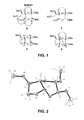
Figure 1 .- Shows NOESY experiments for products 6-9 (weak interaction is observed in 8). -
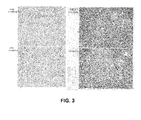
Figure 2 .- Shows ORTEP representation ofcompound 8 with thermal displacement ellipsoids drawn at the 50% probability level. -
Figure 3 .- Shows images of the control cultures (not treated with the compounds) of cell line HT22 after 4 hours and of the control cultures ofcell line MCF7 5 hours after starting the trials. -
Figure 4 .- Shows images of the cultures of cell line HT22 after 4 hours of exposure to the indicated compounds and doses. A clear induction of cell death is observed at concentrations of 1 and 5 µM. -
Figure 5 .- Shows images of the cultures of cell line MCF7 after five hours of exposure to the indicated compounds and doses. A clear induction of cell death (apoptosis) is observed at concentrations of 1 and 5 µM. -
Figure 6 .- Shows the percentage of cell death caused by the different compounds, quantified using trypan blue dye in neural cell line HT22. The results were normalised in accordance with the mortality caused by the medium (V, DMSO at 0.01 %). Three trials per experimental group were conducted. -
Figure 7 .- Shows the percentage of cell death caused by the different compounds, quantified using trypan blue dye in cell line MCF7. The results were normalised to the mortality caused by the medium (V, DMSO at 0.01 %). Three trials were conducted per experimental group -
Figure 8 .- Shows the percentage of inhibition of the proliferation of the neurons in the presence of the indicated cyclical compounds with regard to the proliferation observed in the presence of the medium (V, DMSO at 0.01 %). Three trials were conducted per experimental group. -
Figure 9 .- Shows the percentage of inhibition of the proliferation of cancer cells in the presence ofproduct 8 with regard to the proliferation observed in the presence of the medium (V, DMSO at 0.01 %). Three trials were conducted per experimental group. - The invention is illustrated below by means of trials conducted by the inventors, which highlights the specificity and effectiveness of the compounds with formula (I) and process for obtaining same.
- Carbohydrates used as substrates were prepared using commercial D-galactopyranose 1 (Diagram 1). A silylation reaction was made using TBSCI, followed by methylation with NaH and Mel, forming galactofuranose 2. This synthetic intermediate was distilled, giving rise to diol 3. The primary hydroxyl group was protected by acetylation, generating compound 4, as well as the
compound diacetylate 5.
- When compound 5 (Diagram 2) was treated with (diacetoxy-iodo)benzene (DIB) and iodine in dichloromethane, under visible light irradiation, two products were obtained from a sequential scission-oxidation-cyclisation process.
Structures cyclisation products 
- The stereochemistry of compounds 6-9 was determined in accordance with the experimental constants of 1H NMR (Table 1) and the NOESY experiments (
figure 1 ). Additionally, the X-ray analysis of product 8 (Figure 2 ) confirmed the proposed structure and configuration.Table 1. Experimental coupling constants of RMN 1H. J (Hz) Product 6Product 7Product 8Product 9 J1.2 4.3 1.6 3.7 1.4 J3.4 7.0 8.3 3.7 3.5 J4.5 3.0 3.0 2.1 1.5 substrates 4 or 5 generated a C-radical 10, which evolved due to oxidation into an oxycarbenium ion 11. The oxygen of the carbonyle group on C-3 acted as a nucleophile and the resulting ion was trapped either by acetate ions from the DIB (path [a]) or by the hydroxyl group on C-6 (path [b]). Path [a] generated thecompounds bicyclical products compounds 8 and 9) is much faster than the scission of the primary radical (products of C5-C6 bond rupture were not detected).
- Additionally, the formation of the by-products (2S) and (2R) in 1:1 ratio implies that rotation of the intermediates 10 or 11 around the C1-C2 bond is also fast.
- Finally, the addition of acetate ions to C-3 (path [a]) took place on the side opposite the alkylic chain in C-4, giving rise to the products 3,4-
trans - Products 6-9 are pyranose-type sugars. In order to determine whether this process was useful for preparing C-gycloside analogues, the 2-alkyl galactofuranose 14 (Diagram 4) was obtained from the
diacetate 5 by alkylation of the anomeric position (giving rise to the phenone 12), followed by hydrolysis of the acetate groups (generating the alcohol 13). The substrate 13 was treated with DIB and iodine and irradiated using visible light. The scission-regrouping process efficiently generated the C-glycoside 14 analogue, the configuration of which was assigned as (1R, 2S) (Table 2).Table 2. Experimental and theoretical constants of RMN 1H for the possible isomers. J (Hz) Product 14 (1R, 2R) (1R, 2S) (1S, 2R) (1S, 2S) J 1,2 7.5 1.5 7.3 1.0 3.1 J 3,4 2.8 3.0 2.6 3.4 2.8 J 4,5 0.0 1.1 1.2 1.1 1.2 
- The formation of the product 14 must be highlighted, as unwanted secondary reactions did not occur (such as abstraction of the 1-H). Therefore, this methodology can be useful for preparing C-glycoside analogues.
- Iodine (25 mg, 0.1 mmol) and DIB (39 mg, 0.12 mmol) were added to an initial carbohydrate solution (0.1 mmol) in dry dichloromethane (2 mL). The resulting reaction was shaken for 2 h at 26°C, under visible light irradiation (using 80 W tungsten filament lamps purchased at hardware stores). The mixture was then poured over a 10% aqueous solution of sodium thyosulphate and extracted with dichloromethane. The organic phase was dried over sodium sulphate, filtered and the solvent eliminated under vacuum. The resulting residue was purified by silica gel column chromatography (eluents: ethyl hexane/acetate mixtures).
- The
compound 6 is a product with a rubbery consistency (44%). RMN 1H (500 MHz, CDCl3): δ= 2.09 (s, 3H), 2.12 (s, 3H), 3.45 (s, 3H), 3.46 (s, 3H), 3.51 (s, 3H), 3.52 (ddd, J = 2.9, 5.8, 5.9 Hz, 1H, 5-H), 3.73 (dd, J = 3.0, 7.0 Hz, 1H, 4-H), 4.28 (d, J = 5.9 Hz, 2H, 6-H2), 4.40 (d, J = 4.3 Hz, 1H, 1-H), 4.51 (d, J = 4.3 Hz, 1H, 2-H), 6.11 (d, J = 7.0 Hz, 1H, 3-H) ppm. RMN 13C (125.7 MHz, CDCl3): δ = 20.8 (CH3, Ac), 20.9 (CH3, Ac), 56.3 (CH3, OMe), 56.6 (CH3, OMe), 59.4 (CH3, OMe), 62.4 (CH2, 6-C), 72.9 (CH, 4-C), 76.5 (CH, 5-C), 88.0 (CH, 3-C), 99.6 (CH, 2-C), 100.6 (CH, 1-C), 169.1 (C, CO), 170.7 (C, CO) ppm. EMAR (IE): calcd for C12H19O8 [M+ OMe] 291.1080; observing 291.1102. - The
compound 7 is a product with a rubbery consistency (31 %). RMN 1H (500 MHz, CDCl3): δ = 2.09 (s, 3H), 2.13 (s, 3H), 3.43 (s, 3H), 3.54 (s, 3H), 3.56 (m, 1H, 5-H), 3.57 (s, 3H), 3.74 (dd, J = 3.0, 8.4 Hz, 1H, 4-H), 4.27 (dd, J = 6.0, 11.5 Hz, 1H, 6-Ha), 4.31 (dd, J = 6.0, 11.5 Hz, 1H, 6-Hb), 4.57 (d, J = 1.7 Hz, 1H, 1-H), 4.62 (d, J = 1.6 Hz, 1H, 2-H), 6.16 (d, J = 8.3 Hz, 1H, 3-H) ppm. RMN 13C (125.7 MHz, CDCl3): δ = 20.9 (2 × CH3, Ac), 55.7 (CH3, OMe), 57.1 (CH3, OMe), 59.1 (CH3, OMe), 62.2 (CH2, 6-C), 75.5 (CH, 4-C), 76.3 (CH, 5-C), 84.7 (CH, 3-C), 97.3 (CH, 2-C), 99.0 (CH, 1-C), 168.7 (C, CO), 170.7 (C, CO) ppm. EMAR (IE): calcd for C12H19O8 [M+ OMe] 291.1080; observing 291.1081. - The
product 8 was isolated as a crystalline solid (41%). P.f. 72-73°C (crystallised with ethyl acetate/n-hexane). RMN 1H (500 MHz, CDCl3): δ = 3.40 (s, 3H), 3.50 (s, 3H), 3.53 (s, 3H), 3.93 (dd, J = 1.7, 9.9 Hz, 1H, 6-Ha), 4.04 (ddd, J = 1.9, 1.9, 4.9 Hz, 1H, 5-H), 4.10 (dd, J = 2.1, 3.6 Hz, 1H, 4-H), 4.24 (d, J = 3.7 Hz, 1H, 1-H), 4.29 (dd, J = 4.9, 9.9 Hz, 1H, 6-Hb), 4.58 (d, J = 3.7 Hz, 1H, 2-H), 5.39 (d, J = 3.7 Hz, 1H, 3-H) ppm. 13C NMR (125.7 MHz, CDCl3): δ = 56.0 (CH3, OMe), 56.5 (CH3, OMe), 57.1 (CH3, OMe), 70.9 (CH2, 6-C), 77.7 (CH, 4-C), 83.9 (CH, 5-C), 95.3 (CH, 3-C), 97.9 (CH, 2-C), 98.2 (CH, 1-C) ppm. EMAR (IE): calcd for C8H13O5 [M+ OMe] 189.0763; observing 189.0753. - X-ray analysis of the product 8: C9H16O6, Mr = 220.22, colourless acicular crystal (0.50 x 0.21 x 0.06 mm3) crystallised from ethyl acetate/n-hexane; monoclinic, spatial group C2 (no. 5), a = 14.892(8) Å, b = 4.395(2) Å, c = 16.651 (9) Å, V = 1063.6(9) Ǻ3, Z = 4, ρ calcd = 1.375 gcm-3, F(000) = 472, µ = 0.116 mm-1. 3841 reflections measured, of which 1251 were unique (Rint = 0.0866). The asymmetrical unit of the structure was formed by a molecule of 8. Due to a high su in the Flack parameter, the Friedel pairs were averaged in the refinement (MERG 4 command). The absolute configuration of the new chiral centres was assigned considering other chiral centres of the molecule which were not affected by the process, the absolute configuration of which was known. A total of 139 refined parameters were obtained, with R 1 = 0.0588, for reflections where I > 2σ(I), wR2 = 0.1351 (complete data), GOF = 1.019. Maximum/minimum residual electronic density: +0.263 / -0.262 e.Ǻ-3.
- The
compound 9 is a product with a rubbery consistency (32%). RMN 1H (500 MHz, CDCl3): δ = 3.39 (s, 3H), 3.54 (s, 3H), 3.56 (s, 3H), 3.83 (d, J = 9.6 Hz, 1H, 6-Ha), 4.00 (dd, J = 1.0, 3.9 Hz, 1H, 5-H), 4.21 (dd, J = 1.4, 3.1 Hz, 1H, 4-H), 4.35 (dd, J = 4.0, 9.6 Hz, 1H, 6-Hb), 4.48 (d, J = 1.3 Hz, 1H, 1-H), 4.52 (d, J = 1.4 Hz, 1H, 2-H), 5.27 (d, J = 3.5 Hz, 1H, 3-H) ppm. RMN 13C (125.7 MHz, CDCl3): δ = 55.9 (CH3, OMe), 56.8 (CH3, OMe), 57.1 (CH3, OMe), 70.1 (CH2, 6-C), 77.0 (CH, 4-C), 84.4 (CH, 5-C), 94.6 (CH, 2-C), 96.6 (2 × CH, 1-C + 3-C) ppm. EMAR (IE): calcd for C8H13O5 [M+ OMe] 189.0763; observing 189.0770. - The compound 14 is a product with a rubbery consistency (71%). RMN 1H (500 MHz, CDCl3): δ = 3.22 (d, J = 7.5 Hz, 1'-Ha), 3.23 (d, J = 4.5 Hz, 1'-Ha), 3.33 (s, 3H), 3.49 (s, 3H), 3.73 (d, J = 4.1 Hz, 1H, 5-H), 3.84 (d, J = 9.8 Hz, 1H, 6-Ha), 3.96 (ddd, J = 4.5, 7.4, 7.5 Hz, 1H, 1-H), 4.08 (d, J = 2.8 Hz, 1H, 4-H), 4.26 (dd, J = 4.2, 9.7 Hz, 6-Ha), 4.70 (d, J = 7.5 Hz, 1H, 2-H), 5.47 (d, J = 2.8 Hz, 1H, 3-H), 7.47 (dd, J = 7.6, 7.9 Hz, 2H, Ph), 7.58 (dd, J = 7.4, 7.4 Hz, 1H, Ph), 7.95 (d, J = 7.39 Hz, 2H, Ph) ppm. RMN 1H (500 MHz, C6D6): δ = 2.76 (s, 3H), 2.95 (d, J = 4.5 Hz, 1'-Ha), 2.96 (d, J = 7.5 Hz, 1'-Hb), 3.26 (s, 3H), 3.44 (d, J = 4.6 Hz, 1H, 5-H), 3.75 (d, J = 9.6 Hz, 1H, 6-Ha), 3.80 (d, J = 2.7 Hz, 4-H), 4.14 (dd, J = 4.3, 9.6 Hz, 6-Ha), 4.20 (ddd, J = 4.4, 7.4, 7.6 Hz, 1H, 1-H), 4.78 (d, J = 7.5 Hz, 1H, 2-H), 5.58 (d, J = 2.7 Hz, 1H, 3-H), 7.01 (dd, J = 7.3, 7.8 Hz, 2H, Ph), 7.09 (dd, J = 7.4, 7.4 Hz, 1H, Ph), 7.79 (d, J = 7.1 Hz, 2H, Ph) ppm. RMN 13C (125.7 MHz, CDCl3): δ = 40.3 (CH2, 1'-C), 56.3 (CH3, OMe), 57.1 (CH3, OMe), 71.0 (CH2, 6-C), 72.0 (CH, 1-C), 76.2 (CH, 4-C), 83.9 (CH, 5-C), 98.0 (CH, 2-C), 98.8 (CH, 3-C), 128.2 (2 × CH, Ph), 128.6 (2 × CH, Ph), 133.3 (CH, Ph), 137.0 (C, Ph), 196.5 (C, CO) ppm. EMAR (IE): calcd for C15H17O5 [M+ - OMe] 277.1076; observing 277.1053.
-


- Two stable cell lines of different origins were used for these trials: neural cell line HT22 from mouse hippocampus and line MCF7 from human breast cancer.
- Both cell lines were grown in a DMEM culture medium supplemented with 10% foetal bovine serum and antibiotics at 37ºC with a 5% CO2 atmosphere. 35-mm Petri dishes were used as growth media. When the cultures reached approximately 80% confluence they were exposed to the different compounds of the study for 24 hours at 37ºC, at concentrations of 0.1, 1 and 5 µM. The compounds were previously diluted in DMSO.
- For the cytotoxicity trials, after 24 hours of treatment with the compounds, the cells were treated with trypsin, resuspending them in DMEM and counting them. On one hand, an aliquot of 100 µl was preserved for the total count of the cells present in Neubauer chambers. On the other, the rest of the cell volume (approximately 1 ml) was processed for dyeing with trypan blue to visualise those cells susceptible to dyeing (non-viable cells) against intact cells (viable cells). To this end, the ViCell (Beckman Coulter) quantifier was used.
- After 4-5 hours of treatment with the corresponding compounds, the cultures were visualised, observing a significant cytotoxic effect at doses of 5 µM of the open-chain compounds (6) and (7). (The control cultures of
figure 3 were compared to the cultures of HT22 and MCF7 exposed to the compounds -figures 4 and5 respectively-). - In the case of line HT22, it was observed that the
products figure 6 ). This cytotoxic effect was increased more than 90% in the case of concentrations of 5 µM. - In the case of MCF7 cells, similar high toxicity results were observed using
compounds figure 7 ). - Additionally, it must be highlighted that both bicyclical compounds (
products 8 and 9) caused a decrease of approximately 50% in the normal proliferation of neural cell line HT22 (figure 8 ). These partial proliferation inhibition results were corroborated in the MCF7 breast cancer cells using compound 8 (figure 9 ). - From the data obtained it can be inferred that the open-
chain compounds product 8 has antiproliferative effects in both cell types, while thecyclical compound 9 has antiproliferative effects in HT22 and high toxicity in MCF7.
Claims (15)
- Compound with the formula (I):
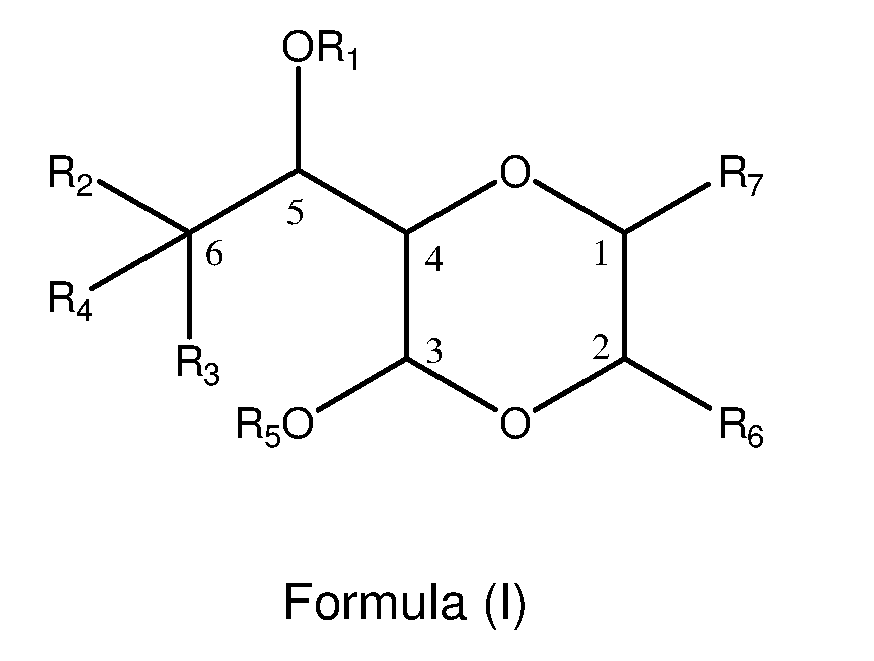
R1 is selected from among hydrogen, alkyl, acyl, aryl and heteroaryl;
R2 is selected from among hydrogen, alkyl and aryl;
R3 is selected from among hydrogen, alkyl and aryl;
R4 is selected from among hydrogen, alkyl, aryl, alkoxyl, acyloxyl, amine and amide; or R4 and R5 do not exist and an ether group is formed between the carbon in position 6 and the oxygen joined to the carbon in position 3;
R5 is selected from among hydrogen, alkyl and acyl;
R6 is selected from among alkyl, aryl and alkoxyl;
R7 is selected from among alkoxyl, alkyl, aryl, -COR8 and heterocycle;
R8 is selected from among alkyl and aryl;
and their isomers, salts and solvents. - Compound with the formula (I), according to claim 1, where R1 is methyl.
- Compound with the formula (I), according to any of claims 1 or 2, where R2 and R3 are hydrogen.
- Compound with the formula (I), according to any of claims 1 to 3, where R4 is acetoxy or alkoxy.
- Compound with the formula (I), according to any of claims 1 to 4, where R5 is acetyl.
- Compound with the formula (I), where R4 and R5 do not exist and an ether group is formed between the carbon in position 6 and the oxygen joined to the carbon in position 3, giving rise to a compound with the following general formula:

- Compound with the formula (I), according to any of claims 1 to 6, where R6 is O-methyl.
- Compound with the formula (I), according to any of claims 1 to 6, where R7 is O-methyl.
- Compound with the formula (I), according to any of claims 1 to 6, where R7 is -COR8 and R8 is phenyl.
- Process for obtaining a compound with the formula (I), according to any of claims 1 to 9, which comprises a regioselective radical scission reaction of the C -C bond with another oxidation reaction, followed by intramolecular cyclisation that generates a dioxane ring and, finally, the introduction of acyl or alkoxyl groups, in either an inter- or an intramolecular manner.
- Compound with the formula (I), according to any of claims 1 to 9, for use as a drug.
- Use of a compound with the formula (I), according to any of claims 1 to 9, as a cytotoxic or antiproliferative agent.
- Use of a compound with the formula (I), according to any of claims 1 to 9, for producing a cancer treatment drug.
- Pharmaceutical composition that comprises a compound with the formula (I), according to any of claims 1 to 9, and a pharmaceutically acceptable medium.
- Pharmaceutical composition, according to claim 14, which also comprises another active ingredient.
Applications Claiming Priority (2)
| Application Number | Priority Date | Filing Date | Title |
|---|---|---|---|
| ES200930359A ES2350674B8 (en) | 2009-06-25 | 2009-06-25 | DIOXANS DERIVED FROM THE RECOVERY OF CARBOHYDRATES AND C-GLYCOSIDES, THEIR PROCESSING PROCEDURE AND ITS USES |
| PCT/ES2010/070429 WO2010149817A1 (en) | 2009-06-25 | 2010-06-25 | Dioxanes derived from regrouping carbohydrates and c-glycosides, method for obtaining same, and uses thereof |
Publications (2)
| Publication Number | Publication Date |
|---|---|
| EP2447258A1 true EP2447258A1 (en) | 2012-05-02 |
| EP2447258A4 EP2447258A4 (en) | 2012-11-28 |
Family
ID=43386060
Family Applications (1)
| Application Number | Title | Priority Date | Filing Date |
|---|---|---|---|
| EP10791649A Withdrawn EP2447258A4 (en) | 2009-06-25 | 2010-06-25 | DIOXANES FROM THE RECONSTRUCTION OF CARBOHYDRATES AND C-GLYCOSIDES, METHOD FOR OBTAINING THEM AND USES THEREOF |
Country Status (4)
| Country | Link |
|---|---|
| US (1) | US8680300B2 (en) |
| EP (1) | EP2447258A4 (en) |
| ES (1) | ES2350674B8 (en) |
| WO (1) | WO2010149817A1 (en) |
Family Cites Families (1)
| Publication number | Priority date | Publication date | Assignee | Title |
|---|---|---|---|---|
| AU2002305523A1 (en) * | 2001-05-09 | 2002-11-18 | President And Fellows Of Harvard College | Dioxanes and uses thereof |
-
2009
- 2009-06-25 ES ES200930359A patent/ES2350674B8/en not_active Expired - Fee Related
-
2010
- 2010-06-25 WO PCT/ES2010/070429 patent/WO2010149817A1/en not_active Ceased
- 2010-06-25 EP EP10791649A patent/EP2447258A4/en not_active Withdrawn
- 2010-06-25 US US13/380,690 patent/US8680300B2/en not_active Expired - Fee Related
Non-Patent Citations (2)
| Title |
|---|
| No further relevant documents disclosed * |
| See also references of WO2010149817A1 * |
Also Published As
| Publication number | Publication date |
|---|---|
| ES2350674A1 (en) | 2011-01-26 |
| EP2447258A4 (en) | 2012-11-28 |
| WO2010149817A1 (en) | 2010-12-29 |
| ES2350674B1 (en) | 2011-11-18 |
| US8680300B2 (en) | 2014-03-25 |
| US20120157520A1 (en) | 2012-06-21 |
| ES2350674B8 (en) | 2012-05-30 |
Similar Documents
| Publication | Publication Date | Title |
|---|---|---|
| KR101739800B1 (en) | Ester derivatives of androgen receptor modulators and methods for their use | |
| EP3790867B1 (en) | Kdm1a inhibitors for the treatment of disease | |
| WO2017035501A1 (en) | Sialyltransferase inhibitors and uses thereof | |
| WO2012074547A2 (en) | STEROID COMPOUNDS AS RORγt MODULATORS AND USES THEREOF | |
| WO2012051988A2 (en) | Derivatives of steroid benzylamines, having an antiparasitic, antibacterial, antimycotic and/or antiviral action | |
| TW201718513A (en) | Method for preparing substituted 3-(2-anilino-1-cyclohexyl-1H-benzimidazol-5-yl)propanoic acid derivatives | |
| JP6549544B2 (en) | Novel compounds for treating cancer and other diseases | |
| EP3724196B9 (en) | Substituted azetidine dihydrothienopyridines and their use as phosphodiesterase inhibitors | |
| CA3244614A1 (en) | Solid forms of (s)-l-((2',6-bis(difluoromethyl)-[2,4'-bipyridin]-5-yl)oxy)-2,4-dimethylpentan-2-amine and salts thereof | |
| US10947221B2 (en) | Bryostatin compounds and methods of preparing the same | |
| EP1763534B1 (en) | NOVEL 2-SUBSTITUTED D-HOMO-ESTRA-1,3,5(10)-TRIENES AS INHIBITORS OF 17ß-HYDROXYSTEROID DEHYDROGENASE TYPE 1 | |
| AU2014252462A1 (en) | Azithromycin antimicrobial derivatives with non-antibiotic pharmaceutical effect | |
| CA2973383A1 (en) | Treatment of filarial diseases | |
| CZ289090A3 (en) | Tigogenin-beta-cellobioside compounds and process of their preparation | |
| US8680300B2 (en) | Dioxanes derived from regrouping carbohydrates and C-glycosides, process for obtaining same and uses thereof | |
| EP4083032A1 (en) | Pd-l1 antagonist compound | |
| US12414960B2 (en) | Analogues of oleuropein and oleacein and uses thereof | |
| EP1594886B1 (en) | Antitumoral d-homoestra-1, 3, 5 (10)-trien-3-yl 2-substituted sulfamates | |
| JP6545660B2 (en) | Esters of 2-deoxy-monosaccharides with antiproliferative activity | |
| KR100564383B1 (en) | Method for preparing ginsenoside derivatives | |
| CN111499619B (en) | A kind of medicine for treating liver fibrosis and preparation method thereof | |
| CN115160399B (en) | Soap-skin acid compound, preparation method and medical application thereof | |
| EP4233864B1 (en) | Composition comprising an indolizine derivative and a cyclic dinucleotide as active agents | |
| WO2025106485A1 (en) | Stat3 degraders for use in treating leukemia | |
| JP6359409B2 (en) | Funiculosin derivative having toll-like receptor 4 activation action and use thereof |
Legal Events
| Date | Code | Title | Description |
|---|---|---|---|
| PUAI | Public reference made under article 153(3) epc to a published international application that has entered the european phase |
Free format text: ORIGINAL CODE: 0009012 |
|
| 17P | Request for examination filed |
Effective date: 20111226 |
|
| AK | Designated contracting states |
Kind code of ref document: A1 Designated state(s): AL AT BE BG CH CY CZ DE DK EE ES FI FR GB GR HR HU IE IS IT LI LT LU LV MC MK MT NL NO PL PT RO SE SI SK SM TR |
|
| DAX | Request for extension of the european patent (deleted) | ||
| A4 | Supplementary search report drawn up and despatched |
Effective date: 20121031 |
|
| RIC1 | Information provided on ipc code assigned before grant |
Ipc: A61K 45/06 20060101ALI20121025BHEP Ipc: A61P 35/00 20060101ALI20121025BHEP Ipc: A61K 31/357 20060101ALI20121025BHEP Ipc: C07D 319/10 20060101AFI20121025BHEP Ipc: C07D 319/12 20060101ALI20121025BHEP Ipc: C07D 493/04 20060101ALI20121025BHEP |
|
| STAA | Information on the status of an ep patent application or granted ep patent |
Free format text: STATUS: THE APPLICATION IS DEEMED TO BE WITHDRAWN |
|
| 18D | Application deemed to be withdrawn |
Effective date: 20130530 |