EP2446039B1 - Method for fermentatively preparing l-amino acids - Google Patents
Method for fermentatively preparing l-amino acids Download PDFInfo
- Publication number
- EP2446039B1 EP2446039B1 EP10725186.0A EP10725186A EP2446039B1 EP 2446039 B1 EP2446039 B1 EP 2446039B1 EP 10725186 A EP10725186 A EP 10725186A EP 2446039 B1 EP2446039 B1 EP 2446039B1
- Authority
- EP
- European Patent Office
- Prior art keywords
- lysine
- amino acid
- seq
- polynucleotide
- fermentation
- Prior art date
- Legal status (The legal status is an assumption and is not a legal conclusion. Google has not performed a legal analysis and makes no representation as to the accuracy of the status listed.)
- Not-in-force
Links
Classifications
-
- C—CHEMISTRY; METALLURGY
- C12—BIOCHEMISTRY; BEER; SPIRITS; WINE; VINEGAR; MICROBIOLOGY; ENZYMOLOGY; MUTATION OR GENETIC ENGINEERING
- C12P—FERMENTATION OR ENZYME-USING PROCESSES TO SYNTHESISE A DESIRED CHEMICAL COMPOUND OR COMPOSITION OR TO SEPARATE OPTICAL ISOMERS FROM A RACEMIC MIXTURE
- C12P13/00—Preparation of nitrogen-containing organic compounds
- C12P13/04—Alpha- or beta- amino acids
- C12P13/08—Lysine; Diaminopimelic acid; Threonine; Valine
-
- C—CHEMISTRY; METALLURGY
- C12—BIOCHEMISTRY; BEER; SPIRITS; WINE; VINEGAR; MICROBIOLOGY; ENZYMOLOGY; MUTATION OR GENETIC ENGINEERING
- C12N—MICROORGANISMS OR ENZYMES; COMPOSITIONS THEREOF; PROPAGATING, PRESERVING, OR MAINTAINING MICROORGANISMS; MUTATION OR GENETIC ENGINEERING; CULTURE MEDIA
- C12N9/00—Enzymes; Proenzymes; Compositions thereof; Processes for preparing, activating, inhibiting, separating or purifying enzymes
- C12N9/10—Transferases (2.)
- C12N9/12—Transferases (2.) transferring phosphorus containing groups, e.g. kinases (2.7)
- C12N9/1205—Phosphotransferases with an alcohol group as acceptor (2.7.1), e.g. protein kinases
-
- C—CHEMISTRY; METALLURGY
- C12—BIOCHEMISTRY; BEER; SPIRITS; WINE; VINEGAR; MICROBIOLOGY; ENZYMOLOGY; MUTATION OR GENETIC ENGINEERING
- C12Y—ENZYMES
- C12Y207/00—Transferases transferring phosphorus-containing groups (2.7)
- C12Y207/01—Phosphotransferases with an alcohol group as acceptor (2.7.1)
- C12Y207/01023—NAD+ kinase (2.7.1.23)
Definitions
- L-amino acids are used in human medicine, in the pharmaceutical industry, in the food industry and very particularly in animal nutrition.
- L-amino acids such as, for example, L-lysine
- Method improvements may relate to fermentation technology measures such as, for example, stirring and supplying oxygen, or to the composition of the nutrient media, for example the sugar concentration during fermentation, or to the working-up to product form by, for example, ion exchange chromatography or to the intrinsic performance properties of the microorganism itself.
- the methods used for improving the performance properties of these microorganisms are those of mutagenesis, selection and choice of mutants.
- the strains obtained in this way are resistant to anti-metabolites or are auxotrophic for metabolites of regulatory importance, and produce L-amino acids.
- a known anti-metabolite is the lysine analogue S-(2-aminoethyl)-L-cysteine (AEC).
- Methods of recombinant DNA technology have likewise been used for some years for strain improvement of L-amino acid-producing strains of the genus Corynebacterium, in particular Corynebacterium glutamicum, or of the genus Escherichia, in particular Escherichia coli, by modifying, i.e. enhancing or attenuating, individual amino acid biosynthesis genes and investigating the effect on amino acid production.
- the nucleotide sequence of the Corynebacterium glutamicum ATCC13032 genome is described in Ikeda and Nakagawa (Applied Microbiology and Biotechnology 62, 99-109 (2003 )), in EP 1 108 790 and in Kalinowski et al. (Journal of Biotechnolgy 104 (1-3), (2003 )).
- the nucleotide sequence of the Escherichia coli K-12 genome has been published by Blattner et al. (Science 277 (5331), 1453-74 (1997 )).
- the invention relates to a method for preparing L-lysine or products containing L-lysine as defined in independent claim 1, in particular in dependent claims 2 to 5 and to a microorganism of the genus Corynebacterium producing and secreting L-lysine as defined in independent claim 5.
- L-lysine where mentioned hereinbelow, also comprises salts thereof, for example lysine monohydrochloride or lysine sulphate.
- microorganism comprises bacteria, yeasts and fungi.
- Bacteria which may be mentioned are in particular the genus Bacillus, the genus Corynebacterium, the genus Streptomyces, and bacteria of the Enterobacteriacae family.
- Corynebacterium glutamicum are also known in the prior art under other names. These include for example:
- Corynebacterium thermoaminogenes for example the strain FERM BP-1539.
- microorganisms or strains (starting strains) employed for the measures of overexpressing the polyphosphate-dependent NAD + kinase preferably already have the ability to concentrate the desired L-amino acid(s) in the cell or secrete them into the nutrient medium surrounding them and accummulate them there.
- the term “produce” is also used for this hereinbelow.
- the strains employed for said overexpression measures have the ability to concentrate or accumulate in the cell or in the nutrient medium ⁇ (at least) ⁇ 0.10 g/l, 0.25 g/l, ⁇ 0.5 g/l, ⁇ 1.0 g/l, ⁇ 1.5 g/l, ⁇ 2.0 g/l, ⁇ 4 g/l or ⁇ 10 g/l of the desired compound in ⁇ (at most) 120 hours, ⁇ 96 hours, ⁇ 48 hours, ⁇ 36 hours, ⁇ 24 hours or ⁇ 12 hours.
- the starting strains are preferably strains which have been produced by mutagenesis and selection, by recombinant DNA techniques or by a combination of both methods.
- a microorganism suitable for the measures of the invention can also be obtained by firstly overexpressing a polyphosphate-dependent NAD+ kinase in a wild strain such as, for example, in the Corynebacterium glutamicum type strain ATCC 13032 or in the strain ATCC 14067, and subsequently causing said microorganism, by further genetic measures described in the prior art, to produce the desired L-amino acid(s). Transforming the wild type only with the polynucleotide mentioned does not constitute an inventive measure.
- strains of the species Corynebacterium glutamicum which secrete or produce L-lysine are:
- strains of the species Escherichia coli which secrete or produce L-lysine are:
- L-Lysine-producing microorganisms typically have a feedback-resistant or desensitized aspartate kinase.
- Feedback-resistant aspartate kinases mean aspartate kinases (LysC) which, by comparison with the wild form (wild type), show less sensitivity to inhibition by mixtures of lysine and threonine or mixtures of AEC (aminoethylcysteine) and threonine or lysine alone or AEC alone.
- the genes or alleles coding for these aspartate kinases which are desensitized by comparison with the wild type are also referred to as lysC FBR alleles.
- lysC FBR alleles coding for aspartate kinase variants which have amino acid substitutions by comparison with the wild-type protein are described in the prior art.
- the lysC gene in bacteria of the genus Corynebacterium is also referred to as ask gene.
- the aspartate kinase encoded by the lysC gene in Enterobacteriaceae is also referred to as aspartokinase III.
- strains of the species Escherichia coli which secrete or produce L-tryptophan are:
- strains of the species Escherichia coli which produce or secrete L-threonine are:
- Cadaverine-producing or -secreting microorganisms are described, for example, in WO 2007/113127 .
- a polypeptide having polyphosphate-dependent NAD + kinase activity means a polypeptide or protein which catalyzes phosphorylation of NAD + (nicotinamide-adenine dinucleotide) to give NADP + (nicotinamide-adenine dinucleotide phosphate), with polyphosphate being utilized as donor of the phosphoryl or phosphate group.
- Polyphosphates denote the linear condensation products of salts of ortho-phosphoric acid (H 3 PO 4 ).
- Polyphosphates in their simplest form are the salts of the pentabasic triphosphoric acid (H 5 P 3 O 10 ) which consists of a chain of three phosphate units.
- the salts of the hexabasic tetraphosphoric acid have a chain length of four phosphate units. Details regarding the chemistry of polyphosphates can be found in chemistry textbooks such as, for example, the " Lehrbuch der anorganischen Chemie” ["Textbook of inorganic chemistry”] (A. F. Hollemann and E. Wiberg, Walter De Gruyter & Co., Berlin, 1971 ).
- Polyphosphate-dependent NAD + kinases are capable of utilizing linear polyphosphates with a chain length off ⁇ (at least) 3, ⁇ 4, ⁇ 5, ⁇ 6, ⁇ 7, ⁇ 8, ⁇ 9, ⁇ 10, ⁇ 12, ⁇ 14, ⁇ 16, ⁇ 18, ⁇ 20, ⁇ 25, ⁇ 30, ⁇ 40 phosphate units. In some cases, polyphosphates with a chain length of from 45 to 65 or 65 to 75 phosphate units are also utilized.
- a gene coding for a polyphosphate-dependent NAD + kinase is referred to as ppnK.
- the gene name means p oly p hosphate-dependent N AD k inase (the letters used for said gene name are underlined).
- polyphosphate-dependent NAD + kinases are also capable of utilizing ATP as donor of the phosphoryl group. From a chemical point of view, a gene is a polynucleotide.
- UniProtKB Universal Protein Resource Knowledgebase
- the UniProtKB database is maintained by the UniProt consortium which includes the European Bioinformatics Institute (EBI, Wellcome Trust, Hinxton, Cambridge, United Kingdom), the Swiss Institute of Bioinformatics (SIB, Centre Medical Universitaire, Geneva, Switzerland) and the Protein Information Resource (PIR, Georgetown University, Washington, DC, US).
- EBI European Bioinformatics Institute
- SIB Swiss Institute of Bioinformatics
- PIR Protein Information Resource
- polyphosphate-dependent NAD + kinases examples include those of Pyrococcus horikoshii ( Sakuraba et al., Applied and Environmental Microbiology 71:4352-4358 (2005 )), Mycobacterium tuberculosis ( Kawai et al., Biochemical and Biophysical Research Communications 276:57-632 (2000 )), Bacillus subtilis ( Garavaglia et al., Journal of Bacteriology 185:4844-50 (2003 )), Thermotoga maritima ( McGuinness and Butler International Journal of Biochemistry 17:1-11 (1985 )) and Brevibacterium ammoniagenes ( Murata et al., Biotechnology and Bioengineering. 21 (5) :887-895 (1979 )).
- polyphosphate-dependent NAD+ kinase genes may be isolated from the organisms with the aid of the polymerase chain reaction (PCR) using suitable primers. Instructions can be found inter alia in the laboratory manual "PCR” by Newton and Graham (Spektrum Akademischer Verlag, Heidelberg, Germany, 1994 ) and in WO 2006/100211 on pages 14 to 17.
- PCR polymerase chain reaction
- genes coding for polypeptides having polyphosphate-dependent NAD + kinase activity are ⁇ (at least) ⁇ 60%, ⁇ 70%, ⁇ 80%, ⁇ 90%, ⁇ 92%, ⁇ 94%, ⁇ 96%, ⁇ 97%, ⁇ 98%, ⁇ 99%, identical to the amino acid sequence of SEQ ID NO:2.
- the amino acid sequence of the polyphosphate-dependent NAD + kinase of ATCC 14067 is novel. Accordingly, the invention relates to an isolated polynucleotide, preferably having the nucleotide sequence of SEQ ID NO:3, which codes for a polypeptide having polyphosphate-dependent NAD + kinase enzyme activity and comprises the amino acid sequence of SEQ ID NO:4. In this context, the invention furthermore relates to a microorganism containing said polypeptide having polyphosphate-dependent NAD+ kinase enzyme activity and comprising the amino acid sequence of SEQ ID NO:4 in an overexpressed form.
- the amino acid sequence of the polyphosphate-dependent NAD+ kinase of ATCC 13869 is likewise novel. Accordingly, the invention relates to an isolated polynucleotide, preferably having the nucleotide sequence of SEQ ID NO:5, which codes for a polypeptide having polyphosphate-dependent NAD + kinase enzyme activity and comprises the amino acid sequence of SEQ ID NO:6. In this context, the invention furthermore relates to a microorganism containing said polypeptide having polyphosphate-dependent NAD+ kinase enzyme activity and comprising the amino acid sequence of SEQ ID NO:6 in an overexpressed form.
- the PpnK polypeptide amino acid sequences of various microorganisms can be found in the databases of the National Center for Biotechnology Information (NCBI, Bethesda, MD, US). They are accessible there under the following accession numbers: Name of microorganism: Accession number: Corynebacterium diphtheriae NCTC 13129: NC_002935 Corynebacterium glutamicum R: NC_009342 Corynebacterium jeikeium K411: NC_007164 Corynebacterium glutamicum ATCC 13032: NC_006958
- conservative amino acid substitutions preference is given to conservative amino acid substitutions.
- conservative substitutions are those in which phenylalanine, tryptophan and tyrosine are substituted for each other.
- conservative substitutions are those in which leucine, isoleucine and valine are substituted for one another.
- conservative substitutions are those in which glutamine and asparagine are substituted for one another.
- conservative substitutions are those in which arginine, lysine and histidine are substituted for one another.
- conservative substitutions are those in which aspartic acid and glutamic acid are substituted for one another.
- conservative substitutions are those in which serine and threonine are substituted for one another.
- polynucleotides which hybridize under stringent conditions with the nucleotide sequence complementary to SEQ ID NO:1, preferably to the coding region of SEQ ID NO:1, and code for a polypeptide having polyphosphate-dependent NAD + kinase enzyme activity.
- Hybridization takes place under stringent conditions, that is to say only hybrids in which the probe, i.e. a polynucleotide comprising the nucleotide sequence complementary to SEQ ID NO:1, preferably the coding region of SEQ ID NO:1, and the target sequence, i.e.
- the polynucleotides treated with or identified by said probe are at least 70% identical are formed.
- the stringency of the hybridization, including the washing steps is known to be influenced or determined by varying the buffer composition, temperature and salt concentration.
- the hybridization reaction is generally carried out with relatively low stringency compared with the washing steps (Hybaid Hybridisation Guide, Hybaid Limited, Teddington, UK, 1996).
- a 5x SSC buffer at a temperature of approx. 50°C - 68°C may be employed for the hybridization reaction.
- probes may also hybridize with polynucleotides which are less than 70% identical to the nucleotide sequence of the probe employed. Such hybrids are less stable and are removed by washing under stringent conditions. This may be achieved, for example, by lowering the salt concentration to 2 ⁇ SSC or 1 ⁇ SSC and, where appropriate, subsequently 0.5 ⁇ SSC (The DIG System User's Guide for Filter Hybridisation, Boehringer Mannheim, Mannheim, Germany, 1995), with a temperature of approx. 50°C - 68°C, approx. 52°C - 68°C, approx. 54°C - 68°C, approx. 56°C - 68°C, approx. 58°C - 68°C, approx.
- the SSC buffer optionally contains sodium dodecylsulphate (SDS) at a concentration of 0.1%.
- polynucleotide fragments which are at least 70%, at least 80%, at least 90%, at least 92%, at least 94%, at least 96%, at least 97%, at least 98%, or at least 99%, where appropriate 100%, identical to the sequence or complementary sequence of the probe employed and which code for a polypeptide having polyphosphate-dependent NAD+ kinase enzyme activity.
- kits e.g. DIG Easy Hyb from Roche Diagnostics GmbH, Mannheim, Germany, Catalogue No. 1603558 ).
- a ppnK gene coding for a polyphosphate-dependent NAD + kinase is overexpressed in a microorganism or starting or parent strain producing the desired amino acid(s).
- the studies resulting in the present invention likewise established that overexpression of the NADH kinase present in Saccharomyces cerevisiae, which uses NADH to give NADPH by using ATP as donor of the phosphoryl group, in suitable L-amino acid producers results in an increase in amino acid production.
- Overexpression generally means an increase in the intracellular concentration or activity of a ribonucleic acid, of a protein (polypeptide) or of an enzyme by comparison with the starting strain (parent strain) or wild-type strain, if the latter is the starting strain.
- a starting strain (parent strain) means the strain on which the measure leading to overexpression has been carried out.
- overexpression preference is given to the methods of recombinant overexpression. These include all methods in which a microorganism is prepared using a DNA molecule provided in vitro. Examples of such DNA molecules include promoters, expression cassettes, genes, alleles, coding regions, etc. They are transferred by methods of transformation, conjugation, transduction or similar methods into the desired microorganism.
- the measures of overexpression increase the activity or concentration of the corresponding polypeptides generally by at least 10%, 25%, 50%, 75%, 100%, 150%, 200%, 300%, 400% or 500%, preferably at most by 1000%, 2000%, 4000%, 10000% or 20000%, based on the activity or concentration of said polypeptide in the strain prior to the measure resulting in overexpression.
- Overexpression is achieved by a multiplicity of methods available in the prior art. These include increasing the copy number and modifying the nucleotide sequences directing or controlling expression of the gene.
- the transcription of a gene is controlled inter alia by the promoter and optionally by proteins which suppress (repressor proteins) or promote (activator proteins) transcription.
- the translation of the RNA formed is controlled inter alia by the ribosome binding site and the start codon.
- Polynucleotides or DNA molecules which include a promoter and a ribosome binding site and optionally a start codon are also referred to as expression cassette.
- the copy number may be increased by means of plasmids which replicate in the cytoplasm of the microorganism.
- plasmids which replicate in the cytoplasm of the microorganism.
- an abundance of plasmids are described in the prior art for very different groups of microorganisms, which plasmids can be used for setting the desired increase in the copy number of the gene.
- Plasmids suitable for the genus Escherichia are described, for example, in the manual Molecular Biology, Labfax (Ed.: T. A. Brown, Bios Scientific, Oxford, UK, 1991 ).
- Plasmids suitable for the genus Corynebacterium are described, for example, in Tauch et al. (Journal of Biotechnology 104 (1-3), 27-40, (2003 )), or in Stansen et al. (Applied and Environmental Microbiology 71, 5920-5928 (2005 )).
- the copy number may furthermore be increased by at least one (1) copy by introducing further copies into the chromosome of the microorganism.
- Methods suitable for the genus Corynebacterium are described, for example, in the patents WO 03/014330 , WO 03/040373 and WO 04/069996 .
- Examples of methods suitable for the genus Escherichia are insertion of a gene copy into the att site of the phage ( Yu and Court, Gene 223, 77-81 (1998 )), chromosomal amplification with the aid of the phage Mu, as described in EP 0 332 448 , or the methods of gene replacement with the aid of conditionally replicating plasmids, as described by Hamilton et al. (Journal of Bacteriology 174, 4617 - 4622 (1989 )) or Link et al. (Journal of Bacteriology 179, 6228-6237 (1997 )).
- Gene expression may furthermore be increased by using a strong promoter which is functionally linked to the gene to be expressed. Preference is given to using a promoter which is stronger than the natural promoter, i.e. the one present in the wild type or parent strain. To this end, the prior art has an abundance of methods available.
- Promoters suitable for the genus Corynebacterium can be found inter alia in Morinaga et al. (Journal of Biotechnology 5, 305-312, (1987 )), in the patent documents EP 0 629 699 A2 , US 2007/0259408 A1 (gap promoter), WO 2006/069711 , EP 1 881 076 A1 and EP 1 918 378 A1 (sod promoter) and in reviews such as the " Handbook of Corynebacterium glutamicum” (Eds.: Lothar Eggeling and Michael Bott, CRC Press, Boca Raton, US (2005 )) or the book “ Corynebacteria, Genomics and Molecular Biology” (Ed.: Andreas Burkovski, Caister Academic Press, Norfolk, UK (2008 )). Examples of promoters which allow controlled, i.e. inducible or repressible, expression are described, for example, in Tsuchiya and Morinaga (Bio/Technology 6, 428
- Promoters suitable for the genus Escherichia have been known for a long time. They include, inter alia, the classical promoters lac promoter, trp promoter, the hybrid promoters tac and trc, the P L and P R promoters of phage ⁇ . Similarly, it is possible to use the promoters of the T7 phage, the gearbox promoters, the nar promoter or the promoters of the genes rrsG, rnpB, csrA, csrB, ompA, fusA, pepQ, rplX or rpsG.
- Controlled expression is permitted, for example, by the cI857-P R or the cI857-P L system of the ⁇ phage ( Götting et al., BioTechniques 24, 362-366 (1998 )).
- Reviews can be found in Makrides ( Microbiological Reviews 60(3), 512-538 (1996 )) or in the manual " Escherichia coli and Salmonella, Cellular and Molecular Biology” (F. C. Neidhardt (Editor in Chief), ASM Press, Washington, US (1996 )).
- Such promoters or expression cassettes are typically employed at a distance of from 1 to 1000, preferably 1 to 500, nucleotides upstream of the first nucleotide of the start codon of the coding region of the gene.
- Escherichia coli promoters The structure of Escherichia coli promoters is well known. It is therefore possible to increase the strength of a promoter by modifying its sequence by means of one or more substitution(s) and/or one or more insertion(s) and/or one or more deletion(s) of nucleotides. Examples of this can be found inter alia in "Herder Lexikon der Biologie" (Spektrum Akademischer Verlag, Heidelberg, Germany (1994)).
- Corynebacterium glutamicum and Escherichia coli ribosome binding sites is likewise well known and is described, for example, in Amador ( Microbiology 145, 915-924 (1999 )), and in manuals and textbooks of genetics, for example " Gene und Klone” (Winnacker, Verlag Chemie, Weinheim, Germany (1990 )) or " Molecular Genetics of Bacteria” (Dale and Park, Wiley and Sons Ltd., Chichester, UK (2004 )).
- Overexpression can likewise be achieved by increasing the expression of activator proteins or reducing or switching off the expression of repressor proteins.
- overexpression measures mentioned may be combined with one another in a suitable manner.
- the extent of expression or overexpression can be determined by measuring the amount of the mRNA transcribed from the gene, by determining the amount of the polypeptide and by determining the enzyme activity.
- the amount of mRNA may be determined inter alia by using the methods of "Northern blotting" and of quantitative RT-PCR. Quantitative RT-PCR involves reverse transcription preceding the polymerase chain reaction. For this, the LightCyclerTM system from Roche Diagnostics (Boehringer Mannheim GmbH, Roche Molecular Biochemicals, Mannheim, Germany) may be used, as described, for example, in Jungwirth et al. (FEMS Microbiology Letters 281, 190-197 (2008 )). The concentration of the protein may be determined via 1- and 2-dimensional protein gel fractionation and subsequent optical identification of the protein concentration by appropriate evaluation software in the gel.
- a customary method of preparing protein gels for coryneform bacteria and of identifying said proteins is the procedure described by Hermann et al. (Electrophoresis, 22:1712-23 (2001 )).
- the protein concentration may likewise be determined by Western blot hybridization using an antibody specific for the protein to be detected ( Sambrook et al., Molecular cloning: a laboratory manual. 2nd Ed. Cold Spring Harbor Laboratory Press, Cold Spring Harbor, N.Y., 1989 ) and subsequent optical evaluation using corresponding software for concentration determination ( Lohaus and Meyer (1998) Biospektrum 5:32-39 ; Lottspeich, Angewandte Chemie 321: 2630-2647 (1999 )).
- the microorganisms produced may be cultured continuously - as described, for example, in WO 05/021772 - or discontinuously in a batch process (batch cultivation) or in a fed batch or repeated fed batch process for the purpose of producing the desired organic-chemical compound.
- a summary of a general nature about known cultivation methods is available in the textbook by Chmiel (Bioreaktoren und periphere bamboo (Vieweg Verlag, Braunschweig/Wiesbaden, 1994 )).
- the culture medium or fermentation medium to be used must in a suitable manner satisfy the demands of the respective strains. Descriptions of culture media for various microorganisms are present in the " Manual of Methods for General Bacteriology" of the American Society for Bacteriology (Washington D.C., USA, 1981 ). The terms culture medium and fermentation medium or medium are interchangeable.
- sugars and carbohydrates such as, for example, glucose, sucrose, lactose, fructose, maltose, molasses, sucrose-containing solutions from sugar beet or sugar cane processing, starch, starch hydrolysate and cellulose, oils and fats such as, for example, soybean oil, sunflower oil, groundnut oil and coconut fat, fatty acids such as, for example, palmitic acid, stearic acid and linoleic acid, alcohols such as, for example, glycerol, methanol and ethanol, and organic acids such as, for example, acetic acid or lactic acid.
- sugars and carbohydrates such as, for example, glucose, sucrose, lactose, fructose, maltose, molasses, sucrose-containing solutions from sugar beet or sugar cane processing, starch, starch hydrolysate and cellulose, oils and fats such as, for example, soybean oil, sunflower oil, groundnut oil and coconut fat, fatty acids such as, for example, palmi
- nitrogen source organic nitrogen-containing compounds such as peptones, yeast extract, meat extract, malt extract, corn steep liquor, soybean flour and urea, or inorganic compounds such as ammonium sulphate, ammonium chloride, ammonium phosphate, ammonium carbonate and ammonium nitrate.
- organic nitrogen-containing compounds such as peptones, yeast extract, meat extract, malt extract, corn steep liquor, soybean flour and urea
- inorganic compounds such as ammonium sulphate, ammonium chloride, ammonium phosphate, ammonium carbonate and ammonium nitrate.
- the nitrogen sources can be used individually or as mixture.
- the culture medium must additionally comprise salts, for example in the form of chlorides or sulphates of metals such as, for example, sodium, potassium, magnesium, calcium and iron, such as, for example, magnesium sulphate or iron sulphate, which are necessary for growth.
- salts for example in the form of chlorides or sulphates of metals such as, for example, sodium, potassium, magnesium, calcium and iron, such as, for example, magnesium sulphate or iron sulphate, which are necessary for growth.
- essential growth factors such as amino acids, for example homoserine and vitamins, for example thiamine, biotin or pantothenic acid, may be employed in addition to the above-mentioned substances.
- Said starting materials may be added to the culture in the form of a single batch or be fed in during the cultivation in a suitable manner.
- the pH of the culture can be controlled by employing basic compounds such as sodium hydroxide, potassium hydroxide, ammonia or aqueous ammonia, or acidic compounds such as phosphoric acid or sulphuric acid in a suitable manner.
- the pH is generally adjusted to a value of from 6.0 to 8.5, preferably 6.5 to 8.
- antifoams such as, for example, fatty acid polyglycol esters.
- suitable selective substances such as, for example, antibiotics.
- the fermentation is preferably carried out under aerobic conditions. In order to maintain these conditions, oxygen or oxygen-containing gas mixtures such as, for example, air are introduced into the culture.
- liquids enriched with hydrogen peroxide are used.
- the fermentation is carried out, where appropriate, at elevated pressure, for example at an elevated pressure of from 0.03 to 0.2 MPa.
- the temperature of the culture is normally from 20°C to 45°C and preferably from 25°C to 40°C, particularly preferably from 30°C to 37°C.
- the cultivation is preferably continued until an amount of the desired organic-chemical compound sufficient for being recovered has formed. This aim is normally achieved within 10 hours to 160 hours. In continuous processes, longer cultivation times are possible.
- the activity of the microorganisms results in a concentration (accumulation) of the organic-chemical compound in the fermentation medium and/or in the cells of said microorganisms.
- Example of suitable fermentation media can be found inter alia in the patents US 5,770,409 , US 5,990,350 , US 5,275,940 , WO 2007/012078 , US 5,827,698 , WO 2009/043803 , US 5,756,345 and US 7,138,266 .
- Analysis of L-amino acids to determine the concentration at one or more time(s) during the fermentation can take place by separating the L-amino acids by means of ion exchange chromatography, preferably cation exchange chromatography, with subsequent post-column derivatization using ninhydrin, as described in Spackman et al. (Analytical Chemistry 30: 1190-1206 (1958 )). It is also possible to employ ortho-phthalaldehyde rather than ninhydrin for post-column derivatization. An overview article on ion exchange chromatography can be found in Pickering (LC ⁇ GC ( Magazine of Chromatographic Science) 7(6), 484-487 (1989 )).
- Detection is carried out photometrically (absorption, fluorescence).
- the performance of the methods or fermentation processes according to the invention in terms of one or more of the parameters selected from the group of concentration (compound formed per unit volume), yield (compound formed per unit carbon source consumed), formation (compound formed per unit volume and time) and specific formation (compound formed per unit dry cell matter or dry biomass and time or compound formed per unit cellular protein and time) or else other process parameters and combinations thereof, is increased by at least 0.5%, at least 1%, at least 1.5% or at least 2%, based on methods or fermentation processes using microorganisms containing non-overexpressed polyphosphate-dependent NAD + kinase.
- the fermentation measures result in a fermentation broth which contains the desired organic-chemical compound, preferably L-amino acid.
- a product containing the organic-chemical compound is then provided or produced or recovered in liquid or solid form.
- a fermentation broth means a fermentation medium or nutrient medium in which a microorganism has been cultivated for a certain time and at a certain temperature.
- the fermentation medium or the media employed during fermentation comprise(s) all the substances or components which ensure production of the desired compound and typically propagation and viability.
- the resulting fermentation broth accordingly comprises
- the organic byproducts include substances which are produced by the microorganisms employed in the fermentation in addition to the particular desired compound and are optionally secreted. These also include sugars such as, for example, trehalose.
- the fermentation broth is removed from the culture vessel or fermentation tank, collected where appropriate, and used for providing a product containing the organic-chemical compound, preferably an L-amino acid-containing product, in liquid or solid form.
- a product containing the organic-chemical compound preferably an L-amino acid-containing product, in liquid or solid form.
- the expression "Recovering the L-amino acid-containing product” is also used for this.
- the L-amino acid-containing fermentation broth itself which has been removed from the fermentation tank, constitutes the recovered product.
- One or more of the measures selected from the group consisting of
- the partial (> 0% to ⁇ 80%) to complete (100%) or virtually complete ( ⁇ 80% to ⁇ 100%) removal of the water (measure a)) is also referred to as drying.
- L-lysine-containing products includes concentrated aqueous alkaline solutions of purified L-lysine ( EP-B-0534865 ).
- a further group includes aqueous acidic biomass-containing concentrates of L-lysine-containing fermentation broths.
- the best-known group of solid products includes pulverulent or crystalline forms of purified or pure L-lysine, which is typically in the form of a salt such as, for example, L-lysine monohydrochloride.
- a further group of solid product forms is described for example in EP-B-0533039 .
- the product form described therein comprises besides L-lysine most of the starting materials used during the fermentative production and not consumed and, where appropriate, the biomass of the microorganism employed with a proportion of >0% - 100%.
- the methods essentially used to produce pure solid L-lysine are those of ion exchange chromatography, where appropriate with use of activated carbon, and methods of crystallization.
- the corresponding base or a corresponding salt such as, for example, the monohydrochloride (Lys-HCl) or lysine sulphate (Lys 2 -H 2 SO 4 ) is obtained in this way.
- EP-B-0534865 describes a process for producing aqueous basic L-lysine-containing solutions from fermentation broths.
- the biomass is separated from the fermentation broth and discarded.
- a base such as, for example, sodium hydroxide, potassium hydroxide or ammonium hydroxide is used to set a pH of between 9 to 11.
- the mineral constituents (inorganic salts) are removed from the broth by crystallization after concentration and cooling and are either used as fertilizer or discarded.
- preferred processes are those resulting in products which comprise constituents of the fermentation broth. These are used in particular as animal feed additives.
- the biomass can be removed wholly or partly from the fermentation broth by separation methods such as, for example, centrifugation, filtration, decantation or a combination thereof, or be left completely therein.
- separation methods such as, for example, centrifugation, filtration, decantation or a combination thereof, or be left completely therein.
- the biomass or the biomass-containing fermentation broth is inactivated during a suitable process step, for example by thermal treatment (heating) or by addition of acid.
- the biomass is completely or virtually completely removed so that no (0%) or at most 30%, at most 20%, at most 10%, at most 5%, at most 1% or at most 0.1% biomass remains in the prepared product.
- the biomass is not removed, or is removed only in small proportions, so that all (100%) or more than 70%, 80%, 90%, 95%, 99% or 99.9% biomass remains in the product prepared.
- the biomass is removed in proportions of from ⁇ 0% to ⁇ 100%.
- the fermentation broth obtained after the fermentation can be adjusted, before or after the complete or partial removal of the biomass, to an acidic pH with an inorganic acid such as, for example, hydrochloric acid, sulphuric acid or phosphoric acid, or organic acids such as, for example, propionic acid ( GB 1,439,728 or EP 1 331 220 ). It is likewise possible to acidify the fermentation broth with the complete content of biomass.
- the broth can also be stabilized by adding sodium bisulphite (NaHSO 3 , GB 1,439,728 ) or another salt, for example ammonium, alkali metal or alkaline earth metal salt of sulphurous acid.
- any organic or inorganic solids present in the fermentation broth are partially or completely removed.
- the organic byproducts dissolved in the fermentation broth, and the dissolved unconsumed constituents of the fermentation medium (starting materials) remain at least partly (> 0%), preferably to an extent of at least 25%, particularly preferably to an extent of at least 50% and very particularly preferably to an extent of at least 75% in the product. Where appropriate, they also remain completely (100%) or virtually completely, meaning > 95% or > 98% or greater than 99%, in the product. If a product in this sense comprises at least part of the constituents of the fermentation broth, this is also described by the term "product based on fermentation broth”.
- water is removed from the broth, or it is thickened or concentrated, by known methods such as, for example, using a rotary evaporator, thin-film evaporator, falling-film evaporator, by reverse osmosis or by nanofiltration.
- This concentrated fermentation broth can then be worked up to free-flowing products, in particular to a fine powder or preferably coarse granules, by methods of freeze drying, spray drying, spray granulation or by other processes as described for example in the circulating fluidized bed according to PCT/EP2004/006655 .
- a desired product is isolated where appropriate from the resulting granules by screening or dust removal.
- Free-flowing means powders which, from of a series of glass orifice vessels with orifices of different sizes, flow unimpeded at least out of the vessel with a 5 mm (millimetres) orifice ( Klein: Seifen, ⁇ le, Fette, Wachse 94, 12 (1968 )).
- “Fine” means a powder predominantly (> 50%) having a particle size of diameter from 20 to 200 ⁇ m.
- Coarse means a product predominantly (> 50%) of a particle size of diameter from 200 to 2000 ⁇ m.
- the particle size determination can be carried out by methods of laser diffraction spectrometry. Corresponding methods are described in the textbook on “ sectionchen possibly disturb in der Laborpraxis” by R. H. Muller and R. Schuhmann,ticianliche Verlagsgesellschaft Stuttgart (1996 ) or in the textbook “ Introduction to Particle Technology” by M. Rhodes, published by Wiley & Sons (1998 ).
- the free-flowing, fine powder can in turn be converted by suitable compaction or granulation processes into a coarse, very free-flowing, storable and substantially dust-free product.
- dust-free means that the product comprises only small proportions ( ⁇ 5%) of particle sizes below 100 ⁇ m in diameter.
- “Storable” in the sense of this invention means a product which can be stored for at least one (1) year or longer, preferably at least 1.5 years or longer, particularly preferably two (2) years or longer, in a dry and cool environment without any substantial loss (at most 5%) of the respective amino acid occurring.
- the invention further relates to a method described in principle in WO 2007/042363 A1 .
- a method is carried out which uses the fermentation broth obtained according to the invention, from which the biomass has been removed completely or partially, where appropriate, and which comprises the following steps:
- a salt of sulphurous acid preferably alkali metal bisulphite, particularly preferably sodium bisulphite, is added in a concentration of from 0.01 to 0.5% by weight, preferably 0.1 to 0.3% by weight, particularly preferably 0.1 to 0.2% by weight, based on the fermentation broth.
- Preferred sulphate-containing compounds which should be mentioned in the context of the abovementioned process steps are in particular ammonium sulphate and/or ammonium bisulphate or appropriate mixtures of ammonia and sulphuric acid and sulphuric acid itself.
- organic or inorganic auxiliaries or carriers such as starch, gelatine, cellulose derivatives or similar substances, as normally used in the processing of food products or feeds as binders, gelling agents or thickeners, or further substances such as, for example, silicas, silicates ( EP0743016A ) or stearates.
- oils or fats are mineral oils, vegetable oils or mixtures of vegetable oils. Examples of such oils are soybean oil, olive oil, soybean oil/lecithin mixtures. In the same way, silicone oils, polyethylene glycols or hydroxyethylcellulose are also suitable. Treatment of the surfaces with said oils achieves an increased abrasion resistance of the product and a reduction in the dust content.
- the oil content in the product is 0.02 to 2.0% by weight, preferably 0.02 to 1.0% by weight, and very particularly preferably 0.2 to 1.0% by weight, based on the total amount of the feed additive.
- Preferred products have a proportion off ⁇ 97% by weight with a particle size of from 100 to 1800 ⁇ m or a proportion off ⁇ 95% by weight with a particle size of diameter 300 to 1800 ⁇ m.
- the proportion of dust, i.e. particles with a particle size ⁇ 100 ⁇ m, is preferably > 0 to 1% by weight, particularly preferably not exceeding 0.5% by weight.
- the product may also be absorbed on an organic or inorganic carrier known and customary in the processing of feeds, such as, for example, silicas, silicates, meals, brans, flours, starches, sugars or others, and/or be mixed and stabilized with customary thickeners or binders. Examples of use and processes therefor are described in the literature ( Die Mühle + Mischfuttertechnik 132 (1995) 49, page 817 ).
- the product can also be brought, by coating processes with film-formers such as, for example, metal carbonates, silicas, silicates, alginates, stearates, starches, gums and cellulose ethers, as described in DE-C-4100920 , into a state which is stable to digestion by animal stomachs, especially the stomach of ruminants.
- film-formers such as, for example, metal carbonates, silicas, silicates, alginates, stearates, starches, gums and cellulose ethers, as described in DE-C-4100920 , into a state which is stable to digestion by animal stomachs, especially the stomach of ruminants.
- L-lysine concentration in the product it is possible, depending on requirements, to add the L-lysine during the process in the form of a concentrate or, where appropriate, of a substantially pure substance or its salt in liquid or solid form. These can be added singly or as mixtures to the resulting or concentrated fermentation broth, or else during the drying or granulation process.
- the invention further relates to a method for preparing a solid lysine-containing product, which method is described in principle in US 20050220933 . This involves carrying out a method which uses the fermentation broth obtained according to the invention and which comprises the following steps:
- the coating agents preferably used for the coating in step d) are selected from the group consisting of
- the L-lysine content is adjusted to a desired value by the measures corresponding to steps d1) to d4), in particular d1) to d3).
- the ratio of the ions is preferably adjusted so that the molar ion ratio corresponding to the following formula 2x[SO 4 2- ] + [Cl - ] - [NH 4 + ] - [Na + ] - [K + ] -2x[Mg 2+ ] - 2x[Ca 2+ ] / [L-Lys] gives 0.68 to 0.95, preferably 0.68 to 0.90, particularly preferably 0.68 to 0.86, as described by Kushiki et al. in US 20030152633 .
- the solid product produced in this way has, based on the fermentation broth, a lysine content (as lysine base) of from 10% by weight to 70% by weight or 20% by weight to 70% by weight, preferably 30% by weight to 70% by weight and very particularly preferably from 40% by weight to 70% by weight, based on the dry matter of the product.
- a lysine content (as lysine base) of from 10% by weight to 70% by weight or 20% by weight to 70% by weight, preferably 30% by weight to 70% by weight and very particularly preferably from 40% by weight to 70% by weight, based on the dry matter of the product.
- Maximum lysine base contents of 71% by weight, 72% by weight, 73% by weight are likewise possible.
- the water content of the L-lysine-containing solid product is up to 5% by weight, preferably up to 4% by weight, and particularly preferably less than 3% by weight.
- strain DM1729 was deposited with the German collection of Microorganisms and cell cultures under accession number DSM17576 on 16 September 2005. Comparison of the amino acid sequences (multiple sequence alignment) of the encoded PpnK polypeptides of various species of the genus Corynebacterium.
- Cg_PpnK_AA PpnK amino acid sequence of Corynebacterium glutamicum ATCC 13032.
- Ce_Ppnk_AA PpnK amino acid sequence of Corynebacterium efficiens YS-314.
- Cd_Ppnk_AA PpnK amino acid sequence of Corynebacterium diphteriae NCTC 13129.
- Cj_Ppnk_AA PpnK amino acid sequence of Corynebacterium jeikeum K411. *: identical amino acid. -: no amino acid present. Comparison of the amino acid sequences (multiple sequence alignment) of the encoded PpnK polypeptides of various strains of the species Corynebacterium glutamicum.
- Cg_PpnK_AA PpnK amino acid sequence of Corynebacterium glutamicum ATCC 13032.
- CgR_PpnK_AA PpnK amino acid sequence of Corynebacterium glutamicum R.
- Bf_PpnK_AA PpnK amino acid sequence of Corynebacterium glutamicum ATCC 14067. *: identical amino acid. -: no amino acid present.
Landscapes
- Chemical & Material Sciences (AREA)
- Life Sciences & Earth Sciences (AREA)
- Organic Chemistry (AREA)
- Health & Medical Sciences (AREA)
- Engineering & Computer Science (AREA)
- Zoology (AREA)
- Wood Science & Technology (AREA)
- Genetics & Genomics (AREA)
- Bioinformatics & Cheminformatics (AREA)
- General Health & Medical Sciences (AREA)
- Biochemistry (AREA)
- General Engineering & Computer Science (AREA)
- Microbiology (AREA)
- Biotechnology (AREA)
- Molecular Biology (AREA)
- Biomedical Technology (AREA)
- Medicinal Chemistry (AREA)
- Chemical Kinetics & Catalysis (AREA)
- General Chemical & Material Sciences (AREA)
- Preparation Of Compounds By Using Micro-Organisms (AREA)
- Micro-Organisms Or Cultivation Processes Thereof (AREA)
Description
- L-amino acids are used in human medicine, in the pharmaceutical industry, in the food industry and very particularly in animal nutrition.
- It is known that L-amino acids such as, for example, L-lysine, are prepared by fermentation of strains of coryneform bacteria, in particular Corynebacterium glutamicum, or of strains of the Enterobacteriaceae family, in particular Escherichia coli. Because of the great economic importance, work is continually being done on improving the preparation methods. Method improvements may relate to fermentation technology measures such as, for example, stirring and supplying oxygen, or to the composition of the nutrient media, for example the sugar concentration during fermentation, or to the working-up to product form by, for example, ion exchange chromatography or to the intrinsic performance properties of the microorganism itself.
- The methods used for improving the performance properties of these microorganisms are those of mutagenesis, selection and choice of mutants. The strains obtained in this way are resistant to anti-metabolites or are auxotrophic for metabolites of regulatory importance, and produce L-amino acids. A known anti-metabolite is the lysine analogue S-(2-aminoethyl)-L-cysteine (AEC).
- Methods of recombinant DNA technology have likewise been used for some years for strain improvement of L-amino acid-producing strains of the genus Corynebacterium, in particular Corynebacterium glutamicum, or of the genus Escherichia, in particular Escherichia coli, by modifying, i.e. enhancing or attenuating, individual amino acid biosynthesis genes and investigating the effect on amino acid production.
- The nucleotide sequences of the chromosomes of numerous bacteria have been disclosed.
- The nucleotide sequence of the Corynebacterium glutamicum ATCC13032 genome is described in Ikeda and Nakagawa (Applied Microbiology and Biotechnology 62, 99-109 (2003)), in
EP 1 108 790 and in Kalinowski et al. (Journal of Biotechnolgy 104 (1-3), (2003)). - The nucleotide sequence of the Corynebacterium glutamicum R genome is described in Yukawa et al. (Microbiology 153 (4) : 1042-1058 (2007)).
- The nucleotide sequence of the Corynebacterium efficiens genome is described in Nishio et al (Genome Research. 13 (7), 1572-1579 (2003)).
- The nucleotide sequence of the Corynebacterium diphteriae NCTC 13129 genome has been described by Cerdeno-Tarraga et al. (Nucleic Acids Research 31 (22), 6516-6523 (2003)).
- The nucleotide sequence of the Corynebacterium jeikeum genome has been described by Tauch et al. (Journal of Bacteriology 187 (13), 4671-4682 (2005)).
- The nucleotide sequence of the Escherichia coli K-12 genome has been published by Blattner et al. (Science 277 (5331), 1453-74 (1997)).
- A review of various aspects of the fermentative production of L-amino acids can be found in R. Faurie and J. Thommel in Advances in Biochemical Engineering Biotechnology, Volume 79 (Springer-Verlag, Berlin, Heidelberg (Germany) 2003).
- It is an object of the invention to provide novel methods for fermentatively preparing L-amino acids.
- The invention relates to a method for preparing L-lysine or products containing L-lysine as defined in independent claim 1, in particular in dependent claims 2 to 5 and to a microorganism of the genus Corynebacterium producing and secreting L-lysine as defined in independent claim 5.
- The term L-lysine, where mentioned hereinbelow, also comprises salts thereof, for example lysine monohydrochloride or lysine sulphate.
- The term microorganism comprises bacteria, yeasts and fungi. Bacteria which may be mentioned are in particular the genus Bacillus, the genus Corynebacterium, the genus Streptomyces, and bacteria of the Enterobacteriacae family.
- Within the genus Corynebacterium, preference is given to strains based on the following species:
- Corynebacterium efficiens, for example the type strain DSM44549,
- Corynebacterium glutamicum, for example the type strain ATCC13032 or the strain R, and
- Corynebacterium ammoniagenes, for example the strain ATCC6871,
- Some representatives of the species Corynebacterium glutamicum are also known in the prior art under other names. These include for example:
- strain ATCC13870, referred to as Corynebacterium acetoacidophilum,
- strain DSM20137, referred to as Corynebacterium lilium,
- strain ATCC17965, referred to as Corynebacterium melassecola,
- Strain ATCC14067, referred to as Brevibacterium flavum,
- strain ATCC13869, referred to as Brevibacterium lactofermentum, and
- strain ATCC14020, referred to as Brevibacterium divaricatum.
- The term "Micrococcus glutamicus" for Corynebacterium glutamicum has likewise been in use.
- Some representatives of the species Corynebacterium have also been referred to in the prior art as Corynebacterium thermoaminogenes, for example the strain FERM BP-1539.
- Within the Enterobacteriacae family, preference is given to the genera Escherichia, Erwinia, Providencia, Pantoea and Serratia. Particular preference is given to the genera Escherichia and Serratia. Very particular preference is given to the species Escherichia coli in the genus Escherichia and to the species Serratia marcescens in the genus Serratia.
- The microorganisms or strains (starting strains) employed for the measures of overexpressing the polyphosphate-dependent NAD+ kinase preferably already have the ability to concentrate the desired L-amino acid(s) in the cell or secrete them into the nutrient medium surrounding them and accummulate them there. The term "produce" is also used for this hereinbelow. More specifically, the strains employed for said overexpression measures have the ability to concentrate or accumulate in the cell or in the nutrient medium ≥ (at least) ≥ 0.10 g/l, 0.25 g/l, ≥ 0.5 g/l, ≥ 1.0 g/l, ≥ 1.5 g/l, ≥ 2.0 g/l, ≥ 4 g/l or ≥ 10 g/l of the desired compound in ≤ (at most) 120 hours, ≤ 96 hours, ≤ 48 hours, ≤ 36 hours, ≤ 24 hours or ≤ 12 hours. The starting strains are preferably strains which have been produced by mutagenesis and selection, by recombinant DNA techniques or by a combination of both methods.
- It is obvious and requires no further explanation that a microorganism suitable for the measures of the invention can also be obtained by firstly overexpressing a polyphosphate-dependent NAD+ kinase in a wild strain such as, for example, in the Corynebacterium glutamicum type strain ATCC 13032 or in the strain ATCC 14067, and subsequently causing said microorganism, by further genetic measures described in the prior art, to produce the desired L-amino acid(s). Transforming the wild type only with the polynucleotide mentioned does not constitute an inventive measure.
- Examples of strains of the species Corynebacterium glutamicum which secrete or produce L-lysine are:
- Corynebacterium glutamicum MH20-22B (= DSM16835) described in Menkel et al. (Applied and Environmental Microbiology 55(3), 684-688 (1989)) and deposited as DSM16835,
- Corynebacterium glutamicum DM1729 described in Georgi et al. (Metabolic Engineering 7, 291-301 (2005)) and in
EP 1 717 616 A2 and deposited as DSM17576, and - Corynebacterium glutamicum DSM13994 described in
US 6,783,967 . - An example of an L-lysine-secreting or -producing strain of the species Corynebacterium efficiens is:
- Corynebacterium thermoaminogenes AJ12521 (= FERM BP-3304) described in
US 5,250,423 . - Examples of strains of the species Escherichia coli which secrete or produce L-lysine are:
- Escherichia coli pDA1/TOC21R (= CNCM I-167) described in
FR-A-2511032 - Escherichia coli NRRL B-12199 described in
US 4,346,170 . - L-Lysine-producing microorganisms typically have a feedback-resistant or desensitized aspartate kinase. Feedback-resistant aspartate kinases mean aspartate kinases (LysC) which, by comparison with the wild form (wild type), show less sensitivity to inhibition by mixtures of lysine and threonine or mixtures of AEC (aminoethylcysteine) and threonine or lysine alone or AEC alone. The genes or alleles coding for these aspartate kinases which are desensitized by comparison with the wild type are also referred to as lysCFBR alleles. Numerous lysCFBR alleles coding for aspartate kinase variants which have amino acid substitutions by comparison with the wild-type protein are described in the prior art. The lysC gene in bacteria of the genus Corynebacterium is also referred to as ask gene. The aspartate kinase encoded by the lysC gene in Enterobacteriaceae is also referred to as aspartokinase III.
- An extensive list containing information about the amino acid substitutions in the Corynebacterium glutamicum aspartate kinase protein that result in desensitization is included inter alia in the German patent application with the application number
PCT/EP2009/056046 - An extensive list containing information about the amino acid substitutions in the Escherichia coli aspartate kinase III protein that result in desensitization to inhibition by L-lysine is included inter alia in the
EP 0 834 559 A1 on page 3 (lines 29 to 41). Preference is given to an aspartate kinase variant containing L-aspartic acid instead of glycine in position 323 of the amino acid sequence and/or L-isoleucine instead of L-methionine in position 318. - An example of a strain of the species Corynebacterium glutamicum which secretes or produces L-methionine is
- Corynebacterium glutamicum DSM 17322 described in
WO 2007/011939 . - Examples of strains of the species Escherichia coli which secrete or produce L-methionine are
- Escherichia coli KCCM-10818P described in
WO 2008/082211 , and - Escherichia coli KCCM-10568 described in
WO 2006/001616 . - Examples of strains of the species Escherichia coli which secrete or produce L-tryptophan are:
- Escherichia coli JP4735/pMU3028 described in
US 5,756,345 , and - Escherichia coli JB102/p5LRPS2 described in
US 5,939,295 . - Examples of strains of the species Escherichia coli which produce or secrete L-threonine are:
- Escherichia coli VNIIgenetika MG442 described in
US-A-4278,765 , and - Escherichia coli BKIIM B-3996 described in
US-A-5,175,107 . - Cadaverine-producing or -secreting microorganisms are described, for example, in
WO 2007/113127 . - A polypeptide having polyphosphate-dependent NAD+ kinase activity means a polypeptide or protein which catalyzes phosphorylation of NAD+ (nicotinamide-adenine dinucleotide) to give NADP+ (nicotinamide-adenine dinucleotide phosphate), with polyphosphate being utilized as donor of the phosphoryl or phosphate group.
- Polyphosphates denote the linear condensation products of salts of ortho-phosphoric acid (H3PO4). Polyphosphates in their simplest form are the salts of the pentabasic triphosphoric acid (H5P3O10) which consists of a chain of three phosphate units. The salts of the hexabasic tetraphosphoric acid have a chain length of four phosphate units. Details regarding the chemistry of polyphosphates can be found in chemistry textbooks such as, for example, the "Lehrbuch der anorganischen Chemie" ["Textbook of inorganic chemistry"] (A. F. Hollemann and E. Wiberg, Walter De Gruyter & Co., Berlin, 1971).
- Polyphosphate-dependent NAD+ kinases are capable of utilizing linear polyphosphates with a chain length off ≥ (at least) 3, ≥ 4, ≥ 5, ≥ 6, ≥ 7, ≥ 8, ≥ 9, ≥ 10, ≥ 12, ≥ 14, ≥ 16, ≥ 18, ≥ 20, ≥ 25, ≥ 30, ≥ 40 phosphate units. In some cases, polyphosphates with a chain length of from 45 to 65 or 65 to 75 phosphate units are also utilized.
- A gene coding for a polyphosphate-dependent NAD+ kinase is referred to as ppnK. The gene name means polyphosphate-dependent NAD kinase (the letters used for said gene name are underlined). In some cases, polyphosphate-dependent NAD+ kinases are also capable of utilizing ATP as donor of the phosphoryl group. From a chemical point of view, a gene is a polynucleotide.
- Public databases such as, for example, the UniProtKB (Universal Protein Resource Knowledgebase) database describe the polyphosphate-dependent NAD+ kinases of a large variety of organisms. The UniProtKB database is maintained by the UniProt consortium which includes the European Bioinformatics Institute (EBI, Wellcome Trust, Hinxton, Cambridge, United Kingdom), the Swiss Institute of Bioinformatics (SIB, Centre Medical Universitaire, Geneva, Switzerland) and the Protein Information Resource (PIR, Georgetown University, Washington, DC, US).
- Examples of polyphosphate-dependent NAD+ kinases described in the literature are those of Pyrococcus horikoshii (Sakuraba et al., Applied and Environmental Microbiology 71:4352-4358 (2005)), Mycobacterium tuberculosis (Kawai et al., Biochemical and Biophysical Research Communications 276:57-632 (2000)), Bacillus subtilis (Garavaglia et al., Journal of Bacteriology 185:4844-50 (2003)), Thermotoga maritima (McGuinness and Butler International Journal of Biochemistry 17:1-11 (1985)) and Brevibacterium ammoniagenes (Murata et al., Biotechnology and Bioengineering. 21 (5) :887-895 (1979)).
- The polyphosphate-dependent NAD+ kinase genes may be isolated from the organisms with the aid of the polymerase chain reaction (PCR) using suitable primers. Instructions can be found inter alia in the laboratory manual "PCR" by Newton and Graham (Spektrum Akademischer Verlag, Heidelberg, Germany, 1994) and in
WO 2006/100211 on pages 14 to 17. - Preference is given to employing genes coding for polypeptides having polyphosphate-dependent NAD+ kinase activity, the amino acid sequences of which are ≥ (at least) ≥ 60%, ≥ 70%, ≥ 80%, ≥ 90%, ≥ 92%, ≥ 94%, ≥ 96%, ≥ 97%, ≥ 98%, ≥ 99%, identical to the amino acid sequence of SEQ ID NO:2.
- Figure 1 depicts an alignment of the PpnK polypeptide amino acid sequences of representatives of various species of the genus Corynebacterium, namely Corynebacterium glutamicum ATCC13032, Corynebacterium efficiens YS-314, Corynebacterium diphteriae NCTC 13129 and Corynebacterium jeikeum K411. The PpnK polypeptide amino acid sequence of C. efficiens is 81.3% identical, that of C. diphteriae is 69.3% identical, and that of C. jeikeum is 61.7% identical to the PpnK polypeptide amino acid sequence of C. glutamium ATCC13032 depicted in SEQ ID NO:2.
- Figure 2 depicts an alignment of the PpnK polypeptide amino acid sequences of various representatives or strains of the species Corynebacterium glutamicum, namely strain ATCC 13032, strain R and strain ATCC 14067. The three amino acid sequences differ by amino acid substitutions in three positions.
- The amino acid sequence of the polyphosphate-dependent NAD+ kinase of ATCC 14067 is novel. Accordingly, the invention relates to an isolated polynucleotide, preferably having the nucleotide sequence of SEQ ID NO:3, which codes for a polypeptide having polyphosphate-dependent NAD+ kinase enzyme activity and comprises the amino acid sequence of SEQ ID NO:4. In this context, the invention furthermore relates to a microorganism containing said polypeptide having polyphosphate-dependent NAD+ kinase enzyme activity and comprising the amino acid sequence of SEQ ID NO:4 in an overexpressed form.
- The amino acid sequence of the polyphosphate-dependent NAD+ kinase of ATCC 13869 is likewise novel. Accordingly, the invention relates to an isolated polynucleotide, preferably having the nucleotide sequence of SEQ ID NO:5, which codes for a polypeptide having polyphosphate-dependent NAD+ kinase enzyme activity and comprises the amino acid sequence of SEQ ID NO:6. In this context, the invention furthermore relates to a microorganism containing said polypeptide having polyphosphate-dependent NAD+ kinase enzyme activity and comprising the amino acid sequence of SEQ ID NO:6 in an overexpressed form.
- The PpnK polypeptide amino acid sequences of various microorganisms, as set forth in figures 1 and 2, can be found in the databases of the National Center for Biotechnology Information (NCBI, Bethesda, MD, US). They are accessible there under the following accession numbers:
Name of microorganism: Accession number: Corynebacterium diphtheriae NCTC 13129: NC_002935 Corynebacterium glutamicum R: NC_009342 Corynebacterium jeikeium K411: NC_007164 Corynebacterium glutamicum ATCC 13032: NC_006958 - The alignments of amino acid sequences, as depicted in figures 1 and 2, were generated using the program ClustalX 1.83 developed by Thompson et al. (Nucleic Acids Research, 25, 4876-4882 (1997)). The parameters were set as follows: pwmatrix=gonnet; pwgapopen=10.00; pwgapext=0.10; matrix=blosum; gapopen=10.00; gapext=0.20; maxdiv=30; endgaps; novgap; hgapresidues=GPSNDQEKR; gapdist=4; outorder=aligned; interactive.
- Similarly, it is also possible to employ other programs available in the prior art, such as, for example, the program "Align Plus for Windows version 3 (1997)", which is sold by Scientific & Educational Software Cary (NC, US) and is based on the work by Altschul et al. (Journal of Molecular Biology 215 (3), 403-410 (1990)).
- Particular preference is given to employing genes coding for polypeptides having polyphosphate-dependent NAD+ kinase activity, the amino acid sequence of which contains one or more of the features selected from the group consisting of
- a) amino acid sequence according to SEQ ID NO:2,
- b) amino acid sequence according to SEQ ID NO:2, including one or more, at most 30, 25, 20, 15, 10, 5, 4, 2, or 1 deletion(s) of amino acids,
- c) amino acid sequence according to SEQ ID NO:2, including one or more, at most 30, 25, 20, 15, 10, 5, 4, 2, or 1 insertion(s) of amino acids, and
- d) amino acid sequence according to SEQ ID NO:2, including one or more, at most 140, 130, 120, 110, 100, 90, 80, 70, 60, 50, 40, 30, 25, 20, 15, 10, 5, 4, 2, or 1 substitution(s) of amino acids.
- Particular preference is given to employing, for a method according to the invention using bacteria of the genus Corynebacterium, genes coding for polypeptides having polyphosphate-dependent NAD+ kinase activity, the amino acid sequence of which contains one or more of the features selected from the group consisting of
- a) amino acid sequence according to SEQ ID NO:2,
- b) amino acid sequence according to SEQ ID NO:2, including one or more, at most 25, 20, 15, 10, 5, 4, 2, or 1 deletion(s) of amino acids,
- c) amino acid sequence according to SEQ ID NO:2, including one or more, at most 25, 20, 15, 10, 5, 4, 2, or 1 insertion(s) of amino acids, and
- d) amino acid sequence according to SEQ ID NO:2 including one or more, at most 140, 130, 120, 110, 100, 90, 80, 70, 60, 50, 40, 30, 25, 20, 15, 10, 5, 4, 3, 2, or 1, preferably at most 5, 4, 3, 2, or 1, substitution(s) of amino acids.
- Where appropriate, preference is given to conservative amino acid substitutions. In the case of aromatic amino acids, conservative substitutions are those in which phenylalanine, tryptophan and tyrosine are substituted for each other. In the case of hydrophobic amino acids, conservative substitutions are those in which leucine, isoleucine and valine are substituted for one another. In the case of polar amino acids, conservative substitutions are those in which glutamine and asparagine are substituted for one another. In the case of basic amino acids, conservative substitutions are those in which arginine, lysine and histidine are substituted for one another. In the case of acidic amino acids, conservative substitutions are those in which aspartic acid and glutamic acid are substituted for one another. In the case of the amino acids containing hydroxyl groups, conservative substitutions are those in which serine and threonine are substituted for one another.
- It is furthermore possible to use polynucleotides which hybridize under stringent conditions with the nucleotide sequence complementary to SEQ ID NO:1, preferably to the coding region of SEQ ID NO:1, and code for a polypeptide having polyphosphate-dependent NAD+ kinase enzyme activity.
- Instructions regarding the hybridization of nucleic acids or polynucleotides can be found by the skilled worker inter alia in the manual "The DIG System Users Guide for Filter Hybridization" from Boehringer Mannheim GmbH (Mannheim, Germany, 1993) and in Liebl et al. (International Journal of Systematic Bacteriology 41: 255-260 (1991)). Hybridization takes place under stringent conditions, that is to say only hybrids in which the probe, i.e. a polynucleotide comprising the nucleotide sequence complementary to SEQ ID NO:1, preferably the coding region of SEQ ID NO:1, and the target sequence, i.e. the polynucleotides treated with or identified by said probe, are at least 70% identical are formed. The stringency of the hybridization, including the washing steps, is known to be influenced or determined by varying the buffer composition, temperature and salt concentration. The hybridization reaction is generally carried out with relatively low stringency compared with the washing steps (Hybaid Hybridisation Guide, Hybaid Limited, Teddington, UK, 1996).
- For example, a 5x SSC buffer at a temperature of approx. 50°C - 68°C may be employed for the hybridization reaction.
- Here, probes may also hybridize with polynucleotides which are less than 70% identical to the nucleotide sequence of the probe employed. Such hybrids are less stable and are removed by washing under stringent conditions. This may be achieved, for example, by lowering the salt concentration to 2× SSC or 1× SSC and, where appropriate, subsequently 0.5× SSC (The DIG System User's Guide for Filter Hybridisation, Boehringer Mannheim, Mannheim, Germany, 1995), with a temperature of approx. 50°C - 68°C, approx. 52°C - 68°C, approx. 54°C - 68°C, approx. 56°C - 68°C, approx. 58°C - 68°C, approx. 60°C - 68°C, approx. 62°C - 68°C, approx. 64°C - 68°C, approx. 66°C - 68°C being set. Preference is given to temperature ranges of approx. 64°C - 68°C or approx. 66°C - 68°C. It is optionally possible to lower the salt concentration to a concentration corresponding to 0.2× SSC or 0.1× SSC. The SSC buffer optionally contains sodium dodecylsulphate (SDS) at a concentration of 0.1%. By gradually increasing the hybridization temperature in steps of approx. 1 - 2°C from 50°C to 68°C, it is possible to isolate polynucleotide fragments which are at least 70%, at least 80%, at least 90%, at least 92%, at least 94%, at least 96%, at least 97%, at least 98%, or at least 99%, where appropriate 100%, identical to the sequence or complementary sequence of the probe employed and which code for a polypeptide having polyphosphate-dependent NAD+ kinase enzyme activity. Further instructions regarding hybridization are obtainable on the market in the form of "kits" (e.g. DIG Easy Hyb from Roche Diagnostics GmbH, Mannheim, Germany, Catalogue No. 1603558).
- For the measures of the invention, a ppnK gene coding for a polyphosphate-dependent NAD+ kinase is overexpressed in a microorganism or starting or parent strain producing the desired amino acid(s).
- The studies resulting in the present invention likewise established that overexpression of the NADH kinase present in Saccharomyces cerevisiae, which uses NADH to give NADPH by using ATP as donor of the phosphoryl group, in suitable L-amino acid producers results in an increase in amino acid production.
- It was furthermore established that overexpression of the ATP-dependent of the NAD+ kinase present in Escherichia coli in suitable L-amino acid producers results in an increase in amino acid production.
- Overexpression generally means an increase in the intracellular concentration or activity of a ribonucleic acid, of a protein (polypeptide) or of an enzyme by comparison with the starting strain (parent strain) or wild-type strain, if the latter is the starting strain. A starting strain (parent strain) means the strain on which the measure leading to overexpression has been carried out.
- For overexpression, preference is given to the methods of recombinant overexpression. These include all methods in which a microorganism is prepared using a DNA molecule provided in vitro. Examples of such DNA molecules include promoters, expression cassettes, genes, alleles, coding regions, etc. They are transferred by methods of transformation, conjugation, transduction or similar methods into the desired microorganism.
- The measures of overexpression increase the activity or concentration of the corresponding polypeptides generally by at least 10%, 25%, 50%, 75%, 100%, 150%, 200%, 300%, 400% or 500%, preferably at most by 1000%, 2000%, 4000%, 10000% or 20000%, based on the activity or concentration of said polypeptide in the strain prior to the measure resulting in overexpression.
- Overexpression is achieved by a multiplicity of methods available in the prior art. These include increasing the copy number and modifying the nucleotide sequences directing or controlling expression of the gene. The transcription of a gene is controlled inter alia by the promoter and optionally by proteins which suppress (repressor proteins) or promote (activator proteins) transcription. The translation of the RNA formed is controlled inter alia by the ribosome binding site and the start codon. Polynucleotides or DNA molecules which include a promoter and a ribosome binding site and optionally a start codon are also referred to as expression cassette.
- The copy number may be increased by means of plasmids which replicate in the cytoplasm of the microorganism. To this end, an abundance of plasmids are described in the prior art for very different groups of microorganisms, which plasmids can be used for setting the desired increase in the copy number of the gene. Plasmids suitable for the genus Escherichia are described, for example, in the manual Molecular Biology, Labfax (Ed.: T. A. Brown, Bios Scientific, Oxford, UK, 1991). Plasmids suitable for the genus Corynebacterium are described, for example, in Tauch et al. (Journal of Biotechnology 104 (1-3), 27-40, (2003)), or in Stansen et al. (Applied and Environmental Microbiology 71, 5920-5928 (2005)).
- The copy number may furthermore be increased by at least one (1) copy by introducing further copies into the chromosome of the microorganism. Methods suitable for the genus Corynebacterium are described, for example, in the patents
WO 03/014330 WO 03/040373 WO 04/069996 EP 0 332 448 , or the methods of gene replacement with the aid of conditionally replicating plasmids, as described by Hamilton et al. (Journal of Bacteriology 174, 4617 - 4622 (1989)) or Link et al. (Journal of Bacteriology 179, 6228-6237 (1997)). - Gene expression may furthermore be increased by using a strong promoter which is functionally linked to the gene to be expressed. Preference is given to using a promoter which is stronger than the natural promoter, i.e. the one present in the wild type or parent strain. To this end, the prior art has an abundance of methods available.
- Promoters suitable for the genus Corynebacterium can be found inter alia in Morinaga et al. (Journal of Biotechnology 5, 305-312, (1987)), in the patent documents
EP 0 629 699 A2 ,US 2007/0259408 A1 (gap promoter),WO 2006/069711 ,EP 1 881 076 A1 andEP 1 918 378 A1 (sod promoter) and in reviews such as the "Handbook of Corynebacterium glutamicum" (Eds.: Lothar Eggeling and Michael Bott, CRC Press, Boca Raton, US (2005)) or the book "Corynebacteria, Genomics and Molecular Biology" (Ed.: Andreas Burkovski, Caister Academic Press, Norfolk, UK (2008)). Examples of promoters which allow controlled, i.e. inducible or repressible, expression are described, for example, in Tsuchiya and Morinaga (Bio/Technology 6, 428-430 (1988)). - Promoters suitable for the genus Escherichia have been known for a long time. They include, inter alia, the classical promoters lac promoter, trp promoter, the hybrid promoters tac and trc, the PL and PR promoters of phage λ. Similarly, it is possible to use the promoters of the T7 phage, the gearbox promoters, the nar promoter or the promoters of the genes rrsG, rnpB, csrA, csrB, ompA, fusA, pepQ, rplX or rpsG. Controlled expression is permitted, for example, by the cI857-PR or the cI857-PL system of the λ phage (Götting et al., BioTechniques 24, 362-366 (1998)). Reviews can be found in Makrides (Microbiological Reviews 60(3), 512-538 (1996)) or in the manual "Escherichia coli and Salmonella, Cellular and Molecular Biology" (F. C. Neidhardt (Editor in Chief), ASM Press, Washington, US (1996)).
- Such promoters or expression cassettes are typically employed at a distance of from 1 to 1000, preferably 1 to 500, nucleotides upstream of the first nucleotide of the start codon of the coding region of the gene.
- It is likewise possible to place a plurality of promoters upstream of the desired gene or functionally link them to the gene to be expressed and in this way achieve increased expression.
- The structure of Escherichia coli promoters is well known. It is therefore possible to increase the strength of a promoter by modifying its sequence by means of one or more substitution(s) and/or one or more insertion(s) and/or one or more deletion(s) of nucleotides. Examples of this can be found inter alia in "Herder Lexikon der Biologie" (Spektrum Akademischer Verlag, Heidelberg, Germany (1994)).
- The structure of the Corynebacterium glutamicum and Escherichia coli ribosome binding sites is likewise well known and is described, for example, in Amador (Microbiology 145, 915-924 (1999)), and in manuals and textbooks of genetics, for example "Gene und Klone" (Winnacker, Verlag Chemie, Weinheim, Germany (1990)) or "Molecular Genetics of Bacteria" (Dale and Park, Wiley and Sons Ltd., Chichester, UK (2004)).
- Overexpression can likewise be achieved by increasing the expression of activator proteins or reducing or switching off the expression of repressor proteins.
- The overexpression measures mentioned may be combined with one another in a suitable manner. Thus it is possible, for example, to combine the use of a suitable promoter with increasing the copy number.
- Instructions regarding the handling of DNA, digestion and ligation of DNA, transformation and selection of transformants can be found inter alia in the known manual" by Sambrook et al. "Molecular Cloning: A Laboratory Manual, Second Edition (Cold Spring Harbor Laboratory Press, 1989).
- The extent of expression or overexpression can be determined by measuring the amount of the mRNA transcribed from the gene, by determining the amount of the polypeptide and by determining the enzyme activity.
- The amount of mRNA may be determined inter alia by using the methods of "Northern blotting" and of quantitative RT-PCR. Quantitative RT-PCR involves reverse transcription preceding the polymerase chain reaction. For this, the LightCycler™ system from Roche Diagnostics (Boehringer Mannheim GmbH, Roche Molecular Biochemicals, Mannheim, Germany) may be used, as described, for example, in Jungwirth et al. (FEMS Microbiology Letters 281, 190-197 (2008)). The concentration of the protein may be determined via 1- and 2-dimensional protein gel fractionation and subsequent optical identification of the protein concentration by appropriate evaluation software in the gel. A customary method of preparing protein gels for coryneform bacteria and of identifying said proteins is the procedure described by Hermann et al. (Electrophoresis, 22:1712-23 (2001)). The protein concentration may likewise be determined by Western blot hybridization using an antibody specific for the protein to be detected (Sambrook et al., Molecular cloning: a laboratory manual. 2nd Ed. Cold Spring Harbor Laboratory Press, Cold Spring Harbor, N.Y., 1989) and subsequent optical evaluation using corresponding software for concentration determination (Lohaus and Meyer (1998) Biospektrum 5:32-39; Lottspeich, Angewandte Chemie 321: 2630-2647 (1999)).
- The microorganisms produced may be cultured continuously - as described, for example, in
WO 05/021772 - The culture medium or fermentation medium to be used must in a suitable manner satisfy the demands of the respective strains. Descriptions of culture media for various microorganisms are present in the "Manual of Methods for General Bacteriology" of the American Society for Bacteriology (Washington D.C., USA, 1981). The terms culture medium and fermentation medium or medium are interchangeable.
- It is possible to use, as carbon source, sugars and carbohydrates such as, for example, glucose, sucrose, lactose, fructose, maltose, molasses, sucrose-containing solutions from sugar beet or sugar cane processing, starch, starch hydrolysate and cellulose, oils and fats such as, for example, soybean oil, sunflower oil, groundnut oil and coconut fat, fatty acids such as, for example, palmitic acid, stearic acid and linoleic acid, alcohols such as, for example, glycerol, methanol and ethanol, and organic acids such as, for example, acetic acid or lactic acid.
- It is possible to use, as nitrogen source, organic nitrogen-containing compounds such as peptones, yeast extract, meat extract, malt extract, corn steep liquor, soybean flour and urea, or inorganic compounds such as ammonium sulphate, ammonium chloride, ammonium phosphate, ammonium carbonate and ammonium nitrate. The nitrogen sources can be used individually or as mixture.
- It is possible to use, as phosphorus source, phosphoric acid, potassium dihydrogen phosphate or dipotassium hydrogen phosphate or the corresponding sodium-containing salts.
- The culture medium must additionally comprise salts, for example in the form of chlorides or sulphates of metals such as, for example, sodium, potassium, magnesium, calcium and iron, such as, for example, magnesium sulphate or iron sulphate, which are necessary for growth. Finally, essential growth factors such as amino acids, for example homoserine and vitamins, for example thiamine, biotin or pantothenic acid, may be employed in addition to the above-mentioned substances.
- Said starting materials may be added to the culture in the form of a single batch or be fed in during the cultivation in a suitable manner.
- The pH of the culture can be controlled by employing basic compounds such as sodium hydroxide, potassium hydroxide, ammonia or aqueous ammonia, or acidic compounds such as phosphoric acid or sulphuric acid in a suitable manner. The pH is generally adjusted to a value of from 6.0 to 8.5, preferably 6.5 to 8. To control foaming, it is possible to employ antifoams such as, for example, fatty acid polyglycol esters. To maintain the stability of plasmids, it is possible to add to the medium suitable selective substances such as, for example, antibiotics. The fermentation is preferably carried out under aerobic conditions. In order to maintain these conditions, oxygen or oxygen-containing gas mixtures such as, for example, air are introduced into the culture. It is likewise possible to use liquids enriched with hydrogen peroxide. The fermentation is carried out, where appropriate, at elevated pressure, for example at an elevated pressure of from 0.03 to 0.2 MPa. The temperature of the culture is normally from 20°C to 45°C and preferably from 25°C to 40°C, particularly preferably from 30°C to 37°C. In batch processes, the cultivation is preferably continued until an amount of the desired organic-chemical compound sufficient for being recovered has formed. This aim is normally achieved within 10 hours to 160 hours. In continuous processes, longer cultivation times are possible. The activity of the microorganisms results in a concentration (accumulation) of the organic-chemical compound in the fermentation medium and/or in the cells of said microorganisms.
- Example of suitable fermentation media can be found inter alia in the patents
US 5,770,409 ,US 5,990,350 ,US 5,275,940 ,WO 2007/012078 ,US 5,827,698 ,WO 2009/043803 ,US 5,756,345 andUS 7,138,266 . - Analysis of L-amino acids to determine the concentration at one or more time(s) during the fermentation can take place by separating the L-amino acids by means of ion exchange chromatography, preferably cation exchange chromatography, with subsequent post-column derivatization using ninhydrin, as described in Spackman et al. (Analytical Chemistry 30: 1190-1206 (1958)). It is also possible to employ ortho-phthalaldehyde rather than ninhydrin for post-column derivatization. An overview article on ion exchange chromatography can be found in Pickering (LC·GC (Magazine of Chromatographic Science) 7(6), 484-487 (1989)).
- It is likewise possible to carry out a pre-column derivatization, for example using ortho-phthalaldehyde or phenyl isothiocyanate, and to fractionate the resulting amino acid derivates by reversed-phase chromatography (RP), preferably in the form of high-performance liquid chromatography (HPLC). A method of this type is described, for example, in Lindroth et al. (Analytical Chemistry 51: 1167-1174 (1979)).
- Detection is carried out photometrically (absorption, fluorescence).
- A review regarding amino acid analysis can be found inter alia in the textbook "Bioanalytik" from Lottspeich and Zorbas (Spektrum Akademischer Verlag, Heidelberg, Germany 1998).
- The performance of the methods or fermentation processes according to the invention, in terms of one or more of the parameters selected from the group of concentration (compound formed per unit volume), yield (compound formed per unit carbon source consumed), formation (compound formed per unit volume and time) and specific formation (compound formed per unit dry cell matter or dry biomass and time or compound formed per unit cellular protein and time) or else other process parameters and combinations thereof, is increased by at least 0.5%, at least 1%, at least 1.5% or at least 2%, based on methods or fermentation processes using microorganisms containing non-overexpressed polyphosphate-dependent NAD+ kinase.
- The fermentation measures result in a fermentation broth which contains the desired organic-chemical compound, preferably L-amino acid.
- A product containing the organic-chemical compound is then provided or produced or recovered in liquid or solid form.
- A fermentation broth means a fermentation medium or nutrient medium in which a microorganism has been cultivated for a certain time and at a certain temperature. The fermentation medium or the media employed during fermentation comprise(s) all the substances or components which ensure production of the desired compound and typically propagation and viability.
- When the fermentation is complete, the resulting fermentation broth accordingly comprises
- a) the biomass (cell mass) of the microorganism, said biomass having been produced due to propagation of the cells of said microorganism,
- b) the desired organic-chemical compound formed during the fermentation,
- c) the organic byproducts formed during the fermentation, and
- d) the constituents of the fermentation medium employed or of the starting materials, such as, for example, vitamins such as biotin or salts such as magnesium sulphate, which have not been consumed in the fermentation.
- The organic byproducts include substances which are produced by the microorganisms employed in the fermentation in addition to the particular desired compound and are optionally secreted. These also include sugars such as, for example, trehalose.
- The fermentation broth is removed from the culture vessel or fermentation tank, collected where appropriate, and used for providing a product containing the organic-chemical compound, preferably an L-amino acid-containing product, in liquid or solid form. The expression "Recovering the L-amino acid-containing product" is also used for this. In the simplest case, the L-amino acid-containing fermentation broth itself, which has been removed from the fermentation tank, constitutes the recovered product.
- One or more of the measures selected from the group consisting of
- a) partial (> 0% to < 80%) to complete (100%) or virtually complete (≥ 80%, ≥ 90%, ≥ 95%, ≥ 96%, ≥ 97%, ≥ 98%, ≥ 99%) removal of the water,
- b) partial (> 0% to < 80%) to complete (100%) or virtually complete (≥ 80%, ≥ 90%, ≥ 95%, ≥ 96%, ≥ 97%, ≥ 98%, ≥ 99%) removal of the biomass, the latter being optionally inactivated before removal,
- c) partial (> 0% to < 80%) to complete (100%) or virtually complete (≥ 80%, ≥ 90%, ≥ 95%, ≥ 96%, ≥ 97%, ≥ 98%, ≥ 99%, ≥ 99.3%, ≥ 99.7%) removal of the organic byproducts formed during fermentation, and
- d) partial (> 0%) to complete (100%) or virtually complete (≥ 80%, ≥ 90%, ≥ 95%, ≥ 96%, ≥ 97%, ≥ 98%, ≥ 99%, ≥ 99.3%, ≥ 99.7%) removal of the constituents of the fermentation medium employed or of the starting materials, which have not been consumed in the fermentation,
- The partial (> 0% to < 80%) to complete (100%) or virtually complete (≥ 80% to < 100%) removal of the water (measure a)) is also referred to as drying.
- In one variant of the method, complete or virtually complete removal of the water, of the biomass, of the organic byproducts and of the unconsumed constituents of the fermentation medium employed results in pure (≥ 80% by weight, ≥ 90% by weight) or high-purity (≥ 95% by weight, ≥ 97% by weight, ≥ 99% by weight) product forms of the desired organic-chemical compound, preferably L-amino acids. An abundance of technical instructions for measures a), b), c) and d) are available in the prior art.
- In the case of the amino acid L-lysine, essentially four different product forms are known in the prior art.
- One group of L-lysine-containing products includes concentrated aqueous alkaline solutions of purified L-lysine (
EP-B-0534865 ). A further group, as described for example inUS 6,340,486 andUS 6,465,025 , includes aqueous acidic biomass-containing concentrates of L-lysine-containing fermentation broths. The best-known group of solid products includes pulverulent or crystalline forms of purified or pure L-lysine, which is typically in the form of a salt such as, for example, L-lysine monohydrochloride. A further group of solid product forms is described for example inEP-B-0533039 . The product form described therein comprises besides L-lysine most of the starting materials used during the fermentative production and not consumed and, where appropriate, the biomass of the microorganism employed with a proportion of >0% - 100%. - A wide variety of processes appropriate for the various product forms are known for producing the L-lysine-containing product or the purified L-lysine from the fermentation broth.
- The methods essentially used to produce pure solid L-lysine are those of ion exchange chromatography, where appropriate with use of activated carbon, and methods of crystallization. The corresponding base or a corresponding salt such as, for example, the monohydrochloride (Lys-HCl) or lysine sulphate (Lys2-H2SO4) is obtained in this way.
-
EP-B-0534865 describes a process for producing aqueous basic L-lysine-containing solutions from fermentation broths. In the process described therein, the biomass is separated from the fermentation broth and discarded. A base such as, for example, sodium hydroxide, potassium hydroxide or ammonium hydroxide is used to set a pH of between 9 to 11. The mineral constituents (inorganic salts) are removed from the broth by crystallization after concentration and cooling and are either used as fertilizer or discarded. - In processes for producing lysine by using bacteria of the genus Corynebacterium, preferred processes are those resulting in products which comprise constituents of the fermentation broth. These are used in particular as animal feed additives.
- Depending on requirements, the biomass can be removed wholly or partly from the fermentation broth by separation methods such as, for example, centrifugation, filtration, decantation or a combination thereof, or be left completely therein. Where appropriate, the biomass or the biomass-containing fermentation broth is inactivated during a suitable process step, for example by thermal treatment (heating) or by addition of acid.
- In one procedure, the biomass is completely or virtually completely removed so that no (0%) or at most 30%, at most 20%, at most 10%, at most 5%, at most 1% or at most 0.1% biomass remains in the prepared product. In a further procedure, the biomass is not removed, or is removed only in small proportions, so that all (100%) or more than 70%, 80%, 90%, 95%, 99% or 99.9% biomass remains in the product prepared. In one method according to the invention, accordingly, the biomass is removed in proportions of from ≥ 0% to ≤ 100%.
- Finally, the fermentation broth obtained after the fermentation can be adjusted, before or after the complete or partial removal of the biomass, to an acidic pH with an inorganic acid such as, for example, hydrochloric acid, sulphuric acid or phosphoric acid, or organic acids such as, for example, propionic acid (
GB 1,439,728 EP 1 331 220 ). It is likewise possible to acidify the fermentation broth with the complete content of biomass. Finally, the broth can also be stabilized by adding sodium bisulphite (NaHSO3,GB 1,439,728 - During the removal of the biomass, any organic or inorganic solids present in the fermentation broth are partially or completely removed. The organic byproducts dissolved in the fermentation broth, and the dissolved unconsumed constituents of the fermentation medium (starting materials), remain at least partly (> 0%), preferably to an extent of at least 25%, particularly preferably to an extent of at least 50% and very particularly preferably to an extent of at least 75% in the product. Where appropriate, they also remain completely (100%) or virtually completely, meaning > 95% or > 98% or greater than 99%, in the product. If a product in this sense comprises at least part of the constituents of the fermentation broth, this is also described by the term "product based on fermentation broth".
- Subsequently, water is removed from the broth, or it is thickened or concentrated, by known methods such as, for example, using a rotary evaporator, thin-film evaporator, falling-film evaporator, by reverse osmosis or by nanofiltration. This concentrated fermentation broth can then be worked up to free-flowing products, in particular to a fine powder or preferably coarse granules, by methods of freeze drying, spray drying, spray granulation or by other processes as described for example in the circulating fluidized bed according to
PCT/EP2004/006655 - It is likewise possible to dry the fermentation broth directly, i.e. without previous concentration by spray drying or spray granulation.
- "Free-flowing" means powders which, from of a series of glass orifice vessels with orifices of different sizes, flow unimpeded at least out of the vessel with a 5 mm (millimetres) orifice (Klein: Seifen, Öle, Fette, Wachse 94, 12 (1968)).
- "Fine" means a powder predominantly (> 50%) having a particle size of diameter from 20 to 200 µm.
- "Coarse" means a product predominantly (> 50%) of a particle size of diameter from 200 to 2000 µm.
- The particle size determination can be carried out by methods of laser diffraction spectrometry. Corresponding methods are described in the textbook on "Teilchengrößenmessung in der Laborpraxis" by R. H. Muller and R. Schuhmann, Wissenschaftliche Verlagsgesellschaft Stuttgart (1996) or in the textbook "Introduction to Particle Technology" by M. Rhodes, published by Wiley & Sons (1998).
- The free-flowing, fine powder can in turn be converted by suitable compaction or granulation processes into a coarse, very free-flowing, storable and substantially dust-free product.
- The term "dust-free" means that the product comprises only small proportions (< 5%) of particle sizes below 100 µm in diameter.
- "Storable" in the sense of this invention means a product which can be stored for at least one (1) year or longer, preferably at least 1.5 years or longer, particularly preferably two (2) years or longer, in a dry and cool environment without any substantial loss (at most 5%) of the respective amino acid occurring.
- The invention further relates to a method described in principle in
WO 2007/042363 A1 . To this end, a method is carried out which uses the fermentation broth obtained according to the invention, from which the biomass has been removed completely or partially, where appropriate, and which comprises the following steps: - a) the pH is reduced to 4.0 to 5.2, in particular 4.9 to 5.1, by adding sulphuric acid and a molar sulphate/L-lysine ratio of from 0.85 to 1.2, preferably 0.9 to 1.0, particularly preferably >0.9 to <0.95, is established in the broth, where appropriate by adding one or more further sulphate-containing compound(s), and
- b) the mixture obtained in this way is concentrated by removal of water, and granulated where appropriate,
where one or both of the following measures is/are carried out where appropriate before step a): - c) measurement of the molar sulphate/L-lysine ratio to ascertain the required amount of sulphate-containing compound(s)
- d) addition of a sulphate-containing compound selected from the group of ammonium sulphate, ammonium bisulphate and sulphuric acid in appropriate ratios.
- Where appropriate, also before step b), a salt of sulphurous acid, preferably alkali metal bisulphite, particularly preferably sodium bisulphite, is added in a concentration of from 0.01 to 0.5% by weight, preferably 0.1 to 0.3% by weight, particularly preferably 0.1 to 0.2% by weight, based on the fermentation broth.
- Preferred sulphate-containing compounds which should be mentioned in the context of the abovementioned process steps are in particular ammonium sulphate and/or ammonium bisulphate or appropriate mixtures of ammonia and sulphuric acid and sulphuric acid itself.
- The molar sulphate/L-lysine ratio V is calculated by the formula: V = 2 x [SO4 2-] / [L-lysine]. This formula takes account of the fact that the SO4 2- anion is doubly charged, or sulphuric acid is dibasic. A ratio of V = 1 means that a stoichiometric composition Lys2-(H2SO4) is present, whereas the finding with a ratio of V = 0.9 is a 10% sulphate deficit and with a ratio of V = 1.1 is a 10% sulphate excess.
- It is advantageous to employ during the granulation or compaction the usual organic or inorganic auxiliaries or carriers such as starch, gelatine, cellulose derivatives or similar substances, as normally used in the processing of food products or feeds as binders, gelling agents or thickeners, or further substances such as, for example, silicas, silicates (
EP0743016A ) or stearates. - It is further advantageous to provide the surface of the resulting granules with oils or fats as described in
WO 04/054381 - Preferred products have a proportion off ≥ 97% by weight with a particle size of from 100 to 1800 µm or a proportion off ≥ 95% by weight with a particle size of diameter 300 to 1800 µm. The proportion of dust, i.e. particles with a particle size < 100 µm, is preferably > 0 to 1% by weight, particularly preferably not exceeding 0.5% by weight.
- However, alternatively, the product may also be absorbed on an organic or inorganic carrier known and customary in the processing of feeds, such as, for example, silicas, silicates, meals, brans, flours, starches, sugars or others, and/or be mixed and stabilized with customary thickeners or binders. Examples of use and processes therefor are described in the literature (Die Mühle + Mischfuttertechnik 132 (1995) 49, page 817).
- Finally, the product can also be brought, by coating processes with film-formers such as, for example, metal carbonates, silicas, silicates, alginates, stearates, starches, gums and cellulose ethers, as described in
DE-C-4100920 , into a state which is stable to digestion by animal stomachs, especially the stomach of ruminants. - To establish a desired L-lysine concentration in the product it is possible, depending on requirements, to add the L-lysine during the process in the form of a concentrate or, where appropriate, of a substantially pure substance or its salt in liquid or solid form. These can be added singly or as mixtures to the resulting or concentrated fermentation broth, or else during the drying or granulation process.
- The invention further relates to a method for preparing a solid lysine-containing product, which method is described in principle in
US 20050220933 . This involves carrying out a method which uses the fermentation broth obtained according to the invention and which comprises the following steps: - a) filtration of the fermentation broth, preferably with a membrane filter, to result in a biomass-containing slurry and a filtrate,
- b) concentration of the filtrate, preferably so as to result in a solids content of from 48 to 52% by weight,
- c) granulation of the concentrate obtained in step b), preferably at a temperature of from 50°C to 62°C, and
- d) coating of the granules obtained in c) with one or more of the coating agent(s).
- The coating agents preferably used for the coating in step d) are selected from the group consisting of
- d1) the biomass obtained in step a),
- d2) an L-lysine-containing compound, preferably selected from the group of L-lysine hydrochloride or L-lysine sulphate,
- d3) an essentially L-lysine-free substance with an L-lysine content of < 1% by weight, preferably < 0.5% by weight, preferably selected from the group of starch, carrageenan, agar, silicas, silicates, meals, brans and flours, and
- d4) a water-repellent substance, preferably selected from the group of oils, polyethylene glycols and liquid paraffins.
- The L-lysine content is adjusted to a desired value by the measures corresponding to steps d1) to d4), in particular d1) to d3).
- In the production of L-lysine-containing products, the ratio of the ions is preferably adjusted so that the molar ion ratio corresponding to the following formula
2x[SO4 2-] + [Cl-] - [NH4 +] - [Na+] - [K+] -2x[Mg2+] - 2x[Ca2+] / [L-Lys]
gives 0.68 to 0.95, preferably 0.68 to 0.90, particularly preferably 0.68 to 0.86, as described byKushiki et al. in US 20030152633 . - In the case of L-lysine, the solid product produced in this way has, based on the fermentation broth, a lysine content (as lysine base) of from 10% by weight to 70% by weight or 20% by weight to 70% by weight, preferably 30% by weight to 70% by weight and very particularly preferably from 40% by weight to 70% by weight, based on the dry matter of the product. Maximum lysine base contents of 71% by weight, 72% by weight, 73% by weight are likewise possible.
- The water content of the L-lysine-containing solid product is up to 5% by weight, preferably up to 4% by weight, and particularly preferably less than 3% by weight.
- The strain DM1729 was deposited with the German collection of Microorganisms and cell cultures under accession number DSM17576 on 16 September 2005.Comparison of the amino acid sequences (multiple sequence alignment) of the encoded PpnK polypeptides of various species of the genus Corynebacterium.

- The abbreviations have the following meaning: Cg_PpnK_AA: PpnK amino acid sequence of Corynebacterium glutamicum ATCC 13032. Ce_Ppnk_AA: PpnK amino acid sequence of Corynebacterium efficiens YS-314. Cd_Ppnk_AA: PpnK amino acid sequence of Corynebacterium diphteriae NCTC 13129. Cj_Ppnk_AA: PpnK amino acid sequence of Corynebacterium jeikeum K411. *: identical amino acid. -: no amino acid present.Comparison of the amino acid sequences (multiple sequence alignment) of the encoded PpnK polypeptides of various strains of the species Corynebacterium glutamicum.

- The abbreviations have the following meaning: Cg_PpnK_AA: PpnK amino acid sequence of Corynebacterium glutamicum ATCC 13032. CgR_PpnK_AA: PpnK amino acid sequence of Corynebacterium glutamicum R. Bf_PpnK_AA: PpnK amino acid sequence of Corynebacterium glutamicum ATCC 14067. *: identical amino acid. -: no amino acid present.
-
- <110> Evonik Degussa GmbH
- <120> Method for fermentatively preparing organic-chemical compounds
- <130>
2009E00166 DE - <160> 8
- <170> PatentIn version 3.3
- <210> 1
<211> 2163
<212> DNA
<213> Corynebacterium glutamicum ATCC 13032 - <220>
<221> CDS
<222> (601)..(1560)
<223> Coding region of the ppnK gene - <400> 1


- <210> 2
<211> 320
<212> PRT
<213> Corynebacterium glutamicum ATCC 13032 - <400> 2


- <210> 3
<211> 963
<212> DNA
<213> Corynebacterium glutamicum ATCC 14067 - <220>
<221> CDS
<222> (1)..(960)
<223> Coding region of the ppnK gene - <400> 3

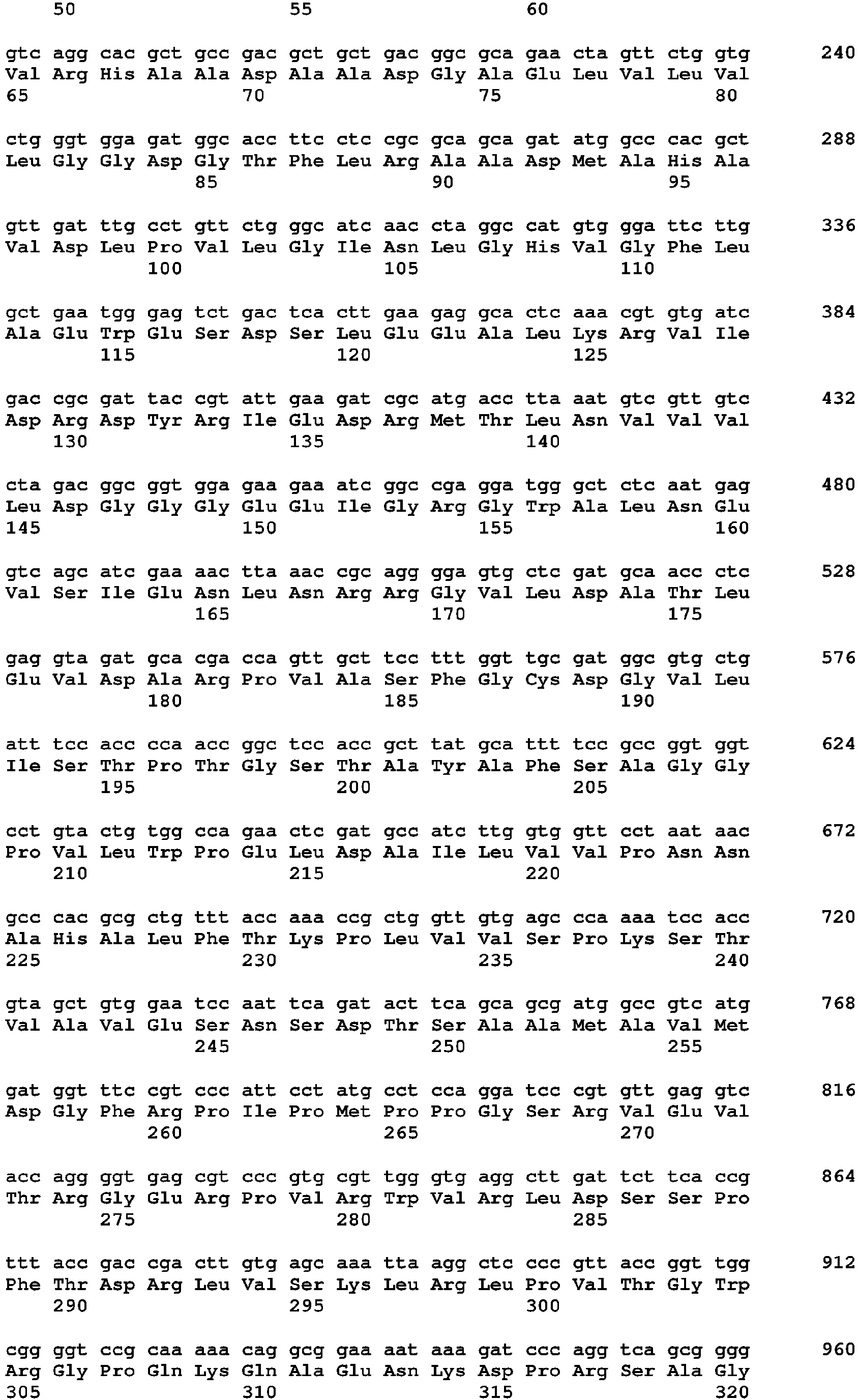

- <210> 4
<211> 320
<212> PRT
<213> Corynebacterium glutamicum ATCC 14067 - <400> 4


- <210> 5
<211> 963
<212> DNA
<213> Corynebacterium glutamicum ATCC 13869 - <220>
<221> CDS
<222> (1)..(960)
<223> Coding region of the ppnK gene - <400> 5


- <210> 6
<211> 320
<212> PRT
<213> Corynebacterium glutamicum ATCC 13869 - <400> 6


- <210> 7
<211> 44
<212> DNA
<213> Corynebacterium glutamicum - <220>
<221> misc_feature
<222> (1)..(44)
<223> Primer ppnK_fw - <220>
<221> misc_feature
<222> (25) .. (27)
<223> Start codon - <400> 7
ggatgtcgac aaggagatat agatatgact gcacccacga acgc 44 - <210> 8
<211> 28
<212> DNA
<213> Corynebacterium glutamicum - <220>
<221> misc_feature
<222> (1)..(28)
<223> Primer ppnK_rv - <220>
<221> misc_feature
<222> (11)..(13)
<223> Stop codon - <400> 8
gccatctaga ttaccccgct gacctggg 28
Claims (5)
- Method for preparing L-lysine or products containing L-lysine, characterized in that the following steps are carried out:a) fermentation of an L-lysine secreting microorganism of the genus Corynebacterium in a fermentation medium, to form a fermentation broth , wherein said microorganism contains an overexpressed polynucleotide coding for a polypeptide having polyphosphate-dependent NAD+ kinase activity, said polypeptide having an amino acid sequence according to SEQ ID NO: 2 or comprises the amino acid sequence of SEQ ID NO: 4 or SEQ ID NO: 6, wherein said overexpression is achieved by increasing the copy number of the polynucleotide or or by modifying the nucleotide sequences directing or controlling expression of said polynucleotide when compared with the starting strain on which the measure leading to overexpression has been carried out, or with the wild-type strain, if said wild-type strain was the starting strain; andb) accumulation of L-lysine in said fermentation broth and/or in the cells of said microorganism.
- The method according to Claim 1, characterized in that the bacterium is Corynebacterium glutamicum.
- The method according to Claims 1 or 2, characterized in that the polynucleotide hybridizes under stringent conditions with a polynucleotide comprising the complementary nucleotide sequence of SEQ ID NO:1.
- The method according to any of Claims 1 to 3,
characterized in that L-lysine or a product containing L-lysine is recovered from the L-lysine-containing fermentation broth, and wherein said product is a liquid or solid product. - A microorganism of the genus Corynebacterium producing and secreting L-lysine, characterized in that said microorganism contains an overexpressed polynucleotide coding for a polypeptide having polyphosphate-dependent NAD+ kinase activity, the amino acid sequence of which comprises the amino acid sequence of SEQ ID NO:4 or SEQ ID NO:6 wherein said overexpression is achieved by increasing the copy number of the polynucleotide or or by modifying the nucleotide sequences directing or controlling expression of said polynucleotide when compared with the starting strain on which the measure leading to overexpression has been carried out, or with the wild-type strain, if said wild-type strain was the starting strain.
Applications Claiming Priority (2)
| Application Number | Priority Date | Filing Date | Title |
|---|---|---|---|
| DE102009030342A DE102009030342A1 (en) | 2009-06-25 | 2009-06-25 | Process for the fermentative production of organic chemical compounds |
| PCT/EP2010/058599 WO2010149574A1 (en) | 2009-06-25 | 2010-06-18 | Method for fermentatively preparing l-amino acids |
Publications (2)
| Publication Number | Publication Date |
|---|---|
| EP2446039A1 EP2446039A1 (en) | 2012-05-02 |
| EP2446039B1 true EP2446039B1 (en) | 2018-05-02 |
Family
ID=42540928
Family Applications (1)
| Application Number | Title | Priority Date | Filing Date |
|---|---|---|---|
| EP10725186.0A Not-in-force EP2446039B1 (en) | 2009-06-25 | 2010-06-18 | Method for fermentatively preparing l-amino acids |
Country Status (6)
| Country | Link |
|---|---|
| US (1) | US9163268B2 (en) |
| EP (1) | EP2446039B1 (en) |
| CN (1) | CN102482673A (en) |
| BR (1) | BRPI1015054A2 (en) |
| DE (1) | DE102009030342A1 (en) |
| WO (1) | WO2010149574A1 (en) |
Families Citing this family (4)
| Publication number | Priority date | Publication date | Assignee | Title |
|---|---|---|---|---|
| KR101261147B1 (en) * | 2011-01-18 | 2013-05-06 | 씨제이제일제당 (주) | A microorganism having enhanced l-amino acids productivity and process for producing l-amino acids using the same |
| EP3984373A4 (en) * | 2019-06-14 | 2023-07-12 | CJ Cheiljedang Corporation | Composition for preventing, treating, or improving gastrointestinal diseases comprising strain of genus corynebacterium and culture thereof |
| CN112522338A (en) * | 2020-12-28 | 2021-03-19 | 江苏澳创生物科技有限公司 | Method for improving fermentation yield of L-tryptophan |
| CN116536226A (en) * | 2022-01-26 | 2023-08-04 | 廊坊梅花生物技术开发有限公司 | Construction method of threonine producing engineering bacteria |
Family Cites Families (48)
| Publication number | Priority date | Publication date | Assignee | Title |
|---|---|---|---|---|
| SU507634A1 (en) | 1973-09-24 | 1976-03-25 | Институт Микробиологии Имени А.Кирхенштейна Ан Латвийской Сср | Method for producing lysine |
| SU875663A1 (en) | 1978-06-30 | 1982-09-15 | Всесоюзный научно-исследовательский институт генетики и селекции промышленных микроорганизмов | Strains e. coli vniigenetika voltage 334 ru no.6 and vniigenetika voltage 334 no.7 producersof l-treonite and method for preparing them |
| JPS5618596A (en) | 1979-07-23 | 1981-02-21 | Ajinomoto Co Inc | Production of l-lysine through fermentation process |
| FR2511032B1 (en) | 1981-08-07 | 1985-08-09 | Centre Nat Rech Scient | NOVEL PLASMIDS AND TRANSFORMED BACTERIAL STRAINS AND THEIR APPLICATION TO LYSINE SYNTHESIS |
| US4990487A (en) | 1988-03-11 | 1991-02-05 | The University Of Tokyo | Superconductive optoelectronic devices |
| DE3891417C5 (en) | 1988-10-25 | 2006-01-05 | Ajinomoto Co., Inc. | A method of altering a L-threonine producing microorganism and using a microorganism thus obtained to produce L-threonine |
| US5976843A (en) | 1992-04-22 | 1999-11-02 | Ajinomoto Co., Inc. | Bacterial strain of Escherichia coli BKIIM B-3996 as the producer of L-threonine |
| JP2990735B2 (en) | 1990-04-20 | 1999-12-13 | 味の素株式会社 | Fermentative production of L-lysine |
| JP3023615B2 (en) | 1990-08-30 | 2000-03-21 | 協和醗酵工業株式会社 | Production method of L-tryptophan by fermentation method |
| DE4100920A1 (en) | 1991-01-15 | 1992-07-16 | Degussa | ACTIVE SUBSTANCE PREPARATION FOR ORAL ADMINISTRATION TO Ruminants |
| US5693781A (en) | 1991-06-03 | 1997-12-02 | Mitsubishi Chemical Corporation | Promoter DNA fragment from coryneform bacteria |
| FR2679569B1 (en) | 1991-07-26 | 1995-05-19 | Eurolysine | PROCESS FOR SEPARATING LYSINE IN THE FORM OF AQUEOUS SOLUTIONS AND USE OF SUCH SOLUTIONS FOR ANIMAL FEEDING. |
| DE4130868C2 (en) | 1991-09-17 | 1994-10-13 | Degussa | Animal feed supplement based on an amino acid and process for its preparation |
| DE4130867A1 (en) | 1991-09-17 | 1993-03-18 | Degussa | PROCESS FOR THE FERMENTATIVE MANUFACTURE OF AMINO ACIDS |
| WO1995011985A1 (en) * | 1993-10-28 | 1995-05-04 | Ajinomoto Co., Inc. | Process for producing substance |
| RU2188235C2 (en) | 1994-12-09 | 2002-08-27 | Адзиномото Ко., Инк. | Novel gene of lysine decarboxylase and method of l-lysine producing |
| AU706285B2 (en) | 1995-05-16 | 1999-06-10 | Ajinomoto Co., Inc. | Feed additive |
| SK284047B6 (en) | 1995-06-13 | 2004-08-03 | Ajinomoto Co., Inc. | Process for producing L-lysine by fermentation |
| GB2304718B (en) | 1995-09-05 | 2000-01-19 | Degussa | The production of tryptophan by the bacterium escherichia coli |
| US5939295A (en) | 1996-03-29 | 1999-08-17 | Archer Daniels Midland Company | Production of tryptophan by microorganisms |
| US5990350A (en) | 1997-12-16 | 1999-11-23 | Archer Midland Company | Process for making granular L-lysine |
| CN1236690C (en) | 1999-06-23 | 2006-01-18 | 德古萨股份公司 | Water-containing animal feed additive with lysine and its producing method |
| US6962989B1 (en) * | 1999-07-08 | 2005-11-08 | Basf Aktiengesellschaft | Corynebacterium glutamicum genes encoding novel proteins |
| JP4623825B2 (en) | 1999-12-16 | 2011-02-02 | 協和発酵バイオ株式会社 | Novel polynucleotide |
| US6783967B2 (en) | 2001-02-16 | 2004-08-31 | Degussa Ag | Nucleotide sequences which code for the rpoB gene |
| US7160711B2 (en) | 2001-08-06 | 2007-01-09 | Degussa Ag | Coryneform bacteria which produce chemical compounds I |
| CN101126075B (en) | 2001-08-06 | 2012-05-09 | 赢创德固赛有限公司 | Coryneform bacteria which produce chemical compounds ii |
| CA2455878A1 (en) | 2001-08-06 | 2003-05-15 | Degussa Ag | Production of l-lysine by genetically modified corynebacterium glutamicum strains |
| JP2003219807A (en) | 2002-01-25 | 2003-08-05 | Ajinomoto Co Inc | Granulated and dried product mainly comprising l-lysine |
| US20040115304A1 (en) | 2002-12-16 | 2004-06-17 | Frank Dubner | Feesdstuffs additives containing L-lysine with improved abrasion resistance, and process for their production |
| DE10331366A1 (en) | 2003-07-11 | 2005-01-27 | Degussa Ag | Granulating feed additives containing amino acids and/or vitamins, especially L-threonine, optionally in fermentation broth form, using circulating fluidized bed |
| WO2005021772A1 (en) | 2003-08-29 | 2005-03-10 | Degussa Ag | Process for the preparation of l-lysine |
| DE10359660A1 (en) | 2003-12-18 | 2005-07-28 | Basf Ag | Psod expression units |
| KR101052573B1 (en) | 2004-04-02 | 2011-07-29 | 씨제이제일제당 (주) | Process for preparing granular animal feed additive with uniform content and granular animal feed additive produced thereby |
| KR100651220B1 (en) | 2004-06-29 | 2006-11-29 | 씨제이 주식회사 | L-methionine producing strain and L-methionine production method using the strain |
| DE102004061846A1 (en) | 2004-12-22 | 2006-07-13 | Basf Ag | Multiple promoters |
| DE102005013676A1 (en) | 2005-03-24 | 2006-09-28 | Degussa Ag | Alleles of the zwf gene from coryneform bacteria |
| US7424187B2 (en) | 2005-04-26 | 2008-09-09 | Harris Corporation | Optical microresonator with resonant waveguide imparting polarization |
| RU2413001C2 (en) | 2005-07-18 | 2011-02-27 | Эвоник Дегусса Гмбх | Application of dimethyl disulfide for production of methionine by microorganisms |
| KR20080036608A (en) | 2005-07-18 | 2008-04-28 | 바스프 에스이 | Methionine-producing recombinant microorganisms |
| DE102005045301A1 (en) | 2005-09-22 | 2007-04-05 | Degussa Ag | Process for the preparation of organochemical compounds using coryneform bacteria |
| DE102006016158A1 (en) | 2005-10-08 | 2007-04-12 | Degussa Ag | L-lysine-containing feed additives |
| HUE030521T2 (en) | 2006-03-30 | 2017-05-29 | Basf Se | Process for the production of cadaverine |
| EP2386650B1 (en) | 2006-04-07 | 2013-07-03 | Evonik Degussa GmbH | Method for producing L-amino acids using the gap promoter |
| EP1881076A1 (en) | 2006-07-17 | 2008-01-23 | Evonik Degussa GmbH | Method for producing L-amino acids |
| KR20080061801A (en) | 2006-12-28 | 2008-07-03 | 씨제이제일제당 (주) | Polypeptide to improve L-methionine production capacity, microorganisms overexpressing the polypeptide and L-methionine production method using the microorganism |
| WO2009043372A1 (en) | 2007-10-02 | 2009-04-09 | Metabolic Explorer | Increasing methionine yield |
| DE102008001874A1 (en) | 2008-05-20 | 2009-11-26 | Evonik Degussa Gmbh | Process for the preparation of L-amino acids |
-
2009
- 2009-06-25 DE DE102009030342A patent/DE102009030342A1/en not_active Withdrawn
-
2010
- 2010-06-18 US US13/379,654 patent/US9163268B2/en active Active
- 2010-06-18 EP EP10725186.0A patent/EP2446039B1/en not_active Not-in-force
- 2010-06-18 CN CN2010800284982A patent/CN102482673A/en active Pending
- 2010-06-18 BR BRPI1015054-4A patent/BRPI1015054A2/en not_active Application Discontinuation
- 2010-06-18 WO PCT/EP2010/058599 patent/WO2010149574A1/en not_active Ceased
Non-Patent Citations (1)
| Title |
|---|
| None * |
Also Published As
| Publication number | Publication date |
|---|---|
| CN102482673A (en) | 2012-05-30 |
| US20120164698A1 (en) | 2012-06-28 |
| US9163268B2 (en) | 2015-10-20 |
| BRPI1015054A2 (en) | 2020-12-01 |
| DE102009030342A1 (en) | 2010-12-30 |
| WO2010149574A1 (en) | 2010-12-29 |
| EP2446039A1 (en) | 2012-05-02 |
Similar Documents
| Publication | Publication Date | Title |
|---|---|---|
| US9045762B2 (en) | Variants of the promoter of the gap gene coding for glyceraldehyde-3-phosphate dehydrogenase | |
| US9422568B2 (en) | Process for preparing L-amino acids | |
| CN102947460B (en) | Method for producing L-ornithine by fermentation | |
| US7563602B2 (en) | Alleles of the GND gene from coryneform bacteria | |
| US20100261257A1 (en) | Method of production of l-amino acids | |
| WO2018226964A2 (en) | Promoters from corynebacterium glutamicum and uses thereof in regulating ancillary gene expression | |
| EP2841568B1 (en) | Feedback-resistant alpha-isopropylmalate synthases | |
| US20160265072A2 (en) | Microorganism and method for production of amino acids by fermentation | |
| US20090325242A1 (en) | Alleles of the zwf gene from coryneform bacteria | |
| EP3467099A1 (en) | Method for the fermentative production of l-amino acids | |
| US20090215133A1 (en) | Production of l-lysine and l-lysine-containing feed additives | |
| US20160244490A1 (en) | Microorganism and Method for the Fermentative Production of an Organic-Chemical Compound | |
| US9163268B2 (en) | Method for fermentatively preparing L-amino acids | |
| EP3498853A1 (en) | Method for the fermentative production of l-lysine | |
| EP3660158A1 (en) | Method for the fermentative production of l-lysine |
Legal Events
| Date | Code | Title | Description |
|---|---|---|---|
| PUAI | Public reference made under article 153(3) epc to a published international application that has entered the european phase |
Free format text: ORIGINAL CODE: 0009012 |
|
| 17P | Request for examination filed |
Effective date: 20111202 |
|
| AK | Designated contracting states |
Kind code of ref document: A1 Designated state(s): AL AT BE BG CH CY CZ DE DK EE ES FI FR GB GR HR HU IE IS IT LI LT LU LV MC MK MT NL NO PL PT RO SE SI SK SM TR |
|
| DAX | Request for extension of the european patent (deleted) | ||
| 17Q | First examination report despatched |
Effective date: 20131031 |
|
| GRAP | Despatch of communication of intention to grant a patent |
Free format text: ORIGINAL CODE: EPIDOSNIGR1 |
|
| INTG | Intention to grant announced |
Effective date: 20171115 |
|
| GRAS | Grant fee paid |
Free format text: ORIGINAL CODE: EPIDOSNIGR3 |
|
| GRAA | (expected) grant |
Free format text: ORIGINAL CODE: 0009210 |
|
| AK | Designated contracting states |
Kind code of ref document: B1 Designated state(s): AL AT BE BG CH CY CZ DE DK EE ES FI FR GB GR HR HU IE IS IT LI LT LU LV MC MK MT NL NO PL PT RO SE SI SK SM TR |
|
| REG | Reference to a national code |
Ref country code: GB Ref legal event code: FG4D |
|
| REG | Reference to a national code |
Ref country code: CH Ref legal event code: EP Ref country code: AT Ref legal event code: REF Ref document number: 995286 Country of ref document: AT Kind code of ref document: T Effective date: 20180515 |
|
| REG | Reference to a national code |
Ref country code: DE Ref legal event code: R096 Ref document number: 602010050358 Country of ref document: DE |
|
| REG | Reference to a national code |
Ref country code: IE Ref legal event code: FG4D |
|
| REG | Reference to a national code |
Ref country code: NL Ref legal event code: FP |
|
| REG | Reference to a national code |
Ref country code: LT Ref legal event code: MG4D |
|
| PG25 | Lapsed in a contracting state [announced via postgrant information from national office to epo] |
Ref country code: FI Free format text: LAPSE BECAUSE OF FAILURE TO SUBMIT A TRANSLATION OF THE DESCRIPTION OR TO PAY THE FEE WITHIN THE PRESCRIBED TIME-LIMIT Effective date: 20180502 Ref country code: NO Free format text: LAPSE BECAUSE OF FAILURE TO SUBMIT A TRANSLATION OF THE DESCRIPTION OR TO PAY THE FEE WITHIN THE PRESCRIBED TIME-LIMIT Effective date: 20180802 Ref country code: BG Free format text: LAPSE BECAUSE OF FAILURE TO SUBMIT A TRANSLATION OF THE DESCRIPTION OR TO PAY THE FEE WITHIN THE PRESCRIBED TIME-LIMIT Effective date: 20180802 Ref country code: LT Free format text: LAPSE BECAUSE OF FAILURE TO SUBMIT A TRANSLATION OF THE DESCRIPTION OR TO PAY THE FEE WITHIN THE PRESCRIBED TIME-LIMIT Effective date: 20180502 Ref country code: ES Free format text: LAPSE BECAUSE OF FAILURE TO SUBMIT A TRANSLATION OF THE DESCRIPTION OR TO PAY THE FEE WITHIN THE PRESCRIBED TIME-LIMIT Effective date: 20180502 Ref country code: SE Free format text: LAPSE BECAUSE OF FAILURE TO SUBMIT A TRANSLATION OF THE DESCRIPTION OR TO PAY THE FEE WITHIN THE PRESCRIBED TIME-LIMIT Effective date: 20180502 |
|
| PG25 | Lapsed in a contracting state [announced via postgrant information from national office to epo] |
Ref country code: HR Free format text: LAPSE BECAUSE OF FAILURE TO SUBMIT A TRANSLATION OF THE DESCRIPTION OR TO PAY THE FEE WITHIN THE PRESCRIBED TIME-LIMIT Effective date: 20180502 Ref country code: GR Free format text: LAPSE BECAUSE OF FAILURE TO SUBMIT A TRANSLATION OF THE DESCRIPTION OR TO PAY THE FEE WITHIN THE PRESCRIBED TIME-LIMIT Effective date: 20180803 Ref country code: LV Free format text: LAPSE BECAUSE OF FAILURE TO SUBMIT A TRANSLATION OF THE DESCRIPTION OR TO PAY THE FEE WITHIN THE PRESCRIBED TIME-LIMIT Effective date: 20180502 |
|
| REG | Reference to a national code |
Ref country code: AT Ref legal event code: MK05 Ref document number: 995286 Country of ref document: AT Kind code of ref document: T Effective date: 20180502 |
|
| PG25 | Lapsed in a contracting state [announced via postgrant information from national office to epo] |
Ref country code: PT Free format text: LAPSE BECAUSE OF FAILURE TO SUBMIT A TRANSLATION OF THE DESCRIPTION OR TO PAY THE FEE WITHIN THE PRESCRIBED TIME-LIMIT Effective date: 20180903 |
|
| PG25 | Lapsed in a contracting state [announced via postgrant information from national office to epo] |
Ref country code: PL Free format text: LAPSE BECAUSE OF FAILURE TO SUBMIT A TRANSLATION OF THE DESCRIPTION OR TO PAY THE FEE WITHIN THE PRESCRIBED TIME-LIMIT Effective date: 20180502 Ref country code: EE Free format text: LAPSE BECAUSE OF FAILURE TO SUBMIT A TRANSLATION OF THE DESCRIPTION OR TO PAY THE FEE WITHIN THE PRESCRIBED TIME-LIMIT Effective date: 20180502 Ref country code: CZ Free format text: LAPSE BECAUSE OF FAILURE TO SUBMIT A TRANSLATION OF THE DESCRIPTION OR TO PAY THE FEE WITHIN THE PRESCRIBED TIME-LIMIT Effective date: 20180502 Ref country code: SK Free format text: LAPSE BECAUSE OF FAILURE TO SUBMIT A TRANSLATION OF THE DESCRIPTION OR TO PAY THE FEE WITHIN THE PRESCRIBED TIME-LIMIT Effective date: 20180502 Ref country code: RO Free format text: LAPSE BECAUSE OF FAILURE TO SUBMIT A TRANSLATION OF THE DESCRIPTION OR TO PAY THE FEE WITHIN THE PRESCRIBED TIME-LIMIT Effective date: 20180502 Ref country code: AT Free format text: LAPSE BECAUSE OF FAILURE TO SUBMIT A TRANSLATION OF THE DESCRIPTION OR TO PAY THE FEE WITHIN THE PRESCRIBED TIME-LIMIT Effective date: 20180502 Ref country code: DK Free format text: LAPSE BECAUSE OF FAILURE TO SUBMIT A TRANSLATION OF THE DESCRIPTION OR TO PAY THE FEE WITHIN THE PRESCRIBED TIME-LIMIT Effective date: 20180502 |
|
| REG | Reference to a national code |
Ref country code: CH Ref legal event code: PL |
|
| REG | Reference to a national code |
Ref country code: DE Ref legal event code: R097 Ref document number: 602010050358 Country of ref document: DE |
|
| PG25 | Lapsed in a contracting state [announced via postgrant information from national office to epo] |
Ref country code: SM Free format text: LAPSE BECAUSE OF FAILURE TO SUBMIT A TRANSLATION OF THE DESCRIPTION OR TO PAY THE FEE WITHIN THE PRESCRIBED TIME-LIMIT Effective date: 20180502 Ref country code: IT Free format text: LAPSE BECAUSE OF FAILURE TO SUBMIT A TRANSLATION OF THE DESCRIPTION OR TO PAY THE FEE WITHIN THE PRESCRIBED TIME-LIMIT Effective date: 20180502 |
|
| REG | Reference to a national code |
Ref country code: BE Ref legal event code: MM Effective date: 20180630 |
|
| PLBE | No opposition filed within time limit |
Free format text: ORIGINAL CODE: 0009261 |
|
| STAA | Information on the status of an ep patent application or granted ep patent |
Free format text: STATUS: NO OPPOSITION FILED WITHIN TIME LIMIT |
|
| REG | Reference to a national code |
Ref country code: IE Ref legal event code: MM4A |
|
| PG25 | Lapsed in a contracting state [announced via postgrant information from national office to epo] |
Ref country code: LU Free format text: LAPSE BECAUSE OF NON-PAYMENT OF DUE FEES Effective date: 20180618 Ref country code: MC Free format text: LAPSE BECAUSE OF FAILURE TO SUBMIT A TRANSLATION OF THE DESCRIPTION OR TO PAY THE FEE WITHIN THE PRESCRIBED TIME-LIMIT Effective date: 20180502 |
|
| 26N | No opposition filed |
Effective date: 20190205 |
|
| GBPC | Gb: european patent ceased through non-payment of renewal fee |
Effective date: 20180802 |
|
| PG25 | Lapsed in a contracting state [announced via postgrant information from national office to epo] |
Ref country code: LI Free format text: LAPSE BECAUSE OF NON-PAYMENT OF DUE FEES Effective date: 20180630 Ref country code: CH Free format text: LAPSE BECAUSE OF NON-PAYMENT OF DUE FEES Effective date: 20180630 Ref country code: IE Free format text: LAPSE BECAUSE OF NON-PAYMENT OF DUE FEES Effective date: 20180618 Ref country code: FR Free format text: LAPSE BECAUSE OF NON-PAYMENT OF DUE FEES Effective date: 20180702 |
|
| PG25 | Lapsed in a contracting state [announced via postgrant information from national office to epo] |
Ref country code: BE Free format text: LAPSE BECAUSE OF NON-PAYMENT OF DUE FEES Effective date: 20180630 Ref country code: SI Free format text: LAPSE BECAUSE OF FAILURE TO SUBMIT A TRANSLATION OF THE DESCRIPTION OR TO PAY THE FEE WITHIN THE PRESCRIBED TIME-LIMIT Effective date: 20180502 |
|
| PG25 | Lapsed in a contracting state [announced via postgrant information from national office to epo] |
Ref country code: GB Free format text: LAPSE BECAUSE OF NON-PAYMENT OF DUE FEES Effective date: 20180802 |
|
| PG25 | Lapsed in a contracting state [announced via postgrant information from national office to epo] |
Ref country code: AL Free format text: LAPSE BECAUSE OF FAILURE TO SUBMIT A TRANSLATION OF THE DESCRIPTION OR TO PAY THE FEE WITHIN THE PRESCRIBED TIME-LIMIT Effective date: 20180502 |
|
| REG | Reference to a national code |
Ref country code: DE Ref legal event code: R081 Ref document number: 602010050358 Country of ref document: DE Owner name: EVONIK OPERATIONS GMBH, DE Free format text: FORMER OWNER: EVONIK DEGUSSA GMBH, 45128 ESSEN, DE |
|
| PG25 | Lapsed in a contracting state [announced via postgrant information from national office to epo] |
Ref country code: MT Free format text: LAPSE BECAUSE OF NON-PAYMENT OF DUE FEES Effective date: 20180618 |
|
| PG25 | Lapsed in a contracting state [announced via postgrant information from national office to epo] |
Ref country code: TR Free format text: LAPSE BECAUSE OF FAILURE TO SUBMIT A TRANSLATION OF THE DESCRIPTION OR TO PAY THE FEE WITHIN THE PRESCRIBED TIME-LIMIT Effective date: 20180502 |
|
| PG25 | Lapsed in a contracting state [announced via postgrant information from national office to epo] |
Ref country code: HU Free format text: LAPSE BECAUSE OF FAILURE TO SUBMIT A TRANSLATION OF THE DESCRIPTION OR TO PAY THE FEE WITHIN THE PRESCRIBED TIME-LIMIT; INVALID AB INITIO Effective date: 20100618 |
|
| PG25 | Lapsed in a contracting state [announced via postgrant information from national office to epo] |
Ref country code: CY Free format text: LAPSE BECAUSE OF FAILURE TO SUBMIT A TRANSLATION OF THE DESCRIPTION OR TO PAY THE FEE WITHIN THE PRESCRIBED TIME-LIMIT Effective date: 20180502 Ref country code: MK Free format text: LAPSE BECAUSE OF NON-PAYMENT OF DUE FEES Effective date: 20180502 |
|
| PG25 | Lapsed in a contracting state [announced via postgrant information from national office to epo] |
Ref country code: IS Free format text: LAPSE BECAUSE OF FAILURE TO SUBMIT A TRANSLATION OF THE DESCRIPTION OR TO PAY THE FEE WITHIN THE PRESCRIBED TIME-LIMIT Effective date: 20180902 |
|
| REG | Reference to a national code |
Ref country code: NL Ref legal event code: HC Owner name: EVONIK OPERATIONS GMBH; DE Free format text: DETAILS ASSIGNMENT: CHANGE OF OWNER(S), CHANGE OF OWNER(S) NAME Effective date: 20200928 |
|
| PGFP | Annual fee paid to national office [announced via postgrant information from national office to epo] |
Ref country code: DE Payment date: 20210618 Year of fee payment: 12 |
|
| PGFP | Annual fee paid to national office [announced via postgrant information from national office to epo] |
Ref country code: NL Payment date: 20220620 Year of fee payment: 13 |
|
| REG | Reference to a national code |
Ref country code: DE Ref legal event code: R119 Ref document number: 602010050358 Country of ref document: DE |
|
| PG25 | Lapsed in a contracting state [announced via postgrant information from national office to epo] |
Ref country code: DE Free format text: LAPSE BECAUSE OF NON-PAYMENT OF DUE FEES Effective date: 20230103 |
|
| P01 | Opt-out of the competence of the unified patent court (upc) registered |
Effective date: 20230526 |
|
| REG | Reference to a national code |
Ref country code: NL Ref legal event code: MM Effective date: 20230701 |
|
| PG25 | Lapsed in a contracting state [announced via postgrant information from national office to epo] |
Ref country code: NL Free format text: LAPSE BECAUSE OF NON-PAYMENT OF DUE FEES Effective date: 20230701 |