EP2445256A1 - Apparatuses and methods for handling inter-radio access technology (inter-rat) mobility - Google Patents
Apparatuses and methods for handling inter-radio access technology (inter-rat) mobility Download PDFInfo
- Publication number
- EP2445256A1 EP2445256A1 EP11008872A EP11008872A EP2445256A1 EP 2445256 A1 EP2445256 A1 EP 2445256A1 EP 11008872 A EP11008872 A EP 11008872A EP 11008872 A EP11008872 A EP 11008872A EP 2445256 A1 EP2445256 A1 EP 2445256A1
- Authority
- EP
- European Patent Office
- Prior art keywords
- service network
- radio resources
- mobile communication
- configurations
- communication device
- Prior art date
- Legal status (The legal status is an assumption and is not a legal conclusion. Google has not performed a legal analysis and makes no representation as to the accuracy of the status listed.)
- Granted
Links
Images




Classifications
-
- H—ELECTRICITY
- H04—ELECTRIC COMMUNICATION TECHNIQUE
- H04W—WIRELESS COMMUNICATION NETWORKS
- H04W36/00—Hand-off or reselection arrangements
- H04W36/0005—Control or signalling for completing the hand-off
- H04W36/0055—Transmission or use of information for re-establishing the radio link
- H04W36/0066—Transmission or use of information for re-establishing the radio link of control information between different types of networks in order to establish a new radio link in the target network
-
- H—ELECTRICITY
- H04—ELECTRIC COMMUNICATION TECHNIQUE
- H04W—WIRELESS COMMUNICATION NETWORKS
- H04W36/00—Hand-off or reselection arrangements
- H04W36/0005—Control or signalling for completing the hand-off
- H04W36/0055—Transmission or use of information for re-establishing the radio link
- H04W36/0072—Transmission or use of information for re-establishing the radio link of resource information of target access point
-
- H—ELECTRICITY
- H04—ELECTRIC COMMUNICATION TECHNIQUE
- H04W—WIRELESS COMMUNICATION NETWORKS
- H04W36/00—Hand-off or reselection arrangements
- H04W36/24—Reselection being triggered by specific parameters
- H04W36/249—Reselection being triggered by specific parameters according to timing information
-
- H—ELECTRICITY
- H04—ELECTRIC COMMUNICATION TECHNIQUE
- H04W—WIRELESS COMMUNICATION NETWORKS
- H04W36/00—Hand-off or reselection arrangements
- H04W36/14—Reselecting a network or an air interface
- H04W36/144—Reselecting a network or an air interface over a different radio air interface technology
-
- Y—GENERAL TAGGING OF NEW TECHNOLOGICAL DEVELOPMENTS; GENERAL TAGGING OF CROSS-SECTIONAL TECHNOLOGIES SPANNING OVER SEVERAL SECTIONS OF THE IPC; TECHNICAL SUBJECTS COVERED BY FORMER USPC CROSS-REFERENCE ART COLLECTIONS [XRACs] AND DIGESTS
- Y02—TECHNOLOGIES OR APPLICATIONS FOR MITIGATION OR ADAPTATION AGAINST CLIMATE CHANGE
- Y02D—CLIMATE CHANGE MITIGATION TECHNOLOGIES IN INFORMATION AND COMMUNICATION TECHNOLOGIES [ICT], I.E. INFORMATION AND COMMUNICATION TECHNOLOGIES AIMING AT THE REDUCTION OF THEIR OWN ENERGY USE
- Y02D30/00—Reducing energy consumption in communication networks
- Y02D30/70—Reducing energy consumption in communication networks in wireless communication networks
Definitions
- the invention generally relates to handover handling, and more particularly, to apparatuses and methods for handling inter-Radio Access Technology (inter-RAT) mobility.
- inter-RAT Inter-Radio Access Technology
- a user equipment including a mobile telephone (also known as a cellular or cell phone), a laptop computer with wireless communications capability, or a personal digital assistant (PDA) etc., may communicate voice and/or data signals with one or more service network.
- UE user equipment
- a mobile telephone also known as a cellular or cell phone
- PDA personal digital assistant
- the wireless communications between the UE and the service networks may be in compliance with various wireless technologies, such as the Global System for Mobile communications (GSM) technology, General Packet Radio Service (GPRS) technology, Enhanced Data rates for Global Evolution (EDGE) technology, Wideband Code Division Multiple Access (WCDMA) technology, Code Division Multiple Access 2000 (CDMA-2000) technology, Time Division-Synchronous Code Division Multiple Access (TD-SCDMA) technology, Worldwide Interoperability for Microwave Access (WiMAX) technology, Long Term Evolution (LTE) technology, and others.
- GSM Global System for Mobile communications
- GPRS General Packet Radio Service
- EDGE Enhanced Data rates for Global Evolution
- WCDMA Wideband Code Division Multiple Access
- CDMA-2000 Code Division Multiple Access 2000
- TD-SCDMA Time Division-Synchronous Code Division Multiple Access
- WiMAX Worldwide Interoperability for Microwave Access
- LTE Long Term Evolution
- a mobility from E-UTRA (Evolved-Universal Terrestrial Radio Access) procedure is performed for moving a UE in the connected mode with an LTE system to a cell using another RAT, e.g., GSM, GPRS, WCDMA, or CDMA-2000 technology.
- E-UTRA Evolved-Universal Terrestrial Radio Access
- One of the mobility types may be a handover in which the LTE system may communicate with the target system for allocating radio resources for the UE.
- Another one of the mobility types may involve a Circuit-Switched (CS) fallback procedure, such as an enhanced CS fallback to CDMA-2000 technology.
- CS Circuit-Switched
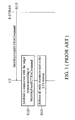
- Fig. 1 is a message sequence chart illustrating a successful mobility from E-UTRA procedure.
- the E-UTRAN (Evolved-Universal Terrestrial Radio Access Network) of an LTE system prepares and transmits a MobilityFromEUTRACommand message to the UE (step S 110), wherein the MobilityFromEUTRACommand message contains configurations of the radio resources allocated for the UE in the target system.
- the UE When receiving the MobilityFromEUTRACommand message, the UE establishes a connection with the target system according to the configurations of the allocated radio resources in the target system (step S120).
- a handover to E-UTRA procedure is performed for transferring a connection between a UE and another Radio Access Network (RAN) to an E-UTRAN.
- RAN Radio Access Network
- Fig. 2 is a message sequence chart illustrating a successful handover to E-UTRA procedure.
- the handover to E-UTRA procedure is started by the UE receiving an RRCConnectionReconfiguration message from the E-UTRAN via the RAN which uses an RAT other than the LTE technology and initiates the handover to E-UTRA procedure (step S210).
- the UE applies the configurations included in the RRCConnectionReconfiguration message (step S220), such as configurations of the radio resources allocated for the UE in the LTE system, security-related configurations, and mobility control information, etc.
- the UE replies to the E-UTRAN with an RRCConnectionReconfigurationComplete message (step S230), to inform the LTE system of the successful completion of the handover to E-UTRA procedure.
- a mobile communications device comprising a wireless module and a controller module.
- the wireless module performs wireless transmissions and receptions to and from a first service network.
- the controller module receives, from the first service network, a handover request message for handing over from the first service network to a second service network via the wireless module, and determines whether all configurations in the handover request message are compliable or whether there is a protocol error in the handover request message.
- the first service network and the second service network are a Long Term Evolution (LTE) system and a mobile communication system utilizing a wireless technology other than the LTE technology, respectively, and the handover request message is a MobilityFromEUTRACommand message.
- the controller module transmits a connection re-establishment request message indicating a reconfiguration failure to the first service network via the wireless module in response to some or all of the configurations in the handover request message not being compliable or the protocol error being in the handover request message.
- a mobile communications device comprising a wireless module and a controller module.
- the wireless module performs wireless transmissions and receptions to and from a first service network.
- the controller module receives, from the first service network, a handover request message for handing over from the first service network to a second service network via the wireless module, and applies configurations of dedicated radio resources and common radio resources in the handover request message.
- the first service network and the second service network are a mobile communication system utilizing a wireless technology other than the Long Term Evolution (LTE) technology and an LTE system, respectively, and the handover request message comprises an RRCConnectionReconfiguration message.
- LTE Long Term Evolution
- Fig. 1 is a message sequence chart illustrating a successful mobility from E-UTRA procedure
- Fig. 2 is a message sequence chart illustrating a successful handover to E-UTRA procedure
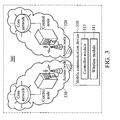
- Fig. 3 is a block diagram illustrating a mobile communication environment according to an embodiment of the invention.
- Fig. 4 is a message sequence chart illustrating an unsuccessful mobility from E-UTRA procedure according to an embodiment of the invention.
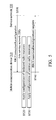
- Fig. 5 is a message sequence chart illustrating a successful handover to E-UTRA procedure according to an embodiment of the invention
- Fig. 6 is a flow chart illustrating the method for handling an inter-RAT mobility by a mobile communication device according to an embodiment of the invention.
- Fig. 7 is a flow chart illustrating the method for handling an inter-RAT mobility by a mobile communication device according to another embodiment of the invention.
- the UE determines that not all of configurations in the MobilityFromEUTRACommand message are compliable and/or there is a protocol error in the MobilityFromEUTRACommand message, the mobility from E-UTRA procedure is considered to have failed and then the UE initiates a connection re-establishment procedure by transmitting an RRCConnectionReestablishmentRequest message to the E-UTRAN, which includes a re-establishment cause indicating a handover failure.
- the real cause for initiating the connection re-establishment procedure is a reconfiguration failure for some or all of the configurations in the MobilityFromEUTRACommand message not being compliable or a protocol error being in the MobilityFromEUTRACommand message. This may result in inefficiency of the LTE system since inappropriate operations may be performed in response to the wrong re-establishment cause.
- the UE when applying the configurations included in the RRCConnectionReconfiguration message, the UE only focuses on the configurations of the dedicated radio resources and ignores the configurations of the common radio resources. Omitting the configurations of the common radio resources may cause problems of the connection between the UE and the LTE system after the handover.
- the invention proposes methods for fixing the problems in both of the mobility from E-UTRA procedure and the handover to E-UTRA procedure as described above.
- Fig. 3 is a block diagram illustrating a mobile communication environment according to an embodiment of the invention.
- the mobile communication device 310 is wirelessly connected to one of the service networks 320 and/or 330 for obtaining wireless services.
- Each of the service networks 320 and 330 comprises at least one access node for performing wireless transmissions and receptions to and from the mobile communication device 310, and a control node for controlling the operation of the at least one access node, and the control node is further connected to a core network.
- the service networks 320 and 330 provides wireless services using different RATs, i.e., the service networks 320 and 330 operate in accordance with two different wireless communication protocols.
- the mobile communication device 310 comprises a wireless module 311 for performing the functionality of wireless transmissions and receptions to and from the service networks 320 and 330.
- the wireless module 311 may comprise a baseband unit (not shown) and a radio frequency (RF) unit (not shown).
- the baseband unit may contain multiple hardware devices to perform baseband signal processing, including analog to digital conversion (ADC)/digital to analog conversion (DAC), gain adjusting, modulation/demodulation, encoding/decoding, and so on.
- the RF unit may receive RF wireless signals, convert the received RF wireless signals to baseband signals, which are processed by the baseband unit, or receive baseband signals from the baseband unit and convert the received baseband signals to RF wireless signals, which are later transmitted.
- the RF unit may also contain multiple hardware devices to perform radio frequency conversion.
- the RF unit may comprise a mixer to multiply the baseband signals with a carrier oscillated in the radio frequency of the mobile communication system, wherein the radio frequency may be 900MHz, 1900MHz, or 2100MHz utilized in WCDMA systems, or may be 900MHz, 2100MHz, or 2.6GHz utilized in LTE systems, or others depending on the RAT in use.
- the mobile communication device 310 comprises a controller module 312 for controlling the operation of the wireless module 311 and other functional components, such as a display unit and/or keypad serving as the MMI (man-machine interface), a storage unit storing the program codes of applications or communication protocols, or others.
- MMI man-machine interface
- the controller module 312 controls the wireless module 311 for performing inter-RAT mobility procedures, including mobility from E-UTRA procedures and the handover to E-UTRA procedures.
- Fig. 4 is a message sequence chart illustrating an unsuccessful mobility from E-UTRA procedure according to an embodiment of the invention.
- the service network 320 is an LTE system and the service network 330 is a WCDMA system.
- the communications between the mobile communication device 310 and the service network 320 are in compliance with the TS36.331 specification and/or other 3GPP specifications for the LTE technology, while the communications between the mobile communication device 310 and the service network 330 are in compliance with the 3GPP specifications for the WCDMA technology.
- the service network 330 may be a GSM, GPRS, or CDMA-2000 system, or a mobile communication system using any RAT other than the LTE technology.
- the mobile communication device 310 After being powered on, the mobile communication device 310 connects to the service network 320 for obtaining wireless services therefrom. Later, when the service network 320 decides to transfer the mobile communication device 310 to be served by the service network 330 instead, it initiates the mobility from E-UTRA procedure by transmitting a MobilityFromEUTRACommand message to the mobile communication device 310 (step S410), wherein the MobilityFromEUTRACommand message may contain configurations of the radio resources allocated for the mobile communication device 310 in the service network 330.
- the mobility from E-UTRA procedure may cover 3 types of inter-RAT mobility, including an inter-RAT handover, a cell change order, and an enhanced CS fallback.
- the controller module 312 When receiving the MobilityFromEUTRACommand message, the controller module 312 first starts a guard timer T304 for controlling the mobility from E-UTRA procedure (step S420) and then determines whether all configurations in the MobilityFromEUTRACommand message are compliable or whether there is a protocol error in the MobilityFromEUTRACommand message (step S430). In this embodiment, since some or all of the configurations in the MobilityFromEUTRACommand message are not compliable or there is a protocol error in the MobilityFromEUTRACommand message, the mobility from E-UTRA procedure is considered to have failed.
- the controller module 312 stops the guard timer T304 (step S440) and determines whether the mobility from E-UTRA procedure is for a CS fallback procedure (step S450).
- the MobilityFromEUTRACommand message may contain a cs-FallbackIndicator field which is set to TRUE, so that the controller module 312 may determine that the mobility from E-UTRA procedure is for a CS fallback procedure.
- the controller module 312 since the mobility from E-UTRA procedure is for an enhanced CS fallback, the controller module 312 further indicates failure of the CS fallback procedure to an upper layer, such as the EPS (Evolved Packet System) Mobility Management (EMM) layer (step S460).
- EMM Evolved Packet System Mobility Management
- the controller module 312 reverts back to the previous configurations applied prior to receiving the MobilityFromEUTRACommand message, except for the dedicated physical configurations, main Medium Access Control (MAC) configurations, and Semi-Persistent Scheduling (SPS) configurations in the MobilityFromEUTRACommand message (step S470).
- the controller module 312 initiates an RRC connection re-establishment procedure by transmitting an RRCConnectionReestablishmentRequest message indicating a reconfiguration failure to the service network 320 via the wireless module 311 (step S480), instead of indicating a handover failure as in a conventional LTE UE.
- the RRCConnectionReestablishmentRequest message contains a re-establishment cause for indicating the reconfiguration failure. Note that, for the service network 320, better actions may be taken or more efficient operations may be performed in response to being informed of a correct re-establishment cause.
- Fig. 5 is a message sequence chart illustrating a successful handover to E-UTRA procedure according to an embodiment of the invention.
- the service network 320 is an LTE system and the service network 330 is a WCDMA system. That is, the communications between the mobile communication device 310 and the service network 320 are in compliance with the TS36.331 specification and/or other 3GPP specifications for the LTE technology, while the communications between the mobile communication device 310 and the service network 330 are in compliance with the 3GPP specifications for the WCDMA technology.
- the service network 330 may be a GSM, GPRS, or CDMA-2000 system, or a mobile communication system using any RAT other than the LTE technology.
- the mobile communication device 310 After being powered on, the mobile communication device 310 connects to the service network 330 to obtain wireless services therefrom. Later, when the service network 330 decides to transfer the mobile communication device 310 to be served by the service network 320 instead, it initiates the handover to E-UTRA procedure by requesting the service network 320 to prepare for the handover.
- the service network 320 prepares an RRCConnectionReconfiguration message and transmits the RRCConnectionReconfiguration message to the mobile communication device 310 via the service network 330 (step S510).
- the service network 330 may place the RRCConnectionReconfiguration message in a HandoverFromUTRAN message which is in compliance with the 3GPP specifications for the WCDMA technology, and transmit the HandoverFromUTRAN message to the mobile communication device 310.
- the RRCConnectionReconfiguration message may contain configurations of the radio resources allocated for the mobile communication device 310 in the service network 320, including configurations of the dedicated radio resources and the common radio resources.
- the controller module 312 retrieves the RRCConnectionReconfiguration message and applies the configurations of the dedicated radio resources therein (step S520).
- the controller module 312 also applies the configurations of the common radio resources therein (step S530).
- the controller module 312 may first determine whether the dedicated radio resources comprise at least one of the common radio resources. If so, in step S530, the controller module 312 may only apply the configurations of the common radio resources which are not comprised in the dedicated radio resources, to prevent overwriting of the same radio resources. In another embodiment, before performing step S530, the controller module 312 may first determine whether the common radio resources comprise at least one of the dedicated radio resources. If so, in step S530, the controller module 312 may only apply the configurations of the dedicated radio resources which are not comprised in the common radio resources, to prevent overwriting of the same radio resources. After that, the controller module 312 further prepares and transmits an RRCConnectionReconfigurationComplete message to the service network 320 (step S540), to end the handover to E-UTRA procedure.
- Fig. 6 is a flow chart illustrating the method for handling an inter-RAT mobility by a mobile communication device according to an embodiment of the invention.
- the mobile communication device 310 is connected with the service network 320 which is in compliance with a first communication protocol.
- the mobile communication device 310 receives, from the service network 320, a handover request message for handing over from the service network 320 to the service network 330 (step S610), wherein the service network 330 is in compliance with a second communication protocol. That is, the service networks 320 and 330 use different wireless technologies, since they operate in accordance with two different wireless communication protocols.
- the service network 320 may be an LTE system
- the handover request message may be a MobilityFromEUTRACommand message which contains configurations of the radio resources allocated for the mobile communication device 310 in the service network 330.
- the mobile communication device 310 determines whether all of the configurations in the handover request message are compliable or whether there is a protocol error in the handover request message (step S620).
- the inter-RAT mobility is considered to have failed and the mobile communication device 310 initiates a connection re-establishment procedure by transmitting a connection re-establishment request message indicating a reconfiguration failure to the service network 320 (step S630).
- the connection re-establishment request message may be an RRCConnectionReestablishmentRequest message which contains a re-establishment cause for indicating the reconfiguration failure message.
- the mobile communication device 310 may further stop the guard timer for controlling the inter-RAT mobility and determine whether the inter-RAT mobility is for a CS fallback procedure.
- the handover request message may contain a cs-FallbackIndicator field, and accordingly, the mobile communication device 310 may determine whether the inter-RAT mobility is for a CS fallback procedure. If the inter-RAT mobility is for a CS fallback procedure, the mobile communication device 310 may indicate failure of the CS fallback procedure to an upper layer, such as the EMM layer in an LTE UE.
- the mobile communication device 310 may revert back to the previous configurations applied prior to receiving the handover request message, except for some specific configurations in the handover request message.
- the handover request message is a MobilityFromEUTRACommand message
- the specific configurations excluded from the reverting step may be the dedicated physical configurations, main MAC configurations, and SPS configurations in the MobilityFromEUTRACommand message.
- Fig. 7 is a flow chart illustrating the method for handling an inter-RAT mobility by a mobile communication device according to another embodiment of the invention.
- the mobile communication device 310 is connected with the service network 330 which is in compliance with a first communication protocol.
- the mobile communication device 310 receives, from the service network 330, a handover request message for handing over from the service network 330 to the service network 320 (step S710), wherein the service network 320 is in compliance with a second communication protocol. That is, the service networks 320 and 330 use different wireless technologies, since they operate in accordance with two different wireless communication protocols.
- the service networks 320 and 330 may be an LTE system and a WCDMA system
- the handover request message may be an RRCConnectionReconfiguration message which is contained in a HandoverFromUTRAN message.
- the handover request message may contain configurations of the radio resources, including the dedicated radio resources and the common radio resources, allocated for the mobile communication device 310 in the service network 320.
- the mobile communication device 310 applies the configurations of the dedicated radio resources in the handover request message (step S720). Also, the mobile communication device 310 applies the configurations of the common radio resources in the handover request message (step S730).
- the mobile communication device 310 may first determine whether the dedicated radio resources comprise at least one of the common radio resources. If so, in step S730, the mobile communication device 310 may only apply the configurations of the common radio resources which are not comprised in the dedicated radio resources, to prevent overwriting of the same radio resources. In another embodiment, before step S730, the mobile communication device 310 may first determine whether the common radio resources comprise at least one of the dedicated radio resources. If so, in step S730, the mobile communication device 310 may only apply the configurations of the dedicated radio resources which are not comprised in the common radio resources, to prevent overwriting of the same radio resources.
- the mobile communication device 310 may further prepare and transmit a handover completion message to the service network 320, to inform the service network 320 of the successful completion of the inter-RAT mobility.
- the handover completion message may be an RRCConnectionReconfigurationComplete message.
- the service network 320 is only described as an LTE system in the proposed embodiments above, the service network 320 may be an LTE-Advanced system or may be a mobile communication system using any future evolutionary technology of the LTE technology family.
- the service network 330 may be a mobile communication system using any RAT other than the RAT used by the service network 320.
- the service network 320 is an LTE system and the service network 330 is a CDMA system; while in another embodiment, the service network 320 is an LTE system and the service network 330 is a CDMA-2000 system, and the invention is not limited thereto.
- the service network 330 may be further selected from a GSM system, a GPRS system, a TD-SCDMA system, a WiMAX system, a WiBro system, or others.
Landscapes
- Engineering & Computer Science (AREA)
- Computer Networks & Wireless Communication (AREA)
- Signal Processing (AREA)
- Mobile Radio Communication Systems (AREA)
Abstract
Description
- The invention generally relates to handover handling, and more particularly, to apparatuses and methods for handling inter-Radio Access Technology (inter-RAT) mobility.
- In a typical mobile communications environment, a user equipment (UE), including a mobile telephone (also known as a cellular or cell phone), a laptop computer with wireless communications capability, or a personal digital assistant (PDA) etc., may communicate voice and/or data signals with one or more service network. The wireless communications between the UE and the service networks may be in compliance with various wireless technologies, such as the Global System for Mobile communications (GSM) technology, General Packet Radio Service (GPRS) technology, Enhanced Data rates for Global Evolution (EDGE) technology, Wideband Code Division Multiple Access (WCDMA) technology, Code Division Multiple Access 2000 (CDMA-2000) technology, Time Division-Synchronous Code Division Multiple Access (TD-SCDMA) technology, Worldwide Interoperability for Microwave Access (WiMAX) technology, Long Term Evolution (LTE) technology, and others.
- Take the LTE technology in compliance with the 3GPP TS 36.331 specification (referred to herein as the TS36.331 specification) as an example. A mobility from E-UTRA (Evolved-Universal Terrestrial Radio Access) procedure is performed for moving a UE in the connected mode with an LTE system to a cell using another RAT, e.g., GSM, GPRS, WCDMA, or CDMA-2000 technology. One of the mobility types may be a handover in which the LTE system may communicate with the target system for allocating radio resources for the UE. Another one of the mobility types may involve a Circuit-Switched (CS) fallback procedure, such as an enhanced CS fallback to CDMA-2000 technology. Alternatively, the CS fallback procedure may be combined with a concurrent handover from the LTE system to a CDMA-2000 system.
Fig. 1 is a message sequence chart illustrating a successful mobility from E-UTRA procedure. The E-UTRAN (Evolved-Universal Terrestrial Radio Access Network) of an LTE system prepares and transmits a MobilityFromEUTRACommand message to the UE (step S 110), wherein the MobilityFromEUTRACommand message contains configurations of the radio resources allocated for the UE in the target system. When receiving the MobilityFromEUTRACommand message, the UE establishes a connection with the target system according to the configurations of the allocated radio resources in the target system (step S120). After that, the UE releases all radio resources used in the LTE system (step S130), and the mobility from E-UTRA procedure ends. On the other hand, a handover to E-UTRA procedure is performed for transferring a connection between a UE and another Radio Access Network (RAN) to an E-UTRAN.Fig. 2 is a message sequence chart illustrating a successful handover to E-UTRA procedure. The handover to E-UTRA procedure is started by the UE receiving an RRCConnectionReconfiguration message from the E-UTRAN via the RAN which uses an RAT other than the LTE technology and initiates the handover to E-UTRA procedure (step S210). Subsequently, the UE applies the configurations included in the RRCConnectionReconfiguration message (step S220), such as configurations of the radio resources allocated for the UE in the LTE system, security-related configurations, and mobility control information, etc. Next, the UE replies to the E-UTRAN with an RRCConnectionReconfigurationComplete message (step S230), to inform the LTE system of the successful completion of the handover to E-UTRA procedure. - Accordingly, embodiments of the invention provide apparatuses and methods for handling inter-RAT mobility, including mobility from E-UTRA and handover to E-UTRA. In one aspect of the invention, a mobile communications device comprising a wireless module and a controller module is provided. The wireless module performs wireless transmissions and receptions to and from a first service network. The controller module receives, from the first service network, a handover request message for handing over from the first service network to a second service network via the wireless module, and determines whether all configurations in the handover request message are compliable or whether there is a protocol error in the handover request message. Particularly, the first service network and the second service network are a Long Term Evolution (LTE) system and a mobile communication system utilizing a wireless technology other than the LTE technology, respectively, and the handover request message is a MobilityFromEUTRACommand message. Also, the controller module transmits a connection re-establishment request message indicating a reconfiguration failure to the first service network via the wireless module in response to some or all of the configurations in the handover request message not being compliable or the protocol error being in the handover request message.
- In yet another aspect of the invention, a mobile communications device comprising a wireless module and a controller module is provided. The wireless module performs wireless transmissions and receptions to and from a first service network. The controller module receives, from the first service network, a handover request message for handing over from the first service network to a second service network via the wireless module, and applies configurations of dedicated radio resources and common radio resources in the handover request message. Particularly, the first service network and the second service network are a mobile communication system utilizing a wireless technology other than the Long Term Evolution (LTE) technology and an LTE system, respectively, and the handover request message comprises an RRCConnectionReconfiguration message.
- Other aspects and features of the present invention will become apparent to those with ordinarily skill in the art upon review of the following descriptions of specific embodiments of apparatuses and methods for handling inter-RAT mobility.
- The invention can be more fully understood by reading the subsequent detailed description and examples with references made to the accompanying drawings, wherein:
-
Fig. 1 is a message sequence chart illustrating a successful mobility from E-UTRA procedure; -
Fig. 2 is a message sequence chart illustrating a successful handover to E-UTRA procedure; -
Fig. 3 is a block diagram illustrating a mobile communication environment according to an embodiment of the invention; -
Fig. 4 is a message sequence chart illustrating an unsuccessful mobility from E-UTRA procedure according to an embodiment of the invention; -
Fig. 5 is a message sequence chart illustrating a successful handover to E-UTRA procedure according to an embodiment of the invention; -
Fig. 6 is a flow chart illustrating the method for handling an inter-RAT mobility by a mobile communication device according to an embodiment of the invention; and -
Fig. 7 is a flow chart illustrating the method for handling an inter-RAT mobility by a mobile communication device according to another embodiment of the invention. - The following description is of the best-contemplated mode of carrying out the invention. This description is made for the purpose of illustrating the general principles of the invention and should not be taken in a limiting sense. Note that the 3GPP specifications described herein are used to teach the spirit of the invention, and the invention is not limited thereto.
- Note that, during a mobility from E-UTRA procedure, if the UE determines that not all of configurations in the MobilityFromEUTRACommand message are compliable and/or there is a protocol error in the MobilityFromEUTRACommand message, the mobility from E-UTRA procedure is considered to have failed and then the UE initiates a connection re-establishment procedure by transmitting an RRCConnectionReestablishmentRequest message to the E-UTRAN, which includes a re-establishment cause indicating a handover failure. However, the real cause for initiating the connection re-establishment procedure is a reconfiguration failure for some or all of the configurations in the MobilityFromEUTRACommand message not being compliable or a protocol error being in the MobilityFromEUTRACommand message. This may result in inefficiency of the LTE system since inappropriate operations may be performed in response to the wrong re-establishment cause. In addition, during a handover procedure to E-UTRA from other RATs, when applying the configurations included in the RRCConnectionReconfiguration message, the UE only focuses on the configurations of the dedicated radio resources and ignores the configurations of the common radio resources. Omitting the configurations of the common radio resources may cause problems of the connection between the UE and the LTE system after the handover. Thus, the invention proposes methods for fixing the problems in both of the mobility from E-UTRA procedure and the handover to E-UTRA procedure as described above.
-
Fig. 3 is a block diagram illustrating a mobile communication environment according to an embodiment of the invention. In themobile communications environment 300, themobile communication device 310 is wirelessly connected to one of theservice networks 320 and/or 330 for obtaining wireless services. Each of theservice networks mobile communication device 310, and a control node for controlling the operation of the at least one access node, and the control node is further connected to a core network. Particularly, theservice networks service networks mobile communication device 310 comprises awireless module 311 for performing the functionality of wireless transmissions and receptions to and from theservice networks wireless module 311 may comprise a baseband unit (not shown) and a radio frequency (RF) unit (not shown). The baseband unit may contain multiple hardware devices to perform baseband signal processing, including analog to digital conversion (ADC)/digital to analog conversion (DAC), gain adjusting, modulation/demodulation, encoding/decoding, and so on. The RF unit may receive RF wireless signals, convert the received RF wireless signals to baseband signals, which are processed by the baseband unit, or receive baseband signals from the baseband unit and convert the received baseband signals to RF wireless signals, which are later transmitted. The RF unit may also contain multiple hardware devices to perform radio frequency conversion. For example, the RF unit may comprise a mixer to multiply the baseband signals with a carrier oscillated in the radio frequency of the mobile communication system, wherein the radio frequency may be 900MHz, 1900MHz, or 2100MHz utilized in WCDMA systems, or may be 900MHz, 2100MHz, or 2.6GHz utilized in LTE systems, or others depending on the RAT in use. Also, themobile communication device 310 comprises acontroller module 312 for controlling the operation of thewireless module 311 and other functional components, such as a display unit and/or keypad serving as the MMI (man-machine interface), a storage unit storing the program codes of applications or communication protocols, or others. - To be more specific, the
controller module 312 controls thewireless module 311 for performing inter-RAT mobility procedures, including mobility from E-UTRA procedures and the handover to E-UTRA procedures.Fig. 4 is a message sequence chart illustrating an unsuccessful mobility from E-UTRA procedure according to an embodiment of the invention. In this embodiment, theservice network 320 is an LTE system and theservice network 330 is a WCDMA system. Specifically, the communications between themobile communication device 310 and theservice network 320 are in compliance with the TS36.331 specification and/or other 3GPP specifications for the LTE technology, while the communications between themobile communication device 310 and theservice network 330 are in compliance with the 3GPP specifications for the WCDMA technology. In another embodiment, theservice network 330 may be a GSM, GPRS, or CDMA-2000 system, or a mobile communication system using any RAT other than the LTE technology. After being powered on, themobile communication device 310 connects to theservice network 320 for obtaining wireless services therefrom. Later, when theservice network 320 decides to transfer themobile communication device 310 to be served by theservice network 330 instead, it initiates the mobility from E-UTRA procedure by transmitting a MobilityFromEUTRACommand message to the mobile communication device 310 (step S410), wherein the MobilityFromEUTRACommand message may contain configurations of the radio resources allocated for themobile communication device 310 in theservice network 330. Specifically, the mobility from E-UTRA procedure may cover 3 types of inter-RAT mobility, including an inter-RAT handover, a cell change order, and an enhanced CS fallback. When receiving the MobilityFromEUTRACommand message, thecontroller module 312 first starts a guard timer T304 for controlling the mobility from E-UTRA procedure (step S420) and then determines whether all configurations in the MobilityFromEUTRACommand message are compliable or whether there is a protocol error in the MobilityFromEUTRACommand message (step S430). In this embodiment, since some or all of the configurations in the MobilityFromEUTRACommand message are not compliable or there is a protocol error in the MobilityFromEUTRACommand message, the mobility from E-UTRA procedure is considered to have failed. In response to the failure of the mobility from E-UTRA procedure, thecontroller module 312 stops the guard timer T304 (step S440) and determines whether the mobility from E-UTRA procedure is for a CS fallback procedure (step S450). Specifically, the MobilityFromEUTRACommand message may contain a cs-FallbackIndicator field which is set to TRUE, so that thecontroller module 312 may determine that the mobility from E-UTRA procedure is for a CS fallback procedure. In this embodiment, since the mobility from E-UTRA procedure is for an enhanced CS fallback, thecontroller module 312 further indicates failure of the CS fallback procedure to an upper layer, such as the EPS (Evolved Packet System) Mobility Management (EMM) layer (step S460). Subsequently, thecontroller module 312 reverts back to the previous configurations applied prior to receiving the MobilityFromEUTRACommand message, except for the dedicated physical configurations, main Medium Access Control (MAC) configurations, and Semi-Persistent Scheduling (SPS) configurations in the MobilityFromEUTRACommand message (step S470). After that, thecontroller module 312 initiates an RRC connection re-establishment procedure by transmitting an RRCConnectionReestablishmentRequest message indicating a reconfiguration failure to theservice network 320 via the wireless module 311 (step S480), instead of indicating a handover failure as in a conventional LTE UE. Specifically, the RRCConnectionReestablishmentRequest message contains a re-establishment cause for indicating the reconfiguration failure. Note that, for theservice network 320, better actions may be taken or more efficient operations may be performed in response to being informed of a correct re-establishment cause. -
Fig. 5 is a message sequence chart illustrating a successful handover to E-UTRA procedure according to an embodiment of the invention. Similar toFig. 4 , theservice network 320 is an LTE system and theservice network 330 is a WCDMA system. That is, the communications between themobile communication device 310 and theservice network 320 are in compliance with the TS36.331 specification and/or other 3GPP specifications for the LTE technology, while the communications between themobile communication device 310 and theservice network 330 are in compliance with the 3GPP specifications for the WCDMA technology. Alternatively, theservice network 330 may be a GSM, GPRS, or CDMA-2000 system, or a mobile communication system using any RAT other than the LTE technology. After being powered on, themobile communication device 310 connects to theservice network 330 to obtain wireless services therefrom. Later, when theservice network 330 decides to transfer themobile communication device 310 to be served by theservice network 320 instead, it initiates the handover to E-UTRA procedure by requesting theservice network 320 to prepare for the handover. Theservice network 320 prepares an RRCConnectionReconfiguration message and transmits the RRCConnectionReconfiguration message to themobile communication device 310 via the service network 330 (step S510). Specifically, theservice network 330 may place the RRCConnectionReconfiguration message in a HandoverFromUTRAN message which is in compliance with the 3GPP specifications for the WCDMA technology, and transmit the HandoverFromUTRAN message to themobile communication device 310. Particularly, the RRCConnectionReconfiguration message may contain configurations of the radio resources allocated for themobile communication device 310 in theservice network 320, including configurations of the dedicated radio resources and the common radio resources. When receiving the HandoverFromUTRAN message, thecontroller module 312 retrieves the RRCConnectionReconfiguration message and applies the configurations of the dedicated radio resources therein (step S520). Next, unlike the conventional LTE UE, thecontroller module 312 also applies the configurations of the common radio resources therein (step S530). In one embodiment, before performing step S530, thecontroller module 312 may first determine whether the dedicated radio resources comprise at least one of the common radio resources. If so, in step S530, thecontroller module 312 may only apply the configurations of the common radio resources which are not comprised in the dedicated radio resources, to prevent overwriting of the same radio resources. In another embodiment, before performing step S530, thecontroller module 312 may first determine whether the common radio resources comprise at least one of the dedicated radio resources. If so, in step S530, thecontroller module 312 may only apply the configurations of the dedicated radio resources which are not comprised in the common radio resources, to prevent overwriting of the same radio resources. After that, thecontroller module 312 further prepares and transmits an RRCConnectionReconfigurationComplete message to the service network 320 (step S540), to end the handover to E-UTRA procedure. -
Fig. 6 is a flow chart illustrating the method for handling an inter-RAT mobility by a mobile communication device according to an embodiment of the invention. Taking themobile communication device 310 as an example for illustrating the method, initially, themobile communication device 310 is connected with theservice network 320 which is in compliance with a first communication protocol. To begin the method, themobile communication device 310 receives, from theservice network 320, a handover request message for handing over from theservice network 320 to the service network 330 (step S610), wherein theservice network 330 is in compliance with a second communication protocol. That is, theservice networks service network 320 may be an LTE system, and the handover request message may be a MobilityFromEUTRACommand message which contains configurations of the radio resources allocated for themobile communication device 310 in theservice network 330. Next, themobile communication device 310 determines whether all of the configurations in the handover request message are compliable or whether there is a protocol error in the handover request message (step S620). If some or all of the configurations in the handover request message are not compliable or there is a protocol error in the handover request message, the inter-RAT mobility is considered to have failed and themobile communication device 310 initiates a connection re-establishment procedure by transmitting a connection re-establishment request message indicating a reconfiguration failure to the service network 320 (step S630). Specifically, if theservice network 320 is an LTE system, the connection re-establishment request message may be an RRCConnectionReestablishmentRequest message which contains a re-establishment cause for indicating the reconfiguration failure message. - In addition to initiating the connection re-establishment procedure, the
mobile communication device 310 may further stop the guard timer for controlling the inter-RAT mobility and determine whether the inter-RAT mobility is for a CS fallback procedure. Specifically, the handover request message may contain a cs-FallbackIndicator field, and accordingly, themobile communication device 310 may determine whether the inter-RAT mobility is for a CS fallback procedure. If the inter-RAT mobility is for a CS fallback procedure, themobile communication device 310 may indicate failure of the CS fallback procedure to an upper layer, such as the EMM layer in an LTE UE. Also, themobile communication device 310 may revert back to the previous configurations applied prior to receiving the handover request message, except for some specific configurations in the handover request message. Specifically, if the handover request message is a MobilityFromEUTRACommand message, the specific configurations excluded from the reverting step may be the dedicated physical configurations, main MAC configurations, and SPS configurations in the MobilityFromEUTRACommand message. -
Fig. 7 is a flow chart illustrating the method for handling an inter-RAT mobility by a mobile communication device according to another embodiment of the invention. Taking themobile communication device 310 as an example for illustrating the method, initially, themobile communication device 310 is connected with theservice network 330 which is in compliance with a first communication protocol. To begin the method, themobile communication device 310 receives, from theservice network 330, a handover request message for handing over from theservice network 330 to the service network 320 (step S710), wherein theservice network 320 is in compliance with a second communication protocol. That is, theservice networks service networks mobile communication device 310 in theservice network 320. Next, themobile communication device 310 applies the configurations of the dedicated radio resources in the handover request message (step S720). Also, themobile communication device 310 applies the configurations of the common radio resources in the handover request message (step S730). - In one embodiment, before step S730, the
mobile communication device 310 may first determine whether the dedicated radio resources comprise at least one of the common radio resources. If so, in step S730, themobile communication device 310 may only apply the configurations of the common radio resources which are not comprised in the dedicated radio resources, to prevent overwriting of the same radio resources. In another embodiment, before step S730, themobile communication device 310 may first determine whether the common radio resources comprise at least one of the dedicated radio resources. If so, in step S730, themobile communication device 310 may only apply the configurations of the dedicated radio resources which are not comprised in the common radio resources, to prevent overwriting of the same radio resources. In addition, after successfully applying the configurations of the dedicated radio resources and the common radio resources, themobile communication device 310 may further prepare and transmit a handover completion message to theservice network 320, to inform theservice network 320 of the successful completion of the inter-RAT mobility. Specifically, if theservice network 320 is an LTE system, the handover completion message may be an RRCConnectionReconfigurationComplete message. - Note that, although the
service network 320 is only described as an LTE system in the proposed embodiments above, theservice network 320 may be an LTE-Advanced system or may be a mobile communication system using any future evolutionary technology of the LTE technology family. On the other hand, theservice network 330 may be a mobile communication system using any RAT other than the RAT used by theservice network 320. For example, in one embodiment, theservice network 320 is an LTE system and theservice network 330 is a CDMA system; while in another embodiment, theservice network 320 is an LTE system and theservice network 330 is a CDMA-2000 system, and the invention is not limited thereto. Moreover, theservice network 330 may be further selected from a GSM system, a GPRS system, a TD-SCDMA system, a WiMAX system, a WiBro system, or others. - While the invention has been described by way of example and in terms of preferred embodiment, it is to be understood that the invention is not limited thereto. Those who are skilled in this technology can still make various alterations and modifications without departing from the scope and spirit of this invention. Therefore, the scope of the present invention shall be defined and protected by the following claims and their equivalents.
Claims (4)
- A mobile communication device, comprising:a wireless module performing wireless transmissions and receptions to and from a first service network, wherein the first service network is a mobile communication system utilizing a wireless technology other than the Long Term Evolution (LTE) technology; anda controller module receiving, from the first service network, a handover request message for handing over from the first service network to a second service network via the wireless module, and applying configurations of dedicated radio resources and common radio resources in the handover request message,wherein the second service network is an LTE system, and the handover request message comprises an RRCConnectionReconfiguration message.
- The mobile communication device of claim 1, wherein the configurations of the dedicated radio resources are applied after the configurations of the common radio resources.
- The mobile communication device of claim 1, wherein the controller module further determines whether the dedicated radio resources comprise at least one of the common radio resources, and the configurations of the common radio resources are applied except for the common radio resources comprised in the dedicated radio resources.
- The mobile communication device of claim 1, wherein the controller module further determines whether the common radio resources comprise at least one of the dedicated radio resources, and the configurations of the dedicated radio resources are applied except for the dedicated radio resources comprised in the common radio resources.
Applications Claiming Priority (3)
| Application Number | Priority Date | Filing Date | Title |
|---|---|---|---|
| US35395410P | 2010-06-11 | 2010-06-11 | |
| US13/155,038 US9661532B2 (en) | 2010-06-11 | 2011-06-07 | Apparatuses and methods for handling inter-Radio Access Technology (inter-RAT) mobility |
| EP11004785A EP2395791A3 (en) | 2010-06-11 | 2011-06-10 | Apparatuses and methods for handling inter-radio access technology (inter-rat) mobility |
Related Parent Applications (2)
| Application Number | Title | Priority Date | Filing Date |
|---|---|---|---|
| EP11004785A Division EP2395791A3 (en) | 2010-06-11 | 2011-06-10 | Apparatuses and methods for handling inter-radio access technology (inter-rat) mobility |
| EP11004785.9 Division | 2011-06-10 |
Publications (2)
| Publication Number | Publication Date |
|---|---|
| EP2445256A1 true EP2445256A1 (en) | 2012-04-25 |
| EP2445256B1 EP2445256B1 (en) | 2017-04-19 |
Family
ID=44951560
Family Applications (2)
| Application Number | Title | Priority Date | Filing Date |
|---|---|---|---|
| EP11004785A Withdrawn EP2395791A3 (en) | 2010-06-11 | 2011-06-10 | Apparatuses and methods for handling inter-radio access technology (inter-rat) mobility |
| EP11008872.1A Active EP2445256B1 (en) | 2010-06-11 | 2011-06-10 | Apparatuses and methods for handling inter-radio access technology (inter-rat) mobility |
Family Applications Before (1)
| Application Number | Title | Priority Date | Filing Date |
|---|---|---|---|
| EP11004785A Withdrawn EP2395791A3 (en) | 2010-06-11 | 2011-06-10 | Apparatuses and methods for handling inter-radio access technology (inter-rat) mobility |
Country Status (6)
| Country | Link |
|---|---|
| US (1) | US9661532B2 (en) |
| EP (2) | EP2395791A3 (en) |
| JP (1) | JP5687571B2 (en) |
| KR (1) | KR101297047B1 (en) |
| CN (1) | CN102281650B (en) |
| TW (1) | TWI434584B (en) |
Families Citing this family (14)
| Publication number | Priority date | Publication date | Assignee | Title |
|---|---|---|---|---|
| CA2766689C (en) * | 2009-06-30 | 2018-07-03 | Ralf Keller | Handling of access capability information in a mobile network |
| US9661532B2 (en) * | 2010-06-11 | 2017-05-23 | Htc Corporation | Apparatuses and methods for handling inter-Radio Access Technology (inter-RAT) mobility |
| US9185730B2 (en) * | 2011-06-09 | 2015-11-10 | Qualcomm Incorporated | Methods and apparatus for enabling fallback to a second data service based on the presence of fallback conditions associated with establishment of a data context with a first data service |
| JP5395229B1 (en) * | 2012-07-20 | 2014-01-22 | 株式会社Nttドコモ | Mobile communication method |
| KR102121970B1 (en) * | 2013-08-20 | 2020-06-12 | 에스케이텔레콤 주식회사 | Method and apparatus for processing call |
| KR102111763B1 (en) * | 2013-08-30 | 2020-05-15 | 에스케이텔레콤 주식회사 | Method and apparatus for providing single radio voice call continuity |
| US10492107B2 (en) * | 2016-11-03 | 2019-11-26 | Ofinno, Llc | SPS configuration during handover |
| WO2020155967A1 (en) * | 2019-02-01 | 2020-08-06 | 电信科学技术研究院有限公司 | Cell selection method, broadcast message sending method, terminal and network device |
| AU2019429259A1 (en) * | 2019-02-14 | 2021-07-22 | Ntt Docomo, Inc. | User device and base station apparatus |
| WO2020188347A1 (en) * | 2019-03-20 | 2020-09-24 | Lenovo (Singapore) Pte. Ltd. | V2x communication resource for mobility event |
| US20230171655A1 (en) * | 2020-04-30 | 2023-06-01 | Google Llc | Method Network Optimization in Handover Failure Scenarios |
| KR102199271B1 (en) * | 2020-06-04 | 2021-01-06 | 에스케이텔레콤 주식회사 | Method and apparatus for processing call |
| WO2022159015A1 (en) * | 2021-01-22 | 2022-07-28 | Telefonaktiebolaget Lm Ericsson (Publ) | Reporting inter-rat mobility failures |
| WO2022193115A1 (en) * | 2021-03-16 | 2022-09-22 | Qualcomm Incorporated | Puncturing of inter-frequency measurements during evolved packet system fallback call procedure |
Family Cites Families (13)
| Publication number | Priority date | Publication date | Assignee | Title |
|---|---|---|---|---|
| US6961595B2 (en) * | 2002-08-08 | 2005-11-01 | Flarion Technologies, Inc. | Methods and apparatus for operating mobile nodes in multiple states |
| KR20070027999A (en) * | 2005-08-30 | 2007-03-12 | 삼성전자주식회사 | Resource Allocation Method and Received Allocation Method in a Broadband Multiple Access Communication System |
| CN1953600A (en) * | 2005-10-18 | 2007-04-25 | 上海原动力通信科技有限公司 | A control method for handoff in mobile communication system |
| KR100752770B1 (en) * | 2006-02-01 | 2007-08-29 | 주식회사 팬택 | Efficient Timer Operation Method and Apparatus for Mobile Communication Terminal for High-speed Internet Handover |
| US8078171B2 (en) * | 2007-06-15 | 2011-12-13 | Intel Corporation | Handoff of a mobile station from a first to a second type of wireless network |
| US9307464B2 (en) * | 2007-06-21 | 2016-04-05 | Sony Corporation | Cellular communication system, apparatus and method for handover |
| CN101282582B (en) * | 2008-05-16 | 2011-11-30 | 中兴通讯股份有限公司 | Switch method straddling wireless access technique |
| KR20090124788A (en) * | 2008-05-30 | 2009-12-03 | 삼성전자주식회사 | Handover Method and Device in Mobile Communication System |
| EP2928236B1 (en) | 2008-08-11 | 2020-03-11 | Alcatel Lucent | Mobility robustness enhancement in a wireless communication network |
| CN101651899B (en) | 2008-08-12 | 2012-12-05 | 中兴通讯股份有限公司 | Method for requesting reestablishment of LTE RRC connection, method for setting cause value and terminal |
| US8526617B2 (en) * | 2008-12-29 | 2013-09-03 | Htc Corporation | Method of handling security configuration in wireless communications system and related communication device |
| EP2422544A4 (en) * | 2009-04-24 | 2016-01-06 | Mediatek Inc | Carrier assignment with mobility support in multi-carrier ofdm systems |
| US9661532B2 (en) * | 2010-06-11 | 2017-05-23 | Htc Corporation | Apparatuses and methods for handling inter-Radio Access Technology (inter-RAT) mobility |
-
2011
- 2011-06-07 US US13/155,038 patent/US9661532B2/en active Active
- 2011-06-10 CN CN201110156322.1A patent/CN102281650B/en active Active
- 2011-06-10 KR KR1020110056470A patent/KR101297047B1/en active Active
- 2011-06-10 JP JP2011130663A patent/JP5687571B2/en active Active
- 2011-06-10 EP EP11004785A patent/EP2395791A3/en not_active Withdrawn
- 2011-06-10 EP EP11008872.1A patent/EP2445256B1/en active Active
- 2011-06-10 TW TW100120312A patent/TWI434584B/en active
Non-Patent Citations (3)
| Title |
|---|
| "3rd Generation Partnership Project; Technical Specification Group Radio Access Network; Evolved Universal Terrestrial Radio Access (E-UTRA); Radio Resource Control (RRC); Protocol specification (Release 9)", 3GPP STANDARD; 3GPP TS 36.331, 3RD GENERATION PARTNERSHIP PROJECT (3GPP), MOBILE COMPETENCE CENTRE ; 650, ROUTE DES LUCIOLES ; F-06921 SOPHIA-ANTIPOLIS CEDEX ; FRANCE, no. V9.2.0, 21 April 2010 (2010-04-21), pages 1 - 236, XP050402560 * |
| HTC: "Clarification on mobility to E-UTRA", 3GPP DRAFT; R2-103929 CLARIFICATION ON MOBILITY TO E-UTRA (CR, REL-09), 3RD GENERATION PARTNERSHIP PROJECT (3GPP), MOBILE COMPETENCE CENTRE ; 650, ROUTE DES LUCIOLES ; F-06921 SOPHIA-ANTIPOLIS CEDEX ; FRANCE, vol. RAN WG2, no. Stockholm, Sweden; 20100628, 21 June 2010 (2010-06-21), XP050451067 * |
| SAMSUNG ET AL: "Clarifications regarding handover to E-UTRAN", 3GPP DRAFT; 36331_CR0XXX-(REL-9)_R2-104175 CLARIFICATIONS REGARDING HANDOVER TO E-UTRAN, 3RD GENERATION PARTNERSHIP PROJECT (3GPP), MOBILE COMPETENCE CENTRE ; 650, ROUTE DES LUCIOLES ; F-06921 SOPHIA-ANTIPOLIS CEDEX ; FRANCE, vol. RAN WG2, no. Stockholm, Sweden; 20100628, 1 July 2010 (2010-07-01), XP050451393 * |
Also Published As
| Publication number | Publication date |
|---|---|
| JP2012016004A (en) | 2012-01-19 |
| EP2395791A3 (en) | 2012-01-25 |
| CN102281650A (en) | 2011-12-14 |
| US20110306344A1 (en) | 2011-12-15 |
| TWI434584B (en) | 2014-04-11 |
| KR101297047B1 (en) | 2013-08-14 |
| CN102281650B (en) | 2014-05-28 |
| EP2445256B1 (en) | 2017-04-19 |
| US9661532B2 (en) | 2017-05-23 |
| EP2395791A2 (en) | 2011-12-14 |
| KR20110135830A (en) | 2011-12-19 |
| JP5687571B2 (en) | 2015-03-18 |
| TW201204090A (en) | 2012-01-16 |
Similar Documents
| Publication | Publication Date | Title |
|---|---|---|
| EP2445256B1 (en) | Apparatuses and methods for handling inter-radio access technology (inter-rat) mobility | |
| US8768290B2 (en) | Apparatuses and methods for handling of an equivalent public land mobile network (PLMN) list | |
| USRE46885E1 (en) | Methods for requesting emergency bearer services for low priority devices, and apparatuses using the same | |
| US8515475B2 (en) | Apparatuses and methods for handling network initiated connection release procedures | |
| US8433308B2 (en) | Apparatuses and methods for updating configurations of radio resources with system information | |
| US20140141776A1 (en) | Apparatus and method for selecting network in communication system | |
| EP2523523B1 (en) | Methods for requesting emergency bearer services for low priority devices, and apparatuses using the same | |
| EP2391177B1 (en) | Apparatuses, systems, and methods for handling detachment procedures upon expiration of closed subscriber group (CSG) subscription | |
| KR101196545B1 (en) | Apparatuses and methods for handling timers for routing areara update procedures or attachment procedures without integrity protection | |
| EP2696623B1 (en) | Methods and apparatus of monitoring a call state over a single radio voice call continuity handover | |
| US9049634B2 (en) | Apparatuses and methods for camping back to LTE-based network after finishing CSFB call with non-LTE network | |
| EP2367378B1 (en) | Apparatus and methods for controlling sequenced message transfer during signal radio voice call continuity (SRVCC) | |
| US20160157270A1 (en) | Method for implementing autonomous management of radio resources across dual networks | |
| US20140071816A1 (en) | Apparatuses and methods for switching data traffic between heterogeneous networks | |
| US9374797B2 (en) | Mobile communication devices and methods for handling a combined attach or routing area update procedure successful for PS domain services only | |
| US20140146793A1 (en) | Apparatus and method for access probe handoff | |
| CN119631466A (en) | Method and apparatus for dual connectivity conditional handover recovery | |
| HK1206899B (en) | Method and apparatus for management of cellular connections |
Legal Events
| Date | Code | Title | Description |
|---|---|---|---|
| 17P | Request for examination filed |
Effective date: 20111108 |
|
| AC | Divisional application: reference to earlier application |
Ref document number: 2395791 Country of ref document: EP Kind code of ref document: P |
|
| AK | Designated contracting states |
Kind code of ref document: A1 Designated state(s): AL AT BE BG CH CY CZ DE DK EE ES FI FR GB GR HR HU IE IS IT LI LT LU LV MC MK MT NL NO PL PT RO RS SE SI SK SM TR |
|
| AX | Request for extension of the european patent |
Extension state: BA ME |
|
| PUAI | Public reference made under article 153(3) epc to a published international application that has entered the european phase |
Free format text: ORIGINAL CODE: 0009012 |
|
| RAP1 | Party data changed (applicant data changed or rights of an application transferred) |
Owner name: HTC CORPORATION |
|
| 17Q | First examination report despatched |
Effective date: 20150807 |
|
| GRAP | Despatch of communication of intention to grant a patent |
Free format text: ORIGINAL CODE: EPIDOSNIGR1 |
|
| STAA | Information on the status of an ep patent application or granted ep patent |
Free format text: STATUS: GRANT OF PATENT IS INTENDED |
|
| INTG | Intention to grant announced |
Effective date: 20161125 |
|
| GRAS | Grant fee paid |
Free format text: ORIGINAL CODE: EPIDOSNIGR3 |
|
| GRAA | (expected) grant |
Free format text: ORIGINAL CODE: 0009210 |
|
| STAA | Information on the status of an ep patent application or granted ep patent |
Free format text: STATUS: THE PATENT HAS BEEN GRANTED |
|
| AC | Divisional application: reference to earlier application |
Ref document number: 2395791 Country of ref document: EP Kind code of ref document: P |
|
| AK | Designated contracting states |
Kind code of ref document: B1 Designated state(s): AL AT BE BG CH CY CZ DE DK EE ES FI FR GB GR HR HU IE IS IT LI LT LU LV MC MK MT NL NO PL PT RO RS SE SI SK SM TR |
|
| REG | Reference to a national code |
Ref country code: GB Ref legal event code: FG4D |
|
| REG | Reference to a national code |
Ref country code: CH Ref legal event code: EP |
|
| REG | Reference to a national code |
Ref country code: AT Ref legal event code: REF Ref document number: 886997 Country of ref document: AT Kind code of ref document: T Effective date: 20170515 |
|
| REG | Reference to a national code |
Ref country code: IE Ref legal event code: FG4D |
|
| REG | Reference to a national code |
Ref country code: DE Ref legal event code: R096 Ref document number: 602011037046 Country of ref document: DE Ref country code: FR Ref legal event code: PLFP Year of fee payment: 7 |
|
| REG | Reference to a national code |
Ref country code: NL Ref legal event code: FP |
|
| REG | Reference to a national code |
Ref country code: LT Ref legal event code: MG4D |
|
| REG | Reference to a national code |
Ref country code: AT Ref legal event code: MK05 Ref document number: 886997 Country of ref document: AT Kind code of ref document: T Effective date: 20170419 |
|
| PG25 | Lapsed in a contracting state [announced via postgrant information from national office to epo] |
Ref country code: HR Free format text: LAPSE BECAUSE OF FAILURE TO SUBMIT A TRANSLATION OF THE DESCRIPTION OR TO PAY THE FEE WITHIN THE PRESCRIBED TIME-LIMIT Effective date: 20170419 Ref country code: NO Free format text: LAPSE BECAUSE OF FAILURE TO SUBMIT A TRANSLATION OF THE DESCRIPTION OR TO PAY THE FEE WITHIN THE PRESCRIBED TIME-LIMIT Effective date: 20170719 Ref country code: LT Free format text: LAPSE BECAUSE OF FAILURE TO SUBMIT A TRANSLATION OF THE DESCRIPTION OR TO PAY THE FEE WITHIN THE PRESCRIBED TIME-LIMIT Effective date: 20170419 Ref country code: ES Free format text: LAPSE BECAUSE OF FAILURE TO SUBMIT A TRANSLATION OF THE DESCRIPTION OR TO PAY THE FEE WITHIN THE PRESCRIBED TIME-LIMIT Effective date: 20170419 Ref country code: AT Free format text: LAPSE BECAUSE OF FAILURE TO SUBMIT A TRANSLATION OF THE DESCRIPTION OR TO PAY THE FEE WITHIN THE PRESCRIBED TIME-LIMIT Effective date: 20170419 Ref country code: FI Free format text: LAPSE BECAUSE OF FAILURE TO SUBMIT A TRANSLATION OF THE DESCRIPTION OR TO PAY THE FEE WITHIN THE PRESCRIBED TIME-LIMIT Effective date: 20170419 Ref country code: GR Free format text: LAPSE BECAUSE OF FAILURE TO SUBMIT A TRANSLATION OF THE DESCRIPTION OR TO PAY THE FEE WITHIN THE PRESCRIBED TIME-LIMIT Effective date: 20170720 |
|
| PG25 | Lapsed in a contracting state [announced via postgrant information from national office to epo] |
Ref country code: RS Free format text: LAPSE BECAUSE OF FAILURE TO SUBMIT A TRANSLATION OF THE DESCRIPTION OR TO PAY THE FEE WITHIN THE PRESCRIBED TIME-LIMIT Effective date: 20170419 Ref country code: IS Free format text: LAPSE BECAUSE OF FAILURE TO SUBMIT A TRANSLATION OF THE DESCRIPTION OR TO PAY THE FEE WITHIN THE PRESCRIBED TIME-LIMIT Effective date: 20170819 Ref country code: PL Free format text: LAPSE BECAUSE OF FAILURE TO SUBMIT A TRANSLATION OF THE DESCRIPTION OR TO PAY THE FEE WITHIN THE PRESCRIBED TIME-LIMIT Effective date: 20170419 Ref country code: SE Free format text: LAPSE BECAUSE OF FAILURE TO SUBMIT A TRANSLATION OF THE DESCRIPTION OR TO PAY THE FEE WITHIN THE PRESCRIBED TIME-LIMIT Effective date: 20170419 Ref country code: LV Free format text: LAPSE BECAUSE OF FAILURE TO SUBMIT A TRANSLATION OF THE DESCRIPTION OR TO PAY THE FEE WITHIN THE PRESCRIBED TIME-LIMIT Effective date: 20170419 Ref country code: BG Free format text: LAPSE BECAUSE OF FAILURE TO SUBMIT A TRANSLATION OF THE DESCRIPTION OR TO PAY THE FEE WITHIN THE PRESCRIBED TIME-LIMIT Effective date: 20170719 |
|
| REG | Reference to a national code |
Ref country code: DE Ref legal event code: R097 Ref document number: 602011037046 Country of ref document: DE |
|
| PG25 | Lapsed in a contracting state [announced via postgrant information from national office to epo] |
Ref country code: MC Free format text: LAPSE BECAUSE OF FAILURE TO SUBMIT A TRANSLATION OF THE DESCRIPTION OR TO PAY THE FEE WITHIN THE PRESCRIBED TIME-LIMIT Effective date: 20170419 Ref country code: DK Free format text: LAPSE BECAUSE OF FAILURE TO SUBMIT A TRANSLATION OF THE DESCRIPTION OR TO PAY THE FEE WITHIN THE PRESCRIBED TIME-LIMIT Effective date: 20170419 Ref country code: SK Free format text: LAPSE BECAUSE OF FAILURE TO SUBMIT A TRANSLATION OF THE DESCRIPTION OR TO PAY THE FEE WITHIN THE PRESCRIBED TIME-LIMIT Effective date: 20170419 Ref country code: EE Free format text: LAPSE BECAUSE OF FAILURE TO SUBMIT A TRANSLATION OF THE DESCRIPTION OR TO PAY THE FEE WITHIN THE PRESCRIBED TIME-LIMIT Effective date: 20170419 Ref country code: CZ Free format text: LAPSE BECAUSE OF FAILURE TO SUBMIT A TRANSLATION OF THE DESCRIPTION OR TO PAY THE FEE WITHIN THE PRESCRIBED TIME-LIMIT Effective date: 20170419 Ref country code: RO Free format text: LAPSE BECAUSE OF FAILURE TO SUBMIT A TRANSLATION OF THE DESCRIPTION OR TO PAY THE FEE WITHIN THE PRESCRIBED TIME-LIMIT Effective date: 20170419 |
|
| REG | Reference to a national code |
Ref country code: CH Ref legal event code: PL |
|
| PLBE | No opposition filed within time limit |
Free format text: ORIGINAL CODE: 0009261 |
|
| STAA | Information on the status of an ep patent application or granted ep patent |
Free format text: STATUS: NO OPPOSITION FILED WITHIN TIME LIMIT |
|
| PG25 | Lapsed in a contracting state [announced via postgrant information from national office to epo] |
Ref country code: IT Free format text: LAPSE BECAUSE OF FAILURE TO SUBMIT A TRANSLATION OF THE DESCRIPTION OR TO PAY THE FEE WITHIN THE PRESCRIBED TIME-LIMIT Effective date: 20170419 Ref country code: SM Free format text: LAPSE BECAUSE OF FAILURE TO SUBMIT A TRANSLATION OF THE DESCRIPTION OR TO PAY THE FEE WITHIN THE PRESCRIBED TIME-LIMIT Effective date: 20170419 |
|
| REG | Reference to a national code |
Ref country code: IE Ref legal event code: MM4A |
|
| 26N | No opposition filed |
Effective date: 20180122 |
|
| PG25 | Lapsed in a contracting state [announced via postgrant information from national office to epo] |
Ref country code: IE Free format text: LAPSE BECAUSE OF NON-PAYMENT OF DUE FEES Effective date: 20170610 Ref country code: LU Free format text: LAPSE BECAUSE OF NON-PAYMENT OF DUE FEES Effective date: 20170610 Ref country code: CH Free format text: LAPSE BECAUSE OF NON-PAYMENT OF DUE FEES Effective date: 20170630 Ref country code: LI Free format text: LAPSE BECAUSE OF NON-PAYMENT OF DUE FEES Effective date: 20170630 |
|
| REG | Reference to a national code |
Ref country code: FR Ref legal event code: PLFP Year of fee payment: 8 |
|
| PG25 | Lapsed in a contracting state [announced via postgrant information from national office to epo] |
Ref country code: SI Free format text: LAPSE BECAUSE OF FAILURE TO SUBMIT A TRANSLATION OF THE DESCRIPTION OR TO PAY THE FEE WITHIN THE PRESCRIBED TIME-LIMIT Effective date: 20170419 |
|
| REG | Reference to a national code |
Ref country code: BE Ref legal event code: MM Effective date: 20170630 |
|
| PG25 | Lapsed in a contracting state [announced via postgrant information from national office to epo] |
Ref country code: BE Free format text: LAPSE BECAUSE OF NON-PAYMENT OF DUE FEES Effective date: 20170630 |
|
| PG25 | Lapsed in a contracting state [announced via postgrant information from national office to epo] |
Ref country code: MT Free format text: LAPSE BECAUSE OF NON-PAYMENT OF DUE FEES Effective date: 20170610 |
|
| PG25 | Lapsed in a contracting state [announced via postgrant information from national office to epo] |
Ref country code: HU Free format text: LAPSE BECAUSE OF FAILURE TO SUBMIT A TRANSLATION OF THE DESCRIPTION OR TO PAY THE FEE WITHIN THE PRESCRIBED TIME-LIMIT; INVALID AB INITIO Effective date: 20110610 |
|
| PG25 | Lapsed in a contracting state [announced via postgrant information from national office to epo] |
Ref country code: CY Free format text: LAPSE BECAUSE OF NON-PAYMENT OF DUE FEES Effective date: 20170419 |
|
| PG25 | Lapsed in a contracting state [announced via postgrant information from national office to epo] |
Ref country code: MK Free format text: LAPSE BECAUSE OF FAILURE TO SUBMIT A TRANSLATION OF THE DESCRIPTION OR TO PAY THE FEE WITHIN THE PRESCRIBED TIME-LIMIT Effective date: 20170419 |
|
| PG25 | Lapsed in a contracting state [announced via postgrant information from national office to epo] |
Ref country code: TR Free format text: LAPSE BECAUSE OF FAILURE TO SUBMIT A TRANSLATION OF THE DESCRIPTION OR TO PAY THE FEE WITHIN THE PRESCRIBED TIME-LIMIT Effective date: 20170419 |
|
| PG25 | Lapsed in a contracting state [announced via postgrant information from national office to epo] |
Ref country code: PT Free format text: LAPSE BECAUSE OF FAILURE TO SUBMIT A TRANSLATION OF THE DESCRIPTION OR TO PAY THE FEE WITHIN THE PRESCRIBED TIME-LIMIT Effective date: 20170419 |
|
| PG25 | Lapsed in a contracting state [announced via postgrant information from national office to epo] |
Ref country code: AL Free format text: LAPSE BECAUSE OF FAILURE TO SUBMIT A TRANSLATION OF THE DESCRIPTION OR TO PAY THE FEE WITHIN THE PRESCRIBED TIME-LIMIT Effective date: 20170419 |
|
| REG | Reference to a national code |
Ref country code: FR Ref legal event code: PLFP Year of fee payment: 13 |
|
| REG | Reference to a national code |
Ref country code: DE Ref legal event code: R082 Ref document number: 602011037046 Country of ref document: DE Representative=s name: WAGNER & GEYER PARTNERSCHAFT MBB PATENT- UND R, DE |
|
| P01 | Opt-out of the competence of the unified patent court (upc) registered |
Effective date: 20230602 |
|
| PGFP | Annual fee paid to national office [announced via postgrant information from national office to epo] |
Ref country code: NL Payment date: 20250409 Year of fee payment: 15 |
|
| PGFP | Annual fee paid to national office [announced via postgrant information from national office to epo] |
Ref country code: DE Payment date: 20250402 Year of fee payment: 15 |
|
| PGFP | Annual fee paid to national office [announced via postgrant information from national office to epo] |
Ref country code: GB Payment date: 20250401 Year of fee payment: 15 |
|
| PGFP | Annual fee paid to national office [announced via postgrant information from national office to epo] |
Ref country code: FR Payment date: 20250401 Year of fee payment: 15 |