EP2444908A1 - Apparatus and method for entity expansion and grouping - Google Patents
Apparatus and method for entity expansion and grouping Download PDFInfo
- Publication number
- EP2444908A1 EP2444908A1 EP11007491A EP11007491A EP2444908A1 EP 2444908 A1 EP2444908 A1 EP 2444908A1 EP 11007491 A EP11007491 A EP 11007491A EP 11007491 A EP11007491 A EP 11007491A EP 2444908 A1 EP2444908 A1 EP 2444908A1
- Authority
- EP
- European Patent Office
- Prior art keywords
- entity
- storage medium
- readable storage
- computer readable
- group
- Prior art date
- Legal status (The legal status is an assumption and is not a legal conclusion. Google has not performed a legal analysis and makes no representation as to the accuracy of the status listed.)
- Ceased
Links
Images


Classifications
-
- G—PHYSICS
- G06—COMPUTING OR CALCULATING; COUNTING
- G06F—ELECTRIC DIGITAL DATA PROCESSING
- G06F16/00—Information retrieval; Database structures therefor; File system structures therefor
- G06F16/30—Information retrieval; Database structures therefor; File system structures therefor of unstructured textual data
- G06F16/35—Clustering; Classification
- G06F16/353—Clustering; Classification into predefined classes
-
- G—PHYSICS
- G06—COMPUTING OR CALCULATING; COUNTING
- G06F—ELECTRIC DIGITAL DATA PROCESSING
- G06F40/00—Handling natural language data
- G06F40/20—Natural language analysis
- G06F40/279—Recognition of textual entities
- G06F40/289—Phrasal analysis, e.g. finite state techniques or chunking
- G06F40/295—Named entity recognition
Definitions
- This invention relates generally to data processing. More particularly, this invention relates to the modular processing of entities to form expanded and grouped entities.
- ThingFinderTM processes a stream of data to identify entities and potential relationships between them.
- an entity or entity mention
- object e.g., a word or group of related words
- the data set may comprise a set of files, internet chat communications, email strings and the like.
- the entities are analyzed to derive information, such as a data summary, customer sentiment, customer preferences, and related forms of Business Intelligence.
- Entity analysis is computationally expensive. Some of the computational expense is attributable to the need for multiple processing passes over an entity to ascertain entity relationships. More particularly, with existing techniques, rule based processing results in multiple processing passes of an entity before it can be assigned to a group of related entities.
- a computer readable storage medium includes executable instructions to convert an entity to a standard form including normalized attributes, a tag reference and a feature.
- the entity is expanded with corresponding variants.
- the standard form and corresponding variants are combined to form an annotated entity.
- the entity is also assigned to a group such that all entities are processed in a single pass.
- FIGURE 1 illustrates a computer configured in accordance with an embodiment of the invention.
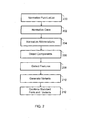
- FIGURE 2 illustrates processing operations associated with an entity expander utilized in accordance with an embodiment of the invention.
- FIGURE 3 illustrates an annotated entity formed in accordance with an embodiment of the invention.
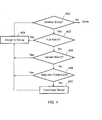
- FIGURE 4 illustrates processing operations associated with an entity grouper utilized in accordance with an embodiment of the invention.
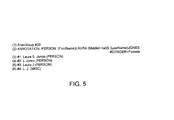
- FIGURE 5 illustrates an entity group formed in accordance with an embodiment of the invention.
- Figure 1 illustrates a computer 100 configured to implement operations of the invention.
- the computer 100 includes standard components, such as a central processing unit 110 and input/output devices 112 connected via a bus 114.
- the input/output devices 112 may include a keyboard, mouse, display, sound processor, graphics processor and the like.
- a network interface circuit 116 is also attached to the bus 114, allowing the computer 110 to operate in a networked environment.
- a memory 120 is also connected to the bus 114.
- the memory 120 may include a data source 122 that operates to supply a set of entities for processing.
- An entity identifier 124 includes executable instructions to identify individual entities in a set of entities. Prior art techniques may be used to identify entities.
- An entity expander 126 includes executable instructions to implement operations of the invention.
- the entity expander 126 converts an entity to a standard form, which includes normalized attributes, a tag reference and a feature, as discussed below.
- the entity expander 126 also expands an entity to include corresponding logical variants of the entity.
- the standard form of the entity and the corresponding variants are combined to form an annotated entity.
- the memory 120 also stores an entity grouper 128 configured in accordance with an embodiment of the invention.
- the entity grouper 128 includes executable instructions to assign an annotated entity to a group.
- the entity grouper processes each annotated entity formed by the entity expander only once and thus accomplishes the task of grouping all entities within the ordered data set in one pass. This stands in contrast to prior art approaches in which an entity is processed several times before assigning it to a group.
- the entity grouper 128 is implemented with a set of state machines to improve computational efficiency. For example, entities may be converted to regular expressions that are compiled into finite state networks processed by finite state transducers. Thus, the executable instructions associated with the entity grouper 128 may be individually developed and tested. Similarly, the executable instructions of the entity expander 126 may be individually developed and tested. This also allows for modular software development.
- the memory 120 also stores a group analyzer 130.
- the group analyzer 130 includes executable instructions to implement known techniques for analyzing groups of information. This group analysis may be used to derive various Business Intelligence metrics.
- Figure 2 illustrates processing operations associated with an embodiment of the entity expander 126.
- the entity expander 126 includes executable instructions to perform normalization operations.
- One form of normalization is to normalize punctuation 200.
- the period associated with a middle name such as Laura S. Jones, may be omitted as a form of normalized punctuation.
- Normalization may also entail normalizing case 202. For example, all letters associated with an object may be normalized to be expressed as capital letters. Thus, an original object such as Laura S. Jones would be normalized to LAURA S JONES. Another normalization operation may be to normalize abbreviations 204. For example, Mister may be normalized to "Mr.” or California may be normalized to "CA”.
- Another processing operation associated with the entity expander 126 is to detect components 206.
- individual components of an object are isolated and tagged.
- the components detected will depend on the type of object. For example, in the case of a name Laura S. Jones, the components may be annotated as three components: a first name (Laura), a middle initial (S) and a last name (Jones).
- the normalization may include tag references for each component.
- tag references of (FirstName), (MiddleInitial) and (LastName) are used.
- tags for this example would be (Street), (City), (State).
- the entity expander 126 may also include executable instructions to detect a feature of an object 208.
- a feature characterizes an attribute of an entity. For example, in the case of Laura S. Jones, the entity expander 126 includes executable instructions to deduce that this object has a feature of being a person. In addition, it may conclude that the object has a gender feature of female.
- the next processing operation of Figure 2 is to generate variants of the object 210.
- the variants represent alternate forms of the same object.
- the alternate forms may include abbreviations or partial components of the object, examples of which are provided below.
- the operation to generate variants of the object 210 may be a sequence of operations, which is shown as a single operation for simplicity.
- the final processing operation of Figure 2 is to combine the standard or normalized form of the object with object variants 212. This results in an annotated entity. This annotated entity will then be processed by the entity grouper to assign it to a group. Thus, each entity is processed in two consecutive steps: To form the annotated entity and then to assign it to a group. These consecutive steps are performed in a single pass over an entity.
- Figure 3 illustrates an example of an annotated entity formed in accordance with an embodiment of the invention.
- the first line of the annotated entity specifies a feature of PERSON, which is associated with the object Laura S. Jones. This object is in its originally observed form in a data set.
- the next line of the annotated entity is an annotation in standard or normalized form.
- the normalized form uses all capitals and omits the period associated with "S.”.
- the remaining lines of Figure 3 illustrate variants of the normalized object.
- the fourth line is similar to the third line, but specifies a variation with a tag for (LastName) JONES.
- the remaining lines in the figure provide alternate variations. Additional variants may be utilized in accordance with embodiments of the invention.
- the entity expander 126 has formed an annotated entity expressing a standard form and corresponding variants.
- the same object is encountered later in the same data set, either in its standard form or a variant form, then it can be matched to an annotated entity.
- various non-uniform references to an object can be equated to the same object.
- Each annotated entity is processed by the entity grouper to assign it to a group.
- the grouping operations are implemented with the entity grouper 128.
- Figure 4 illustrates processing operations associated with an embodiment of the entity grouper 128.
- the first operation of Figure 4 is to assess whether another entity is present 400. If so, the observed object is compared to annotated entities to determine if there is a full (standard form) match 402. If so, the object is assigned to a group 404.
- the group 404 is a list of related objects. If a full match does not exist, the entity grouper 128 determines if there is a variant match (variant form match). That is, if there is not a direct correspondence between the processed entity and the standard form of an object, the system determines if one of the variants of the annotated entity matches the processed entity. If there is a variant match, then the processed entity is assigned to the appropriate group 404.
- the system decides whether to map the processed entity with a conjecture 408. If so, the processed entity is assigned to a group 404. In this case, the processed entity's status in the group may be marked with some type of notation indicating a conjectured participation in the group. This approach is helpful when logic suggests group participation, even though a full match or variant match does not exist. Different criteria may be used to support a conjecture. For example, proximity between an object and a similar object may form the basis for conjectured group participation. This approach supports single pass assignment of an object to a group.
- a new group is formed 410 for the unidentified object. This processing is repeated until all objects of the data set have been processed.
- the objects are supplied in read order so that read order can be considered in grouping operations.
- Figure 5 illustrates an example a group formed by the entity grouper 128.
- the first line of the group specifies a group number: "AliasGroup #38".
- the second line lists the standardized form of the object, which is the same form shown in line 2 of Figure 3 .
- the third line lists the form of the observed object and also specifies a feature of PERSON.
- the fourth line lists a variant form of the entity. Observe that this variant corresponds to the variant listed at line 6 of Figure 3 .
- the fifth line lists a variant form of another entity. This variant corresponds to the variant listed at line 8 of Figure 3 .
- the final entry of the group of Figure 5 provides the object form "L.J.”.
- the expressed feature in this case is miscellaneous or (MISC).
- the group of Figure 5 and other derived groups may now be processed by the group analyzer 130 to provide specified Business Intelligence. Prior art group analysis techniques may be used at this point.
- An embodiment of the present invention relates to a computer storage product with a computer readable storage medium having computer code thereon for performing various computer-implemented operations.
- the media and computer code may be those specially designed and constructed for the purposes of the present invention, or they may be of the kind well known and available to those having skill in the computer software arts.
- Examples of computer-readable media include, but are not limited to: magnetic media such as hard disks, floppy disks, and magnetic tape; optical media such as CD-ROMs, DVDs and holographic devices; magneto-optical media; and hardware devices that are specially configured to store and execute program code, such as application-specific integrated circuits ("ASICs"), programmable logic devices ("PLDs”) and ROM and RAM devices.
- ASICs application-specific integrated circuits
- PLDs programmable logic devices
- Examples of computer code include machine code, such as produced by a compiler, and files containing higher-level code that are executed by a computer using an interpreter.
- machine code such as produced by a compiler
- files containing higher-level code that are executed by a computer using an interpreter.
- an embodiment of the invention may be implemented using JAVA®, C++, or other object-oriented programming language and development tools.
- Another embodiment of the invention may be implemented in hardwired circuitry in place of, or in combination with, machine-executable software instructions.
Landscapes
- Engineering & Computer Science (AREA)
- Theoretical Computer Science (AREA)
- Physics & Mathematics (AREA)
- General Engineering & Computer Science (AREA)
- General Physics & Mathematics (AREA)
- Audiology, Speech & Language Pathology (AREA)
- Computational Linguistics (AREA)
- General Health & Medical Sciences (AREA)
- Health & Medical Sciences (AREA)
- Artificial Intelligence (AREA)
- Data Mining & Analysis (AREA)
- Databases & Information Systems (AREA)
- Machine Translation (AREA)
Abstract
Description
- This invention relates generally to data processing. More particularly, this invention relates to the modular processing of entities to form expanded and grouped entities.
- There are commercially available products to analyze entities. For example, SAP Americas™ offers a product known as ThingFinder™. ThingFinder™ processes a stream of data to identify entities and potential relationships between them. In this context, an entity (or entity mention) is an object (e.g., a word or group of related words) in a data set or ordered data set. The data set may comprise a set of files, internet chat communications, email strings and the like. The entities are analyzed to derive information, such as a data summary, customer sentiment, customer preferences, and related forms of Business Intelligence.
- Entity analysis is computationally expensive. Some of the computational expense is attributable to the need for multiple processing passes over an entity to ascertain entity relationships. More particularly, with existing techniques, rule based processing results in multiple processing passes of an entity before it can be assigned to a group of related entities.
- It would be desirable to provide improved techniques for analyzing entities. In particular, it would be desirable to provide improved entity processing performance with reduced computational load.
- A computer readable storage medium includes executable instructions to convert an entity to a standard form including normalized attributes, a tag reference and a feature. The entity is expanded with corresponding variants. The standard form and corresponding variants are combined to form an annotated entity. The entity is also assigned to a group such that all entities are processed in a single pass.
- The invention is more fully appreciated in connection with the following detailed description taken in conjunction with the accompanying drawings, in which:
-
FIGURE 1 illustrates a computer configured in accordance with an embodiment of the invention. -
FIGURE 2 illustrates processing operations associated with an entity expander utilized in accordance with an embodiment of the invention. -
FIGURE 3 illustrates an annotated entity formed in accordance with an embodiment of the invention. -
FIGURE 4 illustrates processing operations associated with an entity grouper utilized in accordance with an embodiment of the invention. -
FIGURE 5 illustrates an entity group formed in accordance with an embodiment of the invention. - Like reference numerals refer to corresponding parts throughout the several views of the drawings.
-
Figure 1 illustrates acomputer 100 configured to implement operations of the invention. Thecomputer 100 includes standard components, such as acentral processing unit 110 and input/output devices 112 connected via abus 114. The input/output devices 112 may include a keyboard, mouse, display, sound processor, graphics processor and the like. Anetwork interface circuit 116 is also attached to thebus 114, allowing thecomputer 110 to operate in a networked environment. - A
memory 120 is also connected to thebus 114. Thememory 120 may include adata source 122 that operates to supply a set of entities for processing. Anentity identifier 124 includes executable instructions to identify individual entities in a set of entities. Prior art techniques may be used to identify entities. - An entity expander 126 includes executable instructions to implement operations of the invention. In one embodiment, the entity expander 126 converts an entity to a standard form, which includes normalized attributes, a tag reference and a feature, as discussed below. The entity expander 126 also expands an entity to include corresponding logical variants of the entity. The standard form of the entity and the corresponding variants are combined to form an annotated entity.
- The
memory 120 also stores anentity grouper 128 configured in accordance with an embodiment of the invention. Theentity grouper 128 includes executable instructions to assign an annotated entity to a group. The entity grouper processes each annotated entity formed by the entity expander only once and thus accomplishes the task of grouping all entities within the ordered data set in one pass. This stands in contrast to prior art approaches in which an entity is processed several times before assigning it to a group. - In one embodiment, the
entity grouper 128 is implemented with a set of state machines to improve computational efficiency. For example, entities may be converted to regular expressions that are compiled into finite state networks processed by finite state transducers. Thus, the executable instructions associated with theentity grouper 128 may be individually developed and tested. Similarly, the executable instructions of the entity expander 126 may be individually developed and tested. This also allows for modular software development. - The
memory 120 also stores agroup analyzer 130. Thegroup analyzer 130 includes executable instructions to implement known techniques for analyzing groups of information. This group analysis may be used to derive various Business Intelligence metrics. -
Figure 2 illustrates processing operations associated with an embodiment of the entity expander 126. In one embodiment, the entity expander 126 includes executable instructions to perform normalization operations. One form of normalization is to normalizepunctuation 200. For example, the period associated with a middle name, such as Laura S. Jones, may be omitted as a form of normalized punctuation. - Normalization may also entail normalizing
case 202. For example, all letters associated with an object may be normalized to be expressed as capital letters. Thus, an original object such as Laura S. Jones would be normalized to LAURA S JONES. Another normalization operation may be to normalizeabbreviations 204. For example, Mister may be normalized to "Mr." or California may be normalized to "CA". - Another processing operation associated with the entity expander 126 is to detect
components 206. In this operation, individual components of an object are isolated and tagged. The components detected will depend on the type of object. For example, in the case of a name Laura S. Jones, the components may be annotated as three components: a first name (Laura), a middle initial (S) and a last name (Jones). The normalization may include tag references for each component. In this example, tag references of (FirstName), (MiddleInitial) and (LastName) are used. In the case of an address 123 First Street, San Jose, CA, the components may be annotated as: a street (123 First Street), a city (San Jose), and a state (CA). Tag references for this example would be (Street), (City), (State). - The
entity expander 126 may also include executable instructions to detect a feature of anobject 208. A feature characterizes an attribute of an entity. For example, in the case of Laura S. Jones, theentity expander 126 includes executable instructions to deduce that this object has a feature of being a person. In addition, it may conclude that the object has a gender feature of female. - Features limit the scope of an annotated entity or an entity group and considerably increase matching performance by quick elimination. For example, Washington with feature CITY cannot match Washington with feature PERSON, but Washington without any feature can.
- The next processing operation of
Figure 2 is to generate variants of theobject 210. The variants represent alternate forms of the same object. For example, the alternate forms may include abbreviations or partial components of the object, examples of which are provided below. Thus, the operation to generate variants of theobject 210 may be a sequence of operations, which is shown as a single operation for simplicity. - The final processing operation of
Figure 2 is to combine the standard or normalized form of the object withobject variants 212. This results in an annotated entity. This annotated entity will then be processed by the entity grouper to assign it to a group. Thus, each entity is processed in two consecutive steps: To form the annotated entity and then to assign it to a group. These consecutive steps are performed in a single pass over an entity. -
Figure 3 illustrates an example of an annotated entity formed in accordance with an embodiment of the invention. The first line of the annotated entity specifies a feature of PERSON, which is associated with the object Laura S. Jones. This object is in its originally observed form in a data set. The next line of the annotated entity is an annotation in standard or normalized form. In this example, the normalized form uses all capitals and omits the period associated with "S.". The normalized form includes tag delimited components, including (FirstName) LAURA, (MiddleInitial) S, and (LastName) JONES. This normalized form also specifies a feature of "#GENDER=Female". - The remaining lines of
Figure 3 illustrate variants of the normalized object. In the third line, the variant specifies a person with a tag of (FirstInitial) L, a tag for (MiddleInitial) S, a tag for (LastInitial) J and a feature of "#GENDER=Female". The fourth line is similar to the third line, but specifies a variation with a tag for (LastName) JONES. The remaining lines in the figure provide alternate variations. Additional variants may be utilized in accordance with embodiments of the invention. - Thus, at this point, the
entity expander 126 has formed an annotated entity expressing a standard form and corresponding variants. When the same object is encountered later in the same data set, either in its standard form or a variant form, then it can be matched to an annotated entity. In this way, various non-uniform references to an object can be equated to the same object. Each annotated entity is processed by the entity grouper to assign it to a group. The grouping operations are implemented with theentity grouper 128.Figure 4 illustrates processing operations associated with an embodiment of theentity grouper 128. - The first operation of
Figure 4 is to assess whether another entity is present 400. If so, the observed object is compared to annotated entities to determine if there is a full (standard form)match 402. If so, the object is assigned to agroup 404. Thegroup 404 is a list of related objects. If a full match does not exist, theentity grouper 128 determines if there is a variant match (variant form match). That is, if there is not a direct correspondence between the processed entity and the standard form of an object, the system determines if one of the variants of the annotated entity matches the processed entity. If there is a variant match, then the processed entity is assigned to theappropriate group 404. - If a variant match does not exist, then the system decides whether to map the processed entity with a
conjecture 408. If so, the processed entity is assigned to agroup 404. In this case, the processed entity's status in the group may be marked with some type of notation indicating a conjectured participation in the group. This approach is helpful when logic suggests group participation, even though a full match or variant match does not exist. Different criteria may be used to support a conjecture. For example, proximity between an object and a similar object may form the basis for conjectured group participation. This approach supports single pass assignment of an object to a group. - If the entity fails the tests of
blocks -
Figure 5 illustrates an example a group formed by theentity grouper 128. The first line of the group specifies a group number: "AliasGroup # 38". The second line lists the standardized form of the object, which is the same form shown inline 2 ofFigure 3 . The third line lists the form of the observed object and also specifies a feature of PERSON. The fourth line lists a variant form of the entity. Observe that this variant corresponds to the variant listed atline 6 ofFigure 3 . The fifth line lists a variant form of another entity. This variant corresponds to the variant listed at line 8 ofFigure 3 . The final entry of the group ofFigure 5 provides the object form "L.J.". The expressed feature in this case is miscellaneous or (MISC). This nomenclature expresses a conjecture corresponding tooperation 408 ofFigure 4 . Observe that "LS" includes components of variant entries oflines - The group of
Figure 5 and other derived groups may now be processed by thegroup analyzer 130 to provide specified Business Intelligence. Prior art group analysis techniques may be used at this point. - An embodiment of the present invention relates to a computer storage product with a computer readable storage medium having computer code thereon for performing various computer-implemented operations. The media and computer code may be those specially designed and constructed for the purposes of the present invention, or they may be of the kind well known and available to those having skill in the computer software arts. Examples of computer-readable media include, but are not limited to: magnetic media such as hard disks, floppy disks, and magnetic tape; optical media such as CD-ROMs, DVDs and holographic devices; magneto-optical media; and hardware devices that are specially configured to store and execute program code, such as application-specific integrated circuits ("ASICs"), programmable logic devices ("PLDs") and ROM and RAM devices. Examples of computer code include machine code, such as produced by a compiler, and files containing higher-level code that are executed by a computer using an interpreter. For example, an embodiment of the invention may be implemented using JAVA®, C++, or other object-oriented programming language and development tools. Another embodiment of the invention may be implemented in hardwired circuitry in place of, or in combination with, machine-executable software instructions.
- The foregoing description, for purposes of explanation, used specific nomenclature to provide a thorough understanding of the invention. However, it will be apparent to one skilled in the art that specific details are not required in order to practice the invention. Thus, the foregoing descriptions of specific embodiments of the invention are presented for purposes of illustration and description. They are not intended to be exhaustive or to limit the invention to the precise forms disclosed; obviously, many modifications and variations are possible in view of the above teachings. The embodiments were chosen and described in order to best explain the principles of the invention and its practical applications, they thereby enable others skilled in the art to best utilize the invention and various embodiments with various modifications as are suited to the particular use contemplated. It is intended that the following claims and their equivalents define the scope of the invention.
Claims (14)
- A computer readable storage medium, comprising executable instructions to:convert an entity to a standard form including normalized attributes, a tag reference and a feature;expand the entity with corresponding variants;combine the standard form and the corresponding variants to form an annotated entity in a first processing step;assign the entity to a group in a second processing step that accesses the annotated entity, such that the entity is processed in a single pass comprising the first processing step and the second processing step.
- The computer readable storage medium of claim 1 wherein the normalized attributes include normalized punctuation, normalized case and normalized abbreviations.
- The computer readable storage medium of claim 1 or 2 wherein the tag reference characterizes the entity.
- The computer readable storage medium of any one of the preceding claims wherein the feature characterizes an attribute of the entity.
- The computer readable storage medium of any one of the preceding claims wherein the corresponding variants characterize presumed equivalent entities.
- The computer readable storage medium of any one of the preceding claims wherein the group specifies the standard form for a first instance.
- The computer readable storage medium of claim 6 wherein the group specifies a second instance.
- The computer readable storage medium of claim 7 wherein the group specifies a third instance with a conjectured inclusion in the group.
- The computer readable storage medium of any one of the preceding claims wherein the executable instructions to assign include executable instructions to assign the entity to a new group.
- The computer readable storage medium of any one of the preceding claims wherein the executable instructions to assign include executable instructions to assign the entity to an existing group based upon
a standard form match; and/or
a variant form match; and/or
a conjectured match. - The computer readable storage medium of any one of the preceding claims wherein the executable instructions to convert, expand, combine and assign are implemented with finite state transducers.
- The computer readable storage medium of any one of the preceding claims further comprising executable instructions to form a plurality of groups.
- The computer readable storage medium of claim 12 further comprising executable instructions to analyze relationships between the plurality of groups.
- Computer-implemented method comprising:converting an entity to a standard form including normalized attributes, a tag reference and a feature;expanding the entity with corresponding variants;combining the standard form and the corresponding variants to form an annotated entity in a first processing step;assigning the entity to a group in a second processing step that accesses the annotated entity, such that the entity is processed in a single pass comprising the first processing step and the second processing step.
Applications Claiming Priority (1)
| Application Number | Priority Date | Filing Date | Title |
|---|---|---|---|
| US12/908,781 US8312018B2 (en) | 2010-10-20 | 2010-10-20 | Entity expansion and grouping |
Publications (1)
| Publication Number | Publication Date |
|---|---|
| EP2444908A1 true EP2444908A1 (en) | 2012-04-25 |
Family
ID=44763741
Family Applications (1)
| Application Number | Title | Priority Date | Filing Date |
|---|---|---|---|
| EP11007491A Ceased EP2444908A1 (en) | 2010-10-20 | 2011-09-14 | Apparatus and method for entity expansion and grouping |
Country Status (2)
| Country | Link |
|---|---|
| US (1) | US8312018B2 (en) |
| EP (1) | EP2444908A1 (en) |
Families Citing this family (6)
| Publication number | Priority date | Publication date | Assignee | Title |
|---|---|---|---|---|
| US9569416B1 (en) * | 2011-02-07 | 2017-02-14 | Iqnavigator, Inc. | Structured and unstructured data annotations to user interfaces and data objects |
| US9569413B2 (en) | 2012-05-07 | 2017-02-14 | Sap Se | Document text processing using edge detection |
| US9218372B2 (en) * | 2012-08-02 | 2015-12-22 | Sap Se | System and method of record matching in a database |
| US9639818B2 (en) | 2013-08-30 | 2017-05-02 | Sap Se | Creation of event types for news mining for enterprise resource planning |
| US10380486B2 (en) * | 2015-01-20 | 2019-08-13 | International Business Machines Corporation | Classifying entities by behavior |
| CN107239722B (en) | 2016-03-25 | 2021-11-12 | 佳能株式会社 | Method and device for extracting diagnosis object from medical document |
Family Cites Families (3)
| Publication number | Priority date | Publication date | Assignee | Title |
|---|---|---|---|---|
| US6438543B1 (en) * | 1999-06-17 | 2002-08-20 | International Business Machines Corporation | System and method for cross-document coreference |
| US20050108630A1 (en) * | 2003-11-19 | 2005-05-19 | Wasson Mark D. | Extraction of facts from text |
| US7822768B2 (en) * | 2004-11-23 | 2010-10-26 | International Business Machines Corporation | System and method for automating data normalization using text analytics |
-
2010
- 2010-10-20 US US12/908,781 patent/US8312018B2/en active Active
-
2011
- 2011-09-14 EP EP11007491A patent/EP2444908A1/en not_active Ceased
Non-Patent Citations (5)
| Title |
|---|
| JAIN A K ET AL: "Data clustering: a review", ACM COMPUTING SURVEYS, ACM, NEW YORK, NY, US, US, vol. 31, no. 3, 1 September 1999 (1999-09-01), pages 264 - 323, XP002165131, ISSN: 0360-0300, DOI: 10.1145/331499.331504 * |
| LORDARTEMIS ET AL: "Finite-state machine", WIKIPEDIA, THE FREE ENCYCLOPEDIA, 5 October 2010 (2010-10-05), XP055368233, Retrieved from the Internet <URL:https://en.wikipedia.org/w/index.php?title=Finite-state_machine&oldid=388914489> [retrieved on 20170428] * |
| PRIMALMOON ET AL: "Finite-state transducer", WIKIPEDIA, THE FREE ENCYCLOPEDIA, 30 August 2010 (2010-08-30), XP055368234, Retrieved from the Internet <URL:https://en.wikipedia.org/w/index.php?title=Finite-state_transducer&oldid=381964212> [retrieved on 20170428] * |
| RAVIN Y ET AL: "Extracting Names from Natural-Language Text", INTERNET CITATION, 4 October 1997 (1997-10-04), XP002376548, Retrieved from the Internet <URL:http://www.research.ibm.com/talent/documents/20338.pdf> [retrieved on 20060411] * |
| WALID MAGDY ET AL: "Arabic Cross-Document Person Name Normalization", PROCEEDINGS OF THE 5TZ WORKSHOP ON IMPORTANT UNRESOLVED MATTERS, 1 June 2007 (2007-06-01), Prague, Czech Republic, pages 25 - 32, XP055018966, Retrieved from the Internet <URL:http://delivery.acm.org/10.1145/1660000/1654582/p25-magdy.pdf?ip=145.64.134.245&acc=OPEN&CFID=65143789&CFTOKEN=66505018&__acm__=1328799279_47914cc6c3619ba339dc0010536c207d> [retrieved on 20120209] * |
Also Published As
| Publication number | Publication date |
|---|---|
| US20120102031A1 (en) | 2012-04-26 |
| US8312018B2 (en) | 2012-11-13 |
Similar Documents
| Publication | Publication Date | Title |
|---|---|---|
| US8312018B2 (en) | Entity expansion and grouping | |
| US8914720B2 (en) | Method and system for constructing a document redundancy graph | |
| Wu et al. | pyvene: A library for understanding and improving PyTorch models via interventions | |
| US20160055150A1 (en) | Converting data into natural language form | |
| JP6229665B2 (en) | Text mining device, text mining system, text mining method and program | |
| US10747955B2 (en) | Learning device and learning method | |
| EP3113174A1 (en) | Method for building a speech feature library, method, apparatus, and device for speech synthesis | |
| CN107678968A (en) | Sample extraction method, apparatus, computing device and the storage medium of source code function | |
| CN107545043A (en) | A kind of data application method and device based on data quality checking | |
| CN111859985B (en) | AI customer service model test method and device, electronic equipment and storage medium | |
| CN111091883A (en) | Medical text processing method and device, storage medium and equipment | |
| CN113590776A (en) | Text processing method and device based on knowledge graph, electronic equipment and medium | |
| CN106909600A (en) | The collection method and device of user context information | |
| CN118446315A (en) | Problem solving method, device, storage medium and computer program product | |
| Abandah et al. | Call graph based metrics to evaluate software design quality | |
| JP2016212633A (en) | Program test priority determination system | |
| CN112989797A (en) | Model training method, text extension method, model training device, text extension device, model training equipment and storage medium | |
| CN107562701A (en) | A kind of data analysis method and its system of steel trade industry stock resource | |
| CN119149695A (en) | Conversation processing method and device based on large model, electronic equipment and storage medium | |
| CN113343646B (en) | Data conversion method and device | |
| KR20160086255A (en) | Entity boundary detection apparatus in text by usage-learning on the entity's surface string candidates and mtehod thereof | |
| CN115827864A (en) | Processing method for automatic classification of bulletins | |
| JP2023157310A (en) | Model checking device and model checking method | |
| JP6880580B2 (en) | Problem estimation device, problem estimation method and program | |
| JP6733364B2 (en) | Task estimation device, task estimation method, and task estimation program |
Legal Events
| Date | Code | Title | Description |
|---|---|---|---|
| AK | Designated contracting states |
Kind code of ref document: A1 Designated state(s): AL AT BE BG CH CY CZ DE DK EE ES FI FR GB GR HR HU IE IS IT LI LT LU LV MC MK MT NL NO PL PT RO RS SE SI SK SM TR |
|
| AX | Request for extension of the european patent |
Extension state: BA ME |
|
| PUAI | Public reference made under article 153(3) epc to a published international application that has entered the european phase |
Free format text: ORIGINAL CODE: 0009012 |
|
| 17P | Request for examination filed |
Effective date: 20120906 |
|
| RAP1 | Party data changed (applicant data changed or rights of an application transferred) |
Owner name: SAP SE |
|
| 17Q | First examination report despatched |
Effective date: 20150729 |
|
| STAA | Information on the status of an ep patent application or granted ep patent |
Free format text: STATUS: THE APPLICATION HAS BEEN REFUSED |
|
| 18R | Application refused |
Effective date: 20180318 |