EP2444495A1 - Secretion of recombinant polypeptides in the extracellular medium of diatoms - Google Patents
Secretion of recombinant polypeptides in the extracellular medium of diatoms Download PDFInfo
- Publication number
- EP2444495A1 EP2444495A1 EP10013808A EP10013808A EP2444495A1 EP 2444495 A1 EP2444495 A1 EP 2444495A1 EP 10013808 A EP10013808 A EP 10013808A EP 10013808 A EP10013808 A EP 10013808A EP 2444495 A1 EP2444495 A1 EP 2444495A1
- Authority
- EP
- European Patent Office
- Prior art keywords
- polypeptide
- transformed
- diatom
- signal peptide
- extracellular medium
- Prior art date
- Legal status (The legal status is an assumption and is not a legal conclusion. Google has not performed a legal analysis and makes no representation as to the accuracy of the status listed.)
- Withdrawn
Links
- 108090000765 processed proteins & peptides Proteins 0.000 title claims abstract description 92
- 229920001184 polypeptide Polymers 0.000 title claims abstract description 91
- 102000004196 processed proteins & peptides Human genes 0.000 title claims abstract description 91
- 230000028327 secretion Effects 0.000 title claims abstract description 36
- 241000206761 Bacillariophyta Species 0.000 title claims description 40
- 108010076504 Protein Sorting Signals Proteins 0.000 claims abstract description 66
- 238000000034 method Methods 0.000 claims abstract description 23
- 108091028043 Nucleic acid sequence Proteins 0.000 claims abstract description 20
- 150000007523 nucleic acids Chemical group 0.000 claims abstract description 17
- 238000004519 manufacturing process Methods 0.000 claims abstract description 10
- 238000012258 culturing Methods 0.000 claims abstract description 4
- 238000003306 harvesting Methods 0.000 claims abstract description 4
- 125000003275 alpha amino acid group Chemical group 0.000 claims abstract 2
- 241000206744 Phaeodactylum tricornutum Species 0.000 claims description 54
- OXCMYAYHXIHQOA-UHFFFAOYSA-N potassium;[2-butyl-5-chloro-3-[[4-[2-(1,2,4-triaza-3-azanidacyclopenta-1,4-dien-5-yl)phenyl]phenyl]methyl]imidazol-4-yl]methanol Chemical compound [K+].CCCCC1=NC(Cl)=C(CO)N1CC1=CC=C(C=2C(=CC=CC=2)C2=N[N-]N=N2)C=C1 OXCMYAYHXIHQOA-UHFFFAOYSA-N 0.000 claims description 22
- 102000003951 Erythropoietin Human genes 0.000 claims description 9
- 108090000394 Erythropoietin Proteins 0.000 claims description 9
- 229940105423 erythropoietin Drugs 0.000 claims description 9
- 230000013595 glycosylation Effects 0.000 claims description 7
- 238000006206 glycosylation reaction Methods 0.000 claims description 7
- 241001465754 Metazoa Species 0.000 claims description 6
- 239000012634 fragment Substances 0.000 claims description 6
- 229940088597 hormone Drugs 0.000 claims description 6
- 239000005556 hormone Substances 0.000 claims description 6
- 102000004127 Cytokines Human genes 0.000 claims description 5
- 108090000695 Cytokines Proteins 0.000 claims description 5
- -1 interferons Chemical compound 0.000 claims description 5
- 108010039209 Blood Coagulation Factors Proteins 0.000 claims description 4
- 102000015081 Blood Coagulation Factors Human genes 0.000 claims description 4
- 239000003114 blood coagulation factor Substances 0.000 claims description 4
- 102000004547 Glucosylceramidase Human genes 0.000 claims description 3
- 108010017544 Glucosylceramidase Proteins 0.000 claims description 3
- 102000004627 Iduronidase Human genes 0.000 claims description 3
- 108010003381 Iduronidase Proteins 0.000 claims description 3
- 102000014150 Interferons Human genes 0.000 claims description 3
- 108010050904 Interferons Proteins 0.000 claims description 3
- 102100024295 Maltase-glucoamylase Human genes 0.000 claims description 3
- 108010028144 alpha-Glucosidases Proteins 0.000 claims description 3
- 229940047124 interferons Drugs 0.000 claims description 3
- 101001082142 Homo sapiens Pentraxin-related protein PTX3 Proteins 0.000 claims description 2
- 102100027351 Pentraxin-related protein PTX3 Human genes 0.000 claims description 2
- 108090000623 proteins and genes Proteins 0.000 description 68
- 210000004027 cell Anatomy 0.000 description 56
- 102000004169 proteins and genes Human genes 0.000 description 55
- 235000018102 proteins Nutrition 0.000 description 52
- 150000001413 amino acids Chemical group 0.000 description 40
- 239000002609 medium Substances 0.000 description 34
- 229940024606 amino acid Drugs 0.000 description 26
- 235000001014 amino acid Nutrition 0.000 description 26
- 108060001084 Luciferase Proteins 0.000 description 25
- 239000005089 Luciferase Substances 0.000 description 25
- 239000001963 growth medium Substances 0.000 description 23
- 239000013598 vector Substances 0.000 description 23
- 230000009466 transformation Effects 0.000 description 20
- 108010002350 Interleukin-2 Proteins 0.000 description 19
- 102000000588 Interleukin-2 Human genes 0.000 description 19
- WEVYAHXRMPXWCK-UHFFFAOYSA-N Acetonitrile Chemical compound CC#N WEVYAHXRMPXWCK-UHFFFAOYSA-N 0.000 description 18
- 102000004190 Enzymes Human genes 0.000 description 17
- 108090000790 Enzymes Proteins 0.000 description 17
- 239000012528 membrane Substances 0.000 description 16
- 229940088598 enzyme Drugs 0.000 description 15
- 238000004458 analytical method Methods 0.000 description 14
- 108010092408 Eosinophil Peroxidase Proteins 0.000 description 13
- 102100031939 Erythropoietin Human genes 0.000 description 13
- 241001529936 Murinae Species 0.000 description 13
- 230000029087 digestion Effects 0.000 description 13
- 230000002068 genetic effect Effects 0.000 description 13
- 108010048367 enhanced green fluorescent protein Proteins 0.000 description 12
- 238000002474 experimental method Methods 0.000 description 12
- 239000000499 gel Substances 0.000 description 12
- RAXXELZNTBOGNW-UHFFFAOYSA-N imidazole Natural products C1=CNC=N1 RAXXELZNTBOGNW-UHFFFAOYSA-N 0.000 description 12
- 230000003834 intracellular effect Effects 0.000 description 12
- 108091026890 Coding region Proteins 0.000 description 10
- 238000002965 ELISA Methods 0.000 description 10
- 238000005119 centrifugation Methods 0.000 description 10
- 230000000694 effects Effects 0.000 description 10
- 230000012010 growth Effects 0.000 description 10
- 239000006228 supernatant Substances 0.000 description 10
- 241001343649 Gaussia princeps (T. Scott, 1894) Species 0.000 description 9
- 239000012071 phase Substances 0.000 description 9
- 108020004414 DNA Proteins 0.000 description 8
- 108010029485 Protein Isoforms Proteins 0.000 description 8
- 102000001708 Protein Isoforms Human genes 0.000 description 8
- 210000002472 endoplasmic reticulum Anatomy 0.000 description 8
- 238000003752 polymerase chain reaction Methods 0.000 description 8
- 101001002657 Homo sapiens Interleukin-2 Proteins 0.000 description 7
- 102000007056 Recombinant Fusion Proteins Human genes 0.000 description 7
- 108010008281 Recombinant Fusion Proteins Proteins 0.000 description 7
- 238000003119 immunoblot Methods 0.000 description 7
- 238000011534 incubation Methods 0.000 description 7
- 239000011148 porous material Substances 0.000 description 7
- 238000011002 quantification Methods 0.000 description 7
- LFQSCWFLJHTTHZ-UHFFFAOYSA-N Ethanol Chemical compound CCO LFQSCWFLJHTTHZ-UHFFFAOYSA-N 0.000 description 6
- YHIPILPTUVMWQT-UHFFFAOYSA-N Oplophorus luciferin Chemical compound C1=CC(O)=CC=C1CC(C(N1C=C(N2)C=3C=CC(O)=CC=3)=O)=NC1=C2CC1=CC=CC=C1 YHIPILPTUVMWQT-UHFFFAOYSA-N 0.000 description 6
- 230000015572 biosynthetic process Effects 0.000 description 6
- 239000000523 sample Substances 0.000 description 6
- 238000002415 sodium dodecyl sulfate polyacrylamide gel electrophoresis Methods 0.000 description 6
- 238000012360 testing method Methods 0.000 description 6
- 230000001225 therapeutic effect Effects 0.000 description 6
- QAPSNMNOIOSXSQ-YNEHKIRRSA-N 1-[(2r,4s,5r)-4-[tert-butyl(dimethyl)silyl]oxy-5-(hydroxymethyl)oxolan-2-yl]-5-methylpyrimidine-2,4-dione Chemical compound O=C1NC(=O)C(C)=CN1[C@@H]1O[C@H](CO)[C@@H](O[Si](C)(C)C(C)(C)C)C1 QAPSNMNOIOSXSQ-YNEHKIRRSA-N 0.000 description 5
- 241000196324 Embryophyta Species 0.000 description 5
- 241000963438 Gaussia <copepod> Species 0.000 description 5
- 108010001336 Horseradish Peroxidase Proteins 0.000 description 5
- 108090000631 Trypsin Proteins 0.000 description 5
- 102000004142 Trypsin Human genes 0.000 description 5
- 238000007792 addition Methods 0.000 description 5
- 239000000872 buffer Substances 0.000 description 5
- 238000003776 cleavage reaction Methods 0.000 description 5
- 230000002255 enzymatic effect Effects 0.000 description 5
- 239000013612 plasmid Substances 0.000 description 5
- 238000000746 purification Methods 0.000 description 5
- 230000007017 scission Effects 0.000 description 5
- 239000000243 solution Substances 0.000 description 5
- 230000005945 translocation Effects 0.000 description 5
- 239000012588 trypsin Substances 0.000 description 5
- 108091032973 (ribonucleotides)n+m Proteins 0.000 description 4
- ATRRKUHOCOJYRX-UHFFFAOYSA-N Ammonium bicarbonate Chemical compound [NH4+].OC([O-])=O ATRRKUHOCOJYRX-UHFFFAOYSA-N 0.000 description 4
- 229910000013 Ammonium bicarbonate Inorganic materials 0.000 description 4
- 108010047041 Complementarity Determining Regions Proteins 0.000 description 4
- DHMQDGOQFOQNFH-UHFFFAOYSA-N Glycine Chemical compound NCC(O)=O DHMQDGOQFOQNFH-UHFFFAOYSA-N 0.000 description 4
- 230000004988 N-glycosylation Effects 0.000 description 4
- 102000057297 Pepsin A Human genes 0.000 description 4
- 108090000284 Pepsin A Proteins 0.000 description 4
- DTQVDTLACAAQTR-UHFFFAOYSA-N Trifluoroacetic acid Chemical compound OC(=O)C(F)(F)F DTQVDTLACAAQTR-UHFFFAOYSA-N 0.000 description 4
- 235000012538 ammonium bicarbonate Nutrition 0.000 description 4
- 239000001099 ammonium carbonate Substances 0.000 description 4
- 238000006243 chemical reaction Methods 0.000 description 4
- 102000055277 human IL2 Human genes 0.000 description 4
- 238000003780 insertion Methods 0.000 description 4
- 230000037431 insertion Effects 0.000 description 4
- NOESYZHRGYRDHS-UHFFFAOYSA-N insulin Chemical compound N1C(=O)C(NC(=O)C(CCC(N)=O)NC(=O)C(CCC(O)=O)NC(=O)C(C(C)C)NC(=O)C(NC(=O)CN)C(C)CC)CSSCC(C(NC(CO)C(=O)NC(CC(C)C)C(=O)NC(CC=2C=CC(O)=CC=2)C(=O)NC(CCC(N)=O)C(=O)NC(CC(C)C)C(=O)NC(CCC(O)=O)C(=O)NC(CC(N)=O)C(=O)NC(CC=2C=CC(O)=CC=2)C(=O)NC(CSSCC(NC(=O)C(C(C)C)NC(=O)C(CC(C)C)NC(=O)C(CC=2C=CC(O)=CC=2)NC(=O)C(CC(C)C)NC(=O)C(C)NC(=O)C(CCC(O)=O)NC(=O)C(C(C)C)NC(=O)C(CC(C)C)NC(=O)C(CC=2NC=NC=2)NC(=O)C(CO)NC(=O)CNC2=O)C(=O)NCC(=O)NC(CCC(O)=O)C(=O)NC(CCCNC(N)=N)C(=O)NCC(=O)NC(CC=3C=CC=CC=3)C(=O)NC(CC=3C=CC=CC=3)C(=O)NC(CC=3C=CC(O)=CC=3)C(=O)NC(C(C)O)C(=O)N3C(CCC3)C(=O)NC(CCCCN)C(=O)NC(C)C(O)=O)C(=O)NC(CC(N)=O)C(O)=O)=O)NC(=O)C(C(C)CC)NC(=O)C(CO)NC(=O)C(C(C)O)NC(=O)C1CSSCC2NC(=O)C(CC(C)C)NC(=O)C(NC(=O)C(CCC(N)=O)NC(=O)C(CC(N)=O)NC(=O)C(NC(=O)C(N)CC=1C=CC=CC=1)C(C)C)CC1=CN=CN1 NOESYZHRGYRDHS-UHFFFAOYSA-N 0.000 description 4
- 238000004949 mass spectrometry Methods 0.000 description 4
- 235000013336 milk Nutrition 0.000 description 4
- 239000008267 milk Substances 0.000 description 4
- 210000004080 milk Anatomy 0.000 description 4
- 229920001542 oligosaccharide Polymers 0.000 description 4
- 150000002482 oligosaccharides Chemical class 0.000 description 4
- 229940111202 pepsin Drugs 0.000 description 4
- 229920002401 polyacrylamide Polymers 0.000 description 4
- 230000008569 process Effects 0.000 description 4
- 239000013535 sea water Substances 0.000 description 4
- 238000003786 synthesis reaction Methods 0.000 description 4
- 239000003643 water by type Substances 0.000 description 4
- USFZMSVCRYTOJT-UHFFFAOYSA-N Ammonium acetate Chemical compound N.CC(O)=O USFZMSVCRYTOJT-UHFFFAOYSA-N 0.000 description 3
- 239000005695 Ammonium acetate Substances 0.000 description 3
- 241001467606 Bacillariophyceae Species 0.000 description 3
- 238000007400 DNA extraction Methods 0.000 description 3
- 108060003951 Immunoglobulin Proteins 0.000 description 3
- 108010021625 Immunoglobulin Fragments Proteins 0.000 description 3
- 102000008394 Immunoglobulin Fragments Human genes 0.000 description 3
- 108090001005 Interleukin-6 Proteins 0.000 description 3
- 102000004889 Interleukin-6 Human genes 0.000 description 3
- 101100309639 Mus musculus Scn11a gene Proteins 0.000 description 3
- 241001465255 Opisthokonta Species 0.000 description 3
- 240000004808 Saccharomyces cerevisiae Species 0.000 description 3
- 108700019146 Transgenes Proteins 0.000 description 3
- 108010084455 Zeocin Proteins 0.000 description 3
- 229940043376 ammonium acetate Drugs 0.000 description 3
- 235000019257 ammonium acetate Nutrition 0.000 description 3
- 230000003321 amplification Effects 0.000 description 3
- 239000000427 antigen Substances 0.000 description 3
- 108091007433 antigens Proteins 0.000 description 3
- 102000036639 antigens Human genes 0.000 description 3
- 238000004587 chromatography analysis Methods 0.000 description 3
- 238000007796 conventional method Methods 0.000 description 3
- 238000001514 detection method Methods 0.000 description 3
- 238000006911 enzymatic reaction Methods 0.000 description 3
- HNDVDQJCIGZPNO-UHFFFAOYSA-N histidine Natural products OC(=O)C(N)CC1=CN=CN1 HNDVDQJCIGZPNO-UHFFFAOYSA-N 0.000 description 3
- 238000005286 illumination Methods 0.000 description 3
- 102000018358 immunoglobulin Human genes 0.000 description 3
- 238000010348 incorporation Methods 0.000 description 3
- 101150087123 nat gene Proteins 0.000 description 3
- 238000003199 nucleic acid amplification method Methods 0.000 description 3
- 239000002245 particle Substances 0.000 description 3
- 230000037361 pathway Effects 0.000 description 3
- CWCMIVBLVUHDHK-ZSNHEYEWSA-N phleomycin D1 Chemical compound N([C@H](C(=O)N[C@H](C)[C@@H](O)[C@H](C)C(=O)N[C@@H]([C@H](O)C)C(=O)NCCC=1SC[C@@H](N=1)C=1SC=C(N=1)C(=O)NCCCCNC(N)=N)[C@@H](O[C@H]1[C@H]([C@@H](O)[C@H](O)[C@H](CO)O1)O[C@@H]1[C@H]([C@@H](OC(N)=O)[C@H](O)[C@@H](CO)O1)O)C=1N=CNC=1)C(=O)C1=NC([C@H](CC(N)=O)NC[C@H](N)C(N)=O)=NC(N)=C1C CWCMIVBLVUHDHK-ZSNHEYEWSA-N 0.000 description 3
- 238000001556 precipitation Methods 0.000 description 3
- 239000002243 precursor Substances 0.000 description 3
- 230000003248 secreting effect Effects 0.000 description 3
- 230000009962 secretion pathway Effects 0.000 description 3
- 239000000758 substrate Substances 0.000 description 3
- 238000004885 tandem mass spectrometry Methods 0.000 description 3
- XLYOFNOQVPJJNP-UHFFFAOYSA-N water Substances O XLYOFNOQVPJJNP-UHFFFAOYSA-N 0.000 description 3
- 239000004382 Amylase Substances 0.000 description 2
- 239000002028 Biomass Substances 0.000 description 2
- 108010049870 Bone Morphogenetic Protein 7 Proteins 0.000 description 2
- 102100022544 Bone morphogenetic protein 7 Human genes 0.000 description 2
- 241000206602 Eukaryota Species 0.000 description 2
- 241000233866 Fungi Species 0.000 description 2
- 108060003306 Galactosyltransferase Proteins 0.000 description 2
- 102000030902 Galactosyltransferase Human genes 0.000 description 2
- 239000004471 Glycine Substances 0.000 description 2
- 102000004269 Granulocyte Colony-Stimulating Factor Human genes 0.000 description 2
- 108010017080 Granulocyte Colony-Stimulating Factor Proteins 0.000 description 2
- 108010017213 Granulocyte-Macrophage Colony-Stimulating Factor Proteins 0.000 description 2
- 102100039620 Granulocyte-macrophage colony-stimulating factor Human genes 0.000 description 2
- 102000018997 Growth Hormone Human genes 0.000 description 2
- 108010051696 Growth Hormone Proteins 0.000 description 2
- 241000238631 Hexapoda Species 0.000 description 2
- 102000004877 Insulin Human genes 0.000 description 2
- 108090001061 Insulin Proteins 0.000 description 2
- 239000000020 Nitrocellulose Substances 0.000 description 2
- 241000283973 Oryctolagus cuniculus Species 0.000 description 2
- 108700020962 Peroxidase Proteins 0.000 description 2
- 102000003992 Peroxidases Human genes 0.000 description 2
- 239000002202 Polyethylene glycol Substances 0.000 description 2
- ONIBWKKTOPOVIA-UHFFFAOYSA-N Proline Natural products OC(=O)C1CCCN1 ONIBWKKTOPOVIA-UHFFFAOYSA-N 0.000 description 2
- 235000014680 Saccharomyces cerevisiae Nutrition 0.000 description 2
- 229920005654 Sephadex Polymers 0.000 description 2
- 239000012507 Sephadex™ Substances 0.000 description 2
- 229920002684 Sepharose Polymers 0.000 description 2
- 102000003838 Sialyltransferases Human genes 0.000 description 2
- 108090000141 Sialyltransferases Proteins 0.000 description 2
- VYPSYNLAJGMNEJ-UHFFFAOYSA-N Silicium dioxide Chemical compound O=[Si]=O VYPSYNLAJGMNEJ-UHFFFAOYSA-N 0.000 description 2
- FAPWRFPIFSIZLT-UHFFFAOYSA-M Sodium chloride Chemical compound [Na+].[Cl-] FAPWRFPIFSIZLT-UHFFFAOYSA-M 0.000 description 2
- 108010006785 Taq Polymerase Proteins 0.000 description 2
- 108060008539 Transglutaminase Proteins 0.000 description 2
- 239000007983 Tris buffer Substances 0.000 description 2
- 108010043158 Trypanosoma Variant Surface Glycoproteins Proteins 0.000 description 2
- 239000002253 acid Substances 0.000 description 2
- 239000008186 active pharmaceutical agent Substances 0.000 description 2
- 239000011942 biocatalyst Substances 0.000 description 2
- 230000003115 biocidal effect Effects 0.000 description 2
- 239000002551 biofuel Substances 0.000 description 2
- 210000004899 c-terminal region Anatomy 0.000 description 2
- 210000002421 cell wall Anatomy 0.000 description 2
- NKLPQNGYXWVELD-UHFFFAOYSA-M coomassie brilliant blue Chemical compound [Na+].C1=CC(OCC)=CC=C1NC1=CC=C(C(=C2C=CC(C=C2)=[N+](CC)CC=2C=C(C=CC=2)S([O-])(=O)=O)C=2C=CC(=CC=2)N(CC)CC=2C=C(C=CC=2)S([O-])(=O)=O)C=C1 NKLPQNGYXWVELD-UHFFFAOYSA-M 0.000 description 2
- 238000004132 cross linking Methods 0.000 description 2
- VHJLVAABSRFDPM-QWWZWVQMSA-N dithiothreitol Chemical compound SC[C@@H](O)[C@H](O)CS VHJLVAABSRFDPM-QWWZWVQMSA-N 0.000 description 2
- 238000005516 engineering process Methods 0.000 description 2
- 238000001914 filtration Methods 0.000 description 2
- 238000010353 genetic engineering Methods 0.000 description 2
- PCHJSUWPFVWCPO-UHFFFAOYSA-N gold Chemical compound [Au] PCHJSUWPFVWCPO-UHFFFAOYSA-N 0.000 description 2
- 239000010931 gold Substances 0.000 description 2
- 229910052737 gold Inorganic materials 0.000 description 2
- 210000002288 golgi apparatus Anatomy 0.000 description 2
- 239000005090 green fluorescent protein Substances 0.000 description 2
- 239000000122 growth hormone Substances 0.000 description 2
- 230000002209 hydrophobic effect Effects 0.000 description 2
- 238000003018 immunoassay Methods 0.000 description 2
- 238000002347 injection Methods 0.000 description 2
- 239000007924 injection Substances 0.000 description 2
- 229940125396 insulin Drugs 0.000 description 2
- PGLTVOMIXTUURA-UHFFFAOYSA-N iodoacetamide Chemical compound NC(=O)CI PGLTVOMIXTUURA-UHFFFAOYSA-N 0.000 description 2
- 150000002500 ions Chemical class 0.000 description 2
- 238000001294 liquid chromatography-tandem mass spectrometry Methods 0.000 description 2
- 238000009630 liquid culture Methods 0.000 description 2
- 239000003550 marker Substances 0.000 description 2
- 239000000463 material Substances 0.000 description 2
- 239000011159 matrix material Substances 0.000 description 2
- 238000001840 matrix-assisted laser desorption--ionisation time-of-flight mass spectrometry Methods 0.000 description 2
- 239000000203 mixture Substances 0.000 description 2
- 229920001220 nitrocellulos Polymers 0.000 description 2
- 108020004707 nucleic acids Proteins 0.000 description 2
- 102000039446 nucleic acids Human genes 0.000 description 2
- CJIIERPDFZUYPI-UHFFFAOYSA-N oxidized Oplophorus luciferin Chemical compound C1=CC(O)=CC=C1CC(=O)NC1=NC=C(C=2C=CC(O)=CC=2)N=C1CC1=CC=CC=C1 CJIIERPDFZUYPI-UHFFFAOYSA-N 0.000 description 2
- 239000008188 pellet Substances 0.000 description 2
- 229940012957 plasmin Drugs 0.000 description 2
- 229920001223 polyethylene glycol Polymers 0.000 description 2
- 229920001282 polysaccharide Polymers 0.000 description 2
- 230000004481 post-translational protein modification Effects 0.000 description 2
- 125000002924 primary amino group Chemical group [H]N([H])* 0.000 description 2
- 230000009467 reduction Effects 0.000 description 2
- 210000004739 secretory vesicle Anatomy 0.000 description 2
- 238000012163 sequencing technique Methods 0.000 description 2
- 239000012064 sodium phosphate buffer Substances 0.000 description 2
- 241000894007 species Species 0.000 description 2
- 238000001228 spectrum Methods 0.000 description 2
- ATHGHQPFGPMSJY-UHFFFAOYSA-N spermidine Chemical compound NCCCCNCCCN ATHGHQPFGPMSJY-UHFFFAOYSA-N 0.000 description 2
- 239000011550 stock solution Substances 0.000 description 2
- 239000000126 substance Substances 0.000 description 2
- 235000000346 sugar Nutrition 0.000 description 2
- 210000001519 tissue Anatomy 0.000 description 2
- 102000003601 transglutaminase Human genes 0.000 description 2
- LENZDBCJOHFCAS-UHFFFAOYSA-N tris Chemical compound OCC(N)(CO)CO LENZDBCJOHFCAS-UHFFFAOYSA-N 0.000 description 2
- 238000001262 western blot Methods 0.000 description 2
- 239000012224 working solution Substances 0.000 description 2
- QKNYBSVHEMOAJP-UHFFFAOYSA-N 2-amino-2-(hydroxymethyl)propane-1,3-diol;hydron;chloride Chemical compound Cl.OCC(N)(CO)CO QKNYBSVHEMOAJP-UHFFFAOYSA-N 0.000 description 1
- 229920001817 Agar Polymers 0.000 description 1
- 108010088751 Albumins Proteins 0.000 description 1
- 102000009027 Albumins Human genes 0.000 description 1
- 102000013142 Amylases Human genes 0.000 description 1
- 108010065511 Amylases Proteins 0.000 description 1
- 239000004475 Arginine Substances 0.000 description 1
- DCXYFEDJOCDNAF-UHFFFAOYSA-N Asparagine Natural products OC(=O)C(N)CC(N)=O DCXYFEDJOCDNAF-UHFFFAOYSA-N 0.000 description 1
- 241000894006 Bacteria Species 0.000 description 1
- 102000004506 Blood Proteins Human genes 0.000 description 1
- 108010017384 Blood Proteins Proteins 0.000 description 1
- 108010049931 Bone Morphogenetic Protein 2 Proteins 0.000 description 1
- 102100024506 Bone morphogenetic protein 2 Human genes 0.000 description 1
- UXVMQQNJUSDDNG-UHFFFAOYSA-L Calcium chloride Chemical compound [Cl-].[Cl-].[Ca+2] UXVMQQNJUSDDNG-UHFFFAOYSA-L 0.000 description 1
- 241000283707 Capra Species 0.000 description 1
- OKTJSMMVPCPJKN-UHFFFAOYSA-N Carbon Chemical compound [C] OKTJSMMVPCPJKN-UHFFFAOYSA-N 0.000 description 1
- 102000005572 Cathepsin A Human genes 0.000 description 1
- 108010059081 Cathepsin A Proteins 0.000 description 1
- 241000195628 Chlorophyta Species 0.000 description 1
- 102000011022 Chorionic Gonadotropin Human genes 0.000 description 1
- 108010062540 Chorionic Gonadotropin Proteins 0.000 description 1
- 108020004638 Circular DNA Proteins 0.000 description 1
- 102100022641 Coagulation factor IX Human genes 0.000 description 1
- 102100023804 Coagulation factor VII Human genes 0.000 description 1
- 101100007328 Cocos nucifera COS-1 gene Proteins 0.000 description 1
- 108020004705 Codon Proteins 0.000 description 1
- 241000195493 Cryptophyta Species 0.000 description 1
- KCXVZYZYPLLWCC-UHFFFAOYSA-N EDTA Chemical compound OC(=O)CN(CC(O)=O)CCN(CC(O)=O)CC(O)=O KCXVZYZYPLLWCC-UHFFFAOYSA-N 0.000 description 1
- 108010067770 Endopeptidase K Proteins 0.000 description 1
- 101001095863 Enterobacteria phage T4 RNA ligase 1 Proteins 0.000 description 1
- 108010076282 Factor IX Proteins 0.000 description 1
- 108010023321 Factor VII Proteins 0.000 description 1
- 108010054218 Factor VIII Proteins 0.000 description 1
- 102000001690 Factor VIII Human genes 0.000 description 1
- 108010071289 Factor XIII Proteins 0.000 description 1
- 102000009123 Fibrin Human genes 0.000 description 1
- 108010073385 Fibrin Proteins 0.000 description 1
- BWGVNKXGVNDBDI-UHFFFAOYSA-N Fibrin monomer Chemical compound CNC(=O)CNC(=O)CN BWGVNKXGVNDBDI-UHFFFAOYSA-N 0.000 description 1
- 102000012673 Follicle Stimulating Hormone Human genes 0.000 description 1
- 108010079345 Follicle Stimulating Hormone Proteins 0.000 description 1
- 108010019236 Fucosyltransferases Proteins 0.000 description 1
- 102000006471 Fucosyltransferases Human genes 0.000 description 1
- 102000002464 Galactosidases Human genes 0.000 description 1
- 108010093031 Galactosidases Proteins 0.000 description 1
- 102100031416 Gastric triacylglycerol lipase Human genes 0.000 description 1
- WQZGKKKJIJFFOK-GASJEMHNSA-N Glucose Natural products OC[C@H]1OC(O)[C@H](O)[C@@H](O)[C@@H]1O WQZGKKKJIJFFOK-GASJEMHNSA-N 0.000 description 1
- 108010015899 Glycopeptides Proteins 0.000 description 1
- 102000002068 Glycopeptides Human genes 0.000 description 1
- 102000003886 Glycoproteins Human genes 0.000 description 1
- 108090000288 Glycoproteins Proteins 0.000 description 1
- 102000005744 Glycoside Hydrolases Human genes 0.000 description 1
- 108010031186 Glycoside Hydrolases Proteins 0.000 description 1
- 102000006496 Immunoglobulin Heavy Chains Human genes 0.000 description 1
- 108010019476 Immunoglobulin Heavy Chains Proteins 0.000 description 1
- 102100029567 Immunoglobulin kappa light chain Human genes 0.000 description 1
- 101710189008 Immunoglobulin kappa light chain Proteins 0.000 description 1
- 102000003996 Interferon-beta Human genes 0.000 description 1
- 108090000467 Interferon-beta Proteins 0.000 description 1
- 102000015696 Interleukins Human genes 0.000 description 1
- 108010063738 Interleukins Proteins 0.000 description 1
- 241000235058 Komagataella pastoris Species 0.000 description 1
- ONIBWKKTOPOVIA-BYPYZUCNSA-N L-Proline Chemical compound OC(=O)[C@@H]1CCCN1 ONIBWKKTOPOVIA-BYPYZUCNSA-N 0.000 description 1
- QNAYBMKLOCPYGJ-REOHCLBHSA-N L-alanine Chemical compound C[C@H](N)C(O)=O QNAYBMKLOCPYGJ-REOHCLBHSA-N 0.000 description 1
- DCXYFEDJOCDNAF-REOHCLBHSA-N L-asparagine Chemical compound OC(=O)[C@@H](N)CC(N)=O DCXYFEDJOCDNAF-REOHCLBHSA-N 0.000 description 1
- AGPKZVBTJJNPAG-WHFBIAKZSA-N L-isoleucine Chemical compound CC[C@H](C)[C@H](N)C(O)=O AGPKZVBTJJNPAG-WHFBIAKZSA-N 0.000 description 1
- ROHFNLRQFUQHCH-YFKPBYRVSA-N L-leucine Chemical compound CC(C)C[C@H](N)C(O)=O ROHFNLRQFUQHCH-YFKPBYRVSA-N 0.000 description 1
- FFEARJCKVFRZRR-BYPYZUCNSA-N L-methionine Chemical compound CSCC[C@H](N)C(O)=O FFEARJCKVFRZRR-BYPYZUCNSA-N 0.000 description 1
- COLNVLDHVKWLRT-QMMMGPOBSA-N L-phenylalanine Chemical compound OC(=O)[C@@H](N)CC1=CC=CC=C1 COLNVLDHVKWLRT-QMMMGPOBSA-N 0.000 description 1
- QIVBCDIJIAJPQS-VIFPVBQESA-N L-tryptophane Chemical compound C1=CC=C2C(C[C@H](N)C(O)=O)=CNC2=C1 QIVBCDIJIAJPQS-VIFPVBQESA-N 0.000 description 1
- OUYCCCASQSFEME-QMMMGPOBSA-N L-tyrosine Chemical compound OC(=O)[C@@H](N)CC1=CC=C(O)C=C1 OUYCCCASQSFEME-QMMMGPOBSA-N 0.000 description 1
- KZSNJWFQEVHDMF-BYPYZUCNSA-N L-valine Chemical compound CC(C)[C@H](N)C(O)=O KZSNJWFQEVHDMF-BYPYZUCNSA-N 0.000 description 1
- 108010029541 Laccase Proteins 0.000 description 1
- 108090001090 Lectins Proteins 0.000 description 1
- 102000004856 Lectins Human genes 0.000 description 1
- 241001137872 Leishmania sp. Species 0.000 description 1
- ROHFNLRQFUQHCH-UHFFFAOYSA-N Leucine Natural products CC(C)CC(N)C(O)=O ROHFNLRQFUQHCH-UHFFFAOYSA-N 0.000 description 1
- 108010054320 Lignin peroxidase Proteins 0.000 description 1
- 102000009151 Luteinizing Hormone Human genes 0.000 description 1
- 108010073521 Luteinizing Hormone Proteins 0.000 description 1
- KDXKERNSBIXSRK-UHFFFAOYSA-N Lysine Natural products NCCCCC(N)C(O)=O KDXKERNSBIXSRK-UHFFFAOYSA-N 0.000 description 1
- 239000004472 Lysine Substances 0.000 description 1
- 108010054377 Mannosidases Proteins 0.000 description 1
- 102000001696 Mannosidases Human genes 0.000 description 1
- 101000987583 Mus musculus Eosinophil peroxidase Proteins 0.000 description 1
- 102100023315 N-acetyllactosaminide beta-1,6-N-acetylglucosaminyl-transferase Human genes 0.000 description 1
- 108010056664 N-acetyllactosaminide beta-1,6-N-acetylglucosaminyltransferase Proteins 0.000 description 1
- 230000004989 O-glycosylation Effects 0.000 description 1
- 238000010222 PCR analysis Methods 0.000 description 1
- 108050006759 Pancreatic lipases Proteins 0.000 description 1
- 102000019280 Pancreatic lipases Human genes 0.000 description 1
- 108090000526 Papain Proteins 0.000 description 1
- 108010051456 Plasminogen Proteins 0.000 description 1
- 102100038124 Plasminogen Human genes 0.000 description 1
- 102000035554 Proglucagon Human genes 0.000 description 1
- 108010058003 Proglucagon Proteins 0.000 description 1
- 239000004365 Protease Substances 0.000 description 1
- 101800004937 Protein C Proteins 0.000 description 1
- 102000017975 Protein C Human genes 0.000 description 1
- 108010094028 Prothrombin Proteins 0.000 description 1
- 101000920675 Rattus norvegicus Erythropoietin Proteins 0.000 description 1
- 108700008625 Reporter Genes Proteins 0.000 description 1
- 241000206572 Rhodophyta Species 0.000 description 1
- 102000006382 Ribonucleases Human genes 0.000 description 1
- 108010083644 Ribonucleases Proteins 0.000 description 1
- 108091006503 SLC26A1 Proteins 0.000 description 1
- 101800001700 Saposin-D Proteins 0.000 description 1
- MTCFGRXMJLQNBG-UHFFFAOYSA-N Serine Natural products OCC(N)C(O)=O MTCFGRXMJLQNBG-UHFFFAOYSA-N 0.000 description 1
- 108010022999 Serine Proteases Proteins 0.000 description 1
- 102000012479 Serine Proteases Human genes 0.000 description 1
- 239000004115 Sodium Silicate Substances 0.000 description 1
- 108700005078 Synthetic Genes Proteins 0.000 description 1
- AYFVYJQAPQTCCC-UHFFFAOYSA-N Threonine Natural products CC(O)C(N)C(O)=O AYFVYJQAPQTCCC-UHFFFAOYSA-N 0.000 description 1
- 239000004473 Threonine Substances 0.000 description 1
- 108090000190 Thrombin Proteins 0.000 description 1
- 208000007536 Thrombosis Diseases 0.000 description 1
- 108010061174 Thyrotropin Proteins 0.000 description 1
- 102000011923 Thyrotropin Human genes 0.000 description 1
- 108010066702 Thyrotropin Alfa Proteins 0.000 description 1
- 241000223105 Trypanosoma brucei Species 0.000 description 1
- QIVBCDIJIAJPQS-UHFFFAOYSA-N Tryptophan Natural products C1=CC=C2C(CC(N)C(O)=O)=CNC2=C1 QIVBCDIJIAJPQS-UHFFFAOYSA-N 0.000 description 1
- 108060008682 Tumor Necrosis Factor Proteins 0.000 description 1
- 102000000852 Tumor Necrosis Factor-alpha Human genes 0.000 description 1
- DZGWFCGJZKJUFP-UHFFFAOYSA-N Tyramine Natural products NCCC1=CC=C(O)C=C1 DZGWFCGJZKJUFP-UHFFFAOYSA-N 0.000 description 1
- 108010008393 UDP-N-acetylglucosamine N-acetyl-D-glucosaminyl-1-6-(N-acetylglucosaminyl-1-2)mannopyranosyl-1-R(N-acetylglucosamine to mannose)-1,4N-acetylglucosaminyltransferase VI Proteins 0.000 description 1
- KZSNJWFQEVHDMF-UHFFFAOYSA-N Valine Natural products CC(C)C(N)C(O)=O KZSNJWFQEVHDMF-UHFFFAOYSA-N 0.000 description 1
- 241000700605 Viruses Species 0.000 description 1
- NRAUADCLPJTGSF-ZPGVOIKOSA-N [(2r,3s,4r,5r,6r)-6-[[(3as,7r,7as)-7-hydroxy-4-oxo-1,3a,5,6,7,7a-hexahydroimidazo[4,5-c]pyridin-2-yl]amino]-5-[[(3s)-3,6-diaminohexanoyl]amino]-4-hydroxy-2-(hydroxymethyl)oxan-3-yl] carbamate Chemical compound NCCC[C@H](N)CC(=O)N[C@@H]1[C@@H](O)[C@H](OC(N)=O)[C@@H](CO)O[C@H]1\N=C/1N[C@H](C(=O)NC[C@H]2O)[C@@H]2N\1 NRAUADCLPJTGSF-ZPGVOIKOSA-N 0.000 description 1
- 230000002378 acidificating effect Effects 0.000 description 1
- 239000012190 activator Substances 0.000 description 1
- 239000008272 agar Substances 0.000 description 1
- 239000011543 agarose gel Substances 0.000 description 1
- 238000000246 agarose gel electrophoresis Methods 0.000 description 1
- 235000004279 alanine Nutrition 0.000 description 1
- 102000005840 alpha-Galactosidase Human genes 0.000 description 1
- 108010030291 alpha-Galactosidase Proteins 0.000 description 1
- 235000019418 amylase Nutrition 0.000 description 1
- 229940025131 amylases Drugs 0.000 description 1
- 230000003698 anagen phase Effects 0.000 description 1
- 238000000137 annealing Methods 0.000 description 1
- 238000013459 approach Methods 0.000 description 1
- 239000008346 aqueous phase Substances 0.000 description 1
- ODKSFYDXXFIFQN-UHFFFAOYSA-N arginine Natural products OC(=O)C(N)CCCNC(N)=N ODKSFYDXXFIFQN-UHFFFAOYSA-N 0.000 description 1
- 238000013528 artificial neural network Methods 0.000 description 1
- 229960001230 asparagine Drugs 0.000 description 1
- 235000009582 asparagine Nutrition 0.000 description 1
- 239000011324 bead Substances 0.000 description 1
- 230000008901 benefit Effects 0.000 description 1
- 102000006995 beta-Glucosidase Human genes 0.000 description 1
- 108010047754 beta-Glucosidase Proteins 0.000 description 1
- 102000023732 binding proteins Human genes 0.000 description 1
- 108091008324 binding proteins Proteins 0.000 description 1
- 239000012620 biological material Substances 0.000 description 1
- 230000033228 biological regulation Effects 0.000 description 1
- 229960000074 biopharmaceutical Drugs 0.000 description 1
- 101150038738 ble gene Proteins 0.000 description 1
- 230000023555 blood coagulation Effects 0.000 description 1
- 239000001110 calcium chloride Substances 0.000 description 1
- 229910001628 calcium chloride Inorganic materials 0.000 description 1
- 229910052799 carbon Inorganic materials 0.000 description 1
- 238000006555 catalytic reaction Methods 0.000 description 1
- 210000000170 cell membrane Anatomy 0.000 description 1
- 230000008162 cell wall modification Effects 0.000 description 1
- 230000010267 cellular communication Effects 0.000 description 1
- 230000001413 cellular effect Effects 0.000 description 1
- 230000036755 cellular response Effects 0.000 description 1
- ZYWFEOZQIUMEGL-UHFFFAOYSA-N chloroform;3-methylbutan-1-ol;phenol Chemical compound ClC(Cl)Cl.CC(C)CCO.OC1=CC=CC=C1 ZYWFEOZQIUMEGL-UHFFFAOYSA-N 0.000 description 1
- 229940015047 chorionic gonadotropin Drugs 0.000 description 1
- 239000013599 cloning vector Substances 0.000 description 1
- 239000002299 complementary DNA Substances 0.000 description 1
- 229920000547 conjugated polymer Polymers 0.000 description 1
- 239000012228 culture supernatant Substances 0.000 description 1
- 235000018417 cysteine Nutrition 0.000 description 1
- XUJNEKJLAYXESH-UHFFFAOYSA-N cysteine Natural products SCC(N)C(O)=O XUJNEKJLAYXESH-UHFFFAOYSA-N 0.000 description 1
- 230000001086 cytosolic effect Effects 0.000 description 1
- 238000012217 deletion Methods 0.000 description 1
- 230000037430 deletion Effects 0.000 description 1
- 238000004925 denaturation Methods 0.000 description 1
- 230000036425 denaturation Effects 0.000 description 1
- 230000001419 dependent effect Effects 0.000 description 1
- 238000011161 development Methods 0.000 description 1
- 230000018109 developmental process Effects 0.000 description 1
- 238000007865 diluting Methods 0.000 description 1
- 238000009826 distribution Methods 0.000 description 1
- 239000000975 dye Substances 0.000 description 1
- 238000001962 electrophoresis Methods 0.000 description 1
- 238000004520 electroporation Methods 0.000 description 1
- 238000002330 electrospray ionisation mass spectrometry Methods 0.000 description 1
- 238000010828 elution Methods 0.000 description 1
- 230000006862 enzymatic digestion Effects 0.000 description 1
- ZMMJGEGLRURXTF-UHFFFAOYSA-N ethidium bromide Chemical compound [Br-].C12=CC(N)=CC=C2C2=CC=C(N)C=C2[N+](CC)=C1C1=CC=CC=C1 ZMMJGEGLRURXTF-UHFFFAOYSA-N 0.000 description 1
- 229960005542 ethidium bromide Drugs 0.000 description 1
- 230000005281 excited state Effects 0.000 description 1
- 238000000605 extraction Methods 0.000 description 1
- 229960004222 factor ix Drugs 0.000 description 1
- 229940012413 factor vii Drugs 0.000 description 1
- 229960000301 factor viii Drugs 0.000 description 1
- 229940012444 factor xiii Drugs 0.000 description 1
- 229950003499 fibrin Drugs 0.000 description 1
- 229940028334 follicle stimulating hormone Drugs 0.000 description 1
- 239000013505 freshwater Substances 0.000 description 1
- 108010091264 gastric triacylglycerol lipase Proteins 0.000 description 1
- 239000011521 glass Substances 0.000 description 1
- 239000008103 glucose Substances 0.000 description 1
- ZDXPYRJPNDTMRX-UHFFFAOYSA-N glutamine Natural products OC(=O)C(N)CCC(N)=O ZDXPYRJPNDTMRX-UHFFFAOYSA-N 0.000 description 1
- 150000004676 glycans Chemical group 0.000 description 1
- 102000035122 glycosylated proteins Human genes 0.000 description 1
- 108091005608 glycosylated proteins Proteins 0.000 description 1
- 230000005283 ground state Effects 0.000 description 1
- 229910052734 helium Inorganic materials 0.000 description 1
- 239000001307 helium Substances 0.000 description 1
- SWQJXJOGLNCZEY-UHFFFAOYSA-N helium atom Chemical compound [He] SWQJXJOGLNCZEY-UHFFFAOYSA-N 0.000 description 1
- 238000004128 high performance liquid chromatography Methods 0.000 description 1
- 239000000017 hydrogel Substances 0.000 description 1
- 230000007062 hydrolysis Effects 0.000 description 1
- 238000006460 hydrolysis reaction Methods 0.000 description 1
- 210000000987 immune system Anatomy 0.000 description 1
- 238000003365 immunocytochemistry Methods 0.000 description 1
- 239000002955 immunomodulating agent Substances 0.000 description 1
- 230000006872 improvement Effects 0.000 description 1
- 239000002440 industrial waste Substances 0.000 description 1
- 230000000977 initiatory effect Effects 0.000 description 1
- 229940047122 interleukins Drugs 0.000 description 1
- 210000004020 intracellular membrane Anatomy 0.000 description 1
- AGPKZVBTJJNPAG-UHFFFAOYSA-N isoleucine Natural products CCC(C)C(N)C(O)=O AGPKZVBTJJNPAG-UHFFFAOYSA-N 0.000 description 1
- 229960000310 isoleucine Drugs 0.000 description 1
- 239000002523 lectin Substances 0.000 description 1
- 230000001533 ligninolytic effect Effects 0.000 description 1
- 239000007788 liquid Substances 0.000 description 1
- 238000001972 liquid chromatography-electrospray ionisation mass spectrometry Methods 0.000 description 1
- 229940040129 luteinizing hormone Drugs 0.000 description 1
- 210000002751 lymph Anatomy 0.000 description 1
- 230000002132 lysosomal effect Effects 0.000 description 1
- DGNIJJSSARBJSH-NLJAFYFLSA-L magnesium (E)-3-[(3R)-16-ethenyl-11-ethyl-3-methoxycarbonyl-12,17,21,26-tetramethyl-4-oxo-7,24-diaza-23,25-diazanidahexacyclo[18.2.1.15,8.110,13.115,18.02,6]hexacosa-1(22),2(6),5(26),7,9,11,13,15(24),16,18,20-undecaen-22-yl]prop-2-enoic acid Chemical compound [Mg++].CCc1c(C)c2cc3nc(cc4[n-]c(c(\C=C\C(O)=O)c4C)c4[C@@H](C(=O)OC)C(=O)c5c(C)c(cc1[n-]2)nc45)c(C)c3C=C DGNIJJSSARBJSH-NLJAFYFLSA-L 0.000 description 1
- 108010083819 mannosyl-oligosaccharide 1,3 - 1,6-alpha-mannosidase Proteins 0.000 description 1
- 238000005259 measurement Methods 0.000 description 1
- 238000002844 melting Methods 0.000 description 1
- 230000008018 melting Effects 0.000 description 1
- 108020004999 messenger RNA Proteins 0.000 description 1
- 229930182817 methionine Natural products 0.000 description 1
- 244000005700 microbiome Species 0.000 description 1
- 239000011859 microparticle Substances 0.000 description 1
- 210000001589 microsome Anatomy 0.000 description 1
- 230000003278 mimic effect Effects 0.000 description 1
- 230000004048 modification Effects 0.000 description 1
- 238000012986 modification Methods 0.000 description 1
- 238000001823 molecular biology technique Methods 0.000 description 1
- 210000004897 n-terminal region Anatomy 0.000 description 1
- 125000003729 nucleotide group Chemical group 0.000 description 1
- 230000000050 nutritive effect Effects 0.000 description 1
- 238000005895 oxidative decarboxylation reaction Methods 0.000 description 1
- 229940116369 pancreatic lipase Drugs 0.000 description 1
- 229940055729 papain Drugs 0.000 description 1
- 235000019834 papain Nutrition 0.000 description 1
- 230000007030 peptide scission Effects 0.000 description 1
- 238000002205 phenol-chloroform extraction Methods 0.000 description 1
- COLNVLDHVKWLRT-UHFFFAOYSA-N phenylalanine Natural products OC(=O)C(N)CC1=CC=CC=C1 COLNVLDHVKWLRT-UHFFFAOYSA-N 0.000 description 1
- 238000003322 phosphorimaging Methods 0.000 description 1
- 230000000243 photosynthetic effect Effects 0.000 description 1
- 239000000047 product Substances 0.000 description 1
- 229960000856 protein c Drugs 0.000 description 1
- 230000007398 protein translocation Effects 0.000 description 1
- 108020003175 receptors Proteins 0.000 description 1
- 102000005962 receptors Human genes 0.000 description 1
- 238000010188 recombinant method Methods 0.000 description 1
- 230000008929 regeneration Effects 0.000 description 1
- 238000011069 regeneration method Methods 0.000 description 1
- 229940016590 sarkosyl Drugs 0.000 description 1
- 108700004121 sarkosyl Proteins 0.000 description 1
- 238000000926 separation method Methods 0.000 description 1
- 108091006024 signal transducing proteins Proteins 0.000 description 1
- 102000034285 signal transducing proteins Human genes 0.000 description 1
- 239000000377 silicon dioxide Substances 0.000 description 1
- 239000011780 sodium chloride Substances 0.000 description 1
- KSAVQLQVUXSOCR-UHFFFAOYSA-M sodium lauroyl sarcosinate Chemical compound [Na+].CCCCCCCCCCCC(=O)N(C)CC([O-])=O KSAVQLQVUXSOCR-UHFFFAOYSA-M 0.000 description 1
- 235000019795 sodium metasilicate Nutrition 0.000 description 1
- NTHWMYGWWRZVTN-UHFFFAOYSA-N sodium silicate Chemical compound [Na+].[Na+].[O-][Si]([O-])=O NTHWMYGWWRZVTN-UHFFFAOYSA-N 0.000 description 1
- 229910052911 sodium silicate Inorganic materials 0.000 description 1
- 239000007787 solid Substances 0.000 description 1
- 238000001179 sorption measurement Methods 0.000 description 1
- 238000002798 spectrophotometry method Methods 0.000 description 1
- 229940063673 spermidine Drugs 0.000 description 1
- 239000008223 sterile water Substances 0.000 description 1
- 150000008163 sugars Chemical class 0.000 description 1
- 239000000725 suspension Substances 0.000 description 1
- 239000004753 textile Substances 0.000 description 1
- 229960004072 thrombin Drugs 0.000 description 1
- 231100000331 toxic Toxicity 0.000 description 1
- 230000002588 toxic effect Effects 0.000 description 1
- 238000012546 transfer Methods 0.000 description 1
- 230000001131 transforming effect Effects 0.000 description 1
- 230000032258 transport Effects 0.000 description 1
- 108010087967 type I signal peptidase Proteins 0.000 description 1
- 229960003732 tyramine Drugs 0.000 description 1
- DZGWFCGJZKJUFP-UHFFFAOYSA-O tyraminium Chemical compound [NH3+]CCC1=CC=C(O)C=C1 DZGWFCGJZKJUFP-UHFFFAOYSA-O 0.000 description 1
- OUYCCCASQSFEME-UHFFFAOYSA-N tyrosine Natural products OC(=O)C(N)CC1=CC=C(O)C=C1 OUYCCCASQSFEME-UHFFFAOYSA-N 0.000 description 1
- 238000011144 upstream manufacturing Methods 0.000 description 1
- 239000004474 valine Substances 0.000 description 1
- 239000002023 wood Substances 0.000 description 1
Images


Classifications
-
- C—CHEMISTRY; METALLURGY
- C12—BIOCHEMISTRY; BEER; SPIRITS; WINE; VINEGAR; MICROBIOLOGY; ENZYMOLOGY; MUTATION OR GENETIC ENGINEERING
- C12P—FERMENTATION OR ENZYME-USING PROCESSES TO SYNTHESISE A DESIRED CHEMICAL COMPOUND OR COMPOSITION OR TO SEPARATE OPTICAL ISOMERS FROM A RACEMIC MIXTURE
- C12P21/00—Preparation of peptides or proteins
-
- C—CHEMISTRY; METALLURGY
- C07—ORGANIC CHEMISTRY
- C07K—PEPTIDES
- C07K14/00—Peptides having more than 20 amino acids; Gastrins; Somatostatins; Melanotropins; Derivatives thereof
- C07K14/435—Peptides having more than 20 amino acids; Gastrins; Somatostatins; Melanotropins; Derivatives thereof from animals; from humans
- C07K14/475—Growth factors; Growth regulators
- C07K14/505—Erythropoietin [EPO]
-
- C—CHEMISTRY; METALLURGY
- C07—ORGANIC CHEMISTRY
- C07K—PEPTIDES
- C07K14/00—Peptides having more than 20 amino acids; Gastrins; Somatostatins; Melanotropins; Derivatives thereof
- C07K14/435—Peptides having more than 20 amino acids; Gastrins; Somatostatins; Melanotropins; Derivatives thereof from animals; from humans
- C07K14/52—Cytokines; Lymphokines; Interferons
- C07K14/54—Interleukins [IL]
- C07K14/55—IL-2
-
- C—CHEMISTRY; METALLURGY
- C12—BIOCHEMISTRY; BEER; SPIRITS; WINE; VINEGAR; MICROBIOLOGY; ENZYMOLOGY; MUTATION OR GENETIC ENGINEERING
- C12N—MICROORGANISMS OR ENZYMES; COMPOSITIONS THEREOF; PROPAGATING, PRESERVING, OR MAINTAINING MICROORGANISMS; MUTATION OR GENETIC ENGINEERING; CULTURE MEDIA
- C12N15/00—Mutation or genetic engineering; DNA or RNA concerning genetic engineering, vectors, e.g. plasmids, or their isolation, preparation or purification; Use of hosts therefor
- C12N15/09—Recombinant DNA-technology
- C12N15/63—Introduction of foreign genetic material using vectors; Vectors; Use of hosts therefor; Regulation of expression
- C12N15/79—Vectors or expression systems specially adapted for eukaryotic hosts
- C12N15/82—Vectors or expression systems specially adapted for eukaryotic hosts for plant cells, e.g. plant artificial chromosomes (PACs)
- C12N15/8241—Phenotypically and genetically modified plants via recombinant DNA technology
- C12N15/8242—Phenotypically and genetically modified plants via recombinant DNA technology with non-agronomic quality (output) traits, e.g. for industrial processing; Value added, non-agronomic traits
- C12N15/8257—Phenotypically and genetically modified plants via recombinant DNA technology with non-agronomic quality (output) traits, e.g. for industrial processing; Value added, non-agronomic traits for the production of primary gene products, e.g. pharmaceutical products, interferon
-
- C—CHEMISTRY; METALLURGY
- C12—BIOCHEMISTRY; BEER; SPIRITS; WINE; VINEGAR; MICROBIOLOGY; ENZYMOLOGY; MUTATION OR GENETIC ENGINEERING
- C12P—FERMENTATION OR ENZYME-USING PROCESSES TO SYNTHESISE A DESIRED CHEMICAL COMPOUND OR COMPOSITION OR TO SEPARATE OPTICAL ISOMERS FROM A RACEMIC MIXTURE
- C12P21/00—Preparation of peptides or proteins
- C12P21/02—Preparation of peptides or proteins having a known sequence of two or more amino acids, e.g. glutathione
Definitions
- the present invention is directed to methods for producing recombinant proteins in diatoms, said polypeptides being secreted in the liquid culture medium.
- the present invention relates to the production of recombinant proteins in diatoms.
- these recombinant proteins in various domains such as biopharmaceuticals used in therapeutic applications or enzymes used as biocatalysts for industrial processes.
- microalgae are an expression system of choice for the production of recombinant glycosylated proteins over alternative systems such as bacteria, yeast, fungi, plants or animals. Indeed, microalgae are able to perform complex glycosylation of interest.
- Microalgae present also the advantage of being cultivated in confined photobioreactors or conventionnal fermentors, therefore overcoming the problem of gene dissemination into the environment.
- microalgae cultures provide excellent yield in biomass in a short time and only requires synthetic sea water or fresh water, a total chemically defined media, as well as ligh or a carbon source for heterotrophic growing algae.
- secreted proteins are translocated across the endoplasmic reticulum (ER) membrane, through the Golgi apparatus and subsequently released in the extracellular medium by secretory vesicles.
- the protein to be secreted is first produced with an amino-terminal located signal peptide which targets the polypeptide to the endosecretory pathway.
- This signal peptide is necessary to address the polypeptide to the endoplasmic reticulum and sufficient to lead to the secretion of the aforementioned protein to the extracellular media.
- the signal peptide is cleaved and the protein is being matured (undergo post translational modifications). It allows the delivery in the culture media of complex mature proteins.
- signal peptides are viewed as being functional across species based on their shared characteristics in eukaryotes.
- human or plant signal sequences can successfully lead to the secretion of recombinant proteins when used in the yeast Pichia pastoris.
- murine signal peptide sequences can also be functional. Nevertheless, data in the litterature proved that this assumption could not be further from the truth.
- 4 proteins VSG 117, VSG MVAT7, VSG 221 and BiP
- gp63 Leishmania sp.
- the present invention provides a transformed diatom comprising a nucleic acid sequence operatively linked to a promoter, wherein said nucleic acid sequence encodes an amino acid sequence comprising :
- the transformed diatom is selected from the group comprising Bacillariophyceae diatoms.
- the transformed diatom is Phaeodactylum tricornutum.
- the present invention relates to a method for producing a polypeptide which is secreted in the extracellular medium, said method comprising the steps of:
- the present invention refers to the use of a transformed diatom for the secretion of a polypeptide in the extracellular medium.
- the invention aims to provide a new system for producing recombinant polypeptides in a diatom, said polypeptides being secreted in the liquid culture medium.
- transformed diatoms were capable of producing and secreting a polypeptide in their extracellular media, when being transformed with a sequence encoding a polypeptide and a heterologous signal peptide.
- An object of the invention is a transformed diatom comprising a nucleic acid sequence operatively linked to a promoter, wherein said nucleic acid sequence encodes an amino acid sequence comprising:
- nucleic acid sequence refers to DNA sequences (e.g., cDNA or genomic or synthetic DNA) and RNA sequences (e. g., mRNA or synthetic RNA), as well as analogs of DNA or RNA containing non-natural nucleotide analogs, non-native internucleoside bonds, or both.
- said nucleic acid sequence is a DNA sequence.
- the nucleic acid can be in any topological conformation, like linear or circular.
- “Operatively linked” promoter refers to a linkage in which the promoter is contiguous with the gene of interest to control the expression of said gene.
- promoter that drives expression of a polypeptide in transformed diatoms include, but are not restricted to, nuclear promoters such as fcpA and fcpB from Phaeodactylum tricornutum ( Zavlaska ⁇ a et al. (2000) Transformation of the diatom Phaeodactylum tricornutum (Bacillariophyceae) with a variety of selectable marker and reporter genes. J Phycol. 36, 379-386 ).
- Transformation of diatoms can be carried out by conventional methods such as microparticles bombardment, electroporation, glass beads, polyethylene glycol (PEG). Such a protocol is disclosed in the examples.
- nucleotide sequences may be introduced into diatoms via a plasmid, virus sequences, double or simple strand DNA, circular or linear DNA.
- each nucleotide sequences or vectors at least one selectable marker to allow selection of diatoms that have been stably transformed.
- selectable markers are antibiotic resistant genes such as sh ble gene enabling resistance to zeocin, nat or sat-1 genes enabling resistance to nourseothricin.
- transformants producing the desired proteins secreted in the culture media are selected. Selection can be carried out by one or more conventional methods comprising: enzyme-linked immunosorbent assay (ELISA), mass spectroscopy such as MALDI-TOF-MS, ESI-MS chromatography, spectrophotometer, fluorimeter, immunocytochemistry by exposing cells to an antibody having a specific affinity for the desired protein.
- ELISA enzyme-linked immunosorbent assay
- mass spectroscopy such as MALDI-TOF-MS, ESI-MS chromatography, spectrophotometer, fluorimeter
- fluorimeter immunocytochemistry by exposing cells to an antibody having a specific affinity for the desired protein.
- polypeptide refers to an amino acid sequence comprising amino acids which are linked by peptide bonds.
- a polypeptide may be monomeric or polymeric.
- a polypeptide may comprise a number of different domains each of which has one or more distinct activities.
- peptide refers to an amino acid sequence that is typically less than 50 amino acids long and more typically less than 30 amino acids long.
- signal peptide refers to an amino acid sequence which is generally located at the amino terminal end of the amino acid sequence of a polypeptide.
- the signal peptide mediates the translocation of said polypeptide through the secretion pathway and leads to the secretion of said polypeptide in the extracellular medium.
- secretion pathway refers to the process used by a cell to secrete proteins out of the intracellular compartment.
- Such pathway comprises a step of translocation of a polypeptide across the endoplasmic reticulum membrane, followed by the transport of the polypeptide in the Golgi apparatus, said polypeptide being subsequently released in the extracellular medium of the cell by secretory vesicles.
- Post-translational modifications necessary to obtain mature proteins, such as glycosylation or disulfide bonds formation are operated on proteins during said secretion pathway.
- the signal peptide leading to the secretion of the polypeptide in the extracellular medium is located at its amino-terminal end.
- This signal peptide is typically 15-30 amino acids long, and presents a 3 domains structure ( von Heijne G. (1990) The signal Peptide, J Membr Biol, 115:195-201 ; Emanuelsson O. et al (2007) Locating proteins in the cell using TargetP, SignalP and related tools. Nat Protoc 2:953-971 ), which are as follows:
- a person skilled in the art is able to simply identify a signal peptide in an amino acid sequence, for example by using the SignalP 3.0 Server (accessible on line at http://www.cbs.dtu.dk/services/SignalP/) which predicts the presence and location of signal peptide cleavage sites in amino acid sequences from different organisms by using two different models: the Neural networks and the Hidden Markov models ( Emanuelsson O. et al (2007) Locating proteins in the cell using TargetP, SignalP and related tools. Nat Protoc 2:953-971 ).
- heterologous with reference to a signal peptide or to a polypeptide, means an amino acid sequence which does not exist in the corresponding diatom before its transformation. It is intended that the term encompasses proteins that are encoded by wild-type genes, mutated genes, and/or synthetic genes.
- polypeptide secreted in the extracellular medium of transformed diatoms according to the invention is a heterologous polypeptide.
- the heterologous signal peptide used herein corresponds to the signal peptide of said heterologous polypeptide, said signal peptide leading to the secretion of said heterologous polypeptide in the extracellular medium of the cell from which it is originate.
- An example of such embodiment is disclosed in the examples, wherein the signal peptide leading to the secretion of Gaussia princeps luciferase in P. tricornutum is its native signal peptide.
- said heterologous polypeptide which is secreted in the extracellular medium of the transformed diatom according to the invention can be of animal origin.
- said polypeptide is of mammalian origin.
- said polypeptide is of human origin. Examples of such embodiment in the present invention include the murine erythropoietin and the human interleukin-2.
- the polypeptide to be secreted in the extracellular medium of the transformed diatoms of the invention is a protein of therapeutic interest selected in the group comprising antibodies and their fragments, erythropoietin, cytokines such as interferons, coagulation factors, hormones, beta-glucocerebrosidase, pentraxin-3, anti-TNFs, ⁇ -glucosidase acide, ⁇ -L-iduronidase and derivatives thereof.
- An antibody is an immunoglobulin molecule corresponding to a tetramer comprising four polypeptide chains, two identical heavy (H) chains (about 50-70 kDa when full length) and two identical light (L) chains (about 25 kDa when full length) inter-connected by disulfide bonds.
- Light chains are classified as kappa and lambda.
- Heavy chains are classified as gamma, mu, alpha, delta, or epsilon, and define the antibody's isotype as IgG, IgM, IgA, IgD, and IgE, respectively.
- Each heavy chain is comprised of an amino-terminal heavy chain variable region (abbreviated herein as HCVR) and a heavy chain constant region.
- HCVR amino-terminal heavy chain variable region
- the heavy chain constant region is comprised of three domains (CH1, CH2, and CH3) for IgG, IgD, and IgA; and 4 domains (CH1, CH2, CH3, andCH4) for IgM and IgE.
- Each light chain is comprised of an amino-terminal light chain variable region (abbreviated herein as LCVR) and a light chain constant region.
- the light chain constant region is comprised of one domain, CL.
- the HCVR and LCVR regions can be further subdivided into regions of hypervariability, termed complementarity determining regions (CDRs), interspersed with regions that are more conserved, termed framework regions (FR).
- Each HCVR and LCVR is composed of three CDRs and four FRs, arranged from amino-terminus to carboxy-terminus in the following order: FR1, CDR1, FR2, CDR2, FR3, CDR3, FR4.
- the assignment of amino acids to each domain is in accordance with well-known conventions.
- the functional ability of the antibody to bind a particular antigen depends on the variable regions of each light/heavy chain pair, and is largely determined by the CDRs.
- antibody refers to a monoclonal antibody per se.
- a monoclonal antibody can be a human antibody, chimeric antibody and/or humanized antibody.
- antibody fragments refers to antibody fragments that bind to the particular antigens of said antibody.
- antibody fragments capable of binding to particular antigens include Fab (e.g., by papain digestion), Fab' (e.g., by pepsin digestion and partial reduction) and F(ab')2 (e.g., by pepsin digestion), facb (e.g., by plasmin digestion), pFc' (e.g., by pepsin or plasmin digestion), Fd (e.g., by pepsin digestion, partial reduction and reaggregation), Fv or scFv (e.g., by molecular biology techniques) fragments, are encompassed by the invention.
- Such fragments can be produced by enzymatic cleavage, synthetic or recombinant techniques, as known in the art and/or as described herein.
- Antibodies can also be produced in a variety of truncated forms using antibody genes in which one or more stop codons have been introduced upstream of the natural stop site.
- a combination gene encoding a F(ab')2 heavy chain portion can be designed to include DNA sequences encoding the CH1 domain and/or hinge region of the heavy chain.
- the various portions of antibodies can be joined together chemically by conventional techniques, or can be prepared as a contiguous protein using genetic engineering techniques.
- Cytokines refers to signaling proteins which are released by specific cells of the immune system to carry a signal to other cells in order to alter their function. Cytokines are immunomodulating agents and are extensively used in cellular communication. The term cytokines encompasses a wide range of polypeptide regulators, such as interferons, interleukins, chemokins or Tumor Necrosis Factor.
- Coagulation factors refers to the plasma proteins which interact with platelets in a complex cascade of enzyme-catalyzed reactions, leading to the formation of fibrin for the initiation of a blood clot in the blood coagulation process.
- Coagulation factors at the number of 13, are generally serine proteases, but also comprise glycoproteins (Factors VIII and V) or others types of enzyme, such as transglutaminase (Factor XIII).
- Hormones refers to chemical messengers secreted by specific cells in the plasma or the lymph to produce their effects on other cells of the organism at a distance from their production sites. Most hormones initiate a cellular response by initially combining with either a specific intracellular or cell membrane associated receptor protein. Common known hormones are, for example, insulin for the regulation of energy and glucose in the organism, or the Growth Hormone which stimulates growth and cell reproduction and regeneration.
- derivative refers to a polypeptide having a percentage of identity of at least 90% with the complete amino acid sequence of any of the protein of therapeutic interest disclosed previously and having the same activity.
- a derivative has a percentage of identity of at least 95% with said amino acid sequence, and preferably of at least 99% with said amino acid sequence.
- percentage of identity between two amino acids sequences, means the percentage of identical amino-acids, between the two sequences to be compared, obtained with the best alignment of said sequences, this percentage being purely statistical and the differences between these two sequences being randomly spread over the amino acids sequences.
- best alignment or “optimal alignment” means the alignment for which the determined percentage of identity (see below) is the highest. Sequences comparison between two amino acids sequences are usually realized by comparing these sequences that have been previously aligned according to the best alignment; this comparison is realized on segments of comparison in order to identify and compare the local regions of similarity.
- the best sequences alignment to perform comparison can be realized by using computer softwares using algorithms such as GAP, BESTFIT, BLAST P, BLAST N, FASTA, TFASTA in the Wisconsin Genetics software Package, Genetics Computer Group, 575 Science Dr., Madison, WI USA.
- BLAST software with the BLOSUM 62 matrix, preferably the PAM 30 matrix.
- the identity percentage between two sequences of amino acids is determined by comparing these two sequences optimally aligned, the amino acids sequences being able to comprise additions or deletions in respect to the reference sequence in order to get the optimal alignment between these two sequences.
- the percentage of identity is calculated by determining the number of identical position between these two sequences, and dividing this number by the total number of compared positions, and by multiplying the result obtained by 100 to get the percentage of identity between these two sequences.
- nucleic acid sequence encoding an amino acid sequence comprising (i) an heterologous signal peptide and (ii) a polypeptide, said heterologous signal peptide leading to the secretion of said polypeptide in the extracellular medium of diatoms, are selected in the group comprising the sequences disclosed in Table I.
- the polypeptide to be secreted in the extracellular medium of the transformed diatom of the invention is a protein allowing modifications of said diatom to improve its industrial application.
- examples of such embodiment include the secretion by microalgae of enzymes in the extracellular media to modify its own cell wall in order to improve biodegradability and therefore biomass conversion efficiency for applications such as biofuels.
- Enzymes to be produced for hydrolysis of microalgal cell wall oligosaccharides into soluble sugars include, but are not limited to, mannosidases or galactosidases.
- enzymes secreted in the media allow the modification of cell wall to enhance adsorption ability of microalgae on solid support.
- Applications of such technology include immobilization of microalgae for used as biocatalyst, biosensor or in bioremediation processes.
- polypeptides to be produced in the extracellular media are ligninolytic enzymes used in green chemistry.
- these enzymes include, but are not limited to, lignin peroxidases, manganese-dependant peroxidases and laccases.
- Another embodiment of this invention is the genetic engineering of optimal biomaterials based on microalgal carbohydrate polymers.
- An example of enzymes to be secreted in the media for such applications includes peroxidases such as horseradish peroxidase allowing the cross-linking of tyramine-conjugated polymers to form hydrogel.
- the enzyme to be secreted in the media is a transglutaminases to perform cross-linking of proteins of interest onto the sugar backbone of carbohydrate polymers.
- enzyme when used herein refers to a molecule having at least one enzymatic activity, and includes full-length enzymes, catalytically active fragments, chimerics, complexes, and the like.
- catalytically active fragment of an enzyme refers to a polypeptide having a detectable level of functional (enzymatic) activity.
- Host cells used herein for the secretion of a polypeptide in the extracellular medium are aquatic photosynthetic microorganism which belongs to Bacillariophyceae also known as Diatoms.
- the diatom is Phaeodactylum tricornutum.
- diatoms used herein for the secretion of polypeptides in the extracellular medium further express an N-acetylglucosaminyltransferase (GnT I, GnT II, GnT III, GnT IV, GnT V or GnT VI), a mannosidase II and a fucosyltransferase, galactosyltransferase (GalT) or sialyltransferases (ST), to secrete glycosylated polypeptides.
- Glycosylation is dependent on the endogenous machinery present in the host cell chosen for producing and secreting glycosylated polypeptides.
- Diatoms are capable of producing such glycosylated polypeptides in high yield via their endogenous N-glycosylation machinery.
- Another object of the invention is a method for producing a polypeptide which is secreted in the extracellular medium, said method comprising the steps of:
- the method of producing a polypeptide which is secreted in the extracellular medium of diatoms comprises a former step of transforming said diatoms with a nucleic acid sequence operatively linked to a promoter, wherein said nucleic acid sequence encodes an amino acid sequence comprising an heterologous signal peptide and a polypeptide, said heterologous signal peptide leading to the secretion of said polypeptide in the extracellular medium of said transformed diatom.
- the method of producing secreted polypeptide in the extracellular medium of transformed diatoms further comprises a step (iv) of determining the glycosylation pattern of said polypeptide.
- N-glycosylation of the recombinant polypeptide secreted in the extracellular medium can be obtained by affino- and immunoblotting analysis using specific probes such as lectins (CON A; ECA; SNA; MAA%) and specific N-glycans antibodies (anti-1,2-xylose; anti--1,3-fucose; anti-Neu5Gc, anti-Lewis ).
- specific probes such as lectins (CON A; ECA; SNA; MAA9) and specific N-glycans antibodies (anti-1,2-xylose; anti--1,3-fucose; anti-Neu5Gc, anti-Lewis ).
- the resulting mixture of reducing oligosaccharides can be profiled by HPLC and/or mass spectrometry approaches (ESI-MS-MS and MALDI-TOF essentially).
- HPLC and/or mass spectrometry approaches ESI-MS-MS and MALDI-TOF essentially.
- These strategies coupled to exoglycosidase digestion, enable N-glycan identification and quantification ( Séveno et al., 2008, Plant N-glycan profiling of minute amounts of material, Anal. Biochem., vol.379 (1), p :66-72 ; Stadlmann et al., 2008, Analysis of immunoglobulin glycosylation by LC-ESI-MS of glycopeptides and oligosaccharides. Proteomics, vol. 8, p :2858-2871 ).
- the method of producing a polypeptide secreted in the extracellular medium of diatoms leads to the secretion of at least 25%, 50%, 75% or 90% of the polypeptide expressed in said diatoms.
- Another object of the invention is the use of a transformed diatom as previously described for the secretion of a polypeptide in the extracellular medium.
- Phaeodactylum tricornutum (P. Tricornutum) was transformed with a plasmid containing Gaussia princeps luciferase (GLuc) coding sequence.
- GLuc Gaussia princeps luciferase
- This luciferase is responsible for the bioluminescent reaction of the marine copepod Gaussia princeps. Its amino terminal extremity carried a signal peptide leading to the natural secretion of the enzyme in the extracellular medium.
- the whole native GLuc sequence including the signal peptide from G. princeps was used to transform P. tricornutum.
- P. tricornutum was also transformed with the GLuc sequence lacking the signal peptide as determined using SignalP.
- diatoms were spread on gelose containing 1% of agar. After concentration by centrifugation, the diatoms were spread on petri dishes sealed and incubated at 20°C under constant illumination. Concentration of cultures was estimated on Mallassez counting cells after fixation of the microalgae with a Lugol's solution.
- the cloning vector pPHA-T1 built by Zavlaska ⁇ a et al . (2000) includes sequences of P. tricornutum promoters fcpA and fcpB (fucoxanthin-chlorophyll a/c-binding proteins A and B) and the terminator of fcpA. It contains a selection cassette with the gene she ble and a MCS flanking the fcpA promoter.
- Gaussia luciferase is encoded by a 558 pb sequence (SEQ ID N°44). The full lentgth Gaussia luciferase coding sequence was synthesized with the addition of EcoRI and HindIII restriction sites flanking the 5' and 3' ends respectively.
- a Gaussia luciferase coding sequence lacking the signal peptide was also synthetized (SEQ ID N°45) with EcoRI and HindIII restriction sites at both ends. After digestion by EcoRI and HindIII, both inserts were introduced into pPHA-T1 vectors. A vector lacking the luciferase coding sequence was used as control.
- Microcarriers were gold particles (diameter 0.6 ⁇ m). Microcarriers were prepared according to the protocol of the supplier (BIORAD). Parameters used for shooting were the following:
- Diatoms were incubated 24 hours before the addition of the antibiotic zeocin (100 ⁇ g/ml) and were then maintained at 20°C under constant illumination. After 1-2 weeks of incubation of the plates, individual clones were picked from the plates and inoculated into liquid medium containing zeocin (100 ⁇ g/ml).
- RNA presents in the sample was eliminated by an hour incubation at 60°C in the presence of RNase (1 ⁇ g.mL -1 ). A second phenol-chloroform extraction was carried out, followed by a precipitation a precipitation with ethanol. Finally, the pellet was dried and solubilised into 200 ⁇ L of ultrapure sterile water. Quantification of DNA was carried out by spectrophotometry (260 nm) and analysed by agarose gel electrophoresis.
- the incorporation of the heterologous full-length GLuc and Gluc lacking the signal peptide in the genome of Phaeodactylum tricornutum was assessed by PCR analysis.
- the sequence of primers used for the amplification of GLuc transformed cells were 5'-CATTGTAGCTGTAGCTAGC-3' (SEQ ID N° 46) and 5'-TTAATCACCACCGGCAC-3'(SEQ ID N° 47).
- the PCR reaction was carried out in a final volume of 50 ⁇ l consisting of 1X PCR buffer, 0.2 mM of each dNTP, 5 ⁇ M of each primer, 20 ng of template DNA and 1.25 U of Taq DNA polymerase (Taq DNA polymerase, ROCHE).
- Results revealed a single band at 478bp for cells transformed with the constructs carrying the full-length GLuc or Gluc lacking its signal peptide (data not shown). No band was detected in cells transformed with the control vector. This result validates the incorporation of exogenous gene in the genome of Phaeodactylum tricornutum.
- GLuc catalyzes the oxidative decarboxylation of coelenterazine to produce the excited state of coelenteramide, which upon relaxation to the ground state emits light. This enzymatic property was used to test the presence and functionality of GLuc in P. tricornutum.
- the luciferase activity was measured in the culture medium of transformants harboring the full-length GLuc (92 cell lines), GLuc lacking its signal peptide (90 cell lines) as well as cells transformed with the control vector (96 cell lines).
- a 96 wells microplate luminometer with automated substrate injection was used (VictorTM X3, Perkin Elmer).
- the coelenterazine substrate (Luxinnovate) was resuspended in acidic ethanol at a concentration of 5 mg/mL and this stock solution was stored at -80°C. Prior to measurements, a working solution of substrate was prepared by diluting the stock solution in distillated water (1:300). This solution was kept at room temperature for 20 minutes before the start of the experiment. P.
- tricornutum transformed with the full-length Gaussia luciferase or lacking the signal peptide as well as wild-type cells were grown in 96 wells microplate and centrifuged (10 minutes, 2150g, 20°C) at exponential phase of growth. Forty ⁇ L of culture supernatant was then mixed with 40 ⁇ L of the coelenterazine working solution using automated injection and shaking. Light emission was recorded for 10 seconds.
- Wild-type and transformed cells were cultured and the corresponding culture medium were separated from cells and subsequently concentrated by flow filtration.
- Binding of anti-GLuc antibody was revealed upon incubation with a secondary horseradish peroxidase-conjugated goat anti-rabbit IgG antibody (SIGMA-ALDRICH, A0545) diluted at 1:10,000 in TBS-T containing milk 1% for 1.5h at room temperature. Membranes were then washed with TBS-T (6 times, 5 minutes, room temperature) followed by a final wash with TBS (5 minutes, room temperature). Final development of the blots was performed by chemiluminescence method.
- SIGMA-ALDRICH horseradish peroxidase-conjugated goat anti-rabbit IgG antibody
- Phaeodactylum tricornutum was transformed with a plasmid containing the murine erythropoietin coding sequence. This sequence encodes for a 192 amino acid precursor that contain a 26 amino acid signal peptide and a 166 amino acid mature protein containing 3 potential N-glycosylation sites.
- Phaeodactylum tricornutum strains used in this work were grown and prepared for genetic transformation as in example 1.a).
- Murine erythropoietin EPOm
- EPOm murine erythropoietin
- luciferase luciferase in example 1.b
- Murine erythropoietin is encoded by a 579 pb sequence (SEQ ID N°48).
- the presence of the transgene was assessed by PCR as described in the previous example I.e.
- the sequence of primers used for the amplification EPOm transformed cells were 5'-CACGATGGGTTGTGCAGAAGG-3' (SEQ ID N° 50) and 5'-CGAAGCAGTGAAGTGAGGCTAC-3' (SEQ ID N° 51).
- Results revealed a single band at 255bp for cells transformed with the constructs carrying the full-length EPOm or EPOm lacking its signal peptide (data not shown). No band was detected in cells transformed with the control vector. This result validates the incorporation of exogenous gene in the genome of Phaeodactylum tricornutum.
- EPOm concentration was determined on the extracellular and intracellular fractions of wild-type and transformed cells of P. tricornutum using the ELISA (Enzyme-linked ImmunoSorbent Assay) method.
- An aliquote of the P. tricornutum culture at exponential phase of growth was collected and cells were separated from the culture medium by centrifugation (10 minutes, 2150g, 20°C). The supernatant was then filtered using a membrane filter of 0.22 ⁇ m pore size and corresponds to the extracellular fraction. The cell pellet was resuspended with a volume of fresh culture medium equivalent to the initial volume of the aliquote.
- EPOm was mainly detected in the extracellular fraction (0.52 mg/L) when compared to the intracellular fraction (0.02 mg/L) of cells transformed with full-length EPOm construct.
- Murine EPO could not be detected in both fractions from wild type cells transformed with EPOm construct lacking its signal peptide or wild-type cells.
- EPO EPO-EPO
- R&D SYSTEMS AF959 antibodies
- Binding of said anti-EPO antibody was revealed upon incubation with a secondary horseradish peroxidase-conjugated rabbit anti-goat IgG (SIGMA-ALDRICH, A8919) in the same condition as in example 1.e).
- Phaeodactylum tricornutum is transformed with a plasmid containing the human interleukin-2 coding sequence. This sequence encodes for a 153 amino acid precursor that contain a 20 amino acid signal peptide and a 133 amino acid mature protein containing one potential O-glycosylation site.
- Phaeodactylum tricornutum strains use in this work were grown and prepared for genetic transformation as in example 1.a).
- the vector used for the expression construct of human IL-2 (IL-2) is the same vector used for the expression of luciferase in example 1.b).
- Human interleukin-2 is encoded by a 462 pb sequence (SEQ ID N°4).
- IL-2 concentrations are determined on the extracellular and intracellular fractions of wild-type and P. tricornutum transformed by full-length IL-2 or IL-2 lacking its signal peptide. An aliquote of the P. tricornutum culture at exponential phase of growth is collected and processed to collect both extracellular and intracellular fractions as described in example 2.f). IL-2 quantification is realized using the ELISA Quantikine Human IL-2 Immunoassay Kit (R&D SYSTEMS), according to manufacturer's instructions.
- the immunodetection of IL-2 is performed on various volume of purified fractions (5, 10, 15 ⁇ L) by using anti-IL-2 (R&D SYSTEMS, AB-202-NA) antibodies. Binding of said anti-IL-2 antibody is revealed upon incubation with a secondary horseradish peroxidase-conjugated rabbit anti-goat IgG (SIGMA-ALDRICH, A8919) in the same condition as in example 1.e).
- the secreted IL-2 is purified by chromatography method.
- Culture medium of P . tricornutum at exponential phase of growth is collected and cells are separated from the culture medium by centrifugation (10 minutes, 2150g, 20°C).
- the supernatant is filtered using a membrane filter of 0.22 ⁇ m pore size, concentrated 10 times, and buffer-exchanged with 25 mM ammonium acetate, pH 5 using a concentration device (MILLIPORE, Amicon Ultra-15, 3 kDa).
- IL-2 Purification is performed using the AKTA FPLC system (GE Healthcare) and a CM Sepharose column (GE Healthcare). The column is equilibrated with 25 mM ammonium acetate, pH 5. The sample is then loaded to the column. The column is washed extensively, and bound IL-2 is eluted with a step gradient of 0-1 M sodium chloride in 25 mM ammonium acetate, pH 5. The peak is collected and loaded on a Sephadex G-50 column equilibrated with 5 mM sodium phosphate buffer, pH 7.4. The desalted protein is collected and concentrated using a concentration device (MILLIPORE, Amicon Ultra-15, 3 kDa). Concentration of IL-2 in collected fractions is determined by ELISA method and the purity of IL-2 is assessed by immunoblotting analysis.
- MILLIPORE Amicon Ultra-15, 3 kDa
- IL-2 Fifteen ⁇ L of IL-2 purified from the extracellular medium is separated by SDS-PAGE using a 12% polyacrylamide gel. Protein bands are stained with Coomassie brilliant blue CBB R-350 (Amersham Bioscience). The CBB-stained proteins on SDS-PAGE corresponding to IL-2 is excised and digested with sequencing grade modified trypsin (Promega). The gel piece is washed with 50% acetonitrile/0.1 M ammonium bicarbonate, and then dehydrated with acetonitrile. The protein in gel pieces is reduced with 10 mM dithiothreitol and alkylated with 55mM iodoacetamide.
- the gel piece is washed once with 20 mM ammonium bicarbonate and dehydrated with acetonitrile.
- the trypsin solution is added to the gel piece, and the enzyme reaction is allowed to proceed overnight at 37 °C.
- the supernatant is acidified by adding trifluoroacetic acid and immediately subjected to mass spectrometry or stored in a freezer until analysis.
- Nano-LC/MS/MS experiments are performed on Q-TOF 2 and Ultima API hybrid mass spectrometers (Waters) equipped with a nano-electrospray ion source and a CapLC system (Waters). The mass spectrometers are operated in data-directed acquisition mode. For protein identification, all MS/MS spectra are searched using the SwissProt data-base.
- a fourth experiment is carried out to test the ability of the exogenous signal peptide from Gaussia princeps luciferase to drive the secretion of the naturally cytosolic eGFP.
- This chimeric sequence encodes for a 255 amino acids precursor that contains a 17 amino acids signal peptide from Gaussia princeps luciferase and a 238 amino acids mature protein.
- Phaeodactylum tricornutum strains use in this work were grown and prepared for genetic transformation as in example 1.a).
- the vector used for the expression construct of the chimeric eGFP is the same vector used for the expression of luciferase in example 1.b).
- the chimeric eGFP is encoded by a 768 pb sequence (SEQ ID N°53).
- SEQ ID N°54 Alternatively a 786 pb sequence containing a Histidine tag at the carboxyl-terminus of the protein is also realized (SEQ ID N°54).
- the immunodetection of the chimeric eGFP is performed on the extracellular fractions in the same condition as in example 1.e) except that a horseradish peroxidase-conjugated anti-GFP (Santa Cruz, sc-9996) antibody is used (1:2000 in TBS-T containing milk 1% for 2h at room temperature).
- the secreted chimeric eGFP fused to the histidine tag is purified by chromatography method.
- Culture medium of P . tricornutum at exponential phase of growth is collected and cells are separated from the culture medium by centrifugation (10 minutes, 2150g, 20°C).
- the supernatant is filtered using a membrane filter of 0.22 ⁇ m pore size, concentrated 10 times, and buffer-exchanged with 20 mM Tris, pH 9 containing 5 mM imidazole using a concentration device (MILLIPORE, Amicon Ultra-15, 3 kDa).
- Purification is performed using the AKTA FPLC system (GE Healthcare) and a Ni Sepharose column (GE Healthcare).
- the column is equilibrated with 20 mM Tris, pH 9.0 buffer containing 5 mM imidazole and the sample is then loaded.
- the column is washed with buffer containing 10 mM imidazole followed by elution with buffer containing 200 mM imidazole.
- the peak is collected and loaded on a Sephadex G-50 column equilibrated with 5 mM sodium phosphate buffer, pH 7.4.
- the desalted protein is collected and concentrated using a concentration device (MILLIPORE, Amicon Ultra-15, 3 kDa).
- the gel piece is washed once with 20 mM ammonium bicarbonate and dehydrated with acetonitrile.
- the trypsin solution is added to the gel piece, and the enzyme reaction is allowed to proceed overnight at 37 °C.
- the arginine-C solution is added to the gel piece, and the enzyme reaction is allowed to proceed overnight at room temperature.
- Both supernatants from trypsin or arginine-C are acidified by adding trifluoroacetic acid and immediately subjected to mass spectrometry or stored in a freezer until analysis.
- Nano-LC/MS/MS experiments are performed on Q-TOF 2 and Ultima API hybrid mass spectrometers (Waters) equipped with a nano-electrospray ion source and a CapLC system (Waters).
- the mass spectrometers are operated in data-directed acquisition mode.
- All MS/MS spectra are searched using the SwissProt data-base.
- PROTEIN corresponds herein to the name of the protein of therapeutic interest to be secreted in the extracellular medium of diatoms, said name being listed in Table I, and derivatives thereof.
- Diatoms are grown and prepared for the genetic transformation as in example 1.a).
- the conditions of culture may be adapted to the species used for the secretion of PROTEIN.
- PROTEIN is encoded by the nucleic acid sequence listed in Table I.
- the synthesis, digestion and insertion of PROTEIN sequence in the vector are prepared as in example 1.b).
- PROTEIN concentration is determined on the extracellular and intracellular fractions of transformed diatoms by using the ELISA method as described in example 2.f).
- the immunodetection of PROTEIN is performed as in example 1.g) by using anti-PROTEIN antibodies. Binding of said anti-PROTEIN antibodies is revealed upon incubation with a secondary antibody directed against anti-PROTEIN antibodies.
Landscapes
- Health & Medical Sciences (AREA)
- Life Sciences & Earth Sciences (AREA)
- Chemical & Material Sciences (AREA)
- Organic Chemistry (AREA)
- Genetics & Genomics (AREA)
- Zoology (AREA)
- Molecular Biology (AREA)
- Engineering & Computer Science (AREA)
- Wood Science & Technology (AREA)
- Biochemistry (AREA)
- General Health & Medical Sciences (AREA)
- General Engineering & Computer Science (AREA)
- Biotechnology (AREA)
- Bioinformatics & Cheminformatics (AREA)
- Medicinal Chemistry (AREA)
- Proteomics, Peptides & Aminoacids (AREA)
- Biophysics (AREA)
- Microbiology (AREA)
- Biomedical Technology (AREA)
- Gastroenterology & Hepatology (AREA)
- Toxicology (AREA)
- General Chemical & Material Sciences (AREA)
- Chemical Kinetics & Catalysis (AREA)
- Pharmacology & Pharmacy (AREA)
- Plant Pathology (AREA)
- Physics & Mathematics (AREA)
- Cell Biology (AREA)
- Preparation Of Compounds By Using Micro-Organisms (AREA)
- Micro-Organisms Or Cultivation Processes Thereof (AREA)
Abstract
The present invention concerns a transformed diatom comprising a nucleic acid sequence operatively linked to a promoter, wherein said nucleic acid sequence encodes an amino acid sequence comprising (i) an heterologous signal peptide and (ii) a polypeptide, said heterologous signal peptide leading to the secretion of said polypeptide in the extracellular medium of said transformed diatom ; a method for producing a polypeptide which is secreted in the extracellular medium, said method comprising the steps of (i) culturing a transformed diatom, (ii) harvesting the extracellular medium of said culture and (iii) purifying the secreted polypeptide in said extracellular medium; and use of said transformed diatom for the secretion of a polypeptide in the extracellular medium.
Description
- The present invention is directed to methods for producing recombinant proteins in diatoms, said polypeptides being secreted in the liquid culture medium.
- The present invention relates to the production of recombinant proteins in diatoms. There is a high demand for these recombinant proteins in various domains such as biopharmaceuticals used in therapeutic applications or enzymes used as biocatalysts for industrial processes. As described by the international patent application
WO 2009/101160 , microalgae are an expression system of choice for the production of recombinant glycosylated proteins over alternative systems such as bacteria, yeast, fungi, plants or animals. Indeed, microalgae are able to perform complex glycosylation of interest. Microalgae present also the advantage of being cultivated in confined photobioreactors or conventionnal fermentors, therefore overcoming the problem of gene dissemination into the environment. In addition, microalgae cultures provide excellent yield in biomass in a short time and only requires synthetic sea water or fresh water, a total chemically defined media, as well as ligh or a carbon source for heterotrophic growing algae. - When producing recombinant proteins, one has to address the purification of them which is often tedious. However, this process can be greatly facilitated by the secretion of the protein in the culture broth. By reducing the number of steps to achieve suitable purity of the products, this leads to an improvement of the overall cost-effectiveness.
- In eukaryotes, secreted proteins are translocated across the endoplasmic reticulum (ER) membrane, through the Golgi apparatus and subsequently released in the extracellular medium by secretory vesicles. The protein to be secreted is first produced with an amino-terminal located signal peptide which targets the polypeptide to the endosecretory pathway. This signal peptide is necessary to address the polypeptide to the endoplasmic reticulum and sufficient to lead to the secretion of the aforementioned protein to the extracellular media. During the translocation in the ER/Golgi, the signal peptide is cleaved and the protein is being matured (undergo post translational modifications). It allows the delivery in the culture media of complex mature proteins.
- Traditionally, signal peptides are viewed as being functional across species based on their shared characteristics in eukaryotes. For example, human or plant signal sequences can successfully lead to the secretion of recombinant proteins when used in the yeast Pichia pastoris. In plant, studies revealed that murine signal peptide sequences can also be functional. Nevertheless, data in the litterature proved that this assumption could not be further from the truth. For example, 4 proteins (VSG 117, VSG MVAT7, VSG 221 and BiP) from Trypanosoma brucei and one protein (gp63) from Leishmania sp. harboring signal peptide were not translocated into dog pancreatic microsomes used to mimic the passage into the ER membrane (Al-Qahtani et al., 1998). Similarly, signal peptide of the carboxypeptidase Y from the yeast Saccharomyces cerevisiae did not led to the translocation into the ER of this recombinant protein when expressed in the mammalian COS-1 cells (Bird et al., 1987).
- To date, no study has been realized to test whether an exogenous signal peptide could lead to the secretion of recombinant proteins in microalgae, and especially in diatoms. Indeed, inferring the secretion machinery based on prior knowledge is hampered by the phylogenetic distance of these microalgae which belong to a eukaryotic phylum faraway from other organisms such as animals. As a member of the eukaryotic lineage Chromalveolates, diatoms are evolutionarily distinct from the plantae, the lineage containing land plants, green and red algae and the opisthokonta containing fungi and metazoa as shown in
figure 1 (Keeling et al., 2005). A broad gene analysis has revealed major differences in the diatom P. tricornutum, when compared to plantae and opisthokonta. Thus, amongst the 3710 gene families identified in P. tricornutum, nearly 40% could not be found in plantae and/or opisthokonta (Bowler et al., 2008). - In a first aspect, the present invention provides a transformed diatom comprising a nucleic acid sequence operatively linked to a promoter, wherein said nucleic acid sequence encodes an amino acid sequence comprising :
- (i) an heterologous signal peptide; and
- (ii) a polypeptide,
said heterologous signal peptide leading to the secretion of said polypeptide in the extracellular medium of said transformed diatom. - In a preferred embodiment, the transformed diatom is selected from the group comprising Bacillariophyceae diatoms.
- In a most preferred embodiment, the transformed diatom is Phaeodactylum tricornutum.
- In a second aspect, the present invention relates to a method for producing a polypeptide which is secreted in the extracellular medium, said method comprising the steps of:
- (i) culturing a transformed diatom as defined previously;
- (ii) harvesting the extracellular medium of said culture; and
- (iii) purifying the secreted polypeptide in said extracellular medium.
- In a third aspect, the present invention refers to the use of a transformed diatom for the secretion of a polypeptide in the extracellular medium.
-
-
Figure 1 . Diatoms Phylogeny -
Figure 2 . Normalized secreted Luciferase activity of Phaeodactylum tricornutum transformants. -
Figure 3 . Detection of secreted Gaussia Luciferase byWestern Blot. -
Figure 4 . Detection of secreted Erythropoietin by Western Blot. - The invention aims to provide a new system for producing recombinant polypeptides in a diatom, said polypeptides being secreted in the liquid culture medium.
- The applicant surprisingly found that transformed diatoms were capable of producing and secreting a polypeptide in their extracellular media, when being transformed with a sequence encoding a polypeptide and a heterologous signal peptide.
- An object of the invention is a transformed diatom comprising a nucleic acid sequence operatively linked to a promoter, wherein said nucleic acid sequence encodes an amino acid sequence comprising:
- (i) an heterologous signal peptide; and
- (ii) a polypeptide,
said heterologous signal peptide leading to the secretion of said polypeptide in the extracellular medium of said transformed diatom. - The term "nucleic acid sequence" used herein refers to DNA sequences (e.g., cDNA or genomic or synthetic DNA) and RNA sequences (e. g., mRNA or synthetic RNA), as well as analogs of DNA or RNA containing non-natural nucleotide analogs, non-native internucleoside bonds, or both. Preferably, said nucleic acid sequence is a DNA sequence. The nucleic acid can be in any topological conformation, like linear or circular.
- "Operatively linked" promoter refers to a linkage in which the promoter is contiguous with the gene of interest to control the expression of said gene.
- Examples of promoter that drives expression of a polypeptide in transformed diatoms include, but are not restricted to, nuclear promoters such as fcpA and fcpB from Phaeodactylum tricornutum (Zavlaskaïa et al. (2000) Transformation of the diatom Phaeodactylum tricornutum (Bacillariophyceae) with a variety of selectable marker and reporter genes. J Phycol. 36, 379-386).
- Transformation of diatoms can be carried out by conventional methods such as microparticles bombardment, electroporation, glass beads, polyethylene glycol (PEG). Such a protocol is disclosed in the examples.
- In an embodiment of the invention, nucleotide sequences may be introduced into diatoms via a plasmid, virus sequences, double or simple strand DNA, circular or linear DNA.
- In another embodiment of the invention, it is generally desirable to include into each nucleotide sequences or vectors at least one selectable marker to allow selection of diatoms that have been stably transformed. Examples of such markers are antibiotic resistant genes such as sh ble gene enabling resistance to zeocin, nat or sat-1 genes enabling resistance to nourseothricin.
- After transformation of diatoms, transformants producing the desired proteins secreted in the culture media are selected. Selection can be carried out by one or more conventional methods comprising: enzyme-linked immunosorbent assay (ELISA), mass spectroscopy such as MALDI-TOF-MS, ESI-MS chromatography, spectrophotometer, fluorimeter, immunocytochemistry by exposing cells to an antibody having a specific affinity for the desired protein.
- The term "polypeptide" as used herein refers to an amino acid sequence comprising amino acids which are linked by peptide bonds. A polypeptide may be monomeric or polymeric. Furthermore, a polypeptide may comprise a number of different domains each of which has one or more distinct activities.
- The term "peptide" as used herein refers to an amino acid sequence that is typically less than 50 amino acids long and more typically less than 30 amino acids long.
- The term "signal peptide" as used herein refers to an amino acid sequence which is generally located at the amino terminal end of the amino acid sequence of a polypeptide. The signal peptide mediates the translocation of said polypeptide through the secretion pathway and leads to the secretion of said polypeptide in the extracellular medium.
- As used herein, the term "secretion pathway" refers to the process used by a cell to secrete proteins out of the intracellular compartment. Such pathway comprises a step of translocation of a polypeptide across the endoplasmic reticulum membrane, followed by the transport of the polypeptide in the Golgi apparatus, said polypeptide being subsequently released in the extracellular medium of the cell by secretory vesicles. Post-translational modifications necessary to obtain mature proteins, such as glycosylation or disulfide bonds formation, are operated on proteins during said secretion pathway.
- Preferably, the signal peptide leading to the secretion of the polypeptide in the extracellular medium is located at its amino-terminal end.
- This signal peptide is typically 15-30 amino acids long, and presents a 3 domains structure (von Heijne G. (1990) The signal Peptide, J Membr Biol, 115:195-201; Emanuelsson O. et al (2007) Locating proteins in the cell using TargetP, SignalP and related tools. Nat Protoc 2:953-971), which are as follows:
- (i) an N-terminal region (n-region) containing positively charged amino acids, such as Arginine (R), Histidine (H) or Lysine (K);
- (ii) a central hydrophobic region (h-region) of at least 6 amino acids containing hydrophobic amino acids such as Alanine (A), Cysteine (C), Glycine (G), Isoleucine (I), Leucine (L), Methionine (M), Phenylalanine (F), Proline (P), Tryptophan (W) or Valine (V); and
- (iii) a C-terminal region (c-region) of polar uncharged amino acids such as Asparagine (R), Glutamine (Q), Serine (S), Threonine (T) or Tyrosine (Y). Said C-region often contains a helix-breaking proline or glycine that helps define a cleavage site. Small uncharged residues in positions -3 and -1 (defined as the number of residue before the cleavage site) are usually requires for an efficient cleavage by signal peptidase following the translocation across the endoplasmic reticulum membrane (von Heijne G. (1990) The signal Peptide, J Membr Biol 115:195-201; Vernet K., Schatz G. (1988) Protein translocation across membranes, Science, 241:1307-1313).
- A person skilled in the art is able to simply identify a signal peptide in an amino acid sequence, for example by using the SignalP 3.0 Server (accessible on line at http://www.cbs.dtu.dk/services/SignalP/) which predicts the presence and location of signal peptide cleavage sites in amino acid sequences from different organisms by using two different models: the Neural networks and the Hidden Markov models (Emanuelsson O. et al (2007) Locating proteins in the cell using TargetP, SignalP and related tools. Nat Protoc 2:953-971).
- The term "heterologous", with reference to a signal peptide or to a polypeptide, means an amino acid sequence which does not exist in the corresponding diatom before its transformation. It is intended that the term encompasses proteins that are encoded by wild-type genes, mutated genes, and/or synthetic genes.
- In a preferred embodiment, the polypeptide secreted in the extracellular medium of transformed diatoms according to the invention is a heterologous polypeptide.
- Advantageously, the heterologous signal peptide used herein corresponds to the signal peptide of said heterologous polypeptide, said signal peptide leading to the secretion of said heterologous polypeptide in the extracellular medium of the cell from which it is originate. An example of such embodiment is disclosed in the examples, wherein the signal peptide leading to the secretion of Gaussia princeps luciferase in P. tricornutum is its native signal peptide.
- In a still preferred embodiment, said heterologous polypeptide which is secreted in the extracellular medium of the transformed diatom according to the invention can be of animal origin. Preferably, said polypeptide is of mammalian origin. Most preferably, said polypeptide is of human origin. Examples of such embodiment in the present invention include the murine erythropoietin and the human interleukin-2.
- In another preferred embodiment, the polypeptide to be secreted in the extracellular medium of the transformed diatoms of the invention is a protein of therapeutic interest selected in the group comprising antibodies and their fragments, erythropoietin, cytokines such as interferons, coagulation factors, hormones, beta-glucocerebrosidase, pentraxin-3, anti-TNFs, α-glucosidase acide, α-L-iduronidase and derivatives thereof.
- An antibody is an immunoglobulin molecule corresponding to a tetramer comprising four polypeptide chains, two identical heavy (H) chains (about 50-70 kDa when full length) and two identical light (L) chains (about 25 kDa when full length) inter-connected by disulfide bonds. Light chains are classified as kappa and lambda. Heavy chains are classified as gamma, mu, alpha, delta, or epsilon, and define the antibody's isotype as IgG, IgM, IgA, IgD, and IgE, respectively. Each heavy chain is comprised of an amino-terminal heavy chain variable region (abbreviated herein as HCVR) and a heavy chain constant region. The heavy chain constant region is comprised of three domains (CH1, CH2, and CH3) for IgG, IgD, and IgA; and 4 domains (CH1, CH2, CH3, andCH4) for IgM and IgE. Each light chain is comprised of an amino-terminal light chain variable region (abbreviated herein as LCVR) and a light chain constant region. The light chain constant region is comprised of one domain, CL. The HCVR and LCVR regions can be further subdivided into regions of hypervariability, termed complementarity determining regions (CDRs), interspersed with regions that are more conserved, termed framework regions (FR). Each HCVR and LCVR is composed of three CDRs and four FRs, arranged from amino-terminus to carboxy-terminus in the following order: FR1, CDR1, FR2, CDR2, FR3, CDR3, FR4. The assignment of amino acids to each domain is in accordance with well-known conventions. The functional ability of the antibody to bind a particular antigen depends on the variable regions of each light/heavy chain pair, and is largely determined by the CDRs.
- The term "antibody", as used herein, refers to a monoclonal antibody per se. A monoclonal antibody can be a human antibody, chimeric antibody and/or humanized antibody.
- The term "antibody fragments" as used herein refers to antibody fragments that bind to the particular antigens of said antibody. For example, antibody fragments capable of binding to particular antigens include Fab (e.g., by papain digestion), Fab' (e.g., by pepsin digestion and partial reduction) and F(ab')2 (e.g., by pepsin digestion), facb (e.g., by plasmin digestion), pFc' (e.g., by pepsin or plasmin digestion), Fd (e.g., by pepsin digestion, partial reduction and reaggregation), Fv or scFv (e.g., by molecular biology techniques) fragments, are encompassed by the invention.
- Such fragments can be produced by enzymatic cleavage, synthetic or recombinant techniques, as known in the art and/or as described herein. Antibodies can also be produced in a variety of truncated forms using antibody genes in which one or more stop codons have been introduced upstream of the natural stop site. For example, a combination gene encoding a F(ab')2 heavy chain portion can be designed to include DNA sequences encoding the CH1 domain and/or hinge region of the heavy chain. The various portions of antibodies can be joined together chemically by conventional techniques, or can be prepared as a contiguous protein using genetic engineering techniques.
- The term "Cytokines" refers to signaling proteins which are released by specific cells of the immune system to carry a signal to other cells in order to alter their function. Cytokines are immunomodulating agents and are extensively used in cellular communication. The term cytokines encompasses a wide range of polypeptide regulators, such as interferons, interleukins, chemokins or Tumor Necrosis Factor.
- The term "Coagulation factors" refers to the plasma proteins which interact with platelets in a complex cascade of enzyme-catalyzed reactions, leading to the formation of fibrin for the initiation of a blood clot in the blood coagulation process. Coagulation factors, at the number of 13, are generally serine proteases, but also comprise glycoproteins (Factors VIII and V) or others types of enzyme, such as transglutaminase (Factor XIII).
- The term "Hormones" refers to chemical messengers secreted by specific cells in the plasma or the lymph to produce their effects on other cells of the organism at a distance from their production sites. Most hormones initiate a cellular response by initially combining with either a specific intracellular or cell membrane associated receptor protein. Common known hormones are, for example, insulin for the regulation of energy and glucose in the organism, or the Growth Hormone which stimulates growth and cell reproduction and regeneration.
- As used herein, the term "derivative" refers to a polypeptide having a percentage of identity of at least 90% with the complete amino acid sequence of any of the protein of therapeutic interest disclosed previously and having the same activity.
- Preferably, a derivative has a percentage of identity of at least 95% with said amino acid sequence, and preferably of at least 99% with said amino acid sequence.
- As used herein, "percentage of identity" between two amino acids sequences, means the percentage of identical amino-acids, between the two sequences to be compared, obtained with the best alignment of said sequences, this percentage being purely statistical and the differences between these two sequences being randomly spread over the amino acids sequences. As used herein, "best alignment" or "optimal alignment", means the alignment for which the determined percentage of identity (see below) is the highest. Sequences comparison between two amino acids sequences are usually realized by comparing these sequences that have been previously aligned according to the best alignment; this comparison is realized on segments of comparison in order to identify and compare the local regions of similarity. The best sequences alignment to perform comparison can be realized by using computer softwares using algorithms such as GAP, BESTFIT, BLAST P, BLAST N, FASTA, TFASTA in the Wisconsin Genetics software Package, Genetics Computer Group, 575 Science Dr., Madison, WI USA. To get the best local alignment, one can preferably used BLAST software, with the BLOSUM 62 matrix, preferably the
PAM 30 matrix. The identity percentage between two sequences of amino acids is determined by comparing these two sequences optimally aligned, the amino acids sequences being able to comprise additions or deletions in respect to the reference sequence in order to get the optimal alignment between these two sequences. The percentage of identity is calculated by determining the number of identical position between these two sequences, and dividing this number by the total number of compared positions, and by multiplying the result obtained by 100 to get the percentage of identity between these two sequences. - In a most preferred embodiment of the invention, the nucleic acid sequence encoding an amino acid sequence comprising (i) an heterologous signal peptide and (ii) a polypeptide, said heterologous signal peptide leading to the secretion of said polypeptide in the extracellular medium of diatoms, are selected in the group comprising the sequences disclosed in Table I.
Table I PROTEIN Accession numbers (CDS) CDS SEQ ID N° Accession number (Protein) Comments Interferons Interferon β 1 CCDS6495 SEQ ID N° 1 NP_002167 Interferon β2 CCDS6506 SEQ ID N° 2 NP_000596 Interleukins IL-11 CCDS 12923 SEQ ID Nº 3 NP_000632 IL-6= Interferon β 2 CCDS5375 SEQ ID N° 5 NP_000591 IL-21 CCDS3727 SEQ ID N° 6 NP_068575 Hormones Insulin J00265 SEQ IDº 7 AAA59172 Preproglucagon Variants V01515 SEQ ID N° 8 CAA24759 EPO CCDS5705 SEQ ID N° 9 NP_000790 Growth hormone CCDS 11653 SEQ ID N° 10 NP_000506 isoform 1 CCDS45760 SEQ Nº 11 NP_072053 isoform 2 CCDS11654 SEQ ID N° 12 NP_072054 isoform 3 CCDS42371 SEQ ID N° 13 NP_072055 isoform 4 NM 022562 SEQ ID N° 14 NP_072056 isoform 5 GM-CSF(colony stimulating factor 2 granulocyte-macrophage) CCDS4150 SEQ ID N° 15 NP_000749 G-CSF (Granulocyte-Colony stimulating Factor 3 CCDS11357 SEQ ID N° 16 NP_000750 isoform a Follicle stimulating hormone CCDS5007 SEQ ID N° 17 NP_000726 subunit alpha CCDS7868 SEQ ID N° 18 NP_000501 subunit beta Chorionic gonadotropin CCDS5007 SEQ ID N° 17 NP_000726 subunit alpha CCDS12749 SEQ ID N° 19 NP_000728 subunit beta Thyroid stimulating hormone (Thyrogen) CCDS5007 SEQ ID N° 17 NP_000726 subunit alpha CCDS880 SEQ ID N° 20 NP_000540 subunit beta Luteinizing hormone CCDS5007 SEQ ID N° 17 NP_000726 subunit alpha CCDS 12748 SEQ ID N° 21 NP_000885 subunit beta Coagulation factors Factor II =thrombin CCDS31476 SEQ ID N° 22 NP_000497 Factor VII J02933 SEQ ID N° 23 AAA51983 Factor VIII K01740 SEQ ID N° 24 AAA52484 Factor IX J00136 SEQ ID N° 25 AAA98726 Tissue plasminogen CCDS6127 SEQ ID N° 26 NP_127509 isoform 3 activator CCDS6126 SEQ ID N° 27 NP_000921 isoform 1 Protein C CCDS2145 SEQ ID N° 28 NP_000303 Lysosomal enzymes β-glucocerebrosidase = β-glucosidase acid CCDS1102 SEQ ID N° 29 NP_000148 α-Galactosidase A CCDS 14484 SEQ ID N° 30 NP_000160 Alglucosidase = α-glucosidase acid CCDS32760 SEQ ID N° 31 NP_000143 Other proteins Bone morphogenetic protein 7 =osteogenic protein-1 CCDS 13455 SEQ ID N° 32 NP_001710 Bone morphogenetic protein 2 CCDS 13099 SEQ ID N° 33 NP_001191 α-L-iduronidase CCDS3343 SEQ ID N° 34 NP_000194 Pancreatic lipase CCDS7594 SEQ ID N° 35 NP_000927 Pancreatic amylases CCDS783 SEQ ID N° 36 NP_000690 α-2A-amylase CCDS782 SEQ ID N° 37 NP_066188 α-2B-amylase Gastric lipase CCDS7389 SEQ ID N° 38 NP_004181 Albumin CCDS3555 SEQ ID N° 39 NP_000468 Antibodies immunoglobulin heavy chain constant region gamma AJ294730 SEQ ID N° 40 CAC20454 Gamma 1 AJ294733 SEQ ID N° 41 CAC20457 Gamma 4 Immunoglobulin Variable Heavy Chain M26995 SEQ ID N° 42 AAA59127 Immunoglobulin Kappa light Chain (VL+CL) AJ010442 SEQ ID N° 43 CAA09181 - In another preferred embodiment, the polypeptide to be secreted in the extracellular medium of the transformed diatom of the invention is a protein allowing modifications of said diatom to improve its industrial application. Examples of such embodiment include the secretion by microalgae of enzymes in the extracellular media to modify its own cell wall in order to improve biodegradability and therefore biomass conversion efficiency for applications such as biofuels. Enzymes to be produced for hydrolysis of microalgal cell wall oligosaccharides into soluble sugars include, but are not limited to, mannosidases or galactosidases. In another example of such embodiment, enzymes secreted in the media allow the modification of cell wall to enhance adsorption ability of microalgae on solid support. Applications of such technology include immobilization of microalgae for used as biocatalyst, biosensor or in bioremediation processes.
- In another embodiment of this invention, polypeptides to be produced in the extracellular media are ligninolytic enzymes used in green chemistry. Examples of these enzymes include, but are not limited to, lignin peroxidases, manganese-dependant peroxidases and laccases. By improving the biodegradability of wood material, these enzymes have biotechnological applications in biopulping and biofuel production from plant origin. These enzymes can also be used to treat industrial waste such as polluted water containing toxic dyes from the textile industry.
- Another embodiment of this invention is the genetic engineering of optimal biomaterials based on microalgal carbohydrate polymers. An example of enzymes to be secreted in the media for such applications includes peroxidases such as horseradish peroxidase allowing the cross-linking of tyramine-conjugated polymers to form hydrogel. In another example of this application, the enzyme to be secreted in the media is a transglutaminases to perform cross-linking of proteins of interest onto the sugar backbone of carbohydrate polymers.
- The term "enzyme", when used herein refers to a molecule having at least one enzymatic activity, and includes full-length enzymes, catalytically active fragments, chimerics, complexes, and the like. A "catalytically active fragment" of an enzyme refers to a polypeptide having a detectable level of functional (enzymatic) activity.
- Host cells used herein for the secretion of a polypeptide in the extracellular medium are aquatic photosynthetic microorganism which belongs to Bacillariophyceae also known as Diatoms.
- In a most preferred embodiment, the diatom is Phaeodactylum tricornutum..
- In another embodiment of the invention, diatoms used herein for the secretion of polypeptides in the extracellular medium further express an N-acetylglucosaminyltransferase (GnT I, GnT II, GnT III, GnT IV, GnT V or GnT VI), a mannosidase II and a fucosyltransferase, galactosyltransferase (GalT) or sialyltransferases (ST), to secrete glycosylated polypeptides. Glycosylation is dependent on the endogenous machinery present in the host cell chosen for producing and secreting glycosylated polypeptides. Diatoms are capable of producing such glycosylated polypeptides in high yield via their endogenous N-glycosylation machinery.
- Another object of the invention is a method for producing a polypeptide which is secreted in the extracellular medium, said method comprising the steps of:
- (i) culturing a transformed diatom as described above;
- (ii) harvesting the extracellular medium of said culture; and
- (iii) purifying the polypeptide, which is secreted in said extracellular medium.
- In another embodiment of the invention, the method of producing a polypeptide which is secreted in the extracellular medium of diatoms comprises a former step of transforming said diatoms with a nucleic acid sequence operatively linked to a promoter, wherein said nucleic acid sequence encodes an amino acid sequence comprising an heterologous signal peptide and a polypeptide, said heterologous signal peptide leading to the secretion of said polypeptide in the extracellular medium of said transformed diatom.
- In another embodiment of the invention, the method of producing secreted polypeptide in the extracellular medium of transformed diatoms further comprises a step (iv) of determining the glycosylation pattern of said polypeptide.
- Preliminary information about N-glycosylation of the recombinant polypeptide secreted in the extracellular medium can be obtained by affino- and immunoblotting analysis using specific probes such as lectins (CON A; ECA; SNA; MAA...) and specific N-glycans antibodies (anti-1,2-xylose; anti--1,3-fucose; anti-Neu5Gc, anti-Lewis ...). To investigate the detailed N-glycan profile of recombinant polypeptide, N-linked oligosaccharides is released from the polypeptide in a non specific manner using enzymatic digestion or chemical treatment. The resulting mixture of reducing oligosaccharides can be profiled by HPLC and/or mass spectrometry approaches (ESI-MS-MS and MALDI-TOF essentially). These strategies, coupled to exoglycosidase digestion, enable N-glycan identification and quantification (Séveno et al., 2008, Plant N-glycan profiling of minute amounts of material, Anal. Biochem., vol.379 (1), p :66-72; Stadlmann et al., 2008, Analysis of immunoglobulin glycosylation by LC-ESI-MS of glycopeptides and oligosaccharides. Proteomics, vol. 8, p :2858-2871).
- In a preferred embodiment, the method of producing a polypeptide secreted in the extracellular medium of diatoms leads to the secretion of at least 25%, 50%, 75% or 90% of the polypeptide expressed in said diatoms.
- Secretion efficiency can be assessed using pulse-chase experiments with radiolabeled amino acids, as described by Jensen et al. (2000), except that media are replaced by those used to grow diatoms. The protein to study is then immunoprecipitated on both intracellular and extracellular fractions and subjected to SDS-PAGE electrophoresis and quantified using the phosphor-imaging technology.
- The percentage of secretion for any given time can be calculated as follow:


- Said formula can be merely explained as following :
- quantity of the polypeptide of interest in the extracellular medium of transformed diatoms (Qsecreted);
- quantity of said polypeptide in the intracellular medium of transformed diatoms (Qinternal)
- Additionning both quantities as determined precedently to obtain the total quantity of produced polypeptides by the transformed diatoms, such quantity being equivalent to 100% (100% of expressed polypeptides)
- Multiplying the amount of secreted polypeptides (Qsecreted) by 100%, and dividing the result by the total of polypeptides expressed by the transformed diatoms (Qsecreted+Qinternal) to obtain the percentage of polypeptides secreted in the extracellular medium of said diatoms (%secreted).
- Another object of the invention is the use of a transformed diatom as previously described for the secretion of a polypeptide in the extracellular medium.
- In the following, the invention is described in more detail with reference to methods. Yet, no limitation of the invention is intended by the details of the examples. Rather, the invention pertains to any embodiment which comprises details which are not explicitly mentioned in the examples herein, but which the skilled person finds without undue effort.
- To test the functionality of an exogenous signal peptide, Phaeodactylum tricornutum (P. Tricornutum) was transformed with a plasmid containing Gaussia princeps luciferase (GLuc) coding sequence. This luciferase is responsible for the bioluminescent reaction of the marine copepod Gaussia princeps. Its amino terminal extremity carried a signal peptide leading to the natural secretion of the enzyme in the extracellular medium. The whole native GLuc sequence including the signal peptide from G. princeps was used to transform P. tricornutum. As a control, P. tricornutum was also transformed with the GLuc sequence lacking the signal peptide as determined using SignalP.
- Strains used in this work were Phaeodactylum tricornutum. Diatoms were grown at 20°C under continuous illumination (280-350 µmol photons.m-2.s-1), in natural coastal seawater sterilized by 0.22 µm filtration. This seawater is enriched with nutritive Conway media (Walne, 1966) with addition of silica (40 mg/L of sodium metasilicate). For large volume (from 2 liters to 300 liters) cultures were aerated with a 2% CO2/air mixture to maintain the pH in a range of 7.5-8.1.
- For genetic transformation, diatoms were spread on gelose containing 1% of agar. After concentration by centrifugation, the diatoms were spread on petri dishes sealed and incubated at 20°C under constant illumination. Concentration of cultures was estimated on Mallassez counting cells after fixation of the microalgae with a Lugol's solution.
- The cloning vector pPHA-T1 built by Zavlaskaïa et al. (2000) includes sequences of P. tricornutum promoters fcpA and fcpB (fucoxanthin-chlorophyll a/c-binding proteins A and B) and the terminator of fcpA. It contains a selection cassette with the gene she ble and a MCS flanking the fcpA promoter. Gaussia luciferase is encoded by a 558 pb sequence (SEQ ID N°44). The full lentgth Gaussia luciferase coding sequence was synthesized with the addition of EcoRI and HindIII restriction sites flanking the 5' and 3' ends respectively. As a control, a Gaussia luciferase coding sequence lacking the signal peptide was also synthetized (SEQ ID N°45) with EcoRI and HindIII restriction sites at both ends. After digestion by EcoRI and HindIII, both inserts were introduced into pPHA-T1 vectors. A vector lacking the luciferase coding sequence was used as control.
- The transformation was carried out by particles bombardment using the BIORAD PDS-1000/He apparatus modified by Thomas JL. et al. (2001) A helium burst biolistic device adapted to penetrate fragile insect tissues, Journal of Insect Science, 1-9 ).
- Cultures of diatoms (P. tricornutum) in exponential growth phase were concentrated by centrifugation (10 minutes, 2150 g, 20°C), diluted in sterile seawater, and spread on geloses at 108 cells per dish. The microcarriers were gold particles (diameter 0.6 µm). Microcarriers were prepared according to the protocol of the supplier (BIORAD). Parameters used for shooting were the following:
- use of the long nozzle,
- use of the stopping ring with the largest hole,
- 15 cm between the stopping ring and the target (diatoms cells),
- precipitation of the DNA with 1.25 M CaCl2 and 20 mM spermidine,
- a ratio of 1.25 µg DNA for 0.75mg gold particles per shot,
- rupture disk of 900 psi with a distance of escape of 0.2 cm,
- a vacuum of 30H g
- Diatoms were incubated 24 hours before the addition of the antibiotic zeocin (100µg/ml) and were then maintained at 20°C under constant illumination. After 1-2 weeks of incubation of the plates, individual clones were picked from the plates and inoculated into liquid medium containing zeocin (100µg/ml).
- Cells (5.108) transformed by the vector bearing the full-length GLuc, GLuc lacking the signal peptide or control plasmid were pelleted by centrifugation (2150g, 15 minutes, 4°C). Microalgae cells were incubated overnight at 4°C with 4mL of TE NaCI 1X buffer (Tris-HCL 0.1 M, EDTA 0.05 M, NaCI 0.1 M, pH 8). 1% SDS, 1% Sarkosyl and 0.4 mg.mL-1 of proteinase K were then added to the sample, followed by an incubation at 40°C for 90 minutes. A first phenol-chloroform isoamyl alcohol extraction was carried out to extract an aqueous phase comprising the nucleic acids. RNA presents in the sample was eliminated by an hour incubation at 60°C in the presence of RNase (1 µg.mL-1). A second phenol-chloroform extraction was carried out, followed by a precipitation a precipitation with ethanol. Finally, the pellet was dried and solubilised into 200 µL of ultrapure sterile water. Quantification of DNA was carried out by spectrophotometry (260 nm) and analysed by agarose gel electrophoresis.
- The incorporation of the heterologous full-length GLuc and Gluc lacking the signal peptide in the genome of Phaeodactylum tricornutum was assessed by PCR analysis. The sequence of primers used for the amplification of GLuc transformed cells were 5'-CATTGTAGCTGTAGCTAGC-3' (SEQ ID N° 46) and 5'-TTAATCACCACCGGCAC-3'(SEQ ID N° 47). The PCR reaction was carried out in a final volume of 50 µl consisting of 1X PCR buffer, 0.2 mM of each dNTP, 5 µM of each primer, 20 ng of template DNA and 1.25 U of Taq DNA polymerase (Taq DNA polymerase, ROCHE). Thirty cycles were conducted for amplification of template DNA. Initial denaturation was performed at 94°C for 4 min. Each subsequent cycle consisted of a 94°C (1 min) melting step, a 55°C (1 min) annealing step, and a 72°C (1 min) extension. Samples obtained after the PCR reaction were run on agarose gel (1%) stained with ethidium bromide.
- Results revealed a single band at 478bp for cells transformed with the constructs carrying the full-length GLuc or Gluc lacking its signal peptide (data not shown). No band was detected in cells transformed with the control vector. This result validates the incorporation of exogenous gene in the genome of Phaeodactylum tricornutum.
- GLuc catalyzes the oxidative decarboxylation of coelenterazine to produce the excited state of coelenteramide, which upon relaxation to the ground state emits light. This enzymatic property was used to test the presence and functionality of GLuc in P. tricornutum.
- The luciferase activity was measured in the culture medium of transformants harboring the full-length GLuc (92 cell lines), GLuc lacking its signal peptide (90 cell lines) as well as cells transformed with the control vector (96 cell lines). A 96 wells microplate luminometer with automated substrate injection was used (Victor™ X3, Perkin Elmer). The coelenterazine substrate (Luxinnovate) was resuspended in acidic ethanol at a concentration of 5 mg/mL and this stock solution was stored at -80°C. Prior to measurements, a working solution of substrate was prepared by diluting the stock solution in distillated water (1:300). This solution was kept at room temperature for 20 minutes before the start of the experiment. P. tricornutum transformed with the full-length Gaussia luciferase or lacking the signal peptide as well as wild-type cells were grown in 96 wells microplate and centrifuged (10 minutes, 2150g, 20°C) at exponential phase of growth. Forty µL of culture supernatant was then mixed with 40 µL of the coelenterazine working solution using automated injection and shaking. Light emission was recorded for 10 seconds.
- Cells transformed with the full-length GLuc sequence were classified into 5 groups depending on their luciferase activity (
figure 2 ). Variable levels of luciferase activity were detected in the full-length GLuc transformants tested ranging from signals corresponding to the background (i.e. <1000 light units) to signals above 1.106 light units. This wide distribution is typically observed for non-homologous transformation of the nuclear genome. Indeed, the number of transgene copies inserted in the nuclear genome and/or the location in the genome can vary between clones resulting in variable level of transgene expression. No luciferase activity above the background was detected for cells transformed with GLuc lacking the signal peptide or control cells (data not shown). Altogether, these results confirm the functionality in P. tricornutum of the native signal peptide of GLuc from G. princeps. Furthermore, it also demonstrates the functionality of the luciferase in term of enzymatic activity. - Wild-type and transformed cells were cultured and the corresponding culture medium were separated from cells and subsequently concentrated by flow filtration.
- Aliquotes of wild-type and transformed cells of P. tricornutum culture at exponential phase of growth were collected and cells were separated from the culture medium by centrifugation (10 minutes, 2150g, 20°C). The supernatant was filtered using a membrane filter of 0.22 µm pore size and concentrated using a concentration device (MILLIPORE, Microcon, 3 kDa). These samples correspond to the extracellular fraction.
- Various volumes (10, 5, 2.5, 1 µL) of extracellular fractions from GLuc transformed cells and 10 µL of extracellular fraction from wild-type were separated by SDS-PAGE using a 12% polyacrylamide gel. The separated proteins were transferred onto nitrocellulose membrane and stained with Ponceau Red in order to control transfer efficiency. The nitrocellulose membrane was blocked overnight in
milk 5% dissolved in TBS for immunodetection. Immunodetection was then performed using anti-GLuc (BIOLABS, E8023S) (1:2000 in TBS-T containing milk 1% for 2h at room temperature). Membranes were then washed with TBS-T (6 times, 5 minutes, room temperature). Binding of anti-GLuc antibody was revealed upon incubation with a secondary horseradish peroxidase-conjugated goat anti-rabbit IgG antibody (SIGMA-ALDRICH, A0545) diluted at 1:10,000 in TBS-T containing milk 1% for 1.5h at room temperature. Membranes were then washed with TBS-T (6 times, 5 minutes, room temperature) followed by a final wash with TBS (5 minutes, room temperature). Final development of the blots was performed by chemiluminescence method. - As depicted in
figure 3 , no signal was detected in the extracellular fraction from the wild-type cell line. A single band was detected in the extracellular fraction of the full-length GLuc cell line at approximately 18 kDa. It corresponds to the size predicted using a mass prediction software (http://expasy.org/tools/pi_tool.html) after the cleavage of the signal peptide. Indeed, this software predicts a molecular weight at 19.9 kDa for the full-length GLuc and 18.17 kDa for the protein after being cleaved. This result demonstrates the production and the secretion into the culture medium of the recombinant GLuc protein. It also proves the functionality of the native signal peptide from Gaussia princeps when expressed in P. tricornutum. - A second experiment was carried out in P. tricornutum to test the functionality of exogenous signal peptide. Phaeodactylum tricornutum was transformed with a plasmid containing the murine erythropoietin coding sequence. This sequence encodes for a 192 amino acid precursor that contain a 26 amino acid signal peptide and a 166 amino acid mature protein containing 3 potential N-glycosylation sites.
- Phaeodactylum tricornutum strains used in this work were grown and prepared for genetic transformation as in example 1.a).
- The vector used for the expression construct of murine erythropoietin (EPOm) was the same vector used for the expression of luciferase in example 1.b). Murine erythropoietin is encoded by a 579 pb sequence (SEQ ID N°48).
- The synthesis, digestion and insertion of EPOm sequence in the vector were prepared as the Luciferase sequence in example 1.b). Similarly, a vector bearing the EPOm coding sequence lacking the signal peptide was also realized (SEQ ID N°49).
- The genetic transformation carried out in this experiment is described in the previous example 1.c).
- DNA extraction carried out in this experiment is described in the previous example 1.d.
- The presence of the transgene was assessed by PCR as described in the previous example I.e. The sequence of primers used for the amplification EPOm transformed cells were 5'-CACGATGGGTTGTGCAGAAGG-3' (SEQ ID N° 50) and 5'-CGAAGCAGTGAAGTGAGGCTAC-3' (SEQ ID N° 51).
- Results revealed a single band at 255bp for cells transformed with the constructs carrying the full-length EPOm or EPOm lacking its signal peptide (data not shown). No band was detected in cells transformed with the control vector. This result validates the incorporation of exogenous gene in the genome of Phaeodactylum tricornutum.
- EPOm concentration was determined on the extracellular and intracellular fractions of wild-type and transformed cells of P. tricornutum using the ELISA (Enzyme-linked ImmunoSorbent Assay) method. An aliquote of the P. tricornutum culture at exponential phase of growth was collected and cells were separated from the culture medium by centrifugation (10 minutes, 2150g, 20°C). The supernatant was then filtered using a membrane filter of 0.22 µm pore size and corresponds to the extracellular fraction. The cell pellet was resuspended with a volume of fresh culture medium equivalent to the initial volume of the aliquote. The cellular suspension was then sonicated during 30 minutes at 4°C and centrifuged at 4500g during 5 minutes at 4°C. Supernatant was finally collected and corresponds to the intracellular fraction of P. tricornutum. EPOm quantification was realized on both fractions (intracellular and extracellular) using the ELISA Quantikine Mouse/Rat EPO Immunoassay Kit (R&D SYSTEMS), according to manufacturer's instructions. The lack of interference of the intracellular fraction with the ELISA detection was verified by the addition of a known quantity of recombinant murine EPO (R&D SYSTEMS) to this fraction.
- EPOm was mainly detected in the extracellular fraction (0.52 mg/L) when compared to the intracellular fraction (0.02 mg/L) of cells transformed with full-length EPOm construct. Murine EPO could not be detected in both fractions from wild type cells transformed with EPOm construct lacking its signal peptide or wild-type cells. These results revealed that murine EPO was produced with most of the protein being secreted in the culture medium of transformed P. tricornutum. It demonstrates the functionality of a murine signal peptide when expressed in the diatom P.tricornutum.
- Aliquotes of wild-type and transformed cells of P. tricornutum culture at exponential phase of growth were collected and cells were separated from the culture medium by centrifugation (10 minutes, 2150g, 20°C). The supernatant was filtered using a membrane filter of 0.22 µm pore size and concentrated using a concentration device (MILLIPORE, Microcon, 3 kDa). These samples correspond to the extracellular fraction.
- The immunodetection of EPO was performed on the extracellular fractions as in example 1.g) by using anti-EPO (R&D SYSTEMS, AF959) antibodies. Binding of said anti-EPO antibody was revealed upon incubation with a secondary horseradish peroxidase-conjugated rabbit anti-goat IgG (SIGMA-ALDRICH, A8919) in the same condition as in example 1.e).
- As depicted in
figure 4 , no band was visible in the sample from the wild-type cell line. A single band was detected in the extracellular fraction purified from the transformed cells with a molecular weight around 25 kDa. As expected, a band at 34 kDa was detected for the commercial recombinant murine EPO used as control. Erythropoietin possesses 3 potential N-glycosylation sites. Since the predicted molecular weight of the amino acids backbone of EPO is 20 kDa, this result suggested that the protein was glycosylated. The difference of molecular weight between native murine EPO and EPO produced in P. tricornutum could originate from a difference in the glycan moieties. This result also strongly suggested that EPO followed the classical ER-golgi secretory pathway allowing the glycosylation of this protein. - Altogether, data from the ELISA and western blot experiments prove that EPO was produced and secreted in the culture medium of P. tricornutum. These results also demonstrate the functionality of the native signal peptide of the murine EPO.
- A third experiment is carried out in P. tricornutum to test the functionality of exogenous signal peptides. Phaeodactylum tricornutum is transformed with a plasmid containing the human interleukin-2 coding sequence. This sequence encodes for a 153 amino acid precursor that contain a 20 amino acid signal peptide and a 133 amino acid mature protein containing one potential O-glycosylation site.
- Phaeodactylum tricornutum strains use in this work were grown and prepared for genetic transformation as in example 1.a).
- The vector used for the expression construct of human IL-2 (IL-2) is the same vector used for the expression of luciferase in example 1.b). Human interleukin-2 is encoded by a 462 pb sequence (SEQ ID N°4).
- The synthesis, digestion and insertion of human IL-2 sequences in vectors are prepared as the Luciferase sequence in example 1.b). Similarly, a vector bearing the IL-2 coding sequence lacking the signal peptide is also realized (SEQ ID N°52). A vector lacking the IL-2 coding sequence is used as control.
- The genetic transformation carried out in this experiment is described in the previous example 1.c).
- IL-2 concentrations are determined on the extracellular and intracellular fractions of wild-type and P. tricornutum transformed by full-length IL-2 or IL-2 lacking its signal peptide. An aliquote of the P. tricornutum culture at exponential phase of growth is collected and processed to collect both extracellular and intracellular fractions as described in example 2.f). IL-2 quantification is realized using the ELISA Quantikine Human IL-2 Immunoassay Kit (R&D SYSTEMS), according to manufacturer's instructions.
- Aliquotes of wild-type and transformed cells of P. tricornutum culture at exponential phase of growth are collected and cells are separated from the culture medium by centrifugation (10 minutes, 2150g, 20°C). Supernatants are filtered using a membrane filter of 0.22 µm pore size and concentrated using a concentration device (MILLIPORE, Microcon, 3 kDa). These samples correspond to the extracellular fraction.
- The immunodetection of IL-2 is performed on various volume of purified fractions (5, 10, 15 µL) by using anti-IL-2 (R&D SYSTEMS, AB-202-NA) antibodies. Binding of said anti-IL-2 antibody is revealed upon incubation with a secondary horseradish peroxidase-conjugated rabbit anti-goat IgG (SIGMA-ALDRICH, A8919) in the same condition as in example 1.e).
- The secreted IL-2 is purified by chromatography method. Culture medium of P. tricornutum at exponential phase of growth is collected and cells are separated from the culture medium by centrifugation (10 minutes, 2150g, 20°C). The supernatant is filtered using a membrane filter of 0.22 µm pore size, concentrated 10 times, and buffer-exchanged with 25 mM ammonium acetate,
pH 5 using a concentration device (MILLIPORE, Amicon Ultra-15, 3 kDa). - Purification is performed using the AKTA FPLC system (GE Healthcare) and a CM Sepharose column (GE Healthcare). The column is equilibrated with 25 mM ammonium acetate,
pH 5. The sample is then loaded to the column. The column is washed extensively, and bound IL-2 is eluted with a step gradient of 0-1 M sodium chloride in 25 mM ammonium acetate,pH 5. The peak is collected and loaded on a Sephadex G-50 column equilibrated with 5 mM sodium phosphate buffer, pH 7.4. The desalted protein is collected and concentrated using a concentration device (MILLIPORE, Amicon Ultra-15, 3 kDa). Concentration of IL-2 in collected fractions is determined by ELISA method and the purity of IL-2 is assessed by immunoblotting analysis. - Fifteen µL of IL-2 purified from the extracellular medium is separated by SDS-PAGE using a 12% polyacrylamide gel. Protein bands are stained with Coomassie brilliant blue CBB R-350 (Amersham Bioscience). The CBB-stained proteins on SDS-PAGE corresponding to IL-2 is excised and digested with sequencing grade modified trypsin (Promega). The gel piece is washed with 50% acetonitrile/0.1 M ammonium bicarbonate, and then dehydrated with acetonitrile. The protein in gel pieces is reduced with 10 mM dithiothreitol and alkylated with 55mM iodoacetamide. The gel piece is washed once with 20 mM ammonium bicarbonate and dehydrated with acetonitrile. The trypsin solution is added to the gel piece, and the enzyme reaction is allowed to proceed overnight at 37 °C. After digestion, the supernatant is acidified by adding trifluoroacetic acid and immediately subjected to mass spectrometry or stored in a freezer until analysis. Nano-LC/MS/MS experiments are performed on Q-TOF 2 and Ultima API hybrid mass spectrometers (Waters) equipped with a nano-electrospray ion source and a CapLC system (Waters). The mass spectrometers are operated in data-directed acquisition mode. For protein identification, all MS/MS spectra are searched using the SwissProt data-base.
- A fourth experiment is carried out to test the ability of the exogenous signal peptide from Gaussia princeps luciferase to drive the secretion of the naturally cytosolic eGFP. This chimeric sequence encodes for a 255 amino acids precursor that contains a 17 amino acids signal peptide from Gaussia princeps luciferase and a 238 amino acids mature protein.
- Phaeodactylum tricornutum strains use in this work were grown and prepared for genetic transformation as in example 1.a).
- The vector used for the expression construct of the chimeric eGFP is the same vector used for the expression of luciferase in example 1.b). The chimeric eGFP is encoded by a 768 pb sequence (SEQ ID N°53). Alternatively a 786 pb sequence containing a Histidine tag at the carboxyl-terminus of the protein is also realized (SEQ ID N°54).
- The synthesis, digestion and insertion of both sequences in vectors are prepared as the Luciferase sequence in example 1.b). A vector lacking the chimeric GFP coding sequence is used as control.
- The genetic transformation carried out in this experiment is described in the previous example 1.c).
- Aliquotes of wild-type and transformed cells of P. tricornutum culture at exponential phase of growth are collected and cells are separated from the culture medium by centrifugation (10 minutes, 2150g, 20°C). Supernatants are filtered using a membrane filter of 0.22 µm pore size and concentrated using a concentration device (MILLIPORE, Microcon, 3 kDa). These samples correspond to the extracellular fraction.
- The immunodetection of the chimeric eGFP is performed on the extracellular fractions in the same condition as in example 1.e) except that a horseradish peroxidase-conjugated anti-GFP (Santa Cruz, sc-9996) antibody is used (1:2000 in TBS-
T containing milk 1% for 2h at room temperature). - The secreted chimeric eGFP fused to the histidine tag is purified by chromatography method. Culture medium of P. tricornutum at exponential phase of growth is collected and cells are separated from the culture medium by centrifugation (10 minutes, 2150g, 20°C). The supernatant is filtered using a membrane filter of 0.22 µm pore size, concentrated 10 times, and buffer-exchanged with 20 mM Tris, pH 9 containing 5 mM imidazole using a concentration device (MILLIPORE, Amicon Ultra-15, 3 kDa). Purification is performed using the AKTA FPLC system (GE Healthcare) and a Ni Sepharose column (GE Healthcare). The column is equilibrated with 20 mM Tris, pH 9.0 buffer containing 5 mM imidazole and the sample is then loaded. The column is washed with buffer containing 10 mM imidazole followed by elution with buffer containing 200 mM imidazole. The peak is collected and loaded on a Sephadex G-50 column equilibrated with 5 mM sodium phosphate buffer, pH 7.4. The desalted protein is collected and concentrated using a concentration device (MILLIPORE, Amicon Ultra-15, 3 kDa).
- Fifteen µL of the purified chimeric eGFP is separated by SDS-PAGE using a 12% polyacrylamide gel. Protein bands are stained with Coomassie brilliant blue CBB R-350 (Amersham Bioscience). The CBB-stained proteins on SDS-PAGE corresponding to chimeric eGFP is excised and digested with sequencing grade modified trypsin (Promega) or arginine-C (Princeton Separations). The gel piece is washed with 50% acetonitrile/0.1 M ammonium bicarbonate, and then dehydrated with acetonitrile. The protein in gel pieces is reduced with 10 mM dithiothreitol and alkylated with 55mM iodoacetamide. The gel piece is washed once with 20 mM ammonium bicarbonate and dehydrated with acetonitrile. The trypsin solution is added to the gel piece, and the enzyme reaction is allowed to proceed overnight at 37 °C. Alternatively, the arginine-C solution is added to the gel piece, and the enzyme reaction is allowed to proceed overnight at room temperature. Both supernatants from trypsin or arginine-C are acidified by adding trifluoroacetic acid and immediately subjected to mass spectrometry or stored in a freezer until analysis. Nano-LC/MS/MS experiments are performed on Q-TOF 2 and Ultima API hybrid mass spectrometers (Waters) equipped with a nano-electrospray ion source and a CapLC system (Waters). The mass spectrometers are operated in data-directed acquisition mode. For protein identification, all MS/MS spectra are searched using the SwissProt data-base.
- The term "PROTEIN" corresponds herein to the name of the protein of therapeutic interest to be secreted in the extracellular medium of diatoms, said name being listed in Table I, and derivatives thereof.
- Diatoms are grown and prepared for the genetic transformation as in example 1.a). The conditions of culture may be adapted to the species used for the secretion of PROTEIN.
- The vector used for the expression construct of PROTEIN is the same vector used in example 1.b). PROTEIN is encoded by the nucleic acid sequence listed in Table I. The synthesis, digestion and insertion of PROTEIN sequence in the vector are prepared as in example 1.b).
- The transformation carried out on diatoms is described in the example 1.c).
- PROTEIN concentration is determined on the extracellular and intracellular fractions of transformed diatoms by using the ELISA method as described in example 2.f).
- The immunodetection of PROTEIN is performed as in example 1.g) by using anti-PROTEIN antibodies. Binding of said anti-PROTEIN antibodies is revealed upon incubation with a secondary antibody directed against anti-PROTEIN antibodies.


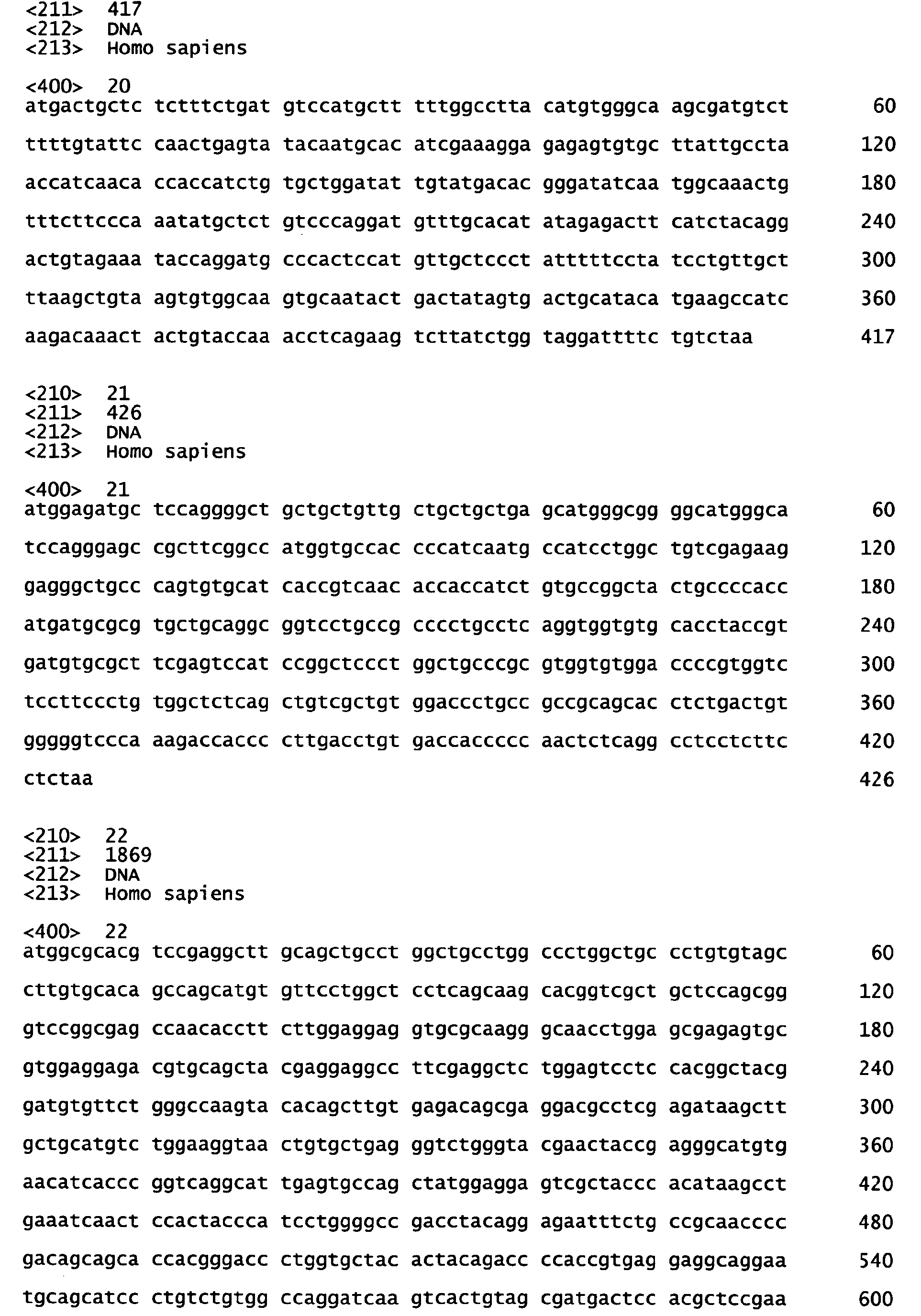


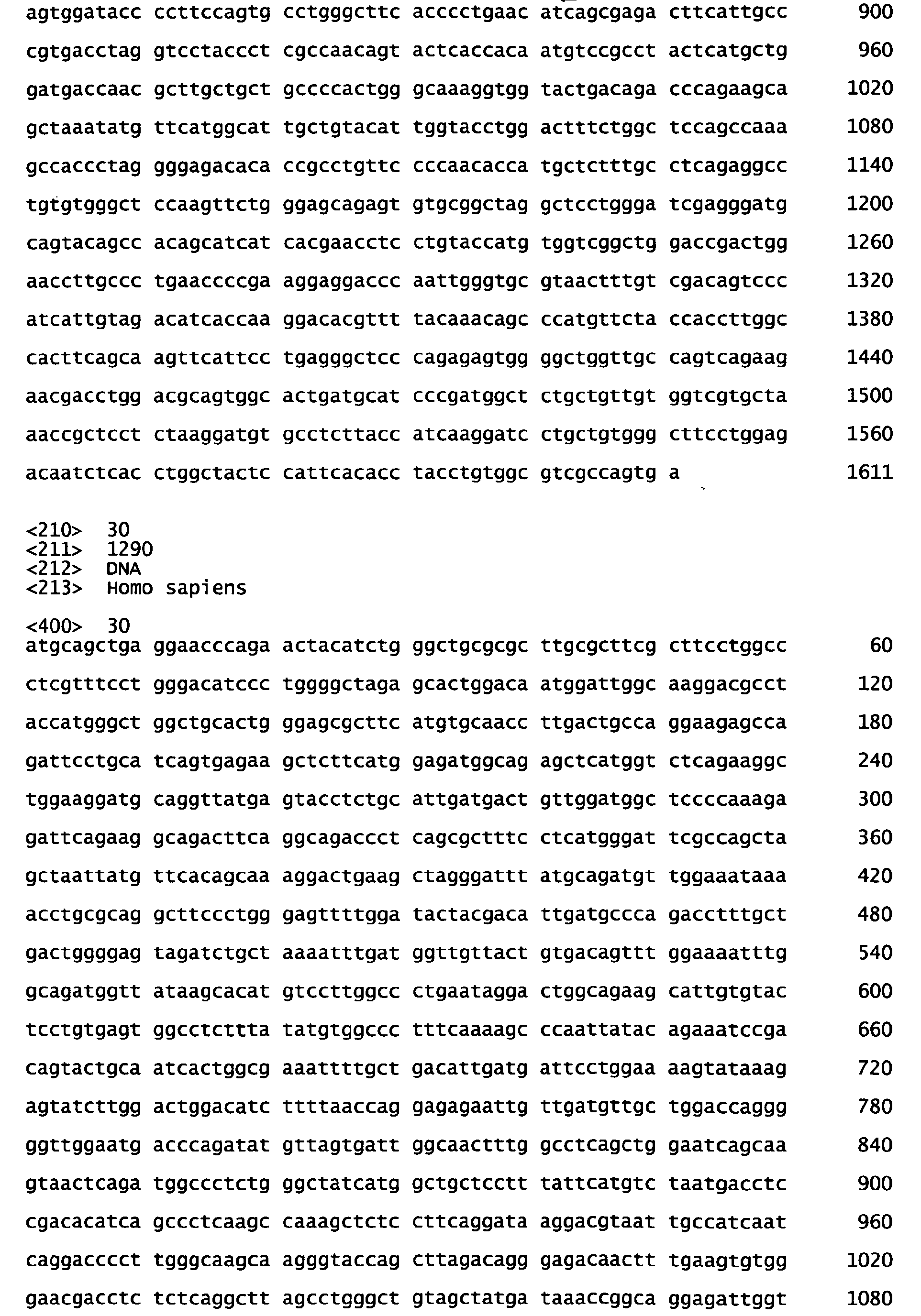


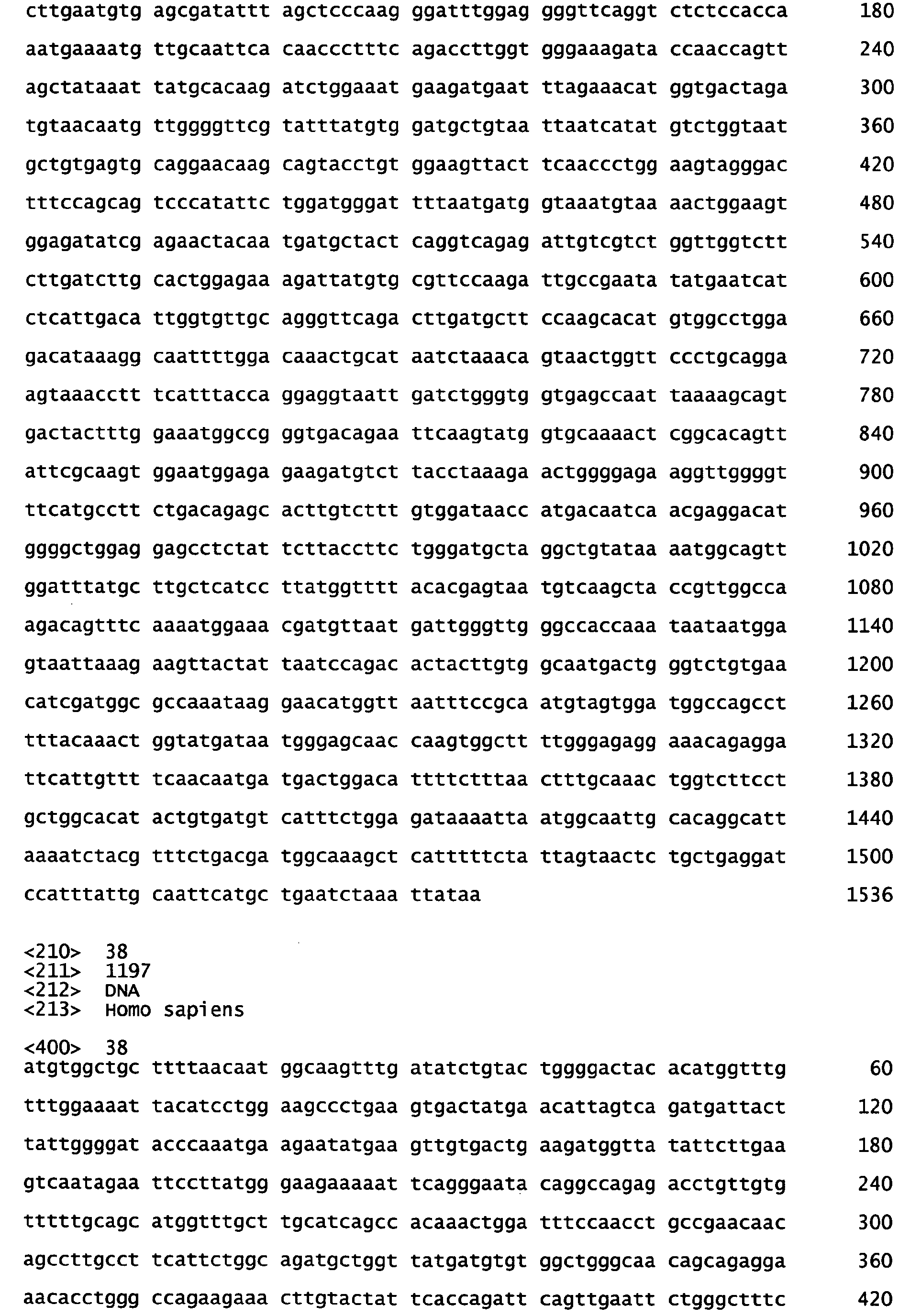


Claims (11)
- A transformed diatom comprising a nucleic acid sequence operatively linked to a promoter, wherein said nucleic acid sequence encodes an amino acid sequence comprising :(i) an heterologous signal peptide; and(ii) a polypeptide,
said heterologous signal peptide leading to the secretion of said polypeptide in the extracellular medium of said transformed diatom. - The transformed diatom according to claim 1, wherein said diatom is selected from the group comprising Phaeodactylacaeae diatoms.
- The transformed diatom according to any one of claims 1 or 2, wherein said diatom is Phaeodactylum tricornutum.
- The transformed diatom according to any one of claims 1 to 3, wherein
said polypeptide is a heterologous polypeptide, and
said heretologous signal peptide is the signal peptide of said heterologous polypeptide, said signal peptide leading to the secretion of said polypeptide in the extracellular medium of the organism of said polypeptide. - The transformed diatom according to any one of claims 1 to 4, wherein the polypeptide is an animal polypeptide of animal origin, preferably a mammalian polypeptide of mammalian origin and most preferably a human polypeptide of human origin.
- The transformed diatom according to any one of claims 1 to 5, wherein said polypeptide is selected from the group comprising erythropoietin, cytokines such as interferons, antibodies and their fragments, coagulation factors, hormones, beta-glucocerebrosidase, pentraxin-3, anti-TNFs, α-glucosidase acide, α-L-iduronidase and derivatives thereof .
- The transformed diatom according to any one of claims 1 to 6, wherein said nucleic acid sequence is selected from the group comprising the nucleic acid sequences as listed in Table I and derivatives thereof.
- A method for producing a polypeptide which is secreted in the extracellular medium, said method comprising the steps of:(i) culturing a transformed diatom as defined in any one of claims 1 to 5;(ii) harvesting the extracellular medium of said culture; and(iii) purifying the secreted polypeptide in said extracellular medium.
- The method according to claim 7, wherein said method comprises a step (iv) of determining the glycosylation pattern of said polypeptide.
- The method according to any one of claims 7 or 8, wherein said method leads to the secretion in the extracellular medium of at least 25%, 50%, 75% or 90% of the polypeptide expressed in said diatom.
- A use of a transformed diatom as defined in any one of claims 1 to 7 for the secretion of a polypeptide in the extracellular medium.
Priority Applications (4)
| Application Number | Priority Date | Filing Date | Title |
|---|---|---|---|
| EP10013808A EP2444495A1 (en) | 2010-10-20 | 2010-10-20 | Secretion of recombinant polypeptides in the extracellular medium of diatoms |
| EP11787596.3A EP2630243A1 (en) | 2010-10-20 | 2011-10-20 | Secretion of recombinant polypeptides in the extracellular medium of diatoms |
| PCT/EP2011/005282 WO2012052170A1 (en) | 2010-10-20 | 2011-10-20 | Secretion of recombinant polypeptides in the extracellular medium of diatoms |
| US13/880,786 US20130244265A1 (en) | 2010-10-20 | 2011-10-20 | Secretion of recombinant polypeptides in the extracellular medium of diatoms |
Applications Claiming Priority (1)
| Application Number | Priority Date | Filing Date | Title |
|---|---|---|---|
| EP10013808A EP2444495A1 (en) | 2010-10-20 | 2010-10-20 | Secretion of recombinant polypeptides in the extracellular medium of diatoms |
Publications (1)
| Publication Number | Publication Date |
|---|---|
| EP2444495A1 true EP2444495A1 (en) | 2012-04-25 |
Family
ID=43731800
Family Applications (2)
| Application Number | Title | Priority Date | Filing Date |
|---|---|---|---|
| EP10013808A Withdrawn EP2444495A1 (en) | 2010-10-20 | 2010-10-20 | Secretion of recombinant polypeptides in the extracellular medium of diatoms |
| EP11787596.3A Withdrawn EP2630243A1 (en) | 2010-10-20 | 2011-10-20 | Secretion of recombinant polypeptides in the extracellular medium of diatoms |
Family Applications After (1)
| Application Number | Title | Priority Date | Filing Date |
|---|---|---|---|
| EP11787596.3A Withdrawn EP2630243A1 (en) | 2010-10-20 | 2011-10-20 | Secretion of recombinant polypeptides in the extracellular medium of diatoms |
Country Status (3)
| Country | Link |
|---|---|
| US (1) | US20130244265A1 (en) |
| EP (2) | EP2444495A1 (en) |
| WO (1) | WO2012052170A1 (en) |
Cited By (1)
| Publication number | Priority date | Publication date | Assignee | Title |
|---|---|---|---|---|
| LU103006B1 (en) * | 2022-09-15 | 2024-03-15 | Phaeosynt Gbr | IMMUNOASSAY FOR DETECTING BIOLOGICALLY ACTIVE PROTEINS |
Families Citing this family (4)
| Publication number | Priority date | Publication date | Assignee | Title |
|---|---|---|---|---|
| EP2844760A1 (en) * | 2012-05-02 | 2015-03-11 | Algenics | Production of secreted therapeutic antibodies in microalgae |
| EP2660324A1 (en) * | 2012-05-02 | 2013-11-06 | Algenics | Production of secreted therapeutic antibodies in microalgae |
| EP2660323A1 (en) * | 2012-05-02 | 2013-11-06 | Algenics | Production of secreted therapeutic antibodies in phaeodactylum tricornutum microalgae |
| EP2671950A1 (en) * | 2012-06-06 | 2013-12-11 | Philipps-Universität Marburg | Expression and secretion of recombinant, completely assembled protein complexes using microalgae |
Citations (1)
| Publication number | Priority date | Publication date | Assignee | Title |
|---|---|---|---|---|
| WO2009101160A1 (en) | 2008-02-12 | 2009-08-20 | Institut Francais De Recherche Pour L'exploitation De La Mer (Ifremer) | Production of glycosylated polypeptides in microalgae |
Family Cites Families (7)
| Publication number | Priority date | Publication date | Assignee | Title |
|---|---|---|---|---|
| US5661017A (en) * | 1993-09-14 | 1997-08-26 | Dunahay; Terri Goodman | Method to transform algae, materials therefor, and products produced thereby |
| WO1997039106A1 (en) * | 1996-04-12 | 1997-10-23 | Martek Biosciences Corporation | Methods and tools for transformation of eukaryotic algae |
| DE102004027816A1 (en) * | 2004-06-08 | 2006-01-05 | Bioceuticals Arzneimittel Ag | Process for the purification of erythropoietin |
| US8936930B2 (en) * | 2004-08-05 | 2015-01-20 | Ben-Gurion University Of The Negev Research And Development Authority | Red microalgae expressing exogenous polypeptides and methods of generating and utilizing same |
| WO2006081430A2 (en) * | 2005-01-27 | 2006-08-03 | Five Prime Therapeutics, Inc. | Leader sequences for directing secretion of polypeptides and methods for production thereof |
| EP2298923A1 (en) * | 2009-09-18 | 2011-03-23 | Université de Liège | Method for the production of recombinant proteins by green microalgae |
| CA2785971C (en) * | 2009-12-28 | 2019-02-12 | Dsm Ip Assets B.V. | Production of heterologous polypeptides in microalgae, microalgal extracellular bodies, compositions, and methods of making and uses thereof |
-
2010
- 2010-10-20 EP EP10013808A patent/EP2444495A1/en not_active Withdrawn
-
2011
- 2011-10-20 EP EP11787596.3A patent/EP2630243A1/en not_active Withdrawn
- 2011-10-20 WO PCT/EP2011/005282 patent/WO2012052170A1/en not_active Ceased
- 2011-10-20 US US13/880,786 patent/US20130244265A1/en not_active Abandoned
Patent Citations (1)
| Publication number | Priority date | Publication date | Assignee | Title |
|---|---|---|---|---|
| WO2009101160A1 (en) | 2008-02-12 | 2009-08-20 | Institut Francais De Recherche Pour L'exploitation De La Mer (Ifremer) | Production of glycosylated polypeptides in microalgae |
Non-Patent Citations (10)
| Title |
|---|
| ANONYMOUS: "Specialized Protein Expression Systems - Day 2 Agenda", 2009, pages 1 - 3, XP002628989, Retrieved from the Internet <URL:http://www.healthtech.com/Conferences_Archive.aspx?id=89798> [retrieved on 20110318] * |
| EMANUELSSON O. ET AL.: "Locating proteins in the cell using TargetP, SignalP and related tools", NAT PROTOC, vol. 2, 2007, pages 953 - 971, XP008097990, DOI: doi:10.1038/nprot.2007.131 |
| SEVENO: "Plant N-glycan profiling of minute amounts of material", ANAL. BIOCHEM., vol. 379, no. 1, 2008, pages 66 - 72, XP022733665, DOI: doi:10.1016/j.ab.2008.04.034 |
| STADLMANN ET AL.: "Analysis of immunoglobulin glycosylation by LC-ESI-MS of glycopeptides and oligosaccharides", PROTEOMICS, vol. 8, 2008, pages 2858 - 2871, XP055188198, DOI: doi:10.1002/pmic.200700968 |
| THOMAS JL. ET AL.: "A helium burst biolistic device adapted to penetrate fragile insect tissues", JOURNAL OFINSECT SCIENCE, 2001, pages 1 - 9 |
| VERNET K.; SCHATZ G.: "Protein translocation across membranes", SCIENCE, vol. 241, 1988, pages 1307 - 1313 |
| VON HEIJNE G.: "The signal Peptide", J MEMBR BIOL, vol. 115, 1990, pages 195 - 201 |
| VON HEIJNE G.: "The signal Peptide", JMEMBR BIOL, vol. 115, 1990, pages 195 - 201 |
| ZASLAVSKAIA LIOUDMILA A ET AL: "Transformation of the diatom Phaeodactylum tricornutum (Bacillariophyceae) with a variety of selectable marker and reporter genes. Correction of journal title", JOURNAL OF PHYCOLOGY, vol. 36, no. 2, April 2000 (2000-04-01), pages 379 - 386, XP002628990, ISSN: 0022-3646 * |
| ZAVLASKAIA ET AL.: "Transformation of the diatom Phaeodactylum tricornutum (Bacillariophyceae) with a variety of selectable marker and reporter genes", J PHYCOL., vol. 36, 2000, pages 379 - 386 |
Cited By (2)
| Publication number | Priority date | Publication date | Assignee | Title |
|---|---|---|---|---|
| LU103006B1 (en) * | 2022-09-15 | 2024-03-15 | Phaeosynt Gbr | IMMUNOASSAY FOR DETECTING BIOLOGICALLY ACTIVE PROTEINS |
| WO2024056905A1 (en) | 2022-09-15 | 2024-03-21 | Phaeosynt Gmbh | Immunoassay for verifying biologically active proteins |
Also Published As
| Publication number | Publication date |
|---|---|
| US20130244265A1 (en) | 2013-09-19 |
| EP2630243A1 (en) | 2013-08-28 |
| WO2012052170A1 (en) | 2012-04-26 |
Similar Documents
| Publication | Publication Date | Title |
|---|---|---|
| ES2921137T3 (en) | Carbon source-regulated protein production in a recombinant host cell | |
| CN107810271B (en) | Compositions and methods for producing polypeptides with altered glycosylation patterns in plant cells | |
| BR112014016587A2 (en) | protease-deficient filamentous fungal cells and methods of using them | |
| US20130244265A1 (en) | Secretion of recombinant polypeptides in the extracellular medium of diatoms | |
| US9012367B2 (en) | Rapid screening method of translational fusion partners for producing recombinant proteins and translational fusion partners screened therefrom | |
| KR20070009269A (en) | Protein fusion factor library for recombinant protein production and protein fusion factor obtained therefrom | |
| US9347107B2 (en) | Vector containing multiple nucleotide sequences for the expression of enzymes | |
| CN104066841B (en) | The manufacture method of expression vector and protein | |
| AU2016239324B2 (en) | Eukaryotic expression vectors comprising regulatory elements of the globin gene clusters | |
| CN102659928B (en) | Synthetic signal peptide and application thereof | |
| CN106715686B (en) | Methods of producing recombinant glycoproteins with modified glycosylation | |
| BR112020016258A2 (en) | A GENETICALLY MODIFIED EUCHARIOTIC HOST CELL DESIGNED TO REDUCE THE PRODUCTION OF THE HOST CELL PROTEIN, METHOD OF PRODUCING A PROTEIN OF INTEREST USING THE HOST CELL, METHOD OF REDUCING THE HOSPITAL HOSPITAL | |
| EP2471929A1 (en) | Production of high mannose glycosylated proteins stored in the plastid of microalgae | |
| WO2007099776A1 (en) | Koji mold strain highly producing foreign protein | |
| Matsui et al. | High-efficiency secretory production of peroxidase C1a using vesicular transport engineering in transgenic tobacco | |
| CN103483423B (en) | Artificially synthesized signal peptide and application thereof | |
| CN101921315B (en) | Artificially synthesized signal peptide and application thereof | |
| KR100798894B1 (en) | Translational fusion partner for producing recombinant proteins | |
| EP2660323A1 (en) | Production of secreted therapeutic antibodies in phaeodactylum tricornutum microalgae | |
| CN110358770B (en) | A method for yeast biosynthesis of conotoxin | |
| Maleki et al. | High expression of methylotrophic yeast-derived recombinant human erythropoietin in a pH-controlled batch system | |
| KR20210126015A (en) | Buffer formulation methods and systems | |
| CN104059128B (en) | The signal peptide of a kind of synthetic and application thereof | |
| KR100626753B1 (en) | Ultrafast Screening Method of Customized Protein Fusion Factors for Recombinant Protein Production | |
| CN102659927B (en) | A kind of artificially synthesized signal peptide and its application |
Legal Events
| Date | Code | Title | Description |
|---|---|---|---|
| AK | Designated contracting states |
Kind code of ref document: A1 Designated state(s): AL AT BE BG CH CY CZ DE DK EE ES FI FR GB GR HR HU IE IS IT LI LT LU LV MC MK MT NL NO PL PT RO RS SE SI SK SM TR |
|
| AX | Request for extension of the european patent |
Extension state: BA ME |
|
| PUAI | Public reference made under article 153(3) epc to a published international application that has entered the european phase |
Free format text: ORIGINAL CODE: 0009012 |
|
| STAA | Information on the status of an ep patent application or granted ep patent |
Free format text: STATUS: THE APPLICATION IS DEEMED TO BE WITHDRAWN |
|
| 18D | Application deemed to be withdrawn |
Effective date: 20121026 |