EP2444494B1 - Rna antagonist compounds for the modulation of pcsk9 - Google Patents
Rna antagonist compounds for the modulation of pcsk9 Download PDFInfo
- Publication number
- EP2444494B1 EP2444494B1 EP11181596.5A EP11181596A EP2444494B1 EP 2444494 B1 EP2444494 B1 EP 2444494B1 EP 11181596 A EP11181596 A EP 11181596A EP 2444494 B1 EP2444494 B1 EP 2444494B1
- Authority
- EP
- European Patent Office
- Prior art keywords
- dna
- artificial
- antisense oligonucleotide
- lna
- seq
- Prior art date
- Legal status (The legal status is an assumption and is not a legal conclusion. Google has not performed a legal analysis and makes no representation as to the accuracy of the status listed.)
- Active
Links
Images


Classifications
-
- C—CHEMISTRY; METALLURGY
- C12—BIOCHEMISTRY; BEER; SPIRITS; WINE; VINEGAR; MICROBIOLOGY; ENZYMOLOGY; MUTATION OR GENETIC ENGINEERING
- C12N—MICROORGANISMS OR ENZYMES; COMPOSITIONS THEREOF; PROPAGATING, PRESERVING, OR MAINTAINING MICROORGANISMS; MUTATION OR GENETIC ENGINEERING; CULTURE MEDIA
- C12N15/00—Mutation or genetic engineering; DNA or RNA concerning genetic engineering, vectors, e.g. plasmids, or their isolation, preparation or purification; Use of hosts therefor
- C12N15/09—Recombinant DNA-technology
- C12N15/11—DNA or RNA fragments; Modified forms thereof; Non-coding nucleic acids having a biological activity
- C12N15/113—Non-coding nucleic acids modulating the expression of genes, e.g. antisense oligonucleotides; Antisense DNA or RNA; Triplex- forming oligonucleotides; Catalytic nucleic acids, e.g. ribozymes; Nucleic acids used in co-suppression or gene silencing
- C12N15/1137—Non-coding nucleic acids modulating the expression of genes, e.g. antisense oligonucleotides; Antisense DNA or RNA; Triplex- forming oligonucleotides; Catalytic nucleic acids, e.g. ribozymes; Nucleic acids used in co-suppression or gene silencing against enzymes
-
- A—HUMAN NECESSITIES
- A61—MEDICAL OR VETERINARY SCIENCE; HYGIENE
- A61P—SPECIFIC THERAPEUTIC ACTIVITY OF CHEMICAL COMPOUNDS OR MEDICINAL PREPARATIONS
- A61P1/00—Drugs for disorders of the alimentary tract or the digestive system
- A61P1/14—Prodigestives, e.g. acids, enzymes, appetite stimulants, antidyspeptics, tonics, antiflatulents
-
- A—HUMAN NECESSITIES
- A61—MEDICAL OR VETERINARY SCIENCE; HYGIENE
- A61P—SPECIFIC THERAPEUTIC ACTIVITY OF CHEMICAL COMPOUNDS OR MEDICINAL PREPARATIONS
- A61P1/00—Drugs for disorders of the alimentary tract or the digestive system
- A61P1/16—Drugs for disorders of the alimentary tract or the digestive system for liver or gallbladder disorders, e.g. hepatoprotective agents, cholagogues, litholytics
-
- A—HUMAN NECESSITIES
- A61—MEDICAL OR VETERINARY SCIENCE; HYGIENE
- A61P—SPECIFIC THERAPEUTIC ACTIVITY OF CHEMICAL COMPOUNDS OR MEDICINAL PREPARATIONS
- A61P11/00—Drugs for disorders of the respiratory system
- A61P11/06—Antiasthmatics
-
- A—HUMAN NECESSITIES
- A61—MEDICAL OR VETERINARY SCIENCE; HYGIENE
- A61P—SPECIFIC THERAPEUTIC ACTIVITY OF CHEMICAL COMPOUNDS OR MEDICINAL PREPARATIONS
- A61P13/00—Drugs for disorders of the urinary system
- A61P13/02—Drugs for disorders of the urinary system of urine or of the urinary tract, e.g. urine acidifiers
-
- A—HUMAN NECESSITIES
- A61—MEDICAL OR VETERINARY SCIENCE; HYGIENE
- A61P—SPECIFIC THERAPEUTIC ACTIVITY OF CHEMICAL COMPOUNDS OR MEDICINAL PREPARATIONS
- A61P13/00—Drugs for disorders of the urinary system
- A61P13/12—Drugs for disorders of the urinary system of the kidneys
-
- A—HUMAN NECESSITIES
- A61—MEDICAL OR VETERINARY SCIENCE; HYGIENE
- A61P—SPECIFIC THERAPEUTIC ACTIVITY OF CHEMICAL COMPOUNDS OR MEDICINAL PREPARATIONS
- A61P15/00—Drugs for genital or sexual disorders; Contraceptives
- A61P15/16—Masculine contraceptives
-
- A—HUMAN NECESSITIES
- A61—MEDICAL OR VETERINARY SCIENCE; HYGIENE
- A61P—SPECIFIC THERAPEUTIC ACTIVITY OF CHEMICAL COMPOUNDS OR MEDICINAL PREPARATIONS
- A61P19/00—Drugs for skeletal disorders
- A61P19/02—Drugs for skeletal disorders for joint disorders, e.g. arthritis, arthrosis
-
- A—HUMAN NECESSITIES
- A61—MEDICAL OR VETERINARY SCIENCE; HYGIENE
- A61P—SPECIFIC THERAPEUTIC ACTIVITY OF CHEMICAL COMPOUNDS OR MEDICINAL PREPARATIONS
- A61P25/00—Drugs for disorders of the nervous system
- A61P25/28—Drugs for disorders of the nervous system for treating neurodegenerative disorders of the central nervous system, e.g. nootropic agents, cognition enhancers, drugs for treating Alzheimer's disease or other forms of dementia
-
- A—HUMAN NECESSITIES
- A61—MEDICAL OR VETERINARY SCIENCE; HYGIENE
- A61P—SPECIFIC THERAPEUTIC ACTIVITY OF CHEMICAL COMPOUNDS OR MEDICINAL PREPARATIONS
- A61P29/00—Non-central analgesic, antipyretic or antiinflammatory agents, e.g. antirheumatic agents; Non-steroidal antiinflammatory drugs [NSAID]
-
- A—HUMAN NECESSITIES
- A61—MEDICAL OR VETERINARY SCIENCE; HYGIENE
- A61P—SPECIFIC THERAPEUTIC ACTIVITY OF CHEMICAL COMPOUNDS OR MEDICINAL PREPARATIONS
- A61P3/00—Drugs for disorders of the metabolism
-
- A—HUMAN NECESSITIES
- A61—MEDICAL OR VETERINARY SCIENCE; HYGIENE
- A61P—SPECIFIC THERAPEUTIC ACTIVITY OF CHEMICAL COMPOUNDS OR MEDICINAL PREPARATIONS
- A61P3/00—Drugs for disorders of the metabolism
- A61P3/04—Anorexiants; Antiobesity agents
-
- A—HUMAN NECESSITIES
- A61—MEDICAL OR VETERINARY SCIENCE; HYGIENE
- A61P—SPECIFIC THERAPEUTIC ACTIVITY OF CHEMICAL COMPOUNDS OR MEDICINAL PREPARATIONS
- A61P3/00—Drugs for disorders of the metabolism
- A61P3/06—Antihyperlipidemics
-
- A—HUMAN NECESSITIES
- A61—MEDICAL OR VETERINARY SCIENCE; HYGIENE
- A61P—SPECIFIC THERAPEUTIC ACTIVITY OF CHEMICAL COMPOUNDS OR MEDICINAL PREPARATIONS
- A61P3/00—Drugs for disorders of the metabolism
- A61P3/08—Drugs for disorders of the metabolism for glucose homeostasis
- A61P3/10—Drugs for disorders of the metabolism for glucose homeostasis for hyperglycaemia, e.g. antidiabetics
-
- A—HUMAN NECESSITIES
- A61—MEDICAL OR VETERINARY SCIENCE; HYGIENE
- A61P—SPECIFIC THERAPEUTIC ACTIVITY OF CHEMICAL COMPOUNDS OR MEDICINAL PREPARATIONS
- A61P3/00—Drugs for disorders of the metabolism
- A61P3/12—Drugs for disorders of the metabolism for electrolyte homeostasis
- A61P3/14—Drugs for disorders of the metabolism for electrolyte homeostasis for calcium homeostasis
-
- A—HUMAN NECESSITIES
- A61—MEDICAL OR VETERINARY SCIENCE; HYGIENE
- A61P—SPECIFIC THERAPEUTIC ACTIVITY OF CHEMICAL COMPOUNDS OR MEDICINAL PREPARATIONS
- A61P31/00—Antiinfectives, i.e. antibiotics, antiseptics, chemotherapeutics
- A61P31/12—Antivirals
- A61P31/14—Antivirals for RNA viruses
- A61P31/18—Antivirals for RNA viruses for HIV
-
- A—HUMAN NECESSITIES
- A61—MEDICAL OR VETERINARY SCIENCE; HYGIENE
- A61P—SPECIFIC THERAPEUTIC ACTIVITY OF CHEMICAL COMPOUNDS OR MEDICINAL PREPARATIONS
- A61P35/00—Antineoplastic agents
-
- A—HUMAN NECESSITIES
- A61—MEDICAL OR VETERINARY SCIENCE; HYGIENE
- A61P—SPECIFIC THERAPEUTIC ACTIVITY OF CHEMICAL COMPOUNDS OR MEDICINAL PREPARATIONS
- A61P37/00—Drugs for immunological or allergic disorders
- A61P37/02—Immunomodulators
-
- A—HUMAN NECESSITIES
- A61—MEDICAL OR VETERINARY SCIENCE; HYGIENE
- A61P—SPECIFIC THERAPEUTIC ACTIVITY OF CHEMICAL COMPOUNDS OR MEDICINAL PREPARATIONS
- A61P37/00—Drugs for immunological or allergic disorders
- A61P37/02—Immunomodulators
- A61P37/04—Immunostimulants
-
- A—HUMAN NECESSITIES
- A61—MEDICAL OR VETERINARY SCIENCE; HYGIENE
- A61P—SPECIFIC THERAPEUTIC ACTIVITY OF CHEMICAL COMPOUNDS OR MEDICINAL PREPARATIONS
- A61P43/00—Drugs for specific purposes, not provided for in groups A61P1/00-A61P41/00
-
- A—HUMAN NECESSITIES
- A61—MEDICAL OR VETERINARY SCIENCE; HYGIENE
- A61P—SPECIFIC THERAPEUTIC ACTIVITY OF CHEMICAL COMPOUNDS OR MEDICINAL PREPARATIONS
- A61P5/00—Drugs for disorders of the endocrine system
-
- A—HUMAN NECESSITIES
- A61—MEDICAL OR VETERINARY SCIENCE; HYGIENE
- A61P—SPECIFIC THERAPEUTIC ACTIVITY OF CHEMICAL COMPOUNDS OR MEDICINAL PREPARATIONS
- A61P5/00—Drugs for disorders of the endocrine system
- A61P5/10—Drugs for disorders of the endocrine system of the posterior pituitary hormones, e.g. oxytocin, ADH
-
- A—HUMAN NECESSITIES
- A61—MEDICAL OR VETERINARY SCIENCE; HYGIENE
- A61P—SPECIFIC THERAPEUTIC ACTIVITY OF CHEMICAL COMPOUNDS OR MEDICINAL PREPARATIONS
- A61P5/00—Drugs for disorders of the endocrine system
- A61P5/14—Drugs for disorders of the endocrine system of the thyroid hormones, e.g. T3, T4
-
- A—HUMAN NECESSITIES
- A61—MEDICAL OR VETERINARY SCIENCE; HYGIENE
- A61P—SPECIFIC THERAPEUTIC ACTIVITY OF CHEMICAL COMPOUNDS OR MEDICINAL PREPARATIONS
- A61P7/00—Drugs for disorders of the blood or the extracellular fluid
-
- A—HUMAN NECESSITIES
- A61—MEDICAL OR VETERINARY SCIENCE; HYGIENE
- A61P—SPECIFIC THERAPEUTIC ACTIVITY OF CHEMICAL COMPOUNDS OR MEDICINAL PREPARATIONS
- A61P7/00—Drugs for disorders of the blood or the extracellular fluid
- A61P7/02—Antithrombotic agents; Anticoagulants; Platelet aggregation inhibitors
-
- A—HUMAN NECESSITIES
- A61—MEDICAL OR VETERINARY SCIENCE; HYGIENE
- A61P—SPECIFIC THERAPEUTIC ACTIVITY OF CHEMICAL COMPOUNDS OR MEDICINAL PREPARATIONS
- A61P9/00—Drugs for disorders of the cardiovascular system
-
- A—HUMAN NECESSITIES
- A61—MEDICAL OR VETERINARY SCIENCE; HYGIENE
- A61P—SPECIFIC THERAPEUTIC ACTIVITY OF CHEMICAL COMPOUNDS OR MEDICINAL PREPARATIONS
- A61P9/00—Drugs for disorders of the cardiovascular system
- A61P9/10—Drugs for disorders of the cardiovascular system for treating ischaemic or atherosclerotic diseases, e.g. antianginal drugs, coronary vasodilators, drugs for myocardial infarction, retinopathy, cerebrovascula insufficiency, renal arteriosclerosis
-
- A—HUMAN NECESSITIES
- A61—MEDICAL OR VETERINARY SCIENCE; HYGIENE
- A61P—SPECIFIC THERAPEUTIC ACTIVITY OF CHEMICAL COMPOUNDS OR MEDICINAL PREPARATIONS
- A61P9/00—Drugs for disorders of the cardiovascular system
- A61P9/12—Antihypertensives
-
- C—CHEMISTRY; METALLURGY
- C12—BIOCHEMISTRY; BEER; SPIRITS; WINE; VINEGAR; MICROBIOLOGY; ENZYMOLOGY; MUTATION OR GENETIC ENGINEERING
- C12Y—ENZYMES
- C12Y304/00—Hydrolases acting on peptide bonds, i.e. peptidases (3.4)
- C12Y304/21—Serine endopeptidases (3.4.21)
- C12Y304/21112—Site-1 protease (3.4.21.112), i.e. subtilisin kexin isozyme-1
-
- C—CHEMISTRY; METALLURGY
- C12—BIOCHEMISTRY; BEER; SPIRITS; WINE; VINEGAR; MICROBIOLOGY; ENZYMOLOGY; MUTATION OR GENETIC ENGINEERING
- C12N—MICROORGANISMS OR ENZYMES; COMPOSITIONS THEREOF; PROPAGATING, PRESERVING, OR MAINTAINING MICROORGANISMS; MUTATION OR GENETIC ENGINEERING; CULTURE MEDIA
- C12N2310/00—Structure or type of the nucleic acid
- C12N2310/10—Type of nucleic acid
- C12N2310/11—Antisense
-
- C—CHEMISTRY; METALLURGY
- C12—BIOCHEMISTRY; BEER; SPIRITS; WINE; VINEGAR; MICROBIOLOGY; ENZYMOLOGY; MUTATION OR GENETIC ENGINEERING
- C12N—MICROORGANISMS OR ENZYMES; COMPOSITIONS THEREOF; PROPAGATING, PRESERVING, OR MAINTAINING MICROORGANISMS; MUTATION OR GENETIC ENGINEERING; CULTURE MEDIA
- C12N2310/00—Structure or type of the nucleic acid
- C12N2310/10—Type of nucleic acid
- C12N2310/14—Type of nucleic acid interfering nucleic acids [NA]
Definitions
- the present invention provides compounds, compositions and methods for modulating the expression of PCSK9.
- this invention relates to oligomeric compounds, such as oligonucleotide compounds, which are hybridisable with target nucleic acids encoding PCSK9, and methods for the preparation of such oligomeric compounds.
- the oligonucleotide compounds have been shown to modulate the expression of PCSK9, and pharmaceutical preparations thereof and their use as treatment of hypercholesterolemia and related disorders are disclosed.
- PCSK9 Proprotein convertase subtilisin/kexin type 9a
- NARC-1 The PCSK9 gene (NARC-1) has been identified as a third locus involved in autosomal dominant hypercholesterolemia (ADH), characterised by high levels of low-density lipoprotein (LDL), xhantomas, and a high frequency of coronary heart disease. The other two loci being apolipoprotein-B (Apo-B) and the LDL receptor (LDLR).
- ADH autosomal dominant hypercholesterolemia
- LDL low-density lipoprotein
- LDLR LDL receptor
- PCSK9 acts as a natural inhibitor of the LDL-receptor pathway, and both genes are regulated by depletion of cholesterol cell content and statins via sterol regulatory element-binding protein (SREBP).
- SREBP sterol regulatory element-binding protein
- the human NARC1 mRNA (cDNA) sequence, which encodes human PCSK9 is shown as SEQ ID NO 2 (NCBI Acc. No. NM_174936).
- the human PCSK9 polypeptide sequence (nascent) is shown as SEQ ID NO 1 (NCBI Acc. No. NP_777596.
- the polypeptide has a signal peptide between residues 1-30, which is co-translationally cleaved to produce a proprotein (31-692 of SEQ ID No 1), which is subsequently cleaved by a protease to produce a mature protein corresponding to amino acids 83-692 of SEQ ID NO 1.
- a glycosylation site has been characterised at residue 533.
- WO01/57081 discloses the NARC-1 polynucleotide sequence and discloses that antisense nucleic acids can be designed using the NARC-1 polynucleotide sequence, and that such antisense nucleic acids may comprise modified nucleotides or bases, such as peptide nucleic acids.
- WO2004/097047 which discloses two mutants of PCSK9 which are associated with ADH, suggests that antisense or RNAi of such PCSK9 mutants may be used for treatment of ADH.
- Lalanne Florent et al., J. Lipid Research, vol 46, No 6 pp 1312-1319 (2005 ) and US 2004/009553 refers to siRNA molecules which decrease the expression of PCSK9 gene.
- Kurreck et al., Nucleic Acid Research 30, pp1911-1918 (2002 ) discloses the design of antisense oligonucleotides containing locked nucleic acids.
- the invention provides therapeutic solutions for the treatment of hypercholesterolemia and related disorders, based upon antisense oligonucleotides, targeted against PCSK9 nucleic acids.
- the inventors have discovered that the use of nucleotide analogues which have an enhanced affinity for their complementary binding partner, such as Locked Nucleic Acid (LNA) nucleotide analogues, within antisense oligonucleotides that are targeted towards PCSK9 target nucleic acids, provide highly effective modulation, particularly the down-regulation, of PCSK9 (NARC1) expression.
- LNA Locked Nucleic Acid
- the invention provides for antisense oligonucleotides as defined in claim 1.
- the antisense oligonucleotide is of between 10-25 nucleobases in length which consists or comprises a contiguous nucleobase sequence of a total of between 10-25 nucleobases, wherein said contiguous nucleobase sequence is complementary to a corresponding region of a SEQ ID NO 2.
- the antisense oligonucleotide is not a siRNA.
- the invention further provides a conjugate comprising the antisense oligonucleotide according to the invention, such as a conjugate which, in addition to the nucloebase sequence of the antisense oligonucleotide comprises at least one non-nucleotide or non-polynucleotide moiety covalently attached to the antisense oligonucleotide of the invention.
- the antisense oligonucleotide may consist of a sequence of total of between 10 - 25 nucleobases, which are complementary to a contiguous sequence which is present in SEQ ID NO 2.
- the antisense oligonucleotide according to the invention is for use as a medicament as defined in claim 15.
- the antisense oligonucleotides of the invention may be used in methods of modulating the expression of PCSK9 in mammalian cells or tissues comprising contacting said mammalian cells or tissues with one or more of the oligomeric compounds or compositions of the invention. Typically the expression of PCSK9 is inhibited or reduced.
- the antisense oligonucleotides of the invention may be used in methods of treating a mammal, such as a human, suspected of having or being prone to a disease or condition, associated with expression of PCSK9, such as hypercholesterolemia or related disorder, by administering a therapeutically or prophylactically effective amount of one or more of the oligomeric compounds or compositions of the invention.
- the antisense oligonucleotides of the invention may be used in methods for the inhibition of expression of PCSK9 and for treatment of diseases associated with PCSK9 activity are provided, such as hypercholesterolemia and/or related disorders.
- the invention provides for pharmaceutical composition
- pharmaceutical composition comprising the antisense oligonucleotide or conjugate of the invention, and a pharmaceutically acceptable diluent, carrier, salt or adjuvant.
- the invention also provides pharmaceutical compositions which comprise antisense oligonucleotide compounds according to the invention and further compounds capable of modulating blood serum cholesterol levels, such as apolipoprotein B (Apo-B100) modulators, in particular antisense oligonucleotides (oligomers) targeted to Apo-B nucleic acid targets.
- apolipoprotein B (Apo-B100) modulators in particular antisense oligonucleotides (oligomers) targeted to Apo-B nucleic acid targets.
- the antisense oligonucleotides of the invention may be used in a method of (i) reducing the level of blood serum cholesterol or ii) reducing the level of blood serum LDL-cholesterol, or iii) for improving the HDL/LDL ratio, in a patient, the method comprising the step of administering the antisense oligonucleotide or the conjugate or the pharmaceutical composition according to the invention to the patient.
- the antisense oligonucleotides of the invention may be used in a method of lowering the plasma triglyceride in a patient, the method comprising the step of administering the antisense oligonucleotide or the conjugate or the pharmaceutical composition according to the invention to the patient so that the blood serum triglyceride level is reduced.
- the antisense oligonucleotides of the invention may be used in a method of treating obesity in a patient, the method comprising the step of administering the antisense oligonucleotide or the conjugate or the pharmaceutical composition according to the invention to the patient in need of treatment so that the body weight of the patient is reduced.
- the antisense oligonucleotides of the invention may be used in a method of treating hypercholesterolemia, or related disorder, in a patient, the method comprising the step of administering the antisense oligonucleotide or the conjugate or the pharmaceutical composition according to the invention to the patient in need of treatment for hypercholesterolemia, or related disorder.
- the antisense oligonucleotides of the invention may be used in a method of treating insulin resistance in a patient, the method comprising the step of administering the antisense oligonucleotide or the conjugate or the pharmaceutical composition according to the invention to the patient in need of treatment so that the patient's sensitivity to insulin is increased.
- the antisense oligonucleotides of the invention may be used in a method of treating type II diabetes in a patient, the method comprising the step of administering the antisense oligonucleotide or the conjugate or the pharmaceutical composition according to the invention to the patient suffering from type II diabetes.
- the antisense oligonucleotides of the invention may be used in a method for treating a metabolic disorder such as metabolic syndrome, diabetes or atherosclerosis, the method comprising the step of administering the antisense oligonucleotide or the conjugate or the pharmaceutical composition according to the invention to the patient in need thereof.
- the invention provides for the antisense oligonucleotide or conjugate according to the invention for use in the treatment of a disease or disorder selected from the group consisting of: hypercholesterolemia or related disorder, as according to claim 17.
- the present invention employs antisense oligonucleotides, for use in modulating the function of nucleic acid molecules encoding human PCSK9, SEQ ID NO 1.
- the compound is complementary to a corresponding region of SEQ ID NO 2.
- the mammalian PCSK9 is human PCSK9.
- the oligomer typically comprises or consists of a contiguous nucleobase sequence.
- the nucleobase sequence of the oligomer consists of the contiguous nucleobase sequence.
- the oligomeric compound comprises at least a core sub-sequence of at least 8, such as at least 10, such as at least 12, such as at least 13, such as at least 14 contiguous nucleobases, wherein said subsequence corresponds to a contiguous sequence present in SEQ ID NO 2.
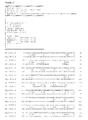
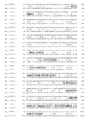
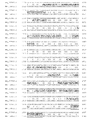
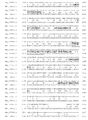
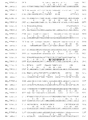
- Suitable sub-sequences may be selected from a sequence which corresponds to a contiguous sequence present in one of the nucleic acid sequences selected from the group consisting of SEQ ID NO 14, SEQ ID NO 15, SEQ ID No 16, SEQ ID NO 17, SEQ ID NO 18 and SEQ ID NO 19, or a sequence selected from the group of (antisense) sequences shown in tables 2 and 3, and (the complement of) the sequences of the highlighted (shaded) sequences (of complementarity between human and mouse PCSK9 mRNA) shown in Figure 17 ..
- Preferred subsequences comprise or consist of at least 8, such as at least 10, such as at least 12, such as at least 13, such as at least 14 contiguous nucleobases which correspond to an equivalent nucleotide sequence present in any one of SEQ ID NO 3, SEQ ID NO 4, SEQ ID NO 5, SEQ ID NO 6, SEQ ID NO 7, or SEQ ID NO 8, most preferably SEQ ID NO 3 or SEQ ID NO 4.
- the compound may further comprise a 5' flanking nucleobase sequence, or a 3' flanking sequence, or both a 5' and a 3' flanking sequence which is/are contiguous to said subsequence, wherein said flanking sequence or sequences consist of a total of between 2 and 22 nucleobase units, which when combined with said sub-sequence, the combined contiguous nucleobase sequence, i.e. consisting of said subsequence and said flanking sequence or sequences, is complementary to a corresponding region of SEQ ID NO 2.
- flanking sequence or sequences may consist of a total of between 2 and 22 nucleobase units, such 3, 4, 5, 6, 7, 8, 9, 10, 11, 12, 13, 14, 15, 16, 17, 18, 19, 20, or 21 nucleobases, or such as between 4 to 12 nucleobases or such as between 2 and 10 nucleobases, such as between 5 to 10 nucleobases, or between 5 and 8 nucleobases, such as between 7 to 9 nucleobases.
- flanking sequence comprises of at least 2 nucleobase units which are 5' to said sub-sequence.
- flanking sequence comprises between 1 and 6 nucleobase units which are 5' to said sub-sequence.
- flanking sequence comprises of at least 2 nucleobase units which are 3' to said sub-sequence.
- flanking sequence comprises between 1 and 6 nucleobase units which are 3' to said sub-sequence
- sequences of each of the flanking sequences each form a contiguous sequence.
- the combined contiguous nucleobase sequence i.e. consisting of said subsequence and, if present, said flanking sequence or sequences, is complementary to a corresponding sequence present in SEQ ID NO 2.
- the 3' flanking sequence and/or 5' flanking sequence may, independently, comprise or consist of between 1 and 10 nucleobases, such as 2, 3, 4, 5, 6, 7, 8, or 9 nucleobases, such as between 2 and 6 nucleobases, such as 3 or 4 nucleobases, which may be, in one embodiment nucleotide analogues, such as LNA units, or in another embodiment a combination of nucleotides and nucleotide analogues.
- the compound of the invention which consists of a contiguous sequence of nucleobases (i.e. a nucleobase sequence), may comprise further non-nucleobase components, such as the conjugates herein referred to.
- the compound of the invention may comprise both a polynucleotide region, i.e. a nucleobase region, and a further non-nucleobase region.
- the compound may comprise non-nucleobase components, such as a conjugate component.
- the compound of the invention may consist entirely of a (contiguous) nucleobase region.
- nucleobase portion and/or subsequence is selected from at least 9, least 10, least 11, least 12, least 13, least 14 and least 15 consecutive nucleotides or nucleotide analogues, which preferably are complementary to the target nucleic acid(S)
- the compound according to the invention consists of no more than 22 nucleobases, such as no more than 20 nucleobases, such as no more than 18 nucleobases, such as 15, 16 or 17 nucleobases, optionally conjugated with one or more non-nucleobase entity.
- the nucleic acid which encodes a mammalian PCSK9 may be in the sense or antisense orientation, preferably the sense orientation, such as the PCSK9 mRNA (of cDNA equivalent).
- the compound may target a target nucleic acid which is an RNA transcript(s) of the gene(s) encoding the target proteins, such as mRNA or pre-mRNA,
- the compound of the invention is an antisense oligonucleotide.
- the antisense oligonucleotide when introduced into the cell which is expressing the PCSK9 gene, results in reduction of the PCSK9 mRNA level, resulting in reduction in the level of expression of the PCSK9 in the cell.
- the oligomers which target the PCSK9 mRNA may hybridize to any site along the target mRNA nucleic acid, such as the 5' untranslated leader, exons, introns and 3' untranslated tail. However, it is preferred that the oligomers which target the PCSK9 mRNA hybridise to the mature mRNA form of the target nucleic acid.
- the oligonucleotides of the invention bind to the target nucleic acid and modulate the expression of its cognate protein.
- modulation produces an inhibition of expression of at least 10% or 20% compared to the normal expression level, more preferably at least a 30%, 40%, 50%, 60%, 70%, 80%, 90% or 95% inhibition compared to the normal expression level.
- modulation is seen when using between 5 and 25nM concentrations of the compound of the invention.
- the inhibition of expression is less than 100%, such as less than 98% inhibition, less than 95% inhibition, less than 90% inhibition, less than 80% inhibition, such as less than 70% inhibition.
- Modulation of expression level is determined by measuring protein levels, e.g. by the methods such as SDS-PAGE followed by western blotting using suitable antibodies raised against the target protein.
- modulation of expression levels can be determined by measuring levels of mRNA, eg. by northern blotting or quantitative RT-PCR.
- the level of down-regulation when using an appropriate dosage is, in one embodiment, typically to a level of between 10-20% the normal levels in the absence of the compound of the invention.
- the compound according to the invention is an antisense oligonucleotide.
- the compound is not a siRNA.
- the compound of the invention does not comprise RNA (units).
- the length of an oligomer (or contiguous nucleobase sequence) will be determined by that which will result in inhibition of the target.
- the contiguous nucleotide sequence or oligomer as low as 8 bases may suffice, but it will generally be more, e.g. 10 or 12, and preferably between 12-16.
- the maximum size of the oligomer will be determined by factors such as cost and convenience of production, ability to manipulate the oligomer and introduce it into a cell bearing the target mRNA, and also the desired binding affinity and target specificity. If too long, it may undesirably tolerate an increased number of mismatches, which may lead to unspecific binding.
- the compound (oligomer or oligomeric compound) of the invention consists or comprises of between 10 and 25 nucleobases, such as 11, 12, 13, 14, 15, 16, 17, 18, 19, 20, 21, 22, 23, or 24 nucleobases.
- Particularly preferred compounds are antisense oligonucleotides comprising from about 12 to 25 nucleobases and in one embodiment are antisense compounds comprising 13-18 nucleobases such as 13, 14, 15, 16 or 17 nucleobases.
- the oligomer according to the invention consists of no more than 22 nucleobases. In one embodiment it is preferred that the compound of the invention comprises less than 20 nucleobases.
- the oligomer according to the invention consists of no more than 22 nucleobases, such as no more than 20 nucleobases, such as no more than 18 nucleobases, such as 15, 16 or 17 nucleobases, optionally conjugated with one or more non-nucleobase entity, such as a conjugate.
- the oligomer or contiguous nucleobase sequence has a length of between 10 - 22 nucleobases.
- the oligomer or contiguous nucleobase sequence has a length of between 10 - 18 nucleobases.
- the oligomer or contiguous nucleobase sequence has a length of between 10 - 16 nucleobases.
- the oligomer or contiguous nucleobase sequence has a length of between 12 - 16 nucleobases.
- the oligomer or contiguous nucleobase sequence has a length of between 12 - 14 nucleobases.
- the oligomer or contiguous nucleobase sequence has a length of between 14 - 16 nucleobases.
- the oligomer or contiguous nucleobase sequence has a length of between 14 - 18 nucleobases.
- the oligomer or contiguous nucleobase sequence has a length of 14, 15 or 16 nucleobases.
- the oligomer or contiguous nucleobase sequence has a length of between 10 - 14 nucleobases, such as 10, 11, 12, 13 or 13 nucleobases.
- short oligonucleotides i.e. "shortmers” are surprisingly effecting at target down-regulation in vivo.
- Target sequences of the invention may, in one non limiting embodiment, be identified as follows.
- conserved regions in the target gene are identified. Amongst those conserved regions, any sequences with polymorphisms are normally excluded (unless required for a specific purpose) as these may affect the binding specificity and/or affinity of an oligomer designed to bind to a target sequence in this region. Any regions with palindromic or repeat sequences are normally excluded.
- candidate target sequences of suitable length such as the lengths of the oligomer/contiguous nucleobase sequence referred to herein), e.g. 10-25 nucleobases, more preferably 10, 11, 12, 13, 14, 15 or 16 nucleobases are identified.
- Target sequences which are, based on computer analysis, likely to form structures such as dimers or hairpin structures are normally excluded.
- these candidate target sequences show a high degree of sequence homology throughout the animal kingdom - or at least among animals likely to be required for pre-clinical testing. This allows the use of the identified oligomer sequences, and the corresponding oligomers such as antisense oligonucleotides, to be tested in animal models. Particularly useful are target sequences which are conserved in human, chimpanzee, dog, rat, mouse, and most preferred in human, and mouse (and/or rat).
- Suitable nucleobase sequences such as motif sequences of the oligomers of the invention, are provided in Table 3, herein.
- the contiguous nucleobase sequence is a contiguous nucleotide sequence present in a nucleic acid sequence shown in table 3, such as a contiguous nucleotide sequence selected from the group consisting of SEQ ID NO 40 to SEQ ID NO 393; SEQ ID 30 to SEQ ID 39; SEQ ID NOs 3, 4 and 5.
- oligonucleotides include sequences of 10, 11, 12, 13, 14, 15 and 16 continuous (such as contiguous) nucleobases selected from a sequence from the group consisting of of SEQ ID NO 40 to SEQ ID NO 393; SEQ ID 30 to SEQ ID 39; SEQ ID NOs 3, 4 and 5.
- the nucleobase portion (such as the contiguous nucleobase sequence) is selected from, or comprises, one of the following sequences: SEQ ID No 14, SEQ ID No 15, SEQ ID No 16, SEQ ID No 17, SEQ ID No 18 and SEQ ID No 19 or, in one embodiment a sub.sequence thereof, such as a sub.sequence of 10, 11, 12, 13, 14, 15 and 16 continuous (such as contiguous) nucleobases.
- the contiguous nucleobase sequence is a contiguous nucleotide sequence present in a nucleic acid sequence selected from the group consisting of: SEQ ID NO 3, SEQ ID NO 4, SEQ ID NO 5, SEQ ID NO 6, SEQ ID NO 7, SEQ ID NO 8, SEQ ID 30, SEQ ID NO 31, SEQ ID NO 32, SEQ ID NO 33, SEQ ID NO 34, SEQ ID NO 35, SEQ ID NO 36, SEQ ID NO 37, SEQ ID NO 38, and SEQ ID NO 39, or, in one embodiment a sub.sequence thereof, such as a sub.sequence of 10, 11, 12, 13, 14, 15 and 16 continuous (such as contiguous) nucleobases.
- the contiguous nucleobase or oligomer is selected from the group consisting of: SEQ ID NO 10, SEQ ID NO 20, SEQ ID NO 11, SEQ ID NO 9, SEQ ID NO 21, SEQ ID NO 22, SEQ ID NO 23, SEQ ID NO 24, SEQ ID NO 25, SEQ ID NO 26, SEQ ID NO 27, SEQ ID NO 28, and SEQ ID NO 29 or, in one embodiment a sub.sequence thereof, such as a sub.sequence of 10, 11, 12, 13, 14, 15 and 16 continuous (such as contiguous) nucleobases.
- the nucleobase portion is selected from, or comprises, one of the following sequences: SEQ ID NO 3, SEQ ID NO 4, SEQ ID NO 5, SEQ ID NO 6, SEQ ID NO 7, and SEQ ID NO 8, (preferably SEQ ID NO 3 and SEQ ID NO 4) or, in one embodiment a sub.sequence thereof, such as a sub.sequence of 10, 11, 12, 13, 14, 15 and 16 continuous (such as contiguous) nucleobases.
- oligonucleotides include sequences of 10, 11, 12, 13, 14, 15 and 16 continuous (such as contiguous) nucleobases selected from a sequence from the group consisting of SEQ ID NO 9, 10 and 11. Further preferred aspect of the invention is directed to compounds consisting or comprising of SEQ ID NO 9, 10 or 11.
- the nucleobase sequence consists or comprises of a sequence which is, or corresponds to, a sequence selected from the group consisting of: SEQ ID NO 3, SEQ ID NO 4, SEQ ID NO 5, SEQ ID NO 6, SEQ ID NO 7 and SEQ ID NO 8, or a contiguous sequence of at least 12, 13, 14, 15, or 16 consecutive nucleobases present in said sequence, wherein the nucleotides present in the compound may be substituted with a corresponding nucleotide analogue and wherein said compound may comprise one, two, or three mismatches against said selected sequence.
- the compound according to the invention consists or comprises of SEQ ID NO 3 or an equivalent nucleobase sequence.
- the compound according to the invention consists or comprises of SEQ ID NO 4 or an equivalent nucleobase sequence.
- the compound according to the invention consists or comprises of SEQ ID NO 5 or an equivalent nucleobase sequence.
- the compound according to the invention consists or comprises of SEQ ID NO 6 or an equivalent nucleobase sequence.
- the compound according to the invention consists or comprises of SEQ ID NO 7 or an equivalent nucleobase sequence.
- the compound according to the invention consists or comprises of SEQ ID NO 8 or an equivalent nucleobase sequence.
- the compound according to the invention consists or comprises of SEQ ID NO 9.
- the compound according to the invention consists or comprises of SEQ ID NO 10.
- the compound according to the invention consists or comprises of SEQ ID NO 11.
- the compound according to the invention consists or comprises of SEQ ID NO 30, SEQ ID NO 31, SEQ ID NO 32, SEQ ID NO 33, SEQ ID NO 34, SEQ ID NO 35, SEQ ID NO 36, SEQ ID NO 37, SEQ ID NO 38, or SEQ ID NO 39.
- oliogmers of the invention include sequences of 10, 11, 12, 13, 14, 15 and 16 continuous (such as contiguous) nucleobases selected from one of the above listed SEQ IDs or the compound IDs# as referred to in the examples.
- oliogmers of the invention include sequences of 10, 11, 12, 13, 14, 15 and 16 continuous (such as contiguous) nucleobases selected from a sequence from the group consisting of SEQ ID No 14, SEQ ID No 15, SEQ ID No 16, SEQ ID No 17, SEQ ID No 18 and SEQ ID No 19, or a sequence selected from the group of (antisense) sequences shown in table 2 or table 3.
- oligomers of the invention include sequences of 10, 11, 12, 13, 14, 15 and 16 continuous (such as contiguous) nucleobases selected from a sequence from the group consisting of SEQ ID NO 3, SEQ ID NO 4, SEQ ID NO 5, SEQ ID NO 6, SEQ ID NO 7, SEQ ID NO 8, SEQ ID NO 47, SEQ ID NO 49, SEQ ID NO 54, SEQ ID NO 56, SEQ ID NO 118, SEQ ID NO 136, and SEQ ID NO 139.
- Preferred compounds consist of 10, 11, 12, 13, 14, 15 or 16 continuous (such as contiguous) nucleobases which correspond to a nucleotide sequence present in a sequence selected from the group consisting of SEQ ID NO 3, SEQ ID NO 4, SEQ ID NO 5, SEQ ID NO 6, SEQ ID NO 7, and SEQ ID NO 8, or preferably SEQ ID NO 3 and SEQ ID NO 4.
- the oligomer according to the invention consists or comprises one of the above mentioned SEQ ID sequences.
- the compound of the invention consists of a (contiguous) nucleobase sequence with is complementary to a corresponding (contiguous) region of the SEQ ID NO 2.
- the target of the present invention may be the mRNA derived from the corresponding sequence present in the nucleic acid which encodes the PCSK9 polypeptide, such as SEQ ID NO 2 or naturally occurring allelic variants thereof.
- nucleotide sequence motif or nucleotide sequence which consists of only nucleotides
- the compounds of the invention which are defined by that sequence may comprise a corresponding nucleotide analogues in place of one or more of the nucleotides present in said sequence, such as LNA units or other nucleotide analogues which raise the T m of the oligonucleotide/target duplex - such as the nucleotide analogues described below, particularly LNA and/or 2' substited nucleotides (2' modified).
- At least one of the nucleobases present in the oligomer is a modified nucleobase selected from the group consisting of 5-methylcytosine, isocytosine, pseudoisocytosine, 5-bromouracil, 5-propynyluracil, 6-aminopurine, 2-aminopurine, inosine, diaminopurine, and 2-chloro-6-aminopurine.
- a modified nucleobase selected from the group consisting of 5-methylcytosine, isocytosine, pseudoisocytosine, 5-bromouracil, 5-propynyluracil, 6-aminopurine, 2-aminopurine, inosine, diaminopurine, and 2-chloro-6-aminopurine.
- the oligomers of the invention which are defined by that sequence may comprise a corresponding nucleotide analogues in place of one or more of the nucleotides present in said sequence, such as LNA units or other nucleotide analogues, which raise the duplex stability/T m of the oligomer/target duplex (i.e. affinity enhancing nucleotide analogues).
- nucleotide analogues may enhance the stability of the oligomer in vivo.
- affinity-enhancing nucleotide analogues in the oligomer nucleobase seqeunce such as LNA or 2'-substituted sugars, preferably LNA
- LNA 2'-substituted sugars
- An affinity enhancing nucleotide analogue is one which, when inserted into the nucleobase sequence of the oligomer results in a increased T m of the oligomer when formed in a duplex with a complementary RNA (such as the mRNA target), as compared to an equivalent oligomer which comprises a DNA nucleotide in place of the affinity enhancing nucleotide analogue
- a complementary RNA such as the mRNA target
- At least one of said nucleotide analogues is 2'-MOE-RNA, such as 2, 3, 4, 5, 6, 7 or 8 2'-MOE-RNA nucleobase units.
- At least one of said nucleotide analogues is 2'-fluoro DNA, such as 2, 3, 4, 5, 6, 7 or 8 2'-fluoro-DNA nucleobase units.
- nucleoside analogues which may be utilised in the oligomers of the present invention are described by e.g. Freier & Altmann; Nucl. Acid Res., 1997, 25, 4429-4443 and Uhlmann; Curr. Opinion in Drug Development, 2000, 3(2), 293-213 , and in Scheme 1: and 2.
- LNA refers to a bicyclic nucleotide analogue, known as “Locked Nucleic Acid”. It may refer to an LNA monomer, or, when used in the context of an "ULNA oligonucleotide” refers to an oligonucleotide containing one or more such bicyclic nucleotide analogues.
- the LNA used in the oligomer of the invention comprises at least one LNA unit according any of the formulas wherein Y is -O-, -S-, -NH-, or N(R H ); Z and Z* are independently selected among an internucleoside linkage, a terminal group or a protecting group; B constitutes a natural or non-natural nucleotide base moiety, and R H is selected from hydrogen and C 1-4 -alkyl.
- the Locked Nucleic Acid (LNA) used in the oligomeric compound, such as an antisense oligonucleotide, of the invention comprises at least one nucleotide comprises a Locked Nucleic Acid (LNA) unit according any of the formulas shown in Scheme 2 of WO2007/031091 .
- LNA Locked Nucleic Acid
- the LNA used in the oligomer of the invention comprises internucleoside linkages selected from -O-P(O) 2 -O-, -O-P(O,S)-O-, -O-P(S) 2 -O-, -S-P(O) 2 -O-, -S-P(O,S)-O-, -S-P(O) 2 -O-, -O-P(O) 2 -S-, -O-P(O,S)-S-, -S-P(O) 2 -S-, -O-PO(R H )-O-, O-PO(OCH 3 )-O-, -O-PO(NR H )-O-, -O-PO(OCH 2 CH 2 S-R)-O-, -O-PO(BH 3 )-O-, -O-PO(NHR H )-O-, -O-P(O) 2 -NR H
- thio-LNA comprises a locked nucleotide in which at least one of X or Y in the general formula above is selected from S or -CH 2 -S-.
- Thio-LNA can be in both beta-D and alpha-L-configuration.
- amino-LNA comprises a locked nucleotide in which at least one of X or Y in the general formula above is selected from -N(H)-, N(R)-, CH 2 -N(H)-, and -CH 2 -N(R)- where R is selected from hydrogen and C 1-4 -alkyl.
- Amino-LNA can be in both beta-D and alpha-L-configuration.
- Oxy-LNA comprises a locked nucleotide in which at least one of X or Y in the general formula above represents -O- or -CH 2 -O-. Oxy-LNA can be in both beta-D and alpha-L-configuration.
- ena-LNA comprises a locked nucleotide in which Y in the general formula above is -CH 2 -O- (where the oxygen atom of -CH 2 -O- is attached to the 2'-position relative to the base B).
- LNA is selected from beta-D-oxy-LNA, alpha-L-oxy-LNA, beta-D-amino-LNA and beta-D-thio-LNA, in particular beta-D-oxy-LNA.
- an antisense oligonucleotide which comprises LNA
- all LNA C residues are 5'methyl-Cytosine.
- the LNA units of the compound, such as an antisense oligonucleotide, of the invention are selected from one or more of the following: thio-LNA, amino-LNA, oxy-LNA, ena-LNA and/or alpha-LNA in either the D-beta or L-alpha configurations or combinations thereof.
- Beta-D-oxy-LNA is a preferred LNA for use in the oligomeric compounds of the invention.
- Thio-LNA may also be preferred for use in the oligomeric compounds of the invention.
- Amino-LNA may also be preferred for use in the oligomeric compounds of the invention.
- Oxy-LNA may also be preferred for use in the oligomeric compounds of the invention.
- Ena-LNA may also be preferred for use in the oligomeric compounds of the invention.
- Alpha-LNA may also be preferred for use in the oligomeric compounds of the invention.
- the Locked Nucleic Acid (LNA) used in the compound, such as an antisense oligonucleotide, of the invention has the structure of the general formula shown in scheme 1 of WO2007/031091 .
- the terms “thio-LNA”, “amino-LNA”, “oxy-LNA”, “ena-LNA”, “alpha-L-LNA”, “LNA derivatives”, "locked nucleotide” and “locked nucleobase” are also used as defined in WO2007/031091 .
- nucleobase sequence of the oligomer is not fully complementary to the corresponding region of the PCSK9 target sequence
- the oligomer comprises affinity enhancing nucleotide analogues
- such nucleotide analogues form a complement with their corresponding nucleotide in the PCSK9 target.
- the oligomer may thus comprise or consist of a simple sequence of natural nucleotides - preferably 2'-deoxynucleotides (referred to here generally as “DNA”), but also possibly ribonucleotides (referred to here generally as “RNA”) - or it could comprise one or more (and possibly consist completely of) nucleotide "analogues”.
- DNA 2'-deoxynucleotides
- RNA ribonucleotides
- Nucleotide “analogues” are variants of natural DNA or RNA nucleotides by virtue of modifications in the sugar and/or base and/or phosphate portions.
- the term “nucleobase” will be used to encompass natural (DNA- or RNA-type) nucleotides as well as such “analogues” thereof.
- Analogues could in principle be merely “silent” or “equivalent” to the natural nucleotides in the context of the oligonucleotide, i.e. have no functional effect on the way the oligonucleotide works to PCSK9 expression.
- analogues may nevertheless be useful if, for example, they are easier or cheaper to manufacture, or are more stable to storage or manufacturing conditions, or represent a tag or label.
- the analogues will have a functional effect on the way in which the oligomer works to inhibit expression; for example by producing increased binding affinity to the target and/or increased resistance to intracellular nucleases and/or increased ease of transport into the cell.
- modification of the nucleotide include modifying the sugar moiety to provide a 2'-substituent group or to produce a bridged (locked nucleic acid) structure which enhances binding affinity and probably also provides some increased nuclease resistance; modifying the internucleotide linkage from its normal phosphodiester to one that is more resistant to nuclease attack, such as phosphorothioate or boranophosphate - these two, being cleavable by RNase H, also allow that route of antisense inhibition in modulating the PCSK9 expression.
- the oligomer comprises from 3-8 nucleotide analogues, e.g. 6 or 7 nucleotide analogues.
- at least one of said nucleotide analogues is a locked nucleic acid (LNA); for example at least 3 or at least 4, or at least 5, or at least 6, or at least 7, or 8, of the nucleotide analogues may be LNA. In some embodiments all the nucleotides analogues may be LNA.
- LNA locked nucleic acid
- nucleotide analogues present within the oligomer of the invention in regions A and C mentioned herein are independently selected from, for example: 2'-O-alkyl-RNA units, 2'-amino-DNA units, 2'-fluoro-DNA units, LNA units, arabino nucleic acid (ANA) units, 2'-fluoro-ANA units, HNA units, INA (intercalating nucleic acid) units and 2'MOE units. It is also considered that the nucleotide analogues present in an oligomer of the invention are all the same, all be it, allowing for base variation.
- nucleotide analogues 2'-O-methoxyethyl-RNA (2'MOE), 2'-fluoro-DNA monomers and LNA are preferred nucleotide analogues, and as such the oligonucleotide of the invention may comprise nucleotide analogues which are independently selected from these three types of analogue, or may comprise only one type of analogue selected from the three types.
- Compounds according to the invention are, in one embodiment, those consisting or comprising a sequence selected from SEQ ID NO 3, SEQ ID NO 4, SEQ ID NO 5, SEQ ID NO 6, SEQ ID NO 7, and SEQ ID NO 8, or preferably SEQ ID NO 3 or SEQ ID NO 4.wherein, in one embodiment the nucleotides present in the compound may be substituted with a corresponding nucleotide analogue.
- Preferred compounds according to the invention are those consisting or comprising of SEQ ID NOS 3 or 4, wherein they contain at least one nucleic acid analogue, wherein in one embodiment, the LNA units may be substituted with an alternative corresponding nucleotide analogue.
- Nucleotide analogues which increase the T m of the oligonucleotide/target nucleic acid target, as compared to the equivalent nucleotide are preferred.
- the compound according to the invention comprises at least one nucleotide analogue, such as Locked Nucleic Acid (LNA) unit, such as 4, 5, 6, 7, 8, 9, or 10 nucleotide analogues, such as Locked Nucleic Acid (LNA) units, preferably between 4 to 9 nucleotide analogues, such as LNA units, such as 6-9 nucleotide analogues, such as LNA units, most preferably 6, 7 or 8 nucleotide analogues, such as LNA units.
- LNA Locked Nucleic Acid
- LNA Locked Nucleic Acid
- LNA Locked Nucleic Acid
- LNA is used as defined in PCT application WO2007/031091 .
- the LNA units comprise at least one beta-D-oxy-LNA unit(s) such as 2, 3, 4, 5, 6, 7, 8, 9, or 10 beta-D-oxy-LNA units.
- the compound of the invention such as the antisense oligonucleotide, may comprise more than one type of LNA unit.
- the compound may comprise both beta-D-oxy-LNA, and one or more of the following LNA units: thio-LNA, amino-LNA, oxy-LNA, ena-LNA and/or alpha-LNA in either the D-beta or L-alpha configurations or combinations thereof.
- the compound such as an antisense oligonucleotide
- the compound may comprise both nucleotide analogues, such as LNA units, and DNA units.
- the combined total of nucleobases, such as, LNA and DNA units is between 10 - 20, such as 14-20, such as between 15-18, such as 15, 16 or 17 nucleobase units, or is a shortmer as referred to herein.
- the ratio of nucleotide analogues to DNA present in the oligomeric compound of the invention is between 0.3 and 1, more preferably between 0.4 and 0.9, such as between 0.5 and 0.8.
- the compound of the invention such as an antisense oligonucleotide, consists of a total of 10 - 25, or 12-25 nucleotides and/or nucleotide analogues, wherein said compound comprises a subsequence of at least 8 nucleotides or nucleotide analogues, said subsequence being located within (i.e. corresponding to) a sequence selected from the group consisting of SEQ ID No 14, SEQ ID No 15, SEQ ID No 16, SEQ ID No 17, SEQ ID No 18 and SEQ ID No 19.
- the nucleotides are linked to each other by means of a phosphorothioate group.
- An interesting embodiment of the invention is directed to compounds selected from the group consisting of SEQ ID NO 3, SEQ ID NO 4, SEQ ID NO 5, SEQ ID NO 6, SEQ ID NO 7, and SEQ ID NO 8, wherein each linkage group within each compound is a phosphorothioate group. Such modifications are denoted by the subscript S.
- the compound of the invention such as the antisense oligonucleotide of the invention may comprises or consist of 13, 14, 15, 16, 17, 18, 19, 20 or 21 nucleobases.
- the compound according to the invention comprises or consists of 2, 3, 4, 5, 6, 7, 8, 9, 10, 11, 12, 13, 14 or 15 nucleotide analogues, such as LNA units, in particular 4, 5, 6, 7, 8, 9 or 10 nucleotide analogues, such as LNA units, such as between 1 and 10 nucleotide analogues, such as LNA units such as between 2 and 8 nucleotide analogues such as LNA units.
- said subsequence or combined nucleobase sequence comprises a continuous (contiguous) sequence of at least 7 nucleobase residues, such as at least 8 or at least 9 nucleobase residues, including 7, 8 or 9 nucleobases, which, when formed in a duplex with the complementary target RNA corresponding to each of said polynucleotides which encode said mammalian PCSK9 are capable of recruiting RNaseH, such as DNA nucleotides.
- the size of the contiguous sequence which is capable of recruiting RNAseH may be higher, such as 10, 11, 12, 13, 14, 15, 16, 17, 18 , 19 or 20 nucleobase units.
- the contiguous sequence which is capable of recruiting RNAseH may be region B as referred to in the context of a gapmer as described herein.
- EP 1 222 309 provides in vitro methods for determining RNaseH activity, which may be used to determine the ability to recruit RNaseH.
- a compound is deemed capable of recruiting RNase H if, when provided with the complementary RNA target, it has an initial rate, as measured in pmol/l/min, of at least 1 %, such as at least 5%, such as at least 10% or less than 20% of the equivalent DNA only oligonucleotide, with no 2' substitutions, with phosphorothioate linkage groups between all nucleotides in the oligonucleotide, using the methodology provided by Example 91 - 95 of EP 1 222 309 .
- a compound is deemed essentially incapable of recruiting RNaseH if, when provided with the complementary RNA target, and RNaseH, the RNaseH initial rate, as measured in pmol/l/min, is less than 1%, such as less than 5%,such as less than 10% or less than 20% of the initial rate determined using the equivalent DNA only oligonucleotide, with no 2' substitutions, with phosphiothioate linkage groups between all nucleotides in the oligonucleotide, using the methodology provided by Example 91 - 95 of EP 1 222 309 .
- antisense oligonucleotides may function via non RNaseH mediated degradation of target mRNA, such as by steric hindrance of translation, or other methods.
- the compound of the invention may comprise a nucleobase sequence which comprises both nucleotides and nucleotide analogues, and may be in the form of a gapmer, a headmer or a mixmer.
- a headmer is defined by a contiguous stretch of nucleotide analogues at the 5'-end followed by a contiguous stretch of DNA or modified nucleobases units recognizable and cleavable by the RNaseH towards the 3'-end (such as at least 7 such nucleobases), and a tailmer is defined by a contiguous stretch of DNA or modified monomers recognizable and cleavable by the RNaseH at the 5'-end (such as at least 7 such nucleobases), followed by a contiguous stretch of nucleotide analogues towards the 3'-end.
- mixmers consisting of an alternate composition of DNA or modified monomers recognizable and cleavable by RNaseH and nucleotide analogues.
- Some nucleotide analogues may also be able to mediate RNaseH binding and cleavage. Since ⁇ -L-LNA recruits RNaseH activity to a certain extent, smaller gaps of DNA or modified monomers recognizable and cleavable by the RNaseH for the gapmer construct might be required, and more flexibility in the mixmer construction might be introduced.
- the compound of the invention is an antisense oligonucleotide which is a gapmer.
- the gapmer comprises a (poly)nucleobase sequence of formula (5' to 3'), A-B-C (and optionally D), wherein;
- a (5' region) consists or comprises of at least one nucleotide analogue, such as at least one LNA unit, such as between 1-6 nucleotide analogues, such as LNA units, preferably between 2-5 nucleotide analogues, such as 2-5 LNA units, such as 3 or 4 nucleotide analogues, such as 3 or 4 LNA units and;
- B central domain
- 3' i.e.
- A contiguous
- B consists or comprises at least one DNA sugar unit, such as 1-12 DNA units, preferably between 4-12 DNA units, more preferably between 6-10 DNA units, such as between 7-10 DNA units, most preferably 8, 9 or 10 DNA units, and;
- C(3' region) preferably immediately 3' to B consists or comprises at of at least one nucleotide analogues, such as at least one LNA unit, such as between 1-6 nucleotide analogues, such between 2-5 nucleotide analogues, such as between 2-5 LNA units, most preferably 3 or 4 nucleotide analogues, such as 3 or 4 LNA units.
- Preferred gapmer designs are disclosed in WO2004/046160 .
- Preferred gapmer designs include, when:
- the DNA nucleotides in the central domain (B) may be substituted with one or more, or even all the DNA nucleotides may be substituted with a nucleobase, including nucleotide analogues which are capable or recruiting RNAse H.
- the gap region 'B' may alternatively be 7, 8, 9 or 10 consecutive DNA nucleotides or equivalent nucleobases which are capable of recruiting RNAseH.
- any mismatches are not within the central domain (B) above, are at least within a minimum stretch of 7 continuous nucleobases of the central domain, such as 7, 8 or 9 or 10 continuous nucleobases, which preferably comprises or consists of DNA units.
- any mismatches are located towards the 5' or 3' termini of the gapmer. Therefore, it is preferred that in a gapmer oligonucleotide which comprises mismatches with the target mRNA, that such mismatches are located either in 5' (A) and/or 3' (C) regions, and/or said mismatches are between the 5' or 3' nucleotide unit of said gapmer oligonucleotide and target molecule.
- the gapmer further comprises a further region, D, which consists or comprises, preferably consists, of one or more DNA sugar residue terminal of the 3' region (C) of the oligomeric compound, such as between one and three DNA sugar residues, including between 1 and 2 DNA sugar residues, most preferably 1 DNA sugar residue.
- D consists or comprises, preferably consists, of one or more DNA sugar residue terminal of the 3' region (C) of the oligomeric compound, such as between one and three DNA sugar residues, including between 1 and 2 DNA sugar residues, most preferably 1 DNA sugar residue.
- oligomer consisting of a contiguous nucleobase sequence of a total of 10, 11, 12, 13 or 14 nucleobase units, wherein the contiguous nucleobase sequence is of formula (5' - 3'), A-B-C, or optionally A-B-C-D.
- A consists of 1, 2 or 3 LNA units
- B consists of 7, 8 or 9 contiguous nucleobase units which are capable of recruiting RNAseH when formed in a duplex with a complementary RNA molecule (such as a mRNA target); and
- C consists of 1, 2 or 3 LNA units.
- D consists of a single DNA unit. In one embodiment, there is no region D.
- A consists of 1 LNA unit.
- A consists of 2 LNA units. In one embodiment A consists of 3 LNA units. In one embodiment C consists of 1 LNA unit. In one embodiment C consists of 2 LNA units. In one embodiment C consists of 3 LNA units. In one embodiment B consists of 7 nucleobase units. In one embodiment B consists of 8 nucleobase units. In one embodiment B consists of 9 nucleobase units. In one embodiment B comprises of between 1 - 9 DNA units, such as 2, 3, 4, 5, 6, 7 or 8 DNA units. In one embodiment B consists of DNA units. In one embodiment B comprises of at least one LNA unit which is in the alpha-L configuration, such as 2, 3, 4, 5, 6, 7, 8 or 9 LNA units in the alpha-L-configuration.
- B comprises of at least one alpha-L-oxy LNA unit or wherein all the LNA units in the alpha-L- configuration are alpha-L-oxy LNA units.
- the number of nucleobases in A-B-C are selected from the group consisting of: 1-8-2, 2-8-1, 2-8-2, 3-8-3, 2-8-3, 3-8-2. In one embodiment the number of nucleobases in A-B-C are selected from the group consisting of: 1-9-1, 1-9-2, 2-9-1, 2-9-2, 3-9-2, and 2-9-3.
- the number of nucleobases in A-B-C are selected from the group consisting of: 2-7-1, 1-7-2, 2-7-2, 3-7-3, 2-7-3, 3-7-2, 3-7-4, and 4-7-3.
- both A and C both consist of two LNA units each, and B consists of 8 nucleobase units, preferably DNA units.
- the LNA units of A and C are independently selected from oxy-LNA, thio-LNA, and amino-LNA, in either of the beta-D and alpha-L configurations or combinations thereof.
- the LNA units of A and C are beta-D-oxy-LNA.
- the internucleoside linkages are independently selected from the group consisting of: phosphodiester, phosphorothioate and boranophosphate.
- the oligomer comprises at least one phosphorothioate internucleoside linkage.
- the internucleoside linkages adjacent to or between DNA units are phosphorothioate linkages.
- the linkages between at least one pair of consecutive LNA units, such as 2 LNA units in region A or C is a phosphodiester linkage.
- the linkages between consecutive LNA units such as 2 LNA units in region A and C are phosphodiester linkages.
- the all the internucleoside linkages are phosphorothioate linkages.
- Suitable internucleoside linkages include those listed within WO2007/031091 , for example the internucleoside linkages listed on the first paragraph of page 34 of WO2007/031091 .
- Suitable sulphur (S) containing internucleoside linkages as provided above may be preferred.
- Phosphorothioate internucleotide linkages are also preferred, particularly for the gap region (B) of gapmers.
- Phosphorothioate linkages may also be used for the flanking regions (A and C, and for linking C to D, and D).
- Regions A, B and C may however comprise internucleoside linkages other than phosphorothioate, such as phosphodiester linkages, particularly, for instance when the use of nucleotide analogues protects the internucleoside linkages within regions A and C from endo-nuclease degradation - such as when regions A and C comprise LNA nucleobases.
- the internucleobase linkages in the oligomer may be phosphodiester, phosphorothioate or boranophosphate so as to allow RNase H cleavage of targeted RNA.
- Phosphorothioate is preferred, for improved nuclease resistance and other reasons, such as ease of manufacture.
- nucleobases are linked to each other by means of phosphorothioate groups.
- region A comprises at least one phosphodiester linkage between two nucleotide analogue units, or a nucleotide analogue unit and a nucleobase unit of Region B.
- region C comprises at least one phosphodiester linkage between two nucleotide analogue units, or a nucleotide analogue unit and a nucleobase unit of Region B.
- region C comprises at least one phosphodiester linkage between a nucleotide analogue unit and a nucleobase unit of Region D.
- the internucleobase linkage between the 3' nucleotide analogue of region A and the 5' nucleobase of region B is a phosphodiester.
- the internucleobase linkage between the 3' nucleobase of region B and the 5' nucleotide analogue of region C is a phosphodiester.
- the internucleobase linkage between the two adjacent nucleotide analogues at the 5' end of region A are phosphodiester.
- the internucleobase linkage between the two adjacent nucleotide analogues at the 3' end of region C is phosphodiester.
- the internucleobase linkage between the two adjacent nucleotide analogues at the 3' end of region A is phosphodiester.
- the internucleobase linkage between the two adjacent nucleotide analogues at the 5' end of region C is phosphodiester.
- region A has a length of 4 nucleotide analogues and the internucleobase linkage between the two middle nucleotide analogues of region A is phosphodiester.
- region C has a length of 4 nucleotide analogues and internucleobase linkage between the two middle nucleotide analogues of region C is phosphodiester.
- all the internucleobase linkages between nucleotide analogues present in the compound of the invention are phosphodiester.
- internucleobase linkages are either phosphodiester or phosphorothioate, or a mixture thereof.
- all the internucleobase linkage groups are phosphorothioate.
- linkages are phosphorothioate linkages
- alternative linkages such as those disclosed herein may be used, for example phosphate (phosphodiester) linkages may be used, particularly for linkages between nucleotide analogues, such as LNA, units.
- phosphate (phosphodiester) linkages may be used, particularly for linkages between nucleotide analogues, such as LNA, units.
- C residues are annotated as 5'methyl modified cytosine
- one or more of the Cs present in the oligonucleotide may be unmodified C residues.
- the compounds of the invention which modulate expression of the target, may be identified through experimentation or though rational design based on sequence information on the target and know-how on how best to design an oligomeric compound against a desired target.
- the sequences of these compounds are preferred embodiments of the invention.
- sequence motifs in the target to which these preferred oligomeric compounds are complementary are preferred sites for targeting.
- an oligomeric compound such as an LNA oligonucleotide, effective in modulating PCSK9 expression or activity in vivo or clinically is based on sequence information on the target gene (such as SEQ ID NO 2).
- sequence information on the target gene such as SEQ ID NO 2.
- oligomeric compounds can also be identified by empirical testing. oligomeric compounds having, for example, less sequence homology, greater or fewer modified nucleotides, or longer or shorter lengths, compared to those of the preferred embodiments, but which nevertheless demonstrate responses in clinical treatments, are also within the scope of the invention.
- the Examples provide suitable methods for performing empirical testing.
- the compound of the invention comprises a subsequence or a combined contiguous nucleobase sequence which has at least 10, such as at least 11, such as at least 12, such as at least 14, such as at least 16, such as at least 18, such as 12, 13, 14, 15, 16, 17 or 18 contiguous nucleobases which are 100% complementary to both the human and mouse, or both the human and rat, or both the human and monkey, or both the human, mouse and monkey, or both the human, rat and monkey nucleic acids that encode PCSK9.
- the polynucleobase sequence of the compound is 100% complementary to both the human and mouse, or both the human and rat, or both the human and monkey, or both the human, mouse and monkey, or both the human, rat and monkey nucleic acids that encode PCSK9.
- compounds of the invention that are 100% complementary to more than one mammalian species as listed above, one or two mismatches between 1 or more of the sequence may exist, although it is preferred that there are no mismtaches.
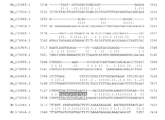
- Figure 17 illustrates an alignment between the human and mouse nucleic acids that encode the respective human and mouse PCSK9 polypeptides.
- Table 1 provides suitable PCSK9 polynucleotides and the corresponding polypeptides provided by the NCBI Genbank Accession numbers - certain known allelic variants and known homologues from other mammalian species may be easily identified by performing BLAST searches using the sequences referenced in Table 1.
- Table 1 Nucleic acid (mRNA/cDNA sequence) Polypeptide (deduced) Human NM_174936 NP_777596 Mouse NM_153565 NP_705793.1 Rat NM_199253 NP_954862.2 Chimpanzee NC_006468 (genomic - mRNA annotated) XP_001154126 Monkey ( Rhesus macaque ) BV166576
- such alignments can also be used to identify regions of the nucleic acids encoding PCSK9 from human and a different mammalian species, such as monkey, mouse and/or rat, where there are sufficient stretches of nucleic acid complementarity to allow the design of oligonucleotides which target both the human PCSK9 target nucleic acid, and the corresponding nucleic acids present in the different mammalian species, such as regions of at least 10, such as at least 12, such as at least 14, such as at least 16, such as at least 18, such as 12, 13, 14, 15, 16, 17 or 18 contiguous nucleobases which are 100% complementary to both the nucleic acid encoding PCSK9 from humans and the nucleic acid(s) encoding PCSK9 from the different mammalian species.
- the determination of homology may be made by a simple alignment with the corresponding nucleobase sequence of the compound of the invention and the corresponding region of the nucleic acid which encodes the mammalian PCSK9 (or target nucleic acid), and the homology is determined by counting the number of bases which align and dividing by the total number of contiguous bases in the compound of the invention, and multiplying by 100. In such a comparison, if gaps exist, it is preferable that such gaps are merely mismatches rather than areas where the number of nucleobases within the gap differ between the nucleobase sequence of the invention and the target nucleic acid.
- nucleobase sequence of the oligomer or contiguous nucleobase seqeunce refers to the comparison between the nucleic acid target such as the mRNA which encodes the PCSK9 target protein, such as SEQ ID NO 2, or the reverse complement of the nucleic acid target.
- Nucleotide analogues are compared directly to their equivalent or corresponding nucleotides.
- nucleotide analogue and “corresponding nucleotide” are intended to indicate that the nucleobase in the nucleotide analogue and the nucleotide are identical.
- the "corresponding nucleotide analogue” contains a pentose unit (different from 2-deoxyribose) linked to an adenine.
- nucleobase is used as a collective term which encompasses both nucleotides and nucleotide analogues.
- a nucleobase sequence is a sequence which comprises at least two nucleotides or nucleotide analogues.
- the nucleobase sequence may comprise of only nucleotides, such as DNA units, in an alternative embodiment, the nucleobase sequence may comprise of only nucleotide analogues, such as LNA units.
- nucleic acid is defined as a molecule formed by covalent linkage of two or more nucleotides.
- nucleic acid and “polynucleotide” are used interchangeable herein.
- target nucleic acid refers to the DNA encoding human PCSK9 polypeptide, and RNA nucleic acids derived therefrom, preferably mRNA, such as pre-mRNA, although preferably mature mRNA.
- the "target nucleic acid” may be a cDNA or a synthetic oligonucleotide derived from the above DNA or RNA nucleic acid targets.
- the oligomeric compound according to the invention is preferably capable of hybridising to the target nucleic acid.
- naturally occurring variant thereof refers to variants of the PCSK9 polypeptide of nucleic acid sequence which exist naturally within the defined taxonomic group, such as mammalian, such as mouse, rat, monkey, chimpanzee and preferably human.
- the term also may encompasses variants of the PCSK9 encoding genomic DNA which are found at the NARC1 locus, or a locus directly derived from the NARC-1 locus, e.g. by chromosomal translocation or duplication, and the RNA, such as mRNA derived therefrom.
- a specific polypeptide sequence e.g. SEQ ID NO 1
- the term also includes naturally occurring forms of the protein which may therefore be processed, e.g. by co- or post-translational modifications, such as signal peptide cleavage, proteolytic cleavage, glycosylation, etc.
- the compound according to the invention is a linear molecule or is synthesised as a linear molecule.
- linkage group is intended to mean a group capable of covalently coupling together two nucleotides, two nucleotide analogues, and a nucleotide and a nucleotide analogue, etc.
- Specific and preferred examples include phosphate groups and phosphorothioate groups.
- conjugate is intended to indicate a heterogenous molecule formed by the covalent attachment of a compound as described herein (i.e. a compound comprising a sequence of nucleotides analogues) to one or more non-nucleotide/non-nucleotide-analogue,or non-polynucleotide moieties.
- non-nucleotide or non-polynucleotide moieties include macromolecular agents such as proteins, fatty acid chains, sugar residues, glycoproteins, polymers, or combinations thereof.
- proteins may be antibodies for a target protein.
- Typical polymers may be polyethylene glycol.
- At least one comprises the integers larger than or equal to 1, such as 1, 2, 3, 4, 5, 6, 7, 8, 9, 10, 11, 12, 13, 14, 15, 16, 17, 18, 19, 20 and so forth.
- the term “at least one” includes the terms “at least two” and at “least three” and “at least four”, likewise the term “at least two” may comprise the terms at "least three” and "at least four”.
- salts refers to salts that retain the desired biological activity of the herein identified compounds and exhibit minimal undesired toxicological effects.
- Non-limiting examples of such salts can be formed with organic amino acid and base addition salts formed with metal cations such as zinc, calcium, bismuth, barium, magnesium, aluminum, copper, cobalt, nickel, cadmium, sodium, potassium, and the like, or with a cation formed from ammonia, /V,/V-dibenzylethylene-diamine, D-glucosamine, tetraethylammonium, or ethylenediamine; or (c) combinations of (a) and (b); e.g., a zinc tannate salt or the like.
- C1-4-alkyl is intended to mean a linear or branched saturated hydrocarbon chain wherein the chain has from one to four carbon atoms, such as methyl, ethyl, n-propyl, isopropyl, n-butyl, isobutyl, sec-butyl and tert-butyl.
- the term "gene” means the gene including exons, introns, non-coding 5 'and 3 'regions and regulatory elements and all currently known variants thereof and any further variants, which may be elucidated.
- RNA antagonist refers to an oligonucleotide which targets any form of RNA (including pre-mRNA, mRNA, miRNA, siRNA etc).
- hypercholesterolemia refers to one or more of the conditions selected from the group consisting of: atherosclerosis, hyperlipidemia, HDL/LDL cholesterol imbalance, dyslipidemias, e.g., familial combined hyperlipidemia (FCHL), acquired hyperlipidemia, statin-resistant hypercholesterolemia, coronary artery disease (CAD), and coronary heart disease (CHD).
- FCHL familial combined hyperlipidemia
- CAD coronary artery disease
- CHD coronary heart disease
- oligomeric compound refers to an oligonucleotide which can induce a desired therapeutic effect in humans through for example binding by hydrogen bonding to a target nucleic acid. It is also envisaged that the oligomeric compounds disclosed herein may have non-therapeutic applications, such as diagnostic applications.
- modulation means either an increase (stimulation) or a decrease (inhibition) in the expression of a gene.
- inhibition is the preferred form of modulation of gene expression and mRNA is a preferred target.
- hybridisation means hydrogen bonding, which may be Watson-Crick, Holstein, reversed Holstein hydrogen bonding, etc. between complementary nucleotide bases.
- Watson and Crick showed approximately fifty years ago that deoxyribo nucleic acid (DNA) is composed of two strands which are held together in a helical configuration by hydrogen bonds formed between opposing complementary nucleobases in the two strands.
- the four nucleobases, commonly found in DNA are guanine (G), adenine (A), thymine (T) and cytosine (C) of which the G nucleobase pairs with C, and the A nucleobase pairs with T.
- RNA In RNA the nucleobase thymine is replaced by the nucleobase uracil (U), which similarly to the T nucleobase pairs with A.
- the chemical groups in the nucleobases that participate in standard duplex formation constitute the Watson-Crick face. Hoogsteen showed a couple of years later that the purine nucleobases (G and A) in addition to their Watson-Crick face have a Hoogsteen face that can be recognised from the outside of a duplex, and used to bind pyrimidine oligonucleotides via hydrogen bonding, thereby forming a triple helix structure.
- the compounds of the invention are capable of hybridizing to the target nucleic acid, such as the mRNA.
- the oligonucleotides are capable of hybridising against the target nucleic acid(s), such as the corresponding PCSK9 mRNA(s), to form a duplex with a T m of at least 37°C, such as at least 40 °C, at least 50 °C, at least 55 °C, or at least 60°C.
- the T m is between 37 °C and 80 °C , such as between 50 and 70 °C, or between 40 and 60 °C, or between 40 and 70 °C.
- the T m is lower than 80 °C, such as lower than 70 °C or lower that 60 °C or lower than 50 °C
- a 3 ⁇ M solution of the compound in 10 mM sodium phosphate/100 mM NaCl/ 0.1 nM EDTA, pH 7.0 is mixed with its complement DNA or RNA oligonucleotide at 3 ⁇ M concentration in 10 mM sodium phosphate/100 mM NaCl/ 0.1 nM EDTA, pH 7.0 at 90 °C for a minute and allowed to cool down to room temperature.
- the melting curve of the duplex is then determined by measuring the absorbance at 260 nm with a heating rate of 1 °C/min. in the range of 25 to 95 °C. The T m is measured as the maximum of the first derivative of the melting curve.
- the oligomeric compound is linked to ligands/conjugates, which may be used, e.g . to increase the cellular uptake of antisense oligonucleotides.
- ligands/conjugates which may be used, e.g . to increase the cellular uptake of antisense oligonucleotides.
- WO2007/031091 provides suitable ligands and conjugates.
- the invention also provides for a conjugate comprising the compound according to the invention as herein described, and at least one non-nucleotide or non-polynucleotide moiety covalently attached to said compound. Therefore, in one embodiment where the compound of the invention consists of s specified nucleic acid, as herein disclosed, the compound may also comprise at least one non-nucleotide or non-polynucleotide moiety (e.g. not comprising one or more nucleotides or nucleotide analogues) covalently attached to said compound.
- the oligomeric compounds of the present invention can be utilized for, for example, as research reagents for diagnostics, therapeutics and prophylaxis.
- oligomeric compounds of the invention such as the LNA containing oligonucleotide compounds of the present invention, can also be utilized for as research reagents for diagnostics, therapeutics and prophylaxis.
- antisense oligonucleotides may be used to specifically inhibit the synthesis of PCSK9 genes in cells and experimental animals thereby facilitating functional analysis of the target or an appraisal of its usefulness as a target for therapeutic intervention.
- the antisense oligonucleotides may be used to detect and quantitate PCSK9 expression in cell and tissues by Northern blotting, in-situ hybridisation or similar techniques.
- an animal or a human, suspected of having a disease or disorder, which can be treated by modulating the expression of PCSK9 is treated by administering antisense compounds in accordance with this invention.
- an animal particular mouse and rat and treating a human, suspected of having or being prone to a disease or condition, associated with expression of PCSK9 by administering a therapeutically or prophylactically effective amount of one or more of the antisense compounds or compositions of the invention.
- the pharmaceutical composition according to the invention can be used for the treatment of conditions associated with abnormal levels of PCSK9, such as hypercholesteromeia and releted disorders.
- WO2007/031091 Suitable dosages, formulations, administration routes, compositions, dosage forms, combinations with other therapeutic agents, pro-drug formulations are also provided in WO2007/031091 , although it should be recognised that the aspects of WO2007/031091 which are only specifically applicable to the treatment of cancer may not be appropriate in the therapeutic/pharmaceutical compositions and methods of the present invention.
- the invention also provides for a pharmaceutical composition
- a pharmaceutical composition comprising a compound or a conjugate as herein described or a conjugate, and a pharmaceutically acceptable diluent, carrier or adjuvant.
- WO2007/031091 provides suitable and preferred pharmaceutically acceptable diluent, carrier and adjuvants.
- compositions comprising more than one active ingredient
- composition according to the invention may further comprise other active ingredients, including those which are indicated as being useful for the treatment of hypercholesterolemia and/ore related disorders.
- statins are HMG-CoA reductase inhibitors that form a class of hypolipidemic agents, used as pharmaceuticals to lower cholesterol levels in people at risk for cardiovascular disease because of hypercholesterolemia. They work by inhibiting the enzyme HMG-CoA reductase, the enzyme that determines the speed of cholesterol synthesis. Inhibition of this enzyme in the liver stimulates the LDL-receptors, which results in an increased clearance of LDL from the bloodstream and a decrease in blood cholesterol levels.
- HMG-CoA reductase inhibitors that form a class of hypolipidemic agents, used as pharmaceuticals to lower cholesterol levels in people at risk for cardiovascular disease because of hypercholesterolemia. They work by inhibiting the enzyme HMG-CoA reductase, the enzyme that determines the speed of cholesterol synthesis. Inhibition of this enzyme in the liver stimulates the LDL-receptors, which results in an increased clearance of LDL from the bloodstream and a decrease in blood cholesterol levels.
- statins examples include Atorvastatin TM , Cerivastatin TM , Fluvastatin TM , Lovastatin TM , Mevastatin TM , Pravastatin TM , Pravastatin TM , Rosuvastatin TM , and Simvastatin TM .
- the combined use of the compound of the invention and the statins may allow for a reduction in the dose of the statins, therefore overcoming side effects associated with usual dosage of statins, which include, for example, myalgias, muscle cramps, gastrointestinal symptoms, liver enzyme derangements, myositis, myopathy, rhabdomyolysis (the pathological breakdown of skeletal muscle) which may lead to acute renal failure when muscle breakdown products damage the kidney.
- Fibrates a class of amphipathic carboxylic acids is an alternative class of compound which are often combined with statin use, despite an increased frequency of rhabdomyolysis which has been reported with the combined use of statins and fribrates.
- the composition according to the invention may therefore further comprise firbrates, and optionally statins.
- composition according to the invention may further comprise modulators of Apolipoprotein B (Apo-B), particularly agents which are capable of lowering the expression of function of Apo-B.
- Apo-B modulators may be antisense oligonucleotides(e.g. oligomers), such as those disclosed in WO 00/97662 , WO 03/11887 and WO 2004/44181 .
- a preferred combination is with ISIS compound 301012 (illustrated as SEQ ID NO 13).
- composition according to the invention may further comprise modulators of FABP4 expression, such as antisense oligonucleotides (e.g. oligomers) which target FABP4, the composition may be used in concurrent down-regulation of both FABP4 and PSCK9 expression, resulting in a synergistic effect in terms of blood serum cholesterol and hence advantages when treating hypercholesterolemia and/or related disorders.
- modulators of FABP4 expression such as antisense oligonucleotides (e.g. oligomers) which target FABP4
- Such compositions comprising both the compounds of the invention and FABP4 modulators, such as the antisense oligonucleotides referred to herein, may also further comprise statins.
- US provisional application 60/969,016 hereby incorporated by reference discloses suitable FABP4 modulators.
- composition may comprise antisense oligonucleotides which comprise nucleotide analogues, such as those disclosed in WO2007/031081 .
- antisense oligonucleotides which comprise nucleotide analogues, such as those disclosed in WO2007/031081 .
- Specific LNA oligonucleotides, as disclosed or highlighted are preferred in WO2007/031091 are especially suited for us in the pharmaceutical composition according to the present invention.
- the invention also provides a kit of parts wherein a first part comprises the compound, the conjugate and/or the pharmaceutical composition according to the invention and a further part comprises an antisense oligonucleotide capable of lowering the expression of Apo-B or FABP4. It is therefore envisaged that the kit of parts may be used in a method of treatment, as referred to herein, where the method comprises administering both the first part and the further part, either simultaneously or one after the other.
- disorders selected form the group consisting of: hyperlipoproteinemia, familial type 3 hyperlipoprotienemia (familial dysbetalipoproteinemia), and familial hyperalphalipoprotienemia; hyperlipidemia, mixed hyperlipidemias, multiple lipoprotein-type hyperlipidemia, and familial combined hyperlipidemia; hypertriglyceridemia, familial hypertriglyceridemia, and familial lipoprotein lipase; hypercholesterolemia, statin-resistant hypercholesterolemia familial hypercholesterolemia, polygenic hypercholesterolemia, and familial defective apolipoprotein B; cardiovascular disorders including atherosclerosis and coronary artery disease; thrombosis; peripheral vascular disease, and obesity.
- hyperlipoproteinemia familial type 3 hyperlipoprotienemia (familial dysbetalipoproteinemia), and familial hyperalphalipoprotienemia
- hyperlipidemia mixed hyperlipidemias, multiple lipoprotein-type hyperlipidemia, and familial combined hyperlipidemia
- compositions, conjugates and compounds according to The invention include disorders selected form the group consisting of: von Gierke's disease (glycogen storage disease, type I); lipodystrophies (congenital and acquired forms); Cushing's syndrome; sexual ateloitic dwarfism (isolated growth hormone deficiency); diabetes mellitus; hyperthyroidism; hypertension; anorexia nervosa; Werner's syndrome; acute intermittent porphyria; primary biliary cirrhosis; extrahepatic biliary 5 obstruction; acute hepatitis; hepatoma; systemic lupus erythematosis; monoclonal gammopathies (including myeloma, multiple myeloma, macroglobulinemia, and lymphoma); endocrinopathies; obesity; nephrotic syndrome; metabolic syndrome; inflammation; hypothyroidism;
- the compounds of the invention may be used in methods of inhibiting cholesterol particle binding to vascular endothelium comprising the step of administering to an individual an amount of a compound of the invention sufficient to PCSK9 expression, and as a result, the invention also provides methods of reducing the risk of: (i) cholesterol particle oxidization; (ii) monocyte binding to vascular endothelium; (iii) monocyte differentiation into macrophage; (iv) macrophage ingestion of oxidized lipid 30 particles and release of cytokines (including, but limited to IL-I,TNF-alpha, TGF-beta); (v) platelet formation of fibrous fibrofatty lesions and inflammation; (vi) endothelium lesions leading to clots; and (vii) clots leading to myocardial infarction or stroke, also comprising the step of administering to an individual an amount of a compound of the invention sufficient to inhibit PCSK9 expression.
- cytokines including, but limited to IL-I,TNF
- the compounds of the invention may be used in reducing hyperlipidemia associated with alcoholism, smoking, use of oral contraceptives, use of glucocorticoids, use of beta-adrenergic blocking agents, or use of isotretinion (13-cis retinoic acid) comprising the step of administering to an individual an amount of a compound of the invention sufficient to inhibit PCSK9 expression.
- the invention further provides use of a compound of the invention in the manufacture of a medicament for the treatment of any and all conditions disclosed herein.
- one aspect of the invention is directed to the use of the compounds in treating a mammal suffering from or susceptible to conditions associated with abnormal levels of PCSK9, comprising administering to the mammal and therapeutically effective amount of an oligonucleotide targeted to PCSK9 that comprises one or more LNA units.
- An interesting aspect of the invention is directed to the use of a compound as defined herein or as conjugate as defined herein for the preparation of a medicament for the treatment of a condition according to above.
- the methods of the invention are preferably employed for treatment or prophylaxis against diseases caused by abnormal levels of PCSK9.
- the invention described herein encompasses the use of the compounds in preventing or treating a disease comprising a therapeutically effective amount of a PCSK9 modulating oligonucleotide compound, including but not limited to high doses of the oligomer, to a human in need of such therapy.
- the invention further encompasses the use of a short period of administration of a PCSK9 modulating oligonucleotide compound.
- the oligonucleotide compound is linked to ligands/conjugates. It is way to increase the cellular uptake of antisense oligonucleotides.
- Oligonucleotide compounds of the invention may also be conjugated to active drug substances, for example, aspirin, ibuprofen, a sulfa drug, an antidiabetic, an antibacterial or an antibiotic.
- active drug substances for example, aspirin, ibuprofen, a sulfa drug, an antidiabetic, an antibacterial or an antibiotic.
- the invention is furthermore directed to the use of the compounds in treating abnormal levels of PCSK9, said method comprising administering a compound as defined herein, or a conjugate as defined herein or a pharmaceutical composition as defined herein to a patient in need thereof and further comprising the administration of a further chemotherapeutic agent.
- Said further administration may be such that the further chemotherapeutic agent is conjugated to the compound of the invention, is present in the pharmaceutical composition, or is administered in a separate formulation.
- the invention also relates to a compound, composition or a conjugate as defined herein for use as a medicament.
- the invention further relates to use of a compound, composition, or a conjugate as defined herein for the manufacture of a medicament for the treatment of abnormal levels of PCSK9.
- said abnormal levels of PCSK9 is in the form of, or causes, or is characterised by, hypercholesterolemia and related disorders, such as atherosclerosis or hyperlipidemia.
- the invention relates to the use of the compounds in treating a subject suffering from a disease or condition selected from hypercholesterolemia and related disorders, such as atherosclerosis, and hyperlipidemia, the method comprising the step of administering a pharmaceutical composition as defined herein to the subject in need thereof.
- the pharmaceutical composition is administered orally.
- Examples of related diseases also include different types of HDL/LDL cholesterol imbalance; dyslipidemias, e.g., familial combined hyperlipidemia (FCHL), acquired hyperlipidemia, statin-resistant hypercholesterolemia; coronary artery disease (CAD) coronary heart disease (CHD), atherosclerosis.
- dyslipidemias e.g., familial combined hyperlipidemia (FCHL), acquired hyperlipidemia, statin-resistant hypercholesterolemia
- FCHL familial combined hyperlipidemia
- CAD coronary artery disease
- CHD coronary heart disease
- atherosclerosis e.g., atherosclerosis.
- composition according to the invention also comprises modulators of Apo-B100 or FABP4 expression, such as antisense oligonucleotides which target ApoB-100 or FABP4, the composition may be used in concurrent down-regulation of both PCSK9 and ApoB-100 (or FABP4) expression, resulting in a synergistic effect in terms of blood serum cholesterol and hence advantages when treating hypercholesterolemia and/or related disorders.
- modulators of Apo-B100 or FABP4 expression such as antisense oligonucleotides which target ApoB-100 or FABP4
- Such compositions comprising both the compounds of the invention and ApoB or FABP4 modulators, such as the antisense oligonucleotides referred to herein may also further comprise statins.
- Table 2 Designs of specific compounds / LNA antisense oligonucleotides.
- Oligonucleotides were synthesized using the phosphoramidite approach on an Expedite 8900/MOSS synthesizer ( M ultiple O ligonucleotide S ynthesis S ystem) at 1 ⁇ mol or 15 ⁇ mol scale. For larger scale synthesis an ⁇ kta Oligo Pilot was used.
- DMT-on the oligonucleotides were cleaved from the solid support using aqueous ammonia for 1-2 h at room temperature, and further deprotected for 4 h at 65°C.
- the oligonucleotides were purified by reverse phase HPLC (RP-HPLC). After the removal of the DMT-group, the oligonucleotides were characterized by AE-HPLC, RP-HPLC, and CGE and the molecular mass was further confirmed by ESI-MS. See below for more details.
- the coupling of phosphoramidites is performed by using a solution of 0.1 M of the 5'-O-DMT-protected amidite in acetonitrile and DCI (4,5-dicyanoimidazole) in acetonitrile (0.25 M) as activator.
- the thiolation is carried out by using xanthane chloride (0.01 M in acetonitrile:pyridine 10%).
- the rest of the reagents are the ones typically used for oligonucleotide synthesis.
- the protocol provided by the supplier was conveniently optimised.
- SEQ ID NOs: 3 and 4 contains at least 3 LNA nucleotides, such as 6 (7 or 8 LNAs) nucleotides like in SEQ ID NOs: 3 and 4.
- Example 4 Stability of LNA compounds in human or rat plasma
- LNA oligonucleotide stability was tested in plasma from humans or rats (it could also be mouse, monkey or dog plasma). In 45 ⁇ l plasma 5 ⁇ l oligonucleotide is added (a final concentration of 20 ⁇ M). The oligos are incubated in plasma for times ranging from 0 h-96
- oligonucleotide in plasma was diluted by adding 15 ⁇ l of water and 3 ⁇ l 6x loading dye (Invitrogen). As marker a 10 bp ladder (Invitrogen 10821-015) is used. To 1 ⁇ l ladder 1 ⁇ l 6x loading and 4 ⁇ l water was added.
- the samples were mixed, heated to 65°C for 10 min and loaded to a pre-run gel (16% acrylamide, 7 M UREA, 1x TBE, pre-run at 50 Watt for 1h) and run at 50-60 Watt for 2 1 ⁇ 2 h. Subsequently the gel was stained with 1x SyBR gold (molecular probes) in 1x TBE for 15 min. The bands were visualised using a phosphoimager from Biorad.
- target nucleic acid expression can be tested in any of a variety of cell types provided that the target nucleic acid is present at measurable levels.
- Target can be expressed endogenously or by transient or stable transfection of a nucleic acid encoding said nucleic acid.
- the expression level of target nucleic acid can be routinely determined using, for example, Northern blot analysis, Quantitative PCR, Ribonuclease protection assays.
- the following cell types are provided for illustrative purposes, but other cell types can be routinely used, provided that the target is expressed in the cell type chosen.
- Cells were cultured in the appropriate medium as described below and maintained at 37°C at 95-98% humidity and 5% CO 2 . Cells were routinely passaged 2-3 times weekly.
- Huh-7 Human liver cell line Huh-7 was purchased from ATCC and cultured in Eagle MEM (Sigma) with 10% FBS + Glutamax I + non-essential amino acids + gentamicin.
- Example 6 In vitro model: Treatment with antisense oligonucleotide
- Huh-7 and Hepa 1-6 cells were seeded in 6-well plates at 37°C (5% CO 2 ) in growth media supplemented with 10% FBS, Glutamax I and Gentamicin. When the cells were 60-70% confluent, they were transfected in duplicates with different concentrations of oligonucleotides (0.04 - 25 nM) using Lipofectamine 2000 (5 ⁇ g/mL). Transfections were carried out essentially as described by Dean et al. (1994, JBC 269:16416-16424 ). In short, cells were incubated for 10 min.
- OptiMEM Lipofectamine in OptiMEM followed by addition of oligonucleotide to a total volume of 0.5 mL transfection mix per well. After 4 hours, the transfection mix was removed, cells were washed and grown at 37°C for approximately 20 hours (mRNA analysis and protein analysis in the appropriate growth medium. Cells were then harvested for protein and RNA analysis.
- Example 7 in vitro model: Extraction of RNA and cDNA synthesis
- First strand synthesis was performed using either OmniScript Reverse Transcriptase kit or M-MLV Reverse transcriptase (essentially as described by manufacturer (Ambion)) according to the manufacturer's instructions (Qiagen).
- OmniScript Reverse Transcriptase 0.5 ⁇ g total RNA each sample, was adjusted to 12 ⁇ l and mixed with 0.2 ⁇ l poly (dT) 12-18 (0.5 ⁇ g/ ⁇ l) (Life Technologies), 2 ⁇ l dNTP mix (5 mM each), 2 ⁇ l 10x RT buffer, 0.5 ⁇ l RNAguard TM RNase Inhibitor (33 units/mL, Amersham) and 1 ⁇ l OmniScript Reverse Transcriptase followed by incubation at 37°C for 60 min. and heat inactivation at 93°C for 5 min.
- RNAase inhibitor When first strand synthesis was performed using random decamers and M-MLV-Reverse Transcriptase (essentially as described by manufacturer (Ambion)) 0.25 ⁇ g total RNA of each sample was adjusted to 10.8 ⁇ l in H 2 O. 2 ⁇ l decamers and 2 ⁇ l dNTP mix (2.5 mM each) was added. Samples were heated to 70°C for 3 min. and cooled immediately in ice water and added 3.25 ⁇ l of a mix containing (2 ⁇ l 10x RT bluffer; 1 ⁇ l M-MLV Reverse Transcriptase; 0.25 ⁇ l RNAase inhibitor). cDNA is synthesized at 42°C for 60 min followed by heating inactivation step at 95 °C for 10 min and finally cooled to 4 °C.
- Example 8 in vitro and in vivo model: Analysis of Oligonucleotide Inhibition of PCSK9
- PCSK9 mRNA levels can be quantitated by, e.g., Northern blot analysis, competitive polymerase chain reaction (PCR), or real-time PCR. Real-time quantitative PCR is presently preferred.
- RNA analysis can be performed on total cellular RNA or mRNA.
- RNA isolation and RNA analysis such as Northern blot analysis is routine in the art and is taught in, for example, Current Protocols in Molecular Biology, John Wiley and Sons .
- Real-time quantitative can be conveniently accomplished using the commercially iQ Multi-Color Real Time PCR Detection System available from BioRAD.
- Real-time Quantitative PCR is a technique well known in the art and is taught in for example Heid et al. Real time quantitative PCR, Genome Research (1996), 6: 986-994 .
- the generated cDNA was used in quantitative PCR analysis using an iCycler from Bio-Rad or 7500 Fast Real-Time PCR System from Applied Biosystems.
- Mouse PCSK9 expression is quantified using a mouse PCSK9 or GAPDH TaqMan gene expression assay (Applied Biosystems) 8 ⁇ l of 10-fold diluted cDNA is added 52 ⁇ l of a mix containing 29,5 ⁇ l Platinum qPCR Supermix-UDG (Invitrogen) 19,2 ⁇ l H 2 O and 3,0 ⁇ l of a 20x mouse PCSK9 or GAPDH TaqMan gene expression assay (Applied Biosystems). Each sample is analysed in duplicates. PCR program: 95 °C for 20 seconds followed by 40 cycles of 95 °C, 3 seconds, 60 °C, 30 seconds.
- PCSK9 mRNA expression is normalized to mouse Gapdh mRNA which was similarly quantified using Q-PCR.
- Example 9 In vitro analysis: Dose response in cell culture (human hepatocyte Huh-7) / Antisense Inhibition of Human PCSK9 Expression
- oligonucleotide compounds were evaluated for their potential to knockdown PCSK9 mRNA in Human hepatocytes (Huh-7 cells) following lipid-assisted uptake of Compound ID NO#s: 9, 16, 18, 98, 101, 262, 301, 317, 323, 338, 341 ( Figures 1-4 ). The experiment was performed as described in examples 5-8. The results showed very potent down regulation (60 to ⁇ 80%) with 25 nM for all compounds.
- Example 10 In vitro analysis: Dose response in cell culture (murine hepatocyte Hepa 1-6) / Antisense Inhibition of Murine PCSK9 Expression
- oligonucleotide compounds were designed to target different regions of the murine PCSK9 mRNA (See Table 2). Oligonucleotide compounds were evaluated for their potential to knockdown PCSK9 mRNA in Murine hepatocytes (Hepa 1-6) following lipid-assisted uptake of Compound ID NO#s: 98, 101, 262 and 338 ( Figures 5-6 ). The experiment was performed as described in examples 5-8. The results showed very potent down regulation ( ⁇ 60%) with 25 nM for all compounds
- Total cholesterol level was measured in serum using a colometric assay Cholesterol CP from ABX Pentra. The cholesterol is measured following enzymatic hydrolysis and oxidation. 20 ⁇ L water was added to 3 ⁇ L serum. 240 ⁇ L reagent is added and within 15 min the cholesterol content is measured at a wavelength of 500 nM. Measurements on each animal was made in duplicates. A standard curve was made using Multi Cal from ABX Diagnostics.
- Cholesterol levels in the different lipoprotein classes (VLDL/LDL and HDL) was measured in serum by ultracentrifugation. The serum was adjusted to a density of 1.067 g/ml allowing to separate HDL from the other lipoproteins. Total cholesterol (ABX Pentra) is measured in each fraction (top and bottom) after centrifugation at approximately 400.000 g for 4 hours at 15 °C.
- Liver samples were snap frozen in liquid nitrogen and stored at -80 °C until analysed. 30 mg tissue was defrosted and homogenised in 300 ⁇ l T-per Tissue Protein Extraction buffer (Pierce), supplemented with Halt Protease inhibitor cocktail (Pierce).
- Total protein was measured by BCA protein assay kit (Pierce) using an albumin standard according to manufacturer's protocol.
- the membrane was incubated overnight in a blocking solution with primary antibodies of 1:1000 dilution of polyclonal goat-anti-mouse-LDLR antibody (R&D Systems) and 1:2000 dilution of monoclonal Mouse-anti-tubulin antibody (NeoMarkers). This was followed by two hours incubation in secondary antibody solution of 1:2000 dilution of HRP/anti-goat antibody and 1:2000 dilution of HRP/anti-mouse antibody (Dako). LDLR and tubulin bands were visualized using Chemiluminescence ECL+ detection kit (Amersham) and a VersaDoc5000 imaging system (Bio-Rad).
- Agarose gel electrophoresis in barbital buffer is used to separate lipoproteins according to charge and is one of the original methods for clinical analysis of lipoprotein profiles.
- Gels are usually stained with a lipophilic dye such as Sudan Black.
- the dye(s) will not distinguish between lipid species, hence the method is limited to providing a "general lipoproteins profile" as dyes cannot distinguish between cholesterol ester and triglycerides.
- the small sample volume, high reproducibility, and the possibility to follow changes in lipoprotein profiles (as percent lipid/band) in individual animals makes the agarose gels a useful tool for lipoprotein analysis.
- Example 14 In vivo analysis: Dose response of different LNA oligonucleotides in C57BL / 6 female mice.
- oligonucleotides were designed to target different regions of the murine PCSK9 mRNA. Three of these oligonucleotides were evaluated for their potential down regulation on PCSK9 mRNA in liver, reduction of serum cholesterol and increase in LDL-recptor protein in liver.
- C57BL/6 female were were dosed 2.5, 5, or 10 mg/kg i.v. of the oligonucleotide or saline days 0, 3, 7, 10 and 14 and sacrificed day 16 after the first treatment dose.
- Liver was sampled for analysis of PCSK9 mRNA expression by qPCR (as described in example 8).
- PCSK9 mRNA expression was down regulated in a dose dependent manner after dosing Compound ID NO#s 98 and 101 ( figure 7 ).
- the down regulation of PCSK9 mRNA was expected to have an effect on the number of LDL-receptors presented on the surface of the hepatocytes.
- Western Blotting was used to examine the LDL-receptor protein in liver (example 12).
- the Compound ID NO# 98 resulted in an increase in LDL-receptor protein of about 80% compared to the saline group ( figure 9 ).
- Example 15 In vivo analysis:Efficacy of LNA oligonucleotides of down regulating PCSK9 in female NMRI mice.
- NMRI female mice were dosed i.v. 10 mg/kg/dose LNA oligonucleotide or saline at days 0, 2, 4 and sacrificed at day 6. Liver was sampled for analysis of PCSK9 mRNA expression by qPCR (as described in example 8). PCSK9 mRNA expression was reduced with about 70% after dosing Compound ID NO# 98 and about 30% dosing Compound ID NO# 101 ( figure 10 ). The effect of this down regulation was observed on the LDL-receptor protein level in liver; about 50% and 40% increase after dosing Compound ID NO#s 98 and 101, respectively ( figure 11 . This increase in LDL-receptor resulted in decrease in serum cholesterol of 55% and 15% for Compound ID NO# 98 and 101, respectively ( figure 12 ).
- Example 16 In vivo analysis: Efficacy of LNA oligonucleotides to reduce PCSK9 mRNA expression in C578L / 6 fed a high fat diet (HFD) for 1 or 5 month before dosing.
- HFD high fat diet
- C57BL/6 female mice were fed a high fat diet (HFD) (60 energy% fat) for 5 month and male C57BL/6 were fed a HFD for 1 month before dosing LNA oligonucleotides at 10 or 15 mg/kg days 0, 3, 7, 10, 14 and sacrifice day 16.
- HFD high fat diet
- LNA oligonucleotides at 10 or 15 mg/kg days 0, 3, 7, 10, 14 and sacrifice day 16.
- Liver was sampled for analysis of PCSK9 mRNA expression by qPCR (as described in example 8).
- Dosing Compound ID NO#s 98 and 317 resulted in a down regulation of PCSK9 mRNA expression ( analysesd by qPCR as described in example 8) of about 80 and 60%, respectively, in female mice and about 85% in male mice for both compounds ( figure 13 ).
- the LDL-receptor protein level measured by Western blotting was increased about 2-3 times after dosing Compound ID NO# 98 and 20% after dosing Compound ID NO# 317 to female HFD mice.
- Compound ID NO# 98 resulted in an increased LDL-receptor protein level of 2.5 times whereas Compound ID NO# 317 had only minor effect on LDL-receptor protein level ( figure 14 ).
- Example 17 In vivo analysis: Efficacy of 13-mer LNA oligonucleotides to reduce PCSK9 mRNA expression in NMRI female mice.
- MNRI female mice were dosed 15 mg/kg days 0, 2 and 4 and sacrificed day 6. Liver was sampled for analysis of PCSK9 mRNA expression by qPCR as described in example 8.
- the 13-mer oligonucleotides; Compound ID NO#s 9, 16 and 18 resulted in reduction of PCSK9 mRNA expression of 90%, 70% and 85%, respectively and the 14-mer Compound ID NO# 98 gave 80% reduction in PCSK9 mRNA ( figure 15 ).
- the distribution of the different lipoprotein classes in serum was determined after separation on Sebia gels as described in example 13. The distribution between the different classes (set to 100% for each group and presented relative to the other lipoprotins in that group) was examined for Compound ID NO#s 9, 16, 18 and 98.
- Target site Start Target site End Oligo length Target sequence
- Human mRNA targets Murine mRNA targets Oligo sequence MotifS eq ID # 1082 1093 12 CGCTTCCACAGA 2 2 TCTGTGGAAGCG 40 1228 1239 12 CACCCTCATAGG 2 2 CCTATGAGGGTG 41 1244 1255 12 GAGTTTATTCGG 2 2 CCGAATAAACTC 42 1239 1250 12 GCCTGGAGTTTA 2 3 TAAACTCCAGGC 43 1138 1149 12 GGTCAGCGGCCG 2 4 CGGCCGCTGACC 44 1233 1244 12 TCATAGGCCTGG 2 4 CCAGGCCTATGA 45 1230 1241 12 CCCTCATAGGCC 3 1 GGCCTATGAGGG 46 1082 1094 13 CGCTTCCACAGAC 1 1 GTCTGTGGAAGCG 47 1139 1151 13 GTCAGCGGCCGGG 1 1 CCCGGCCGCTGAC 48 1224 1236 13 GCGGCACCCTCAT 1 1 ATGAGGGTGCCGC 49 1228 1240 13 C
Landscapes
- Health & Medical Sciences (AREA)
- Life Sciences & Earth Sciences (AREA)
- Engineering & Computer Science (AREA)
- Organic Chemistry (AREA)
- Chemical & Material Sciences (AREA)
- Bioinformatics & Cheminformatics (AREA)
- General Health & Medical Sciences (AREA)
- Chemical Kinetics & Catalysis (AREA)
- Veterinary Medicine (AREA)
- Nuclear Medicine, Radiotherapy & Molecular Imaging (AREA)
- General Chemical & Material Sciences (AREA)
- Pharmacology & Pharmacy (AREA)
- Medicinal Chemistry (AREA)
- Animal Behavior & Ethology (AREA)
- Public Health (AREA)
- Diabetes (AREA)
- Genetics & Genomics (AREA)
- Biomedical Technology (AREA)
- Hematology (AREA)
- Zoology (AREA)
- Wood Science & Technology (AREA)
- General Engineering & Computer Science (AREA)
- Endocrinology (AREA)
- Immunology (AREA)
- Molecular Biology (AREA)
- Obesity (AREA)
- Virology (AREA)
- Biochemistry (AREA)
- Biotechnology (AREA)
- Urology & Nephrology (AREA)
- Cardiology (AREA)
- Heart & Thoracic Surgery (AREA)
- Rheumatology (AREA)
- Plant Pathology (AREA)
- Microbiology (AREA)
- Neurology (AREA)
- Neurosurgery (AREA)
- Biophysics (AREA)
- Physics & Mathematics (AREA)
- Pulmonology (AREA)
Description
- The present invention provides compounds, compositions and methods for modulating the expression of PCSK9. In particular, this invention relates to oligomeric compounds, such as oligonucleotide compounds, which are hybridisable with target nucleic acids encoding PCSK9, and methods for the preparation of such oligomeric compounds. The oligonucleotide compounds have been shown to modulate the expression of PCSK9, and pharmaceutical preparations thereof and their use as treatment of hypercholesterolemia and related disorders are disclosed.
- Proprotein convertase subtilisin/kexin type 9a (PCSK9) is a member of the proteinase K subfamily of subtilases. The PCSK9 gene (NARC-1) has been identified as a third locus involved in autosomal dominant hypercholesterolemia (ADH), characterised by high levels of low-density lipoprotein (LDL), xhantomas, and a high frequency of coronary heart disease. The other two loci being apolipoprotein-B (Apo-B) and the LDL receptor (LDLR). PCSK9 acts as a natural inhibitor of the LDL-receptor pathway, and both genes are regulated by depletion of cholesterol cell content and statins via sterol regulatory element-binding protein (SREBP). PCSK9 mRNA and protein levels are regulated by food intake, insulin and cell cholesterol levels (Costet et al., J. Biol. Chem. January 2006).
- The human NARC1 mRNA (cDNA) sequence, which encodes human PCSK9 is shown as SEQ ID NO 2 (NCBI Acc. No. NM_174936).
- The human PCSK9 polypeptide sequence (nascent) is shown as SEQ ID NO 1 (NCBI Acc. No. NP_777596. The polypeptide has a signal peptide between residues 1-30, which is co-translationally cleaved to produce a proprotein (31-692 of SEQ ID No 1), which is subsequently cleaved by a protease to produce a mature protein corresponding to amino acids 83-692 of
SEQ ID NO 1. A glycosylation site has been characterised at residue 533. - Park et al., (J. Biol. Chem. 279, pp50630-50638, 2004) discloses that over-expression of PCSK9 reduced LDLR protein resulting in an increase in plasma LDL cholesterol, and suggests that an inhibitor of PCSK9 function may increase LDLR protein levels and enhance LDL clearance from plasma.
- Rashid et al., (2005, PNAS 102, ) discloses that knockout mice lacking PCSK9 manifest increased LDLR protein leading to an increased clearance of circulating lipoproteins and decreased plasma cholesterol levels, and suggests that inhibitors of PCSK9 may be useful for the treatment of hypercholesterolemia and that there may be synergy between inhibitors of PCSK9 and statins to enhance LDLRs and reduce plasma cholesterol.
-
WO01/57081 -
WO2004/097047 , which discloses two mutants of PCSK9 which are associated with ADH, suggests that antisense or RNAi of such PCSK9 mutants may be used for treatment of ADH. - Lalanne Florent et al., J. Lipid Research, vol 46, ) and
US 2004/009553 refers to siRNA molecules which decrease the expression of PCSK9 gene. - Kurreck et al., Nucleic Acid Research 30, pp1911-1918 (2002) discloses the design of antisense oligonucleotides containing locked nucleic acids.
- The invention provides therapeutic solutions for the treatment of hypercholesterolemia and related disorders, based upon antisense oligonucleotides, targeted against PCSK9 nucleic acids. The inventors have discovered that the use of nucleotide analogues which have an enhanced affinity for their complementary binding partner, such as Locked Nucleic Acid (LNA) nucleotide analogues, within antisense oligonucleotides that are targeted towards PCSK9 target nucleic acids, provide highly effective modulation, particularly the down-regulation, of PCSK9 (NARC1) expression.
- The invention provides for antisense oligonucleotides as defined in
claim 1. - The antisense oligonucleotide is of between 10-25 nucleobases in length which consists or comprises a contiguous nucleobase sequence of a total of between 10-25 nucleobases, wherein said contiguous nucleobase sequence is complementary to a corresponding region of a
SEQ ID NO 2. The antisense oligonucleotide is not a siRNA. - The invention further provides a conjugate comprising the antisense oligonucleotide according to the invention, such as a conjugate which, in addition to the nucloebase sequence of the antisense oligonucleotide comprises at least one non-nucleotide or non-polynucleotide moiety covalently attached to the antisense oligonucleotide of the invention.
- The antisense oligonucleotide may consist of a sequence of total of between 10 - 25 nucleobases, which are complementary to a contiguous sequence which is present in
SEQ ID NO 2. - The antisense oligonucleotide according to the invention, is for use as a medicament as defined in
claim 15. - The antisense oligonucleotides of the invention may be used in methods of modulating the expression of PCSK9 in mammalian cells or tissues comprising contacting said mammalian cells or tissues with one or more of the oligomeric compounds or compositions of the invention. Typically the expression of PCSK9 is inhibited or reduced.
- The antisense oligonucleotides of the invention may be used in methods of treating a mammal, such as a human, suspected of having or being prone to a disease or condition, associated with expression of PCSK9, such as hypercholesterolemia or related disorder, by administering a therapeutically or prophylactically effective amount of one or more of the oligomeric compounds or compositions of the invention.
- The antisense oligonucleotides of the invention may be used in methods for the inhibition of expression of PCSK9 and for treatment of diseases associated with PCSK9 activity are provided, such as hypercholesterolemia and/or related disorders.
- The invention provides for pharmaceutical composition comprising the antisense oligonucleotide or conjugate of the invention, and a pharmaceutically acceptable diluent, carrier, salt or adjuvant.
- The invention also provides pharmaceutical compositions which comprise antisense oligonucleotide compounds according to the invention and further compounds capable of modulating blood serum cholesterol levels, such as apolipoprotein B (Apo-B100) modulators, in particular antisense oligonucleotides (oligomers) targeted to Apo-B nucleic acid targets.
- The antisense oligonucleotides of the invention may be used in a method of (i) reducing the level of blood serum cholesterol or ii) reducing the level of blood serum LDL-cholesterol, or iii) for improving the HDL/LDL ratio, in a patient, the method comprising the step of administering the antisense oligonucleotide or the conjugate or the pharmaceutical composition according to the invention to the patient.
- The antisense oligonucleotides of the invention may be used in a method of lowering the plasma triglyceride in a patient, the method comprising the step of administering the antisense oligonucleotide or the conjugate or the pharmaceutical composition according to the invention to the patient so that the blood serum triglyceride level is reduced.
- The antisense oligonucleotides of the invention may be used in a method of treating obesity in a patient, the method comprising the step of administering the antisense oligonucleotide or the conjugate or the pharmaceutical composition according to the invention to the patient in need of treatment so that the body weight of the patient is reduced.
- invention The antisense oligonucleotides of the invention may be used in a method of treating hypercholesterolemia, or related disorder, in a patient, the method comprising the step of administering the antisense oligonucleotide or the conjugate or the pharmaceutical composition according to the invention to the patient in need of treatment for hypercholesterolemia, or related disorder.
- The antisense oligonucleotides of the invention may be used in a method of treating insulin resistance in a patient, the method comprising the step of administering the antisense oligonucleotide or the conjugate or the pharmaceutical composition according to the invention to the patient in need of treatment so that the patient's sensitivity to insulin is increased.
- The antisense oligonucleotides of the invention may be used in a method of treating type II diabetes in a patient, the method comprising the step of administering the antisense oligonucleotide or the conjugate or the pharmaceutical composition according to the invention to the patient suffering from type II diabetes.
- The antisense oligonucleotides of the invention may be used in a method for treating a metabolic disorder such as metabolic syndrome, diabetes or atherosclerosis, the method comprising the step of administering the antisense oligonucleotide or the conjugate or the pharmaceutical composition according to the invention to the patient in need thereof.
- The invention provides for the antisense oligonucleotide or conjugate according to the invention for use in the treatment of a disease or disorder selected from the group consisting of: hypercholesterolemia or related disorder, as according to claim 17.
-
-
Figure 1 shows a diagrammatic representation of the interaction of PCSK9 and the LDLr: PCSK9 alters the expression of the LDL receptor (LDLr). LDLr is expressed at the basolateral surface of hepatocytes and interacts with apoB-100, thereby allowing the uptake of plasma LDL and possibly that of nascent VLDL. The cellular internalisation of apoB-100 containing lipoproteins requires the ARH (Autosomal Recessive Hypercholesterolemia) adaptor protein. PCSK9 alters the post-translational expression of LDLr. PCSK9 and LDLr genes are upregulated upon low levels of intracellular cholesterol, indicating that both genes are indirect targets of HMGCoA reductase inhibitors (statins) - (Lambert et al. 2006, TRENDS in Endocrinology and Metabolism, 17:79-81). -
Figure 2 PCSK9mRNA expression in Huh-7cells 24 hours after transfection with Lipofectamine and LNA oligonucleotides Compound ID NO#s: 262 or 338 at 0.04, 0.2, 1, 5, 10 or 25 nM. Data are normalised to Gapdh and presented relative to the mock control. -
Figure 3 PCSK9mRNA expression in Huh-7cells 24 hours after transfection with Lipofectamine and LNA oligonucleotides Compound ID NO#s: 98 or 101 at 0.04, 0.2, 1, 5 or 10 nM. Data are normalised to Gapdh and presented relative to the mock control. -
Figure 4 . PCSK9mRNA expression in Huh-7cells 24 hours after transfection with Lipofectamine and LNA oligonucleotides Compound ID NO#s: 9, 16 or 18 at 0.04, 0.2, 1, 5, 10 or 25 nM. Data are normalised to Gapdh and presented relative to the mock control. -
Figure 5 . In vitro results in the Murine hepatocarcinoma cell line Hepa 1-6: PCSK9mRNA expression in Huh-7cells 24 hours after transfection with Lipofectamine and LNA oligonucleotides Compound ID No#s: 262 and 338 at 0.04, 0.2, 1, 5, 10 or 25 nM. Data are normalised to Gapdh and presented relative to the mock control. -
Figure 6 . PCSK9mRNA expression in Huh-7cells 24 hours after transfection with Lipofectamine and LNA oligonucleotides Compound ID NO#s: 98 and 101 at 0.04, 0.2, 1, 5, 10 or 25 nM. Data are normalised to Gapdh and presented relative to the mock control. -
Figure 7 . In vivo examination of LNA oligonucleotides in female C57BL/6 mice: PCSK9 mRNA expression inLiver following dosing Days Day 16 the mice were sacrificed and the liver was examined by qPCR for PCSK9 mRNA expression. Data represent mean SD and is presented relative to the saline group. -
Figure 8 . Serum total-, VLDL+LDL- and HDL cholesterol measured atsacrifice day 16 in C57BL/6 female mice dosed 10 mg/kg /dose of Compound ID NO#s: 98 or 101 atdays -
Figure 9 . Liver was sampled atsacrifice day 16 and analysed for LDL-receptor protein level by Western Blotting as described in example 13. -
Figure 10 . NMRI female mice: PCSK9 mRNA expression inLiver following dosing 10 mg/kg of Compound ID NO#s: 98 or 101days Day 16 the mice were sacrificed and the liver was examined by qPCR for PCSK9 mRNA expression. Data represent mean SD and is presented relative to the saline group. -
Figure 11 . Total cholesterol in serum from blood sampled at sacrifice (day 16) -
Figure 12 . Liver was sampled atsacrifice day 16 and analysed for LDL-receptor protein level by Western Blotting as described in example 13. -
Figure 13 . Efficacy study in femal and male C57BL/6 fe at High fat diet (HFD): PCSK9 mRNA expression inLiver following dosing Days Day 16 the mice were sacrificed and the liver was examined by qPCR for PCSK9 mRNA expression. Female mice were fed a high diet (HFD) for 5 month before treatment with LNA oligonucleotides and male mice were fed HFD for one month before treatment. Data represent mean SD and is presented relative to the saline group. -
Figure 14 . Liver was sampled atsacrifice day 16 and analysed for LDL-receptor protein level by Western Blotting as described in example 13. -
Figure 15 . 13-mer LNA oligonucleotides tested in C57BL/6 female mice: PCSK9 mRNA expression inLiver following dosing 15 mg/kg of Compound ID NO#s: 9, 16, 18 or 98Days day 6 the mice were sacrificed and the liver was examined by qPCR for PCSK9 mRNA expression. Data are normalised to Gapdh and present relative to saline group in mean SD. -
Figure 16 . The distribution of the different lipoprotein fractions HDL, VLDL and LDL in serum. - The lipoproteins were separated on Sebia Gels and quantified using Sudan Black staining and
- Densiometric analysis (Molecular Imager FX). Data are presented as mean SD, n=5.
-
Figure 17 shows a Clustal W local sequence alignment between the human NM_174936) and the mouse (NM_153565) PCSK9 encoding nucleic acids and illustrates regions where there are sufficient sequence homology to design oligomeric compounds which are complementary to both the human and mouse PCSK9 target nucleic acids, (illustrated by the vertical lines between the aligned nucleotides) shaded areas indicate preferred regions for targeting oligonucleotides to (preferably at a contiguous series of at least 12 conserved residues) both human and mouse PCSK9 activity, the underlined regions are regions which are particularly preferred. - This case claims priority from
US provisional application 60/828,735US 60/972,932 - Furthermore, this case claims priority from
US 60/977,409 - The present invention employs antisense oligonucleotides, for use in modulating the function of nucleic acid molecules encoding human PCSK9,
SEQ ID NO 1. The compound is complementary to a corresponding region ofSEQ ID NO 2. The mammalian PCSK9 is human PCSK9. - The oligomer typically comprises or consists of a contiguous nucleobase sequence.
- In one embodiment, the nucleobase sequence of the oligomer consists of the contiguous nucleobase sequence.
- In one embodiment, the oligomeric compound comprises at least a core sub-sequence of at least 8, such as at least 10, such as at least 12, such as at least 13, such as at least 14 contiguous nucleobases, wherein said subsequence corresponds to a contiguous sequence present in
SEQ ID NO 2. - Suitable sub-sequences may be selected from a sequence which corresponds to a contiguous sequence present in one of the nucleic acid sequences selected from the group consisting of
SEQ ID NO 14,SEQ ID NO 15,SEQ ID No 16, SEQ ID NO 17,SEQ ID NO 18 and SEQ ID NO 19, or a sequence selected from the group of (antisense) sequences shown in tables 2 and 3, and (the complement of) the sequences of the highlighted (shaded) sequences (of complementarity between human and mouse PCSK9 mRNA) shown inFigure 17 .. - Preferred subsequences comprise or consist of at least 8, such as at least 10, such as at least 12, such as at least 13, such as at least 14 contiguous nucleobases which correspond to an equivalent nucleotide sequence present in any one of
SEQ ID NO 3, SEQ ID NO 4,SEQ ID NO 5,SEQ ID NO 6,SEQ ID NO 7, orSEQ ID NO 8, most preferablySEQ ID NO 3 or SEQ ID NO 4. - The compound may further comprise a 5' flanking nucleobase sequence, or a 3' flanking sequence, or both a 5' and a 3' flanking sequence which is/are contiguous to said subsequence, wherein said flanking sequence or sequences consist of a total of between 2 and 22 nucleobase units, which when combined with said sub-sequence, the combined contiguous nucleobase sequence, i.e. consisting of said subsequence and said flanking sequence or sequences, is complementary to a corresponding region of
SEQ ID NO 2. - The flanking sequence or sequences may consist of a total of between 2 and 22 nucleobase units, such 3, 4, 5, 6, 7, 8, 9, 10, 11, 12, 13, 14, 15, 16, 17, 18, 19, 20, or 21 nucleobases, or such as between 4 to 12 nucleobases or such as between 2 and 10 nucleobases, such as between 5 to 10 nucleobases, or between 5 and 8 nucleobases, such as between 7 to 9 nucleobases.
- In one embodiment said flanking sequence comprises of at least 2 nucleobase units which are 5' to said sub-sequence.
- In one embodiment said flanking sequence comprises between 1 and 6 nucleobase units which are 5' to said sub-sequence.
- In one embodiment said flanking sequence comprises of at least 2 nucleobase units which are 3' to said sub-sequence.
- In one embodiment said flanking sequence comprises between 1 and 6 nucleobase units which are 3' to said sub-sequence
- It is preferred that the sequences of each of the flanking sequences each form a contiguous sequence.
- The combined contiguous nucleobase sequence, i.e. consisting of said subsequence and, if present, said flanking sequence or sequences, is complementary to a corresponding sequence present in
SEQ ID NO 2. - In one embodiment, the 3' flanking sequence and/or 5' flanking sequence may, independently, comprise or consist of between 1 and 10 nucleobases, such as 2, 3, 4, 5, 6, 7, 8, or 9 nucleobases, such as between 2 and 6 nucleobases, such as 3 or 4 nucleobases, which may be, in one embodiment nucleotide analogues, such as LNA units, or in another embodiment a combination of nucleotides and nucleotide analogues.
- It will be recognised that the compound of the invention which consists of a contiguous sequence of nucleobases (i.e. a nucleobase sequence), may comprise further non-nucleobase components, such as the conjugates herein referred to.
- Therefore, in one embodiment, the compound of the invention may comprise both a polynucleotide region, i.e. a nucleobase region, and a further non-nucleobase region. When referring to the compound of the invention consisting of a nucleobase sequence, the compound may comprise non-nucleobase components, such as a conjugate component.
- Alternatively, the compound of the invention may consist entirely of a (contiguous) nucleobase region.
- In one embodiment the nucleobase portion and/or subsequence is selected from at least 9, least 10, least 11, least 12, least 13, least 14 and least 15 consecutive nucleotides or nucleotide analogues, which preferably are complementary to the target nucleic acid(S)
- In one embodiment, the compound according to the invention consists of no more than 22 nucleobases, such as no more than 20 nucleobases, such as no more than 18 nucleobases, such as 15, 16 or 17 nucleobases, optionally conjugated with one or more non-nucleobase entity.
- The nucleic acid which encodes a mammalian PCSK9 (target) may be in the sense or antisense orientation, preferably the sense orientation, such as the PCSK9 mRNA (of cDNA equivalent).
- In one preferred embodiment, the compound may target a target nucleic acid which is an RNA transcript(s) of the gene(s) encoding the target proteins, such as mRNA or pre-mRNA,
- The compound of the invention is an antisense oligonucleotide.
- Suitably, when the antisense oligonucleotide is introduced into the cell which is expressing the PCSK9 gene, results in reduction of the PCSK9 mRNA level, resulting in reduction in the level of expression of the PCSK9 in the cell.
- The oligomers which target the PCSK9 mRNA, may hybridize to any site along the target mRNA nucleic acid, such as the 5' untranslated leader, exons, introns and 3' untranslated tail. However, it is preferred that the oligomers which target the PCSK9 mRNA hybridise to the mature mRNA form of the target nucleic acid.
- When designed as an antisense inhibitor, for example, the oligonucleotides of the invention bind to the target nucleic acid and modulate the expression of its cognate protein. Preferably, such modulation produces an inhibition of expression of at least 10% or 20% compared to the normal expression level, more preferably at least a 30%, 40%, 50%, 60%, 70%, 80%, 90% or 95% inhibition compared to the normal expression level. Suitably, such modulation is seen when using between 5 and 25nM concentrations of the compound of the invention. In the same of a different embodiment, the inhibition of expression is less than 100%, such as less than 98% inhibition, less than 95% inhibition, less than 90% inhibition, less than 80% inhibition, such as less than 70% inhibition. Modulation of expression level is determined by measuring protein levels, e.g. by the methods such as SDS-PAGE followed by western blotting using suitable antibodies raised against the target protein. Alternatively, modulation of expression levels can be determined by measuring levels of mRNA, eg. by northern blotting or quantitative RT-PCR. When measuring via mRNA levels, the level of down-regulation when using an appropriate dosage, such as between 5 and 25nM concentrations, is, in one embodiment, typically to a level of between 10-20% the normal levels in the absence of the compound of the invention.
- The compound according to the invention is an antisense oligonucleotide.
- The compound is not a siRNA.
- In one embodiment, the compound of the invention does not comprise RNA (units).
- The length of an oligomer (or contiguous nucleobase sequence) will be determined by that which will result in inhibition of the target. For a perfect match with the target, the contiguous nucleotide sequence or oligomer as low as 8 bases may suffice, but it will generally be more, e.g. 10 or 12, and preferably between 12-16. The maximum size of the oligomer will be determined by factors such as cost and convenience of production, ability to manipulate the oligomer and introduce it into a cell bearing the target mRNA, and also the desired binding affinity and target specificity. If too long, it may undesirably tolerate an increased number of mismatches, which may lead to unspecific binding.
- The compound (oligomer or oligomeric compound) of the invention consists or comprises of between 10 and 25 nucleobases, such as 11, 12, 13, 14, 15, 16, 17, 18, 19, 20, 21, 22, 23, or 24 nucleobases.
- Particularly preferred compounds are antisense oligonucleotides comprising from about 12 to 25 nucleobases and in one embodiment are antisense compounds comprising 13-18 nucleobases such as 13, 14, 15, 16 or 17 nucleobases. In one embodiment, the oligomer according to the invention consists of no more than 22 nucleobases. In one embodiment it is preferred that the compound of the invention comprises less than 20 nucleobases.
- In one embodiment, the oligomer according to the invention consists of no more than 22 nucleobases, such as no more than 20 nucleobases, such as no more than 18 nucleobases, such as 15, 16 or 17 nucleobases, optionally conjugated with one or more non-nucleobase entity, such as a conjugate.
- In one embodiment, the oligomer or contiguous nucleobase sequence has a length of between 10 - 22 nucleobases.
- In one embodiment, the oligomer or contiguous nucleobase sequence has a length of between 10 - 18 nucleobases.
- In one embodiment, the oligomer or contiguous nucleobase sequence has a length of between 10 - 16 nucleobases.
- In one embodiment, the oligomer or contiguous nucleobase sequence has a length of between 12 - 16 nucleobases.
- In one embodiment, the oligomer or contiguous nucleobase sequence has a length of between 12 - 14 nucleobases.
- In one embodiment, the oligomer or contiguous nucleobase sequence has a length of between 14 - 16 nucleobases.
- In one embodiment, the oligomer or contiguous nucleobase sequence has a length of between 14 - 18 nucleobases.
- In one embodiment, the oligomer or contiguous nucleobase sequence has a length of 14, 15 or 16 nucleobases.
- In one embodiment, the oligomer or contiguous nucleobase sequence has a length of between 10 - 14 nucleobases, such as 10, 11, 12, 13 or 13 nucleobases. As disclosed in
US 60/977,409 - Target sequences of the invention may, in one non limiting embodiment, be identified as follows. In a first step conserved regions in the target gene are identified. Amongst those conserved regions, any sequences with polymorphisms are normally excluded (unless required for a specific purpose) as these may affect the binding specificity and/or affinity of an oligomer designed to bind to a target sequence in this region. Any regions with palindromic or repeat sequences are normally excluded. The remaining regions are then analysed and candidate target sequences of suitable length (such as the lengths of the oligomer/contiguous nucleobase sequence referred to herein), e.g. 10-25 nucleobases, more preferably 10, 11, 12, 13, 14, 15 or 16 nucleobases are identified. Target sequences which are, based on computer analysis, likely to form structures such as dimers or hairpin structures are normally excluded.
- Preferably these candidate target sequences show a high degree of sequence homology throughout the animal kingdom - or at least among animals likely to be required for pre-clinical testing. This allows the use of the identified oligomer sequences, and the corresponding oligomers such as antisense oligonucleotides, to be tested in animal models. Particularly useful are target sequences which are conserved in human, chimpanzee, dog, rat, mouse, and most preferred in human, and mouse (and/or rat).
- Suitable nucleobase sequences, such as motif sequences of the oligomers of the invention, are provided in Table 3, herein.
- In one embodiment the contiguous nucleobase sequence is a contiguous nucleotide sequence present in a nucleic acid sequence shown in table 3, such as a contiguous nucleotide sequence selected from the group consisting of
SEQ ID NO 40 to SEQ ID NO 393;SEQ ID 30 to SEQ ID 39;SEQ ID NOs - Other preferred oligonucleotides include sequences of 10, 11, 12, 13, 14, 15 and 16 continuous (such as contiguous) nucleobases selected from a sequence from the group consisting of of
SEQ ID NO 40 to SEQ ID NO 393;SEQ ID 30 to SEQ ID 39;SEQ ID NOs - Some preferred oligomers, and nucleobase sequences of the invention are shown in table 2.
- In one embodiment the nucleobase portion (such as the contiguous nucleobase sequence) is selected from, or comprises, one of the following sequences:
SEQ ID No 14,SEQ ID No 15,SEQ ID No 16, SEQ ID No 17,SEQ ID No 18 and SEQ ID No 19 or, in one embodiment a sub.sequence thereof, such as a sub.sequence of 10, 11, 12, 13, 14, 15 and 16 continuous (such as contiguous) nucleobases. - In one embodiment the contiguous nucleobase sequence is a contiguous nucleotide sequence present in a nucleic acid sequence selected from the group consisting of:
SEQ ID NO 3, SEQ ID NO 4,SEQ ID NO 5,SEQ ID NO 6,SEQ ID NO 7,SEQ ID NO 8,SEQ ID 30, SEQ ID NO 31,SEQ ID NO 32,SEQ ID NO 33, SEQ ID NO 34, SEQ ID NO 35, SEQ ID NO 36, SEQ ID NO 37, SEQ ID NO 38, and SEQ ID NO 39, or, in one embodiment a sub.sequence thereof, such as a sub.sequence of 10, 11, 12, 13, 14, 15 and 16 continuous (such as contiguous) nucleobases. - In one embodiment the contiguous nucleobase or oligomer is selected from the group consisting of:
SEQ ID NO 10,SEQ ID NO 20, SEQ ID NO 11,SEQ ID NO 9, SEQ ID NO 21, SEQ ID NO 22, SEQ ID NO 23,SEQ ID NO 24,SEQ ID NO 25, SEQ ID NO 26, SEQ ID NO 27, SEQ ID NO 28, and SEQ ID NO 29 or, in one embodiment a sub.sequence thereof, such as a sub.sequence of 10, 11, 12, 13, 14, 15 and 16 continuous (such as contiguous) nucleobases. In one embodiment the nucleobase portion is selected from, or comprises, one of the following sequences:SEQ ID NO 3, SEQ ID NO 4,SEQ ID NO 5,SEQ ID NO 6,SEQ ID NO 7, andSEQ ID NO 8, (preferablySEQ ID NO 3 and SEQ ID NO 4) or, in one embodiment a sub.sequence thereof, such as a sub.sequence of 10, 11, 12, 13, 14, 15 and 16 continuous (such as contiguous) nucleobases. - Other preferred oligonucleotides include sequences of 10, 11, 12, 13, 14, 15 and 16 continuous (such as contiguous) nucleobases selected from a sequence from the group consisting of
SEQ ID NO SEQ ID NO - It will be understood by the skilled person, that in one embodiment when referring to specific gapmer oligonucleotide sequences, such as those provided herein (e.g.
SEQ ID NOS SEQ ID NOS - In one embodiment the nucleobase sequence consists or comprises of a sequence which is, or corresponds to, a sequence selected from the group consisting of:
SEQ ID NO 3, SEQ ID NO 4,SEQ ID NO 5,SEQ ID NO 6,SEQ ID NO 7 andSEQ ID NO 8, or a contiguous sequence of at least 12, 13, 14, 15, or 16 consecutive nucleobases present in said sequence, wherein the nucleotides present in the compound may be substituted with a corresponding nucleotide analogue and wherein said compound may comprise one, two, or three mismatches against said selected sequence. - In one embodiment the compound according to the invention consists or comprises of
SEQ ID NO 3 or an equivalent nucleobase sequence. - In one embodiment the compound according to the invention consists or comprises of SEQ ID NO 4 or an equivalent nucleobase sequence.
- In one embodiment the compound according to the invention consists or comprises of
SEQ ID NO 5 or an equivalent nucleobase sequence. - In one embodiment the compound according to the invention consists or comprises of
SEQ ID NO 6 or an equivalent nucleobase sequence. - In one embodiment the compound according to the invention consists or comprises of
SEQ ID NO 7 or an equivalent nucleobase sequence. - In one embodiment the compound according to the invention consists or comprises of
SEQ ID NO 8 or an equivalent nucleobase sequence. - In one embodiment the compound according to the invention consists or comprises of
SEQ ID NO 9. - In one embodiment the compound according to the invention consists or comprises of
SEQ ID NO 10. - In one embodiment the compound according to the invention consists or comprises of SEQ ID NO 11.
- In one embodiment the compound according to the invention consists or comprises of
SEQ ID NO 30, SEQ ID NO 31,SEQ ID NO 32,SEQ ID NO 33, SEQ ID NO 34, SEQ ID NO 35, SEQ ID NO 36, SEQ ID NO 37, SEQ ID NO 38, or SEQ ID NO 39. - Other oliogmers of the invention include sequences of 10, 11, 12, 13, 14, 15 and 16 continuous (such as contiguous) nucleobases selected from one of the above listed SEQ IDs or the compound IDs# as referred to in the examples.
- Other oliogmers of the invention include sequences of 10, 11, 12, 13, 14, 15 and 16 continuous (such as contiguous) nucleobases selected from a sequence from the group consisting of
SEQ ID No 14,SEQ ID No 15,SEQ ID No 16, SEQ ID No 17,SEQ ID No 18 and SEQ ID No 19, or a sequence selected from the group of (antisense) sequences shown in table 2 or table 3. - Other oligomers of the invention include sequences of 10, 11, 12, 13, 14, 15 and 16 continuous (such as contiguous) nucleobases selected from a sequence from the group consisting of
SEQ ID NO 3, SEQ ID NO 4,SEQ ID NO 5,SEQ ID NO 6,SEQ ID NO 7,SEQ ID NO 8, SEQ ID NO 47,SEQ ID NO 49, SEQ ID NO 54, SEQ ID NO 56, SEQ ID NO 118, SEQ ID NO 136, and SEQ ID NO 139. - Preferred compounds consist of 10, 11, 12, 13, 14, 15 or 16 continuous (such as contiguous) nucleobases which correspond to a nucleotide sequence present in a sequence selected from the group consisting of
SEQ ID NO 3, SEQ ID NO 4,SEQ ID NO 5,SEQ ID NO 6,SEQ ID NO 7, andSEQ ID NO 8, or preferablySEQ ID NO 3 and SEQ ID NO 4. - Further preferred compounds are shown in Tables 2 and table 3. of
US 60/828,735US 60/972,932 - Suitably, the oligomer according to the invention consists or comprises one of the above mentioned SEQ ID sequences.
- The compound of the invention consists of a (contiguous) nucleobase sequence with is complementary to a corresponding (contiguous) region of the
SEQ ID NO 2. - Referring to the principles by which the compound, can elicit its therapeutic action, the target of the present invention may be the mRNA derived from the corresponding sequence present in the nucleic acid which encodes the PCSK9 polypeptide, such as
SEQ ID NO 2 or naturally occurring allelic variants thereof. - It will be recognised that when referring to a preferred nucleotide sequence motif or nucleotide sequence, which consists of only nucleotides, the compounds of the invention which are defined by that sequence may comprise a corresponding nucleotide analogues in place of one or more of the nucleotides present in said sequence, such as LNA units or other nucleotide analogues which raise the Tm of the oligonucleotide/target duplex - such as the nucleotide analogues described below, particularly LNA and/or 2' substited nucleotides (2' modified).
- In one embodiment, at least one of the nucleobases present in the oligomeris a modified nucleobase selected from the group consisting of 5-methylcytosine, isocytosine, pseudoisocytosine, 5-bromouracil, 5-propynyluracil, 6-aminopurine, 2-aminopurine, inosine, diaminopurine, and 2-chloro-6-aminopurine.
- It will be recognised that when referring to a preferred nucleotide sequence motif or nucleotide sequence, which consists of only nucleotides, the oligomers of the invention which are defined by that sequence may comprise a corresponding nucleotide analogues in place of one or more of the nucleotides present in said sequence, such as LNA units or other nucleotide analogues, which raise the duplex stability/Tm of the oligomer/target duplex (i.e. affinity enhancing nucleotide analogues).
- Furthermore, the nucleotide analogues may enhance the stability of the oligomer in vivo.
- Incorporation of affinity-enhancing nucleotide analogues in the oligomer nucleobase seqeunce, such as LNA or 2'-substituted sugars, preferably LNA, can allow the size of the specifically binding oligonucleotide to be reduced, and may also reduce the upper limit to the size of the oligonucleotide before non-specific or aberrant binding takes place. An affinity enhancing nucleotide analogue is one which, when inserted into the nucleobase sequence of the oligomer results in a increased Tm of the oligomer when formed in a duplex with a complementary RNA (such as the mRNA target), as compared to an equivalent oligomer which comprises a DNA nucleotide in place of the affinity enhancing nucleotide analogue Examples of suitable and preferred nucleotide analogues are provided by
WO2007/031091 or are referenced therein. - In some embodiments at least one of said nucleotide analogues is 2'-MOE-RNA, such as 2, 3, 4, 5, 6, 7 or 8 2'-MOE-RNA nucleobase units.
- In some embodiments at least one of said nucleotide analogues is 2'-fluoro DNA, such as 2, 3, 4, 5, 6, 7 or 8 2'-fluoro-DNA nucleobase units.
- Specific examples of nucleoside analogues which may be utilised in the oligomers of the present invention are described by e.g. Freier & Altmann; Nucl. Acid Res., 1997, 25, 4429-4443 and Uhlmann; Curr. Opinion in Drug Development, 2000, 3(2), 293-213, and in Scheme 1: and 2.

- The term "LNA" refers to a bicyclic nucleotide analogue, known as "Locked Nucleic Acid". It may refer to an LNA monomer, or, when used in the context of an "ULNA oligonucleotide" refers to an oligonucleotide containing one or more such bicyclic nucleotide analogues. The LNA used in the oligonucleotide compounds of the invention preferably has the structure of the general formula

-S-, -N(H)-, N(R)-, -CH2- or -CH- (if part of a double bond), -CH2-O-, -CH2-S-, -CH2-N(H)-, -CH2-N(R)-, -CH2-CH2- or -CH2-CH- (if part of a double bond), -CH=CH-, where R is selected from hydrogen and C1-4-alkyl; Z and Z* are independently selected among an internucleoside linkage, a terminal group or a protecting group; B constitutes a natural or non-natural nucleotide base moiety; and the asymmetric groups may be found in either orientation. - Preferably, the LNA used in the oligomer of the invention comprises at least one LNA unit according any of the formulas

- Preferably, the Locked Nucleic Acid (LNA) used in the oligomeric compound, such as an antisense oligonucleotide, of the invention comprises at least one nucleotide comprises a Locked Nucleic Acid (LNA) unit according any of the formulas shown in
Scheme 2 ofWO2007/031091 . - Preferably, the LNA used in the oligomer of the invention comprises internucleoside linkages selected from -O-P(O)2-O-, -O-P(O,S)-O-, -O-P(S)2-O-, -S-P(O)2-O-, -S-P(O,S)-O-, -S-P(S)2-O-, -O-P(O)2-S-, -O-P(O,S)-S-, -S-P(O)2-S-, -O-PO(RH)-O-, O-PO(OCH3)-O-, -O-PO(NRH)-O-, -O-PO(OCH2CH2S-R)-O-, -O-PO(BH3)-O-, -O-PO(NHRH)-O-, -O-P(O)2-NRH-, -NRH-P(O)2-O-, -NRH-CO-O-, where RH is selected form hydrogen and C1-4-alkyl.
- Specifically preferred LNA units are shown in scheme 2:

- The term "thio-LNA" comprises a locked nucleotide in which at least one of X or Y in the general formula above is selected from S or -CH2-S-. Thio-LNA can be in both beta-D and alpha-L-configuration.
- The term "amino-LNA" comprises a locked nucleotide in which at least one of X or Y in the general formula above is selected from -N(H)-, N(R)-, CH2-N(H)-, and -CH2-N(R)- where R is selected from hydrogen and C1-4-alkyl. Amino-LNA can be in both beta-D and alpha-L-configuration.
- The term "oxy-LNA" comprises a locked nucleotide in which at least one of X or Y in the general formula above represents -O- or -CH2-O-. Oxy-LNA can be in both beta-D and alpha-L-configuration.
- The term "ena-LNA" comprises a locked nucleotide in which Y in the general formula above is -CH2-O- (where the oxygen atom of -CH2-O- is attached to the 2'-position relative to the base B).
- In a preferred embodiment LNA is selected from beta-D-oxy-LNA, alpha-L-oxy-LNA, beta-D-amino-LNA and beta-D-thio-LNA, in particular beta-D-oxy-LNA.
- Preferably, within the compound according to the invention, such as an antisense oligonucleotide, which comprises LNA, all LNA C residues are 5'methyl-Cytosine.
- Preferably the LNA units of the compound, such as an antisense oligonucleotide, of the invention are selected from one or more of the following: thio-LNA, amino-LNA, oxy-LNA, ena-LNA and/or alpha-LNA in either the D-beta or L-alpha configurations or combinations thereof. Beta-D-oxy-LNA is a preferred LNA for use in the oligomeric compounds of the invention. Thio-LNA may also be preferred for use in the oligomeric compounds of the invention. Amino-LNA may also be preferred for use in the oligomeric compounds of the invention. Oxy-LNA may also be preferred for use in the oligomeric compounds of the invention. Ena-LNA may also be preferred for use in the oligomeric compounds of the invention. Alpha-LNA may also be preferred for use in the oligomeric compounds of the invention.
- The Locked Nucleic Acid (LNA) used in the compound, such as an antisense oligonucleotide, of the invention has the structure of the general formula shown in
scheme 1 ofWO2007/031091 . The terms "thio-LNA", "amino-LNA", "oxy-LNA", "ena-LNA", "alpha-L-LNA", "LNA derivatives", "locked nucleotide" and "locked nucleobase" are also used as defined inWO2007/031091 . - Suitably, when the nucleobase sequence of the oligomer, or the contiguous nucleobase sequence, is not fully complementary to the corresponding region of the PCSK9 target sequence, in one embodiment, when the oligomer comprises affinity enhancing nucleotide analogues, such nucleotide analogues form a complement with their corresponding nucleotide in the PCSK9 target.
- The oligomer may thus comprise or consist of a simple sequence of natural nucleotides - preferably 2'-deoxynucleotides (referred to here generally as "DNA"), but also possibly ribonucleotides (referred to here generally as "RNA") - or it could comprise one or more (and possibly consist completely of) nucleotide "analogues".
- Nucleotide "analogues" are variants of natural DNA or RNA nucleotides by virtue of modifications in the sugar and/or base and/or phosphate portions. The term "nucleobase" will be used to encompass natural (DNA- or RNA-type) nucleotides as well as such "analogues" thereof. Analogues could in principle be merely "silent" or "equivalent" to the natural nucleotides in the context of the oligonucleotide, i.e. have no functional effect on the way the oligonucleotide works to PCSK9 expression. Such "equivalent" analogues may nevertheless be useful if, for example, they are easier or cheaper to manufacture, or are more stable to storage or manufacturing conditions, or represent a tag or label. Preferably, however, the analogues will have a functional effect on the way in which the oligomer works to inhibit expression; for example by producing increased binding affinity to the target and/or increased resistance to intracellular nucleases and/or increased ease of transport into the cell.
- Examples of such modification of the nucleotide include modifying the sugar moiety to provide a 2'-substituent group or to produce a bridged (locked nucleic acid) structure which enhances binding affinity and probably also provides some increased nuclease resistance; modifying the internucleotide linkage from its normal phosphodiester to one that is more resistant to nuclease attack, such as phosphorothioate or boranophosphate - these two, being cleavable by RNase H, also allow that route of antisense inhibition in modulating the PCSK9 expression.
- In some embodiments, the oligomer comprises from 3-8 nucleotide analogues, e.g. 6 or 7 nucleotide analogues. In the by far most preferred embodiments, at least one of said nucleotide analogues is a locked nucleic acid (LNA); for example at least 3 or at least 4, or at least 5, or at least 6, or at least 7, or 8, of the nucleotide analogues may be LNA. In some embodiments all the nucleotides analogues may be LNA.
- In some embodiments the nucleotide analogues present within the oligomer of the invention in regions A and C mentioned herein are independently selected from, for example: 2'-O-alkyl-RNA units, 2'-amino-DNA units, 2'-fluoro-DNA units, LNA units, arabino nucleic acid (ANA) units, 2'-fluoro-ANA units, HNA units, INA (intercalating nucleic acid) units and 2'MOE units. It is also considered that the nucleotide analogues present in an oligomer of the invention are all the same, all be it, allowing for base variation.
- 2'-O-methoxyethyl-RNA (2'MOE), 2'-fluoro-DNA monomers and LNA are preferred nucleotide analogues, and as such the oligonucleotide of the invention may comprise nucleotide analogues which are independently selected from these three types of analogue, or may comprise only one type of analogue selected from the three types.
- Compounds according to the invention, are, in one embodiment, those consisting or comprising a sequence selected from
SEQ ID NO 3, SEQ ID NO 4,SEQ ID NO 5,SEQ ID NO 6,SEQ ID NO 7, andSEQ ID NO 8, or preferablySEQ ID NO 3 or SEQ ID NO 4.wherein, in one embodiment the nucleotides present in the compound may be substituted with a corresponding nucleotide analogue. - Preferred compounds according to the invention are those consisting or comprising of
SEQ ID NOS 3 or 4, wherein they contain at least one nucleic acid analogue, wherein in one embodiment, the LNA units may be substituted with an alternative corresponding nucleotide analogue. - Nucleotide analogues which increase the Tm of the oligonucleotide/target nucleic acid target, as compared to the equivalent nucleotide are preferred.
- Preferably, the compound according to the invention comprises at least one nucleotide analogue, such as Locked Nucleic Acid (LNA) unit, such as 4, 5, 6, 7, 8, 9, or 10 nucleotide analogues, such as Locked Nucleic Acid (LNA) units, preferably between 4 to 9 nucleotide analogues, such as LNA units, such as 6-9 nucleotide analogues, such as LNA units, most preferably 6, 7 or 8 nucleotide analogues, such as LNA units.
- The term LNA is used as defined in
PCT application WO2007/031091 . - Preferably the LNA units comprise at least one beta-D-oxy-LNA unit(s) such as 2, 3, 4, 5, 6, 7, 8, 9, or 10 beta-D-oxy-LNA units. The compound of the invention, such as the antisense oligonucleotide, may comprise more than one type of LNA unit. Suitably, the compound may comprise both beta-D-oxy-LNA, and one or more of the following LNA units: thio-LNA, amino-LNA, oxy-LNA, ena-LNA and/or alpha-LNA in either the D-beta or L-alpha configurations or combinations thereof.
- Preferably, the compound, such as an antisense oligonucleotide, may comprise both nucleotide analogues, such as LNA units, and DNA units. Preferably the combined total of nucleobases, such as, LNA and DNA units, is between 10 - 20, such as 14-20, such as between 15-18, such as 15, 16 or 17 nucleobase units, or is a shortmer as referred to herein. Preferably the ratio of nucleotide analogues to DNA present in the oligomeric compound of the invention is between 0.3 and 1, more preferably between 0.4 and 0.9, such as between 0.5 and 0.8.
- Preferably, the compound of the invention, such as an antisense oligonucleotide, consists of a total of 10 - 25, or 12-25 nucleotides and/or nucleotide analogues, wherein said compound comprises a subsequence of at least 8 nucleotides or nucleotide analogues, said subsequence being located within (i.e. corresponding to) a sequence selected from the group consisting of
SEQ ID No 14,SEQ ID No 15,SEQ ID No 16, SEQ ID No 17,SEQ ID No 18 and SEQ ID No 19. - In one aspect of the invention, the nucleotides (and/or nucleotide analogues) are linked to each other by means of a phosphorothioate group. An interesting embodiment of the invention is directed to compounds selected from the group consisting of
SEQ ID NO 3, SEQ ID NO 4,SEQ ID NO 5,SEQ ID NO 6,SEQ ID NO 7, andSEQ ID NO 8, wherein each linkage group within each compound is a phosphorothioate group. Such modifications are denoted by the subscript S. - The tables referred to herein provide further nucleobase sequences of compounds of the invention.
- In further embodiments, the compound of the invention, such as the antisense oligonucleotide of the invention may comprises or consist of 13, 14, 15, 16, 17, 18, 19, 20 or 21 nucleobases.
- Preferably the compound according to the invention, such as an antisense oligonucleotide, comprises or consists of 2, 3, 4, 5, 6, 7, 8, 9, 10, 11, 12, 13, 14 or 15 nucleotide analogues, such as LNA units, in particular 4, 5, 6, 7, 8, 9 or 10 nucleotide analogues, such as LNA units, such as between 1 and 10 nucleotide analogues, such as LNA units such as between 2 and 8 nucleotide analogues such as LNA units.
- It is preferable that said subsequence or combined nucleobase sequence comprises a continuous (contiguous) sequence of at least 7 nucleobase residues, such as at least 8 or at least 9 nucleobase residues, including 7, 8 or 9 nucleobases, which, when formed in a duplex with the complementary target RNA corresponding to each of said polynucleotides which encode said mammalian PCSK9 are capable of recruiting RNaseH, such as DNA nucleotides.
- The size of the contiguous sequence which is capable of recruiting RNAseH may be higher, such as 10, 11, 12, 13, 14, 15, 16, 17, 18 , 19 or 20 nucleobase units.
- The contiguous sequence which is capable of recruiting RNAseH may be region B as referred to in the context of a gapmer as described herein.
-
EP 1 222 309EP 1 222 309 - A compound is deemed essentially incapable of recruiting RNaseH if, when provided with the complementary RNA target, and RNaseH, the RNaseH initial rate, as measured in pmol/l/min, is less than 1%, such as less than 5%,such as less than 10% or less than 20% of the initial rate determined using the equivalent DNA only oligonucleotide, with no 2' substitutions, with phosphiothioate linkage groups between all nucleotides in the oligonucleotide, using the methodology provided by Example 91 - 95 of
EP 1 222 309 - However, it is also recognised that antisense oligonucleotides may function via non RNaseH mediated degradation of target mRNA, such as by steric hindrance of translation, or other methods.
- The compound of the invention may comprise a nucleobase sequence which comprises both nucleotides and nucleotide analogues, and may be in the form of a gapmer, a headmer or a mixmer.
- A headmer is defined by a contiguous stretch of nucleotide analogues at the 5'-end followed by a contiguous stretch of DNA or modified nucleobases units recognizable and cleavable by the RNaseH towards the 3'-end (such as at least 7 such nucleobases), and a tailmer is defined by a contiguous stretch of DNA or modified monomers recognizable and cleavable by the RNaseH at the 5'-end (such as at least 7 such nucleobases), followed by a contiguous stretch of nucleotide analogues towards the 3'-end. Other chimeras according to the invention, called mixmers consisting of an alternate composition of DNA or modified monomers recognizable and cleavable by RNaseH and nucleotide analogues. Some nucleotide analogues may also be able to mediate RNaseH binding and cleavage. Since α-L-LNA recruits RNaseH activity to a certain extent, smaller gaps of DNA or modified monomers recognizable and cleavable by the RNaseH for the gapmer construct might be required, and more flexibility in the mixmer construction might be introduced.
- Preferably, the compound of the invention is an antisense oligonucleotide which is a gapmer.
- Preferably the gapmer comprises a (poly)nucleobase sequence of formula (5' to 3'), A-B-C (and optionally D), wherein; A (5' region) consists or comprises of at least one nucleotide analogue, such as at least one LNA unit, such as between 1-6 nucleotide analogues, such as LNA units, preferably between 2-5 nucleotide analogues, such as 2-5 LNA units, such as 3 or 4 nucleotide analogues, such as 3 or 4 LNA units and; B (central domain), preferably immediately 3' (i.e. contiguous) to A, consists or comprises at least one DNA sugar unit, such as 1-12 DNA units, preferably between 4-12 DNA units, more preferably between 6-10 DNA units, such as between 7-10 DNA units, most preferably 8, 9 or 10 DNA units, and; C(3' region) preferably immediately 3' to B, consists or comprises at of at least one nucleotide analogues, such as at least one LNA unit, such as between 1-6 nucleotide analogues, such between 2-5 nucleotide analogues, such as between 2-5 LNA units, most preferably 3 or 4 nucleotide analogues, such as 3 or 4 LNA units. Preferred gapmer designs are disclosed in
WO2004/046160 . - Preferred gapmer designs include, when:
- A Consists of 3 or 4 consecutive nucleotide analogues
- B Consists of 7 to 10 consecutive DNA nucleotides or equivalent nucleobases which are capable of recruiting RNAseH
- C Consists of 3 or 4 consecutive nucleotide analogues
- D Consists, where present, of one DNA nucleotide.
- Or when
- A Consists of 3 consecutive nucleotide analogues
- B Consists of 9 consecutive DNA nucleotides or equivalent nucleobases which are capable of recruiting RNAseH
- C Consists of 3 consecutive nucleotide analogues
- D Consists, where present, of one DNA nucleotide.
- Or when
- A Consists of 4 consecutive nucleotide analogues
- B Consists of 8 consecutive DNA nucleotides or equivalent nucleobases which are capable of recruiting RNAseH
- C Consists of 4 consecutive nucleotide analogues
- D Consists, where present, of one DNA nucleotide.
- Or when
- A Consists of 2 consecutive nucleotide analogues
- B Consists of 8 consecutive DNA nucleotides or equivalent nucleobases which are capable of recruiting RNAseH
- C Consists of 3 consecutive nucleotide analogues
- D Consists, where present, of one DNA nucleotide.
- Or when
- A Consists of 3 consecutive nucleotide analogues
- B Consists of 8 consecutive DNA nucleotides or equivalent nucleobases which are capable of recruiting RNAseH
- C Consists of 2 consecutive nucleotide analogues
- D Consists, where present, of one DNA nucleotide.
- Or when
- A Consists of 2 consecutive nucleotide analogues
- B Consists of 8 consecutive DNA nucleotides or equivalent nucleobases which are capable of recruiting RNAseH
- C Consists of 2 consecutive nucleotide analogues
- D Consists, where present, of one DNA nucleotide.
- The DNA nucleotides in the central domain (B) may be substituted with one or more, or even all the DNA nucleotides may be substituted with a nucleobase, including nucleotide analogues which are capable or recruiting RNAse H.
- In the above embodiments referring to gapmer designs, the gap region 'B' may alternatively be 7, 8, 9 or 10 consecutive DNA nucleotides or equivalent nucleobases which are capable of recruiting RNAseH.
- In a gapmer oligonucleotide, it is highly preferable that any mismatches are not within the central domain (B) above, are at least within a minimum stretch of 7 continuous nucleobases of the central domain, such as 7, 8 or 9 or 10 continuous nucleobases, which preferably comprises or consists of DNA units.
- In a gapmer oligonucleotide, it is preferred that any mismatches are located towards the 5' or 3' termini of the gapmer. Therefore, it is preferred that in a gapmer oligonucleotide which comprises mismatches with the target mRNA, that such mismatches are located either in 5' (A) and/or 3' (C) regions, and/or said mismatches are between the 5' or 3' nucleotide unit of said gapmer oligonucleotide and target molecule.
- Preferably, the gapmer, of formula A-B-C, further comprises a further region, D, which consists or comprises, preferably consists, of one or more DNA sugar residue terminal of the 3' region (C) of the oligomeric compound, such as between one and three DNA sugar residues, including between 1 and 2 DNA sugar residues, most preferably 1 DNA sugar residue.
-
US provisional application, 60/977409 - In one embodiment oligomer consisting of a contiguous nucleobase sequence of a total of 10, 11, 12, 13 or 14 nucleobase units, wherein the contiguous nucleobase sequence is of formula (5' - 3'), A-B-C, or optionally A-B-C-D. wherein: A consists of 1, 2 or 3 LNA units; B consists of 7, 8 or 9 contiguous nucleobase units which are capable of recruiting RNAseH when formed in a duplex with a complementary RNA molecule (such as a mRNA target); and C consists of 1, 2 or 3 LNA units. When present, D consists of a single DNA unit. In one embodiment, there is no region D. In one embodiment A consists of 1 LNA unit. In one embodiment A consists of 2 LNA units. In one embodiment A consists of 3 LNA units. In one embodiment C consists of 1 LNA unit. In one embodiment C consists of 2 LNA units. In one embodiment C consists of 3 LNA units. In one embodiment B consists of 7 nucleobase units. In one embodiment B consists of 8 nucleobase units. In one embodiment B consists of 9 nucleobase units. In one embodiment B comprises of between 1 - 9 DNA units, such as 2, 3, 4, 5, 6, 7 or 8 DNA units. In one embodiment B consists of DNA units. In one embodiment B comprises of at least one LNA unit which is in the alpha-L configuration, such as 2, 3, 4, 5, 6, 7, 8 or 9 LNA units in the alpha-L-configuration. In one embodiment B comprises of at least one alpha-L-oxy LNA unit or wherein all the LNA units in the alpha-L- configuration are alpha-L-oxy LNA units. In one embodiment the number of nucleobases in A-B-C are selected from the group consisting of: 1-8-2, 2-8-1, 2-8-2, 3-8-3, 2-8-3, 3-8-2. In one embodiment the number of nucleobases in A-B-C are selected from the group consisting of: 1-9-1, 1-9-2, 2-9-1, 2-9-2, 3-9-2, and 2-9-3. In one embodiment the number of nucleobases in A-B-C are selected from the group consisting of: 2-7-1, 1-7-2, 2-7-2, 3-7-3, 2-7-3, 3-7-2, 3-7-4, and 4-7-3. In one embodiment both A and C both consist of two LNA units each, and B consists of 8 nucleobase units, preferably DNA units. In one embodiment the LNA units of A and C are independently selected from oxy-LNA, thio-LNA, and amino-LNA, in either of the beta-D and alpha-L configurations or combinations thereof. In one embodiment the LNA units of A and C are beta-D-oxy-LNA. In one embodiment the internucleoside linkages are independently selected from the group consisting of: phosphodiester, phosphorothioate and boranophosphate. In one embodiment the oligomer comprises at least one phosphorothioate internucleoside linkage. In one embodiment the internucleoside linkages adjacent to or between DNA units are phosphorothioate linkages. In one embodiment the linkages between at least one pair of consecutive LNA units, such as 2 LNA units in region A or C, is a phosphodiester linkage. In one embodiment the linkages between consecutive LNA units such as 2 LNA units in region A and C, are phosphodiester linkages. In one embodiment the all the internucleoside linkages are phosphorothioate linkages.
- Suitable internucleoside linkages include those listed within
WO2007/031091 , for example the internucleoside linkages listed on the first paragraph of page 34 ofWO2007/031091 . - Suitable sulphur (S) containing internucleoside linkages as provided above may be preferred. Phosphorothioate internucleotide linkages are also preferred, particularly for the gap region (B) of gapmers. Phosphorothioate linkages may also be used for the flanking regions (A and C, and for linking C to D, and D).
- Regions A, B and C, may however comprise internucleoside linkages other than phosphorothioate, such as phosphodiester linkages, particularly, for instance when the use of nucleotide analogues protects the internucleoside linkages within regions A and C from endo-nuclease degradation - such as when regions A and C comprise LNA nucleobases.
- The internucleobase linkages in the oligomer may be phosphodiester, phosphorothioate or boranophosphate so as to allow RNase H cleavage of targeted RNA. Phosphorothioate is preferred, for improved nuclease resistance and other reasons, such as ease of manufacture.
- In one aspect of the oligomer of the invention, the nucleobases (nucleotides and/or nucleotide analogues) are linked to each other by means of phosphorothioate groups.
- In some embodiments region A comprises at least one phosphodiester linkage between two nucleotide analogue units, or a nucleotide analogue unit and a nucleobase unit of Region B. In some embodiments region C comprises at least one phosphodiester linkage between two nucleotide analogue units, or a nucleotide analogue unit and a nucleobase unit of Region B.
- In some embodiments, region C comprises at least one phosphodiester linkage between a nucleotide analogue unit and a nucleobase unit of Region D.
- In some embodiments the internucleobase linkage between the 3' nucleotide analogue of region A and the 5' nucleobase of region B is a phosphodiester.
- In some embodiments the internucleobase linkage between the 3' nucleobase of region B and the 5' nucleotide analogue of region C is a phosphodiester.
- In some embodiments the internucleobase linkage between the two adjacent nucleotide analogues at the 5' end of region A are phosphodiester.
- In some embodiments the internucleobase linkage between the two adjacent nucleotide analogues at the 3' end of region C is phosphodiester.
- In some embodiments the internucleobase linkage between the two adjacent nucleotide analogues at the 3' end of region A is phosphodiester.
- In some embodiments the internucleobase linkage between the two adjacent nucleotide analogues at the 5' end of region C is phosphodiester.
- In some embodiments region A has a length of 4 nucleotide analogues and the internucleobase linkage between the two middle nucleotide analogues of region A is phosphodiester.
- In some embodiments region C has a length of 4 nucleotide analogues and internucleobase linkage between the two middle nucleotide analogues of region C is phosphodiester.
- In some embodiments all the internucleobase linkages between nucleotide analogues present in the compound of the invention are phosphodiester.
- In some embodiments, such as the embodiments referred to above, where suitable and not specifically indicated, all remaining internucleobase linkages are either phosphodiester or phosphorothioate, or a mixture thereof.
- In some embodiments all the internucleobase linkage groups are phosphorothioate.
- When referring to specific gapmer oligonucleotide sequences, such as those provided herein it will be understood that, in one embodiment, when the linkages are phosphorothioate linkages, alternative linkages, such as those disclosed herein may be used, for example phosphate (phosphodiester) linkages may be used, particularly for linkages between nucleotide analogues, such as LNA, units. Likewise, when referring to specific gapmer oligonucleotide sequences, such as those provided herein, when the C residues are annotated as 5'methyl modified cytosine, in one embodiment, one or more of the Cs present in the oligonucleotide may be unmodified C residues.
- The compounds of the invention, which modulate expression of the target, may be identified through experimentation or though rational design based on sequence information on the target and know-how on how best to design an oligomeric compound against a desired target. The sequences of these compounds are preferred embodiments of the invention. Likewise, the sequence motifs in the target to which these preferred oligomeric compounds are complementary (referred to as "hot spots") are preferred sites for targeting.
- In many cases the identification of an oligomeric compound, such as an LNA oligonucleotide, effective in modulating PCSK9 expression or activity in vivo or clinically is based on sequence information on the target gene (such as SEQ ID NO 2). However, one of ordinary skill in the art will appreciate that such oligomeric compounds can also be identified by empirical testing. oligomeric compounds having, for example, less sequence homology, greater or fewer modified nucleotides, or longer or shorter lengths, compared to those of the preferred embodiments, but which nevertheless demonstrate responses in clinical treatments, are also within the scope of the invention. The Examples provide suitable methods for performing empirical testing.
- In a preferred embodiment, the compound of the invention comprises a subsequence or a combined contiguous nucleobase sequence which has at least 10, such as at least 11, such as at least 12, such as at least 14, such as at least 16, such as at least 18, such as 12, 13, 14, 15, 16, 17 or 18 contiguous nucleobases which are 100% complementary to both the human and mouse, or both the human and rat, or both the human and monkey, or both the human, mouse and monkey, or both the human, rat and monkey nucleic acids that encode PCSK9. In one embodiment the polynucleobase sequence of the compound is 100% complementary to both the human and mouse, or both the human and rat, or both the human and monkey, or both the human, mouse and monkey, or both the human, rat and monkey nucleic acids that encode PCSK9. In one embodiment, when referring to compounds of the invention that are 100% complementary to more than one mammalian species as listed above, one or two mismatches between 1 or more of the sequence may exist, although it is preferred that there are no mismtaches.
Figure 17 illustrates an alignment between the human and mouse nucleic acids that encode the respective human and mouse PCSK9 polypeptides. Table 1 provides suitable PCSK9 polynucleotides and the corresponding polypeptides provided by the NCBI Genbank Accession numbers - certain known allelic variants and known homologues from other mammalian species may be easily identified by performing BLAST searches using the sequences referenced in Table 1.Table 1 Nucleic acid (mRNA/cDNA sequence) Polypeptide (deduced) Human NM_174936 NP_777596 Mouse NM_153565 NP_705793.1 Rat NM_199253 NP_954862.2 Chimpanzee NC_006468 (genomic - mRNA annotated) XP_001154126 Monkey (Rhesus macaque) BV166576 - Amino acid and polynucleotide homology may be determined using ClustalW algorithm using standard settings: see http://www.ebi.ac.uk/emboss/align/index.html, Method: EMBOSS::water (local): Gap Open = 10.0, Gap extend = 0.5, using Blosum 62 (protein), or DNAfull for nucleotide sequences. As illustrated in
Figure 17 , such alignments can also be used to identify regions of the nucleic acids encoding PCSK9 from human and a different mammalian species, such as monkey, mouse and/or rat, where there are sufficient stretches of nucleic acid complementarity to allow the design of oligonucleotides which target both the human PCSK9 target nucleic acid, and the corresponding nucleic acids present in the different mammalian species, such as regions of at least 10, such as at least 12, such as at least 14, such as at least 16, such as at least 18, such as 12, 13, 14, 15, 16, 17 or 18 contiguous nucleobases which are 100% complementary to both the nucleic acid encoding PCSK9 from humans and the nucleic acid(s) encoding PCSK9 from the different mammalian species. - When determining "homology" between the oligomeric compounds of the invention (or sub-sequence or combined contiguous nucleobase sequence) and the nucleic acid which encodes the mammalian PCSK9, such as those disclosed herein (including SEQ ID No 2), the determination of homology may be made by a simple alignment with the corresponding nucleobase sequence of the compound of the invention and the corresponding region of the nucleic acid which encodes the mammalian PCSK9 (or target nucleic acid), and the homology is determined by counting the number of bases which align and dividing by the total number of contiguous bases in the compound of the invention, and multiplying by 100. In such a comparison, if gaps exist, it is preferable that such gaps are merely mismatches rather than areas where the number of nucleobases within the gap differ between the nucleobase sequence of the invention and the target nucleic acid.
- The terms "located within" and "corresponding to"/ "corresponds to" refer to the comparison between the nucleobase sequence of the oligomer or contiguous nucleobase seqeunce and the equivalent nucleotide sequence of either the nucleic acid target such as the mRNA which encodes the PCSK9 target protein, such as
SEQ ID NO 2, or the reverse complement of the nucleic acid target. Nucleotide analogues are compared directly to their equivalent or corresponding nucleotides. - The terms "corresponding nucleotide analogue" and "corresponding nucleotide" are intended to indicate that the nucleobase in the nucleotide analogue and the nucleotide are identical. For example, when the 2-deoxyribose unit of the nucleotide is linked to an adenine, the "corresponding nucleotide analogue" contains a pentose unit (different from 2-deoxyribose) linked to an adenine.
- The term "continuous" in relation to a sequence of nucleobases, is interchangeable with the term "continuous".
- The term "nucleobase" is used as a collective term which encompasses both nucleotides and nucleotide analogues. A nucleobase sequence is a sequence which comprises at least two nucleotides or nucleotide analogues. In one embodiment the nucleobase sequence may comprise of only nucleotides, such as DNA units, in an alternative embodiment, the nucleobase sequence may comprise of only nucleotide analogues, such as LNA units.
- The term "nucleic acid" is defined as a molecule formed by covalent linkage of two or more nucleotides.
- The terms "nucleic acid" and "polynucleotide" are used interchangeable herein.
- The following terms are used as they are defined in
WO2007/031091 : "nucleotide", "nucleotide analogue", "located within", "corresponding to"/ "corresponds to", "corresponding nucleotide analogue" and "corresponding nucleotide", "nucleobase", "nucleic acid" and "polynucleotide", "compound" when used in the context of a "compound of the invention", "oligomeric compound", "oligonucleotide", "antisense oligonucleotide", and "oligo", "unit", "LNA" , "at least one", "linkage group", "conjugate", "pharmaceutically acceptable salts", "C1-4-alkyl", "gene", "RNA antagonist", "mRNA", "complementary", "mismatche(s)", - The term "target nucleic acid", as used herein refers to the DNA encoding human PCSK9 polypeptide, and RNA nucleic acids derived therefrom, preferably mRNA, such as pre-mRNA, although preferably mature mRNA. In one embodiment, for example when used in research or diagnostics the "target nucleic acid" may be a cDNA or a synthetic oligonucleotide derived from the above DNA or RNA nucleic acid targets. The oligomeric compound according to the invention is preferably capable of hybridising to the target nucleic acid.
- The term "naturally occurring variant thereof" refers to variants of the PCSK9 polypeptide of nucleic acid sequence which exist naturally within the defined taxonomic group, such as mammalian, such as mouse, rat, monkey, chimpanzee and preferably human. Typically, when referring to "naturally occurring variants" of a polynucleotide the term also may encompasses variants of the PCSK9 encoding genomic DNA which are found at the NARC1 locus, or a locus directly derived from the NARC-1 locus, e.g. by chromosomal translocation or duplication, and the RNA, such as mRNA derived therefrom. When referenced to a specific polypeptide sequence, e.g.
SEQ ID NO 1, the term also includes naturally occurring forms of the protein which may therefore be processed, e.g. by co- or post-translational modifications, such as signal peptide cleavage, proteolytic cleavage, glycosylation, etc. - It is preferred that the compound according to the invention is a linear molecule or is synthesised as a linear molecule.
- The term "linkage group" is intended to mean a group capable of covalently coupling together two nucleotides, two nucleotide analogues, and a nucleotide and a nucleotide analogue, etc. Specific and preferred examples include phosphate groups and phosphorothioate groups.
- In the present context the term "conjugate" is intended to indicate a heterogenous molecule formed by the covalent attachment of a compound as described herein (i.e. a compound comprising a sequence of nucleotides analogues) to one or more non-nucleotide/non-nucleotide-analogue,or non-polynucleotide moieties. Examples of non-nucleotide or non-polynucleotide moieties include macromolecular agents such as proteins, fatty acid chains, sugar residues, glycoproteins, polymers, or combinations thereof. Typically proteins may be antibodies for a target protein. Typical polymers may be polyethylene glycol. When the compound of the invention consists of a nucleobase sequence, it may, in one embodiment further comprise a non-nucleobase portion, such as the above conjugates.
- The term "at least one" comprises the integers larger than or equal to 1, such as 1, 2, 3, 4, 5, 6, 7, 8, 9, 10, 11, 12, 13, 14, 15, 16, 17, 18, 19, 20 and so forth.
- In one embodiment, such as when referring to the nucleic acid or protein targets of the compounds of the invention, the term "at least one" includes the terms "at least two" and at "least three" and "at least four", likewise the term "at least two" may comprise the terms at "least three" and "at least four".
- As used herein, the term "pharmaceutically acceptable salts" refers to salts that retain the desired biological activity of the herein identified compounds and exhibit minimal undesired toxicological effects. Non-limiting examples of such salts can be formed with organic amino acid and base addition salts formed with metal cations such as zinc, calcium, bismuth, barium, magnesium, aluminum, copper, cobalt, nickel, cadmium, sodium, potassium, and the like, or with a cation formed from ammonia, /V,/V-dibenzylethylene-diamine, D-glucosamine, tetraethylammonium, or ethylenediamine; or (c) combinations of (a) and (b); e.g., a zinc tannate salt or the like.
- In the present context, the term "C1-4-alkyl" is intended to mean a linear or branched saturated hydrocarbon chain wherein the chain has from one to four carbon atoms, such as methyl, ethyl, n-propyl, isopropyl, n-butyl, isobutyl, sec-butyl and tert-butyl.
- As used herein, the term "gene" means the gene including exons, introns, non-coding 5 'and 3 'regions and regulatory elements and all currently known variants thereof and any further variants, which may be elucidated.
- As used herein, the terms "RNA antagonist" refers to an oligonucleotide which targets any form of RNA (including pre-mRNA, mRNA, miRNA, siRNA etc).
- The term "related disorders" when referring to hypercholesterolemia refers to one or more of the conditions selected from the group consisting of: atherosclerosis, hyperlipidemia, HDL/LDL cholesterol imbalance, dyslipidemias, e.g., familial combined hyperlipidemia (FCHL), acquired hyperlipidemia, statin-resistant hypercholesterolemia, coronary artery disease (CAD), and coronary heart disease (CHD).
- In one embodiment, the term "oligomeric compound" refers to an oligonucleotide which can induce a desired therapeutic effect in humans through for example binding by hydrogen bonding to a target nucleic acid. It is also envisaged that the oligomeric compounds disclosed herein may have non-therapeutic applications, such as diagnostic applications.
- As used herein, the term "modulation" means either an increase (stimulation) or a decrease (inhibition) in the expression of a gene. In the present invention, inhibition is the preferred form of modulation of gene expression and mRNA is a preferred target.
- As used herein, "hybridisation" means hydrogen bonding, which may be Watson-Crick, Holstein, reversed Holstein hydrogen bonding, etc. between complementary nucleotide bases. Watson and Crick showed approximately fifty years ago that deoxyribo nucleic acid (DNA) is composed of two strands which are held together in a helical configuration by hydrogen bonds formed between opposing complementary nucleobases in the two strands. The four nucleobases, commonly found in DNA are guanine (G), adenine (A), thymine (T) and cytosine (C) of which the G nucleobase pairs with C, and the A nucleobase pairs with T. In RNA the nucleobase thymine is replaced by the nucleobase uracil (U), which similarly to the T nucleobase pairs with A. The chemical groups in the nucleobases that participate in standard duplex formation constitute the Watson-Crick face. Hoogsteen showed a couple of years later that the purine nucleobases (G and A) in addition to their Watson-Crick face have a Hoogsteen face that can be recognised from the outside of a duplex, and used to bind pyrimidine oligonucleotides via hydrogen bonding, thereby forming a triple helix structure.
- It is highly preferred that the compounds of the invention are capable of hybridizing to the target nucleic acid, such as the mRNA.
- In a preferred embodiment, the oligonucleotides are capable of hybridising against the target nucleic acid(s), such as the corresponding PCSK9 mRNA(s), to form a duplex with a Tm of at least 37°C, such as at least 40 °C, at least 50 °C, at least 55 °C, or at least 60°C. In one aspect the Tm is between 37 °C and 80 °C , such as between 50 and 70 °C, or between 40 and 60 °C, or between 40 and 70 °C. In one embodiment the Tm is lower than 80 °C, such as lower than 70 °C or lower that 60 °C or lower than 50 °C
- A 3 µM solution of the compound in 10 mM sodium phosphate/100 mM NaCl/ 0.1 nM EDTA, pH 7.0 is mixed with its complement DNA or RNA oligonucleotide at 3 µM concentration in 10 mM sodium phosphate/100 mM NaCl/ 0.1 nM EDTA, pH 7.0 at 90 °C for a minute and allowed to cool down to room temperature. The melting curve of the duplex is then determined by measuring the absorbance at 260 nm with a heating rate of 1 °C/min. in the range of 25 to 95 °C. The Tm is measured as the maximum of the first derivative of the melting curve.
- In one embodiment of the invention the oligomeric compound is linked to ligands/conjugates, which may be used, e.g. to increase the cellular uptake of antisense oligonucleotides.
WO2007/031091 provides suitable ligands and conjugates. - The invention also provides for a conjugate comprising the compound according to the invention as herein described, and at least one non-nucleotide or non-polynucleotide moiety covalently attached to said compound. Therefore, in one embodiment where the compound of the invention consists of s specified nucleic acid, as herein disclosed, the compound may also comprise at least one non-nucleotide or non-polynucleotide moiety (e.g. not comprising one or more nucleotides or nucleotide analogues) covalently attached to said compound.
- The oligomeric compounds of the present invention can be utilized for, for example, as research reagents for diagnostics, therapeutics and prophylaxis.
- Some of the benefits of utilising LNA, and methods of preparing and purifying LNA and LNA oligonucleotides are disclosed in
WO2007/031091 . - The oligomeric compounds of the invention, such as the LNA containing oligonucleotide compounds of the present invention, can also be utilized for as research reagents for diagnostics, therapeutics and prophylaxis.
- In research, such antisense oligonucleotides may be used to specifically inhibit the synthesis of PCSK9 genes in cells and experimental animals thereby facilitating functional analysis of the target or an appraisal of its usefulness as a target for therapeutic intervention.
- In diagnostics the antisense oligonucleotides may be used to detect and quantitate PCSK9 expression in cell and tissues by Northern blotting, in-situ hybridisation or similar techniques.
- For therapeutics, an animal or a human, suspected of having a disease or disorder, which can be treated by modulating the expression of PCSK9 is treated by administering antisense compounds in accordance with this invention. Further provided are the use in treating an animal particular mouse and rat and treating a human, suspected of having or being prone to a disease or condition, associated with expression of PCSK9 by administering a therapeutically or prophylactically effective amount of one or more of the antisense compounds or compositions of the invention.
- The pharmaceutical composition according to the invention can be used for the treatment of conditions associated with abnormal levels of PCSK9, such as hypercholesteromeia and releted disorders.
- Suitable dosages, formulations, administration routes, compositions, dosage forms, combinations with other therapeutic agents, pro-drug formulations are also provided in
WO2007/031091 , although it should be recognised that the aspects ofWO2007/031091 which are only specifically applicable to the treatment of cancer may not be appropriate in the therapeutic/pharmaceutical compositions and methods of the present invention. - The invention also provides for a pharmaceutical composition comprising a compound or a conjugate as herein described or a conjugate, and a pharmaceutically acceptable diluent, carrier or adjuvant.
WO2007/031091 provides suitable and preferred pharmaceutically acceptable diluent, carrier and adjuvants. - The pharmaceutical composition according to the invention may further comprise other active ingredients, including those which are indicated as being useful for the treatment of hypercholesterolemia and/ore related disorders.
- One such class of compounds are statins. The statins are HMG-CoA reductase inhibitors that form a class of hypolipidemic agents, used as pharmaceuticals to lower cholesterol levels in people at risk for cardiovascular disease because of hypercholesterolemia. They work by inhibiting the enzyme HMG-CoA reductase, the enzyme that determines the speed of cholesterol synthesis. Inhibition of this enzyme in the liver stimulates the LDL-receptors, which results in an increased clearance of LDL from the bloodstream and a decrease in blood cholesterol levels. Examples of statins include Atorvastatin™, Cerivastatin™, Fluvastatin™, Lovastatin™, Mevastatin™, Pravastatin™, Pravastatin™, Rosuvastatin™, and Simvastatin™. The combined use of the compound of the invention and the statins may allow for a reduction in the dose of the statins, therefore overcoming side effects associated with usual dosage of statins, which include, for example, myalgias, muscle cramps, gastrointestinal symptoms, liver enzyme derangements, myositis, myopathy, rhabdomyolysis (the pathological breakdown of skeletal muscle) which may lead to acute renal failure when muscle breakdown products damage the kidney.
- Fibrates, a class of amphipathic carboxylic acids is an alternative class of compound which are often combined with statin use, despite an increased frequency of rhabdomyolysis which has been reported with the combined use of statins and fribrates. The composition according to the invention may therefore further comprise firbrates, and optionally statins.
- The composition according to the invention may further comprise modulators of Apolipoprotein B (Apo-B), particularly agents which are capable of lowering the expression of function of Apo-B. Suitably, the Apo-B modulators may be antisense oligonucleotides(e.g. oligomers), such as those disclosed in
WO 00/97662 WO 03/11887 WO 2004/44181 - The composition according to the invention may further comprise modulators of FABP4 expression, such as antisense oligonucleotides (e.g. oligomers) which target FABP4, the composition may be used in concurrent down-regulation of both FABP4 and PSCK9 expression, resulting in a synergistic effect in terms of blood serum cholesterol and hence advantages when treating hypercholesterolemia and/or related disorders. Such compositions comprising both the compounds of the invention and FABP4 modulators, such as the antisense oligonucleotides referred to herein, may also further comprise statins.
US provisional application 60/969,016 - It is also envisaged that the composition may comprise antisense oligonucleotides which comprise nucleotide analogues, such as those disclosed in
WO2007/031081 . Specific LNA oligonucleotides, as disclosed or highlighted are preferred inWO2007/031091 are especially suited for us in the pharmaceutical composition according to the present invention. - The invention also provides a kit of parts wherein a first part comprises the compound, the conjugate and/or the pharmaceutical composition according to the invention and a further part comprises an antisense oligonucleotide capable of lowering the expression of Apo-B or FABP4. It is therefore envisaged that the kit of parts may be used in a method of treatment, as referred to herein, where the method comprises administering both the first part and the further part, either simultaneously or one after the other.
- Further conditions which may be associated with abnormal levels of PCSK9, and which, therefore may be treated using the compositions, conjugates and compounds according to the invention include disorders selected form the group consisting of: hyperlipoproteinemia,
familial type 3 hyperlipoprotienemia (familial dysbetalipoproteinemia), and familial hyperalphalipoprotienemia; hyperlipidemia, mixed hyperlipidemias, multiple lipoprotein-type hyperlipidemia, and familial combined hyperlipidemia; hypertriglyceridemia, familial hypertriglyceridemia, and familial lipoprotein lipase; hypercholesterolemia, statin-resistant hypercholesterolemia familial hypercholesterolemia, polygenic hypercholesterolemia, and familial defective apolipoprotein B; cardiovascular disorders including atherosclerosis and coronary artery disease; thrombosis; peripheral vascular disease, and obesity. - Further conditions which may be associated with abnormal levels of PCSK9, and which, therefore may be treated using the compositions, conjugates and compounds according to The invention include disorders selected form the group consisting of: von Gierke's disease (glycogen storage disease, type I); lipodystrophies (congenital and acquired forms); Cushing's syndrome; sexual ateloitic dwarfism (isolated growth hormone deficiency); diabetes mellitus; hyperthyroidism; hypertension; anorexia nervosa; Werner's syndrome; acute intermittent porphyria; primary biliary cirrhosis;
extrahepatic biliary 5 obstruction; acute hepatitis; hepatoma; systemic lupus erythematosis; monoclonal gammopathies (including myeloma, multiple myeloma, macroglobulinemia, and lymphoma); endocrinopathies; obesity; nephrotic syndrome; metabolic syndrome; inflammation; hypothyroidism; uremia (hyperurecemia); impotence; obstructive liver disease; idiopathic hypercalcemia; dysqlobulinemia; elevated insulin levels; Syndrome X; Dupuytren's contracture; AIDS; and Alzheimer's disease and dementia. - The compounds of the invention may be used in methods of inhibiting cholesterol particle binding to vascular endothelium comprising the step of administering to an individual an amount of a compound of the invention sufficient to PCSK9 expression, and as a result, the invention also provides methods of reducing the risk of: (i) cholesterol particle oxidization; (ii) monocyte binding to vascular endothelium; (iii) monocyte differentiation into macrophage; (iv) macrophage ingestion of oxidized
lipid 30 particles and release of cytokines (including, but limited to IL-I,TNF-alpha, TGF-beta); (v) platelet formation of fibrous fibrofatty lesions and inflammation; (vi) endothelium lesions leading to clots; and (vii) clots leading to myocardial infarction or stroke, also comprising the step of administering to an individual an amount of a compound of the invention sufficient to inhibit PCSK9 expression. - The compounds of the invention may be used in reducing hyperlipidemia associated with alcoholism, smoking, use of oral contraceptives, use of glucocorticoids, use of beta-adrenergic blocking agents, or use of isotretinion (13-cis retinoic acid) comprising the step of administering to an individual an amount of a compound of the invention sufficient to inhibit PCSK9 expression.
- The invention further provides use of a compound of the invention in the manufacture of a medicament for the treatment of any and all conditions disclosed herein.
- Generally stated, one aspect of the invention is directed to the use of the compounds in treating a mammal suffering from or susceptible to conditions associated with abnormal levels of PCSK9, comprising administering to the mammal and therapeutically effective amount of an oligonucleotide targeted to PCSK9 that comprises one or more LNA units.
- An interesting aspect of the invention is directed to the use of a compound as defined herein or as conjugate as defined herein for the preparation of a medicament for the treatment of a condition according to above.
- The methods of the invention are preferably employed for treatment or prophylaxis against diseases caused by abnormal levels of PCSK9.
- Furthermore, the invention described herein encompasses the use of the compounds in preventing or treating a disease comprising a therapeutically effective amount of a PCSK9 modulating oligonucleotide compound, including but not limited to high doses of the oligomer, to a human in need of such therapy. The invention further encompasses the use of a short period of administration of a PCSK9 modulating oligonucleotide compound.
- In one embodiment of the invention the oligonucleotide compound is linked to ligands/conjugates. It is way to increase the cellular uptake of antisense oligonucleotides.
- Oligonucleotide compounds of the invention may also be conjugated to active drug substances, for example, aspirin, ibuprofen, a sulfa drug, an antidiabetic, an antibacterial or an antibiotic.
- Alternatively stated, the invention is furthermore directed to the use of the compounds in treating abnormal levels of PCSK9, said method comprising administering a compound as defined herein, or a conjugate as defined herein or a pharmaceutical composition as defined herein to a patient in need thereof and further comprising the administration of a further chemotherapeutic agent. Said further administration may be such that the further chemotherapeutic agent is conjugated to the compound of the invention, is present in the pharmaceutical composition, or is administered in a separate formulation.
- The invention also relates to a compound, composition or a conjugate as defined herein for use as a medicament.
- The invention further relates to use of a compound, composition, or a conjugate as defined herein for the manufacture of a medicament for the treatment of abnormal levels of PCSK9. Typically, said abnormal levels of PCSK9 is in the form of, or causes, or is characterised by, hypercholesterolemia and related disorders, such as atherosclerosis or hyperlipidemia. Moreover, the invention relates to the use of the compounds in treating a subject suffering from a disease or condition selected from hypercholesterolemia and related disorders, such as atherosclerosis, and hyperlipidemia, the method comprising the step of administering a pharmaceutical composition as defined herein to the subject in need thereof. Preferably, the pharmaceutical composition is administered orally.
- Examples of related diseases also include different types of HDL/LDL cholesterol imbalance; dyslipidemias, e.g., familial combined hyperlipidemia (FCHL), acquired hyperlipidemia, statin-resistant hypercholesterolemia; coronary artery disease (CAD) coronary heart disease (CHD), atherosclerosis.
- It is recognised that when the composition according to the invention also comprises modulators of Apo-B100 or FABP4 expression, such as antisense oligonucleotides which target ApoB-100 or FABP4, the composition may be used in concurrent down-regulation of both PCSK9 and ApoB-100 (or FABP4) expression, resulting in a synergistic effect in terms of blood serum cholesterol and hence advantages when treating hypercholesterolemia and/or related disorders. Such compositions comprising both the compounds of the invention and ApoB or FABP4 modulators, such as the antisense oligonucleotides referred to herein, may also further comprise statins.
Table 2: Designs of specific compounds / LNA antisense oligonucleotides. Note the numbers referred to in the Examples and the Figures refer to the compound ID# numbers. The above table provides both compound ID NO#, and the corresponding SEQ ID used in the sequence listing and the motif ID, also referred to in the sequence listing. Further oligomer sequence motifs according to the invention are shown in table 3. Comp' d ID# Length Sequence SEQ ID MOTIF SEQ ID 262 16 5'- Gs o m cs o m cs o ts gs ts cs ts gs ts gs gs as As oGs omCo -3' 10 3 80 14 5'- Gs oAs o Gs o ts as gs as gs gs cs as Gs oGs omCo -3' 20 30 338 16 5'- mcs oAs oAs o gs ts ts as cs as as as as gs mcs oAs oAo -3' 11 4 341 16 5'- Gs oAs oGs o as ts as cs as cs cs ts cs cs As omCs omCo -3' 9 5 301 16 5'-Ts omcs o m cs o ts cs as gs gs gs as as cs cs As o Gs oGo -3' 21 31 317 16 5'- mcs oTs oGs o gs as gs cs as gs cs ts cs as Gs omCs oAo -3' 22 32 323 16 5'- mCs oAs oTs o gs gs cs as gs cs as gs gs as A s oGs omCo -3', 23 33 98 14 5'- Gs oAs oTs o as cs as cs cs ts cs cs As o m Cs o m Co -3' 24 34 101 14 5'- mCsoTs oGs o ts cs ts gs ts gs gs as As oGs o mCo -3' 25 35 9 13 5'- Gs oTs o socs ts gs ts gs gs as as Gs oCs oGo -3' 26 36 11 13 5 As oTs o gs as gs gs gs ts gs cs cs mGs omCo -3' 27 37 16 13 5'- As oTs o as as as cs ts cs cs as Gs oGs omCo -3' 28 38 18 13 5'-Ts oAs o gs as cs as cs cs cs ts mCs oAs omCo -3' 29 39 - The LNA monomer building blocks and derivatives thereof were prepared following published procedures and references cited therein, see:
-
WO 03/095467 A1 - D. S. Pedersen, C. Rosenbohm, T. Koch (2002) Preparation of LNA Phosphoramidites, .
- M. D. Sørensen, L. Kværnø, T. Bryld, A. E. Håkansson, B. Verbeure, G. Gaubert, P. Herdewijn, J. Wengel (2002) α-L-ribo-configured Locked Nucleic Acid (α-I-LNA): Synthesis and Properties, J. Am. Chem. Soc., 124, 2164-2176.
- S. K. Singh, R. Kumar, J. Wengel (1998) Synthesis of Novel Bicyclo[2.2.1] Ribonucleosides: 2'-Amino- and 2'-Thio-LNA Monomeric Nucleosides, J. Org. Chem. 1998, 63, 6078-6079.
- C. Rosenbohm, S. M. Christensen, M. D. Sørensen, D. S. Pedersen, L. E. Larsen, J. Wengel, T. Koch (2003) Synthesis of 2'-amino-LNA: a new strategy, Org. Biomol. Chem. 1, 655-663.
- D. S. Pedersen, T. Koch (2003) Analogues of LNA (Locked Nucleic Acid). Synthesis of the 2'-Thio-LNA Thymine and 5-Methyl Cytosine Phosphoramidites, Synthesis 4, 578-582.
- Oligonucleotides were synthesized using the phosphoramidite approach on an Expedite 8900/MOSS synthesizer (Multiple Oligonucleotide Synthesis System) at 1 µmol or 15 µmol scale. For larger scale synthesis an Äkta Oligo Pilot was used. At the end of the synthesis (DMT-on), the oligonucleotides were cleaved from the solid support using aqueous ammonia for 1-2 h at room temperature, and further deprotected for 4 h at 65°C. The oligonucleotides were purified by reverse phase HPLC (RP-HPLC). After the removal of the DMT-group, the oligonucleotides were characterized by AE-HPLC, RP-HPLC, and CGE and the molecular mass was further confirmed by ESI-MS. See below for more details.
- 5'-O-Dmt-3'-hydroxy-LNA monomer (500 mg), succinic anhydride (1.2 eq.) and DMAP (1.2 eq.) were dissolved in DCM (35 mL). The reaction was stirred at room temperature overnight. After extractions with NaH2PO4 0.1 M pH 5.5 (2x) and brine (1x), the organic layer was further dried with anhydrous Na2SO4 filtered and evaporated. The hemiester derivative was obtained in 95% yield and was used without any further purification.
- The above prepared hemiester derivative (90 µmol) was dissolved in a minimum amount of DMF, DIEA and pyBOP (90 µmol) were added and mixed together for 1 min. This pre-activated mixture was combined with LCAA-CPG (500 Å, 80-120 mesh size, 300 mg) in a manual synthesizer and stirred. After 1.5 h at room temperature, the support was filtered off and washed with DMF, DCM and MeOH. After drying, the loading was determined to be 57 µmol/g (see Tom Brown, Dorcas J.S.Brown. Modern machine-aided methods of oligodeoxyribonucleotide synthesis. In: F.Eckstein, editor. Oligonucleotides and Analogues A Practical Approach. Oxford: IRL Press, 1991: 13-14).
- The coupling of phosphoramidites (A(bz), G(ibu), 5-methyl-C(bz)) or T-β-cyanoethyl-phosphoramidite) is performed by using a solution of 0.1 M of the 5'-O-DMT-protected amidite in acetonitrile and DCI (4,5-dicyanoimidazole) in acetonitrile (0.25 M) as activator. The thiolation is carried out by using xanthane chloride (0.01 M in acetonitrile:
pyridine 10%). The rest of the reagents are the ones typically used for oligonucleotide synthesis. The protocol provided by the supplier was conveniently optimised. -
- Column:
- Xterra RP18
- Flow rate:
- 3 mL/min
- Buffers:
- 0.1 M
ammonium acetate pH 8 and acetonitrile -
- DMT:
- Dimethoxytrityl
- DCI:
- 4,5-Dicyanoimidazole
- DMAP:
- 4-Dimethylaminopyridine
- DCM:
- Dichloromethane
- DMF:
- Dimethylformamide
- THF:
- Tetrahydrofurane
- DIEA:
- N,N-diisopropylethylamine
- PyBOP:
- Benzotriazole-1-yl-oxy-tris-pyrrolidino-phosphonium hexafluorophosphate
- Bz:
- Benzoyl
- Ibu:
- Isobutyryl
- See table 2 and 3 (below) - Upper case letters indicates ribonucleotide units and subscript "s" represents 2'-O-methyl-modified ribonucleotide units.
- In one embodiment of the invention, SEQ ID NOs: 3 and 4 contains at least 3 LNA nucleotides, such as 6 (7 or 8 LNAs) nucleotides like in SEQ ID NOs: 3 and 4.
- LNA oligonucleotide stability was tested in plasma from humans or rats (it could also be mouse, monkey or dog plasma). In 45
µl plasma 5 µl oligonucleotide is added (a final concentration of 20 µM). The oligos are incubated in plasma for times ranging from 0 h-96 - h at 37°C (the plasma is tested for nuclease activity up to 96 h and shows no difference in nuclease cleavage-pattern). At the indicated time the sample were snap-frozen in liquid nitrogen. 2 µl (equals 40 pmol) oligonucleotide in plasma was diluted by adding 15 µl of water and 3 µl 6x loading dye (Invitrogen). As marker a 10 bp ladder (Invitrogen 10821-015) is used. To 1
µl ladder 1 µl 6x loading and 4 µl water was added. The samples were mixed, heated to 65°C for 10 min and loaded to a pre-run gel (16% acrylamide, 7 M UREA, 1x TBE, pre-run at 50 Watt for 1h) and run at 50-60 Watt for 2 ½ h. Subsequently the gel was stained with 1x SyBR gold (molecular probes) in 1x TBE for 15 min. The bands were visualised using a phosphoimager from Biorad. - The effect of antisense compounds on target nucleic acid expression can be tested in any of a variety of cell types provided that the target nucleic acid is present at measurable levels. Target can be expressed endogenously or by transient or stable transfection of a nucleic acid encoding said nucleic acid.
- The expression level of target nucleic acid can be routinely determined using, for example, Northern blot analysis, Quantitative PCR, Ribonuclease protection assays. The following cell types are provided for illustrative purposes, but other cell types can be routinely used, provided that the target is expressed in the cell type chosen.
- Cells were cultured in the appropriate medium as described below and maintained at 37°C at 95-98% humidity and 5% CO2. Cells were routinely passaged 2-3 times weekly.
- Huh-7: Human liver cell line Huh-7 was purchased from ATCC and cultured in Eagle MEM (Sigma) with 10% FBS + Glutamax I + non-essential amino acids + gentamicin.
- Cell culturing and transfection: Huh-7 and Hepa 1-6 cells were seeded in 6-well plates at 37°C (5% CO2) in growth media supplemented with 10% FBS, Glutamax I and Gentamicin. When the cells were 60-70% confluent, they were transfected in duplicates with different concentrations of oligonucleotides (0.04 - 25 nM) using Lipofectamine 2000 (5 µg/mL). Transfections were carried out essentially as described by Dean et al. (1994, JBC 269:16416-16424). In short, cells were incubated for 10 min. with Lipofectamine in OptiMEM followed by addition of oligonucleotide to a total volume of 0.5 mL transfection mix per well. After 4 hours, the transfection mix was removed, cells were washed and grown at 37°C for approximately 20 hours (mRNA analysis and protein analysis in the appropriate growth medium. Cells were then harvested for protein and RNA analysis.
- Total RNA was isolated using RNeasy mini kit (Qiagen). Cells were washed with PBS, and Cell Lysis Buffer (RTL, Qiagen) supplemented with 1% mercaptoethanol was added directly to the wells. After a few minutes, the samples were processed according to manufacturer's instructions.
- First strand synthesis was performed using either OmniScript Reverse Transcriptase kit or M-MLV Reverse transcriptase (essentially as described by manufacturer (Ambion)) according to the manufacturer's instructions (Qiagen). When using OmniScript Reverse Transcriptase 0.5 µg total RNA each sample, was adjusted to 12 µl and mixed with 0.2 µl poly (dT)12-18 (0.5 µg/µl) (Life Technologies), 2 µl dNTP mix (5 mM each), 2 µl 10x RT buffer, 0.5 µl RNAguard™ RNase Inhibitor (33 units/mL, Amersham) and 1 µl OmniScript Reverse Transcriptase followed by incubation at 37°C for 60 min. and heat inactivation at 93°C for 5 min.
- When first strand synthesis was performed using random decamers and M-MLV-Reverse Transcriptase (essentially as described by manufacturer (Ambion)) 0.25 µg total RNA of each sample was adjusted to 10.8 µl in H2O. 2 µl decamers and 2 µl dNTP mix (2.5 mM each) was added. Samples were heated to 70°C for 3 min. and cooled immediately in ice water and added 3.25 µl of a mix containing (2 µl 10x RT bluffer; 1 µl M-MLV Reverse Transcriptase; 0.25 µl RNAase inhibitor). cDNA is synthesized at 42°C for 60 min followed by heating inactivation step at 95 °C for 10 min and finally cooled to 4 °C.
- Example 8: in vitro and in vivo model: Analysis of Oligonucleotide Inhibition of PCSK9
- Antisense modulation of PCSK9 expression can be assayed in a variety of ways known in the art. For example, PCSK9 mRNA levels can be quantitated by, e.g., Northern blot analysis, competitive polymerase chain reaction (PCR), or real-time PCR. Real-time quantitative PCR is presently preferred. RNA analysis can be performed on total cellular RNA or mRNA.
- Methods of RNA isolation and RNA analysis such as Northern blot analysis is routine in the art and is taught in, for example, Current Protocols in Molecular Biology, John Wiley and Sons.
- Real-time quantitative (PCR) can be conveniently accomplished using the commercially iQ Multi-Color Real Time PCR Detection System available from BioRAD. Real-time Quantitative PCR is a technique well known in the art and is taught in for example Heid et al. Real time quantitative PCR, Genome Research (1996), 6: 986-994.
- To determine the relative human PCSK9 mRNA level in treated and untreated samples, the generated cDNA was used in quantitative PCR analysis using an iCycler from Bio-Rad or 7500 Fast Real-Time PCR System from Applied Biosystems.
- 8 µl of 10-fold diluted cDNA was added 52 µl of a mix containing 29,5 µl Platinum qPCR Supermix-UDG (Invitrogen) 19,2 µl H2O and 3,0 µl of a 20x human PCSK9 or GAPDH TaqMan gene expression assay (Applied Biosystems). Each sample was analysed in duplicates. PCR program: 95 °C for 20 seconds followed by 40 cycles of 95 °C, 3 seconds, 60 °C, 30 seconds.
- Mouse PCSK9: Mouse PCSK9 expression is quantified using a mouse PCSK9 or GAPDH TaqMan gene expression assay (Applied Biosystems) 8 µl of 10-fold diluted cDNA is added 52 µl of a mix containing 29,5 µl Platinum qPCR Supermix-UDG (Invitrogen) 19,2 µl H2O and 3,0 µl of a 20x mouse PCSK9 or GAPDH TaqMan gene expression assay (Applied Biosystems). Each sample is analysed in duplicates. PCR program: 95 °C for 20 seconds followed by 40 cycles of 95 °C, 3 seconds, 60 °C, 30 seconds.
- PCSK9 mRNA expression is normalized to mouse Gapdh mRNA which was similarly quantified using Q-PCR.
- 2-fold dilutions of cDNA synthesised from untreated human Hepatocyte cell line (Huh-7) (diluted 5 fold and expressing both PCSK9 and Gapdh) is used to prepare standard curves for the assays. Relative quantities of PCSK9 mRNA were determined from the calculated Threshold cycle using the iCycler iQ Real Time Detection System software.
- In accordance with the present invention, a series of oligonucleotides were designed to target different regions of the human PCSK9 mRNA. See Table 2 Oligonucleotide compounds were evaluated for their potential to knockdown PCSK9 mRNA in Human hepatocytes (Huh-7 cells) following lipid-assisted uptake of Compound ID NO#s: 9, 16, 18, 98, 101, 262, 301, 317, 323, 338, 341 (
Figures 1-4 ). The experiment was performed as described in examples 5-8. The results showed very potent down regulation (60 to ≥80%) with 25 nM for all compounds. - In accordance with the present invention, a series of oligonucleotides were designed to target different regions of the murine PCSK9 mRNA (See Table 2). Oligonucleotide compounds were evaluated for their potential to knockdown PCSK9 mRNA in Murine hepatocytes (Hepa 1-6) following lipid-assisted uptake of Compound ID NO#s: 98, 101, 262 and 338 (
Figures 5-6 ). The experiment was performed as described in examples 5-8. The results showed very potent down regulation (≥60%) with 25 nM for all compounds - Total cholesterol level was measured in serum using a colometric assay Cholesterol CP from ABX Pentra. The cholesterol is measured following enzymatic hydrolysis and oxidation. 20 µL water was added to 3 µL serum. 240 µL reagent is added and within 15 min the cholesterol content is measured at a wavelength of 500 nM. Measurements on each animal was made in duplicates. A standard curve was made using Multi Cal from ABX Diagnostics.
- Cholesterol levels in the different lipoprotein classes (VLDL/LDL and HDL) was measured in serum by ultracentrifugation. The serum was adjusted to a density of 1.067 g/ml allowing to separate HDL from the other lipoproteins. Total cholesterol (ABX Pentra) is measured in each fraction (top and bottom) after centrifugation at approximately 400.000 g for 4 hours at 15 °C.
- Liver samples were snap frozen in liquid nitrogen and stored at -80 °C until analysed. 30 mg tissue was defrosted and homogenised in 300 µl T-per Tissue Protein Extraction buffer (Pierce), supplemented with Halt Protease inhibitor cocktail (Pierce).
- Total protein was measured by BCA protein assay kit (Pierce) using an albumin standard according to manufacturer's protocol.
- 25 µg total protein from each sample was loaded on a 4-12% Bis-Tris gel with 4x LDS sample buffer (NuPAGE, Invitrogen). The gel was run for two hours at 130 V in MOPS (Invitrogen). Protein bands were blotted on a PVDF membrane using a blotting module according to standard protocol (XCell II Blot Module, Invitrogen). The membrane was blocked in 5% skimmed milk powder in 1× PBS over night. For immunodetection, the membrane was incubated overnight in a blocking solution with primary antibodies of 1:1000 dilution of polyclonal goat-anti-mouse-LDLR antibody (R&D Systems) and 1:2000 dilution of monoclonal Mouse-anti-tubulin antibody (NeoMarkers). This was followed by two hours incubation in secondary antibody solution of 1:2000 dilution of HRP/anti-goat antibody and 1:2000 dilution of HRP/anti-mouse antibody (Dako). LDLR and tubulin bands were visualized using Chemiluminescence ECL+ detection kit (Amersham) and a VersaDoc5000 imaging system (Bio-Rad).
- Agarose gel electrophoresis in barbital buffer is used to separate lipoproteins according to charge and is one of the original methods for clinical analysis of lipoprotein profiles. Gels are usually stained with a lipophilic dye such as Sudan Black. The dye(s) will not distinguish between lipid species, hence the method is limited to providing a "general lipoproteins profile" as dyes cannot distinguish between cholesterol ester and triglycerides. However, the small sample volume, high reproducibility, and the possibility to follow changes in lipoprotein profiles (as percent lipid/band) in individual animals makes the agarose gels a useful tool for lipoprotein analysis. Analyses are made on high-quality gels and specialized electrophoresis equipment (Lipoprotein + Lp(a) agarose gel elctrophoresis, Sebia, France). Serum was isolated from mouse blood by centrifugation and the lipoproteins were separated on Sebia Gels and quantified using Sudan Black staining followed by scanning the gels (Molecular Imager FX) and analyzed by Quantity One software, using the Densiometry settings.
- In accordance with the present invention, a series of oligonucleotides were designed to target different regions of the murine PCSK9 mRNA. Three of these oligonucleotides were evaluated for their potential down regulation on PCSK9 mRNA in liver, reduction of serum cholesterol and increase in LDL-recptor protein in liver.
- C57BL/6 female were were dosed 2.5, 5, or 10 mg/kg i.v. of the oligonucleotide or
saline days day 16 after the first treatment dose. Liver was sampled for analysis of PCSK9 mRNA expression by qPCR (as described in example 8). PCSK9 mRNA expression was down regulated in a dose dependent manner after dosing Compound ID NO#s 98 and 101 (figure 7 ). - Blood was sampled at sacrifice for serum preparation and serum cholesterol was measured as described in example 11. Compound
ID NO# 98 showed tendency of reduced serum total cholesterol and reduced level of VLDL+LDL cholesterol, about 30% and no effect on HDL-cholesterol (figure 8 ). - The down regulation of PCSK9 mRNA was expected to have an effect on the number of LDL-receptors presented on the surface of the hepatocytes. Western Blotting was used to examine the LDL-receptor protein in liver (example 12). The Compound
ID NO# 98 resulted in an increase in LDL-receptor protein of about 80% compared to the saline group (figure 9 ). - Two oligonucleotides targeting different refions of the murine PCSK9 mRNA was examined for potency to down regulate PCSK9 mRNA expression, reduce serum total cholesterol and increase LDL-receptor protein level.
- NMRI female mice were dosed i.v. 10 mg/kg/dose LNA oligonucleotide or saline at
days day 6. Liver was sampled for analysis of PCSK9 mRNA expression by qPCR (as described in example 8). PCSK9 mRNA expression was reduced with about 70% after dosing CompoundID NO# 98 and about 30% dosing Compound ID NO# 101 (figure 10 ). The effect of this down regulation was observed on the LDL-receptor protein level in liver; about 50% and 40% increase after dosing Compound ID NO#s 98 and 101, respectively (figure 11 . This increase in LDL-receptor resulted in decrease in serum cholesterol of 55% and 15% for CompoundID NO# figure 12 ). - C57BL/6 female mice were fed a high fat diet (HFD) (60 energy% fat) for 5 month and male C57BL/6 were fed a HFD for 1 month before dosing LNA oligonucleotides at 10 or 15 mg/
kg days day 16. Liver was sampled for analysis of PCSK9 mRNA expression by qPCR (as described in example 8). Dosing Compound ID NO#s 98 and 317 resulted in a down regulation of PCSK9 mRNA expression (analysed by qPCR as described in example 8) of about 80 and 60%, respectively, in female mice and about 85% in male mice for both compounds (figure 13 ). The LDL-receptor protein level measured by Western blotting (described in example 12) was increased about 2-3 times after dosing CompoundID NO# ID NO# 317 to female HFD mice. Inmale mice 15 mg/kg/dose CompoundID NO# 98 resulted in an increased LDL-receptor protein level of 2.5 times whereas CompoundID NO# 317 had only minor effect on LDL-receptor protein level (figure 14 ). - MNRI female mice were dosed 15 mg/
kg days day 6. Liver was sampled for analysis of PCSK9 mRNA expression by qPCR as described in example 8. The 13-mer oligonucleotides; Compound IDNO#s ID NO# 98 gave 80% reduction in PCSK9 mRNA (figure 15 ). The distribution of the different lipoprotein classes in serum was determined after separation on Sebia gels as described in example 13. The distribution between the different classes (set to 100% for each group and presented relative to the other lipoprotins in that group) was examined for Compound IDNO#s ID NO# 18 for all lipipoproteins (50% and 65% reduction relative to saline for VLDL and LDL, respectively, as a result HDL was increased by 60%) and , CompoundID NO# 98 reduced VLDL by 30% and by about 10% for LDL relative to saline, and as a result HDL was increased by 20% (figure 16 ).TABLE 3: Further sequences of major interest for synthesis of antisense oligonucleotides targeting PCSK9, such as LNA antisense oligonucleotides. Target site Start Target site End Oligo length Target sequence Human mRNA targets Murine mRNA targets Oligo sequence MotifS eq ID # 1082 1093 12 CGCTTCCACAGA 2 2 TCTGTGGAAGCG 40 1228 1239 12 CACCCTCATAGG 2 2 CCTATGAGGGTG 41 1244 1255 12 GAGTTTATTCGG 2 2 CCGAATAAACTC 42 1239 1250 12 GCCTGGAGTTTA 2 3 TAAACTCCAGGC 43 1138 1149 12 GGTCAGCGGCCG 2 4 CGGCCGCTGACC 44 1233 1244 12 TCATAGGCCTGG 2 4 CCAGGCCTATGA 45 1230 1241 12 CCCTCATAGGCC 3 1 GGCCTATGAGGG 46 1082 1094 13 CGCTTCCACAGAC 1 1 GTCTGTGGAAGCG 47 1139 1151 13 GTCAGCGGCCGGG 1 1 CCCGGCCGCTGAC 48 1224 1236 13 GCGGCACCCTCAT 1 1 ATGAGGGTGCCGC 49 1228 1240 13 CACCCTCATAGGC 1 1 GCCTATGAGGGTG 50 1232 1244 13 CTCATAGGCCTGG 1 1 CCAGGCCTATGAG 51 1235 1247 13 ATAGGCCTGGAGT 1 1 ACTCCAGGCCTAT 52 1238 1250 13 GGCCTGGAGTTTA 1 1 TAAACTCCAGGCC 53 1239 1251 13 GCCTGGAGTTTAT 1 1 ATAAACTCCAGGC 54 1826 1838 13 GCACACTCGGGGC 1 1 GCCCCGAGTGTGC 55 1989 2001 13 GTGAGGGTGTCTA 1 1 TAGACACCCTCAC 56 844 856 13 GAAGTTGCCCCAT 1 1 ATGGGGCAACTTC 57 979 991 13 GGAGGTGTATCTC 1 1 GAGATACACCTCC 58 1233 1245 13 TCATAGGCCTGGA 1 2 TCCAGGCCTATGA 59 1827 1839 13 CACACTCGGGGCC 1 2 GGCCCCGAGTGTG 60 1231 1243 13 CCTCATAGGCCTG 1 3 CAGGCCTATGAGG 61 978 990 13 TGGAGGTGTATCT 1 3 AGATACACCTCCA 62 1603 1615 13 TGCTGCCCACGTG 1 4 CACGTGGGCAGCA 63 1100 1112 13 AGCAAGTGTGACA 2 1 TGTCACACTTGCT 64 1140 1152 13 TCAGCGGCCGGGA 2 1 TCCCGGCCGCTGA 65 1225 1237 13 CGGCACCCTCATA 2 1 TATGAGGGTGCCG 66 1226 1238 13 GGCACCCTCATAG 2 1 CTATGAGGGTGCC 67 1227 1239 13 GCACCCTCATAGG 2 1 CCTATGAGGGTGC 68 1229 1241 13 ACCCTCATAGGCC 2 1 GGCCTATGAGGGT 69 1230 1242 13 CCCTCATAGGCCT 2 1 AGGCCTATGAGGG 70 1234 1246 13 CATAGGCCTGGAG 2 1 CTCCAGGCCTATG 71 1244 1256 13 GAGTTTATTCGGA 2 1 TCCGAATAAACTC 72 1388 1400 13 AACTTCCGGGACG 2 1 CGTCCCGGAAGTT 73 2929 2941 13 GGCTCCCTGATTA 2 1 TAATCAGGGAGCC 74 843 855 13 TGAAGTTGCCCCA 2 1 TGGGGCAACTTCA 75 845 857 13 AAGTTGCCCCATG 2 1 CATGGGGCAACTT 76 1137 1149 13 TGGTCAGCGGCCG 2 2 CGGCCGCTGACCA 77 1138 1150 13 GGTCAGCGGCCGG 2 2 CCGGCCGCTGACC 78 1243 1255 13 GGAGTTTATTCGG 2 2 CCGAATAAACTCC 79 1581 1593 13 CACAGAGTGGGAC 2 2 GTCCCACTCTGTG 80 1747 1759 13 GACCCCCAACCTG 2 2 CAGGTTGGGGGTC 81 2466 2478 13 CCATCTGCTGCCG 2 2 CGGCAGCAGATGG 82 1986 1998 13 GGGGTGAGGGTGT 2 3 ACACCCTCACCCC 83 2468 2480 13 ATCTGCTGCCGGA 2 3 TCCGGCAGCAGAT 84 976 988 13 GGTGGAGGTGTAT 2 3 ATACACCTCCACC 85 1085 1097 13 TTCCACAGACAGG 2 4 CCTGTCTGTGGAA 86 1086 1098 13 TCCACAGACAGGC 2 4 GCCTGTCTGTGGA 87 1245 1257 13 AGTTTATTCGGAA 2 4 TTCCGAATAAACT 88 1434 1446 13 AGGTCATCACAGT 2 4 ACTGTGATGACCT 89 1389 1401 13 ACTTCCGGGACGA 2 5 TCGTCCCGGAAGT 90 1580 1592 13 TCACAGAGTGGGA 2 6 TCCCACTCTGTGA 91 1240 1252 13 CCTGGAGTTTATT 3 1 AATAAACTCCAGG 92 1410 1422 13 TCTACTCCCCAGC 3 1 GCTGGGGAGTAGA 93 2930 2942 13 GCTCCCTGATTAA 3 1 TTAATCAGGGAGC 94 1082 1095 14 CGCTTCCACAGACA 1 1 TGTCTGTGGAAGCG 95 1084 1097 14 CTTCCACAGACAGG 1 1 CCTGTCTGTGGAAG 96 1100 1113 14 AGCAAGTGTGACAG 1 1 CTGTCACACTTGCT 97 1136 1149 14 GTGGTCAGCGGCCG 1 1 CGGCCGCTGACCAC 98 1138 1151 14 GGTCAGCGGCCGGG 1 1 CCCGGCCGCTGACC 99 1139 1152 14 GTCAGCGGCCGGGA 1 1 TCCCGGCCGCTGAC 100 1140 1153 14 TCAGCGGCCGGGAT 1 1 ATCCCGGCCGCTGA 101 1223 1236 14 AGCGGCACCCTCAT 1 1 ATGAGGGTGCCGCT 102 1224 1237 14 GCGGCACCCTCATA 1 1 TATGAGGGTGCCGC 103 1227 1240 14 GCACCCTCATAGGC 1 1 GCCTATGAGGGTGC 104 1228 1241 14 CACCCTCATAGGCC 1 1 GGCCTATGAGGGTG 105 1230 1243 14 CCCTCATAGGCCTG 1 1 CAGGCCTATGAGGG 106 1231 1244 14 CCTCATAGGCCTGG 1 1 CCAGGCCTATGAGG 107 1232 1245 14 CTCATAGGCCTGGA 1 1 TCCAGGCCTATGAG 108 1233 1246 14 TCATAGGCCTGGAG 1 1 CTCCAGGCCTATGA 109 1234 1247 14 CATAGGCCTGGAGT 1 1 ACTCCAGGCCTATG 110 1235 1248 14 ATAGGCCTGGAGTT 1 1 AACTCCAGGCCTAT 111 1236 1249 14 TAGGCCTGGAGTTT 1 1 AAACTCCAGGCCTA 112 1237 1250 14 AGGCCTGGAGTTTA 1 1 TAAACTCCAGGCCT 113 1238 1251 14 GGCCTGGAGTTTAT 1 1 ATAAACTCCAGGCC 114 1239 1252 14 GCCTGGAGTTTATT 1 1 AATAAACTCCAGGC 115 1244 1257 14 GAGTTTATTCGGAA 1 1 TTCCGAATAAACTC 116 1388 1401 14 AACTTCCGGGACGA 1 1 TCGTCCCGGAAGTT 117 1403 1416 14 GCCTGCCTCTACTC 1 1 GAGTAGAGGCAGGC 118 1406 1419 14 TGCCTCTACTCCCC 1 1 GGGGAGTAGAGGCA 119 1409 1422 14 CTCTACTCCCCAGC 1 1 GCTGGGGAGTAGAG 120 1433 1446 14 GAGGTCATCACAGT 1 1 ACTGTGATGACCTC 121 1580 1593 14 TCACAGAGTGGGAC 1 1 GTCCCACTCTGTGA 122 1747 1760 14 GACCCCCAACCTGG 1 1 CCAGGTTGGGGGTC 123 1826 1839 14 GCACACTCGGGGCC 1 1 GGCCCCGAGTGTGC 124 1985 1998 14 GGGGGTGAGGGTGT 1 1 ACACCCTCACCCCC 125 1986 1999 14 GGGGTGAGGGTGTC 1 1 GACACCCTCACCCC 126 1988 2001 14 GGTGAGGGTGTCTA 1 1 TAGACACCCTCACC 127 2237 2250 14 TGCTGCCATGCCCC 1 1 GGGGCATGGCAGCA 128 2465 2478 14 GCCATCTGCTGCCG 1 1 CGGCAGCAGATGGC 129 2466 2479 14 CCATCTGCTGCCGG 1 1 CCGGCAGCAGATGG 130 2469 2482 14 TCTGCTGCCGGAGC 1 1 GCTCCGGCAGCAGA 131 2928 2941 14 GGGCTCCCTGATTA 1 1 TAATCAGGGAGCCC 132 2929 2942 14 GGCTCCCTGATTAA 1 1 TTAATCAGGGAGCC 133 843 856 14 TGAAGTTGCCCCAT 1 1 ATGGGGCAACTTCA 134 844 857 14 GAAGTTGCCCCATG 1 1 CATGGGGCAACTTC 135 976 989 14 GGTGGAGGTGTATC 1 1 GATACACCTCCACC 136 977 990 14 GTGGAGGTGTATCT 1 1 AGATACACCTCCAC 137 978 991 14 TGGAGGTGTATCTC 1 1 GAGATACACCTCCA 138 1083 1096 14 GCTTCCACAGACAG 1 2 CTGTCTGTGGAAGC 139 1085 1098 14 TTCCACAGACAGGC 1 2 GCCTGTCTGTGGAA 140 1601 1614 14 GCTGCTGCCCACGT 1 2 ACGTGGGCAGCAGC 141 1721 1734 14 TGGTTCCCTGAGGA 1 2 TCCTCAGGGAACCA 142 2234 2247 14 TCCTGCTGCCATGC 1 2 GCATGGCAGCAGGA 143 2468 2481 14 ATCTGCTGCCGGAG 1 2 CTCCGGCAGCAGAT 144 1602 1615 14 CTGCTGCCCACGTG 1 3 CACGTGGGCAGCAG 145 1603 1616 14 TGCTGCCCACGTGG 1 3 CCACGTGGGCAGCA 146 1887 1900 14 TGCTGAGCTGCTCC 1 3 GGAGCAGCTCAGCA 147 1886 1899 14 CTGCTGAGCTGCTC 1 4 GAGCAGCTCAGCAG 148 1773 1786 14 CCCCCAGCACCCAT 1 5 ATGGGTGCTGGGGG 149 1137 1150 14 TGGTCAGCGGCCGG 2 1 CCGGCCGCTGACCA 150 1141 1154 14 CAGCGGCCGGGATG 2 1 CATCCCGGCCGCTG 151 1225 1238 14 CGGCACCCTCATAG 2 1 CTATGAGGGTGCCG 152 1226 1239 14 GGCACCCTCATAGG 2 1 CCTATGAGGGTGCC 153 1229 1242 14 ACCCTCATAGGCCT 2 1 AGGCCTATGAGGGT 154 1240 1253 14 CCTGGAGTTTATTC 2 1 GAATAAACTCCAGG 155 1241 1254 14 CTGGAGTTTATTCG 2 1 CGAATAAACTCCAG 156 1243 1256 14 GGAGTTTATTCGGA 2 1 TCCGAATAAACTCC 157 1483 1496 14 GGGGACTTTGGGGA 2 1 TCCCCAAAGTCCCC 158 1578 1591 14 TGTCACAGAGTGGG 2 1 CCCACTCTGTGACA 159 1683 1696 14 TGATCCACTTCTCT 2 1 AGAGAAGTGGATCA 160 1718 1731 14 GCCTGGTTCCCTGA 2 1 TCAGGGAACCAGGC 161 1748 1761 14 ACCCCCAACCTGGT 2 1 ACCAGGTTGGGGGT 162 1983 1996 14 TTGGGGGTGAGGGT 2 1 ACCCTCACCCCCAA 163 2086 2099 14 TGTCCACTGCCACC 2 1 GGTGGCAGTGGACA 164 2087 2100 14 GTCCACTGCCACCA 2 1 TGGTGGCAGTGGAC 165 2240 2253 14 TGCCATGCCCCAGG 2 1 CCTGGGGCATGGCA 166 3435 3448 14 CTTTTGTAACTTGA 2 1 TCAAGTTACAAAAG 167 742 755 14 GGCTGCCCGCCGGG 2 1 CCCGGCGGGCAGCC 168 845 858 14 AAGTTGCCCCATGT 2 1 ACATGGGGCAACTT 169 1205 1218 14 CAAGGGAAGGGCAC 2 2 GTGCCCTTCCCTTG 170 1242 1255 14 TGGAGTTTATTCGG 2 2 CCGAATAAACTCCA 171 1408 1421 14 CCTCTACTCCCCAG 2 2 CTGGGGAGTAGAGG 172 1579 1592 14 GTCACAGAGTGGGA 2 2 TCCCACTCTGTGAC 173 1599 1612 14 AGGCTGCTGCCCAC 2 2 GTGGGCAGCAGCCT 174 1682 1695 14 CTGATCCACTTCTC 2 2 GAGAAGTGGATCAG 175 1722 1735 14 GGTTCCCTGAGGAC 2 2 GTCCTCAGGGAACC 176 1746 1759 14 TGACCCCCAACCTG 2 2 CAGGTTGGGGGTCA 177 1982 1995 14 TTTGGGGGTGAGGG 2 2 CCCTCACCCCCAAA 178 2235 2248 14 CCTGCTGCCATGCC 2 2 GGCATGGCAGCAGG 179 2238 2251 14 GCTGCCATGCCCCA 2 2 TGGGGCATGGCAGC 180 2467 2480 14 CATCTGCTGCCGGA 2 2 TCCGGCAGCAGATG 181 3434 3447 14 GCTTTTGTAACTTG 2 2 CAAGTTACAAAAGC 182 890 903 14 GCCCAGAGCATCCC 2 2 GGGATGCTCTGGGC 183 905 918 14 TGGAACCTGGAGCG 2 2 CGCTCCAGGTTCCA 184 1597 1610 14 ACAGGCTGCTGCCC 2 3 GGGCAGCAGCCTGT 185 2233 2246 14 TTCCTGCTGCCATG 2 3 CATGGCAGCAGGAA 186 1774 1787 14 CCCCAGCACCCATG 2 7 CATGGGTGCTGGGG 187 1142 1155 14 AGCGGCCGGGATGC 3 1 GCATCCCGGCCGCT 188 1604 1617 14 GCTGCCCACGTGGC 3 1 GCCACGTGGGCAGC 189 1987 2000 14 GGGTGAGGGTGTCT 3 1 AGACACCCTCACCC 190 1082 1096 15 CGCTTCCACAGACAG 1 1 CTGTCTGTGGAAGCG 191 1083 1097 15 GCTTCCACAGACAGG 1 1 CCTGTCTGTGGAAGC 192 1084 1098 15 CTTCCACAGACAGGC 1 1 GCCTGTCTGTGGAAG 193 1136 1150 15 GTGGTCAGCGGCCGG 1 1 CCGGCCGCTGACCAC 194 1137 1151 15 TGGTCAGCGGCCGGG 1 1 CCCGGCCGCTGACCA 195 1138 1152 15 GGTCAGCGGCCGGGA 1 1 TCCCGGCCGCTGACC 196 1139 1153 15 GTCAGCGGCCGGGAT 1 1 ATCCCGGCCGCTGAC 197 1140 1154 15 TCAGCGGCCGGGATG 1 1 CATCCCGGCCGCTGA 198 1223 1237 15 AGCGGCACCCTCATA 1 1 TATGAGGGTGCCGCT 199 1224 1238 15 GCGGCACCCTCATAG 1 1 CTATGAGGGTGCCGC 200 1226 1240 15 GGCACCCTCATAGGC 1 1 GCCTATGAGGGTGCC 201 1227 1241 15 GCACCCTCATAGGCC 1 1 GGCCTATGAGGGTGC 202 1228 1242 15 CACCCTCATAGGCCT 1 1 AGGCCTATGAGGGTG 203 1229 1243 15 ACCCTCATAGGCCTG 1 1 CAGGCCTATGAGGGT 204 1230 1244 15 CCCTCATAGGCCTGG 1 1 CCAGGCCTATGAGGG 205 1231 1245 15 CCTCATAGGCCTGGA 1 1 TCCAGGCCTATGAGG 206 1232 1246 15 CTCATAGGCCTGGAG 1 1 CTCCAGGCCTATGAG 207 1233 1247 15 TCATAGGCCTGGAGT 1 1 ACTCCAGGCCTATGA 208 1234 1248 15 CATAGGCCTGGAGTT 1 1 AACTCCAGGCCTATG 209 1235 1249 15 ATAGGCCTGGAGTTT 1 1 AAACTCCAGGCCTAT 210 1236 1250 15 TAGGCCTGGAGTTTA 1 1 TAAACTCCAGGCCTA 211 1237 1251 15 AGGCCTGGAGTTTAT 1 1 ATAAACTCCAGGCCT 212 1238 1252 15 GGCCTGGAGTTTATT 1 1 AATAAACTCCAGGCC 213 1239 1253 15 GCCTGGAGTTTATTC 1 1 GAATAAACTCCAGGC 214 1240 1254 15 CCTGGAGTTTATTCG 1 1 CGAATAAACTCCAGG 215 1243 1257 15 GGAGTTTATTCGGAA 1 1 TTCCGAATAAACTCC 216 1403 1417 15 GCCTGCCTCTACTCC 1 1 GGAGTAGAGGCAGGC 217 1405 1419 15 CTGCCTCTACTCCCC 1 1 GGGGAGTAGAGGCAG 218 1406 1420 15 TGCCTCTACTCCCCA 1 1 TGGGGAGTAGAGGCA 219 1407 1421 15 GCCTCTACTCCCCAG 1 1 CTGGGGAGTAGAGGC 220 1408 1422 15 CCTCTACTCCCCAGC 1 1 GCTGGGGAGTAGAGG 221 1483 1497 15 GGGGACTTTGGGGAC 1 1 GTCCCCAAAGTCCCC 222 1579 1593 15 GTCACAGAGTGGGAC 1 1 GTCCCACTCTGTGAC 223 1603 1617 15 TGCTGCCCACGTGGC 1 1 GCCACGTGGGCAGCA 224 1682 1696 15 CTGATCCACTTCTCT 1 1 AGAGAAGTGGATCAG 225 1718 1732 15 GCCTGGTTCCCTGAG 1 1 CTCAGGGAACCAGGC 226 1721 1735 15 TGGTTCCCTGAGGAC 1 1 GTCCTCAGGGAACCA 227 1745 1759 15 CTGACCCCCAACCTG 1 1 CAGGTTGGGGGTCAG 228 1746 1760 15 TGACCCCCAACCTGG 1 1 CCAGGTTGGGGGTCA 229 1747 1761 15 GACCCCCAACCTGGT 1 1 ACCAGGTTGGGGGTC 230 1772 1786 15 CCCCCCAGCACCCAT 1 1 ATGGGTGCTGGGGGG 231 1887 1901 15 TGCTGAGCTGCTCCA 1 1 TGGAGCAGCTCAGCA 232 1982 1996 15 TTTGGGGGTGAGGGT 1 1 ACCCTCACCCCCAAA 233 1983 1997 15 TTGGGGGTGAGGGTG 1 1 CACCCTCACCCCCAA 234 1984 1998 15 TGGGGGTGAGGGTGT 1 1 ACACCCTCACCCCCA 235 1985 1999 15 GGGGGTGAGGGTGTC 1 1 GACACCCTCACCCCC 236 1986 2000 15 GGGGTGAGGGTGTCT 1 1 AGACACCCTCACCCC 237 1987 2001 15 GGGTGAGGGTGTCTA 1 1 TAGACACCCTCACCC 238 2233 2247 15 TTCCTGCTGCCATGC 1 1 GCATGGCAGCAGGAA 239 2234 2248 15 TCCTGCTGCCATGCC 1 1 GGCATGGCAGCAGGA 240 2236 2250 15 CTGCTGCCATGCCCC 1 1 GGGGCATGGCAGCAG 241 2237 2251 15 TGCTGCCATGCCCCA 1 1 TGGGGCATGGCAGCA 242 2238 2252 15 GCTGCCATGCCCCAG 1 1 CTGGGGCATGGCAGC 243 2464 2478 15 TGCCATCTGCTGCCG 1 1 CGGCAGCAGATGGCA 244 2465 2479 15 GCCATCTGCTGCCGG 1 1 CCGGCAGCAGATGGC 245 2466 2480 15 CCATCTGCTGCCGGA 1 1 TCCGGCAGCAGATGG 246 2467 2481 15 CATCTGCTGCCGGAG 1 1 CTCCGGCAGCAGATG 247 2468 2482 15 ATCTGCTGCCGGAGC 1 1 GCTCCGGCAGCAGAT 248 2469 2483 15 TCTGCTGCCGGAGCC 1 1 GGCTCCGGCAGCAGA 249 2928 2942 15 GGGCTCCCTGATTAA 1 1 TTAATCAGGGAGCCC 250 3434 3448 15 GCTTTTGTAACTTGA 1 1 TCAAGTTACAAAAGC 251 843 857 15 TGAAGTTGCCCCATG 1 1 CATGGGGCAACTTCA 252 844 858 15 GAAGTTGCCCCATGT 1 1 ACATGGGGCAACTTC 253 976 990 15 GGTGGAGGTGTATCT 1 1 AGATACACCTCCACC 254 977 991 15 GTGGAGGTGTATCTC 1 1 GAGATACACCTCCAC 255 1597 1611 15 ACAGGCTGCTGCCCA 1 2 TGGGCAGCAGCCTGT 256 1600 1614 15 GGCTGCTGCCCACGT 1 2 ACGTGGGCAGCAGCC 257 1601 1615 15 GCTGCTGCCCACGTG 1 2 CACGTGGGCAGCAGC 258 1720 1734 15 CTGGTTCCCTGAGGA 1 2 TCCTCAGGGAACCAG 259 1773 1787 15 CCCCCAGCACCCATG 1 2 CATGGGTGCTGGGGG 260 1883 1897 15 GAGCTGCTGAGCTGC 1 2 GCAGCTCAGCAGCTC 261 1885 1899 15 GCTGCTGAGCTGCTC 1 2 GAGCAGCTCAGCAGC 262 1886 1900 15 CTGCTGAGCTGCTCC 1 2 GGAGCAGCTCAGCAG 263 1602 1616 15 CTGCTGCCCACGTGG 1 3 CCACGTGGGCAGCAG 264 1725 1739 15 TCCCTGAGGACCAGC 1 3 GCTGGTCCTCAGGGA 265 1771 1785 15 GCCCCCCAGCACCCA 1 3 TGGGTGCTGGGGGGC 266 1120 1134 15 CACCCACCTGGCAGG 2 1 CCTGCCAGGTGGGTG 267 1141 1155 15 CAGCGGCCGGGATGC 2 1 GCATCCCGGCCGCTG 268 1225 1239 15 CGGCACCCTCATAGG 2 1 CCTATGAGGGTGCCG 269 1241 1255 15 CTGGAGTTTATTCGG 2 1 CCGAATAAACTCCAG 270 1242 1256 15 TGGAGTTTATTCGGA 2 1 TCCGAATAAACTCCA 271 1482 1496 15 TGGGGACTTTGGGGA 2 1 TCCCCAAAGTCCCCA 272 1578 1592 15 TGTCACAGAGTGGGA 2 1 TCCCACTCTGTGACA 273 1595 1609 15 TCACAGGCTGCTGCC 2 1 GGCAGCAGCCTGTGA 274 1599 1613 15 AGGCTGCTGCCCACG 2 1 CGTGGGCAGCAGCCT 275 1717 1731 15 GGCCTGGTTCCCTGA 2 1 TCAGGGAACCAGGCC 276 1719 1733 15 CCTGGTTCCCTGAGG 2 1 CCTCAGGGAACCAGG 277 1748 1762 15 ACCCCCAACCTGGTG 2 1 CACCAGGTTGGGGGT 278 2086 2100 15 TGTCCACTGCCACCA 2 1 TGGTGGCAGTGGACA 279 2232 2246 15 CTTCCTGCTGCCATG 2 1 CATGGCAGCAGGAAG 280 2235 2249 15 CCTGCTGCCATGCCC 2 1 GGGCATGGCAGCAGG 281 2239 2253 15 CTGCCATGCCCCAGG 2 1 CCTGGGGCATGGCAG 282 2472 2486 15 GCTGCCGGAGCCGGC 2 1 GCCGGCTCCGGCAGC 283 742 756 15 GGCTGCCCGCCGGGG 2 1 CCCCGGCGGGCAGCC 284 1119 1133 15 GCACCCACCTGGCAG 2 2 CTGCCAGGTGGGTGC 285 1596 1610 15 CACAGGCTGCTGCCC 2 2 GGGCAGCAGCCTGTG 286 1598 1612 15 CAGGCTGCTGCCCAC 2 2 GTGGGCAGCAGCCTG 287 1722 1736 15 GGTTCCCTGAGGACC 2 2 GGTCCTCAGGGAACC 288 1723 1737 15 GTTCCCTGAGGACCA 2 2 TGGTCCTCAGGGAAC 289 1750 1764 15 CCCCAACCTGGTGGC 2 2 GCCACCAGGTTGGGG 290 1882 1896 15 GGAGCTGCTGAGCTG 2 2 CAGCTCAGCAGCTCC 291 2115 2129 15 TCACAGGCTGCAGCT 2 2 AGCTGCAGCCTGTGA 292 2471 2485 15 TGCTGCCGGAGCCGG 2 2 CCGGCTCCGGCAGCA 293 3433 3447 15 TGCTTTTGTAACTTG 2 2 CAAGTTACAAAAGCA 294 1404 1418 15 CCTGCCTCTACTCCC 2 3 GGGAGTAGAGGCAGG 295 1884 1898 15 AGCTGCTGAGCTGCT 2 3 AGCAGCTCAGCAGCT 296 2231 2245 15 GCTTCCTGCTGCCAT 2 3 ATGGCAGCAGGAAGC 297 1118 1132 15 GGCACCCACCTGGCA 3 1 TGCCAGGTGGGTGCC 298 1082 1097 16 CGCTTCCACAGACAGG 1 1 CCTGTCTGTGGAAGCG 299 1083 1098 16 GCTTCCACAGACAGGC 1 1 GCCTGTCTGTGGAAGC 300 1136 1151 16 GTGGTCAGCGGCCGGG 1 1 CCCGGCCGCTGACCAC 301 1137 1152 16 TGGTCAGCGGCCGGGA 1 1 TCCCGGCCGCTGACCA 302 1138 1153 16 GGTCAGCGGCCGGGAT 1 1 ATCCCGGCCGCTGACC 303 1139 1154 16 GTCAGCGGCCGGGATG 1 1 CATCCCGGCCGCTGAC 304 1140 1155 16 TCAGCGGCCGGGATGC 1 1 GCATCCCGGCCGCTGA 305 1223 1238 16 AGCGGCACCCTCATAG 1 1 CTATGAGGGTGCCGCT 306 1224 1239 16 GCGGCACCCTCATAGG 1 1 CCTATGAGGGTGCCGC 307 1225 1240 16 CGGCACCCTCATAGGC 1 1 GCCTATGAGGGTGCCG 308 1226 1241 16 GGCACCCTCATAGGCC 1 1 GGCCTATGAGGGTGCC 309 1227 1242 16 GCACCCTCATAGGCCT 1 1 AGGCCTATGAGGGTGC 310 1228 1243 16 CACCCTCATAGGCCTG 1 1 CAGGCCTATGAGGGTG 311 1229 1244 16 ACCCTCATAGGCCTGG 1 1 CCAGGCCTATGAGGGT 312 1230 1245 16 CCCTCATAGGCCTGGA 1 1 TCCAGGCCTATGAGGG 313 1231 1246 16 CCTCATAGGCCTGGAG 1 1 CTCCAGGCCTATGAGG 314 1232 1247 16 CTCATAGGCCTGGAGT 1 1 ACTCCAGGCCTATGAG 315 1233 1248 16 TCATAGGCCTGGAGTT 1 1 AACTCCAGGCCTATGA 316 1234 1249 16 CATAGGCCTGGAGTTT 1 1 AAACTCCAGGCCTATG 317 1235 1250 16 ATAGGCCTGGAGTTTA 1 1 TAAACTCCAGGCCTAT 318 1236 1251 16 TAGGCCTGGAGTTTAT 1 1 ATAAACTCCAGGCCTA 319 1237 1252 16 AGGCCTGGAGTTTATT 1 1 AATAAACTCCAGGCCT 320 1238 1253 16 GGCCTGGAGTTTATTC 1 1 GAATAAACTCCAGGCC 321 1239 1254 16 GCCTGGAGTTTATTCG 1 1 CGAATAAACTCCAGGC 322 1240 1255 16 CCTGGAGTTTATTCGG 1 1 CCGAATAAACTCCAGG 323 1242 1257 16 TGGAGTTTATTCGGAA 1 1 TTCCGAATAAACTCCA 324 1403 1418 16 GCCTGCCTCTACTCCC 1 1 GGGAGTAGAGGCAGGC 325 1404 1419 16 CCTGCCTCTACTCCCC 1 1 GGGGAGTAGAGGCAGG 326 1405 1420 16 CTGCCTCTACTCCCCA 1 1 TGGGGAGTAGAGGCAG 327 1406 1421 16 TGCCTCTACTCCCCAG 1 1 CTGGGGAGTAGAGGCA 328 1407 1422 16 GCCTCTACTCCCCAGC 1 1 GCTGGGGAGTAGAGGC 329 1482 1497 16 TGGGGACTTTGGGGAC 1 1 GTCCCCAAAGTCCCCA 330 1578 1593 16 TGTCACAGAGTGGGAC 1 1 GTCCCACTCTGTGACA 331 1595 1610 16 TCACAGGCTGCTGCCC 1 1 GGGCAGCAGCCTGTGA 332 1596 1611 16 CACAGGCTGCTGCCCA 1 1 TGGGCAGCAGCCTGTG 333 1597 1612 16 ACAGGCTGCTGCCCAC 1 1 GTGGGCAGCAGCCTGT 334 1599 1614 16 AGGCTGCTGCCCACGT 1 1 ACGTGGGCAGCAGCCT 335 1602 1617 16 CTGCTGCCCACGTGGC 1 1 GCCACGTGGGCAGCAG 336 1717 1732 16 GGCCTGGTTCCCTGAG 1 1 CTCAGGGAACCAGGCC 337 1718 1733 16 GCCTGGTTCCCTGAGG 1 1 CCTCAGGGAACCAGGC 338 1719 1734 16 CCTGGTTCCCTGAGGA 1 1 TCCTCAGGGAACCAGG 339 1720 1735 16 CTGGTTCCCTGAGGAC 1 1 GTCCTCAGGGAACCAG 340 1721 1736 16 TGGTTCCCTGAGGACC 1 1 GGTCCTCAGGGAACCA 341 1724 1739 16 TTCCCTGAGGACCAGC 1 1 GCTGGTCCTCAGGGAA 342 1745 1760 16 CTGACCCCCAACCTGG 1 1 CCAGGTTGGGGGTCAG 343 1746 1761 16 TGACCCCCAACCTGGT 1 1 ACCAGGTTGGGGGTCA 344 1747 1762 16 GACCCCCAACCTGGTG 1 1 CACCAGGTTGGGGGTC 345 1748 1763 16 ACCCCCAACCTGGTGG 1 1 CCACCAGGTTGGGGGT 346 1770 1785 16 TGCCCCCCAGCACCCA 1 1 TGGGTGCTGGGGGGCA 347 1771 1786 16 GCCCCCCAGCACCCAT 1 1 ATGGGTGCTGGGGGGC 348 1772 1787 16 CCCCCCAGCACCCATG 1 1 CATGGGTGCTGGGGGG 349 1882 1897 16 GGAGCTGCTGAGCTGC 1 1 GCAGCTCAGCAGCTCC 350 1883 1898 16 GAGCTGCTGAGCTGCT 1 1 AGCAGCTCAGCAGCTC 351 1884 1899 16 AGCTGCTGAGCTGCTC 1 1 GAGCAGCTCAGCAGCT 352 1885 1900 16 GCTGCTGAGCTGCTCC 1 1 GGAGCAGCTCAGCAGC 353 1886 1901 16 CTGCTGAGCTGCTCCA 1 1 TGGAGCAGCTCAGCAG 354 887 1902 16 TGCTGAGCTGCTCCAG 1 1 CTGGAGCAGCTCAGCA 355 1982 1997 16 TTTGGGGGTGAGGGTG 1 1 CACCCTCACCCCCAAA 356 1983 1998 16 TTGGGGGTGAGGGTGT 1 1 ACACCCTCACCCCCAA 357 1984 1999 16 TGGGGGTGAGGGTGTC 1 1 GACACCCTCACCCCCA 358 1985 2000 16 GGGGGTGAGGGTGTCT 1 1 AGACACCCTCACCCCC 359 1986 2001 16 GGGGTGAGGGTGTCTA 1 1 TAGACACCCTCACCCC 360 2231 2246 16 GCTTCCTGCTGCCATG 1 1 CATGGCAGCAGGAAGC 361 2232 2247 16 CTTCCTGCTGCCATGC 1 1 GCATGGCAGCAGGAAG 362 2233 2248 16 TTCCTGCTGCCATGCC 1 1 GGCATGGCAGCAGGAA 363 2234 2249 16 TCCTGCTGCCATGCCC 1 1 GGGCATGGCAGCAGGA 364 2235 2250 16 CCTGCTGCCATGCCCC 1 1 GGGGCATGGCAGCAGG 365 2236 2251 16 CTGCTGCCATGCCCCA 1 1 TGGGGCATGGCAGCAG 366 2237 2252 16 TGCTGCCATGCCCCAG 1 1 CTGGGGCATGGCAGCA 367 2238 2253 16 GCTGCCATGCCCCAGG 1 1 CCTGGGGCATGGCAGC 368 2464 2479 16 TGCCATCTGCTGCCGG 1 1 CCGGCAGCAGATGGCA 369 2465 2480 16 GCCATCTGCTGCCGGA 1 1 TCCGGCAGCAGATGGC 370 2466 2481 16 CCATCTGCTGCCGGAG 1 1 CTCCGGCAGCAGATGG 371 2467 2482 16 CATCTGCTGCCGGAGC 1 1 GCTCCGGCAGCAGATG 372 2468 2483 16 ATCTGCTGCCGGAGCC 1 1 GGCTCCGGCAGCAGAT 373 2469 2484 16 TCTGCTGCCGGAGCCG 1 1 CGGCTCCGGCAGCAGA 374 2471 2486 16 TGCTGCCGGAGCCGGC 1 1 GCCGGCTCCGGCAGCA 375 3432 3447 16 TTGCTTTTGTAACTTG 1 1 CAAGTTACAAAAGCAA 376 3433 3448 16 TGCTTTTGTAACTTGA 1 1 TCAAGTTACAAAAGCA 377 843 858 16 TGAAGTTGCCCCATGT 1 1 ACATGGGGCAACTTCA 378 976 991 16 GGTGGAGGTGTATCTC 1 1 GAGATACACCTCCACC 379 1600 1615 16 GGCTGCTGCCCACGTG 1 2 CACGTGGGCAGCAGCC 380 1601 1616 16 GCTGCTGCCCACGTGG 1 2 CCACGTGGGCAGCAGC 381 1722 1737 16 GGTTCCCTGAGGACCA 1 2 TGGTCCTCAGGGAACC 382 1118 1133 16 GGCACCCACCTGGCAG 2 1 CTGCCAGGTGGGTGCC 383 1119 1134 16 GCACCCACCTGGCAGG 2 1 CCTGCCAGGTGGGTGC 384 1241 1256 16 CTGGAGTTTATTCGGA 2 1 TCCGAATAAACTCCAG 385 1598 1613 16 CAGGCTGCTGCCCACG 2 1 CGTGGGCAGCAGCCTG 386 2114 2129 16 CTCACAGGCTGCAGCT 2 1 AGCTGCAGCCTGTGAG 387 2470 2485 16 CTGCTGCCGGAGCCGG 2 1 CCGGCTCCGGCAGCAG 388 1723 1738 16 GTTCCCTGAGGACCAG 2 2 CTGGTCCTCAGGGAAC 389 1749 1764 16 CCCCCAACCTGGTGGC 2 2 GCCACCAGGTTGGGGG 390 1750 1765 16 CCCCAACCTGGTGGCC 2 2 GGCCACCAGGTTGGGG 391 1880 1895 16 GAGGAGCTGCTGAGCT 2 2 AGCTCAGCAGCTCCTC 392 1881 1896 16 AGGAGCTGCTGAGCTG 2 2 CAGCTCAGCAGCTCCT 393 - SEQUENCE LISTING
- <110> Santaris A/S
- <120> RNA Antagonist Compounds for the Modulation of PCSK9
- <130> 1034EP2
- <160> 393
- <170> PatentIn version 3.3
- <210> 1
<211> 692
<212> PRT
<213> homo sapiens - <400> 1
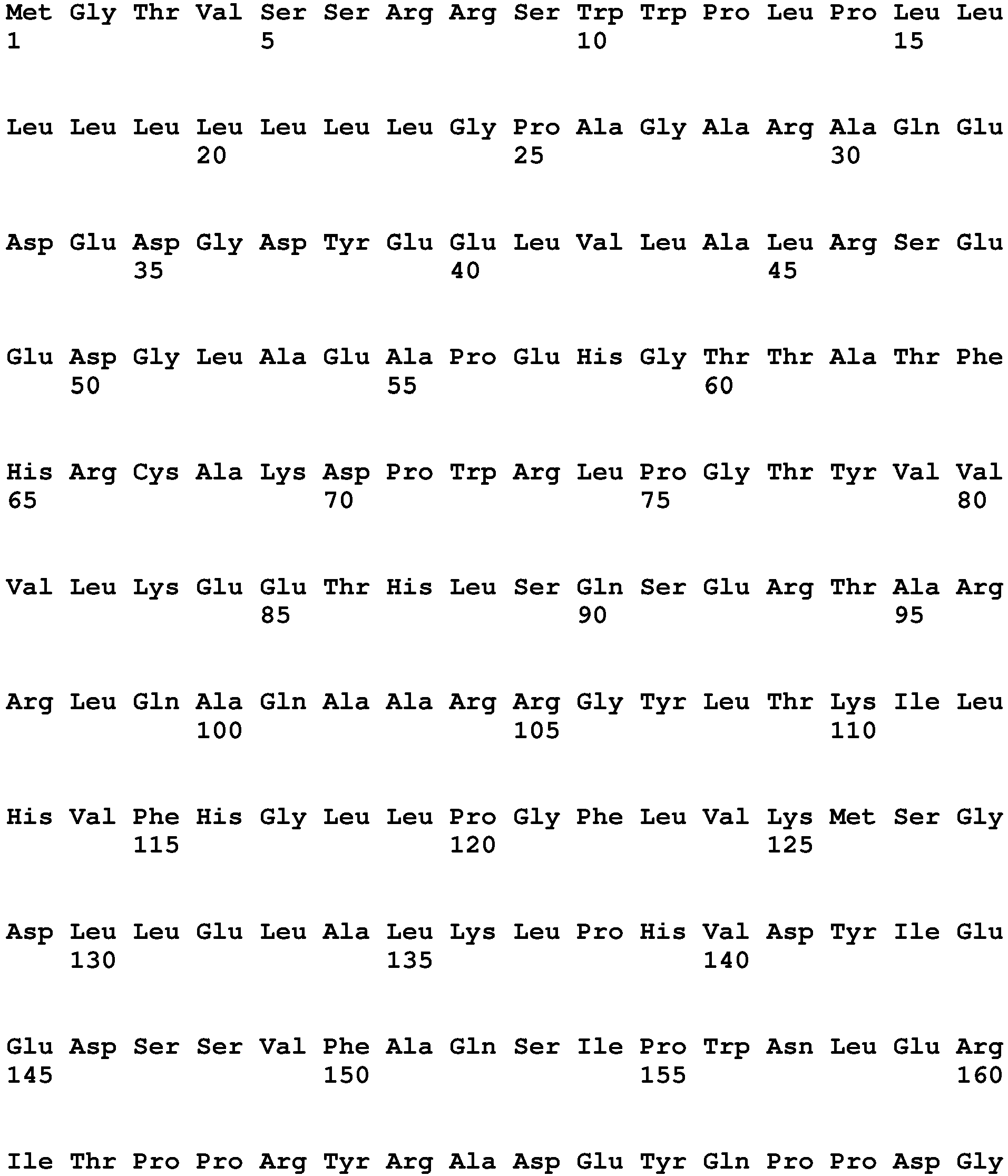


- <210> 2
<211> 3636
<212> DNA
<213> homo sapiens - <400> 2

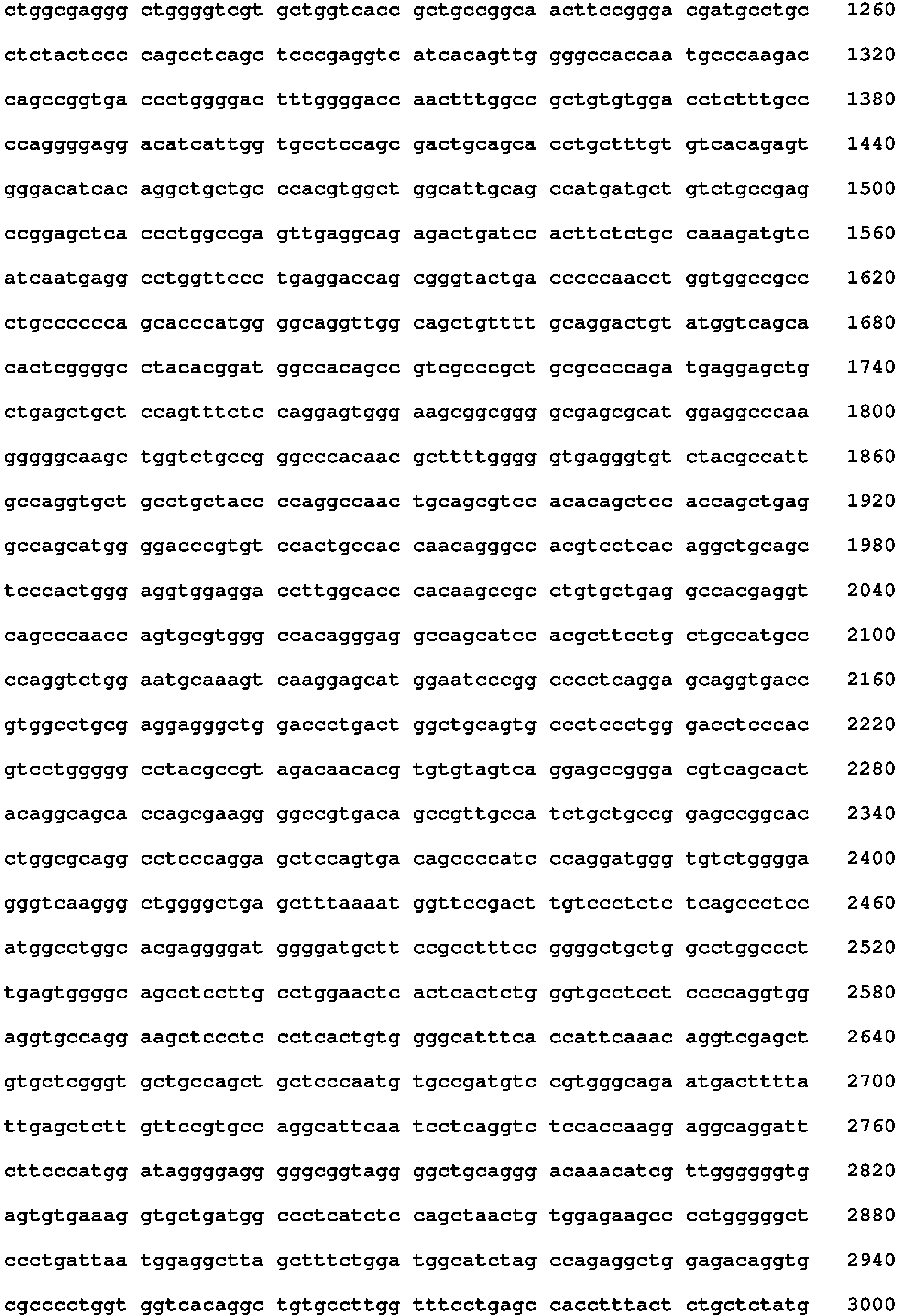

- <210> 3
<211> 16
<212> DNA
<213> artificial - <220>
<223> Preferred seqeunce motif - <400> 3
gcctgtctgt ggaagc 16 - <210> 4
<211> 16
<212> DNA
<213> Artificial - <220>
<223> Preferred seqeunce motif - <400> 4
caagttacaa aagcaa 16 - <210> 5
<211> 16
<212> DNA
<213> Artificial - <220>
<223> Preferred seqeunce motif - <400> 5
gagatacacc tccacc 16 - <210> 6
<211> 16
<212> DNA
<213> Artificial - <220>
<223> Preferred seqeunce motif - <400> 6
tcctcaggga accagg 16 - <210> 7
<211> 16
<212> DNA
<213> Artificial - <220>
<223> Preferred seqeunce motif - <400> 7
ctggagcagc tcagca 16 - <210> 8
<211> 16
<212> DNA
<213> Artificial - <220>
<223> Preferred seqeunce motif - <400> 8
catggcagca ggaagc 16 - <210> 9
<211> 16
<212> DNA
<213> Artificial - <220>
<223> LNA Oligomer - <220>
<221> phosphotohioate linkage
<222> (1) .. (15) - <220>
<221> LNA Nucleobase
<222> (1) .. (3) - <220>
<221> LNA Nucleobase
<222> (14) .. (16) - <220>
<221> 5'-methyl modified cytosine
<222> (15) .. (16) - <400> 9
gagatacacc tccacc 16 - <210> 10
<211> 16
<212> DNA
<213> Artificial - <220>
<223> LNA Oligomer - <220>
<221> Phosphorothioate Linkage
<222> (1) .. (15) - <220>
<221> LNA Nucleobase
<222> (1) .. (3) - <220>
<221> 5'-methyl modified cytosine
<222> (2)..(3) - <220>
<221> LNA Nucleobase
<222> (14) .. (16) - <220>
<221> 5'-methyl modified cytosine
<222> (16) .. (16) - <400> 10
gcctgtctgt ggaagc 16 - <210> 11
<211> 16
<212> DNA
<213> Artificial - <220>
<223> LNA Oligomer - <220>
<221> phosphothioate Linkage
<222> (1) .. (15) - <220>
<221> LNA nucleobase
<222> (1) .. (3) - <220>
<221> 5'-methyl modified cytosine
<222> (1) .. (1) - <220>
<221> LNA nucleobase
<222> (14) .. (16) - <220>
<221> 5'-methyl modified cytosine
<222> (14)..(14) - <400> 11
caagttacaa aagcaa 16 - <210> 12
<211> 15
<212> DNA
<213> artificial - <220>
<223> Control Oligomer - <220>
<221> Phosphorothioate Linkage
<222> (1) .. (15) - <220>
<221> LNA Nucleobase
<222> (1) .. (3) - <220>
<221> 5'-methyl modified cytosine
<222> (1) .. (1) - <220>
<221> LNA Nucleobase
<222> (13)..(15) - <400> 12
cgtcagtatg cgaat 15 - <210> 13
<211> 20
<212> DNA
<213> Artificial - <220>
<223> ISIS Antisense oligonucloeitde compound - <220>
<221> phosphorothioate Linkage
<222> (1) .. (19) - <220>
<221> 2'-O-methyl DNA
<222> (1) .. (5) - <220>
<221> 5'-methyl modified cytosine
<222> (2)..(3) - <220>
<221> 5'-methyl modified cytosine
<222> (5) .. (5) - <220>
<221> 5'-methyl modified cytosine
<222> (12)..(12) - <220>
<221> 5'-methyl modified cytosine
<222> (15)..(15) - <220>
<221> 2'-O-methyl DNA
<222> (16)..(20) - <220>
<221> 5'-methyl modified cytosine
<222> (17)..(17) - <220>
<221> 5'-methyl modified cytosine
<222> (19) .. (20) - <400> 13
gcctcagtct gcttcgcacc 20 - <210> 14
<211> 16
<212> DNA
<213> homo sapiens - <400> 14
ggtggaggtg tatctc 16 - <210> 15
<211> 17
<212> DNA
<213> Homo sapiens - <400> 15
cgcttccaca gacaggc 17 - <210> 16
<211> 23
<212> DNA
<213> homo sapiens - <400> 16
ggcctggttc cctgaggacc agc 23 - <210> 17
<211> 23
<212> DNA
<213> homo sapiens - <400> 17
gaggagctgc tgagctgctc cag 23 - <210> 18
<211> 23
<212> DNA
<213> homo sapiens - <400> 18
gcttcctgct gccatgcccc agg 23 - <210> 19
<211> 15
<212> DNA
<213> homo sapiens - <400> 19
ttgcttttgt aactt 15 - <210> 20
<211> 14
<212> DNA
<213> Artificial - <220>
<223> LNA Oligomer - <220>
<221> Phosphorothioate Linkage
<222> (1) .. (14) - <220>
<221> LNA Nucleobase
<222> (1) .. (3) - <220>
<221> LNA Nucleobase
<222> (12)..(14) - <220>
<221> 5'-methyl modified cytosine
<222> (14)..(14) - <400> 20
gagtagaggc aggc 14 - <210> 21
<211> 16
<212> DNA
<213> Artificial - <220>
<223> LNA Oligomer - <220>
<221> Phosphorothioate Linkage
<222> (1) .. (15) - <220>
<221> LNA Nucleobase
<222> (1) .. (3) - <220>
<221> 5'-methyl modified cytosine
<222> (2)..(3) - <220>
<221> LNA Nucleobase
<222> (14) .. (16) - <400> 21
tcctcaggga accagg 16 - <210> 22
<211> 16
<212> DNA
<213> Artificial - <220>
<223> LNA Oligomer - <220>
<221> Phosphorothioate Linkage
<222> (1) .. (15) - <220>
<221> LNA Nucleobase
<222> (1) .. (3) - <220>
<221> 5'-methyl modified cytosine
<222> (1) .. (1) - <220>
<221> LNA Nucleobase
<222> (14) .. (16) - <220>
<221> 5'-methyl modified cytosine
<222> (15)..(15) - <400> 22
ctggagcagc tcagca 16 - <210> 23
<211> 16
<212> DNA
<213> Artificial - <220>
<223> LNA oligomer - <220>
<221> Phosphorothioate Linkage
<222> (1) .. (15) - <220>
<221> LNA Nucleobase
<222> (1) .. (3) - <220>
<221> 5'-methyl modified cytosine
<222> (1) .. (1) - <220>
<221> LNA Nucleobase
<222> (14) .. (16) - <220>
<221> 5'-methyl modified cytosine
<222> (16) .. (16) - <400> 23
catggcagca ggaagc 16 - <210> 24
<211> 14
<212> DNA
<213> Artificial - <220>
<223> LNA Oligomer - <220>
<221> Phosphorothioate Linkage
<222> (1) .. (13) - <220>
<221> LNA Nucleobase
<222> (1) .. (3) - <220>
<221> LNA Nucleobase
<222> (12)..(14) - <220>
<221> 5'-methyl modified cytosine
<222> (13)..(14) - <400> 24
gatacacctc cacc 14 - <210> 25
<211> 14
<212> DNA
<213> Artificial - <220>
<223> LNA Oligomer - <220>
<221> Phosphorothioate Linkage
<222> (1) .. (13) - <220>
<221> LNA Nucleobase
<222> (1) .. (3) - <220>
<221> 5'-methyl modified cytosine
<222> (1) .. (1) - <220>
<221> LNA Nucleobase
<222> (12)..(14) - <220>
<221> 5'-methyl modified cytosine
<222> (14)..(14) - <400> 25
ctgtctgtgg aagc 14 - <210> 26
<211> 13
<212> DNA
<213> Artificial - <220>
<223> LNA Oligomer - <220>
<221> Phosphorothioate Linkage
<222> (1) .. (12) - <220>
<221> LNA Nucleobase
<222> (1) .. (2) - <220>
<221> LNA Nucleobase
<222> (11) .. (13) - <220>
<221> 5'-methyl modified cytosine
<222> (12)..(12) - <400> 26
gtctgtggaa gcg 13 - <210> 27
<211> 13
<212> DNA
<213> Artificial - <220>
<223> LNA Oligomer - <220>
<221> Phosphorothioate Linkage
<222> (1) .. (12) - <220>
<221> LNA Nucleobase
<222> (1) .. (12) - <220>
<221> LNA Nucleobase
<222> (11) .. (13) - <220>
<221> 5'-methyl modified cytosine
<222> (11) .. (11) - <220>
<221> 5'-methyl modified cytosine
<222> (13)..(13) - <400> 27
atgagggtgc cgc 13 - <210> 28
<211> 13
<212> DNA
<213> Artificial - <220>
<223> LNA Oligomer - <220>
<221> Phosphorothioate Linkage
<222> (1) .. (12) - <220>
<221> LNA Nucleobase
<222> (1) .. (2) - <220>
<221> LNA Nucleobase
<222> (11) .. (13) - <220>
<221> 5'-methyl modified cytosine
<222> (13)..(13) - <400> 28
ataaactcca ggc 13 - <210> 29
<211> 13
<212> DNA
<213> artificial - <220>
<223> LNA oligomer - <220>
<221> Phosphorothioate Linkage
<222> (1) .. (12) - <220>
<221> LNA Nucleobase
<222> (1) .. (2) - <220>
<221> LNA Nucleobase
<222> (11) .. (13) - <220>
<221> 5'-methyl modified cytosine
<222> (11) .. (11) - <220>
<221> 5'-methyl modified cytosine
<222> (13)..(13) - <400> 29
tagacaccct cac 13 - <210> 30
<211> 14
<212> DNA
<213> Artificial - <220>
<223> Oligomer motif - <400> 30
gagtagaggc aggc 14 - <210> 31
<211> 16
<212> DNA
<213> Artificial - <220>
<223> Oligomer motif - <400> 31
tcctcaggga accagg 16 - <210> 32
<211> 16
<212> DNA
<213> Artificial - <220>
<223> Oligomer motif - <400> 32
ctggagcagc tcagca 16 - <210> 33
<211> 16
<212> DNA
<213> Artificial - <220>
<223> Oligomer motif - <400> 33
catggcagca ggaagc 16 - <210> 34
<211> 14
<212> DNA
<213> Artificial - <220>
<223> Oligomer motif - <400> 34
gatacacctc cacc 14 - <210> 35
<211> 14
<212> DNA
<213> Oligomer motif - <400> 35
ctgtctgtgg aagc 14 - <210> 36
<211> 13
<212> DNA
<213> Artificial - <220>
<223> Oligomer motif - <400> 36
gtctgtggaa gcg 13 - <210> 37
<211> 13
<212> DNA
<213> Artificial - <220>
<223> Oligomer motif - <400> 37
atgagggtgc cgc 13 - <210> 38
<211> 13
<212> DNA
<213> Artificial - <220>
<223> Oligomer motif - <400> 38
ataaactcca ggc 13 - <210> 39
<211> 13
<212> DNA
<213> Artificial - <220>
<223> Oligomer motif - <400> 39
tagacaccct cac 13 - <210> 40
<211> 12
<212> DNA
<213> Artificial - <220>
<223> Oligo motif - <400> 40
tctgtggaag cg 12 - <210> 41
<211> 12
<212> DNA
<213> Artificial - <220>
<223> Oligo motif - <400> 41
cctatgaggg tg 12 - <210> 42
<211> 12
<212> DNA
<213> Artificial - <220>
<223> Oligo motif - <400> 42
ccgaataaac tc 12 - <210> 43
<211> 12
<212> DNA
<213> Artificial - <220>
<223> Oligo motif - <400> 43
taaactccag gc 12 - <210> 44
<211> 12
<212> DNA
<213> Artificial - <220>
<223> Oligo motif - <400> 44
cggccgctga cc 12 - <210> 45
<211> 12
<212> DNA
<213> Artificial - <220>
<223> Oligo motif - <400> 45
ccaggcctat ga 12 - <210> 46
<211> 12
<212> DNA
<213> Artificial - <220>
<223> Oligo motif - <400> 46
ggcctatgag gg 12 - <210> 47
<211> 13
<212> DNA
<213> Artificial - <220>
<223> Oligo motif - <400> 47
gtctgtggaa gcg 13 - <210> 48
<211> 13
<212> DNA
<213> Artificial - <220>
<223> Oligo motif - <400> 48
cccggccgct gac 13 - <210> 49
<211> 13
<212> DNA
<213> Artificial - <220>
<223> Oligo motif - <400> 49
atgagggtgc cgc 13 - <210> 50
<211> 13
<212> DNA
<213> Artificial - <220>
<223> Oligo motif - <400> 50
gcctatgagg gtg 13 - <210> 51
<211> 13
<212> DNA
<213> Artificial - <220>
<223> Oligo motif - <400> 51
ccaggcctat gag 13 - <210> 52
<211> 13
<212> DNA
<213> Artificial - <220>
<223> Oligo motif - <400> 52
actccaggcc tat 13 - <210> 53
<211> 13
<212> DNA
<213> Artificial - <220>
<223> Oligo motif - <400> 53
taaactccag gcc 13 - <210> 54
<211> 13
<212> DNA
<213> Artificial - <220>
<223> Oligo motif - <400> 54
ataaactcca ggc 13 - <210> 55
<211> 13
<212> DNA
<213> Artificial - <220>
<223> Oligo motif - <400> 55
gccccgagtg tgc 13 - <210> 56
<211> 13
<212> DNA
<213> Artificial - <220>
<223> Oligo motif - <400> 56
tagacaccct cac 13 - <210> 57
<211> 13
<212> DNA
<213> Artificial - <220>
<223> Oligo motif - <400> 57
atggggcaac ttc 13 - <210> 58
<211> 13
<212> DNA
<213> Artificial - <220>
<223> Oligo motif - <400> 58
gagatacacc tcc 13 - <210> 59
<211> 13
<212> DNA
<213> Artificial - <220>
<223> Oligo motif - <400> 59
tccaggccta tga 13 - <210> 60
<211> 13
<212> DNA
<213> Artificial - <220>
<223> Oligo motif - <400> 60
ggccccgagt gtg 13 - <210> 61
<211> 13
<212> DNA
<213> Artificial - <220>
<223> Oligo motif - <400> 61
caggcctatg agg 13 - <210> 62
<211> 13
<212> DNA
<213> Artificial - <220>
<223> Oligo motif - <400> 62
agatacacct cca 13 - <210> 63
<211> 13
<212> DNA
<213> Artificial - <220>
<223> Oligo motif - <400> 63
cacgtgggca gca 13 - <210> 64
<211> 13
<212> DNA
<213> Artificial - <220>
<223> Oligo motif - <400> 64
tgtcacactt gct 13 - <210> 65
<211> 13
<212> DNA
<213> Artificial - <220>
<223> Oligo motif - <400> 65
tcccggccgc tga 13 - <210> 66
<211> 13
<212> DNA
<213> Artificial - <220>
<223> Oligo motif - <400> 66
tatgagggtg ccg 13 - <210> 67
<211> 13
<212> DNA
<213> Artificial - <220>
<223> Oligo motif - <400> 67
ctatgagggt gcc 13 - <210> 68
<211> 13
<212> DNA
<213> Artificial - <220>
<223> Oligo motif - <400> 68
cctatgaggg tgc 13 - <210> 69
<211> 13
<212> DNA
<213> Artificial - <220>
<223> Oligo motif - <400> 69
ggcctatgag ggt 13 - <210> 70
<211> 13
<212> DNA
<213> Artificial - <220>
<223> Oligo motif - <400> 70
aggcctatga ggg 13 - <210> 71
<211> 13
<212> DNA
<213> Artificial - <220>
<223> Oligo motif - <400> 71
ctccaggcct atg 13 - <210> 72
<211> 13
<212> DNA
<213> Artificial - <220>
<223> Oligo motif - <400> 72
tccgaataaa ctc 13 - <210> 73
<211> 13
<212> DNA
<213> Artificial - <220>
<223> Oligo motif - <400> 73
cgtcccggaa gtt 13 - <210> 74
<211> 13
<212> DNA
<213> Artificial - <220>
<223> Oligo motif - <400> 74
taatcaggga gcc 13 - <210> 75
<211> 13
<212> DNA
<213> Artificial - <220>
<223> Oligo motif - <400> 75
tggggcaact tca 13 - <210> 76
<211> 13
<212> DNA
<213> Artificial - <220>
<223> Oligo motif - <400> 76
catggggcaa ctt 13 - <210> 77
<211> 13
<212> DNA
<213> Artificial - <220>
<223> Oligo motif - <400> 77
cggccgctga cca 13 - <210> 78
<211> 13
<212> DNA
<213> Artificial - <220>
<223> Oligo motif - <400> 78
ccggccgctg acc 13 - <210> 79
<211> 13
<212> DNA
<213> Artificial - <220>
<223> Oligo motif - <400> 79
ccgaataaac tcc 13 - <210> 80
<211> 13
<212> DNA
<213> Artificial - <220>
<223> Oligo motif - <400> 80
gtcccactct gtg 13 - <210> 81
<211> 13
<212> DNA
<213> Artificial - <220>
<223> Oligo motif - <400> 81
caggttgggg gtc 13 - <210> 82
<211> 13
<212> DNA
<213> Artificial - <220>
<223> Oligo motif - <400> 82
cggcagcaga tgg 13 - <210> 83
<211> 13
<212> DNA
<213> Artificial - <220>
<223> Oligo motif - <400> 83
acaccctcac ccc 13 - <210> 84
<211> 13
<212> DNA
<213> Artificial - <220>
<223> Oligo motif - <400> 84
tccggcagca gat 13 - <210> 85
<211> 13
<212> DNA
<213> Artificial - <220>
<223> Oligo motif - <400> 85
atacacctcc acc 13 - <210> 86
<211> 13
<212> DNA
<213> Artificial - <220>
<223> Oligo motif - <400> 86
cctgtctgtg gaa 13 - <210> 87
<211> 13
<212> DNA
<213> Artificial - <220>
<223> Oligo motif - <400> 87
gcctgtctgt gga 13 - <210> 88
<211> 13
<212> DNA
<213> Artificial - <220>
<223> Oligo motif - <400> 88
ttccgaataa act 13 - <210> 89
<211> 13
<212> DNA
<213> Artificial - <220>
<223> Oligo motif - <400> 89
actgtgatga cct 13 - <210> 90
<211> 13
<212> DNA
<213> Artificial - <220>
<223> Oligo motif - <400> 90
tcgtcccgga agt 13 - <210> 91
<211> 13
<212> DNA
<213> Artificial - <220>
<223> Oligo motif - <400> 91
tcccactctg tga 13 - <210> 92
<211> 13
<212> DNA
<213> Artificial - <220>
<223> Oligo motif - <400> 92
aataaactcc agg 13 - <210> 93
<211> 13
<212> DNA
<213> Artificial - <220>
<223> Oligo motif - <400> 93
gctggggagt aga 13 - <210> 94
<211> 13
<212> DNA
<213> Artificial - <220>
<223> Oligo motif - <400> 94
ttaatcaggg agc 13 - <210> 95
<211> 14
<212> DNA
<213> Artificial - <220>
<223> Oligo motif - <400> 95
tgtctgtgga agcg 14 - <210> 96
<211> 14
<212> DNA
<213> Artificial - <220>
<223> Oligo motif - <400> 96
cctgtctgtg gaag 14 - <210> 97
<211> 14
<212> DNA
<213> Artificial - <220>
<223> Oligo motif - <400> 97
ctgtcacact tgct 14 - <210> 98
<211> 14
<212> DNA
<213> Artificial - <220>
<223> Oligo motif - <400> 98
cggccgctga ccac 14 - <210> 99
<211> 14
<212> DNA
<213> Artificial - <220>
<223> Oligo motif - <400> 99
cccggccgct gacc 14 - <210> 100
<211> 14
<212> DNA
<213> Artificial - <220>
<223> Oligo motif - <400> 100
tcccggccgc tgac 14 - <210> 101
<211> 14
<212> DNA
<213> Artificial - <220>
<223> Oligo motif - <400> 101
atcccggccg ctga 14 - <210> 102
<211> 14
<212> DNA
<213> Artificial - <220>
<223> Oligo motif - <400> 102
atgagggtgc cgct 14 - <210> 103
<211> 14
<212> DNA
<213> Artificial - <220>
<223> Oligo motif - <400> 103
tatgagggtg ccgc 14 - <210> 104
<211> 14
<212> DNA
<213> Artificial - <220>
<223> Oligo motif - <400> 104
gcctatgagg gtgc 14 - <210> 105
<211> 14
<212> DNA
<213> Artificial - <220>
<223> Oligo motif - <400> 105
ggcctatgag ggtg 14 - <210> 106
<211> 14
<212> DNA
<213> Artificial - <220>
<223> Oligo motif - <400> 106
caggcctatg aggg 14 - <210> 107
<211> 14
<212> DNA
<213> Artificial - <220>
<223> Oligo motif - <400> 107
ccaggcctat gagg 14 - <210> 108
<211> 14
<212> DNA
<213> Artificial - <220>
<223> Oligo motif - <400> 108
tccaggccta tgag 14 - <210> 109
<211> 14
<212> DNA
<213> Artificial - <220>
<223> Oligo motif - <400> 109
ctccaggcct atga 14 - <210> 110
<211> 14
<212> DNA
<213> Artificial - <220>
<223> Oligo motif - <400> 110
actccaggcc tatg 14 - <210> 111
<211> 14
<212> DNA
<213> Artificial - <220>
<223> Oligo motif - <400> 111
aactccaggc ctat 14 - <210> 112
<211> 14
<212> DNA
<213> Artificial - <220>
<223> Oligo motif - <400> 112
aaactccagg ccta 14 - <210> 113
<211> 14
<212> DNA
<213> Artificial - <220>
<223> Oligo motif - <400> 113
taaactccag gcct 14 - <210> 114
<211> 14
<212> DNA
<213> Artificial - <220>
<223> Oligo motif - <400> 114
ataaactcca ggcc 14 - <210> 115
<211> 14
<212> DNA
<213> Artificial - <220>
<223> Oligo motif - <400> 115
aataaactcc aggc 14 - <210> 116
<211> 14
<212> DNA
<213> Artificial - <220>
<223> Oligo motif - <400> 116
ttccgaataa actc 14 - <210> 117
<211> 14
<212> DNA
<213> Artificial - <220>
<223> Oligo motif - <400> 117
tcgtcccgga agtt 14 - <210> 118
<211> 14
<212> DNA
<213> Artificial - <220>
<223> Oligo motif - <400> 118
gagtagaggc aggc 14 - <210> 119
<211> 14
<212> DNA
<213> Artificial - <220>
<223> Oligo motif - <400> 119
ggggagtaga ggca 14 - <210> 120
<211> 14
<212> DNA
<213> Artificial - <220>
<223> Oligo motif - <400> 120
gctggggagt agag 14 - <210> 121
<211> 14
<212> DNA
<213> Artificial - <220>
<223> Oligo motif - <400> 121
actgtgatga cctc 14 - <210> 122
<211> 14
<212> DNA
<213> Artificial - <220>
<223> Oligo motif - <400> 122
gtcccactct gtga 14 - <210> 123
<211> 14
<212> DNA
<213> Artificial - <220>
<223> Oligo motif - <400> 123
ccaggttggg ggtc 14 - <210> 124
<211> 14
<212> DNA
<213> Artificial - <220>
<223> Oligo motif - <400> 124
ggccccgagt gtgc 14 - <210> 125
<211> 14
<212> DNA
<213> Artificial - <220>
<223> Oligo motif - <400> 125
acaccctcac cccc 14 - <210> 126
<211> 14
<212> DNA
<213> Artificial - <220>
<223> Oligo motif - <400> 126
gacaccctca cccc 14 - <210> 127
<211> 14
<212> DNA
<213> Artificial - <220>
<223> Oligo motif - <400> 127
tagacaccct cacc 14 - <210> 128
<211> 14
<212> DNA
<213> Artificial - <220>
<223> Oligo motif - <400> 128
ggggcatggc agca 14 - <210> 129
<211> 14
<212> DNA
<213> Artificial - <220>
<223> Oligo motif - <400> 129
cggcagcaga tggc 14 - <210> 130
<211> 14
<212> DNA
<213> Artificial - <220>
<223> Oligo motif - <400> 130
ccggcagcag atgg 14 - <210> 131
<211> 14
<212> DNA
<213> Artificial - <220>
<223> Oligo motif - <400> 131
gctccggcag caga 14 - <210> 132
<211> 14
<212> DNA
<213> Artificial - <220>
<223> Oligo motif - <400> 132
taatcaggga gccc 14 - <210> 133
<211> 14
<212> DNA
<213> Artificial - <220>
<223> Oligo motif - <400> 133
ttaatcaggg agcc 14 - <210> 134
<211> 14
<212> DNA
<213> Artificial - <220>
<223> Oligo motif - <400> 134
atggggcaac ttca 14 - <210> 135
<211> 14
<212> DNA
<213> Artificial - <220>
<223> Oligo motif - <400> 135
catggggcaa cttc 14 - <210> 136
<211> 14
<212> DNA
<213> Artificial - <220>
<223> Oligo motif - <400> 136
gatacacctc cacc 14 - <210> 137
<211> 14
<212> DNA
<213> Artificial - <220>
<223> Oligo motif - <400> 137
agatacacct ccac 14 - <210> 138
<211> 14
<212> DNA
<213> Artificial - <220>
<223> Oligo motif - <400> 138
gagatacacc tcca 14 - <210> 139
<211> 14
<212> DNA
<213> Artificial - <220>
<223> Oligo motif - <400> 139
ctgtctgtgg aagc 14 - <210> 140
<211> 14
<212> DNA
<213> Artificial - <220>
<223> Oligo motif - <400> 140
gcctgtctgt ggaa 14 - <210> 141
<211> 14
<212> DNA
<213> Artificial - <220>
<223> Oligo motif - <400> 141
acgtgggcag cagc 14 - <210> 142
<211> 14
<212> DNA
<213> Artificial - <220>
<223> Oligo motif - <400> 142
tcctcaggga acca 14 - <210> 143
<211> 14
<212> DNA
<213> Artificial - <220>
<223> Oligo motif - <400> 143
gcatggcagc agga 14 - <210> 144
<211> 14
<212> DNA
<213> Artificial - <220>
<223> Oligo motif - <400> 144
ctccggcagc agat 14 - <210> 145
<211> 14
<212> DNA
<213> Artificial - <220>
<223> Oligo motif - <400> 145
cacgtgggca gcag 14 - <210> 146
<211> 14
<212> DNA
<213> Artificial - <220>
<223> Oligo motif - <400> 146
ccacgtgggc agca 14 - <210> 147
<211> 14
<212> DNA
<213> Artificial - <220>
<223> Oligo motif - <400> 147
ggagcagctc agca 14 - <210> 148
<211> 14
<212> DNA
<213> Artificial - <220>
<223> Oligo motif - <400> 148
gagcagctca gcag 14 - <210> 149
<211> 14
<212> DNA
<213> Artificial - <220>
<223> Oligo motif - <400> 149
atgggtgctg gggg 14 - <210> 150
<211> 14
<212> DNA
<213> Artificial - <220>
<223> Oligo motif - <400> 150
ccggccgctg acca 14 - <210> 151
<211> 14
<212> DNA
<213> Artificial - <220>
<223> Oligo motif - <400> 151
catcccggcc gctg 14 - <210> 152
<211> 14
<212> DNA
<213> Artificial - <220>
<223> Oligo motif - <400> 152
ctatgagggt gccg 14 - <210> 153
<211> 14
<212> DNA
<213> Artificial - <220>
<223> Oligo motif - <400> 153
cctatgaggg tgcc 14 - <210> 154
<211> 14
<212> DNA
<213> Artificial - <220>
<223> Oligo motif - <400> 154
aggcctatga gggt 14 - <210> 155
<211> 14
<212> DNA
<213> Artificial - <220>
<223> Oligo motif - <400> 155
gaataaactc cagg 14 - <210> 156
<211> 14
<212> DNA
<213> Artificial - <220>
<223> Oligo motif - <400> 156
cgaataaact ccag 14 - <210> 157
<211> 14
<212> DNA
<213> Artificial - <220>
<223> Oligo motif - <400> 157
tccgaataaa ctcc 14 - <210> 158
<211> 14
<212> DNA
<213> Artificial - <220>
<223> Oligo motif - <400> 158
tccccaaagt cccc 14 - <210> 159
<211> 14
<212> DNA
<213> Artificial - <220>
<223> Oligo motif - <400> 159
cccactctgt gaca 14 - <210> 160
<211> 14
<212> DNA
<213> Artificial - <220>
<223> Oligo motif - <400> 160
agagaagtgg atca 14 - <210> 161
<211> 14
<212> DNA
<213> Artificial - <220>
<223> Oligo motif - <400> 161
tcagggaacc aggc 14 - <210> 162
<211> 14
<212> DNA
<213> Artificial - <220>
<223> Oligo motif - <400> 162
accaggttgg gggt 14 - <210> 163
<211> 14
<212> DNA
<213> Artificial - <220>
<223> Oligo motif - <400> 163
accctcaccc ccaa 14 - <210> 164
<211> 14
<212> DNA
<213> Artificial - <220>
<223> Oligo motif - <400> 164
ggtggcagtg gaca 14 - <210> 165
<211> 14
<212> DNA
<213> Artificial - <220>
<223> Oligo motif - <400> 165
tggtggcagt ggac 14 - <210> 166
<211> 14
<212> DNA
<213> Artificial - <220>
<223> Oligo motif - <400> 166
cctggggcat ggca 14 - <210> 167
<211> 14
<212> DNA
<213> Artificial - <220>
<223> Oligo motif - <400> 167
tcaagttaca aaag 14 - <210> 168
<211> 14
<212> DNA
<213> Artificial - <220>
<223> Oligo motif - <400> 168
cccggcgggc agcc 14 - <210> 169
<211> 14
<212> DNA
<213> Artificial - <220>
<223> Oligo motif - <400> 169
acatggggca actt 14 - <210> 170
<211> 14
<212> DNA
<213> Artificial - <220>
<223> Oligo motif - <400> 170
gtgcccttcc cttg 14 - <210> 171
<211> 14
<212> DNA
<213> Artificial - <220>
<223> Oligo motif - <400> 171
ccgaataaac tcca 14 - <210> 172
<211> 14
<212> DNA
<213> Artificial - <220>
<223> Oligo motif - <400> 172
ctggggagta gagg 14 - <210> 173
<211> 14
<212> DNA
<213> Artificial - <220>
<223> Oligo motif - <400> 173
tcccactctg tgac 14 - <210> 174
<211> 14
<212> DNA
<213> Artificial - <220>
<223> Oligo motif - <400> 174
gtgggcagca gcct 14 - <210> 175
<211> 14
<212> DNA
<213> Artificial - <220>
<223> Oligo motif - <400> 175
gagaagtgga tcag 14 - <210> 176
<211> 14
<212> DNA
<213> Artificial - <220>
<223> Oligo motif - <400> 176
gtcctcaggg aacc 14 - <210> 177
<211> 14
<212> DNA
<213> Artificial - <220>
<223> Oligo motif - <400> 177
caggttgggg gtca 14 - <210> 178
<211> 14
<212> DNA
<213> Artificial - <220>
<223> Oligo motif - <400> 178
ccctcacccc caaa 14 - <210> 179
<211> 14
<212> DNA
<213> Artificial - <220>
<223> Oligo motif - <400> 179
ggcatggcag cagg 14 - <210> 180
<211> 14
<212> DNA
<213> Artificial - <220>
<223> Oligo motif - <400> 180
tggggcatgg cagc 14 - <210> 181
<211> 14
<212> DNA
<213> Artificial - <220>
<223> Oligo motif - <400> 181
tccggcagca gatg 14 - <210> 182
<211> 14
<212> DNA
<213> Artificial - <220>
<223> Oligo motif - <400> 182
caagttacaa aagc 14 - <210> 183
<211> 14
<212> DNA
<213> Artificial - <220>
<223> Oligo motif - <400> 183
gggatgctct gggc 14 - <210> 184
<211> 14
<212> DNA
<213> Artificial - <220>
<223> Oligo motif - <400> 184
cgctccaggt tcca 14 - <210> 185
<211> 14
<212> DNA
<213> Artificial - <220>
<223> Oligo motif - <400> 185
gggcagcagc ctgt 14 - <210> 186
<211> 14
<212> DNA
<213> Artificial - <220>
<223> Oligo motif - <400> 186
catggcagca ggaa 14 - <210> 187
<211> 14
<212> DNA
<213> Artificial - <220>
<223> Oligo motif - <400> 187
catgggtgct gggg 14 - <210> 188
<211> 14
<212> DNA
<213> Artificial - <220>
<223> Oligo motif - <400> 188
gcatcccggc cgct 14 - <210> 189
<211> 14
<212> DNA
<213> Artificial - <220>
<223> Oligo motif - <400> 189
gccacgtggg cagc 14 - <210> 190
<211> 14
<212> DNA
<213> Artificial - <220>
<223> Oligo motif - <400> 190
agacaccctc accc 14 - <210> 191
<211> 15
<212> DNA
<213> Artificial - <220>
<223> Oligo motif - <400> 191
ctgtctgtgg aagcg 15 - <210> 192
<211> 15
<212> DNA
<213> Artificial - <220>
<223> Oligo motif - <400> 192
cctgtctgtg gaagc 15 - <210> 193
<211> 15
<212> DNA
<213> Artificial - <220>
<223> Oligo motif - <400> 193
gcctgtctgt ggaag 15 - <210> 194
<211> 15
<212> DNA
<213> Artificial - <220>
<223> Oligo motif - <400> 194
ccggccgctg accac 15 - <210> 195
<211> 15
<212> DNA
<213> Artificial - <220>
<223> Oligo motif - <400> 195
cccggccgct gacca 15 - <210> 196
<211> 15
<212> DNA
<213> Artificial - <220>
<223> Oligo motif - <400> 196
tcccggccgc tgacc 15 - <210> 197
<211> 15
<212> DNA
<213> Artificial - <220>
<223> Oligo motif - <400> 197
atcccggccg ctgac 15 - <210> 198
<211> 15
<212> DNA
<213> Artificial - <220>
<223> Oligo motif - <400> 198
catcccggcc gctga 15 - <210> 199
<211> 15
<212> DNA
<213> Artificial - <220>
<223> Oligo motif - <400> 199
tatgagggtg ccgct 15 - <210> 200
<211> 15
<212> DNA
<213> Artificial - <220>
<223> Oligo motif - <400> 200
ctatgagggt gccgc 15 - <210> 201
<211> 15
<212> DNA
<213> Artificial - <220>
<223> Oligo motif - <400> 201
gcctatgagg gtgcc 15 - <210> 202
<211> 15
<212> DNA
<213> Artificial - <220>
<223> Oligo motif - <400> 202
ggcctatgag ggtgc 15 - <210> 203
<211> 15
<212> DNA
<213> Artificial - <220>
<223> Oligo motif - <400> 203
aggcctatga gggtg 15 - <210> 204
<211> 15
<212> DNA
<213> Artificial - <220>
<223> Oligo motif - <400> 204
caggcctatg agggt 15 - <210> 205
<211> 15
<212> DNA
<213> Artificial - <220>
<223> Oligo motif - <400> 205
ccaggcctat gaggg 15 - <210> 206
<211> 15
<212> DNA
<213> Artificial - <220>
<223> Oligo motif - <400> 206
tccaggccta tgagg 15 - <210> 207
<211> 15
<212> DNA
<213> Artificial - <220>
<223> Oligo motif - <400> 207
ctccaggcct atgag 15 - <210> 208
<211> 15
<212> DNA
<213> Artificial - <220>
<223> Oligo motif - <400> 208
actccaggcc tatga 15 - <210> 209
<211> 15
<212> DNA
<213> Artificial - <220>
<223> Oligo motif - <400> 209
aactccaggc ctatg 15 - <210> 210
<211> 15
<212> DNA
<213> Artificial - <220>
<223> Oligo motif - <400> 210
aaactccagg cctat 15 - <210> 211
<211> 15
<212> DNA
<213> Artificial - <220>
<223> Oligo motif - <400> 211
taaactccag gccta 15 - <210> 212
<211> 15
<212> DNA
<213> Artificial - <220>
<223> Oligo motif - <400> 212
ataaactcca ggcct 15 - <210> 213
<211> 15
<212> DNA
<213> Artificial - <220>
<223> Oligo motif - <400> 213
aataaactcc aggcc 15 - <210> 214
<211> 15
<212> DNA
<213> Artificial - <220>
<223> Oligo motif - <400> 214
gaataaactc caggc 15 - <210> 215
<211> 15
<212> DNA
<213> Artificial - <220>
<223> Oligo motif - <400> 215
cgaataaact ccagg 15 - <210> 216
<211> 15
<212> DNA
<213> Artificial - <220>
<223> Oligo motif - <400> 216
ttccgaataa actcc 15 - <210> 217
<211> 15
<212> DNA
<213> Artificial - <220>
<223> Oligo motif - <400> 217
ggagtagagg caggc 15 - <210> 218
<211> 15
<212> DNA
<213> Artificial - <220>
<223> Oligo motif - <400> 218
ggggagtaga ggcag 15 - <210> 219
<211> 15
<212> DNA
<213> Artificial - <220>
<223> Oligo motif - <400> 219
tggggagtag aggca 15 - <210> 220
<211> 15
<212> DNA
<213> Artificial - <220>
<223> Oligo motif - <400> 220
ctggggagta gaggc 15 - <210> 221
<211> 15
<212> DNA
<213> Artificial - <220>
<223> Oligo motif - <400> 221
gctggggagt agagg 15 - <210> 222
<211> 15
<212> DNA
<213> Artificial - <220>
<223> Oligo motif - <400> 222
gtccccaaag tcccc 15 - <210> 223
<211> 15
<212> DNA
<213> Artificial - <220>
<223> Oligo motif - <400> 223
gtcccactct gtgac 15 - <210> 224
<211> 15
<212> DNA
<213> Artificial - <220>
<223> Oligo motif - <400> 224
gccacgtggg cagca 15 - <210> 225
<211> 15
<212> DNA
<213> Artificial - <220>
<223> Oligo motif - <400> 225
agagaagtgg atcag 15 - <210> 226
<211> 15
<212> DNA
<213> Artificial - <220>
<223> Oligo motif - <400> 226
ctcagggaac caggc 15 - <210> 227
<211> 15
<212> DNA
<213> Artificial - <220>
<223> Oligo motif - <400> 227
gtcctcaggg aacca 15 - <210> 228
<211> 15
<212> DNA
<213> Artificial - <220>
<223> Oligo motif - <400> 228
caggttgggg gtcag 15 - <210> 229
<211> 15
<212> DNA
<213> Artificial - <220>
<223> Oligo motif - <400> 229
ccaggttggg ggtca 15 - <210> 230
<211> 15
<212> DNA
<213> Artificial - <220>
<223> Oligo motif - <400> 230
accaggttgg gggtc 15 - <210> 231
<211> 15
<212> DNA
<213> Artificial - <220>
<223> Oligo motif - <400> 231
atgggtgctg ggggg 15 - <210> 232
<211> 15
<212> DNA
<213> Artificial - <220>
<223> Oligo motif - <400> 232
tggagcagct cagca 15 - <210> 233
<211> 15
<212> DNA
<213> Artificial - <220>
<223> Oligo motif - <400> 233
accctcaccc ccaaa 15 - <210> 234
<211> 15
<212> DNA
<213> Artificial - <220>
<223> Oligo motif - <400> 234
caccctcacc cccaa 15 - <210> 235
<211> 15
<212> DNA
<213> Artificial - <220>
<223> Oligo motif - <400> 235
acaccctcac cccca 15 - <210> 236
<211> 15
<212> DNA
<213> Artificial - <220>
<223> Oligo motif - <400> 236
gacaccctca ccccc 15 - <210> 237
<211> 15
<212> DNA
<213> Artificial - <220>
<223> Oligo motif - <400> 237
agacaccctc acccc 15 - <210> 238
<211> 15
<212> DNA
<213> Artificial - <220>
<223> Oligo motif - <400> 238
tagacaccct caccc 15 - <210> 239
<211> 15
<212> DNA
<213> Artificial - <220>
<223> Oligo motif - <400> 239
gcatggcagc aggaa 15 - <210> 240
<211> 15
<212> DNA
<213> Artificial - <220>
<223> Oligo motif - <400> 240
ggcatggcag cagga 15 - <210> 241
<211> 15
<212> DNA
<213> Artificial - <220>
<223> Oligo motif - <400> 241
ggggcatggc agcag 15 - <210> 242
<211> 15
<212> DNA
<213> Artificial - <220>
<223> Oligo motif - <400> 242
tggggcatgg cagca 15 - <210> 243
<211> 15
<212> DNA
<213> Artificial - <220>
<223> Oligo motif - <400> 243
ctggggcatg gcagc 15 - <210> 244
<211> 15
<212> DNA
<213> Artificial - <220>
<223> Oligo motif - <400> 244
cggcagcaga tggca 15 - <210> 245
<211> 15
<212> DNA
<213> Artificial - <220>
<223> Oligo motif - <400> 245
ccggcagcag atggc 15 - <210> 246
<211> 15
<212> DNA
<213> Artificial - <220>
<223> Oligo motif - <400> 246
tccggcagca gatgg 15 - <210> 247
<211> 15
<212> DNA
<213> Artificial - <220>
<223> Oligo motif - <400> 247
ctccggcagc agatg 15 - <210> 248
<211> 15
<212> DNA
<213> Artificial - <220>
<223> Oligo motif - <400> 248
gctccggcag cagat 15 - <210> 249
<211> 15
<212> DNA
<213> Artificial - <220>
<223> Oligo motif - <400> 249
ggctccggca gcaga 15 - <210> 250
<211> 15
<212> DNA
<213> Artificial - <220>
<223> Oligo motif - <400> 250
ttaatcaggg agccc 15 - <210> 251
<211> 15
<212> DNA
<213> Artificial - <220>
<223> Oligo motif - <400> 251
tcaagttaca aaagc 15 - <210> 252
<211> 15
<212> DNA
<213> Artificial - <220>
<223> Oligo motif - <400> 252
catggggcaa cttca 15 - <210> 253
<211> 15
<212> DNA
<213> Artificial - <220>
<223> Oligo motif - <400> 253
acatggggca acttc 15 - <210> 254
<211> 15
<212> DNA
<213> Artificial - <220>
<223> Oligo motif - <400> 254
agatacacct ccacc 15 - <210> 255
<211> 15
<212> DNA
<213> Artificial - <220>
<223> Oligo motif - <400> 255
gagatacacc tccac 15 - <210> 256
<211> 15
<212> DNA
<213> Artificial - <220>
<223> Oligo motif - <400> 256
tgggcagcag cctgt 15 - <210> 257
<211> 15
<212> DNA
<213> Artificial - <220>
<223> Oligo motif - <400> 257
acgtgggcag cagcc 15 - <210> 258
<211> 15
<212> DNA
<213> Artificial - <220>
<223> Oligo motif - <400> 258
cacgtgggca gcagc 15 - <210> 259
<211> 15
<212> DNA
<213> Artificial - <220>
<223> Oligo motif - <400> 259
tcctcaggga accag 15 - <210> 260
<211> 15
<212> DNA
<213> Artificial - <220>
<223> Oligo motif - <400> 260
catgggtgct ggggg 15 - <210> 261
<211> 15
<212> DNA
<213> Artificial - <220>
<223> Oligo motif - <400> 261
gcagctcagc agctc 15 - <210> 262
<211> 15
<212> DNA
<213> Artificial - <220>
<223> Oligo motif - <400> 262
gagcagctca gcagc 15 - <210> 263
<211> 15
<212> DNA
<213> Artificial - <220>
<223> Oligo motif - <400> 263
ggagcagctc agcag 15 - <210> 264
<211> 15
<212> DNA
<213> Artificial - <220>
<223> Oligo motif - <400> 264
ccacgtgggc agcag 15 - <210> 265
<211> 15
<212> DNA
<213> Artificial - <220>
<223> Oligo motif - <400> 265
gctggtcctc aggga 15 - <210> 266
<211> 15
<212> DNA
<213> Artificial - <220>
<223> Oligo motif - <400> 266
tgggtgctgg ggggc 15 - <210> 267
<211> 15
<212> DNA
<213> Artificial - <220>
<223> Oligo motif - <400> 267
cctgccaggt gggtg 15 - <210> 268
<211> 15
<212> DNA
<213> Artificial - <220>
<223> Oligo motif - <400> 268
gcatcccggc cgctg 15 - <210> 269
<211> 15
<212> DNA
<213> Artificial - <220>
<223> Oligo motif - <400> 269
cctatgaggg tgccg 15 - <210> 270
<211> 15
<212> DNA
<213> Artificial - <220>
<223> Oligo motif - <400> 270
ccgaataaac tccag 15 - <210> 271
<211> 15
<212> DNA
<213> Artificial - <220>
<223> Oligo motif - <400> 271
tccgaataaa ctcca 15 - <210> 272
<211> 15
<212> DNA
<213> Artificial - <220>
<223> Oligo motif - <400> 272
tccccaaagt cccca 15 - <210> 273
<211> 15
<212> DNA
<213> Artificial - <220>
<223> Oligo motif - <400> 273
tcccactctg tgaca 15 - <210> 274
<211> 15
<212> DNA
<213> Artificial - <220>
<223> Oligo motif - <400> 274
ggcagcagcc tgtga 15 - <210> 275
<211> 15
<212> DNA
<213> Artificial - <220>
<223> Oligo motif - <400> 275
cgtgggcagc agcct 15 - <210> 276
<211> 15
<212> DNA
<213> Artificial - <220>
<223> Oligo motif - <400> 276
tcagggaacc aggcc 15 - <210> 277
<211> 15
<212> DNA
<213> Artificial - <220>
<223> Oligo motif - <400> 277
cctcagggaa ccagg 15 - <210> 278
<211> 15
<212> DNA
<213> Artificial - <220>
<223> Oligo motif - <400> 278
caccaggttg ggggt 15 - <210> 279
<211> 15
<212> DNA
<213> Artificial - <220>
<223> Oligo motif - <400> 279
tggtggcagt ggaca 15 - <210> 280
<211> 15
<212> DNA
<213> Artificial - <220>
<223> Oligo motif - <400> 280
catggcagca ggaag 15 - <210> 281
<211> 15
<212> DNA
<213> Artificial - <220>
<223> Oligo motif - <400> 281
gggcatggca gcagg 15 - <210> 282
<211> 15
<212> DNA
<213> Artificial - <220>
<223> Oligo motif - <400> 282
cctggggcat ggcag 15 - <210> 283
<211> 15
<212> DNA
<213> Artificial - <220>
<223> Oligo motif - <400> 283
gccggctccg gcagc 15 - <210> 284
<211> 15
<212> DNA
<213> Artificial - <220>
<223> Oligo motif - <400> 284
ccccggcggg cagcc 15 - <210> 285
<211> 15
<212> DNA
<213> Artificial - <220>
<223> Oligo motif - <400> 285
ctgccaggtg ggtgc 15 - <210> 286
<211> 15
<212> DNA
<213> Artificial - <220>
<223> Oligo motif - <400> 286
gggcagcagc ctgtg 15 - <210> 287
<211> 15
<212> DNA
<213> Artificial - <220>
<223> Oligo motif - <400> 287
gtgggcagca gcctg 15 - <210> 288
<211> 15
<212> DNA
<213> Artificial - <220>
<223> Oligo motif - <400> 288
ggtcctcagg gaacc 15 - <210> 289
<211> 15
<212> DNA
<213> Artificial - <220>
<223> Oligo motif - <400> 289
tggtcctcag ggaac 15 - <210> 290
<211> 15
<212> DNA
<213> Artificial - <220>
<223> Oligo motif - <400> 290
gccaccaggt tgggg 15 - <210> 291
<211> 15
<212> DNA
<213> Artificial - <220>
<223> Oligo motif - <400> 291
cagctcagca gctcc 15 - <210> 292
<211> 15
<212> DNA
<213> Artificial - <220>
<223> Oligo motif - <400> 292
agctgcagcc tgtga 15 - <210> 293
<211> 15
<212> DNA
<213> Artificial - <220>
<223> Oligo motif - <400> 293
ccggctccgg cagca 15 - <210> 294
<211> 15
<212> DNA
<213> Artificial - <220>
<223> Oligo motif - <400> 294
caagttacaa aagca 15 - <210> 295
<211> 15
<212> DNA
<213> Artificial - <220>
<223> Oligo motif - <400> 295
gggagtagag gcagg 15 - <210> 296
<211> 15
<212> DNA
<213> Artificial - <220>
<223> Oligo motif - <400> 296
agcagctcag cagct 15 - <210> 297
<211> 15
<212> DNA
<213> Artificial - <220>
<223> Oligo motif - <400> 297
atggcagcag gaagc 15 - <210> 298
<211> 15
<212> DNA
<213> Artificial - <220>
<223> Oligo motif - <400> 298
tgccaggtgg gtgcc 15 - <210> 299
<211> 16
<212> DNA
<213> Artificial - <220>
<223> Oligo motif - <400> 299
cctgtctgtg gaagcg 16 - <210> 300
<211> 16
<212> DNA
<213> Artificial - <220>
<223> Oligo motif - <400> 300
gcctgtctgt ggaagc 16 - <210> 301
<211> 16
<212> DNA
<213> Artificial - <220>
<223> Oligo motif - <400> 301
cccggccgct gaccac 16 - <210> 302
<211> 16
<212> DNA
<213> Artificial - <220>
<223> Oligo motif - <400> 302
tcccggccgc tgacca 16 - <210> 303
<211> 16
<212> DNA
<213> Artificial - <220>
<223> Oligo motif - <400> 303
atcccggccg ctgacc 16 - <210> 304
<211> 16
<212> DNA
<213> Artificial - <220>
<223> Oligo motif - <400> 304
catcccggcc gctgac 16 - <210> 305
<211> 16
<212> DNA
<213> Artificial - <220>
<223> Oligo motif - <400> 305
gcatcccggc cgctga 16 - <210> 306
<211> 16
<212> DNA
<213> Artificial - <220>
<223> Oligo motif - <400> 306
ctatgagggt gccgct 16 - <210> 307
<211> 16
<212> DNA
<213> Artificial - <220>
<223> Oligo motif - <400> 307
cctatgaggg tgccgc 16 - <210> 308
<211> 16
<212> DNA
<213> Artificial - <220>
<223> Oligo motif - <400> 308
gcctatgagg gtgccg 16 - <210> 309
<211> 16
<212> DNA
<213> Artificial - <220>
<223> Oligo motif - <400> 309
ggcctatgag ggtgcc 16 - <210> 310
<211> 16
<212> DNA
<213> Artificial - <220>
<223> Oligo motif - <400> 310
aggcctatga gggtgc 16 - <210> 311
<211> 16
<212> DNA
<213> Artificial - <220>
<223> Oligo motif - <400> 311
caggcctatg agggtg 16 - <210> 312
<211> 16
<212> DNA
<213> Artificial - <220>
<223> Oligo motif - <400> 312
ccaggcctat gagggt 16 - <210> 313
<211> 16
<212> DNA
<213> Artificial - <220>
<223> Oligo motif - <400> 313
tccaggccta tgaggg 16 - <210> 314
<211> 16
<212> DNA
<213> Artificial - <220>
<223> Oligo motif - <400> 314
ctccaggcct atgagg 16 - <210> 315
<211> 16
<212> DNA
<213> Artificial - <220>
<223> Oligo motif - <400> 315
actccaggcc tatgag 16 - <210> 316
<211> 16
<212> DNA
<213> Artificial - <220>
<223> Oligo motif - <400> 316
aactccaggc ctatga 16 - <210> 317
<211> 16
<212> DNA
<213> Artificial - <220>
<223> Oligo motif - <400> 317
aaactccagg cctatg 16 - <210> 318
<211> 16
<212> DNA
<213> Artificial - <220>
<223> Oligo motif - <400> 318
taaactccag gcctat 16 - <210> 319
<211> 16
<212> DNA
<213> Artificial - <220>
<223> Oligo motif - <400> 319
ataaactcca ggccta 16 - <210> 320
<211> 16
<212> DNA
<213> Artificial - <220>
<223> Oligo motif - <400> 320
aataaactcc aggcct 16 - <210> 321
<211> 16
<212> DNA
<213> Artificial - <220>
<223> Oligo motif - <400> 321
gaataaactc caggcc 16 - <210> 322
<211> 16
<212> DNA
<213> Artificial - <220>
<223> Oligo motif - <400> 322
cgaataaact ccaggc 16 - <210> 323
<211> 16
<212> DNA
<213> Artificial - <220>
<223> Oligo motif - <400> 323
ccgaataaac tccagg 16 - <210> 324
<211> 16
<212> DNA
<213> Artificial - <220>
<223> Oligo motif - <400> 324
ttccgaataa actcca 16 - <210> 325
<211> 16
<212> DNA
<213> Artificial - <220>
<223> Oligo motif - <400> 325
gggagtagag gcaggc 16 - <210> 326
<211> 16
<212> DNA
<213> Artificial - <220>
<223> Oligo motif - <400> 326
ggggagtaga ggcagg 16 - <210> 327
<211> 16
<212> DNA
<213> Artificial - <220>
<223> Oligo motif - <400> 327
tggggagtag aggcag 16 - <210> 328
<211> 16
<212> DNA
<213> Artificial - <220>
<223> Oligo motif - <400> 328
ctggggagta gaggca 16 - <210> 329
<211> 16
<212> DNA
<213> Artificial - <220>
<223> Oligo motif - <400> 329
gctggggagt agaggc 16 - <210> 330
<211> 16
<212> DNA
<213> Artificial - <220>
<223> Oligo motif - <400> 330
gtccccaaag tcccca 16 - <210> 331
<211> 16
<212> DNA
<213> Artificial - <220>
<223> Oligo motif - <400> 331
gtcccactct gtgaca 16 - <210> 332
<211> 16
<212> DNA
<213> Artificial - <220>
<223> Oligo motif - <400> 332
gggcagcagc ctgtga 16 - <210> 333
<211> 16
<212> DNA
<213> Artificial - <220>
<223> Oligo motif - <400> 333
tgggcagcag cctgtg 16 - <210> 334
<211> 16
<212> DNA
<213> Artificial - <220>
<223> Oligo motif - <400> 334
gtgggcagca gcctgt 16 - <210> 335
<211> 16
<212> DNA
<213> Artificial - <220>
<223> Oligo motif - <400> 335
acgtgggcag cagcct 16 - <210> 336
<211> 16
<212> DNA
<213> Artificial - <220>
<223> Oligo motif - <400> 336
gccacgtggg cagcag 16 - <210> 337
<211> 16
<212> DNA
<213> Artificial - <220>
<223> Oligo motif - <400> 337
ctcagggaac caggcc 16 - <210> 338
<211> 16
<212> DNA
<213> Artificial - <220>
<223> Oligo motif - <400> 338
cctcagggaa ccaggc 16 - <210> 339
<211> 16
<212> DNA
<213> Artificial - <220>
<223> Oligo motif - <400> 339
tcctcaggga accagg 16 - <210> 340
<211> 16
<212> DNA
<213> Artificial - <220>
<223> Oligo motif - <400> 340
gtcctcaggg aaccag 16 - <210> 341
<211> 16
<212> DNA
<213> Artificial - <220>
<223> Oligo motif - <400> 341
ggtcctcagg gaacca 16 - <210> 342
<211> 16
<212> DNA
<213> Artificial - <220>
<223> Oligo motif - <400> 342
gctggtcctc agggaa 16 - <210> 343
<211> 16
<212> DNA
<213> Artificial - <220>
<223> Oligo motif - <400> 343
ccaggttggg ggtcag 16 - <210> 344
<211> 16
<212> DNA
<213> Artificial - <220>
<223> Oligo motif - <400> 344
accaggttgg gggtca 16 - <210> 345
<211> 16
<212> DNA
<213> Artificial - <220>
<223> Oligo motif - <400> 345
caccaggttg ggggtc 16 - <210> 346
<211> 16
<212> DNA
<213> Artificial - <220>
<223> Oligo motif - <400> 346
ccaccaggtt gggggt 16 - <210> 347
<211> 16
<212> DNA
<213> Artificial - <220>
<223> Oligo motif - <400> 347
tgggtgctgg ggggca 16 - <210> 348
<211> 16
<212> DNA
<213> Artificial - <220>
<223> Oligo motif - <400> 348
atgggtgctg gggggc 16 - <210> 349
<211> 16
<212> DNA
<213> Artificial - <220>
<223> Oligo motif - <400> 349
catgggtgct gggggg 16 - <210> 350
<211> 16
<212> DNA
<213> Artificial - <220>
<223> Oligo motif - <400> 350
gcagctcagc agctcc 16 - <210> 351
<211> 16
<212> DNA
<213> Artificial - <220>
<223> Oligo motif - <400> 351
agcagctcag cagctc 16 - <210> 352
<211> 16
<212> DNA
<213> Artificial - <220>
<223> Oligo motif - <400> 352
gagcagctca gcagct 16 - <210> 353
<211> 16
<212> DNA
<213> Artificial - <220>
<223> Oligo motif - <400> 353
ggagcagctc agcagc 16 - <210> 354
<211> 16
<212> DNA
<213> Artificial - <220>
<223> Oligo motif - <400> 354
tggagcagct cagcag 16 - <210> 355
<211> 16
<212> DNA
<213> Artificial - <220>
<223> Oligo motif - <400> 355
ctggagcagc tcagca 16 - <210> 356
<211> 16
<212> DNA
<213> Artificial - <220>
<223> Oligo motif - <400> 356
caccctcacc cccaaa 16 - <210> 357
<211> 16
<212> DNA
<213> Artificial - <220>
<223> Oligo motif - <400> 357
acaccctcac ccccaa 16 - <210> 358
<211> 16
<212> DNA
<213> Artificial - <220>
<223> Oligo motif - <400> 358
gacaccctca ccccca 16 - <210> 359
<211> 16
<212> DNA
<213> Artificial - <220>
<223> Oligo motif - <400> 359
agacaccctc accccc 16 - <210> 360
<211> 16
<212> DNA
<213> Artificial - <220>
<223> Oligo motif - <400> 360
tagacaccct cacccc 16 - <210> 361
<211> 16
<212> DNA
<213> Artificial - <220>
<223> Oligo motif - <400> 361
catggcagca ggaagc 16 - <210> 362
<211> 16
<212> DNA
<213> Artificial - <220>
<223> Oligo motif - <400> 362
gcatggcagc aggaag 16 - <210> 363
<211> 16
<212> DNA
<213> Artificial - <220>
<223> Oligo motif - <400> 363
ggcatggcag caggaa 16 - <210> 364
<211> 16
<212> DNA
<213> Artificial - <220>
<223> Oligo motif - <400> 364
gggcatggca gcagga 16 - <210> 365
<211> 16
<212> DNA
<213> Artificial - <220>
<223> Oligo motif - <400> 365
ggggcatggc agcagg 16 - <210> 366
<211> 16
<212> DNA
<213> Artificial - <220>
<223> Oligo motif - <400> 366
tggggcatgg cagcag 16 - <210> 367
<211> 16
<212> DNA
<213> Artificial - <220>
<223> Oligo motif - <400> 367
ctggggcatg gcagca 16 - <210> 368
<211> 16
<212> DNA
<213> Artificial - <220>
<223> Oligo motif - <400> 368
cctggggcat ggcagc 16 - <210> 369
<211> 16
<212> DNA
<213> Artificial - <220>
<223> Oligo motif - <400> 369
ccggcagcag atggca 16 - <210> 370
<211> 16
<212> DNA
<213> Artificial - <220>
<223> Oligo motif - <400> 370
tccggcagca gatggc 16 - <210> 371
<211> 16
<212> DNA
<213> Artificial - <220>
<223> Oligo motif - <400> 371
ctccggcagc agatgg 16 - <210> 372
<211> 16
<212> DNA
<213> Artificial - <220>
<223> Oligo motif - <400> 372
gctccggcag cagatg 16 - <210> 373
<211> 16
<212> DNA
<213> Artificial - <220>
<223> Oligo motif - <400> 373
ggctccggca gcagat 16 - <210> 374
<211> 16
<212> DNA
<213> Artificial - <220>
<223> Oligo motif - <400> 374
cggctccggc agcaga 16 - <210> 375
<211> 16
<212> DNA
<213> Artificial - <220>
<223> Oligo motif - <400> 375
gccggctccg gcagca 16 - <210> 376
<211> 16
<212> DNA
<213> Artificial - <220>
<223> Oligo motif - <400> 376
caagttacaa aagcaa 16 - <210> 377
<211> 16
<212> DNA
<213> Artificial - <220>
<223> Oligo motif - <400> 377
tcaagttaca aaagca 16 - <210> 378
<211> 16
<212> DNA
<213> Artificial - <220>
<223> Oligo motif - <400> 378
acatggggca acttca 16 - <210> 379
<211> 16
<212> DNA
<213> Artificial - <220>
<223> Oligo motif - <400> 379
gagatacacc tccacc 16 - <210> 380
<211> 16
<212> DNA
<213> Artificial - <220>
<223> Oligo motif - <400> 380
cacgtgggca gcagcc 16 - <210> 381
<211> 16
<212> DNA
<213> Artificial - <220>
<223> Oligo motif - <400> 381
ccacgtgggc agcagc 16 - <210> 382
<211> 16
<212> DNA
<213> Artificial - <220>
<223> Oligo motif - <400> 382
tggtcctcag ggaacc 16 - <210> 383
<211> 16
<212> DNA
<213> Artificial - <220>
<223> Oligo motif - <400> 383
ctgccaggtg ggtgcc 16 - <210> 384
<211> 16
<212> DNA
<213> Artificial - <220>
<223> Oligo motif - <400> 384
cctgccaggt gggtgc 16 - <210> 385
<211> 16
<212> DNA
<213> Artificial - <220>
<223> Oligo motif - <400> 385
tccgaataaa ctccag 16 - <210> 386
<211> 16
<212> DNA
<213> Artificial - <220>
<223> Oligo motif - <400> 386
cgtgggcagc agcctg 16 - <210> 387
<211> 16
<212> DNA
<213> Artificial - <220>
<223> Oligo motif - <400> 387
agctgcagcc tgtgag 16 - <210> 388
<211> 16
<212> DNA
<213> Artificial - <220>
<223> Oligo motif - <400> 388
ccggctccgg cagcag 16 - <210> 389
<211> 16
<212> DNA
<213> Artificial - <220>
<223> Oligo motif - <400> 389
ctggtcctca gggaac 16 - <210> 390
<211> 16
<212> DNA
<213> Artificial - <220>
<223> Oligo motif - <400> 390
gccaccaggt tggggg 16 - <210> 391
<211> 16
<212> DNA
<213> Artificial - <220>
<223> Oligo motif - <400> 391
ggccaccagg ttgggg 16 - <210> 392
<211> 16
<212> DNA
<213> Artificial - <220>
<223> Oligo motif - <400> 392
agctcagcag ctcctc 16 - <210> 393
<211> 16
<212> DNA
<213> Artificial - <220>
<223> Oligo motif - <400> 393
cagctcagca gctcct 16
Claims (25)
- An antisense oligonucleotide, capable of inhibiting the expression of human PCSK9, wherein said antisense oligonucleotide is 10-25 nucleobases in length and is complementary to a corresponding region of SEQ ID NO 2; wherein the antisense oligonucleotide is a gapmer oligonucleotide of formula A-B-C, wherein;A consists or comprises of 1-6 nucleotide analogues and;B consists or comprises between 4-12 consecutive DNA nucleobases, and;C consists or comprises of 1-6 nucleotide analogues; wherein the nucleotide analogues of A and C raise the Tm of the oligonucleotide/target duplex.
- The antisense oligonucleotide according to claim 1, wherein region B comprises of 6 - 12 consecutive DNA nucleotides.
- The antisense oligonucleotide according to claim 1 or 2, wherein the nucleotide analogues of A and C are LNA units.
- The antisense oligonucleotide according to claim 3 wherein the LNA units are beta-D-oxy LNA units.
- The antisense oligonucleotide according to claim 3 or 4 which comprises 3 - 8 nucleotide LNA units.
- The antisense oligonucleotide according to any one of claims 3 -5, wherein regions A and C consist of 3 LNA nucleotides and region B consists of 7, 8, 9 or 10 consecutive DNA nucleotides.
- The antisense oligonucleotide according to any one of the preceding claims, wherein said antisense oligonucleotide is 10 - 16 nucleobases in length.
- The antisense oligonucleotide according to any one of the preceding claims, wherein said antisense oligonucleotide is 12 - 14 nucleobases in length.
- The antisense oligonucleotide according to any one of the preceding claims, wherein each internucleoside linkage group is a phosphorothioate group.
- The antisense oligonucleotide, according to claim 1, wherein A (5' region) consists of 1, 2 or 3 LNA units; B (central domain) consists of 6-12 DNA units, and; C (3' region) consists of 1, 2 or 3 LNA units, and wherein each internucleoside linkage group is a phosphorothioate group.
- The antisense oligonucleotide according to claim 10, wherein said antisense oligonucleotide is 12 - 14 nucleobases in length.
- A conjugate comprising the antisense oligonucleotide according to any one of the preceding claims and at least one non-nucleotide or non-polynucleotide moiety covalently attached to said antisense oligonucleotide.
- The conjugate according to claim 12, wherein the antisense oligonucleotide is as defined in any one of claims 3 - 11.
- The conjugate according to claim 12, wherein the antisense oligonucleotide is as defined claim 11.
- An antisense oligonucleotide, or conjugate thereof, capable of inhibiting the expression of human PCSK9, wherein said antisense oligonucleotide is 10-25 nucleobases in length and is complementary to a corresponding region of SEQ ID NO 2, for use as a medicament, wherein the antisense oligonucleotide is not a siRNA.
- The antisense oligonucleotide for use according to claim 15, wherein the antisense oligonucleotide is as defined in any one of claims 1- 11, or a conjugate according to claims 12-14.
- An antisense oligonucleotide, or conjugate thereof, capable of inhibiting the expression of human PCSK9, wherein said antisense oligonucleotide is 10-25 nucleobases in length and is complementary to a corresponding region of SEQ ID NO 2, for use in the treatment of hypercholesterolemia, or a hypercholesterolemia related disorder selected from the group consisting of atherosclerosis, hyperlipidemia, HDL/LDL cholesterol imbalance, dyslipidemias, e.g., familial combined hyperlipidemia (FCHL), acquired hyperlipidemia, statin-resistant hypercholesterolemia, coronary artery disease (CAD), and coronary heart disease (CHD), and; wherein the antisense oligonucleotide is not a siRNA.
- The antisense oligonucleotide for use according to claim 17, wherein the antisense oligonucleotide is as defined in any one of claims 1- 11, or a conjugate according to claims 12 - 14.
- The antisense oligonucleotide for use according to claim 17 or 18, wherein the antisense oligonucleotide is for use in the treatment of hypercholesterolemia.
- The antisense oligonucleotide for use according to claim 17 or 18, wherein the antisense oligonucleotide is for use in the treatment of statin-resistant hypercholesterolemia.
- The antisense oligonucleotide for use according to claim 17 or 18, wherein the antisense oligonucleotide is for use in the treatment of atherosclerosis.
- The antisense oligonucleotide for use according to any one of claims 15 - 21, wherein the antisense oligonucleotide is for use in combination with statins.
- A pharmaceutical composition comprising the antisense oligonucleotide or conjugate according to any one of claims 1- 22, and a pharmaceutically acceptable diluent, carrier or adjuvant.
- Use of an antisense oligonucleotide, or conjugate thereof, capable of inhibiting the expression of human PCSK9, wherein said antisense oligonucleotide is 10- 25 nucleobases in length and is complementary to a corresponding region of SEQ ID NO 2, for the manufacture of a medicament for the treatment of hypercholesterolemia or a related disorder selected from the group consisting of atherosclerosis, hyperlipidemia, HDL/LDL cholesterol imbalance, dyslipidemias, e.g., familial combined hyperlipidemia (FCHL), acquired hyperlipidemia, statin-resistant hypercholesterolemia, coronary artery disease (CAD), and coronary heart disease (CHD), wherein the antisense oligonucleotide is not a siRNA.
- The use according to claim 24, wherein the medicament is for use in combination with statins.
Applications Claiming Priority (4)
| Application Number | Priority Date | Filing Date | Title |
|---|---|---|---|
| US82873506P | 2006-10-09 | 2006-10-09 | |
| US97293207P | 2007-09-17 | 2007-09-17 | |
| US97740907P | 2007-10-04 | 2007-10-04 | |
| EP07821072A EP2076597A2 (en) | 2006-10-09 | 2007-10-09 | Rna antagonist compounds for the modulation of pcsk9 |
Related Parent Applications (2)
| Application Number | Title | Priority Date | Filing Date |
|---|---|---|---|
| EP07821072A Division EP2076597A2 (en) | 2006-10-09 | 2007-10-09 | Rna antagonist compounds for the modulation of pcsk9 |
| EP07821072.1 Division | 2007-10-09 |
Publications (2)
| Publication Number | Publication Date |
|---|---|
| EP2444494A1 EP2444494A1 (en) | 2012-04-25 |
| EP2444494B1 true EP2444494B1 (en) | 2016-09-28 |
Family
ID=39125211
Family Applications (2)
| Application Number | Title | Priority Date | Filing Date |
|---|---|---|---|
| EP07821072A Withdrawn EP2076597A2 (en) | 2006-10-09 | 2007-10-09 | Rna antagonist compounds for the modulation of pcsk9 |
| EP11181596.5A Active EP2444494B1 (en) | 2006-10-09 | 2007-10-09 | Rna antagonist compounds for the modulation of pcsk9 |
Family Applications Before (1)
| Application Number | Title | Priority Date | Filing Date |
|---|---|---|---|
| EP07821072A Withdrawn EP2076597A2 (en) | 2006-10-09 | 2007-10-09 | Rna antagonist compounds for the modulation of pcsk9 |
Country Status (9)
| Country | Link |
|---|---|
| US (1) | US20100216864A1 (en) |
| EP (2) | EP2076597A2 (en) |
| JP (1) | JP2010505432A (en) |
| AU (1) | AU2007306361A1 (en) |
| CA (1) | CA2666191C (en) |
| ES (1) | ES2603379T3 (en) |
| IL (1) | IL197668A0 (en) |
| MX (1) | MX2009003729A (en) |
| WO (1) | WO2008043753A2 (en) |
Families Citing this family (74)
| Publication number | Priority date | Publication date | Assignee | Title |
|---|---|---|---|---|
| DK2021472T3 (en) | 2006-05-05 | 2011-09-19 | Isis Pharmaceuticals Inc | Compounds and Methods for Modeling Gene Expression |
| US8093222B2 (en) | 2006-11-27 | 2012-01-10 | Isis Pharmaceuticals, Inc. | Methods for treating hypercholesterolemia |
| EP2455471A3 (en) | 2006-11-27 | 2012-09-12 | Isis Pharmaceuticals, Inc. | Methods for treating hypercholesterolemia |
| AU2008228243B2 (en) | 2007-03-22 | 2014-05-15 | Santaris Pharma A/S | RNA antagonist compounds for the inhibition of Apo-B100 expression |
| WO2009027527A2 (en) * | 2007-08-30 | 2009-03-05 | Santaris Pharma A/S | Rna antagonist compounds for the modulation of fabp4/ap2 |
| US20110224280A1 (en) * | 2008-04-16 | 2011-09-15 | Niels Fisker Nielsen | Pharmaceutical Composition Comprising Anti PCSK9 Oligomers |
| EP2285399A2 (en) | 2008-05-22 | 2011-02-23 | Schering Corporation | Egf-a domain-mediated modulation of pcsk9 for treating lipid disorders |
| WO2009148605A2 (en) * | 2008-06-04 | 2009-12-10 | Isis Pharmaceuticals, Inc. | Methods for treating hypercholesterolemia |
| US8563528B2 (en) | 2009-07-21 | 2013-10-22 | Santaris Pharma A/S | Antisense oligomers targeting PCSK9 |
| US9364495B2 (en) | 2009-10-20 | 2016-06-14 | Roche Innovation Center Copenhagen A/S | Oral delivery of therapeutically effective LNA oligonucleotides |
| GB2481373A (en) * | 2010-06-21 | 2011-12-28 | Weiming Xu | Treatment of hypercholesterolaemia by ubiquitination of PCSK9 |
| US9127280B2 (en) | 2010-08-31 | 2015-09-08 | Osaka University | Oligonucleotide, and therapeutic agent for dyslipidemia containing oligonucleotide as active ingredient |
| AU2011325956B2 (en) | 2010-11-12 | 2016-07-14 | The General Hospital Corporation | Polycomb-associated non-coding RNAs |
| WO2012068405A2 (en) | 2010-11-17 | 2012-05-24 | Isis Pharmaceuticals, Inc. | Modulation of alpha synuclein expression |
| WO2012096960A2 (en) | 2011-01-10 | 2012-07-19 | The Regents Of The University Of Michigan | Stem cell factor inhibitor |
| US20150018408A1 (en) | 2013-07-10 | 2015-01-15 | The Regents Of The University Of Michigan | Therapeutic antibodies and uses thereof |
| WO2013001372A2 (en) | 2011-06-30 | 2013-01-03 | University Of Oslo | Methods and compositions for inhibition of activation of regulatory t cells |
| JP2014520792A (en) | 2011-07-06 | 2014-08-25 | スィーケフス ソールラン ホーエフ | EGFR targeted therapy |
| JP6129844B2 (en) | 2011-09-14 | 2017-05-17 | ラナ セラピューティクス インコーポレイテッド | Multimeric oligonucleotide compounds |
| ES2707232T3 (en) | 2011-12-16 | 2019-04-03 | Univ Nat Corp Tokyo Medical & Dental | Chimeric double-stranded nucleic acid |
| US9255154B2 (en) | 2012-05-08 | 2016-02-09 | Alderbio Holdings, Llc | Anti-PCSK9 antibodies and use thereof |
| CN104583398A (en) | 2012-05-16 | 2015-04-29 | Rana医疗有限公司 | Compositions and methods for modulating gene expression |
| WO2013184209A1 (en) | 2012-06-04 | 2013-12-12 | Ludwig Institute For Cancer Research Ltd. | Mif for use in methods of treating subjects with a neurodegenerative disorder |
| JP2015165772A (en) * | 2012-07-04 | 2015-09-24 | 国立大学法人大阪大学 | Oligonucleotide and therapeutic agent for dyslipidemia containing oligonucleotide as an active ingredient |
| RU2730677C2 (en) | 2012-10-15 | 2020-08-24 | Ионис Фармасьютикалз, Инк. | Compound for modulation of c9orf72 gene expression and use thereof |
| WO2014062736A1 (en) | 2012-10-15 | 2014-04-24 | Isis Pharmaceuticals, Inc. | Methods for monitoring c9orf72 expression |
| US9963699B2 (en) | 2012-10-15 | 2018-05-08 | Ionis Pharmaceuticals, Inc. | Methods for modulating C9ORF72 expression |
| US10058630B2 (en) | 2012-10-22 | 2018-08-28 | Concievalve, Llc | Methods for inhibiting stenosis, obstruction, or calcification of a stented heart valve or bioprosthesis |
| SG10201804331TA (en) | 2012-11-15 | 2018-07-30 | Roche Innovation Ct Copenhagen As | Oligonucleotide conjugates |
| AU2013362134B2 (en) | 2012-12-21 | 2018-07-05 | Sykehuset Sorlandet Hf | EGFR targeted therapy of neurological disorders and pain |
| US20150368642A1 (en) | 2013-01-30 | 2015-12-24 | Hoffmann-La Roche Inc. | Lna oligonucleotide carbohydrate conjugates |
| WO2014132671A1 (en) | 2013-03-01 | 2014-09-04 | National University Corporation Tokyo Medical And Dental University | Chimeric single-stranded antisense polynucleotides and double-stranded antisense agent |
| EP3004347B1 (en) | 2013-05-30 | 2018-09-26 | National University Corporation Tokyo Medical and Dental University | Double-stranded agents for delivering therapeutic oligonucleotides |
| EP3010514B1 (en) | 2013-06-16 | 2021-01-20 | National University Corporation Tokyo Medical and Dental University | Double-stranded antisense nucleic acid with exon-skipping effect |
| AU2014300981B2 (en) | 2013-06-27 | 2017-08-10 | Ricc A/S | Antisense oligomers and conjugates targeting PCSK9 |
| SG10201808903UA (en) * | 2013-10-11 | 2018-11-29 | Ionis Pharmaceuticals Inc | Compositions for modulating c9orf72 expression |
| EP3760208B1 (en) | 2014-06-25 | 2024-05-29 | The General Hospital Corporation | Targeting human satellite ii (hsatii) |
| CN107531798B (en) * | 2015-03-20 | 2022-02-18 | 奥胡斯大学 | Inhibitors of PCSK9 for the treatment of disorders of lipoprotein metabolism |
| US20180140747A1 (en) * | 2015-04-15 | 2018-05-24 | ConcieValve LLC | Devices and methods for inhibiting stenosis, obstruction, or calcification of a native heart valve, stented heart valve or bioprosthesis |
| SI3283080T1 (en) | 2015-04-16 | 2020-06-30 | Ionis Pharmaceuticals, Inc. | Compositions for modulating c9orf72 expression |
| US11260073B2 (en) | 2015-11-02 | 2022-03-01 | Ionis Pharmaceuticals, Inc. | Compounds and methods for modulating C90RF72 |
| JP6853537B2 (en) | 2016-02-17 | 2021-03-31 | 国立大学法人東京工業大学 | Artificial nucleosides and artificial nucleotides and artificial oligonucleotides |
| US11433089B2 (en) | 2016-09-23 | 2022-09-06 | National University Corporation Tokyo Medical And Dental University | Blood-brain barrier permeable heteroduplex nucleic acid |
| JP7129702B2 (en) | 2016-09-29 | 2022-09-02 | 国立大学法人 東京医科歯科大学 | Double-stranded nucleic acid complex with overhangs |
| US11572558B2 (en) | 2017-02-06 | 2023-02-07 | Nissan Chemical Corporation | Single-stranded oligonucleotide |
| US11273222B2 (en) | 2017-05-26 | 2022-03-15 | National Cerebral And Cardiovascular Center | Antisense nucleic acid targeting PCSK9 |
| EP3647423A4 (en) | 2017-06-30 | 2021-03-24 | National University Corporation Tokyo Medical and Dental University | STRAIGHT DOUBLE-STRANDED ANTI-MIRROR |
| TWI902655B (en) | 2017-07-26 | 2025-11-01 | 日商日產化學股份有限公司 | Single-stranded oligonucleotides |
| JP7360170B2 (en) | 2018-02-28 | 2023-10-12 | 国立大学法人 東京医科歯科大学 | Ischemic lesion site-specific gene therapy |
| WO2019177061A1 (en) | 2018-03-14 | 2019-09-19 | 国立大学法人東京医科歯科大学 | Nucleic acid complex |
| JP7333079B2 (en) | 2018-03-19 | 2023-08-24 | 国立大学法人 東京医科歯科大学 | Nucleic acids with reduced toxicity |
| CN111868244A (en) | 2018-03-20 | 2020-10-30 | 国立大学法人东京工业大学 | Antisense oligonucleotides with reduced toxicity |
| WO2019182109A1 (en) | 2018-03-22 | 2019-09-26 | 国立大学法人東京医科歯科大学 | Bbb-passing lipid ligand of hetero nucleic acid |
| CN112512584A (en) | 2018-07-27 | 2021-03-16 | 国立大学法人大阪大学 | Composition for suppressing aging, preventing, ameliorating or treating aging-related diseases or symptoms, or prolonging life |
| US20220193250A1 (en) | 2018-08-02 | 2022-06-23 | Dyne Therapeutics, Inc. | Muscle targeting complexes and uses thereof for treating facioscapulohumeral muscular dystrophy |
| EP3981431A4 (en) | 2019-03-14 | 2023-06-28 | Rena Therapeutics Inc. | Nucleic acid complex for modulating ihh expression |
| WO2020209285A1 (en) | 2019-04-08 | 2020-10-15 | 国立大学法人東京医科歯科大学 | Pharmaceutical composition for muscle disease treatment |
| JP7737667B2 (en) | 2019-09-18 | 2025-09-11 | 国立大学法人東京科学大学 | nucleic acid complex |
| US20240117346A1 (en) | 2019-10-11 | 2024-04-11 | National University Corporation Tokyo Medical And Dental University | Modified hetero nucleic acids |
| US20230127437A1 (en) | 2020-01-31 | 2023-04-27 | Sanwa Kagaku Kenkyusho Co., Ltd. | Antisense oligonucleotide of atn1 |
| JPWO2021177418A1 (en) | 2020-03-04 | 2021-09-10 | ||
| EP4123023A4 (en) | 2020-03-16 | 2024-07-17 | National University Corporation Tokyo Medical and Dental University | HETERO-NUCLEIC ACID CONTAINING MORPHOLINO NUCLEIC ACID |
| CA3202832A1 (en) | 2020-12-31 | 2022-07-07 | Romesh R. Subramanian | Muscle targeting complexes and uses thereof for treating myotonic dystrophy |
| CA3221584A1 (en) | 2021-05-25 | 2022-12-01 | National University Corporation Tokyo Medical And Dental University | Heteronucleic acid containing scpbna or amna |
| WO2022255273A1 (en) | 2021-05-31 | 2022-12-08 | レナセラピューティクス株式会社 | Ligand-bound nucleic acid complex |
| WO2023022229A1 (en) | 2021-08-19 | 2023-02-23 | 国立大学法人東京医科歯科大学 | Modified heteronucleic acid containing morpholino nucleic acid |
| US20240390508A1 (en) | 2021-08-21 | 2024-11-28 | Takeda Pharmaceutical Company Limited | Human transferrin receptor binding peptide-drug conjugate |
| WO2023042876A1 (en) | 2021-09-15 | 2023-03-23 | 国立大学法人東京医科歯科大学 | Heteronucleic acid including 2'-modified nucleoside |
| WO2023080159A1 (en) | 2021-11-02 | 2023-05-11 | レナセラピューティクス株式会社 | Ligand-bound nucleic acid complex |
| KR20250054842A (en) | 2022-07-29 | 2025-04-23 | 리제너론 파마슈티칼스 인코포레이티드 | Compositions and methods for transferrin receptor (TFR)-mediated delivery to brain and muscle |
| JPWO2024071099A1 (en) | 2022-09-29 | 2024-04-04 | ||
| CN120693347A (en) | 2022-11-04 | 2025-09-23 | 瑞泽恩制药公司 | Calcium voltage-gated channel auxiliary subunit gamma 1 (CACNG1) binding protein and CACNG1-mediated delivery to skeletal muscle |
| WO2024107765A2 (en) | 2022-11-14 | 2024-05-23 | Regeneron Pharmaceuticals, Inc. | Compositions and methods for fibroblast growth factor receptor 3-mediated delivery to astrocytes |
| TW202516006A (en) | 2023-08-30 | 2025-04-16 | 日商Stratoimmune股份有限公司 | RasGRP4 antisense oligonucleotide |
Citations (1)
| Publication number | Priority date | Publication date | Assignee | Title |
|---|---|---|---|---|
| WO2004046160A2 (en) * | 2002-11-18 | 2004-06-03 | Santaris Pharma A/S | Amino-lna, thio-lna and alpha-l-oxy-ln |
Family Cites Families (25)
| Publication number | Priority date | Publication date | Assignee | Title |
|---|---|---|---|---|
| DE3719766A1 (en) * | 1987-06-13 | 1988-12-22 | Heidelberger Druckmasch Ag | REGISTER MEASURING SYSTEM |
| US4914210A (en) * | 1987-10-02 | 1990-04-03 | Cetus Corporation | Oligonucleotide functionalizing reagents |
| US6433159B1 (en) * | 1992-09-10 | 2002-08-13 | Isis Pharmaceuticals, Inc. | Compositions and methods for treatment of Hepatitis C virus associated diseases |
| CA2143678A1 (en) * | 1992-09-10 | 1994-03-17 | Kevin P. Anderson | Compositions and methods for treatment of hepatitis c virus-associated diseases |
| US6423489B1 (en) * | 1992-09-10 | 2002-07-23 | Isis Pharmaceuticals, Inc. | Compositions and methods for treatment of Hepatitis C virus-associated diseases |
| DK0832069T3 (en) * | 1995-06-07 | 2003-04-22 | Pfizer | Biphenyl-2-carboxylic acid tetrahydroisoquinolin-6-ylamide derivatives, their preparation and their use as inhibitors of secretion of microsomal triglyceride transfer protein and / or apolipoprotein B (Apo B) |
| TR199901180T2 (en) * | 1996-11-27 | 1999-08-23 | Pfizer Inc. | Apo B-Salg�lama / MTP inhibitor amides. |
| AU726374B2 (en) * | 1997-03-05 | 2000-11-02 | University Of Washington | Novel screening methods to identify agents that selectively inhibit hepatitis C virus replication |
| US6410323B1 (en) * | 1999-08-31 | 2002-06-25 | Isis Pharmaceuticals, Inc. | Antisense modulation of human Rho family gene expression |
| US7029895B2 (en) * | 1999-09-27 | 2006-04-18 | Millennium Pharmaceuticals, Inc. | 27411, a novel human PGP synthase |
| US6617442B1 (en) | 1999-09-30 | 2003-09-09 | Isis Pharmaceuticals, Inc. | Human Rnase H1 and oligonucleotide compositions thereof |
| AU2001241461A1 (en) | 2000-02-07 | 2001-08-14 | Millennium Pharmaceuticals, Inc. | Narc-1, novel subtilase-like homologs |
| US7407943B2 (en) | 2001-08-01 | 2008-08-05 | Isis Pharmaceuticals, Inc. | Antisense modulation of apolipoprotein B expression |
| SI2264172T1 (en) * | 2002-04-05 | 2017-12-29 | Roche Innovation Center Copenhagen A/S | Oligomeric compounds for the modulation of hif-1alpha expression |
| WO2003097662A1 (en) | 2002-05-15 | 2003-11-27 | Isis Pharmaceuticals, Inc. | Antisense modulation of apolipoprotein b expression |
| WO2004014852A2 (en) * | 2002-08-12 | 2004-02-19 | Bristol-Myers Squibb Company | Iminothiazolidinones as inhibitors of hcv replication |
| US7087229B2 (en) * | 2003-05-30 | 2006-08-08 | Enzon Pharmaceuticals, Inc. | Releasable polymeric conjugates based on aliphatic biodegradable linkers |
| EP2336318B1 (en) | 2002-11-13 | 2013-04-24 | Genzyme Corporation | Antisense modulation of apolipoprotein b expression |
| FR2848572B1 (en) * | 2002-12-12 | 2005-12-09 | Univ Joseph Fourier | INHIBITOR MOLECULES OF PROTEIN SYNTHESIS OF HEPATITIS C VIRUS AND METHOD FOR SCREENING THESE INHIBITORY MOLECULES |
| EP1471152A1 (en) | 2003-04-25 | 2004-10-27 | Institut National De La Sante Et De La Recherche Medicale (Inserm) | Mutations in the human PCSK9 gene associated to hypercholesterolemia |
| EP2530157B1 (en) * | 2003-07-31 | 2016-09-28 | Regulus Therapeutics Inc. | Oligomeric compounds and compositions for use in modulation of miRNAs |
| US20080249039A1 (en) | 2004-01-30 | 2008-10-09 | Santaris Pharma A/S | Modified Short Interfering Rna (Modified Sirna) |
| DK1786472T3 (en) * | 2004-08-10 | 2013-04-15 | Genzyme Corp | Antisense modulation of apolipoprotein B expression |
| US20060185027A1 (en) * | 2004-12-23 | 2006-08-17 | David Bartel | Systems and methods for identifying miRNA targets and for altering miRNA and target expression |
| CA2658183A1 (en) * | 2006-07-17 | 2008-01-24 | Sirna Therapeutics Inc. | Rna interference mediated inhibition of proprotein convertase subtilisin kexin 9 (pcsk9) gene expression using short interfering nucleic acid (sina) |
-
2007
- 2007-10-09 EP EP07821072A patent/EP2076597A2/en not_active Withdrawn
- 2007-10-09 JP JP2009531824A patent/JP2010505432A/en not_active Withdrawn
- 2007-10-09 WO PCT/EP2007/060703 patent/WO2008043753A2/en not_active Ceased
- 2007-10-09 US US12/444,806 patent/US20100216864A1/en not_active Abandoned
- 2007-10-09 CA CA2666191A patent/CA2666191C/en active Active
- 2007-10-09 AU AU2007306361A patent/AU2007306361A1/en not_active Abandoned
- 2007-10-09 ES ES11181596.5T patent/ES2603379T3/en active Active
- 2007-10-09 EP EP11181596.5A patent/EP2444494B1/en active Active
- 2007-10-09 MX MX2009003729A patent/MX2009003729A/en not_active Application Discontinuation
-
2009
- 2009-03-18 IL IL197668A patent/IL197668A0/en active IP Right Grant
Patent Citations (1)
| Publication number | Priority date | Publication date | Assignee | Title |
|---|---|---|---|---|
| WO2004046160A2 (en) * | 2002-11-18 | 2004-06-03 | Santaris Pharma A/S | Amino-lna, thio-lna and alpha-l-oxy-ln |
Non-Patent Citations (3)
| Title |
|---|
| FREIER S M ET AL: "The ups and downs of nucleic acid duplex stability: structure-stability studies on chemically-modified DNA:RNA duplexes", NUCLEIC ACIDS RESEARCH, OXFORD UNIVERSITY PRESS, GB, vol. 25, no. 22, 1 January 1997 (1997-01-01), pages 4429 - 4443, XP003018113, ISSN: 0305-1048, DOI: 10.1093/NAR/25.22.4429 * |
| HORTON ET AL: "Molecular biology of PCSK9: its role in LDL metabolism", TRENDS IN BIOCHEMICAL SCIENCES, ELSEVIER, HAYWARDS, GB, vol. 32, no. 2, 6 February 2007 (2007-02-06), pages 71 - 77, XP005876225, ISSN: 0968-0004, DOI: 10.1016/J.TIBS.2006.12.008 * |
| UHLMANN E: "RECENT ADVANCES IN THE MEDICINAL CHEMISTRY OF ANTISENSE OLIGONUCLEOTIDES", CURRENT OPINION IN DRUG DISCOVERY AND DEVELOPMENT, CURRENT DRUGS, LONDON, GB, vol. 3, no. 2, 1 January 2000 (2000-01-01), pages 203 - 213, XP008019650, ISSN: 1367-6733 * |
Also Published As
| Publication number | Publication date |
|---|---|
| WO2008043753A8 (en) | 2008-06-26 |
| MX2009003729A (en) | 2009-04-22 |
| CA2666191A1 (en) | 2008-04-17 |
| ES2603379T3 (en) | 2017-02-27 |
| WO2008043753A3 (en) | 2008-09-25 |
| AU2007306361A1 (en) | 2008-04-17 |
| CA2666191C (en) | 2017-07-11 |
| JP2010505432A (en) | 2010-02-25 |
| US20100216864A1 (en) | 2010-08-26 |
| IL197668A0 (en) | 2011-08-01 |
| EP2076597A2 (en) | 2009-07-08 |
| WO2008043753A2 (en) | 2008-04-17 |
| EP2444494A1 (en) | 2012-04-25 |
Similar Documents
| Publication | Publication Date | Title |
|---|---|---|
| CA2666191C (en) | Rna antagonist compounds for the modulation of pcsk9 | |
| AU2006291836B2 (en) | RNA antagonist compounds for the inhibition of Apo-Bl00 expression | |
| EP2203559B1 (en) | Combination treatment for the treatment of hepatitis c virus infection | |
| EP2225377B1 (en) | Lna antagonists targeting the androgen receptor | |
| EP2922955B1 (en) | Compositions and methods for modulation of fgfr3 expression | |
| JP2014209915A (en) | RNA ANTAGONIST COMPOUND FOR REGULATING β-CATENIN | |
| WO2011009697A1 (en) | Antisense oligomers targeting pcsk9 | |
| US20110224280A1 (en) | Pharmaceutical Composition Comprising Anti PCSK9 Oligomers | |
| JP2010526797A (en) | RNA antagonist compounds for modulation of HER3 | |
| KR20110031368A (en) | RNA antagonist compound for inhibiting the expression of glycerol-3-phosphate acyltransferase 1 (MTBPA1) of mitochondria | |
| KR20100105648A (en) | Rna antagonist compounds for the modulation of pik3ca expression | |
| WO2010007522A1 (en) | Rna antagonists targeting gli2 | |
| WO2010142805A1 (en) | New potent anti apob antisense compounds | |
| US20110054011A1 (en) | RNA Antagonist Compounds for the Modulation of FABP4/AP2 | |
| JP7499754B2 (en) | MICRORNA-134 biomarker |
Legal Events
| Date | Code | Title | Description |
|---|---|---|---|
| AC | Divisional application: reference to earlier application |
Ref document number: 2076597 Country of ref document: EP Kind code of ref document: P |
|
| AK | Designated contracting states |
Kind code of ref document: A1 Designated state(s): AT BE BG CH CY CZ DE DK EE ES FI FR GB GR HU IE IS IT LI LT LU LV MC MT NL PL PT RO SE SI SK TR |
|
| PUAI | Public reference made under article 153(3) epc to a published international application that has entered the european phase |
Free format text: ORIGINAL CODE: 0009012 |
|
| 17P | Request for examination filed |
Effective date: 20121025 |
|
| RAP1 | Party data changed (applicant data changed or rights of an application transferred) |
Owner name: SANTARIS PHARMA A/S |
|
| 17Q | First examination report despatched |
Effective date: 20130108 |
|
| RAP1 | Party data changed (applicant data changed or rights of an application transferred) |
Owner name: ROCHE INNOVATION CENTER COPENHAGEN A/S |
|
| GRAP | Despatch of communication of intention to grant a patent |
Free format text: ORIGINAL CODE: EPIDOSNIGR1 |
|
| INTG | Intention to grant announced |
Effective date: 20151202 |
|
| GRAP | Despatch of communication of intention to grant a patent |
Free format text: ORIGINAL CODE: EPIDOSNIGR1 |
|
| INTG | Intention to grant announced |
Effective date: 20160506 |
|
| GRAS | Grant fee paid |
Free format text: ORIGINAL CODE: EPIDOSNIGR3 |
|
| GRAA | (expected) grant |
Free format text: ORIGINAL CODE: 0009210 |
|
| AC | Divisional application: reference to earlier application |
Ref document number: 2076597 Country of ref document: EP Kind code of ref document: P |
|
| AK | Designated contracting states |
Kind code of ref document: B1 Designated state(s): AT BE BG CH CY CZ DE DK EE ES FI FR GB GR HU IE IS IT LI LT LU LV MC MT NL PL PT RO SE SI SK TR |
|
| REG | Reference to a national code |
Ref country code: GB Ref legal event code: FG4D |
|
| REG | Reference to a national code |
Ref country code: CH Ref legal event code: EP |
|
| REG | Reference to a national code |
Ref country code: AT Ref legal event code: REF Ref document number: 832789 Country of ref document: AT Kind code of ref document: T Effective date: 20161015 |
|
| REG | Reference to a national code |
Ref country code: FR Ref legal event code: PLFP Year of fee payment: 10 |
|
| REG | Reference to a national code |
Ref country code: CH Ref legal event code: NV Representative=s name: F. HOFFMANN-LA ROCHE AG, CH |
|
| REG | Reference to a national code |
Ref country code: IE Ref legal event code: FG4D |
|
| REG | Reference to a national code |
Ref country code: DE Ref legal event code: R096 Ref document number: 602007048153 Country of ref document: DE |
|
| REG | Reference to a national code |
Ref country code: DK Ref legal event code: T3 Effective date: 20161208 |
|
| REG | Reference to a national code |
Ref country code: LT Ref legal event code: MG4D |
|
| PG25 | Lapsed in a contracting state [announced via postgrant information from national office to epo] |
Ref country code: FI Free format text: LAPSE BECAUSE OF FAILURE TO SUBMIT A TRANSLATION OF THE DESCRIPTION OR TO PAY THE FEE WITHIN THE PRESCRIBED TIME-LIMIT Effective date: 20160928 Ref country code: LT Free format text: LAPSE BECAUSE OF FAILURE TO SUBMIT A TRANSLATION OF THE DESCRIPTION OR TO PAY THE FEE WITHIN THE PRESCRIBED TIME-LIMIT Effective date: 20160928 |
|
| REG | Reference to a national code |
Ref country code: NL Ref legal event code: MP Effective date: 20160928 |
|
| REG | Reference to a national code |
Ref country code: AT Ref legal event code: MK05 Ref document number: 832789 Country of ref document: AT Kind code of ref document: T Effective date: 20160928 |
|
| REG | Reference to a national code |
Ref country code: ES Ref legal event code: FG2A Ref document number: 2603379 Country of ref document: ES Kind code of ref document: T3 Effective date: 20170227 |
|
| PG25 | Lapsed in a contracting state [announced via postgrant information from national office to epo] |
Ref country code: BE Free format text: LAPSE BECAUSE OF NON-PAYMENT OF DUE FEES Effective date: 20161031 Ref country code: NL Free format text: LAPSE BECAUSE OF FAILURE TO SUBMIT A TRANSLATION OF THE DESCRIPTION OR TO PAY THE FEE WITHIN THE PRESCRIBED TIME-LIMIT Effective date: 20160928 Ref country code: LV Free format text: LAPSE BECAUSE OF FAILURE TO SUBMIT A TRANSLATION OF THE DESCRIPTION OR TO PAY THE FEE WITHIN THE PRESCRIBED TIME-LIMIT Effective date: 20160928 Ref country code: SE Free format text: LAPSE BECAUSE OF FAILURE TO SUBMIT A TRANSLATION OF THE DESCRIPTION OR TO PAY THE FEE WITHIN THE PRESCRIBED TIME-LIMIT Effective date: 20160928 Ref country code: GR Free format text: LAPSE BECAUSE OF FAILURE TO SUBMIT A TRANSLATION OF THE DESCRIPTION OR TO PAY THE FEE WITHIN THE PRESCRIBED TIME-LIMIT Effective date: 20161229 |
|
| PG25 | Lapsed in a contracting state [announced via postgrant information from national office to epo] |
Ref country code: RO Free format text: LAPSE BECAUSE OF FAILURE TO SUBMIT A TRANSLATION OF THE DESCRIPTION OR TO PAY THE FEE WITHIN THE PRESCRIBED TIME-LIMIT Effective date: 20160928 Ref country code: EE Free format text: LAPSE BECAUSE OF FAILURE TO SUBMIT A TRANSLATION OF THE DESCRIPTION OR TO PAY THE FEE WITHIN THE PRESCRIBED TIME-LIMIT Effective date: 20160928 |
|
| REG | Reference to a national code |
Ref country code: CH Ref legal event code: NV Representative=s name: HEPP WENGER RYFFEL AG, CH |
|
| PG25 | Lapsed in a contracting state [announced via postgrant information from national office to epo] |
Ref country code: PL Free format text: LAPSE BECAUSE OF FAILURE TO SUBMIT A TRANSLATION OF THE DESCRIPTION OR TO PAY THE FEE WITHIN THE PRESCRIBED TIME-LIMIT Effective date: 20160928 Ref country code: BG Free format text: LAPSE BECAUSE OF FAILURE TO SUBMIT A TRANSLATION OF THE DESCRIPTION OR TO PAY THE FEE WITHIN THE PRESCRIBED TIME-LIMIT Effective date: 20161228 Ref country code: CZ Free format text: LAPSE BECAUSE OF FAILURE TO SUBMIT A TRANSLATION OF THE DESCRIPTION OR TO PAY THE FEE WITHIN THE PRESCRIBED TIME-LIMIT Effective date: 20160928 Ref country code: IS Free format text: LAPSE BECAUSE OF FAILURE TO SUBMIT A TRANSLATION OF THE DESCRIPTION OR TO PAY THE FEE WITHIN THE PRESCRIBED TIME-LIMIT Effective date: 20170128 Ref country code: PT Free format text: LAPSE BECAUSE OF FAILURE TO SUBMIT A TRANSLATION OF THE DESCRIPTION OR TO PAY THE FEE WITHIN THE PRESCRIBED TIME-LIMIT Effective date: 20170130 Ref country code: AT Free format text: LAPSE BECAUSE OF FAILURE TO SUBMIT A TRANSLATION OF THE DESCRIPTION OR TO PAY THE FEE WITHIN THE PRESCRIBED TIME-LIMIT Effective date: 20160928 Ref country code: SK Free format text: LAPSE BECAUSE OF FAILURE TO SUBMIT A TRANSLATION OF THE DESCRIPTION OR TO PAY THE FEE WITHIN THE PRESCRIBED TIME-LIMIT Effective date: 20160928 Ref country code: BE Free format text: LAPSE BECAUSE OF FAILURE TO SUBMIT A TRANSLATION OF THE DESCRIPTION OR TO PAY THE FEE WITHIN THE PRESCRIBED TIME-LIMIT Effective date: 20160928 |
|
| REG | Reference to a national code |
Ref country code: DE Ref legal event code: R097 Ref document number: 602007048153 Country of ref document: DE |
|
| REG | Reference to a national code |
Ref country code: IE Ref legal event code: MM4A |
|
| PLBE | No opposition filed within time limit |
Free format text: ORIGINAL CODE: 0009261 |
|
| STAA | Information on the status of an ep patent application or granted ep patent |
Free format text: STATUS: NO OPPOSITION FILED WITHIN TIME LIMIT |
|
| PG25 | Lapsed in a contracting state [announced via postgrant information from national office to epo] |
Ref country code: LU Free format text: LAPSE BECAUSE OF NON-PAYMENT OF DUE FEES Effective date: 20161009 |
|
| 26N | No opposition filed |
Effective date: 20170629 |
|
| REG | Reference to a national code |
Ref country code: FR Ref legal event code: PLFP Year of fee payment: 11 |
|
| PG25 | Lapsed in a contracting state [announced via postgrant information from national office to epo] |
Ref country code: SI Free format text: LAPSE BECAUSE OF FAILURE TO SUBMIT A TRANSLATION OF THE DESCRIPTION OR TO PAY THE FEE WITHIN THE PRESCRIBED TIME-LIMIT Effective date: 20160928 Ref country code: IE Free format text: LAPSE BECAUSE OF NON-PAYMENT OF DUE FEES Effective date: 20161009 |
|
| PG25 | Lapsed in a contracting state [announced via postgrant information from national office to epo] |
Ref country code: HU Free format text: LAPSE BECAUSE OF FAILURE TO SUBMIT A TRANSLATION OF THE DESCRIPTION OR TO PAY THE FEE WITHIN THE PRESCRIBED TIME-LIMIT; INVALID AB INITIO Effective date: 20071009 Ref country code: CY Free format text: LAPSE BECAUSE OF FAILURE TO SUBMIT A TRANSLATION OF THE DESCRIPTION OR TO PAY THE FEE WITHIN THE PRESCRIBED TIME-LIMIT Effective date: 20160928 |
|
| PG25 | Lapsed in a contracting state [announced via postgrant information from national office to epo] |
Ref country code: MC Free format text: LAPSE BECAUSE OF FAILURE TO SUBMIT A TRANSLATION OF THE DESCRIPTION OR TO PAY THE FEE WITHIN THE PRESCRIBED TIME-LIMIT Effective date: 20160928 Ref country code: MT Free format text: LAPSE BECAUSE OF NON-PAYMENT OF DUE FEES Effective date: 20161031 |
|
| REG | Reference to a national code |
Ref country code: FR Ref legal event code: PLFP Year of fee payment: 12 |
|
| P01 | Opt-out of the competence of the unified patent court (upc) registered |
Effective date: 20230507 |
|
| PGFP | Annual fee paid to national office [announced via postgrant information from national office to epo] |
Ref country code: IT Payment date: 20250922 Year of fee payment: 19 |
|
| PGFP | Annual fee paid to national office [announced via postgrant information from national office to epo] |
Ref country code: GB Payment date: 20250821 Year of fee payment: 19 |
|
| PGFP | Annual fee paid to national office [announced via postgrant information from national office to epo] |
Ref country code: FR Payment date: 20250821 Year of fee payment: 19 |
|
| REG | Reference to a national code |
Ref country code: CH Ref legal event code: U11 Free format text: ST27 STATUS EVENT CODE: U-0-0-U10-U11 (AS PROVIDED BY THE NATIONAL OFFICE) Effective date: 20251101 |
|
| PGFP | Annual fee paid to national office [announced via postgrant information from national office to epo] |
Ref country code: DE Payment date: 20250819 Year of fee payment: 19 |
|
| PGFP | Annual fee paid to national office [announced via postgrant information from national office to epo] |
Ref country code: DK Payment date: 20251014 Year of fee payment: 19 |
|
| PGFP | Annual fee paid to national office [announced via postgrant information from national office to epo] |
Ref country code: TR Payment date: 20251003 Year of fee payment: 19 |
|
| PGFP | Annual fee paid to national office [announced via postgrant information from national office to epo] |
Ref country code: CH Payment date: 20251101 Year of fee payment: 19 |
|
| PGFP | Annual fee paid to national office [announced via postgrant information from national office to epo] |
Ref country code: ES Payment date: 20251107 Year of fee payment: 19 |