EP2444403A1 - Heterocyclic compound having inhibitory activity on PI3K - Google Patents
Heterocyclic compound having inhibitory activity on PI3K Download PDFInfo
- Publication number
- EP2444403A1 EP2444403A1 EP11195750A EP11195750A EP2444403A1 EP 2444403 A1 EP2444403 A1 EP 2444403A1 EP 11195750 A EP11195750 A EP 11195750A EP 11195750 A EP11195750 A EP 11195750A EP 2444403 A1 EP2444403 A1 EP 2444403A1
- Authority
- EP
- European Patent Office
- Prior art keywords
- substituted
- unsubstituted
- compound
- solvate
- pharmaceutically acceptable
- Prior art date
- Legal status (The legal status is an assumption and is not a legal conclusion. Google has not performed a legal analysis and makes no representation as to the accuracy of the status listed.)
- Withdrawn
Links
- 108091007960 PI3Ks Proteins 0.000 title claims abstract description 19
- 102000010400 1-phosphatidylinositol-3-kinase activity proteins Human genes 0.000 title abstract 2
- 230000002401 inhibitory effect Effects 0.000 title description 29
- 150000002391 heterocyclic compounds Chemical class 0.000 title 1
- 150000001875 compounds Chemical class 0.000 claims abstract description 399
- 150000003839 salts Chemical class 0.000 claims abstract description 133
- 208000037265 diseases, disorders, signs and symptoms Diseases 0.000 claims abstract description 34
- 201000010099 disease Diseases 0.000 claims abstract description 28
- -1 trifluoromethylcarbonyl Chemical group 0.000 claims description 136
- 239000012453 solvate Substances 0.000 claims description 113
- 125000003118 aryl group Chemical group 0.000 claims description 71
- 125000001072 heteroaryl group Chemical group 0.000 claims description 71
- 125000003917 carbamoyl group Chemical group [H]N([H])C(*)=O 0.000 claims description 61
- 125000006615 aromatic heterocyclic group Chemical group 0.000 claims description 59
- 125000002252 acyl group Chemical group 0.000 claims description 46
- 125000004122 cyclic group Chemical group 0.000 claims description 46
- 239000008194 pharmaceutical composition Substances 0.000 claims description 46
- 125000004453 alkoxycarbonyl group Chemical group 0.000 claims description 44
- 125000000217 alkyl group Chemical group 0.000 claims description 44
- 239000003814 drug Substances 0.000 claims description 40
- 125000004433 nitrogen atom Chemical group N* 0.000 claims description 39
- 125000002924 primary amino group Chemical group [H]N([H])* 0.000 claims description 38
- 125000004435 hydrogen atom Chemical group [H]* 0.000 claims description 37
- 229910052757 nitrogen Inorganic materials 0.000 claims description 37
- 125000000753 cycloalkyl group Chemical group 0.000 claims description 35
- 125000003342 alkenyl group Chemical group 0.000 claims description 32
- 125000000304 alkynyl group Chemical group 0.000 claims description 29
- 125000000392 cycloalkenyl group Chemical group 0.000 claims description 29
- 102000003993 Phosphatidylinositol 3-kinases Human genes 0.000 claims description 28
- 108090000430 Phosphatidylinositol 3-kinases Proteins 0.000 claims description 28
- 239000004480 active ingredient Substances 0.000 claims description 28
- 125000005092 alkenyloxycarbonyl group Chemical group 0.000 claims description 28
- 125000005225 alkynyloxycarbonyl group Chemical group 0.000 claims description 28
- 125000005161 aryl oxy carbonyl group Chemical group 0.000 claims description 28
- 125000005170 cycloalkyloxycarbonyl group Chemical group 0.000 claims description 28
- 125000005226 heteroaryloxycarbonyl group Chemical group 0.000 claims description 28
- 229940124597 therapeutic agent Drugs 0.000 claims description 23
- 125000005843 halogen group Chemical group 0.000 claims description 20
- 206010061218 Inflammation Diseases 0.000 claims description 19
- 230000004054 inflammatory process Effects 0.000 claims description 19
- 125000001997 phenyl group Chemical group [H]C1=C([H])C([H])=C(*)C([H])=C1[H] 0.000 claims description 17
- 125000006598 aminocarbonylamino group Chemical group 0.000 claims description 15
- 125000004093 cyano group Chemical group *C#N 0.000 claims description 13
- 125000000449 nitro group Chemical group [O-][N+](*)=O 0.000 claims description 13
- 239000000203 mixture Substances 0.000 claims description 12
- 125000001769 aryl amino group Chemical group 0.000 claims description 10
- 229910052799 carbon Inorganic materials 0.000 claims description 9
- 230000001419 dependent effect Effects 0.000 claims description 9
- 239000003795 chemical substances by application Substances 0.000 claims description 8
- 125000003349 3-pyridyl group Chemical group N1=C([H])C([*])=C([H])C([H])=C1[H] 0.000 claims description 7
- 125000004442 acylamino group Chemical group 0.000 claims description 7
- 125000005241 heteroarylamino group Chemical group 0.000 claims description 7
- 125000004432 carbon atom Chemical group C* 0.000 claims description 6
- 125000004448 alkyl carbonyl group Chemical group 0.000 claims description 5
- 125000004104 aryloxy group Chemical group 0.000 claims description 4
- 125000003282 alkyl amino group Chemical group 0.000 claims description 3
- 125000005110 aryl thio group Chemical group 0.000 claims description 3
- 125000001160 methoxycarbonyl group Chemical group [H]C([H])([H])OC(*)=O 0.000 claims description 3
- 125000004674 methylcarbonyl group Chemical group CC(=O)* 0.000 claims description 3
- 230000000069 prophylactic effect Effects 0.000 claims description 2
- 230000000694 effects Effects 0.000 abstract description 17
- 206010028980 Neoplasm Diseases 0.000 abstract description 11
- 206010003210 Arteriosclerosis Diseases 0.000 abstract description 8
- 208000011775 arteriosclerosis disease Diseases 0.000 abstract description 8
- 230000002265 prevention Effects 0.000 abstract description 8
- 208000027866 inflammatory disease Diseases 0.000 abstract description 6
- 208000026278 immune system disease Diseases 0.000 abstract description 5
- 230000004060 metabolic process Effects 0.000 abstract description 5
- 230000005012 migration Effects 0.000 abstract description 5
- 238000013508 migration Methods 0.000 abstract description 5
- 208000035473 Communicable disease Diseases 0.000 abstract description 4
- 201000011510 cancer Diseases 0.000 abstract description 4
- 230000035755 proliferation Effects 0.000 abstract description 4
- 230000004083 survival effect Effects 0.000 abstract description 4
- 230000031018 biological processes and functions Effects 0.000 abstract description 3
- 230000004069 differentiation Effects 0.000 abstract description 3
- 230000012010 growth Effects 0.000 abstract description 3
- 230000002792 vascular Effects 0.000 abstract description 3
- 230000002062 proliferating effect Effects 0.000 abstract 1
- 229940002612 prodrug Drugs 0.000 description 94
- 239000000651 prodrug Substances 0.000 description 94
- 239000000243 solution Substances 0.000 description 93
- 238000006243 chemical reaction Methods 0.000 description 73
- IAZDPXIOMUYVGZ-UHFFFAOYSA-N Dimethylsulphoxide Chemical compound CS(C)=O IAZDPXIOMUYVGZ-UHFFFAOYSA-N 0.000 description 56
- 230000014759 maintenance of location Effects 0.000 description 52
- XEKOWRVHYACXOJ-UHFFFAOYSA-N Ethyl acetate Chemical compound CCOC(C)=O XEKOWRVHYACXOJ-UHFFFAOYSA-N 0.000 description 48
- 125000001424 substituent group Chemical group 0.000 description 47
- 238000000034 method Methods 0.000 description 45
- OKKJLVBELUTLKV-UHFFFAOYSA-N Methanol Chemical compound OC OKKJLVBELUTLKV-UHFFFAOYSA-N 0.000 description 36
- TWRXJAOTZQYOKJ-UHFFFAOYSA-L Magnesium chloride Chemical compound [Mg+2].[Cl-].[Cl-] TWRXJAOTZQYOKJ-UHFFFAOYSA-L 0.000 description 30
- ZMXDDKWLCZADIW-UHFFFAOYSA-N N,N-Dimethylformamide Chemical compound CN(C)C=O ZMXDDKWLCZADIW-UHFFFAOYSA-N 0.000 description 30
- 238000012360 testing method Methods 0.000 description 29
- 238000004895 liquid chromatography mass spectrometry Methods 0.000 description 28
- XLYOFNOQVPJJNP-UHFFFAOYSA-N water Substances O XLYOFNOQVPJJNP-UHFFFAOYSA-N 0.000 description 26
- 230000002757 inflammatory effect Effects 0.000 description 23
- 238000003786 synthesis reaction Methods 0.000 description 23
- 230000015572 biosynthetic process Effects 0.000 description 21
- 230000005764 inhibitory process Effects 0.000 description 20
- 239000000725 suspension Substances 0.000 description 20
- 239000002904 solvent Substances 0.000 description 19
- WYURNTSHIVDZCO-UHFFFAOYSA-N Tetrahydrofuran Chemical compound C1CCOC1 WYURNTSHIVDZCO-UHFFFAOYSA-N 0.000 description 18
- 238000003756 stirring Methods 0.000 description 17
- 229910001629 magnesium chloride Inorganic materials 0.000 description 15
- 239000012299 nitrogen atmosphere Substances 0.000 description 15
- LFQSCWFLJHTTHZ-UHFFFAOYSA-N Ethanol Chemical compound CCO LFQSCWFLJHTTHZ-UHFFFAOYSA-N 0.000 description 14
- CSNNHWWHGAXBCP-UHFFFAOYSA-L Magnesium sulfate Chemical compound [Mg+2].[O-][S+2]([O-])([O-])[O-] CSNNHWWHGAXBCP-UHFFFAOYSA-L 0.000 description 14
- 210000004027 cell Anatomy 0.000 description 14
- HPALAKNZSZLMCH-UHFFFAOYSA-M sodium;chloride;hydrate Chemical class O.[Na+].[Cl-] HPALAKNZSZLMCH-UHFFFAOYSA-M 0.000 description 13
- 0 *C(C1N)[*+]1C#C Chemical compound *C(C1N)[*+]1C#C 0.000 description 12
- WEVYAHXRMPXWCK-UHFFFAOYSA-N Acetonitrile Chemical compound CC#N WEVYAHXRMPXWCK-UHFFFAOYSA-N 0.000 description 12
- HEDRZPFGACZZDS-UHFFFAOYSA-N Chloroform Chemical compound ClC(Cl)Cl HEDRZPFGACZZDS-UHFFFAOYSA-N 0.000 description 12
- 125000003545 alkoxy group Chemical group 0.000 description 12
- 239000012044 organic layer Substances 0.000 description 12
- 238000004007 reversed phase HPLC Methods 0.000 description 12
- YMWUJEATGCHHMB-UHFFFAOYSA-N Dichloromethane Chemical compound ClCCl YMWUJEATGCHHMB-UHFFFAOYSA-N 0.000 description 11
- 108091008611 Protein Kinase B Proteins 0.000 description 11
- 206010012442 Dermatitis contact Diseases 0.000 description 10
- 102000004190 Enzymes Human genes 0.000 description 10
- 108090000790 Enzymes Proteins 0.000 description 10
- 206010065159 Polychondritis Diseases 0.000 description 10
- 102100033810 RAC-alpha serine/threonine-protein kinase Human genes 0.000 description 10
- 206010039085 Rhinitis allergic Diseases 0.000 description 10
- 125000004414 alkyl thio group Chemical group 0.000 description 10
- 208000002205 allergic conjunctivitis Diseases 0.000 description 10
- 201000010105 allergic rhinitis Diseases 0.000 description 10
- 201000008937 atopic dermatitis Diseases 0.000 description 10
- 230000001363 autoimmune Effects 0.000 description 10
- 229940079593 drug Drugs 0.000 description 10
- 201000001155 extrinsic allergic alveolitis Diseases 0.000 description 10
- 208000022098 hypersensitivity pneumonitis Diseases 0.000 description 10
- 201000000306 sarcoidosis Diseases 0.000 description 10
- 230000009885 systemic effect Effects 0.000 description 10
- 208000025301 tympanitis Diseases 0.000 description 10
- 206010018364 Glomerulonephritis Diseases 0.000 description 9
- 206010003246 arthritis Diseases 0.000 description 9
- 238000000605 extraction Methods 0.000 description 9
- 239000003112 inhibitor Substances 0.000 description 9
- RYHBNJHYFVUHQT-UHFFFAOYSA-N 1,4-Dioxane Chemical compound C1COCCO1 RYHBNJHYFVUHQT-UHFFFAOYSA-N 0.000 description 8
- 208000006545 Chronic Obstructive Pulmonary Disease Diseases 0.000 description 8
- 108010081668 Cytochrome P-450 CYP3A Proteins 0.000 description 8
- 206010012438 Dermatitis atopic Diseases 0.000 description 8
- 206010033645 Pancreatitis Diseases 0.000 description 8
- 206010035664 Pneumonia Diseases 0.000 description 8
- 208000006673 asthma Diseases 0.000 description 8
- 239000000706 filtrate Substances 0.000 description 8
- 238000002868 homogeneous time resolved fluorescence Methods 0.000 description 8
- 239000000758 substrate Substances 0.000 description 8
- YLQBMQCUIZJEEH-UHFFFAOYSA-N tetrahydrofuran Natural products C=1C=COC=1 YLQBMQCUIZJEEH-UHFFFAOYSA-N 0.000 description 8
- 102100039205 Cytochrome P450 3A4 Human genes 0.000 description 7
- 206010014561 Emphysema Diseases 0.000 description 7
- 208000010668 atopic eczema Diseases 0.000 description 7
- 206010006451 bronchitis Diseases 0.000 description 7
- 239000007853 buffer solution Substances 0.000 description 7
- 239000012043 crude product Substances 0.000 description 7
- 238000005259 measurement Methods 0.000 description 7
- 239000002207 metabolite Substances 0.000 description 7
- 201000001320 Atherosclerosis Diseases 0.000 description 6
- OKTJSMMVPCPJKN-UHFFFAOYSA-N Carbon Chemical compound [C] OKTJSMMVPCPJKN-UHFFFAOYSA-N 0.000 description 6
- WQZGKKKJIJFFOK-GASJEMHNSA-N Glucose Natural products OC[C@H]1OC(O)[C@H](O)[C@@H](O)[C@@H]1O WQZGKKKJIJFFOK-GASJEMHNSA-N 0.000 description 6
- 206010019280 Heart failures Diseases 0.000 description 6
- 206010020772 Hypertension Diseases 0.000 description 6
- 208000019693 Lung disease Diseases 0.000 description 6
- SJRJJKPEHAURKC-UHFFFAOYSA-N N-Methylmorpholine Chemical compound CN1CCOCC1 SJRJJKPEHAURKC-UHFFFAOYSA-N 0.000 description 6
- 201000004681 Psoriasis Diseases 0.000 description 6
- JUJWROOIHBZHMG-UHFFFAOYSA-N Pyridine Chemical compound C1=CC=NC=C1 JUJWROOIHBZHMG-UHFFFAOYSA-N 0.000 description 6
- HEMHJVSKTPXQMS-UHFFFAOYSA-M Sodium hydroxide Chemical compound [OH-].[Na+] HEMHJVSKTPXQMS-UHFFFAOYSA-M 0.000 description 6
- 208000007536 Thrombosis Diseases 0.000 description 6
- ZMANZCXQSJIPKH-UHFFFAOYSA-N Triethylamine Chemical compound CCN(CC)CC ZMANZCXQSJIPKH-UHFFFAOYSA-N 0.000 description 6
- 125000004390 alkyl sulfonyl group Chemical group 0.000 description 6
- 230000001580 bacterial effect Effects 0.000 description 6
- 238000004440 column chromatography Methods 0.000 description 6
- 208000035475 disorder Diseases 0.000 description 6
- 238000009472 formulation Methods 0.000 description 6
- 239000008103 glucose Substances 0.000 description 6
- 210000000056 organ Anatomy 0.000 description 6
- 239000002935 phosphatidylinositol 3 kinase inhibitor Substances 0.000 description 6
- 229940043441 phosphoinositide 3-kinase inhibitor Drugs 0.000 description 6
- 238000002054 transplantation Methods 0.000 description 6
- 206010001052 Acute respiratory distress syndrome Diseases 0.000 description 5
- 206010001889 Alveolitis Diseases 0.000 description 5
- 206010002243 Anastomotic ulcer Diseases 0.000 description 5
- 208000036487 Arthropathies Diseases 0.000 description 5
- 208000027496 Behcet disease Diseases 0.000 description 5
- 208000009137 Behcet syndrome Diseases 0.000 description 5
- 208000008439 Biliary Liver Cirrhosis Diseases 0.000 description 5
- 208000033222 Biliary cirrhosis primary Diseases 0.000 description 5
- 206010006473 Bronchopulmonary aspergillosis Diseases 0.000 description 5
- 206010006811 Bursitis Diseases 0.000 description 5
- 206010007882 Cellulitis Diseases 0.000 description 5
- 206010008909 Chronic Hepatitis Diseases 0.000 description 5
- 201000000724 Chronic recurrent multifocal osteomyelitis Diseases 0.000 description 5
- 206010009137 Chronic sinusitis Diseases 0.000 description 5
- 208000015943 Coeliac disease Diseases 0.000 description 5
- 206010009900 Colitis ulcerative Diseases 0.000 description 5
- 206010010741 Conjunctivitis Diseases 0.000 description 5
- 206010010744 Conjunctivitis allergic Diseases 0.000 description 5
- 208000011231 Crohn disease Diseases 0.000 description 5
- 206010011841 Dacryoadenitis acquired Diseases 0.000 description 5
- RTZKZFJDLAIYFH-UHFFFAOYSA-N Diethyl ether Chemical compound CCOCC RTZKZFJDLAIYFH-UHFFFAOYSA-N 0.000 description 5
- 208000003556 Dry Eye Syndromes Diseases 0.000 description 5
- 206010013774 Dry eye Diseases 0.000 description 5
- 206010014950 Eosinophilia Diseases 0.000 description 5
- 208000027004 Eosinophilic disease Diseases 0.000 description 5
- 206010016228 Fasciitis Diseases 0.000 description 5
- 206010016654 Fibrosis Diseases 0.000 description 5
- 208000004262 Food Hypersensitivity Diseases 0.000 description 5
- 206010016946 Food allergy Diseases 0.000 description 5
- 208000007882 Gastritis Diseases 0.000 description 5
- 208000010412 Glaucoma Diseases 0.000 description 5
- 208000005232 Glossitis Diseases 0.000 description 5
- 208000009329 Graft vs Host Disease Diseases 0.000 description 5
- 206010072579 Granulomatosis with polyangiitis Diseases 0.000 description 5
- 206010019668 Hepatic fibrosis Diseases 0.000 description 5
- 206010019755 Hepatitis chronic active Diseases 0.000 description 5
- 208000017604 Hodgkin disease Diseases 0.000 description 5
- 208000021519 Hodgkin lymphoma Diseases 0.000 description 5
- 208000010747 Hodgkins lymphoma Diseases 0.000 description 5
- 206010020850 Hyperthyroidism Diseases 0.000 description 5
- 206010021245 Idiopathic thrombocytopenic purpura Diseases 0.000 description 5
- 208000022559 Inflammatory bowel disease Diseases 0.000 description 5
- 208000029523 Interstitial Lung disease Diseases 0.000 description 5
- 206010022941 Iridocyclitis Diseases 0.000 description 5
- 208000009319 Keratoconjunctivitis Sicca Diseases 0.000 description 5
- 206010023567 Labyrinthitis Diseases 0.000 description 5
- 206010069698 Langerhans' cell histiocytosis Diseases 0.000 description 5
- 201000008197 Laryngitis Diseases 0.000 description 5
- 206010025323 Lymphomas Diseases 0.000 description 5
- 208000010315 Mastoiditis Diseases 0.000 description 5
- 201000009906 Meningitis Diseases 0.000 description 5
- 206010027406 Mesothelioma Diseases 0.000 description 5
- 208000003926 Myelitis Diseases 0.000 description 5
- 208000009525 Myocarditis Diseases 0.000 description 5
- 201000002481 Myositis Diseases 0.000 description 5
- 206010061302 Myringitis Diseases 0.000 description 5
- 206010065673 Nephritic syndrome Diseases 0.000 description 5
- 206010029240 Neuritis Diseases 0.000 description 5
- 208000008589 Obesity Diseases 0.000 description 5
- 206010030216 Oesophagitis Diseases 0.000 description 5
- 208000003435 Optic Neuritis Diseases 0.000 description 5
- 206010033102 Otosalpingitis Diseases 0.000 description 5
- 102000038030 PI3Ks Human genes 0.000 description 5
- 208000029082 Pelvic Inflammatory Disease Diseases 0.000 description 5
- 206010062067 Perichondritis Diseases 0.000 description 5
- 208000012654 Primary biliary cholangitis Diseases 0.000 description 5
- 201000001263 Psoriatic Arthritis Diseases 0.000 description 5
- 208000036824 Psoriatic arthropathy Diseases 0.000 description 5
- 208000004430 Pulmonary Aspergillosis Diseases 0.000 description 5
- 201000004328 Pulpitis Diseases 0.000 description 5
- 206010037464 Pulpitis dental Diseases 0.000 description 5
- 206010063837 Reperfusion injury Diseases 0.000 description 5
- 208000013616 Respiratory Distress Syndrome Diseases 0.000 description 5
- 208000017442 Retinal disease Diseases 0.000 description 5
- 206010038923 Retinopathy Diseases 0.000 description 5
- 208000007893 Salpingitis Diseases 0.000 description 5
- 206010040047 Sepsis Diseases 0.000 description 5
- 206010040628 Sialoadenitis Diseases 0.000 description 5
- 208000021386 Sjogren Syndrome Diseases 0.000 description 5
- 206010040867 Skin hypertrophy Diseases 0.000 description 5
- 206010042033 Stevens-Johnson syndrome Diseases 0.000 description 5
- 231100000168 Stevens-Johnson syndrome Toxicity 0.000 description 5
- 201000009594 Systemic Scleroderma Diseases 0.000 description 5
- 206010042953 Systemic sclerosis Diseases 0.000 description 5
- 208000004760 Tenosynovitis Diseases 0.000 description 5
- 208000031981 Thrombocytopenic Idiopathic Purpura Diseases 0.000 description 5
- 206010044302 Tracheitis Diseases 0.000 description 5
- 206010048302 Tubulointerstitial nephritis Diseases 0.000 description 5
- 206010067584 Type 1 diabetes mellitus Diseases 0.000 description 5
- 201000006704 Ulcerative Colitis Diseases 0.000 description 5
- 208000024780 Urticaria Diseases 0.000 description 5
- 206010046851 Uveitis Diseases 0.000 description 5
- 206010047115 Vasculitis Diseases 0.000 description 5
- 230000001154 acute effect Effects 0.000 description 5
- 201000011101 acute retrobulbar neuritis Diseases 0.000 description 5
- 201000000028 adult respiratory distress syndrome Diseases 0.000 description 5
- 208000002029 allergic contact dermatitis Diseases 0.000 description 5
- 230000000172 allergic effect Effects 0.000 description 5
- 208000004631 alopecia areata Diseases 0.000 description 5
- 201000004612 anterior uveitis Diseases 0.000 description 5
- 208000024998 atopic conjunctivitis Diseases 0.000 description 5
- 201000003710 autoimmune thrombocytopenic purpura Diseases 0.000 description 5
- 238000010322 bone marrow transplantation Methods 0.000 description 5
- 206010008118 cerebral infarction Diseases 0.000 description 5
- 208000026106 cerebrovascular disease Diseases 0.000 description 5
- 201000001352 cholecystitis Diseases 0.000 description 5
- 201000004709 chorioretinitis Diseases 0.000 description 5
- 230000001684 chronic effect Effects 0.000 description 5
- 208000027157 chronic rhinosinusitis Diseases 0.000 description 5
- 230000007882 cirrhosis Effects 0.000 description 5
- 208000019425 cirrhosis of liver Diseases 0.000 description 5
- 208000018631 connective tissue disease Diseases 0.000 description 5
- 208000010247 contact dermatitis Diseases 0.000 description 5
- 201000003146 cystitis Diseases 0.000 description 5
- 201000004400 dacryoadenitis Diseases 0.000 description 5
- 201000001981 dermatomyositis Diseases 0.000 description 5
- 206010012601 diabetes mellitus Diseases 0.000 description 5
- 206010013864 duodenitis Diseases 0.000 description 5
- 206010014599 encephalitis Diseases 0.000 description 5
- 201000002491 encephalomyelitis Diseases 0.000 description 5
- 206010014665 endocarditis Diseases 0.000 description 5
- 230000002124 endocrine Effects 0.000 description 5
- 206010014801 endophthalmitis Diseases 0.000 description 5
- 208000003401 eosinophilic granuloma Diseases 0.000 description 5
- 201000010063 epididymitis Diseases 0.000 description 5
- 208000006881 esophagitis Diseases 0.000 description 5
- 208000030533 eye disease Diseases 0.000 description 5
- 235000020932 food allergy Nutrition 0.000 description 5
- 201000008505 gastrojejunal ulcer Diseases 0.000 description 5
- 208000014951 hematologic disease Diseases 0.000 description 5
- 208000007475 hemolytic anemia Diseases 0.000 description 5
- 208000006454 hepatitis Diseases 0.000 description 5
- 231100000283 hepatitis Toxicity 0.000 description 5
- 125000002887 hydroxy group Chemical group [H]O* 0.000 description 5
- 201000006334 interstitial nephritis Diseases 0.000 description 5
- 208000001875 irritant dermatitis Diseases 0.000 description 5
- 208000012947 ischemia reperfusion injury Diseases 0.000 description 5
- 206010023332 keratitis Diseases 0.000 description 5
- 201000009837 laryngotracheitis Diseases 0.000 description 5
- 210000001853 liver microsome Anatomy 0.000 description 5
- 206010025135 lupus erythematosus Diseases 0.000 description 5
- 201000003265 lymphadenitis Diseases 0.000 description 5
- 201000006417 multiple sclerosis Diseases 0.000 description 5
- 206010028417 myasthenia gravis Diseases 0.000 description 5
- 208000010125 myocardial infarction Diseases 0.000 description 5
- 201000007604 myositis fibrosa Diseases 0.000 description 5
- 235000020824 obesity Nutrition 0.000 description 5
- 230000000414 obstructive effect Effects 0.000 description 5
- 208000005963 oophoritis Diseases 0.000 description 5
- 201000005737 orchitis Diseases 0.000 description 5
- 201000008482 osteoarthritis Diseases 0.000 description 5
- 206010033072 otitis externa Diseases 0.000 description 5
- 206010033675 panniculitis Diseases 0.000 description 5
- 208000008494 pericarditis Diseases 0.000 description 5
- 201000001245 periodontitis Diseases 0.000 description 5
- 206010034674 peritonitis Diseases 0.000 description 5
- 150000003916 phosphatidylinositol 3,4,5-trisphosphates Chemical class 0.000 description 5
- 208000008423 pleurisy Diseases 0.000 description 5
- 206010035653 pneumoconiosis Diseases 0.000 description 5
- 208000005987 polymyositis Diseases 0.000 description 5
- 201000007094 prostatitis Diseases 0.000 description 5
- 201000009732 pulmonary eosinophilia Diseases 0.000 description 5
- 238000010791 quenching Methods 0.000 description 5
- 102000005962 receptors Human genes 0.000 description 5
- 208000009169 relapsing polychondritis Diseases 0.000 description 5
- 208000023504 respiratory system disease Diseases 0.000 description 5
- 208000037803 restenosis Diseases 0.000 description 5
- 208000022670 retrobulbar neuritis Diseases 0.000 description 5
- 231100000241 scar Toxicity 0.000 description 5
- 208000001050 sialadenitis Diseases 0.000 description 5
- 238000010898 silica gel chromatography Methods 0.000 description 5
- 208000017520 skin disease Diseases 0.000 description 5
- 208000003265 stomatitis Diseases 0.000 description 5
- 239000000126 substance Substances 0.000 description 5
- 201000004595 synovitis Diseases 0.000 description 5
- 206010043778 thyroiditis Diseases 0.000 description 5
- 230000000472 traumatic effect Effects 0.000 description 5
- 208000001072 type 2 diabetes mellitus Diseases 0.000 description 5
- 208000018464 vernal keratoconjunctivitis Diseases 0.000 description 5
- 208000010484 vulvovaginitis Diseases 0.000 description 5
- YBJHBAHKTGYVGT-ZKWXMUAHSA-N (+)-Biotin Chemical compound N1C(=O)N[C@@H]2[C@H](CCCCC(=O)O)SC[C@@H]21 YBJHBAHKTGYVGT-ZKWXMUAHSA-N 0.000 description 4
- NLXLAEXVIDQMFP-UHFFFAOYSA-N Ammonia chloride Chemical class [NH4+].[Cl-] NLXLAEXVIDQMFP-UHFFFAOYSA-N 0.000 description 4
- 206010002198 Anaphylactic reaction Diseases 0.000 description 4
- PAYRUJLWNCNPSJ-UHFFFAOYSA-N Aniline Chemical compound NC1=CC=CC=C1 PAYRUJLWNCNPSJ-UHFFFAOYSA-N 0.000 description 4
- 208000023275 Autoimmune disease Diseases 0.000 description 4
- 108010074922 Cytochrome P-450 CYP1A2 Proteins 0.000 description 4
- 102100026533 Cytochrome P450 1A2 Human genes 0.000 description 4
- 239000012981 Hank's balanced salt solution Substances 0.000 description 4
- FXHOOIRPVKKKFG-UHFFFAOYSA-N N,N-Dimethylacetamide Chemical compound CN(C)C(C)=O FXHOOIRPVKKKFG-UHFFFAOYSA-N 0.000 description 4
- NFHFRUOZVGFOOS-UHFFFAOYSA-N Pd(PPh3)4 Substances [Pd].C1=CC=CC=C1P(C=1C=CC=CC=1)C1=CC=CC=C1.C1=CC=CC=C1P(C=1C=CC=CC=1)C1=CC=CC=C1.C1=CC=CC=C1P(C=1C=CC=CC=1)C1=CC=CC=C1.C1=CC=CC=C1P(C=1C=CC=CC=1)C1=CC=CC=C1 NFHFRUOZVGFOOS-UHFFFAOYSA-N 0.000 description 4
- WCUXLLCKKVVCTQ-UHFFFAOYSA-M Potassium chloride Chemical compound [Cl-].[K+] WCUXLLCKKVVCTQ-UHFFFAOYSA-M 0.000 description 4
- CDBYLPFSWZWCQE-UHFFFAOYSA-L Sodium Carbonate Chemical compound [Na+].[Na+].[O-]C([O-])=O CDBYLPFSWZWCQE-UHFFFAOYSA-L 0.000 description 4
- FAPWRFPIFSIZLT-UHFFFAOYSA-M Sodium chloride Chemical compound [Na+].[Cl-] FAPWRFPIFSIZLT-UHFFFAOYSA-M 0.000 description 4
- XJLXINKUBYWONI-DQQFMEOOSA-N [[(2r,3r,4r,5r)-5-(6-aminopurin-9-yl)-3-hydroxy-4-phosphonooxyoxolan-2-yl]methoxy-hydroxyphosphoryl] [(2s,3r,4s,5s)-5-(3-carbamoylpyridin-1-ium-1-yl)-3,4-dihydroxyoxolan-2-yl]methyl phosphate Chemical compound NC(=O)C1=CC=C[N+]([C@@H]2[C@H]([C@@H](O)[C@H](COP([O-])(=O)OP(O)(=O)OC[C@@H]3[C@H]([C@@H](OP(O)(O)=O)[C@@H](O3)N3C4=NC=NC(N)=C4N=C3)O)O2)O)=C1 XJLXINKUBYWONI-DQQFMEOOSA-N 0.000 description 4
- 208000026935 allergic disease Diseases 0.000 description 4
- 230000036783 anaphylactic response Effects 0.000 description 4
- 208000003455 anaphylaxis Diseases 0.000 description 4
- 230000003110 anti-inflammatory effect Effects 0.000 description 4
- 239000002246 antineoplastic agent Substances 0.000 description 4
- 239000002585 base Substances 0.000 description 4
- FJDQFPXHSGXQBY-UHFFFAOYSA-L caesium carbonate Chemical compound [Cs+].[Cs+].[O-]C([O-])=O FJDQFPXHSGXQBY-UHFFFAOYSA-L 0.000 description 4
- 229910000024 caesium carbonate Inorganic materials 0.000 description 4
- 239000003153 chemical reaction reagent Substances 0.000 description 4
- 229910052801 chlorine Inorganic materials 0.000 description 4
- 229910052731 fluorine Inorganic materials 0.000 description 4
- 125000002541 furyl group Chemical group 0.000 description 4
- 125000002883 imidazolyl group Chemical group 0.000 description 4
- HQKMJHAJHXVSDF-UHFFFAOYSA-L magnesium stearate Chemical compound [Mg+2].CCCCCCCCCCCCCCCCCC([O-])=O.CCCCCCCCCCCCCCCCCC([O-])=O HQKMJHAJHXVSDF-UHFFFAOYSA-L 0.000 description 4
- 230000002503 metabolic effect Effects 0.000 description 4
- BDAGIHXWWSANSR-UHFFFAOYSA-N methanoic acid Natural products OC=O BDAGIHXWWSANSR-UHFFFAOYSA-N 0.000 description 4
- 239000011259 mixed solution Substances 0.000 description 4
- 125000002757 morpholinyl group Chemical group 0.000 description 4
- 229930027945 nicotinamide-adenine dinucleotide Natural products 0.000 description 4
- 125000002971 oxazolyl group Chemical group 0.000 description 4
- YJVFFLUZDVXJQI-UHFFFAOYSA-L palladium(ii) acetate Chemical compound [Pd+2].CC([O-])=O.CC([O-])=O YJVFFLUZDVXJQI-UHFFFAOYSA-L 0.000 description 4
- 150000003905 phosphatidylinositols Chemical class 0.000 description 4
- 230000026731 phosphorylation Effects 0.000 description 4
- 238000006366 phosphorylation reaction Methods 0.000 description 4
- 125000004193 piperazinyl group Chemical group 0.000 description 4
- 239000000843 powder Substances 0.000 description 4
- 125000006239 protecting group Chemical group 0.000 description 4
- 108090000623 proteins and genes Proteins 0.000 description 4
- 102000004169 proteins and genes Human genes 0.000 description 4
- 125000003226 pyrazolyl group Chemical group 0.000 description 4
- 125000004076 pyridyl group Chemical group 0.000 description 4
- 125000000719 pyrrolidinyl group Chemical group 0.000 description 4
- 230000035484 reaction time Effects 0.000 description 4
- 230000000638 stimulation Effects 0.000 description 4
- 239000006188 syrup Substances 0.000 description 4
- 235000020357 syrup Nutrition 0.000 description 4
- 125000000335 thiazolyl group Chemical group 0.000 description 4
- 125000001544 thienyl group Chemical group 0.000 description 4
- CXNIUSPIQKWYAI-UHFFFAOYSA-N xantphos Chemical compound C=12OC3=C(P(C=4C=CC=CC=4)C=4C=CC=CC=4)C=CC=C3C(C)(C)C2=CC=CC=1P(C=1C=CC=CC=1)C1=CC=CC=C1 CXNIUSPIQKWYAI-UHFFFAOYSA-N 0.000 description 4
- QTBSBXVTEAMEQO-UHFFFAOYSA-N Acetic acid Chemical compound CC(O)=O QTBSBXVTEAMEQO-UHFFFAOYSA-N 0.000 description 3
- CSCPPACGZOOCGX-UHFFFAOYSA-N Acetone Chemical compound CC(C)=O CSCPPACGZOOCGX-UHFFFAOYSA-N 0.000 description 3
- UHOVQNZJYSORNB-UHFFFAOYSA-N Benzene Chemical compound C1=CC=CC=C1 UHOVQNZJYSORNB-UHFFFAOYSA-N 0.000 description 3
- 108010026925 Cytochrome P-450 CYP2C19 Proteins 0.000 description 3
- 108010000543 Cytochrome P-450 CYP2C9 Proteins 0.000 description 3
- 108010001237 Cytochrome P-450 CYP2D6 Proteins 0.000 description 3
- 102100029363 Cytochrome P450 2C19 Human genes 0.000 description 3
- 102100029358 Cytochrome P450 2C9 Human genes 0.000 description 3
- 102100021704 Cytochrome P450 2D6 Human genes 0.000 description 3
- 101001047090 Homo sapiens Potassium voltage-gated channel subfamily H member 2 Proteins 0.000 description 3
- MKXZASYAUGDDCJ-SZMVWBNQSA-N LSM-2525 Chemical compound C1CCC[C@H]2[C@@]3([H])N(C)CC[C@]21C1=CC(OC)=CC=C1C3 MKXZASYAUGDDCJ-SZMVWBNQSA-N 0.000 description 3
- GUBGYTABKSRVRQ-QKKXKWKRSA-N Lactose Natural products OC[C@H]1O[C@@H](O[C@H]2[C@H](O)[C@@H](O)C(O)O[C@@H]2CO)[C@H](O)[C@@H](O)[C@H]1O GUBGYTABKSRVRQ-QKKXKWKRSA-N 0.000 description 3
- WMFOQBRAJBCJND-UHFFFAOYSA-M Lithium hydroxide Chemical compound [Li+].[OH-] WMFOQBRAJBCJND-UHFFFAOYSA-M 0.000 description 3
- 206010036105 Polyneuropathy Diseases 0.000 description 3
- 102100022807 Potassium voltage-gated channel subfamily H member 2 Human genes 0.000 description 3
- DNIAPMSPPWPWGF-UHFFFAOYSA-N Propylene glycol Chemical compound CC(O)CO DNIAPMSPPWPWGF-UHFFFAOYSA-N 0.000 description 3
- 229930006000 Sucrose Natural products 0.000 description 3
- CZMRCDWAGMRECN-UGDNZRGBSA-N Sucrose Chemical compound O[C@H]1[C@H](O)[C@@H](CO)O[C@@]1(CO)O[C@@H]1[C@H](O)[C@@H](O)[C@H](O)[C@@H](CO)O1 CZMRCDWAGMRECN-UGDNZRGBSA-N 0.000 description 3
- JLRGJRBPOGGCBT-UHFFFAOYSA-N Tolbutamide Chemical compound CCCCNC(=O)NS(=O)(=O)C1=CC=C(C)C=C1 JLRGJRBPOGGCBT-UHFFFAOYSA-N 0.000 description 3
- YXFVVABEGXRONW-UHFFFAOYSA-N Toluene Chemical compound CC1=CC=CC=C1 YXFVVABEGXRONW-UHFFFAOYSA-N 0.000 description 3
- 239000002253 acid Substances 0.000 description 3
- 230000004913 activation Effects 0.000 description 3
- 208000037883 airway inflammation Diseases 0.000 description 3
- 125000004450 alkenylene group Chemical group 0.000 description 3
- 125000002947 alkylene group Chemical group 0.000 description 3
- 238000007796 conventional method Methods 0.000 description 3
- 238000013461 design Methods 0.000 description 3
- 229960001985 dextromethorphan Drugs 0.000 description 3
- 235000019197 fats Nutrition 0.000 description 3
- 238000001914 filtration Methods 0.000 description 3
- 239000000796 flavoring agent Substances 0.000 description 3
- 235000019634 flavors Nutrition 0.000 description 3
- 125000000623 heterocyclic group Chemical group 0.000 description 3
- 238000004128 high performance liquid chromatography Methods 0.000 description 3
- 210000003630 histaminocyte Anatomy 0.000 description 3
- HNDVDQJCIGZPNO-UHFFFAOYSA-N histidine Natural products OC(=O)C(N)CC1=CN=CN1 HNDVDQJCIGZPNO-UHFFFAOYSA-N 0.000 description 3
- 150000002430 hydrocarbons Chemical group 0.000 description 3
- 238000005805 hydroxylation reaction Methods 0.000 description 3
- 238000001727 in vivo Methods 0.000 description 3
- 210000004969 inflammatory cell Anatomy 0.000 description 3
- 238000002347 injection Methods 0.000 description 3
- 239000007924 injection Substances 0.000 description 3
- 239000000543 intermediate Substances 0.000 description 3
- 229910052740 iodine Inorganic materials 0.000 description 3
- 229940043355 kinase inhibitor Drugs 0.000 description 3
- 239000008101 lactose Substances 0.000 description 3
- 238000001294 liquid chromatography-tandem mass spectrometry Methods 0.000 description 3
- 238000004519 manufacturing process Methods 0.000 description 3
- 239000012528 membrane Substances 0.000 description 3
- 238000006241 metabolic reaction Methods 0.000 description 3
- 229910052751 metal Inorganic materials 0.000 description 3
- 239000002184 metal Chemical class 0.000 description 3
- 125000002950 monocyclic group Chemical group 0.000 description 3
- 210000000440 neutrophil Anatomy 0.000 description 3
- 239000003757 phosphotransferase inhibitor Substances 0.000 description 3
- 230000007824 polyneuropathy Effects 0.000 description 3
- 238000000746 purification Methods 0.000 description 3
- UMJSCPRVCHMLSP-UHFFFAOYSA-N pyridine Natural products COC1=CC=CN=C1 UMJSCPRVCHMLSP-UHFFFAOYSA-N 0.000 description 3
- 125000003396 thiol group Chemical class [H]S* 0.000 description 3
- 125000001637 1-naphthyl group Chemical group [H]C1=C([H])C([H])=C2C(*)=C([H])C([H])=C([H])C2=C1[H] 0.000 description 2
- JKMHFZQWWAIEOD-UHFFFAOYSA-N 2-[4-(2-hydroxyethyl)piperazin-1-yl]ethanesulfonic acid Chemical compound OCC[NH+]1CCN(CCS([O-])(=O)=O)CC1 JKMHFZQWWAIEOD-UHFFFAOYSA-N 0.000 description 2
- QKNYBSVHEMOAJP-UHFFFAOYSA-N 2-amino-2-(hydroxymethyl)propane-1,3-diol;hydron;chloride Chemical compound Cl.OCC(N)(CO)CO QKNYBSVHEMOAJP-UHFFFAOYSA-N 0.000 description 2
- 125000001622 2-naphthyl group Chemical group [H]C1=C([H])C([H])=C2C([H])=C(*)C([H])=C([H])C2=C1[H] 0.000 description 2
- ASHGTJPOSUFTGB-UHFFFAOYSA-N 3-methoxyphenol Chemical compound COC1=CC=CC(O)=C1 ASHGTJPOSUFTGB-UHFFFAOYSA-N 0.000 description 2
- OSWFIVFLDKOXQC-UHFFFAOYSA-N 4-(3-methoxyphenyl)aniline Chemical compound COC1=CC=CC(C=2C=CC(N)=CC=2)=C1 OSWFIVFLDKOXQC-UHFFFAOYSA-N 0.000 description 2
- CRCWUBLTFGOMDD-UHFFFAOYSA-N 7-ethoxyresorufin Chemical compound C1=CC(=O)C=C2OC3=CC(OCC)=CC=C3N=C21 CRCWUBLTFGOMDD-UHFFFAOYSA-N 0.000 description 2
- IJGRMHOSHXDMSA-UHFFFAOYSA-N Atomic nitrogen Chemical compound N#N IJGRMHOSHXDMSA-UHFFFAOYSA-N 0.000 description 2
- 241000894006 Bacteria Species 0.000 description 2
- WKBOTKDWSSQWDR-UHFFFAOYSA-N Bromine atom Chemical group [Br] WKBOTKDWSSQWDR-UHFFFAOYSA-N 0.000 description 2
- 206010006458 Bronchitis chronic Diseases 0.000 description 2
- 102100021943 C-C motif chemokine 2 Human genes 0.000 description 2
- 101710155857 C-C motif chemokine 2 Proteins 0.000 description 2
- 102000019034 Chemokines Human genes 0.000 description 2
- 108010012236 Chemokines Proteins 0.000 description 2
- 206010012434 Dermatitis allergic Diseases 0.000 description 2
- 241000588724 Escherichia coli Species 0.000 description 2
- PEDCQBHIVMGVHV-UHFFFAOYSA-N Glycerine Chemical compound OCC(O)CO PEDCQBHIVMGVHV-UHFFFAOYSA-N 0.000 description 2
- DHCLVCXQIBBOPH-UHFFFAOYSA-N Glycerol 2-phosphate Chemical compound OCC(CO)OP(O)(O)=O DHCLVCXQIBBOPH-UHFFFAOYSA-N 0.000 description 2
- DHMQDGOQFOQNFH-UHFFFAOYSA-N Glycine Chemical class NCC(O)=O DHMQDGOQFOQNFH-UHFFFAOYSA-N 0.000 description 2
- KFZMGEQAYNKOFK-UHFFFAOYSA-N Isopropanol Chemical compound CC(C)O KFZMGEQAYNKOFK-UHFFFAOYSA-N 0.000 description 2
- YNAVUWVOSKDBBP-UHFFFAOYSA-N Morpholine Chemical class C1COCCN1 YNAVUWVOSKDBBP-UHFFFAOYSA-N 0.000 description 2
- 239000012828 PI3K inhibitor Substances 0.000 description 2
- KDLHZDBZIXYQEI-UHFFFAOYSA-N Palladium Chemical compound [Pd] KDLHZDBZIXYQEI-UHFFFAOYSA-N 0.000 description 2
- 108091000080 Phosphotransferase Proteins 0.000 description 2
- NQRYJNQNLNOLGT-UHFFFAOYSA-N Piperidine Chemical class C1CCNCC1 NQRYJNQNLNOLGT-UHFFFAOYSA-N 0.000 description 2
- 239000004372 Polyvinyl alcohol Substances 0.000 description 2
- VYPSYNLAJGMNEJ-UHFFFAOYSA-N Silicium dioxide Chemical compound O=[Si]=O VYPSYNLAJGMNEJ-UHFFFAOYSA-N 0.000 description 2
- PXIPVTKHYLBLMZ-UHFFFAOYSA-N Sodium azide Chemical compound [Na+].[N-]=[N+]=[N-] PXIPVTKHYLBLMZ-UHFFFAOYSA-N 0.000 description 2
- WQDUMFSSJAZKTM-UHFFFAOYSA-N Sodium methoxide Chemical compound [Na+].[O-]C WQDUMFSSJAZKTM-UHFFFAOYSA-N 0.000 description 2
- QAOWNCQODCNURD-UHFFFAOYSA-N Sulfuric acid Chemical compound OS(O)(=O)=O QAOWNCQODCNURD-UHFFFAOYSA-N 0.000 description 2
- 210000001744 T-lymphocyte Anatomy 0.000 description 2
- GUGOEEXESWIERI-UHFFFAOYSA-N Terfenadine Chemical compound C1=CC(C(C)(C)C)=CC=C1C(O)CCCN1CCC(C(O)(C=2C=CC=CC=2)C=2C=CC=CC=2)CC1 GUGOEEXESWIERI-UHFFFAOYSA-N 0.000 description 2
- 239000007983 Tris buffer Substances 0.000 description 2
- 125000002777 acetyl group Chemical group [H]C([H])([H])C(*)=O 0.000 description 2
- 125000005090 alkenylcarbonyl group Chemical group 0.000 description 2
- 125000005278 alkyl sulfonyloxy group Chemical group 0.000 description 2
- 150000001408 amides Chemical class 0.000 description 2
- 150000001412 amines Chemical class 0.000 description 2
- 230000006229 amino acid addition Effects 0.000 description 2
- 150000003863 ammonium salts Chemical class 0.000 description 2
- YCSBALJAGZKWFF-UHFFFAOYSA-N anthracen-2-amine Chemical compound C1=CC=CC2=CC3=CC(N)=CC=C3C=C21 YCSBALJAGZKWFF-UHFFFAOYSA-N 0.000 description 2
- 230000002421 anti-septic effect Effects 0.000 description 2
- 239000000043 antiallergic agent Substances 0.000 description 2
- 229940030600 antihypertensive agent Drugs 0.000 description 2
- 239000002220 antihypertensive agent Substances 0.000 description 2
- 229940064004 antiseptic throat preparations Drugs 0.000 description 2
- 125000005129 aryl carbonyl group Chemical group 0.000 description 2
- 125000004391 aryl sulfonyl group Chemical group 0.000 description 2
- 125000005279 aryl sulfonyloxy group Chemical group 0.000 description 2
- 239000012298 atmosphere Substances 0.000 description 2
- 230000008901 benefit Effects 0.000 description 2
- WPYMKLBDIGXBTP-UHFFFAOYSA-N benzoic acid Chemical compound OC(=O)C1=CC=CC=C1 WPYMKLBDIGXBTP-UHFFFAOYSA-N 0.000 description 2
- WGQKYBSKWIADBV-UHFFFAOYSA-N benzylamine Chemical compound NCC1=CC=CC=C1 WGQKYBSKWIADBV-UHFFFAOYSA-N 0.000 description 2
- 239000011230 binding agent Substances 0.000 description 2
- 229960002685 biotin Drugs 0.000 description 2
- 235000020958 biotin Nutrition 0.000 description 2
- 239000011616 biotin Substances 0.000 description 2
- 210000004369 blood Anatomy 0.000 description 2
- 239000008280 blood Substances 0.000 description 2
- 229910052794 bromium Inorganic materials 0.000 description 2
- 239000002775 capsule Substances 0.000 description 2
- 150000001721 carbon Chemical group 0.000 description 2
- 230000008859 change Effects 0.000 description 2
- 239000000460 chlorine Substances 0.000 description 2
- 125000001309 chloro group Chemical group Cl* 0.000 description 2
- 208000007451 chronic bronchitis Diseases 0.000 description 2
- 239000013078 crystal Substances 0.000 description 2
- 125000006254 cycloalkyl carbonyl group Chemical group 0.000 description 2
- NXQGGXCHGDYOHB-UHFFFAOYSA-L cyclopenta-1,4-dien-1-yl(diphenyl)phosphane;dichloropalladium;iron(2+) Chemical compound [Fe+2].Cl[Pd]Cl.[CH-]1C=CC(P(C=2C=CC=CC=2)C=2C=CC=CC=2)=C1.[CH-]1C=CC(P(C=2C=CC=CC=2)C=2C=CC=CC=2)=C1 NXQGGXCHGDYOHB-UHFFFAOYSA-L 0.000 description 2
- 230000003247 decreasing effect Effects 0.000 description 2
- 239000000839 emulsion Substances 0.000 description 2
- 150000002148 esters Chemical class 0.000 description 2
- 125000001153 fluoro group Chemical group F* 0.000 description 2
- 235000019253 formic acid Nutrition 0.000 description 2
- 229940013688 formic acid Drugs 0.000 description 2
- 150000002334 glycols Chemical class 0.000 description 2
- 239000008187 granular material Substances 0.000 description 2
- 229910052736 halogen Inorganic materials 0.000 description 2
- 150000002367 halogens Chemical class 0.000 description 2
- 125000005223 heteroarylcarbonyl group Chemical group 0.000 description 2
- GNOIPBMMFNIUFM-UHFFFAOYSA-N hexamethylphosphoric triamide Chemical compound CN(C)P(=O)(N(C)C)N(C)C GNOIPBMMFNIUFM-UHFFFAOYSA-N 0.000 description 2
- 125000002636 imidazolinyl group Chemical group 0.000 description 2
- 229960003444 immunosuppressant agent Drugs 0.000 description 2
- 230000001861 immunosuppressant effect Effects 0.000 description 2
- 239000003018 immunosuppressive agent Substances 0.000 description 2
- 230000006698 induction Effects 0.000 description 2
- 230000008595 infiltration Effects 0.000 description 2
- 238000001764 infiltration Methods 0.000 description 2
- 125000004594 isoindolinyl group Chemical group C1(NCC2=CC=CC=C12)* 0.000 description 2
- 238000011813 knockout mouse model Methods 0.000 description 2
- 239000007788 liquid Substances 0.000 description 2
- 239000000314 lubricant Substances 0.000 description 2
- 210000002540 macrophage Anatomy 0.000 description 2
- 235000019359 magnesium stearate Nutrition 0.000 description 2
- GMHKMTDVRCWUDX-UHFFFAOYSA-N mephenytoin Chemical compound C=1C=CC=CC=1C1(CC)NC(=O)N(C)C1=O GMHKMTDVRCWUDX-UHFFFAOYSA-N 0.000 description 2
- 125000002496 methyl group Chemical group [H]C([H])([H])* 0.000 description 2
- 229910000402 monopotassium phosphate Inorganic materials 0.000 description 2
- HFWWEMPLBCKNNM-UHFFFAOYSA-N n-[bis(hydroxyamino)methyl]hydroxylamine Chemical compound ONC(NO)NO HFWWEMPLBCKNNM-UHFFFAOYSA-N 0.000 description 2
- 239000013642 negative control Substances 0.000 description 2
- 239000003921 oil Substances 0.000 description 2
- 235000019198 oils Nutrition 0.000 description 2
- 125000004430 oxygen atom Chemical group O* 0.000 description 2
- 238000007911 parenteral administration Methods 0.000 description 2
- 239000000546 pharmaceutical excipient Substances 0.000 description 2
- HXITXNWTGFUOAU-UHFFFAOYSA-N phenylboronic acid Chemical compound OB(O)C1=CC=CC=C1 HXITXNWTGFUOAU-UHFFFAOYSA-N 0.000 description 2
- 125000003356 phenylsulfanyl group Chemical group [*]SC1=C([H])C([H])=C([H])C([H])=C1[H] 0.000 description 2
- 102000020233 phosphotransferase Human genes 0.000 description 2
- 239000004014 plasticizer Substances 0.000 description 2
- 229920002451 polyvinyl alcohol Polymers 0.000 description 2
- 239000013641 positive control Substances 0.000 description 2
- 239000001103 potassium chloride Substances 0.000 description 2
- 235000011164 potassium chloride Nutrition 0.000 description 2
- 125000002755 pyrazolinyl group Chemical group 0.000 description 2
- 239000002994 raw material Substances 0.000 description 2
- 230000002829 reductive effect Effects 0.000 description 2
- 230000001105 regulatory effect Effects 0.000 description 2
- 230000019491 signal transduction Effects 0.000 description 2
- 229910000029 sodium carbonate Inorganic materials 0.000 description 2
- 239000011780 sodium chloride Substances 0.000 description 2
- MFRIHAYPQRLWNB-UHFFFAOYSA-N sodium tert-butoxide Chemical compound [Na+].CC(C)(C)[O-] MFRIHAYPQRLWNB-UHFFFAOYSA-N 0.000 description 2
- 239000007787 solid Substances 0.000 description 2
- 239000005720 sucrose Substances 0.000 description 2
- 125000004434 sulfur atom Chemical group 0.000 description 2
- 239000006228 supernatant Substances 0.000 description 2
- 239000000829 suppository Substances 0.000 description 2
- 239000004094 surface-active agent Substances 0.000 description 2
- 201000000596 systemic lupus erythematosus Diseases 0.000 description 2
- 229960000351 terfenadine Drugs 0.000 description 2
- FYSNRJHAOHDILO-UHFFFAOYSA-N thionyl chloride Chemical compound ClS(Cl)=O FYSNRJHAOHDILO-UHFFFAOYSA-N 0.000 description 2
- 229960005371 tolbutamide Drugs 0.000 description 2
- RIOQSEWOXXDEQQ-UHFFFAOYSA-N triphenylphosphine Chemical compound C1=CC=CC=C1P(C=1C=CC=CC=1)C1=CC=CC=C1 RIOQSEWOXXDEQQ-UHFFFAOYSA-N 0.000 description 2
- LWIHDJKSTIGBAC-UHFFFAOYSA-K tripotassium phosphate Chemical compound [K+].[K+].[K+].[O-]P([O-])([O-])=O LWIHDJKSTIGBAC-UHFFFAOYSA-K 0.000 description 2
- LENZDBCJOHFCAS-UHFFFAOYSA-N tris Chemical compound OCC(N)(CO)CO LENZDBCJOHFCAS-UHFFFAOYSA-N 0.000 description 2
- 238000005406 washing Methods 0.000 description 2
- QDLHCMPXEPAAMD-QAIWCSMKSA-N wortmannin Chemical compound C1([C@]2(C)C3=C(C4=O)OC=C3C(=O)O[C@@H]2COC)=C4[C@@H]2CCC(=O)[C@@]2(C)C[C@H]1OC(C)=O QDLHCMPXEPAAMD-QAIWCSMKSA-N 0.000 description 2
- QDLHCMPXEPAAMD-UHFFFAOYSA-N wortmannin Natural products COCC1OC(=O)C2=COC(C3=O)=C2C1(C)C1=C3C2CCC(=O)C2(C)CC1OC(C)=O QDLHCMPXEPAAMD-UHFFFAOYSA-N 0.000 description 2
- 239000003357 wound healing promoting agent Substances 0.000 description 2
- NLLGFYPSWCMUIV-UHFFFAOYSA-N (3-methoxyphenyl)boronic acid Chemical compound COC1=CC=CC(B(O)O)=C1 NLLGFYPSWCMUIV-UHFFFAOYSA-N 0.000 description 1
- PMHUSCHKTSTQEP-UHFFFAOYSA-N (4-carbamimidoylphenyl)methanesulfonyl fluoride Chemical compound NC(=N)C1=CC=C(CS(F)(=O)=O)C=C1 PMHUSCHKTSTQEP-UHFFFAOYSA-N 0.000 description 1
- 125000004178 (C1-C4) alkyl group Chemical group 0.000 description 1
- 125000004769 (C1-C4) alkylsulfonyl group Chemical group 0.000 description 1
- 125000004169 (C1-C6) alkyl group Chemical group 0.000 description 1
- 125000004739 (C1-C6) alkylsulfonyl group Chemical group 0.000 description 1
- 125000006656 (C2-C4) alkenyl group Chemical group 0.000 description 1
- 125000006650 (C2-C4) alkynyl group Chemical group 0.000 description 1
- 125000005913 (C3-C6) cycloalkyl group Chemical group 0.000 description 1
- GMHKMTDVRCWUDX-LBPRGKRZSA-N (S)-Mephenytoin Chemical compound C=1C=CC=CC=1[C@]1(CC)NC(=O)N(C)C1=O GMHKMTDVRCWUDX-LBPRGKRZSA-N 0.000 description 1
- LYAHJFZLDZDIOH-VURMDHGXSA-N (Z)-2-(2-furyl)-3-(5-nitro-2-furyl)acrylamide Chemical compound C=1C=COC=1/C(C(=O)N)=C/C1=CC=C([N+]([O-])=O)O1 LYAHJFZLDZDIOH-VURMDHGXSA-N 0.000 description 1
- HKWJHKSHEWVOSS-OMDJCSNQSA-N 1,2-dihexadecanoyl-sn-glycero-3-phospho-(1D-myo-inositol-3,4-bisphosphate) Chemical compound CCCCCCCCCCCCCCCC(=O)OC[C@@H](OC(=O)CCCCCCCCCCCCCCC)COP(O)(=O)O[C@H]1[C@H](O)[C@@H](O)[C@H](OP(O)(O)=O)[C@@H](OP(O)(O)=O)[C@H]1O HKWJHKSHEWVOSS-OMDJCSNQSA-N 0.000 description 1
- 125000001781 1,3,4-oxadiazolyl group Chemical group 0.000 description 1
- 125000004520 1,3,4-thiadiazolyl group Chemical group 0.000 description 1
- 125000005871 1,3-benzodioxolyl group Chemical group 0.000 description 1
- VYCIHDBIKGRENI-UHFFFAOYSA-N 1,3-bis[2,6-di(propan-2-yl)phenyl]-2h-imidazol-1-ium-2-ide Chemical group CC(C)C1=CC=CC(C(C)C)=C1N1C=CN(C=2C(=CC=CC=2C(C)C)C(C)C)[C]1 VYCIHDBIKGRENI-UHFFFAOYSA-N 0.000 description 1
- 125000005877 1,4-benzodioxanyl group Chemical group 0.000 description 1
- IDPURXSQCKYKIJ-UHFFFAOYSA-N 1-(4-methoxyphenyl)methanamine Chemical compound COC1=CC=C(CN)C=C1 IDPURXSQCKYKIJ-UHFFFAOYSA-N 0.000 description 1
- IXPNQXFRVYWDDI-UHFFFAOYSA-N 1-methyl-2,4-dioxo-1,3-diazinane-5-carboximidamide Chemical compound CN1CC(C(N)=N)C(=O)NC1=O IXPNQXFRVYWDDI-UHFFFAOYSA-N 0.000 description 1
- 125000006017 1-propenyl group Chemical group 0.000 description 1
- 125000000530 1-propynyl group Chemical group [H]C([H])([H])C#C* 0.000 description 1
- 125000004214 1-pyrrolidinyl group Chemical group [H]C1([H])N(*)C([H])([H])C([H])([H])C1([H])[H] 0.000 description 1
- 125000001462 1-pyrrolyl group Chemical group [*]N1C([H])=C([H])C([H])=C1[H] 0.000 description 1
- CNWINRVXAYPOMW-FCNJXWMTSA-N 1-stearoyl-2-arachidonoyl-sn-glycero-3-phospho-1D-myo-inositol 4,5-biphosphate Chemical compound CCCCC\C=C/C\C=C/C\C=C/C\C=C/CCCC(=O)O[C@H](COC(=O)CCCCCCCCCCCCCCCCC)COP(O)(=O)O[C@@H]1[C@H](O)[C@H](O)[C@@H](OP(O)(O)=O)[C@H](OP(O)(O)=O)[C@H]1O CNWINRVXAYPOMW-FCNJXWMTSA-N 0.000 description 1
- XLJORQYAOTYVQS-OGCOKEDGSA-N 17-hydroxywortmannin Chemical compound C1([C@]2(C)C3=C(C4=O)OC=C3C(=O)O[C@@H]2COC)=C4[C@@H]2CC[C@H](O)[C@@]2(C)C[C@H]1OC(C)=O XLJORQYAOTYVQS-OGCOKEDGSA-N 0.000 description 1
- ZIIUUSVHCHPIQD-UHFFFAOYSA-N 2,4,6-trimethyl-N-[3-(trifluoromethyl)phenyl]benzenesulfonamide Chemical compound CC1=CC(C)=CC(C)=C1S(=O)(=O)NC1=CC=CC(C(F)(F)F)=C1 ZIIUUSVHCHPIQD-UHFFFAOYSA-N 0.000 description 1
- 125000004174 2-benzimidazolyl group Chemical group [H]N1C(*)=NC2=C([H])C([H])=C([H])C([H])=C12 0.000 description 1
- 125000004974 2-butenyl group Chemical group C(C=CC)* 0.000 description 1
- 125000000069 2-butynyl group Chemical group [H]C([H])([H])C#CC([H])([H])* 0.000 description 1
- 125000002941 2-furyl group Chemical group O1C([*])=C([H])C([H])=C1[H] 0.000 description 1
- 125000006040 2-hexenyl group Chemical group 0.000 description 1
- 125000006024 2-pentenyl group Chemical group 0.000 description 1
- 125000003903 2-propenyl group Chemical group [H]C([*])([H])C([H])=C([H])[H] 0.000 description 1
- 125000001494 2-propynyl group Chemical group [H]C#CC([H])([H])* 0.000 description 1
- 125000004105 2-pyridyl group Chemical group N1=C([*])C([H])=C([H])C([H])=C1[H] 0.000 description 1
- 125000004485 2-pyrrolidinyl group Chemical group [H]N1C([H])([H])C([H])([H])C([H])([H])C1([H])* 0.000 description 1
- 125000000389 2-pyrrolyl group Chemical group [H]N1C([*])=C([H])C([H])=C1[H] 0.000 description 1
- 125000000175 2-thienyl group Chemical group S1C([*])=C([H])C([H])=C1[H] 0.000 description 1
- 125000003682 3-furyl group Chemical group O1C([H])=C([*])C([H])=C1[H] 0.000 description 1
- 102100037263 3-phosphoinositide-dependent protein kinase 1 Human genes 0.000 description 1
- 125000004364 3-pyrrolinyl group Chemical group [H]C1=C([H])C([H])([H])N(*)C1([H])[H] 0.000 description 1
- 125000001397 3-pyrrolyl group Chemical group [H]N1C([H])=C([*])C([H])=C1[H] 0.000 description 1
- 125000001541 3-thienyl group Chemical group S1C([H])=C([*])C([H])=C1[H] 0.000 description 1
- BWGRDBSNKQABCB-UHFFFAOYSA-N 4,4-difluoro-N-[3-[3-(3-methyl-5-propan-2-yl-1,2,4-triazol-4-yl)-8-azabicyclo[3.2.1]octan-8-yl]-1-thiophen-2-ylpropyl]cyclohexane-1-carboxamide Chemical compound CC(C)C1=NN=C(C)N1C1CC2CCC(C1)N2CCC(NC(=O)C1CCC(F)(F)CC1)C1=CC=CS1 BWGRDBSNKQABCB-UHFFFAOYSA-N 0.000 description 1
- FJKROLUGYXJWQN-UHFFFAOYSA-N 4-hydroxybenzoic acid Chemical class OC(=O)C1=CC=C(O)C=C1 FJKROLUGYXJWQN-UHFFFAOYSA-N 0.000 description 1
- YHQDZJICGQWFHK-UHFFFAOYSA-N 4-nitroquinoline N-oxide Chemical compound C1=CC=C2C([N+](=O)[O-])=CC=[N+]([O-])C2=C1 YHQDZJICGQWFHK-UHFFFAOYSA-N 0.000 description 1
- 125000000339 4-pyridyl group Chemical group N1=C([H])C([H])=C([*])C([H])=C1[H] 0.000 description 1
- KDDQRKBRJSGMQE-UHFFFAOYSA-N 4-thiazolyl Chemical group [C]1=CSC=N1 KDDQRKBRJSGMQE-UHFFFAOYSA-N 0.000 description 1
- CWDWFSXUQODZGW-UHFFFAOYSA-N 5-thiazolyl Chemical group [C]1=CN=CS1 CWDWFSXUQODZGW-UHFFFAOYSA-N 0.000 description 1
- VMXQIFXZMOANFG-UHFFFAOYSA-N 7-hydroxy-3-(trifluoromethyl)chromen-2-one Chemical compound C1=C(C(F)(F)F)C(=O)OC2=CC(O)=CC=C21 VMXQIFXZMOANFG-UHFFFAOYSA-N 0.000 description 1
- LJNCNXXYHHZALN-UHFFFAOYSA-N 7-phenylmethoxy-3-(trifluoromethyl)chromen-2-one Chemical compound C1=C2OC(=O)C(C(F)(F)F)=CC2=CC=C1OCC1=CC=CC=C1 LJNCNXXYHHZALN-UHFFFAOYSA-N 0.000 description 1
- WVKLERKKJXUPIK-UHFFFAOYSA-N 7-phenylmethoxy-4-(trifluoromethyl)chromen-2-one Chemical compound C1=CC=2C(C(F)(F)F)=CC(=O)OC=2C=C1OCC1=CC=CC=C1 WVKLERKKJXUPIK-UHFFFAOYSA-N 0.000 description 1
- ZCYVEMRRCGMTRW-UHFFFAOYSA-N 7553-56-2 Chemical group [I] ZCYVEMRRCGMTRW-UHFFFAOYSA-N 0.000 description 1
- GUBGYTABKSRVRQ-XLOQQCSPSA-N Alpha-Lactose Chemical compound O[C@@H]1[C@@H](O)[C@@H](O)[C@@H](CO)O[C@H]1O[C@@H]1[C@@H](CO)O[C@H](O)[C@H](O)[C@H]1O GUBGYTABKSRVRQ-XLOQQCSPSA-N 0.000 description 1
- 238000010953 Ames test Methods 0.000 description 1
- 231100000039 Ames test Toxicity 0.000 description 1
- QGZKDVFQNNGYKY-UHFFFAOYSA-O Ammonium Chemical class [NH4+] QGZKDVFQNNGYKY-UHFFFAOYSA-O 0.000 description 1
- 230000003844 B-cell-activation Effects 0.000 description 1
- 239000005711 Benzoic acid Substances 0.000 description 1
- 125000000882 C2-C6 alkenyl group Chemical group 0.000 description 1
- 125000003601 C2-C6 alkynyl group Chemical group 0.000 description 1
- KOANFHLIKDMJGW-UHFFFAOYSA-N C=CC1C=CC(CO)=CC1 Chemical compound C=CC1C=CC(CO)=CC1 KOANFHLIKDMJGW-UHFFFAOYSA-N 0.000 description 1
- BJMCJYZSJIHZMA-UHFFFAOYSA-N CC(C1)C2C3C1C(C)(C1)C1C23 Chemical compound CC(C1)C2C3C1C(C)(C1)C1C23 BJMCJYZSJIHZMA-UHFFFAOYSA-N 0.000 description 1
- UXVMQQNJUSDDNG-UHFFFAOYSA-L Calcium chloride Chemical compound [Cl-].[Cl-].[Ca+2] UXVMQQNJUSDDNG-UHFFFAOYSA-L 0.000 description 1
- UGFAIRIUMAVXCW-UHFFFAOYSA-N Carbon monoxide Chemical compound [O+]#[C-] UGFAIRIUMAVXCW-UHFFFAOYSA-N 0.000 description 1
- BVKZGUZCCUSVTD-UHFFFAOYSA-L Carbonate Chemical compound [O-]C([O-])=O BVKZGUZCCUSVTD-UHFFFAOYSA-L 0.000 description 1
- 108010001857 Cell Surface Receptors Proteins 0.000 description 1
- 108091006146 Channels Proteins 0.000 description 1
- 102000004353 Class I Phosphatidylinositol 3-Kinases Human genes 0.000 description 1
- 108010017000 Class I Phosphatidylinositol 3-Kinases Proteins 0.000 description 1
- FBPFZTCFMRRESA-KVTDHHQDSA-N D-Mannitol Chemical compound OC[C@@H](O)[C@@H](O)[C@H](O)[C@H](O)CO FBPFZTCFMRRESA-KVTDHHQDSA-N 0.000 description 1
- FBPFZTCFMRRESA-JGWLITMVSA-N D-glucitol Chemical compound OC[C@H](O)[C@@H](O)[C@H](O)[C@H](O)CO FBPFZTCFMRRESA-JGWLITMVSA-N 0.000 description 1
- 206010012689 Diabetic retinopathy Diseases 0.000 description 1
- KCXVZYZYPLLWCC-UHFFFAOYSA-N EDTA Chemical compound OC(=O)CN(CC(O)=O)CCN(CC(O)=O)CC(O)=O KCXVZYZYPLLWCC-UHFFFAOYSA-N 0.000 description 1
- ZGTMUACCHSMWAC-UHFFFAOYSA-L EDTA disodium salt (anhydrous) Chemical compound [Na+].[Na+].OC(=O)CN(CC([O-])=O)CCN(CC(O)=O)CC([O-])=O ZGTMUACCHSMWAC-UHFFFAOYSA-L 0.000 description 1
- 238000002965 ELISA Methods 0.000 description 1
- 229910052693 Europium Inorganic materials 0.000 description 1
- 235000016623 Fragaria vesca Nutrition 0.000 description 1
- 240000009088 Fragaria x ananassa Species 0.000 description 1
- 235000011363 Fragaria x ananassa Nutrition 0.000 description 1
- 229930091371 Fructose Natural products 0.000 description 1
- 239000005715 Fructose Substances 0.000 description 1
- RFSUNEUAIZKAJO-ARQDHWQXSA-N Fructose Chemical compound OC[C@H]1O[C@](O)(CO)[C@@H](O)[C@@H]1O RFSUNEUAIZKAJO-ARQDHWQXSA-N 0.000 description 1
- 108091006027 G proteins Proteins 0.000 description 1
- 102000030782 GTP binding Human genes 0.000 description 1
- 108091000058 GTP-Binding Proteins 0.000 description 1
- 108010010803 Gelatin Proteins 0.000 description 1
- 101000600756 Homo sapiens 3-phosphoinositide-dependent protein kinase 1 Proteins 0.000 description 1
- 101001059454 Homo sapiens Serine/threonine-protein kinase MARK2 Proteins 0.000 description 1
- 101000653005 Homo sapiens Thromboxane-A synthase Proteins 0.000 description 1
- 101001117146 Homo sapiens [Pyruvate dehydrogenase (acetyl-transferring)] kinase isozyme 1, mitochondrial Proteins 0.000 description 1
- UFHFLCQGNIYNRP-UHFFFAOYSA-N Hydrogen Chemical compound [H][H] UFHFLCQGNIYNRP-UHFFFAOYSA-N 0.000 description 1
- 229920002153 Hydroxypropyl cellulose Polymers 0.000 description 1
- 206010020751 Hypersensitivity Diseases 0.000 description 1
- DGAQECJNVWCQMB-PUAWFVPOSA-M Ilexoside XXIX Chemical compound C[C@@H]1CC[C@@]2(CC[C@@]3(C(=CC[C@H]4[C@]3(CC[C@@H]5[C@@]4(CC[C@@H](C5(C)C)OS(=O)(=O)[O-])C)C)[C@@H]2[C@]1(C)O)C)C(=O)O[C@H]6[C@@H]([C@H]([C@@H]([C@H](O6)CO)O)O)O.[Na+] DGAQECJNVWCQMB-PUAWFVPOSA-M 0.000 description 1
- 239000007836 KH2PO4 Substances 0.000 description 1
- KDXKERNSBIXSRK-YFKPBYRVSA-N L-lysine Chemical class NCCCC[C@H](N)C(O)=O KDXKERNSBIXSRK-YFKPBYRVSA-N 0.000 description 1
- COLNVLDHVKWLRT-QMMMGPOBSA-N L-phenylalanine Chemical class OC(=O)[C@@H](N)CC1=CC=CC=C1 COLNVLDHVKWLRT-QMMMGPOBSA-N 0.000 description 1
- CZQHHVNHHHRRDU-UHFFFAOYSA-N LY294002 Chemical compound C1=CC=C2C(=O)C=C(N3CCOCC3)OC2=C1C1=CC=CC=C1 CZQHHVNHHHRRDU-UHFFFAOYSA-N 0.000 description 1
- GDBQQVLCIARPGH-UHFFFAOYSA-N Leupeptin Natural products CC(C)CC(NC(C)=O)C(=O)NC(CC(C)C)C(=O)NC(C=O)CCCN=C(N)N GDBQQVLCIARPGH-UHFFFAOYSA-N 0.000 description 1
- 108090000364 Ligases Proteins 0.000 description 1
- KDXKERNSBIXSRK-UHFFFAOYSA-N Lysine Natural products NCCCCC(N)C(O)=O KDXKERNSBIXSRK-UHFFFAOYSA-N 0.000 description 1
- 239000004472 Lysine Substances 0.000 description 1
- FYYHWMGAXLPEAU-UHFFFAOYSA-N Magnesium Chemical compound [Mg] FYYHWMGAXLPEAU-UHFFFAOYSA-N 0.000 description 1
- 241000124008 Mammalia Species 0.000 description 1
- 244000246386 Mentha pulegium Species 0.000 description 1
- 235000016257 Mentha pulegium Nutrition 0.000 description 1
- 235000004357 Mentha x piperita Nutrition 0.000 description 1
- 241001465754 Metazoa Species 0.000 description 1
- 241000699666 Mus <mouse, genus> Species 0.000 description 1
- SECXISVLQFMRJM-UHFFFAOYSA-N N-Methylpyrrolidone Chemical compound CN1CCCC1=O SECXISVLQFMRJM-UHFFFAOYSA-N 0.000 description 1
- 229910020700 Na3VO4 Inorganic materials 0.000 description 1
- PQRTVVJRFXOOGJ-UHFFFAOYSA-N O.O.[Na].[Na].[Na].C(CC(O)(C(=O)O)CC(=O)O)(=O)O Chemical compound O.O.[Na].[Na].[Na].C(CC(O)(C(=O)O)CC(=O)O)(=O)O PQRTVVJRFXOOGJ-UHFFFAOYSA-N 0.000 description 1
- 241000283973 Oryctolagus cuniculus Species 0.000 description 1
- UBXIJOJXUFYNRG-RJKBCLGNSA-N PIP[3'](17:0/20:4(5Z,8Z,11Z,14Z)) Chemical compound CCCCC\C=C/C\C=C/C\C=C/C\C=C/CCCC(=O)O[C@H](COC(=O)CCCCCCCCCCCCCCCC)COP(O)(=O)O[C@H]1C(O)C(O)C(O)[C@@H](OP(O)(O)=O)C1O UBXIJOJXUFYNRG-RJKBCLGNSA-N 0.000 description 1
- WSLBJQQQZZTFBA-MLUQOLBVSA-N PIP[4'](17:0/20:4(5Z,8Z,11Z,14Z)) Chemical compound CCCCC\C=C/C\C=C/C\C=C/C\C=C/CCCC(=O)O[C@H](COC(=O)CCCCCCCCCCCCCCCC)COP(O)(=O)OC1C(O)C(O)C(OP(O)(O)=O)[C@@H](O)C1O WSLBJQQQZZTFBA-MLUQOLBVSA-N 0.000 description 1
- 229910019142 PO4 Inorganic materials 0.000 description 1
- 102000015439 Phospholipases Human genes 0.000 description 1
- 108010064785 Phospholipases Proteins 0.000 description 1
- 239000002202 Polyethylene glycol Substances 0.000 description 1
- 229920001213 Polysorbate 20 Polymers 0.000 description 1
- 239000012980 RPMI-1640 medium Substances 0.000 description 1
- ZSDOIDLGWZSHCT-UHFFFAOYSA-N SCC1=CC=CCC1 Chemical compound SCC1=CC=CCC1 ZSDOIDLGWZSHCT-UHFFFAOYSA-N 0.000 description 1
- 102000014400 SH2 domains Human genes 0.000 description 1
- 108050003452 SH2 domains Proteins 0.000 description 1
- 241000607142 Salmonella Species 0.000 description 1
- 241001138501 Salmonella enterica Species 0.000 description 1
- 102100028904 Serine/threonine-protein kinase MARK2 Human genes 0.000 description 1
- KEAYESYHFKHZAL-UHFFFAOYSA-N Sodium Chemical compound [Na] KEAYESYHFKHZAL-UHFFFAOYSA-N 0.000 description 1
- VMHLLURERBWHNL-UHFFFAOYSA-M Sodium acetate Chemical compound [Na+].CC([O-])=O VMHLLURERBWHNL-UHFFFAOYSA-M 0.000 description 1
- 229920002472 Starch Polymers 0.000 description 1
- 230000006044 T cell activation Effects 0.000 description 1
- 244000299461 Theobroma cacao Species 0.000 description 1
- 235000005764 Theobroma cacao ssp. cacao Nutrition 0.000 description 1
- 235000005767 Theobroma cacao ssp. sphaerocarpum Nutrition 0.000 description 1
- 102100030973 Thromboxane-A synthase Human genes 0.000 description 1
- 238000002835 absorbance Methods 0.000 description 1
- 150000001242 acetic acid derivatives Chemical class 0.000 description 1
- 125000000641 acridinyl group Chemical group C1(=CC=CC2=NC3=CC=CC=C3C=C12)* 0.000 description 1
- 230000009471 action Effects 0.000 description 1
- 230000003213 activating effect Effects 0.000 description 1
- 239000012190 activator Substances 0.000 description 1
- 229910052783 alkali metal Inorganic materials 0.000 description 1
- 229910052784 alkaline earth metal Inorganic materials 0.000 description 1
- 150000004703 alkoxides Chemical class 0.000 description 1
- 125000005087 alkynylcarbonyl group Chemical group 0.000 description 1
- 230000007815 allergy Effects 0.000 description 1
- HSFWRNGVRCDJHI-UHFFFAOYSA-N alpha-acetylene Natural products C#C HSFWRNGVRCDJHI-UHFFFAOYSA-N 0.000 description 1
- AZDRQVAHHNSJOQ-UHFFFAOYSA-N alumane Chemical class [AlH3] AZDRQVAHHNSJOQ-UHFFFAOYSA-N 0.000 description 1
- 150000001413 amino acids Chemical class 0.000 description 1
- 235000019270 ammonium chloride Nutrition 0.000 description 1
- BFNBIHQBYMNNAN-UHFFFAOYSA-N ammonium sulfate Chemical compound N.N.OS(O)(=O)=O BFNBIHQBYMNNAN-UHFFFAOYSA-N 0.000 description 1
- 229910052921 ammonium sulfate Inorganic materials 0.000 description 1
- 238000004458 analytical method Methods 0.000 description 1
- 125000005428 anthryl group Chemical group [H]C1=C([H])C([H])=C2C([H])=C3C(*)=C([H])C([H])=C([H])C3=C([H])C2=C1[H] 0.000 description 1
- 230000003527 anti-angiogenesis Effects 0.000 description 1
- 239000000427 antigen Substances 0.000 description 1
- 102000036639 antigens Human genes 0.000 description 1
- 108091007433 antigens Proteins 0.000 description 1
- 239000003963 antioxidant agent Substances 0.000 description 1
- 150000004945 aromatic hydrocarbons Chemical class 0.000 description 1
- 238000003556 assay Methods 0.000 description 1
- 210000003050 axon Anatomy 0.000 description 1
- 210000003719 b-lymphocyte Anatomy 0.000 description 1
- ULKGULQGPBMIJU-UHFFFAOYSA-N benzene;hydron;bromide Chemical compound Br.C1=CC=CC=C1 ULKGULQGPBMIJU-UHFFFAOYSA-N 0.000 description 1
- 125000003785 benzimidazolyl group Chemical group N1=C(NC2=C1C=CC=C2)* 0.000 description 1
- 125000004604 benzisothiazolyl group Chemical group S1N=C(C2=C1C=CC=C2)* 0.000 description 1
- 125000004603 benzisoxazolyl group Chemical group O1N=C(C2=C1C=CC=C2)* 0.000 description 1
- 125000002047 benzodioxolyl group Chemical group O1OC(C2=C1C=CC=C2)* 0.000 description 1
- 125000004618 benzofuryl group Chemical group O1C(=CC2=C1C=CC=C2)* 0.000 description 1
- 235000010233 benzoic acid Nutrition 0.000 description 1
- 125000001164 benzothiazolyl group Chemical group S1C(=NC2=C1C=CC=C2)* 0.000 description 1
- 125000004196 benzothienyl group Chemical group S1C(=CC2=C1C=CC=C2)* 0.000 description 1
- 125000004541 benzoxazolyl group Chemical group O1C(=NC2=C1C=CC=C2)* 0.000 description 1
- 125000003236 benzoyl group Chemical group [H]C1=C([H])C([H])=C(C([H])=C1[H])C(*)=O 0.000 description 1
- 125000001797 benzyl group Chemical group [H]C1=C([H])C([H])=C(C([H])=C1[H])C([H])([H])* 0.000 description 1
- WQZGKKKJIJFFOK-VFUOTHLCSA-N beta-D-glucose Chemical compound OC[C@H]1O[C@@H](O)[C@H](O)[C@@H](O)[C@@H]1O WQZGKKKJIJFFOK-VFUOTHLCSA-N 0.000 description 1
- MUALRAIOVNYAIW-UHFFFAOYSA-N binap Chemical group C1=CC=CC=C1P(C=1C(=C2C=CC=CC2=CC=1)C=1C2=CC=CC=C2C=CC=1P(C=1C=CC=CC=1)C=1C=CC=CC=1)C1=CC=CC=C1 MUALRAIOVNYAIW-UHFFFAOYSA-N 0.000 description 1
- 208000015322 bone marrow disease Diseases 0.000 description 1
- 125000005620 boronic acid group Chemical group 0.000 description 1
- 235000014121 butter Nutrition 0.000 description 1
- 235000001046 cacaotero Nutrition 0.000 description 1
- 239000001110 calcium chloride Substances 0.000 description 1
- 229910001628 calcium chloride Inorganic materials 0.000 description 1
- 159000000007 calcium salts Chemical class 0.000 description 1
- 238000011088 calibration curve Methods 0.000 description 1
- 208000035269 cancer or benign tumor Diseases 0.000 description 1
- 125000000609 carbazolyl group Chemical group C1(=CC=CC=2C3=CC=CC=C3NC12)* 0.000 description 1
- 230000023852 carbohydrate metabolic process Effects 0.000 description 1
- 229910002091 carbon monoxide Inorganic materials 0.000 description 1
- 150000001732 carboxylic acid derivatives Chemical class 0.000 description 1
- 239000003054 catalyst Substances 0.000 description 1
- 230000003197 catalytic effect Effects 0.000 description 1
- 230000020411 cell activation Effects 0.000 description 1
- 230000024245 cell differentiation Effects 0.000 description 1
- 230000010261 cell growth Effects 0.000 description 1
- 230000004663 cell proliferation Effects 0.000 description 1
- 239000006285 cell suspension Substances 0.000 description 1
- 238000005119 centrifugation Methods 0.000 description 1
- 239000005482 chemotactic factor Substances 0.000 description 1
- 239000008370 chocolate flavor Substances 0.000 description 1
- 238000004587 chromatography analysis Methods 0.000 description 1
- 125000000259 cinnolinyl group Chemical group N1=NC(=CC2=CC=CC=C12)* 0.000 description 1
- 150000001860 citric acid derivatives Chemical class 0.000 description 1
- 239000005515 coenzyme Substances 0.000 description 1
- 229940125782 compound 2 Drugs 0.000 description 1
- 230000001276 controlling effect Effects 0.000 description 1
- 238000001816 cooling Methods 0.000 description 1
- 230000008878 coupling Effects 0.000 description 1
- 238000010168 coupling process Methods 0.000 description 1
- 238000005859 coupling reaction Methods 0.000 description 1
- 125000001047 cyclobutenyl group Chemical group C1(=CCC1)* 0.000 description 1
- 125000001995 cyclobutyl group Chemical group [H]C1([H])C([H])([H])C([H])(*)C1([H])[H] 0.000 description 1
- 125000001162 cycloheptenyl group Chemical group C1(=CCCCCC1)* 0.000 description 1
- 125000000582 cycloheptyl group Chemical group [H]C1([H])C([H])([H])C([H])([H])C([H])([H])C([H])(*)C([H])([H])C1([H])[H] 0.000 description 1
- 125000000596 cyclohexenyl group Chemical group C1(=CCCCC1)* 0.000 description 1
- 125000000113 cyclohexyl group Chemical group [H]C1([H])C([H])([H])C([H])([H])C([H])(*)C([H])([H])C1([H])[H] 0.000 description 1
- 125000000640 cyclooctyl group Chemical group [H]C1([H])C([H])([H])C([H])([H])C([H])([H])C([H])(*)C([H])([H])C([H])([H])C1([H])[H] 0.000 description 1
- WEPUZBYKXNKSDH-UHFFFAOYSA-N cyclopentanecarbonyl chloride Chemical compound ClC(=O)C1CCCC1 WEPUZBYKXNKSDH-UHFFFAOYSA-N 0.000 description 1
- XCIXKGXIYUWCLL-UHFFFAOYSA-N cyclopentanol Chemical compound OC1CCCC1 XCIXKGXIYUWCLL-UHFFFAOYSA-N 0.000 description 1
- 125000002433 cyclopentenyl group Chemical group C1(=CCCC1)* 0.000 description 1
- 125000001511 cyclopentyl group Chemical group [H]C1([H])C([H])([H])C([H])([H])C([H])(*)C1([H])[H] 0.000 description 1
- 125000000298 cyclopropenyl group Chemical group [H]C1=C([H])C1([H])* 0.000 description 1
- 125000001559 cyclopropyl group Chemical group [H]C1([H])C([H])([H])C1([H])* 0.000 description 1
- 231100000433 cytotoxic Toxicity 0.000 description 1
- 230000001472 cytotoxic effect Effects 0.000 description 1
- 230000003013 cytotoxicity Effects 0.000 description 1
- 231100000135 cytotoxicity Toxicity 0.000 description 1
- 230000018044 dehydration Effects 0.000 description 1
- 238000006297 dehydration reaction Methods 0.000 description 1
- 230000003111 delayed effect Effects 0.000 description 1
- 238000010520 demethylation reaction Methods 0.000 description 1
- 210000004443 dendritic cell Anatomy 0.000 description 1
- 230000002999 depolarising effect Effects 0.000 description 1
- 238000001514 detection method Methods 0.000 description 1
- 125000004988 dibenzothienyl group Chemical group C1(=CC=CC=2SC3=C(C21)C=CC=C3)* 0.000 description 1
- ZPWVASYFFYYZEW-UHFFFAOYSA-L dipotassium hydrogen phosphate Chemical compound [K+].[K+].OP([O-])([O-])=O ZPWVASYFFYYZEW-UHFFFAOYSA-L 0.000 description 1
- 229910000396 dipotassium phosphate Inorganic materials 0.000 description 1
- LOKCTEFSRHRXRJ-UHFFFAOYSA-I dipotassium trisodium dihydrogen phosphate hydrogen phosphate dichloride Chemical compound P(=O)(O)(O)[O-].[K+].P(=O)(O)([O-])[O-].[Na+].[Na+].[Cl-].[K+].[Cl-].[Na+] LOKCTEFSRHRXRJ-UHFFFAOYSA-I 0.000 description 1
- 238000006073 displacement reaction Methods 0.000 description 1
- 238000007876 drug discovery Methods 0.000 description 1
- 238000001035 drying Methods 0.000 description 1
- 125000005678 ethenylene group Chemical group [H]C([*:1])=C([H])[*:2] 0.000 description 1
- 125000003754 ethoxycarbonyl group Chemical group C(=O)(OCC)* 0.000 description 1
- XJRPTMORGOIMMI-UHFFFAOYSA-N ethyl 2-amino-4-(trifluoromethyl)-1,3-thiazole-5-carboxylate Chemical compound CCOC(=O)C=1SC(N)=NC=1C(F)(F)F XJRPTMORGOIMMI-UHFFFAOYSA-N 0.000 description 1
- 125000001495 ethyl group Chemical group [H]C([H])([H])C([H])([H])* 0.000 description 1
- 239000004403 ethyl p-hydroxybenzoate Substances 0.000 description 1
- 235000010228 ethyl p-hydroxybenzoate Nutrition 0.000 description 1
- 229940043351 ethyl-p-hydroxybenzoate Drugs 0.000 description 1
- 238000006200 ethylation reaction Methods 0.000 description 1
- DEFVIWRASFVYLL-UHFFFAOYSA-N ethylene glycol bis(2-aminoethyl)tetraacetic acid Chemical compound OC(=O)CN(CC(O)=O)CCOCCOCCN(CC(O)=O)CC(O)=O DEFVIWRASFVYLL-UHFFFAOYSA-N 0.000 description 1
- NUVBSKCKDOMJSU-UHFFFAOYSA-N ethylparaben Chemical compound CCOC(=O)C1=CC=C(O)C=C1 NUVBSKCKDOMJSU-UHFFFAOYSA-N 0.000 description 1
- 125000006125 ethylsulfonyl group Chemical group 0.000 description 1
- 125000002534 ethynyl group Chemical group [H]C#C* 0.000 description 1
- OGPBJKLSAFTDLK-UHFFFAOYSA-N europium atom Chemical compound [Eu] OGPBJKLSAFTDLK-UHFFFAOYSA-N 0.000 description 1
- 238000011156 evaluation Methods 0.000 description 1
- 230000005284 excitation Effects 0.000 description 1
- 238000002474 experimental method Methods 0.000 description 1
- 210000003722 extracellular fluid Anatomy 0.000 description 1
- 150000002194 fatty esters Chemical class 0.000 description 1
- 125000002485 formyl group Chemical group [H]C(*)=O 0.000 description 1
- 235000011389 fruit/vegetable juice Nutrition 0.000 description 1
- VZCYOOQTPOCHFL-OWOJBTEDSA-L fumarate(2-) Chemical class [O-]C(=O)\C=C\C([O-])=O VZCYOOQTPOCHFL-OWOJBTEDSA-L 0.000 description 1
- 230000006870 function Effects 0.000 description 1
- 125000000524 functional group Chemical group 0.000 description 1
- 239000008273 gelatin Substances 0.000 description 1
- 229920000159 gelatin Polymers 0.000 description 1
- 235000019322 gelatine Nutrition 0.000 description 1
- 235000011852 gelatine desserts Nutrition 0.000 description 1
- 238000007429 general method Methods 0.000 description 1
- 235000011187 glycerol Nutrition 0.000 description 1
- 239000003102 growth factor Substances 0.000 description 1
- 150000008282 halocarbons Chemical class 0.000 description 1
- 210000001308 heart ventricle Anatomy 0.000 description 1
- XLYOFNOQVPJJNP-ZSJDYOACSA-N heavy water Substances [2H]O[2H] XLYOFNOQVPJJNP-ZSJDYOACSA-N 0.000 description 1
- 239000000833 heterodimer Substances 0.000 description 1
- 231100000086 high toxicity Toxicity 0.000 description 1
- 239000005556 hormone Substances 0.000 description 1
- 229940088597 hormone Drugs 0.000 description 1
- 235000001050 hortel pimenta Nutrition 0.000 description 1
- 150000004677 hydrates Chemical class 0.000 description 1
- 150000003840 hydrochlorides Chemical class 0.000 description 1
- 239000001257 hydrogen Substances 0.000 description 1
- 229910052739 hydrogen Inorganic materials 0.000 description 1
- USZLCYNVCCDPLQ-UHFFFAOYSA-N hydron;n-methoxymethanamine;chloride Chemical compound Cl.CNOC USZLCYNVCCDPLQ-UHFFFAOYSA-N 0.000 description 1
- 230000033444 hydroxylation Effects 0.000 description 1
- 239000001863 hydroxypropyl cellulose Substances 0.000 description 1
- 235000010977 hydroxypropyl cellulose Nutrition 0.000 description 1
- 230000003463 hyperproliferative effect Effects 0.000 description 1
- 239000005457 ice water Substances 0.000 description 1
- 125000002632 imidazolidinyl group Chemical group 0.000 description 1
- 230000002519 immonomodulatory effect Effects 0.000 description 1
- 230000008105 immune reaction Effects 0.000 description 1
- 230000036039 immunity Effects 0.000 description 1
- 238000000338 in vitro Methods 0.000 description 1
- 125000003453 indazolyl group Chemical group N1N=C(C2=C1C=CC=C2)* 0.000 description 1
- 125000003387 indolinyl group Chemical group N1(CCC2=CC=CC=C12)* 0.000 description 1
- 125000003406 indolizinyl group Chemical group C=1(C=CN2C=CC=CC12)* 0.000 description 1
- 125000001041 indolyl group Chemical group 0.000 description 1
- 208000015181 infectious disease Diseases 0.000 description 1
- 239000004615 ingredient Substances 0.000 description 1
- CDAISMWEOUEBRE-GPIVLXJGSA-N inositol Chemical group O[C@H]1[C@H](O)[C@@H](O)[C@H](O)[C@H](O)[C@@H]1O CDAISMWEOUEBRE-GPIVLXJGSA-N 0.000 description 1
- 230000000968 intestinal effect Effects 0.000 description 1
- 230000003834 intracellular effect Effects 0.000 description 1
- 230000004068 intracellular signaling Effects 0.000 description 1
- 238000007918 intramuscular administration Methods 0.000 description 1
- 238000001990 intravenous administration Methods 0.000 description 1
- 125000000959 isobutyl group Chemical group [H]C([H])([H])C([H])(C([H])([H])[H])C([H])([H])* 0.000 description 1
- 125000004491 isohexyl group Chemical group C(CCC(C)C)* 0.000 description 1
- 125000000904 isoindolyl group Chemical group C=1(NC=C2C=CC=CC12)* 0.000 description 1
- 125000001972 isopentyl group Chemical group [H]C([H])([H])C([H])(C([H])([H])[H])C([H])([H])C([H])([H])* 0.000 description 1
- 125000001449 isopropyl group Chemical group [H]C([H])([H])C([H])(*)C([H])([H])[H] 0.000 description 1
- 125000005928 isopropyloxycarbonyl group Chemical group [H]C([H])([H])C([H])(OC(*)=O)C([H])([H])[H] 0.000 description 1
- 125000005956 isoquinolyl group Chemical group 0.000 description 1
- 125000001786 isothiazolyl group Chemical group 0.000 description 1
- 125000000842 isoxazolyl group Chemical group 0.000 description 1
- 210000000265 leukocyte Anatomy 0.000 description 1
- GDBQQVLCIARPGH-ULQDDVLXSA-N leupeptin Chemical compound CC(C)C[C@H](NC(C)=O)C(=O)N[C@@H](CC(C)C)C(=O)N[C@H](C=O)CCCN=C(N)N GDBQQVLCIARPGH-ULQDDVLXSA-N 0.000 description 1
- 108010052968 leupeptin Proteins 0.000 description 1
- 238000012417 linear regression Methods 0.000 description 1
- 150000002632 lipids Chemical class 0.000 description 1
- 210000004185 liver Anatomy 0.000 description 1
- 230000001926 lymphatic effect Effects 0.000 description 1
- 210000004698 lymphocyte Anatomy 0.000 description 1
- 239000011777 magnesium Substances 0.000 description 1
- 229910052749 magnesium Inorganic materials 0.000 description 1
- 229910052943 magnesium sulfate Inorganic materials 0.000 description 1
- FKUUDDGRDRPAQQ-UHFFFAOYSA-M magnesium;methoxybenzene;bromide Chemical compound [Mg+2].[Br-].COC1=CC=C[C-]=C1 FKUUDDGRDRPAQQ-UHFFFAOYSA-M 0.000 description 1
- 150000002688 maleic acid derivatives Chemical class 0.000 description 1
- 230000007257 malfunction Effects 0.000 description 1
- 235000010355 mannitol Nutrition 0.000 description 1
- 238000001819 mass spectrum Methods 0.000 description 1
- 230000001404 mediated effect Effects 0.000 description 1
- 239000002609 medium Substances 0.000 description 1
- 102000006240 membrane receptors Human genes 0.000 description 1
- 229960000906 mephenytoin Drugs 0.000 description 1
- AFVFQIVMOAPDHO-UHFFFAOYSA-M methanesulfonate group Chemical class CS(=O)(=O)[O-] AFVFQIVMOAPDHO-UHFFFAOYSA-M 0.000 description 1
- 125000004170 methylsulfonyl group Chemical group [H]C([H])([H])S(*)(=O)=O 0.000 description 1
- 239000002480 mineral oil Substances 0.000 description 1
- 235000010446 mineral oil Nutrition 0.000 description 1
- 239000012046 mixed solvent Substances 0.000 description 1
- 235000019796 monopotassium phosphate Nutrition 0.000 description 1
- 230000035772 mutation Effects 0.000 description 1
- 208000031225 myocardial ischemia Diseases 0.000 description 1
- 125000004108 n-butyl group Chemical group [H]C([H])([H])C([H])([H])C([H])([H])C([H])([H])* 0.000 description 1
- 125000006126 n-butyl sulfonyl group Chemical group 0.000 description 1
- 125000006257 n-butyloxycarbonyl group Chemical group [H]C([H])([H])C([H])([H])C([H])([H])C([H])([H])OC(*)=O 0.000 description 1
- 125000003136 n-heptyl group Chemical group [H]C([H])([H])C([H])([H])C([H])([H])C([H])([H])C([H])([H])C([H])([H])C([H])([H])* 0.000 description 1
- 125000001280 n-hexyl group Chemical group C(CCCCC)* 0.000 description 1
- 125000006137 n-hexyl sulfonyl group Chemical group 0.000 description 1
- 125000006608 n-octyloxy group Chemical group 0.000 description 1
- 125000000740 n-pentyl group Chemical group [H]C([H])([H])C([H])([H])C([H])([H])C([H])([H])C([H])([H])* 0.000 description 1
- 125000006129 n-pentyl sulfonyl group Chemical group 0.000 description 1
- 125000004123 n-propyl group Chemical group [H]C([H])([H])C([H])([H])C([H])([H])* 0.000 description 1
- 125000006124 n-propyl sulfonyl group Chemical group 0.000 description 1
- 125000006256 n-propyloxycarbonyl group Chemical group [H]C([H])([H])C([H])([H])C([H])([H])OC(*)=O 0.000 description 1
- 125000005146 naphthylsulfonyl group Chemical group C1(=CC=CC2=CC=CC=C12)S(=O)(=O)* 0.000 description 1
- 125000004593 naphthyridinyl group Chemical group N1=C(C=CC2=CC=CN=C12)* 0.000 description 1
- 230000005375 negative regulation of lymphocyte activation Effects 0.000 description 1
- 125000001971 neopentyl group Chemical group [H]C([*])([H])C(C([H])([H])[H])(C([H])([H])[H])C([H])([H])[H] 0.000 description 1
- 238000006386 neutralization reaction Methods 0.000 description 1
- 125000006574 non-aromatic ring group Chemical group 0.000 description 1
- 235000015097 nutrients Nutrition 0.000 description 1
- 239000004006 olive oil Substances 0.000 description 1
- 235000008390 olive oil Nutrition 0.000 description 1
- 150000007530 organic bases Chemical class 0.000 description 1
- 239000003960 organic solvent Substances 0.000 description 1
- FIYYMXYOBLWYQO-UHFFFAOYSA-N ortho-iodylbenzoic acid Chemical compound OC(=O)C1=CC=CC=C1I(=O)=O FIYYMXYOBLWYQO-UHFFFAOYSA-N 0.000 description 1
- 125000001715 oxadiazolyl group Chemical group 0.000 description 1
- 230000001590 oxidative effect Effects 0.000 description 1
- 239000006833 oxoid nutrient broth Substances 0.000 description 1
- PIBWKRNGBLPSSY-UHFFFAOYSA-L palladium(II) chloride Chemical compound Cl[Pd]Cl PIBWKRNGBLPSSY-UHFFFAOYSA-L 0.000 description 1
- 239000003208 petroleum Substances 0.000 description 1
- 230000004526 pharmaceutical effect Effects 0.000 description 1
- 230000000144 pharmacologic effect Effects 0.000 description 1
- 125000004934 phenanthridinyl group Chemical group C1(=CC=CC2=NC=C3C=CC=CC3=C12)* 0.000 description 1
- 125000000951 phenoxy group Chemical group [H]C1=C([H])C([H])=C(O*)C([H])=C1[H] 0.000 description 1
- DGTNSSLYPYDJGL-UHFFFAOYSA-N phenyl isocyanate Chemical compound O=C=NC1=CC=CC=C1 DGTNSSLYPYDJGL-UHFFFAOYSA-N 0.000 description 1
- COLNVLDHVKWLRT-UHFFFAOYSA-N phenylalanine Chemical class OC(=O)C(N)CC1=CC=CC=C1 COLNVLDHVKWLRT-UHFFFAOYSA-N 0.000 description 1
- 125000003170 phenylsulfonyl group Chemical group C1(=CC=CC=C1)S(=O)(=O)* 0.000 description 1
- 235000021317 phosphate Nutrition 0.000 description 1
- 239000002953 phosphate buffered saline Substances 0.000 description 1
- 150000003904 phospholipids Chemical class 0.000 description 1
- 150000003013 phosphoric acid derivatives Chemical class 0.000 description 1
- PJNZPQUBCPKICU-UHFFFAOYSA-N phosphoric acid;potassium Chemical compound [K].OP(O)(O)=O PJNZPQUBCPKICU-UHFFFAOYSA-N 0.000 description 1
- 125000004592 phthalazinyl group Chemical group C1(=NN=CC2=CC=CC=C12)* 0.000 description 1
- 230000000704 physical effect Effects 0.000 description 1
- 125000005936 piperidyl group Chemical group 0.000 description 1
- 239000002798 polar solvent Substances 0.000 description 1
- 229920001223 polyethylene glycol Polymers 0.000 description 1
- 239000000256 polyoxyethylene sorbitan monolaurate Substances 0.000 description 1
- 235000010486 polyoxyethylene sorbitan monolaurate Nutrition 0.000 description 1
- 235000019422 polyvinyl alcohol Nutrition 0.000 description 1
- 229940042635 potassium 10 mmol Drugs 0.000 description 1
- GNSKLFRGEWLPPA-UHFFFAOYSA-M potassium dihydrogen phosphate Chemical compound [K+].OP(O)([O-])=O GNSKLFRGEWLPPA-UHFFFAOYSA-M 0.000 description 1
- TYJJADVDDVDEDZ-UHFFFAOYSA-M potassium hydrogencarbonate Chemical compound [K+].OC([O-])=O TYJJADVDDVDEDZ-UHFFFAOYSA-M 0.000 description 1
- 229910000160 potassium phosphate Inorganic materials 0.000 description 1
- 235000011009 potassium phosphates Nutrition 0.000 description 1
- 159000000001 potassium salts Chemical class 0.000 description 1
- LPNYRYFBWFDTMA-UHFFFAOYSA-N potassium tert-butoxide Chemical compound [K+].CC(C)(C)[O-] LPNYRYFBWFDTMA-UHFFFAOYSA-N 0.000 description 1
- 229920001592 potato starch Polymers 0.000 description 1
- 238000002360 preparation method Methods 0.000 description 1
- 230000008569 process Effects 0.000 description 1
- VVWRJUBEIPHGQF-UHFFFAOYSA-N propan-2-yl n-propan-2-yloxycarbonyliminocarbamate Chemical compound CC(C)OC(=O)N=NC(=O)OC(C)C VVWRJUBEIPHGQF-UHFFFAOYSA-N 0.000 description 1
- 125000001501 propionyl group Chemical group O=C([*])C([H])([H])C([H])([H])[H] 0.000 description 1
- 239000004405 propyl p-hydroxybenzoate Substances 0.000 description 1
- 235000010232 propyl p-hydroxybenzoate Nutrition 0.000 description 1
- QELSKZZBTMNZEB-UHFFFAOYSA-N propylparaben Chemical compound CCCOC(=O)C1=CC=C(O)C=C1 QELSKZZBTMNZEB-UHFFFAOYSA-N 0.000 description 1
- 125000001042 pteridinyl group Chemical group N1=C(N=CC2=NC=CN=C12)* 0.000 description 1
- 208000005069 pulmonary fibrosis Diseases 0.000 description 1
- 125000000561 purinyl group Chemical group N1=C(N=C2N=CNC2=C1)* 0.000 description 1
- 125000004307 pyrazin-2-yl group Chemical group [H]C1=C([H])N=C(*)C([H])=N1 0.000 description 1
- 125000003373 pyrazinyl group Chemical group 0.000 description 1
- 125000003072 pyrazolidinyl group Chemical group 0.000 description 1
- 125000002206 pyridazin-3-yl group Chemical group [H]C1=C([H])C([H])=C(*)N=N1 0.000 description 1
- 125000002098 pyridazinyl group Chemical group 0.000 description 1
- TXQWFIVRZNOPCK-UHFFFAOYSA-N pyridin-4-ylmethanamine Chemical compound NCC1=CC=NC=C1 TXQWFIVRZNOPCK-UHFFFAOYSA-N 0.000 description 1
- 125000000246 pyrimidin-2-yl group Chemical group [H]C1=NC(*)=NC([H])=C1[H] 0.000 description 1
- 125000004527 pyrimidin-4-yl group Chemical group N1=CN=C(C=C1)* 0.000 description 1
- 125000000714 pyrimidinyl group Chemical group 0.000 description 1
- HNJBEVLQSNELDL-UHFFFAOYSA-N pyrrolidin-2-one Chemical compound O=C1CCCN1 HNJBEVLQSNELDL-UHFFFAOYSA-N 0.000 description 1
- 125000001422 pyrrolinyl group Chemical group 0.000 description 1
- 125000000168 pyrrolyl group Chemical group 0.000 description 1
- 125000002294 quinazolinyl group Chemical group N1=C(N=CC2=CC=CC=C12)* 0.000 description 1
- 125000005493 quinolyl group Chemical group 0.000 description 1
- 238000001953 recrystallisation Methods 0.000 description 1
- 238000010992 reflux Methods 0.000 description 1
- 230000008844 regulatory mechanism Effects 0.000 description 1
- 230000002336 repolarization Effects 0.000 description 1
- HSSLDCABUXLXKM-UHFFFAOYSA-N resorufin Chemical compound C1=CC(=O)C=C2OC3=CC(O)=CC=C3N=C21 HSSLDCABUXLXKM-UHFFFAOYSA-N 0.000 description 1
- 230000019254 respiratory burst Effects 0.000 description 1
- 239000012266 salt solution Substances 0.000 description 1
- 125000002914 sec-butyl group Chemical group [H]C([H])([H])C([H])([H])C([H])(*)C([H])([H])[H] 0.000 description 1
- 239000008159 sesame oil Substances 0.000 description 1
- 235000011803 sesame oil Nutrition 0.000 description 1
- 230000011664 signaling Effects 0.000 description 1
- 239000000741 silica gel Substances 0.000 description 1
- 229910002027 silica gel Inorganic materials 0.000 description 1
- 239000011734 sodium Substances 0.000 description 1
- 229910052708 sodium Inorganic materials 0.000 description 1
- 239000001632 sodium acetate Substances 0.000 description 1
- 235000017281 sodium acetate Nutrition 0.000 description 1
- 235000010413 sodium alginate Nutrition 0.000 description 1
- 239000000661 sodium alginate Substances 0.000 description 1
- 229940005550 sodium alginate Drugs 0.000 description 1
- FQENQNTWSFEDLI-UHFFFAOYSA-J sodium diphosphate Chemical compound [Na+].[Na+].[Na+].[Na+].[O-]P([O-])(=O)OP([O-])([O-])=O FQENQNTWSFEDLI-UHFFFAOYSA-J 0.000 description 1
- 239000012312 sodium hydride Substances 0.000 description 1
- 229910000104 sodium hydride Inorganic materials 0.000 description 1
- 229940048086 sodium pyrophosphate Drugs 0.000 description 1
- 239000012321 sodium triacetoxyborohydride Substances 0.000 description 1
- RZWQDAUIUBVCDD-UHFFFAOYSA-M sodium;benzenethiolate Chemical compound [Na+].[S-]C1=CC=CC=C1 RZWQDAUIUBVCDD-UHFFFAOYSA-M 0.000 description 1
- LYPGDCWPTHTUDO-UHFFFAOYSA-M sodium;methanesulfinate Chemical compound [Na+].CS([O-])=O LYPGDCWPTHTUDO-UHFFFAOYSA-M 0.000 description 1
- QAJGUMORHHJFNJ-UHFFFAOYSA-M sodium;phenoxide;trihydrate Chemical compound O.O.O.[Na+].[O-]C1=CC=CC=C1 QAJGUMORHHJFNJ-UHFFFAOYSA-M 0.000 description 1
- 239000003549 soybean oil Substances 0.000 description 1
- 235000012424 soybean oil Nutrition 0.000 description 1
- 241000894007 species Species 0.000 description 1
- 238000013112 stability test Methods 0.000 description 1
- 239000008107 starch Substances 0.000 description 1
- 235000019698 starch Nutrition 0.000 description 1
- 238000007920 subcutaneous administration Methods 0.000 description 1
- 235000000346 sugar Nutrition 0.000 description 1
- 150000005846 sugar alcohols Polymers 0.000 description 1
- 150000008163 sugars Chemical class 0.000 description 1
- 150000003467 sulfuric acid derivatives Chemical class 0.000 description 1
- 230000001629 suppression Effects 0.000 description 1
- 210000002437 synoviocyte Anatomy 0.000 description 1
- 239000003826 tablet Substances 0.000 description 1
- 239000000454 talc Substances 0.000 description 1
- 229910052623 talc Inorganic materials 0.000 description 1
- 150000003892 tartrate salts Chemical class 0.000 description 1
- 125000000999 tert-butyl group Chemical group [H]C([H])([H])C(*)(C([H])([H])[H])C([H])([H])[H] 0.000 description 1
- 125000005931 tert-butyloxycarbonyl group Chemical group [H]C([H])([H])C(OC(*)=O)(C([H])([H])[H])C([H])([H])[H] 0.000 description 1
- 125000001712 tetrahydronaphthyl group Chemical group C1(CCCC2=CC=CC=C12)* 0.000 description 1
- QEMXHQIAXOOASZ-UHFFFAOYSA-N tetramethylammonium Chemical class C[N+](C)(C)C QEMXHQIAXOOASZ-UHFFFAOYSA-N 0.000 description 1
- 235000019818 tetrasodium diphosphate Nutrition 0.000 description 1
- 239000001577 tetrasodium phosphonato phosphate Substances 0.000 description 1
- 125000003831 tetrazolyl group Chemical group 0.000 description 1
- 230000001225 therapeutic effect Effects 0.000 description 1
- 125000001113 thiadiazolyl group Chemical group 0.000 description 1
- 230000000699 topical effect Effects 0.000 description 1
- 239000012049 topical pharmaceutical composition Substances 0.000 description 1
- 230000009466 transformation Effects 0.000 description 1
- 238000000844 transformation Methods 0.000 description 1
- 239000001226 triphosphate Substances 0.000 description 1
- IHIXIJGXTJIKRB-UHFFFAOYSA-N trisodium vanadate Chemical compound [Na+].[Na+].[Na+].[O-][V]([O-])([O-])=O IHIXIJGXTJIKRB-UHFFFAOYSA-N 0.000 description 1
- GPRLSGONYQIRFK-MNYXATJNSA-N triton Chemical compound [3H+] GPRLSGONYQIRFK-MNYXATJNSA-N 0.000 description 1
- 230000004614 tumor growth Effects 0.000 description 1
- 125000001493 tyrosinyl group Chemical group [H]OC1=C([H])C([H])=C(C([H])=C1[H])C([H])([H])C([H])(N([H])[H])C(*)=O 0.000 description 1
- 238000000825 ultraviolet detection Methods 0.000 description 1
- 125000000391 vinyl group Chemical group [H]C([*])=C([H])[H] 0.000 description 1
- 229920002554 vinyl polymer Polymers 0.000 description 1
- 230000029663 wound healing Effects 0.000 description 1
- 150000003751 zinc Chemical class 0.000 description 1
- WRSWIWOVJBYZAW-UHFFFAOYSA-M zinc;methanidylbenzene;bromide Chemical compound Br[Zn+].[CH2-]C1=CC=CC=C1 WRSWIWOVJBYZAW-UHFFFAOYSA-M 0.000 description 1
Classifications
-
- C—CHEMISTRY; METALLURGY
- C07—ORGANIC CHEMISTRY
- C07D—HETEROCYCLIC COMPOUNDS
- C07D487/00—Heterocyclic compounds containing nitrogen atoms as the only ring hetero atoms in the condensed system, not provided for by groups C07D451/00 - C07D477/00
- C07D487/02—Heterocyclic compounds containing nitrogen atoms as the only ring hetero atoms in the condensed system, not provided for by groups C07D451/00 - C07D477/00 in which the condensed system contains two hetero rings
- C07D487/04—Ortho-condensed systems
-
- A—HUMAN NECESSITIES
- A61—MEDICAL OR VETERINARY SCIENCE; HYGIENE
- A61P—SPECIFIC THERAPEUTIC ACTIVITY OF CHEMICAL COMPOUNDS OR MEDICINAL PREPARATIONS
- A61P1/00—Drugs for disorders of the alimentary tract or the digestive system
- A61P1/02—Stomatological preparations, e.g. drugs for caries, aphtae, periodontitis
-
- A—HUMAN NECESSITIES
- A61—MEDICAL OR VETERINARY SCIENCE; HYGIENE
- A61P—SPECIFIC THERAPEUTIC ACTIVITY OF CHEMICAL COMPOUNDS OR MEDICINAL PREPARATIONS
- A61P1/00—Drugs for disorders of the alimentary tract or the digestive system
- A61P1/04—Drugs for disorders of the alimentary tract or the digestive system for ulcers, gastritis or reflux esophagitis, e.g. antacids, inhibitors of acid secretion, mucosal protectants
-
- A—HUMAN NECESSITIES
- A61—MEDICAL OR VETERINARY SCIENCE; HYGIENE
- A61P—SPECIFIC THERAPEUTIC ACTIVITY OF CHEMICAL COMPOUNDS OR MEDICINAL PREPARATIONS
- A61P1/00—Drugs for disorders of the alimentary tract or the digestive system
- A61P1/16—Drugs for disorders of the alimentary tract or the digestive system for liver or gallbladder disorders, e.g. hepatoprotective agents, cholagogues, litholytics
-
- A—HUMAN NECESSITIES
- A61—MEDICAL OR VETERINARY SCIENCE; HYGIENE
- A61P—SPECIFIC THERAPEUTIC ACTIVITY OF CHEMICAL COMPOUNDS OR MEDICINAL PREPARATIONS
- A61P11/00—Drugs for disorders of the respiratory system
-
- A—HUMAN NECESSITIES
- A61—MEDICAL OR VETERINARY SCIENCE; HYGIENE
- A61P—SPECIFIC THERAPEUTIC ACTIVITY OF CHEMICAL COMPOUNDS OR MEDICINAL PREPARATIONS
- A61P11/00—Drugs for disorders of the respiratory system
- A61P11/02—Nasal agents, e.g. decongestants
-
- A—HUMAN NECESSITIES
- A61—MEDICAL OR VETERINARY SCIENCE; HYGIENE
- A61P—SPECIFIC THERAPEUTIC ACTIVITY OF CHEMICAL COMPOUNDS OR MEDICINAL PREPARATIONS
- A61P11/00—Drugs for disorders of the respiratory system
- A61P11/06—Antiasthmatics
-
- A—HUMAN NECESSITIES
- A61—MEDICAL OR VETERINARY SCIENCE; HYGIENE
- A61P—SPECIFIC THERAPEUTIC ACTIVITY OF CHEMICAL COMPOUNDS OR MEDICINAL PREPARATIONS
- A61P13/00—Drugs for disorders of the urinary system
- A61P13/08—Drugs for disorders of the urinary system of the prostate
-
- A—HUMAN NECESSITIES
- A61—MEDICAL OR VETERINARY SCIENCE; HYGIENE
- A61P—SPECIFIC THERAPEUTIC ACTIVITY OF CHEMICAL COMPOUNDS OR MEDICINAL PREPARATIONS
- A61P13/00—Drugs for disorders of the urinary system
- A61P13/10—Drugs for disorders of the urinary system of the bladder
-
- A—HUMAN NECESSITIES
- A61—MEDICAL OR VETERINARY SCIENCE; HYGIENE
- A61P—SPECIFIC THERAPEUTIC ACTIVITY OF CHEMICAL COMPOUNDS OR MEDICINAL PREPARATIONS
- A61P13/00—Drugs for disorders of the urinary system
- A61P13/12—Drugs for disorders of the urinary system of the kidneys
-
- A—HUMAN NECESSITIES
- A61—MEDICAL OR VETERINARY SCIENCE; HYGIENE
- A61P—SPECIFIC THERAPEUTIC ACTIVITY OF CHEMICAL COMPOUNDS OR MEDICINAL PREPARATIONS
- A61P15/00—Drugs for genital or sexual disorders; Contraceptives
- A61P15/08—Drugs for genital or sexual disorders; Contraceptives for gonadal disorders or for enhancing fertility, e.g. inducers of ovulation or of spermatogenesis
-
- A—HUMAN NECESSITIES
- A61—MEDICAL OR VETERINARY SCIENCE; HYGIENE
- A61P—SPECIFIC THERAPEUTIC ACTIVITY OF CHEMICAL COMPOUNDS OR MEDICINAL PREPARATIONS
- A61P17/00—Drugs for dermatological disorders
- A61P17/04—Antipruritics
-
- A—HUMAN NECESSITIES
- A61—MEDICAL OR VETERINARY SCIENCE; HYGIENE
- A61P—SPECIFIC THERAPEUTIC ACTIVITY OF CHEMICAL COMPOUNDS OR MEDICINAL PREPARATIONS
- A61P17/00—Drugs for dermatological disorders
- A61P17/06—Antipsoriatics
-
- A—HUMAN NECESSITIES
- A61—MEDICAL OR VETERINARY SCIENCE; HYGIENE
- A61P—SPECIFIC THERAPEUTIC ACTIVITY OF CHEMICAL COMPOUNDS OR MEDICINAL PREPARATIONS
- A61P19/00—Drugs for skeletal disorders
-
- A—HUMAN NECESSITIES
- A61—MEDICAL OR VETERINARY SCIENCE; HYGIENE
- A61P—SPECIFIC THERAPEUTIC ACTIVITY OF CHEMICAL COMPOUNDS OR MEDICINAL PREPARATIONS
- A61P19/00—Drugs for skeletal disorders
- A61P19/02—Drugs for skeletal disorders for joint disorders, e.g. arthritis, arthrosis
-
- A—HUMAN NECESSITIES
- A61—MEDICAL OR VETERINARY SCIENCE; HYGIENE
- A61P—SPECIFIC THERAPEUTIC ACTIVITY OF CHEMICAL COMPOUNDS OR MEDICINAL PREPARATIONS
- A61P21/00—Drugs for disorders of the muscular or neuromuscular system
- A61P21/04—Drugs for disorders of the muscular or neuromuscular system for myasthenia gravis
-
- A—HUMAN NECESSITIES
- A61—MEDICAL OR VETERINARY SCIENCE; HYGIENE
- A61P—SPECIFIC THERAPEUTIC ACTIVITY OF CHEMICAL COMPOUNDS OR MEDICINAL PREPARATIONS
- A61P25/00—Drugs for disorders of the nervous system
-
- A—HUMAN NECESSITIES
- A61—MEDICAL OR VETERINARY SCIENCE; HYGIENE
- A61P—SPECIFIC THERAPEUTIC ACTIVITY OF CHEMICAL COMPOUNDS OR MEDICINAL PREPARATIONS
- A61P27/00—Drugs for disorders of the senses
- A61P27/02—Ophthalmic agents
-
- A—HUMAN NECESSITIES
- A61—MEDICAL OR VETERINARY SCIENCE; HYGIENE
- A61P—SPECIFIC THERAPEUTIC ACTIVITY OF CHEMICAL COMPOUNDS OR MEDICINAL PREPARATIONS
- A61P27/00—Drugs for disorders of the senses
- A61P27/02—Ophthalmic agents
- A61P27/06—Antiglaucoma agents or miotics
-
- A—HUMAN NECESSITIES
- A61—MEDICAL OR VETERINARY SCIENCE; HYGIENE
- A61P—SPECIFIC THERAPEUTIC ACTIVITY OF CHEMICAL COMPOUNDS OR MEDICINAL PREPARATIONS
- A61P27/00—Drugs for disorders of the senses
- A61P27/16—Otologicals
-
- A—HUMAN NECESSITIES
- A61—MEDICAL OR VETERINARY SCIENCE; HYGIENE
- A61P—SPECIFIC THERAPEUTIC ACTIVITY OF CHEMICAL COMPOUNDS OR MEDICINAL PREPARATIONS
- A61P29/00—Non-central analgesic, antipyretic or antiinflammatory agents, e.g. antirheumatic agents; Non-steroidal antiinflammatory drugs [NSAID]
-
- A—HUMAN NECESSITIES
- A61—MEDICAL OR VETERINARY SCIENCE; HYGIENE
- A61P—SPECIFIC THERAPEUTIC ACTIVITY OF CHEMICAL COMPOUNDS OR MEDICINAL PREPARATIONS
- A61P3/00—Drugs for disorders of the metabolism
- A61P3/04—Anorexiants; Antiobesity agents
-
- A—HUMAN NECESSITIES
- A61—MEDICAL OR VETERINARY SCIENCE; HYGIENE
- A61P—SPECIFIC THERAPEUTIC ACTIVITY OF CHEMICAL COMPOUNDS OR MEDICINAL PREPARATIONS
- A61P3/00—Drugs for disorders of the metabolism
- A61P3/08—Drugs for disorders of the metabolism for glucose homeostasis
- A61P3/10—Drugs for disorders of the metabolism for glucose homeostasis for hyperglycaemia, e.g. antidiabetics
-
- A—HUMAN NECESSITIES
- A61—MEDICAL OR VETERINARY SCIENCE; HYGIENE
- A61P—SPECIFIC THERAPEUTIC ACTIVITY OF CHEMICAL COMPOUNDS OR MEDICINAL PREPARATIONS
- A61P31/00—Antiinfectives, i.e. antibiotics, antiseptics, chemotherapeutics
-
- A—HUMAN NECESSITIES
- A61—MEDICAL OR VETERINARY SCIENCE; HYGIENE
- A61P—SPECIFIC THERAPEUTIC ACTIVITY OF CHEMICAL COMPOUNDS OR MEDICINAL PREPARATIONS
- A61P35/00—Antineoplastic agents
-
- A—HUMAN NECESSITIES
- A61—MEDICAL OR VETERINARY SCIENCE; HYGIENE
- A61P—SPECIFIC THERAPEUTIC ACTIVITY OF CHEMICAL COMPOUNDS OR MEDICINAL PREPARATIONS
- A61P37/00—Drugs for immunological or allergic disorders
-
- A—HUMAN NECESSITIES
- A61—MEDICAL OR VETERINARY SCIENCE; HYGIENE
- A61P—SPECIFIC THERAPEUTIC ACTIVITY OF CHEMICAL COMPOUNDS OR MEDICINAL PREPARATIONS
- A61P37/00—Drugs for immunological or allergic disorders
- A61P37/02—Immunomodulators
-
- A—HUMAN NECESSITIES
- A61—MEDICAL OR VETERINARY SCIENCE; HYGIENE
- A61P—SPECIFIC THERAPEUTIC ACTIVITY OF CHEMICAL COMPOUNDS OR MEDICINAL PREPARATIONS
- A61P37/00—Drugs for immunological or allergic disorders
- A61P37/02—Immunomodulators
- A61P37/06—Immunosuppressants, e.g. drugs for graft rejection
-
- A—HUMAN NECESSITIES
- A61—MEDICAL OR VETERINARY SCIENCE; HYGIENE
- A61P—SPECIFIC THERAPEUTIC ACTIVITY OF CHEMICAL COMPOUNDS OR MEDICINAL PREPARATIONS
- A61P43/00—Drugs for specific purposes, not provided for in groups A61P1/00-A61P41/00
-
- A—HUMAN NECESSITIES
- A61—MEDICAL OR VETERINARY SCIENCE; HYGIENE
- A61P—SPECIFIC THERAPEUTIC ACTIVITY OF CHEMICAL COMPOUNDS OR MEDICINAL PREPARATIONS
- A61P7/00—Drugs for disorders of the blood or the extracellular fluid
- A61P7/02—Antithrombotic agents; Anticoagulants; Platelet aggregation inhibitors
-
- A—HUMAN NECESSITIES
- A61—MEDICAL OR VETERINARY SCIENCE; HYGIENE
- A61P—SPECIFIC THERAPEUTIC ACTIVITY OF CHEMICAL COMPOUNDS OR MEDICINAL PREPARATIONS
- A61P9/00—Drugs for disorders of the cardiovascular system
-
- A—HUMAN NECESSITIES
- A61—MEDICAL OR VETERINARY SCIENCE; HYGIENE
- A61P—SPECIFIC THERAPEUTIC ACTIVITY OF CHEMICAL COMPOUNDS OR MEDICINAL PREPARATIONS
- A61P9/00—Drugs for disorders of the cardiovascular system
- A61P9/04—Inotropic agents, i.e. stimulants of cardiac contraction; Drugs for heart failure
-
- A—HUMAN NECESSITIES
- A61—MEDICAL OR VETERINARY SCIENCE; HYGIENE
- A61P—SPECIFIC THERAPEUTIC ACTIVITY OF CHEMICAL COMPOUNDS OR MEDICINAL PREPARATIONS
- A61P9/00—Drugs for disorders of the cardiovascular system
- A61P9/10—Drugs for disorders of the cardiovascular system for treating ischaemic or atherosclerotic diseases, e.g. antianginal drugs, coronary vasodilators, drugs for myocardial infarction, retinopathy, cerebrovascula insufficiency, renal arteriosclerosis
-
- A—HUMAN NECESSITIES
- A61—MEDICAL OR VETERINARY SCIENCE; HYGIENE
- A61P—SPECIFIC THERAPEUTIC ACTIVITY OF CHEMICAL COMPOUNDS OR MEDICINAL PREPARATIONS
- A61P9/00—Drugs for disorders of the cardiovascular system
- A61P9/12—Antihypertensives
Definitions
- the present invention is related to: a compound that has inhibitory activity of phosphatidylinositol-3-kinase (hereinafter also referred to as "PI3K”) and is useful for the treatment/prevention of a variety of phosphatidylinositol-3-kinase dependent diseases including cancers, inflammatory diseases, circulatory diseases, and the like; a salt thereof; or the like.
- PI3K inhibitory activity of phosphatidylinositol-3-kinase
- Phosphatidylinositol-3-kinase is an enzyme that catalyzes not only the production of a specific phospholipase, but also an intracellular mediator fromphosphatidylinositol (hereinafter also referred to as "PI") of a membrane lipid.
- PI intracellular mediator fromphosphatidylinositol
- the 3'-OH group of phosphatidylinositol is phosphorylated, and thus, when phosphatidylinositol, phosphatidylinositol 4-phosphate, and phosphatidylinositol 4,5-bisphosphate are used as substrates, phosphatidylinositol 3-phosphate, phosphatidylinositol 3,4-bisphosphate, and phosphatidylinositol 3,4,5-triphosphate (PIP3) are produced respectively.
- a phospholipid (PIP3) in which the hydroxyl group at 3-position of the inositol ring is phosphorylated by this PI3K works as a second messenger that activates a serine/threonine kinase such as PDK1, Akt/PKB, and the like in a signal transduction route mediated by receptor stimulation.
- This second messenger is said to regulate many biological processes including growth, differentiation, survival, proliferation, migration and metabolism, and the like of cells.
- PI3Ks are classified into three groups, i.e. , Classes I to III, by a primary structure, a regulatory mechanism of activity, and specificity to a substrate. Among them, Class I is important in signaling.
- Class I is, depending on the differences in the heterodimer, classified into IA ( ⁇ , ⁇ , and ⁇ ) containing a subunit of 85 kDa, and IB ( ⁇ ) containing a subunit of 101 kDa.
- Class IA is associated with a variety of cell surface receptors such as hormones/growth factors and the like. For a signal transduction route, it is said to be a protein/kinase receptor type.
- Class IB is associated with a G protein receptor (GCPR), which is a receptor of a chemokine and the like. Furthermore, it is said that when a specific tyrosine residue of a receptor is phosphorylated by stimulation of an activator such as a chemokine and the like, a regulatory subunit is bound to a catalytic subunit via the SH2 domain, and thereby the inhibition activity of the regulatory subunit is reduced to exhibit enzyme activity.
- G protein receptor G protein receptor
- PIP3 works as a messenger for intracellular signaling.
- AKT also known as protein kinase B (PKB)
- PIP3 protein kinase B
- a signal is said to be transmitted by activating a functional protein having the PH domain.
- PI3K ⁇ and PI3K ⁇ are widely distributed in a variety of cells, and related to cell growth/glycometabolism. Based on these actions, inhibitors of PI3K ⁇ and PI3K ⁇ are utilized as anticancer agents and the like.
- PI3K ⁇ and PI3K ⁇ exist mainly in blood and cells of the immune (lymphatic) system.
- PI3K ⁇ is also known to be widely distributed in inflammatory cells.
- PI3K ⁇ on the basis of studies of knock-out mice thereof and the like, it was found that respiratory burst of a neutrophil by a chemotactic factor and the migration of a macrophage/neutrophil to an infection focus were blocked, functions of T cells/dendritic cells were thereby decreased, the degranulation of mast cells was thereby blocked, and anaphylaxis was thereby decreased. Accordingly, an inhibitor of PI3K ⁇ is considered useful as a therapeutic agent for these diseases. Furthermore, on the basis of studies of arthritis, it is considered useful as an inhibitor of the inflammatory-cell infiltration in a part of a joint (Non-Patent Literature 1 and Non-Patent Literature 2).
- Non-Patent Literature 3 studies using a PI3K ⁇ inhibitor report the inhibition of the activation of a mast cell (Non-Patent Literature 3), the inhibition of the activation/migration of a leukocyte (Non-Patent Literature 4 and Non-Patent Literature 5), the inhibition of lymphocyte activation (Non-Patent Literature 6), and the like.
- a PI3K ⁇ inhibitor is believed to be useful for the treatment of the following diseases/disorders: thrombus; allergy/anaphylaxis (allergic diseases include, for example, asthma, atopic dermatitis, allergic rhinitis, and the like); inflammation such as pancreatitis (Non-Patent Literature 7), pneumonia, airway inflammation, chronic obstructive pulmonary disease (COPD) (Non-Patent Literature 8 and Non-Patent Literature 9), arthritis (e.g., articular rheumatism (Non-Patent Literature 8 and Non-Patent Literature 9), glomerulonephritis, and the like; systemic lupus erythematosus (SLE) (Non-Patent Literature 8 and Non-Patent Literature 9); autoimmune diseases; pulmonary disorder; circulatory diseases such as heart failure (systolic), cardiac ischemia (systolic), high blood pressure
- allergic diseases include,
- PI3K ⁇ on the basis of studies of knock-out mice thereof and the like, the B cell differentiation disorder of bone marrow is induced, and in immunomodulation, the role thereof is expected.
- Non-Patent Literature 12 Non-Patent Literature 12
- Non-Patent Literature 13 As examples of compounds having PI3 kinase inhibition activity, classically, wortmannin (Non-Patent Literature 13), 2-(4-morpholinyl)-8-phenyl-4H-1-benzopyran-4-one (Patent Literature 2), 17 ⁇ -hydroxywortmannin and a derivative thereof (Patent Literature 1), and the like are known.
- the purpose of the present invention is to provide a substituted 2-amino-5, 6- nitrogenated fused ring compound or a pharmaceutically acceptable salt thereof, wherein the compound inhibits the activity of PI3K to regulate many biological processes including growth, differentiation, survival, proliferation, migration, and metabolism, and the like of cells, and is therefore useful for the prevention/treatment of diseases including inflammatory diseases (allergic diseases (allergic dermatitis/allergic rhinitis, and the like), articular rheumatism, anaphylaxis, and the like), arteriosclerosis, vascular/circulatory diseases, cancer/tumors, immune system diseases, cell-proliferative diseases, infectious diseases, and the like.
- diseases including inflammatory diseases (allergic diseases (allergic dermatitis/allergic rhinitis, and the like), articular rheumatism, anaphylaxis, and the like), arteriosclerosis, vascular/circulatory diseases, cancer/tumors, immune system diseases, cell-proliferative diseases
- the present invention is related to: a compound represented by the formula (I):
- R 1 is a hydrogen atom or alkyl
- R 2 is substituted or unsubstituted cycloalkyl, substituted or unsubstituted cycloalkenyl, substituted or unsubstituted aryl,substituted or unsubstituted heteroaryl,asubstituted or unsubstituted non-aromatic heterocyclic group, substituted or unsubstituted acyl, substituted or unsubstituted alkyloxycarbonyl, substituted or unsubstituted alkenyloxycarbonyl, substituted or unsubstituted alkynyloxycarbonyl, substituted or unsubstituted cycloalkyloxycarbonyl, substituted or unsubstituted cycloalkenyloxycarbonyl, substituted or unsubstituted aryloxycarbonyl, substituted or unsubstituted heteroaryloxycarbonyl, substituted or unsubstitutedn
- G 4 is C(R 5 ) or a nitrogen atom
- G 5 is C(R 6 ) or a nitrogen atom
- G 6 is C(R 7 ) or a nitrogen atom
- R 4 , R 5 , R 6 , and R 7 are each independently a hydrogen atom, a halogen atom, substituted or unsubstituted alkyl, substituted or unsubstituted alkenyl, substituted or unsubstituted alkynyl, substituted or unsubstituted cycloalkyl, substituted or unsubstituted cycloalkenyl, substituted or unsubstituted aryl, substituted or unsubstituted heteroaryl, a substituted or unsubstituted non-aromatic heterocyclic group, nitro, substituted or unsubstituted amino, cyano, substituted or unsubstituted acyl, substituted or unsubstituted alkyloxycarbonyl, substitute
- the present invention is: a compound represented by the formula (II):
- R 1 , R 2 , R 3 , R 4 , R 5 , and R 6 are the same as the above, a pharmaceutically acceptable salt thereof, or a prodrug thereof including a solvate thereof and the like; and a pharmaceutical composition containing said compound (or salt, prodrug or solvate thereof) this as an active ingredient.
- the present invention is related to a compound represented by the formula (IV):
- R 12 is substituted or unsubstituted aryl, substituted or unsubstituted heteroaryl, a substituted or unsubstituted non-aromatic heterocyclic group, substituted or unsubstituted alkylcarbonyl, substituted or unsubstituted alkyloxycarbonyl, or substituted or unsubstituted aminocarbonyl;
- R 13 is a halogen atom, substituted or unsubstituted alkyl, substituted or unsubstituted amino, substituted or unsubstituted alkenyl, substituted or unsubstituted aryl, substituted or unsubstituted heteroaryl, a substituted or unsubstituted non-aromatic heterocyclic group, substituted or unsubstituted arylamino, substituted or unsubstituted heteroarylamino, substituted or unsubstituted alkyloxycarbonyl, substituted or unsubstituted aminocarbon
- G 8 is C(R 17 ) or a nitrogen atom
- G 9 is C(R 18 ) or a nitrogen atom
- G 10 is C(R 19 ) or a nitrogen atom
- R 16 , R 17 , R 18 , and R 19 are each independently a hydrogen atom, a halogen atom, substituted or unsubstituted alkyl, substituted or unsubstituted alkenyl, substituted or unsubstituted alkynyl, substituted or unsubstituted cycloalkyl, substituted or unsubstituted cycloalkenyl, substituted or unsubstituted aryl, substituted or unsubstituted heteroaryl, a substituted or unsubstituted non-aromatic heterocyclic group, nitro, substituted or unsubstituted amino, cyano, substituted or unsubstituted acyl, substituted or unsubstituted alkyloxycarbonyl, substitute
- R 12 is substituted or unsubstituted acyl, substituted or unsubstituted alkyloxycarbonyl, substituted or unsubstituted alkenyloxycarbonyl, substituted or unsubstituted alkynyloxycarbonyl, substituted or unsubstituted cycloalkyloxycarbonyl, substituted or unsubstituted cycloalkenyloxycarbonyl, substituted or unsubstituted aryloxycarbonyl, substituted or unsubstituted heteroaryloxycarbonyl, substituted or unsubstituted non-aromatic heterocyclic group-oxycarbonyl, or substituted or unsubstituted aminocarbonyl, R 13 is not 6-membered ring heteroaryl substituted with substituted or unsubstituted amino; when R 12 is substituted or unsubstituted
- the present invention is related to a compound represented by the formula (V):
- R 12 , R 13 , R 16 , R 17 , and R 18 are the same as above, a pharmaceutically acceptable salt thereof, or a prodrug thereof including a solvate thereof and the like; and a pharmaceutical composition containing said compound (or salt, prodrug or solvate thereof) this as an active ingredient.
- a pharmaceutically acceptable salt thereof, or a prodrug thereof including a solvate thereof and the like; and a pharmaceutical composition containing said compound (or salt, prodrug or solvate thereof) this as an active ingredient, R 16 , R 17 , and R 18 may be hydrogen atoms.
- R 12 may be substituted or unsubstituted aryl, or substituted or unsubstituted heteroaryl.
- R 12 may be substituted or unsubstituted aminocarbonyl.
- R 13 may be substituted or unsubstituted aryl, or substituted or unsubstituted heteroaryl.
- R 13 may be substituted or unsubstituted aryloxy, substituted or unsubstituted arylthio, or substituted or unsubstituted arylamino.
- R 13 may be substituted or unsubstituted alkyloxycarbonyl, or substituted or unsubstituted aminocarbonyl.
- R 12 may be substituted or unsubstituted aryl, or substituted or unsubstituted heteroaryl
- R 13 may be substituted or unsubstituted aryl, or substituted or unsubstituted heteroaryl.
- R 12 may be substituted or unsubstituted aminocarbonyl
- R 13 may be substituted or unsubstituted acylamino, substituted or unsubstituted arylamino, substituted or unsubstituted heteroarylamino, substituted or unsubstituted aryl, substituted or unsubstituted heteroaryl, substituted or unsubstituted acyl, the formula: -OR 14 (wherein the definition of R 14 is the same as above), or the formula: -S(O) m R 15 (wherein the definitions of R 15 and m are the same as above).
- the present invention is related to a phosphatidylinositol-3-kinase inhibitor containing the compound of the present invention, a pharmaceutically acceptable salt thereof, or a prodrug thereof including a solvate thereof and the like as an active ingredient.
- the inhibitor of the present invention may be specific to one or more types of ⁇ , ⁇ , ⁇ , and ⁇ phosphatidylinositol-3-kinase inhibitors.
- the pharmaceutical composition may be a composition for treating phosphatidylinositol-3-kinase dependent diseases.
- phosphatidylinositol-3-kinase dependent diseases can include: encephalitis, myelitis and encephalomyelitis, meningitis, inflammatorypolyneuropathy, neuritis, dacryoadenitis, orbital inflammation, conjunctivitis (allergic conjunctivitis, vernal keratoconjunctivitis, and the like), keratitis, chorioretinitis scar, endophthalmitis, retrobulbar neuritis, retinopathy, glaucoma, phlegmon, external otitis, perichondritis, tympanitis, eustachitis, mastoiditis, myringitis, labyrinthitis, pulpitis, periodontitis, sialadenitis
- the present invention is related to a phosphatidylinositol-3-kinase inhibitor containing the compound of the present invention, a pharmaceutically acceptable salt thereof, or a prodrug thereof including a solvate thereof and the like.
- the present invention is related to a protein kinase B (ATK) inhibitor containing the compound of the present invention, a pharmaceutically acceptable salt thereof, or a prodrug thereof including a solvate thereof and the like.
- ATK protein kinase B
- the present invention is related to an anticancer agent containing the compound of the present invention, a pharmaceutically acceptable salt thereof, or a prodrug thereof including a solvate thereof and the like.
- the present invention is related to an anti-inflammatory or a therapeutic agent for inflammatory diseases (such as pancreatitis, pneumonia, airway inflammation, COPD (such as pulmonary emphysema, chronic bronchitis, and the like), arthritis, glomerulonephritis, and the like), wherein the anti-inflammatory or the therapeutic agent includes the compound of the present invention, a pharmaceutically acceptable salt thereof, or a prodrug thereof including a solvate thereof and the like.
- inflammatory diseases such as pancreatitis, pneumonia, airway inflammation, COPD (such as pulmonary emphysema, chronic bronchitis, and the like), arthritis, glomerulonephritis, and the like
- COPD such as pulmonary emphysema, chronic bronchitis, and the like
- arthritis glomerulonephritis, and the like
- the present invention is related to an antiallergic agent (asthma, atopic dermatitis, allergic rhinitis, and the like) containing the compound of the present invention, a pharmaceutically acceptable salt thereof, or a prodrug thereof including a solvate thereof and the like.
- an antiallergic agent asthma, atopic dermatitis, allergic rhinitis, and the like
- the present invention is related to a therapeutic agent for immune system diseases wherein the therapeutic agent includes the compound of the present invention, a pharmaceutically acceptable salt thereof, or a prodrug thereof including a solvate thereof and the like.
- the present invention is related to an immunosuppressant containing the compound of the present invention, a pharmaceutically acceptable salt thereof, or a prodrug thereof including a solvate thereof and the like.
- the present invention is related to a therapeutic agent for autoimmune diseases wherein the therapeutic agent includes the compound of the present invention, a pharmaceutically acceptable salt thereof, or a prodrug thereof including a solvate thereof and the like.
- the present invention is related to an anti-circulatory-disease agent, such as antihypertensive agent and the like, wherein the agent includes the compound of the present invention, a pharmaceutically acceptable salt thereof, or a prodrug thereof including a solvate thereof and the like.
- an anti-circulatory-disease agent such as antihypertensive agent and the like
- the agent includes the compound of the present invention, a pharmaceutically acceptable salt thereof, or a prodrug thereof including a solvate thereof and the like.
- the present invention is related to an antiinfectant containing the compound of the present invention, a pharmaceutically acceptable salt thereof, or a prodrug thereof including a solvate thereof and the like.
- the present invention is related to a wound-healing agent containing the compound of the present invention, a pharmaceutically acceptable salt thereof, or a prodrug thereof including a solvate thereof and the like.
- the present invention is also related to a method, a system, an apparatus, a kit, and the like for producing the compound of the present invention, a pharmaceutically acceptable salt thereof, or a prodrug thereof including a solvate thereof and the like.
- the present invention is also related to a method, a system, an apparatus, a kit, and the like for preparing a pharmaceutical composition containing the compound of the present invention, a pharmaceutically acceptable salt thereof, or a prodrug thereof including a solvate thereof and the like.
- the present invention is also related to a method, a system, an apparatus, a kit, and the like using the compound of the present invention, a pharmaceutically acceptable salt thereof, or a prodrug thereof including a solvate thereof and the like.
- the present invention provides the following items.
- R 1 is a hydrogen atom or alkyl
- R 2 is substituted or unsubstituted cycloalkyl, substituted or unsubstituted cycloalkenyl, substituted or unsubstituted aryl,substituted or unsubstituted heteroaryl,asubstituted or unsubstituted non-aromatic heterocyclic group, substituted or unsubstituted acyl, substituted or unsubstituted alkyloxycarbonyl, substituted or unsubstituted alkenyloxycarbonyl, substituted or unsubstituted alkynyloxycarbonyl, substituted or unsubstituted cycloalkyloxycarbonyl, substituted or unsubstituted cycloalkenyloxycarbonyl, substituted or unsubstituted aryloxycarbonyl, substituted or unsubstituted heteroaryloxycarbonyl, substituted or unsubstitutedn
- G 4 is C(R 5 ) or a nitrogen atom
- G 5 is C(R 6 ) or a nitrogen atom
- G 6 is C(R 7 ) or a nitrogen atom
- R 4 , R 5 , R 6 , and R 7 are each independently a hydrogen atom, a halogen atom, substituted or unsubstituted alkyl, substituted or unsubstituted alkenyl, substituted or unsubstituted alkynyl, substituted or unsubstituted cycloalkyl, substituted or unsubstituted cycloalkenyl, substituted or unsubstituted aryl, substituted or unsubstituted heteroaryl, a substituted or unsubstituted non-aromatic heterocyclic group, nitro, substituted or unsubstituted amino, cyano, substituted or unsubstituted acyl, substituted or unsubstituted alkyloxycarbonyl, substitute
- composition containing thiscontaining said compound (or salt, prodrug or solvate thereof) compound, a pharmaceutically acceptable salt thereof, or a prodrug thereof including a solvate thereof and the like.
- R 1 , R 2 , R 3 , R 4 , R 5 , and R 6 are the same as the preceding item (1), a pharmaceutically acceptable salt thereof, or a prodrug thereof including a solvate thereof and the like.
- R 12 is substituted or unsubstituted aryl, substituted or unsubstituted heteroaryl, a substituted or unsubstituted non-aromatic heterocyclic group, substituted or unsubstituted alkylcarbonyl, substituted or unsubstituted alkyloxycarbonyl, or substituted or unsubstituted aminocarbonyl;
- R 13 is a halogen atom, substituted or unsubstituted alkyl, substituted or unsubstituted amino, substituted or unsubstituted alkenyl, substituted or unsubstituted aryl, substituted or unsubstituted heteroaryl, a substituted or unsubstituted non-aromatic heterocyclic group, substituted or unsubstituted arylamino, substituted or unsubstituted heteroarylamino, substituted or unsubstituted alkyloxycarbonyl, substituted or unsubstituted aminocarbon
- G 8 is C(R 17 ) or a nitrogen atom
- G 9 is C(R 18 ) or a nitrogen atom
- G 10 is C(R 19 ) or a nitrogen atom
- R 16 , R 17 , R 18 , and R 19 are each independently a hydrogen atom, a halogen atom, substituted or unsubstituted alkyl, substituted or unsubstituted alkenyl, substituted or unsubstituted alkynyl, substituted or unsubstituted cycloalkyl, substituted or unsubstituted cycloalkenyl, substituted or unsubstituted aryl, substituted or unsubstituted heteroaryl, a substituted or unsubstituted non-aromatic heterocyclic group, nitro, substituted or unsubstituted amino, cyano, substituted or unsubstituted acyl, substituted or unsubstituted alkyloxycarbonyl, substitute
- R 12 , R 13 , R 16 , R 17 , and R 18 are the same as the preceding item (3), a pharmaceutically acceptable salt thereof, or a prodrug thereof including a solvate thereof and the like; and a pharmaceutical composition containing thiscontaining said compound (or salt, prodrug or solvate thereof) as an active ingredient.
- R 16 , R 17 , and R 18 are hydrogen atoms, a pharmaceutically acceptable salt thereof, or a prodrug thereof including a solvate thereof and the like; and a pharmaceutical composition containing thiscontaining said compound (or salt, prodrug or solvate thereof) as an active ingredient.
- R 12 is substituted or unsubstituted aminocarbonyl
- R 13 is substituted or unsubstituted acylamino, substituted or unsubstituted arylamino, substituted or unsubstituted heteroarylamino, substituted or unsubstituted aryl, substituted or unsubstituted heteroaryl, substituted or unsubstituted acyl, the formula:
- the present invention provides a medicament for treating phosphatidylinositol-3-kinasedependentdiseases, a compound used therefor, a pharmaceutically acceptable salt thereof, or a prodrug thereof including a solvate thereof and the like.
- the compound of the present invention exhibits excellent PI3-kinase ⁇ inhibition activity as described in Examples below.
- the pharmaceutical composition of the present invention may be used for the prevention and/or as a therapeutic agent for diseases such as encephalitis, myelitis and encephalomyelitis, meningitis, inflammatory polyneuropathy, neuritis, dacryoadenitis, orbital inflammation, conjunctivitis (allergic conjunctivitis, vernal keratoconjunctivitis, and the like), keratitis, chorioretinitis scar, endophthalmitis, retrobulbar neuritis, retinopathy, glaucoma, phlegmon, external otitis, perichondritis, tympanitis, eustachitis, mastoiditis, myringitis, labyrinthitis, pulpitis, periodontitis, sialadenitis, stomatitis, glossitis, thyroiditis, pericarditis, endocarditis, myocarditis, hypertension, heart
- the compound of the present invention is a compound havingutilityas a medicament.
- utility as a medicament includes the following points: the compound has good metabolic stability; the induction of a drug-metabolizing enzyme is low; the inhibition of a drug-metabolizing enzyme which metabolizes another drug is also low; the compound has high oral absorbency; the clearance is low; the half-life is sufficiently long to express the efficacy; or the like.
- halogen atom means fluorine atom, chlorine atom, bromine atom, and iodine atom. Fluorine atom, chlorine atom, and bromine atom are preferable.
- alkyl encompasses a straight or branched monovalent hydrocarbon group having 1 to 8 carbon atoms. Examples thereof include methyl, ethyl, n -propyl, isopropyl, n -butyl, isobutyl, sec -butyl, tert -butyl, n -pentyl, isopentyl, neo -pentyl, n -hexyl, isohexyl, n -heptyl, n -octyl, and the like.
- Preferred is C1-C6 alkyl. More preferred is C1-C4 alkyl.
- alkenyl encompasses a straight or branched monovalent hydrocarbon group having 2 to 8 carbon atoms and one or more double bonds. Examples thereof include vinyl, allyl, 1-propenyl, 2-butenyl, 2-pentenyl, 2-hexenyl, 2-heptenyl, 2-octenyl, and the like. Preferred is C2-C6 alkenyl. More preferred is C2-C4 alkenyl.
- alkynyl encompasses a straight or branched monovalent hydrocarbon group having 2 to 8 carbon atoms and one or more triple bonds. Examples thereof include ethynyl, 1-propynyl, 2-propynyl, 2-butynyl, 2-pentynyl, 2-hexynyl, 2-heptynyl, 2-octynyl, and the like. Preferred is C2-C6 alkynyl. More preferred is C2-C4 alkynyl.
- cycloalkyl encompasses cycloalkyl having 3 to 8 carbon atoms. Examples thereof include cyclopropyl, cyclobutyl, cyclopentyl, cyclohexyl, cycloheptyl, and cyclooctyl. Preferred is C3-C6 cycloalkyl.
- cycloalkenyl encompasses cycloalkenyl having 3 to 8 carbon atoms. Examples thereof include cyclopropenyl, cyclobutenyl, cyclopentenyl, cyclohexenyl, and cycloheptenyl. Preferred is C3-C6 cycloalkenyl.
- alkyloxy includes methyloxy, ethyloxy, n -propyloxy, isopropyloxy, n -butyloxy, isobutyloxy, sec -butyloxy, tert -butyloxy, n -pentyloxy, isopentyloxy, 2-pentyloxy, 3-pentyloxy, n -hexyloxy, isohexyloxy, 2-hexyloxy, 3-hexyloxy, n -heptyloxy, n -octyloxy,andthelike.
- alkylthio includes methylthio, ethylthio, n -propylthio, isopropylthio, n -butylthio, isobutylthio, sec -butylthio, tert -butylthio, n -pentylthio, isopentylthio, 2-pentylthio, 3-pentylthio, n -hexylthio, isohexylthio, 2-hexylthio, 3-hexylthio, n -heptylthio, n -octylthio, and the like.
- PreferredisCl-C6 alkylthio More preferred is C1-C4 alkylthio.
- alkylsulfonyl includes methylsulfonyl, ethylsulfonyl, n -propylsulfonyl, isopropylsulfonyl, n -butylsulfonyl, isobutylsulfonyl, sec -butylsulfonyl, tert -butylsulfonyl, n -pentylsulfonyl, isopentylsulfonyl, 2-pentylsulfonyl, 3-pentylsulfonyl, n -hexylsulfonyl, isohexylsulfonyl, 2-hexylsulfonyl, 3-hexylsulfonyl, n -heptylsulfonyl, n -octylsulfonyl,and
- alkyloxycarbonyl includes methyloxycarbonyl, ethyloxycarbonyl, n -propyloxycarbonyl, isopropyloxycarbonyl, n -butyloxycarbonyl, tert -butyloxycarbonyl, n -pentyloxycarbonyl, and the like.
- Preferred is C1-C4 alkyloxycarbonyl. More preferred is C1-C2 alkyloxycarbonyl.
- acyl means formyl, alkylcarbonyl, alkenylcarbonyl, cycloalkylcarbonyl, cycloalkenylcarbonyl, arylcarbonyl, heteroarylcarbonyl, or non-aromatic heterocyclic group-carbonyl. Examples thereof include acetyl, propionyl, butyloyl, benzoyl, and the like.
- substituted or unsubstituted amino encompasses amino that may be substituted with the aforementioned “alkyl,” the below-mentioned “aryl,” the below-mentioned “heteroaryl,” the aforementioned “acyl,” the aforementioned “alkyloxycarbonyl,” and/or the aforementioned “alkylsulfonyl” at 1 or 2 positions.
- Examples thereof include amino, methylamino, dimethylamino, ethylamino, diethylamino, ethylmethylamino, benzylamino, acetylamino, benzoylamino, methyloxycarbonylamino, methylsulfonylamino, and the like.
- Preferred are amino, methylamino, dimethylamino,ethylmethylamino,diethylamino,acetylamino, methylsulfonylamino, and the like.
- substituted or unsubstituted carbamoyl encompasses substituted or unsubstituted aminocarbonyl in which the substituted or unsubstituted amino portion is the aforementioned "substituted or unsubstituted amino".
- examples thereof include carbamoyl, N-methylcarbamoyl, N,N-dimethylcarbamoyl, N-ethyl-N-methylcarbamoyl, N,N-diethylcarbamoyl, N-benzylcarbamoyl, N-acetylcarbamoyl, N-methylsulfonylcarbamoyl, and the like.
- Preferred are carbamoyl, N-methylcarbamoyl, N,N-dimethylcarbamoyl, N-methylsulfonylcarbamoyl, and the like.
- alkylene means straight or branched alkylene having 1 to 10 carbons. Examples thereof include methylene, 1-methylmethylene, 1,1-dimethylmethylene, ethylene, 1-methylethylene, 1-ethylethylene, 1,1-dimethylethylene, 1,2-dimethylethylene, 1,1-diethylethylene, 1,2-diethylethylene, 1-ethyl-2-methylethylene, trimethylene, 1-methyltrimethylene, 2-methyltrimethylene, 1,1-dimethyltrimethylene, 1,2-dimethyltrimethylene, 2,2-dimethyltrimethylene, 1-ethyltrimethylene, 2-ethyltrimethylene, 1,1-diethyltrimethylene, 1,2-diethyltrimethylene, 2,2-diethyltrimethylene, 2-ethyl-2-methyltrimethylene, tetramethylene, 1-methyltetramethylene, 2-methyltetramethylene, 1,1-dimethyltetramethylene, 1,2-dimethyltetramethylene,
- alkenylene means straight or branched alkenylene having 2 to 10 carbons. Examples thereof include ethenylene, 1-methylethenylene, 1-ethylethenylene, 1,2-dimethylethenylene, 1,2-diethylethenylene, 1-ethyl-2-methylethenylene, propenylene, 1-methyl-2-propenylene, 2-methyl-2-propenylene, 1,1-dimethyl-2-propenylene, 1,2-dimethyl-2-propenylene, 1-ethyl-2-propenylene, 2-ethyl-2-propenylene, 1,1-diethyl-2-propenylene, 1,2-diethyl-2-propenylene, 1-butenylene, 2-butenylene, 1-methyl-2-butenylene, 2-methyl-2-butenylene, l,l-dimethyl-2-butenylene, 1,2-dimethyl-2-butenylene,and the like.
- ethenylene 1-methyle
- aryl encompasses monocyclic or fused-cyclic aromatic hydrocarbon, which may be fused with the aforementioned "cycloalkyl” or the below-mentioned "non-aromatic heterocyclic group” at any possible position. Both in the cases that aryl is monocyclic and fused-cyclic, it may be bound at any possible position. Examples thereof include phenyl, 1-naphthyl, 2-naphthyl, anthryl, tetrahydronaphthyl, 1,3-benzodioxolyl, 1,4-benzodioxanyl, and the like. Preferred are phenyl, 1-naphthyl, and 2-naphthyl. More preferred is phenyl.
- non-aromatic heterocyclic group encompasses a 5 to 7-membered non-aromatic ring containing one or more optionally-selected oxygen atoms, sulfur atoms, or nitrogen atoms in the ring, or a ring in which two or more of them are fused.
- Examples thereof include pyrrolidinyl (e.g., 1-pyrrolidinyl, 2-pyrrolidinyl), pyrrolinyl (e.g., 3-pyrrolinyl), imidazolidinyl (e.g., 2-imidazolidinyl), imidazolinyl (e.g., imidazolinyl), pyrazolidinyl (e.g., 1-pyrazolidinyl, 2-pyrazolidinyl), pyrazolinyl (e.g., pyrazolinyl), piperidyl (e.g., piperidino, 2-piperidyl), piperazinyl (e.g., 1-piperazinyl), indolinyl (e.g., 1-indolinyl), isoindolinyl (e.g., isoindolinyl), morpholinyl (e.g., morpholino, 3-morpholinyl), and the like.
- heteroaryl encompasses a 5 to 6-membered aromatic ring containing one or more optionally-selected oxygen atoms, sulfur atoms, or nitrogen atoms in the ring. This may be fused with the aforementioned “cycloalkyl,” “ he aforementioned “aryl,” “ he aforementioned “non-aromatic heterocyclic group”, or another heteroaryl at any possible position. Both in the cases that heteroaryl is monocyclic and fused-CyClic, it maybe bound at any possible position.
- Examples thereof include pyrrolyl (e.g., 1-pyrrolyl, 2-pyrrolyl, 3-pyrrolyl), furyl (e.g., 2-furyl, 3-furyl), thienyl (e.g., 2-thienyl, 3-thienyl), imidazolyl (e.g., 2-imidazolyl, 4-imidazolyl), pyrazolyl (e.g., 1-pyrazolyl, 3-pyrazolyl, 4-pyrazolyl), isothiazolyl (e.g., 3-isothiazolyl), isoxazolyl (e.g., 3-isoxazolyl), oxazolyl (e.g.,2-oxazolyl, 4-oxazolyl, 5-oxazolyl), thiazolyl (e.g., 2-thiazolyl, 4-thiazolyl, 5-thiazolyl), pyridyl (e.g., 2-pyridyl, 3-pyridyl
- alkyl portion of "alkylcarbonyl” means the aforementioned “alkyl.”
- alkenyl portion of "alkenyloxycarbonyl” and “alkenylcarbonyl” means the aforementioned "alkenyl”.
- alkynyl portion of "alkynyloxycarbonyl” and “alkynylcarbonyl” means the aforementioned “alkynyl”.
- cycloalkyl portion of "cycloalkyloxycarbonyl” and “cycloalkylcarbonyl” means the aforementioned “cycloalkyl.”
- cycloalkenyl portion of "cycloalkenyloxycarbonyl” and “cycloalkenylcarbonyl” means the aforementioned “cycloalkenyl”.
- aryl portion of "aryloxycarbonyl” and “arylcarbonyl” means the aforementioned “aryl.”
- heteroaryl portion of “heteroaryloxycarbonyl” and “heteroarylcarbonyl” means the aforementioned “heteroaryl.”
- non-aromatic heterocyclic group portion of "non-aromatic heterocyclic group-oxycarbonyl" and “non-aromatic heterocyclic group-carbonyl” means the aforementioned “non-aromatic heterocyclic group.”
- arylsulfonyl includes phenylsulfonyl, naphthylsulfonyl, and the like.
- substituents in "substituted or unsubstituted alkyl,” “substituted or unsubstituted alkyloxy,” “substituted or unsubstituted alkylthio,” “substituted or unsubstituted alkylsulfonyl,” and “substituted or unsubstituted alkyloxycarbonyl” include cycloalkyl, hydroxy, alkyloxy that may be substituted at 1 to 3 positions with a substituent selected from Substituent Group A, mercapto, alkylthio, a halogen atom, nitro, cyano, carboxy, alkyloxycarbonyl, substituted or unsubstituted amino, substituted or unsubstituted carbamoyl, acyl, aryl (e.g., phenyl) that may be substituted at 1 to 3 positions with a substituent selected from Substituent Group B, hetero
- substituents in "substituted or unsubstituted alkenyl,” “substituted or unsubstituted alkynyl,” and “substituted or unsubstituted cycloalkyl” include alkyl that may be substituted at 1 to 3 positions with a substituent selected from Substituent Group D, cycloalkyl, hydroxy, alkyloxy that may be substituted at 1 to 3 positions with a substituent selected from Substituent Group A, mercapto, alkylthio, a halogen atom, nitro, cyano, carboxy, alkyloxycarbonyl, substituted or unsubstituted amino, substituted or unsubstituted carbamoyl, acyl, aryl (e.g., phenyl) that may be substituted at 1 to 3 positions with a substituent selected from Substituent Group B, heteroaryl (e.g., pyridy
- substituents in “substituted or unsubstituted aryl,” “substituted or unsubstituted arylsulfonyl,” “substituted or unsubstituted heteroaryl,” “substituted or unsubstituted 5-membered ring heteroaryl,” and “substituted or unsubstituted non-aromatic heterocyclic group” include alkyl thatmaybe substituted at 1 to 3 positions with a substituent selected from Substituent Group D, cycloalkyl, alkenyl, alkynyl, hydroxy, alkyloxy that may be substituted at 1 to 3 positions with a substituent selected from Substituent Group A, aryloxy (e.g., phenoxy) that may be substituted at 1 to 3 positions with a substituent selected from Substituent Group B, mercapto, alkylthio, a halogen atom, nitro, cyano
- Substituent Group A is a halogen atom and phenyl that may be substituted at 1 to 3 positions with a substituent selected from Substituent Group B;
- Substituent Group B is a halogen atom, alkyl, alkyloxy, cyano and nitro;
- Substituent Group C is a halogen atom and alkyl; and
- Substituent Group D is a halogen atom and alkyloxy.
- Pharmaceutically acceptable salts of the compound of the present invention include pharmaceutically acceptable acid addition salts, metal salts, ammonium salts, organic amine addition salts, amino acid addition salts, and the like.
- Pharmaceutically acceptable acid addition salts of the compound (I) include, for example: inorganic acid salts such as hydrochlorides, sulfates, phosphates, and the like; and organic acid salts such as acetates, maleates, fumarates, tartrates, citrates, methanesulfonates, and the like.
- Pharmaceutically acceptable metal salts include, for example: alkali metal salts such as sodium and potassium salts and the like; alkaline-earth metal salts such as magnesium and calcium salts and the like; aluminum salts; zinc salts; and the like.
- Pharmaceutically acceptable ammonium salts include, for example, salts of ammonium, tetramethylammonium, and the like.
- Pharmaceutically acceptable organic amine addition salts include addition salts of morpholine, piperidine, and the like.
- Pharmaceutically acceptable amino acid addition salts include addition salts of lysine, glycin, phenylalanine, and the like.
- Pharmaceutically acceptable hydrates of the compound of the present invention include compounds effective in a hydrate form, and compounds effective after dehydration. In the present invention, both can be used.
- prodrug of the present invention any form publicly known in the field of the art can be adopted.
- a prodrug refers to a compound that, taking advantage of a metabolic machinery in vivo , does not exhibit a pharmaceutical effect or merely exhibits very low activity in its original form, but is modified so as to, when metabolized in vivo , thereby exhibit or increase pharmacological activity for the first time.
- Examples of prodrugs include not only salts, solvates, and the like, but also esters, amides, and the like.
- the compound of the present invention may be in a solvate form.
- examples thereof include solvates with alcohol (e.g.: ethanol).
- the trifluoroacetamide compound which is the protected compound similar to this Compound 2, can be synthesized by reference to page 64 of Patent Literature 3.
- L is a leaving group, typically representing halogen (I, Br, Cl, F, and the like), lower (wherein lower typically means C1-C6) alkoxy, lower alkylthio, lower alkylsulfonyloxy, arylsulfonyloxy, or the like).
- a coupling catalyst such as Pd(PPh 3 ) 4 and the like in an appropriate inactive solvent, for example lower alcohol such as methanol, ethanol, isopropanol, and the like, halogenated hydrocarbon such as chloroform, dichloromethane, and the like, aromatic hydrocarbon such as benzene, toluene, and the like, ether solvent such as diethyl ether, THF, 1, 4-dioxane, and the like, aprotic polar solvent such as dimethylformamide, N-methylpyrrolidone, dimethylsulfoxide, and the like, or a mixed solvent thereof, a reaction in the presence of a base at a temperature between room temperature and 180 degrees Celsius for 10 minutes to 48 hours can yield it.
- an appropriate inactive solvent for example lower alcohol such as methanol, ethanol, isopropanol, and the like, halogenated hydrocarbon such as chloroform, dichloromethane, and the like, aromatic hydrocarbon such as benzene
- bases include: organic bases such as triethylamine, pyridine, and the like; inorganic bases such aspotassium carbonate,sodium carbonate, cesium carbonate, potassium phosphate, sodium hydroxide, and the like; solutions thereof; metal alkoxide such as sodium methoxide, potassium t -butoxide; and the like.
- lower (wherein lower typically means, but is not limited to, C1-C6) alkoxy, lower alkylthio, lower alkylsulfonyloxy, arylsulfonyloxy, or the like), can be produced by protecting an optional substituent of R 1 or R 2 by a method publicly known in the relevant field.
- substituents can include protecting groups, such as ethoxycarbonyl, t -butoxycarbonyl, acetyl, benzyl, and the like, which are described in Protective Groups in Organic Synthesis, written by T. W.
- Intermediates and target compounds in each of the above producing methods can be isolated and purified by a purification method commonly used in organic synthetic chemistry, for example, subjecting them to neutralization, filtration, extraction, washing, drying, concentration, recrystallization, every kind of chromatography, or the like. Furthermore, intermediates can be subjected to a next reaction without purification in particular.
- Patent Literature 3 As a raw material compound, a compound commercially available, one described in Patent Literature 3, Patent Literature 4, Patent Literature 5, Non-Patent Literature 14, Non-Patent Literature 15, Non-Patent Literature 16, Patent Literature 6, Patent Literature 7, Patent Literature 8, Patent Literature 9, Patent Literature 10, Non-Patent Literature 17, Patent Literature 11, Non-Patent Literature 18, Non-Patent Literature 19, Patent Literature 12, or Patent Literature 13, one described herein, one described in other cited references herein, or another one publicly known can be utilized.
- a tautomer thereof may exist.
- the present invention encompasses all possible isomers, including these, and mixtures thereof.
- a salt of the compound of the present invention when a salt of the compound of the present invention is desired to be obtained, in the case that the compound of the present invention is obtained in salt form, it may be purified as it is. Furthermore, in the case that it is obtained in free form, after it is dissolved or suspended in an appropriate organic solvent and then acid or base is added thereto, a salt may be formed by a general method.
- the compound of the present invention and a pharmaceutically acceptable salt thereof may exist in form of adduct with water or every kind of solvent (hydrate or solvate). These adducts are also encompassed by the present invention.
- prodrug Derivatives thereof is converted in the body to be activated, and are named "prodrug” herein. It is understood that Examples of prodrugs includes not only the aforementioned salts and solvates, but also esters, amides, and the like.
- the present invention is also related to a system, an apparatus, and a kit for producing the compound of the present invention. It is understood that, as elements of such a system, an apparatus, and a kit, matters publicly known in the relevant field are available, and those skilled in the art can appropriately design them.
- the compound of the present invention or a pharmaceutically acceptable salt can be administered alone as it is, but it is usually preferable to provide it as every kind of pharmaceutical formulation. Furthermore, those pharmaceutical formulations are used for an animal and a human.
- an administration route it is preferable to use the most effective route on treatment. It can be peroral administration, or parenteral administration, for example, intrarectal, intraoral, subcutaneous, intramuscular, intravenous, or the like.
- Administration forms include capsule, tablet, granule, powder, syrup, emulsion, suppository, injection, and the like.
- a liquid preparation, such as emulsion and syrup, which is suitable for oral administration, can be produced using: water; sugars such as sucrose, sorbite, fructose, and the like; glycols such as polyethylene glycol, propylene glycol, and the like; oils such as sesame oil, olive oil, soybean oil, and the like; antiseptics such as p-hydroxybenzoate esters, and the like; and flavors such as strawberry flavor, peppermint, and the like.
- a capsule, a tablet, a powder, a granule, and the like can be produced using: an excipient such as lactose, glucose, sucrose, mannite, and the like; a disintegrator such as starch, sodium alginate and the like; a lubricant such as magnesium stearate, talc, and the like; a binder such as polyvinyl alcohol, hydroxypropylcellulose, gelatin, and the like; surfactant such as fatty ester and the like; and a plasticizer such as glycerin and the like.
- an excipient such as lactose, glucose, sucrose, mannite, and the like
- a disintegrator such as starch, sodium alginate and the like
- a lubricant such as magnesium stearate, talc, and the like
- a binder such as polyvinyl alcohol, hydroxypropylcellulose, gelatin, and the like
- surfactant such as fatty ester and the like
- a formulation suitable for parenteral administration preferably consists of a sterilized-water-based formulation containing an active compound and being isotonic to blood of a recipient.
- a solution for an injection is prepared using: a carrier consisting of a salt solution, a glucose solution, or a mixture of salt water and a glucose solution; and the like.
- a topical formulation is prepared by dissolving or suspending an active compound in one or more kinds of media, such as mineral oil, petroleum, polyalcohol, and the like, or other bases used for a topical pharmaceutical formulation.
- a formulation for enteral administration is prepared using a general carrier such as cacao butter, hydrogenated fat, hydrogenated fatty carboxylic acid, and the like, and then provided as a suppository.
- auxiliary ingredients selected from glycols, oils, flavors, antiseptics (including antioxidants), excipients, disintegrators, lubricants, binders, surfactants, plasticizer, and the like exemplified in an oral agent.
- an effective dose and the frequency of administration of the compound of the present invention or a pharmaceutically acceptable salt are different according to administration form, the age of a patient, weight, characteristics or the severity, and the like of a condition to be treated.
- a dose is 0.01 to 1000 mg/person per day, preferably 5-500 mg/person per day, and a frequency of administration is preferably once per day or divided administration.
- All of the compounds of the present invention is immediately applicable to therapeutic use as a kinase inhibitor for controlling kinase dependent diseases in mammals, particularly, a kinase inhibitor related to phosphatidylinositol-3-kinase.
- the compound of the present invention is preferably a compound having an IC 50 value in a range of 0.1 nM to 10 ⁇ M.
- a certain compound of the present invention wherein the compound is capable of specifically inhibiting one of four types of Class I phosphatidylinositol-3-kinase e.g., a, ⁇ , ⁇ , and ⁇
- a compound selectively inhibiting only ⁇ type merely diseases related to inflammation, such as a lymphocyte and the like can be treated.
- a compound is ⁇ -type selective, the utility as a selective anticancer agent can be found.
- Phosphatidylinositol-3-kinase dependent diseases include inflammatory diseases (allergic diseases (allergic dermatitis/allergic rhinitis, and the like), articular rheumatism, anaphylaxis, and the like), arteriosclerosis, vascular/circulatory diseases, cancer/tumors (hyperproliferative malfunction), immune system diseases, cell-proliferative diseases, infectious diseases, and the like initiated/maintained by unusual phosphatidylinositol-3-kinase enzyme activity.
- allergic diseases allergic dermatitis/allergic rhinitis, and the like
- articular rheumatism anaphylaxis
- arteriosclerosis vascular/circulatory diseases
- cancer/tumors hyperproliferative malfunction
- immune system diseases cell-proliferative diseases, infectious diseases, and the like initiated/maintained by unusual phosphatidylinositol-3-kinase enzyme activity.
- the pharmaceutical composition of the present invention may be used for the prevention and/or as a therapeutic agent for diseases such as encephalitis, myelitis and encephalomyelitis, meningitis, inflammatory polyneuropathy, neuritis, dacryoadenitis, orbital inflammation, conjunctivitis (allergic conjunctivitis, vernal keratoconjunctivitis, and the like), keratitis, chorioretinitis scar, endophthalmitis, retrobulbar neuritis, retinopathy, glaucoma, phlegmon, external otitis, perichondritis, tympanitis, eustachitis, mastoiditis, myringit
- the present invention is also related to a system, an apparatus, and a kit for producing the pharmaceutical composition of the present invention. It is understood that, as elements of such a system, an apparatus, and a kit, matters publicly known in the relevant field are available, and those skilled in the art can appropriately design them.
- the present invention is also related to a system, an apparatus, and a kit using the compound of the present invention, a pharmaceutically acceptable salt thereof, or a prodrug thereof including a solvate thereof and the like. It is understood that, as elements of such a system, an apparatus, and a kit, matters publicly known in the relevant field are available, and those skilled in the art can appropriately design them.
- Wortmannin which is a classical PI3K inhibitor, has low inhibition selectivity, high toxicity, and the like, and consequently is highly cytotoxic.
- a PI3K inhibitor or another class of a kinase inhibitor that intends to cause an unpreferable side effect due to lack of the selectivity can be identified.
- the compound of the present invention is a compound having utility as a medicament.
- utilityas amedicament includes the following points: the compound has good metabolic stability; the induction of a drug-metabolizing enzyme is low; the inhibition of a drug-metabolizing enzyme which metabolizes another drug is also low; the compound has high oral absorbency; the clearance is low; the half-life is sufficiently long to express the efficacy; or the like.
- Step 1 To a solution of the compound (3, 3.00 g, 12.5 mmol) in DMA was added drop-wise 2,2,2-trichloroethyl chloroformate ester (3.17 g, 15.0 mmol) under ice-cooling, subsequently stirring at room temperature for 30 minutes. After 20g of ice water was added to the reaction solution, the resulting solid was filtrated, washed with water, and then dried to yield a compound (I-11, 2.43 g, 47% yield).
- Step 1 To a suspension of the compound (I-1, 50.1 mg, 0.222 mmol) obtained in Example 1 in ethanol (1.5 mL)/dimethylformamide (0.3 mL) was added [1,1'-bis (diphenylphosphino) ferrocene] dichloropalladium (II) dichloromethane adduct (18.1 mg, 0.022 mmol) and sodium acetate (36.4 mg, 0.444 mmol), subsequently stirring under carbon monoxide atmosphere at 70 degrees Celsius for 7 hours. The reaction solution was concentrated in vacuo , and then extracted with ethyl acetate. The organic layer was washed with water and saturated brine, and then dried with anhydrous magnesium sulfate.
- [1,1'-bis (diphenylphosphino) ferrocene] dichloropalladium (II) dichloromethane adduct (18.1 mg, 0.022 mmol) and sodium acetate (36.4 mg, 0.444
- Step 3 To a suspension of the crude product (I-14, 25. 0 mg) obtained in Step 2 in N,N-dimethylformamide (500 ⁇ L) was added benzylamine (17.8 mg, 0.166 mmol), O-(7-azabenzotriazoltriazol-1-yl)-N,N,N',N'-tetramethyl uronium hexafluorophosphate (44 mg, 0.117 mmol), and N-methylmorpholine (25.7 ⁇ L, 0.234 mmol). The reaction solution was stirred under nitrogen atmosphere at room temperature overnight, and then purified by reversed phase HPLC to yield a compound (I-15, 11.5 mg, 39% yield).
- Step 2 To a suspension of the compound (I-16, 28.8 mg, 0.103 mmol) obtained in Step 1 in tetrahydrofuran (1.0 mL) was added 1.0 mol/L 3-methoxyphenyl magnesium bromide solution in tetrahydrofuran (621 ⁇ L, 0.621 mmol) under nitrogen atmosphere at -78 degrees Celsius, subsequently stirring at -45 degrees Celsius for 2 hours and 30 minutes. To the reaction solution was added aqueous saturated ammonium chloride solution, and then extracted with ethyl acetate. The organic layer was washed with water and saturated brine, and then dried with anhydrous magnesium sulfate.
- Step 1 To a suspension of the compound (I-13, 2.24 g, 8.51 mmol) obtained in Step 1 of Example 11 in tetrahydrofuran (40 mL) /methanol (20 mL) was added lithium tetrahydroborate (1.11 g, 51.1 mmol) under nitrogen atmosphere at 0 degree Celsius, subsequently stirring at room temperature for 2 hours and 30 minutes. To the reaction solution was added acetone at 0 degree Celsius, followed by stirring at room temperature for 1 hour.
- Step 2 To a suspension of 60% sodium hydride (12.2 mg, 0.305 mmol) in N,N-dimethylformamide (0.3 mL) was added cyclopentanol (22 ⁇ L, 0.244 mmol) under nitrogen atmosphere at 0 degree Celsius, subsequently stirring at room temperature for 30 minutes. At 0 degree Celsius, to the reaction solution was added a solution of the compound (1-23, 29.2 mg, 0.122 mmol) obtained in Step 1 in N,N-dimethylformamide (1.0 mL), and then stirred at room temperature for 3 hours and 30 minutes. Water was then added to the reaction solution, followed by extraction with ethyl acetate.
- PI3K ⁇ inhibitory activity of a compound was evaluated using PI3-kinase HTRF TM assay (Millipore) according to the following procedure.
- HTRF excitation wavelength: 330nm, measuring wavelengths: 620nm and 665nm
- a value of dividing an amount of fluorescence obtained at the measuring wavelength 665nm by an amount of fluorescence obtained at 620nm was defined as an HTRF ratio.
- the HTRF ratio in the absence of a compound was defined as 100% activity, and the HTRF ratio in the absence of PI-3 kinase ⁇ was defined as 0% activity to calculate an inhibition ratio.
- the PI3K ⁇ inhibitory activity (Ki Value) of a compound was evaluated according to the following procedure.
- the PI3K ⁇ inhibitory activity of a compound was evaluated according to the following procedure.
- Example 21 after 5 ⁇ L of 80 ⁇ g/mL PI-3 kinase ⁇ /10 mM MgCl 2 /5 mM DTT was changed to 5 ⁇ L of 0.8 ⁇ g/mL PI-3 kinase ⁇ /10 mM MgCl 2 /5 mM DTT, an inhibition ratio was calculated by a method similar to a method for measuring PI3K ⁇ inhibitory activity, and then defined as the PI3K ⁇ inhibitory activity at 50 ⁇ M.
- the ⁇ inhibitory activity (Ki value) of a compound was evaluated according to the following procedure.
- Example 23 5 ⁇ L of 80 ⁇ g/mL PI-3 kinase ⁇ /10 mM MgCl 2 /5 mM DTT was changed to 5 ⁇ L of 0. 8 ⁇ g/mL PI-3 kinase ⁇ /10 mM MgCl 2 /5 mM DTT, and a Km value measured with PI3K ⁇ was used to calculate a Ki value for PI3K ⁇ by a method similar to the PI3K ⁇ inhibitory activity (Ki Value) .
- the P13K ⁇ inhibitory activity of a compound was evaluated according to the following procedure.
- Example 21 after 5 ⁇ L of 80 ⁇ g/mL PI-3 kinase ⁇ /10 mM MgCl 2 /5 mM DTT was changed to 5 ⁇ L of 60 ⁇ g/mL PI-3 kinase ⁇ /10 mM MgCl 2 /5 mM DTT, a method similar to the method for measuring PI3K ⁇ inhibitory activity was used to calculate an inhibition ratio, which was defined as the PI3K ⁇ inhibitory activity at 50 ⁇ M.
- the inhibitory activity (Ki value) of a compound was evaluated according to the following procedure.
- Example 23 5 ⁇ L of 80 ⁇ g/mL PI-3 kinase ⁇ /10 mM MgCl 2 /5 mM DTT was changed to 5 ⁇ L of 60 ⁇ g/mL PI-3 kinase ⁇ /10 MM MgCl 2 /5 mM DTT, and a Km value measured with PI3K ⁇ was used to calculate a Ki value for PI3K ⁇ by a method similar to the PI3K ⁇ inhibitory activity (Ki Value).
- the PI3K ⁇ / ⁇ selectivity of a compound was expressed by a value of dividing a Ki value for PI3K ⁇ by a Ki value for PI3K ⁇ .
- the P13K ⁇ / ⁇ selectivity of a compound was expressed by a value of dividing a Ki value for PI3K ⁇ by a Ki value for PI3K ⁇ .
- the CYP3A4 fluorescence MBI test is a test to examine the enhancement of CYP3A4 inhibition of a compound by a metabolic reaction.
- the test was performed using as an index a reaction in which CYP3A4 expressed in E. coli was used as an enzyme, and 7-benzyloxytrifluoromethylcoumarin (BFC) is debenzylated by CYP3A4 enzyme to produce a metabolite 7-hydroxytrifluoromethylcoumarin (HFC) which emits fluorescence.
- BFC 7-benzyloxytrifluoromethylcoumarin
- the reaction condition is as follows: substrate, 5.6 ⁇ mol/L 7-BFC; pre-reaction time, 0 or 30 minutes; reaction time, 15 minutes; reaction temperature, 25 degrees Celsius (room temperature); content of CYP3A4 (an enzyme expressed in E. coli ), 62.5 pmol/mL at the time of a pre-reaction, 6.25 pmol/mL (when diluted 10 times) at the time of a reaction; concentration of a test drug, 0.625, 1.25, 2.5, 5, 10, and 20 ⁇ mol/L (6 points).
- CYP1A2 O-de-ethylation of 7-ethoxyresorufin
- CYP2C9 methyl-hydroxylation of tolbutamide
- CYP2D6 O-demethylation of dextromethorphan
- CYP3A4 hydroxylation of terfenadine
- the reaction condition is as follows: substrate, 0.5 ⁇ mol/L of ethoxy resorufin (CYP1A2), 100 ⁇ mol/L of tolbutamide (CYP2C9), 50 ⁇ mol/L of S-mephenytoin (CYP2C19), 5 ⁇ mol/L of dextromethorphan (CYP2D6), and 1 ⁇ mol/L of terfenadine (CYP3A4); reaction time, 15 minutes; reaction temperature, 37 degrees Celsius; enzyme, pooled human liver microsome 0.2 mg protein/mL; test drug concentration, 1, 5, 10, and 20 ⁇ mol/L (4 points) .
- substrate 0.5 ⁇ mol/L of ethoxy resorufin (CYP1A2), 100 ⁇ mol/L of tolbutamide (CYP2C9), 50 ⁇ mol/L of S-mephenytoin (CYP2C19), 5 ⁇ mol/L of dextromethorphan (CYP2D6), and
- a 96-well plate was added five kinds of substrates, a human liver microsome, and a test drug in 50 mM Hepes buffer solution as a reaction solution in the aforementioned constitution.
- Acoenzyme NADPH was added to start a metabolic reaction, which is an index. After reacting at 37 degrees Celsius for 15 minutes, a solution of methanol/acetonitrile (1/1 (v/v)) was added to quench the reaction.
- resorufin CYP1A2 metabolite
- CYP1A2 metabolite resorufin in the supernatant was quantitated with a fluorescence multilabel counter
- hydroxylated tolbutamide CYP2C9 metabolite
- 4'-hydroxylated mephenytoin CYP2C19 metabolite
- dextromethorphan CYP2D6 metabolite
- terfenadinein alcoholform CYP3A4metabolite
- Micro F buffer solution K 2 HPO 4 : 3.5 g/L, KH 2 PO 4 : 1 g/L, (NH 4 ) 2 SO 4 : 1g/L, tri-sodium citric acid dihydrate: 0. 25 g/L, MgSO 4 ⁇ 7H 2 0: 0.1 g/L
- Exposure media Memcro Fbuffer solution containing biotin: 8 ⁇ g/mL, histidine: 0.2 ⁇ g/mL, glucose: 8 mg/mL.
- TA 100 line to 3. 16 mL of the bacterial suspension was added 120 mL of Exposure media to prepare a test bacterial suspension. 12 ⁇ L of each of a solution of a test substance in DMSO (diluted eight times in a common ratio of 2 from the maximum dose of 50mg/mL); DMSO as a negative control; as a positive control, in the case of a non-metabolism-activation condition, 50 ⁇ g/mL 4-nitroquinoline-1-oxide solution in DMSO for TA98 line, 0.25 ⁇ g/mL 2-(2-furyl)-3-(5-nitro-2-furyl)acrylamide solution in DMSO for TA 100 line; and in the case of a metabolism-activation condition, 40 ⁇ g/mL 2-aminoanthracene solution in DMSO for TA98 line, 20 ⁇ g/mL of 2-aminoanthracene solution in DMSO for TA100 line, and 588 ⁇ L of the test bacterial
- 460 ⁇ L of the bacterial suspension to which a test substance was exposed was mixed with 2300 ⁇ L of Indicator media (a Micro F buffer solution containing biotin: 8 ⁇ g/mL, histidine: 0.2 ⁇ g/mL, glucose: 8 mg/mL, bromocresol purple: 37.5 ⁇ g/mL). 50 ⁇ L thereof was dispensed to microplate 48 wells/dose, and then statically cultured at 37 degrees Celsius for 3 days. In a well containing bacteria that obtained proliferation potency by the mutation of amino acid (histidine) synthetase gene, the change of pH caused the color change from purple to yellow. Thus, in 48 wells per dose, the number of the bacteria-proliferation well in which the color changed to yellow was counted, compared with a group of negative controls, and then evaluated.
- Indicator media a Micro F buffer solution containing biotin: 8 ⁇ g/mL, histidine: 0.2 ⁇ g/mL, glucose: 8 mg/
- the solubility of a compound was determined under a condition in which 1% DMSO was added. 10 mM compound solution was prepared using DMSO, and then 6 ⁇ L of the compound solution was added to 594 ⁇ L of artificial intestinal juice inpH6.8 (to 250 mL of 0.2 mol/L potassium dihydrogen phosphate reagent solution was added 118 mL of 0.2 mol/L NaOH reagent solution and water to provide a final volume of 1000 mL). After standing at 25 degrees Celsius for 16 hours, the mixed solution was filtrated with suction. The filtrate was diluted twice with methanol/water (1/1), and then a concentration in the filtration was measured with HPLC or LC/MS/MS by the absolute calibration method.
- a reacted sample and an unreacted sample are compared to calculate a survival ratio, and then the degree of metabolism in the liver was evaluated.
- 0.2 mL of a buffer solution 50 mmol/L of Tris-HCl in pH 7.4, 150 mmol/L of potassium chloride, and 10 mmol/L of magnesium chloride
- a human liver microsome of 0.5mg protein/mL was reacted in the presence of 1 mmol/L NADPH at 37 degrees Celsius for 0 or 30 minutes (oxidative reaction).
- 50 ⁇ L of the reaction solution was added to 100 ⁇ L of a solution of methanol/acetonitrile (1/1 (v/v), mixed, and then centrifuged at 3000 rpm for 15 minutes.
- a test compound in the supernatant was quantitated with LC/MS/MS. An amount of the compound remained at a reaction time of 0 minute was defined as 100%, and, based on that, an amount of the test compound remained after the reaction was calculated.
- dissolving a test substance at an intended concentration was applied to the cell for 10 minutes under room temperature condition. From the I Kr obtained, using an analysis soft (DataXpress ver.
- the pharmaceutical composition of the present invention may be used for the prevention and/or as a therapeutic agent for diseases such as encephalitis, myelitis and encephalomyelitis, meningitis, inflammatorypolyneuropathy, neuritis, dacryoadenitis, orbital inflammation, conjunctivitis (allergic conjunctivitis, vernal keratoconjunctivitis, and the like), keratitis, chorioretinitis scar, endophthalmitis, retrobulbar neuritis, retinopathy, glaucoma, phlegmon, external otitis, perichondritis, tympanitis, eustachitis, mastoiditis, myringitis, labyrinthitis, pulpitis, periodontitis, sialadenitis,
- diseases such as encephalitis, myelitis and encephalomyelitis, meningitis, inflammatorypolyneuropathy, neuritis
- a tablet consisting of the following constitution is produced by a conventional method.
- the compound of the present invention 100mg Lactose 60mg Potato starch 30mg Polyvinyl alcohol 2mg Magnesium stearate 1mg Tar dye minute amount
- a powder consisting of the following constitution is produced by a conventional method.
- the compound of the present invention 150mg Lactose 280mg
- Syrup consisting of the following constitution is produced by a conventional method.
- the compound of the present invention 100mg Refined white sugar 40 g Ethyl p-hydroxybenzoate 40mg Propyl p-hydroxybenzoate 10mg Chocolate flavor 0.1 cc Water was added to this to provide a total amount of 100 cc.
- the present invention provides medicaments for the treatment of phosphatidylinositol-3-kinase dependent diseases, a compound used therefor, a pharmaceutically acceptable salt thereof, or a prodrug thereof including a solvate thereof and the like.
- the compound of present invention exhibits excellent inhibitory activity on PI3-kinase ⁇ as described in the above Examples.
Landscapes
- Health & Medical Sciences (AREA)
- Chemical & Material Sciences (AREA)
- Organic Chemistry (AREA)
- Veterinary Medicine (AREA)
- Engineering & Computer Science (AREA)
- General Chemical & Material Sciences (AREA)
- Medicinal Chemistry (AREA)
- Nuclear Medicine, Radiotherapy & Molecular Imaging (AREA)
- Bioinformatics & Cheminformatics (AREA)
- Pharmacology & Pharmacy (AREA)
- Life Sciences & Earth Sciences (AREA)
- Animal Behavior & Ethology (AREA)
- General Health & Medical Sciences (AREA)
- Public Health (AREA)
- Chemical Kinetics & Catalysis (AREA)
- Immunology (AREA)
- Diabetes (AREA)
- Cardiology (AREA)
- Pulmonology (AREA)
- Heart & Thoracic Surgery (AREA)
- Urology & Nephrology (AREA)
- Ophthalmology & Optometry (AREA)
- Hematology (AREA)
- Physical Education & Sports Medicine (AREA)
- Rheumatology (AREA)
- Endocrinology (AREA)
- Obesity (AREA)
- Orthopedic Medicine & Surgery (AREA)
- Dermatology (AREA)
- Reproductive Health (AREA)
- Neurology (AREA)
- Emergency Medicine (AREA)
- Child & Adolescent Psychology (AREA)
- Biomedical Technology (AREA)
- Pain & Pain Management (AREA)
- Neurosurgery (AREA)
- Oncology (AREA)
- Gynecology & Obstetrics (AREA)
- Pregnancy & Childbirth (AREA)
- Communicable Diseases (AREA)
Abstract
Description
- The present invention is related to: a compound that has inhibitory activity of phosphatidylinositol-3-kinase (hereinafter also referred to as "PI3K") and is useful for the treatment/prevention of a variety of phosphatidylinositol-3-kinase dependent diseases including cancers, inflammatory diseases, circulatory diseases, and the like; a salt thereof; or the like.
- Phosphatidylinositol-3-kinase is an enzyme that catalyzes not only the production of a specific phospholipase, but also an intracellular mediator fromphosphatidylinositol (hereinafter also referred to as "PI") of a membrane lipid. The 3'-OH group of phosphatidylinositol is phosphorylated, and thus, when phosphatidylinositol, phosphatidylinositol 4-phosphate, and phosphatidylinositol 4,5-bisphosphate are used as substrates, phosphatidylinositol 3-phosphate, phosphatidylinositol 3,4-bisphosphate, and phosphatidylinositol 3,4,5-triphosphate (PIP3) are produced respectively.
- A phospholipid (PIP3) in which the hydroxyl group at 3-position of the inositol ring is phosphorylated by this PI3K works as a second messenger that activates a serine/threonine kinase such as PDK1, Akt/PKB, and the like in a signal transduction route mediated by receptor stimulation. This second messenger is said to regulate many biological processes including growth, differentiation, survival, proliferation, migration and metabolism, and the like of cells.
- PI3Ks are classified into three groups, i.e., Classes I to III, by a primary structure, a regulatory mechanism of activity, and specificity to a substrate. Among them, Class I is important in signaling.
- Class I is, depending on the differences in the heterodimer, classified into IA (α, β, and δ) containing a subunit of 85 kDa, and IB (γ) containing a subunit of 101 kDa.
- Class IA is associated with a variety of cell surface receptors such as hormones/growth factors and the like. For a signal transduction route, it is said to be a protein/kinase receptor type. Class IB is associated with a G protein receptor (GCPR), which is a receptor of a chemokine and the like. Furthermore, it is said that when a specific tyrosine residue of a receptor is phosphorylated by stimulation of an activator such as a chemokine and the like, a regulatory subunit is bound to a catalytic subunit via the SH2 domain, and thereby the inhibition activity of the regulatory subunit is reduced to exhibit enzyme activity.
- PIP3 works as a messenger for intracellular signaling. In the immediate downstream of PIP3, AKT (also known as protein kinase B (PKB)) and the like are known. In these downstream routes, a signal is said to be transmitted by activating a functional protein having the PH domain.
- PI3Kα and PI3Kβ are widely distributed in a variety of cells, and related to cell growth/glycometabolism. Based on these actions, inhibitors of PI3Kα and PI3Kβ are utilized as anticancer agents and the like. PI3Kδ and PI3Kγ exist mainly in blood and cells of the immune (lymphatic) system. PI3Kγ is also known to be widely distributed in inflammatory cells.
- Regarding PI3Kγ, on the basis of studies of knock-out mice thereof and the like, it was found that respiratory burst of a neutrophil by a chemotactic factor and the migration of a macrophage/neutrophil to an infection focus were blocked, functions of T cells/dendritic cells were thereby decreased, the degranulation of mast cells was thereby blocked, and anaphylaxis was thereby decreased. Accordingly, an inhibitor of PI3Kγ is considered useful as a therapeutic agent for these diseases. Furthermore, on the basis of studies of arthritis, it is considered useful as an inhibitor of the inflammatory-cell infiltration in a part of a joint (Non-Patent Literature 1 and Non-Patent Literature 2). Furthermore, studies using a PI3Kγ inhibitor report the inhibition of the activation of a mast cell (Non-Patent Literature 3), the inhibition of the activation/migration of a leukocyte (Non-Patent Literature 4 and Non-Patent Literature 5), the inhibition of lymphocyte activation (Non-Patent Literature 6), and the like.
- On the basis of these studies, a PI3Kγ inhibitor is believed to be useful for the treatment of the following diseases/disorders: thrombus; allergy/anaphylaxis (allergic diseases include, for example, asthma, atopic dermatitis, allergic rhinitis, and the like); inflammation such as pancreatitis (Non-Patent Literature 7), pneumonia, airway inflammation, chronic obstructive pulmonary disease (COPD) (Non-Patent Literature 8 and Non-Patent Literature 9), arthritis (e.g., articular rheumatism (Non-Patent Literature 8 and Non-Patent Literature 9), glomerulonephritis, and the like; systemic lupus erythematosus (SLE) (Non-Patent Literature 8 and Non-Patent Literature 9); autoimmune diseases; pulmonary disorder; circulatory diseases such as heart failure (systolic), cardiac ischemia (systolic), high blood pressure, and the like (Non-Patent Literature 10); wound healing; infectious diseases (Non-Patent Literature 11); cancer/tumors such as neoplasm (Patent Literature 1); suppression of the immune reaction in organ transplantation and autoimmune diseases (Patent Literature 2); and the like.
- Regarding PI3Kδ, on the basis of studies of knock-out mice thereof and the like, the B cell differentiation disorder of bone marrow is induced, and in immunomodulation, the role thereof is expected.
- PI3K is reported to be deeply involved with various stages of diseases in articular rheumatism, such as: the T cell/B cell activation by presenting an antigen; and the inflammatory cell infiltration such as neutrophil, macrophage, or the like, the synovial cell proliferation, the mast cell activation, and the like (Non-Patent Literature 12).
- As examples of compounds having PI3 kinase inhibition activity, classically, wortmannin (Non-Patent Literature 13), 2-(4-morpholinyl)-8-phenyl-4H-1-benzopyran-4-one (Patent Literature 2), 17β-hydroxywortmannin and a derivative thereof (Patent Literature 1), and the like are known.
- As substituted 2-amino-5, 6- nitrogenated fused ring compounds being useful as a medicament, compounds disclosed in Patent Literature 3, Patent Literature 4, Patent Literature 5, Non-Patent Literature 14, Non-Patent Literature 15, Non-Patent Literature 16, Patent Literature 6, Patent Literature 7, Patent Literature 8, Patent Literature 9, Patent Literature 10, Non-Patent Literature 17, Patent Literature 11, Non-Patent Literature 18, Non-Patent Literature 19, Patent Literature 12, Patent Literature 13, Patent Literature 14, or the like are known.
-
- Patent Literature 1: Japanese Laid-Open Publication No.
7-145051 - Patent Literature 2: Pamphlet of International Publication No.
WO 95/29673 - Patent Literature 3: Pamphlet of International Publication No.
WO 2007/095588 - Patent Literature 4: Japanese Laid-Open Publication No.
2005/008581 - Patent Literature 5: Pamphlet of International Publication No.
WO 2005/054246 - Patent Literature 6: Specification of United States Patent No.
4092321 - Patent Literature 7: Specification of United States Patent No.
4096264 - Patent Literature 8: Specification of United States Patent No.
4105767 - Patent Literature 9: European Patent Publication No.
0018837 - Patent Literature 10: Japanese Laid-Open Publication No.
52-73896 - Patent Literature 11: Pamphlet of International Publication No.
WO 2002/044156 - Patent Literature 12: Pamphlet of International Publication No.
WO 2008/016131 - Patent Literature 13: Pamphlet of International Publication No.
WO 2008/016192 - Patent Literature 14: Pamphlet of International Publication No.
WO 2009/010530 -
- Non-Patent Literature 1: M.P. Wymann, et al., Biochemical Society Transactions 2003, 31, pp. 275-280
- Non-Patent Literature 2: Rueckle T. et al., NATURE REVIEWS DRUG DISCOVERY 2006, 5 pp. 903-918
- Non-Patent Literature 3: Laffargue M. et al., Immunity 2002 16: pp. 441-451
- Non-Patent Literature 4: Hirsch E. et al., Science 2000 287: pp. 1049-1053
- Non-Patent Literature 5: Li Z. et al., Science 2000 287; pp. 982-983
- Non-Patent Literature 6: Sasaki T. et al., Science 2000 287; pp. 1040-1046
- Non-Patent Literature 7: Lupia E. et al., Am J Pathol. 2004; 165, pp. 2003-2011
- Non-Patent Literature 8: Barber D F et al., Nat Med 2005 11: pp. 933-935
- Non-Patent Literature 9: Camps, Nat Med 2005 11: pp. 936-943
- Non-Patent Literature 10: Campbell et al., Circ Res. 2005, 96, pp. 197-206
- Non-Patent Literature 11: Yadav M. et al., J Immunol. 2006, 176, pp. 5494-503
- Non-Patent Literature 12: Japanese Journal of Clinical Immunology, Vol. 30, 2007, 5, pp. 369-374
- Non-Patent Literature 13: Ui M T et al., Trends Biochem. Sci., 1995, 20, pp. 303-307
- Non-Patent Literature 14: Bochis R J et al., J. Med. Chem. 1981, 24, pp. 1518-1521
- Non-Patent Literature 15 : Peterson L H et al., J. Heterocyclic Chem. 1981, 18, pp. 659-662
- Non-Patent Literature 16: Bochis R J et al., J. Med. Chem. 1978, 21(2), pp. 235-236
- Non-Patent Literature 17: Hasegawa M. et al., J. Med. Chem. 2007, 50, pp. 4453-4470
- Non-Patent Literature 18: Jaramillo C. et al., Tetrahedron Letters, 2002, 43, pp. 9051-9054
- Non-Patent Literature 19: Mourad A E et al., J. Heterocyclic Chem., 1993, 30, pp. 1365-1372
- The purpose of the present invention is to provide a substituted 2-amino-5, 6- nitrogenated fused ring compound or a pharmaceutically acceptable salt thereof, wherein the compound inhibits the activity of PI3K to regulate many biological processes including growth, differentiation, survival, proliferation, migration, and metabolism, and the like of cells, and is therefore useful for the prevention/treatment of diseases including inflammatory diseases (allergic diseases (allergic dermatitis/allergic rhinitis, and the like), articular rheumatism, anaphylaxis, and the like), arteriosclerosis, vascular/circulatory diseases, cancer/tumors, immune system diseases, cell-proliferative diseases, infectious diseases, and the like.
- The present invention is related to: a compound represented by the formula (I):
-

- wherein R1 is a hydrogen atom or alkyl;
R2 is substituted or unsubstituted cycloalkyl, substituted or unsubstituted cycloalkenyl, substituted or unsubstituted aryl,substituted or unsubstituted heteroaryl,asubstituted or unsubstituted non-aromatic heterocyclic group, substituted or unsubstituted acyl, substituted or unsubstituted alkyloxycarbonyl, substituted or unsubstituted alkenyloxycarbonyl, substituted or unsubstituted alkynyloxycarbonyl, substituted or unsubstituted cycloalkyloxycarbonyl, substituted or unsubstituted cycloalkenyloxycarbonyl, substituted or unsubstituted aryloxycarbonyl, substituted or unsubstituted heteroaryloxycarbonyl, substituted or unsubstitutednon-aromaticheterocyclicgroup-oxycarbonyl, substituted or unsubstituted aminocarbonyl, or substituted or unsubstituted aminocarbonylamino;
R3 is a hydrogen atom, a halogen atom, substituted or unsubstituted alkyl, substituted or unsubstituted alkenyl, substituted or unsubstituted alkynyl, substituted or unsubstituted cycloalkyl, substituted or unsubstituted cycloalkenyl, substituted or unsubstituted aryl, substituted or unsubstituted heteroaryl, a substituted or unsubstituted non-aromatic heterocyclic group, nitro, substituted or unsubstituted amino, cyano, substituted or unsubstituted acyl, substituted or unsubstituted alkyloxycarbonyl, substituted or unsubstituted alkenyloxycarbonyl, substituted or unsubstituted alkynyloxycarbonyl, substituted or unsubstituted cycloalkyloxycarbonyl, substituted or unsubstituted cycloalkenyloxycarbonyl, substituted or unsubstituted aryloxycarbonyl, substituted or unsubstituted heteroaryloxycarbonyl, substituted or unsubstituted non-aromatic heterocyclic group-oxycarbonyl, substituted or unsubstituted aminocarbonyl, substituted or unsubstituted aminocarbonylamino, a group represented by the formula: -OR8 (wherein R8 is a hydrogen atom, substituted or unsubstituted alkyl,substituted or unsubstituted alkenyl, substituted or unsubstituted alkynyl, substituted or unsubstituted cycloalkyl, substituted or unsubstituted cycloalkenyl, substituted or unsubstituted aryl, substituted or unsubstituted heteroaryl, a substituted or unsubstituted non-aromatic heterocyclic group, substituted or unsubstituted amino, substituted or unsubstituted acyl, substituted or unsubstituted alkyloxycarbonyl, substituted or unsubstituted alkenyloxycarbonyl, substituted or unsubstituted alkynyloxycarbonyl, substituted or unsubstituted cycloalkyloxycarbonyl, substituted or unsubstituted cycloalkenyloxycarbonyl, substituted or unsubstituted aryloxycarbonyl, substituted or unsubstituted heteroaryloxycarbonyl, substituted or unsubstitutednon-aromatic heterocyclic group-oxycarbonyl, or substituted or unsubstituted aminocarbonyl); or a group represented by the formula: -S(O)mR9 (wherein R9 is a hydrogen atom, substituted or unsubstituted alkyl, substituted or unsubstituted alkenyl, substituted or unsubstituted alkynyl, substituted or unsubstituted cycloalkyl, substituted or unsubstituted cycloalkenyl, substituted or unsubstituted aryl,substituted or unsubstituted heteroaryl,asubstituted or unsubstituted non-aromatic heterocyclic group, substituted or unsubstituted amino, or substituted or unsubstituted acyl; and m is 0, 1, or 2);
a cyclic group represented by the formula: -

- is a cyclic group represented by any of the following formulas (A)-(D):
-

- G4 is C(R5) or a nitrogen atom;
G5 is C(R6) or a nitrogen atom;
G6 is C(R7) or a nitrogen atom; and
R4, R5, R6, and R7 are each independently a hydrogen atom, a halogen atom, substituted or unsubstituted alkyl, substituted or unsubstituted alkenyl, substituted or unsubstituted alkynyl, substituted or unsubstituted cycloalkyl, substituted or unsubstituted cycloalkenyl, substituted or unsubstituted aryl, substituted or unsubstituted heteroaryl, a substituted or unsubstituted non-aromatic heterocyclic group, nitro, substituted or unsubstituted amino, cyano, substituted or unsubstituted acyl, substituted or unsubstituted alkyloxycarbonyl, substituted or unsubstituted alkenyloxycarbonyl, substituted or unsubstituted alkynyloxycarbonyl, substituted or unsubstituted cycloalkyloxycarbonyl, substituted or unsubstituted cycloalkenyloxycarbonyl, substituted or unsubstituted aryloxycarbonyl, substituted or unsubstituted heteroaryloxycarbonyl, substituted or unsubstitutednon-aromaticheterocyclicgroup-oxycarbonyl, substituted or unsubstituted aminocarbonyl, substituted or unsubstituted aminocarbonylamino, a group represented by the formula: -OR10 (wherein R10 is a hydrogen atom, substituted or unsubstituted alkyl,substituted or unsubstituted alkenyl, substituted or unsubstituted alkynyl, substituted or unsubstituted cycloalkyl, substituted or unsubstituted cycloalkenyl, substituted or unsubstituted aryl, substituted or unsubstituted heteroaryl, a substituted or unsubstituted non-aromatic heterocyclic group, substituted or unsubstituted amino, substituted or unsubstituted acyl, substituted or unsubstituted alkyloxycarbonyl, substituted or unsubstituted alkenyloxycarbonyl, substituted or unsubstituted alkynyloxycarbonyl, substituted or unsubstituted cycloalkyloxycarbonyl, substituted or unsubstituted cycloalkenyloxycarbonyl, substituted or unsubstituted aryloxycarbonyl, substituted or unsubstituted heteroaryloxycarbonyl, substituted or unsubstitutednon-aromaticheterocyclicgroup-oxycarbonyl, or substituted or unsubstituted aminocarbonyl), or a group represented by the formula: -S(O)nR11 (wherein R11 is a hydrogen atom, substituted or unsubstituted alkyl, substituted or unsubstituted alkenyl, substituted or unsubstituted alkynyl, substituted or unsubstituted cycloalkyl, substituted or unsubstituted cycloalkenyl, substituted or unsubstituted aryl,substituted or unsubstituted heteroaryl,asubstituted or unsubstituted non-aromatic heterocyclic group, substituted or unsubstituted amino, or substituted or unsubstituted acyl; and n is 0, 1, or 2); a pharmaceutically acceptable salt thereof, or a prodrug thereof including a solvate thereof and the like; and
a pharmaceutical composition containing this said compound, a pharmaceutically acceptable salt thereof, or a prodrug thereof including a solvate thereof and the like. - In the formula of the above compound, there is the proviso that: when the cyclic group is a cyclic group represented by (C) or (D) and R2 is substituted or unsubstituted acyl, substituted or unsubstituted alkyloxycarbonyl, substituted or unsubstituted alkenyloxycarbonyl, substituted or unsubstituted alkynyloxycarbonyl, substituted or unsubstituted cycloalkyloxycarbonyl, substituted or unsubstituted cycloalkenyloxycarbonyl, substituted or unsubstituted aryloxycarbonyl, substituted or unsubstituted heteroaryloxycarbonyl, substituted or unsubstituted non-aromatic heterocyclic group-oxycarbonyl, or substituted or unsubstituted aminocarbonyl, R3 is not 6-membered ring heteroaryl substituted with substituted or unsubstituted amino;
when the cyclic group is a cyclic group represented by (C) or (D), G1 is CH, G4 is CH, and G5 is CH, R2 is not trifluoromethylcarbonyl; and
when the cyclic group is a cyclic group represented by (C), G4 is CH, G5 is CH, G6 is a nitrogen atom, R1 is a hydrogen atom, and R3 is substituted or unsubstituted 3-pyridyl, R2 is not aminocarbonyl substituted with tetrazolylalkyl, and the compound is not a compound represented by the formula: -

- Preferably, the present invention is: a compound represented by the formula (II):
-

- wherein the definitions of R1, R2, R3, R4, R5, and R6 are the same as the above,
a pharmaceutically acceptable salt thereof, or a prodrug thereof including a solvate thereof and the like; and
a pharmaceutical composition containing said compound (or salt, prodrug or solvate thereof) this as an active ingredient. - In another aspect, the present invention is related to a compound represented by the formula (IV):
-

- wherein R12 is substituted or unsubstituted aryl, substituted or unsubstituted heteroaryl, a substituted or unsubstituted non-aromatic heterocyclic group, substituted or unsubstituted alkylcarbonyl, substituted or unsubstituted alkyloxycarbonyl, or substituted or unsubstituted aminocarbonyl;
R13 is a halogen atom, substituted or unsubstituted alkyl, substituted or unsubstituted amino, substituted or unsubstituted alkenyl, substituted or unsubstituted aryl, substituted or unsubstituted heteroaryl, a substituted or unsubstituted non-aromatic heterocyclic group, substituted or unsubstituted arylamino, substituted or unsubstituted heteroarylamino, substituted or unsubstituted alkyloxycarbonyl, substituted or unsubstituted aminocarbonyl, substituted or unsubstituted aminocarbonylamino, substituted or unsubstituted alkylamino, substituted or unsubstituted acyl, substituted or unsubstituted acylamino, a group represented by the formula: -OR14 (wherein R14 is substituted or unsubstituted aryl, substituted or unsubstituted heteroaryl, or a substituted or unsubstituted non-aromatic heterocyclic group); or a group represented by the formula: -S(O)mR15 (wherein R15 is substituted or unsubstituted aryl, or substituted or unsubstituted heteroaryl; and m is 0, 1, or 2) ; - a cyclic group represented by the formula:

- is a cyclic group represented by any of the following formulas (E)-(H):
-

- G8 is C(R17) or a nitrogen atom;
G9 is C(R18) or a nitrogen atom;
G10 is C(R19) or a nitrogen atom; and
R16, R17, R18, and R19 are each independently a hydrogen atom, a halogen atom, substituted or unsubstituted alkyl, substituted or unsubstituted alkenyl, substituted or unsubstituted alkynyl, substituted or unsubstituted cycloalkyl, substituted or unsubstituted cycloalkenyl, substituted or unsubstituted aryl, substituted or unsubstituted heteroaryl, a substituted or unsubstituted non-aromatic heterocyclic group, nitro, substituted or unsubstituted amino, cyano, substituted or unsubstituted acyl, substituted or unsubstituted alkyloxycarbonyl, substituted or unsubstituted alkenyloxycarbonyl, substituted or unsubstituted alkynyloxycarbonyl, substituted or unsubstituted cycloalkyloxycarbonyl, substituted or unsubstituted cycloalkenyloxycarbonyl, substituted or unsubstituted aryloxycarbonyl, substituted or unsubstituted heteroaryloxycarbonyl, substituted or unsubstitutednon-aromaticheterocyclicgroup-oxycarbonyl, substituted or unsubstituted aminocarbonyl, substituted or unsubstituted aminocarbonylamino, a group represented by the formula: -OR20 (wherein R20 is substitutedorunsubstituted alkyl, substituted or unsubstituted alkenyl, substituted or unsubstituted alkynyl,substituted or unsubstituted aryl, substituted or unsubstituted acyl, substituted or unsubstituted alkyloxycarbonyl, substituted or unsubstituted alkenyloxycarbonyl, substituted or unsubstituted alkynyloxycarbonyl, substituted or unsubstituted cycloalkyloxycarbonyl, substituted or unsubstituted cycloalkenyloxycarbonyl, substituted or unsubstituted aryloxycarbonyl, substituted or unsubstituted heteroaryloxycarbonyl, substituted or unsubstitutednon-aromaticheterocyclicgroup-oxycarbonyl, or substituted or unsubstituted aminocarbonyl), or a group represented by the formula: -S(O)nR21 (wherein R21 is substituted or unsubstituted alkyl, or substituted or unsubstituted aryl; and n is 0, 1, or 2), a pharmaceutically acceptable salt thereof, or a prodrug thereof including a solvate thereof and the like; and a pharmaceutical composition containing said compound (or salt, prodrug or solvate thereof) this as an active ingredient. - There is the proviso that: when the cyclic group is a cyclic group represented by (G) or (H), and R12 is substituted or unsubstituted acyl, substituted or unsubstituted alkyloxycarbonyl, substituted or unsubstituted alkenyloxycarbonyl, substituted or unsubstituted alkynyloxycarbonyl, substituted or unsubstituted cycloalkyloxycarbonyl, substituted or unsubstituted cycloalkenyloxycarbonyl, substituted or unsubstituted aryloxycarbonyl, substituted or unsubstituted heteroaryloxycarbonyl, substituted or unsubstituted non-aromatic heterocyclic group-oxycarbonyl, or substituted or unsubstituted aminocarbonyl, R13 is not 6-membered ring heteroaryl substituted with substituted or unsubstituted amino;
when R12 is substituted or unsubstituted phenyl, G2 is a carbon atom, G3 is a nitrogen atom, and G10 is a nitrogen atom, R16 is not cyano or carbamoyl;
when the cyclic group is a cyclic group represented by (G) or (H), R12 is substituted or unsubstituted phenyl, G7 is a nitrogen atom, and G8 is a nitrogen atom, R13 is not substituted or unsubstituted phenyl;
when the cyclic group is a cyclic group represented by (G) or (H), G7 is CH, G8 is CH, and G9 is CH, R12 is not methoxycarbonyl, methylcarbonyl, or trifluoromethylcarbonyl;
when the cyclic group is a cyclic group represented by (E) or (F), R12 is methyloxycarbonyl, G7 is CH, G8 is CH, and G9 is CH, R13 is not phenylthio or phenylsulfinyl; and when the cyclic group is a cyclic group represented by (G), G8 is CH, G9 is CH, G10 is a nitrogen atom, R1 is a hydrogen atom, and R3 is substituted or unsubstituted 3-pyridyl, R2 is not aminocarbonyl substituted with tetrazolylalkyl, and the compound is not a compound represented by the following formula: -

- In a preferred embodiment, the present invention is related to a compound represented by the formula (V):
-

- wherein the definitions of R12, R13, R16, R17, and R18 are the same as above, a pharmaceutically acceptable salt thereof, or a prodrug thereof including a solvate thereof and the like; and a pharmaceutical composition containing said compound (or salt, prodrug or solvate thereof) this as an active ingredient.
- In another preferred embodiment, with regard to the compound of the present invention, a pharmaceutically acceptable salt thereof, or a prodrug thereof including a solvate thereof and the like; and a pharmaceutical composition containing said compound (or salt, prodrug or solvate thereof) this as an active ingredient, R16, R17, and R18 may be hydrogen atoms.
- In another preferred embodiment, with regard to the compound of the present invention, a pharmaceutically acceptable salt thereof, or a prodrug thereof including a solvate thereof and the like; and a pharmaceutical composition containing said compound (or salt, prodrug or solvate thereof) this as an active ingredient, R12 may be substituted or unsubstituted aryl, or substituted or unsubstituted heteroaryl.
- In another preferred embodiment, with regard to the compound of the present invention, a pharmaceutically acceptable salt thereof, or a prodrug thereof including a solvate thereof and the like; and a pharmaceutical composition containing said compound (or salt, prodrug or solvate thereof) this as an active ingredient, R12 may be substituted or unsubstituted aminocarbonyl.
- In another preferred embodiment, with regard to the compound of the present invention, a pharmaceutically acceptable salt thereof, or a prodrug thereof including a solvate thereof and the like; and a pharmaceutical composition containing said compound (or salt, prodrug or solvate thereof) this as an active ingredient, R13 may be substituted or unsubstituted aryl, or substituted or unsubstituted heteroaryl.
- In another preferred embodiment, with regard to the compound of the present invention, a pharmaceutically acceptable salt thereof, or a prodrug thereof including a solvate thereof and the like; and a pharmaceutical composition containing said compound (or salt, prodrug or solvate thereof) this as an active ingredient, R13 may be substituted or unsubstituted aryloxy, substituted or unsubstituted arylthio, or substituted or unsubstituted arylamino.
- In another preferred embodiment, with regard to the compound of the present invention, a pharmaceutically acceptable salt thereof, or a prodrug thereof including a solvate thereof and the like; and a pharmaceutical composition containing said compound (or salt, prodrug or solvate thereof) this as an active ingredient, R13 may be substituted or unsubstituted alkyloxycarbonyl, or substituted or unsubstituted aminocarbonyl.
- In another preferred embodiment, with regard to the compound of the present invention, a pharmaceutically acceptable salt thereof, or a prodrug thereof including a solvate thereof and the like; and a pharmaceutical composition containing said compound (or salt, prodrug or solvate thereof) this as an active ingredient, R12 may be substituted or unsubstituted aryl, or substituted or unsubstituted heteroaryl, and R13 may be substituted or unsubstituted aryl, or substituted or unsubstituted heteroaryl.
- In a preferred embodiment, with regard to the compound of the present invention, a pharmaceutically acceptable salt thereof, or a prodrug thereof including a solvate thereof and the like; and a pharmaceutical composition containing said compound (or salt, prodrug or solvate thereof) this as an active ingredient, R12 may be substituted or unsubstituted aminocarbonyl, and R13 may be substituted or unsubstituted acylamino, substituted or unsubstituted arylamino, substituted or unsubstituted heteroarylamino, substituted or unsubstituted aryl, substituted or unsubstituted heteroaryl, substituted or unsubstituted acyl, the formula: -OR14 (wherein the definition of R14 is the same as above), or the formula: -S(O)mR15 (wherein the definitions of R15 and m are the same as above).
- In another aspect, the present invention is related to a phosphatidylinositol-3-kinase inhibitor containing the compound of the present invention, a pharmaceutically acceptable salt thereof, or a prodrug thereof including a solvate thereof and the like as an active ingredient.
- In one embodiment, the inhibitor of the present invention may be specific to one or more types of α, β, γ, and δ phosphatidylinositol-3-kinase inhibitors.
- From a pharmaceutical aspect, in a preferred embodiment, the pharmaceutical composition may be a composition for treating phosphatidylinositol-3-kinase dependent diseases. Such phosphatidylinositol-3-kinase dependent diseases can include: encephalitis, myelitis and encephalomyelitis, meningitis, inflammatorypolyneuropathy, neuritis, dacryoadenitis, orbital inflammation, conjunctivitis (allergic conjunctivitis, vernal keratoconjunctivitis, and the like), keratitis, chorioretinitis scar, endophthalmitis, retrobulbar neuritis, retinopathy, glaucoma, phlegmon, external otitis, perichondritis, tympanitis, eustachitis, mastoiditis, myringitis, labyrinthitis, pulpitis, periodontitis, sialadenitis, stomatitis, glossitis, thyroiditis, pericarditis, endocarditis, myocarditis, hypertension, heart failure, arteriosclerosis (atherosclerosis and the like), restenosis, ischemia-reperfusion injury, thrombosis (myocardial infarction, cerebral infarction, and the like), obesity, angiitis, vasculitis, polyarteritis, lymphadenitis, lymphoma, Hodgkin disease, eosinophilic diseases (eosinophilia, pulmonary eosinophilia, pulmonary aspergillosis, and the like), inflammatory or obstructive airway diseases (allergic rhinitis, chronic sinusitis, pneumonia, laryngitis, laryngotracheitis, bronchitis, asthma, acute lung disorder, acute respiratory distress syndrome, pulmonary emphysema, chronic obstructive pulmonary disease, and the like), pleurisy, pneumoconiosis, mesothelioma, esophagitis, gastro-jejunal ulcer, gastritis, duodenitis, food allergy, sepsis, hepatitis, hepatic fibrosis, cirrhosis, cholecystitis, pancreatitis, peritonitis, diabetes (type I diabetes, type II diabetes), inflammatory or allergic skin diseases (atopic dermatitis, contact dermatitis (allergic contact dermatitis, irritant contact dermatitis, and the like), psoriasis, urticaria, photoallergic reaction, alopecia areata, and the like), skin-thickening disorder (cutaneous eosinophilic granuloma and the like), cutaneous polymyositis, panniculitis, hyperthyroidism, sarcoidosis, autoimmune blood diseases (hemolytic anemia, idiopathic thrombocytopenic purpura, and the like), (systemic) lupus erythematosus, relapsing polychondritis, polychondritis, sclerodoma, Wegener granulomatosis, dermatomyositis, chronic active hepatitis, myasthenia gravis, Stevens-Johnson syndrome, idiopathic sprue, autoimmune inflammatory bowel diseases (ulcerative colitis, Crohn disease, and the like), endocrine eye diseases, sarcoidosis, alveolitis, chronic hypersensitivity pneumonitis, multiple sclerosis, primary biliary cirrhosis, uveitis, keratoconjunctivitis sicca, interstitial pulmonary fibrosis, iridocyclitis, psoriatic arthritis, glomerulonephritis, systemic sclerosis, systemic connective tissue diseases (Sjoegren syndrome, Behcet disease, diffuse fasciitis, and the like), interstitial myositis, inflammatory polyarthropathy, inflammatory arthritis, articular rheumatism, osteoarthritis, synovitis, bursitis, tendovaginitis, chronic multifocal osteomyelitis, nephritic syndrome, tubulointerstitial nephritis, cystitis, prostatitis, orchitis, epididymitis, salpingitis, oophoritis, trachelitis, female pelvic inflammation, vulvovaginitis, organ transplantation rejection, bone marrow transplantation rejection, graft-versus-host diseases, and the like; the prevention and/or therapeutic agents therefor; burn; traumatic inflammation; and the like.
- In an embodiment, the present invention is related to a phosphatidylinositol-3-kinase inhibitor containing the compound of the present invention, a pharmaceutically acceptable salt thereof, or a prodrug thereof including a solvate thereof and the like.
- In an embodiment, the present invention is related to a protein kinase B (ATK) inhibitor containing the compound of the present invention, a pharmaceutically acceptable salt thereof, or a prodrug thereof including a solvate thereof and the like.
- In an embodiment, the present invention is related to an anticancer agent containing the compound of the present invention, a pharmaceutically acceptable salt thereof, or a prodrug thereof including a solvate thereof and the like.
- In an embodiment, the present invention is related to an anti-inflammatory or a therapeutic agent for inflammatory diseases (such as pancreatitis, pneumonia, airway inflammation, COPD (such as pulmonary emphysema, chronic bronchitis, and the like), arthritis, glomerulonephritis, and the like), wherein the anti-inflammatory or the therapeutic agent includes the compound of the present invention, a pharmaceutically acceptable salt thereof, or a prodrug thereof including a solvate thereof and the like.
- In an embodiment, the present invention is related to an antiallergic agent (asthma, atopic dermatitis, allergic rhinitis, and the like) containing the compound of the present invention, a pharmaceutically acceptable salt thereof, or a prodrug thereof including a solvate thereof and the like.
- In an embodiment, the present invention is related to a therapeutic agent for immune system diseases wherein the therapeutic agent includes the compound of the present invention, a pharmaceutically acceptable salt thereof, or a prodrug thereof including a solvate thereof and the like.
- In an embodiment, the present invention is related to an immunosuppressant containing the compound of the present invention, a pharmaceutically acceptable salt thereof, or a prodrug thereof including a solvate thereof and the like.
- In an embodiment, the present invention is related to a therapeutic agent for autoimmune diseases wherein the therapeutic agent includes the compound of the present invention, a pharmaceutically acceptable salt thereof, or a prodrug thereof including a solvate thereof and the like.
- In an embodiment, the present invention is related to an anti-circulatory-disease agent, such as antihypertensive agent and the like, wherein the agent includes the compound of the present invention, a pharmaceutically acceptable salt thereof, or a prodrug thereof including a solvate thereof and the like.
- In an embodiment, the present invention is related to an antiinfectant containing the compound of the present invention, a pharmaceutically acceptable salt thereof, or a prodrug thereof including a solvate thereof and the like.
- In an embodiment, the present invention is related to a wound-healing agent containing the compound of the present invention, a pharmaceutically acceptable salt thereof, or a prodrug thereof including a solvate thereof and the like.
- The present invention is also related to a method, a system, an apparatus, a kit, and the like for producing the compound of the present invention, a pharmaceutically acceptable salt thereof, or a prodrug thereof including a solvate thereof and the like.
- The present invention is also related to a method, a system, an apparatus, a kit, and the like for preparing a pharmaceutical composition containing the compound of the present invention, a pharmaceutically acceptable salt thereof, or a prodrug thereof including a solvate thereof and the like.
- The present invention is also related to a method, a system, an apparatus, a kit, and the like using the compound of the present invention, a pharmaceutically acceptable salt thereof, or a prodrug thereof including a solvate thereof and the like.
- For example, the present invention provides the following items.
- (1) A compound represented by the formula (I):
-

- wherein R1 is a hydrogen atom or alkyl;
R2 is substituted or unsubstituted cycloalkyl, substituted or unsubstituted cycloalkenyl, substituted or unsubstituted aryl,substituted or unsubstituted heteroaryl,asubstituted or unsubstituted non-aromatic heterocyclic group, substituted or unsubstituted acyl, substituted or unsubstituted alkyloxycarbonyl, substituted or unsubstituted alkenyloxycarbonyl, substituted or unsubstituted alkynyloxycarbonyl, substituted or unsubstituted cycloalkyloxycarbonyl, substituted or unsubstituted cycloalkenyloxycarbonyl, substituted or unsubstituted aryloxycarbonyl, substituted or unsubstituted heteroaryloxycarbonyl, substituted or unsubstitutednon-aromaticheterocyclicgroup-oxycarbonyl, substituted or unsubstituted aminocarbonyl, or substituted or unsubstituted aminocarbonylamino;
R3 is a hydrogen atom, a halogen atom, substituted or unsubstituted alkyl, substituted or unsubstituted alkenyl, substituted or unsubstituted alkynyl, substituted or unsubstituted cycloalkyl, substituted or unsubstituted cycloalkenyl, substituted or unsubstituted aryl, substituted or unsubstituted heteroaryl, a substituted or unsubstituted non-aromatic heterocyclic group, nitro, substituted or unsubstituted amino, cyano, substituted or unsubstituted acyl, substituted or unsubstituted alkyloxycarbonyl, substituted or unsubstituted alkenyloxycarbonyl, substituted or unsubstituted alkynyloxycarbonyl, substituted or unsubstituted cycloalkyloxycarbonyl, substituted or unsubstituted cycloalkenyloxycarbonyl, substituted or unsubstituted aryloxycarbonyl, substituted or unsubstituted heteroaryloxycarbonyl, substituted or unsubstituted non-aromatic heterocyclic group-oxycarbonyl, substituted or unsubstituted aminocarbonyl, substituted or unsubstituted aminocarbonylamino, a group represented by the formula: -OR8 (wherein R8 is a hydrogen atom, substituted or unsubstituted alkyl,substituted or unsubstituted alkenyl, substituted or unsubstituted alkynyl, substituted or unsubstituted cycloalkyl, substituted or unsubstituted cycloalkenyl, substituted or unsubstituted aryl, substituted or unsubstituted heteroaryl, a substituted or unsubstituted non-aromatic heterocyclic group, substituted or unsubstituted amino, substituted or unsubstituted acyl, substituted or unsubstituted alkyloxycarbonyl, substituted or unsubstituted alkenyloxycarbonyl, substituted or unsubstituted alkynyloxycarbonyl, substituted or unsubstituted cycloalkyloxycarbonyl, substituted or unsubstituted cycloalkenyloxycarbonyl, substituted or unsubstituted aryloxycarbonyl, substituted or unsubstituted heteroaryloxycarbonyl, substituted or unsubstitutednon-aromaticheterocyclicgroup-oxycarbonyl, or substituted or unsubstituted aminocarbonyl); or a group represented by the formula: -S(O)mR9 (wherein R9 is a hydrogen atom, substituted or unsubstituted alkyl, substituted or unsubstituted alkenyl, substituted or unsubstituted alkynyl, substituted or unsubstituted cycloalkyl, substituted or unsubstituted cycloalkenyl, substituted or unsubstituted aryl,substituted or unsubstituted heteroaryl,asubstituted or unsubstituted non-aromatic heterocyclic group, substituted or unsubstituted amino, or substituted or unsubstituted acyl; and m is 0, 1, or 2); a cyclic group represented by the formula: -

- is a cyclic group represented by any of the following formulas (A)-(D):
-

- G4 is C(R5) or a nitrogen atom;
G5 is C(R6) or a nitrogen atom;
G6 is C(R7) or a nitrogen atom; and
R4, R5, R6, and R7 are each independently a hydrogen atom, a halogen atom, substituted or unsubstituted alkyl, substituted or unsubstituted alkenyl, substituted or unsubstituted alkynyl, substituted or unsubstituted cycloalkyl, substituted or unsubstituted cycloalkenyl, substituted or unsubstituted aryl, substituted or unsubstituted heteroaryl, a substituted or unsubstituted non-aromatic heterocyclic group, nitro, substituted or unsubstituted amino, cyano, substituted or unsubstituted acyl, substituted or unsubstituted alkyloxycarbonyl, substituted or unsubstituted alkenyloxycarbonyl, substituted or unsubstituted alkynyloxycarbonyl, substituted or unsubstituted cycloalkyloxycarbonyl, substituted or unsubstituted cycloalkenyloxycarbonyl, substituted or unsubstituted aryloxycarbonyl, substituted or unsubstituted heteroaryloxycarbonyl, substituted or unsubstitutednon-aromaticheterocyclicgroup-oxycarbonyl, substituted or unsubstituted aminocarbonyl, substituted or unsubstituted aminocarbonylamino, a group represented by the formula: -OR10 (wherein R10 is a hydrogen atom, substituted or unsubstituted alkyl,substituted or unsubstituted alkenyl, substituted or unsubstituted alkynyl, substituted or unsubstituted cycloalkyl, substituted or unsubstituted cycloalkenyl, substituted or unsubstituted aryl, substituted or unsubstituted heteroaryl, a substituted or unsubstituted non-aromatic heterocyclic group, substituted or unsubstituted amino, substituted or unsubstituted acyl, substituted or unsubstituted alkyloxycarbonyl, substituted or unsubstituted alkenyloxycarbonyl, substituted or unsubstituted alkynyloxycarbonyl, substituted or unsubstituted cycloalkyloxycarbonyl, substituted or unsubstituted cycloalkenyloxycarbonyl, substituted or unsubstituted aryloxycarbonyl, substituted or unsubstituted heteroaryloxycarbonyl, substituted or unsubstitutednon-aromatic heterocyclic group-oxycarbonyl, or substituted or unsubstituted aminocarbonyl), or a group represented by the formula: -S (O)nR11 (wherein R11 is a hydrogen atom, substituted or unsubstituted alkyl, substituted or unsubstituted alkenyl, substituted or unsubstituted alkynyl, substituted or unsubstituted cycloalkyl, substituted or unsubstituted cycloalkenyl, substituted or unsubstituted aryl,substituted or unsubstituted heteroaryl,asubstituted or unsubstituted non-aromatic heterocyclic group, substituted or unsubstituted amino, or substituted or unsubstituted acyl; and n is 0, 1, or 2);
with the proviso that, in the formula of the above compound: when the cyclic group is a cyclic group represented by (C) or (D) and R2 is substituted or unsubstituted acyl, substituted or unsubstituted alkyloxycarbonyl, substituted or unsubstituted alkenyloxycarbonyl, substituted or unsubstituted alkynyloxycarbonyl, substituted or unsubstituted cycloalkyloxycarbonyl, substituted or unsubstituted cycloalkenyloxycarbonyl, substituted or unsubstituted aryloxycarbonyl, substituted or unsubstituted heteroaryloxycarbonyl, a substituted or unsubstitutednon-aromatic heterocyclic group-oxycarbonyl, or substituted or unsubstituted aminocarbonyl, R3 is not 6-membered ring heteroaryl substituted with substituted or unsubstituted amino;
when the cyclic group is a cyclic group represented by (C) or (D), G1 is CH, G4 is CH, and G5 is CH, R2 is not trifluoromethylcarbonyl; and
when the cyclic group is a cyclic group represented by (C), G4 is CH, G5 is CH, G6 is a nitrogen atom, R1 is a hydrogen atom, and R3 is substituted or unsubstituted 3-pyridyl, R2 is not aminocarbonyl substituted with tetrazolylalkyl, and the compound is not a compound represented by the following formula: -

- a pharmaceutical composition containing thiscontaining said compound (or salt, prodrug or solvate thereof) compound, a pharmaceutically acceptable salt thereof, or a prodrug thereof including a solvate thereof and the like.
(2) The pharmaceutical composition according to the preceding item (1), containing a compound represented by the formula (II) : -

- wherein the definitions of R1, R2, R3, R4, R5, and R6 are the same as the preceding item (1), a pharmaceutically acceptable salt thereof, or a prodrug thereof including a solvate thereof and the like. (2A) The pharmaceutical composition according to the preceding item (2), containing the compound according to the preceding item (2)
wherein R1 is a hydrogen atom,
R2 is substituted or unsubstituted aryl, substituted or unsubstituted heteroaryl, substituted or unsubstituted acyl or substituted or unsubstituted aminocarbonyl,
R3 is substituted or unsubstituted aryl, substituted or unsubstituted heteroaryl, substituted or unsubstituted acylamino, substituted or unsubstituted arylamino, substituted or unsubstituted heteroarylamino, substituted or unsubstituted acyl, the formula: -OR8 (wherein the definition of R8 is the same as the preceding item (1)) or the formula: -S(O)mR9 (wherein the definitions of R9 and m are the same as the preceding item (1)),
R4 is a hydrogen atom,
R5 is a hydrogen atom, and
R6 is a hydrogen atom, a pharmaceutically acceptable salt thereof, or a prodrug thereof including a solvate thereof and the like. (2B) The pharmaceutical composition according to the preceding item (2) or (2B), containing the compound according to the preceding item (2) or (2B) wherein R2 is substituted or unsubstituted aminocarbonyl, a pharmaceutically acceptable salt thereof, or a prodrug thereof including a solvate thereof and the like.
(3) The compound represented by the formula (IV): -

- wherein R12 is substituted or unsubstituted aryl, substituted or unsubstituted heteroaryl, a substituted or unsubstituted non-aromatic heterocyclic group, substituted or unsubstituted alkylcarbonyl, substituted or unsubstituted alkyloxycarbonyl, or substituted or unsubstituted aminocarbonyl;
R13 is a halogen atom, substituted or unsubstituted alkyl, substituted or unsubstituted amino, substituted or unsubstituted alkenyl, substituted or unsubstituted aryl, substituted or unsubstituted heteroaryl, a substituted or unsubstituted non-aromatic heterocyclic group, substituted or unsubstituted arylamino, substituted or unsubstituted heteroarylamino, substituted or unsubstituted alkyloxycarbonyl, substituted or unsubstituted aminocarbonyl, substituted or unsubstituted aminocarbonylamino, substituted or unsubstituted alkylamino, substituted or unsubstituted acyl, substituted or unsubstituted acylamino, a group represented by the formula: -OR14 (wherein R14 is substituted or unsubstituted aryl, substituted or unsubstituted heteroaryl, or a substituted or unsubstituted non-aromatic heterocyclic group); or a group represented by the formula: -S(O)mR15 (wherein R15 is substituted or unsubstituted aryl, or substituted or unsubstituted heteroaryl; and m is 0, 1, or 2) ; - a cyclic group represented by the formula:

- is a cyclic group represented by any of the following formulas (E)-(H):
-

- G8 is C(R17) or a nitrogen atom;
G9 is C(R18) or a nitrogen atom;
G10 is C(R19) or a nitrogen atom; and
R16, R17, R18, and R19 are each independently a hydrogen atom, a halogen atom, substituted or unsubstituted alkyl, substituted or unsubstituted alkenyl, substituted or unsubstituted alkynyl, substituted or unsubstituted cycloalkyl, substituted or unsubstituted cycloalkenyl, substituted or unsubstituted aryl, substituted or unsubstituted heteroaryl, a substituted or unsubstituted non-aromatic heterocyclic group, nitro, substituted or unsubstituted amino, cyano, substituted or unsubstituted acyl, substituted or unsubstituted alkyloxycarbonyl, substituted or unsubstituted alkenyloxycarbonyl, substituted or unsubstituted alkynyloxycarbonyl, substituted or unsubstituted cycloalkyloxycarbonyl, substituted or unsubstituted cycloalkenyloxycarbonyl, substituted or unsubstituted aryloxycarbonyl, substituted or unsubstituted heteroaryloxycarbonyl, substituted or unsubstitutednon-aromaticheterocyclicgroup-oxycarbonyl, substituted or unsubstituted aminocarbonyl, substituted or unsubstituted aminocarbonylamino, a group represented by the formula: -OR20 (wherein R20 is substitutedorunsubstituted alkyl, substituted or unsubstituted alkenyl, substituted or unsubstituted alkynyl,substituted or unsubstituted aryl, substituted or unsubstituted acyl, substituted or unsubstituted alkyloxycarbonyl, substituted or unsubstituted alkenyloxycarbonyl, substituted or unsubstituted alkynyloxycarbonyl, substituted or unsubstituted cycloalkyloxycarbonyl, substituted or unsubstituted cycloalkenyloxycarbonyl, substituted or unsubstituted aryloxycarbonyl, substituted or unsubstituted heteroaryloxycarbonyl, substituted or unsubstitutednon-aromaticheterocyclicgroup-oxycarbonyl, or substituted or unsubstituted aminocarbonyl), or a group represented by the formula: -S(O)nR21 (wherein R21 is substituted or unsubstituted alkyl, or substituted or unsubstituted aryl; and n is 0, 1, or 2);
with the proviso that: when the cyclic group is a cyclic group represented by (G) or (H) and R12 is substituted or unsubstituted acyl, substituted or unsubstituted alkyloxycarbonyl, substituted or unsubstituted alkenyloxycarbonyl, substituted or unsubstituted alkynyloxycarbonyl, substituted or unsubstituted cycloalkyloxycarbonyl, substituted or unsubstituted cycloalkenyloxycarbonyl, substituted or unsubstituted aryloxycarbonyl, substituted or unsubstituted heteroaryloxycarbonyl, a substituted or unsubstituted non-aromatic heterocyclic group-oxycarbonyl, or substituted or unsubstituted aminocarbonyl, R13 is not 6-membered ring heteroaryl substituted with substituted or unsubstituted amino;
when R12 is substituted or unsubstituted phenyl, G2 is a carbon atom, G3 is a nitrogen atom, and G10 is a nitrogen atom, R16 is not cyano or carbamoyl;
when the cyclic group is a cyclic group represented by (G) or (H), R12 is substituted or unsubstituted phenyl, G7 is a nitrogen atom, and G8 is a nitrogen atom, R13 is not substituted or unsubstituted phenyl;
when the cyclic group is a cyclic group represented by (G) or (H), G7 is CH, G8 is CH, and G9 is CH, R12 is not methoxycarbonyl, methylcarbonyl, or trifluoromethylcarbonyl;
when the cyclic group is a cyclic group represented by (E) or (F), R12 is methyloxycarbonyl, G7 is CH, G8 is CH, and G9 is CH, R13 is not phenylthio or phenylsulfinyl; and
when the cyclic group is a cyclic group represented by (G), G8 is CH, G9 is CH, G10 is a nitrogen atom, R1 is a hydrogen atom, and R3 is substituted or unsubstituted 3-pyridyl, R2 is not aminocarbonyl substituted with tetrazolylalkyl, and the compound is not a compound represented by the following formula: -

- a pharmaceutical composition containing thiscontaining said compound (or salt, prodrug or solvate thereof) as an active ingredient.
(4) The compound according to the preceding item (3), represented by the formula (V): -

- wherein the definitions of R12, R13, R16, R17, and R18 are the same as the preceding item (3), a pharmaceutically acceptable salt thereof, or a prodrug thereof including a solvate thereof and the like; and a pharmaceutical composition containing thiscontaining said compound (or salt, prodrug or solvate thereof) as an active ingredient.
(5) The compound according to the preceding item (3) or (4) wherein R16, R17 , and R18 are hydrogen atoms, a pharmaceutically acceptable salt thereof, or a prodrug thereof including a solvate thereof and the like; and a pharmaceutical composition containing thiscontaining said compound (or salt, prodrug or solvate thereof) as an active ingredient.
(6) The compound according to any of the preceding items (3)-(5) wherein R12 is substituted or unsubstituted aryl, or substituted or unsubstituted heteroaryl, a pharmaceutically acceptable salt thereof, or a prodrug thereof including a solvate thereof and the like; and a pharmaceutical composition containing thiscontaining said compound (or salt, prodrug or solvate thereof) as an active ingredient.
(7) The compound according to any of the preceding items (3)-(5) wherein R12 is substituted or unsubstituted aminocarbonyl, a pharmaceutically acceptable salt thereof, or a prodrug thereof including a solvate thereof and the like; and a pharmaceutical composition containing this said compound (or salt, prodrug or solvate thereof) as an active ingredient.
(8) The compound according to any of the preceding items (3)-(7) wherein R13 is substituted or unsubstituted aryl, or substituted or unsubstituted heteroaryl, a pharmaceutically acceptable salt thereof, or a prodrug thereof including a solvate thereof and the like; and a pharmaceutical composition containing said compound (or salt, prodrug or solvate thereof) this as an active ingredient.
(9) The compound according to any of the preceding items (3) - (7) wherein R13 is substituted or unsubstituted aryloxy, substituted or unsubstituted arylthio, or substituted or unsubstituted arylamino, a pharmaceutically acceptable salt thereof, or a prodrug thereof including a solvate thereof and the like; and a pharmaceutical composition containing said compound (or salt, prodrug or solvate thereof) this as an active ingredient.
(10) The compound according to any of the preceding items (3)-(7) wherein R13 is substituted or unsubstituted alkyloxycarbonyl, or substituted or unsubstituted aminocarbonyl, a pharmaceutically acceptable salt thereof, or a prodrug thereof including a solvate thereof and the like; and a pharmaceutical composition containing said compound (or salt, prodrug or solvate thereof) this as an active ingredient.
(11) The compound according to the preceding items (3)-(5) wherein R12 is substituted or unsubstituted aryl, or substituted or unsubstituted heteroaryl, and R13 is substituted or unsubstituted aryl, or substituted or unsubstituted heteroaryl, a pharmaceutically acceptable salt thereof, or a prodrug thereof including a solvate thereof and the like; and a pharmaceutical composition containing said compound (or salt, prodrug or solvate thereof) this as an active ingredient.
(12) The compound according to any of the preceding items (3)-(5) wherein R12 is substituted or unsubstituted aminocarbonyl, and R13 is substituted or unsubstituted acylamino, substituted or unsubstituted arylamino, substituted or unsubstituted heteroarylamino, substituted or unsubstituted aryl, substituted or unsubstituted heteroaryl, substituted or unsubstituted acyl, the formula: - OR14 (wherein the definition of R14 is the same as above), or the formula: -S(O)mR15 (wherein the definitions of R15 and m are the same as above), a pharmaceutically acceptable salt thereof, or a prodrug thereof including a solvate thereof and the like; and a pharmaceutical composition containing said compound (or salt, prodrug or solvate thereof) this as an active ingredient.
- encephalitis, myelitis and encephalomyelitis, meningitis,
- inflammatory polyneuropathy, neuritis, dacryoadenitis,
- orbital inflammation, conjunctivitis (allergic conjunctivitis, vernal keratoconjunctivitis, and the like), keratitis, chorioretinitis scar, endophthalmitis,
- retrobulbar neuritis, retinopathy, glaucoma, phlegmon,
- external otitis, perichondritis, tympanitis, eustachitis, mastoiditis, myringitis, labyrinthitis, pulpitis, periodontitis, sialadenitis, stomatitis, glossitis, thyroiditis, pericarditis, endocarditis, myocarditis, hypertension, heart failure, arteriosclerosis (atherosclerosis and the like), restenosis,
- ischemia-reperfusion injury, thrombosis (myocardial infarction, cerebral infarction, and the like), obesity, angiitis, vasculitis, polyarteritis, lymphadenitis, lymphoma, Hodgkin disease, eosinophilic diseases (eosinophilia, pulmonary eosinophilia, pulmonary aspergillosis, and the like), inflammatory or obstructive airway diseases (allergic rhinitis, chronic sinusitis,
- Thus, these and other advantages of the present invention are apparent when the following detailed description is read.
- The present invention provides a medicament for treating phosphatidylinositol-3-kinasedependentdiseases, a compound used therefor, a pharmaceutically acceptable salt thereof, or a prodrug thereof including a solvate thereof and the like. The compound of the present invention exhibits excellent PI3-kinase γ inhibition activity as described in Examples below. Accordingly, the pharmaceutical composition of the present invention may be used for the prevention and/or as a therapeutic agent for diseases such as encephalitis, myelitis and encephalomyelitis, meningitis, inflammatory polyneuropathy, neuritis, dacryoadenitis, orbital inflammation, conjunctivitis (allergic conjunctivitis, vernal keratoconjunctivitis, and the like), keratitis, chorioretinitis scar, endophthalmitis, retrobulbar neuritis, retinopathy, glaucoma, phlegmon, external otitis, perichondritis, tympanitis, eustachitis, mastoiditis, myringitis, labyrinthitis, pulpitis, periodontitis, sialadenitis, stomatitis, glossitis, thyroiditis, pericarditis, endocarditis, myocarditis, hypertension, heart failure, arteriosclerosis (atherosclerosis and the like), restenosis, ischemia-reperfusion injury, thrombosis (myocardial infarction, cerebral infarction, and the like), obesity, angiitis, vasculitis, polyarteritis, lymphadenitis, lymphoma, Hodgkin disease, eosinophilic diseases (eosinophilia, pulmonary eosinophilia, pulmonary aspergillosis, and the like), inflammatory or obstructive airway diseases (allergic rhinitis, chronic sinusitis, pneumonia, laryngitis, laryngotracheitis, bronchitis, asthma, acute lung disorder, acute respiratory distress syndrome, pulmonary emphysema, chronic obstructive pulmonary diseases,andthelike),pleurisy,pneumoconiosis, mesothelioma, esophagitis, gastro-jejunal ulcer, gastritis, duodenitis, food allergy, sepsis, hepatitis, hepatic fibrosis, cirrhosis, cholecystitis, pancreatitis, peritonitis, diabetes (type I diabetes, type II diabetes), inflammatory or allergic skin diseases (atopic dermatitis, contact dermatitis (allergic contact dermatitis, irritant contact dermatitis, and the like), psoriasis, urticaria, photoallergic reaction, alopecia areata, and the like), skin-thickening disorder (cutaneous eosinophilic granuloma and the like), cutaneous polymyositis, panniculitis, hyperthyroidism, sarcoidosis, autoimmune blood diseases (hemolytic anemia, idiopathic thrombocytopenic purpura, and the like), (systemic) lupus erythematosus, relapsing polychondritis, polychondritis, sclerodoma, Wegener granulomatosis, dermatomyositis, chronic active hepatitis, myasthenia gravis, Stevens-Johnson syndrome, idiopathic sprue, autoimmune inflammatory bowel diseases (ulcerative colitis, Crohn disease, and the like), endocrine eye diseases, sarcoidosis, alveolitis, chronic hypersensitivity pneumonitis, multiple sclerosis, primary biliary cirrhosis, uveitis, keratoconjunctivitis sicca, interstitial pulmonary fibrosis, iridocyclitis, psoriatic arthritis, glomerulonephritis, systemic sclerosis, systemic connective tissue diseases (Sjoegren syndrome, Behcet disease, diffuse fasciitis, and the like), interstitial myositis, inflammatory polyarthropathy, inflammatory arthritis, articular rheumatism, osteoarthritis, synovitis, bursitis, tendovaginitis, chronic multifocal osteomyelitis, nephritic syndrome, tubulointerstitial nephritis, cystitis, prostatitis, orchitis, epididymitis, salpingitis, oophoritis, trachelitis, female pelvic inflammation, vulvovaginitis, organ transplantation rejection, bone marrow transplantation rejection, graft-versus-host diseases, and the like, or used as a therapeutic agent for burn or traumatic inflammation.
- The compound of the present invention is a compound havingutilityas a medicament. Here, utility as a medicament includes the following points: the compound has good metabolic stability; the induction of a drug-metabolizing enzyme is low; the inhibition of a drug-metabolizing enzyme which metabolizes another drug is also low; the compound has high oral absorbency; the clearance is low; the half-life is sufficiently long to express the efficacy; or the like.
- Hereinafter, the present invention is described with showing embodiments. It should be understood that, throughout the present specification, the expression of a singular form includes the concept of its plural form unless specified otherwise. Consequently, it should be understood that the article of a singular form (for example, in English language, "a", "an", "the, " and the like) includes the concept of its plural form unless specified otherwise. Furthermore, it should be understood that the terms used herein are used in a meaning normally used in the art unless specified otherwise. Thus, unless defined otherwise, all technical and scientific terms used herein have the same meanings as those generally understood by those skilled in the art in the field to which the present invention pertains. If there is a contradiction, the present specification (including definitions) precedes.
- Each meaning of terms used herein is described below. In the present specification, each term is used in a unified meaning. Both when used alone and in combination with another word, each term is used in the same meaning.
- As usedherein, the term "halogen atom" means fluorine atom, chlorine atom, bromine atom, and iodine atom. Fluorine atom, chlorine atom, and bromine atom are preferable.
- As used herein, the term "alkyl" encompasses a straight or branched monovalent hydrocarbon group having 1 to 8 carbon atoms. Examples thereof include methyl, ethyl, n-propyl, isopropyl, n-butyl, isobutyl, sec-butyl, tert-butyl, n-pentyl, isopentyl, neo-pentyl, n-hexyl, isohexyl, n-heptyl, n-octyl, and the like. Preferred is C1-C6 alkyl. More preferred is C1-C4 alkyl. When the carbon number is specified in particular, "alkyl" having carbon in a range thereof is meant.
- As used herein, the term "alkenyl" encompasses a straight or branched monovalent hydrocarbon group having 2 to 8 carbon atoms and one or more double bonds. Examples thereof include vinyl, allyl, 1-propenyl, 2-butenyl, 2-pentenyl, 2-hexenyl, 2-heptenyl, 2-octenyl, and the like. Preferred is C2-C6 alkenyl. More preferred is C2-C4 alkenyl.
- As used herein, the term "alkynyl" encompasses a straight or branched monovalent hydrocarbon group having 2 to 8 carbon atoms and one or more triple bonds. Examples thereof include ethynyl, 1-propynyl, 2-propynyl, 2-butynyl, 2-pentynyl, 2-hexynyl, 2-heptynyl, 2-octynyl, and the like. Preferred is C2-C6 alkynyl. More preferred is C2-C4 alkynyl.
- As used herein, the term "cycloalkyl" encompasses cycloalkyl having 3 to 8 carbon atoms. Examples thereof include cyclopropyl, cyclobutyl, cyclopentyl, cyclohexyl, cycloheptyl, and cyclooctyl. Preferred is C3-C6 cycloalkyl.
- As used herein, the term "cycloalkenyl" encompasses cycloalkenyl having 3 to 8 carbon atoms. Examples thereof include cyclopropenyl, cyclobutenyl, cyclopentenyl, cyclohexenyl, and cycloheptenyl. Preferred is C3-C6 cycloalkenyl.
- As used herein, the term "alkyloxy" includes methyloxy, ethyloxy, n-propyloxy, isopropyloxy, n-butyloxy, isobutyloxy, sec-butyloxy, tert-butyloxy, n-pentyloxy, isopentyloxy, 2-pentyloxy, 3-pentyloxy, n-hexyloxy, isohexyloxy, 2-hexyloxy, 3-hexyloxy, n-heptyloxy, n-octyloxy,andthelike. PreferredisCl-C6alkyloxy. More preferred is Cl-C4 alkyloxy. When the carbon number is specified in particular, "alkyloxy" having carbon in a range thereof is meant.
- As used herein, the term "alkylthio" includes methylthio, ethylthio, n-propylthio, isopropylthio, n-butylthio, isobutylthio, sec-butylthio, tert-butylthio, n-pentylthio, isopentylthio, 2-pentylthio, 3-pentylthio, n-hexylthio, isohexylthio, 2-hexylthio, 3-hexylthio, n-heptylthio, n-octylthio, and the like. PreferredisCl-C6 alkylthio. More preferred is C1-C4 alkylthio. When the carbon number is specified in particular, "alkylthio" having carbon in a range thereof is meant.
- As used herein, the term "alkylsulfonyl" includes methylsulfonyl, ethylsulfonyl, n-propylsulfonyl, isopropylsulfonyl, n-butylsulfonyl, isobutylsulfonyl, sec-butylsulfonyl, tert-butylsulfonyl, n-pentylsulfonyl, isopentylsulfonyl, 2-pentylsulfonyl, 3-pentylsulfonyl, n-hexylsulfonyl, isohexylsulfonyl, 2-hexylsulfonyl,
3-hexylsulfonyl, n-heptylsulfonyl, n-octylsulfonyl,andthe like. Preferred is C1-C6 alkylsulfonyl. More preferred is C1-C4 alkylsulfonyl. - As usedherein, the term "alkyloxycarbonyl" includes methyloxycarbonyl, ethyloxycarbonyl, n-propyloxycarbonyl, isopropyloxycarbonyl, n-butyloxycarbonyl, tert-butyloxycarbonyl, n-pentyloxycarbonyl, and the like. Preferred is C1-C4 alkyloxycarbonyl. More preferred is C1-C2 alkyloxycarbonyl.
- As used herein, the term "acyl" means formyl, alkylcarbonyl, alkenylcarbonyl, cycloalkylcarbonyl, cycloalkenylcarbonyl, arylcarbonyl, heteroarylcarbonyl, or non-aromatic heterocyclic group-carbonyl. Examples thereof include acetyl, propionyl, butyloyl, benzoyl, and the like.
- As used herein, the term "substituted or unsubstituted amino" encompasses amino that may be substituted with the aforementioned "alkyl," the below-mentioned "aryl," the below-mentioned "heteroaryl," the aforementioned "acyl," the aforementioned "alkyloxycarbonyl," and/or the aforementioned "alkylsulfonyl" at 1 or 2 positions. Examples thereof include amino, methylamino, dimethylamino, ethylamino, diethylamino, ethylmethylamino, benzylamino, acetylamino, benzoylamino, methyloxycarbonylamino, methylsulfonylamino, and the like. Preferred are amino, methylamino, dimethylamino,ethylmethylamino,diethylamino,acetylamino, methylsulfonylamino, and the like.
- As used herein, the term "substituted or unsubstituted carbamoyl" encompasses substituted or unsubstituted aminocarbonyl in which the substituted or unsubstituted amino portion is the aforementioned "substituted or unsubstituted amino". Examples thereof include carbamoyl, N-methylcarbamoyl, N,N-dimethylcarbamoyl, N-ethyl-N-methylcarbamoyl, N,N-diethylcarbamoyl, N-benzylcarbamoyl, N-acetylcarbamoyl, N-methylsulfonylcarbamoyl, and the like. Preferred are carbamoyl, N-methylcarbamoyl, N,N-dimethylcarbamoyl, N-methylsulfonylcarbamoyl, and the like.
- As used herein, the term "alkylene" means straight or branched alkylene having 1 to 10 carbons. Examples thereof include methylene, 1-methylmethylene, 1,1-dimethylmethylene, ethylene, 1-methylethylene, 1-ethylethylene, 1,1-dimethylethylene, 1,2-dimethylethylene, 1,1-diethylethylene, 1,2-diethylethylene, 1-ethyl-2-methylethylene, trimethylene, 1-methyltrimethylene, 2-methyltrimethylene, 1,1-dimethyltrimethylene, 1,2-dimethyltrimethylene, 2,2-dimethyltrimethylene, 1-ethyltrimethylene, 2-ethyltrimethylene, 1,1-diethyltrimethylene, 1,2-diethyltrimethylene, 2,2-diethyltrimethylene, 2-ethyl-2-methyltrimethylene, tetramethylene, 1-methyltetramethylene, 2-methyltetramethylene, 1,1-dimethyltetramethylene, 1,2-dimethyltetramethylene, 2,2-dimethyltetramethylene, 2,2-di-n-propyltrimethylene, and the like. In particular, preferred is straight or branched alkylene having 2 to 6 carbons.
- As used herein, the term "alkenylene" means straight or branched alkenylene having 2 to 10 carbons. Examples thereof include ethenylene, 1-methylethenylene, 1-ethylethenylene, 1,2-dimethylethenylene, 1,2-diethylethenylene, 1-ethyl-2-methylethenylene, propenylene, 1-methyl-2-propenylene, 2-methyl-2-propenylene, 1,1-dimethyl-2-propenylene, 1,2-dimethyl-2-propenylene, 1-ethyl-2-propenylene, 2-ethyl-2-propenylene, 1,1-diethyl-2-propenylene, 1,2-diethyl-2-propenylene, 1-butenylene, 2-butenylene, 1-methyl-2-butenylene, 2-methyl-2-butenylene, l,l-dimethyl-2-butenylene, 1,2-dimethyl-2-butenylene,and the like. In particular, preferred is straight or branched alkenylene having 2 to 6 carbons.
- As used herein, the term "aryl" encompasses monocyclic or fused-cyclic aromatic hydrocarbon, which may be fused with the aforementioned "cycloalkyl" or the below-mentioned "non-aromatic heterocyclic group" at any possible position. Both in the cases that aryl is monocyclic and fused-cyclic, it may be bound at any possible position. Examples thereof include phenyl, 1-naphthyl, 2-naphthyl, anthryl, tetrahydronaphthyl, 1,3-benzodioxolyl, 1,4-benzodioxanyl, and the like. Preferred are phenyl, 1-naphthyl, and 2-naphthyl. More preferred is phenyl.
- As used herein, the term "non-aromatic heterocyclic group" encompasses a 5 to 7-membered non-aromatic ring containing one or more optionally-selected oxygen atoms, sulfur atoms, or nitrogen atoms in the ring, or a ring in which two or more of them are fused. Examples thereof include pyrrolidinyl (e.g., 1-pyrrolidinyl, 2-pyrrolidinyl), pyrrolinyl (e.g., 3-pyrrolinyl), imidazolidinyl (e.g., 2-imidazolidinyl), imidazolinyl (e.g., imidazolinyl), pyrazolidinyl (e.g., 1-pyrazolidinyl, 2-pyrazolidinyl), pyrazolinyl (e.g., pyrazolinyl), piperidyl (e.g., piperidino, 2-piperidyl), piperazinyl (e.g., 1-piperazinyl), indolinyl (e.g., 1-indolinyl), isoindolinyl (e.g., isoindolinyl), morpholinyl (e.g., morpholino, 3-morpholinyl), and the like.
- As used herein, the term "heteroaryl" encompasses a 5 to 6-membered aromatic ring containing one or more optionally-selected oxygen atoms, sulfur atoms, or nitrogen atoms in the ring. This may be fused with the aforementioned "cycloalkyl," " he aforementioned "aryl," " he aforementioned "non-aromatic heterocyclic group", or another heteroaryl at any possible position. Both in the cases that heteroaryl is monocyclic and fused-CyClic, it maybe bound at any possible position. Examples thereof include pyrrolyl (e.g., 1-pyrrolyl, 2-pyrrolyl, 3-pyrrolyl), furyl (e.g., 2-furyl, 3-furyl), thienyl (e.g., 2-thienyl, 3-thienyl), imidazolyl (e.g., 2-imidazolyl, 4-imidazolyl), pyrazolyl (e.g., 1-pyrazolyl, 3-pyrazolyl, 4-pyrazolyl), isothiazolyl (e.g., 3-isothiazolyl), isoxazolyl (e.g., 3-isoxazolyl), oxazolyl (e.g.,2-oxazolyl, 4-oxazolyl, 5-oxazolyl), thiazolyl (e.g., 2-thiazolyl, 4-thiazolyl, 5-thiazolyl), pyridyl (e.g., 2-pyridyl, 3-pyridyl, 4-pyridyl), pyrazinyl (e.g., 2-pyrazinyl), pyrimidinyl (e.g., 2-pyrimidinyl, 4-pyrimidinyl), pyridazinyl (e.g., 3-pyridazinyl), tetrazolyl (e.g., 1H-tetrazolyl), oxadiazolyl (e.g., 1,3,4-oxadiazolyl), thiadiazolyl (e.g., 1,3,4-thiadiazolyl), indolizinyl (e.g., 2-indolizinyl, 6-indolizinyl), isoindolyl (e.g., 2-isoindolyl), indolyl (e.g., 1-indolyl, 2-indolyl, 3-indolyl), indazolyl (e.g., 3-indazolyl),purinyl (e.g., 8-purinyl), quinolizinyl (e.g., 2-quinolizinyl), isoquinolyl (e.g., 3-isoquinolyl), quinolyl (e.g., 2-quinolyl, 5-quinolyl), phthalazinyl (e.g., 1-phthalazinyl), naphthyridinyl (e.g., 2-naphthyridinyl), quinolanyl (e.g., 2-quinolanyl), quinazolinyl (e.g., 2-quinazolinyl), cinnolinyl (e.g., 3-cinnolinyl), pteridinyl (e.g., 2-pteridinyl), carbazolyl (e.g., 2-carbazolyl, 4-carbazolyl), phenanthridinyl (e.g., 2-phenanthridinyl, 3-phenanthridinyl), acridinyl (e.g., 1-acridinyl, 2-acridinyl), dibenzofuranyl (e.g., 1-dibenzofuranyl,2-dibenzofuranyl),benzimidazolyl(e.g., 2-benzimidazolyl),benzisoxazolyl(e.g.,3-benzisoxazolyl), benzoxazolyl (e.g., 2-benzoxazolyl), benzoxadiazolyl (e.g., 4-benzoxadiazolyl), benzisothiazolyl (e.g., 3-benzisothiazolyl), benzothiazolyl (e.g., 2-benzothiazolyl), benzofuryl (e.g., 3-benzofuryl), benzothienyl (e.g., 2-benzothienyl), dibenzothienyl (e.g., 2-dibenzothienyl),benzodioxolyl(e.g.,l,3-benzodioxolyl), and the like.
- As used herein, the alkyl portion of "alkylcarbonyl" means the aforementioned "alkyl."
- As used herein, the alkenyl portion of "alkenyloxycarbonyl" and "alkenylcarbonyl" means the aforementioned "alkenyl".
- As used herein, the alkynyl portion of "alkynyloxycarbonyl" and "alkynylcarbonyl" means the aforementioned "alkynyl".
- As used herein, the cycloalkyl portion of "cycloalkyloxycarbonyl" and "cycloalkylcarbonyl" means the aforementioned "cycloalkyl."
- As used herein, the cycloalkenyl portion of "cycloalkenyloxycarbonyl" and "cycloalkenylcarbonyl" means the aforementioned "cycloalkenyl".
- As used herein, the aryl portion of "aryloxycarbonyl" and "arylcarbonyl" means the aforementioned "aryl."
- As used herein, the heteroaryl portion of "heteroaryloxycarbonyl" and "heteroarylcarbonyl" means the aforementioned "heteroaryl."
- As used herein, the non-aromatic heterocyclic group portion of "non-aromatic heterocyclic group-oxycarbonyl" and "non-aromatic heterocyclic group-carbonyl" means the aforementioned "non-aromatic heterocyclic group."
- As used herein, the term "arylsulfonyl" includes phenylsulfonyl, naphthylsulfonyl, and the like.
- As used herein, substituents in "substituted or unsubstituted alkyl," "substituted or unsubstituted alkyloxy," "substituted or unsubstituted alkylthio," "substituted or unsubstituted alkylsulfonyl," and "substituted or unsubstituted alkyloxycarbonyl" include cycloalkyl, hydroxy, alkyloxy that may be substituted at 1 to 3 positions with a substituent selected from Substituent Group A, mercapto, alkylthio, a halogen atom, nitro, cyano, carboxy, alkyloxycarbonyl, substituted or unsubstituted amino, substituted or unsubstituted carbamoyl, acyl, aryl (e.g., phenyl) that may be substituted at 1 to 3 positions with a substituent selected from Substituent Group B, heteroaryl (e.g., pyridyl, furyl, thienyl, imidazolyl, oxazolyl, thiazolyl, and pyrazolyl) that may be substituted at 1 to 3 positions with a substituent selected from Substituent Group C, non-aromatic heterocyclic group (e.g., morpholinyl, pyrrolidinyl, and piperazinyl) that may be substituted at 1 to 3 positions with a substituent selected from Substituent Group C, alkylsulfonyl, and the like. These may be substituted with 1 to 3 substituents at any possible position.
- As used herein, substituents in "substituted or unsubstituted alkenyl," "substituted or unsubstituted alkynyl," and "substituted or unsubstituted cycloalkyl" include alkyl that may be substituted at 1 to 3 positions with a substituent selected from Substituent Group D, cycloalkyl, hydroxy, alkyloxy that may be substituted at 1 to 3 positions with a substituent selected from Substituent Group A, mercapto, alkylthio, a halogen atom, nitro, cyano, carboxy, alkyloxycarbonyl, substituted or unsubstituted amino, substituted or unsubstituted carbamoyl, acyl, aryl (e.g., phenyl) that may be substituted at 1 to 3 positions with a substituent selected from Substituent Group B, heteroaryl (e.g., pyridyl, furyl, thienyl, imidazolyl, oxazolyl, thiazolyl, pyrazolyl) that may be substituted at 1 to 3 positions with a substituent selected from Substituent Group C, non-aromatic heterocyclic group (e.g.,morpholinyl, pyrrolidinyl, piperazinyl) that may be substituted at 1 to 3 positions with a substituent selected from Substituent Group C, alkylsulfonyl, and the like. These may be substituted with one or more substituents at any possible position.
- As used herein, substituents in "substituted or unsubstituted aryl," "substituted or unsubstituted arylsulfonyl," "substituted or unsubstituted heteroaryl," "substituted or unsubstituted 5-membered ring heteroaryl," and "substituted or unsubstituted non-aromatic heterocyclic group" include alkyl thatmaybe substituted at 1 to 3 positions with a substituent selected from Substituent Group D, cycloalkyl, alkenyl, alkynyl, hydroxy, alkyloxy that may be substituted at 1 to 3 positions with a substituent selected from Substituent Group A, aryloxy (e.g., phenoxy) that may be substituted at 1 to 3 positions with a substituent selected from Substituent Group B, mercapto, alkylthio, a halogen atom, nitro, cyano, carboxy, alkyloxycarbonyl, acyl, alkylsulfonyl, substituted or unsubstituted amino, substituted or unsubstituted carbamoyl, aryl (e.g., phenyl) that may be substituted at 1 to 3 positions with a substituent selectedfromSubstituentGroup B,heteroaryl(e.g.,pyridyl, furyl, thienyl, imidazolyl, oxazolyl, thiazolyl, pyrazolyl) that may be substituted at 1 to 3 positions with a substituent selected from Substituent Group C, non-aromatic heterocyclic group (e.g., morpholinyl, pyrrolidinyl, and piperazinyl) that may be substituted at 1 to 3 positions with a substituent selected from Substituent Group C, and the like. These may be substituted with one or more substituents at any possible position.
- Here, Substituent Group A is a halogen atom and phenyl that may be substituted at 1 to 3 positions with a substituent selected from Substituent Group B; Substituent Group B is a halogen atom, alkyl, alkyloxy, cyano and nitro; Substituent Group C is a halogen atom and alkyl; and Substituent Group D is a halogen atom and alkyloxy.
- Pharmaceutically acceptable salts of the compound of the present invention include pharmaceutically acceptable acid addition salts, metal salts, ammonium salts, organic amine addition salts, amino acid addition salts, and the like. Pharmaceutically acceptable acid addition salts of the compound (I) include, for example: inorganic acid salts such as hydrochlorides, sulfates, phosphates, and the like; and organic acid salts such as acetates, maleates, fumarates, tartrates, citrates, methanesulfonates, and the like. Pharmaceutically acceptable metal salts include, for example: alkali metal salts such as sodium and potassium salts and the like; alkaline-earth metal salts such as magnesium and calcium salts and the like; aluminum salts; zinc salts; and the like. Pharmaceutically acceptable ammonium salts include, for example, salts of ammonium, tetramethylammonium, and the like. Pharmaceutically acceptable organic amine addition salts include addition salts of morpholine, piperidine, and the like. Pharmaceutically acceptable amino acid addition salts include addition salts of lysine, glycin, phenylalanine, and the like.
- Pharmaceutically acceptable hydrates of the compound of the present invention include compounds effective in a hydrate form, and compounds effective after dehydration. In the present invention, both can be used.
- As a pharmaceutically acceptable prodrug of the present invention, any form publicly known in the field of the art can be adopted. A prodrug refers to a compound that, taking advantage of a metabolic machinery in vivo, does not exhibit a pharmaceutical effect or merely exhibits very low activity in its original form, but is modified so as to, when metabolized in vivo, thereby exhibit or increase pharmacological activity for the first time. Examples of prodrugs include not only salts, solvates, and the like, but also esters, amides, and the like.
- The compound of the present invention may be in a solvate form. Examples thereof include solvates with alcohol (e.g.: ethanol).
- Hereinafter, a method for producing the compound of the present invention is described.
A compound represented by the formula: -

- (wherein the definition of each substituent is as defined herein), can be synthesized by reference to a method publicly known in the relevant field.
- Here, the cyclic group represented by the formula:
-

- is a cyclic group represented by any of the following formulas (A) - (D) :
-

- For example, in the case of:
-

- on the basis of Synthesis 1998, 867 as described on page 63 of Patent Literature 3 (Pamphlet of International Publication No.
WO 2007/095588 ), the compound represented by the formula: -

- can be synthesized. The bromo-compound can be also synthesized as described on page 65 of Patent Literature 3. Furthermore, a compound in which the six-membered ring contains two nitrogen atoms can be also similarly synthesized. For example, Compounds 1 and 2 can be synthesized by a method described on pages 63 and 64 of Patent Literature 3.
-
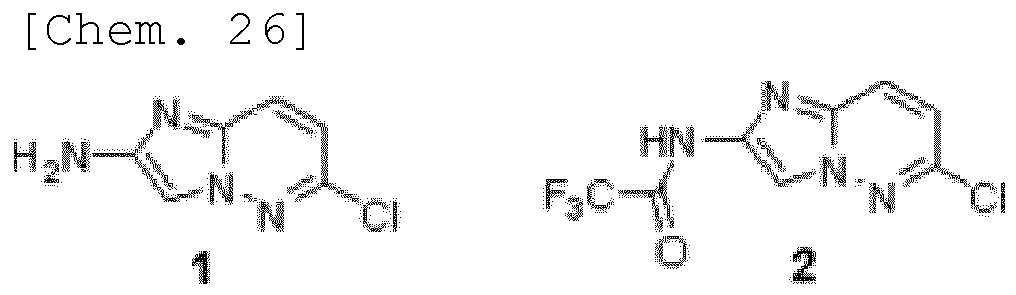
- The trifluoroacetamide compound, which is the protected compound similar to this Compound 2, can be synthesized by reference to page 64 of Patent Literature 3.
-

- (The substituents are the same as above. L is a leaving group, typically representing halogen (I, Br, Cl, F, and the like), lower (wherein lower typically means C1-C6) alkoxy, lower alkylthio, lower alkylsulfonyloxy, arylsulfonyloxy, or the like).
Using this trifluoroacetamide compound and a compound of which R3 is boronic acid, or the like, the compound of the present invention can be synthesized. Here, to these two rawmaterials is added a coupling catalyst such as Pd(PPh3)4 and the like in an appropriate inactive solvent, for example lower alcohol such as methanol, ethanol, isopropanol, and the like, halogenated hydrocarbon such as chloroform, dichloromethane, and the like, aromatic hydrocarbon such as benzene, toluene, and the like, ether solvent such as diethyl ether, THF, 1, 4-dioxane, and the like, aprotic polar solvent such as dimethylformamide, N-methylpyrrolidone, dimethylsulfoxide, and the like, or a mixed solvent thereof, a reaction in the presence of a base at a temperature between room temperature and 180 degrees Celsius for 10 minutes to 48 hours can yield it. Examples of bases include: organic bases such as triethylamine, pyridine, and the like; inorganic basessuch aspotassium carbonate,sodium carbonate, cesium carbonate, potassium phosphate, sodium hydroxide, and the like; solutions thereof; metal alkoxide such as sodium methoxide, potassium t-butoxide; and the like. - A similar protected compound, in the compound represented by the formula:
-
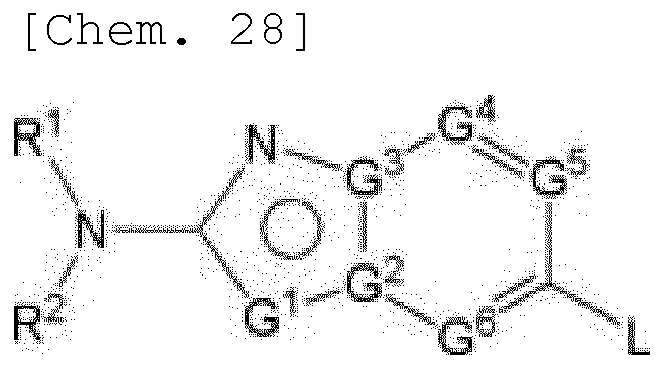
- (wherein the substituents are the same as above, and L is a leaving group, and typically represents halogen (I, Br, Cl, F, and the like), lower (wherein lower typically means, but is not limited to, C1-C6) alkoxy, lower alkylthio, lower alkylsulfonyloxy, arylsulfonyloxy, or the like), can be produced by protecting an optional substituent of R1 or R2 by a method publicly known in the relevant field. Examples of such substituents can include protecting groups, such as ethoxycarbonyl, t-butoxycarbonyl, acetyl, benzyl, and the like, which are described in Protective Groups in Organic Synthesis, written by T. W. Green, John Wiley & Sons Inc. (1981), or the like. Methods for the introduction and removal of a protecting group are methods commonly used in organic synthetic chemistry, methods described in [see, for example, Protective Groups in Organic Synthesis, written by T. W. Greene, John Wiley & Sons Inc. (1981)] or the like, or can be obtained in accordance therewith. Furthermore, a functional group included in each substituent can be converted by a publicly known method [for example, Comprehensive Organic Transformations, written by R. C. Larock (1989), and the like in addition to the above producing methods. Some of the compound of the present invention can be used as a synthetic intermediate to further be lead to a new derivative . Intermediates and target compounds in each of the above producing methods can be isolated and purified by a purification method commonly used in organic synthetic chemistry, for example, subjecting them to neutralization, filtration, extraction, washing, drying, concentration, recrystallization, every kind of chromatography, or the like. Furthermore, intermediates can be subjected to a next reaction without purification in particular.
- As a raw material compound, a compound commercially available, one described in Patent Literature 3, Patent Literature 4, Patent Literature 5, Non-Patent Literature 14, Non-Patent Literature 15, Non-Patent Literature 16, Patent Literature 6, Patent Literature 7, Patent Literature 8, Patent Literature 9, Patent Literature 10, Non-Patent Literature 17, Patent Literature 11, Non-Patent Literature 18, Non-Patent Literature 19, Patent Literature 12, or Patent Literature 13, one described herein, one described in other cited references herein, or another one publicly known can be utilized.
- Regarding some of the compound of the present invention, a tautomer thereof may exist. However, the present invention encompasses all possible isomers, including these, and mixtures thereof.
- When a salt of the compound of the present invention is desired to be obtained, in the case that the compound of the present invention is obtained in salt form, it may be purified as it is. Furthermore, in the case that it is obtained in free form, after it is dissolved or suspended in an appropriate organic solvent and then acid or base is added thereto, a salt may be formed by a general method.
- Furthermore, the compound of the present invention and a pharmaceutically acceptable salt thereof may exist in form of adduct with water or every kind of solvent (hydrate or solvate). These adducts are also encompassed by the present invention.
- Derivatives thereof is converted in the body to be activated, and are named "prodrug" herein. It is understood that Examples of prodrugs includes not only the aforementioned salts and solvates, but also esters, amides, and the like.
- Various examples of the compound of the present invention are listed in Examples. By reference to these, those skilled in the art can produce and use compounds that are not exemplified in the present invention.
- The present invention is also related to a system, an apparatus, and a kit for producing the compound of the present invention. It is understood that, as elements of such a system, an apparatus, and a kit, matters publicly known in the relevant field are available, and those skilled in the art can appropriately design them.
- The compound of the present invention or a pharmaceutically acceptable salt can be administered alone as it is, but it is usually preferable to provide it as every kind of pharmaceutical formulation. Furthermore, those pharmaceutical formulations are used for an animal and a human.
- With regard to an administration route, it is preferable to use the most effective route on treatment. It can be peroral administration, or parenteral administration, for example, intrarectal, intraoral, subcutaneous, intramuscular, intravenous, or the like.
- Administration forms include capsule, tablet, granule, powder, syrup, emulsion, suppository, injection, and the like. A liquid preparation, such as emulsion and syrup, which is suitable for oral administration, can be produced using: water; sugars such as sucrose, sorbite, fructose, and the like; glycols such as polyethylene glycol, propylene glycol, and the like; oils such as sesame oil, olive oil, soybean oil, and the like; antiseptics such as p-hydroxybenzoate esters, and the like; and flavors such as strawberry flavor, peppermint, and the like. Furthermore, a capsule, a tablet, a powder, a granule, and the like can be produced using: an excipient such as lactose, glucose, sucrose, mannite, and the like; a disintegrator such as starch, sodium alginate and the like; a lubricant such as magnesium stearate, talc, and the like; a binder such as polyvinyl alcohol, hydroxypropylcellulose, gelatin, and the like; surfactant such as fatty ester and the like; and a plasticizer such as glycerin and the like.
- A formulation suitable for parenteral administration preferably consists of a
sterilized-water-based formulation containing an active compound and being isotonic to blood of a recipient. For example, in the case of inj ection, a solution for an injection is prepared using: a carrier consisting of a salt solution, a glucose solution, or a mixture of salt water and a glucose solution; and the like. - A topical formulation is prepared by dissolving or suspending an active compound in one or more kinds of media, such as mineral oil, petroleum, polyalcohol, and the like, or other bases used for a topical pharmaceutical formulation. A formulation for enteral administration is prepared using a general carrier such as cacao butter, hydrogenated fat, hydrogenated fatty carboxylic acid, and the like, and then provided as a suppository.
- In the present invention, to a parenteral agent can be added one or more kinds of auxiliary ingredients selected from glycols, oils, flavors, antiseptics (including antioxidants), excipients, disintegrators, lubricants, binders, surfactants, plasticizer, and the like exemplified in an oral agent.
- An effective dose and the frequency of administration of the compound of the present invention or a pharmaceutically acceptable salt are different according to administration form, the age of a patient, weight, characteristics or the severity, and the like of a condition to be treated. Generally, a dose is 0.01 to 1000 mg/person per day, preferably 5-500 mg/person per day, and a frequency of administration is preferably once per day or divided administration.
- All of the compounds of the present invention is are immediately applicable to therapeutic use as a kinase inhibitor for controlling kinase dependent diseases in mammals, particularly, a kinase inhibitor related to phosphatidylinositol-3-kinase.
- The compound of the present invention is preferably a compound having an IC50 value in a range of 0.1 nM to 10 µM. A certain compound of the present invention wherein the compound is capable of specifically inhibiting one of four types of Class I phosphatidylinositol-3-kinase (e.g., a, β, γ, and δ) can be selected. For example, by utilizing a compound selectively inhibiting only γ type, merely diseases related to inflammation, such as a lymphocyte and the like can be treated. In the case that a compound is α-type selective, the utility as a selective anticancer agent can be found.
- Phosphatidylinositol-3-kinase dependent diseases include inflammatory diseases (allergic diseases (allergic dermatitis/allergic rhinitis, and the like), articular rheumatism, anaphylaxis, and the like), arteriosclerosis, vascular/circulatory diseases, cancer/tumors (hyperproliferative malfunction), immune system diseases, cell-proliferative diseases, infectious diseases, and the like initiated/maintained by unusual phosphatidylinositol-3-kinase enzyme activity. For example, psoriasis, pulmonary fibrosis, glomerulonephritis, cancers, atherosclerosis, and antiangiogenesis (e.g., tumor growth, diabetic retinopathy) are included. Specifically, for example, the pharmaceutical composition of the present invention may be used for the prevention and/or as a therapeutic agent for diseases such as encephalitis, myelitis and encephalomyelitis, meningitis, inflammatory polyneuropathy, neuritis, dacryoadenitis, orbital inflammation, conjunctivitis (allergic conjunctivitis, vernal keratoconjunctivitis, and the like), keratitis, chorioretinitis scar, endophthalmitis, retrobulbar neuritis, retinopathy, glaucoma, phlegmon, external otitis, perichondritis, tympanitis, eustachitis, mastoiditis, myringitis, labyrinthitis, pulpitis, periodontitis, sialadenitis, stomatitis, glossitis, thyroiditis, pericarditis, endocarditis, myocarditis, hypertension, heart failure, arteriosclerosis (atherosclerosis and the like), restenosis, ischemia-reperfusion injury, thrombosis (myocardial infarction, cerebral infarction, and the like), obesity, angiitis, vasculitis, polyarteritis, lymphadenitis, lymphoma, Hodgkin disease, eosinophilic diseases (eosinophilia, pulmonary eosinophilia, pulmonary aspergillosis, and the like), inflammatory or obstructive airway diseases (allergic rhinitis, chronic sinusitis, pneumonia, laryngitis, laryngotracheitis, bronchitis, asthma, acute lung disorder, acute respiratory distress syndrome, pulmonary emphysema, chronic obstructive pulmonary diseases,andthelike),pleurisy,pneumoconiosis, mesothelioma, esophagitis, gastro-jejunal ulcer, gastritis, duodenitis, food allergy, sepsis, hepatitis, hepatic fibrosis, cirrhosis, cholecystitis, pancreatitis, peritonitis, diabetes (type I diabetes, type II diabetes), inflammatory or allergic skin diseases (atopic dermatitis, contact dermatitis (allergic contact dermatitis, irritant contact dermatitis, and the like), psoriasis, urticaria, photoallergic reaction, alopecia areata, and the like), skin-thickening disorder (cutaneous eosinophilic granuloma and the like), cutaneous polymyositis, panniculitis, hyperthyroidism, sarcoidosis, autoimmune blood diseases (hemolytic anemia, idiopathic thrombocytopenic purpura, and the like), (systemic) lupus erythematosus, relapsing polychondritis, polychondritis, sclerodoma, Wegener granulomatosis, dermatomyositis, chronic active hepatitis, myasthenia gravis, Stevens-Johnson syndrome, idiopathic sprue, autoimmune inflammatory bowel diseases (ulcerative colitis, Crohn disease, and the like), endocrine eye diseases, sarcoidosis, alveolitis, chronic hypersensitivity pneumonitis, multiple sclerosis, primary biliary cirrhosis, uveitis, keratoconjunctivitis sicca, interstitial pulmonary fibrosis, iridocyclitis, psoriatic arthritis, glomerulonephritis, systemic sclerosis, systemic connective tissue diseases (Sjoegren syndrome, Behcet disease, diffuse fasciitis, and the like), interstitial myositis, inflammatory polyarthropathy, inflammatory arthritis, articular rheumatism, osteoarthritis, synovitis, bursitis, tendovaginitis, chronic multifocal osteomyelitis, nephritic syndrome, tubulointerstitial nephritis, cystitis, prostatitis, orchitis, epididymitis, salpingitis, oophoritis, trachelitis, female pelvic inflammation, vulvovaginitis, organ transplantation rejection, bone marrow transplantation rejection, graft-versus-host diseases, and the like, or used as a therapeutic agent for burn or traumatic inflammation.
- The present invention is also related to a system, an apparatus, and a kit for producing the pharmaceutical composition of the present invention. It is understood that, as elements of such a system, an apparatus, and a kit, matters publicly known in the relevant field are available, and those skilled in the art can appropriately design them.
- The present invention is also related to a system, an apparatus, and a kit using the compound of the present invention, a pharmaceutically acceptable salt thereof, or a prodrug thereof including a solvate thereof and the like. It is understood that, as elements of such a system, an apparatus, and a kit, matters publicly known in the relevant field are available, and those skilled in the art can appropriately design them.
- Wortmannin, which is a classical PI3K inhibitor, has low inhibition selectivity, high toxicity, and the like, and consequently is highly cytotoxic. Thus, by using a usual test to measure cytotoxicity, a PI3K inhibitor (or another class of a kinase inhibitor) that intends to cause an unpreferable side effect due to lack of the selectivity can be identified.
- The compound of the present invention is a compound having utility as a medicament. Here, utilityas amedicament includes the following points: the compound has good metabolic stability; the induction of a drug-metabolizing enzyme is low; the inhibition of a drug-metabolizing enzyme which metabolizes another drug is also low; the compound has high oral absorbency; the clearance is low; the half-life is sufficiently long to express the efficacy; or the like.
- Reference literature including scientific literature, patents, patent applications, and the like cited herein is incorporated herein by reference in its entirety at the same level as the case where each reference is specifically described.
- Hereinafter, Examples describe the constitution of the present invention in more detail, but the present invention is not limited thereto. Regarding reagents and the like used below, unless specified otherwise, those commercially available are used.
- Hereinafter, the present invention is described in more detail with working examples and experimental examples. However, the present invention is not limited to them.
- In Examples, abbreviations described be low are used.
DMA: Dimethylacetamide
DMSO: Dimethylsulfoxide
HPLC: High Performance Liquid Chromatography
Me: Methyl
Ph: Phenyl
MBI: Mechanism-Based Inhibition
FAT: Fluctuation Ames Test - The LC-MS of compounds weremeasuredunder a condition described below, and the retention times and [M+H] are shown. Column: Phenomenex Luna 5 µM C18(2) 100 Å (50 x 4.6 mm) Flow rate: 3 mL/min
UV detection wavelength: 254 nm
Mobile phase: [A] is aqueous 0.1% formic-acid-containing solution, and [B] is 0.1% formic-acid-containing solution in methanol.
A gradient of a mobile phase from a mixed solution of 90% of [A] and 10% of [B] at a time of 0 minute to a solution of 100% of [B] after 3 minutes was used. - Compounds 1 and 2 were synthesized by a method described on pages 63 and 64 of Patent Literature 3 (Pamphlet of International Publication No.
WO 2007/095588 ). -

-

- To a solution of a compound (2, 2.65 g, 10 mmol), 3-methyloxyphenylboronic acid (2.279 g, 15 mmol), and Pd(PPh3)4 (1.156 g, 1.0 mmol) in dioxane (18 mL) was added aqueous 2 mol/L sodium carbonate solution (15 mL). The reaction solution was then stirred under nitrogen atmosphere at reflux for 1 hour and 30 minutes. The reaction solution was cooled down to room temperature, filtrated through a Celite, and then washed with a mixed solution of ethyl acetate and water. The filtrate was concentrated in vacuo, the residue was extracted with ethyl acetate, and then the organic layer was washed with saturated brine. The solvent was concentrated in vacuo, and then purified by silica gel chromatography to yield a compound (3, 2.26 g, 94% yield).
- LC-MS: 2.10 min, [M+H] = 243
-

- A solution of the compound (1, 7.11 g, 42.2 mmol) obtained in Reference Example 1 and a compound (2, 21.78 g, 126 mmol) in pyridine (200 mL) was stirred at 70 degrees Celsius for 9 hours. The reaction solution was then concentrated in vacuo. The resulting crystals were filtrated, washed with water, and then dried. The filtrate was then extracted with ethyl acetate. The organic layer was washed with saturated brine, and then dried with anhydrous magnesium sulfate. The solvent was then concentrated in vacuo. The residue was mixed with the previous crystals, washed with methanol, and then dried to yield a compound (I-1, 7.51 g, 33.3 mmol).
LC-MS: 1.07 min, [M+H] = 226 -

- Step 1
To a solution of the compound (I-1, 500 mg, 2.22 mmol) in hexamethylphosphoric triamide (4 mL) was added sodium azide (1.44 g, 22.2 mmol) and sodium methanesulfinate (226 mg, 2.22 mmol) at room temperature. The reaction solution was then stirred at 110 degrees Celsius for 30 hours. Water was then added to the reaction solution, followed by extraction with ethyl acetate. The organic layer was washed with water and saturated brine, and then dried with anhydrous magnesium sulfate. The solvent was then concentrated in vacuo to yield a crude product (I-2).
LC-MS: 1.02 min, [M+H] = 233 - Step 2
To a solution of the crude product (I-2) obtained in Step 1 in ethanol (30 mL) was added 10% palladium on carbon (250 mg) at room temperature. The reaction solution was then stirred under hydrogen atmosphere at room temperature for 2 hours. The reaction solution was filtrated, and then the filtrate was concentrated in vacuo. The residue was purified by column chromatography to yield a compound (I-3, 113.4 mg, 0.55 mmol).
LC-MS: 0.27 min, [M+H] = 207 -

- To a solution of the compound (I-3, 20 mg, 0. 097 mmol) obtained in Step 2 of Example 2 in tetrahydrofuran (2 mL) was added pyridine (77 mg, 0.97 mmol) and cyclopentanecarboxylic acid chloride (38.6 mg, 0.29 mmol) at room temperature. After the reaction solution was stirred at room temperature for 5 hours, saturated brine was added thereto. The reaction solution was extracted with ethyl acetate, and then the organic layer was dried with anhydrous magnesium sulfate. The solvent was concentrated in vacuo, and then the residue was purified by column chromatography to yield a compound (I-4, 18.5 mg, 0.061 mmol). LC-MS: 1.18 min, [M+H] = 303
-

- To a solution of the compound (I-3, 20 mg, 0. 097 mmol) obtained in Step 2 of Example 2 in tetrahydrofuran (2 mL) was added phenyl isocyanate (34.7 mg, 0.29 mmol) at room temperature. The reaction solution was then stirred at room temperature for 10 hours and further at 50 degrees Celsius for 2 hours. The solvent was concentrated in vacuo, and then the residue was purified by column chromatography to yield a compound (I-5, 5.3 mg, 0.016 mmol).
LC-MS: 1.20 min, [M+H] = 326 -

- Under nitrogen atmosphere, the compound (I-1, 70 mg, 0.31 mmol) obtained in Example 1, 2-pyrrolidinone (31.7 mg, 0.372 mmol), 9,9-dimethyl
4,5-bis(diphenylphosphino)xanthene (26.9 mg, 0.047 mmol), palladium acetate (6.97 mg, 0.031 mmol), and cesium carbonate (142 mg, 0.434 mmol) were suspended in 1,4-dioxane (3 mL). The reaction solution was stirred at 100 degrees Celsius for 5 hours, and then cooled down to room temperature. Ethyl acetate was then added thereto. The reaction solution was filtrated, and then the filtrate was concentrated in vacuo. The residue was purified by column chromatography to yield a compound (I-6, 19 mg, 0.069 mmol).
LC-MS: 0.86 min, [M+H] = 275 -

- Under nitrogen atmosphere, the compound (I-1, 70 mg, 0.31 mmol) obtained in Example 1, 9,9-dimethyl
4,5-bis(diphenylphosphino)xanthene (26.9 mg, 0.047 mmol), palladium acetate (6.97 mg, 0.031 mmol), and cesium carbonate (142 mg, 0.434 mmol) were suspended in 1,4-dioxane (3 mL). To the reaction solution was added aniline (34.7 mg, 0.372 mmol), subsequently stirring at 100 degrees Celsius for 8 hours. The reaction solution was cooled down to room temperature, and then ethyl acetate was added thereto, followed by filtration. The filtrate was concentrated in vacuo, and then the residue was purified by column chromatography to yield a compound (I-7, 40.2 mg, 0.142 mmol). LC-MS: 1.11 min, [M+H] = 283 -

- Under nitrogen atmosphere, the compound (I-1, 50 mg, 0.22 mmol) obtained in Example 1,
2,2'-bis(diphenylphosphino)-1,1'-binaphthyl (20.7 mg, 0.033 mmol), palladium acetate (4.98 mg, 0.022 mmol), and sodium tert-butoxide (29.8 mg, 0.31 mmol) were suspended in 1,4-dioxane (2 mL). To the reaction solution was added 4-methoxybenzylamine (36.5 mg, 0.266 mmol), subsequently stirring at 100 degrees Celsius for 8 hours. The reaction solution was cooled down to room temperature, and then water was added thereto, followed by extraction with ethyl acetate. The organic layer was washed with saturated brine, and then dried with anhydrous magnesium sulfate. The solvent was concentrated in vacuo, and then the residue was purified by column chromatography to yield a compound (1-8, 19.5 mg, 0.06 mmol) .
LC-MS: 1.05 min, [M+H] = 327 -

- To a solution of phenylboronic acid (14.6 mg, 0.12 mmol) and the compound (I-1, 20 mg, 0.089 mmol) in dioxane (500 µL) was added a solution of
[1,3-bis(2,6-diisopropylphenyl)imidazol-2-ylidene](3-ch loropyridyl)palladium (II) dichloride (3.01mg, 4.43 µmol) in dioxane (500 µL) and aqueous 2 mol/L potassium carbonate solution (177 µL, 0.355 mmol). For the reaction solution, displacement with nitrogen was carried out, subsequently stirring at 100 degrees Celsius for 5 hours. The reaction solution was filtered through a silica gel pad, and then purified by reversed phase HPLC to yield a compound (I-9, 2.84 mg, 11% yield).
LC-MS: 1.73 min, [M+H] = 268 -

- To a solution of benzoic acid (13.2 mg, 0.108 mmol) and
O-(7-azabenzotriazol-1-yl)-N,N,N',N'-tetramethyluronium hexafluorophosphate (38mg, 0.100mmol) in dimethylformamide (500 µL) was added the compound (3, 20 mg, 0.083 mmol) obtained in Reference Example 3 and triethylamine (23 µL, 0.166 mmol). The reaction solution was stirred at room temperature for 3 hours, and then purified by reversed phase HPLC to yield a compound (I-10, 11.5 mg, 40% yield).
LC-MS: 2.09 min, [M+H] = 345 -

- Step 1
To a solution of the compound (3, 3.00 g, 12.5 mmol) in DMA was added drop-wise 2,2,2-trichloroethyl chloroformate ester (3.17 g, 15.0 mmol) under ice-cooling, subsequently stirring at room temperature for 30 minutes. After 20g of ice water was added to the reaction solution, the resulting solid was filtrated, washed with water, and then dried to yield a compound (I-11, 2.43 g, 47% yield). - Step 2
A solution of the compound (I-11, 20 mg, 0.048 mmol) obtained in Step 1, 4-pyridylmethylamine (7.81 mg, 0.072 mmol) in DMSO (1.00 mL) was stirred at 100 degrees Celsius for 8 hours. The reaction solution was filtrated, the filtrate was concentrated in vacuo, and then the residue was purified by reversed phase HPLC to yield a compound (1-12, 5.8 mg, 31% yield).
LC-MS: 1.95 min, [M+H] = 380 -

- Step 1
To a suspension of the compound (I-1, 50.1 mg, 0.222 mmol) obtained in Example 1 in ethanol (1.5 mL)/dimethylformamide (0.3 mL) was added [1,1'-bis (diphenylphosphino) ferrocene] dichloropalladium (II) dichloromethane adduct (18.1 mg, 0.022 mmol) and sodium acetate (36.4 mg, 0.444 mmol), subsequently stirring under carbon monoxide atmosphere at 70 degrees Celsius for 7 hours. The reaction solution was concentrated in vacuo, and then extracted with ethyl acetate. The organic layer was washed with water and saturated brine, and then dried with anhydrous magnesium sulfate. The solvent was concentrated in vacuo, and then the residue was purified by silica gel column chromatography (chloroform:methanol = 100:0 to 95:5) to yield a compound (I-13, 51.5 mg, 88% yield).
LC-MS: 1.05 min, [M+H] = 264 - Step 2
To a suspension of the compound (I-13, 126.5 mg, 0.481 mmol) obtained in Step 1 in tetrahydrofuran (4.0 mL) /methanol (4.0 mL) was added aqueous 1 mol/L lithium hydroxide solution (577 µL, 0.577 mmol), subsequently stirring at room temperature for 1 hour and 30 minutes. The reaction solution was concentrated in vacuo, and then the residue was dried under reduced pressure at 50 degrees Celsius for 5 hours to yield a crude product (I-14).
LC-MS: 0.64 min, [M+H] = 236 - Step 3
To a suspension of the crude product (I-14, 25. 0 mg) obtained in Step 2 in N,N-dimethylformamide (500 µL) was added benzylamine (17.8 mg, 0.166 mmol), O-(7-azabenzotriazoltriazol-1-yl)-N,N,N',N'-tetramethyl uronium hexafluorophosphate (44 mg, 0.117 mmol), and N-methylmorpholine (25.7 µL, 0.234 mmol). The reaction solution was stirred under nitrogen atmosphere at room temperature overnight, and then purified by reversed phase HPLC to yield a compound (I-15, 11.5 mg, 39% yield). LC-MS: 1.65 min, [M+H] = 325 -

- Step 1
To a suspension of the crude product (I-14, 61.3 mg) obtained in Step 2 of Example 11 in N,N-dimethylformamide (1.5 mL) was added O,N-dimethylhydroxylamine hydrochloride (28.7 mg, 0.294 mmol), O-(7-azabenzotriazol-1-yl)-N,N,N',N'-tetramethyluronium hexafluorophosphate (129 mg, 0.339 mmol), and N-methylmorpholine (99 µL, 0.904 mmol). The reaction solution was stirred under nitrogen atmosphere at room temperature for 1 hour and 30 minutes, and then purified by reversed phase HPLC to yield a compound (1-16, 60.0 mg, 95% yield).
LC-MS: 0.74 min, [M+H] = 279 - Step 2
To a suspension of the compound (I-16, 28.8 mg, 0.103 mmol) obtained in Step 1 in tetrahydrofuran (1.0 mL) was added 1.0 mol/L 3-methoxyphenyl magnesium bromide solution in tetrahydrofuran (621 µL, 0.621 mmol) under nitrogen atmosphere at -78 degrees Celsius, subsequently stirring at -45 degrees Celsius for 2 hours and 30 minutes. To the reaction solution was added aqueous saturated ammonium chloride solution, and then extracted with ethyl acetate. The organic layer was washed with water and saturated brine, and then dried with anhydrous magnesium sulfate. The solvent was concentrated in vacuo, and then the residue was purified by silica gel column chromatography (chloroform:methanol = 100:0 → 97:3) to yield a compound (I-17, 20.2 mg, 60% yield). LC-MS: 1.47 min, [M+H] = 326 -

- To a suspension of the compound (I-1, 57.0 mg, 0.253 mmol) obtained in Example 1 in N,N-dimethylformamide (1.0 mL) was added thiophenol sodium salt (100.2 mg, 0.758 mmol), subsequently stirring under nitrogen atmosphere at 60 degrees Celsius for 7 hours and 30 minutes. Water was added to the reaction solution, followed by extraction with ethyl acetate. The organic layer was washed with water and saturated brine, and then dried with anhydrous magnesium sulfate. The solvent was concentrated in vacuo, and then the residue was purified by reversed phase HPLC to yield a compound (1-18, 21.8 mg, 29% yield).
LC-MS: 1.62 min, [M+H] = 300 -

- To a suspension of the compound (I-1, 90.1 mg, 0.399 mmol) obtained in Example 1 in N,N-dimethylformamide (1.0 mL) was added phenol sodium salt trihydrate (407.6 mg, 2.40 mmol) and hexamethylphosphoric triamide (417 µL, 2.40 mmol), subsequently stirring under nitrogen atmosphere at 100 degrees Celsius for 9 hours. Water was added to the reaction solution, followed by extraction with ethyl acetate. The organic layer was washed with water and saturated brine, and then dried with anhydrous magnesium sulfate. The solvent was concentrated in vacuo, and then the residue was purified by reversed phase HPLC to yield a compound (1-19, 12.8 mg, 11% yield).
LC-MS: 1.41 min, [M+H] = 284 -

- To a suspension of the compound (I-1, 57.4 mg, 0.254 mmol) obtained in Example 1 in tetrahydrofuran (1.5 mL) was added 0.5 mol/L benzylzinc bromide solution in tetrahydrofuran (2.14 mL, 1.07 mmol) and tetrakis(triphenylphosphine)palladium (14.7 mg, 0.013 mmol) under nitrogen atmosphere at room temperature, subsequently stirring at 60 degrees Celsius for 7 hours. To the reaction solution was added aqueous saturated ammonium chloride solution, followed by extraction with ethyl acetate. The extract was washed with water and saturated brine, and then dried with anhydrous magnesium sulfate. The solvent was concentrated in vacuo, and then purified by reversed phase HPLC to yield a compound (I-20, 14.8 mg, 21% yield). LC-MS: 1.40 min, [M+H] = 282
-

- Step 1
To a suspension of the compound (I-13, 2.24 g, 8.51 mmol) obtained in Step 1 of Example 11 in tetrahydrofuran (40 mL) /methanol (20 mL) was added lithium tetrahydroborate (1.11 g, 51.1 mmol) under nitrogen atmosphere at 0 degree Celsius, subsequently stirring at room temperature for 2 hours and 30 minutes. To the reaction solution was added acetone at 0 degree Celsius, followed by stirring at room temperature for 1 hour. The reaction solution was filtrated, the filtrate was concentrated in vacuo, and then the residue was purified by silica gel column chromatography (chloroform:methanol = 100:0 → 85:15) to yield a compound (I-21, 1.56 g, 83% yield).
LC-MS: 0.46 min, [M+H] = 222 - Step 2
To a suspension of the compound (I-21, 32.3 mg, 0.146 mmol) obtained in Step 1 in N,N-dimethylformamide (1.0 mL) was added 3-methoxyphenol (24 µL, 0.219 mmol), triphenylphosphine (54.7 mg, 0.219 mmol), and diisopropyl azodicarboxylate (43 µL, 0.219 mmol), subsequently stirring under nitrogen atmosphere at room temperature for 3 hours and 30 minutes . Purification by reversed phase HPLC yielded a compound (I-22, 23.3 mg, 49% yield).
LC-MS: 1.45 min, [M+H] = 328 -

- Step 1
To a suspension of the compound (I-21, 106. 3 mg, 0.481 mmol) obtained in Step 1 of Example 16 in methylene chloride (3.0 mL) was added thionyl chloride (88 µL, 1.20 mmol) under nitrogen atmosphere at 0 degree Celsius, subsequently stirring at room temperature for 1 hour. The reaction solution was concentrated in vacuo, and then the residue was purified by silica gel column chromatography (chloroform:methanol = 100:0 → 95:5) to yield a compound (I-23, 103.2 mg, 90% yield).
LC-MS: 1.00 min, [M+H] = 240 - Step 2
To a suspension of 60% sodium hydride (12.2 mg, 0.305 mmol) in N,N-dimethylformamide (0.3 mL) was added cyclopentanol (22 µL, 0.244 mmol) under nitrogen atmosphere at 0 degree Celsius, subsequently stirring at room temperature for 30 minutes. At 0 degree Celsius, to the reaction solution was added a solution of the compound (1-23, 29.2 mg, 0.122 mmol) obtained in Step 1 in N,N-dimethylformamide (1.0 mL), and then stirred at room temperature for 3 hours and 30 minutes. Water was then added to the reaction solution, followed by extraction with ethyl acetate. The organic layer was washed with water and saturated brine, and then dried with anhydrous magnesium sulfate. The solvent was concentrated in vacuo, and then the residue was purified by reversed phase HPLC to yield a compound (I-24, 5.5 mg, 16% yield).
LC-MS: 1.43 min, [M+H] = 290 -

- Step 1
To a solution of 2-iodoxybenzoic acid (65.8 mg, 0.235 mmol) in dimethylsulfoxide (2.0 mL) was added the compound (I-21, 40.0 mg, 0.181 mmol) obtained in Step 1 of Example 16, subsequently stirring at room temperature for 2 hours. Water was added to the reaction solution, followed by extraction with ethyl acetate. The organic layer was washed with water and saturated brine, and then dried with anhydrous magnesium sulfate. The solvent was concentrated in vacuo to yield a crude product (I-25, 68.3 mg). LC-MS: 0.86 min, [M+H] = 220 - Step 2
To a suspension of the crude product (I-25, 36.9 mg) obtained in Step 1 in methylene chloride (1.5 mL) was added aniline (20 µL, 0.215 mmol), sodium triacetoxyborohydride (60.7 mg, 0.286 mmol), and acetic acid (20 µL, 0.358 mmol) under nitrogen atmosphere, subsequently stirring at room temperature for 4 hours. Water was added to the reaction solution, followed by extraction with ethyl acetate. The organic layer was washed with water and saturated brine, and then dried with anhydrous magnesium sulfate. The solvent was concentrated in vacuo, and then the residue was purified by reversed phase HPLC to yield a compound (I-26, 12.3 mg, 23%).
LC-MS: 1.31 min, [M+H] = 297 -

- A suspension of the compound (3, 20 mg) obtained in Reference Example 3, xantphos (7.2 mg), palladium acetate (1.9 mg), cesium carbonate (81 mg), and benzene bromide (29 mg) in dioxane (2.5 mL)/DMA (0.25 mL) was heated under microwave irradiation at 150 degrees Celsius for 5 minutes. To the reaction solution was added aqueous ammonium chloride solution, and then extracted with chloroform, followed by concentration in vacuo. The residue was then purified by reversed phase HPLC to yield a compound (I-27, 16 mg) as a pale yellow solid.
LC-MS: 2.33 min, [M+H] = 317 - Compounds I-28 and above were synthesized similarly to the Examples described above.
- The physical properties (retention time and mass spectrum) of Compound Nos. I-1 to 213, 215 to 218, 220 to 224, and 232 to 294 are shown below. In Tables 1-1 to 1-50, the term "chiral" indicates a chiral compound.
-
[Table 1-1] Compound No. Structural formula Retention time (min) Mass (M+H) I-1 
1.07 226 I-2 
1.02 233 I-3 
0.27 207 I-4 
1.18 303 I-5 
1.20 326 I-6 
0.86 275 I-7 
1.11 283 -
[Table 1-2] Compound No. Structural formula Retention time (min) Mass (M+H) I-8 
1.05 327 I-9 
1.73 268 I-10 
2.09 345 I-12 
1.95 380 1-13 
1.05 264 I-14 
0.64 236 -
[Table 1-3] Compound No. Structural formula Retention time (min) Mass (M+H) I-15 
1.65 325 I-16 
0.74 279 I-17 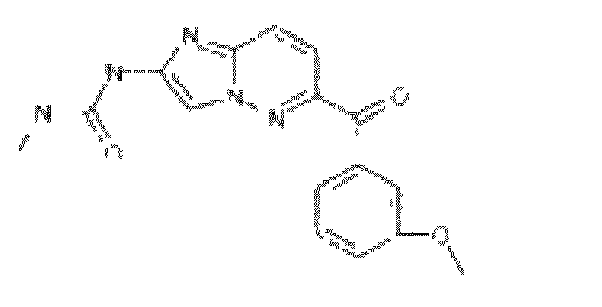
1.47 326 I-18 
1.62 300 I-19 
1.41 284 I-20 
1.40 282 -
[Table 1-4] Compound No. Structural formula Retention time (min) Mass (M+H) I-21 
0.46 222 I-22 
1.45 328 I-23 
1.00 240 1-24 
1.43 290 I-26 
0.86 220 I-26 
1.31 297 I-27 
2.33 317 -
[Table 1-5] Compound No. Structural formula Retention time (min) Mass (M+H) 1-28 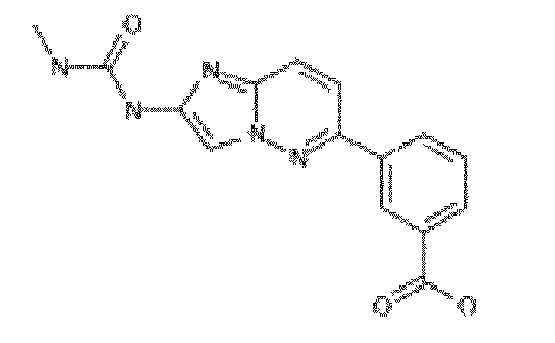
1.58 312 I-29 
0.99 311 I-30 
1.47 369 I-31 
1.17 375 -
[Table 1-6] Compound No. Structural formula Retention time (min) Mass (M+H) I-32 
0.74 347 I-33 
1.14 355 I-34 
0.99 246 I-35 
1.46 326 I-36 
1.74 298 -
[Table 1-7] Compound No. Structural formula Retention time (min) Mass (M+H) I-37 
0.81 269 I-38 
1.69 274 I-39 
1.14 313 I-40 
1.60 318 I-41 
1.29 327 I-42 
1.61 325 -
[Table 1-8] Compound No. Structural formula Retention time (min) Mass (M+H) I-43 
1.69 311 I-44 
1.65 355 I-45 
1.62 350 I-46 
1.82 345 I-47 
1.52 291 I-48 
1.50 277 -
[Table 1-9] Compound No. Structural formula Retention time (min) Mass (M+H) I-49 
1.23 293 I-50 
1.64 303 I-51 
1.20 332 I-52 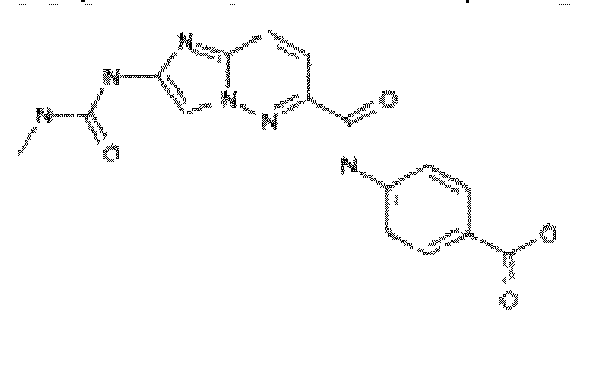
1.54 355 I-53 
1.68 389 I-54 
1.06 313 -
[Table 1-10] Compound No. Structural formula Retention time (min) Mass (M+H) I-55 
1.65 310 I-56 
1.68 310 I-57 
1.22 283 I-58 
1.89 324 I-59 
1.86 303 I-60 
1.84 303 -
[Table 1-11] Compound No. Structural formula Retention time (min) Mass (M+H) I-61 
1.51 298 I-62 
1.70 298 I-63 
1.74 298 I-64 
1.76 282 I-65 
1.83 282 I-66 
1.81 282 -
[Table 1-12] Compound No. Structural formula Retention time (min) Mass (M+H) I-67 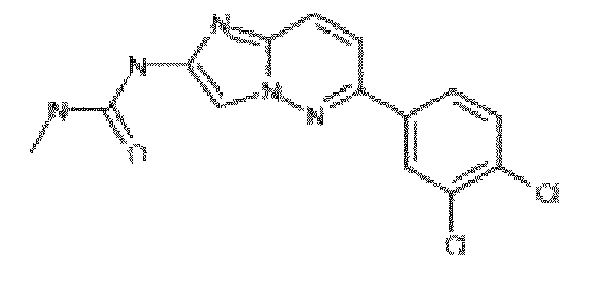
2.00 337 I-68 
2.00 344 I-69 
1.53 298 1-70 
1.81 294 I-71 
1.69 293 -
[Table 1-13] Compound No. Structural formula Retention time(min) Mass (M+H) I-72 
1.51 346 I-73 
1.50 361 I-74 
1.57 361 I-75 
1.56 346 I-76 
1.61 258 I-77 
1.29 311 -
[Table 1-14] Compound No. Structural formula Retention time (min) Mass (M+H) I-78 
1.55 312 I-79 
1.76 258 I-80 
1.64 341 I-81 
1.46 325 1-82 
1.15 339 -
[Table 1-15] Compound No. Structural formula Retention time (min) Mass (M+H) I-83 
1.79 470 I-84 
1.77 528 I-85 
0.80 299 I-86 
1.13 270 I-87 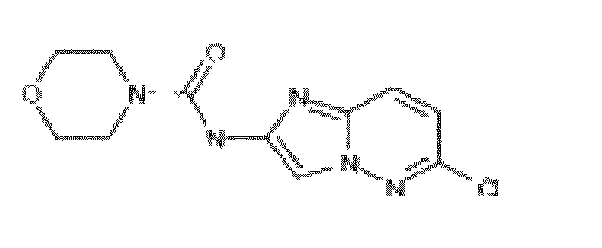
1.12 282 I-88 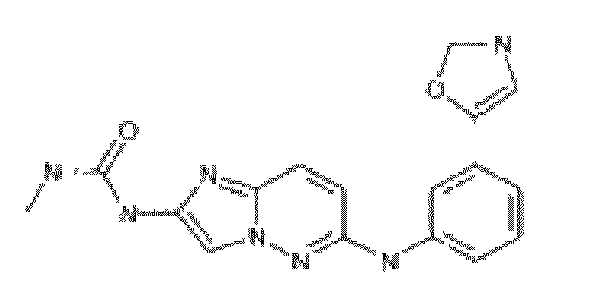
1.09 350 -
[Table 1-16] Compound No. Structural formula Retention time (min) Mass (M+H) I-89 
0,76 333 I-90 
0.54 265 I-91 
1.21 341 I-98 
0.71 370 I-99 
0.63 414 I-100 
0.96 355 -
[Table 1-17] Compound No. Structural formula Retention time (min) Mass (M+H) I-101 
0.59 249 I-102 
0.67 277 I-103 
1.40 345 I-104 
1.15 311 I-105 
1.19 341 I-106 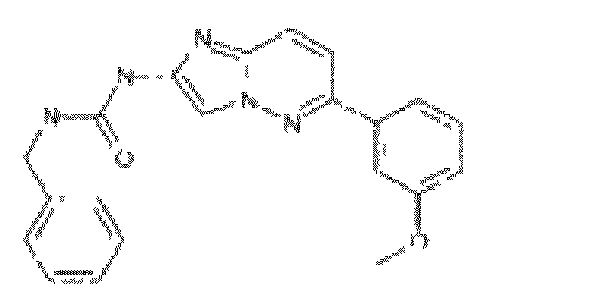
1.98 374 -
[Table 1-18] Compound No. Structural formula Retention time (min) Mass (M+H) I-107 
2.07 388 I-108 
2.00 366 I-100 
2.11 366 I-110 
1.77 326 I-111 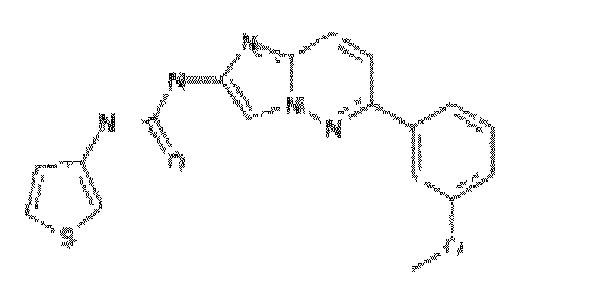
2.03 366 -
[Table 1-19] Compound Ho. Structural formula Retention time (min) Mass (M+H) I-112 
1.69 370 I-113 
1.77 326 I-114 
1.91 340 I-115 
1.97 352 I-116 
1.74 346 -
[Table 1-20] Compound No. Structural formula Retention time (min) Mass (M+H) I-117 
1.95 340 I-118 
2.07 360 I-119 
1.62 312 I-120 
1.36 342 I-121 
0.71 306 -
[Table 1-21] Compound No. Structural formula Retention time (min) Mass (M+H) I-122 
0.79 277 I-123 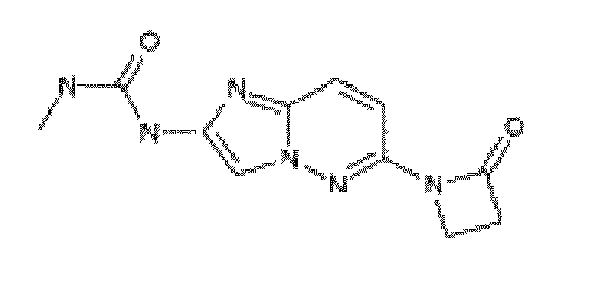
0.79 261 I-124 
1.10 325 I-125 
1.65 312 I-126 
1.54 286 I-127 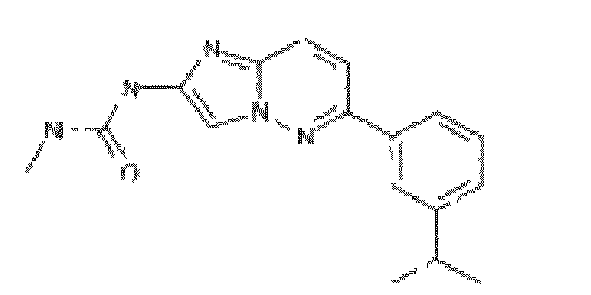
1.94 310 -
[Table 1-22] Compound No. Structural formula Retention time (min) Mass (M+H) I-128 
1.50 313 I-129 
1.88 352 I-130 
1.79 326 I-131 
1.91 354 I-132 
1.44 312 I-133 
1.97 350 -
[Table 1-23] Compound No. Structural formula Retention time (min) Mass (M+H) I-134 
1.40 293 I-135 
1.68 314 I-136 
1.27 326 I-137 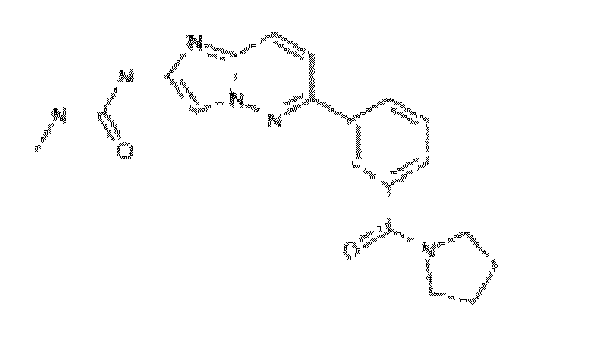
1.27 365 I-138 
1.12 381 -
[Table 1-24] Compound No. Structural formula Retention time (min) Mass (M+H) I-139 
1.33 353 I-140 
1.47 367 I-141 
0.81 258 I-142 
1.52 288 I-143 
1.26 311 -
[Table 1-25] Compound No. Structural formula Retention time (min) Mass (M+H) I-144 
0.99 299 I-145 
0.89 270 I-146 
1.43 326 I-147 
0.11 269 I-148 
1.30 299 -
[Table 1-26] Compound No. Structural formula Retention time (min) Mass (M+H) I-149 
1.63 324 I-150 
1.99 374 I-151 
1.55 299 I-152 
1.14 284 I-153 
1.64 352 -
[Table 1-27] Compound No. Structural formula Retention time(min) Mass (M+H) I-154 
1.81 336 I-155 
1.99 344 I-156 
1.41 398 I-157 
1.46 298 I-158 
1.18 341 I-159 
1.00 370 -
[Table 1-28] Compound No. Structural formula Retention time (min) Mass (M+H) I-160 
0.93 355 I-161 
0.67 326 I-162 
0.87 327 I-163 
2.12 380 I-164 
2.58 381 I-165 
2.35 380 -
[Table 1-29] Compound No. Structural formula Retention time (min) Mass (M+H) I-166 
2.06 419 I-167 
1.84 381 I-168 
2.06 346 I-169 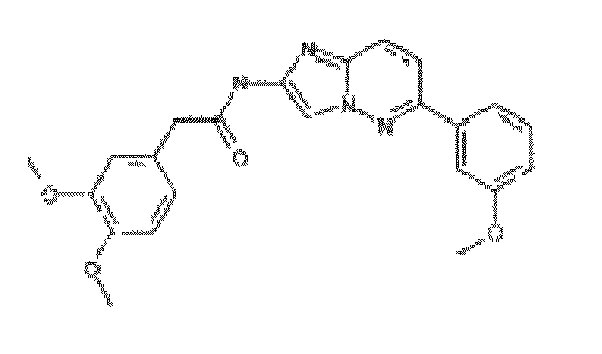
1.89 419 I-170 
1.60 346 -
[Table 1-30] Compound No. Strutural formula Retention time (min) Mass (M+H) I-171 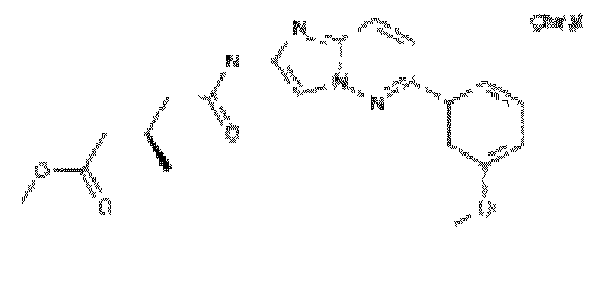
1.89 383 I-172 
1.53 368 I-173 
2.07 383 I-174 
2.08 389 I-175 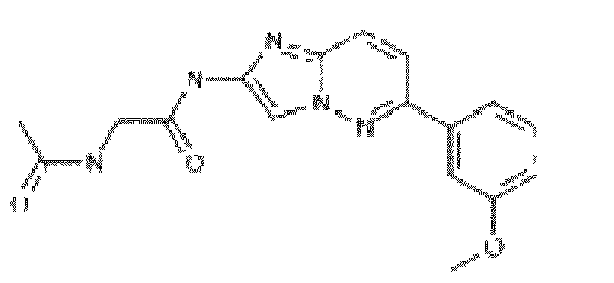
1.35 340 -
[Table 1-31] Compound No. Structural formula Retention time (min) Mass (M+H) I-176 
209 415 I-177 
1.69 386 I-178 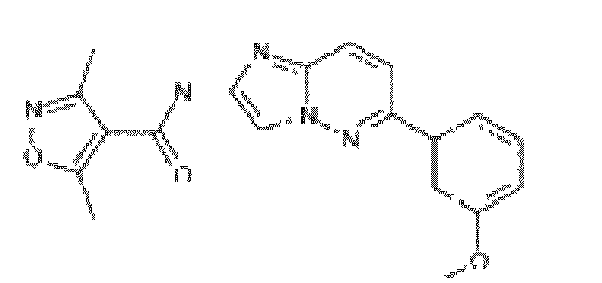
1.93 364 I-179 
1.68 411 I-180 
1.81 334 -
[Table 1-32] Compound No. Structural formula Retention time (min) Mass (M+H) I-181 
1.94 323 I-182 
2.01 325 I-183 
2.21 373 I-184 
2.17 373 I-185 
2.23 351 -
[Table 1-33] Compound No. Structural formula Retention time (min) Mass (M+H) I-186 
2.18 339 I-187 
2.02 325 I-188 
1.88 323 I-189 
2.32 380 I-190 
2.56 437 -
[Table 1-34] Compound No. Structural formula Retention time (min) Mass (M+H) I-191 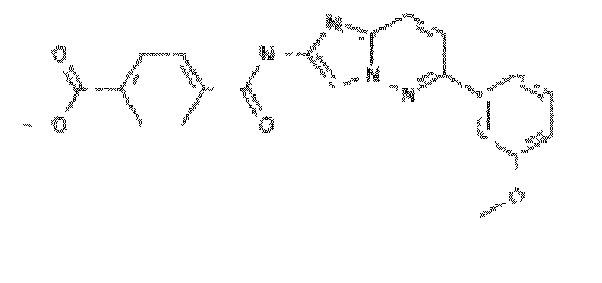
2.16 403 I-192 
2.15 403 I-193 
2.29 387 I-194 
1.65 353 I-196 
1.91 395 I-196 
1.84 349 -
[Table 1-35] Compound No. Structural formula Retention time (min) Mass (M+H) I-197 
0.99 381 I-198 
2.01 405 I-199 
2.22 453 I-200 
0.98 352 I-201 
1.39 544 -
[Table 1-36] Compound No. Structural formula Retention time (min) Mass (M+H) I-202 
2.07 430 I-203 
1.18 444 I-204 
1.86 412 I-205 
1.11 430 I-206 
1.54 380 -
[Table 1-37] Compound No. Structural formula Retention time (min) Mass (M+H) I-207 
2.42 453 I-208 
1.78 407 I-209 
1.56 394 I-210 
1.46 378 I-211 
1.08 380 -
[Table 1-38] Compound No. Structural formula Retention time (min) Mass (M+H) I-212 
2.03 412 I-213 
1.63 327 I-215 
0.68 326 I-216 
0.75 340 I-217 
1.48 356 -
[Table 1-39] Compound No. Structural formula Retention time (min) Mass I-218 
0.57 299 I-220 
1.39 318 I-221 
1.16 342 I-222 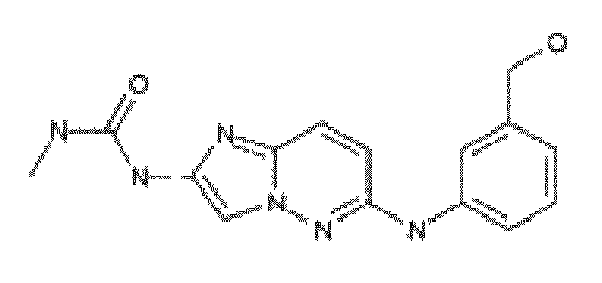
0.77 313 I-223 
1.23 371 I-224 
0.95 343 -
[Table 1-40] Compound No. Structural formula Retention time (min) Mass (M+H) I-232 
1.84 367.24 I-233 
1.55 385.4 I-234 
1.84 364.3 I-235 
1.50 409.44 I-236 
1.13 375.35 I-237 
1.34 369.34 -
[Table 1-41] Compound No. Structural formula Retention time (min) Mass (M+H) I-238 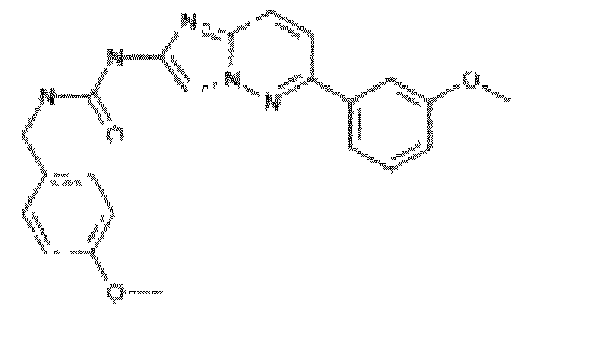
1.96 404.37 I-239 
0.95 375.35 I-240 
1.53 368.41 I-241 
1.89 399.41 I-242 
2.32 394.31 I-243 
1.77 351.5 -
[Table 1-42] Compound No. Structural formula Retention time (min) Mass (M+H) I-244 
1.61 356.41 I-245 
1.59 342.38 I-246 
1.89 428.43 I-247 
1.55 328.38 I-248 
1.98 398.43 I-249 
2.15 438.55 -
[Table 1-43] Compound No. Structural formula Retention time (min) Mass (M+H) I-250 
1.46 382.44 I-251 
2.35 461.46 I-252 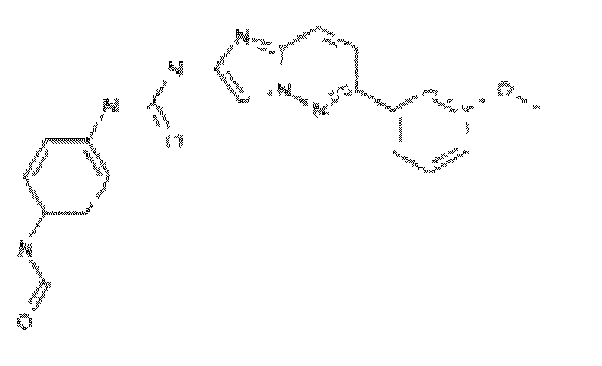
1.64 417.43 I-253 
1.88 374.44 I-254 
1.81 364.43 I-255 
1.60 381.36 -
[Table 1-44] Compound No. Structural formula Retention time (min) Mass (M+H) I-256 
2.13 418.48 I-257 
1.80 398.45 I-258 
1.52 384.44 I-259 
1.75 384.5 I-260 
1.40 356.42 I-261 
1.85 382.41 -
[Table 1-45] Compound No. Structural formula Retention time (min) Mass (M+H) I-262 
2.13 444.55 I-263 
1.82 427.55 I-264 
0.94 327.42 I-266 
1.77 452.51 I-266 
1.80 40.49 -
[Table 1-46] Compound No. Structural formula Retention time (min) Mass (M+H) I-267 
1.46 381.44 I-268 
1.43 425.53 I-269 
2.04 401.44 I-270 
1,32 328.48 I-271 
1.82 473.55 -
[Table 1-47] Compound No. Structural formula Retention time (min) Mass (M+H) I-272 
1.69 411.59 I-273 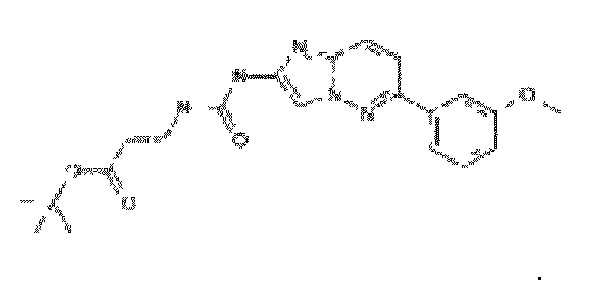
2.03 412.52 I-274 
1.32 300.48 I-275 
2.02 354.51 I-276 
1.57 327.47 I-277 
1.57 367.39 -
[Table 1-48] Compound No. Structural formula Retention time (min) Mass (M+H) I-278 
0.91 341.48 I-279 
1.29 355.51 I-280 
1.43 296 I-281 
1.63 330 I-282 
1.41 312 I-283 
2.10 359.4 -
[Table 1-49] Compound No. Structural formula Retention time (min) Mass (M+H) I-284 
1.75 347.4 I-285 
2.24 375.4 I-286 
2.33 362.4 I-287 
2.10 347.4 I-288 
1.36 377.4 I-289 
1.13 348.4 -
[Table 1-50] Compound No. Structural formula Retention time (min) Mass (M+H) I-290 
1.57 334.4 I-291 
1.96 283 I-292 
1.24 365 I-293 
1.32 354 I-294 
2.02 424 - Then, for each compound synthesized in the above Examples, PI3Kγ inhibitory activity was measured.
- The PI3Kγ inhibitory activity of a compound was evaluated using PI3-kinase HTRF™ assay (Millipore) according to the following procedure.
- To each well of a testing plate was added 5 µL of a compound solution containing 10% DMSO (200 µM as the concentration of the compound), 5 µL of 40 µM phosphatidylinositol (4,5)-bisphosphate/20mM MgCl2/10mM DTT, and 5 µL of 80 µg/mL PI-3 kinase γ/10 mM MgCl2/5mM DTT, and then stood for 10 minutes.
- Then, 5 µL of 40 µM ATP/10 mM MgCl2/5 mM DTT was added thereto. After reacting for 30 minutes at room temperature, 5µL of a solution containing EDTA and biotinylated phosphatidylinositol (3,4,5)-triphosphate was added to quench the reaction.
- 5 µL of a detection reagent containing a europium-labeled anti-GST antibody, the GST-tagged PH domain, and allophycocyanin-labeledstreptavidin was added thereto. After 18 hours, HTRF (excitation wavelength: 330nm, measuring wavelengths: 620nm and 665nm) was measured.
- A value of dividing an amount of fluorescence obtained at the measuring wavelength 665nm by an amount of fluorescence obtained at 620nm was defined as an HTRF ratio. The HTRF ratio in the absence of a compound was defined as 100% activity, and the HTRF ratio in the absence of PI-3 kinase γ was defined as 0% activity to calculate an inhibition ratio.
- Results are shown in the tables below.
-

-

-

- Then, cells are used to measure whether or not the inhibitory activity is exhibited.
-
- (1) The AKT phosphorylation inhibitory activity of a compound was evaluated according to the following procedure.
- (2) Human monocyte-like cell line THP-1 was washed with RPMI-1640 media, incubated in the presence of 5% CO2 at 37 degrees Celsius for 3 hours, washed with Hank's balanced salt solution (HBSS), adjusted to a cell concentration of 6.6 x 10⁶ /mL, and then used in an experiment.
- (3) 30 µL of the cell suspension and 60 µL of each compound solution containing 0.2% DMSO/HBSS are mixed, and then preincubated at 37 degrees Celsius for 5 minutes. 30 µL of HBSS containing 4 µg/mL of MCP-1 was added thereto, and then incubated for 30 seconds at 37 degrees Celsius.
- (4) 30 µL of 20 mM Tris-HCl (pH 7.5)/150 mM NaCl/l mM Na2EDTA/1 mM EGTA/1% Triton/2.5 mM sodium pyrophosphate/l mM β-glycerophosphate/l mM Na3VO4/1 µg/ml leupeptin/50 nM APMSF was added thereto to dissolve cells.
- (5) The amount of AKT phosphorylation in a cell solution was measured by ELISA method.
- (6) To a micro well plate to which anti-phospho-Akt (Ser473) antibody (clone 193H12, derived from a rabbit) was solid-phased was added 100 µL of a prepared cell solution, incubated for 2 hours at 37 degrees Celsius, and then washed four times with Phosphate Buffered Saline/0.05% Tween-20.
- (7) An anti-AKT1 antibody (clone 2H10, derived from a mouse) was added thereto, incubated for 1 hour at 37 degrees Celsius, washed similarly, and then reacted with an HRP-labeled anti-mouse IgG antibody.
- (8) After incubating at 37 degrees Celsius for 30 minutes and then washing similarly, 100 µL of TMB (3,3',5,5"-tetramethylbenzidine) was added thereto, followed by reacting at room temperature for 30 minutes.
- (9) 100 µL of 1 mol/L sulfuric acid was added to quench the color reaction, and then the absorbance at 450 nm was measured.
- (10) A series of diluted cell solutions of a positive control (a sample in the absence of a compound) were used as a calibration curve, the amount of AKT phosphorylation in a sample in the absence of MCP-1 was defined as 0% activity to calculate an inhibition ratio.
-
- Compound No. I-36: >99.9%
- Compound No. I-37: 86.7%
- Compound No. I-291: >99.9%
- Compound No. I-112: >99.9%
- Compound No. I-119: 92.9%
- Compound No. I-136: >99.9%
- Compound No. I-144: >99.9%
- Compound No. I-146: >99.9%
- Compound No. I-148: >99.9%
- Compound No. I-152: >99.9%
- Compound No. I-223: >99.9%
- Compound No. I-266: 90.1%
- Compound No. I-274: 82.6%
- The PI3Kγ inhibitory activity (Ki Value) of a compound was evaluated according to the following procedure.
- 5 µL of a compound solution containing 10% DMSO and 200 µM of a compound was changed to 5 µL of a compound solution containing 10% DMSO and 200, 64, 20, 6.4, 2, 0.64, or 0.20 µM of the compound (optionally, this is diluted to a lower concentration). By a method similar to the method for measuring PI3Kγ inhibitory activity, inhibition ratios were measured in the presence of the compound of 50, 16, 5, 1.6, 0.5, 0. 16, and 0.05 µM (optionally, a lower concentration), and then an IC50 value was calculated by a logistic approximation method, or the linear regression method using two concentrations that across 50% inhibition. Separately, 5 µL of 40 µM ATP/10 mM MgCl2/5 mM DTT at the time of the start of a reaction in the absence of a compound was changed to 5 µL of 80, 40, 20, 10, 5, 2.5, 1.25, or 0.625 µM ATP/10 mM MgCl2/5 mM DTT, and then ratios of HTRF was measured by a similar method. The value of subtracting an HTRF ratio at each ATP concentration from an HTRF ratio in the absence of PI-3 kinase γ was defined as a value of multiplying reaction rate v by a constant to calculate the Michaelis-Menten constant Km by the Lineweaver-Burk plot method. A Ki value of a compound was calculated by the following formula.


-
- Compound No. 1-120: 0.046 µM
- Compound No. 1-144: 0.052 µM
- Compound No. 1-224: 0.074 µM
- The PI3Kα inhibitory activity of a compound was evaluated according to the following procedure.
- According to Example 21 above, after 5 µL of 80 µg/mL PI-3 kinase γ/10 mM MgCl2/5 mM DTT was changed to 5 µL of 0.8 µg/mL PI-3 kinase α/10 mM MgCl2/5 mM DTT, an inhibition ratio was calculated by a method similar to a method for measuring PI3Kγ inhibitory activity, and then defined as the PI3Kα inhibitory activity at 50 µM.
- The α inhibitory activity (Ki value) of a compound was evaluated according to the following procedure.
- According to Example 23 above, 5 µL of 80 µg/mL PI-3 kinase γ/10 mM MgCl2/5 mM DTT was changed to 5 µL of 0. 8 µg/mL PI-3 kinase α/10 mM MgCl2/5 mM DTT, and a Km value measured with PI3Kα was used to calculate a Ki value for PI3Kα by a method similar to the PI3Kγ inhibitory activity (Ki Value) .
- The P13Kβ inhibitory activity of a compound was evaluated according to the following procedure.
- According to Example 21 above, after 5 µL of 80 µg/mL PI-3 kinase γ/10 mM MgCl2/5 mM DTT was changed to 5 µL of 60 µg/mL PI-3 kinase β/10 mM MgCl2/5 mM DTT, a method similar to the method for measuring PI3Kγ inhibitory activity was used to calculate an inhibition ratio, which was defined as the PI3Kβ inhibitory activity at 50 µM.
- The inhibitory activity (Ki value) of a compound was evaluated according to the following procedure.
- According to Example 23 above, 5 µL of 80 µg/mL PI-3 kinase γ/10 mM MgCl2/5 mM DTT was changed to 5 µL of 60 µg/mL PI-3 kinase β/10 MM MgCl2/5 mM DTT, and a Km value measured with PI3Kβ was used to calculate a Ki value for PI3Kβ by a method similar to the PI3Kγ inhibitory activity (Ki Value).
- The PI3Kγ/α selectivity of a compound was expressed by a value of dividing a Ki value for PI3Kα by a Ki value for PI3Kγ.
- The P13Kγ/β selectivity of a compound was expressed by a value of dividing a Ki value for PI3Kβ by a Ki value for PI3Kγ.
- According to Examples 30 to 35 shown below, a compound of the present invention was evaluated.
- The CYP3A4 fluorescence MBI test is a test to examine the enhancement of CYP3A4 inhibition of a compound by a metabolic reaction. The test was performed using as an index a reaction in which CYP3A4 expressed in E. coli was used as an enzyme, and 7-benzyloxytrifluoromethylcoumarin (BFC) is debenzylated by CYP3A4 enzyme to produce a metabolite 7-hydroxytrifluoromethylcoumarin (HFC) which emits fluorescence.
- The reaction condition is as follows: substrate, 5.6 µmol/L 7-BFC; pre-reaction time, 0 or 30 minutes; reaction time, 15 minutes; reaction temperature, 25 degrees Celsius (room temperature); content of CYP3A4 (an enzyme expressed in E. coli), 62.5 pmol/mL at the time of a pre-reaction, 6.25 pmol/mL (when diluted 10 times) at the time of a reaction; concentration of a test drug, 0.625, 1.25, 2.5, 5, 10, and 20 µmol/L (6 points).
- To a 96-well plate was added an enzyme and a test drug solution in K-Pi buffer solution (pH 7.4) as a
pre-reaction solution in the aforementioned constitution of the pre-reaction. Then, a part thereof was transferred to another 96-well plate so as to be diluted ten times with a substrate and a K-Pi buffer solution. A coenzyme NADPH was then added to start a reaction that is an index (without a pre-reaction) . After reacting for a predetermined time, 4/1 of acetonitrile/0.5 mol/L Tris (trishydroxyaminomethane) was added to quench the reaction. To the remaining pre-reaction solution was also NADPH to start a pre-reaction (with a pre-reaction). After pre-reacting for a predetermined time, a part thereof was transferred to another plate so as to be diluted ten times with a substrate and K-Pi buffer solution, and thereby the reaction that is an index started. After reacting for a predetermined time, 4/1 of acetonitrile/0.5 mol/L Tris (trishydroxyaminomethane) was added to quench the reaction. For each plate in which the index reaction was performed, the fluorescence value of a metabolite 7-HFC was measured with a fluorescent plate reader (Ex = 420nm, Em = 535nm). - The case that only DMSO, a solvent which dissolved a drug, was added to a reaction system was defined as a control (100%) The remaining activity (%) was calculated at each concentration after a test drug solution was added, and then IC50 was calculated with a concentration and an inhibition ratio by an inverse estimation using a logistic model. The case that the difference of IC50 values was 5 µM or higher was determined as (+). The case that it was 3 µM or lower was determined as (-).
-
- Compound No. I-292: (-)
- Compound No. I-224: (-)
- Compound No. I-293: (-)
- Compound No. I-260: (-)
- Compound No. I-12: (-)
- Compound No. I-239: (-)
- Compound No. I-267: (-)
- Using a pooled human liver microsome commercially available, and selecting as indexes O-de-ethylation of 7-ethoxyresorufin (CYP1A2), methyl-hydroxylation of tolbutamide (CYP2C9), 4'-hydroxylation of mephenytoin (CYP2C19), O-demethylation of dextromethorphan (CYP2D6), and hydroxylation of terfenadine (CYP3A4), which are typical substrate metabolic reactions of human main CYP5 molecular species (CYP1A2, 2C9, 2C19, 2D6, and 3A4), it was evaluated in what degree the amount of each metabolite produced was inhibited by a test compound.
- The reaction condition is as follows: substrate, 0.5 µmol/L of ethoxy resorufin (CYP1A2), 100 µmol/L of tolbutamide (CYP2C9), 50 µmol/L of S-mephenytoin (CYP2C19), 5 µmol/L of dextromethorphan (CYP2D6), and 1 µmol/L of terfenadine (CYP3A4); reaction time, 15 minutes; reaction temperature, 37 degrees Celsius; enzyme, pooled human liver microsome 0.2 mg protein/mL; test drug concentration, 1, 5, 10, and 20 µmol/L (4 points) .
- To a 96-well plate was added five kinds of substrates, a human liver microsome, and a test drug in 50 mM Hepes buffer solution as a reaction solution in the aforementioned constitution. Acoenzyme NADPH was added to start a metabolic reaction, which is an index. After reacting at 37 degrees Celsius for 15 minutes, a solution of methanol/acetonitrile (1/1 (v/v)) was added to quench the reaction. After centrifugation at 3000 rpm for 15 minutes, resorufin (CYP1A2 metabolite) in the supernatant was quantitated with a fluorescence multilabel counter, and hydroxylated tolbutamide (CYP2C9 metabolite), 4'-hydroxylated mephenytoin (CYP2C19 metabolite), dextromethorphan (CYP2D6 metabolite),terfenadinein alcoholform(CYP3A4metabolite) were quantitated with LC/MS/MS.
- The case that only DMSO, a solvent which dissolved a drug, was added to a reaction system was defined as a control (100%) The remaining activity (%) at each concentration in cases that a test drug solution was added was calculated, and then IC50 was calculated with a concentration and an inhibition ratio by an inverse estimation using a logistic model.
-
- Compound No. I-292: 5 kinds >20 µM
- Compound No. I-224: 5 kinds >20 µM
- Compound No. I-293: 5 kinds >20 µM
- Compound No. I-260: 5 kinds >20 µM
- Compound No. I-267: 5 kinds >20 µM
- 20 µL of Salmonella enterica subsp. typhimurium (Salmonella typhimuriumTA98 line, TA100 line) cryopreserved was inoculated to 10 mL of liquid nutrient medium (2.5% Oxoid nutrient broth No. 2), and then precultured at 37 degrees Celsius for 10 hours with shaking. Regarding TA98 line, after 9mL of a bacterial suspension was centrifuged (2000 x g, 10 minutes) to remove the culture solution, the bacteria was suspended in 9 mL of Micro F buffer solution (K2HPO4: 3.5 g/L, KH2PO4: 1 g/L, (NH4)2SO4: 1g/L, tri-sodium citric acid dihydrate: 0. 25 g/L, MgSO4 · 7H20: 0.1 g/L), and then added to 110 mL of Exposure media (Micro Fbuffer solution containing biotin: 8 µg/mL, histidine: 0.2 µg/mL, glucose: 8 mg/mL). Regarding TA 100 line, to 3. 16 mL of the bacterial suspension was added 120 mL of Exposure media to prepare a test bacterial suspension. 12 µL of each of a solution of a test substance in DMSO (diluted eight times in a common ratio of 2 from the maximum dose of 50mg/mL); DMSO as a negative control; as a positive control, in the case of a non-metabolism-activation condition, 50 µg/mL 4-nitroquinoline-1-oxide solution in DMSO for TA98 line, 0.25 µg/mL 2-(2-furyl)-3-(5-nitro-2-furyl)acrylamide solution in DMSO for TA 100 line; and in the case of a metabolism-activation condition, 40 µg/mL
2-aminoanthracene solution in DMSO for TA98 line, 20 µg/mL of 2-aminoanthracene solution in DMSO for TA100 line, and 588 µL of the test bacterial suspension (in the case of a metabolism activation condition, a mixed solution of 498 µL of the test bacterial suspension and 90 µL S9 mix) were mixed, and then cultured at 37 degrees Celsius at 90 minutes with shaking. 460 µL of the bacterial suspension to which a test substance was exposed was mixed with 2300 µL of Indicator media (a Micro F buffer solution containing biotin: 8 µg/mL, histidine: 0.2 µg/mL, glucose: 8 mg/mL, bromocresol purple: 37.5 µg/mL). 50 µL thereof was dispensed to microplate 48 wells/dose, and then statically cultured at 37 degrees Celsius for 3 days. In a well containing bacteria that obtained proliferation potency by the mutation of amino acid (histidine) synthetase gene, the change of pH caused the color change from purple to yellow. Thus, in 48 wells per dose, the number of the bacteria-proliferation well in which the color changed to yellow was counted, compared with a group of negative controls, and then evaluated. -
- Compound No. I-28: (-)
- Compound No. I-29: (-)
- Compound No. I-120: (-)
- The solubility of a compound was determined under a condition in which 1% DMSO was added. 10 mM compound solution was prepared using DMSO, and then 6 µL of the compound solution was added to 594 µL of artificial intestinal juice inpH6.8 (to 250 mL of 0.2 mol/L potassium dihydrogen phosphate reagent solution was added 118 mL of 0.2 mol/L NaOH reagent solution and water to provide a final volume of 1000 mL). After standing at 25 degrees Celsius for 16 hours, the mixed solution was filtrated with suction. The filtrate was diluted twice with methanol/water (1/1), and then a concentration in the filtration was measured with HPLC or LC/MS/MS by the absolute calibration method.
-
- Compound No. I-28: >50 µM
- Compound No. I-37: >50 µM
- Compound No. I-75: >50 µM
- Compound No. I-81: >50 µM
- Compound No. I-120: >50 µM
- Compound No. I-136: >50 µM
- Compound No. I-144: >50 µM
- Compound No. I-292: >50 µM
- Compound No. I-224: >50 µM
- Compound No. I-270: >50 µM
- After a subject compound was reacted for a certain time using a pooled human liver microsome commercially available, a reacted sample and an unreacted sample are compared to calculate a survival ratio, and then the degree of metabolism in the liver was evaluated.
- 0.2 mL of a buffer solution (50 mmol/L of Tris-HCl in pH 7.4, 150 mmol/L of potassium chloride, and 10 mmol/L of magnesium chloride) containing a human liver microsome of 0.5mg protein/mL was reacted in the presence of 1 mmol/L NADPH at 37 degrees Celsius for 0 or 30 minutes (oxidative reaction). After reacting, 50 µL of the reaction solution was added to 100 µL of a solution of methanol/acetonitrile (1/1 (v/v), mixed, and then centrifuged at 3000 rpm for 15 minutes. A test compound in the supernatant was quantitated with LC/MS/MS. An amount of the compound remained at a reaction time of 0 minute was defined as 100%, and, based on that, an amount of the test compound remained after the reaction was calculated.
-
- Compound No. I-28: 98.6%
- Compound No. I-29: 98.8%
- Compound No. I-37: 96.8%
- Compound No. I-118: 95.9%
- Compound No. I-144: >99.9%
- Compound No. I-152: >99.9%
- Compound No. I-163: 98.1%
- Compound No. I-210: 97%
- Compound No. I-221: >99.9%
- For the purpose of a risk evaluation of QT interval extension of electrocardiogram, using the HEK293 cell that was made express human ether-a-go-go related gene (hERG) channel, the activity on delayed rectification K+ current (IKr) playing an important role in a cardiac ventricle repolarization process was examined.
Using an automatic patch-clamp system (PatchXpress 7000A, Axon Instruments Inc.), by a whole-cell patch-clamp method, after the cell was maintained at a membrane potential of -80 mV, IKr induced on giving depolarizing stimulation of +50 mV for 2 seconds and further repolarizing stimulation of -50 mV for 2 seconds was recorded. After generated current became stable, extracellular fluid (NaCl: 137 mmol/L, KCl: 4 mmol/L, CaCl2·2H2O: 1.8 mmol/L, MgCl2·6H2O: 1 mmol/L, glucose: 10 mmol/L, HEPES (4-(2-hydroxyethyl)-1-piperazineethanesulfonic acid): 10 mmol/L, pH = 7.4) dissolving a test substance at an intended concentration was applied to the cell for 10 minutes under room temperature condition. From the IKr obtained, using an analysis soft (DataXpress ver. 1, Molecular Devices Corporation), a current value in a membrane potential maintained was used as a standard, and the absolute value of the maximum tail current was measured. Moreover, an inhibition ratio for the maximum tail current prior to the application of the test substance was calculated, and then compared with a group of media-application (0.1% dimethylsulfoxide solution) to evaluate influence of the test substance on IKr. -
- Compound No. I-81: 6%
- Compound No. I-294: 6.4%
- Compound No. I-137: 8.4%
- Compound No. I-143: 7.8%
- Compound No. I-182: 9.3%
- Compound No. I-208: 0.5%
- Compound No. I-248: 6.7%
- Compound No. I-280: 5.8%
- As described above, the compound of the present invention exhibited excellent PI3-kinase γ inhibitory activity in vitro and in vivo. Accordingly, the pharmaceutical composition of the present invention may be used for the prevention and/or as a therapeutic agent for diseases such as encephalitis, myelitis and encephalomyelitis, meningitis, inflammatorypolyneuropathy, neuritis, dacryoadenitis, orbital inflammation, conjunctivitis (allergic conjunctivitis, vernal keratoconjunctivitis, and the like), keratitis, chorioretinitis scar, endophthalmitis, retrobulbar neuritis, retinopathy, glaucoma, phlegmon, external otitis, perichondritis, tympanitis, eustachitis, mastoiditis, myringitis, labyrinthitis, pulpitis, periodontitis, sialadenitis, stomatitis, glossitis, thyroiditis, pericarditis, endocarditis, myocarditis, hypertension, heart failure, arteriosclerosis (atherosclerosis and the like), restenosis, ischemia-reperfusion injury, thrombosis (myocardial infarction, cerebral infarction, and the like), obesity, angiitis, vasculitis, polyarteritis, lymphadenitis, lymphoma, Hodgkin disease, eosinophilic diseases (eosinophilia, pulmonary eosinophilia, pulmonary aspergillosis, and the like), inflammatory or obstructive airway diseases (allergic rhinitis, chronic sinusitis, pneumonia, laryngitis, laryngotracheitis, bronchitis, asthma, acute lung disorder, acute respiratory distress syndrome, pulmonary emphysema, chronic obstructive pulmonary diseases,andthelike),pleurisy,pneumoconiosis, mesothelioma, esophagitis, gastro-jejunal ulcer, gastritis, duodenitis, food allergy, sepsis, hepatitis, hepatic fibrosis, cirrhosis, cholecystitis, pancreatitis, peritonitis, diabetes (type I diabetes, type II diabetes), inflammatory or allergic skin diseases (atopic dermatitis, contact dermatitis (allergic contact dermatitis, irritant contact dermatitis, and the like), psoriasis, urticaria, photoallergic reaction, alopecia areata, and the like), skin-thickening disorder (cutaneous eosinophilic granuloma and the like), cutaneous polymyositis, panniculitis, hyperthyroidism, sarcoidosis, autoimmune blood diseases (hemolytic anemia, idiopathic thrombocytopenic purpura, and the like), (systemic) lupus erythematosus, relapsing polychondritis, polychondritis, sclerodoma, Wegener granulomatosis, dermatomyositis, chronic active hepatitis, myasthenia gravis, Stevens-Johnson syndrome, idiopathic sprue, autoimmune inflammatory bowel diseases (ulcerative colitis, Crohn disease, and the like), endocrine eye diseases, sarcoidosis, alveolitis, chronic hypersensitivity pneumonitis, multiple sclerosis, primary biliary cirrhosis, uveitis, keratoconjunctivitis sicca, interstitial pulmonary fibrosis, iridocyclitis, psoriatic arthritis, glomerulonephritis, systemic sclerosis, systemic connective tissue diseases (Sjoegren syndrome, Behcet disease, diffuse fasciitis, and the like), interstitial myositis, inflammatory polyarthropathy, inflammatory arthritis, articular rheumatism, osteoarthritis, synovitis, bursitis, tendovaginitis, chronic multifocal osteomyelitis, nephritic syndrome, tubulointerstitial nephritis, cystitis, prostatitis, orchitis, epididymitis, salpingitis, oophoritis, trachelitis, female pelvic inflammation, vulvovaginitis, organ transplantation rejection, bone marrow transplantation rejection, graft-versus-host diseases, and the like, or used as a therapeutic agent for burn or traumatic inflammation.
- A tablet consisting of the following constitution is produced by a conventional method.
The compound of the present invention 100mg Lactose 60mg Potato starch 30mg Polyvinyl alcohol 2mg Magnesium stearate 1mg Tar dye minute amount - A powder consisting of the following constitution is produced by a conventional method.
The compound of the present invention 150mg Lactose 280mg - Syrup consisting of the following constitution is produced by a conventional method.
The compound of the present invention 100mg Refined white sugar 40 g Ethyl p-hydroxybenzoate 40mg Propyl p-hydroxybenzoate 10mg Chocolate flavor 0.1 cc - The present invention has been exemplified so far by reference to preferable embodiments of the present invention, but it should not be construed that the present invention is restricted by the embodiments of the present invention. It should be understood that the scope of the present invention should be construed only by the claims. It would be understood that those skilled in the art can perform an invention practically equivalent to the present invention, based on the description of the present invention and technical common sense from the specific description of preferable embodiments of the present invention. It would be understood that the patents, patent applications and literature cited herein should be incorporated herein by reference to the present specification in their entire contents, similarly to the case where the description is described specifically herein.
- The present invention provides medicaments for the treatment of phosphatidylinositol-3-kinase dependent diseases, a compound used therefor, a pharmaceutically acceptable salt thereof, or a prodrug thereof including a solvate thereof and the like. The compound of present invention exhibits excellent inhibitory activity on PI3-kinase γ as described in the above Examples.
(13) The compound according to any of the preceding items (3)-(12) and (12A), a pharmaceutically acceptable salt thereof, or a prodrug thereof including a solvate thereof and the like; and a pharmaceutical composition containing said compound (or salt, prodrug or solvate thereof) this as an active ingredient.
(14) The compound according to any of the preceding items (3)-(12) and (12A), a pharmaceutically acceptable salt thereof, or a prodrug thereof including a solvate thereof and the like; and a pharmaceutical composition for treating phosphatidylinositol-3-kinase dependent diseases containing said compound (or salt, prodrug or solvate thereof) this as an active ingredient.
(15) A phosphatidylinositol-3-kinase inhibitor containing the compound, a pharmaceutically acceptable salt thereof, or a prodrug thereof including a solvate thereof and the like as an active ingredient according to any of the preceding items (3)-(12) and (12A).
(16) The inhibitor according to the preceding item (15), being specific to one or more types of a, β, γ and δ phosphatidylinositol-3-kinase inhibitors.
(17) The pharmaceutical composition according to any of the preceding items (3)-(12) and (12A), treating that treats the following phosphatidylinositol-3-kinase dependent diseases:
(18) A phosphatidylinositol-3-kinase inhibitor containing the compound, a pharmaceutically acceptable salt thereof, or a prodrug thereof including a solvate thereof and the like according to any of the preceding items (3)-(12) and (12A) .
(19) A protein kinase B (ATK) inhibitor containing the compound, a pharmaceutically acceptable salt thereof, or a prodrug thereof including a solvate thereof and the like according to any of the preceding items (3) - (12) and (12A) .
(20) An anticancer agent containing the compound, a pharmaceutically acceptable salt thereof, or a prodrug thereof including a solvate thereof and the like according to any of the preceding items (3)-(12) and (12A).
(21) An anti-inflammatory or a therapeutic agent for inflammatory diseases (such as pancreatitis, pneumonia, airway inflammation, COPD (such as pulmonary emphysema, chronic bronchitis, and the like), arthritis, glomerulonephritis, and the like) wherein the anti-inflammatory or the therapeutic agent includes the compound, a pharmaceutically acceptable salt thereof, or a prodrug thereof including a solvate thereof and the like according to any of the preceding items (3) - (12) and (12A) .
(22) An antiallergic agent (asthma, atopic dermatitis, allergic rhinitis, and the like) containing the compound, a pharmaceutically acceptable salt thereof, or a prodrug thereof including a solvate thereof and the like according to any of the preceding items (3)-(12) and (12A).
(23) A therapeutic agent for immune system diseases wherein the therapeutic agent includes the compound, a pharmaceutically acceptable salt thereof, or a prodrug thereof including a solvate thereof and the like according to any of the preceding items (3)-(12) and (12A).
(24) An immunosuppressant containing the compound, a pharmaceutically acceptable salt thereof, or a prodrug thereof including a solvate thereof and the like according to any of the preceding items (3)-(12) and (12A).
(25) A therapeutic agent for autoimmune diseases wherein the therapeutic agent includes the compound, a pharmaceutically acceptable salt thereof, or a prodrug thereof including a solvate thereof and the like according to any of the preceding items (3)-(12) and (12A).
(26) An anti-circulatory-disease agent, such as antihypertensive agent and the like, wherein the agent includes the compound, a pharmaceutically acceptable salt thereof, or a prodrug thereof including a solvate thereof and the like according to any of the preceding items (3) - (12) and (12A).
(27) An antiinfectant containing the compound, a pharmaceutically acceptable salt thereof, or a prodrug thereof including a solvate thereof and the like according to any of the preceding items (3)-(12) and (12A).
(28) A wound-healing agent containing the compound, a pharmaceutically acceptable salt thereof, or a prodrug thereof including a solvate thereof and the like according to any of the preceding items (3)-(12) and (12A).
(29) A method, a system, an apparatus, a kit, and the like for producing the compound, a pharmaceutically acceptable salt thereof, or a prodrug thereof including a solvate thereof and the like according to any of the preceding items (3) - (12) and (12A).
(30) A method, a system, an apparatus, a kit, and the like for preparing a pharmaceutical composition containing the compound, a pharmaceutically acceptable salt thereof, or a prodrug thereof including a solvate thereof and the like according to any of the preceding items (3) - (12) and (12A) .
(31) A method, a system, an apparatus, a kit, and the like using the compound, a pharmaceutically acceptable salt thereof, or a prodrug thereof including a solvate thereof and the like according to any of the preceding items (3) - (12) and (12A).
(32) The pharmaceutical composition according to any of the preceding items (1), (2), (2A), (2B), (13), and (14), wherein the composition is for treating and/or preventing inflammation.
(33) A method for preventing or treating inflammation, wherein the method is characterized by administering the compound, a pharmaceutically acceptable salt thereof, or a solvate thereof according to any of the preceding items (3)-(12) and (12A).
(34) Use of the compound, a pharmaceutically acceptable salt thereof, or a solvate thereof according to any of the preceding items (3)-(12) and (12A) for producing a therapeutic agent and/or a prophylactic agent for inflammation.
(35) The compound, a pharmaceutically acceptable salt thereof, or a solvate thereof according to any of the preceding items (3)-(12) and (12A) for treating and/or preventing inflammation.
Claims (17)
- A pharmaceutical composition comprising a compound represented by the formula (I):

R2 is substituted or unsubstituted cycloalkyl, substituted or unsubstituted cycloalkenyl, substituted or unsubstituted aryl, substituted or unsubstituted heteroaryl, a substituted or unsubstituted non-aromatic heterocyclic group, substituted or unsubstituted acyl, substituted or unsubstituted alkyloxycarbonyl, substituted or unsubstituted alkenyloxycarbonyl, substituted or unsubstituted alkynyloxycarbonyl, substituted or unsubstituted cycloalkyloxycarbonyl, substituted or unsubstituted cycloalkenyloxycarbonyl, substituted or unsubstituted aryloxycarbonyl, substituted or unsubstituted heteroaryloxycarbonyl, substituted or unsubstituted non-aromatic heterocyclic group-oxycarbonyl, substituted or unsubstituted aminocarbonyl, or substituted or unsubstituted aminocarbonylamino;
R3 is a hydrogen atom, a halogen atom, substituted or unsubstituted alkyl, substituted or unsubstituted alkenyl, substituted or unsubstituted alkynyl, substituted or unsubstituted cycloalkyl, substituted or unsubstituted cycloalkenyl, substituted or unsubstituted aryl, substituted or unsubstituted heteroaryl, a substituted or unsubstituted non-aromatic heterocyclic group, nitro, substituted or unsubstituted amino, cyano, substituted or unsubstituted acyl, substituted or unsubstituted alkyloxycarbonyl, substituted or unsubstituted alkenyloxycarbonyl, substituted or unsubstituted alkynyloxycarbonyl, substituted or unsubstituted cycloalkyloxycarbonyl, substituted or unsubstituted cycloalkenyloxycarbonyl, substituted or unsubstituted aryloxycarbonyl, substituted or unsubstituted heteroaryloxycarbonyl, substituted or unsubstituted non-aromatic heterocyclic group-oxycarbonyl, substituted or unsubstituted aminocarbonyl, substituted or unsubstituted aminocarbonylamino, a group represented by the formula: -OR8 (wherein R8 is a hydrogen atom, substituted or unsubstituted alkyl, substituted or unsubstituted alkenyl, substituted or unsubstituted alkynyl, substituted or unsubstituted cycloalkyl, substituted or unsubstituted cycloalkenyl, substituted or unsubstituted aryl, substituted or unsubstituted heteroaryl, a substituted or unsubstituted non-aromatic heterocyclic group, substituted or unsubstituted amino, substituted or unsubstituted acyl, substituted or unsubstituted alkyloxycarbonyl, substituted or unsubstituted alkenyloxycarbonyl, substituted or unsubstituted alkynyloxycarbonyl, substituted or unsubstituted cycloalkyloxycarbonyl, substituted or unsubstituted cycloalkenyloxycarbonyl, substituted or unsubstituted aryloxycarbonyl, substituted or unsubstituted heteroaryloxycarbonyl, substituted or unsubstituted non-aromatic heterocyclic group-oxycarbonyl, or substituted or unsubstituted aminocarbonyl); or a group represented by the formula: -S(O)mR9 (wherein R9 is a hydrogen atom, substituted or unsubstituted alkyl, substituted or unsubstituted alkenyl, substituted or unsubstituted alkynyl, substituted or unsubstituted cycloalkyl, substituted or unsubstituted cycloalkenyl, substituted or unsubstituted aryl, substituted or unsubstituted heteroaryl, a substituted or unsubstituted non-aromatic heterocyclic group, substituted or unsubstituted amino, or substituted or unsubstituted acyl; and m is 0, 1, or 2); a cyclic group represented by the formula:

G5 is C(R6) or a nitrogen atom;
G6 is C(R7) or a nitrogen atom; and
R4, R5, R6, and R7 are each independently a hydrogen atom, a halogen atom, substituted or unsubstituted alkyl, substituted or unsubstituted alkenyl, substituted or unsubstituted alkynyl, substituted or unsubstituted cycloalkyl, substituted or unsubstituted cycloalkenyl, substituted or unsubstituted aryl, substituted or unsubstituted heteroaryl, a substituted or unsubstituted non-aromatic heterocyclic group, nitro, substituted or unsubstituted amino, cyano, substituted or unsubstituted acyl, substituted or unsubstituted alkyloxycarbonyl, substituted or unsubstituted alkenyloxycarbonyl, substituted or unsubstituted alkynyloxycarbonyl, substituted or unsubstituted cycloalkyloxycarbonyl, substituted or unsubstituted cycloalkenyloxycarbonyl, substituted or unsubstituted aryloxycarbonyl, substituted or unsubstituted heteroaryloxycarbonyl, substituted or unsubstituted non-aromatic heterocyclic group-oxycarbonyl, substituted or unsubstituted aminocarbonyl, substituted or unsubstituted aminocarbonylamino, a group represented by the formula: -OR10 (wherein R10 is a hydrogen atom, substituted or unsubstituted alkyl, substituted or unsubstituted alkenyl, substituted or unsubstituted alkynyl, substituted or unsubstituted cycloalkyl, substituted or unsubstituted cycloalkenyl, substituted or unsubstituted aryl, substituted or unsubstituted heteroaryl, a substituted or unsubstituted non-aromatic heterocyclic group, substituted or unsubstituted amino, substituted or unsubstituted acyl, substituted or unsubstituted alkyloxycarbonyl, substituted or unsubstituted alkenyloxycarbonyl, substituted or unsubstituted alkynyloxycarbonyl, substituted or unsubstituted cycloalkyloxycarbonyl, substituted or unsubstituted cycloalkenyloxycarbonyl, substituted or unsubstituted aryloxycarbonyl, substituted or unsubstituted heteroaryloxycarbonyl, substituted or unsubstituted non-aromatic heterocyclic group-oxycarbonyl, or substituted or unsubstituted aminocarbonyl), or a group represented by the formula: -S(O)nR11 (wherein R11 is a hydrogen atom, substituted or unsubstituted alkyl, substituted or unsubstituted alkenyl, substituted or unsubstituted alkynyl, substituted or unsubstituted cycloalkyl, substituted or unsubstituted cycloalkenyl, substituted or unsubstituted aryl, substituted or unsubstituted heteroaryl, a substituted or unsubstituted non-aromatic heterocyclic group, substituted or unsubstituted amino, or substituted or unsubstituted acyl; and n is 0, 1, or 2);
with the proviso that:when R2 is substituted or unsubstituted acyl, substituted or unsubstituted alkyloxycarbonyl, substituted or unsubstituted alkenyloxycarbonyl, substituted or unsubstituted alkynyloxycarbonyl, substituted or unsubstituted cycloalkyloxycarbonyl, substituted or unsubstituted cycloalkenyloxycarbonyl, substituted or unsubstituted aryloxycarbonyl, substituted or unsubstituted heteroaryloxycarbonyl, substituted or unsubstituted non-aromatic heterocyclic group-oxycarbonyl, or substituted or unsubstituted aminocarbonyl, R3 is not 6-membered ring heteroaryl substituted with substituted or unsubstituted amino;when G1 is CH, G4 is CH, and G5 is CH, R2 is not trifluoromethylcarbonyl; andwhen G4 is CH, G5 is CH, G6 is a nitrogen atom, R1 is a hydrogen atom, and R3 is substituted or unsubstituted 3-pyridyl, R2 is not aminocarbonyl substituted with tetrazolylalkyl,
andthe compound is not a compound represented by the following formula: a pharmaceutically acceptable salt thereof, or a solvate thereof.
 - The pharmaceutical composition according to claim 1, comprising a compound represented by the formula (II):
 wherein the definitions of R1, R2, R3, R4, R5, and R6 are the same as claim 1,a pharmaceutically acceptable salt thereof, or a solvate thereof.
 - A compound represented by the formula (IV):
 wherein R12 is substituted or unsubstituted aryl, substituted or unsubstituted heteroaryl, a substituted or unsubstituted non-aromatic heterocyclic group, substituted or unsubstituted alkylcarbonyl, substituted or unsubstituted alkyloxycarbonyl, or substituted or unsubstituted aminocarbonyl;R13 is a halogen atom, substituted or unsubstituted alkyl, substituted or unsubstituted amino, substituted or unsubstituted alkenyl, substituted or unsubstituted aryl, substituted or unsubstituted heteroaryl, a substituted or unsubstituted non-aromatic heterocyclic group, substituted or unsubstituted arylamino, substituted or unsubstituted heteroarylamino, substituted or unsubstituted alkyloxycarbonyl, substituted or unsubstituted aminocarbonyl, substituted or unsubstituted aminocarbonylamino, substituted or unsubstituted alkylamino, substituted or unsubstituted acyl, substituted or unsubstituted acylamino, a group represented by the formula: -OR14 (wherein R14 is substituted or unsubstituted aryl, substituted or unsubstituted heteroaryl, or a substituted or unsubstituted non-aromatic heterocyclic group); or a group represented by the formula: - S(O) mR15 (wherein R15 is substituted or unsubstituted aryl or substituted or unsubstituted heteroaryl; and m is 0, 1, or 2); a cyclic group represented by the formula:
 is a cyclic group represented by the following formula (G):
 G8 is C(R17) or a nitrogen atom;G9 is C(R18) or a nitrogen atom;G10 is C(R19) or a nitrogen atom; andR16, R17, R18, and R19 are each independently a hydrogen atom, a halogen atom, substituted or unsubstituted alkyl, substituted or unsubstituted alkenyl, substituted or unsubstituted alkynyl, substituted or unsubstituted cycloalkyl, substituted or unsubstituted cycloalkenyl, substituted or unsubstituted aryl, substituted or unsubstituted heteroaryl, a substituted or unsubstituted non-aromatic heterocyclic group, nitro, substituted or unsubstituted amino, cyano, substituted or unsubstituted acyl, substituted or unsubstituted alkyloxycarbonyl, substituted or unsubstituted alkenyloxycarbonyl, substituted or unsubstituted alkynyloxycarbonyl, substituted or unsubstituted cycloalkyloxycarbonyl, substituted or unsubstituted cycloalkenyloxycarbonyl, substituted or unsubstituted aryloxycarbonyl, substituted or unsubstituted heteroaryloxycarbonyl, substituted or unsubstituted non-aromatic heterocyclic group-oxycarbonyl, substituted or unsubstituted aminocarbonyl, substituted or unsubstituted aminocarbonylamino, a group represented by the formula: -OR20 (wherein R20 is substituted or unsubstituted alkyl, substituted or unsubstituted alkenyl, substituted or unsubstituted alkynyl, substituted or unsubstituted aryl, substituted or unsubstituted acyl, substituted or unsubstituted alkyloxycarbonyl, substituted or unsubstituted alkenyloxycarbonyl, substituted or unsubstituted alkynyloxycarbonyl, substituted or unsubstituted cycloalkyloxycarbonyl, substituted or unsubstituted cycloalkenyloxycarbonyl, substituted or unsubstituted aryloxycarbonyl, substituted or unsubstituted heteroaryloxycarbonyl, substituted or unsubstituted non-aromatic heterocyclic group-oxycarbonyl, or substituted or unsubstituted aminocarbonyl), or a group represented by the formula:- S(O)nR21 (wherein R21 is substituted or unsubstituted alkyl or substituted or unsubstituted aryl; and n is 0, 1, or 2);with the proviso that: when R12 is substituted or unsubstituted acyl, substituted or unsubstituted alkyloxycarbonyl, substituted or unsubstituted alkenyloxycarbonyl, substituted or unsubstituted alkynyloxycarbonyl, substituted or unsubstituted cycloalkyloxycarbonyl, substituted or unsubstituted cycloalkenyloxycarbonyl, substituted or unsubstituted aryloxycarbonyl, substituted or unsubstituted heteroaryloxycarbonyl, substituted or unsubstituted non-aromatic heterocyclic group-oxycarbonyl, or substituted or unsubstituted aminocarbonyl, R13 is not 6-membered ring heteroaryl substituted with substituted or unsubstituted amino;when R12 is substituted or unsubstituted phenyl, G2 is a carbon atom, G3 is a nitrogen atom, and G10 is a nitrogen atom, R16 is not cyano or carbamoyl;when R12 is substituted or unsubstituted phenyl, G7 is a nitrogen atom, and G8 is a nitrogen atom, R13 is not substituted or unsubstituted phenyl;when G7 is CH, G8 is CH, and G9 is CH, R12 is not methoxycarbonyl, methylcarbonyl, or trifluoromethylcarbonyl;when G8 is CH, G9 is CH, G10 is a nitrogen atom, R1 is a hydrogen atom, and R3 is substituted or unsubstituted 3-pyridyl, R2 is not aminocarbonyl substituted with tetrazolylalkyl, andthe compound is not a compound represented by the following formula:
 a pharmaceutically acceptable salt thereof, or a solvate thereof.
 - The compound according to claim 3 represented by the formula (V):
 wherein the definitions of R12, R13, R16, R17, and R18 are the same as claim 3,a pharmaceutically acceptable salt thereof, or a solvate thereof.
 - The compound according to claim 4 wherein R16, R17, and R18 are hydrogen atoms, a pharmaceutically acceptable salt thereof, or a solvate thereof.
- The compound according to any of claims 3-5 wherein R12 is substituted or unsubstituted aryl or substituted or unsubstituted heteroaryl, a pharmaceutically acceptable salt thereof, or a solvate thereof.
- The compound according to any of claims 3-5 wherein R12 is substituted or unsubstituted aminocarbonyl, a pharmaceutically acceptable salt thereof, or a solvate thereof.
- The compound according to any of claims 3-5 wherein R13 is substituted or unsubstituted aryl, or substituted or unsubstituted heteroaryl, a pharmaceutically acceptable salt thereof, or a solvate thereof.
- The compound according to any of claims 3-5 wherein R13 is substituted or unsubstituted aryloxy, substituted or unsubstituted arylthio, or substituted or unsubstituted arylamino, a pharmaceutically acceptable salt thereof, or a solvate thereof.
- The compound according to any of claims 3-5 wherein R13 is substituted or unsubstituted alkyloxycarbonyl or substituted or unsubstituted aminocarbonyl, a pharmaceutically acceptable salt thereof, or a solvate thereof.
- The compound according to any of claims 3-5 wherein R12 is substituted or unsubstituted aryl or substituted or unsubstituted heteroaryl, and R13 is substituted or unsubstituted aryl or substituted or unsubstituted heteroaryl, a pharmaceutically acceptable salt thereof, or a solvate thereof.
- The compound according to any of claims 3-5 wherein R12 is substituted or unsubstituted aminocarbonyl, and R13 is substituted or unsubstituted acylamino, substituted or unsubstituted arylamino, substituted or unsubstituted heteroarylamino, substituted or unsubstituted aryl, substituted or unsubstituted heteroaryl, substituted or unsubstituted acyl, the formula: -OR14 (wherein the definition of R14 is the same as claim 3), or the formula: -S(O)mR15 (wherein the definitions of R15 and m are the same as claim 3), a pharmaceutically acceptable salt thereof, or a solvate thereof.
- A pharmaceutical composition containing the compound, a pharmaceutically acceptable salt thereof, or a solvate thereof as an active ingredient according to any of claims 3-12.
- A pharmaceutical composition for treating phosphatidylinositol-3-kinase dependent diseases containing the compound, a pharmaceutically acceptable salt thereof, or a solvate thereof as an active ingredient according to any of claims 3-12.
- The pharmaceutical composition according to any of claims 1, 2, 13, and 14, wherein the composition is for treating and/or preventing inflammation.
- Use of the compound, a pharmaceutically acceptable salt thereof, or a solvate thereof according to any of claims 3-12 for producing a therapeutic agent and/or a prophylactic agent for inflammation.
- The compound according to any of claims 3-12, a pharmaceutically acceptable salt thereof, or a solvate thereof, wherein the compound is for treating and/or preventing inflammation.
Applications Claiming Priority (2)
| Application Number | Priority Date | Filing Date | Title |
|---|---|---|---|
| JP2008109548 | 2008-04-18 | ||
| EP09732609A EP2277881A4 (en) | 2008-04-18 | 2009-04-16 | Heterocyclic compound having inhibitory activity on p13k |
Related Parent Applications (1)
| Application Number | Title | Priority Date | Filing Date |
|---|---|---|---|
| EP09732609.4 Division | 2009-04-16 |
Publications (1)
| Publication Number | Publication Date |
|---|---|
| EP2444403A1 true EP2444403A1 (en) | 2012-04-25 |
Family
ID=41199207
Family Applications (2)
| Application Number | Title | Priority Date | Filing Date |
|---|---|---|---|
| EP09732609A Withdrawn EP2277881A4 (en) | 2008-04-18 | 2009-04-16 | Heterocyclic compound having inhibitory activity on p13k |
| EP11195750A Withdrawn EP2444403A1 (en) | 2008-04-18 | 2009-04-16 | Heterocyclic compound having inhibitory activity on PI3K |
Family Applications Before (1)
| Application Number | Title | Priority Date | Filing Date |
|---|---|---|---|
| EP09732609A Withdrawn EP2277881A4 (en) | 2008-04-18 | 2009-04-16 | Heterocyclic compound having inhibitory activity on p13k |
Country Status (5)
| Country | Link |
|---|---|
| US (1) | US20110105457A1 (en) |
| EP (2) | EP2277881A4 (en) |
| JP (1) | JPWO2009128520A1 (en) |
| TW (1) | TW201002715A (en) |
| WO (1) | WO2009128520A1 (en) |
Cited By (1)
| Publication number | Priority date | Publication date | Assignee | Title |
|---|---|---|---|---|
| US12263159B2 (en) | 2018-07-05 | 2025-04-01 | Sanford Burnham Prebys Medical Discovery Institute | Fused ring compound having urea structure |
Families Citing this family (78)
| Publication number | Priority date | Publication date | Assignee | Title |
|---|---|---|---|---|
| WO2010125799A1 (en) | 2009-04-27 | 2010-11-04 | 塩野義製薬株式会社 | Urea derivative having pi3k inhibitory activity |
| EP2845856A1 (en) | 2009-06-29 | 2015-03-11 | Incyte Corporation | Pyrimidinones as PI3K inhibitors |
| US8759359B2 (en) | 2009-12-18 | 2014-06-24 | Incyte Corporation | Substituted heteroaryl fused derivatives as PI3K inhibitors |
| UY33304A (en) | 2010-04-02 | 2011-10-31 | Amgen Inc | HETEROCYCLIC COMPOUNDS AND THEIR USES |
| EP2558463A1 (en) * | 2010-04-14 | 2013-02-20 | Incyte Corporation | Fused derivatives as i3 inhibitors |
| HUE037860T2 (en) | 2010-11-19 | 2018-09-28 | Ligand Pharm Inc | Heterocycle amines and uses thereof |
| TW201249844A (en) | 2010-12-20 | 2012-12-16 | Incyte Corp | N-(1-(substituted-phenyl)ethyl)-9H-purin-6-amines as PI3K inhibitors |
| WO2012088266A2 (en) | 2010-12-22 | 2012-06-28 | Incyte Corporation | Substituted imidazopyridazines and benzimidazoles as inhibitors of fgfr3 |
| CN106986862A (en) | 2010-12-22 | 2017-07-28 | Abbvie 公司 | Hepatitis c inhibitor and application thereof |
| US8362023B2 (en) | 2011-01-19 | 2013-01-29 | Hoffmann-La Roche Inc. | Pyrazolo pyrimidines |
| WO2012125629A1 (en) | 2011-03-14 | 2012-09-20 | Incyte Corporation | Substituted diamino-pyrimidine and diamino-pyridine derivatives as pi3k inhibitors |
| US9126948B2 (en) | 2011-03-25 | 2015-09-08 | Incyte Holdings Corporation | Pyrimidine-4,6-diamine derivatives as PI3K inhibitors |
| UA121539C2 (en) | 2011-09-02 | 2020-06-25 | Інсайт Холдинґс Корпорейшн | HETEROCYCLYLAMINE AS RI3K INHIBITORS |
| AR090548A1 (en) | 2012-04-02 | 2014-11-19 | Incyte Corp | BICYCLIC AZAHETEROCICLOBENCILAMINS AS PI3K INHIBITORS |
| LT3495367T (en) | 2012-06-13 | 2021-02-25 | Incyte Holdings Corporation | MODIFIED TRICYCLIC COMPOUNDS AS FGFR INHIBITORS |
| WO2014026125A1 (en) | 2012-08-10 | 2014-02-13 | Incyte Corporation | Pyrazine derivatives as fgfr inhibitors |
| US9266892B2 (en) | 2012-12-19 | 2016-02-23 | Incyte Holdings Corporation | Fused pyrazoles as FGFR inhibitors |
| CN105164104B (en) * | 2013-03-20 | 2019-04-12 | 豪夫迈·罗氏有限公司 | Urea derivative and its purposes as fatty acid binding protein (FABP) inhibitor |
| LT2986610T (en) | 2013-04-19 | 2018-04-10 | Incyte Holdings Corporation | Bicyclic heterocycles as fgfr inhibitors |
| CN105246891A (en) * | 2013-06-10 | 2016-01-13 | 拜耳制药股份公司 | Novel compounds for the treatment of cancer |
| RU2016112266A (en) * | 2013-10-17 | 2017-11-20 | Глаксосмитклайн Интеллекчуал Проперти Дивелопмент Лимитед | PI3K inhibitor for the treatment of respiratory disease |
| KR102421235B1 (en) | 2014-02-13 | 2022-07-15 | 인사이트 코포레이션 | Cyclopropylamines as lsd1 inhibitors |
| EP3392244A1 (en) | 2014-02-13 | 2018-10-24 | Incyte Corporation | Cyclopropylamines as lsd1 inhibitors |
| NZ723203A (en) | 2014-02-13 | 2020-08-28 | Incyte Corp | Cyclopropylamines as lsd1 inhibitors |
| US9527835B2 (en) | 2014-02-13 | 2016-12-27 | Incyte Corporation | Cyclopropylamines as LSD1 inhibitors |
| US10077277B2 (en) | 2014-06-11 | 2018-09-18 | Incyte Corporation | Bicyclic heteroarylaminoalkyl phenyl derivatives as PI3K inhibitors |
| US9695180B2 (en) | 2014-07-10 | 2017-07-04 | Incyte Corporation | Substituted imidazo[1,2-a]pyrazines as LSD1 inhibitors |
| WO2016007731A1 (en) | 2014-07-10 | 2016-01-14 | Incyte Corporation | Imidazopyridines and imidazopyrazines as lsd1 inhibitors |
| US9758523B2 (en) | 2014-07-10 | 2017-09-12 | Incyte Corporation | Triazolopyridines and triazolopyrazines as LSD1 inhibitors |
| WO2016007722A1 (en) | 2014-07-10 | 2016-01-14 | Incyte Corporation | Triazolopyridines and triazolopyrazines as lsd1 inhibitors |
| US10851105B2 (en) | 2014-10-22 | 2020-12-01 | Incyte Corporation | Bicyclic heterocycles as FGFR4 inhibitors |
| MA41551A (en) | 2015-02-20 | 2017-12-26 | Incyte Corp | BICYCLIC HETEROCYCLES USED AS FGFR4 INHIBITORS |
| WO2016134294A1 (en) | 2015-02-20 | 2016-08-25 | Incyte Corporation | Bicyclic heterocycles as fgfr4 inhibitors |
| SG11201706287PA (en) | 2015-02-20 | 2017-09-28 | Incyte Corp | Bicyclic heterocycles as fgfr inhibitors |
| UA122332C2 (en) | 2015-02-27 | 2020-10-26 | Інсайт Корпорейшн | Salts of pi3k inhibitor and processes for their preparation |
| US10807983B2 (en) | 2015-03-16 | 2020-10-20 | Ligand Pharmaceuticals, Inc. | Imidazo-fused heterocycles and uses thereof |
| UA122688C2 (en) | 2015-04-03 | 2020-12-28 | Інсайт Корпорейшн | HETEROCYCLIC COMPOUNDS AS LSD1 INHIBITORS |
| WO2016183060A1 (en) | 2015-05-11 | 2016-11-17 | Incyte Corporation | Process for the synthesis of a phosphoinositide 3-kinase inhibitor |
| WO2016183063A1 (en) | 2015-05-11 | 2016-11-17 | Incyte Corporation | Crystalline forms of a pi3k inhibitor |
| JP7427363B2 (en) | 2015-08-12 | 2024-02-05 | インサイト・ホールディングス・コーポレイション | LSD1 inhibitor salt |
| WO2017152117A1 (en) | 2016-03-03 | 2017-09-08 | Cornell University | Small molecule ire1-alpha inhibitors |
| US10166221B2 (en) | 2016-04-22 | 2019-01-01 | Incyte Corporation | Formulations of an LSD1 inhibitor |
| CN107641118B (en) * | 2016-07-22 | 2020-11-06 | 爱科诺生物医药股份有限公司 | Compounds with necrosis inhibitory activity, compositions and uses thereof |
| AR111960A1 (en) | 2017-05-26 | 2019-09-04 | Incyte Corp | CRYSTALLINE FORMS OF A FGFR INHIBITOR AND PROCESSES FOR ITS PREPARATION |
| BR122023024273A2 (en) | 2018-02-27 | 2024-02-20 | Incyte Corporation | IMIDAZOPIRIMIDINE AND TRIAZOLOPYRIMIDIINE COMPOUNDS, THEIR USES, METHOD FOR INHIBITING AN ADENOSINE RECEPTOR ACTIVITY AND PHARMACEUTICAL COMPOSITION THEREOF |
| MX2020011718A (en) | 2018-05-04 | 2021-02-15 | Incyte Corp | SOLID FORMS OF A FIBROBLAST GROWTH FACTOR RECEPTOR (FGFR) INHIBITOR AND PROCESSES FOR PREPARING THEM. |
| ES3061844T3 (en) | 2018-05-04 | 2026-04-07 | Incyte Corp | Salts of an fgfr inhibitor |
| EP3810610A1 (en) | 2018-05-18 | 2021-04-28 | Incyte Corporation | Fused pyrimidine derivatives as a2a / a2b inhibitors |
| MX2020012826A (en) | 2018-06-01 | 2021-03-09 | Incyte Corp | DOSAGE REGIMEN FOR THE TREATMENT OF DISORDERS RELATED TO PHOSPHATIDYLINOSITOL 3-KINASES (PI3K). |
| AU2019297361B2 (en) | 2018-07-05 | 2024-06-27 | Incyte Corporation | Fused pyrazine derivatives as A2A / A2B inhibitors |
| MX2021000293A (en) | 2018-07-09 | 2021-07-15 | Boehringer Ingelheim Animal Health Usa Inc | Anthelminthic heterocyclic compounds. |
| WO2020047198A1 (en) | 2018-08-31 | 2020-03-05 | Incyte Corporation | Salts of an lsd1 inhibitor and processes for preparing the same |
| US11066404B2 (en) | 2018-10-11 | 2021-07-20 | Incyte Corporation | Dihydropyrido[2,3-d]pyrimidinone compounds as CDK2 inhibitors |
| TWI829857B (en) | 2019-01-29 | 2024-01-21 | 美商英塞特公司 | Pyrazolopyridines and triazolopyridines as a2a / a2b inhibitors |
| US11384083B2 (en) | 2019-02-15 | 2022-07-12 | Incyte Corporation | Substituted spiro[cyclopropane-1,5′-pyrrolo[2,3-d]pyrimidin]-6′(7′h)-ones as CDK2 inhibitors |
| TW202100520A (en) | 2019-03-05 | 2021-01-01 | 美商英塞特公司 | Pyrazolyl pyrimidinylamine compounds as cdk2 inhibitors |
| US11628162B2 (en) | 2019-03-08 | 2023-04-18 | Incyte Corporation | Methods of treating cancer with an FGFR inhibitor |
| JP7637630B2 (en) | 2019-03-19 | 2025-02-28 | ベーリンガー インゲルハイム フェトメディカ ゲーエムベーハー | Anthelmintic azabenzothiophene and azabenzofuran compounds |
| WO2020205560A1 (en) | 2019-03-29 | 2020-10-08 | Incyte Corporation | Sulfonylamide compounds as cdk2 inhibitors |
| US11440914B2 (en) | 2019-05-01 | 2022-09-13 | Incyte Corporation | Tricyclic amine compounds as CDK2 inhibitors |
| US11447494B2 (en) | 2019-05-01 | 2022-09-20 | Incyte Corporation | Tricyclic amine compounds as CDK2 inhibitors |
| US11591329B2 (en) | 2019-07-09 | 2023-02-28 | Incyte Corporation | Bicyclic heterocycles as FGFR inhibitors |
| CN116348458A (en) | 2019-08-14 | 2023-06-27 | 因赛特公司 | Imidazolylpyrimidinylamine compounds as CDK2 inhibitors |
| US12122767B2 (en) | 2019-10-01 | 2024-10-22 | Incyte Corporation | Bicyclic heterocycles as FGFR inhibitors |
| CN119930611A (en) | 2019-10-11 | 2025-05-06 | 因赛特公司 | Dicyclomine as a CDK2 inhibitor |
| TWI891666B (en) | 2019-10-14 | 2025-08-01 | 美商英塞特公司 | Bicyclic heterocycles as fgfr inhibitors |
| US11566028B2 (en) | 2019-10-16 | 2023-01-31 | Incyte Corporation | Bicyclic heterocycles as FGFR inhibitors |
| WO2021113462A1 (en) | 2019-12-04 | 2021-06-10 | Incyte Corporation | Derivatives of an fgfr inhibitor |
| CA3163875A1 (en) | 2019-12-04 | 2021-06-10 | Incyte Corporation | Tricyclic heterocycles as fgfr inhibitors |
| US12012409B2 (en) | 2020-01-15 | 2024-06-18 | Incyte Corporation | Bicyclic heterocycles as FGFR inhibitors |
| PH12022553222A1 (en) | 2020-05-29 | 2024-02-12 | Boehringer Ingelheim Animal Health Usa Inc | Anthelmintic heterocyclic compounds |
| AR123793A1 (en) | 2020-10-19 | 2023-01-11 | Bristol Myers Squibb Co | TRIAZOLOPYRIDINYL COMPOUNDS AS KINASE INHIBITORS |
| TW202304459A (en) | 2021-04-12 | 2023-02-01 | 美商英塞特公司 | Combination therapy comprising an fgfr inhibitor and a nectin-4 targeting agent |
| EP4352060A1 (en) | 2021-06-09 | 2024-04-17 | Incyte Corporation | Tricyclic heterocycles as fgfr inhibitors |
| JP2024522189A (en) | 2021-06-09 | 2024-06-11 | インサイト・コーポレイション | Tricyclic Heterocycles as FGFR Inhibitors |
| US11981671B2 (en) | 2021-06-21 | 2024-05-14 | Incyte Corporation | Bicyclic pyrazolyl amines as CDK2 inhibitors |
| AR127495A1 (en) | 2021-11-01 | 2024-01-31 | Boehringer Ingelheim Vetmedica Gmbh | PYRROLOPYRIDAZINE COMPOUNDS AS ANTIHELMINTICS |
| US11976073B2 (en) | 2021-12-10 | 2024-05-07 | Incyte Corporation | Bicyclic amines as CDK2 inhibitors |
Citations (24)
| Publication number | Priority date | Publication date | Assignee | Title |
|---|---|---|---|---|
| JPS5273896A (en) | 1975-12-09 | 1977-06-21 | Merck & Co Inc | Novel substituted imidazo*1*22a* pyridine |
| US4092321A (en) | 1977-06-16 | 1978-05-30 | Merck & Co., Inc. | Process for the preparation of imidazo [1,2-a] pyridines |
| US4105767A (en) | 1977-03-28 | 1978-08-08 | Merck & Co., Inc. | Imidazo [1,2-a] pyridines substituted with a thienyl, thiazolyl, or thiadiazolyl group |
| EP0018837A1 (en) | 1979-05-02 | 1980-11-12 | Merck & Co. Inc. | 3-Substituted imidazo (1,2-a) pyridines, their production, compositions containing them, and their use as anthelmintics |
| EP0305093A1 (en) * | 1987-08-15 | 1989-03-01 | The Wellcome Foundation Limited | Imidazo(1,2-b)pyridazine derivatives |
| JPH07145051A (en) | 1993-08-25 | 1995-06-06 | Eli Lilly & Co | Formulations for phosphatidylinositol 3-kinase dependent states containing 17β-hydroxywortmannin and its analogs |
| WO1995029673A1 (en) | 1994-04-29 | 1995-11-09 | The United States Of America, Represented By The Secretary Of The Navy | Methods for modulating t cell responses by manipulating intracellular signal transduction |
| WO2002044156A2 (en) | 2000-11-29 | 2002-06-06 | Glaxo Group Limited | Benzimidazole derivatives useful as tie-2 and/or vegfr-2 inhibitors |
| JP2005008581A (en) | 2003-06-20 | 2005-01-13 | Kissei Pharmaceut Co Ltd | Novel pyrazolo [1,5-a] pyrimidine derivatives, pharmaceutical compositions containing the same, and uses thereof |
| WO2005054246A2 (en) | 2003-12-04 | 2005-06-16 | Merck Patent Gmbh | Amine derivatives having a tyrosine-kinase-inhibiting effect |
| WO2006071752A1 (en) * | 2004-12-29 | 2006-07-06 | Bristol-Myers Squibb Company | Azolopyrimidine-based inhibitors of dipeptidyl peptidase iv and methods |
| EP1813606A1 (en) * | 2004-11-18 | 2007-08-01 | Takeda Pharmaceutical Company Limited | Amide compound |
| WO2007095588A1 (en) | 2006-02-14 | 2007-08-23 | Novartis Ag | Pi-3 kinase inhibitors and methods of their use |
| WO2008016192A2 (en) | 2006-08-04 | 2008-02-07 | Takeda Pharmaceutical Company Limited | Fused heterocyclic derivative and use thereof |
| WO2008016131A1 (en) | 2006-08-04 | 2008-02-07 | Takeda Pharmaceutical Company Limited | Fused heterocyclic compound |
| WO2008025821A1 (en) * | 2006-08-30 | 2008-03-06 | Cellzome Limited | Triazole derivatives as kinase inhibitors |
| WO2008030579A2 (en) * | 2006-09-07 | 2008-03-13 | Biogen Idec Ma Inc. | Irak modulators for treating an inflammatory condition, cell proliferative disorder, immune disorder |
| WO2009010530A1 (en) | 2007-07-18 | 2009-01-22 | Novartis Ag | Bicyclic heteroaryl compounds and their use as kinase inhibitors |
| WO2009013335A1 (en) * | 2007-07-26 | 2009-01-29 | Novartis Ag | Organic compounds |
| WO2009026254A1 (en) * | 2007-08-17 | 2009-02-26 | Icagen, Inc. | Heterocycles as potassium channel modulators |
| WO2009085230A1 (en) * | 2007-12-19 | 2009-07-09 | Amgen Inc. | Inhibitors of pi3 kinase |
| EP2103614A1 (en) * | 2008-03-18 | 2009-09-23 | Santhera Pharmaceuticals (Schweiz) AG | Substituted imidazopyrimidine, imidazopyrazine and imidazopyridazine derivatives as melanocortin-4 receptor modulators |
| WO2009133127A1 (en) * | 2008-04-30 | 2009-11-05 | Merck Serono S.A. | Fused bicyclic compounds and use thereof as pi3k inhibitors |
| EP2313407A1 (en) * | 2008-08-14 | 2011-04-27 | Takeda Pharmaceutical Company Limited | cMET INHIBITORS |
Family Cites Families (15)
| Publication number | Priority date | Publication date | Assignee | Title |
|---|---|---|---|---|
| US3701780A (en) * | 1970-09-18 | 1972-10-31 | Merck & Co Inc | Imidazo(1,2-a)pyridines |
| US4237300A (en) * | 1975-12-09 | 1980-12-02 | Merck & Co., Inc. | Certain 6-substituted-2-pyridinamines |
| JPH09176165A (en) * | 1995-12-25 | 1997-07-08 | Nippon Nohyaku Co Ltd | Imidazo [1,2-a] pyridine derivative, process for producing the same and use thereof |
| AU2003293310B2 (en) * | 2002-09-30 | 2010-04-01 | Bayer Intellectual Property Gmbh | Fused azole-pyrimidine derivatives |
| TWI334868B (en) * | 2003-06-03 | 2010-12-21 | Nippon Kayaku Kk | [1,2,4] triazoro [1,5-a] pyrimidine-2-ylurea derivative and use thereof |
| WO2005037837A1 (en) * | 2003-10-17 | 2005-04-28 | Nippon Kayaku Kabushiki Kaisha | SUBSTITUTED 2-AMINO-[1,2,4]TRIAZOLO[1,5-a]PYRIMIDINE DERIVATIVE AND USE THEREOF |
| JP4606015B2 (en) * | 2003-11-25 | 2011-01-05 | 日本化薬株式会社 | Novel pharmaceutical uses of [1,2,4] triazolo [1,5-a] pyrimidine derivatives |
| US7563788B2 (en) * | 2004-03-19 | 2009-07-21 | Pfizer Inc. | Substituted Imidazo[1,2-a]pyridines as Antibacterial Agents |
| EP1761540B1 (en) * | 2004-05-13 | 2016-09-28 | Icos Corporation | Quinazolinones as inhibitors of human phosphatidylinositol 3-kinase delta |
| MX2007004179A (en) * | 2004-10-07 | 2007-06-07 | Warner Lambert Co | Triazolopyridine derivatives as antibacterial agents. |
| CN101316847A (en) * | 2005-10-06 | 2008-12-03 | 先灵公司 | Pyrazolo (1,5A) pyrimidine compounds as protein kinase inhibitors |
| KR101071438B1 (en) * | 2005-10-21 | 2011-10-10 | 미쓰비시 타나베 파마 코퍼레이션 | PYRAZOLO[1,5-a]PYRIMIDINE COMPOUNDS AS CANNABINOID RECEPTOR ANTAGONISTS |
| AR061793A1 (en) * | 2006-07-05 | 2008-09-24 | Mitsubishi Tanabe Pharma Corp | PIRAZOLO COMPOUND [1,5-A] PYRIMIDINE AND PHARMACEUTICAL COMPOSITION |
| WO2008037778A2 (en) * | 2006-09-29 | 2008-04-03 | L'oreal | Composition for dyeing keratin fibres, comprising a diamino-n, n-dihydropyrazolone derivative and a stabilizer |
| CL2008001626A1 (en) * | 2007-06-05 | 2009-06-05 | Takeda Pharmaceuticals Co | Compounds derived from fused heterocycles, a pharmaceutical agent that comprises them and their use in the prophylaxis and treatment of cancer. |
-
2009
- 2009-04-16 EP EP09732609A patent/EP2277881A4/en not_active Withdrawn
- 2009-04-16 JP JP2010508255A patent/JPWO2009128520A1/en not_active Withdrawn
- 2009-04-16 WO PCT/JP2009/057706 patent/WO2009128520A1/en not_active Ceased
- 2009-04-16 US US12/988,129 patent/US20110105457A1/en not_active Abandoned
- 2009-04-16 EP EP11195750A patent/EP2444403A1/en not_active Withdrawn
- 2009-04-17 TW TW098112884A patent/TW201002715A/en unknown
Patent Citations (25)
| Publication number | Priority date | Publication date | Assignee | Title |
|---|---|---|---|---|
| JPS5273896A (en) | 1975-12-09 | 1977-06-21 | Merck & Co Inc | Novel substituted imidazo*1*22a* pyridine |
| US4096264A (en) | 1975-12-09 | 1978-06-20 | Merck & Co., Inc. | Certain substituted imidazo [1,2-a] pyridines |
| US4105767A (en) | 1977-03-28 | 1978-08-08 | Merck & Co., Inc. | Imidazo [1,2-a] pyridines substituted with a thienyl, thiazolyl, or thiadiazolyl group |
| US4092321A (en) | 1977-06-16 | 1978-05-30 | Merck & Co., Inc. | Process for the preparation of imidazo [1,2-a] pyridines |
| EP0018837A1 (en) | 1979-05-02 | 1980-11-12 | Merck & Co. Inc. | 3-Substituted imidazo (1,2-a) pyridines, their production, compositions containing them, and their use as anthelmintics |
| EP0305093A1 (en) * | 1987-08-15 | 1989-03-01 | The Wellcome Foundation Limited | Imidazo(1,2-b)pyridazine derivatives |
| JPH07145051A (en) | 1993-08-25 | 1995-06-06 | Eli Lilly & Co | Formulations for phosphatidylinositol 3-kinase dependent states containing 17β-hydroxywortmannin and its analogs |
| WO1995029673A1 (en) | 1994-04-29 | 1995-11-09 | The United States Of America, Represented By The Secretary Of The Navy | Methods for modulating t cell responses by manipulating intracellular signal transduction |
| WO2002044156A2 (en) | 2000-11-29 | 2002-06-06 | Glaxo Group Limited | Benzimidazole derivatives useful as tie-2 and/or vegfr-2 inhibitors |
| JP2005008581A (en) | 2003-06-20 | 2005-01-13 | Kissei Pharmaceut Co Ltd | Novel pyrazolo [1,5-a] pyrimidine derivatives, pharmaceutical compositions containing the same, and uses thereof |
| WO2005054246A2 (en) | 2003-12-04 | 2005-06-16 | Merck Patent Gmbh | Amine derivatives having a tyrosine-kinase-inhibiting effect |
| EP1813606A1 (en) * | 2004-11-18 | 2007-08-01 | Takeda Pharmaceutical Company Limited | Amide compound |
| WO2006071752A1 (en) * | 2004-12-29 | 2006-07-06 | Bristol-Myers Squibb Company | Azolopyrimidine-based inhibitors of dipeptidyl peptidase iv and methods |
| WO2007095588A1 (en) | 2006-02-14 | 2007-08-23 | Novartis Ag | Pi-3 kinase inhibitors and methods of their use |
| WO2008016192A2 (en) | 2006-08-04 | 2008-02-07 | Takeda Pharmaceutical Company Limited | Fused heterocyclic derivative and use thereof |
| WO2008016131A1 (en) | 2006-08-04 | 2008-02-07 | Takeda Pharmaceutical Company Limited | Fused heterocyclic compound |
| WO2008025821A1 (en) * | 2006-08-30 | 2008-03-06 | Cellzome Limited | Triazole derivatives as kinase inhibitors |
| WO2008030579A2 (en) * | 2006-09-07 | 2008-03-13 | Biogen Idec Ma Inc. | Irak modulators for treating an inflammatory condition, cell proliferative disorder, immune disorder |
| WO2009010530A1 (en) | 2007-07-18 | 2009-01-22 | Novartis Ag | Bicyclic heteroaryl compounds and their use as kinase inhibitors |
| WO2009013335A1 (en) * | 2007-07-26 | 2009-01-29 | Novartis Ag | Organic compounds |
| WO2009026254A1 (en) * | 2007-08-17 | 2009-02-26 | Icagen, Inc. | Heterocycles as potassium channel modulators |
| WO2009085230A1 (en) * | 2007-12-19 | 2009-07-09 | Amgen Inc. | Inhibitors of pi3 kinase |
| EP2103614A1 (en) * | 2008-03-18 | 2009-09-23 | Santhera Pharmaceuticals (Schweiz) AG | Substituted imidazopyrimidine, imidazopyrazine and imidazopyridazine derivatives as melanocortin-4 receptor modulators |
| WO2009133127A1 (en) * | 2008-04-30 | 2009-11-05 | Merck Serono S.A. | Fused bicyclic compounds and use thereof as pi3k inhibitors |
| EP2313407A1 (en) * | 2008-08-14 | 2011-04-27 | Takeda Pharmaceutical Company Limited | cMET INHIBITORS |
Non-Patent Citations (30)
| Title |
|---|
| BARBER D F ET AL., NAT MED, vol. 11, 2005, pages 933 - 935 |
| BOCHIS R J ET AL., J. MED. CHEM., vol. 21, no. 2, 1978, pages 235 - 236 |
| BOCHIS R J ET AL., J. MED. CHEM., vol. 24, 1981, pages 1518 - 1521 |
| CAMPBELL ET AL., CIRC RES., vol. 96, 2005, pages 197 - 206 |
| CAMPS, NAT MED, vol. 11, 2005, pages 936 - 943 |
| CLIVE V. DENYER ET AL: "Synthesis of Antitumour Carbon-Bridged Imidazopyridazine Carbamates", ARCHIV DER PHARMAZIE, vol. 327, no. 2, 1 January 1994 (1994-01-01), pages 95 - 98, XP055021521, ISSN: 0365-6233, DOI: 10.1002/ardp.19943270207 * |
| HAMDOUCHI C ET AL: "ImidazoÄ1,2-bÜpyridazines, Novel Nucleus with Potent and Broad Spectrum Activity against Human Picornaviruses: Design, Synthesis, and Biological Evaluation", JOURNAL OF MEDICINAL CHEMISTRY, AMERICAN CHEMICAL SOCIETY, US, vol. 46, no. 20, 1 January 2003 (2003-01-01), pages 4333 - 4341, XP003002230, ISSN: 0022-2623, DOI: 10.1021/JM020583I * |
| HASEGAWA M. ET AL., J. MED. CHEM., vol. 50, 2007, pages 4453 - 4470 |
| HASEGAWA MASAICHI ET AL: "Discovery of novel benzimidazoles as potent inhibitors of TIE-2 and VEGFR-2 tyrosine kinase receptors", JOURNAL OF MEDICINAL CHEMISTRY, AMERICAN CHEMICAL SOCIETY, US, vol. 50, no. 18, 6 September 2007 (2007-09-06), pages 4453 - 4470, XP002513776, ISSN: 0022-2623, [retrieved on 20070804], DOI: 10.1021/JM0611051 * |
| HIRSCH E. ET AL., SCIENCE, vol. 287, 2000, pages 1049 - 1053 |
| HISAMATSU ET AL: "Five-membered heterocyclic ureas suitable for the donor-donor-acceptor hydrogen-bonding modules", TETRAHEDRON LETTERS, ELSEVIER, AMSTERDAM, NL, vol. 49, no. 12, 19 January 2008 (2008-01-19), pages 2005 - 2009, XP022492097, ISSN: 0040-4039, DOI: 10.1016/J.TETLET.2008.01.068 * |
| JAPANESE JOURNAL OF CLINICAL IMMUNOLOGY, vol. 30, no. 5, 2007, pages 369 - 374 |
| JARAMILLO C. ET AL., TETRAHEDRON LETTERS, vol. 43, 2002, pages 9051 - 9054 |
| LAFFARGUE M. ET AL., IMMUNITY, vol. 16, 2002, pages 441 - 451 |
| LI Z. ET AL., SCIENCE, vol. 287, 2000, pages 982 - 983 |
| LUCINA ARIAS ET AL: "Some nucleophilic substitutions in 2-cyano-3-nitroimidazo[1,2- a ]pyridine", JOURNAL OF HETEROCYCLIC CHEMISTRY, vol. 43, no. 3, 1 May 2006 (2006-05-01), pages 565 - 569, XP055021367, ISSN: 0022-152X, DOI: 10.1002/jhet.5570430307 * |
| LUPIA E. ET AL., AM J PATHOL, vol. 165, 2004, pages 2003 - 2011 |
| M.P. WYMANN ET AL., BIOCHEMICAL SOCIETY TRANSACTIONS, vol. 31, 2003, pages 275 - 280 |
| MOURAD A E ET AL., J. HETEROCYCLIC CHEM., vol. 30, 1993, pages 1365 - 1372 |
| MOURAD A E ET AL: "Methyl Imidazo (1,2-b) pyridazine-2-carbamates and related compounds as potential antifilarial agents", JOURNAL OF HETEROCYCLIC CHEMISTRY, WILEY-BLACKWELL PUBLISHING, INC, US, vol. 29, 1 October 1992 (1992-10-01), pages 1583 - 1592, XP002973586, ISSN: 0022-152X, DOI: 10.1002/JHET.5570290636 * |
| MOURAD AE ET AL: "synthesis of imidazo[1,2-b]pyridazines: fenbendazole, oxifenbendazole analogs and related derivatives", JOURNAL OF HETEROCYCLIC CHEMISTRY, WILEY-BLACKWELL PUBLISHING, INC, US, vol. 30, 1 October 1993 (1993-10-01), pages 1365 - 1372, XP002331979, ISSN: 0022-152X, DOI: 10.1002/JHET.5570300531 * |
| PEREIRA D E ET AL: "Syntheses, structures, and properties of dipyridazino-fused 1 ,3,4,6-tetraazapentalenes", TETRAHEDRON, ELSEVIER SCIENCE PUBLISHERS, AMSTERDAM, NL, vol. 44, no. 11, 1 January 1988 (1988-01-01), pages 3149 - 3158, XP026694916, ISSN: 0040-4020, [retrieved on 19880101], DOI: 10.1016/S0040-4020(01)85946-9 * |
| PETERSON L H ET AL., J. HETEROCYCLIC CHEM., vol. 18, 1981, pages 659 - 662 |
| R. C. LAROCK, COMPREHENSIVE ORGANIC TRANSFORMATIONS, 1989 |
| RUECKLE T. ET AL., NATURE REVIEWS DRUG DISCOVERY, vol. 5, 2006, pages 903 - 918 |
| SASAKI T. ET AL., SCIENCE, vol. 287, 2000, pages 1040 - 1046 |
| T. W. GREEN: "Protective Groups in Organic Synthesis", 1981, JOHN WILEY & SONS INC. |
| T. W. GREENE: "Protective Groups in Organic Synthesis", 1981, JOHN WILEY & SONS INC. |
| UI M T ET AL., TRENDS BIOCHEM. SCI., vol. 20, 1995, pages 303 - 307 |
| YADAV M. ET AL., J IMMUNOL., vol. 176, 2006, pages 5494 - 503 |
Cited By (1)
| Publication number | Priority date | Publication date | Assignee | Title |
|---|---|---|---|---|
| US12263159B2 (en) | 2018-07-05 | 2025-04-01 | Sanford Burnham Prebys Medical Discovery Institute | Fused ring compound having urea structure |
Also Published As
| Publication number | Publication date |
|---|---|
| JPWO2009128520A1 (en) | 2011-08-04 |
| US20110105457A1 (en) | 2011-05-05 |
| EP2277881A4 (en) | 2011-09-07 |
| WO2009128520A1 (en) | 2009-10-22 |
| EP2277881A1 (en) | 2011-01-26 |
| TW201002715A (en) | 2010-01-16 |
Similar Documents
| Publication | Publication Date | Title |
|---|---|---|
| EP2277881A1 (en) | Heterocyclic compound having inhibitory activity on p13k | |
| US20110172217A1 (en) | Ring-fused morpholine derivative having pi3k-inhibiting activity | |
| JP7076022B2 (en) | Biaryl compounds useful in the treatment of human diseases in oncology, neurology and immunology | |
| US10532985B2 (en) | Heterocycle and carbocycle derivatives having TRKA inhibitory activity | |
| JP6526065B2 (en) | TYK2 inhibitors and uses thereof | |
| WO2010061903A1 (en) | Pyrimidine derivative and pyridine derivative both having pi3k inhibitory activity | |
| EA036160B1 (en) | Heteroaryl compounds and uses thereof | |
| EP4317145A1 (en) | Pharmaceutical composition containing glp-1 receptor agonist having fused ring | |
| CA2799904A1 (en) | Pyrrolo [2, 3 - b] pyrazine - 7 - carboxamide derivatives and their use as jak and syk inhibitors | |
| EP2703401A1 (en) | Pyridine derivative and bace-1 inhibitor containing same | |
| WO2010024258A1 (en) | Ring-fused azole derivative having pi3k-inhibiting activity | |
| CN101420955B (en) | Dihydrodiazepines useful as inhibitors of protein kinases | |
| US20250163049A1 (en) | Fused bicyclic heterocyclyl compounds as usp1 inhibitors | |
| TW202325290A (en) | Heterocyclic compounds as triggering receptor expressed on myeloid cells 2 agonists and methods of use | |
| TW202317560A (en) | Cdk2 inhibitors and methods of using the same | |
| US20240051985A1 (en) | Mettl3 modulators | |
| EP4074700A1 (en) | Histone deacetylase inhibitor having nitrogen-containing aromatic heterocyclic group | |
| HK40058075A (en) | Intermediates and processes for the preparation of biaryl compounds | |
| WO2024092115A2 (en) | Mk2 inhibitors and uses thereof | |
| HK1229333B (en) | Biaryl compounds useful for the treatment of human diseases in oncology, neurology and immunology | |
| HK1229333A1 (en) | Biaryl compounds useful for the treatment of human diseases in oncology, neurology and immunology | |
| HK1228786A1 (en) | Tetrahydroquinoline compositions as bet bromodomain inhibitors |
Legal Events
| Date | Code | Title | Description |
|---|---|---|---|
| 17P | Request for examination filed |
Effective date: 20111227 |
|
| AC | Divisional application: reference to earlier application |
Ref document number: 2277881 Country of ref document: EP Kind code of ref document: P |
|
| AK | Designated contracting states |
Kind code of ref document: A1 Designated state(s): AT BE BG CH CY CZ DE DK EE ES FI FR GB GR HR HU IE IS IT LI LT LU LV MC MK MT NL NO PL PT RO SE SI SK TR |
|
| PUAI | Public reference made under article 153(3) epc to a published international application that has entered the european phase |
Free format text: ORIGINAL CODE: 0009012 |
|
| STAA | Information on the status of an ep patent application or granted ep patent |
Free format text: STATUS: THE APPLICATION IS DEEMED TO BE WITHDRAWN |
|
| 18D | Application deemed to be withdrawn |
Effective date: 20121026 |