EP2442833B1 - Wound healing device - Google Patents
Wound healing device Download PDFInfo
- Publication number
- EP2442833B1 EP2442833B1 EP10789079.0A EP10789079A EP2442833B1 EP 2442833 B1 EP2442833 B1 EP 2442833B1 EP 10789079 A EP10789079 A EP 10789079A EP 2442833 B1 EP2442833 B1 EP 2442833B1
- Authority
- EP
- European Patent Office
- Prior art keywords
- plasma
- treatment device
- wound treatment
- wound
- bioresorbable material
- Prior art date
- Legal status (The legal status is an assumption and is not a legal conclusion. Google has not performed a legal analysis and makes no representation as to the accuracy of the status listed.)
- Active
Links
Images
Classifications
-
- A—HUMAN NECESSITIES
- A61—MEDICAL OR VETERINARY SCIENCE; HYGIENE
- A61L—METHODS OR APPARATUS FOR STERILISING MATERIALS OR OBJECTS IN GENERAL; DISINFECTION, STERILISATION OR DEODORISATION OF AIR; CHEMICAL ASPECTS OF BANDAGES, DRESSINGS, ABSORBENT PADS OR SURGICAL ARTICLES; MATERIALS FOR BANDAGES, DRESSINGS, ABSORBENT PADS OR SURGICAL ARTICLES
- A61L26/00—Chemical aspects of, or use of materials for, wound dressings or bandages in liquid, gel or powder form
- A61L26/0057—Ingredients of undetermined constitution or reaction products thereof
-
- A—HUMAN NECESSITIES
- A61—MEDICAL OR VETERINARY SCIENCE; HYGIENE
- A61L—METHODS OR APPARATUS FOR STERILISING MATERIALS OR OBJECTS IN GENERAL; DISINFECTION, STERILISATION OR DEODORISATION OF AIR; CHEMICAL ASPECTS OF BANDAGES, DRESSINGS, ABSORBENT PADS OR SURGICAL ARTICLES; MATERIALS FOR BANDAGES, DRESSINGS, ABSORBENT PADS OR SURGICAL ARTICLES
- A61L2/00—Disinfection or sterilisation of materials or objects, in general; Accessories therefor
- A61L2/02—Disinfection or sterilisation of materials or objects, in general; Accessories therefor using physical processes
- A61L2/14—Plasma, i.e. ionised gases
-
- A—HUMAN NECESSITIES
- A61—MEDICAL OR VETERINARY SCIENCE; HYGIENE
- A61L—METHODS OR APPARATUS FOR STERILISING MATERIALS OR OBJECTS IN GENERAL; DISINFECTION, STERILISATION OR DEODORISATION OF AIR; CHEMICAL ASPECTS OF BANDAGES, DRESSINGS, ABSORBENT PADS OR SURGICAL ARTICLES; MATERIALS FOR BANDAGES, DRESSINGS, ABSORBENT PADS OR SURGICAL ARTICLES
- A61L26/00—Chemical aspects of, or use of materials for, wound dressings or bandages in liquid, gel or powder form
- A61L26/0009—Chemical aspects of, or use of materials for, wound dressings or bandages in liquid, gel or powder form containing macromolecular materials
- A61L26/0019—Chemical aspects of, or use of materials for, wound dressings or bandages in liquid, gel or powder form containing macromolecular materials obtained otherwise than by reactions only involving carbon-to-carbon unsaturated bonds
-
- A—HUMAN NECESSITIES
- A61—MEDICAL OR VETERINARY SCIENCE; HYGIENE
- A61L—METHODS OR APPARATUS FOR STERILISING MATERIALS OR OBJECTS IN GENERAL; DISINFECTION, STERILISATION OR DEODORISATION OF AIR; CHEMICAL ASPECTS OF BANDAGES, DRESSINGS, ABSORBENT PADS OR SURGICAL ARTICLES; MATERIALS FOR BANDAGES, DRESSINGS, ABSORBENT PADS OR SURGICAL ARTICLES
- A61L26/00—Chemical aspects of, or use of materials for, wound dressings or bandages in liquid, gel or powder form
- A61L26/0009—Chemical aspects of, or use of materials for, wound dressings or bandages in liquid, gel or powder form containing macromolecular materials
- A61L26/0023—Polysaccharides
-
- A—HUMAN NECESSITIES
- A61—MEDICAL OR VETERINARY SCIENCE; HYGIENE
- A61L—METHODS OR APPARATUS FOR STERILISING MATERIALS OR OBJECTS IN GENERAL; DISINFECTION, STERILISATION OR DEODORISATION OF AIR; CHEMICAL ASPECTS OF BANDAGES, DRESSINGS, ABSORBENT PADS OR SURGICAL ARTICLES; MATERIALS FOR BANDAGES, DRESSINGS, ABSORBENT PADS OR SURGICAL ARTICLES
- A61L26/00—Chemical aspects of, or use of materials for, wound dressings or bandages in liquid, gel or powder form
- A61L26/0009—Chemical aspects of, or use of materials for, wound dressings or bandages in liquid, gel or powder form containing macromolecular materials
- A61L26/0028—Polypeptides; Proteins; Degradation products thereof
- A61L26/0033—Collagen
-
- A—HUMAN NECESSITIES
- A61—MEDICAL OR VETERINARY SCIENCE; HYGIENE
- A61L—METHODS OR APPARATUS FOR STERILISING MATERIALS OR OBJECTS IN GENERAL; DISINFECTION, STERILISATION OR DEODORISATION OF AIR; CHEMICAL ASPECTS OF BANDAGES, DRESSINGS, ABSORBENT PADS OR SURGICAL ARTICLES; MATERIALS FOR BANDAGES, DRESSINGS, ABSORBENT PADS OR SURGICAL ARTICLES
- A61L26/00—Chemical aspects of, or use of materials for, wound dressings or bandages in liquid, gel or powder form
- A61L26/0009—Chemical aspects of, or use of materials for, wound dressings or bandages in liquid, gel or powder form containing macromolecular materials
- A61L26/0028—Polypeptides; Proteins; Degradation products thereof
- A61L26/0042—Fibrin; Fibrinogen
-
- A—HUMAN NECESSITIES
- A61—MEDICAL OR VETERINARY SCIENCE; HYGIENE
- A61L—METHODS OR APPARATUS FOR STERILISING MATERIALS OR OBJECTS IN GENERAL; DISINFECTION, STERILISATION OR DEODORISATION OF AIR; CHEMICAL ASPECTS OF BANDAGES, DRESSINGS, ABSORBENT PADS OR SURGICAL ARTICLES; MATERIALS FOR BANDAGES, DRESSINGS, ABSORBENT PADS OR SURGICAL ARTICLES
- A61L26/00—Chemical aspects of, or use of materials for, wound dressings or bandages in liquid, gel or powder form
- A61L26/0061—Use of materials characterised by their function or physical properties
- A61L26/0066—Medicaments; Biocides
-
- A—HUMAN NECESSITIES
- A61—MEDICAL OR VETERINARY SCIENCE; HYGIENE
- A61L—METHODS OR APPARATUS FOR STERILISING MATERIALS OR OBJECTS IN GENERAL; DISINFECTION, STERILISATION OR DEODORISATION OF AIR; CHEMICAL ASPECTS OF BANDAGES, DRESSINGS, ABSORBENT PADS OR SURGICAL ARTICLES; MATERIALS FOR BANDAGES, DRESSINGS, ABSORBENT PADS OR SURGICAL ARTICLES
- A61L26/00—Chemical aspects of, or use of materials for, wound dressings or bandages in liquid, gel or powder form
- A61L26/0061—Use of materials characterised by their function or physical properties
- A61L26/009—Materials resorbable by the body
-
- H—ELECTRICITY
- H05—ELECTRIC TECHNIQUES NOT OTHERWISE PROVIDED FOR
- H05H—PLASMA TECHNIQUE; PRODUCTION OF ACCELERATED ELECTRICALLY-CHARGED PARTICLES OR OF NEUTRONS; PRODUCTION OR ACCELERATION OF NEUTRAL MOLECULAR OR ATOMIC BEAMS
- H05H1/00—Generating plasma; Handling plasma
- H05H1/24—Generating plasma
- H05H1/26—Plasma torches
- H05H1/32—Plasma torches using an arc
- H05H1/42—Plasma torches using an arc with provisions for introducing materials into the plasma, e.g. powder or liquid
-
- H—ELECTRICITY
- H05—ELECTRIC TECHNIQUES NOT OTHERWISE PROVIDED FOR
- H05H—PLASMA TECHNIQUE; PRODUCTION OF ACCELERATED ELECTRICALLY-CHARGED PARTICLES OR OF NEUTRONS; PRODUCTION OR ACCELERATION OF NEUTRAL MOLECULAR OR ATOMIC BEAMS
- H05H1/00—Generating plasma; Handling plasma
- H05H1/24—Generating plasma
- H05H1/47—Generating plasma using corona discharges
- H05H1/471—Pointed electrodes
-
- A—HUMAN NECESSITIES
- A61—MEDICAL OR VETERINARY SCIENCE; HYGIENE
- A61B—DIAGNOSIS; SURGERY; IDENTIFICATION
- A61B18/00—Surgical instruments, devices or methods for transferring non-mechanical forms of energy to or from the body
- A61B18/04—Surgical instruments, devices or methods for transferring non-mechanical forms of energy to or from the body by heating
- A61B18/042—Surgical instruments, devices or methods for transferring non-mechanical forms of energy to or from the body by heating using additional gas becoming plasma
-
- A—HUMAN NECESSITIES
- A61—MEDICAL OR VETERINARY SCIENCE; HYGIENE
- A61L—METHODS OR APPARATUS FOR STERILISING MATERIALS OR OBJECTS IN GENERAL; DISINFECTION, STERILISATION OR DEODORISATION OF AIR; CHEMICAL ASPECTS OF BANDAGES, DRESSINGS, ABSORBENT PADS OR SURGICAL ARTICLES; MATERIALS FOR BANDAGES, DRESSINGS, ABSORBENT PADS OR SURGICAL ARTICLES
- A61L2/00—Disinfection or sterilisation of materials or objects, in general; Accessories therefor
- A61L2/02—Disinfection or sterilisation of materials or objects, in general; Accessories therefor using physical processes
-
- A—HUMAN NECESSITIES
- A61—MEDICAL OR VETERINARY SCIENCE; HYGIENE
- A61L—METHODS OR APPARATUS FOR STERILISING MATERIALS OR OBJECTS IN GENERAL; DISINFECTION, STERILISATION OR DEODORISATION OF AIR; CHEMICAL ASPECTS OF BANDAGES, DRESSINGS, ABSORBENT PADS OR SURGICAL ARTICLES; MATERIALS FOR BANDAGES, DRESSINGS, ABSORBENT PADS OR SURGICAL ARTICLES
- A61L2103/00—Materials or objects being the target of disinfection or sterilisation
- A61L2103/05—Living organisms or biological materials
-
- A—HUMAN NECESSITIES
- A61—MEDICAL OR VETERINARY SCIENCE; HYGIENE
- A61L—METHODS OR APPARATUS FOR STERILISING MATERIALS OR OBJECTS IN GENERAL; DISINFECTION, STERILISATION OR DEODORISATION OF AIR; CHEMICAL ASPECTS OF BANDAGES, DRESSINGS, ABSORBENT PADS OR SURGICAL ARTICLES; MATERIALS FOR BANDAGES, DRESSINGS, ABSORBENT PADS OR SURGICAL ARTICLES
- A61L2300/00—Biologically active materials used in bandages, wound dressings, absorbent pads or medical devices
- A61L2300/20—Biologically active materials used in bandages, wound dressings, absorbent pads or medical devices containing or releasing organic materials
- A61L2300/252—Polypeptides, proteins, e.g. glycoproteins, lipoproteins, cytokines
- A61L2300/254—Enzymes, proenzymes
-
- A—HUMAN NECESSITIES
- A61—MEDICAL OR VETERINARY SCIENCE; HYGIENE
- A61L—METHODS OR APPARATUS FOR STERILISING MATERIALS OR OBJECTS IN GENERAL; DISINFECTION, STERILISATION OR DEODORISATION OF AIR; CHEMICAL ASPECTS OF BANDAGES, DRESSINGS, ABSORBENT PADS OR SURGICAL ARTICLES; MATERIALS FOR BANDAGES, DRESSINGS, ABSORBENT PADS OR SURGICAL ARTICLES
- A61L2300/00—Biologically active materials used in bandages, wound dressings, absorbent pads or medical devices
- A61L2300/20—Biologically active materials used in bandages, wound dressings, absorbent pads or medical devices containing or releasing organic materials
- A61L2300/258—Genetic materials, DNA, RNA, genes, vectors, e.g. plasmids
-
- A—HUMAN NECESSITIES
- A61—MEDICAL OR VETERINARY SCIENCE; HYGIENE
- A61L—METHODS OR APPARATUS FOR STERILISING MATERIALS OR OBJECTS IN GENERAL; DISINFECTION, STERILISATION OR DEODORISATION OF AIR; CHEMICAL ASPECTS OF BANDAGES, DRESSINGS, ABSORBENT PADS OR SURGICAL ARTICLES; MATERIALS FOR BANDAGES, DRESSINGS, ABSORBENT PADS OR SURGICAL ARTICLES
- A61L2300/00—Biologically active materials used in bandages, wound dressings, absorbent pads or medical devices
- A61L2300/40—Biologically active materials used in bandages, wound dressings, absorbent pads or medical devices characterised by a specific therapeutic activity or mode of action
- A61L2300/404—Biocides, antimicrobial agents, antiseptic agents
-
- A—HUMAN NECESSITIES
- A61—MEDICAL OR VETERINARY SCIENCE; HYGIENE
- A61L—METHODS OR APPARATUS FOR STERILISING MATERIALS OR OBJECTS IN GENERAL; DISINFECTION, STERILISATION OR DEODORISATION OF AIR; CHEMICAL ASPECTS OF BANDAGES, DRESSINGS, ABSORBENT PADS OR SURGICAL ARTICLES; MATERIALS FOR BANDAGES, DRESSINGS, ABSORBENT PADS OR SURGICAL ARTICLES
- A61L2300/00—Biologically active materials used in bandages, wound dressings, absorbent pads or medical devices
- A61L2300/40—Biologically active materials used in bandages, wound dressings, absorbent pads or medical devices characterised by a specific therapeutic activity or mode of action
- A61L2300/412—Tissue-regenerating or healing or proliferative agents
-
- A—HUMAN NECESSITIES
- A61—MEDICAL OR VETERINARY SCIENCE; HYGIENE
- A61L—METHODS OR APPARATUS FOR STERILISING MATERIALS OR OBJECTS IN GENERAL; DISINFECTION, STERILISATION OR DEODORISATION OF AIR; CHEMICAL ASPECTS OF BANDAGES, DRESSINGS, ABSORBENT PADS OR SURGICAL ARTICLES; MATERIALS FOR BANDAGES, DRESSINGS, ABSORBENT PADS OR SURGICAL ARTICLES
- A61L2300/00—Biologically active materials used in bandages, wound dressings, absorbent pads or medical devices
- A61L2300/60—Biologically active materials used in bandages, wound dressings, absorbent pads or medical devices characterised by a special physical form
- A61L2300/606—Coatings
-
- A—HUMAN NECESSITIES
- A61—MEDICAL OR VETERINARY SCIENCE; HYGIENE
- A61L—METHODS OR APPARATUS FOR STERILISING MATERIALS OR OBJECTS IN GENERAL; DISINFECTION, STERILISATION OR DEODORISATION OF AIR; CHEMICAL ASPECTS OF BANDAGES, DRESSINGS, ABSORBENT PADS OR SURGICAL ARTICLES; MATERIALS FOR BANDAGES, DRESSINGS, ABSORBENT PADS OR SURGICAL ARTICLES
- A61L2300/00—Biologically active materials used in bandages, wound dressings, absorbent pads or medical devices
- A61L2300/60—Biologically active materials used in bandages, wound dressings, absorbent pads or medical devices characterised by a special physical form
- A61L2300/64—Animal cells
-
- B—PERFORMING OPERATIONS; TRANSPORTING
- B05—SPRAYING OR ATOMISING IN GENERAL; APPLYING FLUENT MATERIALS TO SURFACES, IN GENERAL
- B05D—PROCESSES FOR APPLYING FLUENT MATERIALS TO SURFACES, IN GENERAL
- B05D1/00—Processes for applying liquids or other fluent materials
- B05D1/62—Plasma-deposition of organic layers
-
- H—ELECTRICITY
- H05—ELECTRIC TECHNIQUES NOT OTHERWISE PROVIDED FOR
- H05H—PLASMA TECHNIQUE; PRODUCTION OF ACCELERATED ELECTRICALLY-CHARGED PARTICLES OR OF NEUTRONS; PRODUCTION OR ACCELERATION OF NEUTRAL MOLECULAR OR ATOMIC BEAMS
- H05H2240/00—Testing
- H05H2240/20—Non-thermal plasma
-
- H—ELECTRICITY
- H05—ELECTRIC TECHNIQUES NOT OTHERWISE PROVIDED FOR
- H05H—PLASMA TECHNIQUE; PRODUCTION OF ACCELERATED ELECTRICALLY-CHARGED PARTICLES OR OF NEUTRONS; PRODUCTION OR ACCELERATION OF NEUTRAL MOLECULAR OR ATOMIC BEAMS
- H05H2245/00—Applications of plasma devices
- H05H2245/30—Medical applications
- H05H2245/34—Skin treatments, e.g. disinfection or wound treatment
Definitions
- Plasmas can also be used to sterilise skin as disclosed in G. Fridman, A.D. Brooks, M. Balasubramanian, A. Fridman, A. Gustol, V.N. Vasilets, H. Ayan, G. Friedman, Plasma Process. Polym. 4 (2007) 370 ) and WO2006/H6252 .
- the use of plasma devices to promote wound healing has also been disclosed in US2008/0237484 and in WO2009/101143 .
- Plasma polymers offer a number of advantages over conventional polymer coatings.
- the combination of reactive plasma and chemically active monomers produces a coating that is uniform, pin hole free and well bonded to the substrate. Furthermore, the curing can occur in a manner that is almost instantaneous, offering numerous processing advantages.
- US 4,929,319 describes a method for depositing a polymer coating in which an aerosol is introduced into a corona plasma and the reactive species thereby generated are allowed to deposit in a substrate that is also brought into the corona plasma.
- WO 02/28548 describes a process in which an aerosol is introduced into an atmospheric pressure glow discharge (APGD) plasma and a coating is thereby formed on a substrate.
- APGD atmospheric pressure glow discharge
- WO 2005/106477 describes a process for coating a substrate with a biomolecule in which the substrate is placed between two electrodes and a plasma is generated by applying an alternating current in which a positive voltage is applied to the first electrode and a zero voltage to the second electrode, and then a zero voltage to the first electrode and a negative voltage to the second electrode. A coating is then applied by introducing a reactive precursor to form a coating and biomolecules are simultaneously immobilised.
- the biomolecules may be introduced as an aerosol.
- WO 2005/110626 discloses coating a substrate with a polymer layer containing active agents.
- the method involves exposing a mixture of polymer forming materials (which react to form chemical bonds in a plasma) and active agents (which do significantly react in the plasma) to plasma.
- the polymer forming materials listed include various acrylates, alkenes and dienes that can be polymerised by the reactive species present within a plasma.
- These prior documents rely on the plasma to induce the polymerisation of a monomer to produce the thin film or coating.
- the polymerisation can be driven through free radical ( A. Bogaerts et al., Spectrochimica Acta Part B, 57 (2002) 609-658 ) or cationic reaction mechanisms ( Daniel C. Guerin, David D. Hinshelwood, Sorin Monolache, Ferencz S. Denes, and Vasgen A. Shamamian, Langmuir, 2002, 18 (10), pp 4118-4123 ).
- US 2007/0029500 A1 discloses a plasma device.
- WO 2009/146432 A1 discloses a plasma system including a plasma device coupled to a power source, an ionizable media source and a precursor source.
- the ionizable media source provides ionizable media
- the precursor source provides one or more chemical species, photons at specific wavelengths, as well as containing various reactive functional groups and/or components to treat the workpiece surface by working in concert for synergetic selective tissue effects.
- the chemical species and the ionizable gas are mixed either upstream or midstream from an ignition point of the plasma device and once mixed, are ignited therein under application of electrical energy from the power source.
- a plasma effluent and photon source is formed, which carries the ignited plasma feedstock and resulting mixture of reactive species to a workpiece surface to perform a predetermined reaction.
- the present invention is a wound treatment device comprising: a plasma chamber having one or more electrodes, a gas supply inlet, a plasma chamber outlet exposed to ambient pressure, an ignition system operatively connected to said one or more electrodes for providing a non-thermal equilibrium plasma within the plasma chamber, said plasma streaming from the plasma chamber outlet in operation of the wound treatment device; and a nebuliser arranged to introduce a bioresorbable material comprising a biopolymer as an aerosol into the plasma, for producing, in operation of the wound treatment device, a coating comprising the bioresorbable material on a wound surface over which the wound treatment device is passed; and wherein said ignition system is arranged to provide power to said plasma at a frequency above 100 kHz.
- a non-thermal plasma is applied to a wound.
- the plasma can sterilise the area, coagulate blood and deposit a bioresorbable coating to seal the wound area.
- the coating can further include active compounds to aid in wound healing.
- the bioresorbable material can include blood, blood constituent, blood plasma, chitosan or collagen, but may alternatively or in addition include a protein, a biopolymer (such as chitin, alginates, cellulose or hyaluronan), a biodegradable polymer (such as poly (lactic-coglycolic acid) (PLGA), polylactic acid, polycaprolactone, polyglactin) or a mixture of such materials, a pharmaceutical agent or a biologically active compound or combinations thereof, and one or more of a drug, enzyme, cell, protein or DNA.
- a biopolymer such as chitin, alginates, cellulose or hyaluronan
- a biodegradable polymer such as poly (lactic-coglycolic acid) (PLGA), polylactic acid, polycaprolactone, polyglactin) or a mixture of such materials, a pharmaceutical agent or a biologically active compound or combinations thereof, and one or more of a drug, enzyme,
- the bioresorbable material is introduced into a non-thermal plasma as a pre-cursor in the form of an aerosol.
- the bioresorbable material pre-cursor can either be dissolved or dispersed in a suitable carrier liquid.
- the active compound for example, drug, enzyme, cell, protein or DNA may be either introduced into the plasma dissolved in the bioresorbable material pre-cursor or introduced separately.
- the active compound is incorporated alongside a pre-polymerised polymer which allows the polymerisation and film forming steps to be separated out and provides a greater degree of process control.
- the mixture of bioresorbable material, active compound and plasma further interact to produce a coating on the wound surface.
- the wound can either directly contact the plasma or can be placed downstream of the plasma chamber outlet.
- blood constituents are nebulised into the plasma, to deposit a layer of coagulated blood or blood plasma onto a wound surface.
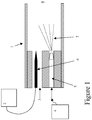
- Figure 1 is a schematic view of a wound treatment device in accordance with an embodiment of the present invention.
- the device includes a plasma chamber 1 including a metal electrode 6 to which a high voltage power supply / ignition system 2 is operatively connected for providing a non-thermal equilibrium plasma within the plasma chamber (1).
- the chamber 1 further includes a gas supply inlet 3 through which a supply of gas, for example, helium, argon or nitrogen or mixtures thereof is fed in operation of the device and which in combination with the ignition system causes a plasma to be struck and to stream from plasma chamber outlet 8 exposed to ambient pressure.
- a gas supply inlet 3 through which a supply of gas, for example, helium, argon or nitrogen or mixtures thereof is fed in operation of the device and which in combination with the ignition system causes a plasma to be struck and to stream from plasma chamber outlet 8 exposed to ambient pressure.
- a liquid delivery system 4 is operatively connected to an inlet of the plasma chamber and an internal nebuliser 5 causes the supplied liquid to be sprayed 7 into the plasma chamber 1 as an aerosol.
- an external nebuliser feeds the aerosol to a region outside the plasma chamber where it interacts with the reactive species emanating from the plasma chamber outlet 8 before coating a wound surface over which the wound treatment device is being passed.
- the wound treatment device initially sterilises and coagulates the wound. Then, by providing an aerosol from the supply 4 containing a bioresorbable material comprising a biopolymer which may also contain an active agent, and introducing that aerosol into a plasma chamber 1, or into the reactive species that exist downstream of the plasma chamber 1, the device produces a coating comprising the bioresorbable material on the wound surface. If required, the sterilisation, coagulation and coating deposition can occur simultaneously. Deposition of such a coating enables the continuous interaction of the pro-healing materials with the wound and provides for enhanced wound healing. Furthermore, the coating seals the wound and limits the opportunity for further bacteria to infect the wound site.
- wound can be taken to encompass all forms of damage to the skin or body including burns, cuts, tears, piercings, contusions, abrasions, lacerations, punctures, gun shots or other forms of injury to the body. It may also encompass infections or chronic wounds such as ulcers.
- bioresorbable material comprising a biopolymer including: proteins such as collagen, fibrin or fibronecin; biopolymers such as hyaluronan, chitosan, alginates and cellulose; and also biodegradable synthetic polymers such as PLGA which do not form or use the same vinyl polymerisation reactions favoured by conventional plasma reactions onto a wound site.
- the plasma may cross-link these materials to produce a dry coating, but the degree of cross-linking is limited and is not sufficient to alter the functionality of the deposited material.
- Embodiments of the present invention employ non-thermal plasma devices where the plasma operates close to room temperature thus allowing the processing of temperature sensitive materials, without imposing a damaging thermal burden onto the material. Nonetheless, the hot electrons of the plasma create, through high-energy collisions, a rich source of radicals and excited species with a high chemical potential energy capable of chemical and physical reactivity.
- Non-thermal equilibrium plasmas can be created at ambient pressure and have been reviewed extensively by Roth ( Roth J.R., Industrial Plasma Engineering, Volume 2 Applications to Non-thermal Plasma Processing, Institute of Physics Publishing, 2001, pages 37-73 ). Such plasmas include dielectric barrier discharges.
- Another non-thermal equilibrium plasma is the Atmospheric pressure glow discharge (APGD) as described by Okazaki et al (J.
- APGD Atmospheric pressure glow discharge
- APGD plasmas have been described extensively by Roth as One Atmosphere Uniform Glow Discharge Plasmas (OUAGDP) and are found to operate from 0.5 to 40 kHz. Corona plasma devices can also operate in non-thermal equilibrium mode. Various plasma jets are also capable of operating in a "cold" or non-thermal equilibrium mode.
- Embodiments of the present invention employ plasma devices operating at frequencies above 100 kHz, which is beyond the sensory threshold of a patient's nervous system.
- the plasma is operated below 500 kHz and may be pulsed on and off in a controlled fashion to minimise the energy delivered to the aerosol and patient.
- the plasma can be contained between two electrodes, with a grounded electrode separating the person or object to be treated from the plasma, such that no significant voltage is applied to any object or person placed downstream of the device. This can be accomplished using a plasma device such as described by Ladwig et al (Surface & Coatings Technology 201 (2007) 6460-6464 ).
- a plasma device would allow the plasma to operate at frequencies below 100 kHz.
- the plasma parameters can be chosen to control the plasma process and ensure that the plasma operates in a non-thermal manner to produce a low-temperature plasma, which does not adversely affect temperature sensitive materials which are being deposited.
- the precursor can be introduced downstream of the plasma chamber outlet to minimise damage to the coating forming materials. This allows coatings containing materials sensitive to temperature, ions, free radicals and other active species present in the plasma to be deposited where they would otherwise be damaged if introduced directly into the plasma chamber.
- compositions or various active compounds can be incorporated into the coating produced by this device.
- active compounds can include anti-cancer drugs, anti-inflammatory drugs, immuno-suppressants, antibiotics, antimicrobials, heparin, a functional protein, a regulatory protein, structural proteins, oligo-peptides, antigenic peptides, nucleic acids, immunogens, glycosaminoglycans and combinations thereof.
- Further materials or other active compounds include one or more of polypeptides, polyglycans, hormones, lipids, interferons, cartilage, therapeutic biologic agents both cellular and synthetically derived, autologous, homologous and allographic and zenographic biologic agents, autologous or homologous, recombinant and synthetic derived blood cells and products containing antimicrobial/antibiotic agents, bacteriostatic agents, stem cells, stromal cells; fibroblast derived Human Dermal Collagen, matrix proteins, growth factors and cytokines, fibronectin, cells found in loose connective tissue such as endothelial cells, cells found in adipose tissue, macrophages/monocytes, adipocytes, pericytes, reticular cells found in bone marrow stroma and cultured autologous keratinocytes.
- therapeutic biologic agents both cellular and synthetically derived, autologous, homologous and allographic and zenographic biologic agents, autologous or homologous, recombinant
- the wound is coated with a layer of either coagulated blood or blood extracts.
- the coating is produced by nebulising a supply of blood, or blood constituents, into the plasma chamber or into the species exiting from the plasma chamber. This offers a route to producing thin films, which are highly biocompatible and already contain the necessary factors (fibrin, cytokines, etc.) necessary to seal the wound and to induce wound healing.
- the nature of the deposited layer may be varied dependent on factors including: the underlying cause of the wound, the characteristics of the wound, the stage of wound healing, the particular patient needs and risk factors, availability of autologous materials.
- a biocompatible coating was deposited on to a glass slide using a non-thermal plasma discharge and blood plasma as the precursor.
- the plasma discharge was created by applying an alternating voltage to a corona needle electrode assembly within a dielectric housing. The voltage was applied at a frequency of 100 kHz from a Redline G2000 high voltage power supply. Helium was used as a ballast gas at a flow rate of 14 litres/minute. (It will be appreciated that other gases including argon or nitrogen or mixtures thereof could also be used.)
- the blood plasma extract was nebulised into the plasma using a Burgener pneumatic nebuliser (Burgener Research, Canada) at a flow rate of 51 microlitres/min.
- the input power was applied using a 45% duty cycle (ratio of time on to time off) and a selected input power on the power supply of 107 V. This corresponded to an actual applied voltage of 12.7 kV (pk-pk) applied to the electrodes.
- the substrate was a glass slide placed approximately 5 mm downstream of the plasma exit.
- the blood plasma was sprayed through the plasma and landed upon the glass slide, where it coagulated instantly to form a coating. After deposition, the coating was inspected at a magnification of 40X and the viable cell numbers were counted. Prior to being exposed to the electrical discharge, cell viability was estimated to be 90%. After undergoing nebulisation and plasma coagulation, over 70% of the cells were still deemed viable, indicating that biological materials have been successfully deposited intact and capable of participating in a biological healing process.
- Chitosan is known to have antimicrobial properties and is also a common scaffold material used in regenerative medicine.
- Water-soluble chitosan was dissolved in deionised water to give a concentration of 20 mg/ml. This liquid was introduced at 50 ⁇ L/min into the equipment described in Example 1 and coatings were deposited onto glass slides. Coatings were deposited at a power input setting of 170V and 150 kHz and for times of 45 seconds, 1 minute and 3 minutes. In each case, a clear coating was detected on the surface of the glass slide. This coating was not removed by wiping with a tissue, indicating that the coating was dry, cured and adherent.
- Collagen is a known aid in wound healing process and is a key component of skin.
- a plasma device comprising a needle corona electrode powered by a 100W Plasma Technics Inc power supply operating at c. 20 kHz was provided. Helium was introduced to the system at a rate of 8 litres/minute.
- An acidified solution of collagen (3.8 mg/ml) was nebulised into the resultant discharge at a flow rate of 50 ⁇ L/min and coatings were deposited onto glass slides for 1 - 2 minutes. All deposits were found to be coherent, dry and adhered well to the substrate, indicating that a cured coating had been formed.
- a solution of collagen (1 mg/ml) was introduced into the equipment described in Example 1.
- the plasma was operated at 115V input power, 148 kHz and a duty cycle of 44%.
- Helium was introduced at a rate of 5 litres/min.
- the collagen solution was introduced at a rate of 50 ⁇ L/min and a coating was deposited onto polished Si wafers for either one minute or two minutes. Ellipsometry detected a coating with a thickness of 50 nm for the one minute sample and 140 nm for the two minute sample, confirming that a coating had been deposited.
Landscapes
- Health & Medical Sciences (AREA)
- Engineering & Computer Science (AREA)
- Chemical & Material Sciences (AREA)
- Animal Behavior & Ethology (AREA)
- Veterinary Medicine (AREA)
- Public Health (AREA)
- General Health & Medical Sciences (AREA)
- Epidemiology (AREA)
- Life Sciences & Earth Sciences (AREA)
- Materials Engineering (AREA)
- Physics & Mathematics (AREA)
- Plasma & Fusion (AREA)
- Chemical Kinetics & Catalysis (AREA)
- Spectroscopy & Molecular Physics (AREA)
- Materials For Medical Uses (AREA)
- Medicines Containing Material From Animals Or Micro-Organisms (AREA)
- Medicinal Chemistry (AREA)
- Polymers & Plastics (AREA)
- Organic Chemistry (AREA)
- Medicines That Contain Protein Lipid Enzymes And Other Medicines (AREA)
Description
- Electrical plasma devices are well established in medicine. For example, Massarweh et al, J. Am. Coll. Surg., 2006, 202 (3), 520, discloses plasma devices for surgery; Reich et al, European Urology, 2003, 44 (2), 272-276, describe the use of an argon plasma (APC) to coagulate blood and stop bleeding; and Mennel et al, Experimental and Toxicological Pathology, 2002, 54 (3), 255, disclose using a helium plasma to obtain a similar response to the APC technique.
- Plasmas can also be used to sterilise skin as disclosed in G. Fridman, A.D. Brooks, M. Balasubramanian, A. Fridman, A. Gustol, V.N. Vasilets, H. Ayan, G. Friedman, Plasma Process. Polym. 4 (2007) 370) and
WO2006/H6252 US2008/0237484 and inWO2009/101143 . - Outside of medicine, plasma devices are widely used to produce thin film coatings in industrial applications. Plasma polymers offer a number of advantages over conventional polymer coatings. The combination of reactive plasma and chemically active monomers produces a coating that is uniform, pin hole free and well bonded to the substrate. Furthermore, the curing can occur in a manner that is almost instantaneous, offering numerous processing advantages.
-
US 4,929,319 describes a method for depositing a polymer coating in which an aerosol is introduced into a corona plasma and the reactive species thereby generated are allowed to deposit in a substrate that is also brought into the corona plasma. -
WO 02/28548 -
WO 2005/106477 describes a process for coating a substrate with a biomolecule in which the substrate is placed between two electrodes and a plasma is generated by applying an alternating current in which a positive voltage is applied to the first electrode and a zero voltage to the second electrode, and then a zero voltage to the first electrode and a negative voltage to the second electrode. A coating is then applied by introducing a reactive precursor to form a coating and biomolecules are simultaneously immobilised. The biomolecules may be introduced as an aerosol. -
WO 2005/110626 discloses coating a substrate with a polymer layer containing active agents. The method involves exposing a mixture of polymer forming materials (which react to form chemical bonds in a plasma) and active agents (which do significantly react in the plasma) to plasma. The polymer forming materials listed include various acrylates, alkenes and dienes that can be polymerised by the reactive species present within a plasma. These prior documents rely on the plasma to induce the polymerisation of a monomer to produce the thin film or coating. The polymerisation can be driven through free radical (A. Bogaerts et al., Spectrochimica Acta Part B, 57 (2002) 609-658) or cationic reaction mechanisms (Daniel C. Guerin, David D. Hinshelwood, Sorin Monolache, Ferencz S. Denes, and Vasgen A. Shamamian, Langmuir, 2002, 18 (10), pp 4118-4123). - Thus, while the methods described in
WO 2005/106477 andWO 2005/110626 do allow for the deposition of polymers containing active agents, they are reliant upon the presence of a precursor which can react in the plasma to form the polymer coating during the deposition process. The requirement to induce reactions within the polymer precursor without damaging the active agent limits the degree of polymerisation that can be achieved. -
US 2007/0029500 A1 discloses a plasma device. -
WO 2009/146432 A1 discloses a plasma system including a plasma device coupled to a power source, an ionizable media source and a precursor source. During operation, the ionizable media source provides ionizable media and the precursor source provides one or more chemical species, photons at specific wavelengths, as well as containing various reactive functional groups and/or components to treat the workpiece surface by working in concert for synergetic selective tissue effects. The chemical species and the ionizable gas are mixed either upstream or midstream from an ignition point of the plasma device and once mixed, are ignited therein under application of electrical energy from the power source. As a result, a plasma effluent and photon source is formed, which carries the ignited plasma feedstock and resulting mixture of reactive species to a workpiece surface to perform a predetermined reaction. - The present invention is a wound treatment device comprising: a plasma chamber having one or more electrodes, a gas supply inlet, a plasma chamber outlet exposed to ambient pressure, an ignition system operatively connected to said one or more electrodes for providing a non-thermal equilibrium plasma within the plasma chamber, said plasma streaming from the plasma chamber outlet in operation of the wound treatment device; and a nebuliser arranged to introduce a bioresorbable material comprising a biopolymer as an aerosol into the plasma, for producing, in operation of the wound treatment device, a coating comprising the bioresorbable material on a wound surface over which the wound treatment device is passed; and wherein said ignition system is arranged to provide power to said plasma at a frequency above 100 kHz. Details of certain embodiments are set out in the dependent claims.
- In embodiments of the present invention, a non-thermal plasma is applied to a wound. The plasma can sterilise the area, coagulate blood and deposit a bioresorbable coating to seal the wound area. The coating can further include active compounds to aid in wound healing.
- The bioresorbable material can include blood, blood constituent, blood plasma, chitosan or collagen, but may alternatively or in addition include a protein, a biopolymer (such as chitin, alginates, cellulose or hyaluronan), a biodegradable polymer (such as poly (lactic-coglycolic acid) (PLGA), polylactic acid, polycaprolactone, polyglactin) or a mixture of such materials, a pharmaceutical agent or a biologically active compound or combinations thereof, and one or more of a drug, enzyme, cell, protein or DNA.
- The bioresorbable material is introduced into a non-thermal plasma as a pre-cursor in the form of an aerosol. The bioresorbable material pre-cursor can either be dissolved or dispersed in a suitable carrier liquid.
Preferably, the active compound, for example, drug, enzyme, cell, protein or DNA may be either introduced into the plasma dissolved in the bioresorbable material pre-cursor or introduced separately.
In such implementations, the active compound is incorporated alongside a pre-polymerised polymer which allows the polymerisation and film forming steps to be separated out and provides a greater degree of process control.
The mixture of bioresorbable material, active compound and plasma further interact to produce a coating on the wound surface. The wound can either directly contact the plasma or can be placed downstream of the plasma chamber outlet.
In one embodiment, blood constituents are nebulised into the plasma, to deposit a layer of coagulated blood or blood plasma onto a wound surface. - Embodiments of the invention will now be described, by way of example, with reference to the accompanying drawing, in which:
Figure 1 is a schematic view of a wound treatment device in accordance with an embodiment of the present invention. - Referring now to
Figure 1 , there is shown a schematic view of a wound treatment device according to an embodiment of the invention. The device includes aplasma chamber 1 including ametal electrode 6 to which a high voltage power supply /ignition system 2 is operatively connected for providing a non-thermal equilibrium plasma within the plasma chamber (1). Thechamber 1 further includes agas supply inlet 3 through which a supply of gas, for example, helium, argon or nitrogen or mixtures thereof is fed in operation of the device and which in combination with the ignition system causes a plasma to be struck and to stream from plasma chamber outlet 8 exposed to ambient pressure. In the illustrated embodiment, aliquid delivery system 4 is operatively connected to an inlet of the plasma chamber and aninternal nebuliser 5 causes the supplied liquid to be sprayed 7 into theplasma chamber 1 as an aerosol. In alternative embodiments, not shown, an external nebuliser feeds the aerosol to a region outside the plasma chamber where it interacts with the reactive species emanating from the plasma chamber outlet 8 before coating a wound surface over which the wound treatment device is being passed. - In embodiments of the present invention, the wound treatment device initially sterilises and coagulates the wound. Then, by providing an aerosol from the
supply 4 containing a bioresorbable material comprising a biopolymer which may also contain an active agent, and introducing that aerosol into aplasma chamber 1, or into the reactive species that exist downstream of theplasma chamber 1, the device produces a coating comprising the bioresorbable material on the wound surface. If required, the sterilisation, coagulation and coating deposition can occur simultaneously. Deposition of such a coating enables the continuous interaction of the pro-healing materials with the wound and provides for enhanced wound healing. Furthermore, the coating seals the wound and limits the opportunity for further bacteria to infect the wound site. - The term wound can be taken to encompass all forms of damage to the skin or body including burns, cuts, tears, piercings, contusions, abrasions, lacerations, punctures, gun shots or other forms of injury to the body. It may also encompass infections or chronic wounds such as ulcers.
- The invention described herein allows the introduction of bioresorbable material comprising a biopolymer including: proteins such as collagen, fibrin or fibronecin; biopolymers such as hyaluronan, chitosan, alginates and cellulose; and also biodegradable synthetic polymers such as PLGA which do not form or use the same vinyl polymerisation reactions favoured by conventional plasma reactions onto a wound site. The plasma may cross-link these materials to produce a dry coating, but the degree of cross-linking is limited and is not sufficient to alter the functionality of the deposited material.
- Embodiments of the present invention employ non-thermal plasma devices where the plasma operates close to room temperature thus allowing the processing of temperature sensitive materials, without imposing a damaging thermal burden onto the material. Nonetheless, the hot electrons of the plasma create, through high-energy collisions, a rich source of radicals and excited species with a high chemical potential energy capable of chemical and physical reactivity. Non-thermal equilibrium plasmas can be created at ambient pressure and have been reviewed extensively by Roth (Roth J.R., Industrial Plasma Engineering, ). Such plasmas include dielectric barrier discharges. Another non-thermal equilibrium plasma is the Atmospheric pressure glow discharge (APGD) as described by Okazaki et al (J. Phys. D: Appl. Phys., 26, 889-892 (1993)). These APGD plasmas have been described extensively by Roth as One Atmosphere Uniform Glow Discharge Plasmas (OUAGDP) and are found to operate from 0.5 to 40 kHz. Corona plasma devices can also operate in non-thermal equilibrium mode. Various plasma jets are also capable of operating in a "cold" or non-thermal equilibrium mode.
- Embodiments of the present invention employ plasma devices operating at frequencies above 100 kHz, which is beyond the sensory threshold of a patient's nervous system. For optimum control, the plasma is operated below 500 kHz and may be pulsed on and off in a controlled fashion to minimise the energy delivered to the aerosol and patient. This enables controlled plasma reactions that preserve precursor functionality and do not damage or fragment sensitive active species.
Alternatively, the plasma can be contained between two electrodes, with a grounded electrode separating the person or object to be treated from the plasma, such that no significant voltage is applied to any object or person placed downstream of the device. This can be accomplished using a plasma device such as described by Ladwig et al (Surface & Coatings Technology 201 (2007) 6460-6464). In an example not forming part of the invention, use of such a plasma device would allow the plasma to operate at frequencies below 100 kHz.
The plasma parameters (electrode design, frequency, voltage, gas composition, etc.) can be chosen to control the plasma process and ensure that the plasma operates in a non-thermal manner to produce a low-temperature plasma, which does not adversely affect temperature sensitive materials which are being deposited.
Furthermore, the precursor can be introduced downstream of the plasma chamber outlet to minimise damage to the coating forming materials. This allows coatings containing materials sensitive to temperature, ions, free radicals and other active species present in the plasma to be deposited where they would otherwise be damaged if introduced directly into the plasma chamber. - Further materials or various active compounds can be incorporated into the coating produced by this device. These can include anti-cancer drugs, anti-inflammatory drugs, immuno-suppressants, antibiotics, antimicrobials, heparin, a functional protein, a regulatory protein, structural proteins, oligo-peptides, antigenic peptides, nucleic acids, immunogens, glycosaminoglycans and combinations thereof.
- Further materials or other active compounds include one or more of polypeptides, polyglycans, hormones, lipids, interferons, cartilage, therapeutic biologic agents both cellular and synthetically derived, autologous, homologous and allographic and zenographic biologic agents, autologous or homologous, recombinant and synthetic derived blood cells and products containing antimicrobial/antibiotic agents, bacteriostatic agents, stem cells, stromal cells; fibroblast derived Human Dermal Collagen, matrix proteins, growth factors and cytokines, fibronectin, cells found in loose connective tissue such as endothelial cells, cells found in adipose tissue, macrophages/monocytes, adipocytes, pericytes, reticular cells found in bone marrow stroma and cultured autologous keratinocytes.
- In a preferred application, the wound is coated with a layer of either coagulated blood or blood extracts. The coating is produced by nebulising a supply of blood, or blood constituents, into the plasma chamber or into the species exiting from the plasma chamber. This offers a route to producing thin films, which are highly biocompatible and already contain the necessary factors (fibrin, cytokines, etc.) necessary to seal the wound and to induce wound healing.
- Nonetheless, the nature of the deposited layer may be varied dependent on factors including: the underlying cause of the wound, the characteristics of the wound, the stage of wound healing, the particular patient needs and risk factors, availability of autologous materials.
- Thus, different depositions can be used depending on whether wound healing is at the haemostasis, inflammation, proliferation/granulation or maturation/remodelling phase. Examples of materials for the various phases of wound healing include:
- 1. Fresh trauma/burns: Seal/contain wound with a temporary resorbable material containing appropriate active agents including, for example, antimicrobials, analgesics, vasoconstrictors in order to contain the wound while minimising dehydration/shock, pain, blood loss, risk of infection/contamination, further tissue loss, etc and initiating haemostasis.
- 2. Haemostasis stage: A resorbable material such as blood plasma or platelets including active agent(s) such as, vasoconstrictors, adenosine diphosphate (ADP), thrombin, fibrinogen/fibrin, cytokines (PDGF), chemotactic factors, chemocines or coagulation factors.
- 3. Inflammation stage: A resorbable material such as blood plasma including, for example, neutrophils, monocytes, phagocytes, mast cells, proteolytic enzymes, leukocytes.
- 4. Proliferation/granulation stage: A resorbable material including for:
- a. Granulation - macrophages, Fibroblastic Growth Factor (FGF), Epidermal Growth Factor (EGF), transforming growth factor beta (TGF-beta), Extra cellular matrix (ECM), fibroblasts, myofibroblasts
- b. Contracture - fibroblasts, collagen, endothelial cells, keratinocytes, angiocytes, neurocytes,
- c. Epithelisation - growth factors, fibrin, collagen, and fibronectin
- 5. Maturation/remodelling: Type I collagen.
- 6. Enhanced/accelerated wound healing or for large wound and burn injuries or chronic non-healing ulcers: Cytokines and growth factors
- Other applications including cornea regeneration using cytokines following abrasion or cataract treatment.
- All variants may also provide the following:
- A moisture retaining occlusive barrier and high humidity at the wound surface;
- Gaseous exchange;
- Thermal insulation; and
- Protection against secondary infection
- A biocompatible coating was deposited on to a glass slide using a non-thermal plasma discharge and blood plasma as the precursor. The plasma discharge was created by applying an alternating voltage to a corona needle electrode assembly within a dielectric housing. The voltage was applied at a frequency of 100 kHz from a Redline G2000 high voltage power supply. Helium was used as a ballast gas at a flow rate of 14 litres/minute. (It will be appreciated that other gases including argon or nitrogen or mixtures thereof could also be used.) The blood plasma extract was nebulised into the plasma using a Burgener pneumatic nebuliser (Burgener Research, Canada) at a flow rate of 51 microlitres/min. The input power was applied using a 45% duty cycle (ratio of time on to time off) and a selected input power on the power supply of 107 V. This corresponded to an actual applied voltage of 12.7 kV (pk-pk) applied to the electrodes. The substrate was a glass slide placed approximately 5 mm downstream of the plasma exit.
- The blood plasma was sprayed through the plasma and landed upon the glass slide, where it coagulated instantly to form a coating. After deposition, the coating was inspected at a magnification of 40X and the viable cell numbers were counted. Prior to being exposed to the electrical discharge, cell viability was estimated to be 90%. After undergoing nebulisation and plasma coagulation, over 70% of the cells were still deemed viable, indicating that biological materials have been successfully deposited intact and capable of participating in a biological healing process.
- Chitosan is known to have antimicrobial properties and is also a common scaffold material used in regenerative medicine. Water-soluble chitosan was dissolved in deionised water to give a concentration of 20 mg/ml. This liquid was introduced at 50 µL/min into the equipment described in Example 1 and coatings were deposited onto glass slides. Coatings were deposited at a power input setting of 170V and 150 kHz and for times of 45 seconds, 1 minute and 3 minutes. In each case, a clear coating was detected on the surface of the glass slide. This coating was not removed by wiping with a tissue, indicating that the coating was dry, cured and adherent.
- Collagen is a known aid in wound healing process and is a key component of skin. A plasma device comprising a needle corona electrode powered by a 100W Plasma Technics Inc power supply operating at c. 20 kHz was provided. Helium was introduced to the system at a rate of 8 litres/minute. An acidified solution of collagen (3.8 mg/ml) was nebulised into the resultant discharge at a flow rate of 50 µL/min and coatings were deposited onto glass slides for 1 - 2 minutes. All deposits were found to be coherent, dry and adhered well to the substrate, indicating that a cured coating had been formed.
- A solution of collagen (1 mg/ml) was introduced into the equipment described in Example 1. The plasma was operated at 115V input power, 148 kHz and a duty cycle of 44%. Helium was introduced at a rate of 5 litres/min. The collagen solution was introduced at a rate of 50 µL/min and a coating was deposited onto polished Si wafers for either one minute or two minutes. Ellipsometry detected a coating with a thickness of 50 nm for the one minute sample and 140 nm for the two minute sample, confirming that a coating had been deposited.
Claims (15)
- A wound treatment device comprising:a plasma chamber (1) having one or more electrodes (6), a gas supply inlet (3), and a plasma chamber outlet (8) exposed to ambient pressure,an ignition system (2) operatively connected to said one or more electrodes (6) for providing a non-thermal equilibrium plasma within the plasma chamber (1), said plasma streaming from the plasma chamber outlet (8) in operation of the wound treatment device; and a nebuliser (5) arranged to introduce a bioresorbable material comprising a biopolymer as an aerosol (7) into the plasma, for producing, in operation of the wound treatment device, a coating comprising the bioresorbable material on a surface; characterized in that said surface is a wound surface over which the wound treatment device is passed; andwherein said ignition system is arranged to provide power to said plasma at a frequency above 100 kHz.
- A wound treatment device according to claim 1 in which said nebuliser (5) is arranged to provide said aerosol (7) into the plasma chamber (1).
- A wound treatment device according to claim 1 in which said nebuliser (5) is arranged to provide said aerosol (7) into a region containing reactive species emanating from said plasma chamber outlet (8).
- A wound treatment device according to any preceding claim in which said nebuliser (5) is arranged to contain a bioresorbable material precursor either dissolved or dispersed in a carrier liquid.
- A wound treatment device as claimed in any preceding claim wherein said ignition system (2) is arranged to provide power to said plasma at a frequency between 100 kHz and 500 kHz.
- A wound treatment device as claimed in any preceding claim wherein said ignition system (2) is arranged to pulse said plasma.
- A wound treatment device as claimed in any preceding claim further comprising a ground electrode disposed between the plasma chamber outlet (8) and the wound to be treated.
- A wound treatment device as claimed in any preceding claim wherein the plasma is one of a dielectric barrier discharge, an atmospheric pressure glow discharge, a corona plasma or a plasma jet.
- A wound treatment device as claimed in any preceding claim wherein said nebuliser (5) is arranged to supply said aerosol (7) to said wound after a period of treating the wound with only said plasma.
- A wound treatment device as claimed in any preceding claim further comprising means for providing an active compound to said wound in conjunction with said plasma treated bioresorbable material.
- A wound treatment device as claimed in claim 10 wherein said active compound is either dissolved in a bioresorbable material precursor or introduced separately to the plasma.
- A wound treatment device as claimed in any preceding claim further comprising a gas supply arranged to provide a supply of helium, argon, nitrogen or mixtures thereof to said plasma chamber (1).
- A wound treatment device as claimed in any preceding claim wherein the bioresorbable material is a biopolymer, a biodegradable polymer, a protein, or a mixture thereof; a protein including collagen, fibrin or fibronectin; a biopolymer including chitin, hyaluronan, chitosan, alginates or cellulose; or a biodegradable polymer including PLGA, polylactic acid, polycaprolactone or polyglactin; or one of: blood, blood plasma or a blood constituent.
- A wound treatment device as claimed in any preceding claim wherein said bioresorbable material further comprises one of a pharmaceutical agent or a biologically active compound or combinations thereof, and one or more of a drug, enzyme, cell, protein or DNA.
- A wound treatment device as claimed in any preceding claim wherein said bioresorbable material further includes one or more of anti-cancer drugs, anti-inflammatory drugs, immuno-suppressants, antibiotics, antimicrobials, heparin, a functional protein, a regulatory protein, structural proteins, oligo-peptides, antigenic peptides, nucleic acids, immunogens, glycosaminoglycans; or one or more of polypeptides, polyglycans, hormones, lipids, interferons, cartilage, therapeutic biologic agents both cellular and synthetically derived, autologous, homologous and allographic and zenographic biologic agents, autologous or homologous, recombinant and synthetic derived blood cells and products containing antimicrobial or antibiotic agents, bacteriostatic agents, stem cells, stromal cells; fibroblast derived Human Dermal Collagen, matrix proteins, growth factors and cytokines, fibronectin, cells found in loose connective tissue such as endothelial cells, cells found in adipose tissue, macrophages, monocytes, adipocytes, pericytes, reticular cells found in bone marrow stroma or cultured autologous keratinocytes.
Priority Applications (1)
| Application Number | Priority Date | Filing Date | Title |
|---|---|---|---|
| EP18177873.9A EP3415172A1 (en) | 2009-06-16 | 2010-06-15 | Wound healing device |
Applications Claiming Priority (2)
| Application Number | Priority Date | Filing Date | Title |
|---|---|---|---|
| US18734009P | 2009-06-16 | 2009-06-16 | |
| PCT/IB2010/001439 WO2010146438A1 (en) | 2009-06-16 | 2010-06-15 | Wound healing device |
Related Child Applications (2)
| Application Number | Title | Priority Date | Filing Date |
|---|---|---|---|
| EP18177873.9A Division-Into EP3415172A1 (en) | 2009-06-16 | 2010-06-15 | Wound healing device |
| EP18177873.9A Division EP3415172A1 (en) | 2009-06-16 | 2010-06-15 | Wound healing device |
Publications (3)
| Publication Number | Publication Date |
|---|---|
| EP2442833A1 EP2442833A1 (en) | 2012-04-25 |
| EP2442833A4 EP2442833A4 (en) | 2014-10-29 |
| EP2442833B1 true EP2442833B1 (en) | 2018-10-17 |
Family
ID=43355939
Family Applications (2)
| Application Number | Title | Priority Date | Filing Date |
|---|---|---|---|
| EP10789079.0A Active EP2442833B1 (en) | 2009-06-16 | 2010-06-15 | Wound healing device |
| EP18177873.9A Withdrawn EP3415172A1 (en) | 2009-06-16 | 2010-06-15 | Wound healing device |
Family Applications After (1)
| Application Number | Title | Priority Date | Filing Date |
|---|---|---|---|
| EP18177873.9A Withdrawn EP3415172A1 (en) | 2009-06-16 | 2010-06-15 | Wound healing device |
Country Status (4)
| Country | Link |
|---|---|
| US (3) | US20120089084A1 (en) |
| EP (2) | EP2442833B1 (en) |
| ES (1) | ES2699097T3 (en) |
| WO (1) | WO2010146438A1 (en) |
Families Citing this family (23)
| Publication number | Priority date | Publication date | Assignee | Title |
|---|---|---|---|---|
| JP5180585B2 (en) * | 2004-11-05 | 2013-04-10 | ダウ・コーニング・アイルランド・リミテッド | Plasma processing apparatus and method |
| ES2552842T3 (en) | 2007-02-19 | 2015-12-02 | Marine Polymer Technologies, Inc. | Hemostatic compositions and therapeutic regimens |
| ES2699097T3 (en) | 2009-06-16 | 2019-02-07 | Theradep Tech Inc | Healing devices |
| DK3162386T3 (en) * | 2010-12-13 | 2020-01-02 | Theradep Tech Inc | Implantable medical devices |
| DE102011003533A1 (en) * | 2011-02-02 | 2012-08-02 | Beiersdorf Ag | Deodorant skin film |
| US8920361B2 (en) * | 2011-04-05 | 2014-12-30 | The Texas A&M University System | Plasma treatment and plasma enhanced chemical vapor deposition onto temperature sensitive biological materials |
| RU2504413C1 (en) * | 2012-10-25 | 2014-01-20 | Общество с ограниченной ответственностью "Плазма" | Method of treating trophic ulcers and infected persisted wounds |
| US20140224643A1 (en) * | 2013-02-11 | 2014-08-14 | Colorado State University Research Foundation | Homogenous plasma chemical reaction device |
| US9532826B2 (en) | 2013-03-06 | 2017-01-03 | Covidien Lp | System and method for sinus surgery |
| US9555145B2 (en) | 2013-03-13 | 2017-01-31 | Covidien Lp | System and method for biofilm remediation |
| EP3281694B1 (en) * | 2015-04-09 | 2019-07-31 | Oral 28 Inc. | Plasma irradiation apparatus |
| CN109070137A (en) * | 2016-02-01 | 2018-12-21 | 瑞德科技有限公司 | System and method for delivering therapeutic agent |
| US11759407B2 (en) * | 2016-11-25 | 2023-09-19 | Ajou Univ. Industry-Academic Cooperation Found. | Composition for skin whitening or wound treatment, containing liquid plasma |
| KR102403490B1 (en) | 2017-08-31 | 2022-05-30 | 아주대학교산학협력단 | Method for treating or preventing keloids with non thermal plasma treated solution |
| KR102120552B1 (en) * | 2017-09-18 | 2020-06-08 | 아주대학교산학협력단 | Composition for skin-soothing comprising liquid type plasma |
| US11690998B2 (en) * | 2017-10-31 | 2023-07-04 | Theradep Technologies, Inc. | Methods of treating bacterial infections |
| CN120825860A (en) * | 2019-04-03 | 2025-10-21 | 瑞德科技有限公司 | Plasma processing device and method of using the same |
| EP3993859B1 (en) * | 2019-07-01 | 2022-09-14 | Universiteit Gent | Plasma enhanced aerosol device |
| US12475986B2 (en) | 2019-11-07 | 2025-11-18 | Haniva Llc | Method and apparatus for administering a cancer drug |
| US20210322461A1 (en) * | 2020-04-15 | 2021-10-21 | Alpha Phase Technologies LLC | Method of cross-linking collagen |
| EP3925596A1 (en) | 2020-06-18 | 2021-12-22 | Universitat Politècnica de Catalunya | Plasma-treated hydrogel compositions and uses thereof |
| TWI760857B (en) * | 2020-09-23 | 2022-04-11 | 逢甲大學 | Plasma aerosol device |
| KR20230023257A (en) | 2021-08-10 | 2023-02-17 | 주식회사 애드고컴퍼니 | Plasma and collagen injection apparatus for skin care and wound healing |
Citations (1)
| Publication number | Priority date | Publication date | Assignee | Title |
|---|---|---|---|---|
| WO2005110626A2 (en) * | 2004-05-14 | 2005-11-24 | Dow Corning Ireland Limited | Process and apparatus for plasma coating, substrates coated by this metod or apparatus |
Family Cites Families (29)
| Publication number | Priority date | Publication date | Assignee | Title |
|---|---|---|---|---|
| DE3705482A1 (en) | 1987-02-20 | 1988-09-01 | Hoechst Ag | METHOD AND ARRANGEMENT FOR THE SURFACE PRE-TREATMENT OF PLASTIC BY MEANS OF AN ELECTRIC CORONA DISCHARGE |
| GB8720799D0 (en) * | 1987-09-04 | 1987-10-14 | Biocompatibles Ltd | Dressing |
| US20030087985A1 (en) * | 1990-10-15 | 2003-05-08 | Hubbell Jeffrey A. | Gels for encapsulation of biological materials |
| AUPO366496A0 (en) * | 1996-11-15 | 1996-12-12 | Lions Eye Institute | Collagen preparations |
| US20080199513A1 (en) * | 1997-06-24 | 2008-08-21 | Cascade Medical Enterprises, Llc | Systems and methods for preparing autologous fibrin glue |
| DE19839826A1 (en) * | 1998-09-01 | 2000-03-02 | Karl Fastenmeier | High-frequency device for generating a plasma arc for the treatment of human tissue |
| DE10015555A1 (en) | 2000-03-30 | 2001-10-18 | Eybl Internat Ag Krems | Leather and its finishing |
| EA006831B1 (en) | 2000-10-04 | 2006-04-28 | Дау Корнинг Айэлэнд Лимитед | Method and apparatus for forming a coating |
| DE10133870A1 (en) * | 2001-07-12 | 2003-02-06 | Chris P Lohmann | Ophthalmic agent, use of EGF for the treatment of dry eye syndrome and insert for the administration of EGF to the eye |
| US20050238702A1 (en) * | 2002-04-23 | 2005-10-27 | Netech, Inc | Medical composition containing photocrosslinkable chitosan derivative |
| GB0211354D0 (en) * | 2002-05-17 | 2002-06-26 | Surface Innovations Ltd | Atomisation of a precursor into an excitation medium for coating a remote substrate |
| US7201935B1 (en) | 2002-09-17 | 2007-04-10 | Advanced Cardiovascular Systems, Inc. | Plasma-generated coatings for medical devices and methods for fabricating thereof |
| DE10324926B3 (en) * | 2003-06-03 | 2005-02-03 | Fachhochschule Hildesheim/Holzminden/Göttingen | Apparatus for treating a biological cell containing living cells with a plasma generated by a gas discharge |
| JP4580979B2 (en) | 2004-04-30 | 2010-11-17 | ヴラームス インステリング ヴール テクノロギシュ オンデルゾーク (ヴイアイティーオー) | Biomolecule immobilization using atmospheric pressure plasma technology |
| JP5180585B2 (en) * | 2004-11-05 | 2013-04-10 | ダウ・コーニング・アイルランド・リミテッド | Plasma processing apparatus and method |
| EP1705965A1 (en) * | 2005-03-21 | 2006-09-27 | Universiteit Gent | Method and system for plasma treatment under high pressure |
| JP2008539007A (en) | 2005-04-25 | 2008-11-13 | ドレクセル ユニバーシティ | Method for non-thermally applying gas plasma to living tissue |
| CA2547043C (en) | 2005-08-05 | 2014-07-29 | Mcgill University | A plasma source and applications thereof |
| EP1765044A1 (en) | 2005-09-16 | 2007-03-21 | Max-Planck-Gesellschaft zur Förderung der Wissenschaften e.V. | Plasma source |
| EP1993627A4 (en) | 2006-02-27 | 2012-10-10 | Nanosurface Technologies Llc | Molecular plasma deposition of colloidal materials |
| DE102007061624A1 (en) | 2007-05-31 | 2009-06-25 | Ernst-Moritz-Arndt-Universität Greifswald | Process for coating surfaces with microparticles and nanoparticles by means of plasma processes and their use |
| DE102008008614A1 (en) | 2008-02-12 | 2009-08-13 | Leibniz-Institut für Plasmaforschung und Technologie e.V. | Plama device for the selective treatment of electroporated cells |
| US9288886B2 (en) * | 2008-05-30 | 2016-03-15 | Colorado State University Research Foundation | Plasma-based chemical source device and method of use thereof |
| EP2160081A1 (en) * | 2008-08-27 | 2010-03-03 | Max-Planck-Gesellschaft zur Förderung der Wissenschaften e.V. | Non-thermal plasma for wound treatment and associated apparatus and method |
| WO2010105829A1 (en) | 2009-03-19 | 2010-09-23 | Anthony Herbert | Apparatus and method for deposition of functional coatings |
| ES2699097T3 (en) | 2009-06-16 | 2019-02-07 | Theradep Tech Inc | Healing devices |
| DK3162386T3 (en) | 2010-12-13 | 2020-01-02 | Theradep Tech Inc | Implantable medical devices |
| EP2666544B1 (en) | 2012-05-24 | 2017-11-01 | Vito NV | Process for deposition and characterization of a coating |
| CN109070137A (en) | 2016-02-01 | 2018-12-21 | 瑞德科技有限公司 | System and method for delivering therapeutic agent |
-
2010
- 2010-06-15 ES ES10789079T patent/ES2699097T3/en active Active
- 2010-06-15 EP EP10789079.0A patent/EP2442833B1/en active Active
- 2010-06-15 WO PCT/IB2010/001439 patent/WO2010146438A1/en not_active Ceased
- 2010-06-15 US US13/377,389 patent/US20120089084A1/en not_active Abandoned
- 2010-06-15 EP EP18177873.9A patent/EP3415172A1/en not_active Withdrawn
-
2015
- 2015-07-09 US US14/795,221 patent/US20150314036A1/en not_active Abandoned
-
2018
- 2018-01-29 US US15/882,335 patent/US10946118B2/en active Active
Patent Citations (1)
| Publication number | Priority date | Publication date | Assignee | Title |
|---|---|---|---|---|
| WO2005110626A2 (en) * | 2004-05-14 | 2005-11-24 | Dow Corning Ireland Limited | Process and apparatus for plasma coating, substrates coated by this metod or apparatus |
Also Published As
| Publication number | Publication date |
|---|---|
| WO2010146438A1 (en) | 2010-12-23 |
| ES2699097T3 (en) | 2019-02-07 |
| US20180154039A1 (en) | 2018-06-07 |
| EP2442833A1 (en) | 2012-04-25 |
| US20120089084A1 (en) | 2012-04-12 |
| US20150314036A1 (en) | 2015-11-05 |
| EP3415172A1 (en) | 2018-12-19 |
| US10946118B2 (en) | 2021-03-16 |
| EP2442833A4 (en) | 2014-10-29 |
Similar Documents
| Publication | Publication Date | Title |
|---|---|---|
| US10946118B2 (en) | Wound healing device | |
| EP3162386B1 (en) | Implantable medical devices | |
| Liu et al. | Cold atmospheric pressure plasmas in dermatology: Sources, reactive agents, and therapeutic effects | |
| Park et al. | Atmospheric-pressure plasma sources for biomedical applications | |
| JP4077035B2 (en) | Method of forming the material | |
| JP6974353B2 (en) | Systems and methods for delivering therapeutic agents | |
| US20130218069A1 (en) | Hemostasis instrument | |
| WO2010107745A1 (en) | Plasma treatment for growth factor release from cells and tissues | |
| Bhattacharjee et al. | Cold atmospheric plasma: A noteworthy approach in medical science | |
| EP3827878A1 (en) | Electromedical device for blood clotting and treatment of ulcers and other skin injuries in human and animal patients | |
| O'Neill et al. | Evaluation of the J-plasma electrosurgical device combined with nebulized collagen for burn healing in rodents | |
| Gweon et al. | Therapeutic uses of atmospheric pressure plasma: cancer and wound | |
| JP2026501662A (en) | Plasma Jet Device | |
| Dobrynin et al. | Fast blood coagulation of capillary vessels by cold plasma: a rat ear bleeding model | |
| EP2753594B1 (en) | Process for preparing ceramic implants for medical purposes | |
| Jing et al. | Bioactive Anti‐Inflammatory and Antibacterial Plasma‐Activated Air for Healing of Infected Wounds | |
| CN115702982A (en) | Plasma physiotherapy instrument and physiotherapy method thereof | |
| Zhuang et al. | Biomedical Applications of Pulsed Discharge and Pulsed Electric Field | |
| Li et al. | Plasma-activated gas: a new dawn for wound care and infection | |
| O’Neill et al. | Plasma Deposition of Biomolecules for Enhanced Biomedical Applications | |
| Liao | Study of Plasma Treatment Effects on Dental Bond Improvement, Biofilm Destruction, and Oxidation Prevention of AgNWs | |
| Khashayar et al. | Evaluating the Effect of Argon and Helium Atmospheric Cold Plasma Jets on Wound Healing in Rats: A Comparative Histopathological and Biochemical Analysis | |
| Pegu et al. | Cold Atmospheric Plasma: A Noteworthy Approach in Medical Science | |
| Hammudi | Effect of the Cold Atmospheric Plasma Technology for Treatment the Cancer Diseases in the Human: A literature Review | |
| CN114503788A (en) | Convertible plasma source and method |
Legal Events
| Date | Code | Title | Description |
|---|---|---|---|
| PUAI | Public reference made under article 153(3) epc to a published international application that has entered the european phase |
Free format text: ORIGINAL CODE: 0009012 |
|
| 17P | Request for examination filed |
Effective date: 20120116 |
|
| AK | Designated contracting states |
Kind code of ref document: A1 Designated state(s): AL AT BE BG CH CY CZ DE DK EE ES FI FR GB GR HR HU IE IS IT LI LT LU LV MC MK MT NL NO PL PT RO SE SI SK SM TR |
|
| DAX | Request for extension of the european patent (deleted) | ||
| A4 | Supplementary search report drawn up and despatched |
Effective date: 20140930 |
|
| RIC1 | Information provided on ipc code assigned before grant |
Ipc: H05H 1/24 20060101ALI20140924BHEP Ipc: B05D 1/00 20060101ALI20140924BHEP Ipc: A61L 2/00 20060101ALI20140924BHEP Ipc: A61L 2/14 20060101AFI20140924BHEP Ipc: A61B 18/04 20060101ALI20140924BHEP |
|
| 17Q | First examination report despatched |
Effective date: 20160212 |
|
| STAA | Information on the status of an ep patent application or granted ep patent |
Free format text: STATUS: EXAMINATION IS IN PROGRESS |
|
| RAP1 | Party data changed (applicant data changed or rights of an application transferred) |
Owner name: THERADEP TECHNOLOGIES, INC. |
|
| REG | Reference to a national code |
Ref country code: DE Ref legal event code: R079 Ref document number: 602010054444 Country of ref document: DE Free format text: PREVIOUS MAIN CLASS: A61L0002140000 Ipc: A61L0026000000 |
|
| GRAP | Despatch of communication of intention to grant a patent |
Free format text: ORIGINAL CODE: EPIDOSNIGR1 |
|
| STAA | Information on the status of an ep patent application or granted ep patent |
Free format text: STATUS: GRANT OF PATENT IS INTENDED |
|
| RIC1 | Information provided on ipc code assigned before grant |
Ipc: A61L 2/14 20060101ALI20180330BHEP Ipc: A61B 18/04 20060101ALI20180330BHEP Ipc: H05H 1/42 20060101ALI20180330BHEP Ipc: H05H 1/24 20060101ALI20180330BHEP Ipc: A61L 2/00 20060101ALI20180330BHEP Ipc: A61L 26/00 20060101AFI20180330BHEP Ipc: B05D 1/00 20060101ALI20180330BHEP Ipc: H05H 1/48 20060101ALI20180330BHEP |
|
| INTG | Intention to grant announced |
Effective date: 20180504 |
|
| GRAS | Grant fee paid |
Free format text: ORIGINAL CODE: EPIDOSNIGR3 |
|
| GRAA | (expected) grant |
Free format text: ORIGINAL CODE: 0009210 |
|
| STAA | Information on the status of an ep patent application or granted ep patent |
Free format text: STATUS: THE PATENT HAS BEEN GRANTED |
|
| AK | Designated contracting states |
Kind code of ref document: B1 Designated state(s): AL AT BE BG CH CY CZ DE DK EE ES FI FR GB GR HR HU IE IS IT LI LT LU LV MC MK MT NL NO PL PT RO SE SI SK SM TR |
|
| REG | Reference to a national code |
Ref country code: GB Ref legal event code: FG4D |
|
| REG | Reference to a national code |
Ref country code: CH Ref legal event code: EP Ref country code: CH Ref legal event code: NV Representative=s name: SERVOPATENT GMBH, CH |
|
| REG | Reference to a national code |
Ref country code: IE Ref legal event code: FG4D |
|
| REG | Reference to a national code |
Ref country code: DE Ref legal event code: R096 Ref document number: 602010054444 Country of ref document: DE Ref country code: AT Ref legal event code: REF Ref document number: 1053234 Country of ref document: AT Kind code of ref document: T Effective date: 20181115 |
|
| REG | Reference to a national code |
Ref country code: NL Ref legal event code: FP |
|
| REG | Reference to a national code |
Ref country code: ES Ref legal event code: FG2A Ref document number: 2699097 Country of ref document: ES Kind code of ref document: T3 Effective date: 20190207 |
|
| REG | Reference to a national code |
Ref country code: LT Ref legal event code: MG4D |
|
| REG | Reference to a national code |
Ref country code: AT Ref legal event code: MK05 Ref document number: 1053234 Country of ref document: AT Kind code of ref document: T Effective date: 20181017 |
|
| PG25 | Lapsed in a contracting state [announced via postgrant information from national office to epo] |
Ref country code: LV Free format text: LAPSE BECAUSE OF FAILURE TO SUBMIT A TRANSLATION OF THE DESCRIPTION OR TO PAY THE FEE WITHIN THE PRESCRIBED TIME-LIMIT Effective date: 20181017 Ref country code: HR Free format text: LAPSE BECAUSE OF FAILURE TO SUBMIT A TRANSLATION OF THE DESCRIPTION OR TO PAY THE FEE WITHIN THE PRESCRIBED TIME-LIMIT Effective date: 20181017 Ref country code: PL Free format text: LAPSE BECAUSE OF FAILURE TO SUBMIT A TRANSLATION OF THE DESCRIPTION OR TO PAY THE FEE WITHIN THE PRESCRIBED TIME-LIMIT Effective date: 20181017 Ref country code: LT Free format text: LAPSE BECAUSE OF FAILURE TO SUBMIT A TRANSLATION OF THE DESCRIPTION OR TO PAY THE FEE WITHIN THE PRESCRIBED TIME-LIMIT Effective date: 20181017 Ref country code: NO Free format text: LAPSE BECAUSE OF FAILURE TO SUBMIT A TRANSLATION OF THE DESCRIPTION OR TO PAY THE FEE WITHIN THE PRESCRIBED TIME-LIMIT Effective date: 20190117 Ref country code: FI Free format text: LAPSE BECAUSE OF FAILURE TO SUBMIT A TRANSLATION OF THE DESCRIPTION OR TO PAY THE FEE WITHIN THE PRESCRIBED TIME-LIMIT Effective date: 20181017 Ref country code: IS Free format text: LAPSE BECAUSE OF FAILURE TO SUBMIT A TRANSLATION OF THE DESCRIPTION OR TO PAY THE FEE WITHIN THE PRESCRIBED TIME-LIMIT Effective date: 20190217 Ref country code: AT Free format text: LAPSE BECAUSE OF FAILURE TO SUBMIT A TRANSLATION OF THE DESCRIPTION OR TO PAY THE FEE WITHIN THE PRESCRIBED TIME-LIMIT Effective date: 20181017 |
|
| PG25 | Lapsed in a contracting state [announced via postgrant information from national office to epo] |
Ref country code: AL Free format text: LAPSE BECAUSE OF FAILURE TO SUBMIT A TRANSLATION OF THE DESCRIPTION OR TO PAY THE FEE WITHIN THE PRESCRIBED TIME-LIMIT Effective date: 20181017 Ref country code: SE Free format text: LAPSE BECAUSE OF FAILURE TO SUBMIT A TRANSLATION OF THE DESCRIPTION OR TO PAY THE FEE WITHIN THE PRESCRIBED TIME-LIMIT Effective date: 20181017 Ref country code: PT Free format text: LAPSE BECAUSE OF FAILURE TO SUBMIT A TRANSLATION OF THE DESCRIPTION OR TO PAY THE FEE WITHIN THE PRESCRIBED TIME-LIMIT Effective date: 20190217 Ref country code: GR Free format text: LAPSE BECAUSE OF FAILURE TO SUBMIT A TRANSLATION OF THE DESCRIPTION OR TO PAY THE FEE WITHIN THE PRESCRIBED TIME-LIMIT Effective date: 20190118 |
|
| REG | Reference to a national code |
Ref country code: DE Ref legal event code: R097 Ref document number: 602010054444 Country of ref document: DE |
|
| PG25 | Lapsed in a contracting state [announced via postgrant information from national office to epo] |
Ref country code: CZ Free format text: LAPSE BECAUSE OF FAILURE TO SUBMIT A TRANSLATION OF THE DESCRIPTION OR TO PAY THE FEE WITHIN THE PRESCRIBED TIME-LIMIT Effective date: 20181017 Ref country code: DK Free format text: LAPSE BECAUSE OF FAILURE TO SUBMIT A TRANSLATION OF THE DESCRIPTION OR TO PAY THE FEE WITHIN THE PRESCRIBED TIME-LIMIT Effective date: 20181017 |
|
| PGFP | Annual fee paid to national office [announced via postgrant information from national office to epo] |
Ref country code: NL Payment date: 20190618 Year of fee payment: 10 |
|
| PLBE | No opposition filed within time limit |
Free format text: ORIGINAL CODE: 0009261 |
|
| STAA | Information on the status of an ep patent application or granted ep patent |
Free format text: STATUS: NO OPPOSITION FILED WITHIN TIME LIMIT |
|
| PG25 | Lapsed in a contracting state [announced via postgrant information from national office to epo] |
Ref country code: SM Free format text: LAPSE BECAUSE OF FAILURE TO SUBMIT A TRANSLATION OF THE DESCRIPTION OR TO PAY THE FEE WITHIN THE PRESCRIBED TIME-LIMIT Effective date: 20181017 Ref country code: SK Free format text: LAPSE BECAUSE OF FAILURE TO SUBMIT A TRANSLATION OF THE DESCRIPTION OR TO PAY THE FEE WITHIN THE PRESCRIBED TIME-LIMIT Effective date: 20181017 Ref country code: RO Free format text: LAPSE BECAUSE OF FAILURE TO SUBMIT A TRANSLATION OF THE DESCRIPTION OR TO PAY THE FEE WITHIN THE PRESCRIBED TIME-LIMIT Effective date: 20181017 Ref country code: EE Free format text: LAPSE BECAUSE OF FAILURE TO SUBMIT A TRANSLATION OF THE DESCRIPTION OR TO PAY THE FEE WITHIN THE PRESCRIBED TIME-LIMIT Effective date: 20181017 |
|
| PGFP | Annual fee paid to national office [announced via postgrant information from national office to epo] |
Ref country code: BE Payment date: 20190626 Year of fee payment: 10 |
|
| 26N | No opposition filed |
Effective date: 20190718 |
|
| PGFP | Annual fee paid to national office [announced via postgrant information from national office to epo] |
Ref country code: CH Payment date: 20190620 Year of fee payment: 10 |
|
| PG25 | Lapsed in a contracting state [announced via postgrant information from national office to epo] |
Ref country code: SI Free format text: LAPSE BECAUSE OF FAILURE TO SUBMIT A TRANSLATION OF THE DESCRIPTION OR TO PAY THE FEE WITHIN THE PRESCRIBED TIME-LIMIT Effective date: 20181017 |
|
| PG25 | Lapsed in a contracting state [announced via postgrant information from national office to epo] |
Ref country code: MC Free format text: LAPSE BECAUSE OF FAILURE TO SUBMIT A TRANSLATION OF THE DESCRIPTION OR TO PAY THE FEE WITHIN THE PRESCRIBED TIME-LIMIT Effective date: 20181017 |
|
| PG25 | Lapsed in a contracting state [announced via postgrant information from national office to epo] |
Ref country code: TR Free format text: LAPSE BECAUSE OF FAILURE TO SUBMIT A TRANSLATION OF THE DESCRIPTION OR TO PAY THE FEE WITHIN THE PRESCRIBED TIME-LIMIT Effective date: 20181017 |
|
| PG25 | Lapsed in a contracting state [announced via postgrant information from national office to epo] |
Ref country code: LU Free format text: LAPSE BECAUSE OF NON-PAYMENT OF DUE FEES Effective date: 20190615 |
|
| REG | Reference to a national code |
Ref country code: CH Ref legal event code: PCAR Free format text: NEW ADDRESS: WANNERSTRASSE 9/1, 8045 ZUERICH (CH) |
|
| REG | Reference to a national code |
Ref country code: CH Ref legal event code: PL |
|
| REG | Reference to a national code |
Ref country code: NL Ref legal event code: MM Effective date: 20200701 |
|
| REG | Reference to a national code |
Ref country code: BE Ref legal event code: MM Effective date: 20200630 |
|
| PG25 | Lapsed in a contracting state [announced via postgrant information from national office to epo] |
Ref country code: NL Free format text: LAPSE BECAUSE OF NON-PAYMENT OF DUE FEES Effective date: 20200701 Ref country code: LI Free format text: LAPSE BECAUSE OF NON-PAYMENT OF DUE FEES Effective date: 20200630 Ref country code: CH Free format text: LAPSE BECAUSE OF NON-PAYMENT OF DUE FEES Effective date: 20200630 |
|
| PG25 | Lapsed in a contracting state [announced via postgrant information from national office to epo] |
Ref country code: CY Free format text: LAPSE BECAUSE OF FAILURE TO SUBMIT A TRANSLATION OF THE DESCRIPTION OR TO PAY THE FEE WITHIN THE PRESCRIBED TIME-LIMIT Effective date: 20181017 Ref country code: BE Free format text: LAPSE BECAUSE OF NON-PAYMENT OF DUE FEES Effective date: 20200630 |
|
| PG25 | Lapsed in a contracting state [announced via postgrant information from national office to epo] |
Ref country code: MT Free format text: LAPSE BECAUSE OF FAILURE TO SUBMIT A TRANSLATION OF THE DESCRIPTION OR TO PAY THE FEE WITHIN THE PRESCRIBED TIME-LIMIT Effective date: 20181017 Ref country code: HU Free format text: LAPSE BECAUSE OF FAILURE TO SUBMIT A TRANSLATION OF THE DESCRIPTION OR TO PAY THE FEE WITHIN THE PRESCRIBED TIME-LIMIT; INVALID AB INITIO Effective date: 20100615 |
|
| PG25 | Lapsed in a contracting state [announced via postgrant information from national office to epo] |
Ref country code: MK Free format text: LAPSE BECAUSE OF FAILURE TO SUBMIT A TRANSLATION OF THE DESCRIPTION OR TO PAY THE FEE WITHIN THE PRESCRIBED TIME-LIMIT Effective date: 20181017 |
|
| PGFP | Annual fee paid to national office [announced via postgrant information from national office to epo] |
Ref country code: DE Payment date: 20250605 Year of fee payment: 16 |
|
| PGFP | Annual fee paid to national office [announced via postgrant information from national office to epo] |
Ref country code: GB Payment date: 20250627 Year of fee payment: 16 |
|
| PGFP | Annual fee paid to national office [announced via postgrant information from national office to epo] |
Ref country code: FR Payment date: 20250626 Year of fee payment: 16 |
|
| PGFP | Annual fee paid to national office [announced via postgrant information from national office to epo] |
Ref country code: BG Payment date: 20250616 Year of fee payment: 16 |
|
| PGFP | Annual fee paid to national office [announced via postgrant information from national office to epo] |
Ref country code: IE Payment date: 20250605 Year of fee payment: 16 |
|
| PGFP | Annual fee paid to national office [announced via postgrant information from national office to epo] |
Ref country code: ES Payment date: 20250714 Year of fee payment: 16 |
|
| PGFP | Annual fee paid to national office [announced via postgrant information from national office to epo] |
Ref country code: IT Payment date: 20250606 Year of fee payment: 16 |