EP2442591A2 - Method of transmitting and handling countingresponse message and related communication device - Google Patents
Method of transmitting and handling countingresponse message and related communication device Download PDFInfo
- Publication number
- EP2442591A2 EP2442591A2 EP11008367A EP11008367A EP2442591A2 EP 2442591 A2 EP2442591 A2 EP 2442591A2 EP 11008367 A EP11008367 A EP 11008367A EP 11008367 A EP11008367 A EP 11008367A EP 2442591 A2 EP2442591 A2 EP 2442591A2
- Authority
- EP
- European Patent Office
- Prior art keywords
- message
- network
- countingresponse
- transmitting
- wireless communication
- Prior art date
- Legal status (The legal status is an assumption and is not a legal conclusion. Google has not performed a legal analysis and makes no representation as to the accuracy of the status listed.)
- Granted
Links
Images



Classifications
-
- H—ELECTRICITY
- H04—ELECTRIC COMMUNICATION TECHNIQUE
- H04L—TRANSMISSION OF DIGITAL INFORMATION, e.g. TELEGRAPHIC COMMUNICATION
- H04L63/00—Network architectures or network communication protocols for network security
- H04L63/20—Network architectures or network communication protocols for network security for managing network security; network security policies in general
- H04L63/205—Network architectures or network communication protocols for network security for managing network security; network security policies in general involving negotiation or determination of the one or more network security mechanisms to be used, e.g. by negotiation between the client and the server or between peers or by selection according to the capabilities of the entities involved
-
- H—ELECTRICITY
- H04—ELECTRIC COMMUNICATION TECHNIQUE
- H04W—WIRELESS COMMUNICATION NETWORKS
- H04W4/00—Services specially adapted for wireless communication networks; Facilities therefor
- H04W4/06—Selective distribution of broadcast services, e.g. multimedia broadcast multicast service [MBMS]; Services to user groups; One-way selective calling services
-
- H—ELECTRICITY
- H04—ELECTRIC COMMUNICATION TECHNIQUE
- H04L—TRANSMISSION OF DIGITAL INFORMATION, e.g. TELEGRAPHIC COMMUNICATION
- H04L63/00—Network architectures or network communication protocols for network security
- H04L63/20—Network architectures or network communication protocols for network security for managing network security; network security policies in general
-
- H—ELECTRICITY
- H04—ELECTRIC COMMUNICATION TECHNIQUE
- H04W—WIRELESS COMMUNICATION NETWORKS
- H04W12/00—Security arrangements; Authentication; Protecting privacy or anonymity
- H04W12/06—Authentication
-
- H—ELECTRICITY
- H04—ELECTRIC COMMUNICATION TECHNIQUE
- H04W—WIRELESS COMMUNICATION NETWORKS
- H04W12/00—Security arrangements; Authentication; Protecting privacy or anonymity
- H04W12/12—Detection or prevention of fraud
- H04W12/121—Wireless intrusion detection systems [WIDS]; Wireless intrusion prevention systems [WIPS]
- H04W12/122—Counter-measures against attacks; Protection against rogue devices
-
- H—ELECTRICITY
- H04—ELECTRIC COMMUNICATION TECHNIQUE
- H04W—WIRELESS COMMUNICATION NETWORKS
- H04W72/00—Local resource management
- H04W72/30—Resource management for broadcast services
-
- H—ELECTRICITY
- H04—ELECTRIC COMMUNICATION TECHNIQUE
- H04W—WIRELESS COMMUNICATION NETWORKS
- H04W76/00—Connection management
- H04W76/10—Connection setup
- H04W76/14—Direct-mode setup
-
- H—ELECTRICITY
- H04—ELECTRIC COMMUNICATION TECHNIQUE
- H04W—WIRELESS COMMUNICATION NETWORKS
- H04W76/00—Connection management
- H04W76/10—Connection setup
- H04W76/19—Connection re-establishment
-
- H—ELECTRICITY
- H04—ELECTRIC COMMUNICATION TECHNIQUE
- H04W—WIRELESS COMMUNICATION NETWORKS
- H04W76/00—Connection management
- H04W76/20—Manipulation of established connections
- H04W76/22—Manipulation of transport tunnels
-
- H—ELECTRICITY
- H04—ELECTRIC COMMUNICATION TECHNIQUE
- H04W—WIRELESS COMMUNICATION NETWORKS
- H04W76/00—Connection management
- H04W76/40—Connection management for selective distribution or broadcast
-
- H—ELECTRICITY
- H04—ELECTRIC COMMUNICATION TECHNIQUE
- H04W—WIRELESS COMMUNICATION NETWORKS
- H04W36/00—Hand-off or reselection arrangements
- H04W36/0005—Control or signalling for completing the hand-off
- H04W36/0007—Control or signalling for completing the hand-off for multicast or broadcast services, e.g. MBMS
-
- H—ELECTRICITY
- H04—ELECTRIC COMMUNICATION TECHNIQUE
- H04W—WIRELESS COMMUNICATION NETWORKS
- H04W36/00—Hand-off or reselection arrangements
- H04W36/08—Reselecting an access point
Definitions
- the present invention relates to a method used in a wireless communications system and related communication device, and more particularly, to a method of transmitting and handling CountingResponse message in a wireless communication system and related communication device.
- MBMS Multimedia Broadcast Multicast Service
- LTE long-term evolution
- the MBMS introduces a single frequency network (SFN) operation for MBMS transmission, i.e. MBMS Single Frequency Network (MBSFN), to reduce service interruption due to mobility between cells during transmissions.
- SFN single frequency network
- MBSFN Single Frequency Network
- MBSFN Synchronization Areas are capable of supporting one or more MBSFN Areas.
- An MBSFN Area consists of a group of cells within an MBSFN Synchronization Area of a network, which are co-ordinated to achieve an MBSFN Transmission.
- An MBSFN Transmission from multiple cells within the MBSFN Area is seen as a single transmission by a UE.
- MCCH Multicast Control Channel
- MTCH Multicast Traffic Channel
- a counting procedure is used by a network to count a number of RRC_CONNECTED mode UEs which are receiving or interested in a MBMS service. That is, the network initiates a counting procedure by transmitting a CountingRequest message corresponding to a MBMS service on MCCH.
- Security is UE specific and the CountingRequest message transmitted on the MCCH is not only for a specific UE so the network cannot activate the security to protect the CountingRequest message (e.g. cipher the CountingRequest message or have integrity protection of the CountingRequest message). In other words, the network broadcasts the CountingRequest message.
- UEs in RRC_CONNECTED mode receiving or interested in the MBMS service Upon receiving the CountingRequest message, UEs in RRC_CONNECTED mode receiving or interested in the MBMS service respond CountingResponse messages to the network.
- the CountingResponse message is transmitted on Dedicated Control Channel (DCCH). Therefore, when providing the MBMS service, the network can decide to broadcast or unicast the MBMS service to the UEs receiving or interested in the MBMS service according to whether a number of UEs receiving or interested in the specified MBMS service is greater than a predefined number.
- a UE determines interest in an MBMS service, that is identified by the Temporary Mobile Group Identity (TMGI), by interaction with upper layers of RRC.
- TMGI Temporary Mobile Group Identity
- the malicious UEs may mislead the network that there are more UEs receiving or interested in a specified MBMS service than actually are since security is not activated to authenticate a CountingResponse message and UE thereof, and thus the network broadcasts the specified MBMS service to the UEs rather than unicasting the specified MBMS service to the UEs economically.
- the counting procedure may not be performed correctly, and thus radio resources may not be utilized economically.
- the UE may send the CountingResponse message during a RRC procedure. For example, the UE may send the CountingResponse message after receiving a RRCConnectionSetup message and before transmitting a RRCConnectionSetupComplete message; the UE may send the CountingResponse message after receiving a RRCConnectionReconfiguration message (e.g. for handover) and before transmitting a RRCConnectionReconfigurationComplete message; and the UE may send the CountingResponse message after receiving a RRCConnectionReestablishment message and before transmitting a RRCConnectionReestablishmentComplete message.
- a RRCConnectionSetup e.g. for handover
- RRCConnectionReconfigurationComplete message e.g. for handover
- the UE may send the CountingResponse message after receiving a RRCConnectionReestablishment message and before transmitting a R
- the network may not be able to handle the CountingResponse message during an ongoing RRC procedure since the network can not determine whether the UE completes the ongoing RRC procedure, i.e. a status of the UE, without receiving a complete message of the ongoing RRC procedure.
- the counting procedure may not be performed correctly.
- a UE normally sends a CountingResponse message to an eNB when the UE receives a CountingRequest message.
- the UE may receive the CountingRequest message in a first eNB and send the CountingResponse message to a second eNB which may not support MBMS counting due to handover to or RRC connection re-establishment with the second eNB.
- the UE moves to the second eNB due to handover or RRC connection re-establishment, and thus sends the CountingResponse message to the second eNB.
- the CountingResponse message may make the second eNB system crash or take error handling (e.g. release the UE RRC connection). Thus, the counting procedure may not be performed correctly.
- the disclosure therefore provides a method and related communication device for transmitting and handling CountingResponse message.
- a method of transmitting CountingResponse message for a mobile device in a wireless communication system comprises steps of receiving a CountingRequest message from a network, activating security between the mobile device and the network in the wireless communication system; and transmitting a CountingResponse message to the network.
- a method of handling CountingResponse message for a network in a wireless communication system comprises steps of receiving a CountingResponse message from a mobile device in the wireless communication system; and ignoring the CountingResponse message if not activating security for the mobile device.
- a method of transmitting CountingResponse message for a mobile device in a wireless communication system comprises steps of receiving a first CountingRequest message from a first network in the wireless communication system; not successfully transmitting a first CountingResponse message to the first network due to handover to or re-establishment with a second network in the wireless communication system; and transmitting a second CountingResponse message to the second network when receiving a second CountingRequest message from the second network.
- FIG.1 is a schematic diagram of an exemplary wireless communication system.
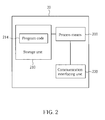
- FIG.2 is a schematic diagram of an exemplary communication device.
- FIG.3 illustrates the program code in FIG.2 .
- FIG.4 is a flow chart of a process according to an embodiment of the present invention.
- FIG.5 is a flow chart of a process according to an embodiment of the present invention.
- FIG.6 is a flow chart of a process according to an embodiment of the present invention.
- FIG. 1 is a schematic diagram of an exemplary wireless communication system 10.
- the wireless communication system 10 can be an LTE-Advanced system, or other mobile communication systems (e.g. LTE, WCDMA, HSPA, GSM, EDGE, etc.).
- the wireless communication system 10 is briefly composed of a network and a plurality of user equipments (UEs), as the structure illustrated in FIG.1 .
- the network is referred as an evolved universal terrestrial radio access network (E-UTRAN) comprising a plurality of evolved base stations (eNBs).
- E-UTRAN evolved universal terrestrial radio access network
- eNBs evolved base stations
- the UEs can be devices such as mobile phones, computer systems, etc.
- the network and the UE can be seen as a transmitter or receiver according to transmission direction, e.g., for uplink (UL), the UE is the transmitter and the network is the receiver, and for downlink (DL), the network is the transmitter and the UE is the receiver.
- UL uplink
- DL downlink
- FIG.2 is a schematic diagram of an exemplary communication device 20.
- the communication device 20 can be the UE or the network shown in FIG.1 and may include a processing means 200 such as a microprocessor or ASIC, a memory unit 210, and a communication interfacing unit 220.
- the memory unit 210 may be any data storage device that can store program code 214 for access by the processing means 200. Examples of the memory unit 210 include but are not limited to a subscriber identity module (SIM), read-only memory (ROM), random-access memory (RAM), CD-ROMs, magnetic tapes, floppy disks, and optical data storage devices.
- SIM subscriber identity module
- ROM read-only memory
- RAM random-access memory
- CD-ROMs compact discs
- magnetic tapes magnetic tapes
- floppy disks floppy disks
- optical data storage devices optical data storage devices.
- the communication interfacing unit 220 is preferably a radio transceiver for wirelessly communicating with the network according to processing results of the processing means 200
- the program code 214 includes program code of multiple communications protocol layers, which from top to bottom are a radio resource control (RRC) layer 300, a packet data convergence protocol (PDCP) layer 310, a radio link control (RLC) layer 320, a medium access control (MAC) layer 330 and a physical (PHY) layer 340.
- the PHY layer 340 includes physical channels, such as Physical RandomAccess Channel (PRACH), Physical Uplink Control Channel (PUCCH), Physical Uplink Shared Channel (PUCCH), Physical Downlink Control Channel (PDCCH), Physical Downlink Shared Channel (PDCCH).
- the LTE-A system may support a Multimedia Broadcast Multicast Service (MBMS), which allows a single source terminal, to simultaneously transmit data to multiple UEs.
- MBMS Multimedia Broadcast Multicast Service
- the embodiments of the present invention provide the program code 214 for the UE or the network to correctly transmitting and handling CountingResponse message, to correctly perform the counting procedure and economically utilize radio resources.
- FIG.4 is a flow chart of a process 40 according to an embodiment of the present invention.
- the process 40 is used for transmitting CountingResponse message for a UE in a wireless communication system.
- the wireless communication system could be the wireless communication system 10.
- the process 40 can be compiled into the program code 214 and includes the following steps:
- Step 400 Start.
- Step 402 Receive a CountingRequest message from a network.
- Step 404 Activate security between the UE and the network in the wireless communication system.
- Step 406 Transmit a CountingResponse message to the network.
- Step 408 End.
- the UE transmits a CountingResponse message to the network, wherein the UE can receive the CountingRequest message on MCCH from the network and transmit the CountingResponse message to the network on DCCH to the network.
- the UE is only allowed to transmit the CountingResponse message to the network when/after the security is activated between the UE and the network, e.g. receiving a SecurityModeCommand message from the network or transmitting a SecurityModeComplete message to the network.
- the UE has to wait until the security is activated between the UE and the network such that the network can know the CountingResponse message is transmitted from the specific UE without being confused by malicious UEs.
- the present invention can correctly perform the counting procedure and economically utilize radio resources.
- the UE does not transmit the CountingResponse message to the network during a radio resource control (RRC) procedure, e.g. an RRC connection establishment, an RRC connection reconfiguration and an RRC connection re-establishment.
- RRC radio resource control
- the UE is only allowed to transmit the CountingResponse message to the network after finishing the RRC procedure.
- the network first receives a complete message of the RRC procedure, and thus can acknowledge a status of the UE, such that the network can correctly handle the CountingResponse message.
- the present invention can correctly perform the counting procedure.
- FIG.5 is a flow chart of a process 50 according to an embodiment of the present invention.
- the process 50 is used for handling CountingResponse message for a network in a wireless communication system.
- the wireless communication system could be the wireless communication system 10.
- the process 50 can be compiled into the program code 214 and includes the following steps:
- Step 500 Start.
- Step 502 Receive a CountingResponse message from a UE in the wireless communication system.
- Step 504 Ignore the CountingResponse message if security is not activated for the UE.
- Step 506 End.
- the network receives a CountingResponse message from a UE in the wireless communication system, and ignores the CountingResponse message if the network does not activate security for the UE.
- the network does not take the content in the CountingResponse message into account for MBMS counting since the CountingResponse message is not passed security authentication.
- malicious UEs can not send CountingResponse messages to confuse the network since the CountingResponse messages are either authenticated by the security or ignored.
- the present invention can correctly perform the counting procedure and economically utilize radio resources.
- FIG.6 is a flow chart of a process 60 according to an embodiment of the present invention.
- the process 60 is used for transmitting CountingResponse message for a UE in a wireless communication system.
- the wireless communication system could be the wireless communication system 10.
- the process 60 can be compiled into the program code 214 and includes the following steps:
- Step 600 Start.
- Step 602 Receive a first CountingRequest message from a first base station in the wireless communication system.
- Step 604 Do not successfully transmit a first CountingResponse message to the first base station due to handover to or re-establishment with a second base station in the wireless communication system.
- Step 606 Transmit a second CountingResponse message to the second base station when receiving a second CountingRequest message from the second base station.
- Step 608 End.
- the UE receives a first CountingRequest message from a first base station in the wireless communication system, i.e. an eNB in the LTE system, and does not successfully transmit a first CountingResponse message to the first base station due to handover to or re-establishment with a second base station in the wireless communication system.
- the UE transmits a second CountingResponse message to the second base station when receiving a second CountingRequest message from the second base station, i.e.
- the UE does not spontaneously transmit the first CountingResponse message for the first base station to the second base station, to prevent the second base station from crash or error handling, e.g. releasing the UE RRC connection, due to the unknown first CountingResponse message.
- the UE can spontaneously transmit a third CountingResponse message to the second base station after handover to or re-establishment with the second base station, wherein the third CountingResponse message can be the same as the first CountingResponse message.
- the present invention can correctly perform the counting procedure.
- the abovementioned steps including suggested steps can be realized by means that could be hardware, firmware known as a combination of a hardware device and computer instructions and data that reside as read-only software on the hardware device, or an electronic system.
- hardware can include analog, digital and mixed circuits known as microcircuit, microchip, or silicon chip.
- the electronic system can include system on chip (SOC), system in package (Sip), computer on module (COM), and the communication device 20 in which the processing means 200 processes the program code 214 related to the abovementioned processes and the processed results can enhance uplink transmission in the wireless communications system 10.
- the counting procedure may not be performed correctly or radio resources may not be utilized economically under some circumstances, e.g. when the UE sends the CountingResponse message before a network activates security, the UE sends the CountingResponse message during a RRC procedure, or the UE receives a CountingRequest message from a first eNB but sends a CountingResponse message to a second eNB after handover to or re-establishment with the second eNB.
- the UE does not spontaneously transmit the first CountingResponse message for the first base station to the second base station if the second base station is different from the first base station, and spontaneously transmits a third CountingResponse message, e.g. the same as the first CountingResponse message, to the second base station if the second base station is different from the first base station, to correctly perform the counting procedure.
- a third CountingResponse message e.g. the same as the first CountingResponse message
Landscapes
- Engineering & Computer Science (AREA)
- Computer Networks & Wireless Communication (AREA)
- Signal Processing (AREA)
- Computer Security & Cryptography (AREA)
- Multimedia (AREA)
- Computer Hardware Design (AREA)
- Computing Systems (AREA)
- General Engineering & Computer Science (AREA)
- Mobile Radio Communication Systems (AREA)
Abstract
Description
- This application claims the benefit of
U.S. Provisional Application No. 61/393,948, filed on Oct. 18, 2010 - The present invention relates to a method used in a wireless communications system and related communication device, and more particularly, to a method of transmitting and handling CountingResponse message in a wireless communication system and related communication device.
- To enhance multimedia performance of the 3G mobile telecommunications system, the 3rd Generation Partnership Project (3GPP) introduces a Multimedia Broadcast Multicast Service (MBMS), which is a point-to-multipoint bearer service established on a long-term evolution (LTE) system. MBMS allows a single source terminal, to simultaneously transmit data to multiple user equipments (UEs).
- The MBMS introduces a single frequency network (SFN) operation for MBMS transmission, i.e. MBMS Single Frequency Network (MBSFN), to reduce service interruption due to mobility between cells during transmissions. In MBSFN, single frequency is used by multiple cells to perform synchronized transmission at the same time. An area of the network where all eNodeBs can be synchronized and perform MBSFN transmissions. MBSFN Synchronization Areas are capable of supporting one or more MBSFN Areas. An MBSFN Area consists of a group of cells within an MBSFN Synchronization Area of a network, which are co-ordinated to achieve an MBSFN Transmission. An MBSFN Transmission from multiple cells within the MBSFN Area is seen as a single transmission by a UE.
- Besides, two logical channels are defined in MBMS to support point-to-multipoint (p-t-m) downlink transmission: Multicast Control Channel (MCCH) and Multicast Traffic Channel (MTCH). MCCH is utilized for transmitting control messages of all MBMS services in an MBSFN area, and MTCH is utilized for transmitting session data of an MBMS service. The session data relates to contents of the MBMS service. Both MCCH and MTCH are mapped to a transmission channel newly defined by MBMS, i.e. Multicast Channel (MCH).
- In addition, a counting procedure is used by a network to count a number of RRC_CONNECTED mode UEs which are receiving or interested in a MBMS service. That is, the network initiates a counting procedure by transmitting a CountingRequest message corresponding to a MBMS service on MCCH. Security is UE specific and the CountingRequest message transmitted on the MCCH is not only for a specific UE so the network cannot activate the security to protect the CountingRequest message (e.g. cipher the CountingRequest message or have integrity protection of the CountingRequest message). In other words, the network broadcasts the CountingRequest message. Upon receiving the CountingRequest message, UEs in RRC_CONNECTED mode receiving or interested in the MBMS service respond CountingResponse messages to the network. The CountingResponse message is transmitted on Dedicated Control Channel (DCCH). Therefore, when providing the MBMS service, the network can decide to broadcast or unicast the MBMS service to the UEs receiving or interested in the MBMS service according to whether a number of UEs receiving or interested in the specified MBMS service is greater than a predefined number. A UE determines interest in an MBMS service, that is identified by the Temporary Mobile Group Identity (TMGI), by interaction with upper layers of RRC.
- However, in the prior art, it is not specified when a UE sends a CountingResponse message to a network. For example, a UE may send the CountingResponse message before a network activates security. Malicious UEs may send CountingResponse messages to confuse the network for MBMS counting and the network inefficiently configures radio resources for transmitting MBMS services, e.g. the malicious UEs may mislead the network that there are more UEs receiving or interested in a specified MBMS service than actually are since security is not activated to authenticate a CountingResponse message and UE thereof, and thus the network broadcasts the specified MBMS service to the UEs rather than unicasting the specified MBMS service to the UEs economically. Thus, the counting procedure may not be performed correctly, and thus radio resources may not be utilized economically.
- Besides, the UE may send the CountingResponse message during a RRC procedure. For example, the UE may send the CountingResponse message after receiving a RRCConnectionSetup message and before transmitting a RRCConnectionSetupComplete message; the UE may send the CountingResponse message after receiving a RRCConnectionReconfiguration message (e.g. for handover) and before transmitting a RRCConnectionReconfigurationComplete message; and the UE may send the CountingResponse message after receiving a RRCConnectionReestablishment message and before transmitting a RRCConnectionReestablishmentComplete message. Under the above situation, the network may not be able to handle the CountingResponse message during an ongoing RRC procedure since the network can not determine whether the UE completes the ongoing RRC procedure, i.e. a status of the UE, without receiving a complete message of the ongoing RRC procedure. Thus, the counting procedure may not be performed correctly.
- Moreover, a UE normally sends a CountingResponse message to an eNB when the UE receives a CountingRequest message. Under such a situation, the UE may receive the CountingRequest message in a first eNB and send the CountingResponse message to a second eNB which may not support MBMS counting due to handover to or RRC connection re-establishment with the second eNB. In other words, before the UE sends a CountingResponse message to the first eNB, the UE moves to the second eNB due to handover or RRC connection re-establishment, and thus sends the CountingResponse message to the second eNB. The CountingResponse message may make the second eNB system crash or take error handling (e.g. release the UE RRC connection). Thus, the counting procedure may not be performed correctly.
- The disclosure therefore provides a method and related communication device for transmitting and handling CountingResponse message.
- A method of transmitting CountingResponse message for a mobile device in a wireless communication system is disclosed. The method comprises steps of receiving a CountingRequest message from a network, activating security between the mobile device and the network in the wireless communication system; and transmitting a CountingResponse message to the network.
- A method of handling CountingResponse message for a network in a wireless communication system is disclosed. The method comprises steps of receiving a CountingResponse message from a mobile device in the wireless communication system; and ignoring the CountingResponse message if not activating security for the mobile device.
- A method of transmitting CountingResponse message for a mobile device in a wireless communication system is disclosed. The method comprises steps of receiving a first CountingRequest message from a first network in the wireless communication system; not successfully transmitting a first CountingResponse message to the first network due to handover to or re-establishment with a second network in the wireless communication system; and transmitting a second CountingResponse message to the second network when receiving a second CountingRequest message from the second network.
- These and other objectives of the present invention will no doubt become obvious to those of ordinary skill in the art after reading the following detailed description of the preferred embodiment that is illustrated in the various figures and drawings.
-
FIG.1 is a schematic diagram of an exemplary wireless communication system. -
FIG.2 is a schematic diagram of an exemplary communication device. -
FIG.3 illustrates the program code inFIG.2 . -
FIG.4 is a flow chart of a process according to an embodiment of the present invention. -
FIG.5 is a flow chart of a process according to an embodiment of the present invention. -
FIG.6 is a flow chart of a process according to an embodiment of the present invention. - Please refer to
FIG. 1. FIG. 1 is a schematic diagram of an exemplarywireless communication system 10. Thewireless communication system 10 can be an LTE-Advanced system, or other mobile communication systems (e.g. LTE, WCDMA, HSPA, GSM, EDGE, etc.). Thewireless communication system 10 is briefly composed of a network and a plurality of user equipments (UEs), as the structure illustrated inFIG.1 . In the LTE-Advanced system, the network is referred as an evolved universal terrestrial radio access network (E-UTRAN) comprising a plurality of evolved base stations (eNBs). The UEs can be devices such as mobile phones, computer systems, etc. Besides, the network and the UE can be seen as a transmitter or receiver according to transmission direction, e.g., for uplink (UL), the UE is the transmitter and the network is the receiver, and for downlink (DL), the network is the transmitter and the UE is the receiver. - Please refer to
FIG.2. FIG.2 is a schematic diagram of anexemplary communication device 20. Thecommunication device 20 can be the UE or the network shown inFIG.1 and may include a processing means 200 such as a microprocessor or ASIC, amemory unit 210, and acommunication interfacing unit 220. Thememory unit 210 may be any data storage device that can storeprogram code 214 for access by the processing means 200. Examples of thememory unit 210 include but are not limited to a subscriber identity module (SIM), read-only memory (ROM), random-access memory (RAM), CD-ROMs, magnetic tapes, floppy disks, and optical data storage devices. Thecommunication interfacing unit 220 is preferably a radio transceiver for wirelessly communicating with the network according to processing results of the processing means 200. - Please refer to
FIG.3 , which illustrates theprogram code 214 inFIG.2 . Theprogram code 214 includes program code of multiple communications protocol layers, which from top to bottom are a radio resource control (RRC)layer 300, a packet data convergence protocol (PDCP)layer 310, a radio link control (RLC)layer 320, a medium access control (MAC)layer 330 and a physical (PHY)layer 340. ThePHY layer 340 includes physical channels, such as Physical RandomAccess Channel (PRACH), Physical Uplink Control Channel (PUCCH), Physical Uplink Shared Channel (PUCCH), Physical Downlink Control Channel (PDCCH), Physical Downlink Shared Channel (PDCCH). - The LTE-A system may support a Multimedia Broadcast Multicast Service (MBMS), which allows a single source terminal, to simultaneously transmit data to multiple UEs. In such a situation, the embodiments of the present invention provide the
program code 214 for the UE or the network to correctly transmitting and handling CountingResponse message, to correctly perform the counting procedure and economically utilize radio resources. - Please refer to
FIG.4 , which is a flow chart of aprocess 40 according to an embodiment of the present invention. Theprocess 40 is used for transmitting CountingResponse message for a UE in a wireless communication system. The wireless communication system could be thewireless communication system 10. Theprocess 40 can be compiled into theprogram code 214 and includes the following steps: - Step 400: Start.
- Step 402: Receive a CountingRequest message from a network.
- Step 404: Activate security between the UE and the network in the wireless communication system.
- Step 406: Transmit a CountingResponse message to the network.
- Step 408: End.
- According to the
process 40, after the UE receives a CountingRequest message from a network and activates security between the UE and the network in the wireless communication system, the UE transmits a CountingResponse message to the network, wherein the UE can receive the CountingRequest message on MCCH from the network and transmit the CountingResponse message to the network on DCCH to the network. In other words, the UE is only allowed to transmit the CountingResponse message to the network when/after the security is activated between the UE and the network, e.g. receiving a SecurityModeCommand message from the network or transmitting a SecurityModeComplete message to the network. Under such a situation, the UE has to wait until the security is activated between the UE and the network such that the network can know the CountingResponse message is transmitted from the specific UE without being confused by malicious UEs. As a result, the present invention can correctly perform the counting procedure and economically utilize radio resources. - Besides, the UE does not transmit the CountingResponse message to the network during a radio resource control (RRC) procedure, e.g. an RRC connection establishment, an RRC connection reconfiguration and an RRC connection re-establishment. In other words, the UE is only allowed to transmit the CountingResponse message to the network after finishing the RRC procedure. Under such a situation, the network first receives a complete message of the RRC procedure, and thus can acknowledge a status of the UE, such that the network can correctly handle the CountingResponse message. As a result, the present invention can correctly perform the counting procedure.
- Please refer to
FIG.5 , which is a flow chart of aprocess 50 according to an embodiment of the present invention. Theprocess 50 is used for handling CountingResponse message for a network in a wireless communication system. The wireless communication system could be thewireless communication system 10. Theprocess 50 can be compiled into theprogram code 214 and includes the following steps: - Step 500: Start.
- Step 502: Receive a CountingResponse message from a UE in the wireless communication system.
- Step 504: Ignore the CountingResponse message if security is not activated for the UE.
- Step 506: End.
- According to the
process 50, the network receives a CountingResponse message from a UE in the wireless communication system, and ignores the CountingResponse message if the network does not activate security for the UE. In other words, the network does not take the content in the CountingResponse message into account for MBMS counting since the CountingResponse message is not passed security authentication. Under such a situation, malicious UEs can not send CountingResponse messages to confuse the network since the CountingResponse messages are either authenticated by the security or ignored. As a result, the present invention can correctly perform the counting procedure and economically utilize radio resources. - Please refer to
FIG.6 , which is a flow chart of aprocess 60 according to an embodiment of the present invention. Theprocess 60 is used for transmitting CountingResponse message for a UE in a wireless communication system. The wireless communication system could be thewireless communication system 10. Theprocess 60 can be compiled into theprogram code 214 and includes the following steps: - Step 600: Start.
- Step 602: Receive a first CountingRequest message from a first base station in the wireless communication system.
- Step 604: Do not successfully transmit a first CountingResponse message to the first base station due to handover to or re-establishment with a second base station in the wireless communication system.
- Step 606: Transmit a second CountingResponse message to the second base station when receiving a second CountingRequest message from the second base station.
- Step 608: End.
- According to the
process 60, if the UE receives a first CountingRequest message from a first base station in the wireless communication system, i.e. an eNB in the LTE system, and does not successfully transmit a first CountingResponse message to the first base station due to handover to or re-establishment with a second base station in the wireless communication system. After the handover or re-establishment, the UE transmits a second CountingResponse message to the second base station when receiving a second CountingRequest message from the second base station, i.e. the UE does not spontaneously transmit the first CountingResponse message for the first base station to the second base station, to prevent the second base station from crash or error handling, e.g. releasing the UE RRC connection, due to the unknown first CountingResponse message. - Noticeably, if the second base station is the same as the first base station, i.e. intra-handover, since the second base station can recognize a CountingResponse message from the UE, the UE can spontaneously transmit a third CountingResponse message to the second base station after handover to or re-establishment with the second base station, wherein the third CountingResponse message can be the same as the first CountingResponse message. As a result, the present invention can correctly perform the counting procedure.
- Please note that the abovementioned steps including suggested steps can be realized by means that could be hardware, firmware known as a combination of a hardware device and computer instructions and data that reside as read-only software on the hardware device, or an electronic system. Examples of hardware can include analog, digital and mixed circuits known as microcircuit, microchip, or silicon chip. Examples of the electronic system can include system on chip (SOC), system in package (Sip), computer on module (COM), and the
communication device 20 in which the processing means 200 processes theprogram code 214 related to the abovementioned processes and the processed results can enhance uplink transmission in thewireless communications system 10. - In the prior art, since the timing for the UE to send a CountingResponse message to a network is not specified, the counting procedure may not be performed correctly or radio resources may not be utilized economically under some circumstances, e.g. when the UE sends the CountingResponse message before a network activates security, the UE sends the CountingResponse message during a RRC procedure, or the UE receives a CountingRequest message from a first eNB but sends a CountingResponse message to a second eNB after handover to or re-establishment with the second eNB.
- In comparison, in an embodiment of the present invention, the UE transmits a CountingResponse message to the network when/after the security is activated between the UE and the network, such that the network can perform the counting procedure and economically utilize radio resources. Moreover, the UE does not transmit the CountingResponse message to the network during a RRC procedure, such that the network can correctly perform the counting procedure. In another embodiment of the present invention, the network ignores the CountingResponse message received from a UE if the network does not activate security for the UE, to correctly perform the counting procedure and economically utilize radio resources. In a further embodiment, after handover or re-establishment, the UE does not spontaneously transmit the first CountingResponse message for the first base station to the second base station if the second base station is different from the first base station, and spontaneously transmits a third CountingResponse message, e.g. the same as the first CountingResponse message, to the second base station if the second base station is different from the first base station, to correctly perform the counting procedure.
- Those skilled in the art will readily observe that numerous modifications and alterations of the device and method may be made while retaining the teachings of the invention. Accordingly, the above disclosure should be construed as limited only by the metes and bounds of the appended claims.
Claims (11)
- A method of transmitting CountingResponse message for a mobile device in a wireless communication system, the method comprising:receiving a CountingRequest message from a network;activating security between the mobile device and the network in the wireless communication system; andtransmitting a CountingResponse message to the network.
- The method of claim 1, wherein the step of activating the security between the mobile device and the network in the wireless communication system comprises:receiving a SecurityModeCommand message from the network.
- The method of claim 1, wherein the step of activating the security between the mobile device and the network in the wireless communication system comprises:transmitting a SecurityModeComplete message to the network.
- The method of claim 1, wherein the step of transmitting the CountingResponse message to the network comprises:not transmitting the CountingResponse message to the network during a radio resource control (RRC) procedure.
- The method of claim 4, wherein the RRC procedure is one of an RRC connection establishment, an RRC connection reconfiguration and an RRC connection re-establishment.
- The method of claim 1, wherein the step of receiving the CountingRequest message from the network comprises:receiving the CountingRequest message on MCCH from the network.
- The method of claim 1, wherein the step of transmitting a CountingResponse message to the network comprises:transmitting a CountingResponse message on DCCH to the network.
- A method of handling CountingResponse message for a network in a wireless communication system, the method comprising:receiving a CountingResponse message from a mobile device in the wireless communication system; andignoring the CountingResponse message if not activating security for the mobile device.
- A method of transmitting CountingResponse message for a mobile device in a wireless communication system, the method comprising:receiving a first CountingRequest message from a first base stationin the wireless communication system;not successfully transmitting a first CountingResponse message to the first base station due to handover to or re-establishment with a second base station in the wireless communication system; andtransmitting a second CountingResponse message to the second base station when receiving a second CountingRequest message from the second base station.
- The method of claim 9 further comprising:transmitting a third CountingResponse message to the second base station after handover to or re-establishment with the second base station if the second base station is the same as the first base station.
- The method of claim 10, wherein the third CountingResponse message is the same as the first CountingResponse message.
Applications Claiming Priority (1)
| Application Number | Priority Date | Filing Date | Title |
|---|---|---|---|
| US39394810P | 2010-10-18 | 2010-10-18 |
Publications (3)
| Publication Number | Publication Date |
|---|---|
| EP2442591A2 true EP2442591A2 (en) | 2012-04-18 |
| EP2442591A3 EP2442591A3 (en) | 2012-05-30 |
| EP2442591B1 EP2442591B1 (en) | 2018-05-30 |
Family
ID=44862302
Family Applications (1)
| Application Number | Title | Priority Date | Filing Date |
|---|---|---|---|
| EP11008367.2A Active EP2442591B1 (en) | 2010-10-18 | 2011-10-18 | Methods and apparatuses of transmitting and handling countingresponse message and related communication device |
Country Status (6)
| Country | Link |
|---|---|
| US (1) | US8953556B2 (en) |
| EP (1) | EP2442591B1 (en) |
| JP (1) | JP5357947B2 (en) |
| KR (1) | KR101294130B1 (en) |
| CN (1) | CN102457809A (en) |
| TW (1) | TWI446768B (en) |
Cited By (1)
| Publication number | Priority date | Publication date | Assignee | Title |
|---|---|---|---|---|
| KR101294130B1 (en) * | 2010-10-18 | 2013-08-07 | 에이치티씨 코퍼레이션 | Method of Transmitting and Handling CountingResponse Message and Related Communication Device |
Families Citing this family (3)
| Publication number | Priority date | Publication date | Assignee | Title |
|---|---|---|---|---|
| US10820227B2 (en) * | 2016-08-14 | 2020-10-27 | Samsung Electronics Co., Ltd. | System and method for multimedia broadcast multicast service (MBMS) counting operation |
| CN109168161B (en) * | 2018-08-27 | 2021-11-02 | 创新维度科技(北京)有限公司 | Safe mode activation method, apparatus, system and computer storage medium |
| US11736906B2 (en) * | 2020-08-06 | 2023-08-22 | Samsung Electronics Co., Ltd. | Method and system for MBS switching and continuity in 5G wireless network |
Family Cites Families (10)
| Publication number | Priority date | Publication date | Assignee | Title |
|---|---|---|---|---|
| KR100548344B1 (en) * | 2003-05-13 | 2006-02-02 | 엘지전자 주식회사 | RRC connection method in mobile communication system |
| WO2004102901A1 (en) | 2003-05-14 | 2004-11-25 | Philips Intellectual Property & Standards Gmbh | Methods and devices for counting user equipment units in a mobile radio telecommunication network |
| WO2005006596A1 (en) * | 2003-07-09 | 2005-01-20 | Samsung Electronics Co., Ltd. | Method for initiating uplink signaling proactively by mbms ue |
| KR100964679B1 (en) | 2003-08-19 | 2010-06-22 | 엘지전자 주식회사 | A method for aggregating radio resource control connection mode terminals in a multimedia broadcasting multicast service |
| KR101000682B1 (en) * | 2004-08-13 | 2010-12-10 | 엘지전자 주식회사 | How to set up RRC connection in mobile communication system |
| EP1986376A1 (en) | 2007-04-27 | 2008-10-29 | Alcatel Lucent | Method for counting a number of mobile stations in a radio access network |
| KR101429276B1 (en) | 2007-04-30 | 2014-08-12 | 엘지전자 주식회사 | Radio resource allocation control method of mobile communication system |
| US8224367B2 (en) * | 2008-05-23 | 2012-07-17 | Industrial Technology Research Institute | Method and system for estimating station numbers in wireless communications |
| US8891427B2 (en) * | 2009-04-24 | 2014-11-18 | Telefonaktiebolaget Lm Ericsson (Publ) | Method and a system for providing MBMS counting |
| US8953556B2 (en) * | 2010-10-18 | 2015-02-10 | Htc Corporation | Method of transmitting and handling CountingResponse message and related communication device |
-
2011
- 2011-10-18 US US13/275,312 patent/US8953556B2/en active Active
- 2011-10-18 CN CN2011103176454A patent/CN102457809A/en active Pending
- 2011-10-18 JP JP2011229205A patent/JP5357947B2/en active Active
- 2011-10-18 EP EP11008367.2A patent/EP2442591B1/en active Active
- 2011-10-18 KR KR1020110106394A patent/KR101294130B1/en active Active
- 2011-10-18 TW TW100137689A patent/TWI446768B/en active
Non-Patent Citations (1)
| Title |
|---|
| None |
Cited By (2)
| Publication number | Priority date | Publication date | Assignee | Title |
|---|---|---|---|---|
| KR101294130B1 (en) * | 2010-10-18 | 2013-08-07 | 에이치티씨 코퍼레이션 | Method of Transmitting and Handling CountingResponse Message and Related Communication Device |
| US8953556B2 (en) | 2010-10-18 | 2015-02-10 | Htc Corporation | Method of transmitting and handling CountingResponse message and related communication device |
Also Published As
| Publication number | Publication date |
|---|---|
| JP2012090270A (en) | 2012-05-10 |
| KR101294130B1 (en) | 2013-08-07 |
| CN102457809A (en) | 2012-05-16 |
| TWI446768B (en) | 2014-07-21 |
| US20120093126A1 (en) | 2012-04-19 |
| KR20120040121A (en) | 2012-04-26 |
| TW201218715A (en) | 2012-05-01 |
| EP2442591A3 (en) | 2012-05-30 |
| JP5357947B2 (en) | 2013-12-04 |
| US8953556B2 (en) | 2015-02-10 |
| EP2442591B1 (en) | 2018-05-30 |
Similar Documents
| Publication | Publication Date | Title |
|---|---|---|
| CN109983789B (en) | Data multicast or broadcast on control channel for narrowband communication | |
| US8254932B2 (en) | Method of handling mobility in multimedia broadcast multicast service single frequency network in a wireless communication system and related communication device | |
| CN107743716B (en) | Small data transmission in wireless communication system | |
| EP3028481B1 (en) | Managing a multimedia broadcast multicast service using an mbms relay device | |
| US10194281B2 (en) | MBMS control method, user terminal, and base station | |
| US8693437B2 (en) | Method of configuring secondary cells and related communication device | |
| US10506640B2 (en) | Device and method of handling system information | |
| WO2017003550A1 (en) | Packet priority for evolved multimedia broadcast multicast (embms) service relays | |
| JP5795811B2 (en) | Communication control method, base station, and user terminal | |
| CN110463299A (en) | Broadcast or multicast physical layer configuration and channel structure | |
| WO2022021350A1 (en) | Methods and apparatuses for data transmission for multicast broadcast service | |
| US9814020B2 (en) | Method of transmitting RRC messages in RRC-idle mode | |
| US8953556B2 (en) | Method of transmitting and handling CountingResponse message and related communication device | |
| WO2016160502A1 (en) | Proximity service signaling protocol for multimedia broadcast multicast service operations | |
| EP4561251A2 (en) | Communication method and apparatus | |
| US8526937B2 (en) | Method of handling logged MDT reporting in a wireless communication system and related communication device | |
| EP2645792B1 (en) | Method of random access response reception | |
| KR20080097918A (en) | Method for performing handover in a point-to-multiple service mobile communication system and terminal | |
| CN117223329A (en) | About switching of active multicast broadcast sessions |
Legal Events
| Date | Code | Title | Description |
|---|---|---|---|
| PUAI | Public reference made under article 153(3) epc to a published international application that has entered the european phase |
Free format text: ORIGINAL CODE: 0009012 |
|
| 17P | Request for examination filed |
Effective date: 20111018 |
|
| AK | Designated contracting states |
Kind code of ref document: A2 Designated state(s): AL AT BE BG CH CY CZ DE DK EE ES FI FR GB GR HR HU IE IS IT LI LT LU LV MC MK MT NL NO PL PT RO RS SE SI SK SM TR |
|
| AX | Request for extension of the european patent |
Extension state: BA ME |
|
| PUAL | Search report despatched |
Free format text: ORIGINAL CODE: 0009013 |
|
| AK | Designated contracting states |
Kind code of ref document: A3 Designated state(s): AL AT BE BG CH CY CZ DE DK EE ES FI FR GB GR HR HU IE IS IT LI LT LU LV MC MK MT NL NO PL PT RO RS SE SI SK SM TR |
|
| AX | Request for extension of the european patent |
Extension state: BA ME |
|
| RIC1 | Information provided on ipc code assigned before grant |
Ipc: H04W 72/00 20090101ALI20120424BHEP Ipc: H04W 12/10 20090101AFI20120424BHEP |
|
| RAP1 | Party data changed (applicant data changed or rights of an application transferred) |
Owner name: HTC CORPORATION |
|
| 17Q | First examination report despatched |
Effective date: 20160615 |
|
| GRAP | Despatch of communication of intention to grant a patent |
Free format text: ORIGINAL CODE: EPIDOSNIGR1 |
|
| RIC1 | Information provided on ipc code assigned before grant |
Ipc: H04W 36/08 20090101ALN20171115BHEP Ipc: H04W 4/06 20090101AFI20171115BHEP Ipc: H04W 12/12 20090101ALI20171115BHEP Ipc: H04W 72/00 20090101ALI20171115BHEP Ipc: H04W 76/00 20090101ALI20171115BHEP Ipc: H04L 29/06 20060101ALI20171115BHEP Ipc: H04W 12/06 20090101ALN20171115BHEP |
|
| RIC1 | Information provided on ipc code assigned before grant |
Ipc: H04W 76/00 20180101ALI20171206BHEP Ipc: H04W 12/06 20090101ALN20171206BHEP Ipc: H04W 72/00 20090101ALI20171206BHEP Ipc: H04W 36/08 20090101ALN20171206BHEP Ipc: H04W 4/06 20090101AFI20171206BHEP Ipc: H04L 29/06 20060101ALI20171206BHEP Ipc: H04W 12/12 20090101ALI20171206BHEP |
|
| INTG | Intention to grant announced |
Effective date: 20171220 |
|
| GRAS | Grant fee paid |
Free format text: ORIGINAL CODE: EPIDOSNIGR3 |
|
| GRAA | (expected) grant |
Free format text: ORIGINAL CODE: 0009210 |
|
| AK | Designated contracting states |
Kind code of ref document: B1 Designated state(s): AL AT BE BG CH CY CZ DE DK EE ES FI FR GB GR HR HU IE IS IT LI LT LU LV MC MK MT NL NO PL PT RO RS SE SI SK SM TR |
|
| REG | Reference to a national code |
Ref country code: GB Ref legal event code: FG4D |
|
| REG | Reference to a national code |
Ref country code: CH Ref legal event code: EP |
|
| REG | Reference to a national code |
Ref country code: AT Ref legal event code: REF Ref document number: 1004876 Country of ref document: AT Kind code of ref document: T Effective date: 20180615 |
|
| REG | Reference to a national code |
Ref country code: IE Ref legal event code: FG4D |
|
| REG | Reference to a national code |
Ref country code: DE Ref legal event code: R096 Ref document number: 602011048709 Country of ref document: DE |
|
| REG | Reference to a national code |
Ref country code: NL Ref legal event code: FP |
|
| REG | Reference to a national code |
Ref country code: FR Ref legal event code: PLFP Year of fee payment: 8 |
|
| REG | Reference to a national code |
Ref country code: LT Ref legal event code: MG4D |
|
| PG25 | Lapsed in a contracting state [announced via postgrant information from national office to epo] |
Ref country code: BG Free format text: LAPSE BECAUSE OF FAILURE TO SUBMIT A TRANSLATION OF THE DESCRIPTION OR TO PAY THE FEE WITHIN THE PRESCRIBED TIME-LIMIT Effective date: 20180830 Ref country code: FI Free format text: LAPSE BECAUSE OF FAILURE TO SUBMIT A TRANSLATION OF THE DESCRIPTION OR TO PAY THE FEE WITHIN THE PRESCRIBED TIME-LIMIT Effective date: 20180530 Ref country code: LT Free format text: LAPSE BECAUSE OF FAILURE TO SUBMIT A TRANSLATION OF THE DESCRIPTION OR TO PAY THE FEE WITHIN THE PRESCRIBED TIME-LIMIT Effective date: 20180530 Ref country code: CY Free format text: LAPSE BECAUSE OF FAILURE TO SUBMIT A TRANSLATION OF THE DESCRIPTION OR TO PAY THE FEE WITHIN THE PRESCRIBED TIME-LIMIT Effective date: 20180530 Ref country code: NO Free format text: LAPSE BECAUSE OF FAILURE TO SUBMIT A TRANSLATION OF THE DESCRIPTION OR TO PAY THE FEE WITHIN THE PRESCRIBED TIME-LIMIT Effective date: 20180830 Ref country code: SE Free format text: LAPSE BECAUSE OF FAILURE TO SUBMIT A TRANSLATION OF THE DESCRIPTION OR TO PAY THE FEE WITHIN THE PRESCRIBED TIME-LIMIT Effective date: 20180530 Ref country code: ES Free format text: LAPSE BECAUSE OF FAILURE TO SUBMIT A TRANSLATION OF THE DESCRIPTION OR TO PAY THE FEE WITHIN THE PRESCRIBED TIME-LIMIT Effective date: 20180530 |
|
| PG25 | Lapsed in a contracting state [announced via postgrant information from national office to epo] |
Ref country code: LV Free format text: LAPSE BECAUSE OF FAILURE TO SUBMIT A TRANSLATION OF THE DESCRIPTION OR TO PAY THE FEE WITHIN THE PRESCRIBED TIME-LIMIT Effective date: 20180530 Ref country code: GR Free format text: LAPSE BECAUSE OF FAILURE TO SUBMIT A TRANSLATION OF THE DESCRIPTION OR TO PAY THE FEE WITHIN THE PRESCRIBED TIME-LIMIT Effective date: 20180831 Ref country code: HR Free format text: LAPSE BECAUSE OF FAILURE TO SUBMIT A TRANSLATION OF THE DESCRIPTION OR TO PAY THE FEE WITHIN THE PRESCRIBED TIME-LIMIT Effective date: 20180530 Ref country code: RS Free format text: LAPSE BECAUSE OF FAILURE TO SUBMIT A TRANSLATION OF THE DESCRIPTION OR TO PAY THE FEE WITHIN THE PRESCRIBED TIME-LIMIT Effective date: 20180530 |
|
| REG | Reference to a national code |
Ref country code: AT Ref legal event code: MK05 Ref document number: 1004876 Country of ref document: AT Kind code of ref document: T Effective date: 20180530 |
|
| PG25 | Lapsed in a contracting state [announced via postgrant information from national office to epo] |
Ref country code: SK Free format text: LAPSE BECAUSE OF FAILURE TO SUBMIT A TRANSLATION OF THE DESCRIPTION OR TO PAY THE FEE WITHIN THE PRESCRIBED TIME-LIMIT Effective date: 20180530 Ref country code: EE Free format text: LAPSE BECAUSE OF FAILURE TO SUBMIT A TRANSLATION OF THE DESCRIPTION OR TO PAY THE FEE WITHIN THE PRESCRIBED TIME-LIMIT Effective date: 20180530 Ref country code: RO Free format text: LAPSE BECAUSE OF FAILURE TO SUBMIT A TRANSLATION OF THE DESCRIPTION OR TO PAY THE FEE WITHIN THE PRESCRIBED TIME-LIMIT Effective date: 20180530 Ref country code: CZ Free format text: LAPSE BECAUSE OF FAILURE TO SUBMIT A TRANSLATION OF THE DESCRIPTION OR TO PAY THE FEE WITHIN THE PRESCRIBED TIME-LIMIT Effective date: 20180530 Ref country code: DK Free format text: LAPSE BECAUSE OF FAILURE TO SUBMIT A TRANSLATION OF THE DESCRIPTION OR TO PAY THE FEE WITHIN THE PRESCRIBED TIME-LIMIT Effective date: 20180530 Ref country code: PL Free format text: LAPSE BECAUSE OF FAILURE TO SUBMIT A TRANSLATION OF THE DESCRIPTION OR TO PAY THE FEE WITHIN THE PRESCRIBED TIME-LIMIT Effective date: 20180530 Ref country code: AT Free format text: LAPSE BECAUSE OF FAILURE TO SUBMIT A TRANSLATION OF THE DESCRIPTION OR TO PAY THE FEE WITHIN THE PRESCRIBED TIME-LIMIT Effective date: 20180530 |
|
| PG25 | Lapsed in a contracting state [announced via postgrant information from national office to epo] |
Ref country code: IT Free format text: LAPSE BECAUSE OF FAILURE TO SUBMIT A TRANSLATION OF THE DESCRIPTION OR TO PAY THE FEE WITHIN THE PRESCRIBED TIME-LIMIT Effective date: 20180530 Ref country code: SM Free format text: LAPSE BECAUSE OF FAILURE TO SUBMIT A TRANSLATION OF THE DESCRIPTION OR TO PAY THE FEE WITHIN THE PRESCRIBED TIME-LIMIT Effective date: 20180530 |
|
| REG | Reference to a national code |
Ref country code: DE Ref legal event code: R097 Ref document number: 602011048709 Country of ref document: DE |
|
| PLBE | No opposition filed within time limit |
Free format text: ORIGINAL CODE: 0009261 |
|
| STAA | Information on the status of an ep patent application or granted ep patent |
Free format text: STATUS: NO OPPOSITION FILED WITHIN TIME LIMIT |
|
| 26N | No opposition filed |
Effective date: 20190301 |
|
| PG25 | Lapsed in a contracting state [announced via postgrant information from national office to epo] |
Ref country code: SI Free format text: LAPSE BECAUSE OF FAILURE TO SUBMIT A TRANSLATION OF THE DESCRIPTION OR TO PAY THE FEE WITHIN THE PRESCRIBED TIME-LIMIT Effective date: 20180530 |
|
| REG | Reference to a national code |
Ref country code: CH Ref legal event code: PL |
|
| REG | Reference to a national code |
Ref country code: BE Ref legal event code: MM Effective date: 20181031 |
|
| PG25 | Lapsed in a contracting state [announced via postgrant information from national office to epo] |
Ref country code: LU Free format text: LAPSE BECAUSE OF NON-PAYMENT OF DUE FEES Effective date: 20181018 Ref country code: MC Free format text: LAPSE BECAUSE OF FAILURE TO SUBMIT A TRANSLATION OF THE DESCRIPTION OR TO PAY THE FEE WITHIN THE PRESCRIBED TIME-LIMIT Effective date: 20180530 |
|
| REG | Reference to a national code |
Ref country code: IE Ref legal event code: MM4A |
|
| PG25 | Lapsed in a contracting state [announced via postgrant information from national office to epo] |
Ref country code: CH Free format text: LAPSE BECAUSE OF NON-PAYMENT OF DUE FEES Effective date: 20181031 Ref country code: LI Free format text: LAPSE BECAUSE OF NON-PAYMENT OF DUE FEES Effective date: 20181031 Ref country code: BE Free format text: LAPSE BECAUSE OF NON-PAYMENT OF DUE FEES Effective date: 20181031 |
|
| PG25 | Lapsed in a contracting state [announced via postgrant information from national office to epo] |
Ref country code: IE Free format text: LAPSE BECAUSE OF NON-PAYMENT OF DUE FEES Effective date: 20181018 |
|
| PG25 | Lapsed in a contracting state [announced via postgrant information from national office to epo] |
Ref country code: AL Free format text: LAPSE BECAUSE OF FAILURE TO SUBMIT A TRANSLATION OF THE DESCRIPTION OR TO PAY THE FEE WITHIN THE PRESCRIBED TIME-LIMIT Effective date: 20180530 |
|
| PG25 | Lapsed in a contracting state [announced via postgrant information from national office to epo] |
Ref country code: MT Free format text: LAPSE BECAUSE OF NON-PAYMENT OF DUE FEES Effective date: 20181018 |
|
| PG25 | Lapsed in a contracting state [announced via postgrant information from national office to epo] |
Ref country code: TR Free format text: LAPSE BECAUSE OF FAILURE TO SUBMIT A TRANSLATION OF THE DESCRIPTION OR TO PAY THE FEE WITHIN THE PRESCRIBED TIME-LIMIT Effective date: 20180530 |
|
| PG25 | Lapsed in a contracting state [announced via postgrant information from national office to epo] |
Ref country code: PT Free format text: LAPSE BECAUSE OF FAILURE TO SUBMIT A TRANSLATION OF THE DESCRIPTION OR TO PAY THE FEE WITHIN THE PRESCRIBED TIME-LIMIT Effective date: 20180530 |
|
| PG25 | Lapsed in a contracting state [announced via postgrant information from national office to epo] |
Ref country code: HU Free format text: LAPSE BECAUSE OF FAILURE TO SUBMIT A TRANSLATION OF THE DESCRIPTION OR TO PAY THE FEE WITHIN THE PRESCRIBED TIME-LIMIT; INVALID AB INITIO Effective date: 20111018 Ref country code: MK Free format text: LAPSE BECAUSE OF NON-PAYMENT OF DUE FEES Effective date: 20180530 |
|
| PG25 | Lapsed in a contracting state [announced via postgrant information from national office to epo] |
Ref country code: IS Free format text: LAPSE BECAUSE OF FAILURE TO SUBMIT A TRANSLATION OF THE DESCRIPTION OR TO PAY THE FEE WITHIN THE PRESCRIBED TIME-LIMIT Effective date: 20180930 |
|
| P01 | Opt-out of the competence of the unified patent court (upc) registered |
Effective date: 20230602 |
|
| PGFP | Annual fee paid to national office [announced via postgrant information from national office to epo] |
Ref country code: NL Payment date: 20250912 Year of fee payment: 15 |
|
| PGFP | Annual fee paid to national office [announced via postgrant information from national office to epo] |
Ref country code: GB Payment date: 20250904 Year of fee payment: 15 |
|
| PGFP | Annual fee paid to national office [announced via postgrant information from national office to epo] |
Ref country code: FR Payment date: 20250908 Year of fee payment: 15 |
|
| PGFP | Annual fee paid to national office [announced via postgrant information from national office to epo] |
Ref country code: DE Payment date: 20250902 Year of fee payment: 15 |