EP2441836A1 - Compound inhibiting TP53INP1 activity for the treatment of prostate cancer, and its use in screening and diagnostic methods - Google Patents
Compound inhibiting TP53INP1 activity for the treatment of prostate cancer, and its use in screening and diagnostic methods Download PDFInfo
- Publication number
- EP2441836A1 EP2441836A1 EP10187564A EP10187564A EP2441836A1 EP 2441836 A1 EP2441836 A1 EP 2441836A1 EP 10187564 A EP10187564 A EP 10187564A EP 10187564 A EP10187564 A EP 10187564A EP 2441836 A1 EP2441836 A1 EP 2441836A1
- Authority
- EP
- European Patent Office
- Prior art keywords
- tp53inp1
- activity
- protein
- prostate cancer
- transcript
- Prior art date
- Legal status (The legal status is an assumption and is not a legal conclusion. Google has not performed a legal analysis and makes no representation as to the accuracy of the status listed.)
- Withdrawn
Links
- 230000000694 effects Effects 0.000 title claims abstract description 62
- 206010060862 Prostate cancer Diseases 0.000 title claims abstract description 61
- 208000000236 Prostatic Neoplasms Diseases 0.000 title claims abstract description 61
- 150000001875 compounds Chemical class 0.000 title claims abstract description 51
- 238000011282 treatment Methods 0.000 title claims abstract description 41
- 102100027224 Tumor protein p53-inducible nuclear protein 1 Human genes 0.000 title claims abstract description 27
- 101000836174 Homo sapiens Tumor protein p53-inducible nuclear protein 1 Proteins 0.000 title claims abstract description 19
- 230000002401 inhibitory effect Effects 0.000 title claims abstract description 6
- 238000012216 screening Methods 0.000 title claims abstract description 5
- 238000002405 diagnostic procedure Methods 0.000 title 1
- 238000000034 method Methods 0.000 claims abstract description 19
- 238000000338 in vitro Methods 0.000 claims abstract description 15
- 210000005267 prostate cell Anatomy 0.000 claims abstract description 6
- 239000012472 biological sample Substances 0.000 claims abstract description 5
- 238000012230 antisense oligonucleotides Methods 0.000 claims description 51
- 239000000074 antisense oligonucleotide Substances 0.000 claims description 50
- 108020000948 Antisense Oligonucleotides Proteins 0.000 claims description 47
- 230000005764 inhibitory process Effects 0.000 claims description 25
- 108010029485 Protein Isoforms Proteins 0.000 claims description 17
- 102000001708 Protein Isoforms Human genes 0.000 claims description 17
- 238000012360 testing method Methods 0.000 claims description 10
- 230000027455 binding Effects 0.000 claims description 7
- 108091034117 Oligonucleotide Proteins 0.000 claims description 6
- 108020004459 Small interfering RNA Proteins 0.000 claims description 5
- 239000002679 microRNA Substances 0.000 claims description 5
- 239000008194 pharmaceutical composition Substances 0.000 claims description 5
- -1 antibodies Proteins 0.000 claims description 4
- 239000003112 inhibitor Substances 0.000 claims description 4
- 230000036961 partial effect Effects 0.000 claims description 4
- 239000004055 small Interfering RNA Substances 0.000 claims description 4
- 108091027967 Small hairpin RNA Proteins 0.000 claims description 3
- 230000009368 gene silencing by RNA Effects 0.000 claims description 3
- 108091070501 miRNA Proteins 0.000 claims description 3
- 108090000765 processed proteins & peptides Proteins 0.000 claims description 3
- 108091030071 RNAI Proteins 0.000 claims description 2
- JLCPHMBAVCMARE-UHFFFAOYSA-N [3-[[3-[[3-[[3-[[3-[[3-[[3-[[3-[[3-[[3-[[3-[[5-(2-amino-6-oxo-1H-purin-9-yl)-3-[[3-[[3-[[3-[[3-[[3-[[5-(2-amino-6-oxo-1H-purin-9-yl)-3-[[5-(2-amino-6-oxo-1H-purin-9-yl)-3-hydroxyoxolan-2-yl]methoxy-hydroxyphosphoryl]oxyoxolan-2-yl]methoxy-hydroxyphosphoryl]oxy-5-(5-methyl-2,4-dioxopyrimidin-1-yl)oxolan-2-yl]methoxy-hydroxyphosphoryl]oxy-5-(6-aminopurin-9-yl)oxolan-2-yl]methoxy-hydroxyphosphoryl]oxy-5-(6-aminopurin-9-yl)oxolan-2-yl]methoxy-hydroxyphosphoryl]oxy-5-(6-aminopurin-9-yl)oxolan-2-yl]methoxy-hydroxyphosphoryl]oxy-5-(6-aminopurin-9-yl)oxolan-2-yl]methoxy-hydroxyphosphoryl]oxyoxolan-2-yl]methoxy-hydroxyphosphoryl]oxy-5-(5-methyl-2,4-dioxopyrimidin-1-yl)oxolan-2-yl]methoxy-hydroxyphosphoryl]oxy-5-(4-amino-2-oxopyrimidin-1-yl)oxolan-2-yl]methoxy-hydroxyphosphoryl]oxy-5-(5-methyl-2,4-dioxopyrimidin-1-yl)oxolan-2-yl]methoxy-hydroxyphosphoryl]oxy-5-(5-methyl-2,4-dioxopyrimidin-1-yl)oxolan-2-yl]methoxy-hydroxyphosphoryl]oxy-5-(6-aminopurin-9-yl)oxolan-2-yl]methoxy-hydroxyphosphoryl]oxy-5-(6-aminopurin-9-yl)oxolan-2-yl]methoxy-hydroxyphosphoryl]oxy-5-(4-amino-2-oxopyrimidin-1-yl)oxolan-2-yl]methoxy-hydroxyphosphoryl]oxy-5-(4-amino-2-oxopyrimidin-1-yl)oxolan-2-yl]methoxy-hydroxyphosphoryl]oxy-5-(4-amino-2-oxopyrimidin-1-yl)oxolan-2-yl]methoxy-hydroxyphosphoryl]oxy-5-(6-aminopurin-9-yl)oxolan-2-yl]methoxy-hydroxyphosphoryl]oxy-5-(4-amino-2-oxopyrimidin-1-yl)oxolan-2-yl]methyl [5-(6-aminopurin-9-yl)-2-(hydroxymethyl)oxolan-3-yl] hydrogen phosphate Polymers Cc1cn(C2CC(OP(O)(=O)OCC3OC(CC3OP(O)(=O)OCC3OC(CC3O)n3cnc4c3nc(N)[nH]c4=O)n3cnc4c3nc(N)[nH]c4=O)C(COP(O)(=O)OC3CC(OC3COP(O)(=O)OC3CC(OC3COP(O)(=O)OC3CC(OC3COP(O)(=O)OC3CC(OC3COP(O)(=O)OC3CC(OC3COP(O)(=O)OC3CC(OC3COP(O)(=O)OC3CC(OC3COP(O)(=O)OC3CC(OC3COP(O)(=O)OC3CC(OC3COP(O)(=O)OC3CC(OC3COP(O)(=O)OC3CC(OC3COP(O)(=O)OC3CC(OC3COP(O)(=O)OC3CC(OC3COP(O)(=O)OC3CC(OC3COP(O)(=O)OC3CC(OC3COP(O)(=O)OC3CC(OC3COP(O)(=O)OC3CC(OC3CO)n3cnc4c(N)ncnc34)n3ccc(N)nc3=O)n3cnc4c(N)ncnc34)n3ccc(N)nc3=O)n3ccc(N)nc3=O)n3ccc(N)nc3=O)n3cnc4c(N)ncnc34)n3cnc4c(N)ncnc34)n3cc(C)c(=O)[nH]c3=O)n3cc(C)c(=O)[nH]c3=O)n3ccc(N)nc3=O)n3cc(C)c(=O)[nH]c3=O)n3cnc4c3nc(N)[nH]c4=O)n3cnc4c(N)ncnc34)n3cnc4c(N)ncnc34)n3cnc4c(N)ncnc34)n3cnc4c(N)ncnc34)O2)c(=O)[nH]c1=O JLCPHMBAVCMARE-UHFFFAOYSA-N 0.000 claims description 2
- 239000013000 chemical inhibitor Substances 0.000 claims description 2
- 102000004196 processed proteins & peptides Human genes 0.000 claims description 2
- 230000014509 gene expression Effects 0.000 abstract description 35
- 101150088969 TP53INP1 gene Proteins 0.000 abstract description 6
- 210000004027 cell Anatomy 0.000 description 84
- 206010028980 Neoplasm Diseases 0.000 description 52
- 108090000623 proteins and genes Proteins 0.000 description 35
- 201000011510 cancer Diseases 0.000 description 32
- 102000004169 proteins and genes Human genes 0.000 description 28
- 210000002307 prostate Anatomy 0.000 description 21
- 102100025064 Cellular tumor antigen p53 Human genes 0.000 description 13
- 238000003556 assay Methods 0.000 description 13
- 108020004999 messenger RNA Proteins 0.000 description 11
- 230000002018 overexpression Effects 0.000 description 11
- 230000002757 inflammatory effect Effects 0.000 description 10
- 208000026310 Breast neoplasm Diseases 0.000 description 9
- 102000047934 Caspase-3/7 Human genes 0.000 description 9
- 108700037887 Caspase-3/7 Proteins 0.000 description 9
- 101000721661 Homo sapiens Cellular tumor antigen p53 Proteins 0.000 description 9
- 206010071019 Prostatic dysplasia Diseases 0.000 description 9
- 108060008682 Tumor Necrosis Factor Proteins 0.000 description 9
- 102000000852 Tumor Necrosis Factor-alpha Human genes 0.000 description 9
- 108050003317 Tumor protein p53-inducible nuclear protein 1 Proteins 0.000 description 9
- 239000000872 buffer Substances 0.000 description 9
- 239000012188 paraffin wax Substances 0.000 description 9
- 108091032973 (ribonucleotides)n+m Proteins 0.000 description 8
- 210000001165 lymph node Anatomy 0.000 description 8
- 210000001519 tissue Anatomy 0.000 description 8
- 238000001262 western blot Methods 0.000 description 8
- 208000004965 Prostatic Intraepithelial Neoplasia Diseases 0.000 description 7
- 239000003098 androgen Substances 0.000 description 7
- 230000003902 lesion Effects 0.000 description 7
- 208000021046 prostate intraepithelial neoplasia Diseases 0.000 description 7
- 238000001959 radiotherapy Methods 0.000 description 7
- 102100021133 Nuclear protein 1 Human genes 0.000 description 6
- 101710170054 Nuclear protein 1 Proteins 0.000 description 6
- 238000004458 analytical method Methods 0.000 description 6
- 230000006907 apoptotic process Effects 0.000 description 6
- 231100000504 carcinogenesis Toxicity 0.000 description 6
- 230000006870 function Effects 0.000 description 6
- 230000009545 invasion Effects 0.000 description 6
- 238000005259 measurement Methods 0.000 description 6
- 239000000523 sample Substances 0.000 description 6
- 208000005623 Carcinogenesis Diseases 0.000 description 5
- 238000011529 RT qPCR Methods 0.000 description 5
- 230000036952 cancer formation Effects 0.000 description 5
- 210000000805 cytoplasm Anatomy 0.000 description 5
- 230000007423 decrease Effects 0.000 description 5
- 238000005516 engineering process Methods 0.000 description 5
- 238000001794 hormone therapy Methods 0.000 description 5
- 238000009396 hybridization Methods 0.000 description 5
- 238000011472 radical prostatectomy Methods 0.000 description 5
- 230000002829 reductive effect Effects 0.000 description 5
- 238000007619 statistical method Methods 0.000 description 5
- LFQSCWFLJHTTHZ-UHFFFAOYSA-N Ethanol Chemical compound CCO LFQSCWFLJHTTHZ-UHFFFAOYSA-N 0.000 description 4
- WZUVPPKBWHMQCE-UHFFFAOYSA-N Haematoxylin Chemical compound C12=CC(O)=C(O)C=C2CC2(O)C1C1=CC=C(O)C(O)=C1OC2 WZUVPPKBWHMQCE-UHFFFAOYSA-N 0.000 description 4
- MUMGGOZAMZWBJJ-DYKIIFRCSA-N Testostosterone Chemical compound O=C1CC[C@]2(C)[C@H]3CC[C@](C)([C@H](CC4)O)[C@@H]4[C@@H]3CCC2=C1 MUMGGOZAMZWBJJ-DYKIIFRCSA-N 0.000 description 4
- 230000009471 action Effects 0.000 description 4
- 230000000692 anti-sense effect Effects 0.000 description 4
- 238000000684 flow cytometry Methods 0.000 description 4
- 239000001963 growth medium Substances 0.000 description 4
- 238000003364 immunohistochemistry Methods 0.000 description 4
- 238000011534 incubation Methods 0.000 description 4
- 230000006882 induction of apoptosis Effects 0.000 description 4
- 230000001404 mediated effect Effects 0.000 description 4
- 238000000491 multivariate analysis Methods 0.000 description 4
- 239000000243 solution Substances 0.000 description 4
- WFDIJRYMOXRFFG-UHFFFAOYSA-N Acetic anhydride Chemical compound CC(=O)OC(C)=O WFDIJRYMOXRFFG-UHFFFAOYSA-N 0.000 description 3
- 206010003694 Atrophy Diseases 0.000 description 3
- 102000004127 Cytokines Human genes 0.000 description 3
- 108090000695 Cytokines Proteins 0.000 description 3
- 206010061218 Inflammation Diseases 0.000 description 3
- OKKJLVBELUTLKV-UHFFFAOYSA-N Methanol Chemical compound OC OKKJLVBELUTLKV-UHFFFAOYSA-N 0.000 description 3
- 241001362551 Samba Species 0.000 description 3
- FAPWRFPIFSIZLT-UHFFFAOYSA-M Sodium chloride Chemical compound [Na+].[Cl-] FAPWRFPIFSIZLT-UHFFFAOYSA-M 0.000 description 3
- 108010078814 Tumor Suppressor Protein p53 Proteins 0.000 description 3
- 230000004913 activation Effects 0.000 description 3
- 230000037444 atrophy Effects 0.000 description 3
- 210000000988 bone and bone Anatomy 0.000 description 3
- 230000007960 cellular response to stress Effects 0.000 description 3
- 230000008859 change Effects 0.000 description 3
- 239000013078 crystal Substances 0.000 description 3
- 230000001419 dependent effect Effects 0.000 description 3
- 238000001514 detection method Methods 0.000 description 3
- 201000010099 disease Diseases 0.000 description 3
- 208000037265 diseases, disorders, signs and symptoms Diseases 0.000 description 3
- 230000002349 favourable effect Effects 0.000 description 3
- 239000005556 hormone Substances 0.000 description 3
- 229940088597 hormone Drugs 0.000 description 3
- 238000010191 image analysis Methods 0.000 description 3
- 230000004054 inflammatory process Effects 0.000 description 3
- 239000002609 medium Substances 0.000 description 3
- 230000003287 optical effect Effects 0.000 description 3
- 238000010837 poor prognosis Methods 0.000 description 3
- 230000002062 proliferating effect Effects 0.000 description 3
- 238000003753 real-time PCR Methods 0.000 description 3
- 238000001356 surgical procedure Methods 0.000 description 3
- 210000001550 testis Anatomy 0.000 description 3
- 238000013518 transcription Methods 0.000 description 3
- 230000035897 transcription Effects 0.000 description 3
- 238000013519 translation Methods 0.000 description 3
- 238000007473 univariate analysis Methods 0.000 description 3
- 238000005406 washing Methods 0.000 description 3
- 102000040650 (ribonucleotides)n+m Human genes 0.000 description 2
- 208000004998 Abdominal Pain Diseases 0.000 description 2
- 102100021569 Apoptosis regulator Bcl-2 Human genes 0.000 description 2
- 240000003291 Armoracia rusticana Species 0.000 description 2
- 206010006187 Breast cancer Diseases 0.000 description 2
- 208000002881 Colic Diseases 0.000 description 2
- 208000018458 Colitis-Associated Neoplasms Diseases 0.000 description 2
- WSFSSNUMVMOOMR-UHFFFAOYSA-N Formaldehyde Chemical compound O=C WSFSSNUMVMOOMR-UHFFFAOYSA-N 0.000 description 2
- ZHNUHDYFZUAESO-UHFFFAOYSA-N Formamide Chemical compound NC=O ZHNUHDYFZUAESO-UHFFFAOYSA-N 0.000 description 2
- 102100032827 Homeodomain-interacting protein kinase 2 Human genes 0.000 description 2
- 101710110793 Homeodomain-interacting protein kinase 2 Proteins 0.000 description 2
- 101000971171 Homo sapiens Apoptosis regulator Bcl-2 Proteins 0.000 description 2
- 101000595198 Homo sapiens Podocalyxin Proteins 0.000 description 2
- MHAJPDPJQMAIIY-UHFFFAOYSA-N Hydrogen peroxide Chemical compound OO MHAJPDPJQMAIIY-UHFFFAOYSA-N 0.000 description 2
- 208000007433 Lymphatic Metastasis Diseases 0.000 description 2
- TWRXJAOTZQYOKJ-UHFFFAOYSA-L Magnesium chloride Chemical compound [Mg+2].[Cl-].[Cl-] TWRXJAOTZQYOKJ-UHFFFAOYSA-L 0.000 description 2
- 206010027476 Metastases Diseases 0.000 description 2
- 108700011259 MicroRNAs Proteins 0.000 description 2
- 241000699670 Mus sp. Species 0.000 description 2
- 108091028043 Nucleic acid sequence Proteins 0.000 description 2
- 102100024616 Platelet endothelial cell adhesion molecule Human genes 0.000 description 2
- 102000007066 Prostate-Specific Antigen Human genes 0.000 description 2
- 108010072866 Prostate-Specific Antigen Proteins 0.000 description 2
- 208000003251 Pruritus Diseases 0.000 description 2
- 238000002123 RNA extraction Methods 0.000 description 2
- 239000006146 Roswell Park Memorial Institute medium Substances 0.000 description 2
- 230000003321 amplification Effects 0.000 description 2
- 229940030486 androgens Drugs 0.000 description 2
- 239000003963 antioxidant agent Substances 0.000 description 2
- 230000003078 antioxidant effect Effects 0.000 description 2
- 230000004900 autophagic degradation Effects 0.000 description 2
- 210000000270 basal cell Anatomy 0.000 description 2
- 230000005540 biological transmission Effects 0.000 description 2
- 230000037396 body weight Effects 0.000 description 2
- 230000030833 cell death Effects 0.000 description 2
- 230000010261 cell growth Effects 0.000 description 2
- 238000012512 characterization method Methods 0.000 description 2
- 238000006243 chemical reaction Methods 0.000 description 2
- 239000003153 chemical reaction reagent Substances 0.000 description 2
- 239000003795 chemical substances by application Substances 0.000 description 2
- 239000002299 complementary DNA Substances 0.000 description 2
- 230000002596 correlated effect Effects 0.000 description 2
- 238000002681 cryosurgery Methods 0.000 description 2
- 230000003111 delayed effect Effects 0.000 description 2
- 238000011161 development Methods 0.000 description 2
- 230000018109 developmental process Effects 0.000 description 2
- 231100000673 dose–response relationship Toxicity 0.000 description 2
- 239000003937 drug carrier Substances 0.000 description 2
- 229940011871 estrogen Drugs 0.000 description 2
- 239000000262 estrogen Substances 0.000 description 2
- 238000011347 external beam therapy Methods 0.000 description 2
- 230000002055 immunohistochemical effect Effects 0.000 description 2
- 201000001881 impotence Diseases 0.000 description 2
- 238000007901 in situ hybridization Methods 0.000 description 2
- 230000006698 induction Effects 0.000 description 2
- 238000011835 investigation Methods 0.000 description 2
- 230000035772 mutation Effects 0.000 description 2
- 239000013642 negative control Substances 0.000 description 2
- 238000003199 nucleic acid amplification method Methods 0.000 description 2
- 239000000843 powder Substances 0.000 description 2
- 238000011533 pre-incubation Methods 0.000 description 2
- 230000035755 proliferation Effects 0.000 description 2
- 230000005855 radiation Effects 0.000 description 2
- 230000031503 regulation of androgen receptor activity Effects 0.000 description 2
- 210000002966 serum Anatomy 0.000 description 2
- 239000011780 sodium chloride Substances 0.000 description 2
- 239000001509 sodium citrate Substances 0.000 description 2
- 239000000126 substance Substances 0.000 description 2
- 229960003604 testosterone Drugs 0.000 description 2
- 238000002560 therapeutic procedure Methods 0.000 description 2
- 210000004881 tumor cell Anatomy 0.000 description 2
- 230000001173 tumoral effect Effects 0.000 description 2
- 238000002604 ultrasonography Methods 0.000 description 2
- XMAYWYJOQHXEEK-OZXSUGGESA-N (2R,4S)-ketoconazole Chemical compound C1CN(C(=O)C)CCN1C(C=C1)=CC=C1OC[C@@H]1O[C@@](CN2C=NC=C2)(C=2C(=CC(Cl)=CC=2)Cl)OC1 XMAYWYJOQHXEEK-OZXSUGGESA-N 0.000 description 1
- QKNYBSVHEMOAJP-UHFFFAOYSA-N 2-amino-2-(hydroxymethyl)propane-1,3-diol;hydron;chloride Chemical compound Cl.OCC(N)(CO)CO QKNYBSVHEMOAJP-UHFFFAOYSA-N 0.000 description 1
- HSTOKWSFWGCZMH-UHFFFAOYSA-N 3,3'-diaminobenzidine Chemical compound C1=C(N)C(N)=CC=C1C1=CC=C(N)C(N)=C1 HSTOKWSFWGCZMH-UHFFFAOYSA-N 0.000 description 1
- FWMNVWWHGCHHJJ-SKKKGAJSSA-N 4-amino-1-[(2r)-6-amino-2-[[(2r)-2-[[(2r)-2-[[(2r)-2-amino-3-phenylpropanoyl]amino]-3-phenylpropanoyl]amino]-4-methylpentanoyl]amino]hexanoyl]piperidine-4-carboxylic acid Chemical compound C([C@H](C(=O)N[C@H](CC(C)C)C(=O)N[C@H](CCCCN)C(=O)N1CCC(N)(CC1)C(O)=O)NC(=O)[C@H](N)CC=1C=CC=CC=1)C1=CC=CC=C1 FWMNVWWHGCHHJJ-SKKKGAJSSA-N 0.000 description 1
- 102100033350 ATP-dependent translocase ABCB1 Human genes 0.000 description 1
- 206010005003 Bladder cancer Diseases 0.000 description 1
- 108010058905 CD44v6 antigen Proteins 0.000 description 1
- 241000283707 Capra Species 0.000 description 1
- 201000009030 Carcinoma Diseases 0.000 description 1
- 241001092081 Carpenteria Species 0.000 description 1
- 108090000397 Caspase 3 Proteins 0.000 description 1
- 102100029855 Caspase-3 Human genes 0.000 description 1
- 108020004414 DNA Proteins 0.000 description 1
- 101100481408 Danio rerio tie2 gene Proteins 0.000 description 1
- 206010012735 Diarrhoea Diseases 0.000 description 1
- KCXVZYZYPLLWCC-UHFFFAOYSA-N EDTA Chemical compound OC(=O)CN(CC(O)=O)CCN(CC(O)=O)CC(O)=O KCXVZYZYPLLWCC-UHFFFAOYSA-N 0.000 description 1
- 238000002965 ELISA Methods 0.000 description 1
- 108010067770 Endopeptidase K Proteins 0.000 description 1
- 230000010190 G1 phase Effects 0.000 description 1
- 108700012941 GNRH1 Proteins 0.000 description 1
- SXRSQZLOMIGNAQ-UHFFFAOYSA-N Glutaraldehyde Chemical compound O=CCCCC=O SXRSQZLOMIGNAQ-UHFFFAOYSA-N 0.000 description 1
- 239000000579 Gonadotropin-Releasing Hormone Substances 0.000 description 1
- 102000005623 HSP27 Heat-Shock Proteins Human genes 0.000 description 1
- 108010045100 HSP27 Heat-Shock Proteins Proteins 0.000 description 1
- 101001046870 Homo sapiens Hypoxia-inducible factor 1-alpha Proteins 0.000 description 1
- 206010062904 Hormone-refractory prostate cancer Diseases 0.000 description 1
- 208000033830 Hot Flashes Diseases 0.000 description 1
- 206010060800 Hot flush Diseases 0.000 description 1
- 206010021143 Hypoxia Diseases 0.000 description 1
- 102100022875 Hypoxia-inducible factor 1-alpha Human genes 0.000 description 1
- 238000012404 In vitro experiment Methods 0.000 description 1
- 102100034343 Integrase Human genes 0.000 description 1
- 238000000585 Mann–Whitney U test Methods 0.000 description 1
- 208000037196 Medullary thyroid carcinoma Diseases 0.000 description 1
- 108010047230 Member 1 Subfamily B ATP Binding Cassette Transporter Proteins 0.000 description 1
- 108091033773 MiR-155 Proteins 0.000 description 1
- 101100293798 Mus musculus Nme1 gene Proteins 0.000 description 1
- 101100481410 Mus musculus Tek gene Proteins 0.000 description 1
- 206010028813 Nausea Diseases 0.000 description 1
- 206010029113 Neovascularisation Diseases 0.000 description 1
- 239000000020 Nitrocellulose Substances 0.000 description 1
- 108700023477 Nucleoside diphosphate kinases Proteins 0.000 description 1
- CTQNGGLPUBDAKN-UHFFFAOYSA-N O-Xylene Chemical compound CC1=CC=CC=C1C CTQNGGLPUBDAKN-UHFFFAOYSA-N 0.000 description 1
- 108700020796 Oncogene Proteins 0.000 description 1
- 101150044441 PECAM1 gene Proteins 0.000 description 1
- 229910019142 PO4 Inorganic materials 0.000 description 1
- 108020002230 Pancreatic Ribonuclease Proteins 0.000 description 1
- 206010061902 Pancreatic neoplasm Diseases 0.000 description 1
- 102000005891 Pancreatic ribonuclease Human genes 0.000 description 1
- 206010033645 Pancreatitis Diseases 0.000 description 1
- 206010033647 Pancreatitis acute Diseases 0.000 description 1
- 239000002202 Polyethylene glycol Substances 0.000 description 1
- 238000012228 RNA interference-mediated gene silencing Methods 0.000 description 1
- 108010092799 RNA-directed DNA polymerase Proteins 0.000 description 1
- 239000012980 RPMI-1640 medium Substances 0.000 description 1
- 208000015634 Rectal Neoplasms Diseases 0.000 description 1
- 102000006382 Ribonucleases Human genes 0.000 description 1
- 108010083644 Ribonucleases Proteins 0.000 description 1
- 108091081021 Sense strand Proteins 0.000 description 1
- 208000005718 Stomach Neoplasms Diseases 0.000 description 1
- 101710127774 Stress response protein Proteins 0.000 description 1
- GSEJCLTVZPLZKY-UHFFFAOYSA-N Triethanolamine Chemical compound OCCN(CCO)CCO GSEJCLTVZPLZKY-UHFFFAOYSA-N 0.000 description 1
- 108700025716 Tumor Suppressor Genes Proteins 0.000 description 1
- 102000044209 Tumor Suppressor Genes Human genes 0.000 description 1
- 208000007097 Urinary Bladder Neoplasms Diseases 0.000 description 1
- 102000003970 Vinculin Human genes 0.000 description 1
- 108090000384 Vinculin Proteins 0.000 description 1
- 238000002679 ablation Methods 0.000 description 1
- 238000002835 absorbance Methods 0.000 description 1
- 238000009825 accumulation Methods 0.000 description 1
- 201000003229 acute pancreatitis Diseases 0.000 description 1
- 238000009098 adjuvant therapy Methods 0.000 description 1
- 210000004100 adrenal gland Anatomy 0.000 description 1
- 239000000556 agonist Substances 0.000 description 1
- 150000001413 amino acids Chemical class 0.000 description 1
- ROBVIMPUHSLWNV-UHFFFAOYSA-N aminoglutethimide Chemical compound C=1C=C(N)C=CC=1C1(CC)CCC(=O)NC1=O ROBVIMPUHSLWNV-UHFFFAOYSA-N 0.000 description 1
- 229960003437 aminoglutethimide Drugs 0.000 description 1
- 230000002280 anti-androgenic effect Effects 0.000 description 1
- 239000000051 antiandrogen Substances 0.000 description 1
- 229940030495 antiandrogen sex hormone and modulator of the genital system Drugs 0.000 description 1
- 239000002787 antisense oligonuctleotide Substances 0.000 description 1
- 230000001640 apoptogenic effect Effects 0.000 description 1
- 239000012122 aqueous mounting media Substances 0.000 description 1
- 230000008827 biological function Effects 0.000 description 1
- 238000001815 biotherapy Methods 0.000 description 1
- 201000008275 breast carcinoma Diseases 0.000 description 1
- 230000005907 cancer growth Effects 0.000 description 1
- 230000005773 cancer-related death Effects 0.000 description 1
- 239000002775 capsule Substances 0.000 description 1
- 150000001720 carbohydrates Chemical class 0.000 description 1
- 230000025084 cell cycle arrest Effects 0.000 description 1
- 230000003833 cell viability Effects 0.000 description 1
- 238000002512 chemotherapy Methods 0.000 description 1
- 210000000349 chromosome Anatomy 0.000 description 1
- 239000007979 citrate buffer Substances 0.000 description 1
- 238000003776 cleavage reaction Methods 0.000 description 1
- 238000010276 construction Methods 0.000 description 1
- 238000001816 cooling Methods 0.000 description 1
- 230000000875 corresponding effect Effects 0.000 description 1
- 239000006059 cover glass Substances 0.000 description 1
- 239000006071 cream Substances 0.000 description 1
- 238000000315 cryotherapy Methods 0.000 description 1
- 230000001120 cytoprotective effect Effects 0.000 description 1
- 230000034994 death Effects 0.000 description 1
- 231100000517 death Toxicity 0.000 description 1
- 230000003247 decreasing effect Effects 0.000 description 1
- 230000002950 deficient Effects 0.000 description 1
- 238000004925 denaturation Methods 0.000 description 1
- 230000036425 denaturation Effects 0.000 description 1
- 238000009795 derivation Methods 0.000 description 1
- 238000010790 dilution Methods 0.000 description 1
- 239000012895 dilution Substances 0.000 description 1
- 230000003828 downregulation Effects 0.000 description 1
- 229940079593 drug Drugs 0.000 description 1
- 239000003814 drug Substances 0.000 description 1
- 230000009977 dual effect Effects 0.000 description 1
- 238000001378 electrochemiluminescence detection Methods 0.000 description 1
- 238000010828 elution Methods 0.000 description 1
- YQGOJNYOYNNSMM-UHFFFAOYSA-N eosin Chemical compound [Na+].OC(=O)C1=CC=CC=C1C1=C2C=C(Br)C(=O)C(Br)=C2OC2=C(Br)C(O)=C(Br)C=C21 YQGOJNYOYNNSMM-UHFFFAOYSA-N 0.000 description 1
- 230000008995 epigenetic change Effects 0.000 description 1
- 238000011156 evaluation Methods 0.000 description 1
- 238000002474 experimental method Methods 0.000 description 1
- 235000013861 fat-free Nutrition 0.000 description 1
- 239000012634 fragment Substances 0.000 description 1
- 201000006585 gastric adenocarcinoma Diseases 0.000 description 1
- 206010017758 gastric cancer Diseases 0.000 description 1
- 230000004077 genetic alteration Effects 0.000 description 1
- 231100000118 genetic alteration Toxicity 0.000 description 1
- 230000036449 good health Effects 0.000 description 1
- 239000008187 granular material Substances 0.000 description 1
- 230000009422 growth inhibiting effect Effects 0.000 description 1
- 238000010438 heat treatment Methods 0.000 description 1
- 102000056913 human TP53INP1 Human genes 0.000 description 1
- 210000003917 human chromosome Anatomy 0.000 description 1
- 210000000987 immune system Anatomy 0.000 description 1
- 238000012744 immunostaining Methods 0.000 description 1
- 230000001771 impaired effect Effects 0.000 description 1
- 238000001727 in vivo Methods 0.000 description 1
- 238000011065 in-situ storage Methods 0.000 description 1
- 208000024312 invasive carcinoma Diseases 0.000 description 1
- 230000007803 itching Effects 0.000 description 1
- 229960004125 ketoconazole Drugs 0.000 description 1
- 230000002147 killing effect Effects 0.000 description 1
- 238000002372 labelling Methods 0.000 description 1
- 238000010150 least significant difference test Methods 0.000 description 1
- 230000000670 limiting effect Effects 0.000 description 1
- 150000002632 lipids Chemical class 0.000 description 1
- 239000002502 liposome Substances 0.000 description 1
- 210000004185 liver Anatomy 0.000 description 1
- 230000004807 localization Effects 0.000 description 1
- 230000007774 longterm Effects 0.000 description 1
- 239000006210 lotion Substances 0.000 description 1
- 239000006166 lysate Substances 0.000 description 1
- 229910001629 magnesium chloride Inorganic materials 0.000 description 1
- 230000036210 malignancy Effects 0.000 description 1
- 238000004519 manufacturing process Methods 0.000 description 1
- 239000000463 material Substances 0.000 description 1
- 208000023356 medullary thyroid gland carcinoma Diseases 0.000 description 1
- 238000002844 melting Methods 0.000 description 1
- 230000008018 melting Effects 0.000 description 1
- 230000009401 metastasis Effects 0.000 description 1
- 238000002493 microarray Methods 0.000 description 1
- 239000008267 milk Substances 0.000 description 1
- 210000004080 milk Anatomy 0.000 description 1
- 235000013336 milk Nutrition 0.000 description 1
- 230000002297 mitogenic effect Effects 0.000 description 1
- 238000002156 mixing Methods 0.000 description 1
- 239000000203 mixture Substances 0.000 description 1
- 238000012544 monitoring process Methods 0.000 description 1
- 230000000877 morphologic effect Effects 0.000 description 1
- 230000003562 morphometric effect Effects 0.000 description 1
- 238000013425 morphometry Methods 0.000 description 1
- 238000010172 mouse model Methods 0.000 description 1
- 229940126619 mouse monoclonal antibody Drugs 0.000 description 1
- 230000037125 natural defense Effects 0.000 description 1
- 230000008693 nausea Effects 0.000 description 1
- 125000000449 nitro group Chemical group [O-][N+](*)=O 0.000 description 1
- 229920001220 nitrocellulos Polymers 0.000 description 1
- 108020004707 nucleic acids Proteins 0.000 description 1
- 102000039446 nucleic acids Human genes 0.000 description 1
- 150000007523 nucleic acids Chemical class 0.000 description 1
- 210000004940 nucleus Anatomy 0.000 description 1
- 229940046166 oligodeoxynucleotide Drugs 0.000 description 1
- 238000001543 one-way ANOVA Methods 0.000 description 1
- 229940100692 oral suspension Drugs 0.000 description 1
- 238000011474 orchiectomy Methods 0.000 description 1
- 210000000496 pancreas Anatomy 0.000 description 1
- 201000002528 pancreatic cancer Diseases 0.000 description 1
- 201000008129 pancreatic ductal adenocarcinoma Diseases 0.000 description 1
- 239000008188 pellet Substances 0.000 description 1
- 150000002978 peroxides Chemical class 0.000 description 1
- 239000010452 phosphate Substances 0.000 description 1
- 239000008363 phosphate buffer Substances 0.000 description 1
- 210000002826 placenta Anatomy 0.000 description 1
- 229920002401 polyacrylamide Polymers 0.000 description 1
- 229920001223 polyethylene glycol Polymers 0.000 description 1
- 230000004481 post-translational protein modification Effects 0.000 description 1
- 238000012545 processing Methods 0.000 description 1
- XJMOSONTPMZWPB-UHFFFAOYSA-M propidium iodide Chemical compound [I-].[I-].C12=CC(N)=CC=C2C2=CC=C(N)C=C2[N+](CCC[N+](C)(CC)CC)=C1C1=CC=CC=C1 XJMOSONTPMZWPB-UHFFFAOYSA-M 0.000 description 1
- 208000023958 prostate neoplasm Diseases 0.000 description 1
- 238000011002 quantification Methods 0.000 description 1
- 239000000941 radioactive substance Substances 0.000 description 1
- 239000011541 reaction mixture Substances 0.000 description 1
- 206010038038 rectal cancer Diseases 0.000 description 1
- 210000000664 rectum Anatomy 0.000 description 1
- 201000001275 rectum cancer Diseases 0.000 description 1
- 230000001105 regulatory effect Effects 0.000 description 1
- 238000011160 research Methods 0.000 description 1
- 238000010839 reverse transcription Methods 0.000 description 1
- 230000002441 reversible effect Effects 0.000 description 1
- 239000003161 ribonuclease inhibitor Substances 0.000 description 1
- 150000003839 salts Chemical class 0.000 description 1
- 230000007017 scission Effects 0.000 description 1
- 210000001625 seminal vesicle Anatomy 0.000 description 1
- 230000036299 sexual function Effects 0.000 description 1
- 239000007921 spray Substances 0.000 description 1
- 238000010186 staining Methods 0.000 description 1
- 238000011272 standard treatment Methods 0.000 description 1
- 238000000528 statistical test Methods 0.000 description 1
- 230000000638 stimulation Effects 0.000 description 1
- 210000002784 stomach Anatomy 0.000 description 1
- 201000011549 stomach cancer Diseases 0.000 description 1
- 210000002536 stromal cell Anatomy 0.000 description 1
- 239000000758 substrate Substances 0.000 description 1
- 208000024891 symptom Diseases 0.000 description 1
- 239000006188 syrup Substances 0.000 description 1
- 235000020357 syrup Nutrition 0.000 description 1
- 238000005382 thermal cycling Methods 0.000 description 1
- RYYWUUFWQRZTIU-UHFFFAOYSA-K thiophosphate Chemical compound [O-]P([O-])([O-])=S RYYWUUFWQRZTIU-UHFFFAOYSA-K 0.000 description 1
- 208000013818 thyroid gland medullary carcinoma Diseases 0.000 description 1
- 238000001890 transfection Methods 0.000 description 1
- 230000009466 transformation Effects 0.000 description 1
- 230000007704 transition Effects 0.000 description 1
- 230000014621 translational initiation Effects 0.000 description 1
- 208000022679 triple-negative breast carcinoma Diseases 0.000 description 1
- HRXKRNGNAMMEHJ-UHFFFAOYSA-K trisodium citrate Chemical compound [Na+].[Na+].[Na+].[O-]C(=O)CC(O)(CC([O-])=O)C([O-])=O HRXKRNGNAMMEHJ-UHFFFAOYSA-K 0.000 description 1
- 229940038773 trisodium citrate Drugs 0.000 description 1
- GPRLSGONYQIRFK-MNYXATJNSA-N triton Chemical compound [3H+] GPRLSGONYQIRFK-MNYXATJNSA-N 0.000 description 1
- 229960004418 trolamine Drugs 0.000 description 1
- 230000005748 tumor development Effects 0.000 description 1
- 201000005112 urinary bladder cancer Diseases 0.000 description 1
- 230000002485 urinary effect Effects 0.000 description 1
- 210000002700 urine Anatomy 0.000 description 1
- 239000003981 vehicle Substances 0.000 description 1
- 201000010653 vesiculitis Diseases 0.000 description 1
- 239000008096 xylene Substances 0.000 description 1
Images



Classifications
-
- C—CHEMISTRY; METALLURGY
- C12—BIOCHEMISTRY; BEER; SPIRITS; WINE; VINEGAR; MICROBIOLOGY; ENZYMOLOGY; MUTATION OR GENETIC ENGINEERING
- C12N—MICROORGANISMS OR ENZYMES; COMPOSITIONS THEREOF; PROPAGATING, PRESERVING, OR MAINTAINING MICROORGANISMS; MUTATION OR GENETIC ENGINEERING; CULTURE MEDIA
- C12N15/00—Mutation or genetic engineering; DNA or RNA concerning genetic engineering, vectors, e.g. plasmids, or their isolation, preparation or purification; Use of hosts therefor
- C12N15/09—Recombinant DNA-technology
- C12N15/11—DNA or RNA fragments; Modified forms thereof; Non-coding nucleic acids having a biological activity
- C12N15/113—Non-coding nucleic acids modulating the expression of genes, e.g. antisense oligonucleotides; Antisense DNA or RNA; Triplex- forming oligonucleotides; Catalytic nucleic acids, e.g. ribozymes; Nucleic acids used in co-suppression or gene silencing
- C12N15/1135—Non-coding nucleic acids modulating the expression of genes, e.g. antisense oligonucleotides; Antisense DNA or RNA; Triplex- forming oligonucleotides; Catalytic nucleic acids, e.g. ribozymes; Nucleic acids used in co-suppression or gene silencing against oncogenes or tumor suppressor genes
-
- A—HUMAN NECESSITIES
- A61—MEDICAL OR VETERINARY SCIENCE; HYGIENE
- A61K—PREPARATIONS FOR MEDICAL, DENTAL OR TOILETRY PURPOSES
- A61K31/00—Medicinal preparations containing organic active ingredients
- A61K31/70—Carbohydrates; Sugars; Derivatives thereof
- A61K31/7088—Compounds having three or more nucleosides or nucleotides
-
- A—HUMAN NECESSITIES
- A61—MEDICAL OR VETERINARY SCIENCE; HYGIENE
- A61P—SPECIFIC THERAPEUTIC ACTIVITY OF CHEMICAL COMPOUNDS OR MEDICINAL PREPARATIONS
- A61P35/00—Antineoplastic agents
-
- C—CHEMISTRY; METALLURGY
- C12—BIOCHEMISTRY; BEER; SPIRITS; WINE; VINEGAR; MICROBIOLOGY; ENZYMOLOGY; MUTATION OR GENETIC ENGINEERING
- C12N—MICROORGANISMS OR ENZYMES; COMPOSITIONS THEREOF; PROPAGATING, PRESERVING, OR MAINTAINING MICROORGANISMS; MUTATION OR GENETIC ENGINEERING; CULTURE MEDIA
- C12N2310/00—Structure or type of the nucleic acid
- C12N2310/10—Type of nucleic acid
- C12N2310/11—Antisense
-
- C—CHEMISTRY; METALLURGY
- C12—BIOCHEMISTRY; BEER; SPIRITS; WINE; VINEGAR; MICROBIOLOGY; ENZYMOLOGY; MUTATION OR GENETIC ENGINEERING
- C12N—MICROORGANISMS OR ENZYMES; COMPOSITIONS THEREOF; PROPAGATING, PRESERVING, OR MAINTAINING MICROORGANISMS; MUTATION OR GENETIC ENGINEERING; CULTURE MEDIA
- C12N2310/00—Structure or type of the nucleic acid
- C12N2310/10—Type of nucleic acid
- C12N2310/14—Type of nucleic acid interfering nucleic acids [NA]
Definitions
- the present invention refers to a compound for use in treatment of prostate cancer, a method for in vitro diagnosing a prostate cancer and a method of screening for compounds modulating the TP53INP1 activity.
- the present invention has utility in the medical and pharmaceutical fields.
- brackets [ ]
- references into brackets refer to the listing of references situated at the end of the text.
- Prostate cancer is the most common malignancy in males and the second leading cause of cancer-related deaths in the United States and Europe ( Gronberg H. Prostate cancer epidemiology. Lancet 2003;361:859-864 , [1] ). It appears in three steps: i) an initial prostate carcinogenesis step during which inflammatory phenomenoms seem involved, ii) an androgen-dependent progression step during which prostate cancer is not very agressive and responds to therapy iii) and a final androgen-independent step during which prostate cancer escapes to hormonal therapy (HNT) and leads very rapidly to death.
- the multi-step model of prostate carcinogenesis suggests an accumulation of genetic alterations, epigenetic changes and posttranslational modifications.
- proliferative inflammatory atrophy is the precancerous lesion leading to Prostatic Intraepithelial Neoplasia (PIN) lesions and then to invasive carcinoma
- PIN Prostatic Intraepithelial Neoplasia
- invasive carcinoma De Marzo AM, Marchi VL, Epstein JI, Nelson WG, "Proliferative inflammatory atrophy of the prostate: implications for prostatic carcinogenesis", Am J Pathol 1999;155:1985-1992 , [2] ; Nelson WG, De Marzo AM, Isaacs WB, "Prostate cancer", N Engl J Med 2003;349:366-381 , [3] ; Putzi MJ, De Marzo AM, "Morphologic transitions between proliferative inflammatory atrophy and high-grade prostatic intraepithelial neoplasia” Urology 2000;56:828-832 , [4] ).
- TP53 mutations are observed in advanced PC ( Stapleton AM, Timme TL, Gousse AE, et al., "Primary human prostate cancer cells harboring p53 mutations are clonally expanded in metastases", Clin Cancer Res 1997;3:1389-1397 , [5] ).
- the first one is watchful waiting, that is closely monitoring a patient's condition without giving any treatment until symptoms appear or change. This is usually used in older men with other medical problems and early-stage disease.
- the second one is surgery, usually offered to patients in good health as treatment for prostate cancer.
- the third one is radiation therapy, that uses high-energy x-rays or other types of radiation to kill cancer cells or keep them from growing.
- radiation therapy uses high-energy x-rays or other types of radiation to kill cancer cells or keep them from growing.
- External radiation therapy uses a machine outside the body to send radiation toward the cancer.
- Internal radiation therapy uses a radioactive substance sealed in needles, seeds, wires, or catheters that are placed directly into or near the cancer. The way the radiation therapy is given depends on the type and stage of the cancer being treated. However, there is an increased risk of bladder cancer and/or rectal cancer in men treated with radiation therapy., and impotence and urinary problems may occur in men treated with radiation therapy.
- the fourth one is hormone therapy, that removes hormones or blocks their action and stops cancer cells from growing.
- Hormone therapy used in the treatment of prostate cancer may include the following: (i) Luteinizing hormone-releasing hormone agonists that can prevent the testicles from producing testosterone, (ii) antiandrogens that can block the action of androgens, (iii) drugs hormones that can prevent the adrenal glands from making androgens, including ketoconazole and aminoglutethimide, (iv) orchiectomy that is a surgical procedure to remove one or both testicles, to decrease male hormone production, and (v) estrogens that can prevent the testicles from producing testosterone.
- estrogens are seldom used today in the treatment of prostate cancer because of the risk of serious side effects.
- cryosurgery This is the reason why new types of treatment are being tested in clinical trials, as cryosurgery, to freeze and destroy prostate cancer cells. This type of treatment is also called cryotherapy. However, impotence and leakage of urine from the bladder or stool from the rectum may occur in men treated with cryosurgery.
- Chemotherapy is used to try to stop the growth of cancer cells, either by killing the cells or by stopping them from dividing.
- Biologic therapy is a treatment that uses the patient's immune system to fight cancer. Substances made by the body or made in a laboratory are used to boost, direct, or restore the body's natural defenses against cancer.
- High-intensity focused ultrasound is a treatment that uses ultrasound (high-energy sound waves) to destroy cancer cells.
- ultrasound high-energy sound waves
- an endorectal probe is used to make the sound waves.
- Proton beam radiation therapy is a type of high-energy, external radiation therapy that targets tumors with streams of protons.
- Tumour protein 53-induced nuclear protein 1 is a tumor suppressor gene, located on the chromosome band 8q22 ( Nowak J, Tomasini R, Mattei MG, et al. "Assignment of tumor protein p53 induced nuclear protein 1 (TP53INP1) gene to human chromosome band 8q22 by in situ hybridization". Cytogenet Genome Res 2002;97:140E , [6] ). Its expression depends on the activation of wilde-type p53 ( Tomasini R, Samir AA, Carrier A, et al. "TP53INP1s and homeodomain-interacting protein kinase-2 (HIPK2) are partners in regulating p53 activity”. J Biol Chem 2003;278:37722-37729 [7] ), and so is a p53-inducible cell stress response protein.
- TP53iNP1 TP53iNP1 expression is strongly induced in vivo in mice with acute pancreatitis ( Tomasini R, Samir AA, Vaccaro MI, et al.
- TP53INP1 is downexpressed in stomach, pancreatic and inflammation-mediated colic carcinomas. In medullary thyroid carcinomas, TP53INP1 overexpression correlates with poor prognosis. Overexpression of TP53INP1 induces cell cycle arrest in G1 phase and enhances the p53-mediated apoptosis ( [7] ). Furthermore TP53INP1 is a major mediator of p53 antioxidant function ( Cano CE, Gommeaux J, Pietri S, et al. "Tumor protein 53-induced nuclear protein 1 is a major mediator of p53 antioxidant function". Cancer Res 2009;69:219-226 , [12] ).
- TP53INP1 overexpression in prostate cancer is a worse prognostic factor, particularly predictive of biological cancer relapse, and that it is a relevant target for potential specific therapy.
- TP53INP1 Prostatic Intraepithelial Neoplasia
- TP53INP1 overexpression correlated with poor prognostic factors such as high Gleason grade and score, unfavourable d'Amico score, lymph node invasion and biological cancer relapse.
- TP53INP1 overexpression was an independent predictive factor of biological cancer relapse on multivariate analysis. That is very interesting for early detection of patients with a poor outcome in order to treat them more intensively.
- the invention provides for a compound inhibiting TP53INP1 activity, for use in treatment of prostate cancer.
- TP53INP1 refers herein to the gene, the RNA transcript or the protein TP53INP1.
- TP53INP1 activity refers herein to any activity or function of TP53INP1 gene, RNA transcript or protein in prostate cancerous or non cancerous cells. This activity may be the induction of p53-inducible cell stress response normally induced by TP53INP1 in prostate cancer cells, TP53INP1 expression, TP53INP1 gene transcription or translation, TP53INP1 activation of autophagy and a putative action of this molecule on the regulation of androgen receptor activity during prostate cancer development.
- Compound inhibiting TP53INP1 activity or “Inhibitor of TP53INP1 activity” refer herein to any chemical that prevents TP53INP1 gene, transcript or protein to realise its function in prostate cancer cells.
- the inhibition may be the inhibition of the transcription of the gene, the inhibition of the translation of mRNA, or the inhibition of the expression or function of the protein.
- the compound inhibiting TP53INP1 activity may be chosen among the compounds comprising: anti-sense oligonucleotides, more particularly siRNA ("small interfering RNA"), miRNA (microRNA), RNAi (RNA interference) or shRNA oligonucleotides (short hairpin RNA), antibodies, peptides and chemical inhibitors.
- anti-sense oligonucleotides more particularly siRNA ("small interfering RNA"), miRNA (microRNA), RNAi (RNA interference) or shRNA oligonucleotides (short hairpin RNA), antibodies, peptides and chemical inhibitors.
- the inhibition may be a total or partial inhibition of TP53INP1 activity.
- Partial inhibition refers herein to an inhibition or a decrease of at least 10% of TP53INP1 activity in a cancer cell compared to the normal level of TP53 activity in the same prostate cancer cell.
- the partial inhibition may be an inhibition of at least 20%, 30%, 40%, 50%, 60%, 70%, 80% or 90% of TP53INP1 activity in a cancer cell compared to the normal level of TP53 activity in the same prostate cancer cell.
- Total inhibition refers herein to an inhibition or decrease of almost 100% of TP53INP1 activity in a cancer cell compared to the normal level of TP53INP1 activity in the same prostate cancer cell.
- the inhibition may be a specific inhibition.
- Specific inhibition refers herein to an inhibition that only targets prostate cancer cells, without or with very few side effect on non-cancerous prostate cells.
- the compound may bind to TP53INP1 protein or to TP53INP1 transcript.
- the binding allows the inhibition of TP53INP1 activity.
- the compound may bind to TP53INP1 ⁇ (TP53INP1 beta) RNA transcript or protein isoform.
- TP53INP1 protein is present in normal/non cancerous cells as two isoforms : Alpha isoform of 18 kDa (SEQ ID NO: 2) and Beta isoform of 27 kDa (SEQ ID NO: 1).
- the RNA sequence of Beta isoform is SEQ ID NO: 3 (also corresponding to NCBI Reference Sequence: NM_033285.3).
- the RNA sequence of Alpha isoform is SEQ ID NO: 4.
- the Applicant has demonstrated for the first time that only the beta isoform is over-expressed in prostate cancer cells.
- the use of a compound binding to TP53INP1 beta transcript or protein isoform may allow to target only the prostate cancer cells, and has little or no effect on prostate non cancerous cells.
- the compound may bind specifically to TP53INP1 ⁇ transcript or protein isoform. This means that the compound does not bind to the TP53INP1 ⁇ isoform.
- the inhibition of TP53INP1 activity is, in this case, a specific inhibition of the activity of TP53INP1 ⁇ transcript or protein isoform.
- the compound may bind to the sequence SEQ ID NO: 11 on TP53INP1 ⁇ transcript. This is a Sense strand siRNA: GUAGUCCCAGAGUGGAAGCtt.
- the compound may comprise the sequence SEQ ID NO : 5, or consist of the sequence SEQ ID NO : 5.
- this compound is a siRNA that binds specifically to TP53INP1 ⁇ transcript isoform.
- Another object of the invention is an inhibitor of TP53INP1 activity comprising or constiting to the sequence SEQ ID NO : 5.
- Another object of the invention is a method for in vitro diagnosing a prostate cancer, comprising the step of determining the level of TP53INP1 activity in a patient-derived biological sample comprising a prostate cell, wherein an increase of said activity compared to the normal control level indicates that said subject suffers from prostate cancer.
- Normal control level refers herein to the level of activity of TP53INP1 in a non-cancerous prostate cell.
- the activity may be the induction of p53-inducible cell stress response normally induced by TP53INP1 in prostate cancer cells, TP53INP1 gene transcription or translation, TP53INP1 activation of autophagy and a putative action of this molecule on the regulation of androgen receptor activity during prostate cancer development.
- the non-cancerous cell may be PNT1A or PNT2C2 ( Lang, S.H. Br J Cancer. 2000 Feb;82(4):990-7 , [31]), or any other known non-cancerous prostate cell line.
- the normal control level is determined by methods known by the man skilled in the art, such as Western blot or, quantitative PCR ([29], [30]).
- Increase » refers herein to an increase in the level of activity of at least 20%, or 30%, 40%, 50%, 60%, 70%, 80% 90%, 100% or more compared to the normal control level.
- the increase may be the passage from "negative” to "positive” at the time of transformation of the cells.
- the increase may be determined by qualitative methods, as Western blot or PCR.
- Patient-derived biological sample refers herein to any biological sample removed from the patient and containing some prostate cancer cells. This may be a sample of lymph nodes, sample of prostate, surrounding tissue, seminal vesicles or metastasis as for example lymph nodes and bone liver.
- the determination of the level of activity may be realised by the measurement of ⁇ isoform of TP53INP1.
- the measurement may be made by the measurement of the level of TP53INP1 ⁇ mRNA (messenger RNA) or protein.
- This determination may be made by any method known in the art, as quantitative PCR quantitative, western blot, ELISA test elisa or in situ hybridation.
- Another object of the invention is a method of screening for compounds modulating the TP53INP1 activity comprising the steps of:
- Test compound refers herein to any compound or part of compound likely to modulate the TP53INP1 activity.
- the compound may be for example a nucleic acid, an amino acid, a peptide, a protein, a chemical compound, a carbohydrate, a lipid.
- the step of contacting may be realised in conditions adapted to allow the binding between the test compound and the TP53INP1 protein or transcript, or to allow the modulation to occurs. These conditions may be easily determined by the man skilled in the art according to his general knowledge of the art.
- Another object of the invention is a pharmaceutical composition
- a pharmaceutical composition comprising a compound as defined above, and a pharmaceutically acceptable vehicle.
- Another object of the invention is a method of treatment of a patient in need thereof, comprising the step of administering to the patient a pharmaceutically effective dose of a compound or a pharmaceutical composition as defined above.
- the administration can be made by using any pharmaceutical way known by the skilled person and useful to administrate a compound or pharmaceutical composition as defined above. Administration may be carried out directly, i.e. pure or substantially pure, or after mixing of the compound with an pharmaceutically acceptable carrier and/or medium.
- the pharmaceutical composition may be in a form selected from the group comprising an injectable form, syrup, oral suspension, a pellet, powder, granules, spray, transdermal patch or local form (cream, lotion, collyrium).
- the pharmaceutically acceptable carrier may be any known pharmaceutically carrier used for the administration of the compound.
- this carrier may be selected from the group comprising for example the monomethoxy-polyethyleneglycol (for example as in Viraferonpeg®) or Liposome (for example as in Ambizome®).
- the administration may be defined so allow delivery of a pharmaceutically acceptable and efficient dose for the treatment of prostate cancer.
- the administration may comprise a dose of 1 to 5 mg/kg of body weight per day, for example of 2 to 4 mg/kg of body weight per day.
- the administration may be carried out with one dose or with a plurality of doses per day.
- the aim of the following studies was to analyse the expression patterns of TP53INP1 in a large series of human prostate cancer (PC) to (1) identify the variations of TP53INP1 expression; (2) investigate their correlation with clinicopathological parameters and evaluate their prognostic value; (3) assess the biological function of TP53INP1 downregulation using a TP53INP1 Antisense Oligonucleotide (ASO).
- PC human prostate cancer
- Tissue Micro-Array PC samples for Tissue Micro-Array (TMA) were obtained from 91 patients who underwent Radical Prostatectomy (RP) in the Department of Urology of the Hôpital Nord of Marseille from January 2002 to December 2006. 51 patients had a favourable D'Amico score ( D'Amico AV, Whittington R, Malkowicz SB, et al. "Predicting prostate specific antigen outcome preoperatively in the prostate specific antigen era”. J Urol 2001;166:2185-2188 [15] ), 9 had an intermediate score and 31 had an unfavourable score. Gleason score varied from 6 to 9: 20 patients were at 6, 56 patients were at 7, 10 patients were at 8 and 5 patients were at 9.
- the TMA was constructed according to the following protocol. For each Gleason grade, two cores were realised from the primary paraffin block (donor block). Tumours areas were delimited by circling within tissue section appropriate areas with a permanent black pen on hematoxylin and eosin-stained (HES) paraffin sections in order to guide the technician's punches of cores from the primary paraffin block. Cores were sampled using a tissue arreyer (Alphelys, Plaisir, France). Core cylinders of 0.6mm diameter punched from the donor block were then deposited in the recipient paraffin block. 16 normal prostate tissues, 6 PIN lesions and 6 negative controls (placenta) were introduced. We punched two cores per Gleason grade (i.e. 2, 4 or 6 cores per patient) with a total of 330 cores. TMA sections (4 ⁇ m thick) were cut 24 hours before immunohistochemical processing.
- a standard avidin- biotin- peroxydase complex method (ABC) was used for immunostaining.
- Deparaffined sections were treated by microwaving at a high power for 5 min twice in a 10mmol/L citrate buffer to retrieve antigenecity. After washing with PBS, the sections were immersed in 3% hydrogen peroxide in methanol for 20 min to block any endogenous peroxides activity. Then the ABC staining system kit (Santa Cruz Biotechnology Inc., Santa Cruz, CA, USA) was used for the detection. Sections were incubated overnight at 4°C with 6 ⁇ g/mL of rat anti-human monoclonal antibody raised against TP53INP1 (clone E12 kindly provided by Dr A.
- Carrier [8] ). After washing with PBS, detection was done by successively incubating the sections with biotinylated goat anti-rat IgG for 30 min, and avidin-biotin-HRP for 30 min. After extensive washings with PBS (Phosphate Buffer Saline), sections were stained with 3,3-diaminobenzidine for 2-10 min. Then, sections were counterstained with hematoxylin, dehydrated, and mounted.
- PBS Phosphate Buffer Saline
- CISH Chromogenic In situ Hybridization
- Paraffin blocks and HES slides from 20 radical prostatectomy specimen were obtained from Vancouver General Hospital. Paraffin blocks were chosen by observing the HES slides. Small TMA (60 cores-triplicates) were constructed from these blocks.
- paraffin blocks were cut into 5-micron sections and stored in 4C°. The paraffin sections were dewaxed in 2 Caplan Jars of Xylene (LABOVERT, adjoin, France) each for 10 minutes and re-hydrated using a graded set of ethanol solutions. After sections were treated with Proteinase K (20ug/ml) at 37 C° for 30 minutes, they were acetylated by incubation in 0.1M tri-ethanolamine pH 8.0 buffer containing 0.25% acetic anhydride for 10 minutes.
- Sections were incubated in pre-hybridization buffer containing 50% formamide for 10 minutes at 37 C°.
- Riboprobes (sense and antisense) were obtained from Dr MJ Pebusque.
- Sense and antisense probes were labeled using DIG- RNA Labeling Kit (Sp6/T3) from Roche (Roche Applied Science, Penzberg, Germany).
- Sections were hybridized with probes (8.3ng/100ul in hybridization buffer) overnight at 42C°. The next day sections were washed by 2 x SSC (saline-sodium citrate), 1x SSC and 0.1 x SSC solutions consecutively for 2 x 15 minutes in each.
- the sections incubated with NTE (NaCl, Tris-HCl, EDTA) buffer containing RNase A for 30 minutes to remove unattached RNA. After wash in 0.1 X SSC, sections were incubated in posthybridization buffer containing 0.1% triton and 2% BSA for 30 minutes. Anti-Dig alkaline phosphotase-Fab fragment from Roche (Roche Applied Science, Penzberg, Germany) in dilution of 1/100 was applied on sections for 2 hours.
- NTE NaCl, Tris-HCl, EDTA
- an image of the entire slide was built up using a low-power magnification (X2, pixel dimension 3.7 ⁇ m).
- X2 pixel dimension 3.7 ⁇ m
- the area of the slide containing the TMA cores was automatically delineated and scanned at higher magnification (X10, pixel dimension 7.4 ⁇ m).
- TMA cropTM a specially developed tool referred to as TMA cropTM then allowed superimposition of the TMA grid onto the reduced image and precise alignment of each node of the grid with the core location within the image.
- the final step was performed automatically using the core image contents to ensure pixel precision of the match. From the images acquired with X10 magnification, a new set of images was next computed, one for each core.
- the SAMBA 'immuno' software was applied ( [24-27] ) in usual tissue sections.
- Several parameters per core were computed : the area of counterstaining, the ratio of the positive area versus counterstained areas and a quick score QS (percentage of positive area X mean optical density).
- Human prostate cancer LNCaP cells were purchased from the American Type Culture Collection (Manassas, VA). Cells were maintained in RPMI 1640 (Life Technologies, Inc., Gaithersburg, MD) supplemented with 10% FBS.
- RNAs were isolated using Trizol method (Invitrogen). Then 1 ⁇ g RNAs were reverse-transcribed into cDNA by using ImProm-IITM Reverse Transcription system (Promega, Madison, Wisconsin, USA) (0.5 ⁇ g oligo dT primer, 1 ⁇ L ImProm-IITM reverse transcriptase, 0.5 ⁇ L of RNase inhibitor, 1 ⁇ L of 10 mM dNTP mix, 4.8 ⁇ L of 25 mM MgCl2, 4 ⁇ L of 5xRT buffer) in a final volume of 20 ⁇ L.
- ImProm-IITM Reverse Transcription system Promega, Madison, Wisconsin, USA
- the thermal cycling protocol employed included two steps (step 1: 70 °C for 5 min, and 4 °C for 5 min; step 2: 25 °C for 5 min, 42 °C for 1 h, 70 °C for 15 min, and 4 °C forever).
- reaction mixtures contained total volume of 20 ⁇ l consisting of: 5 ⁇ l of each diluted cDNA (1:10), 10 ⁇ L SYBR Premix Ex Taq (2X) (TaKaRa Bio. Inc, Japan), 0.4 ⁇ L primers Forward and primers Reverse (10 ⁇ M) of target gene TP53INP1 and internal control 18S, and 4.2 ⁇ L H2O.
- primers are as following: TP53INP1 primer F: 5'-TTCCTCCAACCAAGAACCAGA-3' (SEQ ID NO: 7) and primer R: 5'-AGTAGGTGACTCTTCACTGATGT-3' ((SEQ ID NO: 8); 18S primer F: 5'-CTACCACATCCAAGGAAGGC-3' (SEQ ID NO: 9) and primer R: 5'-TTTTCGTCACTACCTCCCCG-3 (SEQ ID NO: 10) (Eurogentec S. A., Seraing, Belgium).
- the PCR conditions were: an initial denaturation step at 95°C for 10 s; then 45 cycles of 95 °C for 5 s, 57 °C for 6 s, and 72 °C for 12 s.
- a melting curve was carried out after amplification programme by heating at temperatures from 65 °C to 95 °C in 1.5 min. And a final cooling step at 40 °C for 1 min was performed. Each sample was analysed in triplicate in the PCR reaction to estimate the reproducibility of data. The data were acquired by using Roche Molecular Biochemicals light cycler software version 3.5 and statistical analysis was obtained by RealQuant (Roche).
- TP53INP1 ASO anti-sense oligonucleotides
- Phosphorothioate ASOs used in this study were purchased from Operon Biotechnologies (Cologne, Germany).
- the sequence of TP53INP1 ASO used corresponded to the human TP53INP1 translation initiation site (5'-CTGGAGAGGCGCTGGAACAT-3') (SEQ ID NO: 5), see figure 1 .
- a scrambled antisense oligonucleotide ASO (5'-CGTGTAGGTACGGCAGATC-3') (SEQ ID NO: 6) was used as a control.
- LNCaP cells were plated at the density of 1 million cells per 78cm2 and treated 1 day later for 2 days with increasing concentrations of ASO in order to obtain the minimal efficient dose (MED).
- Oligofectamine a cationic lipid (Invitrogen, Life Technologies) was used to increase the ASO uptake into the cells.
- LNCaP cells were treated with 10nM, 30nM, 50nM, 70nM and 100nM of ASO after a pre-incubation for 20 minutes with 3 mg/mL oligofectamine in serum free optiMEM. Fours hours after the beginning of the incubation, the medium was replaced with standard culture medium described above.
- Samples containing equal amounts of protein (40 ⁇ g) from lysates of treated LNCaP cells underwent electrophoreses on a SDS-polyacrylamide gel and transferred to a nitrocellulose filter. Filters were blocked in PBS containing 5% non fat milk powder at 4°C overnight and then incubated for 1 hour with a 1:200-diluted anti-human TP53INP1 rat monoclonal antibody (kindly provided by Dr A. Carrier [8] ) or 1:2000-dilutated antihuman Vinculin mouse monoclonal antibody (Sigma Chemical Co., St Louis, MO).
- LNCaP cells were plated at the density of 100000 cells per 3.8 cm2 and 1 million per 78.5cm2 and treated 1 day later for 2 days with ASO. Oligofectamine, a cationic lipid (Invitrogen, Life Technologies) was used to increase the ASO uptake into the cells. LNCaP cells were treated with 70nM of ASO after a pre-incubation for 20 minutes with 3 mg/mL oligofectamine in serum free optiMEM. Fours hours after the beginning of the incubation, the medium was replaced with standard culture medium described above.
- Caspase-3/7 activity assay was used to measure the apoptotic effect of transfection.
- Caspase-3/7 activity was measured using the Apo-ONE Homogeneous Caspase-3/7 Assay Fluorometric Kit (Promega).
- Caspase-3 activity was measured by the cleavage of the fluorometric substrate Z-DEVD-R110 according to the instructions of the manufacturer (Promega).
- Apo-ONE Homogeneous Caspase-3/7 Reagent 100 ⁇ l was added to each well of a black 96-well plate containing 100 ⁇ L of blank, control or treated cells culture media. Each experiment was performed in triplicate. The plate was covered with a plate sealer, incubated at room temperature for 30 minutes before measuring the fluorescence of each well.
- Statistical analysis for TMA results was performed using Statistica statistical softwares PASS software (NCSS, Kaysville UT).
- the correlations between TP53INP1 expression (Quick score levels e.i. percentage of positive area x mean optical density) and clinicopathological parameters (D'Amico score, Gleason grade, Gleason score, tumour stage, lymph node metastasis and biological relapse) were evaluated on univariate analysis using Tukey-Kramer and/ or Mann-Whitney U tests.
- a Cox multiple regression model was used for multivariate analysis. A value of p ⁇ 0.05 (*) was considered statistically significant.
- results were expressed as the mean +/-SE.
- Statistical analysis was done with a one-way ANOVA followed by Fisher's protected least significant difference test. p ⁇ 0.05 was considered significant (*), p ⁇ 0.01 (**) and p ⁇ 0.001 (***).
- TP53INP1 expression is increased in inflammatory prostate tissues, in high grade PIN lesions and in PC.
- TP53INP1 was only expressed in the cytoplasm of prostate basal cells.
- TP53INP1 was only expressed in the cytoplasm of prostate basal cells.
- TP53INP1 was a neo-expression of TP53INP1 in the cytoplasm of prostate luminal cells in inflammatory prostate tissues, in high grade PIN lesions and in PC ( Figure 2 ).
- TP53INP1 mRNA levels were assessed for the effect of TNFalpha or IL6 on TP53INP1 expression in LNCaP cells.
- TNFalpha or IL6 were determined in vitro using quantitative Real-Time PCR.
- TP53INP1 mRNA levels were normalized to 18S levels, and the fold change between treated and untreated cells was determined.
- TP53INP1 overexpression correlates with poor prognostic factors and is an independent predictive factor of biological cancer relapse.
- TMA On TMA, about 18% of cores were not interpretable (stroma, non tumoral area, unsticked cores).
- the Gleason grade present on TMA cores was different than the one circled on HES paraffin section from the donor block.
- this increase in TP53INP1 expression was not present in our TMA for Gleason grade 5 tumours probably due to a too low number of patients (5 out of 91).
- TP53INP1 expression was not significantly correlated to tumoral stage (p>0.05) (not shown).
- TP53INP1 is dose-dependently downregulated by antisense oligonucleotide (ASO) in vitro.
- ASO antisense oligonucleotide
- LNCaP cells were treated with increasing concentrations of ASO in order to obtain the MED.
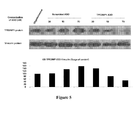
- Protein was extracted from transfected cells and TP53INP1 protein levels were analysed by Western blotting using 40 ⁇ g of protein.
- TP53INP1 ASO treatment significantly reduced TP53INP1 protein expression up to 70% in a dose-dependent manner, whereas TP53INP1 protein expression was not significantly suppressed by scrambled ASO control ( Fig. 5 ).
- TP53INP1 ASO inhibits proliferation and induces apoptosis of LNCaP cells in vitro.
- inhibition of TP53INP1 using TP53INP1 ASO was employed with the appropriate scrambled controls.
- TP53INP1 ASO treatment significantly reduced LNCaP cell growth by 33.3% (***p ⁇ 0.001) at a concentration of 70nM, 1 day post-treatment compared with scrambled ASO controls ( Fig. 6a ).
- the induction of apoptosis by TP53INP1 ASO was clearly shown using flow cytometry.
- the fraction of cells undergoing apoptosis was significantly higher after treatment with TP53INP1 ASO at a concentration of 70nM compared with scrambled ASO controls (39 % versus 5.77 %) (**p ⁇ 0.01) ( Fig. 6b ).
- the induction of apoptosis by TP53INP1 was also shown using the measurement of the caspase 3/7 activity.
Landscapes
- Health & Medical Sciences (AREA)
- Life Sciences & Earth Sciences (AREA)
- Chemical & Material Sciences (AREA)
- Genetics & Genomics (AREA)
- Engineering & Computer Science (AREA)
- Organic Chemistry (AREA)
- Molecular Biology (AREA)
- Biomedical Technology (AREA)
- General Health & Medical Sciences (AREA)
- Animal Behavior & Ethology (AREA)
- Veterinary Medicine (AREA)
- Zoology (AREA)
- Wood Science & Technology (AREA)
- Bioinformatics & Cheminformatics (AREA)
- Public Health (AREA)
- General Engineering & Computer Science (AREA)
- Biotechnology (AREA)
- Pharmacology & Pharmacy (AREA)
- Medicinal Chemistry (AREA)
- Biophysics (AREA)
- Physics & Mathematics (AREA)
- Epidemiology (AREA)
- Oncology (AREA)
- Plant Pathology (AREA)
- Nuclear Medicine, Radiotherapy & Molecular Imaging (AREA)
- Microbiology (AREA)
- General Chemical & Material Sciences (AREA)
- Chemical Kinetics & Catalysis (AREA)
- Biochemistry (AREA)
- Pharmaceuticals Containing Other Organic And Inorganic Compounds (AREA)
- Medicines That Contain Protein Lipid Enzymes And Other Medicines (AREA)
Abstract
The present invention refers to a compound inhibiting TP53INP1 activity for use in treatment of prostate cancer, a method for in vitro diagnosing a prostate cancer comprising the step of determining the level of expression of β transcript of TP53INP1 gene in a patient-derived biological sample comprising a prostate cell, and to a method of screening for compounds modulating the TP53INP1 activity.
Description
- The present invention refers to a compound for use in treatment of prostate cancer, a method for in vitro diagnosing a prostate cancer and a method of screening for compounds modulating the TP53INP1 activity.
- Therefore, the present invention has utility in the medical and pharmaceutical fields.
- In the description below, the references into brackets ([ ]) refer to the listing of references situated at the end of the text.
- Prostate cancer is the most common malignancy in males and the second leading cause of cancer-related deaths in the United States and Europe (Gronberg H. Prostate cancer epidemiology. Lancet 2003;361:859-864, [1]). It appears in three steps: i) an initial prostate carcinogenesis step during which inflammatory phenomenoms seem involved, ii) an androgen-dependent progression step during which prostate cancer is not very agressive and responds to therapy iii) and a final androgen-independent step during which prostate cancer escapes to hormonal therapy (HNT) and leads very rapidly to death. The multi-step model of prostate carcinogenesis suggests an accumulation of genetic alterations, epigenetic changes and posttranslational modifications. Some authors focusing on the initial step claim that proliferative inflammatory atrophy is the precancerous lesion leading to Prostatic Intraepithelial Neoplasia (PIN) lesions and then to invasive carcinoma (De Marzo AM, Marchi VL, Epstein JI, Nelson WG, "Proliferative inflammatory atrophy of the prostate: implications for prostatic carcinogenesis", Am J Pathol 1999;155:1985-1992, [2] ; Nelson WG, De Marzo AM, Isaacs WB, "Prostate cancer", N Engl J Med 2003;349:366-381, [3] ; Putzi MJ, De Marzo AM, "Morphologic transitions between proliferative inflammatory atrophy and high-grade prostatic intraepithelial neoplasia" Urology 2000;56:828-832, [4]). In addition, TP53 mutations are observed in advanced PC (Stapleton AM, Timme TL, Gousse AE, et al., "Primary human prostate cancer cells harboring p53 mutations are clonally expanded in metastases", Clin Cancer Res 1997;3:1389-1397, [5]).
- There are different types of treatment for patients with prostate cancer. Some treatments are standard and are currently used, and some are being tested in clinical trials.
- Four types of standard treatment are used. The first one is watchful waiting, that is closely monitoring a patient's condition without giving any treatment until symptoms appear or change. This is usually used in older men with other medical problems and early-stage disease.
- The second one is surgery, usually offered to patients in good health as treatment for prostate cancer.
- The third one is radiation therapy, that uses high-energy x-rays or other types of radiation to kill cancer cells or keep them from growing. There are two types of radiation therapy. External radiation therapy uses a machine outside the body to send radiation toward the cancer. Internal radiation therapy uses a radioactive substance sealed in needles, seeds, wires, or catheters that are placed directly into or near the cancer. The way the radiation therapy is given depends on the type and stage of the cancer being treated. However, there is an increased risk of bladder cancer and/or rectal cancer in men treated with radiation therapy., and impotence and urinary problems may occur in men treated with radiation therapy.
- The fourth one is hormone therapy, that removes hormones or blocks their action and stops cancer cells from growing. Hormone therapy used in the treatment of prostate cancer may include the following: (i) Luteinizing hormone-releasing hormone agonists that can prevent the testicles from producing testosterone, (ii) antiandrogens that can block the action of androgens, (iii) drugs hormones that can prevent the adrenal glands from making androgens, including ketoconazole and aminoglutethimide, (iv) orchiectomy that is a surgical procedure to remove one or both testicles, to decrease male hormone production, and (v) estrogens that can prevent the testicles from producing testosterone. However, estrogens are seldom used today in the treatment of prostate cancer because of the risk of serious side effects.
- However, hot flashes, impaired sexual function, loss of desire for sex, and weakened bones may occur in men treated with hormone therapy. Other side effects include diarrhea, nausea, and pruritus (itching).
- This is the reason why new types of treatment are being tested in clinical trials, as cryosurgery, to freeze and destroy prostate cancer cells. This type of treatment is also called cryotherapy. However, impotence and leakage of urine from the bladder or stool from the rectum may occur in men treated with cryosurgery.
- Chemotherapy is used to try to stop the growth of cancer cells, either by killing the cells or by stopping them from dividing.
- Biologic therapy is a treatment that uses the patient's immune system to fight cancer. Substances made by the body or made in a laboratory are used to boost, direct, or restore the body's natural defenses against cancer.
- High-intensity focused ultrasound is a treatment that uses ultrasound (high-energy sound waves) to destroy cancer cells. To treat prostate cancer, an endorectal probe is used to make the sound waves.
- Proton beam radiation therapy is a type of high-energy, external radiation therapy that targets tumors with streams of protons.
- However, these new treatments are still at the stage of the trial, and their efficacy has not yet been proven.
- Accordingly, a need exists to develop new tools for the treatment of prostate cancer.
- Tumour protein 53-induced nuclear protein 1 (TP53INP1) is a tumor suppressor gene, located on the chromosome band 8q22 (Nowak J, Tomasini R, Mattei MG, et al. "Assignment of tumor protein p53 induced nuclear protein 1 (TP53INP1) gene to human chromosome band 8q22 by in situ hybridization". Cytogenet Genome Res 2002;97:140E, [6]). Its expression depends on the activation of wilde-type p53 (Tomasini R, Samir AA, Carrier A, et al. "TP53INP1s and homeodomain-interacting protein kinase-2 (HIPK2) are partners in regulating p53 activity". J Biol Chem 2003;278:37722-37729 [7]), and so is a p53-inducible cell stress response protein.
- In pancreas it has been shown that a micro-RNA (mi-RNA155) (Gironella M, Seux M, Xie MJ, et al. "Tumor protein 53-induced , [8]) could repress the expression of TP53INP1, and previous works showed that TP53iNP1 expression is strongly induced in vivo in mice with acute pancreatitis (Tomasini R, Samir AA, Vaccaro MI, et al. "Molecular and functional characterization of the stress-induced protein (SIP) gene and its two transcripts generated by alternative splicing. SIP induced by stress and promotes cell death". J Biol Chem 2001;276:44185-44192 [9]), and in vitro in several cell lines submitted to various stress agents (Okamura S, Arakawa H, Tanaka T, et al. p53DINP1, a p53-inducible gene, regulates p53-dependent apoptosis. Mol Cell 2001;8:85-94, [10] ; Tomasini R, Samir AA, Pebusque MJ, et al. « P53-dependent expression of the stress-induced protein (SIP). Molecular and functional characterization of the stress-induced protein (SIP) gene and its two transcripts generated by alternative splicing. SIP induced by stress and promotes cell death". EurJ Cell Biol 2002;81:294-301, [11]).
- Whereas there is an overexpression of TP53INP1 in numerous tissues submitted to stress agents, TP53INP1 is downexpressed in stomach, pancreatic and inflammation-mediated colic carcinomas. In medullary thyroid carcinomas, TP53INP1 overexpression correlates with poor prognosis. Overexpression of TP53INP1 induces cell cycle arrest in G1 phase and enhances the p53-mediated apoptosis ([7]). Furthermore TP53INP1 is a major mediator of p53 antioxidant function (Cano CE, Gommeaux J, Pietri S, et al. "Tumor protein 53-induced , [12]). Jiang, et al. (Jiang PH, Motoo Y, Garcia S, lovanna JL, Pebusque MJ, Sawabu N. "Down-expression of tumor protein p53-induced , [13]) showed a downexpression of TP53INP1 in gastric adenocarcinomas and its association with a poor prognosis. Gironella, et al. ([8]) also showed that TP53INP1 expression is decreased in pancreatic ductal adenocarcinomas. Gommeaux, et al. (Gommeaux J, Cano C, Garcia S, et al. "Colitis and colitis-associated cancer are exacerbated in mice deficient for tumor protein 53-induced , [14]) showed that downexpression of TP53INP1 in a mice model was involved in inflammation-mediated colic carcinogenesis.
- Before the works of the Applicant, investigation of the expression of TP53INP1 in prostate tissues has never been made, and TP53INP1 expression has never been reported in prostate cancer.
- Surprisingly, the Applicant has found, after important investigations of variations of TP53INP1 expression and their correlation to clinicopathological parameters in prostate cancer, that TP53INP1 overexpression in prostate cancer is a worse prognostic factor, particularly predictive of biological cancer relapse, and that it is a relevant target for potential specific therapy.
- Interestingly, the Applicant showed for the first time there was a neo-expression of TP53INP1 in prostate luminal cells in inflammatory tissues, in high grade Prostatic Intraepithelial Neoplasia (PIN) lesions and in prostate cancer.
- Furthermore, in prostate cancer the Applicant showed that TP53INP1 overexpression correlated with poor prognostic factors such as high Gleason grade and score, unfavourable d'Amico score, lymph node invasion and biological cancer relapse.
- Moreover, the Applicant demonstrated for the first time that TP53INP1 overexpression was an independent predictive factor of biological cancer relapse on multivariate analysis. That is very interesting for early detection of patients with a poor outcome in order to treat them more intensively.
- The findings of the Applicant in human prostate cancer contrast with the pattern usually observed in others neoplasms where TP53INP1 expression inversely correlates with tumour aggressivity (Jiang, et al. [13], Gommeaux, et al. [14]).
- Accordingly, in a first aspect, the invention provides for a compound inhibiting TP53INP1 activity, for use in treatment of prostate cancer.
- "TP53INP1" refers herein to the gene, the RNA transcript or the protein TP53INP1.
- "TP53INP1 activity" refers herein to any activity or function of TP53INP1 gene, RNA transcript or protein in prostate cancerous or non cancerous cells. This activity may be the induction of p53-inducible cell stress response normally induced by TP53INP1 in prostate cancer cells, TP53INP1 expression, TP53INP1 gene transcription or translation, TP53INP1 activation of autophagy and a putative action of this molecule on the regulation of androgen receptor activity during prostate cancer development.
- "Compound inhibiting TP53INP1 activity "or "Inhibitor of TP53INP1 activity "refers herein to any chemical that prevents TP53INP1 gene, transcript or protein to realise its function in prostate cancer cells. The inhibition may be the inhibition of the transcription of the gene, the inhibition of the translation of mRNA, or the inhibition of the expression or function of the protein.
- For example, the compound inhibiting TP53INP1 activity may be chosen among the compounds comprising: anti-sense oligonucleotides, more particularly siRNA ("small interfering RNA"), miRNA (microRNA), RNAi (RNA interference) or shRNA oligonucleotides (short hairpin RNA), antibodies, peptides and chemical inhibitors.
- According to the present invention, the inhibition may be a total or partial inhibition of TP53INP1 activity.
- "Partial inhibition" refers herein to an inhibition or a decrease of at least 10% of TP53INP1 activity in a cancer cell compared to the normal level of TP53 activity in the same prostate cancer cell. The partial inhibition may be an inhibition of at least 20%, 30%, 40%, 50%, 60%, 70%, 80% or 90% of TP53INP1 activity in a cancer cell compared to the normal level of TP53 activity in the same prostate cancer cell.
- "Total inhibition" refers herein to an inhibition or decrease of almost 100% of TP53INP1 activity in a cancer cell compared to the normal level of TP53INP1 activity in the same prostate cancer cell.
- Any method known by the man skilled in the art may be used in order to measure the inhibition, for example quantitative PCR or Western blot, as described by Rocchi et al. ([29]) and by Tomasini et al. (Tomasini et al Oncogene. 2005 . [30]).
- The inhibition may be a specific inhibition. "Specific inhibition" refers herein to an inhibition that only targets prostate cancer cells, without or with very few side effect on non-cancerous prostate cells.
- The compound may bind to TP53INP1 protein or to TP53INP1 transcript. Advantageously, the binding allows the inhibition of TP53INP1 activity.
- Preferentially, the compound may bind to TP53INP1β (TP53INP1 beta) RNA transcript or protein isoform. Indeed, TP53INP1 protein is present in normal/non cancerous cells as two isoforms : Alpha isoform of 18 kDa (SEQ ID NO: 2) and Beta isoform of 27 kDa (SEQ ID NO: 1). The RNA sequence of Beta isoform is SEQ ID NO: 3 (also corresponding to NCBI Reference Sequence: NM_033285.3). The RNA sequence of Alpha isoform is SEQ ID NO: 4. The Applicant has demonstrated for the first time that only the beta isoform is over-expressed in prostate cancer cells. Advantageously, the use of a compound binding to TP53INP1 beta transcript or protein isoform may allow to target only the prostate cancer cells, and has little or no effect on prostate non cancerous cells.
- Preferentially, the compound may bind specifically to TP53INP1β transcript or protein isoform. This means that the compound does not bind to the TP53INP1α isoform. Advantageously, the inhibition of TP53INP1 activity is, in this case, a specific inhibition of the activity of TP53INP1β transcript or protein isoform.
- The compound may bind to the sequence SEQ ID NO: 11 on TP53INP1β transcript. This is a Sense strand siRNA: GUAGUCCCAGAGUGGAAGCtt.
- The compound may comprise the sequence SEQ ID NO : 5, or consist of the sequence SEQ ID NO : 5. Advantageously, this compound is a siRNA that binds specifically to TP53INP1β transcript isoform.
- Another object of the invention is an inhibitor of TP53INP1 activity comprising or constiting to the sequence SEQ ID NO : 5.
- Another object of the invention is a method for in vitro diagnosing a prostate cancer, comprising the step of determining the level of TP53INP1 activity in a patient-derived biological sample comprising a prostate cell, wherein an increase of said activity compared to the normal control level indicates that said subject suffers from prostate cancer.
- " Normal control level" refers herein to the level of activity of TP53INP1 in a non-cancerous prostate cell. The activity may be the induction of p53-inducible cell stress response normally induced by TP53INP1 in prostate cancer cells, TP53INP1 gene transcription or translation, TP53INP1 activation of autophagy and a putative action of this molecule on the regulation of androgen receptor activity during prostate cancer development. The non-cancerous cell may be PNT1A or PNT2C2 (Lang, S.H. Br J Cancer. 2000 Feb;82(4):990-7, [31]), or any other known non-cancerous prostate cell line. Usually, the normal control level is determined by methods known by the man skilled in the art, such as Western blot or, quantitative PCR ([29], [30]).
- « Increase » refers herein to an increase in the level of activity of at least 20%, or 30%, 40%, 50%, 60%, 70%, 80% 90%, 100% or more compared to the normal control level. Alternatively, the increase may be the passage from "negative" to "positive" at the time of transformation of the cells. The increase may be determined by qualitative methods, as Western blot or PCR.
- "Patient-derived biological sample" refers herein to any biological sample removed from the patient and containing some prostate cancer cells. This may be a sample of lymph nodes, sample of prostate, surrounding tissue, seminal vesicles or metastasis as for example lymph nodes and bone liver.
- The determination of the level of activity may be realised by the measurement of β isoform of TP53INP1. In this case, the measurement may be made by the measurement of the level of TP53INP1β mRNA (messenger RNA) or protein. This determination may be made by any method known in the art, as quantitative PCR quantitative, western blot, ELISA test elisa or in situ hybridation.
- Another object of the invention is a method of screening for compounds modulating the TP53INP1 activity comprising the steps of:
- a. contacting a test compound with TP53INP1 protein or TP53INP1 transcript, particularly TP53INP1β, or prostate cancer cell,
- b. detecting the binding activity between TP53INP1 protein or TP53INP1 transcript and the test compound or the modulation of TP53INP1 activity in said cell,
- c. selecting a compound that modulates the TP53INP1 activity in said cell or that binds to TP53INP1 protein or TP53INP1 transcript.
- "Test compound" refers herein to any compound or part of compound likely to modulate the TP53INP1 activity. The compound may be for example a nucleic acid, an amino acid, a peptide, a protein, a chemical compound, a carbohydrate, a lipid.
- The step of contacting may be realised in conditions adapted to allow the binding between the test compound and the TP53INP1 protein or transcript, or to allow the modulation to occurs. These conditions may be easily determined by the man skilled in the art according to his general knowledge of the art.
- Another object of the invention is a pharmaceutical composition comprising a compound as defined above, and a pharmaceutically acceptable vehicle.
- Another object of the invention is a method of treatment of a patient in need thereof, comprising the step of administering to the patient a pharmaceutically effective dose of a compound or a pharmaceutical composition as defined above.
- The administration can be made by using any pharmaceutical way known by the skilled person and useful to administrate a compound or pharmaceutical composition as defined above. Administration may be carried out directly, i.e. pure or substantially pure, or after mixing of the compound with an pharmaceutically acceptable carrier and/or medium. The pharmaceutical composition may be in a form selected from the group comprising an injectable form, syrup, oral suspension, a pellet, powder, granules, spray, transdermal patch or local form (cream, lotion, collyrium).
- The pharmaceutically acceptable carrier may be any known pharmaceutically carrier used for the administration of the compound. For example, this carrier may be selected from the group comprising for example the monomethoxy-polyethyleneglycol (for exemple as in Viraferonpeg®) or Liposome (for exemple as in Ambizome®).
- The administration may be defined so allow delivery of a pharmaceutically acceptable and efficient dose for the treatment of prostate cancer. For example, the administration may comprise a dose of 1 to 5 mg/kg of body weight per day, for example of 2 to 4 mg/kg of body weight per day.
- The administration may be carried out with one dose or with a plurality of doses per day.
- The invention is further illustrated by the following examples with regard to the annexed drawings not be construed as limiting.
-
-
Figure 1 shows the alternative splicing of TP53INP1 gene, the TP53INP1α and TP53INP1β sequences, and the localisation of the binding of siRNAβ on TP53INP1β transcript. -
Figure 2 shows TP53INP1 expression (IHC, magnificationx200). In normal prostate tissues, TP53INP1 was only expressed in the cytoplasm of prostate basal cells (black arrows) (a). There was a neo-expression of TP53-INP1 in the cytoplasm of prostate luminal cells in inflammatory prostate tissues (b), in high grade PIN lesions (c) and in PC (d). CISH: expression of TP53INP1 digoxigenin-labelled antisense. TP53INP1 was localized in cytoplasm and nucleoli of the prostate tumour cells (e). CISH : TP53INP1 sense probe (negative control) (f). -
Figure 3 shows treatment of LNCaP cells in vitro with TNFalpha or IL6 increased the TP53INP1 mRNA levels. LNCaP cells were treated with 40ng/ml TNFalpha or 10ng/ml IL6. In each case (without treatment, TNFalpha and IL6), cells were harvested for quantitative Real-Time PCR (6h onfigure 3a , and 8h onfigure 3b ). TP53INP1 mRNA levels were normalized to 18S levels, and the fold change between treated and untreated cells are shown. Relative to untreated cells, treatment of LNCaP cells with 40ng/ml TNFalpha or 10ng/ml IL6 increased the TP53INP1 mRNA levels by 2.25- or 2.41- fold respectively (***p≤0.001) after 6h and by 1.57- or 2.17- fold respectively (***p≤0.001) after 8h. -
Figure 4 shows in human PC, TP53INP1 overexpression correlates with poor prognostic factors and is an independent predictive factor of biological cancer relapse. TP53INP1 expression was significantly higher inGleason grade 4 tumours compared withGleason grade 3 tumours (p=0.0000053)(a). On univariate analysis, increase of TP53INP1 expression was significantly associated with unfavourable D'Amico score (p=0.01) (b), lymph node invasion (p=0.04) (c) and biological cancer relapse (p=0.000093) (d). On multivariate analysis, TP53INP1 overexpression was an independent predictive factor of biological cancer relapse (p=0.001) (d). -
Figure 5 shows TP53INP1 is dose-dependently downregulated by oligonucleotide antisense (ASO) in vitro. LNCaP cells were treated with 10nM, 30nM, 50nM, 70nM and 100nM of ASO in order to obtain the minimal efficient dose (MED). Protein was extracted from transfected cells and TP53INP1 protein levels were analysed by western blotting using 40µg of protein. TP53INP1 ASO significantly reduced TP53INP1 protein expression up to 70% in a dose-dependent manner whereas TP53INP1 protein expression was not significantly suppressed by scrambled ASO control. -
Figure 6 shows TP53INP1 ASO inhibits proliferation of LNCaP cells and induces apoptosis in vitro. LNCaP cells were treated daily with 70nM of TP53INP1 ASO or scrambled ASO control for 2 days. Cell viability was determined using the crystal violet assay. TP53INP1 ASO treatment significantly reduced LNCaP cell growth by 33.3%(***p≤0.001), 1 day post-treatment compared with scrambled ASO control (figure 6a ). The induction of apoptosis by TP53INP1 ASO was clearly shown using flow cytometry. After the same treatment schedule described above, the fraction of cells undergoing apoptosis (sub-Go-G1 fraction) was significantly higher after treatment with TP53INP1 ASO compared with scrambled ASO control (39 % versus 5.77 %)(**p≤0.01) (figure 6b ). The induction of apoptosis by TP53INP1 was also shown using the measurement of thecaspase 3/7 activity. Thecaspase 3/7 activity was significantly higher after treatment with TP53INP1 ASO at a concentration of 70nM compared with scrambled ASO control (ratio = 2.94) (**p≤0.01) (figure 6c ). - The aim of the following studies was to analyse the expression patterns of TP53INP1 in a large series of human prostate cancer (PC) to (1) identify the variations of TP53INP1 expression; (2) investigate their correlation with clinicopathological parameters and evaluate their prognostic value; (3) assess the biological function of TP53INP1 downregulation using a TP53INP1 Antisense Oligonucleotide (ASO).
- PC samples for Tissue Micro-Array (TMA) were obtained from 91 patients who underwent Radical Prostatectomy (RP) in the Department of Urology of the Hôpital Nord of Marseille from January 2002 to December 2006. 51 patients had a favourable D'Amico score (D'Amico AV, Whittington R, Malkowicz SB, et al. "Predicting prostate specific antigen outcome preoperatively in the prostate specific antigen era". J Urol 2001;166:2185-2188 [15]), 9 had an intermediate score and 31 had an unfavourable score. Gleason score varied from 6 to 9: 20 patients were at 6, 56 patients were at 7, 10 patients were at 8 and 5 patients were at 9. 48 patients were pT2 (palpable tumor localised at prostate) and 43 patients were pT3 (tumor with extensions outside the prostatic capsule). 4 patients had lymph node metastasis and 18 patients had a biological cancer relapse with a mean follow-up of 71 months (37 months-95 months). Clinicopathological data are summarized in Table 1.
Table 1 : Clinicopathological parameters of the TMA's patients Clinicopathological parameters Number of patients (N=91) D'Amico score favourable 51 intermediate 9 unfavourable 31 Gleason score 6 20 7 56 8 10 9 5 Tumour stage (pT) pT2 48 pT3 43 Lymph node invasion No 87 Yes 4 Biological relapse No 73 Yes 18 - All RP were entirely included according to the Stanford technique (Stamey TA, McNeal JE, Freiha FS, Redwine E. Morphometric and clinical studies on 68 consecutive radical prostatectomies. J Urol 1988;139:1235-1241, [16)]. All tumour samples were fixed in buffered formalin, paraffin-embedded at controlled temperature and stored at 18-22°C. All patients were informed at the time of surgery that tissues blocks stored in the laboratory archives might be used for delayed diagnostic and research purpose, to which they agreed.
- The TMA was constructed according to the following protocol. For each Gleason grade, two cores were realised from the primary paraffin block (donor block). Tumours areas were delimited by circling within tissue section appropriate areas with a permanent black pen on hematoxylin and eosin-stained (HES) paraffin sections in order to guide the technician's punches of cores from the primary paraffin block. Cores were sampled using a tissue arreyer (Alphelys, Plaisir, France). Core cylinders of 0.6mm diameter punched from the donor block were then deposited in the recipient paraffin block. 16 normal prostate tissues, 6 PIN lesions and 6 negative controls (placenta) were introduced. We punched two cores per Gleason grade (i.e. 2, 4 or 6 cores per patient) with a total of 330 cores. TMA sections (4µm thick) were cut 24 hours before immunohistochemical processing.
- A standard avidin- biotin- peroxydase complex method (ABC) was used for immunostaining. Deparaffined sections were treated by microwaving at a high power for 5 min twice in a 10mmol/L citrate buffer to retrieve antigenecity. After washing with PBS, the sections were immersed in 3% hydrogen peroxide in methanol for 20 min to block any endogenous peroxides activity. Then the ABC staining system kit (Santa Cruz Biotechnology Inc., Santa Cruz, CA, USA) was used for the detection. Sections were incubated overnight at 4°C with 6 µg/mL of rat anti-human monoclonal antibody raised against TP53INP1 (clone E12 kindly provided by Dr A. Carrier [8]). After washing with PBS, detection was done by successively incubating the sections with biotinylated goat anti-rat IgG for 30 min, and avidin-biotin-HRP for 30 min. After extensive washings with PBS (Phosphate Buffer Saline), sections were stained with 3,3-diaminobenzidine for 2-10 min. Then, sections were counterstained with hematoxylin, dehydrated, and mounted.
- Paraffin blocks and HES slides from 20 radical prostatectomy specimen were obtained from Vancouver General Hospital. Paraffin blocks were chosen by observing the HES slides. Small TMA (60 cores-triplicates) were constructed from these blocks. In an RNase free environment, paraffin blocks were cut into 5-micron sections and stored in 4C°. The paraffin sections were dewaxed in 2 Caplan Jars of Xylene (LABOVERT, Montpellier, France) each for 10 minutes and re-hydrated using a graded set of ethanol solutions. After sections were treated with Proteinase K (20ug/ml) at 37 C° for 30 minutes, they were acetylated by incubation in 0.1M tri-ethanolamine pH 8.0 buffer containing 0.25% acetic anhydride for 10 minutes. Sections were incubated in pre-hybridization buffer containing 50% formamide for 10 minutes at 37 C°. Riboprobes (sense and antisense) were obtained from Dr MJ Pebusque. Sense and antisense probes were labeled using DIG- RNA Labeling Kit (Sp6/T3) from Roche (Roche Applied Science, Penzberg, Germany). Sections were hybridized with probes (8.3ng/100ul in hybridization buffer) overnight at 42C°. The next day sections were washed by 2 x SSC (saline-sodium citrate), 1x SSC and 0.1 x SSC solutions consecutively for 2 x 15 minutes in each. The sections incubated with NTE (NaCl, Tris-HCl, EDTA) buffer containing RNase A for 30 minutes to remove unattached RNA. After wash in 0.1 X SSC, sections were incubated in posthybridization buffer containing 0.1% triton and 2% BSA for 30 minutes. Anti-Dig alkaline phosphotase-Fab fragment from Roche (Roche Applied Science, Penzberg, Germany) in dilution of 1/100 was applied on sections for 2 hours. After 3 washes in
post-hybridization buffer 1 and incubation inpost-hybridization buffer 2 for 10 minutes sections were transferred to colour solution of NBT/BCIP (nitro blue tetrazoluim salt plus 5- bromo-4 chloro indolyl phosphate) from Roche (Roche Applied Science, Penzberg, Germany) and were incubated overnight in room temperature in dark. The next day sections were washed withpost-hybridization buffer 3 for 5 minutes, rinsed in DW and mounted cover glass with aqueous mounting media (Faramount, DakoCytomatio, Carpenteria, Ca, USA). - Image analysis was used for quantification of immunohistochemistry. The TMA analysis with the SAMBA 2050 automated device (SAMBA Technologie / TRIBVN, Châtillon 92320, France) was performed as previously described (Charpin C, Garcia S, Bonnier P, et al. Prognostic significance of Nm23/NDPK expression in breast carcinoma, assessed on 10-year follow-up by automated and quantitative immunocytochemical assays. J Pathol 1998;184:401-407 [17] ; Charpin C, Garcia S, Bonnier P, et al. bcl-2 automated and quantitative immunocytochemical assays in breast carcinomas: correlation with 10-year follow-up. J Clin Oncol 1998;16:2025-2031 [18] ; Charpin C, Garcia S, Bouvier C, et al. Automated and quantitative immunocytochemical assays of CD44v6 in breast carcinomas. Hum Pathol 1997;28:289-296 [19] ; Charpin C, Garcia S, Bouvier C, et al. CD31/PECAM automated and quantitative immunocytochemical assays in breast carcinomas: correlation with patient follow-up. Am J Clin Pathol 1997;107:534-541, [20] ; Dales JP, Garcia S, Carpentier S, et al. Long-term prognostic significance of neoangiogenesis in breast carcinomas: comparison of Tie-2/Tek, CD105, and CD31 immunocytochemical expression. Hum Pathol 2004;35:176-183, [21] ; Dales JP, Garcia S, Meunier-Carpentier S, et al. Overexpression of hypoxia-inducible factor HIF-1alpha predicts early relapse in breast cancer: retrospective study in a series of 745 patients. Int J Cancer 2005;116:734-739, [22] ; Charpin C, Vielh P, Duffaud F, et al. Quantitative immunocytochemical assays of P-glycoprotein in breast carcinomas: correlation to messenger RNA expression and to immunohistochemical prognostic indicators. J Natl Cancer Inst 1994;86:1539-1545, [23] ; Altman DG, Lausen B, Sauerbrei W, Schumacher M. Dangers of using "optimal" cutpoints in the evaluation of prognostic factors. Je Natl Cancer Inst 1994;86:829-835, [24] ; Charpin C, Giusiano S, Secq V, et al. Quantitative immunocytochemical profile to predict early outcome of disease in triple-negative breast carcinomas. Int J Oncol 2009;34:983-993, [25] ; Charpin C, Secq V, Giusiano S, et al. A signature predictive of disease outcome in breast carcinomas, identified by quantitative immunocytochemical assays. Int J Cancer 2009;124:2124-2134, [26] ; Garcia S, Dales JP, Charafe-Jauffret E, et al. Poor prognosis in breast carcinomas correlates with increased expression of targetable CD146 and c-Met and with proteomic basal-like phenotype. Hum Pathol 2007;38:830-841, [27]).
- First, an image of the entire slide was built up using a low-power magnification (X2, pixel dimension 3.7µm). Second, the area of the slide containing the TMA cores was automatically delineated and scanned at higher magnification (X10, pixel dimension 7.4 µm). Third, a specially developed tool referred to as TMA crop™ then allowed superimposition of the TMA grid onto the reduced image and precise alignment of each node of the grid with the core location within the image. The final step was performed automatically using the core image contents to ensure pixel precision of the match. From the images acquired with X10 magnification, a new set of images was next computed, one for each core. After colour analysis of the core images, the SAMBA 'immuno' software was applied ([24-27]) in usual tissue sections. Several parameters per core were computed : the area of counterstaining, the ratio of the positive area versus counterstained areas and a quick score QS (percentage of positive area X mean optical density). Optical density (OD) was evaluated on a scale of grey levels (arbitrary units ranging from 0 (100% transmission, OD= 0) to 255 (1 % transmission, OD=2)). The computation of each parameter was obtained provided numerical values consisting of continuous variables for statistical tests.
- Human prostate cancer LNCaP cells were purchased from the American Type Culture Collection (Manassas, VA). Cells were maintained in RPMI 1640 (Life Technologies, Inc., Gaithersburg, MD) supplemented with 10% FBS.
- Cells were plated at a density of 1million per 78cm2 in 10ml RPMI (Roswell Park Memorial Institute medium) growth medium (Life Technologies, Inc., Gaithersburg, MD). After 24 h the cells either remained untreated or were treated (stimulated) with either 40ng/ml TNFalpha or either 10ng/ml IL6. In each case (without treatment, TNFalpha and IL6), reaction was stopped and cells were frozen at -80 °C at 6h and 8h for RNA extraction.
- Total RNA was extracted directly from cells using TRIZOL reagent (Invitrogen).
- The expression of the TP53INP1 mRNAs was analysed by quantitative Real-Time PCR amplification analysis. Total RNAs were isolated using Trizol method (Invitrogen). Then 1 µg RNAs were reverse-transcribed into cDNA by using ImProm-II™ Reverse Transcription system (Promega, Madison, Wisconsin, USA) (0.5 µg oligo dT primer, 1 µL ImProm-II™ reverse transcriptase, 0.5 µL of RNase inhibitor, 1 µL of 10 mM dNTP mix, 4.8 µL of 25 mM MgCl2, 4 µL of 5xRT buffer) in a final volume of 20 µL. The thermal cycling protocol employed included two steps (step 1: 70 °C for 5 min, and 4 °C for 5 min; step 2: 25 °C for 5 min, 42 °C for 1 h, 70 °C for 15 min, and 4 °C forever).
- The quantitative Real-Time PCR was conducted using the LightCycler 2.0 instrument (Roche Diagnostics, Meylan, France). Reaction mixtures contained total volume of 20 µl consisting of: 5 µl of each diluted cDNA (1:10), 10 µL SYBR Premix Ex Taq (2X) (TaKaRa Bio. Inc, Japan), 0.4 µL primers Forward and primers Reverse (10 µM) of target gene TP53INP1 and internal control 18S, and 4.2 µL H2O. The sequences of primers are as following: TP53INP1 primer F: 5'-TTCCTCCAACCAAGAACCAGA-3' (SEQ ID NO: 7) and primer R: 5'-AGTAGGTGACTCTTCACTGATGT-3' ((SEQ ID NO: 8); 18S primer F: 5'-CTACCACATCCAAGGAAGGC-3' (SEQ ID NO: 9) and primer R: 5'-TTTTCGTCACTACCTCCCCG-3 (SEQ ID NO: 10) (Eurogentec S. A., Seraing, Belgium). The PCR conditions were: an initial denaturation step at 95°C for 10 s; then 45 cycles of 95 °C for 5 s, 57 °C for 6 s, and 72 °C for 12 s. A melting curve was carried out after amplification programme by heating at temperatures from 65 °C to 95 °C in 1.5 min. And a final cooling step at 40 °C for 1 min was performed. Each sample was analysed in triplicate in the PCR reaction to estimate the reproducibility of data. The data were acquired by using Roche Molecular Biochemicals light cycler software version 3.5 and statistical analysis was obtained by RealQuant (Roche).
- Phosphorothioate ASOs used in this study were purchased from Operon Biotechnologies (Cologne, Germany). The sequence of TP53INP1 ASO used corresponded to the human TP53INP1 translation initiation site (5'-CTGGAGAGGCGCTGGAACAT-3') (SEQ ID NO: 5), see
figure 1 . A scrambled antisense oligonucleotide ASO (5'-CGTGTAGGTACGGCAGATC-3') (SEQ ID NO: 6) was used as a control. - LNCaP cells were plated at the density of 1 million cells per 78cm2 and treated 1 day later for 2 days with increasing concentrations of ASO in order to obtain the minimal efficient dose (MED). Oligofectamine, a cationic lipid (Invitrogen, Life Technologies) was used to increase the ASO uptake into the cells. LNCaP cells were treated with 10nM, 30nM, 50nM, 70nM and 100nM of ASO after a pre-incubation for 20 minutes with 3 mg/mL oligofectamine in serum free optiMEM. Fours hours after the beginning of the incubation, the medium was replaced with standard culture medium described above.
- Samples containing equal amounts of protein (40 µg) from lysates of treated LNCaP cells underwent electrophoreses on a SDS-polyacrylamide gel and transferred to a nitrocellulose filter. Filters were blocked in PBS containing 5% non fat milk powder at 4°C overnight and then incubated for 1 hour with a 1:200-diluted anti-human TP53INP1 rat monoclonal antibody (kindly provided by Dr A. Carrier [8]) or 1:2000-dilutated antihuman Vinculin mouse monoclonal antibody (Sigma Chemical Co., St Louis, MO). Filters were then incubated for 30 minutes with 1:1000-diluted horseradish peroxidase-conjugate antirat or 1:2500-dilutated horseradish peroxidase-conjugate antimouse monoclonal antibody (Santa Cruz Biotechnology, Inc., Santa Cruz, CA). Specific proteins were detected using an enhanced chemiluminescence western blotting analysis system (Amersham Life Science, Arlington Heights,IL).
- LNCaP cells were plated at the density of 100000 cells per 3.8 cm2 and 1 million per 78.5cm2 and treated 1 day later for 2 days with ASO. Oligofectamine, a cationic lipid (Invitrogen, Life Technologies) was used to increase the ASO uptake into the cells. LNCaP cells were treated with 70nM of ASO after a pre-incubation for 20 minutes with 3 mg/mL oligofectamine in serum free optiMEM. Fours hours after the beginning of the incubation, the medium was replaced with standard culture medium described above.
- The in vitro growth-inhibitory effects of TP53INP1 ASO on LNCaP cells were assessed using an assay based on the uptake and elution of crystal violet dye by the cells (Gleave M, Tolcher A, Miyake H, et al. "Progression to androgen independence is delayed by adjuvant treatment with antisense Bcl-2 oligodeoxynucleotides after castration in the LNCaP prostate tumor model". Clin Cancer Res 1999;5:2891-2898, [28]). One day after ASO treatment, cells were fixed in 1% glutaraldehyde (Sigma), stained with 0.5% crystal violet (Sigma), and eluted with 500 µl of Sorensen's solution (9 mg of trisodium citrate in 305 ml of distilled H20, 195 ml of 0.1 N HCl, and 500 ml of 90% ethanol). Absorbance of each well was measured by a Titertek Multiskan TCC/340 (Flow Laboratories, McLean, VA) at 560nm. Each assay was done in quadruplicate.
- Flow cytometric analysis of propidium iodide-stained nuclei was done as described previously (Rocchi P, So A, Kojima S, et al. Heat shock protein 27 increases after androgen ablation and plays a cytoprotective role in hormone-refractory prostate cancer. Cancer Res 2004;64:6595-6602, [29]). Briefly, one day after ASO treatment, cells were trypsinized and analyzed for relative DNA content on a dual laser flow cytometer (Beckman Coulter et Epics Elite, Beckman, Inc, Miami, FL). Each assay was done in triplicate.
- One day after ASO treatment, a
caspase 3/7 activity assay was used to measure the apoptotic effect of transfection. Caspase-3/7 activity was measured using the Apo-ONE Homogeneous Caspase-3/7 Assay Fluorometric Kit (Promega). Caspase-3 activity was measured by the cleavage of the fluorometric substrate Z-DEVD-R110 according to the instructions of the manufacturer (Promega). Next, Apo-ONE Homogeneous Caspase-3/7 Reagent (100µl) was added to each well of a black 96-well plate containing 100 µL of blank, control or treated cells culture media. Each experiment was performed in triplicate. The plate was covered with a plate sealer, incubated at room temperature for 30 minutes before measuring the fluorescence of each well. - Statistical analysis for TMA results was performed using Statistica statistical softwares PASS software (NCSS, Kaysville UT). The correlations between TP53INP1 expression (Quick score levels e.i. percentage of positive area x mean optical density) and clinicopathological parameters (D'Amico score, Gleason grade, Gleason score, tumour stage, lymph node metastasis and biological relapse) were evaluated on univariate analysis using Tukey-Kramer and/ or Mann-Whitney U tests. A Cox multiple regression model was used for multivariate analysis. A value of p< 0.05 (*) was considered statistically significant.
- For the in vitro experiments, results were expressed as the mean +/-SE. Statistical analysis was done with a one-way ANOVA followed by Fisher's protected least significant difference test. p≤0.05 was considered significant (*), p≤0.01 (**) and p≤0.001 (***).
- TP53INP1 expression is increased in inflammatory prostate tissues, in high grade PIN lesions and in PC. In normal prostate tissues, TP53INP1 was only expressed in the cytoplasm of prostate basal cells. Interestingly, there was a neo-expression of TP53INP1 in the cytoplasm of prostate luminal cells in inflammatory prostate tissues, in high grade PIN lesions and in PC (
Figure 2 ). - To confirm that TP53INP1 could be improved in the first step of inflammation-mediated prostatic carcinogenesis, we treated LNCaP cells in vitro with inflammatory cytokines.
- Stimulation of LNCaP cells in vitro with inflammatory cytokines (TNFalpha and IL6) enhances the TP53INP1 mRNA levels. The effect of TNFalpha or IL6 on TP53INP1 expression in LNCaP cells was determined in vitro using quantitative Real-Time PCR. TP53INP1 mRNA levels were normalized to 18S levels, and the fold change between treated and untreated cells was determined. Relative to untreated cells, treatment of LNCaP cells with 40ng/ml TNFalpha or 10ng/ml IL6 increased the TP53INP1 mRNA levels by 2.25- or 2.41- fold respectively (***p≤0.001) after 6h and by 1.57- or 2.17- fold respectively (***p≤0.001) after 8h (
Fig. 3 ). - In human PC, TP53INP1 overexpression correlates with poor prognostic factors and is an independent predictive factor of biological cancer relapse. On TMA, about 18% of cores were not interpretable (stroma, non tumoral area, unsticked cores). In few cases, the Gleason grade present on TMA cores was different than the one circled on HES paraffin section from the donor block. We decided to keep the real Gleason grade present on TMA cores for statistical analysis. By image analysis,
Gleason grade 3 PC had a Quick Score (QS) =7.76,grade 4 PC had a QS=11.47 andgrade 5 PC had a QS=8.43.Gleason Score 6 PC had a QS=7.39, score 7 PC had a QS=8.78,score 8 PC had a QS=10.2 and score 9 PC had a QS=9.10. QS was 8.39 in favourable D'Amico score, 8.85 in intermediate score and 9.42 in unfavourable score. QS was 8.72 in absence of lymph node invasion and 12.17 in case of lymph node invasion. QS was 8.14 in absence of biological relapse and 11.23 in case of biological relapse. QS was 8.85 in pT2 stage and 8.90 in pT3 stage. On univariate analysis, TP53INP1 expression was significantly higher inGleason grade 4 tumours compared withGleason grade 3 tumours (p=0.0000053) (Fig. 4a ) and inGleason score 8 tumours (p=0.04) compared withGleason score 6 tumours (p=0.04) (not shown). However, this increase in TP53INP1 expression was not present in our TMA forGleason grade 5 tumours probably due to a too low number of patients (5 out of 91). Furthermore, increase of TP53INP1 expression was significantly associated with unfavourable D'Amico score (p=0.01), lymph node invasion (p=0.04) and biological cancer relapse (p=0.000093) (Fig. 4b,c,d ). Nevertheless, TP53INP1 expression was not significantly correlated to tumoral stage (p>0.05) (not shown). On multivariate analysis, TP53INP1 overexpression was an independent predictive factor of biological cancer relapse (p=0.001) (Fig. 4d ). The other independent factor was Gleason score (p= 0.009) (not shown). - TP53INP1 is dose-dependently downregulated by antisense oligonucleotide (ASO) in vitro. LNCaP cells were treated with increasing concentrations of ASO in order to obtain the MED. Protein was extracted from transfected cells and TP53INP1 protein levels were analysed by Western blotting using 40µg of protein. TP53INP1 ASO treatment significantly reduced TP53INP1 protein expression up to 70% in a dose-dependent manner, whereas TP53INP1 protein expression was not significantly suppressed by scrambled ASO control (
Fig. 5 ). - TP53INP1 ASO inhibits proliferation and induces apoptosis of LNCaP cells in vitro. To further study the function of TP53INP1 in prostate tissue, inhibition of TP53INP1 using TP53INP1 ASO was employed with the appropriate scrambled controls. TP53INP1 ASO treatment significantly reduced LNCaP cell growth by 33.3% (***p≤0.001) at a concentration of 70nM, 1 day post-treatment compared with scrambled ASO controls (
Fig. 6a ). The induction of apoptosis by TP53INP1 ASO was clearly shown using flow cytometry. After the same treatment schedule described above, the fraction of cells undergoing apoptosis (sub Go-G1 fraction) was significantly higher after treatment with TP53INP1 ASO at a concentration of 70nM compared with scrambled ASO controls (39 % versus 5.77 %) (**p≤0.01) (Fig. 6b ). The induction of apoptosis by TP53INP1 was also shown using the measurement of thecaspase 3/7 activity. Thecaspase 3/7 activity was significantly higher after treatment with TP53INP1 ASO at a concentration of 70nM compared with scrambled ASO controls (ratio = 2.94) (**p≤0.01) (Fig. 6c ). -
- [1] Gronberg H. Prostate cancer epidemiology. Lancet 2003;361:859-864.
- [2] De Marzo AM, Marchi VL, Epstein JI, Nelson WG. Proliferative inflammatory atrophy of the prostate: implications for prostatic carcinogenesis. Am J Pathol 1999;155:1985-1992.
- [3] Nelson WG, De Marzo AM, Isaacs WB. Prostate cancer. N Engl J Med 2003;349:366-381.
- [4] Putzi MJ, De Marzo AM. Morphologic transitions between proliferative inflammatory atrophy and high-grade prostatic intraepithelial neoplasia. Urology 2000;56:828-832.
- [5] Stapleton AM, Timme TL, Gousse AE, et al. Primary human prostate cancer cells harboring p53 mutations are clonally expanded in metastases. Clin Cancer Res 1997;3:1389-1397.
- [6] Nowak J, Tomasini R, Mattei MG, et al. Assignment of tumor protein p53 induced nuclear protein 1 (TP53INP1) gene to human chromosome band 8q22 by in situ hybridization. Cytogenet Genome Res 2002;97:140E.
- [7] Tomasini R, Samir AA, Carrier A, et al. TP53INP1s and homeodomain-interacting protein kinase-2 (HIPK2) are partners in regulating p53 activity. J Biol Chem 2003;278:37722-37729.
- [8] Gironella M, Seux M, Xie MJ, et al. Tumor protein 53-induced .
- [9] Tomasini R, Samir AA, Vaccaro MI, et al. Molecular and functional characterization of the stress-induced protein (SIP) gene and its two transcripts generated by alternative splicing. SIP induced by stress and promotes cell death. J Biol Chem 2001;276:44185-44192.
- [10] Okamura S, Arakawa H, Tanaka T, et al. p53DINP1, a p53-inducible gene, regulates p53-dependent apoptosis. Mol Cell 2001;8:85-94.
- [11] Tomasini R, Samir AA, Pebusque MJ, et al. P53-dependent expression of the stress-induced protein (SIP). Molecular and functional characterization of the stress-induced protein (SIP) gene and its two transcripts generated by alternative splicing. SIP induced by stress and promotes cell death. Eur J Cell Biol 2002;81:294-301.
- [12] Cano CE, Gommeaux J, Pietri S, et al. Tumor protein 53-induced .
- [13] Jiang PH, Motoo Y, Garcia S, Iovanna JL, Pebusque MJ, Sawabu N. Down-expression of tumor protein p53-induced .
- [14] Gommeaux J, Cano C, Garcia S, et al. Colitis and colitis-associated cancer are exacerbated in mice deficient for tumor protein 53-induced .
- [15] D'Amico AV, Whittington R, Malkowicz SB, et al. Predicting prostate specific antigen outcome preoperatively in the prostate specific antigen era. J Urol 2001;166:2185-2188.
- [16] Stamey TA, McNeal JE, Freiha FS, Redwine E. Morphometric and clinical studies on 68 consecutive radical prostatectomies. J Urol 1988;139:1235-1241.
- [17] Charpin C, Garcia S, Bonnier P, et al. Prognostic significance of Nm23/NDPK expression in breast carcinoma, assessed on 10-year follow-up by automated and quantitative immunocytochemical assays. J Pathol 1998;184:401-407.
- [18] Charpin C, Garcia S, Bonnier P, et al. bcl-2 automated and quantitative immunocytochemical assays in breast carcinomas: correlation with 10-year follow-up. J Clin Oncol 1998;16:2025-2031.
- [19] Charpin C, Garcia S, Bouvier C, et al. Automated and quantitative immunocytochemical assays of CD44v6 in breast carcinomas. Hum Pathol 1997;28:289-296.
- [20] Charpin C, Garcia S, Bouvier C, et al. CD31/PECAM automated and quantitative immunocytochemical assays in breast carcinomas: correlation with patient follow-up. Am J Clin Pathol 1997;107:534-541.
- [21] Dales JP, Garcia S, Carpentier S, et al. Long-term prognostic significance of neoangiogenesis in breast carcinomas: comparison of Tie-2/Tek, CD105, and CD31 immunocytochemical expression. Hum Pathol 2004;35:176-183.
- [22] Dales JP, Garcia S, Meunier-Carpentier S, et al. Overexpression of hypoxia-inducible factor HIF-1alpha predicts early relapse in breast cancer: retrospective study in a series of 745 patients. Int J Cancer 2005;116:734-739.
- [23] Charpin C, Vielh P, Duffaud F, et al. Quantitative immunocytochemical assays of P-glycoprotein in breast carcinomas: correlation to messenger RNA expression and to immunohistochemical prognostic indicators. J Natl Cancer Inst 1994;86:1539-1545.
- [24] Altman DG, Lausen B, Sauerbrei W, Schumacher M. Dangers of using "optimal" cutpoints in the evaluation of prognostic factors. Je Natl Cancer Inst 1994;86:829-835.
- [25] Charpin C, Giusiano S, Secq V, et al. Quantitative immunocytochemical profile to predict early outcome of disease in triple-negative breast carcinomas. Int J Oncol 2009;34:983-993.
- [26] Charpin C, Secq V, Giusiano S, et al. A signature predictive of disease outcome in breast carcinomas, identified by quantitative immunocytochemical assays. Int J Cancer 2009;124:2124-2134.
- [27] Garcia S, Dales JP, Charafe-Jauffret E, et al. Poor prognosis in breast carcinomas correlates with increased expression of targetable CD146 and c-Met and with proteomic basal-like phenotype. Hum Pathol 2007;38:830-841.
- [28] Gleave M, Tolcher A, Miyake H, et al. Progression to androgen independence is delayed by adjuvant treatment with antisense Bcl-2 oligodeoxynucleotides after castration in the LNCaP prostate tumor model. Clin Cancer Res 1999;5:2891-2898.
- [29] Rocchi P, So A, Kojima S, et al. Heat shock protein 27 increases after androgen ablation and plays a cytoprotective role in hormone-refractory prostate cancer. Cancer Res 2004;64:6595-6602.
- [30] Tomasini et al Oncogene. 2005 .
- [31] Lang, S.H. Br J Cancer. 2000 Feb;82(4):990-7.
- [32] Wu HC, Hsieh JT, Gleave ME, Brown NM, Pathak S, Chung LW. Derivation of androgen independent human LNCaP prostatic cancer cell sublines : role of bone stromal cells. Int J Cancer 1994 ; 57 : 406-12.


Claims (15)
- Compound inhibiting TP53INP1 activity, for use in treatment of prostate cancer.
- Compound according to claim 1, wherein said inhibition is a total or partial inhibition of TP53INP1 activity.
- Compound according to claim 1 or 2, which binds to TP53INP1 protein or to TP53INP1 transcript.
- Compound according to claim 3, which binds to TP53iNP1β transcript isoform.
- Compound according to claim 4, which binds specifically to TP53INP1β transcript isoform.
- Compound according to any one of claims 4 or 5, which binds to the sequence SEQ ID NO: 11 on TP53INP1β transcript isoform.
- Compound according to any one of the preceding claims, wherein said inhibition is a specific inhibition.
- Compound according to any one of the preceding claims, which is chosen among the compounds comprising: anti-sense oligonucleotides, antibodies, peptides, chemical inhibitors.
- Compound according to claim 8, in which anti-sense oligonucleotides are chosen among siRNA, miRNA, RNAi and shRNA oligonucleotides.
- Compound according to claim 1, which has the sequence SEQ ID NO:5.
- Method for in vitro diagnosing a prostate cancer, comprising the step of determining the level of activity of TP53INP1 in a patient-derived biological sample comprising a prostate cell, wherein an increase of said level of activity compared to the normal control level indicates that said subject suffers from prostate cancer.
- Inhibitor of TP531NP1 activity having the sequence SEQ ID NO: 5.
- Method of screening for compounds modulating the TP53INP1 activity comprising the steps of:i. contacting a test compound with TP53INP1 protein, TP53INP1 transcript, or prostate cancer cell,ii. detecting the binding activity between TP53INP1 protein or TP53INP1 transcript and the test compound, or the modulation of TP53INP1 activity in said cell,iii. selecting a compound that binds to TP53INP1 protein or TP53INP1 transcript or that modulates the TP53INP1 activity in said cell.
- Method according to claim 12, wherein said TP53INP1 transcript is TP53INP1β transcript isoform.
- Pharmaceutical composition comprising an inhibitor as defined in claim 11, and a pharmaceutically acceptable vehicle.
Priority Applications (2)
| Application Number | Priority Date | Filing Date | Title |
|---|---|---|---|
| EP10187564A EP2441836A1 (en) | 2010-10-14 | 2010-10-14 | Compound inhibiting TP53INP1 activity for the treatment of prostate cancer, and its use in screening and diagnostic methods |
| PCT/IB2011/054555 WO2012049658A1 (en) | 2010-10-14 | 2011-10-14 | Compound inhibiting tp53inp1 activity for the treatment of prostate cancer, and its use in screening and diagnostic methods |
Applications Claiming Priority (1)
| Application Number | Priority Date | Filing Date | Title |
|---|---|---|---|
| EP10187564A EP2441836A1 (en) | 2010-10-14 | 2010-10-14 | Compound inhibiting TP53INP1 activity for the treatment of prostate cancer, and its use in screening and diagnostic methods |
Publications (1)
| Publication Number | Publication Date |
|---|---|
| EP2441836A1 true EP2441836A1 (en) | 2012-04-18 |
Family
ID=43558194
Family Applications (1)
| Application Number | Title | Priority Date | Filing Date |
|---|---|---|---|
| EP10187564A Withdrawn EP2441836A1 (en) | 2010-10-14 | 2010-10-14 | Compound inhibiting TP53INP1 activity for the treatment of prostate cancer, and its use in screening and diagnostic methods |
Country Status (2)
| Country | Link |
|---|---|
| EP (1) | EP2441836A1 (en) |
| WO (1) | WO2012049658A1 (en) |
Citations (2)
| Publication number | Priority date | Publication date | Assignee | Title |
|---|---|---|---|---|
| US20030190640A1 (en) * | 2001-05-31 | 2003-10-09 | Mary Faris | Genes expressed in prostate cancer |
| US20040253595A1 (en) * | 2001-07-19 | 2004-12-16 | Yusuke Nakamura | P53-dependent apoptosis-inducing protein and method of screening for apoptosis regulator |
-
2010
- 2010-10-14 EP EP10187564A patent/EP2441836A1/en not_active Withdrawn
-
2011
- 2011-10-14 WO PCT/IB2011/054555 patent/WO2012049658A1/en not_active Ceased
Patent Citations (2)
| Publication number | Priority date | Publication date | Assignee | Title |
|---|---|---|---|---|
| US20030190640A1 (en) * | 2001-05-31 | 2003-10-09 | Mary Faris | Genes expressed in prostate cancer |
| US20040253595A1 (en) * | 2001-07-19 | 2004-12-16 | Yusuke Nakamura | P53-dependent apoptosis-inducing protein and method of screening for apoptosis regulator |
Non-Patent Citations (43)
| Title |
|---|
| ALTMAN DG; LAUSEN B; SAUERBREI W; SCHUMACHER M.: "Dangers of using "optimal" cutpoints in the evaluation of prognostic factors", JE NATL CANCER INST, vol. 86, 1994, pages 829 - 835 |
| CANO CE; GOMMEAUX J; PIETRI S ET AL.: "Tumor protein 53-induced nuclear protein 1 is a major mediator of p53 antioxidant function", CANCER RES, vol. 69, 2009, pages 219 - 226 |
| CHARPIN C; GARCIA S; BONNIER P ET AL.: "bcl-2 automated and quantitative immunocytochemical assays in breast carcinomas: correlation with 10-year follow-up", J CLIN ONCOL, vol. 16, 1998, pages 2025 - 2031 |
| CHARPIN C; GARCIA S; BONNIER P ET AL.: "Prognostic significance of Nm23/NDPK expression in breast carcinoma, assessed on 10-year follow-up by automated and quantitative immunocytochemical assays", J PATHOL, vol. 184, 1998, pages 401 - 407 |
| CHARPIN C; GARCIA S; BOUVIER C ET AL.: "Automated and quantitative immunocytochemical assays of CD44v6 in breast carcinomas", HUM PATHOL, vol. 28, 1997, pages 289 - 296 |
| CHARPIN C; GARCIA S; BOUVIER C ET AL.: "CD31/PECAM automated and quantitative immunocytochemical assays in breast carcinomas: correlation with patient follow-up", AM J CLIN PATHOL, vol. 107, 1997, pages 534 - 541 |
| CHARPIN C; GIUSIANO S; SECQ V ET AL.: "Quantitative immunocytochemical profile to predict early outcome of disease in triple- negative breast carcinomas", INT J ONCOL, vol. 34, 2009, pages 983 - 993 |
| CHARPIN C; SECQ V; GIUSIANO S ET AL.: "A signature predictive of disease outcome in breast carcinomas, identified by quantitative immunocytochemical assays", INT J CANCER, vol. 124, 2009, pages 2124 - 2134 |
| CHARPIN C; VIELH P; DUFFAUD F ET AL.: "Quantitative immunocytochemical assays of P-glycoprotein in breast carcinomas: correlation to messenger RNA expression and to immunohistochemical prognostic indicators", J NATL CANCER INST, vol. 86, 1994, pages 1539 - 1545 |
| DALES JP; GARCIA S; CARPENTIER S ET AL.: "Long-term prognostic significance of neoangiogenesis in breast carcinomas: comparison of Tie-2/Tek, CD105, and CD31 immunocytochemical expression", HUM PATHOL, vol. 35, 2004, pages 176 - 183 |
| DALES JP; GARCIA S; MEUNIER-CARPENTIER S ET AL.: "Overexpression of hypoxia-inducible factor HIF-1alpha predicts early relapse in breast cancer: retrospective study in a series of 745 patients", INT J CANCER, vol. 116, 2005, pages 734 - 739 |
| D'AMICO AV; WHITTINGTON R; MALKOWICZ SB ET AL.: "Predicting prostate specific antigen outcome preoperatively in the prostate specific antigen era", J UROL, vol. 166, 2001, pages 2185 - 2188 |
| DAVID H HOLMAN ET AL: "Lysosomotropic acid ceramidase inhibitor induces apoptosis in prostate cancer cells", CANCER CHEMOTHERAPY AND PHARMACOLOGY, SPRINGER, BERLIN, DE, vol. 61, no. 2, 12 April 2007 (2007-04-12), pages 231 - 242, XP019561441, ISSN: 1432-0843, DOI: 10.1007/S00280-007-0465-0 * |
| DE MARZO AM; MARCHI VL; EPSTEIN JI; NELSON WG: "Proliferative inflammatory atrophy of the prostate: implications for prostatic carcinogenesis", AM J PATHOL, vol. 155, 1999, pages 1985 - 1992 |
| GARCIA S; DALES JP; CHARAFE-JAUFFRET E ET AL.: "Poor prognosis in breast carcinomas correlates with increased expression of targetable CD146 and c-Met and with proteomic basal-like phenotype", HUM PATHOL, vol. 38, 2007, pages 830 - 841 |
| GIRONELLA M; SEUX M; XIE MJ ET AL.: "Tumor protein 53-induced nuclear protein 1 expression is repressed by miR-155, and its restoration inhibits pancreatic tumor development", PROC NATL ACAD SCI U S A, vol. 104, 2007, pages 16170 - 16175 |
| GIRONELLA MERITXELL ET AL: "Tumor protein 53-induced nuclear protein 1 expression is repressed by miR-155, and its restoration inhibits pancreatic tumor development.", PROCEEDINGS OF THE NATIONAL ACADEMY OF SCIENCES OF THE UNITED STATES OF AMERICA 9 OCT 2007 LNKD- PUBMED:17911264, vol. 104, no. 41, 9 October 2007 (2007-10-09), pages 16170 - 16175, XP002623346, ISSN: 0027-8424 * |
| GLEAVE M; TOLCHER A; MIYAKE H ET AL.: "Progression to androgen independence is delayed by adjuvant treatment with antisense Bcl-2 oligodeoxynucleotides after castration in the LNCaP prostate tumor model", CLIN CANCER RES, vol. 5, 1999, pages 2891 - 2898 |
| GOMMEAUX J; CANO C; GARCIA S ET AL.: "Colitis and colitis-associated cancer are exacerbated in mice deficient for tumor protein 53-induced nuclear protein 1", MOL CELL BIOL, vol. 27, 2007, pages 2215 - 2228 |
| GRONBERG H.: "Prostate cancer epidemiology", LANCET, vol. 361, 2003, pages 859 - 864 |
| JIANG PH; MOTOO Y; GARCIA S; LOVANNA JL; PEBUSQUE MJ; SAWABU N.: "Down-expression of tumor protein p53-induced nuclear protein 1 in human gastric cancer", WORLD J GASTROENTEROL, vol. 12, 2006, pages 691 - 696 |
| JIANG; JIANG PH; MOTOO Y; GARCIA S; LOVANNA JL; PEBUSQUE MJ; SAWABU N. ET AL.: "Down-expression of tumor protein p53-induced nuclear protein 1 in human gastric cancer", WORLD J GASTROENTEROL, vol. 12, 2006, pages 691 - 696 |
| LANG; S.H, BR J CANCER., vol. 82, no. 4, February 2000 (2000-02-01), pages 990 - 7 |
| LANG; S.H., BR J CANCER., vol. 82, no. 4, February 2000 (2000-02-01), pages 990 - 7 |
| NELSON WG; DE MARZO AM; ISAACS WB: "Prostate cancer", N ENGL J MED, vol. 349, 2003, pages 366 - 381 |
| NOWAK J; TOMASINI R; MATTEI MG ET AL.: "Assignment of tumor protein p53 induced nuclear protein 1 (TP531NPl) gene to human chromosome band 8q22 by in situ hybridization", CYTOGENET GENOME RES, vol. 97, 2002, pages 140E |
| OKAMURA S ET AL: "p53DINP1, a p53-inducible gene, regulates p53-dependent apoptosis", MOLECULAR CELL, CELL PRESS, CAMBRIDGE, MA, US, vol. 8, no. 1, 1 July 2001 (2001-07-01), pages 85 - 94, XP002957683, ISSN: 1097-2765, DOI: 10.1016/S1097-2765(01)00284-2 * |
| OKAMURA S; ARAKAWA H; TANAKA T ET AL.: "p53DINP1, a p53-inducible gene, regulates p53-dependent apoptosis", MOL CELL, vol. 8, 2001, pages 85 - 94 |
| PUTZI MJ; DE MARZO AM: "Morphologic transitions between proliferative inflammatory atrophy and high-grade prostatic intraepithelial neoplasia", UROLOGY, vol. 56, 2000, pages 828 - 832 |
| ROCCHI P; SO A; KOJIMA S ET AL.: "Heat shock protein 27 increases after androgen ablation and plays a cytoprotective role in hormone-refractory prostate cancer", CANCER RES, vol. 64, 2004, pages 6595 - 6602 |
| RUGGERO K ET AL: "Role of microRNAs in HTLV-1 infection and transformation", MOLECULAR ASPECTS OF MEDICINE, PERGAMON PRESS, OXFORD, GB, vol. 31, no. 5, 1 October 2010 (2010-10-01), pages 367 - 382, XP027446399, ISSN: 0098-2997, [retrieved on 20100617] * |
| STAMEY TA; MCNEAL JE; FREIHA FS; REDWINE E.: "Morphometric and clinical studies on 68 consecutive radical prostatectomies", J UROL, vol. 139, 1988, pages 1235 - 1241 |
| STAPLETON AM; TIMME TL; GOUSSE AE ET AL.: "Primary human prostate cancer cells harboring p53 mutations are clonally expanded in metastases", CLIN CANCER RES, vol. 3, 1997, pages 1389 - 1397 |
| STAPLETON AM; TIMME TL; GOUSSE AE ET AL.: "Primary human prostate cancer cells harboring p53 mutations are clonally expanded in metastases", CLIN CANCER RES, vol. 3, no. 5, 1997, pages 1389 - 1397 |
| TOMASINI ET AL., ONCOGENE, vol. 24, no. 55, 8 December 2005 (2005-12-08), pages 8093 - 104 |
| TOMASINI R; SAMIR AA; CARRIER A ET AL.: "TP53!NP1s and homeodomain-interacting protein kinase-2 (HIPK2) are partners in regulating p53 activity", J BIOL CHEM, vol. 278, 2003, pages 37722 - 37729 |
| TOMASINI R; SAMIR AA; CARRIER A ET AL.: "TP531NP1 s and homeodomain-interacting protein kinase-2 (HIPK2) are partners in regulating p53 activity", J BIOL CHEM, vol. 278, 2003, pages 37722 - 37729 |
| TOMASINI R; SAMIR AA; PEBUSQUE MJ ET AL.: "P53- dependent expression of the stress-induced protein (SIP). Molecular and functional characterization of the stress-induced protein (SIP) gene and its two transcripts generated by alternative splicing. SIP induced by stress and promotes cell death", EUR J CELL BIOL, vol. 81, 2002, pages 294 - 301 |
| TOMASINI R; SAMIR AA; PEBUSQUE MJ ET AL.: "P53-dependent expression of the stress-induced protein (SIP). Molecular and functional characterization of the stress-induced protein (SIP) gene and its two transcripts generated by alternative splicing. SIP induced by stress and promotes cell death", EUR J CELL BIOL, vol. 81, 2002, pages 294 - 301 |
| TOMASINI R; SAMIR AA; VACCARO MI ET AL.: "Molecular and functional characterization of the stress-induced protein (SIP) gene and its two transcripts generated by alternative splicing. SIP induced by stress and promotes cell death", J BIOL CHEM, vol. 276, 2001, pages 44185 - 44192 |
| WU HC; HSIEH JT; GLEAVE ME; BROWN NM; PATHAK S; CHUNG LW.: "Deri- vation of androgen independent human LNCaP prostatic cancer cell sublines : role of bone stromal cells", INT J CANCER, vol. 57, 1994, pages 406 - 12 |
| WU HC; HSIEH JT; GLEAVE ME; BROWN NM; PATHAK S; CHUNG LW: "Derivation of androgen independent human LNCaP prostatic cancer cell sublines : role of bone stromal cells", INT J CANCER, vol. 57, 1994, pages 406 - 12 |
| ZEMSKOVA MARINA ET AL: "p53-dependent induction of prostate cancer cell senescence by the PIM1 protein kinase.", MOLECULAR CANCER RESEARCH : MCR AUG 2010 LNKD- PUBMED:20647331, vol. 8, no. 8, August 2010 (2010-08-01), pages 1126 - 1141, XP002623347, ISSN: 1557-3125 * |
Also Published As
| Publication number | Publication date |
|---|---|
| WO2012049658A1 (en) | 2012-04-19 |
Similar Documents
| Publication | Publication Date | Title |
|---|---|---|
| Baylot et al. | Targeting TCTP as a new therapeutic strategy in castration-resistant prostate cancer | |
| Su et al. | Epigenetic silencing of SFRP5 is related to malignant phenotype and chemoresistance of ovarian cancer through Wnt signaling pathway | |
| Rocchi et al. | Small interference RNA targeting heat‐shock protein 27 inhibits the growth of prostatic cell lines and induces apoptosis via caspase‐3 activation in vitro | |
| Catz et al. | BCL-2 in prostate cancer: a minireview | |
| Tannour-Louet et al. | Increased expression of CYP24A1 correlates with advanced stages of prostate cancer and can cause resistance to vitamin D3-based therapies | |
| Zhang et al. | Overexpression of methionine adenosyltransferase II alpha (MAT2A) in gastric cancer and induction of cell cycle arrest and apoptosis in SGC-7901 cells by shRNA-mediated silencing of MAT2A gene | |
| Yang et al. | Over-expression of microRNA-940 promotes cell proliferation by targeting GSK3β and sFRP1 in human pancreatic carcinoma | |
| Thomas et al. | Transcription factor Stat5 knockdown enhances androgen receptor degradation and delays castration-resistant prostate cancer progression in vivo | |
| Plymate et al. | An antibody targeting the type I insulin-like growth factor receptor enhances the castration-induced response in androgen-dependent prostate cancer | |
| Cras et al. | Bexarotene via CBP/p300 induces suppression of NF-κB–dependent cell growth and invasion in thyroid cancer | |
| JP2007530453A (en) | Combinatorial methods and compositions for treating melanoma | |
| KR20140041770A (en) | Apoptosis-inducing agent | |
| ZHANG et al. | Expression of nucleostemin in prostate cancer and its effect on the proliferation of PC-3 cells | |
| Gonugunta et al. | Inhibition of mTOR signaling reduces PELP1-mediated tumor growth and therapy resistance | |
| Ren et al. | Forkhead box protein A1 is a prognostic predictor and promotes tumor growth of gastric cancer | |
| Fuzio et al. | Regulation of TGF-β1 expression by androgen deprivation therapy of prostate cancer | |
| Giusiano et al. | TP53INP1 as new therapeutic target in castration‐resistant prostate cancer | |
| US20200246313A1 (en) | Methods for diagnosing and treating prostate cancer | |
| JP5611953B2 (en) | Tyrosine kinase receptor TYRO3 as a therapeutic target in the treatment of cancer | |
| Giusiano et al. | TP53INP1 overexpression in prostate cancer correlates with poor prognostic factors and is predictive of biological cancer relapse | |
| Fuzio et al. | Androgen deprivation therapy affects BCL-2 expression in human prostate cancer | |
| JP2007525203A (en) | EphA4 as a therapeutic target for PRC and PDACa | |
| JP2012517455A (en) | C-CBL and its antagonists for cancer treatment and diagnosis | |
| Papatsoris et al. | Prostate Cancer Horizons in the Development of Novel Anti-Cancer Strategies | |
| WO2012049658A1 (en) | Compound inhibiting tp53inp1 activity for the treatment of prostate cancer, and its use in screening and diagnostic methods |
Legal Events
| Date | Code | Title | Description |
|---|---|---|---|
| PUAI | Public reference made under article 153(3) epc to a published international application that has entered the european phase |
Free format text: ORIGINAL CODE: 0009012 |
|
| AK | Designated contracting states |
Kind code of ref document: A1 Designated state(s): AL AT BE BG CH CY CZ DE DK EE ES FI FR GB GR HR HU IE IS IT LI LT LU LV MC MK MT NL NO PL PT RO RS SE SI SK SM TR |
|
| AX | Request for extension of the european patent |
Extension state: BA ME |
|
| STAA | Information on the status of an ep patent application or granted ep patent |
Free format text: STATUS: THE APPLICATION IS DEEMED TO BE WITHDRAWN |
|
| 18D | Application deemed to be withdrawn |
Effective date: 20121019 |