EP2437550A1 - Apparatus and method for handling of an equivalent public land mobile network (PLMN) list - Google Patents
Apparatus and method for handling of an equivalent public land mobile network (PLMN) list Download PDFInfo
- Publication number
- EP2437550A1 EP2437550A1 EP11007939A EP11007939A EP2437550A1 EP 2437550 A1 EP2437550 A1 EP 2437550A1 EP 11007939 A EP11007939 A EP 11007939A EP 11007939 A EP11007939 A EP 11007939A EP 2437550 A1 EP2437550 A1 EP 2437550A1
- Authority
- EP
- European Patent Office
- Prior art keywords
- mobile communication
- communication device
- service network
- list
- plmn
- Prior art date
- Legal status (The legal status is an assumption and is not a legal conclusion. Google has not performed a legal analysis and makes no representation as to the accuracy of the status listed.)
- Granted
Links
Images





Classifications
-
- H—ELECTRICITY
- H04—ELECTRIC COMMUNICATION TECHNIQUE
- H04W—WIRELESS COMMUNICATION NETWORKS
- H04W48/00—Access restriction; Network selection; Access point selection
- H04W48/08—Access restriction or access information delivery, e.g. discovery data delivery
-
- H—ELECTRICITY
- H04—ELECTRIC COMMUNICATION TECHNIQUE
- H04W—WIRELESS COMMUNICATION NETWORKS
- H04W48/00—Access restriction; Network selection; Access point selection
- H04W48/16—Discovering, processing access restriction or access information
-
- H—ELECTRICITY
- H04—ELECTRIC COMMUNICATION TECHNIQUE
- H04W—WIRELESS COMMUNICATION NETWORKS
- H04W76/00—Connection management
-
- H—ELECTRICITY
- H04—ELECTRIC COMMUNICATION TECHNIQUE
- H04W—WIRELESS COMMUNICATION NETWORKS
- H04W88/00—Devices specially adapted for wireless communication networks, e.g. terminals, base stations or access point devices
- H04W88/02—Terminal devices
-
- H—ELECTRICITY
- H04—ELECTRIC COMMUNICATION TECHNIQUE
- H04W—WIRELESS COMMUNICATION NETWORKS
- H04W4/00—Services specially adapted for wireless communication networks; Facilities therefor
- H04W4/90—Services for handling of emergency or hazardous situations, e.g. earthquake and tsunami warning systems [ETWS]
-
- H—ELECTRICITY
- H04—ELECTRIC COMMUNICATION TECHNIQUE
- H04W—WIRELESS COMMUNICATION NETWORKS
- H04W76/00—Connection management
- H04W76/50—Connection management for emergency connections
Definitions
- the invention generally relates to handling of an Equivalent Public Land Mobile Network (PLMN) list, and more particularly, to apparatuses and methods for handling the Equivalent PLMN List obtained with an attachment for emergency bearer services.
- PLMN Equivalent Public Land Mobile Network
- a user equipment including a mobile telephone (also known as a cellular or cell phone), a laptop computer with wireless communications capability, or a personal digital assistant (PDA) etc., may communicate voice and/or data signals with one or more service network.
- UE user equipment
- a mobile telephone also known as a cellular or cell phone
- PDA personal digital assistant
- the wireless communications between the UE and the service networks may be performed using various wireless technologies, such as the Global System for Mobile communications (GSM) technology, General Packet Radio Service (GPRS) technology, Enhanced Data rates for Global Evolution (EDGE) technology, Wideband Code Division Multiple Access (WCDMA) technology, Code Division Multiple Access 2000 (CDMA-2000) technology, Time Division-Synchronous Code Division Multiple Access (TD-SCDMA) technology, Worldwide Interoperability for Microwave Access (WiMAX) technology, Long Term Evolution (LTE) technology, LTE-Advanced technology, and others.
- GSM Global System for Mobile communications
- GPRS General Packet Radio Service
- EDGE Enhanced Data rates for Global Evolution
- WCDMA Wideband Code Division Multiple Access
- CDMA-2000 Code Division Multiple Access 2000
- TD-SCDMA Time Division-Synchronous Code Division Multiple Access
- WiMAX Worldwide Interoperability for Microwave Access
- LTE Long Term Evolution
- LTE-Advanced technology LTE-Advanced
- a UE When a UE performs an attachment procedure or a routing area update procedure, it may receive a list of equivalent Public Land Mobile Networks (PLMNs) (or referred to as an Equivalent PLMN List) in an ATTACH ACCEPT message or a ROUTING AREA UPDATE ACCEPT message.
- PLMNs Public Land Mobile Networks
- Each entry of the list contains a PLMN code which comprises a Mobile Country Code (MCC) and a Mobile Network Code (MNC) for identifying a specific PLMN, and the UE should treat the PLMNs in the list equivalent to each other for the purposes of PLMN selection procedures, cell selection/reselection procedures, and/or handover procedures.
- the UE keeps a list of forbidden PLMNs (or referred to as a Forbidden PLMN List) that have rejected the registration requests from the UE, i.e., the UE is forbidden to access the PLMNs in the list for normal services.
- the UE may avoid selecting the forbidden PLMNs for the purposes of PLMN selection procedures, cell selection/reselection procedures, and/or handover procedures.
- a mobile communication device comprising a wireless module and a controller module.
- the wireless module performs wireless transmissions and receptions to and from a service network.
- the controller module obtains a list of PLMNs equivalent to each other when attached to the service network for emergency bearer services via the wireless module, and does not save the list in response to a power-off of the mobile communication device.
- a method for handling of an Equivalent PLMN list by a mobile communication device comprises the steps of obtaining a list of PLMNs equivalent to each other when attached to a service network for emergency bearer services, and not saving the list in response to a power-off of the mobile communication device.
- Fig. 1 is a block diagram illustrating a mobile communication environment according to an embodiment of the invention
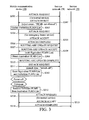
- Fig. 2 is a message sequence chart illustrating handling of the Equivalent PLMN List during power-off of the mobile communication device 110 according to an embodiment of the invention
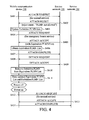
- Fig. 3 is a message sequence chart illustrating handling of the Equivalent PLMN List during power-on of the mobile communication device 110 according to an embodiment of the invention
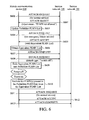
- Fig. 4 is a message sequence chart illustrating handling of the Equivalent PLMN List when a PDN connection for an emergency bearer service is released according to an embodiment of the invention
- Fig. 5 is a message sequence chart illustrating handling of the Equivalent PLMN List when a PDN connection for an emergency bearer service is released according to another embodiment of the invention
- Fig. 6 is a message sequence chart illustrating handling of the Equivalent PLMN List during power-on of the mobile communication device 110 according to another embodiment of the invention.
- Fig. 7 is a message sequence chart illustrating handling of the Equivalent PLMN List during power-on of the mobile communication device 110 according to yet another embodiment of the invention.
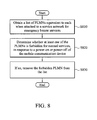
- Fig. 8 is a flow chart illustrating the method for handling of an Equivalent PLMN List according to an embodiment of the invention.
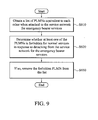
- Fig. 9 is a flow chart illustrating the method for handling of an Equivalent PLMN List according to another embodiment of the invention.
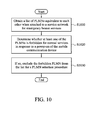
- Fig. 10 is a flow chart illustrating the method for handling of an Equivalent PLMN List according to yet another embodiment of the invention.
- Fig. 11 is a flow chart illustrating the method for handling of an Equivalent PLMN List according to still another embodiment of the invention.
- the UE For the case where a UE does not have a Packet Data Network (PDN) connection for emergency bearer services when receiving the Equivalent PLMN List, the UE removes any PLMN that is present in the Forbidden PLMN List from the Equivalent PLMN List before storing the Equivalent PLMN List, so that the UE, after restarted, does not select forbidden PLMNs for PLMN selection procedures.
- PDN Packet Data Network
- the UE does not remove the PLMN that is present in the Forbidden PLMN List from the Equivalent PLMN List before storing the Equivalent PLMN List.
- the UE after restarted, may select the PLMNs that are forbidden from the Equivalent PLMN List for PLMN selection procedures, and additional time may be consumed before the UE may obtain normal services since the UE will eventually be rejected by the forbidden PLMNs.
- Fig. 1 is a block diagram illustrating a mobile communication environment according to an embodiment of the invention.
- the mobile communication device 110 may selectively register with the service network 120 or 130 for obtaining wireless services.
- the service networks 120 and 130 belong to two different PLMNs.
- the service networks 120 and 130 may be two LTE systems, while in another embodiment, the service networks 120 and 130 may be two WCDMA systems.
- Each of the service networks 120 and 130 comprises at least one access node for performing wireless transmissions and receptions to and from the mobile communication device 110, and a control node for controlling the operation of the at least one access node, wherein the control node is further connected to a core network.
- the mobile communication device 110 comprises a wireless module 111 for performing the functionality of wireless transmissions and receptions to and from the service networks 120 and/or 130.
- the wireless module 111 may comprise a baseband unit (not shown) and a radio frequency (RF) unit (not shown).
- the baseband unit may contain multiple hardware devices to perform baseband signal processing, including analog to digital conversion (ADC)/digital to analog conversion (DAC), gain adjusting, modulation/demodulation, encoding/decoding, and so on.
- the RF unit may receive RF wireless signals, convert the received RF wireless signals to baseband signals, which are processed by the baseband unit, or receive baseband signals from the baseband unit and convert the received baseband signals to RF wireless signals, which are later transmitted.
- the RF unit may also contain multiple hardware devices to perform radio frequency conversion.
- the RF unit may comprise a mixer to multiply the baseband signals with a carrier oscillated in the radio frequency of the mobile communication system, wherein the radio frequency may be 900MHz, 1900MHz, or 2100MHz utilized in WCDMA systems, or may be 900MHz, 2100MHz, or 2.6GHz utilized in LTE or LTE-Advanced systems, or others depending on the Radio Access Technology (RAT) in use.
- RAT Radio Access Technology
- the mobile communication device 110 comprises a controller module 112 for controlling the operation of the wireless module 111 and other functional components, such as a display unit and/or keypad serving as the MMI (man-machine interface), a storage unit storing the program codes of applications or communication protocols, or others.
- a controller module 112 for controlling the operation of the wireless module 111 and other functional components, such as a display unit and/or keypad serving as the MMI (man-machine interface), a storage unit storing the program codes of applications or communication protocols, or others.
- Fig. 2 is a message sequence chart illustrating handling of the Equivalent PLMN List during power-off of the mobile communication device 110 according to an embodiment of the invention.
- the mobile communication device 110 after being powered on, is initially at a location where the signal quality of the service network 130 is too bad for registration therewith while the signal quality of the service network 120 is good enough for registration therewith.
- the mobile communication device 110 first tries to register with the service network 120 for normal services by transmitting an ATTACH REQUEST message (step S201).
- the service network 120 When receiving the ATTACH REQUEST message, the service network 120 decides to reject the registration request due to the fact that the mobile communication device 110 is not allowed to access the PLMN to which the service network 120 belongs, and then replies to the mobile communication device 110 with an ATTACH REJECT message comprising a rejection cause for indicating "PLMN not allowed" (step S202).
- the rejection cause in the ATTACH REJECT message may be "forbidden PLMNs for GPRS service" or "GPRS services not allowed in this PLMN".
- the mobile communication device 110 adds to the Forbidden PLMN List the PLMN to which the service network 120 belongs (step S203).
- an emergency bearer service e.g., an IP Multimedia Subsystem (IMS) emergency call
- the mobile communication device 110 tries to register with the service network 120 for the emergency bearer service by transmitting an ATTACH REQUEST message (step S204).
- the ATTACH REQUEST message may be transmitted and combined with a PDN CONNECTIVITY REQUEST message to indicate that the UE wishes to start a packet data session with the service network 120.
- the service network 120 accepts the registration request and replies to the mobile communication device 110 with an ATTACH ACCEPT message comprising an Equivalent PLMN List (step S205).
- the ATTACH ACCEPT message may be transmitted and combined with an ACTIVATE DEFAULT EPS BEARER CONTEXT REQUEST message if the PDN CONNECTIVITY REQUEST message is found in the ATTACH REQUEST message, and the ACTIVATE DEFAULT EPS BEARER CONTEXT REQUEST message is used to activate the default bearer for the packet data session.
- the mobile communication device 110 obtains the Equivalent PLMN List and adds to the Equivalent PLMN List the PLMN to which the service network 120 belongs (step S206), and then transmits an ATTACH COMPLETE message to acknowledge that it has received the ATTACH ACCEPT message (step S207).
- the Equivalent PLMN List comprises at least the PLMN to which the service network 130 belongs.
- the Equivalent PLMN List may comprises one or more PLMNs which the mobile communication device 110 should treat with equal priority for the purposes of PLMN selection procedures, cell selection/reselection procedures, and/or handover procedures.
- the mobile communication device 110 transmits a DETACH REQUEST message indicating a "switch-off' detach type to the service network 120 to detach from the service network 120 (step S208), and then determines whether the Equivalent PLMN List comprises any one of the PLMNs present in the Forbidden PLMN List.
- the mobile communication device 110 removes the forbidden PLMN, i.e., the PLMN to which the service network 120 belongs, from the Equivalent PLMN List, and stores the Equivalent PLMN List and the Forbidden PLMN List before being powered off (step S209).
- the mobile communication device 110 retrieves the Equivalent PLMN List and selects a PLMN therefrom to register therewith for normal services. Since the PLMN to which the service network 120 belongs is removed from the Equivalent PLMN List and the Equivalent PLMN List comprises the PLMN to which the service network 130 belongs, the mobile communication device 110 tries to register with the service network 130 for normal services by transmitting an ATTACH REQUEST message (step S210).
- the ATTACH REQUEST message may be transmitted and combined with a PDN CONNECTIVITY REQUEST message to indicate that the UE wishes to start a packet data session with the service network 130.
- the service network 130 When receiving the ATTACH REQUEST message, the service network 130 decides to accept the registration request for the mobile communication device 110 that is allowed to access the service network 130, and then replies to the mobile communication device 110 with an ATTACH ACCEPT message (step S211).
- the ATTACH ACCEPT message may be transmitted and combined with an ACTIVATE DEFAULT EPS BEARER CONTEXT REQUEST message if the PDN CONNECTIVITY REQUEST message is found in the ATTACH REQUEST message, and the ACTIVATE DEFAULT EPS BEARER CONTEXT REQUEST message is used to activate the default bearer for the packet data session.
- the mobile communication device 110 transmits an ATTACH COMPLETE message to acknowledge that it has received the ATTACH ACCEPT message (step S212).
- Fig. 3 is a message sequence chart illustrating handling of the Equivalent PLMN List during power-on of the mobile communication device 110 according to an embodiment of the invention.
- the mobile communication device 110 after being powered on, is initially at a location where the signal quality of the service network 130 is too bad for registration therewith while the signal quality of the service network 120 is good enough for registration therewith.
- the mobile communication device 110 first tries to register with the service network 120 for normal services by transmitting an ATTACH REQUEST message (step S301).
- the service network 120 When receiving the ATTACH REQUEST message, the service network 120 decides to reject the registration request due to the fact that the mobile communication device 110 is not allowed to access the PLMN to which the service network 120 belongs, and then replies to the mobile communication device 110 with an ATTACH REJECT message comprising a rejection cause for indicating "PLMN not allowed" (step S302).
- the rejection cause in the ATTACH REJECT message may be "forbidden PLMNs for GPRS service" or "GPRS services not allowed in this PLMN".
- the mobile communication device 110 adds to the Forbidden PLMN List the PLMN to which the service network 120 belongs (step S303).
- the mobile communication device 110 tries to register with the service network 120 for the emergency bearer service by transmitting an ATTACH REQUEST message (step S304).
- the ATTACH REQUEST message may be transmitted and combined with a PDN CONNECTIVITY REQUEST message to indicate that the UE wishes to start a packet data session with the service network 120.
- the service network 120 accepts the registration request and replies to the mobile communication device 110 with an ATTACH ACCEPT message (step S305).
- the ATTACH ACCEPT message may be transmitted and combined with an ACTIVATE DEFAULT EPS BEARER CONTEXT REQUEST message if the PDN CONNECTIVITY REQUEST message is found in the ATTACH REQUEST message, and the ACTIVATE DEFAULT EPS BEARER CONTEXT REQUEST message is used to activate the default bearer for the packet data session.
- the mobile communication device 110 further transmits an ATTACH COMPLETE message to acknowledge that it has received the ATTACH ACCEPT message (step S306).
- the mobile communication device 110 transmits a ROUTING AREA UPDATE REQUEST message to the service network 120 to inform that it has moved to a new routing area (step S307).
- the service network 120 replies to the mobile communication device 110 with a ROUTING AREA UPDATE ACCEPT message comprising an Equivalent PLMN List (step S308).
- the mobile communication device 110 obtains the Equivalent PLMN List and adds to the Equivalent PLMN List the PLMN to which the service network 120 belongs (step S309), and then transmits a ROUTING AREA UPDATE COMPLETE message to acknowledge that it has received the ROUTING AREA UPDATE ACCEPT message (step S310).
- the Equivalent PLMN List comprises at least the PLMN to which the service network 130 belongs.
- the Equivalent PLMN List may comprises one or more PLMNs which the mobile communication device 110 should treat with equal priority for the purposes of PLMN selection procedures, cell selection/reselection procedures, and/or handover procedures.
- the mobile communication device 110 transmits a DETACH REQUEST message indicating a "switch-off" detach type to the service network 120 to detach from the service network 120 (step S311), and then stores the Equivalent PLMN List and the Forbidden PLMN List before being powered off (step S312).
- the mobile communication device 110 retrieves the Equivalent PLMN List and the Forbidden PLMN List, and determines whether the Equivalent PLMN List comprises any one of the PLMNs present in the Forbidden PLMN List.
- the mobile communication device 110 Since the PLMN to which the service network 120 belongs is in the Forbidden PLMN List and the Equivalent PLMN List, the mobile communication device 110 removes the forbidden PLMN, i.e., the PLMN to which the service network 120 belongs, from the Equivalent PLMN List (step S313), and then selects a PLMN therefrom to register therewith for normal services. Since the PLMN to which the service network 120 belongs is removed from the Equivalent PLMN List and the Equivalent PLMN List comprises the PLMN to which the service network 130 belongs, the mobile communication device 110 tries to register with the service network 130 for normal services by transmitting an ATTACH REQUEST message (step S314).
- the ATTACH REQUEST message may be transmitted and combined with a PDN CONNECTIVITY REQUEST message to indicate that the UE wishes to start a packet data session with the service network 130.
- the service network 130 decides to accept the registration request for that the mobile communication device 110 is allowed to access the service network 130, and then replies to the mobile communication device 110 with an ATTACH ACCEPT message (step S315).
- the ATTACH ACCEPT message may be transmitted and combined with an ACTIVATE DEFAULT EPS BEARER CONTEXT REQUEST message if the PDN CONNECTIVITY REQUEST message is found in the ATTACH REQUEST message, and the ACTIVATE DEFAULT EPS BEARER CONTEXT REQUEST message is used to activate the default bearer for the packet data session.
- the mobile communication device 110 transmits an ATTACH COMPLETE message to acknowledge that it has received the ATTACH ACCEPT message (step S316).
- Fig. 4 is a message sequence chart illustrating handling of the Equivalent PLMN List when a PDN connection for an emergency bearer service is released according to an embodiment of the invention.
- the mobile communication device 110 after being powered on, is initially at a location where the signal quality of the service network 130 is too bad for registration therewith while the signal quality of the service network 120 is good enough for registration therewith.
- the mobile communication device 110 first tries to register with the service network 120 for normal services by transmitting an ATTACH REQUEST message (step S401).
- the service network 120 When receiving the ATTACH REQUEST message, the service network 120 decides to reject the registration request due to the fact that the mobile communication device 110 is not allowed to access the PLMN to which the service network 120 belongs, and then replies to the mobile communication device 110 with an ATTACH REJECT message comprising a rejection cause for indicating "PLMN not allowed" (step S402).
- the rejection cause in the ATTACH REJECT message may be "forbidden PLMNs for GPRS service" or "GPRS services not allowed in this PLMN".
- the mobile communication device 110 adds to the Forbidden PLMN List the PLMN to which the service network 120 belongs (step S403).
- the mobile communication device 110 tries to register with the service network 120 for the emergency bearer service by transmitting an ATTACH REQUEST message (step S404).
- the ATTACH REQUEST message may be transmitted and combined with a PDN CONNECTIVITY REQUEST message to indicate that the UE wishes to start a packet data session with the service network 120.
- the service network 120 accepts the registration request and replies to the mobile communication device 110 with an ATTACH ACCEPT message comprising an Equivalent PLMN List (step S405).
- the ATTACH ACCEPT message may be transmitted and combined with an ACTIVATE DEFAULT EPS BEARER CONTEXT REQUEST message if the PDN CONNECTIVITY REQUEST message is found in the ATTACH REQUEST message, and the ACTIVATE DEFAULT EPS BEARER CONTEXT REQUEST message is used to activate the default bearer for the packet data session.
- the mobile communication device 110 obtains the Equivalent PLMN List and adds to the Equivalent PLMN List the PLMN to which the service network 120 belongs (step S406), and then transmits an ATTACH COMPLETE message to acknowledge that it has received the ATTACH ACCEPT message (step S407).
- the Equivalent PLMN List comprises at least the PLMN to which the service network 130 belongs.
- the Equivalent PLMN List may comprises one or more PLMNs which the mobile communication device 110 should treat with equal priority for the purposes of PLMN selection procedures, cell selection/reselection procedures, and/or handover procedures.
- the service network 120 decides to end the emergency bearer service, it transmits a DETACH REQUEST message indicating a "re-attach not required" detach type to the mobile communication device 110 (step S408).
- the mobile communication device 110 When receiving the DETACH REQUEST message, the mobile communication device 110 releases the established radio resources of a PDN connection for the emergency bearer service and replies to the service network 120 with a DETACH ACCEPT message (step S409). In response to the release of the PDN connection for the emergency bearer service, the mobile communication device 110 determines whether the Equivalent PLMN List comprises any one of the PLMNs present in the Forbidden PLMN List before storing the Equivalent PLMN List.
- the mobile communication device 110 removes the forbidden PLMN, i.e., the PLMN to which the service network 120 belongs, from the Equivalent PLMN List (step S410).
- the mobile communication device 110 is being powered off, the updated Equivalent PLMN List and the Forbidden PLMN List are stored (step S411).
- the mobile communication device 110 After the mobile communication device 110 is restarted, it retrieves the Equivalent PLMN List and selects a PLMN therefrom to register therewith for normal services. Since the PLMN to which the service network 120 belongs is removed from the Equivalent PLMN List and the Equivalent PLMN List comprises the PLMN to which the service network 130 belongs, the mobile communication device 110 tries to register with the service network 130 for normal services by transmitting an ATTACH REQUEST message (step S412). The ATTACH REQUEST message may be transmitted and combined with a PDN CONNECTIVITY REQUEST message to indicate that the UE wishes to start a packet data session with the service network 130.
- the service network 130 When receiving the ATTACH REQUEST message, the service network 130 decides to accept the registration request for that the mobile communication device 110 is allowed to access the service network 130, and then replies to the mobile communication device 110 with an ATTACH ACCEPT message (step S413).
- the ATTACH ACCEPT message may be transmitted and combined with an ACTIVATE DEFAULT EPS BEARER CONTEXT REQUEST message if the PDN CONNECTIVITY REQUEST message is found in the ATTACH REQUEST message, and the ACTIVATE DEFAULT EPS BEARER CONTEXT REQUEST message is used to activate the default bearer for the packet data session.
- the mobile communication device 110 transmits an ATTACH COMPLETE message to acknowledge that it has received the ATTACH ACCEPT message (step S414).
- Fig. 5 is a message sequence chart illustrating handling of the Equivalent PLMN List when a PDN connection for an emergency bearer service is released according to another embodiment of the invention.
- the mobile communication device 110 after being powered on, is initially at a location where the signal quality of the service network 130 is too bad for registration therewith while the signal quality of the service network 120 is good enough for registration therewith.
- the mobile communication device 110 first tries to register with the service network 120 for normal services by transmitting an ATTACH REQUEST message (step S501).
- the service network 120 When receiving the ATTACH REQUEST message, the service network 120 decides to reject the registration request due to the fact that the mobile communication device 110 is not allowed to access the PLMN to which the service network 120 belongs, and then replies to the mobile communication device 110 with an ATTACH REJECT message comprising a rejection cause for indicating "PLMN not allowed" (step S502).
- the rejection cause in the ATTACH REJECT message may be "forbidden PLMNs for GPRS service" or "GPRS services not allowed in this PLMN".
- the mobile communication device 110 adds to the Forbidden PLMN List the PLMN to which the service network 120 belongs (step S503).
- the mobile communication device 110 tries to register with the service network 120 for the emergency bearer service by transmitting an ATTACH REQUEST message (step S504).
- the ATTACH REQUEST message may be transmitted and combined with a PDN CONNECTIVITY REQUEST message to indicate that the UE wishes to start a packet data session with the service network 120.
- the service network 120 accepts the registration request and replies to the mobile communication device 110 with an ATTACH ACCEPT message (step S505).
- the ATTACH ACCEPT message may be transmitted and combined with an ACTIVATE DEFAULT EPS BEARER CONTEXT REQUEST message if the PDN CONNECTIVITY REQUEST message is found in the ATTACH REQUEST message, and the ACTIVATE DEFAULT EPS BEARER CONTEXT REQUEST message is used to activate the default bearer for the packet data session.
- the mobile communication device 110 further transmits an ATTACH COMPLETE message to acknowledge that it has received the ATTACH ACCEPT message (step S506).
- the mobile communication device 110 transmits a ROUTING AREA UPDATE REQUEST message to the service network 120 to inform that it has moved to a new routing area (step S507).
- the service network 120 replies to the mobile communication device 110 with a ROUTING AREA UPDATE ACCEPT message comprising an Equivalent PLMN List (step S508).
- the mobile communication device 110 obtains the Equivalent PLMN List and adds to the Equivalent PLMN List the PLMN to which the service network 120 belongs (step S509), and then transmits a ROUTING AREA UPDATE COMPLETE message to acknowledge that it has received the ROUTING AREA UPDATE ACCEPT message (step S510).
- the Equivalent PLMN List comprises at least the PLMN to which the service network 130 belongs.
- the Equivalent PLMN List may comprises one or more PLMNs which the mobile communication device 110 should treat with equal priority for the purposes of PLMN selection procedures, cell selection/reselection procedures, and/or handover procedures.
- the service network 120 when the service network 120 decides to end the emergency bearer service, it transmits a DETACH REQUEST message indicating a "re-attach not required" detach type to the mobile communication device 110 (step S511).
- the mobile communication device 110 releases the established radio resources of a PDN connection for the emergency bearer service and replies to the service network 120 with a DETACH ACCEPT message (step S512).
- the mobile communication device 110 determines whether the Equivalent PLMN List comprises any one of the PLMNs present in the Forbidden PLMN List before storing the Equivalent PLMN List.
- the mobile communication device 110 removes the forbidden PLMN, i.e., the PLMN to which the service network 120 belongs, from the Equivalent PLMN List (step S513).
- the mobile communication device 110 is being powered off, the updated Equivalent PLMN List and the Forbidden PLMN List are stored (step S514).
- the mobile communication device 110 After the mobile communication device 110 is restarted, it retrieves the Equivalent PLMN List and selects a PLMN therefrom to register therewith for normal services. Since the PLMN to which the service network 120 belongs is removed from the Equivalent PLMN List and the Equivalent PLMN List comprises the PLMN to which the service network 130 belongs, the mobile communication device 110 tries to register with the service network 130 for normal services by transmitting an ATTACH REQUEST message (step S515).
- the ATTACH REQUEST message may be transmitted and combined with a PDN CONNECTIVITY REQUEST message to indicate that the UE wishes to start a packet data session with the service network 130.
- the service network 130 When receiving the ATTACH REQUEST message, the service network 130 decides to accept the registration request for that the mobile communication device 110 is allowed to access the service network 130, and then replies to the mobile communication device 110 with an ATTACH ACCEPT message (step S516).
- the ATTACH ACCEPT message may be transmitted and combined with an ACTIVATE DEFAULT EPS BEARER CONTEXT REQUEST message if the PDN CONNECTIVITY REQUEST message is found in the ATTACH REQUEST message, and the ACTIVATE DEFAULT EPS BEARER CONTEXT REQUEST message is used to activate the default bearer for the packet data session.
- the mobile communication device 110 transmits an ATTACH COMPLETE message to acknowledge that it has received the ATTACH ACCEPT message (step S517).
- the mobile communication device 110 may not store the Equivalent PLMN List in response to the power-off of the mobile communication device 110. That is, the mobile communication device 110 only stores the Forbidden PLMN List before power-off of the mobile communication device 110.
- the mobile communication device 110 since the Equivalent PLMN List received during the PDN connection for the emergency bearer service, which may comprise the PLMN(s) present in the Forbidden PLMN List, is not stored before the mobile communication device 110 is powered off, the mobile communication device 110, when restarted later, will use the Equivalent PLMN List previously received during the PDN connection for the normal services, which does not comprise any PLMN present in the Forbidden PLMN List, for subsequent PLMN selection procedures.
- Fig. 6 is a message sequence chart illustrating handling of the Equivalent PLMN List during power-on of the mobile communication device 110 according to another embodiment of the invention.
- the mobile communication device 110 after being powered on, is initially at a location where the signal quality of the service network 130 is too bad for registration therewith while the signal quality of the service network 120 is good enough for registration therewith.
- the mobile communication device 110 first tries to register with the service network 120 for normal services by transmitting an ATTACH REQUEST message (step S601).
- the service network 120 When receiving the ATTACH REQUEST message, the service network 120 decides to reject the registration request due to the fact that the mobile communication device 110 is not allowed to access the PLMN to which the service network 120 belongs, and then replies to the mobile communication device 110 with an ATTACH REJECT message comprising a rejection cause for indicating "PLMN not allowed" (step S602).
- the rejection cause in the ATTACH REJECT message may be "forbidden PLMNs for GPRS service" or "GPRS services not allowed in this PLMN".
- the mobile communication device 110 adds to the Forbidden PLMN List the PLMN to which the service network 120 belongs (step S603).
- the mobile communication device 110 tries to register with the service network 120 for the emergency bearer service by transmitting an ATTACH REQUEST message (step S604).
- the ATTACH REQUEST message may be transmitted and combined with a PDN CONNECTIVITY REQUEST message to indicate that the UE wishes to start a packet data session with the service network 120.
- the service network 120 accepts the registration request and replies to the mobile communication device 110 with an ATTACH ACCEPT message (step S605).
- the ATTACH ACCEPT message may be transmitted and combined with an ACTIVATE DEFAULT EPS BEARER CONTEXT REQUEST message if the PDN CONNECTIVITY REQUEST message is found in the ATTACH REQUEST message, and the ACTIVATE DEFAULT EPS BEARER CONTEXT REQUEST message is used to activate the default bearer for the packet data session.
- the mobile communication device 110 obtains the Equivalent PLMN List and adds to the Equivalent PLMN List the PLMN to which the service network 120 belongs (step S606), and then transmits an ATTACH COMPLETE message to acknowledge that it has received the ATTACH ACCEPT message (step S607).
- the Equivalent PLMN List comprises at least the PLMN to which the service network 130 belongs.
- the Equivalent PLMN List may comprises one or more PLMNs which the mobile communication device 110 should treat with equal priority for the purposes of PLMN selection procedures, cell selection/reselection procedures, and/or handover procedures.
- the mobile communication device 110 transmits a DETACH REQUEST message indicating a "switch-off" detach type to the service network 120 to detach from the service network 120 (step S608), and then stores the Equivalent PLMN List and the Forbidden PLMN List before being powered off (step S609).
- the mobile communication device 110 retrieves the Equivalent PLMN List and the Forbidden PLMN List, and excludes the PLMN(s) present in the Forbidden PLMN List from the Equivalent PLMN List for a PLMN selection procedure (step S610). Specifically, the mobile communication device 110 may determine whether the Equivalent PLMN List comprises any one of the PLMNs present in the Forbidden PLMN List, and then avoid selecting the PLMN(s) that is present in the Forbidden PLMN List.
- the mobile communication device 110 selects the PLMN to which the service network 130 belongs, to register therewith for normal services by transmitting an ATTACH REQUEST message (step S611).
- the ATTACH REQUEST message may be transmitted and combined with a PDN CONNECTIVITY REQUEST message to indicate that the UE wishes to start a packet data session with the service network 130.
- the service network 130 decides to accept the registration request for that the mobile communication device 110 is allowed to access the service network 130, and then replies to the mobile communication device 110 with an ATTACH ACCEPT message (step S612).
- the ATTACH ACCEPT message may be transmitted and combined with an ACTIVATE DEFAULT EPS BEARER CONTEXT REQUEST message if the PDN CONNECTIVITY REQUEST message is found in the ATTACH REQUEST message, and the ACTIVATE DEFAULT EPS BEARER CONTEXT REQUEST message is used to activate the default bearer for the packet data session.
- the mobile communication device 110 transmits an ATTACH COMPLETE message to acknowledge that it has received the ATTACH ACCEPT message (step S613).
- Fig. 7 is a message sequence chart illustrating handling of the Equivalent PLMN List during power-on of the mobile communication device 110 according to yet another embodiment of the invention.
- the mobile communication device 110 after being powered on, is initially at a location where the signal quality of the service network 130 is too bad for registration therewith while the signal quality of the service network 120 is good enough for registration therewith.
- the mobile communication device 110 first tries to register with the service network 120 for normal services by transmitting an ATTACH REQUEST message (step S701).
- the service network 120 When receiving the ATTACH REQUEST message, the service network 120 decides to reject the registration request due to the fact that the mobile communication device 110 is not allowed to access the PLMN to which the service network 120 belongs, and then replies to the mobile communication device 110 with an ATTACH REJECT message comprising a rejection cause for indicating "PLMN not allowed" (step S702).
- the rejection cause in the ATTACH REJECT message may be "forbidden PLMNs for GPRS service" or "GPRS services not allowed in this PLMN".
- the mobile communication device 110 adds to the Forbidden PLMN List the PLMN to which the service network 120 belongs (step S703).
- the mobile communication device 110 tries to register with the service network 120 for the emergency bearer service by transmitting an ATTACH REQUEST message (step S704).
- the ATTACH REQUEST message may be transmitted and combined with a PDN CONNECTIVITY REQUEST message to indicate that the UE wishes to start a packet data session with the service network 120.
- the service network 120 accepts the registration request and replies to the mobile communication device 110 with an ATTACH ACCEPT message (step S705).
- the ATTACH ACCEPT message may be transmitted and combined with an ACTIVATE DEFAULT EPS BEARER CONTEXT REQUEST message if the PDN CONNECTIVITY REQUEST message is found in the ATTACH REQUEST message, and the ACTIVATE DEFAULT EPS BEARER CONTEXT REQUEST message is used to activate the default bearer for the packet data session.
- the mobile communication device 110 further transmits an ATTACH COMPLETE message to acknowledge that it has received the ATTACH ACCEPT message (step S706).
- the mobile communication device 110 transmits a ROUTING AREA UPDATE REQUEST message to the service network 120 to inform it that it has moved to a new routing area (step S707).
- the service network 120 replies to the mobile communication device 110 with a ROUTING AREA UPDATE ACCEPT message comprising of an Equivalent PLMN List (step S708).
- the mobile communication device 110 obtains the Equivalent PLMN List and adds to the Equivalent PLMN List the PLMN to which the service network 120 belongs (step S709), and then transmits a ROUTING AREA UPDATE COMPLETE message to acknowledge that it has received the ROUTING AREA UPDATE ACCEPT message (step S710).
- the Equivalent PLMN List comprises at least the PLMN to which the service network 130 belongs.
- the Equivalent PLMN List may comprises one or more PLMNs which the mobile communication device 110 should treat with equal priority for the purposes of PLMN selection procedures, cell selection/reselection procedures, and/or handover procedures.
- the mobile communication device 110 transmits a DETACH REQUEST message indicating a "switch-off" detach type to the service network 120 to detach from the service network 120 (step S711), and then stores the Equivalent PLMN List and the Forbidden PLMN List before being powered off (step S712).
- the mobile communication device 110 retrieves the Equivalent PLMN List and the Forbidden PLMN List, and excludes the PLMN(s) present in the Forbidden PLMN List from the Equivalent PLMN List for a PLMN selection procedure (step S713).
- the mobile communication device 110 may determine whether the Equivalent PLMN List comprises any one of the PLMNs present in the Forbidden PLMN List, and then avoid selecting the PLMN(s) that is present in the Forbidden PLMN List. Since the Equivalent PLMN List comprises only the PLMN to which the service network 130 belongs other than the PLMN to which the service network 120 belongs, the mobile communication device 110 selects the PLMN to which the service network 130 belongs, to register therewith for normal services by transmitting an ATTACH REQUEST message (step S714).
- the ATTACH REQUEST message may be transmitted and combined with a PDN CONNECTIVITY REQUEST message to indicate that the UE wishes to start a packet data session with the service network 130.
- the service network 130 When receiving the ATTACH REQUEST message, the service network 130 decides to accept the registration request for that the mobile communication device 110 is allowed to access the service network 130, and then replies to the mobile communication device 110 with an ATTACH ACCEPT message (step S715).
- the ATTACH ACCEPT message may be transmitted and combined with an ACTIVATE DEFAULT EPS BEARER CONTEXT REQUEST message if the PDN CONNECTIVITY REQUEST message is found in the ATTACH REQUEST message, and the ACTIVATE DEFAULT EPS BEARER CONTEXT REQUEST message is used to activate the default bearer for the packet data session.
- the mobile communication device 110 transmits an ATTACH COMPLETE message to acknowledge that it has received the ATTACH ACCEPT message (step S716).
- Fig. 8 is a flow chart illustrating the method for handling of an Equivalent PLMN List according to an embodiment of the invention.
- the method for handling of an Equivalent PLMN List may be applied in any mobile communication device supporting any combination of the WCDMA technology, the LTE technology, and the LTE-Advanced technology.
- the mobile communication device obtains a list of PLMNs equivalent to each, i.e., an Equivalent PLMN List, when attached to a service network for emergency bearer services (step S810).
- the Equivalent PLMN List may be obtained from an ATTACH ACCEPT message from the service network during an attachment procedure, while in another embodiment, the Equivalent PLMN List may be obtained from an ROUTING AREA UPDATE ACCEPT message from the service network during a routing area update procedure.
- the mobile communication device determines whether at least one of the PLMNs is forbidden for normal services (step S820), and if so, removes the forbidden PLMN from the list (step S830). In one embodiment, before being powered off, the mobile communication device may first detach from the service network, while in another embodiment, the mobile communication device may detach from the service network in response to being powered off.
- the mobile communication device may detach from the service network before step S820 or after step S830. Since the forbidden PLMN is removed from the Equivalent PLMN List, the mobile communication device may store the updated Equivalent PLMN List before being powered off. Thus, after the mobile communication device is restarted, it may avoid selecting a forbidden PLMN from the Equivalent PLMN List for subsequent PLMN selection procedures, cell selection/reselection procedures, and/or handover procedures.
- Fig. 9 is a flow chart illustrating the method for handling of an Equivalent PLMN List according to another embodiment of the invention. Similar to Fig. 8 , the method for handling of an Equivalent PLMN List may be applied in any mobile communication device supporting any combination of the WCDMA technology, the LTE technology, and the LTE-Advanced technology. To begin, the mobile communication device obtains a list of PLMNs equivalent to each, i.e., an Equivalent PLMN List, when attached to a service network for emergency bearer services (step S910).
- a list of PLMNs equivalent to each i.e., an Equivalent PLMN List
- the Equivalent PLMN List may be obtained from an ATTACH ACCEPT message from the service network during an attachment procedure, while in another embodiment, the Equivalent PLMN List may be obtained from an ROUTING AREA UPDATE ACCEPT message from the service network during a routing area update procedure.
- the mobile communication device determines whether at least one of the PLMNs is forbidden for normal services (step S920), and if so, removes the forbidden PLMN from the list (step S930). Since the forbidden PLMN is removed from the Equivalent PLMN List, the mobile communication device may store the updated Equivalent PLMN List before being powered off. Thus, after the mobile communication device is restarted, it may avoid selecting a forbidden PLMN from the Equivalent PLMN List for subsequent PLMN selection procedures, cell selection/reselection procedures, and/or handover procedures.
- Fig. 10 is a flow chart illustrating the method for handling of an Equivalent PLMN List according to yet another embodiment of the invention. Similar to Fig. 8 , the method for handling of an Equivalent PLMN List may be applied in any mobile communication device supporting any combination of the WCDMA technology, the LTE technology, and the LTE-Advanced technology. To begin, the mobile communication device obtains a list of PLMNs equivalent to each, i.e., an Equivalent PLMN List, when attached to a service network for emergency bearer services (step S1010).
- a list of PLMNs equivalent to each i.e., an Equivalent PLMN List
- the Equivalent PLMN List may be obtained from an ATTACH ACCEPT message from the service network during an attachment procedure, while in another embodiment, the Equivalent PLMN List may be obtained from an ROUTING AREA UPDATE ACCEPT message from the service network during a routing area update procedure.
- the mobile communication device determines whether at least one of the PLMNs is forbidden for normal services (step S1020), and if so, excludes the forbidden PLMN from the list for a PLMN selection procedure (step S1030). In one embodiment, the mobile communication device may also exclude the forbidden PLMN from the list for a cell selection/reselection procedure, and/or a handover procedure.
- the Equivalent PLMN List which may comprise one or more forbidden PLMNs is stored before a power-off of the mobile communication device, the mobile communication device, after it is restarted, will be able to avoid selecting a forbidden PLMN from the Equivalent PLMN List for subsequent PLMN selection procedures, cell selection/reselection procedures, and/or handover procedures.
- Fig. 11 is a flow chart illustrating the method for handling of an Equivalent PLMN List according to still another embodiment of the invention. Similar to Fig. 8 , the method for handling of an Equivalent PLMN List may be applied in any mobile communication device supporting any combination of the WCDMA technology, the LTE technology, and the LTE-Advanced technology. To begin, the mobile communication device obtains a list of PLMNs equivalent to each, i.e., an Equivalent PLMN List, when attached to a service network for emergency bearer services (step S1110).
- a list of PLMNs equivalent to each i.e., an Equivalent PLMN List
- the Equivalent PLMN List may be obtained from an ATTACH ACCEPT message from the service network during an attachment procedure, while in another embodiment, the Equivalent PLMN List may be obtained from an ROUTING AREA UPDATE ACCEPT message from the service network during a routing area update procedure.
- the mobile communication device does not store the list (step S1120). In one embodiment, before being powered off, the mobile communication device may first detach from the service network.
- the mobile communication device since the Equivalent PLMN List which may comprise one or more forbidden PLMNs is not stored before a power-off of the mobile communication device, the mobile communication device, after it is restarted, will use the Equivalent PLMN List previously received during the PDN connection for the normal services, which does not comprise any forbidden PLMN, for subsequent PLMN selection procedures, cell selection/reselection procedures, and/or handover procedures.
Landscapes
- Engineering & Computer Science (AREA)
- Computer Networks & Wireless Communication (AREA)
- Signal Processing (AREA)
- Computer Security & Cryptography (AREA)
- Mobile Radio Communication Systems (AREA)
- Telephonic Communication Services (AREA)
- Telephone Function (AREA)
Abstract
Description
- The invention generally relates to handling of an Equivalent Public Land Mobile Network (PLMN) list, and more particularly, to apparatuses and methods for handling the Equivalent PLMN List obtained with an attachment for emergency bearer services.
- In a typical mobile communication environment, a user equipment (UE), including a mobile telephone (also known as a cellular or cell phone), a laptop computer with wireless communications capability, or a personal digital assistant (PDA) etc., may communicate voice and/or data signals with one or more service network. The wireless communications between the UE and the service networks may be performed using various wireless technologies, such as the Global System for Mobile communications (GSM) technology, General Packet Radio Service (GPRS) technology, Enhanced Data rates for Global Evolution (EDGE) technology, Wideband Code Division Multiple Access (WCDMA) technology, Code Division Multiple Access 2000 (CDMA-2000) technology, Time Division-Synchronous Code Division Multiple Access (TD-SCDMA) technology, Worldwide Interoperability for Microwave Access (WiMAX) technology, Long Term Evolution (LTE) technology, LTE-Advanced technology, and others.
- Take the WCDMA or LTE technology in compliance with the 3GPP TS 24.008 specification, v9.3.0 (referred to herein as the TS 24.008 specification) and the 3GPP TS 24.301 specification, v9.3.0 (referred to herein as the TS 24.301 specification), and the 3GPP TS 23.122 specification, v9.3.0 (referred to herein as the TS 23.122 specification) as an example. When a UE performs an attachment procedure or a routing area update procedure, it may receive a list of equivalent Public Land Mobile Networks (PLMNs) (or referred to as an Equivalent PLMN List) in an ATTACH ACCEPT message or a ROUTING AREA UPDATE ACCEPT message. Each entry of the list contains a PLMN code which comprises a Mobile Country Code (MCC) and a Mobile Network Code (MNC) for identifying a specific PLMN, and the UE should treat the PLMNs in the list equivalent to each other for the purposes of PLMN selection procedures, cell selection/reselection procedures, and/or handover procedures. Also, the UE keeps a list of forbidden PLMNs (or referred to as a Forbidden PLMN List) that have rejected the registration requests from the UE, i.e., the UE is forbidden to access the PLMNs in the list for normal services. With the Forbidden PLMN List, the UE may avoid selecting the forbidden PLMNs for the purposes of PLMN selection procedures, cell selection/reselection procedures, and/or handover procedures.
- Accordingly, embodiments of the invention provide apparatuses and methods for handling of an Equivalent Public Land Mobile Network (PLMN) list. In one aspect of the invention, a mobile communication device comprising a wireless module and a controller module is provided. The wireless module performs wireless transmissions and receptions to and from a service network. The controller module obtains a list of PLMNs equivalent to each other when attached to the service network for emergency bearer services via the wireless module, and does not save the list in response to a power-off of the mobile communication device.
- Correspondingly, a method for handling of an Equivalent PLMN list by a mobile communication device is provided. The method comprises the steps of obtaining a list of PLMNs equivalent to each other when attached to a service network for emergency bearer services, and not saving the list in response to a power-off of the mobile communication device.
- Other aspects and features of the present invention will become apparent to those with ordinarily skill in the art upon review of the following descriptions of specific embodiments of apparatuses and methods for handling of an Equivalent PLMN list.
- The invention can be more fully understood by reading the subsequent detailed description and examples with references made to the accompanying drawings, wherein:
-
Fig. 1 is a block diagram illustrating a mobile communication environment according to an embodiment of the invention; -
Fig. 2 is a message sequence chart illustrating handling of the Equivalent PLMN List during power-off of themobile communication device 110 according to an embodiment of the invention; -
Fig. 3 is a message sequence chart illustrating handling of the Equivalent PLMN List during power-on of themobile communication device 110 according to an embodiment of the invention; -
Fig. 4 is a message sequence chart illustrating handling of the Equivalent PLMN List when a PDN connection for an emergency bearer service is released according to an embodiment of the invention; -
Fig. 5 is a message sequence chart illustrating handling of the Equivalent PLMN List when a PDN connection for an emergency bearer service is released according to another embodiment of the invention; -
Fig. 6 is a message sequence chart illustrating handling of the Equivalent PLMN List during power-on of themobile communication device 110 according to another embodiment of the invention; -
Fig. 7 is a message sequence chart illustrating handling of the Equivalent PLMN List during power-on of themobile communication device 110 according to yet another embodiment of the invention; -
Fig. 8 is a flow chart illustrating the method for handling of an Equivalent PLMN List according to an embodiment of the invention; -
Fig. 9 is a flow chart illustrating the method for handling of an Equivalent PLMN List according to another embodiment of the invention; -
Fig. 10 is a flow chart illustrating the method for handling of an Equivalent PLMN List according to yet another embodiment of the invention; and -
Fig. 11 is a flow chart illustrating the method for handling of an Equivalent PLMN List according to still another embodiment of the invention. - The following description is of the best-contemplated mode of carrying out the invention. This description is made for the purpose of illustrating the general principles of the invention and should not be taken in a limiting sense. Note that the 3GPP specifications described herein are used to teach the spirit of the invention, and the invention is not limited thereto.
- For the case where a UE does not have a Packet Data Network (PDN) connection for emergency bearer services when receiving the Equivalent PLMN List, the UE removes any PLMN that is present in the Forbidden PLMN List from the Equivalent PLMN List before storing the Equivalent PLMN List, so that the UE, after restarted, does not select forbidden PLMNs for PLMN selection procedures. However, there is a situation where a UE has a PDN connection for emergency bearer services when receiving the Equivalent PLMN List, and according to the TS 24.008, 24.301, 23.122 specifications, the UE does not remove the PLMN that is present in the Forbidden PLMN List from the Equivalent PLMN List before storing the Equivalent PLMN List. As a result, the UE, after restarted, may select the PLMNs that are forbidden from the Equivalent PLMN List for PLMN selection procedures, and additional time may be consumed before the UE may obtain normal services since the UE will eventually be rejected by the forbidden PLMNs.
- In order to solve this problem, the invention proposes ways to handle the Equivalent PLMN List appropriately, so that the UE may avoid selecting the forbidden PLMNs for PLMN selection procedures.
Fig. 1 is a block diagram illustrating a mobile communication environment according to an embodiment of the invention. In themobile communication environment 100, themobile communication device 110 may selectively register with theservice network service networks service networks service networks service networks mobile communication device 110, and a control node for controlling the operation of the at least one access node, wherein the control node is further connected to a core network. Themobile communication device 110 comprises awireless module 111 for performing the functionality of wireless transmissions and receptions to and from theservice networks 120 and/or 130. To further clarify, thewireless module 111 may comprise a baseband unit (not shown) and a radio frequency (RF) unit (not shown). The baseband unit may contain multiple hardware devices to perform baseband signal processing, including analog to digital conversion (ADC)/digital to analog conversion (DAC), gain adjusting, modulation/demodulation, encoding/decoding, and so on. The RF unit may receive RF wireless signals, convert the received RF wireless signals to baseband signals, which are processed by the baseband unit, or receive baseband signals from the baseband unit and convert the received baseband signals to RF wireless signals, which are later transmitted. The RF unit may also contain multiple hardware devices to perform radio frequency conversion. For example, the RF unit may comprise a mixer to multiply the baseband signals with a carrier oscillated in the radio frequency of the mobile communication system, wherein the radio frequency may be 900MHz, 1900MHz, or 2100MHz utilized in WCDMA systems, or may be 900MHz, 2100MHz, or 2.6GHz utilized in LTE or LTE-Advanced systems, or others depending on the Radio Access Technology (RAT) in use. Also, themobile communication device 110 comprises acontroller module 112 for controlling the operation of thewireless module 111 and other functional components, such as a display unit and/or keypad serving as the MMI (man-machine interface), a storage unit storing the program codes of applications or communication protocols, or others. - To be more specific, the
controller module 112 controls thewireless module 111 for handling the Equivalent PLMN List during attachment procedures and routing area update procedures.Fig. 2 is a message sequence chart illustrating handling of the Equivalent PLMN List during power-off of themobile communication device 110 according to an embodiment of the invention. In this embodiment, themobile communication device 110, after being powered on, is initially at a location where the signal quality of theservice network 130 is too bad for registration therewith while the signal quality of theservice network 120 is good enough for registration therewith. Themobile communication device 110 first tries to register with theservice network 120 for normal services by transmitting an ATTACH REQUEST message (step S201). When receiving the ATTACH REQUEST message, theservice network 120 decides to reject the registration request due to the fact that themobile communication device 110 is not allowed to access the PLMN to which theservice network 120 belongs, and then replies to themobile communication device 110 with an ATTACH REJECT message comprising a rejection cause for indicating "PLMN not allowed" (step S202). In another embodiment, the rejection cause in the ATTACH REJECT message may be "forbidden PLMNs for GPRS service" or "GPRS services not allowed in this PLMN". In response to the ATTACH REJECT message, themobile communication device 110 adds to the Forbidden PLMN List the PLMN to which theservice network 120 belongs (step S203). Later, when the user wishes to initiate an emergency bearer service, e.g., an IP Multimedia Subsystem (IMS) emergency call, themobile communication device 110 tries to register with theservice network 120 for the emergency bearer service by transmitting an ATTACH REQUEST message (step S204). The ATTACH REQUEST message may be transmitted and combined with a PDN CONNECTIVITY REQUEST message to indicate that the UE wishes to start a packet data session with theservice network 120. Since the type of services requested by themobile communication device 110 is an emergency bearer service, theservice network 120 accepts the registration request and replies to themobile communication device 110 with an ATTACH ACCEPT message comprising an Equivalent PLMN List (step S205). The ATTACH ACCEPT message may be transmitted and combined with an ACTIVATE DEFAULT EPS BEARER CONTEXT REQUEST message if the PDN CONNECTIVITY REQUEST message is found in the ATTACH REQUEST message, and the ACTIVATE DEFAULT EPS BEARER CONTEXT REQUEST message is used to activate the default bearer for the packet data session. In response to the ATTACH ACCEPT message, themobile communication device 110 obtains the Equivalent PLMN List and adds to the Equivalent PLMN List the PLMN to which theservice network 120 belongs (step S206), and then transmits an ATTACH COMPLETE message to acknowledge that it has received the ATTACH ACCEPT message (step S207). Specifically, the Equivalent PLMN List comprises at least the PLMN to which theservice network 130 belongs. In another embodiment, the Equivalent PLMN List may comprises one or more PLMNs which themobile communication device 110 should treat with equal priority for the purposes of PLMN selection procedures, cell selection/reselection procedures, and/or handover procedures. Next, when the user decides that the emergency bearer service is no longer required and presses the power-off button (not shown) on themobile communication device 110, themobile communication device 110 transmits a DETACH REQUEST message indicating a "switch-off' detach type to theservice network 120 to detach from the service network 120 (step S208), and then determines whether the Equivalent PLMN List comprises any one of the PLMNs present in the Forbidden PLMN List. Since the PLMN to which theservice network 120 belongs is in the Forbidden PLMN List and the Equivalent PLMN List, themobile communication device 110 removes the forbidden PLMN, i.e., the PLMN to which theservice network 120 belongs, from the Equivalent PLMN List, and stores the Equivalent PLMN List and the Forbidden PLMN List before being powered off (step S209). - Subsequently, when the
mobile communication device 110 is powered on, it retrieves the Equivalent PLMN List and selects a PLMN therefrom to register therewith for normal services. Since the PLMN to which theservice network 120 belongs is removed from the Equivalent PLMN List and the Equivalent PLMN List comprises the PLMN to which theservice network 130 belongs, themobile communication device 110 tries to register with theservice network 130 for normal services by transmitting an ATTACH REQUEST message (step S210). The ATTACH REQUEST message may be transmitted and combined with a PDN CONNECTIVITY REQUEST message to indicate that the UE wishes to start a packet data session with theservice network 130. When receiving the ATTACH REQUEST message, theservice network 130 decides to accept the registration request for themobile communication device 110 that is allowed to access theservice network 130, and then replies to themobile communication device 110 with an ATTACH ACCEPT message (step S211). The ATTACH ACCEPT message may be transmitted and combined with an ACTIVATE DEFAULT EPS BEARER CONTEXT REQUEST message if the PDN CONNECTIVITY REQUEST message is found in the ATTACH REQUEST message, and the ACTIVATE DEFAULT EPS BEARER CONTEXT REQUEST message is used to activate the default bearer for the packet data session. In response to the ATTACH ACCEPT message, themobile communication device 110 transmits an ATTACH COMPLETE message to acknowledge that it has received the ATTACH ACCEPT message (step S212). -
Fig. 3 is a message sequence chart illustrating handling of the Equivalent PLMN List during power-on of themobile communication device 110 according to an embodiment of the invention. In this embodiment, themobile communication device 110, after being powered on, is initially at a location where the signal quality of theservice network 130 is too bad for registration therewith while the signal quality of theservice network 120 is good enough for registration therewith. Themobile communication device 110 first tries to register with theservice network 120 for normal services by transmitting an ATTACH REQUEST message (step S301). When receiving the ATTACH REQUEST message, theservice network 120 decides to reject the registration request due to the fact that themobile communication device 110 is not allowed to access the PLMN to which theservice network 120 belongs, and then replies to themobile communication device 110 with an ATTACH REJECT message comprising a rejection cause for indicating "PLMN not allowed" (step S302). In another embodiment, the rejection cause in the ATTACH REJECT message may be "forbidden PLMNs for GPRS service" or "GPRS services not allowed in this PLMN". In response to the ATTACH REJECT message, themobile communication device 110 adds to the Forbidden PLMN List the PLMN to which theservice network 120 belongs (step S303). Later, when the user wishes to initiate an emergency bearer service, e.g., an IMS emergency call, themobile communication device 110 tries to register with theservice network 120 for the emergency bearer service by transmitting an ATTACH REQUEST message (step S304). The ATTACH REQUEST message may be transmitted and combined with a PDN CONNECTIVITY REQUEST message to indicate that the UE wishes to start a packet data session with theservice network 120. Since the type of services requested by themobile communication device 110 is an emergency bearer service, theservice network 120 accepts the registration request and replies to themobile communication device 110 with an ATTACH ACCEPT message (step S305). The ATTACH ACCEPT message may be transmitted and combined with an ACTIVATE DEFAULT EPS BEARER CONTEXT REQUEST message if the PDN CONNECTIVITY REQUEST message is found in the ATTACH REQUEST message, and the ACTIVATE DEFAULT EPS BEARER CONTEXT REQUEST message is used to activate the default bearer for the packet data session. In response to the ATTACH ACCEPT message, themobile communication device 110 further transmits an ATTACH COMPLETE message to acknowledge that it has received the ATTACH ACCEPT message (step S306). Subsequently, when themobile communication device 110 moves from one routing area to another within the PLMN to which theservice network 120 belongs, or when a periodic timer for a routing area update procedure expires, themobile communication device 110 transmits a ROUTING AREA UPDATE REQUEST message to theservice network 120 to inform that it has moved to a new routing area (step S307). When receiving the ROUTING AREA UPDATE REQUEST message, theservice network 120 replies to themobile communication device 110 with a ROUTING AREA UPDATE ACCEPT message comprising an Equivalent PLMN List (step S308). In response to the ROUTING AREA UPDATE ACCEPT message, themobile communication device 110 obtains the Equivalent PLMN List and adds to the Equivalent PLMN List the PLMN to which theservice network 120 belongs (step S309), and then transmits a ROUTING AREA UPDATE COMPLETE message to acknowledge that it has received the ROUTING AREA UPDATE ACCEPT message (step S310). Specifically, the Equivalent PLMN List comprises at least the PLMN to which theservice network 130 belongs. In another embodiment, the Equivalent PLMN List may comprises one or more PLMNs which themobile communication device 110 should treat with equal priority for the purposes of PLMN selection procedures, cell selection/reselection procedures, and/or handover procedures. - Next, when the user decides that the emergency bearer service is no longer required and presses the power-off button (not shown) on the
mobile communication device 110, themobile communication device 110 transmits a DETACH REQUEST message indicating a "switch-off" detach type to theservice network 120 to detach from the service network 120 (step S311), and then stores the Equivalent PLMN List and the Forbidden PLMN List before being powered off (step S312). After that, when themobile communication device 110 is powered on again, it retrieves the Equivalent PLMN List and the Forbidden PLMN List, and determines whether the Equivalent PLMN List comprises any one of the PLMNs present in the Forbidden PLMN List. Since the PLMN to which theservice network 120 belongs is in the Forbidden PLMN List and the Equivalent PLMN List, themobile communication device 110 removes the forbidden PLMN, i.e., the PLMN to which theservice network 120 belongs, from the Equivalent PLMN List (step S313), and then selects a PLMN therefrom to register therewith for normal services. Since the PLMN to which theservice network 120 belongs is removed from the Equivalent PLMN List and the Equivalent PLMN List comprises the PLMN to which theservice network 130 belongs, themobile communication device 110 tries to register with theservice network 130 for normal services by transmitting an ATTACH REQUEST message (step S314). The ATTACH REQUEST message may be transmitted and combined with a PDN CONNECTIVITY REQUEST message to indicate that the UE wishes to start a packet data session with theservice network 130. When receiving the ATTACH REQUEST message, theservice network 130 decides to accept the registration request for that themobile communication device 110 is allowed to access theservice network 130, and then replies to themobile communication device 110 with an ATTACH ACCEPT message (step S315). The ATTACH ACCEPT message may be transmitted and combined with an ACTIVATE DEFAULT EPS BEARER CONTEXT REQUEST message if the PDN CONNECTIVITY REQUEST message is found in the ATTACH REQUEST message, and the ACTIVATE DEFAULT EPS BEARER CONTEXT REQUEST message is used to activate the default bearer for the packet data session. In response to the ATTACH ACCEPT message, themobile communication device 110 transmits an ATTACH COMPLETE message to acknowledge that it has received the ATTACH ACCEPT message (step S316). -
Fig. 4 is a message sequence chart illustrating handling of the Equivalent PLMN List when a PDN connection for an emergency bearer service is released according to an embodiment of the invention. In this embodiment, themobile communication device 110, after being powered on, is initially at a location where the signal quality of theservice network 130 is too bad for registration therewith while the signal quality of theservice network 120 is good enough for registration therewith. Themobile communication device 110 first tries to register with theservice network 120 for normal services by transmitting an ATTACH REQUEST message (step S401). When receiving the ATTACH REQUEST message, theservice network 120 decides to reject the registration request due to the fact that themobile communication device 110 is not allowed to access the PLMN to which theservice network 120 belongs, and then replies to themobile communication device 110 with an ATTACH REJECT message comprising a rejection cause for indicating "PLMN not allowed" (step S402). In another embodiment, the rejection cause in the ATTACH REJECT message may be "forbidden PLMNs for GPRS service" or "GPRS services not allowed in this PLMN". In response to the ATTACH REJECT message, themobile communication device 110 adds to the Forbidden PLMN List the PLMN to which theservice network 120 belongs (step S403). Later, when the user wishes to initiate an emergency bearer service, e.g., an IMS emergency call, themobile communication device 110 tries to register with theservice network 120 for the emergency bearer service by transmitting an ATTACH REQUEST message (step S404). The ATTACH REQUEST message may be transmitted and combined with a PDN CONNECTIVITY REQUEST message to indicate that the UE wishes to start a packet data session with theservice network 120. Since the type of services requested by themobile communication device 110 is an emergency bearer service, theservice network 120 accepts the registration request and replies to themobile communication device 110 with an ATTACH ACCEPT message comprising an Equivalent PLMN List (step S405). The ATTACH ACCEPT message may be transmitted and combined with an ACTIVATE DEFAULT EPS BEARER CONTEXT REQUEST message if the PDN CONNECTIVITY REQUEST message is found in the ATTACH REQUEST message, and the ACTIVATE DEFAULT EPS BEARER CONTEXT REQUEST message is used to activate the default bearer for the packet data session. In response to the ATTACH ACCEPT message, themobile communication device 110 obtains the Equivalent PLMN List and adds to the Equivalent PLMN List the PLMN to which theservice network 120 belongs (step S406), and then transmits an ATTACH COMPLETE message to acknowledge that it has received the ATTACH ACCEPT message (step S407). Specifically, the Equivalent PLMN List comprises at least the PLMN to which theservice network 130 belongs. In another embodiment, the Equivalent PLMN List may comprises one or more PLMNs which themobile communication device 110 should treat with equal priority for the purposes of PLMN selection procedures, cell selection/reselection procedures, and/or handover procedures. Next, when theservice network 120 decides to end the emergency bearer service, it transmits a DETACH REQUEST message indicating a "re-attach not required" detach type to the mobile communication device 110 (step S408). When receiving the DETACH REQUEST message, themobile communication device 110 releases the established radio resources of a PDN connection for the emergency bearer service and replies to theservice network 120 with a DETACH ACCEPT message (step S409). In response to the release of the PDN connection for the emergency bearer service, themobile communication device 110 determines whether the Equivalent PLMN List comprises any one of the PLMNs present in the Forbidden PLMN List before storing the Equivalent PLMN List. Specifically, since the PLMN to which theservice network 120 belongs is in the Forbidden PLMN List and the Equivalent PLMN List, themobile communication device 110 removes the forbidden PLMN, i.e., the PLMN to which theservice network 120 belongs, from the Equivalent PLMN List (step S410). When themobile communication device 110 is being powered off, the updated Equivalent PLMN List and the Forbidden PLMN List are stored (step S411). - After the
mobile communication device 110 is restarted, it retrieves the Equivalent PLMN List and selects a PLMN therefrom to register therewith for normal services. Since the PLMN to which theservice network 120 belongs is removed from the Equivalent PLMN List and the Equivalent PLMN List comprises the PLMN to which theservice network 130 belongs, themobile communication device 110 tries to register with theservice network 130 for normal services by transmitting an ATTACH REQUEST message (step S412). The ATTACH REQUEST message may be transmitted and combined with a PDN CONNECTIVITY REQUEST message to indicate that the UE wishes to start a packet data session with theservice network 130. When receiving the ATTACH REQUEST message, theservice network 130 decides to accept the registration request for that themobile communication device 110 is allowed to access theservice network 130, and then replies to themobile communication device 110 with an ATTACH ACCEPT message (step S413). The ATTACH ACCEPT message may be transmitted and combined with an ACTIVATE DEFAULT EPS BEARER CONTEXT REQUEST message if the PDN CONNECTIVITY REQUEST message is found in the ATTACH REQUEST message, and the ACTIVATE DEFAULT EPS BEARER CONTEXT REQUEST message is used to activate the default bearer for the packet data session. In response to the ATTACH ACCEPT message, themobile communication device 110 transmits an ATTACH COMPLETE message to acknowledge that it has received the ATTACH ACCEPT message (step S414). -
Fig. 5 is a message sequence chart illustrating handling of the Equivalent PLMN List when a PDN connection for an emergency bearer service is released according to another embodiment of the invention. In this embodiment, themobile communication device 110, after being powered on, is initially at a location where the signal quality of theservice network 130 is too bad for registration therewith while the signal quality of theservice network 120 is good enough for registration therewith. Themobile communication device 110 first tries to register with theservice network 120 for normal services by transmitting an ATTACH REQUEST message (step S501). When receiving the ATTACH REQUEST message, theservice network 120 decides to reject the registration request due to the fact that themobile communication device 110 is not allowed to access the PLMN to which theservice network 120 belongs, and then replies to themobile communication device 110 with an ATTACH REJECT message comprising a rejection cause for indicating "PLMN not allowed" (step S502). In another embodiment, the rejection cause in the ATTACH REJECT message may be "forbidden PLMNs for GPRS service" or "GPRS services not allowed in this PLMN". In response to the ATTACH REJECT message, themobile communication device 110 adds to the Forbidden PLMN List the PLMN to which theservice network 120 belongs (step S503). Later, when the user wishes to initiate an emergency bearer service, e.g., an IMS emergency call, themobile communication device 110 tries to register with theservice network 120 for the emergency bearer service by transmitting an ATTACH REQUEST message (step S504). The ATTACH REQUEST message may be transmitted and combined with a PDN CONNECTIVITY REQUEST message to indicate that the UE wishes to start a packet data session with theservice network 120. Since the type of services requested by themobile communication device 110 is an emergency bearer service, theservice network 120 accepts the registration request and replies to themobile communication device 110 with an ATTACH ACCEPT message (step S505). The ATTACH ACCEPT message may be transmitted and combined with an ACTIVATE DEFAULT EPS BEARER CONTEXT REQUEST message if the PDN CONNECTIVITY REQUEST message is found in the ATTACH REQUEST message, and the ACTIVATE DEFAULT EPS BEARER CONTEXT REQUEST message is used to activate the default bearer for the packet data session. In response to the ATTACH ACCEPT message, themobile communication device 110 further transmits an ATTACH COMPLETE message to acknowledge that it has received the ATTACH ACCEPT message (step S506). Subsequently, when themobile communication device 110 moves from one routing area to another within the PLMN to which theservice network 120 belongs, or when a periodic timer for a routing area update procedure expires, themobile communication device 110 transmits a ROUTING AREA UPDATE REQUEST message to theservice network 120 to inform that it has moved to a new routing area (step S507). When receiving the ROUTING AREA UPDATE REQUEST message, theservice network 120 replies to themobile communication device 110 with a ROUTING AREA UPDATE ACCEPT message comprising an Equivalent PLMN List (step S508). In response to the ROUTING AREA UPDATE ACCEPT message, themobile communication device 110 obtains the Equivalent PLMN List and adds to the Equivalent PLMN List the PLMN to which theservice network 120 belongs (step S509), and then transmits a ROUTING AREA UPDATE COMPLETE message to acknowledge that it has received the ROUTING AREA UPDATE ACCEPT message (step S510). Specifically, the Equivalent PLMN List comprises at least the PLMN to which theservice network 130 belongs. In another embodiment, the Equivalent PLMN List may comprises one or more PLMNs which themobile communication device 110 should treat with equal priority for the purposes of PLMN selection procedures, cell selection/reselection procedures, and/or handover procedures. - Next, when the
service network 120 decides to end the emergency bearer service, it transmits a DETACH REQUEST message indicating a "re-attach not required" detach type to the mobile communication device 110 (step S511). When receiving the DETACH REQUEST message, themobile communication device 110 releases the established radio resources of a PDN connection for the emergency bearer service and replies to theservice network 120 with a DETACH ACCEPT message (step S512). In response to the release of the PDN connection for the emergency bearer service, themobile communication device 110 determines whether the Equivalent PLMN List comprises any one of the PLMNs present in the Forbidden PLMN List before storing the Equivalent PLMN List. Specifically, since the PLMN to which theservice network 120 belongs is in the Forbidden PLMN List and the Equivalent PLMN List, themobile communication device 110 removes the forbidden PLMN, i.e., the PLMN to which theservice network 120 belongs, from the Equivalent PLMN List (step S513). When themobile communication device 110 is being powered off, the updated Equivalent PLMN List and the Forbidden PLMN List are stored (step S514). - After the
mobile communication device 110 is restarted, it retrieves the Equivalent PLMN List and selects a PLMN therefrom to register therewith for normal services. Since the PLMN to which theservice network 120 belongs is removed from the Equivalent PLMN List and the Equivalent PLMN List comprises the PLMN to which theservice network 130 belongs, themobile communication device 110 tries to register with theservice network 130 for normal services by transmitting an ATTACH REQUEST message (step S515). The ATTACH REQUEST message may be transmitted and combined with a PDN CONNECTIVITY REQUEST message to indicate that the UE wishes to start a packet data session with theservice network 130. When receiving the ATTACH REQUEST message, theservice network 130 decides to accept the registration request for that themobile communication device 110 is allowed to access theservice network 130, and then replies to themobile communication device 110 with an ATTACH ACCEPT message (step S516). The ATTACH ACCEPT message may be transmitted and combined with an ACTIVATE DEFAULT EPS BEARER CONTEXT REQUEST message if the PDN CONNECTIVITY REQUEST message is found in the ATTACH REQUEST message, and the ACTIVATE DEFAULT EPS BEARER CONTEXT REQUEST message is used to activate the default bearer for the packet data session. In response to the ATTACH ACCEPT message, themobile communication device 110 transmits an ATTACH COMPLETE message to acknowledge that it has received the ATTACH ACCEPT message (step S517). - Alternatively, in step S411 of
Fig. 4 and step S514 ofFig. 5 , themobile communication device 110 may not store the Equivalent PLMN List in response to the power-off of themobile communication device 110. That is, themobile communication device 110 only stores the Forbidden PLMN List before power-off of themobile communication device 110. Since the Equivalent PLMN List received during the PDN connection for the emergency bearer service, which may comprise the PLMN(s) present in the Forbidden PLMN List, is not stored before themobile communication device 110 is powered off, themobile communication device 110, when restarted later, will use the Equivalent PLMN List previously received during the PDN connection for the normal services, which does not comprise any PLMN present in the Forbidden PLMN List, for subsequent PLMN selection procedures. -
Fig. 6 is a message sequence chart illustrating handling of the Equivalent PLMN List during power-on of themobile communication device 110 according to another embodiment of the invention. In this embodiment, themobile communication device 110, after being powered on, is initially at a location where the signal quality of theservice network 130 is too bad for registration therewith while the signal quality of theservice network 120 is good enough for registration therewith. Themobile communication device 110 first tries to register with theservice network 120 for normal services by transmitting an ATTACH REQUEST message (step S601). When receiving the ATTACH REQUEST message, theservice network 120 decides to reject the registration request due to the fact that themobile communication device 110 is not allowed to access the PLMN to which theservice network 120 belongs, and then replies to themobile communication device 110 with an ATTACH REJECT message comprising a rejection cause for indicating "PLMN not allowed" (step S602). In another embodiment, the rejection cause in the ATTACH REJECT message may be "forbidden PLMNs for GPRS service" or "GPRS services not allowed in this PLMN". In response to the ATTACH REJECT message, themobile communication device 110 adds to the Forbidden PLMN List the PLMN to which theservice network 120 belongs (step S603). Later, when the user wishes to initiate an emergency bearer service, e.g., an IMS emergency call, themobile communication device 110 tries to register with theservice network 120 for the emergency bearer service by transmitting an ATTACH REQUEST message (step S604). The ATTACH REQUEST message may be transmitted and combined with a PDN CONNECTIVITY REQUEST message to indicate that the UE wishes to start a packet data session with theservice network 120. Since the type of services requested by themobile communication device 110 is an emergency bearer service, theservice network 120 accepts the registration request and replies to themobile communication device 110 with an ATTACH ACCEPT message (step S605). The ATTACH ACCEPT message may be transmitted and combined with an ACTIVATE DEFAULT EPS BEARER CONTEXT REQUEST message if the PDN CONNECTIVITY REQUEST message is found in the ATTACH REQUEST message, and the ACTIVATE DEFAULT EPS BEARER CONTEXT REQUEST message is used to activate the default bearer for the packet data session. In response to the ATTACH ACCEPT message, themobile communication device 110 obtains the Equivalent PLMN List and adds to the Equivalent PLMN List the PLMN to which theservice network 120 belongs (step S606), and then transmits an ATTACH COMPLETE message to acknowledge that it has received the ATTACH ACCEPT message (step S607). Specifically, the Equivalent PLMN List comprises at least the PLMN to which theservice network 130 belongs. In another embodiment, the Equivalent PLMN List may comprises one or more PLMNs which themobile communication device 110 should treat with equal priority for the purposes of PLMN selection procedures, cell selection/reselection procedures, and/or handover procedures. Next, when the user decides that the emergency bearer service is no longer required and presses the power-off button (not shown) on themobile communication device 110, themobile communication device 110 transmits a DETACH REQUEST message indicating a "switch-off" detach type to theservice network 120 to detach from the service network 120 (step S608), and then stores the Equivalent PLMN List and the Forbidden PLMN List before being powered off (step S609). - Subsequently, when the
mobile communication device 110 is powered on again, it retrieves the Equivalent PLMN List and the Forbidden PLMN List, and excludes the PLMN(s) present in the Forbidden PLMN List from the Equivalent PLMN List for a PLMN selection procedure (step S610). Specifically, themobile communication device 110 may determine whether the Equivalent PLMN List comprises any one of the PLMNs present in the Forbidden PLMN List, and then avoid selecting the PLMN(s) that is present in the Forbidden PLMN List. Since the Equivalent PLMN List comprises only the PLMN to which theservice network 130 belongs other than the PLMN to which theservice network 120 belongs, themobile communication device 110 selects the PLMN to which theservice network 130 belongs, to register therewith for normal services by transmitting an ATTACH REQUEST message (step S611). The ATTACH REQUEST message may be transmitted and combined with a PDN CONNECTIVITY REQUEST message to indicate that the UE wishes to start a packet data session with theservice network 130. When receiving the ATTACH REQUEST message, theservice network 130 decides to accept the registration request for that themobile communication device 110 is allowed to access theservice network 130, and then replies to themobile communication device 110 with an ATTACH ACCEPT message (step S612). The ATTACH ACCEPT message may be transmitted and combined with an ACTIVATE DEFAULT EPS BEARER CONTEXT REQUEST message if the PDN CONNECTIVITY REQUEST message is found in the ATTACH REQUEST message, and the ACTIVATE DEFAULT EPS BEARER CONTEXT REQUEST message is used to activate the default bearer for the packet data session. In response to the ATTACH ACCEPT message, themobile communication device 110 transmits an ATTACH COMPLETE message to acknowledge that it has received the ATTACH ACCEPT message (step S613). -
Fig. 7 is a message sequence chart illustrating handling of the Equivalent PLMN List during power-on of themobile communication device 110 according to yet another embodiment of the invention. In this embodiment, themobile communication device 110, after being powered on, is initially at a location where the signal quality of theservice network 130 is too bad for registration therewith while the signal quality of theservice network 120 is good enough for registration therewith. Themobile communication device 110 first tries to register with theservice network 120 for normal services by transmitting an ATTACH REQUEST message (step S701). When receiving the ATTACH REQUEST message, theservice network 120 decides to reject the registration request due to the fact that themobile communication device 110 is not allowed to access the PLMN to which theservice network 120 belongs, and then replies to themobile communication device 110 with an ATTACH REJECT message comprising a rejection cause for indicating "PLMN not allowed" (step S702). In another embodiment, the rejection cause in the ATTACH REJECT message may be "forbidden PLMNs for GPRS service" or "GPRS services not allowed in this PLMN". In response to the ATTACH REJECT message, themobile communication device 110 adds to the Forbidden PLMN List the PLMN to which theservice network 120 belongs (step S703). Later, when the user wishes to initiate an emergency bearer service, e.g., an IMS emergency call, themobile communication device 110 tries to register with theservice network 120 for the emergency bearer service by transmitting an ATTACH REQUEST message (step S704). The ATTACH REQUEST message may be transmitted and combined with a PDN CONNECTIVITY REQUEST message to indicate that the UE wishes to start a packet data session with theservice network 120. Since the type of services requested by themobile communication device 110 is an emergency bearer service, theservice network 120 accepts the registration request and replies to themobile communication device 110 with an ATTACH ACCEPT message (step S705). The ATTACH ACCEPT message may be transmitted and combined with an ACTIVATE DEFAULT EPS BEARER CONTEXT REQUEST message if the PDN CONNECTIVITY REQUEST message is found in the ATTACH REQUEST message, and the ACTIVATE DEFAULT EPS BEARER CONTEXT REQUEST message is used to activate the default bearer for the packet data session. In response to the ATTACH ACCEPT message, themobile communication device 110 further transmits an ATTACH COMPLETE message to acknowledge that it has received the ATTACH ACCEPT message (step S706). Subsequently, when themobile communication device 110 moves from one routing area to another within the PLMN to which theservice network 120 belongs, or when a periodic timer for a routing area update procedure expires, themobile communication device 110 transmits a ROUTING AREA UPDATE REQUEST message to theservice network 120 to inform it that it has moved to a new routing area (step S707). When receiving the ROUTING AREA UPDATE REQUEST message, theservice network 120 replies to themobile communication device 110 with a ROUTING AREA UPDATE ACCEPT message comprising of an Equivalent PLMN List (step S708). In response to the ROUTING AREA UPDATE ACCEPT message, themobile communication device 110 obtains the Equivalent PLMN List and adds to the Equivalent PLMN List the PLMN to which theservice network 120 belongs (step S709), and then transmits a ROUTING AREA UPDATE COMPLETE message to acknowledge that it has received the ROUTING AREA UPDATE ACCEPT message (step S710). Specifically, the Equivalent PLMN List comprises at least the PLMN to which theservice network 130 belongs. In another embodiment, the Equivalent PLMN List may comprises one or more PLMNs which themobile communication device 110 should treat with equal priority for the purposes of PLMN selection procedures, cell selection/reselection procedures, and/or handover procedures. - Next, when the user decides that the emergency bearer service is no longer required and presses the power-off button (not shown) on the
mobile communication device 110, themobile communication device 110 transmits a DETACH REQUEST message indicating a "switch-off" detach type to theservice network 120 to detach from the service network 120 (step S711), and then stores the Equivalent PLMN List and the Forbidden PLMN List before being powered off (step S712). After that, when themobile communication device 110 is powered on again, it retrieves the Equivalent PLMN List and the Forbidden PLMN List, and excludes the PLMN(s) present in the Forbidden PLMN List from the Equivalent PLMN List for a PLMN selection procedure (step S713). Specifically, themobile communication device 110 may determine whether the Equivalent PLMN List comprises any one of the PLMNs present in the Forbidden PLMN List, and then avoid selecting the PLMN(s) that is present in the Forbidden PLMN List. Since the Equivalent PLMN List comprises only the PLMN to which theservice network 130 belongs other than the PLMN to which theservice network 120 belongs, themobile communication device 110 selects the PLMN to which theservice network 130 belongs, to register therewith for normal services by transmitting an ATTACH REQUEST message (step S714). The ATTACH REQUEST message may be transmitted and combined with a PDN CONNECTIVITY REQUEST message to indicate that the UE wishes to start a packet data session with theservice network 130. When receiving the ATTACH REQUEST message, theservice network 130 decides to accept the registration request for that themobile communication device 110 is allowed to access theservice network 130, and then replies to themobile communication device 110 with an ATTACH ACCEPT message (step S715). The ATTACH ACCEPT message may be transmitted and combined with an ACTIVATE DEFAULT EPS BEARER CONTEXT REQUEST message if the PDN CONNECTIVITY REQUEST message is found in the ATTACH REQUEST message, and the ACTIVATE DEFAULT EPS BEARER CONTEXT REQUEST message is used to activate the default bearer for the packet data session. In response to the ATTACH ACCEPT message, themobile communication device 110 transmits an ATTACH COMPLETE message to acknowledge that it has received the ATTACH ACCEPT message (step S716). -
Fig. 8 is a flow chart illustrating the method for handling of an Equivalent PLMN List according to an embodiment of the invention. In this embodiment, the method for handling of an Equivalent PLMN List may be applied in any mobile communication device supporting any combination of the WCDMA technology, the LTE technology, and the LTE-Advanced technology. To begin, the mobile communication device obtains a list of PLMNs equivalent to each, i.e., an Equivalent PLMN List, when attached to a service network for emergency bearer services (step S810). In one embodiment, the Equivalent PLMN List may be obtained from an ATTACH ACCEPT message from the service network during an attachment procedure, while in another embodiment, the Equivalent PLMN List may be obtained from an ROUTING AREA UPDATE ACCEPT message from the service network during a routing area update procedure. Next, in response to a power-on or power-off of the mobile communication device, the mobile communication device determines whether at least one of the PLMNs is forbidden for normal services (step S820), and if so, removes the forbidden PLMN from the list (step S830). In one embodiment, before being powered off, the mobile communication device may first detach from the service network, while in another embodiment, the mobile communication device may detach from the service network in response to being powered off. Specifically, the mobile communication device may detach from the service network before step S820 or after step S830. Since the forbidden PLMN is removed from the Equivalent PLMN List, the mobile communication device may store the updated Equivalent PLMN List before being powered off. Thus, after the mobile communication device is restarted, it may avoid selecting a forbidden PLMN from the Equivalent PLMN List for subsequent PLMN selection procedures, cell selection/reselection procedures, and/or handover procedures. -
Fig. 9 is a flow chart illustrating the method for handling of an Equivalent PLMN List according to another embodiment of the invention. Similar toFig. 8 , the method for handling of an Equivalent PLMN List may be applied in any mobile communication device supporting any combination of the WCDMA technology, the LTE technology, and the LTE-Advanced technology. To begin, the mobile communication device obtains a list of PLMNs equivalent to each, i.e., an Equivalent PLMN List, when attached to a service network for emergency bearer services (step S910). In one embodiment, the Equivalent PLMN List may be obtained from an ATTACH ACCEPT message from the service network during an attachment procedure, while in another embodiment, the Equivalent PLMN List may be obtained from an ROUTING AREA UPDATE ACCEPT message from the service network during a routing area update procedure. Next, in response to detaching from the service network for the emergency bearer services, the mobile communication device determines whether at least one of the PLMNs is forbidden for normal services (step S920), and if so, removes the forbidden PLMN from the list (step S930). Since the forbidden PLMN is removed from the Equivalent PLMN List, the mobile communication device may store the updated Equivalent PLMN List before being powered off. Thus, after the mobile communication device is restarted, it may avoid selecting a forbidden PLMN from the Equivalent PLMN List for subsequent PLMN selection procedures, cell selection/reselection procedures, and/or handover procedures. -
Fig. 10 is a flow chart illustrating the method for handling of an Equivalent PLMN List according to yet another embodiment of the invention. Similar toFig. 8 , the method for handling of an Equivalent PLMN List may be applied in any mobile communication device supporting any combination of the WCDMA technology, the LTE technology, and the LTE-Advanced technology. To begin, the mobile communication device obtains a list of PLMNs equivalent to each, i.e., an Equivalent PLMN List, when attached to a service network for emergency bearer services (step S1010). In one embodiment, the Equivalent PLMN List may be obtained from an ATTACH ACCEPT message from the service network during an attachment procedure, while in another embodiment, the Equivalent PLMN List may be obtained from an ROUTING AREA UPDATE ACCEPT message from the service network during a routing area update procedure. Next, in response to a power-on of the mobile communication device, the mobile communication device determines whether at least one of the PLMNs is forbidden for normal services (step S1020), and if so, excludes the forbidden PLMN from the list for a PLMN selection procedure (step S1030). In one embodiment, the mobile communication device may also exclude the forbidden PLMN from the list for a cell selection/reselection procedure, and/or a handover procedure. Thus, although the Equivalent PLMN List which may comprise one or more forbidden PLMNs is stored before a power-off of the mobile communication device, the mobile communication device, after it is restarted, will be able to avoid selecting a forbidden PLMN from the Equivalent PLMN List for subsequent PLMN selection procedures, cell selection/reselection procedures, and/or handover procedures. -
Fig. 11 is a flow chart illustrating the method for handling of an Equivalent PLMN List according to still another embodiment of the invention. Similar toFig. 8 , the method for handling of an Equivalent PLMN List may be applied in any mobile communication device supporting any combination of the WCDMA technology, the LTE technology, and the LTE-Advanced technology. To begin, the mobile communication device obtains a list of PLMNs equivalent to each, i.e., an Equivalent PLMN List, when attached to a service network for emergency bearer services (step S1110). In one embodiment, the Equivalent PLMN List may be obtained from an ATTACH ACCEPT message from the service network during an attachment procedure, while in another embodiment, the Equivalent PLMN List may be obtained from an ROUTING AREA UPDATE ACCEPT message from the service network during a routing area update procedure. Next, in response to a power-off of the mobile communication device, the mobile communication device does not store the list (step S1120). In one embodiment, before being powered off, the mobile communication device may first detach from the service network. Thus, since the Equivalent PLMN List which may comprise one or more forbidden PLMNs is not stored before a power-off of the mobile communication device, the mobile communication device, after it is restarted, will use the Equivalent PLMN List previously received during the PDN connection for the normal services, which does not comprise any forbidden PLMN, for subsequent PLMN selection procedures, cell selection/reselection procedures, and/or handover procedures. - While the invention has been described by way of example and in terms of preferred embodiment, it is to be understood that the invention is not limited thereto. Those who are skilled in this technology can still make various alterations and modifications without departing from the scope and spirit of this invention. For example, the method for handling of an Equivalent PLMN List may be also applied for mobile communication devices in compliance with any evolutionary technology of the WCDMA/LTE/LTE-Advanced technology. Therefore, the scope of the present invention shall be defined and protected by the following claims and their equivalents.
Claims (6)
- A mobile communication device, comprising:a wireless module performing wireless transmissions and receptions to and
from a service network; anda controller module obtaining a list of Public Land Mobile Networks (PLMNs)
equivalent to each other when attached to the service network for emergency bearer services via the wireless module, and not storing the list in response to a power-off of the mobile communication device. - The mobile communication device of claim 1, wherein the controller module further detaches from the service network via the wireless module before or in response to the power-off of the mobile communication device.
- The mobile communication device of claim 1, wherein the list is obtained from an ATTACH ACCEPT message or a ROUTING AREA UPDATE ACCEPT message from the service network.
- A method for handling of an Equivalent Public Land Mobile Network (PLMN) list by a mobile communication device, comprising:obtaining a list of PLMNs equivalent to each other when attached to a service
network for emergency bearer services; andnot storing the list in response to a power-off of the mobile communication
device. - The method of claim 4, further comprising detaching from the service network before or in response to the power-off of the mobile communication device.
- The method of claim 4, wherein the list is obtained from an ATTACH ACCEPT message or a ROUTING AREA UPDATE ACCEPT message from the service network.
Applications Claiming Priority (2)
| Application Number | Priority Date | Filing Date | Title |
|---|---|---|---|
| US38755110P | 2010-09-29 | 2010-09-29 | |
| US13/239,459 US8768290B2 (en) | 2010-09-29 | 2011-09-22 | Apparatuses and methods for handling of an equivalent public land mobile network (PLMN) list |
Publications (2)
| Publication Number | Publication Date |
|---|---|
| EP2437550A1 true EP2437550A1 (en) | 2012-04-04 |
| EP2437550B1 EP2437550B1 (en) | 2015-01-21 |
Family
ID=44759361
Family Applications (1)
| Application Number | Title | Priority Date | Filing Date |
|---|---|---|---|
| EP11007939.9A Active EP2437550B1 (en) | 2010-09-29 | 2011-09-29 | Apparatus and method for handling of an equivalent public land mobile network (PLMN) list |
Country Status (6)
| Country | Link |
|---|---|
| US (1) | US8768290B2 (en) |
| EP (1) | EP2437550B1 (en) |
| JP (1) | JP5483744B2 (en) |
| KR (1) | KR101330409B1 (en) |
| CN (1) | CN102448093B (en) |
| TW (1) | TWI446810B (en) |
Families Citing this family (24)
| Publication number | Priority date | Publication date | Assignee | Title |
|---|---|---|---|---|
| US9456337B2 (en) * | 2012-03-30 | 2016-09-27 | Qualcomm Incorporated | Apparatus and method for signaling network capabilities for a wireless device |
| US10327196B2 (en) * | 2012-04-09 | 2019-06-18 | Apple Inc. | Apparatus and methods for intelligent scheduling in hybrid networks based on client identity |
| DE102013022503B3 (en) | 2012-05-07 | 2021-09-23 | Htc Corporation | Mobile communications apparatus and methods for handling a PS domain service only combined attachment or routing area update process |
| US9015395B2 (en) * | 2012-05-10 | 2015-04-21 | Alcatel Lucent | Methods and apparatuses for multiple priority access in a wireless network system |
| US8948754B2 (en) * | 2012-07-17 | 2015-02-03 | Apple Inc. | Method and apparatus for establishing a communication connection |
| WO2014083724A1 (en) * | 2012-11-29 | 2014-06-05 | 日本電気株式会社 | Emergency call establishment system, communication apparatus, emergency call establishment method, and nontemporary computer readable medium |
| US10057816B2 (en) * | 2013-01-18 | 2018-08-21 | Telefonaktiebolaget L M Ericsson (Publ) | Simultaneous hand over in different domains |
| US9655148B2 (en) | 2013-05-09 | 2017-05-16 | Lg Electronics Inc. | Method for processing emergency call in wireless communication system and apparatus for supporting same |
| JP6449453B2 (en) * | 2014-06-30 | 2019-01-09 | インテル アイピー コーポレイション | How to prevent mobile device repetitive requests to mobile networks |
| GB2527843A (en) | 2014-07-04 | 2016-01-06 | Samsung Electronics Co Ltd | Connection configuration method |
| US10477366B2 (en) * | 2014-07-08 | 2019-11-12 | Nokia Solutions And Networks Oy | Apparatuses and methods to introduce flexible support for services |
| US9838860B2 (en) * | 2015-01-15 | 2017-12-05 | Mediatek Inc. | Methods for efficient wireless communications and communications apparatus utilizing the same |
| TWI670979B (en) * | 2015-02-02 | 2019-09-01 | 南韓商Lg電子股份有限公司 | The method and apparatus for plmn selection in wireless communication system |
| KR102510207B1 (en) * | 2015-04-17 | 2023-03-16 | 삼성전자주식회사 | Method for handling attach reject message with #14 cause at user equipment |
| KR20170019936A (en) * | 2015-08-13 | 2017-02-22 | 삼성전자주식회사 | User equipment in mobile communication system and control method thereof |
| US10251119B2 (en) * | 2016-01-27 | 2019-04-02 | Mediatek Singapore Pte. Ltd. | Method and apparatus for handling reject |
| US10772033B2 (en) * | 2016-01-27 | 2020-09-08 | Mediatek Singapore Pte. Ltd. | Avoiding reselection of a fake cell in a wireless communication network |
| CN108024294B (en) | 2016-11-02 | 2020-08-07 | 中兴通讯股份有限公司 | Switching method and device |
| WO2020159481A1 (en) | 2019-01-29 | 2020-08-06 | Google Llc | Adaptive connection management for marginal network conditions |
| CN112637436B (en) * | 2019-09-24 | 2022-08-05 | 北京小米移动软件有限公司 | IMS registration method and device, communication equipment and storage medium |
| CN110708738B (en) * | 2019-09-29 | 2021-11-19 | 维沃移动通信有限公司 | Network information processing method and terminal equipment |
| US11109299B2 (en) * | 2019-12-12 | 2021-08-31 | Google Llc | Adaptive public land mobile network management for varying network conditions |
| US11343742B2 (en) | 2020-05-22 | 2022-05-24 | Blackberry Limited | Preserving emergency call during failure to transfer |
| US11924915B2 (en) * | 2022-03-30 | 2024-03-05 | T-Mobile Usa, Inc. | Enhanced PLMN coverage for mobile devices |
Family Cites Families (10)
| Publication number | Priority date | Publication date | Assignee | Title |
|---|---|---|---|---|
| US7596378B1 (en) * | 1999-09-30 | 2009-09-29 | Qualcomm Incorporated | Idle mode handling in a hybrid GSM/CDMA network |
| ATE394014T1 (en) * | 2003-11-12 | 2008-05-15 | Research In Motion Ltd | DATA-ENABLED NETWORK PRIORITIES WITH REDUCED DELAYS IN A DATA SERVICE |
| US8072948B2 (en) * | 2005-07-14 | 2011-12-06 | Interdigital Technology Corporation | Wireless communication system and method of implementing an evolved system attachment procedure |
| ATE453300T1 (en) | 2006-04-28 | 2010-01-15 | Research In Motion Ltd | METHOD AND DEVICE FOR CREATE A USER-CONTROLLED PLMN LIST FOR A SIM/USIM CARD USING A USER AGENT APPLICATION |
| US20090264126A1 (en) * | 2008-04-18 | 2009-10-22 | Amit Khetawat | Method and Apparatus for Support of Closed Subscriber Group Services in a Home Node B System |
| KR101546789B1 (en) * | 2008-12-29 | 2015-08-24 | 삼성전자주식회사 | METHOD, APPARATUS AND SYSTEM |
| CN101483853B (en) | 2009-02-11 | 2011-12-21 | 华为终端有限公司 | Method and device for updating equivalent public land mobile network list |
| ATE545301T1 (en) | 2009-02-20 | 2012-02-15 | Research In Motion Ltd | SYSTEM AND METHOD FOR SELECTING A WIRELESS NETWORK BASED ON THE SERVICE OFFERED |
| US20110038372A1 (en) * | 2009-08-12 | 2011-02-17 | Research In Motion Limited | Accommodating Hybrid IPv4v6 Network Support |
| US20110189971A1 (en) * | 2010-02-02 | 2011-08-04 | Stefano Faccin | System and method for packetized emergency messages |
-
2011
- 2011-09-22 US US13/239,459 patent/US8768290B2/en active Active
- 2011-09-27 TW TW100134742A patent/TWI446810B/en active
- 2011-09-29 KR KR1020110099072A patent/KR101330409B1/en active Active
- 2011-09-29 CN CN201110299779.8A patent/CN102448093B/en active Active
- 2011-09-29 JP JP2011214382A patent/JP5483744B2/en active Active
- 2011-09-29 EP EP11007939.9A patent/EP2437550B1/en active Active
Non-Patent Citations (5)
| Title |
|---|
| "3rd Generation Partnership Project; Technical Specification Group Core Network and Terminals; Non-Access-Stratum (NAS) protocol for Evolved Packet System (EPS); Stage 3 (Release 10)", 3GPP STANDARD; 3GPP TS 24.301, 3RD GENERATION PARTNERSHIP PROJECT (3GPP), MOBILE COMPETENCE CENTRE ; 650, ROUTE DES LUCIOLES ; F-06921 SOPHIA-ANTIPOLIS CEDEX ; FRANCE, no. V10.0.0, 28 September 2010 (2010-09-28), pages 1 - 299, XP050442274 * |
| CHINA MOBILE: "Incorrect handling, by MS, of registration acceptance messages that include R99 and later IEs", 3GPP DRAFT; N1-041588, 3RD GENERATION PARTNERSHIP PROJECT (3GPP), MOBILE COMPETENCE CENTRE ; 650, ROUTE DES LUCIOLES ; F-06921 SOPHIA-ANTIPOLIS CEDEX ; FRANCE, vol. CN WG1, no. Sophia Antipolis, France; 20040816, 20 August 2004 (2004-08-20), XP050402721 * |
| ERICSSON ET AL: "Handling of equivalent PLMN list when attached for emergency bearer services only", 3GPP DRAFT; C1-104078, 3RD GENERATION PARTNERSHIP PROJECT (3GPP), MOBILE COMPETENCE CENTRE ; 650, ROUTE DES LUCIOLES ; F-06921 SOPHIA-ANTIPOLIS CEDEX ; FRANCE, vol. CT WG1, no. Jacksonville; 20101011, 22 October 2010 (2010-10-22), XP050478626 * |
| HTC: "Handling of equivalent PLMN list when UE is attached for emergency services", 3GPP DRAFT; C1-103640, 3RD GENERATION PARTNERSHIP PROJECT (3GPP), MOBILE COMPETENCE CENTRE ; 650, ROUTE DES LUCIOLES ; F-06921 SOPHIA-ANTIPOLIS CEDEX ; FRANCE, vol. CT WG1, no. Barcelona; 20101011, 4 October 2010 (2010-10-04), XP050444398 * |
| HUAWEI: "Clarification about the UE handling with the TAI list in the forbidden TA", 3GPP DRAFT; C1-093879, 3RD GENERATION PARTNERSHIP PROJECT (3GPP), MOBILE COMPETENCE CENTRE ; 650, ROUTE DES LUCIOLES ; F-06921 SOPHIA-ANTIPOLIS CEDEX ; FRANCE, no. Sevilla; 20090824, 20 April 2009 (2009-04-20), XP050382767 * |
Also Published As
| Publication number | Publication date |
|---|---|
| TW201215201A (en) | 2012-04-01 |
| CN102448093B (en) | 2016-04-13 |
| KR20120033288A (en) | 2012-04-06 |
| KR101330409B1 (en) | 2013-11-15 |
| CN102448093A (en) | 2012-05-09 |
| US8768290B2 (en) | 2014-07-01 |
| US20120077456A1 (en) | 2012-03-29 |
| JP5483744B2 (en) | 2014-05-07 |
| TWI446810B (en) | 2014-07-21 |
| JP2012075107A (en) | 2012-04-12 |
| EP2437550B1 (en) | 2015-01-21 |
Similar Documents
| Publication | Publication Date | Title |
|---|---|---|
| EP2437550B1 (en) | Apparatus and method for handling of an equivalent public land mobile network (PLMN) list | |
| EP2424307B1 (en) | PLMN selection method and mobile communication device utilizing the same | |
| US10021628B2 (en) | Preventing a mobile device from repeating a request toward a mobile network | |
| EP2319254B1 (en) | Communications system | |
| CN110741680B (en) | Method and unit for determining PDU session handover | |
| US8433308B2 (en) | Apparatuses and methods for updating configurations of radio resources with system information | |
| CN115348592A (en) | Improvements in throughput and radio resource utilization for user equipment with multiple SIMs | |
| EP2462763B1 (en) | Receiving information relating to radio access technology capabilities of a mobile station | |
| EP3739959B1 (en) | Method for updating pdu session and network side device | |
| JP5502875B2 (en) | Method and apparatus for determining the country in which a mobile device is served | |
| EP2384069B1 (en) | Apparatuses and methods for handling timer values for routing area (RA) update procedures or attachment procedures received without integrity protection | |
| EP3105970B1 (en) | Method and apparatus for controlling network access according to ue capability and subscription information | |
| EP2523523B1 (en) | Methods for requesting emergency bearer services for low priority devices, and apparatuses using the same | |
| CN114980226B (en) | Redirection method, communication system and communication device | |
| US9961720B2 (en) | User equipment, mobile communication system and method | |
| US11012215B2 (en) | Information transmission method, terminal device and network device | |
| KR20190035810A (en) | Communication method, terminal device and access network device | |
| US20150098331A1 (en) | Apparatuses and methods for handling access network discovery and selection function (andsf) rules for offloading data traffic | |
| CN111165068A (en) | Method for prioritizing radio access technologies for wireless data communication | |
| EP2706784A2 (en) | Apparatuses and methods for switching data traffic between heterogeneous networks | |
| WO2024207372A1 (en) | Information transmission method and apparatus, and communication device and storage medium | |
| WO2023057980A1 (en) | Network controlled slice prioritization in ue | |
| CN118451745A (en) | Communication method and device | |
| WO2026037622A1 (en) | Replacement of an alternative network slice |
Legal Events
| Date | Code | Title | Description |
|---|---|---|---|
| PUAI | Public reference made under article 153(3) epc to a published international application that has entered the european phase |
Free format text: ORIGINAL CODE: 0009012 |
|
| 17P | Request for examination filed |
Effective date: 20110929 |
|
| AK | Designated contracting states |
Kind code of ref document: A1 Designated state(s): AL AT BE BG CH CY CZ DE DK EE ES FI FR GB GR HR HU IE IS IT LI LT LU LV MC MK MT NL NO PL PT RO RS SE SI SK SM TR |
|
| AX | Request for extension of the european patent |
Extension state: BA ME |
|
| RIC1 | Information provided on ipc code assigned before grant |
Ipc: H04W 4/22 20090101ALN20140731BHEP Ipc: H04W 76/00 20090101ALN20140731BHEP Ipc: H04W 8/18 20090101ALN20140731BHEP Ipc: H04W 48/16 20090101AFI20140731BHEP |
|
| GRAP | Despatch of communication of intention to grant a patent |
Free format text: ORIGINAL CODE: EPIDOSNIGR1 |
|
| INTG | Intention to grant announced |
Effective date: 20140911 |
|
| GRAS | Grant fee paid |
Free format text: ORIGINAL CODE: EPIDOSNIGR3 |
|
| GRAA | (expected) grant |
Free format text: ORIGINAL CODE: 0009210 |
|
| AK | Designated contracting states |
Kind code of ref document: B1 Designated state(s): AL AT BE BG CH CY CZ DE DK EE ES FI FR GB GR HR HU IE IS IT LI LT LU LV MC MK MT NL NO PL PT RO RS SE SI SK SM TR |
|
| REG | Reference to a national code |
Ref country code: GB Ref legal event code: FG4D |
|
| REG | Reference to a national code |
Ref country code: CH Ref legal event code: EP |
|
| REG | Reference to a national code |
Ref country code: IE Ref legal event code: FG4D |
|
| REG | Reference to a national code |
Ref country code: CH Ref legal event code: PCOW Free format text: NEW ADDRESS: NO. 23, XINGHUA ROAD TAOYUAN DISTRICT, TAOYUAN CITY 330 (TW) |
|
| REG | Reference to a national code |
Ref country code: DE Ref legal event code: R096 Ref document number: 602011013265 Country of ref document: DE Effective date: 20150305 |
|
| REG | Reference to a national code |
Ref country code: AT Ref legal event code: REF Ref document number: 709608 Country of ref document: AT Kind code of ref document: T Effective date: 20150315 |
|
| RAP2 | Party data changed (patent owner data changed or rights of a patent transferred) |
Owner name: HTC CORPORATION |
|
| REG | Reference to a national code |
Ref country code: NL Ref legal event code: T3 |
|
| REG | Reference to a national code |
Ref country code: AT Ref legal event code: MK05 Ref document number: 709608 Country of ref document: AT Kind code of ref document: T Effective date: 20150121 |
|
| REG | Reference to a national code |
Ref country code: LT Ref legal event code: MG4D |
|
| REG | Reference to a national code |
Ref country code: DE Ref legal event code: R082 Ref document number: 602011013265 Country of ref document: DE Representative=s name: MURGITROYD & COMPANY, DE Ref country code: DE Ref legal event code: R081 Ref document number: 602011013265 Country of ref document: DE Owner name: HTC CORPORATION, TAOYUAN CITY, TW Free format text: FORMER OWNER: HTC CORPORATION, TAOYUAN, TW Ref country code: DE Ref legal event code: R081 Ref document number: 602011013265 Country of ref document: DE Owner name: HTC CORPORATION, TW Free format text: FORMER OWNER: HTC CORPORATION, TAOYUAN, TW |
|
| PG25 | Lapsed in a contracting state [announced via postgrant information from national office to epo] |
Ref country code: HR Free format text: LAPSE BECAUSE OF FAILURE TO SUBMIT A TRANSLATION OF THE DESCRIPTION OR TO PAY THE FEE WITHIN THE PRESCRIBED TIME-LIMIT Effective date: 20150121 Ref country code: BG Free format text: LAPSE BECAUSE OF FAILURE TO SUBMIT A TRANSLATION OF THE DESCRIPTION OR TO PAY THE FEE WITHIN THE PRESCRIBED TIME-LIMIT Effective date: 20150421 Ref country code: ES Free format text: LAPSE BECAUSE OF FAILURE TO SUBMIT A TRANSLATION OF THE DESCRIPTION OR TO PAY THE FEE WITHIN THE PRESCRIBED TIME-LIMIT Effective date: 20150121 Ref country code: LT Free format text: LAPSE BECAUSE OF FAILURE TO SUBMIT A TRANSLATION OF THE DESCRIPTION OR TO PAY THE FEE WITHIN THE PRESCRIBED TIME-LIMIT Effective date: 20150121 Ref country code: NO Free format text: LAPSE BECAUSE OF FAILURE TO SUBMIT A TRANSLATION OF THE DESCRIPTION OR TO PAY THE FEE WITHIN THE PRESCRIBED TIME-LIMIT Effective date: 20150421 Ref country code: FI Free format text: LAPSE BECAUSE OF FAILURE TO SUBMIT A TRANSLATION OF THE DESCRIPTION OR TO PAY THE FEE WITHIN THE PRESCRIBED TIME-LIMIT Effective date: 20150121 Ref country code: SE Free format text: LAPSE BECAUSE OF FAILURE TO SUBMIT A TRANSLATION OF THE DESCRIPTION OR TO PAY THE FEE WITHIN THE PRESCRIBED TIME-LIMIT Effective date: 20150121 |
|
| PG25 | Lapsed in a contracting state [announced via postgrant information from national office to epo] |
Ref country code: AT Free format text: LAPSE BECAUSE OF FAILURE TO SUBMIT A TRANSLATION OF THE DESCRIPTION OR TO PAY THE FEE WITHIN THE PRESCRIBED TIME-LIMIT Effective date: 20150121 Ref country code: LV Free format text: LAPSE BECAUSE OF FAILURE TO SUBMIT A TRANSLATION OF THE DESCRIPTION OR TO PAY THE FEE WITHIN THE PRESCRIBED TIME-LIMIT Effective date: 20150121 Ref country code: PL Free format text: LAPSE BECAUSE OF FAILURE TO SUBMIT A TRANSLATION OF THE DESCRIPTION OR TO PAY THE FEE WITHIN THE PRESCRIBED TIME-LIMIT Effective date: 20150121 Ref country code: GR Free format text: LAPSE BECAUSE OF FAILURE TO SUBMIT A TRANSLATION OF THE DESCRIPTION OR TO PAY THE FEE WITHIN THE PRESCRIBED TIME-LIMIT Effective date: 20150422 Ref country code: IS Free format text: LAPSE BECAUSE OF FAILURE TO SUBMIT A TRANSLATION OF THE DESCRIPTION OR TO PAY THE FEE WITHIN THE PRESCRIBED TIME-LIMIT Effective date: 20150521 Ref country code: RS Free format text: LAPSE BECAUSE OF FAILURE TO SUBMIT A TRANSLATION OF THE DESCRIPTION OR TO PAY THE FEE WITHIN THE PRESCRIBED TIME-LIMIT Effective date: 20150121 |
|
| REG | Reference to a national code |
Ref country code: DE Ref legal event code: R097 Ref document number: 602011013265 Country of ref document: DE |
|
| PG25 | Lapsed in a contracting state [announced via postgrant information from national office to epo] |
Ref country code: EE Free format text: LAPSE BECAUSE OF FAILURE TO SUBMIT A TRANSLATION OF THE DESCRIPTION OR TO PAY THE FEE WITHIN THE PRESCRIBED TIME-LIMIT Effective date: 20150121 Ref country code: SK Free format text: LAPSE BECAUSE OF FAILURE TO SUBMIT A TRANSLATION OF THE DESCRIPTION OR TO PAY THE FEE WITHIN THE PRESCRIBED TIME-LIMIT Effective date: 20150121 Ref country code: CZ Free format text: LAPSE BECAUSE OF FAILURE TO SUBMIT A TRANSLATION OF THE DESCRIPTION OR TO PAY THE FEE WITHIN THE PRESCRIBED TIME-LIMIT Effective date: 20150121 Ref country code: DK Free format text: LAPSE BECAUSE OF FAILURE TO SUBMIT A TRANSLATION OF THE DESCRIPTION OR TO PAY THE FEE WITHIN THE PRESCRIBED TIME-LIMIT Effective date: 20150121 Ref country code: RO Free format text: LAPSE BECAUSE OF FAILURE TO SUBMIT A TRANSLATION OF THE DESCRIPTION OR TO PAY THE FEE WITHIN THE PRESCRIBED TIME-LIMIT Effective date: 20150121 |
|
| PLBE | No opposition filed within time limit |
Free format text: ORIGINAL CODE: 0009261 |
|
| STAA | Information on the status of an ep patent application or granted ep patent |
Free format text: STATUS: NO OPPOSITION FILED WITHIN TIME LIMIT |
|
| 26N | No opposition filed |
Effective date: 20151022 |
|
| PG25 | Lapsed in a contracting state [announced via postgrant information from national office to epo] |
Ref country code: IT Free format text: LAPSE BECAUSE OF FAILURE TO SUBMIT A TRANSLATION OF THE DESCRIPTION OR TO PAY THE FEE WITHIN THE PRESCRIBED TIME-LIMIT Effective date: 20150121 |
|
| PG25 | Lapsed in a contracting state [announced via postgrant information from national office to epo] |
Ref country code: SI Free format text: LAPSE BECAUSE OF FAILURE TO SUBMIT A TRANSLATION OF THE DESCRIPTION OR TO PAY THE FEE WITHIN THE PRESCRIBED TIME-LIMIT Effective date: 20150121 |
|
| PG25 | Lapsed in a contracting state [announced via postgrant information from national office to epo] |
Ref country code: LU Free format text: LAPSE BECAUSE OF FAILURE TO SUBMIT A TRANSLATION OF THE DESCRIPTION OR TO PAY THE FEE WITHIN THE PRESCRIBED TIME-LIMIT Effective date: 20150929 Ref country code: MC Free format text: LAPSE BECAUSE OF FAILURE TO SUBMIT A TRANSLATION OF THE DESCRIPTION OR TO PAY THE FEE WITHIN THE PRESCRIBED TIME-LIMIT Effective date: 20150121 |
|
| REG | Reference to a national code |
Ref country code: CH Ref legal event code: PL |
|
| PG25 | Lapsed in a contracting state [announced via postgrant information from national office to epo] |
Ref country code: BE Free format text: LAPSE BECAUSE OF FAILURE TO SUBMIT A TRANSLATION OF THE DESCRIPTION OR TO PAY THE FEE WITHIN THE PRESCRIBED TIME-LIMIT Effective date: 20150121 |
|
| REG | Reference to a national code |
Ref country code: IE Ref legal event code: MM4A |
|
| PG25 | Lapsed in a contracting state [announced via postgrant information from national office to epo] |
Ref country code: LI Free format text: LAPSE BECAUSE OF NON-PAYMENT OF DUE FEES Effective date: 20150930 Ref country code: CH Free format text: LAPSE BECAUSE OF NON-PAYMENT OF DUE FEES Effective date: 20150930 Ref country code: IE Free format text: LAPSE BECAUSE OF NON-PAYMENT OF DUE FEES Effective date: 20150929 |
|
| REG | Reference to a national code |
Ref country code: FR Ref legal event code: PLFP Year of fee payment: 6 |
|
| PG25 | Lapsed in a contracting state [announced via postgrant information from national office to epo] |
Ref country code: MT Free format text: LAPSE BECAUSE OF FAILURE TO SUBMIT A TRANSLATION OF THE DESCRIPTION OR TO PAY THE FEE WITHIN THE PRESCRIBED TIME-LIMIT Effective date: 20150121 |
|
| PG25 | Lapsed in a contracting state [announced via postgrant information from national office to epo] |
Ref country code: HU Free format text: LAPSE BECAUSE OF FAILURE TO SUBMIT A TRANSLATION OF THE DESCRIPTION OR TO PAY THE FEE WITHIN THE PRESCRIBED TIME-LIMIT; INVALID AB INITIO Effective date: 20110929 Ref country code: SM Free format text: LAPSE BECAUSE OF FAILURE TO SUBMIT A TRANSLATION OF THE DESCRIPTION OR TO PAY THE FEE WITHIN THE PRESCRIBED TIME-LIMIT Effective date: 20150121 |
|
| PG25 | Lapsed in a contracting state [announced via postgrant information from national office to epo] |
Ref country code: CY Free format text: LAPSE BECAUSE OF FAILURE TO SUBMIT A TRANSLATION OF THE DESCRIPTION OR TO PAY THE FEE WITHIN THE PRESCRIBED TIME-LIMIT Effective date: 20150121 |
|
| REG | Reference to a national code |
Ref country code: FR Ref legal event code: PLFP Year of fee payment: 7 |
|
| PG25 | Lapsed in a contracting state [announced via postgrant information from national office to epo] |
Ref country code: TR Free format text: LAPSE BECAUSE OF FAILURE TO SUBMIT A TRANSLATION OF THE DESCRIPTION OR TO PAY THE FEE WITHIN THE PRESCRIBED TIME-LIMIT Effective date: 20150121 |
|
| PG25 | Lapsed in a contracting state [announced via postgrant information from national office to epo] |
Ref country code: PT Free format text: LAPSE BECAUSE OF FAILURE TO SUBMIT A TRANSLATION OF THE DESCRIPTION OR TO PAY THE FEE WITHIN THE PRESCRIBED TIME-LIMIT Effective date: 20150121 Ref country code: MK Free format text: LAPSE BECAUSE OF FAILURE TO SUBMIT A TRANSLATION OF THE DESCRIPTION OR TO PAY THE FEE WITHIN THE PRESCRIBED TIME-LIMIT Effective date: 20150121 |
|
| REG | Reference to a national code |
Ref country code: FR Ref legal event code: PLFP Year of fee payment: 8 |
|
| PG25 | Lapsed in a contracting state [announced via postgrant information from national office to epo] |
Ref country code: AL Free format text: LAPSE BECAUSE OF FAILURE TO SUBMIT A TRANSLATION OF THE DESCRIPTION OR TO PAY THE FEE WITHIN THE PRESCRIBED TIME-LIMIT Effective date: 20150121 |
|
| REG | Reference to a national code |
Ref country code: DE Ref legal event code: R082 Ref document number: 602011013265 Country of ref document: DE Representative=s name: WAGNER & GEYER PARTNERSCHAFT MBB PATENT- UND R, DE |
|
| P01 | Opt-out of the competence of the unified patent court (upc) registered |
Effective date: 20230602 |
|
| PGFP | Annual fee paid to national office [announced via postgrant information from national office to epo] |
Ref country code: NL Payment date: 20250704 Year of fee payment: 15 |
|
| PGFP | Annual fee paid to national office [announced via postgrant information from national office to epo] |
Ref country code: DE Payment date: 20250805 Year of fee payment: 15 |
|
| PGFP | Annual fee paid to national office [announced via postgrant information from national office to epo] |
Ref country code: GB Payment date: 20250807 Year of fee payment: 15 |
|
| PGFP | Annual fee paid to national office [announced via postgrant information from national office to epo] |
Ref country code: FR Payment date: 20250808 Year of fee payment: 15 |