EP2437511A1 - Display screen changeover apparatus, display screen changeover method, display screen changeover program and computer readable recording medium storing a display screen changeover program - Google Patents
Display screen changeover apparatus, display screen changeover method, display screen changeover program and computer readable recording medium storing a display screen changeover program Download PDFInfo
- Publication number
- EP2437511A1 EP2437511A1 EP11183431A EP11183431A EP2437511A1 EP 2437511 A1 EP2437511 A1 EP 2437511A1 EP 11183431 A EP11183431 A EP 11183431A EP 11183431 A EP11183431 A EP 11183431A EP 2437511 A1 EP2437511 A1 EP 2437511A1
- Authority
- EP
- European Patent Office
- Prior art keywords
- display
- contents
- display screen
- screen changeover
- analysis
- Prior art date
- Legal status (The legal status is an assumption and is not a legal conclusion. Google has not performed a legal analysis and makes no representation as to the accuracy of the status listed.)
- Ceased
Links
Images



Classifications
-
- H—ELECTRICITY
- H04—ELECTRIC COMMUNICATION TECHNIQUE
- H04N—PICTORIAL COMMUNICATION, e.g. TELEVISION
- H04N21/00—Selective content distribution, e.g. interactive television or video on demand [VOD]
- H04N21/40—Client devices specifically adapted for the reception of or interaction with content, e.g. set-top-box [STB]; Operations thereof
- H04N21/43—Processing of content or additional data, e.g. demultiplexing additional data from a digital video stream; Elementary client operations, e.g. monitoring of home network or synchronising decoder's clock; Client middleware
- H04N21/435—Processing of additional data, e.g. decrypting of additional data, reconstructing software from modules extracted from the transport stream
- H04N21/4355—Processing of additional data, e.g. decrypting of additional data, reconstructing software from modules extracted from the transport stream involving reformatting operations of additional data, e.g. HTML pages on a television screen
-
- G—PHYSICS
- G06—COMPUTING OR CALCULATING; COUNTING
- G06F—ELECTRIC DIGITAL DATA PROCESSING
- G06F16/00—Information retrieval; Database structures therefor; File system structures therefor
- G06F16/90—Details of database functions independent of the retrieved data types
- G06F16/95—Retrieval from the web
- G06F16/957—Browsing optimisation, e.g. caching or content distillation
-
- H—ELECTRICITY
- H04—ELECTRIC COMMUNICATION TECHNIQUE
- H04N—PICTORIAL COMMUNICATION, e.g. TELEVISION
- H04N21/00—Selective content distribution, e.g. interactive television or video on demand [VOD]
- H04N21/40—Client devices specifically adapted for the reception of or interaction with content, e.g. set-top-box [STB]; Operations thereof
- H04N21/43—Processing of content or additional data, e.g. demultiplexing additional data from a digital video stream; Elementary client operations, e.g. monitoring of home network or synchronising decoder's clock; Client middleware
- H04N21/435—Processing of additional data, e.g. decrypting of additional data, reconstructing software from modules extracted from the transport stream
- H04N21/4355—Processing of additional data, e.g. decrypting of additional data, reconstructing software from modules extracted from the transport stream involving reformatting operations of additional data, e.g. HTML pages on a television screen
- H04N21/4356—Processing of additional data, e.g. decrypting of additional data, reconstructing software from modules extracted from the transport stream involving reformatting operations of additional data, e.g. HTML pages on a television screen by altering the spatial resolution, e.g. to reformat additional data on a handheld device, attached to the STB
-
- H—ELECTRICITY
- H04—ELECTRIC COMMUNICATION TECHNIQUE
- H04N—PICTORIAL COMMUNICATION, e.g. TELEVISION
- H04N21/00—Selective content distribution, e.g. interactive television or video on demand [VOD]
- H04N21/40—Client devices specifically adapted for the reception of or interaction with content, e.g. set-top-box [STB]; Operations thereof
- H04N21/47—End-user applications
- H04N21/478—Supplemental services, e.g. displaying phone caller identification, shopping application
- H04N21/4782—Web browsing, e.g. WebTV
-
- H—ELECTRICITY
- H04—ELECTRIC COMMUNICATION TECHNIQUE
- H04N—PICTORIAL COMMUNICATION, e.g. TELEVISION
- H04N21/00—Selective content distribution, e.g. interactive television or video on demand [VOD]
- H04N21/80—Generation or processing of content or additional data by content creator independently of the distribution process; Content per se
- H04N21/85—Assembly of content; Generation of multimedia applications
- H04N21/858—Linking data to content, e.g. by linking an URL to a video object, by creating a hotspot
- H04N21/8586—Linking data to content, e.g. by linking an URL to a video object, by creating a hotspot by using a URL
-
- H—ELECTRICITY
- H04—ELECTRIC COMMUNICATION TECHNIQUE
- H04N—PICTORIAL COMMUNICATION, e.g. TELEVISION
- H04N21/00—Selective content distribution, e.g. interactive television or video on demand [VOD]
- H04N21/20—Servers specifically adapted for the distribution of content, e.g. VOD servers; Operations thereof
- H04N21/23—Processing of content or additional data; Elementary server operations; Server middleware
- H04N21/235—Processing of additional data, e.g. scrambling of additional data or processing content descriptors
- H04N21/2355—Processing of additional data, e.g. scrambling of additional data or processing content descriptors involving reformatting operations of additional data, e.g. HTML pages
-
- H—ELECTRICITY
- H04—ELECTRIC COMMUNICATION TECHNIQUE
- H04N—PICTORIAL COMMUNICATION, e.g. TELEVISION
- H04N21/00—Selective content distribution, e.g. interactive television or video on demand [VOD]
- H04N21/20—Servers specifically adapted for the distribution of content, e.g. VOD servers; Operations thereof
- H04N21/23—Processing of content or additional data; Elementary server operations; Server middleware
- H04N21/235—Processing of additional data, e.g. scrambling of additional data or processing content descriptors
- H04N21/2355—Processing of additional data, e.g. scrambling of additional data or processing content descriptors involving reformatting operations of additional data, e.g. HTML pages
- H04N21/2356—Processing of additional data, e.g. scrambling of additional data or processing content descriptors involving reformatting operations of additional data, e.g. HTML pages by altering the spatial resolution
Definitions
- the present invention relates to a display screen changeover technique to quickly and easily perform a changeover of content display on a TV screen.
- TV television receiver
- a conventional TV displays a screen according to a format specified by a standard definition television (SDTV) or a format specified by a high definition television (HDTV).
- SDTV standard definition television
- HDTV high definition television
- the aspect ratio used in SDTV is different from the aspect ratio used in HDTV.
- Japanese Laid-Open Patent Applications No. 2004-186803 and No. 2007-60676 discloses a technique to convert a program according to an aspect ratio contained in broadcast signals into a program according to a previously set aspect ratio used in a display screen, and display the converted program on a display screen.
- data broadcast service such as cable television broadcast, digital broadcast, Internet protocol (IP) broadcast, etc.
- IP Internet protocol
- signals sent from the above-mentioned various kinds of broadcast are converted into viewable data to be displayed on a TV screen.
- STB is provided with functions of demodulating or decoding each broadcast data, cancelling scramble, controlling limited reception, displaying electronic program guide (EPG), etc.
- the conventional STB has a function of displaying on a TV screen a hyper text markup language (HTML) content such as a Web page (HTML page) acquired from an external server through, for example, the Internet.
- HTTP hyper text markup language
- the aspect ratio of the HTML page is set to 4:3 (SD) or 16:9 (HD) so that HTML page can be displayed without scrolling by the display terminal.
- the display terminal merely has one browser display corresponding to either the SD size or the HD size.
- the HTML page of SD size is displayed in this letter box display, the HTML page displayed becomes small with respect to an area displayed by the TV. Moreover, if an HTML page of HD size is displayed on the browser of SD size, the entire HTML page does not fall within a display area of the browser, and it is necessary to scroll the screen when viewing the HTML page.
- a general HTML page is used other than that specified in the service.
- the browser display may run off a TV display frame, which may result in that a part of the page cannot be displayed. Accordingly, in many cases, even if it is over-scanned on the TV side, a display is made by scaling the size to be smaller than an actual size so that the entire page can be displayed.
- a display according to a format which a contents provider side desires to display cannot be displayed because the display is made in a state where a user previously sets by STB or the like.
- a more specific object of the present invention is to provide a display screen changeover apparatus, a display screen changeover method and a display screen changeover program which can quickly and easily perform a changeover of a contents display on a TV screen.
- a display screen changeover apparatus changing a screen display when displaying HTML contents on a display screen of a television receiver, comprising: a contents analysis part configured to analyze display setting information with respect to the television receiver based on address information given to the HTML contents; and a display setting part configured to set a display of said HTML contents with respect to the display screen based on a result of analysis obtained by the contents analysis part.
- a display screen changeover method of changing a screen display when displaying HTML contents on a display screen of a television receiver comprising: a contents analysis step of analyzing display setting information with respect to the television receiver based on address information given to the HTML contents; and a display setting step of setting a display of said HTML contents with respect to the display screen based on a result of analysis obtained by the contents analysis step.
- a computer readable program causing a computer to perform the above-mentioned display screen changeover method.
- a computer readable recording medium storing a program causing a computer to perform the above-mentioned display screen changeover method.
- a piece of information such as an aspect ratio of an HTML page (Web page) itself or a page displayed next is embedded in HTML contents.
- the embedded information is acquired from the HTML page, and a size of a browser to display is adjusted according to the acquired information.
- a display matching the HTML page can be made.
- a display efficiently using a TV display area is made by using aspect information of an HTML page and a TV type (4:3 or 16:9) connected presently.
- a determination can be made even when there is no information regarding an aspect ratio in the HTML page to be displayed.
- a control such as a display with an HD reduction size is performed.
- measures for a TV over-scan can be taken only when displaying an HTML page (a page does not have aspect ratio information) of a general site.
- the present invention is not limited to this, and, for example, the present invention is applicable to an apparatus such as a television game machine which can display HTML contents on a TV screen. Further, the embodiment mentioned below is applicable to a TV provided with a function of display screen changeover apparatus.
- FIG. 1 is an illustration of a contents providing system 10 according to the embodiment.
- the contents providing system 10 includes a contents server 11, a plurality of STBs 12-1, 12-2, ⁇ ⁇ ⁇ , 12-n each of which serves as a display screen changeover apparatus, and a plurality of TVs 13-1, 13-2, ⁇ ⁇ ⁇ , 13-n connected to the respective STBs 12-1, 12-2, ⁇ ⁇ ⁇ , 12-n.
- the STBs 12-1, 12-2, ⁇ ⁇ ⁇ , 12-n may be collectively referred to as STB 12
- the TVs 13-1, 13-2, ⁇ ⁇ ⁇ , 13-n may be collectively referred to as TV 13.
- the contents server 11 and the STB 12 are connected through a communication network 14 using Ethernet (registered trademark) protocols, such as the Internet so that transmission and reception of data can be made.
- Ethernet registered trademark
- the contents server 11 is connected to the TV 13 through the STB 12 and the communication network 14.
- the contents server 11 provides contents, such as HTML contents provided by data broadcast, etc.
- the contents server 11 is a Web server to manage user information of the connected STB 12.
- the contents server 11 may be a broadcast station providing broadcast programs.
- the contents server 11 individually manages each contents provider, and can set up what data is provided to each user using the connected STB 12.
- the contents server 11 when performing the contents providing service such as limited reception, sends data after encrypting the data to be provided. Thereby, the STB 12 decrypts the encrypted contents by a decrypt key (private key) or the like which is previously recorded, and can output the decrypted contents to the TV 13.
- a decrypt key private key
- the contents server 11 is provided with various kinds of service programs for providing the contents by performing the above-mentioned process, and performs each kind of process based on the service programs.
- the STB 12 as a display screen changeover apparatus sets a state of a display screen by relating HTML contents acquired from the contents server 11 to the connected TV 13, and outputs the set information to the TV 13. A specific function of the STB 12 will be described later.
- the TV 13 is a display unit for displaying the contents information from the contents server on a screen.
- the display unit according to the present embodiment is not limited to the above-mentioned TV 13.
- equipment having a general purpose display such as a personal computer (PC) and a personal digital assistant (PDA) may be used as the display unit.
- PC personal computer
- PDA personal digital assistant
- STB 12 and TV 13 may be together incorporated into one apparatus.
- FIG. 2 is an illustration indicating a functional structure of the STB 12.
- the STB 12 includes an input part 21, an output part 22, an accumulation part 23, a contents analysis part 24, a display setting part 25, a setting management part 26, a communication interface part 27, and a control part 28.
- the input part 21 receives an input of start/end of various instructions such as a contents analysis instruction from a user, a display screen setting instruction, a setting management instruction, etc.
- the input part 21 may be an operation screen provided in the STB 12, or may be a control device such as a remote controller. If the input part 21 is a remote controller, a receiving part which receives a signal (an infrared signal) from the remote controller is provided to the STB 12.
- the output part 22 performs a display and output of contents input by the input part 21 and contents performed based on the contents of input.
- the output part 22 includes a display, a speaker, etc.
- the input part 21 and the output part 22 may be an input-and-output part of one piece type like a touch panel. In such a case, an input is performed by touching a predetermined position using a user's finger, a pen type input equipment, etc.
- the accumulation part 23 accumulates analysis basic information for analyzing contents by the contents analysis part 24, information regarding a result of analysis, display basic information for setting by the display setting part 25, display screen information, and management contents information of the setting management part 26.
- the accumulation part 23 accumulates various sets of data necessary for the present embodiment, such as various programs such as an application executed in the present embodiment, display condition information based on the result of analysis, etc., and also accumulates information regarding various results acquired in the present embodiment.
- the various sets of data and result information can be read from the accumulation part 23, if necessary.
- the contents analysis part 24 analyzes the contents of the HTML contents obtained from the contents server 11. Specifically, the contents analysis part 24 analyzes whether a predetermined character or value indicating the display setting information is contained using a query description portion and/or a domain description portion contained in contents address information such as URL and previously set various pieces of basic information for analysis. It should be noted that the above-mentioned address information can be acquired from URL assigned to a plurality of sites obtained by a search performed on, for example, a Web page (HTML page) of a specific search site or the contents server 11 by using a search keyword input by a user through the search site.
- HTML page Web page
- the display setting part 25 sets display contents of a display screen based on a result of analysis by the contents analysis part 24.
- the display setting part 25 changes the display contents of a contents page based on the set-up contents.
- the display setting part 25 changes the display contents, such as an SD display, an HD display, or a reduction HD display, based on display conditions based on analysis result set up beforehand.
- the setting management part 26 manages the set-up display contents. Specifically, the setting management part 26 manages URL of set-up HTML contents so that setting can be adjusted, if necessary. That is, if the HTML contents include address information of a predetermined domain, the setting management part 26 causes the previous setting contents to be usable, or a new contents analysis to be performed.
- the setting management part 26 also manages various kinds of setting information.
- the setting information includes setting contents of a screen size (pixel), setting contents of a resolution (for example, 960 ⁇ 540, 720 ⁇ 480, 640 ⁇ 480, etc.), setting of a contrast and volume, mode setting of SD/HD, setting of high-definition multimedia interface (HDMI), setting of I-LINK, etc., from the TV 13.
- the setting management part 26 can change any one of pieces of information mentioned above by a query analysis or a domain analysis. Thereby, a finer setup can be performed on TV.
- the communication interface part 27 performs transmission and reception of data through the contents server 11 and the communication network, and also performs transmission and reception of data with respect to the TV 13 that is presently connected.
- the communication interface part 27 receives various kinds of contents, such as HTML contents, a picture, an image, music data, text data, etc., from the contents server 11. Moreover, the communication interface part 27 outputs contents to the TV 13, which contents are changed by the display setting part 25 into predetermined screen display contents with respect to the various kinds of contents received.
- contents such as HTML contents, a picture, an image, music data, text data, etc.
- the communication interface part 27 receives data acquisition request information in data broadcast instructed by the TV 13, or response information to a question displayed. Furthermore, the communication interface part 27 transmits the above-mentioned data acquisition request information, response information, etc., to the contents server 11.
- the control part 28 controls the entire STB 12. Specifically, the control part 28 performs each control of a contents analysis process, a display screen setting process, a setting management process, etc., based on instructions from the input part 21 by a user or an input of HTML contents.
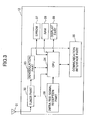
- FIG. 3 is a block diagram of a hardware structure of the STB 12 in the present embodiment.
- the STB 12 has an antenna part 31, a tuner part 32, a demodulation part 33, a CPU 34, a communication interface part 35, an infrared signal receiving part 36, an erasable and programmable ROM 37 (EPROM), a RAM 38, and a display part 39.
- the EPROM 37 and the RAM 38 are accumulation parts in the STB 12.
- the antenna part 31 is a broadcast signal receiving part for receiving broadcast signals transmitted by radio frequency.
- the antenna part 31 outputs a received signal to the tuner part 32.
- the tuner part 32 extracts the broadcast signal of a channel, which is selected by a user from the broadcast signal received by the antenna part 31 or previously set in the STB 12, according to a control signal from the CPU 34.
- the demodulation part 33 performs a demodulation according to a broadcast system of the broadcast signal extracted by the tuner part 32 by the control signal from CPU 34. For example, when the extracted broadcast signal has been encrypted, the demodulation part 33 can perform a process of demodulating the encrypted signal by acquiring key information accumulated in the EPROM 37.
- the CPU 34 is a control part which controls processing of each composition part in STB 12. Specifically, based on contents of an instruction from a user acquired by, for example, the infrared signal receiving part 36, the CPU 34 performs a process of sending a control signal for receiving a predetermined broadcast signal corresponding to the contents of the instruction to the tuner part 32 and the demodulation part 33. Additionally, the CPU 34 causes the demodulation part 33 to perform a process of extracting the predetermined signal by sending the key information acquired from the EPROM 37. The CPU 34 also performs a process of outputting the contents (programs) acquired from the demodulation part 33 to the TV 13 connected by the communication interface part 35.
- the CPU performs a process of reading various kinds of information from the EPROM 37 or the RAM 38, if needed, and writing various kinds of information in the EPROM 37 or the RAM 38, if needed. Additionally, the CPU 34 performs a process of outputting contents of an instruction from a user acquired by the infrared signal receiving part 36.
- the communication interface part 35 is an interface circuit for transmitting and receiving data with other apparatuses connected through, for example, an IEEE 1394 serial bus (hereinafter, referred to as a bus).
- the communication interface part 35 transmits/receives data to/from the contents server 11, or transmits/receives data to/from the TV 13.
- the infrared signal receiving part 36 receives an instruction signal of an infrared signal type sent from an operation part of a remote controller, and converts the instruction signal into a normal digital signal and outputs it to the CPU 34.
- the CPU 34 performs a control corresponding to the digital signal.
- the EPROM 37 records various kinds of setting information such as MAC address and key information, as mentioned above, according to a control signal from the CPU 34. Moreover, the EPROM 37 accumulates various kinds of setting information such as setting information regarding a screen size and a resolution when outputting to the TV 13 connected to the STB 12, setting information regarding a contrast, setting information regarding large/small of a volume, mode setting information regarding an HD image/SD image, a high-definition multimedia interface (HDMI), an I-LINK, etc. Furthermore, the EPROM 37 can also store various programs required in the present embodiment.
- the EPROM 37 has an advantage in that a correction or specification change of programs can be made in a more flexible manner because data is rewritable as compared to a mask ROM, which data is written when manufacturing a chip, and a programmable ROM (PROM), which data is writable only once.
- PROM programmable ROM
- the present embodiment is not limited to the EPROM 37, and the above-mentioned mask ROM or PROM may be used. Additionally, the EPROM 37 may be replaced by a flash memory or the like.
- the RAM 38 is an accumulation part in/from which a program for executing each process in the present embodiment is written/read.
- the RAM 38 stores various kinds of data, such as viewing audience history of contents programs viewed by the TV 13 or a change in channel.
- an SRAM or a DRAM may be used, but not limited to in the present embodiment.
- the display part 39 displays the channel number of the broadcast program output to the TV 13, contents of a program, display of a list of contents name, various kinds of message, etc.
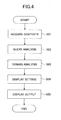
- FIG. 4 is a flowchart of a display screen changeover process in the present embodiment.
- the STB 12 acquires contents (S01) and analyzes the acquired contents. Specifically, the STB 12 checks address information, such as URL (Uniform Resource Locator) related to each HTML contents, and analyzes whether a predetermined character string or value exists in a query added to the address information such as URL (S02). In the process of S03, an analysis is made as to whether the domain contained in the address information is the set-up domain by referring to the address information such as URL assigned to each HTML contents as mentioned above.
- URL Uniform Resource Locator
- a display screen setting is performed (S04) based on the result of analysis obtained in the process S02 and S03. Then, the set contents are output to the TV 13 to cause the set contents to be output on a screen (S05).
- a changeover of a display by a TV screen can be quickly and easily performed using only address information without analyzing source code of HTML contents.
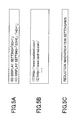
- FIGS. 5A-5C are illustrations indicating examples of each basic information item used in the present embodiment.
- FIG. 5A illustrates an example of analysis basic information when performing a query interpretation.
- FIG. 5B illustrates analysis basic information used when performing a domain interpretation.
- FIG. 5C illustrates an example of an HD reduction magnification which is display basic information.
- an SD display setting and an HD display setting are indicated as conditions for changing the display screen.
- a reduced size (reduction of HD size) display for countermeasures for TV over-scan can be performed in the above-mentioned display setting part 25.
- a setting according to the previously set display condition for example, an SD display
- an HD display can be used.
- the SD display and the HD display may be set respectively. In such a case, if it does not match the domain of each of SD and HD, the setting can be changed to the HD reduction display.
- a display can be made by reducing by the reduction magnification set for the input contents (for example, 90% in the example of FIG. 5C ). It is desirable to set the reduction magnification to, for example, about 75% to 95%, but it is not limited to such a reduction magnification in the present embodiment.
- the contents to be changed based on the result of the query analysis or the domain analysis with respect to the address information such as URL are not limited to the above-mentioned contents.
- a screen size (pixel) or a resolution (for example, 960 ⁇ 540, 720 ⁇ 480, 640 ⁇ 480), etc. in a query, a more detailed output setting can be made to the TV.
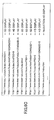
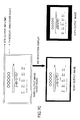
- FIGS. 6A-6C are illustrations indicating examples of address information to be subjected to the contents interpretation process.
- FIG. 6A is an illustration for explaining a query interpretation method
- FIG. 6B is an illustration for explaining a domain interpretation method
- FIG. 6C is an illustration for explaining a contents interpretation combining the query interpretation method and the domain interpretation method.
- the predetermined character sequence "?” which divides two description portions as mentioned above, the predetermined character sequence is not limited to "?". Because the order of the notation of the URL notation is defined in RFC (Request for Comments), a description order cannot be changed arbitrarily. Moreover, with respect to a query description portion, there is no limitation to the notation order of queries because a plurality of queries can be arranged with "&".
- the above-mentioned address information can be acquired by displaying a Web page of a specific search site or acquired from URL assigned to a plurality of sites obtained by a search performed on, for example, a Web server by using a search keyword input by a user through the search site. It should be noted that acquisition of address information is not limited to this, and, for example, a method which can acquire URL of contents by a method such as downloading may be used.
- the domain to which the SD display is applied is registered previously, and the SD display is performed when displaying URL defined in the domain concerned.
- URL of the HTML contents to be displayed is referred to. If the URL concerned includes the above-mentioned domain, the SD display is applied, and in other cases, a control is performed to apply, for example, the HD reduction display. It is not necessary to carry out a display changeover setup to a query for each HTML contents on the contents provider side, and contents display can be managed collectively.
- the contents interpretation may be performed using both the query analysis.
- a top priority is given to the query name distinction, and the domain name distinction is performed after the query analysis. That is, even if it is a page of a domain to which the SD display is applied, a priority is given to a query so that the HD display is applied.
- contents can be displayed on a screen in a suitable state according to the address information of the contents.
- the display contents of SDTV and HDTV may be displayed as a parameter in a source code of an HTML page.
- the description in the HTML page can be achieved by, for example, providing an exclusive tag to notify aspect information in a ⁇ header> tag or a ⁇ body> tag, or using a method of describing as an exclusive script. It should be noted that the information to describe is not limited to the aspect information, and, for example, using information regarding a resolution of HTML may provide the same effect.
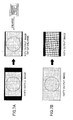
- FIGS. 7A-7C are illustrations indicating examples of display on a TV screen in the present embodiment.
- FIG. 7A illustrates an example of the SD (standard image quality) display
- FIG. 7B illustrates an example of the HD (high definition) display
- FIG. 7C illustrates an example of a reduction HD display.
- FIG. 7A illustrates a mode to display portal contents of an SD size by the contents analysis mentioned above.
- an output image to a TV of which aspect ratio is 16:9 is displayed by setting a browser display area thereof to 720 ⁇ 480 (4:3).
- the browser area is set larger than a regular browser area, and, thereby, the contents can be displayed with an appropriate size which the user can easily viewed by efficiently using a display area of a screen.
- FIG. 7B illustrates a mode to display portal contents of an HD size by the contents analysis mentioned above.
- an output image to a TV of which aspect ratio is 16:9 is displayed by setting a browser display area thereof to 960x 540 (16:9).
- FIG. 7C illustrates a mode to display contents of an HD size by reducing to 90% by the contents analysis mentioned above.
- a display can be performed with a browser area set to 960x540 (16:9). Because the end of contents may be located outside the display area when displayed by a TV which performs over-scan, the entire contents are displayed by being reduced by a predetermined magnification (90% in the example of FIG. 7C ) as illustrated in FIG. 7C in the present embodiment.
- the HTML contents are not provided with a safety zone supposing TV display, and, thus, a display cutoff may be generated when an over-scan display is performed on the TV side.
- the reduction display is performed in the present embodiment to prevent the display cutoff.
- the above-mentioned display screen changeover apparatus can realize the above-mentioned display screen changeover by executing a program (display screen changeover program) which causes a computer to perform each function mentioned above.
- the display screen changeover program is installed, for example, in the STB 12 mentioned above.
- the CPU 34 illustrated in FIG. 3 (the control part 28 illustrated in FIG. 2 ) reads the display screen changeover program written in the EPROM 37 illustrated in FIG. 3 (the accumulation part 23 illustrated in FIG. 2 ), and executes the read display screen changeover program.
- the display screen changeover program may be distributed by being stored in a recording medium, such as a magnetic disk (a flexible disk, a hard disk, etc.), an optical disc (a CD-ROM, a DVD, etc.), and a semiconductor memory, etc.
- the display screen change program may be downloaded from a predetermined server.
- the contents display on the TV screen can be changed quickly and easily. That is, according to the present embodiment, a user, such as a TV viewing audience, does not need to directly set up the display contents, and can cause the TV screen to output an optimal display result automatically. Moreover, according to the present embodiment, the contents provider side can set up the screen which is desired to be displayed to the viewing audience.
- a size of an HTML page to be displayed can be known by embedding the aspect ratio information as a query in link URL of an HTML page or previously registering a domain to be SD displayed (or HD displayed) on the reception terminal side, and the display can be changed to a display suitable for the page concerned.
- a display area of a TV can be used efficiently to provide a best display can be provided to viewing audience.
- an HTML page of an SD size which has been used, can be applied without change. Moreover, it becomes easy to add an HTML page service of an HD size. Moreover, because the aspect information is embedded in a query of link URL, a discrimination of an HD size and an SD size can be made by not changing the HTML page itself but operating by the application side of the HTML server. Moreover, it is not necessary to provide an API (Application Programming Interface) of analyzing a source code of an HTML page because the aspect information is embedded in a query of link URL, and a display size can be changed on the reception side by merely notifying URL itself.
- API Application Programming Interface
Landscapes
- Engineering & Computer Science (AREA)
- Multimedia (AREA)
- Signal Processing (AREA)
- Databases & Information Systems (AREA)
- Theoretical Computer Science (AREA)
- Data Mining & Analysis (AREA)
- Physics & Mathematics (AREA)
- General Engineering & Computer Science (AREA)
- General Physics & Mathematics (AREA)
- Two-Way Televisions, Distribution Of Moving Picture Or The Like (AREA)
- Controls And Circuits For Display Device (AREA)
- Information Transfer Between Computers (AREA)
Abstract
A display screen changeover apparatus changes a screen display when displaying HTML contents on a display screen of a television receiver. A contents analysis part analyzes display setting information with respect to the television receiver based on address information given to the HTML contents. A display setting part sets a display of the HTML contents with respect to the display screen based on a result of analysis obtained by the contents analysis part.
Description
- The present invention relates to a display screen changeover technique to quickly and easily perform a changeover of content display on a TV screen.
- Conventionally, there is a television receiver (hereinafter, referred to as TV) that receives broadcast signals transmitted via radio frequencies by an antenna or the like, and provides to viewing audience a preferred program selected by a tuner by displaying the program on a screen. A conventional TV displays a screen according to a format specified by a standard definition television (SDTV) or a format specified by a high definition television (HDTV). Here, the aspect ratio used in SDTV is different from the aspect ratio used in HDTV. Japanese Laid-Open Patent Applications No.
2004-186803 2007-60676 - In recent years, in order to provide to viewing audience various kinds of information such as program related information, whether information, news information, etc., together with broadcast programs, there is provided data broadcast service such as cable television broadcast, digital broadcast, Internet protocol (IP) broadcast, etc. In this case, for example, signals sent from the above-mentioned various kinds of broadcast are converted into viewable data to be displayed on a TV screen. It should be noted that STB is provided with functions of demodulating or decoding each broadcast data, cancelling scramble, controlling limited reception, displaying electronic program guide (EPG), etc.
- Furthermore, the conventional STB has a function of displaying on a TV screen a hyper text markup language (HTML) content such as a Web page (HTML page) acquired from an external server through, for example, the Internet.
- According to the service using HTML contents, such as a HTML page supposing TV display, the aspect ratio of the HTML page is set to 4:3 (SD) or 16:9 (HD) so that HTML page can be displayed without scrolling by the display terminal.
- It is usual for the service to display HTML pages on a TV to fix the size of the HTML page to an SD size or an HD size. Therefore, the display terminal merely has one browser display corresponding to either the SD size or the HD size.
- However, in the service using both the HTML page of HD size and the HTML page of SD size, if a display is made with the fixed browser size, various problems may occur. For example, if an HTML page of SD size is displayed on the browser of HD size, the HTML page is displayed by left-aligned. Additionally, if a browser of HD size is displayed on 4:3 TV, it becomes a letter box display.
- Because the HTML page of SD size is displayed in this letter box display, the HTML page displayed becomes small with respect to an area displayed by the TV. Moreover, if an HTML page of HD size is displayed on the browser of SD size, the entire HTML page does not fall within a display area of the browser, and it is necessary to scroll the screen when viewing the HTML page.
- With such a service, it is assumed that a general HTML page is used other than that specified in the service. However, in a general site, because a page structure is not set in consideration with TV's over-scanning, the browser display may run off a TV display frame, which may result in that a part of the page cannot be displayed. Accordingly, in many cases, even if it is over-scanned on the TV side, a display is made by scaling the size to be smaller than an actual size so that the entire page can be displayed.
- Moreover, when displaying on a TV screen, a display according to a format which a contents provider side desires to display cannot be displayed because the display is made in a state where a user previously sets by STB or the like.
- It is a general object of the present invention to provide a display screen changeover apparatus, a display screen changeover method and a display screen changeover program in which the above-mentioned problems are eliminated.
- A more specific object of the present invention is to provide a display screen changeover apparatus, a display screen changeover method and a display screen changeover program which can quickly and easily perform a changeover of a contents display on a TV screen.
- There is provided according to one aspect of the present invention a display screen changeover apparatus changing a screen display when displaying HTML contents on a display screen of a television receiver, comprising: a contents analysis part configured to analyze display setting information with respect to the television receiver based on address information given to the HTML contents; and a display setting part configured to set a display of said HTML contents with respect to the display screen based on a result of analysis obtained by the contents analysis part.
- There is provided according to another aspect of the present invention a display screen changeover method of changing a screen display when displaying HTML contents on a display screen of a television receiver, comprising: a contents analysis step of analyzing display setting information with respect to the television receiver based on address information given to the HTML contents; and a display setting step of setting a display of said HTML contents with respect to the display screen based on a result of analysis obtained by the contents analysis step.
- Additionally, there is provided a computer readable program causing a computer to perform the above-mentioned display screen changeover method. Further, there is provided a computer readable recording medium storing a program causing a computer to perform the above-mentioned display screen changeover method.
- Other objects, features and advantages of the present invention will become more apparent from the following detailed description when read in conjunction with the accompanying drawings.
-
-
FIG. 1 is an illustration of a contents providing system according to an embodiment of the present invention; -
FIG. 2 is a functional block diagram of an STB illustrated inFIG. 1 ; -
FIG. 3 is a block diagram of a hardware structure of the STB illustrated inFIG. 2 ; -
FIG. 4 is a flowchart of a display screen changeover process; -
FIGS. 5A, 5B and 5C are illustrations of various kinds of basic information; -
FIGS. 6A, 6B and6C are illustrations indicating address information, which is an object of a contents interpretation process; and -
FIGS. 7A, 7B and7C are illustrations indicating display examples on a TV screen. - A description will be given below, with reference to the drawings, of an embodiment according to the present invention.
- According to an embodiment of the present invention, a piece of information, such as an aspect ratio of an HTML page (Web page) itself or a page displayed next is embedded in HTML contents. On a receiver side, the embedded information is acquired from the HTML page, and a size of a browser to display is adjusted according to the acquired information. Thereby, a display matching the HTML page can be made. Additionally, according to an embodiment of the present invention, a display efficiently using a TV display area is made by using aspect information of an HTML page and a TV type (4:3 or 16:9) connected presently.
- According to an embodiment of the present invention, a determination can be made even when there is no information regarding an aspect ratio in the HTML page to be displayed. When there is no information concerned, a control such as a display with an HD reduction size is performed. Thus, for example, measures for a TV over-scan can be taken only when displaying an HTML page (a page does not have aspect ratio information) of a general site.
- A description will be given below, with reference to the drawings, of an embodiment of a display screen changeover apparatus, a display screen changeover method and a display screen changeover program. In the embodiment mentioned below, the above-mentioned STB is used as an example of the display screen changeover apparatus. However, the present invention is not limited to this, and, for example, the present invention is applicable to an apparatus such as a television game machine which can display HTML contents on a TV screen. Further, the embodiment mentioned below is applicable to a TV provided with a function of display screen changeover apparatus.
- First, a description is given of a structure of a contents providing system according to the embodiment.
FIG. 1 is an illustration of acontents providing system 10 according to the embodiment. Thecontents providing system 10 includes a contents server 11, a plurality of STBs 12-1, 12-2, · · ·, 12-n each of which serves as a display screen changeover apparatus, and a plurality of TVs 13-1, 13-2, · · ·, 13-n connected to the respective STBs 12-1, 12-2, · · ·, 12-n. Hereinafter, the STBs 12-1, 12-2, · · ·, 12-n may be collectively referred to as STB 12, and the TVs 13-1, 13-2, · · ·, 13-n may be collectively referred to asTV 13. The contents server 11 and theSTB 12 are connected through acommunication network 14 using Ethernet (registered trademark) protocols, such as the Internet so that transmission and reception of data can be made. - The contents server 11 is connected to the
TV 13 through theSTB 12 and thecommunication network 14. The contents server 11 provides contents, such as HTML contents provided by data broadcast, etc. The contents server 11 is a Web server to manage user information of the connectedSTB 12. The contents server 11 may be a broadcast station providing broadcast programs. - The contents server 11 individually manages each contents provider, and can set up what data is provided to each user using the connected
STB 12. - Moreover, when performing the contents providing service such as limited reception, the contents server 11 sends data after encrypting the data to be provided. Thereby, the
STB 12 decrypts the encrypted contents by a decrypt key (private key) or the like which is previously recorded, and can output the decrypted contents to theTV 13. - It should be noted that the contents server 11 is provided with various kinds of service programs for providing the contents by performing the above-mentioned process, and performs each kind of process based on the service programs.
- The
STB 12 as a display screen changeover apparatus sets a state of a display screen by relating HTML contents acquired from the contents server 11 to theconnected TV 13, and outputs the set information to theTV 13. A specific function of theSTB 12 will be described later. - The
TV 13 is a display unit for displaying the contents information from the contents server on a screen. The display unit according to the present embodiment is not limited to the above-mentionedTV 13. For example, equipment having a general purpose display, such as a personal computer (PC) and a personal digital assistant (PDA) may be used as the display unit. It should be noted that the above mentionedSTB 12 andTV 13 may be together incorporated into one apparatus. - A description is given below of a functional structure of the above-mentioned
STB 12.FIG. 2 is an illustration indicating a functional structure of theSTB 12. - The
STB 12 includes aninput part 21, anoutput part 22, anaccumulation part 23, acontents analysis part 24, adisplay setting part 25, asetting management part 26, acommunication interface part 27, and acontrol part 28. - The
input part 21 receives an input of start/end of various instructions such as a contents analysis instruction from a user, a display screen setting instruction, a setting management instruction, etc. Theinput part 21 may be an operation screen provided in theSTB 12, or may be a control device such as a remote controller. If theinput part 21 is a remote controller, a receiving part which receives a signal (an infrared signal) from the remote controller is provided to theSTB 12. - The
output part 22 performs a display and output of contents input by theinput part 21 and contents performed based on the contents of input. Theoutput part 22 includes a display, a speaker, etc. - The
input part 21 and theoutput part 22 may be an input-and-output part of one piece type like a touch panel. In such a case, an input is performed by touching a predetermined position using a user's finger, a pen type input equipment, etc. - The
accumulation part 23 accumulates analysis basic information for analyzing contents by thecontents analysis part 24, information regarding a result of analysis, display basic information for setting by thedisplay setting part 25, display screen information, and management contents information of thesetting management part 26. - Moreover, the
accumulation part 23 accumulates various sets of data necessary for the present embodiment, such as various programs such as an application executed in the present embodiment, display condition information based on the result of analysis, etc., and also accumulates information regarding various results acquired in the present embodiment. The various sets of data and result information can be read from theaccumulation part 23, if necessary. - The
contents analysis part 24 analyzes the contents of the HTML contents obtained from the contents server 11. Specifically, thecontents analysis part 24 analyzes whether a predetermined character or value indicating the display setting information is contained using a query description portion and/or a domain description portion contained in contents address information such as URL and previously set various pieces of basic information for analysis. It should be noted that the above-mentioned address information can be acquired from URL assigned to a plurality of sites obtained by a search performed on, for example, a Web page (HTML page) of a specific search site or the contents server 11 by using a search keyword input by a user through the search site. - The
display setting part 25 sets display contents of a display screen based on a result of analysis by thecontents analysis part 24. Thedisplay setting part 25 changes the display contents of a contents page based on the set-up contents. Specifically, thedisplay setting part 25 changes the display contents, such as an SD display, an HD display, or a reduction HD display, based on display conditions based on analysis result set up beforehand. - The
setting management part 26 manages the set-up display contents. Specifically, thesetting management part 26 manages URL of set-up HTML contents so that setting can be adjusted, if necessary. That is, if the HTML contents include address information of a predetermined domain, thesetting management part 26 causes the previous setting contents to be usable, or a new contents analysis to be performed. - Furthermore, the
setting management part 26 also manages various kinds of setting information. The setting information includes setting contents of a screen size (pixel), setting contents of a resolution (for example, 960×540, 720×480, 640×480, etc.), setting of a contrast and volume, mode setting of SD/HD, setting of high-definition multimedia interface (HDMI), setting of I-LINK, etc., from theTV 13. - When analyzing address information of the above-mentioned HTML contents, the
setting management part 26 can change any one of pieces of information mentioned above by a query analysis or a domain analysis. Thereby, a finer setup can be performed on TV. - The
communication interface part 27 performs transmission and reception of data through the contents server 11 and the communication network, and also performs transmission and reception of data with respect to theTV 13 that is presently connected. - Specifically, the
communication interface part 27 receives various kinds of contents, such as HTML contents, a picture, an image, music data, text data, etc., from the contents server 11. Moreover, thecommunication interface part 27 outputs contents to theTV 13, which contents are changed by thedisplay setting part 25 into predetermined screen display contents with respect to the various kinds of contents received. - Moreover, the
communication interface part 27 receives data acquisition request information in data broadcast instructed by theTV 13, or response information to a question displayed. Furthermore, thecommunication interface part 27 transmits the above-mentioned data acquisition request information, response information, etc., to the contents server 11. - The
control part 28 controls theentire STB 12. Specifically, thecontrol part 28 performs each control of a contents analysis process, a display screen setting process, a setting management process, etc., based on instructions from theinput part 21 by a user or an input of HTML contents. - A description is given of a hardware structure of the
STB 12 in the present embodiment.FIG. 3 is a block diagram of a hardware structure of theSTB 12 in the present embodiment. - The
STB 12 has anantenna part 31, atuner part 32, ademodulation part 33, aCPU 34, acommunication interface part 35, an infraredsignal receiving part 36, an erasable and programmable ROM 37 (EPROM), aRAM 38, and adisplay part 39. TheEPROM 37 and theRAM 38 are accumulation parts in theSTB 12. - The
antenna part 31 is a broadcast signal receiving part for receiving broadcast signals transmitted by radio frequency. Theantenna part 31 outputs a received signal to thetuner part 32. Thetuner part 32 extracts the broadcast signal of a channel, which is selected by a user from the broadcast signal received by theantenna part 31 or previously set in theSTB 12, according to a control signal from theCPU 34. - The
demodulation part 33 performs a demodulation according to a broadcast system of the broadcast signal extracted by thetuner part 32 by the control signal fromCPU 34. For example, when the extracted broadcast signal has been encrypted, thedemodulation part 33 can perform a process of demodulating the encrypted signal by acquiring key information accumulated in theEPROM 37. - The
CPU 34 is a control part which controls processing of each composition part inSTB 12. Specifically, based on contents of an instruction from a user acquired by, for example, the infraredsignal receiving part 36, theCPU 34 performs a process of sending a control signal for receiving a predetermined broadcast signal corresponding to the contents of the instruction to thetuner part 32 and thedemodulation part 33. Additionally, theCPU 34 causes thedemodulation part 33 to perform a process of extracting the predetermined signal by sending the key information acquired from theEPROM 37. TheCPU 34 also performs a process of outputting the contents (programs) acquired from thedemodulation part 33 to theTV 13 connected by thecommunication interface part 35. Further, the CPU performs a process of reading various kinds of information from theEPROM 37 or theRAM 38, if needed, and writing various kinds of information in theEPROM 37 or theRAM 38, if needed. Additionally, theCPU 34 performs a process of outputting contents of an instruction from a user acquired by the infraredsignal receiving part 36. Thecommunication interface part 35 is an interface circuit for transmitting and receiving data with other apparatuses connected through, for example, an IEEE 1394 serial bus (hereinafter, referred to as a bus). Thecommunication interface part 35 transmits/receives data to/from the contents server 11, or transmits/receives data to/from theTV 13. - The infrared
signal receiving part 36 receives an instruction signal of an infrared signal type sent from an operation part of a remote controller, and converts the instruction signal into a normal digital signal and outputs it to theCPU 34. TheCPU 34 performs a control corresponding to the digital signal. - The
EPROM 37 records various kinds of setting information such as MAC address and key information, as mentioned above, according to a control signal from theCPU 34. Moreover, theEPROM 37 accumulates various kinds of setting information such as setting information regarding a screen size and a resolution when outputting to theTV 13 connected to theSTB 12, setting information regarding a contrast, setting information regarding large/small of a volume, mode setting information regarding an HD image/SD image, a high-definition multimedia interface (HDMI), an I-LINK, etc. Furthermore, theEPROM 37 can also store various programs required in the present embodiment. - Here, the
EPROM 37 has an advantage in that a correction or specification change of programs can be made in a more flexible manner because data is rewritable as compared to a mask ROM, which data is written when manufacturing a chip, and a programmable ROM (PROM), which data is writable only once. It should be noted that the present embodiment is not limited to theEPROM 37, and the above-mentioned mask ROM or PROM may be used. Additionally, theEPROM 37 may be replaced by a flash memory or the like. - The
RAM 38 is an accumulation part in/from which a program for executing each process in the present embodiment is written/read. TheRAM 38 stores various kinds of data, such as viewing audience history of contents programs viewed by theTV 13 or a change in channel. As theRAM 38, an SRAM or a DRAM may be used, but not limited to in the present embodiment. - The
display part 39 displays the channel number of the broadcast program output to theTV 13, contents of a program, display of a list of contents name, various kinds of message, etc. - A description is given of a display screen changeover process in the present embodiment.
FIG. 4 is a flowchart of a display screen changeover process in the present embodiment. - In the display screen changeover process illustrated in
FIG. 4 , theSTB 12 acquires contents (S01) and analyzes the acquired contents. Specifically, theSTB 12 checks address information, such as URL (Uniform Resource Locator) related to each HTML contents, and analyzes whether a predetermined character string or value exists in a query added to the address information such as URL (S02). In the process of S03, an analysis is made as to whether the domain contained in the address information is the set-up domain by referring to the address information such as URL assigned to each HTML contents as mentioned above. - Then, a display screen setting is performed (S04) based on the result of analysis obtained in the process S02 and S03. Then, the set contents are output to the
TV 13 to cause the set contents to be output on a screen (S05). - Thereby, according to the present embodiment, a changeover of a display by a TV screen can be quickly and easily performed using only address information without analyzing source code of HTML contents.
- Here, a description is given of an example of basic information used when performing the contents analysis and the display screen setting in the present embodiment.
-
FIGS. 5A-5C are illustrations indicating examples of each basic information item used in the present embodiment.FIG. 5A illustrates an example of analysis basic information when performing a query interpretation.FIG. 5B illustrates analysis basic information used when performing a domain interpretation.FIG. 5C illustrates an example of an HD reduction magnification which is display basic information. - As basic information at the time of query interpretation illustrated in
FIG. 5A , an SD display setting and an HD display setting are indicated as conditions for changing the display screen. Specifically, when performing the SD display setup, one of a plurality of character strings contained in a query part contained in URL information of the HTML contents are set. For example, as illustrated inFIG. 5A , when the SD display is performed with respect to the contents, "SD=1" is set and when the HD display is performed, "SD=0" or "HD=1" is set as basic information. - Therefore, in the present embodiment, it is judged in the query analysis by the
contents analysis part 24 mentioned above whether the character strings "SD=1", "SD=0", "HD=1" are contained in the query part contained in URL by referring to URL of contents of HTML. Additionally, by making that a plurality of conditions can be set, if, for example, the query of HD=1 is used for other conditions, "SD=0" can be used. Thereby, general versatility is given in setting of query, and the present embodiment is applicable extensively. - In the present embodiment, when none of the conditions is met in the query analysis using the basic information illustrated in
FIG. 5A , for example, a reduced size (reduction of HD size) display for countermeasures for TV over-scan can be performed in the above-mentioneddisplay setting part 25. - As illustrated in
FIG. 5B , by previously setting a domain, if the domain is contained in URL, a setting according to the previously set display condition (for example, an SD display) can be made. It should be noted that if the URL of the HTML contents to be displayed does not contain the domain described inFIG. 5B , an HD display can be used. Additionally, the SD display and the HD display may be set respectively. In such a case, if it does not match the domain of each of SD and HD, the setting can be changed to the HD reduction display. - As illustrated in
FIG. 5C , by setting an arbitrary reduction magnification, a display can be made by reducing by the reduction magnification set for the input contents (for example, 90% in the example ofFIG. 5C ). It is desirable to set the reduction magnification to, for example, about 75% to 95%, but it is not limited to such a reduction magnification in the present embodiment. - That is, in the present embodiment, based on the above-mentioned basic information, the SD display is applied if the query of "SD=1" is given to the URL and contents in the site registered as a domain to perform the SD display, the HD display is applied if the query of "SD=0" is given to URL, and the reduction HD display is applied if the domain other than the SD display domain and the query of "SD=∗"does not exist.
- In addition, in the present embodiment, the contents to be changed based on the result of the query analysis or the domain analysis with respect to the address information such as URL are not limited to the above-mentioned contents. For example, by directly inputting a screen size (pixel) or a resolution (for example, 960×540, 720×480, 640×480), etc., in a query, a more detailed output setting can be made to the TV.
- A description is given of a specific example of the contents interpretation method in the present embodiment.
FIGS. 6A-6C are illustrations indicating examples of address information to be subjected to the contents interpretation process. -
FIG. 6A is an illustration for explaining a query interpretation method,FIG. 6B is an illustration for explaining a domain interpretation method, andFIG. 6C is an illustration for explaining a contents interpretation combining the query interpretation method and the domain interpretation method. - In the examples of
FIGS. 6A-6C , if address information is "http://www.test.corn/index.html?stbid=12345&SD=0", for example, "www.test.com" is a domain description portion and "stbid=12345&SD=0" is a query description portion. That is, a portion subsequent to a predetermined character sequence "?" is a query description portion. - Especially regarding the predetermined character sequence "?" which divides two description portions as mentioned above, the predetermined character sequence is not limited to "?". Because the order of the notation of the URL notation is defined in RFC (Request for Comments), a description order cannot be changed arbitrarily. Moreover, with respect to a query description portion, there is no limitation to the notation order of queries because a plurality of queries can be arranged with "&".
- Moreover, the above-mentioned address information can be acquired by displaying a Web page of a specific search site or acquired from URL assigned to a plurality of sites obtained by a search performed on, for example, a Web server by using a search keyword input by a user through the search site. It should be noted that acquisition of address information is not limited to this, and, for example, a method which can acquire URL of contents by a method such as downloading may be used.
- As illustrated in the example of
FIG. 6A , when distinguishing the display setting information in the query description portion, the SD display is applied if the query character "SD=1" is under URL, and the HD display is applied if the query character "SD=0" is under URL. If there is no query character such as "SD=0" and "SD=1", the reduction HD display is applied. - Specifically, if the query "SD=1" is given to URL, the SD display is applied. If the query "SD=0" is given to URL, the HD display is applied. In the present embodiment, even when a plurality of queries are described and if one of the above-mentioned query characters is present in the plurality of queries, a display according the one of the query characters is applied.
- For example, if there is no query beginning by "SD=", it is determined as contents of a general site, and the HD reduction display is applied. If a query completely matches "SD=0" or "SD=1", a determination of display is made.
- Moreover, as illustrated in
FIG. 6B , when judging the display setting information by the domain description portion, the domain to which the SD display is applied is registered previously, and the SD display is performed when displaying URL defined in the domain concerned. - Specifically, when "http://www.testtest.com" and "http://www.test-sd.com/index.html" are set up as conditions for the SD display, URL of the HTML contents to be displayed is referred to. If the URL concerned includes the above-mentioned domain, the SD display is applied, and in other cases, a control is performed to apply, for example, the HD reduction display. It is not necessary to carry out a display changeover setup to a query for each HTML contents on the contents provider side, and contents display can be managed collectively.
- In the present embodiment, the contents interpretation may be performed using both the query analysis. In such a case, a top priority is given to the query name distinction, and the domain name distinction is performed after the query analysis. That is, even if it is a page of a domain to which the SD display is applied, a priority is given to a query so that the HD display is applied.
- For example, when "www.test-sd.com" is registered as a domain to which the SD display is applied, as illustrated in
FIG. 6C , the HD display is applied by giving "SD=0" query even if the contents are in a domain to which the SD display is applied. On the other hand, if it is not the domain to which the SD display is applied, and there is no query matching "SD=0" and "SD=1", the reduction HD display is applied. - Thus, by setting up as mentioned above, contents can be displayed on a screen in a suitable state according to the address information of the contents.
- In the present embodiment, the display contents of SDTV and HDTV may be displayed as a parameter in a source code of an HTML page. The description in the HTML page can be achieved by, for example, providing an exclusive tag to notify aspect information in a <header> tag or a <body> tag, or using a method of describing as an exclusive script. It should be noted that the information to describe is not limited to the aspect information, and, for example, using information regarding a resolution of HTML may provide the same effect.
- However, in describing in an HTML page, all the contents of a source code must be analyzed by the receiver apparatus side of the STB side, which requires a complicated analysis. Therefore, in order to change the contents display on TV screen quickly and easily, it is desirable to perform the query analysis and the domain analysis as mentioned above.
- A description is given of an example of display on a TV screen in the present embodiment.
FIGS. 7A-7C are illustrations indicating examples of display on a TV screen in the present embodiment.FIG. 7A illustrates an example of the SD (standard image quality) display,FIG. 7B illustrates an example of the HD (high definition) display, andFIG. 7C illustrates an example of a reduction HD display. -
FIG. 7A illustrates a mode to display portal contents of an SD size by the contents analysis mentioned above. In this case, an output image to a TV of which aspect ratio is 16:9 is displayed by setting a browser display area thereof to 720×480 (4:3). According to the example illustrated inFIG. 7A , the browser area is set larger than a regular browser area, and, thereby, the contents can be displayed with an appropriate size which the user can easily viewed by efficiently using a display area of a screen. -
FIG. 7B illustrates a mode to display portal contents of an HD size by the contents analysis mentioned above. In this case, an output image to a TV of which aspect ratio is 16:9 is displayed by setting a browser display area thereof to 960x 540 (16:9). -
FIG. 7C illustrates a mode to display contents of an HD size by reducing to 90% by the contents analysis mentioned above. In this case, a display can be performed with a browser area set to 960x540 (16:9). Because the end of contents may be located outside the display area when displayed by a TV which performs over-scan, the entire contents are displayed by being reduced by a predetermined magnification (90% in the example ofFIG. 7C ) as illustrated inFIG. 7C in the present embodiment. - In the case of the example illustrated in
FIG. 7C , generally, the HTML contents are not provided with a safety zone supposing TV display, and, thus, a display cutoff may be generated when an over-scan display is performed on the TV side. As countermeasures for such a problem, the reduction display is performed in the present embodiment to prevent the display cutoff. - Here, the above-mentioned display screen changeover apparatus can realize the above-mentioned display screen changeover by executing a program (display screen changeover program) which causes a computer to perform each function mentioned above. The display screen changeover program is installed, for example, in the
STB 12 mentioned above. - The
CPU 34 illustrated inFIG. 3 (thecontrol part 28 illustrated inFIG. 2 ) reads the display screen changeover program written in theEPROM 37 illustrated inFIG. 3 (theaccumulation part 23 illustrated inFIG. 2 ), and executes the read display screen changeover program. The display screen changeover program may be distributed by being stored in a recording medium, such as a magnetic disk (a flexible disk, a hard disk, etc.), an optical disc (a CD-ROM, a DVD, etc.), and a semiconductor memory, etc. Alternatively, the display screen change program may be downloaded from a predetermined server. - As mentioned above, according to the present embodiment, the contents display on the TV screen can be changed quickly and easily. That is, according to the present embodiment, a user, such as a TV viewing audience, does not need to directly set up the display contents, and can cause the TV screen to output an optimal display result automatically. Moreover, according to the present embodiment, the contents provider side can set up the screen which is desired to be displayed to the viewing audience.
- Furthermore, according to the present embodiment, for example, a size of an HTML page to be displayed can be known by embedding the aspect ratio information as a query in link URL of an HTML page or previously registering a domain to be SD displayed (or HD displayed) on the reception terminal side, and the display can be changed to a display suitable for the page concerned. Thereby, a display area of a TV can be used efficiently to provide a best display can be provided to viewing audience.
- Moreover, according to the present embodiment, even if the service is continued from the time where a 4:3 TV is a mainstream size, an HTML page of an SD size, which has been used, can be applied without change. Moreover, it becomes easy to add an HTML page service of an HD size. Moreover, because the aspect information is embedded in a query of link URL, a discrimination of an HD size and an SD size can be made by not changing the HTML page itself but operating by the application side of the HTML server. Moreover, it is not necessary to provide an API (Application Programming Interface) of analyzing a source code of an HTML page because the aspect information is embedded in a query of link URL, and a display size can be changed on the reception side by merely notifying URL itself.
Claims (12)
- A display screen changeover apparatus changing a screen display when displaying HTML contents on a display screen of a television receiver, comprising:a contents analysis part configured to analyze display setting information with respect to said television receiver based on address information given to said HTML contents; anda display setting part configured to set a display of said HTML contents with respect to said display screen based on a result of analysis obtained by said contents analysis part.
- The display screen changeover apparatus as claimed in claim 1, wherein said contents analysis part analyzes said display setting information using a query description and/or a domain description portion contained in said address information.
- The display screen changeover apparatus as claimed in claim 2, wherein, when said display setting information exists in both said query description portion and said domain description portion according to the result of analysis obtained by said contents analysis part, said display setting part sets the display by giving priority to the display setting information obtained from said query description portion.
- The display screen changeover apparatus as claimed in one of claims 1 to 3, wherein said address information is URL.
- The display screen changeover apparatus as claimed in one of claims 1 to 4, wherein said display screen changeover apparatus is a set top box (STB).
- The display screen changeover apparatus as claimed in one of claims 1 to 5, wherein said display screen changeover apparatus is incorporated in said television receiver.
- A display screen changeover method of changing a screen display when displaying HTML contents on a display screen of a television receiver, comprising:a contents analysis step of analyzing display setting information with respect to said television receiver based on address information given to said HTML contents; anda display setting step of setting a display of said HTML contents with respect to said display screen based on a result of analysis obtained by said contents analysis step.
- The display screen changeover method as claimed in claim 7, wherein said contents analysis step analyzes said display setting information using a query description and/or a domain description portion contained in said address information.
- The display screen changeover method as claimed in claim 8, wherein, when said display setting information exists in both said query description portion and said domain description portion according to the result of analysis obtained by said contents analysis part, said display setting step sets the display by giving priority to the display setting information obtained from said query description portion.
- The display screen changeover method as claimed in one of claims 7 to 9, wherein said address information is URL.
- A computer readable program causing a computer to perform the display screen changeover method as claimed in one of claims 7 to 9.
- A computer readable recording medium storing a program causing a computer to perform the display screen changeover method as claimed in one of claims 7 to 9.
Applications Claiming Priority (1)
| Application Number | Priority Date | Filing Date | Title |
|---|---|---|---|
| JP2010224402A JP5614215B2 (en) | 2010-10-01 | 2010-10-01 | Display screen switching device, display screen switching method, and display screen switching program |
Publications (1)
| Publication Number | Publication Date |
|---|---|
| EP2437511A1 true EP2437511A1 (en) | 2012-04-04 |
Family
ID=44905437
Family Applications (1)
| Application Number | Title | Priority Date | Filing Date |
|---|---|---|---|
| EP11183431A Ceased EP2437511A1 (en) | 2010-10-01 | 2011-09-30 | Display screen changeover apparatus, display screen changeover method, display screen changeover program and computer readable recording medium storing a display screen changeover program |
Country Status (3)
| Country | Link |
|---|---|
| US (1) | US9003446B2 (en) |
| EP (1) | EP2437511A1 (en) |
| JP (1) | JP5614215B2 (en) |
Families Citing this family (5)
| Publication number | Priority date | Publication date | Assignee | Title |
|---|---|---|---|---|
| KR102137473B1 (en) * | 2013-06-13 | 2020-07-27 | 삼성디스플레이 주식회사 | Flat panel display device |
| US10089280B1 (en) * | 2016-03-22 | 2018-10-02 | Massachusetts Mutual Life Insurance Company | Systems and methods for improving workflow efficiency and for electronic record population in a networked environment |
| JP7284272B2 (en) | 2019-08-01 | 2023-05-30 | 株式会社ソニー・インタラクティブエンタテインメント | Image transmission device, image transmission method and program |
| WO2022164193A1 (en) * | 2021-02-01 | 2022-08-04 | 삼성전자 주식회사 | Display device and operating method therefor |
| EP4246960A4 (en) | 2021-02-01 | 2024-04-03 | Samsung Electronics Co., Ltd. | DISPLAY DEVICE AND ITS OPERATING METHOD |
Citations (7)
| Publication number | Priority date | Publication date | Assignee | Title |
|---|---|---|---|---|
| GB2339374A (en) * | 1998-07-06 | 2000-01-19 | Ibm | Display screen and window size related web page adaptation system |
| WO2004051430A2 (en) * | 2002-12-03 | 2004-06-17 | Bitstream Inc. | Methods systems and programming for scaled display of web pages |
| JP2004186803A (en) | 2002-11-29 | 2004-07-02 | Matsushita Electric Ind Co Ltd | Image display device and image display method |
| US6836786B1 (en) * | 2001-04-30 | 2004-12-28 | Microsoft Corporation | Method and apparatus for terminal server addressability via URL specification |
| US20050041858A1 (en) * | 2003-08-21 | 2005-02-24 | International Business Machines Corporation | Apparatus and method for distributing portions of large web pages to fit smaller constrained viewing areas |
| US20050138137A1 (en) * | 2003-12-19 | 2005-06-23 | Microsoft Corporation | Using parameterized URLs for retrieving resource content items |
| JP2007060676A (en) | 2004-12-02 | 2007-03-08 | Maspro Denkoh Corp | Image receiving apparatus and program |
Family Cites Families (24)
| Publication number | Priority date | Publication date | Assignee | Title |
|---|---|---|---|---|
| US6240555B1 (en) * | 1996-03-29 | 2001-05-29 | Microsoft Corporation | Interactive entertainment system for presenting supplemental interactive content together with continuous video programs |
| US6177931B1 (en) * | 1996-12-19 | 2001-01-23 | Index Systems, Inc. | Systems and methods for displaying and recording control interface with television programs, video, advertising information and program scheduling information |
| US8250620B1 (en) * | 1998-12-30 | 2012-08-21 | At&T Intellectual Property Ii, L.P. | System and method for sharing information between a concierge and guest |
| US8479251B2 (en) * | 1999-03-31 | 2013-07-02 | Microsoft Corporation | System and method for synchronizing streaming content with enhancing content using pre-announced triggers |
| US6973490B1 (en) * | 1999-06-23 | 2005-12-06 | Savvis Communications Corp. | Method and system for object-level web performance and analysis |
| US7210099B2 (en) * | 2000-06-12 | 2007-04-24 | Softview Llc | Resolution independent vector display of internet content |
| DE60137454D1 (en) * | 2000-10-24 | 2009-03-05 | Aol Llc | METHOD OF MEASURING THE SIDE OF AN EMBEDDED MEDIA PLAYING DEVICE |
| US7620622B1 (en) * | 2001-03-08 | 2009-11-17 | Yahoo! Inc. | Method and system for indexing information and providing results for a search including objects having predetermined attributes |
| US8868467B2 (en) * | 2002-10-23 | 2014-10-21 | Oleg Serebrennikov | Method for performing transactional communication using a universal transaction account identifier assigned to a customer |
| US20030145338A1 (en) * | 2002-01-31 | 2003-07-31 | Actv, Inc. | System and process for incorporating, retrieving and displaying an enhanced flash movie |
| EP1333638B1 (en) * | 2002-02-04 | 2008-12-17 | Koninklijke KPN N.V. | Method and system for transmitting information over a communication network |
| EP1477024B1 (en) * | 2002-10-15 | 2005-08-24 | Matsushita Electric Industrial Co., Ltd. | Broadcast recording system, recording apparatus, broadcasting apparatus, and recording program for saving storage space of recording medium used for recording contents |
| EP1566057A4 (en) * | 2002-11-27 | 2009-11-25 | Samsung Electronics Co Ltd | APPARATUS AND METHOD FOR REPRODUCING INTERACTIVE CONTENTS USING CHARACTER POLICE CONTROL ACCORDING TO ASPECT FACTOR CONVERSION |
| KR100920654B1 (en) * | 2002-12-09 | 2009-10-09 | 엘지전자 주식회사 | Playback Control Method in Interactive Optical Disc Device |
| KR100695126B1 (en) * | 2003-12-02 | 2007-03-14 | 삼성전자주식회사 | Input file generation method and system using meta expression on graphic data compression, AF encoding method and device |
| WO2007063617A1 (en) | 2005-11-30 | 2007-06-07 | Masprodenkoh Kabushikikaisha | Image receiver and program |
| US7725530B2 (en) * | 2005-12-12 | 2010-05-25 | Google Inc. | Proxy server collection of data for module incorporation into a container document |
| JP4843444B2 (en) * | 2006-10-05 | 2011-12-21 | 株式会社リコー | COMMUNICATION CONTROL DEVICE, INFORMATION PROCESSING DEVICE, COMMUNICATION CONTROL METHOD, AND COMMUNICATION CONTROL PROGRAM |
| WO2009156988A1 (en) * | 2008-06-23 | 2009-12-30 | Double Verify Ltd. | Automated monitoring and verification of internet based advertising |
| JP2010008933A (en) * | 2008-06-30 | 2010-01-14 | Toshiba Corp | Information processing apparatus and moving image reproduction method |
| JP2010074557A (en) * | 2008-09-18 | 2010-04-02 | Toshiba Corp | Television receiver |
| US20110075164A1 (en) * | 2009-09-30 | 2011-03-31 | Kurt Nathan Nordback | Systems and methods for enhanced printing of online content |
| US20110252302A1 (en) * | 2010-04-12 | 2011-10-13 | Microsoft Corporation | Fitting network content onto a reduced-size screen |
| JP2011250061A (en) * | 2010-05-26 | 2011-12-08 | Toshiba Corp | Video processing apparatus and video processing method |
-
2010
- 2010-10-01 JP JP2010224402A patent/JP5614215B2/en not_active Expired - Fee Related
-
2011
- 2011-09-21 US US13/238,720 patent/US9003446B2/en not_active Expired - Fee Related
- 2011-09-30 EP EP11183431A patent/EP2437511A1/en not_active Ceased
Patent Citations (8)
| Publication number | Priority date | Publication date | Assignee | Title |
|---|---|---|---|---|
| GB2339374A (en) * | 1998-07-06 | 2000-01-19 | Ibm | Display screen and window size related web page adaptation system |
| US6836786B1 (en) * | 2001-04-30 | 2004-12-28 | Microsoft Corporation | Method and apparatus for terminal server addressability via URL specification |
| JP2004186803A (en) | 2002-11-29 | 2004-07-02 | Matsushita Electric Ind Co Ltd | Image display device and image display method |
| EP1475964A1 (en) * | 2002-11-29 | 2004-11-10 | Matsushita Electric Industrial Co., Ltd. | Video display apparatus and video display method |
| WO2004051430A2 (en) * | 2002-12-03 | 2004-06-17 | Bitstream Inc. | Methods systems and programming for scaled display of web pages |
| US20050041858A1 (en) * | 2003-08-21 | 2005-02-24 | International Business Machines Corporation | Apparatus and method for distributing portions of large web pages to fit smaller constrained viewing areas |
| US20050138137A1 (en) * | 2003-12-19 | 2005-06-23 | Microsoft Corporation | Using parameterized URLs for retrieving resource content items |
| JP2007060676A (en) | 2004-12-02 | 2007-03-08 | Maspro Denkoh Corp | Image receiving apparatus and program |
Non-Patent Citations (1)
| Title |
|---|
| YOUTUBE TEAM: "YouTube Release Notes 3/26/2009", 26 February 2009 (2009-02-26), XP002667553, Retrieved from the Internet <URL:http://youtube-global.blogspot.com/2009/03/release-notes-3262009.html> [retrieved on 20120112] * |
Also Published As
| Publication number | Publication date |
|---|---|
| US9003446B2 (en) | 2015-04-07 |
| JP2012080373A (en) | 2012-04-19 |
| JP5614215B2 (en) | 2014-10-29 |
| US20120081603A1 (en) | 2012-04-05 |
Similar Documents
| Publication | Publication Date | Title |
|---|---|---|
| JP2005505953A (en) | Contextual web page system and method | |
| US9003446B2 (en) | Display screen changeover apparatus, display screen changeover method, display screen changeover program and computer readable recording medium storing a display screen changeover program | |
| KR101718532B1 (en) | Method and device for providing complementary information | |
| US8161509B2 (en) | Television receiver and method for providing information to the same | |
| US7433873B2 (en) | Web service-enabling digital video/audio-processing apparatus, and web service method and system therefor | |
| CN101242500A (en) | Remote control device and method using structured data format | |
| JP4774462B2 (en) | Reception device, reception method, and reception program | |
| US20090089667A1 (en) | Application Content Format Based on Display Resolution | |
| US20130254808A1 (en) | Electronic apparatus and display control method | |
| JP5723297B2 (en) | Method and apparatus for detecting a preview of encrypted content | |
| US20100060787A1 (en) | Digital Television Receiver and Information Processing Apparatus | |
| US20090024538A1 (en) | Method for providing stock information and broadcast receiving apparatus using the same | |
| US20110296479A1 (en) | Video Processor and Video Processing Method | |
| US20120222079A1 (en) | Information procesing apparatus, broadcast receiving apparatus and information processing method | |
| US11134313B2 (en) | Electronic apparatus and method of controlling the same | |
| KR20150000649A (en) | Apparatus and method for providing information about broadcasting image | |
| JP2017069952A (en) | Receiving apparatus and program | |
| EP2947843A1 (en) | Server apparatus, display apparatus, system, and controlling methods thereof | |
| EP2017986A2 (en) | Method for providing information and broadcast receiving apparatus using the same | |
| KR101008181B1 (en) | Content Rendering System and Method for ITP | |
| CN103167343B (en) | Electronic device, electronic system and method for sharing data | |
| TWI475876B (en) | Electronic device, electronic system, and method of sharing data | |
| JP2006197353A (en) | Broadcast receiving terminal device | |
| KR20070057501A (en) | Apparatus and method for displaying data information of data broadcasting receiver | |
| KR20060030495A (en) | How to retrieve and save software code provided as digital broadcast signal |
Legal Events
| Date | Code | Title | Description |
|---|---|---|---|
| PUAI | Public reference made under article 153(3) epc to a published international application that has entered the european phase |
Free format text: ORIGINAL CODE: 0009012 |
|
| AK | Designated contracting states |
Kind code of ref document: A1 Designated state(s): AL AT BE BG CH CY CZ DE DK EE ES FI FR GB GR HR HU IE IS IT LI LT LU LV MC MK MT NL NO PL PT RO RS SE SI SK SM TR |
|
| AX | Request for extension of the european patent |
Extension state: BA ME |
|
| 17P | Request for examination filed |
Effective date: 20121001 |
|
| 17Q | First examination report despatched |
Effective date: 20140903 |
|
| STAA | Information on the status of an ep patent application or granted ep patent |
Free format text: STATUS: THE APPLICATION HAS BEEN REFUSED |
|
| 18R | Application refused |
Effective date: 20151118 |