EP2432218A1 - Methods of displaying an electronic program guide - Google Patents
Methods of displaying an electronic program guide Download PDFInfo
- Publication number
- EP2432218A1 EP2432218A1 EP10177592A EP10177592A EP2432218A1 EP 2432218 A1 EP2432218 A1 EP 2432218A1 EP 10177592 A EP10177592 A EP 10177592A EP 10177592 A EP10177592 A EP 10177592A EP 2432218 A1 EP2432218 A1 EP 2432218A1
- Authority
- EP
- European Patent Office
- Prior art keywords
- signal
- display device
- receiver
- headset
- image
- Prior art date
- Legal status (The legal status is an assumption and is not a legal conclusion. Google has not performed a legal analysis and makes no representation as to the accuracy of the status listed.)
- Granted
Links
Images



Classifications
-
- H—ELECTRICITY
- H04—ELECTRIC COMMUNICATION TECHNIQUE
- H04N—PICTORIAL COMMUNICATION, e.g. TELEVISION
- H04N21/00—Selective content distribution, e.g. interactive television or video on demand [VOD]
- H04N21/40—Client devices specifically adapted for the reception of or interaction with content, e.g. set-top-box [STB]; Operations thereof
- H04N21/43—Processing of content or additional data, e.g. demultiplexing additional data from a digital video stream; Elementary client operations, e.g. monitoring of home network or synchronising decoder's clock; Client middleware
- H04N21/431—Generation of visual interfaces for content selection or interaction; Content or additional data rendering
- H04N21/4312—Generation of visual interfaces for content selection or interaction; Content or additional data rendering involving specific graphical features, e.g. screen layout, special fonts or colors, blinking icons, highlights or animations
-
- H—ELECTRICITY
- H04—ELECTRIC COMMUNICATION TECHNIQUE
- H04N—PICTORIAL COMMUNICATION, e.g. TELEVISION
- H04N9/00—Details of colour television systems
- H04N9/12—Picture reproducers
- H04N9/31—Projection devices for colour picture display, e.g. using electronic spatial light modulators [ESLM]
- H04N9/3141—Constructional details thereof
-
- G—PHYSICS
- G06—COMPUTING OR CALCULATING; COUNTING
- G06F—ELECTRIC DIGITAL DATA PROCESSING
- G06F3/00—Input arrangements for transferring data to be processed into a form capable of being handled by the computer; Output arrangements for transferring data from processing unit to output unit, e.g. interface arrangements
- G06F3/01—Input arrangements or combined input and output arrangements for interaction between user and computer
- G06F3/011—Arrangements for interaction with the human body, e.g. for user immersion in virtual reality
- G06F3/013—Eye tracking input arrangements
-
- G—PHYSICS
- G06—COMPUTING OR CALCULATING; COUNTING
- G06T—IMAGE DATA PROCESSING OR GENERATION, IN GENERAL
- G06T7/00—Image analysis
- G06T7/30—Determination of transform parameters for the alignment of images, i.e. image registration
-
- G—PHYSICS
- G06—COMPUTING OR CALCULATING; COUNTING
- G06T—IMAGE DATA PROCESSING OR GENERATION, IN GENERAL
- G06T7/00—Image analysis
- G06T7/70—Determining position or orientation of objects or cameras
-
- H—ELECTRICITY
- H04—ELECTRIC COMMUNICATION TECHNIQUE
- H04N—PICTORIAL COMMUNICATION, e.g. TELEVISION
- H04N13/00—Stereoscopic video systems; Multi-view video systems; Details thereof
- H04N13/10—Processing, recording or transmission of stereoscopic or multi-view image signals
- H04N13/106—Processing image signals
- H04N13/172—Processing image signals image signals comprising non-image signal components, e.g. headers or format information
- H04N13/183—On-screen display [OSD] information, e.g. subtitles or menus
-
- H—ELECTRICITY
- H04—ELECTRIC COMMUNICATION TECHNIQUE
- H04N—PICTORIAL COMMUNICATION, e.g. TELEVISION
- H04N13/00—Stereoscopic video systems; Multi-view video systems; Details thereof
- H04N13/30—Image reproducers
- H04N13/332—Displays for viewing with the aid of special glasses or head-mounted displays [HMD]
- H04N13/341—Displays for viewing with the aid of special glasses or head-mounted displays [HMD] using temporal multiplexing
-
- H—ELECTRICITY
- H04—ELECTRIC COMMUNICATION TECHNIQUE
- H04N—PICTORIAL COMMUNICATION, e.g. TELEVISION
- H04N21/00—Selective content distribution, e.g. interactive television or video on demand [VOD]
- H04N21/20—Servers specifically adapted for the distribution of content, e.g. VOD servers; Operations thereof
- H04N21/25—Management operations performed by the server for facilitating the content distribution or administrating data related to end-users or client devices, e.g. end-user or client device authentication, learning user preferences for recommending movies
- H04N21/258—Client or end-user data management, e.g. managing client capabilities, user preferences or demographics, processing of multiple end-users preferences to derive collaborative data
- H04N21/25866—Management of end-user data
- H04N21/25891—Management of end-user data being end-user preferences
-
- H—ELECTRICITY
- H04—ELECTRIC COMMUNICATION TECHNIQUE
- H04N—PICTORIAL COMMUNICATION, e.g. TELEVISION
- H04N21/00—Selective content distribution, e.g. interactive television or video on demand [VOD]
- H04N21/40—Client devices specifically adapted for the reception of or interaction with content, e.g. set-top-box [STB]; Operations thereof
- H04N21/41—Structure of client; Structure of client peripherals
- H04N21/4104—Peripherals receiving signals from specially adapted client devices
- H04N21/4122—Peripherals receiving signals from specially adapted client devices additional display device, e.g. video projector
-
- H—ELECTRICITY
- H04—ELECTRIC COMMUNICATION TECHNIQUE
- H04N—PICTORIAL COMMUNICATION, e.g. TELEVISION
- H04N21/00—Selective content distribution, e.g. interactive television or video on demand [VOD]
- H04N21/40—Client devices specifically adapted for the reception of or interaction with content, e.g. set-top-box [STB]; Operations thereof
- H04N21/41—Structure of client; Structure of client peripherals
- H04N21/422—Input-only peripherals, i.e. input devices connected to specially adapted client devices, e.g. global positioning system [GPS]
- H04N21/4223—Cameras
-
- H—ELECTRICITY
- H04—ELECTRIC COMMUNICATION TECHNIQUE
- H04N—PICTORIAL COMMUNICATION, e.g. TELEVISION
- H04N21/00—Selective content distribution, e.g. interactive television or video on demand [VOD]
- H04N21/40—Client devices specifically adapted for the reception of or interaction with content, e.g. set-top-box [STB]; Operations thereof
- H04N21/45—Management operations performed by the client for facilitating the reception of or the interaction with the content or administrating data related to the end-user or to the client device itself, e.g. learning user preferences for recommending movies, resolving scheduling conflicts
- H04N21/4508—Management of client data or end-user data
- H04N21/4532—Management of client data or end-user data involving end-user characteristics, e.g. viewer profile, preferences
-
- H—ELECTRICITY
- H04—ELECTRIC COMMUNICATION TECHNIQUE
- H04N—PICTORIAL COMMUNICATION, e.g. TELEVISION
- H04N21/00—Selective content distribution, e.g. interactive television or video on demand [VOD]
- H04N21/40—Client devices specifically adapted for the reception of or interaction with content, e.g. set-top-box [STB]; Operations thereof
- H04N21/47—End-user applications
- H04N21/482—End-user interface for programme selection
- H04N21/4821—End-user interface for programme selection using a grid, e.g. sorted out by channel and broadcast time
-
- H—ELECTRICITY
- H04—ELECTRIC COMMUNICATION TECHNIQUE
- H04N—PICTORIAL COMMUNICATION, e.g. TELEVISION
- H04N9/00—Details of colour television systems
- H04N9/12—Picture reproducers
- H04N9/31—Projection devices for colour picture display, e.g. using electronic spatial light modulators [ESLM]
- H04N9/3179—Video signal processing therefor
-
- H—ELECTRICITY
- H04—ELECTRIC COMMUNICATION TECHNIQUE
- H04N—PICTORIAL COMMUNICATION, e.g. TELEVISION
- H04N13/00—Stereoscopic video systems; Multi-view video systems; Details thereof
- H04N13/30—Image reproducers
- H04N2013/40—Privacy aspects, i.e. devices showing different images to different viewers, the images not being viewpoints of the same scene
- H04N2013/403—Privacy aspects, i.e. devices showing different images to different viewers, the images not being viewpoints of the same scene the images being monoscopic
-
- H—ELECTRICITY
- H04—ELECTRIC COMMUNICATION TECHNIQUE
- H04N—PICTORIAL COMMUNICATION, e.g. TELEVISION
- H04N13/00—Stereoscopic video systems; Multi-view video systems; Details thereof
- H04N13/30—Image reproducers
- H04N2013/40—Privacy aspects, i.e. devices showing different images to different viewers, the images not being viewpoints of the same scene
- H04N2013/405—Privacy aspects, i.e. devices showing different images to different viewers, the images not being viewpoints of the same scene the images being stereoscopic or three dimensional
Definitions
- the present invention relates to methods of displaying an electronic program guide.
- methods of the invention separate the display of the electronic program guide from the program content.
- Cable television, satellite television, and other providers of program services typically include functionality for display of program guide information in their services.
- Program guide information may be viewed through an "electronic program guide” (EPG) menu that is enabled by a user through input to a receiver sent through an input device such as a remote control.
- the electronic program guide data typically includes program schedules, having such information as program channels and times in which various programs may be viewed on a particular channel.
- An EPG guide may be output in graphical form by way of a grid having channels corresponding to rows and time slots in the various columns of the grid.
- the overlay of the EPG may interfere or partially interfere with viewing of a program service channel.
- This interference with the program service channel may be disruptive to one or more viewers.
- the user input device may be operated by one individual who alone wishes to view the EPG. Others who are concurrently watching the television may not wish to view the EPG and may thereby have their viewing experience disrupted.
- the present invention seeks to address this problem.
- a method of displaying an electronic programming guide comprising:
- Embodiments of the invention enable the EPG to be displayed on the first display surface whilst the program continues on the second display surface. Therefore, the display of the EPG does not interfere with the presentation of the program content.
- the first display surface is provided by a first headset and the second display surface is provided by a second headset.
- the second display surface on which the program service content is presented is provided on the display device, and the first display surface on which the electronic program guide is displayed is a projection surface onto which the electronic program guide is projected by the receiver.
- the second display surface on which the program service content is presented is provided on the display device, and the first display surface on which the electronic program guide is displayed is a display surface of a headset.
- altered 3D output signals are used such that one frequency of the output signal from the receiver contains an EPG data image and a second frequency of the 3D output signal contains visual content from the broadcast service transmission.
- an EPG is periodically inserted into video stream during predetermined frames, which are then captured and held by a synchronized headset.
- an EPG image is output through a projector onto a projection surface.
- the method further comprises in response to receiving the command signal at the receiver, outputting a third signal and a fourth signal from the receiver, the third signal including program service content and the fourth signal including electronic program guide data; wherein the third and the fourth signal cause the electronic program guide to be visible on the first display surface and cause the program service content to be visible on the second display surface.
- the video signal is a combination of a first signal component on a first frequency and a second signal component on a second frequency, the first signal component and the second signal component together cause the display device to output an image that when viewed with a headset produces a three-dimensional image for the program service content; the third signal is transmitted on the first frequency and the fourth signal is transmitted on the second frequency, the third and the fourth signal are sent to the display device to produce an image that is viewed with the aid of a first headset containing the first display surface and a second headset containing the second display surface; the first headset filtering out content from the third signal and passing content from the fourth signal to produce the electronic program guide; and the second headset filtering out content from the fourth signal and passing content from the third signal to produce a two-dimensional image for the program service content.
- the method further comprises receiving a fifth signal at the receiver, the fifth signal including a command to exit the electronic program guide; and in response to the command to exit the electronic program guide, outputting a sixth signal from the receiver to the display device, the sixth signal including program service content for display on the display device, wherein the sixth signal is a combination of a first signal component on the first frequency and a second signal component on the second frequency, the first signal component and the second signal component together cause the display device to output an image that when viewed with a headset produces a three-dimensional representation for the program service content.
- the third and fourth signals may be combined, and the resultant combined signal may be output from the receiver to the display device.
- the display device includes the second display surface
- the third signal is sent to the display device to produce a program service image visible without the aid of a headset
- the fourth signal is sent to the display device to produce an electronic program guide image that is visible with the aid of a first headset which includes the second display surface.
- the method may further comprise sending one frame of electronic program guide data on the fourth signal each time the third signal sends a predetermined number of video frames; and outputting a synchronization signal from the receiver to the first headset, the synchronization signal corresponding to the occurrence of the electronic program guide frame in the fourth signal; wherein the headset uses the synchronization signal to capture an image produced by the display device when the display device outputs an electronic program guide frame and to hold the captured image when display device does not output an electronic program guide frame.
- the display device includes the second display surface and the third signal is sent to the display device to produce a program service image; and the first display surface is a surface of an object external to the receiver and the fourth signal is sent to a projector component of the receiver which projects an electronic program guide image onto the first display surface.
- the present invention also extends to a method of displaying an electronic programming guide, comprising: outputting a first signal from a receiver to a display device, the first signal including program service content for display on the display device; receiving a second signal at the receiver, the second signal including a command to display an electronic programming guide; and in response to receiving the second signal at the receiver, outputting a third signal and a fourth signal from the receiver, the third signal including program service content and the fourth signal including electronic programming guide data; wherein the third and the fourth signal cause the electronic programming guide to be visible on a first display surface and cause the program service content to be visible on a second display surface.
- the first signal is a combination of a first signal component on a first frequency and second signal component on a second frequency
- the first signal component and the second signal component together cause the display device to output an image that when viewed with a headset produces a three-dimensional image for the program service content
- the third signal is transmitted on the first frequency and the fourth signal is transmitted on the second frequency
- the third and the fourth signal are sent to the display device to produce an image that is viewed with the aid of a first headset containing the first display surface and a second headset containing the second display surface
- the first headset filtering out content from the third signal and passing content from the fourth signal to produce the electronic programming guide
- the second headset filtering out content from the fourth signal and passing content from the third signal to produce a two-dimensional image for the program service content.
- the method further comprises: receiving a fifth signal at the receiver, the fifth signal including a command to exit the electronic programming guide; and in response to the command to exit the electronic programming guide, outputting a sixth signal from the receiver to the display device, the sixth signal including program service content for display on the display device, wherein the sixth signal is a combination of a first signal component on the first frequency and a second signal component on the second frequency, the first signal component and the second signal component together cause the display device to output an image that when viewed with a headset produces a three-dimensional representation for the program service content.
- the method may further comprise:
- the method further comprises:
- the display device includes the second display surface
- the third signal is sent to the display device to produce a program service image visible without the aid of a headset
- the fourth signal is sent to the display device to produce an electronic programming guide image that is visible with the aid of a first headset which includes the second display surface.
- the method further comprises:
- the display device includes the second display surface and the third signal is sent to the display device to produce a program service image; and the second display surface is a surface of an object external to the receiver and the fourth signal is sent to a projector component of the receiver which projects an electronic programming guide image onto the second display surface.
- a method of displaying an electronic programming guide comprising:
- the projection surface is external to the receiver.
- the method in response to determining that there is not at least one viewer that does not want to view the electronic programming guide, the method comprises displaying the electronic programming guide as an overlay onto the program service content displayed on the display device.
- the operation of determining if there is at least one viewer of the display device that does not want to view the electronic programming guide comprises:
- the operation of determining if there is at least one viewer of the display device that does not want to view the electronic programming guide may comprise receiving a command from a user input device that selects a mode of operation for the receiver; evaluating the command that selects a mode of operation to determine whether a user has indicated that the electronic programming guide is not to be displayed on the display device.
- the operation of projecting the electronic programming guide from the receiver may comprise:
- the present invention also extends to a method of displaying an electronic programming guide, comprising:
- the method further comprises:
- the predetermined number of video frames is between 15 and 25, preferably between 19 and 21. In a preferred embodiment, the predetermined number of video frames is 20.
- the first headset includes an organic light emitting diode display.
- the first headset includes a camera.
- Embodiments described herein provide an electronic program guide to one or more viewers in manner that does not interfere with the viewing experience of others.
- altered 3D output signals are used such that one frequency of the output signal contains an EPG data image and a second frequency of the 3D output signal contains visual content from a broadcast service transmission.
- an EPG is periodically inserted into video stream during predetermined frames, which are then captured and held by a synchronized headset.
- an EPG image is output through a projector onto a projection surface.
- a "receiver” is any device capable of receiving video and/or audio content included in a broadcast or other program service transmission from a service provider.
- a service provider includes any service that provides a program service transmission to a receiver such as, without limitation, a satellite television service, a direct television service or a cable television service. It should be understood that the term “program service transmission” generally embraces not only satellite or terrestrial broadcasts and/or narrowcasts but also transmission of information across any wired or wireless transmission medium.
- a "program service transmission” encompasses transmission of information across a cable network (for example a cable headend to cable receiver), an Internet or other computer-accessible medium (including a local area network, wide-area network, and so on), including Internet protocol television transmissions, a wireless network such as a radio frequency or infrared network, and so on.
- a cable network for example a cable headend to cable receiver
- an Internet or other computer-accessible medium including a local area network, wide-area network, and so on
- Internet protocol television transmissions including a local area network, wide-area network, and so on
- a wireless network such as a radio frequency or infrared network, and so on.
- Fig. 1 shows a service provider 104 that transmits or otherwise provides a program service transmission to a receiver 108.
- the receiver 108 can include a set-top box (STB), Digital Video Recorder (DVR), a cable receiver, a general purpose computer and so on.
- the receiver 108 may also include a cable modem that receives streaming audio.
- the receiver 108 may be associated with an individual, business or other entity, user or subscriber that receives a program service transmission from the service provider 104.
- the program service transmission may be received through a subscription to the service.
- the terms "user” and/or “subscriber” refer to an individual or company who receives a program service transmission. This may include those who have purchased a subscription to the program service transmission.
- the terms "user” and/or “subscriber” may refer to individuals who have been given access to the program service transmission through promotional offers and/or other non-fee-based agreements.
- the service provider 104 may provide a program service transmission through an uplink center 112.
- Implementations may utilize a direct broadcast satellite (DBS) system which can incorporate packetized transmission signals according to an appropriate standard, such as the MPEG-2 standard.
- the uplink center 112 may include a transmitter or other equipment operable to transmit a modulated signal having data representing audio and/or visual content.
- the modulated signal may be received at a satellite 116, which in turn retransmits the modulated signal to be received at one or more terrestrial locations.
- the modulated signal may be transmitted from the satellite 116 over an appropriate frequency band such as, for example, the C-band, the Ku-band or the Ka-band.
- Direct broadcast satellite DBS signals may be received as downlinked signals by a satellite antenna 120.
- the downlinked signals may be received by a tuner 124, which selects a specific frequency range.
- the signals received by the tuner 124 may include a number of transponder signals received from one or more satellites 116.
- a particular transponder signal may include a combination or multiplex of a number of transport streams associated with one or more channels.
- a particular transport stream may include, for example, compressed or uncompressed audio or visual data.
- the tuner 124 may select a particular transponder signal from the group of signals received from a low noise block filter (LNBF), associated with the satellite antenna 120.
- LNBF low noise block filter
- the downlinked signals may be L-band.
- the transponder signal selected by the tuner 124 may then be demodulated by the demodulator 128. Specifically, the demodulator 128 removes the sinusoidal carrier signal and outputs the information carrying signal as a baseband signal. Output from the demodulator 128 may be directed to a demultiplexer 132.
- the demultiplexer 132 may be an integrated circuit that accepts the packetized, time domain multiplexed data stream of the MPEG-2 transport stream and routes the packets to various components for further processing. In so doing, the demultiplexer 132 may separate out various transport streams that are contained in a particular transponder signal.
- a transport stream may include a number of packets having a unique packet identification (PID).
- PID packet identification
- the demultiplexer 132 may also unscramble encrypted data and/or provide buffering of the MPEG data.
- a number of transport streams may together form a service.
- a "service” refers to a particular channel which is selected by a user.
- a particular video channel typically includes three transport streams: a video stream, an audio stream, and a data stream.
- the demultiplexer 132 selects the appropriate audio and/or video transport stream and routes the audio and/or visual transport stream to a decoder 136, which may process the various transport streams that are output from the demultiplexer 132.
- the decoder 136 may include an audio decompressor portion that is operable to decompress an audio stream, and a video decompressor portion that is operable to decompress a video stream.
- the audio stream and video stream may be fully compliant audio and video program elementary streams as defined by, for example, ISO 13818-2 and ISO 13818-3 of the MPEG-2 standard, respectively.
- Output from the decoder 136 may be directed to an audio visual (A/V) processing module 140.
- the A/V processing module 140 may process the video and audio streams using digital-to-analog conversion techniques, or compressed digital to uncompressed digital conversion techniques, to produce one or more output signals.
- the resulting baseband signals may then be sent to a output device 144 through appropriate connections.
- the output device 144 may include a television, a monitor, and/or a speaker system, and so on.
- Embodiments may operate with different product transmission services. Accordingly, although a satellite system is provided as an example of a program service transmission system, it should be understood that other networks or broadcasts for transmitting data may be used. For example, embodiments may be implemented for a cable service. In this case, the service provider 104 and the receiver 108 may communicate over a communication path that includes various combinations of local and wide area networks and/or the Internet.
- the display device 144 may be a three-dimensional (3D) television.
- a 3D television 144 may be provided in association with one or more headsets which are operable to process light projected from the display device 144 in order to present a three-dimensional image to the wearer of a headset.
- a "shutter" system may be used in which a 3D image is constructed by two images, one for each eye, that are displayed in rapid succession on the display device 144.
- the image for the right eye may be sent on a first frequency, and an image for the left eye may be sent on second frequency.
- the images may be sent using an appropriate data transmission protocol, such as High-Definition Multimedia Interface (HDMI).
- HDMI High-Definition Multimedia Interface
- the images from the two frequencies may be interleaved or otherwise combined at the receiver 108 or at the display device 144 in order to produce a combined image produced by the display device 144.
- the lenses of a headset may be arranged to become either transparent or opaque in order to convey an image to a particular eye.
- the right lens becomes transparent and the left lens becomes opaque.
- the left lens becomes transparent and the right lens becomes opaque.
- two separate images are sent in rapid succession to each eye. The viewer's brain interprets the difference between the images as depth and, in so doing, unites the two images into one three-dimensional picture.
- the headset may receive a synchronization or trigger signal from the receiver 108 that indicates when the headset should make the lens transparent or opaque.
- a “headset” generally refers to a helmet or glasses or other eyewear that is arranged to process the three-dimensional signals, as appropriate.
- the receiver 108 may additionally include a projector 162 for projecting an image on a surface that is external to the receiver 108.
- the projector may be used to project an EPG menu onto an external surface such as a table or a wall.
- the receiver 108 may include a face and/or eyeball tracking mechanism that is used to determine the location of a user who is viewing the EPG menu and/or to determine if a particular user is currently viewing the EPG menu.
- the projector 162 may be operable to directed the projected EPG menu in a particular direction or angle.
- the receiver 108 may incorporate or use memory or other storage device 152, such as magnetic or optical storage.
- a storage device 152 may store data received from the decoded satellite signal.
- the storage device 152 may be volatile or non-volatile memory implemented using any suitable technique or technology such as, for example, random access memory (RAM), disk storage, flash memory, solid state and so on.
- RAM random access memory
- the storage device 152 may be located within the receiver 108 or may be separate from the receiver 108.
- the storage device 152 may be removable.
- the stored data may include audio and/or visual content to be transmitted and output through the output device 144.
- Such audio/visual content may include still images, video images, animation and/or audio.
- Portable Network Graphics (PNG) or other appropriate formats, such as for example, Tagged Image File Format (TIFF), Joint Photographic Experts Group (JPEG), Motion Picture Experts Group (MPEG) -2, MPEG-4 may be used to display an image or video.
- TIFF Tagged Image File Format
- the receiver 108 may additionally include a processor 156 arranged to run executable code in connection with various functions associated with the receiver 108, and generally to cause the receiver 108 to function and the display device 144 to display images.
- the processor 156 may display graphics, images, animations or other content through the output device 144.
- the storage device 152 may store an application, file, or other data that is useable by the processor 156.
- an application includes processor executable code that may be run to carry out one or more functions associated with the receiver 108.
- "Processor executable code” includes any computer-readable media or commands that may be ultimately interpreted by a processor, such as HTML or XML files that are rendered into user-viewable applications by an application executed by the processor 156.
- An EPG management module 168 which is stored in the storage device 152, may be executed by the processor 156 to control output of an electronic programming guide (EPG) in a manner that is directed to particular users and/or does not interfere with others' enjoyment of program service content. In so doing, the EPG management module 168 may process an electronic program guide data that is received at the receiver 108.
- the EPG data 168 may provide a schedule of program content and/or other features.
- the terms "electronic programming guide” or "EPG” are intended to encompass an interface provided to a user as part of a program service transmission system that includes a schedule of programming content.
- the EPG may include a database or otherwise access a database containing information including, for example, names or titles of viewing or listening events (programs), corresponding channel numbers and names, brief descriptions of the programs, start and finish times, and rating and content information related to the events.
- the EPG management module 168 may be arranged to output the EPG data 164 in a manner specifically directed to a particular user.
- the EPG management module 168 is able to alter a 3D output signal such that one frequency of the output signal contains the EPG data 164 and a second frequency of the 3D output signal contains visual content from the broadcast service transmission.
- the altered output signal may direct separate images to different headsets.
- the EPG management module may output separate synchronization or timing signals to the separate headsets.
- a first synchronization signal causes a first headset to make both of its lenses transparent when the EPG image is displayed, and both of its lenses opaque when the content from the broadcast service transmission is displayed.
- a second synchronization signal causes a second headset to make both of its lenses transparent when content from the broadcast service transmission is displayed, and both of its lenses opaque when the EPG image is displayed.
- the EPG management module 168 may be arranged to output the EPG data 164 periodically at predetermined frames.
- the EPG management module 168 may additionally output a synchronization signal to one or more headsets which provides timing information operable to allow the headset to capture the periodically displayed EPG image.
- the EPG management module 168 is operable to output EPG data 164 through the projector 162.
- the processor 156 may also perform such tasks as executing commands received from a user.
- User commands may be sent to the receiver 108 through a user input device 160 such as remote or other wireless device.
- a "user input device” may include any device operable to receive input from a user and to convey the input to the receiver 108.
- the user input device 160 may be a hand-held device having a number of buttons or keys which, when actuated by a user cause the user input device to covey information to the receiver 108 using a suitable communication means, such as an infrared signal.
- the user input device 160 may include a pointing device or functionality that allows the user to control the position of a cursor that is displayed on the output device 144.
- the user input device 160 may include a track ball or glide plane that may be manipulated to control cursor movements.
- the user input device 160 may include a motion sensor or accelerometer that allows a user to control displayed items or graphics, such as a cursor, through movements of his or her hand or arm that cause a displacement of the user input device 160.
- a motion sensor or accelerometer that allows a user to control displayed items or graphics, such as a cursor, through movements of his or her hand or arm that cause a displacement of the user input device 160.
- Information sent to the receiver 108 may include, for example, a command to change the output channel, a command to display a EPG and/or a command to navigate through the EPG.
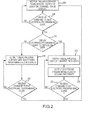
- Fig. 2 is a flow chart illustrating a method of outputting an EPG image.
- the receiver 108 receives a program service transmission from the service provider 104. As described above, this may include receiving a satellite transmission at a satellite antenna 120 and processing the received signal through the operation of a tuner 124, demodulator 128 and so on.
- operation 204 includes outputting at least one channel from the program service transmission for display on the display device 144.
- the channel output in operation 204 may be a three-dimensional video signal.
- operation 208 is executed.
- the EPG management module 168 determines if a signal has been received from the input device 160 that commands the receiver 108 to display electronic programming guide data. If, in operation 208, no such command signal is received, operation 204 may follow such that program service content is continually received and displayed by the receiver 108. If, in operation 208, a command to view the electronic programming guide is received, operation 212 may be executed.
- the EPG management module 168 determines if the EPG image is to be output to a particular user.
- the user input device 160 may be operable to receive a command that indicates the manner in which the EPG image is to be output.
- the EPG image may be output in the familiar manner, such that the image is overlain on top of other visual content.
- the EPG image may be output to a particular user. Accordingly, if in operation 212, the EPG management module 168 determines that the EPG image is to be displayed to all users, operation 216 may be executed. In operation 216, the EPG data is output on top of or overlain on the program service channel that is currently output on the display device 144. Following operation 216, operation 220 may be executed.
- the EPG management module 168 determines if a signal has been received from the input device 160 that commands the receiver 108 to exit from the EPG guide display. If, in operation 220, no such signal has been received by the receiver 108, operation 216 may be executed following operation 220 such that the EPG image remains displayed on the display device 144. If, in operation 220, an exit command is received, operation 204 may be executed following operation 220 such that a program service channel is output to the display device 144 without also displaying an EPG image.
- operation 224 may follow operation 212.
- the channel or other visual content from the program service transmission is output from the receiver 108 on a first frequency.
- the EPG management module 168 makes the visual content available to one or more users that are wearing a particular headset that is operable to receive that frequency. In so doing, the visual image seen by the user may shift from a three-dimensional image to a two-dimensional image.
- the signal carrying the first frequency and the signal carrying the second frequency may be combined at the receiver and sent to the display device as a combined signal.
- these signals may be sent separately from the receiver 108 to be combined together at the display device 144.
- operation 228 may be executed.
- the EPG management module 168 may output a signal containing the EPG image on a second frequency.
- the EPG management module 168 may make the EPG image visible or otherwise available to be seen by one or more individuals who are viewing the display device 144 with a headset operable to view the second frequency.
- the EPG data 164 like the program service output, is viewed to such a user as a two-dimensional image.
- operation 232 may be executed.
- the EPG management module 168 determines if a signal has been received by the receiver 108 that commands the receiver 108 to exit the electronic programming guide menu. If, in operation 232, no such command is received, operation 224 may be executed following operation 232 such that the visual content from the program service transmission and the EPG guide data are each output on separate frequencies. If, in operation 232, an exit command is received by the receiver 108, operation 204 may be executed following operation 232. Once operation 204 is again executed, the visual image received or seen by the first user may shift from a two-dimensional image back to a three-dimensional image. It should be appreciated that in the instance where the user, in operation 212, selects an electronic programming guide output to all users, the display of that data in operation 212 may be seen as a three-dimensional image along with other visual content that is concurrently shown.
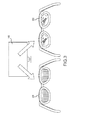
- Fig. 3 illustrates the visual output resulting from the method of Fig. 2 .
- Fig. 3 includes a display device 144 that is provided in association with two headsets 304 and 308.
- the visual image produced by the headset 304 and the headset 308 corresponds to the output from the receiver 108 in operations 224 and 228, shown in Fig. 2 .
- each headset 304 and 308 is used to view the same projection surface, namely the screen of the display device 144.
- each headset views a different image.
- the output from the display device 144 is a combination of both images seen through headsets 304 and 308.
- the headset 304 is operable to filter out the image that is viewed on the headset 308, namely the visual content from the broadcast service transmission. In so doing, the headset 304 is operable to pass through and thereby display the EPG data 164, which is transmitted on the first frequency. Similarly, the headset 308 is operable to filter out the content sent on the first frequency, and operable to pass through and thereby display content on the second frequency. Accordingly, through the headset 308, the visual content from the broadcast service transmission is visible as described above because only a single frequency is passed through the headset 308.
- the image seen therein is a two-dimensional rather than a three-dimensional image.
- Fig. 4 is a flow chart illustrating a further method of outputting an EPG image.
- the receiver 108 receives a program service transmission from the service provider 104. As described above, this may include receiving a satellite transmission at a satellite antenna 120 and processing the received signal through the operation of a tuner 124, demodulator 128 and so on.
- operation 404 includes outputting at least one channel from the program service transmission for display on the display device 144.
- operation 408 may be executed.
- the EPG management module 168 determines if a signal has been received from the input device 160 that commands the receiver 108 to display electronic programming guide data. If, in operation 408, no such command signal is received, operation 404 may follow such that program service content is continually received and displayed by the receiver 108. If, in operation 408, a command to view the electronic programming guide is received, operation 412 may be executed.
- the EPG management module 168 determines if the EPG image is to be output to a particular user.
- the user input device 160 may be operable to receive a command that indicates the manner in which the EPG image is to be output.
- the EPG image may be output in the familiar manner, such that the image is overlain on top of other visual content.
- the EPG image may be output to a particular user.
- operation 416 may be executed.
- the EPG data is output on top of or overlain on the program service channel that is currently output on the display device 144.
- operation 420 may be executed.
- the EPG management module 168 determines if a signal has been received from the input device 160 that commands the receiver 108 to exit from the EPG guide display. If, in operation 420, no such signal has been received by the receiver 108, operation 416 may be executed following operation 420 such that the EPG image remains displayed on the display device 144. If, in operation 420, an exit command is received, operation 404 may be executed following operation 420 such that a program service channel is output to the display device 144 without also displaying the EPG data 164.
- operation 424 may follow operation 412.
- the EPG management module 168 is operable to output the EPG data 164 intermittently on selected frames.
- the EPG management module outputs the EPG data 164 on a frame that is between every 15th and every 25th frame.
- the EPG management module outputs the EPG data 164 on a frame that is between every 19th and every 21th frame.
- the EPG management module 168 outputs the EPG data on every 20th frame.
- operation 428 may be executed.
- the EPG management module 168 may output a synchronization signal to one or more headsets, which are used to view the display device 144.
- the synchronization signal sent by the EPG management module 168 is used by the headset for timing purposes in order to capture the intermittent frames of EPG images displayed on the display device 144. Specifically, once a synchronization signal is received by the headset, the headset captures and holds the frame having the EPG image. Once the EPG data frame is captured, the headset holds the captured frame until the next synchronization signal is received and the next EPG data frame is captured. Following operation 428, operation 432 may be executed.
- the EPG management module 168 determines if a signal has been received by the receiver 108 that commands the receiver 108 to exit the electronic programming guide menu. If, in operation 432, no such command is received, operation 224 may be executed following operation 432 such that the visual content from the program service transmission and the EPG guide data are each output on separate frequencies. If, in operation 432, an exit command is received by the receiver 108, operation 404 may be executed following operation 432.
- Fig. 5 illustrates visual content output by way of a method as illustrated in Fig. 4 .
- Fig. 5 includes a display device 144 and a headset 504.
- the visual content displayed in Fig. 5 corresponds to output from the receiver 108 during operations 424 and 428.
- the display device 144 outputs visual content from the program service transmission.
- EPG data 164 is output through the display device 144 on intermittent visual frames. Because the EPG data is shown only on select frames, the EPG image is not visible to the unaided eye. Specifically, the EPG data appears and disappears too quickly to be seen by the unaided eye.
- Fig. 5 additionally includes a headset 504 that is operable to catch the intermittent EPG image output through the display device 144.
- the headset 504 receives a synchronization signal from the EPG management module 168 which provides timing information for the headset 504 to capture the intermittent EPG image output from the display device 144.
- the image seen through the headset 504 is a combination of the visual content from the broadcast or program service transmission and the captured EPG image.
- the headset 504 may employ an organic light emitting diode (OLED) in one embodiment. In another embodiment, the headset may employ the use of a camera.
- OLED organic light emitting diode
- Fig. 6 is a flow chart that illustrates a further method of outputting an EPG image.
- the receiver 108 receives a program service transmission from the service provider 104. As described above, this may include receiving a satellite transmission at a satellite antenna 120 and processing the received signal through the operation of a tuner 124, demodulator 128 and so on.
- operation 604 includes outputting at least one channel from the program service transmission for display on the display device 144.
- operation 608 may be executed.
- the EPG management module 168 determines if a signal has been received from the input device 160 that commands the receiver 108 to display electronic programming guide data. If, in operation 608, no such command signal is received, operation 604 may follow such that program service content is continually received and displayed by the receiver 108. If, in operation 608, a command to view the electronic programming guide is received, operation 212 may be executed.
- the EPG management module 168 determines if the EPG image is to be output to a particular user.
- the user input device 160 may be operable to receive a command that indicates the manner in which the EPG image is to be output.
- the EPG image may be output in the familiar manner, such that the image is overlain on top of other visual content.
- the EPG image may be output to a particular user.
- a user's desire to view or to not view an EPG may be determined apart from any specific input from the user.
- the EPG management module 168 may applying face and/or eyeball tracking to a viewer of the display device to determine a location on the display device on which the viewer is substantially focused. If the location on the display device on which the viewer is substantially focused does not correspond to a region in which the electronic programming guide image is displayed, the EPG management module may determine that the user does not want to view the electronic programming guide. On the other hand, if the location on the display device on which the viewer is substantially focused does corresponded to a region in which the electronic programming guide image is displayed, the EPG management module may determine that the user does want to view the electronic programming guide.
- operation 616 may be executed.
- the EPG data is output on top of or overlain on the program service channel that is currently output on the display device 144.
- operation 620 may be executed.
- the EPG management module 168 determines if a signal has been received from the input device 160 that commands the receiver 108 to exit from the EPG guide display. If, in operation 620, no such signal has been received by the receiver 108, operation 616 may be executed following operation 620 such that the EPG image remains displayed on the display device 144. If, in operation 620, an exit command is received, operation 604 may be executed following operation 620 such that a program service channel is output to the display device 144 without also displaying the EPG data 164.
- operation 624 may follow operation 612.
- the EPG management module 168 is operable to determine a location of a user, specifically the receiver 108 may employ techniques such as face recognition or eyeball scanning to determine the location and perspective in which a user will view a surface on which the EPG data will be projected.
- operation 628 may be executed.
- the EPG management module 168 is operable to project the EPG data 164 through the projector 162.
- the EPG management module 168 determines if a signal has been received by the receiver 108 that commands the receiver 108 to exit the electronic programming guide menu. If, in operation 632, no such command is received, operation 624 may be executed following operation 632 such that the visual content from the program service transmission and the EPG guide data are each output on separate frequencies. If, in operation 632, an exit command is received by the receiver 108, operation 604 may be executed following operation 632.
- Fig. 7 is an illustration of a visual output from the receiver 108 arising from a method as in Fig. 6 .
- Fig. 7 includes a display device 144 and a receiver 108.
- the display device 144 outputs visual content from the program service transmission.
- the receiver 108 projects an EPG image on a projection surface 704.
- the projection surface 704 may be a table which is nearby or in close proximity to the receiver 108. In other embodiments, the projection surface 704 may be a wall, floor, ceiling, and so on.
- the disclosure includes content delivered from a provider to a receiver across or over a network.
- the network across which content may be delivered may include satellite system, such as the one shown in Fig 1 .
- the network may include a cable television network, local area network, wide area network or the Internet.
- a receiver may include a general purpose computer operable to receive data or other content across a network, such as a wide area network of the internet.
- the computer may be configured so that a provider can access a web site, a file transfer protocol (FTP) site, a file sharing system or site, and so on.
- FTP file transfer protocol
- the order of method operations such those shown in Fig. 2 , Fig. 4 and Fig. 6 , may be changed.
Landscapes
- Engineering & Computer Science (AREA)
- Multimedia (AREA)
- Signal Processing (AREA)
- Databases & Information Systems (AREA)
- Theoretical Computer Science (AREA)
- Human Computer Interaction (AREA)
- Physics & Mathematics (AREA)
- General Physics & Mathematics (AREA)
- Computer Vision & Pattern Recognition (AREA)
- General Engineering & Computer Science (AREA)
- Computer Graphics (AREA)
- Two-Way Televisions, Distribution Of Moving Picture Or The Like (AREA)
- Controls And Circuits For Display Device (AREA)
- Testing, Inspecting, Measuring Of Stereoscopic Televisions And Televisions (AREA)
Abstract
Description
- The present invention relates to methods of displaying an electronic program guide. For example, methods of the invention separate the display of the electronic program guide from the program content.
- Cable television, satellite television, and other providers of program services typically include functionality for display of program guide information in their services. Program guide information may be viewed through an "electronic program guide" (EPG) menu that is enabled by a user through input to a receiver sent through an input device such as a remote control. The electronic program guide data typically includes program schedules, having such information as program channels and times in which various programs may be viewed on a particular channel. An EPG guide may be output in graphical form by way of a grid having channels corresponding to rows and time slots in the various columns of the grid. Once a user commands a receiver to display EPG guide information, the requested information is displayed as an overlay or otherwise over a portion of a display that is used to view a channel or other visual content from a broadcast service.
- In some instances, the overlay of the EPG may interfere or partially interfere with viewing of a program service channel. This interference with the program service channel may be disruptive to one or more viewers. Specifically, the user input device may be operated by one individual who alone wishes to view the EPG. Others who are concurrently watching the television may not wish to view the EPG and may thereby have their viewing experience disrupted.
- The present invention seeks to address this problem.
- According to the present invention, there is provided a method of displaying an electronic programming guide, the method comprising:
- outputting a video signal from a receiver to a display device, the video signal including program service content for presentation on the display device;
- receiving a command signal at the receiver, the command signal commanding the receiver to display an electronic program guide;
- and the receiver providing the electronic program guide in a manner such that its display does not interfere with the presentation of the program service content on the display device for some viewers;
- Embodiments of the invention enable the EPG to be displayed on the first display surface whilst the program continues on the second display surface. Therefore, the display of the EPG does not interfere with the presentation of the program content.
- In an embodiment, where images on the display device are to be viewed using headsets, the first display surface is provided by a first headset and the second display surface is provided by a second headset.
- Alternatively, the second display surface on which the program service content is presented is provided on the display device, and the first display surface on which the electronic program guide is displayed is a projection surface onto which the electronic program guide is projected by the receiver.
- In a further embodiment, the second display surface on which the program service content is presented is provided on the display device, and the first display surface on which the electronic program guide is displayed is a display surface of a headset.
- In an embodiment, altered 3D output signals are used such that one frequency of the output signal from the receiver contains an EPG data image and a second frequency of the 3D output signal contains visual content from the broadcast service transmission.
- In another embodiment, an EPG is periodically inserted into video stream during predetermined frames, which are then captured and held by a synchronized headset.
- In an alternative embodiment, an EPG image is output through a projector onto a projection surface.
- In an embodiment, the method further comprises in response to receiving the command signal at the receiver, outputting a third signal and a fourth signal from the receiver, the third signal including program service content and the fourth signal including electronic program guide data; wherein the third and the fourth signal cause the electronic program guide to be visible on the first display surface and cause the program service content to be visible on the second display surface.
- Preferably, the video signal is a combination of a first signal component on a first frequency and a second signal component on a second frequency, the first signal component and the second signal component together cause the display device to output an image that when viewed with a headset produces a three-dimensional image for the program service content;
the third signal is transmitted on the first frequency and the fourth signal is transmitted on the second frequency, the third and the fourth signal are sent to the display device to produce an image that is viewed with the aid of a first headset containing the first display surface and a second headset containing the second display surface;
the first headset filtering out content from the third signal and passing content from the fourth signal to produce the electronic program guide; and
the second headset filtering out content from the fourth signal and passing content from the third signal to produce a two-dimensional image for the program service content. - In an embodiment, the method further comprises receiving a fifth signal at the receiver, the fifth signal including a command to exit the electronic program guide; and
in response to the command to exit the electronic program guide, outputting a sixth signal from the receiver to the display device, the sixth signal including program service content for display on the display device, wherein the sixth signal is a combination of a first signal component on the first frequency and a second signal component on the second frequency, the first signal component and the second signal component together cause the display device to output an image
that when viewed with a headset produces a three-dimensional representation for the program service content. - In an embodiment, the third and fourth signals may be combined, and the resultant combined signal may be output from the receiver to the display device.
- Preferably, the display device includes the second display surface, and the third signal is sent to the display device to produce a program service image visible without the aid of a headset; and
the fourth signal is sent to the display device to produce an electronic program guide image that is visible with the aid of a first headset which includes the second display surface. - In this embodiment, the method may further comprise sending one frame of electronic program guide data on the fourth signal each time the third signal sends a predetermined number of video frames; and
outputting a synchronization signal from the receiver to the first headset, the synchronization signal corresponding to the occurrence of the electronic program guide frame in the fourth signal;
wherein the headset uses the synchronization signal to capture an image produced by the display device when the display device outputs an electronic program guide frame and to hold the captured image when display device does not output an electronic program guide frame. - In an embodiment, the display device includes the second display surface and the third signal is sent to the display device to produce a program service image; and
the first display surface is a surface of an object external to the receiver and the fourth signal is sent to a projector component of the receiver which projects an electronic program guide image onto the first display surface. - The present invention also extends to a method of displaying an electronic programming guide, comprising: outputting a first signal from a receiver to a display device, the first signal including program service content for display on the display device; receiving a second signal at the receiver, the second signal including a command to display an electronic programming guide; and in response to receiving the second signal at the receiver, outputting a third signal and a fourth signal from the receiver, the third signal including program service content and the fourth signal including electronic programming guide data; wherein the third and the fourth signal cause the electronic programming guide to be visible on a first display surface and cause the program service content to be visible on a second display surface.
- For example, where the first signal is a combination of a first signal component on a first frequency and second signal component on a second frequency, the first signal component and the second signal component together cause the display device to output an image that when viewed with a headset produces a three-dimensional image for the program service content;
the third signal is transmitted on the first frequency and the fourth signal is transmitted on the second frequency, the third and the fourth signal are sent to the display device to produce an image that is viewed with the aid of a first headset containing the first display surface and a second headset containing the second display surface;
the first headset filtering out content from the third signal and passing content from the fourth signal to produce the electronic programming guide; and
the second headset filtering out content from the fourth signal and passing content from the third signal to produce a two-dimensional image for the program service content. - In an embodiment, the method further comprises:
receiving a fifth signal at the receiver, the fifth signal including a command to exit the electronic programming guide; and
in response to the command to exit the electronic programming guide, outputting a sixth signal from the receiver to the display device, the sixth signal including program service content for display on the display device, wherein the sixth signal is a combination of a first signal component on the first frequency and a second signal component on the second frequency, the first signal component and the second signal component together cause the display device to output an image that when viewed with a headset produces a three-dimensional representation for the program service content. - Alternatively, the method may further comprise:
- combining the third and the fourth signal at the receiver to form a combined signal; and
- outputting the combined signal from the receiver to the display device.
- In an embodiment, the method further comprises:
- separately outputting the third and fourth signals from the receiver;
- receiving the third and fourth signals at the display device; and
- combining the third and the fourth signals at the display device.
- Preferably, the display device includes the second display surface, and the third signal is sent to the display device to produce a program service image visible without the aid of a headset; and
the fourth signal is sent to the display device to produce an electronic programming guide image that is visible with the aid of a first headset which includes the second display surface. - Preferably, the method further comprises:
- sending one frame of electronic programming guide data on the fourth signal each time the third signal sends a predetermined number of video frames; and
- outputting a synchronization signal from the receiver to the first headset, the synchronization signal corresponding to the occurrence of the electronic programming guide frame in the fourth signal;
- In an embodiment, the display device includes the second display surface and the third signal is sent to the display device to produce a program service image; and
the second display surface is a surface of an object external to the receiver and the fourth signal is sent to a projector component of the receiver which projects an electronic programming guide image onto the second display surface. - According to a further aspect of the present invention, there is provided a method of displaying an electronic programming guide, comprising:
- outputting a video signal from a receiver to a display device, the video signal including program service content for display on the display device;
- receiving a signal at the receiver, the signal including a command to display an electronic programming guide;
- in response to receiving the signal, determining if there is at least one viewer of the display device that does not want to view the electronic programming guide; and
- in response to determining that there is at least one viewer that does not want to view the electronic programming guide, projecting the electronic programming guide from the receiver to a projection surface.
- Preferably, the projection surface is external to the receiver.
- In an embodiment, in response to determining that there is not at least one viewer that does not want to view the electronic programming guide, the method comprises displaying the electronic programming guide as an overlay onto the program service content displayed on the display device.
- Preferably, the operation of determining if there is at least one viewer of the display device that does not want to view the electronic programming guide comprises:
- applying face and/or eyeball tracking to a viewer of the display device to determine a location on the display device on which the viewer is substantially focused;
- if the location on the display device on which the viewer is substantially focused does not correspond to a region in which the electronic programming guide image is displayed, determining that the user does not want to view the electronic programming guide; and
- if the location on the display device on which the viewer is substantially focused does correspond to a region in which the electronic programming guide image is displayed, determining that the user does want to view the electronic programming guide.
- The operation of determining if there is at least one viewer of the display device that does not want to view the electronic programming guide may comprise receiving a command from a user input device that selects a mode of operation for the receiver;
evaluating the command that selects a mode of operation to determine whether a user has indicated that the electronic programming guide is not to be displayed on the display device. - Additionally, and/or alternatively, the operation of projecting the electronic programming guide from the receiver may comprise:
- determining an approximate location of a viewer that does want to view the electronic programming guide; and
- projecting the electronic programming guide in proximity to the viewer that does want to view the electronic programming guide.
- The present invention also extends to a method of displaying an electronic programming guide, comprising:
- outputting a video signal from a receiver to a display device, the video signal including program service content for display on the display device;
- inserting a frame that includes an electronic programming guide image into the video signal each time a predetermined number of frames of the video have been output; and
- outputting a synchronization signal from the receiver that indicates a display of the frame that includes the electronic programming guide image on the display device.
- In an embodiment, the method further comprises:
- receiving a first synchronization signal at a headset;
- in response to receiving the first synchronization signal, capturing an image displayed on the display device at the headset; and
- displaying the captured image through the headset until a second synchronization signal is received at the headset.
- Preferably, the predetermined number of video frames is between 15 and 25, preferably between 19 and 21. In a preferred embodiment, the predetermined number of video frames is 20.
- Preferably, the first headset includes an organic light emitting diode display.
- In an embodiment, the first headset includes a camera.
- Embodiments of the present invention will hereinafter be described, by way of example, with reference to the accompanying drawings, in which:
-
Fig. 1 schematically illustrates a service provider providing program transmissions to a receiver; -
Fig. 2 is a flow chart illustrating a method of outputting an EPG image; -
Fig. 3 is an illustration of a visual output in accordance with a method as illustrated inFig. 2 ; -
Fig. 4 is a flow chart which illustrates another method of outputting an EPG image; -
Fig. 5 is an illustration of a visual output in accordance with a method as illustrated inFig. 4 ; -
Fig. 6 is a flow chart that illustrates a further method of outputting an EPG image; and -
Fig. 7 is an illustration of a visual output in accordance with a method as illustrated inFig. 6 . - Embodiments described herein provide an electronic program guide to one or more viewers in manner that does not interfere with the viewing experience of others. In an embodiment, altered 3D output signals are used such that one frequency of the output signal contains an EPG data image and a second frequency of the 3D output signal contains visual content from a broadcast service transmission. In another embodiment, an EPG is periodically inserted into video stream during predetermined frames, which are then captured and held by a synchronized headset. In another embodiment, an EPG image is output through a projector onto a projection surface.
- As used herein, a "receiver" is any device capable of receiving video and/or audio content included in a broadcast or other program service transmission from a service provider. As used herein, a service provider includes any service that provides a program service transmission to a receiver such as, without limitation, a satellite television service, a direct television service or a cable television service. It should be understood that the term "program service transmission" generally embraces not only satellite or terrestrial broadcasts and/or narrowcasts but also transmission of information across any wired or wireless transmission medium. Accordingly, a "program service transmission" encompasses transmission of information across a cable network (for example a cable headend to cable receiver), an Internet or other computer-accessible medium (including a local area network, wide-area network, and so on), including Internet protocol television transmissions, a wireless network such as a radio frequency or infrared network, and so on.
-
Fig. 1 shows aservice provider 104 that transmits or otherwise provides a program service transmission to areceiver 108. Thereceiver 108 can include a set-top box (STB), Digital Video Recorder (DVR), a cable receiver, a general purpose computer and so on. Thereceiver 108 may also include a cable modem that receives streaming audio. Thereceiver 108 may be associated with an individual, business or other entity, user or subscriber that receives a program service transmission from theservice provider 104. The program service transmission may be received through a subscription to the service. Generally the terms "user" and/or "subscriber" refer to an individual or company who receives a program service transmission. This may include those who have purchased a subscription to the program service transmission. Alternatively, the terms "user" and/or "subscriber" may refer to individuals who have been given access to the program service transmission through promotional offers and/or other non-fee-based agreements. - In the context of a satellite television service, the
service provider 104 may provide a program service transmission through anuplink center 112. Implementations may utilize a direct broadcast satellite (DBS) system which can incorporate packetized transmission signals according to an appropriate standard, such as the MPEG-2 standard. Theuplink center 112 may include a transmitter or other equipment operable to transmit a modulated signal having data representing audio and/or visual content. The modulated signal may be received at asatellite 116, which in turn retransmits the modulated signal to be received at one or more terrestrial locations. The modulated signal may be transmitted from thesatellite 116 over an appropriate frequency band such as, for example, the C-band, the Ku-band or the Ka-band. - Direct broadcast satellite DBS signals may be received as downlinked signals by a
satellite antenna 120. The downlinked signals may be received by atuner 124, which selects a specific frequency range. The signals received by thetuner 124 may include a number of transponder signals received from one ormore satellites 116. A particular transponder signal may include a combination or multiplex of a number of transport streams associated with one or more channels. A particular transport stream may include, for example, compressed or uncompressed audio or visual data. By applying band-pass filtering techniques, thetuner 124 may select a particular transponder signal from the group of signals received from a low noise block filter (LNBF), associated with thesatellite antenna 120. The downlinked signals may be L-band. - The transponder signal selected by the
tuner 124 may then be demodulated by thedemodulator 128. Specifically, thedemodulator 128 removes the sinusoidal carrier signal and outputs the information carrying signal as a baseband signal. Output from thedemodulator 128 may be directed to ademultiplexer 132. Thedemultiplexer 132 may be an integrated circuit that accepts the packetized, time domain multiplexed data stream of the MPEG-2 transport stream and routes the packets to various components for further processing. In so doing, thedemultiplexer 132 may separate out various transport streams that are contained in a particular transponder signal. A transport stream may include a number of packets having a unique packet identification (PID). In addition to routing packets of data, thedemultiplexer 132 may also unscramble encrypted data and/or provide buffering of the MPEG data. - A number of transport streams may together form a service. As used herein, a "service" refers to a particular channel which is selected by a user. A particular video channel typically includes three transport streams: a video stream, an audio stream, and a data stream. When a user selects a service, for example, the
demultiplexer 132 selects the appropriate audio and/or video transport stream and routes the audio and/or visual transport stream to adecoder 136, which may process the various transport streams that are output from thedemultiplexer 132. Thedecoder 136 may include an audio decompressor portion that is operable to decompress an audio stream, and a video decompressor portion that is operable to decompress a video stream. The audio stream and video stream may be fully compliant audio and video program elementary streams as defined by, for example, ISO 13818-2 and ISO 13818-3 of the MPEG-2 standard, respectively. Output from thedecoder 136 may be directed to an audio visual (A/V)processing module 140. The A/V processing module 140 may process the video and audio streams using digital-to-analog conversion techniques, or compressed digital to uncompressed digital conversion techniques, to produce one or more output signals. The resulting baseband signals may then be sent to aoutput device 144 through appropriate connections. By way of example, theoutput device 144 may include a television, a monitor, and/or a speaker system, and so on. - Embodiments may operate with different product transmission services. Accordingly, although a satellite system is provided as an example of a program service transmission system, it should be understood that other networks or broadcasts for transmitting data may be used. For example, embodiments may be implemented for a cable service. In this case, the
service provider 104 and thereceiver 108 may communicate over a communication path that includes various combinations of local and wide area networks and/or the Internet. - The
display device 144 may be a three-dimensional (3D) television. A3D television 144 may be provided in association with one or more headsets which are operable to process light projected from thedisplay device 144 in order to present a three-dimensional image to the wearer of a headset. A "shutter" system may be used in which a 3D image is constructed by two images, one for each eye, that are displayed in rapid succession on thedisplay device 144. The image for the right eye may be sent on a first frequency, and an image for the left eye may be sent on second frequency. The images may be sent using an appropriate data transmission protocol, such as High-Definition Multimedia Interface (HDMI). The images from the two frequencies may be interleaved or otherwise combined at thereceiver 108 or at thedisplay device 144 in order to produce a combined image produced by thedisplay device 144. - Using liquid crystal display (LCD) or other similar technology, the lenses of a headset may be arranged to become either transparent or opaque in order to convey an image to a particular eye. Thus, in order to convey an image to the right eye, the right lens becomes transparent and the left lens becomes opaque. Similarly, in order to convey an image to the left eye, the left lens becomes transparent and the right lens becomes opaque. In this way, two separate images, each having a slightly different viewing angle, are sent in rapid succession to each eye. The viewer's brain interprets the difference between the images as depth and, in so doing, unites the two images into one three-dimensional picture. In order to accurately convey the separate images to the left and right eyes, the headset may receive a synchronization or trigger signal from the
receiver 108 that indicates when the headset should make the lens transparent or opaque. A "headset" generally refers to a helmet or glasses or other eyewear that is arranged to process the three-dimensional signals, as appropriate. - The
receiver 108 may additionally include aprojector 162 for projecting an image on a surface that is external to thereceiver 108. The projector may be used to project an EPG menu onto an external surface such as a table or a wall. In connection with projecting an EPG menu, thereceiver 108 may include a face and/or eyeball tracking mechanism that is used to determine the location of a user who is viewing the EPG menu and/or to determine if a particular user is currently viewing the EPG menu. Theprojector 162 may be operable to directed the projected EPG menu in a particular direction or angle. - The
receiver 108 may incorporate or use memory orother storage device 152, such as magnetic or optical storage. Astorage device 152 may store data received from the decoded satellite signal. Thestorage device 152 may be volatile or non-volatile memory implemented using any suitable technique or technology such as, for example, random access memory (RAM), disk storage, flash memory, solid state and so on. Thestorage device 152 may be located within thereceiver 108 or may be separate from thereceiver 108. Thestorage device 152 may be removable. The stored data may include audio and/or visual content to be transmitted and output through theoutput device 144. Such audio/visual content may include still images, video images, animation and/or audio. Portable Network Graphics (PNG) or other appropriate formats, such as for example, Tagged Image File Format (TIFF), Joint Photographic Experts Group (JPEG), Motion Picture Experts Group (MPEG) -2, MPEG-4 may be used to display an image or video. - The
receiver 108 may additionally include aprocessor 156 arranged to run executable code in connection with various functions associated with thereceiver 108, and generally to cause thereceiver 108 to function and thedisplay device 144 to display images. For example, theprocessor 156 may display graphics, images, animations or other content through theoutput device 144. Thestorage device 152 may store an application, file, or other data that is useable by theprocessor 156. As used herein, an application includes processor executable code that may be run to carry out one or more functions associated with thereceiver 108. "Processor executable code" includes any computer-readable media or commands that may be ultimately interpreted by a processor, such as HTML or XML files that are rendered into user-viewable applications by an application executed by theprocessor 156. - An
EPG management module 168, which is stored in thestorage device 152, may be executed by theprocessor 156 to control output of an electronic programming guide (EPG) in a manner that is directed to particular users and/or does not interfere with others' enjoyment of program service content. In so doing, theEPG management module 168 may process an electronic program guide data that is received at thereceiver 108. TheEPG data 168 may provide a schedule of program content and/or other features. As used herein, the terms "electronic programming guide" or "EPG" are intended to encompass an interface provided to a user as part of a program service transmission system that includes a schedule of programming content. The EPG may include a database or otherwise access a database containing information including, for example, names or titles of viewing or listening events (programs), corresponding channel numbers and names, brief descriptions of the programs, start and finish times, and rating and content information related to the events. - In addition to other functions, the
EPG management module 168 may be arranged to output theEPG data 164 in a manner specifically directed to a particular user. TheEPG management module 168 is able to alter a 3D output signal such that one frequency of the output signal contains theEPG data 164 and a second frequency of the 3D output signal contains visual content from the broadcast service transmission. Instead of directing separate images to different eyes, as is the case with 3D image output; the altered output signal may direct separate images to different headsets. Thus, the EPG management module may output separate synchronization or timing signals to the separate headsets. A first synchronization signal causes a first headset to make both of its lenses transparent when the EPG image is displayed, and both of its lenses opaque when the content from the broadcast service transmission is displayed. Similarly, a second synchronization signal causes a second headset to make both of its lenses transparent when content from the broadcast service transmission is displayed, and both of its lenses opaque when the EPG image is displayed. - The
EPG management module 168 may be arranged to output theEPG data 164 periodically at predetermined frames. TheEPG management module 168 may additionally output a synchronization signal to one or more headsets which provides timing information operable to allow the headset to capture the periodically displayed EPG image. TheEPG management module 168 is operable tooutput EPG data 164 through theprojector 162. - The
processor 156 may also perform such tasks as executing commands received from a user. User commands may be sent to thereceiver 108 through auser input device 160 such as remote or other wireless device. As used herein, a "user input device" may include any device operable to receive input from a user and to convey the input to thereceiver 108. Theuser input device 160 may be a hand-held device having a number of buttons or keys which, when actuated by a user cause the user input device to covey information to thereceiver 108 using a suitable communication means, such as an infrared signal. Theuser input device 160 may include a pointing device or functionality that allows the user to control the position of a cursor that is displayed on theoutput device 144. For example, theuser input device 160 may include a track ball or glide plane that may be manipulated to control cursor movements. Theuser input device 160 may include a motion sensor or accelerometer that allows a user to control displayed items or graphics, such as a cursor, through movements of his or her hand or arm that cause a displacement of theuser input device 160. It will be appreciated that other input devices such as a computer mouse or touch screen may be used and other communication means, wired or wireless, may be used. Information sent to thereceiver 108 may include, for example, a command to change the output channel, a command to display a EPG and/or a command to navigate through the EPG. -
Fig. 2 is a flow chart illustrating a method of outputting an EPG image. Initially, atoperation 204, thereceiver 108 receives a program service transmission from theservice provider 104. As described above, this may include receiving a satellite transmission at asatellite antenna 120 and processing the received signal through the operation of atuner 124,demodulator 128 and so on. In addition to receiving and processing the broadcast service transmission,operation 204 includes outputting at least one channel from the program service transmission for display on thedisplay device 144. The channel output inoperation 204 may be a three-dimensional video signal. Followingoperation 204,operation 208 is executed. - In
operation 208, theEPG management module 168 determines if a signal has been received from theinput device 160 that commands thereceiver 108 to display electronic programming guide data. If, inoperation 208, no such command signal is received,operation 204 may follow such that program service content is continually received and displayed by thereceiver 108. If, inoperation 208, a command to view the electronic programming guide is received,operation 212 may be executed. - In
operation 212, theEPG management module 168 determines if the EPG image is to be output to a particular user. Theuser input device 160 may be operable to receive a command that indicates the manner in which the EPG image is to be output. In one mode, the EPG image may be output in the familiar manner, such that the image is overlain on top of other visual content. In another mode, the EPG image may be output to a particular user. Accordingly, if inoperation 212, theEPG management module 168 determines that the EPG image is to be displayed to all users,operation 216 may be executed. Inoperation 216, the EPG data is output on top of or overlain on the program service channel that is currently output on thedisplay device 144. Followingoperation 216,operation 220 may be executed. - In
operation 220, theEPG management module 168 determines if a signal has been received from theinput device 160 that commands thereceiver 108 to exit from the EPG guide display. If, inoperation 220, no such signal has been received by thereceiver 108,operation 216 may be executed followingoperation 220 such that the EPG image remains displayed on thedisplay device 144. If, inoperation 220, an exit command is received,operation 204 may be executed followingoperation 220 such that a program service channel is output to thedisplay device 144 without also displaying an EPG image. - If, in
operation 212, theEPG management module 168 receives a command to display theEPG data 164 to a particular user, thenoperation 224 may followoperation 212. Inoperation 224, the channel or other visual content from the program service transmission is output from thereceiver 108 on a first frequency. In outputting the channel or other visual content on the first frequency, theEPG management module 168 makes the visual content available to one or more users that are wearing a particular headset that is operable to receive that frequency. In so doing, the visual image seen by the user may shift from a three-dimensional image to a two-dimensional image. The signal carrying the first frequency and the signal carrying the second frequency may be combined at the receiver and sent to the display device as a combined signal. Alternatively, these signals may be sent separately from thereceiver 108 to be combined together at thedisplay device 144. Following or concurrently withoperation 224,operation 228 may be executed. Inoperation 228, theEPG management module 168 may output a signal containing the EPG image on a second frequency. In so doing, theEPG management module 168 may make the EPG image visible or otherwise available to be seen by one or more individuals who are viewing thedisplay device 144 with a headset operable to view the second frequency. As can be appreciated, theEPG data 164, like the program service output, is viewed to such a user as a two-dimensional image. Followingoperation 228,operation 232 may be executed. - In
operation 232, theEPG management module 168 determines if a signal has been received by thereceiver 108 that commands thereceiver 108 to exit the electronic programming guide menu. If, inoperation 232, no such command is received,operation 224 may be executed followingoperation 232 such that the visual content from the program service transmission and the EPG guide data are each output on separate frequencies. If, inoperation 232, an exit command is received by thereceiver 108,operation 204 may be executed followingoperation 232. Onceoperation 204 is again executed, the visual image received or seen by the first user may shift from a two-dimensional image back to a three-dimensional image. It should be appreciated that in the instance where the user, inoperation 212, selects an electronic programming guide output to all users, the display of that data inoperation 212 may be seen as a three-dimensional image along with other visual content that is concurrently shown. -
Fig. 3 illustrates the visual output resulting from the method ofFig. 2 .Fig. 3 includes adisplay device 144 that is provided in association with twoheadsets headset 304 and theheadset 308 corresponds to the output from thereceiver 108 inoperations Fig. 2 . As can be seen inFig. 3 , eachheadset display device 144. However, due to the filtering process associated with theheadsets display device 144 is a combination of both images seen throughheadsets headset 304 is operable to filter out the image that is viewed on theheadset 308, namely the visual content from the broadcast service transmission. In so doing, theheadset 304 is operable to pass through and thereby display theEPG data 164, which is transmitted on the first frequency. Similarly, theheadset 308 is operable to filter out the content sent on the first frequency, and operable to pass through and thereby display content on the second frequency. Accordingly, through theheadset 308, the visual content from the broadcast service transmission is visible as described above because only a single frequency is passed through theheadset 308. The image seen therein is a two-dimensional rather than a three-dimensional image. -
Fig. 4 is a flow chart illustrating a further method of outputting an EPG image. Initially, atoperation 404, thereceiver 108 receives a program service transmission from theservice provider 104. As described above, this may include receiving a satellite transmission at asatellite antenna 120 and processing the received signal through the operation of atuner 124,demodulator 128 and so on. In addition to receiving and processing the broadcast service transmission,operation 404 includes outputting at least one channel from the program service transmission for display on thedisplay device 144. Followingoperation 404,operation 408 may be executed. - In
operation 408, theEPG management module 168 determines if a signal has been received from theinput device 160 that commands thereceiver 108 to display electronic programming guide data. If, inoperation 408, no such command signal is received,operation 404 may follow such that program service content is continually received and displayed by thereceiver 108. If, inoperation 408, a command to view the electronic programming guide is received,operation 412 may be executed. - In
operation 412, theEPG management module 168 determines if the EPG image is to be output to a particular user. In this regard, theuser input device 160 may be operable to receive a command that indicates the manner in which the EPG image is to be output. In one mode, the EPG image may be output in the familiar manner, such that the image is overlain on top of other visual content. In another mode, the EPG image may be output to a particular user. - Accordingly, if in
operation 412, theEPG management module 168 determines that the EPG image is to be displayed to all users,operation 416 may be executed. Inoperation 416, the EPG data is output on top of or overlain on the program service channel that is currently output on thedisplay device 144. Followingoperation 416,operation 420 may be executed. - In
operation 420, theEPG management module 168 determines if a signal has been received from theinput device 160 that commands thereceiver 108 to exit from the EPG guide display. If, inoperation 420, no such signal has been received by thereceiver 108,operation 416 may be executed followingoperation 420 such that the EPG image remains displayed on thedisplay device 144. If, inoperation 420, an exit command is received,operation 404 may be executed followingoperation 420 such that a program service channel is output to thedisplay device 144 without also displaying theEPG data 164. - If, in
operation 412, theEPG management module 168 receives a command to display theEPG data 164 to a particular user, thenoperation 424 may followoperation 412. Inoperation 424, theEPG management module 168 is operable to output theEPG data 164 intermittently on selected frames. In one embodiment, the EPG management module outputs theEPG data 164 on a frame that is between every 15th and every 25th frame. In another embodiment, the EPG management module outputs theEPG data 164 on a frame that is between every 19th and every 21th frame. In still other embodiments, theEPG management module 168 outputs the EPG data on every 20th frame. Followingoperation 424,operation 428 may be executed. - In
operation 428, theEPG management module 168 may output a synchronization signal to one or more headsets, which are used to view thedisplay device 144. The synchronization signal sent by theEPG management module 168 is used by the headset for timing purposes in order to capture the intermittent frames of EPG images displayed on thedisplay device 144. Specifically, once a synchronization signal is received by the headset, the headset captures and holds the frame having the EPG image. Once the EPG data frame is captured, the headset holds the captured frame until the next synchronization signal is received and the next EPG data frame is captured. Followingoperation 428,operation 432 may be executed. - In
operation 432, theEPG management module 168 determines if a signal has been received by thereceiver 108 that commands thereceiver 108 to exit the electronic programming guide menu. If, inoperation 432, no such command is received,operation 224 may be executed followingoperation 432 such that the visual content from the program service transmission and the EPG guide data are each output on separate frequencies. If, inoperation 432, an exit command is received by thereceiver 108,operation 404 may be executed followingoperation 432. -
Fig. 5 illustrates visual content output by way of a method as illustrated inFig. 4 .Fig. 5 includes adisplay device 144 and aheadset 504. The visual content displayed inFig. 5 corresponds to output from thereceiver 108 duringoperations Fig. 5 , thedisplay device 144 outputs visual content from the program service transmission. Concurrently with this output,EPG data 164 is output through thedisplay device 144 on intermittent visual frames. Because the EPG data is shown only on select frames, the EPG image is not visible to the unaided eye. Specifically, the EPG data appears and disappears too quickly to be seen by the unaided eye. -
Fig. 5 additionally includes aheadset 504 that is operable to catch the intermittent EPG image output through thedisplay device 144. As described in connection withFig. 4 , theheadset 504 receives a synchronization signal from theEPG management module 168 which provides timing information for theheadset 504 to capture the intermittent EPG image output from thedisplay device 144. Accordingly, as can be seen inFig. 5 , the image seen through theheadset 504 is a combination of the visual content from the broadcast or program service transmission and the captured EPG image. In order to capture the EPG image, theheadset 504 may employ an organic light emitting diode (OLED) in one embodiment. In another embodiment, the headset may employ the use of a camera. -
Fig. 6 is a flow chart that illustrates a further method of outputting an EPG image. Initially, atoperation 604, thereceiver 108 receives a program service transmission from theservice provider 104. As described above, this may include receiving a satellite transmission at asatellite antenna 120 and processing the received signal through the operation of atuner 124,demodulator 128 and so on. In addition to receiving and processing the broadcast service transmission,operation 604 includes outputting at least one channel from the program service transmission for display on thedisplay device 144. Followingoperation 604,operation 608 may be executed. - In
operation 608, theEPG management module 168 determines if a signal has been received from theinput device 160 that commands thereceiver 108 to display electronic programming guide data. If, inoperation 608, no such command signal is received,operation 604 may follow such that program service content is continually received and displayed by thereceiver 108. If, inoperation 608, a command to view the electronic programming guide is received,operation 212 may be executed. - In
operation 612, theEPG management module 168 determines if the EPG image is to be output to a particular user. In this regard, theuser input device 160 may be operable to receive a command that indicates the manner in which the EPG image is to be output. In one mode, the EPG image may be output in the familiar manner, such that the image is overlain on top of other visual content. In another mode, the EPG image may be output to a particular user. - In other embodiments, a user's desire to view or to not view an EPG may be determined apart from any specific input from the user. For example, the
EPG management module 168 may applying face and/or eyeball tracking to a viewer of the display device to determine a location on the display device on which the viewer is substantially focused. If the location on the display device on which the viewer is substantially focused does not correspond to a region in which the electronic programming guide image is displayed, the EPG management module may determine that the user does not want to view the electronic programming guide. On the other hand, if the location on the display device on which the viewer is substantially focused does corresponded to a region in which the electronic programming guide image is displayed, the EPG management module may determine that the user does want to view the electronic programming guide. - If, in
operation 612, theEPG management module 168 determines that the EPG image is to be displayed to all users,operation 616 may be executed. Inoperation 616, the EPG data is output on top of or overlain on the program service channel that is currently output on thedisplay device 144. Followingoperation 616,operation 620 may be executed. - In
operation 620, theEPG management module 168 determines if a signal has been received from theinput device 160 that commands thereceiver 108 to exit from the EPG guide display. If, inoperation 620, no such signal has been received by thereceiver 108,operation 616 may be executed followingoperation 620 such that the EPG image remains displayed on thedisplay device 144. If, inoperation 620, an exit command is received,operation 604 may be executed followingoperation 620 such that a program service channel is output to thedisplay device 144 without also displaying theEPG data 164. - If, in
operation 612, theEPG management module 168 receives a command to display theEPG data 164 to a particular user, thenoperation 624 may followoperation 612. Inoperation 624, theEPG management module 168 is operable to determine a location of a user, specifically thereceiver 108 may employ techniques such as face recognition or eyeball scanning to determine the location and perspective in which a user will view a surface on which the EPG data will be projected. Followingoperation 624,operation 628 may be executed. Inoperation 628, theEPG management module 168 is operable to project theEPG data 164 through theprojector 162. - In
operation 632, theEPG management module 168 determines if a signal has been received by thereceiver 108 that commands thereceiver 108 to exit the electronic programming guide menu. If, inoperation 632, no such command is received,operation 624 may be executed followingoperation 632 such that the visual content from the program service transmission and the EPG guide data are each output on separate frequencies. If, inoperation 632, an exit command is received by thereceiver 108,operation 604 may be executed followingoperation 632. -
Fig. 7 is an illustration of a visual output from thereceiver 108 arising from a method as inFig. 6 .Fig. 7 includes adisplay device 144 and areceiver 108. Thedisplay device 144 outputs visual content from the program service transmission. Concurrently with this output of a program service channel, thereceiver 108 projects an EPG image on aprojection surface 704. As illustrated inFig. 7 , theprojection surface 704 may be a table which is nearby or in close proximity to thereceiver 108. In other embodiments, theprojection surface 704 may be a wall, floor, ceiling, and so on. - While embodiments are discussed herein in connection with the exemplary satellite broadcast system shown in
Fig. 1 , it should be appreciated that embodiments may be used in connection other types of networks or content delivery mechanisms. Generally, the disclosure includes content delivered from a provider to a receiver across or over a network. The network across which content may be delivered may include satellite system, such as the one shown inFig 1 . Alternatively, the network may include a cable television network, local area network, wide area network or the Internet. In connection with certain embodiments, a receiver may include a general purpose computer operable to receive data or other content across a network, such as a wide area network of the internet. In such embodiments, the computer may be configured so that a provider can access a web site, a file transfer protocol (FTP) site, a file sharing system or site, and so on. Moreover, the order of method operations, such those shown inFig. 2 ,Fig. 4 andFig. 6 , may be changed. - It will be appreciated that variations in, and modifications of, the embodiments as described and illustrated may be made within the scope of the appended claims.
Claims (12)
- A method of displaying an electronic programming guide, the method comprising:outputting a video signal from a receiver (108) to a display device (144), the video signal including program service content for presentation on the display device;receiving a command signal at the receiver (108), the command signal commanding the receiver to display an electronic program guide;and the receiver providing the electronic program guide in a manner such that its display does not interfere with the presentation of the program service content on the display device for some viewers;wherein the electronic program guide is displayed on a first display surface (304, 504, 704) which is distinct from a second display surface (308,144) on which the program service content is displayed.
- A method as claimed in Claim 1, wherein images on the display device (144) are to be viewed using headsets,
and wherein the first display surface is provided by a first headset (304) and the second display surface is provided by a second headset (308). - A method as claimed in Claim 1, wherein the second display surface on which the program service content is presented is provided on the display device (144), and the first display surface on which the electronic program guide is displayed is a projection surface (704) onto which the electronic program guide is projected by the receiver.
- A method as claimed in Claim 1, wherein the second display surface on which the program service content is presented is provided on the display device (144), and the first display surface on which the electronic program guide is displayed is a display surface of a headset (504).
- A method as claimed in any preceding claim, further comprising:in response to receiving the command signal at the receiver (108), outputting a third signal and a fourth signal from the receiver (108), the third signal including program service content and the fourth signal including electronic program guide data;wherein the third and the fourth signal cause the electronic program guide to be visible on the first display surface and cause the program service content to be visible on the second display surface.
- A method as claimed in Claim 5, wherein the video signal is a combination of a first signal component on a first frequency and a second signal component on a second frequency, the first signal component and the second signal component together cause the display device (144) to output an image that when viewed with a headset (304) produces a three-dimensional image for the program service content;
the third signal is transmitted on the first frequency and the fourth signal is transmitted on the second frequency, the third and the fourth signal are sent to the display device (144) to produce an image that is viewed with the aid of a first headset (304) containing the first display surface and a second headset (308) containing the second display surface;
the first headset (304) filtering out content from the third signal and passing content from the fourth signal to produce the electronic program guide; and
the second headset (308) filtering out content from the fourth signal and passing content from the third signal to produce a two-dimensional image for the program service content. - A method as claimed in Claim 5, further comprising:receiving a fifth signal at the receiver (108), the fifth signal including a command to exit the electronic program guide; andin response to the command to exit the electronic program guide, outputting a sixth signal from the receiver (108) to the display device (144), the sixth signal including program service content for display on the display device (144), wherein the sixth signal is a combination of a first signal component on the first frequency and a second signal component on the second frequency, the first signal component and the second signal component together cause the display device to output an image that when viewed with a headset produces a three-dimensional representation for the program service content.
- A method as claimed in Claim 5, further comprising:combining the third and the fourth signal at the receiver (108) to form a combined signal; andoutputting the combined signal from the receiver to the display device (144).
- A method as claimed in Claim 5, further comprising:separately outputting the third and fourth signals from the receiver (108);receiving the third and fourth signals at the display device (144); andcombining the third and the fourth signals at the display device (144).
- A method as claimed in Claim 5, wherein
the display device (144) includes the second display surface, and the third signal is sent to the display device (144) to produce a program service image visible without the aid of a headset; and
the fourth signal is sent to the display device to produce an electronic program guide image that is visible with the aid of a first headset (504) which includes the second display surface. - A method as claimed in Claim 10, further comprising:sending one frame of electronic program guide data on the fourth signal each time the third signal sends a predetermined number of video frames; andoutputting a synchronization signal from the receiver (108) to the first headset (504), the synchronization signal corresponding to the occurrence of the electronic program guide frame in the fourth signal;wherein the headset (504) uses the synchronization signal to capture an image produced by the display device (144) when the display device (144) outputs an electronic program guide frame and to hold the captured image when display device (144) does not output an electronic program guide frame.
- A method as claimed in Claim 5, wherein
the display device (144) includes the second display surface and the third signal is sent to the display device (144) to produce a program service image; and
the first display surface is a surface (704) of an object external to the receiver (108) and the fourth signal is sent to a projector component of the receiver (108) which projects an electronic program guide image onto the first display surface.
Priority Applications (3)
| Application Number | Priority Date | Filing Date | Title |
|---|---|---|---|
| EP10177592.2A EP2432218B1 (en) | 2010-09-20 | 2010-09-20 | Methods of displaying an electronic program guide |
| US13/237,772 US9325965B2 (en) | 2010-09-20 | 2011-09-20 | Separate display surfaces for EPG and program content |
| US15/080,189 US9762949B2 (en) | 2010-09-20 | 2016-03-24 | Methods of displaying an electronic program guide |
Applications Claiming Priority (1)
| Application Number | Priority Date | Filing Date | Title |
|---|---|---|---|
| EP10177592.2A EP2432218B1 (en) | 2010-09-20 | 2010-09-20 | Methods of displaying an electronic program guide |
Publications (2)
| Publication Number | Publication Date |
|---|---|
| EP2432218A1 true EP2432218A1 (en) | 2012-03-21 |
| EP2432218B1 EP2432218B1 (en) | 2016-04-20 |
Family
ID=43087880
Family Applications (1)
| Application Number | Title | Priority Date | Filing Date |
|---|---|---|---|
| EP10177592.2A Active EP2432218B1 (en) | 2010-09-20 | 2010-09-20 | Methods of displaying an electronic program guide |
Country Status (2)
| Country | Link |
|---|---|
| US (2) | US9325965B2 (en) |
| EP (1) | EP2432218B1 (en) |
Cited By (1)
| Publication number | Priority date | Publication date | Assignee | Title |
|---|---|---|---|---|
| CN104219558A (en) * | 2013-06-03 | 2014-12-17 | 北京中传数广技术有限公司 | Display method and device of three-dimensional EPG (electronic program guide) |
Families Citing this family (6)
| Publication number | Priority date | Publication date | Assignee | Title |
|---|---|---|---|---|
| WO2013149655A1 (en) * | 2012-04-04 | 2013-10-10 | Naxos Finance Sa | System for generating and receiving a stereoscopic-2d backward compatible video stream, and method thereof |
| US20130339859A1 (en) * | 2012-06-15 | 2013-12-19 | Muzik LLC | Interactive networked headphones |
| US11237695B2 (en) * | 2012-10-12 | 2022-02-01 | Sling Media L.L.C. | EPG menu with a projected 3D image |
| US10088921B2 (en) | 2014-10-10 | 2018-10-02 | Muzik Inc. | Devices for sharing user interactions |
| CN106531073B (en) * | 2017-01-03 | 2018-11-20 | 京东方科技集团股份有限公司 | Processing circuit, display methods and the display device of display screen |
| US12133772B2 (en) * | 2019-12-10 | 2024-11-05 | Globus Medical, Inc. | Augmented reality headset for navigated robotic surgery |
Citations (5)
| Publication number | Priority date | Publication date | Assignee | Title |
|---|---|---|---|---|
| US6188442B1 (en) * | 1997-08-01 | 2001-02-13 | International Business Machines Corporation | Multiviewer display system for television monitors |
| US20020085023A1 (en) * | 2001-01-02 | 2002-07-04 | Zustak Fred J. | Display of ancillary data on local network appliance |
| WO2008021857A2 (en) * | 2006-08-08 | 2008-02-21 | Texas Instruments Incorporated | Method and system for multi-channel viewing applications |
| US20090262127A1 (en) * | 2006-08-02 | 2009-10-22 | Nec Corporation | Image processing apparatus, display apparatus, and image displaying system |
| EP2169967A2 (en) * | 2008-09-29 | 2010-03-31 | Disney Enterprises, Inc. | Interactive theater with audience participation |
Family Cites Families (30)
| Publication number | Priority date | Publication date | Assignee | Title |
|---|---|---|---|---|
| US6097441A (en) * | 1997-12-31 | 2000-08-01 | Eremote, Inc. | System for dual-display interaction with integrated television and internet content |
| US8756635B2 (en) * | 2000-06-30 | 2014-06-17 | JLB Ventures, LLC. | Remote control of program scheduling |
| US6637883B1 (en) * | 2003-01-23 | 2003-10-28 | Vishwas V. Tengshe | Gaze tracking system and method |
| US20070165964A1 (en) * | 2005-10-31 | 2007-07-19 | Carol Wolf | De-emphasis of user-selected portions in a video display |
| US8130330B2 (en) * | 2005-12-05 | 2012-03-06 | Seiko Epson Corporation | Immersive surround visual fields |
| US7882521B2 (en) * | 2006-10-02 | 2011-02-01 | Samsung Electronics Co., Ltd. | EPG providing apparatus with a channel table and method thereof |
| US8269822B2 (en) * | 2007-04-03 | 2012-09-18 | Sony Computer Entertainment America, LLC | Display viewing system and methods for optimizing display view based on active tracking |
| EP2172019B1 (en) * | 2007-07-30 | 2012-10-10 | NDS Limited | Providing information about video content |
| JP5194673B2 (en) * | 2007-09-26 | 2013-05-08 | 株式会社日立製作所 | Mobile terminal and information transmission / reception method |
| US20100153996A1 (en) * | 2008-12-17 | 2010-06-17 | Migos Charles J | Gesture based electronic program management system |
| JP5695819B2 (en) * | 2009-03-30 | 2015-04-08 | 日立マクセル株式会社 | TV operation method |
| US20120105486A1 (en) * | 2009-04-09 | 2012-05-03 | Dynavox Systems Llc | Calibration free, motion tolerent eye-gaze direction detector with contextually aware computer interaction and communication methods |
| US20110001808A1 (en) * | 2009-06-01 | 2011-01-06 | Bit Cauldron Corporation | Method of Stereoscopic Synchronization of Active Shutter Glasses |
| US9544568B2 (en) * | 2009-06-05 | 2017-01-10 | Lg Electronics Inc. | Image display apparatus and method for operating the same |
| US8872976B2 (en) * | 2009-07-15 | 2014-10-28 | Home Box Office, Inc. | Identification of 3D format and graphics rendering on 3D displays |
| US8291322B2 (en) * | 2009-09-30 | 2012-10-16 | United Video Properties, Inc. | Systems and methods for navigating a three-dimensional media guidance application |
| US8878996B2 (en) * | 2009-12-11 | 2014-11-04 | Motorola Mobility Llc | Selective decoding of an input stream |
| US8964013B2 (en) * | 2009-12-31 | 2015-02-24 | Broadcom Corporation | Display with elastic light manipulator |
| US8712326B2 (en) * | 2009-12-31 | 2014-04-29 | Dell Products, Lp | Integrated projector system |
| US8854531B2 (en) * | 2009-12-31 | 2014-10-07 | Broadcom Corporation | Multiple remote controllers that each simultaneously controls a different visual presentation of a 2D/3D display |
| US8370873B2 (en) * | 2010-03-09 | 2013-02-05 | Sony Corporation | 3D TV glasses with TV mode control |
| KR101370927B1 (en) * | 2010-04-12 | 2014-03-10 | 엘지전자 주식회사 | Method and apparatus for displaying images |
| US8890941B2 (en) * | 2010-04-29 | 2014-11-18 | Virginia Venture Industries, Llc | Methods and apparatuses for viewing three dimensional images |
| WO2012018669A2 (en) * | 2010-08-03 | 2012-02-09 | Bby Solutions, Inc. | Multiple simultaneous programs on a display |
| KR101741519B1 (en) * | 2010-09-30 | 2017-06-01 | 삼성전자주식회사 | 3D Glasses and Method for Controlling thereof |
| US8943541B2 (en) * | 2010-10-11 | 2015-01-27 | Eldon Technology Limited | Holographic 3D display |
| US9508194B1 (en) * | 2010-12-30 | 2016-11-29 | Amazon Technologies, Inc. | Utilizing content output devices in an augmented reality environment |
| JP6165846B2 (en) * | 2012-05-09 | 2017-07-19 | インテル コーポレイション | Selective enhancement of parts of the display based on eye tracking |
| US20130340005A1 (en) * | 2012-06-14 | 2013-12-19 | Mobitv, Inc. | Eye-tracking program guides |
| US8990843B2 (en) * | 2012-10-26 | 2015-03-24 | Mobitv, Inc. | Eye tracking based defocusing |
-
2010
- 2010-09-20 EP EP10177592.2A patent/EP2432218B1/en active Active
-
2011
- 2011-09-20 US US13/237,772 patent/US9325965B2/en active Active
-
2016
- 2016-03-24 US US15/080,189 patent/US9762949B2/en active Active
Patent Citations (5)
| Publication number | Priority date | Publication date | Assignee | Title |
|---|---|---|---|---|
| US6188442B1 (en) * | 1997-08-01 | 2001-02-13 | International Business Machines Corporation | Multiviewer display system for television monitors |
| US20020085023A1 (en) * | 2001-01-02 | 2002-07-04 | Zustak Fred J. | Display of ancillary data on local network appliance |
| US20090262127A1 (en) * | 2006-08-02 | 2009-10-22 | Nec Corporation | Image processing apparatus, display apparatus, and image displaying system |
| WO2008021857A2 (en) * | 2006-08-08 | 2008-02-21 | Texas Instruments Incorporated | Method and system for multi-channel viewing applications |
| EP2169967A2 (en) * | 2008-09-29 | 2010-03-31 | Disney Enterprises, Inc. | Interactive theater with audience participation |
Cited By (1)
| Publication number | Priority date | Publication date | Assignee | Title |
|---|---|---|---|---|
| CN104219558A (en) * | 2013-06-03 | 2014-12-17 | 北京中传数广技术有限公司 | Display method and device of three-dimensional EPG (electronic program guide) |
Also Published As
| Publication number | Publication date |
|---|---|
| EP2432218B1 (en) | 2016-04-20 |
| US20120069243A1 (en) | 2012-03-22 |
| US20160205432A1 (en) | 2016-07-14 |
| US9762949B2 (en) | 2017-09-12 |
| US9325965B2 (en) | 2016-04-26 |
Similar Documents
| Publication | Publication Date | Title |
|---|---|---|
| US9762949B2 (en) | Methods of displaying an electronic program guide | |
| US8943541B2 (en) | Holographic 3D display | |
| US7705860B2 (en) | Full scale video with overlaid graphical user interface and scaled image | |
| US8595768B2 (en) | Enhanced program preview content | |
| CA3102500C (en) | Transmission of video signals | |
| US20050071782A1 (en) | Miniaturized video feed generation and user-interface | |
| EP1949689B1 (en) | Digital video zooming system | |
| US20100199308A1 (en) | Channel Change Insert | |
| JP2011029849A (en) | Receiving device, communication system, method of combining caption with stereoscopic image, program, and data structure | |
| WO2006014469A3 (en) | 3d television broadcasting system | |
| US8953049B2 (en) | Television receiver—projector compensating optical properties of projection surface | |
| CN101513043B (en) | Broadcast receiver and method of operation thereof | |
| KR101666246B1 (en) | Advance metadata provision augmented broadcasting apparatus and method | |
| KR102056166B1 (en) | Image display apparatus, server and method for operating the same | |
| KR101951326B1 (en) | Image display apparatus, server and method for operating the same | |
| EP2445222A2 (en) | Three-dimensional image display apparatus and image display method thereof | |
| Sotelo et al. | Experiences on hybrid television and augmented reality on ISDB-T | |
| US12574601B2 (en) | Program receiving display device and program receiving display control method | |
| JP4314682B2 (en) | Information signal transmission method, reception method, and reception apparatus | |
| US20120300029A1 (en) | Video processing device, transmission device, stereoscopic video viewing system, video processing method, video processing program and integrated circuit | |
| KR101946585B1 (en) | Image display apparatus, and method for operating the same | |
| KR101882214B1 (en) | Image display apparatus, server and method for operating the same | |
| KR20140083544A (en) | Image display apparatus, image transmitting apparatus, and method for operating the same | |
| IL191265A (en) | Digital video zooming system | |
| HK1076341A (en) | Full scale video picture with overlaid graphical user interface and reduced image |
Legal Events
| Date | Code | Title | Description |
|---|---|---|---|
| PUAI | Public reference made under article 153(3) epc to a published international application that has entered the european phase |
Free format text: ORIGINAL CODE: 0009012 |
|
| AK | Designated contracting states |
Kind code of ref document: A1 Designated state(s): AL AT BE BG CH CY CZ DE DK EE ES FI FR GB GR HR HU IE IS IT LI LT LU LV MC MK MT NL NO PL PT RO SE SI SK SM TR |
|
| AX | Request for extension of the european patent |
Extension state: BA ME RS |
|
| 17P | Request for examination filed |
Effective date: 20120921 |
|
| 17Q | First examination report despatched |
Effective date: 20130129 |
|
| RAP1 | Party data changed (applicant data changed or rights of an application transferred) |
Owner name: ECHOSTAR TECHNOLOGIES L.L.C. |
|
| REG | Reference to a national code |
Ref country code: DE Ref legal event code: R079 Ref document number: 602010032417 Country of ref document: DE Free format text: PREVIOUS MAIN CLASS: H04N0005445000 Ipc: H04N0013040000 |
|
| RIC1 | Information provided on ipc code assigned before grant |
Ipc: H04N 9/31 20060101ALI20151209BHEP Ipc: H04N 21/41 20110101ALI20151209BHEP Ipc: H04N 13/00 20060101ALI20151209BHEP Ipc: H04N 13/04 20060101AFI20151209BHEP |
|
| GRAP | Despatch of communication of intention to grant a patent |
Free format text: ORIGINAL CODE: EPIDOSNIGR1 |
|
| INTG | Intention to grant announced |
Effective date: 20160125 |
|
| GRAS | Grant fee paid |
Free format text: ORIGINAL CODE: EPIDOSNIGR3 |
|
| GRAA | (expected) grant |
Free format text: ORIGINAL CODE: 0009210 |
|
| AK | Designated contracting states |
Kind code of ref document: B1 Designated state(s): AL AT BE BG CH CY CZ DE DK EE ES FI FR GB GR HR HU IE IS IT LI LT LU LV MC MK MT NL NO PL PT RO SE SI SK SM TR |
|
| REG | Reference to a national code |
Ref country code: GB Ref legal event code: FG4D |
|
| REG | Reference to a national code |
Ref country code: CH Ref legal event code: EP |
|
| REG | Reference to a national code |
Ref country code: AT Ref legal event code: REF Ref document number: 793551 Country of ref document: AT Kind code of ref document: T Effective date: 20160515 |
|
| REG | Reference to a national code |
Ref country code: IE Ref legal event code: FG4D |
|
| REG | Reference to a national code |
Ref country code: DE Ref legal event code: R096 Ref document number: 602010032417 Country of ref document: DE |
|
| REG | Reference to a national code |
Ref country code: NL Ref legal event code: FP |
|
| REG | Reference to a national code |
Ref country code: FR Ref legal event code: PLFP Year of fee payment: 7 |
|
| REG | Reference to a national code |
Ref country code: LT Ref legal event code: MG4D |
|
| REG | Reference to a national code |
Ref country code: AT Ref legal event code: MK05 Ref document number: 793551 Country of ref document: AT Kind code of ref document: T Effective date: 20160420 |
|
| PG25 | Lapsed in a contracting state [announced via postgrant information from national office to epo] |
Ref country code: FI Free format text: LAPSE BECAUSE OF FAILURE TO SUBMIT A TRANSLATION OF THE DESCRIPTION OR TO PAY THE FEE WITHIN THE PRESCRIBED TIME-LIMIT Effective date: 20160420 Ref country code: NO Free format text: LAPSE BECAUSE OF FAILURE TO SUBMIT A TRANSLATION OF THE DESCRIPTION OR TO PAY THE FEE WITHIN THE PRESCRIBED TIME-LIMIT Effective date: 20160720 Ref country code: LT Free format text: LAPSE BECAUSE OF FAILURE TO SUBMIT A TRANSLATION OF THE DESCRIPTION OR TO PAY THE FEE WITHIN THE PRESCRIBED TIME-LIMIT Effective date: 20160420 Ref country code: PL Free format text: LAPSE BECAUSE OF FAILURE TO SUBMIT A TRANSLATION OF THE DESCRIPTION OR TO PAY THE FEE WITHIN THE PRESCRIBED TIME-LIMIT Effective date: 20160420 |
|
| PG25 | Lapsed in a contracting state [announced via postgrant information from national office to epo] |
Ref country code: SE Free format text: LAPSE BECAUSE OF FAILURE TO SUBMIT A TRANSLATION OF THE DESCRIPTION OR TO PAY THE FEE WITHIN THE PRESCRIBED TIME-LIMIT Effective date: 20160420 Ref country code: LV Free format text: LAPSE BECAUSE OF FAILURE TO SUBMIT A TRANSLATION OF THE DESCRIPTION OR TO PAY THE FEE WITHIN THE PRESCRIBED TIME-LIMIT Effective date: 20160420 Ref country code: AT Free format text: LAPSE BECAUSE OF FAILURE TO SUBMIT A TRANSLATION OF THE DESCRIPTION OR TO PAY THE FEE WITHIN THE PRESCRIBED TIME-LIMIT Effective date: 20160420 Ref country code: ES Free format text: LAPSE BECAUSE OF FAILURE TO SUBMIT A TRANSLATION OF THE DESCRIPTION OR TO PAY THE FEE WITHIN THE PRESCRIBED TIME-LIMIT Effective date: 20160420 Ref country code: PT Free format text: LAPSE BECAUSE OF FAILURE TO SUBMIT A TRANSLATION OF THE DESCRIPTION OR TO PAY THE FEE WITHIN THE PRESCRIBED TIME-LIMIT Effective date: 20160822 Ref country code: HR Free format text: LAPSE BECAUSE OF FAILURE TO SUBMIT A TRANSLATION OF THE DESCRIPTION OR TO PAY THE FEE WITHIN THE PRESCRIBED TIME-LIMIT Effective date: 20160420 Ref country code: GR Free format text: LAPSE BECAUSE OF FAILURE TO SUBMIT A TRANSLATION OF THE DESCRIPTION OR TO PAY THE FEE WITHIN THE PRESCRIBED TIME-LIMIT Effective date: 20160721 |
|
| PG25 | Lapsed in a contracting state [announced via postgrant information from national office to epo] |
Ref country code: IT Free format text: LAPSE BECAUSE OF FAILURE TO SUBMIT A TRANSLATION OF THE DESCRIPTION OR TO PAY THE FEE WITHIN THE PRESCRIBED TIME-LIMIT Effective date: 20160420 Ref country code: BE Free format text: LAPSE BECAUSE OF FAILURE TO SUBMIT A TRANSLATION OF THE DESCRIPTION OR TO PAY THE FEE WITHIN THE PRESCRIBED TIME-LIMIT Effective date: 20160420 |
|
| REG | Reference to a national code |
Ref country code: DE Ref legal event code: R097 Ref document number: 602010032417 Country of ref document: DE |
|
| PG25 | Lapsed in a contracting state [announced via postgrant information from national office to epo] |
Ref country code: RO Free format text: LAPSE BECAUSE OF FAILURE TO SUBMIT A TRANSLATION OF THE DESCRIPTION OR TO PAY THE FEE WITHIN THE PRESCRIBED TIME-LIMIT Effective date: 20160420 Ref country code: DK Free format text: LAPSE BECAUSE OF FAILURE TO SUBMIT A TRANSLATION OF THE DESCRIPTION OR TO PAY THE FEE WITHIN THE PRESCRIBED TIME-LIMIT Effective date: 20160420 Ref country code: SK Free format text: LAPSE BECAUSE OF FAILURE TO SUBMIT A TRANSLATION OF THE DESCRIPTION OR TO PAY THE FEE WITHIN THE PRESCRIBED TIME-LIMIT Effective date: 20160420 Ref country code: EE Free format text: LAPSE BECAUSE OF FAILURE TO SUBMIT A TRANSLATION OF THE DESCRIPTION OR TO PAY THE FEE WITHIN THE PRESCRIBED TIME-LIMIT Effective date: 20160420 Ref country code: CZ Free format text: LAPSE BECAUSE OF FAILURE TO SUBMIT A TRANSLATION OF THE DESCRIPTION OR TO PAY THE FEE WITHIN THE PRESCRIBED TIME-LIMIT Effective date: 20160420 |
|
| PLBE | No opposition filed within time limit |
Free format text: ORIGINAL CODE: 0009261 |
|
| STAA | Information on the status of an ep patent application or granted ep patent |
Free format text: STATUS: NO OPPOSITION FILED WITHIN TIME LIMIT |
|
| PG25 | Lapsed in a contracting state [announced via postgrant information from national office to epo] |
Ref country code: SM Free format text: LAPSE BECAUSE OF FAILURE TO SUBMIT A TRANSLATION OF THE DESCRIPTION OR TO PAY THE FEE WITHIN THE PRESCRIBED TIME-LIMIT Effective date: 20160420 |
|
| 26N | No opposition filed |
Effective date: 20170123 |
|
| PG25 | Lapsed in a contracting state [announced via postgrant information from national office to epo] |
Ref country code: MC Free format text: LAPSE BECAUSE OF FAILURE TO SUBMIT A TRANSLATION OF THE DESCRIPTION OR TO PAY THE FEE WITHIN THE PRESCRIBED TIME-LIMIT Effective date: 20160420 |
|
| REG | Reference to a national code |
Ref country code: CH Ref legal event code: PL |
|
| PG25 | Lapsed in a contracting state [announced via postgrant information from national office to epo] |
Ref country code: SI Free format text: LAPSE BECAUSE OF FAILURE TO SUBMIT A TRANSLATION OF THE DESCRIPTION OR TO PAY THE FEE WITHIN THE PRESCRIBED TIME-LIMIT Effective date: 20160420 |
|
| REG | Reference to a national code |
Ref country code: IE Ref legal event code: MM4A |
|
| PG25 | Lapsed in a contracting state [announced via postgrant information from national office to epo] |
Ref country code: IE Free format text: LAPSE BECAUSE OF NON-PAYMENT OF DUE FEES Effective date: 20160920 Ref country code: CH Free format text: LAPSE BECAUSE OF NON-PAYMENT OF DUE FEES Effective date: 20160930 Ref country code: LI Free format text: LAPSE BECAUSE OF NON-PAYMENT OF DUE FEES Effective date: 20160930 |
|
| REG | Reference to a national code |
Ref country code: FR Ref legal event code: PLFP Year of fee payment: 8 |
|
| PG25 | Lapsed in a contracting state [announced via postgrant information from national office to epo] |
Ref country code: LU Free format text: LAPSE BECAUSE OF NON-PAYMENT OF DUE FEES Effective date: 20160920 |
|
| REG | Reference to a national code |
Ref country code: DE Ref legal event code: R079 Ref document number: 602010032417 Country of ref document: DE Free format text: PREVIOUS MAIN CLASS: H04N0013040000 Ipc: H04N0013300000 |
|
| PG25 | Lapsed in a contracting state [announced via postgrant information from national office to epo] |
Ref country code: CY Free format text: LAPSE BECAUSE OF FAILURE TO SUBMIT A TRANSLATION OF THE DESCRIPTION OR TO PAY THE FEE WITHIN THE PRESCRIBED TIME-LIMIT Effective date: 20160420 Ref country code: HU Free format text: LAPSE BECAUSE OF FAILURE TO SUBMIT A TRANSLATION OF THE DESCRIPTION OR TO PAY THE FEE WITHIN THE PRESCRIBED TIME-LIMIT; INVALID AB INITIO Effective date: 20100920 |
|
| PG25 | Lapsed in a contracting state [announced via postgrant information from national office to epo] |
Ref country code: IS Free format text: LAPSE BECAUSE OF FAILURE TO SUBMIT A TRANSLATION OF THE DESCRIPTION OR TO PAY THE FEE WITHIN THE PRESCRIBED TIME-LIMIT Effective date: 20160420 Ref country code: MK Free format text: LAPSE BECAUSE OF FAILURE TO SUBMIT A TRANSLATION OF THE DESCRIPTION OR TO PAY THE FEE WITHIN THE PRESCRIBED TIME-LIMIT Effective date: 20160420 Ref country code: TR Free format text: LAPSE BECAUSE OF FAILURE TO SUBMIT A TRANSLATION OF THE DESCRIPTION OR TO PAY THE FEE WITHIN THE PRESCRIBED TIME-LIMIT Effective date: 20160420 Ref country code: MT Free format text: LAPSE BECAUSE OF NON-PAYMENT OF DUE FEES Effective date: 20160930 |
|
| PG25 | Lapsed in a contracting state [announced via postgrant information from national office to epo] |
Ref country code: BG Free format text: LAPSE BECAUSE OF FAILURE TO SUBMIT A TRANSLATION OF THE DESCRIPTION OR TO PAY THE FEE WITHIN THE PRESCRIBED TIME-LIMIT Effective date: 20160420 |
|
| REG | Reference to a national code |
Ref country code: FR Ref legal event code: PLFP Year of fee payment: 9 |
|
| PG25 | Lapsed in a contracting state [announced via postgrant information from national office to epo] |
Ref country code: AL Free format text: LAPSE BECAUSE OF FAILURE TO SUBMIT A TRANSLATION OF THE DESCRIPTION OR TO PAY THE FEE WITHIN THE PRESCRIBED TIME-LIMIT Effective date: 20160420 |
|
| REG | Reference to a national code |
Ref country code: DE Ref legal event code: R082 Ref document number: 602010032417 Country of ref document: DE Representative=s name: HERNANDEZ, YORCK, DIPL.-ING., DE Ref country code: DE Ref legal event code: R081 Ref document number: 602010032417 Country of ref document: DE Owner name: DISH TECHNOLOGIES L.L.C., ENGLEWOOD, US Free format text: FORMER OWNER: ECHOSTAR TECHNOLOGIES L.L.C., ENGLEWOOD, COL., US |
|
| REG | Reference to a national code |
Ref country code: NL Ref legal event code: HC Owner name: DISH TECHNOLOGIES L.L.C.; US Free format text: DETAILS ASSIGNMENT: CHANGE OF OWNER(S), CHANGE OF OWNER(S) NAME; FORMER OWNER NAME: ECHOSTAR TECHNOLOGIES L.L.C. Effective date: 20190829 |
|
| P01 | Opt-out of the competence of the unified patent court (upc) registered |
Effective date: 20230521 |
|
| PGFP | Annual fee paid to national office [announced via postgrant information from national office to epo] |
Ref country code: NL Payment date: 20250704 Year of fee payment: 16 |
|
| PGFP | Annual fee paid to national office [announced via postgrant information from national office to epo] |
Ref country code: DE Payment date: 20250702 Year of fee payment: 16 |
|
| PGFP | Annual fee paid to national office [announced via postgrant information from national office to epo] |
Ref country code: GB Payment date: 20250703 Year of fee payment: 16 |
|
| PGFP | Annual fee paid to national office [announced via postgrant information from national office to epo] |
Ref country code: FR Payment date: 20250708 Year of fee payment: 16 |