EP2432192B1 - Control method, apparatus and system - Google Patents
Control method, apparatus and system Download PDFInfo
- Publication number
- EP2432192B1 EP2432192B1 EP11007687.4A EP11007687A EP2432192B1 EP 2432192 B1 EP2432192 B1 EP 2432192B1 EP 11007687 A EP11007687 A EP 11007687A EP 2432192 B1 EP2432192 B1 EP 2432192B1
- Authority
- EP
- European Patent Office
- Prior art keywords
- rndis
- data packet
- control command
- sent
- network
- Prior art date
- Legal status (The legal status is an assumption and is not a legal conclusion. Google has not performed a legal analysis and makes no representation as to the accuracy of the status listed.)
- Active
Links
- 238000000034 method Methods 0.000 title claims description 49
- 238000004891 communication Methods 0.000 claims description 39
- 238000012545 processing Methods 0.000 claims description 11
- 230000005540 biological transmission Effects 0.000 claims description 4
- 241001175904 Labeo bata Species 0.000 claims 1
- 238000010586 diagram Methods 0.000 description 10
- 230000008569 process Effects 0.000 description 10
- 230000004044 response Effects 0.000 description 8
- 230000008859 change Effects 0.000 description 7
- 238000012546 transfer Methods 0.000 description 2
- 208000033748 Device issues Diseases 0.000 description 1
- 238000011161 development Methods 0.000 description 1
- 238000005516 engineering process Methods 0.000 description 1
- 230000006870 function Effects 0.000 description 1
- 238000012986 modification Methods 0.000 description 1
- 230000004048 modification Effects 0.000 description 1
Images




Classifications
-
- H—ELECTRICITY
- H04—ELECTRIC COMMUNICATION TECHNIQUE
- H04L—TRANSMISSION OF DIGITAL INFORMATION, e.g. TELEGRAPHIC COMMUNICATION
- H04L67/00—Network arrangements or protocols for supporting network services or applications
- H04L67/34—Network arrangements or protocols for supporting network services or applications involving the movement of software or configuration parameters
-
- H—ELECTRICITY
- H04—ELECTRIC COMMUNICATION TECHNIQUE
- H04L—TRANSMISSION OF DIGITAL INFORMATION, e.g. TELEGRAPHIC COMMUNICATION
- H04L12/00—Data switching networks
- H04L12/28—Data switching networks characterised by path configuration, e.g. LAN [Local Area Networks] or WAN [Wide Area Networks]
- H04L12/46—Interconnection of networks
- H04L12/4633—Interconnection of networks using encapsulation techniques, e.g. tunneling
-
- H—ELECTRICITY
- H04—ELECTRIC COMMUNICATION TECHNIQUE
- H04L—TRANSMISSION OF DIGITAL INFORMATION, e.g. TELEGRAPHIC COMMUNICATION
- H04L41/00—Arrangements for maintenance, administration or management of data switching networks, e.g. of packet switching networks
- H04L41/02—Standardisation; Integration
- H04L41/0226—Mapping or translating multiple network management protocols
-
- H—ELECTRICITY
- H04—ELECTRIC COMMUNICATION TECHNIQUE
- H04L—TRANSMISSION OF DIGITAL INFORMATION, e.g. TELEGRAPHIC COMMUNICATION
- H04L2212/00—Encapsulation of packets
-
- H—ELECTRICITY
- H04—ELECTRIC COMMUNICATION TECHNIQUE
- H04L—TRANSMISSION OF DIGITAL INFORMATION, e.g. TELEGRAPHIC COMMUNICATION
- H04L69/00—Network arrangements, protocols or services independent of the application payload and not provided for in the other groups of this subclass
- H04L69/16—Implementation or adaptation of Internet protocol [IP], of transmission control protocol [TCP] or of user datagram protocol [UDP]
- H04L69/166—IP fragmentation; TCP segmentation
Definitions
- the present invention relates to the field of communication technologies, and in particular to a control method, an apparatus and a system.
- the remote network driver interface specification (RNDIS) is a network device specification. It requires an RNDIS device to process the object identifier descriptor (OID) which comes from the system. Therefore, a driver program provided in the system can be used by different RNDIS devices in compatible mode, no dedicated driver program needs to be developed for a specific RNDIS device, and the system can send different OIDs to the RNDIS devices to implement specific functions.
- OID object identifier descriptor
- RNDIS driver program can only transmit network data, and cannot transmit control commands of users. Therefore, users' basic requests such as dialup and dialup disconnection, cannot be transmitted to the RNDIS device, but can be implemented through other operations only. For example, the network can be disconnected only by means of removing the device, which is inconvenient for users.
- the RNDIS driver is used as an interface of the RNDIS device, and an additional control interface is added in the RNDIS device, where a user device sends a control command through the control interface to control the RNDIS device.
- Adding control interface is applicable only to an RNDIS device with a universal serial bus interface rather than to RNDIS devices with all kinds of interfaces. So this solution has no common applicability.
- a new control interface is added, a user needs to add an additional driver program for the new control interface, which increases the complexity of the usage.
- a US published patent application 2005/0210176 discloses methods and systems for remotely accessing a universal serial bus device are provided.
- a requesting device issues a request for a universal serial bus device.
- the request is intercepted and packaged and then transmitted over a network.
- the packet is received by a universal serial bus host device having a universal serial bus controller and being in direct communication with the universal serial bus device.
- the packet is unpackaged into the request, and the request is passed to the controller for processing by the device.
- Embodiments of the present invention provide a control method, an apparatus and a system, which not only have common applicability but also can implement the transmission of a control command to an RNDIS device without installing an additional driver program, thereby simplifying usage processes.
- a control method includes:
- a control method includes:
- a control method includes:
- a control method includes:
- a user device includes:
- a user device includes:
- An RNDIS device which is a wireless datacard used on an RNDIS port includes:
- An RNDIS device which is a wireless datacard used on an RNDIS port includes:
- a communication system includes any user device and any RNDIS device provided by the embodiments of the present invention.
- a control command is encapsulated into the network data packet to be sent to the RNDIS device, and the encapsulated network data packet is sent to a RNDIS device to control the RNDIS device.
- a user device can directly send a network data packet to an RNDIS device. Therefore, with this solution, a control command can be transmitted to the RNDIS device without adding a new control interface or installing an additional driver program. Compared with the solution which requires adding an additional control interface and installing a driver program in the prior art, this solution reduces application complexity and has no special requirement for the RNDIS device, which is commonly applicable and easy to implement.
- Embodiments of the present invention provide a control method, an apparatus and a system, which are respectively described in detail as follows.
- the user device may be specifically a terminal such as a PC or laptop.
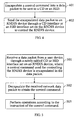
- a control method includes: encapsulating a control command used for controlling an RNDIS device into a network data packet to be sent to an RNDIS device; and sending the encapsulated network data packet to the RNDIS device to control the RNDIS device.
- the specific process may be as follows. 101: The control command is encapsulated into the network data packet to be sent to the RNDIS device.
- control command may be encapsulated into a connection-based Transmission Control Protocol (TCP) data packet to be sent to the RNDIS device; or the control command may be encapsulated into a connectionless UDP data packet to be sent to the RNDIS device.
- TCP Transmission Control Protocol
- the control command is used for controlling the RNDIS device.
- the command may be, for example, an AT command, a diagnose (DIAG) command, or other user-defined commands.
- the encapsulated network data packet is sent to the RNDIS device to control the RNDIS device, for example, to initialize a request for dialing up, unlocking the personal identification number (PIN), or disconnecting the dialup on the RNDIS device.
- PIN personal identification number
- the process may further includes: creating a network communication port for communicating with the RNDIS device, where the network communication port may be any port, but the port number shall not be the same as those of other known applications.
- the network communication port may be any port, but the port number shall not be the same as those of other known applications.
- Step 101 may specifically be encapsulating the control command into the network data packet to be sent through the network communication port.
- a control command is encapsulated into a network data packet to be sent to an RNDIS device, and the encapsulated network data packet is sent to the RNDIS device to control the RNDIS device.
- a user device can directly send a network data packet to an RNDIS device. Therefore, with this solution, a control command can be transmitted to the RNDIS device without adding a new control interface and installing an additional driver program. Compared with the solution in the prior art, this solution reduces application complexity and has no special requirement for the RNDIS device, which is commonly applicable and easy to implement.
- the RNDIS device may be specifically a wireless datacard used on an RNDIS port.
- a control method includes: receiving a network data packet sent by a user device, where a control command used for controlling an RNDIS device is encapsulated in the network data packet; decapsulating the received network data packet to obtain the control command; and performing operations according to the instruction of the control command.
- the specific process may be as follows. 201: The network data packet sent by the user device is received, where a control command used for controlling an RNDIS device is encapsulated in the network data packet.
- the command may be an AT command, a DIAG command, or other user-defined commands.
- a connection-based TCP data packet sent by the user device may be received, where the control command used for controlling the RNDIS device is encapsulated in the TCP data packet; or a connectionless UDP data packet is received from the user device, where the control command used for controlling the RNDIS device is encapsulated in the UDP data packet.
- the network data packet may be received through the network communication port created between the user device and the RNDIS device.
- the network communication port may be any port, but the port number shall not be the same as that of other known applications.
- the received network data packet is decapsulated to obtain the control command, which is detailed as follows:
- the RNDIS device judges whether the received network data packet carries the control command. If the control command is carried, the network data packet is decapsulated; if the control command is not carried, the RNDIS device determines that the received network data packet is normal network data and sends the data to the network side.
- Operations are performed according to the instruction of the control command obtained in step 202, for example dialing up, unlocking a PIN, or disconnecting the dialup.
- the RNDIS device may also return a response message and report the device status change to the system by sending a broadcast data packet.
- the RNDIS device encapsulates the response message in the format illustrated in FIG. 3c and sends the message to the user device.
- the network data packet sent by the user device is received, where a control command is encapsulated in the network data packet; the network data packet is decapsulated to obtain the control command; and operations are performed according to the instruction of the control command.
- the user device realizes control on the RNDIS device.
- a user device can directly send a network data packet to an RNDIS device. Therefore, with this solution, a control command can be transmitted to the RNDIS device without adding a new control interface and installing an additional driver program. Compared with the solution in the prior art, this solution reduces application complexity and has no special requirement for the RNDIS device, which is commonly applicable and easy to implement.
- the specific process may be as follows. 301: A network communication port is created between a PC and an RNDIS device, where the network communication port is used for communicating with the RNDIS device, may be any port, but the port number shall not be the same as that of other known applications.
- the network communication port is called the port of the RNDIS control program in the embodiments of the present invention.
- FIG. 3b is a schematic scenario diagram of communication between a PC and a RNDIS device.
- a port number of a File Transfer Protocol (FTP) application is 21;
- a port number of a Hypertext Transfer Protocol (HTTP) application is 80.
- FTP File Transfer Protocol
- HTTP Hypertext Transfer Protocol
- a port X of the RNDIS control program may be any port except ports 21 and 80.
- RNDIS device is a network device
- an application in the PC may send network data directly to the RNDIS device through the network communication port.
- 302 On the network communication port created in step 301, a PC needs to issue a user-defined control command to an RNDIS device, for example, AT command is encapsulated into the connectionless UDP data packet.
- FIG. 3c is a data packet format of using a UDP data packet to encapsulate an AT command.
- the AT Flag field is the identification filed of the user-defined control command.
- the size of the field may be set to 8 bytes.
- An AT command data field is the data field of the user-defined control command.
- the size of the field is variable, which may be set according to the size of the data.
- the maximum size of the field may be 1464 bytes.
- formats of an Internet header field, an Internet Protocol (IP) header field, and a UDP header field are the same as the conventional UDP data packet format.
- the size of the Internet header field is 14 bytes
- the size of the IP header field is 20 bytes
- the size of the UDP header field is 8 bytes.
- the target media access control (MAC) address of the Internet header needs to use the MAC address or the broadcast address in the RNDIS device to ensure that the UDP data packet can be received by the RNDIS device.
- the target IP address in IP header also needs to use the address of the IP address or broadcast address of the RNDIS device to ensure that the UDP data packet can be received by the RNDIS device.
- the PC sends the UDP data packet in which the AT command is encapsulated to the RNDIS device.
- the RNDIS device receives the UDP data packet sent by the PC, judges whether the UDP data packet carries the AT command, for example, judges whether the AT identifier in the UDP data packet is matched. If the UPD data packet carries the AT command, the received UDP data packet is decapsulated to obtain the AT command.
- the RNDIS device performs operations according to the instruction of the AT command obtained in step 304, for example, dialing up, unlocking a PIN, or disconnecting the dialup.
- the RNDIS device may respond to the corresponding AT command by responding to the UDP data packet, and report the device status change of the RNDIS device to the PC by sending a broadcast data packet.
- the network data packet is a connectionless UDP data packet as an example. It should be understood that other network data packets may also be used, for example, a connection-based TCP data packet.
- the control command may also be a DIAG command or other user-defined commands in addition to the AT command.
- an AT command is encapsulated into a UDP data packet to be sent to an RNDIS device, and the encapsulated UDP data packet is sent to the RNDIS device to control the RNDIS device.
- a user device can directly send a UDP data packet to an RNDIS device. Therefore, in this solution, no new control interface needs to be added, and the original interface of the RNDIS device is used. Compared with the solution that requires adding a new control interface in the prior art, this solution facilitates the use of users. Furthermore, with this solution, since no new control interface needs to be added, no additional driver program needs to be installed. Compared with the solution that requires installing an additional driver program in the prior art, this solution reduces application complexity and has no special requirement for the RNDIS device, which is commonly applicable and easy to implement.
- a CD interface or an HID interface may also be added to the RNDIS device for encapsulating and sending a control command. That is, the control command is encapsulated in a CD format or an HID interface format, and is sent to the RNDIS device through the CD interface or HID interface.
- the user device may be a terminal device such as a PC or laptop.
- a control command is encapsulated into a data packet in a CD format or an HID interface format.
- the control command is used for controlling an RNDIS device.
- the command may be specifically an AT command, a DIAG command, or other user-defined commands.
- a control command is encapsulated into a data packet in a CD format or an HID interface format, and the encapsulated data packet is sent to an RNDIS device through a CD format or an HID interface set on the RNDIS device to control the RNDIS device.
- the conventional PC system includes the universal driver program of the CD interface or the HID device, no additional driver program needs to be installed in this solution. Compared with the solution which require installing an additional driver program in the prior art, this solution reduces the application complexity.
- this embodiment is described from the aspect of an RNDIS device.
- a control method is provided, and the specific process of the method may be as follows.
- 501 A data packet is received from a user device through a CD interface or an HID interface set on an RNDIS device, where a control command used for controlling the RNDIS device is encapsulated in the data packet.
- the data packet here is a data packet in a CD format or an HID interface format.
- the received data packet is decapsulated to obtain the control command, such as an AT command, a DIAG command, or other user-defined commands.
- the control command such as an AT command, a DIAG command, or other user-defined commands.
- the RNDIS device judges whether the received network data packet carries the control command. If the control command is carried, the network data packet is decapsulated; if the control command is not carried, the RNDIS device judges whether the received data packet is normal data, and processes the data packet according to the prior art. 503: Operations are performed according to the instruction of the control command obtained in step 502, such as dialing up, unlocking a PIN, or disconnecting the dialup.
- a data packet sent by a user device is received through a CD interface or an HID interface, where a control command is encapsulated in the data packet, and the data packet is decapsulated to obtain the control command. Afterwards, operations are performed according to the instruction of the control command. Therefore, the user device realizes control on the RNDIS device.
- the conventional PC system includes the universal driver program of the CD interface or the HID device, no additional driver program needs to be installed in this solution. Compared with the solution which requires installing an additional driver program in the prior art, this solution reduces the application complexity. However, because this solution requires adding an additional interface, compared with the technical solution according to Embodiments 1, 2, and 3, this solution is more complex in implementation.
- an example that the user device is a PC and the control command is an AT command is also taken.
- no communication network port is created between a PC and an RNDIS device, but a CD interface or an HID interface is added to the RNDIS device.
- This solution is mainly applicable to a device supporting an interface to a compositional device, for example, USB device.
- the following section takes that the user device is a PC and the control command is an AT command as an example for brief illustration.
- FIG. 6a is a schematic scenario diagram of communication between the PC and the RNDIS device.
- the PC system already provides the universal driver program for the CD interface or HID device. Therefore, this technical solution requires no additional driver program.
- the specific process may be as follows.
- the PC encapsulates the user-defined control command, such as an AT command, to be sent to the RNDIS device into the data packet sent to the CD or HID interface
- the PC sends the data packet, in which the AT command is encapsulated, to the RNDIS device.
- 603 The RNDIS device receives the data packet sent from the PC through the CD or HID interface, judges whether the data packet carries the AT command, for example, judges whether the AT identifier in the data packet is matched. If the data packet carries the AT command, the received data packet is decapsulated to obtain the AT command.
- the data packet does not carry the AT command, for example, the AT command in the data packet is not matched, the data packet is determined to be an ordinary CD or HID data and is processed according to the prior art.
- the RNDIS device performs operations according to the instruction of the AT command obtained in step 603, for example, dialing up, unlocking the PIN, or disconnecting the dialup.
- the RNDIS device may respond to the corresponding AT command by responding to the data packet and report the device status change to the PC by sending a broadcast data packet. It should be noted that the foregoing section only uses the AT command as an example for illustration and it should be understood that other commands may also be used, such as a DIAG command or other user-defined commands.
- an additional CD or HID interface is added on an RNDIS device; an AT command is encapsulated into a data packet to be sent to the RNDIS device, and the encapsulated data packet is sent to the RNDIS device through a CD interface or an HID interface to control the RNDIS device.
- the conventional PC system includes the universal driver program of the CD interface or the HID device, no additional driver programs needs to be installed in this solution. Compared with the solution which require installing an additional driver program in the prior art, this solution reduces the application complexity. However, because this solution requires additional interfaces, it is more complex in implementation as compared with Embodiment 3.
- this embodiment of the present invention further provides a user device.
- the user device includes a first encapsulating unit 701 and a first sending unit 702.
- the first encapsulating unit 701 is configured to encapsulate a control command in a network data packet to be sent to an RNDIS device, where the control command is used for controlling the RNDIS device.
- the network data packet may be a connection-based TCP data packet or connectionless UDP data packet.
- the command may be the AT command.
- the first sending unit 702 is configured to send the network data packet encapsulated by the first encapsulating unit 701 to the RNDIS device to control the RNDIS device, for example, to initiate a request for dialing up, unlocking a PIN, or disconnecting the dialup on the RNDIS device.
- the user device may also include a first creating unit 703.
- the first creating unit 703 is configured to create a network communication port for communicating with the RNDIS device.
- the network communication port may be any port, but the port number shall not be the same as those of other known applications. Reference may be made to the prior art for the creating method, which is not detailed here.
- the first encapsulating unit 701 is specifically configured to encapsulate the control command into the network data packet on the network communication port created by the first creating unit 703.
- the user device may also include a first receiving unit, configured to receive a response about the control command returned by the RNDIS device and further receive the device status change of the RNDIS device reported by the RNDIS device.
- a first receiving unit configured to receive a response about the control command returned by the RNDIS device and further receive the device status change of the RNDIS device reported by the RNDIS device.
- the first encapsulating unit 701 of the user device may encapsulate a control command into a network data packet to be sent to the RNDIS device. Then the first sending unit 702 sends the encapsulated network data packet to the RNDIS device to control the RNDIS device.
- a user device can directly send a network data packet to an RNDIS device. Therefore, with this solution, a control command can be transmitted to the RNDIS device without adding a new control interface and installing an additional driver program. Compared with the solution that requires adding a new control interface and installing a driver program additionally in the prior art, this solution reduces application complexity and has no special requirement for the RNDIS device, which is commonly applicable and easy to implement.
- this embodiment of the present invention further provides a user device.
- the user device includes a second encapsulating unit 801 and a second sending unit 802.
- the second encapsulating unit 801 is configured to encapsulate a control command in a data packet in a CD format or an HID interface format, where the control command is used for controlling an RNDIS device.
- the command may be an AT command, a DIAG command, or other user-defined commands.
- the second sending unit 802 is configured to send the data packet encapsulated by the second encapsulating unit 801 to the RNDIS device through a CD interface or an HID interface arranged on the RNDIS device to control the RNDIS device, for example, to initiate a request for dialing up, unlocking a PIN, or disconnecting the dialup on the RNDIS device.
- the second encapsulating unit 801 of the user device encapsulates a control command in a data packet in a
- the second sending unit 802 sends the data packet to the RNDIS device through the CD or HID interface set on the RNDIS device to control the RNDIS device. Because the conventional PC system includes a universal driver program of the CD interface or the HID device, no additional driver programs needs to be installed in this solution. Compared with the solution which require installing an additional driver program in the prior art, this solution reduces the application complexity.
- this embodiment of the present invention further provides an RNDIS device.
- the RNDIS device includes a first receiving unit 901, a first decapsulating unit 902, and a first processing unit 903.
- the first receiving unit 901 is configured to receive a network data packet sent by a user device, where a control command, for example, an AT command, a DIAG command, or other user-defined commands, used for controlling an RNDIS device is encapsulated in the network data packet.
- the network data packet may be a connection-based TCP data packet or connectionless UDP data packet.
- the first decapsulating unit 902 is configured to decapsulate the network data packet received by the first receiving unit 901 to obtain the control command. Reference may be made to the foregoing embodiment for details, which are not detailed here.
- the first processing unit 903 is configured to perform operations according to the instruction of the control command obtained by the second decapsulating unit 902, for example, dialing up, unlocking the PIN, or disconnecting the dialup.
- the receiving unit 901 is specifically configured to receive the network data packet send by the user device through a network communication port created between the user device and the RNDIS device.
- the network communication port may be any port, but the port number shall not be the same as those of other known applications.
- the RNDIS device may also include a first response unit, configured to return a response to the user device.
- the response unit may further report the device status change to the user device by sending a broadcast data packet.
- the RNDIS device may be specifically a wireless datacard using an RNDIS port.
- the first receiving unit 901 of the RNDIS device can receive a network data packet sent by a user device, where a control command is encapsulated in the network data packet; the first decapsulating unit 902 decapsulates the data packet to obtain the control command; and then the first processing unit 903 performs operations according to the instruction of the control command.
- the user device controls the RNDIS device.
- a user device can directly send a network data packet to an RNDIS device. Therefore, with this solution, a control command can be transmitted to the RNDIS device without adding a new control interface or installing an additional driver program. Compared with the solution that requires adding a new control interface and installing a driver program additionally in the prior art, this solution reduces application complexity and has no special requirement for the RNDIS device, which is commonly applicable and easy to implement.
- this embodiment further provides an RNDIS device.
- the RNDIS device includes a second receiving unit 1001, a second decapsulating unit 1002, and a second processing unit 1003.
- the second receiving unit 1001 is configured to receive a data packet from a user device through a CD interface or an HID interface, where a control command used for controlling an RNDIS device is encapsulated in the data packet.
- the data packet here is in a CD format or an HID interface format.
- the second decapsulating unit 1002 is configured to decapsulate the data packet received by the second receiving unit 1001 to obtain the control command, such as an AT command, a DIAG command, or other user-defined commands.
- control command such as an AT command, a DIAG command, or other user-defined commands.
- the second processing unit 1003 is configured to perform operations according to the instruction of the control command obtained by the second decapsulating unit 1002, for example, dialing up, unlocking the PIN, or disconnecting the dialup.
- the RNDIS device may be specifically a wireless datacard using an RNDIS port.
- the second receiving unit 1001 of the RNDIS device receives the data packet, in which a control command is encapsulated, from a user device through a CD interface or an HID interface; the second decapsulating unit 1002 decapsulates the data packet to obtain the control command; and then the second processing unit 1003 performs operations according to the instruction of the control command.
- the user device controls the RNDIS device.
- the conventional PC system includes a universal driver program of the CD interface or the HID device, no additional driver program needs to be installed in this solution. Compared with the solution which require installing an additional driver program in the prior art, this solution reduces the application complexity.
- this embodiment provides a communication system.
- the communication system includes any user device 700 and any RNDIS device 900 provided by the embodiments of the present invention.
- the user device 700 is configured to encapsulate a control command into a network data packet to be sent to the RNDIS device 900 or into a data packet in a CD format or an HID interface format, and sends the encapsulated network data packet to the RNDIS device 900, or sends the encapsulated data packet to the RNDIS device through a CD interface or an HID interface set on the RNDIS device, thereby controlling the RNDIS device 900.
- the control command is used for controlling the RNDIS device 900, and may be an AT command.
- the network data packet may be specifically a TCP data packet or UDP data packet.
- the RNDIS device 900 is configured to receive the network data packet or data packet sent by the user device 700, where the control command used for controlling the RNDIS device 900 is encapsulated in the network data packet or data packet, decapsulates the network data packet or data packet to obtain the control command, and then perform operations according to the instruction of the control command, for example, dialing up, unlocking a PIN, or disconnecting the dialup.
- the user device 700 is further configured to create a network communication port for communicating with the RNDIS device 900, and encapsulate the control command into the network data packet on the network communication port.
- the network communication port may be any port, but the port number shall not be the same as those of other known applications.
- the RNDIS device 900 is specifically configured to receive the network data packet through the network communication port created between the user device and the RNDIS device.
- the RNDIS device 900 is further configured to return a response message and report the device status change to the system by sending a broadcast data packet.
- the user device 700 is further configured to receive the response message returned by the RNDIS device 900 and report the device status change.
- the user device 700 in the communication system encapsulates a control command into a network data packet to be sent to the RNDIS device 900, and sends the encapsulated UDP data packet to the RNDIS device 900 to control the RNDIS device 900.
- a user device 700 can directly send network data to an RNDIS device 900. Therefore, with this solution, no new control interface needs to be added, but the original interface of the RNDIS device 900 is used. Compared with the solution that requires adding an additional control interface in the prior art, this solution facilitate the use of users. Furthermore, no additional driver program needs to be installed either. Compared with the solution that requires installing an additional driver program in the prior art, this solution reduces application complexity, and further this solution has no special requirement for the RNDIS device 900, which is commonly applicable and easy to implement.
- an additional CD or HID interface may be added to create a control channel.
- the conventional system of the user device 700 already includes universal driver programs for the CD or HID interface. Therefore, this solution requires no additional driver programs, which also reduces the application complexity as compared with the solution requires installing an additional driver program in the prior art.
- the program may be stored in a computer readable storage medium.
- the storage medium may be a read only memory (ROM), a random access memory (RAM), a magnetic disk or a compact disc.
Landscapes
- Engineering & Computer Science (AREA)
- Computer Networks & Wireless Communication (AREA)
- Signal Processing (AREA)
- Mobile Radio Communication Systems (AREA)
- Small-Scale Networks (AREA)
- Communication Control (AREA)
- Computer And Data Communications (AREA)
- Computer Security & Cryptography (AREA)
Description
- The present invention relates to the field of communication technologies, and in particular to a control method, an apparatus and a system.
- The remote network driver interface specification (RNDIS) is a network device specification. It requires an RNDIS device to process the object identifier descriptor (OID) which comes from the system. Therefore, a driver program provided in the system can be used by different RNDIS devices in compatible mode, no dedicated driver program needs to be developed for a specific RNDIS device, and the system can send different OIDs to the RNDIS devices to implement specific functions.
- The use of the RNDIS not only brings great convenience to users but also simplifies the development of the RNDIS device. However, RNDIS driver program can only transmit network data, and cannot transmit control commands of users. Therefore, users' basic requests such as dialup and dialup disconnection, cannot be transmitted to the RNDIS device, but can be implemented through other operations only. For example, the network can be disconnected only by means of removing the device, which is inconvenient for users.
- To solve this problem, in the prior art, the RNDIS driver is used as an interface of the RNDIS device, and an additional control interface is added in the RNDIS device, where a user device sends a control command through the control interface to control the RNDIS device.
- Adding control interface is applicable only to an RNDIS device with a universal serial bus interface rather than to RNDIS devices with all kinds of interfaces. So this solution has no common applicability. In addition, because a new control interface is added, a user needs to add an additional driver program for the new control interface, which increases the complexity of the usage.
- A
US published patent application 2005/0210176 discloses methods and systems for remotely accessing a universal serial bus device are provided. A requesting device issues a request for a universal serial bus device. The request is intercepted and packaged and then transmitted over a network. The packet is received by a universal serial bus host device having a universal serial bus controller and being in direct communication with the universal serial bus device. The packet is unpackaged into the request, and the request is passed to the controller for processing by the device. - Embodiments of the present invention provide a control method, an apparatus and a system, which not only have common applicability but also can implement the transmission of a control command to an RNDIS device without installing an additional driver program, thereby simplifying usage processes.
- A control method includes:
- encapsulating a control command into a network data packet to be sent to an RNDIS device, the RNDIS device being a wireless datacard used on an RNDIS port,
- where the control command is used for controlling the RNDIS device to initialize a request for dialing up or disconnecting the dialup; and
- sending the encapsulated network data packet to the RNDIS device to control the RNDIS device.
- A control method includes:
- encapsulating a control command into a data packet to be sent to a compact disc (CD) or a human interface device (HID), where the control command is used for controlling an RNDIS device to initialize a request for dialing up or disconnecting the dialup, the RNDIS device being a wireless datacard used on an RNDIS port; and
- sending the encapsulated packet to the RNDIS device through a CD interface or an HID interface set on the RNDIS device to control the RNDIS device.
- A control method includes:
- receiving a network data packet sent by a user device, where a control command used for controlling an RNDIS device to initialize a request for dialing up or
- disconnecting the dialup is encapsulated in the data packet, the RNDIS device being a wireless datacard used on an RNDIS port;
- decapsulating the network data packet to obtain the control command; and
- performing operations according to the instruction of the control command.
- A control method includes:
- receiving, through a CD interface or an HID interface set on the RNDIS device, a data packet sent by a user device, where a control command used for controlling an RNDIS device to initialize a request for dialing up or disconnecting the dialup is encapsulated in the data packet, the RNDIS device being a wireless datacard used on an RNDIS port;
- decapsulating the data packet to obtain the control command; and
- performing operations according to the instruction of the control command.
- A user device includes:
- a first encapsulating unit, configured to encapsulate a control command in a network data packet to be sent to an RNDIS device, the RNDIS device is a wireless datacard used on an RNDIS port, where the control command is used for controlling the RNDIS device to initialize a request for dialing up or disconnecting the dialup; and
- a first sending unit, configured to send the network data packet encapsulated by the
- first encapsulating unit to the RNDIS device to control the RNDIS device.
- A user device includes:
- a second encapsulating unit, configured to encapsulate a control command into a data packet in the format of CD or HID interface, where the control command is used for controlling an RNDIS device to initialize a request for dialing up or
- disconnecting the dialup, the RNDIS device being a wireless datacard used on an RNDIS port; and
- a second sending unit, configured to send, through the CD interface or the
- HID interface set on the RNDIS device, the data packet encapsulated by the second encapsulating unit to the RNDIS device to control the RNDIS device.
- An RNDIS device, which is a wireless datacard used on an RNDIS port includes:
- a first receiving unit, configured to receive a network data packet sent by a user device, where a control command used for controlling the RNDIS device to initialize a request for dialing up or disconnecting the dialup is encapsulated in the data packet;
- a first decapsulating unit, configured to decapsulate the network data packet received by the first receiving unit to obtain the control command; and a first processing unit, configured to perform operations according to the instruction of the control command obtained by the first decapsulating unit.
- An RNDIS device, which is a wireless datacard used on an RNDIS port includes:
- a second receiving unit, configured to receive, through a CD interface or an HID interface, a data packet sent by a user device, where a control command used for controlling the RNDIS device to initialize a request for dialing up or disconnecting the dialup is encapsulated in the data packet;
- a second decapsulating unit, configured to decapsulate the data packet received by the second receiving unit to obtain the control command; and a second processing unit, configured to perform operations according to the instruction of the control command obtained by the second decapsulating unit.
- A communication system includes any user device and any RNDIS device provided by the embodiments of the present invention.
- According to embodiments of the present invention, a control command is encapsulated into the network data packet to be sent to the RNDIS device, and the encapsulated network data packet is sent to a RNDIS device to control the RNDIS device. In the conventional network architecture, a user device can directly send a network data packet to an RNDIS device. Therefore, with this solution, a control command can be transmitted to the RNDIS device without adding a new control interface or installing an additional driver program. Compared with the solution which requires adding an additional control interface and installing a driver program in the prior art, this solution reduces application complexity and has no special requirement for the RNDIS device, which is commonly applicable and easy to implement.
- To illustrate technical solutions according to embodiments of the present invention more clearly, accompanying drawings for describing the embodiments are briefly introduced as follows. Apparently, the accompanying drawings describe only some embodiments of the present invention, and persons of ordinary skill in the art can derive other drawings from such accompanying drawings without any creative effort.
-
FIG. 1 is a flowchart of a control method according to Embodiment 1 of the present invention; -
FIG. 2 is a flowchart of a control method according to Embodiment 2 of the present invention; -
FIG. 3a is a flowchart of a control method according to Embodiment 3 of the present invention; -
FIG. 3b is a schematic scenario diagram of communication between a personal computer (PC) and an RNDIS device; -
FIG. 3c is a data packet format of using a User Datagram Protocol (UDP) data packet to encapsulate an AT command; -
FIG. 4 is a flowchart of a control method according to Embodiment 4 of the present invention; -
FIG. 5 is a flowchart of a control method according to Embodiment 5 of the present invention; -
FIG. 6a is a schematic scenario diagram of communication between a PC and an RNDIS device; -
FIG. 6b is a flowchart of the control method according to Embodiment 4 of the present invention; -
FIG. 7a is a schematic structural diagram of a user device according to an embodiment of the present invention; -
FIG. 7b is another schematic structural diagram of a user device according to an embodiment of the present invention; -
FIG. 8 is yet another schematic structural diagram of a user device according to an embodiment of the present invention; -
FIG. 9 is a schematic structural diagram of an RNDIS device according to an embodiment of the present invention; -
FIG. 10 is another schematic structural diagram of an RNDIS device according to an embodiment of the present invention; and -
FIG. 11 is a schematic structural diagram of a communication system according to an embodiment of the present invention. - Technical solutions according to embodiments of the present invention are elaborated as follows with reference to accompanying drawings. Evidently, the described embodiments are only some rather than all embodiments of the present invention. All other embodiments derived by those of ordinary skill in the art based on the embodiments of the present invention without any creative effort, shall fall within the protection scope of the present invention.
- Embodiments of the present invention provide a control method, an apparatus and a system, which are respectively described in detail as follows.
- This embodiment is described from the aspect of a user device. The user device may be specifically a terminal such as a PC or laptop.
- A control method includes: encapsulating a control command used for controlling an RNDIS device into a network data packet to be sent to an RNDIS device; and sending the encapsulated network data packet to the RNDIS device to control the RNDIS device.
- Referring to
FIG.1 , the specific process may be as follows.
101: The control command is encapsulated into the network data packet to be sent to the RNDIS device. - For example, the control command may be encapsulated into a connection-based Transmission Control Protocol (TCP) data packet to be sent to the RNDIS device; or
the control command may be encapsulated into a connectionless UDP data packet to be sent to the RNDIS device. - The control command is used for controlling the RNDIS device. The command may be, for example, an AT command, a diagnose (DIAG) command, or other user-defined commands.
102: The encapsulated network data packet is sent to the RNDIS device to control the RNDIS device, for example, to initialize a request for dialing up, unlocking the personal identification number (PIN), or disconnecting the dialup on the RNDIS device. - Optionally, before
step 101, i.e., the encapsulating the control command in the network data packet to be sent to the RNDIS device, the process may further includes: creating a network communication port for communicating with the RNDIS device, where the network communication port may be any port, but the port number shall not be the same as those of other known applications. Reference may be made to the prior art for specific creating method, which is not detailed here. - Step 101 may specifically be encapsulating the control command into the network data packet to be sent through the network communication port.
- It can be seen from the foregoing description that, according to this embodiment, a control command is encapsulated into a network data packet to be sent to an RNDIS device, and the encapsulated network data packet is sent to the RNDIS device to control the RNDIS device. In the conventional network architecture, a user device can directly send a network data packet to an RNDIS device. Therefore, with this solution, a control command can be transmitted to the RNDIS device without adding a new control interface and installing an additional driver program. Compared with the solution in the prior art, this solution reduces application complexity and has no special requirement for the RNDIS device, which is commonly applicable and easy to implement.
- This embodiment is described from the aspect of an RNDIS device. The RNDIS device may be specifically a wireless datacard used on an RNDIS port.
- A control method includes: receiving a network data packet sent by a user device, where a control command used for controlling an RNDIS device is encapsulated in the network data packet; decapsulating the received network data packet to obtain the control command; and performing operations according to the instruction of the control command.
- Referring to
FIG. 2 , the specific process may be as follows.
201: The network data packet sent by the user device is received, where a control command used for controlling an RNDIS device is encapsulated in the network data packet. The command may be an AT command, a DIAG command, or other user-defined commands. - For example, a connection-based TCP data packet sent by the user device may be received, where the control command used for controlling the RNDIS device is encapsulated in the TCP data packet; or
a connectionless UDP data packet is received from the user device, where the control command used for controlling the RNDIS device is encapsulated in the UDP data packet. - Specifically, the network data packet may be received through the network communication port created between the user device and the RNDIS device. The network communication port may be any port, but the port number shall not be the same as that of other known applications.
202: The received network data packet is decapsulated to obtain the control command, which is detailed as follows: - The RNDIS device judges whether the received network data packet carries the control command. If the control command is carried, the network data packet is decapsulated; if the control command is not carried, the RNDIS device determines that the received network data packet is normal network data and sends the data to the network side.
203: Operations are performed according to the instruction of the control command obtained instep 202, for example dialing up, unlocking a PIN, or disconnecting the dialup. - Optionally, the RNDIS device may also return a response message and report the device status change to the system by sending a broadcast data packet.
- For example, the RNDIS device encapsulates the response message in the format illustrated in
FIG. 3c and sends the message to the user device. - It can be seen from the foregoing description that, according to this embodiment, the network data packet sent by the user device is received, where a control command is encapsulated in the network data packet; the network data packet is decapsulated to obtain the control command; and operations are performed according to the instruction of the control command. Thereby, the user device realizes control on the RNDIS device. In the conventional network architecture, a user device can directly send a network data packet to an RNDIS device. Therefore, with this solution, a control command can be transmitted to the RNDIS device without adding a new control interface and installing an additional driver program. Compared with the solution in the prior art, this solution reduces application complexity and has no special requirement for the RNDIS device, which is commonly applicable and easy to implement.
- According to the methods described in Embodiment 1 and Embodiment 2, the following section uses examples for detailed description.
- In this embodiment, an example that the user device is a PC, the network data packet is a connectionless UDP data packet, and the control command is an AT command is taken. Referring to
FIG. 3a , the specific process may be as follows.
301: A network communication port is created between a PC and an RNDIS device, where the network communication port is used for communicating with the RNDIS device, may be any port, but the port number shall not be the same as that of other known applications. For convenience in description, the network communication port is called the port of the RNDIS control program in the embodiments of the present invention. - For example, referring to
FIG. 3b, FIG. 3b is a schematic scenario diagram of communication between a PC and a RNDIS device. It can be seen fromFIG. 3b that, a port number of a File Transfer Protocol (FTP) application is 21; a port number of a Hypertext Transfer Protocol (HTTP) application is 80. Assume that in the PC, the used port numbers are only 21 and 80, a port X of the RNDIS control program may be any port exceptports - Because the RNDIS device is a network device, an application in the PC may send network data directly to the RNDIS device through the network communication port.
302: On the network communication port created instep 301, a PC needs to issue a user-defined control command to an RNDIS device, for example, AT command is encapsulated into the connectionless UDP data packet. - For example, referring to
FIG. 3c, FIG. 3c is a data packet format of using a UDP data packet to encapsulate an AT command. The AT Flag field is the identification filed of the user-defined control command. The size of the field may be set to 8 bytes. An AT command data field is the data field of the user-defined control command. The size of the field is variable, which may be set according to the size of the data. The maximum size of the field may be 1464 bytes. - In the UDP data packet in which an AT command is encapsulated, formats of an Internet header field, an Internet Protocol (IP) header field, and a UDP header field are the same as the conventional UDP data packet format. The size of the Internet header field is 14 bytes, the size of the IP header field is 20 bytes, and the size of the UDP header field is 8 bytes. However, the target media access control (MAC) address of the Internet header needs to use the MAC address or the broadcast address in the RNDIS device to ensure that the UDP data packet can be received by the RNDIS device. In a similar way, the target IP address in IP header also needs to use the address of the IP address or broadcast address of the RNDIS device to ensure that the UDP data packet can be received by the RNDIS device.
303: The PC sends the UDP data packet in which the AT command is encapsulated to the RNDIS device.
304: The RNDIS device receives the UDP data packet sent by the PC, judges whether the UDP data packet carries the AT command, for example, judges whether the AT identifier in the UDP data packet is matched. If the UPD data packet carries the AT command, the received UDP data packet is decapsulated to obtain the AT command. Reference can be made to the prior art for the specific packet decapsulation method, which is not detailed here. If the UDP data packet does not carry the AT command (for example, the AT identifier in the data packet is not matched), it is determined that the UDP data packet is an ordinary UDP data packet, and the RNDIS directly sends the UDP data packet to the network side.
305: The RNDIS device performs operations according to the instruction of the AT command obtained instep 304, for example, dialing up, unlocking a PIN, or disconnecting the dialup. Optionally, the RNDIS device may respond to the corresponding AT command by responding to the UDP data packet, and report the device status change of the RNDIS device to the PC by sending a broadcast data packet. - It should be noted that the foregoing illustration only uses the case that the network data packet is a connectionless UDP data packet as an example. It should be understood that other network data packets may also be used, for example, a connection-based TCP data packet. Further, the control command may also be a DIAG command or other user-defined commands in addition to the AT command.
- It can be seen from the foregoing description that, according to this embodiment, an AT command is encapsulated into a UDP data packet to be sent to an RNDIS device, and the encapsulated UDP data packet is sent to the RNDIS device to control the RNDIS device. In the conventional network architecture, a user device can directly send a UDP data packet to an RNDIS device. Therefore, in this solution, no new control interface needs to be added, and the original interface of the RNDIS device is used. Compared with the solution that requires adding a new control interface in the prior art, this solution facilitates the use of users. Furthermore, with this solution, since no new control interface needs to be added, no additional driver program needs to be installed. Compared with the solution that requires installing an additional driver program in the prior art, this solution reduces application complexity and has no special requirement for the RNDIS device, which is commonly applicable and easy to implement.
- In addition to the network communication port created between a user device and an RNDIS device, a CD interface or an HID interface may also be added to the RNDIS device for encapsulating and sending a control command. That is, the control command is encapsulated in a CD format or an HID interface format, and is sent to the RNDIS device through the CD interface or HID interface.
- Similar to Embodiment 1, this embodiment is also described from the aspect of a user device. The user device may be a terminal device such as a PC or laptop.
- Referring to
FIG. 4 , a control method is provided, and the specific process of the method may be as follows.
401: A control command is encapsulated into a data packet in a CD format or an HID interface format. - The control command is used for controlling an RNDIS device. The command may be specifically an AT command, a DIAG command, or other user-defined commands.
402: The encapsulated data packet is sent to the RNDIS device through the CD or HID interface set on the RNDIS device to control the RNDIS device, for example, requesting dialup, unlocking a PIN, or disconnecting the dialup on the RNDIS device. - It can be seen from the foregoing description that, according to this embodiment, a control command is encapsulated into a data packet in a CD format or an HID interface format, and the encapsulated data packet is sent to an RNDIS device through a CD format or an HID interface set on the RNDIS device to control the RNDIS device. Because the conventional PC system includes the universal driver program of the CD interface or the HID device, no additional driver program needs to be installed in this solution. Compared with the solution which require installing an additional driver program in the prior art, this solution reduces the application complexity.
- Corresponding to Embodiment 4, this embodiment is described from the aspect of an RNDIS device.
- Referring to
FIG. 5 , a control method is provided, and the specific process of the method may be as follows.
501: A data packet is received from a user device through a CD interface or an HID interface set on an RNDIS device, where a control command used for controlling the RNDIS device is encapsulated in the data packet. - It should be noted that the data packet here is a data packet in a CD format or an HID interface format.
502: The received data packet is decapsulated to obtain the control command, such as an AT command, a DIAG command, or other user-defined commands. Specifically: - The RNDIS device judges whether the received network data packet carries the control command. If the control command is carried, the network data packet is decapsulated; if the control command is not carried, the RNDIS device judges whether the received data packet is normal data, and processes the data packet according to the prior art.
503: Operations are performed according to the instruction of the control command obtained instep 502, such as dialing up, unlocking a PIN, or disconnecting the dialup. - It can be seed from the foregoing description that, according to this embodiment, a data packet sent by a user device is received through a CD interface or an HID interface, where a control command is encapsulated in the data packet, and the data packet is decapsulated to obtain the control command. Afterwards, operations are performed according to the instruction of the control command. Therefore, the user device realizes control on the RNDIS device. Because the conventional PC system includes the universal driver program of the CD interface or the HID device, no additional driver program needs to be installed in this solution. Compared with the solution which requires installing an additional driver program in the prior art, this solution reduces the application complexity. However, because this solution requires adding an additional interface, compared with the technical solution according to Embodiments 1, 2, and 3, this solution is more complex in implementation.
- According to the methods described in Embodiment 4 and Embodiment 5, the following section uses examples for detailed description.
- Similar to Embodiment 3, in this embodiment, an example that the user device is a PC and the control command is an AT command is also taken. Different from Embodiment 3, in this embodiment, no communication network port is created between a PC and an RNDIS device, but a CD interface or an HID interface is added to the RNDIS device. This solution is mainly applicable to a device supporting an interface to a compositional device, for example, USB device. The following section takes that the user device is a PC and the control command is an AT command as an example for brief illustration.
- First, the CD interface or HID interface needs to be added to the RNDIS device, which is configured to receive a data packet, with which the control command is encapsulated, in a CD format or an HID interface format. However, the original RNDIS port is still used for receiving common data packets. Referring to
FIG. 6a, FIG. 6a is a schematic scenario diagram of communication between the PC and the RNDIS device. The PC system already provides the universal driver program for the CD interface or HID device. Therefore, this technical solution requires no additional driver program. - Referring to
FIG.6b , the specific process may be as follows.
601: The PC encapsulates the user-defined control command, such as an AT command, to be sent to the RNDIS device into the data packet sent to the CD or HID interface 602: The PC sends the data packet, in which the AT command is encapsulated, to the RNDIS device.
603: The RNDIS device receives the data packet sent from the PC through the CD or HID interface, judges whether the data packet carries the AT command, for example, judges whether the AT identifier in the data packet is matched. If the data packet carries the AT command, the received data packet is decapsulated to obtain the AT command. Reference may be made to the prior art for the packet decapsulation method, which is not detailed here. If the data packet does not carry the AT command, for example, the AT command in the data packet is not matched, the data packet is determined to be an ordinary CD or HID data and is processed according to the prior art.
604: The RNDIS device performs operations according to the instruction of the AT command obtained instep 603, for example, dialing up, unlocking the PIN, or disconnecting the dialup. Optionally, the RNDIS device may respond to the corresponding AT command by responding to the data packet and report the device status change to the PC by sending a broadcast data packet. It should be noted that the foregoing section only uses the AT command as an example for illustration and it should be understood that other commands may also be used, such as a DIAG command or other user-defined commands. - It can be seen from the foregoing description that, according to this embodiment, an additional CD or HID interface is added on an RNDIS device; an AT command is encapsulated into a data packet to be sent to the RNDIS device, and the encapsulated data packet is sent to the RNDIS device through a CD interface or an HID interface to control the RNDIS device. Because the conventional PC system includes the universal driver program of the CD interface or the HID device, no additional driver programs needs to be installed in this solution. Compared with the solution which require installing an additional driver program in the prior art, this solution reduces the application complexity. However, because this solution requires additional interfaces, it is more complex in implementation as compared with Embodiment 3.
- For a better implementation of the methods provided in Embodiments 1 to 3, this embodiment of the present invention further provides a user device. As shown in
FIG. 7a , the user device includes afirst encapsulating unit 701 and afirst sending unit 702. - The
first encapsulating unit 701 is configured to encapsulate a control command in a network data packet to be sent to an RNDIS device, where the control command is used for controlling the RNDIS device. - The network data packet may be a connection-based TCP data packet or connectionless UDP data packet. The command may be the AT command.
- The
first sending unit 702 is configured to send the network data packet encapsulated by thefirst encapsulating unit 701 to the RNDIS device to control the RNDIS device, for example, to initiate a request for dialing up, unlocking a PIN, or disconnecting the dialup on the RNDIS device. Optionally, referring toFIG.7b , the user device may also include a first creatingunit 703. - The first creating
unit 703 is configured to create a network communication port for communicating with the RNDIS device. The network communication port may be any port, but the port number shall not be the same as those of other known applications. Reference may be made to the prior art for the creating method, which is not detailed here. - Meanwhile, the
first encapsulating unit 701 is specifically configured to encapsulate the control command into the network data packet on the network communication port created by the first creatingunit 703. - Optionally, the user device may also include a first receiving unit, configured to receive a response about the control command returned by the RNDIS device and further receive the device status change of the RNDIS device reported by the RNDIS device.
- Reference may be made to the foregoing embodiments for the detailed implementation of the units, which is not detailed here.
- It can be known from the foregoing description that, in this embodiment, the
first encapsulating unit 701 of the user device may encapsulate a control command into a network data packet to be sent to the RNDIS device. Then the first sendingunit 702 sends the encapsulated network data packet to the RNDIS device to control the RNDIS device. In the conventional network architecture, a user device can directly send a network data packet to an RNDIS device. Therefore, with this solution, a control command can be transmitted to the RNDIS device without adding a new control interface and installing an additional driver program. Compared with the solution that requires adding a new control interface and installing a driver program additionally in the prior art, this solution reduces application complexity and has no special requirement for the RNDIS device, which is commonly applicable and easy to implement. - For a better implementation of the methods provided in Embodiments 4 to 6, this embodiment of the present invention further provides a user device. As shown in
FIG. 8 , the user device includes asecond encapsulating unit 801 and asecond sending unit 802. - The
second encapsulating unit 801 is configured to encapsulate a control command in a data packet in a CD format or an HID interface format, where the control command is used for controlling an RNDIS device. The command may be an AT command, a DIAG command, or other user-defined commands. - The
second sending unit 802 is configured to send the data packet encapsulated by thesecond encapsulating unit 801 to the RNDIS device through a CD interface or an HID interface arranged on the RNDIS device to control the RNDIS device, for example, to initiate a request for dialing up, unlocking a PIN, or disconnecting the dialup on the RNDIS device. - It can be known from the foregoing description that, the
second encapsulating unit 801 of the user device provided in this embodiment encapsulates a control command in a data packet in a - CD format or an HID interface format, and the
second sending unit 802 sends the data packet to the RNDIS device through the CD or HID interface set on the RNDIS device to control the RNDIS device. Because the conventional PC system includes a universal driver program of the CD interface or the HID device, no additional driver programs needs to be installed in this solution. Compared with the solution which require installing an additional driver program in the prior art, this solution reduces the application complexity. - Corresponding to Embodiment 7, this embodiment of the present invention further provides an RNDIS device. As shown in
FIG. 9 , the RNDIS device includes afirst receiving unit 901, afirst decapsulating unit 902, and afirst processing unit 903. - The
first receiving unit 901 is configured to receive a network data packet sent by a user device, where a control command, for example, an AT command, a DIAG command, or other user-defined commands, used for controlling an RNDIS device is encapsulated in the network data packet. The network data packet may be a connection-based TCP data packet or connectionless UDP data packet. - The
first decapsulating unit 902 is configured to decapsulate the network data packet received by thefirst receiving unit 901 to obtain the control command. Reference may be made to the foregoing embodiment for details, which are not detailed here. - The
first processing unit 903 is configured to perform operations according to the instruction of the control command obtained by thesecond decapsulating unit 902, for example, dialing up, unlocking the PIN, or disconnecting the dialup. - The receiving
unit 901 is specifically configured to receive the network data packet send by the user device through a network communication port created between the user device and the RNDIS device. The network communication port may be any port, but the port number shall not be the same as those of other known applications. - Optionally, the RNDIS device may also include a first response unit, configured to return a response to the user device. The response unit may further report the device status change to the user device by sending a broadcast data packet.
- Reference may be made to the foregoing embodiments for the detailed implementation of the foregoing units, which is not detailed here.
- The RNDIS device may be specifically a wireless datacard using an RNDIS port.
- It can be known from the foregoing description that, the
first receiving unit 901 of the RNDIS device provided in this embodiment can receive a network data packet sent by a user device, where a control command is encapsulated in the network data packet; thefirst decapsulating unit 902 decapsulates the data packet to obtain the control command; and then thefirst processing unit 903 performs operations according to the instruction of the control command. Thereby, the user device controls the RNDIS device. In the conventional network architecture, a user device can directly send a network data packet to an RNDIS device. Therefore, with this solution, a control command can be transmitted to the RNDIS device without adding a new control interface or installing an additional driver program. Compared with the solution that requires adding a new control interface and installing a driver program additionally in the prior art, this solution reduces application complexity and has no special requirement for the RNDIS device, which is commonly applicable and easy to implement. - Corresponding to
Embodiment 8, this embodiment further provides an RNDIS device. As shown inFIG. 10 , the RNDIS device includes asecond receiving unit 1001, asecond decapsulating unit 1002, and asecond processing unit 1003. - The
second receiving unit 1001 is configured to receive a data packet from a user device through a CD interface or an HID interface, where a control command used for controlling an RNDIS device is encapsulated in the data packet. - It should be noted that the data packet here is in a CD format or an HID interface format.
- The
second decapsulating unit 1002 is configured to decapsulate the data packet received by thesecond receiving unit 1001 to obtain the control command, such as an AT command, a DIAG command, or other user-defined commands. Reference may be made to the foregoing embodiment for details, which are not detailed here. - The
second processing unit 1003 is configured to perform operations according to the instruction of the control command obtained by thesecond decapsulating unit 1002, for example, dialing up, unlocking the PIN, or disconnecting the dialup. - The RNDIS device may be specifically a wireless datacard using an RNDIS port.
- It can be known from the foregoing description that, the
second receiving unit 1001 of the RNDIS device provided by this embodiment receives the data packet, in which a control command is encapsulated, from a user device through a CD interface or an HID interface; thesecond decapsulating unit 1002 decapsulates the data packet to obtain the control command; and then thesecond processing unit 1003 performs operations according to the instruction of the control command. Thereby, the user device controls the RNDIS device. Because the conventional PC system includes a universal driver program of the CD interface or the HID device, no additional driver program needs to be installed in this solution. Compared with the solution which require installing an additional driver program in the prior art, this solution reduces the application complexity. - Correspondingly, this embodiment provides a communication system. As shown in
FIG. 11 , the communication system includes anyuser device 700 and anyRNDIS device 900 provided by the embodiments of the present invention. - The
user device 700 is configured to encapsulate a control command into a network data packet to be sent to theRNDIS device 900 or into a data packet in a CD format or an HID interface format, and sends the encapsulated network data packet to theRNDIS device 900, or sends the encapsulated data packet to the RNDIS device through a CD interface or an HID interface set on the RNDIS device, thereby controlling theRNDIS device 900. The control command is used for controlling theRNDIS device 900, and may be an AT command. The network data packet may be specifically a TCP data packet or UDP data packet. - The
RNDIS device 900 is configured to receive the network data packet or data packet sent by theuser device 700, where the control command used for controlling theRNDIS device 900 is encapsulated in the network data packet or data packet, decapsulates the network data packet or data packet to obtain the control command, and then perform operations according to the instruction of the control command, for example, dialing up, unlocking a PIN, or disconnecting the dialup. - In the specific implementation, optionally, the
user device 700 is further configured to create a network communication port for communicating with theRNDIS device 900, and encapsulate the control command into the network data packet on the network communication port. The network communication port may be any port, but the port number shall not be the same as those of other known applications. - Meanwhile, the
RNDIS device 900 is specifically configured to receive the network data packet through the network communication port created between the user device and the RNDIS device. Optionally, theRNDIS device 900 is further configured to return a response message and report the device status change to the system by sending a broadcast data packet. - Meanwhile, the
user device 700 is further configured to receive the response message returned by theRNDIS device 900 and report the device status change. - Reference may be made to the foregoing embodiments for the detailed implementation of the foregoing units, which is not detailed here.
- It can be seen from the foregoing description that, the
user device 700 in the communication system according to this embodiment encapsulates a control command into a network data packet to be sent to theRNDIS device 900, and sends the encapsulated UDP data packet to theRNDIS device 900 to control theRNDIS device 900. In the conventional network architecture, auser device 700 can directly send network data to anRNDIS device 900. Therefore, with this solution, no new control interface needs to be added, but the original interface of theRNDIS device 900 is used. Compared with the solution that requires adding an additional control interface in the prior art, this solution facilitate the use of users. Furthermore, no additional driver program needs to be installed either. Compared with the solution that requires installing an additional driver program in the prior art, this solution reduces application complexity, and further this solution has no special requirement for theRNDIS device 900, which is commonly applicable and easy to implement. - It should be noted that even in this embodiment of the present invention, an additional CD or HID interface may be added to create a control channel. However, the conventional system of the
user device 700 already includes universal driver programs for the CD or HID interface. Therefore, this solution requires no additional driver programs, which also reduces the application complexity as compared with the solution requires installing an additional driver program in the prior art. - It is understandable to those of ordinary skill in the art that all or part steps of the foregoing embodiments can be implemented by a program instructing hardware. The program may be stored in a computer readable storage medium. The storage medium may be a read only memory (ROM), a random access memory (RAM), a magnetic disk or a compact disc.
- The foregoing gives a detailed introduction to a control method, an apparatus and a system according to the embodiments of the present invention. The principle and implementation of the present invention are expatiated in this application through specific embodiments, which are used only to facilitate the understanding of the method and core idea of the present invention. Meanwhile, those of ordinary skill in the art can make modifications and variations to the invention according to the idea of the present invention in terms of specific implementations and the scope of the invention. In conclusion, this specification shall not be construed as a limitation to the present invention.
Claims (15)
- A control method, comprising:Encapsulating (101) a control command into a network data packet to be sent to a remote
network driver interface specification, RNDIS, device, the RNDIS device being a wireless datacard used on an RNDIS port, wherein the control command is used for controlling the RNDIS device to initialize a request for dialing up or disconnecting the dialup; andsending (102) the encapsulated network data packet to the RNDIS device to control the RNDIS device. - The method according to claim 1, wherein the encapsulating the control command into the network data packet to be sent to the RNDIS device comprises:encapsulating the control command into a connection-based Transmission Control Protocol, TCP, bata packet to be sent to the RNDIS device; orencapsulating the control command into a connectionless User Datagram Protocol, UDP data packet to be sent to the RNDIS device.
- The method according to claim 1 or 2, before the encapsulating the control command into the network data packet to be sent to the RNDIS device comprises, further comprising:creating a network communication port for communicating with the RNDIS device; andthe encapsulating the control command into the network data packet to be sent to the RNDIS device is encapsulating the control command into a network data packet on the network communication port.
- A control method, comprising:Encapsulating (401) a control command into a data packet to be sent to a compact disc, CD, or human input device, HID, wherein the control command is used for controlling a remote network driver interface specification, RNDIS, device to initialize a request for dialing up or disconnecting the dialup, the RNDIS device being a wireless datacard used on an RNDIS port; andSending (402) the encapsulated data packet to the RNDIS device through a CD interface or an HID interface set on the RNDIS device to control the RNDIS device.
- A control method, comprising:Receiving (201) a network data packet sent by a user device, wherein a control command
used for controlling a remote network driver interface specification, RNDIS device to initialize a request for dialing up or disconnecting the dialup is encapsulated in the network data packet,
the RNDIS device being a wireless datacard used on an RNDIS port;decapssulating (202) the network data packet to obtain the control command; andperforming (203) operations according to the instruction of the control command. - The method according to claim 5, wherein the receiving the network data packet from the user device comprises:receiving a connection-based Transmission Control Protocol, TCP, data packet sent by the user device, wherein the control command used for controlling the RNDIS device is encapsulated in the TCP data packet; orreceiving a connectionless User Datagram Protocol, UDP data packet from the user device, wherein the command used for controlling the RNDIS device is encapsulated in the UDP data packet.
- The method according to claim 5 or 6, wherein the receiving the network data packet sent by the user device comprises:receiving the network data packet sent by the user device through a network communication port created between the user device and the RNDIS device.
- A control method, comprising:Receiving (501) a data packet from a user device through a newly added compact disc, CD, interface or human input device, HID, interface, wherein a control command used for controlling a remote network driver interface specification, RNDIS device to initialize a request for dialing up or disconnecting the dialup is encapsulated in the data packet, the RNDIS device being a wireless datacard used on an RNDIS port;decapsulating (502) the data packet to obtain the control command; andperforming (503) operations according to the instruction of the control command.
- A user device, comprising:a first encapsulating unit (701), configured to encapsulate a control command in a network data packet to be sent to a remote network driver interface specification, RNDIS, device, the RNDIS device being a wireless datacard used on an RNDIS port, wherein the control command is used for controlling the RNDIS device to initialize a request for dialing up or disconnecting the dialup; anda first sending unit (702), configured to send the network data packet encapsulated by the first encapsulating unit to the RNDIS device to control the RNDIS device.
- The user device according to claim 9, further comprising a first creating unit, wherein the first creating unit is configured to create a network communication port for communicating with the RNDIS device; and
the first encapsulating unit is specifically configured to encapsulate the control command into the network data packet on the network communication port created by the first creating unit. - A user device, comprising:a second encapsulating unit (801), configured to encapsulate a control command into a data packet to be sent to a compact disc, CD, or a human input device, HID, wherein the control command is used for controlling a remote network driver interface specification, RNDIS, device to initialize a request for dialing up or disconnecting the dialup, the RNDIS device being a wireless datacard used on an RNDIS port; anda second sending unit (802), configured to send the data packet encapsulated by the second encapsulating unit to the RNDIS device through a CD interface or an HID interface set on the RNDIS device to control the RNDIS device.
- A remote network driver interface specification, RNDIS, device, which is a wireless datacard used on an RNDIS port, comprising:a first receiving unit (901), configured to receive a network data packet sent by a user device, wherein the control command used for controlling the RNDIS device to initialize a request for dialing up or disconnecting the dialup is encapsulated in the network data packet;a first decapsulating unit (902), configured to decapulate the network data packet received by the first receiving unit to obtain the control command; anda first processing unit (903), configured to perform operations according to the instruction of the control command obtained by the first decapulating unit.
- The RNDIS device according to claim 12, wherein
the first receiving unit is specifically configured to receive the network data packet sent by the user device through a network communication port created between the user device and the RNDIS device. - A remote network driver interface specification, RNDIS, device, which is a wireless datacard used on an RNDIS port, comprising:a second receiving unit (1001), configured to receive a data packet sent by a user device
through a newly added compact disc, CD, interface or human input device, HID, interface, wherein the control command used for controlling the RNDIS device to initialize a request for dialing up or disconnecting the dialup is encapsulated in the data packet;a second decapsulating unit (1002), configured to decapulate the data packet received by the second receiving unit to obtain the control command; anda second processing unit (1003), configured to perform operations according to the instruction of the control command obtained by the second decapulating unit. - A communication system, comprising: any user device according to any one of claims 9 to 10, and any remote network driver interface specification, RNDIS, device according to any one of claims 12 to 13;
or a user device according to claim 11, and a remote network driver interface specification, RNDIS, device according to claim 14.
Applications Claiming Priority (1)
| Application Number | Priority Date | Filing Date | Title |
|---|---|---|---|
| CN2010102923361A CN101977244A (en) | 2010-09-21 | 2010-09-21 | Control method, device and system |
Publications (2)
| Publication Number | Publication Date |
|---|---|
| EP2432192A1 EP2432192A1 (en) | 2012-03-21 |
| EP2432192B1 true EP2432192B1 (en) | 2014-09-10 |
Family
ID=43577087
Family Applications (1)
| Application Number | Title | Priority Date | Filing Date |
|---|---|---|---|
| EP11007687.4A Active EP2432192B1 (en) | 2010-09-21 | 2011-09-21 | Control method, apparatus and system |
Country Status (7)
| Country | Link |
|---|---|
| US (1) | US9049254B2 (en) |
| EP (1) | EP2432192B1 (en) |
| JP (1) | JP5698366B2 (en) |
| CN (1) | CN101977244A (en) |
| BR (1) | BRPI1105753B1 (en) |
| RU (1) | RU2462746C1 (en) |
| WO (1) | WO2012037864A1 (en) |
Families Citing this family (7)
| Publication number | Priority date | Publication date | Assignee | Title |
|---|---|---|---|---|
| CN101977244A (en) * | 2010-09-21 | 2011-02-16 | 华为终端有限公司 | Control method, device and system |
| CN102186257A (en) * | 2011-03-09 | 2011-09-14 | 华为终端有限公司 | Communication method of wireless terminal and host equipment, wireless terminal and host equipment |
| CN102360307A (en) * | 2011-08-17 | 2012-02-22 | 中兴通讯股份有限公司 | Device driver message processing method and device |
| CN105706394B (en) * | 2013-10-24 | 2019-10-11 | Kt株式会社 | Provides methods for overlay networks that interact with the underlying network |
| CN105100006A (en) * | 2014-05-07 | 2015-11-25 | 杭州迪普科技有限公司 | Proxy service device and remote control device and method |
| CN114221831B (en) * | 2021-12-20 | 2022-10-11 | 珠海格力电器股份有限公司 | Household equipment control method and device, electronic equipment and storage medium |
| US20240356774A1 (en) * | 2023-04-21 | 2024-10-24 | Texas Instruments Incorporated | Low latency serial bus |
Family Cites Families (23)
| Publication number | Priority date | Publication date | Assignee | Title |
|---|---|---|---|---|
| US6633929B1 (en) * | 1999-04-30 | 2003-10-14 | Microsoft Corporation | Method and system for abstracting network device drivers |
| SE518604C2 (en) * | 2000-06-29 | 2002-10-29 | Wireless Login Ab | Method and device for secure connection to a communication network |
| US6708239B1 (en) * | 2000-12-08 | 2004-03-16 | The Boeing Company | Network device interface for digitally interfacing data channels to a controller via a network |
| US7213044B2 (en) * | 2001-08-31 | 2007-05-01 | Microsoft Corporation | Point-to-point data communication implemented with multipoint network data communication components |
| US6920485B2 (en) * | 2001-10-04 | 2005-07-19 | Hewlett-Packard Development Company, L.P. | Packet processing in shared memory multi-computer systems |
| US6904489B2 (en) * | 2001-10-23 | 2005-06-07 | Digi International Inc. | Methods and systems for remotely accessing universal serial bus devices |
| US7245627B2 (en) * | 2002-04-23 | 2007-07-17 | Mellanox Technologies Ltd. | Sharing a network interface card among multiple hosts |
| US7924767B2 (en) * | 2002-12-26 | 2011-04-12 | Sierra Wireless, Inc. | Control and status protocol |
| US7346026B2 (en) * | 2003-01-21 | 2008-03-18 | Texas Instruments Incorporated | 4X design for wireless local area network throughput enhancement |
| JP2005086282A (en) * | 2003-09-04 | 2005-03-31 | Nec Corp | Portable communication terminal capable of making communication with information terminal, and control protocol conversion method for portable communication terminal in heterogeneous network |
| US7509487B2 (en) * | 2003-09-29 | 2009-03-24 | Gemalto Inc. | Secure networking using a resource-constrained device |
| US20050105481A1 (en) | 2003-11-05 | 2005-05-19 | Interdigital Technology Corporation | Network adapter interface between terminal equipment and mobile equipment |
| US20050105559A1 (en) * | 2003-11-14 | 2005-05-19 | Santera Systems, Inc. | Methods and systems for providing transport of media gateway control commands using high-level datalink control (HDLC) protocol |
| US7511682B2 (en) * | 2004-05-03 | 2009-03-31 | Microsoft Corporation | Context-aware auxiliary display platform and applications |
| US8279868B2 (en) * | 2005-05-17 | 2012-10-02 | Pine Valley Investments, Inc. | System providing land mobile radio content using a cellular data network |
| US8705550B2 (en) * | 2005-08-08 | 2014-04-22 | Qualcomm Incorporated | Device interface architecture and protocol |
| KR101266021B1 (en) * | 2006-10-13 | 2013-05-21 | 삼성전자주식회사 | Apparatus and method for controlling mobile terminal in data communication system |
| EP2073597A1 (en) * | 2007-12-21 | 2009-06-24 | Telefonaktiebolaget L M Ericsson (Publ) | Technique for providing network access via multiple mobile platforms |
| US8095874B2 (en) * | 2008-05-08 | 2012-01-10 | Microsoft Corporation | Inputting data on a portable computing device |
| US8638790B2 (en) * | 2008-06-23 | 2014-01-28 | Qualcomm Incorporated | Method and apparatus for managing data services in a multi-processor computing environment |
| US8396992B2 (en) * | 2009-01-30 | 2013-03-12 | Cassis International Pte Ltd | System and method for virtualizing the peripherals in a terminal device to enable remote management via removable portable media with processing capability |
| CN101499827B (en) * | 2009-03-03 | 2012-10-10 | 青岛海信移动通信技术股份有限公司 | Mobile terminal and Bluetooth communication method thereof |
| CN101977244A (en) * | 2010-09-21 | 2011-02-16 | 华为终端有限公司 | Control method, device and system |
-
2010
- 2010-09-21 CN CN2010102923361A patent/CN101977244A/en active Pending
-
2011
- 2011-09-17 WO PCT/CN2011/079789 patent/WO2012037864A1/en not_active Ceased
- 2011-09-17 JP JP2013529540A patent/JP5698366B2/en not_active Expired - Fee Related
- 2011-09-20 RU RU2011138646/08A patent/RU2462746C1/en active
- 2011-09-21 US US13/238,951 patent/US9049254B2/en active Active
- 2011-09-21 BR BRPI1105753-0A patent/BRPI1105753B1/en not_active IP Right Cessation
- 2011-09-21 EP EP11007687.4A patent/EP2432192B1/en active Active
Also Published As
| Publication number | Publication date |
|---|---|
| US20120069855A1 (en) | 2012-03-22 |
| US9049254B2 (en) | 2015-06-02 |
| EP2432192A1 (en) | 2012-03-21 |
| JP5698366B2 (en) | 2015-04-08 |
| JP2013543307A (en) | 2013-11-28 |
| WO2012037864A1 (en) | 2012-03-29 |
| BRPI1105753A2 (en) | 2013-04-24 |
| CN101977244A (en) | 2011-02-16 |
| BRPI1105753B1 (en) | 2021-04-13 |
| RU2462746C1 (en) | 2012-09-27 |
Similar Documents
| Publication | Publication Date | Title |
|---|---|---|
| US9049254B2 (en) | Control method, apparatus and system | |
| US8856290B2 (en) | Method and apparatus for exchanging configuration information in a wireless local area network | |
| CA2407555C (en) | Device driver generation for a wireless device | |
| CN102077194B (en) | Network controller based pass-through communication mechanism between local host and management controller | |
| CN101542980B (en) | Method for operating an Ethernet-compatible fieldbus device | |
| US8700820B2 (en) | Method for accessing USB device attached to home gateway, home gateway and terminal | |
| EP2770689A1 (en) | Authentication method, transfer apparatus, and authentication server | |
| EP2050014A2 (en) | Device and method for configuring a target device | |
| TW200821857A (en) | Dynamic power cycling | |
| US8010789B2 (en) | Secure data transfer using an embedded system | |
| EP3068139A1 (en) | Electronic device and method for controlling electronic device | |
| EP2670107B1 (en) | Communication method for wireless terminal and host device, and wireless terminal and host device | |
| US20060155836A1 (en) | Method of configuring network device | |
| JP6665190B2 (en) | Network sharing implementation method and apparatus | |
| TW202125291A (en) | Gateway device with built-in server module and communication system thereof | |
| CN104038553B (en) | A kind of control method, device and system | |
| JP2009182458A (en) | COMMUNICATION DEVICE, COMMUNICATION SYSTEM, COMMUNICATION METHOD, AND PROGRAM | |
| US11291057B2 (en) | Method and system for wireless communication, in particular via Bluetooth® protocol, between a main communication device and one or more peripheral communication devices | |
| US20060120402A1 (en) | Method for running an X.25-based application on a second protocol-based network | |
| Grunberger et al. | Analysis and test results of tunneling IP over NFCIP-1 | |
| CN112905303B (en) | Non-perception network bridging method and device based on wired network card | |
| CN113055228B (en) | A wireless network card-based non-aware network bridging method and device thereof | |
| JP2003030064A (en) | Network system and communication method | |
| US8275901B1 (en) | Method and system to program programmable input output (PIO) pins via non-storage of a control message in a client | |
| CN101316270A (en) | Management method, device and system of serial small computer system interface switch |
Legal Events
| Date | Code | Title | Description |
|---|---|---|---|
| PUAI | Public reference made under article 153(3) epc to a published international application that has entered the european phase |
Free format text: ORIGINAL CODE: 0009012 |
|
| 17P | Request for examination filed |
Effective date: 20110921 |
|
| AK | Designated contracting states |
Kind code of ref document: A1 Designated state(s): AL AT BE BG CH CY CZ DE DK EE ES FI FR GB GR HR HU IE IS IT LI LT LU LV MC MK MT NL NO PL PT RO RS SE SI SK SM TR |
|
| AX | Request for extension of the european patent |
Extension state: BA ME |
|
| GRAP | Despatch of communication of intention to grant a patent |
Free format text: ORIGINAL CODE: EPIDOSNIGR1 |
|
| INTG | Intention to grant announced |
Effective date: 20140321 |
|
| GRAS | Grant fee paid |
Free format text: ORIGINAL CODE: EPIDOSNIGR3 |
|
| GRAA | (expected) grant |
Free format text: ORIGINAL CODE: 0009210 |
|
| AK | Designated contracting states |
Kind code of ref document: B1 Designated state(s): AL AT BE BG CH CY CZ DE DK EE ES FI FR GB GR HR HU IE IS IT LI LT LU LV MC MK MT NL NO PL PT RO RS SE SI SK SM TR |
|
| REG | Reference to a national code |
Ref country code: GB Ref legal event code: FG4D |
|
| REG | Reference to a national code |
Ref country code: CH Ref legal event code: EP |
|
| REG | Reference to a national code |
Ref country code: IE Ref legal event code: FG4D |
|
| REG | Reference to a national code |
Ref country code: AT Ref legal event code: REF Ref document number: 687194 Country of ref document: AT Kind code of ref document: T Effective date: 20141015 |
|
| REG | Reference to a national code |
Ref country code: DE Ref legal event code: R096 Ref document number: 602011009734 Country of ref document: DE Effective date: 20141023 |
|
| REG | Reference to a national code |
Ref country code: SE Ref legal event code: TRGR |
|
| PG25 | Lapsed in a contracting state [announced via postgrant information from national office to epo] |
Ref country code: LT Free format text: LAPSE BECAUSE OF FAILURE TO SUBMIT A TRANSLATION OF THE DESCRIPTION OR TO PAY THE FEE WITHIN THE PRESCRIBED TIME-LIMIT Effective date: 20140910 Ref country code: FI Free format text: LAPSE BECAUSE OF FAILURE TO SUBMIT A TRANSLATION OF THE DESCRIPTION OR TO PAY THE FEE WITHIN THE PRESCRIBED TIME-LIMIT Effective date: 20140910 Ref country code: GR Free format text: LAPSE BECAUSE OF FAILURE TO SUBMIT A TRANSLATION OF THE DESCRIPTION OR TO PAY THE FEE WITHIN THE PRESCRIBED TIME-LIMIT Effective date: 20141211 Ref country code: NO Free format text: LAPSE BECAUSE OF FAILURE TO SUBMIT A TRANSLATION OF THE DESCRIPTION OR TO PAY THE FEE WITHIN THE PRESCRIBED TIME-LIMIT Effective date: 20141210 Ref country code: ES Free format text: LAPSE BECAUSE OF FAILURE TO SUBMIT A TRANSLATION OF THE DESCRIPTION OR TO PAY THE FEE WITHIN THE PRESCRIBED TIME-LIMIT Effective date: 20140910 |
|
| REG | Reference to a national code |
Ref country code: NL Ref legal event code: VDEP Effective date: 20140910 |
|
| REG | Reference to a national code |
Ref country code: LT Ref legal event code: MG4D |
|
| PG25 | Lapsed in a contracting state [announced via postgrant information from national office to epo] |
Ref country code: LV Free format text: LAPSE BECAUSE OF FAILURE TO SUBMIT A TRANSLATION OF THE DESCRIPTION OR TO PAY THE FEE WITHIN THE PRESCRIBED TIME-LIMIT Effective date: 20140910 Ref country code: RS Free format text: LAPSE BECAUSE OF FAILURE TO SUBMIT A TRANSLATION OF THE DESCRIPTION OR TO PAY THE FEE WITHIN THE PRESCRIBED TIME-LIMIT Effective date: 20140910 Ref country code: CY Free format text: LAPSE BECAUSE OF FAILURE TO SUBMIT A TRANSLATION OF THE DESCRIPTION OR TO PAY THE FEE WITHIN THE PRESCRIBED TIME-LIMIT Effective date: 20140910 Ref country code: HR Free format text: LAPSE BECAUSE OF FAILURE TO SUBMIT A TRANSLATION OF THE DESCRIPTION OR TO PAY THE FEE WITHIN THE PRESCRIBED TIME-LIMIT Effective date: 20140910 |
|
| REG | Reference to a national code |
Ref country code: AT Ref legal event code: MK05 Ref document number: 687194 Country of ref document: AT Kind code of ref document: T Effective date: 20140910 |
|
| PG25 | Lapsed in a contracting state [announced via postgrant information from national office to epo] |
Ref country code: NL Free format text: LAPSE BECAUSE OF FAILURE TO SUBMIT A TRANSLATION OF THE DESCRIPTION OR TO PAY THE FEE WITHIN THE PRESCRIBED TIME-LIMIT Effective date: 20140910 |
|
| PG25 | Lapsed in a contracting state [announced via postgrant information from national office to epo] |
Ref country code: CZ Free format text: LAPSE BECAUSE OF FAILURE TO SUBMIT A TRANSLATION OF THE DESCRIPTION OR TO PAY THE FEE WITHIN THE PRESCRIBED TIME-LIMIT Effective date: 20140910 Ref country code: PT Free format text: LAPSE BECAUSE OF FAILURE TO SUBMIT A TRANSLATION OF THE DESCRIPTION OR TO PAY THE FEE WITHIN THE PRESCRIBED TIME-LIMIT Effective date: 20150112 Ref country code: SK Free format text: LAPSE BECAUSE OF FAILURE TO SUBMIT A TRANSLATION OF THE DESCRIPTION OR TO PAY THE FEE WITHIN THE PRESCRIBED TIME-LIMIT Effective date: 20140910 Ref country code: IS Free format text: LAPSE BECAUSE OF FAILURE TO SUBMIT A TRANSLATION OF THE DESCRIPTION OR TO PAY THE FEE WITHIN THE PRESCRIBED TIME-LIMIT Effective date: 20150110 Ref country code: RO Free format text: LAPSE BECAUSE OF FAILURE TO SUBMIT A TRANSLATION OF THE DESCRIPTION OR TO PAY THE FEE WITHIN THE PRESCRIBED TIME-LIMIT Effective date: 20140910 Ref country code: EE Free format text: LAPSE BECAUSE OF FAILURE TO SUBMIT A TRANSLATION OF THE DESCRIPTION OR TO PAY THE FEE WITHIN THE PRESCRIBED TIME-LIMIT Effective date: 20140910 |
|
| REG | Reference to a national code |
Ref country code: CH Ref legal event code: PL |
|
| PG25 | Lapsed in a contracting state [announced via postgrant information from national office to epo] |
Ref country code: PL Free format text: LAPSE BECAUSE OF FAILURE TO SUBMIT A TRANSLATION OF THE DESCRIPTION OR TO PAY THE FEE WITHIN THE PRESCRIBED TIME-LIMIT Effective date: 20140910 Ref country code: AT Free format text: LAPSE BECAUSE OF FAILURE TO SUBMIT A TRANSLATION OF THE DESCRIPTION OR TO PAY THE FEE WITHIN THE PRESCRIBED TIME-LIMIT Effective date: 20140910 |
|
| REG | Reference to a national code |
Ref country code: DE Ref legal event code: R097 Ref document number: 602011009734 Country of ref document: DE |
|
| REG | Reference to a national code |
Ref country code: IE Ref legal event code: MM4A |
|
| PG25 | Lapsed in a contracting state [announced via postgrant information from national office to epo] |
Ref country code: MC Free format text: LAPSE BECAUSE OF FAILURE TO SUBMIT A TRANSLATION OF THE DESCRIPTION OR TO PAY THE FEE WITHIN THE PRESCRIBED TIME-LIMIT Effective date: 20140910 Ref country code: BE Free format text: LAPSE BECAUSE OF NON-PAYMENT OF DUE FEES Effective date: 20140930 |
|
| PLBE | No opposition filed within time limit |
Free format text: ORIGINAL CODE: 0009261 |
|
| STAA | Information on the status of an ep patent application or granted ep patent |
Free format text: STATUS: NO OPPOSITION FILED WITHIN TIME LIMIT |
|
| PG25 | Lapsed in a contracting state [announced via postgrant information from national office to epo] |
Ref country code: CH Free format text: LAPSE BECAUSE OF NON-PAYMENT OF DUE FEES Effective date: 20140930 Ref country code: LI Free format text: LAPSE BECAUSE OF NON-PAYMENT OF DUE FEES Effective date: 20140930 Ref country code: DK Free format text: LAPSE BECAUSE OF FAILURE TO SUBMIT A TRANSLATION OF THE DESCRIPTION OR TO PAY THE FEE WITHIN THE PRESCRIBED TIME-LIMIT Effective date: 20140910 |
|
| 26N | No opposition filed |
Effective date: 20150611 |
|
| PG25 | Lapsed in a contracting state [announced via postgrant information from national office to epo] |
Ref country code: IE Free format text: LAPSE BECAUSE OF NON-PAYMENT OF DUE FEES Effective date: 20140921 |
|
| PG25 | Lapsed in a contracting state [announced via postgrant information from national office to epo] |
Ref country code: SI Free format text: LAPSE BECAUSE OF FAILURE TO SUBMIT A TRANSLATION OF THE DESCRIPTION OR TO PAY THE FEE WITHIN THE PRESCRIBED TIME-LIMIT Effective date: 20140910 |
|
| PG25 | Lapsed in a contracting state [announced via postgrant information from national office to epo] |
Ref country code: SM Free format text: LAPSE BECAUSE OF FAILURE TO SUBMIT A TRANSLATION OF THE DESCRIPTION OR TO PAY THE FEE WITHIN THE PRESCRIBED TIME-LIMIT Effective date: 20140910 |
|
| PG25 | Lapsed in a contracting state [announced via postgrant information from national office to epo] |
Ref country code: MT Free format text: LAPSE BECAUSE OF FAILURE TO SUBMIT A TRANSLATION OF THE DESCRIPTION OR TO PAY THE FEE WITHIN THE PRESCRIBED TIME-LIMIT Effective date: 20140910 Ref country code: BG Free format text: LAPSE BECAUSE OF FAILURE TO SUBMIT A TRANSLATION OF THE DESCRIPTION OR TO PAY THE FEE WITHIN THE PRESCRIBED TIME-LIMIT Effective date: 20140910 |
|
| PG25 | Lapsed in a contracting state [announced via postgrant information from national office to epo] |
Ref country code: TR Free format text: LAPSE BECAUSE OF FAILURE TO SUBMIT A TRANSLATION OF THE DESCRIPTION OR TO PAY THE FEE WITHIN THE PRESCRIBED TIME-LIMIT Effective date: 20140910 Ref country code: BE Free format text: LAPSE BECAUSE OF FAILURE TO SUBMIT A TRANSLATION OF THE DESCRIPTION OR TO PAY THE FEE WITHIN THE PRESCRIBED TIME-LIMIT Effective date: 20140910 Ref country code: HU Free format text: LAPSE BECAUSE OF FAILURE TO SUBMIT A TRANSLATION OF THE DESCRIPTION OR TO PAY THE FEE WITHIN THE PRESCRIBED TIME-LIMIT; INVALID AB INITIO Effective date: 20110921 Ref country code: LU Free format text: LAPSE BECAUSE OF NON-PAYMENT OF DUE FEES Effective date: 20140921 |
|
| REG | Reference to a national code |
Ref country code: FR Ref legal event code: PLFP Year of fee payment: 6 |
|
| REG | Reference to a national code |
Ref country code: FR Ref legal event code: PLFP Year of fee payment: 7 |
|
| PG25 | Lapsed in a contracting state [announced via postgrant information from national office to epo] |
Ref country code: MK Free format text: LAPSE BECAUSE OF FAILURE TO SUBMIT A TRANSLATION OF THE DESCRIPTION OR TO PAY THE FEE WITHIN THE PRESCRIBED TIME-LIMIT Effective date: 20140910 |
|
| REG | Reference to a national code |
Ref country code: FR Ref legal event code: PLFP Year of fee payment: 8 |
|
| PG25 | Lapsed in a contracting state [announced via postgrant information from national office to epo] |
Ref country code: AL Free format text: LAPSE BECAUSE OF FAILURE TO SUBMIT A TRANSLATION OF THE DESCRIPTION OR TO PAY THE FEE WITHIN THE PRESCRIBED TIME-LIMIT Effective date: 20140910 |
|
| REG | Reference to a national code |
Ref country code: DE Ref legal event code: R081 Ref document number: 602011009734 Country of ref document: DE Owner name: HUAWEI DEVICE CO., LTD., DONGGUAN, CN Free format text: FORMER OWNER: HUAWEI DEVICE CO., LTD., SHENZHEN, GUANGDONG, CN |
|
| REG | Reference to a national code |
Ref country code: GB Ref legal event code: 732E Free format text: REGISTERED BETWEEN 20190124 AND 20190130 |
|
| REG | Reference to a national code |
Ref country code: DE Ref legal event code: R079 Ref document number: 602011009734 Country of ref document: DE Free format text: PREVIOUS MAIN CLASS: H04L0029080000 Ipc: H04L0065000000 |
|
| PGFP | Annual fee paid to national office [announced via postgrant information from national office to epo] |
Ref country code: DE Payment date: 20240730 Year of fee payment: 14 |
|
| PGFP | Annual fee paid to national office [announced via postgrant information from national office to epo] |
Ref country code: GB Payment date: 20240801 Year of fee payment: 14 |
|
| PGFP | Annual fee paid to national office [announced via postgrant information from national office to epo] |
Ref country code: FR Payment date: 20240808 Year of fee payment: 14 |
|
| PGFP | Annual fee paid to national office [announced via postgrant information from national office to epo] |
Ref country code: IT Payment date: 20240812 Year of fee payment: 14 Ref country code: SE Payment date: 20240812 Year of fee payment: 14 |