EP2429233A1 - Communication device and data retransmission method - Google Patents
Communication device and data retransmission method Download PDFInfo
- Publication number
- EP2429233A1 EP2429233A1 EP10772122A EP10772122A EP2429233A1 EP 2429233 A1 EP2429233 A1 EP 2429233A1 EP 10772122 A EP10772122 A EP 10772122A EP 10772122 A EP10772122 A EP 10772122A EP 2429233 A1 EP2429233 A1 EP 2429233A1
- Authority
- EP
- European Patent Office
- Prior art keywords
- retransmission
- data
- transmission
- processing
- section
- Prior art date
- Legal status (The legal status is an assumption and is not a legal conclusion. Google has not performed a legal analysis and makes no representation as to the accuracy of the status listed.)
- Withdrawn
Links
- 238000004891 communication Methods 0.000 title claims abstract description 36
- 238000000034 method Methods 0.000 title claims description 11
- 230000005540 biological transmission Effects 0.000 claims abstract description 66
- 238000003672 processing method Methods 0.000 claims description 13
- 101100465000 Mus musculus Prag1 gene Proteins 0.000 description 15
- 238000010586 diagram Methods 0.000 description 2
- 230000000694 effects Effects 0.000 description 1
- 238000005259 measurement Methods 0.000 description 1
- NRNCYVBFPDDJNE-UHFFFAOYSA-N pemoline Chemical compound O1C(N)=NC(=O)C1C1=CC=CC=C1 NRNCYVBFPDDJNE-UHFFFAOYSA-N 0.000 description 1
- 230000008054 signal transmission Effects 0.000 description 1
Images


Classifications
-
- H—ELECTRICITY
- H04—ELECTRIC COMMUNICATION TECHNIQUE
- H04L—TRANSMISSION OF DIGITAL INFORMATION, e.g. TELEGRAPHIC COMMUNICATION
- H04L1/00—Arrangements for detecting or preventing errors in the information received
- H04L1/12—Arrangements for detecting or preventing errors in the information received by using return channel
- H04L1/16—Arrangements for detecting or preventing errors in the information received by using return channel in which the return channel carries supervisory signals, e.g. repetition request signals
- H04L1/18—Automatic repetition systems, e.g. Van Duuren systems
- H04L1/1812—Hybrid protocols; Hybrid automatic repeat request [HARQ]
-
- H—ELECTRICITY
- H04—ELECTRIC COMMUNICATION TECHNIQUE
- H04L—TRANSMISSION OF DIGITAL INFORMATION, e.g. TELEGRAPHIC COMMUNICATION
- H04L1/00—Arrangements for detecting or preventing errors in the information received
- H04L1/12—Arrangements for detecting or preventing errors in the information received by using return channel
- H04L1/16—Arrangements for detecting or preventing errors in the information received by using return channel in which the return channel carries supervisory signals, e.g. repetition request signals
- H04L1/18—Automatic repetition systems, e.g. Van Duuren systems
- H04L1/1867—Arrangements specially adapted for the transmitter end
- H04L1/188—Time-out mechanisms
-
- H—ELECTRICITY
- H04—ELECTRIC COMMUNICATION TECHNIQUE
- H04L—TRANSMISSION OF DIGITAL INFORMATION, e.g. TELEGRAPHIC COMMUNICATION
- H04L1/00—Arrangements for detecting or preventing errors in the information received
- H04L1/12—Arrangements for detecting or preventing errors in the information received by using return channel
- H04L1/16—Arrangements for detecting or preventing errors in the information received by using return channel in which the return channel carries supervisory signals, e.g. repetition request signals
- H04L1/18—Automatic repetition systems, e.g. Van Duuren systems
- H04L1/1867—Arrangements specially adapted for the transmitter end
- H04L1/1887—Scheduling and prioritising arrangements
-
- H—ELECTRICITY
- H04—ELECTRIC COMMUNICATION TECHNIQUE
- H04W—WIRELESS COMMUNICATION NETWORKS
- H04W72/00—Local resource management
- H04W72/50—Allocation or scheduling criteria for wireless resources
- H04W72/535—Allocation or scheduling criteria for wireless resources based on resource usage policies
Definitions
- the present invention relates to a communication apparatus and a data retransmission processing method, and, for example, relates to a communication apparatus and a data retransmission processing method for setting a gap period in compressed mode.
- a mobile apparatus which performs retransmission processing such as counting up a retransmission counter when the mobile apparatus cannot receive Ack (Acknowledgment) indicating successful reception in response to transmission using E-DPDCH (Enhanced Dedicated Physical Data Channel) (for example, Non-patent Literature 1).
- Ack Acknowledgment
- E-DPDCH Enhanced Dedicated Physical Data Channel
- the mobile apparatus When a mobile apparatus conducts handover from a source base station apparatus with which the mobile apparatus is currently communicating, to a target base station apparatus with which the mobile apparatus can communicate in the future, and the source base station apparatus and the target base station apparatus transmit signals in different frequencies, the mobile apparatus which is going to conduct the handover uses a communication method called "compressed mode" in order to measure the radio link quality of the signal transmitted from the target base station apparatus (for example, Patent Literature 1).
- the compressed mode is a method in which the base station apparatus intermittently provides a gap period to temporarily stop signal transmission/reception to the mobile apparatus that is going to conduct the handover. In the gap period, the mobile apparatus changes the reception frequency to a frequency which the target base station apparatus is compatible with, to measure the radio link quality with the target base station apparatus.
- the mobile apparatus conducts handover based on conditions (e.g. the radio link quality of the signal transmitted by the target base station apparatus is better than that of the signal transmitted by the source base station apparatus), and the mobile apparatus switches to a reception frequency or communication method which the target base station apparatus is compatible with.
- conditions e.g. the radio link quality of the signal transmitted by the target base station apparatus is better than that of the signal transmitted by the source base station apparatus
- FIG.1 is a figure illustrating operation of a conventional mobile apparatus employing the compressed mode.
- mobile apparatus 10 transmits data to base station 20 using E-DPDCH (step ST 50).
- Base station 20 transmits Ack or Nack (Negative Acknowledgment), indicating whether or not base station 20 has received the E-DPDCH data without error, in an E-HICH (Enhanced Hybrid ARQ Indicator Channel) to mobile apparatus 10 (step ST 51).
- Ack or Nack Negative Acknowledgment
- E-HICH Enhanced Hybrid ARQ Indicator Channel
- mobile apparatus 10 receives E-HICH data from base station 20 (step ST 52). In this case, the state of the mobile apparatus not transmitting any response signal is called DTX.
- the determination result of the E-HICH data is Ack
- mobile apparatus 10 transmits subsequent data
- the determination result of the E-HICH data is Nack
- mobile apparatus 10 proceeds the retransmission processing to perform retransmission for a second time.
- the retransmission processing includes incrementing the number of retransmissions and changing of the content of retransmission such as setting of the amount of transmission of redundant bits.
- the retransmitted data is set so that the amount of transmission of the redundant bits varies according to the number of retransmissions.
- the conventional apparatus has a problem in that the retransmission processing is performed for the E-DPDCH data that is not actually transmitted, and this reduces transmission efficiency. More specifically, there is a problem in that retransmission is caused by RLC processing in a higher layer than HARQ processing, and this reduces transmission efficiency.
- the retransmission processing is performed regardless of whether the retransmission is actually performed or not, and the conventional apparatus may falsely determine that the apparatus has received Ack in response to retransmitted E-DPDCH data is not actually transmitted. In this case, subsequent transmission data is transmitted, and there is a problem in that the transferred data becomes inconsistent, which reduces transmission efficiency.
- a communication apparatus employs a configuration to include: a transmission processing section that transmits data, provides a non-transmission period on an intermittent basis, and stops transmission of the data in the non-transmission period; a reception processing section that receives a retransmission request for the data transmitted by the transmission processing section; and a retransmission control section that performs retransmission processing of data requested to be retransmitted, stops the retransmission processing when a time of retransmission of the data requested to be retransmitted overlaps the non-transmission period, and resumes the retransmission processing when the retransmission request for the data is received again.
- a data retransmission processing method for a communication apparatus that performs retransmission processing of data requested to be retransmitted includes the steps of: transmitting data, providing a non-transmission period on an intermittent basis, and stopping transmission of the data in the non-transmission period; receiving a retransmission request for the data transmitted; and when a time of retransmission of the data requested to be retransmitted overlaps the non-transmission period, stopping the retransmission processing, and, when the retransmission request for the data is received again, resuming the retransmission processing.
- FIG.2 is a block diagram illustrating a configuration of communication apparatus 100 according to Embodiment 1 of the present invention.
- Communication apparatus 100 can be applied to a communication terminal apparatus such as a mobile phone using, for example, HSUPA (High Speed Uplink Packet Access).
- HSUPA High Speed Uplink Packet Access
- Communication apparatus 100 mainly includes antenna 101, transmission/reception duplexer 102, reception processing section 103, E-HICH determination section 104, HARQ control section 105, E-DPDCH modulation section 106, transmission processing section 107, and compressed mode gap control section 108. Each configuration will be hereinafter explained in detail.
- Antenna 101 receives an RF (high frequency) signal, and outputs the received RF signal to transmission/reception duplexer 102. In addition, antenna 101 transmits an RF signal received from transmission/reception duplexer 102.
- RF radio frequency
- Transmission/reception duplexer 102 switches the output of the RF signal received from antenna 101 to reception processing section 103 and the output of the RF signal received from transmission processing section 107 to antenna 101.
- Reception processing section 103 down-converts and despreads the RF signal received from transmission/reception duplexer 102 from radio frequency to baseband frequency, thereby converting the RF signal into a baseband signal. Then, reception processing section 103 outputs the baseband signal to E-HICH determination section 104.
- E-HICH determination section 104 decodes E-HICH data from the baseband signal received from reception processing section 103, and determines whether the decoded result is Ack indicating successful reception or Nack indicating failed reception. Then, E-HICH determination section 104 outputs the determination result to HARQ control section 105.
- HARQ control section 105 controls E-DPDCH modulation section 106 based on the determination result received from E-HICH determination section 104. More specifically, when HARQ control section 105 receives the determination result of Ack from E-HICH determination section 104, HARQ control section 105 controls E-DPDCH modulation section 106 so as to transmit subsequent data for the first time. On the other hand, when HARQ control section 105 receives the determination result of Nack from E-HICH determination section 104, HARQ control section 105 counts the number of retransmissions according to retransmission request, and controls E-DPDCH modulation section 106 so as to perform the retransmission processing.
- HARQ control section 105 When HARQ control section 105 receives a signal indicating a gap period (non-transmission period) from compressed mode gap control section 108, HARQ control section 105 stores the E-DPDCH transmission overlapping the gap period to result in DTX, cancels counting up the number of retransmissions, and controls E-DPDCH modulation section 106 to stop the retransmission processing. Then, when HARQ control section 105 receives the determination result of Nack from E-HICH determination section 104 again, HARQ control section 105 counts up the number of retransmissions of the E-DPDCH transmission stored, and controls E-DPDCH modulation section 106 to perform the retransmission processing, thus resuming the retransmission processing.
- HARQ control section 105 when HARQ control section 105 receives the determination result of Nack again, and receives the signal indicating the gap period from compressed mode gap control section 108 again, HARQ control section 105 cancels counting up the number of retransmissions, and controls E-DPDCH modulation section 106 to stop the retransmission processing. In other words, HARQ control section 105 performs control to perform retransmission at a time not overlapping the gap period.
- E-DPDCH modulation section 106 generates a baseband E-DPDCH modulation signal based on the control of HARQ control section 105. More specifically, when E-DPDCH modulation section 106 is controlled by HARQ control section 105 to perform subsequent data transmission, E-DPDCH modulation section 106 generates an E-DPDCH modulation signal by modulating subsequent data according to a predetermined modulation method. When E-DPDCH modulation section 106 is controlled by HARQ control section 105 to perform retransmission processing, E-DPDCH modulation section 106 generates an E-DPDCH modulation signal by modulating the retransmitted data subjected to the retransmission processing, according to the predetermined modulation method.
- E-DPDCH modulation section 106 outputs the generated E-DPDCH modulation signal to transmission processing section 107.
- E-DPDCH modulation section 106 stops the retransmission processing. The retransmission processing method performed when the retransmission overlaps the gap period will be explained later.
- Transmission processing section 107 multiplies the E-DPDCH modulation signal received from E-DPDCH modulation section 106 by a spread code, and up-converts the E-DPDCH modulation signal from baseband to RF, thus converting the signal into an RF signal. Then, transmission processing section 107 outputs the RF signal to transmission/reception duplexer 102. When transmission processing section 107 receives a signal indicating a gap period from compressed mode gap control section 108, transmission processing section 107 performs control so that the data is not transmitted in the gap period.
- Compressed mode gap control section 108 controls the gap period in compressed mode, and outputs a signal indicating the gap period during a time of the gap period to HARQ control section 105 and transmission processing section 107.
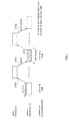
- FIG.3 is a figure explaining a retransmission processing method.
- communication apparatus 100 transmits data using an E-DPDCH to the base station (step ST 301).
- the base station receives the E-DPDCH data without any error
- the base station transmits Ack in the E-HICH to communication apparatus 100.
- the base station transmits Nack in the E-HICH to communication apparatus 100 (step ST 302).
- communication apparatus 100 receives the E-HICH data.
- the decoded result of the received E-HICH data is determined to be Nack by E-HICH determination section 104
- HARQ control section 105 performs control to perform retransmission processing of the corresponding E-DPDCH data.
- communication apparatus 100 receives E-HICH data transmitted from the base station (step ST 303).
- E-HICH determination section 104 determines whether the E-HICH is Ack by E-HICH determination section 104 or not.
- HARQ control section 105 performs control to transmit subsequent data for the first time.
- the determination result of the E-HICH is determined to be Nack
- HARQ control section 105 performs control so that the retransmission processing for the first time is performed, instead of the retransmission processing for a second time (i.e. the retransmission for the first time scheduled to be retransmitted is performed).
- the retransmission processing stops, and the retransmission processing is not performed.
- Nack is received again, the retransmission processing is resumed. Therefore, this prevents inconsistency in the data and prevents decrease of transmission efficiency.
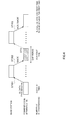
- FIG.4 is a figure illustrating a retransmission processing method according to Embodiment 2 of the present invention.
- the configuration of the communication apparatus is the same as that of FIG.2 , and description thereof is omitted.
- the reference numerals of FIG.2 are used for explanation.
- communication apparatus 100 transmits data using an E-DPDCH to the base station (step ST 401).
- the base station receives the E-DPDCH data without any error
- the base station transmits Ack in the E-HICH to communication apparatus 100.
- the base station transmits Nack in the E-HICH to communication apparatus 100 (step ST 402).
- communication apparatus 100 receives the E-HICH data.
- the decoded result of the received E-HICH data is determined to be Nack by E-HICH determination section 104
- HARQ control section 105 performs control to perform retransmission processing of the corresponding E-DPDCH data.
- communication apparatus 100 receives E-HICH data transmitted from the base station (step ST 403).
- E-HICH determination section 104 determines whether Ack or Nack by E-HICH determination section 104.
- HARQ control section 105 performs control so that the retransmission processing for the first time is performed instead of the retransmission processing for a second time (i.e., the retransmission for the first time scheduled to be retransmitted is performed).
- Embodiment 1 the effects of above Embodiment 1 are obtained, and in addition, when Ack is received after the time of the retransmission overlaps the gap period in compressed mode, the retransmission processing is resumed and the data is retransmitted, thereby reliably reducing errors with received data at the communicating party.
- the present embodiment when the E-HICH data is received with error (e.g. when Ack is falsely determined to be received due to reception error even though the base station transmits Nack), the present embodiment can prevent erroneous data transmission caused by the reception error of the E-HICH data, and the retransmitted data can be reliably transmitted.
- data is transmitted in the E-DPDCH and the E-HICH.
- the present invention is not limited thereto. Any channel may be used to transmit data.
- the retransmission processing stops.
- the present invention is not limited thereto. The present invention can be applied to any method that performs retransmission processing in a communication method having a predetermined non-transmission period instead of the gap period in compressed mode.
- the present invention is suitable for use for a communication apparatus and data retransmission processing method for setting a gap period in compressed mode.
Landscapes
- Engineering & Computer Science (AREA)
- Computer Networks & Wireless Communication (AREA)
- Signal Processing (AREA)
- Mobile Radio Communication Systems (AREA)
- Detection And Prevention Of Errors In Transmission (AREA)
Abstract
A communication apparatus is provided that can prevent decrease of transmission efficiency. In the apparatus, transmission processing section (107) transmits data, provides a non-transmission period on an intermittent basis, and stops transmission of the data in the non-transmission period. Reception processing section (103) receives a retransmission request for the data transmitted by transmission processing section (107). HARQ control section (105) performs retransmission processing of data requested to be retransmitted, wherein when a time of retransmission of the data requested to be retransmitted is in the non-transmission period, the HARQ control section stops the retransmission processing, and when the retransmission request is received again, the HARQ control section resumes the retransmission processing.
Description
- The present invention relates to a communication apparatus and a data retransmission processing method, and, for example, relates to a communication apparatus and a data retransmission processing method for setting a gap period in compressed mode.
- In the past, a mobile apparatus is known, which performs retransmission processing such as counting up a retransmission counter when the mobile apparatus cannot receive Ack (Acknowledgment) indicating successful reception in response to transmission using E-DPDCH (Enhanced Dedicated Physical Data Channel) (for example, Non-patent Literature 1).
- When a mobile apparatus conducts handover from a source base station apparatus with which the mobile apparatus is currently communicating, to a target base station apparatus with which the mobile apparatus can communicate in the future, and the source base station apparatus and the target base station apparatus transmit signals in different frequencies, the mobile apparatus which is going to conduct the handover uses a communication method called "compressed mode" in order to measure the radio link quality of the signal transmitted from the target base station apparatus (for example, Patent Literature 1). The compressed mode is a method in which the base station apparatus intermittently provides a gap period to temporarily stop signal transmission/reception to the mobile apparatus that is going to conduct the handover. In the gap period, the mobile apparatus changes the reception frequency to a frequency which the target base station apparatus is compatible with, to measure the radio link quality with the target base station apparatus. Then, as a result of the measurement of the radio link quality, the mobile apparatus conducts handover based on conditions (e.g. the radio link quality of the signal transmitted by the target base station apparatus is better than that of the signal transmitted by the source base station apparatus), and the mobile apparatus switches to a reception frequency or communication method which the target base station apparatus is compatible with.
-
FIG.1 is a figure illustrating operation of a conventional mobile apparatus employing the compressed mode. As shown inFIG.1 , first, mobile apparatus 10 transmits data tobase station 20 using E-DPDCH (step ST 50).Base station 20 transmits Ack or Nack (Negative Acknowledgment), indicating whether or notbase station 20 has received the E-DPDCH data without error, in an E-HICH (Enhanced Hybrid ARQ Indicator Channel) to mobile apparatus 10 (step ST 51). When mobile apparatus 10 receives the E-HICH data, and determines that the data is Nack, mobile apparatus 10 performs retransmission processing of the corresponding E-DPDCH data. When the retransmitted data retransmitted for the first time cannot be transmitted because the retransmitted data overlaps the gap period in compressed mode (DTX (Discontinuous Transmission)), mobile apparatus 10 receives E-HICH data from base station 20 (step ST 52). In this case, the state of the mobile apparatus not transmitting any response signal is called DTX. When the determination result of the E-HICH data is Ack, mobile apparatus 10 transmits subsequent data, and when the determination result of the E-HICH data is Nack, mobile apparatus 10 proceeds the retransmission processing to perform retransmission for a second time. The retransmission processing includes incrementing the number of retransmissions and changing of the content of retransmission such as setting of the amount of transmission of redundant bits. The retransmitted data is set so that the amount of transmission of the redundant bits varies according to the number of retransmissions. -
- PTL 1
Japanese Patent Application Laid-Open No.2005-110179 -
- NPL 1
3GPP TS 25.321 V6.16.0 11.8.1.1.2 HARQ process - In the conventional apparatus, however, the retransmitted E-DPDCH data is actually not transmitted when the retransmission of the E-DPDCH data overlaps the gap period in compressed mode. As a result, the conventional apparatus has a problem in that the retransmission processing is performed for the E-DPDCH data that is not actually transmitted, and this reduces transmission efficiency. More specifically, there is a problem in that retransmission is caused by RLC processing in a higher layer than HARQ processing, and this reduces transmission efficiency. In the conventional apparatus, the retransmission processing is performed regardless of whether the retransmission is actually performed or not, and the conventional apparatus may falsely determine that the apparatus has received Ack in response to retransmitted E-DPDCH data is not actually transmitted. In this case, subsequent transmission data is transmitted, and there is a problem in that the transferred data becomes inconsistent, which reduces transmission efficiency.
- It is therefore an object of the present invention to provide a communication apparatus and a data retransmission processing method capable of preventing decrease of transmission efficiency.
- A communication apparatus according to the present invention employs a configuration to include: a transmission processing section that transmits data, provides a non-transmission period on an intermittent basis, and stops transmission of the data in the non-transmission period; a reception processing section that receives a retransmission request for the data transmitted by the transmission processing section; and a retransmission control section that performs retransmission processing of data requested to be retransmitted, stops the retransmission processing when a time of retransmission of the data requested to be retransmitted overlaps the non-transmission period, and resumes the retransmission processing when the retransmission request for the data is received again.
- A data retransmission processing method for a communication apparatus that performs retransmission processing of data requested to be retransmitted, according to the present invention, includes the steps of: transmitting data, providing a non-transmission period on an intermittent basis, and stopping transmission of the data in the non-transmission period; receiving a retransmission request for the data transmitted; and when a time of retransmission of the data requested to be retransmitted overlaps the non-transmission period, stopping the retransmission processing, and, when the retransmission request for the data is received again, resuming the retransmission processing.
- According to the present invention, decrease of transmission efficiency can be prevented.
-
-
FIG.1 is a figure illustrating a conventional retransmission processing method; -
FIG.2 is a block diagram illustrating a configuration of a communication apparatus according to Embodiment 1 of the present invention; -
FIG.3 is a figure illustrating a retransmission processing method according to Embodiment 1 of the present invention; and -
FIG.4 is a figure illustrating a retransmission processing method according to Embodiment 2 of the present invention. - Embodiments of the present invention will be hereinafter explained in detail with reference to the drawings.
-
FIG.2 is a block diagram illustrating a configuration ofcommunication apparatus 100 according to Embodiment 1 of the present invention.Communication apparatus 100 can be applied to a communication terminal apparatus such as a mobile phone using, for example, HSUPA (High Speed Uplink Packet Access). -
Communication apparatus 100 mainly includesantenna 101, transmission/reception duplexer 102,reception processing section 103,E-HICH determination section 104,HARQ control section 105,E-DPDCH modulation section 106,transmission processing section 107, and compressed modegap control section 108. Each configuration will be hereinafter explained in detail. -
Antenna 101 receives an RF (high frequency) signal, and outputs the received RF signal to transmission/reception duplexer 102. In addition,antenna 101 transmits an RF signal received from transmission/reception duplexer 102. - Transmission/
reception duplexer 102 switches the output of the RF signal received fromantenna 101 toreception processing section 103 and the output of the RF signal received fromtransmission processing section 107 toantenna 101. -
Reception processing section 103 down-converts and despreads the RF signal received from transmission/reception duplexer 102 from radio frequency to baseband frequency, thereby converting the RF signal into a baseband signal. Then,reception processing section 103 outputs the baseband signal toE-HICH determination section 104. - E-HICH
determination section 104 decodes E-HICH data from the baseband signal received fromreception processing section 103, and determines whether the decoded result is Ack indicating successful reception or Nack indicating failed reception. Then,E-HICH determination section 104 outputs the determination result toHARQ control section 105. -
HARQ control section 105 controlsE-DPDCH modulation section 106 based on the determination result received from E-HICHdetermination section 104. More specifically, when HARQcontrol section 105 receives the determination result of Ack from E-HICHdetermination section 104,HARQ control section 105 controlsE-DPDCH modulation section 106 so as to transmit subsequent data for the first time. On the other hand, when HARQcontrol section 105 receives the determination result of Nack from E-HICHdetermination section 104,HARQ control section 105 counts the number of retransmissions according to retransmission request, and controlsE-DPDCH modulation section 106 so as to perform the retransmission processing. WhenHARQ control section 105 receives a signal indicating a gap period (non-transmission period) from compressed modegap control section 108,HARQ control section 105 stores the E-DPDCH transmission overlapping the gap period to result in DTX, cancels counting up the number of retransmissions, and controlsE-DPDCH modulation section 106 to stop the retransmission processing. Then, whenHARQ control section 105 receives the determination result of Nack from E-HICHdetermination section 104 again,HARQ control section 105 counts up the number of retransmissions of the E-DPDCH transmission stored, and controlsE-DPDCH modulation section 106 to perform the retransmission processing, thus resuming the retransmission processing. In this case, whenHARQ control section 105 receives the determination result of Nack again, and receives the signal indicating the gap period from compressed modegap control section 108 again,HARQ control section 105 cancels counting up the number of retransmissions, and controlsE-DPDCH modulation section 106 to stop the retransmission processing. In other words,HARQ control section 105 performs control to perform retransmission at a time not overlapping the gap period. -
E-DPDCH modulation section 106 generates a baseband E-DPDCH modulation signal based on the control ofHARQ control section 105. More specifically, whenE-DPDCH modulation section 106 is controlled byHARQ control section 105 to perform subsequent data transmission,E-DPDCH modulation section 106 generates an E-DPDCH modulation signal by modulating subsequent data according to a predetermined modulation method. WhenE-DPDCH modulation section 106 is controlled byHARQ control section 105 to perform retransmission processing,E-DPDCH modulation section 106 generates an E-DPDCH modulation signal by modulating the retransmitted data subjected to the retransmission processing, according to the predetermined modulation method. Then,E-DPDCH modulation section 106 outputs the generated E-DPDCH modulation signal totransmission processing section 107. WhenE-DPDCH modulation section 106 is controlled byHARQ control section 105 to stop the retransmission processing,E-DPDCH modulation section 106 stops the retransmission processing. The retransmission processing method performed when the retransmission overlaps the gap period will be explained later. -
Transmission processing section 107 multiplies the E-DPDCH modulation signal received fromE-DPDCH modulation section 106 by a spread code, and up-converts the E-DPDCH modulation signal from baseband to RF, thus converting the signal into an RF signal. Then,transmission processing section 107 outputs the RF signal to transmission/reception duplexer 102. Whentransmission processing section 107 receives a signal indicating a gap period from compressed modegap control section 108,transmission processing section 107 performs control so that the data is not transmitted in the gap period. - Compressed mode
gap control section 108 controls the gap period in compressed mode, and outputs a signal indicating the gap period during a time of the gap period toHARQ control section 105 andtransmission processing section 107. - Subsequently, the retransmission processing method performed when the time of the retransmission overlaps the gap period will be explained with reference to
FIG.3. FIG.3 is a figure explaining a retransmission processing method. - As shown in
FIG.3 , first,communication apparatus 100 transmits data using an E-DPDCH to the base station (step ST 301). When the base station receives the E-DPDCH data without any error, the base station transmits Ack in the E-HICH tocommunication apparatus 100. When the E-DPDCH data include error, the base station transmits Nack in the E-HICH to communication apparatus 100 (step ST 302). Then,communication apparatus 100 receives the E-HICH data. When the decoded result of the received E-HICH data is determined to be Nack byE-HICH determination section 104,HARQ control section 105 performs control to perform retransmission processing of the corresponding E-DPDCH data. When the retransmission for the first time overlaps a gap period in compressed mode, andcommunication apparatus 100 fails to transmit the data (DTX),communication apparatus 100 receives E-HICH data transmitted from the base station (step ST 303). When the determination result of the E-HICH is determined to be Ack byE-HICH determination section 104,HARQ control section 105 performs control to transmit subsequent data for the first time. When the determination result of the E-HICH is determined to be Nack,HARQ control section 105 performs control so that the retransmission processing for the first time is performed, instead of the retransmission processing for a second time (i.e. the retransmission for the first time scheduled to be retransmitted is performed). - As described above, according to the present embodiment, when the time of the retransmission overlaps the gap period in compressed mode, the retransmission processing stops, and the retransmission processing is not performed. When Nack is received again, the retransmission processing is resumed. Therefore, this prevents inconsistency in the data and prevents decrease of transmission efficiency.
-
FIG.4 is a figure illustrating a retransmission processing method according to Embodiment 2 of the present invention. In the present embodiment, the configuration of the communication apparatus is the same as that ofFIG.2 , and description thereof is omitted. In the present embodiment, the reference numerals ofFIG.2 are used for explanation. - As shown in
FIG.4 , first,communication apparatus 100 transmits data using an E-DPDCH to the base station (step ST 401). When the base station receives the E-DPDCH data without any error, the base station transmits Ack in the E-HICH tocommunication apparatus 100. When the E-DPDCH data include error, the base station transmits Nack in the E-HICH to communication apparatus 100 (step ST 402). Then,communication apparatus 100 receives the E-HICH data. When the decoded result of the received E-HICH data is determined to be Nack byE-HICH determination section 104,HARQ control section 105 performs control to perform retransmission processing of the corresponding E-DPDCH data. When the retransmission for the first time overlaps a gap period in compressed mode, andcommunication apparatus 100 fails to transmit the data (DTX),communication apparatus 100 receives E-HICH data transmitted from the base station (step ST 403). When the determination result of the E-HICH is determined to be either Ack or Nack byE-HICH determination section 104,HARQ control section 105 performs control so that the retransmission processing for the first time is performed instead of the retransmission processing for a second time (i.e., the retransmission for the first time scheduled to be retransmitted is performed). - As described above, according to the present embodiment, the effects of above Embodiment 1 are obtained, and in addition, when Ack is received after the time of the retransmission overlaps the gap period in compressed mode, the retransmission processing is resumed and the data is retransmitted, thereby reliably reducing errors with received data at the communicating party. In addition, according to the present embodiment, when the E-HICH data is received with error (e.g. when Ack is falsely determined to be received due to reception error even though the base station transmits Nack), the present embodiment can prevent erroneous data transmission caused by the reception error of the E-HICH data, and the retransmitted data can be reliably transmitted.
- In above Embodiments 1 and 2, data is transmitted in the E-DPDCH and the E-HICH. However, the present invention is not limited thereto. Any channel may be used to transmit data. In above Embodiments 1 and 2, when the time of the retransmission overlaps the gap period in compressed mode, the retransmission processing stops. However, the present invention is not limited thereto. The present invention can be applied to any method that performs retransmission processing in a communication method having a predetermined non-transmission period instead of the gap period in compressed mode.
- The disclosure of Japanese Patent Application No.
2009-113686, filed on May 8, 2009 - For example, the present invention is suitable for use for a communication apparatus and data retransmission processing method for setting a gap period in compressed mode.
Claims (6)
- A communication apparatus comprising:a transmission processing section that transmits data, provides a non-transmission period on an intermittent basis, and stops transmission of the data in the non-transmission period;a reception processing section that receives a retransmission request for the data transmitted by the transmission processing section; anda retransmission control section that performs retransmission processing of data requested to be retransmitted, stops the retransmission processing when a time of retransmission of the data requested to be retransmitted overlaps the non-transmission period, and resumes the retransmission processing when the retransmission request for the data is received again.
- The communication apparatus according to claim 1, wherein:the reception processing section receives, in addition to the retransmission request, a notification indicating successful reception of the data transmitted from the transmission processing section; andwhen the retransmission control section receives the notification indicating the successful reception of the data after the retransmission processing stops, the retransmission control section processes next data, following the data, for first transmission.
- The communication apparatus according to claim 1, wherein:the reception processing section receives not only the retransmission request but also a notification indicating successful reception of the data transmitted from the transmission processing section; andwhen the retransmission control section receives the notification indicating the successful reception of the data after the retransmission processing stops, the retransmission control section resumes the retransmission processing.
- The communication apparatus according to claim 1, wherein:the transmission processing section provides a gap period in compressed mode, which serves as a non-transmission period in which communication with a communicating cell stops, in order to measure reception quality of a handover target candidate using a different frequency from the communicating cell, and stops transmission of the data in the gap period; andwhen a time of retransmission overlaps the gap period, the retransmission control section stops the retransmission processing.
- The communication apparatus according to claim 1, wherein a time of retransmission of the data requested to be retransmitted overlaps the non-transmission period, the retransmission control section stops at least one of setting of an amount of transmission of a redundant bit or counting up of the number of retransmissions serving as the retransmission processing.
- A data retransmission processing method for a communication apparatus that performs retransmission processing of data requested to be retransmitted, the method comprising the steps of:transmitting data, providing a non-transmission period on an intermittent basis, and stopping transmission of the data in the non-transmission period;receiving a retransmission request for the data transmitted; andwhen a time of retransmission of the data requested to be retransmitted overlaps the non-transmission period, stopping the retransmission processing, and, when the retransmission request for the data is received again, resuming the retransmission processing.
Applications Claiming Priority (2)
| Application Number | Priority Date | Filing Date | Title |
|---|---|---|---|
| JP2009113686 | 2009-05-08 | ||
| PCT/JP2010/003139 WO2010128598A1 (en) | 2009-05-08 | 2010-05-07 | Communication device and data retransmission method |
Publications (1)
| Publication Number | Publication Date |
|---|---|
| EP2429233A1 true EP2429233A1 (en) | 2012-03-14 |
Family
ID=43050106
Family Applications (1)
| Application Number | Title | Priority Date | Filing Date |
|---|---|---|---|
| EP10772122A Withdrawn EP2429233A1 (en) | 2009-05-08 | 2010-05-07 | Communication device and data retransmission method |
Country Status (4)
| Country | Link |
|---|---|
| US (1) | US20120054573A1 (en) |
| EP (1) | EP2429233A1 (en) |
| JP (1) | JPWO2010128598A1 (en) |
| WO (1) | WO2010128598A1 (en) |
Families Citing this family (4)
| Publication number | Priority date | Publication date | Assignee | Title |
|---|---|---|---|---|
| GB2506363A (en) * | 2012-09-26 | 2014-04-02 | Broadcom Corp | Method for controlling automatic repeat request (arq) retransmissions of wireless signals |
| WO2014107862A1 (en) * | 2013-01-10 | 2014-07-17 | Telefonaktiebolaget L M Ericsson (Publ) | E-hich information transmitting method, base station and user equipment |
| US10003990B2 (en) * | 2014-06-25 | 2018-06-19 | Intel Corporation | Communication device and method for transmitting data in accordance with a retransmission protocol |
| US11424868B2 (en) * | 2019-01-24 | 2022-08-23 | Mediatek Singapore Pte. Ltd. | Method and apparatus for user equipment processing timeline enhancement in mobile communications |
Family Cites Families (18)
| Publication number | Priority date | Publication date | Assignee | Title |
|---|---|---|---|---|
| JP2002135350A (en) * | 2000-10-30 | 2002-05-10 | Sony Corp | Data distribution method, data reception method, terminal state notification service providing method, and communication terminal |
| JP2003143639A (en) * | 2001-11-07 | 2003-05-16 | Nec Corp | Mobile communication system, base station, mobile station, and inter-frequency HHO method used for them |
| KR100487245B1 (en) * | 2001-11-28 | 2005-05-03 | 삼성전자주식회사 | Apparatus for minimizing transmission impossibility time due to compressed mode in mobile communication system using high speed downlink packet access scheme and method thereof |
| JP2005064751A (en) * | 2003-08-08 | 2005-03-10 | Matsushita Electric Ind Co Ltd | Mobile station apparatus and reception method in mobile station apparatus |
| JP2005110179A (en) | 2003-10-02 | 2005-04-21 | Matsushita Electric Ind Co Ltd | Receiver, transceiver and control method for the same |
| KR20050081566A (en) * | 2004-02-14 | 2005-08-19 | 삼성전자주식회사 | Method for harq transmission of compressed mode in communication system using high speed downlink packet access scheme |
| CN1738442A (en) * | 2004-08-10 | 2006-02-22 | 日本电气株式会社 | Be used to be operated in the method and apparatus of the cordless communication network under the compact model |
| JP2006074201A (en) * | 2004-08-31 | 2006-03-16 | Nakayo Telecommun Inc | Access point, mobile terminal, wireless LAN system, and communication method |
| JP4756314B2 (en) * | 2005-01-05 | 2011-08-24 | 日本電気株式会社 | Communication control method, radio communication system, mobile station, base station, and base station control apparatus. |
| GB0506539D0 (en) * | 2005-03-31 | 2005-05-04 | Koninkl Philips Electronics Nv | Method and apparatus for transmitting data, and a communication system |
| US20070047437A1 (en) * | 2005-08-24 | 2007-03-01 | Rainer Bachl | Method and apparatus for controlling retransmissions in a wireless communications system |
| US8014343B2 (en) * | 2006-09-20 | 2011-09-06 | Interdigital Technology Corporation | Method for enhanced dedicated channel (E-DCH) transmission overlap detection for compressed mode gap slots |
| WO2008073013A1 (en) * | 2006-12-13 | 2008-06-19 | Telefonaktiebolaget Lm Ericsson (Publ) | A method of scheduling data transmission in a radio network |
| CA2674697A1 (en) * | 2007-01-08 | 2008-07-17 | Interdigital Technology Corporation | Measurement gap pattern scheduling to support mobility |
| US7865610B2 (en) * | 2007-03-12 | 2011-01-04 | Nautel Limited | Point to multipoint reliable protocol for synchronous streaming data in a lossy IP network |
| JPWO2009016837A1 (en) * | 2007-07-31 | 2010-10-14 | パナソニック株式会社 | Wireless communication apparatus and retransmission determination method |
| JP4272247B2 (en) | 2007-11-07 | 2009-06-03 | 株式会社福永事務所 | Tires for vehicles |
| JP5251972B2 (en) * | 2008-03-17 | 2013-07-31 | 日本電気株式会社 | Communication system, base station, mobile station, retransmission control method and program |
-
2010
- 2010-05-07 JP JP2011512313A patent/JPWO2010128598A1/en active Pending
- 2010-05-07 EP EP10772122A patent/EP2429233A1/en not_active Withdrawn
- 2010-05-07 WO PCT/JP2010/003139 patent/WO2010128598A1/en not_active Ceased
- 2010-05-07 US US13/319,293 patent/US20120054573A1/en not_active Abandoned
Non-Patent Citations (1)
| Title |
|---|
| See references of WO2010128598A1 * |
Also Published As
| Publication number | Publication date |
|---|---|
| JPWO2010128598A1 (en) | 2012-11-01 |
| WO2010128598A1 (en) | 2010-11-11 |
| US20120054573A1 (en) | 2012-03-01 |
Similar Documents
| Publication | Publication Date | Title |
|---|---|---|
| CA2723859C (en) | Increasing reliability of hybrid automatic repeat request protocol | |
| US20240178974A1 (en) | Method and apparatus for fallback operation for semi-static harq-ack codebook determination | |
| CN110291732B (en) | Automatic retransmission of corrupted data in a wireless network | |
| US20100040037A1 (en) | Radio communication terminal devices, radio communication network arrangement, method for operating a radio communication terminal device | |
| US8477745B2 (en) | Moblie station for transmitting an uplink shared signal and base station apparatus for receiving the uplink shared signal | |
| WO2009088944A2 (en) | Method and apparatus for handling interactions between measurement gap, automated repeat request, discontinuous reception and discontinuous transmission in wireless communications | |
| US8369278B2 (en) | Method and apparatus for sending control signaling | |
| US11177911B2 (en) | Base station and user equipment | |
| EP1956741A1 (en) | Retransmission control method and receiving-end apparatus | |
| US8711804B2 (en) | Retransmission control method, base station and mobile station | |
| US20120054573A1 (en) | Communication device and data retransmission method | |
| US20090181703A1 (en) | Method and Apparatus for Triggering Status Report in a Wireless Communications System | |
| US20150296059A1 (en) | Uplink transmission rate in a wireless communication device | |
| EP1944897A1 (en) | Communication device, radio communication terminal, radio base station and communication method | |
| WO2018103100A1 (en) | Method and device for transmitting uplink data | |
| JP5251972B2 (en) | Communication system, base station, mobile station, retransmission control method and program | |
| CN102957521B (en) | Reduce the DRX downlink data transmission method of mutual interference in terminal, system, terminal and base station | |
| CN112073161B (en) | Method and apparatus for early HARQ packet retransmission | |
| US12634044B2 (en) | Uplink transmission method and apparatus, access network device, terminal, and storage medium | |
| CN102957517A (en) | DRX (discontinuous reception) upstream data transmission method and base station for reducing co-existing interference of internal memory of terminal | |
| CN110365452B (en) | Uplink data transmission method and device | |
| EP2034763A1 (en) | Radio communication device and method used in mobile communication system | |
| WO2023132079A1 (en) | First radio communication device, second radio communication device, radio communication system, and radio communication method | |
| EP3403349B1 (en) | Harq transmission of transport blocks |
Legal Events
| Date | Code | Title | Description |
|---|---|---|---|
| PUAI | Public reference made under article 153(3) epc to a published international application that has entered the european phase |
Free format text: ORIGINAL CODE: 0009012 |
|
| 17P | Request for examination filed |
Effective date: 20111111 |
|
| AK | Designated contracting states |
Kind code of ref document: A1 Designated state(s): AL AT BE BG CH CY CZ DE DK EE ES FI FR GB GR HR HU IE IS IT LI LT LU LV MC MK MT NL NO PL PT RO SE SI SK SM TR |
|
| DAX | Request for extension of the european patent (deleted) | ||
| STAA | Information on the status of an ep patent application or granted ep patent |
Free format text: STATUS: THE APPLICATION HAS BEEN WITHDRAWN |
|
| 18W | Application withdrawn |
Effective date: 20130319 |