EP2429156A1 - Apparatus, and associated method, for providing support-call data pursuant to a wireless device support call - Google Patents
Apparatus, and associated method, for providing support-call data pursuant to a wireless device support call Download PDFInfo
- Publication number
- EP2429156A1 EP2429156A1 EP11177076A EP11177076A EP2429156A1 EP 2429156 A1 EP2429156 A1 EP 2429156A1 EP 11177076 A EP11177076 A EP 11177076A EP 11177076 A EP11177076 A EP 11177076A EP 2429156 A1 EP2429156 A1 EP 2429156A1
- Authority
- EP
- European Patent Office
- Prior art keywords
- support
- call
- data signal
- data
- wireless
- Prior art date
- Legal status (The legal status is an assumption and is not a legal conclusion. Google has not performed a legal analysis and makes no representation as to the accuracy of the status listed.)
- Withdrawn
Links
- 238000000034 method Methods 0.000 title claims abstract description 22
- 238000004891 communication Methods 0.000 claims abstract description 40
- 239000003999 initiator Substances 0.000 claims 1
- 230000000977 initiatory effect Effects 0.000 description 7
- 238000010586 diagram Methods 0.000 description 5
- 230000004044 response Effects 0.000 description 5
- 238000012545 processing Methods 0.000 description 4
- 230000006870 function Effects 0.000 description 3
- 238000013475 authorization Methods 0.000 description 2
- 230000015572 biosynthetic process Effects 0.000 description 2
- 230000010267 cellular communication Effects 0.000 description 2
- 230000009977 dual effect Effects 0.000 description 2
- 230000002452 interceptive effect Effects 0.000 description 2
- 230000008569 process Effects 0.000 description 2
- 238000012552 review Methods 0.000 description 2
- 230000001413 cellular effect Effects 0.000 description 1
- 230000007246 mechanism Effects 0.000 description 1
- 230000008450 motivation Effects 0.000 description 1
- 230000005236 sound signal Effects 0.000 description 1
Images


Classifications
-
- H—ELECTRICITY
- H04—ELECTRIC COMMUNICATION TECHNIQUE
- H04M—TELEPHONIC COMMUNICATION
- H04M3/00—Automatic or semi-automatic exchanges
- H04M3/42—Systems providing special services or facilities to subscribers
- H04M3/50—Centralised arrangements for answering calls; Centralised arrangements for recording messages for absent or busy subscribers ; Centralised arrangements for recording messages
- H04M3/51—Centralised call answering arrangements requiring operator intervention, e.g. call or contact centers for telemarketing
-
- H—ELECTRICITY
- H04—ELECTRIC COMMUNICATION TECHNIQUE
- H04M—TELEPHONIC COMMUNICATION
- H04M3/00—Automatic or semi-automatic exchanges
- H04M3/42—Systems providing special services or facilities to subscribers
- H04M3/50—Centralised arrangements for answering calls; Centralised arrangements for recording messages for absent or busy subscribers ; Centralised arrangements for recording messages
- H04M3/51—Centralised call answering arrangements requiring operator intervention, e.g. call or contact centers for telemarketing
- H04M3/5166—Centralised call answering arrangements requiring operator intervention, e.g. call or contact centers for telemarketing in combination with interactive voice response systems or voice portals, e.g. as front-ends
-
- H—ELECTRICITY
- H04—ELECTRIC COMMUNICATION TECHNIQUE
- H04M—TELEPHONIC COMMUNICATION
- H04M3/00—Automatic or semi-automatic exchanges
- H04M3/42—Systems providing special services or facilities to subscribers
- H04M3/50—Centralised arrangements for answering calls; Centralised arrangements for recording messages for absent or busy subscribers ; Centralised arrangements for recording messages
- H04M3/51—Centralised call answering arrangements requiring operator intervention, e.g. call or contact centers for telemarketing
- H04M3/523—Centralised call answering arrangements requiring operator intervention, e.g. call or contact centers for telemarketing with call distribution or queueing
- H04M3/5232—Call distribution algorithms
- H04M3/5235—Dependent on call type or called number [DNIS]
Definitions
- the present disclosure relates generally to a manner by which to provide wireless-device-related data to a support, or other, center pursuant to a call placed to the center. More particularly, the present disclosure relates to an apparatus, and an associated method, by which to send the data to the remote center during a voice call connection with the remote center.
- a data signal that includes data needed by the center to respond to the call.
- the data signal is formed and sent, e.g., in-band with voice communications on a voice channel formed by way of a voice connection created between the wireless device and the remote center.
- a caller is not required to answer questions of support center personnel to provide needed support-call data. Rather, the caller merely initiates the sending of the data signal.
- Wireless devices are used by many through which to communicate.
- Mobile stations used in cellular, and cellular-like, communication systems are exemplary of such wireless devices. While early-generation, cellular communication systems and mobile stations operable therein provided for voice communications and limited data communications, successor-generation systems and mobile stations operable therein have provide for increasingly data-intensive communication services.
- the mobile stations and, more generally, wireless devices used in various analogous communication systems, are relatively complex and are typically operable pursuant to a subscription for service or other authorization for access to a network.
- the network with which the mobile station communicates is typically managed and controlled by a network operator.
- Access by a mobile station to a communication network is controlled to ensure that access to a network is permitted only to mobile stations that are authorized to access the network.
- a mobile station is typically identified, not only with a telephone number, but also by additional identifiers, such as an TMSI (International Mobile Station Identifier), a serial number, a mobile-station model number, an IMEI (International Mobile Equipment Identity), an MEID (Mobile Equipment Identifier), as well as any of various other identifiers. Different ones of these values, or others, are used pursuant to operation of the mobile station to access and to communicate by way of the communication network.
- the identifiers are sometimes of lengthy sequences of alphanumeric characters that, unlike telephone numbers, are usually not memorized or readily known by a user of the mobile station. And, many users likely have no knowledge of the existence of such identifiers as use of such identifiers is typically transparent to a user during operation of the mobile station.
- the user might be required to identify various of the mobile-station identifiers in order for the appropriate support to be provided to correct the support issue.
- the call is placed by the user by way of the affected mobile station, the user might have difficulty obtaining identification of the required identifiers.
- the support-center personnel can provide the user with voice instructions to instruct the user how to obtain the needed information, the user typically must juggle the mobile station, alternately to listen, and talk, to the support-center personnel and to manipulate the mobile station in order to obtain the needed information in the instructed manner.
- the mobile station includes, e.g., menu displays displayable at a display screen of a user interface, and the user of the mobile station sometimes must manipulate the display-screen menus in order to obtain the needed information at the display screen, then read the displayed information and to voice the values so that the support-center personnel are provided with the information.
- the conventional process is also prone to error.
- the user might misread the information, and, when the value is read and spoken to the support-center personnel, the support-center personnel might incorrectly hear or mis-type the value.
- the conventional process is time-consuming, sometimes also requiring the support-center personnel laboriously to provide instructions to the users for the user to manipulate the mobile station to obtain the needed information. This procedure results in increased support costs and also might result in a poor user experience.
- Figure 1 illustrates a functional block diagram of a communication system in which an embodiment of the present disclosure is operable.
- Figure 2 illustrates a representation of an exemplary screen display generated pursuant to operation of an embodiment of the present disclosure.
- Figure 3 illustrates a message sequence diagram representative of exemplary operation of the communication system shown in Figure 1 pursuant to operation of an embodiment of the present disclosure.
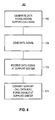
- Figure 4 illustrates a method sequence diagram representative of the method of operation of an embodiment of the present disclosure.
- the present disclosure accordingly, advantageously provides an apparatus, and an associated method, by which to provide wireless-device-related data to a remote support, or other, center pursuant to a call to the remote center.
- a manner is provided by which to send the data to the remote center during a voice call connection with the remote center.
- a data signal is formed and sent, e.g., as an in-band signal with voice communication signals made by way of a voice channel formed between the wireless device and the remote center. Formation and sending of the data signal is automatically carried out subsequent to initiation of its sending by a user of the wireless device. Thereby, the caller need not ascertain the information and provide the information by voice to the remote center.
- a voice-call connection is created between the wireless device and the remote, support center.
- Support-call data needed by the support center is provided by way of a data signal, comprising an in-band signal communicated by way of the voice channel defined by the voice connection formed between the mobile station and the remote, support center.
- the support-call data signal is generated responsive to initiation by a user of the wireless device.
- the user initiates the generation, e.g., responsive to request made by support-center personnel subsequent to formation of the voice connection between the wireless device and the support center.
- the initiation of the generation of the support-call data signal is made responsive to support-center personnel request when support-call data is determined by the support center personnel to be required to respond to a request for wireless-device support.
- the user initiates generation of the support-call data signal without support-center request.
- the user of the wireless device initiates the generation of the support-call data signal through selection made from a menu displayed at a screen display.
- the menu includes an entry that, when selected, provides for the generation of the support-call data signal.
- the entry is selected by the user by way of a user actuator, such as an actuation key of the wireless device, an interactive screen input, or other input mechanism.
- the support-call data signal comprises an audio signal, such as a DTMF (Dual Tone Multi Frequency) whose values together comprise the set of data needed by support personnel to respond to a support request.
- DTMF Double Tone Multi Frequency
- the support-call data signal alternately comprises a digital signal forming an inaudible, in-band signal that is conveyed by the wireless device to the support center by way of the already-established voice call connection.
- an audio interface is provided at the remote, support center.
- the audio interface is used during an established voice call with the wireless device. Once received, the informational content of the received signal is used by support-center personnel to facilitate a response to the support request.
- the data contained in the support-call data signal received at the support center is displayed at a display.
- the data is, for example, populated into a screen display, thereby to provide the support-center personnel the received information regarding the wireless device in a form facilitating its ready review by the support-center personnel, ready to be used to facilitate a response to the support request.
- the needed information is provided to the support center without necessitating that the user manipulate the wireless device to access and ascertain the needed information and then communicate the information to the remote center.
- an apparatus, and an associated method for facilitating communication of support-call data by a wireless device pursuant to a support call.
- a support-call data signal generator is configured to generate a data signal containing the support-call data.
- a data signal sender is configured to send the data signal generated by the data signal sender during the support call.
- an apparatus, and an associated method is also provided for facilitating wireless-device support pursuant to a support call placed to a support center.
- a data signal receiver is configured to receive a wireless-device-sent data signal that contains support-call data.
- the wireless-device-sent data signal is sent during the support call.
- a data converter is configured to convert the support-call data contained in the wireless-device-sent data received by the data signal receiver into a form usable by the support center during the support call.
- a communication system shown generally at 10, provides for radio communication with wireless devices, of which the mobile station 12 is representative. While the following description shall describe exemplary operation of the communication system in its exemplary implementation in which the communication system operates in general conformity with a cellular communication system standard, the communication system is more generally representative of any various radio communication systems in which communications are effectuated with wireless devices.
- Radio Air interface here represented by the arrow 14
- the networks 18 and 22 are placed in communication connectivity with one another in conventional manner.
- Core Network forms a packet data network to which communication entities are placeable in communication connectivity.
- a support center 26 is positioned in communication connectivity with the core network 22.
- the support center is representative of an entity that provides support for operations of the mobile station and communications thereof in the communication system.
- the support center is variously operated by an entity associated with an operator of the network 18, an entity associated with the manufacturer or seller of the mobile station 12, or any other entity that the user of the mobile station 12 might need to contact in order to obtain operational support related to a communication, or other aspect, of the mobile station 12 or its operation in the communication system 10.
- the user of the mobile station might be in need of support or other assistance by personnel of the support center regarding some aspect of the mobile station or its operation in the communication system 10.
- a support call is originated by the user of the mobile station, and a voice connection is formed between the mobile station and suitable communication devices at the support center that provides for telephonic communications.
- personnel at the support center sometimes require specific information regarding the mobile station values of its identifiers, such as the aforementioned IMEI, IMSI, MEID values, etc. This information conventionally is required to be obtained by the user of the mobile station and spoken to the personnel of the support center during the call.
- the user of the mobile station sometimes is required to manipulate the mobile station, such as through requesting and viewing successive screen displays in order to obtain the needed information. Obtaining the information is sometimes cumbersome and prone to error.
- the mobile station 12 of an embodiment of the present disclosure includes apparatus 32 of an embodiment of the present disclosure by which to facilitate the communication of information needed of a support center to facilitate a response to the support request.
- the apparatus 32 is functionally represented, formed of functional entities that are implementable in any desired manner, including hardcore elements, algorithms executable by processing circuitry, and variants thereof.
- the apparatus 32 comprises a processing device to which input signals are provided and from which output signals are generated.
- functions are carried out using discrete elements.
- the apparatus 32 is here shown to include a user interface 36, an actuation detector 38, a support-call data signal generator 42, a memory 44, and a data signal sender 48.
- the apparatus 32 forms part of the mobile station and operates during operation of the mobile station including during when a voice connection is formed and maintained by transceiver circuitry, here represented by a receive(RX) part 52 and a transmit (TX) part 54.
- the apparatus functions, amongst other things, to provide personnel of the support center with mobile-station-related information that facilitates a response to the support issue involved in the support request.
- a user of the mobile station initiates operation of the apparatus 32 to generate a support-call data signal that includes a set of information relating to the mobile station and its operation.
- the user initiates operation by actuating a user actuator 62 of the user interface 36.
- the user actuator comprises, e.g., an actuation key.
- the actuation key in one implementation, operates in conjunction with a screen display displayable upon a display screen.
- the user interface 36 comprises an interactive screen display.
- the user makes selection to initiates operation through selection of an appropriate menu entry displayed on the display.
- User initiation facilitates secure operation as an unauthorized, external requestor that makes request for the information is less likely to be able to obtain information about the mobile station as the user must approve release of the information. Additionally, user initiation also acts as a legal authorization of release of the information.
- Actuation of the actuator to initiate the operation is detected by the actuation detector 38. And, an indication of the actuation is provided to the support-call data signal generator 42.
- the generator 42 operates to generate a support-call data signal that contains a set of data comprising any of various information that might be needed by the support center.
- the data includes the model number of the mobile station, the phone number of the mobile station, the IMSI of the mobile station, the serial number, IMEI, MEID, and/or PIN of the mobile station.
- Other, values and amounts of data are alternately included in the support-call data signal.
- the information forming the data of the support-call data signal is stored at the memory element 44. The contents of the memory 44 are accessed, and appropriate values are retrieved and used to form the support-call data signal.
- the data is formatted as key-value pairs, or as fixed fields, etc.
- DTMF Double Tone Multi Frequency
- the values are converted into decimal values.
- Delimiters such as "*" and "#" tones are utilized.
- An exemplary, tone sequence comprises:
- the signal is provided to a data signal sender 48 that operates to send, in conjunction with the transmit part 54, the support-call data signal.
- the signal is sent in-band in the voice channel defined by the voice-connection formed between the mobile station and the support center.
- the support center also includes apparatus, here designated as apparatus 72, of an embodiment of the present disclosure.
- apparatus 72 of an embodiment of the present disclosure.
- the elements of the apparatus 72 are also functionally shown, implementable in any desired manner including, for instance, algorithm executable by processing circuitry, hardware devices, and combinations and variants thereof.
- the apparatus includes a processing device having algorithm executable thereat to carry out certain of the functions of the apparatus.
- the apparatus 72 includes a data signal receiver 76, a data converter 78, a display populator 82 and a display device 84.
- the data signal receiver operates to detect and to receive a support-call data signal sent by the mobile station and routed by way of the radio air interface and the networks 18 and 22 to the support center.
- the receive signal is provided to the data converter 72, which operates to convert the data contained in the signal into a form permitting its display on the display element 84.
- the data converter provides the data to a display populator 82 that operates to populate a screen display with the data to facilitate its display at the display device 84.
- Figure 2 illustrates an exemplary screen display displayed at a display element 66 of the user interface of the mobile station.
- the display here shows a drop-down menu 92 that includes a plurality of menu entries 94.
- menu entry 94-N-1 comprises a menu entry for initiating generation of the support-call data signal.
- the user of the mobile station elects to send the mobile-station information to the support center, the user selects the menu entry 94-N-1.
- the support-call data signal is generated and communicated to the support center, e.g., in-band with the voice call.
- Figure 3 illustrates a sequence diagram, shown generally at 112, representative of exemplary operation of the communication system 10 shown in Figure 1 .
- the mobile station 12 and support center 26 are place able in communication connectivity by way of the network 18-22.
- a voice connection is formed, indicated by the block 116 between the mobile station and the support center.
- the voice connection is formed, e.g., by a call placed by the mobile station to the support center.
- the user of the mobile station elects to initiate the generation and sending of the support-call data signal to the support center.
- the user initiates the operation, and the mobile station detects the initiation command, the data that is to be contained in the data signal is retrieved, indicated by the block 122. And, as indicated by the block 124, the support-call data signal is generated.
- the data signal is sent.
- the data signal is communicated, indicated by the segments 128, and delivered to the support center 26.
- the signal is sent in-band in the voice channel defined by the voice connection.
- the signal is detected, indicated by the block 132 at the support center. And, the data contained in the data signal is extracted and converted, indicated by the block 134 into a form to facilitate its display. Then, and as indicated by the block 138, the data is displayed.
- Figure 4 illustrates a method flow diagram, shown generally at 162, representative of the method of operation of an embodiment of the present disclosure.
- the method facilitates communication of support-call data pursuant to a support call placed by a wireless device to a support center.
- a data signal containing the support-call data is generated. Then, and as indicated by the block 168, the data signal is sent.
- the data signal is received at the support center.
- the support-call data is converted into a form usable by the support center during a support call.
- the data related to the wireless device that is needed at the support center to respond best to a support issue or inquiry is sent automatically, under the mobile-station user's control, without necessitating that the user manipulate the wireless device to obtain the information and report the information to the support center.
Landscapes
- Business, Economics & Management (AREA)
- Marketing (AREA)
- Engineering & Computer Science (AREA)
- Signal Processing (AREA)
- Mobile Radio Communication Systems (AREA)
Abstract
Description
- The present disclosure relates generally to a manner by which to provide wireless-device-related data to a support, or other, center pursuant to a call placed to the center. More particularly, the present disclosure relates to an apparatus, and an associated method, by which to send the data to the remote center during a voice call connection with the remote center.
- A data signal that includes data needed by the center to respond to the call. The data signal is formed and sent, e.g., in-band with voice communications on a voice channel formed by way of a voice connection created between the wireless device and the remote center. A caller is not required to answer questions of support center personnel to provide needed support-call data. Rather, the caller merely initiates the sending of the data signal.
- Wireless devices are used by many through which to communicate. Mobile stations used in cellular, and cellular-like, communication systems are exemplary of such wireless devices. While early-generation, cellular communication systems and mobile stations operable therein provided for voice communications and limited data communications, successor-generation systems and mobile stations operable therein have provide for increasingly data-intensive communication services.
- The mobile stations and, more generally, wireless devices used in various analogous communication systems, are relatively complex and are typically operable pursuant to a subscription for service or other authorization for access to a network. The network with which the mobile station communicates is typically managed and controlled by a network operator.
- Access by a mobile station to a communication network is controlled to ensure that access to a network is permitted only to mobile stations that are authorized to access the network. A mobile station is typically identified, not only with a telephone number, but also by additional identifiers, such as an TMSI (International Mobile Station Identifier), a serial number, a mobile-station model number, an IMEI (International Mobile Equipment Identity), an MEID (Mobile Equipment Identifier), as well as any of various other identifiers. Different ones of these values, or others, are used pursuant to operation of the mobile station to access and to communicate by way of the communication network. The identifiers are sometimes of lengthy sequences of alphanumeric characters that, unlike telephone numbers, are usually not memorized or readily known by a user of the mobile station. And, many users likely have no knowledge of the existence of such identifiers as use of such identifiers is typically transparent to a user during operation of the mobile station.
- However, in the event that an operational, or other, difficulty arises, which necessitates a call to a support center, the user might be required to identify various of the mobile-station identifiers in order for the appropriate support to be provided to correct the support issue. When the call is placed by the user by way of the affected mobile station, the user might have difficulty obtaining identification of the required identifiers. While the support-center personnel can provide the user with voice instructions to instruct the user how to obtain the needed information, the user typically must juggle the mobile station, alternately to listen, and talk, to the support-center personnel and to manipulate the mobile station in order to obtain the needed information in the instructed manner.
- The mobile station includes, e.g., menu displays displayable at a display screen of a user interface, and the user of the mobile station sometimes must manipulate the display-screen menus in order to obtain the needed information at the display screen, then read the displayed information and to voice the values so that the support-center personnel are provided with the information. Not only is this conventional practice inconvenient, but the conventional process is also prone to error. The user might misread the information, and, when the value is read and spoken to the support-center personnel, the support-center personnel might incorrectly hear or mis-type the value. Additionally, the conventional process is time-consuming, sometimes also requiring the support-center personnel laboriously to provide instructions to the users for the user to manipulate the mobile station to obtain the needed information. This procedure results in increased support costs and also might result in a poor user experience.
- It is in light of this background information related to wireless devices that the significant improvements of the present invention have evolved.
-
Figure 1 illustrates a functional block diagram of a communication system in which an embodiment of the present disclosure is operable. -
Figure 2 illustrates a representation of an exemplary screen display generated pursuant to operation of an embodiment of the present disclosure. -
Figure 3 illustrates a message sequence diagram representative of exemplary operation of the communication system shown inFigure 1 pursuant to operation of an embodiment of the present disclosure. -
Figure 4 illustrates a method sequence diagram representative of the method of operation of an embodiment of the present disclosure. - The present disclosure, accordingly, advantageously provides an apparatus, and an associated method, by which to provide wireless-device-related data to a remote support, or other, center pursuant to a call to the remote center.
- Through operation of an embodiment of the present disclosure, a manner is provided by which to send the data to the remote center during a voice call connection with the remote center.
- In one aspect of the present disclosure, a data signal is formed and sent, e.g., as an in-band signal with voice communication signals made by way of a voice channel formed between the wireless device and the remote center. Formation and sending of the data signal is automatically carried out subsequent to initiation of its sending by a user of the wireless device. Thereby, the caller need not ascertain the information and provide the information by voice to the remote center.
- In another aspect of the present disclosure, a voice-call connection is created between the wireless device and the remote, support center. Support-call data needed by the support center is provided by way of a data signal, comprising an in-band signal communicated by way of the voice channel defined by the voice connection formed between the mobile station and the remote, support center.
- In another aspect of the present disclosure, the support-call data signal is generated responsive to initiation by a user of the wireless device. The user initiates the generation, e.g., responsive to request made by support-center personnel subsequent to formation of the voice connection between the wireless device and the support center. The initiation of the generation of the support-call data signal is made responsive to support-center personnel request when support-call data is determined by the support center personnel to be required to respond to a request for wireless-device support. Or, the user initiates generation of the support-call data signal without support-center request.
- In another aspect of the present disclosure, the user of the wireless device initiates the generation of the support-call data signal through selection made from a menu displayed at a screen display. The menu includes an entry that, when selected, provides for the generation of the support-call data signal. The entry is selected by the user by way of a user actuator, such as an actuation key of the wireless device, an interactive screen input, or other input mechanism.
- In another aspect of the present disclosure, the support-call data signal comprises an audio signal, such as a DTMF (Dual Tone Multi Frequency) whose values together comprise the set of data needed by support personnel to respond to a support request.
- In another aspect of the present disclosure, the support-call data signal alternately comprises a digital signal forming an inaudible, in-band signal that is conveyed by the wireless device to the support center by way of the already-established voice call connection.
- In another aspect of the present disclosure, an audio interface is provided at the remote, support center. The audio interface is used during an established voice call with the wireless device. Once received, the informational content of the received signal is used by support-center personnel to facilitate a response to the support request.
- In another aspect of the present disclosure, the data contained in the support-call data signal received at the support center is displayed at a display. The data is, for example, populated into a screen display, thereby to provide the support-center personnel the received information regarding the wireless device in a form facilitating its ready review by the support-center personnel, ready to be used to facilitate a response to the support request.
- Thereby, the needed information is provided to the support center without necessitating that the user manipulate the wireless device to access and ascertain the needed information and then communicate the information to the remote center.
- In these and other aspects, therefore, an apparatus, and an associated method, is provided for facilitating communication of support-call data by a wireless device pursuant to a support call. A support-call data signal generator is configured to generate a data signal containing the support-call data. A data signal sender is configured to send the data signal generated by the data signal sender during the support call.
- In these and further aspects, therefore, an apparatus, and an associated method, is also provided for facilitating wireless-device support pursuant to a support call placed to a support center. A data signal receiver is configured to receive a wireless-device-sent data signal that contains support-call data. The wireless-device-sent data signal is sent during the support call. A data converter is configured to convert the support-call data contained in the wireless-device-sent data received by the data signal receiver into a form usable by the support center during the support call.
- Turning first, therefore, to
Figure 1 , a communication system, shown generally at 10, provides for radio communication with wireless devices, of which themobile station 12 is representative. While the following description shall describe exemplary operation of the communication system in its exemplary implementation in which the communication system operates in general conformity with a cellular communication system standard, the communication system is more generally representative of any various radio communication systems in which communications are effectuated with wireless devices. - Communications with the mobile station are carried out by way of a radio air interface, here represented by the
arrow 14, defined between the mobile station and a network part of the communication system, here formed of a Radio Access Network (RAN) 18 and a Core Network (CN) 22. Thenetworks support center 26 is positioned in communication connectivity with thecore network 22. The support center is representative of an entity that provides support for operations of the mobile station and communications thereof in the communication system. The support center is variously operated by an entity associated with an operator of thenetwork 18, an entity associated with the manufacturer or seller of themobile station 12, or any other entity that the user of themobile station 12 might need to contact in order to obtain operational support related to a communication, or other aspect, of themobile station 12 or its operation in thecommunication system 10. - Therefore, pursuant to any of various motivations, the user of the mobile station might be in need of support or other assistance by personnel of the support center regarding some aspect of the mobile station or its operation in the
communication system 10. Typically, a support call is originated by the user of the mobile station, and a voice connection is formed between the mobile station and suitable communication devices at the support center that provides for telephonic communications. As mentioned previously, however, once the call connection is formed, personnel at the support center sometimes require specific information regarding the mobile station values of its identifiers, such as the aforementioned IMEI, IMSI, MEID values, etc. This information conventionally is required to be obtained by the user of the mobile station and spoken to the personnel of the support center during the call. To obtain the needed information, the user of the mobile station sometimes is required to manipulate the mobile station, such as through requesting and viewing successive screen displays in order to obtain the needed information. Obtaining the information is sometimes cumbersome and prone to error. - The
mobile station 12 of an embodiment of the present disclosure includesapparatus 32 of an embodiment of the present disclosure by which to facilitate the communication of information needed of a support center to facilitate a response to the support request. Theapparatus 32 is functionally represented, formed of functional entities that are implementable in any desired manner, including hardcore elements, algorithms executable by processing circuitry, and variants thereof. In one implementation, for instance, theapparatus 32 comprises a processing device to which input signals are provided and from which output signals are generated. In another implementation, functions are carried out using discrete elements. - The
apparatus 32 is here shown to include auser interface 36, anactuation detector 38, a support-call data signalgenerator 42, amemory 44, and adata signal sender 48. Theapparatus 32 forms part of the mobile station and operates during operation of the mobile station including during when a voice connection is formed and maintained by transceiver circuitry, here represented by a receive(RX)part 52 and a transmit (TX)part 54. The apparatus functions, amongst other things, to provide personnel of the support center with mobile-station-related information that facilitates a response to the support issue involved in the support request. - When the voice connection is formed between the mobile station and the support center pursuant to the call or support, personnel of the support center are able to request additional information regarding the mobile station. And, in response, or otherwise, a user of the mobile station initiates operation of the
apparatus 32 to generate a support-call data signal that includes a set of information relating to the mobile station and its operation. - In the exemplary implementation, the user initiates operation by actuating a
user actuator 62 of theuser interface 36. The user actuator comprises, e.g., an actuation key. The actuation key, in one implementation, operates in conjunction with a screen display displayable upon a display screen. In one implementation, theuser interface 36 comprises an interactive screen display. And, the user makes selection to initiates operation through selection of an appropriate menu entry displayed on the display. User initiation facilitates secure operation as an unauthorized, external requestor that makes request for the information is less likely to be able to obtain information about the mobile station as the user must approve release of the information. Additionally, user initiation also acts as a legal authorization of release of the information. - Actuation of the actuator to initiate the operation is detected by the
actuation detector 38. And, an indication of the actuation is provided to the support-call data signalgenerator 42. Thegenerator 42 operates to generate a support-call data signal that contains a set of data comprising any of various information that might be needed by the support center. For instance, the data includes the model number of the mobile station, the phone number of the mobile station, the IMSI of the mobile station, the serial number, IMEI, MEID, and/or PIN of the mobile station. Other, values and amounts of data are alternately included in the support-call data signal. In the exemplary implementation shown inFigure 1 , the information forming the data of the support-call data signal is stored at thememory element 44. The contents of thememory 44 are accessed, and appropriate values are retrieved and used to form the support-call data signal. - In one implementation, the data is formatted as key-value pairs, or as fixed fields, etc. In one implementation, DTMF (Dual Tone Multi Frequency) coding is used. The values are converted into decimal values. And, Delimiters, such as "*" and "#" tones are utilized. An exemplary, tone sequence comprises:
- ##0*26843*54561 *59175*1049#01 *821086394## to indicate an MEID value of 26843 54561 59175 1049 and a PIN value 821086394. Delimiters of "##" indicate the beginning and end of data and single number signs "#" indicates a new key-value pair. And, here, the two digits following the "number" sign are a numeric identifier of the key in which a plurality of different keys, e.g., 100 different keys, are possible. The character "*" identifies the start of a value or indicates subfields within the value. And, key 00 identifies the MEID/IMSI, and the 01 identifies the PIN value.
- Once generated, the signal is provided to a
data signal sender 48 that operates to send, in conjunction with the transmitpart 54, the support-call data signal. The signal is sent in-band in the voice channel defined by the voice-connection formed between the mobile station and the support center. - The support center also includes apparatus, here designated as
apparatus 72, of an embodiment of the present disclosure. The elements of theapparatus 72 are also functionally shown, implementable in any desired manner including, for instance, algorithm executable by processing circuitry, hardware devices, and combinations and variants thereof. In one implementation, the apparatus includes a processing device having algorithm executable thereat to carry out certain of the functions of the apparatus. - Here, the
apparatus 72 includes adata signal receiver 76, adata converter 78, adisplay populator 82 and adisplay device 84. - The data signal receiver operates to detect and to receive a support-call data signal sent by the mobile station and routed by way of the radio air interface and the
networks data converter 72, which operates to convert the data contained in the signal into a form permitting its display on thedisplay element 84. In the exemplary implementation, the data converter provides the data to adisplay populator 82 that operates to populate a screen display with the data to facilitate its display at thedisplay device 84. By providing the display at thedisplay element 84, the support personnel at the support center are able to more readily and quickly review the communicated data, better to provide support to respond to the support issue. -
Figure 2 illustrates an exemplary screen display displayed at adisplay element 66 of the user interface of the mobile station. The display here shows a drop-down menu 92 that includes a plurality ofmenu entries 94. Here, menu entry 94-N-1 comprises a menu entry for initiating generation of the support-call data signal. When the user of the mobile station elects to send the mobile-station information to the support center, the user selects the menu entry 94-N-1. And, responsive to the selection, the support-call data signal is generated and communicated to the support center, e.g., in-band with the voice call. -
Figure 3 illustrates a sequence diagram, shown generally at 112, representative of exemplary operation of thecommunication system 10 shown inFigure 1 . Again, themobile station 12 andsupport center 26 are place able in communication connectivity by way of the network 18-22. - A voice connection is formed, indicated by the
block 116 between the mobile station and the support center. The voice connection is formed, e.g., by a call placed by the mobile station to the support center. Once the voice connection is formed, the user of the mobile station elects to initiate the generation and sending of the support-call data signal to the support center. The user initiates the operation, and the mobile station detects the initiation command, the data that is to be contained in the data signal is retrieved, indicated by theblock 122. And, as indicated by theblock 124, the support-call data signal is generated. - Then, and as indicated by the
block 126, the data signal is sent. The data signal is communicated, indicated by thesegments 128, and delivered to thesupport center 26. The signal is sent in-band in the voice channel defined by the voice connection. - The signal is detected, indicated by the
block 132 at the support center. And, the data contained in the data signal is extracted and converted, indicated by theblock 134 into a form to facilitate its display. Then, and as indicated by theblock 138, the data is displayed. - Then, and as indicated by the
block 142, further actions are made by the support center to respond to the support issue that necessitated the call to the support center. -
Figure 4 illustrates a method flow diagram, shown generally at 162, representative of the method of operation of an embodiment of the present disclosure. The method facilitates communication of support-call data pursuant to a support call placed by a wireless device to a support center. - First, and as indicated by the
block 166, a data signal containing the support-call data is generated. Then, and as indicated by theblock 168, the data signal is sent. - Thereafter, and as indicated by the
block 172, the data signal is received at the support center. And, as indicated by theblock 174, the support-call data is converted into a form usable by the support center during a support call. - Thereby, the data related to the wireless device that is needed at the support center to respond best to a support issue or inquiry is sent automatically, under the mobile-station user's control, without necessitating that the user manipulate the wireless device to obtain the information and report the information to the support center.
- Presently preferred embodiments of the disclosure and many of its improvements and advantages have been described with a degree of particularity. The description is of preferred examples of implementing the disclosure, and the description of examples is not necessarily intended to limit the scope of the disclosure. The scope of the disclosure is defined by the following claims.
Claims (15)
- An apparatus for facilitating communication of support-call data by a wireless device pursuant to a support call, said apparatus comprising:a support-call data signal generator configured to generate a data signal containing the support-call data; anda data signal sender configured to send the data signal generated by said data signal sender during the support call.
- The apparatus of claim 1 further comprising an initiator configured to initiate the communication of the support-call data.
- The apparatus of claim 1 wherein said support-call data signal generator is configured to generate audio tones.
- The apparatus of claim 1 wherein said signal support-call data signal generator is configured to generate inaudible digital-formatted signal values.
- The apparatus of claim 1 wherein said support-call data signal generator is configured to generate an in-band data signal.
- The apparatus of claim 1 wherein said data signal sender is configured to send the data signal-in-band with a voice connection formed pursuant to the support call.
- An apparatus for facilitating wireless-device support pursuant to a support call placed to a support center, said apparatus comprising:a data signal receiver configured to receive a wireless-device-sent data signal that contains support-call data, the wireless-device-sent data signal sent during the support call; anda data converter configured to convert the support-call data contained in the wireless-device-sent data signal received by said data signal receiver, into a form usable by the support center during the support call.
- The apparatus of claim 7 further comprising a data displayer configured to display the support-call data once converted by said data converter.
- The apparatus of claim 8 further comprising a display populator configured to populate a screen display provided by said data displayer with the support-call data.
- The method of claim 7 wherein the wireless-device-sent data signal received by said data signal receiver comprises a wireless-device-initiated data signal.
- A method for facilitating communication of support-call data by a wireless device pursuant to a support call, said method comprising:generating a data signal containing the support-call data; andsending the data signal, generated during said generating the data signal, during the support call.
- The method of claim 11 wherein the data signal generated during said generating comprises a wireless-device-initiated data signal.
- The method of claim 11 wherein said sending comprises sending the data signal in-band with a voice connection during the support call.
- A method for facilitating wireless-device support pursuant to a support call placed to a support center, said method comprising:receiving a wireless-device-sent data signal that contains support-call data, the wireless-device-sent data signal sent data signal sent during the support call; andconverting the support-call data contained in the wireless-device-sent data signal received during said receiving into a form usable by the support center during the support call.
- The method of claim 14 further comprising displaying the support-call data at the support center.
Applications Claiming Priority (1)
| Application Number | Priority Date | Filing Date | Title |
|---|---|---|---|
| US12/881,623 US20120063355A1 (en) | 2010-09-14 | 2010-09-14 | Apparatus, and associated method, for providing support-call data pursuant to a wireless device support call |
Publications (2)
| Publication Number | Publication Date |
|---|---|
| EP2429156A1 true EP2429156A1 (en) | 2012-03-14 |
| EP2429156A9 EP2429156A9 (en) | 2012-11-14 |
Family
ID=44533944
Family Applications (1)
| Application Number | Title | Priority Date | Filing Date |
|---|---|---|---|
| EP11177076A Withdrawn EP2429156A1 (en) | 2010-09-14 | 2011-08-10 | Apparatus, and associated method, for providing support-call data pursuant to a wireless device support call |
Country Status (3)
| Country | Link |
|---|---|
| US (1) | US20120063355A1 (en) |
| EP (1) | EP2429156A1 (en) |
| CA (1) | CA2749520A1 (en) |
Family Cites Families (51)
| Publication number | Priority date | Publication date | Assignee | Title |
|---|---|---|---|---|
| CA1335612C (en) * | 1988-06-28 | 1995-05-16 | Genichi Fujiwara | Voice frequency communication apparatus |
| US5757895A (en) * | 1995-11-09 | 1998-05-26 | Unisys Corporation | Extracting and processing data derived from a common channel signalling network |
| US5559857A (en) * | 1994-11-29 | 1996-09-24 | Lucent Technology Inc. | System and method for recognizing and routing telephone calls involving hearing or speech impaired persons |
| US5771279A (en) * | 1995-07-31 | 1998-06-23 | Bell Atlantic Network Services, Inc. | Advanced intelligent network interacting with customer premises equipment |
| US20010040885A1 (en) * | 1995-10-13 | 2001-11-15 | Howard Jonas | Method and apparatus for transmitting and routing voice telephone calls over a packet switched computer network |
| US5802526A (en) * | 1995-11-15 | 1998-09-01 | Microsoft Corporation | System and method for graphically displaying and navigating through an interactive voice response menu |
| US5946386A (en) * | 1996-03-11 | 1999-08-31 | Xantel Corporation | Call management system with call control from user workstation computers |
| US5983117A (en) * | 1996-06-21 | 1999-11-09 | Nortel Networks Corporation | System and method for interfacing a standard telephony device to a wireless communication system |
| GB2320166A (en) * | 1996-12-09 | 1998-06-10 | Motorola Ltd | method of reverting to tandem operation between transcoders of a communication system |
| EP0962089B1 (en) * | 1997-02-20 | 2003-07-23 | Hewlett-Packard Company, A Delaware Corporation | Node for providing telecommunication services |
| US6029065A (en) * | 1997-05-05 | 2000-02-22 | Nokia Mobile Phones, Ltd. | Remote feature code programming for mobile stations |
| US6771629B1 (en) * | 1999-01-15 | 2004-08-03 | Airbiquity Inc. | In-band signaling for synchronization in a voice communications network |
| US6018571A (en) * | 1997-09-30 | 2000-01-25 | Mitel Corporation | System for interactive control of a computer and telephone |
| US6208627B1 (en) * | 1997-12-10 | 2001-03-27 | Xircom, Inc. | Signaling and protocol for communication system with wireless trunk |
| US6647257B2 (en) * | 1998-01-21 | 2003-11-11 | Leap Wireless International, Inc. | System and method for providing targeted messages based on wireless mobile location |
| US6374078B1 (en) * | 1998-04-17 | 2002-04-16 | Direct Wireless Corporation | Wireless communication system with multiple external communication links |
| US6249808B1 (en) * | 1998-12-15 | 2001-06-19 | At&T Corp | Wireless delivery of message using combination of text and voice |
| KR100506233B1 (en) * | 1999-10-27 | 2005-09-02 | 삼성전자주식회사 | Home network system in asymmetric digital subscriber line system |
| US6603977B1 (en) * | 2000-02-04 | 2003-08-05 | Sbc Properties, Lp | Location information system for a wireless communication device and method therefor |
| US6697461B1 (en) * | 2000-02-15 | 2004-02-24 | Bell Atlantic Services Network | Methods and apparatus for providing call screening and other communication services |
| US7035293B2 (en) * | 2001-04-18 | 2006-04-25 | Broadcom Corporation | Tone relay |
| US7292680B1 (en) * | 2002-03-21 | 2007-11-06 | At&T Bls Intellectual Property, Inc. | Automated passcode recovery in an interactive voice response system |
| US7099653B2 (en) * | 2002-12-20 | 2006-08-29 | International Business Machines Corporation | Pre-connection call authentication within a telephony network |
| US7260087B2 (en) * | 2003-04-02 | 2007-08-21 | Cellco Partnership | Implementation methodology for client initiated parameter negotiation for PTT/VoIP type services |
| US8503658B2 (en) * | 2003-07-14 | 2013-08-06 | Cisco Technology, Inc. | Call notification with rich caller identification |
| WO2005015884A2 (en) * | 2003-08-07 | 2005-02-17 | Telcordia Technologies,Inc. | Dial-out voice notification system |
| US7411905B1 (en) * | 2003-09-05 | 2008-08-12 | Sprint Communications Company L.P. | Segmented IP backbone network access |
| US7369530B2 (en) * | 2004-01-30 | 2008-05-06 | Scott Keagy | Apparatus and method for interfacing packet-based phone services with emergency call centers |
| EP1733548A4 (en) * | 2004-02-20 | 2008-02-06 | Snapin Software Inc | User interface methods, such as for customer self-support on a mobile device |
| US20060033809A1 (en) * | 2004-08-10 | 2006-02-16 | Mr. Jim Robinson | Picture transmission and display between wireless and wireline telephone systems |
| US7602898B2 (en) * | 2004-08-18 | 2009-10-13 | At&T Intellectual Property I, L.P. | System and method for providing computer assisted user support |
| US7630724B2 (en) * | 2004-09-21 | 2009-12-08 | Advanced Ground Information Systems, Inc. | Method of providing a cellular phone/PDA communication system |
| US7894587B1 (en) * | 2004-10-15 | 2011-02-22 | Sprint Communications Company L.P. | System and method for dynamic assignment of dialed number identification services in call distribution system |
| US7778398B2 (en) * | 2004-12-14 | 2010-08-17 | At&T Intellectual Property I, L.P. | Communication center application |
| US7508810B2 (en) * | 2005-01-31 | 2009-03-24 | Airbiquity Inc. | Voice channel control of wireless packet data communications |
| US7539484B2 (en) * | 2005-02-22 | 2009-05-26 | Snapin Software Inc. | Method and system for enhancing voice calls, such as enhancing voice calls with data services |
| US20060274724A1 (en) * | 2005-06-02 | 2006-12-07 | Agere Systems Inc. | Method of providing a parallel voice and data connection with a call center and a device for the same |
| CN101248472B (en) * | 2005-06-24 | 2010-11-03 | 斯纳品软件公司 | Local interception methods, such as applications that provide customer assistance for training, information calls, and diagnostics |
| US9008293B2 (en) * | 2005-11-25 | 2015-04-14 | At&T Intellectual Property I, L.P. | Caller ID information to internet protocol television displays |
| US20070153081A1 (en) * | 2005-12-29 | 2007-07-05 | Manchev Peter B | Method and apparatus for initiating support request from mobile station |
| EP1929832A1 (en) * | 2006-09-25 | 2008-06-11 | Siemens Home and Office Communications Devices GmbH & Co. KG | Method for setting up a telephone connection, and apparatuses |
| US20080088440A1 (en) * | 2006-10-17 | 2008-04-17 | Simon Palushaj | Wireless remote assistance |
| US20080220810A1 (en) * | 2007-03-07 | 2008-09-11 | Agere Systems, Inc. | Communications server for handling parallel voice and data connections and method of using the same |
| US20090027485A1 (en) * | 2007-07-26 | 2009-01-29 | Avaya Technology Llc | Automatic Monitoring of a Call Participant's Attentiveness |
| US8200185B2 (en) * | 2008-04-02 | 2012-06-12 | Qualcomm Incorporated | Method and apparatus for supporting emergency calls (eCalls) |
| CN102388633B (en) * | 2009-03-03 | 2015-02-11 | 爱尔比奎特公司 | In-Vehicle System (IVS) Control for Emergency Data Communications |
| US8331775B2 (en) * | 2009-10-15 | 2012-12-11 | Jack Harper | Fingerprint scanning systems and methods |
| KR101076190B1 (en) * | 2009-12-14 | 2011-10-21 | 주식회사 팬택 | Supporting method for emergency call in mobile terminal and mobile terminal therefor |
| US20110158222A1 (en) * | 2009-12-28 | 2011-06-30 | Duncan Kerr | Cellular telephone systems with support for converting voice calls to data sessions |
| US8571525B2 (en) * | 2010-02-25 | 2013-10-29 | Cellco Partnership | Reassigned mobile message notifications |
| US8223189B2 (en) * | 2010-07-09 | 2012-07-17 | Dialogic Corporation | Systems and methods of providing video features in a standard telephone system |
-
2010
- 2010-09-14 US US12/881,623 patent/US20120063355A1/en not_active Abandoned
-
2011
- 2011-08-09 CA CA2749520A patent/CA2749520A1/en not_active Abandoned
- 2011-08-10 EP EP11177076A patent/EP2429156A1/en not_active Withdrawn
Non-Patent Citations (1)
| Title |
|---|
| "Apparatus in Phone Set To Enable Automatic Interaction with IVR System", IP.COM JOURNAL, IP.COM INC., WEST HENRIETTA, NY, US, 6 August 2009 (2009-08-06), XP013133115, ISSN: 1533-0001 * |
Also Published As
| Publication number | Publication date |
|---|---|
| US20120063355A1 (en) | 2012-03-15 |
| EP2429156A9 (en) | 2012-11-14 |
| CA2749520A1 (en) | 2012-03-14 |
Similar Documents
| Publication | Publication Date | Title |
|---|---|---|
| CN101541105B (en) | Communication device and method for processing device-initiated communication request of communication device | |
| US8145188B2 (en) | Method for call charge transfer between mobile communication terminals | |
| US8265247B2 (en) | Method of providing message information, including call subject information, to a recipient of a telephone call | |
| CN100512558C (en) | Mobile station and a method for controlling the mobile station in conferencing mode of mobile communication system | |
| US8503998B2 (en) | Wireless communication terminal and wireless communication method | |
| CN102307343A (en) | Communication device and method for processing device-originated communication request of communication device | |
| US20090264113A1 (en) | Mobile phone that automatically makes conference calls and method for same | |
| US7599704B2 (en) | Voice call connection method during a push to talk call in a mobile communication system | |
| KR20060016890A (en) | Push-to-talk call method in mobile communication system | |
| KR20060087162A (en) | Method of providing 1: 1 call during conference call of mobile communication terminal | |
| EP2429156A1 (en) | Apparatus, and associated method, for providing support-call data pursuant to a wireless device support call | |
| KR20060014295A (en) | Push-to-talk call method in mobile communication system | |
| CN107018244B (en) | Method for providing interactive text response service based on dual tone multi-frequency | |
| KR100640325B1 (en) | Push-to-talk call method in mobile communication terminal | |
| KR100724928B1 (en) | Apparatus and method for call notification of PTT (Push―To―Talk) method in mobile communication system | |
| KR100998896B1 (en) | How to identify your device and caller | |
| US20050278766A1 (en) | Wireless support for TV pay-per-view ordering | |
| US10003939B2 (en) | Method of providing DTMF-based interactive text response services | |
| KR100594080B1 (en) | System and method for controlling caller ID display | |
| US8744527B2 (en) | Apparatus, and associated method, for selecting terminating communication notification handling at a communication device | |
| KR100424467B1 (en) | Roaming service indication method in mobile phone and mobile phone thereof | |
| KR20130054575A (en) | Apparatus and method for identifying loss of portable terminal in wireless communication system | |
| KR20050028761A (en) | Method for controlling a sms input security functiona of the wire and wirelss communication terminal system | |
| CN101268678A (en) | Apparatus and method for cell broadcast | |
| KR20030038067A (en) | method for processing a user situation message of the cellular-phone |
Legal Events
| Date | Code | Title | Description |
|---|---|---|---|
| 17P | Request for examination filed |
Effective date: 20110810 |
|
| AK | Designated contracting states |
Kind code of ref document: A1 Designated state(s): AL AT BE BG CH CY CZ DE DK EE ES FI FR GB GR HR HU IE IS IT LI LT LU LV MC MK MT NL NO PL PT RO RS SE SI SK SM TR |
|
| AX | Request for extension of the european patent |
Extension state: BA ME |
|
| PUAI | Public reference made under article 153(3) epc to a published international application that has entered the european phase |
Free format text: ORIGINAL CODE: 0009012 |
|
| RAP1 | Party data changed (applicant data changed or rights of an application transferred) |
Owner name: BLACKBERRY LIMITED |
|
| RAP1 | Party data changed (applicant data changed or rights of an application transferred) |
Owner name: BLACKBERRY LIMITED |
|
| STAA | Information on the status of an ep patent application or granted ep patent |
Free format text: STATUS: THE APPLICATION HAS BEEN WITHDRAWN |
|
| 18W | Application withdrawn |
Effective date: 20150501 |