EP2427003A1 - Base station, broadcast multicast service centre and method for creating, updating and releasing synchronization entities - Google Patents
Base station, broadcast multicast service centre and method for creating, updating and releasing synchronization entities Download PDFInfo
- Publication number
- EP2427003A1 EP2427003A1 EP09843834A EP09843834A EP2427003A1 EP 2427003 A1 EP2427003 A1 EP 2427003A1 EP 09843834 A EP09843834 A EP 09843834A EP 09843834 A EP09843834 A EP 09843834A EP 2427003 A1 EP2427003 A1 EP 2427003A1
- Authority
- EP
- European Patent Office
- Prior art keywords
- service
- synchronization
- creating
- entity
- entities
- Prior art date
- Legal status (The legal status is an assumption and is not a legal conclusion. Google has not performed a legal analysis and makes no representation as to the accuracy of the status listed.)
- Withdrawn
Links
- 238000000034 method Methods 0.000 title claims abstract description 104
- 230000008569 process Effects 0.000 claims abstract description 64
- 230000000977 initiatory effect Effects 0.000 claims description 8
- 230000003139 buffering effect Effects 0.000 claims description 7
- 238000010586 diagram Methods 0.000 description 10
- 230000005540 biological transmission Effects 0.000 description 3
- 230000008859 change Effects 0.000 description 3
- 238000012986 modification Methods 0.000 description 2
- 230000004048 modification Effects 0.000 description 2
- 238000006467 substitution reaction Methods 0.000 description 2
- 230000007246 mechanism Effects 0.000 description 1
- 238000010295 mobile communication Methods 0.000 description 1
Images




Classifications
-
- H—ELECTRICITY
- H04—ELECTRIC COMMUNICATION TECHNIQUE
- H04W—WIRELESS COMMUNICATION NETWORKS
- H04W56/00—Synchronisation arrangements
- H04W56/001—Synchronization between nodes
- H04W56/002—Mutual synchronization
-
- H—ELECTRICITY
- H04—ELECTRIC COMMUNICATION TECHNIQUE
- H04L—TRANSMISSION OF DIGITAL INFORMATION, e.g. TELEGRAPHIC COMMUNICATION
- H04L12/00—Data switching networks
- H04L12/02—Details
- H04L12/16—Arrangements for providing special services to substations
- H04L12/18—Arrangements for providing special services to substations for broadcast or conference, e.g. multicast
- H04L12/189—Arrangements for providing special services to substations for broadcast or conference, e.g. multicast in combination with wireless systems
-
- H—ELECTRICITY
- H04—ELECTRIC COMMUNICATION TECHNIQUE
- H04L—TRANSMISSION OF DIGITAL INFORMATION, e.g. TELEGRAPHIC COMMUNICATION
- H04L67/00—Network arrangements or protocols for supporting network services or applications
- H04L67/01—Protocols
- H04L67/10—Protocols in which an application is distributed across nodes in the network
- H04L67/1095—Replication or mirroring of data, e.g. scheduling or transport for data synchronisation between network nodes
-
- H—ELECTRICITY
- H04—ELECTRIC COMMUNICATION TECHNIQUE
- H04W—WIRELESS COMMUNICATION NETWORKS
- H04W56/00—Synchronisation arrangements
-
- H—ELECTRICITY
- H04—ELECTRIC COMMUNICATION TECHNIQUE
- H04W—WIRELESS COMMUNICATION NETWORKS
- H04W4/00—Services specially adapted for wireless communication networks; Facilities therefor
- H04W4/06—Selective distribution of broadcast services, e.g. multimedia broadcast multicast service [MBMS]; Services to user groups; One-way selective calling services
-
- H—ELECTRICITY
- H04—ELECTRIC COMMUNICATION TECHNIQUE
- H04W—WIRELESS COMMUNICATION NETWORKS
- H04W88/00—Devices specially adapted for wireless communication networks, e.g. terminals, base stations or access point devices
- H04W88/08—Access point devices
-
- H—ELECTRICITY
- H04—ELECTRIC COMMUNICATION TECHNIQUE
- H04W—WIRELESS COMMUNICATION NETWORKS
- H04W88/00—Devices specially adapted for wireless communication networks, e.g. terminals, base stations or access point devices
- H04W88/18—Service support devices; Network management devices
Definitions
- the present invention relates to the mobile communication field, and more particularly, relates to processes of creating, updating, and releasing SYNC (synchronization) entities between an eNB (base station) and a BM-SC (Broadcast Multicast Service Center), as well as an eNB and a BM-SC for implementing the above processes of creating, updating, and releasing the SYNC entities.
- SYNC Synchronization Network
- SYNC entities are disposed peer-to-peer in eNB and BM-SC for guaranteeing content synchronization between the two SYNC entities.
- how to configure SYNC entities is still a pending issue.
- 3GPP has generally acknowledged a statistical service multiplexing solution in which a plurality of services may be clustered or grouped and the service cluster or service group may be regarded as a virtual large service, thereby realizing simplification; and (2) one cell only belongs to one MBSFN (Multimedia Broadcast Multicast Single Frequency Network) area, and all cells in one MBSFN area transmit the same service.
- MBSFN Multimedia Broadcast Multicast Single Frequency Network
- the present invention provides a set of technical solutions regarding SYNC entity configuration structures.
- the present invention provides novel processes of creating, updating, and releasing SYNC entities between an eNB and a BM-SC, as well as an eNB and a BM-SC for implementing the above processes of creating, updating, and releasing the SYNC entities.
- a method of creating SYNC entities including: creating, at a BM-SC, a plurality of SYNC entities whose amount is the same as the total amount of services, and associating the created plurality of SYNC entities with the services in a one-to-one correspondence manner; sending an SYNC entity creating instruction to all eNBs within an MBSFN area; creating, at each eNB, a plurality of SYNC entities whose amount is equal to the total amount of services based on the received SYNC entity creating instruction, and associating the created plurality of SYNC entities with the services in a one-to-one correspondence manner.
- the SYNC entity creating instruction includes total amount of services, service identification information and service start indication.
- a method of updating SYNC entities including: creating, at a BM-SC, a new SYNC entity when a new service starts, and associating the created new SYNC entity with the new service in a one-to-one correspondence manner; sending an SYNC entity updating instruction to all eNBs within an MBSFN area; creating, at each eNB, a new SYNC entity based on the received SYNC entity updating instruction, and associating the created new SYNC entity with the new service in a one-to-one correspondence manner.
- the SYNC entity updating instruction includes service identification information and service start indication.
- a method of releasing SYNC entities including: releasing, at a BM-SC, when an original service terminates, an SYNC entity associated with the original service; sending an SYNC entity releasing instruction to all eNBs within an MBSFN area; releasing, at each eNB, an SYNC entity associated with the original service based on the received SYNC entity releasing instruction.
- the SYNC entity releasing instruction includes service identification information and service termination indication.
- a method of creating SYNC entities including: creating, at a BM-SC, a plurality of SYNC entities whose amount is equal to the total amount of service groups, and associating the created plurality of SYNC entities with the service groups in a one-to-one correspondence manner; sending an SYNC entity creating instruction to all eNBs within an MBSFN area; creating, at each eNB, a plurality of SYNC entities whose amount is equal to the total amount of service groups based on the received SYNC entity creating instruction, and associating the created plurality of SYNC entities with the service groups in a one-to-one correspondence manner.
- the SYNC entity creating instruction includes total amount of services, service grouping information and service start indication.
- the SYNC entity creating instruction includes total amount of services, service identification information and service start indication, and at the BM-SC, data packets of each service are buffered and restructured.
- a method of updating SYNC entities including: first determining, at a BM-SC, when a new service starts, whether the new service belongs to an existing service group; when the new service does not belong to any existing service, creating a new SYNC entity, and associating the created new SYNC entities with the new service in a one-to-one correspondence manner; sending an SYNC entity updating instruction to all eNBs within an MBSFN area; first determining, at each eNB, whether the new service belongs to an existing service group based on the received SYNC entity updating instruction; when the new service does not belong to any existing group, creating a new SYNC entity, and associating the created new SYNC entity with the new service in a one-to-one correspondence manner.
- the SYNC entity creating instruction includes service identification information, service grouping information and service start indication.
- the SYNC entity creating instruction includes service identification information and service start indication, and at the BM-SC, data packets of each service are buffered and restructured.
- the method of updating SYNC entities further includes: at the BM-SC, when the new service belongs to an existing service group, directly sending the SYNC entity updating instruction to all eNBs within an MBSFN area; and at each eNB, when the new service belongs to an existing service group, directly terminating the SYNC entity updating processing.
- a method of releasing SYNC entities including: determining, at a BM-SC, when an original service terminates, whether the original service is the last service in the service group to which it belongs; releasing, when the original service is the last service in the service group to which it belongs, an SYNC entity that is associated with the service group; sending an SYNC entity releasing instruction to all eNBs within an MBSFN area; determining, at each eNB, whether the original service is the last service in the service group to which it belongs based on the received SYNC entity releasing instruction; when the original service is the last service in the service group to which it belongs, releasing an SYNC entity that is associated with the service group to which it belongs.
- the SYNC entity releasing instruction includes service identification information, service grouping information and service termination indication.
- the SYNC entity releasing instruction includes service identification information and service termination indication, and at the BM-SC, data packets of each service are buffered and restructured.
- the SYNC entity releasing method further includes directly sending, at the BM-SC, when the original service is not the last service in the service group to which it belongs, an SYNC entity releasing instruction to all eNBs within the MBSFN area; and directly terminating the SYNC entity releasing process, at each eNB, when the original service is not the last service in the service group to which the original service belongs.
- a method of creating SYNC entities including: creating or statically configuring a single SYNC entity at a BM-SC; sending an SYNC entity creating instruction to all eNBs within an MBSFN area; and creating, at each eNB, a single SYNC entity based on the received SYNC entity creating instruction.
- the SYNC entity creating instruction includes service identification information, service grouping information and service start indication.
- the SYNC entity creating instruction includes service identification information and service start indication, and at the BM-SC, data packets of each service are buffered and restructured.
- the SYNC entity creating method further includes sending the SYNC entity updating instruction from the BM-SC to all eNBs within the MBSFN area.
- the SYNC entity updating instruction includes service identification information and service start indication, or the SYNC entity updating instruction includes service identification information and service termination indication, and at the BM-SC, data packets of each service are buffered and restructured.
- a BM-SC including: an SYNC entity creating unit configured to create SYNC entities; an SYNC entity associating unit configured to associate the created SYNC entities with services or service groups; and an instructing unit configured to send an SYNC entity creating instruction or an SYNC entity updating instruction to all eNBs within an MBSFN area.
- the BM-SC further includes a service initiating/terminating unit configured to determine whether a new service starts or an original service terminates; and an SYNC entity releasing unit configured to release an SYNC entity based on a service or a service group, wherein when it is determined that a new service starts, the service initiating/terminating unit instructs the SYNC entity creating unit to create SYNC entities, and when it is determined that an original service terminates, the service initiating/terminating unit instructs the service SYNC entity releasing unit to release the SYNC entity, and the instructing unit is further configured to send an SYNC entity releasing instruction to all eNBs within the MBSFN area.
- a service initiating/terminating unit configured to determine whether a new service starts or an original service terminates
- an SYNC entity releasing unit configured to release an SYNC entity based on a service or a service group, wherein when it is determined that a new service starts, the service initiating/terminating unit instructs the SYNC entity creating unit
- the SYNC entity creating unit creates SYNC entities based on services or service groups.
- an eNB including: a receiving unit configured to receive an SYNC entity creating instruction or an SYNC entity updating instruction from a BM-SC; an SYNC entity creating unit configured to create SYNC entities; an SYNC entity associating unit configured to associate the SYNC entities created by the SYNC entity creating unit with services or service groups.
- the receiving unit is further configured to receive an SYNC entity releasing instruction from the BM-SC, and the eNB further includes an SYNC entity releasing unit configured to release an SYNC entity based on a service or a service group.
- the SYNC entity creating unit creates SYNC entities based on services or service groups.
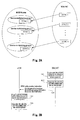
- Fig. 1A illustrates a diagram of Embodiment 1 where each service has a corresponding SYNC entity.
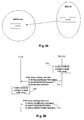
- Fig. 1B illustrates an SYNC entity creating process according to Embodiment 1.
- Fig. 1C illustrates an SYNC entity updating process according to Embodiment 1.
- Fig. 1D illustrates an SYNC entity releasing process according to Embodiment 1.
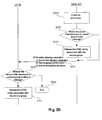
- Fig. 2A illustrates a diagram of Embodiment 2 where SYNC entities are based on service multiplexing groups.
- Fig. 2B illustrates an SYNC entity creating process according to Embodiment 2.
- Fig. 2C illustrates an SYNC entity updating process according to Embodiment 2.
- Fig. 2D illustrates an SYNC entity releasing process according to Embodiment 2.
- Fig. 3A illustrates a diagram of Embodiment 3 where SYNC entities are based on an MBSFN area.
- Fig. 3B illustrates a specific operation flow of Embodiment 3, including: an SYNC entity creating process and an SYNC entity updating process.
- Fig. 4 illustrates a structural block diagram of a BM-SC configured to implement the processes of creating, updating, and releasing the SYNC entities.
- Fig. 5 illustrates a structural block diagram of an eNB configured to implement the processes of creating, updating, and releasing the SYNC entities.
- the preconditions for MBMS are that each cell only belongs to one MBSFN area and no overlap exists between MBSFN areas. Thus, all cells within one MBSFN area have a same service profile, radio configuration, and a same IP multicast destination.
- MBMS Multimedia Broadcast Multicast Service
- SDU Service Data Packet
- PER Packet Error Rate
- a pair of peer-to-peer SYNC entities guarantees content synchronization for data therebetween.
- service multiplexing a plurality of services are associated with each other based on byte counting and packet counting, particularly in the case of packet loss at a service switching point.
- SYNC entities also become associated with each other.
- the following three embodiments are provided. However, the scope of the present invention should not be limited to the specific description of these embodiments, but should cover all equivalent technical solutions that may be contemplated by those skilled in the art through reading these specific descriptions.
- Embodiment 1 each service with a corresponding SYNC entity
- Fig. 1A illustrates a diagram of Embodiment 1 where each service has a corresponding SYNC entity.
- Embodiment 1 is the most direct solution.
- SYNC entities are related to services. Upon the initiation or termination of services, SYNC entities will be created or released. Because packet counting and byte counting are independently performed for each service, in the case packet loss occurs in a service multiplexing group, it may be clearly determined which service or services will be affected by the packet loss. From this perspective, when processing a problem of packet loss at a service transmission switching point, Embodiment 1 has an inherent robustness.
- Embodiment 1 Generally, the advantages and drawbacks of Embodiment 1 are specified as below:
- Figs. 1B-1D illustrate specific operation flows of Embodiment 1, including: an SYNC entity creating process, an SYNC entity updating process, and an SYNC entity releasing process.
- Fig. 1B illustrates an SYNC entity creating process according to Embodiment 1.
- the BM-SC creates a plurality of SYNC entities whose amount is equal to the total amount of services.
- the BM-SC associates the created plurality of SYNC entities with the services in a one-to-one correspondence manner that each SYNC entity is associated with one service and each service is also associated with one SYNC entity.
- the BM-SC sends an SYNC entity creating instruction to eNBs within an MBSFN area, and the SYNC entity creating instruction may include total amount of services, service identification information, and service start indication.
- Fig. 1C illustrates an SYNC entity updating process according to Embodiment 1.
- the BM-SC creates a new SYNC entity.
- the BM-SC associates the created new SYNC entity with the new service in a one-to-one correspondence manner.
- the BM-SC sends an SYNC entity updating instruction to eNBs within an MBSFN area, and the SYNC entity updating instruction may include service identification information and service start indication.
- the eNB creates a new SYNC entity based on the received SYNC entity updating instruction.
- the eNB associates the created new SYNC entity with the new service in a one-to-one correspondence manner. In this way, the SYNC entity updating process for a new service is completed.
- Embedment 2 service multiplexing group-based SYNC entities
- Fig. 2A illustrates a diagram of Embodiment 2 where SYNC entities are based on service multiplexing groups.
- the SYNC entities are based on service multiplexing groups, i.e., each service multiplexing group having a corresponding SYNC entity.
- the creating and releasing of SYNC entities in this embodiment is not so frequent, because only when all services in a service multiplexing group end, the SYNC entity relating to the service multiplexing group will be released.
- Embodiment 2 has the following advantages that the SYNC entities are initially designed to support service multiplexing (for example, the multiplexed service may be regarded as a virtual service); while the non-multiplexing instances may be regarded as special service multiplexing (i.e., each service is individually multiplexed).
- additional information is needed to identify respective services in the same SYNC entity; or data packets for different services may be buffered and restructured in the BM-SC before transmission.
- Embodiment 2 Generally, the advantages and drawbacks of Embodiment 2 are specified as below.
- Figs. 2B-2D illustrate specific operation flows of Embodiment 2, including: an SYNC entity creating process, an SYNC entity updating process, and an SYNC entity releasing process.
- Fig. 2B illustrates an SYNC entity creating process according to Embodiment 2.
- the BM-SC creates a plurality of SYNC entities whose amount is equal to the total amount of service groups.
- the BM-SC associates the created plurality of SYNC entities with the service groups in a one-to-one correspondence manner that each SYNC entity is associated with one service group and each service group is also associated with one SYNC entity.
- the BM-SC sends an SYNC entity creating instruction to eNBs within an MBSFN area, and the SYNC entity creating instruction may include total amount of services, service grouping information and service start indication.
- the eNB creates a plurality of SYNC entities whose amount is equal to the total amount of service groups based on the received SYNC entity creating instruction.
- the eNB associates the created plurality of SYNC entities with the service groups in a one-to-one correspondence manner that each SYNC entity is associated with one service group and each service group is also associated with one SYNC entity. In this way, the SYNC entity creating process is completed.
- This SYNC entity creating process generally occurs during the process of system initialization. When the system is in operation, while service change (a new service starts or the original service terminates) occurs during the operation, the SYNC entity updating process and the SYNC entity releasing process will be implemented.
- Fig. 2C illustrates an SYNC entity updating process according to Embodiment 2.
- the BM-SC first determines whether the new service belongs to an existing service group. If the new service belongs to an existing service group (step S210: YES), the BM-SC directly performs step S215. On the other hand, if the new service does not belong to any existing service group (step S210: NO), the BM-SC creates a new SYNC entity at step S211. At step S213, the BM-SC associates the created new SYNC entity with the new service in a one-to-one correspondence manner.
- the BM-SC sends an SYNC entity updating instruction to eNBs within an MBSFN area, and the SYNC entity updating instruction may include service identification information, service grouping information, and service start indication.
- the eNB first determines whether the new service belongs to an existing service group based on the received SYNC entity updating instruction. If the new service belongs to an existing service group (step S216: YES), the eNB needs not to perform any SYNC entity update operation; and at step S218, the SYNC entity updating operation is terminated.
- step S216 if the new service does not belong to any existing service group (step S216: NO), the eNB creates a new SYNC entity based on the received SYNC entity updating instruction at step S217.
- step S219 the eNB associates the created new SYNC entity with the new service in a one-to-one correspondence manner. In this way, the SYNC entity updating process for a new service is completed.
- Fig. 2D illustrates an SYNC entity releasing process according to Embodiment 2.
- the BM-SC detects termination of an original service.
- the BM-SC determines whether the original service is the last service in a service group to which it belongs. If the original service is not the last service in the service group to which it belongs (step S222: NO), the BM-SC directly performs step S225. On the other hand, if the original service is the last service in the service group to which it belongs (step S222: YES), the BM-SC releases the SYNC entities associated with the service group to which the original service belongs at step S223.
- the BM-SC sends an SYNC entity releasing instruction to eNBs within an MBSFN area
- the SYNC entity releasing instruction may include service identification information, service grouping information, and service termination indication.
- the eNB first determines whether the original service is the last service in the service group to which it belongs based on the received SYNC entity releasing instruction. If the original service is not the last service in the service group to which it belongs (step S226: NO), the eNB needs not to perform any SYNC entity releasing operation, and at step S228, the SYNC entity releasing operation is terminated.
- step S226 YES
- the eNB releases the SYNC entities associated with the service group to which the original service belongs based on the received SYNC entity releasing instruction at step S227. In this way, the SYNC entity releasing process for the original service is completed.
- additional information (service grouping information) is employed to identify different services in a service group.
- the buffering and restructuring manners may also be performed at the BM-SC without such additional information.
- Embodiment 3 MBSFN area-based SYNC entities
- Fig. 3A illustrates a diagram of Embodiment 3 where SYNC entities are based on an MBSFN area.
- Embodiment 3 there is only one SYNC entity in each MBSFN area, and the SYNC entity may be statically configured and will not be released all the way. It seems that Embodiment 3 is much simpler, but the fact is not so. Different services may be transmitted in different manners: multiplexing/ non-multiplexing; some services having been terminated/ some services being still ongoing. Because byte counting and packet counting are performed for all services together, the ongoing services might be affected by the already terminated services. In fact, the SYNC entities are not required to be shared between services whose transmissions are independent from one another. Thus, Embodiment 3 might be more complex in designing the SYNC mechanism.
- Embodiment 3 Generally, the advantages and drawbacks of Embodiment 3 are specified as below.
- Fig. 3B illustrates a specific operation flow of Embodiment 3, including: an SYNC entity creating process and an SYNC entity updating process.
- the BM-SC creates or statically configures a single SYNC entity.
- the BM-SC sends an SYNC entity creating instruction to eNBs within an MBSFN area, and the SYNC entity creating instruction may include service identification information, service grouping information, and service start indication.
- each eNB creates a single SYNC entity based on the received SYNC entity creating instruction. In this way, the SYNC entity creating process is completed.
- This SYNC entity creating process generally occurs during the process of system initialization. When the system is in operation, while service change (a new service starts or the original service terminates) occurs during the operation, the SYNC entity updating process will be implemented.
- Embodiment 3 does not relate to release of the SYNC entity, only the SYNC entity updating process is performed for either start of a new service or termination of an original service.
- the BM-SC sends an SYNC entity updating instruction to eNBs within an MBSFN area, and the SYNC entity updating instruction may include service identification information, service grouping information, and service start indication (or service termination indication). In this way, the SYNC entity updating process is completed.
- additional information (service grouping information) is employed to identify different services in a service group.
- the buffering and restructuring manners may also be performed at the BM-SC without such additional information.
- Fig. 4 illustrates a structural block diagram of a BM-SC configured to implement processes of creating, updating, and releasing the SYNC entities. It should be noted that, for the sake of simplicity, Fig. 4 illustrates all components that might be needed during respective processes. However, for any single process, not all these components are necessary. Those skilled in the art may, as required, select, abandon, or combine these illustrated components for different processes in different embodiments as implemented.
- the BM-SC 400 includes a service initiating/terminating unit 410 configured to determine whether a new service starts or whether an original service terminates (S111, S121, S210, S221); an SYNC entity creating unit 420 configured to create SYNC entities, which may be created (S101, S111, S201, S210, S211) based on services or service groups or may be created independent of the services or service groups (S301); an SYNC entity associating unit 425 configured to associate the SYNC entities created by the SYNC entity creating unit 420 with the services or service groups (S103, S113, S203, S213); an SYNC entity releasing unit 430 configured to release an SYNC entity (S123, S222, S223) based on services or service groups; and an instructing unit 440 configured to send SYNC entity creating instruction, SYNC entity updating instruction, or SYNC entity releasing instruction (S105, S115, S125, S205, S215
- Fig. 5 illustrates a structural block diagram of an eNB configured to implement the processes of creating, updating, and releasing the SYNC entities. It should be noted that, for the sake of simplicity, Fig. 5 illustrates all components that might be needed during respective processes. However, for any single process, not all these components are necessary. Those skilled in the art may, as required, select, abandon, or combine these illustrated components for different processes in different embodiments as implemented.
- the eNB 500 includes a receiving unit 510 configured to receive SYNC entity creating instruction, SYNC entity updating instruction, or SYNC entity releasing instruction (S105, S 115, S125, S205, S215, S225, S305, S315) from an BM-SC; an SYNC entity creating unit 520 configured to create SYNC entities, which may be created (S107, S117, S207, S216, S217) based on services or service groups or be created independent of services or service groups (S307); an SYNC entity associating unit 525 configured to associate the SYNC entities created by the SYNC entity creating unit 520 with the services or service groups (S109, S119, S209, S219); and an SYNC entity releasing unit 530 configured to release SYNC entities (S 127, S226, S227) based on the services or service groups.
- SYNC entity creating instruction SYNC entity updating instruction
- SYNC entity releasing instruction S105, S 115, S125, S205,
Landscapes
- Engineering & Computer Science (AREA)
- Computer Networks & Wireless Communication (AREA)
- Signal Processing (AREA)
- Multimedia (AREA)
- Mobile Radio Communication Systems (AREA)
- Data Exchanges In Wide-Area Networks (AREA)
Abstract
Description
- The present invention relates to the mobile communication field, and more particularly, relates to processes of creating, updating, and releasing SYNC (synchronization) entities between an eNB (base station) and a BM-SC (Broadcast Multicast Service Center), as well as an eNB and a BM-SC for implementing the above processes of creating, updating, and releasing the SYNC entities.
- SYNC entities are disposed peer-to-peer in eNB and BM-SC for guaranteeing content synchronization between the two SYNC entities. However, how to configure SYNC entities is still a pending issue. When considering configuration of SYNC entities, the following two facts should be noted: (1) 3GPP has generally acknowledged a statistical service multiplexing solution in which a plurality of services may be clustered or grouped and the service cluster or service group may be regarded as a virtual large service, thereby realizing simplification; and (2) one cell only belongs to one MBSFN (Multimedia Broadcast Multicast Single Frequency Network) area, and all cells in one MBSFN area transmit the same service.
- Based on the above consideration, the present invention provides a set of technical solutions regarding SYNC entity configuration structures.
- The present invention provides novel processes of creating, updating, and releasing SYNC entities between an eNB and a BM-SC, as well as an eNB and a BM-SC for implementing the above processes of creating, updating, and releasing the SYNC entities.
- According to a first aspect of the present invention, a method of creating SYNC entities is provided, including: creating, at a BM-SC, a plurality of SYNC entities whose amount is the same as the total amount of services, and associating the created plurality of SYNC entities with the services in a one-to-one correspondence manner; sending an SYNC entity creating instruction to all eNBs within an MBSFN area; creating, at each eNB, a plurality of SYNC entities whose amount is equal to the total amount of services based on the received SYNC entity creating instruction, and associating the created plurality of SYNC entities with the services in a one-to-one correspondence manner.
- Preferably, the SYNC entity creating instruction includes total amount of services, service identification information and service start indication.
- According to the first aspect of the present invention, a method of updating SYNC entities is further provided, including: creating, at a BM-SC, a new SYNC entity when a new service starts, and associating the created new SYNC entity with the new service in a one-to-one correspondence manner; sending an SYNC entity updating instruction to all eNBs within an MBSFN area; creating, at each eNB, a new SYNC entity based on the received SYNC entity updating instruction, and associating the created new SYNC entity with the new service in a one-to-one correspondence manner.
- Preferably, the SYNC entity updating instruction includes service identification information and service start indication.
- According to the first aspect of the present invention, a method of releasing SYNC entities is further provided, including: releasing, at a BM-SC, when an original service terminates, an SYNC entity associated with the original service; sending an SYNC entity releasing instruction to all eNBs within an MBSFN area; releasing, at each eNB, an SYNC entity associated with the original service based on the received SYNC entity releasing instruction.
- Preferably, the SYNC entity releasing instruction includes service identification information and service termination indication.
- According to a second aspect of the present invention, a method of creating SYNC entities is provided, including: creating, at a BM-SC, a plurality of SYNC entities whose amount is equal to the total amount of service groups, and associating the created plurality of SYNC entities with the service groups in a one-to-one correspondence manner; sending an SYNC entity creating instruction to all eNBs within an MBSFN area; creating, at each eNB, a plurality of SYNC entities whose amount is equal to the total amount of service groups based on the received SYNC entity creating instruction, and associating the created plurality of SYNC entities with the service groups in a one-to-one correspondence manner.
- Preferably, the SYNC entity creating instruction includes total amount of services, service grouping information and service start indication.
- Preferably, the SYNC entity creating instruction includes total amount of services, service identification information and service start indication, and at the BM-SC, data packets of each service are buffered and restructured.
- According to the second aspect of the present invention, a method of updating SYNC entities is further provided, including: first determining, at a BM-SC, when a new service starts, whether the new service belongs to an existing service group; when the new service does not belong to any existing service, creating a new SYNC entity, and associating the created new SYNC entities with the new service in a one-to-one correspondence manner; sending an SYNC entity updating instruction to all eNBs within an MBSFN area; first determining, at each eNB, whether the new service belongs to an existing service group based on the received SYNC entity updating instruction; when the new service does not belong to any existing group, creating a new SYNC entity, and associating the created new SYNC entity with the new service in a one-to-one correspondence manner.
- Preferably, the SYNC entity creating instruction includes service identification information, service grouping information and service start indication.
- Preferably, the SYNC entity creating instruction includes service identification information and service start indication, and at the BM-SC, data packets of each service are buffered and restructured.
- Preferably, the method of updating SYNC entities further includes: at the BM-SC, when the new service belongs to an existing service group, directly sending the SYNC entity updating instruction to all eNBs within an MBSFN area; and at each eNB, when the new service belongs to an existing service group, directly terminating the SYNC entity updating processing.
- According to the second aspect of the present invention, a method of releasing SYNC entities is further provided, including: determining, at a BM-SC, when an original service terminates, whether the original service is the last service in the service group to which it belongs; releasing, when the original service is the last service in the service group to which it belongs, an SYNC entity that is associated with the service group; sending an SYNC entity releasing instruction to all eNBs within an MBSFN area; determining, at each eNB, whether the original service is the last service in the service group to which it belongs based on the received SYNC entity releasing instruction; when the original service is the last service in the service group to which it belongs, releasing an SYNC entity that is associated with the service group to which it belongs.
- Preferably, the SYNC entity releasing instruction includes service identification information, service grouping information and service termination indication.
- Preferably, the SYNC entity releasing instruction includes service identification information and service termination indication, and at the BM-SC, data packets of each service are buffered and restructured.
- Preferably, the SYNC entity releasing method further includes directly sending, at the BM-SC, when the original service is not the last service in the service group to which it belongs, an SYNC entity releasing instruction to all eNBs within the MBSFN area; and directly terminating the SYNC entity releasing process, at each eNB, when the original service is not the last service in the service group to which the original service belongs.
- According to a third aspect of the present invention, a method of creating SYNC entities is provided, including: creating or statically configuring a single SYNC entity at a BM-SC; sending an SYNC entity creating instruction to all eNBs within an MBSFN area; and creating, at each eNB, a single SYNC entity based on the received SYNC entity creating instruction.
- Preferably, the SYNC entity creating instruction includes service identification information, service grouping information and service start indication.
- Preferably, the SYNC entity creating instruction includes service identification information and service start indication, and at the BM-SC, data packets of each service are buffered and restructured.
- Preferably, the SYNC entity creating method further includes sending the SYNC entity updating instruction from the BM-SC to all eNBs within the MBSFN area.
- Preferably, the SYNC entity updating instruction includes service identification information, service grouping information and service start indication; or the SYNC entity updating instruction includes service identification information, service grouping information and service termination indication.
- Preferably, the SYNC entity updating instruction includes service identification information and service start indication, or the SYNC entity updating instruction includes service identification information and service termination indication, and at the BM-SC, data packets of each service are buffered and restructured.
- According to a fourth aspect of the present invention, a BM-SC is provided, including: an SYNC entity creating unit configured to create SYNC entities; an SYNC entity associating unit configured to associate the created SYNC entities with services or service groups; and an instructing unit configured to send an SYNC entity creating instruction or an SYNC entity updating instruction to all eNBs within an MBSFN area.
- Preferably, the BM-SC further includes a service initiating/terminating unit configured to determine whether a new service starts or an original service terminates; and an SYNC entity releasing unit configured to release an SYNC entity based on a service or a service group, wherein when it is determined that a new service starts, the service initiating/terminating unit instructs the SYNC entity creating unit to create SYNC entities, and when it is determined that an original service terminates, the service initiating/terminating unit instructs the service SYNC entity releasing unit to release the SYNC entity, and the instructing unit is further configured to send an SYNC entity releasing instruction to all eNBs within the MBSFN area.
- Preferably, the SYNC entity creating unit creates SYNC entities based on services or service groups.
- According to a fifth aspect of the present invention, an eNB is provided, including: a receiving unit configured to receive an SYNC entity creating instruction or an SYNC entity updating instruction from a BM-SC; an SYNC entity creating unit configured to create SYNC entities; an SYNC entity associating unit configured to associate the SYNC entities created by the SYNC entity creating unit with services or service groups.
- Preferably, the receiving unit is further configured to receive an SYNC entity releasing instruction from the BM-SC, and the eNB further includes an SYNC entity releasing unit configured to release an SYNC entity based on a service or a service group.
- Preferably, the SYNC entity creating unit creates SYNC entities based on services or service groups.
- According to the above alternative aspects of the present invention, the problem regarding configuring SYNC entities will be successfully resolved. However, these solutions have their own advantages and drawbacks (see detailed analysis in the Preferred Embodiments). In system application and configuration, those skilled in the art may select an appropriate solution as required.
- Based on the following detailed description on the non-limiting embodiments of the present invention in conjunction with the drawings, the above and other objectives, features and advantages of the present invention will become more apparent, wherein:
-
Fig. 1A illustrates a diagram ofEmbodiment 1 where each service has a corresponding SYNC entity. -
Fig. 1B illustrates an SYNC entity creating process according toEmbodiment 1. -
Fig. 1C illustrates an SYNC entity updating process according toEmbodiment 1. -
Fig. 1D illustrates an SYNC entity releasing process according toEmbodiment 1. -
Fig. 2A illustrates a diagram ofEmbodiment 2 where SYNC entities are based on service multiplexing groups. -
Fig. 2B illustrates an SYNC entity creating process according toEmbodiment 2. -
Fig. 2C illustrates an SYNC entity updating process according toEmbodiment 2. -
Fig. 2D illustrates an SYNC entity releasing process according toEmbodiment 2. -
Fig. 3A illustrates a diagram ofEmbodiment 3 where SYNC entities are based on an MBSFN area. -
Fig. 3B illustrates a specific operation flow ofEmbodiment 3, including: an SYNC entity creating process and an SYNC entity updating process. -
Fig. 4 illustrates a structural block diagram of a BM-SC configured to implement the processes of creating, updating, and releasing the SYNC entities. -
Fig. 5 illustrates a structural block diagram of an eNB configured to implement the processes of creating, updating, and releasing the SYNC entities. - Hereinafter, the present invention will be described with reference to the drawings. In the following description, some specific embodiments are only for illustrative purposes and they should not be understood as any limitation to the present invention, but are only examples. When traditional structures of architecture will potentially cause ambiguities on the understanding of the present invention, they will be omitted.
- In the present invention, the preconditions for MBMS (Multimedia Broadcast Multicast Service) are that each cell only belongs to one MBSFN area and no overlap exists between MBSFN areas. Thus, all cells within one MBSFN area have a same service profile, radio configuration, and a same IP multicast destination. Based on the above preconditions, network deployment and relevant technical solution will become much simpler. In this case, it needs to consider the problem of how to configure SYNC entities. The underlined reason is that when transferring services, some services might be multiplexed together, such as the services that require the same SDU (Service Data Packet) Packet Error Rate (PER), while some other services will not be multiplexed together. Different SYNC entity configuration solutions may influence the complexity of SYNC protocol and system.
- A pair of peer-to-peer SYNC entities guarantees content synchronization for data therebetween. In the case of service multiplexing, a plurality of services are associated with each other based on byte counting and packet counting, particularly in the case of packet loss at a service switching point. Thus, synchronization of one service would affect other services that are multiplexed therewith. In this case, SYNC entities also become associated with each other. According to the present invention, the following three embodiments are provided. However, the scope of the present invention should not be limited to the specific description of these embodiments, but should cover all equivalent technical solutions that may be contemplated by those skilled in the art through reading these specific descriptions.
- Embodiment 1: each service with a corresponding SYNC entity
-
Fig. 1A illustrates a diagram ofEmbodiment 1 where each service has a corresponding SYNC entity. - As illustrated in
Fig. 1A ,Embodiment 1 is the most direct solution. In this case, SYNC entities are related to services. Upon the initiation or termination of services, SYNC entities will be created or released. Because packet counting and byte counting are independently performed for each service, in the case packet loss occurs in a service multiplexing group, it may be clearly determined which service or services will be affected by the packet loss. From this perspective, when processing a problem of packet loss at a service transmission switching point,Embodiment 1 has an inherent robustness. - Generally, the advantages and drawbacks of
Embodiment 1 are specified as below: - Advantages:
- Simple and intuitive;

- Because the services that are affected by the packet loss may be identified clearly, it has a good defensiveness against the packet loss problem in multiplexed services.
- Drawbacks:
- Compared with other embodiments of the present invention, it is too frequent in creating and releasing SYNC entities.
-
Figs. 1B-1D illustrate specific operation flows ofEmbodiment 1, including: an SYNC entity creating process, an SYNC entity updating process, and an SYNC entity releasing process. -
Fig. 1B illustrates an SYNC entity creating process according toEmbodiment 1. As illustrated inFig. 1B , at step S101, the BM-SC creates a plurality of SYNC entities whose amount is equal to the total amount of services. At step S103, the BM-SC associates the created plurality of SYNC entities with the services in a one-to-one correspondence manner that each SYNC entity is associated with one service and each service is also associated with one SYNC entity. Then, at step S105, the BM-SC sends an SYNC entity creating instruction to eNBs within an MBSFN area, and the SYNC entity creating instruction may include total amount of services, service identification information, and service start indication. At step S107, the eNB creates a plurality of SYNC entities whose amount is equal to the total amount of services based on the received SYNC entity creating instruction. At step S109, the eNB associates the created plurality of SYNC entities with the services in a one-to-one correspondence manner that each SYNC entity is associated with one service and each service is also associated with one SYNC entity. In this way, the SYNC entity creating process is completed. This SYNC entity creating process generally occurs during the process of system initialization. When the system is in operation, while service change (a new service starts or the original service terminates) occurs during the operation, the SYNC entity updating process and the SYNC entity releasing process will be implemented. -
Fig. 1C illustrates an SYNC entity updating process according toEmbodiment 1. As illustrated inFig. 1C , at step S111, when a new service starts, the BM-SC creates a new SYNC entity. At step S113, the BM-SC associates the created new SYNC entity with the new service in a one-to-one correspondence manner. Then, at step S115, the BM-SC sends an SYNC entity updating instruction to eNBs within an MBSFN area, and the SYNC entity updating instruction may include service identification information and service start indication. At step S 117, the eNB creates a new SYNC entity based on the received SYNC entity updating instruction. At step S119, the eNB associates the created new SYNC entity with the new service in a one-to-one correspondence manner. In this way, the SYNC entity updating process for a new service is completed. -
Fig. 1D illustrates an SYNC entity releasing process according toEmbodiment 1. As illustrated inFig. 1D , at step S121, the BM-SC detects termination of the original service. At step S123, the MB-SC releases the SYNC entity associated with the service. Then, at step S125, the BM-SC sends an SYNC entity releasing instruction to eNBs within an MBSFN area, and the SYNC entity releasing instruction may include service identification information and service termination indication. At step S127, the eNB releases the SYNC entity associated with the service based on the received SYNC entity release instruction. In this way, the SYNC entity releasing process for the original service is completed. - Embedment 2: service multiplexing group-based SYNC entities
-
Fig. 2A illustrates a diagram ofEmbodiment 2 where SYNC entities are based on service multiplexing groups. - As illustrated in
Fig. 2A , inEmbodiment 2, the SYNC entities are based on service multiplexing groups, i.e., each service multiplexing group having a corresponding SYNC entity. Compared withEmbodiment 1, the creating and releasing of SYNC entities in this embodiment is not so frequent, because only when all services in a service multiplexing group end, the SYNC entity relating to the service multiplexing group will be released.Embodiment 2 has the following advantages that the SYNC entities are initially designed to support service multiplexing (for example, the multiplexed service may be regarded as a virtual service); while the non-multiplexing instances may be regarded as special service multiplexing (i.e., each service is individually multiplexed). InEmbodiment 2, additional information is needed to identify respective services in the same SYNC entity; or data packets for different services may be buffered and restructured in the BM-SC before transmission. - Generally, the advantages and drawbacks of
Embodiment 2 are specified as below. - Advantages:
- The multiplexed services are regarded as a virtual service, such that service multiplexing is more easily supported;
- Low complexity, because start or termination of a single service in the service multiplexing group will not affect content synchronization of the service multiplexing group.
- Drawbacks:
- Additional information or BM-SC buffer is needed to identify different services in the service multiplexing group.
-
Figs. 2B-2D illustrate specific operation flows ofEmbodiment 2, including: an SYNC entity creating process, an SYNC entity updating process, and an SYNC entity releasing process. -
Fig. 2B illustrates an SYNC entity creating process according toEmbodiment 2. As illustrated inFig. 2B , at step S201, the BM-SC creates a plurality of SYNC entities whose amount is equal to the total amount of service groups. At step S203, the BM-SC associates the created plurality of SYNC entities with the service groups in a one-to-one correspondence manner that each SYNC entity is associated with one service group and each service group is also associated with one SYNC entity. Then, at step S205, the BM-SC sends an SYNC entity creating instruction to eNBs within an MBSFN area, and the SYNC entity creating instruction may include total amount of services, service grouping information and service start indication. At step S207, the eNB creates a plurality of SYNC entities whose amount is equal to the total amount of service groups based on the received SYNC entity creating instruction. At step S209, the eNB associates the created plurality of SYNC entities with the service groups in a one-to-one correspondence manner that each SYNC entity is associated with one service group and each service group is also associated with one SYNC entity. In this way, the SYNC entity creating process is completed. This SYNC entity creating process generally occurs during the process of system initialization. When the system is in operation, while service change (a new service starts or the original service terminates) occurs during the operation, the SYNC entity updating process and the SYNC entity releasing process will be implemented. -
Fig. 2C illustrates an SYNC entity updating process according toEmbodiment 2. As illustrated inFig. 2C , at step S210, when a new service starts, the BM-SC first determines whether the new service belongs to an existing service group. If the new service belongs to an existing service group (step S210: YES), the BM-SC directly performs step S215. On the other hand, if the new service does not belong to any existing service group (step S210: NO), the BM-SC creates a new SYNC entity at step S211. At step S213, the BM-SC associates the created new SYNC entity with the new service in a one-to-one correspondence manner. Then, at step S215, the BM-SC sends an SYNC entity updating instruction to eNBs within an MBSFN area, and the SYNC entity updating instruction may include service identification information, service grouping information, and service start indication. At step S216, the eNB first determines whether the new service belongs to an existing service group based on the received SYNC entity updating instruction. If the new service belongs to an existing service group (step S216: YES), the eNB needs not to perform any SYNC entity update operation; and at step S218, the SYNC entity updating operation is terminated. On the other hand, if the new service does not belong to any existing service group (step S216: NO), the eNB creates a new SYNC entity based on the received SYNC entity updating instruction at step S217. At step S219, the eNB associates the created new SYNC entity with the new service in a one-to-one correspondence manner. In this way, the SYNC entity updating process for a new service is completed. -
Fig. 2D illustrates an SYNC entity releasing process according toEmbodiment 2. As illustrated inFig. 2D , at step S221, the BM-SC detects termination of an original service. At step S222, the BM-SC determines whether the original service is the last service in a service group to which it belongs. If the original service is not the last service in the service group to which it belongs (step S222: NO), the BM-SC directly performs step S225. On the other hand, if the original service is the last service in the service group to which it belongs (step S222: YES), the BM-SC releases the SYNC entities associated with the service group to which the original service belongs at step S223. Then, at step S225, the BM-SC sends an SYNC entity releasing instruction to eNBs within an MBSFN area, and the SYNC entity releasing instruction may include service identification information, service grouping information, and service termination indication. At step S226, the eNB first determines whether the original service is the last service in the service group to which it belongs based on the received SYNC entity releasing instruction. If the original service is not the last service in the service group to which it belongs (step S226: NO), the eNB needs not to perform any SYNC entity releasing operation, and at step S228, the SYNC entity releasing operation is terminated. On the other hand, if the original service is the last service in the service group to which it belongs (step S226: YES), the eNB releases the SYNC entities associated with the service group to which the original service belongs based on the received SYNC entity releasing instruction at step S227. In this way, the SYNC entity releasing process for the original service is completed. - During the above processes of creating, updating, and releasing the SYNC entities, additional information (service grouping information) is employed to identify different services in a service group. However, as previously mentioned, the buffering and restructuring manners may also be performed at the BM-SC without such additional information.
- Embodiment 3: MBSFN area-based SYNC entities
-
Fig. 3A illustrates a diagram ofEmbodiment 3 where SYNC entities are based on an MBSFN area. - As illustrated in
Fig. 3A , inEmbodiment 3, there is only one SYNC entity in each MBSFN area, and the SYNC entity may be statically configured and will not be released all the way. It seems thatEmbodiment 3 is much simpler, but the fact is not so. Different services may be transmitted in different manners: multiplexing/ non-multiplexing; some services having been terminated/ some services being still ongoing. Because byte counting and packet counting are performed for all services together, the ongoing services might be affected by the already terminated services. In fact, the SYNC entities are not required to be shared between services whose transmissions are independent from one another. Thus,Embodiment 3 might be more complex in designing the SYNC mechanism. - Generally, the advantages and drawbacks of
Embodiment 3 are specified as below. - Advantages:
- There is only one SYNC entity and it will not be released all the way.
- Drawbacks:
- Rather complex, because it needs to consider unrelated services in a single SYNC algorithm;
- Additional information or BM-SC buffer is needed so as to identify different services in a service multiplexing group.
-
Fig. 3B illustrates a specific operation flow ofEmbodiment 3, including: an SYNC entity creating process and an SYNC entity updating process. - As illustrated in
Fig. 3B , at step S301, the BM-SC creates or statically configures a single SYNC entity. Then, at step S305, the BM-SC sends an SYNC entity creating instruction to eNBs within an MBSFN area, and the SYNC entity creating instruction may include service identification information, service grouping information, and service start indication. At step S307, each eNB creates a single SYNC entity based on the received SYNC entity creating instruction. In this way, the SYNC entity creating process is completed. This SYNC entity creating process generally occurs during the process of system initialization. When the system is in operation, while service change (a new service starts or the original service terminates) occurs during the operation, the SYNC entity updating process will be implemented. - Still referring to
Fig. 3B , as illustrated by the dotted line inFig. 3B , becauseEmbodiment 3 does not relate to release of the SYNC entity, only the SYNC entity updating process is performed for either start of a new service or termination of an original service. During the SYNC entity updating process (step S315), the BM-SC sends an SYNC entity updating instruction to eNBs within an MBSFN area, and the SYNC entity updating instruction may include service identification information, service grouping information, and service start indication (or service termination indication). In this way, the SYNC entity updating process is completed. - During the above processes of creating and updating the SYNC entities, additional information (service grouping information) is employed to identify different services in a service group. However, as previously mentioned, the buffering and restructuring manners may also be performed at the BM-SC without such additional information.
-
Fig. 4 illustrates a structural block diagram of a BM-SC configured to implement processes of creating, updating, and releasing the SYNC entities. It should be noted that, for the sake of simplicity,Fig. 4 illustrates all components that might be needed during respective processes. However, for any single process, not all these components are necessary. Those skilled in the art may, as required, select, abandon, or combine these illustrated components for different processes in different embodiments as implemented. - As illustrated in
Fig. 4 , the BM-SC 400 according to the present invention includes a service initiating/terminatingunit 410 configured to determine whether a new service starts or whether an original service terminates (S111, S121, S210, S221); an SYNCentity creating unit 420 configured to create SYNC entities, which may be created (S101, S111, S201, S210, S211) based on services or service groups or may be created independent of the services or service groups (S301); an SYNCentity associating unit 425 configured to associate the SYNC entities created by the SYNCentity creating unit 420 with the services or service groups (S103, S113, S203, S213); an SYNCentity releasing unit 430 configured to release an SYNC entity (S123, S222, S223) based on services or service groups; and aninstructing unit 440 configured to send SYNC entity creating instruction, SYNC entity updating instruction, or SYNC entity releasing instruction (S105, S115, S125, S205, S215, S225, S305, S315) to all eNBs within an MBSFN area. -
Fig. 5 illustrates a structural block diagram of an eNB configured to implement the processes of creating, updating, and releasing the SYNC entities. It should be noted that, for the sake of simplicity,Fig. 5 illustrates all components that might be needed during respective processes. However, for any single process, not all these components are necessary. Those skilled in the art may, as required, select, abandon, or combine these illustrated components for different processes in different embodiments as implemented. - As illustrated in
Fig. 5 , theeNB 500 according to the present invention includes a receivingunit 510 configured to receive SYNC entity creating instruction, SYNC entity updating instruction, or SYNC entity releasing instruction (S105, S 115, S125, S205, S215, S225, S305, S315) from an BM-SC; an SYNCentity creating unit 520 configured to create SYNC entities, which may be created (S107, S117, S207, S216, S217) based on services or service groups or be created independent of services or service groups (S307); an SYNCentity associating unit 525 configured to associate the SYNC entities created by the SYNCentity creating unit 520 with the services or service groups (S109, S119, S209, S219); and an SYNCentity releasing unit 530 configured to release SYNC entities (S 127, S226, S227) based on the services or service groups. - The above embodiments are only for exemplary purposes, not intended to limit the present invention. A person of normal skill in the art should understand that various modifications and substitutions to the embodiments are allowed without departing from the scope and spirit of the present invention, and these modifications and substitutions fall within the scope as limited by the appended claims.
Claims (29)
- A method of creating synchronization entities, comprising:creating, at a Broadcast Multicast Service Center (BM-SC), a plurality of synchronization entities whose amount is equal to the total amount of services, and associating the created plurality of synchronization entities with the services in a one-to-one correspondence manner;sending a synchronization entity creating instruction to all base stations within a Multimedia Broadcast Multicast Single Frequency Network (MBSFN) area;creating, at each base station, a plurality of synchronization entities whose amount is equal to the total amount of services based on the received synchronization entity creating instruction, and associating the created plurality of synchronization entities with the services in a one-to-one correspondence manner.
- The method of creating synchronization entities according to claim 1, wherein
the synchronization entity creating instruction comprises total amount of services, service identification information, and service start indication. - A method of updating synchronization entities, comprising:creating, at a Broadcast Multicast Service Center (BM-SC), a new synchronization entity when a new service starts, and associating the created new synchronization entity with the new service in a one-to-one correspondence manner;sending a synchronization entity updating instruction to all base stations within a Multimedia Broadcast Multicast Single Frequency Network (MBSFN) area;creating, at each base station, a new synchronization entity based on the received synchronization entity updating instruction, and associating the created new synchronization entity with the service in a one-to-one correspondence manner.
- The method of updating synchronization entities according to claim 3, wherein
the synchronization entity updating instruction comprises service identification information and service start indication. - A method of releasing synchronization entities, comprising:releasing, at a Broadcast Multicast Service Center (BM-SC), when an original service terminates, a synchronization entity that is associated with the original service.sending a synchronization entity releasing instruction to all base stations within a Multimedia Broadcast Multicast Single Frequency Network (MBSFN) area;releasing, at each base station, a synchronization entity associated with the original service based on the received synchronization entity releasing instruction.
- The method of releasing synchronization entities according to claim 5, wherein
the synchronization entity releasing instruction comprises service identification information and service termination indication. - A method of creating SYNC entities, comprising:creating, at a Broadcast Multicast Service Center (BM-SC), a plurality of SYNC entities whose amount is equal to the total amount of service groups, and associating the created plurality of synchronization entities with the service groups in a one-to-one correspondence manner;sending a synchronization entity creating instruction to all base stations within a Multimedia Broadcast Multicast Single Frequency Network (MBSFN) area;creating, at each base station, a plurality of synchronization entities whose amount is equal to the total amount of service groups based on the received synchronization entity creating instruction, and associating the created plurality of synchronization entities with the service groups in a one-to-one correspondence manner.
- The method of creating synchronization entities according to claim 7, wherein
the synchronization entity creating instruction comprises total amount of services, service grouping information and service start indication. - The method of creating synchronization entities according to claim 7, wherein
the synchronization entity creating instruction comprises total amount of services, service identification information and service start indication, and the method further comprising
buffering and restructuring data packets of each service at the BM-SC. - A method of updating synchronization entities, comprising:first determining, at a Broadcast Multicast Service Center (BM-SC), when a new service starts, whether the new service belongs to an existing group;creating a new synchronization entity when the new service does not belong to any existing service group, and associating the created new synchronization entity with the new service in a one-to-one correspondence manner;sending a synchronization entity updating instruction to all base stations within a Multimedia Broadcast Multicast Single Frequency Network (MBSFN) area;first determining, at each base station, whether the new service belongs to an existing service group based on the received SYNC entity updating instruction;creating a new synchronization entity when the new service does not belong to any existing service group, and associating the created new synchronization entity with the new service in a one-to-one correspondence manner;
- The method of updating synchronization entities according to claim 10,
wherein
the synchronization entity updating instruction comprises service identification information, service grouping information and service start indication. - The method of updating synchronization entities according to claim 10,
wherein
the synchronization entity updating instruction comprises service identification information and service start indication; and the method further comprising
buffering and restructuring data packets of each service at the BM-SC. - The method of updating synchronization entities according to any one of claims 10 to 12, further comprising:directly sending, at the BM-SC, when the new service belongs to an existing service group, a synchronization entity updating instruction to all base stations within the MBSFN area; anddirectly terminating, at each base station, the synchronization entity updating process when the new service belongs to an existing service group.
- A method of releasing synchronization entities, comprising:determining, at a Broadcast Multicast Service Center (BM-SC), when an original service terminates, whether the original service is the last service in the service group to which it belongs;releasing, when the original service is the last service in the service group to which it belongs, a synchronization entity that is associated with the service group to which the original service belongs;sending a synchronization entity releasing instruction to all base stations within a Multimedia Broadcast Multicast Single Frequency Network (MBSFN) area;determining, at each base station, whether the original service is the last service in the service group to which it belongs based on the received SYNC entity releasing instruction; andreleasing, when the original service is the last service in the service group to which it belongs, a synchronization entity that is associated with the service group to which the original service belongs.
- The method of releasing synchronization entities according to claim 14,
wherein
the synchronization entity releasing instruction comprises service identification information, service grouping information and service termination indication. - The method of releasing synchronization entities according to claim 14,
wherein
the synchronization entity releasing instruction comprises service identification information and service termination indication, and the method further comprising
buffering and restructuring data packets of each service at the BM-SC. - The method of releasing synchronization entities according to any one of claims 14 to 16, further comprising:directly sending, at the BM-SC, when the original service is not the last service in the service group to which it belongs, a synchronization entity releasing instruction to all base stations within a Multimedia Broadcast Multicast Single Frequency Network (MBSFN) area; anddirectly terminating the synchronization entity releasing process when the original service is not the last service in the service group to which it belongs.
- A method of creating SYNC entities, comprising:creating or statically configuring a single synchronization entity at a Broadcast Multicast Service Center (BM-SC);sending a synchronization entity creating instruction to all base stations within a Multimedia Broadcast Multicast Single Frequency Network (MBSFN) area;creating, at each base station, a single synchronization entity based on the received synchronization entity creating instruction.
- The method of creating synchronization entities according to claim 18, wherein the synchronization entity creating instruction comprises service identification information, service grouping information and service start indication.
- The method of creating synchronization entities according to claim 18, wherein the synchronization entity creating instruction comprises service identification information and service start indication; and the method further comprising
buffering and restructuring data packet of each service at the BM-SC. - The method of creating synchronization entities according to claim 18, further comprising:sending a synchronization entity updating instruction from the BM-SC to all base stations within the MBSFN area.
- The method of creating synchronization entities according to claim 21, wherein
the synchronization entity updating instruction comprises service identification information, service grouping information and service start indication; or
the synchronization entity updating instruction comprises service identification information, service grouping information and service termination indication. - The method of creating synchronization entities according to claim 21, wherein the synchronization entity updating instruction comprises service identification information and service start indication, or
the synchronization entity updating instruction comprises service identification information and service termination indication, and the method further comprising
buffering and restructuring data packets of each service at the BM-SC. - A Broadcast Multicast Service Center (BM-SC), comprising:a synchronization entity creating unit configured to create synchronization entities;a synchronization entity associating unit configured to associate the synchronization entities created by the synchronization entity creating unit with services or service groups; andinstructing unit configured to transmit a synchronization entity creating instruction or a synchronization entity updating instruction to all base stations within a Multimedia Broadcast Multicast Single Frequency Network (MBSFN) area.
- The BM-SC according to claim 24, further comprising:a service initiating/terminating unit configured to determine whether a new service starts or whether an original service terminates; anda synchronization entity releasing unit configured to release synchronization entities based on services or service groups,wherein when it is determined that a new service starts, the service initiating/terminating unit instructs the synchronization entity creating unit to create synchronization entities, andwhen it is determined that an original service terminates, the service initiating/terminating unit instructs the synchronization entity releasing unit to release a synchronization entity, and the instructing unit is further configured to transmit a synchronization entity releasing instruction to all base stations within the MBSFN area.
- The BM-SC according to claim 24 or 25, wherein:the synchronization entity creating unit creates synchronization entities based on services or service groups.
- A base station, comprising:a receiving unit configured to receive a synchronization entity creating instruction or a synchronization entity updating instruction from a Broadcast Multicast Service Center (BM-SC);a synchronization entity creating unit configured to create synchronization entities;a synchronization entity associating unit configured to associate the synchronization entities created by the synchronization entity creating unit with services or service groups.
- The base station according to claim 27, wherein:the receiving unit is further configured to receive a synchronization entity releasing instruction from the BM-SC, andthe base station further comprises a synchronization entity releasing unit configured to release synchronization entities based on services or service groups.
- The base station according to claim 27 or 28, wherein:the synchronization entity creating unit creates synchronization entities based on services or service groups.
Applications Claiming Priority (1)
| Application Number | Priority Date | Filing Date | Title |
|---|---|---|---|
| PCT/CN2009/000473 WO2010124422A1 (en) | 2009-04-29 | 2009-04-29 | Base station, broadcast multicast service centre and method for creating, updating and releasing synchronization entities |
Publications (2)
| Publication Number | Publication Date |
|---|---|
| EP2427003A1 true EP2427003A1 (en) | 2012-03-07 |
| EP2427003A4 EP2427003A4 (en) | 2017-07-05 |
Family
ID=43031645
Family Applications (1)
| Application Number | Title | Priority Date | Filing Date |
|---|---|---|---|
| EP09843834.4A Withdrawn EP2427003A4 (en) | 2009-04-29 | 2009-04-29 | Base station, broadcast multicast service centre and method for creating, updating and releasing synchronization entities |
Country Status (8)
| Country | Link |
|---|---|
| US (2) | US8867424B2 (en) |
| EP (1) | EP2427003A4 (en) |
| JP (1) | JP5250719B2 (en) |
| KR (1) | KR101351290B1 (en) |
| CN (1) | CN102326433B (en) |
| BR (1) | BRPI0925082A2 (en) |
| RU (1) | RU2491786C2 (en) |
| WO (1) | WO2010124422A1 (en) |
Families Citing this family (4)
| Publication number | Priority date | Publication date | Assignee | Title |
|---|---|---|---|---|
| US10306424B2 (en) * | 2015-04-09 | 2019-05-28 | Lg Electronics Inc. | Method and apparatus for handling L2 entity in continuity between SC-PTM transmission and MBSFN transmission in wireless communication system |
| US11405877B2 (en) * | 2016-09-02 | 2022-08-02 | Sony Group Corporation | Downlink synchronization signals |
| KR20220138296A (en) * | 2021-04-05 | 2022-10-12 | 삼성전자주식회사 | Method and apparatus for supporting clock synchronization of user equipment in wireless communication system |
| US20250212178A1 (en) * | 2023-12-20 | 2025-06-26 | Aclara Technologies Llc | Dynamic network resource allocation using radio area network synchronization requirements |
Family Cites Families (12)
| Publication number | Priority date | Publication date | Assignee | Title |
|---|---|---|---|---|
| US6996077B1 (en) * | 1997-07-03 | 2006-02-07 | Kabushiki Kaisha Toshiba | Satellite broadcasting system |
| US6778493B1 (en) * | 2000-02-07 | 2004-08-17 | Sharp Laboratories Of America, Inc. | Real-time media content synchronization and transmission in packet network apparatus and method |
| KR100917042B1 (en) * | 2002-08-14 | 2009-09-10 | 엘지전자 주식회사 | Broadcast and multicast data transmission method of wireless mobile communication system |
| US20050198126A1 (en) * | 2004-02-06 | 2005-09-08 | Verbestel Willy M. | System and method of providing content in a multicast system |
| US7664467B2 (en) | 2006-06-19 | 2010-02-16 | Alcatel-Lucent Usa Inc. | Method for coordinated control of radio resources for multicasting in a distributed wireless system |
| US20080016248A1 (en) * | 2006-07-14 | 2008-01-17 | George Tsirtsis | Method and apparatus for time synchronization of parameters |
| CN101606399A (en) * | 2006-08-21 | 2009-12-16 | 交互数字技术公司 | Multicellular Coordination for Multimedia Broadcast and Multicast Services in Wireless Communication Systems |
| KR100774365B1 (en) | 2006-12-07 | 2007-11-08 | 한국전자통신연구원 | Method for Providing Multicast Broadcast Service in Communication System |
| CN101247315B (en) * | 2007-02-12 | 2011-06-01 | 上海贝尔阿尔卡特股份有限公司 | Content synchronization method and apparatus for single-frequency network transmission |
| EP1978762A1 (en) | 2007-04-05 | 2008-10-08 | Matsushita Electric Industrial Co., Ltd. | Service content synchronization of multicast data for mobile nodes moving between networks with different radio access technologies |
| GB0711833D0 (en) * | 2007-06-18 | 2007-07-25 | Nokia Siemens Networks Oy | A method for providing a plurality of services |
| JPWO2009022599A1 (en) * | 2007-08-14 | 2010-11-11 | 株式会社エヌ・ティ・ティ・ドコモ | Receiving apparatus and data acquisition method |
-
2009
- 2009-04-29 EP EP09843834.4A patent/EP2427003A4/en not_active Withdrawn
- 2009-04-29 KR KR1020117025650A patent/KR101351290B1/en not_active Expired - Fee Related
- 2009-04-29 US US13/318,105 patent/US8867424B2/en active Active
- 2009-04-29 JP JP2012507565A patent/JP5250719B2/en active Active
- 2009-04-29 CN CN200980157385.XA patent/CN102326433B/en active Active
- 2009-04-29 RU RU2011141582/07A patent/RU2491786C2/en not_active IP Right Cessation
- 2009-04-29 BR BRPI0925082-4A patent/BRPI0925082A2/en not_active Application Discontinuation
- 2009-04-29 WO PCT/CN2009/000473 patent/WO2010124422A1/en not_active Ceased
-
2014
- 2014-10-20 US US14/518,781 patent/US9609611B2/en active Active
Non-Patent Citations (1)
| Title |
|---|
| See references of WO2010124422A1 * |
Also Published As
| Publication number | Publication date |
|---|---|
| CN102326433A (en) | 2012-01-18 |
| KR20120018130A (en) | 2012-02-29 |
| JP5250719B2 (en) | 2013-07-31 |
| BRPI0925082A2 (en) | 2015-07-21 |
| KR101351290B1 (en) | 2014-02-14 |
| US20150036583A1 (en) | 2015-02-05 |
| CN102326433B (en) | 2014-10-01 |
| US9609611B2 (en) | 2017-03-28 |
| EP2427003A4 (en) | 2017-07-05 |
| JP2012525734A (en) | 2012-10-22 |
| US20120044854A1 (en) | 2012-02-23 |
| RU2011141582A (en) | 2013-06-10 |
| US8867424B2 (en) | 2014-10-21 |
| WO2010124422A1 (en) | 2010-11-04 |
| RU2491786C2 (en) | 2013-08-27 |
Similar Documents
| Publication | Publication Date | Title |
|---|---|---|
| US11683855B2 (en) | Entities and methods for providing multicast/broadcast services in 5G networks | |
| EP3076690B1 (en) | Method and device for keeping service continuity | |
| CN102045862A (en) | Carrier aggregation realizing method, device and system | |
| WO2021208975A1 (en) | Multicast/broadcast information transmission method and device, storage medium, and electronic device | |
| RU2600535C2 (en) | Identification of scores ue in embms | |
| JP2007503155A5 (en) | ||
| CN101772222B (en) | Method and system for obtaining MBSFN configuration information of affiliated subdistrict of adjacent base station | |
| KR20020084813A (en) | Mobile communication system, Mobile communication method, Radio base station, Mobile system and, Program | |
| US20220124463A1 (en) | Methods and apparatus to deliver reliable multicast services via multicast radio bearer (mrb) | |
| CN101455113A (en) | Dual carrier communication system | |
| EP2427003A1 (en) | Base station, broadcast multicast service centre and method for creating, updating and releasing synchronization entities | |
| CN105530667A (en) | Service continuity processing method and device for terminal | |
| CN115836538B (en) | Reliable multicast transmission with uplink feedback | |
| TW200704219A (en) | Transmission of control information according to grouping of services in a mobile communication system | |
| CA2578551A1 (en) | Method of accelerating control link loss detection | |
| EP4322704A1 (en) | Pdu session status ie handling for mbs | |
| CN112566045A (en) | Multimedia Broadcast Multicast Service (MBMS) transmission method and equipment | |
| CN101094029B (en) | Synchronization control method of reversed shared channel in time division synchronous code division multiple access system | |
| WO2025030547A1 (en) | Systems and methods for supporting multicast reception in rrc_inactive state | |
| EP4167604B1 (en) | Methods and apparatus to set initial pdcp state variables for multicast | |
| AU2008202179B2 (en) | Method for transmitting messages related to a broadcast or multicast service in a cellular communications system | |
| CN101242563A (en) | Method and base station for supporting synchronous transmission of multimedia broadcasting multicast service | |
| WO2008143559A1 (en) | Method for redirecting an mbms session | |
| US20230146948A1 (en) | Methods for automatically configuring a broadcast network and federating a plurality of corresponding broadcast networks, entities and computer program. | |
| CN103621118A (en) | Data communication method, device and system |
Legal Events
| Date | Code | Title | Description |
|---|---|---|---|
| PUAI | Public reference made under article 153(3) epc to a published international application that has entered the european phase |
Free format text: ORIGINAL CODE: 0009012 |
|
| 17P | Request for examination filed |
Effective date: 20111129 |
|
| AK | Designated contracting states |
Kind code of ref document: A1 Designated state(s): AT BE BG CH CY CZ DE DK EE ES FI FR GB GR HR HU IE IS IT LI LT LU LV MC MK MT NL NO PL PT RO SE SI SK TR |
|
| DAX | Request for extension of the european patent (deleted) | ||
| 111Z | Information provided on other rights and legal means of execution |
Free format text: AT BE BG CH CY CZ DE DK EE ES FI FR GB GR HR HU IE IS IT LI LT LU LV MC MK MT NL NO PL PT RO SE SI SK TR Effective date: 20130410 |
|
| RAP1 | Party data changed (applicant data changed or rights of an application transferred) |
Owner name: ALCATEL LUCENT |
|
| D11X | Information provided on other rights and legal means of execution (deleted) | ||
| RA4 | Supplementary search report drawn up and despatched (corrected) |
Effective date: 20170608 |
|
| RIC1 | Information provided on ipc code assigned before grant |
Ipc: H04W 56/00 20090101AFI20170601BHEP Ipc: H04W 88/18 20090101ALI20170601BHEP Ipc: H04W 88/08 20090101ALI20170601BHEP Ipc: H04W 4/06 20090101ALI20170601BHEP |
|
| RAP1 | Party data changed (applicant data changed or rights of an application transferred) |
Owner name: ALCATEL LUCENT |
|
| GRAP | Despatch of communication of intention to grant a patent |
Free format text: ORIGINAL CODE: EPIDOSNIGR1 |
|
| STAA | Information on the status of an ep patent application or granted ep patent |
Free format text: STATUS: GRANT OF PATENT IS INTENDED |
|
| INTG | Intention to grant announced |
Effective date: 20180607 |
|
| GRAS | Grant fee paid |
Free format text: ORIGINAL CODE: EPIDOSNIGR3 |
|
| STAA | Information on the status of an ep patent application or granted ep patent |
Free format text: STATUS: THE APPLICATION IS DEEMED TO BE WITHDRAWN |
|
| 18D | Application deemed to be withdrawn |
Effective date: 20181018 |