EP2426191A1 - Process for the homogenous hydrogenation of (poly)unsaturated hydrocarbons - Google Patents
Process for the homogenous hydrogenation of (poly)unsaturated hydrocarbons Download PDFInfo
- Publication number
- EP2426191A1 EP2426191A1 EP10008054A EP10008054A EP2426191A1 EP 2426191 A1 EP2426191 A1 EP 2426191A1 EP 10008054 A EP10008054 A EP 10008054A EP 10008054 A EP10008054 A EP 10008054A EP 2426191 A1 EP2426191 A1 EP 2426191A1
- Authority
- EP
- European Patent Office
- Prior art keywords
- acid
- hydrogenation
- group
- catalysts
- salt
- Prior art date
- Legal status (The legal status is an assumption and is not a legal conclusion. Google has not performed a legal analysis and makes no representation as to the accuracy of the status listed.)
- Withdrawn
Links
- 238000005984 hydrogenation reaction Methods 0.000 title claims abstract description 94
- 238000000034 method Methods 0.000 title claims abstract description 27
- 230000008569 process Effects 0.000 title claims abstract description 26
- 229930195735 unsaturated hydrocarbon Natural products 0.000 title claims abstract description 9
- 239000003054 catalyst Substances 0.000 claims abstract description 50
- 239000003446 ligand Substances 0.000 claims abstract description 32
- 229910052751 metal Inorganic materials 0.000 claims abstract description 19
- 239000002184 metal Substances 0.000 claims abstract description 19
- 229920006395 saturated elastomer Polymers 0.000 claims abstract description 17
- 150000001412 amines Chemical class 0.000 claims abstract description 15
- 150000001491 aromatic compounds Chemical class 0.000 claims abstract description 12
- 150000002739 metals Chemical class 0.000 claims abstract description 10
- 235000020777 polyunsaturated fatty acids Nutrition 0.000 claims abstract description 9
- 150000001298 alcohols Chemical class 0.000 claims abstract description 8
- 150000001923 cyclic compounds Chemical class 0.000 claims abstract description 8
- 230000002051 biphasic effect Effects 0.000 claims abstract description 6
- 239000003960 organic solvent Substances 0.000 claims abstract description 4
- 239000003125 aqueous solvent Substances 0.000 claims abstract description 3
- 239000011575 calcium Substances 0.000 claims description 110
- KCXVZYZYPLLWCC-UHFFFAOYSA-N EDTA Chemical compound OC(=O)CN(CC(O)=O)CCN(CC(O)=O)CC(O)=O KCXVZYZYPLLWCC-UHFFFAOYSA-N 0.000 claims description 65
- 239000000203 mixture Substances 0.000 claims description 29
- DTOSIQBPPRVQHS-PDBXOOCHSA-N alpha-linolenic acid Chemical compound CC\C=C/C\C=C/C\C=C/CCCCCCCC(O)=O DTOSIQBPPRVQHS-PDBXOOCHSA-N 0.000 claims description 18
- -1 polyol esters Chemical class 0.000 claims description 18
- 150000002148 esters Chemical class 0.000 claims description 16
- OYPRJOBELJOOCE-UHFFFAOYSA-N Calcium Chemical compound [Ca] OYPRJOBELJOOCE-UHFFFAOYSA-N 0.000 claims description 14
- 229910052791 calcium Inorganic materials 0.000 claims description 14
- 125000004432 carbon atom Chemical group C* 0.000 claims description 14
- 125000000217 alkyl group Chemical group 0.000 claims description 13
- 235000014113 dietary fatty acids Nutrition 0.000 claims description 13
- 229930195729 fatty acid Natural products 0.000 claims description 13
- 239000000194 fatty acid Substances 0.000 claims description 13
- 150000004665 fatty acids Chemical class 0.000 claims description 12
- 125000002496 methyl group Chemical group [H]C([H])([H])* 0.000 claims description 11
- 150000003839 salts Chemical class 0.000 claims description 10
- JZGVJEDMSGTYSM-UHFFFAOYSA-L disodium;2-[7-(2-sulfonatophenyl)-1,10-phenanthrolin-4-yl]benzenesulfonate Chemical compound [Na+].[Na+].[O-]S(=O)(=O)C1=CC=CC=C1C1=CC=NC2=C1C=CC1=C(C=3C(=CC=CC=3)S([O-])(=O)=O)C=CN=C21 JZGVJEDMSGTYSM-UHFFFAOYSA-L 0.000 claims description 9
- 150000002430 hydrocarbons Chemical class 0.000 claims description 8
- LQPLDXQVILYOOL-UHFFFAOYSA-I pentasodium;2-[bis[2-[bis(carboxylatomethyl)amino]ethyl]amino]acetate Chemical compound [Na+].[Na+].[Na+].[Na+].[Na+].[O-]C(=O)CN(CC([O-])=O)CCN(CC(=O)[O-])CCN(CC([O-])=O)CC([O-])=O LQPLDXQVILYOOL-UHFFFAOYSA-I 0.000 claims description 8
- UFHFLCQGNIYNRP-UHFFFAOYSA-N Hydrogen Chemical compound [H][H] UFHFLCQGNIYNRP-UHFFFAOYSA-N 0.000 claims description 7
- 229930195733 hydrocarbon Natural products 0.000 claims description 7
- 229910052739 hydrogen Inorganic materials 0.000 claims description 7
- 239000001257 hydrogen Substances 0.000 claims description 7
- 125000001931 aliphatic group Chemical group 0.000 claims description 6
- FCKYPQBAHLOOJQ-UHFFFAOYSA-N Cyclohexane-1,2-diaminetetraacetic acid Chemical compound OC(=O)CN(CC(O)=O)C1CCCCC1N(CC(O)=O)CC(O)=O FCKYPQBAHLOOJQ-UHFFFAOYSA-N 0.000 claims description 5
- 239000003426 co-catalyst Substances 0.000 claims description 5
- 239000002736 nonionic surfactant Substances 0.000 claims description 5
- 239000003444 phase transfer catalyst Substances 0.000 claims description 5
- UEUXEKPTXMALOB-UHFFFAOYSA-J tetrasodium;2-[2-[bis(carboxylatomethyl)amino]ethyl-(carboxylatomethyl)amino]acetate Chemical compound [Na+].[Na+].[Na+].[Na+].[O-]C(=O)CN(CC([O-])=O)CCN(CC([O-])=O)CC([O-])=O UEUXEKPTXMALOB-UHFFFAOYSA-J 0.000 claims description 5
- CABMTIJINOIHOD-UHFFFAOYSA-N 2-[4-methyl-5-oxo-4-(propan-2-yl)-4,5-dihydro-1H-imidazol-2-yl]quinoline-3-carboxylic acid Chemical compound N1C(=O)C(C(C)C)(C)N=C1C1=NC2=CC=CC=C2C=C1C(O)=O CABMTIJINOIHOD-UHFFFAOYSA-N 0.000 claims description 4
- PEWJJOZYMNJBHZ-UHFFFAOYSA-N 2-pyridin-2-yl-3h-pyridine-4,4-dicarboxylic acid Chemical compound C1=CC(C(=O)O)(C(O)=O)CC(C=2N=CC=CC=2)=N1 PEWJJOZYMNJBHZ-UHFFFAOYSA-N 0.000 claims description 4
- WJJMNDUMQPNECX-UHFFFAOYSA-N Dipicolinic acid Natural products OC(=O)C1=CC=CC(C(O)=O)=N1 WJJMNDUMQPNECX-UHFFFAOYSA-N 0.000 claims description 4
- 239000002253 acid Substances 0.000 claims description 4
- JAZBEHYOTPTENJ-JLNKQSITSA-N all-cis-5,8,11,14,17-icosapentaenoic acid Chemical compound CC\C=C/C\C=C/C\C=C/C\C=C/C\C=C/CCCC(O)=O JAZBEHYOTPTENJ-JLNKQSITSA-N 0.000 claims description 4
- 235000020661 alpha-linolenic acid Nutrition 0.000 claims description 4
- 239000003945 anionic surfactant Substances 0.000 claims description 4
- WCYSOCFXPUNTJG-UHFFFAOYSA-L dipotassium;2-(4-carboxylatoquinolin-2-yl)quinoline-4-carboxylate Chemical compound [K+].[K+].C1=CC=CC2=NC(C=3C=C(C4=CC=CC=C4N=3)C(=O)[O-])=CC(C([O-])=O)=C21 WCYSOCFXPUNTJG-UHFFFAOYSA-L 0.000 claims description 4
- CNUVEAGSJLUJCX-UHFFFAOYSA-L disodium;4-[2,9-dimethyl-7-(4-sulfonatophenyl)-1,10-phenanthrolin-4-yl]benzenesulfonate Chemical class [Na+].[Na+].C=12C=CC3=C(C=4C=CC(=CC=4)S([O-])(=O)=O)C=C(C)N=C3C2=NC(C)=CC=1C1=CC=C(S([O-])(=O)=O)C=C1 CNUVEAGSJLUJCX-UHFFFAOYSA-L 0.000 claims description 4
- 235000020673 eicosapentaenoic acid Nutrition 0.000 claims description 4
- 229960005135 eicosapentaenoic acid Drugs 0.000 claims description 4
- JAZBEHYOTPTENJ-UHFFFAOYSA-N eicosapentaenoic acid Natural products CCC=CCC=CCC=CCC=CCC=CCCCC(O)=O JAZBEHYOTPTENJ-UHFFFAOYSA-N 0.000 claims description 4
- 229960004488 linolenic acid Drugs 0.000 claims description 4
- KQQKGWQCNNTQJW-UHFFFAOYSA-N linolenic acid Natural products CC=CCCC=CCC=CCCCCCCCC(O)=O KQQKGWQCNNTQJW-UHFFFAOYSA-N 0.000 claims description 4
- 229920005862 polyol Polymers 0.000 claims description 4
- DZCAZXAJPZCSCU-UHFFFAOYSA-K sodium nitrilotriacetate Chemical compound [Na+].[Na+].[Na+].[O-]C(=O)CN(CC([O-])=O)CC([O-])=O DZCAZXAJPZCSCU-UHFFFAOYSA-K 0.000 claims description 4
- 150000001408 amides Chemical class 0.000 claims description 3
- 125000002091 cationic group Chemical group 0.000 claims description 3
- 239000002608 ionic liquid Substances 0.000 claims description 3
- JZRYQZJSTWVBBD-UHFFFAOYSA-N pentaporphyrin i Chemical compound N1C(C=C2NC(=CC3=NC(=C4)C=C3)C=C2)=CC=C1C=C1C=CC4=N1 JZRYQZJSTWVBBD-UHFFFAOYSA-N 0.000 claims description 3
- DVSZKTAMJJTWFG-SKCDLICFSA-N (2e,4e,6e,8e,10e,12e)-docosa-2,4,6,8,10,12-hexaenoic acid Chemical compound CCCCCCCCC\C=C\C=C\C=C\C=C\C=C\C=C\C(O)=O DVSZKTAMJJTWFG-SKCDLICFSA-N 0.000 claims description 2
- GZJLLYHBALOKEX-UHFFFAOYSA-N 6-Ketone, O18-Me-Ussuriedine Natural products CC=CCC=CCC=CCC=CCC=CCC=CCCCC(O)=O GZJLLYHBALOKEX-UHFFFAOYSA-N 0.000 claims description 2
- 229930194542 Keto Natural products 0.000 claims description 2
- 125000002252 acyl group Chemical group 0.000 claims description 2
- 125000003545 alkoxy group Chemical group 0.000 claims description 2
- 235000020669 docosahexaenoic acid Nutrition 0.000 claims description 2
- KAUVQQXNCKESLC-UHFFFAOYSA-N docosahexaenoic acid (DHA) Natural products COC(=O)C(C)NOCC1=CC=CC=C1 KAUVQQXNCKESLC-UHFFFAOYSA-N 0.000 claims description 2
- 125000001495 ethyl group Chemical group [H]C([H])([H])C([H])([H])* 0.000 claims description 2
- 150000002314 glycerols Chemical class 0.000 claims description 2
- 150000004820 halides Chemical class 0.000 claims description 2
- 125000002887 hydroxy group Chemical group [H]O* 0.000 claims description 2
- 125000000468 ketone group Chemical group 0.000 claims description 2
- 235000021281 monounsaturated fatty acids Nutrition 0.000 claims description 2
- 125000000449 nitro group Chemical group [O-][N+](*)=O 0.000 claims description 2
- 125000002924 primary amino group Chemical group [H]N([H])* 0.000 claims description 2
- 125000002485 formyl group Chemical class [H]C(*)=O 0.000 claims 4
- OYHQOLUKZRVURQ-NTGFUMLPSA-N (9Z,12Z)-9,10,12,13-tetratritiooctadeca-9,12-dienoic acid Chemical compound C(CCCCCCC\C(=C(/C\C(=C(/CCCCC)\[3H])\[3H])\[3H])\[3H])(=O)O OYHQOLUKZRVURQ-NTGFUMLPSA-N 0.000 claims 1
- 150000001299 aldehydes Chemical class 0.000 abstract description 14
- 125000005907 alkyl ester group Chemical group 0.000 abstract description 6
- ZQPPMHVWECSIRJ-KTKRTIGZSA-N oleic acid Chemical compound CCCCCCCC\C=C/CCCCCCCC(O)=O ZQPPMHVWECSIRJ-KTKRTIGZSA-N 0.000 description 43
- UHOVQNZJYSORNB-UHFFFAOYSA-N Benzene Chemical compound C1=CC=CC=C1 UHOVQNZJYSORNB-UHFFFAOYSA-N 0.000 description 42
- VSGNNIFQASZAOI-UHFFFAOYSA-L calcium acetate Chemical compound [Ca+2].CC([O-])=O.CC([O-])=O VSGNNIFQASZAOI-UHFFFAOYSA-L 0.000 description 39
- 239000012071 phase Substances 0.000 description 34
- JNYAEWCLZODPBN-JGWLITMVSA-N (2r,3r,4s)-2-[(1r)-1,2-dihydroxyethyl]oxolane-3,4-diol Chemical compound OC[C@@H](O)[C@H]1OC[C@H](O)[C@H]1O JNYAEWCLZODPBN-JGWLITMVSA-N 0.000 description 30
- 239000012074 organic phase Substances 0.000 description 26
- XLYOFNOQVPJJNP-UHFFFAOYSA-N water Substances O XLYOFNOQVPJJNP-UHFFFAOYSA-N 0.000 description 26
- 239000008346 aqueous phase Substances 0.000 description 24
- 235000019486 Sunflower oil Nutrition 0.000 description 21
- 239000002600 sunflower oil Substances 0.000 description 21
- 230000000694 effects Effects 0.000 description 20
- PEDCQBHIVMGVHV-UHFFFAOYSA-N Glycerine Chemical compound OCC(O)CO PEDCQBHIVMGVHV-UHFFFAOYSA-N 0.000 description 18
- 150000004702 methyl esters Chemical class 0.000 description 17
- OYHQOLUKZRVURQ-HZJYTTRNSA-N Linoleic acid Chemical compound CCCCC\C=C/C\C=C/CCCCCCCC(O)=O OYHQOLUKZRVURQ-HZJYTTRNSA-N 0.000 description 16
- 235000019484 Rapeseed oil Nutrition 0.000 description 16
- HUMNYLRZRPPJDN-UHFFFAOYSA-N benzaldehyde Chemical compound O=CC1=CC=CC=C1 HUMNYLRZRPPJDN-UHFFFAOYSA-N 0.000 description 16
- 239000012018 catalyst precursor Substances 0.000 description 15
- 238000006243 chemical reaction Methods 0.000 description 15
- 238000003756 stirring Methods 0.000 description 15
- 230000003197 catalytic effect Effects 0.000 description 14
- QIQXTHQIDYTFRH-UHFFFAOYSA-N octadecanoic acid Chemical compound CCCCCCCCCCCCCCCCCC(O)=O QIQXTHQIDYTFRH-UHFFFAOYSA-N 0.000 description 14
- WVDDGKGOMKODPV-UHFFFAOYSA-N Benzyl alcohol Chemical compound OCC1=CC=CC=C1 WVDDGKGOMKODPV-UHFFFAOYSA-N 0.000 description 12
- IAYPIBMASNFSPL-UHFFFAOYSA-N Ethylene oxide Chemical compound C1CO1 IAYPIBMASNFSPL-UHFFFAOYSA-N 0.000 description 11
- 239000007858 starting material Substances 0.000 description 11
- UXVMQQNJUSDDNG-UHFFFAOYSA-L Calcium chloride Chemical compound [Cl-].[Cl-].[Ca+2] UXVMQQNJUSDDNG-UHFFFAOYSA-L 0.000 description 10
- 239000001110 calcium chloride Substances 0.000 description 10
- 229910001628 calcium chloride Inorganic materials 0.000 description 10
- OKKJLVBELUTLKV-UHFFFAOYSA-N Methanol Chemical compound OC OKKJLVBELUTLKV-UHFFFAOYSA-N 0.000 description 9
- 125000005456 glyceride group Chemical group 0.000 description 9
- QNGNSVIICDLXHT-UHFFFAOYSA-N para-ethylbenzaldehyde Natural products CCC1=CC=C(C=O)C=C1 QNGNSVIICDLXHT-UHFFFAOYSA-N 0.000 description 8
- 229920000223 polyglycerol Polymers 0.000 description 8
- XDTMQSROBMDMFD-UHFFFAOYSA-N Cyclohexane Chemical compound C1CCCCC1 XDTMQSROBMDMFD-UHFFFAOYSA-N 0.000 description 7
- KRKNYBCHXYNGOX-UHFFFAOYSA-N citric acid Chemical compound OC(=O)CC(O)(C(O)=O)CC(O)=O KRKNYBCHXYNGOX-UHFFFAOYSA-N 0.000 description 7
- 150000005690 diesters Chemical class 0.000 description 7
- XLYOFNOQVPJJNP-ZSJDYOACSA-N heavy water Substances [2H]O[2H] XLYOFNOQVPJJNP-ZSJDYOACSA-N 0.000 description 7
- LDVVTQMJQSCDMK-UHFFFAOYSA-N 1,3-dihydroxypropan-2-yl formate Chemical compound OCC(CO)OC=O LDVVTQMJQSCDMK-UHFFFAOYSA-N 0.000 description 6
- YXFVVABEGXRONW-UHFFFAOYSA-N Toluene Chemical compound CC1=CC=CC=C1 YXFVVABEGXRONW-UHFFFAOYSA-N 0.000 description 6
- HGCIXCUEYOPUTN-UHFFFAOYSA-N cyclohexene Chemical compound C1CCC=CC1 HGCIXCUEYOPUTN-UHFFFAOYSA-N 0.000 description 6
- 239000012685 metal catalyst precursor Substances 0.000 description 6
- 239000003607 modifier Substances 0.000 description 6
- 230000035484 reaction time Effects 0.000 description 6
- ULQISTXYYBZJSJ-UHFFFAOYSA-N 12-hydroxyoctadecanoic acid Chemical compound CCCCCCC(O)CCCCCCCCCCC(O)=O ULQISTXYYBZJSJ-UHFFFAOYSA-N 0.000 description 5
- 239000004359 castor oil Substances 0.000 description 5
- 235000019438 castor oil Nutrition 0.000 description 5
- ZEMPKEQAKRGZGQ-XOQCFJPHSA-N glycerol triricinoleate Natural products CCCCCC[C@@H](O)CC=CCCCCCCCC(=O)OC[C@@H](COC(=O)CCCCCCCC=CC[C@@H](O)CCCCCC)OC(=O)CCCCCCCC=CC[C@H](O)CCCCCC ZEMPKEQAKRGZGQ-XOQCFJPHSA-N 0.000 description 5
- WRIDQFICGBMAFQ-UHFFFAOYSA-N (E)-8-Octadecenoic acid Natural products CCCCCCCCCC=CCCCCCCC(O)=O WRIDQFICGBMAFQ-UHFFFAOYSA-N 0.000 description 4
- XDOFQFKRPWOURC-UHFFFAOYSA-N 16-methylheptadecanoic acid Chemical compound CC(C)CCCCCCCCCCCCCCC(O)=O XDOFQFKRPWOURC-UHFFFAOYSA-N 0.000 description 4
- LQJBNNIYVWPHFW-UHFFFAOYSA-N 20:1omega9c fatty acid Natural products CCCCCCCCCCC=CCCCCCCCC(O)=O LQJBNNIYVWPHFW-UHFFFAOYSA-N 0.000 description 4
- QSBYPNXLFMSGKH-UHFFFAOYSA-N 9-Heptadecensaeure Natural products CCCCCCCC=CCCCCCCCC(O)=O QSBYPNXLFMSGKH-UHFFFAOYSA-N 0.000 description 4
- LFQSCWFLJHTTHZ-UHFFFAOYSA-N Ethanol Chemical compound CCO LFQSCWFLJHTTHZ-UHFFFAOYSA-N 0.000 description 4
- LRHPLDYGYMQRHN-UHFFFAOYSA-N N-Butanol Chemical compound CCCCO LRHPLDYGYMQRHN-UHFFFAOYSA-N 0.000 description 4
- 239000005642 Oleic acid Substances 0.000 description 4
- ZQPPMHVWECSIRJ-UHFFFAOYSA-N Oleic acid Natural products CCCCCCCCC=CCCCCCCCC(O)=O ZQPPMHVWECSIRJ-UHFFFAOYSA-N 0.000 description 4
- 235000019445 benzyl alcohol Nutrition 0.000 description 4
- 229960004217 benzyl alcohol Drugs 0.000 description 4
- 239000003093 cationic surfactant Substances 0.000 description 4
- 238000009905 homogeneous catalytic hydrogenation reaction Methods 0.000 description 4
- QXJSBBXBKPUZAA-UHFFFAOYSA-N isooleic acid Natural products CCCCCCCC=CCCCCCCCCC(O)=O QXJSBBXBKPUZAA-UHFFFAOYSA-N 0.000 description 4
- 239000010410 layer Substances 0.000 description 4
- 235000021313 oleic acid Nutrition 0.000 description 4
- KCXFHTAICRTXLI-UHFFFAOYSA-N propane-1-sulfonic acid Chemical compound CCCS(O)(=O)=O KCXFHTAICRTXLI-UHFFFAOYSA-N 0.000 description 4
- 241000894007 species Species 0.000 description 4
- 230000007306 turnover Effects 0.000 description 4
- KIHBGTRZFAVZRV-UHFFFAOYSA-N 2-Hydroxyoctadecanoic acid Natural products CCCCCCCCCCCCCCCCC(O)C(O)=O KIHBGTRZFAVZRV-UHFFFAOYSA-N 0.000 description 3
- VEXZGXHMUGYJMC-UHFFFAOYSA-M Chloride anion Chemical compound [Cl-] VEXZGXHMUGYJMC-UHFFFAOYSA-M 0.000 description 3
- GOOHAUXETOMSMM-UHFFFAOYSA-N Propylene oxide Chemical compound CC1CO1 GOOHAUXETOMSMM-UHFFFAOYSA-N 0.000 description 3
- HEMHJVSKTPXQMS-UHFFFAOYSA-M Sodium hydroxide Chemical compound [OH-].[Na+] HEMHJVSKTPXQMS-UHFFFAOYSA-M 0.000 description 3
- 150000001336 alkenes Chemical class 0.000 description 3
- 125000003342 alkenyl group Chemical group 0.000 description 3
- 150000001875 compounds Chemical class 0.000 description 3
- 125000004122 cyclic group Chemical group 0.000 description 3
- 150000002191 fatty alcohols Chemical class 0.000 description 3
- WXZMFSXDPGVJKK-UHFFFAOYSA-N pentaerythritol Chemical compound OCC(CO)(CO)CO WXZMFSXDPGVJKK-UHFFFAOYSA-N 0.000 description 3
- WBHHMMIMDMUBKC-XLNAKTSKSA-N ricinelaidic acid Chemical compound CCCCCC[C@@H](O)C\C=C\CCCCCCCC(O)=O WBHHMMIMDMUBKC-XLNAKTSKSA-N 0.000 description 3
- FEUQNCSVHBHROZ-UHFFFAOYSA-N ricinoleic acid Natural products CCCCCCC(O[Si](C)(C)C)CC=CCCCCCCCC(=O)OC FEUQNCSVHBHROZ-UHFFFAOYSA-N 0.000 description 3
- 229960003656 ricinoleic acid Drugs 0.000 description 3
- 229910052712 strontium Inorganic materials 0.000 description 3
- CIOAGBVUUVVLOB-UHFFFAOYSA-N strontium atom Chemical compound [Sr] CIOAGBVUUVVLOB-UHFFFAOYSA-N 0.000 description 3
- 150000005621 tetraalkylammonium salts Chemical class 0.000 description 3
- 229910052723 transition metal Inorganic materials 0.000 description 3
- 150000003624 transition metals Chemical class 0.000 description 3
- BJEPYKJPYRNKOW-REOHCLBHSA-N (S)-malic acid Chemical compound OC(=O)[C@@H](O)CC(O)=O BJEPYKJPYRNKOW-REOHCLBHSA-N 0.000 description 2
- KBPLFHHGFOOTCA-UHFFFAOYSA-N 1-Octanol Chemical compound CCCCCCCCO KBPLFHHGFOOTCA-UHFFFAOYSA-N 0.000 description 2
- WNWHHMBRJJOGFJ-UHFFFAOYSA-N 16-methylheptadecan-1-ol Chemical compound CC(C)CCCCCCCCCCCCCCCO WNWHHMBRJJOGFJ-UHFFFAOYSA-N 0.000 description 2
- ASKIVFGGGGIGKH-UHFFFAOYSA-N 2,3-dihydroxypropyl 16-methylheptadecanoate Chemical compound CC(C)CCCCCCCCCCCCCCC(=O)OCC(O)CO ASKIVFGGGGIGKH-UHFFFAOYSA-N 0.000 description 2
- FCKYPQBAHLOOJQ-NXEZZACHSA-N 2-[[(1r,2r)-2-[bis(carboxymethyl)amino]cyclohexyl]-(carboxymethyl)amino]acetic acid Chemical compound OC(=O)CN(CC(O)=O)[C@@H]1CCCC[C@H]1N(CC(O)=O)CC(O)=O FCKYPQBAHLOOJQ-NXEZZACHSA-N 0.000 description 2
- DPUOLQHDNGRHBS-UHFFFAOYSA-N Brassidinsaeure Natural products CCCCCCCCC=CCCCCCCCCCCCC(O)=O DPUOLQHDNGRHBS-UHFFFAOYSA-N 0.000 description 2
- URXZXNYJPAJJOQ-UHFFFAOYSA-N Erucic acid Natural products CCCCCCC=CCCCCCCCCCCCC(O)=O URXZXNYJPAJJOQ-UHFFFAOYSA-N 0.000 description 2
- 241000208818 Helianthus Species 0.000 description 2
- 235000003222 Helianthus annuus Nutrition 0.000 description 2
- PXHVJJICTQNCMI-UHFFFAOYSA-N Nickel Chemical compound [Ni] PXHVJJICTQNCMI-UHFFFAOYSA-N 0.000 description 2
- 229910019142 PO4 Inorganic materials 0.000 description 2
- ZLMJMSJWJFRBEC-UHFFFAOYSA-N Potassium Chemical compound [K] ZLMJMSJWJFRBEC-UHFFFAOYSA-N 0.000 description 2
- FEWJPZIEWOKRBE-UHFFFAOYSA-N Tartaric acid Natural products [H+].[H+].[O-]C(=O)C(O)C(O)C([O-])=O FEWJPZIEWOKRBE-UHFFFAOYSA-N 0.000 description 2
- BJEPYKJPYRNKOW-UHFFFAOYSA-N alpha-hydroxysuccinic acid Natural products OC(=O)C(O)CC(O)=O BJEPYKJPYRNKOW-UHFFFAOYSA-N 0.000 description 2
- 239000002280 amphoteric surfactant Substances 0.000 description 2
- 125000003118 aryl group Chemical group 0.000 description 2
- 125000004429 atom Chemical group 0.000 description 2
- 229910052788 barium Inorganic materials 0.000 description 2
- DSAJWYNOEDNPEQ-UHFFFAOYSA-N barium atom Chemical compound [Ba] DSAJWYNOEDNPEQ-UHFFFAOYSA-N 0.000 description 2
- UAHWPYUMFXYFJY-UHFFFAOYSA-N beta-myrcene Chemical compound CC(C)=CCCC(=C)C=C UAHWPYUMFXYFJY-UHFFFAOYSA-N 0.000 description 2
- WOWHHFRSBJGXCM-UHFFFAOYSA-M cetyltrimethylammonium chloride Chemical compound [Cl-].CCCCCCCCCCCCCCCC[N+](C)(C)C WOWHHFRSBJGXCM-UHFFFAOYSA-M 0.000 description 2
- 150000001805 chlorine compounds Chemical class 0.000 description 2
- GHVNFZFCNZKVNT-UHFFFAOYSA-M decanoate Chemical compound CCCCCCCCCC([O-])=O GHVNFZFCNZKVNT-UHFFFAOYSA-M 0.000 description 2
- 238000011161 development Methods 0.000 description 2
- 230000018109 developmental process Effects 0.000 description 2
- REZZEXDLIUJMMS-UHFFFAOYSA-M dimethyldioctadecylammonium chloride Chemical compound [Cl-].CCCCCCCCCCCCCCCCCC[N+](C)(C)CCCCCCCCCCCCCCCCCC REZZEXDLIUJMMS-UHFFFAOYSA-M 0.000 description 2
- 239000004664 distearyldimethylammonium chloride (DHTDMAC) Substances 0.000 description 2
- NOPFSRXAKWQILS-UHFFFAOYSA-N docosan-1-ol Chemical compound CCCCCCCCCCCCCCCCCCCCCCO NOPFSRXAKWQILS-UHFFFAOYSA-N 0.000 description 2
- UKMSUNONTOPOIO-UHFFFAOYSA-N docosanoic acid Chemical compound CCCCCCCCCCCCCCCCCCCCCC(O)=O UKMSUNONTOPOIO-UHFFFAOYSA-N 0.000 description 2
- POULHZVOKOAJMA-UHFFFAOYSA-N dodecanoic acid Chemical compound CCCCCCCCCCCC(O)=O POULHZVOKOAJMA-UHFFFAOYSA-N 0.000 description 2
- DDXLVDQZPFLQMZ-UHFFFAOYSA-M dodecyl(trimethyl)azanium;chloride Chemical compound [Cl-].CCCCCCCCCCCC[N+](C)(C)C DDXLVDQZPFLQMZ-UHFFFAOYSA-M 0.000 description 2
- DPUOLQHDNGRHBS-KTKRTIGZSA-N erucic acid Chemical compound CCCCCCCC\C=C/CCCCCCCCCCCC(O)=O DPUOLQHDNGRHBS-KTKRTIGZSA-N 0.000 description 2
- BXWNKGSJHAJOGX-UHFFFAOYSA-N hexadecan-1-ol Chemical compound CCCCCCCCCCCCCCCCO BXWNKGSJHAJOGX-UHFFFAOYSA-N 0.000 description 2
- IPCSVZSSVZVIGE-UHFFFAOYSA-N hexadecanoic acid Chemical compound CCCCCCCCCCCCCCCC(O)=O IPCSVZSSVZVIGE-UHFFFAOYSA-N 0.000 description 2
- ZSIAUFGUXNUGDI-UHFFFAOYSA-N hexan-1-ol Chemical compound CCCCCCO ZSIAUFGUXNUGDI-UHFFFAOYSA-N 0.000 description 2
- 238000005913 hydroamination reaction Methods 0.000 description 2
- 238000006459 hydrosilylation reaction Methods 0.000 description 2
- 238000006317 isomerization reaction Methods 0.000 description 2
- 235000020778 linoleic acid Nutrition 0.000 description 2
- OYHQOLUKZRVURQ-IXWMQOLASA-N linoleic acid Natural products CCCCC\C=C/C\C=C\CCCCCCCC(O)=O OYHQOLUKZRVURQ-IXWMQOLASA-N 0.000 description 2
- 239000011777 magnesium Substances 0.000 description 2
- 239000001630 malic acid Substances 0.000 description 2
- 235000011090 malic acid Nutrition 0.000 description 2
- 238000004519 manufacturing process Methods 0.000 description 2
- CRVGTESFCCXCTH-UHFFFAOYSA-N methyl diethanolamine Chemical compound OCCN(C)CCO CRVGTESFCCXCTH-UHFFFAOYSA-N 0.000 description 2
- 231100000252 nontoxic Toxicity 0.000 description 2
- 230000003000 nontoxic effect Effects 0.000 description 2
- GLDOVTGHNKAZLK-UHFFFAOYSA-N octadecan-1-ol Chemical compound CCCCCCCCCCCCCCCCCCO GLDOVTGHNKAZLK-UHFFFAOYSA-N 0.000 description 2
- 235000021317 phosphate Nutrition 0.000 description 2
- 229910052700 potassium Inorganic materials 0.000 description 2
- 239000011591 potassium Substances 0.000 description 2
- 150000003254 radicals Chemical class 0.000 description 2
- 238000004064 recycling Methods 0.000 description 2
- 238000000926 separation method Methods 0.000 description 2
- 239000002904 solvent Substances 0.000 description 2
- 125000001424 substituent group Chemical group 0.000 description 2
- 239000011975 tartaric acid Substances 0.000 description 2
- 235000002906 tartaric acid Nutrition 0.000 description 2
- HLZKNKRTKFSKGZ-UHFFFAOYSA-N tetradecan-1-ol Chemical compound CCCCCCCCCCCCCCO HLZKNKRTKFSKGZ-UHFFFAOYSA-N 0.000 description 2
- 238000005809 transesterification reaction Methods 0.000 description 2
- 238000011282 treatment Methods 0.000 description 2
- AQZSPJRLCJSOED-UHFFFAOYSA-M trimethyl(octyl)azanium;chloride Chemical compound [Cl-].CCCCCCCC[N+](C)(C)C AQZSPJRLCJSOED-UHFFFAOYSA-M 0.000 description 2
- RIOQSEWOXXDEQQ-UHFFFAOYSA-N triphenylphosphine Chemical compound C1=CC=CC=C1P(C=1C=CC=CC=1)C1=CC=CC=C1 RIOQSEWOXXDEQQ-UHFFFAOYSA-N 0.000 description 2
- KJIOQYGWTQBHNH-UHFFFAOYSA-N undecanol Chemical compound CCCCCCCCCCCO KJIOQYGWTQBHNH-UHFFFAOYSA-N 0.000 description 2
- CFOQKXQWGLAKSK-KTKRTIGZSA-N (13Z)-docosen-1-ol Chemical compound CCCCCCCC\C=C/CCCCCCCCCCCCO CFOQKXQWGLAKSK-KTKRTIGZSA-N 0.000 description 1
- CUNWUEBNSZSNRX-RKGWDQTMSA-N (2r,3r,4r,5s)-hexane-1,2,3,4,5,6-hexol;(z)-octadec-9-enoic acid Chemical compound OC[C@H](O)[C@@H](O)[C@H](O)[C@H](O)CO.OC[C@H](O)[C@@H](O)[C@H](O)[C@H](O)CO.CCCCCCCC\C=C/CCCCCCCC(O)=O.CCCCCCCC\C=C/CCCCCCCC(O)=O.CCCCCCCC\C=C/CCCCCCCC(O)=O CUNWUEBNSZSNRX-RKGWDQTMSA-N 0.000 description 1
- BZANQLIRVMZFOS-ZKZCYXTQSA-N (3r,4s,5s,6r)-2-butoxy-6-(hydroxymethyl)oxane-3,4,5-triol Chemical compound CCCCOC1O[C@H](CO)[C@@H](O)[C@H](O)[C@H]1O BZANQLIRVMZFOS-ZKZCYXTQSA-N 0.000 description 1
- HOVAGTYPODGVJG-UVSYOFPXSA-N (3s,5r)-2-(hydroxymethyl)-6-methoxyoxane-3,4,5-triol Chemical compound COC1OC(CO)[C@@H](O)C(O)[C@H]1O HOVAGTYPODGVJG-UVSYOFPXSA-N 0.000 description 1
- ALSTYHKOOCGGFT-KTKRTIGZSA-N (9Z)-octadecen-1-ol Chemical compound CCCCCCCC\C=C/CCCCCCCCO ALSTYHKOOCGGFT-KTKRTIGZSA-N 0.000 description 1
- DJYWKXYRGAMLRE-QXMHVHEDSA-N (z)-icos-9-en-1-ol Chemical compound CCCCCCCCCC\C=C/CCCCCCCCO DJYWKXYRGAMLRE-QXMHVHEDSA-N 0.000 description 1
- TVPWKOCQOFBNML-SEYXRHQNSA-N (z)-octadec-6-en-1-ol Chemical compound CCCCCCCCCCC\C=C/CCCCCO TVPWKOCQOFBNML-SEYXRHQNSA-N 0.000 description 1
- ZORQXIQZAOLNGE-UHFFFAOYSA-N 1,1-difluorocyclohexane Chemical compound FC1(F)CCCCC1 ZORQXIQZAOLNGE-UHFFFAOYSA-N 0.000 description 1
- XDSPGKDYYRNYJI-IUPFWZBJSA-N 1,3-bis[(13z)-docos-13-enoyloxy]propan-2-yl (13z)-docos-13-enoate Chemical compound CCCCCCCC\C=C/CCCCCCCCCCCC(=O)OCC(OC(=O)CCCCCCCCCCC\C=C/CCCCCCCC)COC(=O)CCCCCCCCCCC\C=C/CCCCCCCC XDSPGKDYYRNYJI-IUPFWZBJSA-N 0.000 description 1
- FDCJDKXCCYFOCV-UHFFFAOYSA-N 1-hexadecoxyhexadecane Chemical compound CCCCCCCCCCCCCCCCOCCCCCCCCCCCCCCCC FDCJDKXCCYFOCV-UHFFFAOYSA-N 0.000 description 1
- WECGLUPZRHILCT-GSNKCQISSA-N 1-linoleoyl-sn-glycerol Chemical compound CCCCC\C=C/C\C=C/CCCCCCCC(=O)OC[C@@H](O)CO WECGLUPZRHILCT-GSNKCQISSA-N 0.000 description 1
- VBICKXHEKHSIBG-UHFFFAOYSA-N 1-monostearoylglycerol Chemical compound CCCCCCCCCCCCCCCCCC(=O)OCC(O)CO VBICKXHEKHSIBG-UHFFFAOYSA-N 0.000 description 1
- RZRNAYUHWVFMIP-KTKRTIGZSA-N 1-oleoylglycerol Chemical compound CCCCCCCC\C=C/CCCCCCCC(=O)OCC(O)CO RZRNAYUHWVFMIP-KTKRTIGZSA-N 0.000 description 1
- 229940114069 12-hydroxystearate Drugs 0.000 description 1
- 229940114072 12-hydroxystearic acid Drugs 0.000 description 1
- CFOQKXQWGLAKSK-UHFFFAOYSA-N 13-docosen-1-ol Natural products CCCCCCCCC=CCCCCCCCCCCCCO CFOQKXQWGLAKSK-UHFFFAOYSA-N 0.000 description 1
- OYZZJAQBPGMCDN-UHFFFAOYSA-N 18,18,18-trihydroxyoctadecanoic acid Chemical compound OC(=O)CCCCCCCCCCCCCCCCC(O)(O)O OYZZJAQBPGMCDN-UHFFFAOYSA-N 0.000 description 1
- SXNBVULTHKFMNO-UHFFFAOYSA-N 2,2-dihydroxyoctadecanoic acid Chemical compound CCCCCCCCCCCCCCCCC(O)(O)C(O)=O SXNBVULTHKFMNO-UHFFFAOYSA-N 0.000 description 1
- IDOQDZANRZQBTP-UHFFFAOYSA-N 2-[2-(2,4,4-trimethylpentan-2-yl)phenoxy]ethanol Chemical compound CC(C)(C)CC(C)(C)C1=CC=CC=C1OCCO IDOQDZANRZQBTP-UHFFFAOYSA-N 0.000 description 1
- RMTFNDVZYPHUEF-XZBKPIIZSA-N 3-O-methyl-D-glucose Chemical compound O=C[C@H](O)[C@@H](OC)[C@H](O)[C@H](O)CO RMTFNDVZYPHUEF-XZBKPIIZSA-N 0.000 description 1
- JFMGYULNQJPJCY-UHFFFAOYSA-N 4-(hydroxymethyl)-1,3-dioxolan-2-one Chemical compound OCC1COC(=O)O1 JFMGYULNQJPJCY-UHFFFAOYSA-N 0.000 description 1
- 235000021357 Behenic acid Nutrition 0.000 description 1
- CPELXLSAUQHCOX-UHFFFAOYSA-M Bromide Chemical compound [Br-] CPELXLSAUQHCOX-UHFFFAOYSA-M 0.000 description 1
- ONJPCDHZCFGTSI-NJYHNNHUSA-N CC(C)CCCCCCCCCCCCCCC(=O)OC[C@@H](OC(=O)CCCCCCCCCCCCCCC(C)C)[C@H]1OC[C@H](O)[C@H]1O Chemical compound CC(C)CCCCCCCCCCCCCCC(=O)OC[C@@H](OC(=O)CCCCCCCCCCCCCCC(C)C)[C@H]1OC[C@H](O)[C@H]1O ONJPCDHZCFGTSI-NJYHNNHUSA-N 0.000 description 1
- OKTJSMMVPCPJKN-UHFFFAOYSA-N Carbon Chemical group [C] OKTJSMMVPCPJKN-UHFFFAOYSA-N 0.000 description 1
- FBPFZTCFMRRESA-FSIIMWSLSA-N D-Glucitol Natural products OC[C@H](O)[C@H](O)[C@@H](O)[C@H](O)CO FBPFZTCFMRRESA-FSIIMWSLSA-N 0.000 description 1
- FEWJPZIEWOKRBE-JCYAYHJZSA-N Dextrotartaric acid Chemical compound OC(=O)[C@H](O)[C@@H](O)C(O)=O FEWJPZIEWOKRBE-JCYAYHJZSA-N 0.000 description 1
- GYHNNYVSQQEPJS-UHFFFAOYSA-N Gallium Chemical compound [Ga] GYHNNYVSQQEPJS-UHFFFAOYSA-N 0.000 description 1
- WQZGKKKJIJFFOK-GASJEMHNSA-N Glucose Natural products OC[C@H]1OC(O)[C@H](O)[C@@H](O)[C@@H]1O WQZGKKKJIJFFOK-GASJEMHNSA-N 0.000 description 1
- DGAQECJNVWCQMB-PUAWFVPOSA-M Ilexoside XXIX Chemical compound C[C@@H]1CC[C@@]2(CC[C@@]3(C(=CC[C@H]4[C@]3(CC[C@@H]5[C@@]4(CC[C@@H](C5(C)C)OS(=O)(=O)[O-])C)C)[C@@H]2[C@]1(C)O)C)C(=O)O[C@H]6[C@@H]([C@H]([C@@H]([C@H](O6)CO)O)O)O.[Na+] DGAQECJNVWCQMB-PUAWFVPOSA-M 0.000 description 1
- 208000007976 Ketosis Diseases 0.000 description 1
- 239000004166 Lanolin Substances 0.000 description 1
- 239000005639 Lauric acid Substances 0.000 description 1
- WHXSMMKQMYFTQS-UHFFFAOYSA-N Lithium Chemical compound [Li] WHXSMMKQMYFTQS-UHFFFAOYSA-N 0.000 description 1
- FYYHWMGAXLPEAU-UHFFFAOYSA-N Magnesium Chemical compound [Mg] FYYHWMGAXLPEAU-UHFFFAOYSA-N 0.000 description 1
- 235000021314 Palmitic acid Nutrition 0.000 description 1
- 239000004721 Polyphenylene oxide Substances 0.000 description 1
- DBMJMQXJHONAFJ-UHFFFAOYSA-M Sodium laurylsulphate Chemical compound [Na+].CCCCCCCCCCCCOS([O-])(=O)=O DBMJMQXJHONAFJ-UHFFFAOYSA-M 0.000 description 1
- 239000004147 Sorbitan trioleate Substances 0.000 description 1
- PRXRUNOAOLTIEF-ADSICKODSA-N Sorbitan trioleate Chemical compound CCCCCCCC\C=C/CCCCCCCC(=O)OC[C@@H](OC(=O)CCCCCCC\C=C/CCCCCCCC)[C@H]1OC[C@H](O)[C@H]1OC(=O)CCCCCCC\C=C/CCCCCCCC PRXRUNOAOLTIEF-ADSICKODSA-N 0.000 description 1
- 235000021355 Stearic acid Nutrition 0.000 description 1
- VBIIFPGSPJYLRR-UHFFFAOYSA-M Stearyltrimethylammonium chloride Chemical compound [Cl-].CCCCCCCCCCCCCCCCCC[N+](C)(C)C VBIIFPGSPJYLRR-UHFFFAOYSA-M 0.000 description 1
- NINIDFKCEFEMDL-UHFFFAOYSA-N Sulfur Chemical compound [S] NINIDFKCEFEMDL-UHFFFAOYSA-N 0.000 description 1
- QAOWNCQODCNURD-UHFFFAOYSA-N Sulfuric acid Chemical class OS(O)(=O)=O QAOWNCQODCNURD-UHFFFAOYSA-N 0.000 description 1
- ATJFFYVFTNAWJD-UHFFFAOYSA-N Tin Chemical compound [Sn] ATJFFYVFTNAWJD-UHFFFAOYSA-N 0.000 description 1
- 229910021626 Tin(II) chloride Inorganic materials 0.000 description 1
- GSEJCLTVZPLZKY-UHFFFAOYSA-N Triethanolamine Chemical compound OCCN(CCO)CCO GSEJCLTVZPLZKY-UHFFFAOYSA-N 0.000 description 1
- ZJCCRDAZUWHFQH-UHFFFAOYSA-N Trimethylolpropane Chemical compound CCC(CO)(CO)CO ZJCCRDAZUWHFQH-UHFFFAOYSA-N 0.000 description 1
- 229920004929 Triton X-114 Polymers 0.000 description 1
- 229920004894 Triton X-305 Polymers 0.000 description 1
- 229920004896 Triton X-405 Polymers 0.000 description 1
- NCHJGQKLPRTMAO-XWVZOOPGSA-N [(2R)-2-[(2R,3R,4S)-3,4-dihydroxyoxolan-2-yl]-2-hydroxyethyl] 16-methylheptadecanoate Chemical compound CC(C)CCCCCCCCCCCCCCC(=O)OC[C@@H](O)[C@H]1OC[C@H](O)[C@H]1O NCHJGQKLPRTMAO-XWVZOOPGSA-N 0.000 description 1
- AQKOHYMKBUOXEB-RYNSOKOISA-N [(2R)-2-[(2R,3R,4S)-4-hydroxy-3-(16-methylheptadecanoyloxy)oxolan-2-yl]-2-(16-methylheptadecanoyloxy)ethyl] 16-methylheptadecanoate Chemical compound CC(C)CCCCCCCCCCCCCCC(=O)OC[C@@H](OC(=O)CCCCCCCCCCCCCCC(C)C)[C@H]1OC[C@H](O)[C@H]1OC(=O)CCCCCCCCCCCCCCC(C)C AQKOHYMKBUOXEB-RYNSOKOISA-N 0.000 description 1
- FRGAIZLZPOROJH-BKIJVIAGSA-N [(2R,3S,4S,5R,6S)-3,4,5-trihydroxy-6-[2-hydroxy-3-[2-hydroxy-3-(2-hydroxy-3-octadecanoyloxypropoxy)propoxy]propoxy]oxan-2-yl]methyl octadecanoate Chemical compound CCCCCCCCCCCCCCCCCC(=O)OCC(O)COCC(O)COCC(O)CO[C@H]1O[C@H](COC(=O)CCCCCCCCCCCCCCCCC)[C@@H](O)[C@H](O)[C@H]1O FRGAIZLZPOROJH-BKIJVIAGSA-N 0.000 description 1
- TTZKGYULRVDFJJ-GIVMLJSASA-N [(2r)-2-[(2s,3r,4s)-3,4-dihydroxyoxolan-2-yl]-2-[(z)-octadec-9-enoyl]oxyethyl] (z)-octadec-9-enoate Chemical compound CCCCCCCC\C=C/CCCCCCCC(=O)OC[C@@H](OC(=O)CCCCCCC\C=C/CCCCCCCC)[C@H]1OC[C@H](O)[C@H]1O TTZKGYULRVDFJJ-GIVMLJSASA-N 0.000 description 1
- 150000001242 acetic acid derivatives Chemical class 0.000 description 1
- 150000007513 acids Chemical class 0.000 description 1
- 238000007259 addition reaction Methods 0.000 description 1
- 150000001323 aldoses Chemical class 0.000 description 1
- 229910052784 alkaline earth metal Inorganic materials 0.000 description 1
- 150000001342 alkaline earth metals Chemical class 0.000 description 1
- 150000001345 alkine derivatives Chemical class 0.000 description 1
- VYBREYKSZAROCT-UHFFFAOYSA-N alpha-myrcene Natural products CC(=C)CCCC(=C)C=C VYBREYKSZAROCT-UHFFFAOYSA-N 0.000 description 1
- 229910052782 aluminium Inorganic materials 0.000 description 1
- 239000004411 aluminium Substances 0.000 description 1
- XAGFODPZIPBFFR-UHFFFAOYSA-N aluminium Chemical compound [Al] XAGFODPZIPBFFR-UHFFFAOYSA-N 0.000 description 1
- 229910052787 antimony Inorganic materials 0.000 description 1
- WATWJIUSRGPENY-UHFFFAOYSA-N antimony atom Chemical compound [Sb] WATWJIUSRGPENY-UHFFFAOYSA-N 0.000 description 1
- OGBUMNBNEWYMNJ-UHFFFAOYSA-N batilol Chemical class CCCCCCCCCCCCCCCCCCOCC(O)CO OGBUMNBNEWYMNJ-UHFFFAOYSA-N 0.000 description 1
- 235000013871 bee wax Nutrition 0.000 description 1
- 239000012166 beeswax Substances 0.000 description 1
- 229940116226 behenic acid Drugs 0.000 description 1
- VBQDSLGFSUGBBE-UHFFFAOYSA-N benzyl(triethyl)azanium Chemical compound CC[N+](CC)(CC)CC1=CC=CC=C1 VBQDSLGFSUGBBE-UHFFFAOYSA-N 0.000 description 1
- VHTDHSVPBYDDAM-UHFFFAOYSA-N benzyl(triethyl)phosphanium Chemical compound CC[P+](CC)(CC)CC1=CC=CC=C1 VHTDHSVPBYDDAM-UHFFFAOYSA-N 0.000 description 1
- 239000003225 biodiesel Substances 0.000 description 1
- 230000015572 biosynthetic process Effects 0.000 description 1
- 229910052797 bismuth Inorganic materials 0.000 description 1
- JCXGWMGPZLAOME-UHFFFAOYSA-N bismuth atom Chemical compound [Bi] JCXGWMGPZLAOME-UHFFFAOYSA-N 0.000 description 1
- 150000001649 bromium compounds Chemical class 0.000 description 1
- 229910052792 caesium Inorganic materials 0.000 description 1
- TVFDJXOCXUVLDH-UHFFFAOYSA-N caesium atom Chemical compound [Cs] TVFDJXOCXUVLDH-UHFFFAOYSA-N 0.000 description 1
- XQKKWWCELHKGKB-UHFFFAOYSA-L calcium acetate monohydrate Chemical compound O.[Ca+2].CC([O-])=O.CC([O-])=O XQKKWWCELHKGKB-UHFFFAOYSA-L 0.000 description 1
- 150000001718 carbodiimides Chemical class 0.000 description 1
- 229910052799 carbon Inorganic materials 0.000 description 1
- 125000002915 carbonyl group Chemical group [*:2]C([*:1])=O 0.000 description 1
- 238000009903 catalytic hydrogenation reaction Methods 0.000 description 1
- 238000006555 catalytic reaction Methods 0.000 description 1
- 239000001913 cellulose Substances 0.000 description 1
- 229920002678 cellulose Polymers 0.000 description 1
- 229960000541 cetyl alcohol Drugs 0.000 description 1
- YMKDRGPMQRFJGP-UHFFFAOYSA-M cetylpyridinium chloride Chemical compound [Cl-].CCCCCCCCCCCCCCCC[N+]1=CC=CC=C1 YMKDRGPMQRFJGP-UHFFFAOYSA-M 0.000 description 1
- 229960001927 cetylpyridinium chloride Drugs 0.000 description 1
- 239000003240 coconut oil Substances 0.000 description 1
- 235000019864 coconut oil Nutrition 0.000 description 1
- 239000002537 cosmetic Substances 0.000 description 1
- ZSWFCLXCOIISFI-UHFFFAOYSA-N cyclopentadiene Chemical compound C1C=CC=C1 ZSWFCLXCOIISFI-UHFFFAOYSA-N 0.000 description 1
- 150000001993 dienes Chemical class 0.000 description 1
- 239000000539 dimer Substances 0.000 description 1
- 238000004821 distillation Methods 0.000 description 1
- 229960000735 docosanol Drugs 0.000 description 1
- LQZZUXJYWNFBMV-UHFFFAOYSA-N dodecan-1-ol Chemical compound CCCCCCCCCCCCO LQZZUXJYWNFBMV-UHFFFAOYSA-N 0.000 description 1
- 238000001035 drying Methods 0.000 description 1
- 239000008157 edible vegetable oil Substances 0.000 description 1
- 239000003995 emulsifying agent Substances 0.000 description 1
- 239000003623 enhancer Substances 0.000 description 1
- 125000004494 ethyl ester group Chemical group 0.000 description 1
- 238000002474 experimental method Methods 0.000 description 1
- 239000003925 fat Substances 0.000 description 1
- 235000019387 fatty acid methyl ester Nutrition 0.000 description 1
- 235000021323 fish oil Nutrition 0.000 description 1
- 238000009472 formulation Methods 0.000 description 1
- 125000000524 functional group Chemical group 0.000 description 1
- 229910052733 gallium Inorganic materials 0.000 description 1
- 238000004817 gas chromatography Methods 0.000 description 1
- 229910052732 germanium Inorganic materials 0.000 description 1
- GNPVGFCGXDBREM-UHFFFAOYSA-N germanium atom Chemical compound [Ge] GNPVGFCGXDBREM-UHFFFAOYSA-N 0.000 description 1
- 239000008103 glucose Substances 0.000 description 1
- 229930182478 glucoside Natural products 0.000 description 1
- 229960005150 glycerol Drugs 0.000 description 1
- 239000002638 heterogeneous catalyst Substances 0.000 description 1
- 239000002815 homogeneous catalyst Substances 0.000 description 1
- KKWUACQXLWHLCX-UHFFFAOYSA-N hydron;tetradecan-1-amine;chloride Chemical compound Cl.CCCCCCCCCCCCCCN KKWUACQXLWHLCX-UHFFFAOYSA-N 0.000 description 1
- 230000006872 improvement Effects 0.000 description 1
- 229910052738 indium Inorganic materials 0.000 description 1
- APFVFJFRJDLVQX-UHFFFAOYSA-N indium atom Chemical compound [In] APFVFJFRJDLVQX-UHFFFAOYSA-N 0.000 description 1
- 239000000543 intermediate Substances 0.000 description 1
- 239000012948 isocyanate Substances 0.000 description 1
- 150000002513 isocyanates Chemical class 0.000 description 1
- 150000002576 ketones Chemical class 0.000 description 1
- 150000002584 ketoses Chemical class 0.000 description 1
- PYIDGJJWBIBVIA-UYTYNIKBSA-N lauryl glucoside Chemical compound CCCCCCCCCCCCO[C@@H]1O[C@H](CO)[C@@H](O)[C@H](O)[C@H]1O PYIDGJJWBIBVIA-UYTYNIKBSA-N 0.000 description 1
- 229940048848 lauryl glucoside Drugs 0.000 description 1
- 238000002386 leaching Methods 0.000 description 1
- 239000000944 linseed oil Substances 0.000 description 1
- 235000021388 linseed oil Nutrition 0.000 description 1
- 150000002632 lipids Chemical class 0.000 description 1
- 239000007791 liquid phase Substances 0.000 description 1
- 229910052744 lithium Inorganic materials 0.000 description 1
- 229910052749 magnesium Inorganic materials 0.000 description 1
- 239000000463 material Substances 0.000 description 1
- 230000003446 memory effect Effects 0.000 description 1
- 238000005649 metathesis reaction Methods 0.000 description 1
- HOVAGTYPODGVJG-UHFFFAOYSA-N methyl beta-galactoside Natural products COC1OC(CO)C(O)C(O)C1O HOVAGTYPODGVJG-UHFFFAOYSA-N 0.000 description 1
- RZRNAYUHWVFMIP-UHFFFAOYSA-N monoelaidin Natural products CCCCCCCCC=CCCCCCCCC(=O)OCC(O)CO RZRNAYUHWVFMIP-UHFFFAOYSA-N 0.000 description 1
- 229940043348 myristyl alcohol Drugs 0.000 description 1
- WQEPLUUGTLDZJY-UHFFFAOYSA-N n-Pentadecanoic acid Natural products CCCCCCCCCCCCCCC(O)=O WQEPLUUGTLDZJY-UHFFFAOYSA-N 0.000 description 1
- GOQYKNQRPGWPLP-UHFFFAOYSA-N n-heptadecyl alcohol Natural products CCCCCCCCCCCCCCCCCO GOQYKNQRPGWPLP-UHFFFAOYSA-N 0.000 description 1
- 229910052759 nickel Inorganic materials 0.000 description 1
- 229910000510 noble metal Inorganic materials 0.000 description 1
- 231100000956 nontoxicity Toxicity 0.000 description 1
- 235000016709 nutrition Nutrition 0.000 description 1
- 230000035764 nutrition Effects 0.000 description 1
- OQCDKBAXFALNLD-UHFFFAOYSA-N octadecanoic acid Natural products CCCCCCCC(C)CCCCCCCCC(O)=O OQCDKBAXFALNLD-UHFFFAOYSA-N 0.000 description 1
- 229920002113 octoxynol Polymers 0.000 description 1
- 239000003921 oil Substances 0.000 description 1
- 235000019198 oils Nutrition 0.000 description 1
- 229940049964 oleate Drugs 0.000 description 1
- ALSTYHKOOCGGFT-MDZDMXLPSA-N oleyl alcohol Chemical compound CCCCCCCC\C=C\CCCCCCCCO ALSTYHKOOCGGFT-MDZDMXLPSA-N 0.000 description 1
- 229940055577 oleyl alcohol Drugs 0.000 description 1
- XMLQWXUVTXCDDL-UHFFFAOYSA-N oleyl alcohol Natural products CCCCCCC=CCCCCCCCCCCO XMLQWXUVTXCDDL-UHFFFAOYSA-N 0.000 description 1
- 239000004006 olive oil Substances 0.000 description 1
- 235000008390 olive oil Nutrition 0.000 description 1
- 235000020660 omega-3 fatty acid Nutrition 0.000 description 1
- 229940012843 omega-3 fatty acid Drugs 0.000 description 1
- 239000006014 omega-3 oil Substances 0.000 description 1
- 239000012044 organic layer Substances 0.000 description 1
- LBIYNOAMNIKVKF-FPLPWBNLSA-N palmitoleyl alcohol Chemical compound CCCCCC\C=C/CCCCCCCCO LBIYNOAMNIKVKF-FPLPWBNLSA-N 0.000 description 1
- LBIYNOAMNIKVKF-UHFFFAOYSA-N palmitoleyl alcohol Natural products CCCCCCC=CCCCCCCCCO LBIYNOAMNIKVKF-UHFFFAOYSA-N 0.000 description 1
- 238000005191 phase separation Methods 0.000 description 1
- 150000003013 phosphoric acid derivatives Chemical class 0.000 description 1
- 239000010773 plant oil Substances 0.000 description 1
- 229920001515 polyalkylene glycol Polymers 0.000 description 1
- 125000003367 polycyclic group Chemical group 0.000 description 1
- 229920000570 polyether Polymers 0.000 description 1
- 239000008389 polyethoxylated castor oil Substances 0.000 description 1
- 239000003996 polyglycerol polyricinoleate Substances 0.000 description 1
- 235000010958 polyglycerol polyricinoleate Nutrition 0.000 description 1
- 229940048845 polyglyceryl-3 diisostearate Drugs 0.000 description 1
- 229940100518 polyglyceryl-4 isostearate Drugs 0.000 description 1
- 238000006116 polymerization reaction Methods 0.000 description 1
- 150000003077 polyols Chemical class 0.000 description 1
- 229920001296 polysiloxane Polymers 0.000 description 1
- 239000002243 precursor Substances 0.000 description 1
- 150000003138 primary alcohols Chemical class 0.000 description 1
- 238000000746 purification Methods 0.000 description 1
- 238000011084 recovery Methods 0.000 description 1
- 229910052701 rubidium Inorganic materials 0.000 description 1
- IGLNJRXAVVLDKE-UHFFFAOYSA-N rubidium atom Chemical compound [Rb] IGLNJRXAVVLDKE-UHFFFAOYSA-N 0.000 description 1
- 235000003441 saturated fatty acids Nutrition 0.000 description 1
- 150000004671 saturated fatty acids Chemical class 0.000 description 1
- 230000035945 sensitivity Effects 0.000 description 1
- 229910052708 sodium Inorganic materials 0.000 description 1
- 239000011734 sodium Substances 0.000 description 1
- AIMUHNZKNFEZSN-UHFFFAOYSA-M sodium;decane-1-sulfonate Chemical compound [Na+].CCCCCCCCCCS([O-])(=O)=O AIMUHNZKNFEZSN-UHFFFAOYSA-M 0.000 description 1
- REFMEZARFCPESH-UHFFFAOYSA-M sodium;heptane-1-sulfonate Chemical compound [Na+].CCCCCCCS([O-])(=O)=O REFMEZARFCPESH-UHFFFAOYSA-M 0.000 description 1
- RUYRDULZOKULPK-UHFFFAOYSA-M sodium;nonane-1-sulfonate Chemical compound [Na+].CCCCCCCCCS([O-])(=O)=O RUYRDULZOKULPK-UHFFFAOYSA-M 0.000 description 1
- HRQDCDQDOPSGBR-UHFFFAOYSA-M sodium;octane-1-sulfonate Chemical compound [Na+].CCCCCCCCS([O-])(=O)=O HRQDCDQDOPSGBR-UHFFFAOYSA-M 0.000 description 1
- 239000001593 sorbitan monooleate Substances 0.000 description 1
- 235000011069 sorbitan monooleate Nutrition 0.000 description 1
- 229940035049 sorbitan monooleate Drugs 0.000 description 1
- 229960005078 sorbitan sesquioleate Drugs 0.000 description 1
- 235000019337 sorbitan trioleate Nutrition 0.000 description 1
- 229960000391 sorbitan trioleate Drugs 0.000 description 1
- 239000000600 sorbitol Substances 0.000 description 1
- 239000008117 stearic acid Substances 0.000 description 1
- 239000000758 substrate Substances 0.000 description 1
- 150000005846 sugar alcohols Chemical class 0.000 description 1
- 239000011593 sulfur Substances 0.000 description 1
- 229910052717 sulfur Inorganic materials 0.000 description 1
- 238000003786 synthesis reaction Methods 0.000 description 1
- 239000003760 tallow Substances 0.000 description 1
- 125000005497 tetraalkylphosphonium group Chemical group 0.000 description 1
- DZLFLBLQUQXARW-UHFFFAOYSA-N tetrabutylammonium Chemical compound CCCC[N+](CCCC)(CCCC)CCCC DZLFLBLQUQXARW-UHFFFAOYSA-N 0.000 description 1
- BJQWBACJIAKDTJ-UHFFFAOYSA-N tetrabutylphosphanium Chemical compound CCCC[P+](CCCC)(CCCC)CCCC BJQWBACJIAKDTJ-UHFFFAOYSA-N 0.000 description 1
- ODTSDWCGLRVBHJ-UHFFFAOYSA-M tetrahexylazanium;chloride Chemical compound [Cl-].CCCCCC[N+](CCCCCC)(CCCCCC)CCCCCC ODTSDWCGLRVBHJ-UHFFFAOYSA-M 0.000 description 1
- SXAWRMKQZKPHNJ-UHFFFAOYSA-M tetrapentylazanium;chloride Chemical compound [Cl-].CCCCC[N+](CCCCC)(CCCCC)CCCCC SXAWRMKQZKPHNJ-UHFFFAOYSA-M 0.000 description 1
- 229910052716 thallium Inorganic materials 0.000 description 1
- BKVIYDNLLOSFOA-UHFFFAOYSA-N thallium Chemical compound [Tl] BKVIYDNLLOSFOA-UHFFFAOYSA-N 0.000 description 1
- 229910052718 tin Inorganic materials 0.000 description 1
- AXZWODMDQAVCJE-UHFFFAOYSA-L tin(II) chloride (anhydrous) Chemical compound [Cl-].[Cl-].[Sn+2] AXZWODMDQAVCJE-UHFFFAOYSA-L 0.000 description 1
- MYAJTCUQMQREFZ-UHFFFAOYSA-K tppts Chemical compound [Na+].[Na+].[Na+].[O-]S(=O)(=O)C1=CC=CC(P(C=2C=C(C=CC=2)S([O-])(=O)=O)C=2C=C(C=CC=2)S([O-])(=O)=O)=C1 MYAJTCUQMQREFZ-UHFFFAOYSA-K 0.000 description 1
- 150000003626 triacylglycerols Chemical class 0.000 description 1
- DXJLCRNXYNRGRA-UHFFFAOYSA-M tributyl(methyl)azanium;iodide Chemical compound [I-].CCCC[N+](C)(CCCC)CCCC DXJLCRNXYNRGRA-UHFFFAOYSA-M 0.000 description 1
- XKFPGUWSSPXXMF-UHFFFAOYSA-N tributyl(methyl)phosphanium Chemical compound CCCC[P+](C)(CCCC)CCCC XKFPGUWSSPXXMF-UHFFFAOYSA-N 0.000 description 1
- 150000005691 triesters Chemical class 0.000 description 1
- UFTFJSFQGQCHQW-UHFFFAOYSA-N triformin Chemical compound O=COCC(OC=O)COC=O UFTFJSFQGQCHQW-UHFFFAOYSA-N 0.000 description 1
- CEYYIKYYFSTQRU-UHFFFAOYSA-M trimethyl(tetradecyl)azanium;chloride Chemical compound [Cl-].CCCCCCCCCCCCCC[N+](C)(C)C CEYYIKYYFSTQRU-UHFFFAOYSA-M 0.000 description 1
- 229960004418 trolamine Drugs 0.000 description 1
- 229940057402 undecyl alcohol Drugs 0.000 description 1
- 238000004148 unit process Methods 0.000 description 1
- 235000021122 unsaturated fatty acids Nutrition 0.000 description 1
- 150000004670 unsaturated fatty acids Chemical class 0.000 description 1
Classifications
-
- C—CHEMISTRY; METALLURGY
- C07—ORGANIC CHEMISTRY
- C07C—ACYCLIC OR CARBOCYCLIC COMPOUNDS
- C07C67/00—Preparation of carboxylic acid esters
- C07C67/30—Preparation of carboxylic acid esters by modifying the acid moiety of the ester, such modification not being an introduction of an ester group
- C07C67/303—Preparation of carboxylic acid esters by modifying the acid moiety of the ester, such modification not being an introduction of an ester group by hydrogenation of unsaturated carbon-to-carbon bonds
-
- B—PERFORMING OPERATIONS; TRANSPORTING
- B01—PHYSICAL OR CHEMICAL PROCESSES OR APPARATUS IN GENERAL
- B01J—CHEMICAL OR PHYSICAL PROCESSES, e.g. CATALYSIS OR COLLOID CHEMISTRY; THEIR RELEVANT APPARATUS
- B01J31/00—Catalysts comprising hydrides, coordination complexes or organic compounds
- B01J31/16—Catalysts comprising hydrides, coordination complexes or organic compounds containing coordination complexes
- B01J31/22—Organic complexes
- B01J31/2204—Organic complexes the ligands containing oxygen or sulfur as complexing atoms
- B01J31/2208—Oxygen, e.g. acetylacetonates
- B01J31/2226—Anionic ligands, i.e. the overall ligand carries at least one formal negative charge
- B01J31/2243—At least one oxygen and one nitrogen atom present as complexing atoms in an at least bidentate or bridging ligand
-
- C—CHEMISTRY; METALLURGY
- C07—ORGANIC CHEMISTRY
- C07C—ACYCLIC OR CARBOCYCLIC COMPOUNDS
- C07C29/00—Preparation of compounds having hydroxy or O-metal groups bound to a carbon atom not belonging to a six-membered aromatic ring
- C07C29/132—Preparation of compounds having hydroxy or O-metal groups bound to a carbon atom not belonging to a six-membered aromatic ring by reduction of an oxygen containing functional group
- C07C29/136—Preparation of compounds having hydroxy or O-metal groups bound to a carbon atom not belonging to a six-membered aromatic ring by reduction of an oxygen containing functional group of >C=O containing groups, e.g. —COOH
- C07C29/14—Preparation of compounds having hydroxy or O-metal groups bound to a carbon atom not belonging to a six-membered aromatic ring by reduction of an oxygen containing functional group of >C=O containing groups, e.g. —COOH of a —CHO group
- C07C29/141—Preparation of compounds having hydroxy or O-metal groups bound to a carbon atom not belonging to a six-membered aromatic ring by reduction of an oxygen containing functional group of >C=O containing groups, e.g. —COOH of a —CHO group with hydrogen or hydrogen-containing gases
-
- C—CHEMISTRY; METALLURGY
- C07—ORGANIC CHEMISTRY
- C07C—ACYCLIC OR CARBOCYCLIC COMPOUNDS
- C07C5/00—Preparation of hydrocarbons from hydrocarbons containing the same number of carbon atoms
- C07C5/02—Preparation of hydrocarbons from hydrocarbons containing the same number of carbon atoms by hydrogenation
- C07C5/10—Preparation of hydrocarbons from hydrocarbons containing the same number of carbon atoms by hydrogenation of aromatic six-membered rings
-
- C—CHEMISTRY; METALLURGY
- C07—ORGANIC CHEMISTRY
- C07C—ACYCLIC OR CARBOCYCLIC COMPOUNDS
- C07C5/00—Preparation of hydrocarbons from hydrocarbons containing the same number of carbon atoms
- C07C5/02—Preparation of hydrocarbons from hydrocarbons containing the same number of carbon atoms by hydrogenation
- C07C5/10—Preparation of hydrocarbons from hydrocarbons containing the same number of carbon atoms by hydrogenation of aromatic six-membered rings
- C07C5/11—Partial hydrogenation
-
- C—CHEMISTRY; METALLURGY
- C11—ANIMAL OR VEGETABLE OILS, FATS, FATTY SUBSTANCES OR WAXES; FATTY ACIDS THEREFROM; DETERGENTS; CANDLES
- C11C—FATTY ACIDS FROM FATS, OILS OR WAXES; CANDLES; FATS, OILS OR FATTY ACIDS BY CHEMICAL MODIFICATION OF FATS, OILS, OR FATTY ACIDS OBTAINED THEREFROM
- C11C3/00—Fats, oils, or fatty acids by chemical modification of fats, oils, or fatty acids obtained therefrom
- C11C3/12—Fats, oils, or fatty acids by chemical modification of fats, oils, or fatty acids obtained therefrom by hydrogenation
- C11C3/126—Fats, oils, or fatty acids by chemical modification of fats, oils, or fatty acids obtained therefrom by hydrogenation using catalysts based principally on other metals or derivates
-
- B—PERFORMING OPERATIONS; TRANSPORTING
- B01—PHYSICAL OR CHEMICAL PROCESSES OR APPARATUS IN GENERAL
- B01J—CHEMICAL OR PHYSICAL PROCESSES, e.g. CATALYSIS OR COLLOID CHEMISTRY; THEIR RELEVANT APPARATUS
- B01J2231/00—Catalytic reactions performed with catalysts classified in B01J31/00
- B01J2231/60—Reduction reactions, e.g. hydrogenation
- B01J2231/64—Reductions in general of organic substrates, e.g. hydride reductions or hydrogenations
- B01J2231/641—Hydrogenation of organic substrates, i.e. H2 or H-transfer hydrogenations, e.g. Fischer-Tropsch processes
- B01J2231/643—Hydrogenation of organic substrates, i.e. H2 or H-transfer hydrogenations, e.g. Fischer-Tropsch processes of R2C=O or R2C=NR (R= C, H)
-
- B—PERFORMING OPERATIONS; TRANSPORTING
- B01—PHYSICAL OR CHEMICAL PROCESSES OR APPARATUS IN GENERAL
- B01J—CHEMICAL OR PHYSICAL PROCESSES, e.g. CATALYSIS OR COLLOID CHEMISTRY; THEIR RELEVANT APPARATUS
- B01J2231/00—Catalytic reactions performed with catalysts classified in B01J31/00
- B01J2231/60—Reduction reactions, e.g. hydrogenation
- B01J2231/64—Reductions in general of organic substrates, e.g. hydride reductions or hydrogenations
- B01J2231/641—Hydrogenation of organic substrates, i.e. H2 or H-transfer hydrogenations, e.g. Fischer-Tropsch processes
- B01J2231/646—Hydrogenation of organic substrates, i.e. H2 or H-transfer hydrogenations, e.g. Fischer-Tropsch processes of aromatic or heteroaromatic rings
-
- B—PERFORMING OPERATIONS; TRANSPORTING
- B01—PHYSICAL OR CHEMICAL PROCESSES OR APPARATUS IN GENERAL
- B01J—CHEMICAL OR PHYSICAL PROCESSES, e.g. CATALYSIS OR COLLOID CHEMISTRY; THEIR RELEVANT APPARATUS
- B01J2531/00—Additional information regarding catalytic systems classified in B01J31/00
- B01J2531/20—Complexes comprising metals of Group II (IIA or IIB) as the central metal
- B01J2531/23—Calcium
-
- C—CHEMISTRY; METALLURGY
- C07—ORGANIC CHEMISTRY
- C07C—ACYCLIC OR CARBOCYCLIC COMPOUNDS
- C07C2531/00—Catalysts comprising hydrides, coordination complexes or organic compounds
- C07C2531/16—Catalysts comprising hydrides, coordination complexes or organic compounds containing coordination complexes
- C07C2531/22—Organic complexes
-
- C—CHEMISTRY; METALLURGY
- C07—ORGANIC CHEMISTRY
- C07C—ACYCLIC OR CARBOCYCLIC COMPOUNDS
- C07C2601/00—Systems containing only non-condensed rings
- C07C2601/12—Systems containing only non-condensed rings with a six-membered ring
- C07C2601/14—The ring being saturated
-
- C—CHEMISTRY; METALLURGY
- C07—ORGANIC CHEMISTRY
- C07C—ACYCLIC OR CARBOCYCLIC COMPOUNDS
- C07C2601/00—Systems containing only non-condensed rings
- C07C2601/12—Systems containing only non-condensed rings with a six-membered ring
- C07C2601/16—Systems containing only non-condensed rings with a six-membered ring the ring being unsaturated
Definitions
- the present invention is related to the area of homogenous catalysis and refers to the hydrogenation of (poly)unsaturated hydrocarbons, in particular esters, glycerides, aldehydes and aromatic compounds employing new water-soluble and non-toxic complexes of main-group I-V metals and amine ligands.
- nickel catalysts which require extremely pure benzene feedstocks with less than 1 ppm sulfur in order that the catalysts remain effective in the liquid-phase under mild conditions.
- the strongly exothermic hydrogenation reaction requires careful control of temperature, pressure and residence time in order to achieve quantitative conversion of benzene at very high cyclohexane selectivity
- the present invention refers to a process for the selective hydrogenation of (poly)unsaturated hydrocarbons, in particular polyunsaturated fatty acid alkyl esters into the respective saturated and/or monounsaturated species, of aldehydes into respective alcohols and of aromatic compounds into respective saturated cyclic compounds using homogenous water-soluble catalysts in a biphasic aqueous/organic solvent system, which is characterised in that said catalysts represent complexes of main group I-V metals with water-soluble amine ligands.
- Figure 1 illustrates the overall process starting with a polyunsaturated fatty acid methyl ester obtained from sunflower oil (“MESO”)
- regiomers refers to all regio-isomers obtained from hydrogenation and/or positional isomerization (along the carbon chain) reactions and all other geometric isomers formed via cis / trans isomerization reactions.
- the (poly)unsaturated hydrocarbons contain at least two and at most five double or even triple bonds.
- the process encompasses the hydrogenation of hydrocarbons having 6 to 54, preferably 16 to 36 and more preferably 18 to 26 carbon atoms.
- suitable starting materials for the selective hydrogenation cover in particular fatty acid C l -C 22 alkyl- or polyol esters, preferably fatty acid methyl or ethyl esters or glycerides, having 6 to 54, preferably 16 to 36 and more preferably 18 to 26 carbon atoms and 2 to 5 double bonds in the acyl moiety.
- Suitable sources for the starting material are also plant oils, like for example sunflower oil, rapeseed oil, olive oil, linseed oil, fish oil and the like, which are rich in polyunsaturated fatty acid, or their transesterification products withC 1 -C 22 , preferably C 1 -C 4 alcohols, like methanol, ethanol or butanol. All these starting materials may contain mono unsaturated or even saturated species in lower amounts.
- Figure 1 Hydrogenation process
- aldehydes starting materials are not critical, since the process according to the present invention is suitable to convert all of aldehydes i.e. aliphatic-, aromatic-, arylaliphatic, unsaturated aliphatic or ⁇ , ⁇ ,-unsaturated aldehydes into respective alcohols.
- aldehydes i.e. aliphatic-, aromatic-, arylaliphatic, unsaturated aliphatic or ⁇ , ⁇ ,-unsaturated aldehydes into respective alcohols.
- the process according to the present invention in the example of hydrogenation of benzaldehyde into benzylalcohol follows the reaction which is shown below:
- cyclic unsaturated, usually aromatic mono- or polycyclic starting material is not critical, since the process according to the present invention is suitable to convert all of these unsaturated starting materials into their saturated homologues.
- suitable starting materials follow the following formulas in which R 1 and R 2 independently from each other represent hydrogen or an alkyl, ester, alkoxy, aldehyde, keto, acid, amide, nitril, amino, nitro, halide, and/or hydroxy group.
- geometric isomers of the cyclic compounds described above that means those isomers which do not stand in 1,2 position, but in each other position to the first substituent, since the distribution of the substituents at the ring system does not have an influence on the hydrogenation process.
- cyclic compounds which do not show an aromatic behaviour, since they only comprise one or two double bonds. Even cyclic compounds like cyclopentadien or dicyclopentadien can be converted in the respective saturated compounds by means of the present process.
- the preferred cyclic starting materials are benzene, toluene and dimer fatty acids or their esters, which are for example obtainable from the dimerisation of oleic acid.
- the process according to the present invention in the example of hydrogenation of benzene into cyclohexane follows the reaction which is shown below:
- the main-group metal catalysts represent complexes with calcium, magnesium, strontium, barium, lithium, sodium, potassium, rubidium, cesium, aluminium, gallium, indium, thallium, germanium, tin, lead, antimony or bismuth as their central atom. Most preferred catalysts represent complexes of calcium.
- the main group I-V metals are typically present in the form of their salts, for example as chlorides or acetates.
- ethylenediaminetetraacetic acid ethylenediaminetetraacetic acid (EDTA), ethylenediaminetetraacetic acid tetrasodium salt (EDTANa 4 ), meso-tetra(sulfonatophenyl)porphine tetrasodium salt (TSTPP), trans-1,2-diaminocyclohexane-N,N,N',N'-tetraacetic acid (CyDTA), 2,2'-biquinoline-4,4'dicarboxylic acid dipotassium salt (BQC), 2,2-bipyridine-4,4-dicarboxylic acid (BPyDCA), bathophenanthrolinedisulfonic acid disodium salt (BPhDS), bathocuproinedisulfonic acid disodium salt (BCDS), diethylenetriaminepentaacetic acid pentasodium salt (DTPANa 5 ), nitrilotriacetic acid trisodium salt
- Said ligands can be combined with each of the main group I-V central metal atoms, preferred, however, are complexes between said ligands and calcium.
- Suitable cationic surfactants are the so-called tetraalkylammonium salts, which preferably follow general formula (I): in which R 1 , R 2 , R 3 and R 4 independently from each other represent linear or branched, saturated or unsaturated aliphatic or hydroxyaliphatic radicals having 1 to 22 carbon atoms and X stands for chloride or bromide. Preferably at least two of these aliphatic radicals represent methyl groups, while at least one radical is a longer alkyl group having 8 to 18 carbon atoms.
- Typical examples are octyltrimethylammonium chloride (OTAC), dodecyltrimethylammonium chloride (DTAC), tetradecyltrimethylammonium chloride, cetyltrimethylammonium chloride (CTAC), cetylpyridinium chloride, octadecyltrimethylammonium chloride, distearyldimethylammonium chloride (DSDMAC).
- Other cationic surfactants of tetraalkylammonium salts include: tetrapentylammonium chloride, tetrahexylammonium chloride, tetradecylammonium chloride.
- cationic surfactants of the so-called esterquat type are useful, which can be derived from diethanol methylamine (DMA) and especially triethanol amine (TMA).
- DMA diethanol methylamine
- TMA triethanol amine
- R 5 CO represents an acyl radical having 6 to 22, preferably 12 to 18 carbon atoms
- R 6 and R 7 independently stand for hydrogen or R 5 CO
- R 8 means an alkyl radical having 1 to 4 carbon atoms or a (CH 2 CH 2 O) q H-group
- m, n and p represent in total 0 or an integer of 1 to 12
- q represents numbers from 1 to 12
- X means halogenide, alkylsulphate or alkylphosphate.
- Typical and preferred examples are dicocoylmethylethoxymonium chloride and distearylmethylethoxymonium chloride which are sold under the trademark Dehyquart L80 or AU56 respectively.
- amphoteric surfactants among others are: 3-(N,N-dodecyldimethylammonium) propanesulphonate, 3-(N,N-tetradecyldimethylammonium) propanesulphonate, 3-(N,N-cetyldimethylammonium) propanesulphonate, 3-(N,N-octadecyldimethylammonium) propanesulphonate, N,N-dimethy-loctylamino-N-oxide and N,N-dimethyl-decylamino-N-oxide.
- non-ionic surfactants can be added as co-catalyst, including for example:
- the addition products of ethylene oxide and/or propylene oxide onto fatty alcohols, fatty acids, alkylphenols, alk(en)yl oligoglycosides, glycerol mono- and diesters and sorbitan mono- and diesters of fatty acids or onto castor oil are known commercially available products. They are homologue mixtures of which the average degree of alkoxylation corresponds to the ratio between the quantities of ethylene oxide and/or propylene oxide and substrate with which the addition reaction is carried out. C 12/18 fatty acid monoesters and diesters of addition products of ethylene oxide onto glycerol are known as lipid layer enhancers for cosmetic formulations.
- the preferred emulsifiers are described in more detail as follows:
- Alkyl or alkenyl oligoglycosides may be derived from aldoses or ketoses containing 5 or 6 carbon atoms, preferably glucose. Accordingly, the preferred alkyl and/or alkenyl oligoglycosides are alkyl or alkenyl oligoglucosides. These materials are also known generically as "alkyl polyglycosides" (APG).
- APG alkyl polyglycosides
- the alk(en)yl oligoglycosides according to the invention correspond to formula (III) : R 9 O[G] P (III) wherein R 9 is an alkyl or alkenyl radical having from 6 to 22 carbon atoms, G is a sugar unit having 5 or 6 carbon atoms and p is a number from 1 to 10.
- the index p in general formula (III) indicates the degree of oligomerisation (DP degree), i.e. the distribution of mono- and oligoglycosides, and is a number of 1 to 10. Whereas p in a given compound must always be an integer and, above all, may assume a value of 1 to 6, the value p for a certain alkyl oligoglycoside is an analytically determined calculated quantity which is mostly a broken number. Alk(en)yl oligoglycosides having an average degree of oligomerisation p of 1.1 to 3.0 are preferably used.
- Alk(en)yl oligoglycosides having a degree of oligomerisation below 1.7 and, more particularly, between 1.2 and 1.4 are preferred from the applicational point of view.
- the alkyl or alkenyl radical R 9 may be derived from primary alcohols containing 4 to 22 and preferably 8 to 16 carbon atoms.
- Typical examples are butanol, caproic alcohol, caprylic alcohol, capric alcohol, undecyl alcohol, lauryl alcohol, myristyl alcohol, cetyl alcohol, palmitoleyl alcohol, stearyl alcohol, isostearyl alcohol, oleyl alcohol, elaidyl alcohol, petroselinyl alcohol, arachyl alcohol, gadoleyl alcohol, behenyl alcohol, erucyl alcohol and technical mixtures thereof such as are formed, for example, in the hydrogenation of technical fatty acid methyl esters or in the hydrogenation of aldehydes from Roelen's oxo synthesis.
- Alkyl oligoglucosides based on hydrogenated C 8 -C 16 coconut oil alcohol having a DP of 1 to 3 are preferred.
- Suitable partial glycerides are hydroxystearic acid monoglyceride, hydroxystearic acid diglyceride, isostearic acid monoglyceride, isostearic acid diglyceride, oleic acid monoglyceride, oleic acid diglyceride, ricinoleic acid monoglyceride, ricinoleic acid diglyceride, linoleic acid monoglyceride, linoleic acid diglyceride, linolenic acid monoglyceride, linolenic acid diglyceride, erucic acid monoglyceride, erucic acid diglyceride, tartaric acid monoglyceride, tartaric acid diglyceride, citric acid monoglyceride, citric acid diglyceride, malic acid monoglyceride, malic acid diglyceride and technical mixtures thereof which may still contain small quantities of triglyceride from the production process. Addition products of 1
- Suitable sorbitan esters are sorbitan monoisostearate, sorbitan sesquiisostearate, sorbitan diisostearate, sorbitan triisostearate, sorbitan monooleate, sorbitan sesquioleate, sorbitan dioleate, sorbitan trioleate, sorbitan monoerucate, sorbitan sesquierucate, sorbitan dierucate, sorbitan trierucate, sorbitan monoricinoleate, sorbitan sesquiricinoleate, sorbitan diricinoleate, sorbitan triricinoleate, sorbitan monohydroxystearate, sorbitan sesquihydroxystearate, sorbitan dihydroxystearate, sorbitan trihydroxystearate, sorbitan monotartrate, sorbitan sesquitartrate, sorbitan ditartrate, sorbitan tritartrate, sorbitan monocitrate, sorbit
- Suitable polyglycerol esters are Polyglyceryl-2 Dipolyhydroxystearate (Dehymuls • PGPH), Polyglycerin-3-Diisostearate (Lameform • TGI), Polyglyceryl-4 Isostearate (Isolan Gi 34), Polyglyceryl-3 Oleate, Diisostearoyl Polyglyceryl-3 Diisostearate (Isolan ® PDI), Polyglyceryl-3 Methylglucose Distearate (Tego Care 450), Polyglyceryl-3 Beeswax (Cera Bellina ® ), Polyglyceryl-4 Caprate (Polyglycerol Caprate T2010/90), Polyglyceryl-3 Cetyl Ether (Chimexane ® NL), Polyglyceryl-3 Distearate (Cremophor ® GS 32) and Polyglyceryl Polyricinoleate (Admul ® WOL 1403), Polyglyceryl Dimers
- polystyrene resin examples include the mono-, di- and triesters of trimethylol propane or pentaerythritol with lauric acid, cocofatty acid, tallow fatty acid, palmitic acid, stearic acid, oleic acid, behenic acid and the like optionally reacted with 1 to 30 mol ethylene oxide.
- suitable nonionic surfactants of Brij-type are among others the following systems: and of Triton X - type such as: as well as Triton X-114, Triton X-305 and Triton X-405.
- Anionic surfactants suitable as co-catalysts in this biphasic catalytic hydrogenation reaction are among others: sodium dodecylsulphate (SDS): dodecylbenzonesulphonate (DBS), sodium 1-heptanesulphonate, sodium 1-octanesulphonate, sodium 1-nonanesulphonate, sodium 1-decanesulphonate and salts of linear alkylbenzenesulphonate (LABS).
- SDS sodium dodecylsulphate
- DBS dodecylbenzonesulphonate
- LAS linear alkylbenzenesulphonate
- phase transfer catalysts also useful as co-catalysts are summarised in J.Am.Chem.Soc., 93, p195f, (1971 ).
- Typical examples are tetraalkylammonium salts with short alkyl groups, benzyltrialkylammonium salts, tetraalkylphosphonium salts, benzyltrialkylphosphonium salts and their mixtures.
- tetra-n-butylammonium, tri-n-butylmethylammonium, benzyltriethylammonium, tetra-n-butylphosphonium, tri-n-butylmethylphosphonium, benzyltriethylphosphonium in form of their chlorides, bromides or hydrogensulphates are used.
- the catalyst is prepared, for example by simply dissolving the water-soluble main group I-V metal salt (e.g. Ca(OAC) 2 ) and the water-soluble ligand (e.g. the EDTA) in demineralised water which is not necessary to be deaerated.
- the aqueous catalyst system is mixed with the starting material, e.g. a polyunsaturated fatty acid alkyl ester or glyceride to result in a two-phase system formed by the aqueous catalyst solution and the polyunsaturated fatty acid alkyl ester or glyceride.
- the ratio between the volume of the aqueous and the organic phase is typically about 5:1 to about 1:5 and preferably about 1:1.
- the mixture comprising the ester or glyceride, the catalyst and optionally the organic solvent is transferred into a stirred autoclave and after a number of pressurising-depressurising cycles with hydrogen in order to remove air. Then the reactor is heated up to 50 to 130, preferably 70 to 80 °C at kept there for a reaction time of 5 to 240, preferably 10 to 30 minutes. During this time the pressure rises up to 5 to 100 bar. Once the reaction has been completed the mixtures is cooled to room temperature and depressurised. The upper organic layer comprising the hydrogenation product is separated from the lower aqueous layer and subjected to purification, e.g. drying and/or distillation. The aqueous layer containing the catalyst is recycled.
- An additional embodiment of the present invention is directed to complexes of main group I-V metals and water-soluble amine ligands, more particular ligands selected from the group consisting of ethylenediaminetetraacetic acid (EDTA), ethylenediaminetetraacetic acid tetrasodium salt (EDTANa 4 ), meso-tetra(sulfonatophenyl)porphine tetrasodium salt (TSTPP), trans -1,2-diaminocyclohexane-N,N,N',N'-tetraacetic acid (CyDTA), 2,2'-biquinoline-4,4'di-carboxylic acid dipotassium salt (BQC), 2,2-bipyridine-4,4-dicarboxylic acid (BPyDCA), bathophenanthrolinedisulfonic acid disodium salt (BPhDS), bathocuproinedisulfonic acid disodium salt (BCDS), diethylenetri
- the invention also encompasses the use of said water-soluble complexes as homogenous catalysts for the hydrogenation of (poly)unsaturated hydrocarbons, aldehydes and aromatic compounds, in particular for the selective hydrogenation of polyunsaturated fatty acid esters into saturated and/or monounsaturated fatty acid esters, of aldehydes into alcohols and of aromatic compounds into saturated cyclic compounds.
- a commercially available sunflower oil methyl ester (MESO) was subjected to hydrogenation using various homogenous catalysts in aqueous/organic two phase systems under the following conditions:
- a commercially available sunflower oil methyl ester (MESO) was subjected to hydrogenation using various homogenous catalysts in aqueous/organic two phase systems under the following conditions:
- a commercially available sunflower oil methyl ester (MESO) was subjected to hydrogenation using various homogenous catalysts in aqueous/organic two phase systems under the following conditions:
- a commercially available sunflower oil methyl ester (MESO) was subjected to hydrogenation using various homogenous catalysts in aqueous/organic two phase systems under the following conditions:
- Table 4 shows the effect of reaction time on the Ca/EDTA-catalyzed hydrogenation of MESO in aqueous/organic two-phase systems
- Table 4 Hydrogenation of sunflower oil methyl ester-composition in mol% Ex Catalyst precursor t [min] C18:3 C18:2 C18:1 Cis C18:1 Trans C18:1 C18:0 TOF [h - 1 ] - MESO 1.3 59.0 36.5 36.5 - 3.2 - 26 Ca(OAC) 2 * H 2 O/ EDTA 10 0.0 37.2 43.6 36.2 7.4 19.2 4200 27 30 0.0 21.0 45.9 32.3 13.6 33.1 2400 28 60 0.0 8.3 35.6 22.1 13.5 56.1 1600 29 120 0.0 1.8 15.9 8.5 7.4 82.3 1200
- a commercially available sunflower oil methyl ester (MESO) was subjected to hydrogenation using various homogenous catalysts in aqueous/organic two phase systems under the following conditions:
- a commercially available sunflower oil methyl ester (MESO) was subjected to hydrogenation using various homogenous catalysts in aqueous/organic two phase systems under the following conditions:
- Table 6 shows the effect of molar ratio EDTA/Ca on the hydrogenation of MESO in aqueous/organic two-phase systems.
- a commercially available sunflower oil methyl ester (MESO) was subjected to hydrogenation using various homogenous catalysts in aqueous/organic two phase systems under the following conditions:
- Table 7 shows the pH value on the Ca/EDTA-catalyzed hydrogenation of MESO in aqueous/organic two-phase systems.
- Table 7 Hydrogenation of sunflower oil methyl ester-composition in mol% Ex Catalyst precursor pH C18:3 C18:2 C18:1 Cis C18:1 Trans C18:1 C18:0 TOF [h -1] - MESO 1.3 59.0 36.5 36.5 - 3.2 - 43 Ca(OAc) 2 * H 2 O/ EDTA 2.36 0.0 18.8 55.2 43.4 11.8 26.0 7500 44 7.0 1 0.0 19.8 52.5 41.6 10.9 27.7 7300 45 10 .91 0.0 32.5 46.9 38.6 8.3 20.6 5000 1 Adjusted with 2% aqueous NaOH
- a commercially available sunflower oil methyl ester (MESO) was subjected to hydrogenation using various homogenous catalysts in aqueous/organic two phase systems under the following conditions:
- Table 8 shows the effect of hydrogen partial pressure on the hydrogenation of MESO catalyzed by Ca/EDTA complexes in aqueous/organic two-phase systems.
- Table 8 Hydrogenation of sunflower oil methyl ester - composition in mol% Ex Catalyst precursor P H 2 C18:3 C18:2 C18:1 Cis C18:1 Trans C18:1 C18:0 TOF [h -1 ] - MESO 1.3 59.0 36.5 36.5 - 3.2 - 46 Ca(OA C ) 2 * H 2 O/ EDTA 30 0.0 18.8 55.2 43.4 11.8 26.0 7500 47 50 0.0 17.6 42.5 33.1 9.4 39.9 7700 48 80 0.0 17.3 35.5 27.6 7.9 47.2 7950
- a commercially available sunflower oil methyl ester (MESO) was subjected to hydrogenation using various homogenous catalysts in aqueous/organic two phase systems under the following conditions:
- rapeseed oil was transesterificated with methanol and the obtained rapeseed oil methyl ester (MERO) mixture was subjected to hydrogenation using various homogenous catalysts in aqueous/organic two phase systems under the following conditions:
- TablelO shows the effect of various main-group I-V metal catalysts precursors modified by EDTA on the hydrogenation of MERO in aqueous/organic two-phase systems.
- Table 10 Hydrogenation of rapeseed oil methyl ester (MERO) - composition in mol% Ex Catalyst precursor C18:3 C18:2 C18: 1 Cis C18:1 Trans C18:1 C18:0 TOF [h -1 ] - MERO 7.8 18.6 72.0 71.4 0.6 1.6 - 51 K(OAc)/EDTA 4.0 12.6 67.4 54.7 12.7 16.0 2600 52 Ca(OAc) 2 ⁇ H 2 O/ EDTA 3.8 12.0 67.5 54.9 12.6 16.7 2700 53 AlOH(OAc) 2 ⁇ H 2 O/ EDTA 4.1 12.3 68.0 55.9 12.1 15.6 2500 54 SnCl 2 ⁇ 2H 2 O/ EDTA 2.0 14.6 71.9 62.1 9.8 11.5 1800 55 Bi(OAc)
- a commercially available rapeseed oil was subjected to hydrogenation using water-soluble Ca/EDTA catalytic complexes in aqueous/organic two phase systems under the following conditions:
- Table11 shows the hydrogenation of rapeseed oil catalyzed by water-soluble Ca/EDTA complexes in aqueous/organic two-phase systems.
- the composition of rapeseed oil before and after the hydrogenation reaction was determined after transesterification of the rapeseed oil triglycerides with methanol and analyzed the obtained rapeseed oil methyl esters mixture by gas chromatography.
- Table12 shows the effect of temperature and the water-soluble amine ligand modifiers on the hydrogenation of benzaldehyde in aqueous/organic two-phase systems.
- the turnover frequency (TOF) is defined as mole of converted benzaldehyde to give benzyl-alcohol (BA), toluene (T) and benzene (B) per mole of calcium per hour.
- BA benzyl-alcohol
- T toluene
- B benzene
- Table13 shows the effect of temperature, reaction times in the presence of the water-soluble amine ligand modifiers EDTA and EDTANa 4 ⁇ H 2 O under various ligand/Ca molar ratios in aqueous/organic two-phase systems.
- Table 13 Hydrogenation of benzene using water-soluble Ca/EDTA and Ca/EDTANa 4 ⁇ H 2 O catalytic complexes;
- MR molar ratio Ligand/Ca Ex Catalyst precursor T ( ° C) t (min) MR Conv.
Landscapes
- Chemical & Material Sciences (AREA)
- Organic Chemistry (AREA)
- Engineering & Computer Science (AREA)
- Chemical Kinetics & Catalysis (AREA)
- Inorganic Chemistry (AREA)
- Materials Engineering (AREA)
- General Chemical & Material Sciences (AREA)
- Life Sciences & Earth Sciences (AREA)
- Oil, Petroleum & Natural Gas (AREA)
- Wood Science & Technology (AREA)
- Organic Low-Molecular-Weight Compounds And Preparation Thereof (AREA)
Abstract
Suggested is a new process for the selective hydrogenation of (poly)unsaturated hydrocarbons, in particular polyunsaturated fatty acid alkyl esters into the respective saturated and/or monounsaturated species, of aldehydes into respective alcohols and of aromatic compounds into respective saturated cyclic compounds using homogenous catalysts in a biphasic aqueous/organic solvent system, which is characterised in that said catalysts represent complexes of main-group I-V metals with water-soluble amine ligands.
Description
- The present invention is related to the area of homogenous catalysis and refers to the hydrogenation of (poly)unsaturated hydrocarbons, in particular esters, glycerides, aldehydes and aromatic compounds employing new water-soluble and non-toxic complexes of main-group I-V metals and amine ligands.
- The field of transition metal catalyzed hydrogenation reactions in heterogeneous and homogeneous systems has found numerous laboratory scale applications and is a very important unit process in the oil refining-, bulk/fine chemicals- and pharmaceutical-industry.
- In sharp contrast, there are only a few reports in the field of main-group metal catalyzed homogeneous hydrogenation reactions and all of them are performed in conventional organic media. In 2008, Spielmann et al. [Angew. Chem. lnt. Ed. 47 p 9434-9438 (2008 )] described the homogeneous hydrogenation of activated alkenes such as 1,1,-diphenylethylene and of myrcene catalyzed by calcium, strontium and potassium modified by bidentate amine ligands in conventional organic media such as benzene and THF. Emphasis was placed on the sensitivity of this reaction to the polarity of the solvent which has a strong influence on the σ-bond metathesis step and that polar conditions accelerate the whole hydrogenation reaction. However, the scope of this hydrogenation is limited to starting materials with conjugated double bonds. In 2010, Barrett et al. [Proc. R. Soc. A 466 p 927-963 (2010 )] reviewed the field of homogeneous hydrogenation, hydroamination, hydrosilylation and hydrophosphination reactions of alkenes, alkynes, dienes, carbodiimides, isocyanates and ketones catalyzed by complexes of early main-group metals such as calcium, strontium and barium in conventional organic media. In 2009, Westerhausen [Z. Anorg. Allg. Chem. 635 p 13-32 (2009 )] reported on recent developments in organocalcium chemistry including calcium-catalyzed polymerization, hydroamination, hydrophosphination, hydrosilylation and Tishchenco-type reactions in conventional organic media. In 2010, Zeng et al. [Inorg. Chem. 49 p 3361-3369 (2010 )] studied mechanistic aspects of the Ca/amine-catalyzed homogeneous hydrogenation of conjugated alkenes in conventional organic media. Finally, it is worthwhile to be mentioned that recently, in 2010, Power reviewed [ Nature 463, p 171-177 (2010 )] the field of the late main-group elements which resembles that of transition metal complexes.
- In this context, the selective hydrogenation of polyunsaturated fatty acid alkyl esters, for example based on sunflower oil, to obtain high oleic acid alkyl esters - useful for biodiesel applications - represents an area of serious commercial interest. Although various process have been reported using homogenous or heterogeneous catalysts, the results still leave room for improvement, either with respect to selectivity, turnover numbers, conditions, and - of course - availability, costs and recovery of the respective catalysts.
- In general, C=C bonds are easier hydrogenated by homogeneous catalytic systems compared with carbonyl groups which are more difficult to be reduced with the same technique. Therefore, there is an enormous interest in the development of efficient homogeneous catalysts for the hydrogenation of aliphatic-, aromatic- and arylaliphatic-aldehydes into respective alcohols and especially for the selective hydrogenation of a,β-unsaturated aldehydes which are valuable intermediates in the fragrance- and flavor-chemistry.
- The hydrogenation of benzene to cyclohexane is one of the most important industrially practiced aromatic compounds hydrogenation reaction. However, despite its apparent simplicity the hydrogenation reaction of benzene has evolved through many variations and has given rise to many different processes. The successful industrial hydrogenation of benzene suitable for petrochemical cyclohexane production requires the resolution of three major critical problems: (i) the reaction is strongly exothermic with a ðHo f (473K) of - 214.2 kJ.mol-1, (ii) the cyclohexane must be pure, and (iii) the low stability of e.g. nickel catalysts which require extremely pure benzene feedstocks with less than 1 ppm sulfur in order that the catalysts remain effective in the liquid-phase under mild conditions. The strongly exothermic hydrogenation reaction requires careful control of temperature, pressure and residence time in order to achieve quantitative conversion of benzene at very high cyclohexane selectivity
- it is the object of the present invention to develop a new process for the hydrogenation of unsaturated species, in particular esters, glycerides, aldehydes and aromatic compounds in general and in particular for the selective transfer of polyunsaturated into saturated or monounsaturated species, of aldehydes into alcohols and of aromatic compounds into saturated cyclic compounds employing highly active, non-toxic, water-soluble main-group metal catalytic complexes in aqueous/organic two-phase systems.
- The present invention refers to a process for the selective hydrogenation of (poly)unsaturated hydrocarbons, in particular polyunsaturated fatty acid alkyl esters into the respective saturated and/or monounsaturated species, of aldehydes into respective alcohols and of aromatic compounds into respective saturated cyclic compounds using homogenous water-soluble catalysts in a biphasic aqueous/organic solvent system, which is characterised in that said catalysts represent complexes of main group I-V metals with water-soluble amine ligands.
- Surprisingly it has been observed that employing the new water-soluble catalysts in associated with a great number of benefits:
- o The novel class of highly active water-soluble catalytic complexes is based on main-group metals such as calcium which is very economic and one of the most common elements (2.79% of earth consists of calcium) and is in accordance with the concept "Cheap Metals for Noble Tasks" , which means that the process is more economic compares to others using expensive noble metal complexes;
- o The superiority of the new generation of industrially applied calcium catalysts is also based on its non-toxicity in the case of leaching of calcium in inorganic, biochemical and biological systems. It is possible to renounce from separating off the catalysts after hydrogenation, even in case the products are dedicated for nutrition purposes;
- o The new catalysts include water-soluble ligands such as EDTA which are very economic and also representing very stable systems;
- o The catalysts allow the use of water as a solvent, what renders the process cheap, easy and sustainable; due to the large heat capacity of water it is an excellent medium to perform exothermic reactions more safe and selective which is especially important in industrial large scale exothermic catalytic processes such as the hydrogenation processes;
- o The water-soluble Ca/EDTA complexes according to the present invention are highly active (TOF > 63,000 h-1), stable and robust catalytic systems, can be easily recovered - if necessary - by a simple phase separation and showed in recycling experiments that the catalytic activity remained high in consecutive runs;
- o Using water-soluble Ca/TSTPP and Ca/EDTA catalytic complexes very low contents of trans-C18:1 esters of only 2.0 and 4.2 mol%, respectively, were obtained with reasonable catalytic activities of TOF > 4,400 h-1 under mild reaction conditions at 60 °C and 50 bar of hydrogen pressure within 10 min of reaction time and at calcium concentrations of only 20 and 40 ppm in water, which is also interesting in the field of edible oil biphasic hydrogenation producing lower amounts of undesirable trans-fats.
- Since the hydrogenation takes place in the unsaturated hydrocarbon chain the nature of the functional group of the respective molecule is not a critical issue. One may employ tri-, di-, or mono-glycerides, acids, alkylesters, amides, aldehydes, aromatic compounds or even pure hydrocarbons. Nevertheless, Figure 1 illustrates the overall process starting with a polyunsaturated fatty acid methyl ester obtained from sunflower oil ("MESO")
- The term "regiomers" refers to all regio-isomers obtained from hydrogenation and/or positional isomerization (along the carbon chain) reactions and all other geometric isomers formed via cis/trans isomerization reactions.
- Preferably, the (poly)unsaturated hydrocarbons contain at least two and at most five double or even triple bonds. In particular, the process encompasses the hydrogenation of hydrocarbons having 6 to 54, preferably 16 to 36 and more preferably 18 to 26 carbon atoms. Examples of suitable starting materials for the selective hydrogenation cover in particular fatty acid Cl-C22 alkyl- or polyol esters, preferably fatty acid methyl or ethyl esters or glycerides, having 6 to 54, preferably 16 to 36 and more preferably 18 to 26 carbon atoms and 2 to 5 double bonds in the acyl moiety. In particular preferred is the selective hydrogenation of methyl and/or ethyl and/or glycerol esters of linolenic acid, linoleic acid and so-called omega-3 fatty acids, like eicosapentaenoic acid (EPA) docosahexaenoic acid (DHA) and their mixtures. Suitable sources for the starting material are also plant oils, like for example sunflower oil, rapeseed oil, olive oil, linseed oil, fish oil and the like, which are rich in polyunsaturated fatty acid, or their transesterification products withC1-C22, preferably C1-C4 alcohols, like methanol, ethanol or butanol. All these starting materials may contain mono unsaturated or even saturated species in lower amounts.

- The selection of aldehydes starting materials is not critical, since the process according to the present invention is suitable to convert all of aldehydes i.e. aliphatic-, aromatic-, arylaliphatic, unsaturated aliphatic or α,β,-unsaturated aldehydes into respective alcohols. The process according to the present invention in the example of hydrogenation of benzaldehyde into benzylalcohol follows the reaction which is shown below:

- The selection of the cyclic unsaturated, usually aromatic mono- or polycyclic starting material is not critical, since the process according to the present invention is suitable to convert all of these unsaturated starting materials into their saturated homologues. Typically, suitable starting materials follow the following formulas


- The main-group metal catalysts represent complexes with calcium, magnesium, strontium, barium, lithium, sodium, potassium, rubidium, cesium, aluminium, gallium, indium, thallium, germanium, tin, lead, antimony or bismuth as their central atom. Most preferred catalysts represent complexes of calcium. The main group I-V metals are typically present in the form of their salts, for example as chlorides or acetates.
- The following figure explains possible structure of water-soluble amine ligands to the main group metal catalysts, without limiting them to these examples:


- Useful examples encompass the following structures: ethylenediaminetetraacetic acid (EDTA), ethylenediaminetetraacetic acid tetrasodium salt (EDTANa4), meso-tetra(sulfonatophenyl)porphine tetrasodium salt (TSTPP), trans-1,2-diaminocyclohexane-N,N,N',N'-tetraacetic acid (CyDTA), 2,2'-biquinoline-4,4'dicarboxylic acid dipotassium salt (BQC), 2,2-bipyridine-4,4-dicarboxylic acid (BPyDCA), bathophenanthrolinedisulfonic acid disodium salt (BPhDS), bathocuproinedisulfonic acid disodium salt (BCDS), diethylenetriaminepentaacetic acid pentasodium salt (DTPANa5), nitrilotriacetic acid trisodium salt (NTANa3) and 2,6-pyridinedicarboxylic acid (2,6-PyDCA). Said ligands can be combined with each of the main group I-V central metal atoms, preferred, however, are complexes between said ligands and calcium. In particular preferred are complexes of calcium and ethylenediaminetetraacetic acid (EDTA) or ethylenediaminetetraacetic acid tetrasodium salt (EDTANa4).
- It has been found that the presence of cationic, zwitterionic (amphoteric), nonionic and anionic surfactants, ionic liquids (IL) and/or phase transfer catalysts (PTC) improves activity and selectivity of the catalyst and facilitates the separation of the complexes after the hydrogenation has taken place.
- Typical examples for suitable cationic surfactants are the so-called tetraalkylammonium salts, which preferably follow general formula (I):

- In the alternative, also cationic surfactants of the so-called esterquat type are useful, which can be derived from diethanol methylamine (DMA) and especially triethanol amine (TMA). The latter are preferably following general formula (II)

- Other suitable amphoteric surfactants among others are: 3-(N,N-dodecyldimethylammonium) propanesulphonate, 3-(N,N-tetradecyldimethylammonium) propanesulphonate, 3-(N,N-cetyldimethylammonium) propanesulphonate, 3-(N,N-octadecyldimethylammonium) propanesulphonate, N,N-dimethy-loctylamino-N-oxide and N,N-dimethyl-decylamino-N-oxide.
- Also non-ionic surfactants can be added as co-catalyst, including for example:
- o products of the addition of 2 to 30 mol ethylene oxide and/or 0 to 5 mol propylene oxide onto linear C8-22 fatty alcohols, onto C12-22 fatty acids and onto alkyl phenols containing 8 to 15 carbon atoms in the alkyl group;
- o C12/18 fatty acid monoesters and diesters of addition products of 1 to 30 mol ethylene oxide onto glycerol;
- o alk(en)yl oligoglycosides;
- o glycerol mono- and diesters and sorbitan mono- and diesters of saturated and unsaturated fatty acids containing 6 to 22 carbon atoms and ethylene oxide addition products thereof;
- o addition products of 15 to 60 mol ethylene oxide onto castor oil and/or hydrogenated castor oil;
- o polyol esters and, in particular, polyglycerol esters such as, for example, polyglycerol polyricinoleate, polyglycerol poly-12-hydroxystearate or polyglycerol dimerate isostearate. Mixtures of compounds from several of these classes are also suitable;
- o addition products of 2 to 15 mol ethylene oxide onto castor oil and/or hydrogenated castor oil;
- o partial esters based on linear, branched, unsaturated or saturated C6/22 fatty acids, ricinoleic acid and 12-hydroxystearic acid and glycerol, polyglycerol, pentaerythritol, - dipentaerythritol, sugar alcohols (for example sorbitol), alkyl glucosides (for example methyl glucoside, butyl glucoside, lauryl glucoside) and polyglucosides (for example cellulose);
- o mono-, di and trialkyl phosphates and mono-, di- and/or tri-PEG-alkyl phosphates and salts thereof;
- o wool wax alcohols;
- o polysiloxane/polyalkyl polyether copolymers and corresponding derivatives;
- o mixed esters of pentaerythritol, fatty acids, citric acid and fatty alcohol and/or mixed esters of C6-22 fatty acids, methyl glucose and polyols, preferably glycerol or polyglycerol,
- o polyalkylene glycols and
- o glycerol carbonate.
- The addition products of ethylene oxide and/or propylene oxide onto fatty alcohols, fatty acids, alkylphenols, alk(en)yl oligoglycosides, glycerol mono- and diesters and sorbitan mono- and diesters of fatty acids or onto castor oil are known commercially available products. They are homologue mixtures of which the average degree of alkoxylation corresponds to the ratio between the quantities of ethylene oxide and/or propylene oxide and substrate with which the addition reaction is carried out. C12/18 fatty acid monoesters and diesters of addition products of ethylene oxide onto glycerol are known as lipid layer enhancers for cosmetic formulations. The preferred emulsifiers are described in more detail as follows:
- Alkyl or alkenyl oligoglycosides may be derived from aldoses or ketoses containing 5 or 6 carbon atoms, preferably glucose. Accordingly, the preferred alkyl and/or alkenyl oligoglycosides are alkyl or alkenyl oligoglucosides. These materials are also known generically as "alkyl polyglycosides" (APG). The alk(en)yl oligoglycosides according to the invention correspond to formula (III) :
R9O[G]P (III)
wherein R9 is an alkyl or alkenyl radical having from 6 to 22 carbon atoms, G is a sugar unit having 5 or 6 carbon atoms and p is a number from 1 to 10. The index p in general formula (III) indicates the degree of oligomerisation (DP degree), i.e. the distribution of mono- and oligoglycosides, and is a number of 1 to 10. Whereas p in a given compound must always be an integer and, above all, may assume a value of 1 to 6, the value p for a certain alkyl oligoglycoside is an analytically determined calculated quantity which is mostly a broken number. Alk(en)yl oligoglycosides having an average degree of oligomerisation p of 1.1 to 3.0 are preferably used. Alk(en)yl oligoglycosides having a degree of oligomerisation below 1.7 and, more particularly, between 1.2 and 1.4 are preferred from the applicational point of view. The alkyl or alkenyl radical R9 may be derived from primary alcohols containing 4 to 22 and preferably 8 to 16 carbon atoms. Typical examples are butanol, caproic alcohol, caprylic alcohol, capric alcohol, undecyl alcohol, lauryl alcohol, myristyl alcohol, cetyl alcohol, palmitoleyl alcohol, stearyl alcohol, isostearyl alcohol, oleyl alcohol, elaidyl alcohol, petroselinyl alcohol, arachyl alcohol, gadoleyl alcohol, behenyl alcohol, erucyl alcohol and technical mixtures thereof such as are formed, for example, in the hydrogenation of technical fatty acid methyl esters or in the hydrogenation of aldehydes from Roelen's oxo synthesis. Alkyl oligoglucosides based on hydrogenated C8-C16 coconut oil alcohol having a DP of 1 to 3 are preferred. - Typical examples of suitable partial glycerides are hydroxystearic acid monoglyceride, hydroxystearic acid diglyceride, isostearic acid monoglyceride, isostearic acid diglyceride, oleic acid monoglyceride, oleic acid diglyceride, ricinoleic acid monoglyceride, ricinoleic acid diglyceride, linoleic acid monoglyceride, linoleic acid diglyceride, linolenic acid monoglyceride, linolenic acid diglyceride, erucic acid monoglyceride, erucic acid diglyceride, tartaric acid monoglyceride, tartaric acid diglyceride, citric acid monoglyceride, citric acid diglyceride, malic acid monoglyceride, malic acid diglyceride and technical mixtures thereof which may still contain small quantities of triglyceride from the production process. Addition products of 1 to 30 and preferably 5 to 10 mol ethylene oxide onto the partial glycerides mentioned are also suitable.
- Suitable sorbitan esters are sorbitan monoisostearate, sorbitan sesquiisostearate, sorbitan diisostearate, sorbitan triisostearate, sorbitan monooleate, sorbitan sesquioleate, sorbitan dioleate, sorbitan trioleate, sorbitan monoerucate, sorbitan sesquierucate, sorbitan dierucate, sorbitan trierucate, sorbitan monoricinoleate, sorbitan sesquiricinoleate, sorbitan diricinoleate, sorbitan triricinoleate, sorbitan monohydroxystearate, sorbitan sesquihydroxystearate, sorbitan dihydroxystearate, sorbitan trihydroxystearate, sorbitan monotartrate, sorbitan sesquitartrate, sorbitan ditartrate, sorbitan tritartrate, sorbitan monocitrate, sorbitan sesquicitrate, sorbitan dicitrate, sorbitan tricitrate, sorbitan monomaleate, sorbitan sesquimaleate, sorbitan dimaleate, sorbitan trimaleate and technical mixtures thereof. Addition products of 1 to 30 and preferably 5 to 10 mol ethylene oxide onto the sorbitan esters mentioned are also suitable.
- Typical examples of suitable polyglycerol esters are Polyglyceryl-2 Dipolyhydroxystearate (Dehymuls• PGPH), Polyglycerin-3-Diisostearate (Lameform• TGI), Polyglyceryl-4 Isostearate (Isolan Gi 34), Polyglyceryl-3 Oleate, Diisostearoyl Polyglyceryl-3 Diisostearate (Isolan® PDI), Polyglyceryl-3 Methylglucose Distearate (Tego Care 450), Polyglyceryl-3 Beeswax (Cera Bellina®), Polyglyceryl-4 Caprate (Polyglycerol Caprate T2010/90), Polyglyceryl-3 Cetyl Ether (Chimexane® NL), Polyglyceryl-3 Distearate (Cremophor® GS 32) and Polyglyceryl Polyricinoleate (Admul® WOL 1403), Polyglyceryl Dimerate Isostearate and mixtures thereof. Examples of other suitable polyolesters are the mono-, di- and triesters of trimethylol propane or pentaerythritol with lauric acid, cocofatty acid, tallow fatty acid, palmitic acid, stearic acid, oleic acid, behenic acid and the like optionally reacted with 1 to 30 mol ethylene oxide.
- In particular preferred examples for suitable nonionic surfactants of Brij-type are among others the following systems:


- Anionic surfactants suitable as co-catalysts in this biphasic catalytic hydrogenation reaction are among others: sodium dodecylsulphate (SDS):

- Suitable phase transfer catalysts also useful as co-catalysts are summarised in J.Am.Chem.Soc., 93, p195f, (1971). Typical examples are tetraalkylammonium salts with short alkyl groups, benzyltrialkylammonium salts, tetraalkylphosphonium salts, benzyltrialkylphosphonium salts and their mixtures. In preferred embodiments of the present invention tetra-n-butylammonium, tri-n-butylmethylammonium, benzyltriethylammonium, tetra-n-butylphosphonium, tri-n-butylmethylphosphonium, benzyltriethylphosphonium in form of their chlorides, bromides or hydrogensulphates are used.
- In the first step the catalyst is prepared, for example by simply dissolving the water-soluble main group I-V metal salt (e.g. Ca(OAC)2) and the water-soluble ligand (e.g. the EDTA) in demineralised water which is not necessary to be deaerated. The aqueous catalyst system is mixed with the starting material, e.g. a polyunsaturated fatty acid alkyl ester or glyceride to result in a two-phase system formed by the aqueous catalyst solution and the polyunsaturated fatty acid alkyl ester or glyceride. The ratio between the volume of the aqueous and the organic phase is typically about 5:1 to about 1:5 and preferably about 1:1. The mixture comprising the ester or glyceride, the catalyst and optionally the organic solvent is transferred into a stirred autoclave and after a number of pressurising-depressurising cycles with hydrogen in order to remove air. Then the reactor is heated up to 50 to 130, preferably 70 to 80 °C at kept there for a reaction time of 5 to 240, preferably 10 to 30 minutes. During this time the pressure rises up to 5 to 100 bar. Once the reaction has been completed the mixtures is cooled to room temperature and depressurised. The upper organic layer comprising the hydrogenation product is separated from the lower aqueous layer and subjected to purification, e.g. drying and/or distillation. The aqueous layer containing the catalyst is recycled.
- An additional embodiment of the present invention is directed to complexes of main group I-V metals and water-soluble amine ligands, more particular ligands selected from the group consisting of ethylenediaminetetraacetic acid (EDTA), ethylenediaminetetraacetic acid tetrasodium salt (EDTANa4), meso-tetra(sulfonatophenyl)porphine tetrasodium salt (TSTPP), trans-1,2-diaminocyclohexane-N,N,N',N'-tetraacetic acid (CyDTA), 2,2'-biquinoline-4,4'di-carboxylic acid dipotassium salt (BQC), 2,2-bipyridine-4,4-dicarboxylic acid (BPyDCA), bathophenanthrolinedisulfonic acid disodium salt (BPhDS), bathocuproinedisulfonic acid disodium salt (BCDS), diethylenetriaminepentaacetic acid pentasodium salt (DTPANa5), nitrilotriacetic acid trisodium salt (NTANa3) and 2,6-pyridinedicarboxylic acid (2,6-PyDCA).
- Finally, the invention also encompasses the use of said water-soluble complexes as homogenous catalysts for the hydrogenation of (poly)unsaturated hydrocarbons, aldehydes and aromatic compounds, in particular for the selective hydrogenation of polyunsaturated fatty acid esters into saturated and/or monounsaturated fatty acid esters, of aldehydes into alcohols and of aromatic compounds into saturated cyclic compounds.
- A commercially available sunflower oil methyl ester (MESO) was subjected to hydrogenation using various homogenous catalysts in aqueous/organic two phase systems under the following conditions:
- 0 T = 120 °C
- 0 PH2 = 50 bar
- a t = 10 min
- 0.01 mmol of early main-group metal catalyst precursor
- 0 3.98 mg (0.01 mmol) EDTANa4·H2O (EDTANa4/M molar ratio = 1)
- 0 13.89 g (60 mmol of C=C units) of MESO
- 0 molar ratio of C=C units/Ca = 6 000
- 10 ml of demineralized water
- pH= 4.08 - 6.27
- For the blank run the autoclave was thoroughly cleaned and than for 62 times the biphasic hydrogenation of MESO in 10 ml of water was carried out in the presence of various alkaline earth metal catalyst precursors modified by various water-soluble amine ligands mainly by EDTA at 120°C under 30 bar hydrogen partial pressure within 10 min and followed by numerous series of treatment of the autoclave at elevated temperatures (120°C) and pressures (50 bar of H2) within 1 hour each time in the presence of TPPTS/water and PPh3/MESO. After these treatments the blank run was carried out at T = 120 °C, PH2 = 50 bar within 10 min with addition of 10 ml of demineralized water and 13.89 g (60 mmol of C=C units) of MESO which results a two-phase system with a volume ratio of aqueous/organic phase = 10/15.4 in the absence of any catalytic system in order to find out whether memory effects of the autoclave regarding transition metals are still operative. Subsequently, the addition of MESO to the aqueous catalyst solution results a two-phase system with a volume ratio of aqueous/organic phase = 10/15.4; stirring rate = 620 rpm.
- The following Table 1 shows the effect of the early main-group metal catalyst precursors modified by EDTANa4·H2O. The turnover frequency (TOF) is defined as mole of hydrogenated C=C units in the C18:3, C18:2 and C18:1 compounds in both the starting material MESO mixture and all other regiomers formed during the course of the reaction per mole of main-group metal per hour.
Table 1 Hydrogenation of sunflower oil methyl ester-composition in mol% Ex Catalyst precursor C18:3 C18:2 C18:1 Cis C18:1 Trans C18:1 C18:0 TOF [h -1] - MESO 1.3 59.0 36.5 36.5 - 3.2 - 0 Blank run 0.0 57.5 37.9 36.0 1.9 z 4.6 - 1 Mg(OAc)2*4H2O/ EDTANa4*H2O 0.0 32.3 54.2 38.1 16.1 13.5 10100 2 Ca(OAc)2*H2O/ EDTANa4*H2O 0.0 20.3 56.7 36.0 20.7 23.0 14400 3 Sr(OAc)2*H2O/ ED-TANa4* H2O 0.0 24.5 55.0 41.1 13.9 20.5 12900 4 Ba(OAc)2/ EDTANa4*H2O 0.0 20.8 56.3 37.1 19.2 22.9 14300 5 MgCl6*6H2O EDTANa4*H2O 0.0 28.6 55.4 39.1 16.3 16.0 11500 6 CaCl2*2H2O/ EDTANa4*H2O 0.0 25.1 55.2 39.4 15.8 19.7 12700 - A commercially available sunflower oil methyl ester (MESO) was subjected to hydrogenation using various homogenous catalysts in aqueous/organic two phase systems under the following conditions:
- T=120°C
- PH2 = 50 bar
- t =10 min
- 1.76 mg (0.01 mmol) Ca(OAC)2·H2O
- 0.01 mmol of the ligand (Ligand /Ca molar ratio = 1)
- 13.89 g (60 mmol of C=C units) of MESO; molar ratio of C=C units/Ca = 6 000; 10 ml of demineralized water
- [Ca] = 40 ppm
- pH= 3.91- 5.56
- Addition of MESO to the aqueous catalyst solution results a two-phase system with a volume ratio of aqueous/organic phase = 10/15.4; stirring rate = 620 rpm. The following Table 2 shows the effect of water-soluble amine ligand modifiers on the calcium-catalyzed hydrogenation of MESO in aqueous/organic two-phase systems
Table 2 Hydrogenation of sunflower oil methyl ester-composition in mol% Ex Catalyst precursor C18:3 C18:2 C18:1 Cis C18:1 Trans C18:1 C18:0 TOF [h-1] - MESO 1.3 59.0 36.5 36.5 - 3.2 - 7 Ca(OAc)2*H2O 0.0 20.6 57.0 34.6 22.4 22.4 14300 8 Ca(OAc)2*H2O/ DTPANaS 0.0 17.1 56.3 38.0 18.3 26.6 15600 9 Ca(OAc)2*H2O/ EDTA 0.0 18.1 53.6 32.0 21.6 28.3 15200 10 Ca(OAc)2*H2O/ TSTPP*12HZ01 0.0 18.2 40.4 29.1 11.3 41.4 15200 11 Ca(OAc)2*H2O/ CyDTA 0.0 19,0 56.6 34.0 22.6 24.4 14900 12 Ca(OAc)2*H2O/ BPhDS 0.0 20.0 56.9 38.7 18.2 23.1 14600 Table 2 Hydrogenation of sunflower oil methyl ester - composition in mol% - Continuation Ex Catalyst precursor C18:3 C18:2 C18:1 Cis C18:1 Trans C18:1 C18:0 TOF [h-1] 13 Ca(OAc)2/ BPyDCA 0.0 20.2 57.4 36.9 20.5 22.4 14500 14 Ca(OAc)2* H2O/ EDTANa4*H2O 0.0 20.3 56.7 36.0 20.7 23.0 14400 15 Ca(OAc)2*H2O/ BQC 0.0 22.9 56.7 38.2 18.5 20.4 13500 16 Ca(OAc)2*H2O/ BCDS 0.0 23.2 55.6 38.9 16.7 21.2 13400 17 Ca(OAc)2*H2O/ 2,6-PyDCAZ 2 0.0 26.2 56.4 44.3 12.1 17.4 12300 18 Ca(OAc)2*H2O/ NTANa3 2 0.0 34.3 50.0 41.1 8.9 15.7 9000 10.88 mg (0.005 mmol) Ca(OAc)2.H2O; 6.19 mg (0.005 mmol) TSTPP.12H2O (Ligand /Ca molar ratio = 1); 6.95 g (30 mmol of C=C units) of MESO; molar ratio of C=C units/Ca = 6 000; 10 ml of demineralized water; [Ca] = 20 ppm pH= 5.68; Addition of MESO to the aqueous catalyst solution results a two-phase system with a volume ratio of aqueous/organic phase = 10/7.7; stirring rate = 620 rpm.
2 0.88 mg (0.005 mmol) Ca(OAc)2 .H2O; 0.005 mmol of NTANa3 or 2,6-PyDCA (Ligand /Ca molar ratio = 1); 6.95 g (30 mmol of C=C units) of MESO; molar ratio of C=C units/Ca = 6 000; 10 ml of demineralized water; [Ca] = 20 ppm; pH= 4.57 - 7.84; Addition of MESO to the aqueous catalyst solution results a two-phase system with a volume ratio of aqueous/organic phase = 10/7.7; stirring rate = 620 rpm. - A commercially available sunflower oil methyl ester (MESO) was subjected to hydrogenation using various homogenous catalysts in aqueous/organic two phase systems under the following conditions:
- PH2 = 50 bar
- t = 10 min
- 1.47 mg (0.01 mmol) CaCl2·2H2O
- 3.98 mg (0.01 mmol) EDTANa4·H2O (EDTANa4/Ca molar ratio = 1)
- 0 13.89 g (60 mmol of C=C units) of MESO
- molar ratio of C=C units/Ca = 6 000
- 10 ml of demineralized water
- [Ca] = 40 ppm
- pH=4.12-5.71
- Addition of MESO to the aqueous catalyst solution results a two-phase system with a volume ratio of aqueous/organic phase = 10/15.4; stirring rate = 620 rpm. The following Table 3 shows the effect of temperature on the Ca/EDTANa4-and Ca/TSTPP-catalyzed hydrogenation of MESO in aqueous/organic two-phase systems
Table 3 Hydrogenation of sunflower oil methyl ester-composition in mol% Ex Catalyst precursor T (°°C) C18:3 C18:2 C18:1 Cis C18:1 Trans C18:1 C18:0 TOF [h-1] - MESO - 1.3 59.0 36.5 36.5 - 3.2 - 19 CaCl2*2H2O 60 0.0 48.3 42.0 38.8 3.2 9.7 4300 20 CaCl2*2H2O/ TSTPP*12H2O1 60 0.0 49.3 34.6 32.6 2.0 16.1 4650 21 CaCl2*H2O/ EDTANa4*2H2O 60 0.0 48.1 40.7 36.5 4.2 11.2 4400 22 CaCl2*H2O/ EDTANa4*H2O 80 0.0 38.9 46.3 38.6 7.7 14.8 7700 23 CaCl2* *H2O/ EDTANa4* H2O 100 0.0 28.4 53.4 39.2 14.2 18.2 11500 24 CaCl2*H2O/ EDTANa4* H2O 120 0.0 25.1 55.2 39.4 15.8 19.7 12700 25 CaCl2* H2O/ EDTANa4* H2O 130 0.0 13.6 59.6 39.1 20.5 26.8 16900 10.73 mg (0.005 mmol) CaCl2 .2H2O; 6.19 mg (0.005 mmol) TSTPP·12H2O (TSTPP /Ca molar ratio = 1); 10 ml of demineralized water; [Ca] = 20 ppm; pH= 5.52. Addition of 6.95 g (30 mmol of C=C units) of MESO; molar ratio of C=C units/Ca = 6 000; volume ratio of aqueous/organic phase = 10/7.7 - A commercially available sunflower oil methyl ester (MESO) was subjected to hydrogenation using various homogenous catalysts in aqueous/organic two phase systems under the following conditions:
- T = 80 °c
- PH2 = 30 bar;
- 1.76 mg (0.01 mmol) Ca(OAC)2·H2O;
- 2.92 mg (0.01 mmol) EDTA (EDTA/Ca molar ratio = 1);
- 10 ml of demineralized water;
- [Ca] = 40 ppm;
- pH= 3.57 - 4.06;
- 6.95 g (30 mmol C=C units) of MESO;
- molar ratio of C=C units/Ca= 3 000;
- volume ratio of the aqueous/organic phase = 10/7.7; stirring rate = 620 rpm.
- The following Table 4 shows the effect of reaction time on the Ca/EDTA-catalyzed hydrogenation of MESO in aqueous/organic two-phase systems
Table 4 Hydrogenation of sunflower oil methyl ester-composition in mol% Ex Catalyst precursor t [min] C18:3 C18:2 C18:1 Cis C18:1 Trans C18:1 C18:0 TOF [h -1] - MESO 1.3 59.0 36.5 36.5 - 3.2 - 26 Ca(OAC)2 * H2O/ EDTA 10 0.0 37.2 43.6 36.2 7.4 19.2 4200 27 30 0.0 21.0 45.9 32.3 13.6 33.1 2400 28 60 0.0 8.3 35.6 22.1 13.5 56.1 1600 29 120 0.0 1.8 15.9 8.5 7.4 82.3 1200 - A commercially available sunflower oil methyl ester (MESO) was subjected to hydrogenation using various homogenous catalysts in aqueous/organic two phase systems under the following conditions:
- T=130°C
- 0 PH2 = 80 bar
- 0 t = 5 min
- 0 1.76 mg (0.01 mmol) Ca(OAc)2·H2O
- 0 2.92 mg (0.01 mmol) EDTA (EDTA/Ca molar ratio = 1)
- 0 10 ml of demineralized water
- 0 [Ca] = 40 ppm
- 0 pH = 3.31-3.92
- The following Table 5 shows the effect of C=C units/Ca molar ratio on the Ca/EDTA- and Ca/TSTPP-catalyzed hydrogenation of MESO in aqueous/organic two-phase systems.
Table 5 Hydrogenation of sunflower oil methyl ester-composition in mol%; MR = molar ratio C=C/Ca1 Ex Catalyst precursor MR C18:3 C18:2 C18:1 Cis C18:1 Trans C18:1 C18:0 TOF [h-1] - MESO 1.3 59.0 36.5 36.5 - 3.2 - 30 Ca(OAC)2 * H2O/ TSTPP*12H2O2 20000 0.0 33.1 49.7 37.9 11.8 17.2 65400 31 Ca(OAc)2* H2O/ TSTPP*12H2O 3 12000 0.0 19.8 45.7 31.1 14.6 34.5 58400 Table 5 Hydrogenation of sunflower oil methyl ester-composition in mol%; MR = molar ratio C=C/Ca1- Continuation Ex Catalyst precursor MR C18:3 C18:2 C18:1 Cis C18:1 Trans C18:1 C18:0 TOF h j 32 Ca(OAc)2 * H2O/ EDTA 20000 0.0 47.6 44.6 37.6 7.0 7.8 30600 33 Ca(OAc)2 * H2O/ EDTA 12000 0.0 34.4 49.1 38.0 11.1 16.5 37300 34 Ca(OAc)2 * H2O/ EDTA 6000 0.0 17.0 47.3 32.6 14.7 35.7 31200 35 Ca(OAc)z * Hz0/ EDTA 3000 0.0 14.9 30.8 22.3 8.5 54.3 18400 1 Example 32: addition of 46.31 g (200 mmol C=C units) of MESO to the aqueous catalyst solution results a two-phase system with a volume ratio of the aqueous/organic phase of 10/51.5. Example 33: 27.78 g (120 mmol of C=C units) of MESO; aqueous/organic phase = 10/30.9. Example 34: 13.89 g (60 mmol of C=C units) of MESO; aqueous/organic phase = 10/15.4. Example 35: 6.95 g (30 mmol of C=C units) of MESO; aqueous/organic phase = 10/7.7. Stirring rate = 620 rpm.
Z 0.88 mg (0.005 mmol) Ca(OAc)2·H2O; 6.19 mg (0.005 mmol) TSTPP·12H2O (TSTPP /Ca molar ratio = 1); 10 ml of demineralized water; [Ca] = 20 ppm; pH= 5.57. Addition of 23.15 g (100 mmol of C=C units) of MESO to the aqueous catalyst solution results a two-phase system with a volume ratio of aqueous/organic phase = 10/25.7.
30.88 mg (0.005 mmol) Ca(OAc)2·H2O; 6.19 mg (0.005 mmol) TSTPP·12H2O; 10 ml of demineralized water; [Ca] = 20 ppm; pH= 5.38. Addition of 13.89 g (60 mmol of C=C units) of MESO; volume ratio of aqueous/organic phase = 10/15.4. - A commercially available sunflower oil methyl ester (MESO) was subjected to hydrogenation using various homogenous catalysts in aqueous/organic two phase systems under the following conditions:
- 0 T = 80 °C;
- 0 PH2 = 30 bar;
- 0 t= 10 min;
- 0 1.76 mg (0.01 mmol) Ca(OAc)2·H2O;
- 10 ml of demineralized water;
- [Ca] = 40 ppm; pH= 2.36 - 5.68;
- 6.95 g (30 mmol C=C units) of MESO; molar ratio of C=C units/Ca= 3 000; volume ratio of the aqueous/organic phase = 10/7.7;
- stirring rate = 620 rpm.
- The following Table 6 shows the effect of molar ratio EDTA/Ca on the hydrogenation of MESO in aqueous/organic two-phase systems.
Table 6 Hydrogenation of sunflower methyl ester - composition in mol%; MR = molar ratio EDTA/Ca Ex Catalyst precursor MR C18:3 C18:2 C18:1 Cis C18:1 Trans C18:1 C18:0 TOF [h-1] - MESO 1.3 59.0 36.5 36.5 - 3.2 - 36 CaO(Ac)2 * H2O 0 0.0 39.2 43.0 36.9 6.1 17.8 3800 37 Ca(OAc)2 * H2O/ EDTA 1 0.0 37.2 43.6 36.2 7.4 19.2 4200 38 2 0.0 34.8 43.7 36.5 7.2 21.5 4600 39 4 0.0 34.0 44.1 37.7 6.4 21.9 4750 40 8 0.0 30.5 48.9 39.2 9.7 20.6 5400 41 16 0.0 18.8 55.2 43.4 11.8 26.0 7500 42 24 0.0 32.3 46.9 38.5 8.4 20.8 5100 - A commercially available sunflower oil methyl ester (MESO) was subjected to hydrogenation using various homogenous catalysts in aqueous/organic two phase systems under the following conditions:
- 0 T=80°C
- PH2 = 30 bar
- t= 10 min
- 1.76 mg (0.01 mmol) Ca(OAc)2·H2O
- 10 ml of demineralized water
- [Ca] = 40 ppm
- 6.95 g (30 mmol C=C units) of MESO
- molar ratio of C=C units/Ca= 3 000
- volume ratio of the aqueous/organic phase = 10/7.7
- stirring rate = 620 rpm
- The following Table 7 shows the pH value on the Ca/EDTA-catalyzed hydrogenation of MESO in aqueous/organic two-phase systems.
Table 7 Hydrogenation of sunflower oil methyl ester-composition in mol% Ex Catalyst precursor pH C18:3 C18:2 C18:1 Cis C18:1 Trans C18:1 C18:0 TOF [h -1] - MESO 1.3 59.0 36.5 36.5 - 3.2 - 43 Ca(OAc)2 * H2O/ EDTA 2.36 0.0 18.8 55.2 43.4 11.8 26.0 7500 44 7.01 0.0 19.8 52.5 41.6 10.9 27.7 7300 45 10.91 0.0 32.5 46.9 38.6 8.3 20.6 5000 1 Adjusted with 2% aqueous NaOH - A commercially available sunflower oil methyl ester (MESO) was subjected to hydrogenation using various homogenous catalysts in aqueous/organic two phase systems under the following conditions:
- T = 80 °C;
- t= 10 min;
- 1.76 mg (0.01 mmol) Ca(OAc)2 .H2O;
- 46.75 mg (0.16 mmol) EDTA (EDTA/Ca molar ratio = 16);
- 10 ml of demineralized water;
- [Ca]=40 ppm;
- pH= 2.36 - 2.72;
- 6.95 g (30 mmol C=C units) of MESO;
- molar ratio of C=C units/Ca= 3 000;
- volume ratio of the aqueous/organic phase = 10/7.7;
- stirring rate = 620 rpm.
- The following Table 8 shows the effect of hydrogen partial pressure on the hydrogenation of MESO catalyzed by Ca/EDTA complexes in aqueous/organic two-phase systems.
Table 8 Hydrogenation of sunflower oil methyl ester - composition in mol% Ex Catalyst precursor PH2 C18:3 C18:2 C18:1 Cis C18:1 Trans C18:1 C18:0 TOF [h-1] - MESO 1.3 59.0 36.5 36.5 - 3.2 - 46 Ca(OAC)2 * H2O/ EDTA 30 0.0 18.8 55.2 43.4 11.8 26.0 7500 47 50 0.0 17.6 42.5 33.1 9.4 39.9 7700 48 80 0.0 17.3 35.5 27.6 7.9 47.2 7950 - A commercially available sunflower oil methyl ester (MESO) was subjected to hydrogenation using various homogenous catalysts in aqueous/organic two phase systems under the following conditions:
- T = 130 °C;
- PH2=80bar
- t= 5 min;
- 0.88 mg (0.005 mmol) Ca(OAc)2·H2O;
- 23.38 mg (0.08 mmol) EDTA (EDTA/Ca molar ratio = 16);
- 10 ml of demineralized water;
- [Ca] = 20 ppm;
- pH= 2.72;
- 11.58 g (50 mmol C=C units) of MESO;
- molar ratio of C=C units/Ca= 10 000;
- volume ratio of the aqueous/organic phase = 10/12.9;
- stirring rate = 620 rpm.
- The aqueous catalyst layer (10 ml) of Example 49, after separation of the upper organic phase was re-used with addition of a new portion of 11.58 g (50 mmol C=C units) of MESO (Example 50) The results are shown in Table 9.
Table 9 Hydrogenation of sunflower methyl ester-composition in mol%; molar ratio C=C/Ca = 10.000 Ex Catalyst precursor C18:3 C18:2 C18:1 Cis C18:1 Trans C18:1 C18:0 TOF [h -1] - MESO 1.3 59.0 36.5 36.5 - 3.2 - 49 Ca(OAc)2* H2O/ EDTA 0.0 7.8 37.3 23.0 14.3 54.9 63100 50 Recycled catalyst of Example 49 0.0 7.7 37.3 23.7 13.6 55.0 63200 - A commercially available rapeseed oil was transesterificated with methanol and the obtained rapeseed oil methyl ester (MERO) mixture was subjected to hydrogenation using various homogenous catalysts in aqueous/organic two phase systems under the following conditions:
- T = 120 °C;
- PH2 = 60 bar;
- t=l0min;
- 0.01 mmol of main-group metal catalyst precursor;
- 46.75 mg (0.16 mmol) EDTA (EDTA/Ca molar ratio = 16);
- 8.13 g (30 mmol C=C units) of MERO;
- molar ratio of C=C units/main group metal = 3 000;
- 15 ml of demineralized water;
- pH= 2.23 - 2.54;
- volume ratio of the aqueous/organic phase = 15/9.0;
- stirring rate = 620 rpm.
- The following TablelO shows the effect of various main-group I-V metal catalysts precursors modified by EDTA on the hydrogenation of MERO in aqueous/organic two-phase systems.
Table 10 Hydrogenation of rapeseed oil methyl ester (MERO) - composition in mol% Ex Catalyst precursor C18:3 C18:2 C18: 1 Cis C18:1 Trans C18:1 C18:0 TOF [h-1] - MERO 7.8 18.6 72.0 71.4 0.6 1.6 - 51 K(OAc)/EDTA 4.0 12.6 67.4 54.7 12.7 16.0 2600 52 Ca(OAc)2·H2O/ EDTA 3.8 12.0 67.5 54.9 12.6 16.7 2700 53 AlOH(OAc)2·H2O/ EDTA 4.1 12.3 68.0 55.9 12.1 15.6 2500 54 SnCl2·2H2O/ EDTA 2.0 14.6 71.9 62.1 9.8 11.5 1800 55 Bi(OAc)3/EDTA 4.6 13.4 69.0 58.5 10.5 13.0 3000 - A commercially available rapeseed oil was subjected to hydrogenation using water-soluble Ca/EDTA catalytic complexes in aqueous/organic two phase systems under the following conditions:
- T = 130 °C;
- PH2 = 80 bar
- t= 3 h;
- 1.76 mg (0.01 mmol) Ca(OAc)2·H2O;
- 46.75 mg (0.16 mmol) EDTA;
- molar ration of EDTA/Ca = 16;
- 15 ml of demineralized water;
- [Ca] = 26 ppm;
- pH= 2.36 - 2.42;
- stirring rate = 820 rpm.
- The following Table11 shows the hydrogenation of rapeseed oil catalyzed by water-soluble Ca/EDTA complexes in aqueous/organic two-phase systems. The composition of rapeseed oil before and after the hydrogenation reaction was determined after transesterification of the rapeseed oil triglycerides with methanol and analyzed the obtained rapeseed oil methyl esters mixture by gas chromatography.
Table 11 Hydrogenation of rapeseed oil - composition in mol%; MR = molar ratio C=C/Ca1 Ex Catalyst precursor MR C18:3 C18:2 C18:1 Cis C18:1 Trans C18:1 C18:0 TOF [h-1] - Rapeseed oil - 7.8 18.6 72.0 71.4 0.6 1.6 - 56 Ca(OAC)2·H2O/ EDTA1 6000 3.0 11.0 64.5 50.0 14.5 21.5 400 57 Ca(OAc)2·H2O/ EDTA2 2000 2.5 5.4 47.2 24.9 22.3 44.9 290 58 Ca(OAc)2·H2O/E DTA3 1000 0.0 0.0 6.5 3.3 3.2 93.5 300 1 Example 56: 16.17 g (60 mmol C=C units) of rapeseed oil; volume ratio of the aqueous/organic phase = 15/17.8
2 Example 57: 5.39 g (20 mmol C=C units) of rapeseed oil; volume ratio of the aqueous/organic phase = 15/5.9
3 Example 58: 140°C; PH2= 90 bar; 20 ml of demineralized water; [Ca]= 20 ppm; 2.69 g (10 mmol C=C units) of rapeseed oil; volume ratio of the aqueous/organic phase = 20/2.9 - The following calcium-catalyzed benzaldehyde hydrogenation examples were carried out under various temperatures and in the presence of the water-soluble amine ligand modifiers EDTA and EDTANa 4·H2O in aqueous/organic two-phase systems. The reaction conditions were the following:
- PH2 = 50 bar;
- t=l0min;
- 1.76 mg (0.01 mmol) Ca(OAc)2·H2O
- 0.16 mmol EDTA or EDTANa 4·H2O ligand
- molar ratio of Ligand/Ca = 16
- 3.184 g (30 mmol) of benzaldehyde
- molar ratio of benzaldehyde/Ca = 3 000
- 15 ml of demineralized water;
- [Ca] = 27 ppm
- pH= 2.54 - 6.31
- volume ratio of aqueous/organic phase = 15/3.05;
- stirring rate = 620 rpm.
- The following Table12 shows the effect of temperature and the water-soluble amine ligand modifiers on the hydrogenation of benzaldehyde in aqueous/organic two-phase systems. The turnover frequency (TOF) is defined as mole of converted benzaldehyde to give benzyl-alcohol (BA), toluene (T) and benzene (B) per mole of calcium per hour.
Table 12 Hydrogenation of benzaldehyde using water-soluble Ca/EDTA and Ca/EDTANa4·H2O catalytic complexes Ex Catalyst precursor T (°C) Conv. (mol%) Selectivity to BA (mol%) Selectivity to T (mol%) Selectivity to B (mol%) TOF1 [h -1] 59 Ca(OAc)2-Hz0 / EDTA 80 28.2 69.3 29.3 1.4 5100 60 Ca(OAc)2·H2O / EDTA 100 47.3 54.8 43.2 2.0 8500 61 Ca(OAC)2·H2O / EDTA 120 73.8 32.3 66.0 1.7 13300 62 Ca(OAc)2·H2O / EDTA Na4·H2O 120 40.8 67.5 30.8 1.7 7300 - The following calcium-catalyzed benzene hydrogenation examples were carried out under various temperatures and reaction times in the presence of the water-soluble amine ligand modifiers EDTA and EDTANa 4·H2O under various ligand/Ca molar ratios in aqueous/organic two-phase systems. The reaction conditions were the following:
- PH2 = 60 bar;
- 1.76 mg (0.01 mmol) Ca(OAC)2·H2O
- 2.343 g (30 mmol) of benzene;
- molar ratio of C=C units/Ca = 9000
- 20 ml of demineralized water;
- [Ca] = 20 ppm;
- pH=2.91 - 9.21;
- volume ratio of aqueous/organic phase = 20/2.67;
- stirring rate = 620 rpm.
- The following Table13 shows the effect of temperature, reaction times in the presence of the water-soluble amine ligand modifiers EDTA and EDTANa 4·H2O under various ligand/Ca molar ratios in aqueous/organic two-phase systems. The turnover frequency (TOF) is defined as mole of hydrogenated C=C units in benzene per mole of calcium per hour.
Table 13 Hydrogenation of benzene using water-soluble Ca/EDTA and Ca/EDTANa4·H2O catalytic complexes; MR = molar ratio Ligand/Ca Ex Catalyst precursor T (°C) t (min) MR Conv. (mol%) Selectivity to Cha (mol%) Selectivity to CHe (mol%) TOF1 [h -1] 63 Ca(OAc)2·H2O/ EDTA 100 20 16 26.3 96.5 3.5 7000 64 Ca(OAc)2·H2O/ EDTANa4·H2O 100 30 2 34.4 97.0 3.0 6100 65 Ca(OAc)2·H2O/ EDTANa4·H2O 120 30 2 46.8 95.2 4.8 8300 66 Ca(OAc)2·H2O/ EDTANa4·H2O 130 30 2 47.0 88.1 11.9 8100
Claims (14)
- Process for the selective hydrogenation of (poly)unsaturated hydrocarbons into the respective saturated and/or monounsaturated species using homogenous water-soluble catalysts in a biphasic aqueous/organic solvent system, characterised in that said catalysts represent complexes of main-group I-V metals with water- soluble amine ligands.
- Process according to Claim 1, characterised in that hydrocarbons are subjected to hydrogenation containing 6 to 54 carbon atoms and 2 to 5 double bonds.
- Process according to Claim 1 and/or Claim 2, characterised in that hydrocarbons are subjected to hydrogenation selected from the group consisting of fatty acid C1-C22 alkyl- or polyol esters having 6 to 54 carbon atoms and 2 to 5 double bonds in the acyl moiety.
- Process according to Claim 1 and/or Claim 2, characterized in that hydrocarbons are subjected to hydrogenation selected from the group consisting of methyl and/or ethyl and/or glycerol esters of linolenic acid, linoleic acid, eicosapentaenoic acid (EPA), docosahexaenoic acid (DHA) and their mixtures.
- Process according to Claim 1 and/or Claim 2, characterized in that hydrocarbons are subjected to hydrogenation selected from the group consisting of aliphatic-, aromatic- arylaliphatic, unsaturated aliphatic or α,β-unsaturated aldehydes
- Process according to Claim 1 and/or Claim 2, characterised in that hydrocarbons are subjected to hydrogenation selected from the group of aromatic compounds at least one of the following general formulas
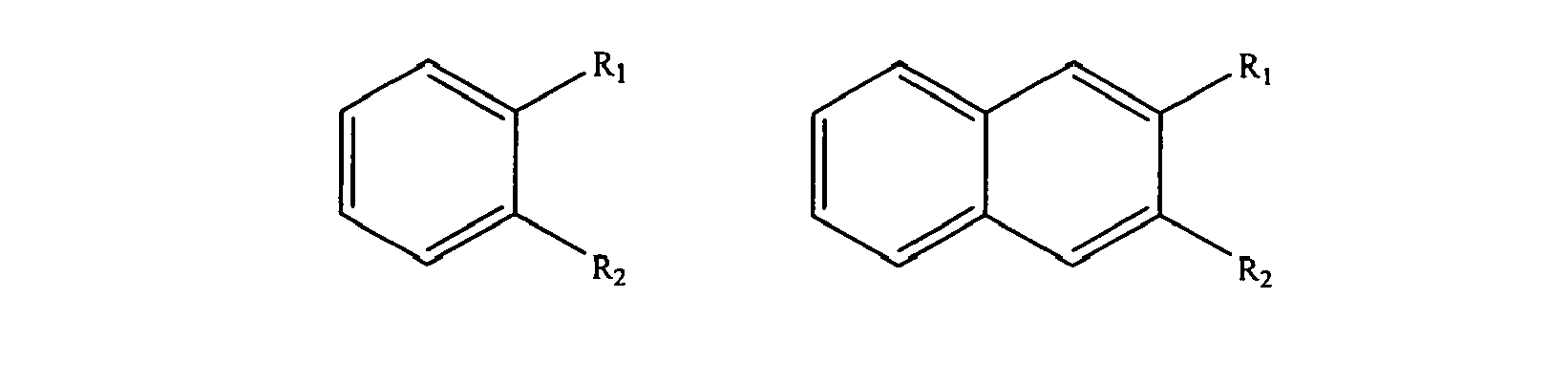

- Process according to any of the preceding Claims 1 to 6, characterised in that homogenous catalysts derived from main-group II are employed.
- Process according to any of the preceding Claims 1 to 7, characterised in that homogenous calcium catalysts are employed.
- Process according to any of the preceding Claims 1 to 8, characterised in that homogenous main group II catalysts are employed, comprising at least one water-soluble amine ligand selected from the group consisting of ethylenediaminetetraacetic acid (EDTA), ethylenediaminetetraacetic acid tetrasodium salt (EDTANa4), meso-tetra-(sulfonatophenyl)porphine tetrasodium salt (TSTPP), trans-1,2-diaminocyclohexane-N,N,N",N'-tetraacetic acid (CyDTA), 2,2'-biquinoline-4,4'dicarboxylic acid dipotassium salt (BQC), 2,2-bipyridine-4,4-dicarboxylic acid (BPyDCA), bathophenanthrolinedisulfonic acid disodium salt (BPhDS), bathocuproinedisulfonic acid disodium salt (BCDS), diethylenetriaminepentaacetic acid pentasodium salt (DTPANa5), nitrilotriacetic acid trisodium salt (NTANa3) and 2,6-pyridinedicarboxylic acid (2,6-PyDCA).
- Process according to any of the preceding Claims 1 to 9, characterised in that the hydrogenation is conducted in the presence of co-catalysts selected from the group consisting of cationic, zwitterionic (amphoteric), nonionic and anionic surfactants, ionic liquids and phase transfer catalysts.
- Complexes of main-group I-V metals and water-soluble amine ligands.
- Complexes according to Claim 11, characterised in that the water-soluble ligands are selected from the group consisting of ethylenediaminetetraacetic acid (EDTA), ethylenediaminetetraacetic acid tetrasodium salt (EDTANa4), meso-tetra(sulfonatophenyl)-porphine tetrasodium salt (TSTPP), trans-1,2-diaminocydohexane-N,N,N',N'-tetraacetic acid (CyDTA), 2,2'-biquinoline-4,4'di-carboxylic acid dipotassium salt (BQC), 2,2-bipyridine-4,4-dicarboxylic acid (BPyDCA), bathophenanthrolinedisulfonic acid disodium salt (BPhDS), bathocuproinedisulfonic acid disodium salt (BCDS), diethylenetriaminepentaacetic acid pentasodium salt (DTPANa5), nitrilotriacetic acid trisodium salt (NTANa3) and 2,6-pyridinedicarboxylic acid (2,6-PyDCA).
- Use of said complexes according to Claim 11 as homogenous catalysts for the hydrogenation of (poly)unsaturated hydrocarbons, aldehydes and aromatic compounds.
- Use according to Claim 13, characterised in that polyunsaturated fatty acid esters are transformed into saturated and/or monounsaturated fatty acid esters, of aldehydes into respective alcohols and of aromatic compounds into respective saturated cyclic compounds.
Priority Applications (2)
| Application Number | Priority Date | Filing Date | Title |
|---|---|---|---|
| EP10008054A EP2426191A1 (en) | 2010-08-02 | 2010-08-02 | Process for the homogenous hydrogenation of (poly)unsaturated hydrocarbons |
| PCT/EP2011/062584 WO2012016849A1 (en) | 2010-08-02 | 2011-07-21 | Process for the homogeneous hydrogenation of (poly)unsaturated hydrocarbons |
Applications Claiming Priority (1)
| Application Number | Priority Date | Filing Date | Title |
|---|---|---|---|
| EP10008054A EP2426191A1 (en) | 2010-08-02 | 2010-08-02 | Process for the homogenous hydrogenation of (poly)unsaturated hydrocarbons |
Publications (1)
| Publication Number | Publication Date |
|---|---|
| EP2426191A1 true EP2426191A1 (en) | 2012-03-07 |
Family
ID=43063532
Family Applications (1)
| Application Number | Title | Priority Date | Filing Date |
|---|---|---|---|
| EP10008054A Withdrawn EP2426191A1 (en) | 2010-08-02 | 2010-08-02 | Process for the homogenous hydrogenation of (poly)unsaturated hydrocarbons |
Country Status (2)
| Country | Link |
|---|---|
| EP (1) | EP2426191A1 (en) |
| WO (1) | WO2012016849A1 (en) |
Citations (1)
| Publication number | Priority date | Publication date | Assignee | Title |
|---|---|---|---|---|
| EP1918358A1 (en) * | 2006-10-11 | 2008-05-07 | Cognis IP Management GmbH | Process for the partial hydrogenation of fatty acid esters |
-
2010
- 2010-08-02 EP EP10008054A patent/EP2426191A1/en not_active Withdrawn
-
2011
- 2011-07-21 WO PCT/EP2011/062584 patent/WO2012016849A1/en not_active Ceased
Patent Citations (1)
| Publication number | Priority date | Publication date | Assignee | Title |
|---|---|---|---|---|
| EP1918358A1 (en) * | 2006-10-11 | 2008-05-07 | Cognis IP Management GmbH | Process for the partial hydrogenation of fatty acid esters |
Non-Patent Citations (10)
| Title |
|---|
| BARRETT ET AL., PROC. R. SOC. A, vol. 466, 2010, pages 927 - 963 |
| J.K. HOVEY, L.G. HEPLER, P.R. TREMAINE: "Thermodynamics of Aqueous EDTA Systems: Apparent and Partial Molar Heat Capacities and Volumes of Aqueous Strontium and Barium EDTA", JOUTNAL OF SOLUTION CHEMISTRY, vol. 15, no. 12, 1986, pages 977 - 987, XP002610000, ISSN: 0095-9782 * |
| M. YASUDA: "The Viscosities of Aqueous Solutions Containing Metal Complexes. II. trans-1,2-Cyclohexanediaminetetraacetato Complexes", BULLETIN OF THE CHEMICAL SOCIETY OF JAPAN, vol. 42, 1969, pages 2547 - 2549, XP002609999, ISSN: 0009-2673 * |
| M.D. BHOR, A.G. PANDA, S.R. JAGTAP: "Hydrogenation of alpha,beta-Unsaturated Carbonyl Compounds Using Recyclable Water-Soluble FeII/EDTA Complex Catalyst", CATALYSIS LETTERS, vol. 124, no. 1-2, 2008, pages 157 - 164, XP002609998, ISSN: 1011-372X * |
| NATURE, vol. 463, 2010, pages 171 - 177 |
| SPIELMANN ET AL., ANGEW. CHEM. INT. ED., vol. 47, 2008, pages 9434 - 9438 |
| STEMMLER K ET AL: "Oxidation of metal-diethylenetriamine-pentaacetate (DTPA) - complexes during drinking water ozonation", WATER RESEARCH, ELSEVIER, AMSTERDAM, NL, vol. 35, no. 8, 1 June 2001 (2001-06-01), pages 1877 - 1886, XP004233390, ISSN: 0043-1354, DOI: 10.1016/S0043-1354(00)00457-7 * |
| X. ZHANG, K. SASAKI. Y. KURODA: "Characterization of Magnesium Porphyrins and Aggregation of Porphyrins in Organic Solvent", BULLETIN OF THE CHEMICAL SOCIETY OF JAPAN, vol. 80, no. 3, 2007, pages 536 - 542, XP002610001 * |
| Z. ANORG, ALLG. CHEM., vol. 635, 2009, pages 13 - 32 |
| ZENG ET AL., INORG. CHEM., vol. 49, 2010, pages 3361 - 3369 |
Also Published As
| Publication number | Publication date |
|---|---|
| WO2012016849A1 (en) | 2012-02-09 |
Similar Documents
| Publication | Publication Date | Title |
|---|---|---|
| EP2074079B1 (en) | Metathesis methods involving hydrogenation and compositions relating to same | |
| Drent et al. | Efficient palladium catalysts for the carbonylation of alkynes | |
| EP3281931A1 (en) | Methods of making organic compounds by metathesis | |
| EP2655310B1 (en) | Method for producing formic acid by reacting carbon dioxide with hydrogen | |
| KR0163040B1 (en) | Process for preparing carboxylic acids | |
| WO2002070526A1 (en) | Organometallic building materials and method for producing the same | |
| KR101237682B1 (en) | A process for continuous carbonylation by supported ionic liquid-phase catalysis | |
| DE69128068T2 (en) | Carbonylation process and catalyst composition | |
| DD240197A5 (en) | METHOD FOR PRODUCING DIMERIZING PRODUCTS OF OLEFINES | |
| DE2364446C2 (en) | Process for the preparation of carboxylic acid anhydrides | |
| DE69915886T2 (en) | METHOD FOR CARBONYLATING LOW ALIPHATIC ALCOHOLS | |
| DE102010036631B4 (en) | Process for the production of dialkyl carbonates, copper-containing catalyst and use of a copper-containing catalyst | |
| Li et al. | Micellar effect of cationic gemini surfactants on organic/aqueous biphasic catalytic hydroformylation of 1-dodecene | |
| Kawai et al. | Characterization and solution properties of adamantane-containing quaternary-ammonium-salt-type amphiphilic ionic liquids | |
| DE102009038690B4 (en) | Catalyst composition for the conversion of carbon monoxide in gas streams | |
| EP2426191A1 (en) | Process for the homogenous hydrogenation of (poly)unsaturated hydrocarbons | |
| DE69314388T2 (en) | Carbonylation of conjugated dienes | |
| EP3114105A1 (en) | Method for producing aldehydes from alkanes and synthesis gas | |
| WO2000064848A1 (en) | Method for the dihydroxylation of olefins using transition-metal catalysts | |
| DE2635250C3 (en) | Process for telomerization or oligomerization of acyclic conjugated diolefins | |
| EP0576477B1 (en) | Process for preparing mono-unsaturated fatty acids or their derivates | |
| CA2395768A1 (en) | Carbonylation process | |
| DE69003579T2 (en) | Process for the preparation of beta, gamma-unsaturated carboxylic acids. | |
| EP2179980A1 (en) | Process for the manufacture of saturated mono- or polycyclic compounds | |
| EP3129137B1 (en) | Method for providing an active ruthenium catalyst solution for the transvinylation of carboxylic acids |
Legal Events
| Date | Code | Title | Description |
|---|---|---|---|
| AK | Designated contracting states |
Kind code of ref document: A1 Designated state(s): AL AT BE BG CH CY CZ DE DK EE ES FI FR GB GR HR HU IE IS IT LI LT LU LV MC MK MT NL NO PL PT RO SE SI SK SM TR |
|
| AX | Request for extension of the european patent |
Extension state: BA ME RS |
|
| PUAI | Public reference made under article 153(3) epc to a published international application that has entered the european phase |
Free format text: ORIGINAL CODE: 0009012 |
|
| 17P | Request for examination filed |
Effective date: 20120907 |
|
| 17Q | First examination report despatched |
Effective date: 20121026 |
|
| STAA | Information on the status of an ep patent application or granted ep patent |
Free format text: STATUS: THE APPLICATION IS DEEMED TO BE WITHDRAWN |
|
| 18D | Application deemed to be withdrawn |
Effective date: 20130306 |