EP2424307A1 - PLMN selection method and mobile communication device utilizing the same - Google Patents
PLMN selection method and mobile communication device utilizing the same Download PDFInfo
- Publication number
- EP2424307A1 EP2424307A1 EP11006881A EP11006881A EP2424307A1 EP 2424307 A1 EP2424307 A1 EP 2424307A1 EP 11006881 A EP11006881 A EP 11006881A EP 11006881 A EP11006881 A EP 11006881A EP 2424307 A1 EP2424307 A1 EP 2424307A1
- Authority
- EP
- European Patent Office
- Prior art keywords
- plmn
- forbidden
- mobile communication
- communication device
- list
- Prior art date
- Legal status (The legal status is an assumption and is not a legal conclusion. Google has not performed a legal analysis and makes no representation as to the accuracy of the status listed.)
- Granted
Links
Images

Classifications
-
- H—ELECTRICITY
- H04—ELECTRIC COMMUNICATION TECHNIQUE
- H04W—WIRELESS COMMUNICATION NETWORKS
- H04W48/00—Access restriction; Network selection; Access point selection
- H04W48/18—Selecting a network or a communication service
-
- H—ELECTRICITY
- H04—ELECTRIC COMMUNICATION TECHNIQUE
- H04W—WIRELESS COMMUNICATION NETWORKS
- H04W48/00—Access restriction; Network selection; Access point selection
- H04W48/08—Access restriction or access information delivery, e.g. discovery data delivery
Definitions
- the invention generally relates to mobile communication systems, and more particularly, to handling PLMN selection procedures for emergency and non-emergency services after an emergency service has been completed.
- a user equipment may communicate voice and/or data signals with one or more service networks via cellular stations of the service networks.
- the wireless communication between the UE and the service networks may be in compliance with various wireless technologies, such as the Global System for Mobile communication (GSM) technology, General Packet Radio Service (GPRS) technology, Enhanced Data rates for Global Evolution (EDGE) technology, Wideband Code Division Multiple Access (WCDMA) technology, Code Division Multiple Access 2000 (CDMA 2000) technology, Time Division-Synchronous Code Division Multiple Access (TD-SCDMA) technology, Worldwide Interoperability for Microwave Access (WiMAX ) technology, Long Term Evolution (LTE) technology, and others.
- GSM Global System for Mobile communication
- GPRS General Packet Radio Service
- EDGE Enhanced Data rates for Global Evolution
- WCDMA Wideband Code Division Multiple Access
- CDMA 2000 Code Division Multiple Access 2000
- TD-SCDMA Time Division-Synchronous Code Division Multiple Access
- WiMAX Worldwide Interoperability for Microwave Access
- the network selection operates by the service networks broadcasting their Public Land Mobile Network (PLMN) identities (IDs).
- PLMN Public Land Mobile Network
- the UEs may carry out automatic network selection based on preferences of the PLMN IDs stored in a GSM subscriber identity module (SIM) or a universal subscriber identity module (USIM).
- SIM GSM subscriber identity module
- USIM universal subscriber identity module
- the PLMN is selected by the UE from a preferred PLMN list in a predetermined priority order.
- the UE also comprises a forbidden list, which includes a list of PLMN IDs that are not allowed for use under normal data service conditions.
- the UE may delete any PLMN ID present in the forbidden list from the preferred PLMN list before the network selection, so that the UE will not select the forbidden PLMN for normal data services.
- the forbidden PLMN is not removed from the preferred list, so that the UEs can choose the forbidden PLMNs for registration, leading to a problem when selecting a PLMN for non-emergency services. Therefore, a PLMN selection method for selecting a PLMN for the emergency and non-emergency services and a mobile communication utilizing the same are in need.
- a method for handling an equivalent PLMN list is disclosed.
- the method is performed by a mobile communication device having a packet data connection with a service network for an emergency bearer service and storing a forbidden PLMN identity.
- the method comprises steps of: receiving an equivalent PLMN list comprising the forbidden PLMN identity from the service network; and removing the forbidden PLMN identity from the equivalent PLMN list after the emergency bearer service has been completed.
- a PLMN selection method is provided, and performed by a mobile communication device having a packet data connection with a service network for an emergency bearer service and storing a forbidden PLMN identity.
- the PLMN selection method comprises steps of: receiving an equivalent PLMN list comprising the forbidden PLMN identity from the service network; and being forbidden to select the forbidden PLMN identity from the equivalent PLMN list after the emergency bearer service has been completed.
- a mobile communication device having a packet data connection with a service network for an emergency bearer service comprises: a memory, storing a forbidden PLMN identity; a wireless module, receiving an equivalent PLMN list from the service network; and a controller module, removing the forbidden PLMN identity from the equivalent PLMN list after the emergency bearer service has been completed.
- a mobile communication device having a packet data connection with a service network for an emergency bearer service.
- the mobile communication device comprises: a memory, storing a forbidden PLMN identity; a wireless module, receiving an equivalent PLMN list from the service network; and a controller module, being forbidden to select the forbidden PLMN identity from the equivalent PLMN list after the emergency bearer service has been completed.
- FIG. 1 is a block diagram illustrating a mobile communication environment according to an embodiment of the invention
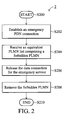
- FIG. 2 is a flowchart of an exemplary PLMN selection method 2 according to the invention.
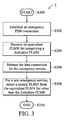
- FIG. 3 is a flowchart of another exemplary PLMN selection method 3 according to the invention.
- FIG. 1 is a block diagram illustrating a mobile communication environment according to an embodiment of the invention.
- the mobile communication device 110 is wirelessly connected to the service network 320 for obtaining mobile communication services.
- the service network 120 may comprises a General Packet Service (GPRS) network, a Universal Mobile Telecommunication System (UMTS) network, or a Long Term Evolution (LTE) network.
- GPRS General Packet Service
- UMTS Universal Mobile Telecommunication System
- LTE Long Term Evolution
- the service network 120 comprises a cellular station 121 and a control node 122, wherein the cellular station 121 is controlled by the control node 122 to perform the functionality of wireless transceiving for the service network 120.
- the control node 122 is further connected to the core network 123 for interfacing with external networks, such as the Public Switched Telephone Network (PSTN), and interfacing with the Internet Protocol (IP) based Network, such as the Internet.
- PSTN Public Switched Telephone Network
- IP Internet Protocol
- the mobile communication device 110 is any device used directly by an end-user for communication, e.g., handhold mobile phones, laptop equipped with broadband network adaptors, or any other device capable of communication.
- the mobile communication device 110 comprises a wireless module 111 for performing the functionality of wireless transmissions and receptions to and from the cellular station 121.
- the wireless module 111 may comprise a baseband unit (not shown) and a radio frequency (RF) unit (not shown).
- the baseband unit may contain multiple hardware devices to perform baseband signal processing, including analog to digital conversion (ADC)/digital to analog conversion (DAC), gain adjusting, modulation/demodulation, encoding/decoding, and so on.
- the RF unit may receive RF wireless signals, convert the received RF wireless signals to baseband signals, which are processed by the baseband unit, or receive baseband signals from the baseband unit and convert the received baseband signals to RF wireless signals, which are later transmitted.
- the RF unit may also contain multiple hardware devices to perform radio frequency conversion.
- the RF unit may comprise a mixer to multiply the baseband signals with a carrier oscillated in the radio frequency of the wireless communication system, wherein the radio frequency may be 900MHz, 1900MHz, or 2100MHz utilized in WCDMA systems, or may be 900MHz, 2100MHz, or 2.6GHz utilized in LTE systems, or others depending on the radio access technology (RAT) in use.
- the mobile communication device 110 comprises a controller module 112 for controlling the operation of the wireless module 111 and other functional components, such as a display unit and/or keypad serving as an MMI (man-machine interface), a storage unit storing the program codes of applications or technologies, or others.
- MMI man-machine interface
- the service network 120 may be a WCDMA system and the mobile communication device 110 may be a UE in compliance with the TS 24.008 and TS 23.122 specification and other related specifications of the WCDMA technology.
- the mobile communication device 110 may be a UE in compliance with both of the specifications of the WCDMA or LTE technologies, and the invention is not limited thereto.
- the presence of the mobile communication device 110 is known by the service network 120 through a GPRS or PS attach procedure, where the term "GPRS attach" is used in the GPRS system and PS attach is use in the UMTS or LTE system.
- the mobile communication device 110 receives a list of PLMN IDs in an ATTACH ACCEPT message from the service network 120, which is referred to as an equivalent PLMN list.
- the mobile communication device 110 stores the equivalent PLMN list in a SIM card 113 or any other local memory.
- the PLMN is a service network composed of an access network including the cellular station 121 and the control node 122 and the core network 123.
- Each PLMN is uniquely identified by a PLMN ID composed of a Mobile Country Code (MCC) and Mobile Network Code (MNC), where the MCC indicates the country where the network is located, and the MNC identifies a network within a country.
- MCC Mobile Country Code
- MNC Mobile Network Code
- Each PLMN in the equivalent PLMN list is equivalent to one another with regard to PLMN selection or reselection, cell selection or reselection, and handover procedures.
- a network operator owning both a GSM and UMTS network in a same or different country could use a different PLMN code for each thereof, and each PLMN code is collected in the equivalent PLMN list for the mobile communication device 110 for access.
- a mobile network shared by several network operators for the optimization of radio coverage is also included in the equivalent PLMN list.
- the mobile communication device 110 can select a cell or a PLMN belonging to an equivalent network regardless of the radio access technology.
- the mobile communication device 110 After the GPRS/PS attachment procedure, the mobile communication device 110 performs a PLMN selection to search for a PLMN from the equivalent PLMN list to acquire a data service.
- the mobile communication device 110 carries out the PLMN selection each time it is switched on, when recovering from a lack of coverage state, or when the mobile subscriber requests for PLMN reselection.
- the PLMN selection procedure can be either automatic or manual, and is compliant with the 3GPP specification TS 23.122.
- the mobile communication device 110 has a number of lists stored in the SIM card 113 (or any other local memory), which assists in finding a PLMN, including an equivalent PLMN list and a forbidden PLMN list.
- the equivalent PLMN list is a list of preferred roaming networks normally written into the SIM card by the home PLMN network operator. At the top of this list is the network on which the mobile communication device 110 was last registered, which is automatically placed at the top of the list when the mobile station registers with a foreign network. The mobile communication device 110 will always search for this PLMN as a priority, then for the HPLMN, and then for other networks on the equivalent list.
- the forbidden PLMN list is a list of PLMNs with which the mobile station has attempted to register with, but has been rejected possibly because no roaming agreement was in place between the home PLMN and the foreign network. The forbidden PLMN list in the SIM card 113 is not removed when the mobile communication device 110 is switched off or the SIM information is extracted.
- An optional extension of the forbidden PLMN list may be stored in a local memory (not shown) of the mobile communication device 110. If during the search for a PLMN for a non-emergency service the mobile communication device 110 finds a PLMN registered on the forbidden list, the mobile communication device will reject it from the PLMN selection process. During the search for a PLMN for an emergency service the mobile communication device 110 would find a PLMN from the equivalent PLMN list, regardless of the forbidden PLMN list. Both the emergency services and non-emergency services may be bearer services or teleservices, and may be a circuit switched or packet switched types of services. In some examples, the emergency service is an IMS call service and a bearer service.
- An IMS emergency service is indicated in the attach procedure by Attach Type "GPRS Emergency Attach".
- Attach Type GPRS Emergency Attach
- the mobile communication device 110 presents all discovered PLMNs to the subscriber, including the forbidden PLMNs.
- a forbidden PLMN ID will be removed from the forbidden PLMN list when registration is successful during the PLMN selection process.
- the mobile communication device keeps the forbidden PLMN ID in the equivalent PLMN list when registering for an emergency service. Because the forbidden PLMN ID remains in the equivalent PLMN list, the mobile communication device may select the forbidden PLMN ID for a non-emergency service after the emergency service has been completed. The registration may be rejected again and the mobile communication device has to take time to search for another PLMN to camp on. Consequently the PLMN selection and registration procedure is delayed, thereby postponing the provision of the non-emergency service.
- the mobile communication device 110 is forbidden to select a PLMN ID for a non-emergency service in the forbidden list after the emergency service has been completed.
- the mobile communication device 110 removes the forbidden PLMN ID from the equivalent PLMN list upon completion of the emergency service.
- the communication device 110 removes the forbidden PLMN ID from the equivalent PLMN list prior to switching off the device.
- the communication device 110 removes the forbidden PLMN ID from the equivalent PLMN list when the device is switched on.
- the communication device 110 selects a PLMN ID from the equivalent PLMN list other than those in the forbidden PLMN list after the emergency service is finished.
- the PLMN selection procedures according to the invention are detailed in FIG. 2 and FIG. 3 .
- FIG. 2 is a flowchart of an exemplary PLMN selection method 2 according to the invention, incorporating the mobile communication device 110 in FIG. 1 .
- the mobile communication device 110 Upon startup, the mobile communication device 110 is attached to the service network 120 (S200), and select a PLMN to establishes an emergency PDN connection (S202). If the PLMN registration is successful, the controller module 112 carries out a PDP/PDN context activation procedure to establish an emergency packet data connection between the mobile communication device 110 and the service network 120 and receives the emergency IMS call service.
- the mobile communication device 110 receives an equivalent PLMN list from the service network 120 either in an ATTACH ACCEPT message or a ROUTING AREA UPDATE ACCEPT message (S204).
- the ATTACH ACCEPT message is received in a GPRS/PS attach procedure and the ROUTING AREA UPDATE ACCEPT message is received in a routing area update procedure to signal completion of the procedure.
- the GPRS/PS attach procedure occurs when the mobile communication device requests for a packet based data service, including non-emergency and emergency types.
- the Attach type is labeled "GPRS Emergency Attach" to indicate an emergency packet based attach request.
- the routing area update procedure takes place when the GPRS/PS attached mobile communication device detects that it has entered a new routing area and wishes to inform the service network 120 of the new location.
- the controller module 112 keeps the forbidden PLMN ID in the list for the PLMN selection.
- the controller module releases the emergency packet data connection by deactivating the local PDP/PDN context associated with the emergency call service, and the wireless module 111 initiates the PDP/PDN context deactivation procedure by sending a deactivation request message to the service network S120, thereby releasing the emergency packet data connection for the emergency service at both ends (S206).
- the controller module 112 removes the forbidden PLMN ID from the equivalent list (S208), so that the forbidden PLMN will no longer be chosen for the next packet data service, thereby completing the PLMN selection method 2.
- the controller module 112 deletes the forbidden PLMN ID right after the completion of the emergency service.
- the communication device 110 removes the forbidden PLMN ID during the switch-off procedure.
- the communication device 110 removes the forbidden PLMN ID during the switch-on stage.
- the present invention offers a PLMN selection method for a mobile communication device that removes forbidden PLMN IDs from the equivalent list after the emergency service has been completed, preventing the mobile communication device to request for an invalid PLMN registration, thereby increasing the selection efficiency and decreasing the delay for providing communication services.
- FIG. 3 is a flowchart of another exemplary PLMN selection method 3 according to the invention, incorporating the mobile communication device 110 in FIG. 1 .
- Steps S300-S306 are identical to Steps S200-206 in the PLMN selection method 2, and will not be described again for brevity.
- Step S310 in a case when requesting a non-emergency service, the controller module 112 selects a normal PLMN ID from the equivalent PLMN list other than any member in the forbidden PLMN list. In some implementations, the controller module 112 chooses a PLMN ID from the equivalent list, compares the chosen ID with the list in the forbidden list, and only requests for PLMN registration when the chosen PLMN ID is not on the forbidden list.
- the controller module 112 selects the normal PLMN for the non-emergency service right after the emergency service. In another embodiment, the controller module 112 selects the normal PLMN for the non-emergency service when the mobile communication device 110 is powered-on.
- the present invention offers another PLMN selection method for a mobile communication device that select a PLMN ID from the equivalent list other than the forbidden IDs after the emergency service has been completed, preventing the mobile communication device from requesting for an invalid PLMN registration for a non-emergency service, thereby increasing the selection efficiency and decreasing the delay for providing communication services.
- DSP digital signal processor
- ASIC application specific integrated circuit
- FPGA field programmable gate array signal
- a general purpose processor may be a microprocessor, but in the alternative, the processor may be any commercially available processor, controller, microcontroller or state machine.
Landscapes
- Engineering & Computer Science (AREA)
- Computer Security & Cryptography (AREA)
- Computer Networks & Wireless Communication (AREA)
- Signal Processing (AREA)
- Mobile Radio Communication Systems (AREA)
- Telephone Function (AREA)
Abstract
Description
- This Application claims priority of
U.S. Provisional Application No. 61/376,002, filed on 23rd August 2010 - The invention generally relates to mobile communication systems, and more particularly, to handling PLMN selection procedures for emergency and non-emergency services after an emergency service has been completed.
- In a typical mobile communication environment, a user equipment (UE) may communicate voice and/or data signals with one or more service networks via cellular stations of the service networks. The wireless communication between the UE and the service networks may be in compliance with various wireless technologies, such as the Global System for Mobile communication (GSM) technology, General Packet Radio Service (GPRS) technology, Enhanced Data rates for Global Evolution (EDGE) technology, Wideband Code Division Multiple Access (WCDMA) technology, Code Division Multiple Access 2000 (CDMA 2000) technology, Time Division-Synchronous Code Division Multiple Access (TD-SCDMA) technology, Worldwide Interoperability for Microwave Access (WiMAX ) technology, Long Term Evolution (LTE) technology, and others.
- In the above described cellular communication networks, the network selection operates by the service networks broadcasting their Public Land Mobile Network (PLMN) identities (IDs). The UEs may carry out automatic network selection based on preferences of the PLMN IDs stored in a GSM subscriber identity module (SIM) or a universal subscriber identity module (USIM). In the automatic selection mode, the PLMN is selected by the UE from a preferred PLMN list in a predetermined priority order. Typically, the UE also comprises a forbidden list, which includes a list of PLMN IDs that are not allowed for use under normal data service conditions. Conventionally, the UE may delete any PLMN ID present in the forbidden list from the preferred PLMN list before the network selection, so that the UE will not select the forbidden PLMN for normal data services. However, in the cases of emergency services, the forbidden PLMN is not removed from the preferred list, so that the UEs can choose the forbidden PLMNs for registration, leading to a problem when selecting a PLMN for non-emergency services. Therefore, a PLMN selection method for selecting a PLMN for the emergency and non-emergency services and a mobile communication utilizing the same are in need.
- In one aspect of the invention, a method for handling an equivalent PLMN list is disclosed. The method is performed by a mobile communication device having a packet data connection with a service network for an emergency bearer service and storing a forbidden PLMN identity. The method comprises steps of: receiving an equivalent PLMN list comprising the forbidden PLMN identity from the service network; and removing the forbidden PLMN identity from the equivalent PLMN list after the emergency bearer service has been completed.
- In another aspect of the invention, a PLMN selection method is provided, and performed by a mobile communication device having a packet data connection with a service network for an emergency bearer service and storing a forbidden PLMN identity. The PLMN selection method comprises steps of: receiving an equivalent PLMN list comprising the forbidden PLMN identity from the service network; and being forbidden to select the forbidden PLMN identity from the equivalent PLMN list after the emergency bearer service has been completed.
- In yet another aspect of the invention, a mobile communication device having a packet data connection with a service network for an emergency bearer service is revealed. The mobile communication device comprises: a memory, storing a forbidden PLMN identity; a wireless module, receiving an equivalent PLMN list from the service network; and a controller module, removing the forbidden PLMN identity from the equivalent PLMN list after the emergency bearer service has been completed.
- In still another aspect of the invention, a mobile communication device having a packet data connection with a service network for an emergency bearer service is disclosed. The mobile communication device comprises: a memory, storing a forbidden PLMN identity; a wireless module, receiving an equivalent PLMN list from the service network; and a controller module, being forbidden to select the forbidden PLMN identity from the equivalent PLMN list after the emergency bearer service has been completed.
- Other aspects and features of the present invention will become apparent to those with ordinarily skill in the art upon review of the following descriptions of specific embodiments of apparatuses, systems, and methods for handling the PLMN selection for the emergency and non-emergency services.
- The invention can be more fully understood by reading the subsequent detailed description and examples with references made to the accompanying drawings, wherein:
-
FIG. 1 is a block diagram illustrating a mobile communication environment according to an embodiment of the invention; -
FIG. 2 is a flowchart of an exemplaryPLMN selection method 2 according to the invention; and -
FIG. 3 is a flowchart of another exemplaryPLMN selection method 3 according to the invention. - The following description is of the best-contemplated mode of carrying out the invention. This description is made for the purpose of illustrating the general principles of the invention and should not be taken in a limiting sense. The 3GPP specifications are used to teach the spirit of the invention, and the invention is not limited thereto.
-
FIG. 1 is a block diagram illustrating a mobile communication environment according to an embodiment of the invention. In themobile communication environment 100, themobile communication device 110 is wirelessly connected to the service network 320 for obtaining mobile communication services. Theservice network 120 may comprises a General Packet Service (GPRS) network, a Universal Mobile Telecommunication System (UMTS) network, or a Long Term Evolution (LTE) network. Theservice network 120 comprises acellular station 121 and acontrol node 122, wherein thecellular station 121 is controlled by thecontrol node 122 to perform the functionality of wireless transceiving for theservice network 120. Thecontrol node 122 is further connected to thecore network 123 for interfacing with external networks, such as the Public Switched Telephone Network (PSTN), and interfacing with the Internet Protocol (IP) based Network, such as the Internet. Themobile communication device 110 is any device used directly by an end-user for communication, e.g., handhold mobile phones, laptop equipped with broadband network adaptors, or any other device capable of communication. Themobile communication device 110 comprises awireless module 111 for performing the functionality of wireless transmissions and receptions to and from thecellular station 121. To further clarify, thewireless module 111 may comprise a baseband unit (not shown) and a radio frequency (RF) unit (not shown). The baseband unit may contain multiple hardware devices to perform baseband signal processing, including analog to digital conversion (ADC)/digital to analog conversion (DAC), gain adjusting, modulation/demodulation, encoding/decoding, and so on. The RF unit may receive RF wireless signals, convert the received RF wireless signals to baseband signals, which are processed by the baseband unit, or receive baseband signals from the baseband unit and convert the received baseband signals to RF wireless signals, which are later transmitted. The RF unit may also contain multiple hardware devices to perform radio frequency conversion. For example, the RF unit may comprise a mixer to multiply the baseband signals with a carrier oscillated in the radio frequency of the wireless communication system, wherein the radio frequency may be 900MHz, 1900MHz, or 2100MHz utilized in WCDMA systems, or may be 900MHz, 2100MHz, or 2.6GHz utilized in LTE systems, or others depending on the radio access technology (RAT) in use. Also, themobile communication device 110 comprises acontroller module 112 for controlling the operation of thewireless module 111 and other functional components, such as a display unit and/or keypad serving as an MMI (man-machine interface), a storage unit storing the program codes of applications or technologies, or others. In one embodiment, theservice network 120 may be a WCDMA system and themobile communication device 110 may be a UE in compliance with the TS 24.008 and TS 23.122 specification and other related specifications of the WCDMA technology. Alternatively, themobile communication device 110 may be a UE in compliance with both of the specifications of the WCDMA or LTE technologies, and the invention is not limited thereto. - Upon entering into the
mobile communication environment 100, the presence of themobile communication device 110 is known by theservice network 120 through a GPRS or PS attach procedure, where the term "GPRS attach" is used in the GPRS system and PS attach is use in the UMTS or LTE system. After the GPRS or PS attach procedure is completed, themobile communication device 110 receives a list of PLMN IDs in an ATTACH ACCEPT message from theservice network 120, which is referred to as an equivalent PLMN list. Themobile communication device 110 stores the equivalent PLMN list in aSIM card 113 or any other local memory. The PLMN is a service network composed of an access network including thecellular station 121 and thecontrol node 122 and thecore network 123. Each PLMN is uniquely identified by a PLMN ID composed of a Mobile Country Code (MCC) and Mobile Network Code (MNC), where the MCC indicates the country where the network is located, and the MNC identifies a network within a country. Each PLMN in the equivalent PLMN list is equivalent to one another with regard to PLMN selection or reselection, cell selection or reselection, and handover procedures. In some implementations, a network operator owning both a GSM and UMTS network in a same or different country could use a different PLMN code for each thereof, and each PLMN code is collected in the equivalent PLMN list for themobile communication device 110 for access. In other implementations, a mobile network shared by several network operators for the optimization of radio coverage is also included in the equivalent PLMN list. Themobile communication device 110 can select a cell or a PLMN belonging to an equivalent network regardless of the radio access technology. - After the GPRS/PS attachment procedure, the
mobile communication device 110 performs a PLMN selection to search for a PLMN from the equivalent PLMN list to acquire a data service. Themobile communication device 110 carries out the PLMN selection each time it is switched on, when recovering from a lack of coverage state, or when the mobile subscriber requests for PLMN reselection. The PLMN selection procedure can be either automatic or manual, and is compliant with the 3GPP specification TS 23.122. Themobile communication device 110 has a number of lists stored in the SIM card 113 (or any other local memory), which assists in finding a PLMN, including an equivalent PLMN list and a forbidden PLMN list. The equivalent PLMN list is a list of preferred roaming networks normally written into the SIM card by the home PLMN network operator. At the top of this list is the network on which themobile communication device 110 was last registered, which is automatically placed at the top of the list when the mobile station registers with a foreign network. Themobile communication device 110 will always search for this PLMN as a priority, then for the HPLMN, and then for other networks on the equivalent list. The forbidden PLMN list is a list of PLMNs with which the mobile station has attempted to register with, but has been rejected possibly because no roaming agreement was in place between the home PLMN and the foreign network. The forbidden PLMN list in theSIM card 113 is not removed when themobile communication device 110 is switched off or the SIM information is extracted. An optional extension of the forbidden PLMN list may be stored in a local memory (not shown) of themobile communication device 110. If during the search for a PLMN for a non-emergency service themobile communication device 110 finds a PLMN registered on the forbidden list, the mobile communication device will reject it from the PLMN selection process. During the search for a PLMN for an emergency service themobile communication device 110 would find a PLMN from the equivalent PLMN list, regardless of the forbidden PLMN list. Both the emergency services and non-emergency services may be bearer services or teleservices, and may be a circuit switched or packet switched types of services. In some examples, the emergency service is an IMS call service and a bearer service. An IMS emergency service is indicated in the attach procedure by Attach Type "GPRS Emergency Attach". For manual mode PLMN selection, themobile communication device 110 presents all discovered PLMNs to the subscriber, including the forbidden PLMNs. A forbidden PLMN ID will be removed from the forbidden PLMN list when registration is successful during the PLMN selection process. - Traditionally, the mobile communication device keeps the forbidden PLMN ID in the equivalent PLMN list when registering for an emergency service. Because the forbidden PLMN ID remains in the equivalent PLMN list, the mobile communication device may select the forbidden PLMN ID for a non-emergency service after the emergency service has been completed. The registration may be rejected again and the mobile communication device has to take time to search for another PLMN to camp on. Consequently the PLMN selection and registration procedure is delayed, thereby postponing the provision of the non-emergency service.
- In the present invention, the
mobile communication device 110 is forbidden to select a PLMN ID for a non-emergency service in the forbidden list after the emergency service has been completed. In some implementations, themobile communication device 110 removes the forbidden PLMN ID from the equivalent PLMN list upon completion of the emergency service. In other implementations, thecommunication device 110 removes the forbidden PLMN ID from the equivalent PLMN list prior to switching off the device. In still other implementations, thecommunication device 110 removes the forbidden PLMN ID from the equivalent PLMN list when the device is switched on. In yet other implementations, thecommunication device 110 selects a PLMN ID from the equivalent PLMN list other than those in the forbidden PLMN list after the emergency service is finished. The PLMN selection procedures according to the invention are detailed inFIG. 2 andFIG. 3 . -
FIG. 2 is a flowchart of an exemplaryPLMN selection method 2 according to the invention, incorporating themobile communication device 110 inFIG. 1 . - Upon startup, the
mobile communication device 110 is attached to the service network 120 (S200), and select a PLMN to establishes an emergency PDN connection (S202). If the PLMN registration is successful, thecontroller module 112 carries out a PDP/PDN context activation procedure to establish an emergency packet data connection between themobile communication device 110 and theservice network 120 and receives the emergency IMS call service. Themobile communication device 110 receives an equivalent PLMN list from theservice network 120 either in an ATTACH ACCEPT message or a ROUTING AREA UPDATE ACCEPT message (S204). The ATTACH ACCEPT message is received in a GPRS/PS attach procedure and the ROUTING AREA UPDATE ACCEPT message is received in a routing area update procedure to signal completion of the procedure. The GPRS/PS attach procedure occurs when the mobile communication device requests for a packet based data service, including non-emergency and emergency types. The Attach type is labeled "GPRS Emergency Attach" to indicate an emergency packet based attach request. The routing area update procedure takes place when the GPRS/PS attached mobile communication device detects that it has entered a new routing area and wishes to inform theservice network 120 of the new location. In the case of an emergency IMS call, when theservice network 120 returns the ATTACH ACCEPT message or the ROUTING AREA UPDATE ACCEPT message with the equivalent PLMN list that comprises one or more members of the forbidden PLMN list, thecontroller module 112 keeps the forbidden PLMN ID in the list for the PLMN selection. Once the emergency service has been completed, the controller module releases the emergency packet data connection by deactivating the local PDP/PDN context associated with the emergency call service, and thewireless module 111 initiates the PDP/PDN context deactivation procedure by sending a deactivation request message to the service network S120, thereby releasing the emergency packet data connection for the emergency service at both ends (S206). After the emergency service has been completed and the emergency data connection has been released, thecontroller module 112 removes the forbidden PLMN ID from the equivalent list (S208), so that the forbidden PLMN will no longer be chosen for the next packet data service, thereby completing thePLMN selection method 2. In some implementations, thecontroller module 112 deletes the forbidden PLMN ID right after the completion of the emergency service. In other implementations, thecommunication device 110 removes the forbidden PLMN ID during the switch-off procedure. In yet other implementations, thecommunication device 110 removes the forbidden PLMN ID during the switch-on stage. - The present invention offers a PLMN selection method for a mobile communication device that removes forbidden PLMN IDs from the equivalent list after the emergency service has been completed, preventing the mobile communication device to request for an invalid PLMN registration, thereby increasing the selection efficiency and decreasing the delay for providing communication services.
-
FIG. 3 is a flowchart of another exemplaryPLMN selection method 3 according to the invention, incorporating themobile communication device 110 inFIG. 1 . Steps S300-S306 are identical to Steps S200-206 in thePLMN selection method 2, and will not be described again for brevity. In Step S310, in a case when requesting a non-emergency service, thecontroller module 112 selects a normal PLMN ID from the equivalent PLMN list other than any member in the forbidden PLMN list. In some implementations, thecontroller module 112 chooses a PLMN ID from the equivalent list, compares the chosen ID with the list in the forbidden list, and only requests for PLMN registration when the chosen PLMN ID is not on the forbidden list. In one embodiment, thecontroller module 112 selects the normal PLMN for the non-emergency service right after the emergency service. In another embodiment, thecontroller module 112 selects the normal PLMN for the non-emergency service when themobile communication device 110 is powered-on. - The present invention offers another PLMN selection method for a mobile communication device that select a PLMN ID from the equivalent list other than the forbidden IDs after the emergency service has been completed, preventing the mobile communication device from requesting for an invalid PLMN registration for a non-emergency service, thereby increasing the selection efficiency and decreasing the delay for providing communication services.
- The various illustrative logical blocks, modules and circuits described in connection with the present disclosure may be implemented or performed with a general purpose processor, a digital signal processor (DSP), an application specific integrated circuit (ASIC), a field programmable gate array signal (FPGA) or other programmable logic device, discrete gate or transistor logic, discrete hardware components or any combination thereof designed to perform the functions described herein. A general purpose processor may be a microprocessor, but in the alternative, the processor may be any commercially available processor, controller, microcontroller or state machine.
- The operations and functions of the various logical blocks, modules, and circuits described herein may be implemented in circuit hardware or embedded software codes that can be accessed and executed by a processor.
- While the invention has been described by way of example and in terms of the preferred embodiments, it is to be understood that the invention is not limited to the disclosed embodiments. To the contrary, it is intended to cover various modifications and similar arrangements (as would be apparent to those skilled in the art). Therefore, the scope of the appended claims should be accorded the broadest interpretation so as to encompass all such modifications and similar arrangements.
Claims (15)
- A method for handling an equivalent PLMN list, performed by a mobile communication device having a packet data connection with a service network for an emergency bearer service and storing a forbidden PLMN identity, the method comprising steps of:receiving an equivalent PLMN list comprising the forbidden PLMN identity
from the service network; andremoving the forbidden PLMN identity from the equivalent PLMN list after
the emergency bearer service has been completed. - The method of claim 1, further comprising:releasing the packet data connection from the service network;wherein the removing step comprises removing the forbidden PLMN identity
from the equivalent PLMN list after the packet data connection has been released. - The method of claim 1, wherein the removing step comprises removing the forbidden PLMN identity from the equivalent PLMN list when the mobile communication device is switched off or powered on.
- The method of claim 1, wherein the removing step is executed before a PLMN selection procedure takes place.
- The method of claim 1, wherein the receiving step comprises receiving the equivalent PLMN list from an ATTACH ACCEPT message or a ROUTING AREA UPDATE ACCEPT message.
- A PLMN selection method, performed by a mobile communication device having a packet data connection with a service network for an emergency bearer service and storing a forbidden PLMN identity, the PLMN selection method comprising steps of:receiving an equivalent PLMN list comprising the forbidden PLMN identity
from the service network; andbeing forbidden to select the forbidden PLMN identity from the equivalent
PLMN list after the emergency bearer service has been completed. - The PLMN selection method of claim 6, further comprising:releasing the packet data connection from the service network;wherein the mobile communication device is forbidden to select the forbidden
PLMN identity from the equivalent PLMN list after the packet data connection has been released. - The PLMN selection method of claim 6, wherein the mobile communication device is forbidden to select the forbidden PLMN identity from the equivalent PLMN list when the mobile communication device is powered on.
- A mobile communication device having a packet data connection with a service network for an emergency bearer service, the mobile communication device comprising:a memory, storing a forbidden PLMN identity;a wireless module, receiving an equivalent PLMN list from the service
network; anda controller module, removing the forbidden PLMN identity from the
equivalent PLMN list after the emergency bearer service has been completed. - The mobile communication device of claim 9, wherein the wireless module further transmits a deactivation message to the service network to release the packet data connection, and the controller module removes the forbidden PLMN identity from the equivalent PLMN list after the packet data connection has been released.
- The mobile communication device of claim 9, wherein the controller module removes the forbidden PLMN identity from the equivalent PLMN list when the mobile communication device is switched off or powered on.
- The mobile communication device of claim 9, wherein the controller module removes the forbidden PLMN identity from the equivalent PLMN list before a PLMN selection procedure takes place.
- A mobile communication device having a packet data connection with a service network for an emergency bearer service, the mobile communication device comprising:a memory, storing a forbidden PLMN identity;a wireless module, receiving an equivalent PLMN list from the service
network; anda controller module, being forbidden to select the forbidden PLMN identity
from the equivalent PLMN list after the emergency bearer service has been completed. - The mobile communication device of claim 13, wherein the wireless module further transmits a deactivation message to the service network to release the packet data connection, and the controller module is forbidden to select the forbidden PLMN identity from the equivalent PLMN list after the packet data connection has been released.
- The mobile communication device of claim 13, wherein the controller module is forbidden to select the forbidden PLMN identity from the equivalent PLMN list when the mobile communication device is powered on.
Applications Claiming Priority (1)
| Application Number | Priority Date | Filing Date | Title |
|---|---|---|---|
| US37600210P | 2010-08-23 | 2010-08-23 |
Publications (2)
| Publication Number | Publication Date |
|---|---|
| EP2424307A1 true EP2424307A1 (en) | 2012-02-29 |
| EP2424307B1 EP2424307B1 (en) | 2013-05-01 |
Family
ID=44533726
Family Applications (1)
| Application Number | Title | Priority Date | Filing Date |
|---|---|---|---|
| EP11006881.4A Active EP2424307B1 (en) | 2010-08-23 | 2011-08-23 | PLMN selection method and mobile communication device utilizing the same |
Country Status (6)
| Country | Link |
|---|---|
| US (1) | US8681702B2 (en) |
| EP (1) | EP2424307B1 (en) |
| JP (1) | JP5275422B2 (en) |
| KR (1) | KR101287312B1 (en) |
| CN (1) | CN102378317A (en) |
| TW (1) | TWI454163B (en) |
Cited By (1)
| Publication number | Priority date | Publication date | Assignee | Title |
|---|---|---|---|---|
| CN113994736A (en) * | 2019-06-14 | 2022-01-28 | 索尼集团公司 | Wireless communication device and communication control method |
Families Citing this family (23)
| Publication number | Priority date | Publication date | Assignee | Title |
|---|---|---|---|---|
| GB2457652A (en) * | 2008-01-30 | 2009-08-26 | Nec Corp | PLMN selection in multi-network environment |
| KR101661681B1 (en) * | 2010-09-13 | 2016-09-30 | 삼성전자 주식회사 | Method and apparatus for managing a list of equivalent plmn |
| EP2698014B1 (en) * | 2011-04-14 | 2018-08-01 | Nokia Technologies Oy | Method, apparatus and computer program product for roaming restrictions of forbidden radio access networks in a wireless system |
| US8983475B2 (en) * | 2012-02-16 | 2015-03-17 | Futurewei Technologies, Inc. | System and method for partner network sharing architecture |
| US9456337B2 (en) | 2012-03-30 | 2016-09-27 | Qualcomm Incorporated | Apparatus and method for signaling network capabilities for a wireless device |
| US20140235241A1 (en) * | 2013-02-21 | 2014-08-21 | Marvell World Trade Ltd. | Eplmn transition mechanism for manual network registration |
| US9288750B2 (en) * | 2013-12-09 | 2016-03-15 | Cellco Partnership | Inbound roaming controls in a shared network |
| GB2527843A (en) | 2014-07-04 | 2016-01-06 | Samsung Electronics Co Ltd | Connection configuration method |
| CN105307238B (en) * | 2014-07-31 | 2018-11-27 | 展讯通信(上海)有限公司 | A kind of mobile terminal and its network selection method and device |
| WO2016125493A1 (en) * | 2015-02-04 | 2016-08-11 | 日本電気株式会社 | Communication system |
| US10455491B2 (en) | 2015-02-04 | 2019-10-22 | Lg Electronics Inc. | Method whereby terminal selects PLMN in wireless communication system, and device for same |
| KR102510207B1 (en) * | 2015-04-17 | 2023-03-16 | 삼성전자주식회사 | Method for handling attach reject message with #14 cause at user equipment |
| JP2018085684A (en) * | 2016-11-25 | 2018-05-31 | 株式会社日立国際電気 | Wireless communication apparatus and wireless communication method |
| CN107172683A (en) * | 2017-07-06 | 2017-09-15 | 珠海市魅族科技有限公司 | Method for connecting network, device, terminal and computer-readable recording medium |
| CN111165065B (en) | 2017-11-17 | 2023-12-15 | 英特尔公司 | Enhanced Internet Protocol Multimedia Subsystem call handling |
| US11071043B2 (en) * | 2018-05-21 | 2021-07-20 | Mediatek Inc. | Enhanced handling on forbidden PLMN list |
| EP3942857A4 (en) * | 2019-04-25 | 2022-11-23 | Samsung Electronics Co., Ltd. | METHOD AND SYSTEM FOR PROVIDING NON-ACCESS STRATUM (NAS) MESSAGE PROTECTION |
| WO2020218910A1 (en) * | 2019-04-26 | 2020-10-29 | 엘지전자 주식회사 | Method for selecting network in wireless communication system |
| KR102960453B1 (en) * | 2019-08-16 | 2026-04-30 | 삼성전자주식회사 | Apparatus and method for access control, protection and management in wireless communication system |
| EP4214941A4 (en) * | 2021-02-11 | 2024-03-27 | Samsung Electronics Co., Ltd. | Method and apparatus for handling registration of user equipment for disaster roaming service in wireless communication system |
| US12052643B2 (en) * | 2021-02-17 | 2024-07-30 | Apple Inc. | Public land mobile network selection for disaster roaming |
| US20250071671A1 (en) * | 2021-12-31 | 2025-02-27 | Samsung Electronics Co., Ltd. | Method and apparatus for controlling selection of plmn candidates for disaster roaming |
| US20250119714A1 (en) * | 2023-10-09 | 2025-04-10 | GM Global Technology Operations LLC | Method to automatically reprovision a vehicle's roaming policy when tracking a stolen vehicle |
Citations (2)
| Publication number | Priority date | Publication date | Assignee | Title |
|---|---|---|---|---|
| US20100075658A1 (en) * | 2008-09-23 | 2010-03-25 | Airvana, Inc. | Access terminal authorization at private access points in wireless networks |
| CA2694036A1 (en) * | 2009-02-20 | 2010-08-20 | Research In Motion Limited | System and method of wireless network selection based on service offered |
Family Cites Families (9)
| Publication number | Priority date | Publication date | Assignee | Title |
|---|---|---|---|---|
| JP3600463B2 (en) * | 1998-12-24 | 2004-12-15 | 株式会社東芝 | Mobile radio terminal |
| CN1671240A (en) | 2004-03-19 | 2005-09-21 | 华为技术有限公司 | A method for implementing mobile network access limitation |
| KR20060014631A (en) * | 2004-08-11 | 2006-02-16 | 삼성전자주식회사 | Cell selection / reselection method and system considering congestion of target cell in mobile communication system |
| JP4012212B2 (en) * | 2005-04-28 | 2007-11-21 | 株式会社東芝 | Mobile radio terminal device |
| CN101743767A (en) * | 2007-07-13 | 2010-06-16 | 艾利森电话股份有限公司 | Matching used and allowed radio access technology types |
| US8682332B2 (en) * | 2008-02-26 | 2014-03-25 | Qualcomm Incorporated | Efficient frequency assignment for mobile devices in coexisting wireless communication systems |
| CN101483853B (en) | 2009-02-11 | 2011-12-21 | 华为终端有限公司 | Method and device for updating equivalent public land mobile network list |
| US8463269B2 (en) * | 2009-02-20 | 2013-06-11 | Research In Motion Limited | System and method of wireless network selection based on list prioritized by service offered |
| US20110038372A1 (en) * | 2009-08-12 | 2011-02-17 | Research In Motion Limited | Accommodating Hybrid IPv4v6 Network Support |
-
2011
- 2011-08-22 US US13/214,713 patent/US8681702B2/en active Active
- 2011-08-23 CN CN2011102428566A patent/CN102378317A/en active Pending
- 2011-08-23 KR KR1020110084185A patent/KR101287312B1/en active Active
- 2011-08-23 TW TW100130066A patent/TWI454163B/en active
- 2011-08-23 JP JP2011181766A patent/JP5275422B2/en active Active
- 2011-08-23 EP EP11006881.4A patent/EP2424307B1/en active Active
Patent Citations (2)
| Publication number | Priority date | Publication date | Assignee | Title |
|---|---|---|---|---|
| US20100075658A1 (en) * | 2008-09-23 | 2010-03-25 | Airvana, Inc. | Access terminal authorization at private access points in wireless networks |
| CA2694036A1 (en) * | 2009-02-20 | 2010-08-20 | Research In Motion Limited | System and method of wireless network selection based on service offered |
Non-Patent Citations (1)
| Title |
|---|
| "3rd Generation Partnership Project; Technical Specification Group Core Network and Terminals; Non-Access-Stratum (NAS) functions related to Mobile Station (MS) in idle mode (Release 10)", 3GPP STANDARD; 3GPP TS 23.122, 3RD GENERATION PARTNERSHIP PROJECT (3GPP), MOBILE COMPETENCE CENTRE ; 650, ROUTE DES LUCIOLES ; F-06921 SOPHIA-ANTIPOLIS CEDEX ; FRANCE, no. V10.3.0, 1 April 2011 (2011-04-01), pages 1 - 43, XP050476762 * |
Cited By (2)
| Publication number | Priority date | Publication date | Assignee | Title |
|---|---|---|---|---|
| CN113994736A (en) * | 2019-06-14 | 2022-01-28 | 索尼集团公司 | Wireless communication device and communication control method |
| US11997749B2 (en) | 2019-06-14 | 2024-05-28 | Sony Group Corporation | Wireless communication device and communication control method |
Also Published As
| Publication number | Publication date |
|---|---|
| KR20120018738A (en) | 2012-03-05 |
| KR101287312B1 (en) | 2013-07-17 |
| US8681702B2 (en) | 2014-03-25 |
| JP2012065313A (en) | 2012-03-29 |
| CN102378317A (en) | 2012-03-14 |
| TWI454163B (en) | 2014-09-21 |
| TW201220885A (en) | 2012-05-16 |
| US20120044869A1 (en) | 2012-02-23 |
| EP2424307B1 (en) | 2013-05-01 |
| JP5275422B2 (en) | 2013-08-28 |
Similar Documents
| Publication | Publication Date | Title |
|---|---|---|
| EP2424307B1 (en) | PLMN selection method and mobile communication device utilizing the same | |
| US8995989B2 (en) | UE enhancement for service recovery in mobile communications network | |
| US8706111B2 (en) | Method of performing attach procedures | |
| US8504017B1 (en) | Method, apparatus and computer program product for a user terminal | |
| US8768290B2 (en) | Apparatuses and methods for handling of an equivalent public land mobile network (PLMN) list | |
| CN104285474B (en) | PLMN systems of selection | |
| EP2319254B1 (en) | Communications system | |
| EP2701449B1 (en) | Apparatuses and methods for recovering service from rejected signaling procedure due to network failure | |
| US9554259B2 (en) | Methods for handling a service request procedures, and apparatuses using the same | |
| EP2720510B1 (en) | Apparatuses and methods for camping back to LTE-based network after finishing CSFB call with non-LTE network | |
| US9565598B2 (en) | Method and system to reduce delay in circuit switch fallback (CSFB) procedures while operating with multi/dual SIMs | |
| TW201334605A (en) | Method of registering procedures | |
| US8706138B2 (en) | Mobile communication devices and location registration methods | |
| US9066312B2 (en) | Mobile communication devices and location registration methods | |
| US11356837B2 (en) | Station and method for LTE only attach optimization | |
| EP2725867A1 (en) | Method of handling frequency de-prioritization | |
| US20110216698A1 (en) | Apparatuses, systems, and methods for closed subscriber group (csg) membership synchronization | |
| US9374797B2 (en) | Mobile communication devices and methods for handling a combined attach or routing area update procedure successful for PS domain services only | |
| CN117440475A (en) | Signal level enhancement network selection method and user equipment |
Legal Events
| Date | Code | Title | Description |
|---|---|---|---|
| 17P | Request for examination filed |
Effective date: 20110823 |
|
| AK | Designated contracting states |
Kind code of ref document: A1 Designated state(s): AL AT BE BG CH CY CZ DE DK EE ES FI FR GB GR HR HU IE IS IT LI LT LU LV MC MK MT NL NO PL PT RO RS SE SI SK SM TR |
|
| AX | Request for extension of the european patent |
Extension state: BA ME |
|
| PUAI | Public reference made under article 153(3) epc to a published international application that has entered the european phase |
Free format text: ORIGINAL CODE: 0009012 |
|
| RIC1 | Information provided on ipc code assigned before grant |
Ipc: H04W 48/18 20090101AFI20120919BHEP |
|
| GRAP | Despatch of communication of intention to grant a patent |
Free format text: ORIGINAL CODE: EPIDOSNIGR1 |
|
| GRAS | Grant fee paid |
Free format text: ORIGINAL CODE: EPIDOSNIGR3 |
|
| GRAA | (expected) grant |
Free format text: ORIGINAL CODE: 0009210 |
|
| AK | Designated contracting states |
Kind code of ref document: B1 Designated state(s): AL AT BE BG CH CY CZ DE DK EE ES FI FR GB GR HR HU IE IS IT LI LT LU LV MC MK MT NL NO PL PT RO RS SE SI SK SM TR |
|
| REG | Reference to a national code |
Ref country code: GB Ref legal event code: FG4D |
|
| REG | Reference to a national code |
Ref country code: AT Ref legal event code: REF Ref document number: 610574 Country of ref document: AT Kind code of ref document: T Effective date: 20130515 Ref country code: CH Ref legal event code: EP |
|
| REG | Reference to a national code |
Ref country code: IE Ref legal event code: FG4D |
|
| REG | Reference to a national code |
Ref country code: DE Ref legal event code: R096 Ref document number: 602011001468 Country of ref document: DE Effective date: 20130627 |
|
| REG | Reference to a national code |
Ref country code: NL Ref legal event code: T3 |
|
| REG | Reference to a national code |
Ref country code: AT Ref legal event code: MK05 Ref document number: 610574 Country of ref document: AT Kind code of ref document: T Effective date: 20130501 |
|
| REG | Reference to a national code |
Ref country code: LT Ref legal event code: MG4D |
|
| PG25 | Lapsed in a contracting state [announced via postgrant information from national office to epo] |
Ref country code: FI Free format text: LAPSE BECAUSE OF FAILURE TO SUBMIT A TRANSLATION OF THE DESCRIPTION OR TO PAY THE FEE WITHIN THE PRESCRIBED TIME-LIMIT Effective date: 20130501 Ref country code: GR Free format text: LAPSE BECAUSE OF FAILURE TO SUBMIT A TRANSLATION OF THE DESCRIPTION OR TO PAY THE FEE WITHIN THE PRESCRIBED TIME-LIMIT Effective date: 20130802 Ref country code: IS Free format text: LAPSE BECAUSE OF FAILURE TO SUBMIT A TRANSLATION OF THE DESCRIPTION OR TO PAY THE FEE WITHIN THE PRESCRIBED TIME-LIMIT Effective date: 20130901 Ref country code: PT Free format text: LAPSE BECAUSE OF FAILURE TO SUBMIT A TRANSLATION OF THE DESCRIPTION OR TO PAY THE FEE WITHIN THE PRESCRIBED TIME-LIMIT Effective date: 20130902 Ref country code: AT Free format text: LAPSE BECAUSE OF FAILURE TO SUBMIT A TRANSLATION OF THE DESCRIPTION OR TO PAY THE FEE WITHIN THE PRESCRIBED TIME-LIMIT Effective date: 20130501 Ref country code: LT Free format text: LAPSE BECAUSE OF FAILURE TO SUBMIT A TRANSLATION OF THE DESCRIPTION OR TO PAY THE FEE WITHIN THE PRESCRIBED TIME-LIMIT Effective date: 20130501 Ref country code: SI Free format text: LAPSE BECAUSE OF FAILURE TO SUBMIT A TRANSLATION OF THE DESCRIPTION OR TO PAY THE FEE WITHIN THE PRESCRIBED TIME-LIMIT Effective date: 20130501 Ref country code: ES Free format text: LAPSE BECAUSE OF FAILURE TO SUBMIT A TRANSLATION OF THE DESCRIPTION OR TO PAY THE FEE WITHIN THE PRESCRIBED TIME-LIMIT Effective date: 20130812 Ref country code: SE Free format text: LAPSE BECAUSE OF FAILURE TO SUBMIT A TRANSLATION OF THE DESCRIPTION OR TO PAY THE FEE WITHIN THE PRESCRIBED TIME-LIMIT Effective date: 20130501 Ref country code: NO Free format text: LAPSE BECAUSE OF FAILURE TO SUBMIT A TRANSLATION OF THE DESCRIPTION OR TO PAY THE FEE WITHIN THE PRESCRIBED TIME-LIMIT Effective date: 20130801 |
|
| PG25 | Lapsed in a contracting state [announced via postgrant information from national office to epo] |
Ref country code: PL Free format text: LAPSE BECAUSE OF FAILURE TO SUBMIT A TRANSLATION OF THE DESCRIPTION OR TO PAY THE FEE WITHIN THE PRESCRIBED TIME-LIMIT Effective date: 20130501 Ref country code: HR Free format text: LAPSE BECAUSE OF FAILURE TO SUBMIT A TRANSLATION OF THE DESCRIPTION OR TO PAY THE FEE WITHIN THE PRESCRIBED TIME-LIMIT Effective date: 20130501 Ref country code: CY Free format text: LAPSE BECAUSE OF FAILURE TO SUBMIT A TRANSLATION OF THE DESCRIPTION OR TO PAY THE FEE WITHIN THE PRESCRIBED TIME-LIMIT Effective date: 20130501 Ref country code: BG Free format text: LAPSE BECAUSE OF FAILURE TO SUBMIT A TRANSLATION OF THE DESCRIPTION OR TO PAY THE FEE WITHIN THE PRESCRIBED TIME-LIMIT Effective date: 20130801 Ref country code: RS Free format text: LAPSE BECAUSE OF FAILURE TO SUBMIT A TRANSLATION OF THE DESCRIPTION OR TO PAY THE FEE WITHIN THE PRESCRIBED TIME-LIMIT Effective date: 20130501 |
|
| PG25 | Lapsed in a contracting state [announced via postgrant information from national office to epo] |
Ref country code: LV Free format text: LAPSE BECAUSE OF FAILURE TO SUBMIT A TRANSLATION OF THE DESCRIPTION OR TO PAY THE FEE WITHIN THE PRESCRIBED TIME-LIMIT Effective date: 20130501 |
|
| PG25 | Lapsed in a contracting state [announced via postgrant information from national office to epo] |
Ref country code: CZ Free format text: LAPSE BECAUSE OF FAILURE TO SUBMIT A TRANSLATION OF THE DESCRIPTION OR TO PAY THE FEE WITHIN THE PRESCRIBED TIME-LIMIT Effective date: 20130501 Ref country code: BE Free format text: LAPSE BECAUSE OF FAILURE TO SUBMIT A TRANSLATION OF THE DESCRIPTION OR TO PAY THE FEE WITHIN THE PRESCRIBED TIME-LIMIT Effective date: 20130501 Ref country code: EE Free format text: LAPSE BECAUSE OF FAILURE TO SUBMIT A TRANSLATION OF THE DESCRIPTION OR TO PAY THE FEE WITHIN THE PRESCRIBED TIME-LIMIT Effective date: 20130501 Ref country code: SK Free format text: LAPSE BECAUSE OF FAILURE TO SUBMIT A TRANSLATION OF THE DESCRIPTION OR TO PAY THE FEE WITHIN THE PRESCRIBED TIME-LIMIT Effective date: 20130501 Ref country code: DK Free format text: LAPSE BECAUSE OF FAILURE TO SUBMIT A TRANSLATION OF THE DESCRIPTION OR TO PAY THE FEE WITHIN THE PRESCRIBED TIME-LIMIT Effective date: 20130501 |
|
| PG25 | Lapsed in a contracting state [announced via postgrant information from national office to epo] |
Ref country code: IT Free format text: LAPSE BECAUSE OF FAILURE TO SUBMIT A TRANSLATION OF THE DESCRIPTION OR TO PAY THE FEE WITHIN THE PRESCRIBED TIME-LIMIT Effective date: 20130501 Ref country code: RO Free format text: LAPSE BECAUSE OF FAILURE TO SUBMIT A TRANSLATION OF THE DESCRIPTION OR TO PAY THE FEE WITHIN THE PRESCRIBED TIME-LIMIT Effective date: 20130501 |
|
| PLBE | No opposition filed within time limit |
Free format text: ORIGINAL CODE: 0009261 |
|
| STAA | Information on the status of an ep patent application or granted ep patent |
Free format text: STATUS: NO OPPOSITION FILED WITHIN TIME LIMIT |
|
| 26N | No opposition filed |
Effective date: 20140204 |
|
| PG25 | Lapsed in a contracting state [announced via postgrant information from national office to epo] |
Ref country code: MC Free format text: LAPSE BECAUSE OF FAILURE TO SUBMIT A TRANSLATION OF THE DESCRIPTION OR TO PAY THE FEE WITHIN THE PRESCRIBED TIME-LIMIT Effective date: 20130501 |
|
| REG | Reference to a national code |
Ref country code: DE Ref legal event code: R097 Ref document number: 602011001468 Country of ref document: DE Effective date: 20140204 |
|
| REG | Reference to a national code |
Ref country code: IE Ref legal event code: MM4A |
|
| PG25 | Lapsed in a contracting state [announced via postgrant information from national office to epo] |
Ref country code: IE Free format text: LAPSE BECAUSE OF NON-PAYMENT OF DUE FEES Effective date: 20130823 |
|
| REG | Reference to a national code |
Ref country code: CH Ref legal event code: PCOW Free format text: NEW ADDRESS: NO. 23, XINGHUA ROAD TAOYUAN DISTRICT, TAOYUAN CITY 330 (TW) |
|
| REG | Reference to a national code |
Ref country code: CH Ref legal event code: PL |
|
| PG25 | Lapsed in a contracting state [announced via postgrant information from national office to epo] |
Ref country code: LI Free format text: LAPSE BECAUSE OF NON-PAYMENT OF DUE FEES Effective date: 20140831 Ref country code: CH Free format text: LAPSE BECAUSE OF NON-PAYMENT OF DUE FEES Effective date: 20140831 |
|
| PG25 | Lapsed in a contracting state [announced via postgrant information from national office to epo] |
Ref country code: SM Free format text: LAPSE BECAUSE OF FAILURE TO SUBMIT A TRANSLATION OF THE DESCRIPTION OR TO PAY THE FEE WITHIN THE PRESCRIBED TIME-LIMIT Effective date: 20130501 |
|
| PG25 | Lapsed in a contracting state [announced via postgrant information from national office to epo] |
Ref country code: TR Free format text: LAPSE BECAUSE OF FAILURE TO SUBMIT A TRANSLATION OF THE DESCRIPTION OR TO PAY THE FEE WITHIN THE PRESCRIBED TIME-LIMIT Effective date: 20130501 Ref country code: MT Free format text: LAPSE BECAUSE OF FAILURE TO SUBMIT A TRANSLATION OF THE DESCRIPTION OR TO PAY THE FEE WITHIN THE PRESCRIBED TIME-LIMIT Effective date: 20130501 |
|
| PG25 | Lapsed in a contracting state [announced via postgrant information from national office to epo] |
Ref country code: LU Free format text: LAPSE BECAUSE OF NON-PAYMENT OF DUE FEES Effective date: 20130823 Ref country code: MK Free format text: LAPSE BECAUSE OF FAILURE TO SUBMIT A TRANSLATION OF THE DESCRIPTION OR TO PAY THE FEE WITHIN THE PRESCRIBED TIME-LIMIT Effective date: 20130501 Ref country code: HU Free format text: LAPSE BECAUSE OF FAILURE TO SUBMIT A TRANSLATION OF THE DESCRIPTION OR TO PAY THE FEE WITHIN THE PRESCRIBED TIME-LIMIT; INVALID AB INITIO Effective date: 20110823 |
|
| REG | Reference to a national code |
Ref country code: FR Ref legal event code: PLFP Year of fee payment: 6 |
|
| REG | Reference to a national code |
Ref country code: FR Ref legal event code: PLFP Year of fee payment: 7 |
|
| REG | Reference to a national code |
Ref country code: FR Ref legal event code: PLFP Year of fee payment: 8 |
|
| PG25 | Lapsed in a contracting state [announced via postgrant information from national office to epo] |
Ref country code: AL Free format text: LAPSE BECAUSE OF FAILURE TO SUBMIT A TRANSLATION OF THE DESCRIPTION OR TO PAY THE FEE WITHIN THE PRESCRIBED TIME-LIMIT Effective date: 20130501 |
|
| P01 | Opt-out of the competence of the unified patent court (upc) registered |
Effective date: 20230602 |
|
| PGFP | Annual fee paid to national office [announced via postgrant information from national office to epo] |
Ref country code: NL Payment date: 20250704 Year of fee payment: 15 |
|
| PGFP | Annual fee paid to national office [announced via postgrant information from national office to epo] |
Ref country code: DE Payment date: 20250702 Year of fee payment: 15 |
|
| PGFP | Annual fee paid to national office [announced via postgrant information from national office to epo] |
Ref country code: GB Payment date: 20250703 Year of fee payment: 15 |
|
| PGFP | Annual fee paid to national office [announced via postgrant information from national office to epo] |
Ref country code: FR Payment date: 20250703 Year of fee payment: 15 |