EP2424305A1 - Method and equipment for processing local network type for base station - Google Patents
Method and equipment for processing local network type for base station Download PDFInfo
- Publication number
- EP2424305A1 EP2424305A1 EP10766585A EP10766585A EP2424305A1 EP 2424305 A1 EP2424305 A1 EP 2424305A1 EP 10766585 A EP10766585 A EP 10766585A EP 10766585 A EP10766585 A EP 10766585A EP 2424305 A1 EP2424305 A1 EP 2424305A1
- Authority
- EP
- European Patent Office
- Prior art keywords
- type
- local network
- hnb
- base station
- henb
- Prior art date
- Legal status (The legal status is an assumption and is not a legal conclusion. Google has not performed a legal analysis and makes no representation as to the accuracy of the status listed.)
- Granted
Links
Images




Classifications
-
- H—ELECTRICITY
- H04—ELECTRIC COMMUNICATION TECHNIQUE
- H04W—WIRELESS COMMUNICATION NETWORKS
- H04W48/00—Access restriction; Network selection; Access point selection
- H04W48/08—Access restriction or access information delivery, e.g. discovery data delivery
- H04W48/12—Access restriction or access information delivery, e.g. discovery data delivery using downlink control channel
-
- H—ELECTRICITY
- H04—ELECTRIC COMMUNICATION TECHNIQUE
- H04W—WIRELESS COMMUNICATION NETWORKS
- H04W48/00—Access restriction; Network selection; Access point selection
- H04W48/16—Discovering, processing access restriction or access information
-
- H—ELECTRICITY
- H04—ELECTRIC COMMUNICATION TECHNIQUE
- H04L—TRANSMISSION OF DIGITAL INFORMATION, e.g. TELEGRAPHIC COMMUNICATION
- H04L9/00—Cryptographic mechanisms or cryptographic arrangements for secret or secure communications; Network security protocols
- H04L9/40—Network security protocols
-
- H—ELECTRICITY
- H04—ELECTRIC COMMUNICATION TECHNIQUE
- H04W—WIRELESS COMMUNICATION NETWORKS
- H04W36/00—Hand-off or reselection arrangements
- H04W36/14—Reselecting a network or an air interface
-
- H—ELECTRICITY
- H04—ELECTRIC COMMUNICATION TECHNIQUE
- H04W—WIRELESS COMMUNICATION NETWORKS
- H04W48/00—Access restriction; Network selection; Access point selection
- H04W48/08—Access restriction or access information delivery, e.g. discovery data delivery
-
- H—ELECTRICITY
- H04—ELECTRIC COMMUNICATION TECHNIQUE
- H04W—WIRELESS COMMUNICATION NETWORKS
- H04W84/00—Network topologies
- H04W84/02—Hierarchically pre-organised networks, e.g. paging networks, cellular networks, WLAN [Wireless Local Area Network] or WLL [Wireless Local Loop]
- H04W84/04—Large scale networks; Deep hierarchical networks
- H04W84/042—Public Land Mobile systems, e.g. cellular systems
- H04W84/045—Public Land Mobile systems, e.g. cellular systems using private Base Stations, e.g. femto Base Stations, home Node B
Definitions
- Fig. 5 is a schematic structural diagram of a Home NodeB according to an embodiment of the invention.
- Fig. 8 is a schematic flow chart of a method at the network side for processing a type of a local network over an HeNB according to an embodiment of the invention
- the HNB indicates the type of the local network to the UE in broadcasted system information.
- Multi indicates that the field may take a range of values typically with a maximum value, for example: Table 2 Information element/Group name Need Multi Type and reference Semantics description Version MBMS Selected Services MP 1 to ⁇ maxMBMSservSelect> REL-6
- the UE is in a signalling connected status.
- the scheme for the target HNB to indicate the type of a local network is not be limited to the scheme of BIT STRIBG in the embodiment, i.e., the 2-bit indicator, but may alternatively be a scheme of, e.g., the type of Enumerated.
- the indicator is merely intended to teach those skilled in the art how to put the invention into practice, but the invention shall not be construed to be limited thereto and can be practiced with a corresponding indicator as needed in practice.
- the source NodeB or the source HNB parses the Target RNC to Source RNC Transparent Container IE transmitted transparently from the SGSN for the RRC Handover Command message.
- Alike such a dynamic process may also be applicable to the UE and the HNB in an RRC connected status, that is, when there is a change to the type of the local network to which the HNB is connected, the HNB provides the changed type of the local network to which the HNB is connected in an RRC message transmitted to the UE, which may be newly defined dedicated RRC signalling or an RRC message used in the second mode of the second approach.
- the first indication unit may further be configured to indicate in the broadcasted system information the type of the local network to the UE by carrying the information on the type of the local network in the SIB20 of the system information and indicating in the information the type of the local network to the UE.
- the third subunit may further be configured to carry information instructing the UE to read the system information of the HNB in a message transmitted to an SGSN so that the information instructing the UE to read the system information of the HNB may be carried in a message transmitted from the SGSN to the source base station and used as a basis for the source base station to instruct the UE to read the system information of the HNB.
- the first reception unit 5011 may include an idle reception subunit and/or a connected reception subunit.
- the UE 602 configured to receive an indicator, transmitted from the network side, carrying information on the type of the local network over the HNB, and determine the type of the local network over the HNB according to the indicator.
- a drawback of the prior art lies in that a user can not be aware of the type of a local network over an HeNB and consequently has no way to determine a corresponding connection scheme.
- a solution indicating to a UE the type of a local network over an HeNB is provided to address the drawback, and a solution in which the UE processes the type of the local network over the HeNB according to the indicator is further provided, in embodiments of the invention.
- the UE is in a signalling connected status.
- the UE in an idle status may be aware of the type of the current base station by reading the SIB9 prior to establishment of a signalling connection with the HeNB.
- the UE is aware of whether the target base station is an HeNB by reading the SIB1 of the target base station, and if so, the UE may read the system information (i.e., system broadcast) including the type of the local network to which the HeNB is connected and acquire the type of the local network over the HeNB.
- system information i.e., system broadcast
- the HeNB may indicate in high layer signalling the type of the local network to the UE in the following modes.
- the HeNB indicates in high layer signalling to the UE the type of the local network over the target HeNB after the UE is handed over to the target HeNB.
- the scheme for the target HeNB to indicate the type of a local network is not be limited to the scheme of BIT STRIBG in the embodiment, i.e., the 2-bit indicator, but may alternatively be a scheme of, e.g., the type of Enumerated.
- the indicator is merely intended to teach those skilled in the art how to put the invention into practice, but the invention shall not be construed to be limited thereto and can be practiced with a corresponding indicator as needed in practice.
- the second subunit may further be configured to indicate in the RRC message to the UE the type of the local network over the target HeNB by carrying the information on the type of the local network over the target HeNB in a field of the RRCConnectionReconfiguration message and indicating in the information to the UE the type of the local network over the target HeNB .
- a system information unit configured to carry the information on the type of the local network over the target HeNB in the broadcasted system information and broadcast the system information to the UE;
- the UE is handed over to the target HeNB from a source BSS with an access to a GERAN.
- the idle reception subunit is configured for the UE in an idle status to receive the indicator in the system information broadcasted from the network side.
- the MME 603 may be configured to transmit to the third base station a message carrying the information instructing the UE to read the system information of the first base station 601;
Landscapes
- Engineering & Computer Science (AREA)
- Computer Networks & Wireless Communication (AREA)
- Signal Processing (AREA)
- Computer Security & Cryptography (AREA)
- Mobile Radio Communication Systems (AREA)
Abstract
Description
- The present invention relates to the field of mobile communications and particularly to a method and device for processing a type of a local network over a base station.
- Such a demand for an R9 (Release 9) Home NodeB (HNB) has been defined in the Long Term Evolution (LTE), Evolved Packet System (EPS) standard TS22.220 that an Internet Protocol (IP)-enabled User Equipment (UE) with a radio access to the HNB can access another IP-enabled device in a home network or access an Internet network IP-connected therewith.
Fig. 1 is a schematic diagram illustrating a UE accesses a network through an HNB, and as illustrated, the UE can access an operator network, e.g., a mobile operator core network, and access a home network or a local Internet network via a local IP. - Also such a demand for an R9 (Release 9) Home eNodeB (HeNB) has been defined in the Long Term Evolution (LTE), Evolved Packet System (EPS) standard TS22.220 that an Internet Protocol (IP)-enabled User Equipment (UE) with a radio access to the HeNB can access another IP-enabled device in a home network or access an Internet network IP-connected therewith.
Fig. 2 is a schematic diagram illustrating a UE accesses a network through an HeNB, and as illustrated, the UE can access an operator network, e.g., a mobile operator core network, and access a home network or a local Internet network via a local IP. - A base station in this application includes an HNB and an HeNB.
- For the sake of a convenient description, a local network in this application refers to a home network or a local Internet network connected with a base station.
- A drawback of the prior art lies in that a user can not be aware of a type of a network to which a base station is connected and consequently has no way to determine a corresponding connection scheme.
- The invention provides a method and device for processing a connection status of a local network over a base station to address a technical issue of providing a technical solution indicating at the network side to a UE a type of the local network over the base station.
- Another technical issue to be addressed is to provide a technical solution performing at the UE side a corresponding process according to an indicator from the network side.
- An embodiment of the invention provides a method for processing a type of a local network over a base station, which includes:
- determining, by the base station, the type of the local network over the base station; and
- indicating, by the base station, the type of the local network to a User Equipment, UE.
- An embodiment of the invention further provides a base station including:
- a type determination module configured to determine a type of a local network over the base station; and
- an indication module configured to indicate the type of the local network to a UE.
- In the implementation of the invention, since the base station indicates to the UE the type of the local network over the base station after determining the type of the local network, there is thus provided a technical solution to indicate at the network side to the UE the type of the local network over the base station, thereby addressing the drawback in the prior art that the UE side can not perform a corresponding process because it can not be aware of the type of the local network over the base station.
- An embodiment of the invention provides a method for processing a type of a local network over a base station, which includes:
- receiving, by a UE, an indicator, transmitted from the network side, carrying information on the type of the local network over the base station; and
- determining, by the UE, the type of the local network over the base station according to the indicator.
- An embodiment of the invention further provides a user equipment including:
- a reception module configured to receive an indicator, transmitted from the network side, carrying information on a type of a local network over a base station; and
- a type determination module configured to determine the type of the local network over the base station according to the indicator.
- Since the UE receives the indicator, transmitted from the network side, carrying the information on the type of the local network over the base station, the UE can determine the type of the local network over the base station according to the indicator so that a corresponding process can be performed at the UE side in response to the indicator from the network side, thereby making it possible to enrich the user experience.
- An embodiment of the invention further provides a communication system including:
- a first base station configured to indicate to a UE a type of a local network over the first base station after determining the type of the local network; and
- the UE configured to receive the indicator, transmitted from the network side, carrying information on the type of the local network over the first base station, and determine the type of the local network over the first base station according to the indicator.
- Advantageous effects of the invention are as follows.
- As can be apparent from the foregoing solutions, the base station in the embodiments of the invention determines the type of the local network over the base station and then indicates the type of the local network to the UE, and since the UE receives the indicator carrying the information on the type of the local network over the base station, the UE can determine the type of the local network over the base station according to the indicator and therefore can determine a corresponding processing scheme, thereby addressing such a drawback that a user can not be aware of the type of the local network over the base station and consequentially can not determine a corresponding connection scheme and making it possible to enrich a user experience.
-
Fig. 1 is a schematic diagram illustrating a UE accesses a network through an HNB in the prior art; -
Fig. 2 is a schematic diagram illustrating a UE accesses a network through an HeNB in the prior art; -
Fig. 3 is a schematic flow chart of a method at the network side for processing a type of a local network over an HNB according to an embodiment of the invention; -
Fig. 4 is a schematic flow chart of a method at the UE side for processing a type of a local network over an HNB according to an embodiment of the invention; -
Fig. 5 is a schematic structural diagram of a Home NodeB according to an embodiment of the invention; -
Fig. 6 is a schematic structural diagram of a user equipment according to an embodiment of the invention; -
Fig. 7 is a schematic structural diagram of a communication system according to an embodiment of the invention; -
Fig. 8 is a schematic flow chart of a method at the network side for processing a type of a local network over an HeNB according to an embodiment of the invention; -
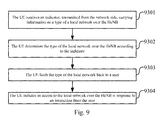
Fig. 9 is a schematic flow chart of a method at the UE side for processing a type of a local network over an HeNB according to an embodiment of the invention; -
Fig. 10 is a schematic structural diagram of a Home eNodeB according to an embodiment of the invention; -
Fig. 11 is a schematic structural diagram of a user equipment according to an embodiment of the invention; and -
Fig. 12 is a schematic structural diagram of a communication system according to an embodiment of the invention. - Embodiments of the invention are described hereinafter with reference to the drawings.
- Abase station in this application includes an HNB and an HeNB. Firstly a method and device for processing a connection status of a local network over a base station are described with respect to an HNB.
- The inventors have identified during making of the invention that when a UE subscribes to a Closed Subscriber Group (CSG) Identity (ID), the CSG ID may be included in a plurality of HNBs, of which some HNBs may be connected to a home network, some HNBs may be connected to a local Internet network, some HNBs may be connected to neither a home network nor a local Internet network, that is, they are not connected to any local network, and some HNBs may be connected to both a home network and a local Internet network.
- When the UE is going to access a home network or a local Internet network through an HNB, if the UE can be aware in advance of whether the HNB where the UE currently resides has a local network connected thereto and a type of the connected local network, the UE can access the corresponding local network, thereby improving the user experience to use the network. A description is given below in two examples.
- For example, when the UE determines that the present HNB is connected to a local Internet network but not a home network, the UE may establish a Packet Data Network (PDN) connection to the local Internet network to access the Internet through the local Internet network instead of accessing the Internet through a Packet Data Network (PDN) connection via an SGi/Gi interface.
- In another example, when the UE determines that the present HNB is connected to a home network but not a local Internet network, the UE may access the Internet by establishing a PDN connection via an SGi/Gi interface instead of firstly attempting an access to a local Internet network and then accessing the Internet by establishing a PDN connection via an SGi/Gi interface only if the access to a local Internet network fails, thereby enabling the UE to establish rapidly an IP connection to the Internet and achieving a good user experience; otherwise, it will take a longer period of time for the UE to establish an IP connection to the Internet and a user experience will be degraded.
- Nothing has been suggested in an existing set of solutions of the 3rd Generation Partnership Project regarding how to indicate to a UE whether an HNB where the UE currently resides is connected with a local network and a type of the local network, if any, is a home network or a local Internet network.
- It is almost impossible to use a CSG ID and/or an HNB name as an indicator of whether a specific HNB is connected to a home network or a local Internet network because it is necessary to write in advance relevant configuration information into a UE or a Universal Subscriber Identity Module (USIM) card, and this approach is neither dynamic nor extendable because the HNB may temporarily be connected with or disconnected from the home network or the local Internet network and consequently a corresponding operator may have to deploy a HNB in support of a special CSG ID.
- Furthermore, there is no CSG ID cell for an HNB in an open mode and therefore there is no CSI ID corresponding thereto.
- Therefore, a drawback of the prior art lies in that a user can not be aware of the type of a local network over an HNB and consequently has no way to determine a corresponding connection scheme. In view of this, a solution indicating to a UE the type of a local network over an HNB is provided to address the drawback, and a solution in which the UE processes the type of the local network over the HNB according to the indicator is further provided, in embodiments of the invention.
-
Fig. 3 is a schematic flow chart of a method at the network side for processing a type of a local network over an HNB, and as illustrated, the method may include the following steps. - In the
step 201, the HNB determines the type of the local network over the HNB. - In the
step 202, the HNB indicates the type of the local network to the UE. - The inventors describe how the HNB indicates the type to the UE respectively at the following aspects dependent upon possible scenarios occurring in the prior art. Specifically, at the aspect of an indicator scheme, it is indicated respectively in system information and/or high layer signalling; at the aspect of an indication object, it is indicated directly from the HNB and/or through another access network device; at the aspect of an indication occasion, it is indicated to the UE in an idle status at any moment or to the UE in a connected status respectively before, during and after handover of the UE; and at the aspect of a status at the UE side, it is indicated to the UE respectively in an idle status or in a signalling connected status. Specific implementations are described below.
- In the following embodiments, the type of a local network may include the network types of a home network and/or a local Internet network, and since how to indicate the type of a local network to the UE is addressed in the embodiments of the invention regardless of whatever type of a local network, the following solutions can be applicable to whatever type of a network connected over the HNB after being correspondingly adapted thereto.
- In an implementation, the HNB may indicate to the UE the type of the local network connected over the HNB in one or a combination of the following approaches.
- In a first approach, the HNB indicates the type of the local network to the UE in broadcasted system information.
- In a second approach, the HNB indicates the type of the local network to the UE in high layer signaling.
- In a third approach, the HNB carries information on the type of the local network in broadcasted system information and instructs the UE to acquire the type of the local network from the system information.
- The HNB indicates in broadcasted system information to the UE the type of the local network over the HNB by carrying the information on the type of the local network in the System Information Block Type 20 (SIB20) of the system information and indicating in the information to the UE the type of the local network over the HNB.
- The HNB may broadcast in system information the type of the local network over the HNB in an implementation by broadcasting the type of the local network to which the HNB is connected through extending the SIB20 because the SystemInformationBlockType20 (SIB20) related to the HNB includes the name of the present HNB. The SIB20 has been defined in the TS25.331. A description is given below in an instance.
- Table 1 depicts the System Information Block Type 20 (SIB20), which includes the name of the present HNB (HNB name), defined in the TS25.331, and as illustrated below, the type of the local network to which the HNB is connected may be indicated respectively in 2 bits of the SIB20.
- 10.2.48.8.23 System Information Block Type 20
- The System Information Block Type 20 includes the HNBName and the HNB information.
Table 1 Information Element/ Group name Need Multi Type and reference Semantics description Version HNBName OP HNBName 10.3.8.4m REL-8 HNB access indicator OP Bit string(2) Each bit indicates availability of a network type the HNB has the capability to access to. The value 1 of a bit indicates that the network is available for the user to choose. The value 0 of a bit indicates that the network is not available for the user to choose. REL-9 - The bold contents of HNB access indicator in the table represent extension contents.
- Multi indicates that the field may take a range of values typically with a maximum value, for example:
Table 2 Information element/Group name Need Multi Type and reference Semantics description Version MBMS Selected Services MP 1 to <maxMBMSservSelect> REL-6 - The table indicates that MBMS Selected Services may take any value ranging from 1 to maxMBMSservSelect.
- OP means Optionally Present under a condition specified in, e.g., a procedure description of the protocol, and MP means Mandatory Present.
- Apparently, the 2-bit indicator may represent four different values, for example, four values representing respectively the type of a local network to which the HNB is connected in the table below.
Table 3 - Indicator of the Type of a Local Network Bit 2 Bit 1 The type of a local network 0 0 The HNB is not connected to any local network, that is, the HNB is connected to neither a home network nor a local Internet network, so the UE may establish only a PDN connection via an SGi interface. 0 1 The HNB is connected to a home network but not a local Internet network. 1 0 The HNB is connected to a local Internet network but not a home network. 1 1 The HNB is connected to both a local Internet network and a home network. - It shall be noted that the scheme for the HNB to indicate the type of a local network is not be limited to the scheme of BIT STRIBG in the present embodiment, i.e., the 2-bit indicator, but may alternatively be a scheme of, e.g., the type of Enumerated. Those skilled in the art can readily appreciate that how to represent a network of a specific type by carrying specific information becomes apparent in light of the taught solution that how to transmit the information on the type of a network to the UE in the embodiment. Therefore, the indicator depicted in Table 3 is merely intended to teach those skilled in the art how to put the invention into practice, but the invention shall not be construed to be limited thereto and can be practiced with a corresponding indicator as needed in practice.
- Correspondingly, the UE may be in two statuses when the HNB broadcasts in system information the type of the local network to which the HNB is connected in this approach.
- 1. The UE is in an idle status.
- The UE in an idle status may be aware of the type of the local network over the HNB where the UE currently resides by reading the broadcasted system information.
- 2. The UE is in a signalling connected status.
- The UE with a UTRAN/GERAN (Universal Terrestrial Radio Access Network/GSM EDGE Radio Access Network, where GSM stands for Global System for Mobile Communications and EDGE stands for Enhanced Data rates for GSM Evolution) access capability may read the SIB20 in a CELL_PCH (Cell Paging Channel) or URA_PCH (UTRAN Registration Area Paging Channel) connected status, or read the CSG Identity in the SIB3 in a connected status (except CELL_DCH) and determine whether the cell is a CSG cell. In a CELL_DCH connected status, it is necessary to specify that the SIB20 shall be read to determine whether the cell is a CSG cell. When the UE is handed over from a macro base station to the HNB, the UE acquires the type of the local network to which the HNB where the UE currently resides is connected by reading a system broadcasted message. Stated otherwise, the UE in a CELL_PCH or URA_PCH connected status may acquire the type of the local network by reading the SIB20 and also determine hereby the type of the current NodeB as an HNB instead of a macro base station (e.g., NodeB). In a specific implementation, the UE may read a system broadcast announcing the type of the local network to which the HNB is connected.
- Apparently, the UE in an idle status may be aware of the type of the current base station by reading the SIB20 prior to establishment of a signalling connection with the HNB. After the UE in a connected status is handed over to the HNB, the UE is aware of whether the target base station is an HNB by reading the SIB3 of the target base station, and if so, the UE may read the system information (i.e., system broadcast) including the type of the local network to which the HNB is connected and acquire the type of the local network to which the HNB is connected.
- The HNB may indicate in high layer signalling the type of the local network to the UE in the following modes.
- In a first mode, the type of the local network over the target HNB is indicated to the UE in high layer signalling through a source base station during handover of the UE to the target HNB.
- In a second mode, the HNB indicates in high layer signalling to the UE the type of the local network over the target HNB after the UE is handed over to the target HNB.
- Specific implementations of the two modes are described respectively below.
- In the first mode, when the UE is going to be handed over from the source base station to the target HNB, the target HNB may indicate to the UE the information on the type of the local network over the target HNB through the source base station during the handover.
- The UE may be handed over to the target HNB in one of the following processes:
- the UE is handed over from a source NodeB or a source HNB to the target HNB;
- the UE is handed over to the target HNB from a source eNodeB or a source HeNB (Home eNB or Home evolved NodeB) with an access to an Evolved Universal Terrestrial Radio Access Network (E-UTRAN); and
- the UE is handed over to the target HNB from a source BSS (Base Station Subsystem) with an access to a GERAN (GSM/EDGE Radio Access Network, where GSM stands for Global System for Mobile Communications and EDGE stands for Enhanced Data rates for GSM Evolution).
- In an implementation, the type of the local network over the target HNB may be indicated to the UE in high layer signalling through the source base station as follows:
- the target HNB carries the information on the type of the local network over the target HNB in a message transmitted to an SGSN (Serving GPRS Support Node, where GPRS stands for General Packet Radio Service);
- the SGSN carries the information on the type of the local network over the target HNB in a message transmitted to the source base station; and
- the source base station indicates to the UE the type of the local network over the target HNB according to the information on the type of the local network over the target HNB carried in the message transmitted from the SGSN.
- More particularly, in an implementation, the target HNB transmits to the SGSN an RANAP (RAN Application Protocol, where RAN stands for Radio Access Network) Relocation Request Acknowledge message including a Target RNC (Radio Network Controller) to Source RNC Transparent Container IE (Information Element) carrying an RRC (Radio Resource Control) Handover Command message to be transmitted to the UE, where the RRC Handover Command message carries the information on the type of the local network over the HNB.
- The source NodeB or the source HNB parses the Target RNC to Source RNC Transparent Container IE transmitted transparently from the SGSN for the RRC Handover Command message.
- The source NodeB or the source HNB indicates in the RRC Handover Command message to the UE the type of the local network over the HNB.
- In an implementation, the target HNB includes the Target RNC to Source RNC Transparent Container IE in the RANAP Relocation Request Acknowledge message transmitted to the SGSN. The SGSN transparently transmits the Target RNC to Source RNC Transparent Container IE to the source NodeB or the source HNB, that is, the SGSN includes the foregoing Target RNC to Source RNC Transparent Container IE in an RANAP Relocation Command message transmitted to the source NodeB or the source HNB. The Target RNC to Source RNC Transparent Container IE includes the RRC Handover Command message transmitted from the target HNB to the UE. During handover, the source NodeB or the source HNB parses the interface message of Relocation Request Acknowledge from the target HNB for the Handover Command message transmitted from the target HNB to the UE upon reception of the interface message and transmits the Handover Command message to the UE.
- The contents of Handover Command have been defined in the TS25.331, and therefore 2 bits may be carried in Handover Command to indicate the type of the local network to which the HNB is connected. Since one of three messages, i.e., Physical Channel Reconfiguration, Transport Channel Reconfiguration (including physical channel reconfiguration) and Radio Bearer Reconfiguration (including physical channel and connection channel reconfigurations), may be used for handover in a Universal Mobile Telecommunication System (UMTS), how to add the HNB access indicator into the three messages will be described below as an example, and correspondingly the solution according to the present embodiment may also be applicable to other messages and signalling used for handover so long as the messages and signalling can carry information.
- 1) Physical Channel Reconfiguration
- 10.2.22 Physical Channel Reconfiguration
- This message is used by UTRAN to assign, replace or release a set of physical channels used by a UE.
- RLC-SAP: AM or UM (Radio Link Control-Service Access Point: Acknowledgement Mode or Un-acknowledgement Mode)
- Logical channel: DCCH (Dedicated Control Channel)
- Direction: UTRAN → UE
Table 4 Information Element/Group name Need Multi Type and reference Semantics description Version Message Type MP Message Type UE Information Elements RRC transaction identifier MP RRC transaction identifier 10.3.3.36 ... (Other Information Elements) MBMS PL Service Restriction Information OP Enumerated (TRUE) REL-6 HNB information elements HNB access indicator OP Bit string(2) Indicate available local network REL-9 - Where the contents of the HNB information elements and the HNB access indicator in the bold table entries represent extension contents.
- 2) Radio Bearer Reconfiguration
- 10.2.27 Radio Bearer Reconfiguration
- This message is sent from UTRAN to reconfigure parameters related to a change of QoS or to release and setup a radio bearer used for ptp transmission of MBMS services of the broadcast type. This procedure can also change the multiplexing of MAC, reconfigure transport channels and physical channels. This message is also used to perform a handover from GERAN Iu mode to UTRAN (QoS stands for Quality of Service, MBMS stands for Multimedia Broadcast/Multicast Service, and MAC stands for Multiple Access Channel).
- RLC-SAP: AM (Acknowledgement Mode) or UM (Un-acknowledgement Mode) or sent through GERAN Iu mode
- Logical channel: DCCH or sent through GERAN Iu mode
- Direction: UTRAN → UE
Table 5 Information Element/Group name Need Multi Type and reference Semantics description Version Message Type MP Message Type UE Information elements RRC transaction identifier MP RRC transaction identifier 10.3.3.36 ... (Other Information Elements) MBMS PL Service Restriction Information OP Enumerated (TRUE) REL-6 HNB information elements HNB access indicator OP Bit string(2) Indicate available local network REL-9 - Where the contents of the HNB information elements and the HNB access indicator in the bold table entries represent extension contents.
- 3) Transport Channel Reconfiguration
- 10.2.50 Transport Channel Reconfiguration
- This message is used by UTRAN to configure the transport channel of a UE. This also includes a possible reconfiguration of physical channels. The message can also be used to assign a TFC (Transport Format Combination) subset and reconfigure physical channel.
- RLC-SAP: AM or UM
- Logical channel: DCCH
- Direction: UTRAN → UE
- Wherein the contents of the HNB information elements and the HNB access indicator in the bold table entries represent extension contents.
- As in Table 1 of the first approach, the 2-bit indicator may represent four different values representing the type of a local network over the target HNB respectively.
- Also as in the first approach, the scheme for the target HNB to indicate the type of a local network is not be limited to the scheme of BIT STRIBG in the embodiment, i.e., the 2-bit indicator, but may alternatively be a scheme of, e.g., the type of Enumerated. The indicator is merely intended to teach those skilled in the art how to put the invention into practice, but the invention shall not be construed to be limited thereto and can be practiced with a corresponding indicator as needed in practice.
- In the second mode, when the UE is handed over from the source base station to the target HNB, the target HNB may indicate in an RRC message to the UE the information on the type of the local network over the target HNB after handover is performed.
- Stated otherwise, the target HNB may indicate in an RRC message to the UE the type of the local network over the target HNB after the UE is handed over to the target HNB.
- In an implementation, the target RNC may exchange messages with the UE in some Cell/URA/GRA (URA stands for UTRAN Registration Area, and GRA stands for GERAN Registration Area) update flows. The UE transmits a message of Cell Update, URA Update, or GRA Update to the network side, which in turn responds with an RRC message of Cell Update Confirm, URA Update Confirm, or GRA Update Confirm. Therefore, the target HNB may indicate in an RRC message to the UE the type of the local network over the target HNB by carrying the information on the type of the local network over the target HNB in one of the messages of Cell Update Confirm, URA Update Confirm and GRA Update Confirm or another RRC message and indicating in the information to the UE the type of the local network over the target HNB.
- An indicator of the information on the type of the local network may be carried in a downlink message transmitted from the network side to the UE. Taking the Cell Update Confirm message as an example, it may be extended with an indicator of the information on the type of the local network as follows.
- 10.2.8 Cell Update Confirm
- This message confirms the cell update procedure and can be used to reallocate new RNTI (Radio Network Temporary Identity) information for the UE valid in the new cell.
- RLC-SAP: UM
- Logical channel: CCCH or DCCH
- Direction: UTRAN→UE
- CV-CCCH means that Mandatory Present of the field may apply only if a logical channel of CCCH is used, and CV stands for "Conditional Value", which typically is listed at the end of the table.
- Where the contents of the HNB information elements and the HNB access indicator in the bold table entries represent extension contents.
- When the UE is handed over from a source base station to the target HNB, the target HNB may transmit an instruction to the UE through the source base station during handover to have the UE read a System Information Block (SIB), broadcasted from the target HNB, including the type of the local network.
- Stated otherwise, the target HNB may carry the information on the type of the local network in broadcasted system information and instruct the UE to acquire the type of the local network from the system information during handover of the UE to the target HNB.
- In an implementation, the target HNB may carry in broadcasted system information the information on the type of the local network over the target HNB by carrying the information on the type of the local network in the SIB20 of the system information and indicating in the information to the UE the type of the local network over the target HNB.
- The UE may be handed over to the target HNB in one of the following processes:
- the UE is handed over from a source NodeB or a source HNB to the target HNB;
- the UE is handed over to the target HNB from a source eNodeB or a source HeNB with an access to an E-UTRAN; and
- the UE is handed over to the target HNB from a source BSS with an access to a GERAN.
- In an implementation, the UE may be instructed during handover of the UE to the target HNB as follows:
- the target HNB carries information instructing the UE to read system information of the target HNB into a message transmitted to an SGSN;
- the SGSN carries the information instructing the UE to read the system information of the target HNB into a message transmitted to the source base station; and
- the source base station instructs the UE to read the system information of the target HNB according to the information instructing the UE to read the system information of the target HNB carried in the message transmitted from the SGSN.
- In a specific implementation, the target HNB transmits to the SGSN an RANAP Relocation Request Acknowledge message including a Target RNC to Source RNC Transparent Container IE carrying a RRC Handover Command message to be transmitted from the target HNB to the UE, where the RRC Handover Command message carries the information instructing the UE to read the system information of the HNB from the target HNB.
- The source NodeB or the source HNB parses the Target RNC to Source RNC Transparent Container IE transmitted transparently from the SGSN for the RRC Handover Command message.
- The source NodeB or the source HNB instructs in the RRC Handover Command message the UE to read the system information of the target HNB.
- In an implementation, the target HNB includes the Target RNC to Source RNC Transparent Container IE in the RANAP Relocation Request Acknowledge message transmitted to the SGSN. The SGSN transparently transmits the Target RNC to Source RNC Transparent Container IE to the source NodeB or the source HNB, that is, the SGSN includes the foregoing Target RNC to Source RNC Transparent Container IE in an RANAP Relocation Command message transmitted to the source NodeB or the source HNB. The Target RNC to Source RNC Transparent Container IE includes the RRC Handover Command message transmitted from the target HNB to the UE. During handover, the source NodeB or the source HNB parses the interface message of Relocation Request Acknowledge from the target HNB for the Handover Command message transmitted to the UE upon reception of the interface message and transmits the Handover Command message to the UE.
- The contents of Handover Command have been defined in the TS25.331, and therefore 1 bit may be carried in Handover Command to instruct the UE to read the system information including the information on the type of the local network over the HNB.
- Since this embodiment involves the same addition locations as those in the examples of the first mode in the second approach except for the added contents, addition of the HNB read indicator to 10.2.22 Physical Channel Reconfiguration is described below as an example.
- 10.2.22 Physical Channel Reconfiguration
- This message is used by UTRAN to assign, replace or release a set of physical channels used by a UE.
- RLC-SAP: AM or UM
- Logical channel: DCCH
- Direction: UTRAN → UE
- Where the contents of the HNB information elements and the HNB access indicator in the bold table entries represent extension contents.
- The 1-bit indicator indicates to the UE whether to read a System Information Block (SIB) broadcasting the type of the local network to which the HNB is connected.
- In an implementation, the 1-bit indicator apparently can be sufficient to indicate to the UE whether to read a System Information Block (SIB) broadcasting the type of the local network to which the HNB is connected. Alike the 1-bit indicator is merely intended to teach those skilled in the art how to put the invention into practice, but the invention shall not be construed to be limited thereto and can be practiced with a corresponding indicator as needed in practice.
- Furthermore, the foregoing implementations may further include:
- the HNB determines whether there is a change to the type of the connected local network; and
- the HNB indicates the changed type of the connected local network to the UE upon determining occurrence of the change.
- As embodied in this solution, when the type of the local network to which the HNB is connected is changed, the changed type of the local network may be notified to the UE. How to indicate to the UE the type of the local network over the HNB has been described in the foregoing embodiments, and the UE may be notified in a timely manner of a change to the type of the local network as embodied in this solution, so this solution may be used in combination with any of the foregoing indicator schemes and they have no mutually exclusive relationship with each other.
- In a specific implementation, when there is a change to the type of the local network to which the HNB is connected, for example, when the local Internet network is taken down, the HNB shall change the contents of a broadcasted message to broadcast the type of a newly connected local network. In an approach, the HNB changes manually the configuration of the HNB through Operation, Administration and Maintenance (OAM) or otherwise and consequently changes the type of the local network in the broadcasted message. In another approach, the HNB is capable of detecting automatically a local network in numerous ways, for example, the HNB pings a node, e.g., a server or a router, in the local network at an interval of time, and if the node is unreachable, the HNB determines that the local network of that type is unreachable and consequently changes the type of the connected local network in the broadcasted message.
- Alike such a dynamic process may also be applicable to the UE and the HNB in an RRC connected status, that is, when there is a change to the type of the local network to which the HNB is connected, the HNB provides the changed type of the local network to which the HNB is connected in an RRC message transmitted to the UE, which may be newly defined dedicated RRC signalling or an RRC message used in the second mode of the second approach.
- In general, the type of the local network broadcasted, or provided in an RRC message, from the HNB supports a dynamic change to the type of the local network and is the latest type of the connected local network although such a change occurs infrequently.
- A solution in which the UE processes the type of a local network over the HNB according to the indicator is described below.
-
Fig. 4 is a schematic flow chart of a method at the UE side for processing a type of a local network over an HNB, and as illustrated, the method may include the following steps. - In the step S301, the UE receives an indicator, transmitted from the network side, carrying information on the type of the local network over the HNB.
- In the step S302, the UE determines the type of the local network over the HNB according to the indicator.
- Correspondingly, the UE may receive the indicator transmitted from the network side in one or a combination of the following approaches dependent upon the indicator from the network side:
- the UE receives the indicator in system information broadcasted from the network side;
- the UE receives the indicator in high layer signalling transmitted from the network side; and
- the UE receives the indicator in system information broadcasted from the network side in response to an instruction from the network side.
- The UE may be in an idle status or in a signalling connected status, then in an implementation, the UE in an idle status may receive the indicator in system information broadcasted from the network side.
- Alternatively, the UE with a UTRAN/GERAN access capability may receive the indicator in system information broadcasted from the network side in a signalling connected status upon determining the type of the current NodeB as an HNB instead of a macro base station.
- In an implementation, the UE may receive the indicator in system information broadcasted from the network side by acquiring the indicator from the SIB20 of the received system information.
- Specifically, the UE may receive the indicator in high layer signalling transmitted from the network side by acquiring the indicator from a received RRC Handover Command message.
- When the target HNB instructs the UE through a source base station to receive the indicator in system information of the target HNB, the UE may receive the indicator in the system information broadcasted from the target HNB in response to the instruction from the network side by acquiring the instruction from the received RRC Handover Command message.
- In order to better provide a user with a possibility of making a selection and improve the user experience, the following steps may further be included after the UE determines the type of the local network over the HNB according to the indicator.
- In the
step 303, the type of the local network is fed back to the user. - In the
step 304, an access to the local network over the HNB is initiated in response to an instruction from the user. - In an implementation of the
step 303, the UE may present in a user perceptible manner (e.g., an image, a text, or a voice) to the user the type of the local network to which the HNB is connected after acquiring the same from the indicator of the HNB. - For example, "H" is displayed at a specific location on a screen of the UE to indicate that the HNB where the UE resides is connected to a home network; "I" is displayed on the screen to indicate the HNB where the UE resides is connected to a local Internet network; and "H" and "I" are displayed on the screen to indicate the HNB is connected to both a local Internet network and a home network. Neither "H" nor "I" is displayed on the screen of the UE to indicate that the HNB is not connected to any local network, that is, the HNB is connected to neither a home network nor a local Internet network.
- The user may input an instruction as desired upon reception of the feedback from the UE so that the UE may access a network of the type selected by the user in response to the instruction from the user in the
step 304. - Apparently, the foregoing implementation may involve a dynamic process in which after the UE moves from one HNB to another HNB, the type of a local network to which the new HNB is connected may be different from the type of a local network of the original HNB, then the UE may acquire an indicator of the type of the local network to which the new HNB is connected as in the foregoing embodiments and present the updated indicator to the user.
- Based upon the same inventive concept, embodiments of the invention further provide an HNB, a UE and a communication system, and since these devices address the problem under a similar principle to the method for processing the status of a local network over an HNB, reference may be made to the implementation of the method for details of implementations of these devices, and a repeated description thereof is omitted here.
-
Fig. 5 is a schematic structural diagram of a Home NodeB, and as illustrated, the HNB may include: - a
type determination module 401 configured to determine a type of a local network over the HNB; and - an
indication module 402 configured to indicate the type of the local network to a UE. - In an implementation, the indication module may include one or a combination of the following units dependent upon different indicator schemes of the indication module:
- a
first indication unit 4021 configured to indicate in broadcasted system information the type of the local network to the UE, and for details of a specific implementation thereof, reference may be made to the first approach. Apparently, any specific implementation thereof is feasible so long as it is embodied as a functional entity capable of broadcasting system information in the HNB; - a
second indication unit 4022 configured to indicate in high layer signalling the type of the local network to the UE, and for details of a specific implementation thereof, reference may be made to the second approach. Apparently, any specific implementation thereof is feasible so long as it is embodied as a functional entity capable of transmitting high layer signalling in the HNB; and - a
third indication unit 4023 configured to carry information on the type of the local network in broadcasted system information and instruct the UE to acquire the type of the local network from the system information, and for details of a specific implementation thereof, reference may be made to the third approach. Apparently, any specific implementation thereof is feasible so long as it is embodied as a functional entity capable of transmitting high layer signalling combined with a functional module capable of broadcasting system information in the HNB. - In an implementation, the first indication unit may further be configured to indicate in the broadcasted system information the type of the local network to the UE by carrying the information on the type of the local network in the SIB20 of the system information and indicating in the information the type of the local network to the UE.
- The second indication unit may include a first subunit and/or a second subunit.
- The first subunit is configured to indicate in high layer signalling to the UE the type of the local network over the target HNB through a source base station during handover of the UE to the target HNB.
- The second subunit is configured to indicate in high layer signalling to the UE the type of the local network over the target HNB after the UE is handed over to the target HNB.
- In an implementation, the phrase "target HNB" is used in the description of performing handover for the purpose of such a better expression that the HNB in the embodiment of the invention is the anchor HNB of the UE after handover, but not intended to indicate presence of another HNB as a target HNB.
- In an implementation, the first subunit may further be configured to determine handover of the UE to the target HNB by determining one of the following processes:
- the UE is handed over from a source NodeB or a source HNB to the HNB;
- the UE is handed over to the HNB from a source eNodeB or a source HeNB with an access to an E-UTRAN; and
- the UE is handed over to the HNB from a source BSS with an access to a GERAN.
- The first subunit may further be configured to carry the information on the type of the local network in a message transmitted to an SGSN so that the information on the type of the local network may be carried in a message transmitted from the SGSN to the source base station and used as a basis for the source base station to indicate to the UE the type of the local network over the HNB.
- The first subunit may further be configured to transmit to the SGSN an RANAP Relocation Request Acknowledge message including a Target RNC to Source RNC Transparent Container IE carrying a RRC Handover Command message to be transmitted to the UE, where the RRC Handover Command message carries the information on the type of the local network.
- In an implementation, the second subunit may further be configured to indicate in an RRC message to the UE the type of the local network over the target HNB after the UE is handed over to the target HNB.
- The second subunit may further be configured to indicate in the RRC message to the UE the type of the local network over the HNB by carrying the information on the type of the local network in one of messages of Cell Update Confirm, URA Update Confirm and GRA Update Confirm and indicating in the information to the UE the type of the local network over the HNB.
- In an implementation, the third indication unit may include:
- a system information unit configured to carry the information on the type of the local network over the target HNB in the broadcasted system information and broadcast the system information to the UE; and
- a third subunit configured to instruct the UE to acquire the type of the local network over the target HNB from the system information during handover of the UE to the target HNB.
- The system information unit may further be configured to carry the information on the type of the local network over the target HNB in the broadcasted system information by carrying the information on the type of the local network over the target HNB in the SIB20 of the system information so that the UE acquires from the information the indicator of the type of the local network over the target HNB.
- The third subunit may further be configured to determine handover of the UE to the target HNB by determining one of the following processes:
- the UE is handed over from a source NodeB or a source HNB to the HNB;
- the UE is handed over to the HNB from a source eNodeB or a source HeNB with an access to an E-UTRAN; and
- the UE is handed over to the HNB from a source BSS with an access to a GERAN.
- The third subunit may further be configured to carry information instructing the UE to read the system information of the HNB in a message transmitted to an SGSN so that the information instructing the UE to read the system information of the HNB may be carried in a message transmitted from the SGSN to the source base station and used as a basis for the source base station to instruct the UE to read the system information of the HNB.
- In a specific implementation, the third subunit may further be configured to transmit to the SGSN an RANAP Relocation Request Acknowledge message including a Target RNC to Source RNC Transparent Container IE carrying a RRC Handover Command message to be transmitted to the UE, where the RRC Handover Command message carries the information instructing the UE to read the system information of the HNB.
- In view of a solution in which a change to the type of the local network to which the HNB is connected is notified to the UE when such a change occurs, in order to notify the change to the UE in a timely manner, a type
change determination module 403 may further be included for use in combination with each of the foregoing indicator schemes to determine whether there is a change to the type of the connected local network and to trigger the indication module to indicate to the UE the changed type of the local network over the target HNB upon determining occurrence of the change. -
Fig. 6 is a schematic structural diagram of a user equipment, and as illustrated, the UE may include: - a
reception module 501 configured to receive an indicator, transmitted from the network side, carrying information on a type of a local network over an HNB, and in an implementation, those skilled in the art can readily appreciate that it can be embodied as any functional entity on the UE capable of receiving a message and signalling transmitted from the network side; and - a
type determination module 502 configured to determine the type of the local network over the HNB according to the indicator, and this module can be embodied as any functional entity capable of determining what the indicator represents according to the indicator. There are various functional entities on an existing UE with such a processing capability, and it will suffice if such a functional entity module is added or such a function is added to an existing entity as needed. - In an implementation, the
reception module 501 may include one or a combination of the following units in correspondence to a processing approach at the network side: - a
first reception unit 5011 configured to receive the indicator in system information broadcasted from the network side, and for an implementation of this module, reference may be made to the implementation of the first approach; - a
second reception unit 5012 configured to receive the indicator in high layer signalling transmitted from the network side, and for an implementation of this module, reference may be made to the implementation of the second approach; and - a
third reception unit 5013 configured to receive the indicator in system information broadcasted from the network side in response to an instruction from the network side, and for an implementation of this module, reference may be made to the implementation of the third approach. - In an implementation, the
first reception unit 5011 may include an idle reception subunit and/or a connected reception subunit. - The idle reception subunit is configured for the UE in an idle status to receive the indicator in the system information broadcasted from the network side.
- The connected reception subunit is configured to receive the indicator in the system information broadcasted from the network side upon determining a type of the current NodeB as an HNB instead of a macro base station when the UE with a UTRAN/GERAN access capability is in a signalling connected status.
- The
first reception unit 5011 may further be configured to acquire the indicator from the SIB20 of the received system information when the UE receives the indicator in the system information broadcasted from the network side. - In an implementation, the
second reception unit 5012 may further be configured to receive the indicator in the high layer signalling transmitted from the network side by acquiring the indicator from a received RRC Handover Command message. - In an implementation, the
third reception unit 5013 may further be configured to receive the indicator in the system information broadcasted from the network side in response to the instruction from the network side by acquiring the instruction from the received RRC Handover Command message. - In order to enrich the user experience, the user equipment in an implementation may further include:
- a
display module 503 configured to display to a user the type of the local network over the HNB when the UE determines the type of the local network according to the indicator; - an
input module 504 configured for the user to input an instruction; and - a
connection module 505 configured to access the network connected over the HNB in response to the instruction input by the user. - In an implementation, it will suffice if the display module is embodied as a general functional entity on the UE with a display function, and a specific display may be as follows: for example, "H" is displayed on a screen of the UE to indicate that the HNB where the UE resides is connected to a home network; "I" is displayed on the screen to indicate the HNB where the UE resides is connected to a local Internet network; and "H" and "I" are displayed on the screen to indicate the HNB is connected to both a local Internet network and a home network. Neither "H" nor "I" is displayed on the screen of the UE to indicate that the HNB is not connected to any local network, that is, the HNB is connected to neither a home network nor a local Internet network.
- The user may input an instruction through the input module as desired upon reception of the feedback from the UE so that the UE may access a network selected by the user through the connection module in response to the instruction from the user.
-
Fig. 7 is a schematic structural diagram of a communication system, and as illustrated, the communication system may include: - an
HNB 601 configured to indicate to a UE a type of a local network over the HNB after determining the type of the local network; and - the
UE 602 configured to receive an indicator, transmitted from the network side, carrying information on the type of the local network over the HNB, and determine the type of the local network over the HNB according to the indicator. - A specific reception mode of the indicator may be determined with reference to the first, second and third approaches.
- In view of the solutions in the second and third approaches in which the HNB may indicate the type of the local network to the UE and instruct the UE to read the system information to acquire the type through a source base station, the system in an implementation may further include an
SGSN 603, afirst base station 604 and asecond base station 605, which are described below. - When the system further includes the
SGSN 603 and thefirst base station 604 providing the UE with a communication service prior to handover, then - the
HNB 601 may further be configured to indicate in high layer signalling to the UE the type of the local network over theHNB 601 by transmitting to the SGSN a message carrying the information on the type of the local network over theHNB 601; - the
SGSN 603 may be configured to transmit to the first base station a message carrying the information on the type of the local network over theHNB 601; and - the
first base station 604 may be configured to indicate to the UE the type of the local network over theHNB 601 according to the information on the type of the local network over theHNB 601 carried in the message transmitted from the SGSN. - When the system further includes the
SGSN 603 and thesecond base station 605 providing the UE with a communication service prior to handover, then - the
HNB 601 may further be configured to carry the information on the type of the local network over theHNB 601 in broadcasted system information and instruct the UE to acquire the type of the local network over theHNB 601 from the system information by indicating in high layer signalling to the UE the type of the local network over theHNB 601, and transmitting to the SGSN a message carrying information instructing the UE to read the system information of theHNB 601, during handover of the UE to theHNB 601; - the
SGSN 603 may be configured to transmit to the second base station 605 a message carrying the information instructing the UE to read the system information of theHNB 601; and - the
second base station 605 may be configured to instruct the UE to read the system information of theHNB 601 according to the information instructing the UE to read the system information of theHNB 601 carried in the message transmitted from the SGSN. - For the sake of a convenient description, the respective parts of the foregoing devices have been functionally described as respective modules or units. Of course, the functions of the respective modules or units may be performed in the same one or more than one software or hardware to put the invention into practice.
- As can be apparent from the foregoing embodiments, the HNB in an implementation of the invention may broadcast in system information the type of the local network to which the HNB is connected, particularly by modifying with 2 bits the SIB and carrying in the SIB for an indicator to the UE.
- Furthermore, in a signalling connected status, the UE with a UTRAN/GERAN access capability may read the SIB20 in a CELL_PCH or URA_PCH connected status, or read the CSG Identity in the SIB3 in a connected status (except CELL_DCH) and determine whether the cell is a CSG cell. In a CELL_DCH connected status, it is necessary to specify that the SIB20 shall be read to determine whether the cell is a CSG cell. When the UE is handed over from a macro base station to the HNB, the UE acquires the type of the local network to which the HNB where the UE currently resides is connected by reading a system broadcast message. Stated otherwise, the UE in a CELL_PCH or URA_PCH connected status may acquire the type of the local network by reading the SIB20. Alternatively, the UE may read a system broadcast announcing the type of the local network to which the HNB is connected upon determining the type of the current NodeB as an HNB instead of a macro base station (e.g., NodeB).
- When the UE is handed over from the source base station to the target HNB, the target HNB may indicate to the UE the information on the type of the local network to which the target HNB is connected through the source base station during handover; when UE is handed over from the source base station to the target HNB, the target HNB may transmit an instruction to the UE through the source base station during handover to have the UE read a System Information Block broadcasting the type of the local network to which the target HNB is connected.
- When the UE is handed over from the source base station to the target HNB, the target HNB may indicate in RRC signalling to the UE the information on the type of the local network over the target HNB after handover is performed.
- Furthermore, a dynamic update to the type of the local network to which the HNB is connected may be detected and indicated.
- Furthermore, the UE may present in a user perceptible manner (e.g., an image, a text, or a voice) to a user the type of the local network over the HNB after acquiring the same as in the foregoing solutions for selection by the user.
- Since a variety of indicator schemes have been proposed in a solution for processing the information on the type of the local network over the HNB in the embodiments of the invention so that the UE can receive the indicator and then enable the user to be aware of the type of the local network over the HNB where the UE currently resides and further make a selection for a possible access to the local network of the corresponding type. Therefore, the user can decide whether to access the local network without making any attempt, thereby improving the user experience.
- A method and device for processing a connection status of a local network over a base station are described below with respect to an HeNB.
- The inventors have identified during making of the invention that when a UE subscribes to a Closed Subscriber Group (CSG) Identity (ID), the CSG ID may be included in a plurality of HeNBs, of which some HeNBs may be connected to a home network, some HeNBs may be connected to a local Internet network, some HeNBs may be connected to neither a home network nor a local Internet network, that is, they are not connected to any local network, and some HeNBs may be connected to both a home network and a local Internet network.
- When the UE is going to access a home network or a local Internet network through an HeNB, if the UE can be aware in advance of whether the HeNB where the UE currently resides has a local network connected thereto and a type of the connected local network, the UE can access the corresponding local network, thereby improving the user experience to use the network. A description is given below in two examples.
- For example, when the UE determines that the present HeNB is connected to a local Internet network but not a home network, the UE may establish a Packet Data Network (PDN) connection to the local Internet network to access the Internet through the local Internet network instead of accessing the Internet through a Packet Data Network (PDN) connection via an SGi interface (the SGi interface is an interface between an EPS system and a PDN).
- In another example, when the UE determines that the present HeNB is connected to a home network but not a local Internet network, the UE may access the Internet by establishing a PDN connection via an SGi interface instead of firstly attempting an access to a local Internet network and then accessing the Internet by establishing a PDN connection via an SGi interface only if the access to a local Internet network fails, thereby enabling the UE to establish rapidly an IP connection to the Internet and achieving a good user experience; otherwise, it will take a longer period of time for the UE to establish an IP connection to the Internet and a user experience will be degraded.
- Nothing has been suggested in an existing set of solutions of the 3rd Generation Partnership Project regarding how to indicate to a UE whether an HeNB where the UE currently resides is connected with a local network and a type of the local network, if any, is a home network or a local Internet network.
- It is almost impossible to use a CSG ID and/or an HeNB name as an indicator of whether a specific HeNB is connected to a home network or a local Internet network because it is necessary to write in advance relevant configuration information into a UE or a Universal Subscriber Identity Module (USIM) card, and this approach is neither dynamic nor extendable because the HeNB may temporarily be connected with or disconnected from the home network or the local Internet network and consequently a corresponding operator may have to deploy a HeNB in support of a special CSG ID.
- Furthermore, there is no CSG ID cell for an HeNB in an open mode and therefore there is no CSI ID corresponding thereto.
- Therefore, a drawback of the prior art lies in that a user can not be aware of the type of a local network over an HeNB and consequently has no way to determine a corresponding connection scheme. In view of this, a solution indicating to a UE the type of a local network over an HeNB is provided to address the drawback, and a solution in which the UE processes the type of the local network over the HeNB according to the indicator is further provided, in embodiments of the invention.
-
Fig. 8 is a schematic flow chart of a method at the network side for processing a type of a local network over an HeNB, and as illustrated, the method may include the following steps. - In the
step 8201, the HeNB determines the type of the local network over the HeNB. - In the
step 8202, the HeNB indicates the type of the local network to the UE. - The inventors describe how the HeNB indicates the type to the UE respectively at the following aspects dependent upon possible scenarios occurring in the prior art. Specifically, at the aspect of an indicator scheme, it is indicated respectively in system information and/or high layer signalling; at the aspect of an indication object, it is indicated directly from the HeNB and/or through another access network device; at the aspect of an indication occasion, it is indicated to the UE in an idle status at any moment or to the UE in a connected status respectively before, during and after handover of the UE; and at the aspect of a status at the UE side, it is indicated to the UE respectively in an idle status or in a signalling connected status. Specific implementations are described below.
- In the following embodiments, the type of a local network may include the network types of a home network and/or a local Internet network, and since how to indicate the type of a local network to the UE is addressed in the embodiments of the invention regardless of whatever type of a local network, the following solutions can be applicable to whatever type of a network connected over the HeNB after being correspondingly adapted thereto.
- In an implementation, the HeNB may indicate to the UE the type of the local network connected over the HeNB in one or a combination of the following approaches.
- In a first approach, the HeNB indicates the type of the local network to the UE in broadcasted system information.
- In a second approach, the HeNB indicates the type of the local network to the UE in high layer signalling.
- In a third approach, the HeNB carries information on the type of the local network in broadcasted system information and instructs the UE to acquire the type of the local network from the system information.
- The HeNB indicates in broadcasted system information to the UE the type of the local network over the HeNB by carrying the information on the type of the local network in the System Information Block Type 9 (SIB9) of the system information and indicating in the information to the UE the type of the local network over the HeNB.
- The HeNB may broadcast in system information the type of the local network over the HeNB in an implementation by broadcasting the type of the local network to which the HeNB is connected through extending the SIB9 because the SystemInformationBlockType9 (SIB9) related to the HeNB includes the name of the present HeNB. The SIB9 has been defined in the TS36.331. A description is given below in an instance.
- The following technical document relates SystemInformationBlockType9 information element (SIB9 information element), and as illustrated below, the type of the local network to which the HeNB is connected may be indicated respectively in 2 bits of the SIB9.
- - SystemInformationBlockType9 (SIB9)
- The IE SystemInformationBlockType9 contains a home eNB name (HNB Name).
- SystemInformationBlockType9 information element
| Information Element/Group name | Need | Multi | Type and reference | Semantics description | Version |
| Message Type | MP | Message Type | |||
| UE Information Elements | |||||
| RRC transaction identifier | MP | RRC transaction identifier 10.3.3.36 | |||
| ... (Other Information Elements) | |||||
| MBMS PL Service Restriction Information | OP | Enumerated (TRUE) | REL-6 | ||
| HNB information elements | |||||
| HNB access indicator | OP | Bit string(2) | Indicate available local network | REL-9 | |
| Information Element/Group name | Need | Multi | Type and reference | Semantics description | Version |
| Message Type | MP | Message Type | |||
| UE Information Elements | |||||
| U-RNTI | CV-CCCH (Common Control Channel) | U-RNTI 10.3.3.47 | |||
| ... (Other Information Elements) | |||||
| MBMS PL Service Restriction Information | OP | Enumerated (TRUE) | REL-6 | ||
| HNB information elements | |||||
| HNB access indicator | OP | Bit string(2) | Indicate available local network | REL-9 | |
| Information Element/Group name | Need | Multi | Type and reference | Semantics description | Version |
| Message Type | MP | Message Type | |||
| UE Information Elements | |||||
| RRC transaction identifier | MP | RRC transaction identifier 10.3.3.36 | |||
| ... (Other Information Elements) | |||||
| MBMS PL Service Restriction Information | OP | Enumerated (TRUE) | REL-6 | ||
| HNB information elements | |||||
| HNB read indicator | OP | BOOLEAN | Indicate if read HNB info in system information | REL-9 | |
     -- ASN1 START//Start


     SystemInformationBlockType9 ::=      SEQUENCE {
           hnb-Name                OCTET STRING (SIZE(1..48))      OPTIONAL,--
 Need OR//SIB9:: =SEQUENCE{Home eNB - Name 8-bit byte string (with a range of sizes
 (1..48)) OPTIONAL, -- If this parameter is absent, the UE shall delete previously stored
 contents}
        ...,
        r9Hnb-Net      BIT STRING (SIZE (2))      OPTIONAL,--      Need
 OR//Network Type of Home eNB Rel.9 bit sting (with a size of (2) OPTIONAL, -- If this
 parameter is absent, the UE shall delete previously stored contents
     ...
   }


     -- ASN1STOP//Stop
      ,
        r9Hnb-Net BIT STRING (SIZE (2)) OPTIONAL,-- Need OR
        ...
represents extension contents.
| Bit 2 | Bit 1 | The type of a local network |
| 0 | 0 | The HeNB is not connected to any local network, that is, the HeNB is connected to neither a home network nor a local Internet network, so the UE may establish only a PDN connection via an SGi interface. |
| 0 | 1 | The HeNB is connected to a home network but not a local Internet network. |
| 1 | 0 | The HeNB is connected to a local Internet network but not a home network. |
| 1 | 1 | The HeNB is connected to both a home network and a local Internet network. |
     -- ASN1START


     MobilityControlInformation ::=        SEQUENCE {
        targetCellIdentity               PhysicalCellIdentity,//Mobility control information:: =
 SEQUENCE {Target cell ID Physical cell ID
        eutra-CarrierFreq        EUTRA-CarrierFreq        OPTIONAL,-- Need OP//
 EUTRA (Evolved Universal Terrestrial Radio Access) Carrier frequency EUTRA Carrier
 frequency OP --Optionally Present
        eutra-CarrierBandwidth        EUTRA-CarrierBandwidth        OPTIONAL,--
 Need ON //EUTRA carrier bandwidth EUTRA carrier frequencywidth
OP -- Optionally Present
 No Action (i.e., if this parameter is absent, the UE shall
still preserve previously stored contents)
        additionalSpectrumEmission        INTEGER (0..31)        OPTIONAL,--
 Need ON//Extra spectrum emission Integer (0..31) OP, Enabled
        p-Max        P-Max        OPTIONAL,-- Need
 OP//UE maximum transmission power in the uplink OP -- Optionally Present
        t304        ENUMERATED {
                      ms50, ms100, ms150, ms200, ms500,
 ms1000,
                     ms2000, sparel}, //t304 timer,
 Enumerated{50 ms, 100 ms, 150 ms, 200 ms, 500 ms, 1000 ms, 2000 ms, 1 null}
        newUE-Identity        C-RNTI,//New UE ID C-RNTI (Cell Radio
 Network Temporary Identity)
        radioResourceConfigCommon        RadioResourceConfigCommon,//Common
 radio resource configuration
        rach-ConfigDedicated RACH-ConfigDedicated OPTIONAL,--Need
 OP//Dedicated random access channel configuration OP -- Optionally Present
        ...,
        r9Hnb-Net        BIT STRING (SIZE (2))        OPTIONAL,--        Need

 ON//Network type of Home NodeB Rel.9 Bit string (with a size of
(2) OP -- Optionally Present
 No action (i.e., if this parameter is absent, the UE shall still
preserve previously stored contents)
     ...
   }
        r9Hnb-Net BIT STRING (SIZE (2)) OPTIONAL,-- Need ON
        ...
        represents extension contents.
     -- ASNlSTART//Start


     RRCConnectionReconfiguration ::=        SEQUENCE {//RRCConnectionReconfiguration: :
 =SEQUENCE{
        rrc-TransactionIdentifier        RRC-TransactionIdentifier,//RRC transaction ID
        criticalExtensions        CHOICE {//critical extensions choice{
             cl        CHOICE{//cl choice {
                 rrcConnectionReconfiguration-r8
    RRCConnectionReconfiguration-r8-IEs,//RRCConnectionReconfiguration-r8
 RRCConnectionReconfiguration-r8-information element
                 spare7 NULL,//Spare null line 7
                 spare6 NULL, spare5 NULL, spare4 NULL,
                 spare3 NULL, spare2 NULL, spare1 NULL
             },//Spare null line 6, spare null line 5, spare null
line 5, spare null line 3, spare null
 line 2, spare null line 1},
             criticalExtensionsFuture        SEQUENCE {}//Future critical extensions
 SEQUENCE { }
         }
     }

     RRCConnectionReconfiguration-r8-IEs        ::= SEQUENCE
 {//RRCConnectionReconfiguration-R8 information element SEQUENCE
        measurementConfiguration        MeasurementConfiguration OPTIONAL,
    -- Need ON//Measurement configuration OP, --Optioanlly Present No Action (If this
 parameter is absent, the UE shall still preserve previously stored contents)
        mobilityControlInformation        MobilityControlInformation OPTIONAL,
    -- Need OP// Mobility control information OP, Optionally Present
        nas-DedicatedInformationList        SEQUENCE (SIZE(1..maxDRB)) OF//Non access
 stratum-Dedicated information list Sequence (with a size of (1..maxDRB))
                                            NAS-DedicatedInformation OPTIONAL,
    -- Cond nonHO//Non access stratum-Dedicated information OP, --Absent during handover
        radioResourceConfiguration        RadioResourceConfigDedicated OPTIONAL,
    -- Need ON//Radio resource configuration Dedicated radio
resource configuration OP
 --Optioanlly Present No Action (If this parameter is absent,
the UE shall still reserve previously
 stored contents)
        securityConfiguration        SecurityConfiguration        OPTIONAL,
    -- Cond HO//Security configuration OP, --Present during handover
        nas-SecurityParamToEUTRA        OCTET STRING (SIZE(6))
    OPTIONAL,-- Cond I-RATHO//Non access stratum-Security parameter to EUTRA 8-bit
 string (with a size of (6)) OP-Present during handover between different access technologies
        r9Hnb-Net        BIT STRING (SIZE (2))        OPTIONAL,
    -- Need OP //Network type of Home NodeB Rel.9 Bit string (with a size of (2)) OP,
 --Optionally Present
        nonCriticalExtension        SEQUENCE {}        OPTIONAL
    --Need OP//Noncritical extension Sequence{} OP, --Optionally Present
     }


     -- ASN1STOP//Stop
         r9Hnb-Net        BIT STRING (SIZE (2))
         OPTIONAL, -- Need OP
represents extension contents.
     -- ASN1START


     MobilityControlInformation ::=        SEQUENCE {
        targetCellIdentity        PhysicalCellIdentity,//Mobility control information:: =
 SEQUENCE {Target cell ID Physical cell ID
        eutra-CarrierFreq        EUTRA-CarrierFreq        OPTIONAL,-- Need OP//
 EUTRA (Evolved Universal Terrestrial Radio Access) Carrier frequency EUTRA Carrier
 frequency OP --Optionally Present
        eutra-CarrierBandwidth        EUTRA-CarrierBandwidth        OPTIONAL,--
 Need ON //EUTRA carrier bandwidth EUTRA carrier frequencywidth OP
-- Optionally Present
 No Action (i.e., if this parameter is absent, the UE shall
still preserve previously stored contents)
        additionalSpectrumEmission        INTEGER (0..31)        OPTIONAL,--
 Need ON//Extra spectrum emission Integer (0..31) OP, Enabled
        p-Max        P-Max        OPTIONAL,-- Need
 OP//UE maximum transmission power in the uplink OP -- Optionally Present
        t304        ENUMERATED {
                      ms50, ms100, ms150, ms200, ms500,
 ms1000,
                      ms2000, spare1}, //t304 timer,
 Enumerated{50 ms, 100 ms, 150 ms, 200 ms, 500 ms, 1000 ms, 2000 ms, 1 null}
        newUE-Identity        C-RNTI,//New UE ID C-RNTI (Cell Radio
 Network Temporary Identity)
        radioResourceConfigCommon        RadioResourceConfigCommon,//Common
 radio resource configuration
        rach-ConfigDedicated        RACH-ConfigDedicated OPTIONAL,-- Need
 OP//Dedicated random access channel configuration OP -- Optionally Present
        ...,
        r9ReadHnb-Indicator        BOOLEAN,//Rel.9 Read Home NodeB
 information-Indicator Boolean
     ...
   }
     ,
        r9ReadHnb-Indicator        BOOLEAN,// Rel.9 Read Home NodeB
 information-Indicator Boolean
        ...
represents extension contents
Claims (100)
- A method for processing a type of a local network over a base station, comprising:determining, by the base station, the type of the local network over the base station; andindicating, by the base station, the type of the local network to a User Equipment, UE.
- The method of claim 1, wherein the base station comprises a Home NodeB, HNB.
- The method of claim 2, wherein the HNB indicates to the UE the type of the local network in one or a combination of the following approaches:the HNB indicates the type of the local network to the UE in broadcasted system information;the HNB indicates the type of the local network to the UE in high layer signalling; andthe HNB carries information on the type of the local network in broadcasted system information and instructs the UE to acquire the type of the local network from the system information.
- The method of claim 3, wherein the HNB indicates in the broadcasted system information the type of the local network to the UE by carrying the information on the type of the local network in a System Information Block Type 20, SIB20, of the system information and indicating in the information the type of the local network to the UE.
- The method of claim 1, wherein indicating by the base station the type of the local network to the UE comprises:indicating, by a source base station, in high layer signalling to the UE the type of the local network over the HNB during handover of the UE to the HNB; and/orindicating, by the HNB, in high layer signalling to the UE the type of the local network over the HNB after the UE is handed over to the HNB.
- The method of claim 5, wherein the UE is handed over to the HNB in one of the following processes:the UE is handed over from a source NodeB or a source HNB to the HNB;the UE is handed over to the HNB from a source eNodeB or a source Home evolved NodeB, HeNB, with an access to an Evolved Universal Terrestrial Radio Access Network, E-UTRAN; andthe UE is handed over to the HNB from a source Base Station Subsystem, BSS, with an access to a GSM/EDGE Radio Access Network, GERAN.
- The method of claim 5 or 6, wherein indicating by the source base station in the high layer signalling to the UE the type of the local network over the HNB comprises:carrying, by the HNB, the information on the type of the local network over the HNB in a message transmitted to a Serving GPRS Support Node, SGSN;carrying, by the SGSN, the information on the type of the local network over the HNB in a message transmitted to the source base station; andindicating, by the source base station, to the UE the type of the local network over the HNB according to the information on the type of the local network over the HNB carried in the message transmitted from the SGSN.
- The method of claim 7, wherein:the HNB transmits to the SGSN a Radio Access Network Application Protocol, RANAP, Relocation Request Acknowledge message comprising a Target Radio Network Controller, RNC, to Source RNC Transparent Container Information Element, IE, carrying a Radio Resource Control, RRC, Handover Command message to be transmitted to the UE, wherein the RRC Handover Command message carries the information on the type of the local network over the HNB;the source NodeB or the source HNB parses the Target RNC to Source RNC Transparent Container IE transmitted transparently from the SGSN for the RRC Handover Command message; andthe source NodeB or the source HNB indicates in the RRC Handover Command message to the UE the type of the local network over the HNB.
- The method of claim 5 or 6, wherein the HNB indicates in a Radio Resource Control, RRC, message to the UE the type of the local network over the HNB after the UE is handed over to the HNB.
- The method of claim 9, wherein the HNB indicates in the RRC message to the UE the type of the local network over the HNB by carrying the information on the type of the local network over the HNB in one of messages of Cell Update Confirm, URA Update Confirm and GRA Update Confirm and indicating in the information to the UE the type of the local network over the HNB.
- The method of claim 1, wherein the base station carries the information on the type of the local network in broadcasted system information and instructs the UE to acquire the type of the local network from the system information during handover of the UE to the HNB.
- The method of claim 11, wherein the base station carries the information on the type of the local network in the broadcasted system information by carrying the information on the type of the local network in an SIB20 of the system information and indicating in the information the type of the local network to the UE.
- The method of claim 11, wherein the UE is handed over to the HNB in one of the following processes:the UE is handed over from a source NodeB or a source HNB to the HNB;the UE is handed over to the HNB from a source eNodeB or a source HeNB with an access to an E-UTRAN; andthe UE is handed over to the HNB from a source BSS with an access to a GERAN.
- The method of claim 11, 12 or 13, wherein instructing the UE during handover of the UE to the HNB comprises:carrying, by the HNB, information instructing the UE to read the system information of the HNB in a message transmitted to an SGSN;carrying, by the SGSN, the information instructing the UE to read the system information of the HNB in a message transmitted to a source base station; andinstructing, by the source base station, the UE to read the system information of the HNB according to the information instructing the UE to read the system information of the HNB carried in the message transmitted from the SGSN.
- The method of claim 14, wherein:the HNB transmits to the SGSN an RANAP Relocation Request Acknowledge message comprising a Target RNC to Source RNC Transparent Container IE carrying a RRC Handover Command message to be transmitted to the UE, wherein the RRC Handover Command message carries the information instructing the UE to read the system information of the HNB;the source NodeB or the source HNB parses the Target RNC to Source RNC Transparent Container IE transmitted transparently from the SGSN for the RRC Handover Command message; andthe source NodeB or the source HNB instructs in the RRC Handover Command message the UE to read the system information of the HNB.
- The method of claim 2, 3 or 4, further comprising:determining, by the HNB, whether there is a change to the type of the connected local network; andindicating, by the HNB, the changed type of the connected local network to the UE upon determining occurrence of the change.
- The method of claim 1, 2, 3, 4, 5, 6, 8, 9, 10, 11, 12, 13 or 15, wherein the type of the local network is a home network and/or a local Internet network.
- The method of claim 1, wherein the base station comprises a Home evolved NodeB, HeNB.
- The method of claim 18, wherein the HeNB indicates the type of the local network to the UE in one or a combination of the following approaches:the HeNB indicates the type of the local network to the UE in broadcasted system information;the HeNB indicates the type of the local network to the UE in high layer signalling; andthe HeNB carries information on the type of the local network in broadcasted system information and instructs the UE to acquire the type of the local network from the system information.
- The method of claim 19, wherein the HeNB indicates in the broadcasted system information the type of the local network to the UE by carrying the information on the type of the local network in a System Information Block Type 9, SIB9, of the system information and indicating in the information the type of the local network to the UE.
- The method of claim 1, wherein indicating by the base station the type of the local network to the UE comprises:indicating, by a source base station, in high layer signalling to the UE the type of the local network over the HeNB during handover of the UE to the HeNB; and/orindicating, by the HeNB, in high layer signalling to the UE the type of the local network over the HeNB after the UE is handed over to the HeNB.
- The method of claim 21, wherein the UE is handed over to the HeNB in one of the following processes:the UE is handed over from a source evolved NodeB, eNB, or a source HeNB to the HeNB;the UE is handed over to the HeNB from a source NB or a source Home NodeB, HNB, with an access to a Universal Terrestrial Radio Access Network, UTRAN; andthe UE is handed over to the HeNB from a source Base Station Subsystem, BSS, with an access to a GSM/EDGE Radio Access Network, GERAN.
- The method of claim 21 or 22, wherein indicating by the source base station in the high layer signalling to the UE the type of the local network over the HeNB comprises:carrying, by the HeNB, the information on the type of the local network over the HeNB in a message transmitted to a Mobility Management Entity, MME;carrying, by the MME, the information on the type of the local network over the HeNB in a message transmitted to the source base station; andindicating, by the source base station, to the UE the type of the local network over the HeNB according to the information on the type of the local network over the HeNB carried in the message transmitted from the MME.
- The method of claim 23, wherein:the HeNB transmits to the MME an S1-AP Handover Request Acknowledge message comprising a Target evolved NodeB, eNodeB, to Source eNodeB Transparent Container Information Element, IE, carrying a Radio Resource Control, RRC, ConnectionReconfiguration message to be transmitted to the UE, wherein the RRC ConnectionReconfiguration message comprises a mobilityControlInformation field in which the HeNB carries the information on the type of the local network over the HeNB;the source eNB or the source HeNB parses the Handover Request Acknowledge message transmitted transparently from the MME for the RRCConnectionReconfiguration message; andthe source eNB or the source HeNB indicates in the RRCConnectionReconfiguration message to the UE the type of the local network over the HeNB.
- The method of claim 21 or 22, wherein the HeNB indicates in a Radio Resource Control, RRC, message to the UE the type of the local network over the HeNB after the UE is handed over to the HeNB.
- The method of claim 25, wherein the HeNB indicates in the RRC message to the UE the type of the local network over the HeNB by carrying the information on the type of the local network over the HeNB in a field in the RRCConnectionReconfiguration message and indicating in the information to the UE the type of the local network over the HeNB.
- The method of claim 1, wherein the base station carries the information on the type of the local network in broadcasted system information and instructs the UE to acquire the type of the local network from the system information during handover of the UE to the HeNB.
- The method of claim 27, wherein the base station carries the information on the type of the local network in the broadcasted system information by carrying the information on the type of the local network in an SIB9 of the system information and indicating in the information the type of the local network to the UE.
- The method of claim 27, wherein the UE is handed over to the HeNB in one of the following processes:the UE is handed over from a source eNB or a source HeNB to the HeNB;the UE is handed over to the HeNB from a source NB or a source HNB with an access to a UTRAN; andthe UE is handed over to the HeNB from a source BSS with an access to a GERAN.
- The method of claim 27, 28 or 29, wherein instructing the UE during handover of the UE to the HeNB comprises:carrying, by the HeNB, information instructing the UE to read the system information of the HeNB in a message transmitted to an MME;carrying, by the MME, the information instructing the UE to read the system information of the HeNB in a message transmitted to the source base station; andinstructing, by the source base station, the UE to read the system information of the HeNB according to the information instructing the UE to read the system information of the HeNB carried in the message transmitted from the MME.
- The method of claim 30, wherein:the HeNB transmits to the MME an S1-AP Handover Request Acknowledge message comprising a Target eNodeB to Source eNodeB Transparent Container IE carrying an RRCConnectionReconfiguration message to be transmitted to the UE, wherein the RRCConnectionReconfiguration message comprises a mobilityControlInformation field in which the HeNB carries the information instructing the UE to read the system information of the HeNB;the source eNB or the source HeNB parses the Handover Request Acknowledge message transmitted transparently from the MME for the RRCConnectionReconfiguration message; andthe source eNB or the source HeNB instructs in the RRCConnectionReconfiguration message the UE to read the system information of the HeNB.
- The method of claim 18, 19 or 20, further comprising:determining, by the HeNB, whether there is a change to the type of the connected local network; andindicating, by the HeNB, the changed type of the connected local network to the UE upon determining occurrence of the change.
- A method for processing a type of a local network over a base station, comprising:receiving, by a UE, an indicator, transmitted from the network side, carrying information on the type of the local network over the base station; anddetermining, by the UE, the type of the local network over the base station according to the indicator.
- The method of claim 33, wherein the UE receives the indicator transmitted from the network side in one or a combination of the following approaches:the UE receives the indicator in system information broadcasted from the network side;the UE receives the indicator in high layer signalling transmitted from the network side; andthe UE receives the indicator in system information broadcasted from the network side in response to an instruction from the network side.
- The method of claim 34, wherein the base station comprises a Home NodeB, HNB.
- The method of claim 35, wherein the UE in an idle status receives the indicator in the system information broadcasted from the network side; or
the UE with a Universal Terrestrial Radio Access Network/GSM EDGE Radio Access Network, UTRAN/GERAN, access capability receives the indicator in the system information broadcasted from the network side in a signalling connected status upon determining a type of the current NodeB as an HNB. - The method of claim 35, wherein the UE receives the indicator in the system information broadcasted from the network side by acquiring the indicator from an SIB20 of the received system information.
- The method of claim 35, wherein the UE receives the indicator in the high layer signalling transmitted from the network side by acquiring the indicator from a received RRC Handover Command message.
- The method of claim 35, wherein the UE receives the indicator in the system information broadcasted from the network side in response to the instruction from the network side by acquiring the instruction from a received RRC Handover Command message.
- The method of any one of claims 35 to 39, further comprising: after determining by the UE the type of the local network over the HNB according to the indicator,
feeding the type of the local network back to a user; and
accessing the local network connected over the HNB in response to an instruction from the user. - The method of claim 34, wherein the base station comprises a Home evolved NodeB, HeNB.
- The method of claim 41, wherein the UE in an idle status receives the indicator in the system information broadcasted from the network side; or
the UE with an Evolved-Universal Terrestrial Radio Access Network, E-UTRAN, access capability receives the indicator in the system information broadcasted from the network side in a signalling connected status upon determining a type of the current eNB as an HeNB. - The method of claim 41, wherein the UE receives the indicator in the system information broadcasted from the network side by acquiring the indicator from an SIB9 of the received system information.
- The method of claim 41, wherein the UE receives the indicator in the high layer signalling transmitted from the network side by acquiring the indicator from a received RRCConnectionReconfiguration message.
- The method of claim 44, wherein the UE receives the indicator in the high layer signalling transmitted from the network side by acquiring the indicator from a mobility Control Information field in the received RRCConnectionReconfiguration message or acquiring the indicator from a field in the received RRCConnectionReconfiguration message.
- The method of claim 41, wherein the UE receives the indicator in the system information broadcasted from the network side in response to the instruction from the network side by acquiring the instruction from a received RRCConnectionReconfiguration message.
- The method of claim 46, wherein the UE receives the indicator in the system information broadcasted from the network side in response to the instruction from the network side by acquiring the instruction from a mobility Control Information field in the received RRCConnectionReconfiguration message.
- The method of any one of claims 41 to 47, further comprising: after determining by the UE the type of the local network over the HeNB,
feeding the type of the local network back to a user; and
accessing the local network connected over the HeNB in response to an instruction from the user. - A base station, comprising:a type determination module configured to determine a type of a local network over the base station; andan indication module configured to indicate the type of the local network to a UE.
- The base station of claim 49, wherein the indication module comprises one or a combination of the following units:a first indication unit configured to indicate in broadcasted system information the type of the local network to the UE;a second indication unit configured to indicate in high layer signalling the type of the local network to the UE; anda third indication unit configured to carry information on the type of the local network in broadcasted system information and instruct the UE to acquire the type of the local network from the system information.
- The base station of claim 50, wherein the base station is a Home NodeB, HNB.
- The base station of claim 51, wherein the first indication unit is further configured to indicate in the broadcasted system information the type of the local network to the UE by carrying the information on the type of the local network in an SIB20 of the system information and indicating in the information the type of the local network to the UE.
- The base station of claim 51, wherein the second indication unit comprises a first subunit and/or a second subunit, wherein:the first subunit is configured to indicate in the high layer signalling to the UE the type of the local network over the HNB through a source base station during handover of the UE to the HNB; andthe second subunit is configured to indicate in the high layer signalling to the UE the type of the local network over the HNB after the UE is handed over to the HNB.
- The base station of claim 53, wherein the first subunit is further configured to determine handover of the UE to the HNB by determining one of the following processes:the UE is handed over from a source NodeB or a source HNB to the HNB;the UE is handed over to the HNB from a source eNodeB or a source HeNB with an access to an E-UTRAN; andthe UE is handed over to the HNB from a source BSS with an access to a GERAN.
- The base station of claim 53 or 54, wherein the first subunit is further configured to carry the information on the type of the local network in a message transmitted to an SGSN so that the information on the type of the local network can be carried in a message transmitted from the SGSN to the source base station and used as a basis for the source base station to indicate to the UE the type of the local network over the HNB.
- The base station of claim 55, wherein the first subunit is further configured to transmit to the SGSN an RANAP Relocation Request Acknowledge message comprising a Target RNC to Source RNC Transparent Container IE carrying a RRC Handover Command message to be transmitted to the UE, wherein the RRC Handover Command message carries the information on the type of the local network.
- The base station of claim 53, wherein the second subunit is further configured to indicate in an RRC message to the UE the type of the local network over the HNB after the UE is handed over to the HNB.
- The base station of claim 57, wherein the second subunit is further configured to indicate in the RRC message to the UE the type of the local network over the HNB by carrying the information on the type of the local network in one of messages of Cell Update Confirm, URA Update Confirm and GRA Update Confirm and indicating in the information to the UE the type of the local network over the HNB.
- The base station of claim 51, wherein the third indication unit comprises:a system information unit configured to carry the information on the type of the local network in the broadcasted system information and broadcast the system information to the UE; anda third subunit configured to instruct the UE to acquire the type of the local network from the system information during handover of the UE to the HNB.
- The base station of claim 59, wherein the system information unit is further configured to carry the information on the type of the local network in the broadcasted system information by carrying the information on the type of the local network in an SIB20 of the system information so that the UE acquires from the information the indicator of the type of the local network.
- The base station of claim 59, wherein the third subunit is further configured to determine handover of the UE to the HNB by determining one of the following processes:the UE is handed over from a source NodeB or a source HNB to the HNB;the UE is handed over to the HNB from a source eNodeB or a source HeNB with an access to an E-UTRAN; andthe UE is handed over to the HNB from a source BSS with an access to a GERAN.
- The base station of claim 59, 60 or 61, wherein the third subunit is further configured to carry information instructing the UE to read the system information of the HNB in a message transmitted to an SGSN so that the information instructing the UE to read the system information of the HNB can be carried in a message transmitted from the SGSN to the source base station and used as a basis for the source base station to instruct the UE to read the system information of the HNB.
- The base station of claim 62, wherein the third subunit is further configured to transmit to the SGSN an RANAP Relocation Request Acknowledge message comprising a Target RNC to Source RNC Transparent Container IE carrying a RRC Handover Command message to be transmitted to the UE, wherein the RRC Handover Command message carries the information instructing the UE to read the system information of the HNB.
- The base station of claim 50, wherein the base station is a Home evolved NodeB, HeNB.
- The base station of claim 64, wherein the first indication unit is further configured to indicate in the broadcasted system information the type of the local network to the UE by carrying the information on the type of the local network in an SIB9 of the system information and indicating in the information the type of the local network to the UE.
- The base station of claim 64, wherein the second indication unit comprises a first subunit and/or a second subunit, wherein:the first subunit is configured to indicate in the high layer signalling to the UE the type of the local network over the HeNB through a source base station during handover of the UE to the HeNB; andthe second subunit is configured to indicate in the high layer signalling to the UE the type of the local network over the HeNB after the UE is handed over to the HeNB.
- The base station of claim 66, wherein the first subunit is further configured to determine handover of the UE to the HeNB by determining one of the following processes:the UE is handed over from a source eNB or a source HeNB to the HeNB;the UE is handed over to the HeNB from a source NB or a source HNB with an access to a UTRAN; andthe UE is handed over to the HeNB from a source BSS with an access to a GERAN.
- The base station of claim 66 or 67, wherein the first subunit is further configured to carry the information on the type of the local network in a message transmitted to an MME so that the information on the type of the local network can be carried in a message transmitted from the MME to the source base station and used as a basis for the source base station to indicate to the UE the type of the local network over the HeNB.
- The base station of claim 68, wherein the first subunit is further configured to transmit to the MME an S1-AP Handover Request Acknowledge message comprising a Target eNodeB to Source eNodeB Transparent Container IE carrying an RRCConnectionReconfiguration message to be transmitted to the UE, wherein the RRCConnectionReconfiguration message carries a mobility Control Information field carrying the information on the type of the local network.
- The base station of claim 66, wherein the second subunit is further configured to indicate in an RRC message to the UE the type of the local network over the HeNB after the UE is handed over to the HeNB.
- The base station of claim 70, wherein the second subunit is further configured to indicate in the RRC message to the UE the type of the local network over the HeNB by carrying the information on the type of the local network in a field of the RRCConnectionReconfiguration message and indicating in the information to the UE the type of the local network over the HeNB.
- The base station of claim 64, wherein the third indication unit comprises:a system information unit configured to carry the information on the type of the local network in the broadcasted system information and broadcast the system information to the UE; anda third subunit configured to instruct the UE to acquire the type of the local network from the system information during handover of the UE to the HeNB.
- The base station of claim 72, wherein the system information unit is further configured to carry the information on the type of the local network in the broadcasted system information by carrying the information on the type of the local network in an SIB9 of the system information so that the UE acquires from the information the indicator of the type of the local network.
- The base station of claim 72, wherein the third subunit is further configured to determine handover of the UE to the HeNB by determining one of the following processes:the UE is handed over from a source eNB or a source HeNB to the HeNB;the UE is handed over to the HeNB from a source NB or a source HNB with an access to a UTRAN; andthe UE is handed over to the HeNB from a source BSS with an access to a GERAN.
- The base station of claim 72, 73 or 74, wherein the third subunit is further configured to carry information instructing the UE to read the system information of the HeNB in a message transmitted to an MME so that the information instructing the UE to read the system information of the HeNB can be carried in a message transmitted from the MME to the source base station and used as a basis for the source base station to instruct the UE to read the system information of the HeNB.
- The base station of claim 75, wherein the third subunit is further configured to transmit to the MME an S1-AP Handover Request Acknowledge message comprising a Target eNodeB to Source eNodeB Transparent Container IE carrying an RRCConnectionReconfiguration message to be transmitted to the UE, wherein the RRCConnectionReconfiguration message carries a mobilityControlInformation field carrying the information instructing the UE to read the system information of the HeNB.
- The base station of claim 49, 50, 51, 52, 53, 54, 56, 57, 58, 59, 60, 61, 62, 64, 65, 66, 67, 69, 70, 71, 72, 73, 74 or 76, further comprising:a type change determination module configured to determine whether there is a change to the type of the connected local network and trigger the indication module to indicate the changed type of the connected local network to the UE upon determining occurrence of the change.
- A user equipment, comprising:a reception module configured to receive an indicator, transmitted from the network side, carrying information on a type of a local network over a base station; anda type determination module configured to determine the type of the local network over the base station according to the indicator.
- The user equipment of claim 78, wherein the reception module comprises one or a combination of the following units:a first reception unit configured to receive the indicator in system information broadcasted from the network side;a second reception unit configured to receive the indicator in high layer signalling transmitted from the network side; anda third reception unit configured to receive the indicator in system information broadcasted from the network side in response to an instruction from the network side.
- The user equipment of claim 79, wherein the base station comprises an HNB.
- The user equipment of claim 80, wherein the first reception unit comprises an idle reception subunit and/or a connected reception subunit, wherein:the idle reception subunit configured for the UE in an idle status to receive the indicator in the system information broadcasted from the network side; andthe connected reception subunit configured to receive the indicator in the system information broadcasted from the network side upon determining a type of the current NodeB as an HNB when the UE with a UTRAN/GERAN access capability is in a signalling connected status.
- The user equipment of claim 80, wherein the first reception unit is further configured to acquire the indicator from an SIB20 of the received system information when the UE receives the indicator in the system information broadcasted from the network side.
- The user equipment of claim 80, wherein the second reception subunit is further configured to receive the indicator in the high layer signalling transmitted from the network side by acquiring the indicator from a received RRC Handover Command message.
- The user equipment of claim 80, wherein the third reception subunit is further configured to receive the indicator in the system information broadcasted from the network side in response to the instruction from the network side by acquiring the instruction from a received RRC Handover Command message.
- The user equipment of any one of claims 80 to 84, further comprising:a display module configured to display to a user the type of the local network over the HNB when the UE determines the type of the local network according to the indicator;an input module configured for the user to input an instruction; anda connection module configured to access the network connected over the HNB in response to the instruction input by the user.
- The user equipment of claim 79, wherein the base station comprises an HeNB.
- The user equipment of claim 86, wherein the first reception unit comprises an idle reception subunit and/or a connected reception subunit, wherein:the idle reception subunit configured for the UE in an idle status to receive the indicator in the system information broadcasted from the network side; andthe connected reception subunit configured to receive the indicator in the system information broadcasted from the network side upon determining a type of the current eNB as an HeNB when the UE with an E-UTRAN access capability is in a signalling connected status.
- The user equipment of claim 86, wherein the first reception unit is further configured to acquire the indicator from an SIB9 of the received system information when the UE receives the indicator in the system information broadcasted from the network side.
- The user equipment of claim 86, wherein the second reception subunit is further configured to receive the indicator in the high layer signalling transmitted from the network side by acquiring the indicator from a received RRCConnectionReconfiguration message.
- The user equipment of claim 89, wherein the second reception subunit is further configured to receive the indicator in the high layer signalling transmitted from the network side by acquiring the indicator from a mobilityControlInformation field in the received RRCConnectionReconfiguration message or acquiring the indicator from a field in the received RRCConnectionReconfiguration message.
- The user equipment of claim 86, wherein the third reception subunit is further configured to receive the indicator in the system information broadcasted from the network side in response to the instruction from the network side by acquiring the instruction from the received RRCConnectionReconfiguration message.
- The user equipment of claim 91, wherein the third reception subunit is further configured to receive the indicator in the system information broadcasted from the network side in response to the instruction from the network side by acquiring the instruction from a mobility Control Information field in the received RRCConnectionReconfiguration message.
- The user equipment of any one of claims 86 to 92, further comprising:a display module configured to display to a user the type of the local network over the HeNB after the UE determines the type of the local network according to the indicator;an input module configured for the user to input an instruction; anda connection module configured to access the network connected over the HeNB in response to the instruction input by the user.
- A communication system, comprising:a base station configured to indicate to a UE a type of a local network over the base station after determining the type of the local network; andthe UE configured to receive the indicator, transmitted from the network side, carrying information on the type of the local network over the base station, and determine the type of the local network over the base station according to the indicator.
- The system of claim 94, wherein the base station is a Home NodeB.
- The system of claim 95, further comprising an SGSN and a first base station providing the UE with a communication service prior to handover, wherein:the Home NodeB is further configured to indicate in high layer signalling to the UE the type of the local network over the Home NodeB by transmitting to the SGSN a message carrying the information on the type of the local network over the Home NodeB;the SGSN is configured to transmit to the first base station a message carrying the information on the type of the local network over the Home NodeB; andthe first base station is configured to indicate to the UE the type of the local network over the Home NodeB according to the information on the type of the local network over the Home NodeB carried in the message transmitted from the SGSN.
- The system of claim 95, further comprising an SGSN and a second base station providing the UE with a communication service prior to handover, wherein:the Home NodeB is further configured to carry the information on the type of the local network over the Home NodeB in broadcasted system information and instruct the UE to acquire the type of the local network over the Home NodeB from the system information by indicating in high layer signalling to the UE the type of the local network over the Home NodeB, and transmitting to the SGSN a message carrying information instructing the UE to read the system information of the Home NodeB, during handover of the UE to the Home NodeB;the SGSN is configured to transmit to the second base station a message carrying the information instructing the UE to read the system information of the Home NodeB; andthe second base station is configured to instruct the UE to read the system information of the Home NodeB according to the information instructing the UE to read the system information of the Home NodeB carried in the message transmitted from the SGSN.
- The system of claim 94, wherein the base station is a Home evolved NodeB.
- The system of claim 98, further comprising an MME and a second base station providing the UE with a communication service prior to handover, wherein:the first base station is further configured to indicate in high layer signalling to the UE the type of the local network over the first base station by transmitting to the MME a message carrying the information on the type of the local network over the first base station;the MME is configured to transmit to the second base station a message carrying the information on the type of the local network over the first base station; andthe second base station is configured to indicate to the UE the type of the local network over the first base station according to the information on the type of the local network over the first base station carried in the message transmitted from the MME.
- The system of claim 98, further comprising an MME and a third base station providing the UE with a communication service prior to handover, wherein:the first base station is further configured to carry the information on the type of the local network over the first base station in broadcasted system information and instruct the UE to acquire the type of the local network over the first base station from the system information by indicating in high layer signalling to the UE the type of the local network over the first base station, and transmitting to the MME a message carrying information instructing the UE to read the system information of the first base station, during handover of the UE to the first base station;the MME is configured to transmit to the third base station a message carrying the information instructing the UE to read the system information of the first base station; andthe third base station is configured to instruct the UE to read the system information of the first base station according to the information instructing the UE to read the system information of the first base station carried in the message transmitted from the MME.
Applications Claiming Priority (3)
| Application Number | Priority Date | Filing Date | Title |
|---|---|---|---|
| CN 200910082811 CN101873649B (en) | 2009-04-22 | 2009-04-22 | Home NB local network type processing method and device |
| CN 200910082814 CN101873665B (en) | 2009-04-22 | 2009-04-22 | Evolutionary Home NB local network type processing method and device |
| PCT/CN2010/000558 WO2010121494A1 (en) | 2009-04-22 | 2010-04-22 | Method and equipment for processing local network type for base station |
Publications (3)
| Publication Number | Publication Date |
|---|---|
| EP2424305A1 true EP2424305A1 (en) | 2012-02-29 |
| EP2424305A4 EP2424305A4 (en) | 2012-12-19 |
| EP2424305B1 EP2424305B1 (en) | 2014-11-26 |
Family
ID=43010691
Family Applications (1)
| Application Number | Title | Priority Date | Filing Date |
|---|---|---|---|
| EP10766585.3A Active EP2424305B1 (en) | 2009-04-22 | 2010-04-22 | Indicating the type of the local network over a HeNB to a User Equipment |
Country Status (4)
| Country | Link |
|---|---|
| US (1) | US8737997B2 (en) |
| EP (1) | EP2424305B1 (en) |
| KR (1) | KR101403545B1 (en) |
| WO (1) | WO2010121494A1 (en) |
Families Citing this family (17)
| Publication number | Priority date | Publication date | Assignee | Title |
|---|---|---|---|---|
| WO2011054148A1 (en) * | 2009-11-06 | 2011-05-12 | 华为技术有限公司 | Method and device for resource configuration |
| EP2671415A1 (en) * | 2011-02-04 | 2013-12-11 | Nokia Solutions and Networks Oy | Channel quality indicator reporting in communications system |
| US9237485B2 (en) * | 2011-11-18 | 2016-01-12 | Qualcomm Incorporated | Deferred measurement control reading of system information block (SIB) messages |
| US9088976B2 (en) * | 2012-04-29 | 2015-07-21 | Blackberry Limited | Provisioning radio resources in a radio access network |
| WO2014012208A1 (en) * | 2012-07-16 | 2014-01-23 | Nokia Corporation | Method and apparatus for managing information in a communication system |
| EP2880919B1 (en) * | 2012-07-30 | 2017-08-30 | LG Electronics Inc. | Method and apparatus for receiving system information in wireless communication system |
| US10356640B2 (en) | 2012-11-01 | 2019-07-16 | Intel Corporation | Apparatus, system and method of cellular network communications corresponding to a non-cellular network |
| CN103813412A (en) * | 2012-11-08 | 2014-05-21 | 中兴通讯股份有限公司 | Indication and processing method of network connection reactivation, and core network device |
| US9414392B2 (en) | 2012-12-03 | 2016-08-09 | Intel Corporation | Apparatus, system and method of user-equipment (UE) centric access network selection |
| US9525538B2 (en) | 2013-01-17 | 2016-12-20 | Intel IP Corporation | Apparatus, system and method of communicating non-cellular access network information over a cellular network |
| WO2014163696A1 (en) | 2013-04-04 | 2014-10-09 | Intel IP Corporation | Apparatus, system and method of user-equipment (ue) centric traffic routing |
| US10582508B2 (en) * | 2015-03-31 | 2020-03-03 | At&T Intellectual Property I, L.P. | Facilitation of network resources |
| US10433279B2 (en) * | 2016-08-11 | 2019-10-01 | Kt Corporation | Method of receiving single-cell multicast data and apparatus for same |
| JP7230827B2 (en) | 2017-05-05 | 2023-03-01 | ソニーグループ株式会社 | Communication device, infrastructure equipment, wireless communication network and method |
| WO2019030737A1 (en) * | 2017-08-11 | 2019-02-14 | Telefonaktiebolaget Lm Ericsson (Publ) | Handling of application layer measurements during handover in wireless communication networks |
| WO2020034105A1 (en) | 2018-08-14 | 2020-02-20 | Oppo广东移动通信有限公司 | Wireless communication method and terminal device |
| KR102147620B1 (en) * | 2020-01-28 | 2020-08-24 | 차인호 | Steel plate rolling apparatus |
Family Cites Families (11)
| Publication number | Priority date | Publication date | Assignee | Title |
|---|---|---|---|---|
| EP0852448A1 (en) | 1997-01-02 | 1998-07-08 | Nokia Mobile Phones Ltd. | User terminal for mobile communications |
| US6600917B1 (en) * | 1999-10-04 | 2003-07-29 | Telefonaktiebolaget Lm Ericsson (Publ) | Telecommunications network broadcasting of service capabilities |
| DE10349189A1 (en) * | 2003-10-22 | 2005-05-25 | Siemens Ag | Method for selecting a WLAN network by means of a radio communication device, associated radio communication device and WLAN access point |
| ATE549890T1 (en) * | 2003-11-19 | 2012-03-15 | Research In Motion Ltd | METHOD AND APPARATUS FOR PROVIDING NETWORK BROADCAST INFORMATION TO WLAN-ENABLED WIRELESS COMMUNICATIONS DEVICES |
| US7489930B2 (en) * | 2004-05-28 | 2009-02-10 | Motorola, Inc. | Apparatus and method for multimode terminals |
| US20080057958A1 (en) * | 2006-09-05 | 2008-03-06 | Broadcom Corporation, A California Corporation | Wireless terminal filtering options based on wireless access point attachment characteristics |
| US20080151851A1 (en) * | 2006-12-08 | 2008-06-26 | Nokia Corporation | Method and apparatus for providing network selection |
| US20090023448A1 (en) * | 2007-02-21 | 2009-01-22 | Qualcomm Incorporated | Method and apparatus for inter-system handover |
| FI20075252A0 (en) * | 2007-04-13 | 2007-04-13 | Nokia Corp | Procedure, radio system, mobile terminal and base station |
| US8385293B2 (en) * | 2007-08-31 | 2013-02-26 | Samsung Electronics Co., Ltd. | Cell base station neighbor list self configuration |
| JP5358669B2 (en) * | 2008-03-24 | 2013-12-04 | インターデイジタル パテント ホールディングス インコーポレイテッド | Cell selection and reselection of closed subscriber group cells |
-
2010
- 2010-04-22 WO PCT/CN2010/000558 patent/WO2010121494A1/en not_active Ceased
- 2010-04-22 EP EP10766585.3A patent/EP2424305B1/en active Active
- 2010-04-22 KR KR1020117026841A patent/KR101403545B1/en active Active
- 2010-04-22 US US13/265,727 patent/US8737997B2/en active Active
Also Published As
| Publication number | Publication date |
|---|---|
| US20120100853A1 (en) | 2012-04-26 |
| KR101403545B1 (en) | 2014-07-04 |
| EP2424305B1 (en) | 2014-11-26 |
| KR20120005508A (en) | 2012-01-16 |
| US8737997B2 (en) | 2014-05-27 |
| EP2424305A4 (en) | 2012-12-19 |
| WO2010121494A1 (en) | 2010-10-28 |
Similar Documents
| Publication | Publication Date | Title |
|---|---|---|
| EP2424305B1 (en) | Indicating the type of the local network over a HeNB to a User Equipment | |
| KR102368021B1 (en) | Method and apparatus for notifying si update, eab update and pws message in wireless communication system | |
| JP6313904B2 (en) | Base station, communication method and processor | |
| EP3145228B1 (en) | Method and apparatus for signal transmission and reception of hss/mme in wireless communication system | |
| EP3780729B1 (en) | Communication method, device and system | |
| EP2498566A2 (en) | Method and apparatus for transmitting data in a wireless communication network system | |
| KR101764203B1 (en) | Method and apparatus for setupping common uplink bearer in wireless communication network | |
| KR101901953B1 (en) | Method and network device for receiving report, and method and base station for performing report | |
| EP2901755B1 (en) | Method and apparatus for receiving extended access barring parameters in wireless communication system | |
| CN110999440B (en) | Radio base station and radio communication method | |
| CN106465066B (en) | The method and apparatus used in the region MBSFN are indicated in a wireless communication system | |
| CN103857037B (en) | Mobile wireless device and method of operation | |
| KR20170117493A (en) | Method and apparatus for performing offloading procedures for WLAN-LTE integration and interworking in a wireless communication system | |
| US20170180952A1 (en) | Method and apparatus for supporting broadcast mobile convergence in wireless communication system | |
| WO2015105383A1 (en) | Method and apparatus for obtaining information for 3gpp lte-wlan interworking in wireless communication system | |
| US11399333B2 (en) | Apparatus and method for a mobile telecommunications system | |
| JP7708324B2 (en) | Distributed Unit, Central Unit, and Method | |
| US20170215047A1 (en) | A method and apparatus for transmitting/receiving a mbsp message in a wireless access system | |
| KR20130035143A (en) | Method and apparatus for supporting a local access and a voice call in local networks | |
| EP3672336B1 (en) | Access network node, core network node, and paging method | |
| CN101873665B (en) | Evolutionary Home NB local network type processing method and device | |
| CN106717070A (en) | Method and apparatus for tracking idle devices | |
| CN101547422B (en) | Method for indicating resolution mode of radio network controller identifier | |
| KR101467795B1 (en) | How to Manage Terminal Capabilities |
Legal Events
| Date | Code | Title | Description |
|---|---|---|---|
| PUAI | Public reference made under article 153(3) epc to a published international application that has entered the european phase |
Free format text: ORIGINAL CODE: 0009012 |
|
| 17P | Request for examination filed |
Effective date: 20111031 |
|
| AK | Designated contracting states |
Kind code of ref document: A1 Designated state(s): AT BE BG CH CY CZ DE DK EE ES FI FR GB GR HR HU IE IS IT LI LT LU LV MC MK MT NL NO PL PT RO SE SI SK SM TR |
|
| DAX | Request for extension of the european patent (deleted) | ||
| A4 | Supplementary search report drawn up and despatched |
Effective date: 20121115 |
|
| RIC1 | Information provided on ipc code assigned before grant |
Ipc: H04W 48/16 20090101AFI20121109BHEP |
|
| 17Q | First examination report despatched |
Effective date: 20130701 |
|
| RIC1 | Information provided on ipc code assigned before grant |
Ipc: H04W 84/04 20090101ALN20140312BHEP Ipc: H04W 48/16 20090101AFI20140312BHEP Ipc: H04W 48/08 20090101ALN20140312BHEP |
|
| REG | Reference to a national code |
Ref country code: DE Ref legal event code: R079 Ref document number: 602010020563 Country of ref document: DE Free format text: PREVIOUS MAIN CLASS: H04W0048120000 Ipc: H04W0048160000 |
|
| GRAP | Despatch of communication of intention to grant a patent |
Free format text: ORIGINAL CODE: EPIDOSNIGR1 |
|
| RIC1 | Information provided on ipc code assigned before grant |
Ipc: H04W 48/16 20090101AFI20140603BHEP Ipc: H04W 84/04 20090101ALN20140603BHEP Ipc: H04W 48/08 20090101ALN20140603BHEP |
|
| INTG | Intention to grant announced |
Effective date: 20140620 |
|
| GRAS | Grant fee paid |
Free format text: ORIGINAL CODE: EPIDOSNIGR3 |
|
| GRAA | (expected) grant |
Free format text: ORIGINAL CODE: 0009210 |
|
| AK | Designated contracting states |
Kind code of ref document: B1 Designated state(s): AT BE BG CH CY CZ DE DK EE ES FI FR GB GR HR HU IE IS IT LI LT LU LV MC MK MT NL NO PL PT RO SE SI SK SM TR |
|
| REG | Reference to a national code |
Ref country code: GB Ref legal event code: FG4D |
|
| REG | Reference to a national code |
Ref country code: CH Ref legal event code: EP |
|
| REG | Reference to a national code |
Ref country code: AT Ref legal event code: REF Ref document number: 698772 Country of ref document: AT Kind code of ref document: T Effective date: 20141215 |
|
| REG | Reference to a national code |
Ref country code: IE Ref legal event code: FG4D |
|
| REG | Reference to a national code |
Ref country code: DE Ref legal event code: R096 Ref document number: 602010020563 Country of ref document: DE Effective date: 20150108 |
|
| REG | Reference to a national code |
Ref country code: NL Ref legal event code: VDEP Effective date: 20141126 |
|
| REG | Reference to a national code |
Ref country code: AT Ref legal event code: MK05 Ref document number: 698772 Country of ref document: AT Kind code of ref document: T Effective date: 20141126 |
|
| REG | Reference to a national code |
Ref country code: LT Ref legal event code: MG4D |
|
| PG25 | Lapsed in a contracting state [announced via postgrant information from national office to epo] |
Ref country code: ES Free format text: LAPSE BECAUSE OF FAILURE TO SUBMIT A TRANSLATION OF THE DESCRIPTION OR TO PAY THE FEE WITHIN THE PRESCRIBED TIME-LIMIT Effective date: 20141126 Ref country code: PT Free format text: LAPSE BECAUSE OF FAILURE TO SUBMIT A TRANSLATION OF THE DESCRIPTION OR TO PAY THE FEE WITHIN THE PRESCRIBED TIME-LIMIT Effective date: 20150326 Ref country code: LT Free format text: LAPSE BECAUSE OF FAILURE TO SUBMIT A TRANSLATION OF THE DESCRIPTION OR TO PAY THE FEE WITHIN THE PRESCRIBED TIME-LIMIT Effective date: 20141126 Ref country code: NL Free format text: LAPSE BECAUSE OF FAILURE TO SUBMIT A TRANSLATION OF THE DESCRIPTION OR TO PAY THE FEE WITHIN THE PRESCRIBED TIME-LIMIT Effective date: 20141126 Ref country code: IS Free format text: LAPSE BECAUSE OF FAILURE TO SUBMIT A TRANSLATION OF THE DESCRIPTION OR TO PAY THE FEE WITHIN THE PRESCRIBED TIME-LIMIT Effective date: 20150326 Ref country code: FI Free format text: LAPSE BECAUSE OF FAILURE TO SUBMIT A TRANSLATION OF THE DESCRIPTION OR TO PAY THE FEE WITHIN THE PRESCRIBED TIME-LIMIT Effective date: 20141126 Ref country code: NO Free format text: LAPSE BECAUSE OF FAILURE TO SUBMIT A TRANSLATION OF THE DESCRIPTION OR TO PAY THE FEE WITHIN THE PRESCRIBED TIME-LIMIT Effective date: 20150226 |
|
| PG25 | Lapsed in a contracting state [announced via postgrant information from national office to epo] |
Ref country code: SE Free format text: LAPSE BECAUSE OF FAILURE TO SUBMIT A TRANSLATION OF THE DESCRIPTION OR TO PAY THE FEE WITHIN THE PRESCRIBED TIME-LIMIT Effective date: 20141126 Ref country code: CY Free format text: LAPSE BECAUSE OF FAILURE TO SUBMIT A TRANSLATION OF THE DESCRIPTION OR TO PAY THE FEE WITHIN THE PRESCRIBED TIME-LIMIT Effective date: 20141126 Ref country code: HR Free format text: LAPSE BECAUSE OF FAILURE TO SUBMIT A TRANSLATION OF THE DESCRIPTION OR TO PAY THE FEE WITHIN THE PRESCRIBED TIME-LIMIT Effective date: 20141126 Ref country code: AT Free format text: LAPSE BECAUSE OF FAILURE TO SUBMIT A TRANSLATION OF THE DESCRIPTION OR TO PAY THE FEE WITHIN THE PRESCRIBED TIME-LIMIT Effective date: 20141126 Ref country code: GR Free format text: LAPSE BECAUSE OF FAILURE TO SUBMIT A TRANSLATION OF THE DESCRIPTION OR TO PAY THE FEE WITHIN THE PRESCRIBED TIME-LIMIT Effective date: 20150227 Ref country code: LV Free format text: LAPSE BECAUSE OF FAILURE TO SUBMIT A TRANSLATION OF THE DESCRIPTION OR TO PAY THE FEE WITHIN THE PRESCRIBED TIME-LIMIT Effective date: 20141126 |
|
| PG25 | Lapsed in a contracting state [announced via postgrant information from national office to epo] |
Ref country code: CZ Free format text: LAPSE BECAUSE OF FAILURE TO SUBMIT A TRANSLATION OF THE DESCRIPTION OR TO PAY THE FEE WITHIN THE PRESCRIBED TIME-LIMIT Effective date: 20141126 Ref country code: DK Free format text: LAPSE BECAUSE OF FAILURE TO SUBMIT A TRANSLATION OF THE DESCRIPTION OR TO PAY THE FEE WITHIN THE PRESCRIBED TIME-LIMIT Effective date: 20141126 Ref country code: EE Free format text: LAPSE BECAUSE OF FAILURE TO SUBMIT A TRANSLATION OF THE DESCRIPTION OR TO PAY THE FEE WITHIN THE PRESCRIBED TIME-LIMIT Effective date: 20141126 Ref country code: SK Free format text: LAPSE BECAUSE OF FAILURE TO SUBMIT A TRANSLATION OF THE DESCRIPTION OR TO PAY THE FEE WITHIN THE PRESCRIBED TIME-LIMIT Effective date: 20141126 Ref country code: RO Free format text: LAPSE BECAUSE OF FAILURE TO SUBMIT A TRANSLATION OF THE DESCRIPTION OR TO PAY THE FEE WITHIN THE PRESCRIBED TIME-LIMIT Effective date: 20141126 |
|
| REG | Reference to a national code |
Ref country code: DE Ref legal event code: R097 Ref document number: 602010020563 Country of ref document: DE |
|
| PG25 | Lapsed in a contracting state [announced via postgrant information from national office to epo] |
Ref country code: PL Free format text: LAPSE BECAUSE OF FAILURE TO SUBMIT A TRANSLATION OF THE DESCRIPTION OR TO PAY THE FEE WITHIN THE PRESCRIBED TIME-LIMIT Effective date: 20141126 |
|
| PLBE | No opposition filed within time limit |
Free format text: ORIGINAL CODE: 0009261 |
|
| STAA | Information on the status of an ep patent application or granted ep patent |
Free format text: STATUS: NO OPPOSITION FILED WITHIN TIME LIMIT |
|
| 26N | No opposition filed |
Effective date: 20150827 |
|
| PG25 | Lapsed in a contracting state [announced via postgrant information from national office to epo] |
Ref country code: MC Free format text: LAPSE BECAUSE OF FAILURE TO SUBMIT A TRANSLATION OF THE DESCRIPTION OR TO PAY THE FEE WITHIN THE PRESCRIBED TIME-LIMIT Effective date: 20141126 Ref country code: LU Free format text: LAPSE BECAUSE OF FAILURE TO SUBMIT A TRANSLATION OF THE DESCRIPTION OR TO PAY THE FEE WITHIN THE PRESCRIBED TIME-LIMIT Effective date: 20150422 |
|
| REG | Reference to a national code |
Ref country code: CH Ref legal event code: PL |
|
| PG25 | Lapsed in a contracting state [announced via postgrant information from national office to epo] |
Ref country code: IT Free format text: LAPSE BECAUSE OF FAILURE TO SUBMIT A TRANSLATION OF THE DESCRIPTION OR TO PAY THE FEE WITHIN THE PRESCRIBED TIME-LIMIT Effective date: 20141126 |
|
| REG | Reference to a national code |
Ref country code: IE Ref legal event code: MM4A |
|
| PG25 | Lapsed in a contracting state [announced via postgrant information from national office to epo] |
Ref country code: CH Free format text: LAPSE BECAUSE OF NON-PAYMENT OF DUE FEES Effective date: 20150430 Ref country code: LI Free format text: LAPSE BECAUSE OF NON-PAYMENT OF DUE FEES Effective date: 20150430 |
|
| PG25 | Lapsed in a contracting state [announced via postgrant information from national office to epo] |
Ref country code: SI Free format text: LAPSE BECAUSE OF FAILURE TO SUBMIT A TRANSLATION OF THE DESCRIPTION OR TO PAY THE FEE WITHIN THE PRESCRIBED TIME-LIMIT Effective date: 20141126 |
|
| REG | Reference to a national code |
Ref country code: FR Ref legal event code: PLFP Year of fee payment: 7 |
|
| PG25 | Lapsed in a contracting state [announced via postgrant information from national office to epo] |
Ref country code: IE Free format text: LAPSE BECAUSE OF NON-PAYMENT OF DUE FEES Effective date: 20150422 |
|
| PG25 | Lapsed in a contracting state [announced via postgrant information from national office to epo] |
Ref country code: MT Free format text: LAPSE BECAUSE OF FAILURE TO SUBMIT A TRANSLATION OF THE DESCRIPTION OR TO PAY THE FEE WITHIN THE PRESCRIBED TIME-LIMIT Effective date: 20141126 |
|
| REG | Reference to a national code |
Ref country code: FR Ref legal event code: PLFP Year of fee payment: 8 |
|
| PG25 | Lapsed in a contracting state [announced via postgrant information from national office to epo] |
Ref country code: BG Free format text: LAPSE BECAUSE OF FAILURE TO SUBMIT A TRANSLATION OF THE DESCRIPTION OR TO PAY THE FEE WITHIN THE PRESCRIBED TIME-LIMIT Effective date: 20141126 Ref country code: SM Free format text: LAPSE BECAUSE OF FAILURE TO SUBMIT A TRANSLATION OF THE DESCRIPTION OR TO PAY THE FEE WITHIN THE PRESCRIBED TIME-LIMIT Effective date: 20141126 Ref country code: HU Free format text: LAPSE BECAUSE OF FAILURE TO SUBMIT A TRANSLATION OF THE DESCRIPTION OR TO PAY THE FEE WITHIN THE PRESCRIBED TIME-LIMIT; INVALID AB INITIO Effective date: 20100422 |
|
| PG25 | Lapsed in a contracting state [announced via postgrant information from national office to epo] |
Ref country code: TR Free format text: LAPSE BECAUSE OF FAILURE TO SUBMIT A TRANSLATION OF THE DESCRIPTION OR TO PAY THE FEE WITHIN THE PRESCRIBED TIME-LIMIT Effective date: 20141126 |
|
| REG | Reference to a national code |
Ref country code: FR Ref legal event code: PLFP Year of fee payment: 9 |
|
| PG25 | Lapsed in a contracting state [announced via postgrant information from national office to epo] |
Ref country code: MK Free format text: LAPSE BECAUSE OF FAILURE TO SUBMIT A TRANSLATION OF THE DESCRIPTION OR TO PAY THE FEE WITHIN THE PRESCRIBED TIME-LIMIT Effective date: 20141126 |
|
| REG | Reference to a national code |
Ref country code: DE Ref legal event code: R081 Ref document number: 602010020563 Country of ref document: DE Owner name: DATANG MOBILE COMMUNICATIONS EQUIPMENT CO., LT, CN Free format text: FORMER OWNER: CHINA ACADEMY OF TELECOMMUNICATIONS TECHNOLOGY, HAIDIAN, DISTRICT BEIJING, CN |
|
| REG | Reference to a national code |
Ref country code: BE Ref legal event code: PD Owner name: DATANG MOBILE COMMUNICATIONS EQUIPMENT CO., LTD.; CN Free format text: DETAILS ASSIGNMENT: CHANGE OF OWNER(S), ASSIGNMENT; FORMER OWNER NAME: CHINA ACADEMY OF TELECOMMUNICATIONS TECHNOLOGY Effective date: 20210816 Ref country code: BE Ref legal event code: NG Ref country code: BE Ref legal event code: NE Effective date: 20150512 |
|
| REG | Reference to a national code |
Ref country code: GB Ref legal event code: 732E Free format text: REGISTERED BETWEEN 20211007 AND 20211013 |
|
| P01 | Opt-out of the competence of the unified patent court (upc) registered |
Effective date: 20230512 |
|
| PGFP | Annual fee paid to national office [announced via postgrant information from national office to epo] |
Ref country code: DE Payment date: 20250422 Year of fee payment: 16 |
|
| PGFP | Annual fee paid to national office [announced via postgrant information from national office to epo] |
Ref country code: GB Payment date: 20250423 Year of fee payment: 16 |
|
| PGFP | Annual fee paid to national office [announced via postgrant information from national office to epo] |
Ref country code: BE Payment date: 20250418 Year of fee payment: 16 |
|
| PGFP | Annual fee paid to national office [announced via postgrant information from national office to epo] |
Ref country code: FR Payment date: 20250425 Year of fee payment: 16 |