EP2423348A1 - Vacuum deposition system and vacuum deposition method - Google Patents
Vacuum deposition system and vacuum deposition method Download PDFInfo
- Publication number
- EP2423348A1 EP2423348A1 EP10767061A EP10767061A EP2423348A1 EP 2423348 A1 EP2423348 A1 EP 2423348A1 EP 10767061 A EP10767061 A EP 10767061A EP 10767061 A EP10767061 A EP 10767061A EP 2423348 A1 EP2423348 A1 EP 2423348A1
- Authority
- EP
- European Patent Office
- Prior art keywords
- vacuum deposition
- evaporation
- chamber
- deposition chamber
- supplying
- Prior art date
- Legal status (The legal status is an assumption and is not a legal conclusion. Google has not performed a legal analysis and makes no representation as to the accuracy of the status listed.)
- Withdrawn
Links
Images



Classifications
-
- C—CHEMISTRY; METALLURGY
- C23—COATING METALLIC MATERIAL; COATING MATERIAL WITH METALLIC MATERIAL; CHEMICAL SURFACE TREATMENT; DIFFUSION TREATMENT OF METALLIC MATERIAL; COATING BY VACUUM EVAPORATION, BY SPUTTERING, BY ION IMPLANTATION OR BY CHEMICAL VAPOUR DEPOSITION, IN GENERAL; INHIBITING CORROSION OF METALLIC MATERIAL OR INCRUSTATION IN GENERAL
- C23C—COATING METALLIC MATERIAL; COATING MATERIAL WITH METALLIC MATERIAL; SURFACE TREATMENT OF METALLIC MATERIAL BY DIFFUSION INTO THE SURFACE, BY CHEMICAL CONVERSION OR SUBSTITUTION; COATING BY VACUUM EVAPORATION, BY SPUTTERING, BY ION IMPLANTATION OR BY CHEMICAL VAPOUR DEPOSITION, IN GENERAL
- C23C14/00—Coating by vacuum evaporation, by sputtering or by ion implantation of the coating forming material
- C23C14/06—Coating by vacuum evaporation, by sputtering or by ion implantation of the coating forming material characterised by the coating material
- C23C14/14—Metallic material, boron or silicon
-
- H—ELECTRICITY
- H01—ELECTRIC ELEMENTS
- H01M—PROCESSES OR MEANS, e.g. BATTERIES, FOR THE DIRECT CONVERSION OF CHEMICAL ENERGY INTO ELECTRICAL ENERGY
- H01M4/00—Electrodes
- H01M4/02—Electrodes composed of, or comprising, active material
- H01M4/13—Electrodes for accumulators with non-aqueous electrolyte, e.g. for lithium-accumulators; Processes of manufacture thereof
- H01M4/139—Processes of manufacture
- H01M4/1395—Processes of manufacture of electrodes based on metals, Si or alloys
-
- C—CHEMISTRY; METALLURGY
- C23—COATING METALLIC MATERIAL; COATING MATERIAL WITH METALLIC MATERIAL; CHEMICAL SURFACE TREATMENT; DIFFUSION TREATMENT OF METALLIC MATERIAL; COATING BY VACUUM EVAPORATION, BY SPUTTERING, BY ION IMPLANTATION OR BY CHEMICAL VAPOUR DEPOSITION, IN GENERAL; INHIBITING CORROSION OF METALLIC MATERIAL OR INCRUSTATION IN GENERAL
- C23C—COATING METALLIC MATERIAL; COATING MATERIAL WITH METALLIC MATERIAL; SURFACE TREATMENT OF METALLIC MATERIAL BY DIFFUSION INTO THE SURFACE, BY CHEMICAL CONVERSION OR SUBSTITUTION; COATING BY VACUUM EVAPORATION, BY SPUTTERING, BY ION IMPLANTATION OR BY CHEMICAL VAPOUR DEPOSITION, IN GENERAL
- C23C14/00—Coating by vacuum evaporation, by sputtering or by ion implantation of the coating forming material
- C23C14/22—Coating by vacuum evaporation, by sputtering or by ion implantation of the coating forming material characterised by the process of coating
- C23C14/24—Vacuum evaporation
-
- C—CHEMISTRY; METALLURGY
- C23—COATING METALLIC MATERIAL; COATING MATERIAL WITH METALLIC MATERIAL; CHEMICAL SURFACE TREATMENT; DIFFUSION TREATMENT OF METALLIC MATERIAL; COATING BY VACUUM EVAPORATION, BY SPUTTERING, BY ION IMPLANTATION OR BY CHEMICAL VAPOUR DEPOSITION, IN GENERAL; INHIBITING CORROSION OF METALLIC MATERIAL OR INCRUSTATION IN GENERAL
- C23C—COATING METALLIC MATERIAL; COATING MATERIAL WITH METALLIC MATERIAL; SURFACE TREATMENT OF METALLIC MATERIAL BY DIFFUSION INTO THE SURFACE, BY CHEMICAL CONVERSION OR SUBSTITUTION; COATING BY VACUUM EVAPORATION, BY SPUTTERING, BY ION IMPLANTATION OR BY CHEMICAL VAPOUR DEPOSITION, IN GENERAL
- C23C14/00—Coating by vacuum evaporation, by sputtering or by ion implantation of the coating forming material
- C23C14/22—Coating by vacuum evaporation, by sputtering or by ion implantation of the coating forming material characterised by the process of coating
- C23C14/24—Vacuum evaporation
- C23C14/246—Replenishment of source material
-
- C—CHEMISTRY; METALLURGY
- C23—COATING METALLIC MATERIAL; COATING MATERIAL WITH METALLIC MATERIAL; CHEMICAL SURFACE TREATMENT; DIFFUSION TREATMENT OF METALLIC MATERIAL; COATING BY VACUUM EVAPORATION, BY SPUTTERING, BY ION IMPLANTATION OR BY CHEMICAL VAPOUR DEPOSITION, IN GENERAL; INHIBITING CORROSION OF METALLIC MATERIAL OR INCRUSTATION IN GENERAL
- C23C—COATING METALLIC MATERIAL; COATING MATERIAL WITH METALLIC MATERIAL; SURFACE TREATMENT OF METALLIC MATERIAL BY DIFFUSION INTO THE SURFACE, BY CHEMICAL CONVERSION OR SUBSTITUTION; COATING BY VACUUM EVAPORATION, BY SPUTTERING, BY ION IMPLANTATION OR BY CHEMICAL VAPOUR DEPOSITION, IN GENERAL
- C23C14/00—Coating by vacuum evaporation, by sputtering or by ion implantation of the coating forming material
- C23C14/22—Coating by vacuum evaporation, by sputtering or by ion implantation of the coating forming material characterised by the process of coating
- C23C14/24—Vacuum evaporation
- C23C14/28—Vacuum evaporation by wave energy or particle radiation
-
- C—CHEMISTRY; METALLURGY
- C23—COATING METALLIC MATERIAL; COATING MATERIAL WITH METALLIC MATERIAL; CHEMICAL SURFACE TREATMENT; DIFFUSION TREATMENT OF METALLIC MATERIAL; COATING BY VACUUM EVAPORATION, BY SPUTTERING, BY ION IMPLANTATION OR BY CHEMICAL VAPOUR DEPOSITION, IN GENERAL; INHIBITING CORROSION OF METALLIC MATERIAL OR INCRUSTATION IN GENERAL
- C23C—COATING METALLIC MATERIAL; COATING MATERIAL WITH METALLIC MATERIAL; SURFACE TREATMENT OF METALLIC MATERIAL BY DIFFUSION INTO THE SURFACE, BY CHEMICAL CONVERSION OR SUBSTITUTION; COATING BY VACUUM EVAPORATION, BY SPUTTERING, BY ION IMPLANTATION OR BY CHEMICAL VAPOUR DEPOSITION, IN GENERAL
- C23C14/00—Coating by vacuum evaporation, by sputtering or by ion implantation of the coating forming material
- C23C14/22—Coating by vacuum evaporation, by sputtering or by ion implantation of the coating forming material characterised by the process of coating
- C23C14/56—Apparatus specially adapted for continuous coating; Arrangements for maintaining the vacuum, e.g. vacuum locks
-
- Y—GENERAL TAGGING OF NEW TECHNOLOGICAL DEVELOPMENTS; GENERAL TAGGING OF CROSS-SECTIONAL TECHNOLOGIES SPANNING OVER SEVERAL SECTIONS OF THE IPC; TECHNICAL SUBJECTS COVERED BY FORMER USPC CROSS-REFERENCE ART COLLECTIONS [XRACs] AND DIGESTS
- Y02—TECHNOLOGIES OR APPLICATIONS FOR MITIGATION OR ADAPTATION AGAINST CLIMATE CHANGE
- Y02E—REDUCTION OF GREENHOUSE GAS [GHG] EMISSIONS, RELATED TO ENERGY GENERATION, TRANSMISSION OR DISTRIBUTION
- Y02E60/00—Enabling technologies; Technologies with a potential or indirect contribution to GHG emissions mitigation
- Y02E60/10—Energy storage using batteries
Definitions
- the present invention is related to a technology for manufacturing a lithium secondary battery using a solid electrolyte; and in particular, a technology for forming an anode layer by vacuum deposition.
- a lithium ion secondary battery has been widely known as a power source for mobile phones and personal computers.
- lithium ion secondary batteries use liquid electrolytes, liquid leakage and fires may occur, which poses a problem regarding their safety.
- an all-solid lithium secondary battery using a solid material an all-solid lithium secondary battery made of a thin film shows promise for use as a power source of card-type electronic components or the like.
- an anode consisting of lithium (Li) is formed by vacuum deposition.
- lithium is a material that is highly reactive to water and air, when an evaporation material consisting of lithium is brought into a deposition chamber, it is necessary to pay sufficient attention to atmosphere of transport pathways.
- the film thickness is controlled by using a shutter mechanism or a film thickness monitor; however, in such a conventional technology, the structural arrangement of the apparatus is complicated; and also, the film thickness or film quality may change as a result of deterioration of lithium due to changes in the lithium over time, changes in the atmosphere, or the like.
- the present invention was created in consideration of the above-described problems in the conventional technology, aiming to provide a technology, by use of an apparatus having a simple configuration, which can efficiently form films with uniform film thickness and film quality, when continuously forming films by vacuum deposition of highly reactive lithium.
- the present invention which was created to solve the above-described problems, is a vacuum deposition system having a vacuum deposition chamber in which an evaporation material is deposited on a substrate by deposition, a substrate supplying/replacing system, which is connected to the vacuum deposition chamber, for performing supply and replacement of the substrate between the vacuum deposition chamber and the substrate supplying/replacing system, and a material supplying/replacing system, which is connected to the vacuum deposition chamber, for performing supply and replacement of the evaporation material between the vacuum deposition chamber and the material supplying/replacing system, wherein the material supplying/replacing system is provided with a material loading region in which the evaporation material is disposed in an evaporation container in an atmosphere that is blocked from ambient air, and an evaporation container transport region in which the evaporation container is transported to and from the vacuum deposition chamber, and wherein a heating means for heating the evaporation container, supplied from the material supplying/replacing system,
- the material supplying/replacing system is also effective when it has a material loading chamber in which the evaporation material is disposed in the evaporation container in a dry atmosphere that is blocked from ambient air, and a material supplying/replacing chamber which is connected to the material loading chamber and in which supply and replacement of the evaporation material is performed to and from the vacuum deposition chamber in a vacuum.
- the heating means is also effective when it is a heater of lamp-heating mechanism.
- the present invention is a method of vacuum deposition with the use of one of the above-described vacuum deposition systems, including the steps of disposing a predetermined amount of an evaporation material in the evaporation container in the material loading region, transporting the evaporation container from the material loading region into the inside of the vacuum deposition chamber and supplying the evaporation material, performing vacuum deposition on the substrate by heating the evaporation container within the vacuum deposition chamber, and then ejecting the evaporation container from the vacuum deposition chamber after the completion of the vacuum deposition to return it to the material loading region of the material supplying/replacing system.
- the present invention is also effective when the supply and the replacement of the evaporation material is performed with the use of a container transport member, to which a plurality of the evaporation containers can be mounted so as to be capable of being attached and removed at will, to transport the container transport member.
- the present invention is most effective when the evaporation material consists of lithium.
- the apparatus of the present invention has a substrate supplying/replacing system, which is connected to the vacuum deposition chamber, for performing the supply and the replacement of the substrate between the vacuum deposition chamber and the substrate supplying/replacing system, and a material supplying/replacing system, which is connected to the vacuum deposition chamber, for performing the supply and the replacement of the evaporation material between the vacuum deposition chamber and the material supplying/replacing system; and the material supplying/replacing system is provided with a material loading region in which the evaporation material is disposed in an evaporation container in a dry atmosphere that is blocked off to ambient air, and an evaporation container transport mechanism which transports the evaporation container to and from the vacuum deposition chamber.
- a heating means for heating the evaporation container supplied from the material supplying/replacing system is provided within the vacuum deposition chamber; and by heating the evaporation container to apply vacuum deposition on the substrate, the evaporation material can be heated rapidly and the evaporation container can be cooled rapidly after the completion of the deposition.
- the evaporation material can be completely used up during deposition, by setting the amount of evaporation material, for example, to an amount which will completely evaporate in one deposition process, a thin film of a desired film thickness can be formed with an apparatus having a simple configuration, without using a shutter or a film thickness monitor. Further, deterioration of the lithium evaporation material, particularly caused by changes over time or changes in the atmosphere, can be unfailingly prevented.
- the evaporation material can be supplied in a state in which the inside of the vacuum deposition chamber is in a high vacuum, by repeating the step of returning the evaporation container to the material loading region.
- the efficiency of each step can be greatly increased, since the plurality of evaporation containers can be transported collectively to supply and replace the evaporation material.
- a film with uniform film thickness and film quality can be efficiently formed with the use of an apparatus having a simple structural arrangement, when continuously forming films by vacuum deposition of highly reactive lithium.
- Fig. 1 is a schematic constitutional front view of an embodiment of the vacuum deposition system according to the present invention.
- a vacuum deposition system 1 used in the present embodiment has a vacuum deposition chamber 2 connected to a vacuum evacuation system, which is not illustrated.
- the vacuum deposition chamber 2 is constituted so as to introduce, for example, argon (Ar) gas, which is a noble gas.
- a substrate holder 20 for holding a substrate 50 is provided in the upper portion within the vacuum deposition chamber 2.
- the substrate holder 20 is constituted so as to rotate the substrate 50 in a state of being oriented to the horizontal direction by means of, for example, a driving motor 21 disposed in the upper portion of the vacuum deposition chamber 2.
- the present invention although not particularly limited, it is preferable, from the viewpoint of rapidly heating the evaporation material 10 and rapidly cooling the evaporation container 7, to use a heater of lamp-heating mechanism as the heater 22 so that the evaporation container 7, which accommodates the evaporation material 10, is heated indirectly from a predetermined distance, as will be explained below.
- a substrate supplying/replacing system 3 for performing supply and replacement of the substrate 50 between the vacuum deposition chamber 2 and the substrate supplying/replacing system 3, and a material supplying/replacing system 4 for performing the supply and the replacement of the evaporation material 10 between the vacuum deposition chamber 2 and the material supplying/replacing system 4, are connected to the vacuum deposition chamber 2.
- the substrate supplying/replacing system 3 has a substrate transport chamber 31 which is connected to the vacuum deposition chamber 2 via a gate valve 30.
- the substrate transport chamber 31 is formed into, for example, a vertically long shape and is connected to the vacuum evacuation system, which is not illustrated.
- a substrate transport robot 32 which can move up and down with the substrate 50 being placed thereon, is disposed within the substrate transport chamber 31.
- a substrate loading chamber 34 is connected via a gate valve 33 to, for example, the upper-side portion of the substrate transport chamber 31; and a substrate removal chamber 36 is connected via a gate valve 35 to, for example, the lower-side portion of the substrate transport chamber 31.
- the substrate loading chamber 34 and the substrate removal chamber 36 are both connected respectively to the vacuum evacuation system, which is not illustrated.
- the material supplying/replacing system 4 has a material replacing chamber 43 connected to the vacuum deposition chamber 2 via a gate valve 40.
- the material replacing chamber 43 is connected to the vacuum evacuation system which is not illustrated, and is divided into a first material replacing chamber 41 and a second material replacing chamber 42.
- the material replacing chamber 43 is constituted so as to introduce, for example, argon (Ar) gas.
- a tray transport robot 44 for supplying/replacing a material transport tray (container transport member) 6 is provided within the first material replacing chamber 41 adjacent to the vacuum deposition chamber 2.
- a material loading chamber (material loading region) 45 explained later is connected to the second material replacing chamber 42 via a gate valve 46.
- Figs. 2(a) to (c) illustrate an example of the material transport tray used in the present embodiment: Fig. 2(a) is a plan view of the tray main body; Fig. 2(b) is a plan view illustrating a state in which evaporation containers are mounted to the tray main body; and Fig. 2(c) is a cross-sectional view along the line A-A of Fig. 2(b) .
- the material transport tray 6 of the present embodiment has a tray main body 60 made of, for example, a flat plate member.
- an inorganic material such as, silica glass
- a metal material such as, stainless steel
- a plurality of mounting holes 61 in the shape of, for example, a circle, for mounting the evaporation containers (boats) 7 are provided on the tray main body 60 so as to penetrate through the tray main body 60.
- 3 X 3 nine mounting holes 61 are provided in a matrix on the tray main body 60.
- the evaporation container 7 made of, for example, a metal material (such as, stainless steel), and has a hull part 70 in an approximately cup-shape (a cylindrical shape with a bottom); and on an edge portion of the opening of the hull part 70, a ring-shaped flange 71 in the shape of, for example, a ring, is provided.
- a metal material such as, stainless steel
- the hull part 70 of the evaporation container 7 has an outer diameter that is slightly smaller than that of the mounting holes 61 of the tray main body 60, and the flange 71 is formed with a slightly larger diameter than that of the mounting holes 61 of the tray main body 60.
- the material transport tray 6 of the present embodiment is such that the evaporation materials 10 are inserted to be placed with each of the evaporation containers 7 being mounted to the tray main body 60; and thereby, each of the evaporation materials 10 is transported in a state of being accommodated in each of the evaporation containers 7, along with the tray main body 60.
- the evaporation materials 10 are supplied to the material transport tray 6 within the above-described material loading chamber 45 (see, Fig. 1 ).
- the material loading chamber 45 is composed of a glove box that can be handled by a human hand.
- the dew point temperature within the material loading chamber 45 can be maintained at the extent of -50°C to -60°C; and a dry atmosphere that is blocked off to ambient air can be maintained by introducing, for example, argon (Ar) gas into the material loading chamber 45.
- the evaporation materials 10 consisting of lithium having a predetermined size and shape (for example, a particle shape) are inserted into the evaporation containers 7 mounted to the tray main body 60 by human hand, for example, one at a time.
- the amount of the evaporation material 10 accommodated in each of the evaporation container 7 is not particularly limited, but from the viewpoint of preventing film thickness or film qualities from changing due to changes over time or the like, it is preferable to set it to an amount which can completely evaporate in one deposition step.
- the amount of evaporation material 10 accommodated in each of the evaporation container 7 can be appropriately modified, depending on size of the substrate or the positions of the evaporation containers 7 on the tray main body 60 or the like.
- a plurality of material transport trays 6, with the evaporation materials 10 being accommodated in each of the evaporation containers 7 are mounted on a material supply cassette 8 and stored within the material loading chamber 45.
- the material supply cassette 8 is transported into the second material replacing chamber 42 by human hand.
- a material cassette raising/lowering mechanism 47 for raising and lowering the material supply cassette 8 is provided at a lower part within the second material replacing chamber 42.
- the material cassette raising/lowering mechanism 47 has a stage 47a, which is driven in an up-down direction by, for example, a drive motor 48 provided at a lower part of the second material replacing chamber 42; and the material cassette raising/lowering mechanism 47 is configured to raise and lower the stage 47a in a state of, for example, mounting to support one material supply cassette 8.
- Figs. 3 to 6 are explanatory diagrams illustrating one example of a deposition process in the present embodiment.
- the substrate 50 which has been transported into the substrate transport chamber 31 via the substrate loading chamber 34, is transported into the vacuum deposition chamber 2 by the substrate transport robot 32 to be mounted onto the substrate holder 20.
- the material supply cassette 8, with the evaporation materials 10 having been mounted onto the material transport tray 6 in advance, is transported into the second material replacing chamber 42 by human hand.
- the tray transport robot 44 one material transport tray 6 at a predetermined position (in this example, the one at the top rank) is transported into the vacuum deposition chamber 2 via the first material replacing chamber 41; and the material transport tray 6 is then positioned at a predetermined film-forming position within the vacuum deposition chamber 2, for example, a position above and separated from the heater 22.
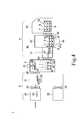
- the pressure within the vacuum deposition chamber 2 is adjusted to a predetermined value; and as shown in Fig. 4 , all of the evaporation materials 10 in the evaporation containers 7 are evaporated to form a lithium layer on the substrate 50 by operating the heater 22 to heat the evaporation materials 10 via the evaporation containers 7.
- the deposition is carried out with the drive motor 21 being operated so as to rotate the substrate 50 toward the horizontal direction.
- the substrate 50 which is next in line to be subjected to deposition, into the substrate loading chamber 34 in advance during deposition.
- the substrate 50 which has been detached from the substrate holder 20 is transported into the substrate transport chamber 31 by the substrate transport robot 32.
- the substrate transport robot 32 is lowered, in order that the substrate 50 is transported into the substrate removal chamber 36 via a gate valve 35; and then the substrate 50 is discharged from the substrate removal chamber 36 with the use of a substrate transport robot, which is not illustrated.
- the material transport tray 6 with all the evaporation materials 10 having been used up is transported from the vacuum deposition chamber 2 into the second material replacing chamber 42 via the first material replacing chamber 41 with the use of the tray transport robot 44, and then mounted at its original position, at the top rank of the material supply cassette 8.
- the substrate transport robot 32 is raised in the substrate transport chamber 31, in order that the substrate 50 within the substrate loading chamber 34 be transported into the vacuum deposition chamber 2 via the substrate transport robot 32 and then mounted to the substrate holder 20.
- the drive motor 48 is operated to raise the cassette raising/lowering mechanism 47 within the second material replacing chamber 42; and then the material transport tray 6 at, for example, the middle rank of the material supply cassette 8 is transported into the vacuum deposition chamber 2 via the first material replacing chamber 41 with use of the tray transport robot 44.
- This material transport tray 6 is then positioned at a film-forming position within the vacuum deposition chamber 2, for example, a film-forming position above the heater 22.
- the heater 22 is operated to heat the evaporation materials 10 via the evaporation containers 7, so that all of the evaporation materials 10 within each of the evaporation containers 7 are evaporated to form a Li layer on the substrate 50.
- the substrate 50 upon which deposition has been completed is transported into the substrate removal chamber 36 via the substrate transport chamber 31 with the use of the substrate transport robot 32, and then the substrate 50 is discharged from the substrate removal chamber 36.
- the material transport tray 6 to which the deposition has been completed is transported from the vacuum deposition chamber 2 into the second material replacing chamber 42 via the first material replacing chamber 41 with the use of the tray transport robot 44, and then mounted to its original position of the material supply cassette 8.
- the material supply cassette 8 is returned to the material loading chamber 45 by human hand, and a new material supply cassette 8 is transported into the second material replacing chamber 42 by human hand.
- the evaporation containers 7 as to which a deposition has been completed should be washed with the use of pure water.
- the lithium can be efficiently and almost completely removed with the use of pure water.
- the present embodiment includes a substrate supplying/replacing system 3, which is connected to the vacuum deposition chamber 2, for performing the supply and the replacement of the substrate 50 between the vacuum deposition chamber 2 and the substrate supplying/replacing system 3, and a material supplying/replacing system 4, which is connected to the vacuum deposition chamber 2, for performing the supply and the replacement of the evaporation material 10 between the vacuum deposition chamber 2 and the material supplying/replacing system 4; and the material supplying/replacing system 4 has a material loading region (material loading chamber 45) in which the evaporation material 10 is disposed in the evaporation container 7 in a dry atmosphere that is blocked off to ambient air, a tray transport robot 44 which transports the evaporation container 7 to and from the vacuum deposition chamber 2, which leads moisture or the like to be prevented from attaching to the evaporation material 10 and the evaporation container 7, and thereby deterioration of the evaporation material 10 can be prevented, when transporting the evaporation material 10, consist
- a heater 22 for heating the evaporation containers 7 supplied from the material supplying/replacing system 4 is provided within the vacuum deposition chamber 2; and by heating the evaporation containers 7 to perform vacuum deposition on the substrate 50, the evaporation materials 10 can be rapidly heated, and the evaporation containers 7 can be rapidly cooled after the completion of the deposition.
- the evaporation material 10 can be completely used up during deposition, a film of a desired film thickness can be formed with the use of an apparatus having a simple configuration without using a shutter or a film thickness monitor, by setting the amount of evaporation material 10, for example, to an amount which will completely evaporate in one deposition step. Further, deterioration of the evaporation material 10 consisting of lithium particularly caused by changes over time or changes in the atmosphere can be reliably prevented.
- the evaporation materials 10 can be supplied in a state in which the inside of the vacuum deposition chamber 2 is in a high vacuum.
- the evaporation materials 10 are supplied and replaced by transporting the material transport tray 6, to which a plurality of evaporation containers 7 can be mounted capable of being attached and removed at will, the plurality of evaporation containers 7 can be transported collectively to supply and replace the evaporation materials 10, and the efficiency of each step can be greatly increased.
- the evaporation containers 7 are mounted to the material transport tray 6 for supplying and replacing the evaporation materials 10, but the present invention is not limited to this embodiment, and, for example, a transport robot or the like can be used to supply and replace a plurality of the evaporation containers 7.
- the evaporation containers 7 it is preferable to mount the evaporation containers 7 to the material transport tray 6 for supplying and replacing the evaporation materials 10 as in the above-described embodiment.
- the arrangement formation of the chambers in the above-described embodiment is one example, and it can be appropriately modified in accordance with processes as needed.
- the material supplying/replacing system can also be constituted as one large chamber.
- the present invention can be applied to substrates of various materials, shapes, and sizes (such as, a silicon substrate, a ceramic substrate, a heat-resistant resin substrate, a mica substrate or the like).
- the present invention can be applied to materials other than lithium, it is most effective in a technology for manufacturing a lithium secondary battery using lithium in an anode.
Landscapes
- Chemical & Material Sciences (AREA)
- Engineering & Computer Science (AREA)
- Chemical Kinetics & Catalysis (AREA)
- Materials Engineering (AREA)
- Organic Chemistry (AREA)
- Mechanical Engineering (AREA)
- Metallurgy (AREA)
- Health & Medical Sciences (AREA)
- Toxicology (AREA)
- Electrochemistry (AREA)
- General Chemical & Material Sciences (AREA)
- Manufacturing & Machinery (AREA)
- Physical Vapour Deposition (AREA)
- Battery Electrode And Active Subsutance (AREA)
Abstract
The present invention aims to provide a technology which uses an apparatus having a simple configuration to efficiently form a film with uniform film thickness and film quality, when continuously forming a film by vacuum deposition of highly reactive lithium. A vacuum deposition system of the present invention has a vacuum deposition chamber wherein an evaporation material is deposited on a substrate by deposition, a substrate supplying/replacing system, connected to the vacuum deposition chamber, for performing supplying and replacing the substrate to and from the vacuum deposition chamber, and a material supplying/replacing system, connected to the vacuum deposition chamber, for performing supplying and replacing the evaporation material to and from the vacuum deposition chamber. The material supplying/replacing system has a material loading chamber in which the evaporation material is disposed inside an evaporation container in an atmosphere blocked off to ambient air and a material replacing chamber where the evaporation container is transported to and from the vacuum deposition chamber. A heater for heating the evaporation container supplied from the material supplying/replacing system is provided within the vacuum deposition chamber.
Description
- The present invention is related to a technology for manufacturing a lithium secondary battery using a solid electrolyte; and in particular, a technology for forming an anode layer by vacuum deposition.
- Conventionally, a lithium ion secondary battery has been widely known as a power source for mobile phones and personal computers.
- However, since lithium ion secondary batteries use liquid electrolytes, liquid leakage and fires may occur, which poses a problem regarding their safety.
- For this reason, recently, all-solid lithium secondary batteries, which use a solid material as the material for the electrolytes, have been proposed, and are being developed.
- In particular, as an all-solid lithium secondary battery using a solid material, an all-solid lithium secondary battery made of a thin film shows promise for use as a power source of card-type electronic components or the like.
- In an all-solid lithium secondary battery made of a thin film, an anode consisting of lithium (Li) is formed by vacuum deposition. However, since lithium is a material that is highly reactive to water and air, when an evaporation material consisting of lithium is brought into a deposition chamber, it is necessary to pay sufficient attention to atmosphere of transport pathways.
- Furthermore, in a conventional technology, in the case of continuously forming films by vacuum deposition of lithium, the film thickness is controlled by using a shutter mechanism or a film thickness monitor; however, in such a conventional technology, the structural arrangement of the apparatus is complicated; and also, the film thickness or film quality may change as a result of deterioration of lithium due to changes in the lithium over time, changes in the atmosphere, or the like.
- As prior art documents related to the present invention, for example, the following document exists.
-
- [Patent Document 1]
JP-A 2007-214109 - The present invention was created in consideration of the above-described problems in the conventional technology, aiming to provide a technology, by use of an apparatus having a simple configuration, which can efficiently form films with uniform film thickness and film quality, when continuously forming films by vacuum deposition of highly reactive lithium.
- The present invention, which was created to solve the above-described problems, is a vacuum deposition system having a vacuum deposition chamber in which an evaporation material is deposited on a substrate by deposition, a substrate supplying/replacing system, which is connected to the vacuum deposition chamber, for performing supply and replacement of the substrate between the vacuum deposition chamber and the substrate supplying/replacing system, and a material supplying/replacing system, which is connected to the vacuum deposition chamber, for performing supply and replacement of the evaporation material between the vacuum deposition chamber and the material supplying/replacing system, wherein the material supplying/replacing system is provided with a material loading region in which the evaporation material is disposed in an evaporation container in an atmosphere that is blocked from ambient air, and an evaporation container transport region in which the evaporation container is transported to and from the vacuum deposition chamber, and wherein a heating means for heating the evaporation container, supplied from the material supplying/replacing system, is provided within the vacuum deposition chamber.
- In the present invention, the material supplying/replacing system is also effective when it has a material loading chamber in which the evaporation material is disposed in the evaporation container in a dry atmosphere that is blocked from ambient air, and a material supplying/replacing chamber which is connected to the material loading chamber and in which supply and replacement of the evaporation material is performed to and from the vacuum deposition chamber in a vacuum.
- In the present invention, the heating means is also effective when it is a heater of lamp-heating mechanism.
- Further, the present invention is a method of vacuum deposition with the use of one of the above-described vacuum deposition systems, including the steps of disposing a predetermined amount of an evaporation material in the evaporation container in the material loading region, transporting the evaporation container from the material loading region into the inside of the vacuum deposition chamber and supplying the evaporation material, performing vacuum deposition on the substrate by heating the evaporation container within the vacuum deposition chamber, and then ejecting the evaporation container from the vacuum deposition chamber after the completion of the vacuum deposition to return it to the material loading region of the material supplying/replacing system.
- In the present invention, it is also effective when the supply and the replacement of the evaporation material is performed with the use of a container transport member, to which a plurality of the evaporation containers can be mounted so as to be capable of being attached and removed at will, to transport the container transport member.
- The present invention is most effective when the evaporation material consists of lithium.
- In the case of the apparatus of the present invention, it has a substrate supplying/replacing system, which is connected to the vacuum deposition chamber, for performing the supply and the replacement of the substrate between the vacuum deposition chamber and the substrate supplying/replacing system, and a material supplying/replacing system, which is connected to the vacuum deposition chamber, for performing the supply and the replacement of the evaporation material between the vacuum deposition chamber and the material supplying/replacing system; and the material supplying/replacing system is provided with a material loading region in which the evaporation material is disposed in an evaporation container in a dry atmosphere that is blocked off to ambient air, and an evaporation container transport mechanism which transports the evaporation container to and from the vacuum deposition chamber. Consequently, moisture or the like is prevented from attaching to the evaporation material and the evaporation container; and thus, deterioration of the evaporation material can be prevented, when transporting a highly reactive lithium evaporation material into the vacuum deposition chamber, and when returning the evaporation container from the vacuum deposition chamber to the material supplying/replacing system after the completion of deposition.
- According to the present invention, a heating means for heating the evaporation container supplied from the material supplying/replacing system is provided within the vacuum deposition chamber; and by heating the evaporation container to apply vacuum deposition on the substrate, the evaporation material can be heated rapidly and the evaporation container can be cooled rapidly after the completion of the deposition.
- In the present invention, since the evaporation material can be completely used up during deposition, by setting the amount of evaporation material, for example, to an amount which will completely evaporate in one deposition process, a thin film of a desired film thickness can be formed with an apparatus having a simple configuration, without using a shutter or a film thickness monitor. Further, deterioration of the lithium evaporation material, particularly caused by changes over time or changes in the atmosphere, can be unfailingly prevented.
- Further, in the method of the present invention, after deposition using an evaporation container accommodating lithium, for example, the evaporation material can be supplied in a state in which the inside of the vacuum deposition chamber is in a high vacuum, by repeating the step of returning the evaporation container to the material loading region.
- In the method of the present invention, if the evaporation material is supplied and replaced with the use of a container transport member to which a plurality of the evaporation containers can be mounted and capable of being attached and removed at will, to transport the container transport member, the efficiency of each step can be greatly increased, since the plurality of evaporation containers can be transported collectively to supply and replace the evaporation material.
- According to the present invention, a film with uniform film thickness and film quality can be efficiently formed with the use of an apparatus having a simple structural arrangement, when continuously forming films by vacuum deposition of highly reactive lithium.
-
-
Fig. 1 is a schematic constitutional front view of an embodiment of the vacuum deposition system according to the present invention. -
Fig. 2(a) is a plan view of a tray main body showing an example of a material transport tray used in the embodiment. -
Fig. 2(b) is a plan view showing a state in which an evaporation container is mounted to the material transport tray. -
Fig. 2(c) is a cross-sectional view along the line A-A ofFig. 2(b) . -
Fig. 3 is an explanatory diagram (1) showing one example of a deposition process in the embodiment. -
Fig. 4 is an explanatory diagram (2) showing one example of a deposition process in the embodiment. -
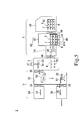
Fig. 5 is an explanatory diagram (3) showing one example of a deposition process in the embodiment. -
Fig. 6 is an explanatory diagram (4) showing one example of a deposition process in the embodiment. -
- 1... VACUUM DEPOSITION SYSTEM
- 2... VACUUM DEPOSITION CHAMBER
- 3... SUBSTRATE SUPPLYING/REPLACING SYSTEM
- 4... MATERIAL SUPPLYING/REPLACING SYSTEM
- 6... MATERIAL TRANSPORT TRAY (CONTAINER TRANSPORT MEMBER)
- 7... EVAPORATION CONTAINER
- 8... MATERIAL SUPPLY CASSETTE
- 9... PROTECTIVE LAYER FORMING CHAMBER
- 10... EVAPORATION MATERIAL
- 22... HEATER (HEATING MEANS)
- 31... SUBSTRATE TRANSPORT CHAMBER
- 32... SUBSTRATE TRANSPORT ROBOT
- 34... SUBSTRATE LOADING CHAMBER
- 36... SUBSTRATE REMOVAL CHAMBER
- 41... FIRST MATERIAL REPLACING CHAMBER
- 42... SECOND MATERIAL REPLACING CHAMBER
- 43... MATERIAL REPLACING CHAMBER
- 44... TRAY TRANSPORT ROBOT
- 45... MATERIAL LOADING CHAMBER (MATERIAL LOADING REGION)
- 50... SUBSTRATE
- A preferred embodiment of the present invention will be explained in detail below in reference to the drawings.
-
Fig. 1 is a schematic constitutional front view of an embodiment of the vacuum deposition system according to the present invention. - As shown in
Fig. 1 , avacuum deposition system 1 used in the present embodiment has a vacuum deposition chamber 2 connected to a vacuum evacuation system, which is not illustrated. The vacuum deposition chamber 2 is constituted so as to introduce, for example, argon (Ar) gas, which is a noble gas. - A
substrate holder 20 for holding asubstrate 50 is provided in the upper portion within the vacuum deposition chamber 2. Thesubstrate holder 20 is constituted so as to rotate thesubstrate 50 in a state of being oriented to the horizontal direction by means of, for example, a drivingmotor 21 disposed in the upper portion of the vacuum deposition chamber 2. - Meanwhile, a heater (heating means) 22 for heating an
evaporation material 10 accommodated inside anevaporation container 7, to be explained later, is disposed on a lower portion within the vacuum deposition chamber 2. - In the present invention, although not particularly limited, it is preferable, from the viewpoint of rapidly heating the
evaporation material 10 and rapidly cooling theevaporation container 7, to use a heater of lamp-heating mechanism as theheater 22 so that theevaporation container 7, which accommodates theevaporation material 10, is heated indirectly from a predetermined distance, as will be explained below. - In the present embodiment, a substrate supplying/replacing
system 3 for performing supply and replacement of thesubstrate 50 between the vacuum deposition chamber 2 and the substrate supplying/replacingsystem 3, and a material supplying/replacingsystem 4 for performing the supply and the replacement of theevaporation material 10 between the vacuum deposition chamber 2 and the material supplying/replacingsystem 4, are connected to the vacuum deposition chamber 2. - The substrate supplying/replacing
system 3 has asubstrate transport chamber 31 which is connected to the vacuum deposition chamber 2 via agate valve 30. - The
substrate transport chamber 31 is formed into, for example, a vertically long shape and is connected to the vacuum evacuation system, which is not illustrated. Asubstrate transport robot 32, which can move up and down with thesubstrate 50 being placed thereon, is disposed within thesubstrate transport chamber 31. - In the present embodiment, a
substrate loading chamber 34 is connected via agate valve 33 to, for example, the upper-side portion of thesubstrate transport chamber 31; and asubstrate removal chamber 36 is connected via agate valve 35 to, for example, the lower-side portion of thesubstrate transport chamber 31. - The
substrate loading chamber 34 and thesubstrate removal chamber 36 are both connected respectively to the vacuum evacuation system, which is not illustrated. - Meanwhile, the material supplying/replacing
system 4 has amaterial replacing chamber 43 connected to the vacuum deposition chamber 2 via agate valve 40. Thematerial replacing chamber 43 is connected to the vacuum evacuation system which is not illustrated, and is divided into a firstmaterial replacing chamber 41 and a secondmaterial replacing chamber 42. - The
material replacing chamber 43 is constituted so as to introduce, for example, argon (Ar) gas. - A
tray transport robot 44 for supplying/replacing a material transport tray (container transport member) 6 is provided within the firstmaterial replacing chamber 41 adjacent to the vacuum deposition chamber 2. - A material loading chamber (material loading region) 45 explained later is connected to the second
material replacing chamber 42 via agate valve 46. -
Figs. 2(a) to (c) illustrate an example of the material transport tray used in the present embodiment:Fig. 2(a) is a plan view of the tray main body;Fig. 2(b) is a plan view illustrating a state in which evaporation containers are mounted to the tray main body; andFig. 2(c) is a cross-sectional view along the line A-A ofFig. 2(b) . - As shown in
Fig. 2(a) , thematerial transport tray 6 of the present embodiment has a traymain body 60 made of, for example, a flat plate member. - As the material of the tray
main body 60, for example, an inorganic material (such as, silica glass), a metal material (such as, stainless steel), a carbon material or the like can be used. - A plurality of mounting
holes 61 in the shape of, for example, a circle, for mounting the evaporation containers (boats) 7 are provided on the traymain body 60 so as to penetrate through the traymain body 60. - In the present example, 3 X 3 = nine mounting
holes 61 are provided in a matrix on the traymain body 60. - In the present example, the
evaporation container 7 made of, for example, a metal material (such as, stainless steel), and has ahull part 70 in an approximately cup-shape (a cylindrical shape with a bottom); and on an edge portion of the opening of thehull part 70, a ring-shapedflange 71 in the shape of, for example, a ring, is provided. - The
hull part 70 of theevaporation container 7 has an outer diameter that is slightly smaller than that of the mountingholes 61 of the traymain body 60, and theflange 71 is formed with a slightly larger diameter than that of the mountingholes 61 of the traymain body 60. - Due to such constitution, when the
hull parts 70 of theevaporation containers 7 are inserted from above into the mountingholes 61 of the traymain body 60, theflanges 71 of theevaporation containers 7 abut on the surface of the traymain body 60, so that each of theevaporation containers 7 is positioned in a predetermined position. - As shown in
Fig. 2(c) , thematerial transport tray 6 of the present embodiment is such that theevaporation materials 10 are inserted to be placed with each of theevaporation containers 7 being mounted to the traymain body 60; and thereby, each of theevaporation materials 10 is transported in a state of being accommodated in each of theevaporation containers 7, along with the traymain body 60. - In the present embodiment, the
evaporation materials 10 are supplied to thematerial transport tray 6 within the above-described material loading chamber 45 (see,Fig. 1 ). - The
material loading chamber 45 is composed of a glove box that can be handled by a human hand. - The dew point temperature within the
material loading chamber 45 can be maintained at the extent of -50°C to -60°C; and a dry atmosphere that is blocked off to ambient air can be maintained by introducing, for example, argon (Ar) gas into thematerial loading chamber 45. - In the
material loading chamber 45, theevaporation materials 10 consisting of lithium having a predetermined size and shape (for example, a particle shape) are inserted into theevaporation containers 7 mounted to the traymain body 60 by human hand, for example, one at a time. - In the case of the present invention, the amount of the
evaporation material 10 accommodated in each of theevaporation container 7 is not particularly limited, but from the viewpoint of preventing film thickness or film qualities from changing due to changes over time or the like, it is preferable to set it to an amount which can completely evaporate in one deposition step. - The amount of
evaporation material 10 accommodated in each of theevaporation container 7 can be appropriately modified, depending on size of the substrate or the positions of theevaporation containers 7 on the traymain body 60 or the like. - A plurality of
material transport trays 6, with theevaporation materials 10 being accommodated in each of theevaporation containers 7 are mounted on amaterial supply cassette 8 and stored within thematerial loading chamber 45. - If needed, the
material supply cassette 8 is transported into the secondmaterial replacing chamber 42 by human hand. - A material cassette raising/lowering
mechanism 47 for raising and lowering thematerial supply cassette 8 is provided at a lower part within the secondmaterial replacing chamber 42. - The material cassette raising/lowering
mechanism 47 has astage 47a, which is driven in an up-down direction by, for example, adrive motor 48 provided at a lower part of the secondmaterial replacing chamber 42; and the material cassette raising/loweringmechanism 47 is configured to raise and lower thestage 47a in a state of, for example, mounting to support onematerial supply cassette 8. -
Figs. 3 to 6 are explanatory diagrams illustrating one example of a deposition process in the present embodiment. - As shown in
Fig. 3 , when carrying out deposition of theevaporation material 10 consisting of lithium on thesubstrate 50 in the present embodiment, thesubstrate 50, which has been transported into thesubstrate transport chamber 31 via thesubstrate loading chamber 34, is transported into the vacuum deposition chamber 2 by thesubstrate transport robot 32 to be mounted onto thesubstrate holder 20. - In the meantime, the
material supply cassette 8, with theevaporation materials 10 having been mounted onto thematerial transport tray 6 in advance, is transported into the secondmaterial replacing chamber 42 by human hand. With the use of thetray transport robot 44, onematerial transport tray 6 at a predetermined position (in this example, the one at the top rank) is transported into the vacuum deposition chamber 2 via the firstmaterial replacing chamber 41; and thematerial transport tray 6 is then positioned at a predetermined film-forming position within the vacuum deposition chamber 2, for example, a position above and separated from theheater 22. - In this state, the pressure within the vacuum deposition chamber 2 is adjusted to a predetermined value; and as shown in
Fig. 4 , all of theevaporation materials 10 in theevaporation containers 7 are evaporated to form a lithium layer on thesubstrate 50 by operating theheater 22 to heat theevaporation materials 10 via theevaporation containers 7. - In this process, the deposition is carried out with the
drive motor 21 being operated so as to rotate thesubstrate 50 toward the horizontal direction. - From the viewpoint of performing efficient continuous deposition, for example, as shown in
Fig. 4 , it is preferable to transport thesubstrate 50, which is next in line to be subjected to deposition, into thesubstrate loading chamber 34 in advance during deposition. - Also, from the viewpoint of performing efficient continuous deposition, for example, as shown in
Fig. 4 , it is preferable to carry out the insertion work of theevaporation materials 10 into theevaporation containers 7 mounted to the traymain body 60 within thematerial loading chamber 45 as appropriately needed. - After the completion of the deposition process, as shown in
Fig. 5 , thesubstrate 50 which has been detached from thesubstrate holder 20 is transported into thesubstrate transport chamber 31 by thesubstrate transport robot 32. - Further, the
substrate transport robot 32 is lowered, in order that thesubstrate 50 is transported into thesubstrate removal chamber 36 via agate valve 35; and then thesubstrate 50 is discharged from thesubstrate removal chamber 36 with the use of a substrate transport robot, which is not illustrated. - On the other hand, the
material transport tray 6 with all theevaporation materials 10 having been used up is transported from the vacuum deposition chamber 2 into the secondmaterial replacing chamber 42 via the firstmaterial replacing chamber 41 with the use of thetray transport robot 44, and then mounted at its original position, at the top rank of thematerial supply cassette 8. - Subsequently, as shown in
Fig. 6 , thesubstrate transport robot 32 is raised in thesubstrate transport chamber 31, in order that thesubstrate 50 within thesubstrate loading chamber 34 be transported into the vacuum deposition chamber 2 via thesubstrate transport robot 32 and then mounted to thesubstrate holder 20. - In the meantime, the
drive motor 48 is operated to raise the cassette raising/loweringmechanism 47 within the secondmaterial replacing chamber 42; and then thematerial transport tray 6 at, for example, the middle rank of thematerial supply cassette 8 is transported into the vacuum deposition chamber 2 via the firstmaterial replacing chamber 41 with use of thetray transport robot 44. Thismaterial transport tray 6 is then positioned at a film-forming position within the vacuum deposition chamber 2, for example, a film-forming position above theheater 22. - As explained above, inside the vacuum deposition chamber 2, the
heater 22 is operated to heat theevaporation materials 10 via theevaporation containers 7, so that all of theevaporation materials 10 within each of theevaporation containers 7 are evaporated to form a Li layer on thesubstrate 50. - After the completion of the deposition, the above-described process is repeated. In other words, the
substrate 50 upon which deposition has been completed is transported into thesubstrate removal chamber 36 via thesubstrate transport chamber 31 with the use of thesubstrate transport robot 32, and then thesubstrate 50 is discharged from thesubstrate removal chamber 36. - Also, the
material transport tray 6 to which the deposition has been completed is transported from the vacuum deposition chamber 2 into the secondmaterial replacing chamber 42 via the firstmaterial replacing chamber 41 with the use of thetray transport robot 44, and then mounted to its original position of thematerial supply cassette 8. - Afterwards, when all of the
evaporation materials 10 on thematerial transport tray 6 of thematerial supply cassette 8 within the secondmaterial replacing chamber 42 have been used up, thematerial supply cassette 8 is returned to thematerial loading chamber 45 by human hand, and a newmaterial supply cassette 8 is transported into the secondmaterial replacing chamber 42 by human hand. - Then, the above-described process is repeated.
- The
evaporation containers 7 as to which a deposition has been completed should be washed with the use of pure water. - The lithium can be efficiently and almost completely removed with the use of pure water.
- The present embodiment includes a substrate supplying/replacing
system 3, which is connected to the vacuum deposition chamber 2, for performing the supply and the replacement of thesubstrate 50 between the vacuum deposition chamber 2 and the substrate supplying/replacingsystem 3, and a material supplying/replacingsystem 4, which is connected to the vacuum deposition chamber 2, for performing the supply and the replacement of theevaporation material 10 between the vacuum deposition chamber 2 and the material supplying/replacingsystem 4; and the material supplying/replacingsystem 4 has a material loading region (material loading chamber 45) in which theevaporation material 10 is disposed in theevaporation container 7 in a dry atmosphere that is blocked off to ambient air, atray transport robot 44 which transports theevaporation container 7 to and from the vacuum deposition chamber 2, which leads moisture or the like to be prevented from attaching to theevaporation material 10 and theevaporation container 7, and thereby deterioration of theevaporation material 10 can be prevented, when transporting theevaporation material 10, consisting of highly reactive lithium, into the vacuum deposition chamber 2, and when returning theevaporation container 7 from the vacuum deposition chamber 2 to the material supplying/replacingsystem 4 after the completion of deposition. - Further, according to the present embodiment, a
heater 22 for heating theevaporation containers 7 supplied from the material supplying/replacingsystem 4 is provided within the vacuum deposition chamber 2; and by heating theevaporation containers 7 to perform vacuum deposition on thesubstrate 50, theevaporation materials 10 can be rapidly heated, and theevaporation containers 7 can be rapidly cooled after the completion of the deposition. - In the case of the present embodiment, since the
evaporation material 10 can be completely used up during deposition, a film of a desired film thickness can be formed with the use of an apparatus having a simple configuration without using a shutter or a film thickness monitor, by setting the amount ofevaporation material 10, for example, to an amount which will completely evaporate in one deposition step. Further, deterioration of theevaporation material 10 consisting of lithium particularly caused by changes over time or changes in the atmosphere can be reliably prevented. - In addition, as in the present embodiment, after deposition with the use of the
evaporation containers 7 accommodating lithium, for example, by repeating the step of returning theevaporation containers 7 to thematerial loading chamber 45, theevaporation materials 10 can be supplied in a state in which the inside of the vacuum deposition chamber 2 is in a high vacuum. - Meanwhile, in the present embodiment, since the
evaporation materials 10 are supplied and replaced by transporting thematerial transport tray 6, to which a plurality ofevaporation containers 7 can be mounted capable of being attached and removed at will, the plurality ofevaporation containers 7 can be transported collectively to supply and replace theevaporation materials 10, and the efficiency of each step can be greatly increased. - The present invention is not limited to the above-described embodiment, and various modifications can be made.
- For example, in the above-described embodiment, the
evaporation containers 7 are mounted to thematerial transport tray 6 for supplying and replacing theevaporation materials 10, but the present invention is not limited to this embodiment, and, for example, a transport robot or the like can be used to supply and replace a plurality of theevaporation containers 7. - However, from the view point of the efficiency in the deposition process, it is preferable to mount the
evaporation containers 7 to thematerial transport tray 6 for supplying and replacing theevaporation materials 10 as in the above-described embodiment. - Further, the arrangement formation of the chambers in the above-described embodiment is one example, and it can be appropriately modified in accordance with processes as needed. For example, the material supplying/replacing system can also be constituted as one large chamber.
- In addition, the present invention can be applied to substrates of various materials, shapes, and sizes (such as, a silicon substrate, a ceramic substrate, a heat-resistant resin substrate, a mica substrate or the like).
- Moreover, although the present invention can be applied to materials other than lithium, it is most effective in a technology for manufacturing a lithium secondary battery using lithium in an anode.
Claims (6)
- A vacuum deposition system, comprising:a vacuum deposition chamber in which an evaporation material is deposited on a substrate by deposition;a substrate supplying/replacing system, which is connected to the vacuum deposition chamber, for performing supply and replacement of the substrate between the vacuum deposition chamber and the substrate supplying/replacing system; anda material supplying/replacing system, which is connected to the vacuum deposition chamber, for performing supply and replacement of the evaporation material between the vacuum deposition chamber and the material supplying/replacing system,wherein the material supplying/replacing system includes a material loading region in which the evaporation material is disposed in an evaporation container in an atmosphere that is blocked from ambient air, and an evaporation container transport region in which the evaporation container is transported to and from the vacuum deposition chamber, andwherein a heating means for heating the evaporation container, supplied from the material supplying/replacing system, is provided within the vacuum deposition chamber.
- The vacuum deposition system according to claim 1, wherein the material supplying/replacing system has a material loading chamber in which the evaporation material is disposed in the evaporation container in a dry atmosphere that is blocked from ambient air, and a material supplying/replacing chamber which is connected to the material loading chamber and in which supply and replacement of the evaporation material is performed to and from the vacuum deposition chamber in a vacuum.
- The vacuum deposition system according to claim 1 or 2, wherein the heating means is a heater of lamp-heating mechanism.
- A vacuum deposition method, with the use of a vacuum deposition system having a vacuum deposition chamber in which an evaporation material is deposited on a substrate by deposition;
a substrate supplying/replacing system, which is connected to the vacuum deposition chamber, for performing the supply and the replacement of the substrate between the vacuum deposition chamber and the substrate supplying/replacing system; and
a material supplying/replacing system, which is connected to the vacuum deposition chamber, for performing supply and replacement of the evaporation material between the vacuum deposition chamber and the material supplying/replacing system,
wherein the material supplying/replacing system is provided with a material loading region in which the evaporation material is disposed in an evaporation container in an atmosphere that is blocked from ambient air, and an evaporation container transport region in which the evaporation container is transported to and from the vacuum deposition chamber, and
wherein a heating means for heating the evaporation container, supplied from the material supplying/replacing system, is provided within the vacuum deposition chamber,
the method, comprising the steps of:disposing a predetermined amount of the evaporation material inside the evaporation container in the material loading region;transporting the evaporation container from the material loading region into the vacuum deposition chamber to supply the evaporation material;performing vacuum deposition on the substrate by heating the evaporation container in the vacuum deposition chamber; andejecting the evaporation container from the vacuum deposition chamber after completion of the vacuum deposition to return it to the material loading region of the material supplying/replacing system. - The vacuum deposition method according to claim 4, wherein the supply and the replacement of the evaporation material is performed by using a container transport member, to which a plurality of the evaporation containers can be mounted so as to be capable of being attached and removed at will, to transport the container transport member.
- The vacuum deposition method according to claim 4 or 5, wherein the evaporation material consists of lithium.
Applications Claiming Priority (2)
| Application Number | Priority Date | Filing Date | Title |
|---|---|---|---|
| JP2009103431 | 2009-04-21 | ||
| PCT/JP2010/057011 WO2010123004A1 (en) | 2009-04-21 | 2010-04-20 | Vacuum deposition system and vacuum deposition method |
Publications (2)
| Publication Number | Publication Date |
|---|---|
| EP2423348A1 true EP2423348A1 (en) | 2012-02-29 |
| EP2423348A4 EP2423348A4 (en) | 2015-11-11 |
Family
ID=43011121
Family Applications (1)
| Application Number | Title | Priority Date | Filing Date |
|---|---|---|---|
| EP10767061.4A Withdrawn EP2423348A4 (en) | 2009-04-21 | 2010-04-20 | Vacuum deposition system and vacuum deposition method |
Country Status (5)
| Country | Link |
|---|---|
| US (1) | US20120082778A1 (en) |
| EP (1) | EP2423348A4 (en) |
| JP (1) | JP5372144B2 (en) |
| KR (1) | KR101388890B1 (en) |
| WO (1) | WO2010123004A1 (en) |
Families Citing this family (9)
| Publication number | Priority date | Publication date | Assignee | Title |
|---|---|---|---|---|
| JP2012017478A (en) * | 2010-07-06 | 2012-01-26 | Honjo Metal Co Ltd | Lithium laminated member and method for producing the same |
| CN103526164B (en) * | 2013-10-23 | 2015-09-09 | 京东方科技集团股份有限公司 | A kind of evaporated device |
| JP2016014175A (en) * | 2014-07-02 | 2016-01-28 | 株式会社アルバック | Deposition equipment |
| US20160281212A1 (en) | 2015-03-24 | 2016-09-29 | Siva Power, Inc. | Thermal management of evaporation sources |
| CN104789930B (en) | 2015-04-24 | 2016-05-11 | 京东方科技集团股份有限公司 | Evaporated device and adopt the method for operating of this evaporated device |
| CN105154832B (en) * | 2015-10-15 | 2018-06-08 | 京东方科技集团股份有限公司 | Evaporated device and evaporation coating method |
| JP6595421B2 (en) * | 2016-08-24 | 2019-10-23 | 東芝メモリ株式会社 | Vaporization system |
| JP6959680B1 (en) * | 2020-11-13 | 2021-11-05 | 株式会社シンクロン | Film deposition equipment |
| RU2765222C1 (en) * | 2020-12-30 | 2022-01-26 | Тхе Баттериес Сп. з о.о. | METHOD FOR FORMING A LiCoO2 FILM AND APPARATUS FOR IMPLEMENTATION THEREOF |
Family Cites Families (10)
| Publication number | Priority date | Publication date | Assignee | Title |
|---|---|---|---|---|
| JPH03173767A (en) * | 1989-11-30 | 1991-07-29 | Mitsubishi Electric Corp | Apparatus for forming thin film |
| JP4312289B2 (en) * | 1999-01-28 | 2009-08-12 | キヤノンアネルバ株式会社 | Organic thin film forming equipment |
| JP3608507B2 (en) * | 2000-07-19 | 2005-01-12 | 住友電気工業株式会社 | Method for producing alkali metal thin film member |
| TWI275319B (en) * | 2002-02-05 | 2007-03-01 | Semiconductor Energy Lab | Manufacturing method and method of operating a manufacturing apparatus |
| TWI277363B (en) * | 2002-08-30 | 2007-03-21 | Semiconductor Energy Lab | Fabrication system, light-emitting device and fabricating method of organic compound-containing layer |
| AU2003263609A1 (en) * | 2002-09-20 | 2004-04-08 | Semiconductor Energy Laboratory Co., Ltd. | Fabrication system and manufacturing method of light emitting device |
| JP4841872B2 (en) * | 2005-06-23 | 2011-12-21 | 株式会社ユーテック | Evaporation source and vapor deposition equipment |
| JP5172134B2 (en) | 2006-01-10 | 2013-03-27 | パナソニック株式会社 | Non-aqueous electrolyte secondary battery and manufacturing method thereof |
| JP2007231368A (en) * | 2006-03-01 | 2007-09-13 | Fujifilm Corp | Vapor deposition material evaporating device |
| KR100855582B1 (en) * | 2007-01-12 | 2008-09-03 | 삼성전자주식회사 | Liquid supply apparatus and method, substrate processing apparatus which has said apparatus, and substrate processing method |
-
2010
- 2010-04-20 KR KR1020117024826A patent/KR101388890B1/en active Active
- 2010-04-20 EP EP10767061.4A patent/EP2423348A4/en not_active Withdrawn
- 2010-04-20 JP JP2011510325A patent/JP5372144B2/en active Active
- 2010-04-20 WO PCT/JP2010/057011 patent/WO2010123004A1/en not_active Ceased
-
2011
- 2011-10-18 US US13/275,696 patent/US20120082778A1/en not_active Abandoned
Non-Patent Citations (1)
| Title |
|---|
| See references of WO2010123004A1 * |
Also Published As
| Publication number | Publication date |
|---|---|
| JPWO2010123004A1 (en) | 2012-10-25 |
| KR20120000094A (en) | 2012-01-03 |
| EP2423348A4 (en) | 2015-11-11 |
| JP5372144B2 (en) | 2013-12-18 |
| KR101388890B1 (en) | 2014-04-23 |
| WO2010123004A1 (en) | 2010-10-28 |
| US20120082778A1 (en) | 2012-04-05 |
Similar Documents
| Publication | Publication Date | Title |
|---|---|---|
| EP2423348A1 (en) | Vacuum deposition system and vacuum deposition method | |
| TWI409348B (en) | A film forming apparatus, and a manufacturing method of an electronic device | |
| US9777362B2 (en) | Electrode manufacturing apparatus for lithium ion capacitor | |
| KR101942961B1 (en) | Pinhole-free dielectric thin film fabrication | |
| JP5247570B2 (en) | Thin film lithium secondary battery manufacturing apparatus and thin film lithium secondary battery manufacturing method | |
| CN102187010B (en) | Method for forming thin film, and method for manufacturing field effect transistor | |
| US20080164147A1 (en) | Film Forming Apparatus | |
| JP5116525B2 (en) | Sputtering equipment | |
| JP2011184751A (en) | Cooling mechanism | |
| TW201216400A (en) | Storage magazine of a CVD plant | |
| JP2011202190A (en) | Sputtering apparatus and sputtering method | |
| TWI868451B (en) | Close couple diffuser for physical vapor deposition web coating | |
| CN103060763B (en) | Vacuum film forming method and vacuum film forming apparatus | |
| CN1811009B (en) | Film forming method utilizing PVD method and target used thereof | |
| TW200903630A (en) | Substrate processing apparatus and method for stabilizing status in processing chamber of the substrate processing apparatus | |
| JP5764409B2 (en) | Thin film lithium secondary battery manufacturing apparatus and thin film lithium secondary battery manufacturing method | |
| JP5214327B2 (en) | Substrate processing apparatus and substrate processing method | |
| JP2013129866A (en) | Method and apparatus for depositing thin film | |
| KR101539624B1 (en) | Apparatus For Continuous Evaporation Material Feeding, and Apparatus and In-line Equipment For Anti-fingerprint Coating By Top-down Type Using The Same | |
| KR101914771B1 (en) | Film Deposition Method | |
| JP2007212031A (en) | Robot arm device for heat treatment furnace | |
| JP4408071B2 (en) | Film forming method and film forming apparatus | |
| JP2001254171A (en) | Arc-type ion plating apparatus | |
| JP4408520B2 (en) | Vacuum processing equipment | |
| JP2001226771A (en) | Film forming equipment |
Legal Events
| Date | Code | Title | Description |
|---|---|---|---|
| PUAI | Public reference made under article 153(3) epc to a published international application that has entered the european phase |
Free format text: ORIGINAL CODE: 0009012 |
|
| 17P | Request for examination filed |
Effective date: 20111021 |
|
| AK | Designated contracting states |
Kind code of ref document: A1 Designated state(s): AT BE BG CH CY CZ DE DK EE ES FI FR GB GR HR HU IE IS IT LI LT LU LV MC MK MT NL NO PL PT RO SE SI SK SM TR |
|
| DAX | Request for extension of the european patent (deleted) | ||
| RA4 | Supplementary search report drawn up and despatched (corrected) |
Effective date: 20151008 |
|
| RIC1 | Information provided on ipc code assigned before grant |
Ipc: C23C 14/14 20060101ALI20151002BHEP Ipc: C23C 14/56 20060101ALI20151002BHEP Ipc: C23C 14/28 20060101ALI20151002BHEP Ipc: C23C 14/24 20060101AFI20151002BHEP Ipc: H01M 4/1395 20100101ALI20151002BHEP |
|
| 17Q | First examination report despatched |
Effective date: 20180118 |
|
| STAA | Information on the status of an ep patent application or granted ep patent |
Free format text: STATUS: THE APPLICATION IS DEEMED TO BE WITHDRAWN |
|
| 18D | Application deemed to be withdrawn |
Effective date: 20180529 |