EP2423242A1 - Electrically conductive polyrotaxane - Google Patents
Electrically conductive polyrotaxane Download PDFInfo
- Publication number
- EP2423242A1 EP2423242A1 EP10767136A EP10767136A EP2423242A1 EP 2423242 A1 EP2423242 A1 EP 2423242A1 EP 10767136 A EP10767136 A EP 10767136A EP 10767136 A EP10767136 A EP 10767136A EP 2423242 A1 EP2423242 A1 EP 2423242A1
- Authority
- EP
- European Patent Office
- Prior art keywords
- polyrotaxane
- cyclic molecule
- rotaxane
- electron
- conductive
- Prior art date
- Legal status (The legal status is an assumption and is not a legal conclusion. Google has not performed a legal analysis and makes no representation as to the accuracy of the status listed.)
- Granted
Links
- 125000004122 cyclic group Chemical group 0.000 claims abstract description 37
- 238000006116 polymerization reaction Methods 0.000 claims abstract description 21
- 239000000126 substance Substances 0.000 claims description 20
- 230000003647 oxidation Effects 0.000 claims description 13
- 238000007254 oxidation reaction Methods 0.000 claims description 13
- 239000003795 chemical substances by application Substances 0.000 claims description 7
- 239000002243 precursor Substances 0.000 claims description 7
- 229920000642 polymer Polymers 0.000 claims description 5
- 238000000034 method Methods 0.000 claims description 4
- 230000002194 synthesizing effect Effects 0.000 claims description 4
- 239000003960 organic solvent Substances 0.000 claims description 2
- 230000004001 molecular interaction Effects 0.000 abstract 1
- WEVYAHXRMPXWCK-UHFFFAOYSA-N Acetonitrile Chemical compound CC#N WEVYAHXRMPXWCK-UHFFFAOYSA-N 0.000 description 16
- YTPLMLYBLZKORZ-UHFFFAOYSA-N Thiophene Chemical compound C=1C=CSC=1 YTPLMLYBLZKORZ-UHFFFAOYSA-N 0.000 description 12
- 230000015572 biosynthetic process Effects 0.000 description 11
- OKKJLVBELUTLKV-UHFFFAOYSA-N Methanol Chemical compound OC OKKJLVBELUTLKV-UHFFFAOYSA-N 0.000 description 9
- ZMXDDKWLCZADIW-UHFFFAOYSA-N N,N-Dimethylformamide Chemical compound CN(C)C=O ZMXDDKWLCZADIW-UHFFFAOYSA-N 0.000 description 9
- 229910001914 chlorine tetroxide Inorganic materials 0.000 description 9
- VLTRZXGMWDSKGL-UHFFFAOYSA-M perchlorate Chemical compound [O-]Cl(=O)(=O)=O VLTRZXGMWDSKGL-UHFFFAOYSA-M 0.000 description 9
- 238000003786 synthesis reaction Methods 0.000 description 7
- 229930192474 thiophene Natural products 0.000 description 6
- XEKOWRVHYACXOJ-UHFFFAOYSA-N Ethyl acetate Chemical compound CCOC(C)=O XEKOWRVHYACXOJ-UHFFFAOYSA-N 0.000 description 5
- LYCAIKOWRPUZTN-UHFFFAOYSA-N Ethylene glycol Chemical group OCCO LYCAIKOWRPUZTN-UHFFFAOYSA-N 0.000 description 5
- VYPSYNLAJGMNEJ-UHFFFAOYSA-N Silicium dioxide Chemical compound O=[Si]=O VYPSYNLAJGMNEJ-UHFFFAOYSA-N 0.000 description 5
- -1 bis-4,4'-bipyridinium bis (hexafluorophosphate) Chemical compound 0.000 description 5
- 238000006243 chemical reaction Methods 0.000 description 5
- 229920001940 conductive polymer Polymers 0.000 description 5
- 239000000741 silica gel Substances 0.000 description 5
- 229910002027 silica gel Inorganic materials 0.000 description 5
- 239000002904 solvent Substances 0.000 description 5
- MWVTWFVJZLCBMC-UHFFFAOYSA-N 4,4'-bipyridine Chemical group C1=NC=CC(C=2C=CN=CC=2)=C1 MWVTWFVJZLCBMC-UHFFFAOYSA-N 0.000 description 4
- 238000005481 NMR spectroscopy Methods 0.000 description 4
- 238000010521 absorption reaction Methods 0.000 description 4
- 230000003578 releasing effect Effects 0.000 description 4
- 230000007704 transition Effects 0.000 description 4
- 0 CCOCCOCCOCc1c(-c2c3OCCOc3c[s]2)[s]c(-c2ccc(C3SC(c4cc(COCC*)c(-c5c6OCCOc6c[s]5)[s]4)=CC3)[s]2)c1 Chemical compound CCOCCOCCOCc1c(-c2c3OCCOc3c[s]2)[s]c(-c2ccc(C3SC(c4cc(COCC*)c(-c5c6OCCOc6c[s]5)[s]4)=CC3)[s]2)c1 0.000 description 3
- YMWUJEATGCHHMB-UHFFFAOYSA-N Dichloromethane Chemical compound ClCCl YMWUJEATGCHHMB-UHFFFAOYSA-N 0.000 description 3
- 238000002484 cyclic voltammetry Methods 0.000 description 3
- 238000002474 experimental method Methods 0.000 description 3
- 238000004896 high resolution mass spectrometry Methods 0.000 description 3
- 230000003287 optical effect Effects 0.000 description 3
- 239000007800 oxidant agent Substances 0.000 description 3
- 229920000123 polythiophene Polymers 0.000 description 3
- 239000000758 substrate Substances 0.000 description 3
- NLXLAEXVIDQMFP-UHFFFAOYSA-N Ammonia chloride Chemical compound [NH4+].[Cl-] NLXLAEXVIDQMFP-UHFFFAOYSA-N 0.000 description 2
- 238000000862 absorption spectrum Methods 0.000 description 2
- 125000000484 butyl group Chemical group [H]C([*])([H])C([H])([H])C([H])([H])C([H])([H])[H] 0.000 description 2
- 150000001875 compounds Chemical class 0.000 description 2
- 238000010586 diagram Methods 0.000 description 2
- ZOMNIUBKTOKEHS-UHFFFAOYSA-L dimercury dichloride Chemical class Cl[Hg][Hg]Cl ZOMNIUBKTOKEHS-UHFFFAOYSA-L 0.000 description 2
- 235000019439 ethyl acetate Nutrition 0.000 description 2
- AMGQUBHHOARCQH-UHFFFAOYSA-N indium;oxotin Chemical compound [In].[Sn]=O AMGQUBHHOARCQH-UHFFFAOYSA-N 0.000 description 2
- 230000003993 interaction Effects 0.000 description 2
- 239000003446 ligand Substances 0.000 description 2
- 230000001590 oxidative effect Effects 0.000 description 2
- 239000002244 precipitate Substances 0.000 description 2
- 239000003115 supporting electrolyte Substances 0.000 description 2
- 229910001428 transition metal ion Inorganic materials 0.000 description 2
- 238000001291 vacuum drying Methods 0.000 description 2
- RBZMSGOBSOCYHR-UHFFFAOYSA-N 1,4-bis(bromomethyl)benzene Chemical group BrCC1=CC=C(CBr)C=C1 RBZMSGOBSOCYHR-UHFFFAOYSA-N 0.000 description 1
- 238000001644 13C nuclear magnetic resonance spectroscopy Methods 0.000 description 1
- 238000005160 1H NMR spectroscopy Methods 0.000 description 1
- 229910021630 Antimony pentafluoride Inorganic materials 0.000 description 1
- 229910017048 AsF6 Inorganic materials 0.000 description 1
- 229910021592 Copper(II) chloride Inorganic materials 0.000 description 1
- 229910021576 Iron(III) bromide Inorganic materials 0.000 description 1
- 229910021578 Iron(III) chloride Inorganic materials 0.000 description 1
- 229910015221 MoCl5 Inorganic materials 0.000 description 1
- 229910004064 NOBF4 Inorganic materials 0.000 description 1
- 229910004060 NOPF6 Inorganic materials 0.000 description 1
- 229910019891 RuCl3 Inorganic materials 0.000 description 1
- UCKMPCXJQFINFW-UHFFFAOYSA-N Sulphide Chemical compound [S-2] UCKMPCXJQFINFW-UHFFFAOYSA-N 0.000 description 1
- AMNPXXIGUOKIPP-UHFFFAOYSA-N [4-(carbamothioylamino)phenyl]thiourea Chemical compound NC(=S)NC1=CC=C(NC(N)=S)C=C1 AMNPXXIGUOKIPP-UHFFFAOYSA-N 0.000 description 1
- 238000002835 absorbance Methods 0.000 description 1
- 125000000217 alkyl group Chemical group 0.000 description 1
- 235000019270 ammonium chloride Nutrition 0.000 description 1
- VBVBHWZYQGJZLR-UHFFFAOYSA-I antimony pentafluoride Chemical compound F[Sb](F)(F)(F)F VBVBHWZYQGJZLR-UHFFFAOYSA-I 0.000 description 1
- VMPVEPPRYRXYNP-UHFFFAOYSA-I antimony(5+);pentachloride Chemical compound Cl[Sb](Cl)(Cl)(Cl)Cl VMPVEPPRYRXYNP-UHFFFAOYSA-I 0.000 description 1
- 239000012300 argon atmosphere Substances 0.000 description 1
- 239000006227 byproduct Substances 0.000 description 1
- TVWHTOUAJSGEKT-UHFFFAOYSA-N chlorine trioxide Chemical compound [O]Cl(=O)=O TVWHTOUAJSGEKT-UHFFFAOYSA-N 0.000 description 1
- 238000006482 condensation reaction Methods 0.000 description 1
- 230000021615 conjugation Effects 0.000 description 1
- 238000007796 conventional method Methods 0.000 description 1
- ORTQZVOHEJQUHG-UHFFFAOYSA-L copper(II) chloride Chemical compound Cl[Cu]Cl ORTQZVOHEJQUHG-UHFFFAOYSA-L 0.000 description 1
- 238000010908 decantation Methods 0.000 description 1
- 238000010494 dissociation reaction Methods 0.000 description 1
- 230000005593 dissociations Effects 0.000 description 1
- 230000000694 effects Effects 0.000 description 1
- 238000002848 electrochemical method Methods 0.000 description 1
- 238000006056 electrooxidation reaction Methods 0.000 description 1
- 125000001301 ethoxy group Chemical group [H]C([H])([H])C([H])([H])O* 0.000 description 1
- 125000001495 ethyl group Chemical group [H]C([H])([H])C([H])([H])* 0.000 description 1
- 125000000623 heterocyclic group Chemical group 0.000 description 1
- 230000009878 intermolecular interaction Effects 0.000 description 1
- RBTARNINKXHZNM-UHFFFAOYSA-K iron trichloride Chemical compound Cl[Fe](Cl)Cl RBTARNINKXHZNM-UHFFFAOYSA-K 0.000 description 1
- WBJZTOZJJYAKHQ-UHFFFAOYSA-K iron(3+) phosphate Chemical compound [Fe+3].[O-]P([O-])([O-])=O WBJZTOZJJYAKHQ-UHFFFAOYSA-K 0.000 description 1
- 229910000399 iron(III) phosphate Inorganic materials 0.000 description 1
- 125000001449 isopropyl group Chemical group [H]C([H])([H])C([H])(*)C([H])([H])[H] 0.000 description 1
- 239000007788 liquid Substances 0.000 description 1
- 238000005259 measurement Methods 0.000 description 1
- 125000002496 methyl group Chemical group [H]C([H])([H])* 0.000 description 1
- 125000000325 methylidene group Chemical group [H]C([H])=* 0.000 description 1
- 239000000203 mixture Substances 0.000 description 1
- GICWIDZXWJGTCI-UHFFFAOYSA-I molybdenum pentachloride Chemical compound Cl[Mo](Cl)(Cl)(Cl)Cl GICWIDZXWJGTCI-UHFFFAOYSA-I 0.000 description 1
- 230000007935 neutral effect Effects 0.000 description 1
- LYGJENNIWJXYER-UHFFFAOYSA-N nitromethane Chemical compound C[N+]([O-])=O LYGJENNIWJXYER-UHFFFAOYSA-N 0.000 description 1
- 238000000655 nuclear magnetic resonance spectrum Methods 0.000 description 1
- BASFCYQUMIYNBI-UHFFFAOYSA-N platinum Chemical compound [Pt] BASFCYQUMIYNBI-UHFFFAOYSA-N 0.000 description 1
- 239000003495 polar organic solvent Substances 0.000 description 1
- 239000000843 powder Substances 0.000 description 1
- 239000000047 product Substances 0.000 description 1
- 125000001436 propyl group Chemical group [H]C([*])([H])C([H])([H])C([H])([H])[H] 0.000 description 1
- 150000005839 radical cations Chemical class 0.000 description 1
- 239000002994 raw material Substances 0.000 description 1
- 238000011160 research Methods 0.000 description 1
- YBCAZPLXEGKKFM-UHFFFAOYSA-K ruthenium(iii) chloride Chemical compound [Cl-].[Cl-].[Cl-].[Ru+3] YBCAZPLXEGKKFM-UHFFFAOYSA-K 0.000 description 1
- 239000007787 solid Substances 0.000 description 1
- 239000007858 starting material Substances 0.000 description 1
- 239000006228 supernatant Substances 0.000 description 1
- 238000001308 synthesis method Methods 0.000 description 1
- KBLZDCFTQSIIOH-UHFFFAOYSA-M tetrabutylazanium;perchlorate Chemical compound [O-]Cl(=O)(=O)=O.CCCC[N+](CCCC)(CCCC)CCCC KBLZDCFTQSIIOH-UHFFFAOYSA-M 0.000 description 1
- 150000003577 thiophenes Chemical class 0.000 description 1
- 238000012546 transfer Methods 0.000 description 1
- FEONEKOZSGPOFN-UHFFFAOYSA-K tribromoiron Chemical compound Br[Fe](Br)Br FEONEKOZSGPOFN-UHFFFAOYSA-K 0.000 description 1
- 238000003828 vacuum filtration Methods 0.000 description 1
Images




Classifications
-
- C—CHEMISTRY; METALLURGY
- C07—ORGANIC CHEMISTRY
- C07D—HETEROCYCLIC COMPOUNDS
- C07D495/00—Heterocyclic compounds containing in the condensed system at least one hetero ring having sulfur atoms as the only ring hetero atoms
- C07D495/02—Heterocyclic compounds containing in the condensed system at least one hetero ring having sulfur atoms as the only ring hetero atoms in which the condensed system contains two hetero rings
- C07D495/04—Ortho-condensed systems
-
- C—CHEMISTRY; METALLURGY
- C08—ORGANIC MACROMOLECULAR COMPOUNDS; THEIR PREPARATION OR CHEMICAL WORKING-UP; COMPOSITIONS BASED THEREON
- C08G—MACROMOLECULAR COMPOUNDS OBTAINED OTHERWISE THAN BY REACTIONS ONLY INVOLVING UNSATURATED CARBON-TO-CARBON BONDS
- C08G61/00—Macromolecular compounds obtained by reactions forming a carbon-to-carbon link in the main chain of the macromolecule
- C08G61/12—Macromolecular compounds containing atoms other than carbon in the main chain of the macromolecule
- C08G61/122—Macromolecular compounds containing atoms other than carbon in the main chain of the macromolecule derived from five- or six-membered heterocyclic compounds, other than imides
- C08G61/123—Macromolecular compounds containing atoms other than carbon in the main chain of the macromolecule derived from five- or six-membered heterocyclic compounds, other than imides derived from five-membered heterocyclic compounds
- C08G61/126—Macromolecular compounds containing atoms other than carbon in the main chain of the macromolecule derived from five- or six-membered heterocyclic compounds, other than imides derived from five-membered heterocyclic compounds with a five-membered ring containing one sulfur atom in the ring
-
- C—CHEMISTRY; METALLURGY
- C08—ORGANIC MACROMOLECULAR COMPOUNDS; THEIR PREPARATION OR CHEMICAL WORKING-UP; COMPOSITIONS BASED THEREON
- C08G—MACROMOLECULAR COMPOUNDS OBTAINED OTHERWISE THAN BY REACTIONS ONLY INVOLVING UNSATURATED CARBON-TO-CARBON BONDS
- C08G2261/00—Macromolecular compounds obtained by reactions forming a carbon-to-carbon link in the main chain of the macromolecule
- C08G2261/10—Definition of the polymer structure
- C08G2261/12—Copolymers
- C08G2261/124—Copolymers alternating
-
- C—CHEMISTRY; METALLURGY
- C08—ORGANIC MACROMOLECULAR COMPOUNDS; THEIR PREPARATION OR CHEMICAL WORKING-UP; COMPOSITIONS BASED THEREON
- C08G—MACROMOLECULAR COMPOUNDS OBTAINED OTHERWISE THAN BY REACTIONS ONLY INVOLVING UNSATURATED CARBON-TO-CARBON BONDS
- C08G2261/00—Macromolecular compounds obtained by reactions forming a carbon-to-carbon link in the main chain of the macromolecule
- C08G2261/10—Definition of the polymer structure
- C08G2261/13—Morphological aspects
-
- C—CHEMISTRY; METALLURGY
- C08—ORGANIC MACROMOLECULAR COMPOUNDS; THEIR PREPARATION OR CHEMICAL WORKING-UP; COMPOSITIONS BASED THEREON
- C08G—MACROMOLECULAR COMPOUNDS OBTAINED OTHERWISE THAN BY REACTIONS ONLY INVOLVING UNSATURATED CARBON-TO-CARBON BONDS
- C08G2261/00—Macromolecular compounds obtained by reactions forming a carbon-to-carbon link in the main chain of the macromolecule
- C08G2261/10—Definition of the polymer structure
- C08G2261/14—Side-groups
- C08G2261/142—Side-chains containing oxygen
- C08G2261/1424—Side-chains containing oxygen containing ether groups, including alkoxy
-
- C—CHEMISTRY; METALLURGY
- C08—ORGANIC MACROMOLECULAR COMPOUNDS; THEIR PREPARATION OR CHEMICAL WORKING-UP; COMPOSITIONS BASED THEREON
- C08G—MACROMOLECULAR COMPOUNDS OBTAINED OTHERWISE THAN BY REACTIONS ONLY INVOLVING UNSATURATED CARBON-TO-CARBON BONDS
- C08G2261/00—Macromolecular compounds obtained by reactions forming a carbon-to-carbon link in the main chain of the macromolecule
- C08G2261/30—Monomer units or repeat units incorporating structural elements in the main chain
- C08G2261/32—Monomer units or repeat units incorporating structural elements in the main chain incorporating heteroaromatic structural elements in the main chain
- C08G2261/322—Monomer units or repeat units incorporating structural elements in the main chain incorporating heteroaromatic structural elements in the main chain non-condensed
- C08G2261/3223—Monomer units or repeat units incorporating structural elements in the main chain incorporating heteroaromatic structural elements in the main chain non-condensed containing one or more sulfur atoms as the only heteroatom, e.g. thiophene
-
- C—CHEMISTRY; METALLURGY
- C08—ORGANIC MACROMOLECULAR COMPOUNDS; THEIR PREPARATION OR CHEMICAL WORKING-UP; COMPOSITIONS BASED THEREON
- C08G—MACROMOLECULAR COMPOUNDS OBTAINED OTHERWISE THAN BY REACTIONS ONLY INVOLVING UNSATURATED CARBON-TO-CARBON BONDS
- C08G2261/00—Macromolecular compounds obtained by reactions forming a carbon-to-carbon link in the main chain of the macromolecule
- C08G2261/30—Monomer units or repeat units incorporating structural elements in the main chain
- C08G2261/36—Oligomers, i.e. comprising up to 10 repeat units
- C08G2261/364—Oligomers, i.e. comprising up to 10 repeat units containing hetero atoms
-
- C—CHEMISTRY; METALLURGY
- C08—ORGANIC MACROMOLECULAR COMPOUNDS; THEIR PREPARATION OR CHEMICAL WORKING-UP; COMPOSITIONS BASED THEREON
- C08G—MACROMOLECULAR COMPOUNDS OBTAINED OTHERWISE THAN BY REACTIONS ONLY INVOLVING UNSATURATED CARBON-TO-CARBON BONDS
- C08G2261/00—Macromolecular compounds obtained by reactions forming a carbon-to-carbon link in the main chain of the macromolecule
- C08G2261/40—Polymerisation processes
- C08G2261/43—Chemical oxidative coupling reactions, e.g. with FeCl3
-
- C—CHEMISTRY; METALLURGY
- C08—ORGANIC MACROMOLECULAR COMPOUNDS; THEIR PREPARATION OR CHEMICAL WORKING-UP; COMPOSITIONS BASED THEREON
- C08G—MACROMOLECULAR COMPOUNDS OBTAINED OTHERWISE THAN BY REACTIONS ONLY INVOLVING UNSATURATED CARBON-TO-CARBON BONDS
- C08G2261/00—Macromolecular compounds obtained by reactions forming a carbon-to-carbon link in the main chain of the macromolecule
- C08G2261/50—Physical properties
- C08G2261/51—Charge transport
Definitions
- the present invention relates to an electrically conductive polyrotaxane synthesized by polymerization of rotaxanes.
- a rotaxane has a molecular structure consisting of a cyclic molecule, ⁇ -conjugated oligomer threaded through the cyclic molecule, and side chains introduced to both ends of the ⁇ -conjugated oligomer, wherein the cyclic molecule cannot be pulled out of the ⁇ -conjugated oligomer because of the existence of the side chains.
- a polyrotaxane which is synthesized by oxidation polymerization of rotaxanes, has characteristics not shared by conventional polymers, and studies have been conducted on polyrotaxanes.
- the present invention intends to provide a polyrotaxane having conductivity (hereinafter referred to as conductive polyrotaxane), in which a cyclic molecule is not dissociated.
- the conductive polyrotaxane of the present invention is a rotaxane polymer having a ⁇ -conjugated oligomer and an electron-accepting cyclic molecule, wherein the electron-accepting cyclic molecule is contained in each repeating unit.
- the conductive polyrotaxane of the present invention is also characterized in that the electron-accepting cyclic molecule has inter-molecular reaction with the ⁇ -conjugated oligomer.
- the method of synthesizing a conductive polyrotaxane of the present invention is characterized in that reacting a ⁇ -conjugated oligomer, cyclic molecule precursor, and cyclizing agent in a low-polarity organic solvent to obtain a rotaxane, and subjecting the rotaxane to oxidation polymerization.
- the conductive polyrotaxane of the present invention does not vary widely in quality such as conductivity, and can provide polymer products having stable conductivity.
- the inventors pursued research on synthesis of a polyrotaxane, and succeeded in completing the present invention based on the knowledge that in a rotaxane synthesized by a ⁇ -conjugated oligomer and an electron-accepting cyclic molecule, the electron-accepting cyclic molecule is prevented from being sterically dissociated from the ⁇ -conjugated oligomer because of the side chains of the ⁇ -conjugated oligomer.
- FIG. 1 illustrates the concept of the present invention.
- Sign character 1 in FIG. 1 represents a ⁇ -conjugated oligomer
- sign character 2 represents a cyclic molecule including electron-accepting part
- sign character 3 represents side chains.
- the rotaxane has a basic structure having the ⁇ -conjugated oligomer 1 and the electron-accepting cyclic molecule 2, where the electron-accepting cyclic molecule 2 is prevented from being dissociated from the ⁇ -conjugated oligomer 1 because of the side chains 3 introduced into the ⁇ -conjugated oligomer 1.
- chemical formula 1 a chemical compound represented by chemical formula 1 is shown as the rotaxane
- chemical formula 2 represents a cyclic molecule containing two 4,4'-bipyridinium salt regions as the electron-accepting cyclic molecule of the rotaxane. Intermolecular interaction takes place between the electron-accepting 4,4'-bipyridinium salt and the electron-releasing thiophene oligomer, and the electron-accepting cyclic molecule remains in stable state without being dissociated by oxidative condensation reaction of the rotaxane.
- ⁇ -conjugated oligomers that turn to conductive molecules as a result of synthesis by oxidation polymerization, such as derivatives including heterocyclic ⁇ -conjugated oligomer represented by chemical formula 4, oligophenylene represented by chemical formula 5, oligofluorene represented by chemical formula 6, oligo-aniline represented by chemical formula 7, and oligophenylene sulfide represented by chemical formula 8, derivatives partially containing the above derivatives, and mixed derivatives may be used. Since these oligomers have electron-releasing property similar to thiophene derivative, it is well imagined that synthesis of rotaxanes and that of polyrotaxanes based on oxidation polymerization are possible. Although the thiophene hexamer derivative is used in the example, it is well imagined that longer or shorter oligomers can also produce similar results.
- the side chains of the ⁇ -conjugated oligomer prevent the cyclic molecule from being dissociated from the ⁇ -conjugated oligomer.
- Side chains of any length or chemical structure can be used, provided that they are larger than the internal diameter of the cyclic molecule (5 angstrom ⁇ 11 angstrom).
- a rotaxane is synthesized by reacting ⁇ -conjugated oligomer, cyclic molecule precursor, and cyclizing agent to react with each other in a polar organic solvent.
- ⁇ , ⁇ '-dihalogen-p-xylene can be used as the cyclizing agent. Specifically, ⁇ , ⁇ ,'-dibromo-p-xylene is used.
- Any conductive work electrodes can be used without limitation to synthesize a polyrotaxane. Any work electrodes capable of applying a voltage sufficient to oxidize the rotaxane to the system can be used. It has been confirmed that a film is formed with the voltage of +1.0 V (to a reference saturated calomel electrode [SCE]) or higher. Any rotaxane solution concentrations sufficient to cause polymerization can be adopted, and the concentration of 5.0 ⁇ 10 -5 M (mol) or higher was confirmed to form a film. It is well considerable that even if these conditions would be changed, similar results would be obtained.
- Any oxidizing agents having oxidizing power sufficient to oxidize the ⁇ -conjugated oligomer of the rotaxane can be used to synthesize a polyrotaxane by chemical oxidation.
- SbCl 5 , SbF 5 , NOSbF 6 , O 2 SbF 6 O 2 AsF 6 , NOAsF 6 , NOBF 4 , NOClO 4 , NOPF 6 , FeCl 3 , FeBr 3 , FeI 3 , Fe(C1O 4 ) 3 , Fe(BF 4 ) 3 , Fe(PF 6 ) 3 , FePO 4 , Fe(CH 3 C 6 H 4 SO 3 ) 3 , Fe(CF 3 SO 3 ) 3 , MoCl 5 , RuCl 3 , CuCl 2 , etc. can be used. It is well considerable that even if the type of oxidizing agent should be changed, similar results would be obtained.
- ⁇ 15.4, 65.5, 65.6, 66.3, 66.8, 67.5, 70.3, 71.16, 71.22, 71.4, 101.7, 108.1, 125.5, 126.3, 126.5, 127.6, 131.8, 134.4, 135.0, 136.0, 138.0, 138.2, 140.4, 143.0, 146.0, 148.5 ppm.
- FIG. 3 is an NMR chart of the rotaxane obtained in the example.
- ITO indium tin oxide
- SCE saturated calomel electrode
- a polyrotaxane was synthesized by externally adding an oxidizing agent. 10 mg of a rotaxane was dissolved in 0.8 mL of acetonitril, then 7 mg of Fe(ClO 3 ) 4 was added to the solution, and the color of the solution turned from dark purplish red to green, and then to blue. After the solution was agitated for an hour, the reaction solution was dropped into 50 mL of methanol, and then the solution was further agitated for another hour. A centrifugal separator was used to precipitate polyrotaxane, the supernatant liquid was removed by decantation, and then vacuum drying was performed to obtain polyrotaxane powder.
- the ITO substrate having the polyrotaxane film was placed on an optical path and analyzed using an ultraviolet-visible absorption spectrum analyzer. It was confirmed that as a result of rotaxane turning into polyrotaxane by electrochemical polymerization, the absorption maximum wavelength of ⁇ - ⁇ *transition shifted from 435 nm to 515-525 nm (see FIG. 7 ). This shift of absorption maximum wavelength of ⁇ - ⁇ *transition to longer wavelength represents expansion of ⁇ conjugation, meaning that the ⁇ -conjugated oligomer has been polymerized into a polymer. The absorption maximum wavelength of ⁇ - ⁇ *transition of the polythiophene polyrotaxane obtained fell within a small range from 515 to 525 nm irrespective of electrochemical polymerization conditions, which means a film of uniform quality was obtained.
Landscapes
- Chemical & Material Sciences (AREA)
- Organic Chemistry (AREA)
- Health & Medical Sciences (AREA)
- Chemical Kinetics & Catalysis (AREA)
- Medicinal Chemistry (AREA)
- Polymers & Plastics (AREA)
- Polyoxymethylene Polymers And Polymers With Carbon-To-Carbon Bonds (AREA)
- Heterocyclic Carbon Compounds Containing A Hetero Ring Having Oxygen Or Sulfur (AREA)
- Compositions Of Macromolecular Compounds (AREA)
Abstract
Description
- The present invention relates to an electrically conductive polyrotaxane synthesized by polymerization of rotaxanes.
- A rotaxane has a molecular structure consisting of a cyclic molecule, π-conjugated oligomer threaded through the cyclic molecule, and side chains introduced to both ends of the π-conjugated oligomer, wherein the cyclic molecule cannot be pulled out of the π-conjugated oligomer because of the existence of the side chains. A polyrotaxane, which is synthesized by oxidation polymerization of rotaxanes, has characteristics not shared by conventional polymers, and studies have been conducted on polyrotaxanes.
- As disclosed in
non-patent literatures patent literature 1, a conductive polyrotaxane is directly synthesized from an inclusion complex. However, if polymerization reaction should occur the moment the inclusion complex dissociates, repeating units without a cyclic molecule are synthesized within a conductive polymer. - Non-patent
literatures - With the formation of an inclusion complex of an electron-accepting cyclic molecule and an electron-releasing oligomer molecule, charge transfer interaction and π-π stacking interaction play an important role to stabilize the inclusion complex. When the oligomer molecule is subjected to oxidation polymerization to form a conductive molecule, the oligomer molecule turns into a radical cation, thus losing electron-releasing property and being made to carry positive charge. Consequently reaction force against the electron-accepting cyclic molecule is generated, which causes the inclusion complex to dissociate. In other words, with the conventional method for obtaining a polyrotaxane based on polymerization of inclusion complexes, repeating units lacking a cyclic molecule is synthesized within the conductive molecule.
- Since the equilibrium constant for formation and dissociation of an inclusion complex changes due to a slight difference in conditions such as temperature, solvent concentrations, and the composition of the solution, it is difficult to maintain the quality of conductive polyrotaxanes at a uniform level.
-
- [Patent Literature 1]
JP 2004-273881 A -
- [Non-Patent Literature 1] Nature Materials. vol. 1(3), 160-164, Oct. 20, 2002 (online); Franco Cacialli, Joanne S. Wilson, Jasper J. Michels, Clement Daniel, Carlos Silva, Richard H. Friend, Nikolai Severin, Paolo Samori, Jurgen P. Rabe, Michael J. O'Connell, Peter N. Taylor, Harry L. Anderson.
- [Non-Patent Literature 2] Chemistry-A European Journal. vol. 9(24), 6167-6176 , Dec. 15, 2003; Jasper J. Michels, Michael J. O. Connell, Peter N. Taylor, Joanne S. Wilson, Franco Cacialli, Harry L. Anderson.
- [Non-Patent Literature 3] Inorganic Chemistry. vol. 38(19), 4203-4210, Aug 27, 1999; Pierre-Louis Vidal, Bernadette Divisia-Blohorn, Grard Bidan,Jean-Marc Kern, Jean-Pierre Sauvage, Jean-Louis Hazemann.
- [Non-Patent Literature 4] Journal of the American Chemical Society. vol.119(5), 12568-12577, Dec 24, 1997; S. Sherry Zhu, Timothy M. Swager.
- In view of such circumstances, the present invention intends to provide a polyrotaxane having conductivity (hereinafter referred to as conductive polyrotaxane), in which a cyclic molecule is not dissociated.
- The conductive polyrotaxane of the present invention is a rotaxane polymer having a π-conjugated oligomer and an electron-accepting cyclic molecule, wherein the electron-accepting cyclic molecule is contained in each repeating unit.
The conductive polyrotaxane of the present invention is also characterized in that the electron-accepting cyclic molecule has inter-molecular reaction with the π-conjugated oligomer.
The method of synthesizing a conductive polyrotaxane of the present invention is characterized in that reacting a π-conjugated oligomer, cyclic molecule precursor, and cyclizing agent in a low-polarity organic solvent to obtain a rotaxane, and subjecting the rotaxane to oxidation polymerization. - The conductive polyrotaxane of the present invention does not vary widely in quality such as conductivity, and can provide polymer products having stable conductivity.
-
-
FIG. 1 is a schematic diagram showing the concept of the present invention. -
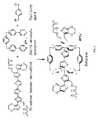
FIG. 2 is a diagram illustrating the synthetic scheme of the example of the present invention. -
FIG. 3 is a chart illustrating NMR spectrum of the rotaxane of the above example. -
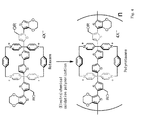
FIG. 4 is a chart illustrating the synthetic scheme of the polyrotaxane of the present invention. -
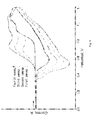
FIG. 5 is a cyclic voltammogram of the rotaxane of the above example. -
FIG. 6 is a chart showing an image of a polyrotaxane film formed on the indium tin oxide (ITO) electrode of the above example. -
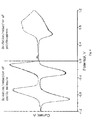
FIG. 7 is a chart illustrating the ultraviolet-visible absorption spectrum of the rotaxane and polyrotaxane film of the above example.FIG. 8 is a cyclic voltammogram of the polyrotaxane film of the above example. - The inventors pursued research on synthesis of a polyrotaxane, and succeeded in completing the present invention based on the knowledge that in a rotaxane synthesized by a π-conjugated oligomer and an electron-accepting cyclic molecule, the electron-accepting cyclic molecule is prevented from being sterically dissociated from the π-conjugated oligomer because of the side chains of the π-conjugated oligomer.
-
FIG. 1 illustrates the concept of the present invention.Sign character 1 inFIG. 1 represents a π-conjugated oligomer,sign character 2 represents a cyclic molecule including electron-accepting part, andsign character 3 represents side chains.
Namely, the rotaxane has a basic structure having the π-conjugatedoligomer 1 and the electron-acceptingcyclic molecule 2, where the electron-acceptingcyclic molecule 2 is prevented from being dissociated from the π-conjugatedoligomer 1 because of theside chains 3 introduced into the π-conjugatedoligomer 1. - In the example, a chemical compound represented by
chemical formula 1 is shown as the rotaxane, andchemical formula 2 represents a cyclic molecule containing two 4,4'-bipyridinium salt regions as the electron-accepting cyclic molecule of the rotaxane. Intermolecular interaction takes place between the electron-accepting 4,4'-bipyridinium salt and the electron-releasing thiophene oligomer, and the electron-accepting cyclic molecule remains in stable state without being dissociated by oxidative condensation reaction of the rotaxane. -

-

- This description shows specific compound of the π-conjugated oligomer, citing an example of a thiophene hexamer derivative. However, a large number of π-conjugated oligomers that can be subjected to oxidation polymerization are known. π-conjugated oligomers that turn to conductive molecules as a result of synthesis by oxidation polymerization, such as derivatives including heterocyclic π-conjugated oligomer represented by
chemical formula 4, oligophenylene represented by chemical formula 5, oligofluorene represented by chemical formula 6, oligo-aniline represented by chemical formula 7, and oligophenylene sulfide represented by chemical formula 8, derivatives partially containing the above derivatives, and mixed derivatives may be used. Since these oligomers have electron-releasing property similar to thiophene derivative, it is well imagined that synthesis of rotaxanes and that of polyrotaxanes based on oxidation polymerization are possible. Although the thiophene hexamer derivative is used in the example, it is well imagined that longer or shorter oligomers can also produce similar results. -

-

-

-

-

-

- The side chains of the π-conjugated oligomer prevent the cyclic molecule from being dissociated from the π-conjugated oligomer. Side chains of any length or chemical structure can be used, provided that they are larger than the internal diameter of the cyclic molecule (5 angstrom × 11 angstrom). For example, alkyl group, ethylene glycol group having a repeating unit of 1 or higher, ethylene glycol group having a methyl group at the end and a repeating unit of 1 or higher, ethylene glycol group having an ethyl group at the end and a repeating unit of 1 or higher, ethylene glycol group having propyl group or isopropyl group at the end and a repeating unit of 1 or higher, and ethylene glycol group having a butyl group or tertiary butyl group at the end and repeating unit of 1 or higher can be used.
- A rotaxane is synthesized by reacting π-conjugated oligomer, cyclic molecule precursor, and cyclizing agent to react with each other in a polar organic solvent.
- In the example, as the cyclic molecule precursor, a molecule containing two 4,4'-bipyridinium salt regions can be used. In this specification, 1,1'-[1,4-phenylenebis (methylene)] bis-4,4'-bipyridinium bis (hexafluorophosphate) is used.
- As the cyclizing agent, α,α'-dihalogen-p-xylene can be used. Specifically, α,α,'-dibromo-p-xylene is used.
- Any conductive work electrodes can be used without limitation to synthesize a polyrotaxane. Any work electrodes capable of applying a voltage sufficient to oxidize the rotaxane to the system can be used. It has been confirmed that a film is formed with the voltage of +1.0 V (to a reference saturated calomel electrode [SCE]) or higher. Any rotaxane solution concentrations sufficient to cause polymerization can be adopted, and the concentration of 5.0 × 10⁻⁵M (mol) or higher was confirmed to form a film. It is well considerable that even if these conditions would be changed, similar results would be obtained.
- Any oxidizing agents having oxidizing power sufficient to oxidize the π-conjugated oligomer of the rotaxane can be used to synthesize a polyrotaxane by chemical oxidation. For example, SbCl5, SbF5, NOSbF6, O2SbF6 O2AsF6, NOAsF6, NOBF4, NOClO4, NOPF6, FeCl3, FeBr3, FeI3, Fe(C1O4)3, Fe(BF4)3, Fe(PF6)3, FePO4, Fe(CH3C6H4SO3)3, Fe(CF3SO3)3, MoCl5, RuCl3, CuCl2, etc. can be used. It is well considerable that even if the type of oxidizing agent should be changed, similar results would be obtained.
- As shown in
FIG. 1 , if rotaxanes are subjected to chemical or electrochemical oxidation polymerization, the π-conjugated oligomer 1 turns to aconductive polymer 4, and thus a polyrotaxane is obtained.
The present invention will hereinafter be described in detail by referring to examples. - As shown in
FIG. 2 and Table 1, a thiophene hexamer derivative expressed bychemical formula 3, namely 3,4,3""',4""'-bis(ethylenedioxy)-3',4""-[2-(2-ethoxyethoxy)ethoxy] methyl-2,2':5',2":5",2"':5"',2"":5"",2""'-sexithiophene, as olygomer, a cyclic molecule precursor (chemical formula 9), and a cyclizing agent α,α'-dibromo-p-xylene (chemical formula 10) were dissolved in acetonitrile or dimethylformamide, and the solution was kept agitated in the argon atmosphere for five to seven days. -

-

-

-
[Table 1] Rotaxane synthesis conditions and result Experiment No. Starting material Reaction condition Thiophene hexamer derivative Cyclic molecule precursor Cyclizing agent Type of solvent Amount of solvent Duration Yield 1 90mg 140mg 50mg Acetonitrile 6mL 5 10mol % 2 130mg 220mg 75mg Acetonitrile 5mL 6 11mol % 3 300mg 470mg 175mg Acetonitrile 10mL 7 11mol % 4 270mg 1500mg 630mg Dimethylformamide 20mL 7 7mol % 5 300mg 470mg 175mg Dimethylformamide 10mL 7 9mol % - To decrease the polarity of the solution, 30 mL of acetic ester was added to the reaction solution, the solution was poured directly into a silica gel column to allow the rotaxane to adsorb to silica gel (Silica gel 60N, spherical neutral [KANTO KAGAKU]). To remove unreacted raw materials and byproducts that did not turn into the rotaxane, 100 mL of acetic ether, and then a 9:1 solution of dichloromethane and methanol were kept pouring in until the solution coming out of the silica gel column became completely transparent. Using a 6:3:1 solution of methanol, 2M ammonium chloride solution and nitromethane, the rotaxane was eluted from the silica gel column. The eluate was condensed using an evaporator, and then to allow the rotaxane to precipitate by counterion exchange, an ammonium hexafluorophosphate solution (11M) was added until precipitate was no longer formed. After the precipitate was recovered by vacuum filtration, vacuum drying was performed to obtain a green solid rotaxane represented by
chemical formula 1. -

- Synthesized rotaxane was confirmed by nuclear magnetic resonance (NMR) and high-resolution mass spectrometry.
- The results of NMR and high-resolution mass spectrometry are shown below.
- δ = 1.01 (6H), 3.41 (4H), 3.58 (4H), 3.67 (4H), 3.76 (4H), 3.79 (4H), 4.38 (8H), 4.48 (4H), 5.57 (2H), 5.78 (8H), 5.89 (2H), 6.69 (2H), 6.78 (2H), 7.79 (8H), 7.88 (8H), 8.95 (8H) ppm.
- δ = 15.4, 65.5, 65.6, 66.3, 66.8, 67.5, 70.3, 71.16, 71.22, 71.4, 101.7, 108.1, 125.5, 126.3, 126.5, 127.6, 131.8, 134.4, 135.0, 136.0, 138.0, 138.2, 140.4, 143.0, 146.0, 148.5 ppm.
-
FIG. 3 is an NMR chart of the rotaxane obtained in the example. - Actual measurement value m/z = 522.4530 [M+PF6]3+
Theoretical value C78H78F6N4O10PS6: m/z = 522.4561 -
FIG. 4 shows the scheme of synthesizing a polyrotaxane from rotaxanes.
First, by subjecting the rotaxane obtained as described above to electrochemical polymerization, the polyrotaxane was obtained. As shown in Table 2, using an acetonitrile solution containing 0.1 M of tetrabutylammonium perchlorate (TBA·PF6) or tetrabutylammonium hexafluorophosphate (TBA·Cl4), 0.01 to 1 mM of a rotaxane solution was prepared. - As a work electrode, a transparent indium tin oxide (ITO) electrode was used. As counter and reference electrodes, a platinum wire and a saturated calomel electrode (SCE) were used.
-
[Table 2] Polyrotaxane film formation conditions and results Experiment No. (1)* Concentration (mM) (2)* Voltage range (V) Work electrode rate Number of sweep maximum sweep (3)* n·n* transition Absorption wavelength Absorb ance 1 1 TBA·PF6 0.0-1.2 100mV/ s 4 No - - 2 1 TBA·ClO4 0.0-1.2 200mV/ s 4 Yes 519nm 0.42 3 1 TBA·ClO4 0.0-1.2 100mV/ s 4 Yes 516nm 0.51 4 1 TBA·ClO4 0.0-1.2 50mV/ s 4 Yes 516nm 0.53 5 1 TBA·ClO4 0.0-1.2 100mV/ s 2 Yes 521nm 0.34 6 1 TBA·ClO4 0.0-1.0 50mV/ s 4 Yes 519nm 0.18 7 1 TBA·ClO4 0.0-0.8 100mV/ s 4 No - - 8 0.1 TBA·ClO4 0.0-1.2 100mV/ s 4 Yes 523nm 0.05 9 0.05 TBA·ClO4 0.0-1.2 100mV/ s 4 Yes 525nm 0.01 10 0.01 TBA·ClO4 0.0-1.2 100mV/ s 4 No - - (1)*: Rotaxane in experiment No. 2 in Table 1 was used. (3)* Formation of film
(2)*: Supporting electrolyte - When the work electrode voltage was changed within the 0 V to 1.2 V range at the sweep rate of 50 mV/s to 200 mV/s, the first peak of oxidation was found when the voltage was 0.8 V or higher, but with the second and subsequent sweep, new oxidation peak was found around 0.6 V. While repeating voltage sweep, the peak was found to fall around 0.6 V (see
FIG. 5 ), which means that electrolytic polymerization occurred on the electrode surface, thus causing thiophene contained in the rotaxane to be polymerized. It is desirable that a supporting electrolyte having low polyrotaxane-soluble property be selected and used. - As shown in
FIG. 6 ., it was confirmed that a purplish-red film had been formed on the ITO electrode. - The structure of the polyrotaxane obtained in the example is shown by chemical formula 11.

- Instead of conducting electrochemical polymerization, a polyrotaxane was synthesized by externally adding an oxidizing agent.
10 mg of a rotaxane was dissolved in 0.8 mL of acetonitril, then 7 mg of Fe(ClO3)4 was added to the solution, and the color of the solution turned from dark purplish red to green, and then to blue. After the solution was agitated for an hour, the reaction solution was dropped into 50 mL of methanol, and then the solution was further agitated for another hour. A centrifugal separator was used to precipitate polyrotaxane, the supernatant liquid was removed by decantation, and then vacuum drying was performed to obtain polyrotaxane powder. - To examine the optical characteristics of the polyrotaxane film formed on the ITO substrate by electrochemical polymerization, the ITO substrate having the polyrotaxane film was placed on an optical path and analyzed using an ultraviolet-visible absorption spectrum analyzer. It was confirmed that as a result of rotaxane turning into polyrotaxane by electrochemical polymerization, the absorption maximum wavelength of π-π*transition shifted from 435 nm to 515-525 nm (see
FIG. 7 ). This shift of absorption maximum wavelength of π-π*transition to longer wavelength represents expansion of π conjugation, meaning that the π-conjugated oligomer has been polymerized into a polymer. The absorption maximum wavelength of π-π*transition of the polythiophene polyrotaxane obtained fell within a small range from 515 to 525 nm irrespective of electrochemical polymerization conditions, which means a film of uniform quality was obtained. - The electrochemical characteristics of the polyrotaxane film formed on the ITO substrate by electrochemical polymerization were measured by cyclic voltammetry. Polythiophene-derived oxidation/reduction peak was found in the oxidation region (voltage of the work electrode: positive), whereas in the reduction region (voltage of the work electrode: negative), oxidation/reduction peak derived from 4,4'-bipyridinium salt region of the electron-accepting cyclic molecule was found (see
FIG. 8 ). This result confirms that the polytaxane film contains polythiophene and an electron-accepting cyclic molecule.
Claims (6)
- A conductive polyrotaxane synthesized by polymerization of rotaxanes, characterized in that each repeating unit of the conductive polyrotaxane contains an electron-accepting cyclic molecule.
- The conductive polyrotaxane as set force in claim 1, characterized in that the electron-accepting cyclic molecule interacts with a π-conjugated oligomer molecule.
- A conductive polyrotaxane characterized in that the conductive polyrotaxane is a rotaxane polymer having a π-conjugated oligomer and an electron-accepting cyclic molecule.
- The conductive polyrotaxane as set forth in claim 3, wherein the rotaxane is represented by the following chemical formula.

- A method of synthesizing a conductive polyrotaxane, comprising: reacting a rotaxane obtained by allowing a π-conjugated oligomer, cyclic molecule precursor, and cyclizing agent in a low-polarity organic solvent for subjecting oxidation polymerization.
- The method of synthesizing a conductive polyrotaxane as set forth in claim 5, wherein the π-conjugated oligomer is expressed by the following chemical formula;


Applications Claiming Priority (2)
| Application Number | Priority Date | Filing Date | Title |
|---|---|---|---|
| JP2009105010A JP5493204B2 (en) | 2009-04-23 | 2009-04-23 | Conductive polyrotaxane |
| PCT/JP2010/057178 WO2010123079A1 (en) | 2009-04-23 | 2010-04-22 | Electrically conductive polyrotaxane |
Publications (3)
| Publication Number | Publication Date |
|---|---|
| EP2423242A4 EP2423242A4 (en) | 2012-02-29 |
| EP2423242A1 true EP2423242A1 (en) | 2012-02-29 |
| EP2423242B1 EP2423242B1 (en) | 2013-07-10 |
Family
ID=43011195
Family Applications (1)
| Application Number | Title | Priority Date | Filing Date |
|---|---|---|---|
| EP10767136.4A Not-in-force EP2423242B1 (en) | 2009-04-23 | 2010-04-22 | Electrically conductive polyrotaxane |
Country Status (4)
| Country | Link |
|---|---|
| US (1) | US8613611B2 (en) |
| EP (1) | EP2423242B1 (en) |
| JP (1) | JP5493204B2 (en) |
| WO (1) | WO2010123079A1 (en) |
Families Citing this family (4)
| Publication number | Priority date | Publication date | Assignee | Title |
|---|---|---|---|---|
| JP2014118481A (en) * | 2012-12-17 | 2014-06-30 | Tokai Rubber Ind Ltd | Electroconductive material and transducer using the same |
| KR101816048B1 (en) | 2016-12-28 | 2018-02-21 | 한국과학기술원 | Rotecane polymer binder for lithium secondary batteries, electrode including the binder and secomdary battery including the electrode |
| EP3687548A4 (en) | 2017-09-29 | 2021-05-26 | The Regents of the University of California | MULTI-ARM POLYROTAXANE PLATFORM FOR PROTECTED NUCLEIC ACID ADMINISTRATION |
| WO2021195388A1 (en) * | 2020-03-25 | 2021-09-30 | Northwestern University | Mechanical-bond-protected stable bisradicals |
Family Cites Families (6)
| Publication number | Priority date | Publication date | Assignee | Title |
|---|---|---|---|---|
| US5824470A (en) * | 1995-05-30 | 1998-10-20 | California Institute Of Technology | Method of preparing probes for sensing and manipulating microscopic environments and structures |
| JP4406211B2 (en) | 2003-03-11 | 2010-01-27 | 株式会社日立製作所 | Electronic devices using π-conjugated polymer structures |
| JP5145548B2 (en) * | 2005-09-02 | 2013-02-20 | 国立大学法人 東京大学 | Polyrotaxane-containing solution and use thereof |
| JP2007077030A (en) * | 2005-09-12 | 2007-03-29 | Tokyo Institute Of Technology | Intramolecular catalytic reaction method of polyrotaxane |
| US8294636B2 (en) * | 2006-12-08 | 2012-10-23 | Panasonic Corporation | Plasma display device and method of driving the same |
| JP4377446B2 (en) | 2006-12-08 | 2009-12-02 | パナソニック株式会社 | Organic polymer comprising a plurality of organic cyclic structures and a chain structure penetrating the organic cyclic structure, and a method for producing the same |
-
2009
- 2009-04-23 JP JP2009105010A patent/JP5493204B2/en not_active Expired - Fee Related
-
2010
- 2010-04-22 US US13/264,474 patent/US8613611B2/en not_active Expired - Fee Related
- 2010-04-22 EP EP10767136.4A patent/EP2423242B1/en not_active Not-in-force
- 2010-04-22 WO PCT/JP2010/057178 patent/WO2010123079A1/en not_active Ceased
Non-Patent Citations (4)
| Title |
|---|
| CACIALLI F ET AL: "CYCLODEXTRIN-THREADED CONJUGATED POLYROTAXANES AS INSULATED MOLECULAR WIRES WITH REDUCED INTERSTRAND INTERACTIONS", NATURE MATERIALS, NATURE PUBLISHING GROUP, LONDON, GB, vol. 1, no. 3, 1 November 2002 (2002-11-01), pages 160-164, XP008027978, ISSN: 1476-4660, DOI: 10.1038/NMAT750 * |
| S. SHERRY ZHU ET AL: "Conducting Polymetallorotaxanes: Metal Ion Mediated Enhancements in Conductivity and Charge Localization", JOURNAL OF THE AMERICAN CHEMICAL SOCIETY, vol. 119, no. 51, 1 December 1997 (1997-12-01), pages 12568-12577, XP55016573, ISSN: 0002-7863, DOI: 10.1021/ja972794w * |
| See also references of WO2010123079A1 * |
| TAICHI IKEDA ET AL: "[beta]-Substituted Terthiophene [2]Rotaxanes", CHEMISTRY - A EUROPEAN JOURNAL, vol. 15, no. 19, 23 March 2009 (2009-03-23), pages 4906-4913, XP55016611, ISSN: 0947-6539, DOI: 10.1002/chem.200802120 * |
Also Published As
| Publication number | Publication date |
|---|---|
| EP2423242A4 (en) | 2012-02-29 |
| US8613611B2 (en) | 2013-12-24 |
| JP2010254778A (en) | 2010-11-11 |
| EP2423242B1 (en) | 2013-07-10 |
| US20120083582A1 (en) | 2012-04-05 |
| WO2010123079A1 (en) | 2010-10-28 |
| JP5493204B2 (en) | 2014-05-14 |
Similar Documents
| Publication | Publication Date | Title |
|---|---|---|
| Sotzing | Low band gap cyanovinylene polymers based on ethylenedioxythiophene | |
| JP6704389B2 (en) | Polymer, oxidative polymer, polymer composition, gel polymer composition and use thereof | |
| EP2123690A1 (en) | Polymer having unit obtained by condensation of difluorocyclopentanedione ring and aromatic ring, organic thin film using the same, and organic thin film device | |
| US10475592B2 (en) | Composition and method for forming electroactive coating comprising conjugated heteroaromatic polymer, capacitor and antistatic object comprising the electroactive coating, and solid electrolytic capacitor and method for fabricating the same | |
| US10538633B2 (en) | Conjugated heteroaromatic homopolymer and copolymer, and applications thereof | |
| CN108165140B (en) | Electroactive coating and composition for forming the same | |
| EP2423242B1 (en) | Electrically conductive polyrotaxane | |
| JP2011517701A (en) | Selenophene and selenophene polymers, their preparation, and uses thereof | |
| Burns et al. | Thiophene‐based ionic liquids: synthesis, physical properties, self‐assembly, and oxidative polymerization | |
| EP1713101B1 (en) | Electrode for energy storage device and process for producing the same | |
| US9859062B2 (en) | Composition and method for forming electroactive polymer solution or coating comprising conjugated heteroaromatic polymer, electroactive polymer solution, capacitor and antistatic object comprising the electroactive coating, and solid electrolytic capacitor and method for fabricating the same | |
| JP2017508857A (en) | Composition and method for forming electroactive polymer solution or coating film containing conjugated heteroaromatic ring polymer, electroactive polymer solution, capacitor (capacitor) and antistatic body containing electroactive coating film, and solid electrolyte capacitor The manufacturing method | |
| WO2014029014A1 (en) | Thieno, furo and selenopheno-[3,4-c]pyrrole-4,6-dione copolymers | |
| EP1361244B1 (en) | Poly(5-aminoquinoxalines); preparation and use thereof | |
| JP2012214730A (en) | Thienothiophene copolymer and method for preparing the same | |
| Liu et al. | Electrosyntheses and characterization of polyalkylenedioxybenzenes | |
| Bonoldi et al. | Optical and electronic properties of fluorene/thiophene/benzothiadiazole pseudorandom copolymers for photovoltaic applications | |
| Blanchard et al. | Electrochemistry of oligothiophenes and polythiophenes | |
| Varni | Design, Synthesis, and Properties of Furan-Based Conjugated Materials | |
| Venkatesan et al. | An oligothiophene chromophore with a macrocyclic side chain: synthesis, morphology, charge transport, and photovoltaic performance | |
| CN113161471B (en) | Thermoelectric conversion element and article having thermoelectric conversion element | |
| Cihaner | Electrochemical synthesis of crowned conducting polymers: nature of radical cations in polymerization and mechanism of conductivity | |
| Remigio | Reactivity and Electrochemical Study of Peripherally Fluorinated Boron Subphthalocyanines | |
| Patel | Organic Polyradicals: Synthesis, Characterization and Application | |
| WO2025231557A1 (en) | Novel conjugated polydioxythiophene derivatives |
Legal Events
| Date | Code | Title | Description |
|---|---|---|---|
| PUAI | Public reference made under article 153(3) epc to a published international application that has entered the european phase |
Free format text: ORIGINAL CODE: 0009012 |
|
| 17P | Request for examination filed |
Effective date: 20111019 |
|
| A4 | Supplementary search report drawn up and despatched |
Effective date: 20120125 |
|
| AK | Designated contracting states |
Kind code of ref document: A1 Designated state(s): AT BE BG CH CY CZ DE DK EE ES FI FR GB GR HR HU IE IS IT LI LT LU LV MC MK MT NL NO PL PT RO SE SI SK SM TR |
|
| DAX | Request for extension of the european patent (deleted) | ||
| 17Q | First examination report despatched |
Effective date: 20120927 |
|
| GRAP | Despatch of communication of intention to grant a patent |
Free format text: ORIGINAL CODE: EPIDOSNIGR1 |
|
| INTG | Intention to grant announced |
Effective date: 20130327 |
|
| RIN1 | Information on inventor provided before grant (corrected) |
Inventor name: IKEDA TAICHI Inventor name: KURTH DIRK G Inventor name: HIGUCHI MASAYOSHI |
|
| GRAS | Grant fee paid |
Free format text: ORIGINAL CODE: EPIDOSNIGR3 |
|
| GRAA | (expected) grant |
Free format text: ORIGINAL CODE: 0009210 |
|
| AK | Designated contracting states |
Kind code of ref document: B1 Designated state(s): AT BE BG CH CY CZ DE DK EE ES FI FR GB GR HR HU IE IS IT LI LT LU LV MC MK MT NL NO PL PT RO SE SI SK SM TR |
|
| REG | Reference to a national code |
Ref country code: GB Ref legal event code: FG4D |
|
| REG | Reference to a national code |
Ref country code: AT Ref legal event code: REF Ref document number: 620966 Country of ref document: AT Kind code of ref document: T Effective date: 20130715 Ref country code: CH Ref legal event code: EP |
|
| REG | Reference to a national code |
Ref country code: IE Ref legal event code: FG4D |
|
| REG | Reference to a national code |
Ref country code: DE Ref legal event code: R096 Ref document number: 602010008502 Country of ref document: DE Effective date: 20130905 |
|
| PG25 | Lapsed in a contracting state [announced via postgrant information from national office to epo] |
Ref country code: SI Free format text: LAPSE BECAUSE OF FAILURE TO SUBMIT A TRANSLATION OF THE DESCRIPTION OR TO PAY THE FEE WITHIN THE PRESCRIBED TIME-LIMIT Effective date: 20130710 |
|
| REG | Reference to a national code |
Ref country code: AT Ref legal event code: MK05 Ref document number: 620966 Country of ref document: AT Kind code of ref document: T Effective date: 20130710 |
|
| REG | Reference to a national code |
Ref country code: NL Ref legal event code: VDEP Effective date: 20130710 |
|
| REG | Reference to a national code |
Ref country code: LT Ref legal event code: MG4D |
|
| PG25 | Lapsed in a contracting state [announced via postgrant information from national office to epo] |
Ref country code: NO Free format text: LAPSE BECAUSE OF FAILURE TO SUBMIT A TRANSLATION OF THE DESCRIPTION OR TO PAY THE FEE WITHIN THE PRESCRIBED TIME-LIMIT Effective date: 20131010 Ref country code: HR Free format text: LAPSE BECAUSE OF FAILURE TO SUBMIT A TRANSLATION OF THE DESCRIPTION OR TO PAY THE FEE WITHIN THE PRESCRIBED TIME-LIMIT Effective date: 20130710 Ref country code: SE Free format text: LAPSE BECAUSE OF FAILURE TO SUBMIT A TRANSLATION OF THE DESCRIPTION OR TO PAY THE FEE WITHIN THE PRESCRIBED TIME-LIMIT Effective date: 20130710 Ref country code: IS Free format text: LAPSE BECAUSE OF FAILURE TO SUBMIT A TRANSLATION OF THE DESCRIPTION OR TO PAY THE FEE WITHIN THE PRESCRIBED TIME-LIMIT Effective date: 20131110 Ref country code: LT Free format text: LAPSE BECAUSE OF FAILURE TO SUBMIT A TRANSLATION OF THE DESCRIPTION OR TO PAY THE FEE WITHIN THE PRESCRIBED TIME-LIMIT Effective date: 20130710 Ref country code: PT Free format text: LAPSE BECAUSE OF FAILURE TO SUBMIT A TRANSLATION OF THE DESCRIPTION OR TO PAY THE FEE WITHIN THE PRESCRIBED TIME-LIMIT Effective date: 20131111 Ref country code: CY Free format text: LAPSE BECAUSE OF FAILURE TO SUBMIT A TRANSLATION OF THE DESCRIPTION OR TO PAY THE FEE WITHIN THE PRESCRIBED TIME-LIMIT Effective date: 20130814 Ref country code: AT Free format text: LAPSE BECAUSE OF FAILURE TO SUBMIT A TRANSLATION OF THE DESCRIPTION OR TO PAY THE FEE WITHIN THE PRESCRIBED TIME-LIMIT Effective date: 20130710 Ref country code: BE Free format text: LAPSE BECAUSE OF FAILURE TO SUBMIT A TRANSLATION OF THE DESCRIPTION OR TO PAY THE FEE WITHIN THE PRESCRIBED TIME-LIMIT Effective date: 20130710 |
|
| PG25 | Lapsed in a contracting state [announced via postgrant information from national office to epo] |
Ref country code: LV Free format text: LAPSE BECAUSE OF FAILURE TO SUBMIT A TRANSLATION OF THE DESCRIPTION OR TO PAY THE FEE WITHIN THE PRESCRIBED TIME-LIMIT Effective date: 20130710 Ref country code: FI Free format text: LAPSE BECAUSE OF FAILURE TO SUBMIT A TRANSLATION OF THE DESCRIPTION OR TO PAY THE FEE WITHIN THE PRESCRIBED TIME-LIMIT Effective date: 20130710 Ref country code: GR Free format text: LAPSE BECAUSE OF FAILURE TO SUBMIT A TRANSLATION OF THE DESCRIPTION OR TO PAY THE FEE WITHIN THE PRESCRIBED TIME-LIMIT Effective date: 20131011 Ref country code: PL Free format text: LAPSE BECAUSE OF FAILURE TO SUBMIT A TRANSLATION OF THE DESCRIPTION OR TO PAY THE FEE WITHIN THE PRESCRIBED TIME-LIMIT Effective date: 20130710 Ref country code: ES Free format text: LAPSE BECAUSE OF FAILURE TO SUBMIT A TRANSLATION OF THE DESCRIPTION OR TO PAY THE FEE WITHIN THE PRESCRIBED TIME-LIMIT Effective date: 20131021 Ref country code: NL Free format text: LAPSE BECAUSE OF FAILURE TO SUBMIT A TRANSLATION OF THE DESCRIPTION OR TO PAY THE FEE WITHIN THE PRESCRIBED TIME-LIMIT Effective date: 20130710 |
|
| PG25 | Lapsed in a contracting state [announced via postgrant information from national office to epo] |
Ref country code: CY Free format text: LAPSE BECAUSE OF FAILURE TO SUBMIT A TRANSLATION OF THE DESCRIPTION OR TO PAY THE FEE WITHIN THE PRESCRIBED TIME-LIMIT Effective date: 20130710 |
|
| PG25 | Lapsed in a contracting state [announced via postgrant information from national office to epo] |
Ref country code: DK Free format text: LAPSE BECAUSE OF FAILURE TO SUBMIT A TRANSLATION OF THE DESCRIPTION OR TO PAY THE FEE WITHIN THE PRESCRIBED TIME-LIMIT Effective date: 20130710 Ref country code: SK Free format text: LAPSE BECAUSE OF FAILURE TO SUBMIT A TRANSLATION OF THE DESCRIPTION OR TO PAY THE FEE WITHIN THE PRESCRIBED TIME-LIMIT Effective date: 20130710 Ref country code: CZ Free format text: LAPSE BECAUSE OF FAILURE TO SUBMIT A TRANSLATION OF THE DESCRIPTION OR TO PAY THE FEE WITHIN THE PRESCRIBED TIME-LIMIT Effective date: 20130710 Ref country code: RO Free format text: LAPSE BECAUSE OF FAILURE TO SUBMIT A TRANSLATION OF THE DESCRIPTION OR TO PAY THE FEE WITHIN THE PRESCRIBED TIME-LIMIT Effective date: 20130710 Ref country code: EE Free format text: LAPSE BECAUSE OF FAILURE TO SUBMIT A TRANSLATION OF THE DESCRIPTION OR TO PAY THE FEE WITHIN THE PRESCRIBED TIME-LIMIT Effective date: 20130710 |
|
| PLBE | No opposition filed within time limit |
Free format text: ORIGINAL CODE: 0009261 |
|
| STAA | Information on the status of an ep patent application or granted ep patent |
Free format text: STATUS: NO OPPOSITION FILED WITHIN TIME LIMIT |
|
| PG25 | Lapsed in a contracting state [announced via postgrant information from national office to epo] |
Ref country code: IT Free format text: LAPSE BECAUSE OF FAILURE TO SUBMIT A TRANSLATION OF THE DESCRIPTION OR TO PAY THE FEE WITHIN THE PRESCRIBED TIME-LIMIT Effective date: 20130710 |
|
| 26N | No opposition filed |
Effective date: 20140411 |
|
| REG | Reference to a national code |
Ref country code: DE Ref legal event code: R097 Ref document number: 602010008502 Country of ref document: DE Effective date: 20140411 |
|
| PG25 | Lapsed in a contracting state [announced via postgrant information from national office to epo] |
Ref country code: MC Free format text: LAPSE BECAUSE OF FAILURE TO SUBMIT A TRANSLATION OF THE DESCRIPTION OR TO PAY THE FEE WITHIN THE PRESCRIBED TIME-LIMIT Effective date: 20130710 Ref country code: LU Free format text: LAPSE BECAUSE OF FAILURE TO SUBMIT A TRANSLATION OF THE DESCRIPTION OR TO PAY THE FEE WITHIN THE PRESCRIBED TIME-LIMIT Effective date: 20140422 |
|
| REG | Reference to a national code |
Ref country code: CH Ref legal event code: PL |
|
| GBPC | Gb: european patent ceased through non-payment of renewal fee |
Effective date: 20140422 |
|
| REG | Reference to a national code |
Ref country code: IE Ref legal event code: MM4A |
|
| PG25 | Lapsed in a contracting state [announced via postgrant information from national office to epo] |
Ref country code: GB Free format text: LAPSE BECAUSE OF NON-PAYMENT OF DUE FEES Effective date: 20140422 Ref country code: CH Free format text: LAPSE BECAUSE OF NON-PAYMENT OF DUE FEES Effective date: 20140430 Ref country code: LI Free format text: LAPSE BECAUSE OF NON-PAYMENT OF DUE FEES Effective date: 20140430 |
|
| REG | Reference to a national code |
Ref country code: FR Ref legal event code: PLFP Year of fee payment: 6 |
|
| PG25 | Lapsed in a contracting state [announced via postgrant information from national office to epo] |
Ref country code: IE Free format text: LAPSE BECAUSE OF NON-PAYMENT OF DUE FEES Effective date: 20140422 |
|
| PGFP | Annual fee paid to national office [announced via postgrant information from national office to epo] |
Ref country code: DE Payment date: 20150429 Year of fee payment: 6 |
|
| PGFP | Annual fee paid to national office [announced via postgrant information from national office to epo] |
Ref country code: FR Payment date: 20150429 Year of fee payment: 6 |
|
| PG25 | Lapsed in a contracting state [announced via postgrant information from national office to epo] |
Ref country code: MT Free format text: LAPSE BECAUSE OF FAILURE TO SUBMIT A TRANSLATION OF THE DESCRIPTION OR TO PAY THE FEE WITHIN THE PRESCRIBED TIME-LIMIT Effective date: 20130710 |
|
| PG25 | Lapsed in a contracting state [announced via postgrant information from national office to epo] |
Ref country code: SM Free format text: LAPSE BECAUSE OF FAILURE TO SUBMIT A TRANSLATION OF THE DESCRIPTION OR TO PAY THE FEE WITHIN THE PRESCRIBED TIME-LIMIT Effective date: 20130710 |
|
| PG25 | Lapsed in a contracting state [announced via postgrant information from national office to epo] |
Ref country code: BG Free format text: LAPSE BECAUSE OF FAILURE TO SUBMIT A TRANSLATION OF THE DESCRIPTION OR TO PAY THE FEE WITHIN THE PRESCRIBED TIME-LIMIT Effective date: 20130710 |
|
| PG25 | Lapsed in a contracting state [announced via postgrant information from national office to epo] |
Ref country code: TR Free format text: LAPSE BECAUSE OF FAILURE TO SUBMIT A TRANSLATION OF THE DESCRIPTION OR TO PAY THE FEE WITHIN THE PRESCRIBED TIME-LIMIT Effective date: 20130710 Ref country code: HU Free format text: LAPSE BECAUSE OF FAILURE TO SUBMIT A TRANSLATION OF THE DESCRIPTION OR TO PAY THE FEE WITHIN THE PRESCRIBED TIME-LIMIT; INVALID AB INITIO Effective date: 20100422 |
|
| REG | Reference to a national code |
Ref country code: DE Ref legal event code: R119 Ref document number: 602010008502 Country of ref document: DE |
|
| REG | Reference to a national code |
Ref country code: FR Ref legal event code: ST Effective date: 20161230 |
|
| PG25 | Lapsed in a contracting state [announced via postgrant information from national office to epo] |
Ref country code: DE Free format text: LAPSE BECAUSE OF NON-PAYMENT OF DUE FEES Effective date: 20161101 Ref country code: FR Free format text: LAPSE BECAUSE OF NON-PAYMENT OF DUE FEES Effective date: 20160502 |
|
| PG25 | Lapsed in a contracting state [announced via postgrant information from national office to epo] |
Ref country code: MK Free format text: LAPSE BECAUSE OF FAILURE TO SUBMIT A TRANSLATION OF THE DESCRIPTION OR TO PAY THE FEE WITHIN THE PRESCRIBED TIME-LIMIT Effective date: 20130710 |