EP2421325A1 - Method of applying discontinuous reception operation (DRX) in carrier aggregation and related communication device - Google Patents
Method of applying discontinuous reception operation (DRX) in carrier aggregation and related communication device Download PDFInfo
- Publication number
- EP2421325A1 EP2421325A1 EP11006772A EP11006772A EP2421325A1 EP 2421325 A1 EP2421325 A1 EP 2421325A1 EP 11006772 A EP11006772 A EP 11006772A EP 11006772 A EP11006772 A EP 11006772A EP 2421325 A1 EP2421325 A1 EP 2421325A1
- Authority
- EP
- European Patent Office
- Prior art keywords
- serving cell
- control element
- drx
- scell
- secondary serving
- Prior art date
- Legal status (The legal status is an assumption and is not a legal conclusion. Google has not performed a legal analysis and makes no representation as to the accuracy of the status listed.)
- Withdrawn
Links
- 238000004891 communication Methods 0.000 title claims abstract description 37
- 238000000034 method Methods 0.000 title claims abstract description 22
- 230000002776 aggregation Effects 0.000 title description 4
- 238000004220 aggregation Methods 0.000 title description 4
- 230000009849 deactivation Effects 0.000 claims abstract description 16
- 230000004913 activation Effects 0.000 claims abstract description 12
- 230000003213 activating effect Effects 0.000 claims abstract description 10
- 230000020411 cell activation Effects 0.000 abstract description 2
- 230000008569 process Effects 0.000 description 7
- 230000005540 biological transmission Effects 0.000 description 6
- 238000012545 processing Methods 0.000 description 5
- 238000010586 diagram Methods 0.000 description 4
- 239000000969 carrier Substances 0.000 description 2
- 238000013500 data storage Methods 0.000 description 2
- 230000007774 longterm Effects 0.000 description 2
- 230000000737 periodic effect Effects 0.000 description 2
- XUIMIQQOPSSXEZ-UHFFFAOYSA-N Silicon Chemical compound [Si] XUIMIQQOPSSXEZ-UHFFFAOYSA-N 0.000 description 1
- 230000004075 alteration Effects 0.000 description 1
- 230000008901 benefit Effects 0.000 description 1
- 238000010295 mobile communication Methods 0.000 description 1
- 238000012986 modification Methods 0.000 description 1
- 230000004048 modification Effects 0.000 description 1
- 238000012544 monitoring process Methods 0.000 description 1
- 230000003287 optical effect Effects 0.000 description 1
- 238000005457 optimization Methods 0.000 description 1
- 229910052710 silicon Inorganic materials 0.000 description 1
- 239000010703 silicon Substances 0.000 description 1
- 238000001228 spectrum Methods 0.000 description 1
Images


Classifications
-
- H—ELECTRICITY
- H04—ELECTRIC COMMUNICATION TECHNIQUE
- H04W—WIRELESS COMMUNICATION NETWORKS
- H04W76/00—Connection management
- H04W76/20—Manipulation of established connections
- H04W76/28—Discontinuous transmission [DTX]; Discontinuous reception [DRX]
Definitions
- the application relates to a method and a related communication device used in a wireless communication system and related communication device, and more particularly, to a method of applying discontinuous reception (DRX) operation and a related communication device in a wireless communication system.
- DRX discontinuous reception
- DRX Discontinuous Reception
- MAC Media Access Control
- PDCCH Physical down Link Control Channel
- IE DRX-configuration information element
- RRC radio resource control
- a DRX Inactivity Timer providing the number of consecutive PDCCH-subframe(s) after successfully decoding a PDCCH indicating an initial UL/DL user data transmission
- a DRX Retransmission Timer providing the maximum number of consecutive PDCCH-subframe(s) as soon as a DL retransmission is expected by the UE;
- a DRX Short Cycle Timer providing the number of consecutive subframe (s) during which the UE shall follow the short DRX cycle after the DRX Inactivity Timer has expired;
- the UE applies a same DRX operation to a PCell and all activated SCells in carrier aggregation.
- the UE is configured with a PCell and a deactivated SCell.
- the UE applies the DRX operation to the PCell and the SCell is still deactivated (i.e. the UE didn't apply the DRX to the deactivated SCell on that time).
- the UE receives a Activation/Deactivation MAC CE activating the SCell and the SCell is activated.
- the UE may not apply the DRX operation to the SCell and continue to receive a PDCCH on the SCell on an off duration in the DRX operation. This wastes UE power.
- a method of applying DRX operation for a mobile device in a wireless communication system is disclosed.
- the mobile device is configured with a primary serving cell and at least one secondary serving cell, and the DRX operation has been applied to the activated serving cell (i.e. the Pcell and the activated SCells), but has not applied to the deactivated serving cell yet.
- the method comprises receiving a control element, wherein the control element is used for activating the at least one secondary serving cell; and applying the DRX operation to the secondary serving cell, when this serving cell' s activation/deactivation state is changed from deactivation to activation state according to the control element.
- a communication device for applying DRX operation in a wireless communication system is disclosed.
- the communication device is configured with a primary serving cell and at least one secondary serving cell, and the DRX operation has been applied to the activated serving cell (i.e. the Pcell and the activated SCells), but has not applied to the deactivated serving cell yet.
- the communication device comprises means for receiving a control element, wherein the control element is used for activating the at least one secondary serving cell; and means for applying the DRX operation to the secondary serving cell, when this serving cell's activation/deactivation state is changed from deactivation to activation state according to the control element.
- FIG.1 is a schematic diagram of an exemplary wireless communication system.
- FIG.2 is a schematic diagram of an exemplary communication device.
- FIG.3 illustrates the program code in FIG.2 .
- the network and the UE can be seen as a transmitter or receiver according to transmission direction, e.g., for uplink (UL), the UE is the transmitter and the network is the receiver, and for downlink (DL), the network is the transmitter and the UE is the receiver.
- UL uplink
- DL downlink
- FIG.2 is a schematic diagram of an exemplary communication device 20.
- the communication device 20 can be the UE or the network shown in FIG.1 and may include a processing means 200 such as a microprocessor or ASIC, a memory unit 210, and a communication interfacing unit 220.
- the memory unit 210 may be any data storage device that can store program code 214 for access by the processing means 200. Examples of the memory unit 210 include but are not limited to a subscriber identity module (SIM) , read-only memory (ROM), random-access memory (RAM), CD-ROMs, magnetic tapes, floppy disks, and optical data storage devices.
- SIM subscriber identity module
- ROM read-only memory
- RAM random-access memory
- CD-ROMs compact discs
- magnetic tapes magnetic tapes
- floppy disks floppy disks
- optical data storage devices optical data storage devices.
- the communication interfacing unit 220 is preferably a radio transceiver for wirelessly communicating with the network according to processing results of the processing
- the PHY layer 340 can monitor a PDCCH (Physical Downlink Control Channel) for maintaining a subframe number and receiving configuration/resource information for the MAC layer 330, RRC layer 300, etc.
- the MAC layer 330 has discontinuous reception (DRX) functionality allowing periodic PDCCH reception followed by a possible inactivity period.
- the DRX is operated with a long DRX cycle or a short DRX cycle, each including a "On Duration" during which the PDCCH reception is executed.
- the "On Duration” is set according to an On Duration Timer.
- the secondary serving cells SCell_1, SCell_2,...,SCell_n are deactivated.
- the secondary serving cells SCell'_1, SCell'_2,...,SCell'_m are activated.
- the wireless communication system could be the wireless communication system 10.
- the process 40 can be compiled into the program code 214 and includes the following steps:
- Step 400 Start.
- Step 404 Receive a control element CE1, the control element is used for activating at least one of the secondary serving cells SCell-1, SCell_2,...,SCell_n.
- Step 406 Apply the same DRX operation to the at least one of the secondary serving cells SCell_1, SCell_2,...,SCell_n according to the control element CE1.
- the UE is configured with the primary serving cell and at least one secondary serving cell.
- the UE has been applied DRX operation on the primary serving cell, but not on the deactivated secondary serving cells yet (i.e. SCell_1, Scell_2,...,Scell_n).
- SCell_1, Scell_2,...,Scell_n the deactivated secondary serving cells yet.
- the UE receives the Activation/Deactivation MAC control element, at least one of the secondary serving cells get activated.
- the UE applies the same DRX operation to the secondary serving cells which their activation/deactivation state have just been changed from deactivation to activation state according to the Activation/Deactivation MAC control element. Consequently, the UE does not monitor PDCCH for reasource allocation of a DL-SCH (Downlink Shared Channel) and uplink (UL) scheduling grants from the secondary serving cells in off duration of the DRX operation.
- DL-SCH Downlink Shared Channel
- UL uplink
Landscapes
- Engineering & Computer Science (AREA)
- Computer Networks & Wireless Communication (AREA)
- Signal Processing (AREA)
- Mobile Radio Communication Systems (AREA)
Abstract
A method of applying DRX operation for a mobile device in a wireless communication system is disclosed. The mobile device is configured with a primary serving cell and at least one secondary serving cell, and the DRX operation is already applied to the activated serving cell(e.g. primary serving cell), but not applied to the deactivated serving cell. The method comprises receiving a control element, wherein the control element is used for activating the at least one secondary serving cell; and applying the DRX operation to the at least one secondary serving cell when this serving cell's activation/deactivation state has just been changed from deactivation to activation state according to the control element.
Description
- This application claims the benefit of
U.S. Provisional Application No. 61/374,622 filed on Aug 18, 2010 - The application relates to a method and a related communication device used in a wireless communication system and related communication device, and more particularly, to a method of applying discontinuous reception (DRX) operation and a related communication device in a wireless communication system.
- A long-term evolution (LTE) system, initiated by the third generation partnership project (3GPP), is now being regarded as a new radio interface and radio network architecture that provides a high data rate, low latency, packet optimization, and improved system capacity and coverage. In the LTE system, an evolved universal terrestrial radio access network (E-UTRAN) includes a plurality of evolved Node-Bs (eNBs) and communicates with a plurality of mobile stations, also referred as to user equipments (UEs).
- A long term evolution-advanced (LTE-A) system, as its name implies, is an evolution of the LTE system, considering relaying for cost-effective throughput enhancement and coverage extension. The LTE-A system includes all of the features of the LTE system and several new ones, the most important of which are: carrier aggregation (CA) , enhanced multi-antenna support and relaying. The LTE system provides extensive support for deployment in spectrum allocations of various characteristics, with transmission bandwidths ranging from 1.4 MHz up to 20MHz. In the LTE-A system, the transmission bandwidth can be further extended with carrier aggregation wherein multiple component carriers are aggregated and jointly used for transmission to/from a signal UE. In general, up to five component carriers can be aggregated, allowing for transmission bandwidth up to 100MHz.
- When CA is configured, the UE only has one RRC connection with the network. At RRC connection establishment/re-establishment, one serving cell provides the security input (one ECGI, one PCI and one ARFCN) and the NAS mobility information (e.g. TAI) similarly as in Rel-8/9 under 3GPP. This cell is referred to as the Primary serving cell (PCell) . In the downlink, the carrier corresponding to the PCell is the Downlink Primary Component Carrier (DL PCC) while in the uplink it is the Uplink Primary Component Carrier (UL PCC). Depending on UE capabilities, Secondary serving cells (SCells) can be configured to form together with the PCell a set of serving cells. In the downlink, the carrier corresponding to an SCell is a Downlink Secondary Component Carrier (DL SCC) while in the uplink it is an Uplink Secondary Component Carrier (UL SCC) . The configured set of serving cells for a UE therefore always consists of one PCell and one or more SCells.
- According to the structure of LTE/LTE-A system, Discontinuous Reception (DRX) is applied to a MAC (Media Access Control) layer for allowing UE to enter a standby mode during certain periods and stopping monitoring a Physical down Link Control Channel (PDCCH) carriying information about reasource allocation of a DL-SCH (Downlink Shared Channel) and uplink (UL) scheduling grants. The DRX functionality is operated based on the following parameters that can be configured by a DRX-configuration information element (IE) of a RRC (radio resource control) layer. The related DRX parameters include:
- A DRX Cycle providing a periodic repetition of a "On Duration" followed by a possible inactivity period, where the DRX Cycle is a short or a long DRX cycle;
- A DRX Inactivity Timer providing the number of consecutive PDCCH-subframe(s) after successfully decoding a PDCCH indicating an initial UL/DL user data transmission;
- A DRX Retransmission Timer providing the maximum number of consecutive PDCCH-subframe(s) as soon as a DL retransmission is expected by the UE;
- A DRX Short Cycle Timer providing the number of consecutive subframe (s) during which the UE shall follow the short DRX cycle after the DRX Inactivity Timer has expired;
- A HARQ RTT Timer providing the minimum amount of subframe(s) before a DL HARQ retransmission is expected by the UE; and
- An On Duration Timer providing the number of consecutive PDCCH-subframe(s) at the beginning of a DRX Cycle. The UE monitors the PDCCH only during the On Duration.
- In Rel-10 of 3GPP, the UE applies a same DRX operation to a PCell and all activated SCells in carrier aggregation. The UE is configured with a PCell and a deactivated SCell. Once drx-InactivityTimer expires or a DRX Command MAC control element is received, the UE applies the DRX operation to the PCell and the SCell is still deactivated (i.e. the UE didn't apply the DRX to the deactivated SCell on that time). After that, the UE receives a Activation/Deactivation MAC CE activating the SCell and the SCell is activated. However the UE may not apply the DRX operation to the SCell and continue to receive a PDCCH on the SCell on an off duration in the DRX operation. This wastes UE power.
- A method of applying discontinuous reception (DRX) operation in a wireless communication system is provided.
- A method of applying DRX operation for a mobile device in a wireless communication system is disclosed. The mobile device is configured with a primary serving cell and at least one secondary serving cell, and the DRX operation has been applied to the activated serving cell (i.e. the Pcell and the activated SCells), but has not applied to the deactivated serving cell yet. The method comprises receiving a control element, wherein the control element is used for activating the at least one secondary serving cell; and applying the DRX operation to the secondary serving cell, when this serving cell' s activation/deactivation state is changed from deactivation to activation state according to the control element.
- A communication device for applying DRX operation in a wireless communication system is disclosed. The communication device is configured with a primary serving cell and at least one secondary serving cell, and the DRX operation has been applied to the activated serving cell (i.e. the Pcell and the activated SCells), but has not applied to the deactivated serving cell yet. The communication device comprises means for receiving a control element, wherein the control element is used for activating the at least one secondary serving cell; and means for applying the DRX operation to the secondary serving cell, when this serving cell's activation/deactivation state is changed from deactivation to activation state according to the control element.
- These and other objectives of the present invention will no doubt become obvious to those of ordinary skill in the art after reading the following detailed description of the preferred embodiment that is illustrated in the various figures and drawings.
-
FIG.1 is a schematic diagram of an exemplary wireless communication system. -
FIG.2 is a schematic diagram of an exemplary communication device. -
FIG.3 illustrates the program code inFIG.2 . -
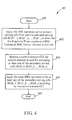
FIG.4 is a flow chart of an exemplary process. - Please refer to
FIG.1, FIG. 1 is a schematic diagram of an exemplarywireless communication system 10. Thewireless communication system 10 can be an LTE-Advanced system, or other mobile communication systems (e.g. LTE, WCDMA, HSPA, GSM, EDGE, etc.). Thewireless communication system 10 is briefly composed of a network and a plurality of user equipments (UEs) , as the structure illustrated inFIG.1 . In the LTE-Advanced system, the network is referred as an evolved universal terrestrial radio access network (E-UTRAN) comprising a plurality of evolved base stations (eNBs) . The UEs can be devices such as mobile phones, computer systems, etc. Besides, the network and the UE can be seen as a transmitter or receiver according to transmission direction, e.g., for uplink (UL), the UE is the transmitter and the network is the receiver, and for downlink (DL), the network is the transmitter and the UE is the receiver. - Please refer to
FIG.2, FIG.2 is a schematic diagram of anexemplary communication device 20. Thecommunication device 20 can be the UE or the network shown inFIG.1 and may include a processing means 200 such as a microprocessor or ASIC, amemory unit 210, and acommunication interfacing unit 220. Thememory unit 210 may be any data storage device that can storeprogram code 214 for access by the processing means 200. Examples of thememory unit 210 include but are not limited to a subscriber identity module (SIM) , read-only memory (ROM), random-access memory (RAM), CD-ROMs, magnetic tapes, floppy disks, and optical data storage devices. Thecommunication interfacing unit 220 is preferably a radio transceiver for wirelessly communicating with the network according to processing results of the processing means 200. - Please refer to
FIG.3 , which illustrates theprogram code 214 inFIG.2 . Theprogram code 214 includes program code of multiple communications protocol layers, which from top to bottom are a radio resource control (RRC)layer 300, a packet data convergence protocol (PDCP)layer 310, a radio link control (RLC)layer 320, a medium access control (MAC)layer 330 and a physical (PHY)layer 340. - The
PHY layer 340 can monitor a PDCCH (Physical Downlink Control Channel) for maintaining a subframe number and receiving configuration/resource information for theMAC layer 330,RRC layer 300, etc. TheMAC layer 330 has discontinuous reception (DRX) functionality allowing periodic PDCCH reception followed by a possible inactivity period. The DRX is operated with a long DRX cycle or a short DRX cycle, each including a "On Duration" during which the PDCCH reception is executed. The "On Duration" is set according to an On Duration Timer. - Please refer to
FIG.4 , which is a flow chart of anexemplary process 40. Theprocess 40 is used for applying DRX operation for a UE in a wireless communication system. The UE is configured with a primary serving cell PCell and secondary serving cells SCell-1, SCell_2,...,SCell_n and SCell'_1, SCell'_2,...,SCell'_m, where n and m are integers (Note: so far, there are at most four secondary serving cells can be configured with the UE) . The primary serving cell PCell and the secondary serving cells SCell_1, SCell_2,...,SCell_n and SCell'_1, SCell'_2,...,SCell'_m are serving cells of the UE. The secondary serving cells SCell_1, SCell_2,...,SCell_n are deactivated. The secondary serving cells SCell'_1, SCell'_2,...,SCell'_m are activated. The wireless communication system could be thewireless communication system 10. Theprocess 40 can be compiled into theprogram code 214 and includes the following steps: - Step 400: Start.
- Step 402: Apply the DRX operation on the primary serving cell PCell and the activated serving cell SCell'_1, SCell'_2,...,SCell'_m when the drx-InactivityTimer expires or a DRX Command MAC control element is received.
- Step 404: Receive a control element CE1, the control element is used for activating at least one of the secondary serving cells SCell-1, SCell_2,...,SCell_n.
- Step 406: Apply the same DRX operation to the at least one of the secondary serving cells SCell_1, SCell_2,...,SCell_n according to the control element CE1.
- Step 408: End.
- According to the
process 40, once the drx-InactivityTimer expires or a DRX Command MAC control element is received, the UE will apply the DRX operation on the activated serving cell PCell and SCell'_1, SCell'_2,...,SCell'_m, but didn't apply the same DRX operation to the deactivated Scells SCell_1, SCell_2,...,SCell_n. After that, the UE receives the control element CE1. The control element CE1, preferably, can be an Activation/Deactivation MAC control element and is used for activating at least one of the secondary serving cells SCell_1, SCell_2,...,SCell_n. When the UE receives the control element CE1, at least one of the secondary serving cells SCell_1, SCell_2,...,SCell_n get activated. The UE applies the same DRX operation to the at least one of the secondary serving cells SCell_1, SCell_2,...,SCell_n. When the DRX is applied to the at least one of the secondary serving cells SCell_1, SCell_2,...,SCell_n, the UE does not monitor PDCCH for reasource allocation of a DL-SCH (Downlink Shared Channel) and uplink (UL) scheduling grants from the at least one of the secondary serving cells SCell_1, SCell_2,..., SCell_n, in off duration of the DRX operation. As a result, the UE can save power. - Please note that the abovementioned steps including suggested steps can be realized by means that could be hardware, firmware known as a combination of a hardware device and computer instructions and data that reside as read-only software on the hardware device, or an electronic system. Examples of hardware can include analog, digital and mixed circuits known as microcircuit, microchip, or silicon chip. Examples of the electronic system can include system on chip (SOC), system in package (Sip), computer on module (COM), and the
communication device 20 in which the processing means 200 processes theprogram code 214 related to the abovementioned processes and the processed results applies the DRX operation in thewireless communications system 10. - To sum up, the UE is configured with the primary serving cell and at least one secondary serving cell. The UE has been applied DRX operation on the primary serving cell, but not on the deactivated secondary serving cells yet (i.e. SCell_1, Scell_2,...,Scell_n). When the UE receives the Activation/Deactivation MAC control element, at least one of the secondary serving cells get activated. The UE applies the same DRX operation to the secondary serving cells which their activation/deactivation state have just been changed from deactivation to activation state according to the Activation/Deactivation MAC control element. Consequently, the UE does not monitor PDCCH for reasource allocation of a DL-SCH (Downlink Shared Channel) and uplink (UL) scheduling grants from the secondary serving cells in off duration of the DRX operation.
- Those skilled in the art will readily observe that numerous modifications and alterations of the device and method may be made while retaining the teachings of the invention. Accordingly, the above disclosure should be construed as limited only by the metes and bounds of the appended claims.
Claims (10)
- A method of applying discontinuous reception (DRX) operation for a mobile device in a wireless communication system, the mobile device is configured with a primary serving cell and at least one secondary serving cell, the method comprising:receiving a control element, wherein the control element is used for activating the at least one secondary serving cell; andapplying the DRX operation to the at least one secondary serving cell according to the control element.
- The method of claim 1 further comprising activating the at least one secondary serving cell when the control element is received.
- The method of claim 1, wherein the at least one secondary serving cell is at deactivation state before the control element is received.
- The method of claim 1, wherein the DRX operation has been applied to the primary serving cell before the control element is received.
- The method of claim 1, wherein the control element is an Activation/Deactivation MAC (media access control) control element.
- A communication device for applying discontinuous reception (DRX) operation in a wireless communication system, the communication device is configured with a primary serving cell and at least one secondary serving cell, the communication device comprising:means for receiving a control element, wherein the control element is used for activating the at least one secondary serving cell; andmeans for applying the DRX operation to the at least one secondary serving cell according to the control element.
- The communication device of claim 6 further comprising activating the at least one secondary serving cell when the control element is received.
- The communication device of claim 6, wherein the at least one secondary serving cell is at deactivation state before the control element is received.
- The communication device of claim 6, wherein the DRX operation has been applied to the primary serving cell before the control element is received.
- The communication device of claim 6, wherein the control element is an Activation/Deactivation MAC (media access control) control element.
Applications Claiming Priority (1)
| Application Number | Priority Date | Filing Date | Title |
|---|---|---|---|
| US37462210P | 2010-08-18 | 2010-08-18 |
Publications (1)
| Publication Number | Publication Date |
|---|---|
| EP2421325A1 true EP2421325A1 (en) | 2012-02-22 |
Family
ID=44545439
Family Applications (1)
| Application Number | Title | Priority Date | Filing Date |
|---|---|---|---|
| EP11006772A Withdrawn EP2421325A1 (en) | 2010-08-18 | 2011-08-18 | Method of applying discontinuous reception operation (DRX) in carrier aggregation and related communication device |
Country Status (4)
| Country | Link |
|---|---|
| US (1) | US9426840B2 (en) |
| EP (1) | EP2421325A1 (en) |
| CN (1) | CN102378331B (en) |
| TW (1) | TWI483640B (en) |
Cited By (2)
| Publication number | Priority date | Publication date | Assignee | Title |
|---|---|---|---|---|
| WO2013079092A1 (en) * | 2011-11-29 | 2013-06-06 | Nokia Siemens Networks Oy | Informing a user equipment of an activity status of a communication carrier |
| EP2827654A4 (en) * | 2012-03-15 | 2015-11-11 | Ntt Docomo Inc | USER DEVICE AND METHOD FOR CONTROLLING INTERMITTENT RECEPTION IN A MOBILE COMMUNICATION SYSTEM |
Families Citing this family (15)
| Publication number | Priority date | Publication date | Assignee | Title |
|---|---|---|---|---|
| CN102356569B (en) * | 2009-03-16 | 2015-06-17 | Lg电子株式会社 | Method and device for supporting carrier aggregation |
| KR102092579B1 (en) | 2011-08-22 | 2020-03-24 | 삼성전자 주식회사 | Method and apparatus for support multiple frequency band in a mobile communication system |
| EP2804416B1 (en) | 2012-01-09 | 2021-07-07 | Samsung Electronics Co., Ltd. | Method and apparatus for logging |
| EP2621242A1 (en) | 2012-01-26 | 2013-07-31 | Panasonic Corporation | Improved discontinuous reception operation with additional wake up opportunities |
| US20140334371A1 (en) | 2012-01-27 | 2014-11-13 | Samsung Electronics Co., Ltd. | Method and apparatus for transmitting and receiving data by using plurality of carriers in mobile communication systems |
| EP2849501B1 (en) | 2012-05-09 | 2020-09-30 | Samsung Electronics Co., Ltd. | Method and apparatus for controlling discontinuous reception in mobile communication system |
| KR102130375B1 (en) | 2012-05-09 | 2020-07-06 | 삼성전자 주식회사 | Method and apparatus for transmitting and receiving data in mobile communication system with multiple carrier |
| CN109982378A (en) | 2012-05-21 | 2019-07-05 | 三星电子株式会社 | Method and apparatus for transmitting and receiving data in mobile communication system |
| KR20140102112A (en) * | 2013-02-13 | 2014-08-21 | 주식회사 케이티 | Methods and apparatuses for activating or deactivating small cells |
| WO2014134807A1 (en) * | 2013-03-07 | 2014-09-12 | 华为技术有限公司 | Power-saving method, user equipment and base station |
| CN106416386B (en) * | 2014-06-05 | 2020-07-07 | 夏普株式会社 | Terminal device and method |
| KR102253866B1 (en) * | 2014-11-07 | 2021-05-20 | 삼성전자주식회사 | Method for communcation in mobile communication system using unlicensed frequency band and apparatus therefor |
| US11297674B2 (en) * | 2018-02-14 | 2022-04-05 | Samsung Electronics Co., Ltd. | Method and apparatus for power savings at a user equipment |
| US10912026B2 (en) * | 2018-03-21 | 2021-02-02 | Mediatek Singapore Pte. Ltd. | Power-efficient mechanism for multi-link operation in mobile communications |
| KR20220021307A (en) * | 2020-08-13 | 2022-02-22 | 삼성전자주식회사 | Method and apparatus of activating or re-activating SCell considering currently activated bandwith part and bandwith part configuration information in next generation mobile communication system |
Citations (1)
| Publication number | Priority date | Publication date | Assignee | Title |
|---|---|---|---|---|
| WO2010078365A1 (en) * | 2008-12-30 | 2010-07-08 | Interdigital Patent Holdings, Inc. | Discontinuous reception for carrier aggregation |
Family Cites Families (3)
| Publication number | Priority date | Publication date | Assignee | Title |
|---|---|---|---|---|
| WO2007099743A1 (en) * | 2006-02-28 | 2007-09-07 | Matsushita Electric Industrial Co., Ltd. | Wireless communication apparatus and communication method thereof |
| KR100957348B1 (en) * | 2006-10-16 | 2010-05-12 | 삼성전자주식회사 | Method and apparatus for performing handover by terminal operating in discontinuous reception mode in mobile communication system |
| EP2566237B1 (en) * | 2007-02-05 | 2014-08-20 | Nec Corporation | Inter base station handover methods, base station, and communication terminal |
-
2011
- 2011-08-18 US US13/212,188 patent/US9426840B2/en active Active
- 2011-08-18 CN CN201110238413.XA patent/CN102378331B/en active Active
- 2011-08-18 TW TW100129603A patent/TWI483640B/en active
- 2011-08-18 EP EP11006772A patent/EP2421325A1/en not_active Withdrawn
Patent Citations (1)
| Publication number | Priority date | Publication date | Assignee | Title |
|---|---|---|---|---|
| WO2010078365A1 (en) * | 2008-12-30 | 2010-07-08 | Interdigital Patent Holdings, Inc. | Discontinuous reception for carrier aggregation |
Non-Patent Citations (5)
| Title |
|---|
| 3GPP: "3GPP TS 36.300 V10.0.0 (2010-06); 3rd Generation Partnership Project; Technical Specification Group Radio Access Network; Evolved Universal Terrestrial Radio Access (E-UTRA) and Evolved Universal Terrestrial Radio Access Network (E-UTRAN); Overall description; Stage 2 (Release 10)", 3GPP STANDARD; 3GPP TS 36.300, 3RD GENERATION PARTNERSHIP PROJECT (3GPP), MOBILE COMPETENCE CENTRE ; 650, ROUTE DES LUCIOLES ; F-06921 SOPHIA-ANTIPOLIS CEDEX ; FRANCE, no. V10.0.0, 17 June 2010 (2010-06-17), pages 1 - 183, XP050441905 * |
| 3GPP: "3GPP TS 36.321 V9.3.0 (2010-06); 3rd Generation Partnership Project; Technical Specification Group Radio Access Network; Evolved Universal Terrestrial Radio Access (E-UTRA); Medium Access Control (MAC) protocol specification (Release 9)", 3GPP STANDARD; 3GPP TS 36.321, 3RD GENERATION PARTNERSHIP PROJECT (3GPP), MOBILE COMPETENCE CENTRE ; 650, ROUTE DES LUCIOLES ; F-06921 SOPHIA-ANTIPOLIS CEDEX ; FRANCE, no. V9.3.0, 17 June 2010 (2010-06-17), pages 1 - 48, XP050441909 * |
| HTC: "3GPP TSG-RAN WG2 Meeting #73; R2-111279; Clarification on applying the common DRX operation to the SCell upon activation", 3GPP DRAFT; R2-111279_CR(REL-10)_CLARIFICATION ON APPLYING THE COMMON DRX OPERATION TO THE SCELL UPON ACTIVATION, 3RD GENERATION PARTNERSHIP PROJECT (3GPP), MOBILE COMPETENCE CENTRE ; 650, ROUTE DES LUCIOLES ; F-06921 SOPHIA-ANTIPOLIS CEDEX ; FRANCE, vol. RAN WG2, no. Taipei, Taiwan; 20110221, 15 February 2011 (2011-02-15), Taipei, Taiwan, pages 1 - 2, XP050493763, Retrieved from the Internet <URL:http://www.3gpp.org/ftp/tsg_ran/WG2_RL2/TSGR2_73/Docs/> [retrieved on 20110215] * |
| NEC: "3GPP TSG RAN2 Meeting #68bis; R2-100283; Details on DRX with carrier aggregation", 3GPP, 12 January 2010 (2010-01-12), Valencia, Spain, 18.-22.01.2010, pages 1 - 3, XP002664376, Retrieved from the Internet <URL:http://www.3gpp.org/ftp/tsg_ran/WG2_RL2/TSGR2_68bis/Docs/> [retrieved on 20111124] * |
| NEC: "3GPP TSG RAN2 Meeting #71; R2-104664; Details of DRX operation in carrier aggregation", 3GPP, 17 August 2010 (2010-08-17), Madrid, Spain, 23.-27.08.2010, pages 1 - 3, XP002664375, Retrieved from the Internet <URL:http://www.3gpp.org/ftp/tsg_ran/WG2_RL2/TSGR2_71/Docs/> [retrieved on 20111124] * |
Cited By (4)
| Publication number | Priority date | Publication date | Assignee | Title |
|---|---|---|---|---|
| WO2013079092A1 (en) * | 2011-11-29 | 2013-06-06 | Nokia Siemens Networks Oy | Informing a user equipment of an activity status of a communication carrier |
| US9392597B2 (en) | 2011-11-29 | 2016-07-12 | Nokia Solutions And Networks Oy | Informing a user equipment of an activity status of a communication carrier |
| EP2827654A4 (en) * | 2012-03-15 | 2015-11-11 | Ntt Docomo Inc | USER DEVICE AND METHOD FOR CONTROLLING INTERMITTENT RECEPTION IN A MOBILE COMMUNICATION SYSTEM |
| US9521620B2 (en) | 2012-03-15 | 2016-12-13 | Ntt Docomo, Inc. | User equipment and discontinuous reception control method in mobile communication system |
Also Published As
| Publication number | Publication date |
|---|---|
| CN102378331A (en) | 2012-03-14 |
| US9426840B2 (en) | 2016-08-23 |
| TW201220915A (en) | 2012-05-16 |
| TWI483640B (en) | 2015-05-01 |
| US20120044847A1 (en) | 2012-02-23 |
| CN102378331B (en) | 2015-04-08 |
Similar Documents
| Publication | Publication Date | Title |
|---|---|---|
| US9426840B2 (en) | Method of applying discontinuous reception operation and related communication device | |
| US8923251B2 (en) | Method of handling uplink time alignment | |
| US8824408B2 (en) | Method of handling random access procedure associated to cell deactivation | |
| EP3539352B1 (en) | Discontinuous reception and scheduling techniques in wireless communication systems using multiple transmission time intervals | |
| CN104509147B (en) | Secondary cellular activation method | |
| US9480098B2 (en) | Handling radio resource control connection reconfiguration and related communication device | |
| EP3791515B1 (en) | Dynamic control channel management | |
| EP2547165B1 (en) | Method of handling random access procedure with deactivation timer | |
| US8743804B2 (en) | Method of handling semi-persistent scheduling transmission and related communication device | |
| EP2512197B1 (en) | Method, apparatus and computer program product for handling semi-persistent scheduling information | |
| EP2552161A2 (en) | Method of handling uplink timing and related communication device | |
| EP2640150A2 (en) | Apparatuses and methods for handling random access procedures | |
| CN116406031A (en) | Wake-up technique for improved connected mode discontinuous reception | |
| EP2393334A1 (en) | Method of performing uplink transmission and related communication device | |
| EP2451222A1 (en) | Method of handling power headroom reporting for activated serving cell with configured uplink | |
| EP2958262B1 (en) | Discontinuous reception for carrier aggregation | |
| EP2418895B1 (en) | Method of handling power headroom reporting for uplink carrier aggregation and communication device thereof | |
| EP3139689B1 (en) | Device and method of handling scheduling request transmission | |
| US20140071871A1 (en) | Method and apparatus for small cell enhancement in a wireless communication system | |
| US20130188600A1 (en) | Method of Reference Cell Change | |
| WO2021041946A1 (en) | Random access procedure modification in internet of things communication |
Legal Events
| Date | Code | Title | Description |
|---|---|---|---|
| 17P | Request for examination filed |
Effective date: 20110818 |
|
| AK | Designated contracting states |
Kind code of ref document: A1 Designated state(s): AL AT BE BG CH CY CZ DE DK EE ES FI FR GB GR HR HU IE IS IT LI LT LU LV MC MK MT NL NO PL PT RO RS SE SI SK SM TR |
|
| AX | Request for extension of the european patent |
Extension state: BA ME |
|
| PUAI | Public reference made under article 153(3) epc to a published international application that has entered the european phase |
Free format text: ORIGINAL CODE: 0009012 |
|
| STAA | Information on the status of an ep patent application or granted ep patent |
Free format text: STATUS: THE APPLICATION IS DEEMED TO BE WITHDRAWN |
|
| 18D | Application deemed to be withdrawn |
Effective date: 20120703 |