EP2420495A1 - Novel derivatives useful as antiviral agents - Google Patents
Novel derivatives useful as antiviral agents Download PDFInfo
- Publication number
- EP2420495A1 EP2420495A1 EP10290426A EP10290426A EP2420495A1 EP 2420495 A1 EP2420495 A1 EP 2420495A1 EP 10290426 A EP10290426 A EP 10290426A EP 10290426 A EP10290426 A EP 10290426A EP 2420495 A1 EP2420495 A1 EP 2420495A1
- Authority
- EP
- European Patent Office
- Prior art keywords
- benzofuran
- dihydro
- formula
- compound
- chlorophenyl
- Prior art date
- Legal status (The legal status is an assumption and is not a legal conclusion. Google has not performed a legal analysis and makes no representation as to the accuracy of the status listed.)
- Withdrawn
Links
- 239000003443 antiviral agent Substances 0.000 title description 2
- 150000001875 compounds Chemical class 0.000 claims abstract description 80
- 208000036142 Viral infection Diseases 0.000 claims abstract description 9
- 230000009385 viral infection Effects 0.000 claims abstract description 9
- 230000002265 prevention Effects 0.000 claims abstract description 8
- 150000003839 salts Chemical group 0.000 claims description 22
- 239000000203 mixture Substances 0.000 claims description 20
- 125000004169 (C1-C6) alkyl group Chemical group 0.000 claims description 7
- 125000004432 carbon atom Chemical group C* 0.000 claims description 7
- 239000008194 pharmaceutical composition Substances 0.000 claims description 7
- 125000004428 fluoroalkoxy group Chemical group 0.000 claims description 6
- 229910052801 chlorine Inorganic materials 0.000 claims description 5
- 230000007717 exclusion Effects 0.000 claims description 5
- 125000004191 (C1-C6) alkoxy group Chemical group 0.000 claims description 4
- 125000002733 (C1-C6) fluoroalkyl group Chemical group 0.000 claims description 4
- WNXJIVFYUVYPPR-UHFFFAOYSA-N 1,3-dioxolane Chemical compound C1COCO1 WNXJIVFYUVYPPR-UHFFFAOYSA-N 0.000 claims description 4
- RYHBNJHYFVUHQT-UHFFFAOYSA-N 1,4-Dioxane Chemical compound C1COCCO1 RYHBNJHYFVUHQT-UHFFFAOYSA-N 0.000 claims description 4
- JCXJVPUVTGWSNB-UHFFFAOYSA-N Nitrogen dioxide Chemical compound O=[N]=O JCXJVPUVTGWSNB-UHFFFAOYSA-N 0.000 claims description 4
- 229910052794 bromium Inorganic materials 0.000 claims description 4
- 229910052731 fluorine Inorganic materials 0.000 claims description 4
- 229910052740 iodine Inorganic materials 0.000 claims description 4
- 229910052739 hydrogen Inorganic materials 0.000 claims description 3
- 239000000546 pharmaceutical excipient Substances 0.000 claims description 3
- 125000000956 methoxy group Chemical group [H]C([H])([H])O* 0.000 claims description 2
- 229910052760 oxygen Inorganic materials 0.000 claims description 2
- 229910052717 sulfur Inorganic materials 0.000 claims description 2
- HEDRZPFGACZZDS-MICDWDOJSA-N Trichloro(2H)methane Chemical compound [2H]C(Cl)(Cl)Cl HEDRZPFGACZZDS-MICDWDOJSA-N 0.000 description 74
- 210000004027 cell Anatomy 0.000 description 46
- IMNFDUFMRHMDMM-UHFFFAOYSA-N N-Heptane Chemical compound CCCCCCC IMNFDUFMRHMDMM-UHFFFAOYSA-N 0.000 description 40
- IAZDPXIOMUYVGZ-UHFFFAOYSA-N Dimethylsulphoxide Chemical compound CS(C)=O IAZDPXIOMUYVGZ-UHFFFAOYSA-N 0.000 description 24
- 238000005160 1H NMR spectroscopy Methods 0.000 description 23
- 239000011734 sodium Substances 0.000 description 22
- UHOVQNZJYSORNB-UHFFFAOYSA-N Benzene Chemical compound C1=CC=CC=C1 UHOVQNZJYSORNB-UHFFFAOYSA-N 0.000 description 21
- 238000000034 method Methods 0.000 description 17
- 230000005764 inhibitory process Effects 0.000 description 14
- 108091003079 Bovine Serum Albumin Proteins 0.000 description 12
- 239000012894 fetal calf serum Substances 0.000 description 12
- 241000700605 Viruses Species 0.000 description 11
- 241001502567 Chikungunya virus Species 0.000 description 9
- 241000712079 Measles morbillivirus Species 0.000 description 9
- 241000710886 West Nile virus Species 0.000 description 9
- 125000000217 alkyl group Chemical group 0.000 description 9
- 239000006144 Dulbecco’s modified Eagle's medium Substances 0.000 description 8
- 241001493065 dsRNA viruses Species 0.000 description 8
- 238000000338 in vitro Methods 0.000 description 8
- 238000003786 synthesis reaction Methods 0.000 description 8
- 230000029812 viral genome replication Effects 0.000 description 8
- 239000005089 Luciferase Substances 0.000 description 7
- 238000004113 cell culture Methods 0.000 description 7
- 125000002496 methyl group Chemical group [H]C([H])([H])* 0.000 description 7
- 230000010076 replication Effects 0.000 description 7
- -1 2,2-dimethylbutyl Chemical group 0.000 description 6
- 241000725619 Dengue virus Species 0.000 description 6
- 102000003886 Glycoproteins Human genes 0.000 description 6
- 108090000288 Glycoproteins Proteins 0.000 description 6
- 241000712003 Human respirovirus 3 Species 0.000 description 6
- 108060001084 Luciferase Proteins 0.000 description 6
- 230000015572 biosynthetic process Effects 0.000 description 6
- 208000015181 infectious disease Diseases 0.000 description 6
- 239000003112 inhibitor Substances 0.000 description 6
- 238000002360 preparation method Methods 0.000 description 6
- 239000000651 prodrug Substances 0.000 description 6
- 229940002612 prodrug Drugs 0.000 description 6
- 241000709675 Coxsackievirus B3 Species 0.000 description 5
- LFQSCWFLJHTTHZ-UHFFFAOYSA-N Ethanol Chemical compound CCO LFQSCWFLJHTTHZ-UHFFFAOYSA-N 0.000 description 5
- 125000006239 protecting group Chemical group 0.000 description 5
- 150000003384 small molecules Chemical class 0.000 description 5
- 239000002904 solvent Substances 0.000 description 5
- GQHTUMJGOHRCHB-UHFFFAOYSA-N 2,3,4,6,7,8,9,10-octahydropyrimido[1,2-a]azepine Chemical compound C1CCCCN2CCCN=C21 GQHTUMJGOHRCHB-UHFFFAOYSA-N 0.000 description 4
- ZLVQBUFEEHOPIK-UHFFFAOYSA-N 3-(1h-indol-3-yl)-2-nitro-2,3-dihydrofuro[3,2-c]chromen-4-one Chemical compound C1=CC=CC2=C1OC(=O)C1=C2OC([N+](=O)[O-])C1C1=CNC2=CC=CC=C12 ZLVQBUFEEHOPIK-UHFFFAOYSA-N 0.000 description 4
- HBAQYPYDRFILMT-UHFFFAOYSA-N 8-[3-(1-cyclopropylpyrazol-4-yl)-1H-pyrazolo[4,3-d]pyrimidin-5-yl]-3-methyl-3,8-diazabicyclo[3.2.1]octan-2-one Chemical class C1(CC1)N1N=CC(=C1)C1=NNC2=C1N=C(N=C2)N1C2C(N(CC1CC2)C)=O HBAQYPYDRFILMT-UHFFFAOYSA-N 0.000 description 4
- CSCPPACGZOOCGX-UHFFFAOYSA-N Acetone Chemical compound CC(C)=O CSCPPACGZOOCGX-UHFFFAOYSA-N 0.000 description 4
- 241000282414 Homo sapiens Species 0.000 description 4
- 108090000467 Interferon-beta Proteins 0.000 description 4
- 208000009341 RNA Virus Infections Diseases 0.000 description 4
- 241000725643 Respiratory syncytial virus Species 0.000 description 4
- 125000003545 alkoxy group Chemical group 0.000 description 4
- 125000004122 cyclic group Chemical group 0.000 description 4
- 230000000694 effects Effects 0.000 description 4
- 239000002609 medium Substances 0.000 description 4
- 239000012453 solvate Substances 0.000 description 4
- 239000007858 starting material Substances 0.000 description 4
- VENPZLYCMHPTSQ-UHFFFAOYSA-N 1-[3-(3-chlorophenyl)-5-methyl-2-nitro-2,3-dihydrofuran-4-yl]ethanone Chemical compound CC(=O)C1=C(C)OC([N+]([O-])=O)C1C1=CC=CC(Cl)=C1 VENPZLYCMHPTSQ-UHFFFAOYSA-N 0.000 description 3
- URGKCTSUANMLAP-UHFFFAOYSA-N 3-(2-chlorophenyl)-2-nitro-3,5,6,7-tetrahydro-2h-1-benzofuran-4-one Chemical compound [O-][N+](=O)C1OC(CCCC2=O)=C2C1C1=CC=CC=C1Cl URGKCTSUANMLAP-UHFFFAOYSA-N 0.000 description 3
- PASFMULSBFKJJT-UHFFFAOYSA-N 3-(2-chlorophenyl)-6,7-dihydro-5h-1-benzofuran-4-one Chemical compound ClC1=CC=CC=C1C1=COC2=C1C(=O)CCC2 PASFMULSBFKJJT-UHFFFAOYSA-N 0.000 description 3
- DMMWZYPCKOVMDB-UHFFFAOYSA-N 3-(3,4,5-trimethoxyphenyl)-6,7-dihydro-5h-1-benzofuran-4-one Chemical compound COC1=C(OC)C(OC)=CC(C=2C=3C(=O)CCCC=3OC=2)=C1 DMMWZYPCKOVMDB-UHFFFAOYSA-N 0.000 description 3
- OJVSBZRQTVBYEE-UHFFFAOYSA-N 3-(3,4-dichlorophenyl)-6,7-dihydro-5h-1-benzofuran-4-one Chemical compound C1=C(Cl)C(Cl)=CC=C1C1=COC2=C1C(=O)CCC2 OJVSBZRQTVBYEE-UHFFFAOYSA-N 0.000 description 3
- AVMIJQALAWJUJH-UHFFFAOYSA-N 3-(3,5-dichlorophenyl)-6,7-dihydro-5h-1-benzofuran-4-one Chemical compound ClC1=CC(Cl)=CC(C=2C=3C(=O)CCCC=3OC=2)=C1 AVMIJQALAWJUJH-UHFFFAOYSA-N 0.000 description 3
- WHNRIDOSYQRCKW-UHFFFAOYSA-N 3-(3-bromophenyl)-6,7-dihydro-5h-1-benzofuran-4-one Chemical compound BrC1=CC=CC(C=2C=3C(=O)CCCC=3OC=2)=C1 WHNRIDOSYQRCKW-UHFFFAOYSA-N 0.000 description 3
- SKAAJCLLLDVNEV-UHFFFAOYSA-N 3-(3-chlorophenyl)-6,6-dimethyl-5,7-dihydro-1-benzofuran-4-one Chemical compound C1=2C(=O)CC(C)(C)CC=2OC=C1C1=CC=CC(Cl)=C1 SKAAJCLLLDVNEV-UHFFFAOYSA-N 0.000 description 3
- AROVEPVRZAVFDU-UHFFFAOYSA-N 3-(3-chlorophenyl)-6,7-dihydro-5h-1-benzofuran-4-one Chemical compound ClC1=CC=CC(C=2C=3C(=O)CCCC=3OC=2)=C1 AROVEPVRZAVFDU-UHFFFAOYSA-N 0.000 description 3
- XRBUTCKTKNMEDD-UHFFFAOYSA-N 3-(3-chlorophenyl)-6-methyl-6,7-dihydro-5h-1-benzofuran-4-one Chemical compound C1=2C(=O)CC(C)CC=2OC=C1C1=CC=CC(Cl)=C1 XRBUTCKTKNMEDD-UHFFFAOYSA-N 0.000 description 3
- IKGDRKZAHFUYEC-UHFFFAOYSA-N 3-(3-fluorophenyl)-6,7-dihydro-5h-1-benzofuran-4-one Chemical compound FC1=CC=CC(C=2C=3C(=O)CCCC=3OC=2)=C1 IKGDRKZAHFUYEC-UHFFFAOYSA-N 0.000 description 3
- NHZBNUWOTJUTOG-UHFFFAOYSA-N 3-(3-iodo-4-methoxyphenyl)-6,7-dihydro-5h-1-benzofuran-4-one Chemical compound C1=C(I)C(OC)=CC=C1C1=COC2=C1C(=O)CCC2 NHZBNUWOTJUTOG-UHFFFAOYSA-N 0.000 description 3
- VITPTQDXSMOZJE-UHFFFAOYSA-N 3-(3-iodophenyl)-6,7-dihydro-5h-1-benzofuran-4-one Chemical compound IC1=CC=CC(C=2C=3C(=O)CCCC=3OC=2)=C1 VITPTQDXSMOZJE-UHFFFAOYSA-N 0.000 description 3
- MRAJIKZUOXTKHY-UHFFFAOYSA-N 3-(3-methoxyphenyl)-6,7-dihydro-5h-1-benzofuran-4-one Chemical compound COC1=CC=CC(C=2C=3C(=O)CCCC=3OC=2)=C1 MRAJIKZUOXTKHY-UHFFFAOYSA-N 0.000 description 3
- YVUDCUTYGJQALL-UHFFFAOYSA-N 3-(3-phenylmethoxyphenyl)-6,7-dihydro-5h-1-benzofuran-4-one Chemical compound C1=2C(=O)CCCC=2OC=C1C(C=1)=CC=CC=1OCC1=CC=CC=C1 YVUDCUTYGJQALL-UHFFFAOYSA-N 0.000 description 3
- CTCCRZBIBWEUSA-UHFFFAOYSA-N 3-(4-chlorophenyl)-6,7-dihydro-5h-1-benzofuran-4-one Chemical compound C1=CC(Cl)=CC=C1C1=COC2=C1C(=O)CCC2 CTCCRZBIBWEUSA-UHFFFAOYSA-N 0.000 description 3
- XWZYPYWUPPNASA-UHFFFAOYSA-N 3-(5-chloro-2-methoxyphenyl)-2-nitro-3,5,6,7-tetrahydro-2h-1-benzofuran-4-one Chemical compound COC1=CC=C(Cl)C=C1C1C(C(=O)CCC2)=C2OC1[N+]([O-])=O XWZYPYWUPPNASA-UHFFFAOYSA-N 0.000 description 3
- PSXBLKGSHNRILI-UHFFFAOYSA-N 3-(5-chloro-2-methoxyphenyl)-6,7-dihydro-5h-1-benzofuran-4-one Chemical compound COC1=CC=C(Cl)C=C1C1=COC2=C1C(=O)CCC2 PSXBLKGSHNRILI-UHFFFAOYSA-N 0.000 description 3
- QTBSBXVTEAMEQO-UHFFFAOYSA-N Acetic acid Chemical compound CC(O)=O QTBSBXVTEAMEQO-UHFFFAOYSA-N 0.000 description 3
- 0 CC*c1c(*)c(*)c(*)c(*)c1*N=I Chemical compound CC*c1c(*)c(*)c(*)c(*)c1*N=I 0.000 description 3
- XEKOWRVHYACXOJ-UHFFFAOYSA-N Ethyl acetate Chemical compound CCOC(C)=O XEKOWRVHYACXOJ-UHFFFAOYSA-N 0.000 description 3
- 241000711467 Human coronavirus 229E Species 0.000 description 3
- 241000711920 Human orthopneumovirus Species 0.000 description 3
- 102100026720 Interferon beta Human genes 0.000 description 3
- OKKJLVBELUTLKV-UHFFFAOYSA-N Methanol Chemical compound OC OKKJLVBELUTLKV-UHFFFAOYSA-N 0.000 description 3
- ZMXDDKWLCZADIW-UHFFFAOYSA-N N,N-Dimethylformamide Chemical compound CN(C)C=O ZMXDDKWLCZADIW-UHFFFAOYSA-N 0.000 description 3
- YXFVVABEGXRONW-UHFFFAOYSA-N Toluene Chemical compound CC1=CC=CC=C1 YXFVVABEGXRONW-UHFFFAOYSA-N 0.000 description 3
- 239000002585 base Substances 0.000 description 3
- 230000008901 benefit Effects 0.000 description 3
- 230000008859 change Effects 0.000 description 3
- 239000003153 chemical reaction reagent Substances 0.000 description 3
- 208000037265 diseases, disorders, signs and symptoms Diseases 0.000 description 3
- 230000014509 gene expression Effects 0.000 description 3
- 239000001963 growth medium Substances 0.000 description 3
- 238000012744 immunostaining Methods 0.000 description 3
- 239000006228 supernatant Substances 0.000 description 3
- RIQSGUMIOQFYRG-VMPITWQZSA-N 1-chloro-3-[(z)-2-chloro-2-nitroethenyl]benzene Chemical compound [O-][N+](=O)C(\Cl)=C\C1=CC=CC(Cl)=C1 RIQSGUMIOQFYRG-VMPITWQZSA-N 0.000 description 2
- HZAXFHJVJLSVMW-UHFFFAOYSA-N 2-Aminoethan-1-ol Chemical compound NCCO HZAXFHJVJLSVMW-UHFFFAOYSA-N 0.000 description 2
- ZCBMPCBNFVEWCC-UHFFFAOYSA-N 3-(3-nitrophenyl)-6,7-dihydro-5h-1-benzofuran-4-one Chemical compound [O-][N+](=O)C1=CC=CC(C=2C=3C(=O)CCCC=3OC=2)=C1 ZCBMPCBNFVEWCC-UHFFFAOYSA-N 0.000 description 2
- XTHFKEDIFFGKHM-UHFFFAOYSA-N Dimethoxyethane Chemical compound COCCOC XTHFKEDIFFGKHM-UHFFFAOYSA-N 0.000 description 2
- IAZDPXIOMUYVGZ-WFGJKAKNSA-N Dimethyl sulfoxide Chemical compound [2H]C([2H])([2H])S(=O)C([2H])([2H])[2H] IAZDPXIOMUYVGZ-WFGJKAKNSA-N 0.000 description 2
- 241000710831 Flavivirus Species 0.000 description 2
- WTDHULULXKLSOZ-UHFFFAOYSA-N Hydroxylamine hydrochloride Chemical compound Cl.ON WTDHULULXKLSOZ-UHFFFAOYSA-N 0.000 description 2
- 241001465754 Metazoa Species 0.000 description 2
- BAVYZALUXZFZLV-UHFFFAOYSA-N Methylamine Chemical compound NC BAVYZALUXZFZLV-UHFFFAOYSA-N 0.000 description 2
- NBIIXXVUZAFLBC-UHFFFAOYSA-N Phosphoric acid Chemical compound OP(O)(O)=O NBIIXXVUZAFLBC-UHFFFAOYSA-N 0.000 description 2
- JUJWROOIHBZHMG-UHFFFAOYSA-N Pyridine Chemical compound C1=CC=NC=C1 JUJWROOIHBZHMG-UHFFFAOYSA-N 0.000 description 2
- WYURNTSHIVDZCO-UHFFFAOYSA-N Tetrahydrofuran Chemical compound C1CCOC1 WYURNTSHIVDZCO-UHFFFAOYSA-N 0.000 description 2
- 206010057293 West Nile viral infection Diseases 0.000 description 2
- BQOIOXRQQPRNCO-SOFGYWHQSA-N [(z)-2-chloro-2-nitroethenyl]benzene Chemical class [O-][N+](=O)C(\Cl)=C\C1=CC=CC=C1 BQOIOXRQQPRNCO-SOFGYWHQSA-N 0.000 description 2
- YRKCREAYFQTBPV-UHFFFAOYSA-N acetylacetone Chemical compound CC(=O)CC(C)=O YRKCREAYFQTBPV-UHFFFAOYSA-N 0.000 description 2
- 239000002253 acid Substances 0.000 description 2
- 230000001154 acute effect Effects 0.000 description 2
- 230000000840 anti-viral effect Effects 0.000 description 2
- WPYMKLBDIGXBTP-UHFFFAOYSA-N benzoic acid Chemical compound OC(=O)C1=CC=CC=C1 WPYMKLBDIGXBTP-UHFFFAOYSA-N 0.000 description 2
- 239000013592 cell lysate Substances 0.000 description 2
- 238000002425 crystallisation Methods 0.000 description 2
- 230000008025 crystallization Effects 0.000 description 2
- HJSLFCCWAKVHIW-UHFFFAOYSA-N cyclohexane-1,3-dione Chemical compound O=C1CCCC(=O)C1 HJSLFCCWAKVHIW-UHFFFAOYSA-N 0.000 description 2
- PAFZNILMFXTMIY-UHFFFAOYSA-N cyclohexylamine Chemical compound NC1CCCCC1 PAFZNILMFXTMIY-UHFFFAOYSA-N 0.000 description 2
- 208000035475 disorder Diseases 0.000 description 2
- 239000003814 drug Substances 0.000 description 2
- 238000003821 enantio-separation Methods 0.000 description 2
- 238000000684 flow cytometry Methods 0.000 description 2
- 125000001153 fluoro group Chemical group F* 0.000 description 2
- 125000003709 fluoroalkyl group Chemical group 0.000 description 2
- 125000000524 functional group Chemical group 0.000 description 2
- 125000002887 hydroxy group Chemical group [H]O* 0.000 description 2
- 206010022000 influenza Diseases 0.000 description 2
- 230000002401 inhibitory effect Effects 0.000 description 2
- 239000000543 intermediate Substances 0.000 description 2
- 238000004519 manufacturing process Methods 0.000 description 2
- 150000007522 mineralic acids Chemical class 0.000 description 2
- IOPRDPFJSNFLGW-UHFFFAOYSA-N n-[3-(3-chlorophenyl)-6,7-dihydro-5h-1-benzofuran-4-ylidene]hydroxylamine Chemical compound C1=2C(=NO)CCCC=2OC=C1C1=CC=CC(Cl)=C1 IOPRDPFJSNFLGW-UHFFFAOYSA-N 0.000 description 2
- 150000007524 organic acids Chemical class 0.000 description 2
- 235000005985 organic acids Nutrition 0.000 description 2
- BWHMMNNQKKPAPP-UHFFFAOYSA-L potassium carbonate Chemical compound [K+].[K+].[O-]C([O-])=O BWHMMNNQKKPAPP-UHFFFAOYSA-L 0.000 description 2
- 230000008569 process Effects 0.000 description 2
- 238000001953 recrystallisation Methods 0.000 description 2
- 238000010992 reflux Methods 0.000 description 2
- 238000004366 reverse phase liquid chromatography Methods 0.000 description 2
- 239000000243 solution Substances 0.000 description 2
- 238000010561 standard procedure Methods 0.000 description 2
- 239000000126 substance Substances 0.000 description 2
- 125000002023 trifluoromethyl group Chemical group FC(F)(F)* 0.000 description 2
- HFVMEOPYDLEHBR-UHFFFAOYSA-N (2-fluorophenyl)-phenylmethanol Chemical compound C=1C=CC=C(F)C=1C(O)C1=CC=CC=C1 HFVMEOPYDLEHBR-UHFFFAOYSA-N 0.000 description 1
- UBCHPRBFMUDMNC-UHFFFAOYSA-N 1-(1-adamantyl)ethanamine Chemical compound C1C(C2)CC3CC2CC1(C(N)C)C3 UBCHPRBFMUDMNC-UHFFFAOYSA-N 0.000 description 1
- QXQAPNSHUJORMC-UHFFFAOYSA-N 1-chloro-4-propylbenzene Chemical compound CCCC1=CC=C(Cl)C=C1 QXQAPNSHUJORMC-UHFFFAOYSA-N 0.000 description 1
- OZDAOHVKBFBBMZ-UHFFFAOYSA-N 2-aminopentanedioic acid;hydrate Chemical compound O.OC(=O)C(N)CCC(O)=O OZDAOHVKBFBBMZ-UHFFFAOYSA-N 0.000 description 1
- HCPKOFXGJCNMRB-BJMVGYQFSA-N 3-[(Z)-2-chloro-2-nitroethenyl]-1H-indole Chemical compound C1=CC=C2C(/C=C(\Cl)[N+](=O)[O-])=CNC2=C1 HCPKOFXGJCNMRB-BJMVGYQFSA-N 0.000 description 1
- BMYNFMYTOJXKLE-UHFFFAOYSA-N 3-azaniumyl-2-hydroxypropanoate Chemical compound NCC(O)C(O)=O BMYNFMYTOJXKLE-UHFFFAOYSA-N 0.000 description 1
- 125000005917 3-methylpentyl group Chemical group 0.000 description 1
- FWBHETKCLVMNFS-UHFFFAOYSA-N 4',6-Diamino-2-phenylindol Chemical compound C1=CC(C(=N)N)=CC=C1C1=CC2=CC=C(C(N)=N)C=C2N1 FWBHETKCLVMNFS-UHFFFAOYSA-N 0.000 description 1
- PXRKCOCTEMYUEG-UHFFFAOYSA-N 5-aminoisoindole-1,3-dione Chemical compound NC1=CC=C2C(=O)NC(=O)C2=C1 PXRKCOCTEMYUEG-UHFFFAOYSA-N 0.000 description 1
- DMIIMPQQPXUKOO-UHFFFAOYSA-N 5-methylcyclohexane-1,3-dione Chemical compound CC1CC(=O)CC(=O)C1 DMIIMPQQPXUKOO-UHFFFAOYSA-N 0.000 description 1
- 229940126638 Akt inhibitor Drugs 0.000 description 1
- QGZKDVFQNNGYKY-UHFFFAOYSA-O Ammonium Chemical compound [NH4+] QGZKDVFQNNGYKY-UHFFFAOYSA-O 0.000 description 1
- VHUUQVKOLVNVRT-UHFFFAOYSA-N Ammonium hydroxide Chemical compound [NH4+].[OH-] VHUUQVKOLVNVRT-UHFFFAOYSA-N 0.000 description 1
- 239000005711 Benzoic acid Substances 0.000 description 1
- BVKZGUZCCUSVTD-UHFFFAOYSA-M Bicarbonate Chemical class OC([O-])=O BVKZGUZCCUSVTD-UHFFFAOYSA-M 0.000 description 1
- COVZYZSDYWQREU-UHFFFAOYSA-N Busulfan Chemical compound CS(=O)(=O)OCCCCOS(C)(=O)=O COVZYZSDYWQREU-UHFFFAOYSA-N 0.000 description 1
- COXVTLYNGOIATD-HVMBLDELSA-N CC1=C(C=CC(=C1)C1=CC(C)=C(C=C1)\N=N\C1=C(O)C2=C(N)C(=CC(=C2C=C1)S(O)(=O)=O)S(O)(=O)=O)\N=N\C1=CC=C2C(=CC(=C(N)C2=C1O)S(O)(=O)=O)S(O)(=O)=O Chemical compound CC1=C(C=CC(=C1)C1=CC(C)=C(C=C1)\N=N\C1=C(O)C2=C(N)C(=CC(=C2C=C1)S(O)(=O)=O)S(O)(=O)=O)\N=N\C1=CC=C2C(=CC(=C(N)C2=C1O)S(O)(=O)=O)S(O)(=O)=O COXVTLYNGOIATD-HVMBLDELSA-N 0.000 description 1
- 241000283707 Capra Species 0.000 description 1
- 241000450599 DNA viruses Species 0.000 description 1
- PIICEJLVQHRZGT-UHFFFAOYSA-N Ethylenediamine Chemical compound NCCN PIICEJLVQHRZGT-UHFFFAOYSA-N 0.000 description 1
- 101710114810 Glycoprotein Proteins 0.000 description 1
- 206010061192 Haemorrhagic fever Diseases 0.000 description 1
- 241000711549 Hepacivirus C Species 0.000 description 1
- VEXZGXHMUGYJMC-UHFFFAOYSA-N Hydrochloric acid Chemical compound Cl VEXZGXHMUGYJMC-UHFFFAOYSA-N 0.000 description 1
- 102000003996 Interferon-beta Human genes 0.000 description 1
- 241000124008 Mammalia Species 0.000 description 1
- 208000012902 Nervous system disease Diseases 0.000 description 1
- 208000025966 Neurological disease Diseases 0.000 description 1
- GRYLNZFGIOXLOG-UHFFFAOYSA-N Nitric acid Chemical compound O[N+]([O-])=O GRYLNZFGIOXLOG-UHFFFAOYSA-N 0.000 description 1
- MUBZPKHOEPUJKR-UHFFFAOYSA-N Oxalic acid Chemical compound OC(=O)C(O)=O MUBZPKHOEPUJKR-UHFFFAOYSA-N 0.000 description 1
- 229920001774 Perfluoroether Polymers 0.000 description 1
- IWUCXVSUMQZMFG-AFCXAGJDSA-N Ribavirin Chemical compound N1=C(C(=O)N)N=CN1[C@H]1[C@H](O)[C@H](O)[C@@H](CO)O1 IWUCXVSUMQZMFG-AFCXAGJDSA-N 0.000 description 1
- 241000700584 Simplexvirus Species 0.000 description 1
- UIIMBOGNXHQVGW-DEQYMQKBSA-M Sodium bicarbonate-14C Chemical compound [Na+].O[14C]([O-])=O UIIMBOGNXHQVGW-DEQYMQKBSA-M 0.000 description 1
- 101710167605 Spike glycoprotein Proteins 0.000 description 1
- KDYFGRWQOYBRFD-UHFFFAOYSA-N Succinic acid Natural products OC(=O)CCC(O)=O KDYFGRWQOYBRFD-UHFFFAOYSA-N 0.000 description 1
- QAOWNCQODCNURD-UHFFFAOYSA-N Sulfuric acid Chemical compound OS(O)(=O)=O QAOWNCQODCNURD-UHFFFAOYSA-N 0.000 description 1
- FEWJPZIEWOKRBE-UHFFFAOYSA-N Tartaric Acid Chemical compound [H+].[H+].[O-]C(=O)C(O)C(O)C([O-])=O FEWJPZIEWOKRBE-UHFFFAOYSA-N 0.000 description 1
- 230000001594 aberrant effect Effects 0.000 description 1
- 239000013543 active substance Substances 0.000 description 1
- 125000001931 aliphatic group Chemical group 0.000 description 1
- 239000003513 alkali Substances 0.000 description 1
- 229910001854 alkali hydroxide Inorganic materials 0.000 description 1
- 229910001860 alkaline earth metal hydroxide Inorganic materials 0.000 description 1
- 125000004453 alkoxycarbonyl group Chemical group 0.000 description 1
- 125000004457 alkyl amino carbonyl group Chemical group 0.000 description 1
- 208000026935 allergic disease Diseases 0.000 description 1
- 229910000147 aluminium phosphate Inorganic materials 0.000 description 1
- DKNWSYNQZKUICI-UHFFFAOYSA-N amantadine Chemical compound C1C(C2)CC3CC2CC1(N)C3 DKNWSYNQZKUICI-UHFFFAOYSA-N 0.000 description 1
- 229960003805 amantadine Drugs 0.000 description 1
- 150000001412 amines Chemical class 0.000 description 1
- 239000000908 ammonium hydroxide Substances 0.000 description 1
- 238000004458 analytical method Methods 0.000 description 1
- 150000004982 aromatic amines Chemical class 0.000 description 1
- 235000010233 benzoic acid Nutrition 0.000 description 1
- 125000000484 butyl group Chemical group [H]C([*])([H])C([H])([H])C([H])([H])C([H])([H])[H] 0.000 description 1
- AXCZMVOFGPJBDE-UHFFFAOYSA-L calcium dihydroxide Chemical compound [OH-].[OH-].[Ca+2] AXCZMVOFGPJBDE-UHFFFAOYSA-L 0.000 description 1
- 239000000920 calcium hydroxide Substances 0.000 description 1
- 229910001861 calcium hydroxide Inorganic materials 0.000 description 1
- 150000004649 carbonic acid derivatives Chemical class 0.000 description 1
- 125000003178 carboxy group Chemical group [H]OC(*)=O 0.000 description 1
- 239000006143 cell culture medium Substances 0.000 description 1
- 230000007248 cellular mechanism Effects 0.000 description 1
- 238000012512 characterization method Methods 0.000 description 1
- 238000006243 chemical reaction Methods 0.000 description 1
- 239000003795 chemical substances by application Substances 0.000 description 1
- 239000000470 constituent Substances 0.000 description 1
- 238000007796 conventional method Methods 0.000 description 1
- 230000008878 coupling Effects 0.000 description 1
- 238000010168 coupling process Methods 0.000 description 1
- 238000005859 coupling reaction Methods 0.000 description 1
- 230000000120 cytopathologic effect Effects 0.000 description 1
- 231100000433 cytotoxic Toxicity 0.000 description 1
- 230000001472 cytotoxic effect Effects 0.000 description 1
- 230000034994 death Effects 0.000 description 1
- 231100000517 death Toxicity 0.000 description 1
- HPNMFZURTQLUMO-UHFFFAOYSA-N diethylamine Chemical compound CCNCC HPNMFZURTQLUMO-UHFFFAOYSA-N 0.000 description 1
- 238000010790 dilution Methods 0.000 description 1
- 239000012895 dilution Substances 0.000 description 1
- BADXJIPKFRBFOT-UHFFFAOYSA-N dimedone Chemical compound CC1(C)CC(=O)CC(=O)C1 BADXJIPKFRBFOT-UHFFFAOYSA-N 0.000 description 1
- 229940042406 direct acting antivirals neuraminidase inhibitors Drugs 0.000 description 1
- 201000010099 disease Diseases 0.000 description 1
- 239000002552 dosage form Substances 0.000 description 1
- 229940079593 drug Drugs 0.000 description 1
- 206010014599 encephalitis Diseases 0.000 description 1
- 230000002708 enhancing effect Effects 0.000 description 1
- 230000002255 enzymatic effect Effects 0.000 description 1
- 125000001495 ethyl group Chemical group [H]C([H])([H])C([H])([H])* 0.000 description 1
- 229960003699 evans blue Drugs 0.000 description 1
- MHMNJMPURVTYEJ-UHFFFAOYSA-N fluorescein-5-isothiocyanate Chemical compound O1C(=O)C2=CC(N=C=S)=CC=C2C21C1=CC=C(O)C=C1OC1=CC(O)=CC=C21 MHMNJMPURVTYEJ-UHFFFAOYSA-N 0.000 description 1
- 150000004673 fluoride salts Chemical class 0.000 description 1
- 238000010575 fractional recrystallization Methods 0.000 description 1
- 125000005843 halogen group Chemical group 0.000 description 1
- 125000000623 heterocyclic group Chemical group 0.000 description 1
- 125000004051 hexyl group Chemical group [H]C([H])([H])C([H])([H])C([H])([H])C([H])([H])C([H])([H])C([H])([H])* 0.000 description 1
- 238000013537 high throughput screening Methods 0.000 description 1
- 210000005104 human peripheral blood lymphocyte Anatomy 0.000 description 1
- XMBWDFGMSWQBCA-UHFFFAOYSA-N hydrogen iodide Chemical compound I XMBWDFGMSWQBCA-UHFFFAOYSA-N 0.000 description 1
- 230000001939 inductive effect Effects 0.000 description 1
- 238000002329 infrared spectrum Methods 0.000 description 1
- 150000007529 inorganic bases Chemical class 0.000 description 1
- 229960001388 interferon-beta Drugs 0.000 description 1
- 230000007794 irritation Effects 0.000 description 1
- 125000000959 isobutyl group Chemical group [H]C([H])([H])C([H])(C([H])([H])[H])C([H])([H])* 0.000 description 1
- 125000001972 isopentyl group Chemical group [H]C([H])([H])C([H])(C([H])([H])[H])C([H])([H])C([H])([H])* 0.000 description 1
- 125000001449 isopropyl group Chemical group [H]C([H])([H])C([H])(*)C([H])([H])[H] 0.000 description 1
- 150000002576 ketones Chemical class 0.000 description 1
- 238000003670 luciferase enzyme activity assay Methods 0.000 description 1
- 238000001819 mass spectrum Methods 0.000 description 1
- 239000000463 material Substances 0.000 description 1
- 238000002844 melting Methods 0.000 description 1
- 230000008018 melting Effects 0.000 description 1
- 230000004060 metabolic process Effects 0.000 description 1
- 238000012986 modification Methods 0.000 description 1
- 230000004048 modification Effects 0.000 description 1
- 125000001971 neopentyl group Chemical group [H]C([*])([H])C(C([H])([H])[H])(C([H])([H])[H])C([H])([H])[H] 0.000 description 1
- 229910017604 nitric acid Inorganic materials 0.000 description 1
- 231100000252 nontoxic Toxicity 0.000 description 1
- 230000003000 nontoxic effect Effects 0.000 description 1
- 125000002347 octyl group Chemical group [H]C([*])([H])C([H])([H])C([H])([H])C([H])([H])C([H])([H])C([H])([H])C([H])([H])C([H])([H])[H] 0.000 description 1
- 150000002894 organic compounds Chemical class 0.000 description 1
- 229960003752 oseltamivir Drugs 0.000 description 1
- VSZGPKBBMSAYNT-RRFJBIMHSA-N oseltamivir Chemical compound CCOC(=O)C1=C[C@@H](OC(CC)CC)[C@H](NC(C)=O)[C@@H](N)C1 VSZGPKBBMSAYNT-RRFJBIMHSA-N 0.000 description 1
- 150000002923 oximes Chemical class 0.000 description 1
- 230000001717 pathogenic effect Effects 0.000 description 1
- 230000001575 pathological effect Effects 0.000 description 1
- 125000003538 pentan-3-yl group Chemical group [H]C([H])([H])C([H])([H])C([H])(*)C([H])([H])C([H])([H])[H] 0.000 description 1
- 125000001147 pentyl group Chemical group C(CCCC)* 0.000 description 1
- 125000005010 perfluoroalkyl group Chemical group 0.000 description 1
- 230000008823 permeabilization Effects 0.000 description 1
- 229910000027 potassium carbonate Inorganic materials 0.000 description 1
- 239000000047 product Substances 0.000 description 1
- 125000001436 propyl group Chemical group [H]C([*])([H])C([H])([H])C([H])([H])[H] 0.000 description 1
- 239000003197 protein kinase B inhibitor Substances 0.000 description 1
- 238000000746 purification Methods 0.000 description 1
- UMJSCPRVCHMLSP-UHFFFAOYSA-N pyridine Natural products COC1=CC=CN=C1 UMJSCPRVCHMLSP-UHFFFAOYSA-N 0.000 description 1
- IUVKMZGDUIUOCP-BTNSXGMBSA-N quinbolone Chemical compound O([C@H]1CC[C@H]2[C@H]3[C@@H]([C@]4(C=CC(=O)C=C4CC3)C)CC[C@@]21C)C1=CCCC1 IUVKMZGDUIUOCP-BTNSXGMBSA-N 0.000 description 1
- 238000011160 research Methods 0.000 description 1
- 208000023504 respiratory system disease Diseases 0.000 description 1
- 229960000329 ribavirin Drugs 0.000 description 1
- HZCAHMRRMINHDJ-DBRKOABJSA-N ribavirin Natural products O[C@@H]1[C@H](O)[C@@H](CO)O[C@H]1N1N=CN=C1 HZCAHMRRMINHDJ-DBRKOABJSA-N 0.000 description 1
- 229960000888 rimantadine Drugs 0.000 description 1
- 238000012216 screening Methods 0.000 description 1
- 125000002914 sec-butyl group Chemical group [H]C([H])([H])C([H])([H])C([H])(*)C([H])([H])[H] 0.000 description 1
- 210000002966 serum Anatomy 0.000 description 1
- 239000002911 sialidase inhibitor Substances 0.000 description 1
- 230000000707 stereoselective effect Effects 0.000 description 1
- 125000001424 substituent group Chemical group 0.000 description 1
- 239000001384 succinic acid Substances 0.000 description 1
- 208000024891 symptom Diseases 0.000 description 1
- 230000008685 targeting Effects 0.000 description 1
- 125000000999 tert-butyl group Chemical group [H]C([H])([H])C(*)(C([H])([H])[H])C([H])([H])[H] 0.000 description 1
- YLQBMQCUIZJEEH-UHFFFAOYSA-N tetrahydrofuran Natural products C=1C=COC=1 YLQBMQCUIZJEEH-UHFFFAOYSA-N 0.000 description 1
- CZDYPVPMEAXLPK-UHFFFAOYSA-N tetramethylsilane Chemical compound C[Si](C)(C)C CZDYPVPMEAXLPK-UHFFFAOYSA-N 0.000 description 1
- 230000001225 therapeutic effect Effects 0.000 description 1
- JOXIMZWYDAKGHI-UHFFFAOYSA-N toluene-4-sulfonic acid Chemical compound CC1=CC=C(S(O)(=O)=O)C=C1 JOXIMZWYDAKGHI-UHFFFAOYSA-N 0.000 description 1
- 231100000419 toxicity Toxicity 0.000 description 1
- 230000001988 toxicity Effects 0.000 description 1
- 238000013518 transcription Methods 0.000 description 1
- 230000035897 transcription Effects 0.000 description 1
- 125000000876 trifluoromethoxy group Chemical group FC(F)(F)O* 0.000 description 1
- 210000003501 vero cell Anatomy 0.000 description 1
- 230000003612 virological effect Effects 0.000 description 1
- XLYOFNOQVPJJNP-UHFFFAOYSA-N water Substances O XLYOFNOQVPJJNP-UHFFFAOYSA-N 0.000 description 1
- 229960001028 zanamivir Drugs 0.000 description 1
- ARAIBEBZBOPLMB-UFGQHTETSA-N zanamivir Chemical compound CC(=O)N[C@@H]1[C@@H](N=C(N)N)C=C(C(O)=O)O[C@H]1[C@H](O)[C@H](O)CO ARAIBEBZBOPLMB-UFGQHTETSA-N 0.000 description 1
Images


Classifications
-
- C—CHEMISTRY; METALLURGY
- C07—ORGANIC CHEMISTRY
- C07D—HETEROCYCLIC COMPOUNDS
- C07D307/00—Heterocyclic compounds containing five-membered rings having one oxygen atom as the only ring hetero atom
- C07D307/77—Heterocyclic compounds containing five-membered rings having one oxygen atom as the only ring hetero atom ortho- or peri-condensed with carbocyclic rings or ring systems
- C07D307/78—Benzo [b] furans; Hydrogenated benzo [b] furans
- C07D307/82—Benzo [b] furans; Hydrogenated benzo [b] furans with hetero atoms or with carbon atoms having three bonds to hetero atoms with at the most one bond to halogen, e.g. ester or nitrile radicals, directly attached to carbon atoms of the hetero ring
- C07D307/83—Oxygen atoms
-
- C—CHEMISTRY; METALLURGY
- C07—ORGANIC CHEMISTRY
- C07D—HETEROCYCLIC COMPOUNDS
- C07D307/00—Heterocyclic compounds containing five-membered rings having one oxygen atom as the only ring hetero atom
- C07D307/77—Heterocyclic compounds containing five-membered rings having one oxygen atom as the only ring hetero atom ortho- or peri-condensed with carbocyclic rings or ring systems
- C07D307/78—Benzo [b] furans; Hydrogenated benzo [b] furans
- C07D307/82—Benzo [b] furans; Hydrogenated benzo [b] furans with hetero atoms or with carbon atoms having three bonds to hetero atoms with at the most one bond to halogen, e.g. ester or nitrile radicals, directly attached to carbon atoms of the hetero ring
-
- C—CHEMISTRY; METALLURGY
- C07—ORGANIC CHEMISTRY
- C07D—HETEROCYCLIC COMPOUNDS
- C07D405/00—Heterocyclic compounds containing both one or more hetero rings having oxygen atoms as the only ring hetero atoms, and one or more rings having nitrogen as the only ring hetero atom
- C07D405/02—Heterocyclic compounds containing both one or more hetero rings having oxygen atoms as the only ring hetero atoms, and one or more rings having nitrogen as the only ring hetero atom containing two hetero rings
-
- C—CHEMISTRY; METALLURGY
- C07—ORGANIC CHEMISTRY
- C07D—HETEROCYCLIC COMPOUNDS
- C07D405/00—Heterocyclic compounds containing both one or more hetero rings having oxygen atoms as the only ring hetero atoms, and one or more rings having nitrogen as the only ring hetero atom
- C07D405/02—Heterocyclic compounds containing both one or more hetero rings having oxygen atoms as the only ring hetero atoms, and one or more rings having nitrogen as the only ring hetero atom containing two hetero rings
- C07D405/04—Heterocyclic compounds containing both one or more hetero rings having oxygen atoms as the only ring hetero atoms, and one or more rings having nitrogen as the only ring hetero atom containing two hetero rings directly linked by a ring-member-to-ring-member bond
-
- C—CHEMISTRY; METALLURGY
- C07—ORGANIC CHEMISTRY
- C07D—HETEROCYCLIC COMPOUNDS
- C07D493/00—Heterocyclic compounds containing oxygen atoms as the only ring hetero atoms in the condensed system
- C07D493/02—Heterocyclic compounds containing oxygen atoms as the only ring hetero atoms in the condensed system in which the condensed system contains two hetero rings
- C07D493/04—Ortho-condensed systems
Definitions
- the present invention is related to compounds for use in the prevention and/or treatment of viral infections, pharmaceutical compositions, and processes for the preparation thereof.
- RNA viruses very few antiviral drugs active against RNA viruses are currently available. This is particularly worrisome since most of the highly pathogenic and emerging viruses are RNA viruses. These viruses can cause acute, severe illness, including severe respiratory disease, hemorrhagic fever and encephalitis, with a high case fatality rate. This problem is particularly acute for viruses of the Flavivirus genus, such as the West-Nile Virus, which has spread all over the United States during the last 10 years and was the cause for 32 deaths and 720 reported cases in that country in 2009.
- small molecule inhibitors of viral infections appear particularly promising.
- small molecule inhibitor-based drugs currently approved for the treatment of RNA virus infections are scarce.
- Notable examples include the influenza M2 channel inhibitors, amantadine and rimantadine; the influenza neuraminidase inhibitors, oseltamivir and zanamivir, and ribavirin for the treatment of infections with respiratory syncytial virus and hepatitis C virus.
- RNA viruses such as Flaviruses
- Flaviruses cannot benefit from a treatment with such small molecule inhibitors, and it is a goal of current research to actively pursue the identification of new small molecule inhibitors potentially active against RNA virus infections.
- the present invention in one aspect is directed to various compounds of structure: and its stereoisomeric forms, mixtures of stereoisomeric forms, or pharmaceutically acceptable salt forms thereof, wherein the constituent members are defined infra.
- Another object of the present invention is to provide pharmaceutical compositions comprising the compounds of the present invention wherein the compositions comprise one or more pharmaceutically acceptable excipients and a therapeutically effective amount of at least one of the compounds of the present invention, or a pharmaceutically acceptable salt thereof.
- Another object of the present invention is to provide compounds of formula (I) for use in the prevention and/or treatment of viral infections.
- Another object of the present invention is to provide methods of treating or preventing viral infections comprising the administration of a therapeutically effective amount of a compound of formula (I) to a patient in need thereof.
- the present invention provides compounds of formula (I) for use in the prevention and/or treatment of viral infections, wherein:
- X is O.
- —— is a double bond.
- n 1
- R 2 and R 3 are H.
- the compound of formula (I) for use in the prevention or treatment of viral infections is selected from:
- the present invention relates to a pharmaceutical composition
- a pharmaceutical composition comprising a compound of formula (I) as above, in admixture with one or more pharmaceutically acceptable excipients.
- compositions comprising a compound of formula (I) as defined hereabove wherein:
- R 1a cannot be a ring system A.
- the present invention relates to a compound of formula (I): Wherein X, Y, Z, T, R 1a , and R 1b are as defined above, with the proviso that:
- the compound of formula (I) has the following formula (Ia): Wherein X, R 1a , R 1b , R 2 , R 3 and n are as defined above, with the proviso that:
- R 1a is a ring system A having the following formula (Ia 1 ):
- the compound of formula (I) has the following formula (Ib): Wherein R 1b , R 9 and R 10 are as defined above.
- the compound of formula (I) is selected from:
- the compound of formula (I) is selected from:
- alkoxy means an alkyl-O- group wherein the alkyl group is as herein described.
- exemplary alkoxy groups include methoxy, ethoxy, n-propoxy, i-propoxy, n-butoxy and heptoxy.
- fluoroalkyl means an alkyl group substituted by one or more fluorine atoms.
- Fluoroalkyl groups are notably perfluoroalkyl groups of formula C n F 2n+1 , such as trifluoromethyl (CF 3 ).
- fluoroalkoxy means an alkoxy group substituted by one or more fluorine atoms.
- Fluoroalkoxy groups are notably perfluoroalkoxy groups of formula C n F 2n+1 O-, such as trifluoromethoxy (CF 3 0).
- the term "subject” refers to a warm blooded animal such as a mammal, preferably a human, or a human child, which is afflicted with, or has the potential to be afflicted with one or more diseases and conditions described herein.
- a "therapeutically effective amount” refers to an amount of a compound of the present invention effective to prevent or treat the symptoms of particular disorder.
- disorders include, but are not limited to, those pathological and neurological disorders associated with the aberrant activity of the receptors described herein, wherein the treatment or prevention comprises inhibiting, inducing, or enhancing the activity thereof by contacting the receptor with a compound of the present invention.
- the term "pharmaceutically acceptable” refers to those compounds, materials, compositions, and/or dosage forms which are, within the scope of sound medical judgment, suitable for contact with the tissues of human beings and animals without excessive toxicity, irritation, allergic response, or other problem complications commensurate with a reasonable benefit/risk ratio.
- the present invention is directed to pharmaceutically acceptable salts of the compounds described above.
- pharmaceutically acceptable salts includes salts of compounds of the present invention derived from the combination of such compounds with non-toxic acid or base addition salts.
- Acid addition salts include inorganic acids such as hydrochloric, hydrobromic, hydroiodic, sulfuric, nitric and phosphoric acid, as well as organic acids such as acetic, citric, propionic, tartaric, glutamic, salicylic, oxalic, methanesulfonic, para-toluenesulfonic, succinic, and benzoic acid, and related inorganic and organic acids.
- inorganic acids such as hydrochloric, hydrobromic, hydroiodic, sulfuric, nitric and phosphoric acid
- organic acids such as acetic, citric, propionic, tartaric, glutamic, salicylic, oxalic, methanesulfonic, para-toluenesulfonic, succinic, and benzoic acid, and related inorganic and organic acids.
- Base addition salts include those derived from inorganic bases such as ammonium and alkali and alkaline earth metal hydroxides, carbonates, bicarbonates, and the like, as well as salts derived from basic organic amines such as aliphatic and aromatic amines, aliphatic diamines, hydroxy alkamines, and the like.
- bases useful in preparing the salts of this invention thus include ammonium hydroxide, potassium carbonate, sodium bicarbonate, calcium hydroxide, methylamine, diethylamine, ethylenediamine, cyclohexylamine, ethanolamine and the like.
- salts are included in the invention. They may serve as intermediates in the purification of the compounds, in the preparation of other salts, or in the identification and characterization of the compounds or intermediates.
- the pharmaceutically acceptable salts of compounds of the present invention can also exist as various solvates, such as with water, methanol, ethanol, dimethylformamide, ethyl acetate and the like. Mixtures of such solvates can also be prepared.
- the source of such solvate can be from the solvent of crystallization, inherent in the solvent of preparation or crystallization, or adventitious to such solvent. Such solvates are within the scope of the present invention.
- prodrug is intended to include any compounds which are converted by metabolic processes within the body of a subject to an active agent that has a formula within the scope of the present invention. Since prodrugs are known to enhance numerous desirable qualities of pharmaceuticals (e.g., solubility, bioavailability, manufacturing, etc.) the compounds of the present invention may be delivered in prodrug form. Conventional procedures for the selection and preparation of suitable prodrug derivatives are described, for example, in Prodrugs, Sloane, K. B., Ed.; Marcel Dekker: New York, 1992 , incorporated by reference herein in its entirety
- compounds of the present invention may exist in various stereoisomeric forms.
- the compounds of the present invention include both diastereomers and enantiomers.
- the compounds are normally prepared as racemates and can conveniently be used as such, but individual enantiomers can be isolated or synthesized by conventional techniques if so desired. Such racemates and individual enantiomers and mixtures thereof form part of the present invention.
- Stereoisomers can be prepared by stereospecific synthesis using enantiomerically pure or enantiomerically enriched starting materials.
- the specific stereoisomers of either starting materials or products can be resolved and recovered by techniques known in the art, such as resolution of racemic forms, normal, reverse-phase, and chiral chromatography, recrystallization, enzymatic resolution, or fractional recrystallization of addition salts formed by reagents used for that purpose.
- the compounds of the present invention may be prepared in a number of methods well known to those skilled in the art, including, but not limited to those described below, or through modifications of these methods by applying standard techniques known to those skilled in the art of organic synthesis. They notably can be prepared according to the method disclosed in Daniel Dauzonne et al., Tetrahedron 1990, 46, 7359-7371 . All processes disclosed in association with the present invention are contemplated to be practiced on any scale, including milligram, gram, multigram, kilogram, multikilogram or commercial industrial scale.
- the compounds of the present invention may contain one or more asymmetrically substituted carbon atoms, and may be isolated in optically active or racemic forms.
- optically active or racemic forms all chiral, diastereomeric, racemic forms and all geometric isomeric forms of a structure are intended, unless the specific stereochemistry or isomeric form is specifically indicated.
- optically active forms mixtures of stereoisomers may be separated by standard techniques including, but not limited to, resolution of racemic forms, normal, reverse-phase, and chiral chromatography, preferential salt formation, recrystallization, and the like, or by chiral synthesis either from active starting materials or by deliberate chiral synthesis of target centers.
- protecting groups are known per se as chemical functional groups that can be selectively appended to and removed from functionalities, such as hydroxyl groups and carboxyl groups. These groups are present in a chemical compound to render such functionality inert to chemical reaction conditions to which the compound is exposed. Any of a variety of protecting groups may be employed with the present invention. Other preferred protecting groups according to the invention may be found in Greene, T.W. and Wuts, P.G.M., "Protective Groups in Organic Synthesis” 2d. Ed., Wiley & Sons, 1991 .
- the invention provides a method of preparation of a compound of formula (I), said method comprising:
- step i) is performed in the presence of a fluoride salt, such as KF, in a solvent such as 1,2-dimethoxyethane under reflux.
- a fluoride salt such as KF
- Step i) may also be performed at room temperature in the presence of 1,8-diazabicyclo[5.4.0]undec-7-ene (DBU), in a solvent such as tetrahydrofuran.
- DBU 1,8-diazabicyclo[5.4.0]undec-7-ene
- Splitting patterns have been designated as follows: s (singlet), d (doublet), dd (doublet of doublet), ddd (doublet of doublet of doublet), t (triplet), dt (doublet of triplet), q (quadruplet), quint (quintuplet) m (multiplet), br. (broad signal). Coupling constants (J values) are listed in hertz (Hz). Mass spectra were obtained with a ZQ 2000 MS spectrometer applying an electrospray (ES) + ionization technique.
- ES electrospray
- the oxime GAC12 was prepared on a 2.5 mmol scale from the ketone ICC005-L129-G03 by refluxing overnight in ethanol, in the presence of a slight excess of pyridine, a mixture of this compound with hydroxylamine hydrochloride.
- Example 23 Inhibition of chikungunya virus (CHIKV), human coronavirus 229E (229E), and West-Nile virus (WNV).
- CHV chikungunya virus
- 229E human coronavirus 229E
- WNV West-Nile virus
- CHIKV and WNV infections were performed on HEK-293T cells, whereas 229E infection was performed on MRC5 cells.
- CHIKV glycoprotein E2 was immunostained with Cy3-conjugated monoclonal antibody 3E4 ( Bréhin & al., Virology, 2008, 371(1):185-95 ).
- 229E spike glycoprotein was immunostained with monoclonal antibody 5-11H.6 ( Bonavia et al., Journal of Virology, 1997, 71(1):800-6 ).
- WNV glycoprotein was immunostained with Cy3-conjugated monoclonal antibody E4. Cells were counterstained with DAPI (Blue fluorescence).
- Example 24 Inhibition of dengue virus replication in HEK-293T cells.
- HEK-293T cells were plated at 2.10 +5 cells/well in a 24-wells plate and cultured overnight in 1 ml of DMEM supplemented with 10% FCS.
- Cell cultures were supplemented with DMSO alone (0.2%), 123-G05 (5 ⁇ g/ml; 10 ⁇ g/ml; 20 ⁇ g/ml), or 129-G03 (5 ⁇ g/ml; 10 ⁇ g/ml; 20 ⁇ g/ml) in 10% FCS medium, and dengue virus (serotype 4) was immediately added in order to infect cells at 0.1 M.O.I.
- Cell cultures were incubated for an extra 72h, and harvested. Culture medium was removed, and cells were fixed in 90% acetone.
- infected cells were stained for dengue virus glycoprotein expression using a 1/1000 dilution of a specific antibody (clone 1H10-6; Millipore) in PBS + 5% goat serum. Immunostaining was revealed with a secondary Cy3-conjugated anti-mouse antibody.
- Example 25 Inhibition of human parainfluenza virus type 3 in HEK-293T cells.
- HEK-293T cells were plated at 2.10 +5 cells/well in a 24-wells plate and cultured overnight in 1 ml of DMEM supplemented with 10% FCS.
- Cell cultures were supplemented with DMSO alone (0.2%), 123-G05 (2.5 ⁇ g/ml; 5 ⁇ g/ml; 10 ⁇ g/ml; 20 ⁇ g/ml), or 129-G03 (2.5 ⁇ g/ml; 5 ⁇ g/ml; 10 ⁇ g/ml; 20 ⁇ g/ml) in 10% FCS medium.
- Human parainfluenza virus type 3 (hPIV3) was immediately added in order to infect cells at 1 M.O.I. Cell cultures were incubated for an extra 48h, and harvested.
- Example 26 Inhibition of human respiratory syncytial virus (RSV) in MRC5 cells.
- RSV human respiratory syncytial virus
- MRC5 cells were plated at 10 +5 cells/well in a 24-wells plate, and cultured in 1 ml of DMEM + 10% FCS supplemented with DMSO alone (0.2%), 123-G05 (20 ⁇ g/ml; 10 ⁇ g/ml), 129-G03 (20 ⁇ g/ml; 10 ⁇ g/ml), or recombinant IFN- ⁇ (10 +3 IU/ml). After 24h, cell culture medium was removed, and cells were incubated for at 37°C in the presence RSV A2 or RSV B1 at a M.O.I of 1.
- Example 27 Inhibition of coxsackievirus B3 in HEK-293T cells.
- HEK-293T cells were plated at 2.10 +5 cells/well in a 24-wells plate and cultured overnight in 1 ml of DMEM supplemented with 10% FCS.
- Cell cultures were supplemented with DMSO alone (0.1%), 123-G05 (10 ⁇ g/ml), 129-G03 (10 ⁇ g/ml), or recombinant IFN- ⁇ (10 +3 IU/ml) in 10% FCS medium, and coxsackievirus B3 was immediately added in order to infect cells at 0.1 M.O.I. Cultures were incubated for an extra 24h. Finally, supernatants were harvested, and virus titers were determined by TCID50 (Tissue Culture Infecting Dose) on vero cells.
- TCID50 Tissue Culture Infecting Dose
- Example 28 Inhibition of measles virus replication in HEK-293T cells.
- HEK-293T cells were plated at 2.10 +5 cells/well in a 24-wells plate and cultured overnight in 1 ml of DMEM supplemented with 10% FCS. Cell cultures were supplemented with DMSO alone (0.2%; 0.1%; 0.05%), or 129-G03 (20 ⁇ g/ml; 10 ⁇ g/ml; 5 ⁇ g/ml) in 10% FCS medium. Measles virus with an additional transcription unit expressing luciferase was immediately added in order to infect cells at 1 M.O.I. Cultures were incubated for an extra 48h. Cells were finally harvested and luciferase activity was determined in total cell lysates following manufacturer's recommendations (Dual-Glo Luciferase assay system; Promega).
- ICC005-L-129-G03 and ICC005-L-123-G05 were selected for their ability to stimulate the ISRE-luciferase construct and the absence of cytotoxic effects on HEK-293T cells. These two molecules were subsequently tested for their antiviral activity against nine RNA viruses including measles virus, human respiratory syncytial virus (genotypes A2 and B1), human parainfluenza virus type 3, West-Nile virus, dengue virus, chikungunya virus, coxsackievirus B3, and human Coronavirus 229E.
- RNA viruses including measles virus, human respiratory syncytial virus (genotypes A2 and B1), human parainfluenza virus type 3, West-Nile virus, dengue virus, chikungunya virus, coxsackievirus B3, and human Coronavirus 229E.
- HSV1 herpes simplex virus I
- HSV2 herpes simplex virus 2
- 129-G03 and 123-G05 blocked the in vitro replication of all tested RNA viruses as assessed by immunostaining of infected cell cultures ( Figure 1, 2 , and 3 ), flow cytometry analysis ( Figure 4 ), virus titers measured in the supernatant of infected cells ( Figure 5 ) or using a recombinant virus expressing luciferase ( Figure 6 ).
- HSV1 and HSV2 blocked RNA virus replication at concentrations ranging from 2.5 to 20 ⁇ g/ml depending on the virus considered, with no detectable cytopathic effects.
- This inhibitory activity was observed in HEK-293T, MRC5, HuH-7, Jeg3, HeLa and A549 cell lines as well as human peripheral blood lymphocytes. This demonstrates that the antiviral activity of 129-G03 and 123-G05 is not cell-type specific.
- Example 29 Inhibition of measles virus replication in HEK-293T cells.
- Cells were infected with a recombinant measles virus expressing luciferase, and treated with DMSO alone, or 129-G03, or GAC25 at indicated doses. After 48h, luciferase activity was determined in total cell lysates.
- Figure 7 shows that both 129-G03 and GAC25 blocked the in vitro replication of measles virus expressing luciferase.
Landscapes
- Chemical & Material Sciences (AREA)
- Organic Chemistry (AREA)
- Pharmaceuticals Containing Other Organic And Inorganic Compounds (AREA)
Abstract
The invention relates to compounds of formula (I) for use in the prevention and/or treatment of viral infections:

Wherein X, Y, Z, T, R1a and R1b are as defined in claim 1.
Description
- The present invention is related to compounds for use in the prevention and/or treatment of viral infections, pharmaceutical compositions, and processes for the preparation thereof.
- Very few antiviral drugs active against RNA viruses are currently available. This is particularly worrisome since most of the highly pathogenic and emerging viruses are RNA viruses. These viruses can cause acute, severe illness, including severe respiratory disease, hemorrhagic fever and encephalitis, with a high case fatality rate. This problem is particularly acute for viruses of the Flavivirus genus, such as the West-Nile Virus, which has spread all over the United States during the last 10 years and was the cause for 32 deaths and 720 reported cases in that country in 2009.
- Among the various therapeutic strategies for fighting RNA virus infections, small molecule inhibitors of viral infections appear particularly promising. However, small molecule inhibitor-based drugs currently approved for the treatment of RNA virus infections (other than HIV) are scarce. Notable examples include the influenza M2 channel inhibitors, amantadine and rimantadine; the influenza neuraminidase inhibitors, oseltamivir and zanamivir, and ribavirin for the treatment of infections with respiratory syncytial virus and hepatitis C virus.
- Accordingly, most patients infected by RNA viruses, such as Flaviruses, cannot benefit from a treatment with such small molecule inhibitors, and it is a goal of current research to actively pursue the identification of new small molecule inhibitors potentially active against RNA virus infections.
- In this regard, the identification of several such putative small molecule inhibitors has been recently reported, either by screening compound libraries and/or by targeting specific cellular mechanisms thought to be involved in virus replication. Thus, Goodell et al. (2006) J Med Chem. 49:2127-2137 and Puig-Basagoiti et al. (2006) Antimicrob. Agents Chemother. 50:1320-1329 disclose that pirazoline compounds identified by high-throughput screening could be useful for treating Flavivirus, in particular West Nile Virus, infections. In another instance, Dunn et al. (2009) 83:11665-11672 have identified that Akt inhibitor would be useful for treating RNA virus infections. However, none of these compounds has been validated for human use yet.
- It is thus an object of the present invention to provide alternative compounds useful for treating infections by virus, in particular RNA virus.
- The present invention in one aspect is directed to various compounds of structure:

- Another object of the present invention is to provide pharmaceutical compositions comprising the compounds of the present invention wherein the compositions comprise one or more pharmaceutically acceptable excipients and a therapeutically effective amount of at least one of the compounds of the present invention, or a pharmaceutically acceptable salt thereof.
- Another object of the present invention is to provide compounds of formula (I) for use in the prevention and/or treatment of viral infections.
- Another object of the present invention is to provide methods of treating or preventing viral infections comprising the administration of a therapeutically effective amount of a compound of formula (I) to a patient in need thereof.
- These and other objects, features and advantages of the compounds of formula (I) will be disclosed in the following detailed description of the patent disclosure.
- In a first object, the present invention provides compounds of formula (I) for use in the prevention and/or treatment of viral infections,

- X is O, S, NOH, N-NH2, or NR;
- Y is O or CH2;
- -Z-T- is -C(R2)(R3)-(CH2)n- or
- Preferably, X is O.
- In a preferred aspect, —— is a double bond.
- In certain aspects, there are included compounds of formula (I) wherein -Z-T- is -C(R2)(R3)-(CH2)n-.
- Preferably, n is 1.
- Preferably, R2 and R3 are H.
- In other aspects of the present invention, there are included compounds of formula (I) wherein R4 and R8 are H.
- In additional aspects of the present invention, there are included compounds of formula (I) wherein at least one of R5, R6, R7 is selected from Cl, or Br, the others being H.
- In certain aspects, there are included compounds of formula (I) wherein R1a and R1b are in a trans configuration.
- Preferably, the compound of formula (I) for use in the prevention or treatment of viral infections is selected from:
- 3-(5-chloro-2-methoxyphenyl)-6,7-dihydro-5H-benzofuran-4-one
- 3-(3-bromophenyl)-6,7-dihydro-5H-benzofuran-4-one
- 3-(3-fluorophenyl)-6,7-dihydro-5H-benzofuran-4-one
- 3-(4-chlorophenyl)-6,7-dihydro-5H-benzofuran-4-one
- 3-(2-chlorophenyl)-6,7-dihydro-5H-benzofuran-4-one
- 3-(3-methoxyphenyl)-6,7-dihydrobenzofuran-4(5H)-one
- 3-(3,5-dichlorophenyl)-6,7-dihydro-5H-benzofuran-4-one
- 3 -(3-nitrophenyl)-6,7-dihydro-5H-benzofuran-4-one
- 3-((3-trifluoromethyl)phenyl)-6,7-dihydro-5H-benzofuran-4-one
- 3-(3-benzyloxyphenyl)-6,7-dihydro-5H-benzofuran-4-one
- 3-(3,4,5-tri methoxyphenyl)-6,7-di hydro-5H-benzofuran-4-one
- 3-(3,4-dichlorophenyl)-6,7-dihydro-5H-benzofuran-4-one
- 3-(3-iodo-4-methoxyphenyl)-6,7-dihydro-5H-benzofuran-4-one
- 3-(3-iodophenyl)-6,7-dihydro-5H-benzofuran-4-one
- 3-(3-chlorophenyl)-6,7-dihydro-SH-benzofuran-4-one
- 3-(3-chlorophenyl)-6,6-dimethyl-6,7-dihydro-5H-benzofuran-4-one
- 3-(3-chlorophenyl)-6-methyl-6,7-dihydro-5H-benzofuran-4-one
- 3-(5-chloro-2-methoxyphenyl)-2-nitro-3,5,6,7-tetrahydro-2H-benzofuran-4-one
- 3-(2-chlorophenyl)-2-nitro-3,5,6,7-tetrahydro-2H-benzofuran-4-one
- 1-[4-(3-chlorophenyl)-2-methyl-5-nitro-4,5-dihydrofuran-3-yl]ethanone
- 3-(1H-Indol-3-yl)-2-nitro-2,3-dihydrofuro[3,2-c]chromen-4-one
- 3-(3-Chlorophenyl)-6,7-dihydro-5H-benzofuran-4-one oxime
- In another object, the present invention relates to a pharmaceutical composition comprising a compound of formula (I) as above, in admixture with one or more pharmaceutically acceptable excipients.
- In certain aspects of the invention, there is included pharmaceutical compositions comprising a compound of formula (I) as defined hereabove wherein:
- when Y is O and -Z-T- is

- In another object, the present invention relates to a compound of formula (I):

X, Y, Z, T, R1a, and R1b are as defined above,
with the proviso that: - when R2 and R3 are CH3, then R1b cannot be NO2; and
- when -Z-T- is

- X is O; R1b is NO2 R2 = R3 is H; R1a is Ph, m- or p-NO2Ph, or p-ClPh; n is 1; and —— is a single bond;
- X is O; R1b is H or NO2; R2 = R3 are H or CH3; R1a is m- or p-NO2Ph; n is 1; and —— is a double bond;
- X is O; R1b is H ; R2 = R3 are H ; R1a is Ph ; n is 1 ; and —— is a single bond;
- when R2 and R3 are CH3, then R1b cannot be NO2; and
- X is O; R1b is NO2 R2 = R3 is H; R1a is Ph, m- or p-NO2Ph, or p-CIPh; n is 1; and is a single bond;
- X is O; R1b is H ; R2=R3 are H ; R1a is Ph ; n is 1; and —— is a single bond;
- In a preferred aspect of the invention, the compound of formula (I) has the following formula (Ia):

- when R2 and R3 are CH3, then R1b cannot be NO2; and
- X is O; R1b is NO2 R2 = R3 is H; R1a is Ph, m- or p-NO2Ph, or p-CIPh; n is 1; and —— is a single bond;
- X is O; R1b is H or NO2 R2 = R3 are H or CH3; R1a is m- or p-NO2Ph; n is 1; and —— is a double bond;
- X is O; R1b is H ; R2 = R3 are H ; R1a is Ph ; n is 1; and —— is a single bond;
- In a preferred aspect, in the above formula (Ia), R1a is a ring system A having the following formula (Ia1):

- In another preferred aspect of the invention, the compound of formula (I) has the following formula (Ib):

- Preferably, the compound of formula (I) is selected from:
- 3-(5-chloro-2-methoxyphenyl)-6,7-dihydro-5H-benzofuran-4-one
- 3-(3-bromophenyl)-6,7-dihydro-5H-benzofuran-4-one
- 3-(3-fluorophenyl)-6,7-dihydro-5H-benzofuran-4-one
- 3-(4-chlorophenyl)-6,7-dihydro-5H-benzofuran-4-one
- 3-(2-chlorophenyl)-6,7-dihydro-5H-benzofuran-4-one
- 3-(3-methoxyphenyl)-6,7-dihydrobenzofuran-4(5H)-one
- 3-(3,5-dichlorophenyl)-6,7-dihydro-5H-benzofuran-4-one
- 3-((3-trifluoromethyl)phenyl)-6,7-dihydro-5H-benzofuran-4-one
- 3-(3-benzyloxyphenyl)-6,7-dihydro-5H-benzofuran-4-one
- 3-(3,4,5-trimethoxyphenyl)-6,7-dihydro-5H-benzofuran-4-one
- 3-(3,4-dichlorophenyl)-6,7-dihydro-5H-benzofuran-4-one
- 3-(3-iodo-4-methoxyphenyl)-6,7-dihydro-5H-benzofuran-4-one
- 3-(3-iodophenyl)-6,7-dihydro-5H-benzofuran-4-one
- 3-(3-chlorophenyl)-6,7-dihydro-5H-benzofuran-4-one
- 3-(3-chlorophenyl)-6,6-dimethyl-6,7-dihydro-5H-benzofuran-4-one
- 3-(3-chlorophenyl)-6-methyl-6,7-dihydro-5H-benzofuran-4-one
- 3-(5-chloro-2-methoxyphenyl)-2-nitro-3,5,6,7-tetrahydro-2H-benzofuran-4-one
- 3-(2-chlorophenyl)-2-nitro-3,5,6,7-tetrahydro-2H-benzofuran-4-one
- 1-[4-(3-chlorophenyl)-2-methyl-5-nitro-4,5-dihydrofuran-3-yl]ethanone
- 3-(1H-Indol-3-yl)-2-nitro-2,3-dihydrofuro[3,2-c]chromen-4-one
- 3-(3-Chlorophenyl)-6,7-dlhydro-5H-benzofuran-4-one oxime
- Most preferably, the compound of formula (I) is selected from:
- 3-(3-chlorophenyl)-6,7-dihydro-5H-benzofuran-4-one, and
- 3-(IH-Indol-3-yl)-2-nitro-2,3-dihydrofuro[3,2-c]chromen-4-one
- The following terms and expressions contained herein are defined as follows:
- As used herein, the term "alkyl" refers to a straight-chain, or branched alkyl group having 1 to 8 carbon atoms, such as methyl, ethyl, propyl, isopropyl, butyl, isobutyl, sec-butyl, tert-butyl, pentyl, isoamyl, neopentyl, 1-ethylpropyl, 3-methylpentyl, 2,2-dimethylbutyl, 2,3-dimethylbutyl, hexyl, octyl, etc. The alkyl moiety of alkyl-containing groups, such as alkoxy, alkoxycarbonyl, and alkylaminocarbonyl groups, has the same meaning as alkyl defined above. Lower alkyl groups, which are preferred, are alkyl groups as defined above which contain 1 to 4 carbons. A designation such as "C1-C6 alkyl" refers to an alkyl radical containing from 1 to 6 carbon atoms.
- As used herein, the term "alkoxy" means an alkyl-O- group wherein the alkyl group is as herein described. Exemplary alkoxy groups include methoxy, ethoxy, n-propoxy, i-propoxy, n-butoxy and heptoxy.
- As used herein, the term "fluoroalkyl" means an alkyl group substituted by one or more fluorine atoms. "Fluoroalkyl" groups are notably perfluoroalkyl groups of formula CnF2n+1, such as trifluoromethyl (CF3).
- As used herein, the term "fluoroalkoxy" means an alkoxy group substituted by one or more fluorine atoms. "Fluoroalkoxy" groups are notably perfluoroalkoxy groups of formula CnF2n+1O-, such as trifluoromethoxy (CF30).
- As used herein, the term "subject" refers to a warm blooded animal such as a mammal, preferably a human, or a human child, which is afflicted with, or has the potential to be afflicted with one or more diseases and conditions described herein.
- As used herein, a "therapeutically effective amount" refers to an amount of a compound of the present invention effective to prevent or treat the symptoms of particular disorder. Such disorders include, but are not limited to, those pathological and neurological disorders associated with the aberrant activity of the receptors described herein, wherein the treatment or prevention comprises inhibiting, inducing, or enhancing the activity thereof by contacting the receptor with a compound of the present invention.
- As used herein, the term "pharmaceutically acceptable" refers to those compounds, materials, compositions, and/or dosage forms which are, within the scope of sound medical judgment, suitable for contact with the tissues of human beings and animals without excessive toxicity, irritation, allergic response, or other problem complications commensurate with a reasonable benefit/risk ratio.
- The meanings of all the other terms used in the description of the present invention are well known in the art.
- In another aspect, the present invention is directed to pharmaceutically acceptable salts of the compounds described above. As used herein, "pharmaceutically acceptable salts" includes salts of compounds of the present invention derived from the combination of such compounds with non-toxic acid or base addition salts.
- Acid addition salts include inorganic acids such as hydrochloric, hydrobromic, hydroiodic, sulfuric, nitric and phosphoric acid, as well as organic acids such as acetic, citric, propionic, tartaric, glutamic, salicylic, oxalic, methanesulfonic, para-toluenesulfonic, succinic, and benzoic acid, and related inorganic and organic acids.
- Base addition salts include those derived from inorganic bases such as ammonium and alkali and alkaline earth metal hydroxides, carbonates, bicarbonates, and the like, as well as salts derived from basic organic amines such as aliphatic and aromatic amines, aliphatic diamines, hydroxy alkamines, and the like. Such bases useful in preparing the salts of this invention thus include ammonium hydroxide, potassium carbonate, sodium bicarbonate, calcium hydroxide, methylamine, diethylamine, ethylenediamine, cyclohexylamine, ethanolamine and the like.
- In addition to pharmaceutically-acceptable salts, other salts are included in the invention. They may serve as intermediates in the purification of the compounds, in the preparation of other salts, or in the identification and characterization of the compounds or intermediates.
- The pharmaceutically acceptable salts of compounds of the present invention can also exist as various solvates, such as with water, methanol, ethanol, dimethylformamide, ethyl acetate and the like. Mixtures of such solvates can also be prepared. The source of such solvate can be from the solvent of crystallization, inherent in the solvent of preparation or crystallization, or adventitious to such solvent. Such solvates are within the scope of the present invention.
- The present invention also encompasses the pharmaceutically acceptable prodrugs of the compounds disclosed herein. As used herein, "prodrug" is intended to include any compounds which are converted by metabolic processes within the body of a subject to an active agent that has a formula within the scope of the present invention. Since prodrugs are known to enhance numerous desirable qualities of pharmaceuticals (e.g., solubility, bioavailability, manufacturing, etc.) the compounds of the present invention may be delivered in prodrug form. Conventional procedures for the selection and preparation of suitable prodrug derivatives are described, for example, in Prodrugs, Sloane, K. B., Ed.; Marcel Dekker: New York, 1992, incorporated by reference herein in its entirety
- It is recognized that compounds of the present invention may exist in various stereoisomeric forms. As such, the compounds of the present invention include both diastereomers and enantiomers. The compounds are normally prepared as racemates and can conveniently be used as such, but individual enantiomers can be isolated or synthesized by conventional techniques if so desired. Such racemates and individual enantiomers and mixtures thereof form part of the present invention.
- It is well known in the art how to prepare and isolate such optically active forms. Specific stereoisomers can be prepared by stereospecific synthesis using enantiomerically pure or enantiomerically enriched starting materials. The specific stereoisomers of either starting materials or products can be resolved and recovered by techniques known in the art, such as resolution of racemic forms, normal, reverse-phase, and chiral chromatography, recrystallization, enzymatic resolution, or fractional recrystallization of addition salts formed by reagents used for that purpose. Useful methods for resolving and recovering specific stereoisomers described in Eliel, E. L.; Wilen, S.H. Stereochemistry of Organic Compounds; Wiley: New York, 1994, and Jacques, J, et al. Enantiomers, Racemates, and Resolutions; Wiley: New York, 1981, each incorporated by reference herein in their entireties.
- The compounds of the present invention may be prepared in a number of methods well known to those skilled in the art, including, but not limited to those described below, or through modifications of these methods by applying standard techniques known to those skilled in the art of organic synthesis. They notably can be prepared according to the method disclosed in Daniel Dauzonne et al., Tetrahedron 1990, 46, 7359-7371. All processes disclosed in association with the present invention are contemplated to be practiced on any scale, including milligram, gram, multigram, kilogram, multikilogram or commercial industrial scale.
- It will be appreciated that the compounds of the present invention may contain one or more asymmetrically substituted carbon atoms, and may be isolated in optically active or racemic forms. Thus, all chiral, diastereomeric, racemic forms and all geometric isomeric forms of a structure are intended, unless the specific stereochemistry or isomeric form is specifically indicated. It is well known in the art how to prepare such optically active forms. For example, mixtures of stereoisomers may be separated by standard techniques including, but not limited to, resolution of racemic forms, normal, reverse-phase, and chiral chromatography, preferential salt formation, recrystallization, and the like, or by chiral synthesis either from active starting materials or by deliberate chiral synthesis of target centers.
- As will be readily understood, functional groups present on the compounds of Formula I may contain protecting groups. Protecting groups are known per se as chemical functional groups that can be selectively appended to and removed from functionalities, such as hydroxyl groups and carboxyl groups. These groups are present in a chemical compound to render such functionality inert to chemical reaction conditions to which the compound is exposed. Any of a variety of protecting groups may be employed with the present invention. Other preferred protecting groups according to the invention may be found in Greene, T.W. and Wuts, P.G.M., "Protective Groups in Organic Synthesis" 2d. Ed., Wiley & Sons, 1991.
- The general route to prepare the examples of the present invention are shown in
scheme 1 below. The reagents and starting materials are commercially available, or readily synthesized by well-known techniques by one of ordinary skill in the arts. All substituents in thesynthetic Scheme 1, unless otherwise indicated, are as previously defined. - Thus, in a further object, the invention provides a method of preparation of a compound of formula (I), said method comprising:
- i) reacting a compound of formula (II) with a compound of formula (III) wherein Hal is an halogen atom; and optionally
- ii) recovering the obtained compound of formula (I).

- Generally step i) is performed in the presence of a fluoride salt, such as KF, in a solvent such as 1,2-dimethoxyethane under reflux.
- Step i) may also be performed at room temperature in the presence of 1,8-diazabicyclo[5.4.0]undec-7-ene (DBU), in a solvent such as tetrahydrofuran.
- Other features of the invention will become apparent in the course of the following descriptions of exemplary embodiments. These examples are given for illustration of the invention and are not intended to be limiting thereof.
-
-
Figure 1 : Inhibition of chikungunya virus (CHIKV),human coronavirus 229E (229E), and West-Nile virus (WNV). -
Figure 2 : Inhibition of dengue virus replication in HEK-293T cells. -
Figure 3 : Inhibition of human parainfluenza virus type 3 in HEK-293T cells. -
Figure 4 : Inhibition of human respiratory syncytial virus in MRC5 cells. -
Figure 5 : Inhibition of coxsackievirus B3 in HEK-293T cells. -
Figure 6 : Inhibition of measles virus replication in HEK-293T cells, by 129-G03. -
Figure 7 : Inhibition of measles virus replication in HEK-293T cells, by 129-G03 orGAC 25. - Melting points were measured on a Köfler hot stage apparatus and are uncorrected. Infrared spectra were recorded on a Perkin-Elmer RX I spectrophotometer as deuteriochloroform solutions or KBr discs. The H-NMR (300 MHz) were recorded on a Varian AC 300 spectrometer. Chemical shifts are expressed as parts per million downfield from tetramethylsilane. Splitting patterns have been designated as follows: s (singlet), d (doublet), dd (doublet of doublet), ddd (doublet of doublet of doublet), t (triplet), dt (doublet of triplet), q (quadruplet), quint (quintuplet) m (multiplet), br. (broad signal). Coupling constants (J values) are listed in hertz (Hz). Mass spectra were obtained with a ZQ 2000 MS spectrometer applying an electrospray (ES)+ ionization technique.
- The 3-aryl-6,7-dihydro-5H-benzofuran-4-ones DD697, DD700, DD701, DD703, DD706, DD710, DD711, DD718, GAC11, GAC13, GAC14, GAC15, GAC18, GAC25 and ICC005-L129-G03 (see examples 1 to 15) were prepared on a 5 mmol scale from cyclohexane-1,3-dione and the appropriate (Z)-β-chloro-β-nitrostyrenes according to a procedure previously published (Daniel DAUZONNE, Hubert JOSIEN and Pierre DEMERSEMAN Tetrahedron 1990, 46, 7359-7371). The syntheses of the 6-substituted derivatives DD694 (example 16) and DD720 (example 17) were performed starting from (Z)-1-Chloro-3-(2-chloro-2-nitroethenyl)benzene and dimedone or racemic 5-methylcyclohexane-1,3-dione, respectively.
- Yield 65%; mp 136-137°C recrystallized from a benzene/heptane mixture.
- IR (CDC13) Vmax (cm-1): 1672
- 1H NMR (CDC13) δ (ppm): 2.20 (quint, 2H, J= 6.4 Hz ), 2.51 (br t, 2H, J = 6.4 Hz), 2.92 (t, 2H, J = 6.4 Hz), 3.78 (s,3H), 6.85 (d, 1H, J = 8.8 Hz), 7.25 (dd, 1H, J = 2.6 Hz and 8.8 Hz), 7.43 (d, 1H, J = 2.6 Hz), 7.47 (s, 1H).
- MS (m/z): 277-279 [M + H]+, 299-301 [M + Na]+.
- Yield 71%; mp 106-107°C recrystallized from heptane.
- IR (CDCl3) Vmax (cm-1): 1678, 1220
- 1H NMR (CDC13) δ (ppm): 2.20 (quint, 2H, J= 6.5 Hz ), 2.55 (br t, 2H, J = 6.5 Hz), 2.93 (t, 2H, J = 6.5 Hz), 7.24 (t, 1H, J = 7.9 Hz), 7.43 (s, 1H), 7.44 (ddd, 1H, J = 1.1 Hz, 1.8 Hz and 7.9 Hz), 7.58 (dt, 1H, J = 1.1 Hz and 7.9 Hz), 7.76 (t, 1H, J = 1.8 Hz).
- MS (m/z): 291-293 [M + H]+, 313-315 [M + Na]+.
- Yield 78%; mp 65-66°C recrystallized from heptane.
- IR (CDC13) Vmax (cm-1): 1678, 1217
- 1H NMR (CDCl3) δ (ppm): 2.21 (quint, 2H, J= 6.4 Hz ), 2.56 (br t, 2H, J = 6.4 Hz), 2.94 (t, 2H, J = 6.4 Hz), 6.96 ― 7.04 (m, 1H), 7.26 ― 7.42 (m, 3H), 7.45 (s, 1H).
- MS (m/z): 231 [M + H]+, 253 [M + Na]+.
- Yield 81%; mp 104-105°C (with allotropic change at 100-102°C) recrystallized from heptane.
- IR (CDC13) vmax(cm-1): 1674, 1216
- 1H NMR (CDCl3) δ (ppm): 2.20 (quint, 2H, J = 6.4 Hz ), 2.54 (br t, 2H, J = 6.4 Hz), 2.93 (t, 2H, J = 6.4 Hz), 7.30 ― 7.36 (A part of AA'BB'system, 2H, Japp = 8.7 Hz), 7.42 (s, 1H), 7.53 ― 7.58 (B part of AA'BB'system, 2H, Japp = 8.7 Hz).
- MS (m/z): 247-249 [M + H]+, 269-271 [M + Na]+.
- Yield 77%; mp 147-148°C recrystallized from heptane.
- IR (CDC13) Vmax (cm-1): 1672, 1006
- 1H NMR (CDC13) δ (ppm): 2.21 (quint, 2H, J= 6.4 Hz ), 2.50 (br t, 2H, J = 6.4 Hz), 2.95 (t, 2H, J = 6.4 Hz), 7.21 ― 7.31 (m, 2H), 7.32 ― 7.39 (m, 1H), 7.40 (s, 1H),.
- MS (m/z): 247-249 [M + H]+, 269-271 [M + Na]+.
- Yield 85%; mp 79-80°C recrystallized from heptane.
- IR (CDCl3) vmax (cm-1): 1674, 1221
- 1H NMR (CDCl3) δ (ppm): 2.20 (quint, 2H, J= 6.4 Hz ), 2.55 (br t, 2H, J = 6.4 Hz), 2.93 (t, 2H, J = 6.4 Hz), 3.85 (s, 3H), 6.87 (ddd, 1H, J = 1.0 Hz, 2.6 Hz and 8.2 Hz), 7.17 (dt, 1H, J = 1.2 Hz and 7.7 Hz), 7.24 - 7.31 (m, 2H), 7.45 (s, 1H),.
- MS (mlz): 243 [M + H]+, 265 [M + Na]+.
- Yield 87%; mp 105-106°C (with allotropic change at 98-100°C) recrystallized from heptane.
- IR (CDCl3) vmax (cm-1): 1676, 1216
- 1H NMR (CDCl3) δ (ppm): 2.21 (quint, 2H, J = 6.4 Hz ), 2.56 (br t, 2H, J = 6.4 Hz), 2.93 (t, 2H, J = 6.4 Hz), 7.29 (t, 1H, J = 1.9 Hz), 7.46 (s, 1H), 7.54 (d, 2H J = 1.9 Hz).
- MS (m/z): 303-305-307 [M + Na]+.
- Yield 63%; mp 94-95°C recrystallized from a benzene/heptane mixture. IR (CDCl3) vmax (cm-1): 1678, 1529, 1350, 1216
- 1H NMR (CDCl3) δ (ppm): 2.23 (quint, 2H, J = 6.3 Hz ), 2.57 (br t, 2H, J = 6.3 Hz), 2.96 (t, 2H, J = 6.3 Hz), 7.54 (t, 1H, J = 8.0 Hz), 7.55 (s, 1H), 8.01 (dt, 1H, J = 1.1 Hz and 8.0 Hz), 8.16 (ddd, 1H, J = 1.1 Hz, 2.0 Hz and 8.0 Hz), 8.48 (t, 1H, J = 2.0 Hz).
- MS (m/z): 258 [M + H]+, 280 [M + Na]+.
- Yield 85%; mp 134-135°C recrystallized from heptane.
- IR (CDCl3) Vmax(cm-1): 1776, 1726, 1678, 1216
- 1H NMR (CDCl3) δ (ppm): 2.21 (quint, 2H, J= 6.4 Hz ), 2.57 (br t, 2H, J = 6.4 Hz), 2.95 (t, 2H, J = 6.4 Hz), 7.49 (s,1H), 7.45 - 7.60 (m, 2H), 7.84 (d, 1H, J = 7.7 Hz), 7.88 (br s, 1H).
- MS (m/z): 303 [M + Na]+.
- Yield 74%; yellow oil.
- IR (CDCl3) Vmax (cm-1): 1674, 1234
- 1H NMR (CDCl3) δ (ppm): 2.20 (quint, 2H, J= 6.4 Hz ), 2.56 (br t, 2H, J = 6.4 Hz), 2.93 (t, 2H, J = 6.4 Hz), 5.12 (s, 2H), 6.95 (ddd, 1H, J = 1.3 Hz, 2.6 Hz and 8.2 Hz), 7.21 (dt, 1H, J = 1.3 Hz and 7.8 Hz), 7.24 - 7.50 (m, 8H).
- MS (m/z): 341 [M + Na]+.
- Yield 83%; mp 140-141°C recrystallized from a benzene/heptane mixture.
- IR (CDC13) Vmax (cm-1): 1663, 1505, 1130
- 1H NMR (CDCl3) δ (ppm): 2.21 (quint, 2H, J = 6.3 Hz ), 2.56 (br t, 2H, J= 6.3 Hz), 2.94 (t, 2H, J= 6.3 Hz), 3.87 (s, 3H), 3,90 (s,6H), 7.26 (s, 2H), 7.46 (s, 1H).
- MS (m/z): 325 [M + Na]+.
- Yield 91%; mp 122-123°C recrystallized from heptane.
- IR (CDCl3) Vmax (cm-1): 1674, 1216
- 1H NMR (CDC13) δ ppm): 2.21 (quint, 2H, J= 6.3 Hz ), 2.55 (br t, 2H, J = 6.3 Hz), 2.94 (t, 2H, J = 6.3 Hz), 7.43 (d, 1H, J = 8.4 Hz), 7.45 (s, 1H), 7.50 (dd, 1H J = 2.1 Hz and 8.4 Hz), 7.73 (d,1H, J = 2.1 Hz).
- MS (m/z): 303-305-307 [M + Na]+.
- Yield 76%; mp 197-198°C recrystallized from a benzene/heptane mixture.
- R (CDCl3) vmax (cm-1): 1673, 1488, 1215
- 1H NMR (CDCl3) δ (ppm): 2.20 (quint, 2H, J= 6.4 Hz ), 2.54 (br t, 2H, J = 6.4 Hz), 2.92 (t, 2H, J = 6.4 Hz), 3.89 (s, 3H), 6.84 (d, 1H, J = 8.4 Hz), 7.37 (s, 1H), 7.65 (dd, 1H, J = 2.1 Hz and 8.4 Hz), 8.00 (d, 1H, J = 2.1 Hz).
- MS (m/z): 391 [M + Na]+.
- Yield 79%; mp 135-136°C recrystallized from heptane.
- IR (CDC13) vmax (cm-1): 1675, 1220
- 1H NMR (CDC13) δ (ppm): 2.20 (quint, 2H, J= 6.4 Hz ), 2.55 (br t, 2H, J = 6.4 Hz), 2.93 (t, 2H, J = 6.4 Hz), 7.11 (t, 1H, J = 7.8 Hz), 7.43 (s,1H), 7.59 - 7.67 (m, 2H), 7.96 (t, 1H, J = 1.7 Hz).
- MS (m/z): 361 [M + Na]+.
- Yield 72%; mp 87-88°C recrystallized from heptane. IR(CDCl3) vmax (cm-1): 1675, 1216
- 1H NMR (CDCl3) δ (ppm): 2.21 (quint, 2H, J = 6.3 Hz ), 2.55 (br t, 2H, J = 6.3 Hz), 2.94 (t, 2H, J = 6.3 Hz), 7.26 - 7.34 (m, 2H), 7.44 (s, 1H), 7.50 - 7.56 (m, 1H), 7.61 (dd, 1H, J = 1.0 Hz and 2.1 Hz)
- MS (m/z): 247-249 [M + H]+, 269-271 [M + Na]+.
- Yield 77%; mp 104-105°C recrystallized from heptane.
- IR (CDCl3) vmax(cm-1): 1677, 1215
- 1H NMR (CDCl3) δ (ppm): 1.17 (s, 6H), 2.44 (s, 2H), 2.80 (s, 2H), 7.27 - 7.34 (m, 2H), 7.47 (s, 1H), 7.53 - 7.58 (m,1H), 7.64 (dd, 1H, J= 0.5 Hz and 1.8 Hz). MS (m/z): 275-277 [M + H]+, 297-299 [M + Na]+.
- Yield 81%; mp 121-122°C (with allotropic change at 116-118°C) recrystallized from heptane.
- IR (CDCl3) vmax (cm-1): 1676
- 1H NMR (CDCl3) δ (ppm): 1.20 (d, 3H, J = 6.0 Hz), 2.31 (dd, 1H, J= 10.4 Hz and 15.5 Hz), 2.39 - 2.66 (m, 3H), 3.02 (dd, 1H, J = 4.5 Hz and 15.9 Hz), 7.24 - 7.34 (m, 2H), 7.45 (s, 1H), 7.49 - 7.57 (m,1H), 7.62 (brs, 1H).
- MS (m/z): 261-263 [M + H]+, 283-285 [M + Na]+.
- - The trans 3-aryl-2-nitro-3,5,6,7-tetrahydro-2H-benzofuran-4-ones DD698 (example 18) and DD707 (example 19) were synthesized on a 5 mmol scale from cyclohexane-1,3-dione and the appropriate (Z)-β-chloro-β-nitrostyrenes according to a modified methodology formerly described (Daniel DAUZONNE and Pierre DEMERSEMAN J Heterocyclic Chem. 1990, 27, 1581- 1584). Compounds GAC5 (example 20) and ICC005-L123-G05 (example 21) were obtained by applying the same procedure to the relevant reagents, i. e. (Z)-1-Chloro-3-(2-chloro-2-nitroethenyl)benzene and acetylacetone in the first case or (Z)- 3-(2-Chloro-2-nitroethenyl)-1H-indole and 2,4-dihydroxycoumarine in the second case.
- Yield 76%; mp 171-172°C recrystallized from a benzene/heptane mixture.
- IR (CDCl3) vmax (cm-1): 1654, 1571, 1394, 1216
- 1H NMR (CDCl3) δ (ppm): 2.17 - 2.31 (m, 2H), 2.38 - 2.58 (m, 2H), 2.71 - 2.81 (m, 2H), 3.86 (s, 3H), 4.89 (br s, 1H), 5.88 (d, 1H, J = 2.5 Hz), 6.83 (d, 1H, J = 2.4 Hz), 6.84 (d, 1H, J = 8.7 Hz), 7.25 (dd, 1H, J = 2.4 Hz and 8.7 Hz).
- MS (m/z): 346-348 [M + Na]+.
- Yield 87%; mp 162-163°C recrystallized from a benzene/heptane mixture.
- IR (CDCl3) vmax (cm-1): 1660, 1573, 1392, 1215
- 1H NMR (CDCl3) δ (ppm): 2.17 - 2.33 (m, 2H), 2.43 - 2.50 (m, 2H), 2.70 - 2.85 (m, 2H), 5.08 (br d, 1H, J = 2.3 Hz), 5.95 (d, 1H, J = 2.3 Hz), 6.98 (dd, 1H, J = 2.2 Hz and 7.2 Hz), 7.19 - 7.31 (m, 2H), 7.45 (dd, 1H, J = 1.9 Hz and 7.4 Hz).
- MS (m/z): 316-318 [M + Na]+.
- Yield 79%; mp 84-85°C recrystallized from a benzene/heptane mixture. IR (CDCl3) vmax (cm-1): 1642, 1620, 1573, 1366, 1215
- 1H NMR (CDCl3) δ (ppm): 2.10 (s, 3H), 2.56 (s, 3H), 4.64 (br d, 1H, J = 1.8 Hz ), 5.08 (br d, 1H, J = 1.8 Hz), 5.71 (d, 1H, J = 1.8 Hz), 7.11 - 7.17 (m, 1H), 7.18 - 7.22 (m, 1H), 7.31 - 7.36 (m, 2H).
- MS (m/z): 282-284 [M + H]+, 304-306 [M + Na]+.
- Yield 81 %; mp 248-250°C (dec.) recrystallized from toluene. IR (Kbr disc) vmax (cm-1): 1716, 1658, 1564, 1498, 1408, 1371
- 1H NMR (DMSO-d6 ) δ (ppm): 5.38 (brd, 1H, 1.9Hz), 6.96 (d, 1H, J = 1.9 Hz), 7.06 (t, 1H, J = 7.4 Hz), 7.14 (t, 1H, J = 7.4 Hz), 7.33 (d, 1H, J = 2.4 Hz), 7.40 (d, 1H, J = 8.1 Hz), 7.52 (t, 1H, J = 7.4 Hz), 7.59 (t, 1H, J = 6.8 Hz), 7.60 (s, 1H), 7.81 (dt, 1H, J = 1.5 Hz and 7.7 Hz), 7.81 (dt, 1H, J = 1.5 Hz and 7.7 Hz), 11.42 (br s, 1H),
- MS (m/z): 349 [M + H]+, 371 [M + Na]+.
- Following a classical procedure, the oxime GAC12 was prepared on a 2.5 mmol scale from the ketone ICC005-L129-G03 by refluxing overnight in ethanol, in the presence of a slight excess of pyridine, a mixture of this compound with hydroxylamine hydrochloride.
- Yield 92%; mp 157-158°C recrystallized from heptane. IR (CDCl3) vmax (cm-1): 3306, 3019, 1602, 1566, 1425, 1216
- 1H NMR (CDCl3) δ (ppm): 2.00 (quint, 2H, J = 6.5 Hz ), 2.68-2.82 (m, 4H), 7.23-7.28 (m, 2H), 7.29 (s, 1H), 7.33 - 7.40 (m, 1H), 7.50 (br s, 1H).
- MS (m/z): 262-264 [M + H]+, 284-286 [M + Na]+.
- HEK293T cells or MRC5 cells were plated at 2.10+5 cells/well in a 24-wells plate and cultured overnight in 1 ml of DMEM (Dulbecco's Modified Eagle Medium) supplemented with 10% FCS (Fetal Calf Serum). Culture medium was supplemented with DMSO, 123-G05, or 129-G03, and cells were infected with CHIKV (Multiplicity Of Infection, M.O.I=0.1), 229E (M.O.I.=0.01) or WNV (M.O.I=1). CHIKV and WNV infections were performed on HEK-293T cells, whereas 229E infection was performed on MRC5 cells. Compounds were used at 2.5, 20, and 5 µg/ml to block CHIKV, 229E and WNV infection, respectively. Virus glycoprotein expression was determined by immunostaining at indicated times post-infection (PI) using specific antibodies (red fluorescence). CHIKV glycoprotein E2 was immunostained with Cy3-conjugated monoclonal antibody 3E4 (Bréhin & al., Virology, 2008, 371(1):185-95). 229E spike glycoprotein was immunostained with monoclonal antibody 5-11H.6 (Bonavia et al., Journal of Virology, 1997, 71(1):800-6). WNV glycoprotein was immunostained with Cy3-conjugated monoclonal antibody E4. Cells were counterstained with DAPI (Blue fluorescence).
- The results are set out in
figure 1 and demonstrate that both 129-G03 and 123-G05 blocked the in vitro replication of all tested RNA viruses. - HEK-293T cells were plated at 2.10+5 cells/well in a 24-wells plate and cultured overnight in 1 ml of DMEM supplemented with 10% FCS. Cell cultures were supplemented with DMSO alone (0.2%), 123-G05 (5 µg/ml; 10 µg/ml; 20 µg/ml), or 129-G03 (5 µg/ml; 10 µg/ml; 20 µg/ml) in 10% FCS medium, and dengue virus (serotype 4) was immediately added in order to infect cells at 0.1 M.O.I. Cell cultures were incubated for an extra 72h, and harvested. Culture medium was removed, and cells were fixed in 90% acetone. Finally, infected cells were stained for dengue virus glycoprotein expression using a 1/1000 dilution of a specific antibody (clone 1H10-6; Millipore) in PBS + 5% goat serum. Immunostaining was revealed with a secondary Cy3-conjugated anti-mouse antibody.
- The results set out in
figure 2 show that both 129-G03 and 123-G05 blocked the in vitro replication of dengue virus (serotype 4). - HEK-293T cells were plated at 2.10+5 cells/well in a 24-wells plate and cultured overnight in 1 ml of DMEM supplemented with 10% FCS. Cell cultures were supplemented with DMSO alone (0.2%), 123-G05 (2.5 µg/ml; 5 µg/ml; 10 µg/ml; 20 µg/ml), or 129-G03 (2.5 µg/ml; 5 µg/ml; 10 µg/ml; 20 µg/ml) in 10% FCS medium. Human parainfluenza virus type 3 (hPIV3) was immediately added in order to infect cells at 1 M.O.I. Cell cultures were incubated for an extra 48h, and harvested. Culture medium was removed, and cells were fixed in 90% acetone. Infected cells were stained with a FITC-conjugated monoclonal antibody (17-038; Argene) to detect the virus glycoprotein (green fluorescence). Cells were counterstained with Evans blue (red fluorescence).
- The results set out in
figure 3 show that both 129-G03 and 123-G05 blocked the in vitro replication of human parainfluenza virus type 3. - MRC5 cells were plated at 10+5 cells/well in a 24-wells plate, and cultured in 1 ml of DMEM + 10% FCS supplemented with DMSO alone (0.2%), 123-G05 (20 µg/ml; 10 µg/ml), 129-G03 (20 µg/ml; 10 µg/ml), or recombinant IFN-β (10+3 IU/ml). After 24h, cell culture medium was removed, and cells were incubated for at 37°C in the presence RSV A2 or RSV B1 at a M.O.I of 1. After 1h, viral supernatant was removed and replaced with fresh DMEM + 10% FCS supplemented with DMSO, 123-G05 or 129-G03 using concentrations indicated above. After 48h, cells were harvested, treated with Cytofix/Cytoperm fixation/permeabilization solution (Becton-Dickinson), and stained with anti-H antibodies (ab20391, Abcam) to detect the virus glycoprotein. The percentage of infected cells was determined by flow cytometry analysis. Interferon beta (IFN-β) was used as a reference.
- The results set out in
figure 4 show that both 129-G03 and 123-G05 blocked the in vitro replication of hRSV (serotype A2 or B1). - HEK-293T cells were plated at 2.10+5 cells/well in a 24-wells plate and cultured overnight in 1 ml of DMEM supplemented with 10% FCS. Cell cultures were supplemented with DMSO alone (0.1%), 123-G05 (10 µg/ml), 129-G03 (10 µg/ml), or recombinant IFN-β (10+3 IU/ml) in 10% FCS medium, and coxsackievirus B3 was immediately added in order to infect cells at 0.1 M.O.I. Cultures were incubated for an extra 24h. Finally, supernatants were harvested, and virus titers were determined by TCID50 (Tissue Culture Infecting Dose) on vero cells.
- The results set out in
figure 5 show that both 129-G03 and 123-G05 blocked the in vitro production of coxsackievirus B3. - HEK-293T cells were plated at 2.10+5 cells/well in a 24-wells plate and cultured overnight in 1 ml of DMEM supplemented with 10% FCS. Cell cultures were supplemented with DMSO alone (0.2%; 0.1%; 0.05%), or 129-G03 (20 µg/ml; 10 µg/ml; 5 µg/ml) in 10% FCS medium. Measles virus with an additional transcription unit expressing luciferase was immediately added in order to infect cells at 1 M.O.I. Cultures were incubated for an extra 48h. Cells were finally harvested and luciferase activity was determined in total cell lysates following manufacturer's recommendations (Dual-Glo Luciferase assay system; Promega).
- The results set out in
figure 6 show that both 129-G03 and 123-G05 blocked the in vitro replication of measles virus. - As a conclusion, ICC005-L-129-G03 and ICC005-L-123-G05 (referred later as 129-G03 and 123-G05, respectively), were selected for their ability to stimulate the ISRE-luciferase construct and the absence of cytotoxic effects on HEK-293T cells. These two molecules were subsequently tested for their antiviral activity against nine RNA viruses including measles virus, human respiratory syncytial virus (genotypes A2 and B1), human parainfluenza virus type 3, West-Nile virus, dengue virus, chikungunya virus, coxsackievirus B3, and
human Coronavirus 229E. Two DNA viruses were also tested, including herpes simplex virus I (HSV1) and 2 (HSV2). Both 129-G03 and 123-G05 blocked the in vitro replication of all tested RNA viruses as assessed by immunostaining of infected cell cultures (Figure 1, 2 , and3 ), flow cytometry analysis (Figure 4 ), virus titers measured in the supernatant of infected cells (Figure 5 ) or using a recombinant virus expressing luciferase (Figure 6 ). - In contrast, no effects were observed against HSV1 and HSV2. These two molecules blocked RNA virus replication at concentrations ranging from 2.5 to 20 µg/ml depending on the virus considered, with no detectable cytopathic effects. This inhibitory activity was observed in HEK-293T, MRC5, HuH-7, Jeg3, HeLa and A549 cell lines as well as human peripheral blood lymphocytes. This demonstrates that the antiviral activity of 129-G03 and 123-G05 is not cell-type specific.
- Cells were infected with a recombinant measles virus expressing luciferase, and treated with DMSO alone, or 129-G03, or GAC25 at indicated doses. After 48h, luciferase activity was determined in total cell lysates.
-
Figure 7 shows that both 129-G03 and GAC25 blocked the in vitro replication of measles virus expressing luciferase.

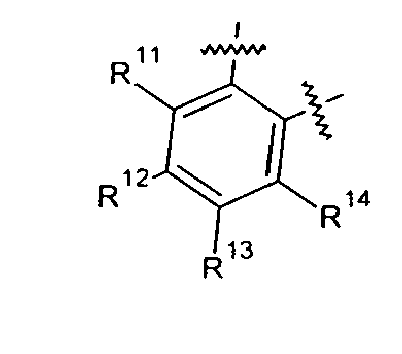
R1b is H or NO2
R1a is a ring system A or B:

R9, R10 are each independently selected from H and OCH3;
R11, R12, R13, and R14 are each independently selected from H, C1, Br, I, F, OH, C1-C6 alkyl, C1-C6 fluoroalkyl, C1C6 fluoroalkoxy, NO2 and C1-C6 alkoxy, or two of R11, R12, R13, R14 together form with the carbon atoms to which they are attached a 1,3-dioxolane or 1,4-dioxane;
n is 1 or 2;
R is C1-C6 alkyl;
—— is either a single or double bond;
and the stereoisomeric forms, mixtures of stereoisomeric forms or pharmaceutically acceptable salts forms thereof.
and
with the exclusion of the compounds of formula (I) wherein:
In an aspect of the invention, there is provided compounds of formula (I), wherein is a single bond,
with the proviso that:
Claims (18)
- A compound of formula (I) for use in the prevention and/or treatment of viral infections:
 X is O, S, NOH, N-NH2, or NR;Y is O or CH2;-Z-T- is -C(R2)(R3)-(CH2)n- or
provided that when Y is O, then ―Z-T- is
R1b is H or NO2;
R1a is a ring system A or B:
R9, R10 are each independently selected from H and OCH3;
R11, R12, R13, and R14 are each independently selected from H, Cl, Br, I, F, OH, C1-C6 alkyl, C1-C6 fluoroalkyl, C1-C6 fluoroalkoxy, NO2, and C1-C6 alkoxy, or two of R11, R12, R13, R14 together form with the carbon atoms to which they are attached a 1,3-dioxolane or 1,4-dioxane;
n is 1 or 2;
R is C1-C6 alkyl;
is either a single or double bond;
and the stereoisomeric forms, mixtures of stereoisomeric forms or pharmaceutically acceptable salts forms thereof. - The compound of formula (I) for use according to claim 1, wherein X is O.
- The compound of formula (I) for use according to any of claims 1 or 2, whereinis a double bond.

- The compound of formula (I) for use according to any of claims 1 or 2, whereinis a single bond.

- The compound of formula (I) for use according to claim 4, wherein R1a and R1b are in a trans configuration.
- The compound of formula (I) for use according to any of claims 1 to 5, wherein -Z-T- is -C(R2)(R3)-(CH2)n-.
- The compound of formula (I) for use according to claim 6, wherein n is 1.
- The compound of formula (I) for use according to claim 6, wherein R2 and R3 are H.
- The compound of formula (I) for use according to any of claims 1 to 8, wherein R4 and R8 are H.
- The compound of formula (I) for use according to any of claims 1 to 9, wherein at least one of R5, R6, R7 is selected from Cl, or Br, the others being H.
- The compound of formula (I) for use according to claim 1, which is selected from:- 3-(5-chloro-2-methoxyphenyl)-6,7-dihydro-5H-benzofuran-4-one- 3-(3-bromophenyl)-6,7-dihydro-5H-benzofuran-4-one- 3-(3-fluorophenyl)-6,7-dihydro-5H-benzofuran-4-one- 3-(4-chlorophenyl)-6,7-dihydro-5H-benzofuran-4-one- 3-(2-chlorophenyl)-6,7-dihydro-5H-benzofuran-4-one- 3-(3-methoxyphenyl)-6,7-dihydrobenzofuran-4(5H)-one- 3-(3,5-dichlorophenyl)-6,7-dihydro-5H-benzofuran-4-one- 3-(3-nitrophenyl)-6,7-dihydro-5H-benzofuran-4-one- 3-((3-trifluoromethyl)phenyl)-6,7-dihydro-5H-benzofuran-4-one- 3-(3-benzyloxyphenyl)-6,7-dihydro-5H-benzofuran-4-one- 3-(3,4,5-trimethoxyphenyl)-6,7-dihydro-5H-benzofuran-4-one- 3-(3,4-dichlorophenyl)-6,7-dihydro-5H-benzofuran-4-one- 3-(3-iodo-4-methoxyphenyl)-6,7-dihydro-5H-benzofuran-4-one- 3-(3-iodophenyl)-6,7-dihydro-5H-benzofuran-4-one- 3-(3-chlorophenyl)-6,7-dihydro-5H-benzofuran-4-one- 3-(3-chlorophenyl)-6,6-dimethyl-6,7-dihydro-5H-benzofuran-4-one- 3-(3-chlorophenyl)-6-methyl-6,7-dihydro-5H-benzofuran-4-one- 3-(5-chloro-2-methoxyphenyl)-2-nitro-3,5,6,7-tetrahydro-2H-benzofuran-4-one- 3-(2-chlorophenyl)-2-nitro-3,5,6,7-tetrahydro-2H-benzofuran-4-one- 1-[4-(3-chlorophenyl)-2-methyl-5-nitro-4,5-dihydrofuran-3-yl]ethanone- 3-(1H-Indol-3-yl)-2-nitro-2,3-dihydrofuro[3,2-c]chromen-4-one- 3-(3-Chlorophenyl)-6,7-dihydro-5H-benzofuran-4-one oxime
- A pharmaceutical composition comprising a compound of formula (I) as defined in any of claims 1 to 11, in admixture with one or more pharmaceutically acceptable excipients.
- The pharmaceutical composition of claim 12, wherein
When Y is O and ―Z-T- is
- A compound of formula (I):

X, Y, Z, T, R1a, and R1b are as defined in claim 1, with the proviso that:- when R2 and R3 are CH3, then R1b cannot be NO2;and- when —Z-T- isthen R1a cannot be a ring system A;
and
with the exclusion of the compounds of formula (I) wherein:i) X i O; R1b is NO2; R2=R3 is H; R1a is Ph, m- or p-NO2Ph, or p-ClPh; n is 1; andis a single bond; ii) X i O; R1b is H or NO2; R2 = R3 are H or CH3; R1a is m- or p-NO2Ph; n is 1; andis a double bond;
 iii) X is O; R1b is H ; R2 = R3 are H ; R1a is Ph ; n is 1; andand the stereoisomeric forms, mixtures of stereoisomeric forms or pharmaceutically acceptable salts thereof.is a single bond;
- The compound of claim 14, wherein the compound of formula (I) has the following formula (Ia):
 - when R2 and R3 are CH3, then R1b cannot be NO2;and
with the exclusion of the compounds of formula (I) wherein:i) X is O; R1b is NO2; R2 = R3 is H; R1a is Ph, m- or p-NO2Ph, or p-ClPh; n is 1;and is a single bond; ii) X is O; R1b is H or NO2; R2 = R3 are H or CH3; R1a is m-or p-NO2Ph; n is 1; andis a double bond;
 iii) X is O; R1b is H; R2 = R3 are H; R1a is Ph; n is 1: andis a single bond;
- The compound of claim 15, wherein R1a is a ring system A.
- The compound of claim 14, wherein the compound of formula (I) has the following formula (Ib):
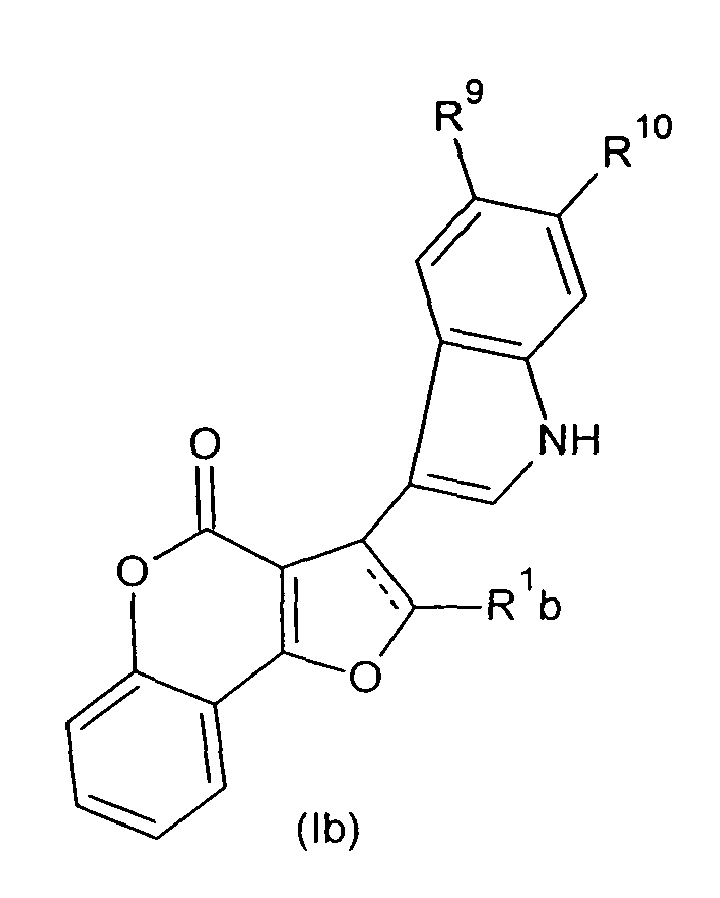
- The compound of claim 14, which is selected from:- 3-(5-chloro-2-methoxyphenyl)-6,7-dihydro-5H-benzofuran-4-one- 3-(3-bromophenyl)-6,7-dihydro-5H-benzofuran-4-one- 3-(3-fluorophenyl)-6,7-dihydro-5H-benzofuran-4-one- 3-(4-chlorophenyl)-6,7-dihydro-5H-benzofuran-4-one- 3-(2-chlorophenyl)-6,7-dihydro-5H-benzofuran-4-one- 3-(3-methoxyphenyl)-6,7-dihydrobenzofuran-4(5H)-one- 3-(3,5-dichlorophenyl)-6,7-dihydro-5H-benzofuran-4-one- 3-((3-trifluoromethyl)phenyl)-6,7-dihydro-5H-benzofuran-4-one- 3-(3-benzyloxyphenyl)-6,7-dihydro-5H-benzofuran-4-one- 3-(3,4,5-trimethoxyphenyl)-6,7-dihydro-5H-benzofuran-4-one- 3-(3,4-dichlorophenyl)-6,7-dihydro-5H-benzofuran-4-one- 3-(3-iodo-4-methoxyphenyl)-6,7-dihydro-5H-benzofuran-4-one- 3-(3-iodophenyl)-6,7-dihydro-5H-benzofuran-4-one- 3-(3-chlorophenyl)-6,7-dihydro-5H-benzofuran-4-one- 3-(3-chlorophenyl)-6,6-dimethyl-6,7-dihydro-5H-benzofuran-4-one- 3-(3-chlorophenyl)-6-methyl-6,7-dihydro-5H-benzofuran-4-one- 3-(5-chloro-2-methoxyphenyl)-2-nitro-3,5,6,7-tetrahydro-2H-benzofuran-4-one- 3-(2-chlorophenyl)-2-nitro-3,5,6,7-tetrahydro-2H-benzofuran-4-one- 1-[4-(3-chlorophenyl)-2-methyl-5-nitro-4,5-dihydrofuran-3-yl]ethanone- 3-(1H-Indol-3-yl)-2-nitro-2,3-dihydrofuro[3,2-c]chromen-4-one- 3-(3-Chlorophenyl)-6,7-dihydro-5H-benzofuran-4-one oxime.
Priority Applications (4)
| Application Number | Priority Date | Filing Date | Title |
|---|---|---|---|
| EP10290426A EP2420495A1 (en) | 2010-07-29 | 2010-07-29 | Novel derivatives useful as antiviral agents |
| US13/809,761 US9315482B2 (en) | 2010-07-29 | 2011-07-29 | Derivatives useful as antiviral agents |
| PCT/IB2011/053387 WO2012014181A1 (en) | 2010-07-29 | 2011-07-29 | Novel derivatives useful as antiviral agents |
| EP11754491.6A EP2598495A1 (en) | 2010-07-29 | 2011-07-29 | Novel derivatives useful as antiviral agents |
Applications Claiming Priority (1)
| Application Number | Priority Date | Filing Date | Title |
|---|---|---|---|
| EP10290426A EP2420495A1 (en) | 2010-07-29 | 2010-07-29 | Novel derivatives useful as antiviral agents |
Publications (1)
| Publication Number | Publication Date |
|---|---|
| EP2420495A1 true EP2420495A1 (en) | 2012-02-22 |
Family
ID=43086179
Family Applications (2)
| Application Number | Title | Priority Date | Filing Date |
|---|---|---|---|
| EP10290426A Withdrawn EP2420495A1 (en) | 2010-07-29 | 2010-07-29 | Novel derivatives useful as antiviral agents |
| EP11754491.6A Withdrawn EP2598495A1 (en) | 2010-07-29 | 2011-07-29 | Novel derivatives useful as antiviral agents |
Family Applications After (1)
| Application Number | Title | Priority Date | Filing Date |
|---|---|---|---|
| EP11754491.6A Withdrawn EP2598495A1 (en) | 2010-07-29 | 2011-07-29 | Novel derivatives useful as antiviral agents |
Country Status (3)
| Country | Link |
|---|---|
| US (1) | US9315482B2 (en) |
| EP (2) | EP2420495A1 (en) |
| WO (1) | WO2012014181A1 (en) |
Families Citing this family (1)
| Publication number | Priority date | Publication date | Assignee | Title |
|---|---|---|---|---|
| EP2929883A1 (en) | 2014-04-08 | 2015-10-14 | Institut Pasteur | Pyrazole derivatives as dihydroorotate dehydrogenase (DHODH) inhibitors |
Citations (1)
| Publication number | Priority date | Publication date | Assignee | Title |
|---|---|---|---|---|
| EP0853083A1 (en) * | 1997-01-06 | 1998-07-15 | Pfizer Inc. | Pyridylfuran and pyridylthiophene compounds and pharmaceutical use thereof |
Family Cites Families (1)
| Publication number | Priority date | Publication date | Assignee | Title |
|---|---|---|---|---|
| CN101628904B (en) * | 2009-04-02 | 2012-04-25 | 苏州大学 | Synthesis method of 2-nitro-3-aryl-2,3,5,7-tetrahydrobenzofuran-4-one derivative |
-
2010
- 2010-07-29 EP EP10290426A patent/EP2420495A1/en not_active Withdrawn
-
2011
- 2011-07-29 WO PCT/IB2011/053387 patent/WO2012014181A1/en not_active Ceased
- 2011-07-29 US US13/809,761 patent/US9315482B2/en not_active Expired - Fee Related
- 2011-07-29 EP EP11754491.6A patent/EP2598495A1/en not_active Withdrawn
Patent Citations (1)
| Publication number | Priority date | Publication date | Assignee | Title |
|---|---|---|---|---|
| EP0853083A1 (en) * | 1997-01-06 | 1998-07-15 | Pfizer Inc. | Pyridylfuran and pyridylthiophene compounds and pharmaceutical use thereof |
Non-Patent Citations (17)
| Title |
|---|
| "Prodrugs", 1992, MARCEL DEKKER |
| BERESTOVITSKAYA V. M.: "Synthesis of indole-containing hexahydrobenzofuranes", RUSSIAN JOURNAL OF ORGANIC CHEMISTRY, vol. 37, 2001, pages 1505 - 1506, XP002610982 * |
| BONAVIA ET AL., JOURNAL OF VIROLOGY, vol. 71, no. 1, 1997, pages 800 - 6 |
| BRÉHIN, VIROLOGY, vol. 371, no. 1, 2008, pages 185 - 95 |
| CHOBANYAN ZH. A. ET AL.: "Derivatives of furan based on terminal acetylenes", RUSSIAN JOURNAL OF ORGANIC CHEMISTRY, vol. 5, 1993, pages 881 - 881, XP002610977 * |
| DANIEL DAUZONNE ET AL., TETRAHEDRON, vol. 46, 1990, pages 7359 - 7371 |
| DANIEL DAUZONNE; HUBERT JOSIEN; PIERRE DEMERSEMAN, TETRAHEDRON, vol. 46, 1990, pages 7359 - 7371 |
| DANIEL DAUZONNE; PIERRE DEMERSEMAN J, HETEROCYCLIC CHEM., vol. 27, 1990, pages 1581 - 1584 |
| DAUZONNE D. ET AL.: "(2-chloro-2-nitroethenyl)benzenes as synthons: a general method for the preparation of 2,3-dihydro-2-nitro-3-phenyl-4H-furo[3,2-c][1]benzopyran-4-ones and 3-phenyl-4H-furo[3,2-c][1]benzopyran-4-ones", TETRAHEDRON, vol. 46, 1990, pages 7359 - 7371, XP002610979 * |
| DAUZONNE D. ET AL.: "Potassium fluoride-promoted reaction of (2-chloro-2-nitroethenyl)benzenes with 1,3-dicarbonyl compounds. A general synthesis of 6,6-dimethyl-2-nitro-3-phenyl-3,5,6,7-tetrahydro-4(2h)benzofuranones and some analogs", JOURNAL OF HETEROCYCLIC CHEMISTRY, vol. 27, 1990, pages 1581 - 1584, XP002610978 * |
| ELIEL, E. L.; WILEN, S.H.: "Stereochemistry of Organic Compounds", 1994, WILEY |
| GOODELL ET AL., J MED. CHEM., vol. 49, 2006, pages 2127 - 2137 |
| GREENE, T.W.; WUTS, P.G.M.: "Protective Groups in Organic Synthesis", 1991, WILEY & SONS |
| JACQUES, J ET AL.: "Enantiomers, Racemates, and Resolutions", 1981, WILEY |
| PUIG-BASAGOITI ET AL., ANTIMICROB. AGENTS CHEMOTHER., vol. 50, 2006, pages 1320 - 1329 |
| RISITANO F. ET A.: "A convenient synthesis of furo[3,2-c]coumarins by a tandem alkylation/intramolecular aldolisation reaction", TETRAHEDRON LETTERS, vol. 42, 2001, pages 3503 - 3505, XP002610981 * |
| TRUKHIN E.V. ET AL.: "beta, beta-Dinitrostyrenes in reactions with cyclohexane-1,3-diones", RUSSIAN CHEMICAL BULLETIN, vol. 58, 2009, pages 2035 - 2038, XP002610980 * |
Also Published As
| Publication number | Publication date |
|---|---|
| WO2012014181A1 (en) | 2012-02-02 |
| US20130210886A1 (en) | 2013-08-15 |
| EP2598495A1 (en) | 2013-06-05 |
| US9315482B2 (en) | 2016-04-19 |
Similar Documents
| Publication | Publication Date | Title |
|---|---|---|
| US10556904B2 (en) | Derivatives and methods of treating hepatitis B infections | |
| JP7001601B2 (en) | Functionalized pentanic acid for use in influenza virus infection | |
| JP4982482B2 (en) | HIV integrase inhibitor | |
| US20240383918A1 (en) | Substituted 3,4,12,12a-Tetrahydro-1H-[1,4]Oxazino[3,4-c]Pyrido[2,1-f][1,2,4]Triazine-6,8-dione, Pharmaceutical Composition, Method for the Production and Use Thereof | |
| JP6546268B2 (en) | Enantiomers of the 1 ', 6'-isomer of neplanocin A | |
| CN104804042A (en) | Nucleotide phosphonate compound, pharmaceutical composition, preparation method and uses thereof | |
| CN1921867B (en) | Nucleoside phosphonate derivatives for the treatment of HIV infection | |
| Robert et al. | Synthesis and antiviral properties of 1-substituted 3-[ω-(4-oxoquinazolin-4 (3h)-yl) alkyl] uracil derivatives | |
| US9315482B2 (en) | Derivatives useful as antiviral agents | |
| CN117069685B (en) | Cinnamoyl alkyl polyketone compounds and preparation methods and applications thereof | |
| JP2025003592A (en) | Antiviral 1,3-di-oxo-indene compounds | |
| US20190201352A1 (en) | Design, synthesis and methods of use of acyclic flexmier nucleoside analogues having anti-coronavirus activity | |
| CN116462728B (en) | Purine nucleoside derivative for resisting virus infection, pharmaceutical composition and application thereof | |
| CN104447390B (en) | Substituted ring butanes neuraminidase inhibitor and using method thereof and purposes | |
| CN104496839B (en) | Substituted cyclobutane neuraminidase inhibitors and methods and uses thereof | |
| EP3478671A1 (en) | Pyridazinone-based broad spectrum anti-influenza inhibitors | |
| CN104447747B (en) | Substituted purin class neuraminidase inhibitor and using method thereof and purposes | |
| CN104496838B (en) | Substituted ring butanes neuraminidase inhibitor and using method thereof and purposes | |
| KR20100097939A (en) | Novel ck2 inhibitor and method of preparing the same | |
| WO2022169882A1 (en) | Methods and treatment of viral infection caused by sars-cov-2 | |
| CN121913976A (en) | Isoindol-1-one derivatives and application thereof in preparation of antiviral drugs | |
| KR20080071343A (en) | Compound having antiviral activity against influenza virus and method for preparing same |
Legal Events
| Date | Code | Title | Description |
|---|---|---|---|
| AK | Designated contracting states |
Kind code of ref document: A1 Designated state(s): AL AT BE BG CH CY CZ DE DK EE ES FI FR GB GR HR HU IE IS IT LI LT LU LV MC MK MT NL NO PL PT RO SE SI SK SM TR |
|
| AX | Request for extension of the european patent |
Extension state: BA ME RS |
|
| PUAI | Public reference made under article 153(3) epc to a published international application that has entered the european phase |
Free format text: ORIGINAL CODE: 0009012 |
|
| STAA | Information on the status of an ep patent application or granted ep patent |
Free format text: STATUS: THE APPLICATION IS DEEMED TO BE WITHDRAWN |
|
| 18D | Application deemed to be withdrawn |
Effective date: 20120823 |