EP2419516B1 - Process for producing methane from biomass - Google Patents
Process for producing methane from biomass Download PDFInfo
- Publication number
- EP2419516B1 EP2419516B1 EP10713038.7A EP10713038A EP2419516B1 EP 2419516 B1 EP2419516 B1 EP 2419516B1 EP 10713038 A EP10713038 A EP 10713038A EP 2419516 B1 EP2419516 B1 EP 2419516B1
- Authority
- EP
- European Patent Office
- Prior art keywords
- reactor
- effluent
- vfa
- stream
- organic
- Prior art date
- Legal status (The legal status is an assumption and is not a legal conclusion. Google has not performed a legal analysis and makes no representation as to the accuracy of the status listed.)
- Not-in-force
Links
- VNWKTOKETHGBQD-UHFFFAOYSA-N methane Chemical compound C VNWKTOKETHGBQD-UHFFFAOYSA-N 0.000 title claims description 52
- 238000000034 method Methods 0.000 title claims description 37
- 230000008569 process Effects 0.000 title claims description 36
- 239000002028 Biomass Substances 0.000 title claims description 30
- 239000007787 solid Substances 0.000 claims description 47
- 239000010802 sludge Substances 0.000 claims description 31
- 239000007788 liquid Substances 0.000 claims description 29
- 239000002002 slurry Substances 0.000 claims description 21
- 238000000926 separation method Methods 0.000 claims description 18
- 230000029087 digestion Effects 0.000 claims description 14
- 238000004519 manufacturing process Methods 0.000 claims description 12
- 238000011282 treatment Methods 0.000 claims description 11
- 238000012545 processing Methods 0.000 claims description 8
- 239000010815 organic waste Substances 0.000 claims description 6
- 239000000725 suspension Substances 0.000 claims description 6
- 235000011389 fruit/vegetable juice Nutrition 0.000 claims description 5
- 239000000463 material Substances 0.000 claims description 5
- 235000016068 Berberis vulgaris Nutrition 0.000 claims description 4
- 241000335053 Beta vulgaris Species 0.000 claims description 4
- 235000014113 dietary fatty acids Nutrition 0.000 claims description 4
- 229930195729 fatty acid Natural products 0.000 claims description 4
- 239000000194 fatty acid Substances 0.000 claims description 4
- 150000004665 fatty acids Chemical class 0.000 claims description 4
- 238000011068 loading method Methods 0.000 claims description 4
- 239000010908 plant waste Substances 0.000 claims description 4
- 241000219310 Beta vulgaris subsp. vulgaris Species 0.000 claims description 3
- 241000196324 Embryophyta Species 0.000 claims description 3
- 235000021536 Sugar beet Nutrition 0.000 claims description 3
- 238000012544 monitoring process Methods 0.000 claims description 3
- 239000006227 byproduct Substances 0.000 claims description 2
- 244000005700 microbiome Species 0.000 description 16
- CURLTUGMZLYLDI-UHFFFAOYSA-N Carbon dioxide Chemical compound O=C=O CURLTUGMZLYLDI-UHFFFAOYSA-N 0.000 description 13
- 238000006243 chemical reaction Methods 0.000 description 12
- 239000012071 phase Substances 0.000 description 11
- XLYOFNOQVPJJNP-UHFFFAOYSA-N water Substances O XLYOFNOQVPJJNP-UHFFFAOYSA-N 0.000 description 11
- QTBSBXVTEAMEQO-UHFFFAOYSA-N Acetic acid Chemical compound CC(O)=O QTBSBXVTEAMEQO-UHFFFAOYSA-N 0.000 description 10
- 239000007789 gas Substances 0.000 description 10
- 241000894006 Bacteria Species 0.000 description 9
- 238000009825 accumulation Methods 0.000 description 8
- 239000000126 substance Substances 0.000 description 8
- 229910002092 carbon dioxide Inorganic materials 0.000 description 7
- 230000000696 methanogenic effect Effects 0.000 description 7
- 239000002245 particle Substances 0.000 description 7
- 239000001569 carbon dioxide Substances 0.000 description 6
- XBDQKXXYIPTUBI-UHFFFAOYSA-N dimethylselenoniopropionate Natural products CCC(O)=O XBDQKXXYIPTUBI-UHFFFAOYSA-N 0.000 description 6
- 238000000855 fermentation Methods 0.000 description 6
- 230000004151 fermentation Effects 0.000 description 6
- 239000008187 granular material Substances 0.000 description 6
- 238000002156 mixing Methods 0.000 description 5
- FERIUCNNQQJTOY-UHFFFAOYSA-N Butyric acid Chemical compound CCCC(O)=O FERIUCNNQQJTOY-UHFFFAOYSA-N 0.000 description 4
- 230000002053 acidogenic effect Effects 0.000 description 4
- 238000009434 installation Methods 0.000 description 4
- 230000000813 microbial effect Effects 0.000 description 4
- 239000005416 organic matter Substances 0.000 description 4
- IUVKMZGDUIUOCP-BTNSXGMBSA-N quinbolone Chemical compound O([C@H]1CC[C@H]2[C@H]3[C@@H]([C@]4(C=CC(=O)C=C4CC3)C)CC[C@@]21C)C1=CCCC1 IUVKMZGDUIUOCP-BTNSXGMBSA-N 0.000 description 4
- 239000000758 substrate Substances 0.000 description 4
- UFHFLCQGNIYNRP-UHFFFAOYSA-N Hydrogen Chemical compound [H][H] UFHFLCQGNIYNRP-UHFFFAOYSA-N 0.000 description 3
- QVGXLLKOCUKJST-UHFFFAOYSA-N atomic oxygen Chemical compound [O] QVGXLLKOCUKJST-UHFFFAOYSA-N 0.000 description 3
- 230000001580 bacterial effect Effects 0.000 description 3
- 238000005516 engineering process Methods 0.000 description 3
- 230000002255 enzymatic effect Effects 0.000 description 3
- 239000001257 hydrogen Substances 0.000 description 3
- 229910052739 hydrogen Inorganic materials 0.000 description 3
- 230000002401 inhibitory effect Effects 0.000 description 3
- 239000011368 organic material Substances 0.000 description 3
- 239000001301 oxygen Substances 0.000 description 3
- 229910052760 oxygen Inorganic materials 0.000 description 3
- 239000002699 waste material Substances 0.000 description 3
- QGZKDVFQNNGYKY-UHFFFAOYSA-N Ammonia Chemical compound N QGZKDVFQNNGYKY-UHFFFAOYSA-N 0.000 description 2
- 238000004458 analytical method Methods 0.000 description 2
- 230000007246 mechanism Effects 0.000 description 2
- 150000007524 organic acids Chemical class 0.000 description 2
- 235000005985 organic acids Nutrition 0.000 description 2
- 238000001139 pH measurement Methods 0.000 description 2
- 239000000047 product Substances 0.000 description 2
- 235000019260 propionic acid Nutrition 0.000 description 2
- 229910019142 PO4 Inorganic materials 0.000 description 1
- 150000001242 acetic acid derivatives Chemical class 0.000 description 1
- 239000002253 acid Substances 0.000 description 1
- 238000000184 acid digestion Methods 0.000 description 1
- 230000002378 acidificating effect Effects 0.000 description 1
- 230000009471 action Effects 0.000 description 1
- 238000013019 agitation Methods 0.000 description 1
- 239000012670 alkaline solution Substances 0.000 description 1
- 229910021529 ammonia Inorganic materials 0.000 description 1
- 239000010828 animal waste Substances 0.000 description 1
- 230000015572 biosynthetic process Effects 0.000 description 1
- 150000001722 carbon compounds Chemical class 0.000 description 1
- 230000008859 change Effects 0.000 description 1
- 239000003245 coal Substances 0.000 description 1
- 239000012141 concentrate Substances 0.000 description 1
- 238000007796 conventional method Methods 0.000 description 1
- 238000000354 decomposition reaction Methods 0.000 description 1
- 230000001419 dependent effect Effects 0.000 description 1
- 230000000694 effects Effects 0.000 description 1
- 230000002708 enhancing effect Effects 0.000 description 1
- 210000003608 fece Anatomy 0.000 description 1
- 238000005243 fluidization Methods 0.000 description 1
- 230000004907 flux Effects 0.000 description 1
- 235000013305 food Nutrition 0.000 description 1
- 239000010794 food waste Substances 0.000 description 1
- 238000004817 gas chromatography Methods 0.000 description 1
- 230000005484 gravity Effects 0.000 description 1
- 159000000011 group IA salts Chemical class 0.000 description 1
- 238000004128 high performance liquid chromatography Methods 0.000 description 1
- 230000007062 hydrolysis Effects 0.000 description 1
- 238000006460 hydrolysis reaction Methods 0.000 description 1
- 230000003301 hydrolyzing effect Effects 0.000 description 1
- 230000005764 inhibitory process Effects 0.000 description 1
- 239000002198 insoluble material Substances 0.000 description 1
- 231100000568 intoxicate Toxicity 0.000 description 1
- 239000007791 liquid phase Substances 0.000 description 1
- 239000010871 livestock manure Substances 0.000 description 1
- 230000014759 maintenance of location Effects 0.000 description 1
- 239000011159 matrix material Substances 0.000 description 1
- 238000010907 mechanical stirring Methods 0.000 description 1
- 239000012528 membrane Substances 0.000 description 1
- 239000000203 mixture Substances 0.000 description 1
- 239000000178 monomer Substances 0.000 description 1
- 235000015097 nutrients Nutrition 0.000 description 1
- 150000002894 organic compounds Chemical class 0.000 description 1
- 238000005325 percolation Methods 0.000 description 1
- 239000003208 petroleum Substances 0.000 description 1
- 239000007793 ph indicator Substances 0.000 description 1
- NBIIXXVUZAFLBC-UHFFFAOYSA-K phosphate Chemical compound [O-]P([O-])([O-])=O NBIIXXVUZAFLBC-UHFFFAOYSA-K 0.000 description 1
- 239000010452 phosphate Substances 0.000 description 1
- 238000005375 photometry Methods 0.000 description 1
- 238000001556 precipitation Methods 0.000 description 1
- 239000000376 reactant Substances 0.000 description 1
- 230000003134 recirculating effect Effects 0.000 description 1
- 238000004064 recycling Methods 0.000 description 1
- 230000009467 reduction Effects 0.000 description 1
- 238000009877 rendering Methods 0.000 description 1
- 238000012552 review Methods 0.000 description 1
- 238000005204 segregation Methods 0.000 description 1
- 239000011343 solid material Substances 0.000 description 1
- 239000002910 solid waste Substances 0.000 description 1
- 241000894007 species Species 0.000 description 1
- 235000000346 sugar Nutrition 0.000 description 1
- 150000008163 sugars Chemical class 0.000 description 1
- 239000002916 wood waste Substances 0.000 description 1
Images

Classifications
-
- C—CHEMISTRY; METALLURGY
- C12—BIOCHEMISTRY; BEER; SPIRITS; WINE; VINEGAR; MICROBIOLOGY; ENZYMOLOGY; MUTATION OR GENETIC ENGINEERING
- C12P—FERMENTATION OR ENZYME-USING PROCESSES TO SYNTHESISE A DESIRED CHEMICAL COMPOUND OR COMPOSITION OR TO SEPARATE OPTICAL ISOMERS FROM A RACEMIC MIXTURE
- C12P5/00—Preparation of hydrocarbons or halogenated hydrocarbons
- C12P5/02—Preparation of hydrocarbons or halogenated hydrocarbons acyclic
- C12P5/023—Methane
-
- C—CHEMISTRY; METALLURGY
- C12—BIOCHEMISTRY; BEER; SPIRITS; WINE; VINEGAR; MICROBIOLOGY; ENZYMOLOGY; MUTATION OR GENETIC ENGINEERING
- C12M—APPARATUS FOR ENZYMOLOGY OR MICROBIOLOGY; APPARATUS FOR CULTURING MICROORGANISMS FOR PRODUCING BIOMASS, FOR GROWING CELLS OR FOR OBTAINING FERMENTATION OR METABOLIC PRODUCTS, i.e. BIOREACTORS OR FERMENTERS
- C12M21/00—Bioreactors or fermenters specially adapted for specific uses
- C12M21/04—Bioreactors or fermenters specially adapted for specific uses for producing gas, e.g. biogas
-
- C—CHEMISTRY; METALLURGY
- C12—BIOCHEMISTRY; BEER; SPIRITS; WINE; VINEGAR; MICROBIOLOGY; ENZYMOLOGY; MUTATION OR GENETIC ENGINEERING
- C12M—APPARATUS FOR ENZYMOLOGY OR MICROBIOLOGY; APPARATUS FOR CULTURING MICROORGANISMS FOR PRODUCING BIOMASS, FOR GROWING CELLS OR FOR OBTAINING FERMENTATION OR METABOLIC PRODUCTS, i.e. BIOREACTORS OR FERMENTERS
- C12M23/00—Constructional details, e.g. recesses, hinges
- C12M23/58—Reaction vessels connected in series or in parallel
-
- C—CHEMISTRY; METALLURGY
- C12—BIOCHEMISTRY; BEER; SPIRITS; WINE; VINEGAR; MICROBIOLOGY; ENZYMOLOGY; MUTATION OR GENETIC ENGINEERING
- C12M—APPARATUS FOR ENZYMOLOGY OR MICROBIOLOGY; APPARATUS FOR CULTURING MICROORGANISMS FOR PRODUCING BIOMASS, FOR GROWING CELLS OR FOR OBTAINING FERMENTATION OR METABOLIC PRODUCTS, i.e. BIOREACTORS OR FERMENTERS
- C12M25/00—Means for supporting, enclosing or fixing the microorganisms, e.g. immunocoatings
- C12M25/16—Particles; Beads; Granular material; Encapsulation
-
- C—CHEMISTRY; METALLURGY
- C12—BIOCHEMISTRY; BEER; SPIRITS; WINE; VINEGAR; MICROBIOLOGY; ENZYMOLOGY; MUTATION OR GENETIC ENGINEERING
- C12M—APPARATUS FOR ENZYMOLOGY OR MICROBIOLOGY; APPARATUS FOR CULTURING MICROORGANISMS FOR PRODUCING BIOMASS, FOR GROWING CELLS OR FOR OBTAINING FERMENTATION OR METABOLIC PRODUCTS, i.e. BIOREACTORS OR FERMENTERS
- C12M29/00—Means for introduction, extraction or recirculation of materials, e.g. pumps
- C12M29/18—External loop; Means for reintroduction of fermented biomass or liquid percolate
-
- Y—GENERAL TAGGING OF NEW TECHNOLOGICAL DEVELOPMENTS; GENERAL TAGGING OF CROSS-SECTIONAL TECHNOLOGIES SPANNING OVER SEVERAL SECTIONS OF THE IPC; TECHNICAL SUBJECTS COVERED BY FORMER USPC CROSS-REFERENCE ART COLLECTIONS [XRACs] AND DIGESTS
- Y02—TECHNOLOGIES OR APPLICATIONS FOR MITIGATION OR ADAPTATION AGAINST CLIMATE CHANGE
- Y02E—REDUCTION OF GREENHOUSE GAS [GHG] EMISSIONS, RELATED TO ENERGY GENERATION, TRANSMISSION OR DISTRIBUTION
- Y02E50/00—Technologies for the production of fuel of non-fossil origin
- Y02E50/30—Fuel from waste, e.g. synthetic alcohol or diesel
Definitions
- the invention pertains to an improved treatment of organic waste and/or biomass to more efficiently collect methane, focused on yield [litre CH 4 per kg of biomass] and kinetics [litre CH 4 per m 3 reactor per day].
- the invention particularly relates to an improved two-phase procedure wherein conditions are provided to efficiently conduct methanogenesis in both phases, the conditions optimized for preventing accumulation of inhibiting products during the first phase.
- biomass is mixed with water or effluent to at least partially suspend the solid particles for intimate contact with the microorganisms.
- a gas such as biogas circulation, for example, may be added to the reactor vessel.
- UASB Upflow Anaerobic Sludge Blanket
- VFA volatile fatty acids
- acetic, propionic and butyric acid are formed in the acid digestion phase.
- pp 743-755 the acidogenic and methanogenic phases are kept physically separated.
- Some focus on VFA production see e.g. Blasig J D et al., Resources, Conservation and Recycling, vol. 7, no. 1/03, pp 95-114 . It teaches a continuous fermentation system with different removal rates for solids and liquids. As such, methanogenesis is considered disadvantageous and is avoided by manipulating fermentation conditions such as pH, temperature, and residence time.
- VFA production in concentrated feeds often proceeds at much faster rates than the subsequent conversion of VFA to methane, thereby causing acid accumulation and consequently inhibition of methanogenesis.
- a two-stage configuration was introduced to avert the imbalance between acidogenesis (i.e. VFA production) and methanogenesis by physically isolating these two major microbial phases in two separate bioreactors.
- VFA accumulation in the first reactor is often controlled by feeding -large- amounts of alkaline solution to said reactor.
- the use of additional streams of chemicals is often undesired.
- both kinetic and thermodynamic biomass conversion rates are limited in these processes.
- the inventors have recognized that control of VFA production and pH is of vital importance in biomass digestion or methane fermentation. However, this is where the overlap with the prior art ends, which points in the direction of physically separating acidogenesis and methanogenesis. Instead, the inventors have found that better methane production yields and rates are obtained when the contact time between the micro-organisms responsible for converting biomass into methane and the organic feed is optimized. To this end, biomass conversion into methane is performed in two subsequent stages of methanogenic conversion where the reactor configurations and conditions are adapted to the substrate concentrations and substrate qualities.
- a concentrated organic feed is fed to a first (slurry) reactor, where under methanogenic conditions VFA concentrations can build up, while inhibitory conditions are avoided by bringing (at least part of) the effluent of said first reactor - after an intermediate solid/liquid separation step - in a subsequent (preferably granular sludge) reactor.
- the second reactor is particularly adapted to convert the VFA into biogas at a fast rate and is thus able to avoid further VFA accumulation in the circuit.
- the second reactor type and conditions are selected such that the micro-organisms responsible for converting biomass into methane are much more close together in the second reactor.
- the second reactor is a so called granular sludge reactor.
- At least part of the VFA-depleted second reactor effluent can be returned to the first reactor.
- the process diverges from the two-stage processes for converting biomass known in the art, which rely on separate hydrolytic/acidogenic and methanogenic phases, such as disclosed in EP 1,181,252 and Demirel Burak et al., Journal of Chemical Technology and Biotechnology, Vol. 77, No. 7, pp 743-755 .
- the present process is characterized by both reactors containing the same or similar mixed acidogenic and methanogenic population, but relying on distinctly different reactor concepts.
- the microbial population in the first reactor is safeguarded by controlling the rate of withdrawal of effluent from the first reactor, and therewith withdrawal of VFA, to subsequent processing steps, focusing on the VFA accumulation in the reactor.
- VFA levels in the first, preferably slurry, reactor are preferably maintained below 4 g per litre, more preferably below 3 g per litre, most preferably below 2 g per litre. Since reliable monitoring of VFA content is sometimes found difficult, and pH in the system is at a certain level related to the VFA content, pH measurements can be used as an on-line steering parameter. VFA concentrations can also be controlled on a regular basis by applying analytical measurements.
- the pH in the first reactor at a value higher than 5.5, more preferably at least 6, most preferably at least 6.5; if the suspension tends to acidify, the rate at which effluent is withdrawn from the first reactor is increased, to avoid VFA accumulation.
- VFA concentration and/or pH may be monitored inline and/or continuously.
- the concentrated stream containing (partly) unfermented organic feed is separated off, and the unconcentrated, liquid stream containing (partly) unfermented insoluble materials, but mostly soluble organics and VFA, is fed to the subsequent second reactor.
- the unconcentrated stream is subjected to acidogenesis and methanogenesis.
- VFA are converted into carbon dioxide and methane. Its format permits a more efficient reduction of VFA into methane and carbon dioxide while simultaneously requiring reduced reactor volumes.
- Part of the liquid of the second reactor with reduced VFA content can readily be returned to the first reactor, thus providing excellent means to control VFA accumulation in the first reactor. For sake of completeness it is noted that there is less need for VFA control in (the effluent of) the second reactor.
- the present setup allows for semi-continuous or continuous biogas production from organic feed.
- the invention pertains to a process for producing methane by a two-stage anaerobic digestion of organic feed, comprising:
- a stream (e) comprising effluent high in solids may be discharged from the circuit.
- a stream (f) released from the second reactor comprising liquid effluent low in organics and VFA, but high in inorganic nutrients such as ammonia, phosphate etc.
- biogas produced in reactors (1) and (2) is extracted, transported and collected using conventional methods.
- the volatile fatty acid (VFA) concentration in said first reactor is controlled by the withdrawal rate of effluent (b) and the return of at least part, preferably a predominant part, more preferably all of the second reactor effluent (g) to said first reactor. Due to the efficient VFA conversion in the second reactor, the VFA concentration in the second reactor effluent (g) is lower than that of the first reactor effluent (b), preferably by at least a factor 10, more preferably at least a factor 15, most preferably at least a factor 20. By recirculating (part of) the VFA-poor stream (g), it prevents VFA accumulation in the first reactor, thus allowing further methanogenesis.
- a stream comprising (mainly) soluble organic cell matter is added before (h1) and/or after (h2) solid/liquid separation (2).
- the stream is obtained from the organic waste and/or biomass prior to the digestion process, preferably by leakage and/or mechanical treatment, and/or originates from dewatering biomass. It may depend on the concentration of suspended solids in the stream whether it is fed before (h1) or after (h2) solid/liquid separation. It advantageously adds valuable rest materials to the process which would otherwise have been discarded, or in the present most sustainable way by adding in the first reactor, have a negative effect on the residence time in the first reactor.
- At least part of the effluent high in solids (d) is returned to the first reactor, maintaining the concentration of (partly) unfermented organic material in the first reactor.
- At least part of said effluent high in solids (d) is processed in a processing means (4) before return to said first reactor (1).
- the further processing step may involve some physical, chemical, thermal, enzymatic and/or mechanical action.
- An example is an additional step to remove or process fibres present in the organic feed stream. These may thus be removed from the anaerobic digestion circuit, either to concentrate the organic feed further, or to use such valuable materials elsewhere.
- Such a step may also be incorporated at another stage of the process, but stream (d) has a beneficially high concentration of solids, rendering it more efficient to apply additional processing steps there.
- the optional addition step subdivides 'unprocessed' stream (d) in a stream (d2) that is returned to the first reactor, and a stream (d1) that is discharged from the process.
- the pH in the first reactor is preferably 7.5 or less, more preferably 7.2 or less. This is conveniently lower than the pH levels between 7.5 and 8.3 usually maintained in the fermentors known in the art. Consequently, the fermentation in the second reactor downstream is also operated at lower pH levels, advantageously preventing precipitation issues.
- the “anaerobic digestion” treatment involves biological decomposition or fermentation of organic and inorganic matter in which the micro-organisms are indifferent to the presence or absence of oxygen; it involves a first, acid-forming or “acidogenic” process in which large organic molecules are broken down and partially oxidized to form lower molecular weight organic acids, and a second, methane-forming or “methanogenic” process in which the lower molecular weight organic acids are converted into gaseous carbon compounds, primarily methane (and carbon dioxide).
- acidogenesis and methanogenesis are performed simultaneously, in the same reactor environment. In other words, both reactors comprise acidogens and methanogens.
- Biomass comprises fibrous plant matter originating from dedicated energy crops and trees, agricultural crops, as well as agricultural crop wastes and residues, wood wastes and residues, while with organic waste, municipal wastes, manure, animal waste, landfill gas and other waste materials are designated. It preferably excludes organic material which has been transformed by geological processes into substances such as coal or petroleum.
- Organic feeds that are particularly suited for the present invention comprise agricultural food and feed crops, agricultural crop residues, and by-products from the agricultural crops processing industry.
- the organic feed comprises sugar beets and/or leaves and all (by-) products from sugar beet processing industry.
- Suitable bacteria are those living optimally at temperatures between 35-40°C and called mesophiles or mesophilic bacteria. Some of the bacteria can survive at the hotter and more hostile conditions of 55-60°C, these are called thermophiles or thermophilic bacteria. Suitable bacteria are for instance disclosed in the citations provided in the background section, their content herewith incorporated by reference.
- reactors (1) and (3) comprise similar or identical microbial populations. Differences in concentrations may well relate to the organic feed supply and retention times.
- the concentration of organic matter can be expressed in terms of Volatile Total Solids in the reactor content (gram VTS per litre).
- the concentration is preferably in the range between 20 and 100 g/l, more preferably about 50 g/1, and the amount of bacteria (active biomass) is preferably calculated at approximately 30-50 % of the VTS content.
- the concentration of organic matter in the second reactor is preferably in the range between 40 and 140 g/1, more preferably 40 - 120 g/l, more preferably about 80 g/l, where the amount of bacteria (active biomass) is preferably calculated at approximately 40-80 % of the VTS content.
- the first reactor is a slurry reactor.
- Slurry reactors are commonly used for the biological, chemical or enzymatic conversion of soluble and insoluble reactants.
- the organic feed (a) is preferably standardized to 5 - 30 wt%, preferably 10-20 wt% of organic matter - not including micro-organisms - suspended in water.
- Slurry concentrations (including micro-organisms) in the first reactor are typically between 4 - 40 wt%, preferably between 5 - 15 wt(%.
- the slurry reactor has means to effectuate and maintain a suspension of particles in a liquid. If deemed necessary, it may involve agitation, e.g. mixing, or gas supply to further promote suspension and/or contact between micro-organisms and organic feed.
- Typical treatment capacities of the slurry reactor are 3 - 10 kg, preferably 3-7 COD/m 3 per day; "COD" (chemical oxygen demand) is an expression of the amount of oxygen that is theoretically necessary to convert organic compounds to carbon dioxide.
- the hydraulic residence time is at least 10 days, preferably of the order of 20 - 60 days.
- the organic loading rate is preferably about 3 - 8 gram, preferably 3-6 gram of organics per litre reactor content per day.
- a typical example of a bioslurry or slurry reactor suitable for carrying out the invention is a cylinder-type reactor.
- Such reactors are vessels containing a slurry, i.e. mixture of a liquid and solid particles, wherein at least a portion of the solid particles are suspended in the liquid.
- a slurry reactor i.e. mixture of a liquid and solid particles, wherein at least a portion of the solid particles are suspended in the liquid.
- the reactor vessel contains microorganisms and a slurry, it is generally referred to as a bioslurry reactor.
- Slurry or bioslurry reactors may be mechanically stirred, e.g. using turbine mixers, or unstirred. If they are ustirred, mixing may occur as gas bubbles generated in said vessel rise through the slurry. In a preferred embodiment of the invention, no mechanical stirring is present.
- the second reactor is a granular sludge reactor, comprising sludge granules.
- Sludge granules are at the core of granular sludge reactor concepts.
- a sludge granule is an aggregate of micro-organisms forming during biomass conversion in an environment with a constant upflow hydraulic regime. In the absence of any support matrix, the flow conditions create a selective environment in which only those micro-organisms capable of attaching to each other survive and proliferate. Eventually the aggregates form into dense compact biofilms referred to as "granules".
- the granules Due to their large particle size, generally ranging from 0.5 to 10 mm in diameter, more preferably 1 - 5 mm, most preferably about 1-3 mm, the granules resist washout from the reactor, thus permitting high hydraulic loads. Additionally, the biofilms are compact, allowing for high concentrations of active micro-organisms and thus high organic space loadings in granular sludge reactors. The dense populations of micro-organisms promote the conversion rate.
- Typical treatment capacity of the sludge reactor is 15 - 40, preferably 20 - 35 kg COD/m 3 per day.
- the hydraulic residence time is of the order of hours, preferably 1 - 20 hours, more preferably 4 - 10 hours.
- Sludge concentrations in the second reactor are typically between 40 and 120 g/l as organic matter.
- the denser concentrations of micro-organisms in this reactor allow much higher organic loading rates, preferably 25- 30 gram of organics per litre reactor content per day.
- the liquid feed is passed upwards through an anaerobic granular sludge bed where substrates in the liquid feed come into contact with the micro-organisms in the sludge.
- the upward motion of released gas bubbles causes hydraulic turbulence that provides reactor mixing without any mechanical parts.
- the water phase is separated from sludge solids and gas in a three-phase separator (also known the gas-liquid-solids separator). This concept is known in the art as the upward-flow anaerobic sludge blanket (UASB) reactor.
- UASB upward-flow anaerobic sludge blanket
- EGSB external circulation
- IC internal circulation
- the distinguishing feature is that a faster rate of upward-flow velocity is designed for the liquid feed passing through the sludge bed.
- the increased flux permits partial expansion (fluidization) of the granular sludge bed, improving feed-granule contact as well as enhancing segregation of small inactive suspended particle from the sludge bed.
- a granular sludge reactor with internal circulation is employed.
- the second reactor is water-driven, as many solids as possible need to be removed from the effluent of the slurry reactor prior to entering the second reactor. It is preferred that the suspended solids content of the feed to the second reactor (c) is lower than 5 g per litre, more preferable lower than 2 gram per litre. This is achieved by solid/liquid separation, for instance using membrane or centrifugal separation and/or gravity.
- the effluent leaving S/L separation may involve concentration steps, such as comprising high pressure, high temperature and/or enzymatic treatment.
- the second reactor simply cleans the VFA-rich effluent originating from the first reactor and returns a VFA-poor stream to the first reactor. Consequently, the first reactor is maintained in its methanogenic state, i.e. continues to convert VFA to biogas, resulting in a pH that remains non-acidic, i.e. preferably not below pH 5.5.
- the total concentration of VFA in the liquid phase in the first reactor does not exceed 4 g/l, more preferably does not exceed 3 g/l, most preferably does not exceed 2 g/l. It is particularly preferred to maintain the propionic acid concentration in the effluent of the first reactor below 600 mg/l, preferably below 200 mg/l.
- the total concentration of VFA in the effluent of the second reactor does not exceed 400 mg/l, more preferably not exceed 100 mg/l. It is especially preferred that the numbers on VFA concentration in this paragraph apply to the (relative) amounts of acetic, propionic and butyric acid. It is particularly preferred to maintain the propionic acid concentration in the effluent of the second reactor below 100 mg/l.
- Control of the VFA concentration is achieved by the additional treatment of the liquid part of the first reactor effluent ( figure 2 , stream ( c )) in the second reactor, and by circulating part of the second reactor effluent to the first reactor ( figure 2 , stream (g)).
- the invention does not encompass means to control pH by providing chemicals (alkaline salts) to the reactor.
- the anaerobic digestion involves no other input than organic feed and (preferably at the start) conventional anaerobic micro-organisms to ferment said feed.
- VFA concentration can be determined by applying gas chromatography, High Performance Liquid Chromatography or semi-quantitative analyses such as titrimetric or photometric measurements.
- pH measurements can be used as steering parameter, preferably continuously and/or in-line, as described for example in EP 1,181,252 .
- the reactor set-up according to the invention makes it possible to operate in separate largely solid (first reactor) and more liquid (second reactor) phases, it is possible to independently add additional solid and liquid feeds to the respective phases of the system.
- additional material preferably mainly soluble organic cell material, not originating from the first reactor, is fed to the second reactor.
- stream (h2) is either directly fed - as a liquid stream - to the second reactor, or first subjected to solid/liquid separation (h1) prior to entering the second reactor.
- the stream h1 may contain high concentrations of suspended solids, preferably more than 5 gram per litre, more preferable more than 2 gram per litre.
- stream (h2) may contain high concentrations of soluble organics, but low in suspended solids, preferably lower than 5 gram per litre, more preferably lower than 2 gram per litre subsequent treatment in the second reactor.
- the stream(s) (h1) and/or (h2) comprises leakage moisture or juice, preferably the juice of beet leaf, that would otherwise leak into the ground when beet leaves are left on the field, or leak out when stored elsewhere.
- the present invention makes it possible to store agricultural crops and residues all year round, treat the solid material in the first reactor while directly introducing the leak moisture via streams h1 and/or h2 to the system.
- Another example of a stream that may be added to the biogas production process of the invention is the juice/moisture that is derived from dewatering biomass.
- the invention also pertains to a methane production or biomass digestion or methane fermentation installation/unit comprising a first reactor (1) and a second reactor (3) subsequently arranged, wherein said first reactor comprises an outlet that is connected via a solid/liquid separation unit (2) to the inlet of the second reactor, wherein said separation unit has means to forward a stream relatively low in solids (c) to said second reactor, and means to return a stream relatively high in solids (d) to said first reactor, and wherein said second reactor optionally comprises an outlet that can return part of the VFA-poor organic feed effluent (g) to said first reactor, and wherein said reactors both comprise acidogens and methanogens to anaerobically ferment organic feed subjected to said first reactor (a) into methane.
- the first reactor is a slurry or bioslurry reactor; it is preferred that the second reactor is a granular sludge reactor. It is preferred that the first reactor and/or effluent (b) comprises means (e.g. sensors, pH indicators etc.) for monitoring and/or controlling VFA concentration.
- the term ⁇ VFA-poor' reflects the relatively high methanogenesis rate in the second reactor, thus reducing the relatively high concentration of VFA withdrawn from the first reactor to a lower level.
- the installation may further comprise means (4) to mechanically, chemically, physically, enzymatically or thermally process stream (d).
- the installation may be used to perform the process as detailed above. The details presented there equally apply here.
- the invention also relates a plant comprising such an installation.
Landscapes
- Health & Medical Sciences (AREA)
- Chemical & Material Sciences (AREA)
- Life Sciences & Earth Sciences (AREA)
- Engineering & Computer Science (AREA)
- Organic Chemistry (AREA)
- Zoology (AREA)
- Wood Science & Technology (AREA)
- Bioinformatics & Cheminformatics (AREA)
- Genetics & Genomics (AREA)
- Microbiology (AREA)
- General Health & Medical Sciences (AREA)
- Biochemistry (AREA)
- Biotechnology (AREA)
- General Engineering & Computer Science (AREA)
- Biomedical Technology (AREA)
- Sustainable Development (AREA)
- General Chemical & Material Sciences (AREA)
- Molecular Biology (AREA)
- Chemical Kinetics & Catalysis (AREA)
- Clinical Laboratory Science (AREA)
- Oil, Petroleum & Natural Gas (AREA)
- Immunology (AREA)
- Treatment Of Sludge (AREA)
- Purification Treatments By Anaerobic Or Anaerobic And Aerobic Bacteria Or Animals (AREA)
- Processing Of Solid Wastes (AREA)
Description
- The invention pertains to an improved treatment of organic waste and/or biomass to more efficiently collect methane, focused on yield [litre CH4 per kg of biomass] and kinetics [litre CH4 per m3 reactor per day]. The invention particularly relates to an improved two-phase procedure wherein conditions are provided to efficiently conduct methanogenesis in both phases, the conditions optimized for preventing accumulation of inhibiting products during the first phase.
- Considerable literature is available describing slurry reactors for industrial, municipal, agricultural and farm solid waste and/or biomass digestion. The biomass is mixed with water or effluent to at least partially suspend the solid particles for intimate contact with the microorganisms. To further increase suspension, mixing and contacting, a gas, such as biogas circulation, for example, may be added to the reactor vessel.
- Outside the field of biomass conversion, the majority of anaerobic water treatments make use of the principle of "Upflow Anaerobic Sludge Blanket" (UASB), introduced in the 1970s and updated ever since. The principle is outlined in
EP-A 193 999 EP-A 244 029 - In the art methane production from organic waste or biomass is often performed in two steps, acidogenesis and methanogenesis. In the acid digestion phase, volatile fatty acids (VFA), in particular acetic, propionic and butyric acid, are formed. In the scientific literature, a review is provided by Demirel Burak et al., Journal of Chemical Technology and Biotechnology, Vol. 77, No. 7, pp 743-755. In all processes, the acidogenic and methanogenic phases are kept physically separated. Some focus on VFA production, see e.g. Blasig J D et al., Resources, Conservation and Recycling, vol. 7, no. 1/03, pp 95-114. It teaches a continuous fermentation system with different removal rates for solids and liquids. As such, methanogenesis is considered disadvantageous and is avoided by manipulating fermentation conditions such as pH, temperature, and residence time.
- Others attempt to improve the separate methanogenesis step: Xu H L et al., Water Science and Technology, Vol. 47, No. 1, 2003, pp 319-324, describe a coupled solid/liquid bioreactor, comprising a percolation reactor and an upward-flow anaerobic sludge blanket (UASB) reactor for the anaerobic digestion of food waste. Lepisto R et al., Water Research, Elsevier, Amsterdam, Vol. 33, No. 14, pp 3162-3170 focus on parameters influencing methanogenesis in UASB reactors. Wang Y et al., Biomass and Bioenergy, Vol. 33, No. 5, pp 848-853 also aim to control the volatile fatty acids concentrations in the methanogenic phase, in a single reactor concept.
- The patent literature is no different.
US 4,022,665 ,EP 1,181,252 andUS 7,309,435 all describe methane production processes wherein the methane-forming fermentation phase is preceded by a separate acid digestion phase. - In the art, these two-stage fermentors have been considered more effective than the conventional single-stage systems in the conversion of solid substrates to biogas. The reason rests in the fact that VFA production in concentrated feeds often proceeds at much faster rates than the subsequent conversion of VFA to methane, thereby causing acid accumulation and consequently inhibition of methanogenesis. A two-stage configuration was introduced to avert the imbalance between acidogenesis (i.e. VFA production) and methanogenesis by physically isolating these two major microbial phases in two separate bioreactors. VFA accumulation in the first reactor is often controlled by feeding -large- amounts of alkaline solution to said reactor. However, the use of additional streams of chemicals is often undesired. Also, both kinetic and thermodynamic biomass conversion rates are limited in these processes.
- Hence, there is a continuous need in the art to improve the methanogenesis, in terms of yield [litre CH4 per kg of biomass] and kinetics [litre CH4 per m3 reactor per day].
- The inventors have recognized that control of VFA production and pH is of vital importance in biomass digestion or methane fermentation. However, this is where the overlap with the prior art ends, which points in the direction of physically separating acidogenesis and methanogenesis. Instead, the inventors have found that better methane production yields and rates are obtained when the contact time between the micro-organisms responsible for converting biomass into methane and the organic feed is optimized. To this end, biomass conversion into methane is performed in two subsequent stages of methanogenic conversion where the reactor configurations and conditions are adapted to the substrate concentrations and substrate qualities. A concentrated organic feed is fed to a first (slurry) reactor, where under methanogenic conditions VFA concentrations can build up, while inhibitory conditions are avoided by bringing (at least part of) the effluent of said first reactor - after an intermediate solid/liquid separation step - in a subsequent (preferably granular sludge) reactor. The second reactor is particularly adapted to convert the VFA into biogas at a fast rate and is thus able to avoid further VFA accumulation in the circuit. The second reactor type and conditions are selected such that the micro-organisms responsible for converting biomass into methane are much more close together in the second reactor. In a preferred embodiment, the second reactor is a so called granular sludge reactor. At least part of the VFA-depleted second reactor effluent can be returned to the first reactor. By conducting the conversion of biomass in methane [and CO2] in these two distinct reactor types, the inventors have connected the - thus far unrelated - fields of biomass conversion and (waste) water treatment.
- The process diverges from the two-stage processes for converting biomass known in the art, which rely on separate hydrolytic/acidogenic and methanogenic phases, such as disclosed in
EP 1,181,252 and Demirel Burak et al., Journal of Chemical Technology and Biotechnology, Vol. 77, No. 7, pp 743-755. The present process is characterized by both reactors containing the same or similar mixed acidogenic and methanogenic population, but relying on distinctly different reactor concepts. - In the process according to the invention, the microbial population in the first reactor is safeguarded by controlling the rate of withdrawal of effluent from the first reactor, and therewith withdrawal of VFA, to subsequent processing steps, focusing on the VFA accumulation in the reactor. In practice, VFA levels in the first, preferably slurry, reactor are preferably maintained below 4 g per litre, more preferably below 3 g per litre, most preferably below 2 g per litre. Since reliable monitoring of VFA content is sometimes found difficult, and pH in the system is at a certain level related to the VFA content, pH measurements can be used as an on-line steering parameter. VFA concentrations can also be controlled on a regular basis by applying analytical measurements. In one embodiment, it is preferred to maintain the pH in the first reactor at a value higher than 5.5, more preferably at least 6, most preferably at least 6.5; if the suspension tends to acidify, the rate at which effluent is withdrawn from the first reactor is increased, to avoid VFA accumulation. In one embodiment, VFA concentration and/or pH may be monitored inline and/or continuously.
- After treating the effluent by solid/liquid separation, the concentrated stream containing (partly) unfermented organic feed is separated off, and the unconcentrated, liquid stream containing (partly) unfermented insoluble materials, but mostly soluble organics and VFA, is fed to the subsequent second reactor. There, the unconcentrated stream is subjected to acidogenesis and methanogenesis. VFA are converted into carbon dioxide and methane. Its format permits a more efficient reduction of VFA into methane and carbon dioxide while simultaneously requiring reduced reactor volumes. Part of the liquid of the second reactor with reduced VFA content can readily be returned to the first reactor, thus providing excellent means to control VFA accumulation in the first reactor. For sake of completeness it is noted that there is less need for VFA control in (the effluent of) the second reactor.
- The present setup allows for semi-continuous or continuous biogas production from organic feed.
-
-
Figure 1 is a schematic representation of a two stage methanogenesis process, comprising a slurry reactor (1) and a granular sludge reactor (3), separated into streams high and low in solids in separation means/unit (2); -
Figure 2 is the two-stage methanogenesis process shown inFigure 1 , wherein a part of the effluent of the second reactor is recirculated to the first reactor; -
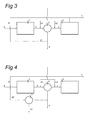
Figure 3 shows the methanogenesis process ofFigures 1 and 2 , wherein a stream comprising mainly soluble organic materials is added to the effluent (b) either before or after solid/liquid separation, dependent on its content of suspended solids; and -
Figure 4 shows additional processing means (4) for treating (part of) the effluent high in solids (d) before returning (part of) it to the slurry reactor (1). - In the following, the two-stage methanogenesis of the present invention will be discussed in terms of the elements shown in the
Figures 1 - 4 . - The invention pertains to a process for producing methane by a two-stage anaerobic digestion of organic feed, comprising:
- i) subjecting an organic feed suspension (a) to acidogenesis and methanogenesis in a first reactor (1);
- ii) withdrawing an effluent (b) from said first reactor and subjecting it to solid/liquid separation (2), thus obtaining effluents high (d) and low (c) in solids, wherein the volatile fatty acid (VFA) concentration in said first reactor is controlled by the withdrawal rate;
- iii) subjecting the effluent low in solids (c) to acidogenesis and methanogenesis in a second reactor (3);
- To complete the process as depicted in
Figure 1 , where separating at stage (2), a stream (e) comprising effluent high in solids may be discharged from the circuit. Also depicted is a stream (f) released from the second reactor, comprising liquid effluent low in organics and VFA, but high in inorganic nutrients such as ammonia, phosphate etc. Not shown, biogas produced in reactors (1) and (2) is extracted, transported and collected using conventional methods. - In a preferred embodiment (
figure 2 ) at least part of the second reactor effluent (g) is returned to said first reactor. Hence, the volatile fatty acid (VFA) concentration in said first reactor is controlled by the withdrawal rate of effluent (b) and the return of at least part, preferably a predominant part, more preferably all of the second reactor effluent (g) to said first reactor. Due to the efficient VFA conversion in the second reactor, the VFA concentration in the second reactor effluent (g) is lower than that of the first reactor effluent (b), preferably by at least a factor 10, more preferably at least a factor 15, most preferably at least a factor 20. By recirculating (part of) the VFA-poor stream (g), it prevents VFA accumulation in the first reactor, thus allowing further methanogenesis. - In another preferred embodiment (
figure 3 ) a stream comprising (mainly) soluble organic cell matter is added before (h1) and/or after (h2) solid/liquid separation (2). Preferably, the stream is obtained from the organic waste and/or biomass prior to the digestion process, preferably by leakage and/or mechanical treatment, and/or originates from dewatering biomass. It may depend on the concentration of suspended solids in the stream whether it is fed before (h1) or after (h2) solid/liquid separation. It advantageously adds valuable rest materials to the process which would otherwise have been discarded, or in the present most sustainable way by adding in the first reactor, have a negative effect on the residence time in the first reactor. - In yet another preferred embodiment (
figure 1-4 ) at least part of the effluent high in solids (d) is returned to the first reactor, maintaining the concentration of (partly) unfermented organic material in the first reactor. - In yet another preferred embodiment (
figure 4 ) at least part of said effluent high in solids (d) is processed in a processing means (4) before return to said first reactor (1). The further processing step may involve some physical, chemical, thermal, enzymatic and/or mechanical action. An example is an additional step to remove or process fibres present in the organic feed stream. These may thus be removed from the anaerobic digestion circuit, either to concentrate the organic feed further, or to use such valuable materials elsewhere. Such a step may also be incorporated at another stage of the process, but stream (d) has a beneficially high concentration of solids, rendering it more efficient to apply additional processing steps there. The optional addition step subdivides 'unprocessed' stream (d) in a stream (d2) that is returned to the first reactor, and a stream (d1) that is discharged from the process. - In one embodiment, the pH in the first reactor is preferably 7.5 or less, more preferably 7.2 or less. This is conveniently lower than the pH levels between 7.5 and 8.3 usually maintained in the fermentors known in the art. Consequently, the fermentation in the second reactor downstream is also operated at lower pH levels, advantageously preventing precipitation issues.
- Most preferably, the above preferred embodiments are combined altogether.
- The "anaerobic digestion" treatment involves biological decomposition or fermentation of organic and inorganic matter in which the micro-organisms are indifferent to the presence or absence of oxygen; it involves a first, acid-forming or "acidogenic" process in which large organic molecules are broken down and partially oxidized to form lower molecular weight organic acids, and a second, methane-forming or "methanogenic" process in which the lower molecular weight organic acids are converted into gaseous carbon compounds, primarily methane (and carbon dioxide). In the two-stage anaerobic digestion process of the present invention acidogenesis and methanogenesis are performed simultaneously, in the same reactor environment. In other words, both reactors comprise acidogens and methanogens.
- With the term "organic feed" both biomass and organic waste is meant. Biomass comprises fibrous plant matter originating from dedicated energy crops and trees, agricultural crops, as well as agricultural crop wastes and residues, wood wastes and residues, while with organic waste, municipal wastes, manure, animal waste, landfill gas and other waste materials are designated. It preferably excludes organic material which has been transformed by geological processes into substances such as coal or petroleum.
- Organic feeds that are particularly suited for the present invention comprise agricultural food and feed crops, agricultural crop residues, and by-products from the agricultural crops processing industry. Preferably, the organic feed comprises sugar beets and/or leaves and all (by-) products from sugar beet processing industry.
- It is not an aim of the inventors to change the microbial population conventionally applied in anaerobic digestion processes.
- There are several types of bacteria that are involved in the process of anaerobic organics digestion including acidogens, which convert the monomers resulting from hydrolysis of the organic feed into VFA; acetogens converting VFA into acetic acid, carbon dioxide, and hydrogen; and methanogens converting acetates into methane and carbon dioxide, while consuming hydrogen. These bacterial communities feed upon the initial feedstock, which undergoes a number of different processes converting it to intermediate molecules including sugars, hydrogen and acetic acid before finally being converted to biogas. Different species of bacteria are able to survive at different temperature ranges. The reactor conditions are adapted to these conditions, preferably in the range of 30 and 70 °C.
- Suitable bacteria are those living optimally at temperatures between 35-40°C and called mesophiles or mesophilic bacteria. Some of the bacteria can survive at the hotter and more hostile conditions of 55-60°C, these are called thermophiles or thermophilic bacteria. Suitable bacteria are for instance disclosed in the citations provided in the background section, their content herewith incorporated by reference.
- Although it is possible to apply different sets of acidogens, acetogens and/or methanogens in reactors (1) and (3), it is preferred that reactors (1) and (3) comprise similar or identical microbial populations. Differences in concentrations may well relate to the organic feed supply and retention times. The concentration of organic matter can be expressed in terms of Volatile Total Solids in the reactor content (gram VTS per litre). In the first reactor the concentration is preferably in the range between 20 and 100 g/l, more preferably about 50 g/1, and the amount of bacteria (active biomass) is preferably calculated at approximately 30-50 % of the VTS content. The concentration of organic matter in the second reactor is preferably in the range between 40 and 140 g/1, more preferably 40 - 120 g/l, more preferably about 80 g/l, where the amount of bacteria (active biomass) is preferably calculated at approximately 40-80 % of the VTS content.
- In a preferred embodiment of the invention, the first reactor is a slurry reactor. Slurry reactors are commonly used for the biological, chemical or enzymatic conversion of soluble and insoluble reactants. In the context of the invention, the organic feed (a) is preferably standardized to 5 - 30 wt%, preferably 10-20 wt% of organic matter - not including micro-organisms - suspended in water. Slurry concentrations (including micro-organisms) in the first reactor are typically between 4 - 40 wt%, preferably between 5 - 15 wt(%.
- The slurry reactor has means to effectuate and maintain a suspension of particles in a liquid. If deemed necessary, it may involve agitation, e.g. mixing, or gas supply to further promote suspension and/or contact between micro-organisms and organic feed.
- Typical treatment capacities of the slurry reactor are 3 - 10 kg, preferably 3-7 COD/m3 per day; "COD" (chemical oxygen demand) is an expression of the amount of oxygen that is theoretically necessary to convert organic compounds to carbon dioxide.
- The hydraulic residence time is at least 10 days, preferably of the order of 20 - 60 days. The organic loading rate is preferably about 3 - 8 gram, preferably 3-6 gram of organics per litre reactor content per day.
- A typical example of a bioslurry or slurry reactor suitable for carrying out the invention is a cylinder-type reactor. In the art, suitable examples are given in
US 5,057,284 andUS 5,616,304 , their contents herein incorporated by reference. Such reactors are vessels containing a slurry, i.e. mixture of a liquid and solid particles, wherein at least a portion of the solid particles are suspended in the liquid. When the reactor vessel contains microorganisms and a slurry, it is generally referred to as a bioslurry reactor. Slurry or bioslurry reactors may be mechanically stirred, e.g. using turbine mixers, or unstirred. If they are ustirred, mixing may occur as gas bubbles generated in said vessel rise through the slurry. In a preferred embodiment of the invention, no mechanical stirring is present. - In a preferred embodiment of the invention, the second reactor is a granular sludge reactor, comprising sludge granules. The underlying mechanism is described in the background section. Sludge granules are at the core of granular sludge reactor concepts. A sludge granule is an aggregate of micro-organisms forming during biomass conversion in an environment with a constant upflow hydraulic regime. In the absence of any support matrix, the flow conditions create a selective environment in which only those micro-organisms capable of attaching to each other survive and proliferate. Eventually the aggregates form into dense compact biofilms referred to as "granules". Due to their large particle size, generally ranging from 0.5 to 10 mm in diameter, more preferably 1 - 5 mm, most preferably about 1-3 mm, the granules resist washout from the reactor, thus permitting high hydraulic loads. Additionally, the biofilms are compact, allowing for high concentrations of active micro-organisms and thus high organic space loadings in granular sludge reactors. The dense populations of micro-organisms promote the conversion rate.
- Typical treatment capacity of the sludge reactor is 15 - 40, preferably 20 - 35 kg COD/m3 per day. The hydraulic residence time is of the order of hours, preferably 1 - 20 hours, more preferably 4 - 10 hours.
- Sludge concentrations in the second reactor are typically between 40 and 120 g/l as organic matter. The denser concentrations of micro-organisms in this reactor allow much higher organic loading rates, preferably 25- 30 gram of organics per litre reactor content per day. In one suitable type of granular sludge reactor, the liquid feed is passed upwards through an anaerobic granular sludge bed where substrates in the liquid feed come into contact with the micro-organisms in the sludge. The upward motion of released gas bubbles causes hydraulic turbulence that provides reactor mixing without any mechanical parts. At the top of the reactor, the water phase is separated from sludge solids and gas in a three-phase separator (also known the gas-liquid-solids separator). This concept is known in the art as the upward-flow anaerobic sludge blanket (UASB) reactor.
- Also suitable is the expanded granular sludge bed reactor with external circulation (EGSB) or with internal circulation (IC). In essence the working mechanism is similar. The distinguishing feature is that a faster rate of upward-flow velocity is designed for the liquid feed passing through the sludge bed. The increased flux permits partial expansion (fluidization) of the granular sludge bed, improving feed-granule contact as well as enhancing segregation of small inactive suspended particle from the sludge bed.
- In a preferred embodiment of the invention, a granular sludge reactor with internal circulation is employed.
- Since the second reactor is water-driven, as many solids as possible need to be removed from the effluent of the slurry reactor prior to entering the second reactor. It is preferred that the suspended solids content of the feed to the second reactor (c) is lower than 5 g per litre, more preferable lower than 2 gram per litre. This is achieved by solid/liquid separation, for instance using membrane or centrifugal separation and/or gravity.
- The effluent leaving S/L separation may involve concentration steps, such as comprising high pressure, high temperature and/or enzymatic treatment.
- Because of the combined acidogenesis and methanogenesis in single reactor environments, it is essential to prevent build-up of VFA which could otherwise intoxicate and kill off the methanogens present in the reactor. As explained before, the special conditions in the second reactor, such as formation of granular sludge, enable methanogenesis to proceed at much faster rates than VFA production, thus providing a tool to repress the VFA concentration in the circuit. The second reactor simply cleans the VFA-rich effluent originating from the first reactor and returns a VFA-poor stream to the first reactor. Consequently, the first reactor is maintained in its methanogenic state, i.e. continues to convert VFA to biogas, resulting in a pH that remains non-acidic, i.e. preferably not below pH 5.5.
- It is preferred that the total concentration of VFA in the liquid phase in the first reactor does not exceed 4 g/l, more preferably does not exceed 3 g/l, most preferably does not exceed 2 g/l. It is particularly preferred to maintain the propionic acid concentration in the effluent of the first reactor below 600 mg/l, preferably below 200 mg/l.
- It is preferred that the total concentration of VFA in the effluent of the second reactor does not exceed 400 mg/l, more preferably not exceed 100 mg/l. It is especially preferred that the numbers on VFA concentration in this paragraph apply to the (relative) amounts of acetic, propionic and butyric acid. It is particularly preferred to maintain the propionic acid concentration in the effluent of the second reactor below 100 mg/l.
- Control of the VFA concentration is achieved by the additional treatment of the liquid part of the first reactor effluent (
figure 2 , stream (c)) in the second reactor, and by circulating part of the second reactor effluent to the first reactor (figure 2 , stream (g)). Unlike the prior art, the invention does not encompass means to control pH by providing chemicals (alkaline salts) to the reactor. In essence, the anaerobic digestion involves no other input than organic feed and (preferably at the start) conventional anaerobic micro-organisms to ferment said feed. - VFA concentration can be determined by applying gas chromatography, High Performance Liquid Chromatography or semi-quantitative analyses such as titrimetric or photometric measurements. Alternatively, pH measurements can be used as steering parameter, preferably continuously and/or in-line, as described for example in
EP 1,181,252 . - Since the reactor set-up according to the invention makes it possible to operate in separate largely solid (first reactor) and more liquid (second reactor) phases, it is possible to independently add additional solid and liquid feeds to the respective phases of the system.
- In a preferred embodiment according to the invention, additional material, preferably mainly soluble organic cell material, not originating from the first reactor, is fed to the second reactor. This is indicated as streams h1 and h2 in
Figure 3 , where the stream (h2) is either directly fed - as a liquid stream - to the second reactor, or first subjected to solid/liquid separation (h1) prior to entering the second reactor. In the latter case, the stream h1 may contain high concentrations of suspended solids, preferably more than 5 gram per litre, more preferable more than 2 gram per litre. In the other case, stream (h2) may contain high concentrations of soluble organics, but low in suspended solids, preferably lower than 5 gram per litre, more preferably lower than 2 gram per litre subsequent treatment in the second reactor. - Preferably, the stream(s) (h1) and/or (h2) comprises leakage moisture or juice, preferably the juice of beet leaf, that would otherwise leak into the ground when beet leaves are left on the field, or leak out when stored elsewhere. The present invention makes it possible to store agricultural crops and residues all year round, treat the solid material in the first reactor while directly introducing the leak moisture via streams h1 and/or h2 to the system.
- Another example of a stream that may be added to the biogas production process of the invention is the juice/moisture that is derived from dewatering biomass.
- The invention also pertains to a methane production or biomass digestion or methane fermentation installation/unit comprising a first reactor (1) and a second reactor (3) subsequently arranged, wherein said first reactor comprises an outlet that is connected via a solid/liquid separation unit (2) to the inlet of the second reactor, wherein said separation unit has means to forward a stream relatively low in solids (c) to said second reactor, and means to return a stream relatively high in solids (d) to said first reactor, and wherein said second reactor optionally comprises an outlet that can return part of the VFA-poor organic feed effluent (g) to said first reactor, and wherein said reactors both comprise acidogens and methanogens to anaerobically ferment organic feed subjected to said first reactor (a) into methane. It is preferred that the first reactor is a slurry or bioslurry reactor; it is preferred that the second reactor is a granular sludge reactor. It is preferred that the first reactor and/or effluent (b) comprises means (e.g. sensors, pH indicators etc.) for monitoring and/or controlling VFA concentration. The term `VFA-poor' reflects the relatively high methanogenesis rate in the second reactor, thus reducing the relatively high concentration of VFA withdrawn from the first reactor to a lower level.
- The installation may further comprise means (4) to mechanically, chemically, physically, enzymatically or thermally process stream (d). The installation may be used to perform the process as detailed above. The details presented there equally apply here.
- The invention also relates a plant comprising such an installation.
Claims (11)
- A process for producing methane by a two-stage anaerobic digestion of organic feed, comprisingi) subjecting an organic feed suspension (a) to acidogenesis and methanogenesis in a first reactor (1);ii) withdrawing an effluent (b) from said first reactor and subjecting it to solid/liquid separation 2), thus obtaining effluents high (d) and low (c) in solids;iii) subjecting the effluent low in solids (c) to acidogenesis and methanogenesis in a second reactor (3), wherein at least part of a liquid effluent stream (g) is withdrawn from said second reactor and returned to said first reactor,wherein the volatile fatty acid (VFA) concentration in said first reactor is controlled by the withdrawal rate of effluent (b) and the return rate of the second reactor effluent (g) to said first reactor;
and in which two-stage anaerobic digestion process acidogenesis and methanogenesis are performed simultaneously thus producing methane gas in said first and second reactor, wherein said first reactor is a slurry reactor and said second reactor is a granular sludge reactor. - The process according to claim 1, wherein at least part of the effluent high in solids (d) is returned to said first reactor.
- The process according to any one of the preceding claims, wherein the VFA concentration in the first reactor is controlled at a level lower than 4 g/litre and/or pH in the first reactor is maintained at a value higher than 5.5.
- The process according to any one of the preceding claims, wherein the VFA concentration in the second reactor effluent stream (g) is at least a factor 10 lower than that in the first reactor effluent stream (b).
- The process according to any one of the preceding claims, wherein the organic solids content in the slurry reactor is in the range of 2 - 10 wt%, and wherein the organic solids content in the granular sludge reactor is between 40 and 120 g/litre.
- The process according to any one of the preceding claims, wherein said slurry reactor has a loading capacity of 3 - 10 kg COD/m3/day, and said granular sludge reactor has a capacity of 15 - 40 kg COD/m3 per day.
- The process according to any one of the preceding claims, wherein the hydraulic residence time in said first reactor is at least 10 days, and in said second reactor 1 - 20 hours.
- The process according to any one of the preceding claims, wherein a stream, preferably comprising soluble organic cell material, is added before (h1) and/or after (h2) solid/liquid separation (2), and wherein said stream is preferably obtained from organic waste and/or biomass, preferably by leakage and/or mechanical treatment, and/or originates from dewatering biomass, preferably leak moisture, more preferably beet and beet leaf leak moisture and juice.
- The process according to any one of the preceding claims, wherein said organic feed comprises agricultural crops, agricultural crop residues, and/or by-products form the agricultural crops processing industry, preferably sugar beet and/or leaves.
- A methane production unit comprising a first reactor (1) and a second reactor (3) subsequently arranged, wherein said first reactor comprises an outlet that is connected via a solid/liquid separation unit (2) to the inlet of said second reactor, wherein said separation unit has means to forward a stream relatively low in solids (c) to said second reactor and optionally means to return a stream relatively high in solids (d) to said first reactor, wherein the second reactor comprises an outlet to return part of the VFA-poor organic feed effluent (g) to said first reactor,
wherein the first reactor comprises means for monitoring and/or controlling VFA concentration,
wherein said first reactor is a slurry reactor, and said second reactor is a granular sludge reactor,
and wherein said reactors both comprise acidogens and methanogens, to anaerobically ferment organic feed subjected to said first reactor (a) into methane. - A plant comprising the methane production unit according to claim 10.
Priority Applications (1)
| Application Number | Priority Date | Filing Date | Title |
|---|---|---|---|
| EP10713038.7A EP2419516B1 (en) | 2009-04-17 | 2010-04-15 | Process for producing methane from biomass |
Applications Claiming Priority (3)
| Application Number | Priority Date | Filing Date | Title |
|---|---|---|---|
| EP09158176 | 2009-04-17 | ||
| EP10713038.7A EP2419516B1 (en) | 2009-04-17 | 2010-04-15 | Process for producing methane from biomass |
| PCT/NL2010/050193 WO2010120173A1 (en) | 2009-04-17 | 2010-04-15 | Process for producing methane from biomass |
Publications (2)
| Publication Number | Publication Date |
|---|---|
| EP2419516A1 EP2419516A1 (en) | 2012-02-22 |
| EP2419516B1 true EP2419516B1 (en) | 2015-03-18 |
Family
ID=41087383
Family Applications (1)
| Application Number | Title | Priority Date | Filing Date |
|---|---|---|---|
| EP10713038.7A Not-in-force EP2419516B1 (en) | 2009-04-17 | 2010-04-15 | Process for producing methane from biomass |
Country Status (4)
| Country | Link |
|---|---|
| US (1) | US8642304B2 (en) |
| EP (1) | EP2419516B1 (en) |
| BR (1) | BRPI1015172A2 (en) |
| WO (1) | WO2010120173A1 (en) |
Cited By (1)
| Publication number | Priority date | Publication date | Assignee | Title |
|---|---|---|---|---|
| DE102015210871A1 (en) | 2015-06-15 | 2016-12-15 | Verbio Vereinigte Bioenergie Ag | Process for material utilization of organic substrate |
Families Citing this family (8)
| Publication number | Priority date | Publication date | Assignee | Title |
|---|---|---|---|---|
| DE102011106772A1 (en) * | 2011-07-05 | 2013-01-10 | Kurt Nonnenmacher | Producing methane gas from organic residual material containing solid and liquid, comprises acidifying residual material and methanizing, where remaining solids are separated after acidifying and liquid effluent is supplied to methanation |
| US10590439B2 (en) * | 2012-01-12 | 2020-03-17 | Blaygow Limited | Anaerobic process |
| SG11201406728SA (en) * | 2012-04-18 | 2015-01-29 | Chemilink Technologies Group Pte Ltd | Method and apparatus for carbon dioxide capture and energy recovery enhancement |
| JP2016505357A (en) | 2012-11-16 | 2016-02-25 | ブレイゴウ リミテッド | Grain processing |
| US9476066B2 (en) | 2014-03-06 | 2016-10-25 | Iogen Corporation | Production of products with favourable GHG emission reductions from cellulosic feedstocks |
| KR102466594B1 (en) * | 2014-04-01 | 2022-11-15 | 둑토르 오이 | Biogas process with nutrient recovery |
| US10570043B2 (en) * | 2016-08-31 | 2020-02-25 | Conly L. Hansen | Induced sludge bed anaerobic reactor system |
| US11802065B2 (en) | 2016-08-31 | 2023-10-31 | Conly L. Hansen | Induced sludge bed anaerobic reactor system |
Family Cites Families (10)
| Publication number | Priority date | Publication date | Assignee | Title |
|---|---|---|---|---|
| US4022665A (en) | 1974-12-09 | 1977-05-10 | Institute Of Gas Technology | Two phase anaerobic digestion |
| NL8500634A (en) | 1985-03-06 | 1986-10-01 | Pacques Bv | Apparatus for anaerobic treatment of waste water. |
| US5057284A (en) | 1986-02-07 | 1991-10-15 | Envirotech | Bioslurry reactor for treatment of slurries containing minerals, soils and sludges |
| NL8601120A (en) | 1986-05-01 | 1987-12-01 | Pacques Bv | Apparatus for anaerobic treatment of waste water. |
| US5616304A (en) | 1995-04-21 | 1997-04-01 | Innovative Biosystems, Inc. | Slurry reactor |
| EP1348480B1 (en) * | 1998-03-20 | 2008-05-21 | Chevron Phillips Chemical Company LP | Continuous slurry polymerisation volatile removal |
| NO986126A (en) | 1998-12-23 | 2000-06-05 | Norsk Hydro As | Procedure for treatment of organic material |
| EE05476B1 (en) * | 2000-08-22 | 2011-10-17 | Green Farm Energy A/S | Method and system for reducing the number of viable microbial organisms and / or prions in organic material |
| IL152513A (en) * | 2002-10-28 | 2007-02-11 | Bio Petrol Ltd | Process for treatment of organic waste |
| US7309435B2 (en) | 2004-03-02 | 2007-12-18 | Rozich Alan F | Biological process for waste treatment and energy production |
-
2010
- 2010-04-15 EP EP10713038.7A patent/EP2419516B1/en not_active Not-in-force
- 2010-04-15 BR BRPI1015172A patent/BRPI1015172A2/en not_active IP Right Cessation
- 2010-04-15 WO PCT/NL2010/050193 patent/WO2010120173A1/en not_active Ceased
- 2010-04-15 US US13/264,708 patent/US8642304B2/en not_active Expired - Fee Related
Cited By (3)
| Publication number | Priority date | Publication date | Assignee | Title |
|---|---|---|---|---|
| DE102015210871A1 (en) | 2015-06-15 | 2016-12-15 | Verbio Vereinigte Bioenergie Ag | Process for material utilization of organic substrate |
| WO2016202616A1 (en) | 2015-06-15 | 2016-12-22 | Verbio Vereinigte Bioenergie Ag | Method for simultaneous production of biogas and an organic compound |
| US10837033B2 (en) | 2015-06-15 | 2020-11-17 | Verbio Vereinigte Bioenergie Ag | Method for material use of organic substrate |
Also Published As
| Publication number | Publication date |
|---|---|
| BRPI1015172A2 (en) | 2018-02-06 |
| EP2419516A1 (en) | 2012-02-22 |
| WO2010120173A1 (en) | 2010-10-21 |
| US20120094350A1 (en) | 2012-04-19 |
| US8642304B2 (en) | 2014-02-04 |
Similar Documents
| Publication | Publication Date | Title |
|---|---|---|
| US8642304B2 (en) | Process for producing methane from biomass | |
| Bi et al. | Effect of hydraulic retention time on anaerobic co-digestion of cattle manure and food waste | |
| Harada et al. | Anaerobic treatment of a recalcitrant distillery wastewater by a thermophilic UASB reactor | |
| Li et al. | Solid-state anaerobic digestion for methane production from organic waste | |
| Cysneiros et al. | The effect of pH control and ‘hydraulic flush’on hydrolysis and Volatile Fatty Acids (VFA) production and profile in anaerobic leach bed reactors digesting a high solids content substrate | |
| Arvanitoyannis et al. | Wine waste treatment methodology | |
| US9567611B2 (en) | Two-stage anaerobic digestion systems wherein one of the stages comprises a two-phase system | |
| US5431819A (en) | Process for the biological treatment of solid organic material | |
| Tang et al. | Dynamic membrane-assisted fermentation of food wastes for enhancing lactic acid production | |
| US20130260433A1 (en) | High rate anaerobic digester system and method | |
| Sahil et al. | Biomass pretreatment, bioprocessing and reactor design for biohydrogen production: a review | |
| WO2010014919A1 (en) | Three stage, multiple phase anaerobic digestion system and method | |
| CA2943323A1 (en) | Biogas process with nutrient recovery | |
| CN104204158A (en) | anaerobic method | |
| Zhang et al. | Efficient caproate production from ethanol and acetate in open culture system through reinforcement of chain elongation process | |
| Duran et al. | Temperature-staged anaerobic processes | |
| CN102659243A (en) | Separated anaerobic baffled reactor and work method of separated anaerobic baffled reactor | |
| Xing et al. | An anaerobic dynamic membrane bioreactor (AnDMBR) system enhanced the biogas conversion efficiency and stability of mesophilic codigestion with waste activated sludge and food waste | |
| EP2917156B1 (en) | Method of increasing the production of biogas from a waste activated sludge | |
| Achouri et al. | A critical review of anaerobic biofilm reactors for the renewable biogas production from food waste | |
| Hassan et al. | Effect of organic loading rate on anaerobic digestion: Case study on recycled paper mill effluent using Modified Anaerobic Hybrid Baffled (MAHB) reactor | |
| Sarada et al. | A comparative study of single and two stage processes for methane production from tomato processing waste | |
| Osman | Anaerobic fermentation of industrial wastewater | |
| Montiel-Corona et al. | Practical applications of dark fermentation for hydrogen production | |
| Ma et al. | Recent advances of anaerobic digestion for energy recovery |
Legal Events
| Date | Code | Title | Description |
|---|---|---|---|
| PUAI | Public reference made under article 153(3) epc to a published international application that has entered the european phase |
Free format text: ORIGINAL CODE: 0009012 |
|
| 17P | Request for examination filed |
Effective date: 20111013 |
|
| AK | Designated contracting states |
Kind code of ref document: A1 Designated state(s): AT BE BG CH CY CZ DE DK EE ES FI FR GB GR HR HU IE IS IT LI LT LU LV MC MK MT NL NO PL PT RO SE SI SK SM TR |
|
| DAX | Request for extension of the european patent (deleted) | ||
| GRAP | Despatch of communication of intention to grant a patent |
Free format text: ORIGINAL CODE: EPIDOSNIGR1 |
|
| INTG | Intention to grant announced |
Effective date: 20141007 |
|
| GRAS | Grant fee paid |
Free format text: ORIGINAL CODE: EPIDOSNIGR3 |
|
| GRAA | (expected) grant |
Free format text: ORIGINAL CODE: 0009210 |
|
| AK | Designated contracting states |
Kind code of ref document: B1 Designated state(s): AT BE BG CH CY CZ DE DK EE ES FI FR GB GR HR HU IE IS IT LI LT LU LV MC MK MT NL NO PL PT RO SE SI SK SM TR |
|
| REG | Reference to a national code |
Ref country code: GB Ref legal event code: FG4D |
|
| REG | Reference to a national code |
Ref country code: CH Ref legal event code: EP |
|
| REG | Reference to a national code |
Ref country code: IE Ref legal event code: FG4D |
|
| REG | Reference to a national code |
Ref country code: AT Ref legal event code: REF Ref document number: 716617 Country of ref document: AT Kind code of ref document: T Effective date: 20150415 |
|
| REG | Reference to a national code |
Ref country code: DE Ref legal event code: R096 Ref document number: 602010023184 Country of ref document: DE Effective date: 20150430 |
|
| REG | Reference to a national code |
Ref country code: NL Ref legal event code: T3 |
|
| PG25 | Lapsed in a contracting state [announced via postgrant information from national office to epo] |
Ref country code: NO Free format text: LAPSE BECAUSE OF FAILURE TO SUBMIT A TRANSLATION OF THE DESCRIPTION OR TO PAY THE FEE WITHIN THE PRESCRIBED TIME-LIMIT Effective date: 20150618 Ref country code: LT Free format text: LAPSE BECAUSE OF FAILURE TO SUBMIT A TRANSLATION OF THE DESCRIPTION OR TO PAY THE FEE WITHIN THE PRESCRIBED TIME-LIMIT Effective date: 20150318 Ref country code: SE Free format text: LAPSE BECAUSE OF FAILURE TO SUBMIT A TRANSLATION OF THE DESCRIPTION OR TO PAY THE FEE WITHIN THE PRESCRIBED TIME-LIMIT Effective date: 20150318 Ref country code: HR Free format text: LAPSE BECAUSE OF FAILURE TO SUBMIT A TRANSLATION OF THE DESCRIPTION OR TO PAY THE FEE WITHIN THE PRESCRIBED TIME-LIMIT Effective date: 20150318 Ref country code: FI Free format text: LAPSE BECAUSE OF FAILURE TO SUBMIT A TRANSLATION OF THE DESCRIPTION OR TO PAY THE FEE WITHIN THE PRESCRIBED TIME-LIMIT Effective date: 20150318 |
|
| REG | Reference to a national code |
Ref country code: AT Ref legal event code: MK05 Ref document number: 716617 Country of ref document: AT Kind code of ref document: T Effective date: 20150318 |
|
| REG | Reference to a national code |
Ref country code: LT Ref legal event code: MG4D |
|
| PG25 | Lapsed in a contracting state [announced via postgrant information from national office to epo] |
Ref country code: LV Free format text: LAPSE BECAUSE OF FAILURE TO SUBMIT A TRANSLATION OF THE DESCRIPTION OR TO PAY THE FEE WITHIN THE PRESCRIBED TIME-LIMIT Effective date: 20150318 Ref country code: GR Free format text: LAPSE BECAUSE OF FAILURE TO SUBMIT A TRANSLATION OF THE DESCRIPTION OR TO PAY THE FEE WITHIN THE PRESCRIBED TIME-LIMIT Effective date: 20150619 |
|
| PG25 | Lapsed in a contracting state [announced via postgrant information from national office to epo] |
Ref country code: SK Free format text: LAPSE BECAUSE OF FAILURE TO SUBMIT A TRANSLATION OF THE DESCRIPTION OR TO PAY THE FEE WITHIN THE PRESCRIBED TIME-LIMIT Effective date: 20150318 Ref country code: EE Free format text: LAPSE BECAUSE OF FAILURE TO SUBMIT A TRANSLATION OF THE DESCRIPTION OR TO PAY THE FEE WITHIN THE PRESCRIBED TIME-LIMIT Effective date: 20150318 Ref country code: ES Free format text: LAPSE BECAUSE OF FAILURE TO SUBMIT A TRANSLATION OF THE DESCRIPTION OR TO PAY THE FEE WITHIN THE PRESCRIBED TIME-LIMIT Effective date: 20150318 Ref country code: CZ Free format text: LAPSE BECAUSE OF FAILURE TO SUBMIT A TRANSLATION OF THE DESCRIPTION OR TO PAY THE FEE WITHIN THE PRESCRIBED TIME-LIMIT Effective date: 20150318 Ref country code: PT Free format text: LAPSE BECAUSE OF FAILURE TO SUBMIT A TRANSLATION OF THE DESCRIPTION OR TO PAY THE FEE WITHIN THE PRESCRIBED TIME-LIMIT Effective date: 20150720 Ref country code: RO Free format text: LAPSE BECAUSE OF FAILURE TO SUBMIT A TRANSLATION OF THE DESCRIPTION OR TO PAY THE FEE WITHIN THE PRESCRIBED TIME-LIMIT Effective date: 20150318 |
|
| PG25 | Lapsed in a contracting state [announced via postgrant information from national office to epo] |
Ref country code: MC Free format text: LAPSE BECAUSE OF FAILURE TO SUBMIT A TRANSLATION OF THE DESCRIPTION OR TO PAY THE FEE WITHIN THE PRESCRIBED TIME-LIMIT Effective date: 20150318 Ref country code: IS Free format text: LAPSE BECAUSE OF FAILURE TO SUBMIT A TRANSLATION OF THE DESCRIPTION OR TO PAY THE FEE WITHIN THE PRESCRIBED TIME-LIMIT Effective date: 20150718 Ref country code: AT Free format text: LAPSE BECAUSE OF FAILURE TO SUBMIT A TRANSLATION OF THE DESCRIPTION OR TO PAY THE FEE WITHIN THE PRESCRIBED TIME-LIMIT Effective date: 20150318 Ref country code: PL Free format text: LAPSE BECAUSE OF FAILURE TO SUBMIT A TRANSLATION OF THE DESCRIPTION OR TO PAY THE FEE WITHIN THE PRESCRIBED TIME-LIMIT Effective date: 20150318 |
|
| REG | Reference to a national code |
Ref country code: CH Ref legal event code: PL |
|
| REG | Reference to a national code |
Ref country code: DE Ref legal event code: R097 Ref document number: 602010023184 Country of ref document: DE |
|
| PG25 | Lapsed in a contracting state [announced via postgrant information from national office to epo] |
Ref country code: IT Free format text: LAPSE BECAUSE OF FAILURE TO SUBMIT A TRANSLATION OF THE DESCRIPTION OR TO PAY THE FEE WITHIN THE PRESCRIBED TIME-LIMIT Effective date: 20150318 |
|
| PLBE | No opposition filed within time limit |
Free format text: ORIGINAL CODE: 0009261 |
|
| STAA | Information on the status of an ep patent application or granted ep patent |
Free format text: STATUS: NO OPPOSITION FILED WITHIN TIME LIMIT |
|
| REG | Reference to a national code |
Ref country code: IE Ref legal event code: MM4A |
|
| PG25 | Lapsed in a contracting state [announced via postgrant information from national office to epo] |
Ref country code: LI Free format text: LAPSE BECAUSE OF NON-PAYMENT OF DUE FEES Effective date: 20150430 Ref country code: CH Free format text: LAPSE BECAUSE OF NON-PAYMENT OF DUE FEES Effective date: 20150430 Ref country code: DK Free format text: LAPSE BECAUSE OF FAILURE TO SUBMIT A TRANSLATION OF THE DESCRIPTION OR TO PAY THE FEE WITHIN THE PRESCRIBED TIME-LIMIT Effective date: 20150318 |
|
| 26N | No opposition filed |
Effective date: 20151221 |
|
| PG25 | Lapsed in a contracting state [announced via postgrant information from national office to epo] |
Ref country code: SI Free format text: LAPSE BECAUSE OF FAILURE TO SUBMIT A TRANSLATION OF THE DESCRIPTION OR TO PAY THE FEE WITHIN THE PRESCRIBED TIME-LIMIT Effective date: 20150318 |
|
| REG | Reference to a national code |
Ref country code: FR Ref legal event code: PLFP Year of fee payment: 7 |
|
| PG25 | Lapsed in a contracting state [announced via postgrant information from national office to epo] |
Ref country code: IE Free format text: LAPSE BECAUSE OF NON-PAYMENT OF DUE FEES Effective date: 20150415 |
|
| PG25 | Lapsed in a contracting state [announced via postgrant information from national office to epo] |
Ref country code: MT Free format text: LAPSE BECAUSE OF FAILURE TO SUBMIT A TRANSLATION OF THE DESCRIPTION OR TO PAY THE FEE WITHIN THE PRESCRIBED TIME-LIMIT Effective date: 20150318 |
|
| REG | Reference to a national code |
Ref country code: FR Ref legal event code: PLFP Year of fee payment: 8 |
|
| PG25 | Lapsed in a contracting state [announced via postgrant information from national office to epo] |
Ref country code: BG Free format text: LAPSE BECAUSE OF FAILURE TO SUBMIT A TRANSLATION OF THE DESCRIPTION OR TO PAY THE FEE WITHIN THE PRESCRIBED TIME-LIMIT Effective date: 20150318 Ref country code: SM Free format text: LAPSE BECAUSE OF FAILURE TO SUBMIT A TRANSLATION OF THE DESCRIPTION OR TO PAY THE FEE WITHIN THE PRESCRIBED TIME-LIMIT Effective date: 20150318 Ref country code: HU Free format text: LAPSE BECAUSE OF FAILURE TO SUBMIT A TRANSLATION OF THE DESCRIPTION OR TO PAY THE FEE WITHIN THE PRESCRIBED TIME-LIMIT; INVALID AB INITIO Effective date: 20100415 |
|
| PG25 | Lapsed in a contracting state [announced via postgrant information from national office to epo] |
Ref country code: CY Free format text: LAPSE BECAUSE OF FAILURE TO SUBMIT A TRANSLATION OF THE DESCRIPTION OR TO PAY THE FEE WITHIN THE PRESCRIBED TIME-LIMIT Effective date: 20150318 |
|
| PG25 | Lapsed in a contracting state [announced via postgrant information from national office to epo] |
Ref country code: TR Free format text: LAPSE BECAUSE OF FAILURE TO SUBMIT A TRANSLATION OF THE DESCRIPTION OR TO PAY THE FEE WITHIN THE PRESCRIBED TIME-LIMIT Effective date: 20150318 |
|
| PG25 | Lapsed in a contracting state [announced via postgrant information from national office to epo] |
Ref country code: LU Free format text: LAPSE BECAUSE OF NON-PAYMENT OF DUE FEES Effective date: 20150415 |
|
| REG | Reference to a national code |
Ref country code: FR Ref legal event code: PLFP Year of fee payment: 9 |
|
| PG25 | Lapsed in a contracting state [announced via postgrant information from national office to epo] |
Ref country code: MK Free format text: LAPSE BECAUSE OF FAILURE TO SUBMIT A TRANSLATION OF THE DESCRIPTION OR TO PAY THE FEE WITHIN THE PRESCRIBED TIME-LIMIT Effective date: 20150318 |
|
| REG | Reference to a national code |
Ref country code: DE Ref legal event code: R082 Ref document number: 602010023184 Country of ref document: DE Representative=s name: KILBURN & STRODE LLP, NL |
|
| PGFP | Annual fee paid to national office [announced via postgrant information from national office to epo] |
Ref country code: FR Payment date: 20210427 Year of fee payment: 12 Ref country code: DE Payment date: 20210428 Year of fee payment: 12 |
|
| PGFP | Annual fee paid to national office [announced via postgrant information from national office to epo] |
Ref country code: GB Payment date: 20210426 Year of fee payment: 12 Ref country code: BE Payment date: 20210426 Year of fee payment: 12 |
|
| PGFP | Annual fee paid to national office [announced via postgrant information from national office to epo] |
Ref country code: NL Payment date: 20210429 Year of fee payment: 12 |
|
| REG | Reference to a national code |
Ref country code: DE Ref legal event code: R119 Ref document number: 602010023184 Country of ref document: DE |
|
| REG | Reference to a national code |
Ref country code: NL Ref legal event code: MM Effective date: 20220501 |
|
| GBPC | Gb: european patent ceased through non-payment of renewal fee |
Effective date: 20220415 |
|
| REG | Reference to a national code |
Ref country code: BE Ref legal event code: MM Effective date: 20220430 |
|
| PG25 | Lapsed in a contracting state [announced via postgrant information from national office to epo] |
Ref country code: NL Free format text: LAPSE BECAUSE OF NON-PAYMENT OF DUE FEES Effective date: 20220501 Ref country code: GB Free format text: LAPSE BECAUSE OF NON-PAYMENT OF DUE FEES Effective date: 20220415 Ref country code: FR Free format text: LAPSE BECAUSE OF NON-PAYMENT OF DUE FEES Effective date: 20220430 Ref country code: DE Free format text: LAPSE BECAUSE OF NON-PAYMENT OF DUE FEES Effective date: 20221103 |
|
| PG25 | Lapsed in a contracting state [announced via postgrant information from national office to epo] |
Ref country code: BE Free format text: LAPSE BECAUSE OF NON-PAYMENT OF DUE FEES Effective date: 20220430 |
|
| P01 | Opt-out of the competence of the unified patent court (upc) registered |
Effective date: 20230513 |