EP2417129B1 - Triazine-aryl-bis-indoles as pde-4 inhibitors useful for the treatment of asthma - Google Patents
Triazine-aryl-bis-indoles as pde-4 inhibitors useful for the treatment of asthma Download PDFInfo
- Publication number
- EP2417129B1 EP2417129B1 EP10812801.8A EP10812801A EP2417129B1 EP 2417129 B1 EP2417129 B1 EP 2417129B1 EP 10812801 A EP10812801 A EP 10812801A EP 2417129 B1 EP2417129 B1 EP 2417129B1
- Authority
- EP
- European Patent Office
- Prior art keywords
- bis
- triazine
- aryl
- compounds
- indole
- Prior art date
- Legal status (The legal status is an assumption and is not a legal conclusion. Google has not performed a legal analysis and makes no representation as to the accuracy of the status listed.)
- Not-in-force
Links
- 208000006673 asthma Diseases 0.000 title claims description 38
- 238000011282 treatment Methods 0.000 title claims description 26
- 239000002587 phosphodiesterase IV inhibitor Substances 0.000 title description 24
- 229940123932 Phosphodiesterase 4 inhibitor Drugs 0.000 title description 23
- 150000001875 compounds Chemical class 0.000 claims description 103
- SEOVTRFCIGRIMH-UHFFFAOYSA-N Indole-3-acetic acid Natural products C1=CC=C2C(CC(=O)O)=CNC2=C1 SEOVTRFCIGRIMH-UHFFFAOYSA-N 0.000 claims description 24
- 238000000034 method Methods 0.000 claims description 24
- HTJDQJBWANPRPF-UHFFFAOYSA-N Cyclopropylamine Chemical compound NC1CC1 HTJDQJBWANPRPF-UHFFFAOYSA-N 0.000 claims description 20
- 238000002360 preparation method Methods 0.000 claims description 19
- MGNCLNQXLYJVJD-UHFFFAOYSA-N cyanuric chloride Chemical compound ClC1=NC(Cl)=NC(Cl)=N1 MGNCLNQXLYJVJD-UHFFFAOYSA-N 0.000 claims description 18
- SIKJAQJRHWYJAI-UHFFFAOYSA-N Indole Chemical compound C1=CC=C2NC=CC2=C1 SIKJAQJRHWYJAI-UHFFFAOYSA-N 0.000 claims description 16
- PAYRUJLWNCNPSJ-UHFFFAOYSA-N Aniline Chemical compound NC1=CC=CC=C1 PAYRUJLWNCNPSJ-UHFFFAOYSA-N 0.000 claims description 14
- 239000003617 indole-3-acetic acid Substances 0.000 claims description 13
- 150000008378 aryl ethers Chemical class 0.000 claims description 12
- -1 hydroxy, mercapto Chemical group 0.000 claims description 11
- 230000008569 process Effects 0.000 claims description 11
- 125000001559 cyclopropyl group Chemical group [H]C1([H])C([H])([H])C1([H])* 0.000 claims description 10
- 125000002887 hydroxy group Chemical group [H]O* 0.000 claims description 9
- 208000030603 inherited susceptibility to asthma Diseases 0.000 claims description 8
- 125000001997 phenyl group Chemical group [H]C1=C([H])C([H])=C(*)C([H])=C1[H] 0.000 claims description 8
- 125000003118 aryl group Chemical group 0.000 claims description 7
- 239000002253 acid Substances 0.000 claims description 6
- JVTZFYYHCGSXJV-UHFFFAOYSA-N isovanillin Chemical compound COC1=CC=C(C=O)C=C1O JVTZFYYHCGSXJV-UHFFFAOYSA-N 0.000 claims description 6
- MWOOGOJBHIARFG-UHFFFAOYSA-N vanillin Chemical compound COC1=CC(C=O)=CC=C1O MWOOGOJBHIARFG-UHFFFAOYSA-N 0.000 claims description 6
- 229910052736 halogen Inorganic materials 0.000 claims description 5
- HTSVYUUXJSMGQC-UHFFFAOYSA-N 2-chloro-1,3,5-triazine Chemical class ClC1=NC=NC=N1 HTSVYUUXJSMGQC-UHFFFAOYSA-N 0.000 claims description 4
- 150000002367 halogens Chemical class 0.000 claims description 4
- 239000008194 pharmaceutical composition Substances 0.000 claims description 4
- CFNNIHBRBFSOKK-UHFFFAOYSA-N 4-[(4,6-dianilino-1,3,5-triazin-2-yl)oxy]-3-methoxybenzaldehyde Chemical compound COC1=CC(C=O)=CC=C1OC1=NC(NC=2C=CC=CC=2)=NC(NC=2C=CC=CC=2)=N1 CFNNIHBRBFSOKK-UHFFFAOYSA-N 0.000 claims description 3
- GBQOCGMXXKYQNA-UHFFFAOYSA-N 4-[(4,6-dianilino-1,3,5-triazin-2-yl)oxy]-4-methoxycyclohexa-1,5-diene-1-carbaldehyde Chemical compound N=1C(NC=2C=CC=CC=2)=NC(NC=2C=CC=CC=2)=NC=1OC1(OC)CC=C(C=O)C=C1 GBQOCGMXXKYQNA-UHFFFAOYSA-N 0.000 claims description 3
- VDDXADZMABHDGZ-UHFFFAOYSA-N 4-[[4,6-bis(cyclopropylamino)-1,3,5-triazin-2-yl]oxy]-4-methoxycyclohexa-1,5-diene-1-carbaldehyde Chemical compound N=1C(NC2CC2)=NC(NC2CC2)=NC=1OC1(OC)CC=C(C=O)C=C1 VDDXADZMABHDGZ-UHFFFAOYSA-N 0.000 claims description 3
- 125000003545 alkoxy group Chemical group 0.000 claims description 3
- 125000003282 alkyl amino group Chemical group 0.000 claims description 3
- 125000000217 alkyl group Chemical group 0.000 claims description 3
- 150000001412 amines Chemical class 0.000 claims description 3
- 125000004104 aryloxy group Chemical group 0.000 claims description 3
- 125000004093 cyano group Chemical group *C#N 0.000 claims description 3
- 125000000449 nitro group Chemical group [O-][N+](*)=O 0.000 claims description 3
- 125000002924 primary amino group Chemical group [H]N([H])* 0.000 claims description 3
- 125000000008 (C1-C10) alkyl group Chemical group 0.000 claims description 2
- 229910017711 NHRa Inorganic materials 0.000 claims description 2
- 239000000654 additive Substances 0.000 claims description 2
- 125000003277 amino group Chemical group 0.000 claims description 2
- 150000004982 aromatic amines Chemical class 0.000 claims description 2
- 125000001769 aryl amino group Chemical group 0.000 claims description 2
- 239000000969 carrier Substances 0.000 claims description 2
- 239000003085 diluting agent Substances 0.000 claims description 2
- 125000005843 halogen group Chemical group 0.000 claims 1
- 108010058846 Ovalbumin Proteins 0.000 description 42
- 229940092253 ovalbumin Drugs 0.000 description 42
- 230000000694 effects Effects 0.000 description 37
- 101100296719 Caenorhabditis elegans pde-4 gene Proteins 0.000 description 27
- 230000015572 biosynthetic process Effects 0.000 description 26
- 238000003786 synthesis reaction Methods 0.000 description 26
- IAZDPXIOMUYVGZ-UHFFFAOYSA-N Dimethylsulphoxide Chemical compound CS(C)=O IAZDPXIOMUYVGZ-UHFFFAOYSA-N 0.000 description 24
- 125000002496 methyl group Chemical group [H]C([H])([H])* 0.000 description 24
- 241000699670 Mus sp. Species 0.000 description 22
- 108010000134 Vascular Cell Adhesion Molecule-1 Proteins 0.000 description 21
- CSCPPACGZOOCGX-UHFFFAOYSA-N Acetone Chemical compound CC(C)=O CSCPPACGZOOCGX-UHFFFAOYSA-N 0.000 description 20
- 230000005764 inhibitory process Effects 0.000 description 20
- 238000006243 chemical reaction Methods 0.000 description 18
- HJORMJIFDVBMOB-UHFFFAOYSA-N rolipram Chemical compound COC1=CC=C(C2CC(=O)NC2)C=C1OC1CCCC1 HJORMJIFDVBMOB-UHFFFAOYSA-N 0.000 description 18
- WEVYAHXRMPXWCK-UHFFFAOYSA-N Acetonitrile Chemical compound CC#N WEVYAHXRMPXWCK-UHFFFAOYSA-N 0.000 description 17
- 210000004027 cell Anatomy 0.000 description 17
- 229950005741 rolipram Drugs 0.000 description 16
- 239000002904 solvent Substances 0.000 description 16
- 150000003918 triazines Chemical class 0.000 description 16
- ZMXDDKWLCZADIW-UHFFFAOYSA-N N,N-Dimethylformamide Chemical compound CN(C)C=O ZMXDDKWLCZADIW-UHFFFAOYSA-N 0.000 description 15
- 239000000243 solution Substances 0.000 description 15
- 108010067225 Cell Adhesion Molecules Proteins 0.000 description 14
- 102000016289 Cell Adhesion Molecules Human genes 0.000 description 14
- 210000000440 neutrophil Anatomy 0.000 description 14
- BWHMMNNQKKPAPP-UHFFFAOYSA-L potassium carbonate Chemical compound [K+].[K+].[O-]C([O-])=O BWHMMNNQKKPAPP-UHFFFAOYSA-L 0.000 description 14
- XEKOWRVHYACXOJ-UHFFFAOYSA-N Ethyl acetate Chemical compound CCOC(C)=O XEKOWRVHYACXOJ-UHFFFAOYSA-N 0.000 description 12
- 102000004861 Phosphoric Diester Hydrolases Human genes 0.000 description 12
- 108090001050 Phosphoric Diester Hydrolases Proteins 0.000 description 12
- HEMHJVSKTPXQMS-UHFFFAOYSA-M Sodium hydroxide Chemical compound [OH-].[Na+] HEMHJVSKTPXQMS-UHFFFAOYSA-M 0.000 description 12
- 102100040247 Tumor necrosis factor Human genes 0.000 description 12
- YCIMNLLNPGFGHC-UHFFFAOYSA-N catechol Chemical compound OC1=CC=CC=C1O YCIMNLLNPGFGHC-UHFFFAOYSA-N 0.000 description 12
- 239000007787 solid Substances 0.000 description 12
- MZOFCQQQCNRIBI-VMXHOPILSA-N (3s)-4-[[(2s)-1-[[(2s)-1-[[(1s)-1-carboxy-2-hydroxyethyl]amino]-4-methyl-1-oxopentan-2-yl]amino]-5-(diaminomethylideneamino)-1-oxopentan-2-yl]amino]-3-[[2-[[(2s)-2,6-diaminohexanoyl]amino]acetyl]amino]-4-oxobutanoic acid Chemical compound OC[C@@H](C(O)=O)NC(=O)[C@H](CC(C)C)NC(=O)[C@H](CCCN=C(N)N)NC(=O)[C@H](CC(O)=O)NC(=O)CNC(=O)[C@@H](N)CCCCN MZOFCQQQCNRIBI-VMXHOPILSA-N 0.000 description 11
- 208000006545 Chronic Obstructive Pulmonary Disease Diseases 0.000 description 11
- 108060008682 Tumor Necrosis Factor Proteins 0.000 description 11
- 150000001299 aldehydes Chemical group 0.000 description 10
- 238000000746 purification Methods 0.000 description 10
- 239000011541 reaction mixture Substances 0.000 description 10
- 230000001225 therapeutic effect Effects 0.000 description 10
- XLYOFNOQVPJJNP-UHFFFAOYSA-N water Substances O XLYOFNOQVPJJNP-UHFFFAOYSA-N 0.000 description 10
- 102000004190 Enzymes Human genes 0.000 description 9
- 108090000790 Enzymes Proteins 0.000 description 9
- KWYUFKZDYYNOTN-UHFFFAOYSA-M Potassium hydroxide Chemical compound [OH-].[K+] KWYUFKZDYYNOTN-UHFFFAOYSA-M 0.000 description 9
- FAPWRFPIFSIZLT-UHFFFAOYSA-M Sodium chloride Chemical compound [Na+].[Cl-] FAPWRFPIFSIZLT-UHFFFAOYSA-M 0.000 description 9
- 229940088598 enzyme Drugs 0.000 description 9
- NZWOPGCLSHLLPA-UHFFFAOYSA-N methacholine Chemical compound C[N+](C)(C)CC(C)OC(C)=O NZWOPGCLSHLLPA-UHFFFAOYSA-N 0.000 description 9
- 229960002329 methacholine Drugs 0.000 description 9
- LZKGFGLOQNSMBS-UHFFFAOYSA-N 4,5,6-trichlorotriazine Chemical compound ClC1=NN=NC(Cl)=C1Cl LZKGFGLOQNSMBS-UHFFFAOYSA-N 0.000 description 8
- HEDRZPFGACZZDS-UHFFFAOYSA-N Chloroform Chemical compound ClC(Cl)Cl HEDRZPFGACZZDS-UHFFFAOYSA-N 0.000 description 8
- YMWUJEATGCHHMB-UHFFFAOYSA-N Dichloromethane Chemical compound ClCCl YMWUJEATGCHHMB-UHFFFAOYSA-N 0.000 description 8
- 241001465754 Metazoa Species 0.000 description 8
- 208000002200 Respiratory Hypersensitivity Diseases 0.000 description 8
- 230000010085 airway hyperresponsiveness Effects 0.000 description 8
- VSCWAEJMTAWNJL-UHFFFAOYSA-K aluminium trichloride Chemical compound Cl[Al](Cl)Cl VSCWAEJMTAWNJL-UHFFFAOYSA-K 0.000 description 8
- 210000002889 endothelial cell Anatomy 0.000 description 8
- 239000007789 gas Substances 0.000 description 8
- 238000001727 in vivo Methods 0.000 description 8
- 238000011065 in-situ storage Methods 0.000 description 8
- PSCMQHVBLHHWTO-UHFFFAOYSA-K indium(iii) chloride Chemical compound Cl[In](Cl)Cl PSCMQHVBLHHWTO-UHFFFAOYSA-K 0.000 description 8
- 239000003112 inhibitor Substances 0.000 description 8
- 239000000203 mixture Substances 0.000 description 8
- 230000001088 anti-asthma Effects 0.000 description 7
- 239000003814 drug Substances 0.000 description 7
- 238000002474 experimental method Methods 0.000 description 7
- 238000000338 in vitro Methods 0.000 description 7
- PZOUSPYUWWUPPK-UHFFFAOYSA-N indole Natural products CC1=CC=CC2=C1C=CN2 PZOUSPYUWWUPPK-UHFFFAOYSA-N 0.000 description 7
- RKJUIXBNRJVNHR-UHFFFAOYSA-N indolenine Natural products C1=CC=C2CC=NC2=C1 RKJUIXBNRJVNHR-UHFFFAOYSA-N 0.000 description 7
- 229910000027 potassium carbonate Inorganic materials 0.000 description 7
- 239000011780 sodium chloride Substances 0.000 description 7
- 238000010626 work up procedure Methods 0.000 description 7
- SECXISVLQFMRJM-UHFFFAOYSA-N N-Methylpyrrolidone Chemical compound CN1CCCC1=O SECXISVLQFMRJM-UHFFFAOYSA-N 0.000 description 6
- 239000000924 antiasthmatic agent Substances 0.000 description 6
- 238000003556 assay Methods 0.000 description 6
- 238000011161 development Methods 0.000 description 6
- 235000019439 ethyl acetate Nutrition 0.000 description 6
- PGSADBUBUOPOJS-UHFFFAOYSA-N neutral red Chemical compound Cl.C1=C(C)C(N)=CC2=NC3=CC(N(C)C)=CC=C3N=C21 PGSADBUBUOPOJS-UHFFFAOYSA-N 0.000 description 6
- 230000003389 potentiating effect Effects 0.000 description 6
- 238000012360 testing method Methods 0.000 description 6
- 210000004369 blood Anatomy 0.000 description 5
- 239000008280 blood Substances 0.000 description 5
- CFBUZOUXXHZCFB-OYOVHJISSA-N chembl511115 Chemical compound COC1=CC=C([C@@]2(CC[C@H](CC2)C(O)=O)C#N)C=C1OC1CCCC1 CFBUZOUXXHZCFB-OYOVHJISSA-N 0.000 description 5
- 229940079593 drug Drugs 0.000 description 5
- DAHIQPJTGIHDGO-IAGOWNOFSA-N mesembrine Chemical compound C1=C(OC)C(OC)=CC=C1[C@]1(CCC(=O)C2)[C@@H]2N(C)CC1 DAHIQPJTGIHDGO-IAGOWNOFSA-N 0.000 description 5
- DAHIQPJTGIHDGO-UHFFFAOYSA-N mesembrine Natural products C1=C(OC)C(OC)=CC=C1C1(CCC(=O)C2)C2N(C)CC1 DAHIQPJTGIHDGO-UHFFFAOYSA-N 0.000 description 5
- 239000002356 single layer Substances 0.000 description 5
- WSLDOOZREJYCGB-UHFFFAOYSA-N 1,2-Dichloroethane Chemical compound ClCCCl WSLDOOZREJYCGB-UHFFFAOYSA-N 0.000 description 4
- 206010006482 Bronchospasm Diseases 0.000 description 4
- 0 CC(*)=*C(Cl)=NC(*)=* Chemical compound CC(*)=*C(Cl)=NC(*)=* 0.000 description 4
- 239000002841 Lewis acid Substances 0.000 description 4
- 241000283984 Rodentia Species 0.000 description 4
- 206010047700 Vomiting Diseases 0.000 description 4
- 229940037003 alum Drugs 0.000 description 4
- JHXKRIRFYBPWGE-UHFFFAOYSA-K bismuth chloride Chemical compound Cl[Bi](Cl)Cl JHXKRIRFYBPWGE-UHFFFAOYSA-K 0.000 description 4
- 230000007885 bronchoconstriction Effects 0.000 description 4
- 231100000135 cytotoxicity Toxicity 0.000 description 4
- 230000003013 cytotoxicity Effects 0.000 description 4
- 229960003957 dexamethasone Drugs 0.000 description 4
- UREBDLICKHMUKA-CXSFZGCWSA-N dexamethasone Chemical compound C1CC2=CC(=O)C=C[C@]2(C)[C@]2(F)[C@@H]1[C@@H]1C[C@@H](C)[C@@](C(=O)CO)(O)[C@@]1(C)C[C@@H]2O UREBDLICKHMUKA-CXSFZGCWSA-N 0.000 description 4
- 230000003511 endothelial effect Effects 0.000 description 4
- 238000010438 heat treatment Methods 0.000 description 4
- 238000004128 high performance liquid chromatography Methods 0.000 description 4
- 150000002475 indoles Chemical class 0.000 description 4
- 230000002401 inhibitory effect Effects 0.000 description 4
- 150000007517 lewis acids Chemical class 0.000 description 4
- 238000005259 measurement Methods 0.000 description 4
- 239000012044 organic layer Substances 0.000 description 4
- 230000004043 responsiveness Effects 0.000 description 4
- 238000012216 screening Methods 0.000 description 4
- 239000000126 substance Substances 0.000 description 4
- 150000000182 1,3,5-triazines Chemical class 0.000 description 3
- MSYGAHOHLUJIKV-UHFFFAOYSA-N 3,5-dimethyl-1-(3-nitrophenyl)-1h-pyrazole-4-carboxylic acid ethyl ester Chemical compound CC1=C(C(=O)OCC)C(C)=NN1C1=CC=CC([N+]([O-])=O)=C1 MSYGAHOHLUJIKV-UHFFFAOYSA-N 0.000 description 3
- 101100296720 Dictyostelium discoideum Pde4 gene Proteins 0.000 description 3
- FXHOOIRPVKKKFG-UHFFFAOYSA-N N,N-Dimethylacetamide Chemical compound CN(C)C(C)=O FXHOOIRPVKKKFG-UHFFFAOYSA-N 0.000 description 3
- 239000007832 Na2SO4 Substances 0.000 description 3
- 102000003992 Peroxidases Human genes 0.000 description 3
- 101100082610 Plasmodium falciparum (isolate 3D7) PDEdelta gene Proteins 0.000 description 3
- 206010070834 Sensitisation Diseases 0.000 description 3
- VYPSYNLAJGMNEJ-UHFFFAOYSA-N Silicium dioxide Chemical compound O=[Si]=O VYPSYNLAJGMNEJ-UHFFFAOYSA-N 0.000 description 3
- PMZURENOXWZQFD-UHFFFAOYSA-L Sodium Sulfate Chemical compound [Na+].[Na+].[O-]S([O-])(=O)=O PMZURENOXWZQFD-UHFFFAOYSA-L 0.000 description 3
- 102000011017 Type 4 Cyclic Nucleotide Phosphodiesterases Human genes 0.000 description 3
- 108010037584 Type 4 Cyclic Nucleotide Phosphodiesterases Proteins 0.000 description 3
- 230000001154 acute effect Effects 0.000 description 3
- 231100000460 acute oral toxicity Toxicity 0.000 description 3
- 239000000443 aerosol Substances 0.000 description 3
- 229930013930 alkaloid Natural products 0.000 description 3
- 150000003797 alkaloid derivatives Chemical class 0.000 description 3
- 125000002490 anilino group Chemical group [H]N(*)C1=C([H])C([H])=C([H])C([H])=C1[H] 0.000 description 3
- 239000012267 brine Substances 0.000 description 3
- 230000015556 catabolic process Effects 0.000 description 3
- 230000003833 cell viability Effects 0.000 description 3
- 150000005829 chemical entities Chemical class 0.000 description 3
- 229950001653 cilomilast Drugs 0.000 description 3
- 238000004440 column chromatography Methods 0.000 description 3
- 229940125904 compound 1 Drugs 0.000 description 3
- 125000001511 cyclopentyl group Chemical group [H]C1([H])C([H])([H])C([H])([H])C([H])(*)C1([H])[H] 0.000 description 3
- 231100000263 cytotoxicity test Toxicity 0.000 description 3
- 238000013461 design Methods 0.000 description 3
- 229940079919 digestives enzyme preparation Drugs 0.000 description 3
- 229940113088 dimethylacetamide Drugs 0.000 description 3
- 231100000673 dose–response relationship Toxicity 0.000 description 3
- 210000003743 erythrocyte Anatomy 0.000 description 3
- 238000001704 evaporation Methods 0.000 description 3
- 230000008020 evaporation Effects 0.000 description 3
- 230000006698 induction Effects 0.000 description 3
- 230000002757 inflammatory effect Effects 0.000 description 3
- VLKZOEOYAKHREP-UHFFFAOYSA-N n-Hexane Chemical compound CCCCCC VLKZOEOYAKHREP-UHFFFAOYSA-N 0.000 description 3
- 108040007629 peroxidase activity proteins Proteins 0.000 description 3
- 108090000623 proteins and genes Proteins 0.000 description 3
- 230000002829 reductive effect Effects 0.000 description 3
- 230000029058 respiratory gaseous exchange Effects 0.000 description 3
- 208000023504 respiratory system disease Diseases 0.000 description 3
- MNDBXUUTURYVHR-UHFFFAOYSA-N roflumilast Chemical compound FC(F)OC1=CC=C(C(=O)NC=2C(=CN=CC=2Cl)Cl)C=C1OCC1CC1 MNDBXUUTURYVHR-UHFFFAOYSA-N 0.000 description 3
- 229960002586 roflumilast Drugs 0.000 description 3
- 230000008313 sensitization Effects 0.000 description 3
- 239000000741 silica gel Substances 0.000 description 3
- 229910002027 silica gel Inorganic materials 0.000 description 3
- 229910052938 sodium sulfate Inorganic materials 0.000 description 3
- HPALAKNZSZLMCH-UHFFFAOYSA-M sodium;chloride;hydrate Chemical compound O.[Na+].[Cl-] HPALAKNZSZLMCH-UHFFFAOYSA-M 0.000 description 3
- 238000010189 synthetic method Methods 0.000 description 3
- 238000002560 therapeutic procedure Methods 0.000 description 3
- JYEUMXHLPRZUAT-UHFFFAOYSA-N 1,2,3-triazine Chemical compound C1=CN=NN=C1 JYEUMXHLPRZUAT-UHFFFAOYSA-N 0.000 description 2
- 125000003363 1,3,5-triazinyl group Chemical group N1=C(N=CN=C1)* 0.000 description 2
- PDELQDSYLBLPQO-UHFFFAOYSA-N 2,3,3a,4,5,6,7,7a-octahydro-1h-indole Chemical compound C1CCCC2NCCC21 PDELQDSYLBLPQO-UHFFFAOYSA-N 0.000 description 2
- ZWEHNKRNPOVVGH-UHFFFAOYSA-N 2-Butanone Chemical compound CCC(C)=O ZWEHNKRNPOVVGH-UHFFFAOYSA-N 0.000 description 2
- GHCZTIFQWKKGSB-UHFFFAOYSA-N 2-hydroxypropane-1,2,3-tricarboxylic acid;phosphoric acid Chemical compound OP(O)(O)=O.OC(=O)CC(O)(C(O)=O)CC(O)=O GHCZTIFQWKKGSB-UHFFFAOYSA-N 0.000 description 2
- BIJVDUPYSREZDA-UHFFFAOYSA-N 4-[[4,6-bis(cyclopropylamino)-1,3,5-triazin-2-yl]oxy]-3-methoxybenzaldehyde Chemical compound COC1=CC(C=O)=CC=C1OC1=NC(NC2CC2)=NC(NC2CC2)=N1 BIJVDUPYSREZDA-UHFFFAOYSA-N 0.000 description 2
- WDYVUKGVKRZQNM-UHFFFAOYSA-N 6-phosphonohexylphosphonic acid Chemical compound OP(O)(=O)CCCCCCP(O)(O)=O WDYVUKGVKRZQNM-UHFFFAOYSA-N 0.000 description 2
- LRFVTYWOQMYALW-UHFFFAOYSA-N 9H-xanthine Chemical compound O=C1NC(=O)NC2=C1NC=N2 LRFVTYWOQMYALW-UHFFFAOYSA-N 0.000 description 2
- 244000215068 Acacia senegal Species 0.000 description 2
- 235000006491 Acacia senegal Nutrition 0.000 description 2
- KZMGYPLQYOPHEL-UHFFFAOYSA-N Boron trifluoride etherate Chemical compound FB(F)F.CCOCC KZMGYPLQYOPHEL-UHFFFAOYSA-N 0.000 description 2
- 238000002965 ELISA Methods 0.000 description 2
- 229920000084 Gum arabic Polymers 0.000 description 2
- TWRXJAOTZQYOKJ-UHFFFAOYSA-L Magnesium chloride Chemical compound [Mg+2].[Cl-].[Cl-] TWRXJAOTZQYOKJ-UHFFFAOYSA-L 0.000 description 2
- 229920005372 Plexiglas® Polymers 0.000 description 2
- KEAYESYHFKHZAL-UHFFFAOYSA-N Sodium Chemical compound [Na] KEAYESYHFKHZAL-UHFFFAOYSA-N 0.000 description 2
- QAOWNCQODCNURD-UHFFFAOYSA-N Sulfuric acid Chemical compound OS(O)(=O)=O QAOWNCQODCNURD-UHFFFAOYSA-N 0.000 description 2
- 229910007932 ZrCl4 Inorganic materials 0.000 description 2
- 238000002835 absorbance Methods 0.000 description 2
- 235000010489 acacia gum Nutrition 0.000 description 2
- 230000002411 adverse Effects 0.000 description 2
- 238000004458 analytical method Methods 0.000 description 2
- 229940124599 anti-inflammatory drug Drugs 0.000 description 2
- 230000003110 anti-inflammatory effect Effects 0.000 description 2
- 230000002238 attenuated effect Effects 0.000 description 2
- RIIWUGSYXOBDMC-UHFFFAOYSA-N benzene-1,2-diamine;hydron;dichloride Chemical compound Cl.Cl.NC1=CC=CC=C1N RIIWUGSYXOBDMC-UHFFFAOYSA-N 0.000 description 2
- 230000027455 binding Effects 0.000 description 2
- 238000012925 biological evaluation Methods 0.000 description 2
- 230000037396 body weight Effects 0.000 description 2
- 239000000872 buffer Substances 0.000 description 2
- 230000003197 catalytic effect Effects 0.000 description 2
- 238000005119 centrifugation Methods 0.000 description 2
- 239000003153 chemical reaction reagent Substances 0.000 description 2
- 229940125782 compound 2 Drugs 0.000 description 2
- 229940126214 compound 3 Drugs 0.000 description 2
- 229940125898 compound 5 Drugs 0.000 description 2
- 238000002784 cytotoxicity assay Methods 0.000 description 2
- 230000007423 decrease Effects 0.000 description 2
- 230000003247 decreasing effect Effects 0.000 description 2
- 238000007876 drug discovery Methods 0.000 description 2
- 230000000095 emetic effect Effects 0.000 description 2
- 238000001990 intravenous administration Methods 0.000 description 2
- 239000005453 ketone based solvent Substances 0.000 description 2
- 239000010410 layer Substances 0.000 description 2
- 229930014626 natural product Natural products 0.000 description 2
- 231100000252 nontoxic Toxicity 0.000 description 2
- 230000003000 nontoxic effect Effects 0.000 description 2
- 230000008506 pathogenesis Effects 0.000 description 2
- 230000007170 pathology Effects 0.000 description 2
- 238000009522 phase III clinical trial Methods 0.000 description 2
- YBYRMVIVWMBXKQ-UHFFFAOYSA-N phenylmethanesulfonyl fluoride Chemical compound FS(=O)(=O)CC1=CC=CC=C1 YBYRMVIVWMBXKQ-UHFFFAOYSA-N 0.000 description 2
- 239000008363 phosphate buffer Substances 0.000 description 2
- 229920000642 polymer Polymers 0.000 description 2
- 239000004926 polymethyl methacrylate Substances 0.000 description 2
- NTTOTNSKUYCDAV-UHFFFAOYSA-N potassium hydride Chemical compound [KH] NTTOTNSKUYCDAV-UHFFFAOYSA-N 0.000 description 2
- 229910000105 potassium hydride Inorganic materials 0.000 description 2
- 102000004169 proteins and genes Human genes 0.000 description 2
- HNJBEVLQSNELDL-UHFFFAOYSA-N pyrrolidin-2-one Chemical compound O=C1CCCN1 HNJBEVLQSNELDL-UHFFFAOYSA-N 0.000 description 2
- 230000009467 reduction Effects 0.000 description 2
- 239000002002 slurry Substances 0.000 description 2
- 239000012312 sodium hydride Substances 0.000 description 2
- 229910000104 sodium hydride Inorganic materials 0.000 description 2
- 239000000758 substrate Substances 0.000 description 2
- 239000000725 suspension Substances 0.000 description 2
- ZFXYFBGIUFBOJW-UHFFFAOYSA-N theophylline Chemical compound O=C1N(C)C(=O)N(C)C2=C1NC=N2 ZFXYFBGIUFBOJW-UHFFFAOYSA-N 0.000 description 2
- 231100000331 toxic Toxicity 0.000 description 2
- 230000002588 toxic effect Effects 0.000 description 2
- 230000035899 viability Effects 0.000 description 2
- DUNKXUFBGCUVQW-UHFFFAOYSA-J zirconium tetrachloride Chemical compound Cl[Zr](Cl)(Cl)Cl DUNKXUFBGCUVQW-UHFFFAOYSA-J 0.000 description 2
- ABEJDMOBAFLQNJ-NHCUHLMSSA-N (3s,5s)-5-(3-cyclopentyloxy-4-methoxyphenyl)-3-[(3-methylphenyl)methyl]piperidin-2-one Chemical compound COC1=CC=C([C@@H]2C[C@@H](CC=3C=C(C)C=CC=3)C(=O)NC2)C=C1OC1CCCC1 ABEJDMOBAFLQNJ-NHCUHLMSSA-N 0.000 description 1
- DQUDKYAOQDREIB-UHFFFAOYSA-N 1,3,5-triazin-1-ium;chloride Chemical class Cl.C1=NC=NC=N1 DQUDKYAOQDREIB-UHFFFAOYSA-N 0.000 description 1
- DHOFXZSRVZOYPY-UHFFFAOYSA-N 2,2-bis(1h-indol-2-yl)acetic acid Chemical group C1=CC=C2NC(C(C=3NC4=CC=CC=C4C=3)C(=O)O)=CC2=C1 DHOFXZSRVZOYPY-UHFFFAOYSA-N 0.000 description 1
- NHBKXEKEPDILRR-UHFFFAOYSA-N 2,3-bis(butanoylsulfanyl)propyl butanoate Chemical compound CCCC(=O)OCC(SC(=O)CCC)CSC(=O)CCC NHBKXEKEPDILRR-UHFFFAOYSA-N 0.000 description 1
- ZOOGRGPOEVQQDX-UUOKFMHZSA-N 3',5'-cyclic GMP Chemical compound C([C@H]1O2)OP(O)(=O)O[C@H]1[C@@H](O)[C@@H]2N1C(N=C(NC2=O)N)=C2N=C1 ZOOGRGPOEVQQDX-UUOKFMHZSA-N 0.000 description 1
- UTUUPXBCDMQYRR-HSZRJFAPSA-N 4-[(2r)-2-(3-cyclopentyloxy-4-methoxyphenyl)-2-phenylethyl]pyridine Chemical compound COC1=CC=C([C@H](CC=2C=CN=CC=2)C=2C=CC=CC=2)C=C1OC1CCCC1 UTUUPXBCDMQYRR-HSZRJFAPSA-N 0.000 description 1
- JOLQRGPIGYOFHI-UHFFFAOYSA-N 6-chloro-2-n,4-n-dicyclopropyl-1,3,5-triazine-2,4-diamine Chemical compound N=1C(NC2CC2)=NC(Cl)=NC=1NC1CC1 JOLQRGPIGYOFHI-UHFFFAOYSA-N 0.000 description 1
- AHBSUJXKRKWNBN-UHFFFAOYSA-N 6-chloro-2-n,4-n-diphenyl-1,3,5-triazine-2,4-diamine Chemical compound N=1C(NC=2C=CC=CC=2)=NC(Cl)=NC=1NC1=CC=CC=C1 AHBSUJXKRKWNBN-UHFFFAOYSA-N 0.000 description 1
- 208000000884 Airway Obstruction Diseases 0.000 description 1
- KLSJWNVTNUYHDU-UHFFFAOYSA-N Amitrole Chemical compound NC1=NC=NN1 KLSJWNVTNUYHDU-UHFFFAOYSA-N 0.000 description 1
- 238000011725 BALB/c mouse Methods 0.000 description 1
- CXOZQHPXKPDQGT-UHFFFAOYSA-N CC1C=CCC1 Chemical compound CC1C=CCC1 CXOZQHPXKPDQGT-UHFFFAOYSA-N 0.000 description 1
- UXVMQQNJUSDDNG-UHFFFAOYSA-L Calcium chloride Chemical compound [Cl-].[Cl-].[Ca+2] UXVMQQNJUSDDNG-UHFFFAOYSA-L 0.000 description 1
- 241000283707 Capra Species 0.000 description 1
- 239000004215 Carbon black (E152) Substances 0.000 description 1
- 208000017667 Chronic Disease Diseases 0.000 description 1
- IVOMOUWHDPKRLL-KQYNXXCUSA-N Cyclic adenosine monophosphate Chemical compound C([C@H]1O2)OP(O)(=O)O[C@H]1[C@@H](O)[C@@H]2N1C(N=CN=C2N)=C2N=C1 IVOMOUWHDPKRLL-KQYNXXCUSA-N 0.000 description 1
- 102000004127 Cytokines Human genes 0.000 description 1
- 108090000695 Cytokines Proteins 0.000 description 1
- 229920002307 Dextran Polymers 0.000 description 1
- KCXVZYZYPLLWCC-UHFFFAOYSA-N EDTA Chemical compound OC(=O)CN(CC(O)=O)CCN(CC(O)=O)CC(O)=O KCXVZYZYPLLWCC-UHFFFAOYSA-N 0.000 description 1
- WQZGKKKJIJFFOK-GASJEMHNSA-N Glucose Natural products OC[C@H]1OC(O)[C@H](O)[C@@H](O)[C@@H]1O WQZGKKKJIJFFOK-GASJEMHNSA-N 0.000 description 1
- SXRSQZLOMIGNAQ-UHFFFAOYSA-N Glutaraldehyde Chemical compound O=CCCCC=O SXRSQZLOMIGNAQ-UHFFFAOYSA-N 0.000 description 1
- 102000004457 Granulocyte-Macrophage Colony-Stimulating Factor Human genes 0.000 description 1
- 108010017213 Granulocyte-Macrophage Colony-Stimulating Factor Proteins 0.000 description 1
- HTTJABKRGRZYRN-UHFFFAOYSA-N Heparin Chemical compound OC1C(NC(=O)C)C(O)OC(COS(O)(=O)=O)C1OC1C(OS(O)(=O)=O)C(O)C(OC2C(C(OS(O)(=O)=O)C(OC3C(C(O)C(O)C(O3)C(O)=O)OS(O)(=O)=O)C(CO)O2)NS(O)(=O)=O)C(C(O)=O)O1 HTTJABKRGRZYRN-UHFFFAOYSA-N 0.000 description 1
- 206010020751 Hypersensitivity Diseases 0.000 description 1
- 206010061218 Inflammation Diseases 0.000 description 1
- 108090001007 Interleukin-8 Proteins 0.000 description 1
- 241001601435 Mesembryanthemum sect. Planifolia Species 0.000 description 1
- JNFUNBKJAVPGSK-UHFFFAOYSA-N Oc(ccc(C=O)c1)c1C(I)=O Chemical compound Oc(ccc(C=O)c1)c1C(I)=O JNFUNBKJAVPGSK-UHFFFAOYSA-N 0.000 description 1
- RWRDLPDLKQPQOW-UHFFFAOYSA-N Pyrrolidine Chemical group C1CCNC1 RWRDLPDLKQPQOW-UHFFFAOYSA-N 0.000 description 1
- 206010062109 Reversible airways obstruction Diseases 0.000 description 1
- UIIMBOGNXHQVGW-DEQYMQKBSA-M Sodium bicarbonate-14C Chemical compound [Na+].O[14C]([O-])=O UIIMBOGNXHQVGW-DEQYMQKBSA-M 0.000 description 1
- YPFLFUJKZDAXRA-UHFFFAOYSA-N [3-(carbamoylamino)-2-(2,4-dichlorobenzoyl)-1-benzofuran-6-yl] methanesulfonate Chemical compound O1C2=CC(OS(=O)(=O)C)=CC=C2C(NC(N)=O)=C1C(=O)C1=CC=C(Cl)C=C1Cl YPFLFUJKZDAXRA-UHFFFAOYSA-N 0.000 description 1
- 125000002015 acyclic group Chemical group 0.000 description 1
- 230000001464 adherent effect Effects 0.000 description 1
- 210000005058 airway cell Anatomy 0.000 description 1
- 230000036428 airway hyperreactivity Effects 0.000 description 1
- 239000013566 allergen Substances 0.000 description 1
- 208000026935 allergic disease Diseases 0.000 description 1
- WNROFYMDJYEPJX-UHFFFAOYSA-K aluminium hydroxide Chemical compound [OH-].[OH-].[OH-].[Al+3] WNROFYMDJYEPJX-UHFFFAOYSA-K 0.000 description 1
- SWLVFNYSXGMGBS-UHFFFAOYSA-N ammonium bromide Chemical compound [NH4+].[Br-] SWLVFNYSXGMGBS-UHFFFAOYSA-N 0.000 description 1
- 230000003466 anti-cipated effect Effects 0.000 description 1
- 238000011861 anti-inflammatory therapy Methods 0.000 description 1
- 229940054051 antipsychotic indole derivative Drugs 0.000 description 1
- 238000013459 approach Methods 0.000 description 1
- GVTLDPJNRVMCAL-UHFFFAOYSA-N arofylline Chemical compound C1=2N=CNC=2C(=O)N(CCC)C(=O)N1C1=CC=C(Cl)C=C1 GVTLDPJNRVMCAL-UHFFFAOYSA-N 0.000 description 1
- 229950009746 arofylline Drugs 0.000 description 1
- 150000003934 aromatic aldehydes Chemical class 0.000 description 1
- 239000012131 assay buffer Substances 0.000 description 1
- 239000011324 bead Substances 0.000 description 1
- 230000004071 biological effect Effects 0.000 description 1
- 230000000903 blocking effect Effects 0.000 description 1
- 230000010083 bronchial hyperresponsiveness Effects 0.000 description 1
- 230000003182 bronchodilatating effect Effects 0.000 description 1
- 229940124630 bronchodilator Drugs 0.000 description 1
- FJDQFPXHSGXQBY-UHFFFAOYSA-L caesium carbonate Chemical compound [Cs+].[Cs+].[O-]C([O-])=O FJDQFPXHSGXQBY-UHFFFAOYSA-L 0.000 description 1
- 229910000024 caesium carbonate Inorganic materials 0.000 description 1
- 239000001110 calcium chloride Substances 0.000 description 1
- 229910001628 calcium chloride Inorganic materials 0.000 description 1
- 238000004364 calculation method Methods 0.000 description 1
- 238000011088 calibration curve Methods 0.000 description 1
- 230000021164 cell adhesion Effects 0.000 description 1
- 238000003352 cell adhesion assay Methods 0.000 description 1
- 230000001413 cellular effect Effects 0.000 description 1
- 150000001805 chlorine compounds Chemical class 0.000 description 1
- 230000001684 chronic effect Effects 0.000 description 1
- 208000037976 chronic inflammation Diseases 0.000 description 1
- 208000037893 chronic inflammatory disorder Diseases 0.000 description 1
- 229940125773 compound 10 Drugs 0.000 description 1
- 229940125797 compound 12 Drugs 0.000 description 1
- 229940126543 compound 14 Drugs 0.000 description 1
- 229940125758 compound 15 Drugs 0.000 description 1
- 238000009833 condensation Methods 0.000 description 1
- 230000005494 condensation Effects 0.000 description 1
- 239000000470 constituent Substances 0.000 description 1
- 239000003246 corticosteroid Substances 0.000 description 1
- 229960001334 corticosteroids Drugs 0.000 description 1
- 230000008878 coupling Effects 0.000 description 1
- 238000010168 coupling process Methods 0.000 description 1
- 238000005859 coupling reaction Methods 0.000 description 1
- 125000001995 cyclobutyl group Chemical group [H]C1([H])C([H])([H])C([H])(*)C1([H])[H] 0.000 description 1
- 125000000113 cyclohexyl group Chemical group [H]C1([H])C([H])([H])C([H])([H])C([H])(*)C([H])([H])C1([H])[H] 0.000 description 1
- 230000009089 cytolysis Effects 0.000 description 1
- 230000034994 death Effects 0.000 description 1
- 238000001514 detection method Methods 0.000 description 1
- 235000005911 diet Nutrition 0.000 description 1
- 230000037213 diet Effects 0.000 description 1
- 229940042399 direct acting antivirals protease inhibitors Drugs 0.000 description 1
- 238000009826 distribution Methods 0.000 description 1
- 230000003828 downregulation Effects 0.000 description 1
- 239000000975 dye Substances 0.000 description 1
- 238000001952 enzyme assay Methods 0.000 description 1
- 125000001495 ethyl group Chemical group [H]C([H])([H])C([H])([H])* 0.000 description 1
- 238000011156 evaluation Methods 0.000 description 1
- STTRYQAGHGJXJJ-LICLKQGHSA-N filaminast Chemical compound COC1=CC=C(C(\C)=N\OC(N)=O)C=C1OC1CCCC1 STTRYQAGHGJXJJ-LICLKQGHSA-N 0.000 description 1
- 229950006884 filaminast Drugs 0.000 description 1
- 239000012530 fluid Substances 0.000 description 1
- 230000027119 gastric acid secretion Effects 0.000 description 1
- 239000008103 glucose Substances 0.000 description 1
- 229960002897 heparin Drugs 0.000 description 1
- 229920000669 heparin Polymers 0.000 description 1
- 150000002391 heterocyclic compounds Chemical class 0.000 description 1
- 125000004051 hexyl group Chemical group [H]C([H])([H])C([H])([H])C([H])([H])C([H])([H])C([H])([H])C([H])([H])* 0.000 description 1
- 239000011539 homogenization buffer Substances 0.000 description 1
- 229930195733 hydrocarbon Natural products 0.000 description 1
- 150000002430 hydrocarbons Chemical class 0.000 description 1
- 230000009610 hypersensitivity Effects 0.000 description 1
- 210000002865 immune cell Anatomy 0.000 description 1
- 230000002779 inactivation Effects 0.000 description 1
- 238000011534 incubation Methods 0.000 description 1
- 125000001041 indolyl group Chemical group 0.000 description 1
- 208000015181 infectious disease Diseases 0.000 description 1
- 230000002458 infectious effect Effects 0.000 description 1
- 230000004054 inflammatory process Effects 0.000 description 1
- 230000028709 inflammatory response Effects 0.000 description 1
- 230000002452 interceptive effect Effects 0.000 description 1
- 230000003834 intracellular effect Effects 0.000 description 1
- 125000000959 isobutyl group Chemical group [H]C([H])([H])C([H])(C([H])([H])[H])C([H])([H])* 0.000 description 1
- 125000004491 isohexyl group Chemical group C(CCC(C)C)* 0.000 description 1
- 238000002955 isolation Methods 0.000 description 1
- 125000001449 isopropyl group Chemical group [H]C([H])([H])C([H])(*)C([H])([H])[H] 0.000 description 1
- 238000011031 large-scale manufacturing process Methods 0.000 description 1
- 210000000265 leukocyte Anatomy 0.000 description 1
- 230000000670 limiting effect Effects 0.000 description 1
- 210000004698 lymphocyte Anatomy 0.000 description 1
- 229910001629 magnesium chloride Inorganic materials 0.000 description 1
- 230000014759 maintenance of location Effects 0.000 description 1
- 238000004519 manufacturing process Methods 0.000 description 1
- 239000000463 material Substances 0.000 description 1
- 230000007246 mechanism Effects 0.000 description 1
- 230000010534 mechanism of action Effects 0.000 description 1
- 230000001404 mediated effect Effects 0.000 description 1
- 230000004060 metabolic process Effects 0.000 description 1
- 238000012986 modification Methods 0.000 description 1
- 230000004048 modification Effects 0.000 description 1
- 238000010172 mouse model Methods 0.000 description 1
- 210000004877 mucosa Anatomy 0.000 description 1
- DPHDSIQHVGSITN-UHFFFAOYSA-N n-(3,5-dichloropyridin-4-yl)-2-[1-[(4-fluorophenyl)methyl]-5-hydroxyindol-3-yl]-2-oxoacetamide Chemical compound C1=C(C(=O)C(=O)NC=2C(=CN=CC=2Cl)Cl)C2=CC(O)=CC=C2N1CC1=CC=C(F)C=C1 DPHDSIQHVGSITN-UHFFFAOYSA-N 0.000 description 1
- 125000004108 n-butyl group Chemical group [H]C([H])([H])C([H])([H])C([H])([H])C([H])([H])* 0.000 description 1
- 125000004123 n-propyl group Chemical group [H]C([H])([H])C([H])([H])C([H])([H])* 0.000 description 1
- 239000006199 nebulizer Substances 0.000 description 1
- 230000009871 nonspecific binding Effects 0.000 description 1
- 230000003287 optical effect Effects 0.000 description 1
- 230000037361 pathway Effects 0.000 description 1
- 239000008188 pellet Substances 0.000 description 1
- XNLICIUVMPYHGG-UHFFFAOYSA-N pentan-2-one Chemical compound CCCC(C)=O XNLICIUVMPYHGG-UHFFFAOYSA-N 0.000 description 1
- 125000001147 pentyl group Chemical group C(CCCC)* 0.000 description 1
- 239000000137 peptide hydrolase inhibitor Substances 0.000 description 1
- 210000005259 peripheral blood Anatomy 0.000 description 1
- 239000011886 peripheral blood Substances 0.000 description 1
- 238000009521 phase II clinical trial Methods 0.000 description 1
- ISWSIDIOOBJBQZ-UHFFFAOYSA-N phenol group Chemical group C1(=CC=CC=C1)O ISWSIDIOOBJBQZ-UHFFFAOYSA-N 0.000 description 1
- PJGSXYOJTGTZAV-UHFFFAOYSA-N pinacolone Chemical compound CC(=O)C(C)(C)C PJGSXYOJTGTZAV-UHFFFAOYSA-N 0.000 description 1
- 230000000770 proinflammatory effect Effects 0.000 description 1
- 239000003642 reactive oxygen metabolite Substances 0.000 description 1
- 238000011084 recovery Methods 0.000 description 1
- 238000011160 research Methods 0.000 description 1
- 210000002345 respiratory system Anatomy 0.000 description 1
- 230000004044 response Effects 0.000 description 1
- 238000012552 review Methods 0.000 description 1
- 229920006395 saturated elastomer Polymers 0.000 description 1
- 238000004062 sedimentation Methods 0.000 description 1
- 230000019491 signal transduction Effects 0.000 description 1
- 235000020183 skimmed milk Nutrition 0.000 description 1
- 238000006467 substitution reaction Methods 0.000 description 1
- 239000006228 supernatant Substances 0.000 description 1
- 230000001629 suppression Effects 0.000 description 1
- 229960000278 theophylline Drugs 0.000 description 1
- 229940124597 therapeutic agent Drugs 0.000 description 1
- 231100000048 toxicity data Toxicity 0.000 description 1
- 238000012546 transfer Methods 0.000 description 1
- 125000004306 triazinyl group Chemical group 0.000 description 1
- 238000005199 ultracentrifugation Methods 0.000 description 1
- 210000005167 vascular cell Anatomy 0.000 description 1
- 230000008673 vomiting Effects 0.000 description 1
- 238000005406 washing Methods 0.000 description 1
- 238000005303 weighing Methods 0.000 description 1
- 229940075420 xanthine Drugs 0.000 description 1
Images



Classifications
-
- C—CHEMISTRY; METALLURGY
- C07—ORGANIC CHEMISTRY
- C07D—HETEROCYCLIC COMPOUNDS
- C07D403/00—Heterocyclic compounds containing two or more hetero rings, having nitrogen atoms as the only ring hetero atoms, not provided for by group C07D401/00
- C07D403/14—Heterocyclic compounds containing two or more hetero rings, having nitrogen atoms as the only ring hetero atoms, not provided for by group C07D401/00 containing three or more hetero rings
-
- A—HUMAN NECESSITIES
- A61—MEDICAL OR VETERINARY SCIENCE; HYGIENE
- A61K—PREPARATIONS FOR MEDICAL, DENTAL OR TOILETRY PURPOSES
- A61K31/00—Medicinal preparations containing organic active ingredients
- A61K31/33—Heterocyclic compounds
- A61K31/395—Heterocyclic compounds having nitrogen as a ring hetero atom, e.g. guanethidine or rifamycins
- A61K31/53—Heterocyclic compounds having nitrogen as a ring hetero atom, e.g. guanethidine or rifamycins having six-membered rings with three nitrogens as the only ring hetero atoms, e.g. chlorazanil, melamine
-
- A—HUMAN NECESSITIES
- A61—MEDICAL OR VETERINARY SCIENCE; HYGIENE
- A61P—SPECIFIC THERAPEUTIC ACTIVITY OF CHEMICAL COMPOUNDS OR MEDICINAL PREPARATIONS
- A61P11/00—Drugs for disorders of the respiratory system
- A61P11/06—Antiasthmatics
-
- C—CHEMISTRY; METALLURGY
- C07—ORGANIC CHEMISTRY
- C07D—HETEROCYCLIC COMPOUNDS
- C07D251/00—Heterocyclic compounds containing 1,3,5-triazine rings
- C07D251/02—Heterocyclic compounds containing 1,3,5-triazine rings not condensed with other rings
- C07D251/12—Heterocyclic compounds containing 1,3,5-triazine rings not condensed with other rings having three double bonds between ring members or between ring members and non-ring members
- C07D251/26—Heterocyclic compounds containing 1,3,5-triazine rings not condensed with other rings having three double bonds between ring members or between ring members and non-ring members with only hetero atoms directly attached to ring carbon atoms
- C07D251/40—Nitrogen atoms
- C07D251/48—Two nitrogen atoms
- C07D251/50—Two nitrogen atoms with a halogen atom attached to the third ring carbon atom
-
- C—CHEMISTRY; METALLURGY
- C07—ORGANIC CHEMISTRY
- C07D—HETEROCYCLIC COMPOUNDS
- C07D251/00—Heterocyclic compounds containing 1,3,5-triazine rings
- C07D251/02—Heterocyclic compounds containing 1,3,5-triazine rings not condensed with other rings
- C07D251/12—Heterocyclic compounds containing 1,3,5-triazine rings not condensed with other rings having three double bonds between ring members or between ring members and non-ring members
- C07D251/26—Heterocyclic compounds containing 1,3,5-triazine rings not condensed with other rings having three double bonds between ring members or between ring members and non-ring members with only hetero atoms directly attached to ring carbon atoms
- C07D251/40—Nitrogen atoms
- C07D251/48—Two nitrogen atoms
- C07D251/52—Two nitrogen atoms with an oxygen or sulfur atom attached to the third ring carbon atom
Definitions
- the present invention relates to triazine-aryl-bis-indoles.
- the triazine-aryl-bis-indoles of general formula 1 are useful for the treatment of asthma.
- the compound in the present invention is adapted for the treatment of asthma.
- This invention also relates to the mechanism of action of the present compound in inhibiting asthma.
- Unique property of the therapy with IICT-TA67 is inhibition of PDE 4 activity and down regulation of Intercellular Adhesion Molecule type 1 (ICAM-1) and Vascular Cell Adhesion Molecule type 1 (VCAM-1) expression which are crucial in asthma pathogenesis. It also relates to the procedure of synthesis of the above heterocyclic compound.
- Asthma is a non-infectious chronic inflammatory disease of the respiratory system characterized by a reversible airways obstruction.
- Acute airway obstruction, bronchial hyper-responsiveness and inflammatory state of the bronchial mucosa with increase levels of inflammatory mediators, are the most evident phenomenon which characterizes this pathology.
- the current trends indicate asthma is set to be the most chronic disease in industrialized countries, affecting mostly the children (15%) than the adults (10%).
- COPD chronic obstructive pulmonary disease
- WHO predicts COPD ( Donnelly, L. E.; Rogers, D. F., Therapy for COPD in the 21st century, Drugs, 63, 1973-1998, 2003 ) will become the third most common cause of death world over by 2020 accounting 8.4 million lives.
- COPD chronic obstructive pulmonary disease
- COPD have no effective treatments currently, while the efficacy of the corticosteroids is controversial.
- chronic use of various anti-inflammatory drugs leads to adverse side effects.
- PDEs are a large family of enzymes that metabolise the second messenger cAMP/cGMP into inactive acyclic systems.
- the role of cAMP as a second messenger is well established and it modulates the response of immune cells to a variety of stimuli. Elevation of cAMP has generally been associated with inhibition of lymphocyte activity. The elevation of cAMP levels leads to the suppression of the synthesis and release of pro-inflammatory signals, cytokines and inhibit the production of reactive oxygen species.
- the PD enzymes are a large family with eleven sub-families. Of these, the PDE-4, 7 and 8 are associated with the metabolism of cAMP. PDE-4 has four distinct genes, PDE-4A, PDE-4B, PDE-4C and PDE-4D ( Muller, T.; Engels, P.; Fozard, J. R. Trends Pharmacol. Sci., 17, 294-298, 1996 ) with specificity to cAMP and thus have become potential therapeutic targets and most of the research is centred around PDE-4 inhibitors. The potential for selective PDE inhibitors to be used as therapeutic agents was predicted earlier ( Teixeira, M. M.; Gristwood, R. W.; Cooper, N.; Hellewell, P. G. PDE-4 inhibitors: Trends Pharmacol. Sci., 18, 164-170, 1997 ). PDE-4 is the selective PD enzyme that metabolises the cAMP. Hence, PDE-4 inhibitors prevent the inactivation of cAMP.
- PDE-4 inhibitor The most popular and quite potential PDE-4 inhibitor, since its discovery, is rolipram ( Griswold, D. E.; Webb, E. F.; Breton, J.; White, J. R.; Marshall, P. J.; Torphy, T. J., Effect of selective phosphodiesterase type IV inhibitor, rolipram, on fluid and cellular phases of inflammatory response, Inflammation 17, 333-44, 1993 ; Schneider, H. H.; Schmiechen, R.; Brezniski, M.; Seidler, J.; Eur. J. Pharmocol., 127, 105-115, 1986 ), a catechol based compound and structurally related to mesembrine.
- Rolipram thus has become a template for the synthesis of novel inhibitors, besides becoming a reference drug in evaluating other inhibitors.
- Ariflo cilomilast, SB-207,499; Profita, M, Chiappara G, Mirabella, F Chimenti, G Di, L, Costanzo, G, Riccobono, L Bellia V, Bousquet J, and Vignola A. Effect of cilomilast (Ariflo) on TNF-, IL-8 and GM-CSF release by airway cells of patients with COPD. 58, 573-579, 2003 .
- CDP-840 CDP-840
- HT-0712 filaminast are some of the rolipram related active PDE-4 molecules
- V-11294A which is in phase-II clinical trials represents a hybrid molecule of xanthine and rolipram.
- Ciloinilast, roflumilast, BAY-19-8004 and arofylline are in phase-III clinical trials.
- PDE-4 inhibitors The most common and worrisome aspect in the development of potent PDE-4 inhibitors is their propensity for side effects such as nausea and vomiting. The mechanism by which the PDE-4 inhibitors induce side effects are uncertain.
- the family of PDE-4 enzymes exist in two different conformational states ( Souness, J. E.; Rao, S. Cell Signal, 9, 227-236, 1997 ; Duplantier, A. J. et al., J. Med. Chem. 39, 120-125, 1996 ) , distinguishable with their affinity towards rolipram: the conformation with low affinity for rolipram is LAR conformation (PDE-4L), while the one with high affinity is known as HAR conformation (PDE-4H).
- PDE-4L is associated with anti-inflammatory activity, while the PDE-4H conformation correlates with adverse effects such as emsesis.
- PDE-4 inhibitors (a) related to rolipram structure or (b) structurally different class of compounds.
- Rolipram with the perspective of medicinal chemistry is a simple catechol derivate, resembling the alkaloid mesembrine. It has two pharmacophores: (a) 3,4-dialkoxy phenyl ring and (b) pyrrolidine-2-one. Though rolipram has disadvantages of the side effects, it has worked as an excellent model for the potent molecules like cilomilast/roflumilast (Phase-III) and others.
- NCEs New Chemical Entities
- novel molecules it is anticipated to overcome the problems such as emesis, gastric acid secretion associated with rolipram, besides, aiming to dissociate catalytic site inhibition and binding site affinity. Therefore in the present work, development of selective and novel PDE-4 inhibitors was based on: (a) simple chemistry, (b) PDE-4 selectivity and (c) in vtro / in vivo strong potency.
- Indoles, bis-indoles and octahydro indoles are part structures of several biologically active compounds ( Higuchi, K.; Kawasaki, T. Nat. Pro. Rep. 24, 843-868, 2007 ; O'Connor, S. E.; Maresh, J. Nat. Pro. Rep. 23, 532-547, 2006 ) .
- Indole ring system is a very important component in many synthetic pharmaceuticals ( Olgen, S.; Kaessler, K.; Nebioglu, D.; Joachim, J. Chem. Biol. Drug Des., 70, 547-551, 2007 ; Smart, B. P.; Oslund, R. S.; Walsh, L. A.; Gelb, M. N. J. Med.
- AWD-12-281 (PDE-4 active compound with lower emetic effects), which is in phase-III clinical trials, is an indole-glyoxamide derivative ( Kuss, H.; Hoefgen, N.; Johanssen, S.; Kronbach, T.; Rundfeldt, C. J. Pharmacol. Exp. Ther. 307, 373-385, 2003 ) .
- the 1,3,5-triazine skeleton is implicated in a variety of therapeutic activities and some triazine derivates have shown anti-asthmatic activity ( Leroux, F.; van keulen, B. J.; Daliers, J.; Pommery, N.; Henichart, J. P. Bioorg. Med. Chem. 7, 509-516, 1999 ).
- the present invention deals with the synthesis of NCEs based on novel 'triazine-aryl-bis-indole' skeleton (See for bis-indole based natural products: Ravikanth, V.; Imelda, O.; Wagner-Dobler, I.; Laatsch, H. J. Nat. Pro. 66, 1520-1523, 2003 ) .
- the thus prepared NCEs of the present invention are envisaged to address the problems associated with the earlier PDE-4 inhibitors and will have better and improved therapeutic indices.
- the present invention thus reports the synthesis of novel class of new 'triazine-aryl-bis-indoles', hybrid structures of substituted triazine, indoles and catechol in this patent, wherein, the new class of novel compounds differ with rolipram structurally: (a) the pyrrolidine ring system is replaced with a bis-indolyl acetic acid moiety and (b) the cyclopentyl group is replaced with a substituted triazinyl unit.
- the hybrid structure proposed in the present invention is envisaged to show potent PDE-4 activity, devoid of the problems associated with earlier rolipram analogues, since the cyclopentyl moiety is replaced with hitherto unusal 1,3,5-trisubstituted triazinyl moiety.
- Disclosure involves in vitro data showing PDE 4 inhibition by compound 7, IICT-TA67 molecule ( Figure 1 , Table 1) as shown in Figure 2 . Disclosure also involves the in vivo data demonstrating the inhibition of airway hypersensitivity as an indicator of asthma as shown in Figure 5 . It further demonstrates the pharmacokinetics and bioavailability of this molecule in vivo as shown in Table 2.
- the present invention is directed towards synthesis of novel PDE 4 inhibitor therapeutically effective for the treatment of asthma and asthma related respiratory diseases.
- the objective of the present invention is the synthesis of novel 'triazine-aryl-bis-indole' class of compounds with higher therapeutic value to the active compounds.
- Another objective in the present invention is to design and synthesize novel class of 'triazine-aryl-bis-indoles' and their derivatives to overcome the problems such as emesis and vomiting associated with the known active compounds.
- Yet another objective of the present invention on the synthesis of novel 'triazine-aryl-bis-indoles' and their derivatives and their evaluation is to have more therapeutic accessibility to the compounds presented in the invention.
- novel 'triazine-aryl-bis-indoles' and their analogues will have specific PDE-4 binding capacity devoid of emetic properties.
- Another objective of the invention is to provide novel process routes for the synthesis of said novel 'triazine-aryl-bis-indoles' that exhibit significant anti-asthma activity.
- Yet another objective of the present invention is to provide novel process routes to the new class of 'triazine-aryl-bis-indoles' using commercially available reagent and shorter chemical sequence.
- a further object of the invention is to provide the said novel 'triazine-aryl-bis-indoles', which are totally synthetic, in sufficient quantities for biological evaluation under environmentally friendly process chemical routes.
- Yet another objective of the present invention is to find out non-toxic PDE-4 inhibitor which might be useful for the treatment of asthma.
- a further objective of the invention is to inhibit the signalling pathway such as expression of intercellular cell adhesion molecule and vascular cell adhesion Intercellular Adhesion Molecule type 1 (ICAM-1) and Vascular Cell Adhesion Molecule type 1(VCAM-1) which is crucial for asthma pathogenesis.
- IAM-1 vascular cell adhesion Intercellular Adhesion Molecule type 1
- VCAM-1 Vascular Cell Adhesion Molecule type 1
- a further objective of the present invention is to find out the compound that inhibit asthma in vivo.
- the present invention also provides a process for preparation of triazine-aryl-bis-indole as claimed in claim 1 wherein the process steps comprising;
- the amine is selected from cyclopropylamine to give 10, or aniline to give 11 .
- the present invention also provides a trisubstituted triazine compound of general formula C wherein R1' is OX wherein X is
- the present invention also provides a pharmaceutical composition
- a pharmaceutical composition comprising one or more compounds of general Formula 1 and formula C along with the pharmaceutically acceptable additives, carriers or diluents.
- the compounds of general formula 1 and C are useful for the treatment of human bronchial asthma wherein the method comprising administering one or more compounds of formula 1 and formula C by oral, mucosal and any other route to a subject in need for.
- Method of treatment of human bronchial asthma with one or more compound of formula 1 according at a dose ranging between of 0.1 to 1 mg/kg BW.
- the compound IICT-TA67 which is tested for basal cytotoxicity in 3T3 cells and the IC 50 found to be 32 mg/L.
- the compound IICT-TA67 which is predicted for acute oral toxicity and the predicted acute oral LD 50 derived to be 430 mg/kg body weight.
- present invention provides a preparation for treating bronchial asthma by inhibiting phosphodiesterase activity with one or more 'triazine-aryl-bis-indole' class of compounds represented by Formula 1.
- present invention provides the method of synthesis of diversified 'New Chemical Entities' (NCEs) embedded with a basic skeletal structure consisting of 'triazine-aryl-bis-indoles' frame work.
- the present invention also describes that said 'triazine-aryl-bis-indole' compounds and analogous NCEs are potential molecules to inhibit the PDE-4 activity in vitro.
- the present invention also describes that said 'triazine-aryl-bis-indole' compounds and analogous NCEs are potential molecules to inhibit the PDE-4 activity towards the treatment of asthma and COPD.
- the present invention also describes that said compounds are potential molecules to inhibit the airway hyperresponsiveness towards the treatment of asthma and COPD.
- the present invention also describes that said compounds are potential molecules to inhibit TNF- ⁇ induced expression intercellular cell adhesion molecule and vascular cell adhesion molecule Intercellular Adhesion Molecule (ICAM) and Vascular Cell Adhesion Molecule (VCAM) activity towards the treatment of asthma and COPD.
- IAM intercellular Adhesion Molecule
- VCAM Vascular Cell Adhesion Molecule
- the present invention describes the synthesis of a novel PDE 4 inhibitor, IICT-TA67 (Compound 7) and its analogues (Compound 1-8) which inhibits asthma in vivo.
- the same molecule also inhibits expression of cell adhesion molecules such as Intercellular Adhesion Molecule type 1 (ICAM-1) and Vascular Cell Adhesion Molecule type 1(VCAM-1) which plays crucial role in asthma pathway. It further describes the inhibition of adhesion of Neutrophils on TNF-alpha induced HUVECs.
- IAM-1 Intercellular Adhesion Molecule type 1
- VCAM-1 Vascular Cell Adhesion Molecule type 1
- the present invention also describes the method of synthesis of diversified 'New Chemical Entities' (NCEs) embedded with a basic skeletal structure consisting of 'triazine-aryl-bis-indoles' frame work.
- NCEs diversified 'New Chemical Entities'
- the said NCEs exhibit excellent activity against phosphodiesterase enzyme (PDE) to become novel PDE-4 specific inhibitors.
- PDE phosphodiesterase enzyme
- the novel green chemistry routes developed in the invention are suitable for the synthesis of compounds of the structural Formula I.
- the present invention describes the synthesis and process chemistry for the novel class of compounds such as 'triazine-aryl-bis-indoles' having a catechol derived structure constituting a part of triazine and a part bis-indole moiety on it.
- the said novel class of compounds are represented by Formula I.
- the applicant in the present invention discovered that by the replacement of pyrrolidine-2-one in pharmacophore 'A' of rolipram with bis-indoles and O-cyclopentyl in pharmacophore 'B' with substituted 1,3,5-triazinyl moiety resulting in a novel 'triazine-aryl-bis-indole' hybrid structure represented in Formula I.
- the said 'triazine-aryl-bis-indole' compounds and analogous NCEs are potential molecules to inhibit the PDE-4 activity towards the treatment of asthma and COPD.
- the present invention describes the first time synthesis of the said compounds based on 'triazine-aryl-bis-indoles' skeleton and their use in asthma and COPD for the first time.
- the said compounds of the present invention were found to be potent PDE-4 inhibitors.
- alkyl' refers to a saturated straight or branched chain hydrocarbon of C1 to C10 and includes e.g. methyl, ethyl, n-propyl, iso-propyl, n-butyl, isobutyl, pentyl, hexyl, iso-hexyl.
- 'carbocycle' refers to, but not limited to, cyclopropyl, cyclobutyl, cyclopentyl, cyclohexyl groups.
- 'aryl' refers to an aromatic ring.
- aryl groups are substituted optionally with any of the groups selected from halogens, hydroxyl, amino, alkylamino, cyano, alkoxy, aryloxy, nitro.
- the present invention further describes novel process for the synthesis of compounds having 'triazine-aryl-bis-indole' skeleton and exhibit potent PDE-4 inhibitory activity.
- the said process routes described in the present invention utilized commercial reagents, short routes, green chemistry and environmentally friendly reaction conditions.
- the said process routes are amenable to large scale synthesis of 'triazine-aryl-bis-indoles' in sufficient quantities for further biological evaluation.
- Figure 1 The synthesis of 'triazine-aryl-bis-indole' skeletal structures related to Formula I, which are represented by structural formulae 1 to 8 as depicted in Figure 1 .
- the steps described in the present invention for the process routes for the said novel compounds of formulae 1 to 8 as shown in Figure 1 are:
- the present invention describes the NCEs as well as pharmaceutical compositions that comprise one or more such compounds.
- NCEs prepared in the present invention are used as anti-asthmatic agents specifically as PDE-4 inhibitors.
- the intermediate compounds that are described in the present invention along with NCEs prepared are useful for other therapeutic applications.
- the present invention as described above provides the first synthetic approach to the synthesis of new and novel class of compounds of 'triazine-aryl-bis-indoles' of general structural formula I as shown, wherein, X, Y, R, R 1 , R 2 , R 3 , R 4 and R 5 are as defined earlier.
- a base such as sodium hydroxide, potassium hydroxide, potassium carbonate, sodium bicarbonate, cesium carbonate
- the chlorides 10 and 11 were independently reacted typically with an aromatic aldehyde like vaniline in a suitable solvent such as acetone, methyl ketone and other ketone solvents or DMF, NMP, dimethyl acetamide or the like in the presence of a base for e.g.: potassium carbonate, sodium hydroxide, potassium hydroxide, sodium hydride, potassium hydride, or the like for a suitable time 4-12 h and temperature varying from 50 100 °C sufficient for reaction to provide the aryl ethers 12 and 13 respectively as shown in Scheme I. See the reaction conditions in example 1, part 2 for 12, and example 2, part 2 for 13 (Scheme I).
- a suitable solvent such as acetone, methyl ketone and other ketone solvents or DMF, NMP, dimethyl acetamide or the like
- a base for e.g.: potassium carbonate, sodium hydroxide, potassium hydroxide, sodium hydride, potassium hydride, or the like for a suitable time 4
- compounds with the structural formulae 12 and 13 (see Scheme I, examples 1 and 2, part 2), were independently reacted with indole 3-acetic acid in the presence of acid conc. HCl, aq.
- the triazine derivatives 10 and 11 (See Scheme I, examples 1 and 2, part 1) were independently reacted appropriately with an aldehyde like isovaniline in a suitable solvent such as acetone, methyl ketone and other ketone solvents or Dimethyl formamide, NMP, dimethyl acetamide or the like in the presence of a base for e.g.: potassium carbonate, sodium hydroxide, potassium hydroxide, sodium hydride, potassium hydride, or the like for a suitable time 4-12 h and temperature varying from 50 100 °C to provide the respective compounds 14 and 15.
- a base e.g.: potassium carbonate, sodium hydroxide, potassium hydroxide, sodium hydride, potassium hydride, or the like for a suitable time 4-12 h and temperature varying from 50 100 °C to provide the respective compounds 14 and 15.
- the exemplary reaction conditions for the preparation of 14 are described in example 3, part 1, while, example 4, part 1 describes 15 (Scheme III).
- Scheme III further exemplifies the synthetic method for the preparation of compounds of formulae 5 and 6 ( Figure 1 ), wherein, compounds 14 and 15 (See Scheme III, examples 3 and 4, part 1) were independently reacted in the presence of HCl gas generated in situ from the like of trichlorotriazine (TCT), or an acid conc. HCl, aq.
- TCT trichlorotriazine
- the aldehydes 14 and 15 (see Scheme III, examples 3 and 4, part 1), independently on reaction with indole 3-acetic acid in the presence of HCl gas generated in situ from the like of trichlorotriazine (TCT), or conc. HCl, aq.
- mice were sensitized with ovalbumin (OVA) intraperitonially (i.p.) on days 0, 7 and 14 as shown in scheme V. Sham group mice were sensitized with only alum dissolved in PBS. From day 21 to 30, mice were exposed to aerosol of OVA (3%) inhalation 25 minutes daily in a Plexiglas chamber (20 x 20 x 10 cm 3 ).
- OVA ovalbumin
- Compound 7 (IICT-TA67) was dissolved in DMSO. So DMSO was used as a vehicle. IICT-TA67 or DEX was given orally twice per day in the volume of 10 ⁇ l.
- Airway responsiveness was measured by barometric plethysmography using whole-body plethysmography (WBP; Buxco, Troy, NY) 12 hours after last saline or ovalbumin challenge. At the time of measurement the animals were awake and breathing spontaneously. Enhanced pause (Penh) to methacholine as measured using barometric plethysmography is a valid indicator of bronchoconstriction in mice and can be used to measure AHR.
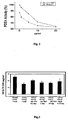
- Fig 2 Inhibition of phosphodiesterase 4 activity by IICT-TA67 in vitro.
- IICT-TA67 inhibits PDE-4 activity in vitro
- enzyme preparations were incubated in the absence or presence of different concentrations (1-20 ⁇ g/ml) of IICT-TA67 and breakdown of cAMP was monitored by ⁇ counter.
- IICT-TA67 inhibited PDE4 activity in a dose dependent manner. (0.1-20 ⁇ g/ml) which was compared with known PDE4 inhibitor, rolipram.
- Table 1 Measurement of phosphodiesterase (PDE)-4 activity by compounds.
- the enzyme preparations were incubated in the absence or presence of a10 ⁇ g/ml) of compounds 1-8 and 10-13 and breakdown of cAMP was monitored by ⁇ counter.
- PDE 4 activity was compared with known PDE4 inhibitor, rolipram.
- FIG. 3 Inhibition of airway hyperresponsiveness (AHR) in mouse model of asthma by IICT-TA67.
- AHR airway hyperresponsiveness
- BALB/c mice were sensitized and challenged with ovalbumin (OVA) as shown in Scheme V to develop asthmatic features such as airway hyperreactivity (AHR) to methacholine (MCh).
- OVA ovalbumin
- the sensitized and challenged mice were treated with different concentrations of IICT-67.
- AHR was measured after allergen challenge with increasing concentrations of methacholine and MChPC200 was calculated.
- MChPC200 was decreased significantly in asthmatic controls (OVA/OVA/VEH) compared to normal control mice (SHAM/PBS/VEH).
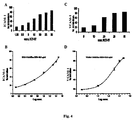
- IICT-TA67 inhibits the adhesion of Neutrophils on TNF-alpha induced HUVECs.
- ICM-1 Intercellular Adhesion Molecule type 1
- VCAM-1 Vascular Cell Adhesion Molecule type 1
- neutrophil adhesion assay was performed.
- HUVECs were pretreated with various concentrations of IICT-TA67 for 2 hours followed by induction with TNF- ⁇ for 6 hours. Human blood neutrophils were added onto the endothelial cells monolayer and allowed to adhere for one hour at 37°C.
- Figures 6 Pharmacokinetics of IICT-TA67 through oral route.
- Figure 7 Pharmacokinetics of IICT-TA67 through intravenous (i.v) route in mice. IICT-TA67 (20 mg/kg) was administered orally (or 10 mg/ kg by i.v.route) as a fine suspension in 1% Gum acacia.
- PK Constants for Molecule IICT-TA67 Values are derived from plasma drug concentration-time profile curves of TA-67 as depicted in Figure 6 and 7 .
- Figure 8 IICT-TA67 is not toxic.
- BALB/c 3T3 cell line was used for Neutral Red Uptake (NRU) cytotoxicity test.
- NRU Neutral Red Uptake
- the test result has been used to determine IC 50 for IICT-TA67 and acute oral toxicity (LD 50 ) in rodent was predicted.
- the predicted LD 50 for acute oral toxicity of IICT-TA67 in rodent is found to 430 mg/kg body weight.
- Example 1 General procedure for the preparation of 2,2'-[2,2'-4-(4,6-bis-cyclopropylamino)-1,3,5-triazin-2-yl-oxy-3-methoxyphenyl]-methylene-bis-1 H -indole 1 and 2,2'-[2,2'-4-(4,6-bis-cyclopropyl- amino)-1,3,5-triazin-2-yl-oxy-3-methoxyphenyl]-methylene-bis-(1 H- indole-3,3-diyl)-diacetic acid 3 (Scheme I-Compound 1; Scheme II-Compound 3).
- the reaction mixture was cooled to 0 °C and treated with cyclopropyl amine (3.09 g, 54.34 mmol). It was stirred at the same temperature for 1 h and neutralized with aq. 1N NaOH till the reaction mixture becomes basic. It was then heated to 40 °C and stirred at this temperature for 2 h.
- the reaction mixture was filtered, washed with acetone (3 x 25 mL), evaporated solvent and dried under vacuum to furnish 10 (5.6 g, 91.6%).
- Example 2 Preparation of 2,2'-[2,2'-4-(4,6-bis-anilino)-1,3,5-triazin-2-yl-oxy-3-methoxyphenyl]-methylene-bis-1 H -indole 2 and 2,2'-[2,2'-4-(4,6-bis-anilino)-1,3,5-triazin-2-yl-oxy-3-medioxyphenyl]-methylene-bis-(1 H -indole-3,3-diyl)-diacetic acid 4 (Scheme I-Compound 2; Scheme II-Compound 4 ) .
- Example 3 Preparation of 2,2'-[2,2'-3-(4,6-bis-cyclopropylamino)-1,3,5-triazin-2-yl-oxy4-methoxyphenyl]-medylene-bis-1 H -indole 5 and 2,2'-[2,2'-3-(4,6-bis-cyclopropyl- amino)-1,3,5-triazin-2-yl-oxy-4-methoxyphenyl]-methylene-bis-(1 H- indole-3,3-diyl)-diacetic acid 7 (Scheme III-Compound 5; Scheme IV-Compound 7 ).
- Example 4 Preparation of 2,2'-[2,2'-3-(4,6-bis-anilino)-1,3,5-triazin-2-yl-oxy-4-methoxyphenyl]-methylene-bis-1 H- indole 6 and 2,2'-[2,2'-3-(4,6-bis-anilino)-1,3,5-triazin-2-yl-oxy-4-methoxyphenyl]-methylene-bis-(1 H- indole-3,3-diyl)-diacetic acid 8 (Scheme I-Compound 6; Scheme II-Compound 8 )
- PDE4-4 phosphodiesterase (PDE4-4) assay.
- enzyme preparations were performed from rat heart ( Ko et al 2004, Biochemical Pharmacology 68:2087- 2094 ).
- Heart was excised from anesthetized rat and transfer into normal saline solution.
- Heart weighing 687 mg was taken and homogenized in 2.5 volumes of homogenization buffer containing 20 mM Tris-Cl, 50 mM NaCl, 2 mM EDTA, 0.1 mM PMSF, 1mH DTT, protease inhibitors 1 ⁇ g/ ⁇ l.
- the homogenate was centrifuged at 500 X g for 5 minute at 4°C.
- Phosphodiesterase 4 assay was conducted with [ 3 H] cAMP SPA enzyme assay (GE Amersham, UK) using 2.5 ⁇ g enzyme preparation for each well. Into each well 60 ⁇ l water, 10 ⁇ l assay buffer supplied with the kit, 10 ⁇ l compound (inhibitor), 10 ⁇ l PDE enzyme or homogenizing buffer (blank) and 10 ⁇ l radiolabel led cAMP ([ 3 H]cAMP, GE Amersham, UK) were added. To check activity of the enzyme without inhibitor 10 ⁇ l DMSO was added in place of inhibitor to a separate well. The reaction mixtures were incubated for 30 mi at 30°C.
- the reaction was stopped by adding 50 ⁇ l SPA bead supplied with the kit. It was then mixed well and allowed to stand at room temperature for 20 min. Breakdown of cAMP in each tube was monitored by ⁇ counter. The reading in each tube was obtained in counts per minute (CPM). The reading of the blank tube (without enzyme) was subtracted from each tube to normalize the counts. The enzyme activity was calculated by considering the CPM reading without any inhibitor (compound) as 100. The results are summarized in Table 1.
- Step 1 Sensitization and challenge
- mice were sensitized with 0.2 ml PBS containing 50 ⁇ g ovalbumin (OVA) (Sigma, USA) and 4 mg aluminum hydroxide in saline intraperitonially (i.p.) on days 0, 7 and 14 as shown in scheme V.
- Sham group mice were sensitized with only alum dissolved in PBS. From day 21 to 30, mice were exposed to aerosol of OVA (3%) inhalation 25 minutes daily in a Plexiglas chamber (20 x 20 x 10 cm 3 ). The aerosol was generated by a nebulizer (OMRON CX, model) with an airflow rate of 9 L/minute. Sham group mice were challenged with PBS alone.
- OVA ovalbumin
- Step 2 Mice grouping and treatment with IICT-TA67
- Compound 7 (IICT-TA67) was dissolved in DMSO. So DMSO was used as a vehicle. IICT-TA67 or DEX was given orally twice per day in the volume of 10 ⁇ l. Confirmatory experiments were done once with 0.1 mg/kg IICT-TA67 with 6 mice in each group.
- Step 3 Determination of airway responsiveness
- Airway responsiveness was measured by barometric plethysmography using whole-body plethysmography (WBP; Buxco, Troy, NY) 12 hours after last saline or ovalbumin challenge. At the time of measurement the animals were awake and breathing spontaneously. Enhanced pause (Penh) to methacholine as measured using barometric plethysmography is a valid indicator of bronchoconstriction in mice and can be used to measure AHR. Baseline pen H was taken initially, and then PBS followed by increasing concentrations (0-16 mg/ml) of methacholine was nebulized through an inlet of the main chamber for 3 min. Readings were taken and averaged for 5 minutes from the starting time of nebulisation. Airway responsiveness to MCh was evaluated by the concentration of MCh required to increase the Pen H to twice the baseline value (MCh PC 200 ). The results are presented in Fig 3 .
- MChPC200 was decreased significantly in asthmatic controls (OVA/OVA/VEH) compared to normal control mice (SHAM/PBS/VEH). This indicates that OVA/OVA/VEH mice have developed marked bronchoconstriction.
- treatment with IICT-TA67 significantly attenuated the decrease in MChPC200 and maximum effect was found with 0.1 mg/kg dose ( Figure 3 ). This reduction was comparable with dexamethasone treatment (OVA/OVA/DEX).
- Example 7 Cell- Elisa for measurement of Intercellular Adhesion Molecule type 1 (ICAM-1) and Vascular Cell Adhesion Molecule type 1(VCAM-1)
- Cell-ELISA was used for measuring the expression of ICAM-1 on surface of endothelial cells. Endothelial cells were incubated with or without IICT-TA67 at desired concentrations for the required period, followed by treatment with TNF- ⁇ (10 ng/ml) for 16 h for ICAM-1 and VCAM-1 expression. The cells were fixed with 1.0% glutaraldehyde. Non-specific binding of antibody was blocked by using skimmed milk (3.0% in PBS). Cells were incubated overnight at 4 °C with anti-ICAM-1 mAb anti-VCAM-1 antibody, diluted in blocking buffer, the cells were further washed with PBS and incubated with peroxidase-conjugated goat anti-mouse secondary Abs.
- Neutrophils were isolated from peripheral blood of healthy individuals. Blood was collected in heparin solution (20 U/ml) and erythrocytes were removed by sedimentation against 6% dextran solution. Plasma, rich in white blood cells, was layered over Ficoll-Hypaque solution, followed by centrifugation (300 g for 20 min, 20 °C). The top saline layer and the Ficoll-Hypaque layer were aspirated leaving neutrophils/RBC pellet. The residual red blood cells were removed by hypotonic lysis. Isolated cells were washed with PBS and resuspended in PBS containing 5 mM glucose, 1 mM CaCl 2 , and 1 mM MgCl 2 . The number of cells were recorded to make a final concentration of 6 ⁇ 10 5 cells/ml.
- endothelial cells plated in 96-well culture plates were incubated with or without compound IICT-TA67 at desired concentrations for 2 h, followed by induction with TNF- ⁇ (10 ng/ml) for 6 h. Endothelial monolayers were washed with PBS and neutrophils (6 ⁇ 10 4 /well) were added over it and were allowed to adhere for 1 h at 37 °C.
- the non-adherent neutrophils were washed with PBS and neutrophils bound to endothelial cells were assayed by adding a substrate solution consisting of o- phenylenediamine dihydrochloride (40 mg/100 ml in citrate phosphate buffer, pH 4.5), 0.1% cetrimethyl ammonium bromide, and 3-amino-1,2,4 triazole (1 mM).
- the absorbance was read at 490 nm using an automated microplate reader (Model 680, Bio-Rad, USA). The results are presented in Figure 5 .
- Step 1 Dosing: IICT-TA67 (20 mg/kg) was administered orally (or 10 mg/ kg by i.v.route) as a fine suspension in 1% Gum acacia. Blood samples were drawn from retro-orbital plexus at designated times in pre-labeled heparinised tubes and centrifuged (3500 rpm x 10 minutes) to obtain the plasma. Blood samples were collected at 0, 5, 15 and 30 min, and 1,2,4,6, 8, 16 and 24 hrs post-administration after oral/ iv route.
- the retention time of Mol.67 was 10.688 min, at which no other interfering peak was observed.
- the lower limit of detection (LOD) was 11 ng /ml; limit of quantitation (LOQ) was 32 ng/ml; recovery was 90 ⁇ 2%.
- Step 3 Calculating Bioavailability indices: A concentration- time curve for Molecule 67 was established and pharmacokinetic parameters AUC, C max , and t max were determined by a non-compartmental analysis using TOPFIT software package. Absolute bioavailability was determined using the following formula: AUC oral x dose iv / AUC iv x Dose oral. The results are presented in Table 2.
- Non-compartmental analysis of the data showed a Cmax of 107 ng/ ml and Tmax of 3 hrs.
- Other pharmacokinetic constants were as follows: The half-life (T 1/2 of 4.26 hrs; AUC , 502.75 ng/hr/ml; clearance (CL), 66.1 ml.min, and volume of distribution (Vd) 474 L. After i.v. dosing of 10 mg/ kg of TA-67 in mice showed AUC 357.71 ng/hr.ml; T 1/2, 0.93 hrs; CL, 466 ml/min and Vd 37.5 L.
- NR Neutral red
- the cells were incubated again, the excess NR solution was removed and finally NR was eluted from the cells.
- the NRU was determined by using a microtitre plate reader to measure the optical density at 540 nm of the eluted dye in 96 well plate.
- a calculation of cell viability expressed as NRU was made for each concentration of the test chemical by using the mean NRU of 6 replicate values per test concentration.
- the cell viability value was compared with the mean NRU of all vehicle control values and relative cell viability was then expressed as percent of untreated vehicle control.
- the results are presented in Fig. 8 .
- IICT-67 does not seem to be toxic to endothelial cells. Although the percentage of viability is slightly more than 95% at 50 ⁇ g/ml of IICT-67, 30 ⁇ g/ml (% viability of cells is 98%)
Landscapes
- Chemical & Material Sciences (AREA)
- Organic Chemistry (AREA)
- Health & Medical Sciences (AREA)
- Animal Behavior & Ethology (AREA)
- Pharmacology & Pharmacy (AREA)
- Veterinary Medicine (AREA)
- Public Health (AREA)
- Medicinal Chemistry (AREA)
- General Health & Medical Sciences (AREA)
- Life Sciences & Earth Sciences (AREA)
- Epidemiology (AREA)
- Pulmonology (AREA)
- Bioinformatics & Cheminformatics (AREA)
- Engineering & Computer Science (AREA)
- Nuclear Medicine, Radiotherapy & Molecular Imaging (AREA)
- General Chemical & Material Sciences (AREA)
- Chemical Kinetics & Catalysis (AREA)
- Pharmaceuticals Containing Other Organic And Inorganic Compounds (AREA)
Description
- The present invention relates to triazine-aryl-bis-indoles. The triazine-aryl-bis-indoles of
general formula 1 are useful for the treatment of asthma. The compound in the present invention is adapted for the treatment of asthma. This invention also relates to the mechanism of action of the present compound in inhibiting asthma. Unique property of the therapy with IICT-TA67 is inhibition ofPDE 4 activity and down regulation of Intercellular Adhesion Molecule type 1 (ICAM-1) and Vascular Cell Adhesion Molecule type 1 (VCAM-1) expression which are crucial in asthma pathogenesis. It also relates to the procedure of synthesis of the above heterocyclic compound. - Asthma is a non-infectious chronic inflammatory disease of the respiratory system characterized by a reversible airways obstruction. Acute airway obstruction, bronchial hyper-responsiveness and inflammatory state of the bronchial mucosa with increase levels of inflammatory mediators, are the most evident phenomenon which characterizes this pathology. Despite the increase in the prescribed anti-asthmatic treatments, the current trends indicate asthma is set to be the most chronic disease in industrialized countries, affecting mostly the children (15%) than the adults (10%).
- In addition to asthma, another most common respiratory disorder is chronic obstructive pulmonary disease (COPD), which embraces several inflammatory pathologies that often co-exist. The WHO predicts COPD (Donnelly, L. E.; Rogers, D. F., Therapy for COPD in the 21st century, Drugs, 63, 1973-1998, 2003) will become the third most common cause of death world over by 2020 accounting 8.4 million lives. Although asthma for the last 25 years has been managed moderately with a combined bronchodilator and anti-inflammatory therapies, in contrast, COPD have no effective treatments currently, while the efficacy of the corticosteroids is controversial. Moreover chronic use of various anti-inflammatory drugs leads to adverse side effects. Hence, there is an urgent need to develop novel anti-inflammatory drugs having both the bronchodilatory and anti-inflammatory activity, having application to treat both COPD as well as asthma. Thus, the development of therapies for bronchial asthma has become the major focus of the pharmaceutical industry in the field of respiratory disorders.
- Design and development of novel PDE-4 inhibitors (Yeoung, K,-P; Drug Discovery Today 14, 812-813, 2009; Houslay, M. D.; Schafer, P.; Zhang, K, Y, J. Drug Discovery Today 10, 1503-1519, 2005; Dal Piaz, V.; Giovannoni, M. P., Eur. J. Med. Chem., 35, 463-480, 2000; Giembycz, M. A. Monaldi Arch Chest Dis. 57, 48-64, 2002; Molfmo, N. A., ; Conti, M.; Beavo, J. Annu. Rev. Biochem., 76, 481-511, 2007) in therapeutic applications have gained importance from the early 1990s. PDEs are a large family of enzymes that metabolise the second messenger cAMP/cGMP into inactive acyclic systems. The role of cAMP as a second messenger is well established and it modulates the response of immune cells to a variety of stimuli. Elevation of cAMP has generally been associated with inhibition of lymphocyte activity. The elevation of cAMP levels leads to the suppression of the synthesis and release of pro-inflammatory signals, cytokines and inhibit the production of reactive oxygen species.
- The PD enzymes are a large family with eleven sub-families. Of these, the PDE-4, 7 and 8 are associated with the metabolism of cAMP. PDE-4 has four distinct genes, PDE-4A, PDE-4B, PDE-4C and PDE-4D (Muller, T.; Engels, P.; Fozard, J. R. Trends Pharmacol. Sci., 17, 294-298, 1996) with specificity to cAMP and thus have become potential therapeutic targets and most of the research is centred around PDE-4 inhibitors. The potential for selective PDE inhibitors to be used as therapeutic agents was predicted earlier (Teixeira, M. M.; Gristwood, R. W.; Cooper, N.; Hellewell, P. G. PDE-4 inhibitors: Trends Pharmacol. Sci., 18, 164-170, 1997). PDE-4 is the selective PD enzyme that metabolises the cAMP. Hence, PDE-4 inhibitors prevent the inactivation of cAMP.
- Mesembrine, a major alkaloid present in Selectium torouosum, has been shown to act as a PDE-4 inhibitor (Smith, M.; Crouch, N.; Gericke, N.; Hirst, M. Psychoactive constituents of the genus Sceletium N.E.Br. and other Mesembryanthemaceae: review. J. Ethnopharmacol 50, 119-30, 1996; Pharmaceutical compositions containing mesembrine and related compounds.
US Patent: 6,288,104 ). This is the first catechol based natural product that showed PDE-4 activity. Theophylline is the oldest and shows a weak and non-specific PDE inhibition. The most popular and quite potential PDE-4 inhibitor, since its discovery, is rolipram (Griswold, D. E.; Webb, E. F.; Breton, J.; White, J. R.; Marshall, P. J.; Torphy, T. J., Effect of selective phosphodiesterase type IV inhibitor, rolipram, on fluid and cellular phases of inflammatory response, Inflammation 17, 333-44, 1993; Schneider, H. H.; Schmiechen, R.; Brezniski, M.; Seidler, J.; Eur. J. Pharmocol., 127, 105-115, 1986), a catechol based compound and structurally related to mesembrine. Rolipram, thus has become a template for the synthesis of novel inhibitors, besides becoming a reference drug in evaluating other inhibitors. Ariflo (cilomilast, SB-207,499; Profita, M, Chiappara G, Mirabella, F Chimenti, G Di, L, Costanzo, G, Riccobono, L Bellia V, Bousquet J, and Vignola A. Effect of cilomilast (Ariflo) on TNF-, IL-8 and GM-CSF release by airway cells of patients with COPD. 58, 573-579, 2003. Ochiai, H.; Ohtani, T.; Ishida, A.; Kusumi, K.; Kato, M.; Kohno, H.; Kishikawa, K.; Obata, T.; Nakai, H.; Toda, M. Bioorg. Med. Chem. Lett., 14, 207-10, 2004 ), roflumilast (Hatzelmann, A.; Schudt, C. J. Pharmacol. Exp. Ther. 297, 267-290, 2001 ), CDP-840, HT-0712, filaminast are some of the rolipram related active PDE-4 molecules, while V-11294A which is in phase-II clinical trials represents a hybrid molecule of xanthine and rolipram. Ciloinilast, roflumilast, BAY-19-8004 and arofylline are in phase-III clinical trials. - The most common and worrisome aspect in the development of potent PDE-4 inhibitors is their propensity for side effects such as nausea and vomiting. The mechanism by which the PDE-4 inhibitors induce side effects are uncertain. However, the family of PDE-4 enzymes exist in two different conformational states (Souness, J. E.; Rao, S. Cell Signal, 9, 227-236, 1997; Duplantier, A. J. et al., J. Med. Chem. 39, 120-125, 1996 ), distinguishable with their affinity towards rolipram: the conformation with low affinity for rolipram is LAR conformation (PDE-4L), while the one with high affinity is known as HAR conformation (PDE-4H). PDE-4L is associated with anti-inflammatory activity, while the PDE-4H conformation correlates with adverse effects such as emsesis. Thus, there is till an urgent need for the development of promising PDE-4 inhibitors (a) related to rolipram structure or (b) structurally different class of compounds.
- Rolipram, with the perspective of medicinal chemistry is a simple catechol derivate, resembling the alkaloid mesembrine. It has two pharmacophores: (a) 3,4-dialkoxy phenyl ring and (b) pyrrolidine-2-one. Though rolipram has disadvantages of the side effects, it has worked as an excellent model for the potent molecules like cilomilast/roflumilast (Phase-III) and others.
- In the present invention it was thus desirable to prepare New Chemical Entities (NCEs) to realize the desirable features as a potent PDE-4 inhibitor. In the development of novel molecules it is anticipated to overcome the problems such as emesis, gastric acid secretion associated with rolipram, besides, aiming to dissociate catalytic site inhibition and binding site affinity. Therefore in the present work, development of selective and novel PDE-4 inhibitors was based on: (a) simple chemistry, (b) PDE-4 selectivity and (c) in vtro/in vivo strong potency.
- Indoles, bis-indoles and octahydro indoles are part structures of several biologically active compounds (Higuchi, K.; Kawasaki, T. Nat. Pro. Rep. 24, 843-868, 2007; O'Connor, S. E.; Maresh, J. Nat. Pro. Rep. 23, 532-547, 2006 ). Indole ring system is a very important component in many synthetic pharmaceuticals (Olgen, S.; Kaessler, K.; Nebioglu, D.; Joachim, J. Chem. Biol. Drug Des., 70, 547-551, 2007; Smart, B. P.; Oslund, R. S.; Walsh, L. A.; Gelb, M. N. J. Med. Chem., 49, 2858-2860, 2006 ), while the World Drug Index contains 74 indole derivatives as drug molecules. Octahydro indole is part structure of mesembrine, an alkaloid with PDE-4 inhibitory activity. Furthermore, the indole 3-acetic acid and its derivatives have found use as building blocks for the synthesis of pharmaceutically important molecules (Hopkins, C. R. et al., Bioorg. Med. Chem. Lett., 15, 2734-2737, 2005 ) while, AWD-12-281, (PDE-4 active compound with lower emetic effects), which is in phase-III clinical trials, is an indole-glyoxamide derivative (Kuss, H.; Hoefgen, N.; Johanssen, S.; Kronbach, T.; Rundfeldt, C. J. Pharmacol. Exp. Ther. 307, 373-385, 2003 ). Likewise, the 1,3,5-triazine skeleton is implicated in a variety of therapeutic activities and some triazine derivates have shown anti-asthmatic activity (Leroux, F.; van keulen, B. J.; Daliers, J.; Pommery, N.; Henichart, J. P. Bioorg. Med. Chem. 7, 509-516, 1999).
- Thus, the present invention deals with the synthesis of NCEs based on novel 'triazine-aryl-bis-indole' skeleton (See for bis-indole based natural products: Ravikanth, V.; Imelda, O.; Wagner-Dobler, I.; Laatsch, H. J. Nat. Pro. 66, 1520-1523, 2003 ).
- The thus prepared NCEs of the present invention are envisaged to address the problems associated with the earlier PDE-4 inhibitors and will have better and improved therapeutic indices. The present invention thus reports the synthesis of novel class of new 'triazine-aryl-bis-indoles', hybrid structures of substituted triazine, indoles and catechol in this patent, wherein, the new class of novel compounds differ with rolipram structurally: (a) the pyrrolidine ring system is replaced with a bis-indolyl acetic acid moiety and (b) the cyclopentyl group is replaced with a substituted triazinyl unit.

- These structurally novel NCEs are envisaged as potential PDE-4 inhibitors devoid of the side effects. The suggested modifications in delineating a hybrid structure of Formula I is not obvious and lot of effort has gone in the designing of such a skeleton as represented in Formula I. The synthesis of the novel 'triazine-aryl-bis-indole' derivatives is reported for the first time in this patent. Likewise, the biological activity of the above NCEs is reported for the first time in this invention. The rationale in the design of the present invention for the synthesis of 'triazine-aryl-bis-indoles' are: (a) octahydroindole, indole and indole acetic acid are part structures of several pharmaceutically important compounds, besides, some anti-asthma compounds, (b) the triazines are also implicated in anti-asthma activity and (c) the catechol derived earlier compounds have shown reasonable PDE-4 activity. Hence, the hybrid structure proposed in the present invention is envisaged to show potent PDE-4 activity, devoid of the problems associated with earlier rolipram analogues, since the cyclopentyl moiety is replaced with hitherto unusal 1,3,5-trisubstituted triazinyl moiety.
- Disclosure involves in vitro
data showing PDE 4 inhibition bycompound 7, IICT-TA67 molecule (Figure 1 , Table 1) as shown inFigure 2 . Disclosure also involves the in vivo data demonstrating the inhibition of airway hypersensitivity as an indicator of asthma as shown inFigure 5 . It further demonstrates the pharmacokinetics and bioavailability of this molecule in vivo as shown in Table 2. - In one aspect, the present invention is directed towards synthesis of
novel PDE 4 inhibitor therapeutically effective for the treatment of asthma and asthma related respiratory diseases. - In other aspect the objective of the present invention is the synthesis of novel 'triazine-aryl-bis-indole' class of compounds with higher therapeutic value to the active compounds.
- Another objective in the present invention is to design and synthesize novel class of 'triazine-aryl-bis-indoles' and their derivatives to overcome the problems such as emesis and vomiting associated with the known active compounds.
- Yet another objective of the present invention on the synthesis of novel 'triazine-aryl-bis-indoles' and their derivatives and their evaluation is to have more therapeutic accessibility to the compounds presented in the invention.
- It is also an objective of the present invention that the novel 'triazine-aryl-bis-indoles' and their analogues will have specific PDE-4 binding capacity devoid of emetic properties.
- In yet another objective of the present invention on the novel 'triazine-aryl-bis-indole' class of compounds to express more than one therapeutic activity towards asthma treatment.
- Still, another objective of the invention is to provide novel process routes for the synthesis of said novel 'triazine-aryl-bis-indoles' that exhibit significant anti-asthma activity.
- Yet another objective of the present invention is to provide novel process routes to the new class of 'triazine-aryl-bis-indoles' using commercially available reagent and shorter chemical sequence.
- In yet another objective of the invention is to provide green chemistry routes and catalytic synthetic steps for the large-scale manufacture of the said novel 'triazine-aryl-bis-indole' derivatives.
- A further object of the invention is to provide the said novel 'triazine-aryl-bis-indoles', which are totally synthetic, in sufficient quantities for biological evaluation under environmentally friendly process chemical routes.
- Yet another objective of the present invention is to find out non-toxic PDE-4 inhibitor which might be useful for the treatment of asthma.
- A further objective of the invention is to inhibit the signalling pathway such as expression of intercellular cell adhesion molecule and vascular cell adhesion Intercellular Adhesion Molecule type 1 (ICAM-1) and Vascular Cell Adhesion Molecule type 1(VCAM-1) which is crucial for asthma pathogenesis.
- A further objective of the present invention is to find out the compound that inhibit asthma in vivo.
- Accordingly the present invention provides triazine-aryl-bis-indoles of general formula I,

- R = R5 = H;
- R1 is C1 to C10 alkyl groups optionally substituted with halogens, hydroxy, mercapto or amino groups;
- R2 and R3 are independently C3-C10 carbocyclylamino groups or arylamino groups optionally substituted on the aryl group with halogens, hydroxyl, amino, alkylamino, cyano, alkoxy, aryloxy or nitro;
- Z is H or CH2COR4, wherein R4 is OH or O-alkyl, wherein the alkyl groups are from C1 to C10.
- In an embodiment of the present invention the structural formulae of the representative compounds are:


- In another embodiment of the present invention wherein the compounds are useful for the treatment of bronchial asthma.
- In yet another embodiment of the present invention wherein the compounds inhibit
PDE 4 activity in vitro at a dose of 1-20 µg/ml and showed inhibition of PDE-4 enzyme upto 73% taking rolipram as standard. - In a further embodiment of the present invention wherein, wherein the compounds 1-8 at concentrations ranging from 10 µg/mL to 20 µg/mL showed PDE4 inhibition ranging from 16-73%.
- In a still embodiment of the present invention wherein, wherein the compounds 10-13 at concentrations ranging from 10 µg/mL to 20 µg/mL showed PDE4 inhibition ranging from 29% to 53%.
- In an embodiment of the present invention wherein, wherein the representative compounds comprising:
- (i) 2,2'-[2,2'-4-(4,6-bis-cyclopropylamino)-1,3,5-triazin-2-yl-oxy-3-methoxyphenyl]-methylene-bis-1H-indole (1)
- (ii) 2,2'-[2,2'-4-(4,6-bis-anilino)-1,3,5-triazin-2-yl-oxy-3-methoxyphenyl]-methylene-bis-1H-indole (2)
- (iii) 2,2'-[2,2'-4-(4,6-bis-cyclopropylamino)-1,3,5-triazin-2-yl-oxy-3-methoxyphe-nyl]-methylene-bis-(1H-indole-3,3-diyl)-diacetic acid (3)
- (iv) 2,2'-[2,2'-4-(4,6-bis-anilino)-1,3,5-triazin-2-yl-oxy-3-methoxyphenyl]-methylene-bis-(1H-indole-3,3-diyl)-diacetic acid (4).
- (v) 2,2'-[2,2'-3-(4,6-bis-cyclopropylamino)-1,3,5-triazin-2-yl-oxy-4-methoxyphenyl]-methylene-bis-1H-indole (5)
- (vi) 2,2'-[2,2'-3-(4,6-bis-anilino)-1,3,5-triazin-2-yl-oxy-4-methoxyphenyl]-methylene-bis-1H-indole (6)
- (vii) 2,2'-[2,2'-3-(4,6-bis-cyclopropylamino)-1,3,5-triazin-2-yl-oxy-4-methoxy-phenyl]-methylene-bis-(1H-indole-3,3-diyl)-diacetic acid (7)
- (viii) 2,2'-[2,2'-3-(4,6-bis-anilino)-1,3,5-triazin-2-yl-oxy-4-methoxyphenyl]-methylene-bis-(1H-indole-3,3-diyl)-diacetic acid (8)
- Accordingly the present invention also provides a process for preparation of triazine-aryl-bis-indole as claimed in
claim 1 wherein the process steps comprising; - a) reacting 2,4,6-trichloro-1,3,5-triazine with an aromatic amine or cyclopropylamine in presence of a base at a temperature ranging between 0 to 40 °C for a period ranging between 1 to 2 hours to give the
disubstituted chloro 1,3,5-triazine of general formula A as shown below:
- b) reacting the above
disubstituted chloro 1,3,5-triazine with vaniline or isovaniline in presence of a base at a temperature ranging between 50 to 70 °C for a period ranging between 4 to 6 hours to give the aryl ether of general formula B as shown below:
- c) reacting the triazine-aryl ethers with indole or indole-3-acetic acid in the presence of an acid at a temperature ranging between 50 to 60 °C for a period ranging between 6 to 8 hours to give triazine-aryl-bis-indole of general formula I wherein the R, R1, R2, R3, R4, R5 are as follows:
- R = R5 = H,
- R1 = CH3, and
- R2 = R3 = -NHRa, with Ra = aryl or cyclopropyl

- In an embodiment of the present invention the amine is selected from cyclopropylamine to give 10, or aniline to give 11.
- The present invention also provides a trisubstituted triazine compound of general formula C


- In an embodiment of the present invention the representative compounds of general formula C are:
- 1) 4-[4,6-Bis-cyclopropylamino-1,3,5-triazin-2-yl-oxy]-3-methoxy benzaldehyde (R2 = R3 = cyclopropyl; 12).
- 2) 4-[4,6-Bis-anilino-1,3,5-triazin-2-yl-oxy]-3-methoxy benzaldehyde (R2 = R3 = phenyl; 13)
- 3) 4-[4,6-Bis-cyclopropylamino-1,3,5-triazin-2-yl-oxy]-4-methoxy benzaldehyde (R2 = R3 = cyclopropyl; 14)
- 4) 4-[4,6-Bis-anilino-1,3,5-triazin-2-yl-oxy]-4-methoxy benzaldehyde (R2 = R3 = phenyl; 15)
- The present invention also provides a pharmaceutical composition comprising one or more compounds of
general Formula 1 and formula C along with the pharmaceutically acceptable additives, carriers or diluents. - The compounds of
general formula 1 and C are useful for the treatment of human bronchial asthma wherein the method comprising administering one or more compounds offormula 1 and formula C by oral, mucosal and any other route to a subject in need for. - Method of treatment of human bronchial asthma with one or more compound of
formula 1 according at a dose ranging between of 0.1 to 1 mg/kg BW. - The compound IICT-TA67, which is tested for basal cytotoxicity in 3T3 cells and the IC50 found to be 32 mg/L.
- The compound IICT-TA67, which is predicted for acute oral toxicity and the predicted acute oral LD50 derived to be 430 mg/kg body weight.
-
-
Figure 1 illustrates the structure of the novel class of triazine-aryl-bis-indole' compounds (Compound 1 to 8). -
Figure 2 is related to the screening of the above novel class of compounds (1-8) as PDE-4 inhibitors. -
Figure 3 illustrates inhibition of Airway hyper-responsiveness to evaluate anti-asthmatic effect in vivo by compound 7 (IICT-TA67). -
Figure 4 deals with inhibition of TNF alpha induced expression of Intercellular Adhesion Molecule type 1 (ICAM-1) and Vascular Cell Adhesion Molecule type 1(VCAM-1) in vitro by IICT-TA67. -
Figure 5 is related to the inhibition of adhesion of Neutrophils by IICT-TA67. -
Figure 6 . Pharmacokinetics of the compound 7 (IICT-TA67 administered through oral route -
Figure 7 . Pharmacokinetics of the compound 7 (IICT-TA67) administered intravenous route. -
Figure 8 . Toxicity data of compound 7 (IICT-TA67). - Accordingly, present invention provides a preparation for treating bronchial asthma by inhibiting phosphodiesterase activity with one or more 'triazine-aryl-bis-indole' class of compounds represented by
Formula 1. - In particular present invention provides the method of synthesis of diversified 'New Chemical Entities' (NCEs) embedded with a basic skeletal structure consisting of 'triazine-aryl-bis-indoles' frame work.
- The present invention also describes that said 'triazine-aryl-bis-indole' compounds and analogous NCEs are potential molecules to inhibit the PDE-4 activity in vitro.
- The present invention also describes that said 'triazine-aryl-bis-indole' compounds and analogous NCEs are potential molecules to inhibit the PDE-4 activity towards the treatment of asthma and COPD.
- The present invention also describes that said compounds are potential molecules to inhibit the airway hyperresponsiveness towards the treatment of asthma and COPD. The present invention also describes that said compounds are potential molecules to inhibit TNF-α induced expression intercellular cell adhesion molecule and vascular cell adhesion molecule Intercellular Adhesion Molecule (ICAM) and Vascular Cell Adhesion Molecule (VCAM) activity towards the treatment of asthma and COPD.
- It also describes that the said
compound 8 is potentially bioavailable with good pharmacokinetics. - It further describes that said
compound 8 is potentially non toxic - The present invention describes the synthesis of a
novel PDE 4 inhibitor, IICT-TA67 (Compound 7) and its analogues (Compound 1-8) which inhibits asthma in vivo. The same molecule also inhibits expression of cell adhesion molecules such as Intercellular Adhesion Molecule type 1 (ICAM-1) and Vascular Cell Adhesion Molecule type 1(VCAM-1) which plays crucial role in asthma pathway. It further describes the inhibition of adhesion of Neutrophils on TNF-alpha induced HUVECs. - The present invention also describes the method of synthesis of diversified 'New Chemical Entities' (NCEs) embedded with a basic skeletal structure consisting of 'triazine-aryl-bis-indoles' frame work. The said NCEs exhibit excellent activity against phosphodiesterase enzyme (PDE) to become novel PDE-4 specific inhibitors. The novel green chemistry routes developed in the invention are suitable for the synthesis of compounds of the structural Formula I.
- The present invention describes the synthesis and process chemistry for the novel class of compounds such as 'triazine-aryl-bis-indoles' having a catechol derived structure constituting a part of triazine and a part bis-indole moiety on it. The said novel class of compounds are represented by Formula I.
- The applicant in the present invention discovered that by the replacement of pyrrolidine-2-one in pharmacophore 'A' of rolipram with bis-indoles and O-cyclopentyl in pharmacophore 'B' with substituted 1,3,5-triazinyl moiety resulting in a novel 'triazine-aryl-bis-indole' hybrid structure represented in Formula I. The said 'triazine-aryl-bis-indole' compounds and analogous NCEs are potential molecules to inhibit the PDE-4 activity towards the treatment of asthma and COPD.
- The present invention describes the first time synthesis of the said compounds based on 'triazine-aryl-bis-indoles' skeleton and their use in asthma and COPD for the first time.
- The said compounds of the present invention were found to be potent PDE-4 inhibitors.
- The term 'alkyl' refers to a saturated straight or branched chain hydrocarbon of C1 to C10 and includes e.g. methyl, ethyl, n-propyl, iso-propyl, n-butyl, isobutyl, pentyl, hexyl, iso-hexyl.
- The term 'carbocycle' refers to, but not limited to, cyclopropyl, cyclobutyl, cyclopentyl, cyclohexyl groups.
- The term 'aryl' refers to an aromatic ring.
- The aryl groups are substituted optionally with any of the groups selected from halogens, hydroxyl, amino, alkylamino, cyano, alkoxy, aryloxy, nitro.
- The present invention further describes novel process for the synthesis of compounds having 'triazine-aryl-bis-indole' skeleton and exhibit potent PDE-4 inhibitory activity. The said process routes described in the present invention utilized commercial reagents, short routes, green chemistry and environmentally friendly reaction conditions. The said process routes are amenable to large scale synthesis of 'triazine-aryl-bis-indoles' in sufficient quantities for further biological evaluation.
- In one embodiment the invention describes novel 'triazine-aryl-bis-indole' framework of Formula I, where, R = H, Y = R1 = methyl, X = R2 = R3 = cyclopropyl amine, Z = H, R5 = H.
- In another embodiment the invention provides novel 'triazine-aryl-bis-indoles' compounds related to Formula I, where, R = H, Y = R1 = methyl, X = R2 = R3 = cyclopropyl amine, Z = CH2COR4 where R4 = OH, R5 = H.
- In yet another embodiment the invention describes novel 'triazine-aryl-bis-indoles' framework of Formula I, where, R = H, Y = R1 = methyl, X = R2 = R3 = NHPh, Z = H, R5 = H.
- In another embodiment the invention provides novel 'triazine-aryl-bis-indole' compounds related to Formula I, where, R = H, Y = R1 = methyl, X = R2 = R3 = NHPh, Z = CH2COR4 where R4 = OH, R5 = H.
- In still another embodiment the invention describes novel 'triazine-aryl-bis-indole' framework of Formula I, where, R = H, X = R1 = methyl, Y = R2 = R3 = cyclopropyl amine, Z = H, R5 = H.
- In another embodiment the invention provides novel 'triazine-aryl-bis-indoles' compounds related to Formula I, where, X = R1 = methyl, Y = R2 = R3 cyclopropyl amine, Z = CH2COR4 where R4 = OH, R5 = H.
- In another embodiment the invention describes novel 'triazine-aryl-bis-indoles' framework of Formula I, where, R = H, X = R1 = methyl, Y = R2 = R3 = NHPh, Z = H, R5 = H.
- In still another embodiment the invention provides novel 'triazine-aryl-bis-indoles' compounds related to Formula I, where, R = H, X = R1 = methyl, Y = R2 = R3 = NHPh, Z = CH2COR4 where R4 = OH, R5 = H.
-
Figure 1 . The synthesis of 'triazine-aryl-bis-indole' skeletal structures related to Formula I, which are represented bystructural formulae 1 to 8 as depicted inFigure 1 . The steps described in the present invention for the process routes for the said novel compounds offormulae 1 to 8 as shown inFigure 1 are: - (a) reacting trichloro-1,3,5-triazine with appropriate amines such as cyclopropyl amine or aniline
- (b) base mediated coupling of substituted 1,3,5-triazine chloride with phenolic groups of vaniline or isovaniline
- (c) acid catalyzed condensation of the aldehyde triazinyl ethers with indole or indole acetic acid to provide the NCEs belonging to the novel class of 'triazine-aryl-bis-indoles'
- The present invention describes the NCEs as well as pharmaceutical compositions that comprise one or more such compounds. This invention, more specifically describes the novel compounds of formula I, where,
R = H, X = R1 = methyl, Y = substituted 1,3,5-triazine with R2 = R3 = cyclopropyl amine or aniline, Z = H or CH2COR4 where R4 = OH, R5 = H.
R = H, Y = R1 = methyl, X = substituted 1,3,5-triazine with R2 = R3 = cyclopropyl amine or aniline, Z = H or CH2COR4 where R4 = OH, R5 = H. - The NCEs prepared in the present invention are used as anti-asthmatic agents specifically as PDE-4 inhibitors. The intermediate compounds that are described in the present invention along with NCEs prepared are useful for other therapeutic applications.
- Thus, the present invention as described above provides the first synthetic approach to the synthesis of new and novel class of compounds of 'triazine-aryl-bis-indoles' of general structural formula I as shown, wherein, X, Y, R, R1, R2, R3, R4 and R5 are as defined earlier.

- The following schemes I-IV of the present invention exemplify the preparative methods for the particularly preferred compounds. The substitution patterns for the particularly preferred compounds are indicated in the schemes I - IV below. The compounds exemplified in the present invention herein are only representatives for the above class of novel 'triazine-aryl-bis-indole' compounds.
- Scheme I in the present invention exemplifies the preferred preparative method for the compounds of structural formula I, compounds of Formulae 1 and 2 as shown in
Figure 1 , wherein, R = H, Y = R1 = methyl, X= substituted 1,3,5-triazine with R2 = R3 is represented by either cyclopropyl amine or aniline, Z = H, R5 = H. In this invention cyanuric chloride 9 can be reacted with R'NH2 wherein, R' is cyclopropyl or phenyl, in the presence of a base such as sodium hydroxide, potassium hydroxide, potassium carbonate, sodium bicarbonate, cesium carbonate or the like in a solvent such as acetone, ethyl methyl ketone, pentanone, t-butyl methyl ketone, DMF, NMP, dimethyl acetamide or the like, first at low temperature varying from -40 to 5 °C and then at higher temperatures varying from 20-100 °C with another equivalent of RNH2 to provide the disubstituted triazines 10 (R' = cyclopropyl) and 11 (R' = phenyl;Sugiura, Y.; Miwatari, S.; Kimura, H.; Knzaki, N. JP 11158073 A2 (June 15, 1999 part 1, while for 11 wherein R' = phenyl, example 2, part 1 (Scheme I). - The
chlorides 10 and 11 were independently reacted typically with an aromatic aldehyde like vaniline in a suitable solvent such as acetone, methyl ketone and other ketone solvents or DMF, NMP, dimethyl acetamide or the like in the presence of a base for e.g.: potassium carbonate, sodium hydroxide, potassium hydroxide, sodium hydride, potassium hydride, or the like for a suitable time 4-12 h and temperature varying from 50 100 °C sufficient for reaction to provide thearyl ethers 12 and 13 respectively as shown in Scheme I. See the reaction conditions in example 1,part 2 for 12, and example 2,part 2 for 13 (Scheme I). Compounds offormulae 12 and 13 were independently reacted with indole in the presence of an acid for eg: conc. HCl, aq. HCl solution, HCl gas generated in situ, HCl gas generated in situ from the like of trichlorotriazine (TCT), or Lewis acids like BF3OEt4, ZrCl4, BiCl3, AlCl3, InCl3 or the like in a suitable solvent like CH2Cl2, CHCl3, ethylene dichloride or without a solvent at heating temperature or microwave reaction conditions to provide thecompounds Figure 1 . The exemplary reaction conditions for the preparation of 1 are shown in example 1, part 3, while the reaction conditions for 2 are presented in example 2, part 3 (Scheme I).

- Scheme II further exemplifies the synthetic method for the preparation of compouns of
formulae 3 and 4 as shownFigure 1 , with the general structural formula as shown in Formula I, wherein, R = H, Y = R1 = methyl, X = a di-substituted triazine with R2 = R3 = is represented either by a cyclopropyl amine group or aniline group, Z = CH2COR4 wherein, R4 is represented by OH group, R5 = H. In the present invention, compounds with thestructural formulae 12 and 13 (see Scheme I, examples 1 and 2, part 2), were independently reacted with indole 3-acetic acid in the presence of acid conc. HCl, aq. HCl solution, HCl gas generated in situ, HCl gas generated in situ from the like of trichlorotriazine (TCT), or Lewis acids like BF3OEt4, ZrCl4, BiCl3, AlCl3, InCl3 or the like in a suitable solvent like CH2Cl2, CHCl3, ethylene dichloride or without a solvent at heating temperature or microwave reaction conditions to provide the compounds with theformulae 3 and 4 respectively (Figure 1 ). See example 1,part 4 and example 2,part 4 for the exemplary reaction conditions for the preparative methods of 3 and 4 (Scheme II).
- Scheme III further exemplifies the synthetic method for the preparation of compounds of
formulae Figure 1 , with the general structural formula as shown in Formula I, wherein, R = H, X = R1 = methyl, Y = a disubstituted triazine with R2 = R3 = is represented either by a cyclopropyl amine group or aniline group, Z = H, R5 = H. As exemplified in Scheme III, thetriazine derivatives 10 and 11 (See Scheme I, examples 1 and 2, part 1) were independently reacted appropriately with an aldehyde like isovaniline in a suitable solvent such as acetone, methyl ketone and other ketone solvents or Dimethyl formamide, NMP, dimethyl acetamide or the like in the presence of a base for e.g.: potassium carbonate, sodium hydroxide, potassium hydroxide, sodium hydride, potassium hydride, or the like for a suitable time 4-12 h and temperature varying from 50 100 °C to provide therespective compounds 14 and 15. The exemplary reaction conditions for the preparation of 14 are described in example 3,part 1, while, example 4,part 1 describes 15 (Scheme III).
- Scheme III further exemplifies the synthetic method for the preparation of compounds of
formulae 5 and 6 (Figure 1 ), wherein, compounds 14 and 15 (See Scheme III, examples 3 and 4, part 1) were independently reacted in the presence of HCl gas generated in situ from the like of trichlorotriazine (TCT), or an acid conc. HCl, aq. HCl solution, HCl gas generated in situ, or Lewis acids like BF3OEt2, ZtCl4, BiCl3, AlCl3, InCl3 or the like in a suitable solvent like CH2Cl2, CHCl3, ethylene dichloride or without a solvent at heating temperature or microwave reaction conditions to obtain the bis-indoles 5 and 6 (Figure 1 ) respectively. The exemplary reaction conditions for the preparation of 5 are described in example 3,part 2, while, while for the reaction conditions for 6 see the example 4, part 2 (Scheme III). - Scheme IV exemplifies the synthesis of compounds of
formulae Figure 1 , with the general structural formulae as shown in Formula I, wherein, R = H, X = R1 = methyl, Y = a disubstituted triazine with R2 = R3 = is represented either by a cyclopropyl amine group or aniline group, Z = CH2COR4 wherein, R4 is represented by OH group, R5 = H. As exemplified in the present invention, thealdehydes 14 and 15 (see Scheme III, examples 3 and 4, part 1), independently on reaction with indole 3-acetic acid in the presence of HCl gas generated in situ from the like of trichlorotriazine (TCT), or conc. HCl, aq. HCl solution, HCl gas generated in situ, or Lewis acids like BF3OEt2, ZrCL4, BiCl3, AlCl3, InCl3 or the like in a suitable solvent like CH2Cl2, CHCl3, ethylene dichloride or without a solvent at heating temperature or microwave reaction conditions provided access to the 'triazine-aryl-bis-indole' compounds with thestructural formulae 7 and 8 (Figure 1 ) respectively. For the exemplary reaction conditions for the preparative methods of 7 and 8, see the example 3, part 3 and example 4, part 3 respectively (Scheme IV).
- The synthetic protocols developed in the present invention as exemplified in the Schemes I-IV are adoptable for the synthesis of a diversified novel 'triazine-aryl-bis-indole' class of compounds as represented by formula I. These novel compounds belonging to the 'triazine-aryl-bis-indole' class described in the present invention are useful for numerous therapeutic applications. The thus described novel compounds of the present invention, can be administered for the therapeutical applications by different ways such as orally, intravenously and other routes.
- The synthetic routes that are presented in the invention as exemplified in Schemes I-IV can be effectively utilized for the synthesis of the novel class of new compounds represented by Formula I, wherein, R = H, Y = R1 = methyl, in X, R2 = R3 = cyclopropyl amine, Z = H, R5 = H, represented by structure 1 (
Figure 1 ) is synthesized. - Similarly, compound with formula R = H, Y = R1 = methyl, in X, R2 = R3 = cyclopropyl amine, Z = CH2COR4 wherein, R4 is represented by OH group, R5 = H, represented by structure 3 (
Figure 1 ) is synthesized. - Similarly is synthesized the compound with formula wherein, R = H, Y = R1 = methyl, in X, R2 = R3 = NHPh, Z = H, R5 = H, represented by structure 2 (
Figure 1 ) is synthesized. - Similarly, compound with formula R = H, Y = R1 = methyl, in X, R2 = R3 = NHPh, Z = CH2COR4 wherein, R4 is represented by OH group, R5 = H, represented by structure 4 (
Figure 1 ) is synthesized. - Further, is synthesized a compound with the formula wherein, R = H, X = R1 = methyl, in Y, R2 = R3 = cyclopropyl amine, Z = H, R5 = H, represented by structure 5 (
Figure 1 ) is synthesized. - Similarly, compound with formula R = H, X = R1 = methyl, in Y, R2 = R3 = cyclopropyl amine, Z = CH2COR4 wherein, R4 is represented by OH group, R5 = H, represented by structure 7 (
Figure 1 ) is synthesized. - Further, a compound with the formula R = H, X = R1 = methyl, in Y, R2 = R3 = NHPh, Z = H, R5 = H, represented by structure 6 (
Figure 1 ) is synthesized. - Similarly, compound with formula R = H, X = R1 = methyl, in Y, R2 = R3 = NHPh, Z = CH2COR4 wherein, R4 is represented by OH group, R5 = H, represented by structure 8 (
Figure 1 ) is synthesized. - The above protocols described in the present invention can be utilized similarly for the synthesis of numerous analogues of 'triazine-aryl-bis-indole' class of novel compounds represented by Formula I.

- Mice were sensitized with ovalbumin (OVA) intraperitonially (i.p.) on
days day 21 to 30, mice were exposed to aerosol of OVA (3%)inhalation 25 minutes daily in a Plexiglas chamber (20 x 20 x 10 cm3). - For screening experiments, mice were divided randomly after acclimatization into 6 groups, each group (n = 4-5) was named according to sensitization/challenge/treatment: Group I was alum sensitized, saline challenged and treated with vehicle (SHAM/SAL/VEH), group II was OVA sensitized, OVA challenged and treated with DMSO as vehicle (OVA/OVA/VEH), group III, IV, V were OVA sensitized, OVA challenged and treated with 0.1, land 10 mg/kg IICT-67 and group VI was OVA sensitized, OVA challenged and treated with 0.75 mg dexamethasone (OVA/OVA/DEX). Compound 7 (IICT-TA67) was dissolved in DMSO. So DMSO was used as a vehicle. IICT-TA67 or DEX was given orally twice per day in the volume of 10 µl.
- Airway responsiveness was measured by barometric plethysmography using whole-body plethysmography (WBP; Buxco, Troy, NY) 12 hours after last saline or ovalbumin challenge. At the time of measurement the animals were awake and breathing spontaneously. Enhanced pause (Penh) to methacholine as measured using barometric plethysmography is a valid indicator of bronchoconstriction in mice and can be used to measure AHR.
Fig 2 . Inhibition ofphosphodiesterase 4 activity by IICT-TA67 in vitro. To examine whether IICT-TA67 inhibits PDE-4 activity in vitro, enzyme preparations were incubated in the absence or presence of different concentrations (1-20 µg/ml) of IICT-TA67 and breakdown of cAMP was monitored by β counter. IICT-TA67 inhibited PDE4 activity in a dose dependent manner. (0.1-20 µg/ml) which was compared with known PDE4 inhibitor, rolipram.
Table 1. Measurement of phosphodiesterase (PDE)-4 activity by compounds. The enzyme preparations were incubated in the absence or presence of a10 µg/ml) of compounds 1-8 and 10-13 and breakdown of cAMP was monitored by β counter.PDE 4 activity was compared with known PDE4 inhibitor, rolipram.
Fig 3 . Inhibition of airway hyperresponsiveness (AHR) in mouse model of asthma by IICT-TA67.To evaluate the antiasthma property of IICT-TA67 on the asthma features, BALB/c mice were sensitized and challenged with ovalbumin (OVA) as shown in Scheme V to develop asthmatic features such as airway hyperreactivity (AHR) to methacholine (MCh). The sensitized and challenged mice were treated with different concentrations of IICT-67. AHR was measured after allergen challenge with increasing concentrations of methacholine and MChPC200 was calculated. As shown infigure 2 , MChPC200 was decreased significantly in asthmatic controls (OVA/OVA/VEH) compared to normal control mice (SHAM/PBS/VEH). This indicates that OVA/OVA/VEH mice have developed marked bronchoconstriction. However, treatment with IICT-TA67 significantly attenuated the decrease in MChPC200 and maximum effect was found with 0.1 mg/kg dose. This reduction was comparable with dexamethasone treatment (OVA/OVA/DEX).
Figure 4 . Inhibition of TNF-α induced expression Intercellular Adhesion Molecule type 1 (ICAM-1) and Vascular Cell Adhesion Molecule type 1(VCAM-1) on HUVECs by IICT-TA67. To determine the effect of IICT-TA67 on TNF-α induced cell adhesion molecules such as ICAM-1 and VCAM-1, HUVECS were pretreated with various concentrations of IICT-TA67 for 2 hours followed by induction with TNF-α for 16 hours. The cell surface expression of cell adhesion molecules was measured by ELISA.
As shown infigure 2 , IICT-TA67 inhibits the expression of intracellular cell adhesion molecule type 1 (IC50 = 10.6 µg/ml) and vascular cell adhesion molecule type 1(IC50 = 16.6 µg/ml) in a dose dependent manner on the surface of TNF-alpha stimulated human endothelial cells.
Figure 5 . IICT-TA67 inhibits the adhesion of Neutrophils on TNF-alpha induced HUVECs. To study whether the inhibition of Intercellular Adhesion Molecule type 1 (ICAM-1) and Vascular Cell Adhesion Molecule type 1(VCAM-1) functionally correlates with the inhibition of adhesion of neutrophils to the endothelial monolayer, neutrophil adhesion assay was performed. For this, HUVECs were pretreated with various concentrations of IICT-TA67 for 2 hours followed by induction with TNF-α for 6 hours. Human blood neutrophils were added onto the endothelial cells monolayer and allowed to adhere for one hour at 37°C. The number of cells that remained adhered to the monolayer was estimated by measuring the peroxidase activity. As shown infigure 3 , IICT-TA67 dose dependently inhibits the adhesion of human neutrophils to the endothelial monolayer (IC50 = 12.02 µg/ml).
Figures 6 . Pharmacokinetics of IICT-TA67 through oral route.Figure 7 . Pharmacokinetics of IICT-TA67 through intravenous (i.v) route in mice. IICT-TA67 (20 mg/kg) was administered orally (or 10 mg/ kg by i.v.route) as a fine suspension in 1% Gum acacia. Blood samples were drawn from retro-orbital plexus at designated times in pre-labeled heparinised tubes and centrifuged (3500 rpm x 10 minutes) to obtain the plasma. Blood samples were collected at 0, 5, 15 and 30 min, and 1, 2, 4, 6, 8, 16 and 24 hrs post-administration after oral/ iv route. HPLC determinations were
done on Shimadzu chromatograph (Model: LC-10 Atvp equipped with a diode array detector). The Molecule ICT-TA67 was determined at 276 nm using RP-18 column (5 µm x 25 cm). Mobile phase consisted of acetonitrile: water (55:45) with a flow rate of 1.0 ml/min.
Table 2. PK Constants for Molecule IICT-TA67
Values are derived from plasma drug concentration-time profile curves of TA-67 as depicted inFigure 6 and 7 .
Figure 8 . IICT-TA67 is not toxic. To evaluate the cytotoxicity of test chemical (IICT-TA67) BALB/c 3T3 cell line was used for Neutral Red Uptake (NRU) cytotoxicity test. The test result has been used to determine IC50 for IICT-TA67 and acute oral toxicity (LD50) in rodent was predicted. The predicted LD50 for acute oral toxicity of IICT-TA67 in rodent is found to 430 mg/kg body weight. - The following non-limiting examples are illustrative of the present invention.
Example 1: General procedure for the preparation of 2,2'-[2,2'-4-(4,6-bis-cyclopropylamino)-1,3,5-triazin-2-yl-oxy-3-methoxyphenyl]-methylene-bis-1H-indole Compound 1; Scheme II-Compound 3). - A fine slurry prepared from cyanuric chloride 9 (5.0 g, 27.17 mmol) by the addition of acetone (25 mL) was stirred at 40 °C for 30 min. The reaction mixture was cooled to 0 °C and treated with cyclopropyl amine (3.09 g, 54.34 mmol). It was stirred at the same temperature for 1 h and neutralized with aq. 1N NaOH till the reaction mixture becomes basic. It was then heated to 40 °C and stirred at this temperature for 2 h. The reaction mixture was filtered, washed with acetone (3 x 25 mL), evaporated solvent and dried under vacuum to furnish 10 (5.6 g, 91.6%).
- A mixture of 10 (5.0 g, 22.1 mmol), vaniline (4.04 g, 26.6 mmol) and K2CO3 (9.17 g, 66.48 mmol) in DMF (30 mL) was heated at 70 °C for 6 h. The reaction mixture was cooled to room temperature, diluted with water (75 mL) and extracted with EtOAc (4 x 50 mL). The combined organic layers were washed with water (50 mL), brine (50 mL) and dried (Na2SO4). Evaporation of the solvent under reduced pressure and purification of the residue by column chromatography (Silica gel, EtOAc in hexane 3:7) furnished 12 (5.58 g, 73.7%) as a white solid.
- To a stirred solution of 12 (1.0 g, 2.9 mmol) and indole (0.69 g, 5.8 mmol) in CH3CN (5 mL), 10 mol% cyanuric chloride (18 mg) was added and heated at 60 °C for 8 h. The reaction mixture was cooled to room temperature, diluted with water (25 mL) and extracted with EtOAc (4 x 50 mL). The combined organic layers were washed with water (50 mL), brine (50 mL) and dried (Na2SO4). Evaporation of the solvent under reduced pressure and purification of the residue by column chromatography (Silica gel, EtOAc in hexane 1:4) afforded 1 (1.25g, 76.2%) as a pale brown solid.
- A mixture of 12 (1.0 g, 2.9 mmol) and indole 3-acetic acid (1.02 g, 5.86 mmol) in CH3CN (5 mL) was treated with 10 mol% cyanuric chloride (18 mg) and heated at 60 °C for 8 h. The reaction mixture was cooled to room temperature, diluted with water (25 mL) and extracted with EtOAc (4 x 50 mL). The combined organic layers were washed with water (50 mL), brine (50 mL) and dried (Na2SO4). Evaporation of the solvent under reduced pressure and purification of the residue by column chromatography (Silica gel, EtOAc in hexane 1:4) afforded 3 (1.02 g, 51.7%) as a pale brown solid.
- Example 2: Preparation of 2,2'-[2,2'-4-(4,6-bis-anilino)-1,3,5-triazin-2-yl-oxy-3-methoxyphenyl]-methylene-bis-1H-
indole Compound 2; Scheme II-Compound 4). - A fine slurry prepared from cyanuric chloride 9 (5.0 g, 27.17 mmol) by the addition of acetone (25 mL) was stirred at 40 °C for 30 min. The reaction mixture was cooled to 0 °C and treated with aniline (5.05 g, 54.34 mmol) and worked up as described for 10 to furnish 11 (7.45 g, 98.0%).
- A mixture of 11 (5 g, 16.79 mmol), vaniline (3.06 g, 20.15 mmol) and K2CO3 (9.17 g, 66.51 mmol) in DMF (30 mL) was heated at 70 °C for 6 h. Work up and purification as described for 12 gave 13 (6.05 g, 87.1%) as a white solid.
- To a stirred solution of 13 (1.0 g, 2.42 mmol) and indole (0.56 g, 4.84 mmol) in CH3CN (5 mL), 10 mol% cyanuric chloride (18 mg) was added and heated at 60 °C for 8 h. Work up and purification as described for 1 furnished 2 (1.0 g, 60.9%) as a pale brown solid.
- A mixture of 13 (1.0 g, 2.41 mmol) and indole 3-acetic acid (0.84 g, 4.83 mmol) in CH3CN (5 mL) was treated with 10 mol% cyanuric chloride (18 mg) and heated at 60 °C for 8 h. The reaction mixture was worked up and purified as described for 3 to give 4 (1.02 g, 56.6%) as a pale brown solid.
- Example 3: Preparation of 2,2'-[2,2'-3-(4,6-bis-cyclopropylamino)-1,3,5-triazin-2-yl-oxy4-methoxyphenyl]-medylene-bis-1H-
indole Compound 5; Scheme IV-Compound 7). - A mixture of 10 (5.0 g, 22.1 mmol), isovaniline (4.04 g, 26.6 mmol) and K2CO3 (9.17 g, 66.51 mmol) in DMF (30 mL) was heated at 70 °C for 6 h. Work up and purification as described for 12 furnished 14 (6.2 g, 82.1%) as a white solid.
- To a stirred solution of 14 (1.0 g, 2.9 mmol) and indole (0.68 g, 5.85 mmol) in CH3CN (5 mL), 10 mol% cyanuric chloride (18 mg) was added and heated at 60 °C for 8 h. Workup and purification as described for 1 gave 5 (1.1 g, 67.1%) as a pale brown solid.
- A mixture of 14 (1.0 g, 2.9 mmol) and indole 3-acetic acid (1.02 g, 5.85 mmol) in CH3CN (5 mL) was treated with 10 mol% cyanuric chloride (18 mg) and heated at 60 °C for 8 h. Work up and purification as described for 3 furnished 7 (1.2 g, 60.9%) as a pale brown solid.
- Example 4: Preparation of 2,2'-[2,2'-3-(4,6-bis-anilino)-1,3,5-triazin-2-yl-oxy-4-methoxyphenyl]-methylene-bis-1H-
indole Compound 6; Scheme II-Compound 8) - A mixture of 11 (5 g, 16.79 mmol), isovaniline (3.06 g, 20.15 mmol) and K2CO3 (6.95 g, 50.38 mmol) in DMF (30 mL) was heated at 70 °C for 6 h. Work up and purification as described for 12 gave 15 (6.01 g, 86.7%) as a white solid.
- To a stirred solution of 15 (1.0 g, 2.4 mmol) and indole (0.56 g, 4.8 mmol) in CH3CN (5 mL), 10 mol% cyanuric chloride (18 mg) was added and heated at 60 °C for 8 h. Work up and purification as described for 1 furnished 6 (1.0 g, 65.7%) as a pale brown solid.
- A mixture of 13 (1.0 g, 2.4 mmol) and indole 3-acetic acid (0.85 g, 4.8 mmol) in CH3CN (5 mL) was treated with 10 mol% cyanuric chloride (18 mg) and heated at 60 °C for 8 h. The reaction mixture worked up and purified as described for 3 to give 8 (1.15 g, 63.8%) as a pale brown solid.
- For phosphodiesterase (PDE4-4) assay, enzyme preparations were performed from rat heart (Ko et al 2004, Biochemical Pharmacology 68:2087- 2094). Heart was excised from anesthetized rat and transfer into normal saline solution. Heart weighing 687 mg was taken and homogenized in 2.5 volumes of homogenization buffer containing 20 mM Tris-Cl, 50 mM NaCl, 2 mM EDTA, 0.1 mM PMSF, 1mH DTT,
protease inhibitors 1 µg/µl. The homogenate was centrifuged at 500 X g for 5 minute at 4°C. Then sup was taken for further centrifuged at 40,000 X g for 30 minute (ultra centrifugation). After centrifugation supernatant was collected for phosphodiesterase assay. Protein concentration was estimated and for each assay, 2.5 µg protein (PDE enzyme preparation) was used. All compounds tested forPDE 4 activity were dissolved in DMSO. -
Phosphodiesterase 4 assay:Phosphodiesterase 4 assay was conducted with [3H] cAMP SPA enzyme assay (GE Amersham, UK) using 2.5 µg enzyme preparation for each well. Into each well 60 µl water, 10 µl assay buffer supplied with the kit, 10 µl compound (inhibitor), 10 µl PDE enzyme or homogenizing buffer (blank) and 10 µl radiolabel led cAMP ([3H]cAMP, GE Amersham, UK) were added. To check activity of the enzyme withoutinhibitor 10 µl DMSO was added in place of inhibitor to a separate well. The reaction mixtures were incubated for 30 mi at 30°C. The reaction was stopped by adding 50 µl SPA bead supplied with the kit. It was then mixed well and allowed to stand at room temperature for 20 min. Breakdown of cAMP in each tube was monitored by β counter. The reading in each tube was obtained in counts per minute (CPM). The reading of the blank tube (without enzyme) was subtracted from each tube to normalize the counts. The enzyme activity was calculated by considering the CPM reading without any inhibitor (compound) as 100. The results are summarized in Table 1. - As shown in Table 1 all the compounds inhibited
PDE 4 activity which is comparable to known PDE4 inhibitor, rollipram. There was a 60% inhibition ofPDE 4 activity by IICT-TA67 at 10 µg/ml concentration.Table 1 Compound no. Name Dose Inhibition % 1: IICT- TA44 10 µg/ ml 16 2 IICT- TA59 10 µg/ml 34 3 IICT- TA45 10 µg/ml 42 4 IICT- TA60 10 µg/ml 31 5 IICT- TA66 10 µg/ml 34 6 IICT- TA77 10 µg/ml 45 7 IICT- TA67 10 µg/ ml 60 8 IICT- TA78 10 µg/ml 73 10 IICT- TA42 10 µg/ml 44 11 IICT- TA57 10 µg/ml 53 12 IICT- TA43 10 µg/ml 29 13 IICT- TA58 10 µg/ ml 30 Rolipram 10 µg/ml 69 - Mice were sensitized with 0.2 ml PBS containing 50 µg ovalbumin (OVA) (Sigma, USA) and 4 mg aluminum hydroxide in saline intraperitonially (i.p.) on
days day 21 to 30, mice were exposed to aerosol of OVA (3%)inhalation 25 minutes daily in a Plexiglas chamber (20 x 20 x 10 cm3). The aerosol was generated by a nebulizer (OMRON CX, model) with an airflow rate of 9 L/minute. Sham group mice were challenged with PBS alone. - There were two set of experiments: i) screening experiments with different concentrations of IICT-67 and ii) confirmatory experiments. For screening experiments, mice were divided randomly after acclimatization into 6 groups, each group (n = 4-5) was named according to sensitization/challenge/treatment: Group I was alum sensitized, saline challenged and treated with vehicle (SHAM/SAL/VEH), group II was OVA sensitized, OVA challenged and treated with DMSO as vehicle (OVA/OVA/VEH), group III, IV, V were OVA sensitized, OVA challenged and treated with 0.1, land 10 mg/kg IICT-67 and group VI was OVA sensitized, OVA challenged and treated with 0.75 mg dexamethasone (OVA/OVA/DEX). Compound 7 (IICT-TA67) was dissolved in DMSO. So DMSO was used as a vehicle. IICT-TA67 or DEX was given orally twice per day in the volume of 10 µl. Confirmatory experiments were done once with 0.1 mg/kg IICT-TA67 with 6 mice in each group.
- Airway responsiveness was measured by barometric plethysmography using whole-body plethysmography (WBP; Buxco, Troy, NY) 12 hours after last saline or ovalbumin challenge. At the time of measurement the animals were awake and breathing spontaneously. Enhanced pause (Penh) to methacholine as measured using barometric plethysmography is a valid indicator of bronchoconstriction in mice and can be used to measure AHR. Baseline pen H was taken initially, and then PBS followed by increasing concentrations (0-16 mg/ml) of methacholine was nebulized through an inlet of the main chamber for 3 min. Readings were taken and averaged for 5 minutes from the starting time of nebulisation. Airway responsiveness to MCh was evaluated by the concentration of MCh required to increase the Pen H to twice the baseline value (MCh PC200). The results are presented in
Fig 3 . - As shown in
Fig 3 , MChPC200 was decreased significantly in asthmatic controls (OVA/OVA/VEH) compared to normal control mice (SHAM/PBS/VEH). This indicates that OVA/OVA/VEH mice have developed marked bronchoconstriction. However, treatment with IICT-TA67 significantly attenuated the decrease in MChPC200 and maximum effect was found with 0.1 mg/kg dose (Figure 3 ). This reduction was comparable with dexamethasone treatment (OVA/OVA/DEX). - Cell-ELISA was used for measuring the expression of ICAM-1 on surface of endothelial cells. Endothelial cells were incubated with or without IICT-TA67 at desired concentrations for the required period, followed by treatment with TNF-α (10 ng/ml) for 16 h for ICAM-1 and VCAM-1 expression. The cells were fixed with 1.0% glutaraldehyde. Non-specific binding of antibody was blocked by using skimmed milk (3.0% in PBS). Cells were incubated overnight at 4 °C with anti-ICAM-1 mAb anti-VCAM-1 antibody, diluted in blocking buffer, the cells were further washed with PBS and incubated with peroxidase-conjugated goat anti-mouse secondary Abs. After washings, cells were exposed to the peroxidase substrate (o-
phenylenediamine dihydrochloride 40 mg/100 ml in citrate phosphate buffer, pH 4.5). Reaction was stopped by the addition of 2 N sulfuric acid and absorbance at 490 nm was measured using microplate reader (Spectramax 190, Molecular Devices, USA). - As shown in
Fig. 4 , IICT-TA67 inhibits the expression of ICAM-1 (IC50=10.6 µg/ml) and VCAM-1(IC50=16.6 µg/ml) in a dose dependent manner on the surface of TNF-alpha stimulated human endothelial cells. - Neutrophils were isolated from peripheral blood of healthy individuals. Blood was collected in heparin solution (20 U/ml) and erythrocytes were removed by sedimentation against 6% dextran solution. Plasma, rich in white blood cells, was layered over Ficoll-Hypaque solution, followed by centrifugation (300 g for 20 min, 20 °C). The top saline layer and the Ficoll-Hypaque layer were aspirated leaving neutrophils/RBC pellet. The residual red blood cells were removed by hypotonic lysis. Isolated cells were washed with PBS and resuspended in PBS containing 5 mM glucose, 1 mM CaCl2, and 1 mM MgCl2. The number of cells were recorded to make a final concentration of 6 × 10⁵ cells/ml.
- The endothelial cells plated in 96-well culture plates were incubated with or without compound IICT-TA67 at desired concentrations for 2 h, followed by induction with TNF-α (10 ng/ml) for 6 h. Endothelial monolayers were washed with PBS and neutrophils (6 × 10⁴/well) were added over it and were allowed to adhere for 1 h at 37 °C. The non-adherent neutrophils were washed with PBS and neutrophils bound to endothelial cells were assayed by adding a substrate solution consisting of o-phenylenediamine dihydrochloride (40 mg/100 ml in citrate phosphate buffer, pH 4.5), 0.1% cetrimethyl ammonium bromide, and 3-amino-1,2,4 triazole (1 mM). The absorbance was read at 490 nm using an automated microplate reader (Model 680, Bio-Rad, USA). The results are presented in
Figure 5 . As shown inFigure 5 IICT-67 dose dependently inhibits the adhesion of human neutrophils to the endothelial monolayer (IC50=12.02 µg/ml). - Animals. Healthy swiss mice of both the sexes (25-30) were used. The animals were kept (3/cage) under controlled conditions (temp 26±2 °C;
relative humidity 50±5%; 12h light/dark cycle) and maintained on pelleted rodent diet (Ashirwad Industries Ltd. Chandigarh, India). Water was provided ad libitum. Institutional Animal Ethics committee approved the animal experiments. Animals were fasted for 16 hours before use. - Step 1: Dosing: IICT-TA67 (20 mg/kg) was administered orally (or 10 mg/ kg by i.v.route) as a fine suspension in 1% Gum acacia. Blood samples were drawn from retro-orbital plexus at designated times in pre-labeled heparinised tubes and centrifuged (3500 rpm x 10 minutes) to obtain the plasma. Blood samples were collected at 0, 5, 15 and 30 min, and 1,2,4,6, 8, 16 and 24 hrs post-administration after oral/ iv route.
- Step 2: HPLC determinations: Aliquots of plasma were mixed with acetonitrile (1:2), vortexed for two minutes (2500 rpm) and centrifuge at 5000 rpm for 10 min. The organic layer was collected and evaporated to dryness using solvent evaporator (Model: SPD 111V, Thermo Electron Corporation, MA). The dried samples were reconstituted in mobile phase for HPLC analysis. In a similar manner samples were also prepared from aliquots of plasma collected from untreated animals which were spiked with molecule 67 (0.25 µg - 10 µg/ ml). These were used to draw calibration curves which were found to be linear (r2 = 0.9998). Reproducibility of the method was defined by both intra-, and inter-day variance. The retention time of Mol.67 was 10.688 min, at which no other interfering peak was observed. The lower limit of detection (LOD) was 11 ng /ml; limit of quantitation (LOQ) was 32 ng/ml; recovery was 90 ± 2%.
- HPLC determinations were done on Shimadzu chromatograph (Model: LC-10 Atvp equipped with a diode array detector). Molecule 67 was determined at 276 nm using RP-18 column (5 µm x 25 cm). Mobile phase consisted of acetonitrile: water (55:45) with a flow rate of 1.0 ml/min.
- Step 3: Calculating Bioavailability indices: A concentration- time curve for Molecule 67 was established and pharmacokinetic parameters AUC, Cmax, and tmax were determined by a non-compartmental analysis using TOPFIT software package. Absolute bioavailability was determined using the following formula: AUCoral x dose iv / AUC iv x Dose oral. The results are presented in Table 2.
- Non-compartmental analysis of the data showed a Cmax of 107 ng/ ml and Tmax of 3 hrs. Other pharmacokinetic constants were as follows: The half-life (T1/2 of 4.26 hrs; AUC , 502.75 ng/hr/ml; clearance (CL), 66.1 ml.min, and volume of distribution (Vd) 474 L. After i.v. dosing of 10 mg/ kg of TA-67 in mice showed AUC 357.71 ng/hr.ml; T1/2, 0.93 hrs; CL, 466 ml/min and Vd 37.5 L.
- Absolute bioavailability (F) was found to be 0.703.
Table 2 Parameter Oral i.v Cmax (ng/ml) 107 332 Tmax 2.0 10 min AUC (0-t) ng.hr/ml 502.75 357.71 CL ml/min 663 466 T½hr 4.26 1.5 Vd (L) 474 37.5 - Basal cytotoxicity of IICT-TA67 has been performed to measure IC50 and thereafter predict in vivo acute oral LD50 values in rodent by using Halle's Registry of cytotoxicity (RC) prediction model: log (LD50) = 0.435 X log (IC50) + 0.625 (Halle, 1998; Spielmann et al., 1999). Balb/c 3T3 Neutral Red Dye Uptake (NRU) cytotoxicity assay procedure was adopted (Liebsch & Spielmann 1995). In brief 3T3 cell were grown in 96 well microtitre plates and exposed to IICT-TA-67. After 48-hour incubation, the test material was removed and Neutral red (NR) solution was applied to the cells. The cells were incubated again, the excess NR solution was removed and finally NR was eluted from the cells. The NRU was determined by using a microtitre plate reader to measure the optical density at 540 nm of the eluted dye in 96 well plate. A calculation of cell viability expressed as NRU was made for each concentration of the test chemical by using the mean NRU of 6 replicate values per test concentration. The cell viability value was compared with the mean NRU of all vehicle control values and relative cell viability was then expressed as percent of untreated vehicle control. The results are presented in
Fig. 8 . As shown inFig. 8 IICT-67 does not seem to be toxic to endothelial cells. Although the percentage of viability is slightly more than 95% at 50 µg/ml of IICT-67, 30 µg/ml (% viability of cells is 98%)
Claims (10)
- Triazine-aryl-bis-indoles of general formula I,
 R = R5 = H;R1 is C1 to C10 alkyl groups optionally substituted with halogens, hydroxy, mercapto or amino groups;R2 and R3 are independently C3 to C10 carbocyclylamino groups or arylamino groups optionally substituted on the aryl group with halogens, hydroxyl, amino, alkylamino, cyano, alkoxy, aryloxy or nitro;Z is H or CH2COR4, wherein R4 is OH or O-alkyl, wherein the alkyl groups are from C1 to C10.
 - The compounds as claimed in claim 1 wherein the structural formulae of the representative compounds are:


- The compounds as claimed in claim 1, for use in a method for the treatment of bronchial asthma.
- A process for preparation of triazine-aryl-bis-indole as claimed in claim 1 wherein the process steps comprising;a. reacting 2,4,6-trichloro-1,3,5-triazine with an aromatic amine or cyclopropylamine, in presence of a base at a temperature ranging between 0 to 40 °C for a period ranging between 1 to 2 hours to give the disubstituted chloro 1,3,5-triazine of general formula A as shown below:
 b. reacting the above disubstituted chloro 1,3,5-triazine with vaniline or isovaniline in presence of a base at a temperature ranging between 50 to 70°C for a period ranging between 4 to 6 hours to give the aryl ether of general formula B as shown below:
 c. reacting the triazine-aryl ethers with indole or indole-3-acetic acid in the presence of an acid at a temperature ranging between 50 to 60°C for a period ranging between 6 to 8 hours to give triazine-aryl-bis-indole of general formula I wherein the R, R1, R2, R3, R5 are as follows:- R = R5 = H,- R1 = CH3, and- R2 = R3 = -NHRa, with Ra = aryl or cyclopropyl
- A process as claimed in claim 4 wherein the amine is selected from cyclopropyl-amine or aniline.
- A trisubstituted triazine compound of general formula C


- The compounds as claimed in claim 6, wherein the representative compounds of general formula C are:1) 4-[4,6-Bis-cyclopropylamino-1,3,5-triazin-2-yl-oxyl,-3-methoxy benzaldehyde (R2 = R3 = cyclopropyl; 12)2) 4-[4,6-Bis-anilino-1,3,5-triazin-2-yl-oxy]-3-methoxy benzaldehyde (R2 = R3 = phenyl; 13)3) 4-[4,6-Bis-cyclopropylamino-1,3,5-triazin-2-yl-oxy]-4-methoxy benzaldehyde (R2 = R3 = cyclopropyl; 14)4) 4-[4,6-Bis-anilino-1,3,5-triazin-2-yl-oxy]-4-methoxy benzaldehyde (R2 = R3 = phenyl; 15)
- A pharmaceutical composition comprising one or more compounds of general Formula 1 and formula C as claimed in claim 1 and claim 7 along with the pharmaceutically acceptable additives, carriers or diluents.
- Compounds for use according to claim 3, for use in a method for the treatment of human bronchial asthma, said compound being administered by oral, mucosal and any other route to a subject in need for.
- Compound for use according to claim 3, for use in a method for the treatment of human bronchial asthma, said compound being administered at a dose ranging between of 0.1 to 1 mg/kg BW.
Applications Claiming Priority (2)
| Application Number | Priority Date | Filing Date | Title |
|---|---|---|---|
| IN175DE2010 | 2010-01-29 | ||
| PCT/IB2010/003375 WO2011092547A1 (en) | 2010-01-29 | 2010-12-31 | Triazine-aryl-bis-indoles and process for preparation thereof |
Publications (2)
| Publication Number | Publication Date |
|---|---|
| EP2417129A1 EP2417129A1 (en) | 2012-02-15 |
| EP2417129B1 true EP2417129B1 (en) | 2016-03-23 |
Family
ID=43858028
Family Applications (1)
| Application Number | Title | Priority Date | Filing Date |
|---|---|---|---|
| EP10812801.8A Not-in-force EP2417129B1 (en) | 2010-01-29 | 2010-12-31 | Triazine-aryl-bis-indoles as pde-4 inhibitors useful for the treatment of asthma |
Country Status (8)
| Country | Link |
|---|---|
| US (1) | US9085559B2 (en) |
| EP (1) | EP2417129B1 (en) |
| CN (1) | CN102666529B (en) |
| AU (1) | AU2010344321B2 (en) |
| BR (1) | BR112012000363A2 (en) |
| CA (1) | CA2761509A1 (en) |
| WO (1) | WO2011092547A1 (en) |
| ZA (1) | ZA201108148B (en) |
Families Citing this family (1)
| Publication number | Priority date | Publication date | Assignee | Title |
|---|---|---|---|---|
| WO2017089347A1 (en) | 2015-11-25 | 2017-06-01 | Inserm (Institut National De La Sante Et De La Recherche Medicale) | Methods and pharmaceutical compositions for the treatment of braf inhibitor resistant melanomas |
Family Cites Families (4)
| Publication number | Priority date | Publication date | Assignee | Title |
|---|---|---|---|---|
| US3451802A (en) * | 1966-06-27 | 1969-06-24 | Gulf Research Development Co | Triazine herbicides |
| DD154572A1 (en) * | 1980-11-24 | 1982-04-07 | Eberhard Guenther | HERBICIDE MEDIUM |
| ZA974576B (en) | 1996-06-04 | 1998-02-04 | Farmarc Nederland Bv | Pharmaceutical composition. |
| JPH11158073A (en) | 1997-09-26 | 1999-06-15 | Takeda Chem Ind Ltd | Adenosine a3 antagonist |
-
2010
- 2010-12-31 CN CN201080053074.1A patent/CN102666529B/en not_active Expired - Fee Related
- 2010-12-31 AU AU2010344321A patent/AU2010344321B2/en not_active Ceased
- 2010-12-31 WO PCT/IB2010/003375 patent/WO2011092547A1/en not_active Ceased
- 2010-12-31 US US13/321,445 patent/US9085559B2/en not_active Expired - Fee Related
- 2010-12-31 BR BR112012000363A patent/BR112012000363A2/en not_active IP Right Cessation
- 2010-12-31 CA CA2761509A patent/CA2761509A1/en not_active Abandoned
- 2010-12-31 EP EP10812801.8A patent/EP2417129B1/en not_active Not-in-force
-
2011
- 2011-11-07 ZA ZA2011/08148A patent/ZA201108148B/en unknown
Also Published As
| Publication number | Publication date |
|---|---|
| AU2010344321A1 (en) | 2011-12-01 |
| CN102666529A (en) | 2012-09-12 |
| US9085559B2 (en) | 2015-07-21 |
| WO2011092547A1 (en) | 2011-08-04 |
| ZA201108148B (en) | 2012-12-27 |
| CA2761509A1 (en) | 2011-08-04 |
| AU2010344321B2 (en) | 2016-09-15 |
| BR112012000363A2 (en) | 2016-03-22 |
| EP2417129A1 (en) | 2012-02-15 |
| CN102666529B (en) | 2016-01-20 |
| US20120283263A1 (en) | 2012-11-08 |
Similar Documents
| Publication | Publication Date | Title |
|---|---|---|
| CA2997556C (en) | Small molecule inhibitors of dyrk1a and uses thereof | |
| Manohar et al. | Synthesis of 4‐aminoquinoline‐1, 2, 3‐triazole and 4‐aminoquinoline‐1, 2, 3‐triazole‐1, 3, 5‐triazine Hybrids as Potential Antimalarial Agents | |
| CN109134448B (en) | Heterocyclic compound and salt thereof, preparation method, use and medicine | |
| CN102448951A (en) | Therapeutic compositions and related methods of use | |
| HUE034716T2 (en) | 2-Fluoro-N-methyl-4- [7- (quinolin-6-ylmethyl) imidazo [1,2-b] [1,2,4] triazin-2-yl] benzamide salts and methods for their preparation | |
| JP2001513821A (en) | Small molecules useful for treating inflammatory diseases | |
| JP2010516812A (en) | Mitotic kinase modulators | |
| EP3515912B1 (en) | Compounds for using in imaging and particularly for the diagnosis of neurodegenerative diseases | |
| US9440984B2 (en) | Pyrrolotriazines as ALK inhibitors | |
| JP2023512471A (en) | Crystals of PDE3/PDE4 dual inhibitors and uses thereof | |
| US20190330190A1 (en) | Substituted hydantoin and thiohydantoin derivatives as androgen receptor antagonists | |
| Belhachemi et al. | Synthesis, structural determination, molecular docking and biological activity of 1-(4-fluorobenzyl)-5-bromolindolin-2, 3-dione | |
| JP6345337B2 (en) | Substituted bicyclic dihydropyrimidinones and their use as inhibitors of neutrophil elastase activity | |
| Chen et al. | Tricyclic pyrazolo [1, 5-d][1, 4] benzoxazepin-5 (6H)-one scaffold derivatives: synthesis and biological evaluation as selective BuChE inhibitors | |
| US9085559B2 (en) | Triazine-aryl-bis-indoles and process for preparation thereof | |
| Banerjee et al. | A novel triazine-aryl-bis-indole derivative inhibits both phosphodiesterase IV and expression of cell adhesion molecules | |
| CN115996911A (en) | Substituted N-phenylacetamides having P2X4 receptor antagonistic activity | |
| EP0296048B1 (en) | Derivatives of piperazinyl alkyl piperazine dione, processes for their preparation and pharmaceutical compositions containing them | |
| WO2008022747A1 (en) | Tricyclic lactam derivatives, their manufacture and use as pharmaceutical agents | |
| JP2024528073A (en) | Organic pyridine-pyrazole compounds and uses thereof | |
| CN119285624B (en) | A thiophene-containing pyrimidine compound, a preparation method thereof, and its application in preparing a drug with anticancer effect | |
| EP3740208B1 (en) | Compounds for treating rac-gtpase mediated disorder | |
| Wang et al. | Design and optimization of N-(3-((4-(1H-indol-3-yl) pyrimidin-2-yl) amino) phenyl) amide derivatives as potent anti-inflammatory agents against LPS-induced acute lung injury | |
| EP0262993A1 (en) | 2,6-Piperazine-dione derivatives, processes for their preparation and pharmaceutical compositions containing them | |
| JP2008514565A (en) | Tricyclic compounds, methods for their production and use as pharmaceutical agents |
Legal Events
| Date | Code | Title | Description |
|---|---|---|---|
| PUAI | Public reference made under article 153(3) epc to a published international application that has entered the european phase |
Free format text: ORIGINAL CODE: 0009012 |
|
| 17P | Request for examination filed |
Effective date: 20111109 |
|
| AK | Designated contracting states |
Kind code of ref document: A1 Designated state(s): AL AT BE BG CH CY CZ DE DK EE ES FI FR GB GR HR HU IE IS IT LI LT LU LV MC MK MT NL NO PL PT RO RS SE SI SK SM TR |
|
| DAX | Request for extension of the european patent (deleted) | ||
| 17Q | First examination report despatched |
Effective date: 20140502 |
|
| GRAP | Despatch of communication of intention to grant a patent |
Free format text: ORIGINAL CODE: EPIDOSNIGR1 |
|
| INTG | Intention to grant announced |
Effective date: 20150930 |
|
| GRAS | Grant fee paid |
Free format text: ORIGINAL CODE: EPIDOSNIGR3 |
|
| GRAA | (expected) grant |
Free format text: ORIGINAL CODE: 0009210 |
|
| AK | Designated contracting states |
Kind code of ref document: B1 Designated state(s): AL AT BE BG CH CY CZ DE DK EE ES FI FR GB GR HR HU IE IS IT LI LT LU LV MC MK MT NL NO PL PT RO RS SE SI SK SM TR |
|
| REG | Reference to a national code |
Ref country code: GB Ref legal event code: FG4D |
|
| REG | Reference to a national code |
Ref country code: CH Ref legal event code: EP |
|
| REG | Reference to a national code |
Ref country code: AT Ref legal event code: REF Ref document number: 783005 Country of ref document: AT Kind code of ref document: T Effective date: 20160415 |
|
| REG | Reference to a national code |
Ref country code: IE Ref legal event code: FG4D |
|
| REG | Reference to a national code |
Ref country code: DE Ref legal event code: R096 Ref document number: 602010031489 Country of ref document: DE |
|
| REG | Reference to a national code |
Ref country code: LT Ref legal event code: MG4D |
|
| REG | Reference to a national code |
Ref country code: NL Ref legal event code: MP Effective date: 20160323 |
|
| PG25 | Lapsed in a contracting state [announced via postgrant information from national office to epo] |
Ref country code: HR Free format text: LAPSE BECAUSE OF FAILURE TO SUBMIT A TRANSLATION OF THE DESCRIPTION OR TO PAY THE FEE WITHIN THE PRESCRIBED TIME-LIMIT Effective date: 20160323 Ref country code: GR Free format text: LAPSE BECAUSE OF FAILURE TO SUBMIT A TRANSLATION OF THE DESCRIPTION OR TO PAY THE FEE WITHIN THE PRESCRIBED TIME-LIMIT Effective date: 20160624 Ref country code: NO Free format text: LAPSE BECAUSE OF FAILURE TO SUBMIT A TRANSLATION OF THE DESCRIPTION OR TO PAY THE FEE WITHIN THE PRESCRIBED TIME-LIMIT Effective date: 20160623 Ref country code: FI Free format text: LAPSE BECAUSE OF FAILURE TO SUBMIT A TRANSLATION OF THE DESCRIPTION OR TO PAY THE FEE WITHIN THE PRESCRIBED TIME-LIMIT Effective date: 20160323 |
|
| REG | Reference to a national code |
Ref country code: AT Ref legal event code: MK05 Ref document number: 783005 Country of ref document: AT Kind code of ref document: T Effective date: 20160323 |
|
| PG25 | Lapsed in a contracting state [announced via postgrant information from national office to epo] |
Ref country code: LV Free format text: LAPSE BECAUSE OF FAILURE TO SUBMIT A TRANSLATION OF THE DESCRIPTION OR TO PAY THE FEE WITHIN THE PRESCRIBED TIME-LIMIT Effective date: 20160323 Ref country code: NL Free format text: LAPSE BECAUSE OF FAILURE TO SUBMIT A TRANSLATION OF THE DESCRIPTION OR TO PAY THE FEE WITHIN THE PRESCRIBED TIME-LIMIT Effective date: 20160323 Ref country code: SE Free format text: LAPSE BECAUSE OF FAILURE TO SUBMIT A TRANSLATION OF THE DESCRIPTION OR TO PAY THE FEE WITHIN THE PRESCRIBED TIME-LIMIT Effective date: 20160323 Ref country code: RS Free format text: LAPSE BECAUSE OF FAILURE TO SUBMIT A TRANSLATION OF THE DESCRIPTION OR TO PAY THE FEE WITHIN THE PRESCRIBED TIME-LIMIT Effective date: 20160323 Ref country code: LT Free format text: LAPSE BECAUSE OF FAILURE TO SUBMIT A TRANSLATION OF THE DESCRIPTION OR TO PAY THE FEE WITHIN THE PRESCRIBED TIME-LIMIT Effective date: 20160323 |
|
| PG25 | Lapsed in a contracting state [announced via postgrant information from national office to epo] |
Ref country code: EE Free format text: LAPSE BECAUSE OF FAILURE TO SUBMIT A TRANSLATION OF THE DESCRIPTION OR TO PAY THE FEE WITHIN THE PRESCRIBED TIME-LIMIT Effective date: 20160323 Ref country code: PL Free format text: LAPSE BECAUSE OF FAILURE TO SUBMIT A TRANSLATION OF THE DESCRIPTION OR TO PAY THE FEE WITHIN THE PRESCRIBED TIME-LIMIT Effective date: 20160323 Ref country code: IS Free format text: LAPSE BECAUSE OF FAILURE TO SUBMIT A TRANSLATION OF THE DESCRIPTION OR TO PAY THE FEE WITHIN THE PRESCRIBED TIME-LIMIT Effective date: 20160723 |
|
| PG25 | Lapsed in a contracting state [announced via postgrant information from national office to epo] |
Ref country code: RO Free format text: LAPSE BECAUSE OF FAILURE TO SUBMIT A TRANSLATION OF THE DESCRIPTION OR TO PAY THE FEE WITHIN THE PRESCRIBED TIME-LIMIT Effective date: 20160323 Ref country code: CZ Free format text: LAPSE BECAUSE OF FAILURE TO SUBMIT A TRANSLATION OF THE DESCRIPTION OR TO PAY THE FEE WITHIN THE PRESCRIBED TIME-LIMIT Effective date: 20160323 Ref country code: AT Free format text: LAPSE BECAUSE OF FAILURE TO SUBMIT A TRANSLATION OF THE DESCRIPTION OR TO PAY THE FEE WITHIN THE PRESCRIBED TIME-LIMIT Effective date: 20160323 Ref country code: PT Free format text: LAPSE BECAUSE OF FAILURE TO SUBMIT A TRANSLATION OF THE DESCRIPTION OR TO PAY THE FEE WITHIN THE PRESCRIBED TIME-LIMIT Effective date: 20160725 Ref country code: SK Free format text: LAPSE BECAUSE OF FAILURE TO SUBMIT A TRANSLATION OF THE DESCRIPTION OR TO PAY THE FEE WITHIN THE PRESCRIBED TIME-LIMIT Effective date: 20160323 Ref country code: SM Free format text: LAPSE BECAUSE OF FAILURE TO SUBMIT A TRANSLATION OF THE DESCRIPTION OR TO PAY THE FEE WITHIN THE PRESCRIBED TIME-LIMIT Effective date: 20160323 Ref country code: ES Free format text: LAPSE BECAUSE OF FAILURE TO SUBMIT A TRANSLATION OF THE DESCRIPTION OR TO PAY THE FEE WITHIN THE PRESCRIBED TIME-LIMIT Effective date: 20160323 |
|
| PG25 | Lapsed in a contracting state [announced via postgrant information from national office to epo] |
Ref country code: IT Free format text: LAPSE BECAUSE OF FAILURE TO SUBMIT A TRANSLATION OF THE DESCRIPTION OR TO PAY THE FEE WITHIN THE PRESCRIBED TIME-LIMIT Effective date: 20160323 Ref country code: BE Free format text: LAPSE BECAUSE OF FAILURE TO SUBMIT A TRANSLATION OF THE DESCRIPTION OR TO PAY THE FEE WITHIN THE PRESCRIBED TIME-LIMIT Effective date: 20160323 |
|
| REG | Reference to a national code |
Ref country code: DE Ref legal event code: R097 Ref document number: 602010031489 Country of ref document: DE |
|
| PLBE | No opposition filed within time limit |
Free format text: ORIGINAL CODE: 0009261 |
|
| STAA | Information on the status of an ep patent application or granted ep patent |
Free format text: STATUS: NO OPPOSITION FILED WITHIN TIME LIMIT |
|
| PG25 | Lapsed in a contracting state [announced via postgrant information from national office to epo] |
Ref country code: DK Free format text: LAPSE BECAUSE OF FAILURE TO SUBMIT A TRANSLATION OF THE DESCRIPTION OR TO PAY THE FEE WITHIN THE PRESCRIBED TIME-LIMIT Effective date: 20160323 |
|
| PG25 | Lapsed in a contracting state [announced via postgrant information from national office to epo] |
Ref country code: BG Free format text: LAPSE BECAUSE OF FAILURE TO SUBMIT A TRANSLATION OF THE DESCRIPTION OR TO PAY THE FEE WITHIN THE PRESCRIBED TIME-LIMIT Effective date: 20160623 |
|
| 26N | No opposition filed |
Effective date: 20170102 |
|
| PG25 | Lapsed in a contracting state [announced via postgrant information from national office to epo] |
Ref country code: SI Free format text: LAPSE BECAUSE OF FAILURE TO SUBMIT A TRANSLATION OF THE DESCRIPTION OR TO PAY THE FEE WITHIN THE PRESCRIBED TIME-LIMIT Effective date: 20160323 |
|
| REG | Reference to a national code |
Ref country code: DE Ref legal event code: R119 Ref document number: 602010031489 Country of ref document: DE |
|
| REG | Reference to a national code |
Ref country code: CH Ref legal event code: PL |
|
| PG25 | Lapsed in a contracting state [announced via postgrant information from national office to epo] |
Ref country code: MC Free format text: LAPSE BECAUSE OF FAILURE TO SUBMIT A TRANSLATION OF THE DESCRIPTION OR TO PAY THE FEE WITHIN THE PRESCRIBED TIME-LIMIT Effective date: 20160323 |
|
| REG | Reference to a national code |
Ref country code: FR Ref legal event code: ST Effective date: 20170831 |
|
| REG | Reference to a national code |
Ref country code: IE Ref legal event code: MM4A |
|
| PG25 | Lapsed in a contracting state [announced via postgrant information from national office to epo] |
Ref country code: CH Free format text: LAPSE BECAUSE OF NON-PAYMENT OF DUE FEES Effective date: 20161231 Ref country code: LU Free format text: LAPSE BECAUSE OF NON-PAYMENT OF DUE FEES Effective date: 20161231 Ref country code: LI Free format text: LAPSE BECAUSE OF NON-PAYMENT OF DUE FEES Effective date: 20161231 Ref country code: FR Free format text: LAPSE BECAUSE OF NON-PAYMENT OF DUE FEES Effective date: 20170102 |
|
| PG25 | Lapsed in a contracting state [announced via postgrant information from national office to epo] |
Ref country code: DE Free format text: LAPSE BECAUSE OF NON-PAYMENT OF DUE FEES Effective date: 20170701 Ref country code: IE Free format text: LAPSE BECAUSE OF NON-PAYMENT OF DUE FEES Effective date: 20161231 |
|
| PG25 | Lapsed in a contracting state [announced via postgrant information from national office to epo] |
Ref country code: HU Free format text: LAPSE BECAUSE OF FAILURE TO SUBMIT A TRANSLATION OF THE DESCRIPTION OR TO PAY THE FEE WITHIN THE PRESCRIBED TIME-LIMIT; INVALID AB INITIO Effective date: 20101231 Ref country code: CY Free format text: LAPSE BECAUSE OF FAILURE TO SUBMIT A TRANSLATION OF THE DESCRIPTION OR TO PAY THE FEE WITHIN THE PRESCRIBED TIME-LIMIT Effective date: 20160323 |
|
| PG25 | Lapsed in a contracting state [announced via postgrant information from national office to epo] |
Ref country code: MK Free format text: LAPSE BECAUSE OF FAILURE TO SUBMIT A TRANSLATION OF THE DESCRIPTION OR TO PAY THE FEE WITHIN THE PRESCRIBED TIME-LIMIT Effective date: 20160323 Ref country code: TR Free format text: LAPSE BECAUSE OF FAILURE TO SUBMIT A TRANSLATION OF THE DESCRIPTION OR TO PAY THE FEE WITHIN THE PRESCRIBED TIME-LIMIT Effective date: 20160323 |
|
| PG25 | Lapsed in a contracting state [announced via postgrant information from national office to epo] |
Ref country code: MT Free format text: LAPSE BECAUSE OF NON-PAYMENT OF DUE FEES Effective date: 20161231 |
|
| PG25 | Lapsed in a contracting state [announced via postgrant information from national office to epo] |
Ref country code: AL Free format text: LAPSE BECAUSE OF FAILURE TO SUBMIT A TRANSLATION OF THE DESCRIPTION OR TO PAY THE FEE WITHIN THE PRESCRIBED TIME-LIMIT Effective date: 20160323 |
|
| PGFP | Annual fee paid to national office [announced via postgrant information from national office to epo] |
Ref country code: GB Payment date: 20211223 Year of fee payment: 12 |
|
| GBPC | Gb: european patent ceased through non-payment of renewal fee |
Effective date: 20221231 |
|
| PG25 | Lapsed in a contracting state [announced via postgrant information from national office to epo] |
Ref country code: GB Free format text: LAPSE BECAUSE OF NON-PAYMENT OF DUE FEES Effective date: 20221231 |