EP2416935B1 - Process for the preparation of superhydrophobic film - Google Patents
Process for the preparation of superhydrophobic film Download PDFInfo
- Publication number
- EP2416935B1 EP2416935B1 EP10723766A EP10723766A EP2416935B1 EP 2416935 B1 EP2416935 B1 EP 2416935B1 EP 10723766 A EP10723766 A EP 10723766A EP 10723766 A EP10723766 A EP 10723766A EP 2416935 B1 EP2416935 B1 EP 2416935B1
- Authority
- EP
- European Patent Office
- Prior art keywords
- membrane
- process according
- hydrophobic polymer
- pores
- superhydrophobic
- Prior art date
- Legal status (The legal status is an assumption and is not a legal conclusion. Google has not performed a legal analysis and makes no representation as to the accuracy of the status listed.)
- Active
Links
Images

Classifications
-
- B—PERFORMING OPERATIONS; TRANSPORTING
- B29—WORKING OF PLASTICS; WORKING OF SUBSTANCES IN A PLASTIC STATE IN GENERAL
- B29C—SHAPING OR JOINING OF PLASTICS; SHAPING OF MATERIAL IN A PLASTIC STATE, NOT OTHERWISE PROVIDED FOR; AFTER-TREATMENT OF THE SHAPED PRODUCTS, e.g. REPAIRING
- B29C39/00—Shaping by casting, i.e. introducing the moulding material into a mould or between confining surfaces without significant moulding pressure; Apparatus therefor
- B29C39/14—Shaping by casting, i.e. introducing the moulding material into a mould or between confining surfaces without significant moulding pressure; Apparatus therefor for making articles of indefinite length
- B29C39/148—Shaping by casting, i.e. introducing the moulding material into a mould or between confining surfaces without significant moulding pressure; Apparatus therefor for making articles of indefinite length characterised by the shape of the surface
Definitions
- the present invention relates to a process for the preparation of superhydrophobic films.
- the superhydrophobicity of a material is strictly linked to the presence on the surface of the material itself of a roughness in the micrometric/nanometric scale. Said roughness favours scattering of the wavelengths in the spectrum of the visible and of the near infrared, always leading to a reduction and often a total loss of optical transparency.
- an aim of the present invention is to provide a process that is simple, can be applied on an industrial scale, is economically advantageous, and enables an optically transparent superhydrophobic material to be obtained.
- angle of contact is meant, in the cross section of a drop of liquid deposited on a solid, the angle comprised between the direction of the solid-liquid tension and the direction of the liquid-vapour tension which is tangential to the outer surface of the drop, with the vertex in the liquid-solid-vapour three-phase point.
- hydrophobic polymer is meant a polymer on which a drop of water forms an angle of contact greater than 90°.
- PDMS polydimethylsiloxane
- the process according to the present invention comprises the steps of:
- the hydrophobic polymers that can be used with the present process are liquid at room temperature. Before being subjected to the process for formation of the superhydrophobic film they are mixed with an appropriate polymerization agent in order to favour the subsequent step of hardening by thermal treatment.
- the nature of the polymerization agent affects, in fact, both the viscosity of the hydrophobic polymer and hence its capacity for diffusing in the pores of the membrane and the duration of the step of thermal treatment during which hardening of the polymer and hence formation of the superhydrophobic film is obtained.
- the hydrophobic polymer is selected in the group constituted by siloxanes, methacrylates, or fluorinated compounds, preferably PDMS.
- the hydrophobic polymer After being mixed with the polymerization agent, the hydrophobic polymer is applied on a sufficiently smooth surface, such as for example a plate of glass, until a layer of hydrophobic polymer having a thickness of between 30 and 100 ⁇ m is obtained.
- a membrane for example of polycarbonate, polyester, or cellulose nitrate.
- the material of the membrane must be appropriately selected among the materials that do not react with the hydrophobic polymer so as to enable easy removal thereof after formation of the superhydrophobic film.
- the membrane has pores with a diameter smaller than or equal to 3 ⁇ m, preferably between 800 nm and 1 ⁇ m, still more preferably of 2 ⁇ m, and a pore density of between 10 5 and 6 x 10 8 pores/cm 2 , preferably 4 x 10 7 pores/cm 2 .
- the membrane has a thickness of between 6 and 20 ⁇ m, preferably 10 ⁇ m.
- the polymer in the liquid state is left to penetrate by capillarity into the pores of the membrane and is then thermally treated.
- the time of penetration and the temperature of the step of thermal treatment depend upon the polymer used, and their selection lies within the normal reach of a person skilled in the branch.
- the membrane is eliminated by means of mechanical detachment or, alternatively, by means of chemical degradation with the use of an appropriate solvent.
- the method according to the present invention is extremely simple, does not require further subsequent treatments of a photolithographic and/or chemical type, is economically advantageous and can be applied on a wide scale.
- the superhydrophobic film obtained has a good transparency in the range of the visible light.
- a non-structured PDMS polymeric film has, in the range of wavelengths of the visible, a transparency of around 95% for thicknesses of up to a few tens of microns, i.e., of the order of magnitude of the thicknesses used to obtain superhydrophobic films.
- microstructuring induced by the process does not reduce said value, but obviously increases the amount of light scattered by the film on account of the presence of the protuberances.
- the amount of light scattered can be established, within a certain range, by varying the length, diameter, and density of the protuberances.
- PDMS was mixed with a polymerization agent in a ratio 10:1 (Sylgard 184, Dow Chemical) and then degassed to prevent formation of air bubbles.
- the liquid PDMS was then laid on a plate of glass by spinning to obtain a uniform film with a thickness of approximately 100 ⁇ m.
- Applied on this film was a polycarbonate membrane with randomly distributed pores with the diameter of 2 ⁇ m and a thickness of 10 ⁇ m.
- the PDMS penetrated into the pores of the membrane by capillarity and was then subjected to a thermal treatment at 80 °C for 2 hours.
- the PDMS film thus obtained was detached manually from the membrane.
- the surface of said film is characterized by a complex morphology, shown in Figure 1 .
- On the surface protuberances are present (commonly referred to as "pillars") with a disorderly distribution and having a diameter of approximately 2 ⁇ m and a height of approximately 10 ⁇ m.
- pillars On the surface protuberances are present (commonly referred to as "pillars") with a disorderly distribution and having a diameter of approximately 2 ⁇ m and a height of approximately 10 ⁇ m.
- pillars On the surface protuberances are present (commonly referred to as "pillars") with a disorderly distribution and having a diameter of approximately 2 ⁇ m and a height of approximately 10 ⁇ m.
- pillars On the surface protuberances are present (commonly referred to as "pillars") with a disorderly distribution and having a diameter of approximately 2 ⁇ m and a height of approximately 10 ⁇ m.
- Figure 1 it is possible to recognize at least three different arrangements of the pillars
- the PDMS superhydrophobic film obtained is elastic and can be easily detached from the vitreous substrate and applied to another surface.
- elastomers have a considerable intrinsic adhesive capacity, which is effective even without the use of adhesives.
- a drop of water assumes a quasi-spherical shape (box a), unlike what occurs if the same drop is instead deposited on a glass not coated with the superhydrophobic film. If the glass is inclined from the horizontal position, the drop remains immobile (box b) until the angle of inclination reaches 3-4°. At this point, the drop starts to run down along the plane inclined (box c). This observation shows that the superhydrophobic film produced with the present process enables elimination of drops of water that are initially stationary on the surface merely by inclining the structure by just a few degrees.
- the phenomenon is even more important if the drop reaches the surface with a non-zero speed. In this case, running of the drop may be noted, in the direction of the velocity, even if the surface is not inclined.
Landscapes
- Manufacture Of Macromolecular Shaped Articles (AREA)
- Materials For Medical Uses (AREA)
- Moulding By Coating Moulds (AREA)
Description
- The present invention relates to a process for the preparation of superhydrophobic films.
- By the term "superhydrophobicity" is meant the property of a material of not being wet by water, which instead runs off easily from the surface of said material in the form of drops with an almost perfectly spherical shape. Said effect is also known as "lotus effect", given that it has been observed and studied for the first time on the leaves of said plant.
- The interest for the production of superhydrophobic materials is currently very considerable in so far as the possible applications of said materials regard in numerous technological contexts. For example, they can be used for the protection of optical systems or of large glazed surfaces, for the production of pipes with high capacity for flow of fluids, for the integration with microfluidic circuits for biomedical applications, or again for the protection of solar panels.
- Known from the relevant literature are numerous processes for the preparation of different superhydrophobic materials; however, just a few of said materials have also the characteristic of being optically transparent.
- In fact, the superhydrophobicity of a material is strictly linked to the presence on the surface of the material itself of a roughness in the micrometric/nanometric scale. Said roughness favours scattering of the wavelengths in the spectrum of the visible and of the near infrared, always leading to a reduction and often a total loss of optical transparency.
- It is known to produce PDMS superhydrophobic materials by means of a treatment with femtosecond laser pulses [T.O. Yoon et al., Optics Express, 16, 12715 (2008)]. However, this technique is not applicable for large-scale production.
- It is moreover known to produce superhydrophobic materials using chemically modified vitreous particles, as described in a publication of the Oak Ridge National Laboratories:
[http://www.ornl.gov/info/ornlreview/v41_2_08/articl11.shtml] or as described in M. Hikita et al. [Langmuir 21, 7299 (2005)]. In this case, however, the process proves rather complex and far from adaptable to industrial requirements. - The article KAHP Y SUH ET AL: "Observation of High-Aspect-Ratio Nanostructures Using Capillary Lithography"ADVANCED MATERIALS,vol. 17, no. 5, 8 March 2005, pages 560-564, XP 2554128 discloses a method for manufacturing nanostructures by capillary lithography.
- Finally, it is known to produce superhydrophobic materials using the so-called soft-lithography technique, in which a polymer is i) laid (in the liquid phase) on an appropriately structured mould, ii) solidified by means of thermal treatment, and then iii) detached from the mould. Said process has been widely used both for the reproduction of lotus leaves [M. Sun et al., Langmuir 21, 8978 (2005)] and for the reproduction of moulds created with techniques typical of micro-electronics [B. Cortese et al., Langmuir 24, 1712 (2008)]. However, in these cases membranes have been obtained that have a low optical transparency or that require subsequent treatments in special apparatuses.
- Consequently, there is felt in the art the need for an alternative method for the production of a superhydrophobic material that will be free from the disadvantages of the methods described above.
- Hence an aim of the present invention is to provide a process that is simple, can be applied on an industrial scale, is economically advantageous, and enables an optically transparent superhydrophobic material to be obtained.
- According to the present invention said aim is achieved by means of the process according to
Claim 1. - By the term "angle of contact" is meant, in the cross section of a drop of liquid deposited on a solid, the angle comprised between the direction of the solid-liquid tension and the direction of the liquid-vapour tension which is tangential to the outer surface of the drop, with the vertex in the liquid-solid-vapour three-phase point.
- By the term "superhydrophobicity" is meant the property of a material of not being wet by water, which instead runs off easily from the surface of said material, in the form of drops having an almost perfectly spherical shape. It has been noted that for these materials the angle of contact is greater than 150°.
- By the term "hydrophobic polymer" is meant a polymer on which a drop of water forms an angle of contact greater than 90°.
- By the term "PDMS" is meant polydimethylsiloxane.
- For a better understanding of the present invention, a description thereof is now described also with reference to the attached figures, wherein:
-
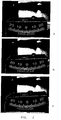
Figure 1 shows an image obtained under the SEM of the surface of the superhydrophobic film obtained using the process according to the invention; -
Figure 2 in boxes a-c reproduces a measurement of the angle of contact. - The process according to the present invention comprises the steps of:
- applying a hydrophobic polymer in the liquid phase on a surface so as to form a layer of hydrophobic polymer;
- applying on said layer of hydrophobic polymer a membrane having pores with a diameter smaller than or equal to 3 µm and a pore density of between 105 and 6 x 10⁸ pores/cm2;
- subjecting said layer of hydrophobic polymer to a thermal treatment so as to form a superhydrophobic film; and
- removing said membrane.
- The hydrophobic polymers that can be used with the present process are liquid at room temperature. Before being subjected to the process for formation of the superhydrophobic film they are mixed with an appropriate polymerization agent in order to favour the subsequent step of hardening by thermal treatment. The nature of the polymerization agent affects, in fact, both the viscosity of the hydrophobic polymer and hence its capacity for diffusing in the pores of the membrane and the duration of the step of thermal treatment during which hardening of the polymer and hence formation of the superhydrophobic film is obtained.
- Preferably, the hydrophobic polymer is selected in the group constituted by siloxanes, methacrylates, or fluorinated compounds, preferably PDMS.
- After being mixed with the polymerization agent, the hydrophobic polymer is applied on a sufficiently smooth surface, such as for example a plate of glass, until a layer of hydrophobic polymer having a thickness of between 30 and 100 µm is obtained.
- On the layer of hydrophobic polymer thus obtained there is then applied a membrane, for example of polycarbonate, polyester, or cellulose nitrate. The material of the membrane must be appropriately selected among the materials that do not react with the hydrophobic polymer so as to enable easy removal thereof after formation of the superhydrophobic film.
- The membrane has pores with a diameter smaller than or equal to 3 µm, preferably between 800 nm and 1 µm, still more preferably of 2 µm, and a pore density of between 105 and 6 x 10⁸ pores/cm2, preferably 4 x 10⁷ pores/cm2. The membrane has a thickness of between 6 and 20 µm, preferably 10 µm.
- The polymer in the liquid state is left to penetrate by capillarity into the pores of the membrane and is then thermally treated. The time of penetration and the temperature of the step of thermal treatment depend upon the polymer used, and their selection lies within the normal reach of a person skilled in the branch.
- Once the step of thermal treatment of the hydrophobic polymer has terminated and the superhydrophobic film has been obtained, the membrane is eliminated by means of mechanical detachment or, alternatively, by means of chemical degradation with the use of an appropriate solvent.
- Advantageously, the method according to the present invention is extremely simple, does not require further subsequent treatments of a photolithographic and/or chemical type, is economically advantageous and can be applied on a wide scale.
- The superhydrophobic film obtained has a good transparency in the range of the visible light.
- By means of measurements with the FTIR technique, it has been shown that a non-structured PDMS polymeric film has, in the range of wavelengths of the visible, a transparency of around 95% for thicknesses of up to a few tens of microns, i.e., of the order of magnitude of the thicknesses used to obtain superhydrophobic films.
- The microstructuring induced by the process does not reduce said value, but obviously increases the amount of light scattered by the film on account of the presence of the protuberances.
- The amount of light scattered can be established, within a certain range, by varying the length, diameter, and density of the protuberances. Advantageously, by means of the process of the invention, it is possible by selecting appropriately the density of the pores and their size to enhance either the superhydrophobic properties or the properties of optical transparency.
- Further characteristics of the present invention will emerge from the ensuing description of some non-limiting examples provided merely by way of illustration.
- PDMS was mixed with a polymerization agent in a ratio 10:1 (Sylgard 184, Dow Chemical) and then degassed to prevent formation of air bubbles. The liquid PDMS was then laid on a plate of glass by spinning to obtain a uniform film with a thickness of approximately 100 µm.
- Applied on this film was a polycarbonate membrane with randomly distributed pores with the diameter of 2 µm and a thickness of 10 µm. The PDMS penetrated into the pores of the membrane by capillarity and was then subjected to a thermal treatment at 80 °C for 2 hours.
- The PDMS film thus obtained was detached manually from the membrane.
- The surface of said film is characterized by a complex morphology, shown in
Figure 1 . On the surface protuberances are present (commonly referred to as "pillars") with a disorderly distribution and having a diameter of approximately 2 µm and a height of approximately 10 µm. InFigure 1 , it is possible to recognize at least three different arrangements of the pillars: some remain vertical (approximately 2.5% of the total area), others are bent towards the surface (approximately the 8.5% of the total area), finally others present a complex entangled arrangement (approximately 5% of the total area). In the space free from pillars the surface of the PDMS appears flat (approximately 84% of the total area). It is on account of this complex morphology that the system assumes its characteristics of superhydrophobicity. The explanation can be obtained from an article that appeared recently (A. Tuteja et al., Science 318 1618 (2007)), in which it is shown that regions with negative curvature (like mushrooms) present marked characteristics of superhydrophobicity. In the film obtained according to the process of the present invention, said regions can be identified precisely in the pillars that are bent and entangled. - Advantageously, the PDMS superhydrophobic film obtained is elastic and can be easily detached from the vitreous substrate and applied to another surface. In fact, elastomers have a considerable intrinsic adhesive capacity, which is effective even without the use of adhesives.
- As shown in
Figure 2 , on a glass coated by the superhydrophobic film obtained with the process according to the present invention, a drop of water assumes a quasi-spherical shape (box a), unlike what occurs if the same drop is instead deposited on a glass not coated with the superhydrophobic film. If the glass is inclined from the horizontal position, the drop remains immobile (box b) until the angle of inclination reaches 3-4°. At this point, the drop starts to run down along the plane inclined (box c). This observation shows that the superhydrophobic film produced with the present process enables elimination of drops of water that are initially stationary on the surface merely by inclining the structure by just a few degrees. - The phenomenon is even more important if the drop reaches the surface with a non-zero speed. In this case, running of the drop may be noted, in the direction of the velocity, even if the surface is not inclined.
Claims (10)
- A process for the preparation of a superhydrophobic film comprising the steps of:- applying a hydrophobic polymer in the liquid phase on a surface so as to form a layer of hydrophobic polymer,- applying on said layer of hydrophobic polymer a membrane having pores with a diameter smaller than or equal to 3 µm and a pore density of between 105 and 6 x 10⁸ pores/cm2,- subjecting said layer of hydrophobic polymer to a thermal treatment so as to form a superhydrophobic film, and- removing said membrane.
- The process according to Claim 1, characterized in that said hydrophobic polymer is selected in the group consisting of siloxanes, methacrylates, or fluorinated compounds.
- The process according to Claim 2, characterized in that said hydrophobic polymer is PDMS.
- The process according to any one of the preceding claims, characterized in that said membrane has pores with a diameter of between 800 nm and 1 µm.
- The process according to any one of the preceding claims, characterized in that said membrane has pores with a diameter of 2 µm.
- The process according to any one of the preceding claims, characterized in that said membrane has a porosity of 4 x 10⁷ pores/cm2.
- The process according to any one of the preceding claims, characterized in that said membrane has a thickness of between 6.and 20 µm.
- The process according to the preceding claim, characterized in that said membrane has a thickness of 10 µm.
- The process according to any one of the preceding claims, characterized in that said step of removing said membrane is carried out by means of mechanical detachment of said membrane from said superhydrophobic film.
- The process according to any one of the preceding claims, characterized in that said step of removing said membrane is carried out by means of chemical degradation of said membrane.
Applications Claiming Priority (2)
| Application Number | Priority Date | Filing Date | Title |
|---|---|---|---|
| ITTO2009A000279A IT1394142B1 (en) | 2009-04-09 | 2009-04-09 | PROCEDURE FOR THE PREPARATION OF A SUPER-HYDROPHOBIC FILM |
| PCT/IB2010/000781 WO2010116246A1 (en) | 2009-04-09 | 2010-04-08 | Process for the preparation of superhydrophobic film |
Publications (2)
| Publication Number | Publication Date |
|---|---|
| EP2416935A1 EP2416935A1 (en) | 2012-02-15 |
| EP2416935B1 true EP2416935B1 (en) | 2013-04-03 |
Family
ID=41138956
Family Applications (1)
| Application Number | Title | Priority Date | Filing Date |
|---|---|---|---|
| EP10723766A Active EP2416935B1 (en) | 2009-04-09 | 2010-04-08 | Process for the preparation of superhydrophobic film |
Country Status (4)
| Country | Link |
|---|---|
| US (1) | US8974714B2 (en) |
| EP (1) | EP2416935B1 (en) |
| IT (1) | IT1394142B1 (en) |
| WO (1) | WO2010116246A1 (en) |
Families Citing this family (1)
| Publication number | Priority date | Publication date | Assignee | Title |
|---|---|---|---|---|
| CN109908766B (en) * | 2019-04-04 | 2021-05-14 | 苏州科技大学 | Anti-pollution hollow fiber distillation membrane prepared by thermally induced phase separation method |
Family Cites Families (4)
| Publication number | Priority date | Publication date | Assignee | Title |
|---|---|---|---|---|
| US20050208268A1 (en) * | 2003-04-15 | 2005-09-22 | Extrand Charles W | Article with ultraphobic surface |
| DE60328421D1 (en) * | 2003-09-02 | 2009-08-27 | Univ Sabanci | PROCESS FOR PREPARING SUPER HYDROPHOBIC SURFACES, SURFACES PRODUCED THEREFROM AND USE THEREOF |
| EP1775329B1 (en) * | 2004-07-28 | 2011-04-20 | DIC Corporation | Organic-inorganic composite coating film and aqueous coating composition |
| KR100824712B1 (en) * | 2006-09-21 | 2008-04-24 | 포항공과대학교 산학협력단 | Processing method of solid base material having very few hydrophobic surface structure and very few hydrophobic fluid delivery pipe using the same |
-
2009
- 2009-04-09 IT ITTO2009A000279A patent/IT1394142B1/en active
-
2010
- 2010-04-08 EP EP10723766A patent/EP2416935B1/en active Active
- 2010-04-08 WO PCT/IB2010/000781 patent/WO2010116246A1/en not_active Ceased
- 2010-04-08 US US13/263,730 patent/US8974714B2/en active Active
Also Published As
| Publication number | Publication date |
|---|---|
| IT1394142B1 (en) | 2012-05-25 |
| US20120181717A1 (en) | 2012-07-19 |
| EP2416935A1 (en) | 2012-02-15 |
| WO2010116246A1 (en) | 2010-10-14 |
| US8974714B2 (en) | 2015-03-10 |
| ITTO20090279A1 (en) | 2010-10-10 |
Similar Documents
| Publication | Publication Date | Title |
|---|---|---|
| Teisala et al. | Hierarchical structures for superhydrophobic and superoleophobic surfaces | |
| Roach et al. | Progess in superhydrophobic surface development | |
| Zhang et al. | The dewetting properties of lotus leaves | |
| Tserepi et al. | Nanotexturing of poly (dimethylsiloxane) in plasmas for creating robust super-hydrophobic surfaces | |
| Latthe et al. | Development of sol–gel processed semi-transparent and self-cleaning superhydrophobic coatings | |
| Sung et al. | Fabrication of superhydrophobic surfaces with nano-in-micro structures using UV-nanoimprint lithography and thermal shrinkage films | |
| Bhagat et al. | Superhydrophobic microtextured polycarbonate surfaces | |
| Liu et al. | A self-modification approach toward transparent superhydrophobic glass for rainproofing and superhydrophobic fiberglass mesh for oil⿿ water separation | |
| Nayak et al. | Superhydrophobic surfaces by replication of micro/nano-structures fabricated by ultrafast-laser-microtexturing | |
| US11248129B2 (en) | Liquid impregnated surfaces for liquid repellancy | |
| JPH10507695A (en) | Self-cleaning surfaces of objects and methods of forming them | |
| MX2007001050A (en) | Composite, nanostructured, super-hydrophobic material. | |
| KR20170072272A (en) | Insulated glazing units and microoptical layer comprising microstructured diffuser and methods | |
| WO2012064745A2 (en) | Articles having superhydrophobic and oleophobic surfaces | |
| US11773272B2 (en) | Highly fluorinated nanostructured polymer foams for producing super-repellent surfaces | |
| Ucar et al. | Droplet condensation on polymer surfaces: A review | |
| Qiu et al. | Fabrication of superhydrophobic surfaces by smoke deposition and application in oil–water separation | |
| FR2990384A1 (en) | METHOD FOR TEXTURING ON A LARGE SURFACE SUBSTRATE | |
| US20070009709A1 (en) | Method to modify surface of an article and the article obtained therefrom | |
| Liu et al. | Slippery mechanism for enhancing separation and anti-fouling of the superhydrophobic membrane in a water-in-oil emulsion: evaluating water adhesion of the membrane surface | |
| CN1272114C (en) | Method for preparing super hydrophobic polymeric coating using non-crystalline polymer | |
| US8974714B2 (en) | Process for the preparation of superhydrophobic film | |
| Wang et al. | Droplet detachment behavior from a rough hydrophilic surface | |
| Osawa et al. | Preparation of super-hydrophobic surface on biodegradable polymer by transcribing microscopic pattern of water-repellent leaf | |
| JP2014076610A (en) | Oil repellent laminated body and method for producing the same |
Legal Events
| Date | Code | Title | Description |
|---|---|---|---|
| PUAI | Public reference made under article 153(3) epc to a published international application that has entered the european phase |
Free format text: ORIGINAL CODE: 0009012 |
|
| 17P | Request for examination filed |
Effective date: 20111031 |
|
| AK | Designated contracting states |
Kind code of ref document: A1 Designated state(s): AT BE BG CH CY CZ DE DK EE ES FI FR GB GR HR HU IE IS IT LI LT LU LV MC MK MT NL NO PL PT RO SE SI SK SM TR |
|
| DAX | Request for extension of the european patent (deleted) | ||
| GRAP | Despatch of communication of intention to grant a patent |
Free format text: ORIGINAL CODE: EPIDOSNIGR1 |
|
| RIN1 | Information on inventor provided before grant (corrected) |
Inventor name: BORAGNO, CORRADO Inventor name: GARIBBO, ALESSANDRO Inventor name: GAGLIARDI, FRANCESCO |
|
| GRAS | Grant fee paid |
Free format text: ORIGINAL CODE: EPIDOSNIGR3 |
|
| GRAA | (expected) grant |
Free format text: ORIGINAL CODE: 0009210 |
|
| AK | Designated contracting states |
Kind code of ref document: B1 Designated state(s): AT BE BG CH CY CZ DE DK EE ES FI FR GB GR HR HU IE IS IT LI LT LU LV MC MK MT NL NO PL PT RO SE SI SK SM TR |
|
| REG | Reference to a national code |
Ref country code: GB Ref legal event code: FG4D |
|
| REG | Reference to a national code |
Ref country code: CH Ref legal event code: EP Ref country code: AT Ref legal event code: REF Ref document number: 604409 Country of ref document: AT Kind code of ref document: T Effective date: 20130415 |
|
| REG | Reference to a national code |
Ref country code: IE Ref legal event code: FG4D |
|
| REG | Reference to a national code |
Ref country code: DE Ref legal event code: R096 Ref document number: 602010006079 Country of ref document: DE Effective date: 20130606 |
|
| REG | Reference to a national code |
Ref country code: CH Ref legal event code: NV Representative=s name: ANDRE ROLAND S.A., CH |
|
| REG | Reference to a national code |
Ref country code: AT Ref legal event code: MK05 Ref document number: 604409 Country of ref document: AT Kind code of ref document: T Effective date: 20130403 |
|
| REG | Reference to a national code |
Ref country code: NL Ref legal event code: T3 |
|
| PG25 | Lapsed in a contracting state [announced via postgrant information from national office to epo] |
Ref country code: SI Free format text: LAPSE BECAUSE OF FAILURE TO SUBMIT A TRANSLATION OF THE DESCRIPTION OR TO PAY THE FEE WITHIN THE PRESCRIBED TIME-LIMIT Effective date: 20130403 |
|
| REG | Reference to a national code |
Ref country code: LT Ref legal event code: MG4D |
|
| PG25 | Lapsed in a contracting state [announced via postgrant information from national office to epo] |
Ref country code: PT Free format text: LAPSE BECAUSE OF FAILURE TO SUBMIT A TRANSLATION OF THE DESCRIPTION OR TO PAY THE FEE WITHIN THE PRESCRIBED TIME-LIMIT Effective date: 20130805 Ref country code: BE Free format text: LAPSE BECAUSE OF FAILURE TO SUBMIT A TRANSLATION OF THE DESCRIPTION OR TO PAY THE FEE WITHIN THE PRESCRIBED TIME-LIMIT Effective date: 20130403 Ref country code: GR Free format text: LAPSE BECAUSE OF FAILURE TO SUBMIT A TRANSLATION OF THE DESCRIPTION OR TO PAY THE FEE WITHIN THE PRESCRIBED TIME-LIMIT Effective date: 20130704 Ref country code: ES Free format text: LAPSE BECAUSE OF FAILURE TO SUBMIT A TRANSLATION OF THE DESCRIPTION OR TO PAY THE FEE WITHIN THE PRESCRIBED TIME-LIMIT Effective date: 20130714 Ref country code: LT Free format text: LAPSE BECAUSE OF FAILURE TO SUBMIT A TRANSLATION OF THE DESCRIPTION OR TO PAY THE FEE WITHIN THE PRESCRIBED TIME-LIMIT Effective date: 20130403 Ref country code: SE Free format text: LAPSE BECAUSE OF FAILURE TO SUBMIT A TRANSLATION OF THE DESCRIPTION OR TO PAY THE FEE WITHIN THE PRESCRIBED TIME-LIMIT Effective date: 20130403 Ref country code: AT Free format text: LAPSE BECAUSE OF FAILURE TO SUBMIT A TRANSLATION OF THE DESCRIPTION OR TO PAY THE FEE WITHIN THE PRESCRIBED TIME-LIMIT Effective date: 20130403 Ref country code: NO Free format text: LAPSE BECAUSE OF FAILURE TO SUBMIT A TRANSLATION OF THE DESCRIPTION OR TO PAY THE FEE WITHIN THE PRESCRIBED TIME-LIMIT Effective date: 20130703 Ref country code: IS Free format text: LAPSE BECAUSE OF FAILURE TO SUBMIT A TRANSLATION OF THE DESCRIPTION OR TO PAY THE FEE WITHIN THE PRESCRIBED TIME-LIMIT Effective date: 20130803 Ref country code: FI Free format text: LAPSE BECAUSE OF FAILURE TO SUBMIT A TRANSLATION OF THE DESCRIPTION OR TO PAY THE FEE WITHIN THE PRESCRIBED TIME-LIMIT Effective date: 20130403 |
|
| PG25 | Lapsed in a contracting state [announced via postgrant information from national office to epo] |
Ref country code: PL Free format text: LAPSE BECAUSE OF FAILURE TO SUBMIT A TRANSLATION OF THE DESCRIPTION OR TO PAY THE FEE WITHIN THE PRESCRIBED TIME-LIMIT Effective date: 20130403 Ref country code: CY Free format text: LAPSE BECAUSE OF FAILURE TO SUBMIT A TRANSLATION OF THE DESCRIPTION OR TO PAY THE FEE WITHIN THE PRESCRIBED TIME-LIMIT Effective date: 20130403 Ref country code: LV Free format text: LAPSE BECAUSE OF FAILURE TO SUBMIT A TRANSLATION OF THE DESCRIPTION OR TO PAY THE FEE WITHIN THE PRESCRIBED TIME-LIMIT Effective date: 20130403 Ref country code: BG Free format text: LAPSE BECAUSE OF FAILURE TO SUBMIT A TRANSLATION OF THE DESCRIPTION OR TO PAY THE FEE WITHIN THE PRESCRIBED TIME-LIMIT Effective date: 20130703 Ref country code: HR Free format text: LAPSE BECAUSE OF FAILURE TO SUBMIT A TRANSLATION OF THE DESCRIPTION OR TO PAY THE FEE WITHIN THE PRESCRIBED TIME-LIMIT Effective date: 20130403 |
|
| PG25 | Lapsed in a contracting state [announced via postgrant information from national office to epo] |
Ref country code: SK Free format text: LAPSE BECAUSE OF FAILURE TO SUBMIT A TRANSLATION OF THE DESCRIPTION OR TO PAY THE FEE WITHIN THE PRESCRIBED TIME-LIMIT Effective date: 20130403 Ref country code: CZ Free format text: LAPSE BECAUSE OF FAILURE TO SUBMIT A TRANSLATION OF THE DESCRIPTION OR TO PAY THE FEE WITHIN THE PRESCRIBED TIME-LIMIT Effective date: 20130403 Ref country code: DK Free format text: LAPSE BECAUSE OF FAILURE TO SUBMIT A TRANSLATION OF THE DESCRIPTION OR TO PAY THE FEE WITHIN THE PRESCRIBED TIME-LIMIT Effective date: 20130403 Ref country code: EE Free format text: LAPSE BECAUSE OF FAILURE TO SUBMIT A TRANSLATION OF THE DESCRIPTION OR TO PAY THE FEE WITHIN THE PRESCRIBED TIME-LIMIT Effective date: 20130403 Ref country code: MC Free format text: LAPSE BECAUSE OF FAILURE TO SUBMIT A TRANSLATION OF THE DESCRIPTION OR TO PAY THE FEE WITHIN THE PRESCRIBED TIME-LIMIT Effective date: 20130403 |
|
| PLBE | No opposition filed within time limit |
Free format text: ORIGINAL CODE: 0009261 |
|
| STAA | Information on the status of an ep patent application or granted ep patent |
Free format text: STATUS: NO OPPOSITION FILED WITHIN TIME LIMIT |
|
| PG25 | Lapsed in a contracting state [announced via postgrant information from national office to epo] |
Ref country code: IT Free format text: LAPSE BECAUSE OF FAILURE TO SUBMIT A TRANSLATION OF THE DESCRIPTION OR TO PAY THE FEE WITHIN THE PRESCRIBED TIME-LIMIT Effective date: 20130403 Ref country code: RO Free format text: LAPSE BECAUSE OF FAILURE TO SUBMIT A TRANSLATION OF THE DESCRIPTION OR TO PAY THE FEE WITHIN THE PRESCRIBED TIME-LIMIT Effective date: 20130403 |
|
| 26N | No opposition filed |
Effective date: 20140106 |
|
| REG | Reference to a national code |
Ref country code: DE Ref legal event code: R097 Ref document number: 602010006079 Country of ref document: DE Effective date: 20140106 |
|
| PG25 | Lapsed in a contracting state [announced via postgrant information from national office to epo] |
Ref country code: MT Free format text: LAPSE BECAUSE OF FAILURE TO SUBMIT A TRANSLATION OF THE DESCRIPTION OR TO PAY THE FEE WITHIN THE PRESCRIBED TIME-LIMIT Effective date: 20130403 |
|
| PG25 | Lapsed in a contracting state [announced via postgrant information from national office to epo] |
Ref country code: SM Free format text: LAPSE BECAUSE OF FAILURE TO SUBMIT A TRANSLATION OF THE DESCRIPTION OR TO PAY THE FEE WITHIN THE PRESCRIBED TIME-LIMIT Effective date: 20130403 |
|
| PG25 | Lapsed in a contracting state [announced via postgrant information from national office to epo] |
Ref country code: TR Free format text: LAPSE BECAUSE OF FAILURE TO SUBMIT A TRANSLATION OF THE DESCRIPTION OR TO PAY THE FEE WITHIN THE PRESCRIBED TIME-LIMIT Effective date: 20130403 |
|
| PG25 | Lapsed in a contracting state [announced via postgrant information from national office to epo] |
Ref country code: HU Free format text: LAPSE BECAUSE OF FAILURE TO SUBMIT A TRANSLATION OF THE DESCRIPTION OR TO PAY THE FEE WITHIN THE PRESCRIBED TIME-LIMIT; INVALID AB INITIO Effective date: 20100408 Ref country code: LU Free format text: LAPSE BECAUSE OF NON-PAYMENT OF DUE FEES Effective date: 20130408 Ref country code: MK Free format text: LAPSE BECAUSE OF FAILURE TO SUBMIT A TRANSLATION OF THE DESCRIPTION OR TO PAY THE FEE WITHIN THE PRESCRIBED TIME-LIMIT Effective date: 20130403 |
|
| PGFP | Annual fee paid to national office [announced via postgrant information from national office to epo] |
Ref country code: IE Payment date: 20150430 Year of fee payment: 6 |
|
| REG | Reference to a national code |
Ref country code: FR Ref legal event code: PLFP Year of fee payment: 7 |
|
| REG | Reference to a national code |
Ref country code: IE Ref legal event code: MM4A |
|
| REG | Reference to a national code |
Ref country code: FR Ref legal event code: PLFP Year of fee payment: 8 |
|
| PG25 | Lapsed in a contracting state [announced via postgrant information from national office to epo] |
Ref country code: IE Free format text: LAPSE BECAUSE OF NON-PAYMENT OF DUE FEES Effective date: 20160408 |
|
| REG | Reference to a national code |
Ref country code: FR Ref legal event code: PLFP Year of fee payment: 9 |
|
| PGFP | Annual fee paid to national office [announced via postgrant information from national office to epo] |
Ref country code: NL Payment date: 20250427 Year of fee payment: 16 |
|
| PGFP | Annual fee paid to national office [announced via postgrant information from national office to epo] |
Ref country code: DE Payment date: 20250429 Year of fee payment: 16 |
|
| PGFP | Annual fee paid to national office [announced via postgrant information from national office to epo] |
Ref country code: GB Payment date: 20250428 Year of fee payment: 16 |
|
| PGFP | Annual fee paid to national office [announced via postgrant information from national office to epo] |
Ref country code: FR Payment date: 20250425 Year of fee payment: 16 |
|
| PGFP | Annual fee paid to national office [announced via postgrant information from national office to epo] |
Ref country code: CH Payment date: 20250501 Year of fee payment: 16 |
|
| REG | Reference to a national code |
Ref country code: CH Ref legal event code: U11 Free format text: ST27 STATUS EVENT CODE: U-0-0-U10-U11 (AS PROVIDED BY THE NATIONAL OFFICE) Effective date: 20260501 |